
Dark walls can turn an ordinary sleeping space into a cozy, polished retreat. These 20 dark bedroom wall colors range from classic navy and charcoal to earthy olive, warm espresso, rich burgundy, and unexpected deep teal. The secret is building a complete palette around the wall color. Layer soft bedding, natural wood, textured fabrics, reflective accents, and practical lighting so the room feels inviting rather than flat. Dark rooms especially benefit from varied textures, pale contrast, and lighting placed at different heights. () Before committing, test large painted samples on multiple walls and view them throughout the day, since natural and artificial light can noticeably change undertones. () Use the complete room combinations below to explore 20 dark bedroom wall colors.

1. Navy Blue Bedroom Walls
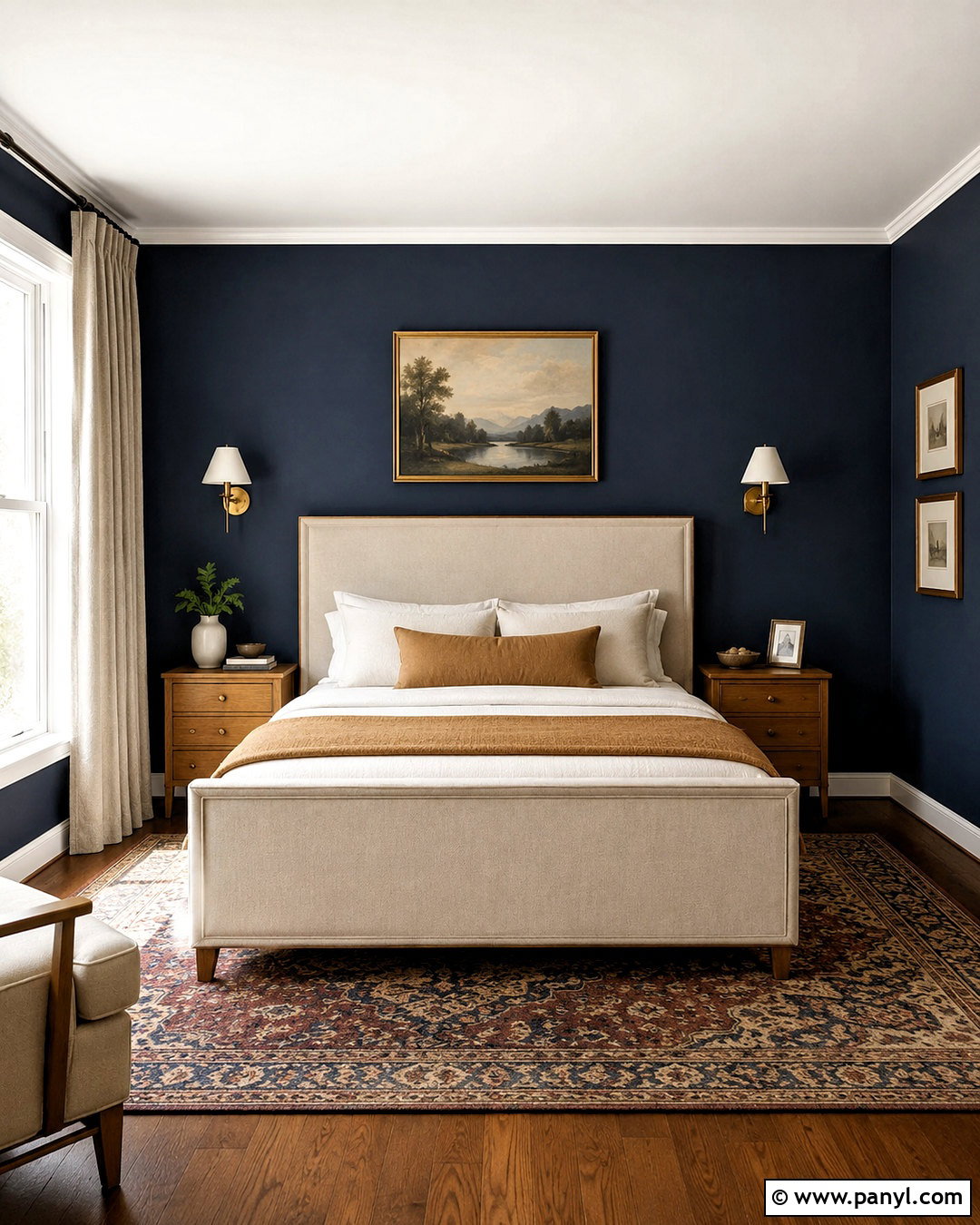
Navy blue walls create a restful bedroom that feels traditional, tailored, and easy to personalize. Paint every wall navy for an enveloping effect, then keep the ceiling warm white to preserve visual height. A light oatmeal upholstered bed provides strong contrast without looking stark. Add medium oak nightstands, brushed brass sconces, and white bedding layered with denim blue and camel accents. A faded red and blue rug can give the room a collected look, while simple framed landscapes soften the formal palette. Choose natural linen curtains instead of matching navy drapes, especially if the bedroom has small windows. This full scheme works well in coastal, transitional, and classic homes because the balanced mix of blue, cream, wood, and brass feels familiar but refined.
2. Charcoal Gray Bedroom Walls
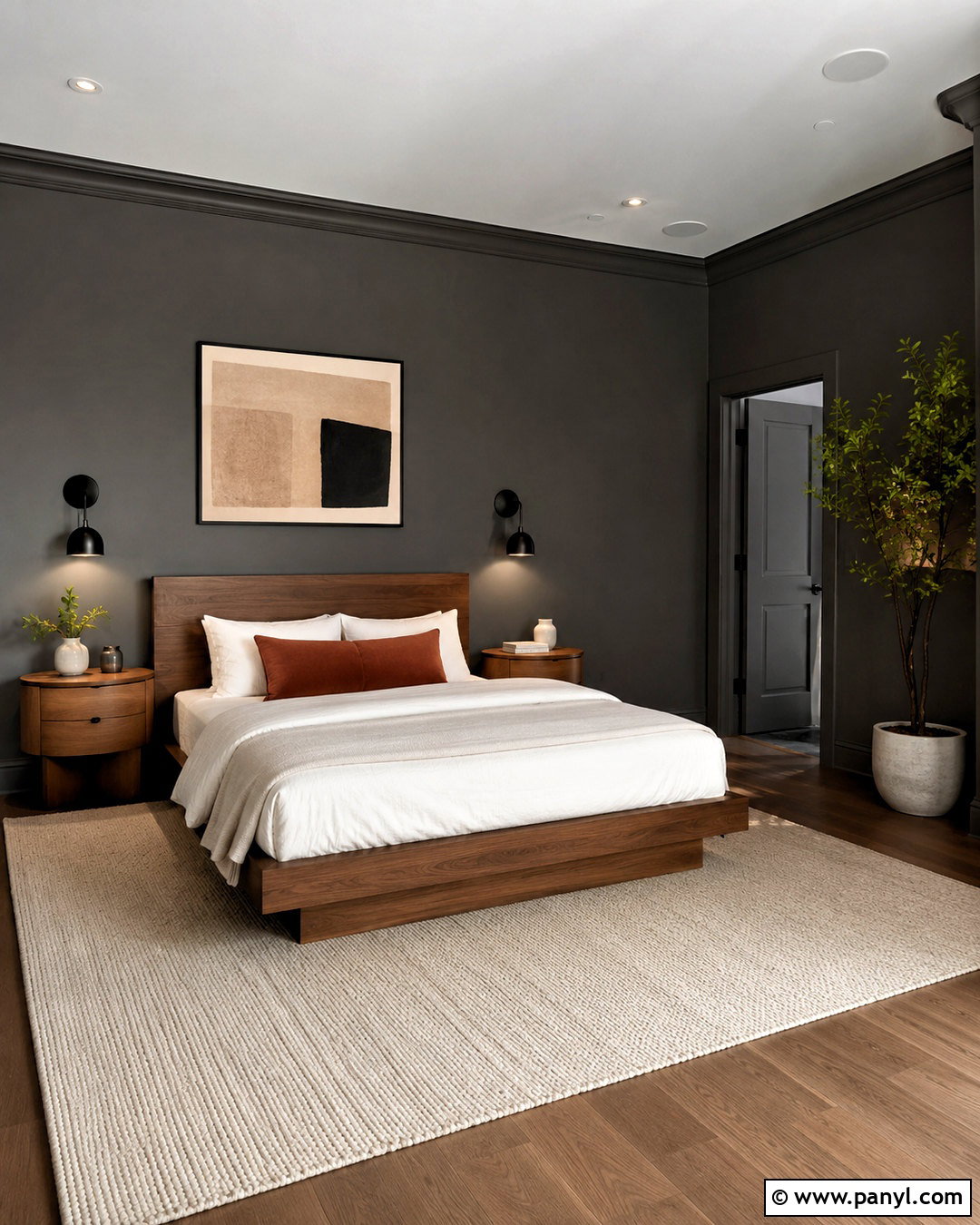
Charcoal gray is an adaptable choice for a modern bedroom with clean lines and warm texture. Use a soft charcoal with slightly warm undertones, then paint the trim the same color for a seamless, cocooning finish. Place a walnut platform bed against the main wall and dress it with white sheets, a light gray duvet, and rust-colored pillows. Black metal sconces reinforce the contemporary look, while a large cream wool rug prevents the dark walls and medium wood floor from blending together. Introduce subtle movement through abstract artwork in ivory, tan, and muted terracotta. A pair of rounded oak nightstands can soften the straight edges of the bed. This room feels sophisticated because the palette remains limited, but every material contributes a different tone and texture.
3. Soft Black Bedroom Walls
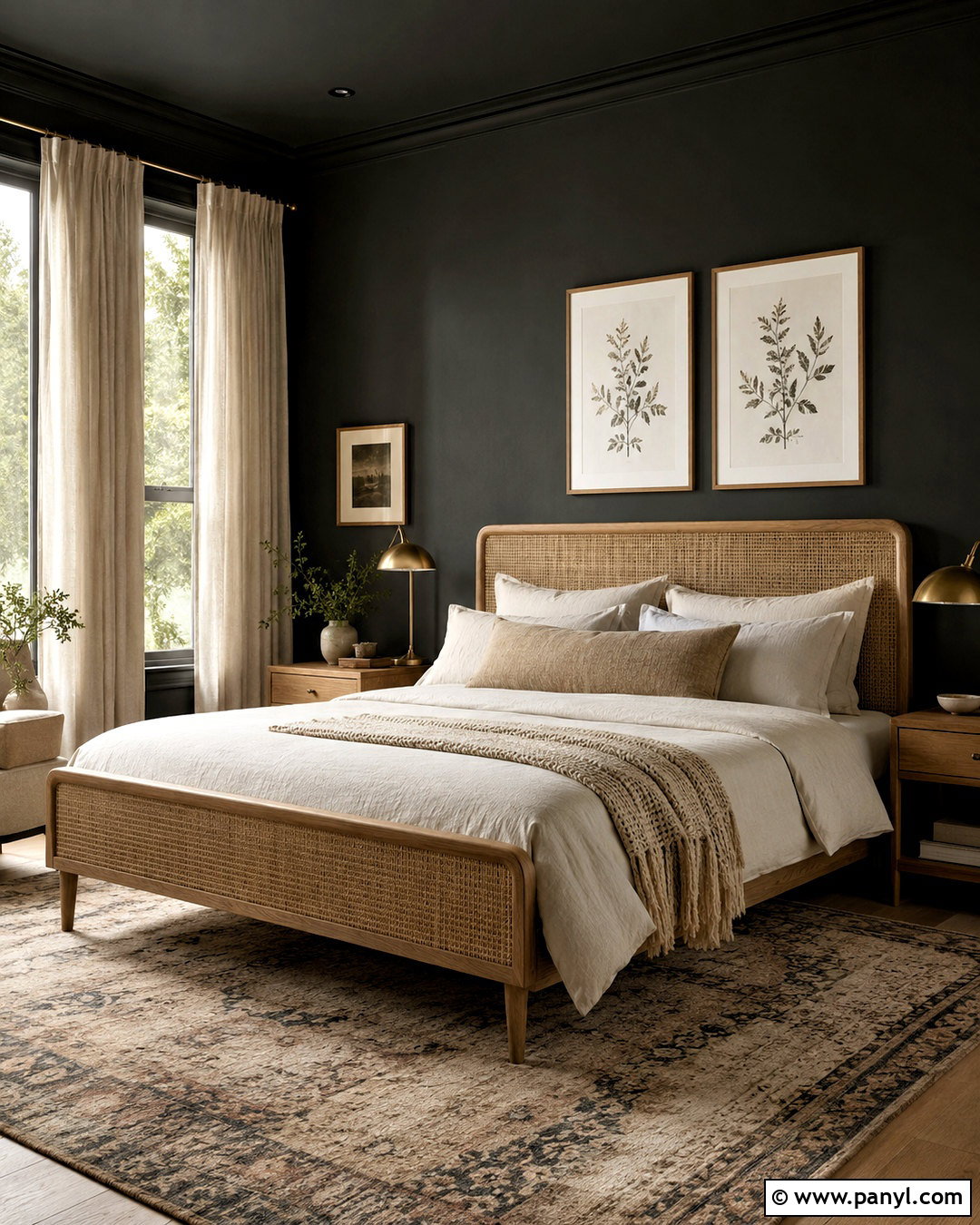
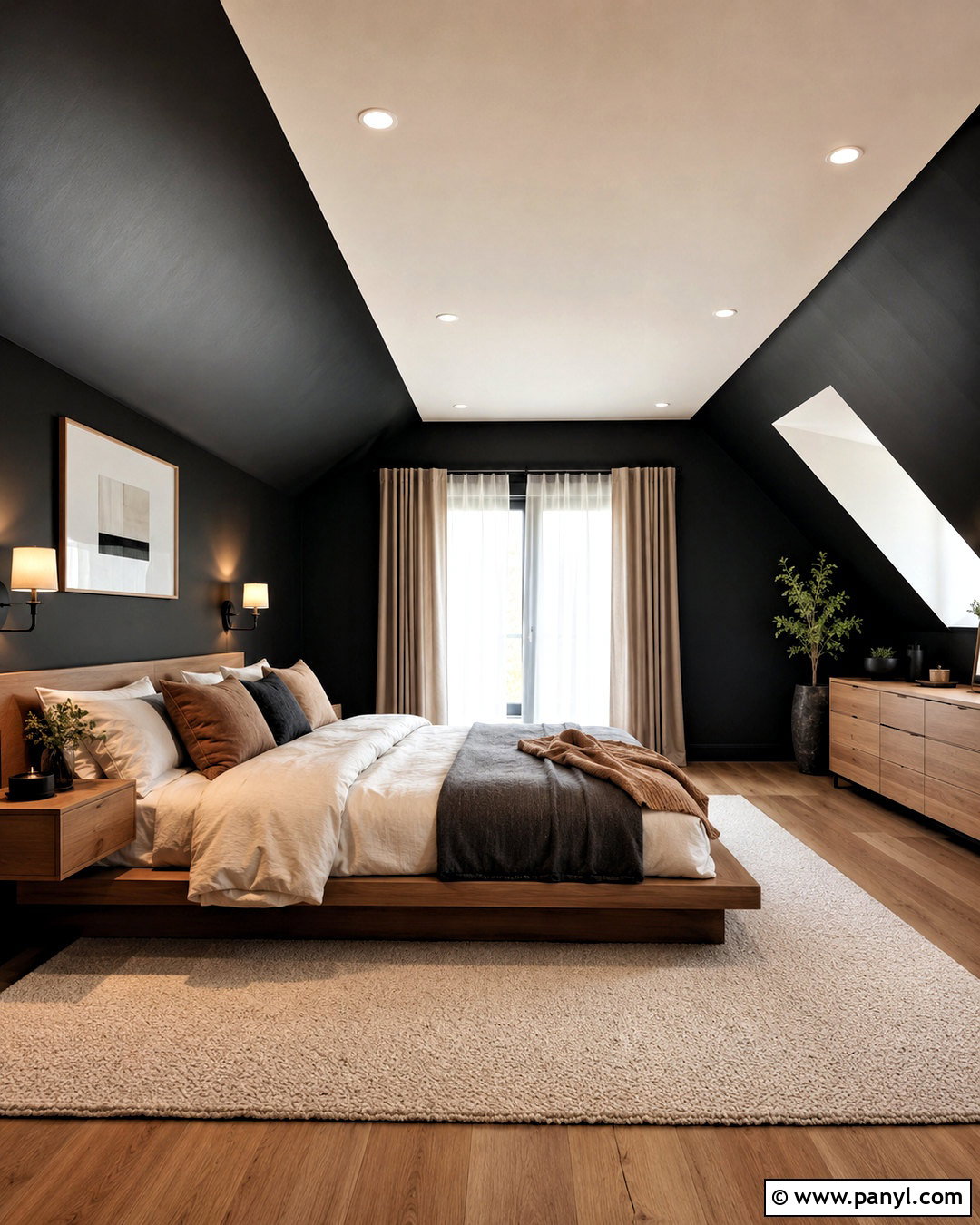
Could black walls actually make a bedroom feel welcoming? A soft black with charcoal or brown undertones creates depth without the sharper effect of a pure, inky black. Cover the walls and trim in the same matte color, but leave the ceiling warm white for contrast. Build the room around a natural cane bed with a light oak frame. Crisp ivory bedding, a chunky cream throw, and beige linen curtains bring brightness into the center of the space. Use aged brass lamps and a vintage-style rug containing muted brown, blue, and tan. Minimal botanical prints in pale wood frames keep the walls from feeling empty. This balanced black bedroom works particularly well when natural materials, rounded furniture, and several warm light sources soften the dramatic painted background.
4. Forest Green Bedroom Walls
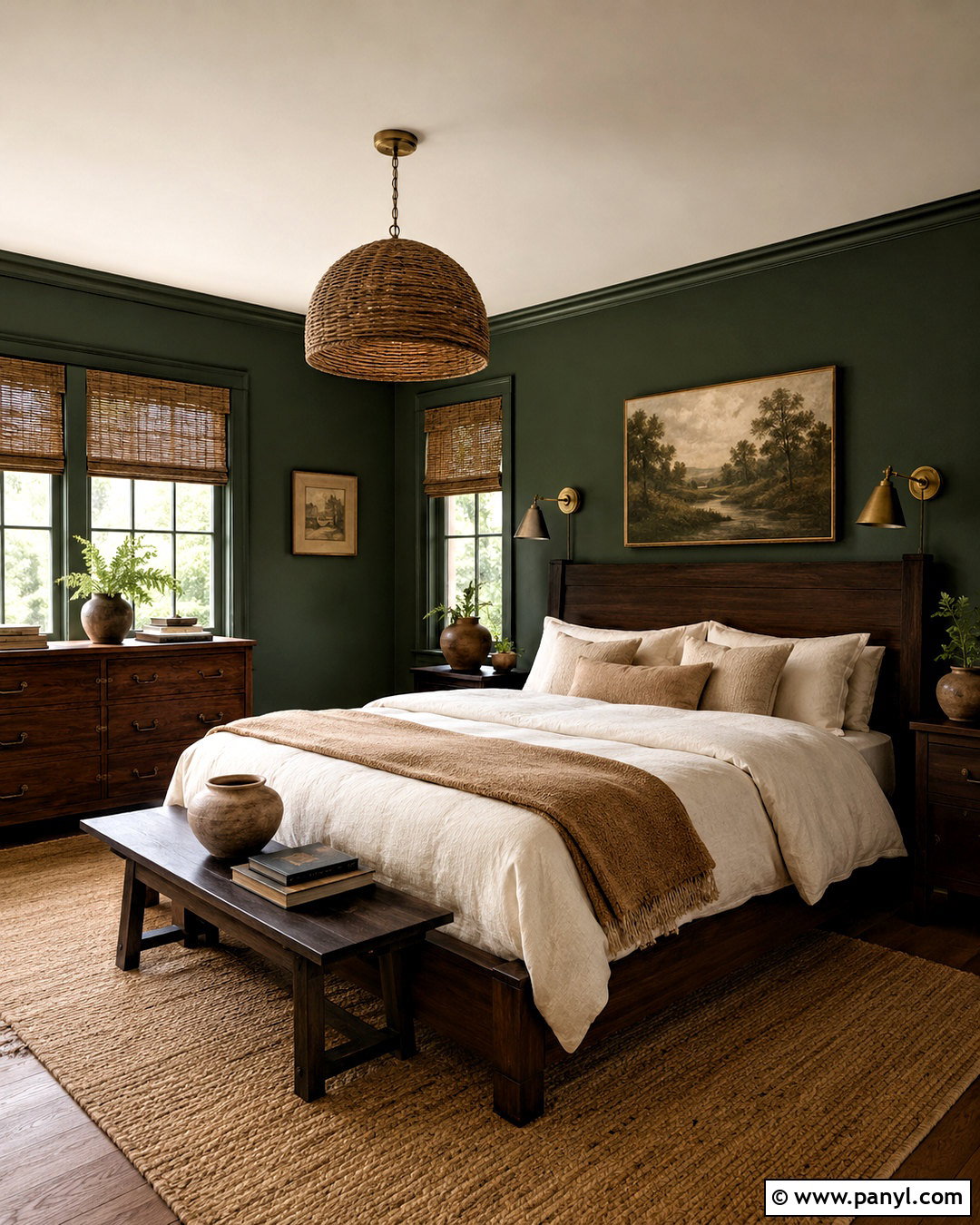
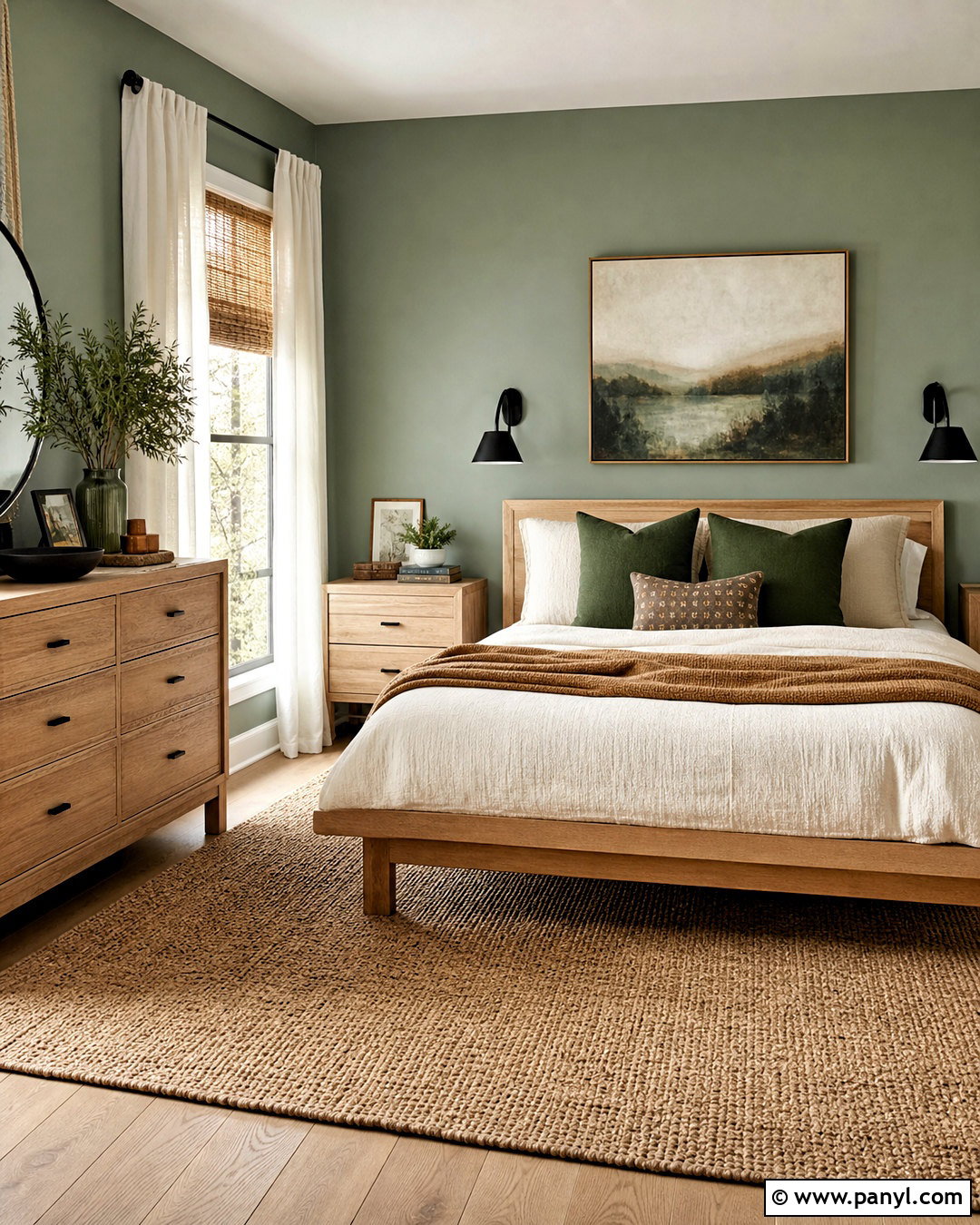
Forest green walls give a bedroom an earthy, sheltered feeling that pairs naturally with wood and woven materials. Choose a deep green with muted gray undertones rather than a bright evergreen shade. A dark walnut bed creates a tonal foundation, while ivory linen bedding and a camel wool blanket provide warm contrast. Use antique brass reading lights, woven bamboo shades, and a large jute-and-wool rug to strengthen the nature-inspired palette. On the walls, hang simple landscapes or pressed botanical artwork with generous cream matting. Keep decorative accessories restrained, using ceramic lamps, stacked books, and one leafy plant near the window. The completed room feels grounded and timeless rather than themed. It suits craftsman, traditional, organic modern, and relaxed cottage interiors equally well.
5. Emerald Green Bedroom Walls
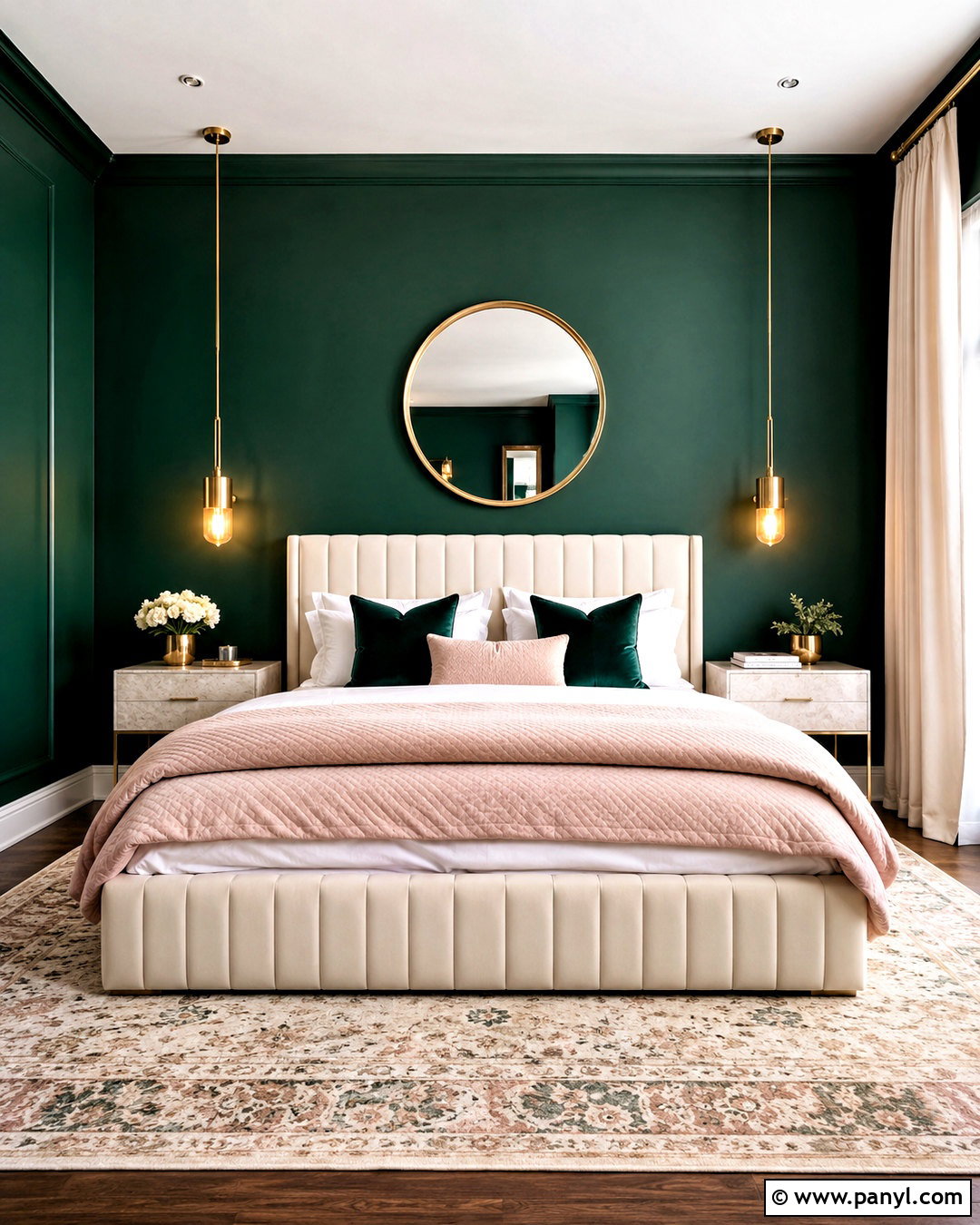
Emerald green creates a richer, more glamorous bedroom than muted forest tones. Let the saturated walls become the main statement, then balance them with a tall cream channel-tufted bed. Layer the bedding with white cotton, emerald velvet pillows, and a blush or dusty rose coverlet. Warm brass pendant lights, a marble-topped nightstand, and an arched gold mirror introduce gentle shine without overwhelming the space. Ground the arrangement with a patterned rug that repeats green, cream, and faded pink. Full-length ivory curtains should hang close to the ceiling to make the windows appear taller. Limit small accessories so the color and upholstery remain visually dominant. This complete look feels elegant and expressive, yet the pale fabrics and symmetrical furniture arrangement keep it comfortable enough for everyday living.
6. Dark Olive Bedroom Walls
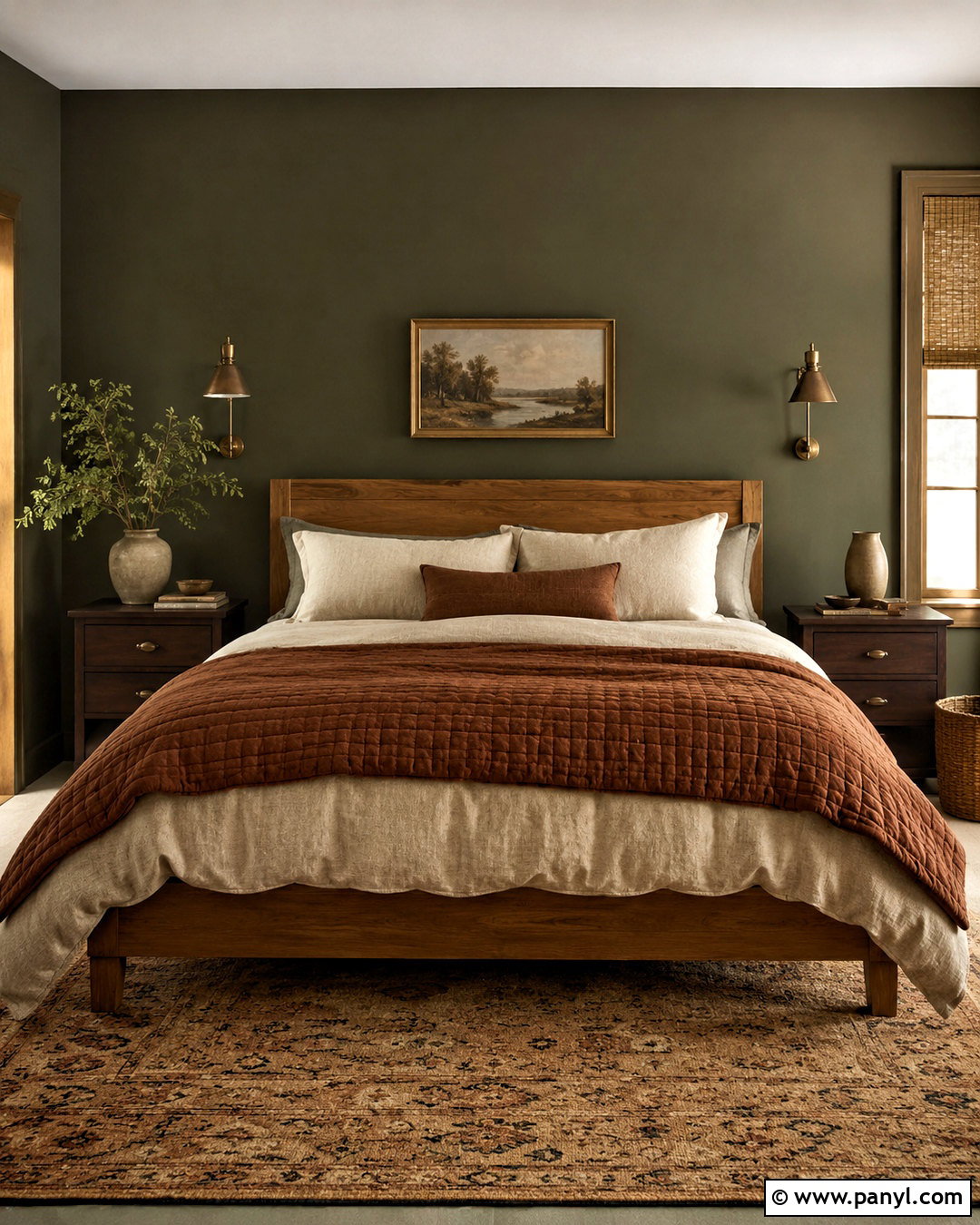
Dark olive walls deliver warmth, depth, and a subtle vintage character. Unlike cooler greens, olive contains yellow and brown undertones that look especially attractive beside oak, leather, and aged metal. Pair the walls with a low honey-oak bed and relaxed flax linen bedding. Add a rust-colored quilt, cream pillows, and a patterned lumbar cushion to create a layered focal point. Antique bronze sconces and dark wood nightstands reinforce the earthy palette. For the floor, use a large faded rug with olive, ocher, beige, and muted red details. Natural woven shades can filter daylight while complementing the room’s warm materials. Finish with framed sketches and handmade pottery. The resulting bedroom feels collected over time, making it suitable for vintage, rustic, Mediterranean, or modern farmhouse homes.
7. Green Black Bedroom Walls
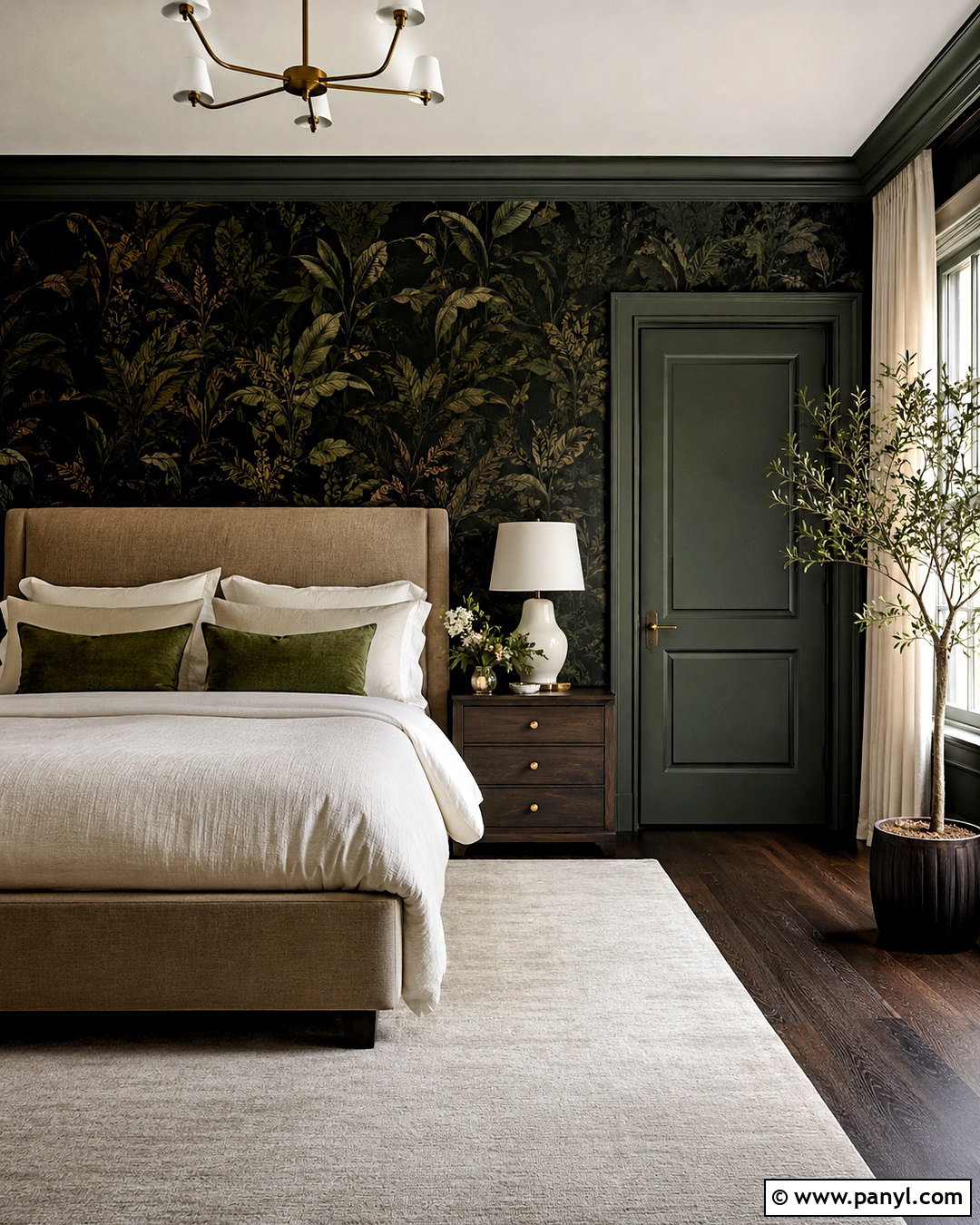
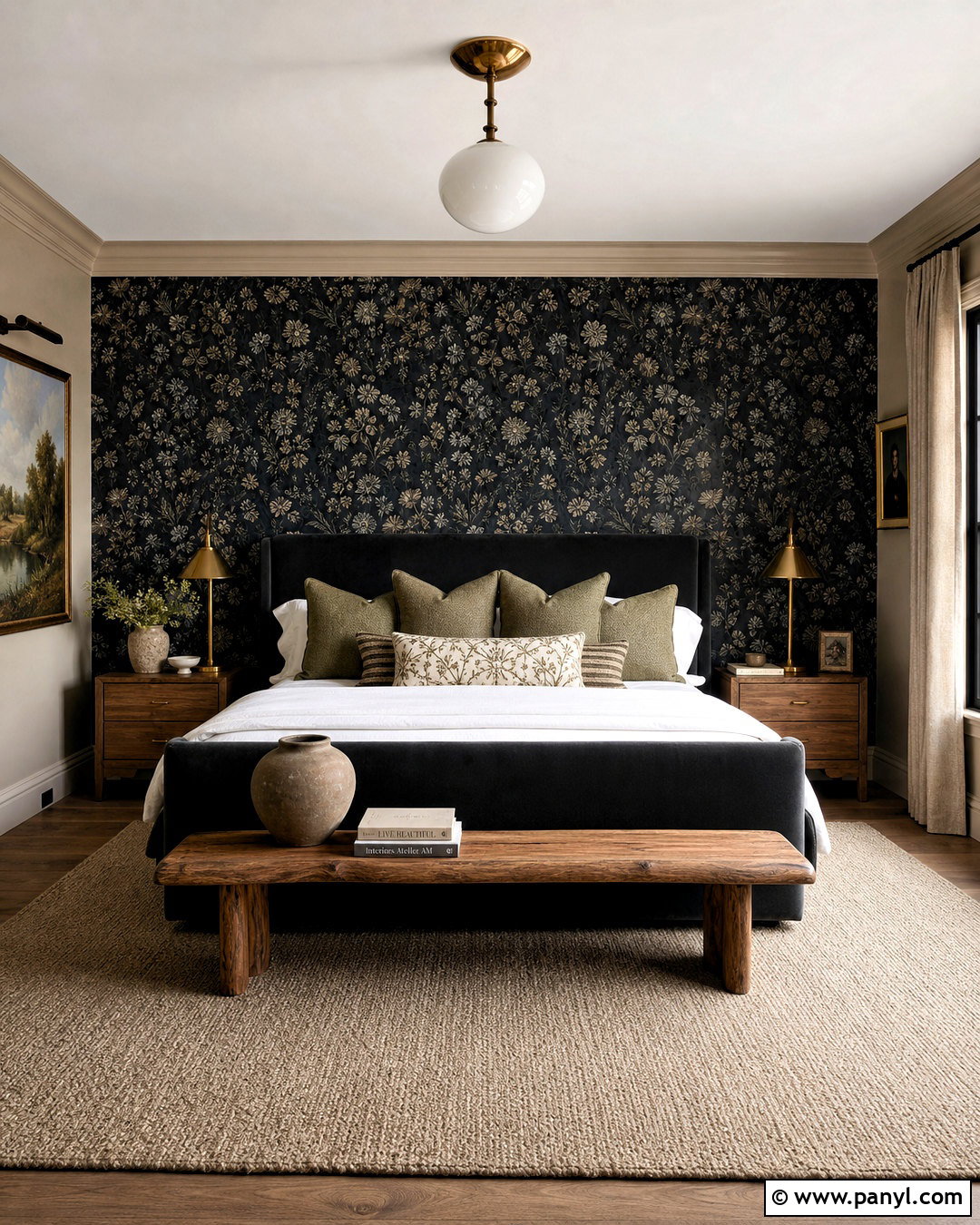
Green-black paint looks nearly black in low light but reveals a deep botanical undertone during the day. Use it across the walls, molding, and interior door for a dramatic color-drenched bedroom. A substantial bed upholstered in warm taupe adds softness and prevents the room from becoming too severe. Choose ivory sheets, moss green pillows, and a textured brown blanket. Dark oak nightstands can blend quietly into the background, while oversized cream ceramic lamps create visible points of contrast. Install natural linen curtains and place a pale wool rug beneath the bed to brighten the lower half of the room. One large landscape painting works better than many small decorations. The complete design feels intimate, upscale, and calm, with subtle color changes that become more noticeable as the light shifts.
8. Deep Teal Bedroom Walls
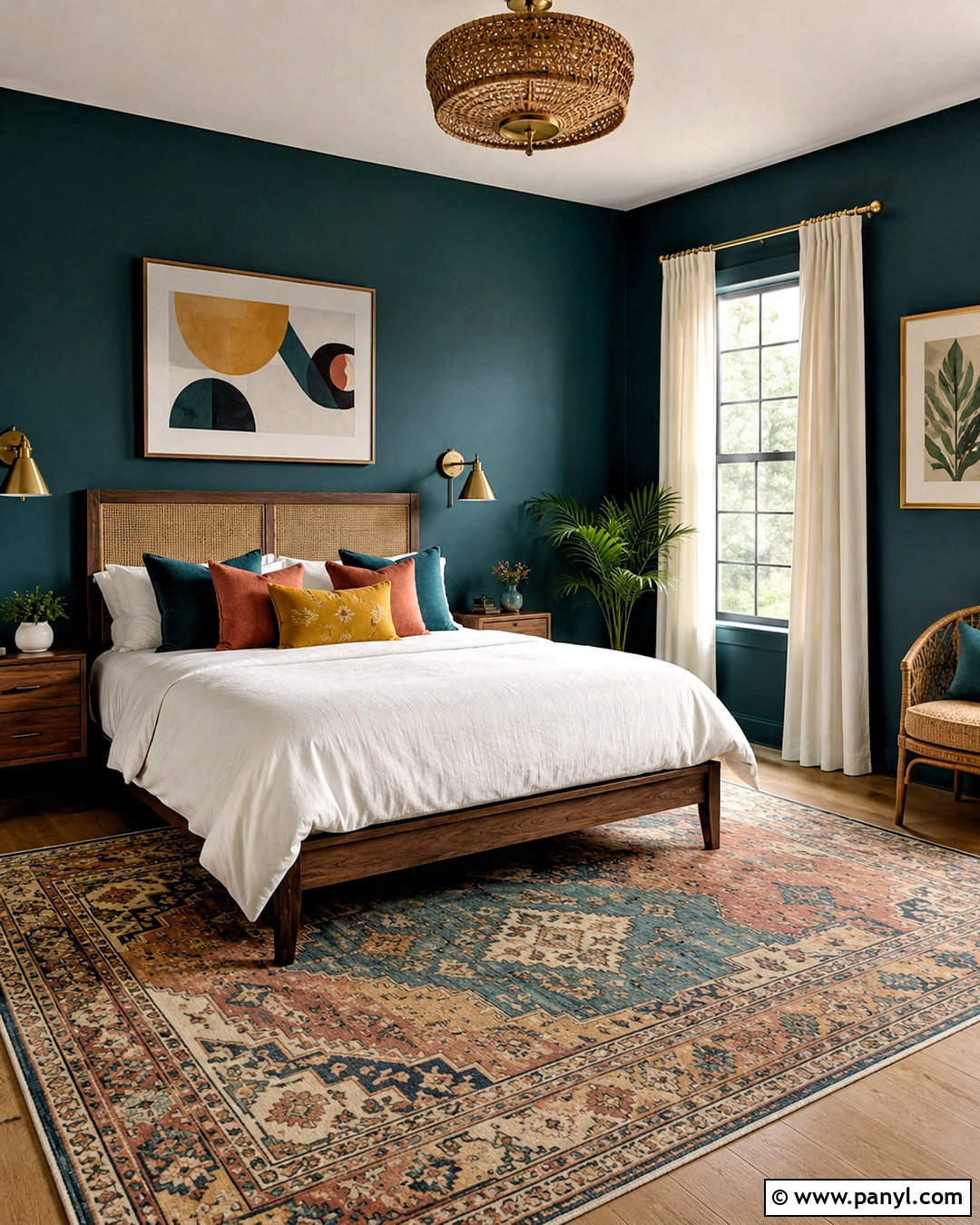
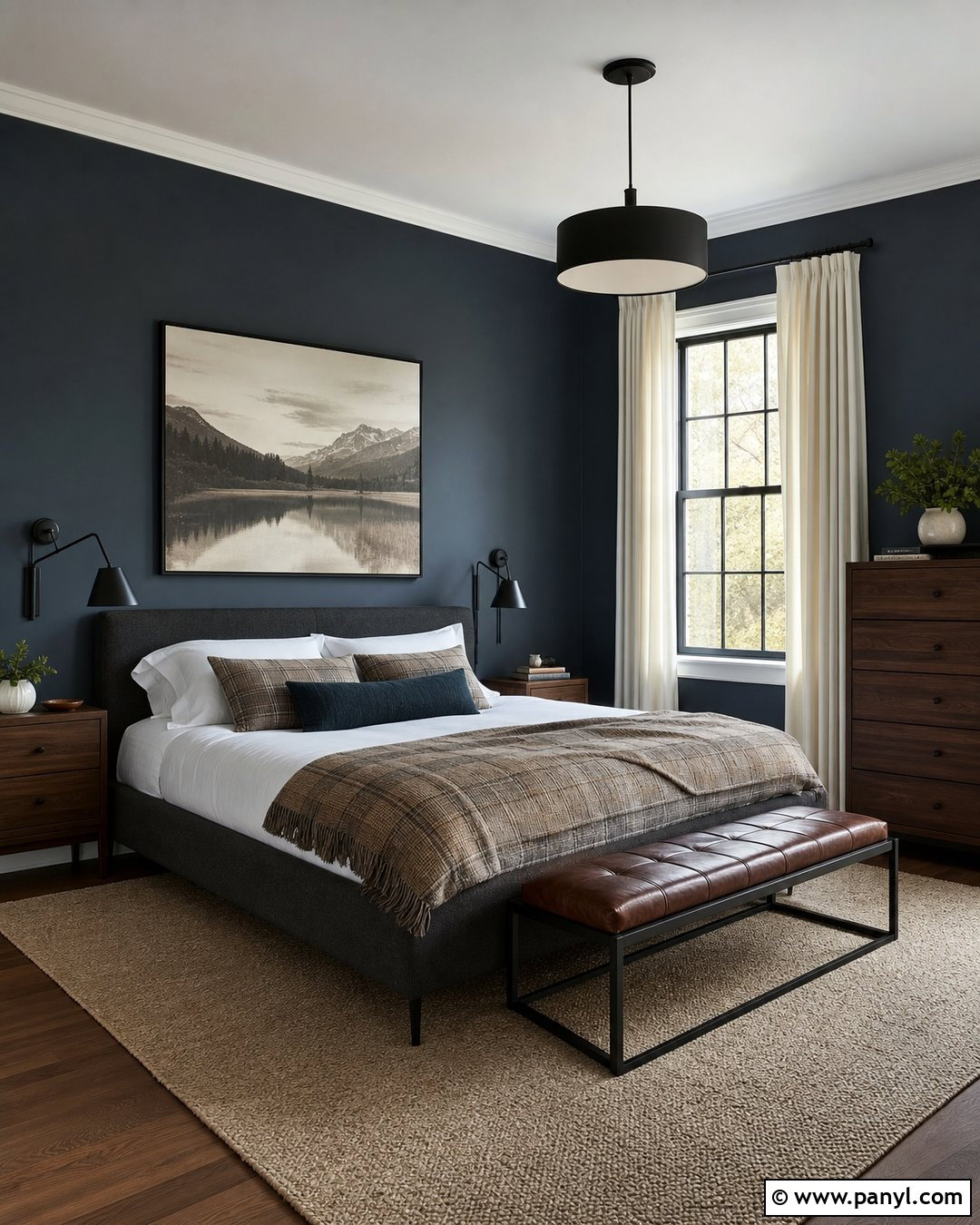
Deep teal combines the calm quality of blue with the natural richness of green. It can anchor an eclectic bedroom without requiring complicated decoration. Pair teal walls with a medium walnut bed featuring a woven cane headboard. Use white bedding as the base, then introduce mustard yellow, muted coral, and teal through pillows and a lightweight coverlet. A vintage-inspired rug can repeat these colors in softer tones. Choose aged brass sconces and compact wood nightstands to maintain a warm balance. Off-white curtains will frame the windows while allowing the walls to remain prominent. Add one or two graphic art prints rather than filling every surface. This complete scheme feels colorful but controlled because the larger furniture stays neutral and the brighter accents appear in small, carefully repeated amounts.
9. Midnight Blue Bedroom Walls
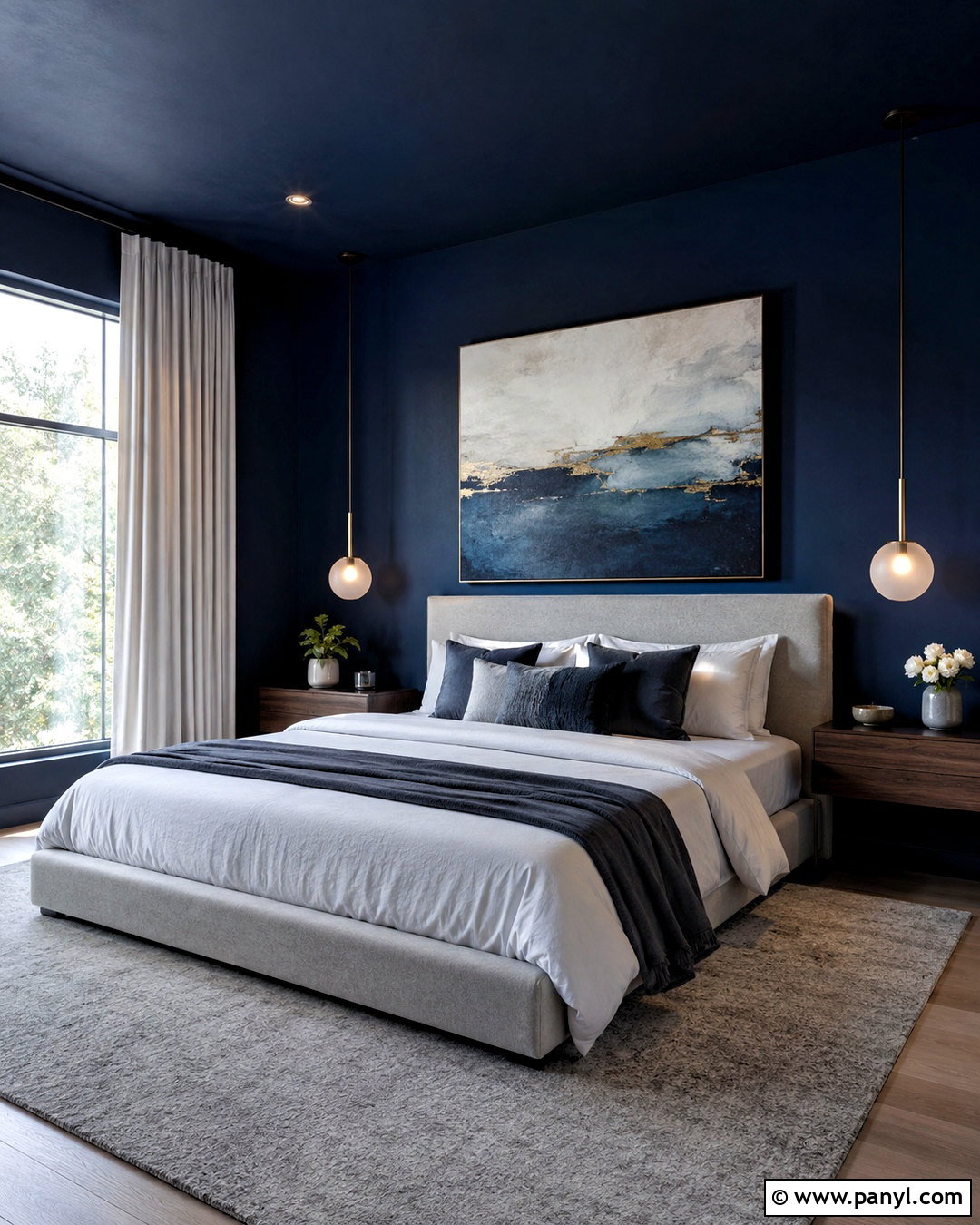
Midnight blue is darker and more atmospheric than standard navy, making it ideal for a sleek contemporary bedroom. Extend the color across the walls and ceiling to create a continuous, enveloping shell. Choose a low bed upholstered in pale gray fabric so its outline remains clear against the dark background. Layer crisp white sheets with slate blue pillows and a silver-gray quilt. Floating walnut nightstands add warmth without occupying much floor space. Use streamlined brass sconces or frosted glass pendants to bring light directly beside the bed. A pale gray rug and full ivory curtains provide larger areas of relief. Keep artwork minimal, perhaps using one oversized abstract piece with blue, cream, and warm beige. The finished room feels quiet and expansive rather than visually busy.
10. Slate Blue Bedroom Walls
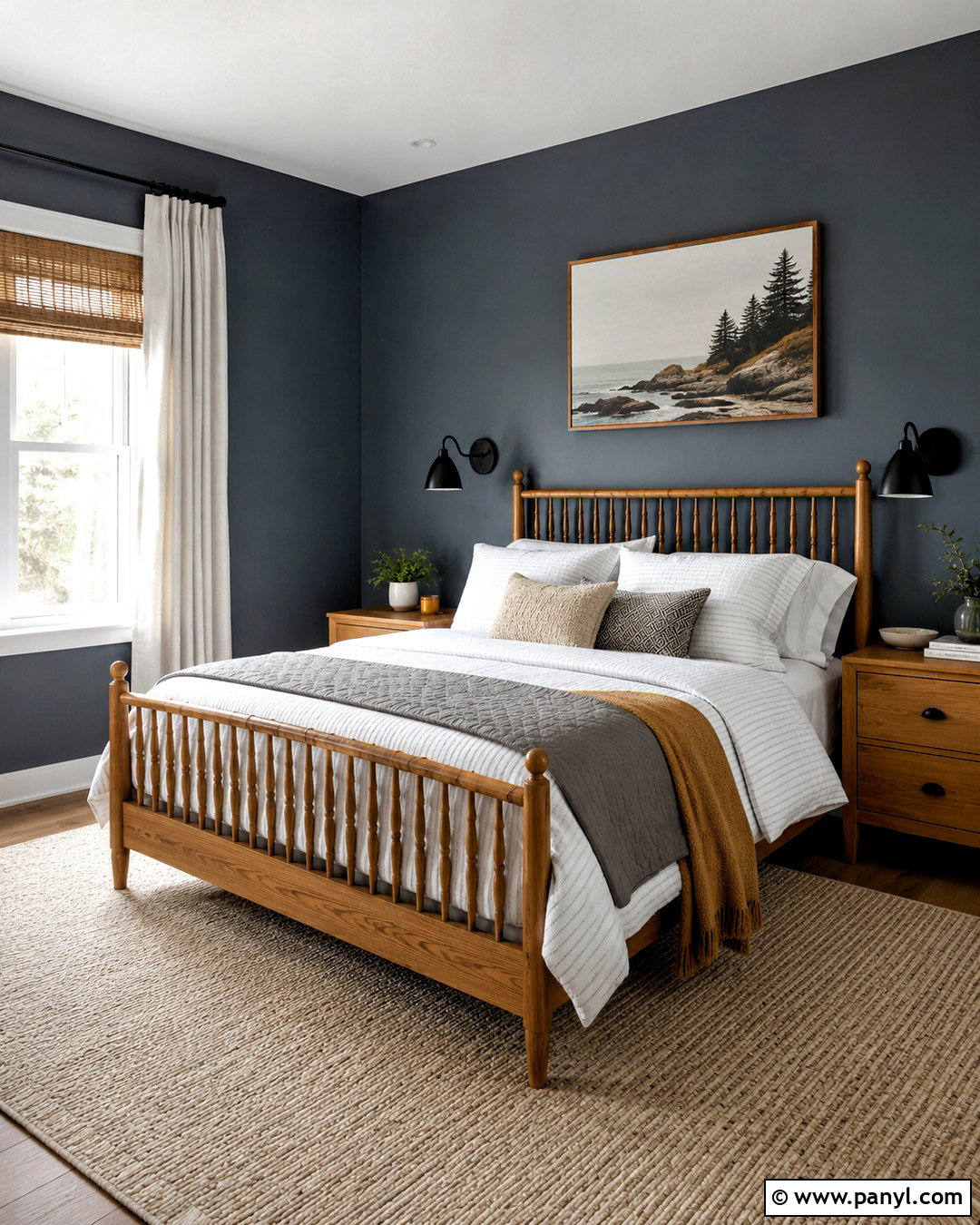
Slate blue offers a softer route into dark bedroom color because its gray undertone reduces intensity. It works beautifully in rooms where true navy might feel too formal. Pair the walls with a warm oak spindle bed and white cotton bedding featuring subtle blue stripes. Add a medium gray quilt, camel throw, and faded blue rug for gentle tonal variation. Black iron sconces give the room definition, while small oak nightstands maintain an airy look. Choose off-white curtains with a visible woven texture, and hang understated coastal photography or charcoal sketches above the bed. The result should feel calm and casual, not heavily nautical. This complete palette is especially useful for guest rooms and smaller bedrooms because slate blue supplies depth while the pale textiles and simple furniture preserve openness.
11. Blue Black Bedroom Walls
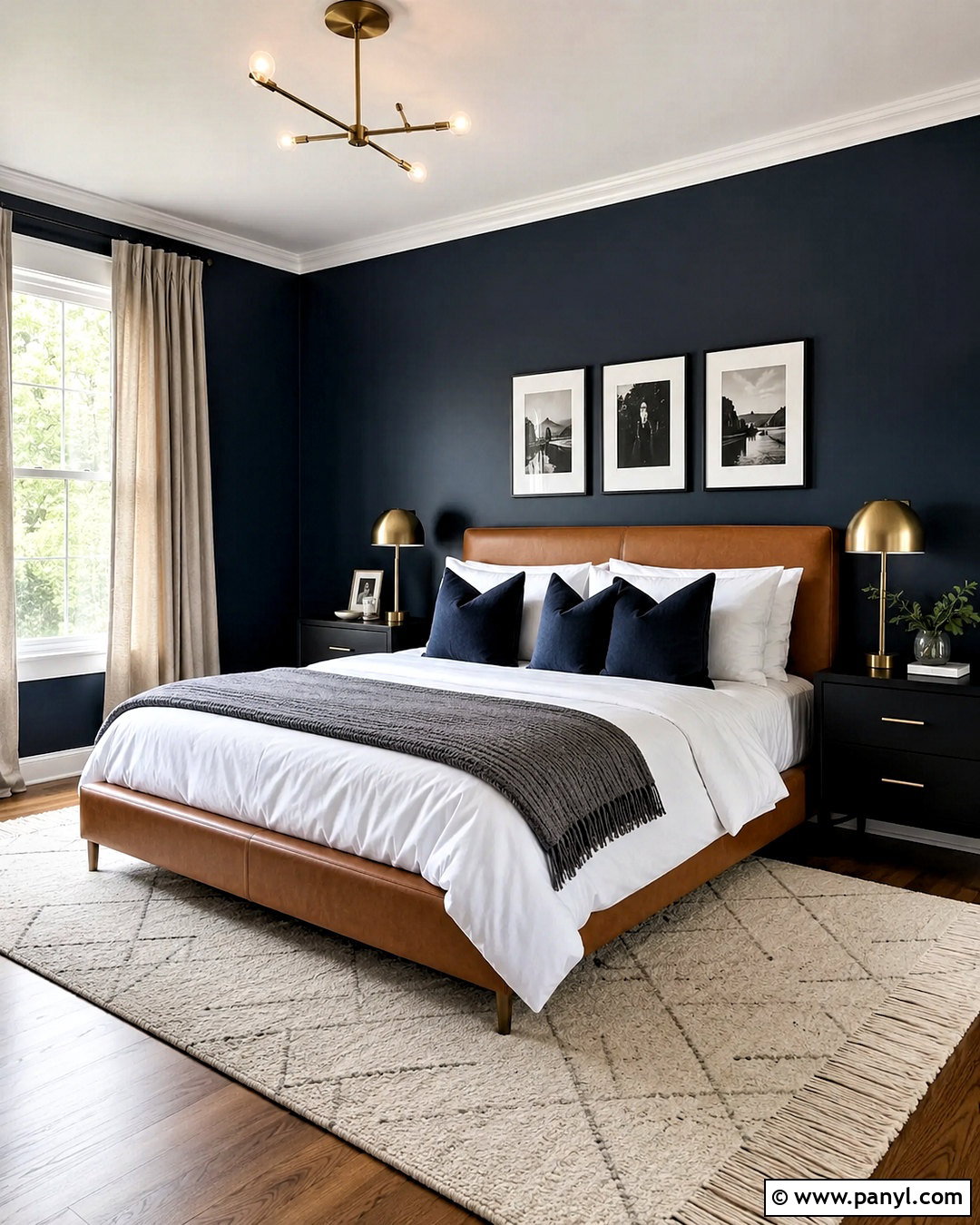
Blue-black walls create a sharp, tailored background that changes between deep navy and near black. Balance this dramatic color with a medium-height bed upholstered in warm camel leather or caramel fabric. White bedding makes the bed immediately visible, while navy pillows and a gray wool throw connect it to the walls. Use matte black nightstands for a streamlined effect, then introduce brushed brass lamps for warmth. A geometric rug in cream, charcoal, and tan supports the modern palette without adding unnecessary color. Keep window treatments light and simple, using natural linen panels or woven shades. Large black-and-white photography looks especially cohesive against this wall color. The finished bedroom feels masculine and refined, but the soft upholstery, warm metals, and layered bedding prevent it from appearing cold.
12. Aubergine Bedroom Walls
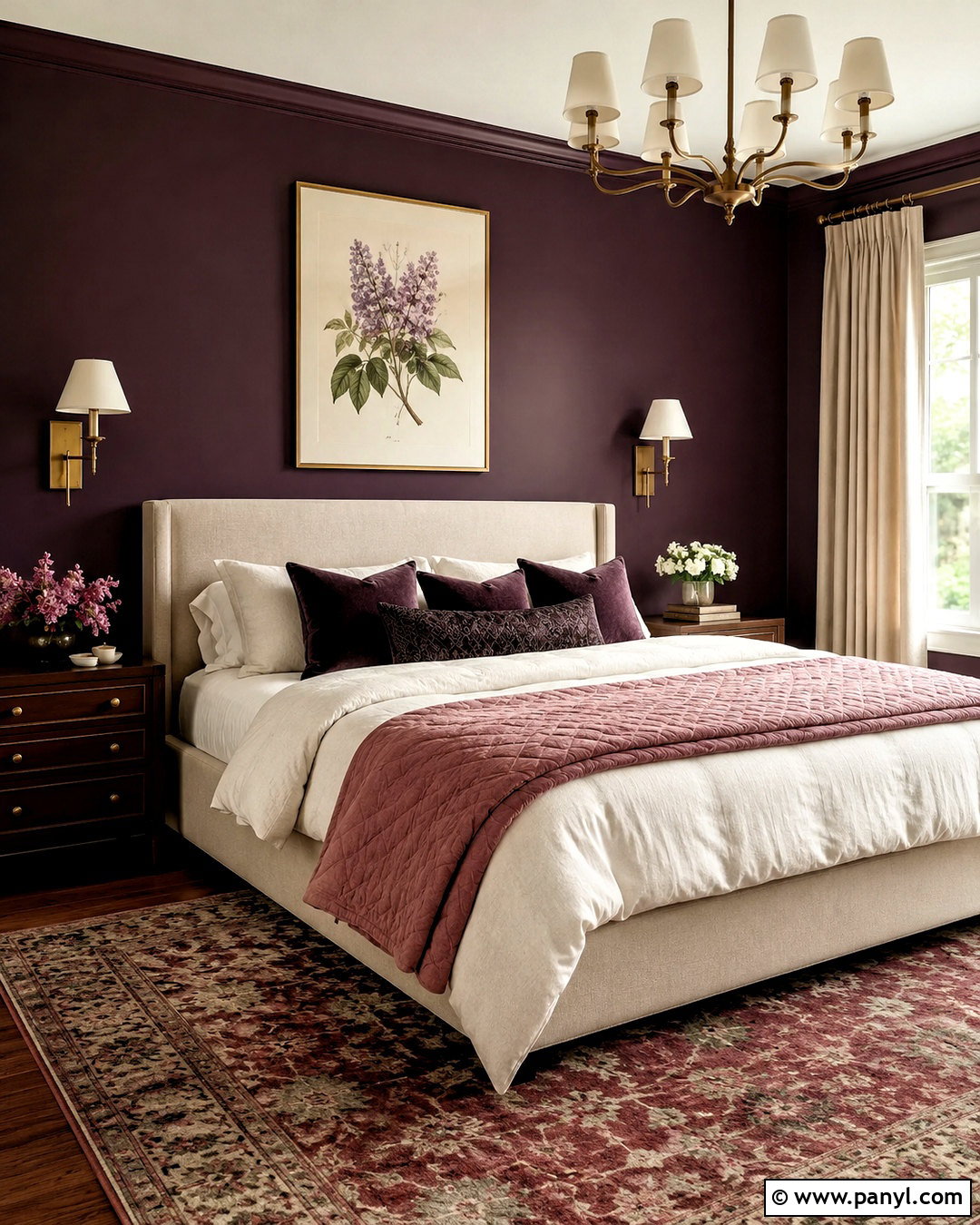
Aubergine brings deep purple, brown, and red undertones together in one sophisticated bedroom color. To keep it from feeling overly formal, pair the walls with a light beige linen bed and relaxed ivory bedding. Add plum velvet pillows, a dusty pink quilt, and one patterned lumbar cushion with olive details. Walnut nightstands and warm brass sconces complement the brown undertone in the paint. A vintage rug containing faded burgundy, beige, mauve, and green will unite the full palette. Hang botanical artwork in slim gold frames and use oatmeal curtains for soft contrast. Avoid bright white furniture, which can look harsh beside this complex shade. The completed room feels romantic and mature, offering color and drama while remaining warm, balanced, and comfortable.
13. Deep Plum Bedroom Walls
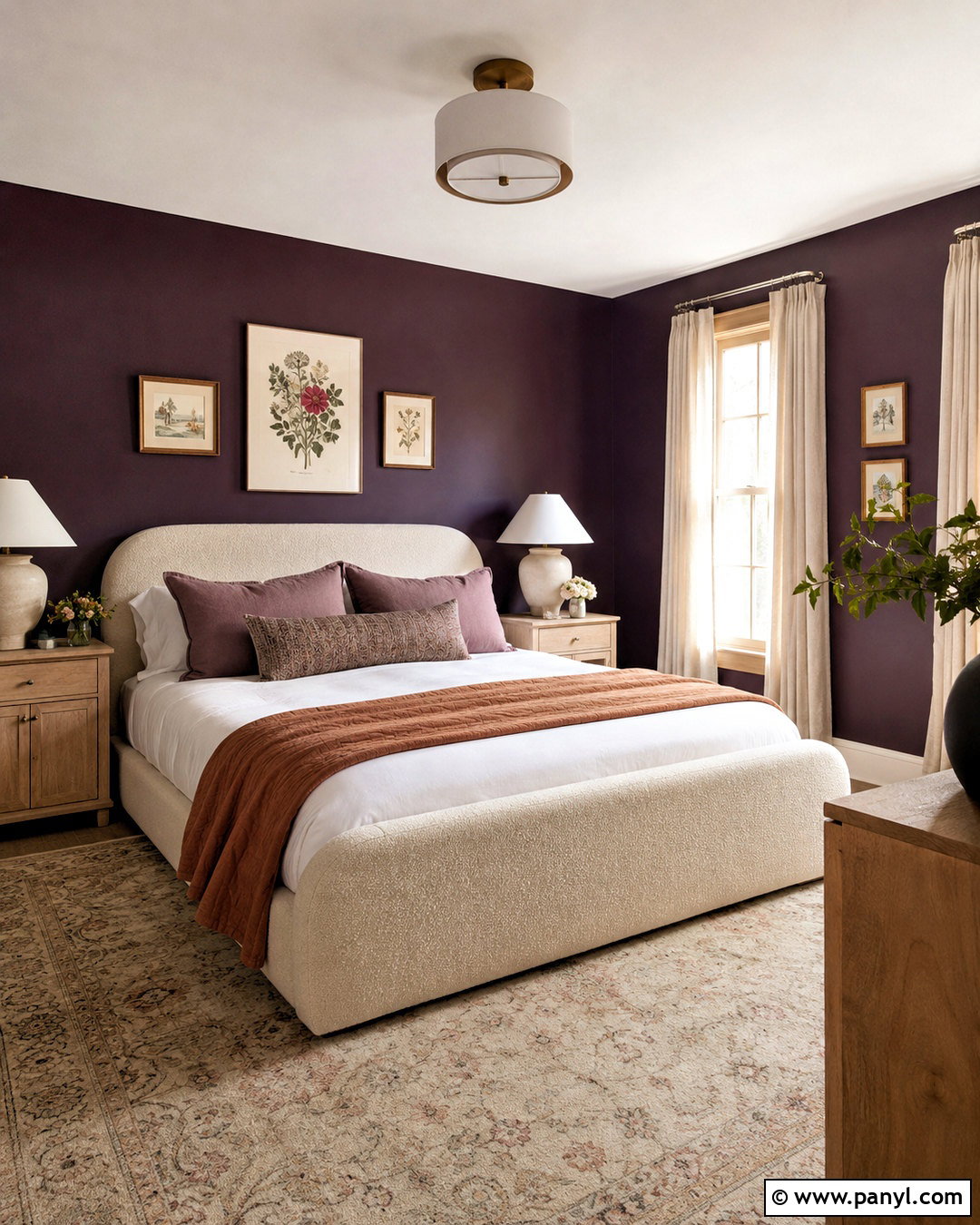
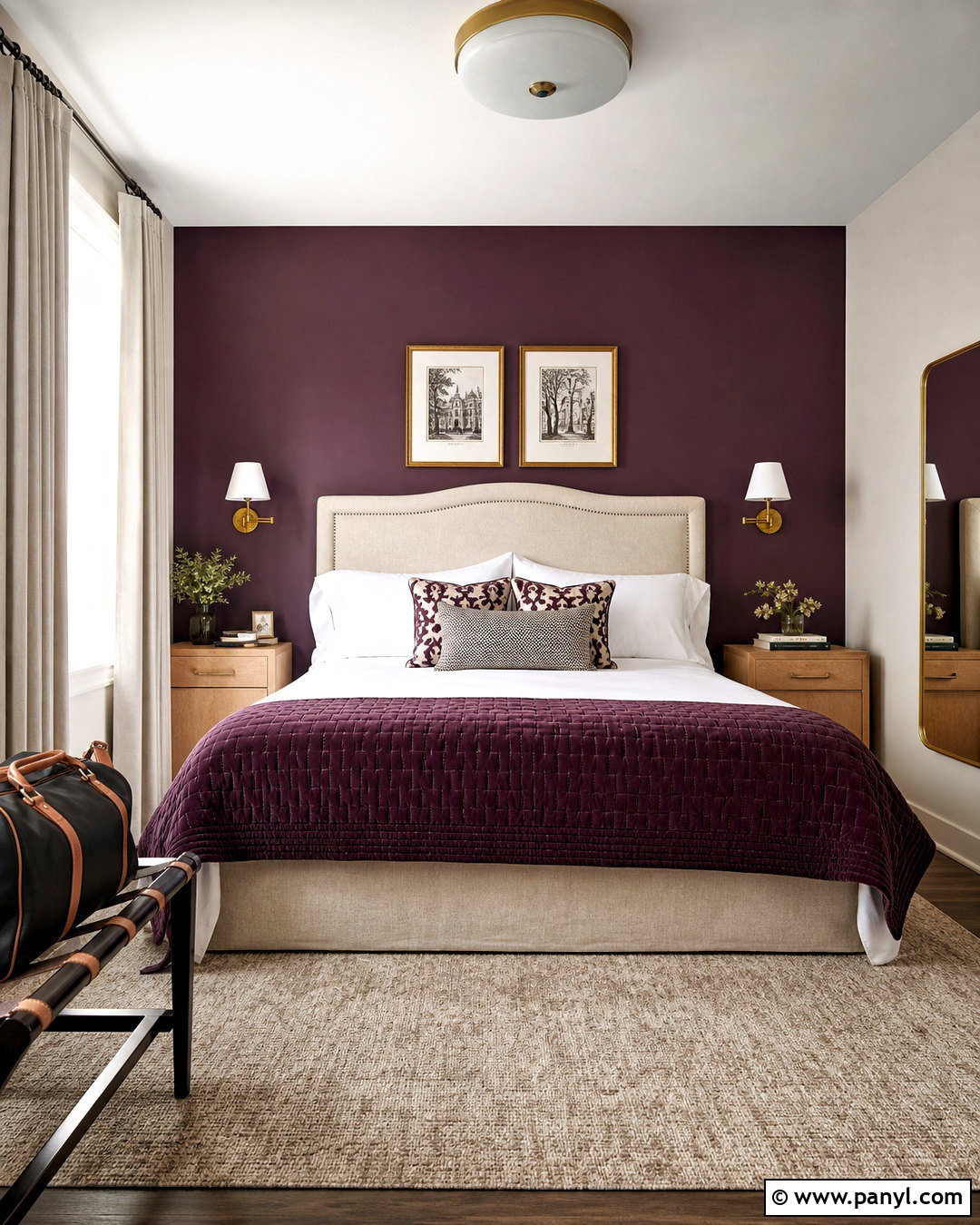
Deep plum walls can make a bedroom feel cozy, expressive, and slightly playful. Select a muted plum with smoky gray undertones so it complements everyday neutrals. Build the room around a curved oatmeal upholstered bed, then layer white sheets, mauve pillows, and a cinnamon-colored throw. Light oak nightstands keep the palette from becoming too heavy, while ceramic lamps with cream shades create soft contrast. Use a faded floral rug that combines plum, taupe, olive, and dusty peach. Simple linen curtains should match the bed closely to create repetition around the room. Add a few framed vintage illustrations above the headboard, but leave enough empty wall visible for the paint to have impact. This finished look suits cottage, transitional, and softly modern bedrooms without feeling overly feminine.
14. Burgundy Bedroom Walls
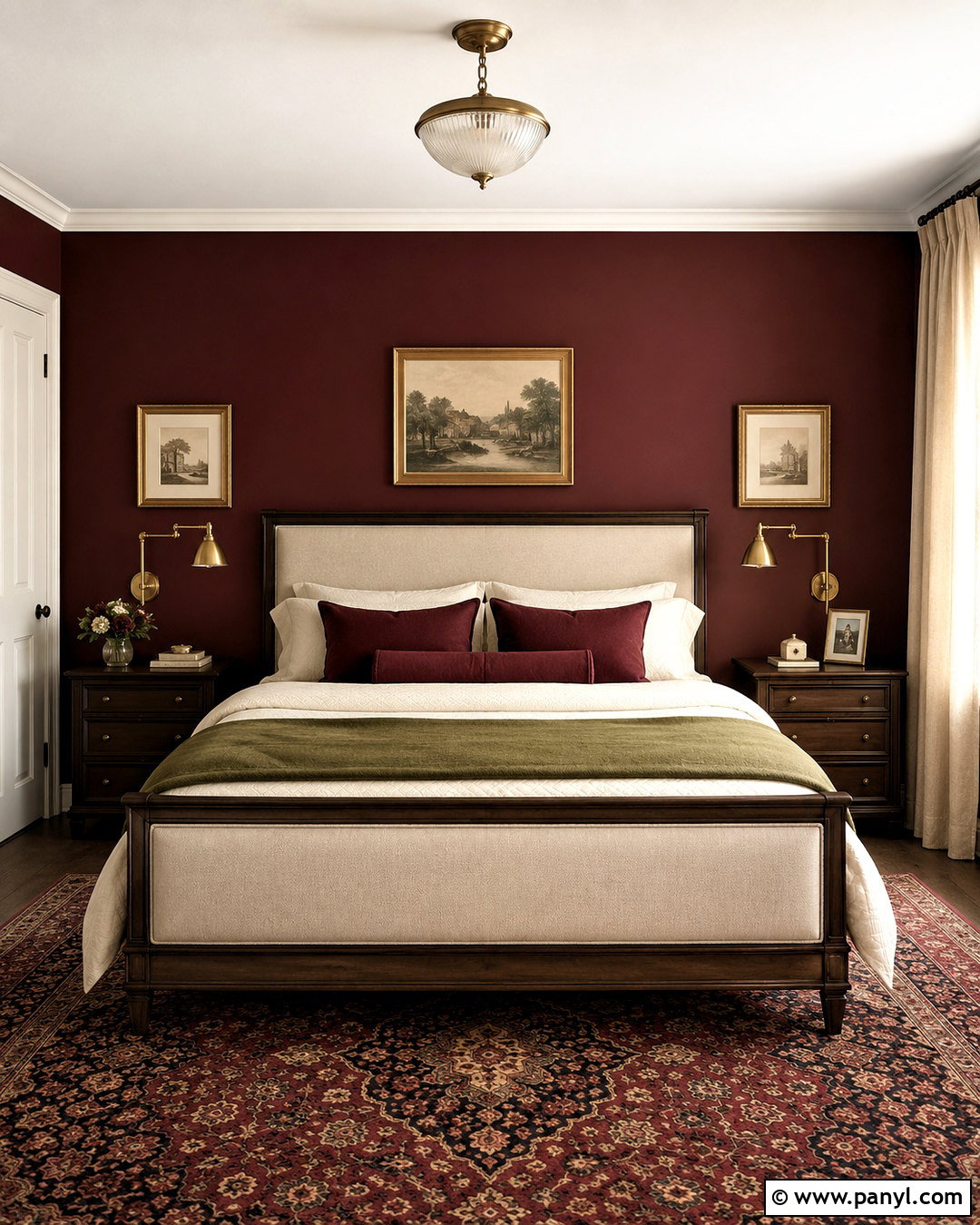
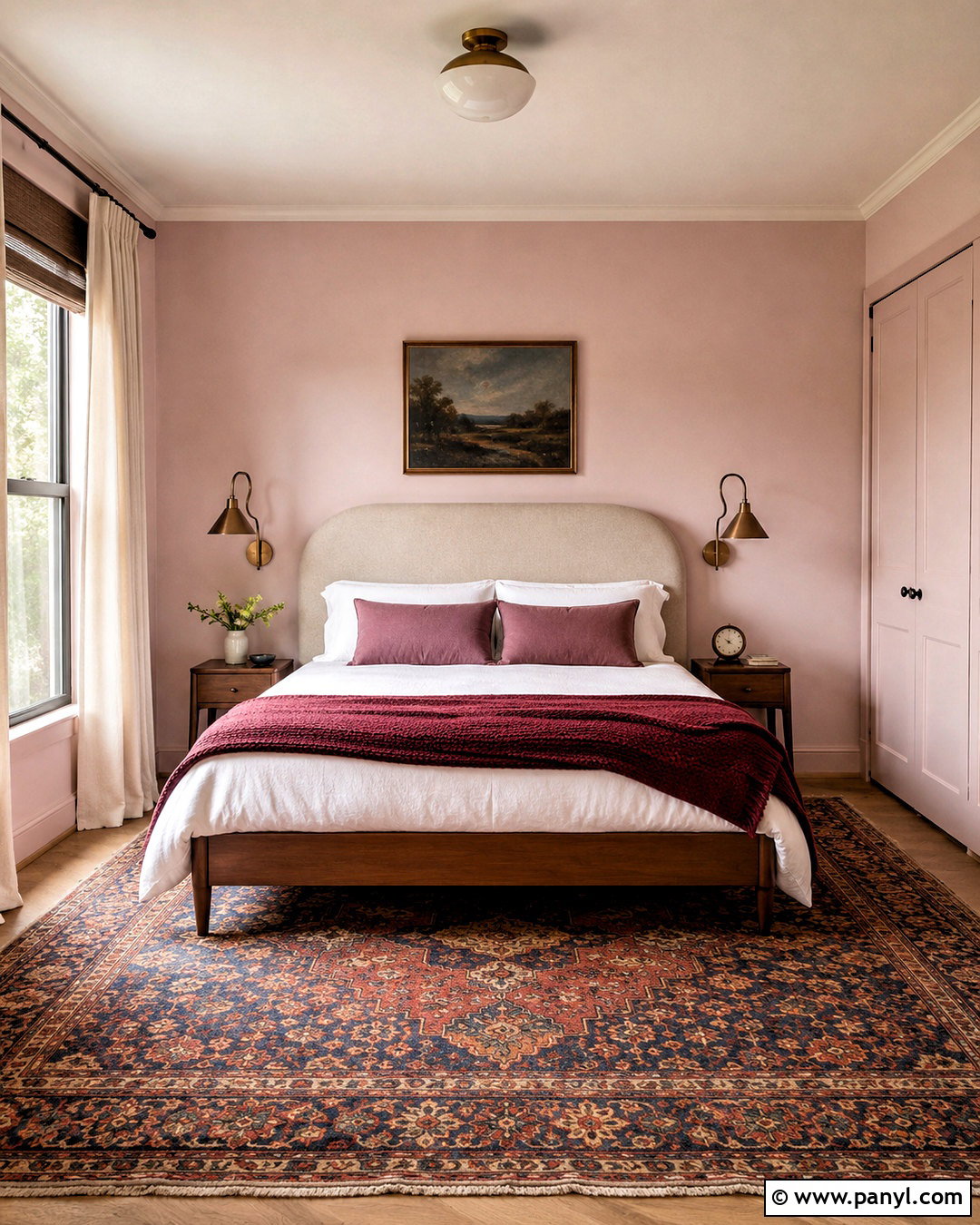
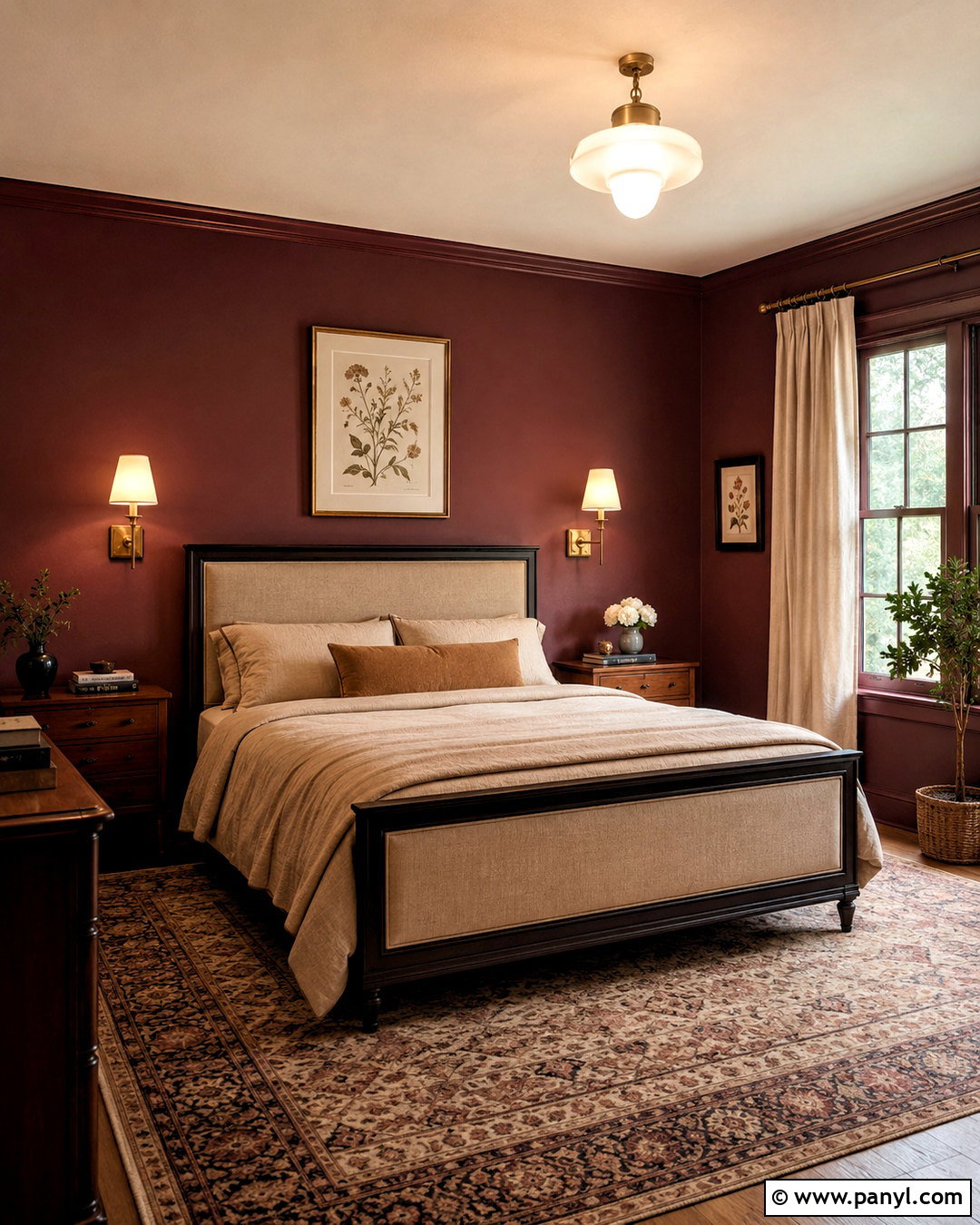
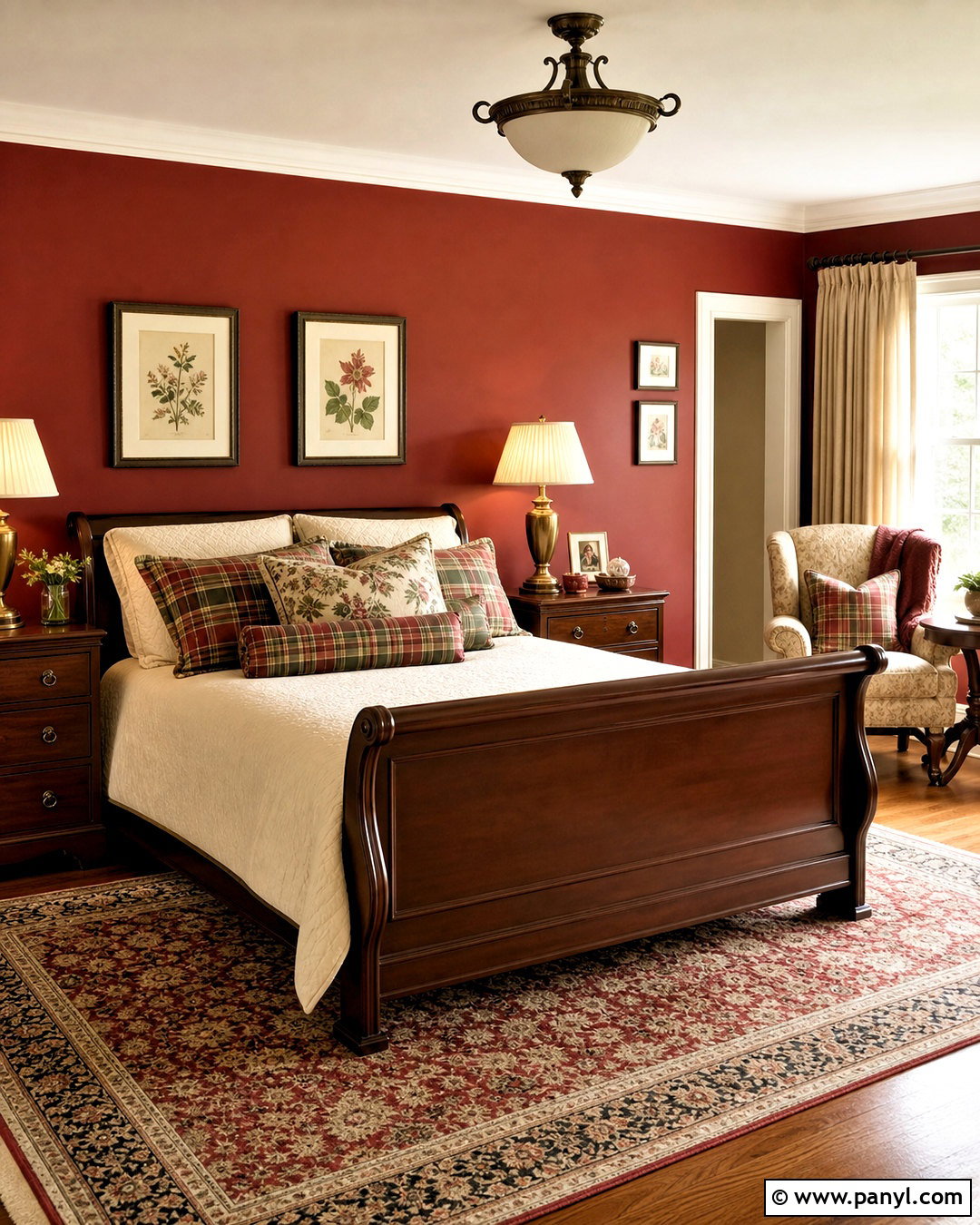
Burgundy walls provide a warm, stately foundation for a bedroom inspired by traditional interiors. Pair the rich red walls with dark walnut furniture and an upholstered headboard in neutral oatmeal. Use ivory bedding, burgundy accent pillows, and a muted olive blanket to create contrast without introducing competing bright colors. Brass swing-arm lights and framed classical prints strengthen the established feel. A Persian-style rug containing burgundy, navy, cream, and faded gold can anchor the bed and connect every element. Hang full beige curtains and use warm white on the ceiling so the room does not become visually enclosed. Keep the layout symmetrical with matching nightstands and lamps. The completed bedroom feels polished and restful, combining strong color with familiar materials and an orderly furniture arrangement.
15. Oxblood Red Bedroom Walls
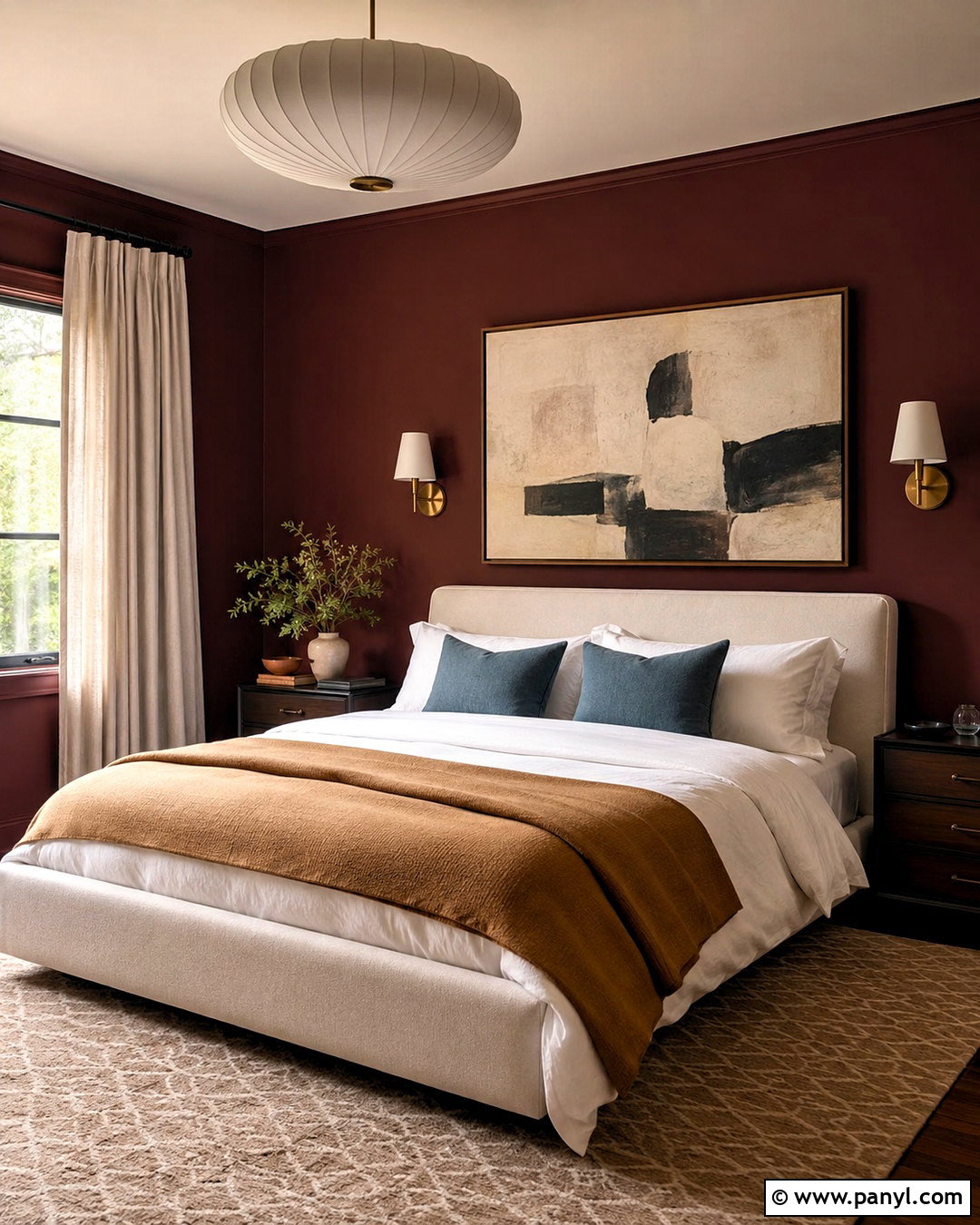
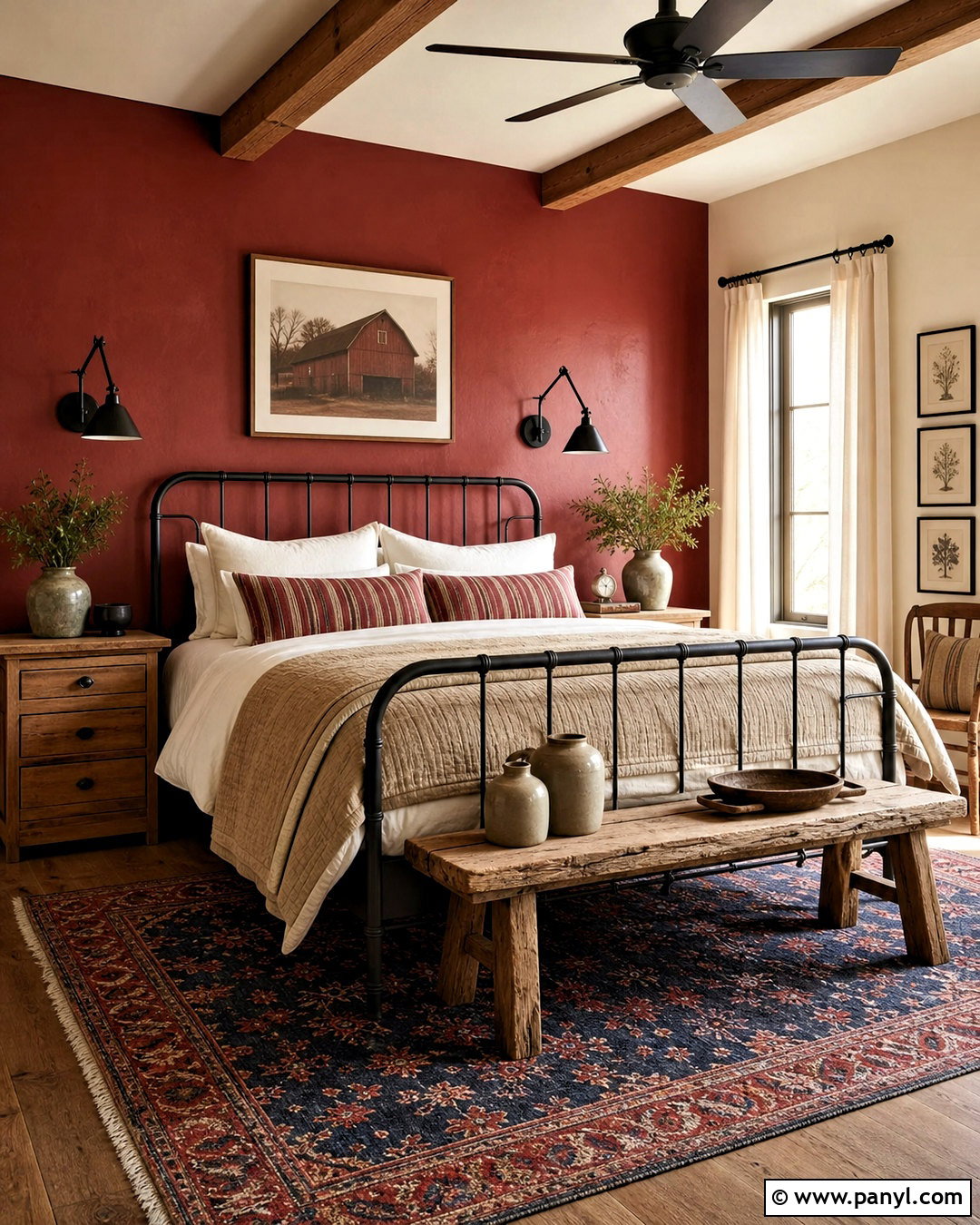
For a bolder bedroom, oxblood red offers greater depth and more brown than conventional red paint. Apply it to every wall, then offset its intensity with a simple bed upholstered in pale mushroom fabric. Choose warm white sheets, a camel blanket, and accent pillows in dark brown and muted blue. Espresso nightstands blend into the palette, while aged brass sconces add a subtle glow. A large beige rug with a restrained geometric pattern will brighten the floor and keep the room current. Use natural linen curtains rather than heavy red drapes. Above the headboard, display one oversized abstract artwork containing cream, rust, and charcoal. This complete design feels dramatic without becoming theatrical because the furniture, textiles, and decorations rely on quiet shapes and earthy neutral colors.
16. Chocolate Brown Bedroom Walls
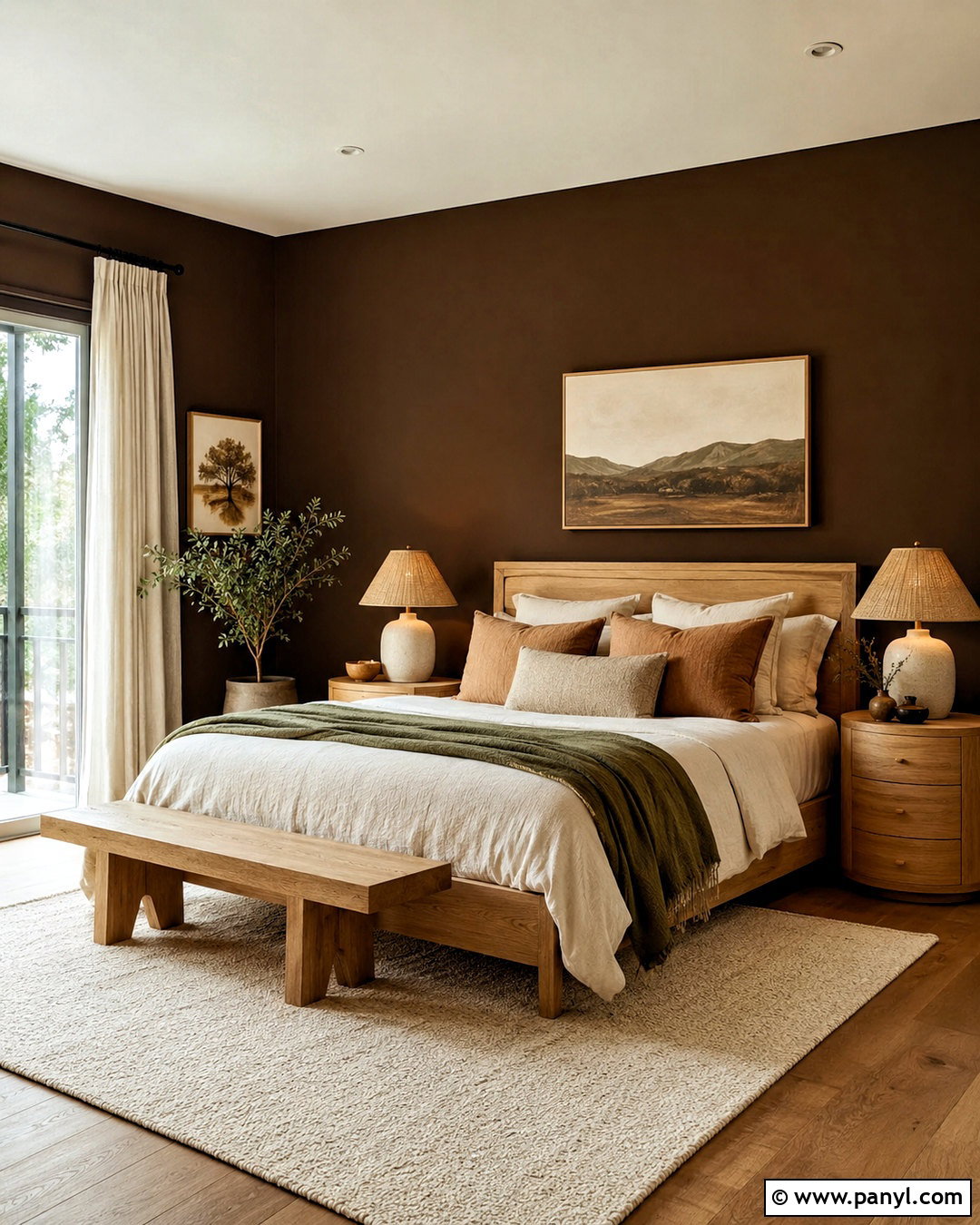
Chocolate brown walls make a bedroom feel warm and enveloping, especially when paired with creamy fabrics and lighter wood. Choose a deep cocoa shade with a balanced undertone, then use a light oak bed to prevent the furniture from disappearing. Dress it with ivory linen, caramel pillows, and a soft sage green throw. Add rounded oak nightstands, ceramic table lamps, and a substantial cream wool rug. Woven shades and off-white curtains can frame the windows while repeating the room’s natural textures. Artwork featuring simple landscapes or abstract earth tones will strengthen the organic palette. Include small black accents through picture frames or hardware for definition. The final room feels calm and grounded, proving that dark brown can look fresh when surrounded by pale, tactile, and contemporary materials.
17. Espresso Bedroom Walls
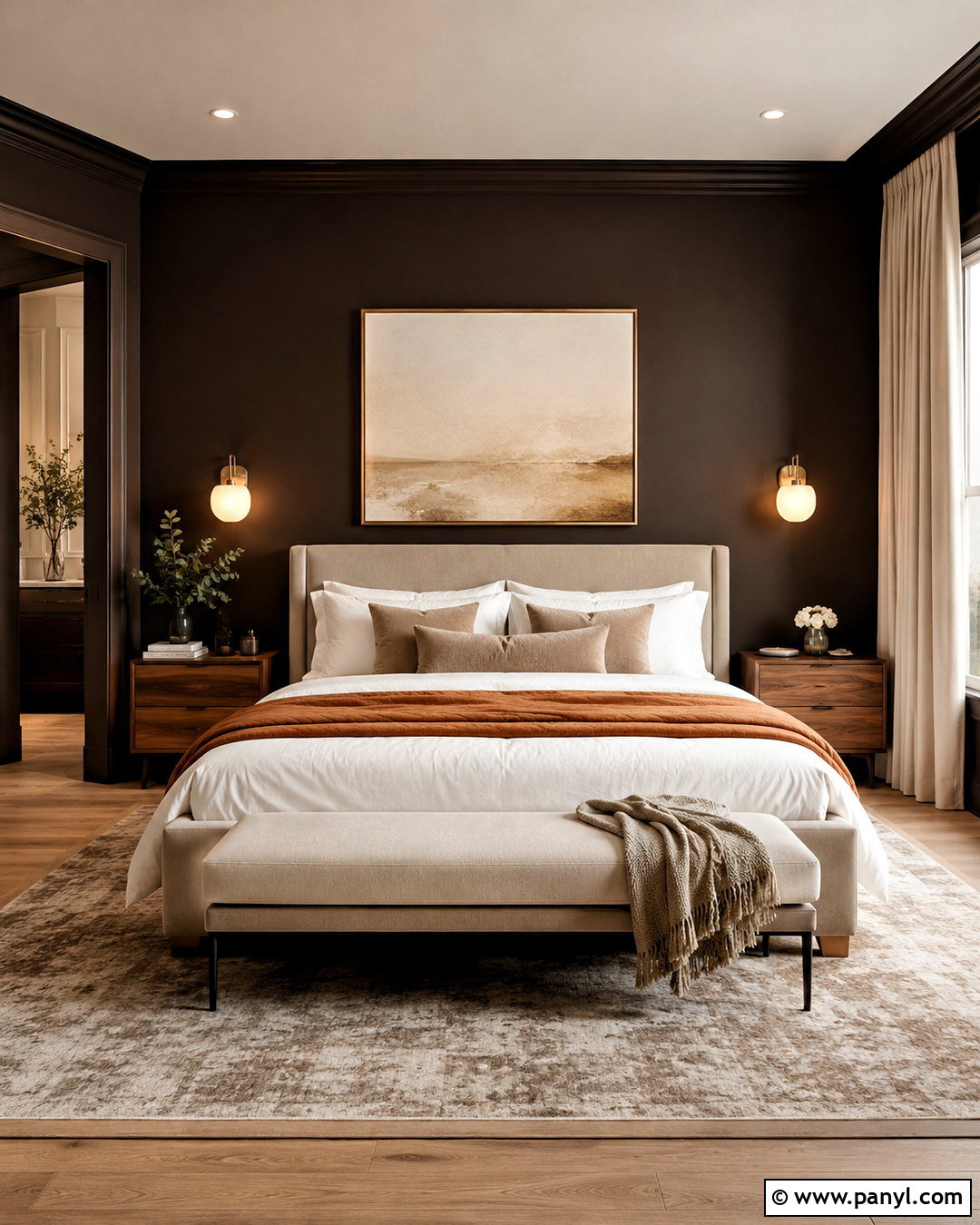
Espresso walls create an almost-black backdrop with enough brown warmth to feel softer than charcoal. Use the color on the walls and trim, then choose a tailored bed covered in light greige fabric. White bedding, taupe pillows, and a burnt orange coverlet will stand out clearly against the deep background. Place slim walnut nightstands on both sides and install opal glass sconces with bronze hardware. A patterned cream-and-brown rug can add movement without disrupting the restrained scheme. Hang beige curtains from dark rods close to the ceiling and select artwork with broad areas of white or tan. Keep surfaces organized so the strong wall color reads as intentional. The finished bedroom has a boutique-like atmosphere but remains approachable through practical furniture, warm textiles, and familiar natural tones.
18. Dark Terracotta Bedroom Walls
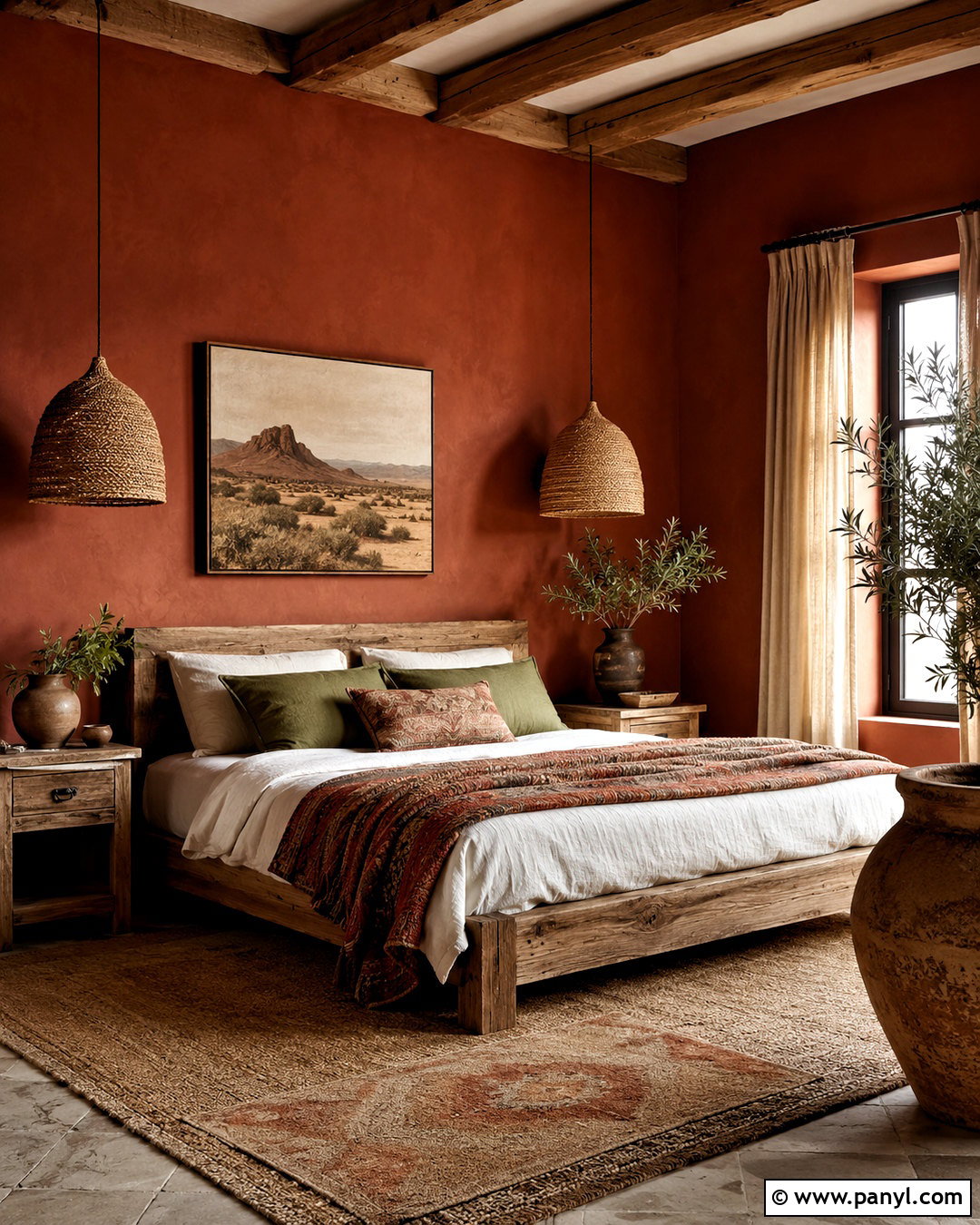
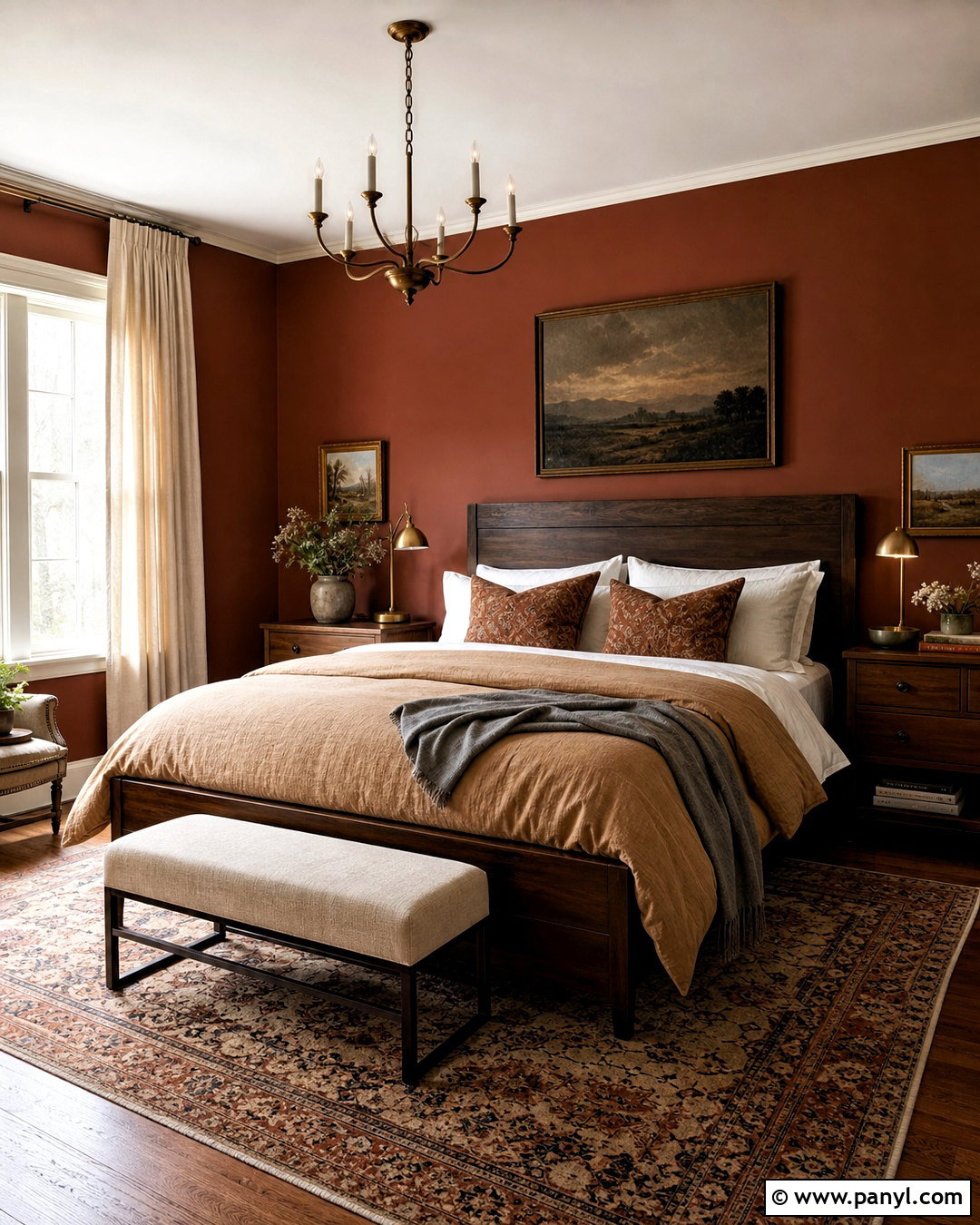
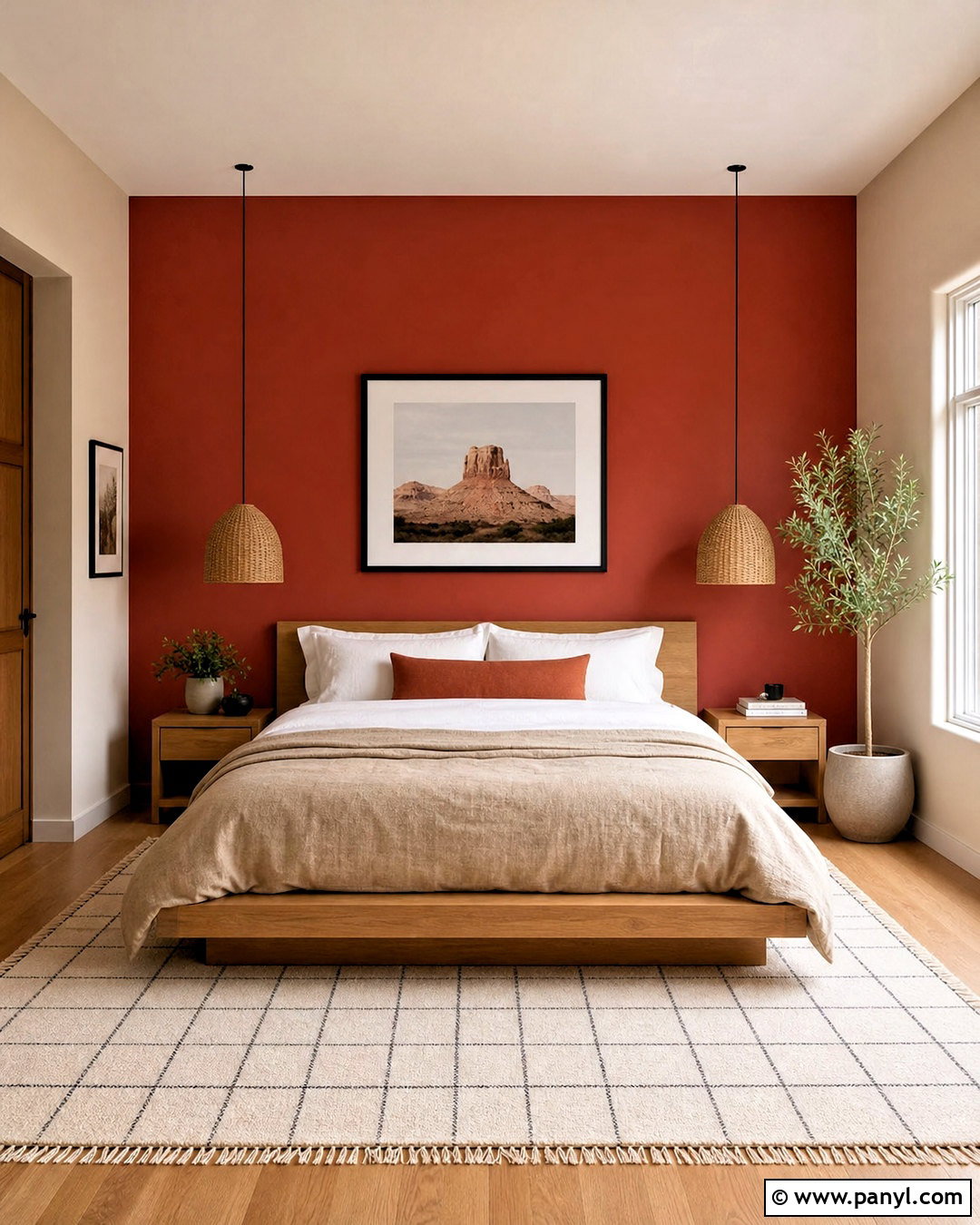
Dark terracotta surrounds a bedroom with earthy red-orange warmth. It feels especially cohesive when combined with rustic wood, woven materials, and creamy textiles. Paint the walls a deep clay shade, then place a natural oak or reclaimed wood bed at the center. Use ivory linen bedding, olive green pillows, and a patterned rust-and-cream blanket. Woven pendant lights can free the nightstands while reinforcing the organic character. Ground the space with a light jute rug layered beneath a smaller patterned textile. Beige curtains, handmade pottery, and simple desert-inspired artwork complete the palette. Avoid too many orange accessories; the wall color already provides plenty of warmth. This full bedroom scheme feels sunbaked and comfortable, fitting Southwestern, Mediterranean, rustic, and relaxed modern homes.
19. Dark Pewter Bedroom Walls
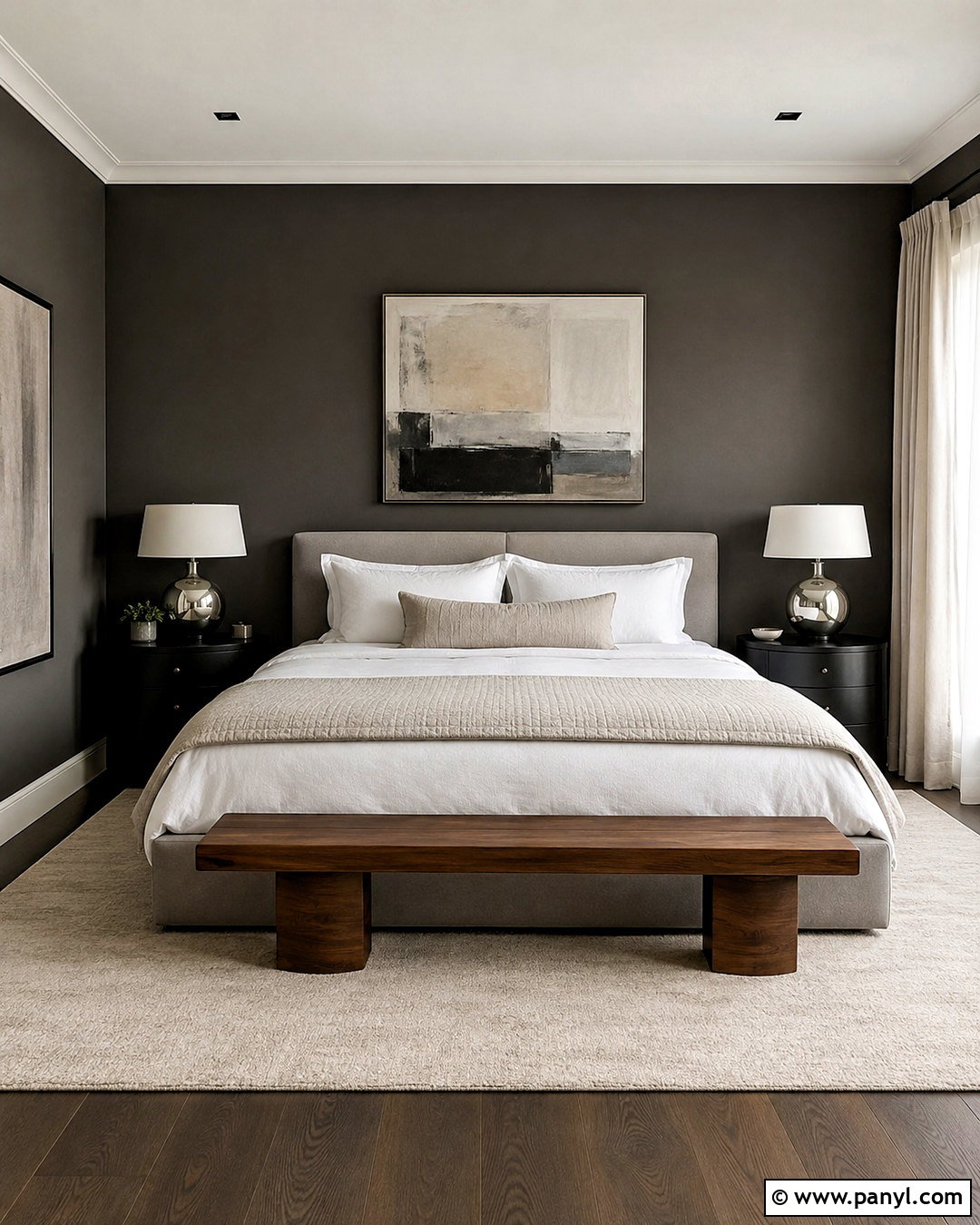
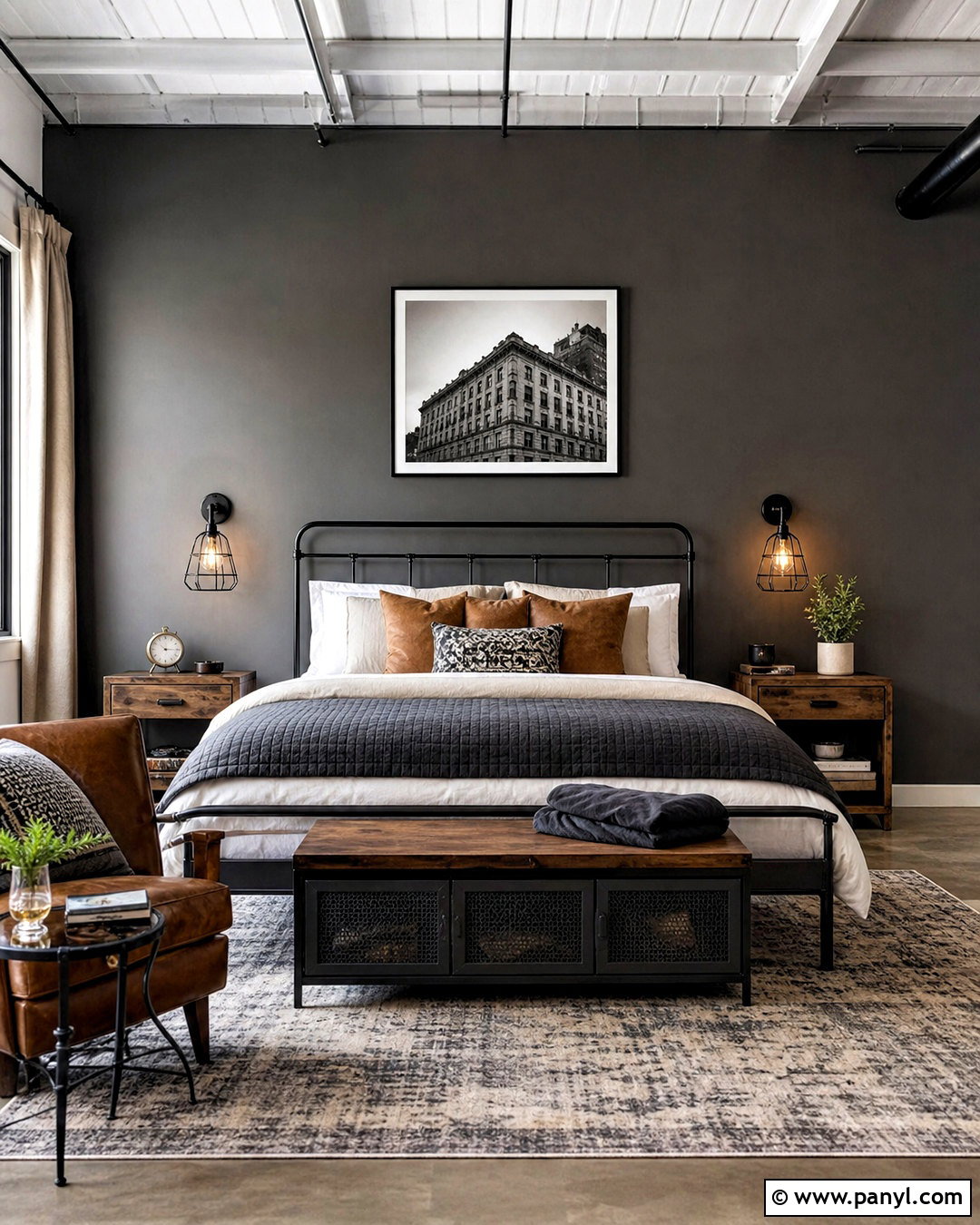
Dark pewter sits between charcoal and warm gray, providing drama without the visual weight of black. Use it for a tailored bedroom with soft contemporary details. A pale gray upholstered bed creates subtle tonal layering, while white bedding and a warm beige quilt stop the palette from looking cold. Choose black nightstands with rounded edges and add brushed nickel or polished chrome lamps for a restrained shine. A large cream rug should extend well beyond the bed to lighten the floor. Bring warmth through medium oak flooring, tan leather accents, or a walnut bench. Sheer white curtains beneath thicker taupe panels offer flexible light control. Minimal abstract artwork in black, white, and camel finishes the design, producing a polished bedroom that feels modern, comfortable, and carefully balanced.
20. Deep Taupe Bedroom Walls
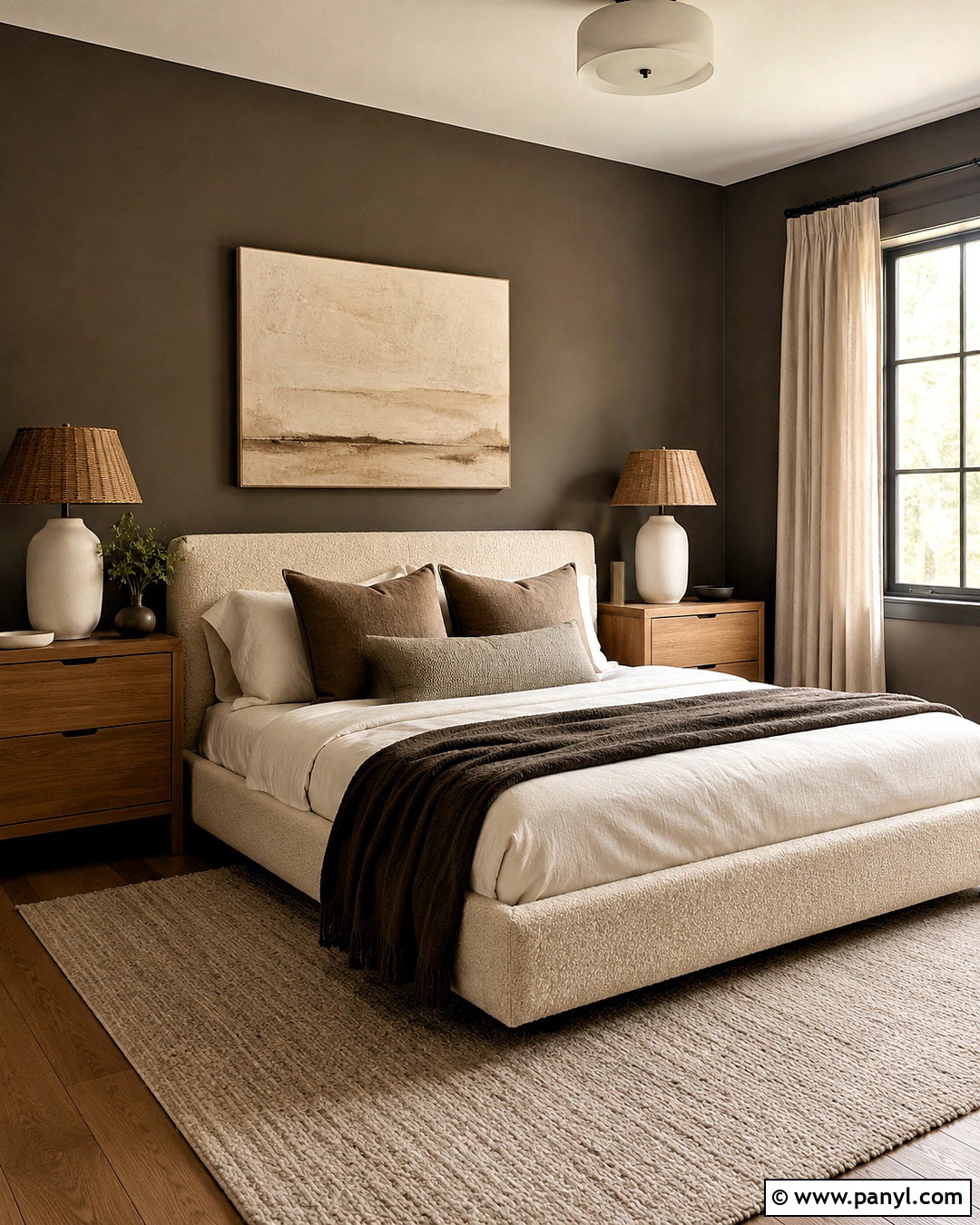
Deep taupe is an excellent dark neutral for anyone who wants a cozy bedroom without using black, blue, or a highly saturated color. Its blend of brown and gray creates a quiet background for natural materials. Pair the walls with a cream boucle bed, medium oak nightstands, and warm white bedding. Layer mushroom-colored pillows, a chocolate throw, and a subtle striped blanket for tonal depth. Use plaster-finish lamps, woven window shades, and a wool rug in oatmeal and beige. One large abstract canvas in cream, tan, and dark brown can anchor the headboard wall. Black hardware adds definition in small doses. This monochromatic room succeeds through texture rather than strong contrast, resulting in a calm, modern retreat that feels warm in both daylight and artificial light.
Conclusion:
The best dark bedroom is not built around paint alone. It combines a deep wall color with furniture, lighting, textiles, flooring, and decor that create a balanced whole. Navy and charcoal offer familiar versatility, while forest green, aubergine, burgundy, terracotta, and chocolate brown introduce stronger personality. Pale bedding can provide crisp contrast, whereas medium wood, brass, linen, wool, and woven details bring essential warmth. Test any dark shade on more than one wall and examine it during daylight and at night before painting the entire room. Whether you prefer classic, modern, rustic, or glamorous decor, these 20 dark bedroom wall colors provide practical starting points for creating a restful and personal retreat.

Related Ideas and Inspiration:
Leave a Reply