
The right dark wall color can turn an ordinary sleeping space into a warm, restful retreat. These 20 moody bedroom paint colors include deep blues, earthy greens, dramatic neutrals, and rich purple tones that feel sophisticated rather than gloomy. The secret is creating a complete palette around the paint. Warm wood furniture, layered bedding, soft rugs, metallic details, and thoughtful lighting help darker walls feel balanced and inviting. You can also color-drench the ceiling and trim for a cocooning effect or use lighter architectural details for contrast. Always test a large sample on several walls because natural and artificial light can reveal unexpected undertones. Explore the complete room looks below to find the best 20 moody bedroom paint colors for your space.

1. Navy Blue Bedroom Paint
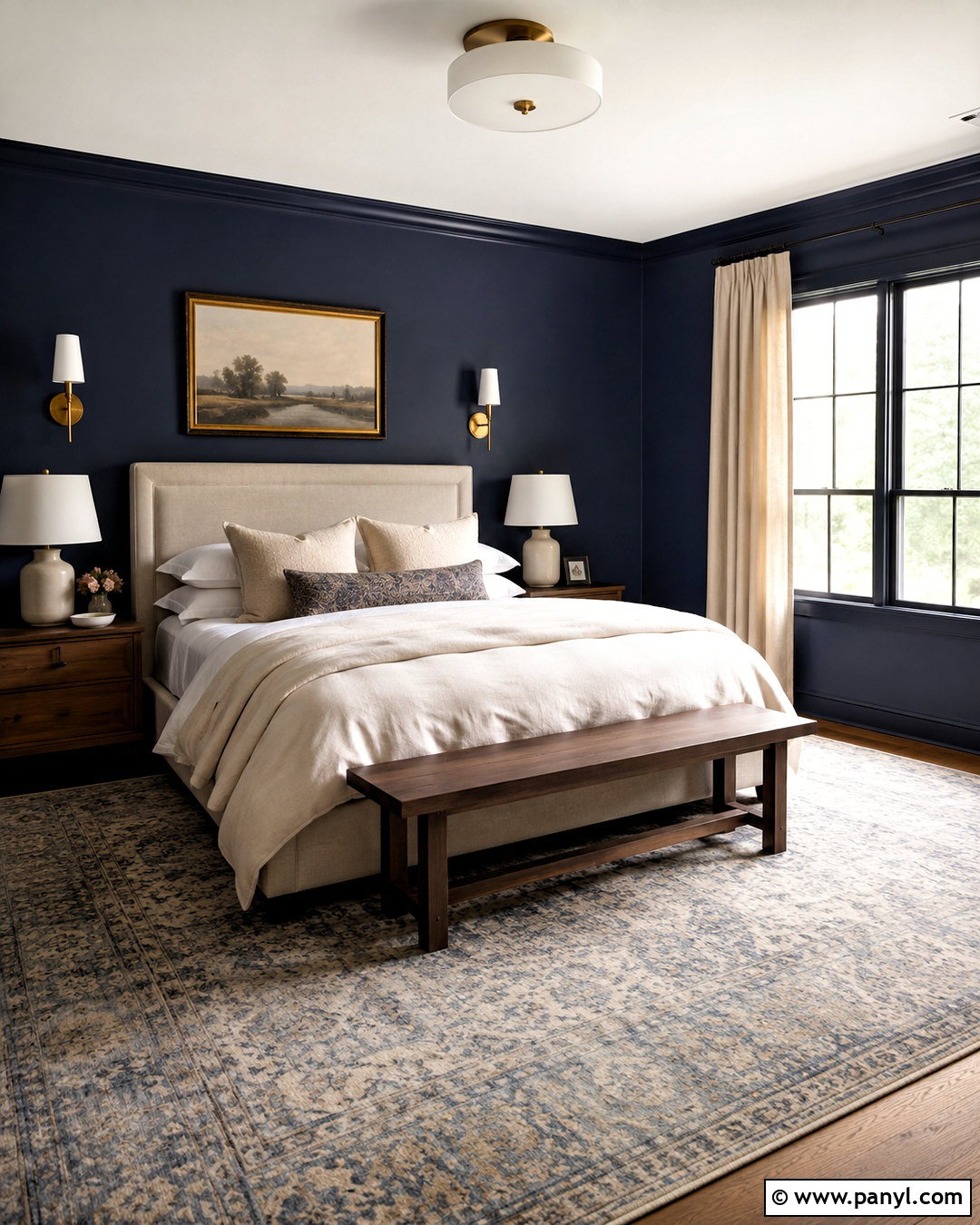
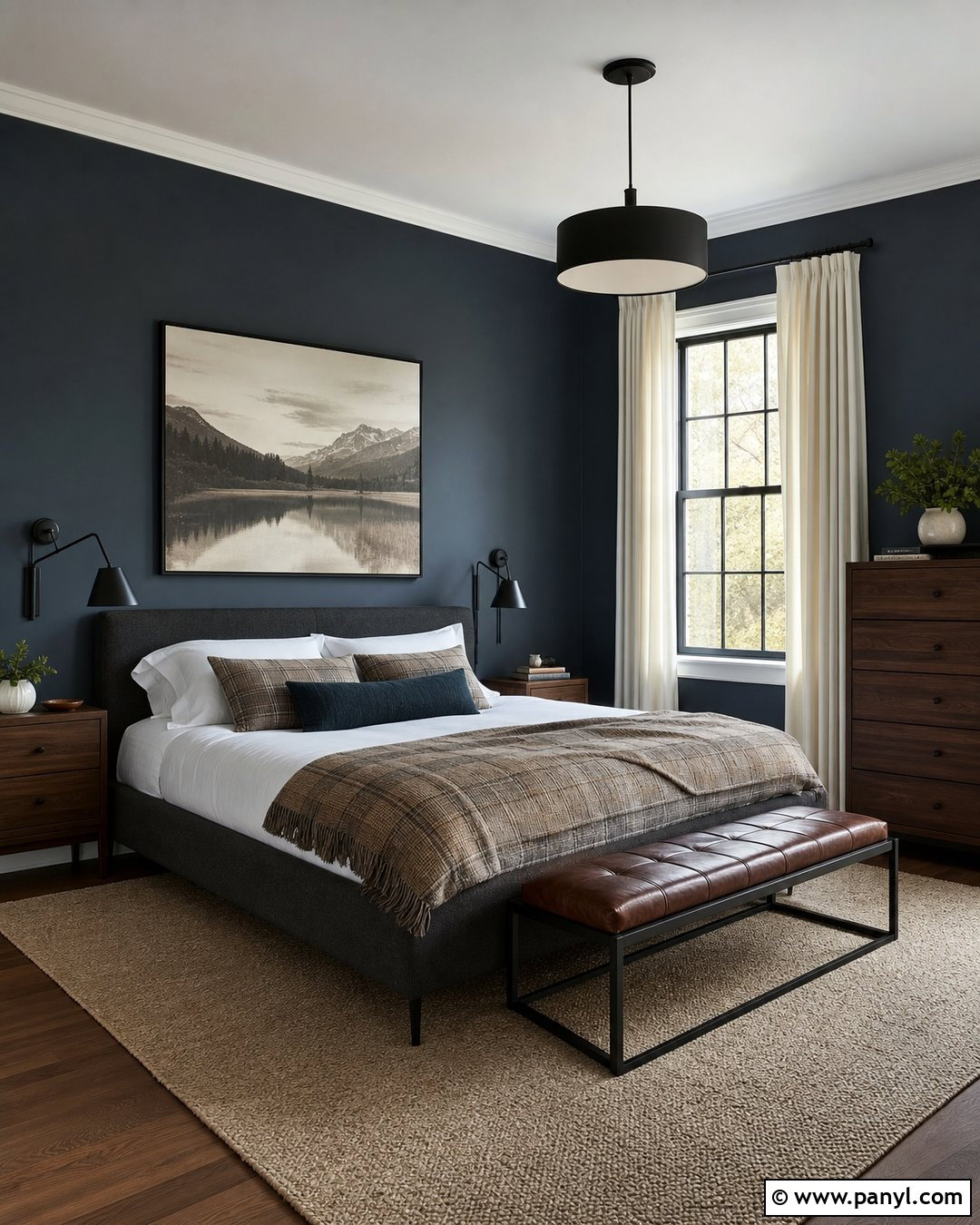
Navy blue creates a classic moody bedroom that feels peaceful, polished, and easy to live with. Paint every wall in a deep, slightly muted navy, then use soft warm white on the ceiling to keep the room visually open. An upholstered oatmeal headboard, crisp ivory sheets, and a faded blue-and-cream rug add contrast without weakening the dramatic mood. Choose medium-toned walnut nightstands and aged brass sconces to bring warmth beside the cooler walls. Full-length flax linen curtains soften the windows and prevent the space from looking too formal. Complete the room with a simple wood bench, a navy throw, and restrained artwork in antique brass frames. This balanced scheme works particularly well in traditional and transitional bedrooms.
2. Charcoal Gray Bedroom Paint
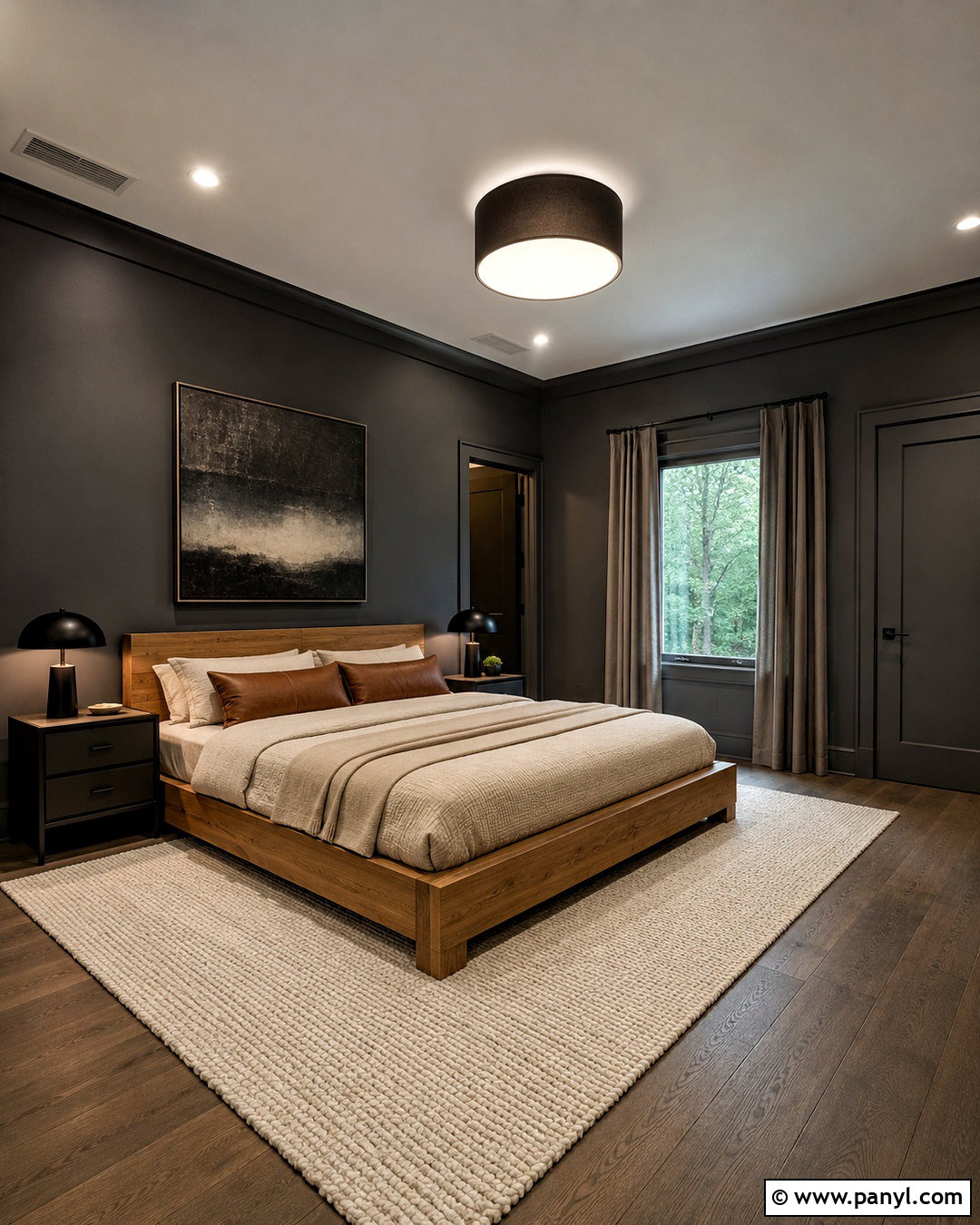
Imagine a charcoal bedroom that feels tailored and cozy instead of cold or industrial. Select a deep gray with subtle brown undertones and continue it across the walls, trim, and interior doors. This unified treatment softens visual boundaries and creates an enveloping effect. Bring in a low natural oak bed, warm beige bedding, and a thick cream rug to brighten the center of the room. Matte black lamps provide definition, while cognac leather pillows add a welcome layer of warmth. Keep window treatments simple with textured taupe curtains mounted close to the ceiling. A few framed charcoal sketches and handmade ceramic accessories finish the look. Use warm white bulbs so the gray retains its comfortable undertone after sunset.
3. Forest Green Bedroom Paint
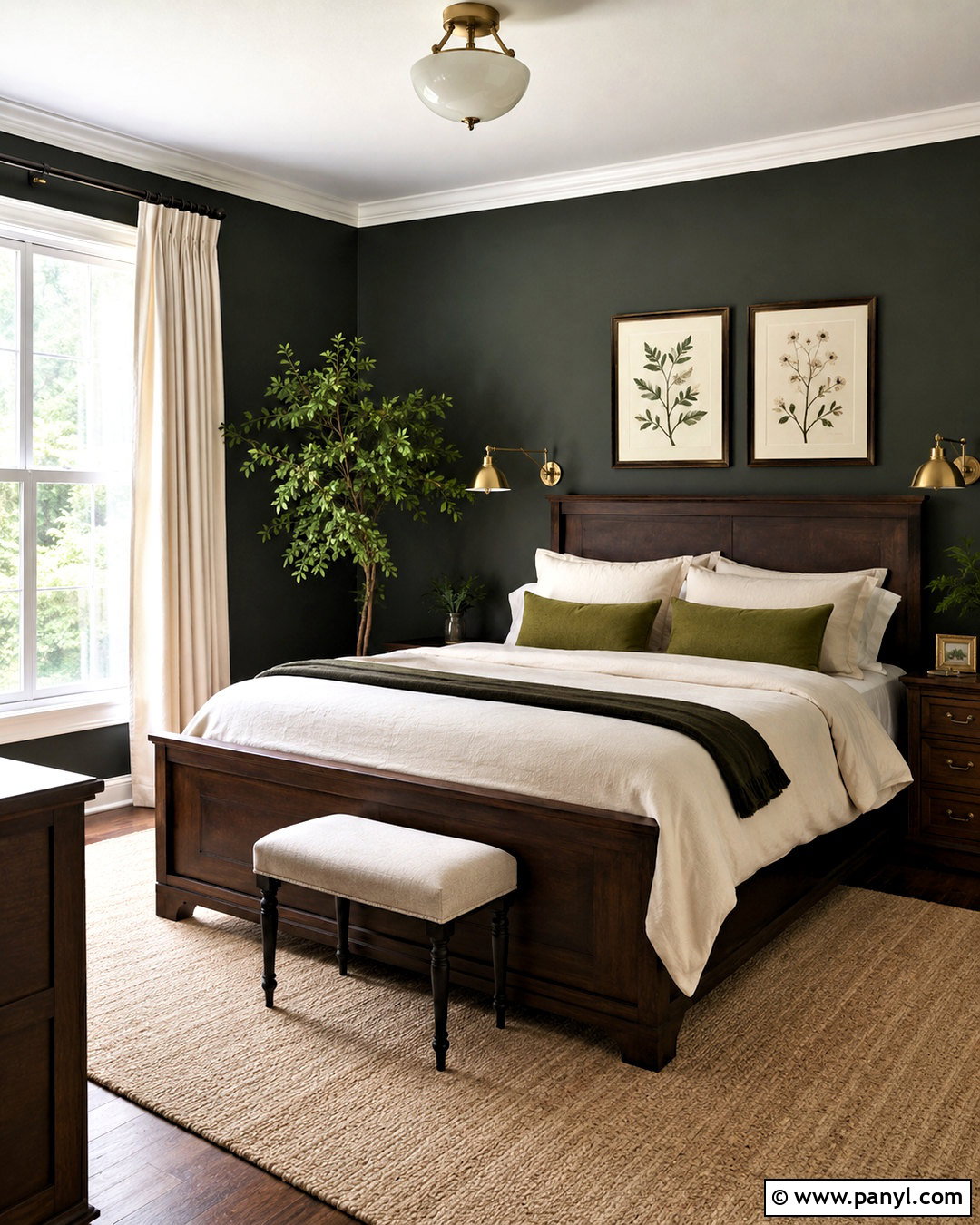
Deep forest green brings the calming character of nature into a bedroom while still delivering plenty of drama. Cover the walls in a rich, blackened green and pair them with warm white trim for a clean, defined edge. A dark oak bed and matching nightstands reinforce the organic palette. Layer the bed with ivory linen, moss-colored pillows, and a softly patterned botanical quilt. A woven jute-and-wool rug prevents the dark walls and furniture from feeling too heavy. Add antique brass reading lights, linen curtains, and a simple landscape painting above the bed. A large leafy plant can echo the wall color without making the room overly themed. The finished bedroom feels grounded, quiet, and comfortably connected to the outdoors.
4. Soft Black Bedroom Paint
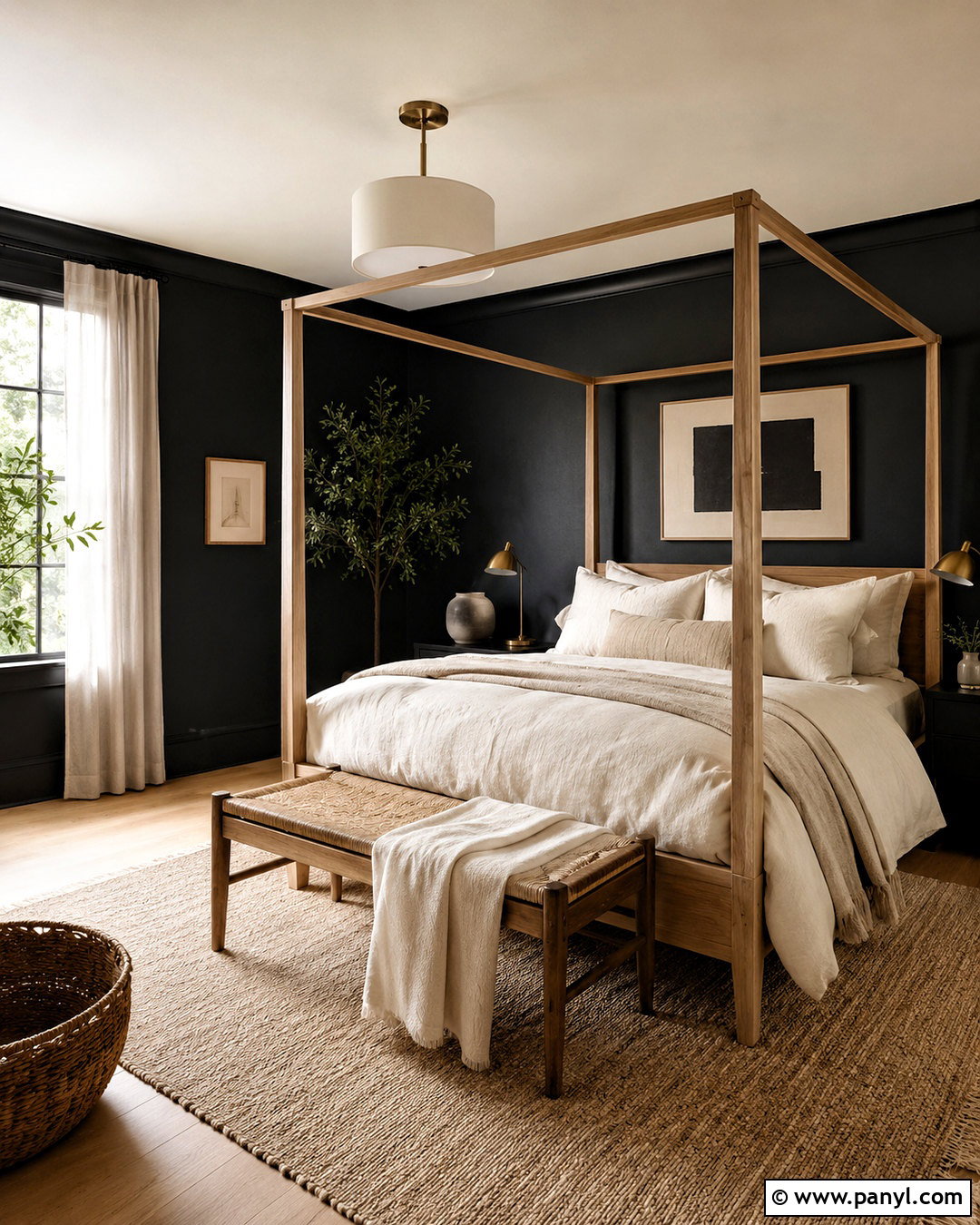
Black paint can make a bedroom feel surprisingly calm when the surrounding materials are warm and tactile. Choose a soft black with a charcoal or brown undertone rather than a sharp blue-black. Paint the walls and baseboards together, but leave the ceiling a gentle ivory to reflect light downward. Introduce a light oak canopy bed, layered cream bedding, and a substantial natural wool rug. Pale linen curtains offer contrast and frame the windows without creating harsh lines. Brushed brass lamps, woven baskets, and warm pottery provide subtle highlights around the room. Keep artwork large and minimal, using earthy abstract shapes instead of many small pieces. The result is dramatic and modern, yet still comfortable enough for everyday living.
5. Aubergine Bedroom Paint
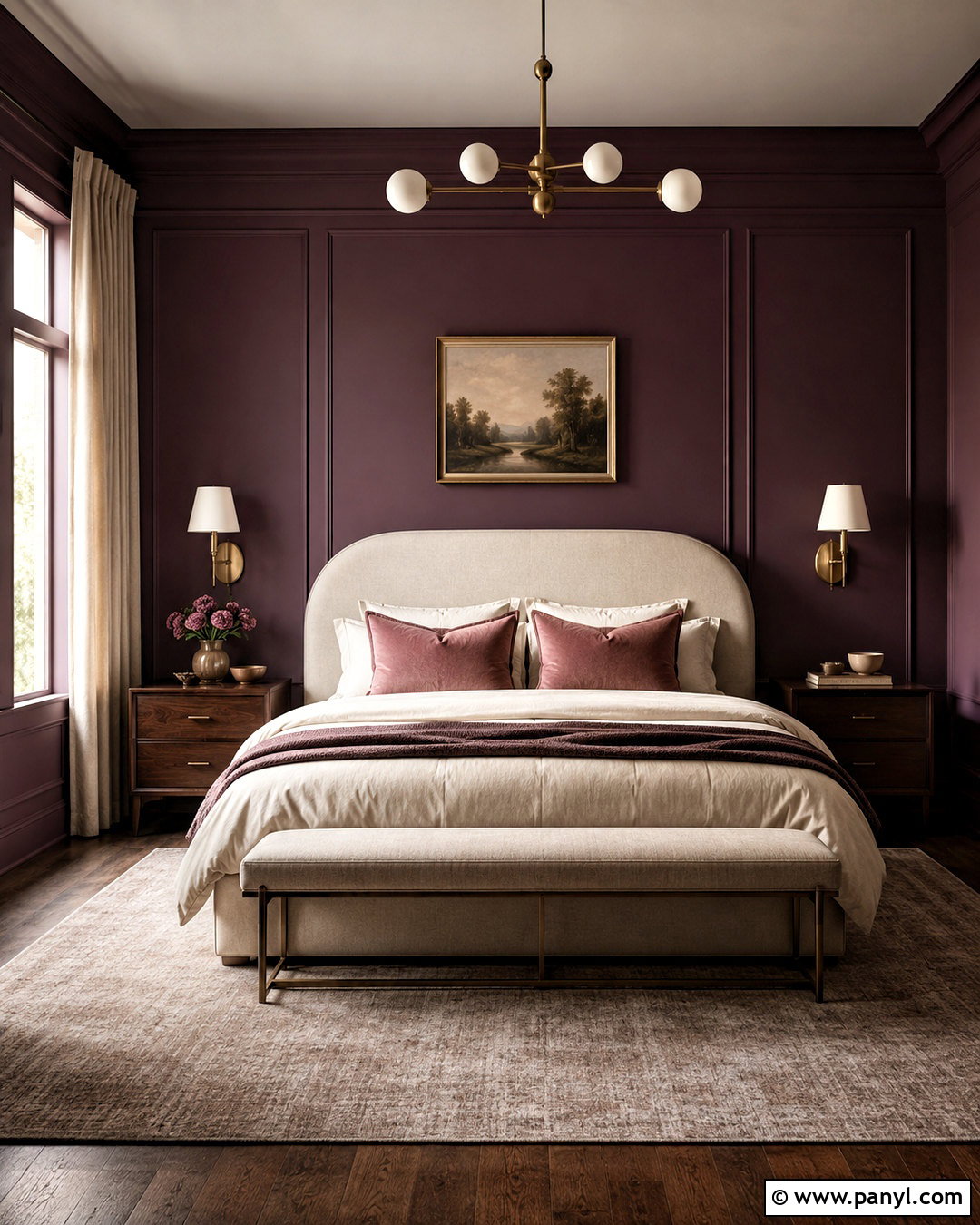
Aubergine is a deep purple with warm brown undertones, giving a bedroom a luxurious mood without making it feel overly bright or sweet. Use the color across the walls and trim for a seamless backdrop. Balance its richness with an ivory boucle headboard, creamy bedding, and a light taupe carpet or area rug. Dark walnut nightstands work beautifully with aubergine, while aged brass lighting draws out its warmer notes. Add dusty rose pillows and a muted plum throw for gentle tonal layering. Long oatmeal curtains provide a quiet neutral break around the windows. Keep the artwork simple, perhaps with an antique-inspired landscape or abstract print. This complete look feels romantic, sophisticated, and especially welcoming in evening light.
6. Chocolate Brown Bedroom Paint
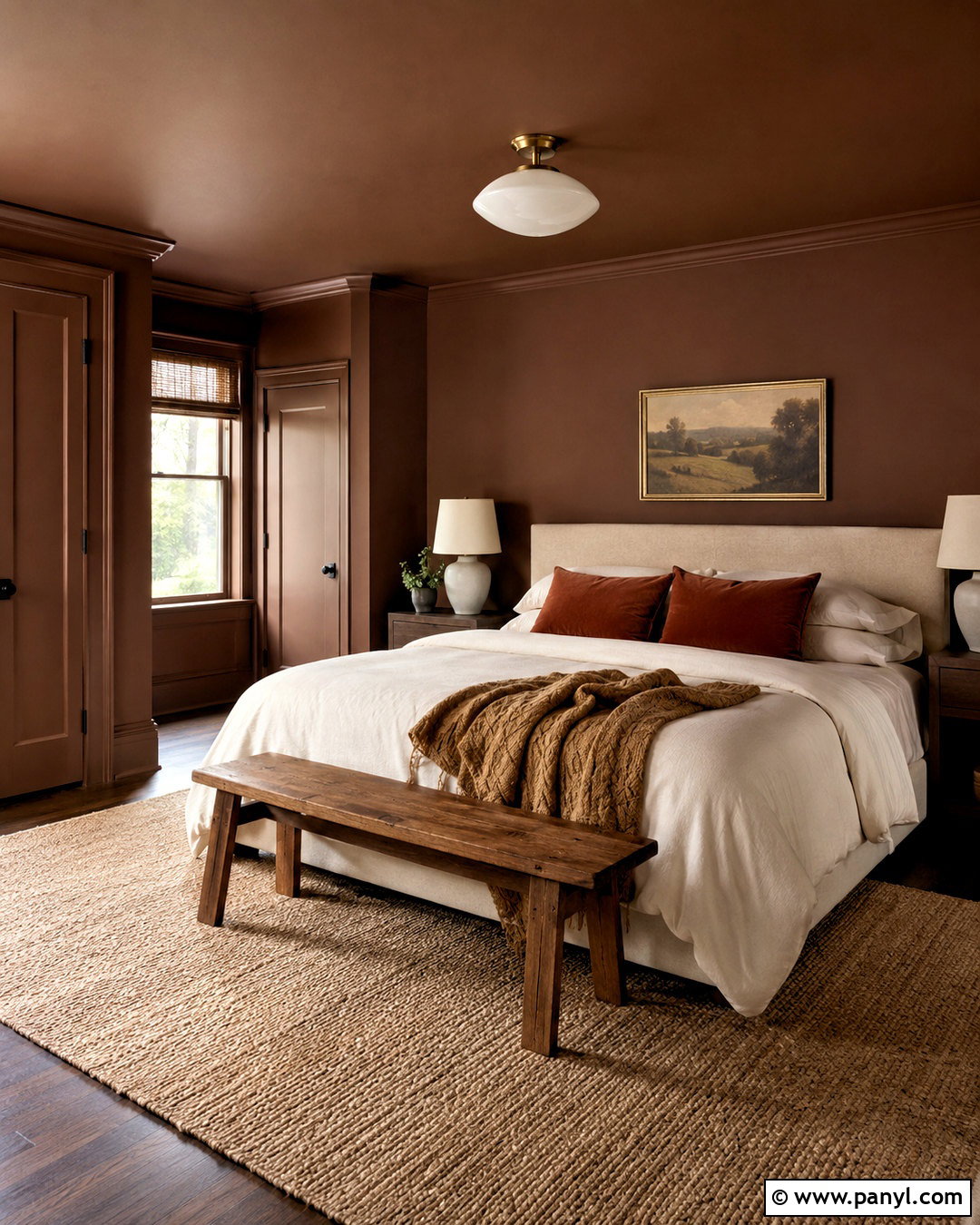
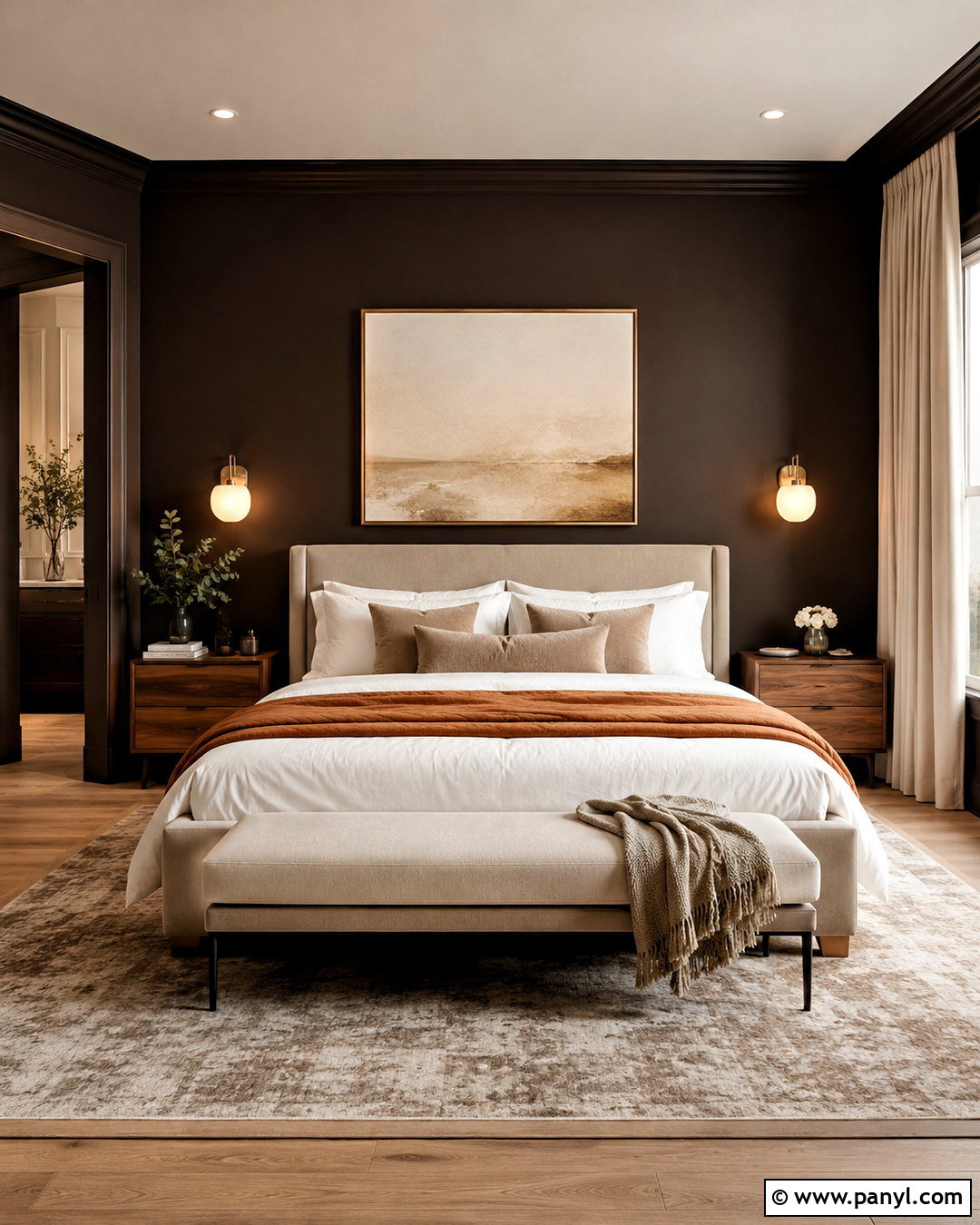
Chocolate brown creates an earthy, cocooning bedroom with a strong sense of warmth. Choose a deep cocoa shade that has balanced red and gray undertones, preventing it from appearing orange. For a fully enveloping treatment, carry the color over the walls, ceiling, trim, and closet doors. Contrast the dark shell with a flax linen bed, creamy cotton sheets, and a substantial oatmeal rug. Walnut nightstands can blend gently into the palette, while alabaster lamps introduce a lighter sculptural element. Add rust-colored pillows, a caramel throw, and woven shades for quiet variation. A vintage landscape or abstract canvas can break up one wall. This tonal brown bedroom feels relaxed, grounded, and naturally elegant rather than dated.
7. Deep Teal Bedroom Paint
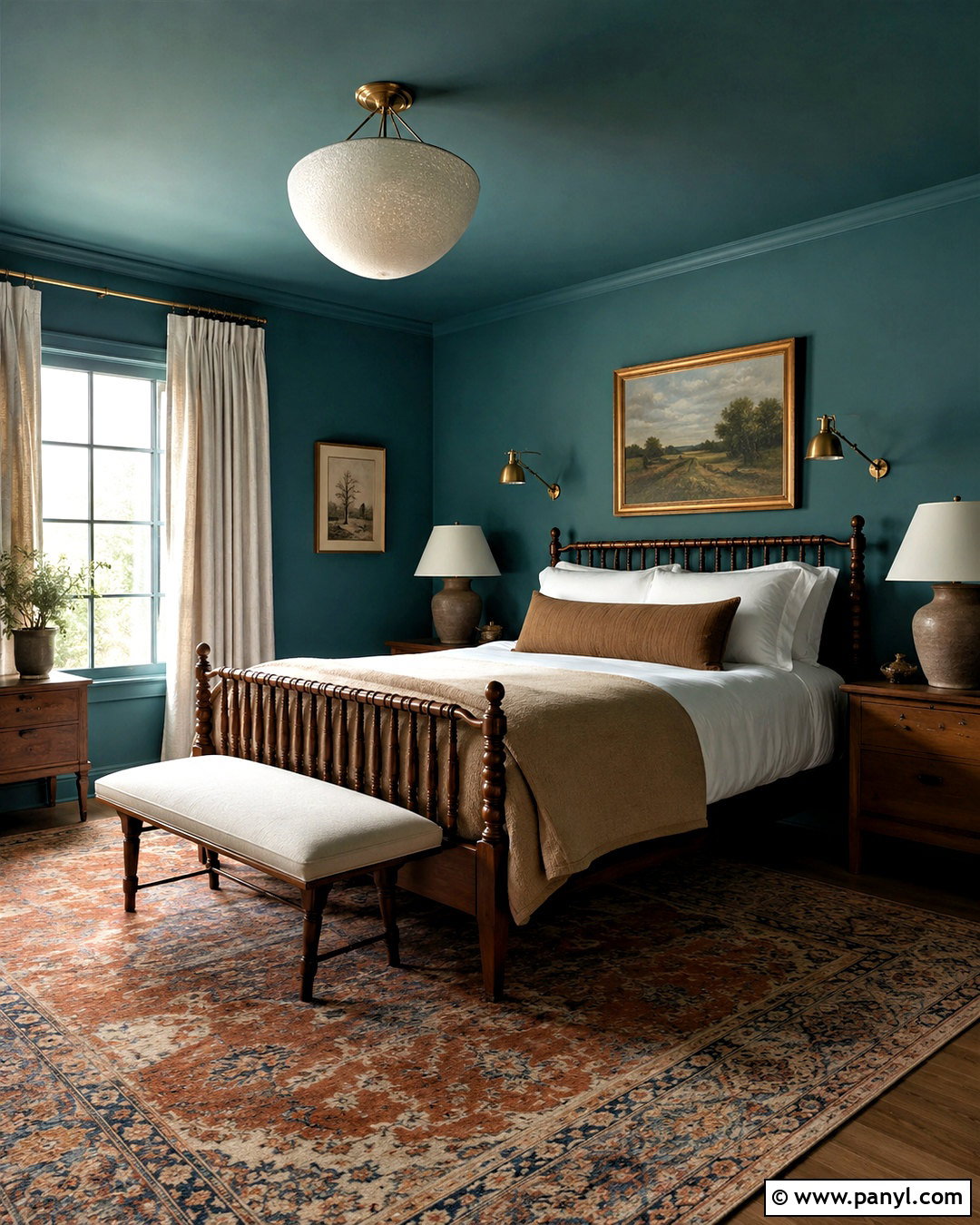
Deep teal combines the restful quality of blue with the organic depth of green. It works especially well behind warm woods and softly textured fabrics. Paint all four walls in a dark, muted teal and use a slightly lighter version on the ceiling for a layered color-drenched effect. Place a walnut spindle bed against the main wall and dress it with ivory sheets, a camel quilt, and deep teal pillows. A faded rust-and-blue rug introduces subtle pattern underfoot. Choose antique brass sconces and warm ceramic lamps instead of bright silver fixtures. Natural linen curtains soften the windows, while a small upholstered bench adds practical seating. The finished room feels collected, colorful, and intimate without becoming visually busy.
8. Burgundy Bedroom Paint
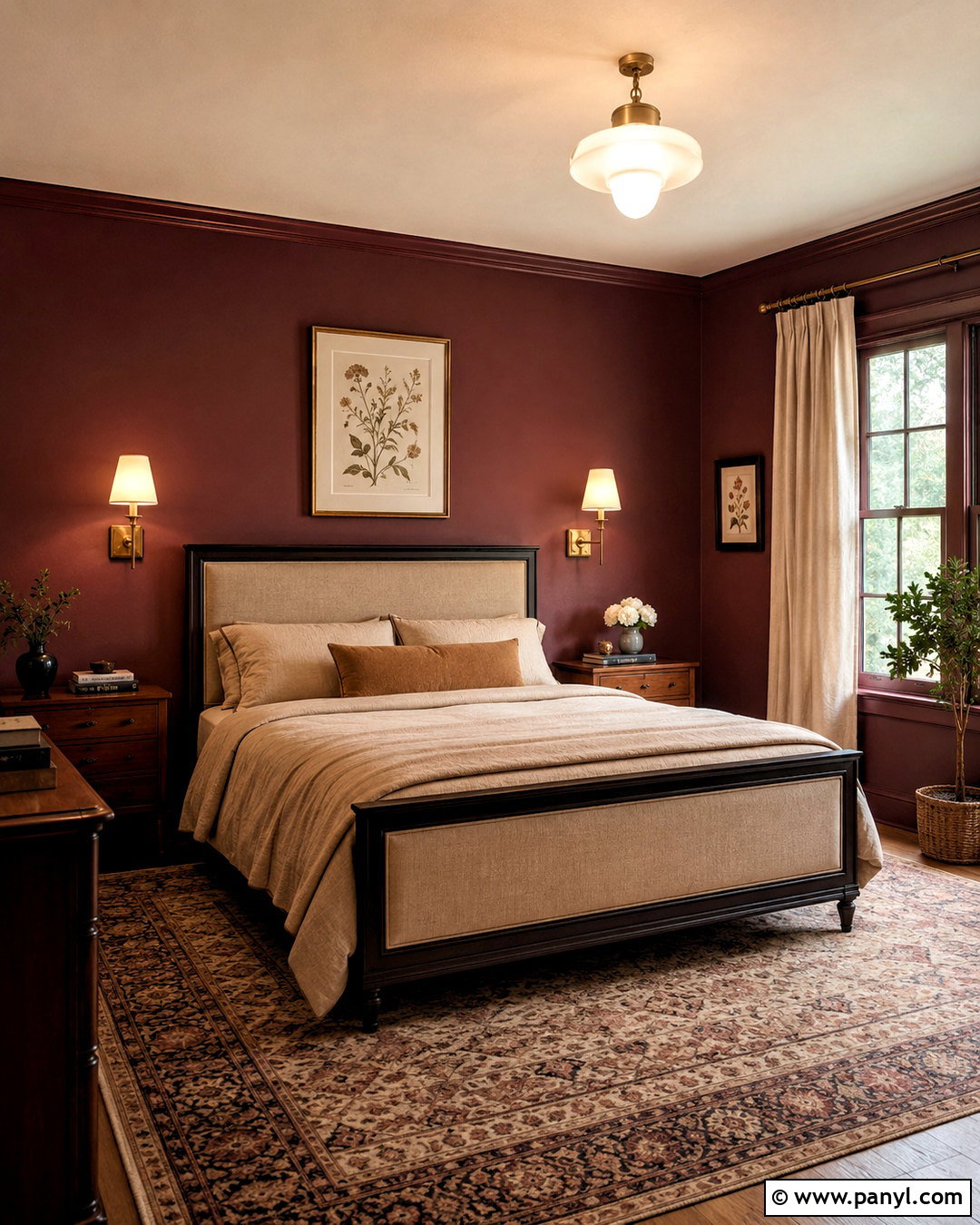
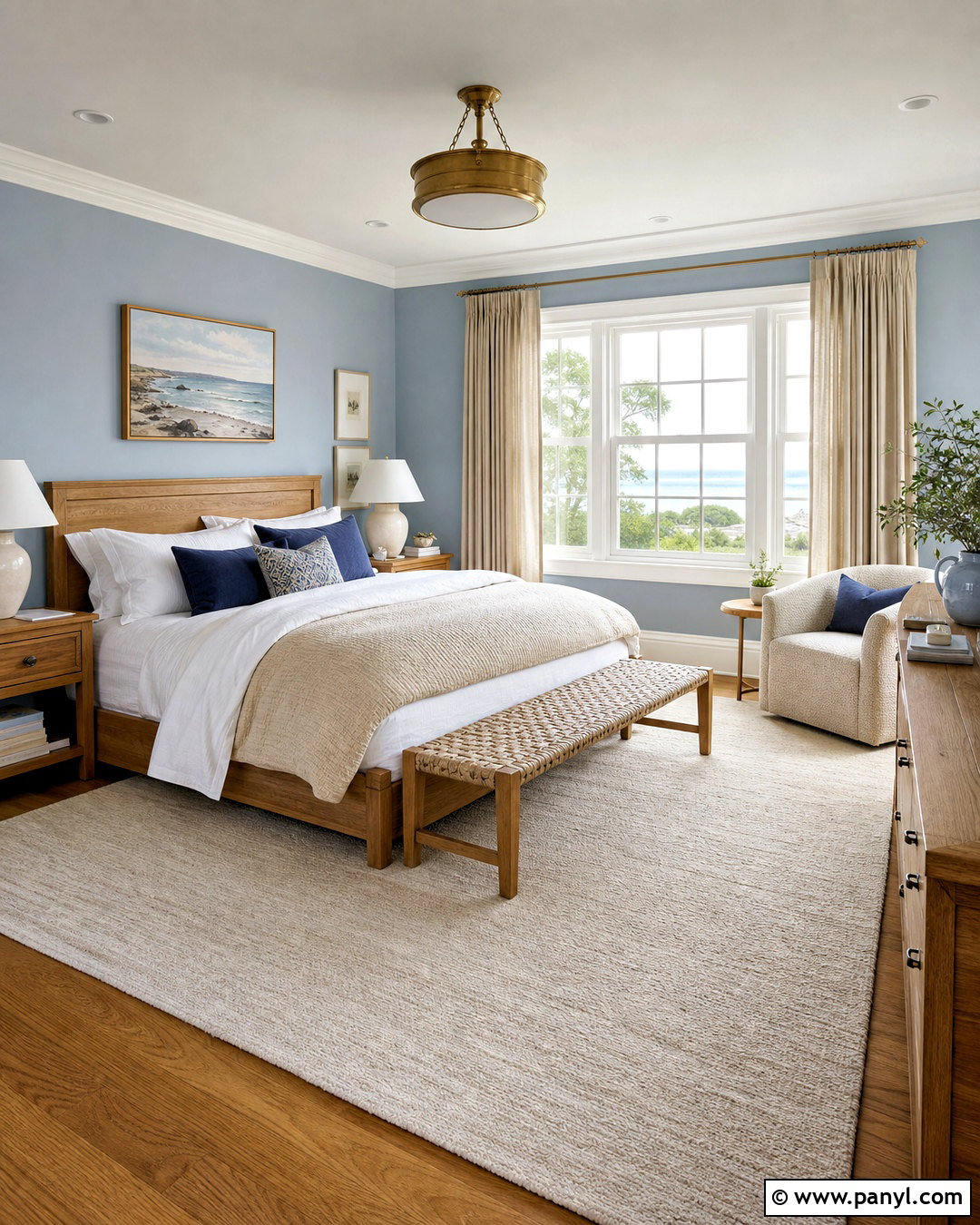
Burgundy paint gives a bedroom depth, warmth, and a refined traditional character. Select a muted shade with brown undertones so it looks sophisticated in both daylight and lamplight. Use it on the walls and baseboards, then keep the ceiling warm cream to maintain balance. A dark wood bed with an upholstered linen panel creates a strong focal point. Layer the bedding with warm white sheets, camel blankets, and patterned pillows containing burgundy, tan, and faded blue. A vintage-style rug helps connect every color in the room. Add aged brass sconces, walnut nightstands, and oatmeal curtains. Botanical artwork or an antique mirror completes the design. This palette feels especially suited to cozy bedrooms with classic architectural details.
9. Smoky Blue Gray Bedroom Paint
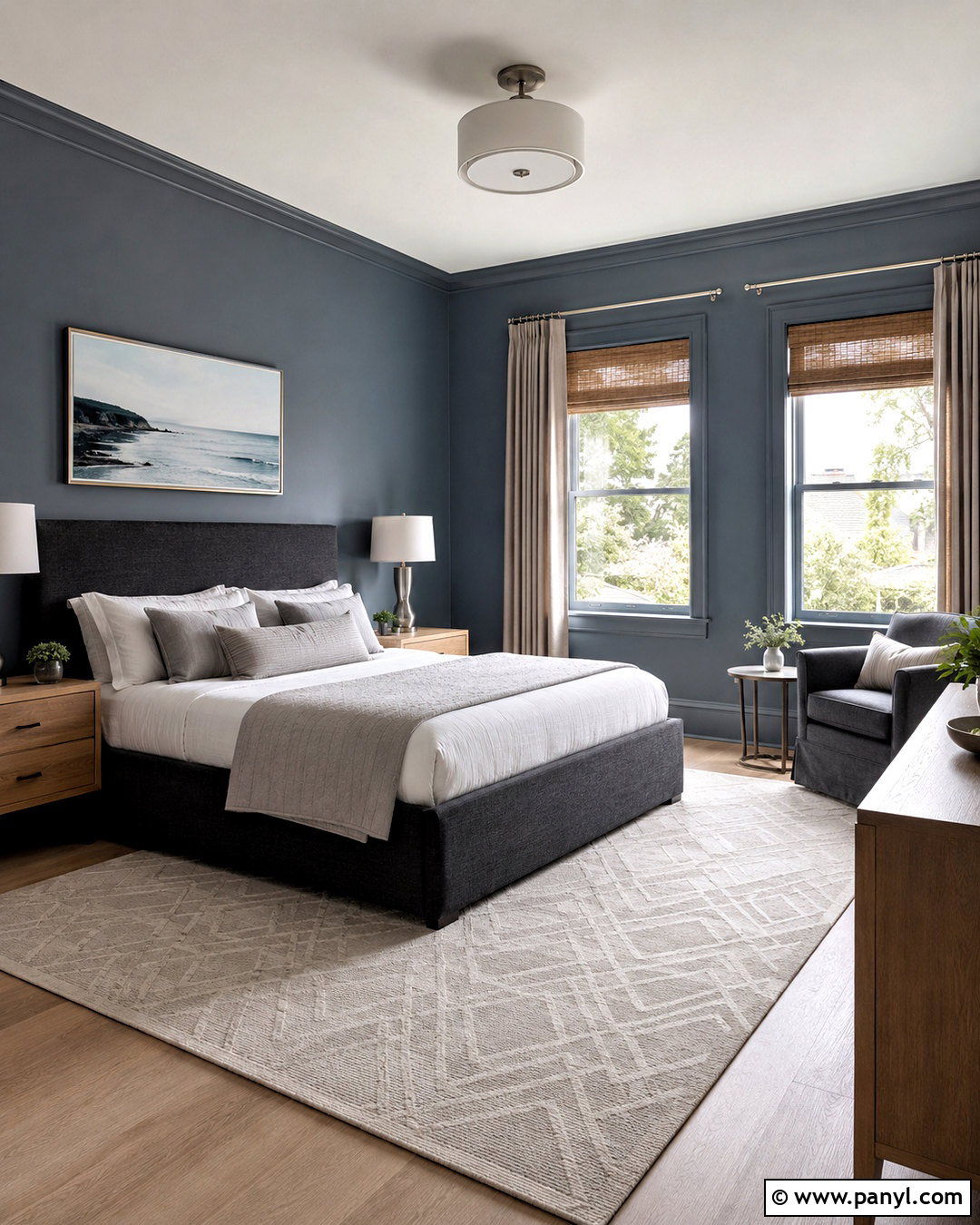
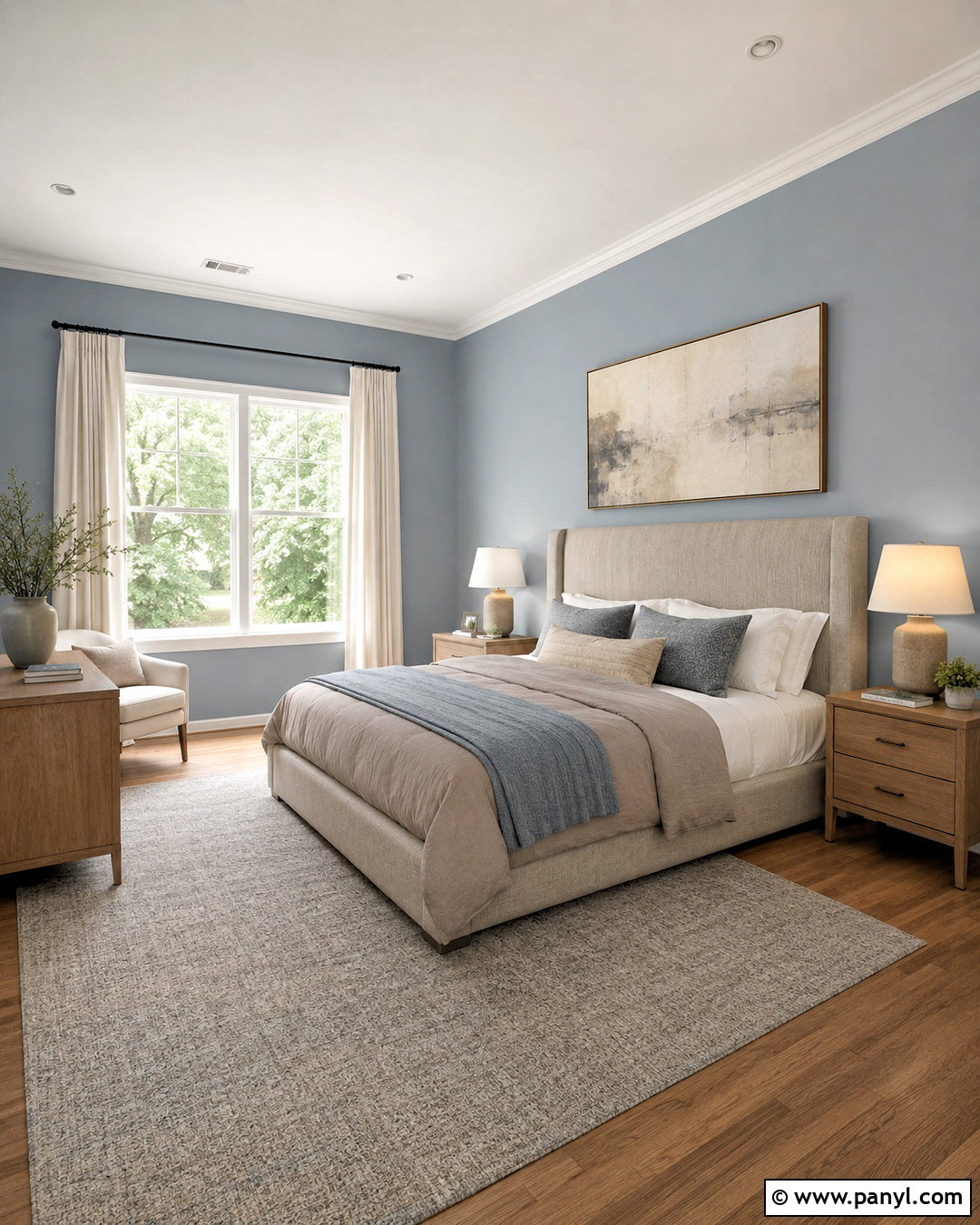
Smoky blue-gray offers a softer approach to moody bedroom color. It provides visible depth without becoming nearly black at night. Choose a medium-dark shade with restrained blue undertones and use it on the walls, trim, and window casings. Pair it with a charcoal upholstered bed and layers of warm white, dove gray, and muted blue bedding. Light oak nightstands keep the room from feeling too cool, while brushed nickel lamps add a clean modern note. Ground the layout with a large cream rug featuring a subtle geometric pattern. Taupe curtains and woven shades bring softness to the windows. Minimal coastal artwork can complete the scheme, but avoid obvious themed accessories. The result feels quiet, airy, and comfortably enveloping.
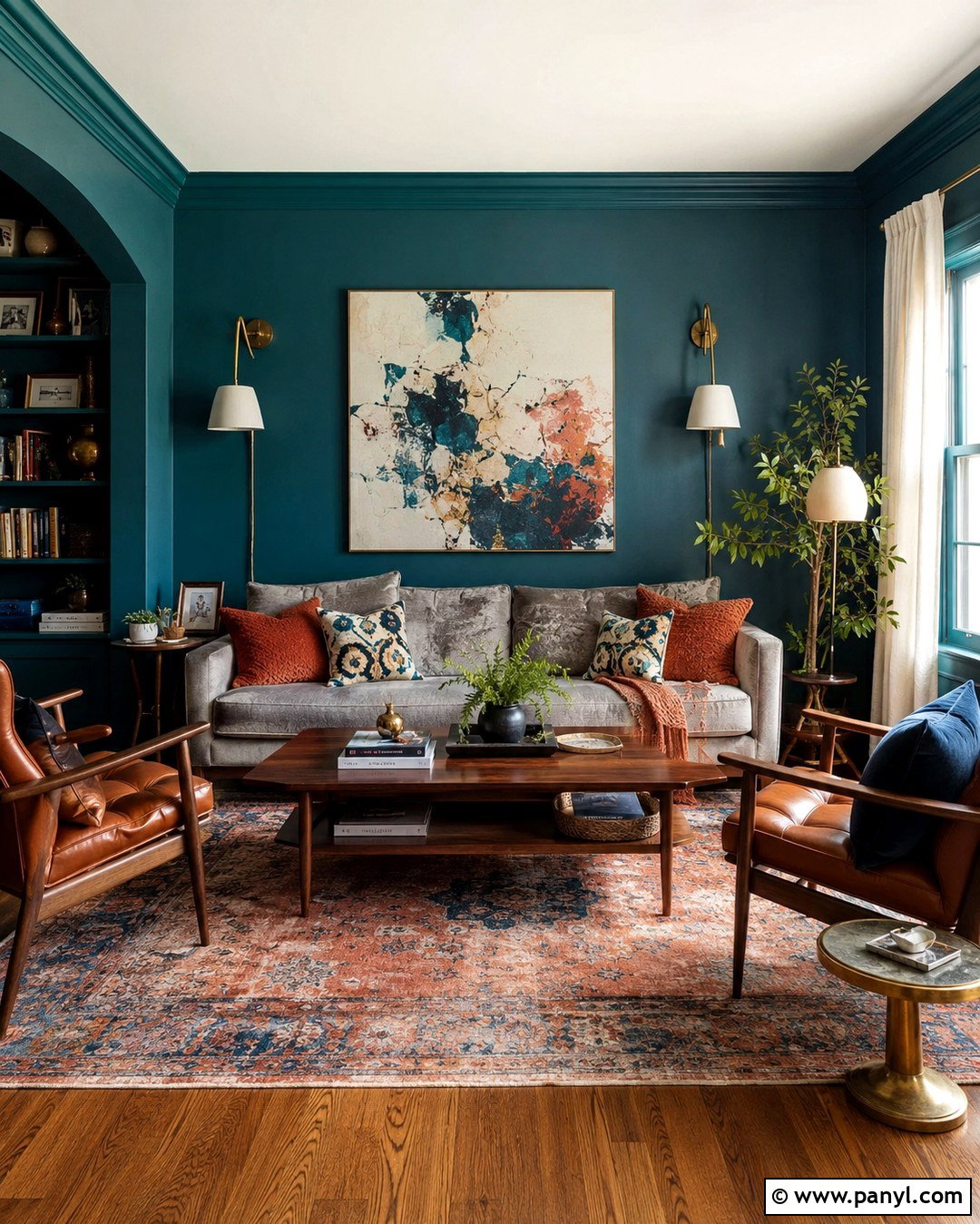
10. Dark Olive Green Bedroom Paint
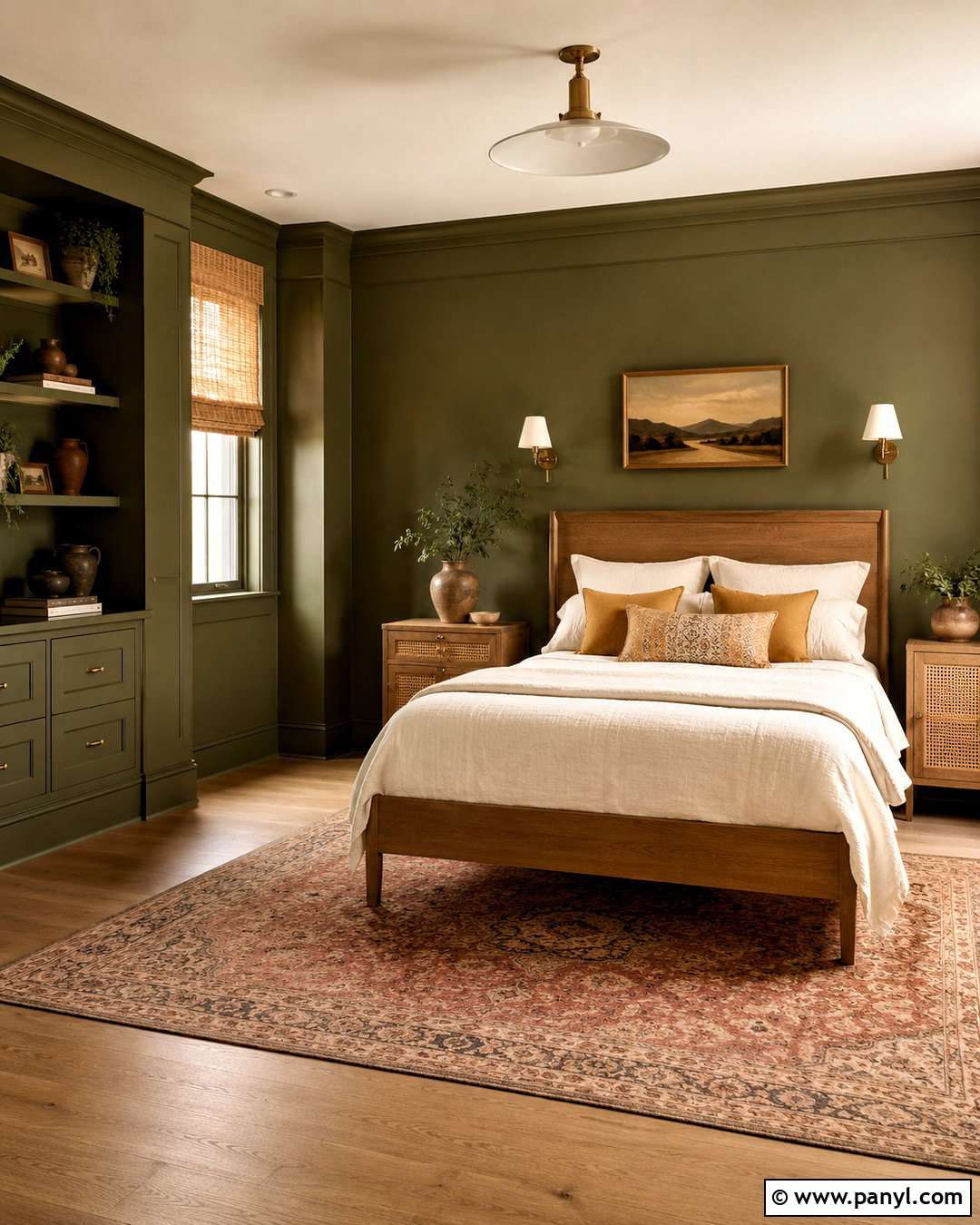
Dark olive green creates a warm, earthy bedroom that feels more relaxed than a cooler emerald or forest shade. Select an olive with brown and gray undertones, then use it across the walls and built-in features. Keep the ceiling soft cream unless you want a stronger color-drenched finish. A medium oak bed, cane-front nightstands, and woven shades support the natural palette. Dress the bed in warm white linen with ocher, camel, and muted green accents. A vintage-inspired rug containing faded red and tan brings welcome pattern to the floor. Add bronze sconces and simple pottery for understated decoration. This complete look blends modern comfort with subtle heritage character, making it a practical choice for primary or guest bedrooms.
11. Deep Plum Bedroom Paint
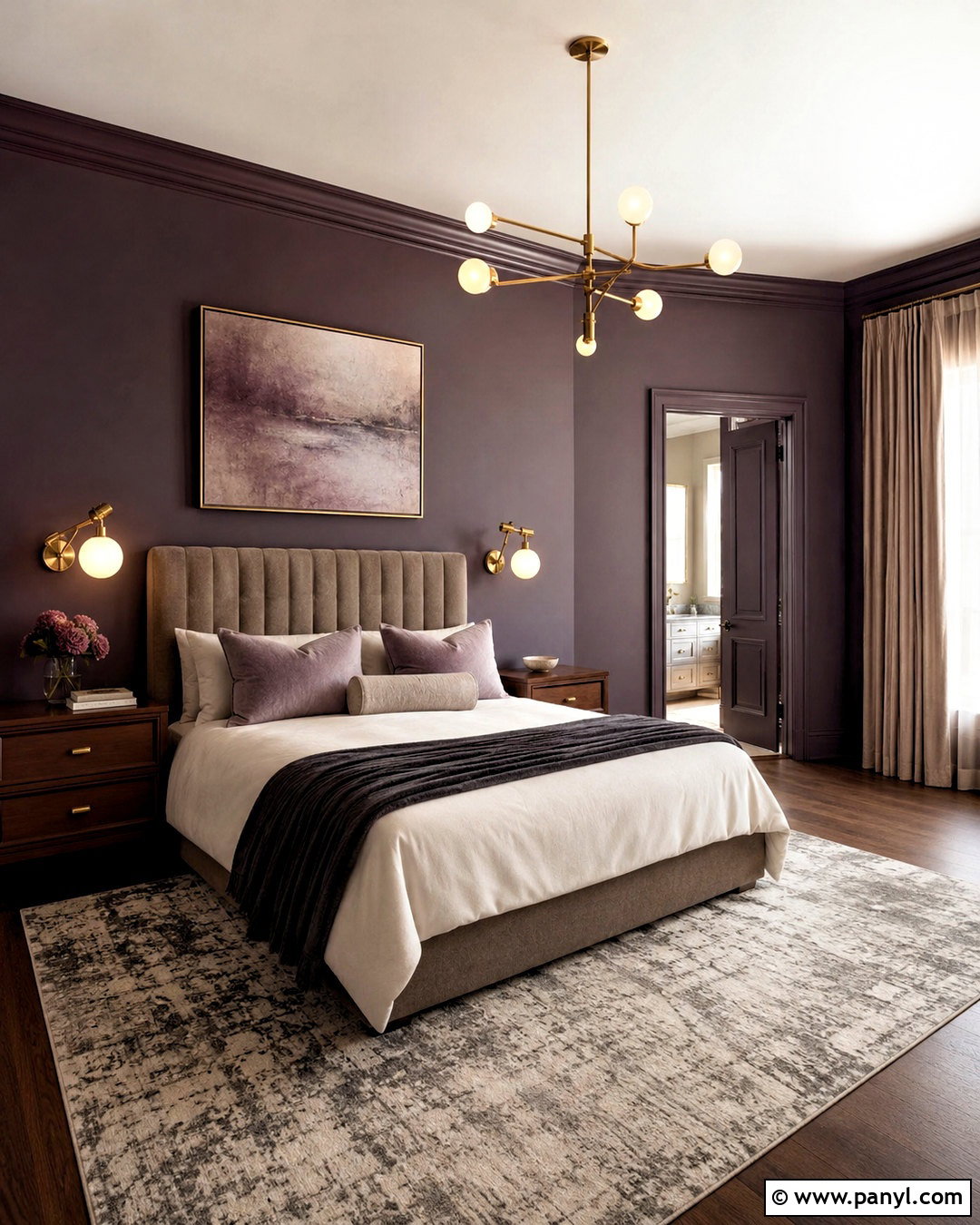
Deep plum creates an expressive bedroom that still feels restful when balanced with understated neutrals. Look for a smoky purple with gray undertones rather than a highly saturated violet. Paint the walls, trim, and doors in the same shade, using a matte finish on broad surfaces and satin on woodwork. Anchor the room with a channel-tufted taupe headboard and dark walnut nightstands. Ivory bedding, muted lilac pillows, and a charcoal throw build a controlled tonal palette. Use warm brass lighting to enhance the plum without changing its character. A cream-and-gray rug lightens the floor, while long mushroom-colored curtains frame the windows. The finished bedroom feels elegant and distinctive without relying on excessive decoration.
12. Espresso Brown Bedroom Paint
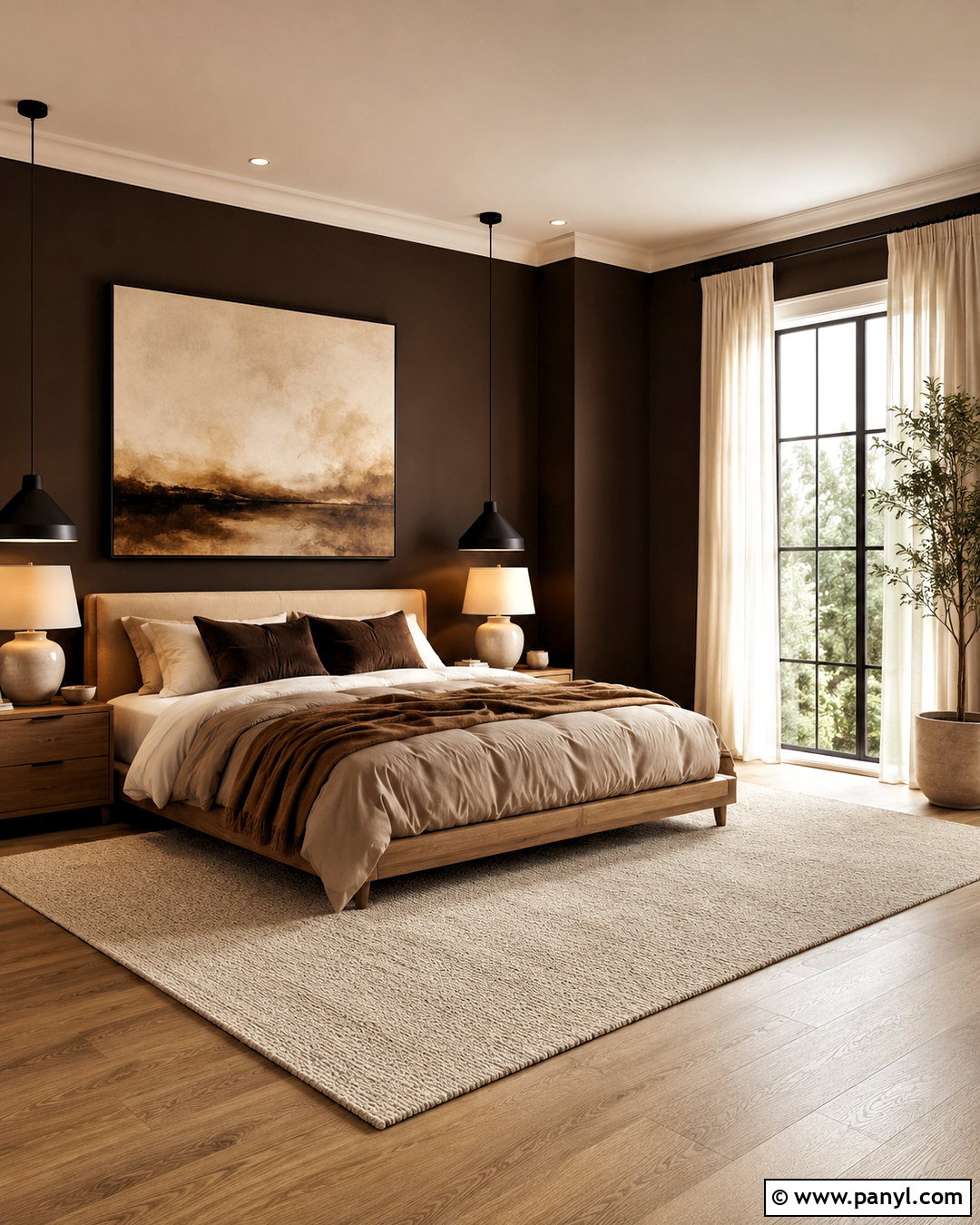
Espresso brown is nearly black, but its warm undertone gives it a softer and more welcoming presence. Use this shade in a modern bedroom with clean lines and plenty of natural texture. Paint the walls espresso, leaving narrow warm white trim around doors and windows for definition. Choose a platform bed in light oak or natural ash to create noticeable contrast. Layer white cotton sheets with a taupe duvet, chocolate pillows, and a caramel wool blanket. A large ivory rug keeps the floor from disappearing into the dark palette. Add matte black reading lights, sculptural ceramic lamps, and simple linen curtains. One oversized abstract artwork can complete the focal wall. The room will feel minimal, grounded, and comfortably cocooned.
13. Slate Blue Bedroom Paint
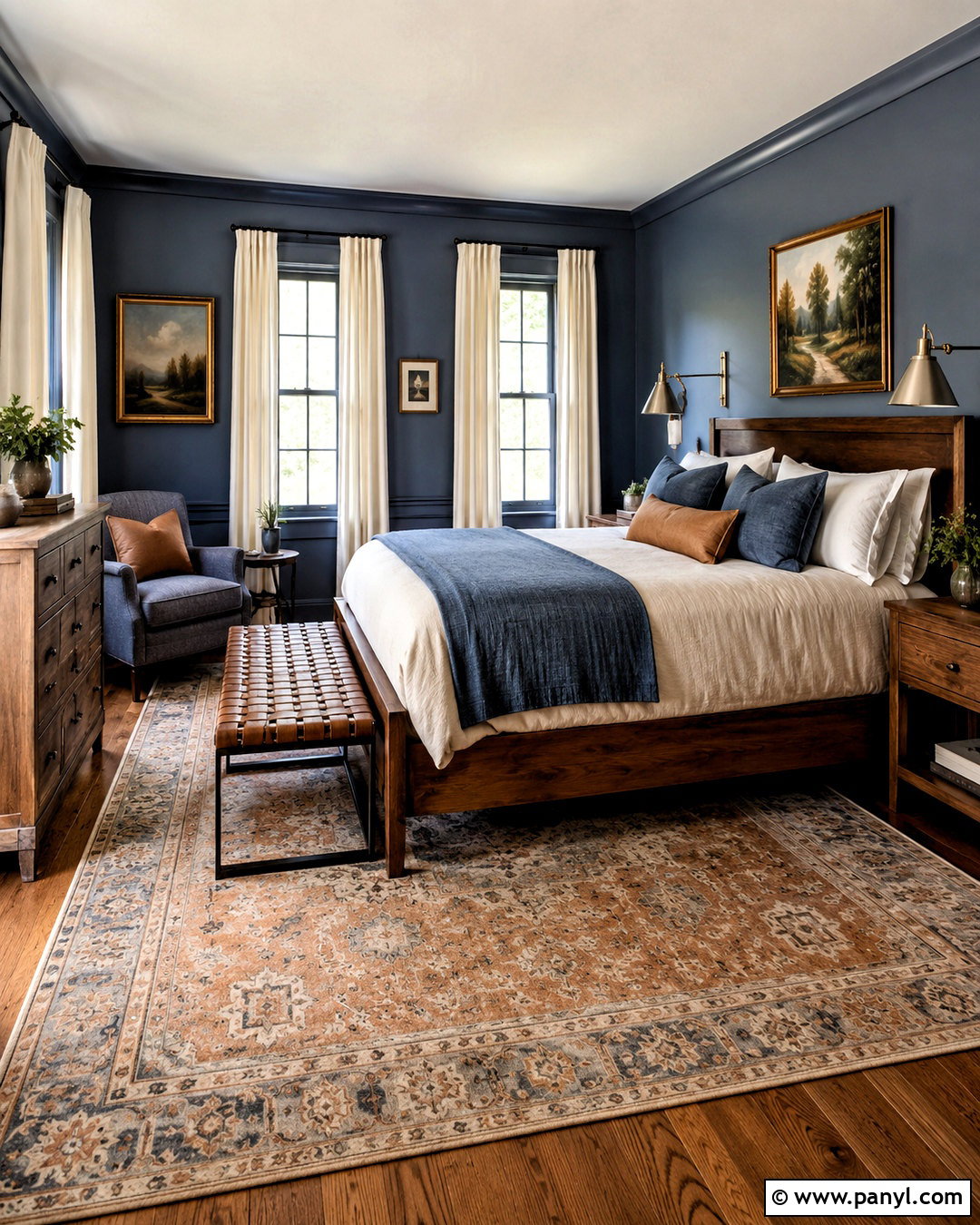
Slate blue provides a rich, stormy backdrop that works beautifully with casual and traditional furnishings. Choose a dark blue softened by noticeable gray undertones, then paint the walls and trim together to reduce sharp visual breaks. A warm cherry or walnut bed prevents the cool color from feeling flat. Use ivory bedding with faded denim, camel, and soft gray layers. Add a patterned rug that combines slate blue with beige and muted rust. Pleated cream curtains can bring a tailored finish to the windows, while bronze swing-arm sconces provide practical bedside lighting. Complete the room with framed landscapes, a woven storage bench, and a small ceramic vase. This palette feels relaxed, familiar, and quietly sophisticated throughout the day.
14. Dark Sage Green Bedroom Paint
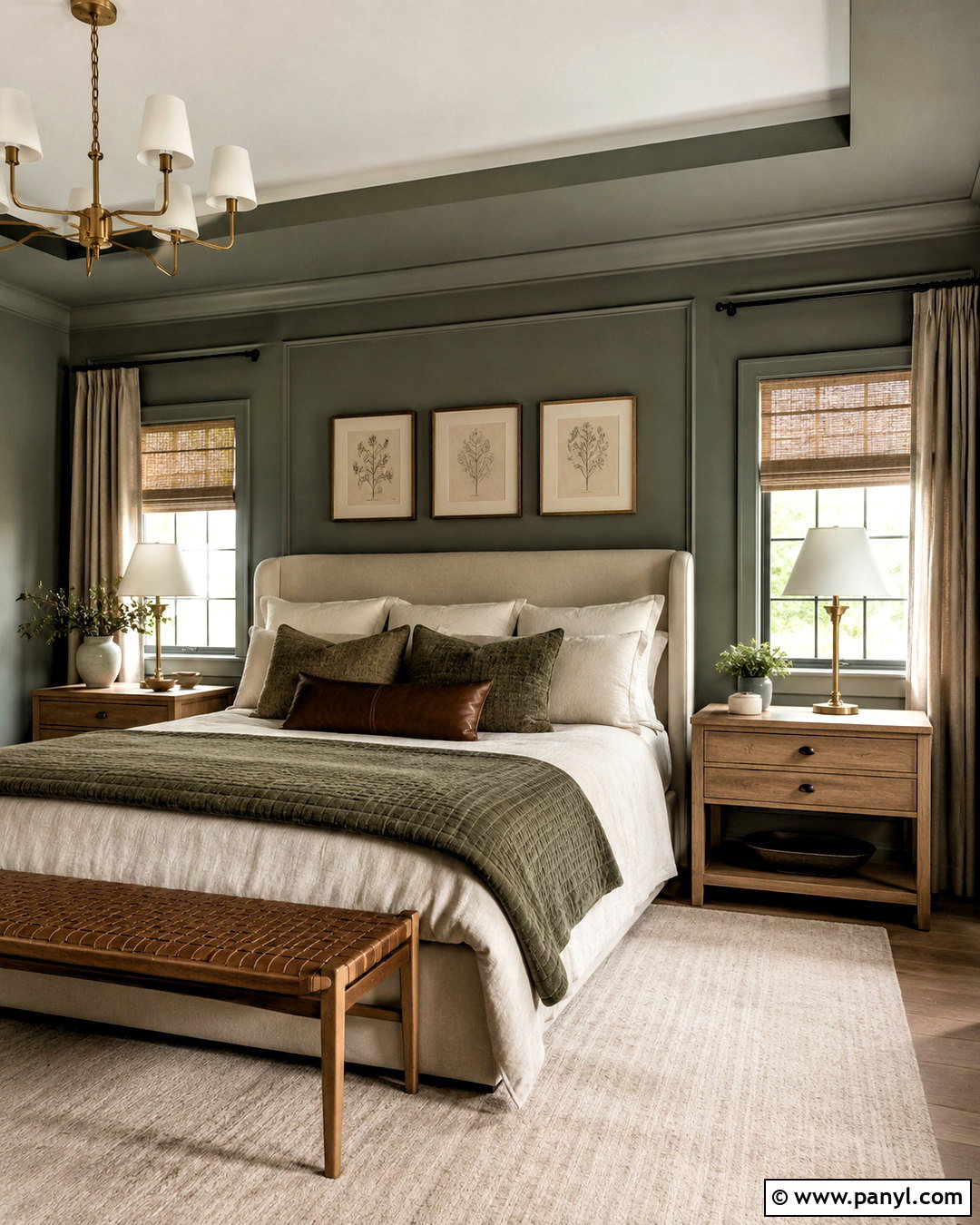
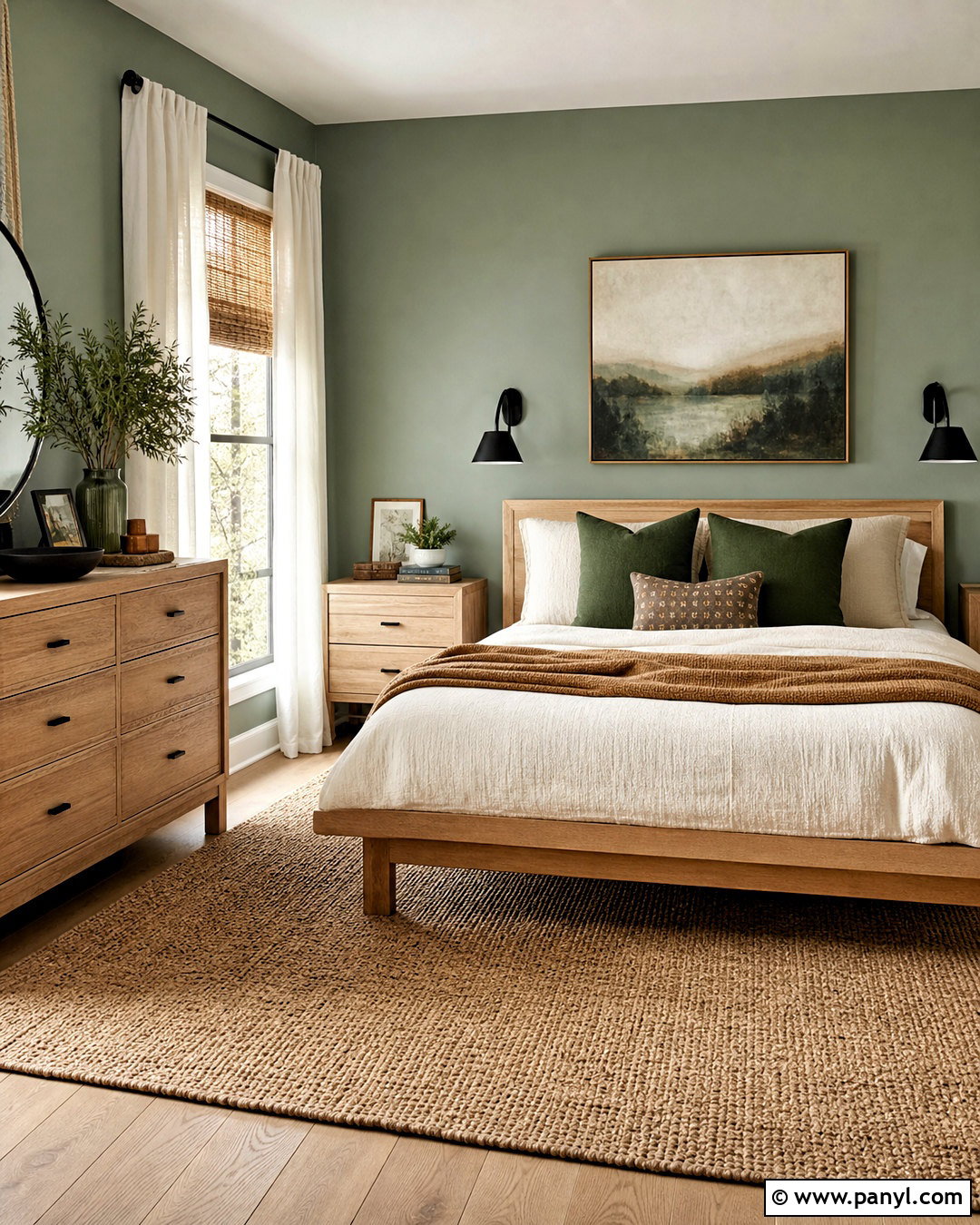
Dark sage green is an adaptable choice for a bedroom that needs depth without the intensity of near-black paint. Its muted gray undertone gives the room a peaceful, lived-in appearance. Apply it to every wall and continue the color onto simple wall molding for subtle architectural interest. Pair the painted backdrop with an upholstered oatmeal bed, natural oak nightstands, and cream linen bedding. Soft brown pillows and a faded green quilt introduce gentle warmth. Ground the space with a wool rug in ivory and taupe. Aged brass lamps, botanical sketches, and woven Roman shades reinforce the organic feeling without becoming overly rustic. The final bedroom looks calm and polished, with enough contrast to stay fresh in a smaller space.
15. Rusty Terracotta Bedroom Paint
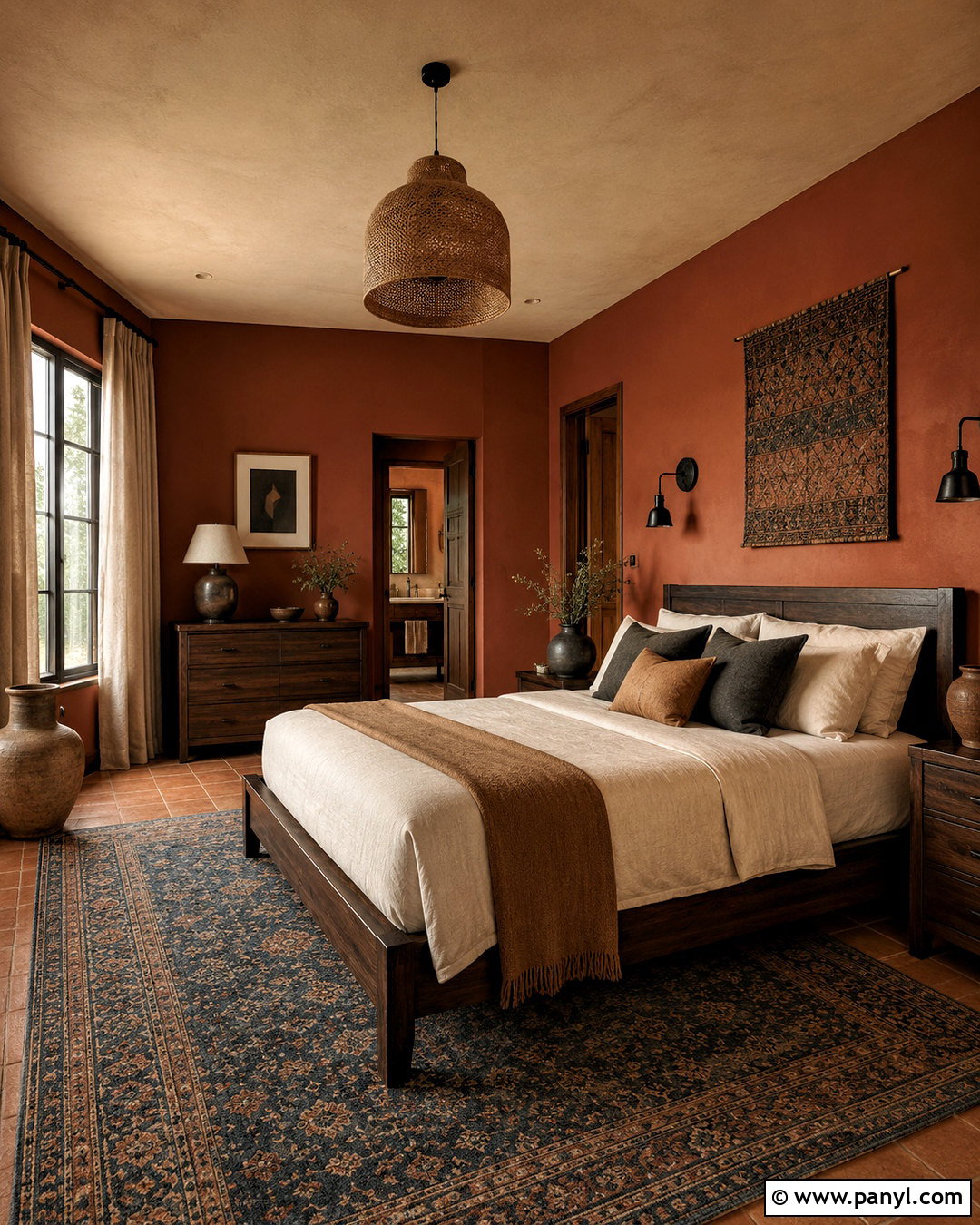
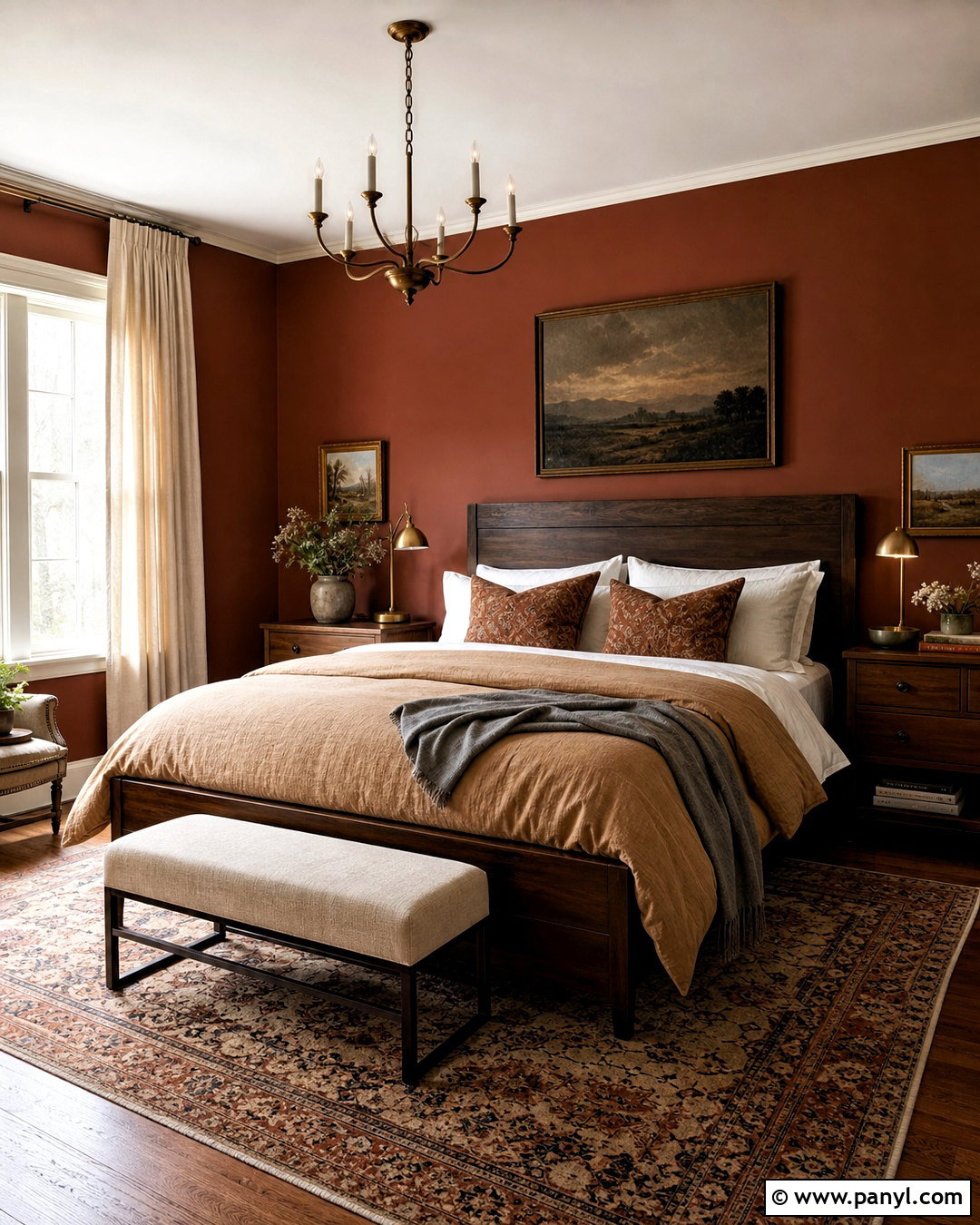
For a moodier room that still feels warm and sunbaked, choose deep rusty terracotta. The best version combines muted red, orange, and brown rather than appearing bright or energetic. Use it on all four walls, then paint the ceiling a soft clay beige for a smooth transition. Bring in a dark walnut bed, cream linen bedding, and pillows in camel, charcoal, and faded terracotta. A low-pile patterned rug can introduce muted blue for balanced contrast. Blackened bronze sconces add structure, while woven shades and oatmeal curtains soften the windows. Complete the room with handcrafted pottery and one simple textile wall hanging. This earthy bedroom feels cozy, creative, and welcoming during every season.
16. Deep Taupe Bedroom Paint
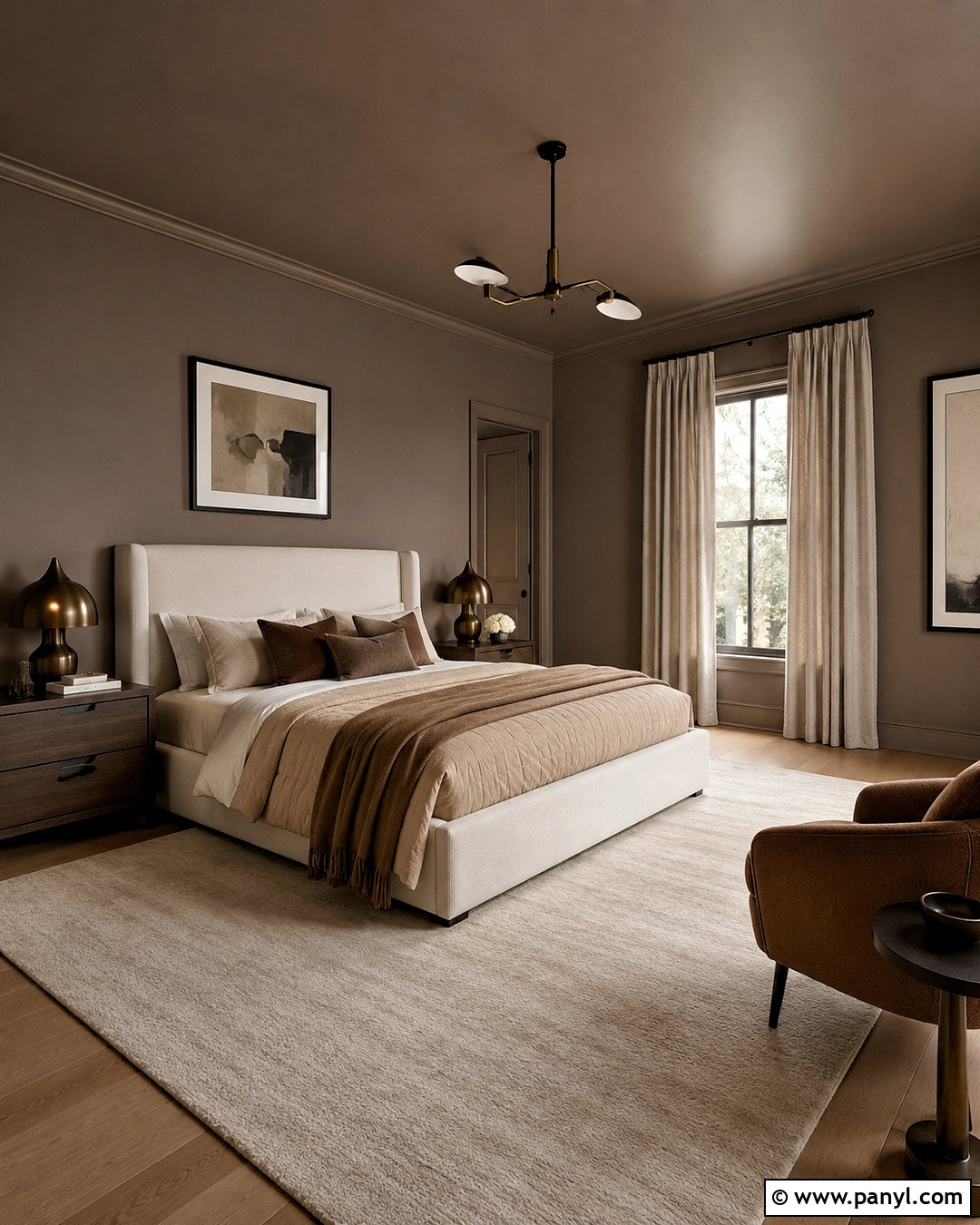
Deep taupe is ideal when you want a moody bedroom without a clearly blue, green, or purple color. Choose a dark mushroom shade with warm gray and brown undertones. Color-drench the walls, trim, doors, and ceiling to create a soft, uninterrupted envelope. A cream upholstered bed provides a lighter focal point, while smoked oak nightstands maintain the muted palette. Layer the bedding with ivory, camel, mocha, and textured taupe fabrics. Use a pale wool rug to define the sleeping area and keep the room from looking muddy. Bronze lamps and black-framed artwork introduce crisp details. Linen curtains in a slightly lighter taupe complete the tonal scheme, creating a bedroom that feels quiet, contemporary, and exceptionally comfortable.
17. Midnight Blue Bedroom Paint
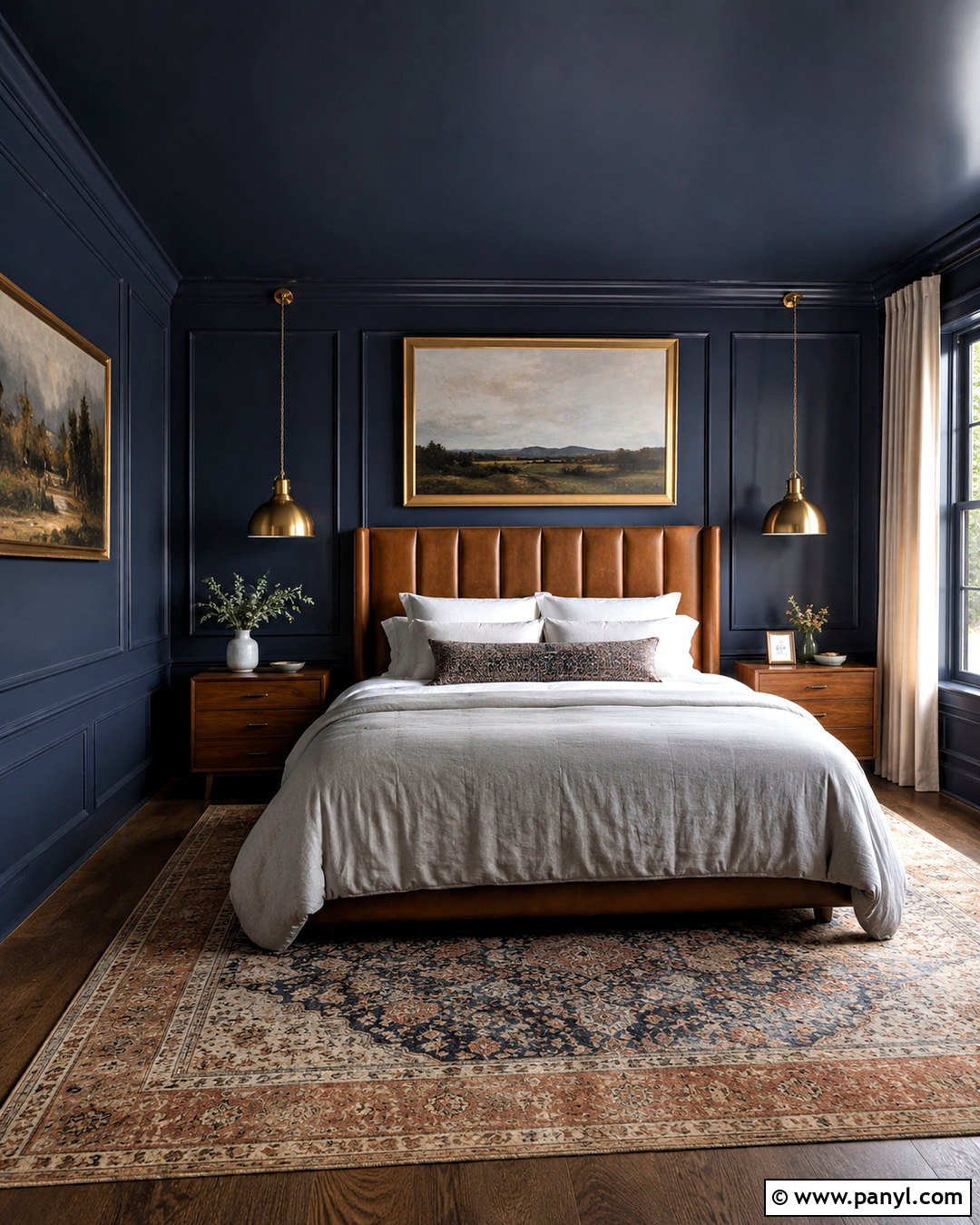
Midnight blue is darker and more dramatic than standard navy, often appearing almost black in corners. Use it to create a polished bedroom with a strong nighttime atmosphere. Paint the walls and ceiling together, then apply the same shade to the trim in a satin finish. A tall camel leather headboard supplies warmth and stands out clearly against the blue. Add white sheets, a soft gray duvet, and midnight blue accent pillows for controlled contrast. Walnut nightstands and antique brass pendants create a balanced mix of materials. Ground the room with a vintage rug containing beige, blue, and muted red. Simple cream curtains and one large framed artwork prevent clutter. The final look feels sophisticated, intimate, and thoughtfully layered.
18. Blue Black Bedroom Paint
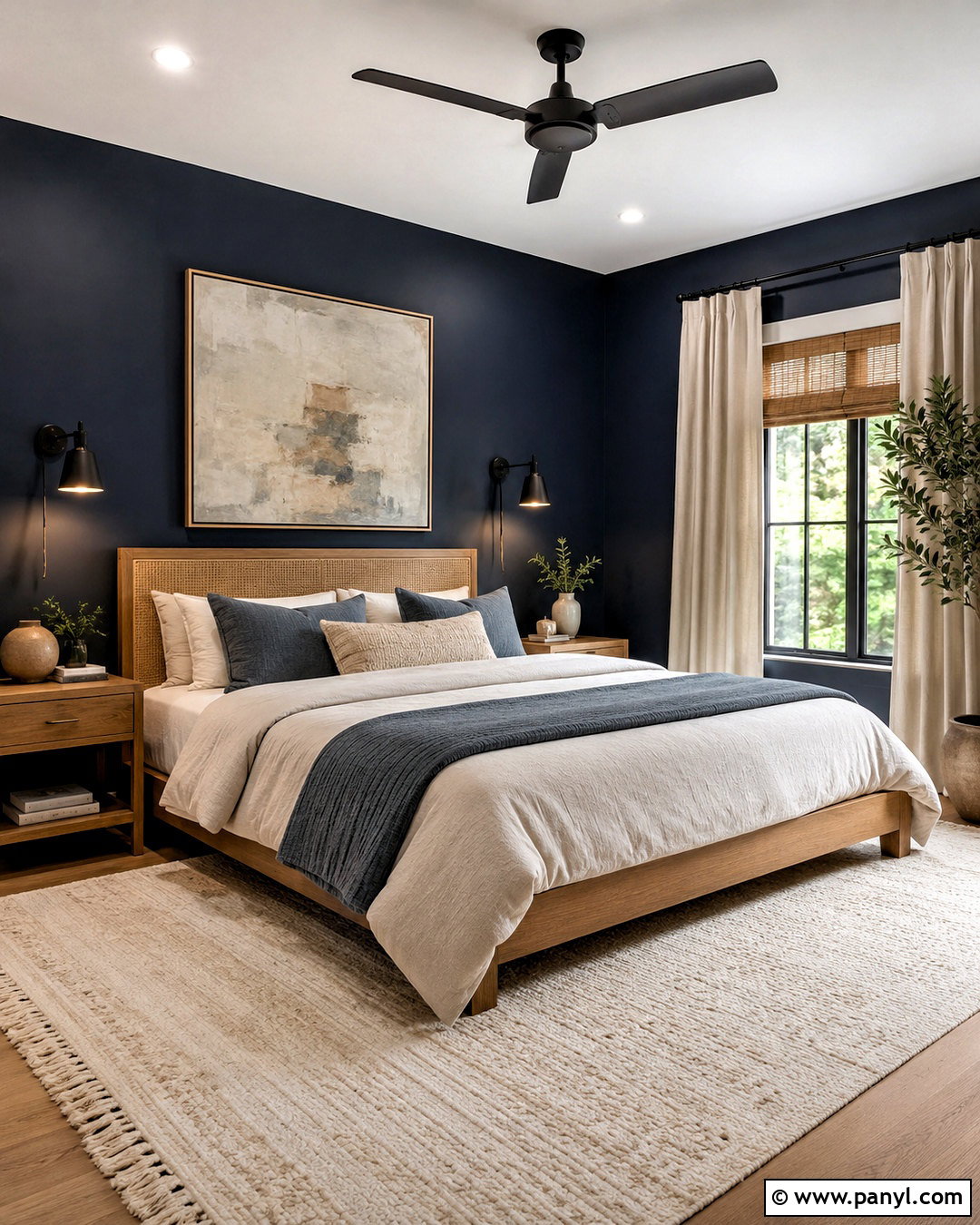
Blue-black paint delivers the impact of black while revealing a subtle cool undertone in natural light. It is especially effective in a contemporary bedroom with simple furniture and strong textures. Apply the color to every wall, but retain a warm white ceiling if the room has limited windows. Choose a low oak bed with a woven headboard and dress it in ivory, slate, and soft tan bedding. A plush cream rug creates a bright foundation under the darker walls. Use black metal sconces, oak nightstands, and linen curtains to maintain a restrained palette. An abstract canvas with chalky white and muted blue shapes can tie everything together. The room feels dramatic and modern without looking severe or overly masculine.
19. Warm Charcoal Bedroom Paint
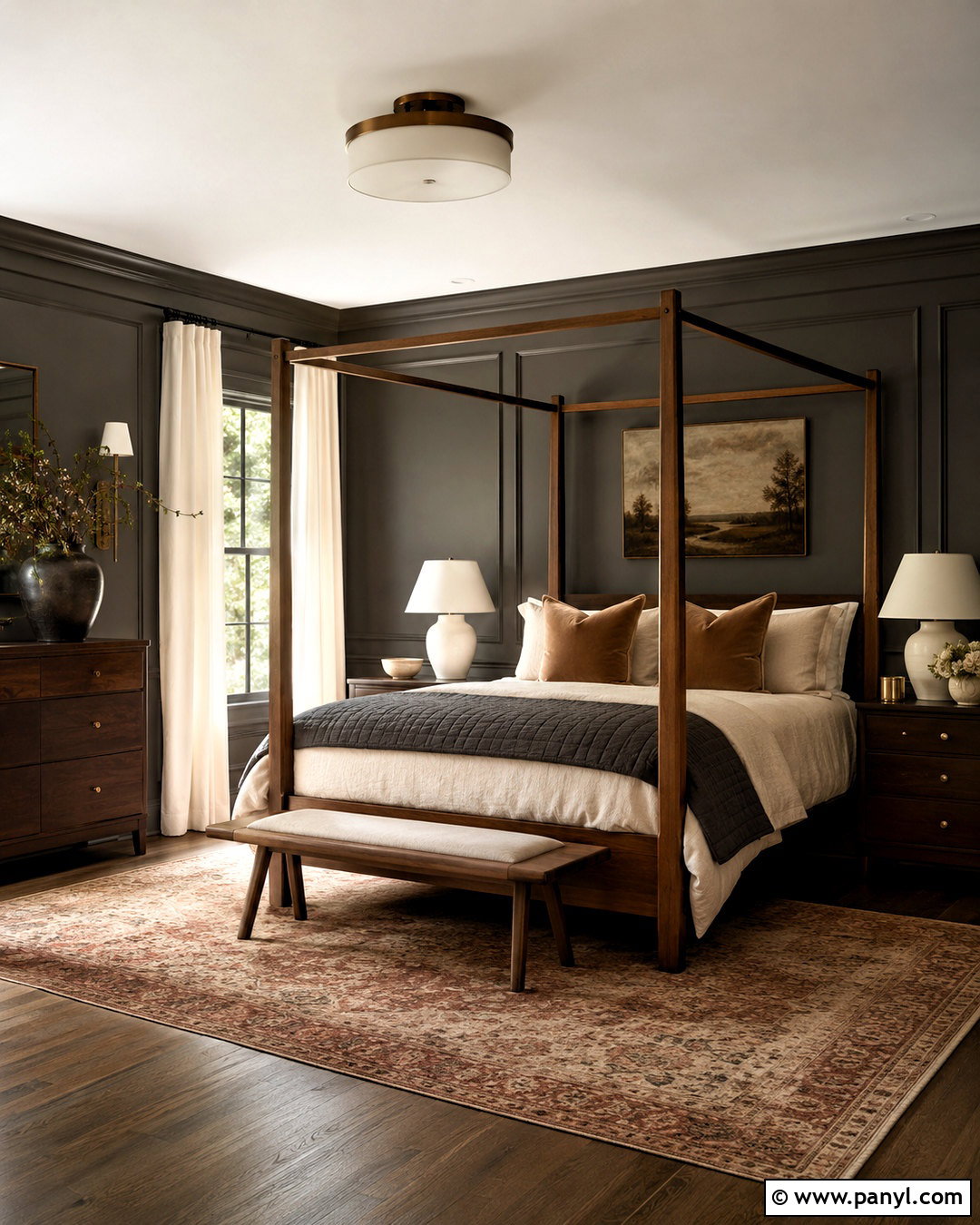
Warm charcoal is one of the easiest dark bedroom colors to coordinate because it sits comfortably between gray, brown, and black. Paint the walls in a matte warm charcoal and highlight existing molding with the same color in a soft satin finish. Bring in a walnut four-poster bed for height and structure. Layer the bedding with cream linen, tan velvet pillows, and a dark gray quilt. A faded traditional rug adds muted rust and beige underfoot. Choose alabaster table lamps and aged brass hardware to reflect light around the room. Warm white curtains provide gentle contrast without appearing stark. Finish with a wood bench and minimal framed artwork. This complete scheme feels timeless, comfortable, and adaptable to changing decor.
20. Muted Mauve Bedroom Paint
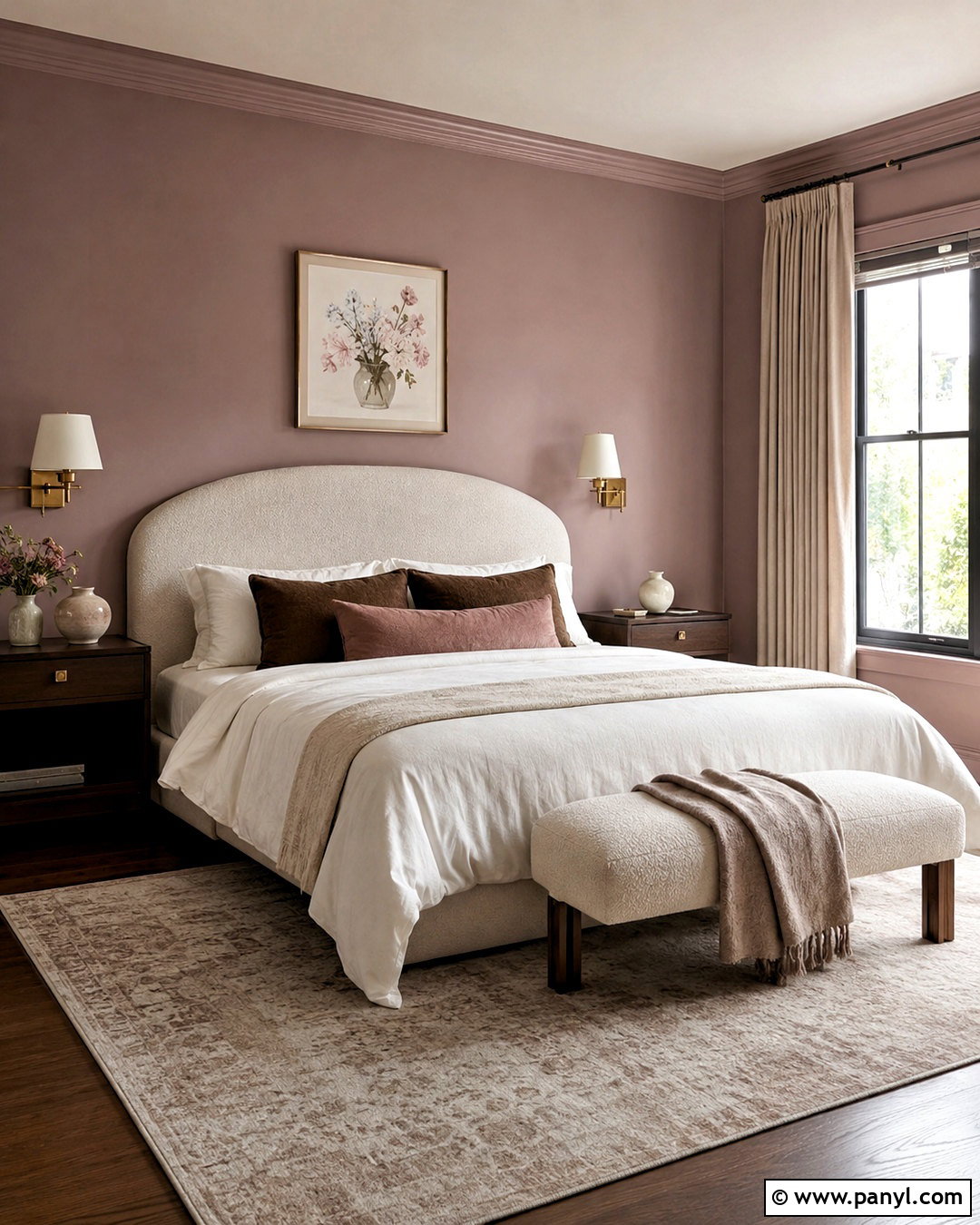
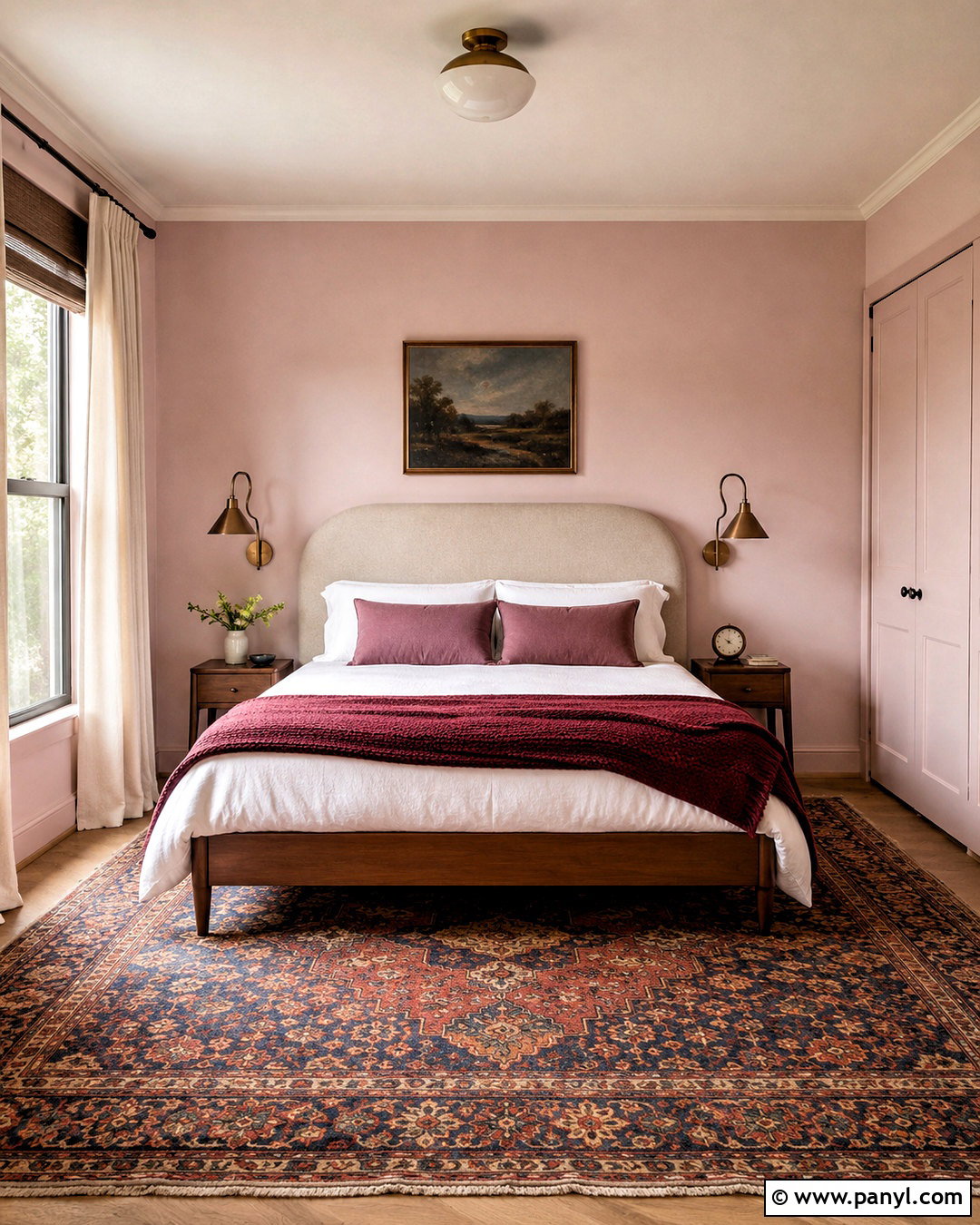
Muted mauve creates a soft, romantic mood without the heaviness of a dark purple or burgundy. Choose a medium-deep shade with dusty brown and gray undertones. Use it on the walls and trim, then keep the ceiling a pale mushroom color for a subtle tonal transition. A curved oatmeal headboard softens the room’s lines, while dark walnut nightstands add depth. Layer cream bedding with faded mauve, cocoa, and muted rose pillows. A taupe-and-ivory rug grounds the arrangement without introducing a competing pattern. Add aged brass sconces, warm ceramic accessories, and full-length flax curtains. Restrained floral artwork can complete the wall above the bed. The finished space feels warm, graceful, and soothing rather than overly delicate.
Conclusion:
Choosing from these 20 moody bedroom paint colors is easier when you consider the entire room instead of focusing on the wall shade alone. Cool blues and blue-grays feel peaceful beside warm wood, while forest green and olive create an earthy, grounded setting. Chocolate, taupe, and charcoal offer flexible neutral options. Plum, aubergine, burgundy, and mauve bring richer personality. Whichever color you prefer, test large samples in morning, afternoon, and artificial light before committing. Coordinate the ceiling, trim, furniture, bedding, curtains, rug, and lighting so every element supports the palette. With thoughtful contrast and layered texture, a dark bedroom can feel comfortable, balanced, and deeply restful.

Related Ideas and Inspiration:

Leave a Reply