
The right bathroom palette can turn a practical room into a relaxing retreat with warmth, character, and visual balance. These 20 bathroom color scheme inspiration ideas cover calming neutrals, nature-inspired greens, classic blues, earthy shades, and bold combinations. Each look coordinates wall color, tile, flooring, vanity finishes, fixtures, textiles, and lighting, so you can picture a complete space rather than one isolated paint choice. Before committing, compare samples beside your permanent surfaces at different times of day. Bathroom lighting, window direction, and reflective tile can dramatically affect how a hue appears. Whether you are planning a full remodel or a budget-friendly refresh, use these 20 bathroom color scheme inspiration ideas to find a cohesive look that fits your home.

1. Sage Green Bathroom Color Scheme
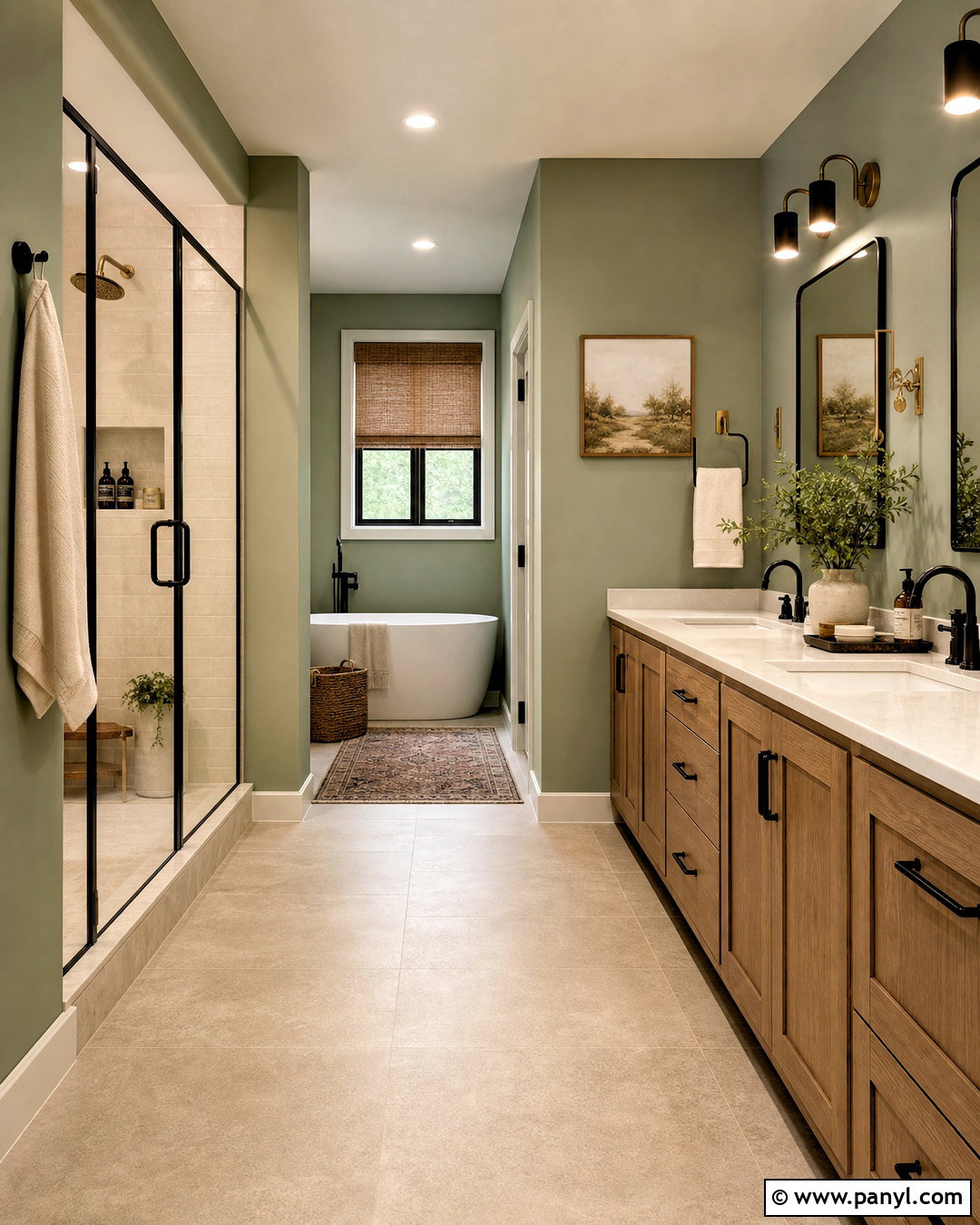
Soft sage green creates a restful bathroom that feels connected to nature without becoming overly rustic. Use warm sage on the walls, then continue the organic mood with ivory shower tile and a white oak vanity. Pale limestone-look flooring keeps the space light, while brushed brass faucets add gentle warmth. Choose an off-white quartz countertop instead of bright white, which can look harsh beside muted green. Cream towels, woven baskets, and a simple linen shower curtain complete the layered palette. For stronger definition, add small matte black accents through the mirror frame or cabinet pulls. This complete bathroom color scheme works especially well in rooms with natural light because sunlight reveals the subtle gray and yellow undertones in sage.
2. Navy Blue Bathroom Color Scheme
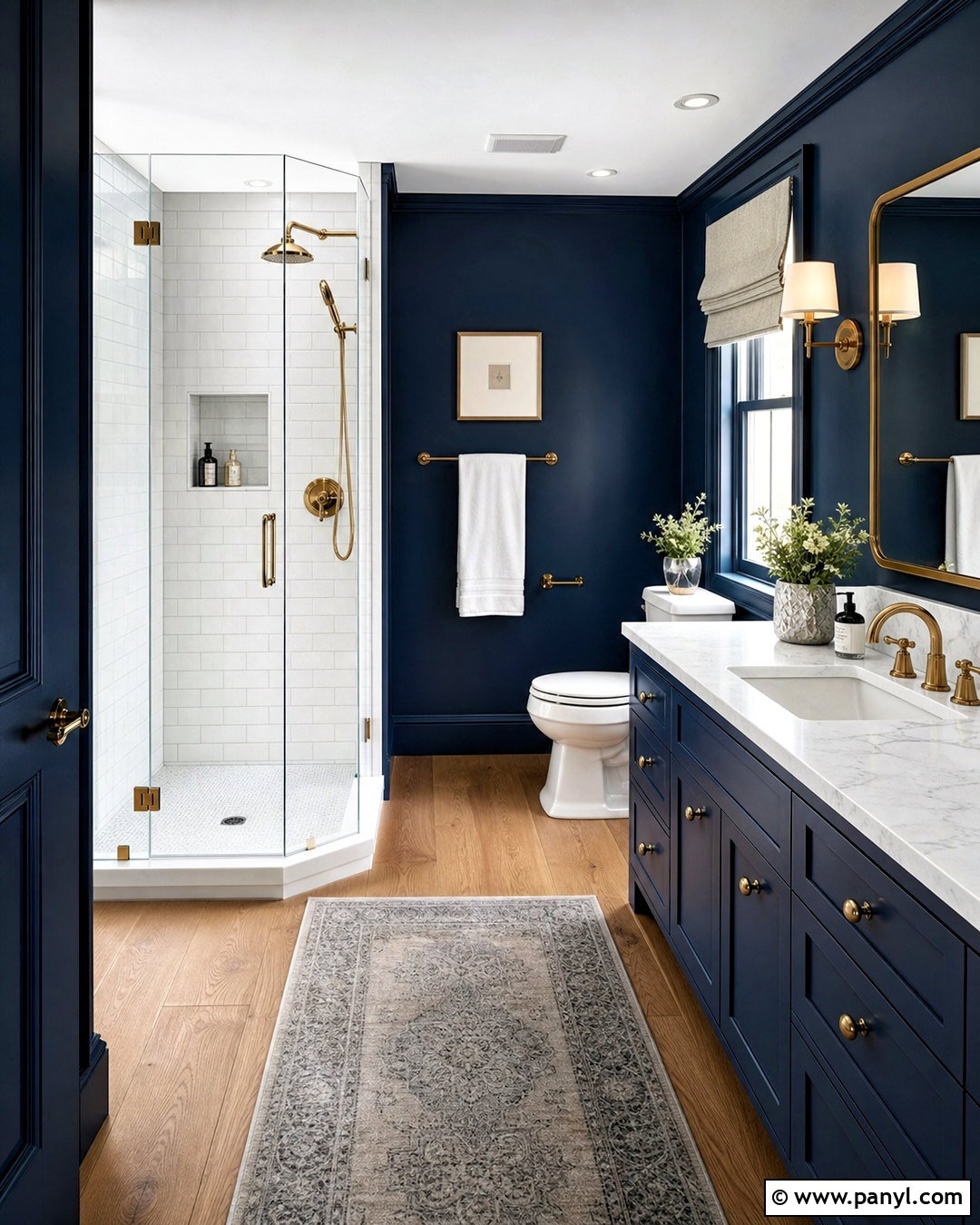
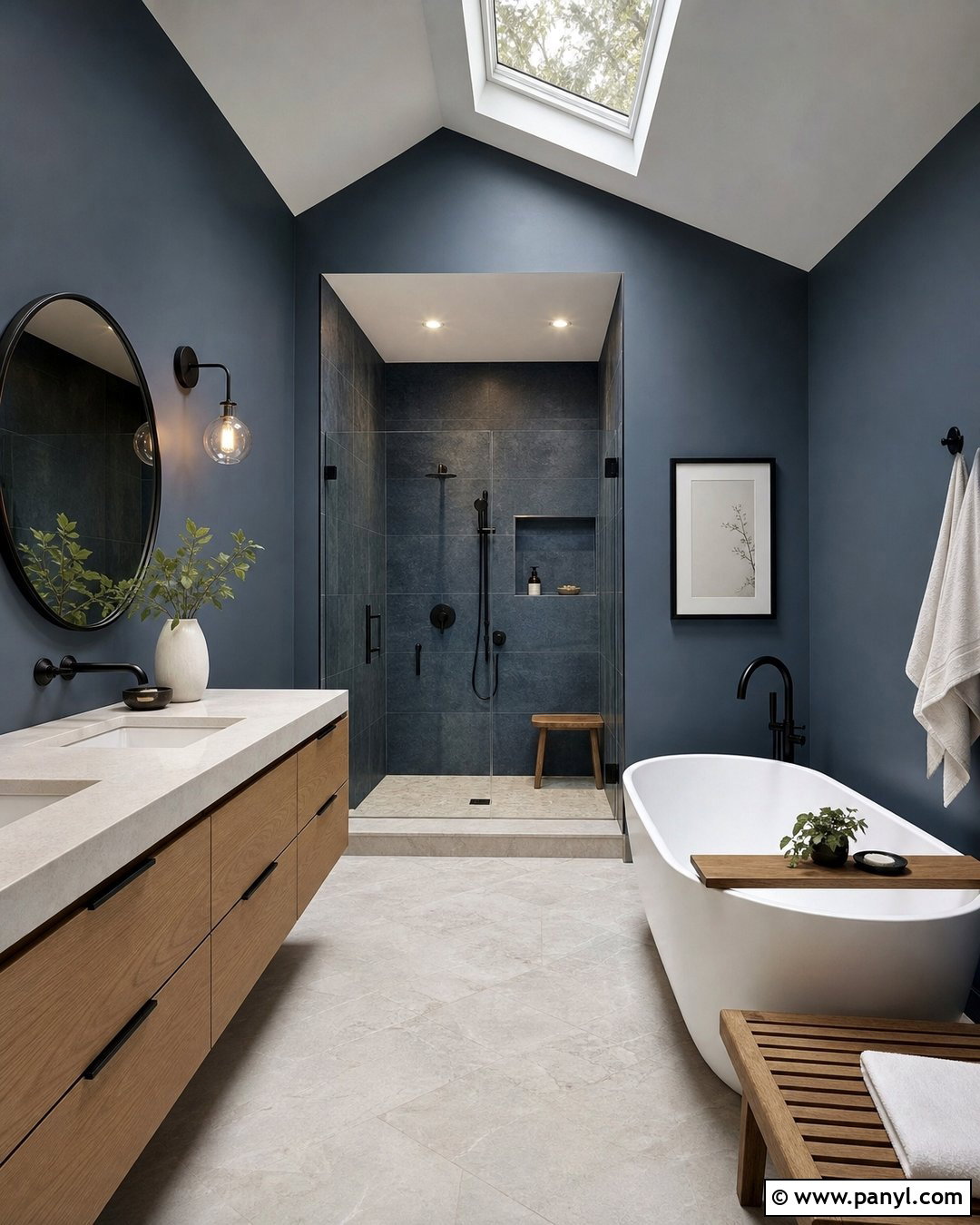
Deep navy blue gives a bathroom a polished, architectural look when balanced with enough light surfaces. Paint the vanity and upper walls navy, then use glossy white tile around the tub or shower to reflect light. A white marble-look countertop with soft gray veining creates a clean transition between the darker cabinetry and bright tile. Add brushed nickel fixtures for a crisp finish, or choose aged brass for more warmth. Medium-tone oak flooring or wood-look porcelain prevents the scheme from feeling cold. Finish the room with white towels, a pale gray bath mat, and one or two natural wood accessories. In a small bathroom, limit navy to the vanity and one wall so the color provides depth without visually closing in the room.
3. Warm Beige Bathroom Color Scheme
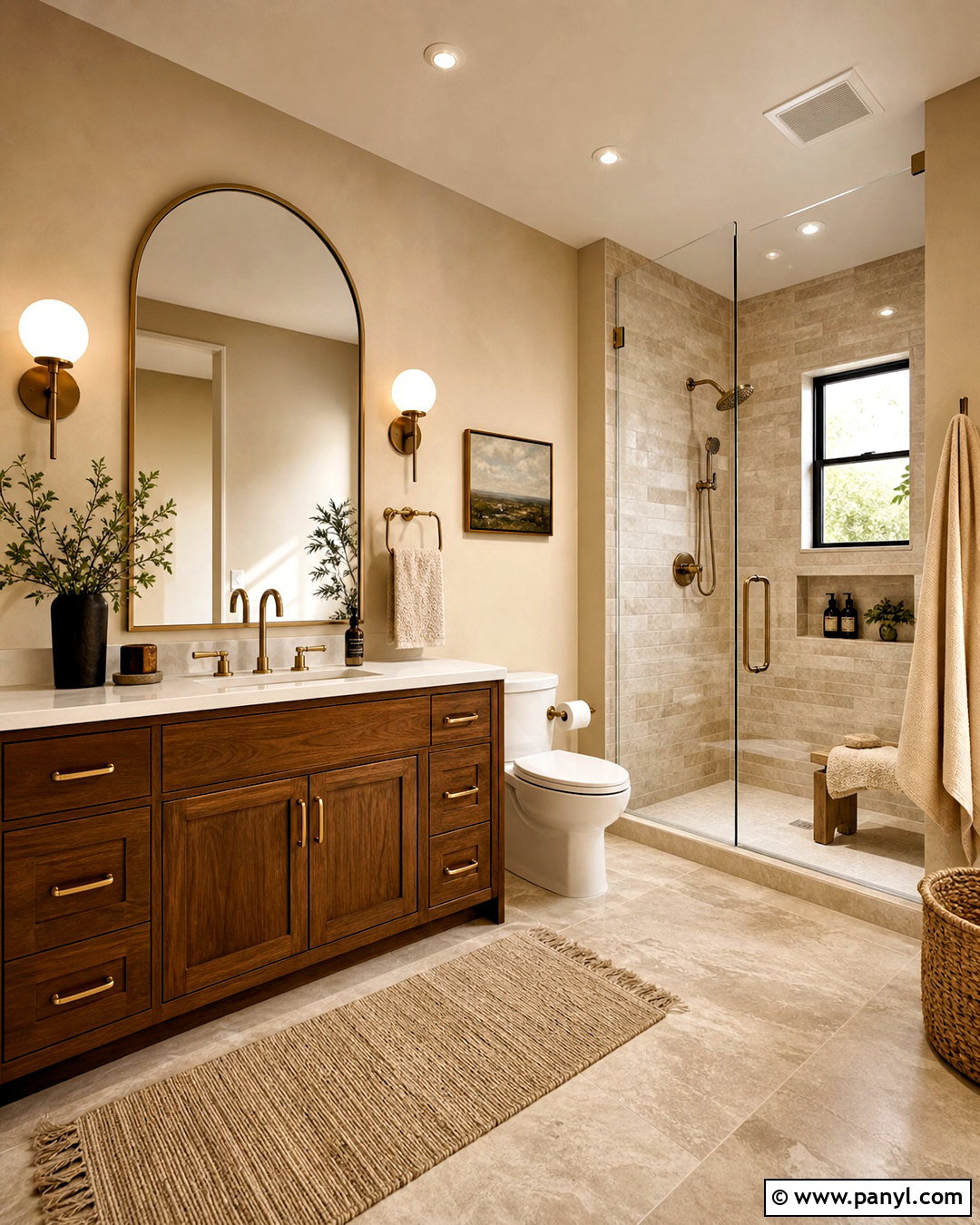
A warm beige bathroom feels comfortable, timeless, and far more inviting than a flat cool-gray room. Cover the walls in a sandy beige paint and choose large-format travertine-look porcelain tile for the shower and floor. A walnut vanity adds a deeper brown note, while an ivory quartz countertop keeps the overall design fresh. Use brushed brass or champagne bronze fixtures to strengthen the warm undertones. Layer cream towels, a natural linen shade, and a textured oatmeal bath mat for softness. A rounded mirror and simple globe sconces keep the space current without overpowering the subtle palette. Because beige can shift under artificial light, select warm-white bulbs and test your wall color beside the tile, cabinetry, and countertop before painting the entire bathroom.
4. Soft Blue Bathroom Color Scheme
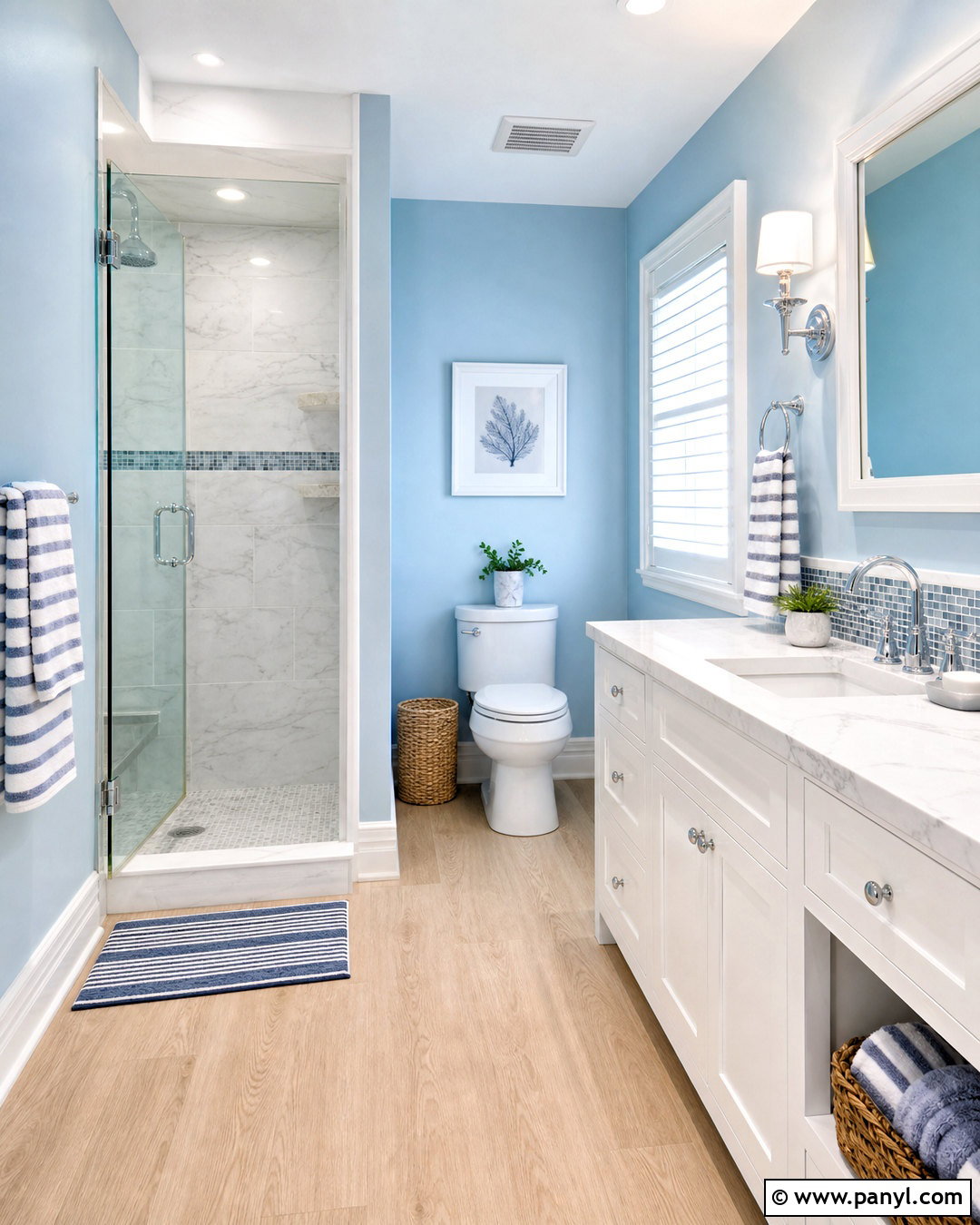
Imagine starting the morning in a bathroom washed with the quiet color of a clear sky. Paint the walls soft powder blue and combine them with white marble-look shower tile, a crisp white vanity, and pale oak flooring. Polished chrome fixtures reinforce the clean, watery feel without adding another strong color. Introduce subtle pattern through a blue-and-white mosaic floor or a striped shower curtain, but keep the design low contrast. White towels with light blue edging provide an easy finishing touch. If the room feels too cool, add a warm wood stool, woven storage baskets, or a natural bamboo shade. This bathroom color scheme is particularly useful for compact spaces because pale blue brings personality while maintaining an open, airy appearance.
5. Terracotta Bathroom Color Scheme
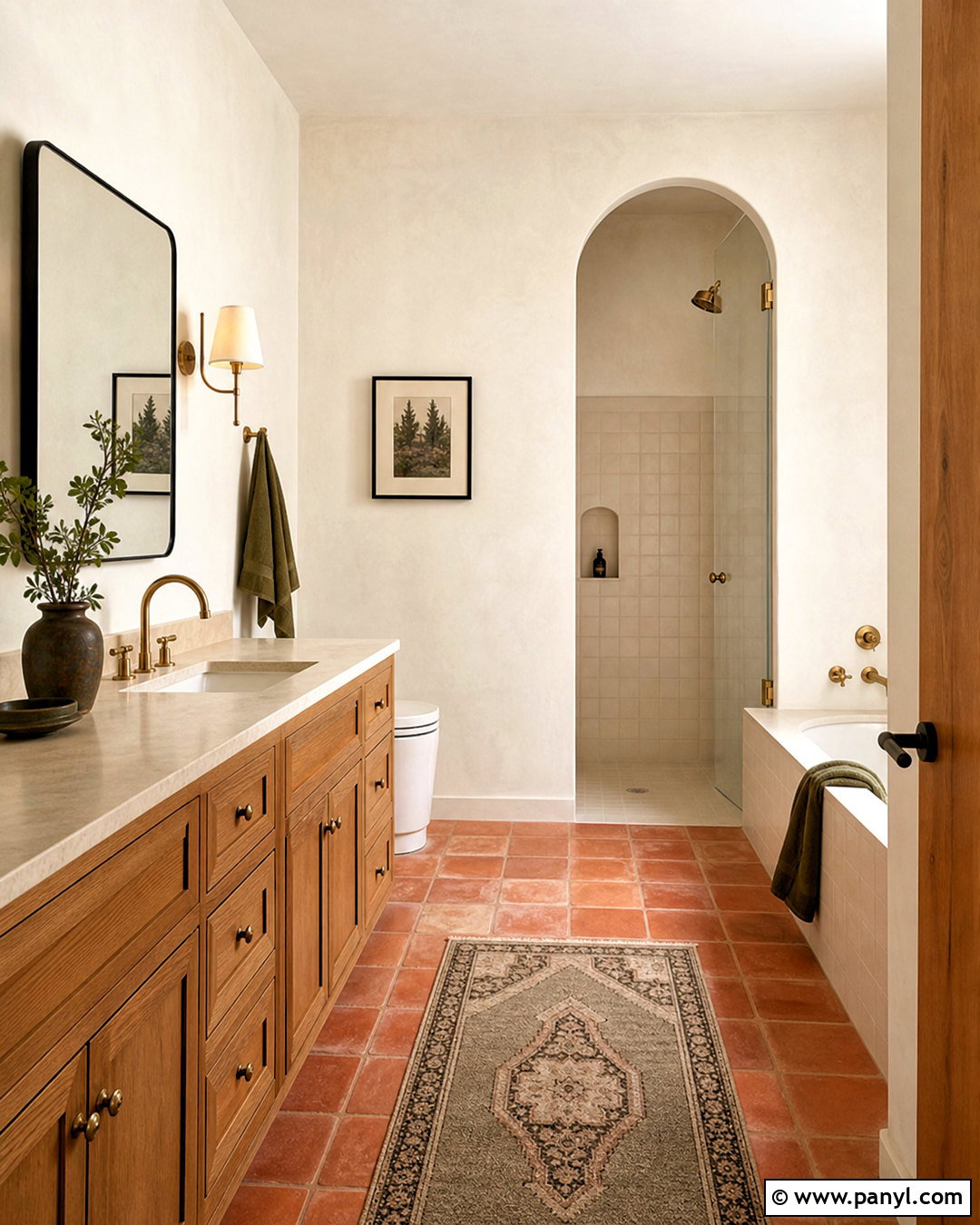
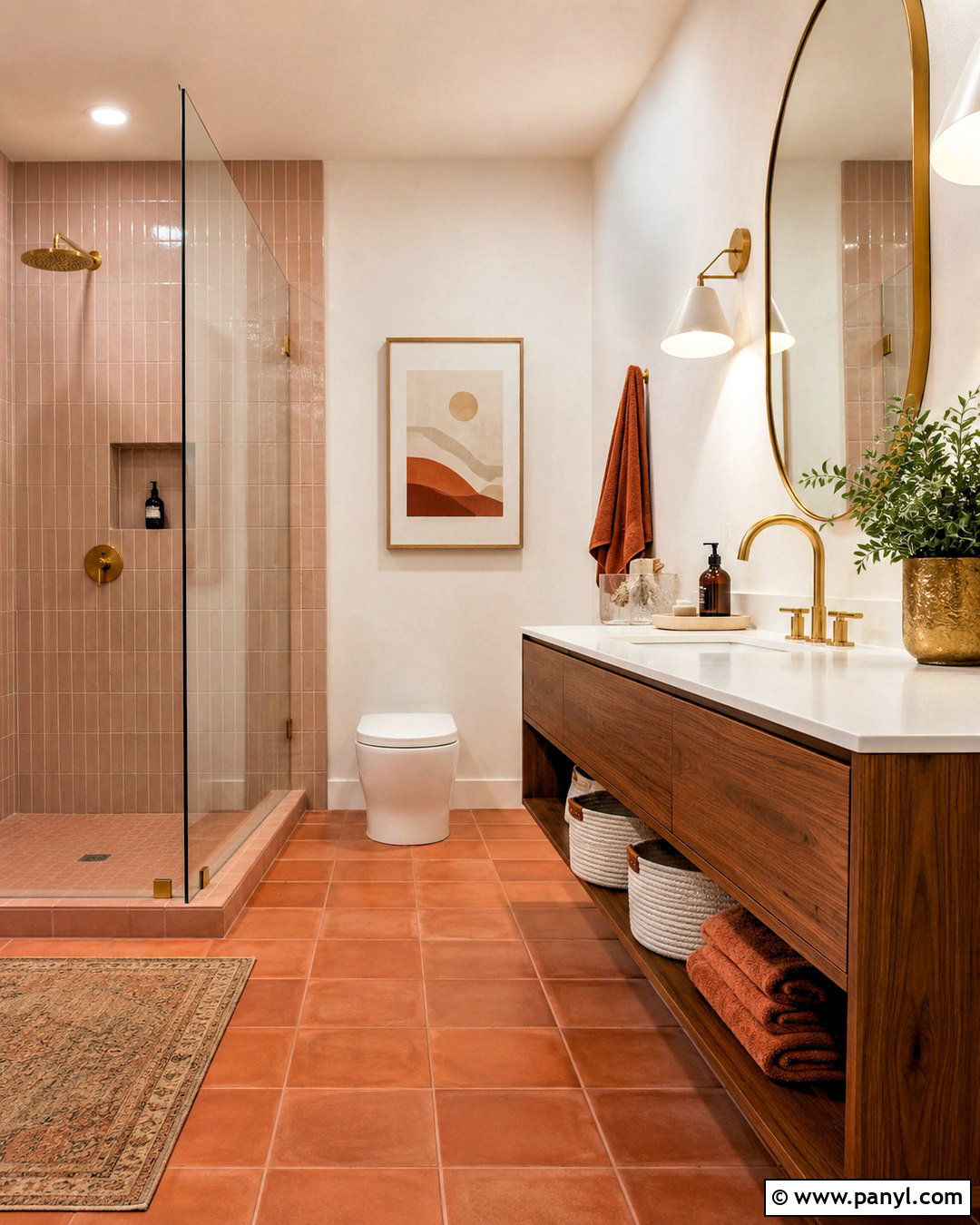
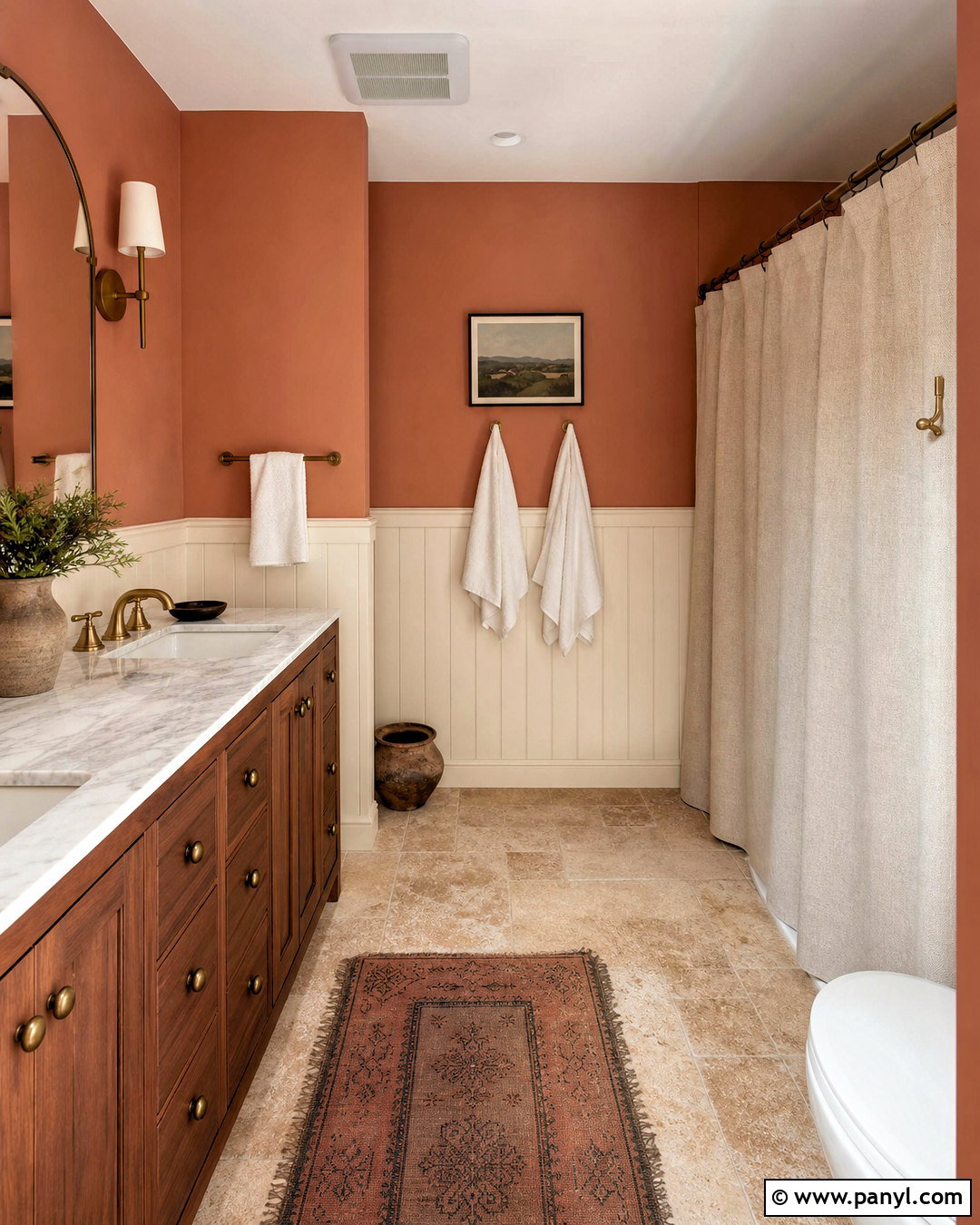
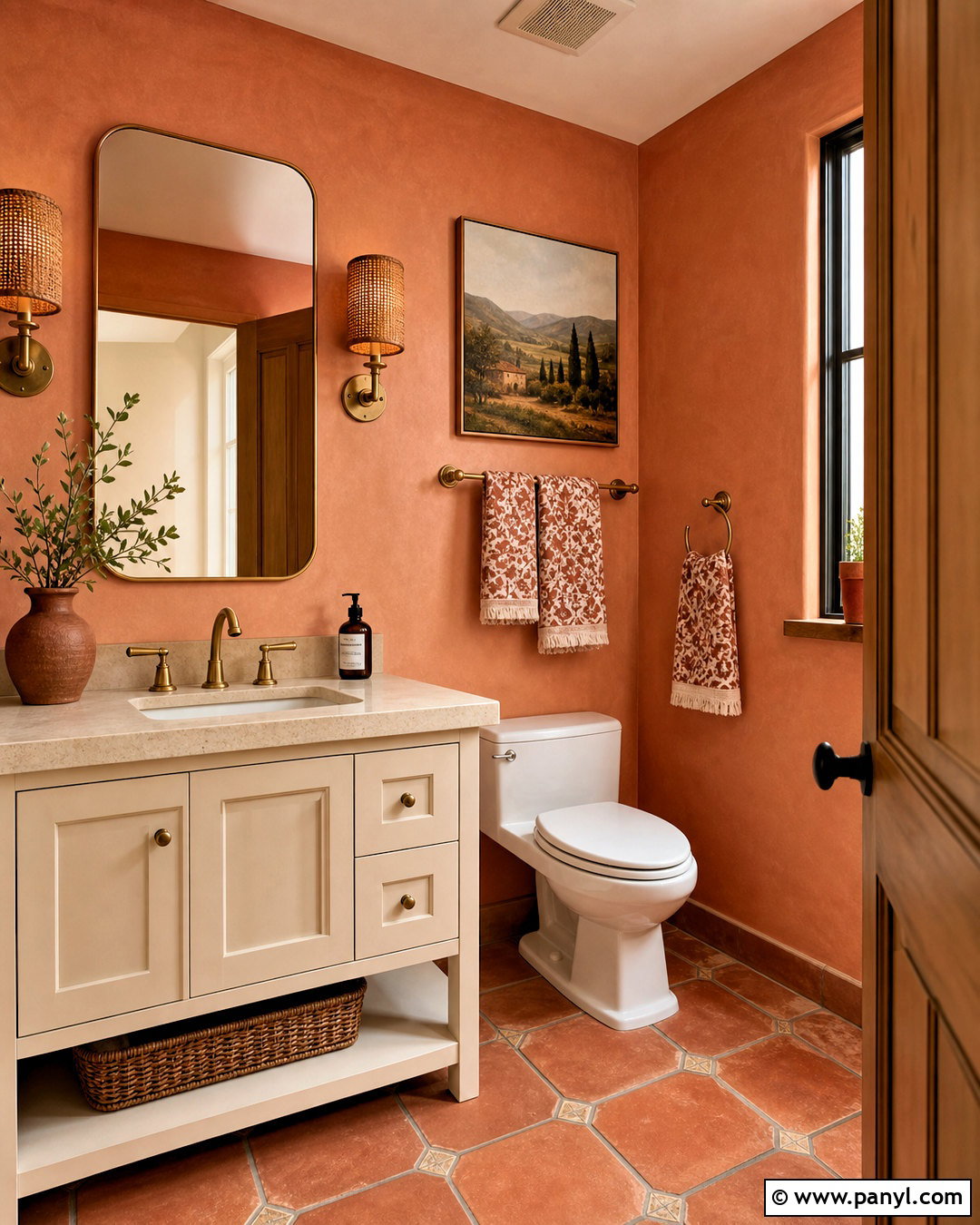
Terracotta brings sun-baked warmth and Mediterranean character into a bathroom while still feeling grounded and natural. Use clay-colored square tile on the floor or shower walls, then soften its intensity with creamy plaster-look walls. A medium oak vanity complements the orange-red undertones without matching them too closely. Choose an ivory stone countertop, aged brass plumbing fixtures, and a warm white sink and tub. Olive green towels or a small leafy plant provide a restrained complementary accent. Handmade-look tile with slight color variation will create more depth than a perfectly uniform surface. To avoid an overly themed result, keep the shapes simple and the decor minimal. The completed room should feel earthy, tactile, and relaxed rather than busy or heavily decorated.
6. Black And White Bathroom Color Scheme
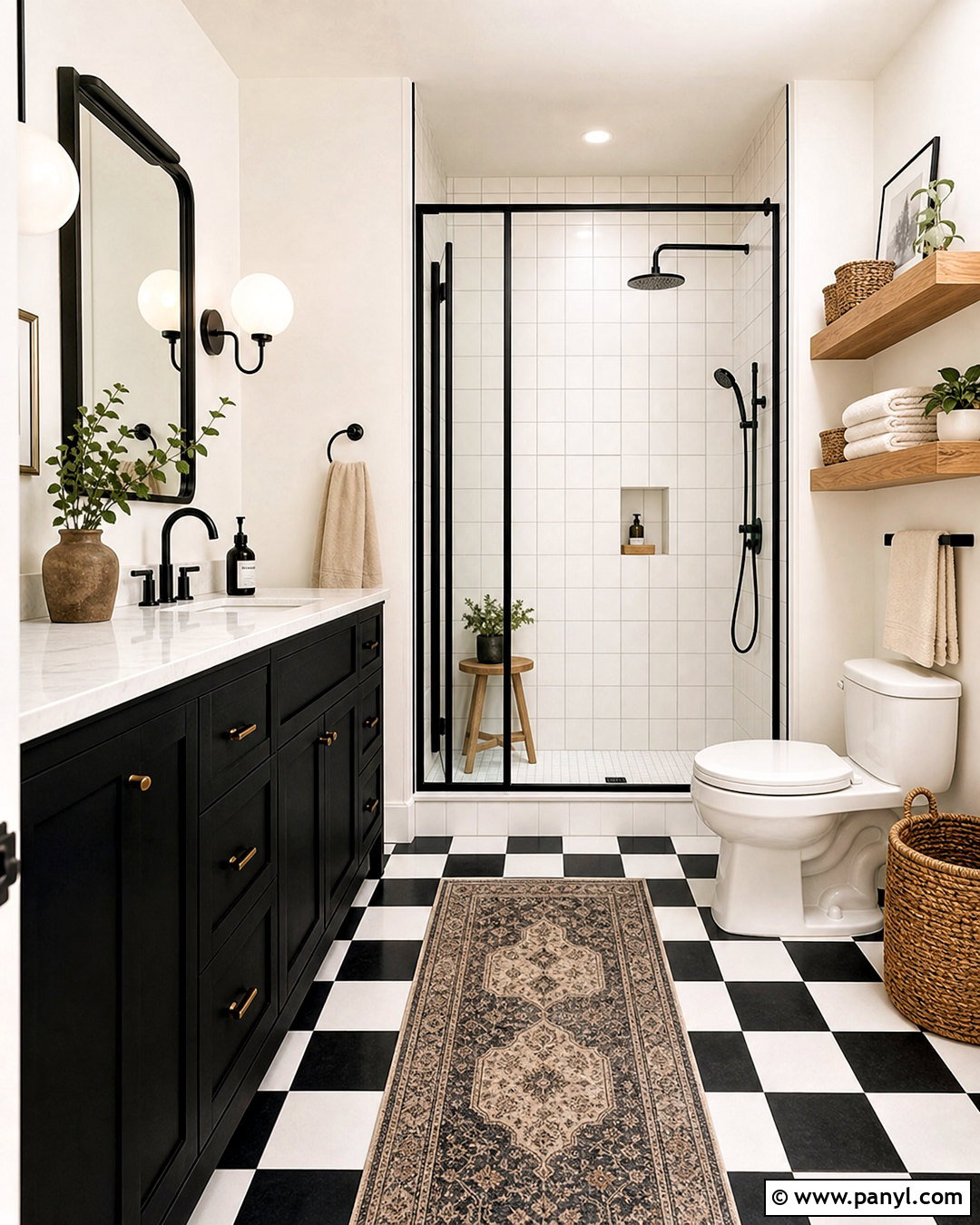
Can a black-and-white bathroom feel warm rather than stark? The key is combining bold contrast with texture and natural materials. Use white subway or square tile on the shower walls, then ground the room with a black-and-white checkerboard floor. A matte black vanity gives the palette a strong focal point, while a white quartz top keeps it practical. Repeat black through the mirror frame, shower enclosure, and one consistent fixture finish. Warm the room with oak shelves, woven baskets, and soft ivory towels instead of bright optical white textiles. Simple globe sconces soften the graphic lines. Keep patterns limited to the floor so the complete bathroom feels organized and timeless. This scheme suits traditional, transitional, and modern homes with only minor detail changes.
7. Olive Green Bathroom Color Scheme
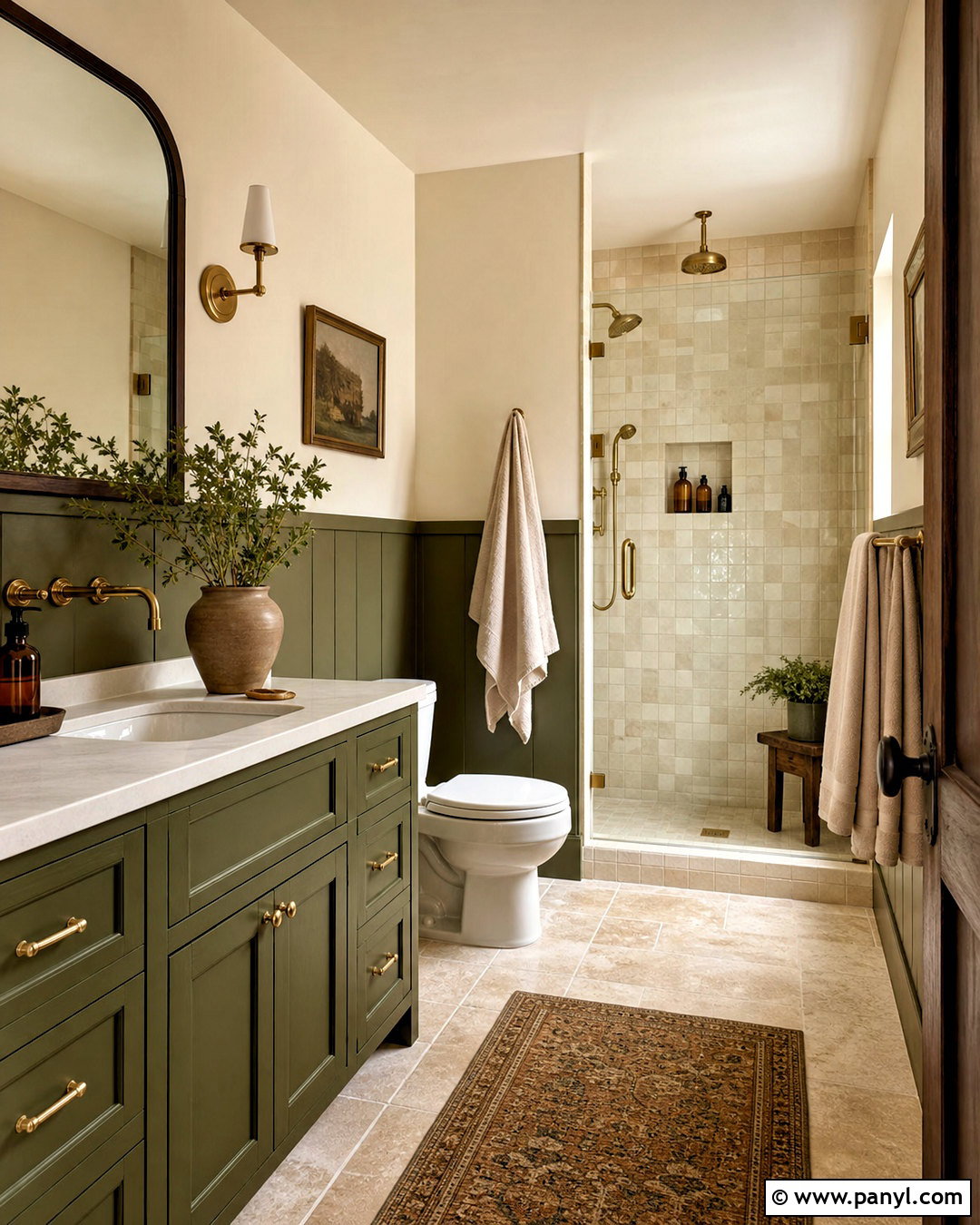
Olive green produces a richer, earthier bathroom than pale sage, making it ideal for a cozy primary bath or character-filled powder room. Paint the vanity and wall paneling in muted olive, then use warm ivory above the paneling to maintain brightness. Cream zellige-style shower tile adds reflective texture, while tumbled limestone flooring strengthens the natural palette. A walnut-framed mirror and aged brass fixtures introduce depth without competing with the green. Choose a beige stone countertop with subtle movement rather than sharp gray veining. Complete the room with oatmeal towels, amber glass accessories, and understated botanical artwork. Since olive can look brown or yellow under certain bulbs, use warm-white lighting with good color clarity and test samples next to every fixed bathroom finish.
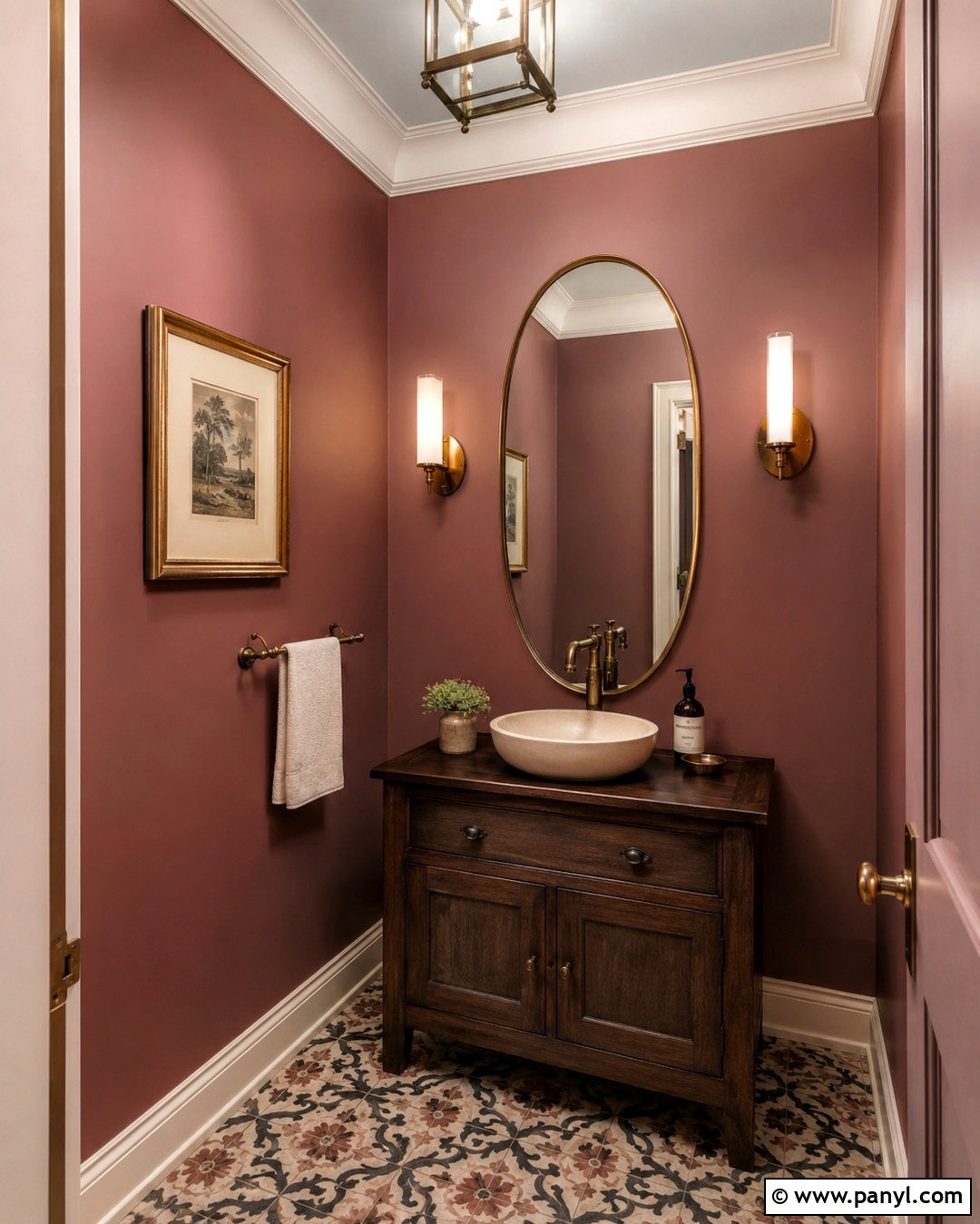
8. Blush Pink Bathroom Color Scheme
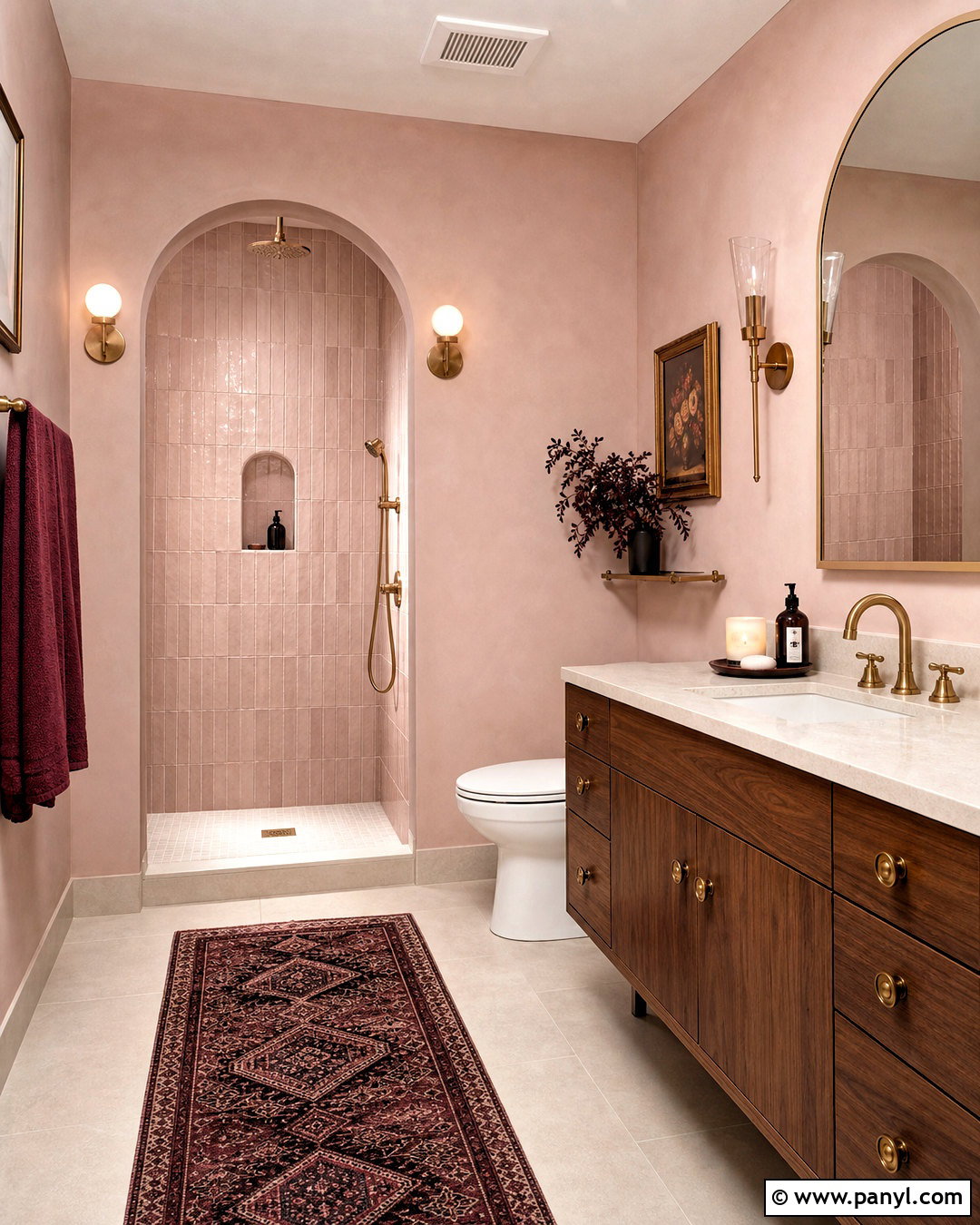
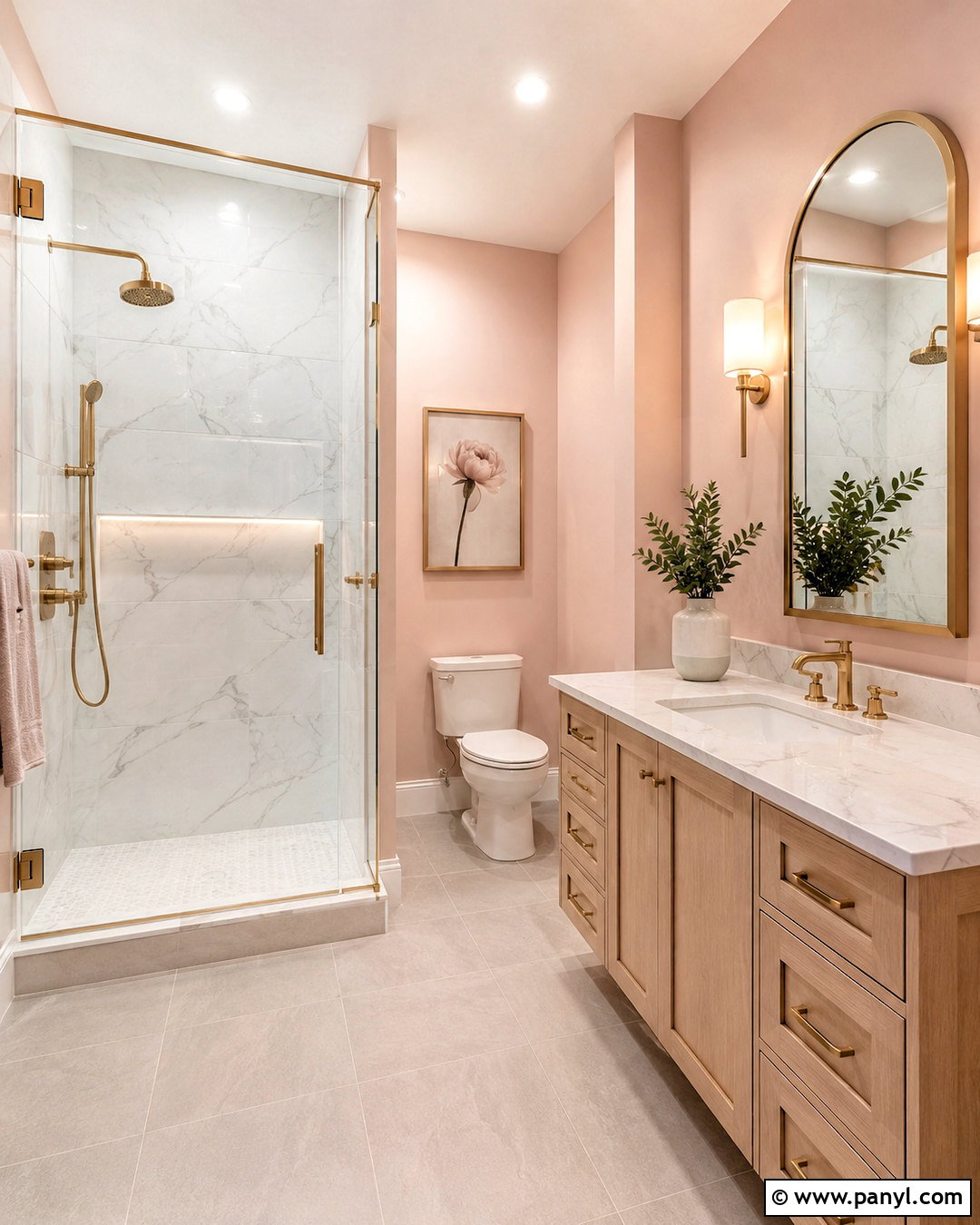
A blush pink bathroom can feel sophisticated when the color is dusty, muted, and paired with grounded materials. Apply soft blush paint above warm white wall tile, or use pale pink handmade-look tile inside the shower. Choose a walnut vanity to add contrast and prevent the room from appearing overly sweet. An ivory quartz countertop, brushed brass fixtures, and creamy porcelain flooring create a cohesive warm foundation. Introduce burgundy or rust through a narrow bath mat, artwork, or hand towels for extra depth. Keep the sink, tub, and toilet warm white so they blend naturally into the palette. Clean-lined cabinetry and a simple arched mirror balance the romantic color. This finished scheme works beautifully in both vintage-inspired bathrooms and uncluttered contemporary spaces.
9. Charcoal Gray Bathroom Color Scheme
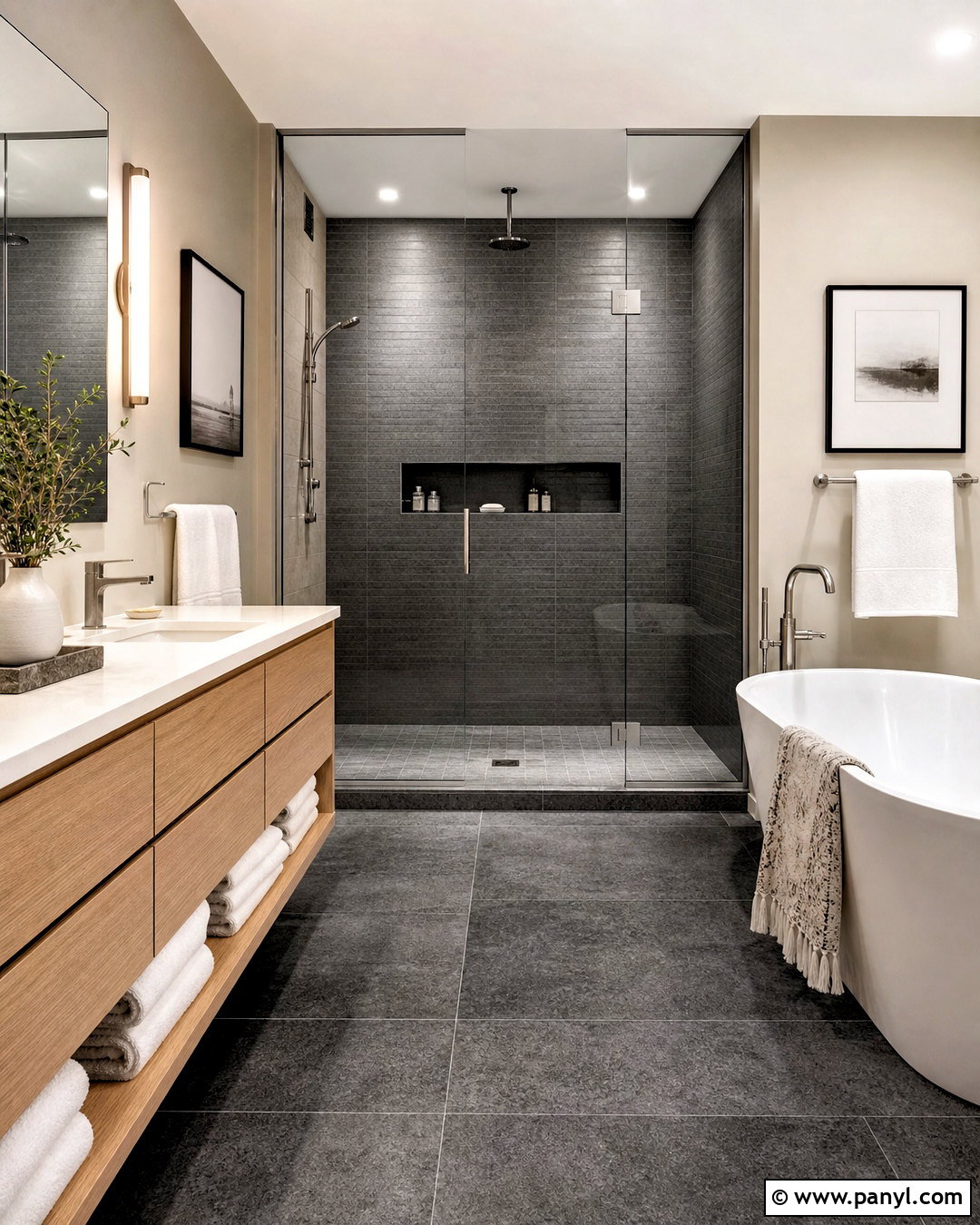
Charcoal gray can transform a well-lit bathroom into a dramatic retreat with a tailored, modern edge. Use charcoal tile across the shower walls and floor, selecting a slightly textured finish to prevent the surfaces from looking flat. Balance the dark envelope with a floating white oak vanity and a warm white countertop. Brushed nickel fixtures offer gentle contrast, while a frameless glass shower keeps sightlines open. Paint the remaining walls soft greige rather than pure white to create a smoother transition. Add oversized mirrors and bright wall lighting to distribute light throughout the room. White towels, a pale stone bath mat, and minimal ceramic accessories keep the design fresh. In smaller bathrooms, reserve charcoal for the floor and one focal wall instead of every surface.
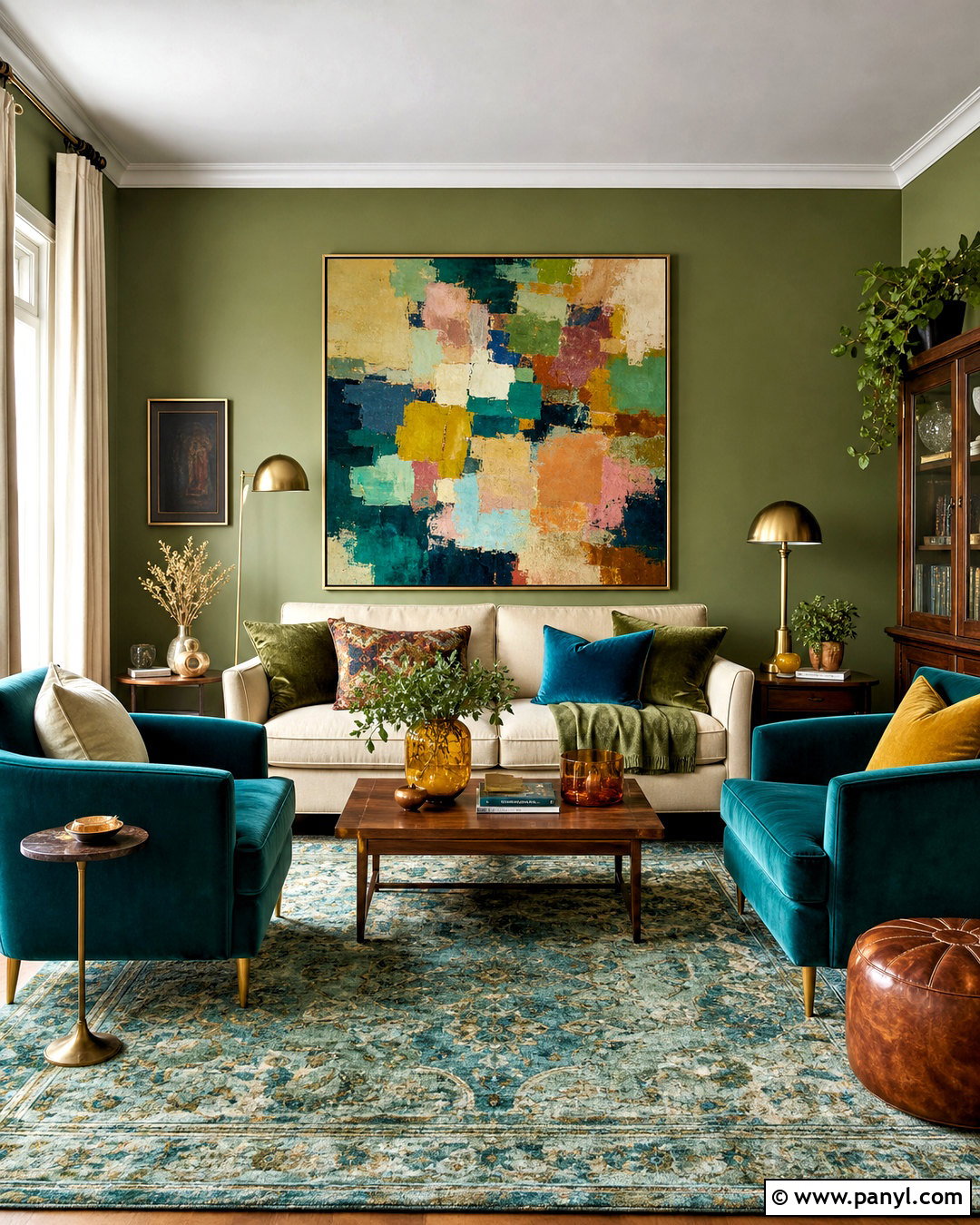
10. Cream And Wood Bathroom Color Scheme
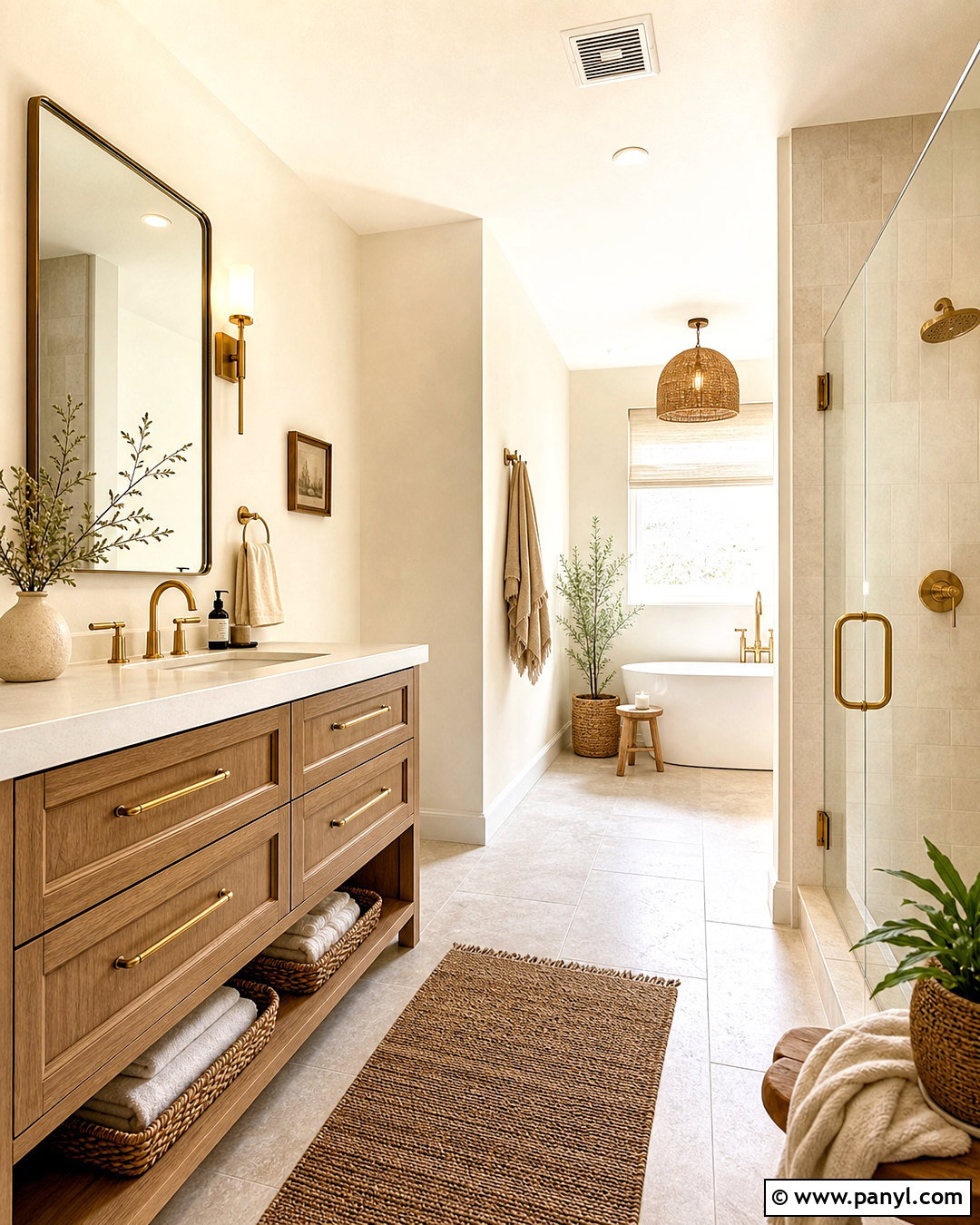
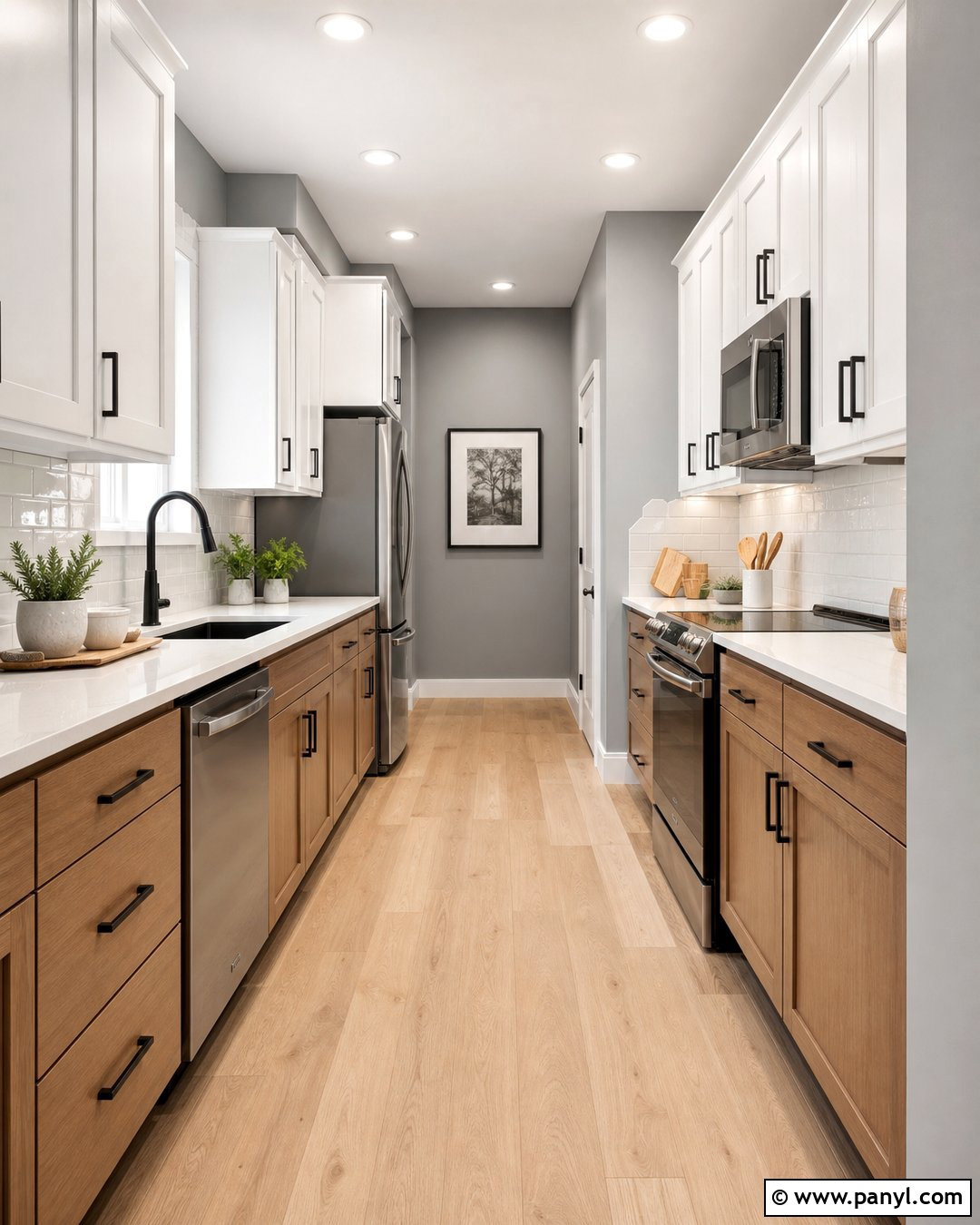
Cream and natural wood create a soothing bathroom that feels bright, warm, and easy to personalize. Cover the walls and shower in layered ivory and cream surfaces, combining smooth paint with lightly textured ceramic tile. Install a white oak vanity with visible grain and a creamy quartz countertop. Choose beige stone-look floor tile to connect the cabinetry with the walls. Brushed brass fixtures add warmth, but polished nickel can provide a slightly more traditional finish. Complete the space with linen-colored towels, a woven pendant or shade, and simple ceramic containers. The design becomes more interesting when the cream tones vary slightly instead of matching perfectly. Keep undertones consistently warm, however, so no single tile, fabric, or painted surface appears unexpectedly gray or yellow.
11. Emerald Green Bathroom Color Scheme
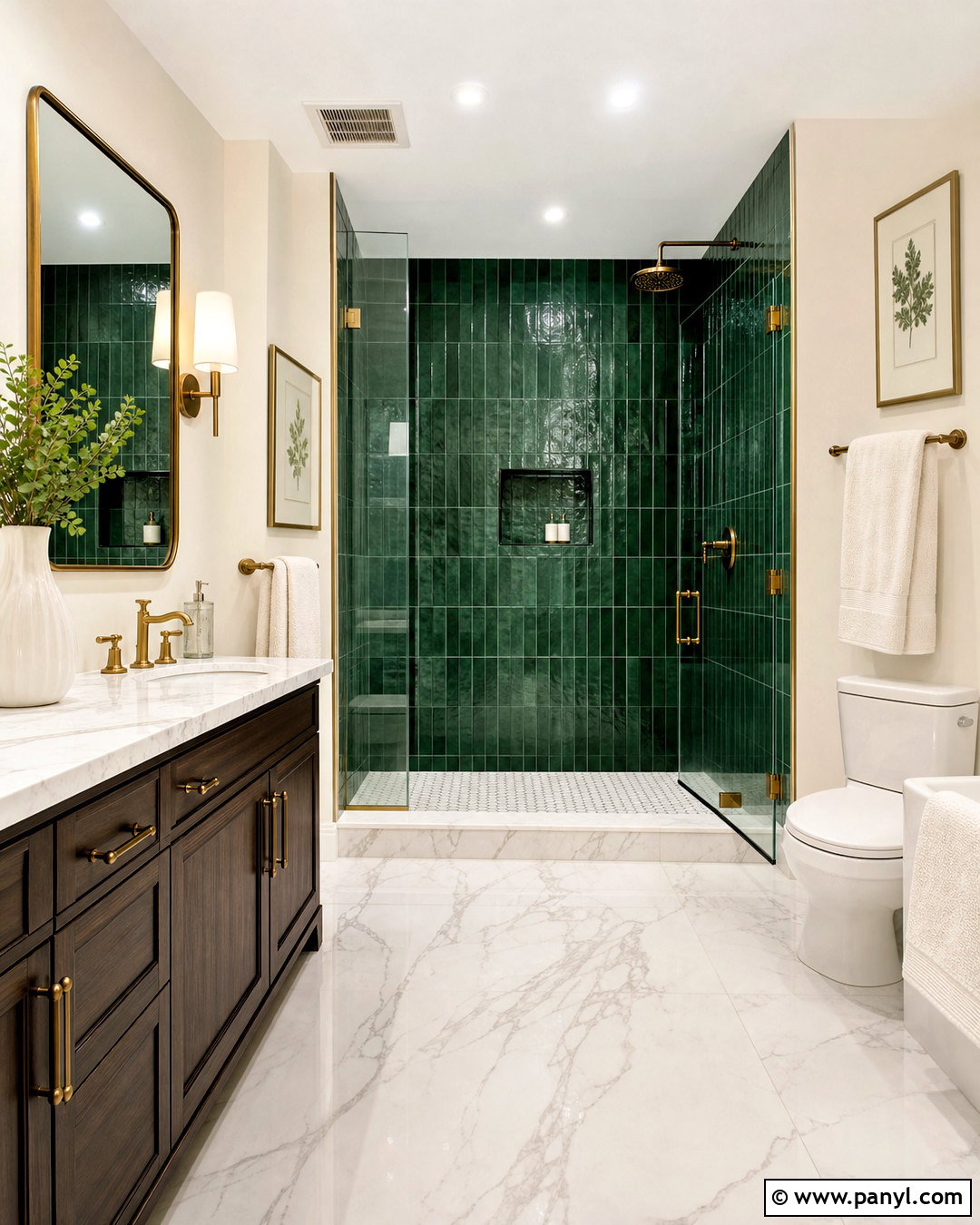
For a bathroom with confident color and lasting elegance, pair emerald green with white stone and warm metal. Use glossy emerald tile in the shower or behind the vanity, allowing its reflective surface to brighten the saturated hue. Paint the other walls a soft warm white and install a dark walnut vanity for rich contrast. White marble-look counters and flooring provide visual relief without weakening the dramatic focal color. Repeat aged brass through the faucets, shower hardware, sconces, and mirror frame for consistency. Add plain ivory towels and minimal decor because the tile already supplies plenty of personality. Emerald works especially well in powder rooms, but it can also suit a larger bath when limited to one primary zone and balanced by broad neutral surfaces.
12. Greige Bathroom Color Scheme
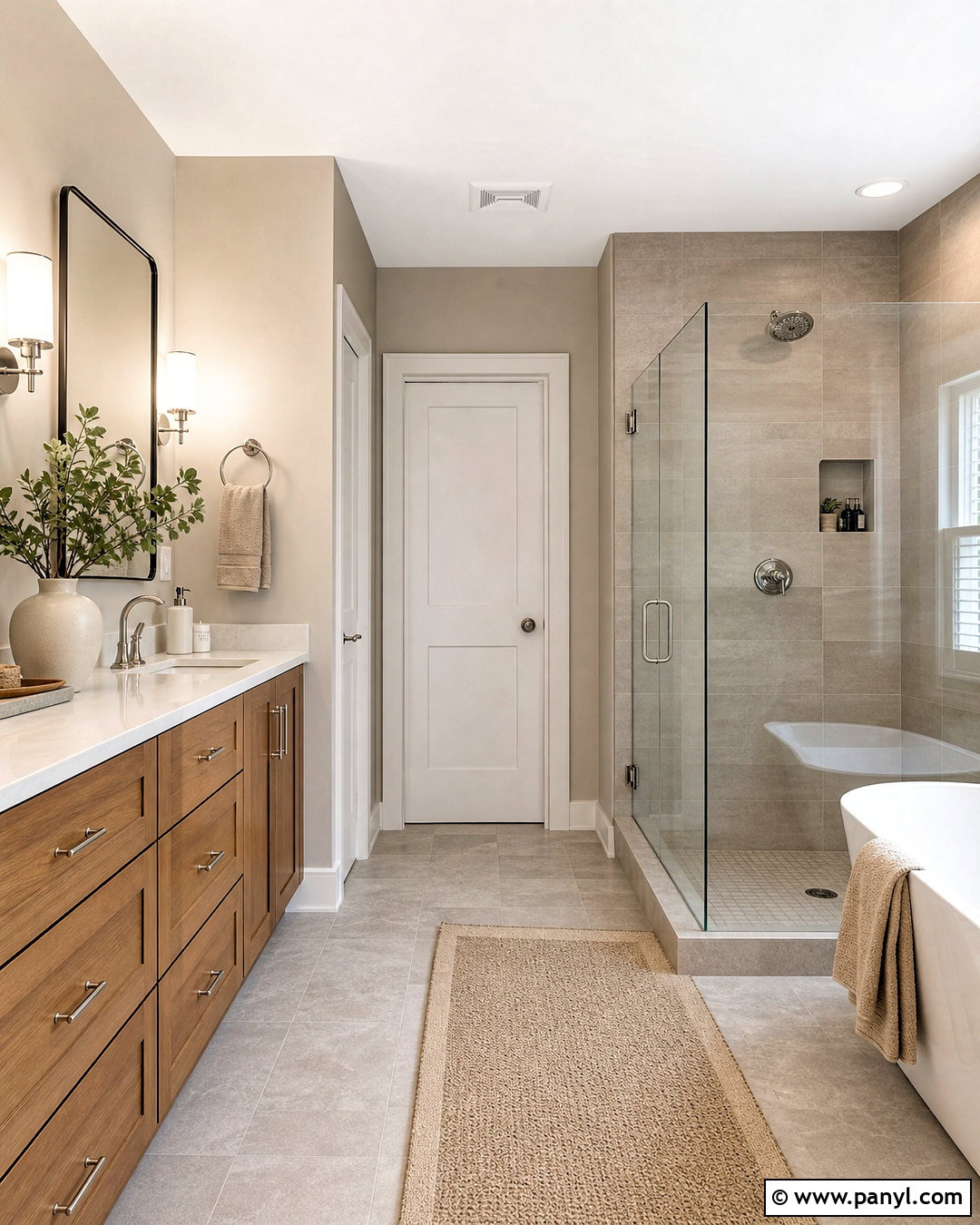
Greige offers a practical middle ground when pure gray feels cold and beige feels too yellow. Paint the walls in a light warm greige, then use taupe-gray porcelain tile across the shower and floor. A medium oak vanity emphasizes the brown undertones, while a soft white quartz countertop adds gentle contrast. Select polished nickel fixtures for a classic effect or matte black fixtures for cleaner definition. White towels, a flax-colored Roman shade, and a textured beige runner create comfortable layers without changing the restrained palette. Introduce interest through tile scale, cabinetry details, and lighting instead of adding unrelated accent colors. Compare several greige samples beside your flooring because their undertones can vary widely. The best choice should connect the tile, wood, and countertop under both daylight and bathroom lighting.
13. Butter Yellow Bathroom Color Scheme
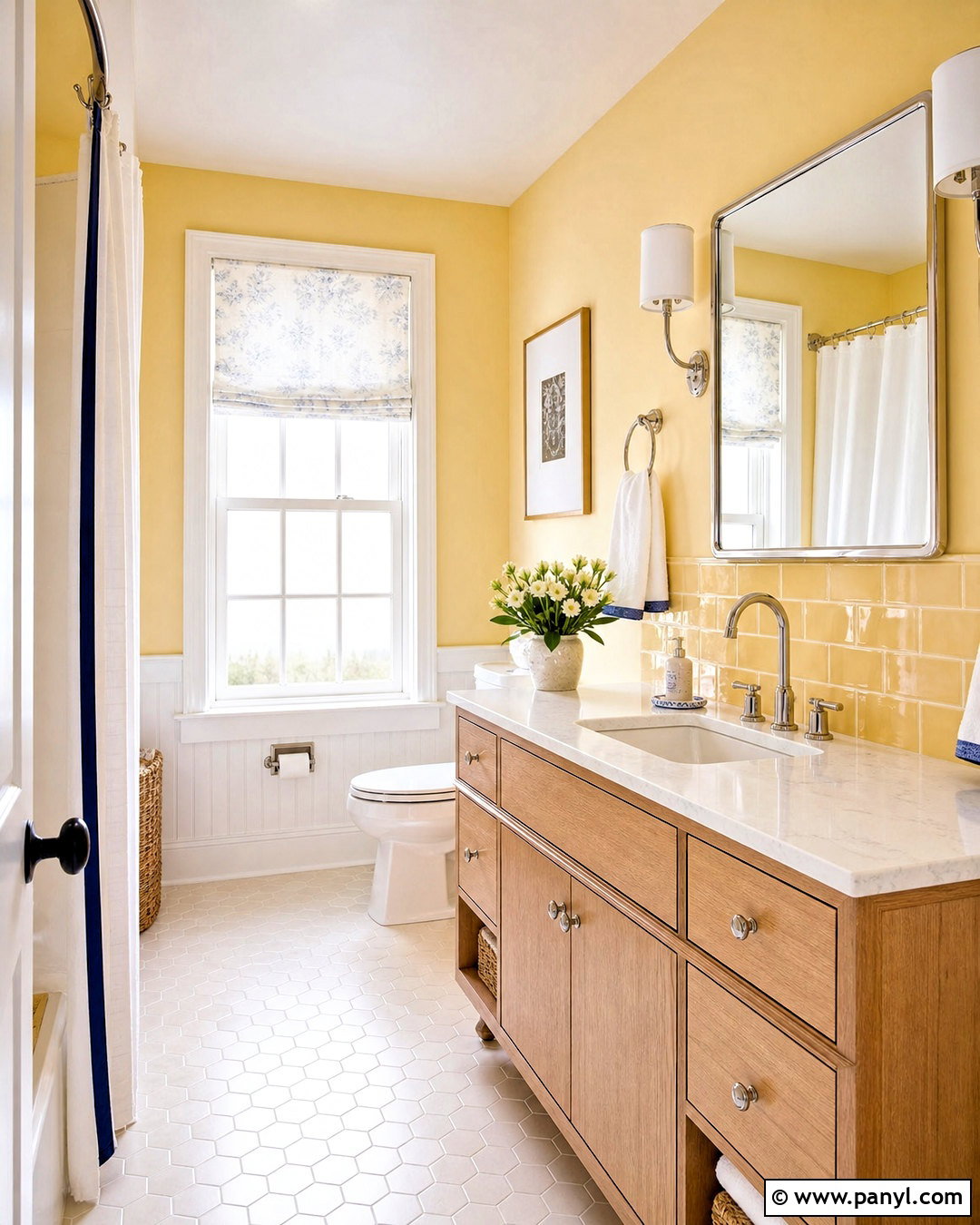
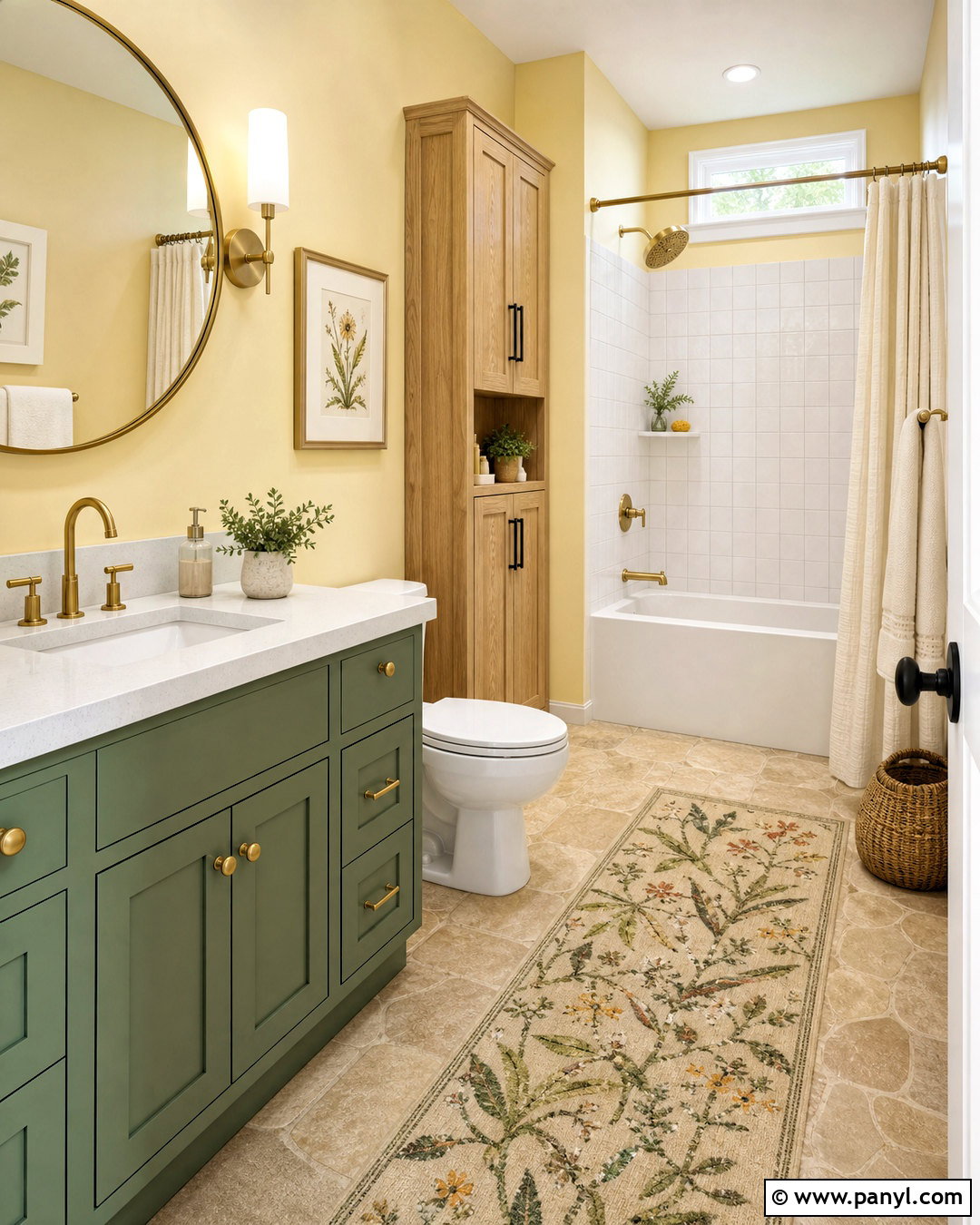
Butter yellow adds cheerful warmth to a bathroom without the intensity of lemon or mustard. Use pale buttery paint on the walls or glossy yellow tile behind the vanity, then surround it with creamy white surfaces. A light oak vanity reinforces the sunny character, while a white quartz countertop keeps the design clean. Choose warm white floor tile with light beige grout to avoid sharp contrast. Polished nickel fixtures bring a fresh sparkle, and small blue accents can provide balance through towels or artwork. Keep window treatments light so natural brightness becomes part of the color scheme. This palette is especially effective in bathrooms with limited sunlight, but always test the yellow first. Artificial lighting can make an already warm shade appear stronger than expected.
14. Teal Bathroom Color Scheme
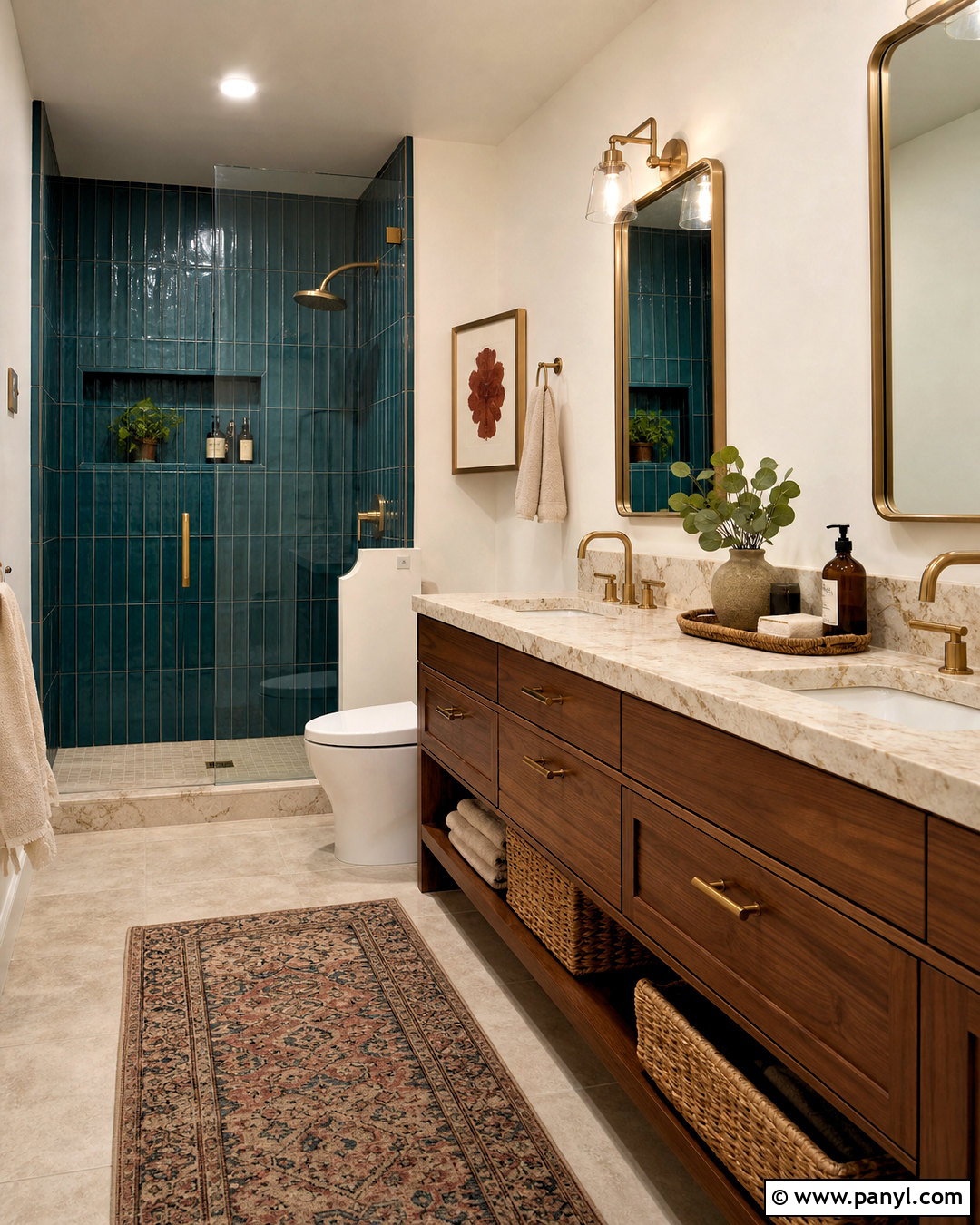
Teal blends blue’s calm quality with green’s organic character, creating a bathroom that feels colorful yet balanced. Install deep teal tile across the shower walls or vanity backsplash, preferably with a glossy finish that reflects surrounding light. Pair it with warm white walls, a walnut vanity, and pale limestone-look flooring. Brushed brass fixtures complement teal’s green undertones and add a refined glow. Choose an off-white countertop with subtle tan veining to connect the warm and cool elements. Finish the room with cream towels, natural woven storage, and one small rust-colored accent for contrast. Avoid combining teal with several additional blues or greens. Let it remain the dominant color, supported by simple neutrals and wood, so the finished bathroom looks intentional rather than overly busy.
15. Chocolate Brown Bathroom Color Scheme
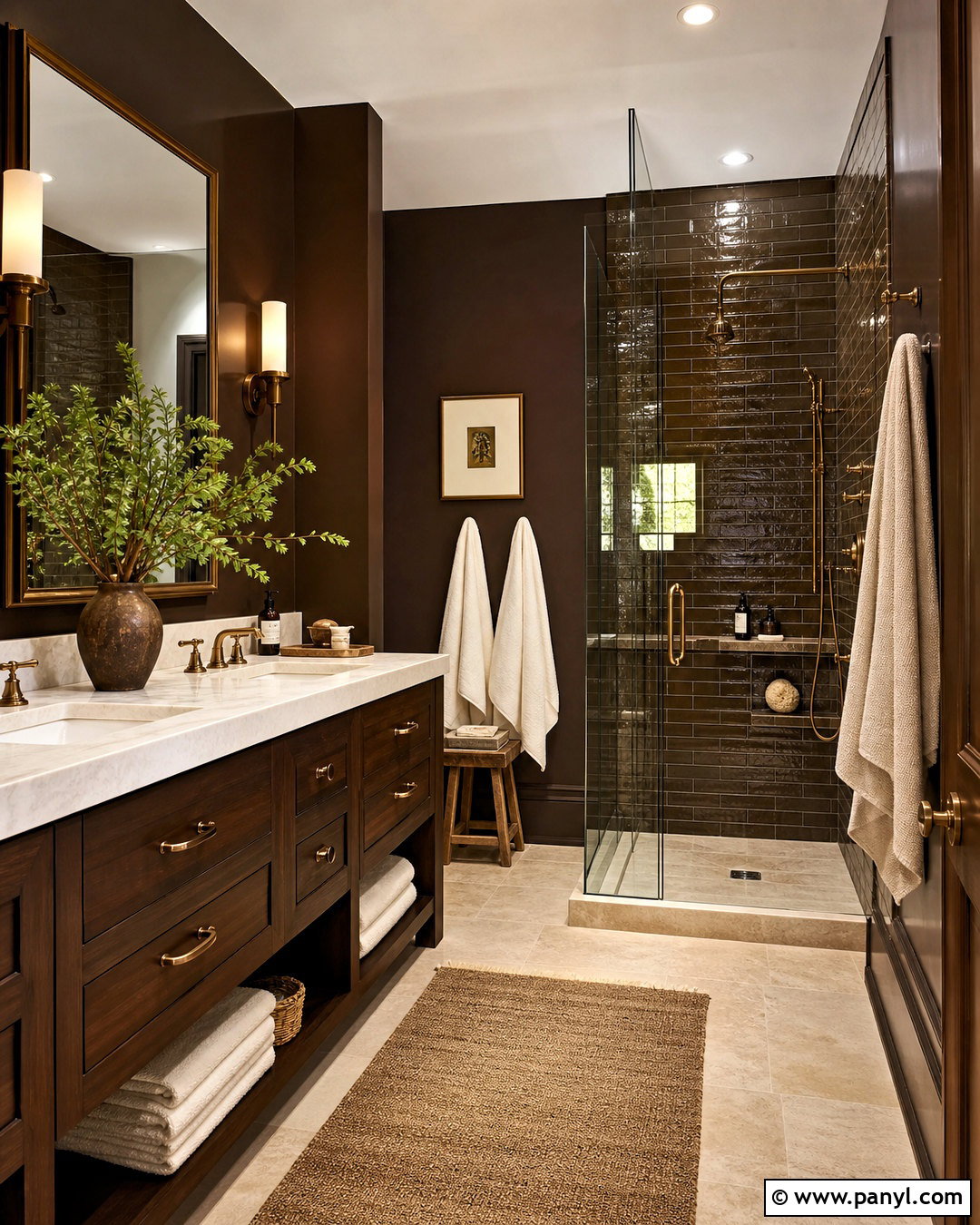
Chocolate brown gives a bathroom an enveloping, luxurious atmosphere when it is layered with cream and natural stone. Paint the upper walls a deep cocoa brown and use glossy brown tile inside the shower for tonal depth. A dark walnut vanity can blend into the palette, while a thick ivory stone countertop provides essential contrast. Choose light beige limestone flooring to keep the room grounded without making it dark from top to bottom. Aged brass fixtures add warmth and definition. Hang a large mirror to reflect light, and use bright wall sconces with warm-white bulbs. Cream towels, tan textiles, and simple ceramic accessories complete the look. For a smaller bath, use chocolate brown on the vanity and ceiling while keeping most walls softly neutral.
16. Dusty Rose Bathroom Color Scheme
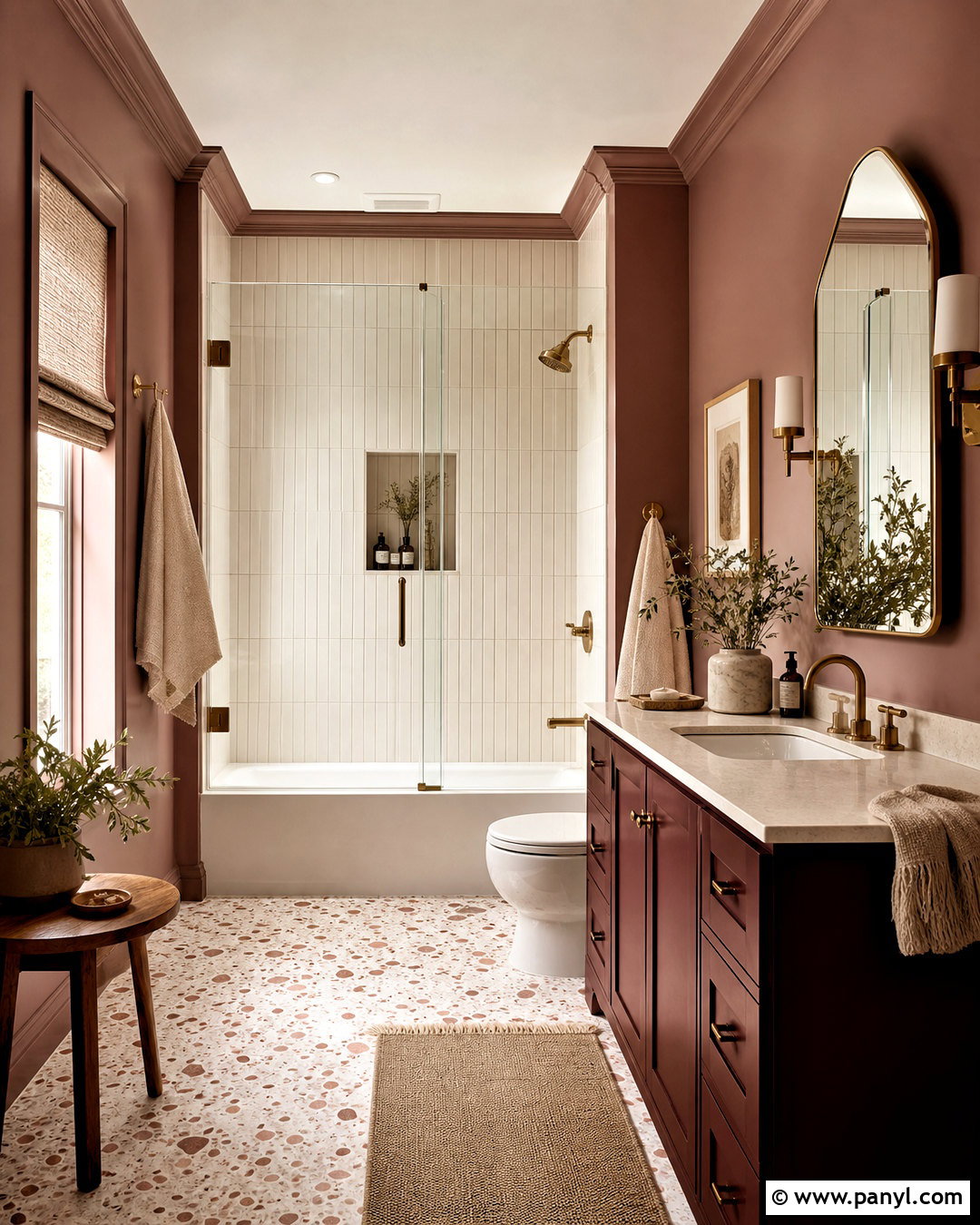
Dusty rose offers more depth than blush while remaining soft enough for a relaxing bathroom. Paint the walls in a muted rose with brown or gray undertones, then add ivory vertical tile around the tub and shower. A deep burgundy vanity creates tonal contrast, though walnut cabinetry offers a quieter alternative. Use creamy terrazzo flooring with scattered rose, beige, and rust chips to tie the palette together. Brushed brass fixtures and an arched mirror enhance the warmth without making the room feel ornate. Choose oatmeal towels, a natural linen shower curtain, and minimal artwork. Avoid icy white surfaces, which can exaggerate pink undertones. Warm whites, natural stone colors, and earthy red accents will create a complete bathroom that feels mature, cohesive, and comfortably colorful.
17. Coastal Blue And Sand Bathroom Color Scheme
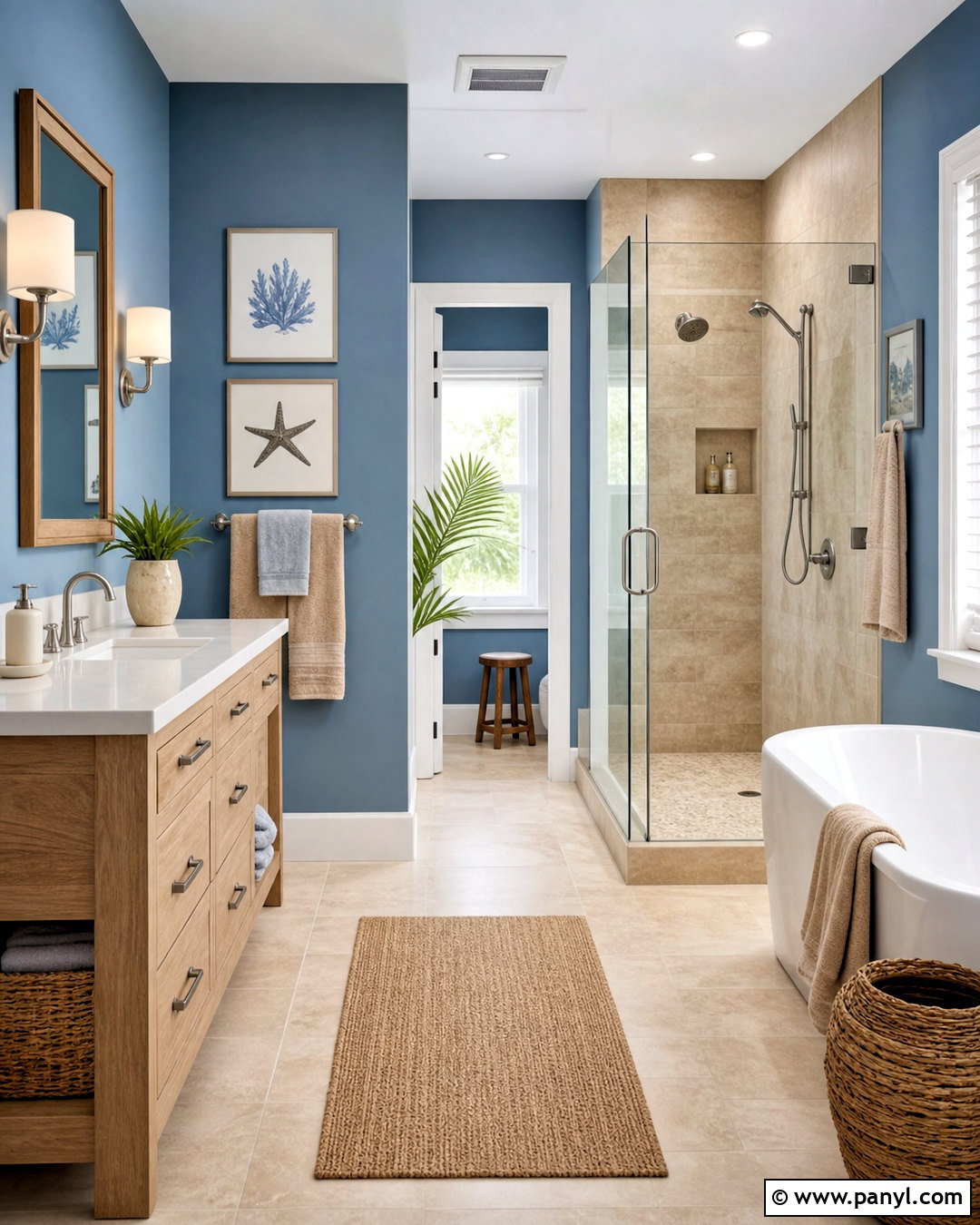
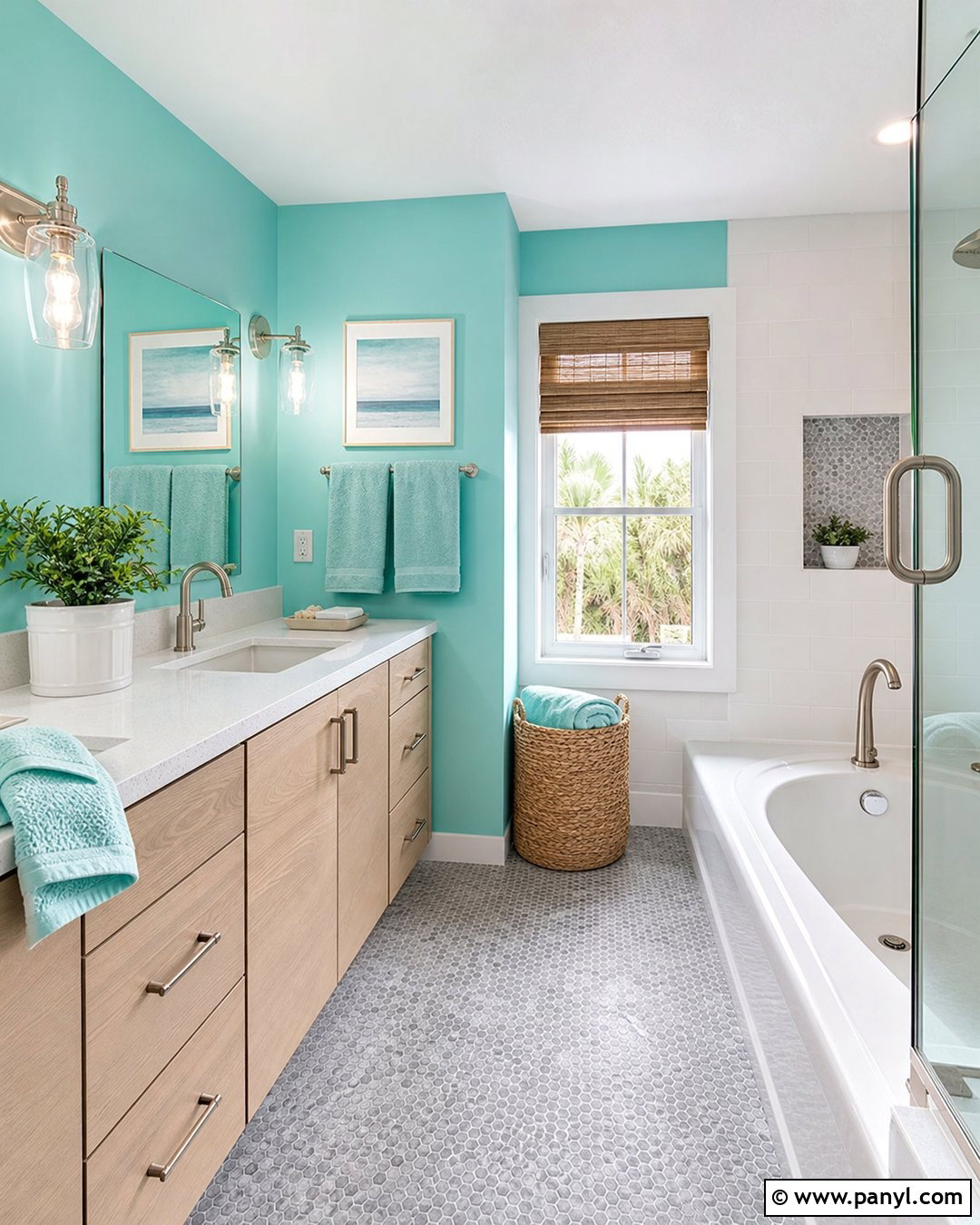
A blue-and-sand palette captures a light coastal feeling without relying on obvious nautical decorations. Paint the walls a muted ocean blue and install sandy beige porcelain tile on the floor and shower walls. A natural white oak vanity introduces relaxed warmth, while a white quartz countertop keeps the sink area bright. Use brushed nickel fixtures, a frameless shower enclosure, and a large simple mirror to preserve an airy look. Layer white and flax-colored towels, woven baskets, and a lightly textured shower curtain. One striped textile can add pattern, but avoid anchors, shells, and themed signs. The finished bathroom should suggest water, sky, and shore through color and material alone. This approach creates a versatile space that works well beyond coastal homes.
18. Burgundy Bathroom Color Scheme
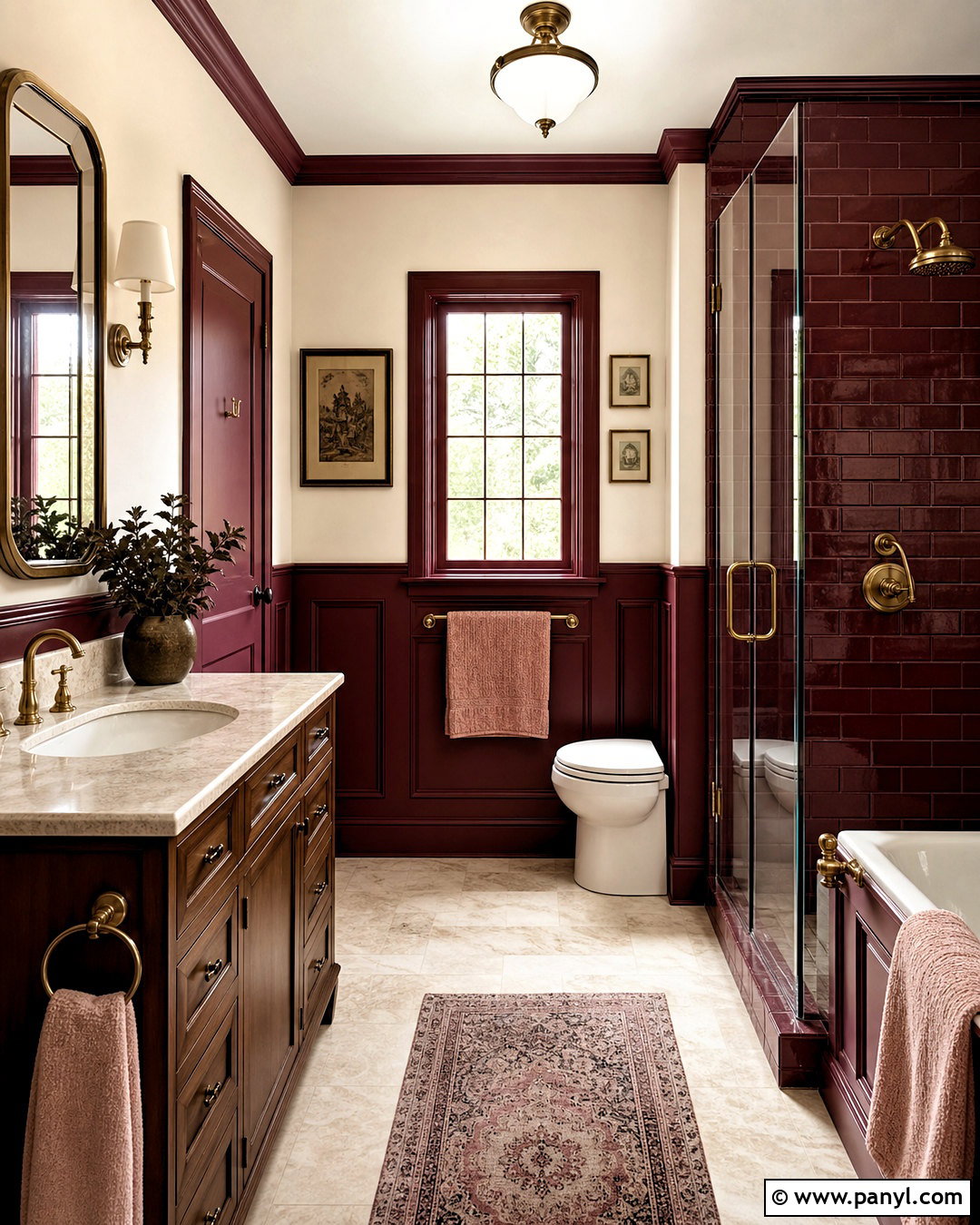
Burgundy creates an expressive bathroom that feels historic, dramatic, and surprisingly warm. Use deep burgundy paint on wall paneling or glossy tile inside a walk-in shower, then balance it with creamy white walls and pale stone flooring. A medium walnut vanity complements the red-brown color, while an ivory marble-look countertop introduces lightness. Choose aged brass faucets and sconces because their warm finish sits naturally beside burgundy. Soft pink-beige towels and a patterned floor with restrained burgundy details can extend the palette without overwhelming it. Keep the ceiling and major plumbing fixtures warm white. Good lighting is essential, particularly in a windowless room. Use a large mirror and several bright light sources so the saturated color looks rich rather than heavy.
19. Lavender Bathroom Color Scheme
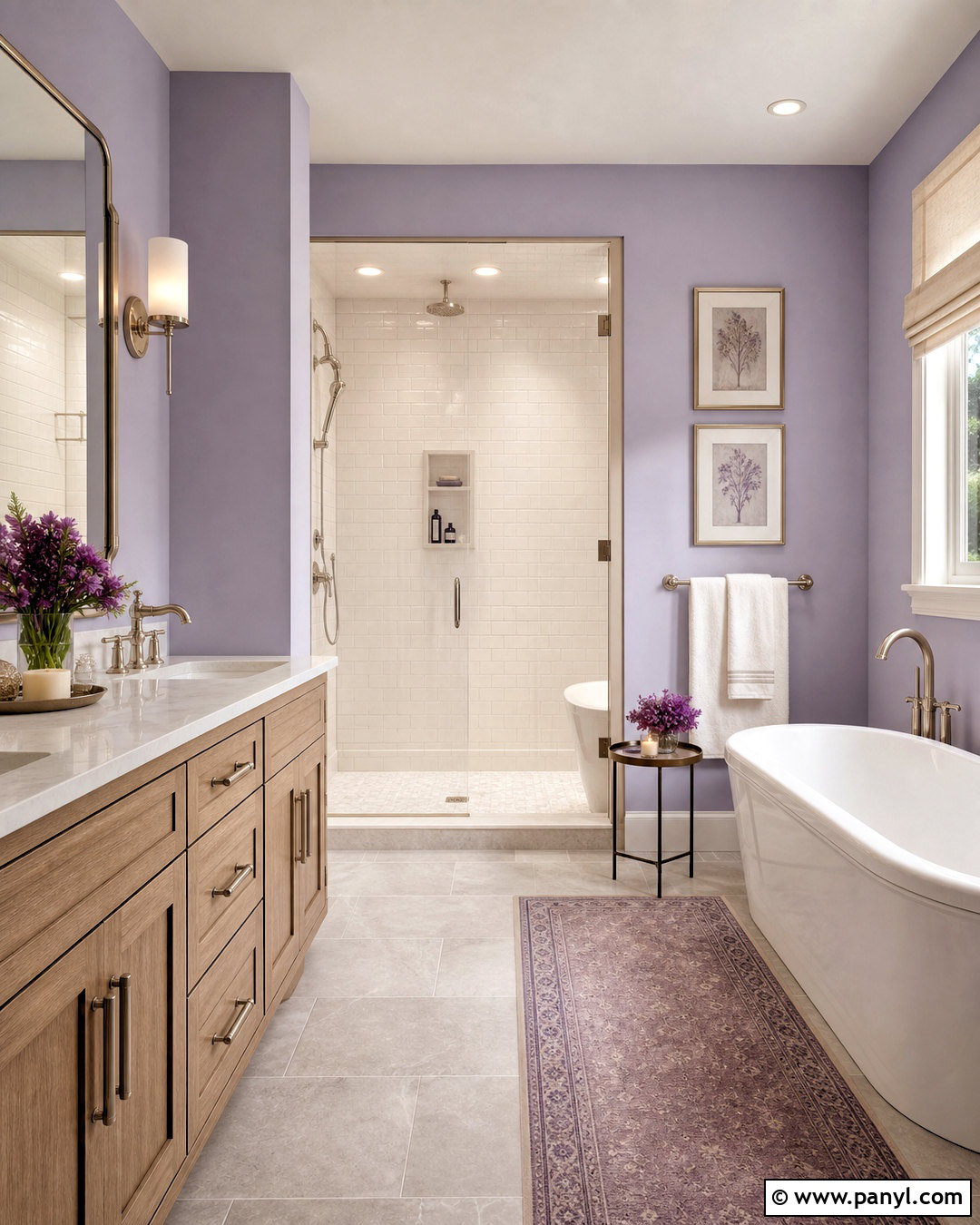
Lavender can create a quiet, restorative bathroom when you choose a gray-toned shade instead of a sugary pastel. Paint the walls soft lavender and pair them with warm white shower tile and light gray limestone flooring. A pale oak vanity keeps the palette natural, while a white countertop with delicate gray veining connects the cool and warm surfaces. Polished nickel fixtures add a clean, subtle shine. Introduce deeper plum through a bath mat or small artwork, then soften the room with ivory towels and woven storage. Avoid combining lavender with stark black accents, which may create unnecessarily sharp contrast. A brushed metal mirror and simple globe sconces provide gentle definition. The resulting bathroom feels fresh and distinctive while remaining calm enough for daily use.
20. Forest Green Bathroom Color Scheme
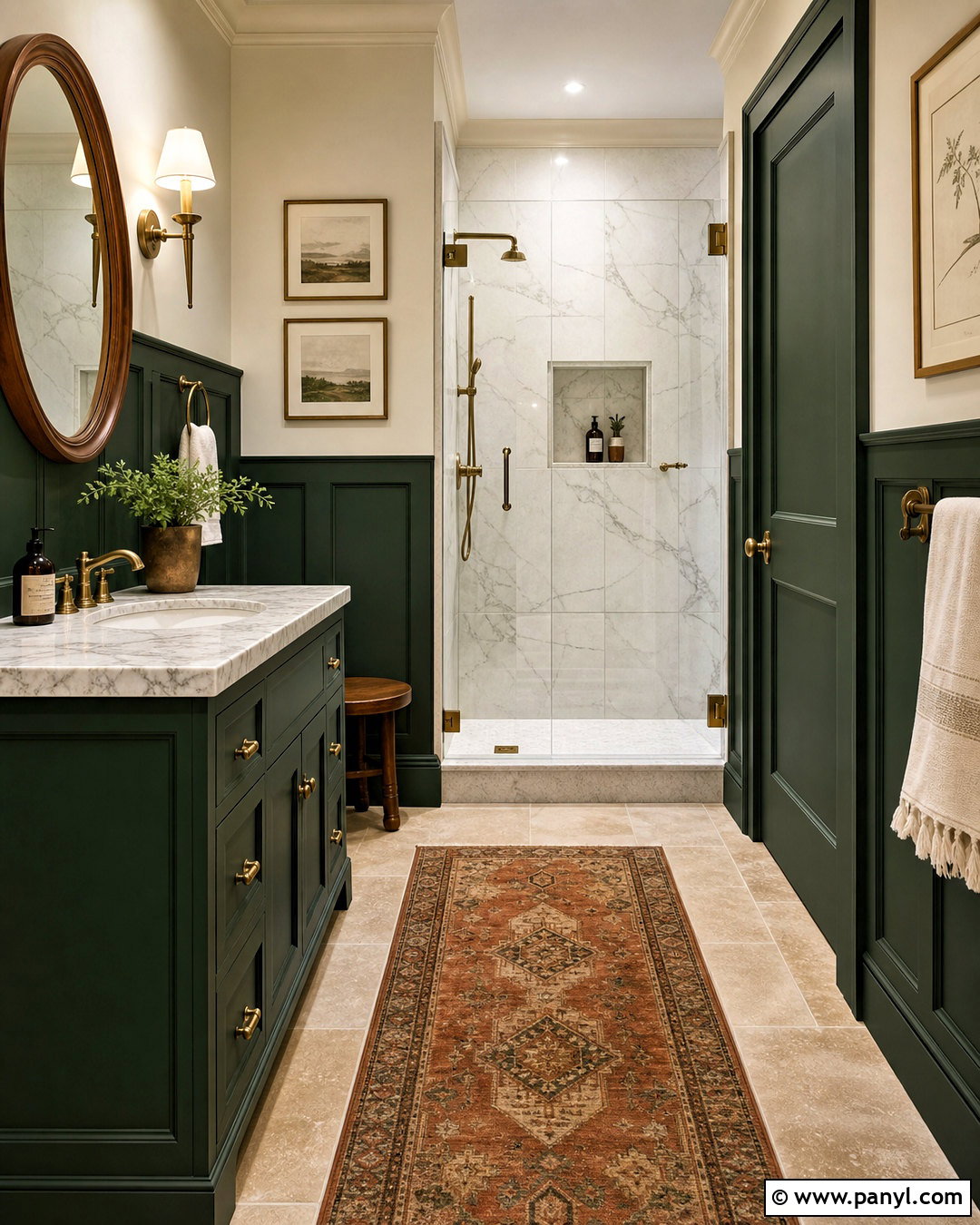
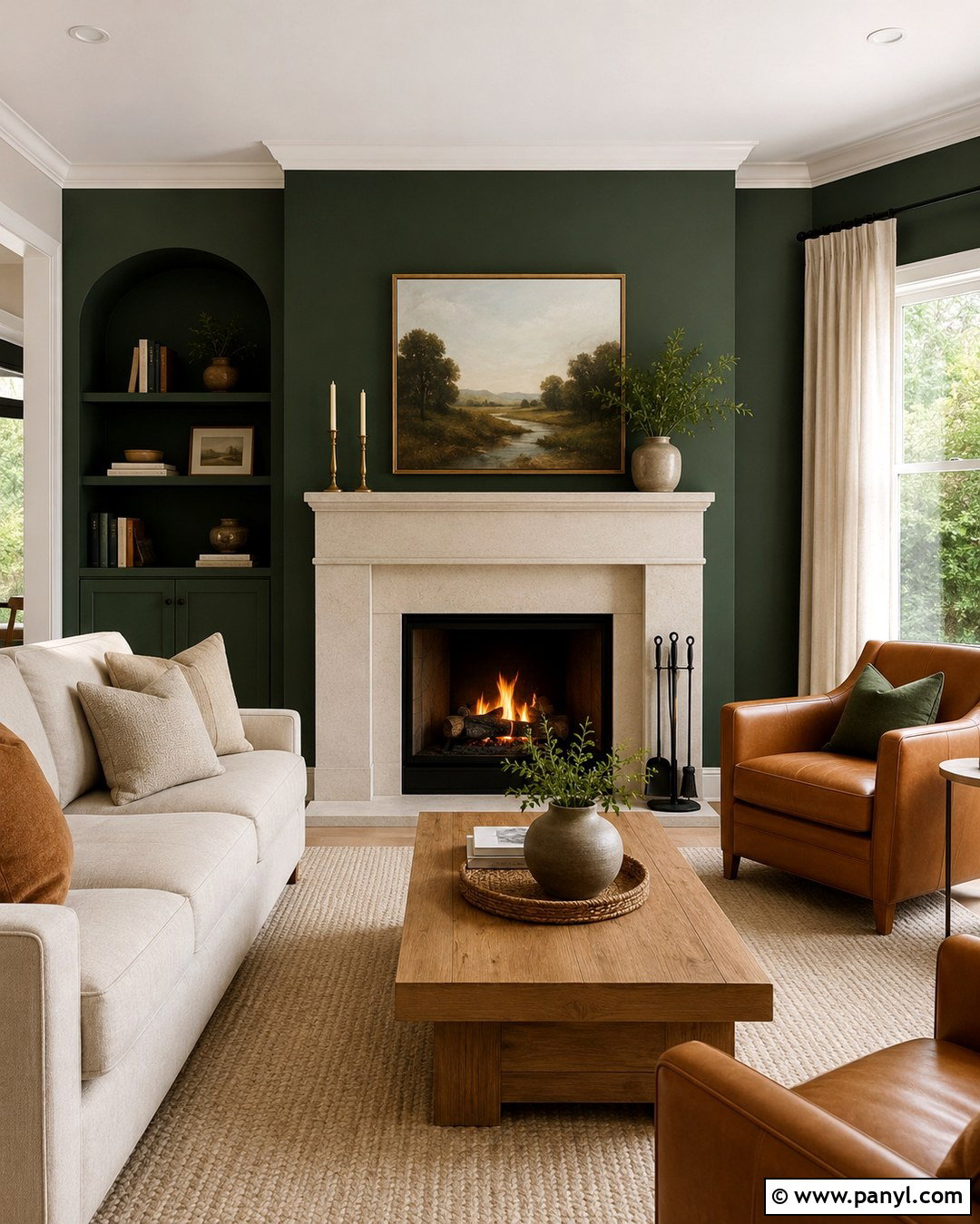
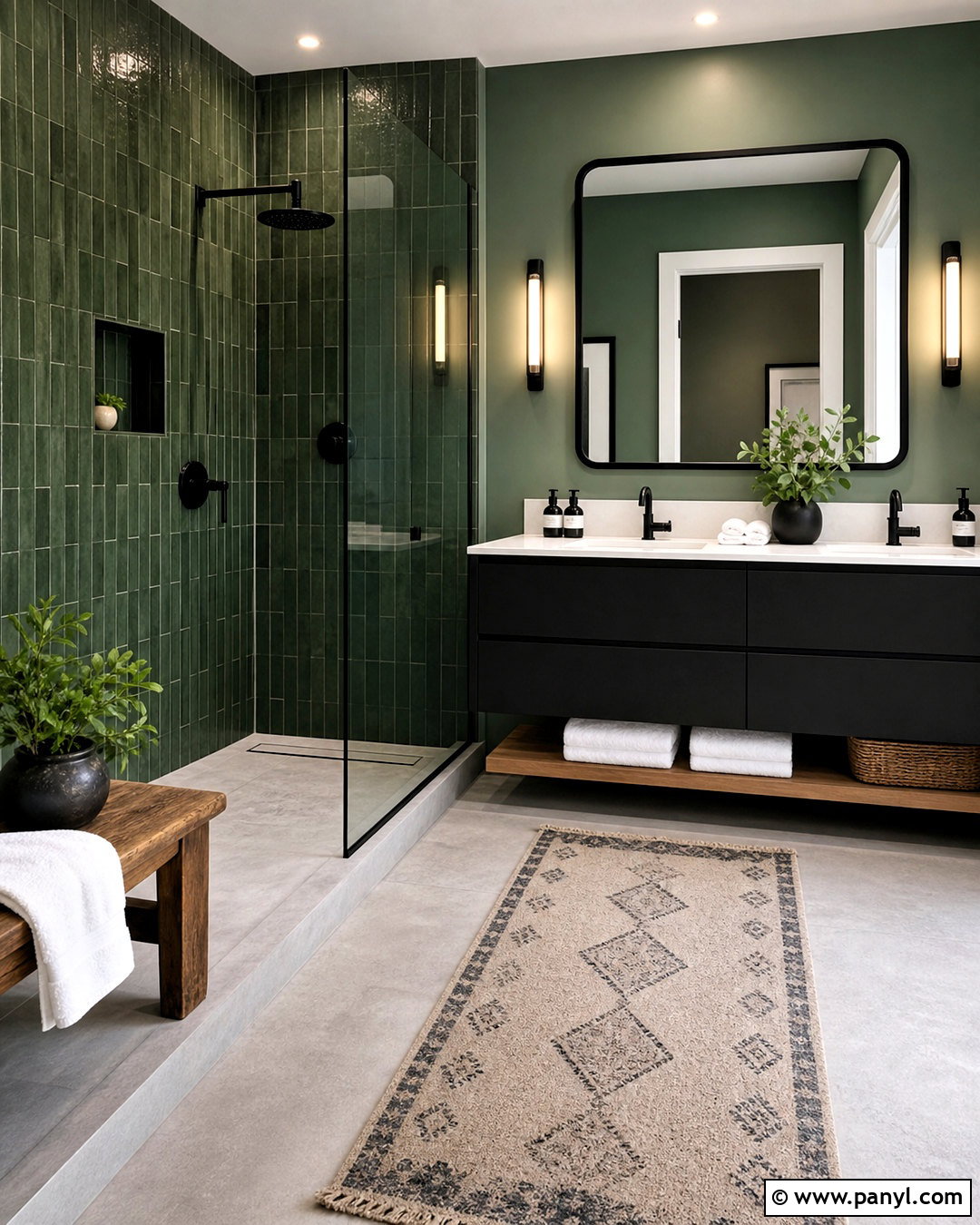
Forest green wraps a bathroom in deep, nature-inspired color and works particularly well with traditional architectural details. Paint wall paneling and the vanity in the same rich green, then use soft cream above to stop the room from feeling enclosed. Add warm white marble-look shower tile, beige stone flooring, and a walnut-framed mirror. Unlacquered or aged brass fixtures bring out the green’s warmth and create a classic finish. Keep textiles simple with cream towels and a muted patterned runner containing green, tan, and rust. In a larger bathroom, green can continue onto the ceiling for an immersive effect. In a compact space, restrict it to the lower walls and vanity. Bright sconces and reflective tile will maintain clarity throughout this complete, character-rich bathroom scheme.
Conclusion:
Choosing a bathroom palette becomes easier when every surface is considered as part of one connected design. These 20 bathroom color scheme inspiration ideas demonstrate how paint, tile, cabinetry, flooring, fixtures, lighting, and textiles can work together to create a finished look. Begin with permanent features such as tile and countertops, then select wall color and decorative accents that support their undertones. Test real samples in the room instead of relying only on digital images. Check them during the morning, afternoon, and evening. Whether you prefer creamy neutrals, restful greens, classic blues, or dramatic earthy shades, a balanced color scheme can make your bathroom feel more comfortable, personal, and visually complete.

Related Ideas and Inspiration:
Leave a Reply