
Choosing carpet for pale blue paint is easier when you consider the room as one complete palette. If you are asking, “What Color Carpet Goes With Light Blue Walls,” start by checking whether the blue has cool gray, crisp, or slightly warm undertones. Cream, beige, gray, white, and brown are commonly recommended because they balance blue without overpowering it. () Yet richer colors can also work when furniture, curtains, and accents repeat the same tones. Consider natural light, room size, foot traffic, and how easily the flooring will show stains. Always bring carpet samples home and view them throughout the day. The complete schemes below offer practical ways to answer What Color Carpet Goes With Light Blue Walls.

1. Cream Carpet With Light Blue Walls
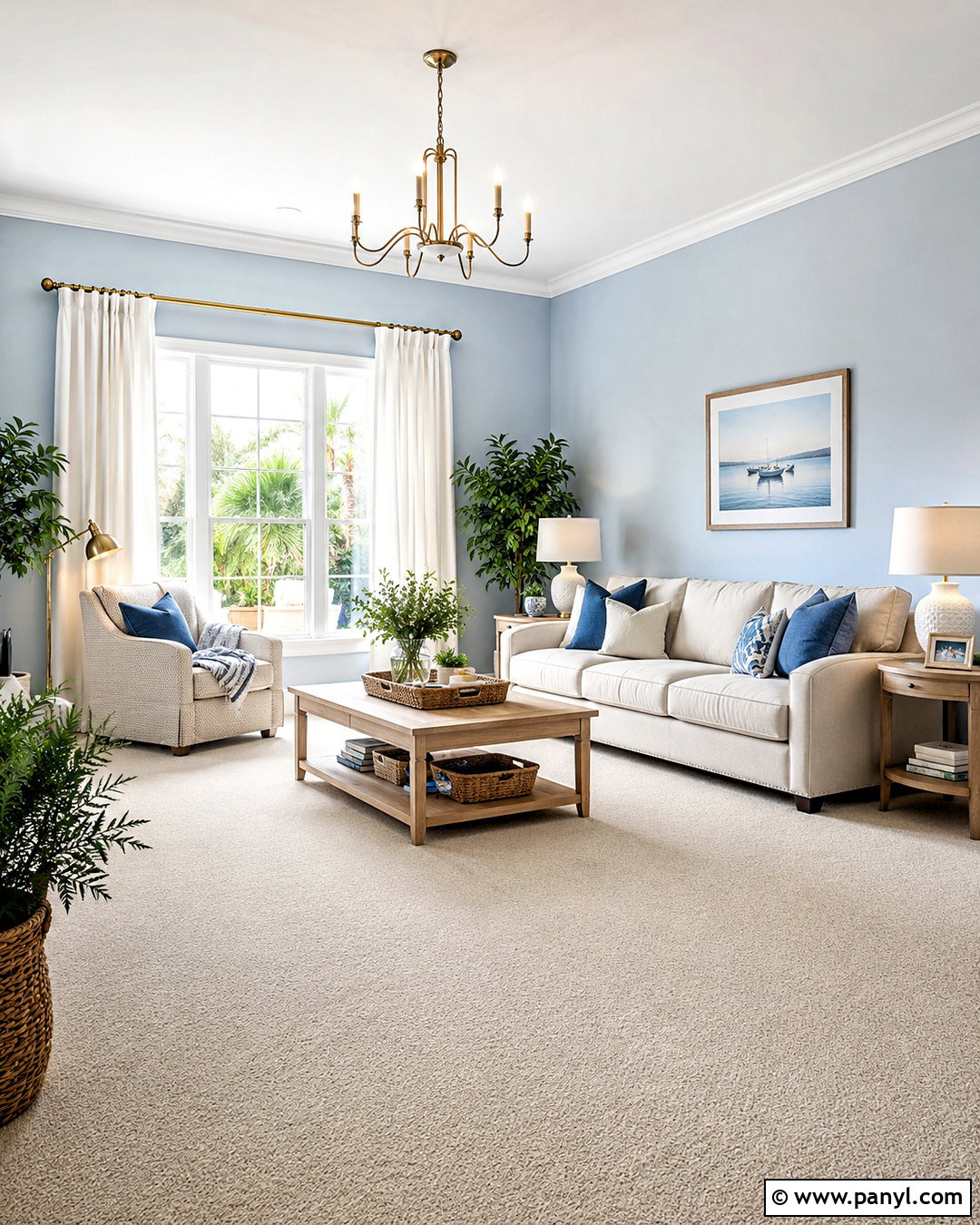
Cream carpet brings gentle warmth to light blue walls, creating an inviting room that still feels bright. Choose a creamy shade with a subtle beige undertone rather than a yellow-heavy finish. In a living room, pair this combination with an oatmeal sofa, light oak coffee table, and white linen curtains. Add medium-blue pillows to connect the seating with the walls. Brushed brass lighting and woven baskets introduce extra warmth without making the palette busy. A soft, dense cut-pile carpet makes the room comfortable, while a low-pile version offers easier upkeep in active spaces. Finish the design with ivory artwork mats and a few natural green plants. The resulting room feels relaxed, balanced, and suitable for coastal, transitional, or casual traditional decor.
2. Warm Beige Carpet With Light Blue Walls
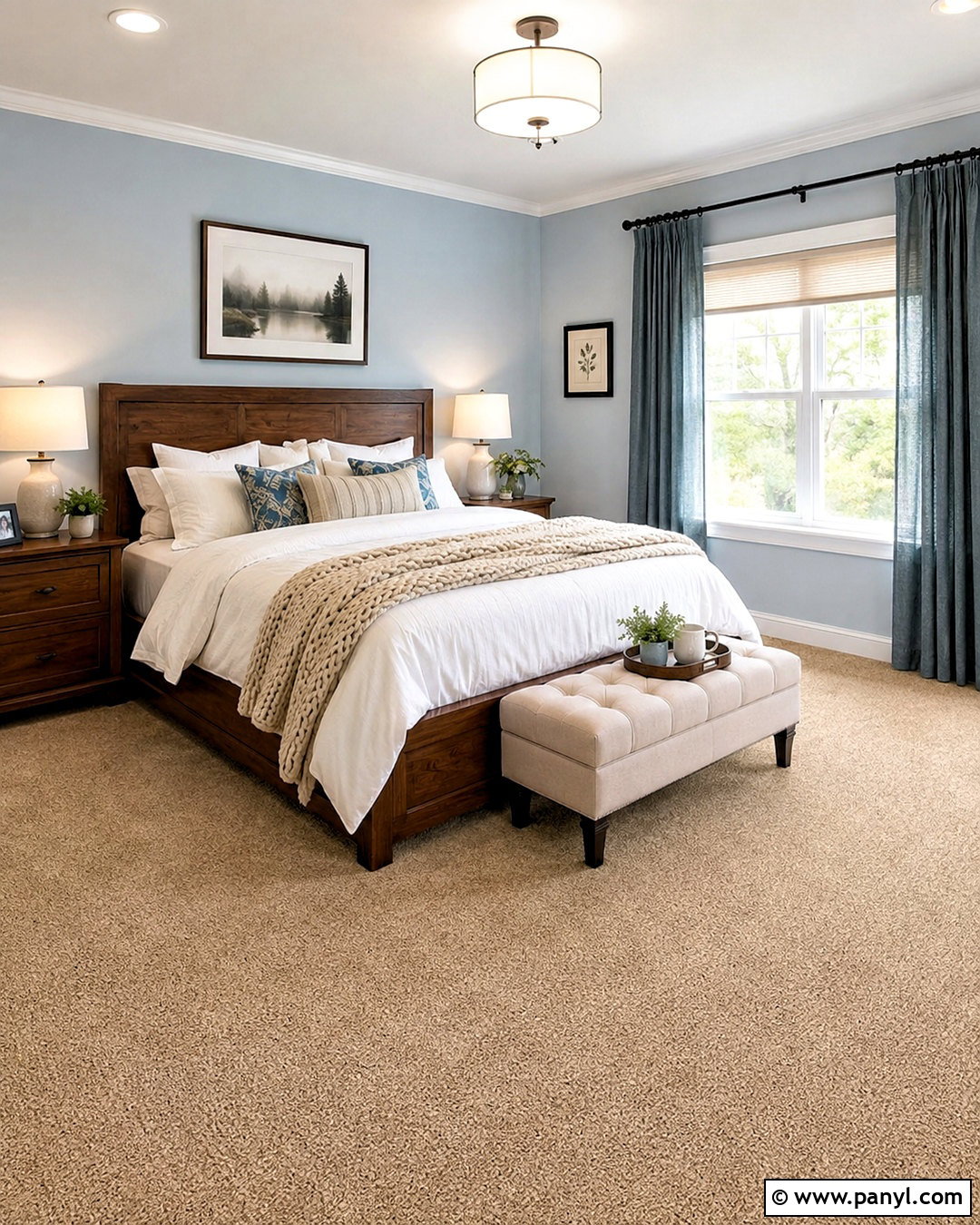
Warm beige carpet softens the cool character of light blue walls and gives the room a grounded appearance. This pairing works especially well when the space contains medium or dark wood furniture. Build a comfortable bedroom with a walnut bed, white bedding, beige upholstered bench, and blue-gray curtains. Repeat the carpet color through a knitted throw and neutral lampshades so the floor feels connected to the rest of the design. Matte black curtain rods can add a small amount of definition. Select a textured beige carpet with subtle tonal variation to disguise footprints and everyday debris. Avoid beige with strong orange undertones, which may clash with an icy blue wall. A balanced sand-colored beige produces a calm, approachable look with enough warmth to keep the bedroom from feeling cold.
3. Light Gray Carpet With Light Blue Walls
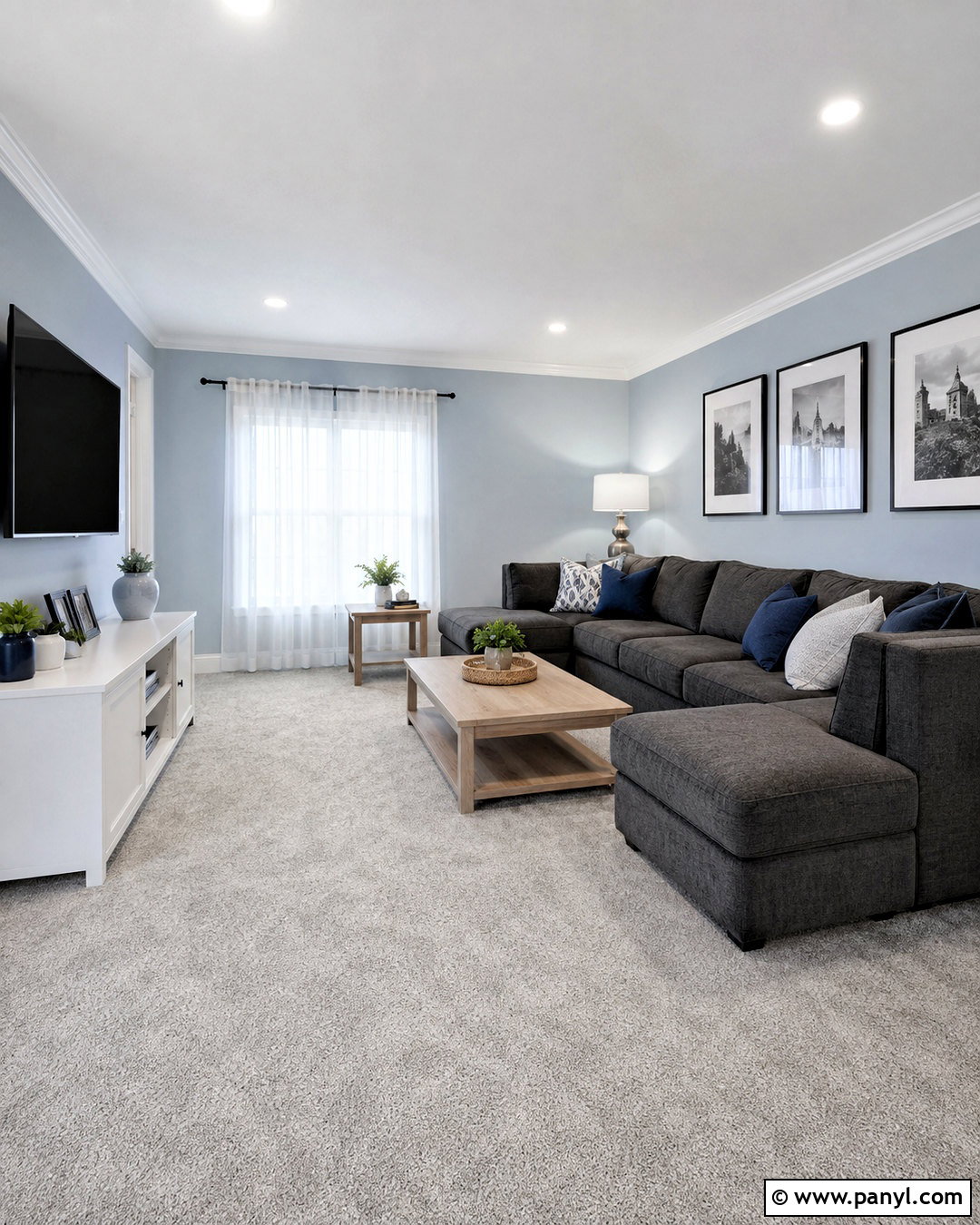
Light gray carpet creates a clean, contemporary foundation beneath light blue walls. The best gray has a cool or neutral undertone, preventing the floor from looking muddy next to the paint. For a modern family room, use a pale gray loop-pile carpet, a charcoal sectional, and a streamlined white media console. Include pale oak side tables to keep the cool palette from feeling flat. Navy pillows, black-framed artwork, and silver-toned lighting provide crisp definition. White trim and sheer curtains help daylight travel around the room. Because blue and gray can blend visually, choose a carpet that is clearly lighter or darker than the wall color. That small contrast preserves depth while maintaining the quiet, coordinated effect that makes this combination appealing in bedrooms, offices, and living spaces.
4. Greige Carpet With Light Blue Walls
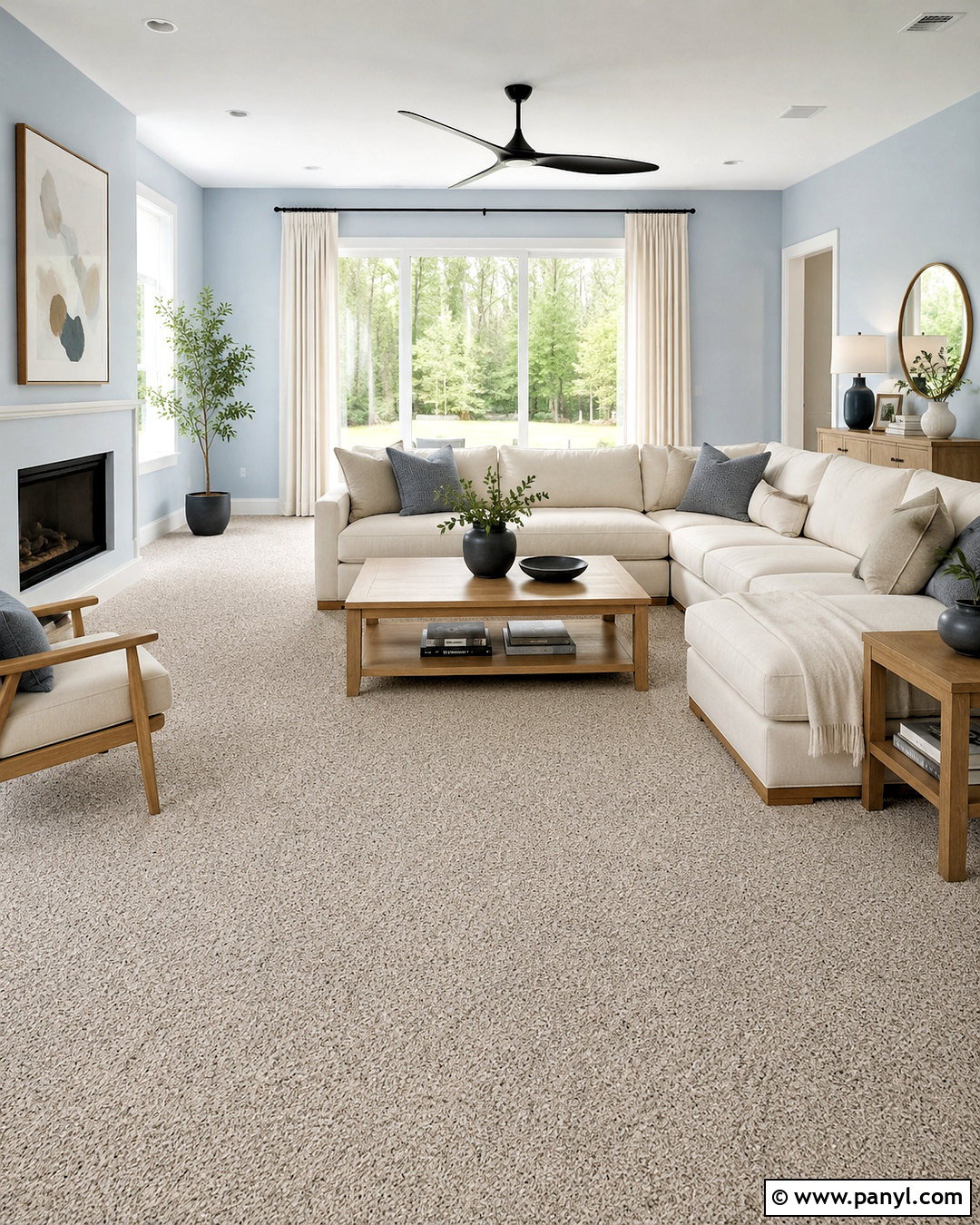
Can a room feel cool and warm at the same time? Greige carpet makes that balance possible by combining gray’s modern character with beige’s softness. Pair a medium-light greige carpet with light blue walls, an ivory sectional, and furniture made from natural white oak. Use warm white curtains and taupe pillows to reinforce the beige undertone in the flooring. A few slate-blue accessories can echo the walls, while matte black hardware gives the room structure. Choose a carpet with subtle flecks rather than a perfectly solid surface. The variation will connect warm and cool elements while helping conceal daily wear. This complete palette is particularly useful in open living areas where blue walls must coordinate with nearby kitchens, hallways, or wood flooring in several different neutral finishes.
5. White Carpet With Light Blue Walls
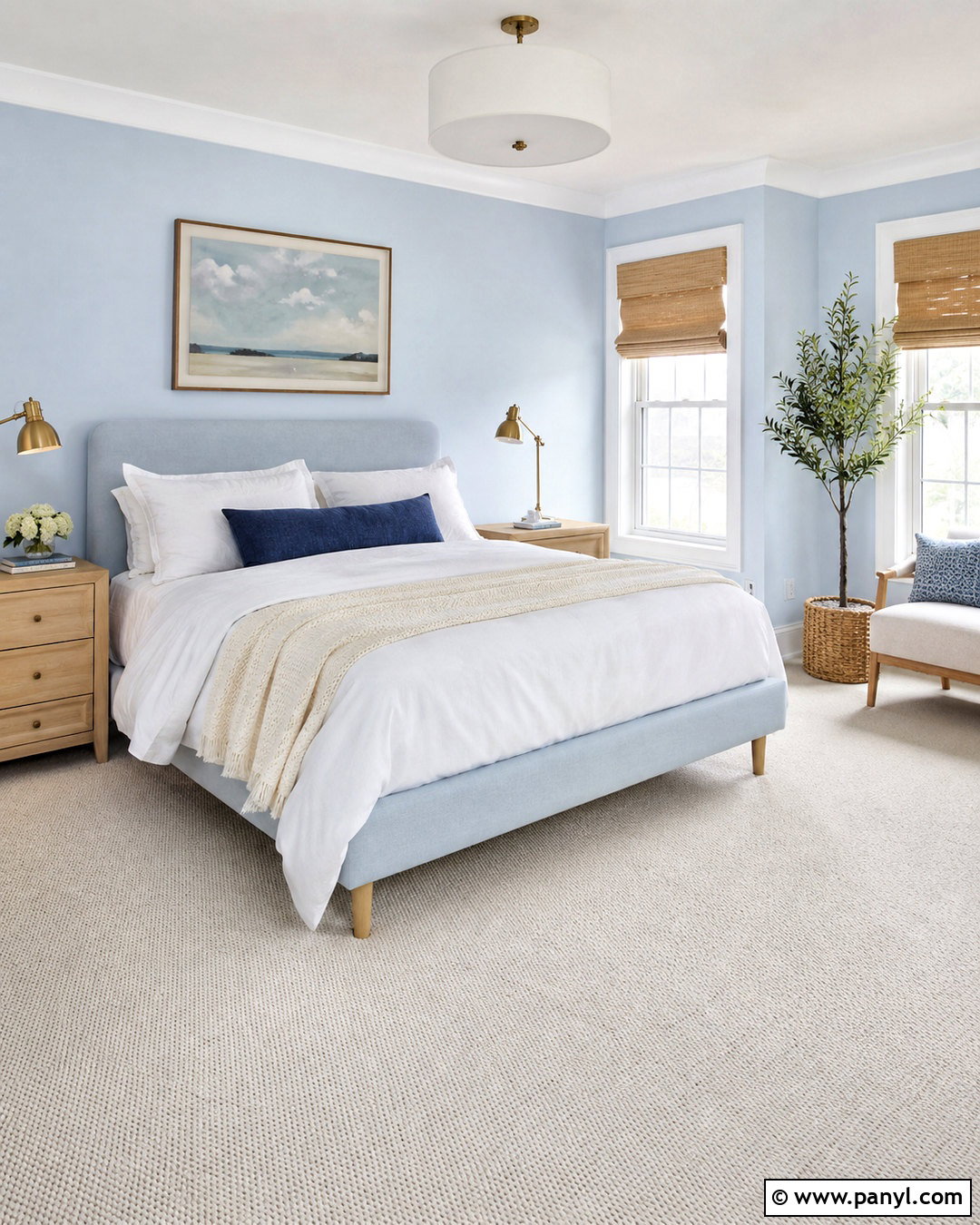
White carpet and light blue walls create an airy combination that can make a quiet bedroom or formal sitting room feel especially open. Choose a soft off-white carpet instead of a brilliant optical white, which may produce a harsh contrast. Complete the room with a pale blue upholstered bed, white cotton bedding, and light maple nightstands. Introduce warmth through a natural woven shade, a cream throw, and small brushed brass lamps. One navy accent pillow can add depth without disturbing the restful palette. White carpet requires thoughtful placement, so reserve it for a low-traffic area where shoes, pets, and frequent spills are less likely. A stain-resistant fiber and subtle textured pile will make maintenance more manageable. The finished room feels fresh, polished, and peacefully uncluttered.
6. Ivory Carpet With Light Blue Walls
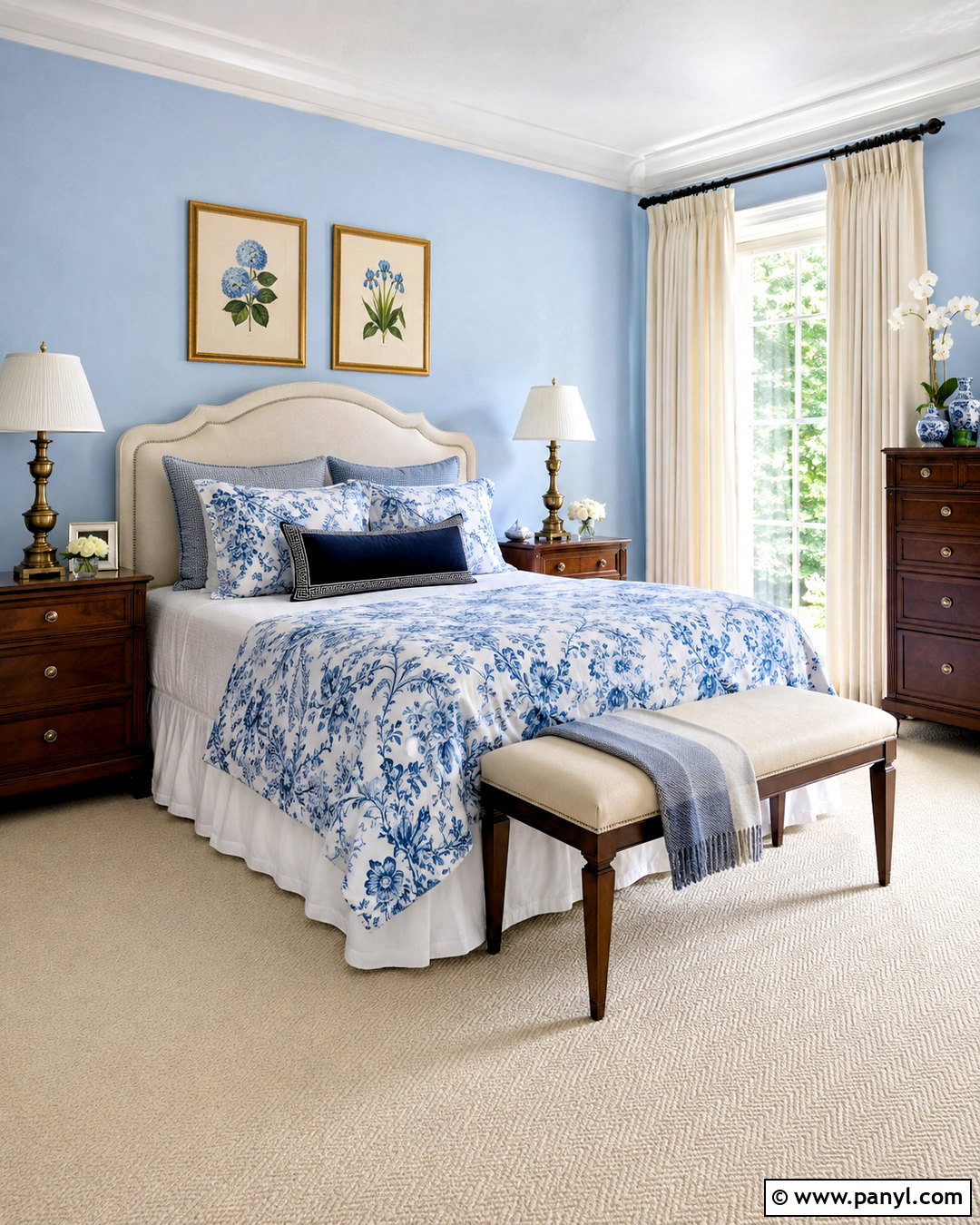
Ivory carpet offers the brightness of white with a softer, more forgiving finish. Against light blue walls, it creates a refined backdrop for a traditional bedroom or elegant guest room. Start with an ivory plush carpet, then add a warm white upholstered headboard, blue-and-white patterned bedding, and medium-tone cherry or walnut nightstands. Hang full-length ivory curtains to visually connect the windows with the floor. Antique brass lamps and framed botanical prints bring warmth and character to the pale color scheme. Keep the ceiling and trim in a gentle warm white rather than a stark shade. This prevents the ivory carpet from appearing dingy. The complete design feels layered and comfortable because the creamier flooring balances the blue walls while rich wood and metal accents provide definition.
7. Taupe Carpet With Light Blue Walls
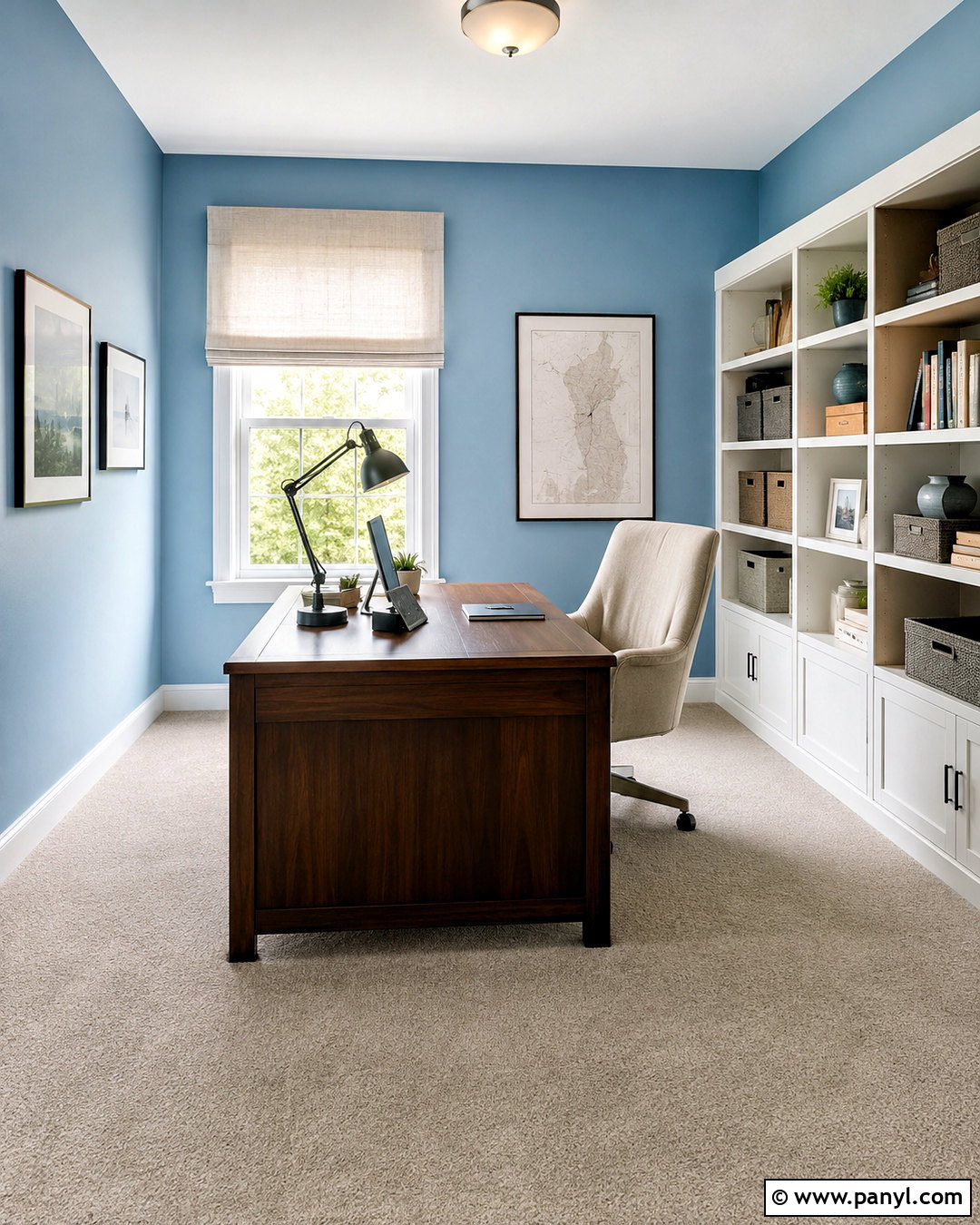
Taupe carpet gives light blue walls a sophisticated, earthy base without creating a dramatic contrast. Select a balanced taupe that combines brown and gray, then repeat both undertones throughout the room. In a home office, place a dark walnut desk over the carpet and add a comfortable stone-colored chair. Use white shelving, warm gray storage boxes, and a linen Roman shade for a calm workspace. Black desk lighting and simple frames establish clean lines, while a muted blue rug pad border is unnecessary because the wall color already supplies softness. A low, tightly woven carpet is practical under rolling furniture and visually neater than a deep pile. This palette feels professional but not severe, making it equally effective in offices, dens, guest rooms, and upstairs hallways.
8. Oatmeal Carpet With Light Blue Walls
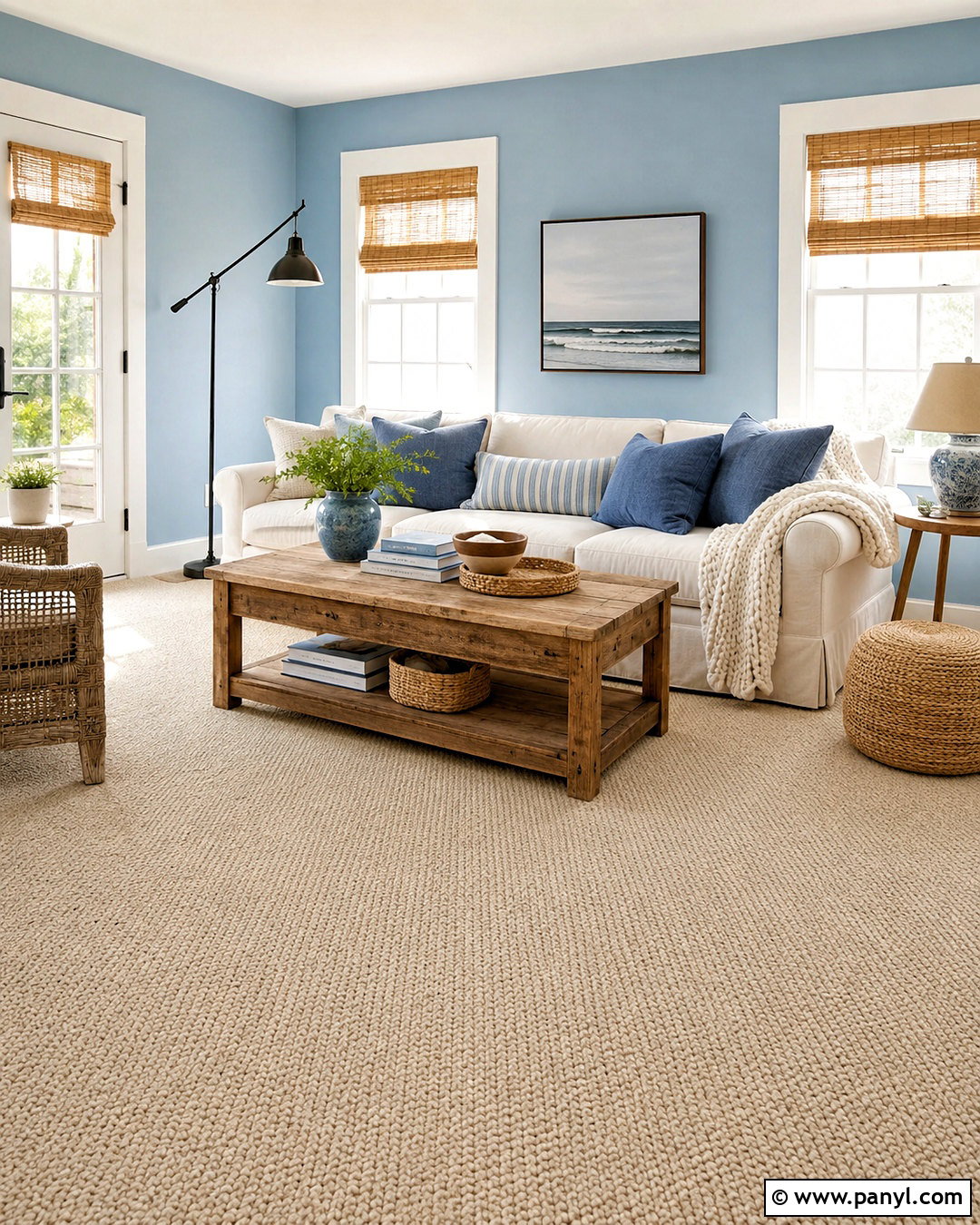
Oatmeal carpet has a naturally cozy appearance that pairs beautifully with soft blue walls. Its small beige, cream, and tan variations add texture without introducing an obvious pattern. Create a relaxed family room with an oatmeal Berber-style carpet, a slipcovered cream sofa, and a substantial reclaimed-oak coffee table. Add faded denim pillows, a chunky ivory throw, and woven bamboo shades. A black metal floor lamp and simple ceramic accessories keep the space current rather than overly rustic. Choose blue wall paint with a slightly muted quality so the room feels connected to the carpet’s organic finish. The mixture of soft blue, oatmeal, and natural wood recalls an easy coastal palette, but it can also support farmhouse or casual transitional furniture when decorative nautical themes are avoided.
9. Tan Carpet With Light Blue Walls
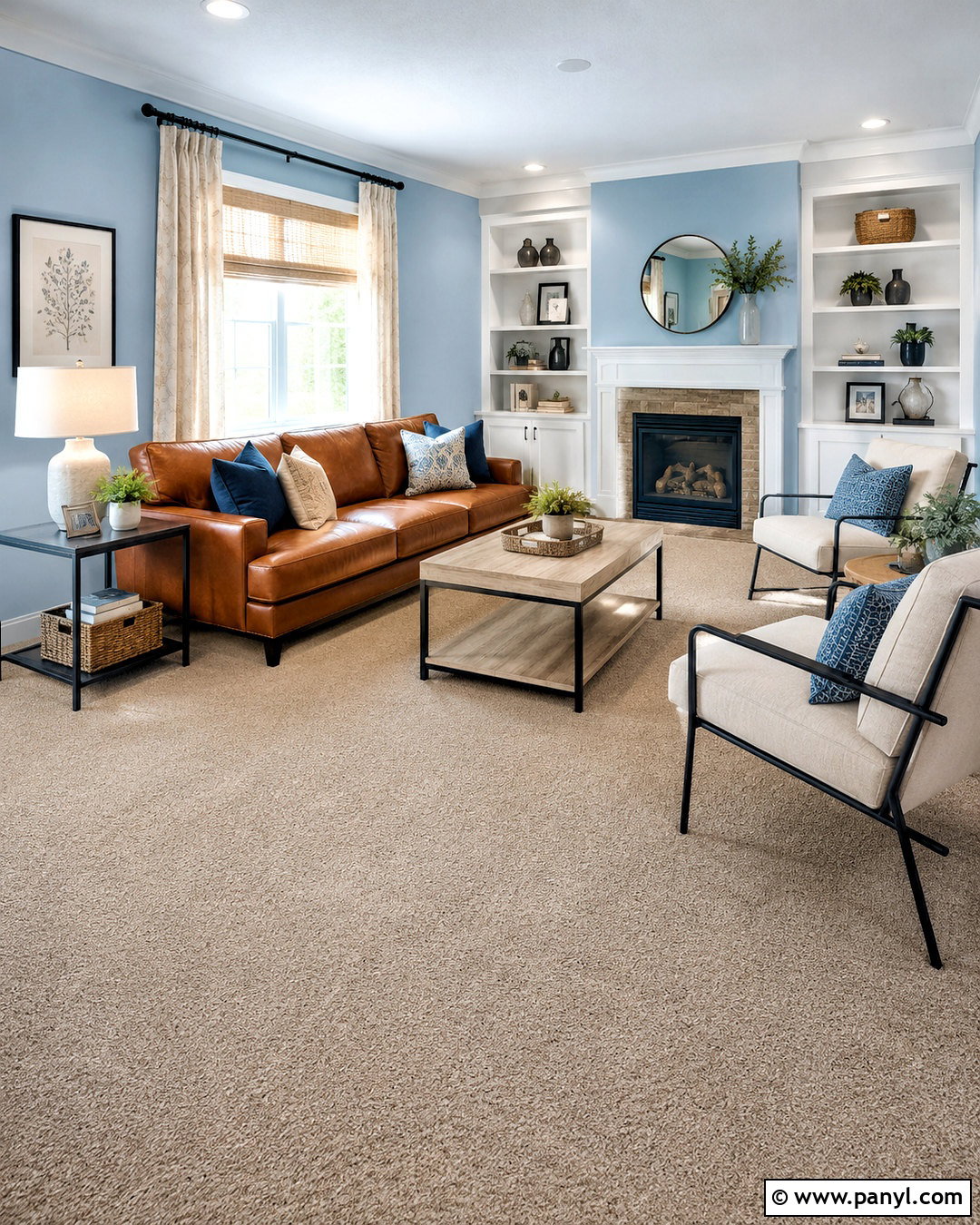
A tan carpet creates stronger warmth and contrast than cream or beige, making it useful in a large room that needs visual grounding. Pair medium tan carpeting with light blue walls, a cognac leather sofa, and white painted built-ins. The brown leather connects naturally with the floor, while white shelving prevents the combination from becoming too heavy. Add navy and cream pillows, a pale wood coffee table, and textured off-white curtains. A flat, heathered carpet will look more relaxed and hide signs of regular family use. Keep orange-toned accessories limited because tan and cognac already contribute plenty of warmth. With clean furniture shapes and a few black metal accents, this complete living room palette feels comfortable and established while allowing the light blue walls to maintain their calm, refreshing presence.
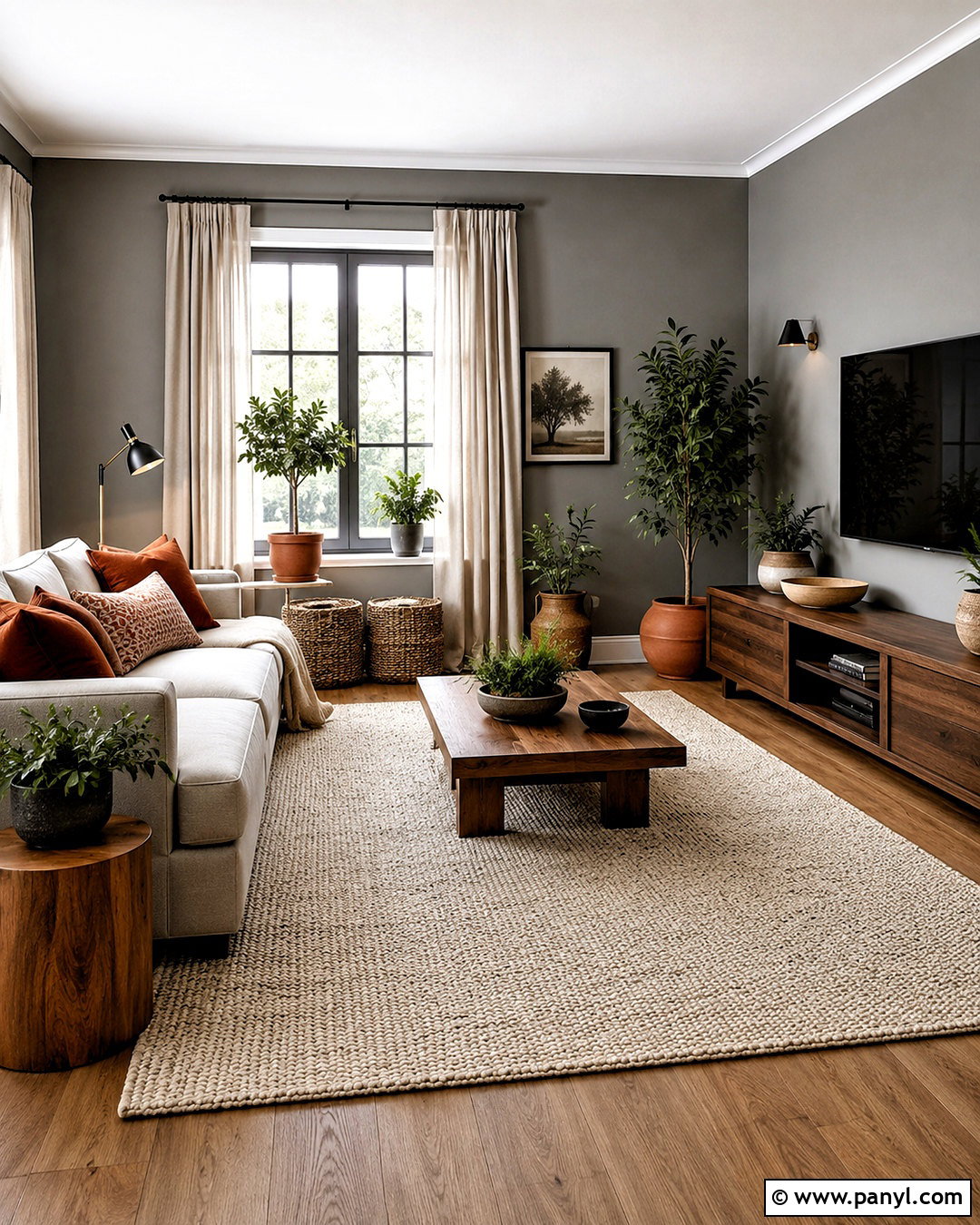
10. Medium Brown Carpet With Light Blue Walls
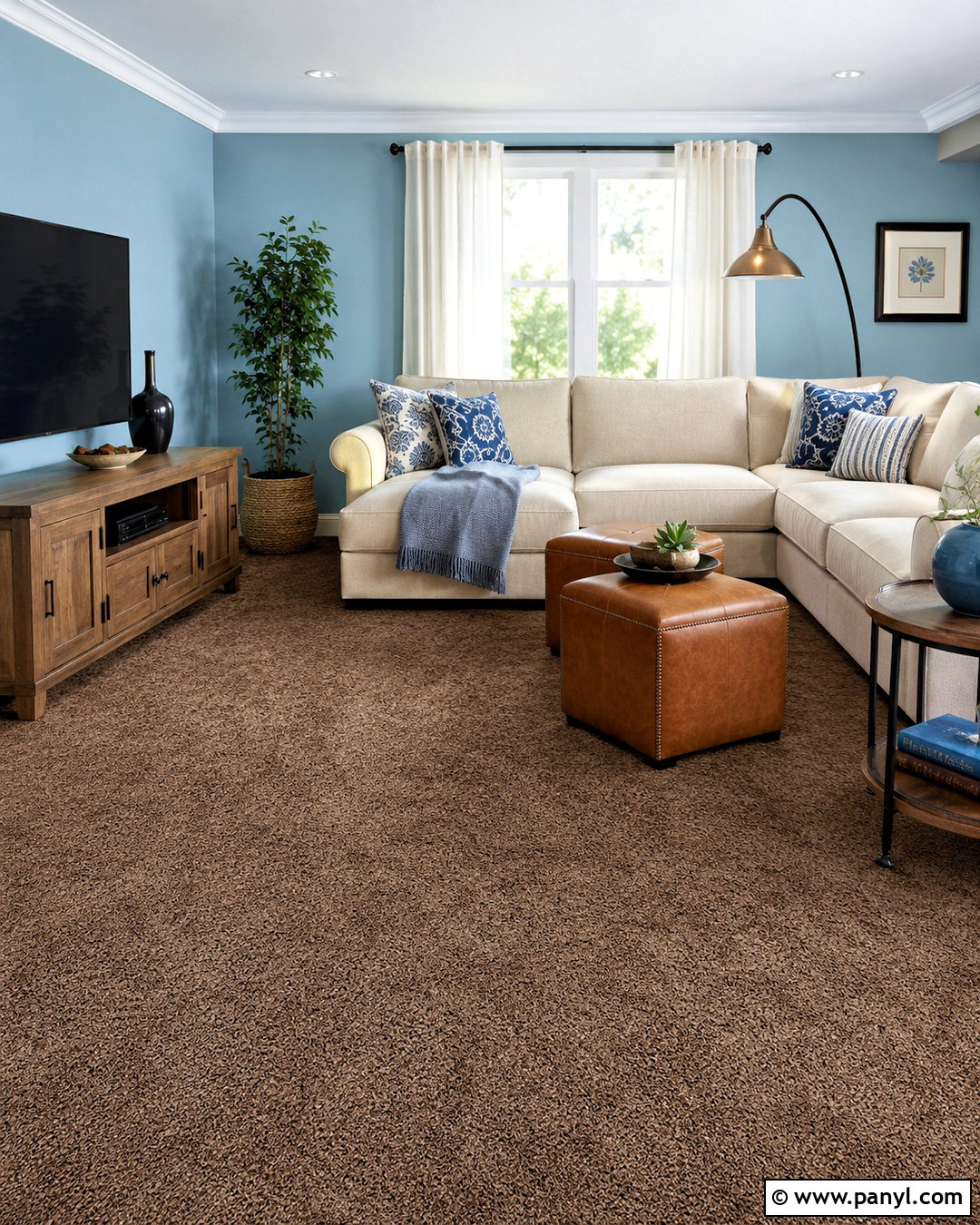
Medium brown carpet can turn light blue walls into a cozy, grounded backdrop. The key is choosing a softened cocoa or mushroom brown instead of an extremely red or dark espresso shade. Design a comfortable den with a medium brown textured carpet, a cream sectional, and a substantial oak media cabinet. Bring in the wall color through blue patterned pillows and a blue-gray throw. Warm white curtains, bronze lighting, and camel leather ottomans connect the darker floor with the lighter furnishings. Paint the trim soft white to create a clean boundary between the blue and brown. This deeper carpet color is practical in a frequently used room because it disguises minor marks. It also anchors large furniture, helping the overall arrangement feel intentional rather than visually top-heavy.
11. Charcoal Gray Carpet With Light Blue Walls
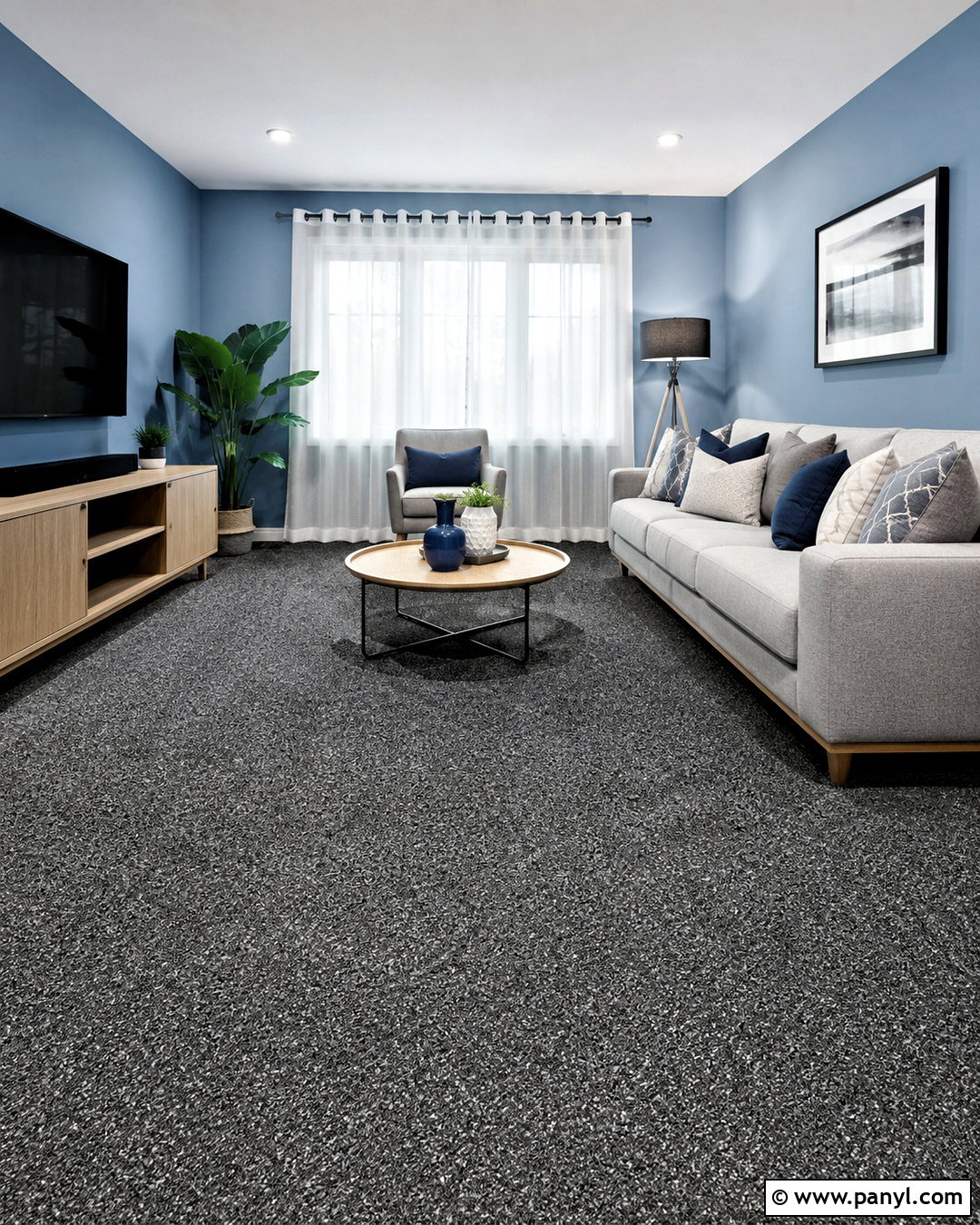
Charcoal gray carpet creates bold contrast beneath light blue walls and works best in a bright room with generous windows. Build the design around a charcoal low-pile carpet, a light gray sofa, and a pale oak or white entertainment unit. Use crisp white curtains to maintain brightness, then introduce black frames and brushed steel lighting for a streamlined finish. Blue, gray, and ivory pillows connect the walls, flooring, and furniture without adding unrelated colors. Since the floor is visually heavy, keep large upholstery pieces relatively light. A charcoal carpet with fine lighter flecks will be easier to maintain and less severe than a solid near-black surface. This complete scheme suits modern bedrooms, media rooms, and home offices that need definition while preserving the restful quality of pale blue walls.
12. Navy Blue Carpet With Light Blue Walls
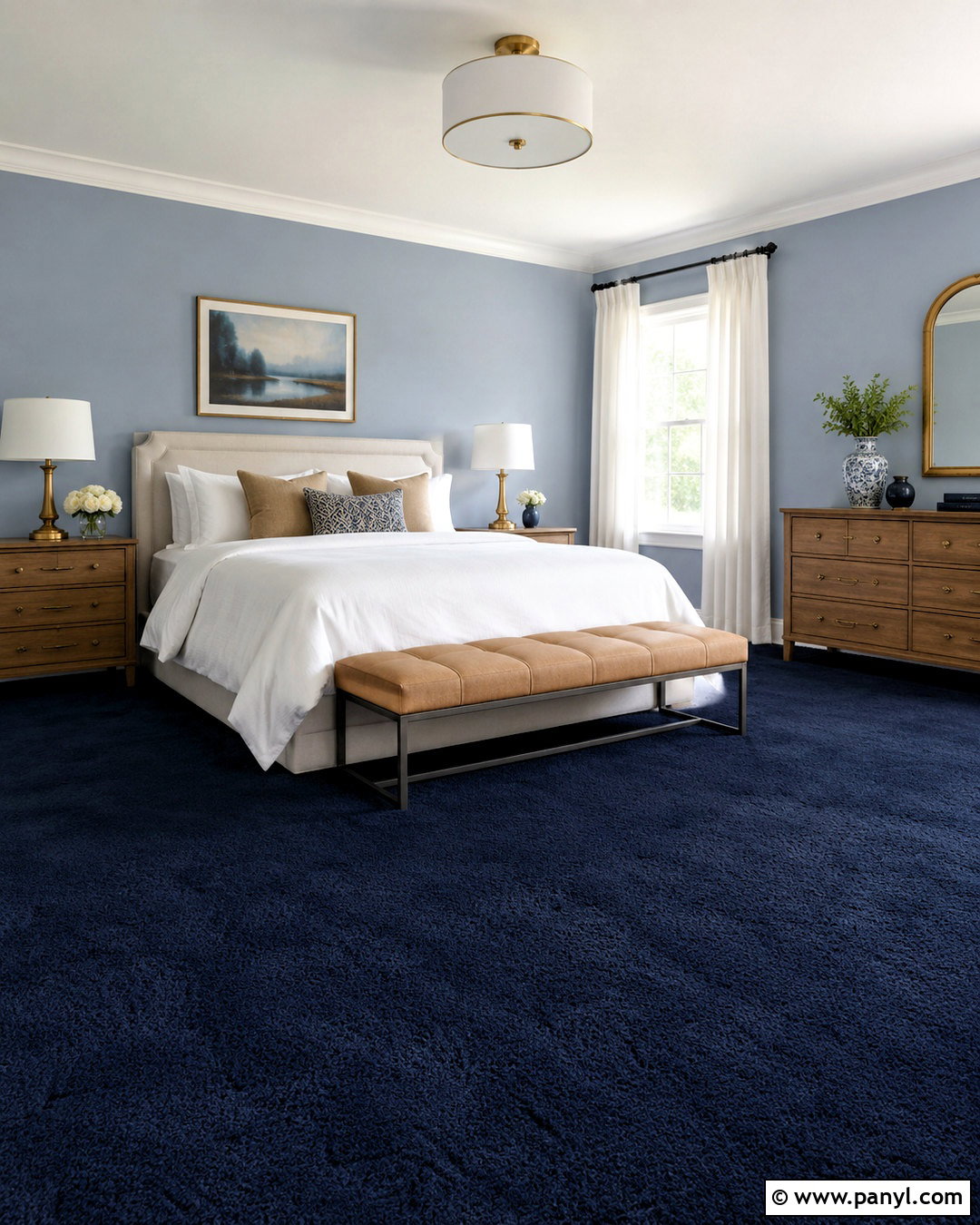
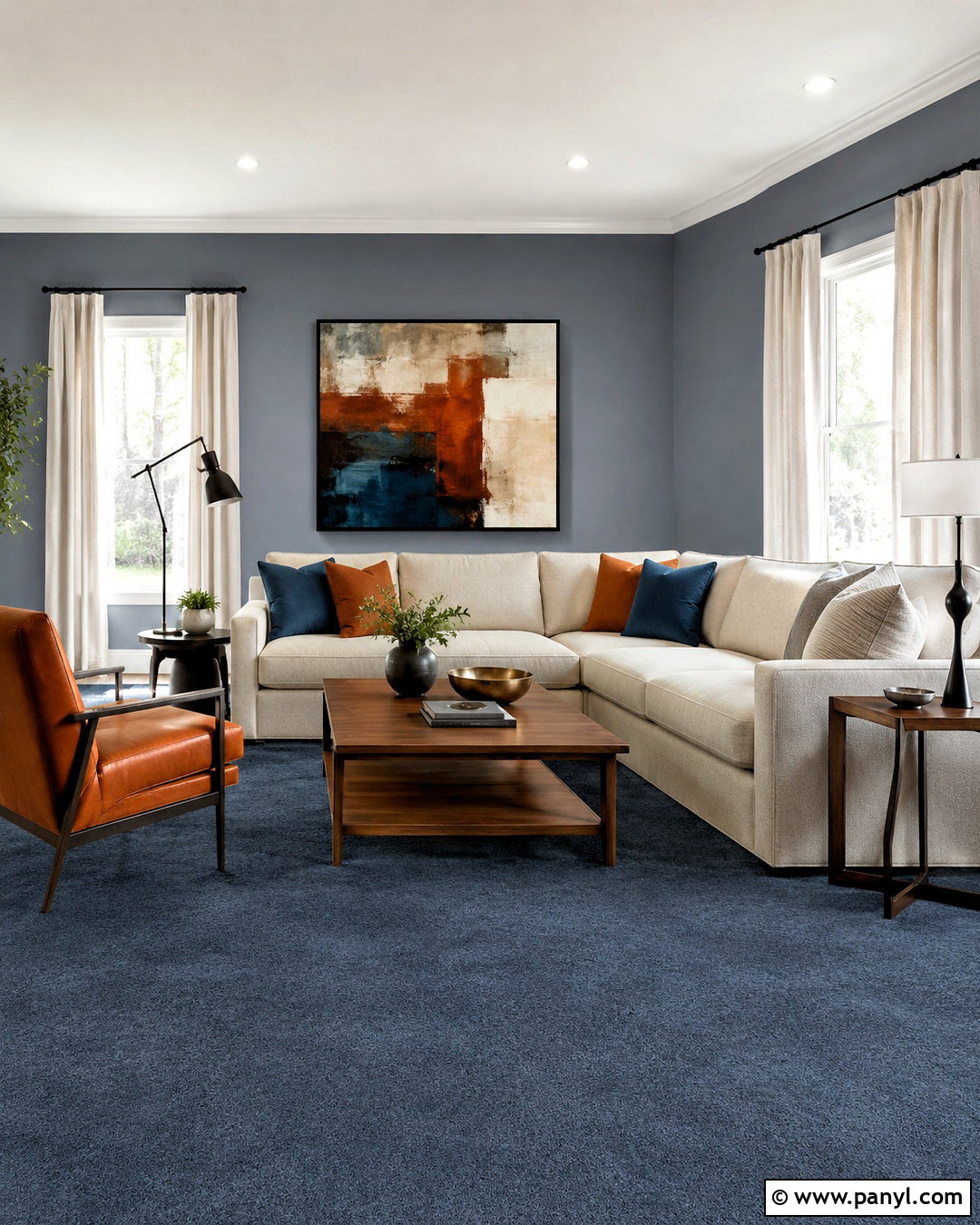
A navy carpet creates a layered blue room with noticeable depth and a tailored finish. To prevent the design from feeling overly matched, choose navy flooring that is several shades darker than the light blue walls. In a bedroom, combine a low-pile navy carpet with a warm white bed, crisp white linens, and natural oak nightstands. Add camel-colored pillows or a tan upholstered bench to break up the cool palette. White curtains and brass lamps keep the room bright, while small navy details repeat the floor above eye level. Avoid filling the room with additional blue furniture. Instead, let the walls and carpet establish the color story while neutrals create breathing room. The finished look feels peaceful, structured, and more interesting than a single-tone blue scheme.
13. Blue Gray Carpet With Light Blue Walls
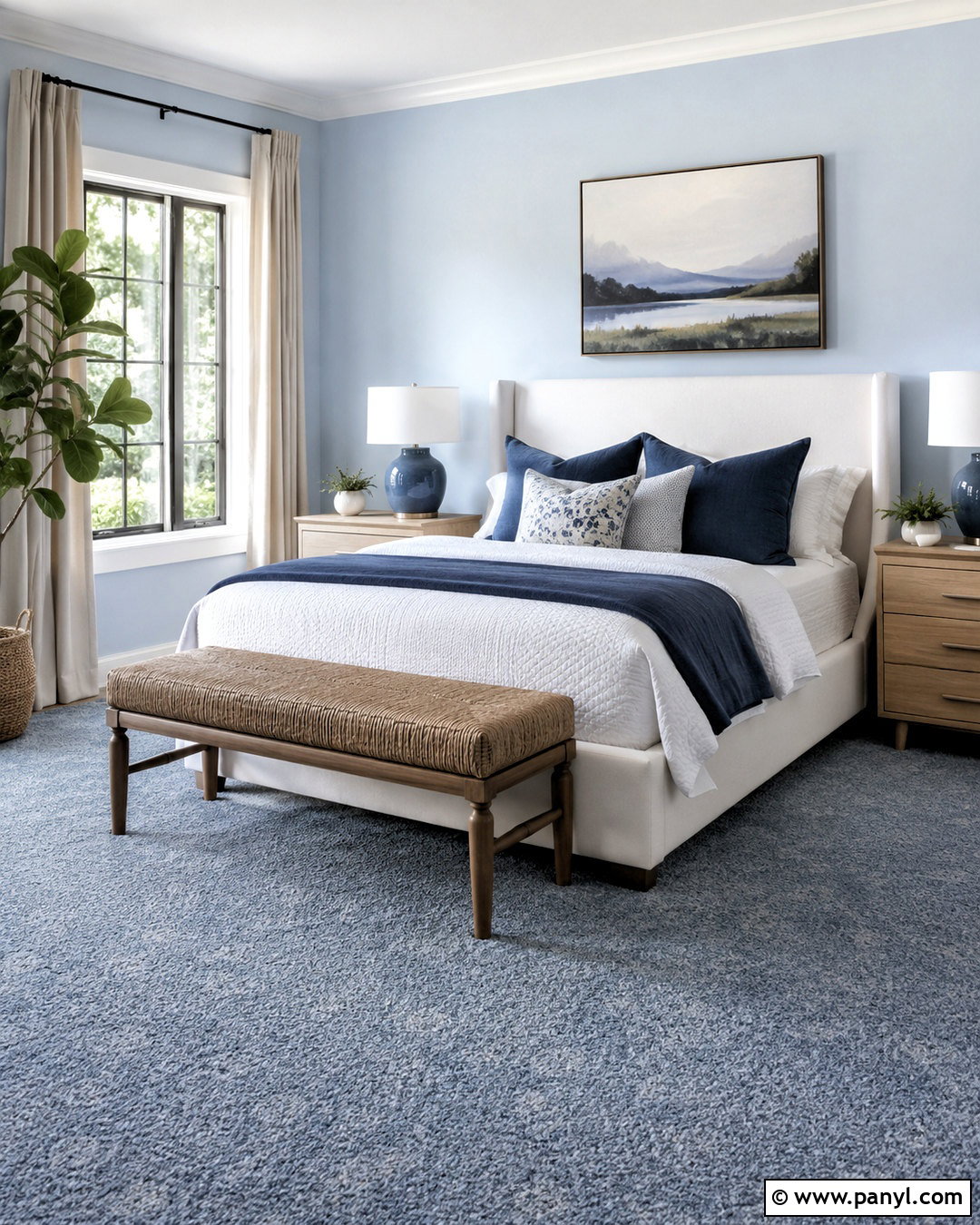
Blue-gray carpet forms a subtle tonal transition from light blue walls to the floor. This works well when you want a calm room with minimal contrast, but the carpet should still be visibly deeper than the paint. Create a serene guest bedroom with medium blue-gray carpeting, a white upholstered bed, and washed-oak nightstands. Layer the bed with white, pale gray, and muted navy textiles. Soft beige curtains and a warm woven bench prevent the palette from becoming chilly. Choose carpet with blended blue and gray fibers so changing daylight creates natural dimension. Keep decorative accessories simple, using ceramic lamps, framed landscape art, and one leafy plant. The complete room feels cohesive and restful, while warm wood and beige accents provide enough balance to avoid an overly monochromatic result.
14. Sage Green Carpet With Light Blue Walls
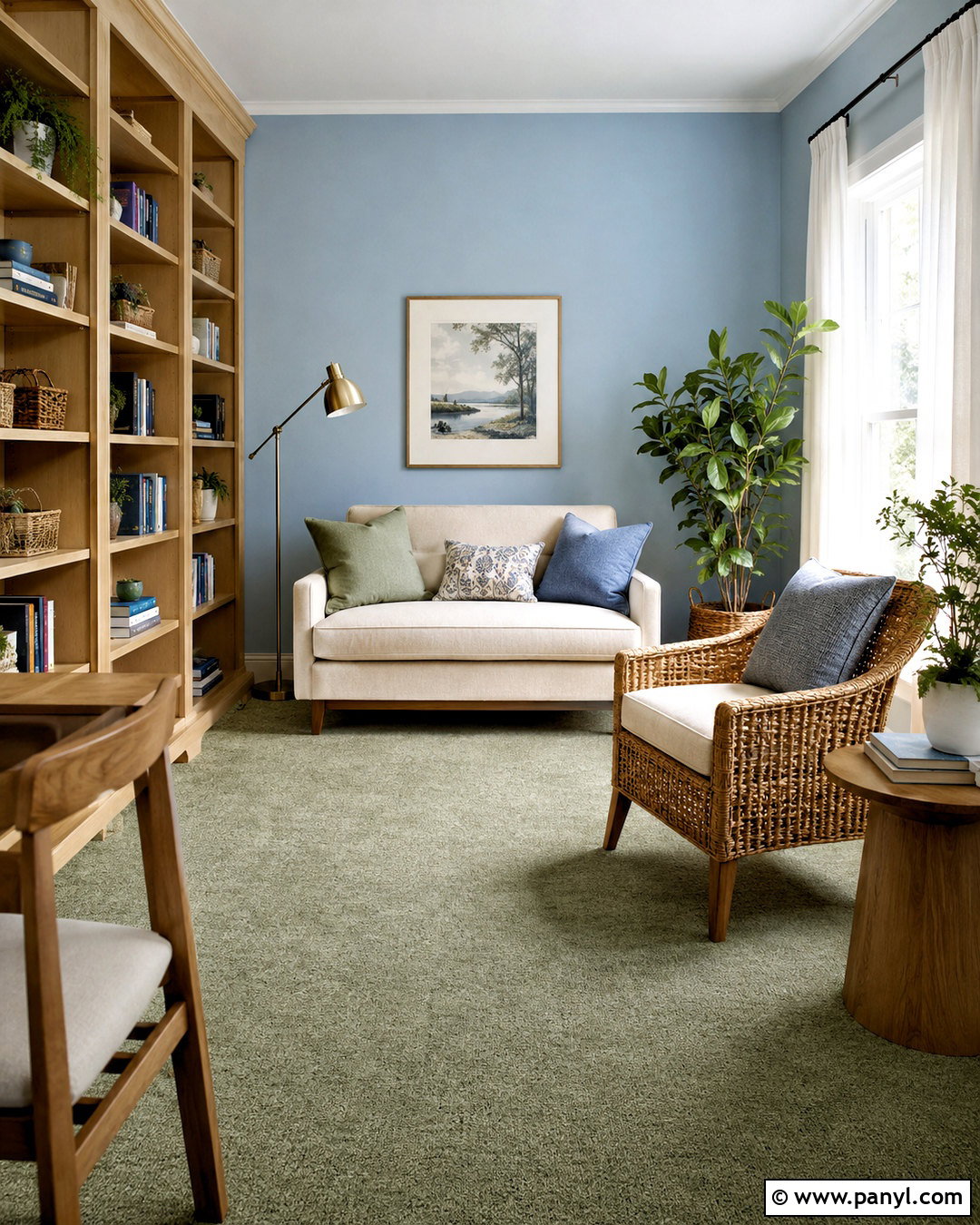
Sage green carpet and light blue walls produce a nature-inspired palette that feels gentle rather than colorful. Look for muted sage with gray undertones instead of a bright grassy green. In a sunroom or reading room, pair this carpet with a cream loveseat, pale oak bookcases, and a woven rattan chair. Use linen curtains in warm white and add pillows combining sage, blue, and soft beige. A brass reading lamp introduces warmth, while leafy houseplants reinforce the green without overwhelming the room. Keep furniture silhouettes simple so the two colored surfaces remain sophisticated. This combination works because both shades are softened and appear comfortably related. The complete look feels fresh, restorative, and slightly unexpected, offering more personality than a standard neutral carpet while remaining easy to live with.
15. Olive Green Carpet With Light Blue Walls
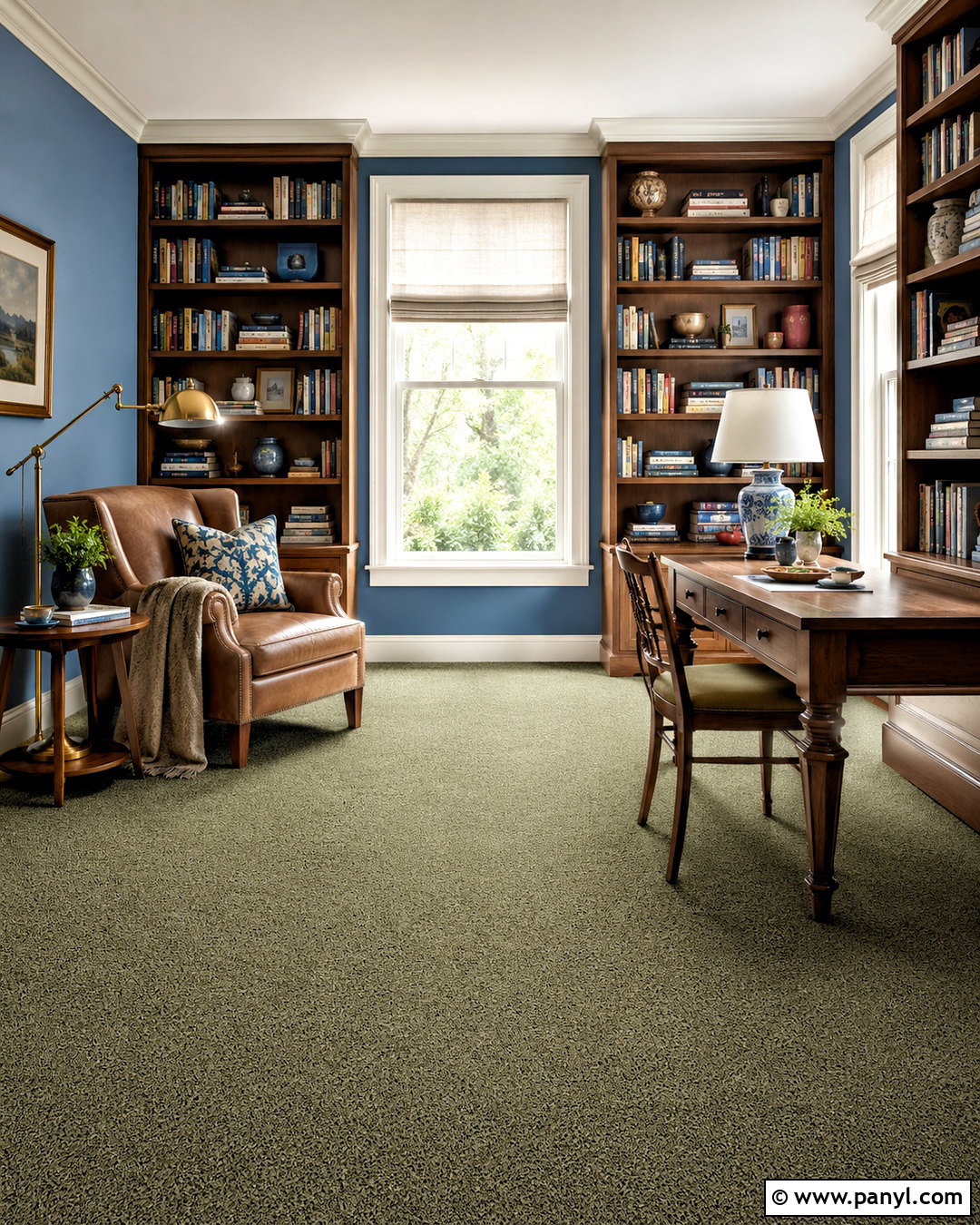
Olive green carpet gives pale blue walls an earthy, traditional character. Choose a subdued olive with brown or gray undertones, then support it with warm woods and creamy fabrics. A cozy library can feature olive wool carpeting, built-in walnut bookshelves, and a camel leather reading chair. Light blue walls keep the darker materials from making the room feel enclosed. Add an ivory window shade, antique brass floor lamp, and patterned pillows containing olive, blue, and rust. Keep the ceiling and trim warm white for a lighter frame around the room. This flooring choice is more distinctive than beige but still functions like a grounded neutral. The finished space feels collected and comfortable, with enough color variation to appear layered without relying on excessive accessories or complicated patterns.
16. Blush Pink Carpet With Light Blue Walls
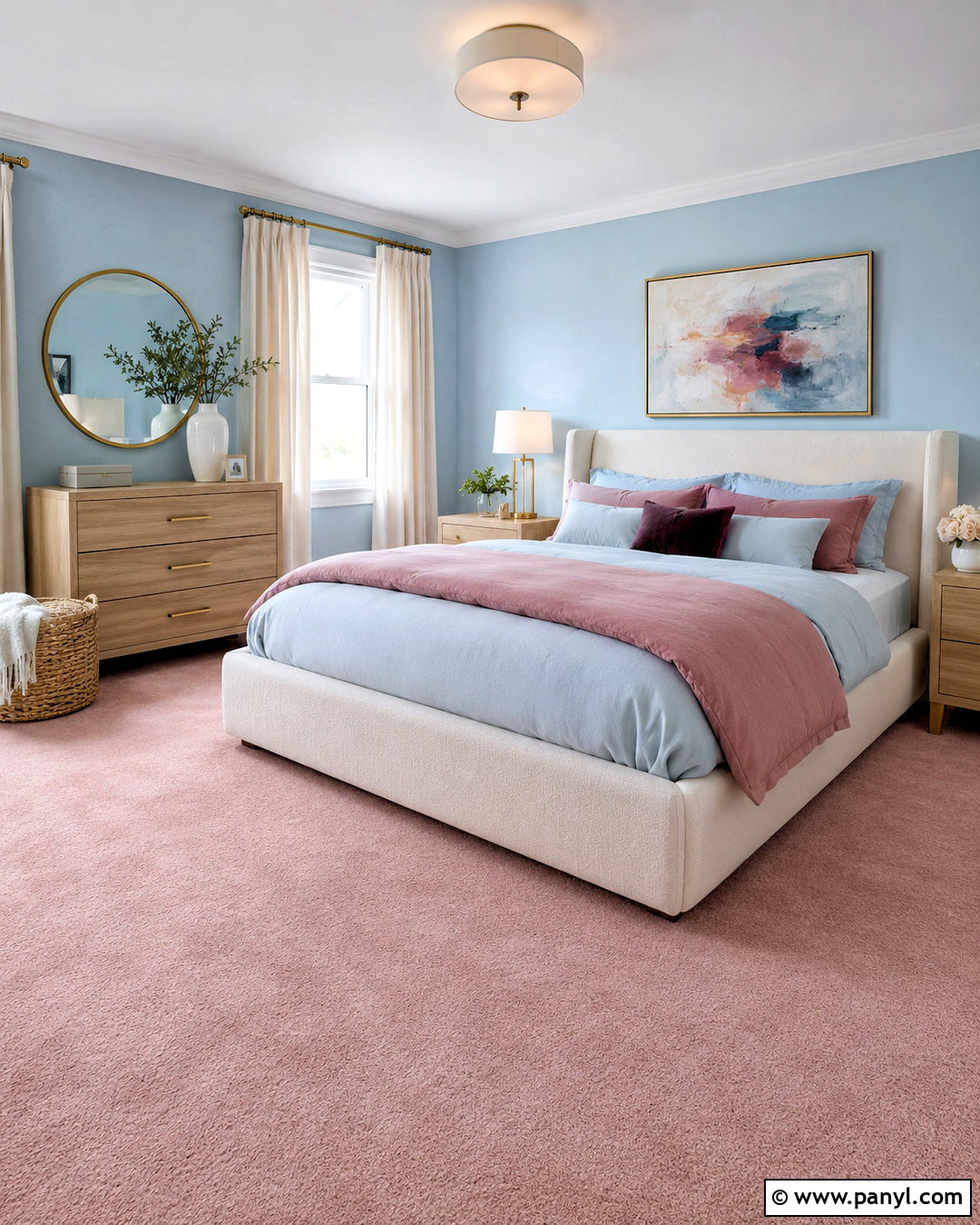
Blush pink carpet brings subtle warmth and softness to light blue walls, making it a charming choice for a bedroom, nursery, or creative room. Select dusty blush rather than sugary pink to maintain a polished appearance. Build the room with a warm white upholstered bed, light oak furniture, and simple ivory curtains. Introduce muted blue and rose through bedding, but leave plenty of white space between colored elements. Brushed brass hardware adds warmth, while a natural woven basket keeps the palette relaxed. A short, dense carpet pile will appear more modern than an extremely fluffy texture. The completed design balances warm and cool pastels without becoming overly themed. For greater maturity, include straight-lined furniture, minimal wall decor, and one deeper accent such as burgundy or navy.
17. Lavender Carpet With Light Blue Walls
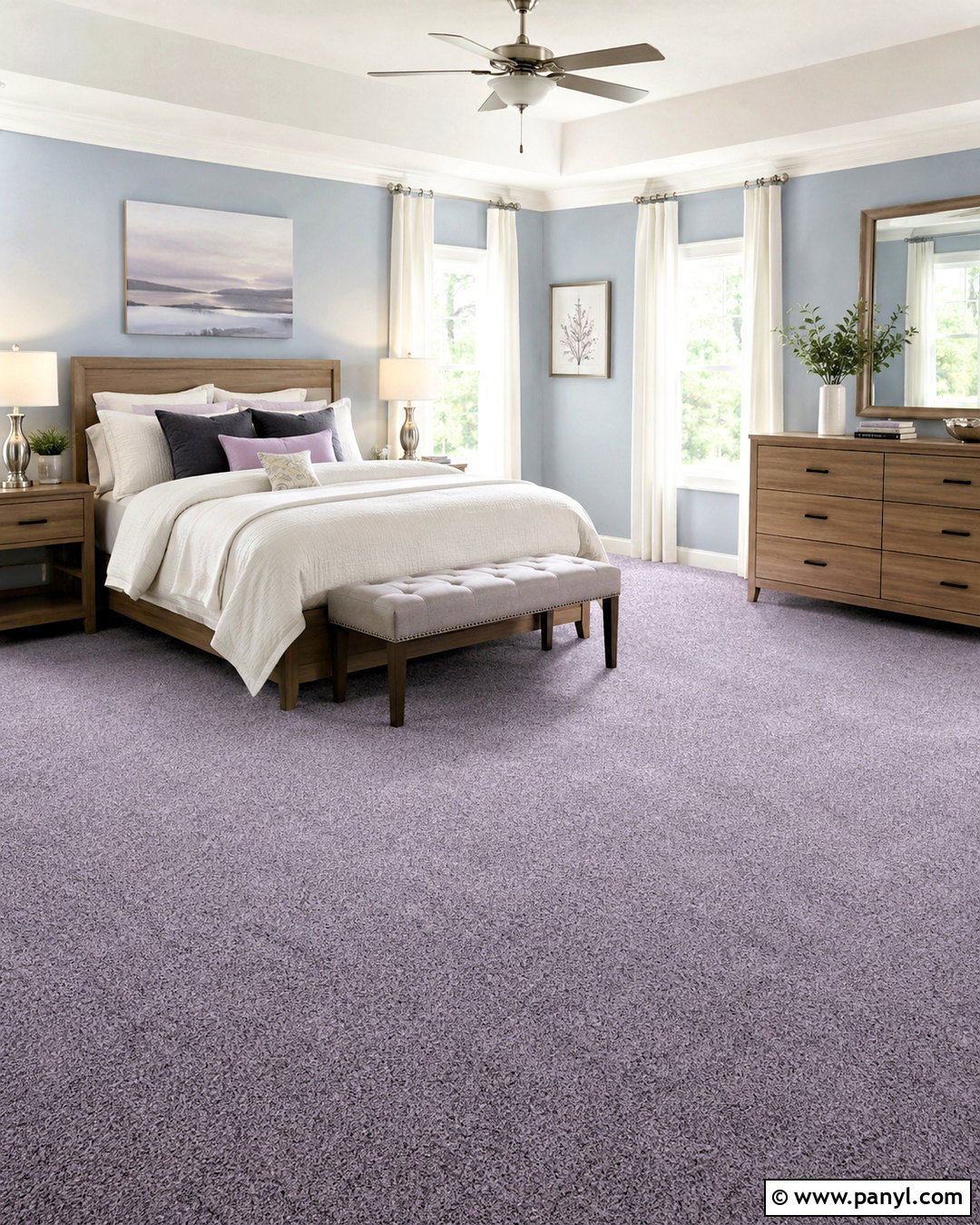
Soft lavender carpet creates a cool, dreamy combination with light blue walls while still offering a noticeable change in hue. Choose a gray-toned lavender that reads as muted purple rather than a bright children’s color. In a peaceful bedroom, add a white oak bed, crisp ivory linens, and a pale gray upholstered bench. Use curtains in warm white to brighten the walls and flooring. Accent pillows can blend lavender, blue, and charcoal in small amounts, while matte silver or nickel lighting complements the cool undertones. Include one natural wood dresser to keep the scheme from feeling overly delicate. This complete room palette works best with simple furniture and restrained decor. The result is calm, distinctive, and suitable for anyone wanting color without sharp contrast or heavy visual weight.
18. Mustard Yellow Carpet With Light Blue Walls
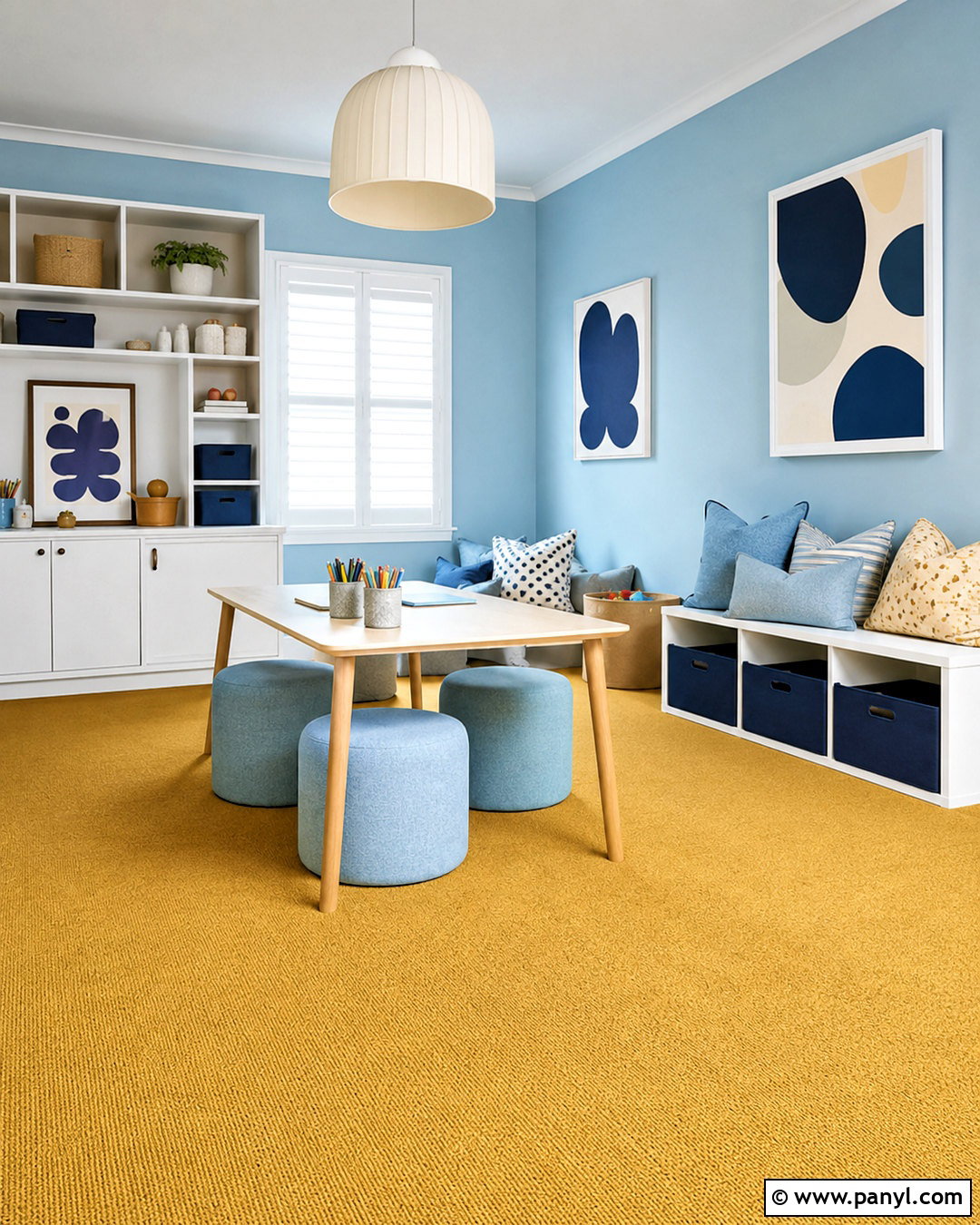
Mustard yellow carpet creates an energetic contrast with light blue walls and can make a simple room feel intentionally designed. Because this flooring is visually strong, choose a muted golden mustard rather than a bright primary yellow. Create a cheerful playroom or creative studio with low-pile mustard carpet, white storage cabinets, and a natural birch worktable. Add navy bins, pale blue cushions, and graphic artwork containing yellow, blue, and cream. Keep window treatments white and furniture shapes clean so the color pairing remains controlled. Black hardware offers definition without competing with the floor. A heathered carpet surface will soften the yellow and handle active use more gracefully. The complete scheme feels sunny, practical, and playful while the light blue walls provide a calm counterbalance.
19. Terracotta Carpet With Light Blue Walls
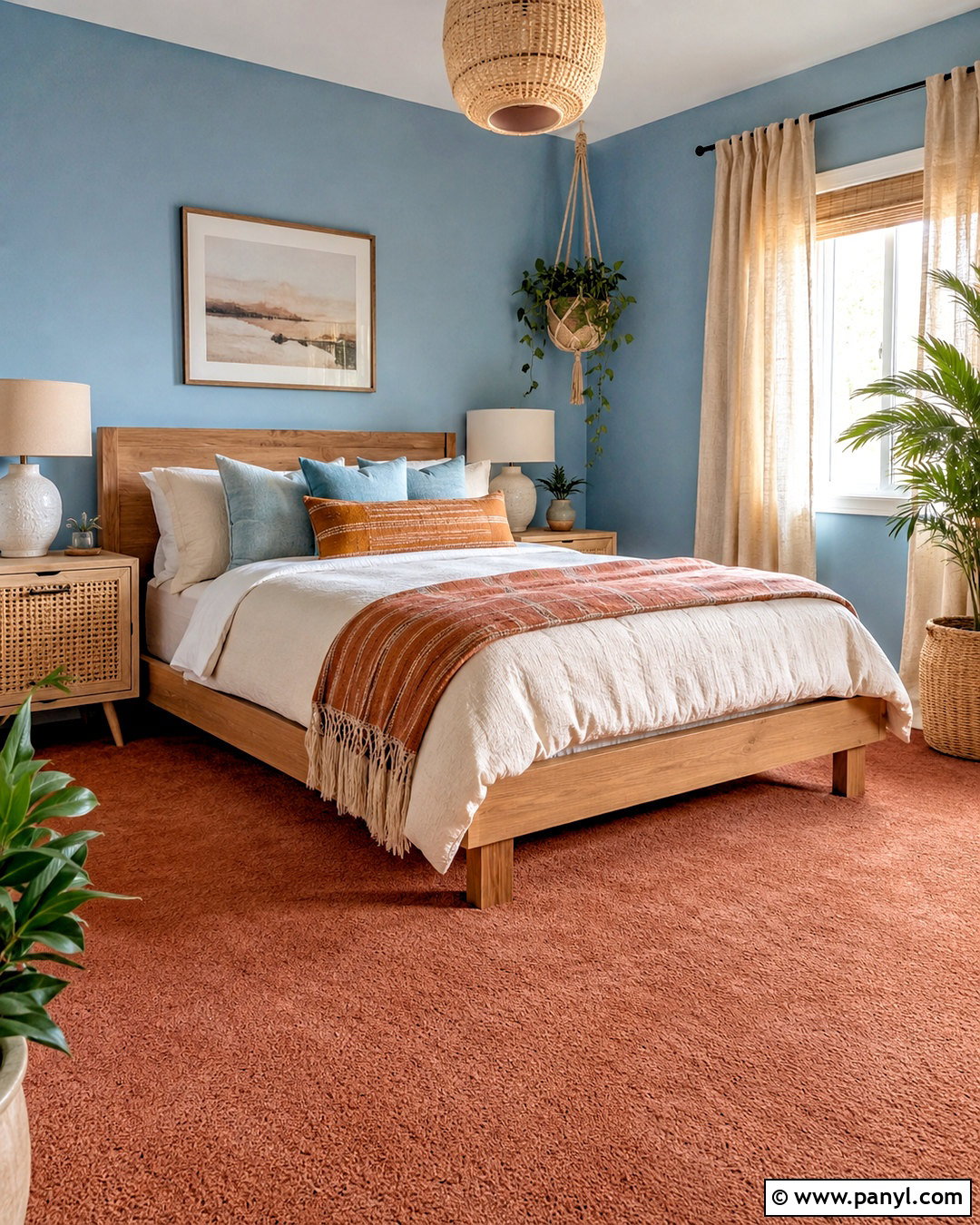
Terracotta carpet warms up light blue walls with an earthy contrast that feels welcoming and distinctive. Select a softened clay or cinnamon tone instead of vivid orange. In a bohemian-inspired guest room, combine terracotta carpet with a light oak bed, cream bedding, and woven cane nightstands. Add pale blue pillows to repeat the walls, then include rust, ivory, and muted brown through a patterned throw. Natural linen curtains, ceramic lamps, and a few green plants complete the relaxed palette. Keep large furnishings light so the rich flooring does not dominate the room. A textured, low-pile carpet will complement the organic materials better than a glossy plush finish. This complete look feels warm and collected, with blue supplying freshness and terracotta creating an inviting foundation.
20. Multicolor Patterned Carpet With Light Blue Walls
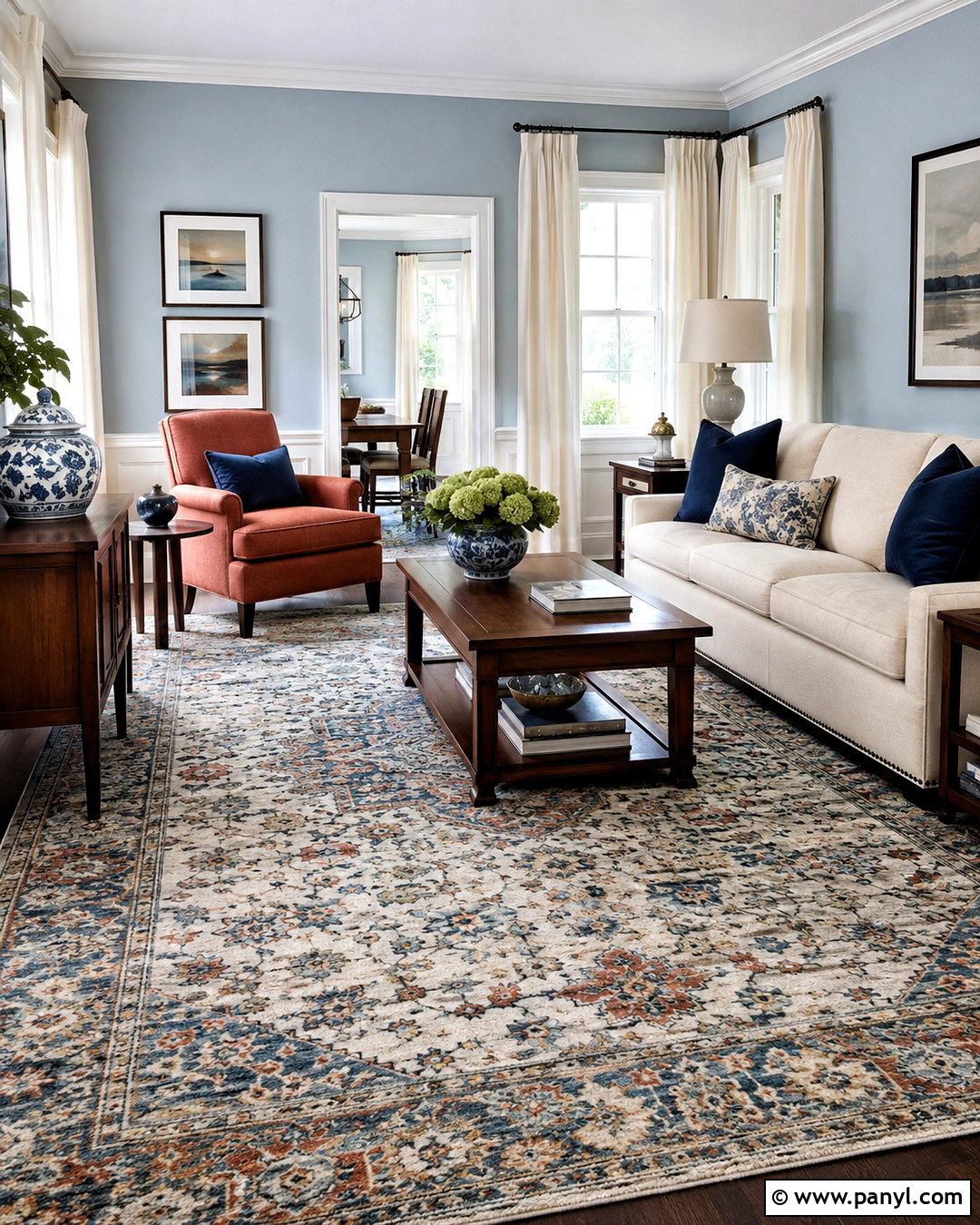
A multicolor patterned carpet can unify light blue walls with several furniture and accent colors at once. Look for a restrained pattern containing blue-gray, cream, taupe, and small touches of navy or rust. In a traditional living room, pair the carpet with a cream sofa, walnut tables, and light blue walls framed by warm white trim. Pull navy from the pattern into pillows and repeat rust through one upholstered chair or throw. Choose solid curtains so they do not compete with the floor. A small-scale geometric, subtle stripe, or faded ornamental pattern is easier to coordinate than an oversized motif. By repeating two or three carpet colors around the room, the complete design feels connected. The patterned surface also makes everyday marks less noticeable in a busy household.
Conclusion:
The best carpet choice depends on whether you want the room to feel light, warm, dramatic, colorful, or quietly coordinated. Cream, beige, oatmeal, and greige provide easy warmth, while light gray, charcoal, and blue-gray create a cooler modern look. Navy offers strong tonal contrast, and sage, blush, mustard, or terracotta can introduce more personality. Whatever shade you prefer, compare its undertone with the wall paint and repeat the carpet color through furniture, curtains, or small accents. Test a large sample in daylight and evening lighting before ordering. When deciding What Color Carpet Goes With Light Blue Walls, focus on the complete room rather than viewing the floor and paint as separate decisions.

Related Ideas and Inspiration:
Leave a Reply