
Red carpet can feel dramatic, traditional, playful, or surprisingly modern depending on the wall color around it. Choosing among **20 What Color Walls Go With Red Carpet Ideas** starts with identifying whether the carpet is warm scarlet, cool ruby, muted brick, or deep burgundy. Warm neutrals soften its intensity, while blues and greens create stronger contrast. Red and green sit opposite each other on the color wheel, while softer neutral hues can balance red without competing for attention. () Lighting, furniture finishes, trim, and textiles also affect the final result. Test paint samples beside the carpet during daylight and after dark before committing. Use these **20 What Color Walls Go With Red Carpet Ideas** to build a room that feels balanced, intentional, and comfortable.

1. Warm White Walls With Red Carpet
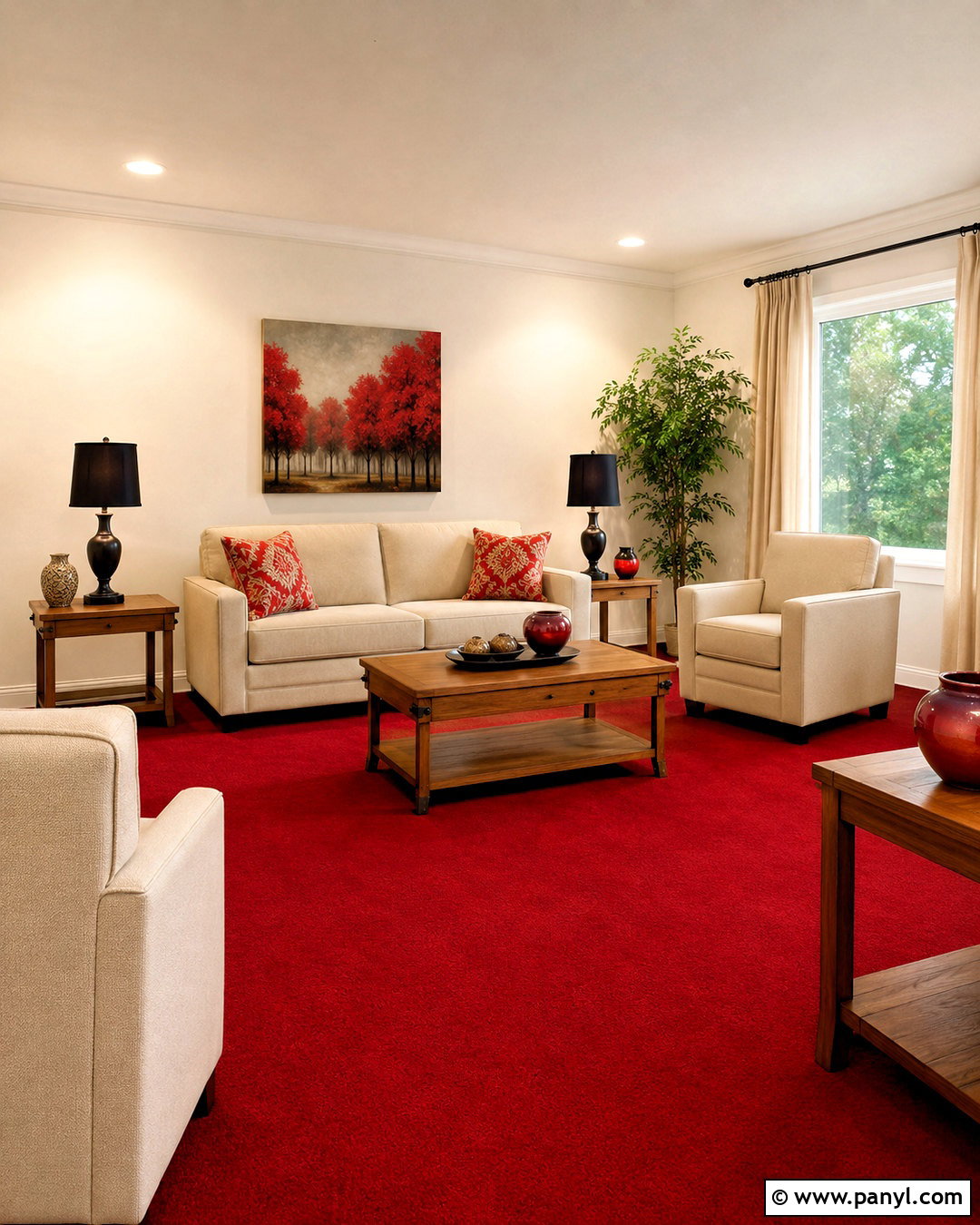
Warm white walls provide a clean background without making red carpet appear harsh or overly formal. Choose a white with subtle cream, beige, or red undertones instead of a sharp blue-white. Add medium oak furniture, ivory curtains, and a soft beige sofa to connect the bright walls with the saturated floor. A few red details, such as patterned pillows or framed artwork, will make the carpet feel purposeful. Matte black lamps and curtain rods can introduce definition without adding another competing color. Keep the ceiling and trim a slightly brighter white for gentle contrast. This complete scheme works especially well in smaller living rooms and hallways because the pale walls visually lighten the space while the carpet supplies warmth, color, and character.
2. Cream Walls With Red Carpet
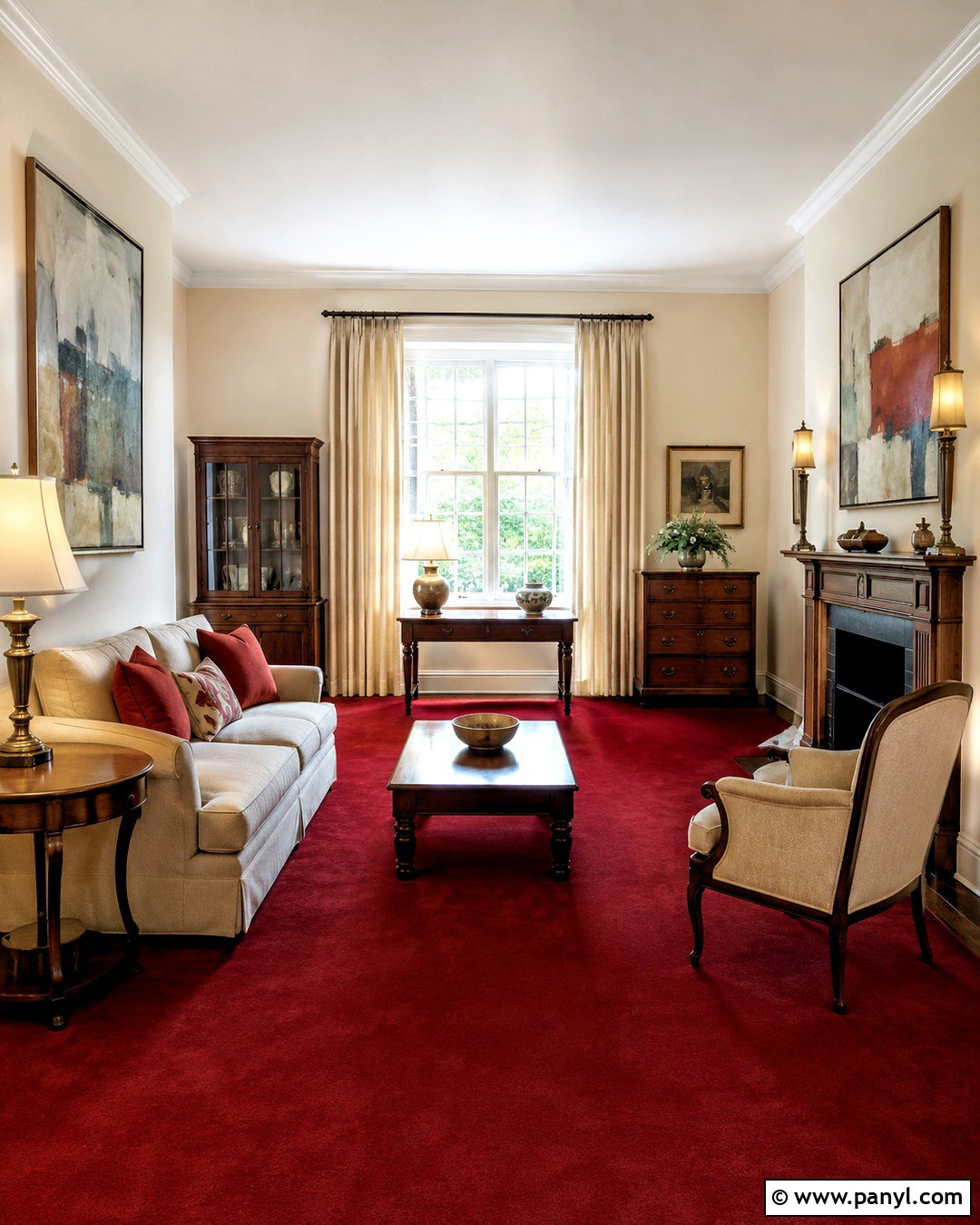
Cream walls create a softer and more traditional setting for red carpet. Their yellow warmth is especially flattering beside brick red, tomato red, and warm crimson flooring. Furnish the room with walnut wood, an oatmeal-colored sofa, and classic linen curtains. Antique brass lighting and warm white lampshades reinforce the comfortable palette. To prevent the room from looking dated, use simple furniture shapes and limit ornate accessories. Add one or two contemporary pieces, such as a streamlined coffee table or large abstract artwork containing cream, rust, and muted blue. Crisp white trim can freshen the edges of the room. The finished space feels welcoming and established, making this combination suitable for family rooms, formal sitting rooms, staircases, and traditional bedrooms.
3. Beige Walls With Red Carpet
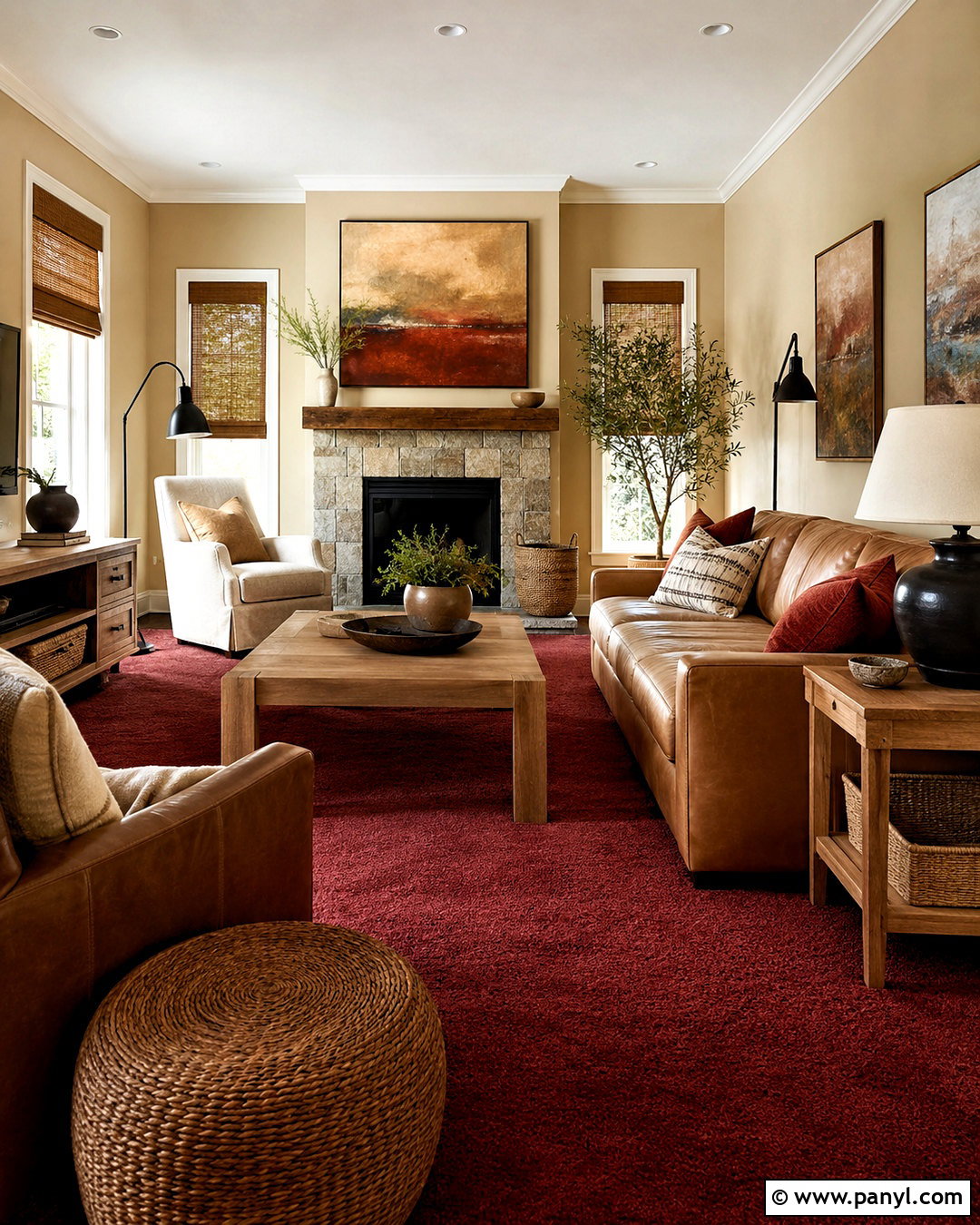
Beige walls can calm a strong red carpet while giving the room an earthy, relaxed character. Select a balanced beige that does not lean too yellow, particularly when the carpet is cool ruby or burgundy. Build the room around natural materials, including a camel leather chair, woven shades, light oak tables, and linen upholstery. Cream and brown textiles help bridge the difference between the light walls and dark floor. Introduce small black accents through frames, lamps, or furniture legs for structure. Artwork with touches of red, tan, and muted green can unite the entire palette. This design is practical for busy family spaces because it feels warm and forgiving. The carpet becomes a rich foundation rather than an isolated, overpowering feature within the room.
4. Greige Walls With Red Carpet
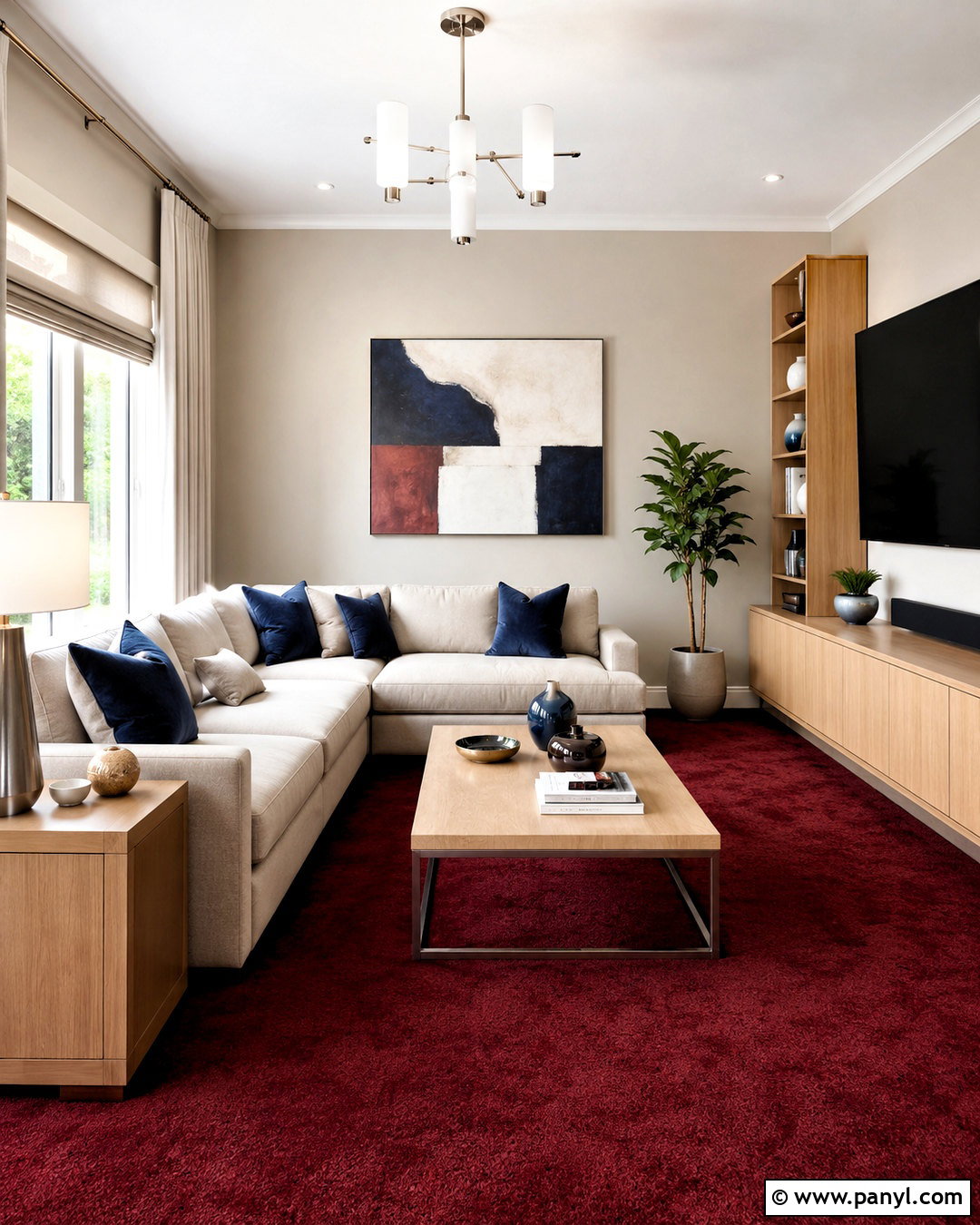
Greige walls offer a modern middle ground between cool gray and warm beige. This flexible neutral works particularly well when the red carpet has slightly muted, blue, or brown undertones. Choose light greige paint, crisp off-white trim, and furniture with clean, tailored lines. A stone-colored sectional, pale oak storage, and brushed nickel lighting create a calm contemporary base. Bring the carpet upward with a geometric rug-layering effect only if the room is large, or simply repeat red through two small pillows and one artwork. Navy, charcoal, or muted teal accents can add depth without making the scheme busy. Keep curtains close to the wall color. The matching tones create visual continuity, allowing the bold flooring to look integrated into a polished, updated living space.
5. Taupe Walls With Red Carpet
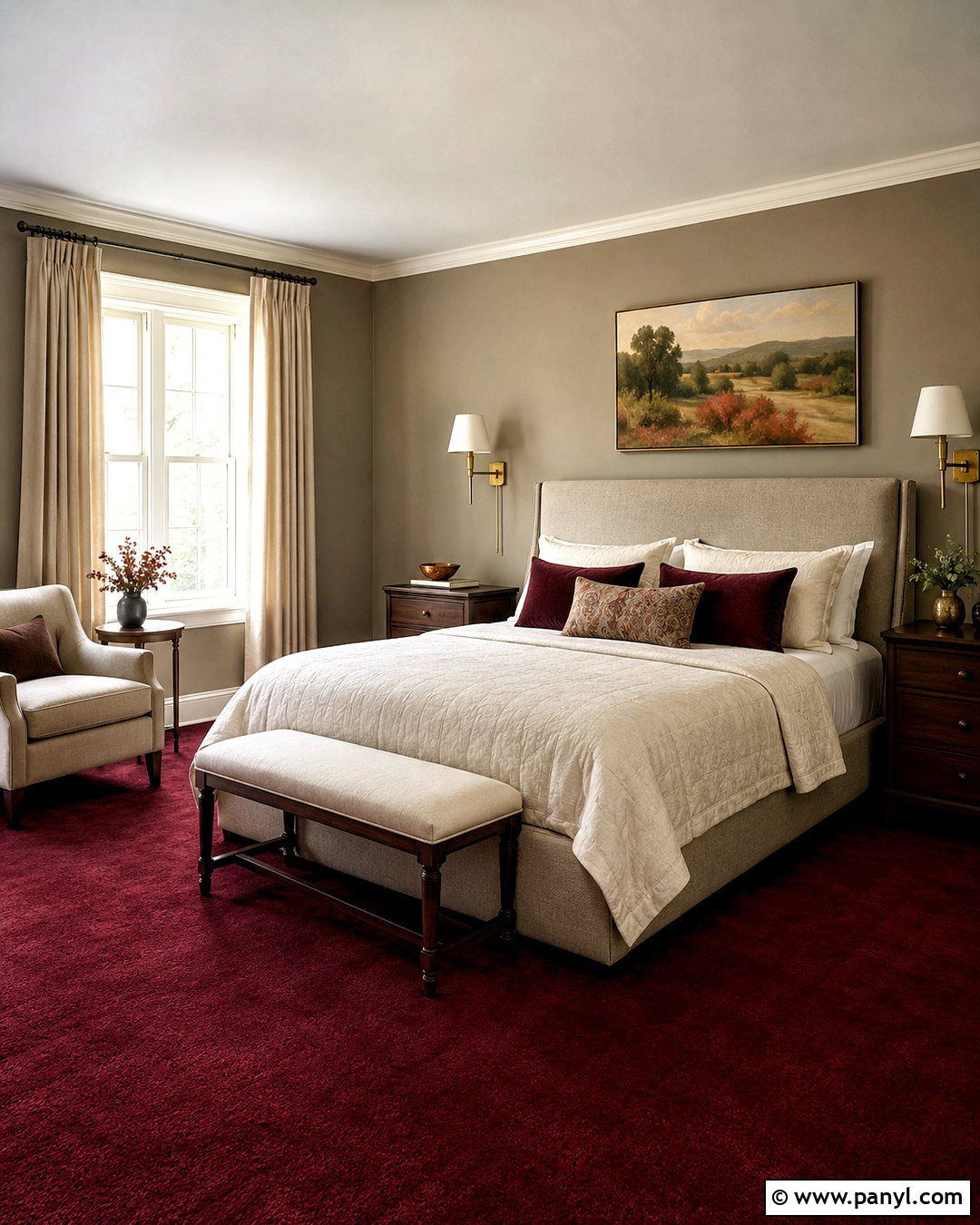
Taupe walls bring softness and depth to a room with red carpet, especially when the flooring is burgundy, wine red, or faded crimson. Look for taupe paint with brown or rosy undertones rather than a noticeably purple cast. Pair it with dark walnut furniture, warm gray upholstery, and aged brass fixtures for a sophisticated design. Textured curtains in oatmeal or mushroom tones keep the walls from feeling flat. Add a cream ceiling and matching trim to provide needed brightness. One large landscape print containing rust, taupe, and olive can connect the room’s colors naturally. This palette works beautifully in bedrooms, libraries, and formal living rooms. It gives red carpet a quieter, grounded appearance while maintaining the richness that makes the flooring visually distinctive.
6. Light Gray Walls With Red Carpet
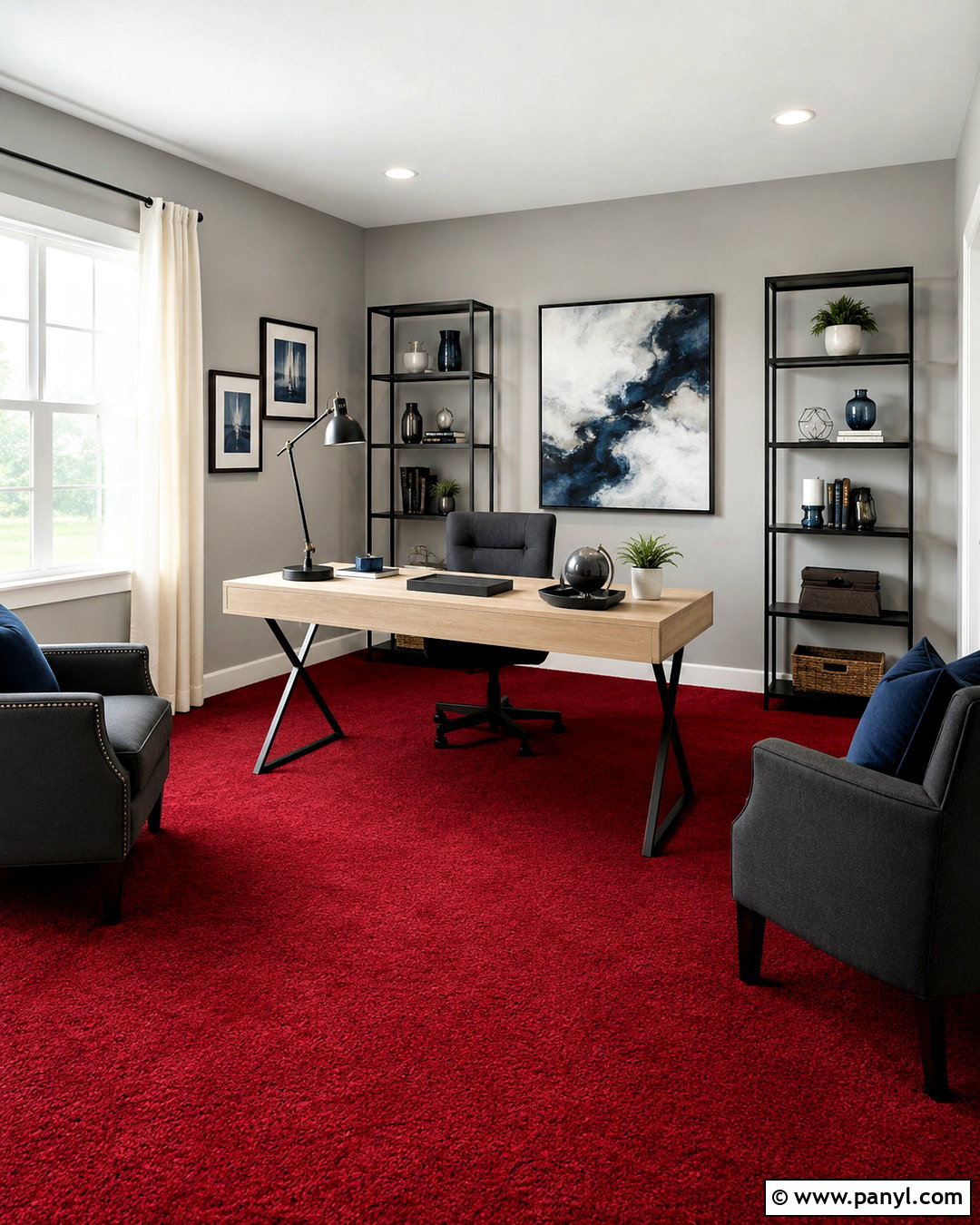
Light gray walls can sharpen red carpet and create a clean, contemporary contrast. The best gray depends on the carpet’s undertone. Choose a warmer gray for orange-red flooring and a neutral or slightly cool gray for ruby red. Complete the room with charcoal seating, white trim, light wood furniture, and simple black metal accents. A patterned curtain containing gray, ivory, and small touches of red can connect the vertical and horizontal surfaces. Avoid filling the room with additional bright primary colors. Instead, use layered neutrals and one restrained accent, such as navy or dusty blue. Good natural and overhead lighting is important because gray can feel dull in a shadowy room. The finished scheme appears crisp, controlled, and suitable for modern apartments or home offices.
7. Charcoal Walls With Red Carpet
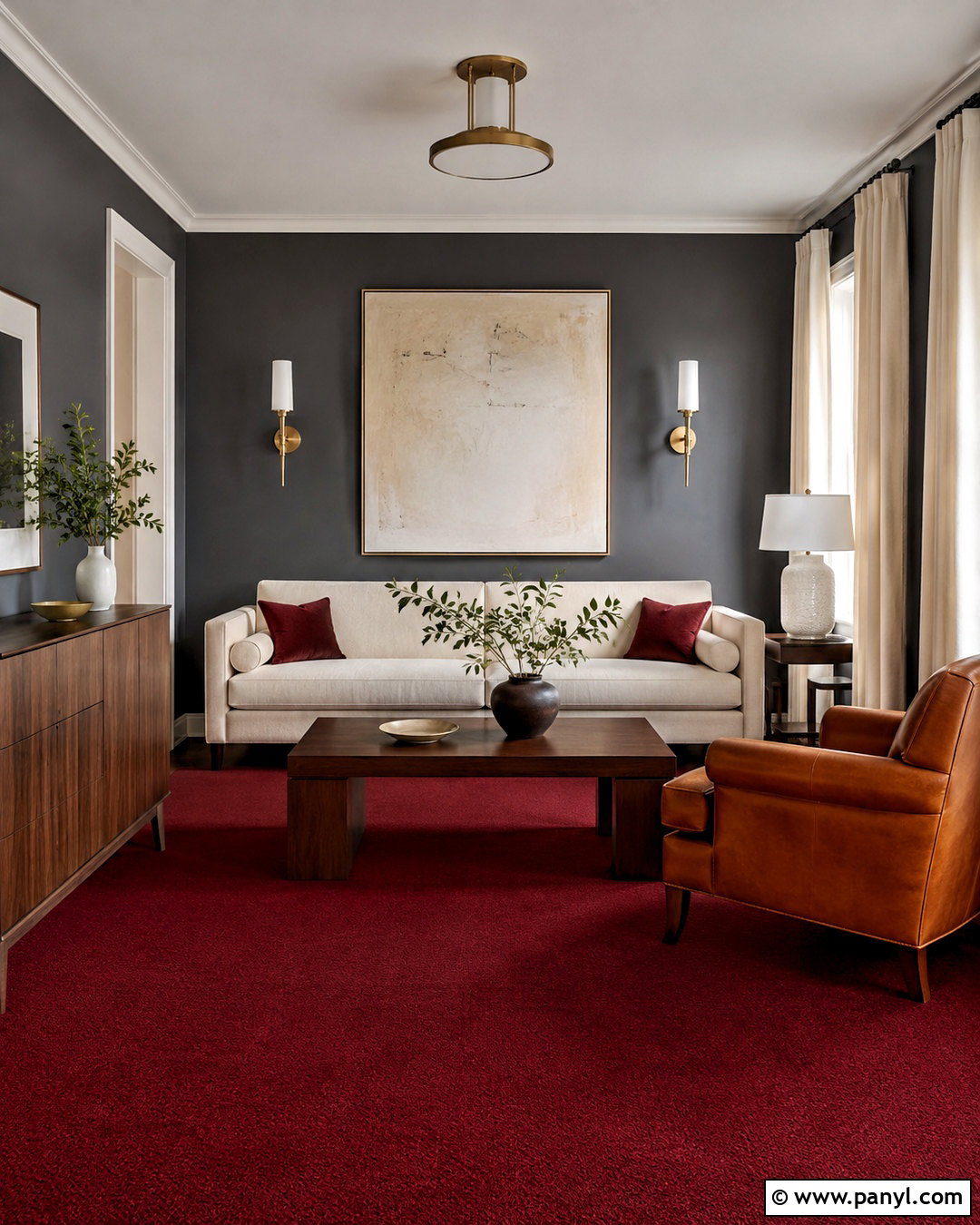
Charcoal walls turn red carpet into part of a dramatic, tailored interior rather than something that needs to be hidden. This combination works best in rooms with generous windows, layered lighting, or a high ceiling. Choose a softened charcoal instead of absolute black, then use warm white on the ceiling and trim. Furnish the space with a cream sofa, walnut tables, and cognac leather seating to prevent the palette from becoming heavy. Brushed brass sconces and framed artwork add warmth and reflect light. Keep curtains pale and full-length so they visually lift the walls. The red carpet should remain the main saturated color. This complete look suits a den, media room, or formal lounge where a bold floor and dark walls can feel cozy, deliberate, and refined.
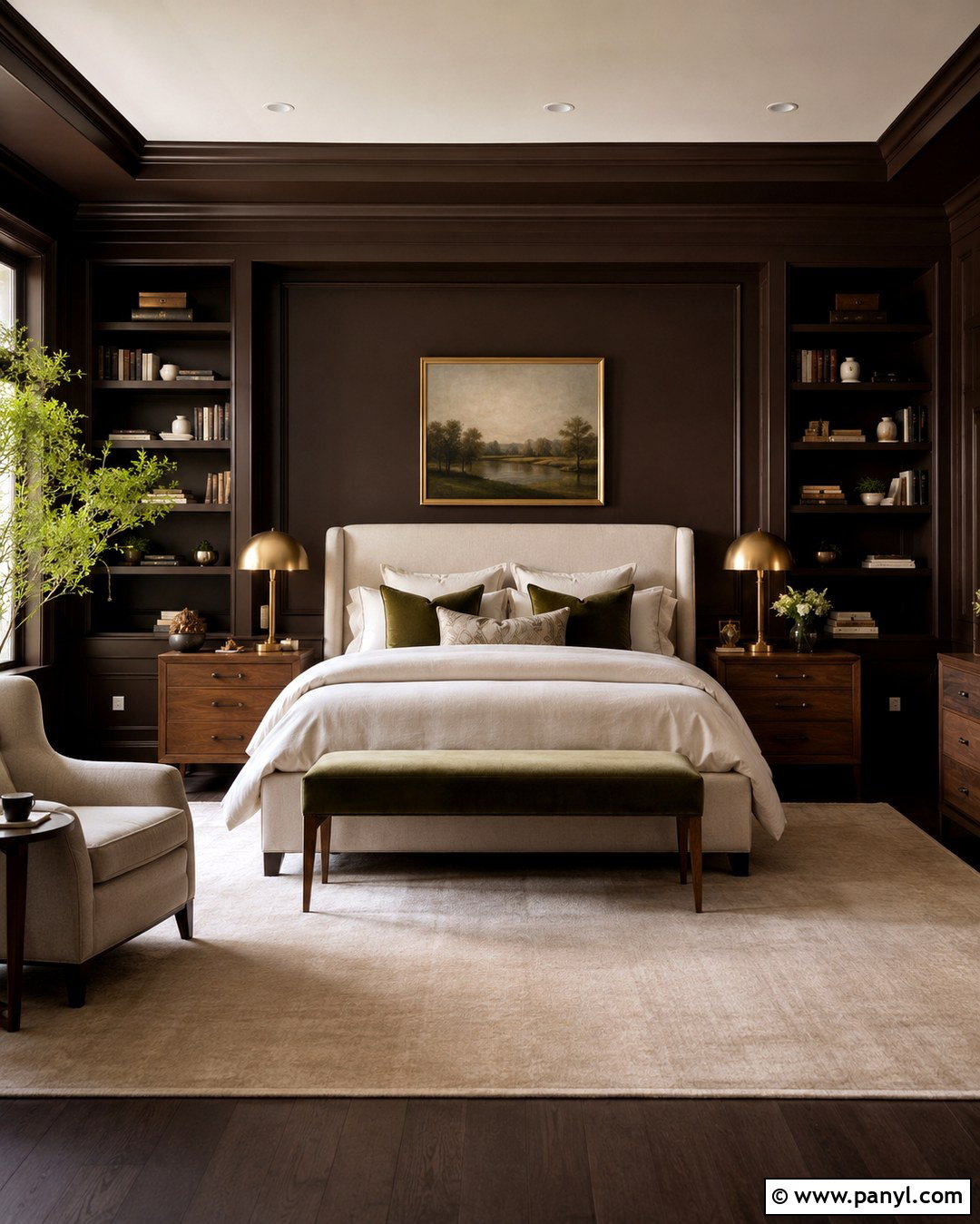
8. Black Accent Wall With Red Carpet
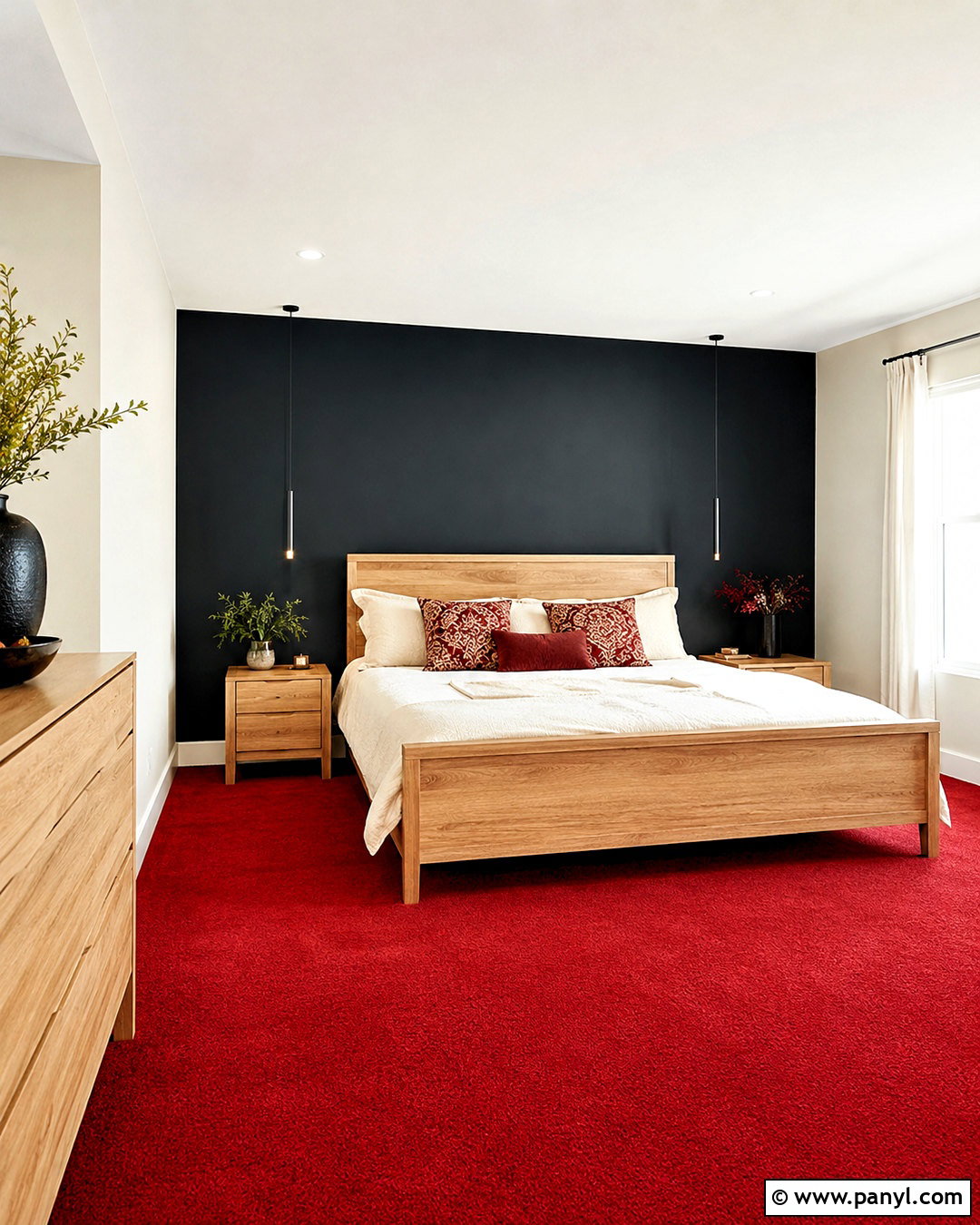
A black accent wall can make red carpet feel graphic and modern when the other walls remain light. Place the black wall behind a bed, sofa, fireplace, or media console so it has a clear architectural purpose. Paint the surrounding walls warm white or pale greige and repeat black through slim furniture legs, picture frames, and lighting. Choose light upholstery and natural oak pieces to keep the room approachable. Red should appear in only a few accessories beyond the carpet, such as one patterned pillow or a small ceramic object. White curtains and a pale ceiling preserve brightness. This design works well with a clear scarlet or deep red carpet, creating a confident palette that feels intentional without covering the entire room in dark color.
9. Navy Blue Walls With Red Carpet
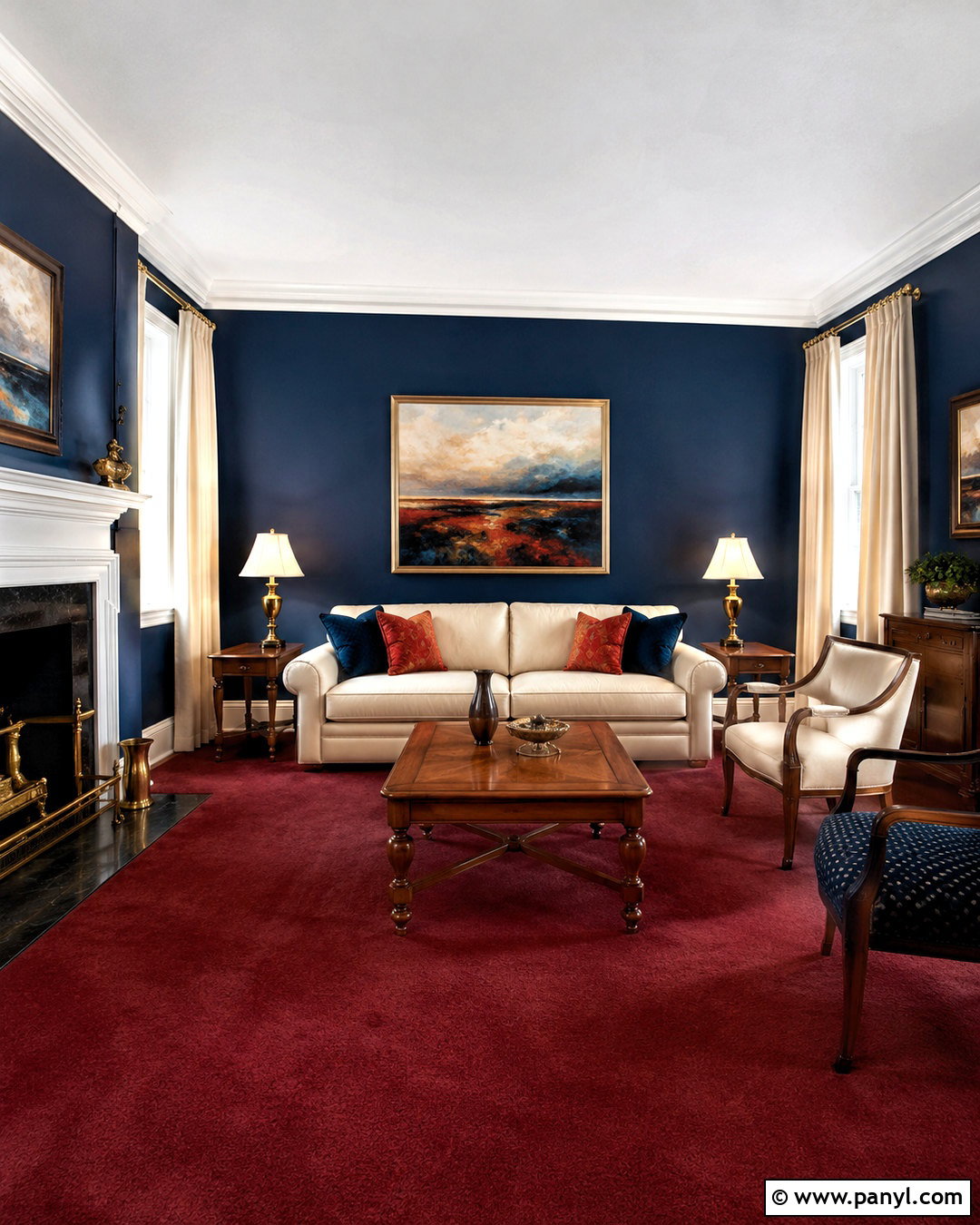
Navy blue walls pair naturally with deep red carpet to create a rich, classic room. To prevent the combination from feeling too formal, include plenty of warm white, natural wood, and relaxed textiles. A cream sofa, medium oak coffee table, and ivory curtains will brighten the darker surfaces. Add aged brass lamps or hardware for warmth, then use artwork containing navy, rust, and parchment tones. Paint the ceiling warm white and consider using the same color on wide baseboards and window trim. For a bedroom, choose white bedding with a small red-and-blue pattern. For a living room, keep upholstery mostly neutral. The final result feels collected and substantial, making navy a strong choice for burgundy or traditional crimson wall-to-wall carpet.
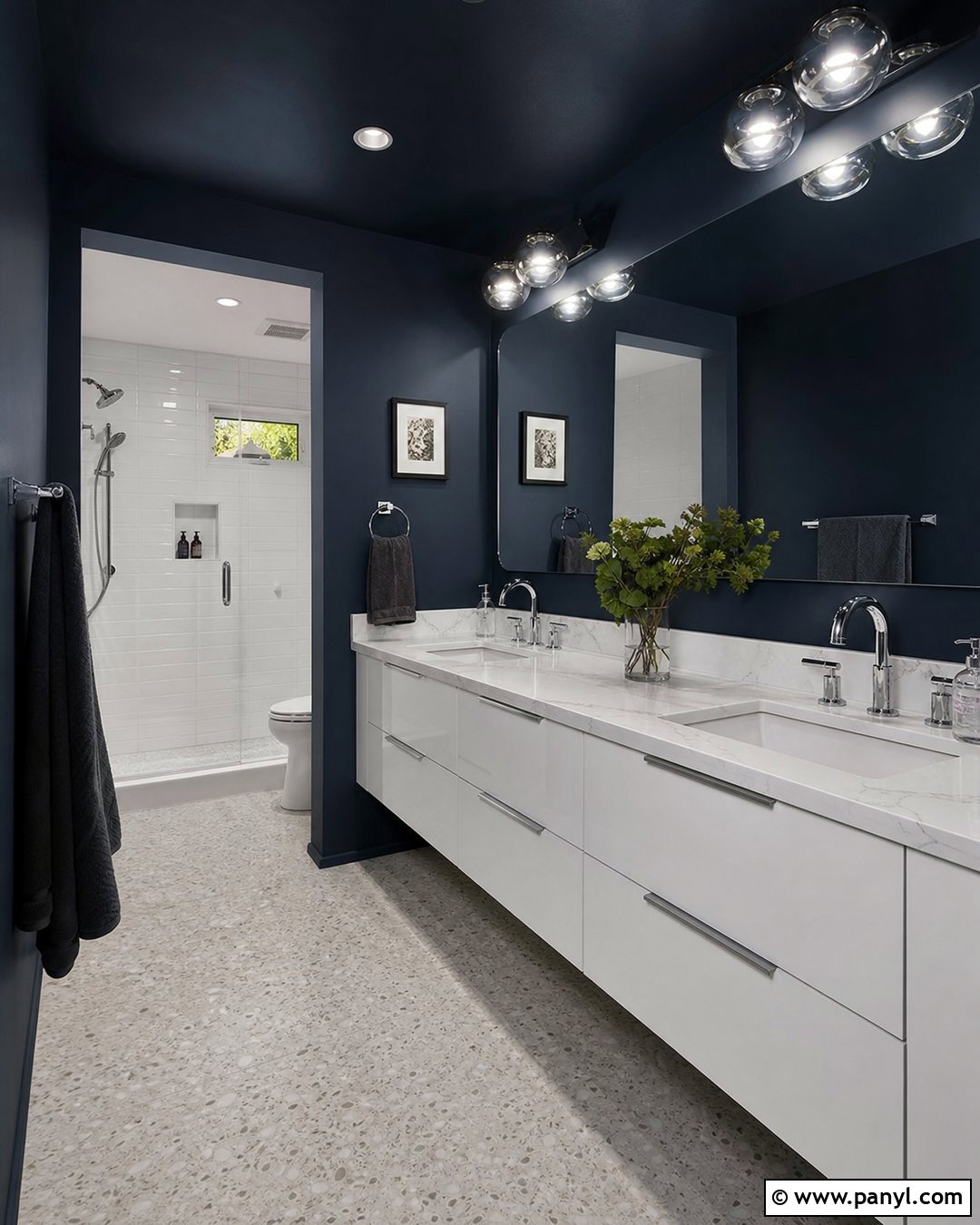
10. Denim Blue Walls With Red Carpet
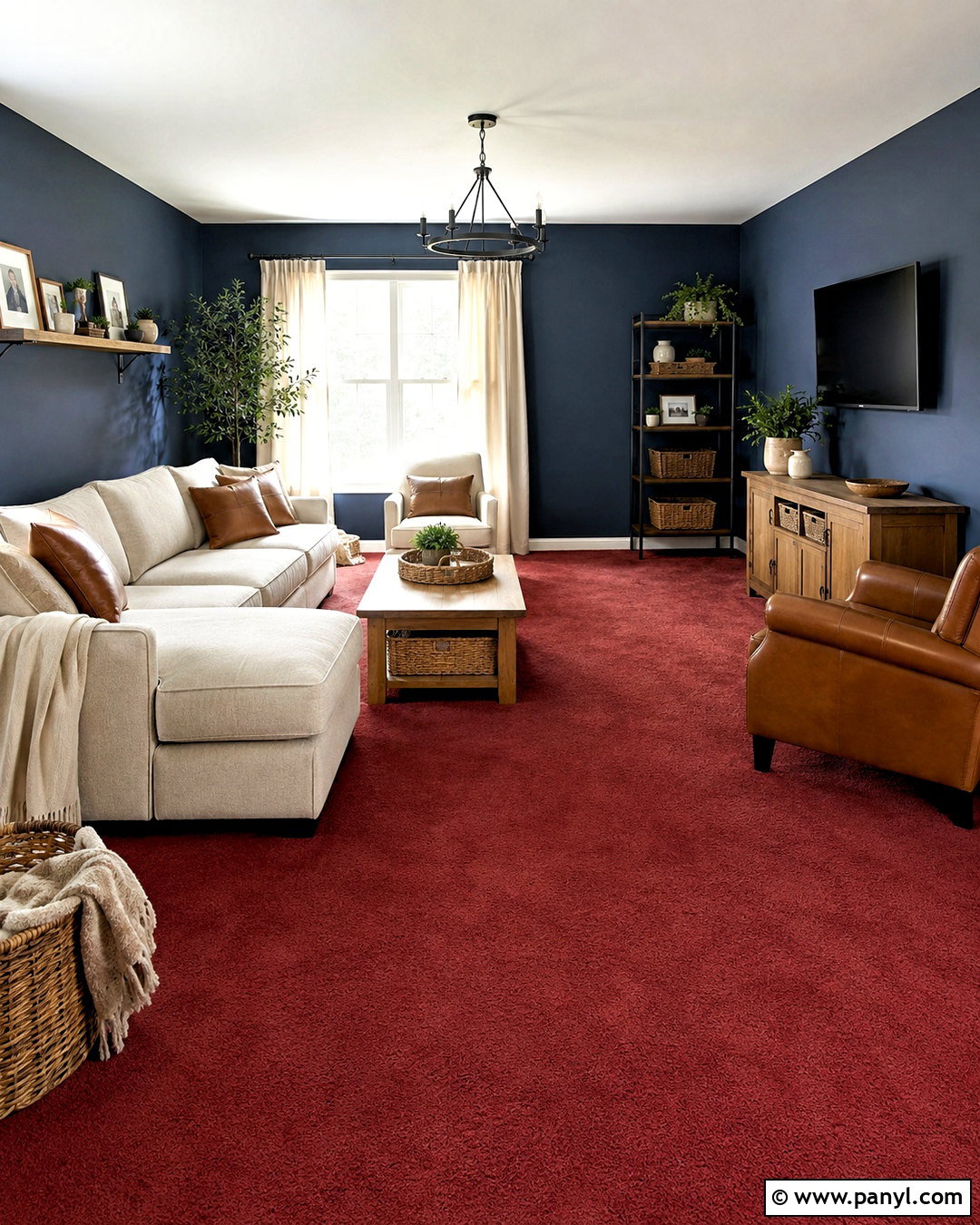
Denim blue walls give red carpet a more casual and comfortable personality than dark navy. Choose a medium, slightly muted blue that resembles washed fabric rather than a bright primary blue. Pair it with natural oak furniture, off-white upholstery, woven baskets, and simple cotton curtains. Small accents in tan, cognac, and faded red will reinforce the relaxed palette. Avoid glossy finishes; matte walls and textured fabrics are better suited to this easygoing look. White trim can keep the room fresh, while black metal lighting adds a modern edge. This scheme is ideal for family rooms, children’s bedrooms, or informal upstairs spaces. The softness of denim blue balances the energy of the carpet while allowing both colors to remain visible and distinctive.
11. Dusty Blue Walls With Red Carpet
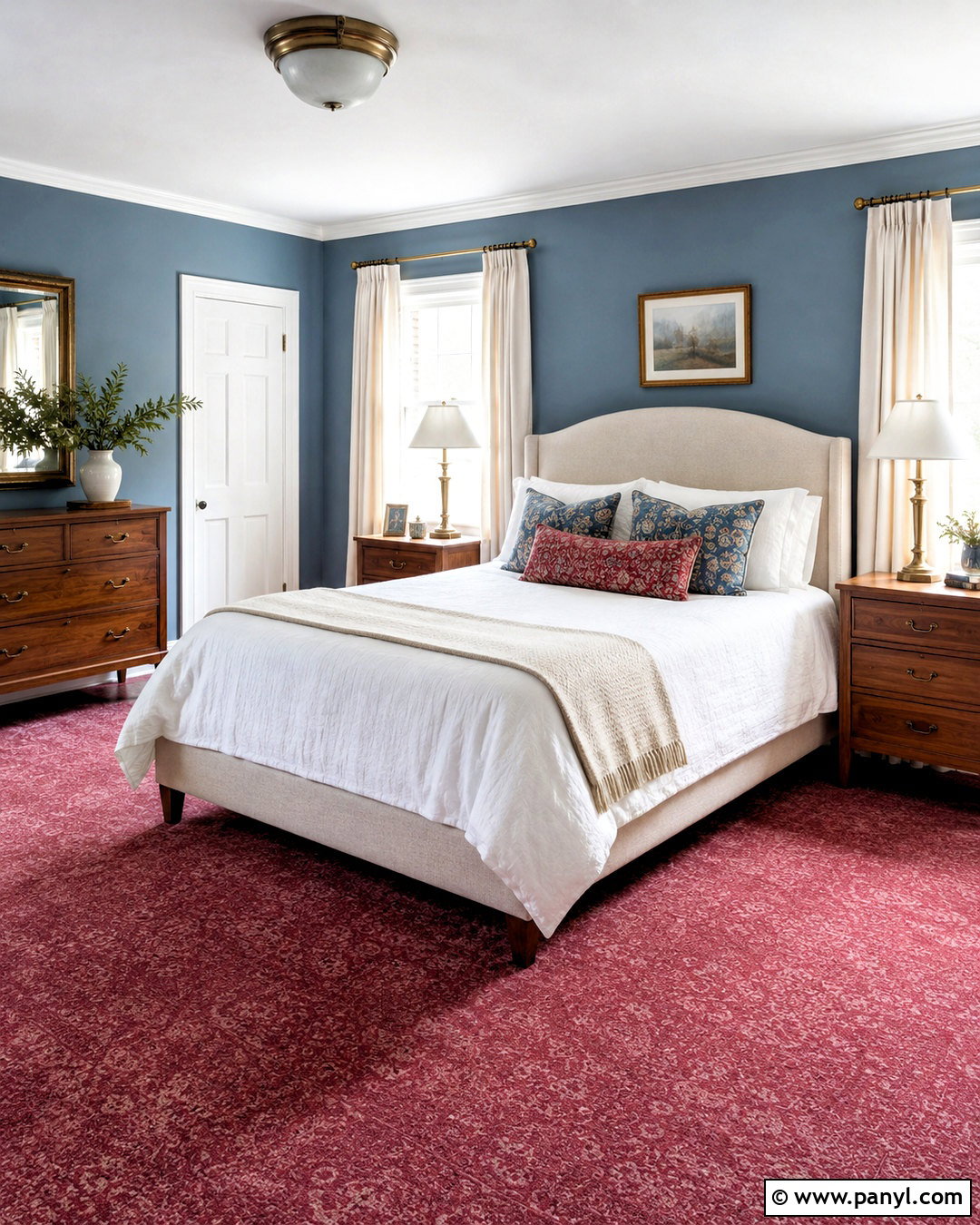
Dusty blue walls create a gentle contrast with red carpet and can make the entire room feel quieter. The muted blue is particularly useful with faded red, raspberry, or antique-style carpet. Complete the design with ivory linen curtains, warm white trim, and furniture in medium walnut or weathered oak. An oatmeal sofa or upholstered bed keeps the room light, while antique brass lighting provides a warmer finishing note. Add patterned textiles that contain dusty blue, cream, and a restrained amount of red. Floral, striped, or traditional motifs can work as long as the scale remains controlled. This pairing suits a guest bedroom, reading room, or traditional sitting room. It softens the red floor without relying exclusively on beige, gray, or other predictable neutrals.
12. Sage Green Walls With Red Carpet
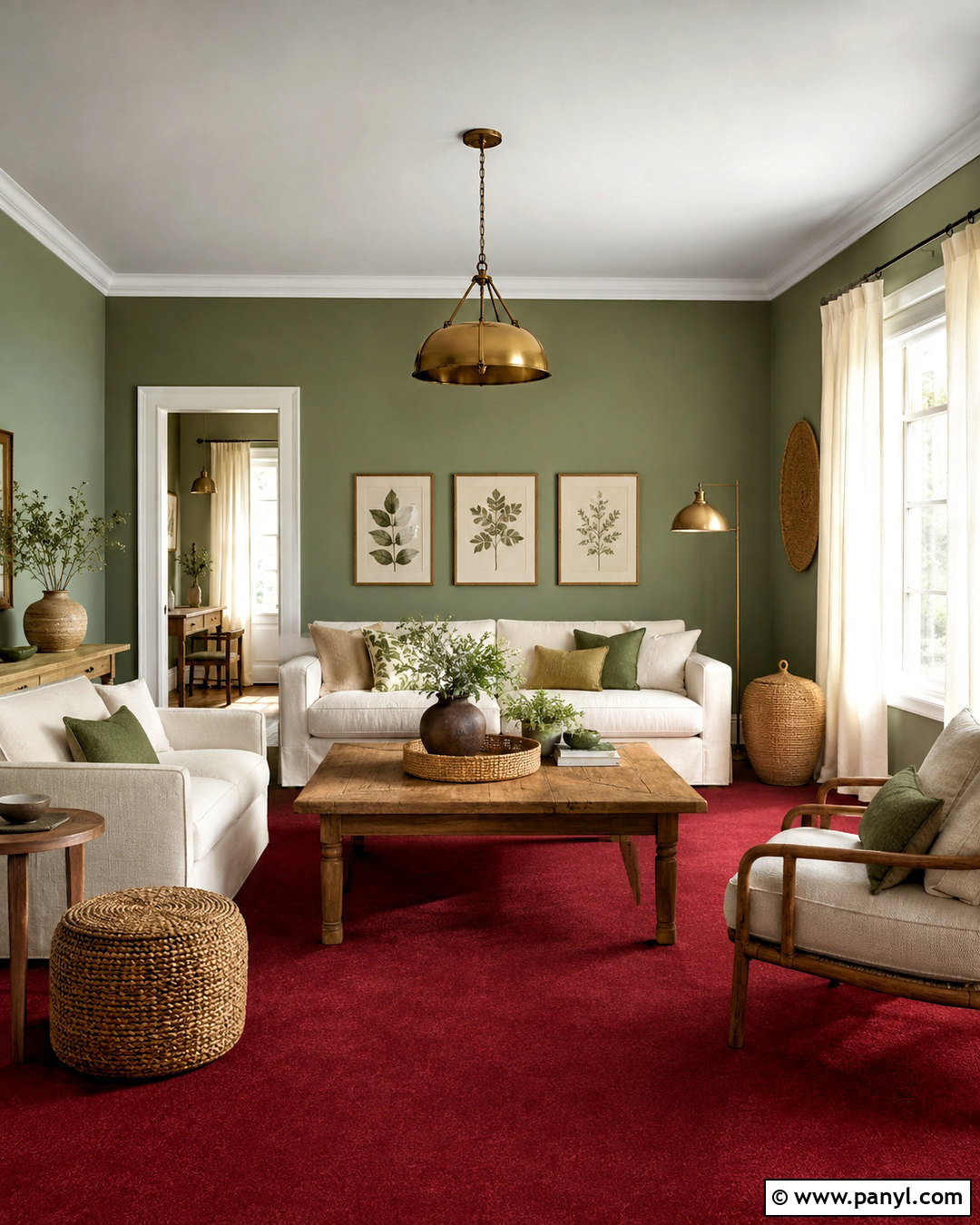
Sage green walls can balance red carpet while keeping the room calm and nature-inspired. Choose a gray-green or softly muted sage instead of a bright, highly saturated green. Furnish the space with warm oak, cream linen, woven natural fibers, and aged brass accents. The carpet should remain the strongest color, while green covers the walls in a restful supporting role. Use ivory curtains and pale trim to separate the two dominant hues. Botanical artwork can reinforce the green, but select prints with neutral backgrounds and only small red details. This full scheme works particularly well with muted brick, cranberry, or burgundy carpet. It feels comfortable in living rooms, bedrooms, and home offices, providing contrast without creating an overly colorful or visually restless result.
13. Olive Green Walls With Red Carpet
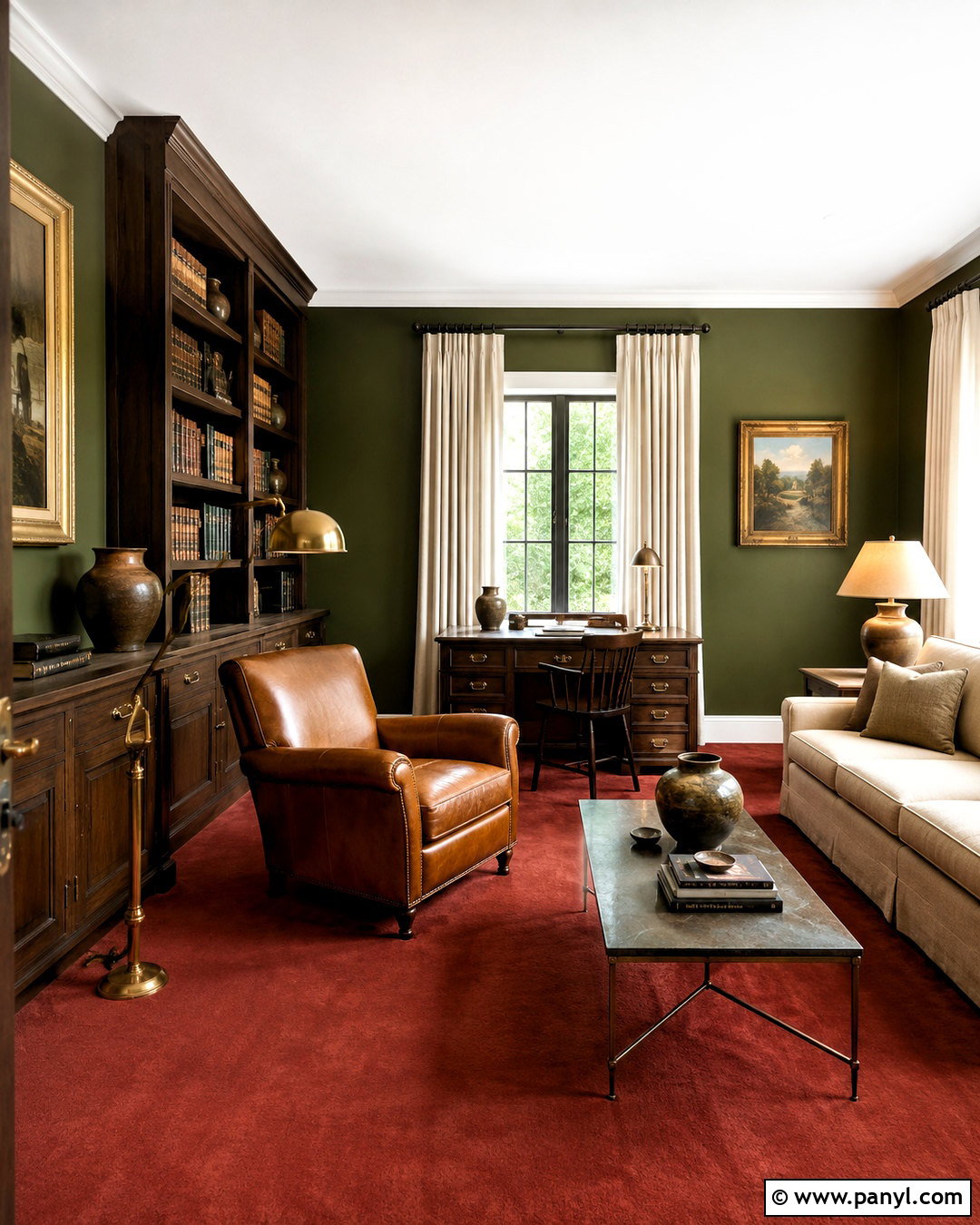
Olive green walls give red carpet an earthy, heritage-inspired appearance. The combination works best when both colors are somewhat muted, such as deep olive walls with brick red or burgundy flooring. Add dark wood bookcases, a tan leather chair, cream curtains, and warm metal lighting to create a layered, comfortable room. Natural textures like linen, wool, cane, and unfinished pottery will keep the palette grounded. Use soft white on the ceiling and trim so the darker walls do not close in the space. Instead of adding more strong colors, decorate with parchment, camel, chocolate brown, and small black accents. This design is especially effective in libraries, studies, and cozy dens where saturated surfaces and traditional materials can create warmth without looking overly decorative.
14. Forest Green Walls With Red Carpet
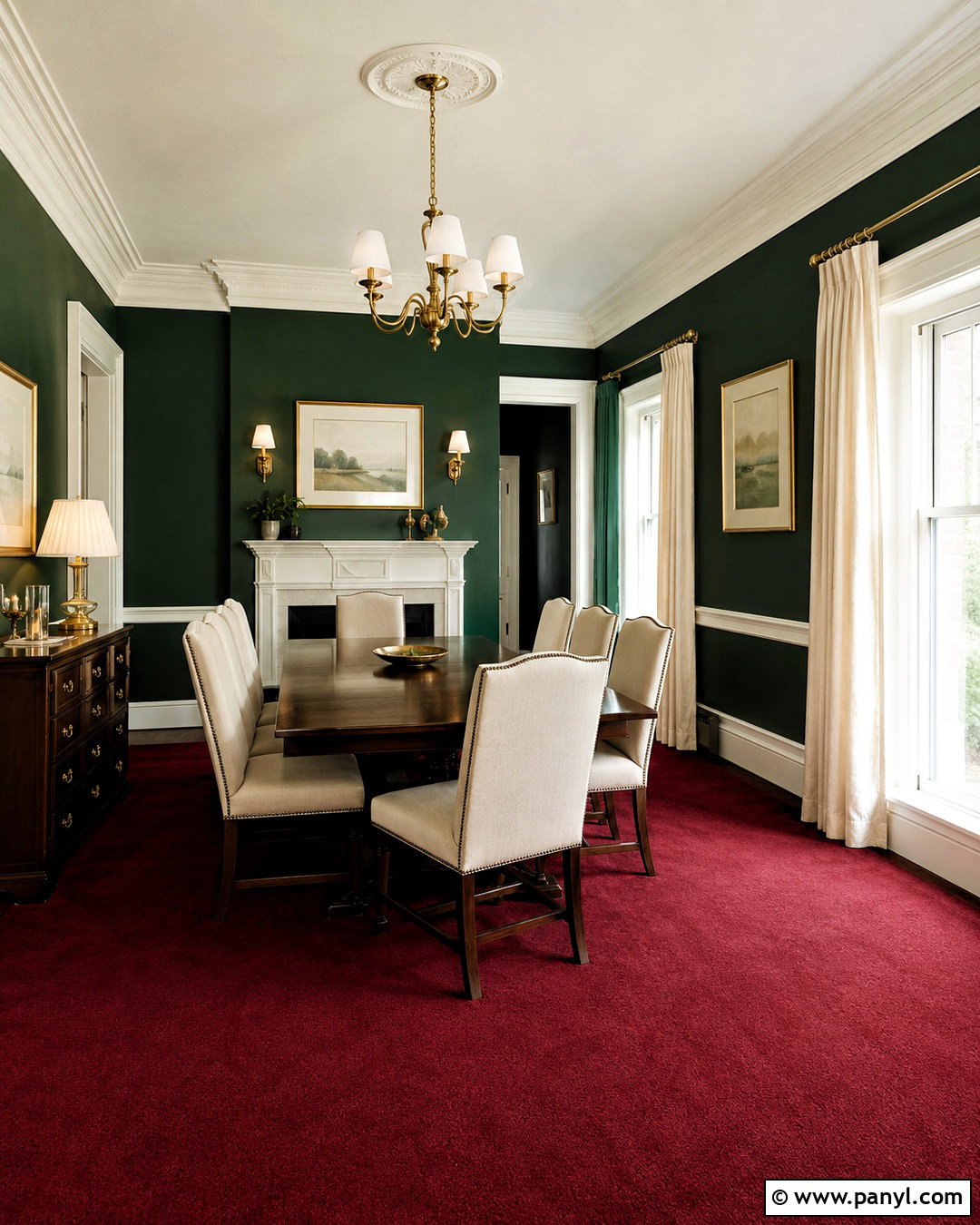
Forest green walls can create a bold, enveloping room with red carpet, but careful balance is essential. Use this deep pairing in a space with large windows, strong overhead lighting, or substantial white architectural trim. A cream sofa or upholstered bed will provide a bright visual break between the walls and floor. Choose dark walnut furniture, antique brass fixtures, and simple ivory curtains for a polished finish. Keep patterns limited and avoid adding multiple saturated colors. Artwork with pale backgrounds can help open the wall surface. A deep burgundy carpet is generally easier to combine with forest green than a bright scarlet floor. The finished room feels dramatic, traditional, and intimate, making the palette well suited to a library, dining room, or private home office.
15. Blush Pink Walls With Red Carpet
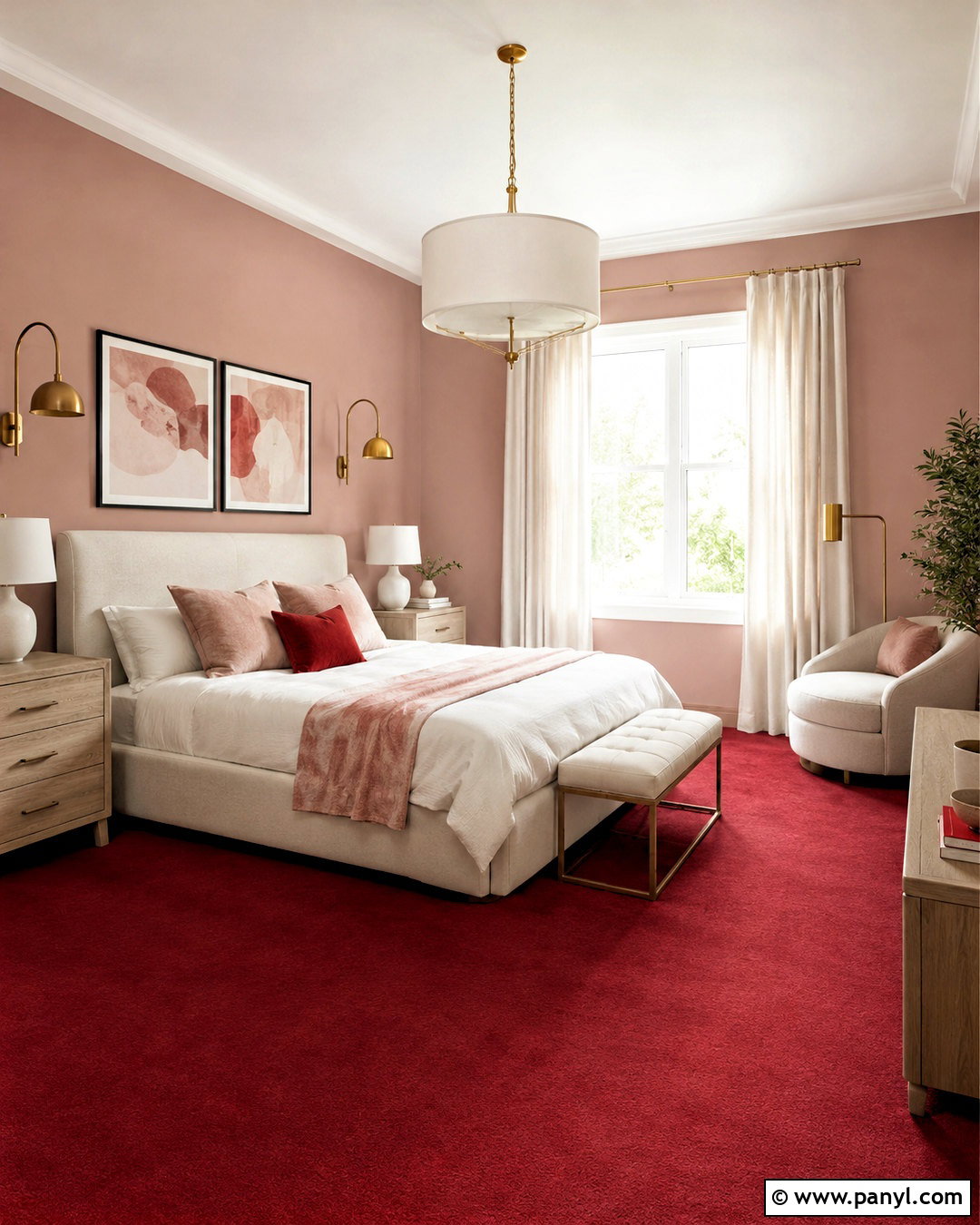
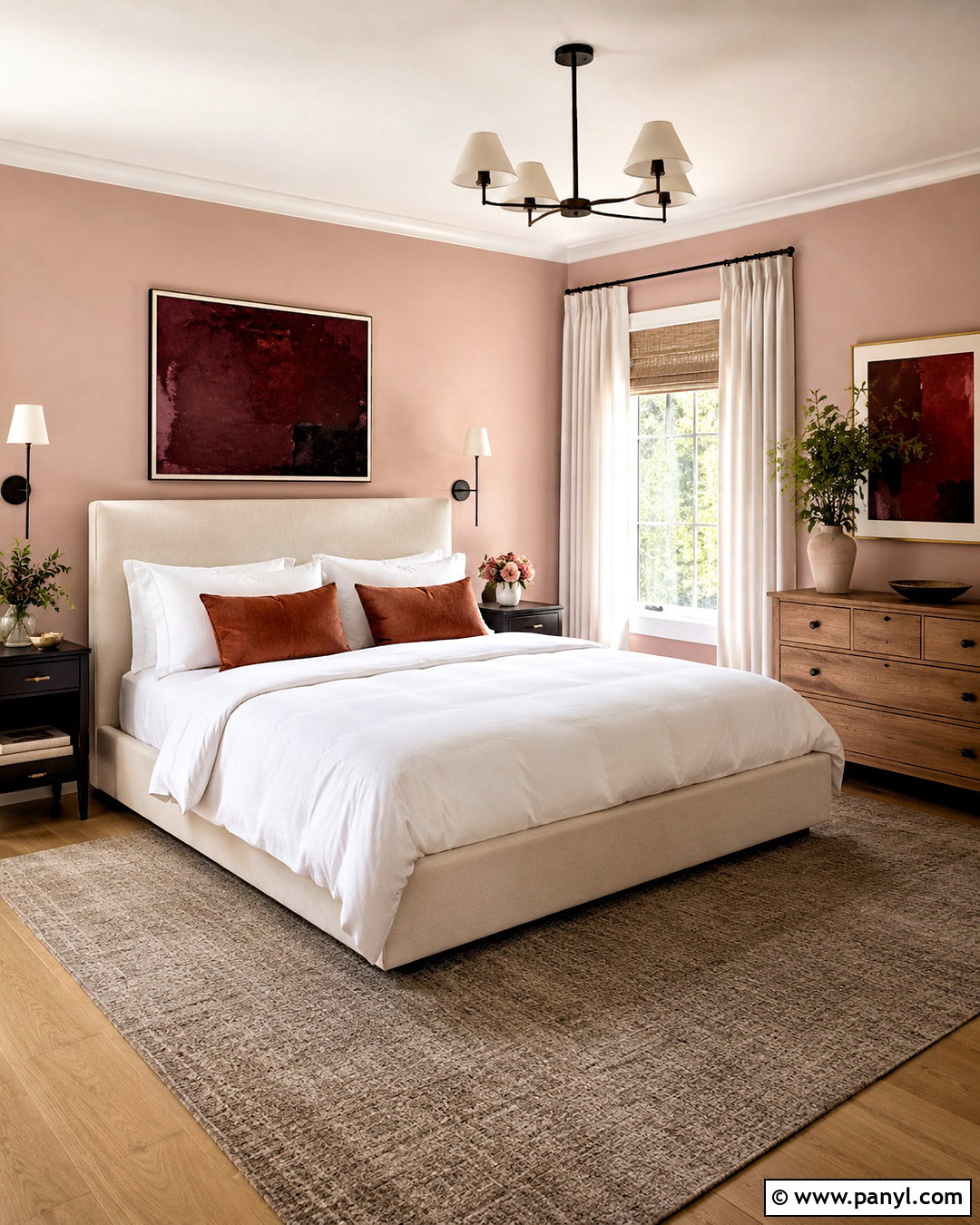
Blush pink walls create a soft tonal relationship with red carpet instead of introducing sharp contrast. Select a dusty, beige-based pink rather than a sugary or highly saturated shade. This understated wall color works especially well with raspberry, rose red, or burgundy carpet. Add ivory upholstery, pale oak furniture, linen curtains, and brushed brass lighting to create a light, modern room. Include black accents sparingly through picture frames or a small side table to give the pastel palette definition. Textiles can combine blush, cream, red, and muted brown in simple stripes or abstract patterns. This complete look is suitable for bedrooms, dressing rooms, or elegant sitting rooms. It makes bold carpet feel romantic and intentional while avoiding an overly coordinated red-on-pink appearance.
16. Teal Walls With Red Carpet
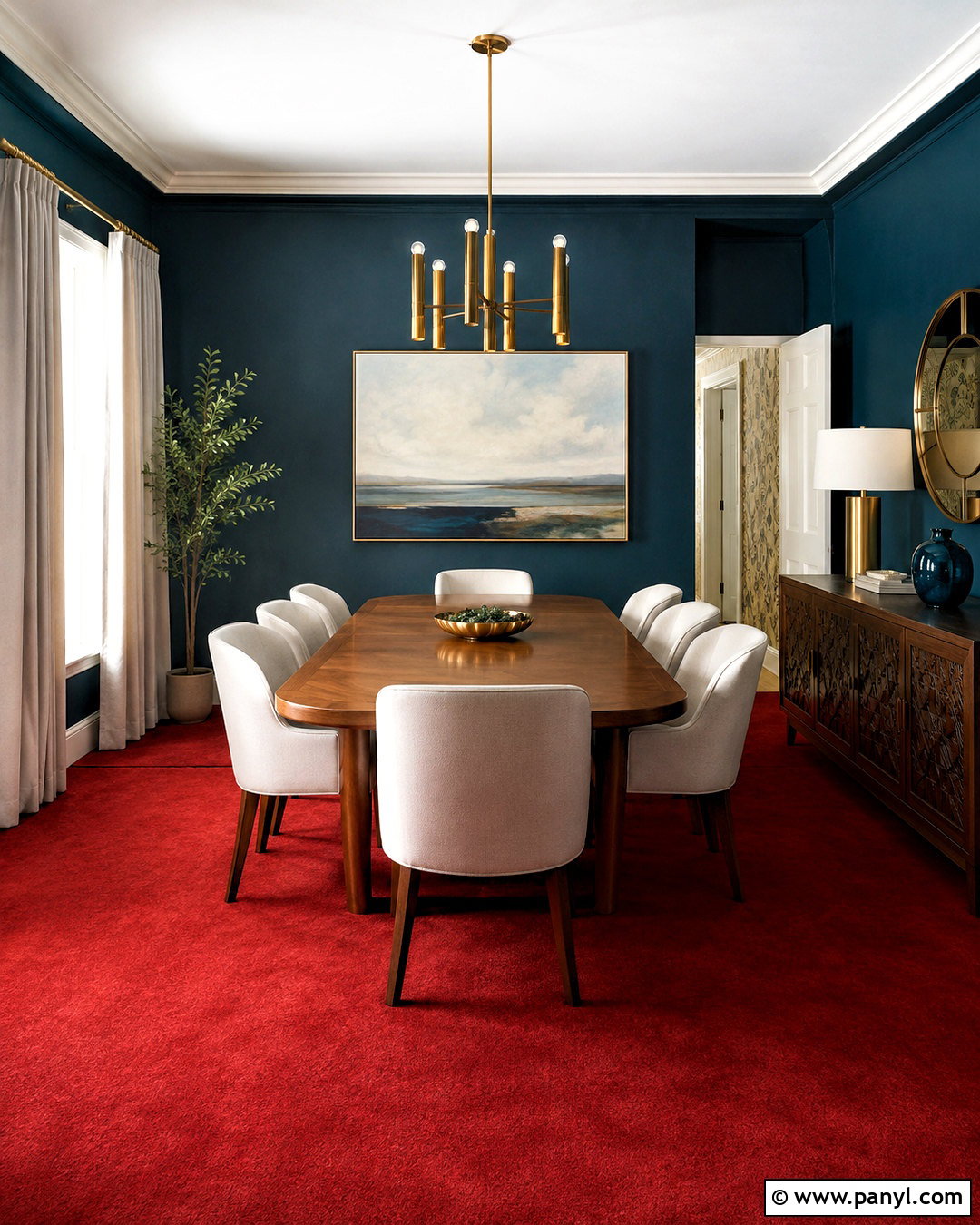
Teal walls provide confident contrast for red carpet and can transform the flooring into part of an energetic, eclectic design. Choose a deep, blue-based teal if the carpet is burgundy, or a grayer muted teal beside brighter red. Balance both colors with cream upholstery, warm wood furniture, and pale curtains. A brass floor lamp or hardware introduces a sophisticated metallic note. Keep artwork large and simple so the room does not become visually fragmented. Patterns should include plenty of neutral space, with only controlled amounts of red and teal. This scheme works particularly well in dining rooms, creative offices, and character-filled living rooms. The result is colorful but coherent, provided that furniture, trim, and decorative accessories remain quieter than the walls and carpet.
17. Peach Walls With Red Carpet
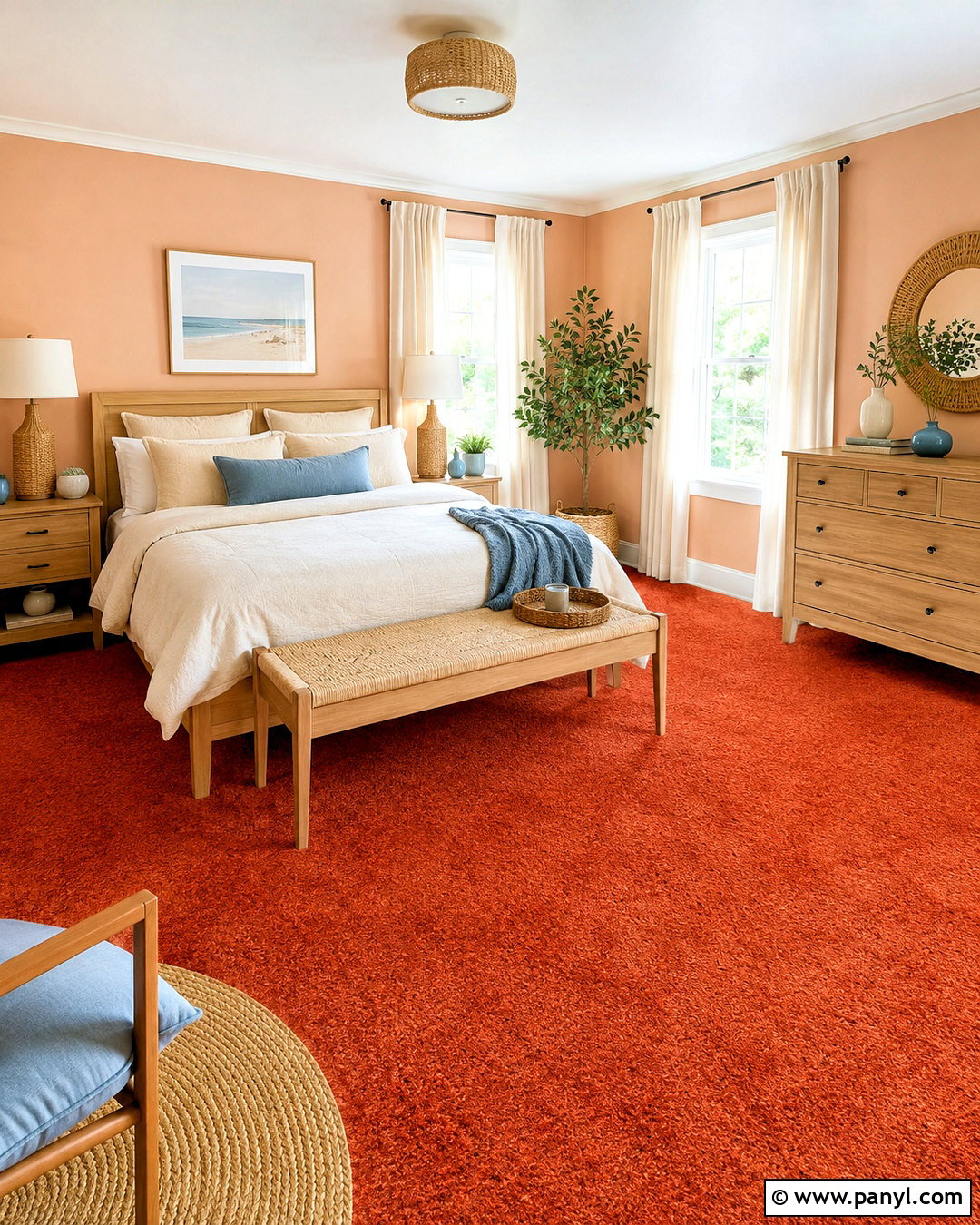
Soft peach walls can complement warm red carpet without creating the intensity of two equally bold colors. Look for a muted peach with beige or clay undertones rather than a vivid orange shade. Pair the walls with cream trim, light oak furniture, and off-white curtains to maintain an airy effect. Upholstery in oatmeal or pale camel will connect the warm surfaces, while touches of muted blue can provide subtle contrast. Use matte finishes and natural fabrics so the room feels relaxed rather than glossy or themed. Peach works best with tomato red, coral red, and warm brick carpeting. This cheerful combination is suitable for a bedroom, sunroom, or casual family space where warm daylight can bring out the gentle relationship between the floor and walls.
18. Terracotta Walls With Red Carpet
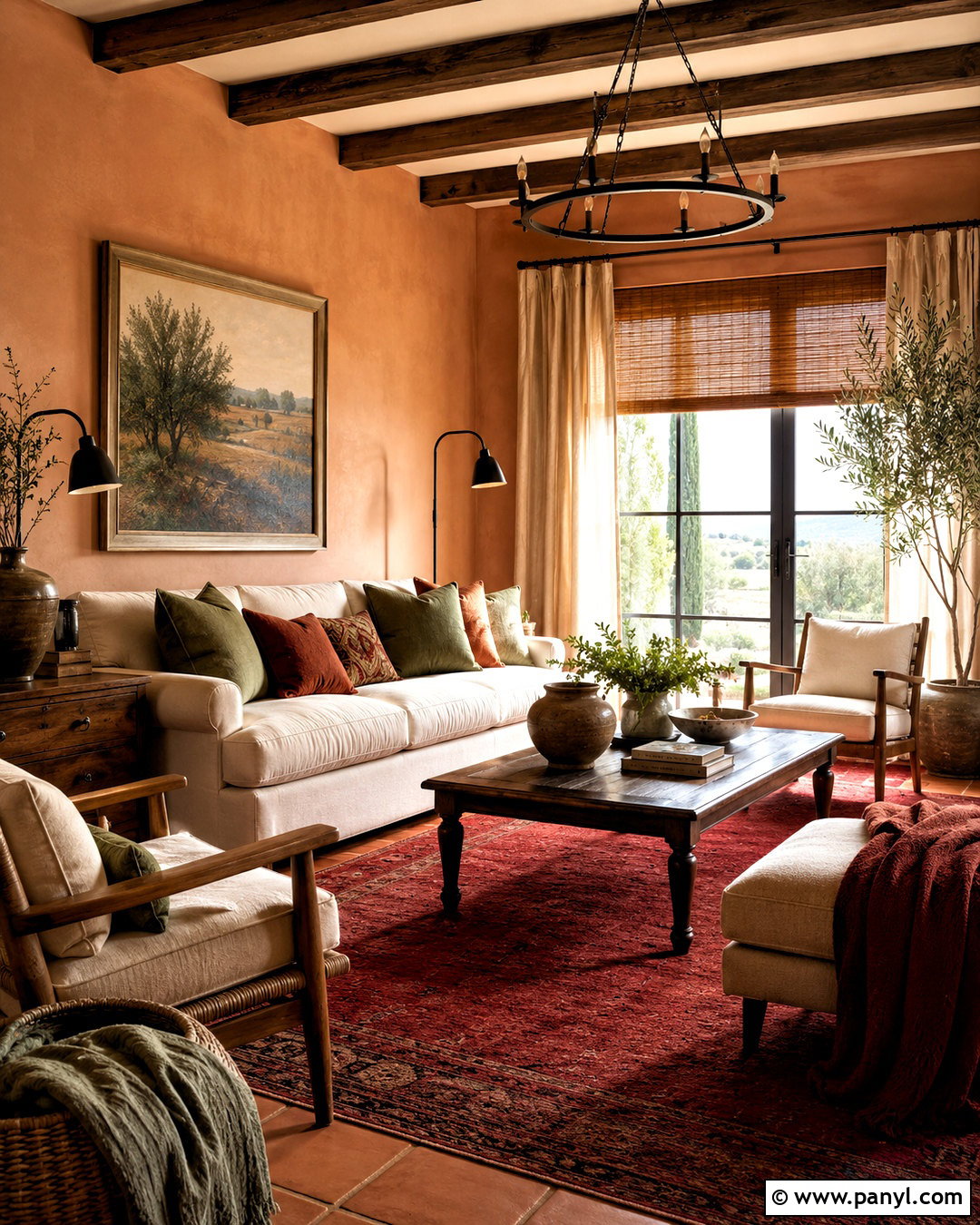
Terracotta walls create a warm, tonal interior when paired with red carpet. The key is selecting a clay-based wall color that is lighter and earthier than the flooring. Combine muted terracotta walls with deep brick red carpet, cream trim, and substantial furniture in walnut or dark oak. Linen curtains, woven shades, and an oatmeal sofa will soften the abundance of warm color. Add small olive green accents through pillows, pottery, or artwork to introduce balance. Black metal lighting can provide clean definition. Avoid shiny red accessories or highly ornate patterns, which may make the room feel overly busy. This complete palette works beautifully in Southwestern, Mediterranean, and relaxed traditional interiors, giving an existing red carpet a rich and thoughtfully layered purpose.
19. Soft Lavender Walls With Red Carpet
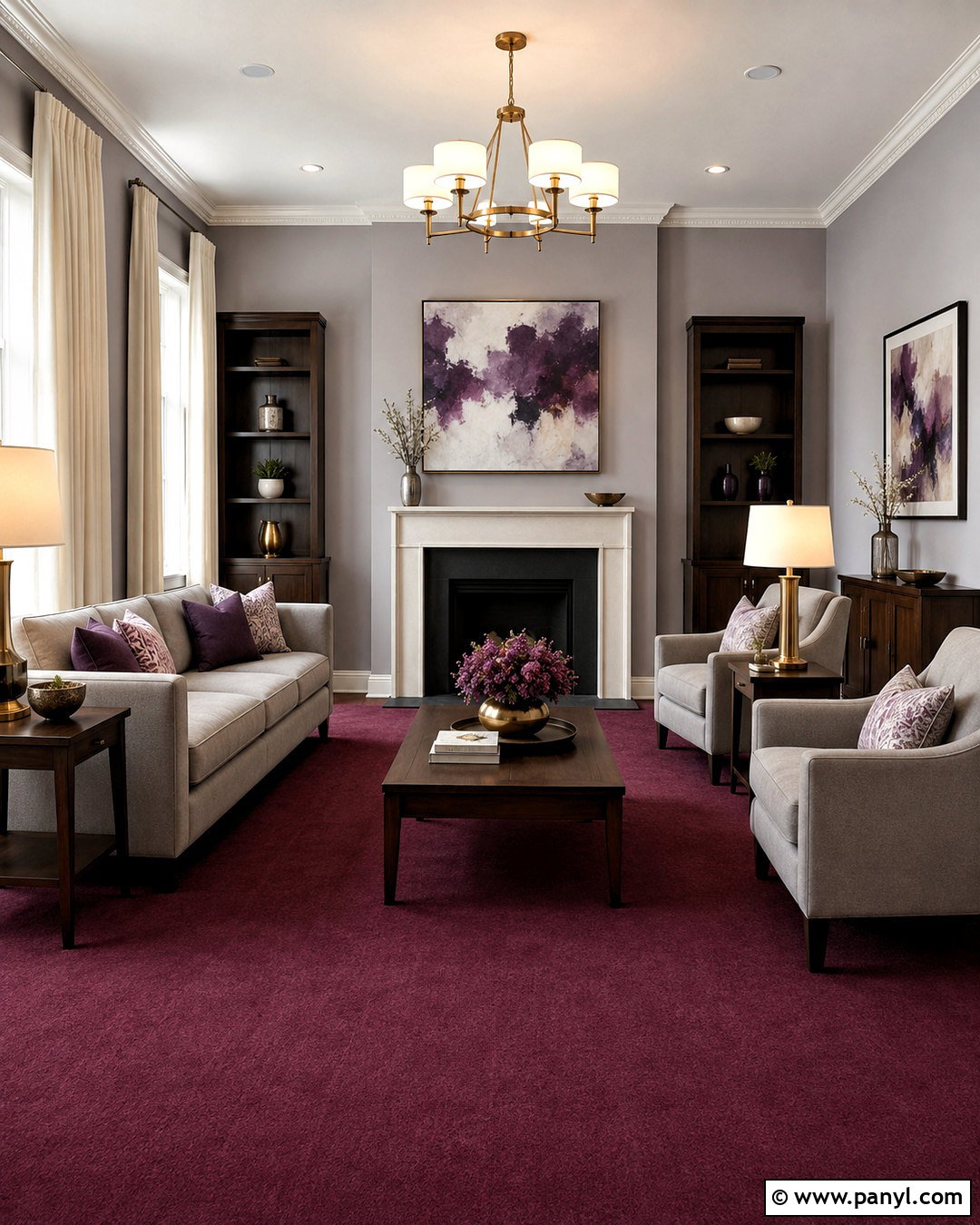
Soft lavender walls can coordinate with cool red or burgundy carpet in an unexpected but elegant way. Choose a gray-based lavender that appears subtle in both daylight and artificial light. Furnish the room with warm gray upholstery, dark walnut wood, and ivory curtains to keep the purple undertone controlled. Polished nickel or brushed brass lighting can work, depending on whether you want a cooler or warmer finish. Repeat burgundy through one or two small accessories, but let the carpet provide most of the red. Abstract artwork containing cream, lavender, and deep plum will tie the palette together. This design is particularly effective in bedrooms or quiet sitting rooms. It creates a layered color story without making the carpet and walls feel overly matched.
20. Burgundy Walls With Red Carpet
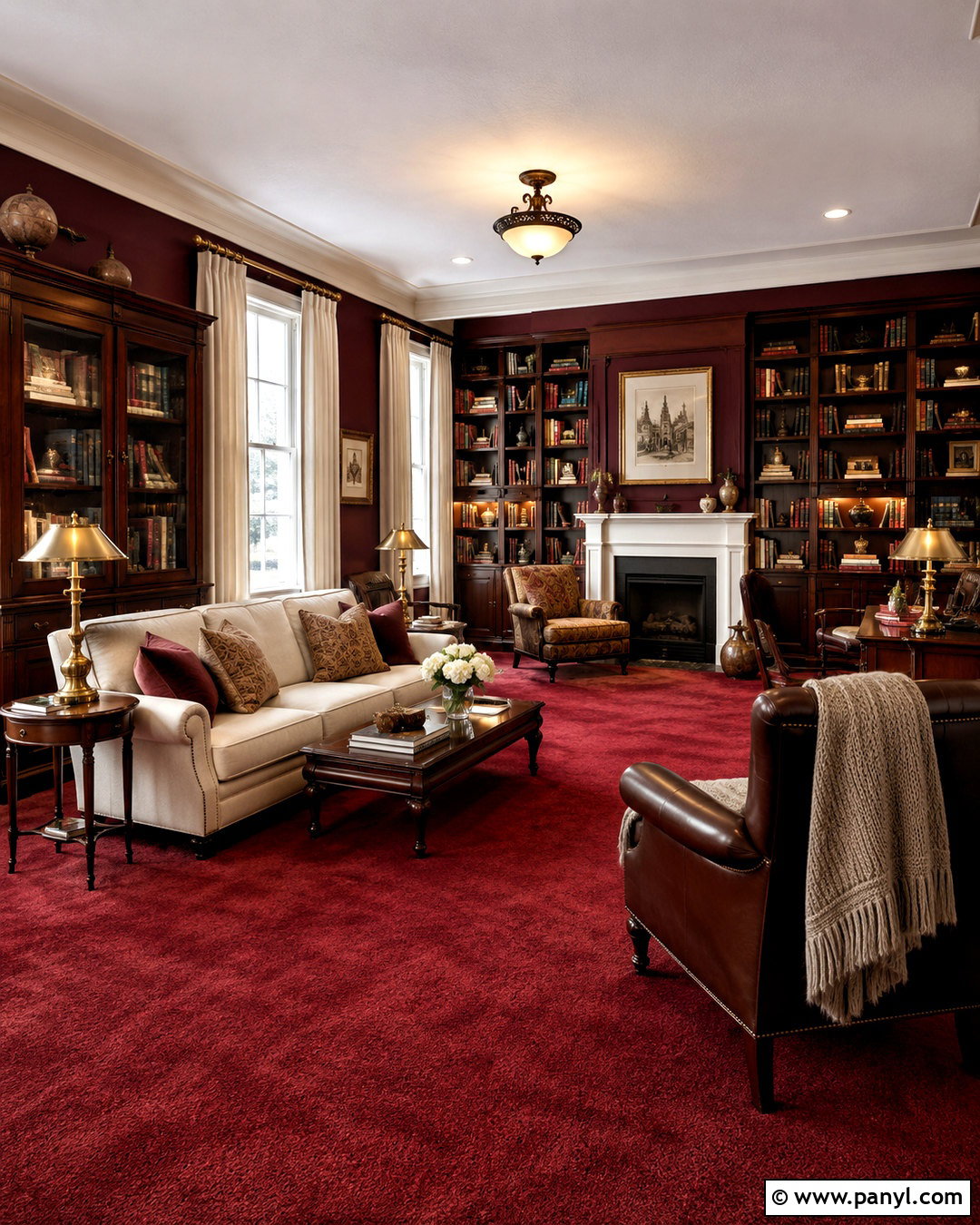
Burgundy walls and red carpet can produce a successful color-drenched room when several shades and textures are carefully layered. Choose walls that are deeper or browner than the carpet so the surfaces remain distinguishable. Use warm white on the ceiling, doors, and trim to outline the architecture and provide brightness. Add a cream sofa, dark wood furniture, linen curtains, and antique brass lighting. Velvet, wool, and matte-painted surfaces will create depth, but patterns should remain limited. Artwork with ivory backgrounds can break up the dark walls. This dramatic scheme is best in a formal dining room, library, or large bedroom with strong natural light. The carpet becomes part of an immersive palette rather than a separate feature that needs to be visually minimized.
Conclusion:
Finding the right wall color for red carpet is easier when you consider the carpet’s undertone, the room’s lighting, and the mood you want to create. Warm whites, cream, beige, and greige offer safe, versatile backgrounds. Blue and green walls provide more noticeable contrast, while pink, peach, terracotta, lavender, and burgundy create layered tonal schemes. Furniture, curtains, trim, artwork, and lighting should connect the floor and walls without adding unnecessary competition. Always test several large paint samples directly beside the carpet before making a final decision. These **20 What Color Walls Go With Red Carpet Ideas** show that bold flooring can become a valuable design feature when every part of the room supports one clear palette.

Related Ideas and Inspiration:
Leave a Reply