
Red flooring can make a living room feel warm, expressive, and completely unique. The key is treating it as the foundation of the design rather than an awkward feature to hide. Terracotta tile, painted wood, brick, carpet, concrete, and red-toned hardwood each create a different mood. Balanced wall colors, thoughtfully placed rugs, natural materials, and well-scaled furniture help the floor look intentional. You can soften its intensity with warm white and beige or create contrast with navy, sage, charcoal, and black. The right lighting is equally important because it reveals the floor’s true undertones. Whether your taste leans traditional, modern, rustic, or eclectic, these **20 red floor living room ideas** offer complete, practical looks you can recreate.

1. Terracotta Red Floor Living Room
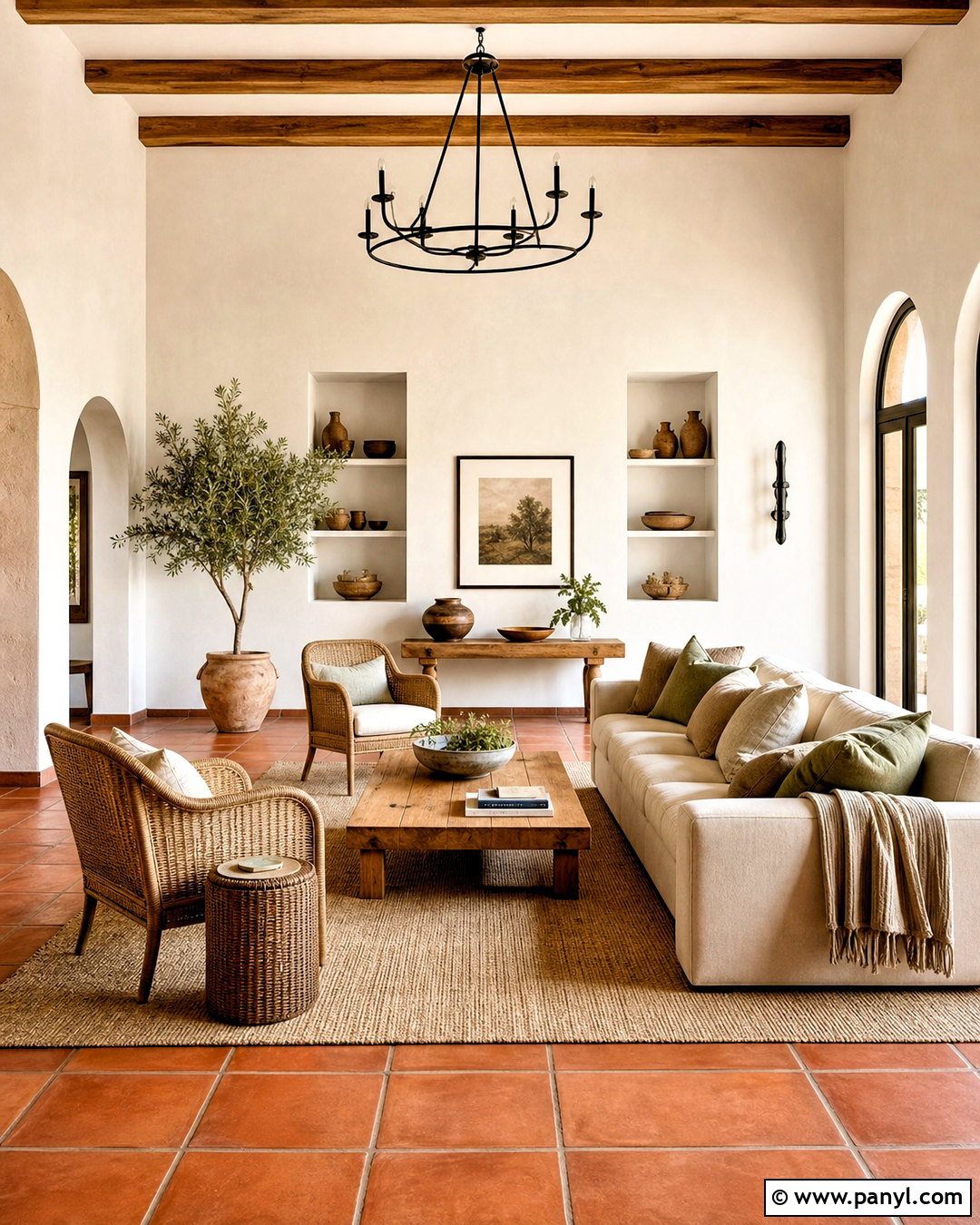
Sun-washed terracotta tile creates a relaxed living room that feels warm without becoming overly formal. Pair the floor with creamy white walls, a sand-colored linen sofa, and two woven lounge chairs arranged around a substantial oak coffee table. A large natural jute rug can define the seating area while leaving a border of tile visible. Add olive green pillows, rust-striped textiles, and handmade pottery to connect the furnishings with the earthy flooring. Matte black curtain rods and a simple iron chandelier provide crisp contrast. Finish the room with pale linen curtains and leafy plants in aged clay pots. This balanced scheme works especially well in rooms with arched openings, exposed beams, or abundant natural light.
2. Red Brick Floor Living Room
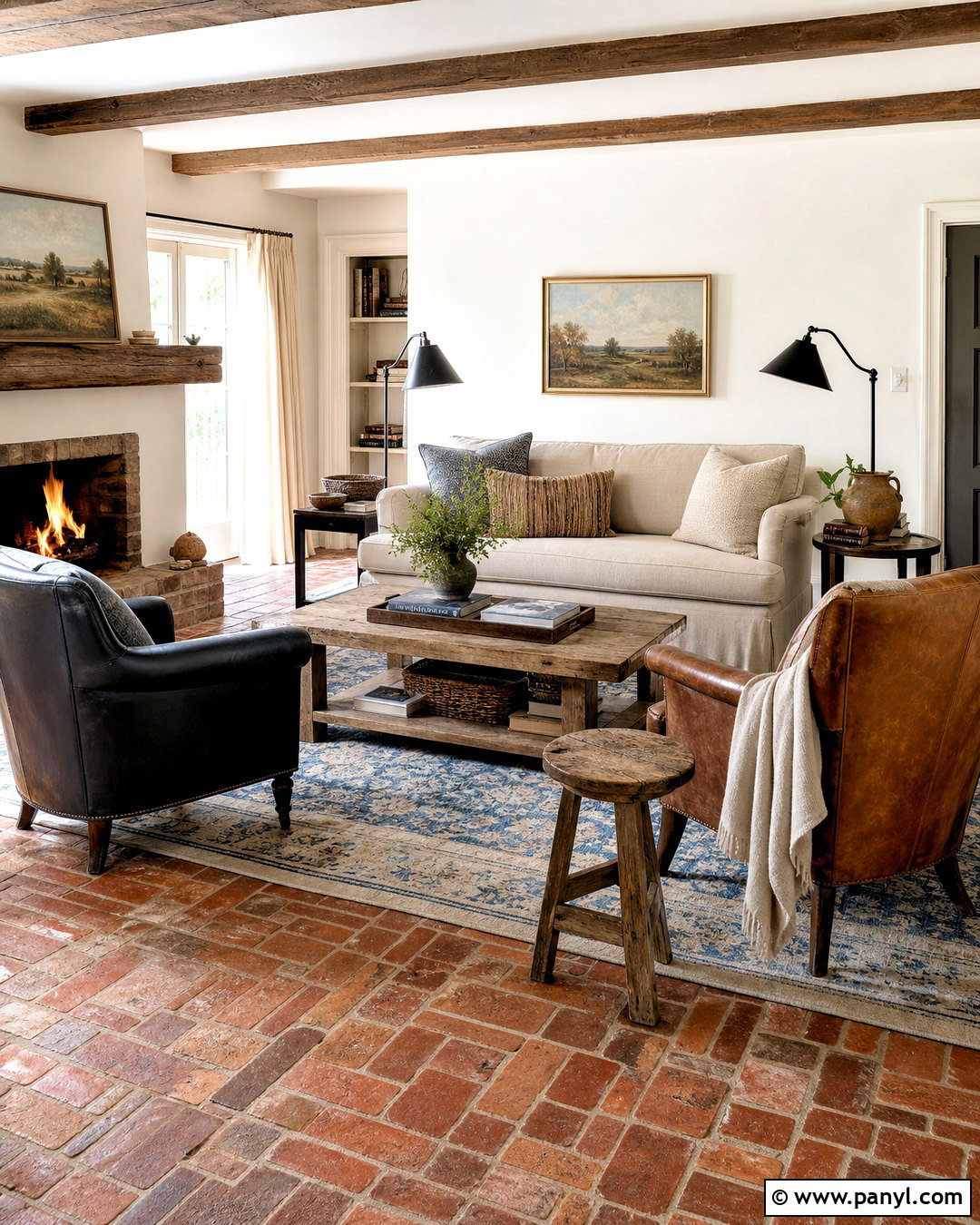
A red brick floor gives an everyday living room instant character, especially when paired with relaxed cottage furnishings. Paint the walls warm white and choose a deep beige slipcovered sofa that can handle regular family use. Position a charcoal armchair and a camel leather chair across from it to create a comfortable conversation area. A faded blue and cream rug softens the brick without concealing its natural variation. Use reclaimed wood for the coffee table, media cabinet, and simple floating shelves. Black metal lighting and window hardware sharpen the rustic materials. Add blue-gray pillows, framed landscapes, and a chunky oatmeal throw. The resulting room feels welcoming and collected while allowing the rich brick floor to remain the strongest architectural feature.
3. Burgundy Painted Floor Living Room
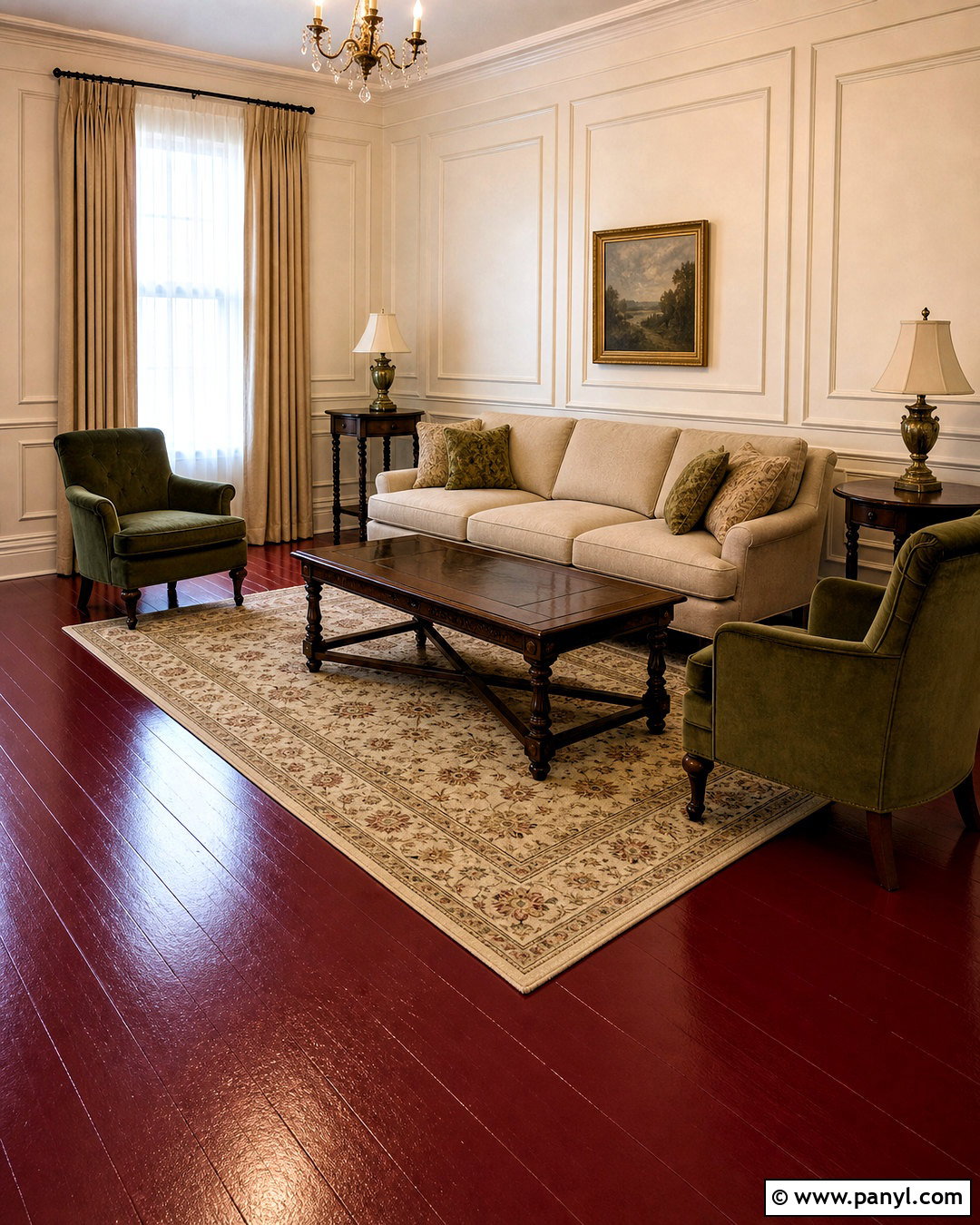
Deep burgundy painted floorboards can support a sophisticated living room with historic personality. Keep the walls soft ivory and introduce muted architectural details through simple panel molding or a streamlined fireplace surround. An oatmeal sofa, two olive velvet armchairs, and a round walnut coffee table create an elegant arrangement without competing with the floor. Place a light-toned Persian-style rug beneath the seating to add pattern and visual breathing room. Antique brass lamps, framed botanical artwork, and dark wood side tables reinforce the traditional character. Use floor-length cream curtains to brighten the edges of the room. Small burgundy accents in pillows or artwork should repeat the floor color sparingly, creating continuity while preventing the overall design from feeling excessively red.
4. Red Concrete Floor Living Room
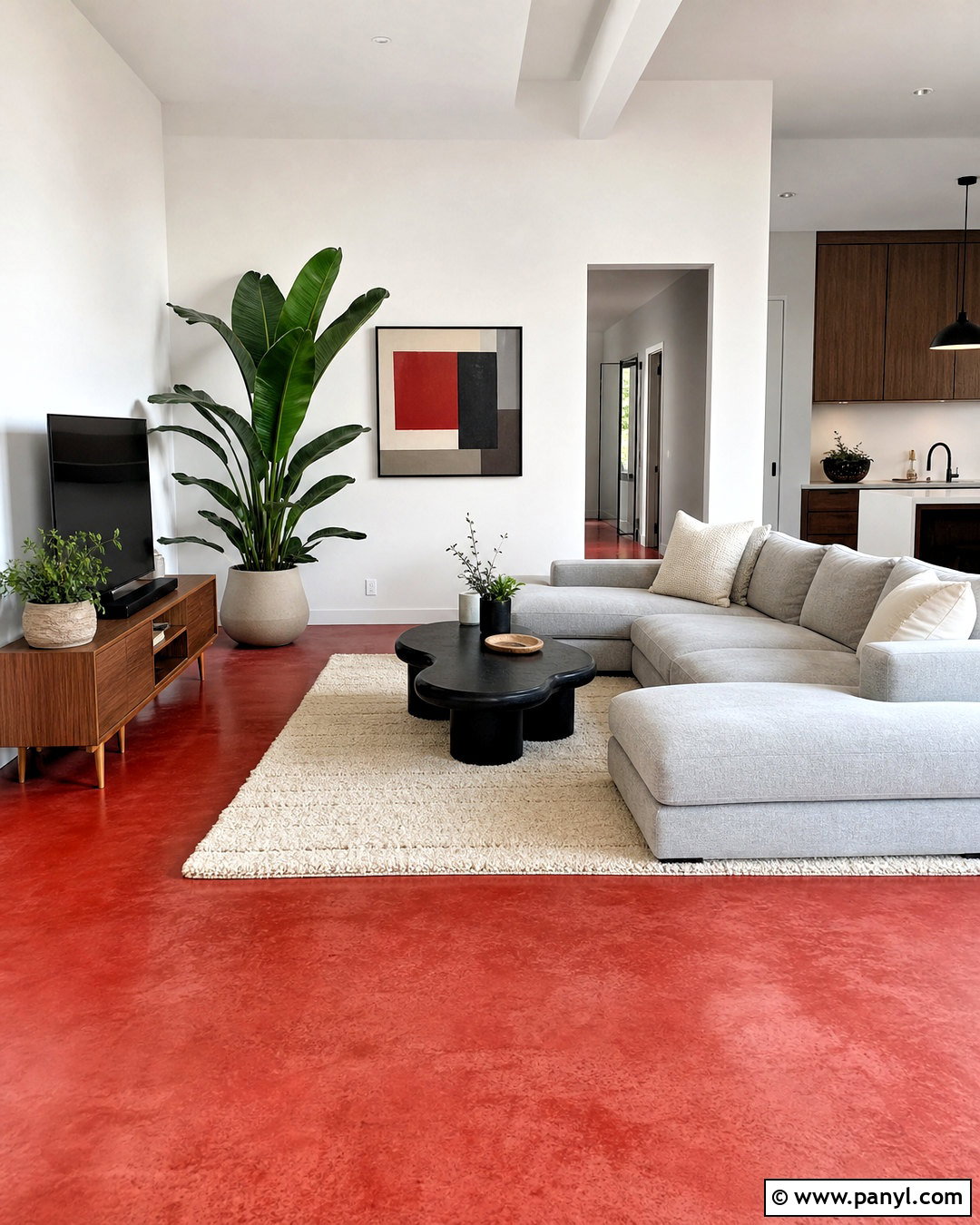
Smooth red concrete flooring offers a bold foundation for a clean, modern living room. Balance its saturated color with soft white walls and a low-profile sectional upholstered in pale gray performance fabric. A large cream wool rug should sit beneath the front legs of the sectional, visually separating the seating zone from the floor. Add a sculptural black coffee table, slim metal floor lamp, and walnut media console for warmth and definition. Abstract artwork containing cream, rust, and charcoal can connect the room’s main colors. Keep window treatments minimal with white roller shades or full-length sheer panels. One oversized plant adds organic movement. The uncluttered layout allows the colored concrete to look architectural and intentional rather than busy or overly industrial.
5. Red Hardwood Floor Living Room
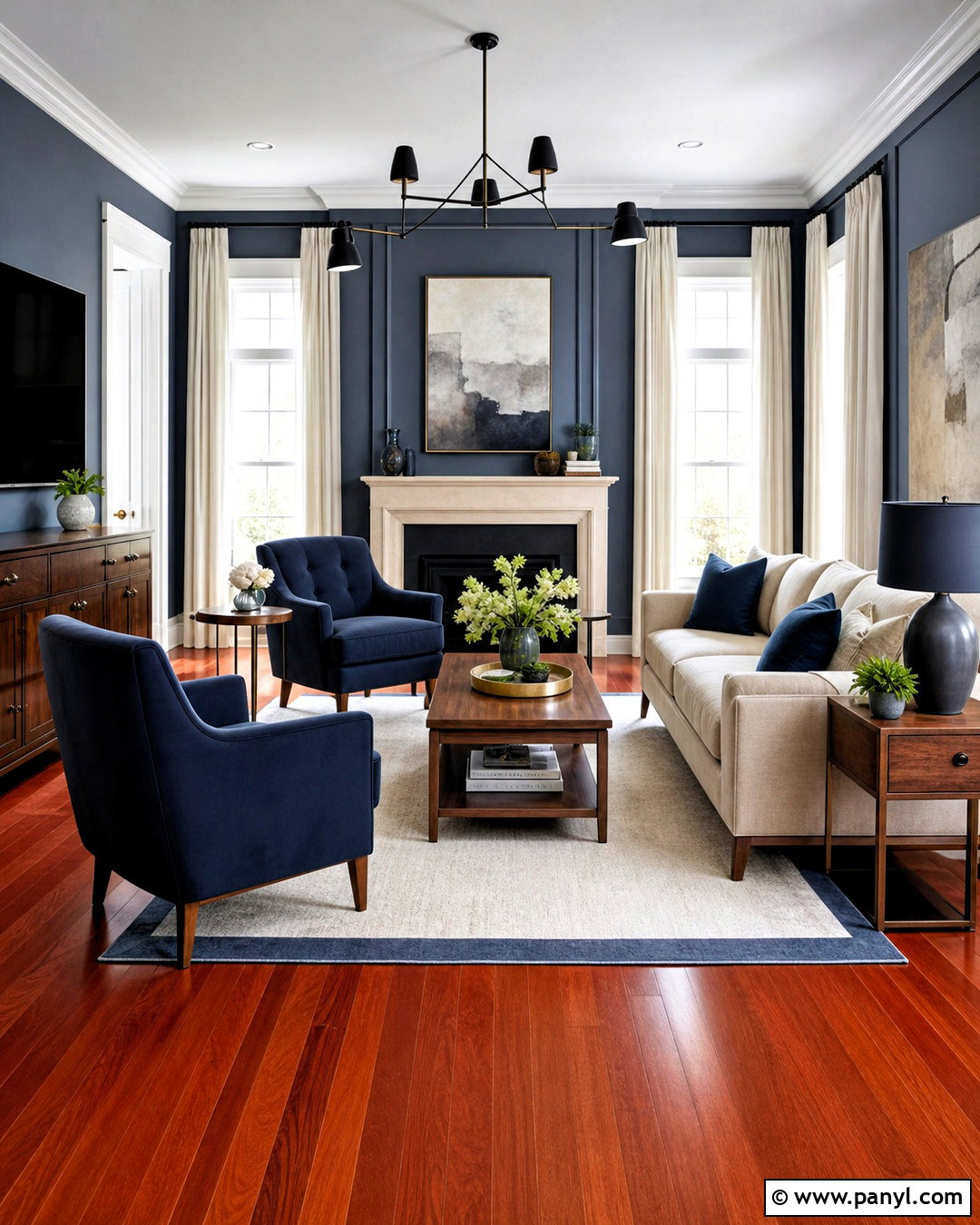
Reddish hardwood feels refined when its warm undertones are balanced with cooler, quieter colors. Paint the walls a soft blue-gray and furnish the room with a light greige sofa, navy accent chairs, and a medium walnut coffee table. Avoid adding too many orange-toned woods, which can exaggerate the redness of the boards. Instead, combine neutral upholstery with black metal lighting and a few brushed brass details. A large ivory rug with a subtle navy border helps break up the flooring while preserving its polished character around the perimeter. Add tailored off-white curtains and landscape artwork in muted blues and greens. This full scheme makes red hardwood appear rich and timeless, creating a comfortable living room that feels cohesive instead of heavily dominated by warm wood tones.
6. Red Carpet Living Room
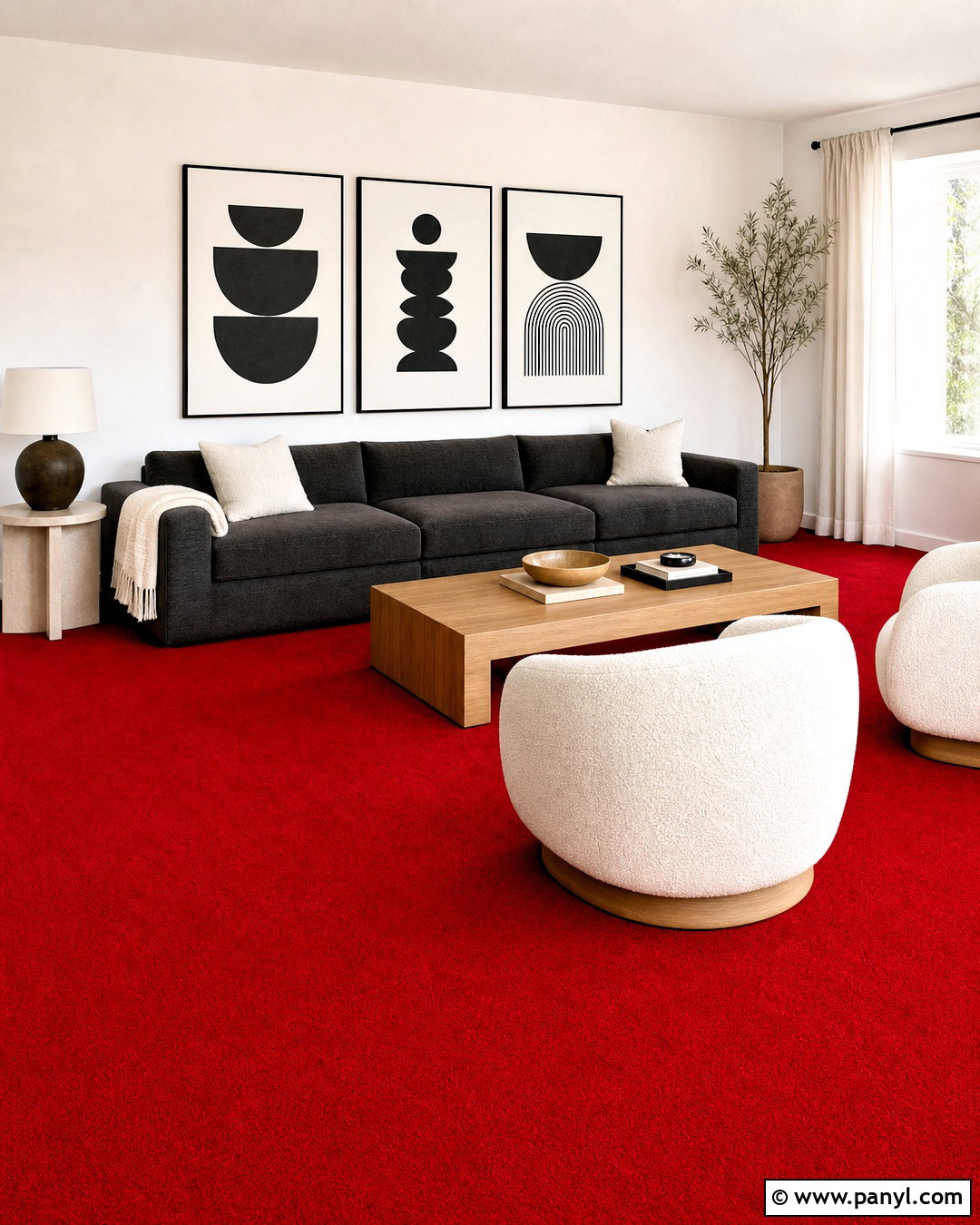
Wall-to-wall red carpet can feel stylish when it is surrounded by streamlined furniture and disciplined colors. Choose warm white walls, a structured charcoal sofa, and two cream boucle chairs with black legs. Center the arrangement around a rectangular light oak coffee table to introduce a natural finish without increasing the room’s visual weight. Pillows in ivory, gray, and a restrained geometric pattern will connect the contrasting upholstery. Hang oversized black-and-white artwork above the sofa and use simple white curtains to keep the room bright. Avoid placing another large rug over the carpet unless extra texture is truly needed. Repeating red in one small artwork or decorative bowl is enough. The final living room feels graphic, balanced, and purposeful rather than dated or overpowering.
7. Red Checkerboard Floor Living Room
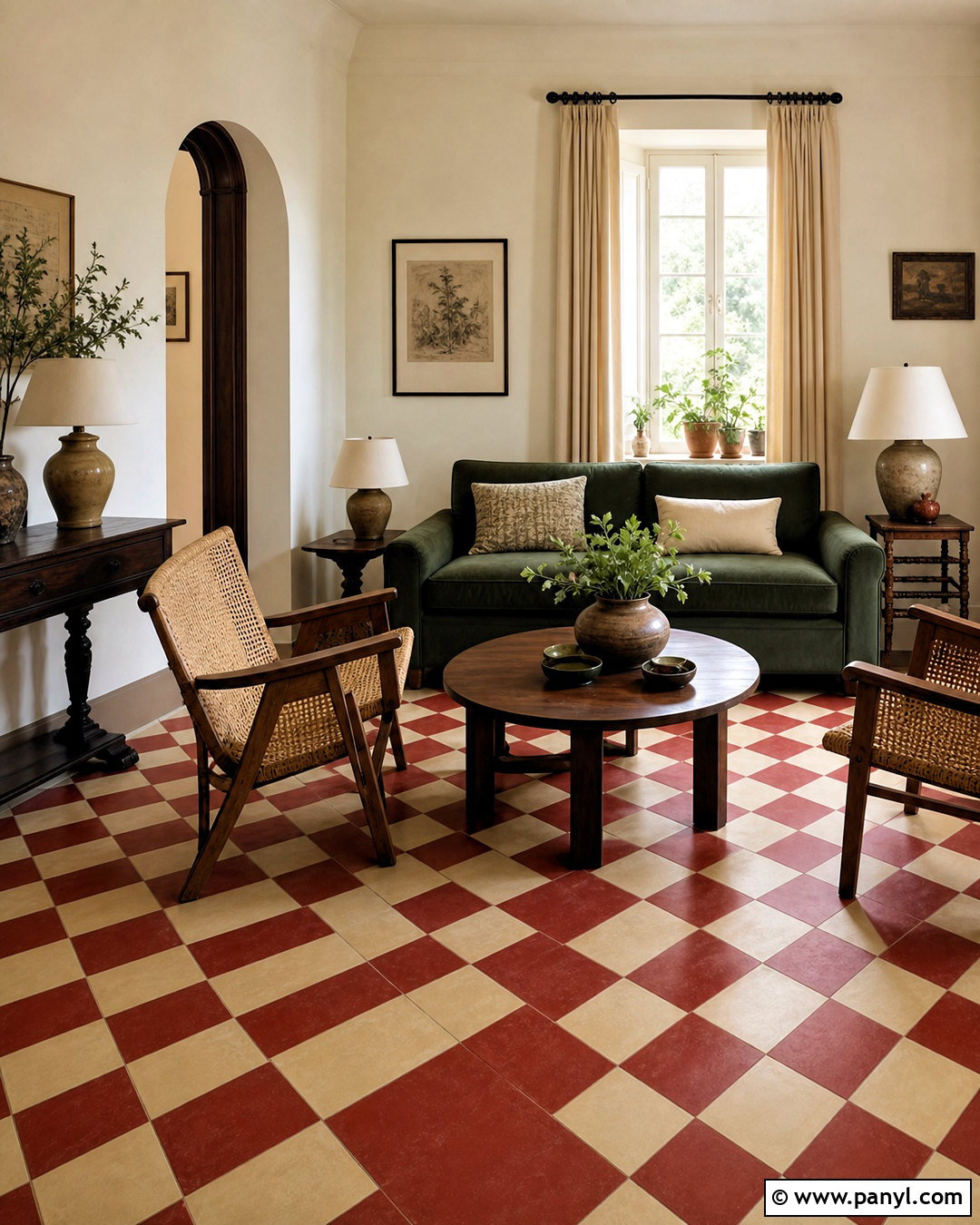
A red and cream checkerboard floor brings energy to a living room while establishing a clear vintage-inspired pattern. Let the flooring lead by keeping the walls a gentle warm white and choosing furniture with simple silhouettes. A moss green sofa provides a grounded complementary color, while two natural cane chairs prevent the arrangement from feeling too heavy. Use a round dark wood coffee table to soften the floor’s strong grid. Solid cream curtains, linen pillows, and understated ceramic lamps offer quiet supporting layers. If the room includes a fireplace, finish it in smooth off-white plaster rather than additional patterned tile. A few framed vintage prints can reinforce the nostalgic feeling. This coordinated approach makes the checkerboard floor playful, livable, and visually organized.
8. Red Patterned Tile Living Room
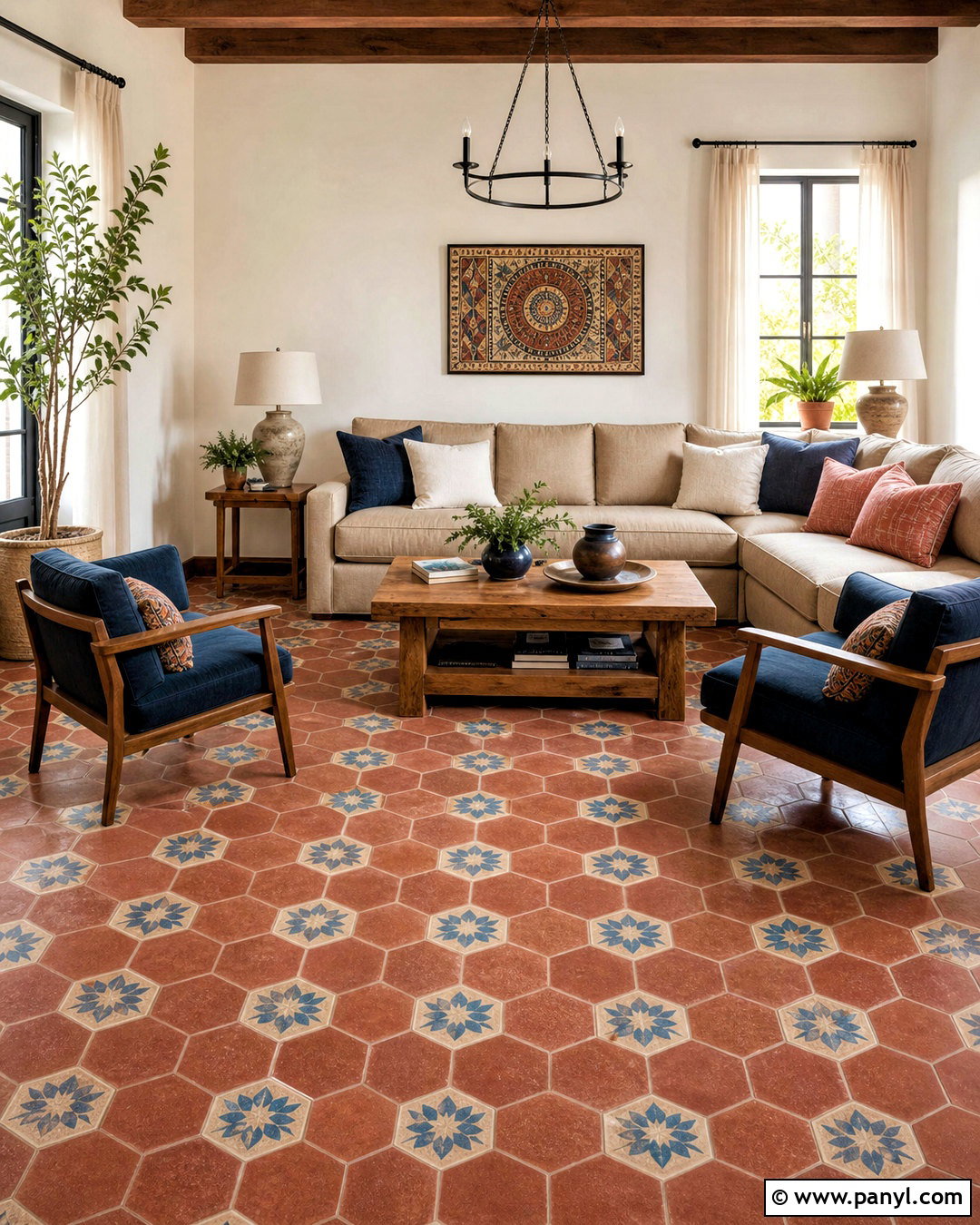
Patterned red tile deserves a living room design that celebrates detail without adding unnecessary visual noise. Choose a tile incorporating brick red, dusty cream, and touches of muted blue. Pair it with plain plaster-white walls and a comfortable flax-colored sectional. Two dark blue accent chairs can repeat the cooler tones in the flooring, while a chunky oak coffee table adds warmth. Skip a large patterned rug and use a small solid woven rug only if the seating area needs additional softness. Select simple linen curtains, ceramic table lamps, and solid-color pillows. Closed storage will help keep everyday clutter away from the busy floor. The finished space feels colorful and handcrafted, yet the restrained furniture ensures that every element remains easy to understand and enjoy.
9. Moroccan Red Floor Living Room
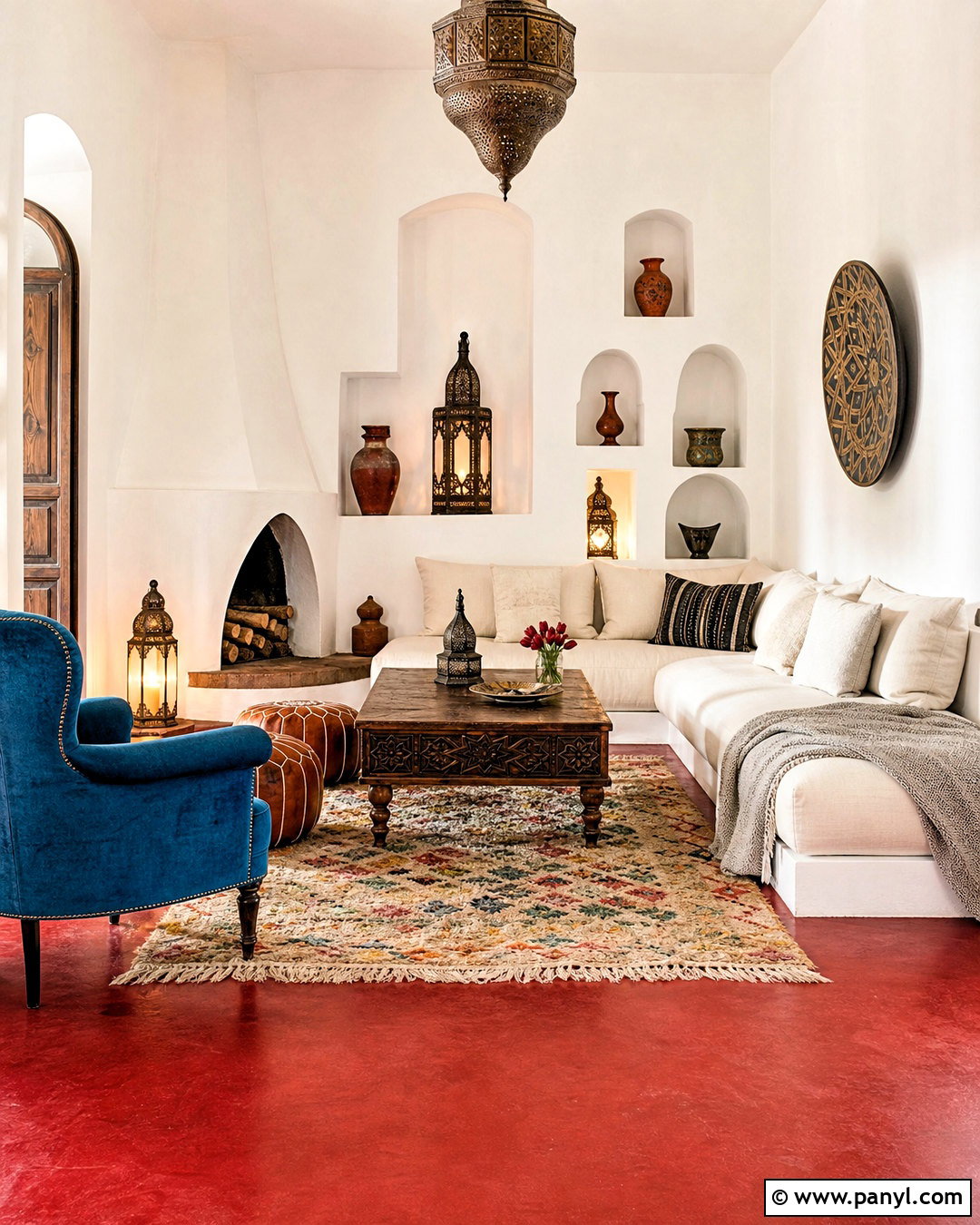
Rich red tile can anchor a Moroccan-influenced living room filled with texture, pattern, and relaxed seating. Begin with chalky white walls and a low cream sectional arranged around a carved dark wood coffee table. Add leather poufs, an indigo armchair, and a large faded rug that blends red, navy, and ivory. Pierced metal lanterns, woven baskets, and patterned pillows bring character, but they should share the same limited palette to maintain order. Frame the windows with light cotton curtains that allow the room to remain airy. Built-in wall niches can display pottery and small decorative objects without cluttering the floor. The finished space feels layered and globally inspired, while the pale upholstery and walls prevent the red flooring from making the room appear dark.
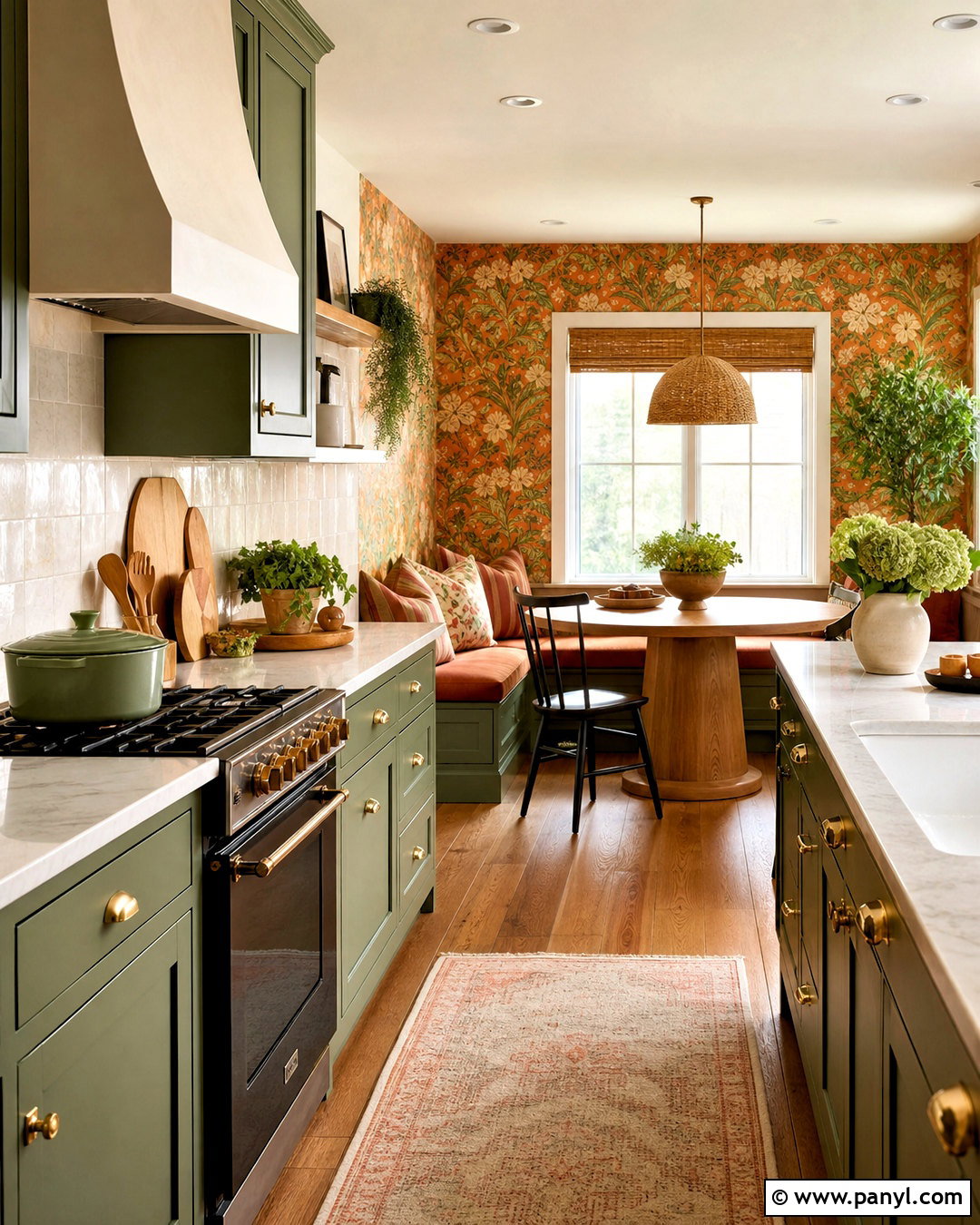
10. Mediterranean Red Floor Living Room
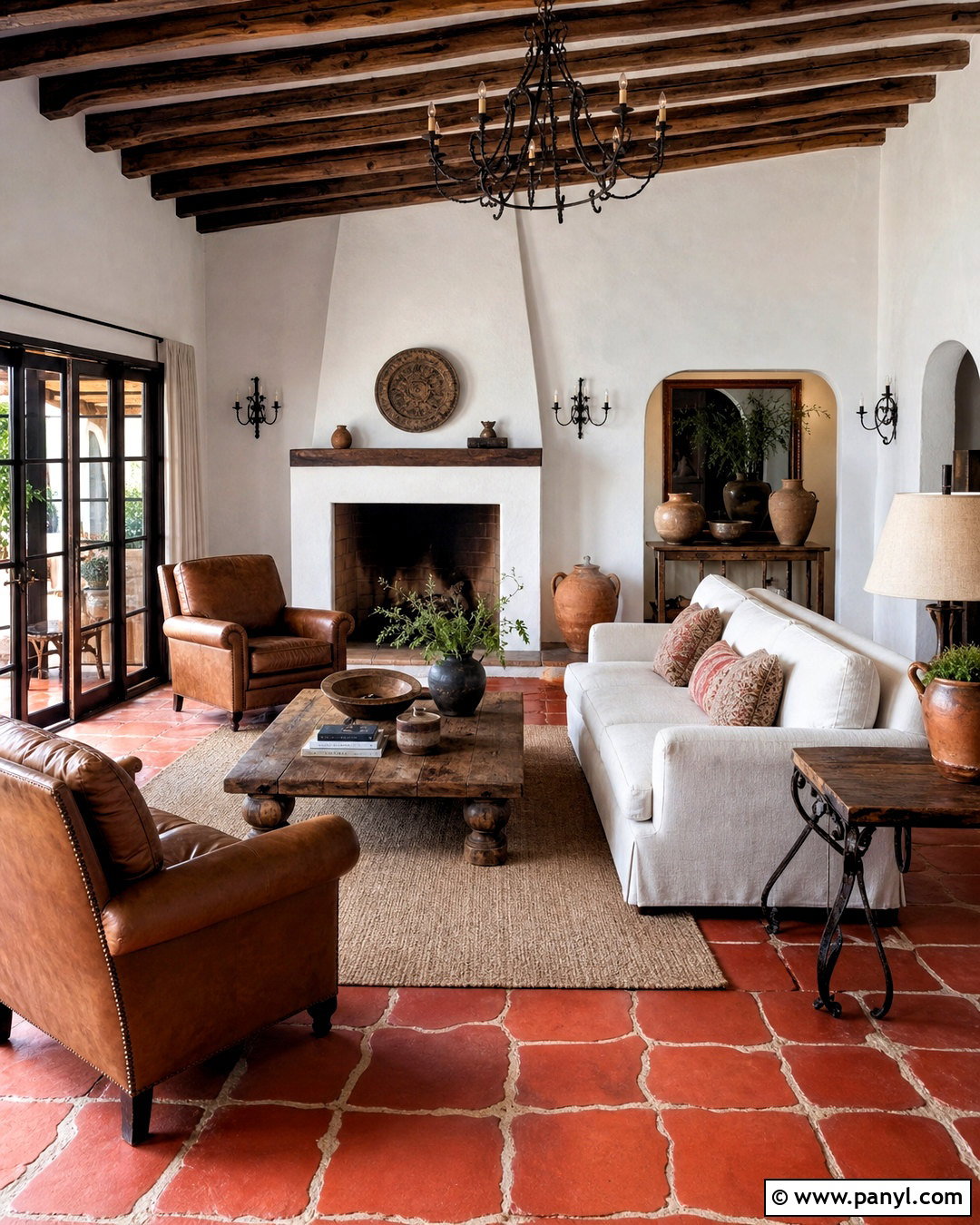
Imagine a comfortable Mediterranean living room with red terracotta pavers, white plaster walls, and exposed medium-toned ceiling beams. Center the room around a cream sofa and two generously sized leather armchairs facing a simple stucco fireplace. A faded beige rug can soften the seating area while complementing the floor instead of covering it completely. Add a heavy reclaimed wood coffee table, iron sconces, and large clay vessels for an authentic material mix. Use pillows in muted ochre, olive, and indigo to introduce color naturally. Arched doorways and linen curtains reinforce the relaxed architectural character. Keep accessories substantial but limited. This prevents small objects from competing with the textured surfaces and produces a warm living room that feels comfortable, established, and cohesive.
11. Southwestern Red Floor Living Room
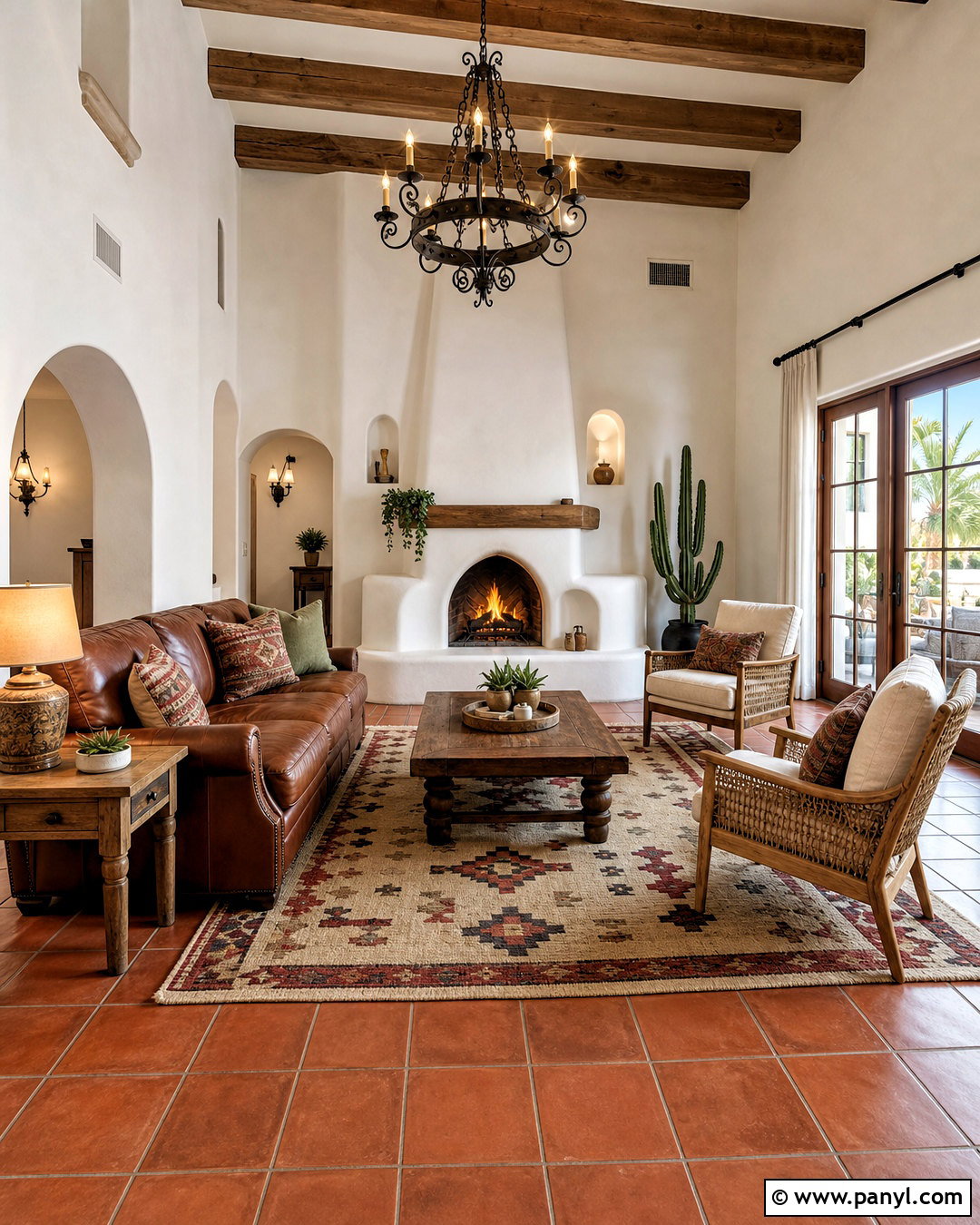
A Southwestern living room works naturally with a red terracotta floor because both emphasize warm, desert-inspired color. Paint the walls soft adobe white and arrange a saddle-brown leather sofa with two woven cream chairs around a rustic wood coffee table. Define the conversation area with a flatweave rug in beige, charcoal, rust, and muted turquoise. A rounded plaster fireplace provides a strong focal point, especially when finished with a simple wood mantel. Add patterned pillows, handwoven blankets, and clay pottery without overcrowding the room. Black iron sconces and a wagon-wheel-inspired chandelier create useful contrast overhead. Cactus plants and sculptural desert greenery complete the look. The coordinated palette feels colorful and regional while remaining approachable enough for a practical everyday family space.
12. Coastal Red Floor Living Room
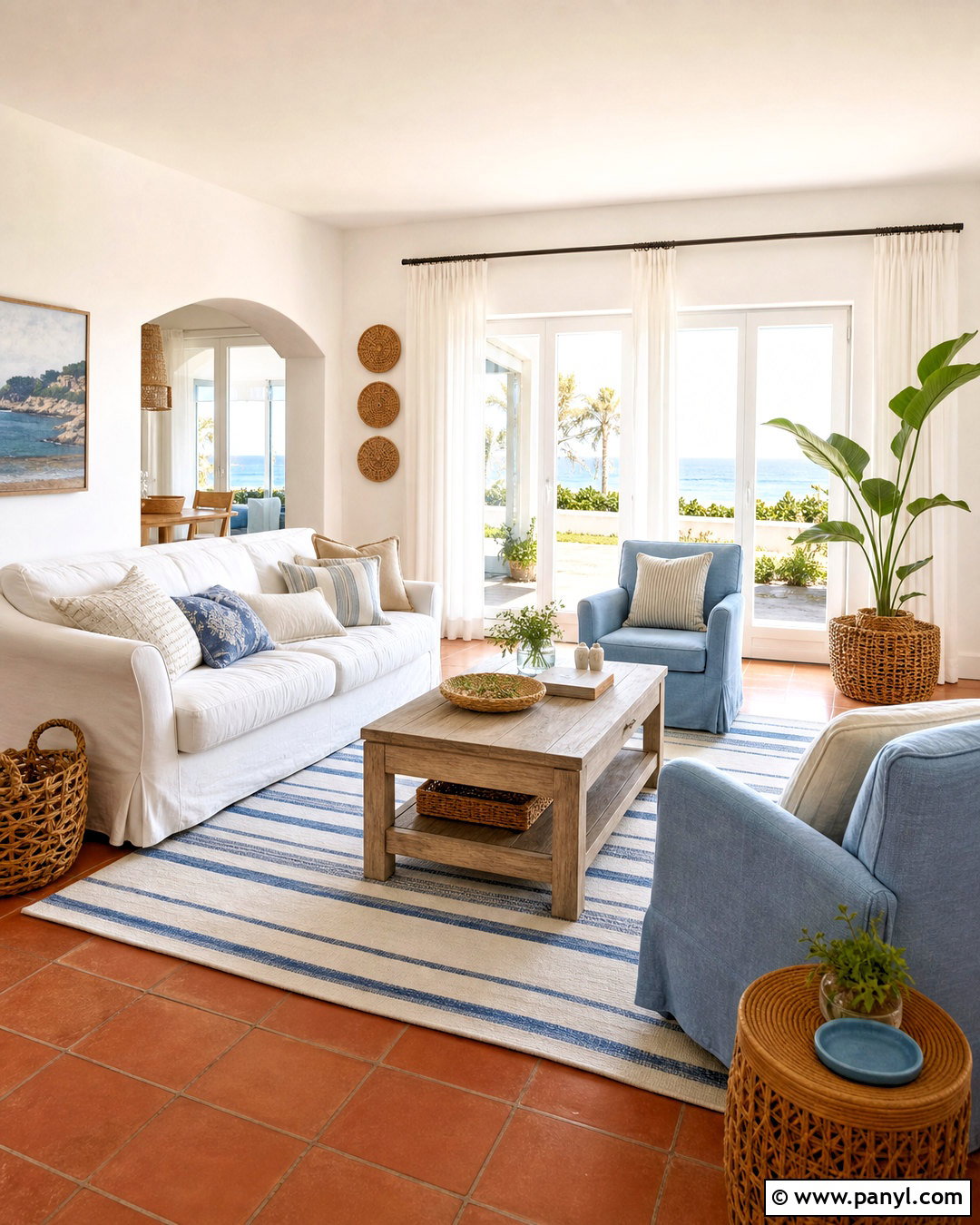
Red flooring can still feel light and coastal when paired with breezy colors and casual natural materials. Use pale terracotta tile as the base, then paint the walls crisp warm white. Arrange a slipcovered ivory sofa and two light blue armchairs around a weathered oak coffee table. A large cream and blue striped rug introduces a coastal pattern while reducing the visual amount of red underfoot. Choose woven shades, airy white curtains, and rattan side tables to soften the room’s harder surfaces. Navy pillows and sea-glass green ceramics add cool accents without becoming thematic. Keep decorative objects simple and avoid obvious nautical symbols. With generous daylight, relaxed upholstery, and a fresh blue-and-white palette, the red floor reads as sunbaked and natural rather than dark or formal.
13. Midcentury Red Floor Living Room
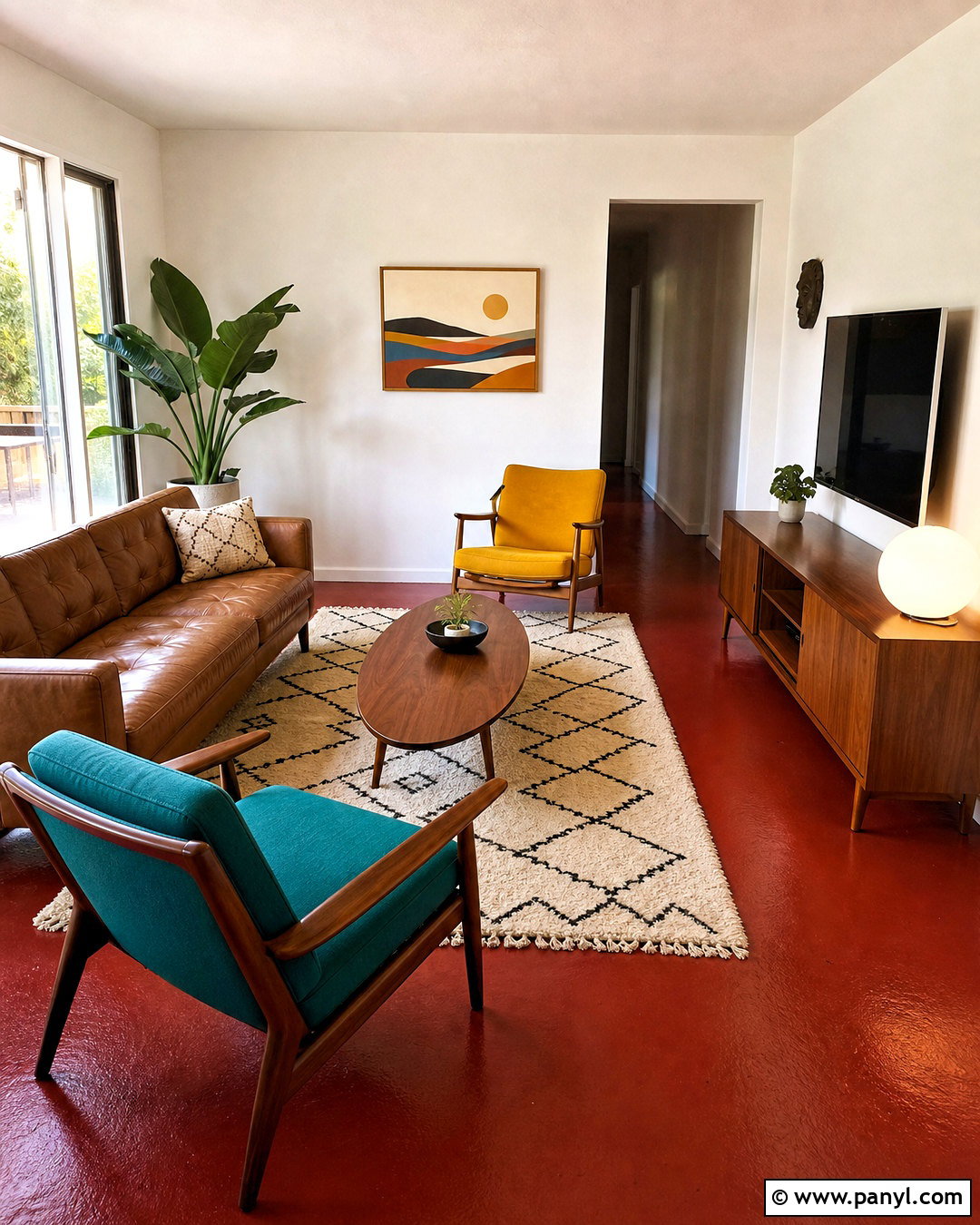
A midcentury living room can make a muted brick-red floor look intentional through clean lines and strong color blocking. Paint the walls warm white and choose a compact caramel leather sofa supported by tapered walnut legs. Add one mustard lounge chair and one deep teal chair, positioning both around an oval walnut coffee table. A graphic cream rug with small black details will lighten the center of the room without hiding the floor. Use a long, low walnut media console and a sculptural globe floor lamp to reinforce the period influence. Abstract art can repeat touches of red, mustard, and teal above the sofa. Keep the layout open and accessories minimal. This complete scheme feels energetic, retro, and functional without turning the living room into a themed space.
14. Farmhouse Red Floor Living Room
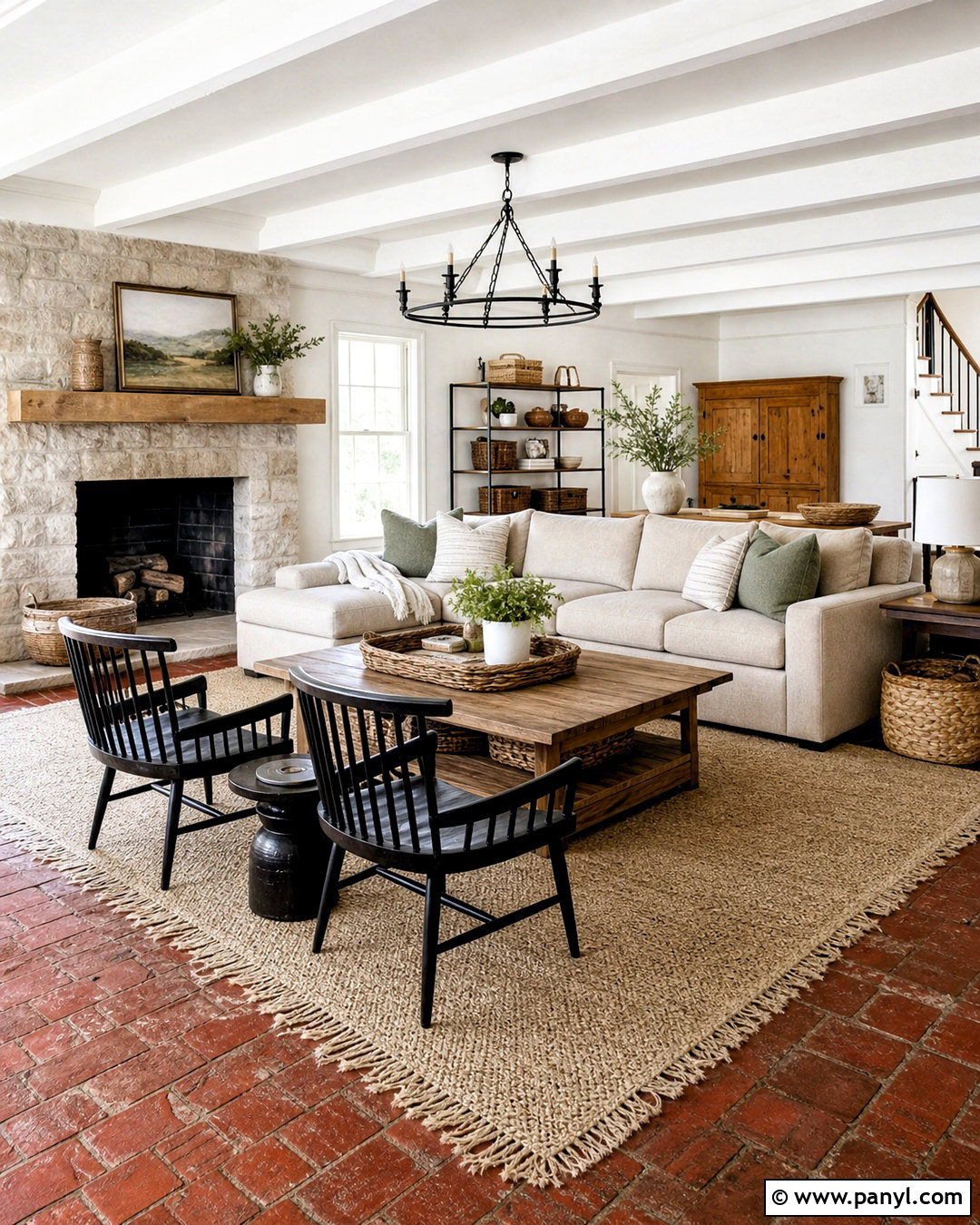
A farmhouse living room with red brick flooring should feel relaxed, practical, and gently weathered. Use warm white shiplap or smooth painted walls as a bright backdrop for a large oatmeal sectional. Add two black spindle chairs and a substantial reclaimed pine coffee table to create a balanced family-friendly layout. A woven cream rug softens the brick and provides a comfortable surface in the main seating area. Incorporate a simple stone fireplace, black iron chandelier, and rustic wood mantel without overloading the room with distressed finishes. Sage green pillows and ticking-stripe textiles provide quiet color. Woven baskets can hold blankets and everyday items. The finished room combines durable materials with comfortable seating, allowing the floor’s natural red variation to add warmth and authentic farmhouse character.
15. Industrial Red Floor Living Room
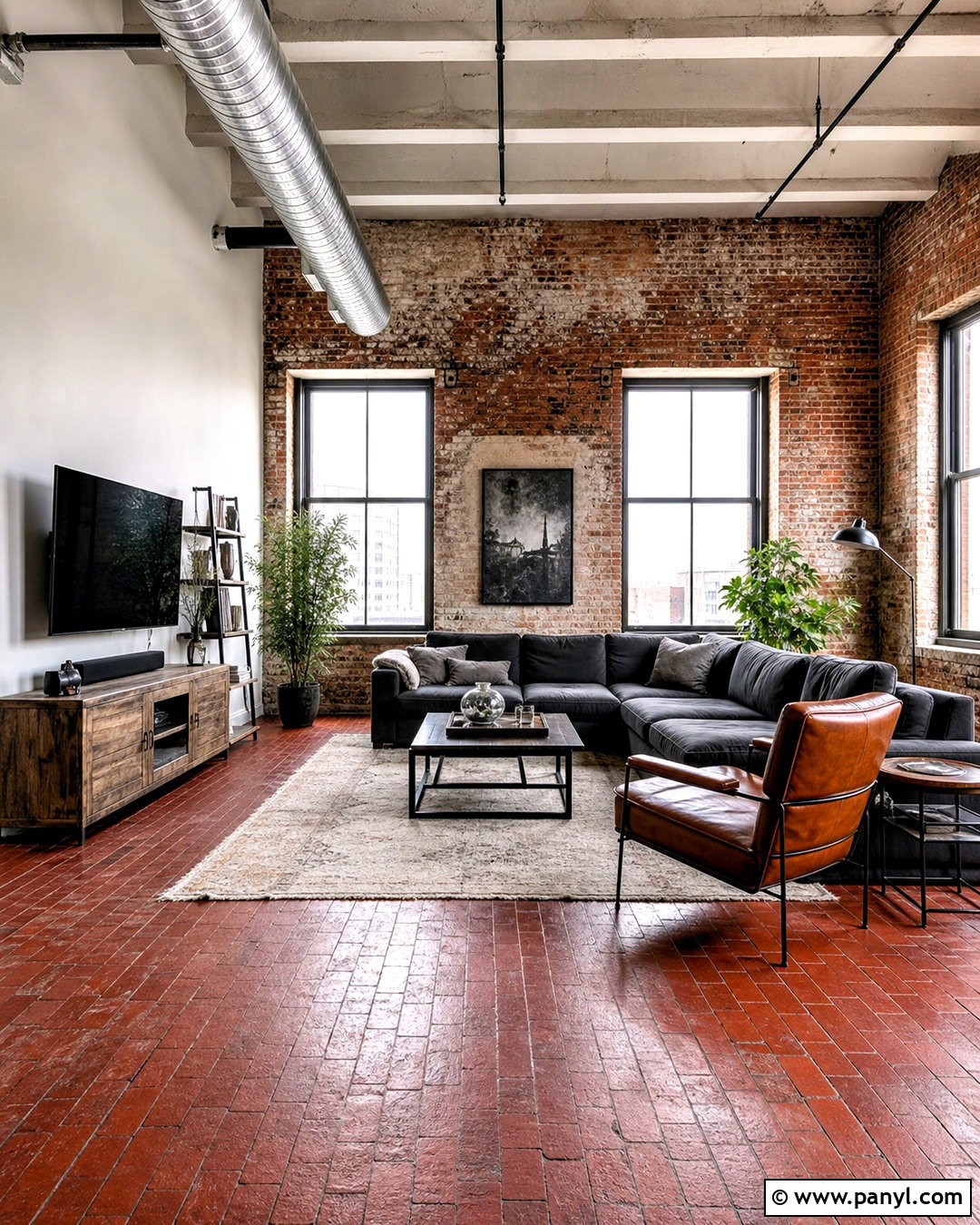
Red brick or stained concrete flooring gives an industrial living room warmth that gray materials often lack. Pair it with soft white walls, one exposed brick accent wall, and a large charcoal sectional. A cognac leather lounge chair introduces another warm finish, while a black steel coffee table maintains the urban character. Place a faded ivory and gray rug beneath the seating to prevent the room from feeling hard or echoing. Use a reclaimed wood media console, oversized factory-style windows, and black track lighting for structure. Add large abstract artwork rather than numerous small decorations. One tall plant can soften the metal and masonry surfaces. This design feels bold and architectural, but comfortable upholstery and layered textiles ensure the living room remains inviting for daily use.
16. Minimalist Red Floor Living Room
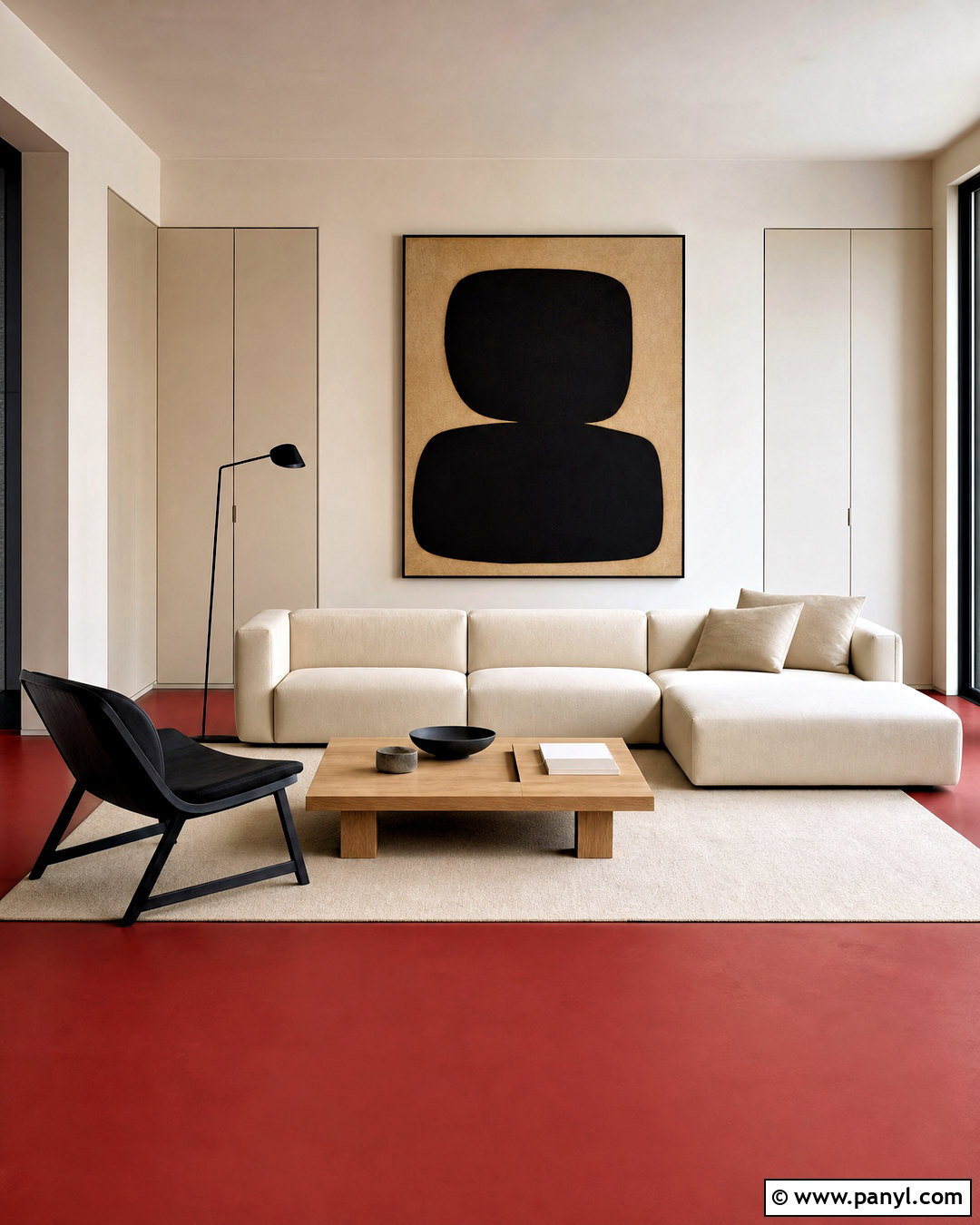
Can a bright red floor work in a minimalist room? It can when every other element is carefully edited. Surround a smooth muted-red floor with warm white walls and choose a single low-profile cream sofa as the main piece. Add one black lounge chair, a pale oak rectangular coffee table, and a large solid ivory rug. Keep the furniture arrangement symmetrical and leave generous open space around each item. Use concealed storage instead of open shelving so visual clutter does not compete with the flooring. A slim black floor lamp and one oversized abstract artwork provide enough contrast and interest. Skip small decorative collections, busy textiles, and excessive red accents. The result is a calm, contemporary living room where the floor becomes a clean architectural statement.
17. Maximalist Red Floor Living Room
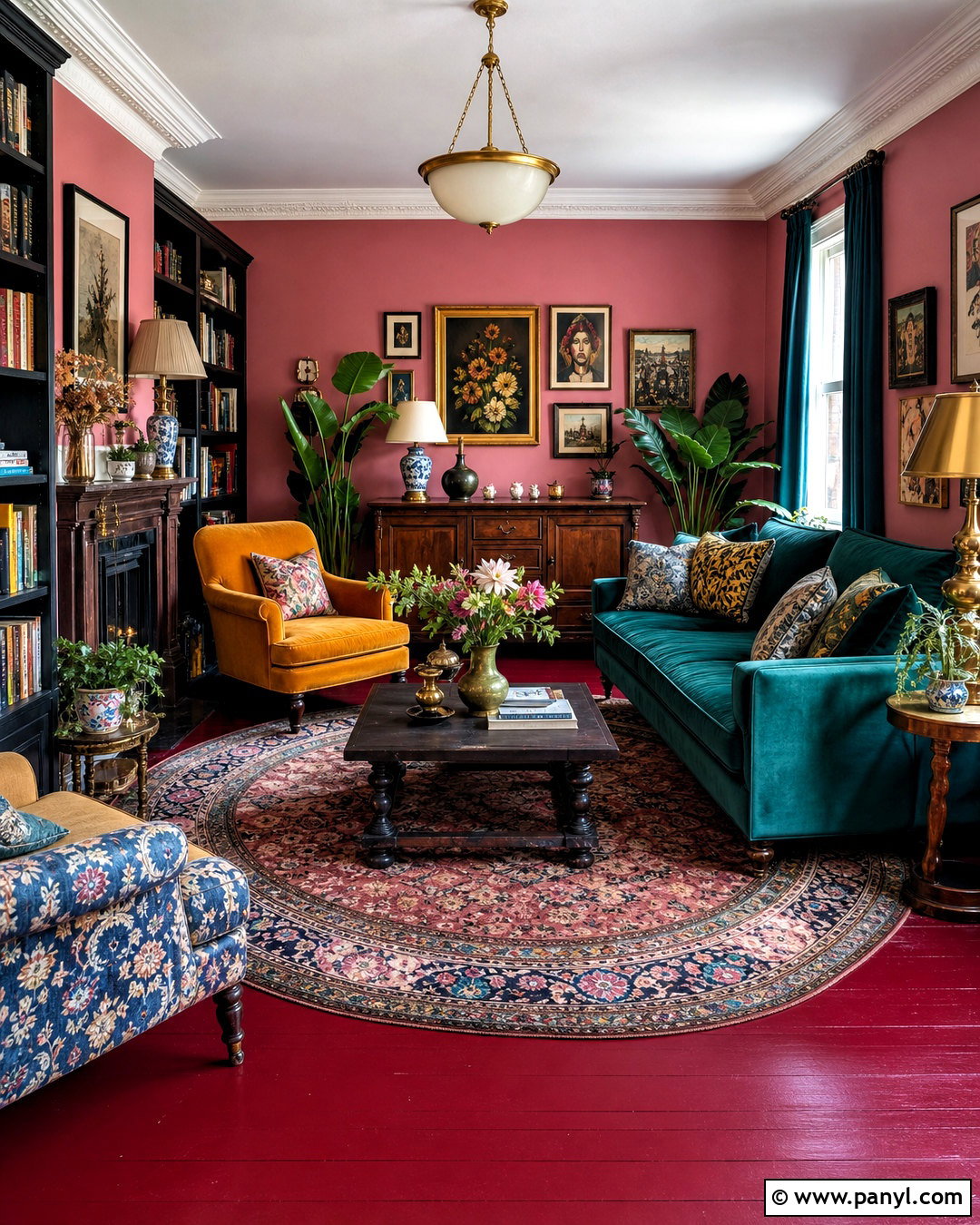
For a more expressive look, treat the red floor as the beginning of a layered maximalist palette. Combine a burgundy painted wood floor with dusty pink walls, a deep teal velvet sofa, and patterned armchairs containing mustard, cream, and blue. Place a large floral rug in the middle, ensuring some solid burgundy flooring remains visible around its edges. A dark wood coffee table can anchor the arrangement, while brass lamps and colorful framed artwork carry interest upward. Mix pillows in different patterns but repeat several colors to create visual connections. Built-in shelves should display books and ceramics in organized groups rather than random piles. This room feels abundant and personal, yet its repeated palette and clearly defined furniture layout keep the finished design cohesive.
18. Small Red Floor Living Room
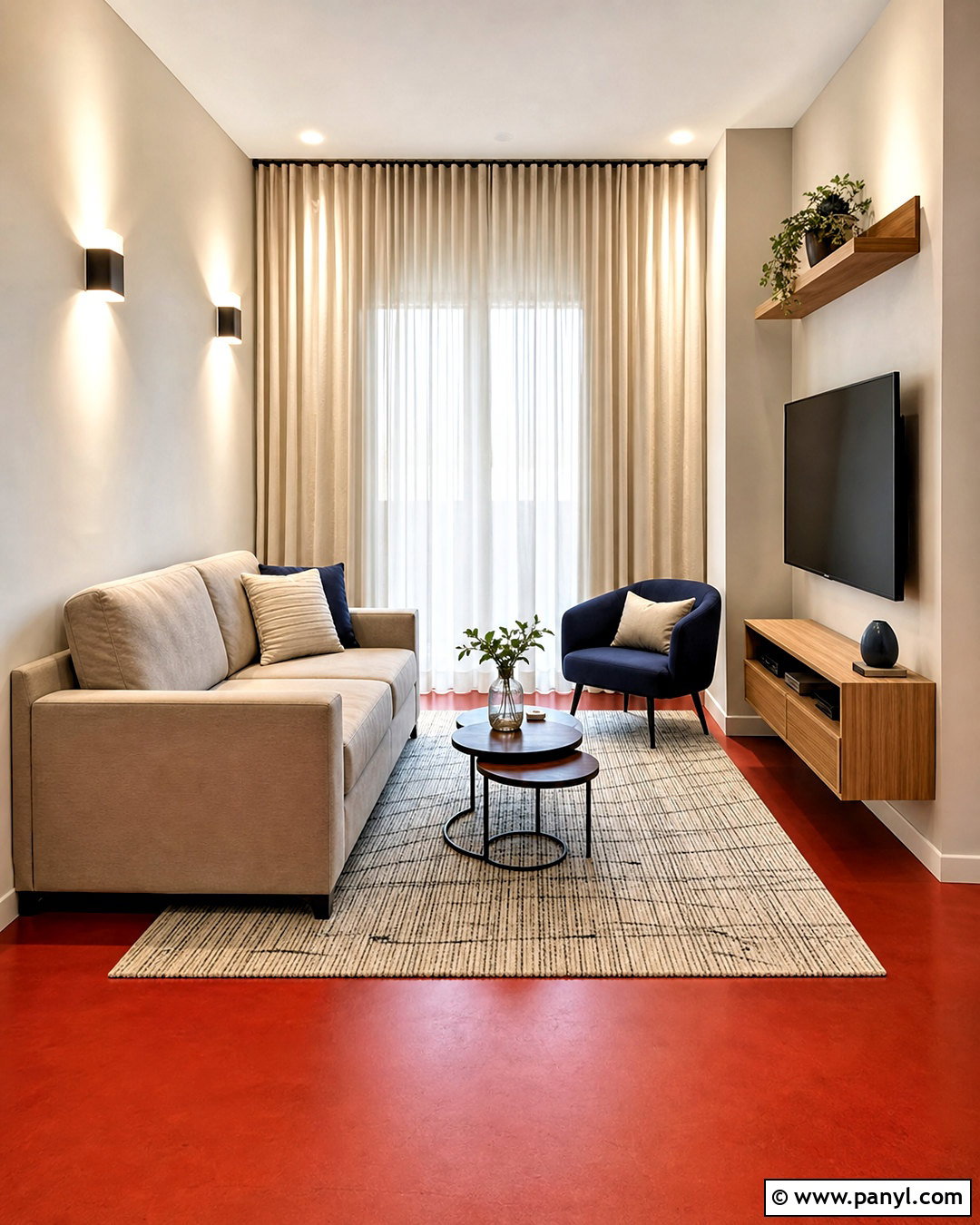
In a small living room, a red floor can create depth when the surrounding pieces are light and appropriately scaled. Paint the walls soft cream and select a compact beige loveseat with raised legs. Place one slim navy chair near the window and use two lightweight nesting tables instead of a bulky coffee table. A pale rug with a subtle linear pattern will brighten the center while allowing red flooring to show along the edges. Wall-mounted lighting and a floating media console preserve valuable floor space. Hang curtains close to the ceiling to emphasize height and choose one large artwork rather than a crowded gallery wall. The simple layout, cooler blue accent, and light upholstery make the room feel open while preserving the floor’s distinctive color and personality.
19. Bohemian Red Floor Living Room
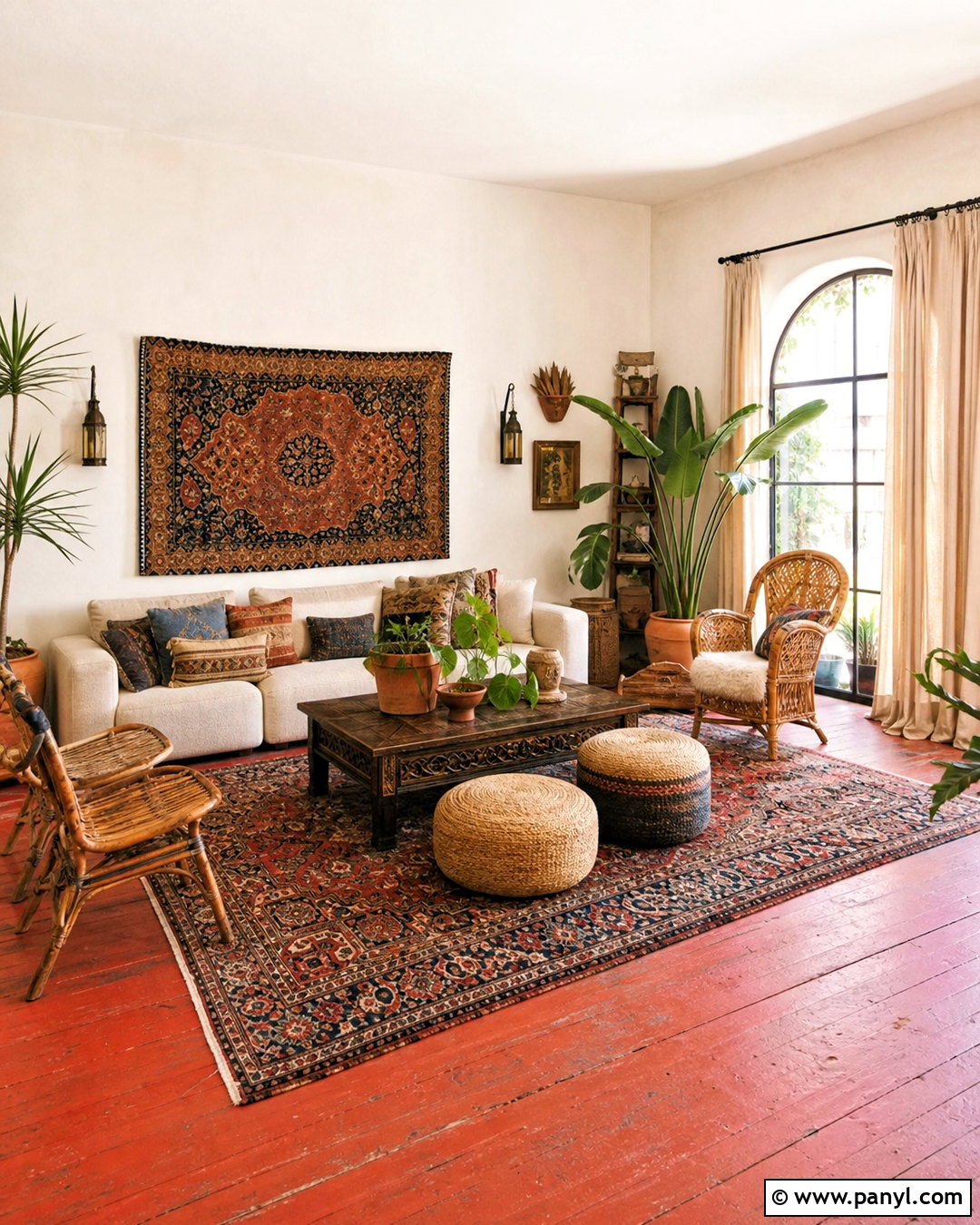
A bohemian living room can build naturally on the warmth of faded red floorboards or terracotta tile. Begin with creamy walls and a relaxed oatmeal sofa, then add two mismatched wood-and-cane chairs for an informal arrangement. Layer a vintage rug containing washed red, navy, and tan over the floor, leaving enough of the original surface visible to frame it. Use a low carved wood coffee table and add woven poufs for flexible seating. Plants in terracotta pots, patterned pillows, and lightweight linen curtains contribute texture and movement. Keep the color palette earthy rather than overly bright. Handmade pottery and a few woven wall pieces complete the room. The resulting look feels personal, comfortable, and collected without allowing the many decorative layers to become chaotic.
20. Traditional Red Floor Living Room
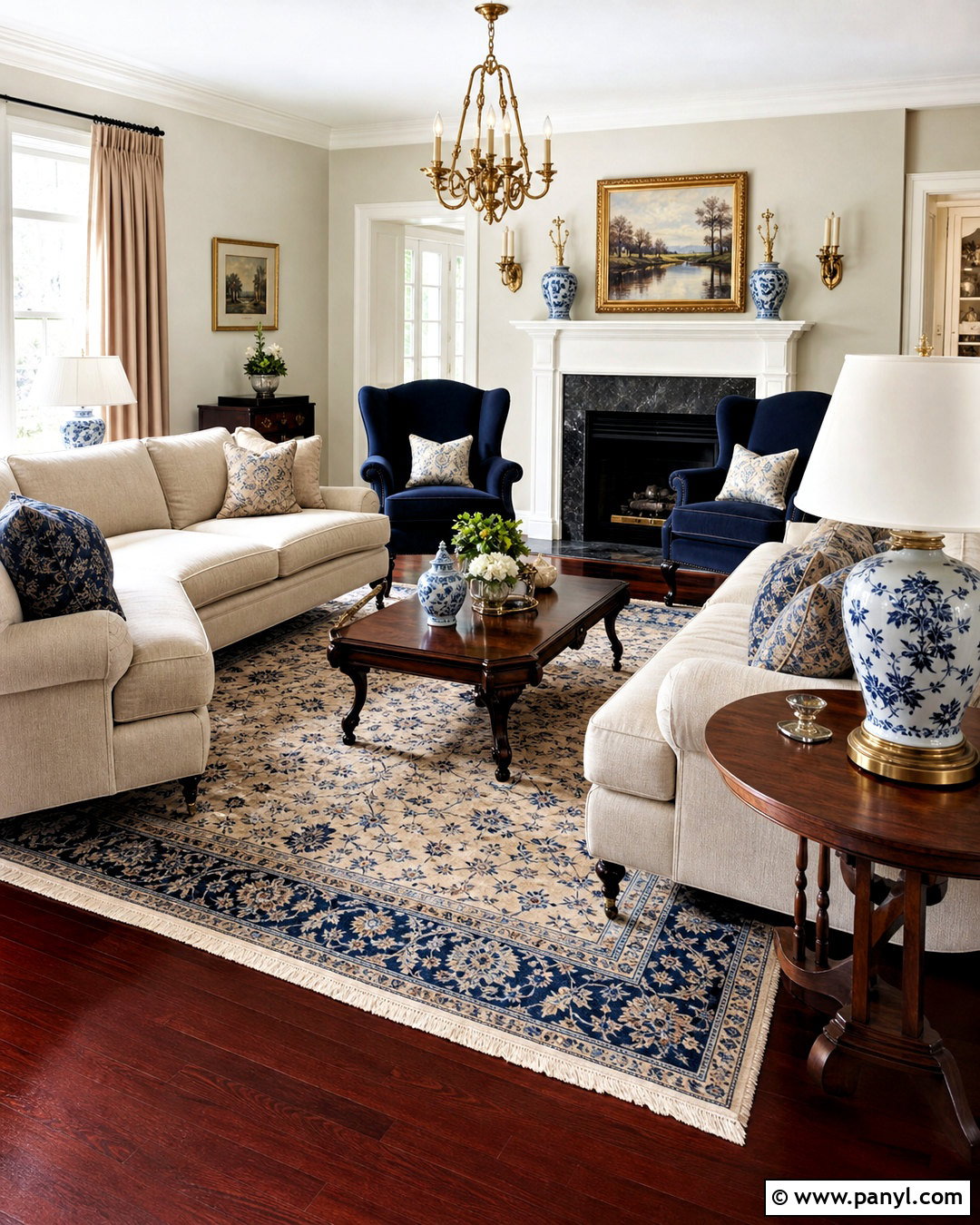
A traditional living room gains stately warmth from dark red wood or burgundy flooring. Pair it with light greige walls, substantial cream sofas, and two navy wingback chairs arranged around a polished walnut coffee table. A large Oriental-style rug featuring ivory, blue, and restrained red details can connect the furniture to the flooring. Add symmetrical side tables with ceramic lamps to create order and balance. Tailored curtains in a warm neutral fabric should frame the windows without blocking daylight. Use antique brass accents, landscape paintings, and a classic fireplace surround for timeless detail. Avoid matching every wood finish to the red floor; medium and dark walnut pieces provide controlled variation. The full arrangement feels elegant and established while remaining comfortable enough for regular gatherings.
Conclusion:
Designing around red flooring becomes easier once you choose a clear color palette and treat the floor as a permanent anchor. Warm whites, gentle neutrals, blues, greens, and controlled black accents can balance its intensity. Rugs are especially useful for defining seating areas, adding softness, and reducing the visual amount of red without hiding the floor entirely. Furniture materials also matter. Linen, leather, natural wood, cane, and metal each create a different overall mood. Most importantly, repeat the floor color selectively rather than matching every accessory to it. These **20 red floor living room ideas** show that bold flooring can support spaces ranging from quiet and minimalist to traditional, rustic, coastal, or richly layered.

Related Ideas and Inspiration:
Leave a Reply