
Charcoal interior doors bring depth, contrast, and architectural character to rooms that might otherwise feel plain. Softer than true black yet richer than standard gray, charcoal works with warm woods, crisp whites, muted colors, and many metal finishes. Current design coverage frequently pairs charcoal doors with bright trim, natural flooring, glass panels, and streamlined hardware. () The right combination can suit a modern hallway, cozy bedroom, farmhouse pantry, elegant dining room, or practical mudroom. Paint sheen also matters. Satin offers a smooth, forgiving finish, while semi-gloss is easier to clean in busy spaces. Whether you prefer subtle coordination or dramatic contrast, these complete 20 charcoal doors interior ideas provide practical inspiration for transforming your home.

1. Charcoal Door With White Trim
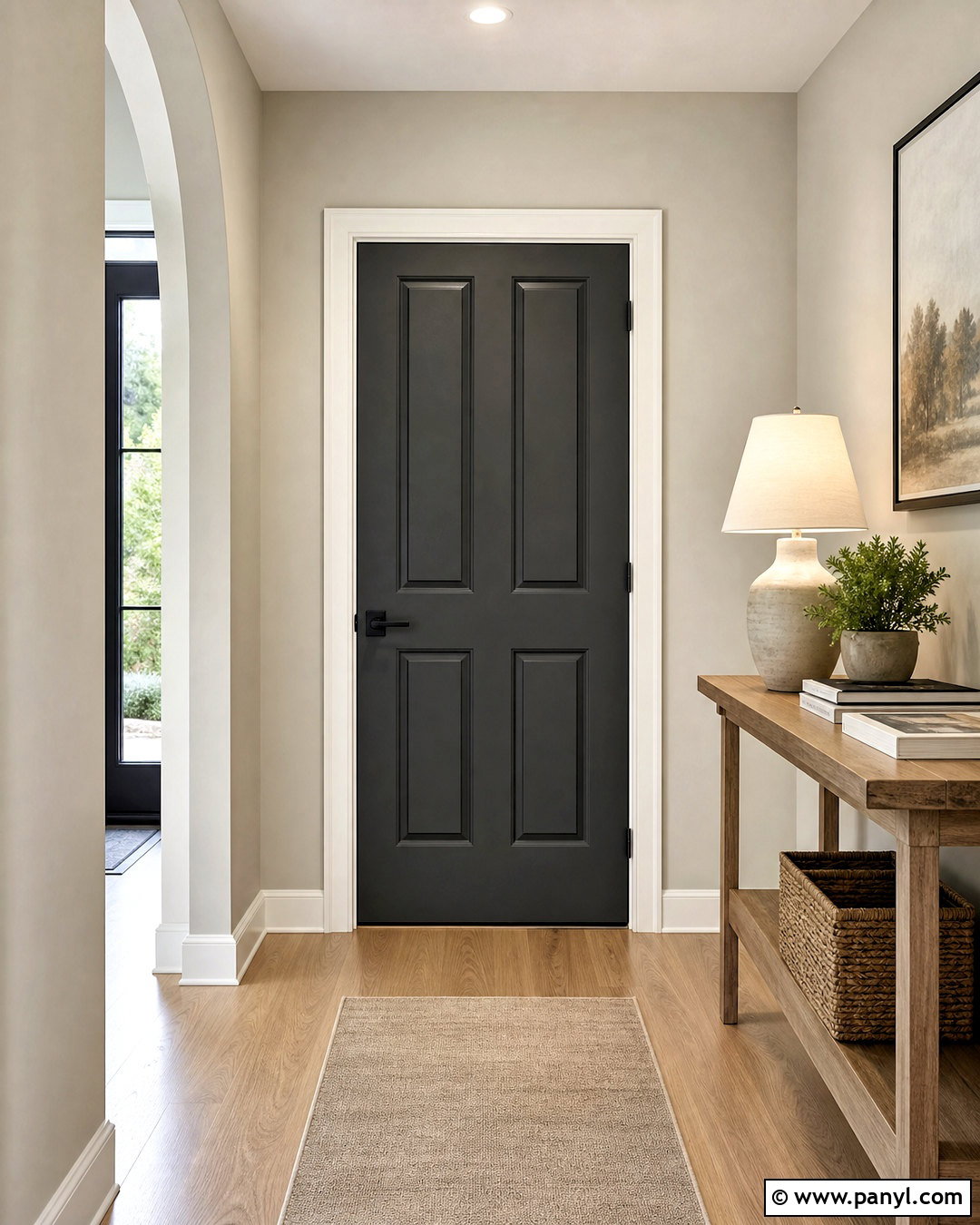
A charcoal door surrounded by bright white trim creates a clean contrast that works beautifully in a hallway or entryway. Choose a classic two-panel or four-panel door to give the dark color enough architectural detail. Keep the surrounding walls soft white or pale greige, then introduce warm white oak flooring to prevent the scheme from feeling cold. A satin charcoal finish will gently reflect light while hiding minor surface flaws better than high gloss. Complete the door with a streamlined matte black lever for a modern effect or an aged brass knob for warmer character. Add a narrow wood console, a simple ceramic lamp, and one framed print nearby. The entire space will feel polished, balanced, and thoughtfully connected rather than overly dark.
2. Charcoal Door With Brass Hardware
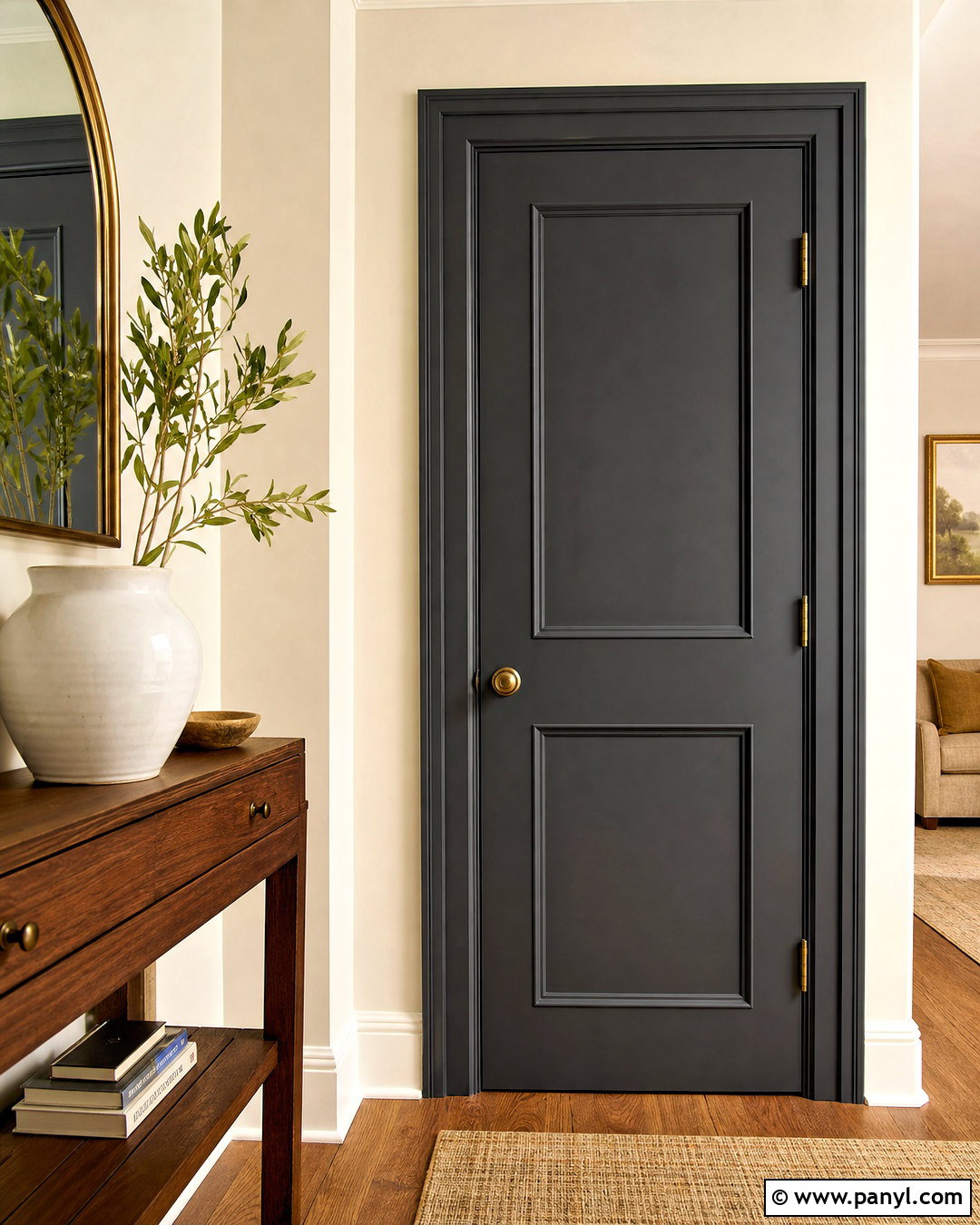
Warm brass hardware can make a charcoal door look refined without turning the room overly formal. Start with a traditional paneled door painted in a deep charcoal gray with subtle warm undertones. Choose an unlacquered or antique brass knob, hinges, and matching latch plate so every visible metal detail feels intentional. Creamy walls, medium oak flooring, and a vintage-inspired runner will soften the door’s strong color. In an entryway, place a walnut console beside it and finish the arrangement with a rounded brass mirror and a white ceramic vase. The mix of charcoal, wood, cream, and aged metal creates a welcoming transitional look. Repeat brass in a nearby ceiling light or picture frame, but keep those accents restrained so the door remains the clear focal point.
3. Charcoal Door With Black Hardware
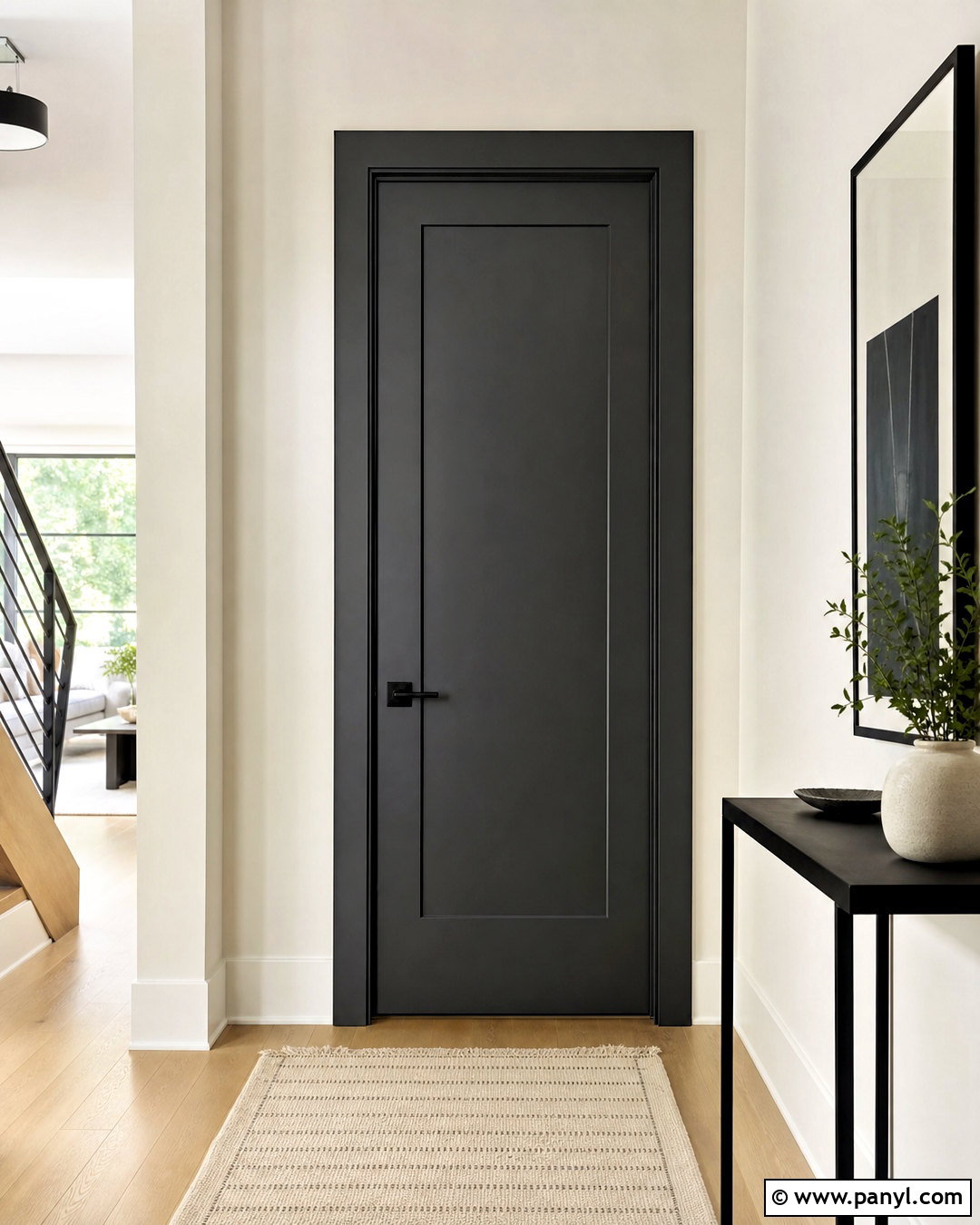
For a sleek monochromatic look, combine a charcoal interior door with matte black hardware and simple architectural details. A flat-panel or narrow Shaker-style door works especially well because its clean lines support the contemporary palette. Paint the trim the same charcoal shade to create one continuous form, then use warm off-white walls for contrast. Pale oak floors, a black-framed ceiling fixture, and a low-profile console will make the hallway feel modern but still comfortable. Keep accessories minimal, perhaps using a textured cream runner and one sculptural bowl. Although the hardware is dark, its different finish will remain visible against satin charcoal paint. This complete scheme is ideal for homeowners who want stronger definition than gray provides without the sharp appearance of a pure black door.
4. Charcoal Door With Wood Trim
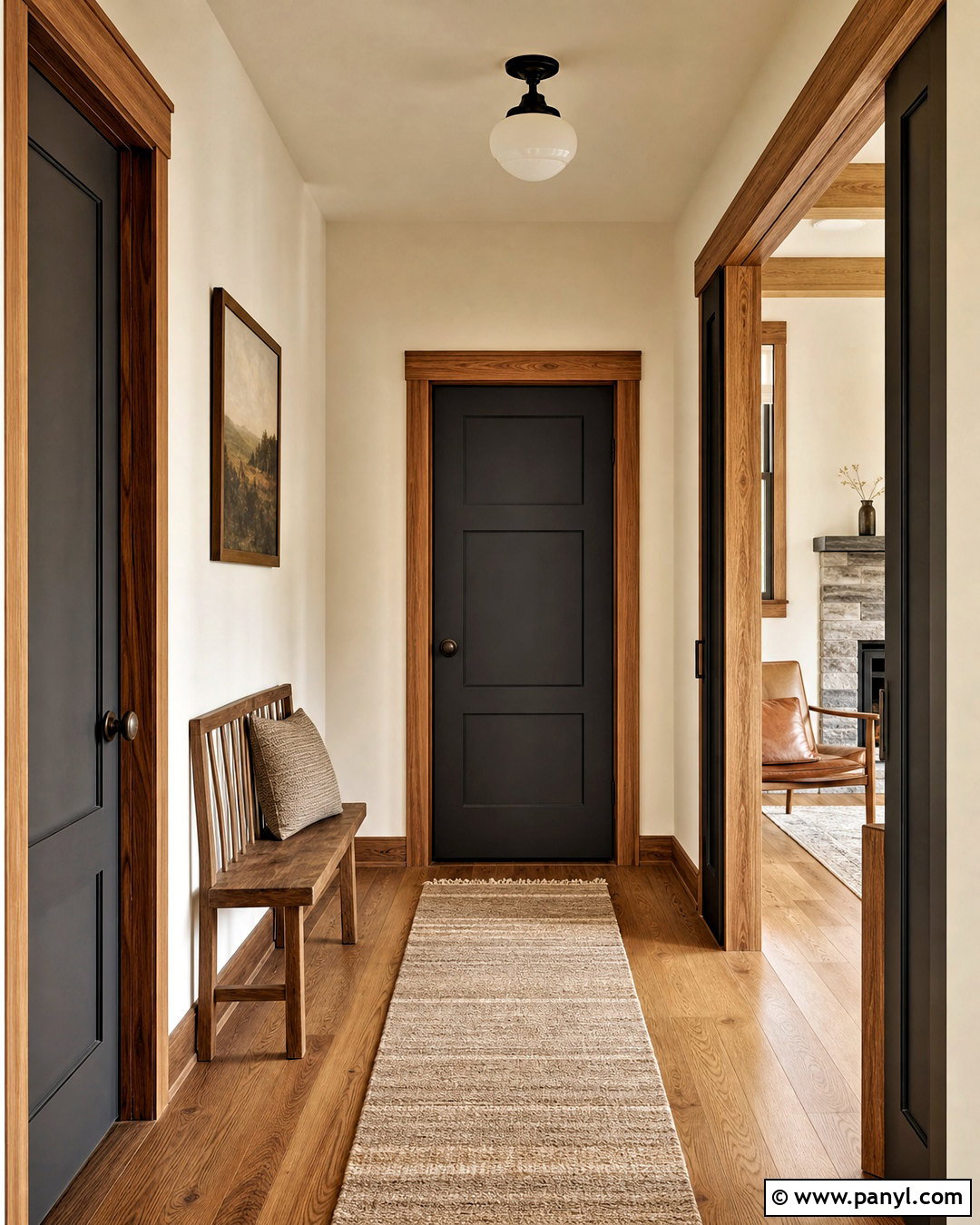
Natural wood trim brings warmth and an organic frame to a charcoal door. This combination suits Craftsman, rustic, and updated traditional homes, especially when existing oak or walnut millwork deserves to remain visible. Select a deep charcoal with a slightly brown undertone so it complements rather than fights the wood. A simple three-panel door will provide structure while allowing the grain-rich casing to stand out. Continue the wood tone through the flooring, a nearby bench, or a small console. Walls in warm ivory or light mushroom gray will keep the transition soft. Use aged bronze hardware to connect the dark paint with the natural trim. A woven runner, pottery, and muted landscape artwork complete a grounded hallway that feels collected, warm, and appropriately detailed.
5. Charcoal Door With Matching Trim
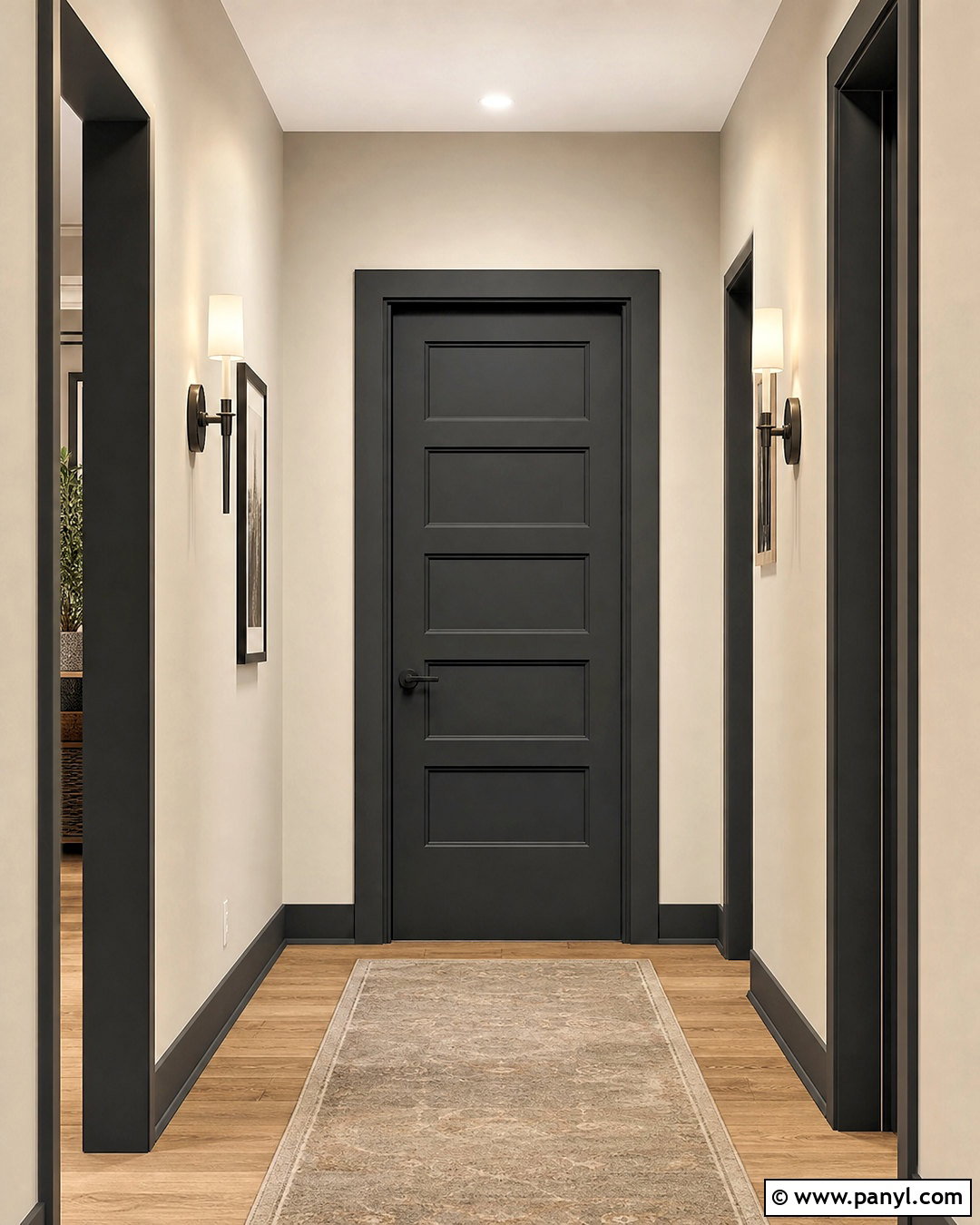
Painting the door and trim the same charcoal color creates a bold architectural statement with fewer visual interruptions. This approach is particularly effective at the end of a long hallway because it establishes a clear destination. Choose a satin finish for the door and a slightly flatter finish for the casing if you want subtle dimension without changing colors. Keep the hallway walls pale greige and the ceiling clean white to preserve brightness. Medium-tone oak floors, a neutral runner, and understated wall sconces can balance the dark feature. Add black or charcoal hardware for a seamless finish. The completed design feels tailored and contemporary, yet it remains easy to coordinate with changing decor. Repeating charcoal in one picture frame or light fixture will make the strong doorway look connected rather than isolated.
6. Charcoal Door With Charcoal Walls
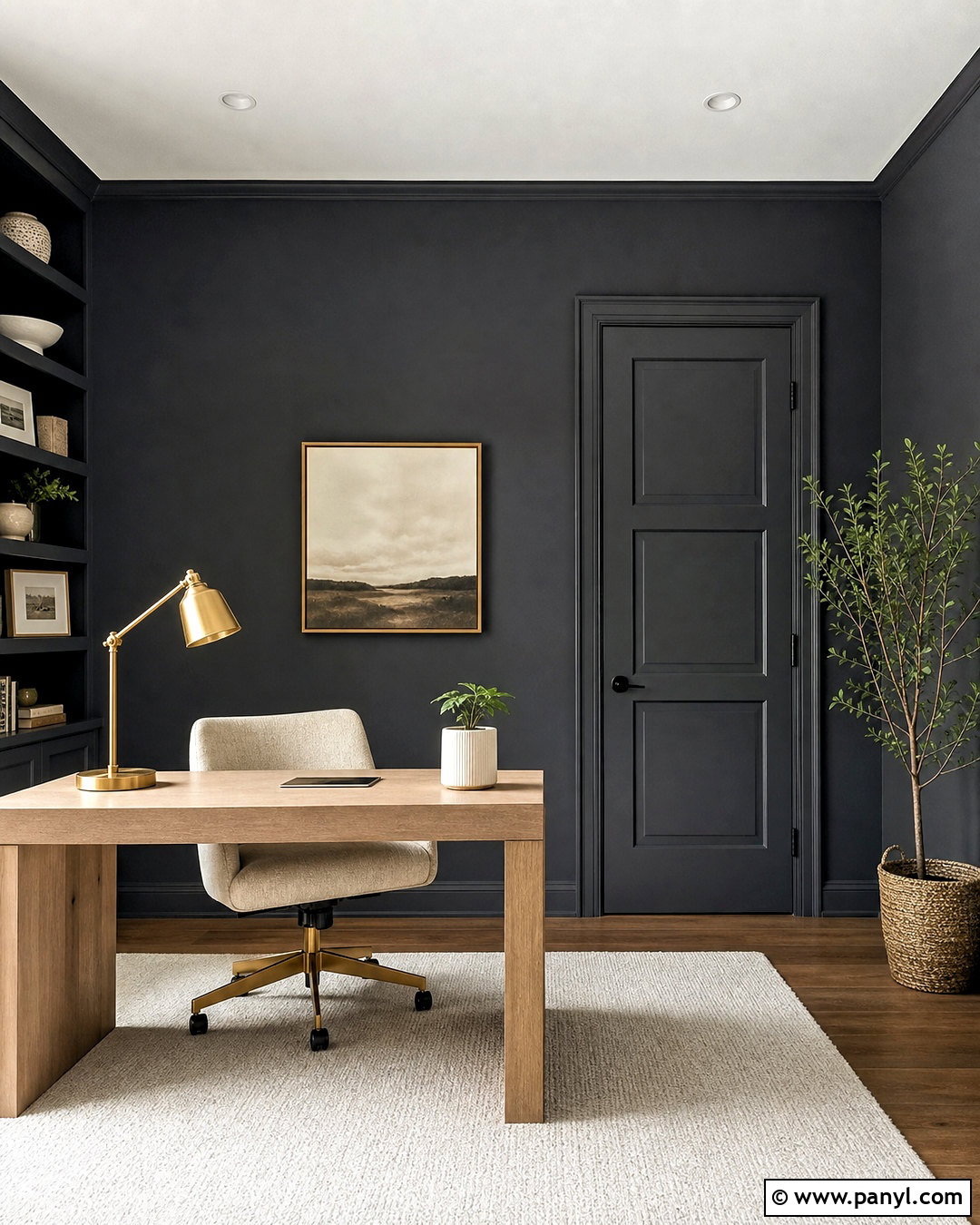
A charcoal door can nearly disappear when it is painted to match surrounding charcoal walls. Use this color-drenched treatment in a home office, reading room, media room, or small library where a cozy atmosphere feels appropriate. Select a charcoal shade with warm gray undertones, then vary the paint finishes to preserve definition. Flat or matte walls paired with a satin door will create a subtle contrast when light crosses the surface. Balance the darkness with a light oak desk, oatmeal upholstered chair, cream rug, and white ceiling. Brushed brass lighting adds warmth without interrupting the calm palette. Shelves filled with neutral books and pottery complete the room. The finished look feels immersive and intentional, while the matching door keeps the visual lines smooth and uninterrupted.
7. Charcoal Door With Greige Walls
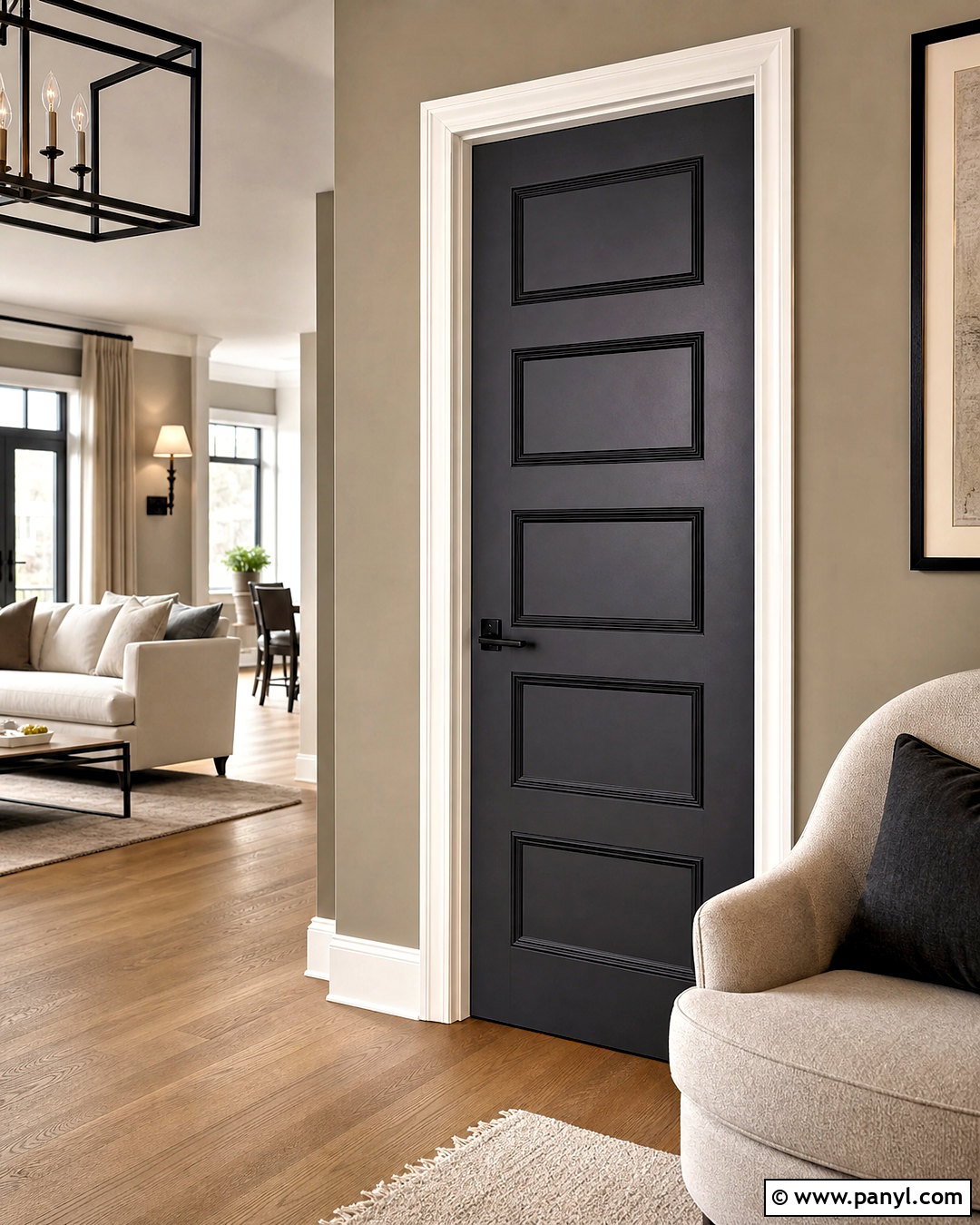
Greige walls provide a gentle bridge between a deep charcoal door and warm furnishings. This palette works well in open-plan homes because it combines cool gray depth with approachable beige undertones. Choose a five-panel charcoal door with simple satin nickel or matte black hardware. Frame it with white trim if you want stronger contrast, or use matching greige trim for a softer transition. Add natural oak flooring, an ivory area rug, and linen seating in nearby living spaces. Small charcoal accents, such as a lamp base or framed artwork, will distribute the door color throughout the room. Warm white bulbs and textured fabrics prevent the gray elements from feeling flat. The completed interior remains neutral and flexible, but the charcoal door gives it enough definition to appear finished and memorable.
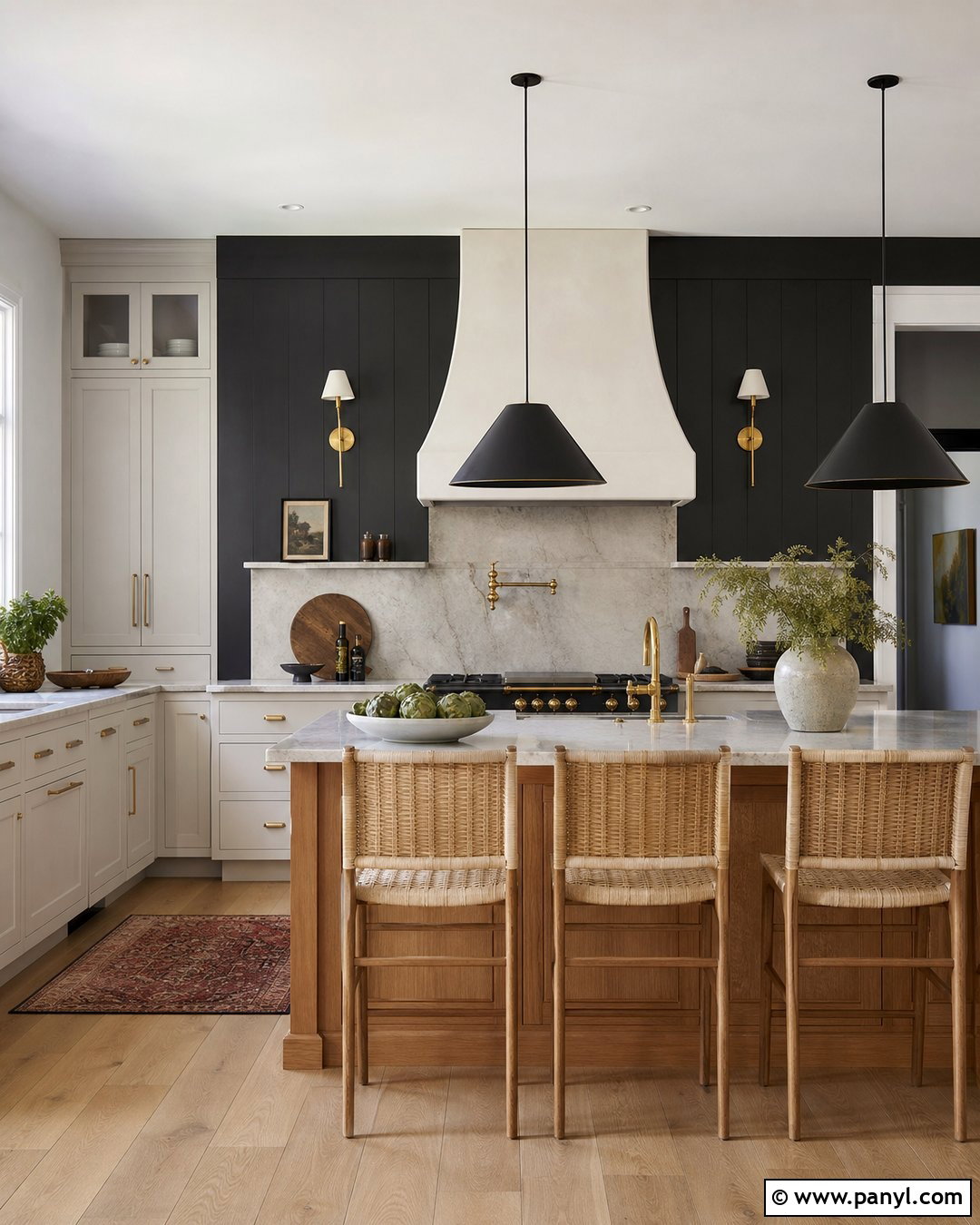
8. Charcoal Door With Sage Green Walls
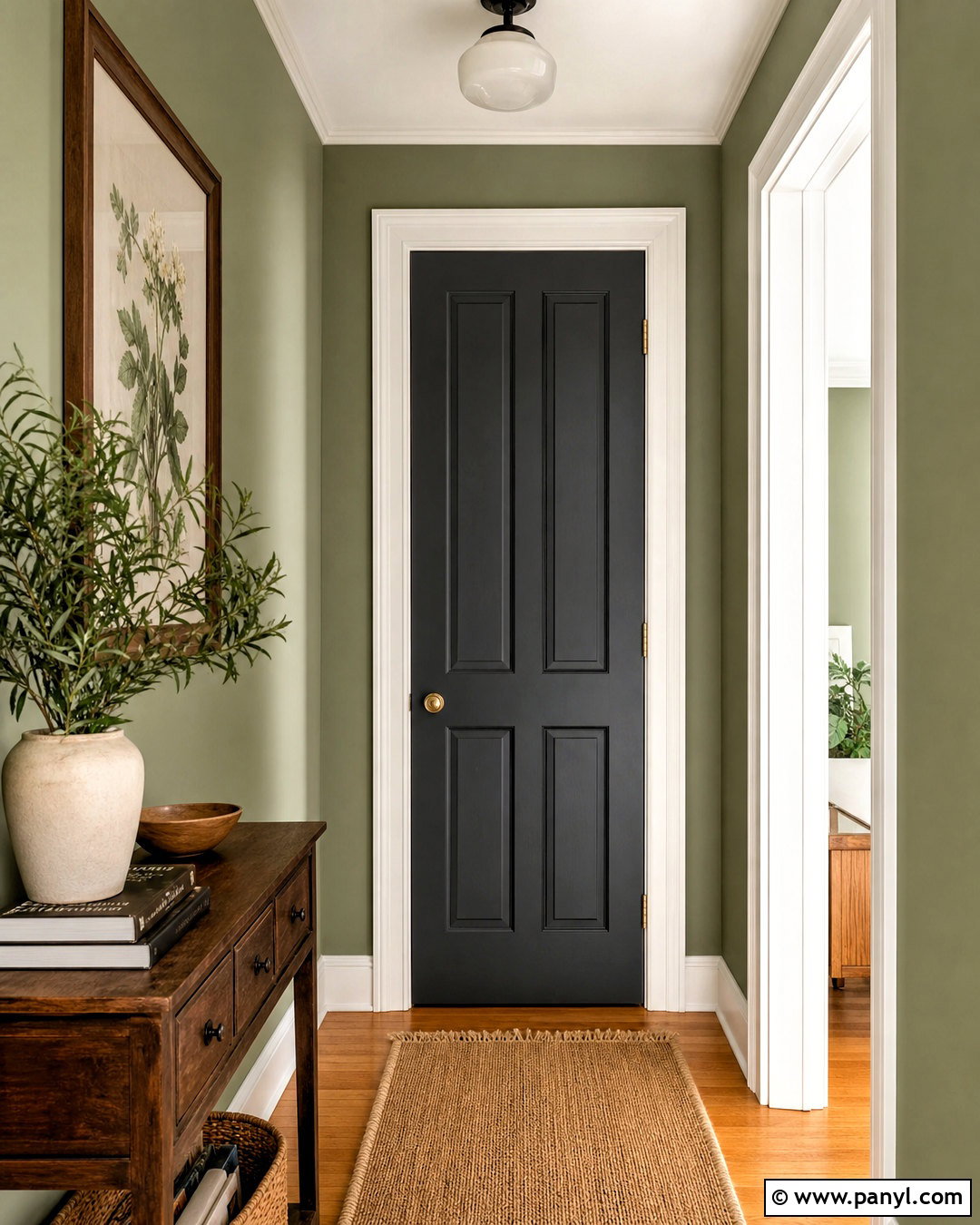
Muted sage green walls give a charcoal door an earthy, relaxed backdrop. This pairing is especially attractive in a bedroom, quiet hallway, or cottage-inspired home office. Select a charcoal with soft green or warm undertones rather than a blue-based gray. A traditional four-panel door adds character, while aged brass or dark bronze hardware reinforces the natural palette. Use warm white trim to separate the two colors and keep the room from becoming visually heavy. Finish the space with honey-toned oak flooring, a jute rug, linen curtains, and simple botanical artwork. Furniture in walnut or painted cream will add further warmth. The final scheme feels calm and grounded, with the charcoal door providing a strong anchor for the gentler wall color and natural decorative materials.
9. Charcoal Door With Blue Walls
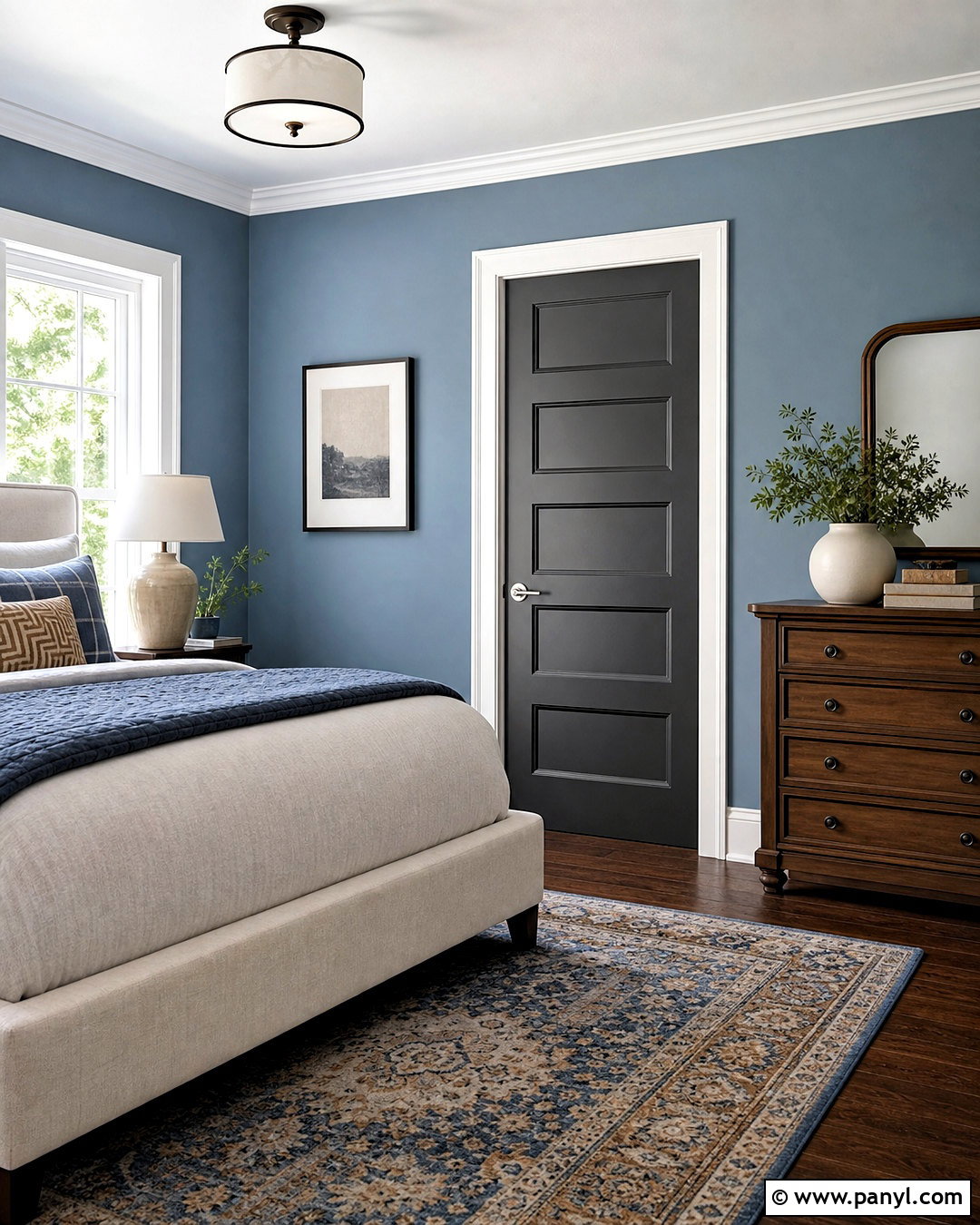
Dusty blue walls and a charcoal interior door can create a sophisticated bedroom or study without relying on stark neutrals. Choose a medium muted blue that remains visibly lighter than the door. Crisp white trim will outline the architecture and prevent the cool colors from blending together. A paneled charcoal door with polished nickel hardware feels tailored, while a lever in aged brass creates a more traditional mood. Bring in walnut furniture, creamy bedding or upholstery, and a patterned rug containing blue, gray, and tan. These warmer elements will keep the room comfortable. Add a white ceiling and layered lighting to preserve clarity throughout the day. The completed palette looks cohesive because blue and charcoal share cool depth, yet the natural wood and soft textiles make the space feel inviting.
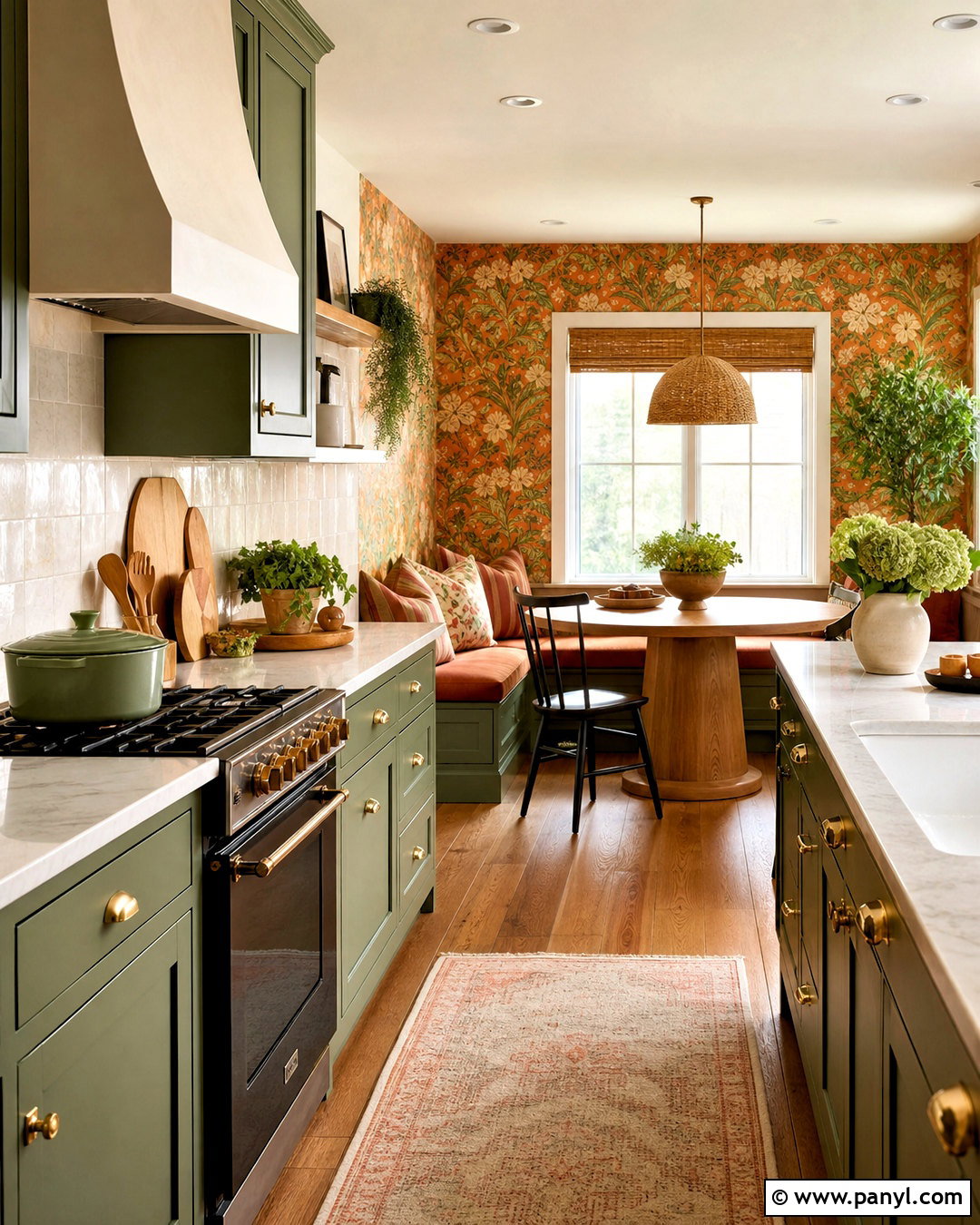
10. Charcoal Door With Beige Walls
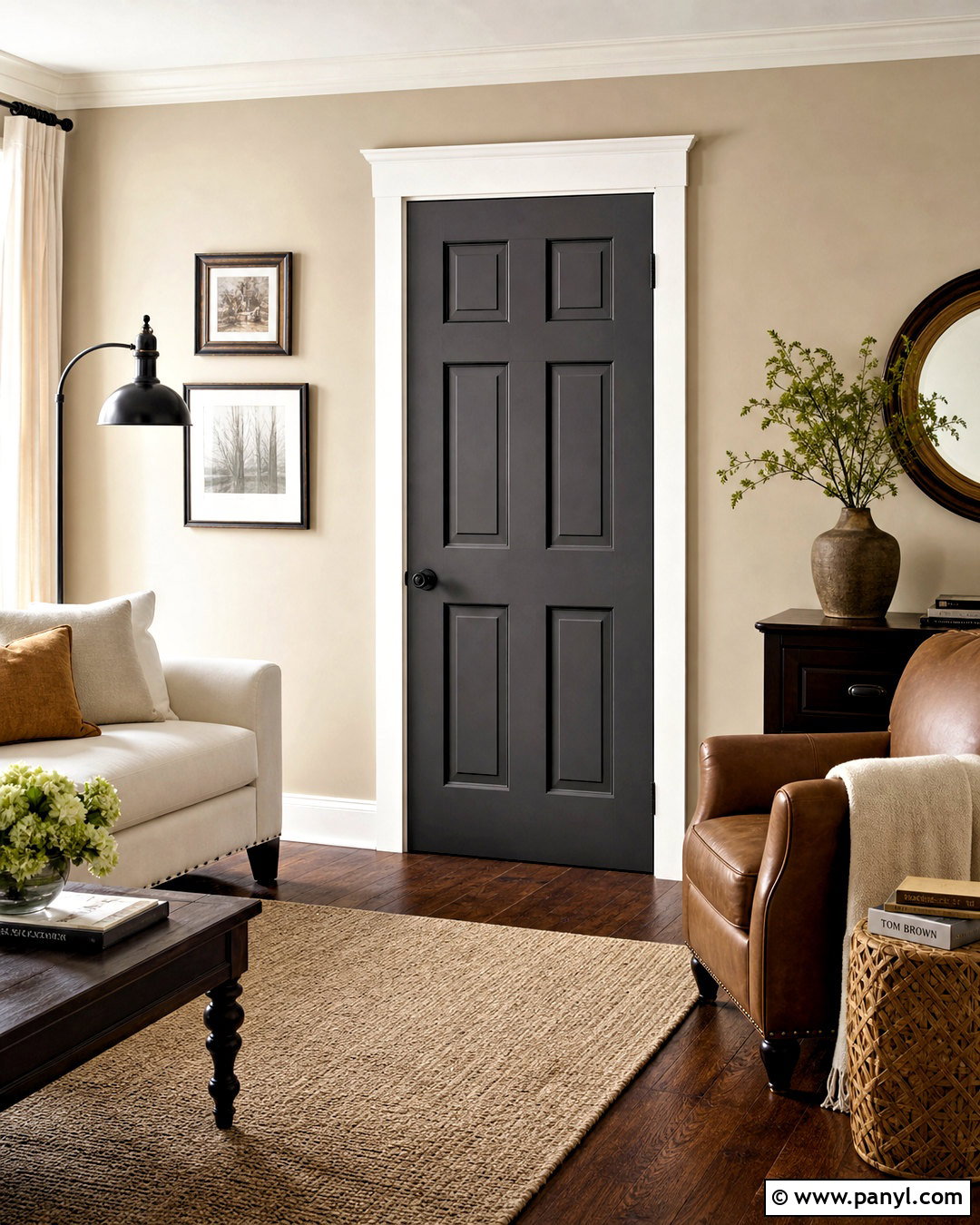
Can a dark door work in a warm beige room? Charcoal creates an excellent anchor when the complete palette includes balanced undertones and repeated dark accents. Choose a warm charcoal door rather than one that appears noticeably blue. Surround it with creamy beige walls, soft white trim, and medium walnut or oak flooring. A classic six-panel profile will suit traditional interiors, while a one-panel Shaker design creates a cleaner transitional look. Add oil-rubbed bronze hardware and repeat that dark finish in a floor lamp, picture frame, or curtain rod. Upholstery in ivory, camel, and muted brown will connect the door to the room’s warmer features. The resulting design feels comfortable and established, with enough dark contrast to keep the beige palette from appearing washed out or unfinished.
11. Charcoal French Doors
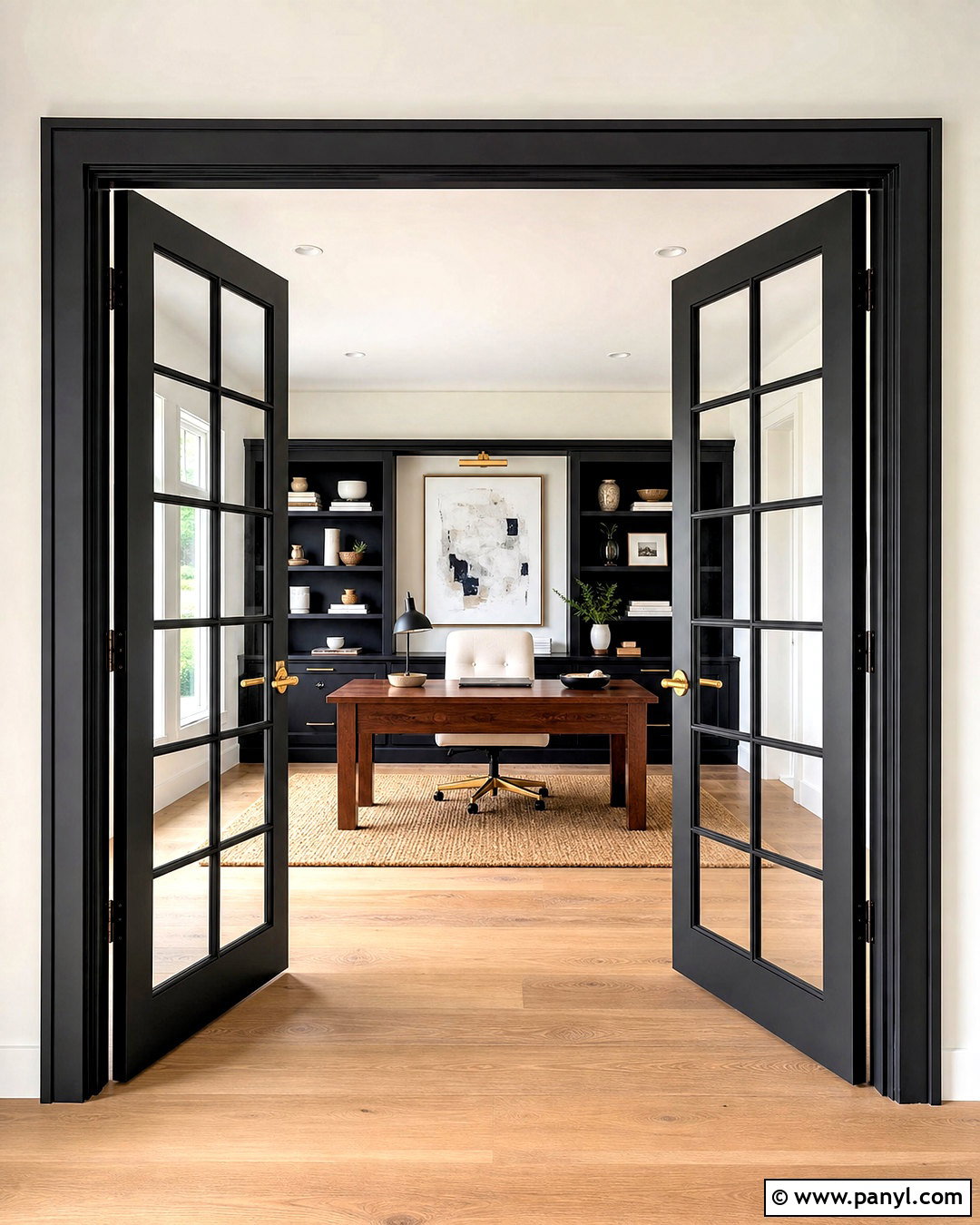
Charcoal French doors can define a home office or dining room while allowing natural light to pass between spaces. Paint the frames, muntins, and surrounding casing in the same deep charcoal for a unified architectural feature. Clear glass offers openness, while reeded or lightly frosted glass provides more privacy. Pair the doors with warm white walls, medium oak flooring, and a neutral woven rug. Inside the room, use a walnut desk or dining table, cream upholstered seating, and a simple brass chandelier. Charcoal metal curtain rods or picture frames will subtly repeat the door color. Select matching brass or matte black handles on both doors for symmetry. This complete look feels more substantial than a standard doorway and creates separation without making either adjoining room feel enclosed.
12. Charcoal Pocket Door
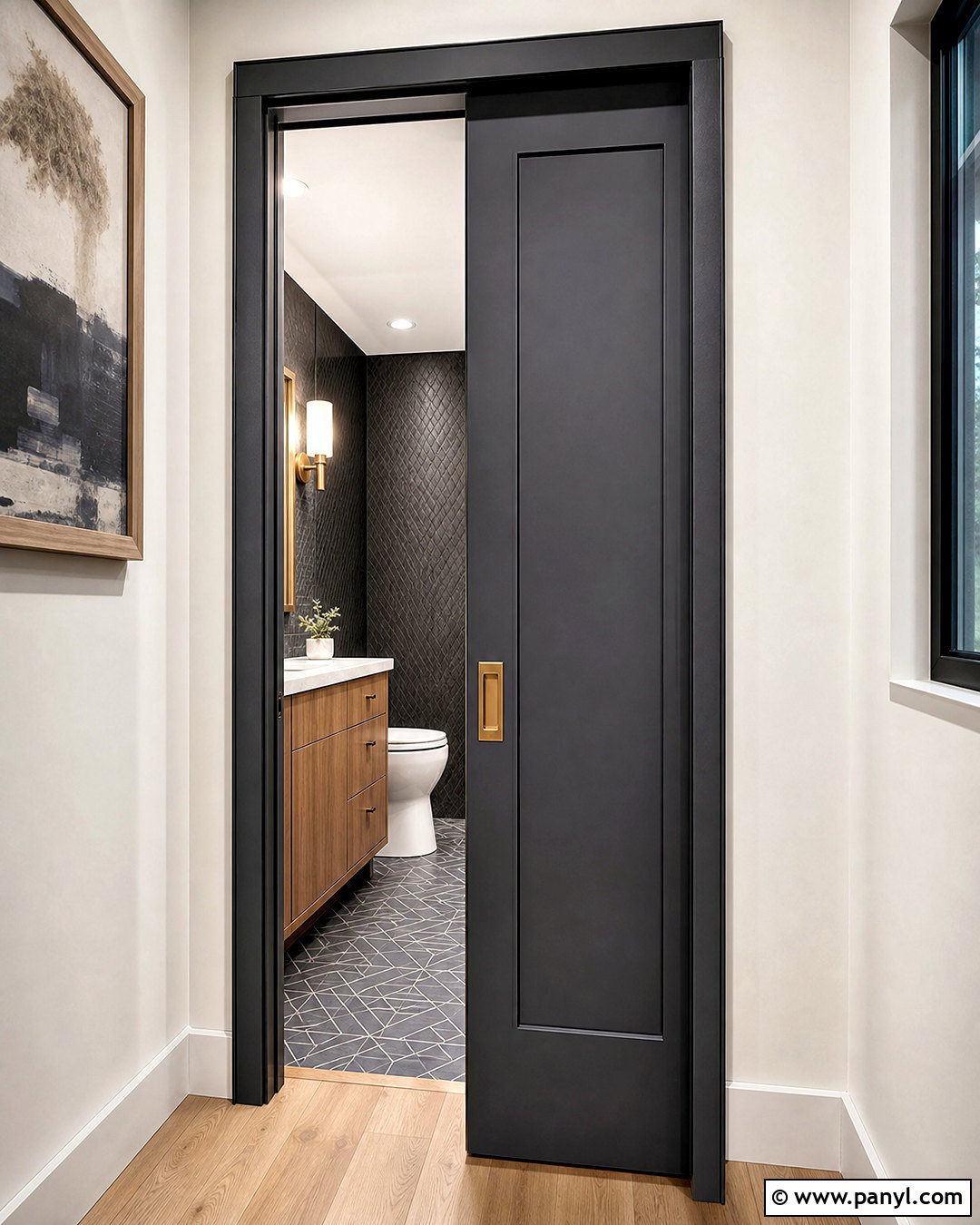
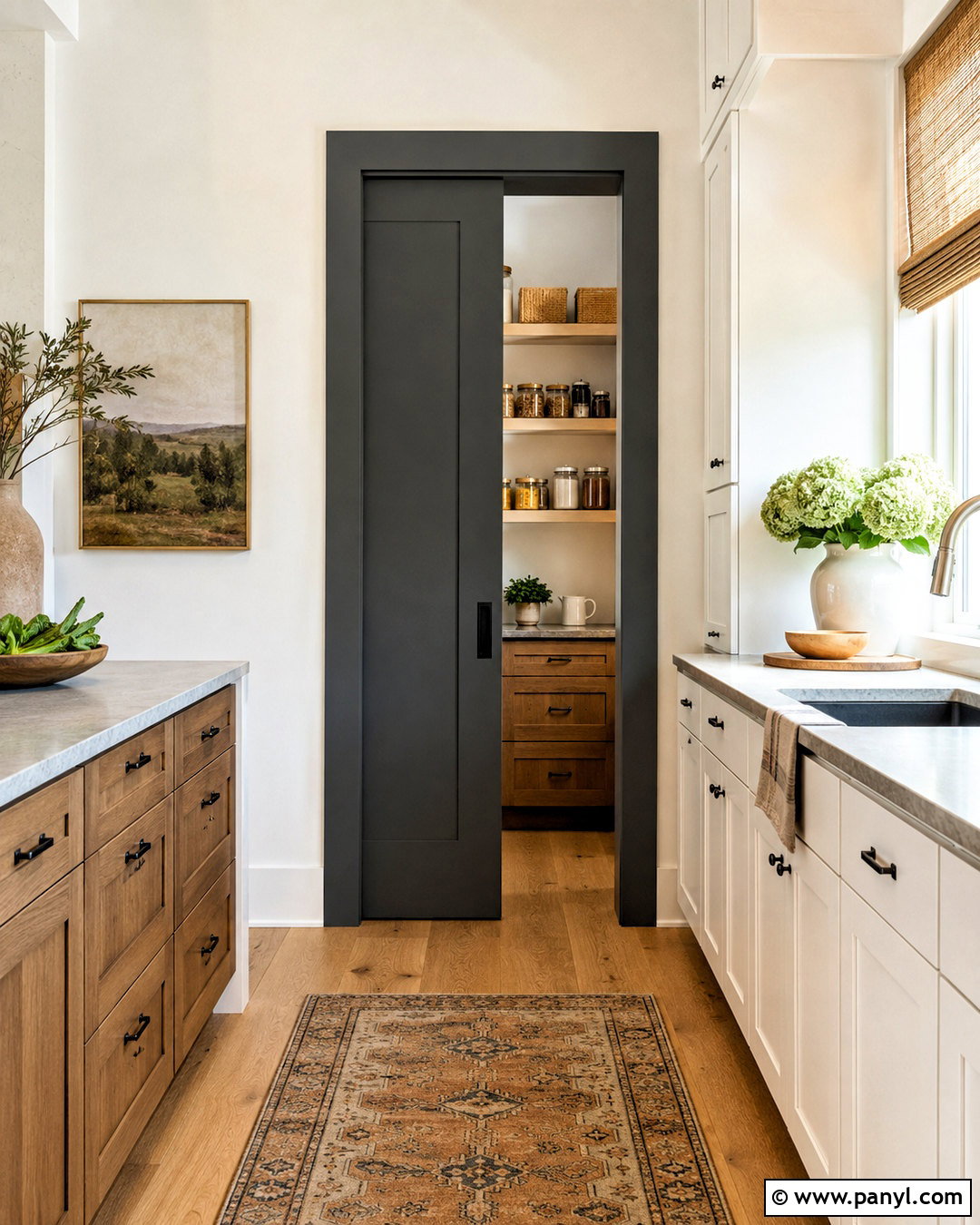
A charcoal pocket door offers a practical solution for a bathroom, laundry room, pantry, or compact home office. Since the door slides into the wall, use a flat-panel or streamlined Shaker design that will not catch on surrounding surfaces. Paint it in durable satin charcoal and add a recessed black or brushed brass pull. Warm white walls and pale wood flooring will keep the area looking open. If the door leads to a bathroom, repeat charcoal in the vanity or floor tile pattern. For a pantry, coordinate it with dark cabinet hardware and natural wood shelves. Keep the surrounding trim crisp and simple so the sliding function remains visually clean. The finished doorway saves floor space while bringing intentional color and contemporary architectural interest to a frequently used area.
13. Charcoal Barn Door
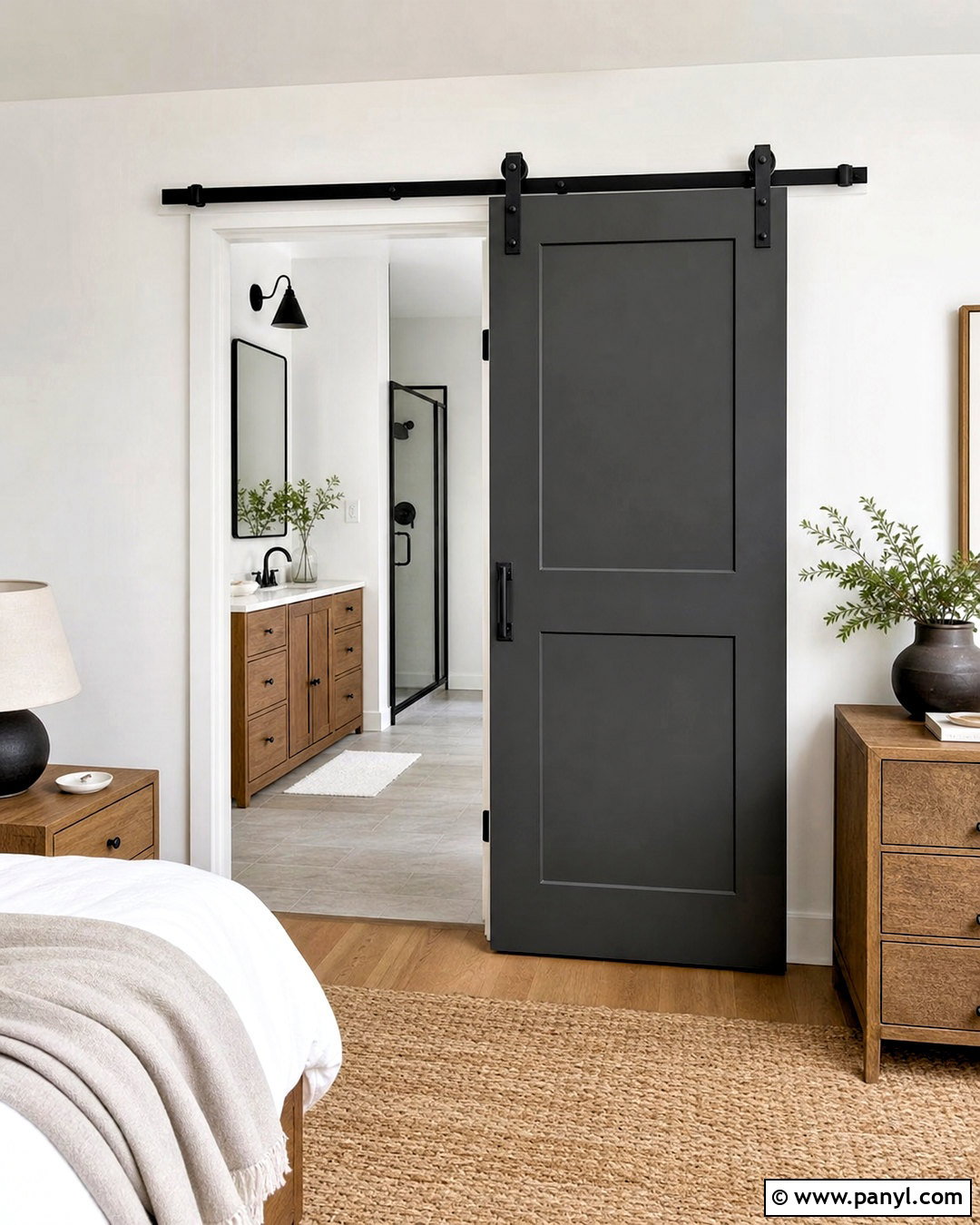
A charcoal barn door can feel modern rather than overly rustic when it has clean paneling and streamlined hardware. Choose a large Shaker-style door with one or two broad recessed panels, then finish it in smooth satin charcoal. Mount it on a matte black rail with compact rollers to maintain a tailored appearance. Soft white walls and light oak flooring will provide contrast, while a natural linen rug and simple wood furniture add warmth. Use the door between a bedroom and bathroom, kitchen and pantry, or living room and home office. Make sure the door overlaps the opening sufficiently for privacy. A nearby black light fixture and a few charcoal accessories will connect the feature to the room. The complete design feels functional, graphic, and balanced.
14. Charcoal Glass Panel Door
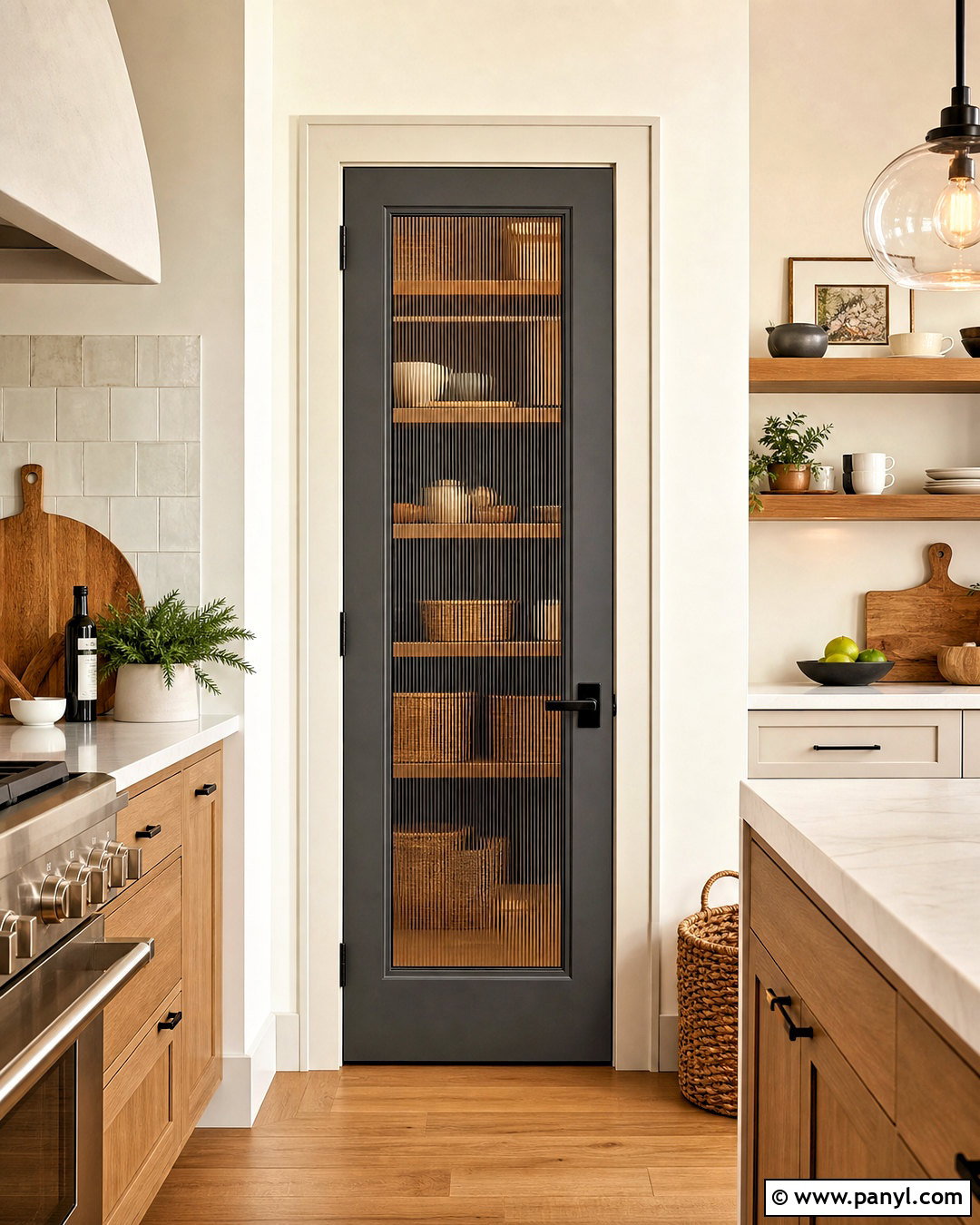
A charcoal door with a large glass panel combines strong color with visual lightness. It works especially well for a pantry, office, laundry room, or sunroom where borrowed light improves the adjoining space. Choose clear glass for openness, reeded glass for gentle distortion, or frosted glass when greater privacy is needed. Keep the charcoal frame narrow and pair it with matching trim for a crisp, built-in appearance. White walls, warm wood flooring, and simple black hardware support a modern design. Inside the visible room, use coordinated cabinetry, baskets, and shelving so the view through the glass remains attractive. A small globe pendant or flush-mount light can complete the area. The finished doorway becomes an architectural feature without making the surrounding rooms feel smaller or darker.
15. Charcoal Double Doors
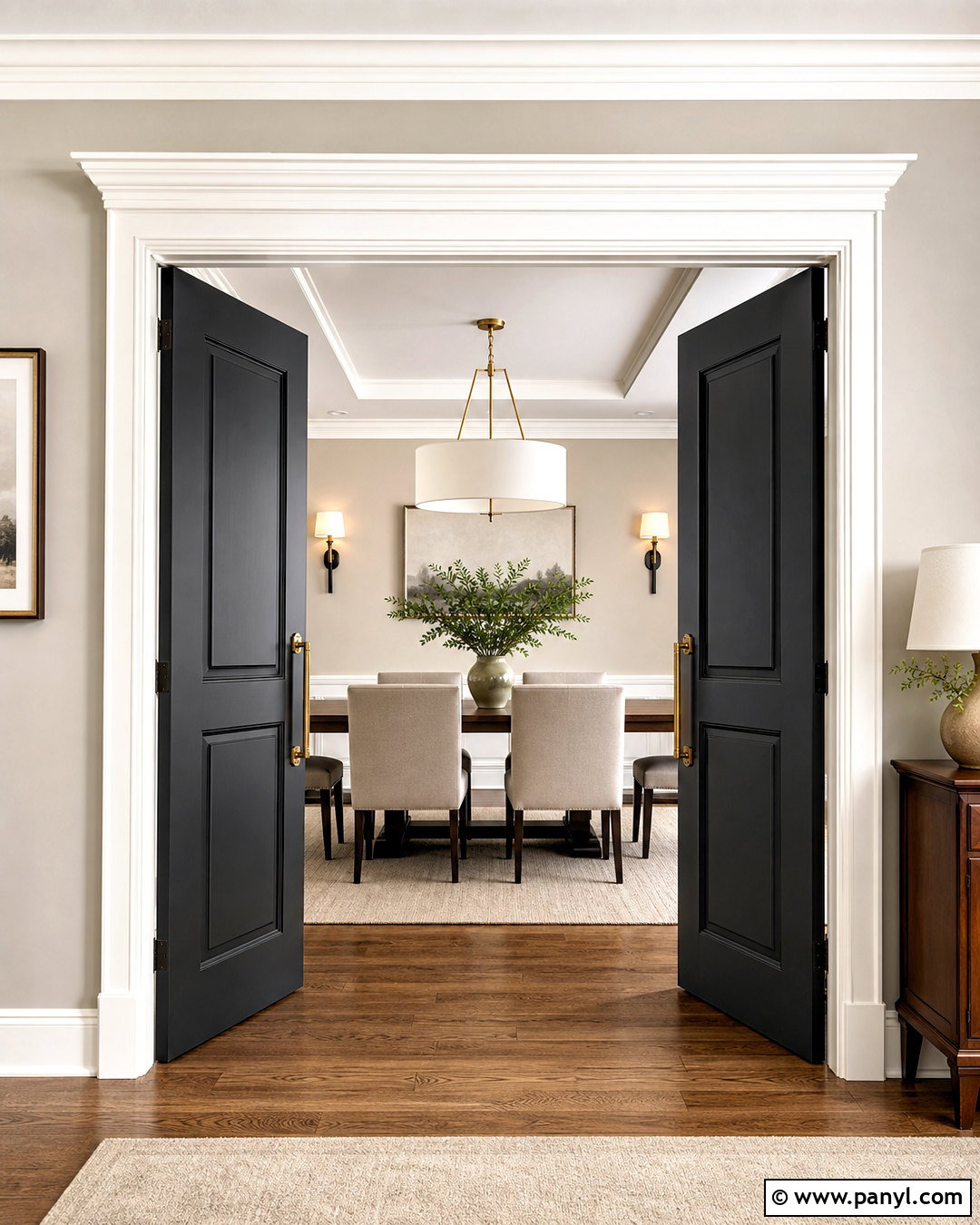
Charcoal double doors add symmetry and visual importance to a dining room, primary bedroom, office, or wide closet opening. Select paneled doors with balanced proportions and paint both the doors and center edges evenly for a professional result. Bright white or creamy trim will frame the pair, while brass knobs or long black handles create a defined central detail. Continue the room with light greige walls, medium-tone wood flooring, and a large neutral rug. Position matching sconces, artwork, or furniture on either side to reinforce symmetry. If the doors open into a dining room, a warm wood table and linen chairs will soften the dark entrance. This complete arrangement creates a formal focal point, but the charcoal color keeps it current and less severe than solid black.
16. Charcoal Closet Doors
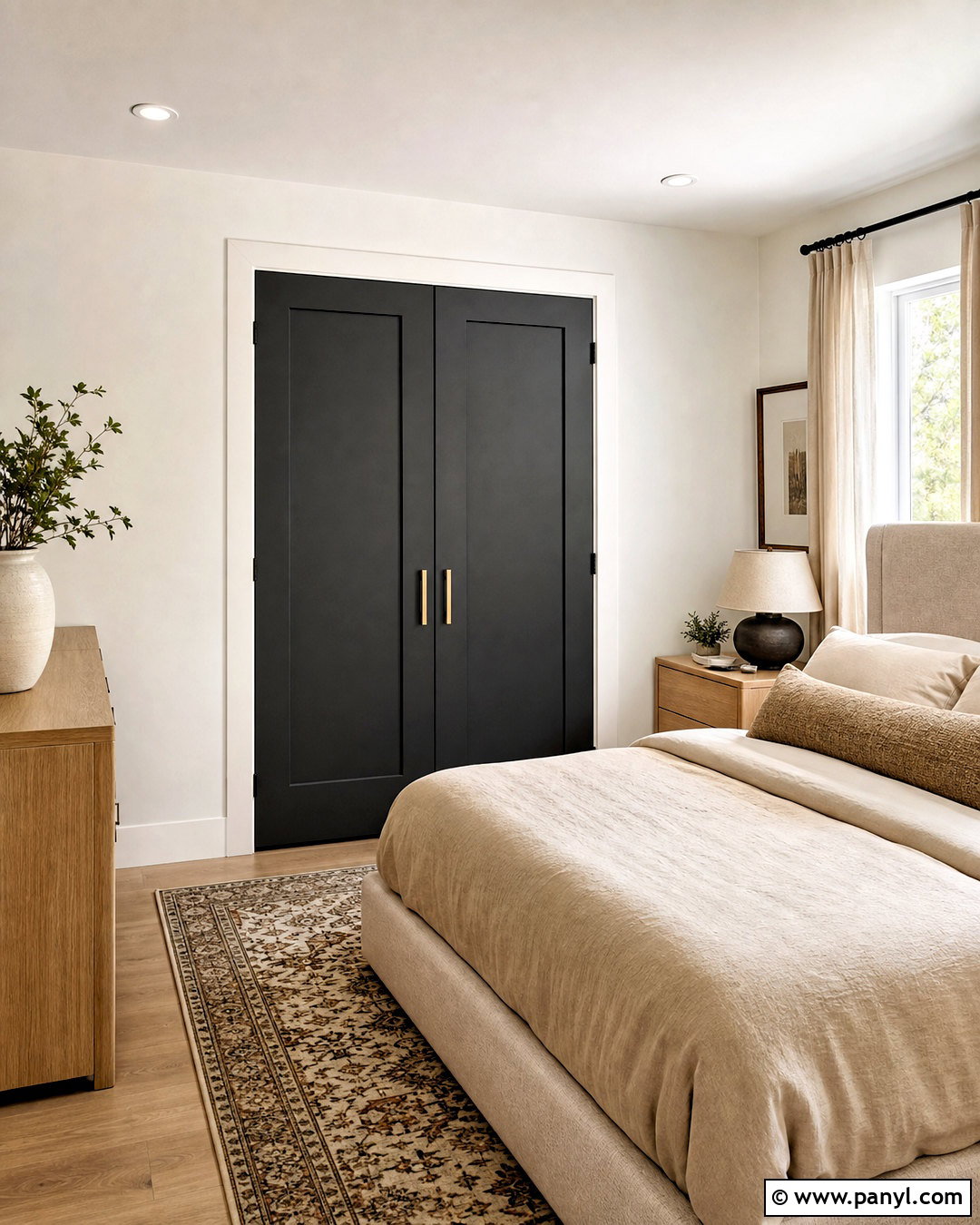
Closet doors become part of the room’s design when they receive the same attention as furniture and walls. Paint a pair of Shaker, louvered, or paneled closet doors in charcoal, then add slim brass or matte black pulls. In a bedroom, combine them with warm white walls, an upholstered oatmeal bed, light oak nightstands, and layered beige bedding. A patterned rug containing small charcoal details will connect the doors to the center of the room. Keep the baseboards and outer casing white for a crisp frame, or paint the trim charcoal for a more built-in effect. Soft curtains and warm lighting will balance the dark surface area. The finished bedroom feels coordinated and intentional, while the practical closet doors provide contrast without requiring another accent wall or oversized decorative feature.
17. Charcoal Pantry Door
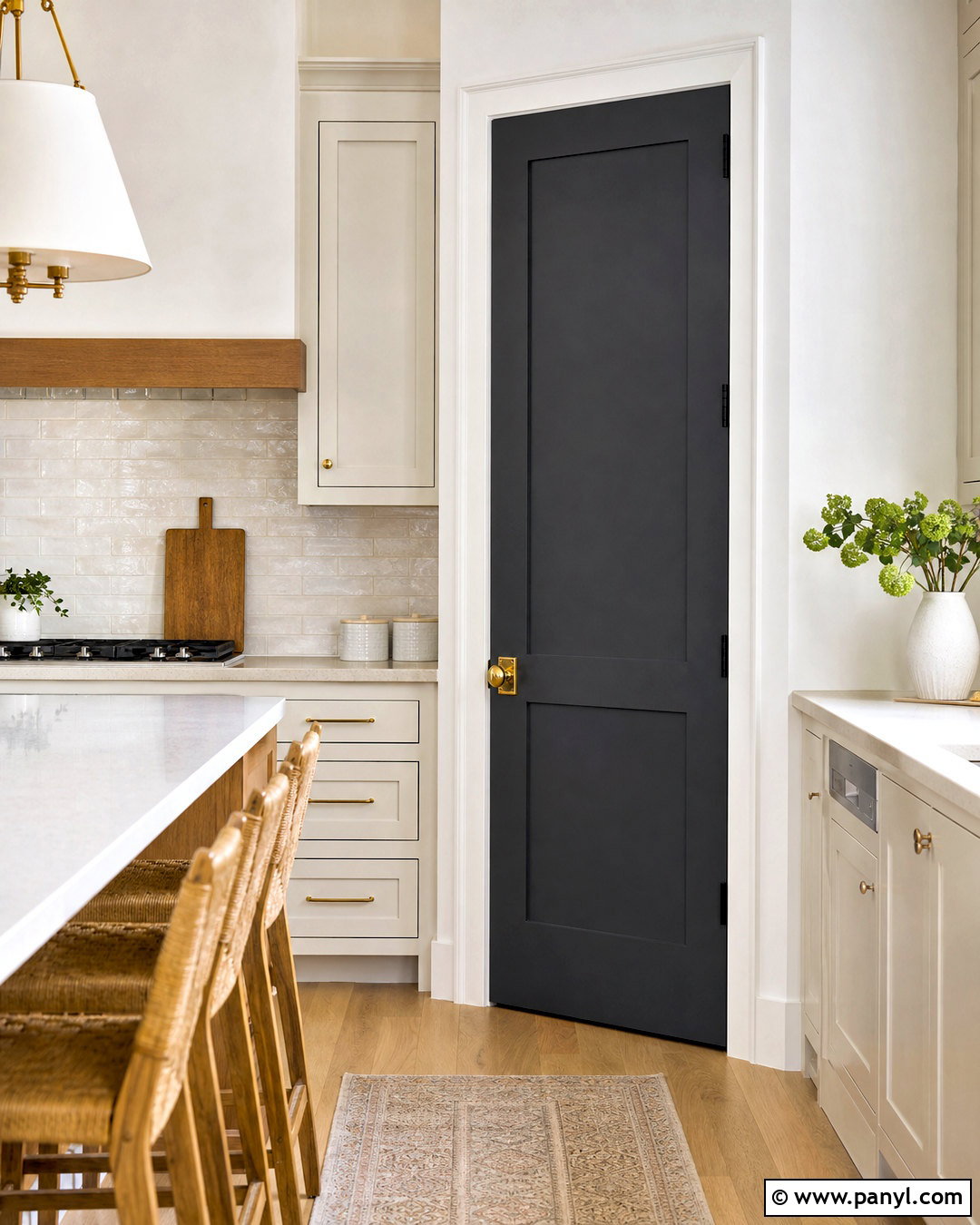
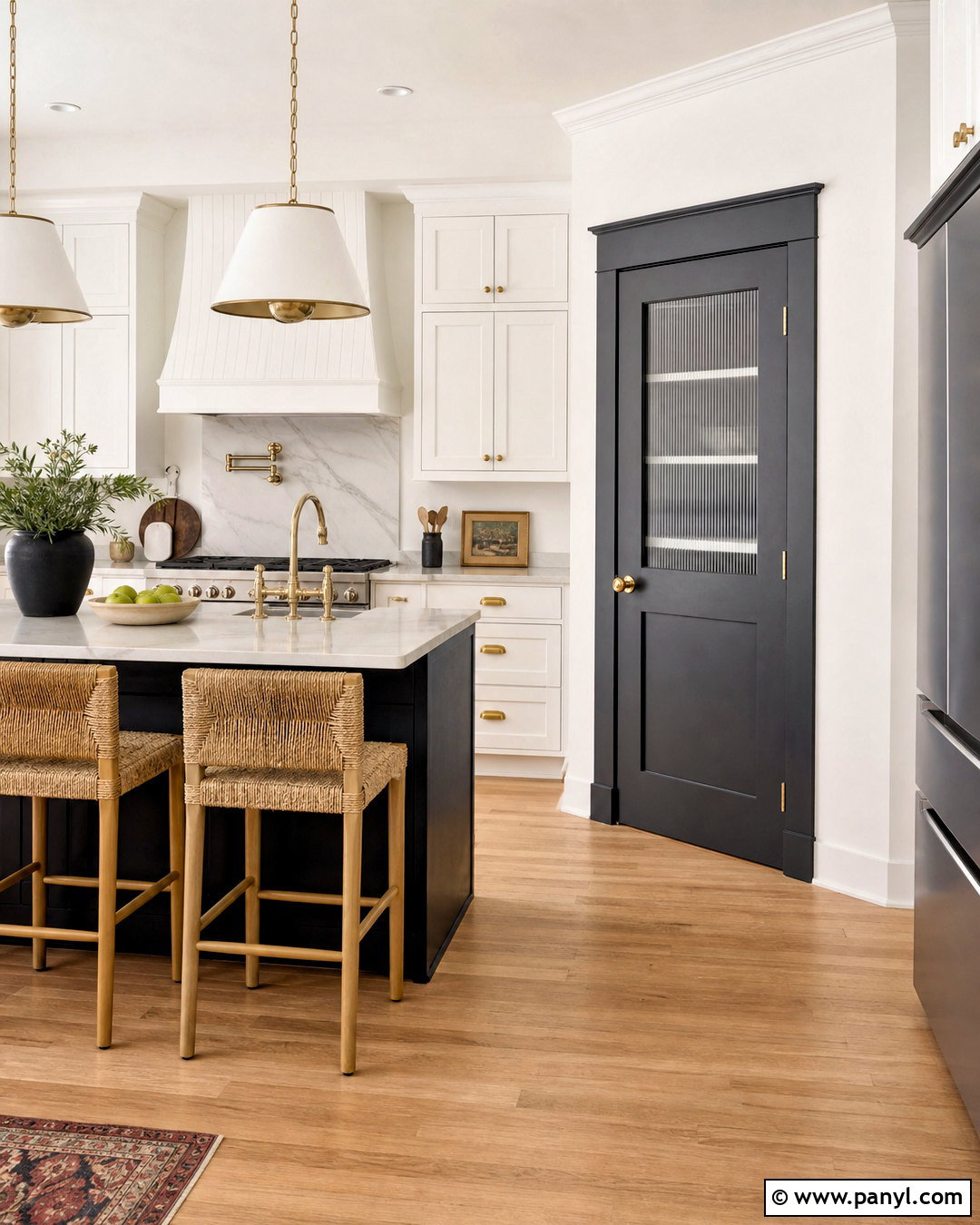
A charcoal pantry door can ground a light kitchen and connect naturally with dark hardware or appliances. Choose a simple Shaker door or a glass-panel version if organized shelves are meant to remain visible. Surround it with creamy white cabinets, warm quartz countertops, and a backsplash in soft ivory tile. Light oak flooring and woven counter stools will keep the kitchen from feeling too cool. Add an aged brass lever or pantry latch to introduce warmth against the charcoal paint. Repeat the dark color sparingly through cabinet pulls, pendant details, or a small runner pattern. If the kitchen is compact, use satin paint and good overhead lighting so the door reflects some brightness. The completed scheme feels layered and practical, turning an ordinary storage entrance into a strong design feature.
18. Charcoal Bathroom Door
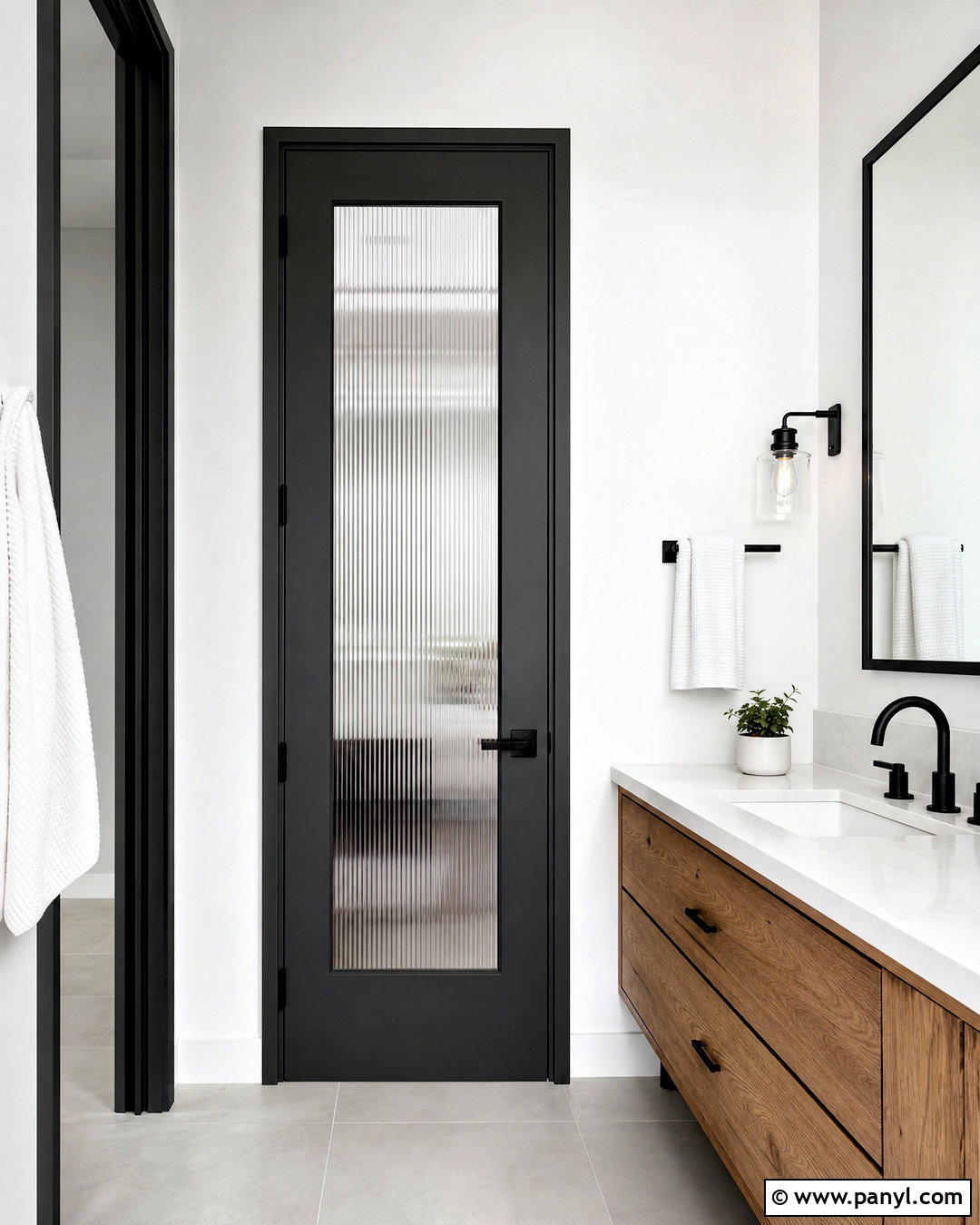
A charcoal bathroom door introduces depth while coordinating with tile, vanity finishes, and plumbing fixtures. For a light bathroom, pair the door with white walls, pale gray floor tile, and an oak vanity topped with white quartz. Use a matte black lever and matching hinges for a streamlined look, then repeat black in the mirror frame or faucets. If privacy and light are both priorities, choose a charcoal door with fluted glass. Satin or semi-gloss paint is practical for a moisture-prone area because its surface is easier to wipe clean. Add white towels, a textured bath mat, and one small plant for freshness. The full design feels crisp and modern, while natural wood prevents the black, gray, and white combination from becoming overly stark or clinical.
19. Charcoal Bedroom Door

A charcoal bedroom door can support a calm, restful design when it is balanced with soft fabrics and warm neutral colors. Paint a classic paneled door in satin charcoal and frame it with warm white trim. Continue the bedroom with light taupe walls, natural oak flooring, and a large cream rug. An upholstered bed in oatmeal linen, white bedding, and a textured gray throw will create gentle layers around the darker doorway. Use brushed brass knobs and bedside lamps to warm the palette. Charcoal curtain rods or narrow picture frames will subtly repeat the door color without overwhelming the room. Keep large furniture lighter than the door, especially in a small bedroom. The finished space feels grounded and cozy, with the door acting as a quiet architectural accent rather than a dominant feature.
20. Charcoal Hallway Doors
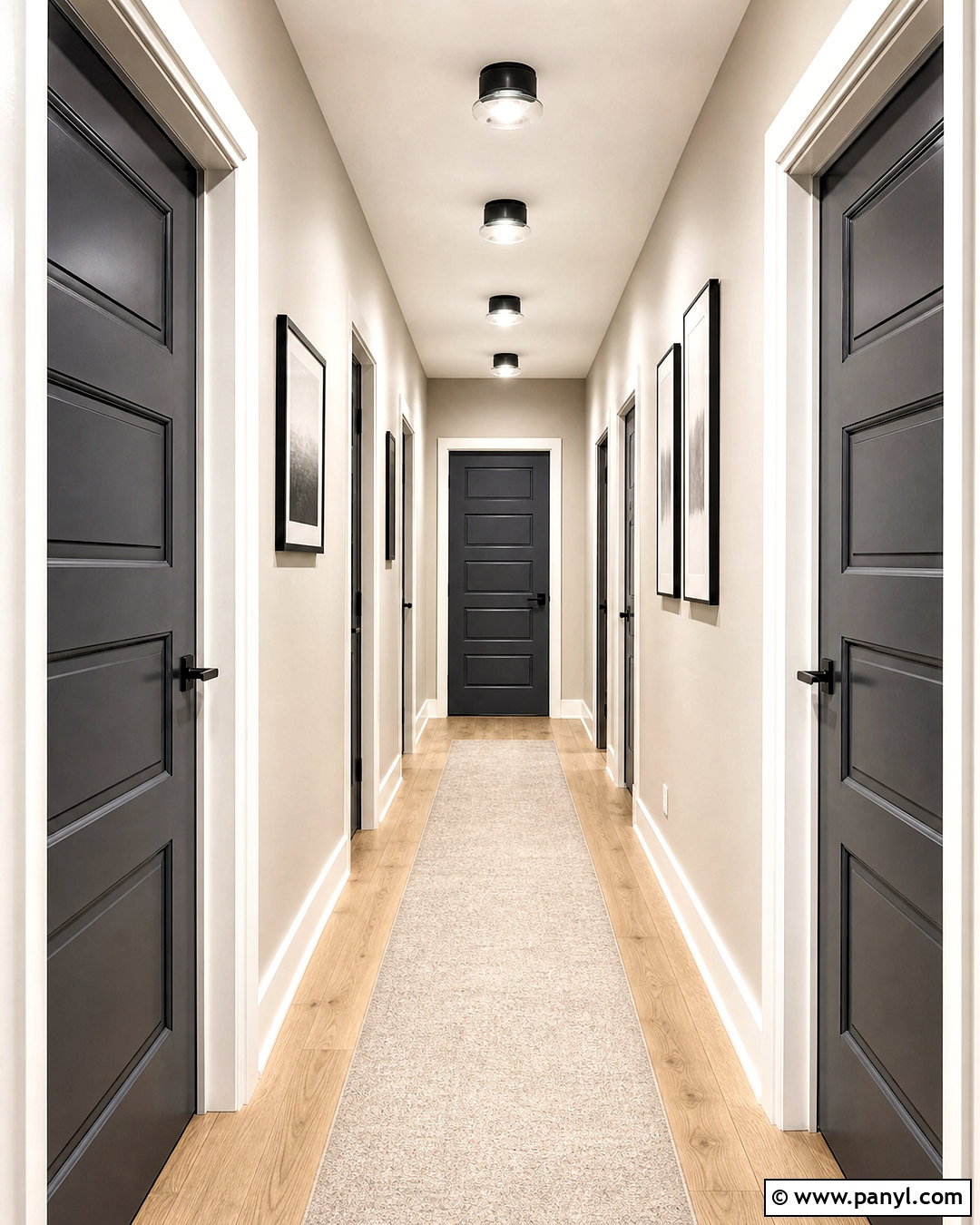
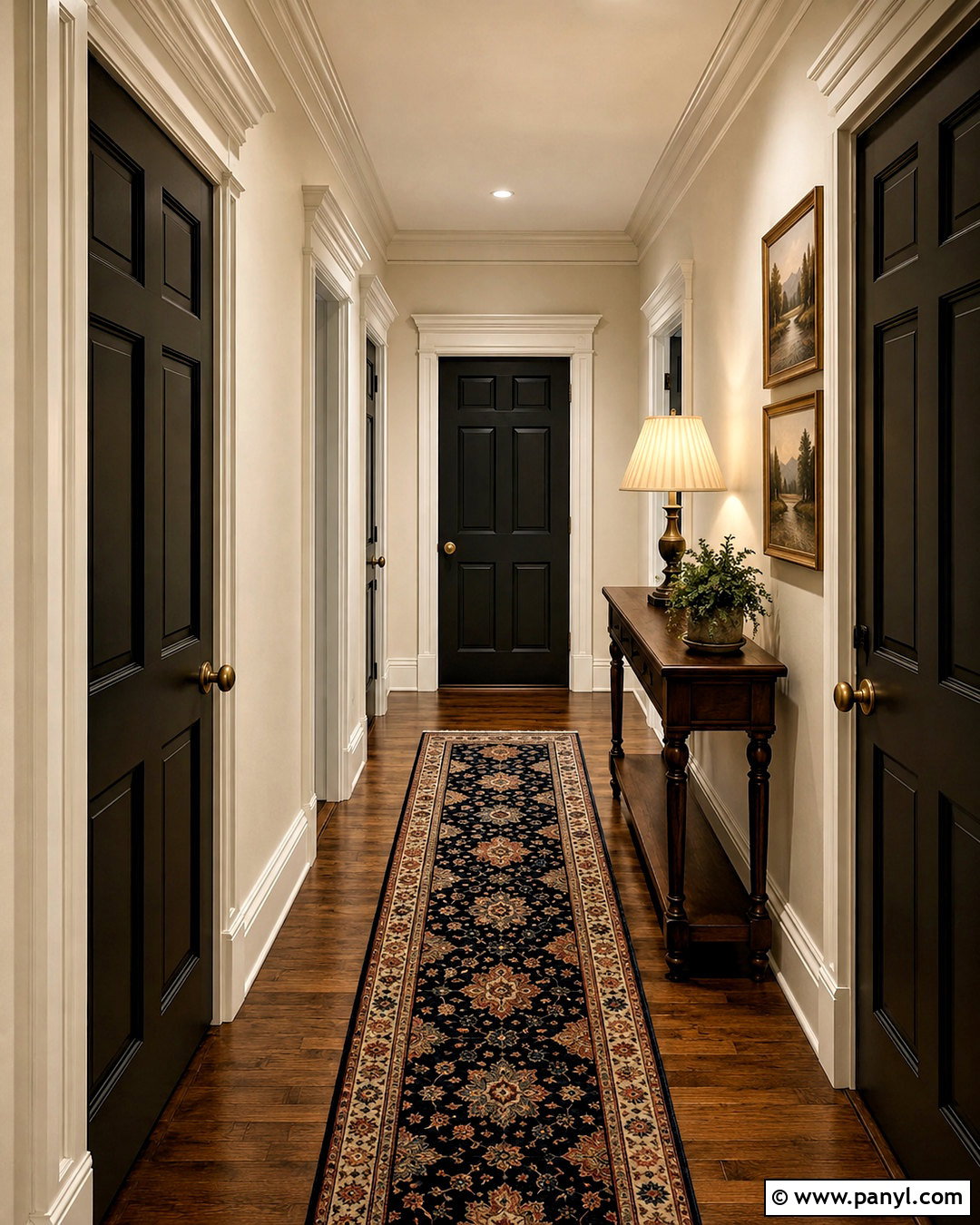
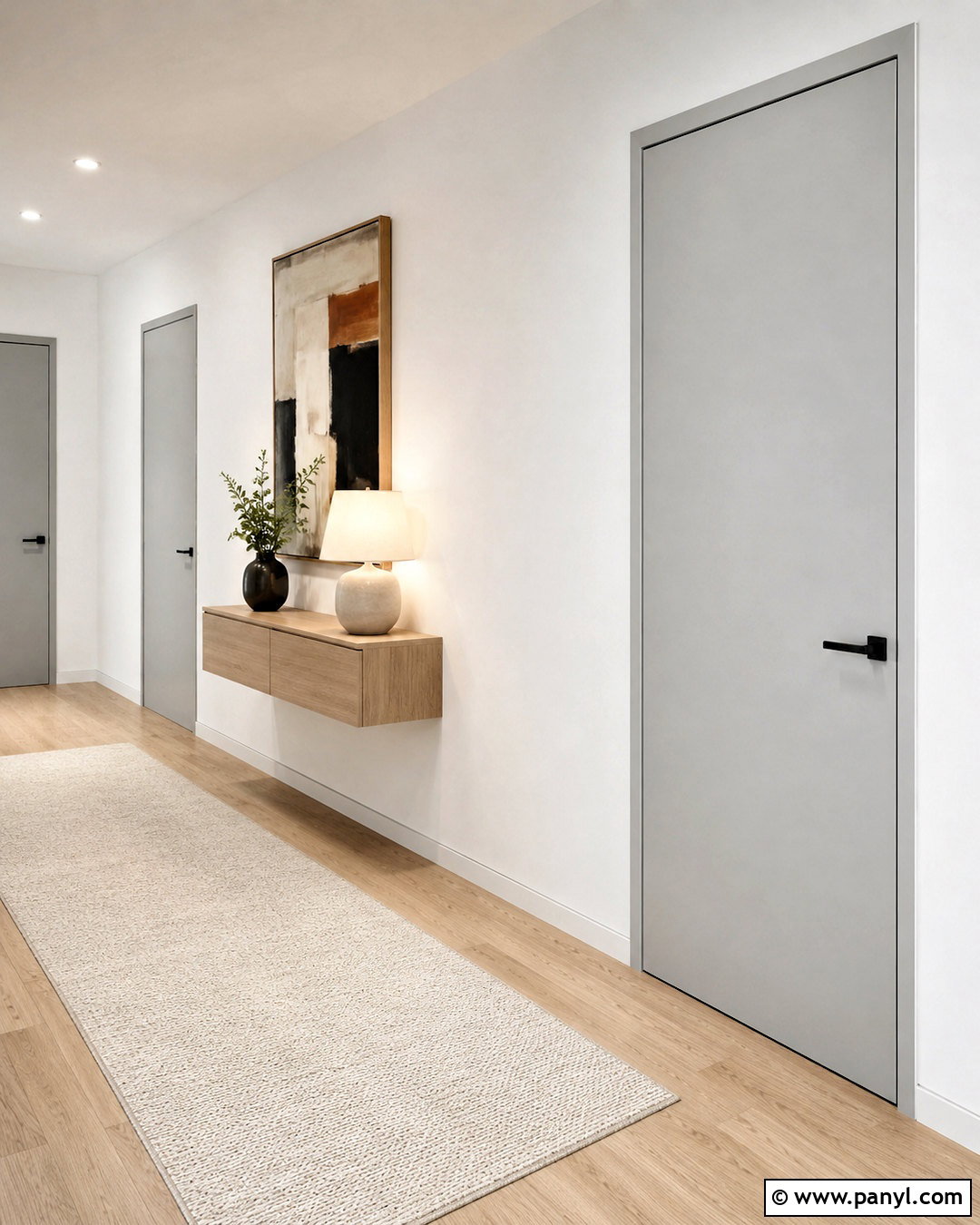
Painting several hallway doors charcoal creates rhythm and makes ordinary passages feel architecturally planned. Use the same charcoal shade, paint sheen, panel profile, and hardware on every door for consistency. Bright white trim will outline each opening, while pale greige walls soften the repeated contrast. Choose light oak flooring or a neutral runner to brighten the lower half of the hall. Matte black levers create a streamlined finish, although aged brass can add warmth in a traditional home. Install simple ceiling lights or wall sconces so the dark doors remain clear rather than shadowed. A few framed prints between doorways add personality without creating clutter. This coordinated design turns a row of functional bedroom, bathroom, and closet entrances into one cohesive interior feature.
Conclusion:
The best charcoal doors feel connected to the whole room rather than added as an isolated dark feature. White trim creates crisp contrast, matching charcoal trim feels modern, and natural wood casing introduces warmth. Hardware can also shift the mood, with brass producing a classic finish and matte black offering a streamlined look. Consider natural light, wall undertones, flooring, and nearby furniture before selecting your exact charcoal shade. Satin paint is a versatile choice for most rooms, while semi-gloss works well in busy or moisture-prone areas. From glass-panel pantry doors to coordinated hallway entrances, these 20 charcoal doors interior ideas can bring stronger definition, balance, and lasting character to nearly any home.

Related Ideas and Inspiration:
Leave a Reply