
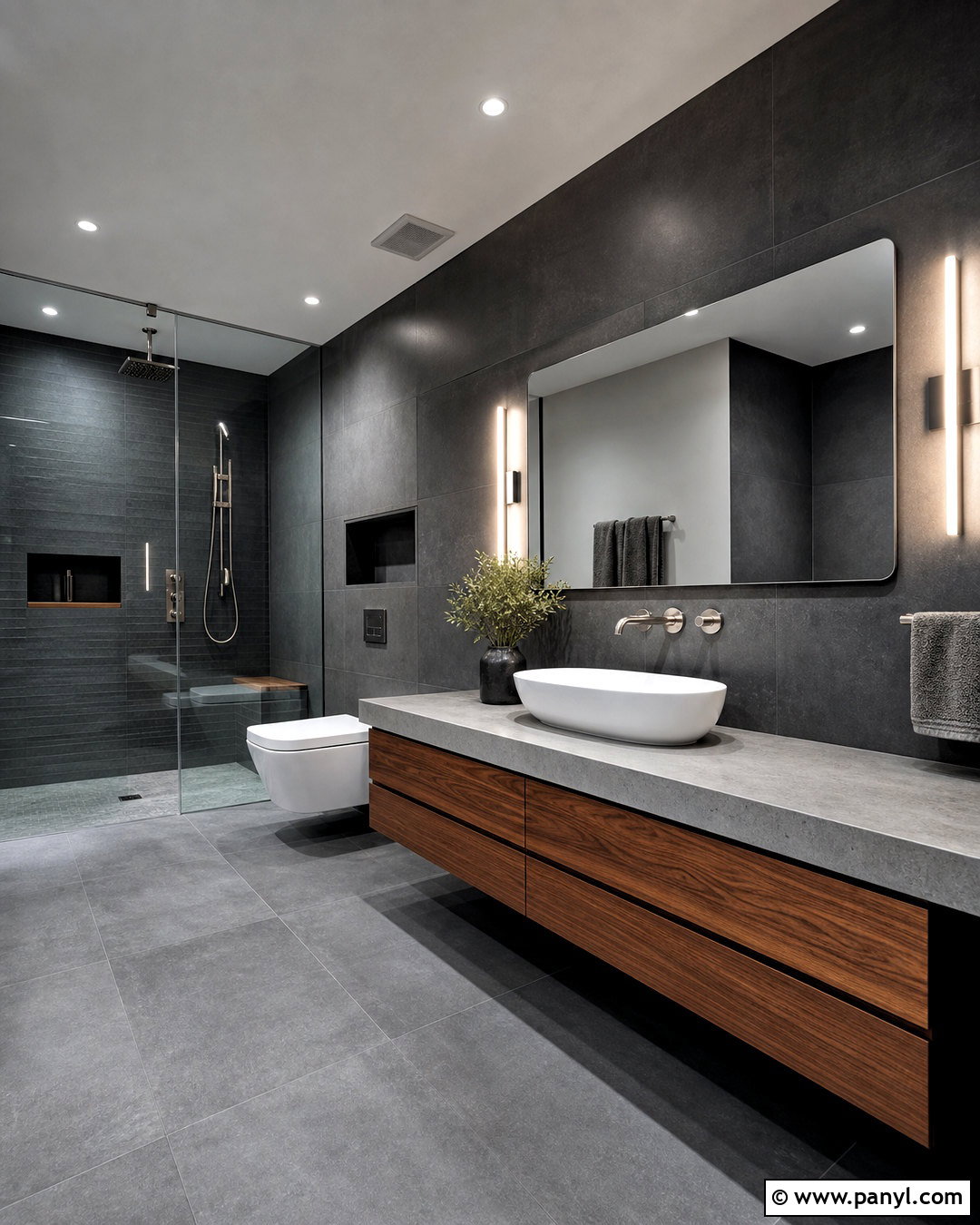
Charcoal grey brings depth, structure, and a polished mood to bathrooms of every size. The key is balancing this deep neutral with brighter surfaces, warm materials, layered lighting, and practical storage. Current bathrooms are moving beyond flat, all-grey schemes toward richer combinations featuring natural wood, tactile finishes, off-white fixtures, fluted details, and character-filled color accents. () Charcoal can cover the walls for an enveloping effect, define a dramatic shower, or ground the room through tile and cabinetry. It also works with modern, farmhouse, industrial, Japandi, and traditional interiors. Whether you are planning a major renovation or a weekend update, the following complete looks offer approachable and stylish **20 charcoal grey bathroom ideas**.

1. Charcoal Grey Bathroom With White Oak Vanity
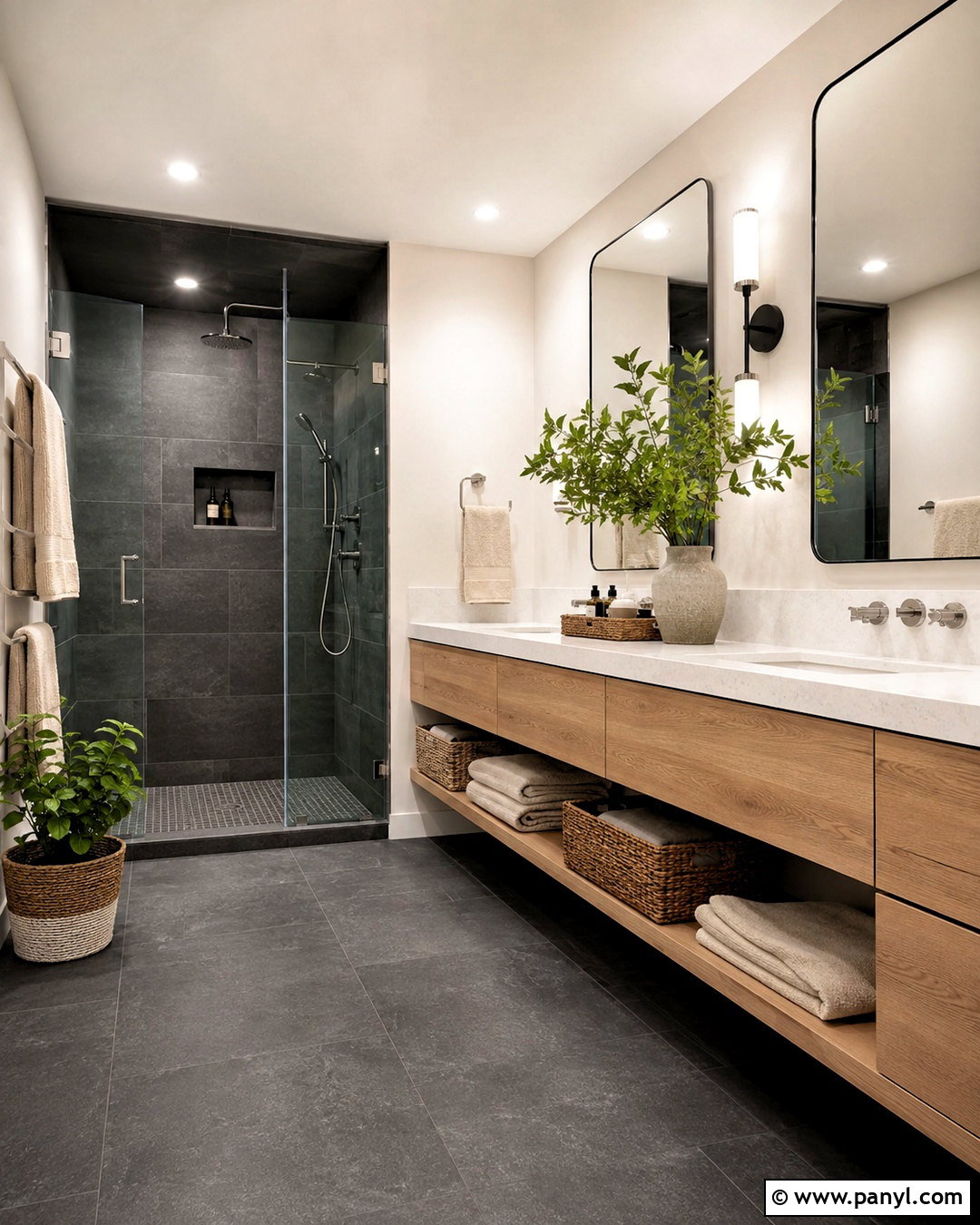
Warm white oak prevents a charcoal grey bathroom from feeling cold or overly formal. Use matte charcoal porcelain tile across the floor and shower walls, then keep the remaining walls soft white to reflect light. A floating white oak vanity creates breathing room underneath and makes the layout appear less crowded. Finish it with a simple white quartz countertop, an undermount sink, and brushed nickel hardware. A frameless glass shower maintains clear sightlines, while an arched mirror adds a welcome curve. Complete the room with cream towels, woven storage baskets, and one small leafy plant. This combination is especially effective in a medium-size bathroom where natural grain can soften the strong gray surfaces without weakening their visual impact.
2. Charcoal Grey Bathroom With White Marble
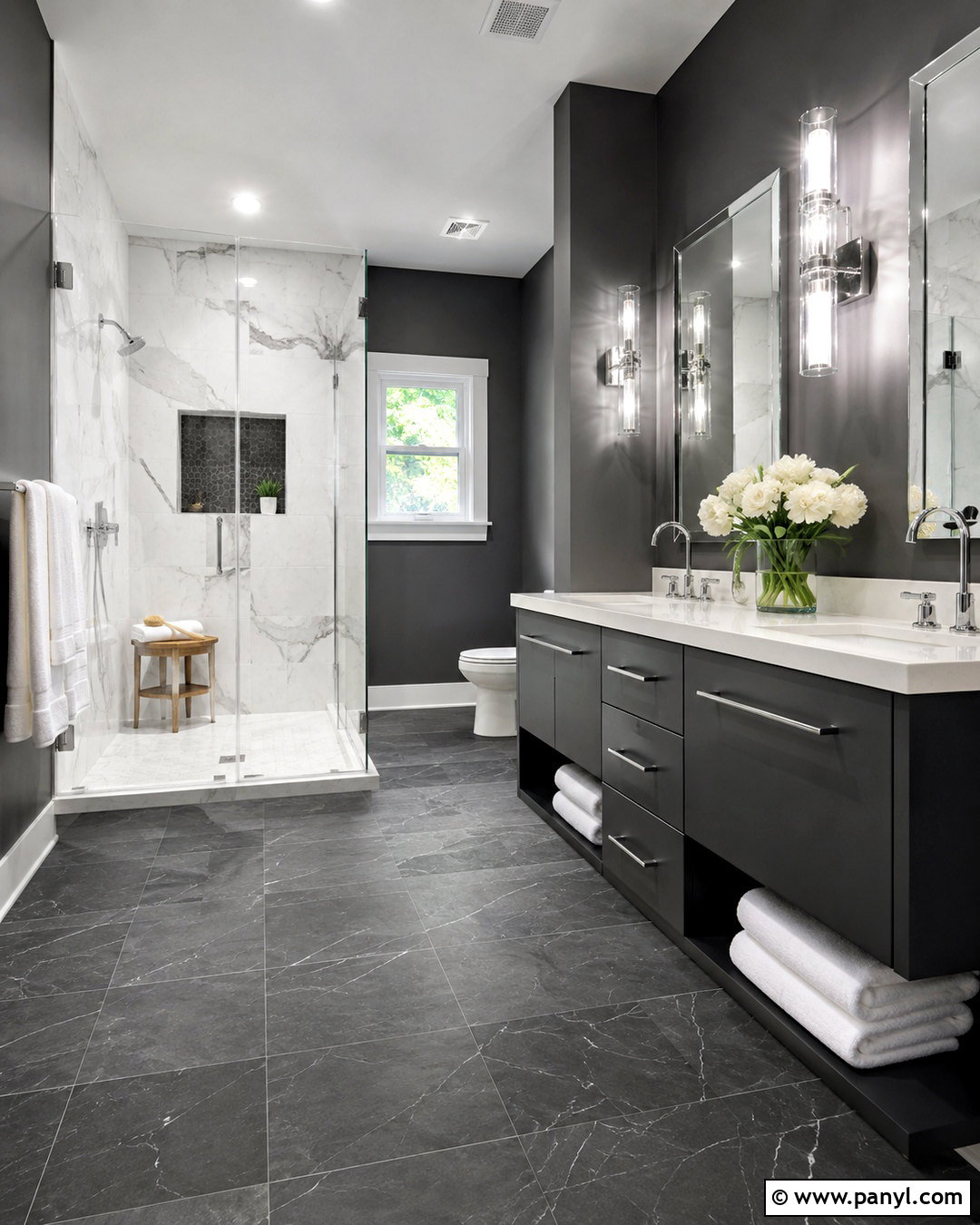
Crisp marble veining gives deep charcoal surfaces a lighter, more refined appearance. Start with large charcoal floor tiles and carry the same material onto one shower wall for visual continuity. Use white marble-look porcelain on the other shower walls and vanity backsplash, choosing a pattern with subtle gray veins rather than busy movement. A charcoal floating vanity helps connect the different surfaces, while polished chrome faucets add clean reflection. Keep the ceiling and upper walls bright white, and install a frameless shower enclosure to expose the marble. A wide mirror, two glass sconces, and fluffy white towels complete the balanced palette. The finished bathroom feels sophisticated and spacious because every dark element is paired with a brighter, light-reflecting surface.
3. Charcoal Grey Bathroom With Black Fixtures
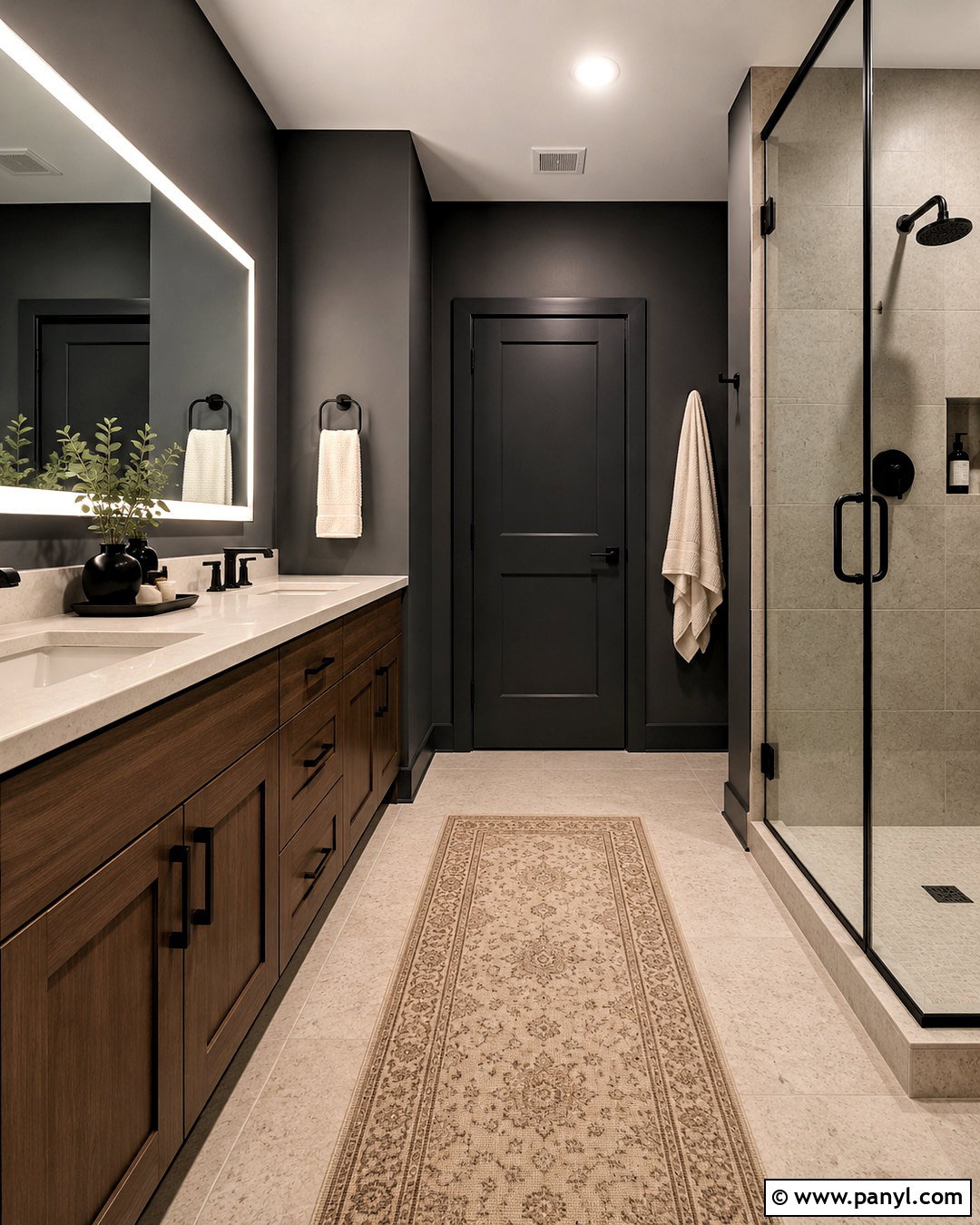
Can charcoal and black work together without making a bathroom feel gloomy? They can when the room includes enough white and warm texture. Choose charcoal grey walls with a slightly warm undertone, then add a white vanity top, white basin, and light stone floor. Matte black faucets, shower controls, towel bars, and a slim black-framed shower enclosure create a crisp outline throughout the space. Bring in a medium-tone walnut vanity so the black details do not disappear against the dark walls. A large backlit mirror and bright ceiling lighting are essential for clarity. Finish the room with ivory towels and a patterned bath runner containing charcoal, tan, and cream. The result feels graphic, modern, and intentionally layered rather than simply dark.
4. Charcoal Grey Bathroom With Brass Hardware
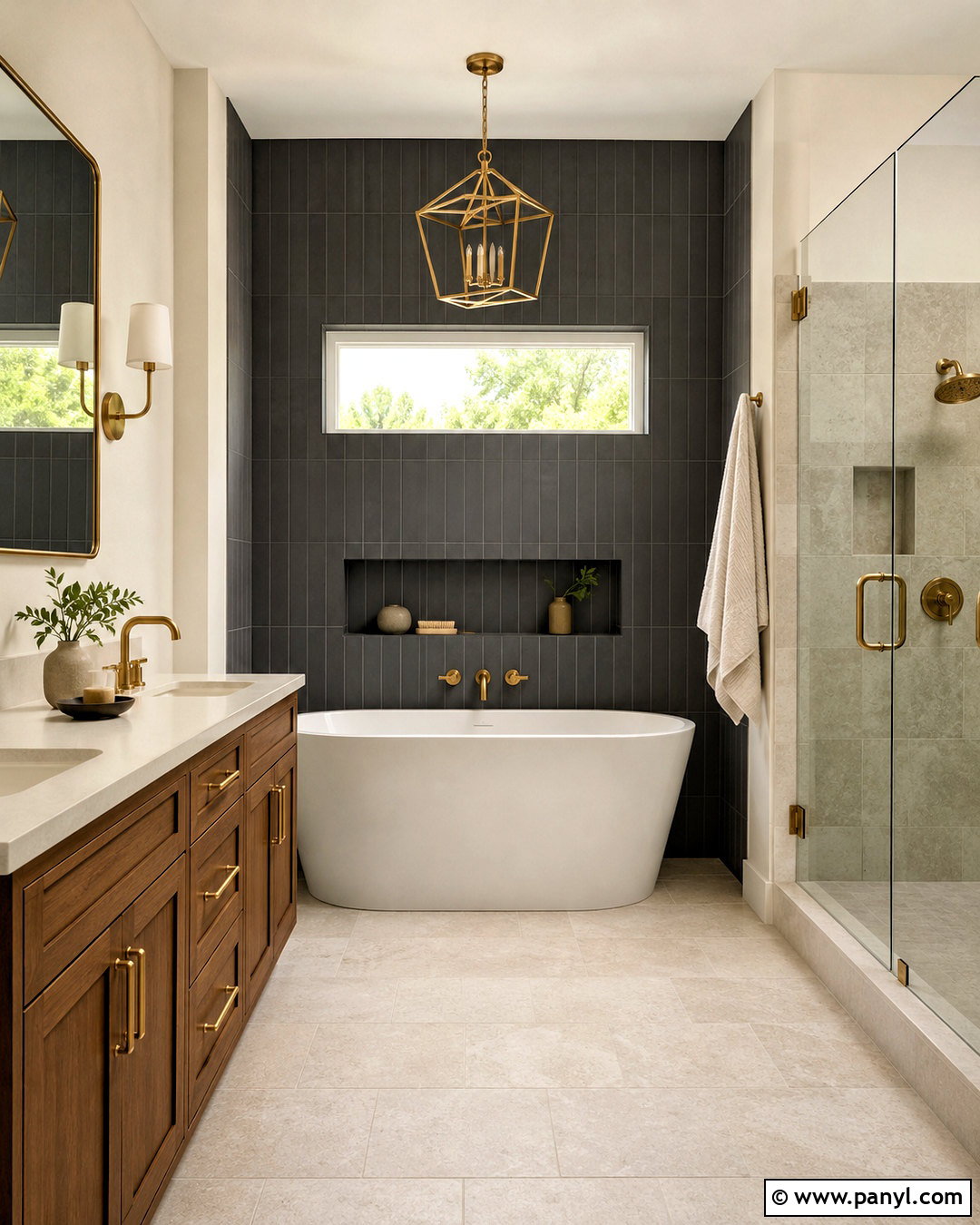
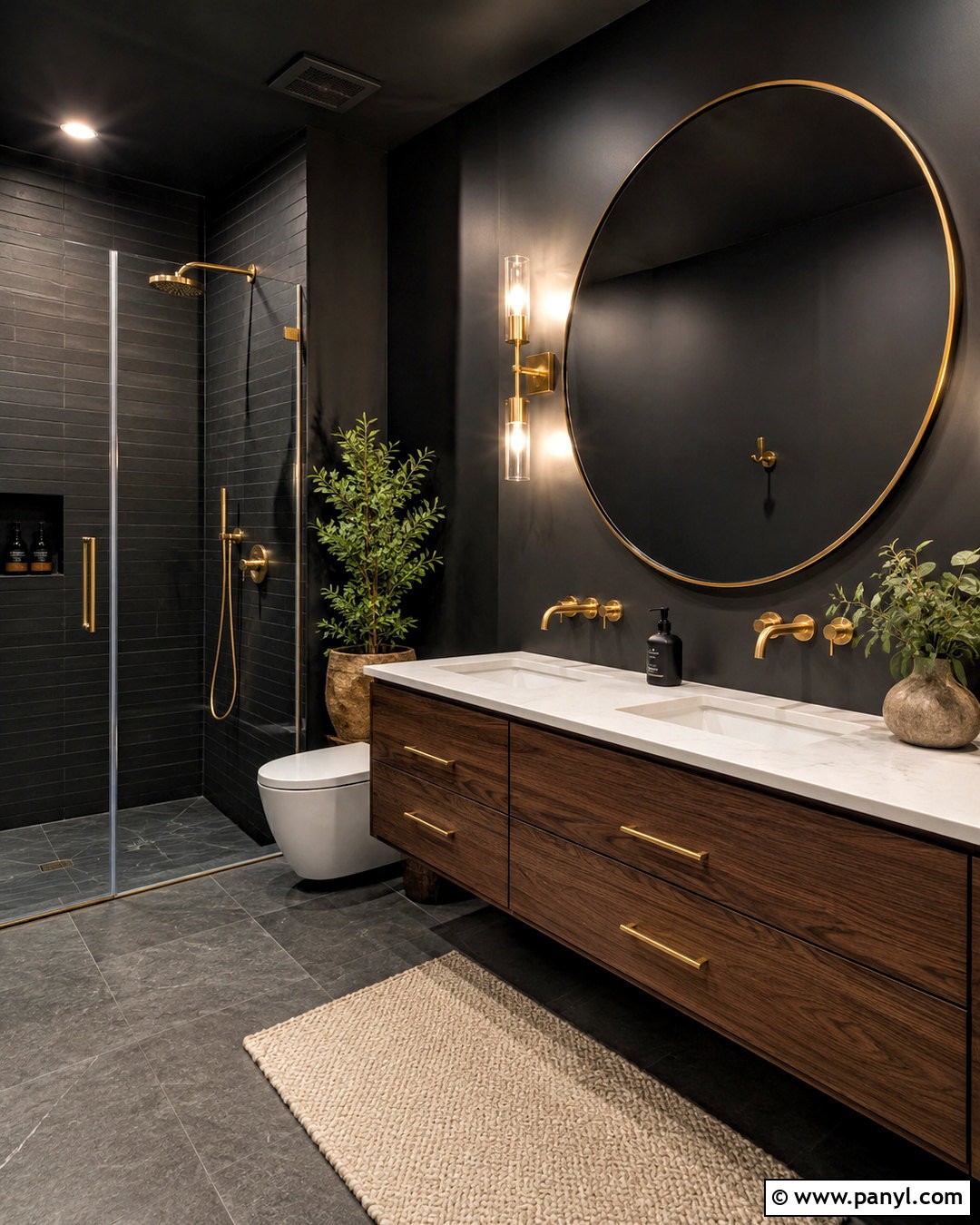
Brushed brass adds a soft golden glow that makes charcoal grey feel warmer and more luxurious. Cover the vanity wall with narrow charcoal tiles in a vertical layout, using matching grout for a seamless backdrop. Place a natural walnut vanity against the tile and top it with creamy quartz. Repeat brushed brass on the faucet, cabinet pulls, mirror frame, sconces, and shower hardware, but keep the designs simple to avoid excess shine. Warm white walls and pale limestone flooring brighten the rest of the room. Add a frameless shower, an ivory shower curtain if needed, and neatly folded oatmeal-colored towels. This complete scheme suits both contemporary and transitional bathrooms, offering noticeable contrast while remaining calm enough for everyday use.
5. Small Charcoal Grey Bathroom
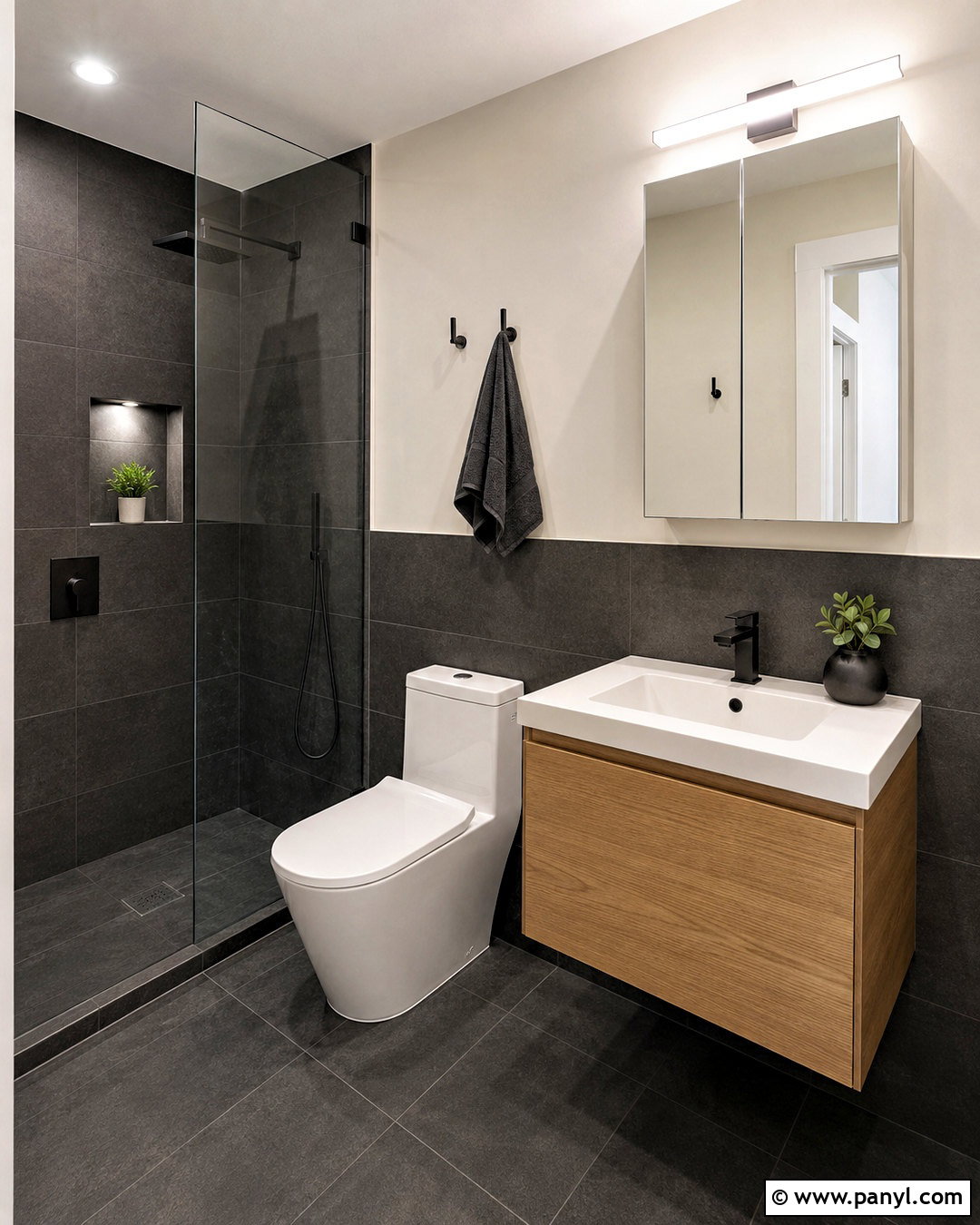
In a small bathroom, charcoal works best when it defines selected surfaces instead of overwhelming the entire layout. Install charcoal grey tile on the floor and along the lower half of the walls. Paint the upper walls and ceiling a warm off-white to keep the room open and bright. A compact wall-mounted oak vanity provides storage without consuming valuable floor area, while a mirrored medicine cabinet adds hidden organization. Choose a white sink and toilet for clear contrast. Use a fixed frameless glass panel around the shower rather than a heavy curtain or framed enclosure. A recessed shower niche, wall-mounted faucet, and vertical towel hooks reduce visual clutter. Bright overhead lighting and mirror sconces complete this practical, balanced small-space design.
6. Charcoal Grey Subway Tile Bathroom
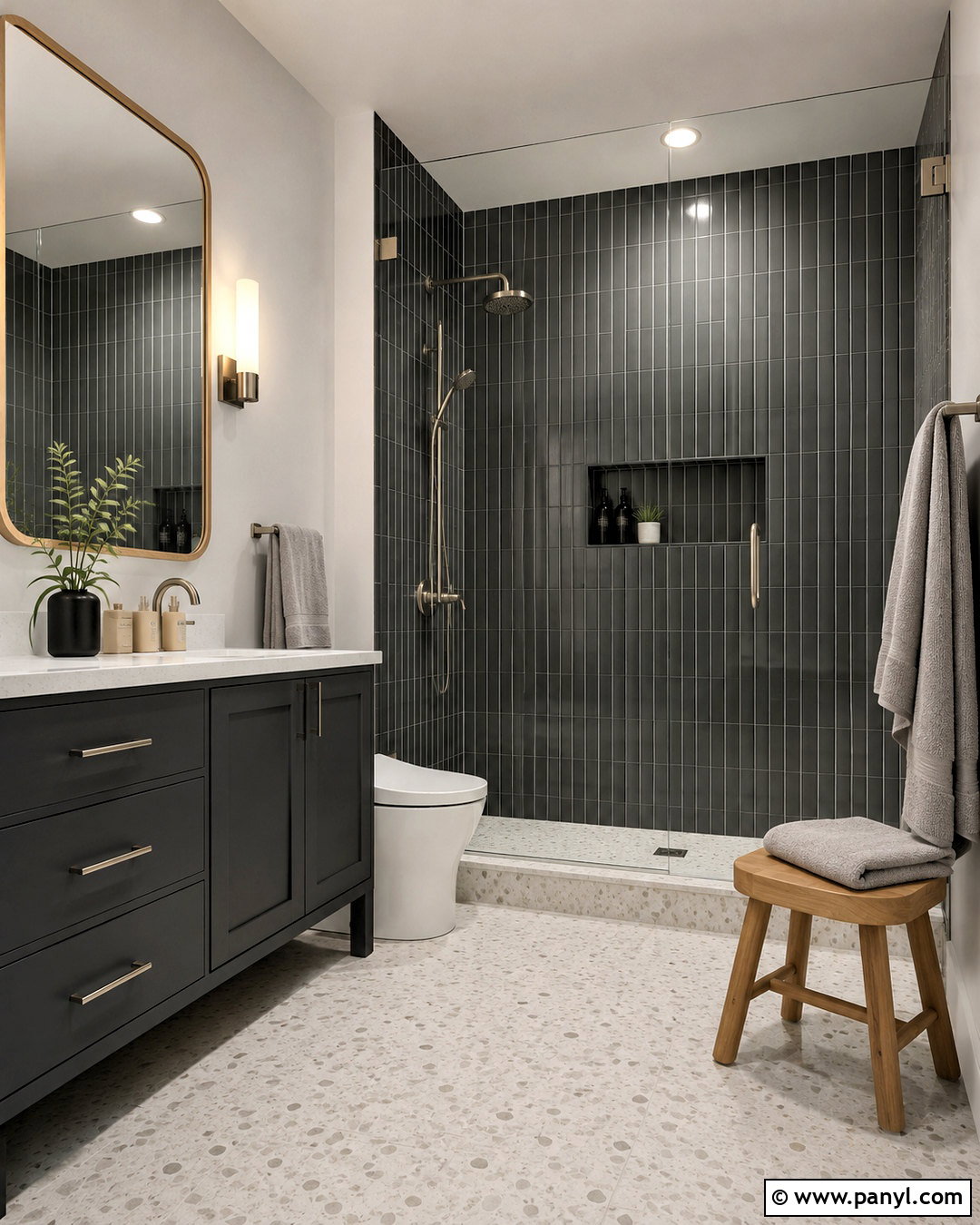
Charcoal subway tile offers familiar structure with a stronger, more contemporary color. Run glossy charcoal tiles from floor to ceiling inside the shower, stacking them vertically to emphasize height. Use light gray grout for a visible but gentle grid, then repeat charcoal on the vanity front to connect the room. Balance the shower with warm white walls, a pale terrazzo floor, and a white quartz countertop. A frameless glass enclosure allows the tile pattern to remain fully visible. Select brushed nickel fixtures for subtle reflection and a light oak mirror frame for warmth. Soft gray towels, ceramic accessories, and a simple wooden stool finish the room. This approach creates texture and rhythm without relying on complicated decorative patterns.
7. Large Charcoal Grey Tile Bathroom
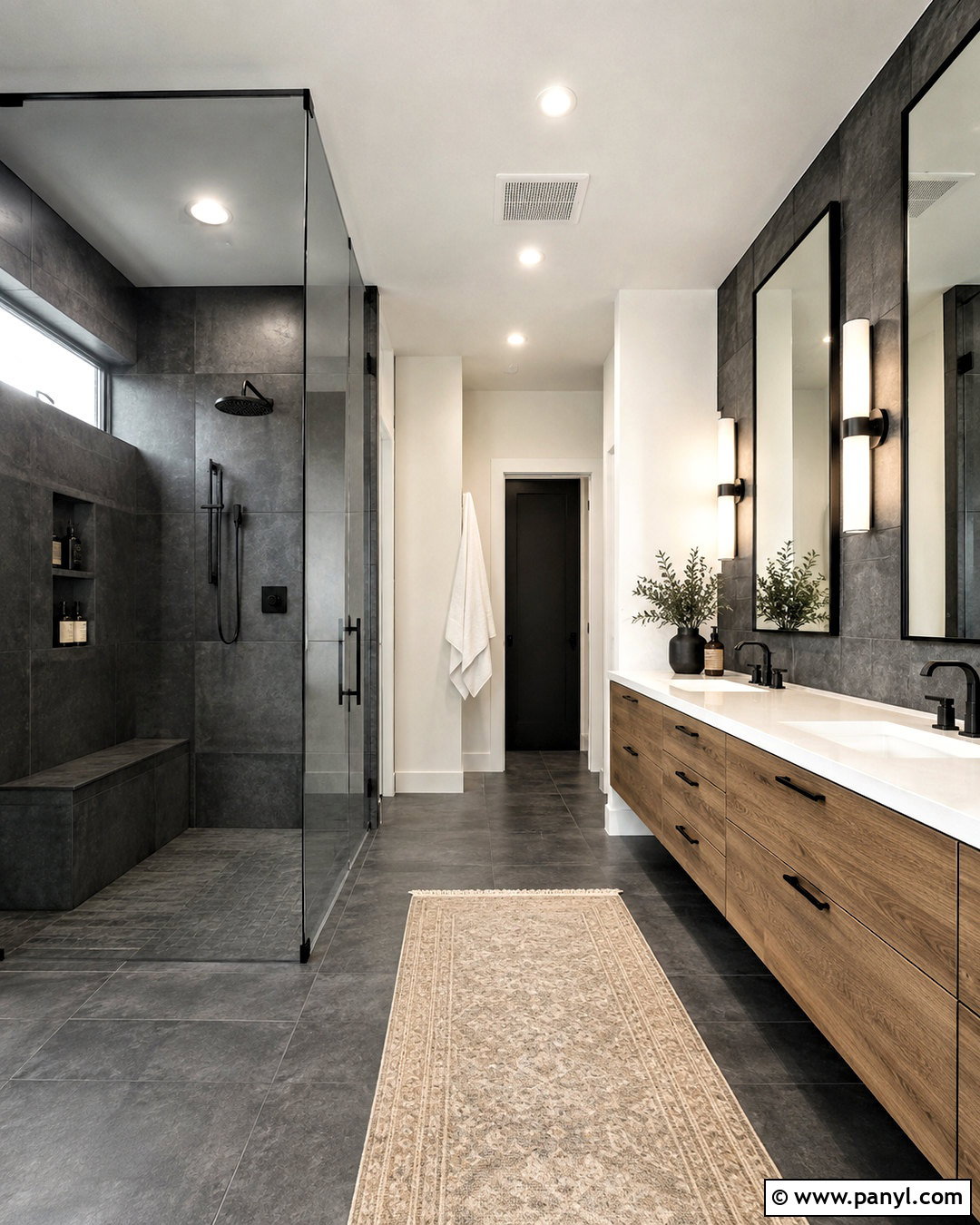
Large-format charcoal tile creates a calm, uninterrupted background with fewer grout lines to maintain. Use matte 24-by-48-inch porcelain tiles across the bathroom floor and inside a spacious walk-in shower. Continue one tiled wall behind a floating double vanity to make the design feel cohesive. Choose a rift-sawn oak vanity, white solid-surface countertop, and two rectangular mirrors with slim black frames. Recessed ceiling lights, mirror lighting, and a waterproof shower light ensure the dark surfaces remain clearly visible. Keep the remaining walls creamy white and introduce softness with oversized white towels and a neutral runner. A built-in shower bench and long recessed niche make the room more functional while preserving the streamlined appearance of the broad charcoal surfaces.
8. Charcoal Grey Concrete Bathroom
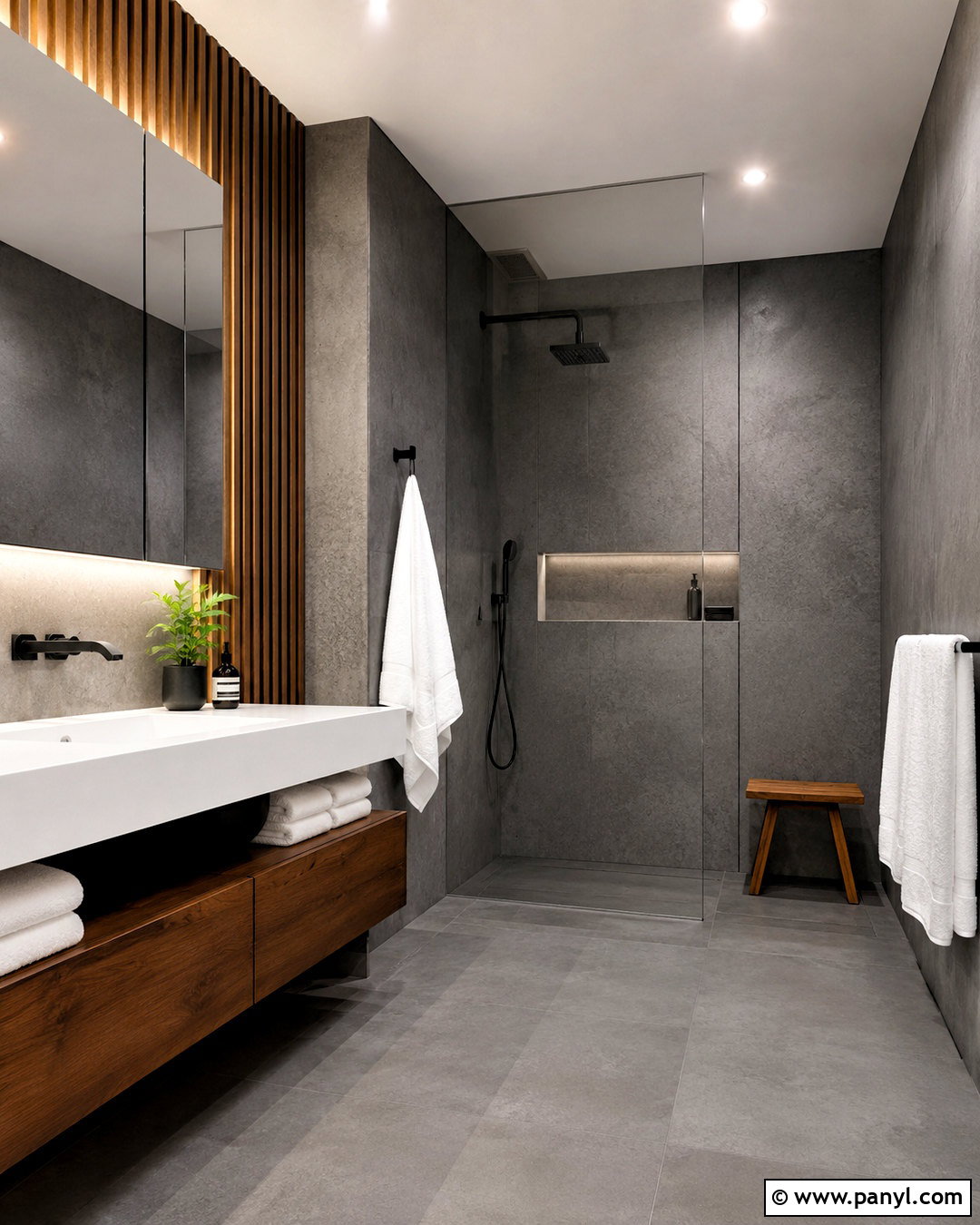
Raw texture gives charcoal grey an industrial character without requiring a harsh or unfinished room. Apply waterproof charcoal concrete-look panels inside the shower and use a coordinating porcelain floor throughout the bathroom. Pair these surfaces with a floating walnut vanity and a thick white integrated sink. Black metal fixtures, a simple glass shower screen, and an oversized round mirror reinforce the architectural look. Warm the room with a slatted wood ceiling accent or a teak shower bench. Concealed storage keeps bottles and grooming items away from the open surfaces. Add soft white towels and warm neutral accessories rather than more gray. Bright, evenly distributed lighting reveals the concrete texture and ensures the completed bathroom feels modern, comfortable, and carefully designed.
9. Charcoal Grey Japandi Bathroom
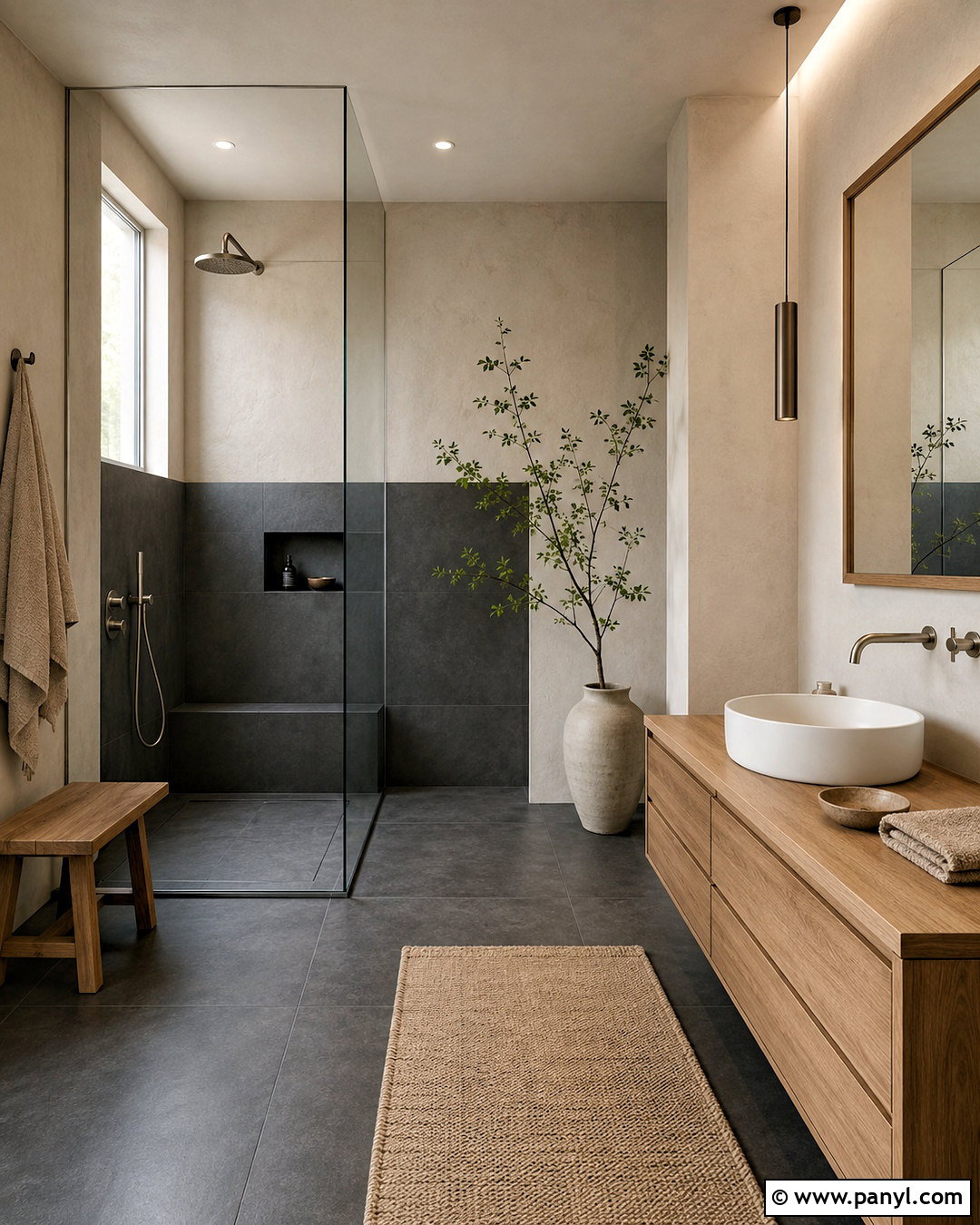
A quiet Japandi bathroom combines charcoal’s visual weight with pale wood, simple forms, and natural texture. Use smooth charcoal tiles on the floor and lower shower walls, then choose warm off-white plaster-effect walls above. Install a low-profile light oak vanity with integrated handles and a white vessel sink. A frameless glass shower, wall-mounted brushed nickel faucet, and recessed storage maintain the uncluttered layout. Add a narrow oak bench beside the shower and keep textiles in cream, sand, and muted taupe. One ceramic vase with a simple green branch provides an organic finishing touch. Indirect lighting beneath the vanity and around the mirror creates depth, while bright overhead lights keep the space functional. Every element should feel useful, balanced, and intentionally restrained.
10. Charcoal Grey Spa Bathroom
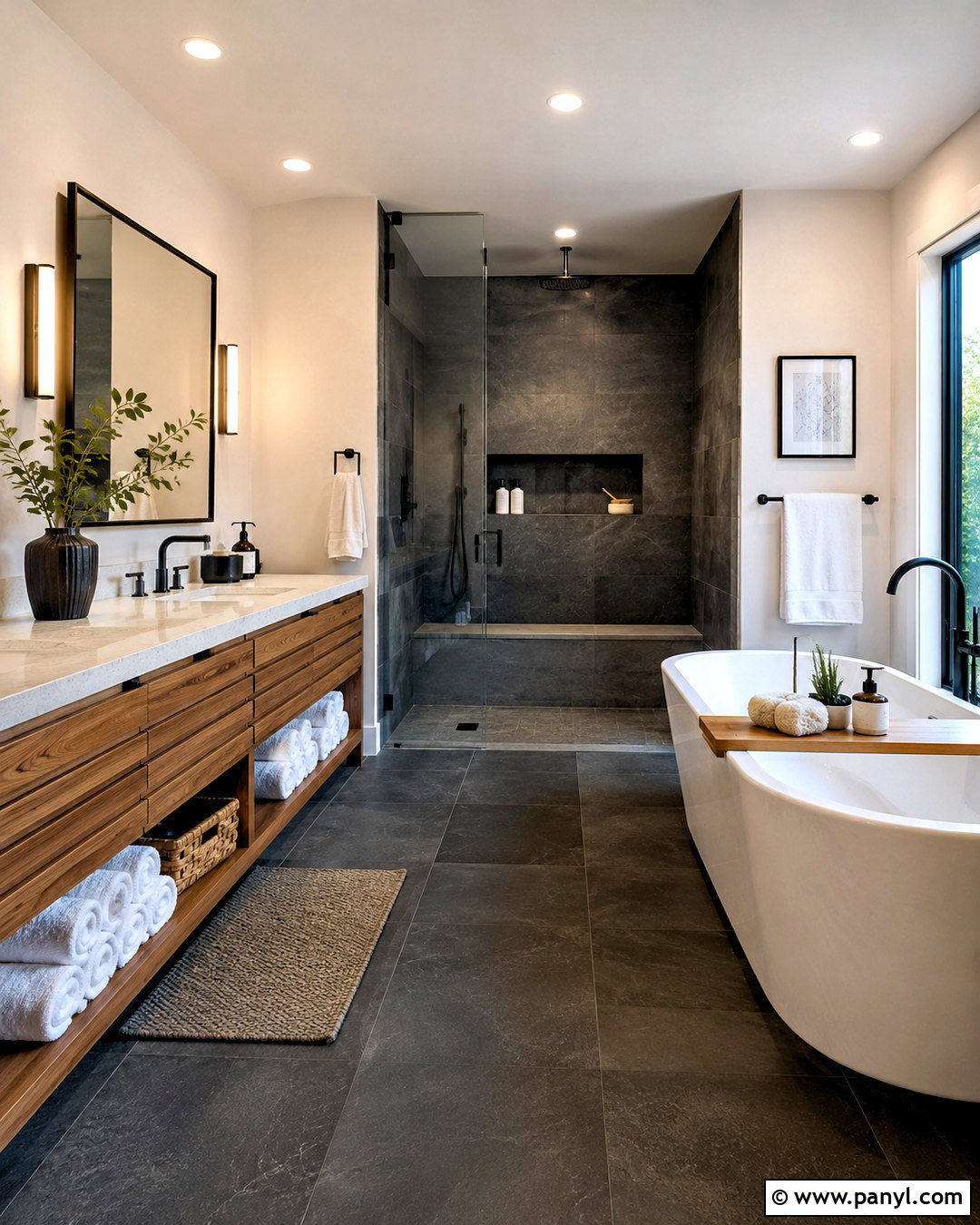
Imagine stepping into a bathroom where deep gray stone, warm wood, and soft textiles create a relaxing retreat. Cover the floor and walk-in shower with charcoal slate-look porcelain, then install a freestanding white tub against a warm ivory wall. A long teak vanity with a pale stone countertop adds natural contrast and generous storage. Include a rain shower, built-in bench, recessed niches, and frameless glass enclosure for a streamlined bathing zone. Layer the lighting with ceiling fixtures, wall sconces, and concealed illumination beneath the vanity. Rolled white towels, a wooden bath tray, and a large woven basket make the room feel comfortable rather than staged. Keep decorations minimal so the tactile materials and well-planned layout remain the focus.
11. Charcoal Grey Farmhouse Bathroom
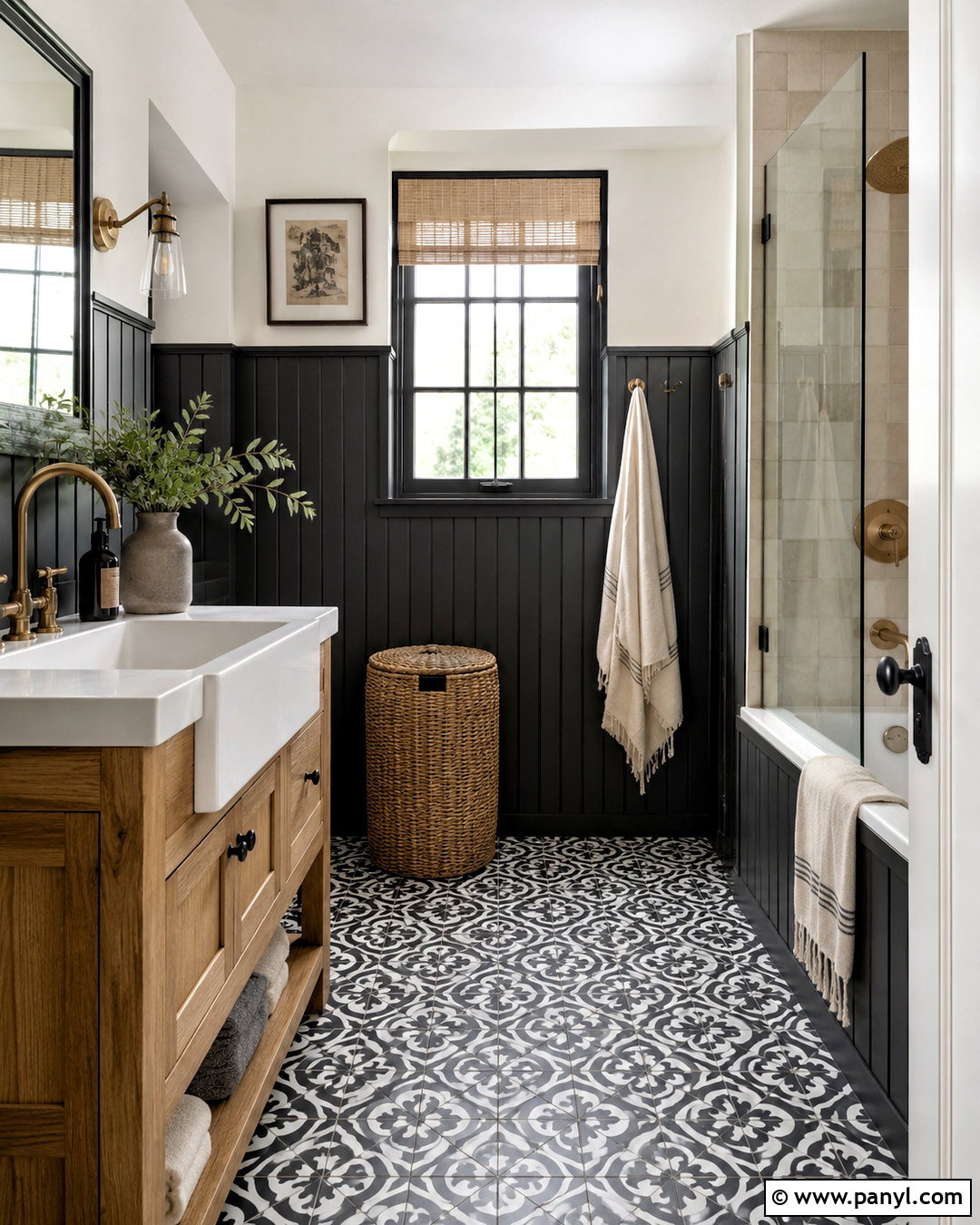
Charcoal grey can give farmhouse design a cleaner and more current foundation. Paint vertical wall paneling a deep charcoal shade, stopping it above the vanity backsplash so the room does not feel enclosed. Use warm white paint on the upper walls and a small black-and-white patterned tile on the floor. A natural oak vanity with shaker-style doors provides practical storage and rustic warmth. Add a white apron-front sink, brushed brass faucet, and simple framed mirror. A white tub-shower combination keeps the room bright, while a clear glass panel offers a lighter alternative to a bulky curtain. Complete the look with cream cotton towels, a woven hamper, and understated ceramic accessories. The final space feels relaxed and familiar without relying on overly distressed finishes.
12. Charcoal Grey Powder Room
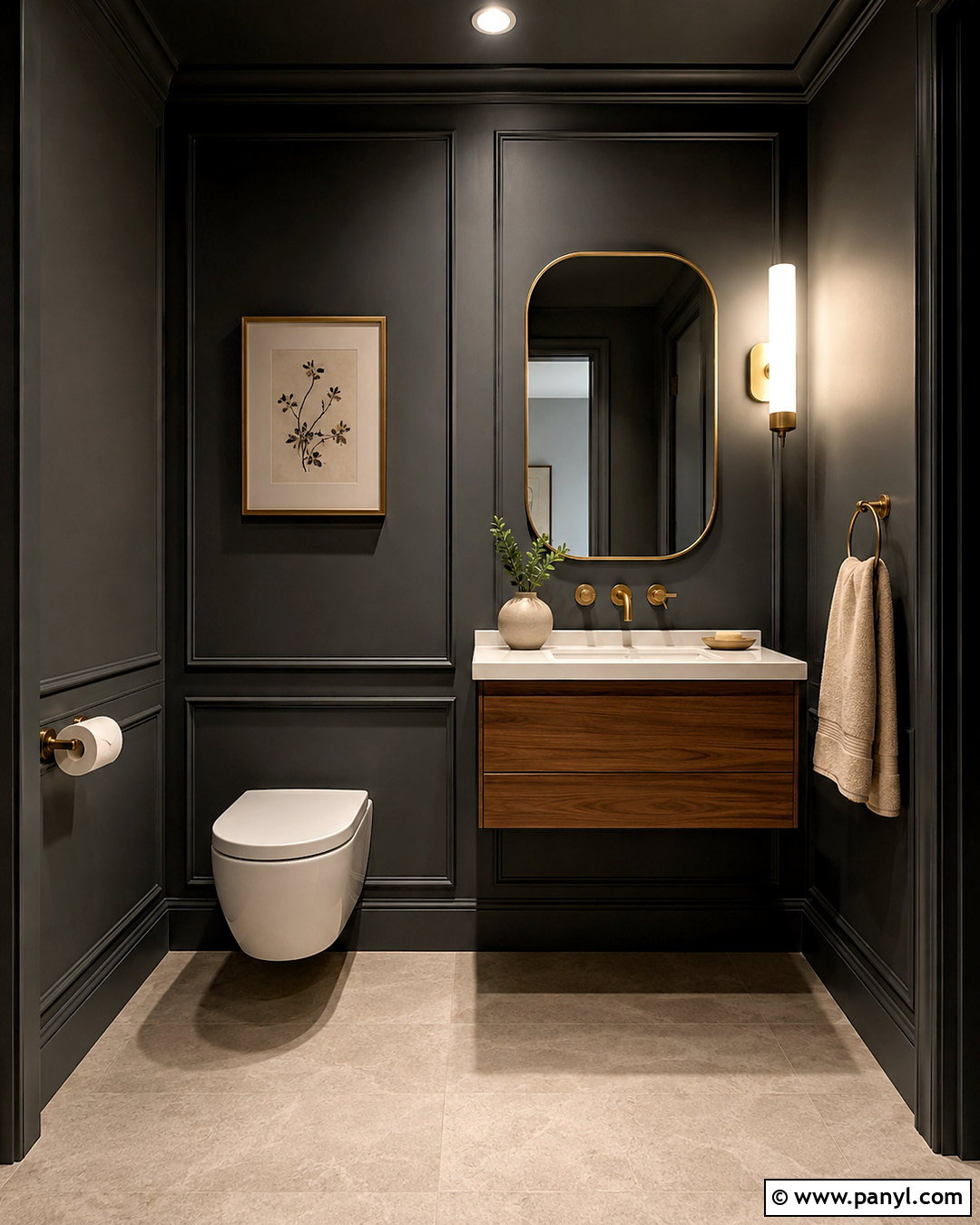
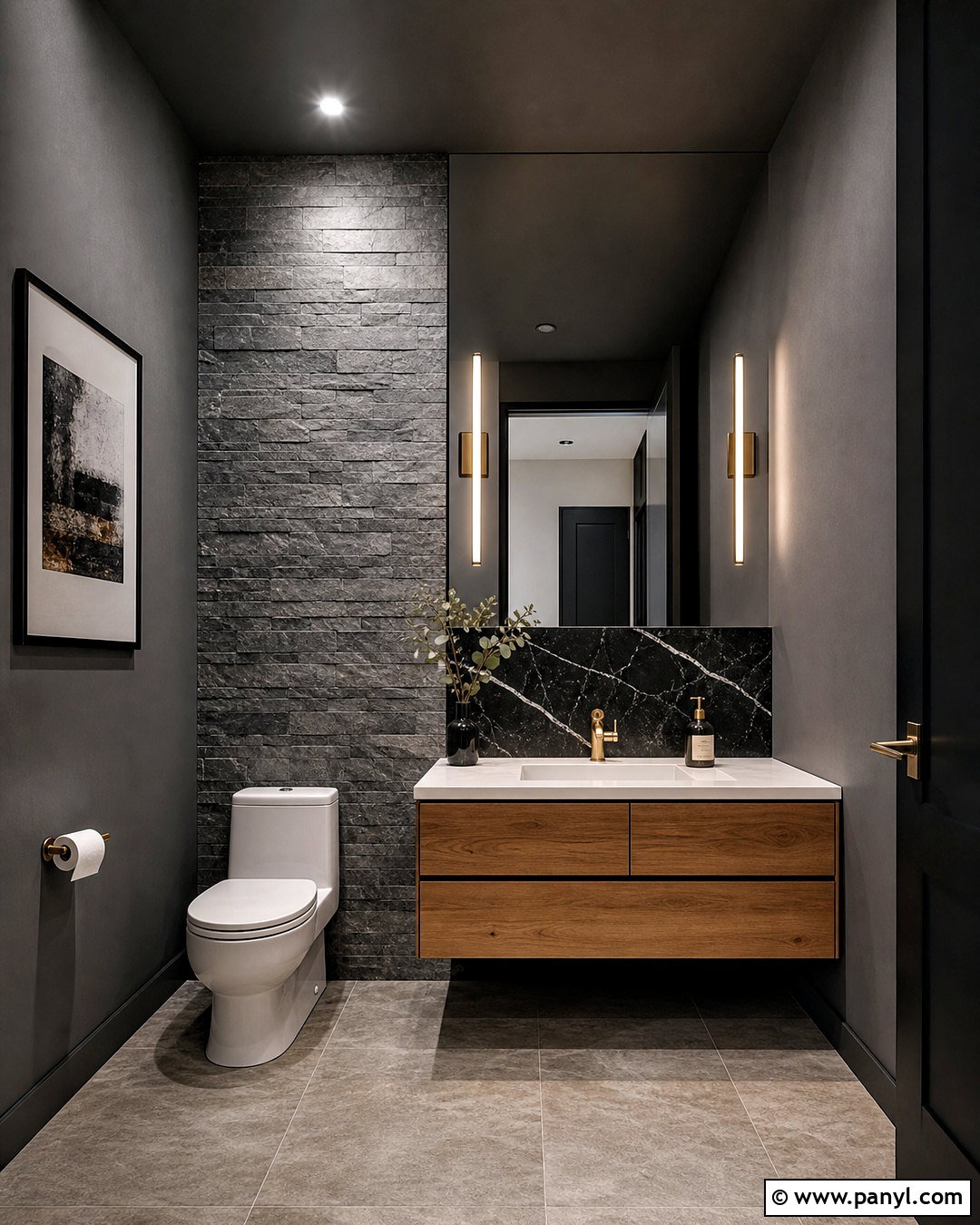
A powder room is an ideal place to use charcoal on every wall because the compact size creates a deliberate, cocooning effect. Paint the walls, trim, and ceiling the same deep charcoal grey, choosing a moisture-resistant finish with a soft sheen. Install a small wall-hung walnut vanity with a white stone top to preserve floor space. An aged brass faucet, sculptural wall sconce, and rounded brass mirror introduce warmth and reflection. Use pale stone tile underfoot so the room retains a bright foundation. A white toilet and basin offer crisp contrast against the saturated background. Finish with one framed print, a cream hand towel, and a small ceramic tray. The limited palette keeps this bold room polished rather than crowded or visually chaotic.
13. Charcoal Grey Bathroom With Sage Green
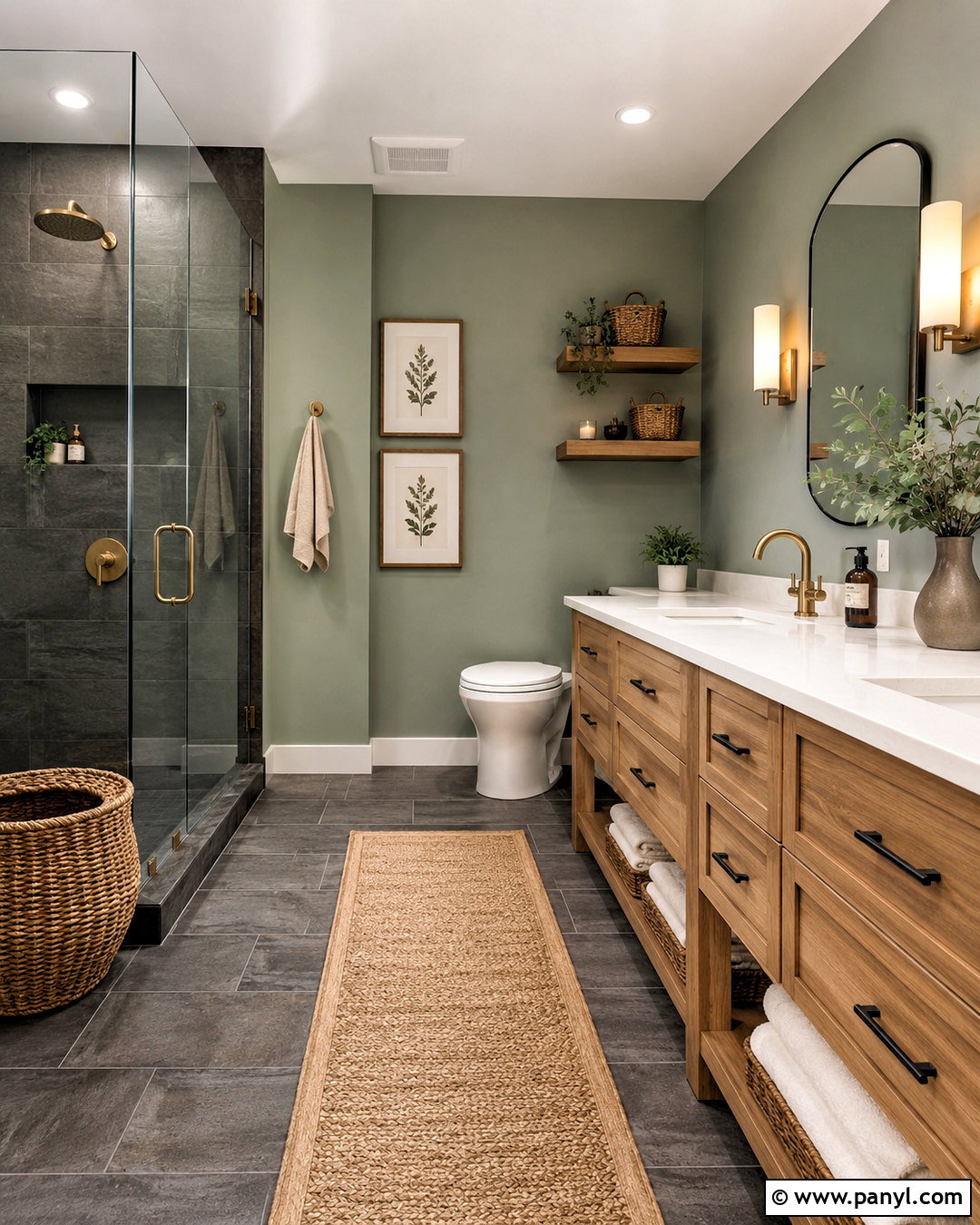
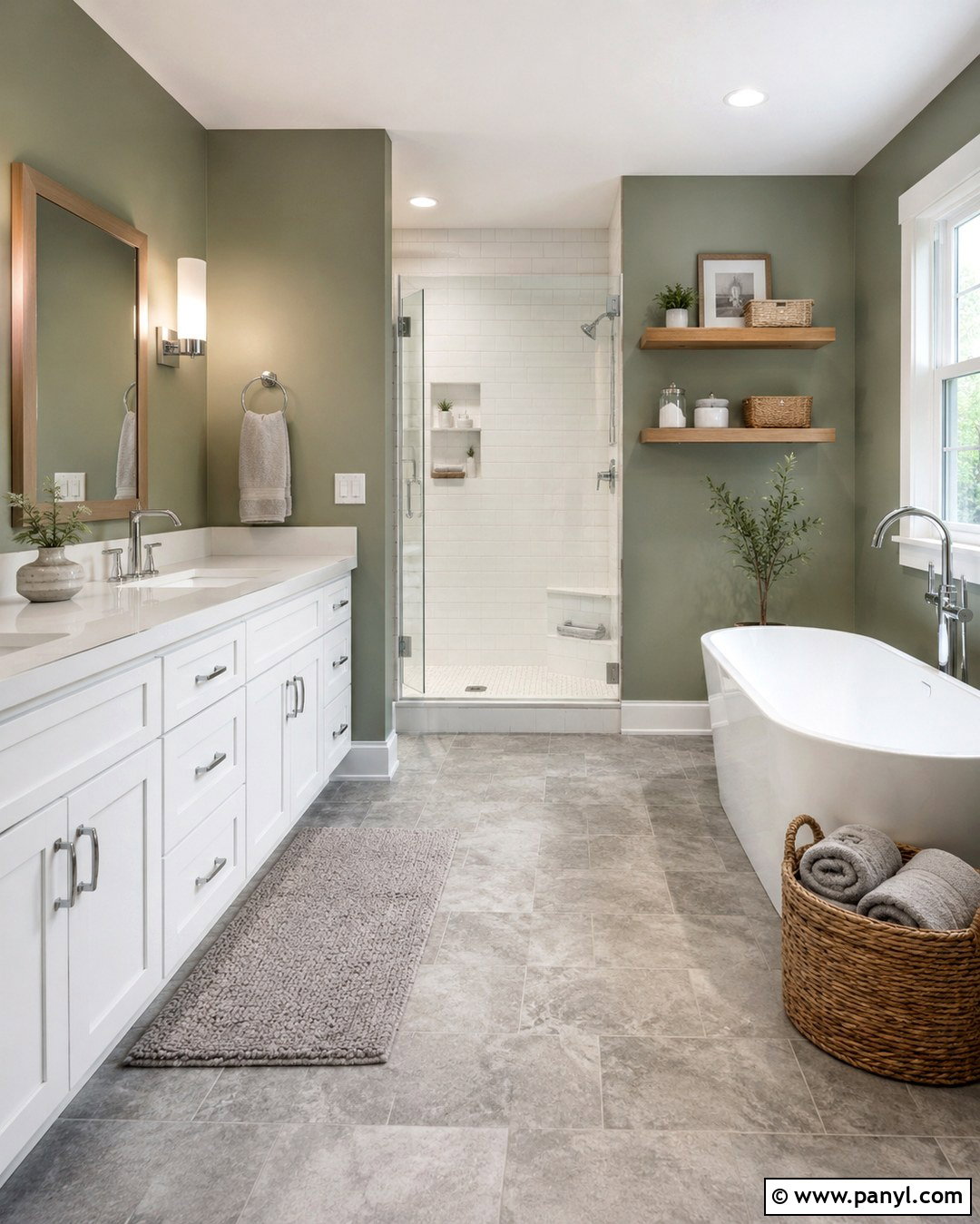
Sage green brings a soft botanical quality to charcoal grey without creating sharp contrast. Use charcoal floor tile and a matching tiled shower wall as the room’s dark foundation. Paint the remaining walls a warm, muted sage and install a medium-tone oak vanity with a white quartz top. Brushed brass fixtures complement both colors and introduce a subtle glow. Keep the shower enclosure frameless, and choose a rounded mirror to soften the straight tile lines. Cream towels, woven baskets, and a single leafy plant reinforce the natural palette. Good daylight is helpful, but bright mirror lighting will keep the colors accurate in any room. This coordinated design feels calm, grounded, and colorful while remaining neutral enough for long-term use.
14. Charcoal Grey Bathroom With Teal Accents
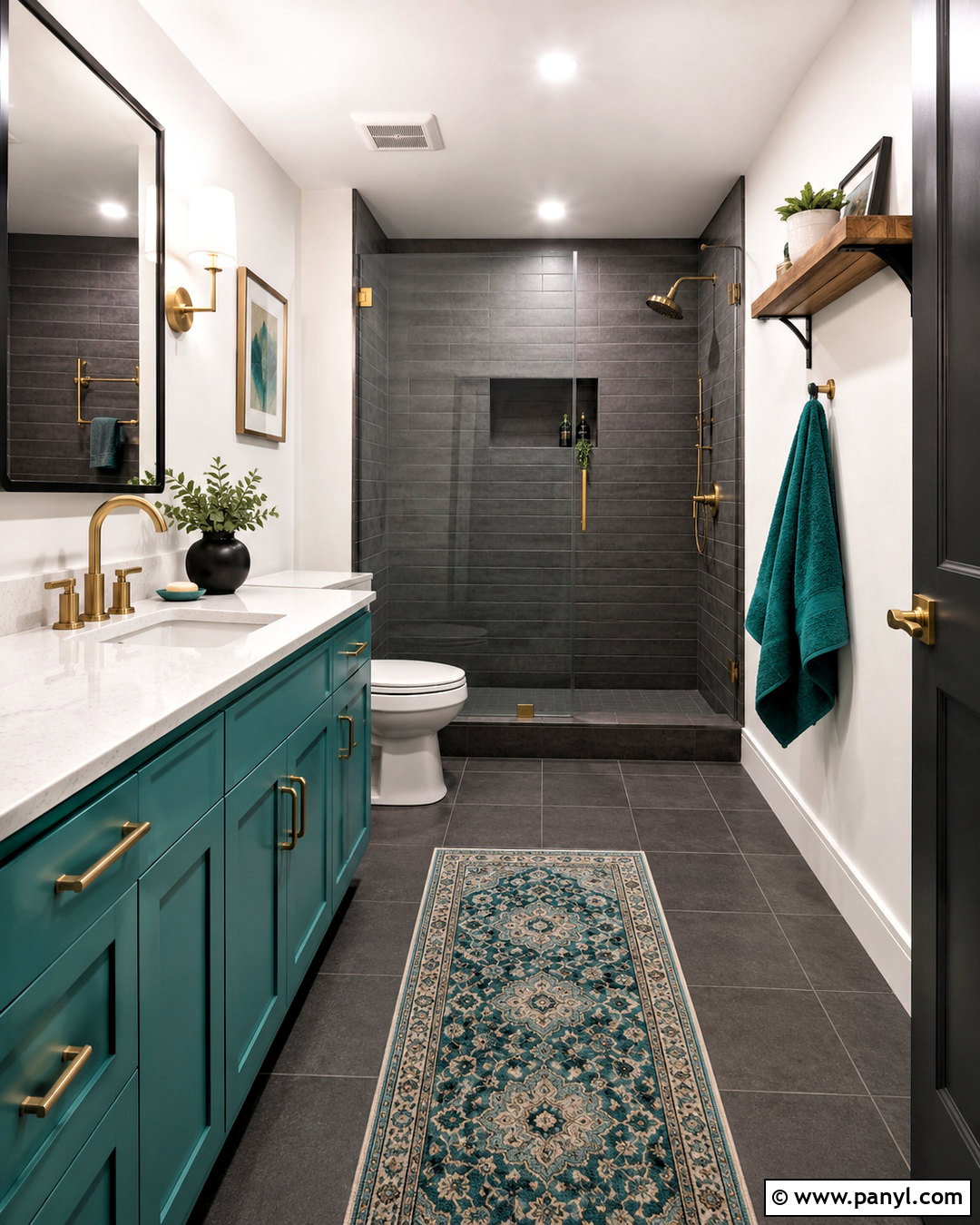
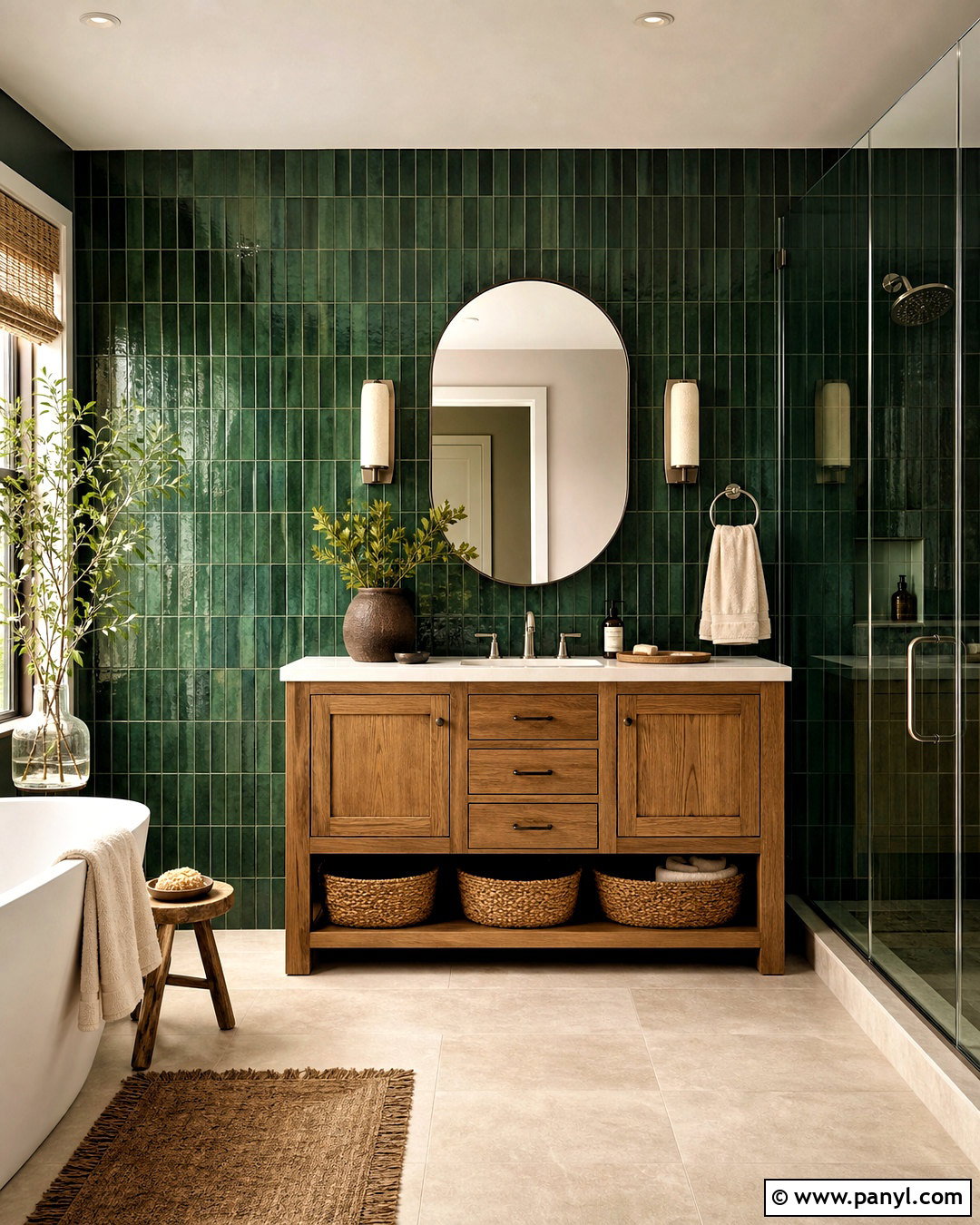
Rich teal creates an energetic companion to charcoal, particularly in a guest bathroom or expressive powder room. Begin with charcoal grey tile on the floor and shower walls, then paint the vanity a saturated blue-green teal. Keep the countertop, sink, toilet, and upper walls clean white so the stronger colors have room to stand out. Add brushed brass hardware for warmth and a thin black-framed mirror for definition. A patterned shower curtain or runner can combine teal, cream, and charcoal, but use only one major print to avoid visual clutter. Install bright wall sconces on both sides of the mirror for even lighting. The finished room feels personal and confident while maintaining a clear, functional layout and a controlled color story.
15. Charcoal Grey Bathroom With Patterned Floor
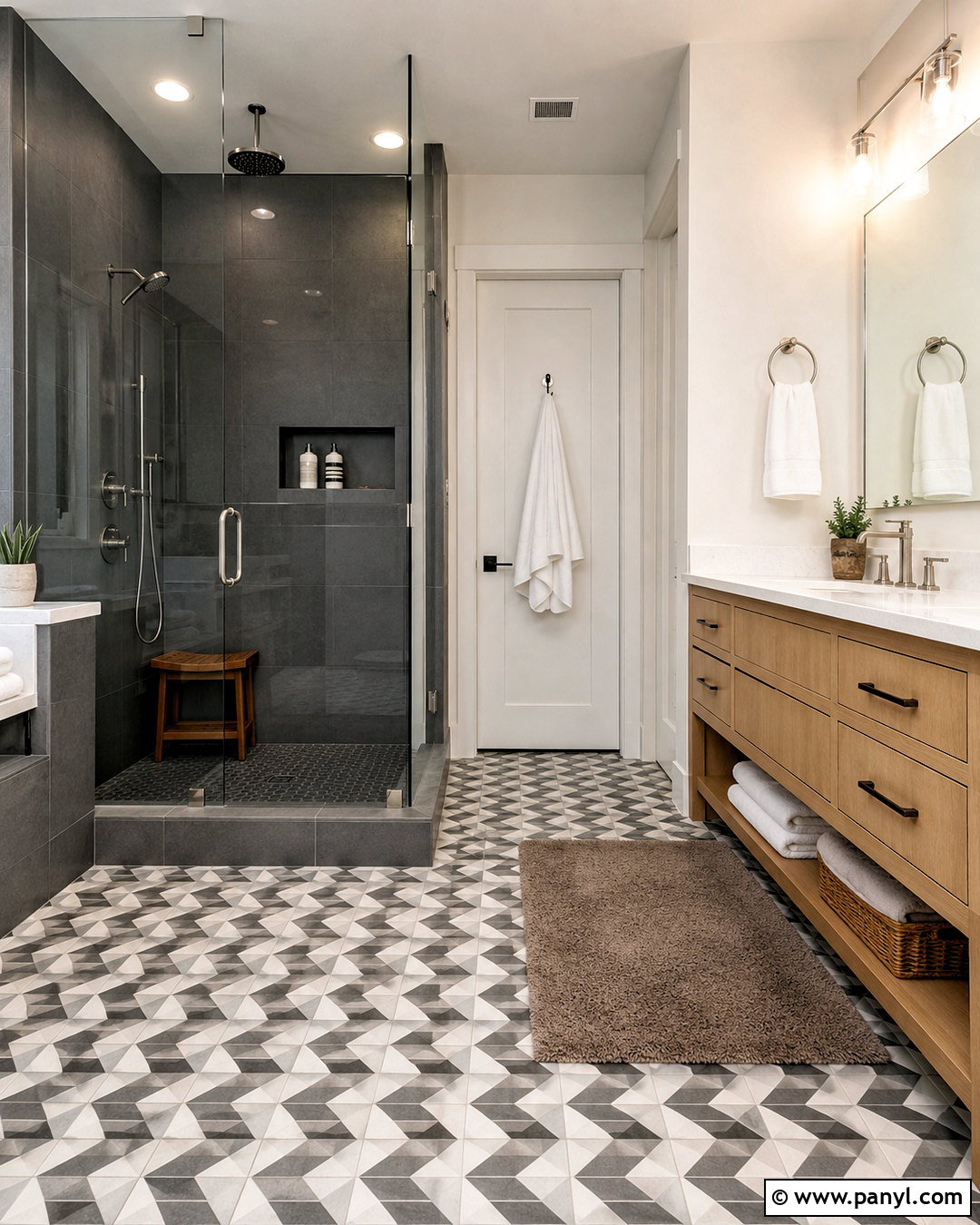
Pattern can transform a charcoal bathroom as long as the walls and furnishings remain visually quiet. Choose a geometric floor tile combining charcoal, white, and soft taupe, then use solid charcoal tile inside the shower. Paint the other walls warm white and select a plain oak vanity with a white countertop. The simple wood grain balances the busier floor without competing with it. Use a clear glass shower enclosure, brushed nickel fixtures, and a wide frameless mirror to keep the room feeling open. Repeat the floor colors through white towels and one taupe bath mat. Avoid adding patterned wallpaper or highly veined stone. By treating the floor as the main decorative feature, the entire bathroom feels coordinated, interesting, and easy to navigate.
16. Charcoal Grey Fluted Vanity Bathroom
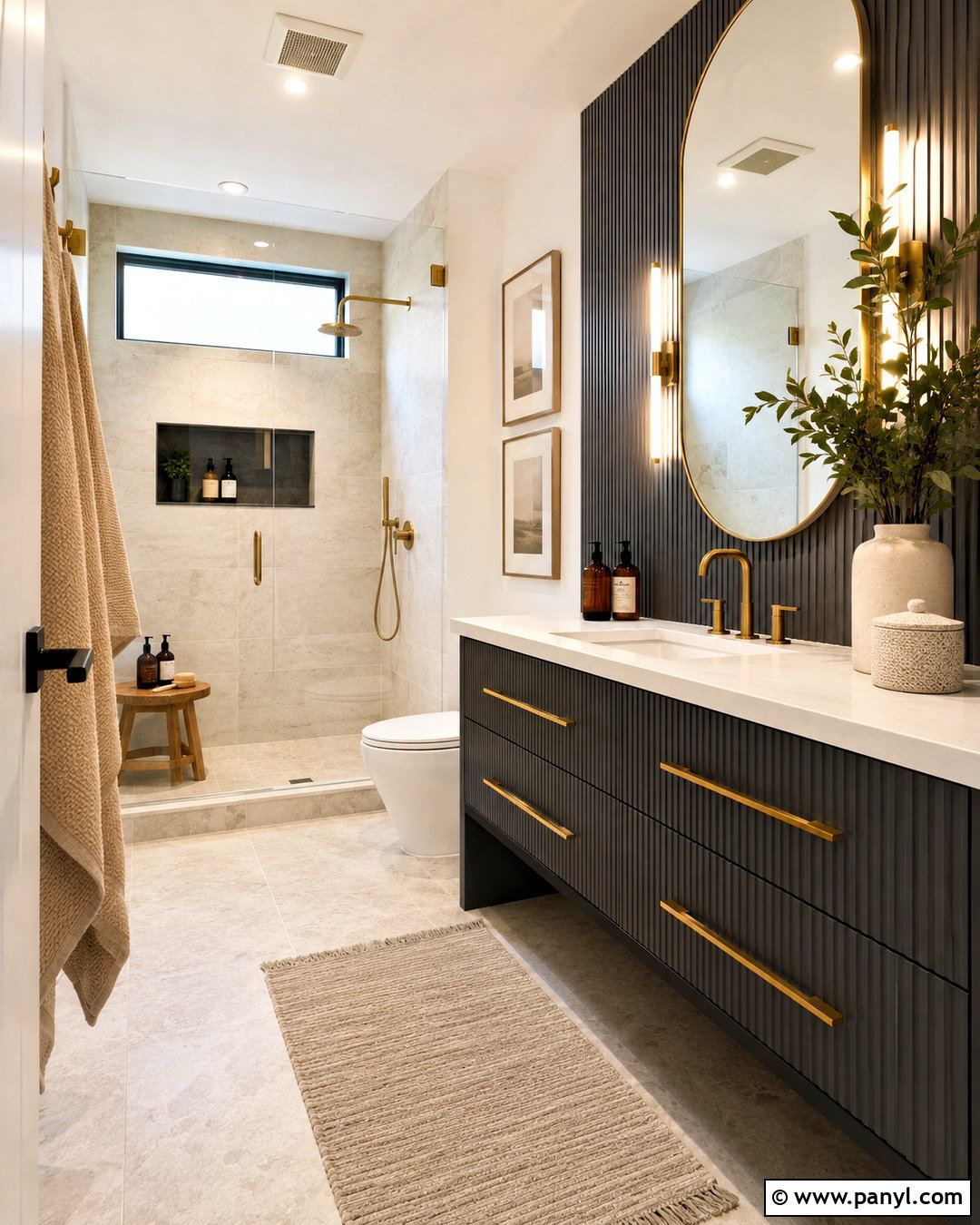
A fluted charcoal vanity introduces texture while delivering valuable concealed storage. Position it against a warm white wall and top it with pale quartz that extends slightly upward as a short backsplash. Use light limestone-look porcelain on the floor and inside the shower to keep the vanity as the room’s strongest feature. A large pill-shaped mirror echoes the curved grooves, while brushed brass faucets and pulls add a warm finish. Choose a frameless glass enclosure and include one charcoal shower niche to repeat the vanity color across the room. Soft cream towels, a wooden stool, and simple ceramic containers complete the arrangement. Bright side lighting highlights the fluting and prevents its detailed surface from becoming lost in shadow.
17. Charcoal Grey Walk-In Shower
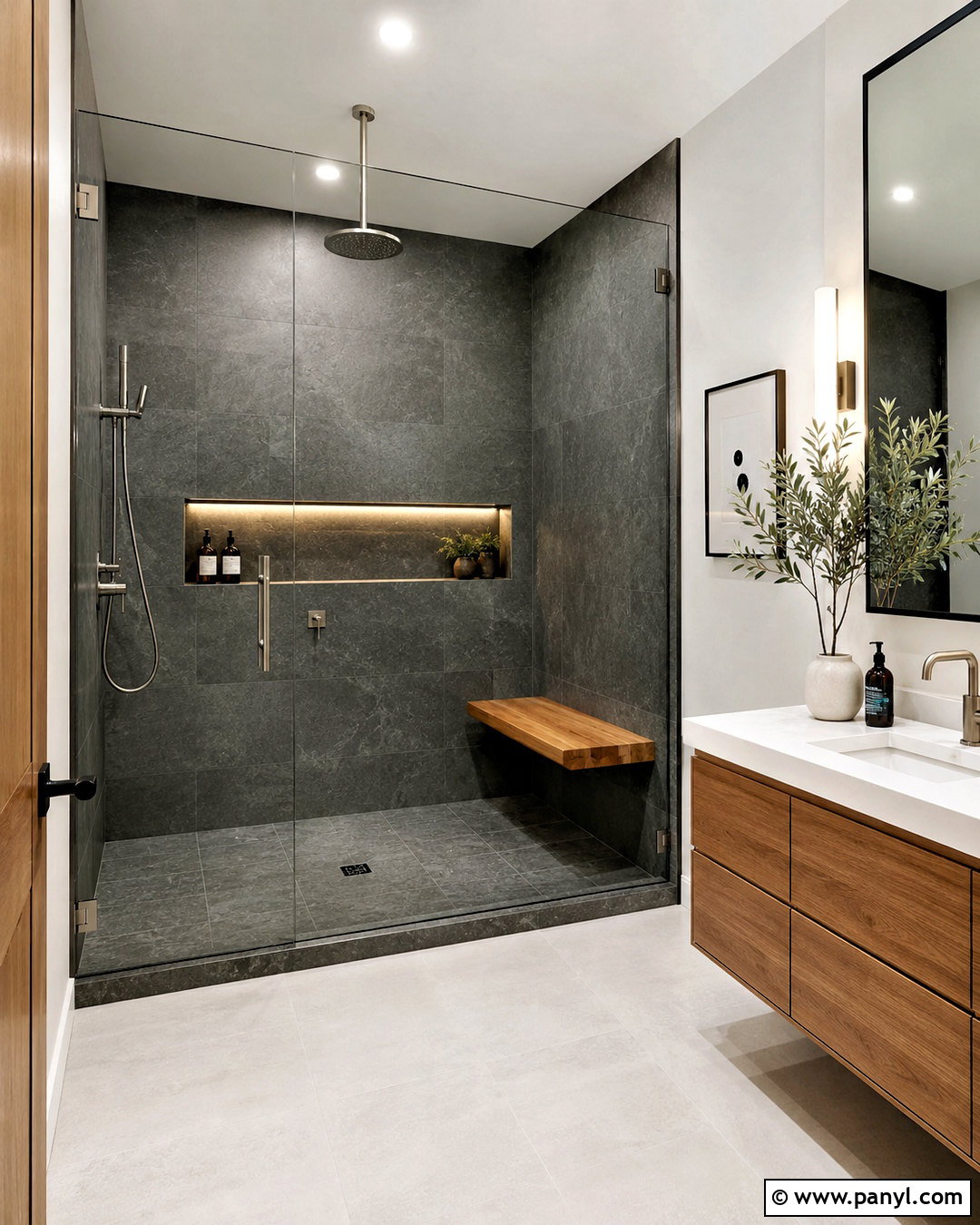
Make the walk-in shower the centerpiece by wrapping its walls and floor in charcoal stone-look tile. Use a slightly smaller version of the tile on the shower floor for better drainage and added visual texture. A clear frameless enclosure exposes the full design and allows light from the bathroom to enter the shower. Include a long recessed niche with integrated lighting and a floating bench in warm teak. Outside the shower, use soft white walls, pale flooring, and an oak vanity with a white countertop. Brushed nickel fixtures offer contrast without appearing too stark. Add generous overhead lighting and a dedicated waterproof shower light. This layout makes the charcoal finish dramatic, practical, and connected to the brighter surrounding bathroom.
18. Charcoal Grey Bathroom With Freestanding Tub
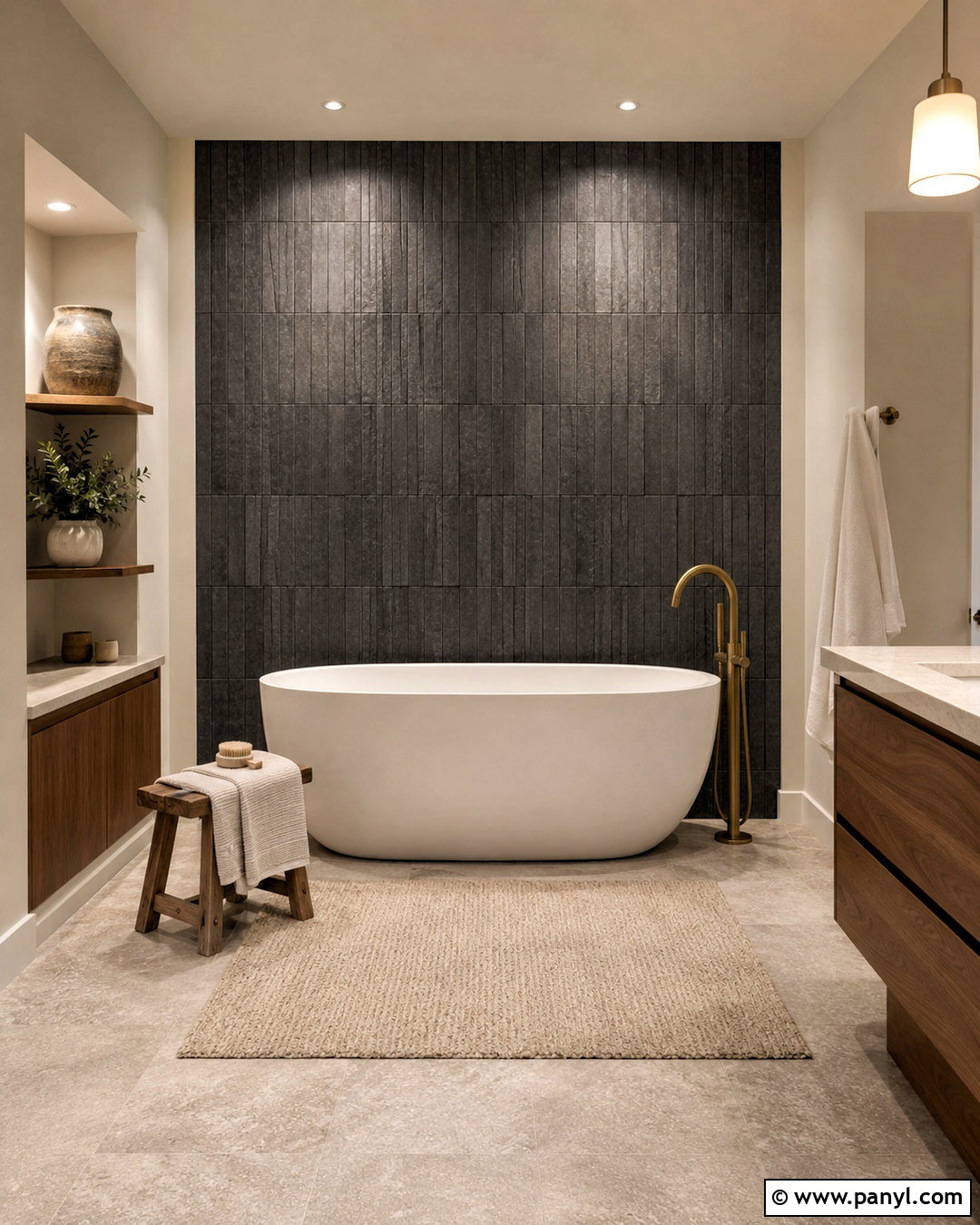
A white freestanding tub becomes an immediate focal point when placed against a charcoal grey feature wall. Choose a simple oval tub and position it beneath a window or centered under a sculptural wall light. Cover the wall behind it with charcoal vertical tile, then use pale stone flooring and warm white paint elsewhere. A floor-mounted brushed brass tub filler adds warmth without interrupting the dark backdrop. Install a walnut vanity on the opposite wall, topped with cream quartz and paired with a wide mirror. A small wooden stool, white towels, and an oatmeal bath mat soften the hard surfaces. Keep the area around the tub open and uncluttered so its bright silhouette remains clear against the deep gray wall.
19. Charcoal Grey Rental Bathroom
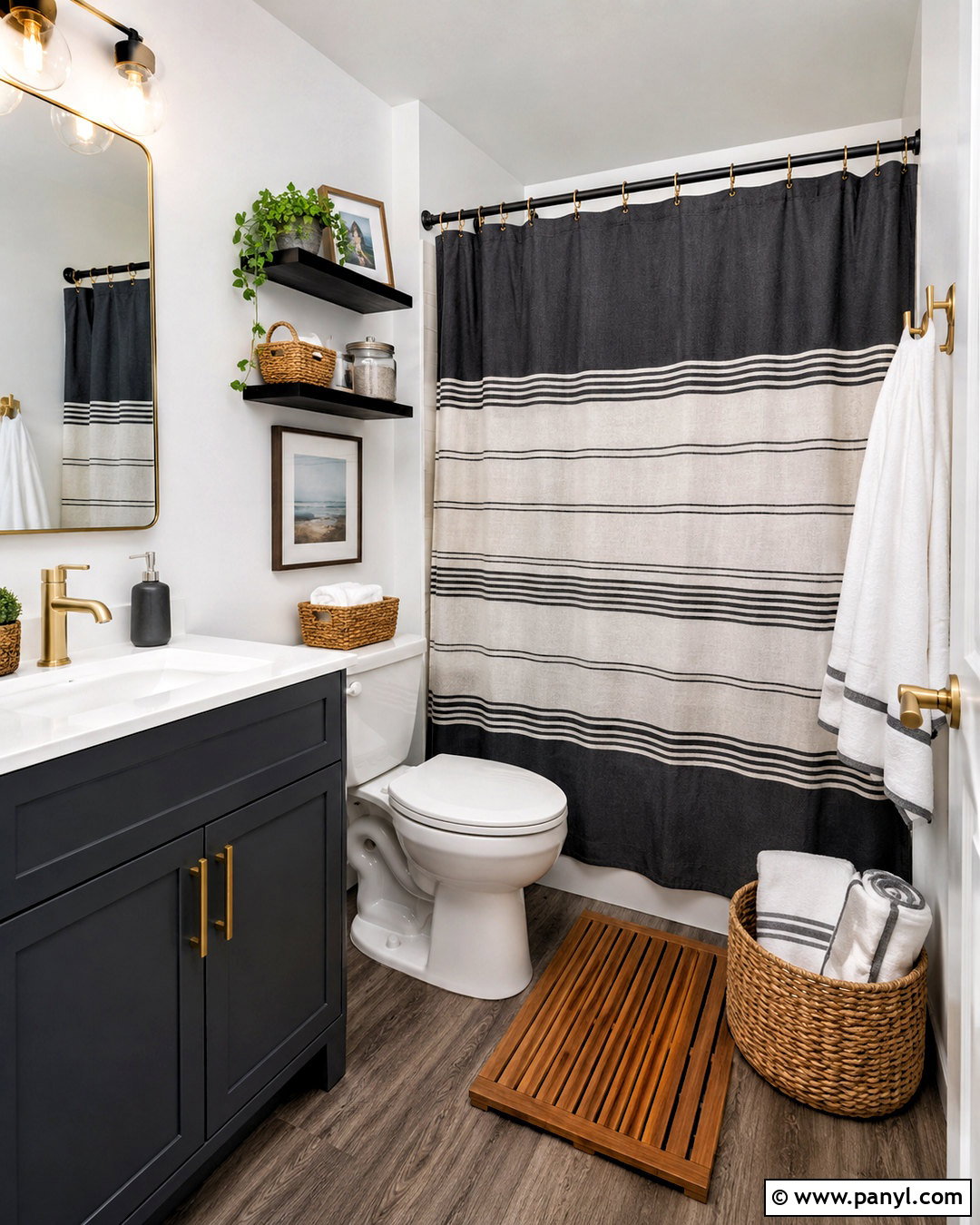
A renter-friendly charcoal bathroom can look finished without changing permanent tile or plumbing. Paint the vanity charcoal grey if permission allows, or apply a removable architectural vinyl designed for cabinetry. Keep existing white walls bright and introduce a washable charcoal-and-cream shower curtain as the room’s largest visual element. Add removable black or brushed brass cabinet pulls, a framed mirror, and adhesive wall hooks that match the selected metal finish. A teak bath mat and woven storage baskets warm the palette while organizing everyday items. Use matching white towels with charcoal borders for a coordinated effect. Finish with bright plug-in or rechargeable mirror lighting where appropriate. Every update can be removed later, yet the bathroom still reads as one complete and intentional design.
20. Charcoal Grey Ceiling Bathroom
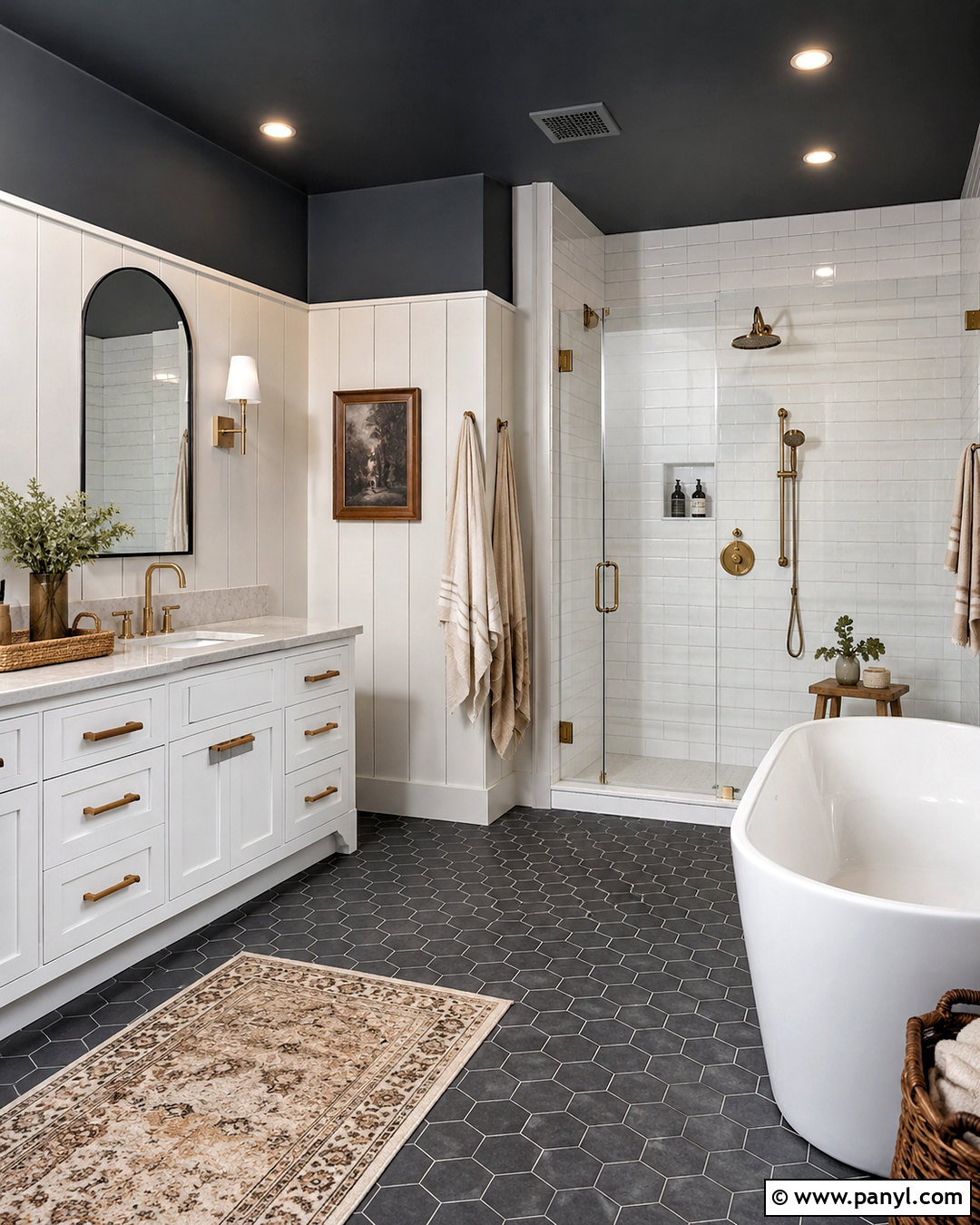
Looking upward can reveal an unexpected place for charcoal color. Paint the ceiling and upper portion of the walls deep charcoal grey, then use warm white vertical paneling below to keep the room balanced. Choose a white vanity with a pale stone countertop and medium-tone wood pulls. A charcoal hexagon tile floor connects the ceiling color to the lower part of the room. Use a clear shower enclosure, white shower tile, and brushed brass fixtures to maintain brightness and warmth. Several recessed ceiling lights are important because the darker surface absorbs more illumination than white paint. Add a large mirror, cream textiles, and one wood-framed artwork. This complete scheme feels distinctive while preserving a fresh, approachable bathroom atmosphere.
Conclusion:
The most successful **20 charcoal grey bathroom ideas** balance deep color with light, texture, and warmth. Charcoal can create a dramatic shower, frame a bright white tub, ground a patterned floor, or refresh an ordinary vanity. Before choosing a scheme, consider the room’s natural light, dimensions, storage needs, and permanent finishes. White, cream, pale stone, and clear glass will brighten the design. Oak, walnut, brass, sage, and teal can make it feel warmer and more personal. Layer ceiling, mirror, and shower lighting so every surface remains practical. With thoughtful contrast and a complete material plan, charcoal grey becomes a versatile foundation rather than a heavy or limiting color.

Related Ideas and Inspiration:
Leave a Reply