
Sherwin-Williams Iron Ore is a deep charcoal that gives interior doors the definition of black without feeling overly harsh. It works especially well with warm whites, soft greiges, natural wood, brass, and matte black accents. Because the color is dark, the most successful rooms balance it with thoughtful lighting, comfortable textures, and a clear connection to nearby finishes. You can use Iron Ore on one statement door, repeat it throughout a hallway, or continue it onto trim for a more architectural look. The right approach depends on your door profile, flooring, wall color, and decorating style. From modern entries to cozy bedrooms and practical utility spaces, these **20 iron ore doors interior ideas** offer complete, realistic looks you can recreate. ()

1. Iron Ore Doors With White Walls
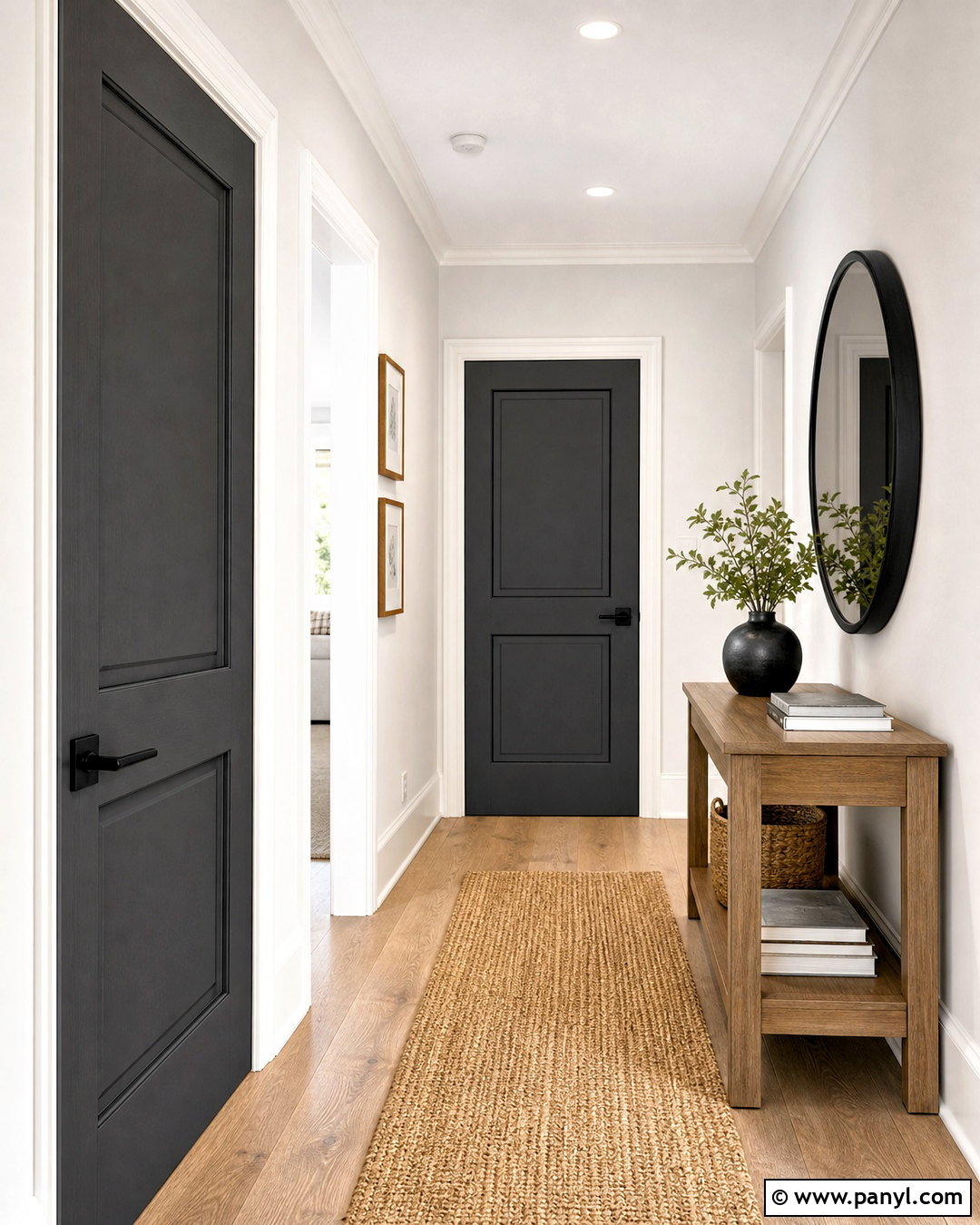
Crisp white walls let Iron Ore doors become strong architectural features without making the room feel dark. Choose a soft white rather than a cold blue-white, then repeat it across the walls, ceiling, and baseboards for a clean background. Paint simple Shaker-style doors in a smooth satin Iron Ore finish and add matte black levers for a streamlined effect. Light oak flooring introduces warmth, while a natural jute runner softens the contrast in a long hallway. Finish the look with a slim wood console, a round black-framed mirror, and one ceramic lamp. This complete palette feels fresh and modern, yet it remains neutral enough to work with changing furniture and seasonal decor.
2. Iron Ore Doors With Warm Greige Walls
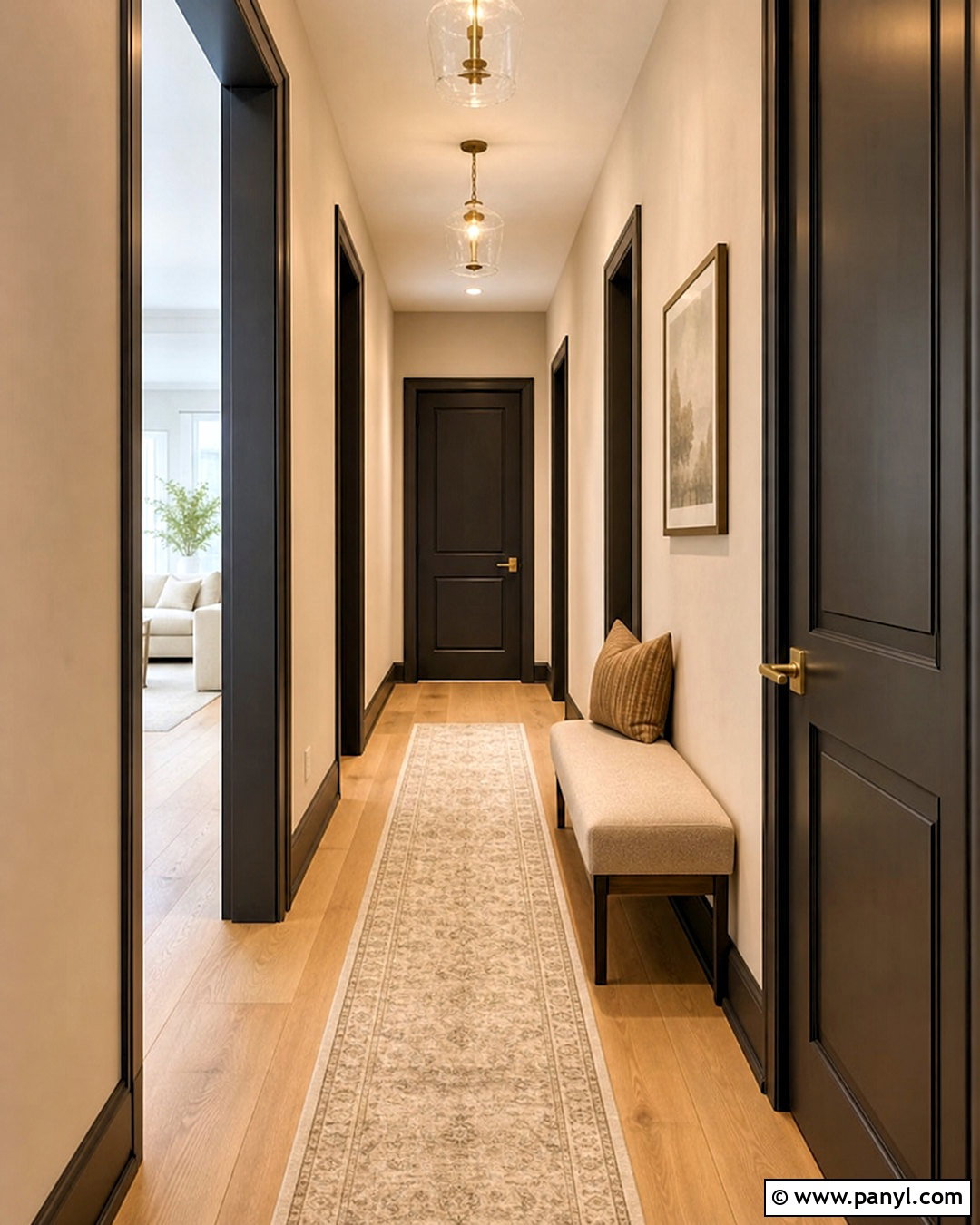
Would you prefer a softer transition between dark doors and light walls? Warm greige creates a balanced backdrop that reduces sharp contrast while keeping Iron Ore clearly visible. Use a medium-light greige with beige undertones on the walls, creamy white on the ceiling, and Iron Ore across the doors and casings. Satin brass levers bring warmth to the charcoal finish. Wide-plank white oak flooring, an oatmeal upholstered bench, and a muted beige runner complete the hallway. Add black picture frames sparingly so the dark color travels beyond the doors. This scheme works particularly well in open-plan homes because the greige walls connect easily with beige upholstery, wood furniture, stone surfaces, and neighboring neutral rooms.
3. Iron Ore Doors With Natural Wood Trim
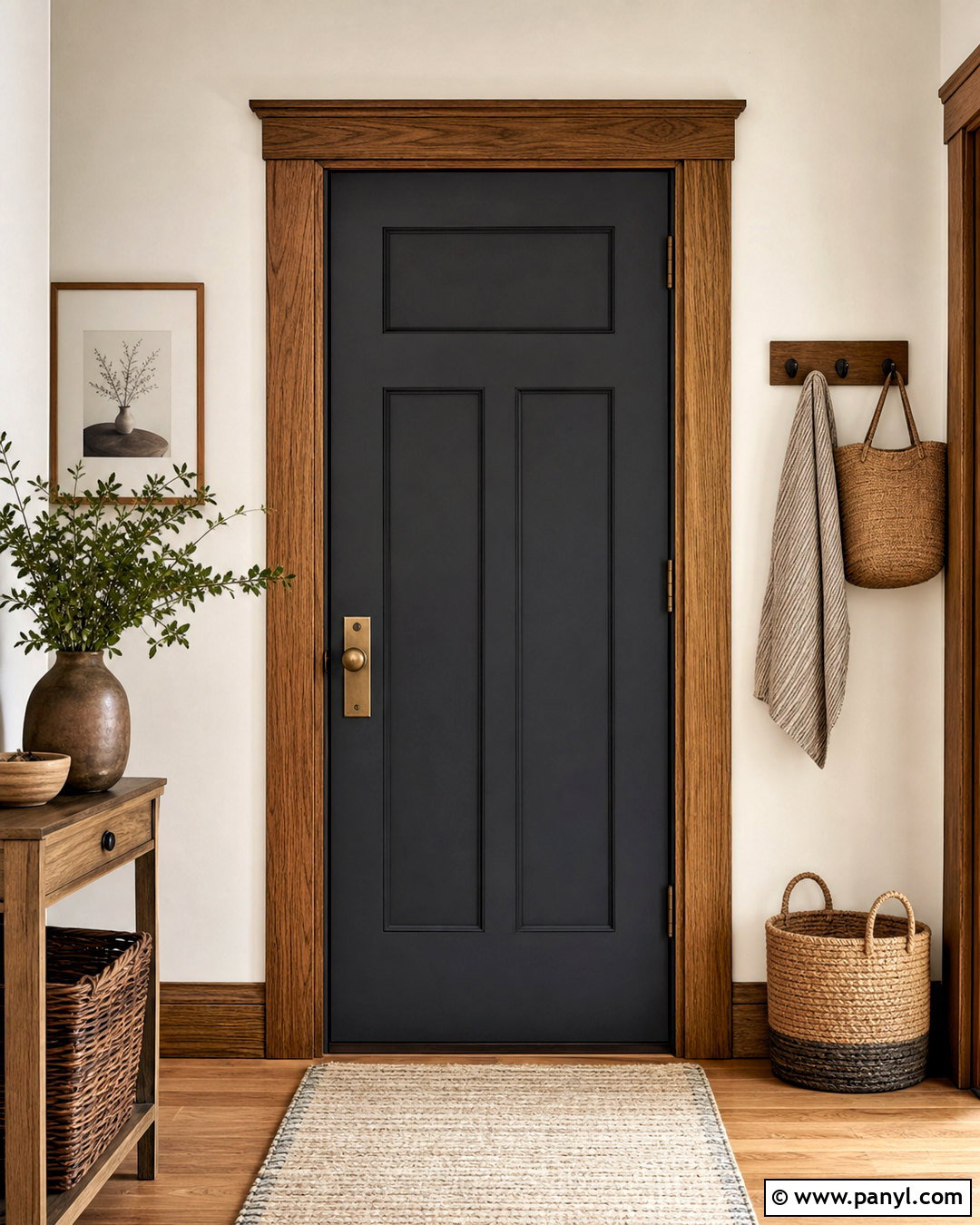
Existing wood trim does not need to be painted to make Iron Ore doors work. In fact, medium oak or walnut casing can create a rich, grounded combination when the tones are repeated throughout the space. Keep the walls warm white and paint only the door slabs Iron Ore. Select simple black or aged-brass hardware, depending on the warmth of the wood. Continue the natural finish through the baseboards, flooring, and a small console to make the trim feel intentional. A cream runner and woven storage baskets prevent the hallway from becoming too heavy. This complete look suits traditional, craftsman, rustic, and transitional homes where preserving original woodwork matters but a cleaner, more updated door color is desired.
4. Iron Ore Doors And Matching Trim
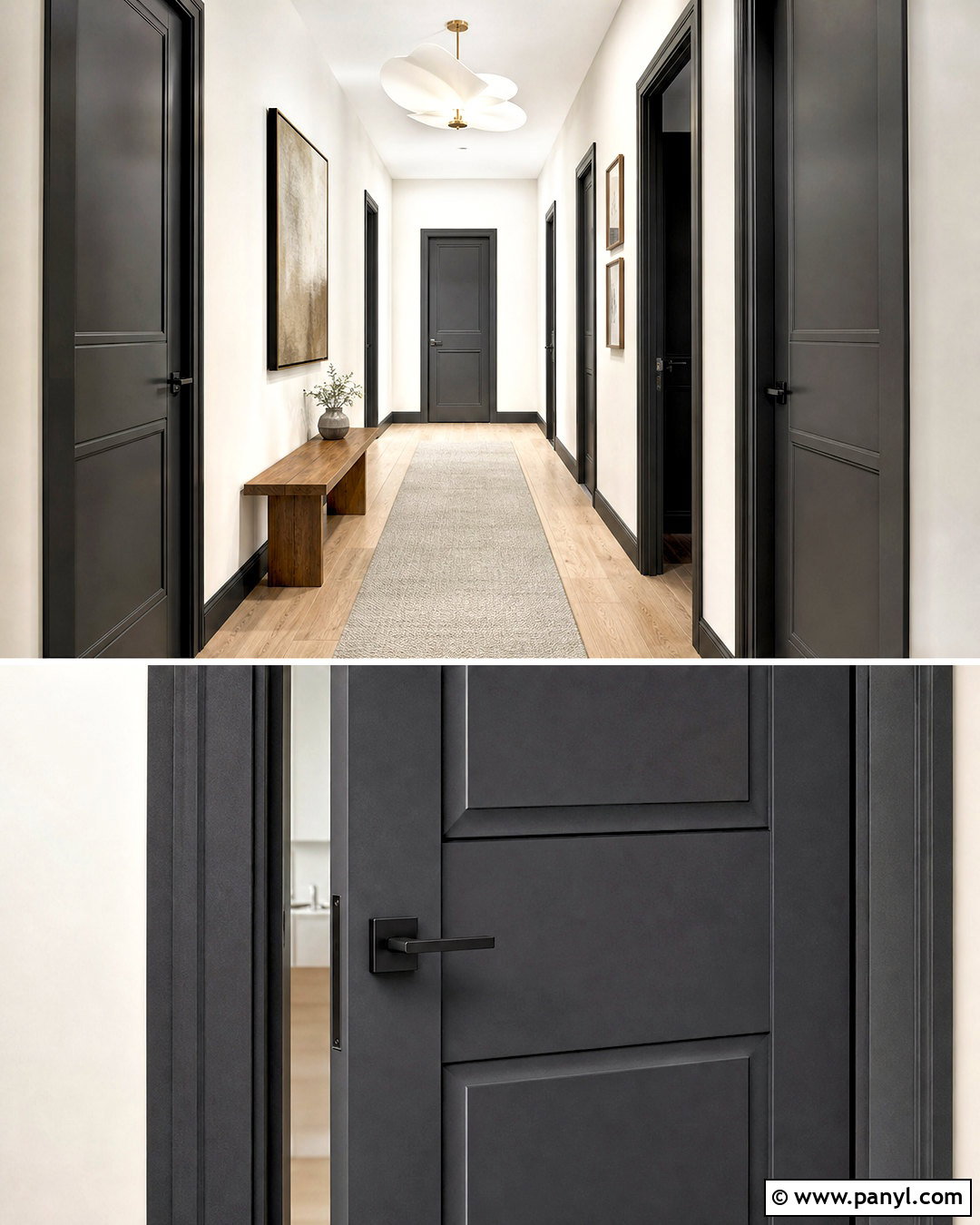
Painting the doors, casings, and baseboards Iron Ore creates a bold frame around light walls. This treatment looks especially polished in a bright hallway with tall ceilings and plenty of natural light. Use the same satin sheen across doors and trim so the surfaces feel connected, then keep the walls a warm ivory for contrast. Pale oak flooring and a light neutral runner prevent the dark perimeter from overwhelming the area. Choose understated black hardware if you want a seamless appearance, or aged brass for a warmer traditional touch. Complete the design with simple artwork, a narrow oak bench, and a sculptural white ceiling light. The matching trim turns ordinary builder-grade doors into a deliberate architectural feature.
5. Iron Ore Arched Interior Door
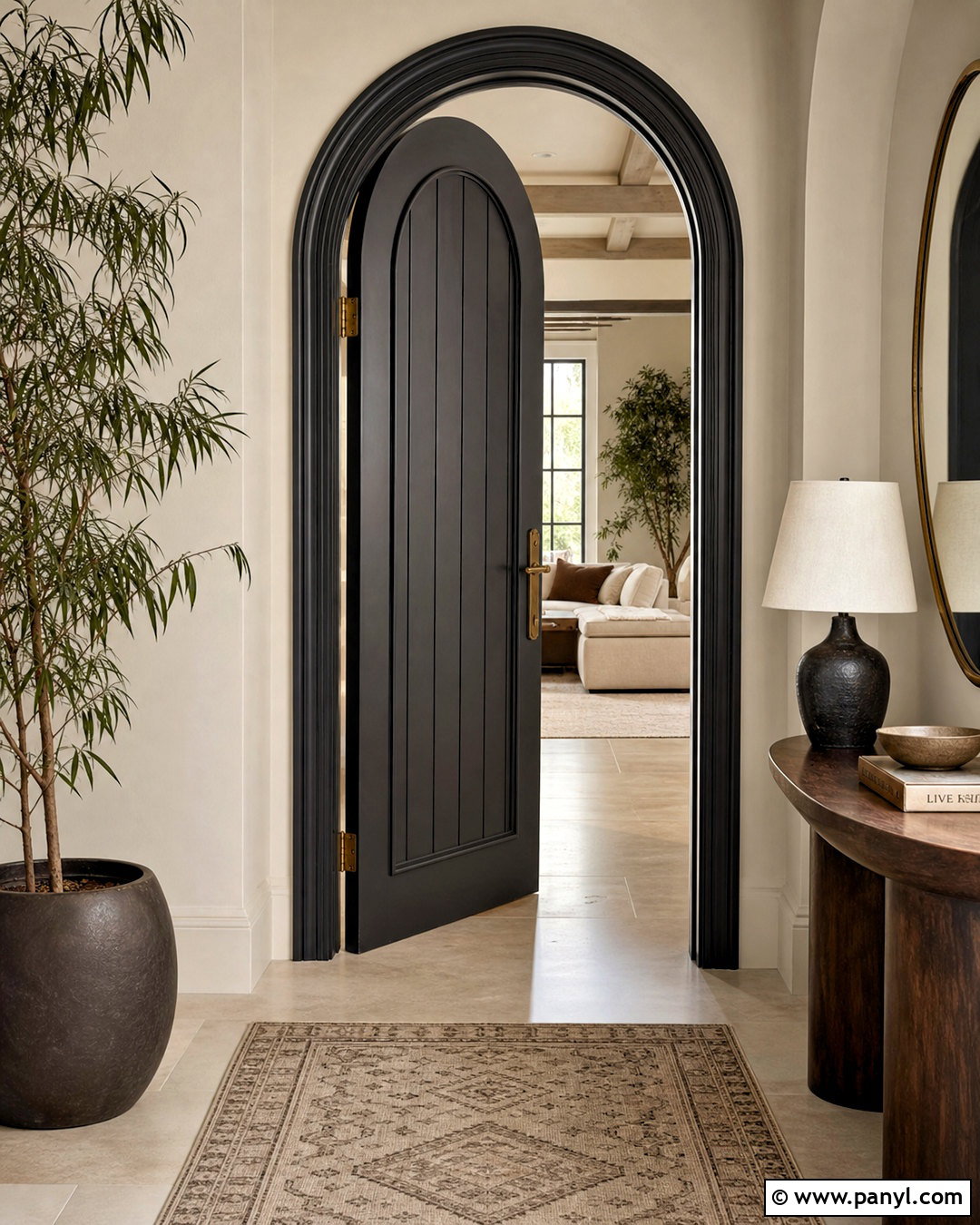
An arched Iron Ore door can become a graceful focal point between an entry and living area. Keep the surrounding walls soft cream and paint the curved casing the same charcoal color so the silhouette reads as one continuous feature. A paneled door adds traditional character, while slim aged-brass hardware introduces a warm highlight. Carry the curved shape into a rounded console, an oval mirror, or an arched floor lamp without overusing the motif. Limestone-look flooring or pale oak boards keep the palette light and natural. Add a textured wool rug and a large leafy plant for softness. This full scheme balances the strength of Iron Ore with gentle curves, warm neutrals, and approachable organic materials.
6. Iron Ore French Doors
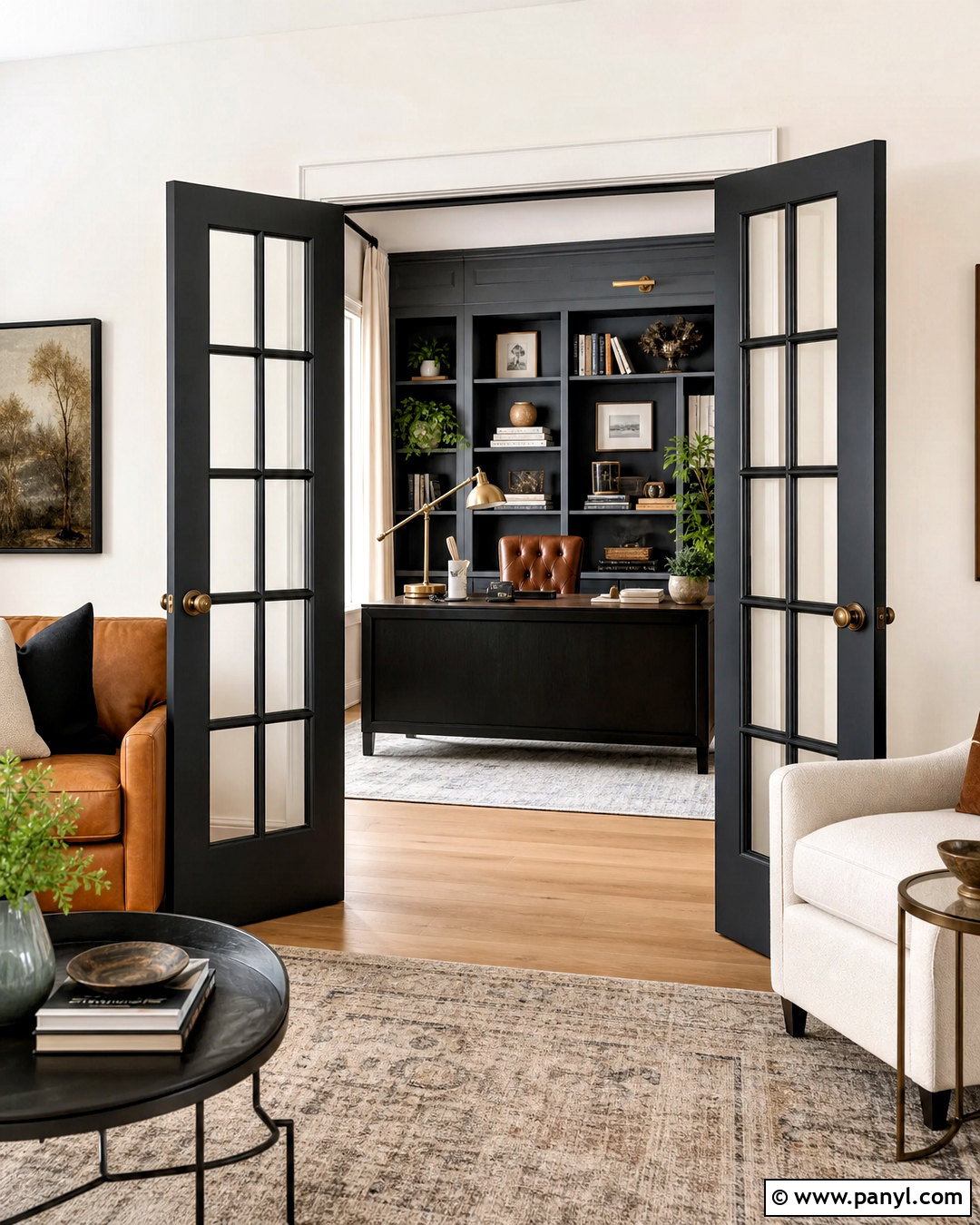
Iron Ore French doors provide contrast while allowing light to move between adjoining rooms. Use divided glass doors between a living room and home office, then paint the frames, muntins, and casings in the same satin charcoal finish. Surround them with warm white walls and light oak flooring so the dark grid remains the focal point. Inside the office, repeat Iron Ore on a bookcase or desk base to connect the two spaces. Cream curtains, a camel leather chair, and a muted vintage-style rug add warmth. Select clear or antique-brass knobs for a refined finishing touch. The resulting design feels open and structured, giving both rooms separation without creating a solid visual barrier or blocking daylight.
7. Iron Ore Shaker Panel Doors
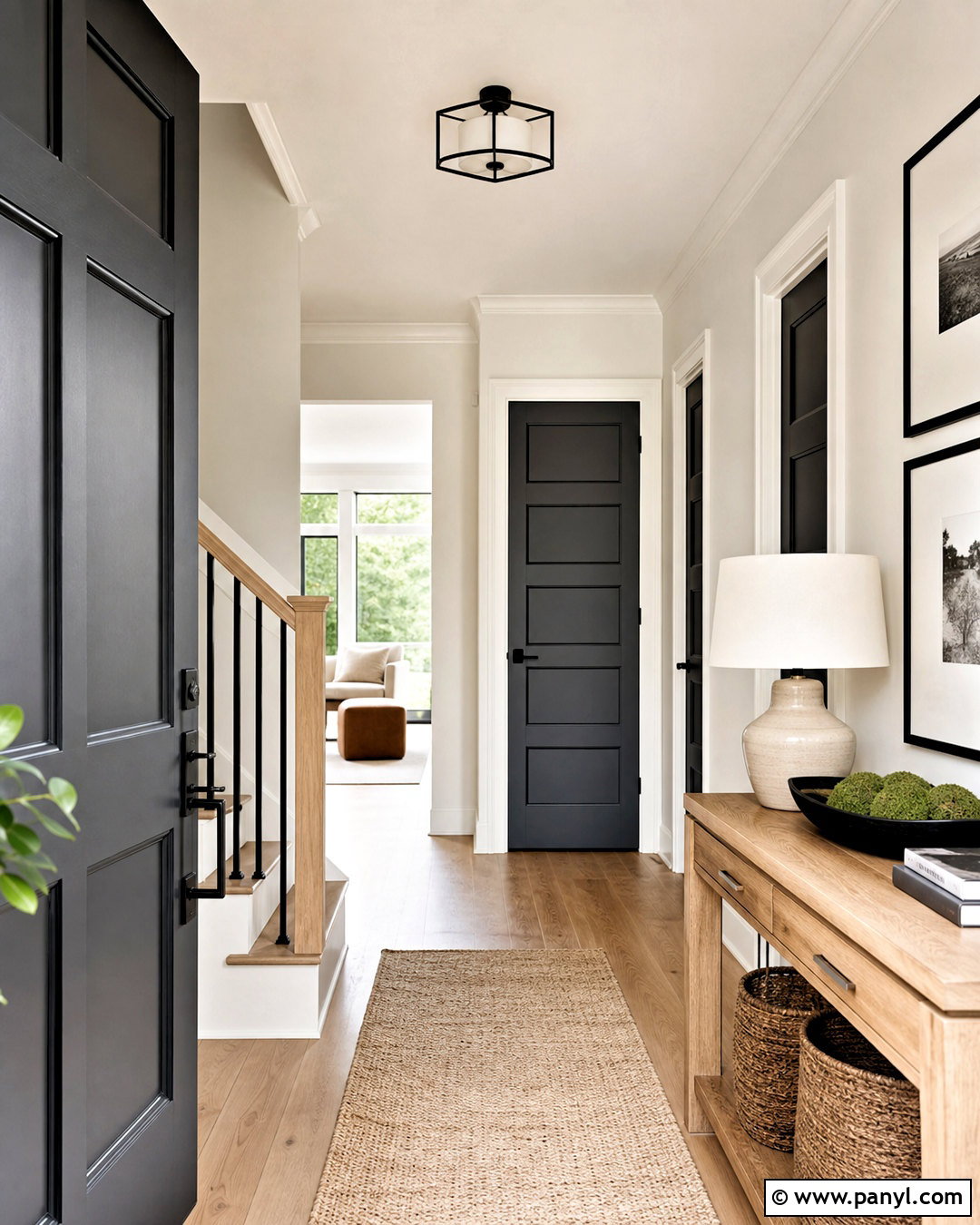
Simple Shaker panel doors look more substantial when finished in Iron Ore. Choose a two-panel or three-panel profile with clean rectangular lines, then pair it with streamlined matte black levers. Warm white walls, white trim, and natural oak flooring create a bright, uncomplicated setting. To keep the look from feeling overly stark, add a woven hallway runner, a light wood console, and ceramic decor in cream and muted brown. Black-framed artwork can echo the door color without competing with it. This design is a practical choice for updated ranch homes, new builds, and transitional interiors. The combination of a classic door profile and deep charcoal paint delivers noticeable character while remaining easy to coordinate across several rooms.
8. Iron Ore Doors In A Hallway
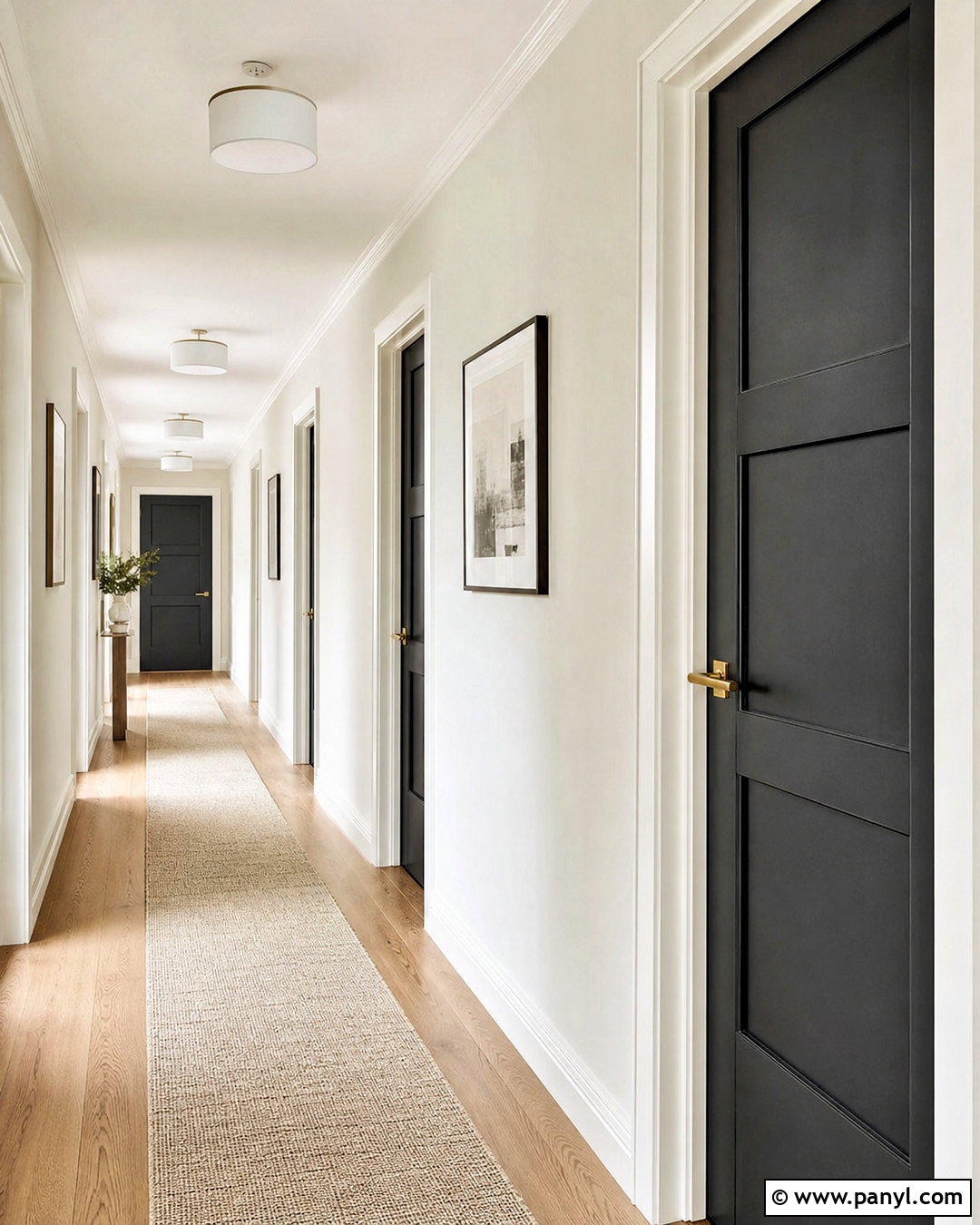
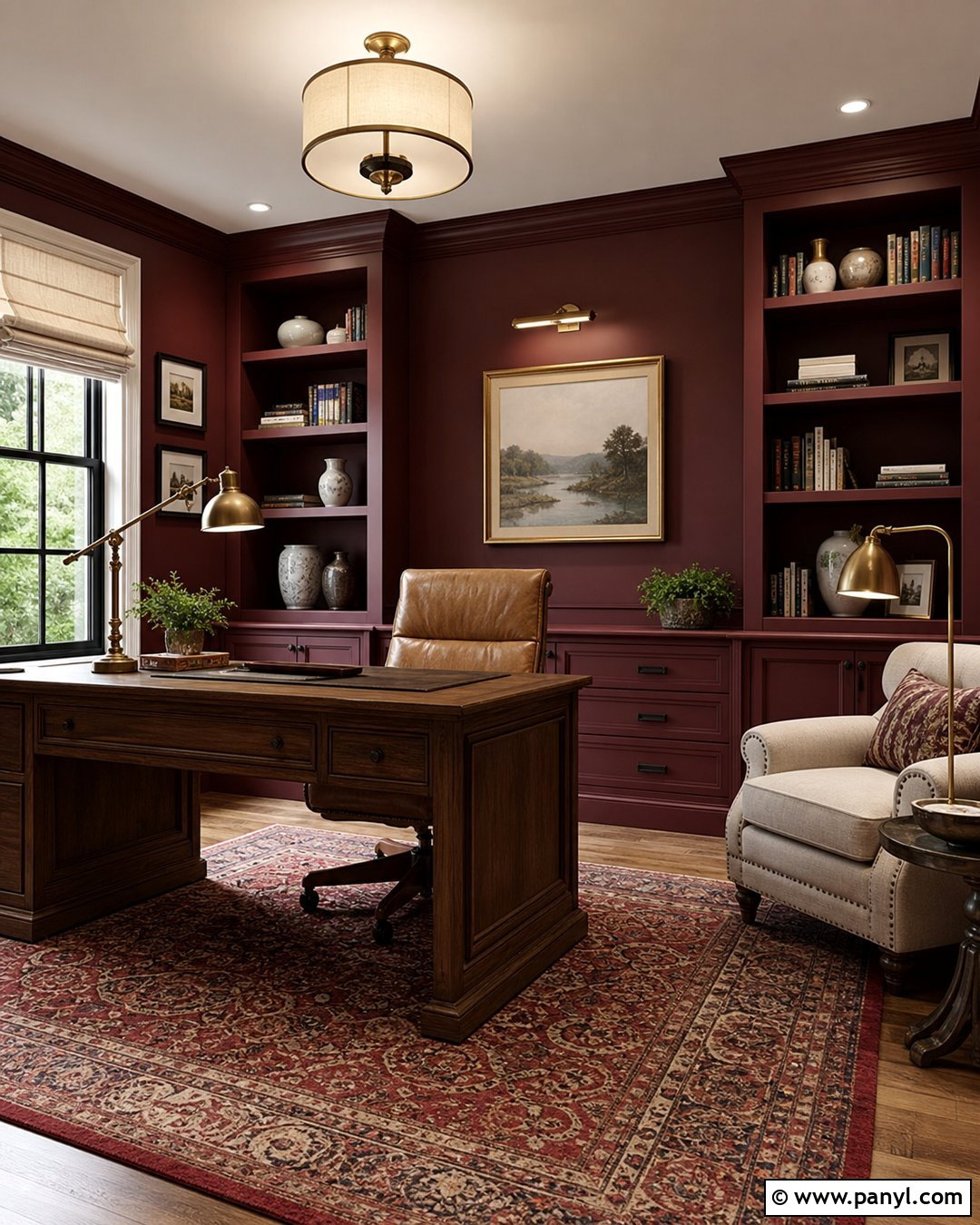
A row of Iron Ore doors can give a plain hallway rhythm and depth. Paint every door the same charcoal shade, but keep the casings and baseboards warm white to clearly outline each opening. This contrast is useful in narrow corridors because the lighter trim separates the dark surfaces from the walls. Choose consistent hardware, such as brushed brass levers, to create a polished sequence. A long oatmeal runner, pale oak floorboards, and flush white ceiling lights brighten the passage. Rather than filling every wall, display one organized row of neutral artwork between the doors. The repeated color creates continuity, while the light flooring, minimal decor, and restrained wall treatment keep the hallway comfortable and visually uncluttered.
9. Iron Ore Farmhouse Interior Doors
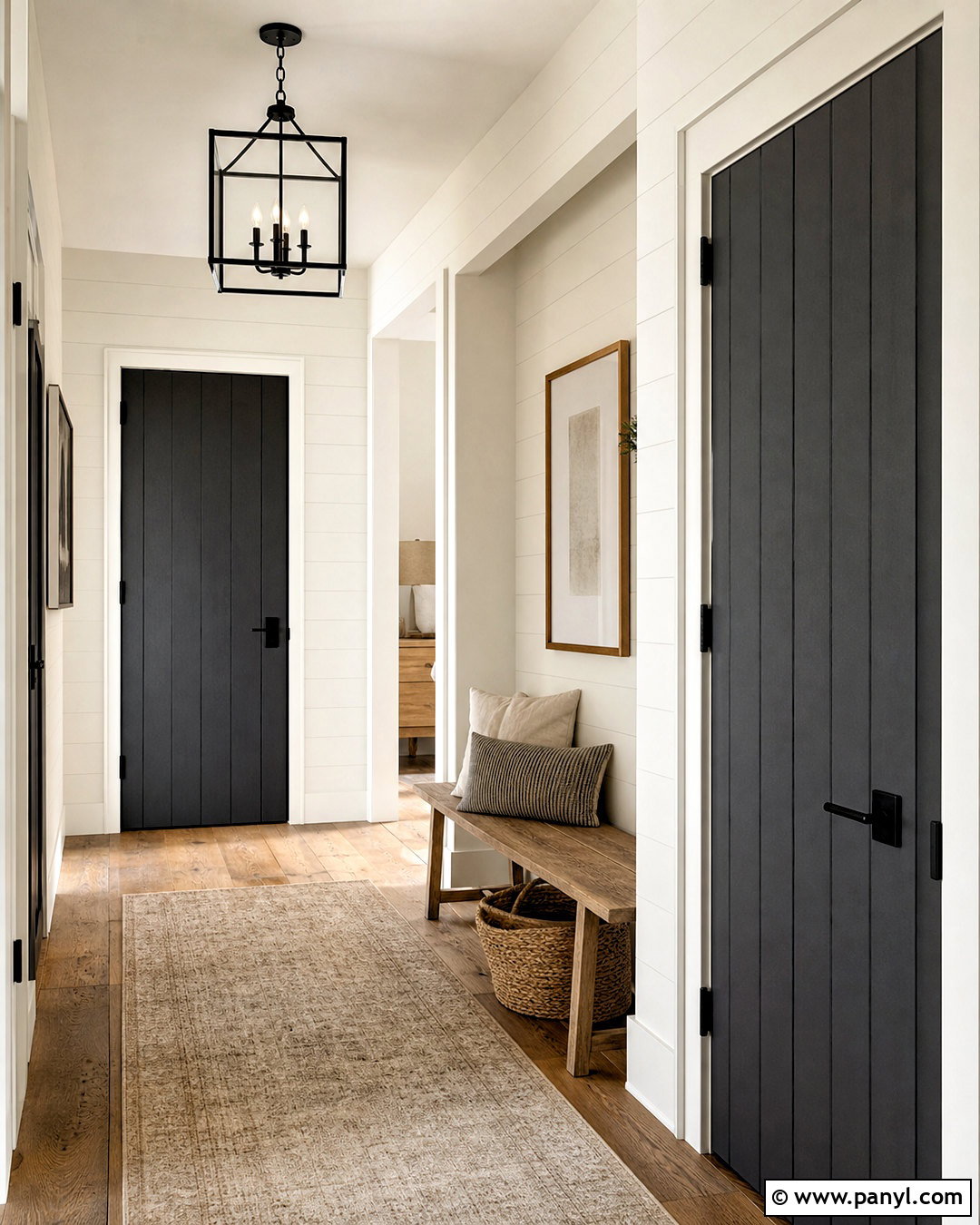
For a modern farmhouse look, combine Iron Ore doors with creamy walls, rustic oak, and simple black metal details. Use vertical-plank or crossbuck doors where appropriate, but limit barn-door hardware to one larger opening so the room does not feel themed. Paint standard hinged doors the same Iron Ore color to maintain continuity. Wide-plank oak flooring, linen upholstery, and a faded neutral rug add softness around the dark paint. A black lantern-style ceiling light can repeat the door hardware, while an unfinished wood bench introduces natural texture. Skip overly distressed finishes and decorative signs. Clean paintwork and restrained accessories give this farmhouse scheme a more current appearance while preserving the warmth and practicality associated with the style.
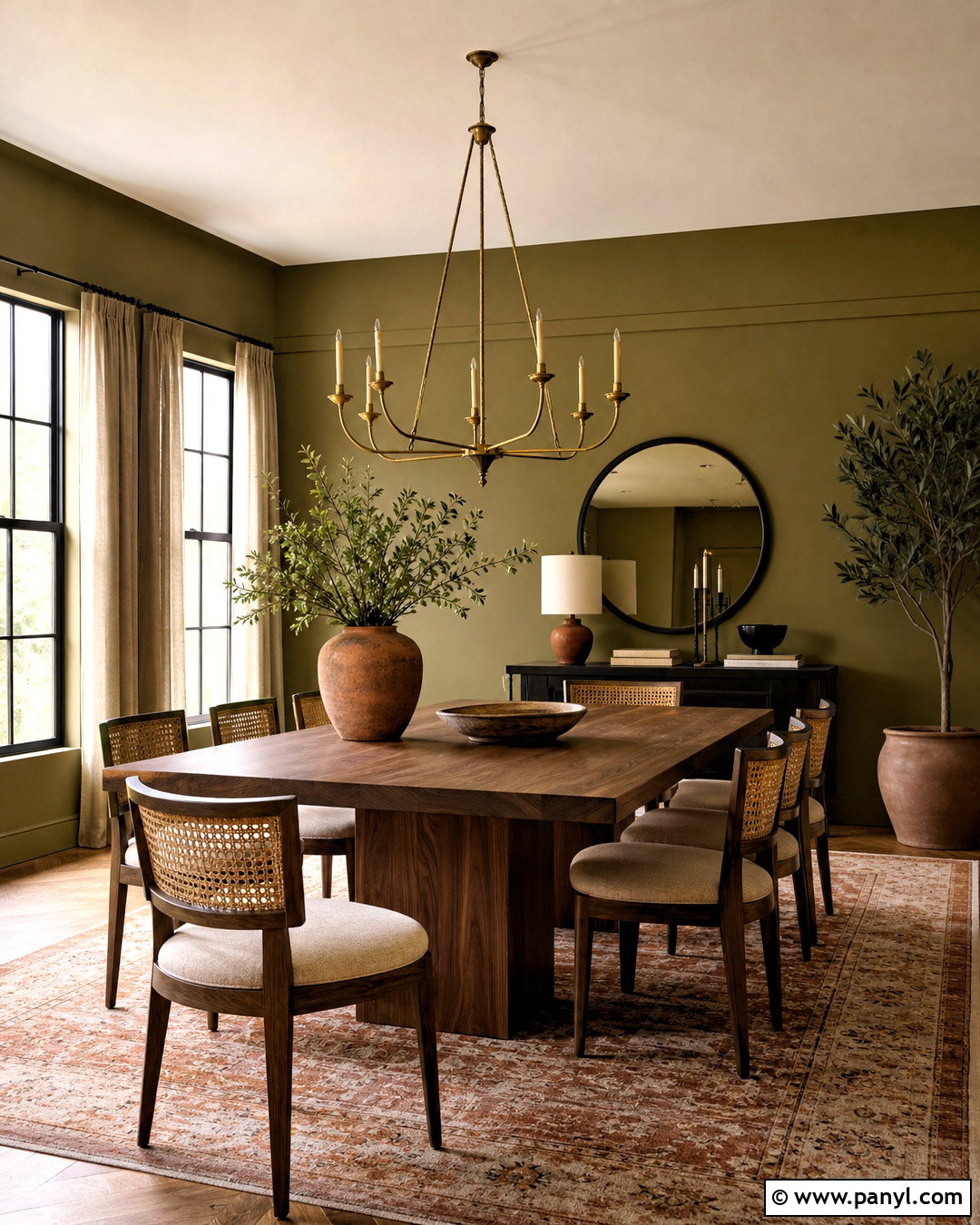
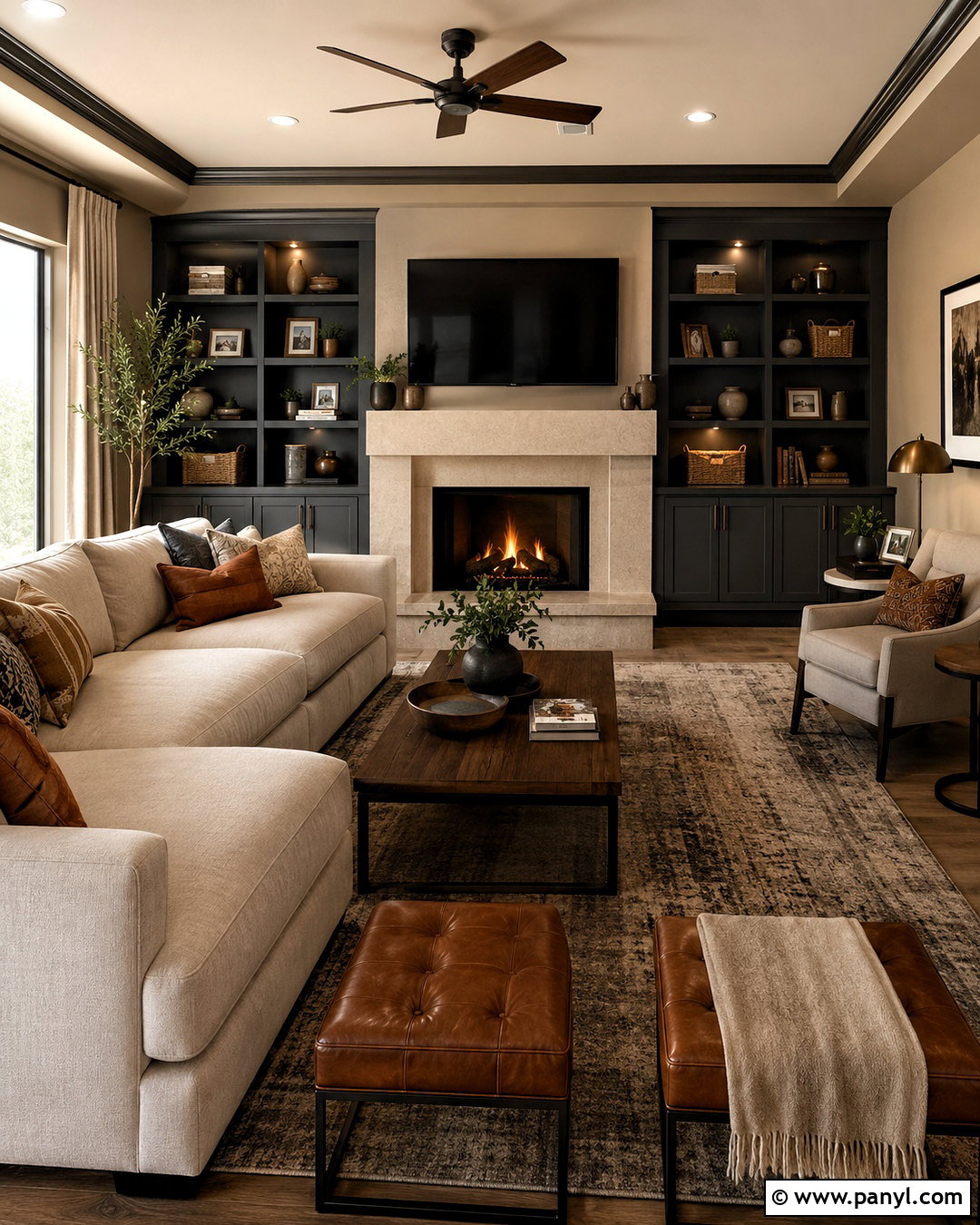
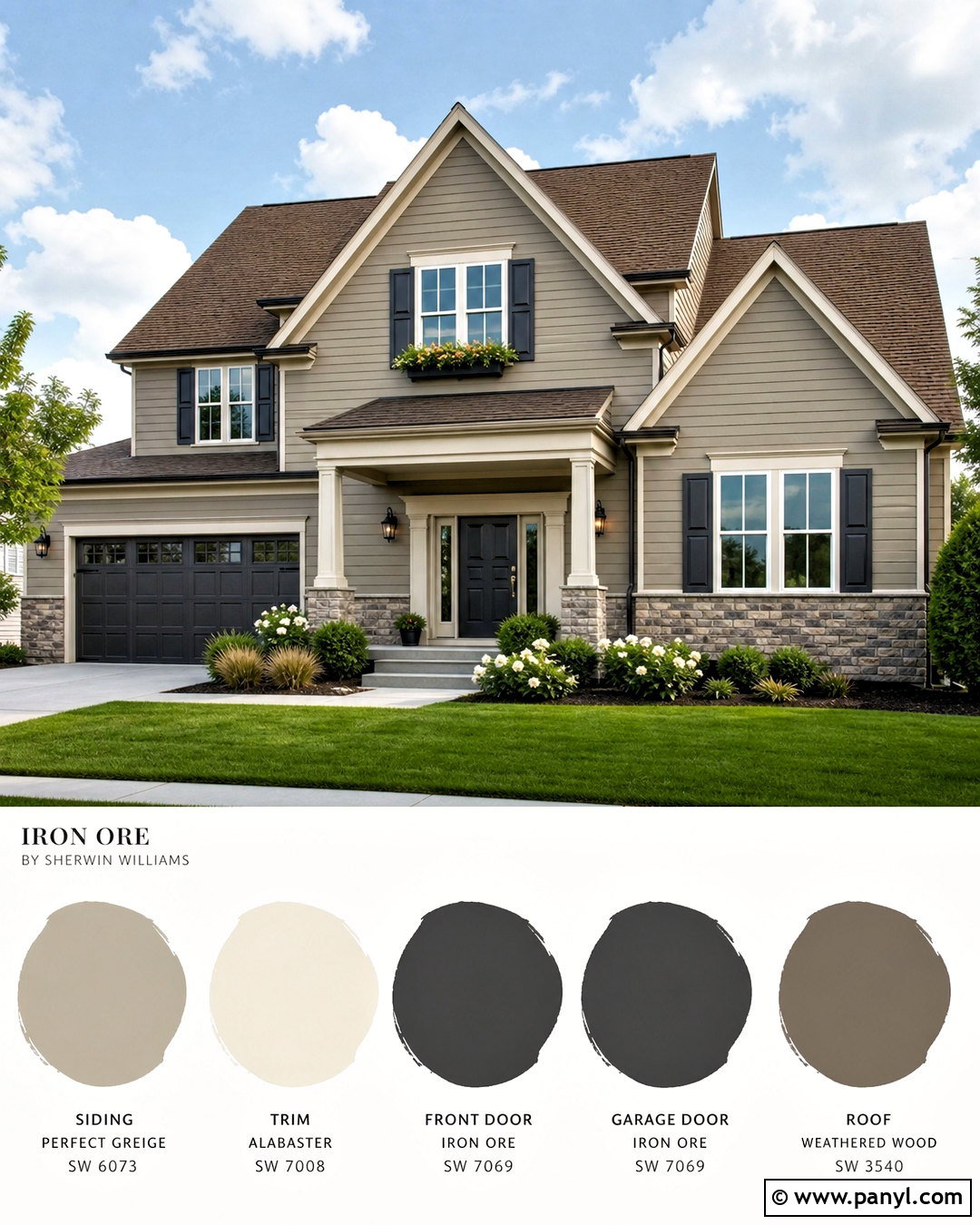
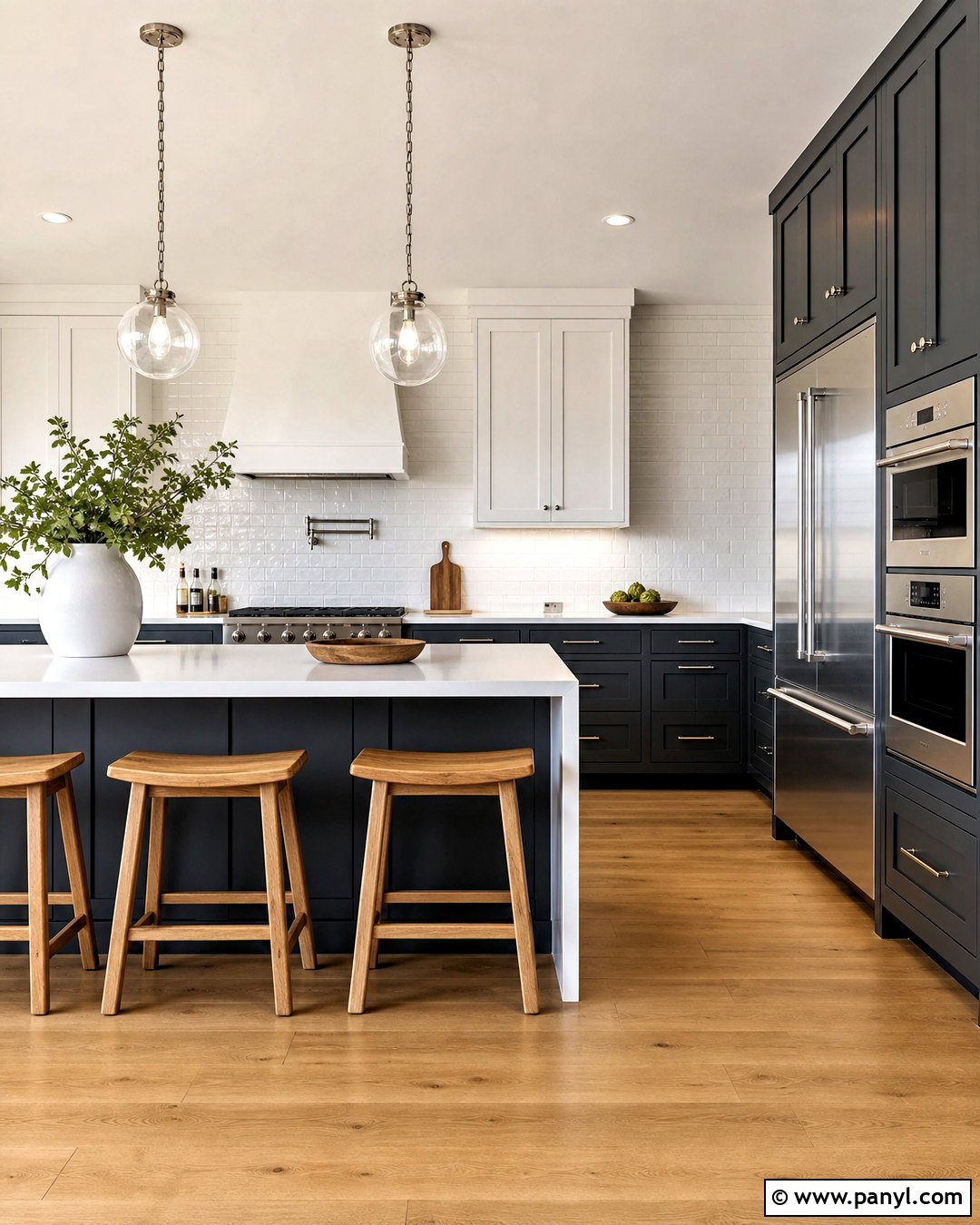
10. Iron Ore Modern Interior Doors
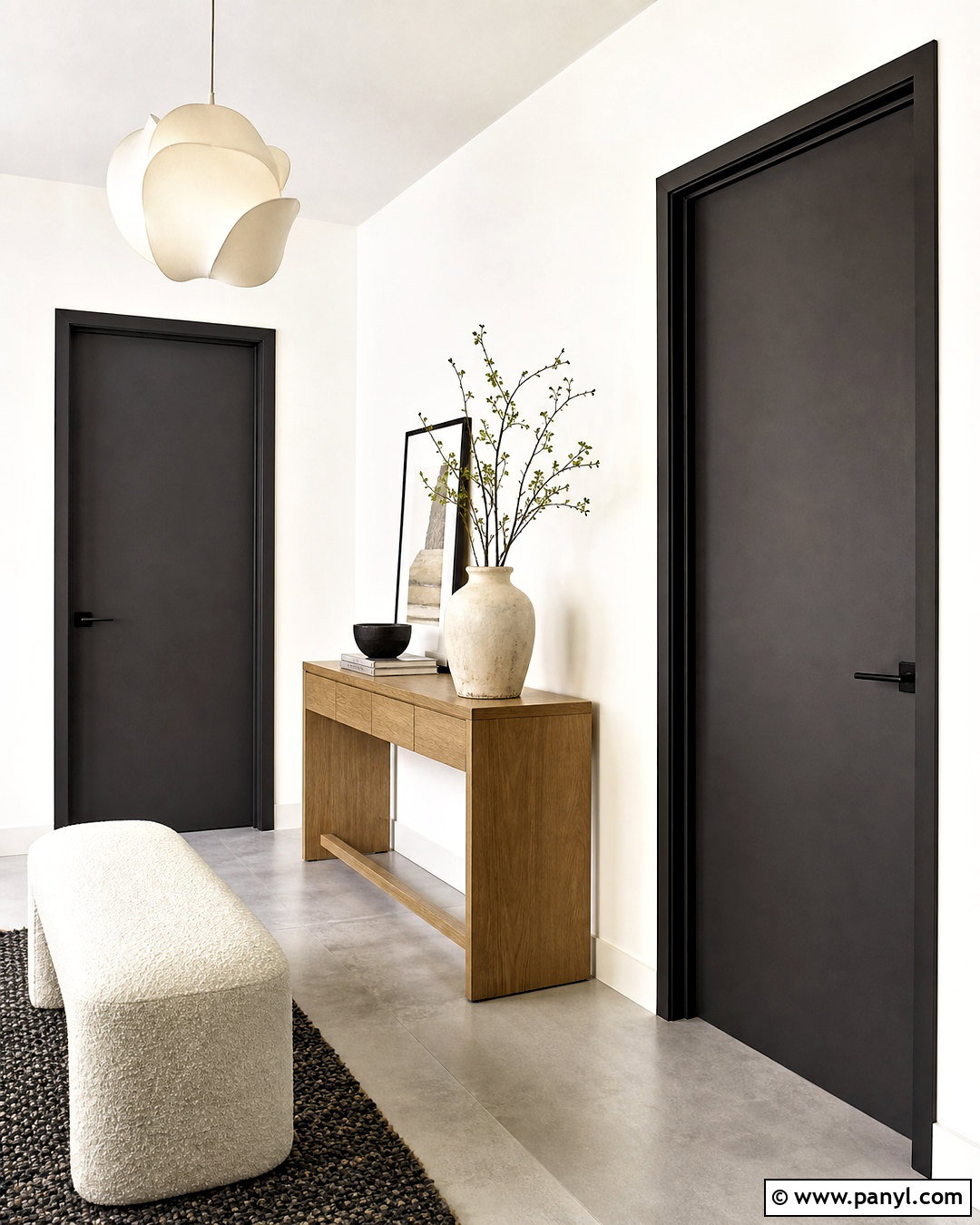
Clean lines and limited ornamentation make Iron Ore doors feel especially sharp in a modern interior. Select flush doors with concealed or minimal-profile hinges, then add slim matte black levers. Paint the casings Iron Ore as well, allowing each opening to appear as a simple charcoal block against soft white walls. Large-format pale gray tile or light concrete-look flooring supports the streamlined palette. Warm the space with an oak console, a cream boucle bench, and one oversized ceramic vessel. Recessed lighting or a sculptural white pendant provides even illumination without adding visual clutter. This complete look depends on careful proportions and a small material palette, allowing the doors to supply contrast while furniture and decor remain light, practical, and understated.
11. Iron Ore Traditional Interior Doors
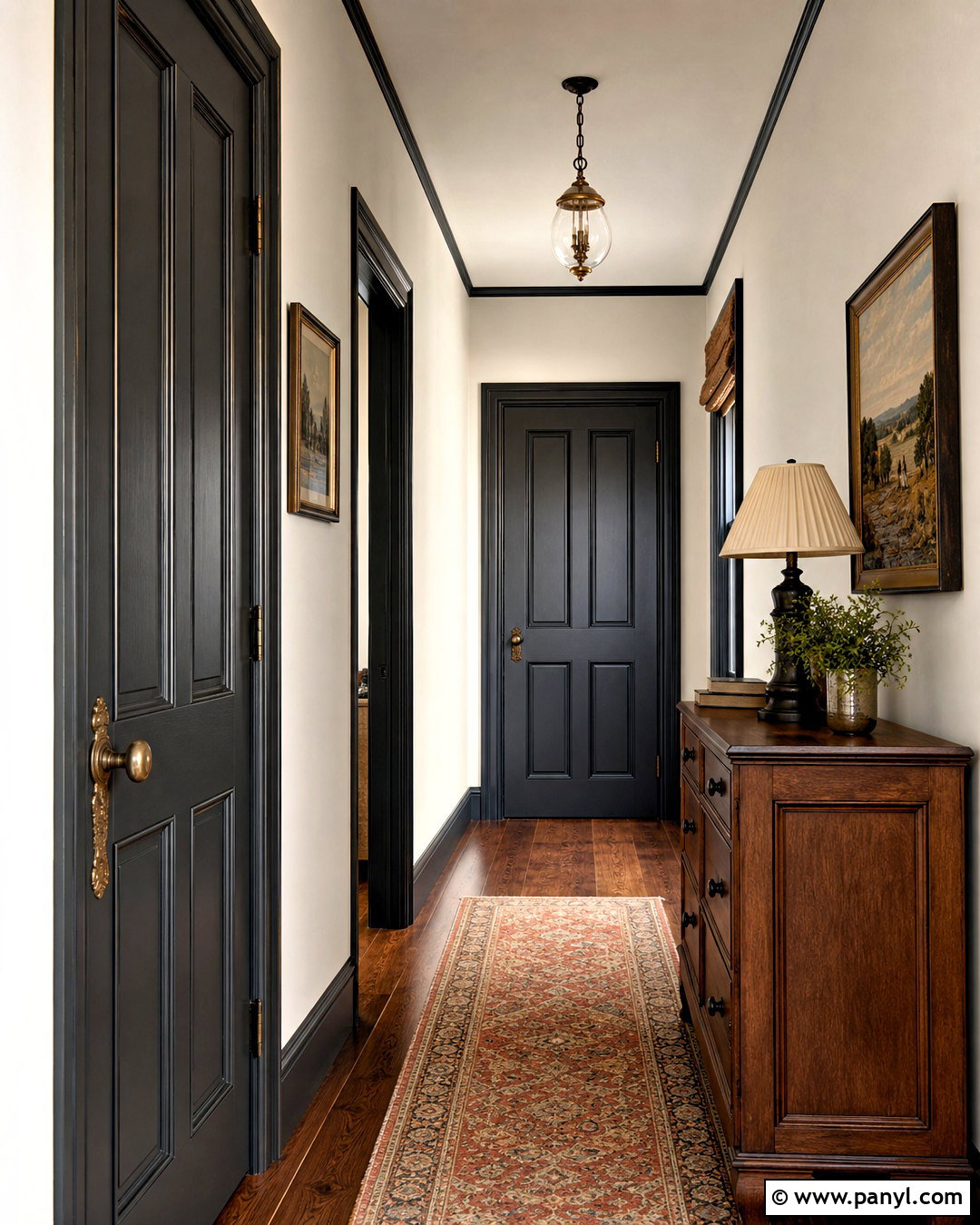
Traditional paneled doors gain a sophisticated update with an Iron Ore finish. Choose four-panel or six-panel doors, paint the casings charcoal, and use aged-brass knobs with decorative backplates. Warm ivory walls provide gentle contrast, while medium walnut flooring gives the darker doors a grounded foundation. Add a Persian-inspired runner featuring muted rust, beige, and charcoal so the palette feels connected rather than overly formal. A small antique wood chest, pleated lamp, and framed landscape complete the hallway without crowding it. Crown molding can remain ivory to keep the ceiling feeling open. This design respects classic architectural details while using a deeper door color to make those features more visible, tailored, and relevant to today’s interiors.
12. Iron Ore Scandinavian Interior Doors
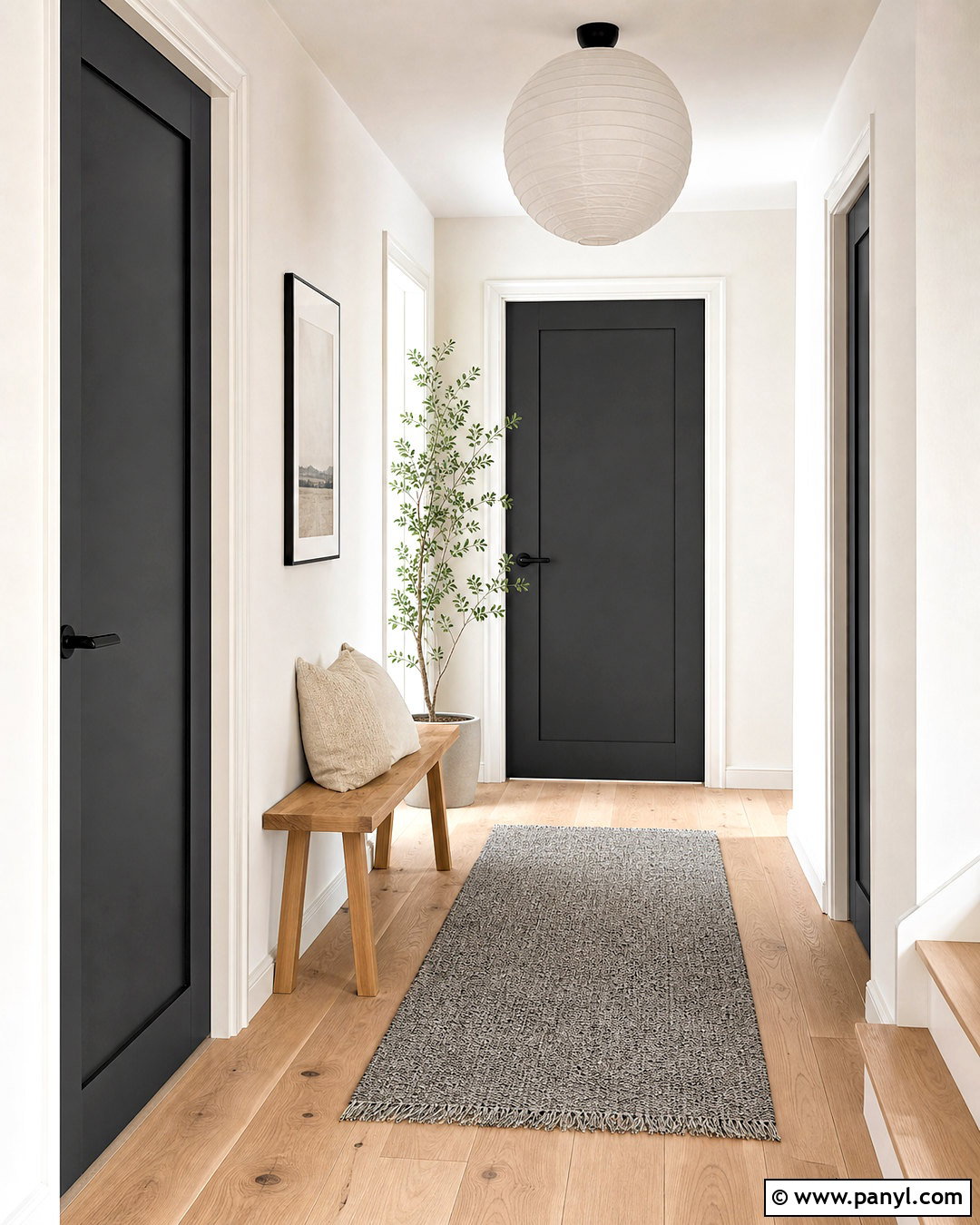
Iron Ore doors can work in a Scandinavian-inspired home when the surrounding materials remain pale, natural, and simple. Pair smooth one-panel doors with soft off-white walls and blond oak flooring. Keep the trim off-white for a lighter outline, then choose understated black levers that nearly disappear against the charcoal surface. Furnish the nearby space with a slim birch bench, cream wool cushions, and a flat-woven gray runner. A paper pendant light and one leafy plant add softness without creating clutter. Avoid heavy patterns and overly dark furniture. The finished room should feel airy and functional, with Iron Ore acting as the strongest visual anchor. Repeating small black accents helps the door color feel integrated rather than isolated.
13. Iron Ore Midcentury Interior Doors
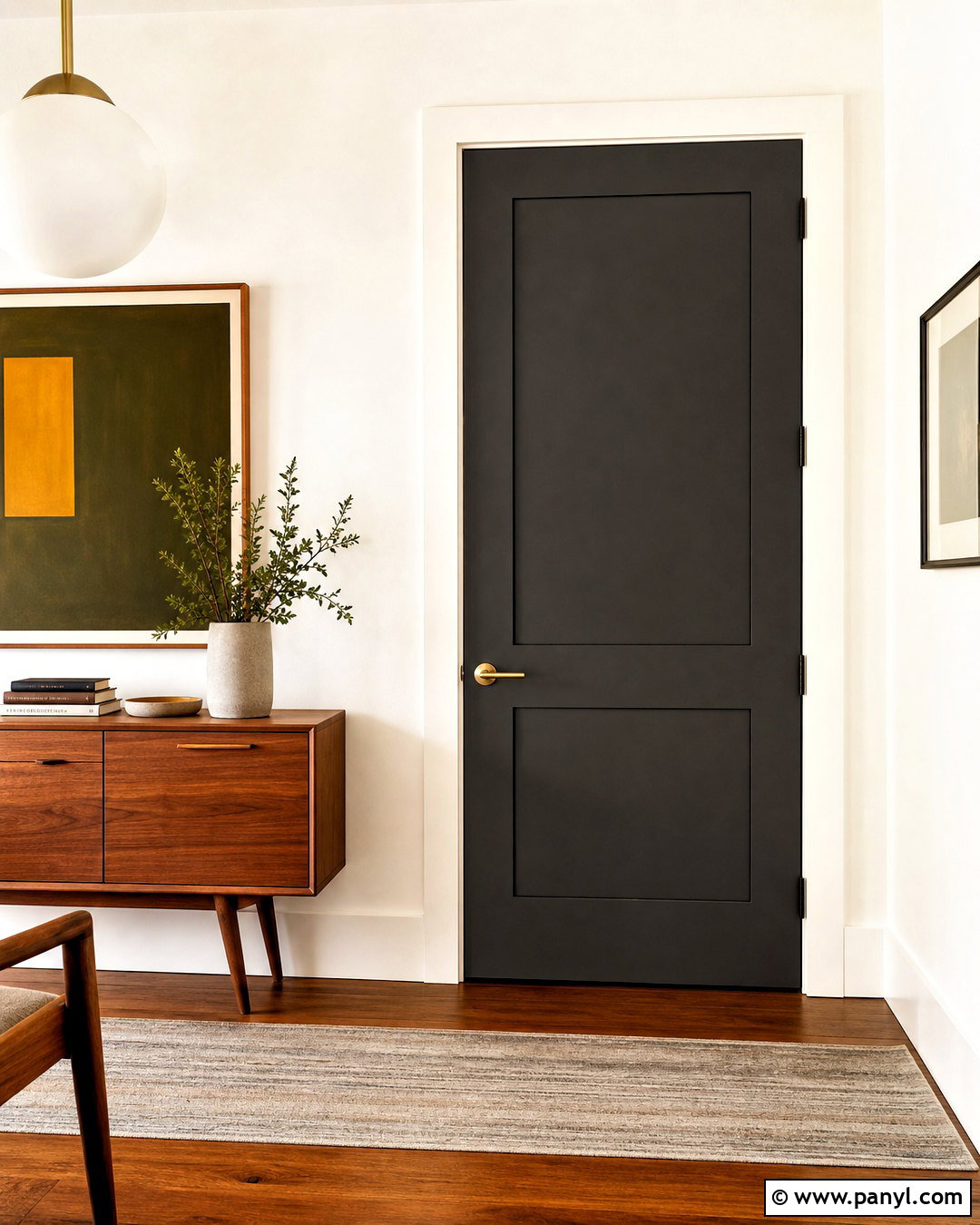
Warm wood, streamlined furniture, and Iron Ore doors create a rich midcentury-inspired palette. Use flat-panel doors with simple brass levers, then surround them with warm white walls and medium-tone walnut flooring. A walnut console with tapered legs connects the door color to the natural wood, while an abstract print introduces muted olive, ochre, and cream. Add a globe ceiling light in opal glass and brass for soft geometric detail. Keep the door casings warm white if you want a crisp outline, or paint them Iron Ore for a more graphic effect. A low-pile rug with subtle linear patterns completes the room. This scheme feels nostalgic without appearing dated because the forms are clean and the color palette remains controlled.
14. Iron Ore Coastal Interior Doors
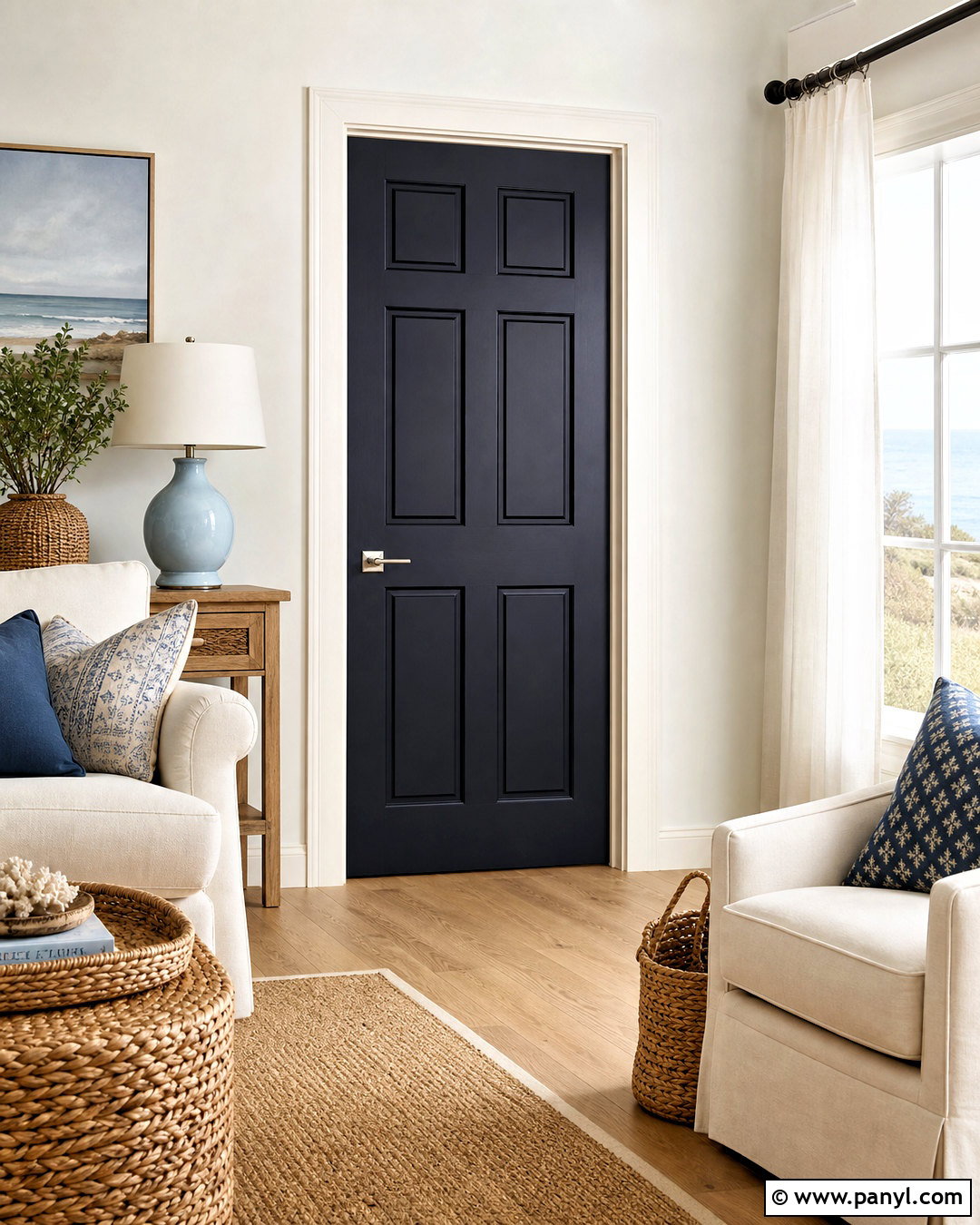
Dark charcoal doors can ground a coastal room without relying on predictable navy blue. Paint simple paneled doors Iron Ore and keep the casing bright, warm white. Use pale white oak flooring, woven seagrass baskets, linen upholstery, and a light sand-colored rug to build a relaxed foundation. Introduce muted blue through one cushion, a ceramic lamp, or understated artwork rather than covering the room in ocean-themed decor. Brushed nickel or soft brass hardware keeps the doors feeling lighter than heavy black hardware would. White curtains should allow plenty of daylight to spread through the room. The finished look is breezy and calm, with the Iron Ore doors providing necessary structure against the pale woods, natural fibers, and quiet coastal colors.
15. Iron Ore Organic Modern Doors
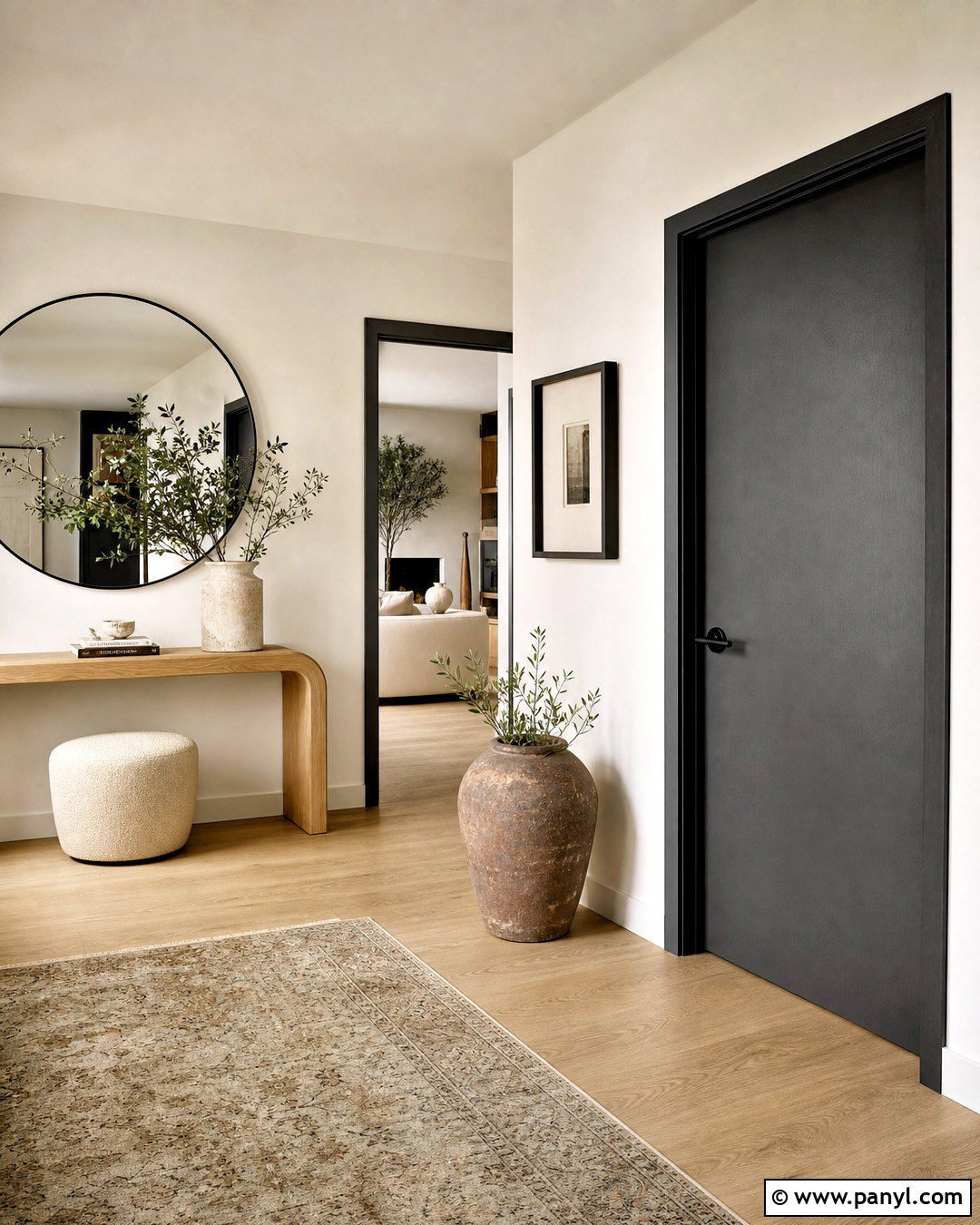
Imagine deep charcoal doors surrounded by tactile stone, warm wood, and softly curved furniture. For an organic modern interior, paint minimalist doors and their casings Iron Ore, then use warm white walls with a subtle plaster-like finish. Light oak flooring, a rounded wood console, and a cream boucle stool balance the darker architectural elements. Add travertine accessories, an oversized clay vessel, and olive branches for natural shape and texture. Door hardware should be matte black for a seamless effect or unlacquered brass for gentle warmth. Keep the decor sparse but substantial rather than filling the room with small objects. The completed space feels grounded and welcoming because the strong door color is softened by creamy textiles, natural materials, and rounded silhouettes.
16. Iron Ore Bedroom Door
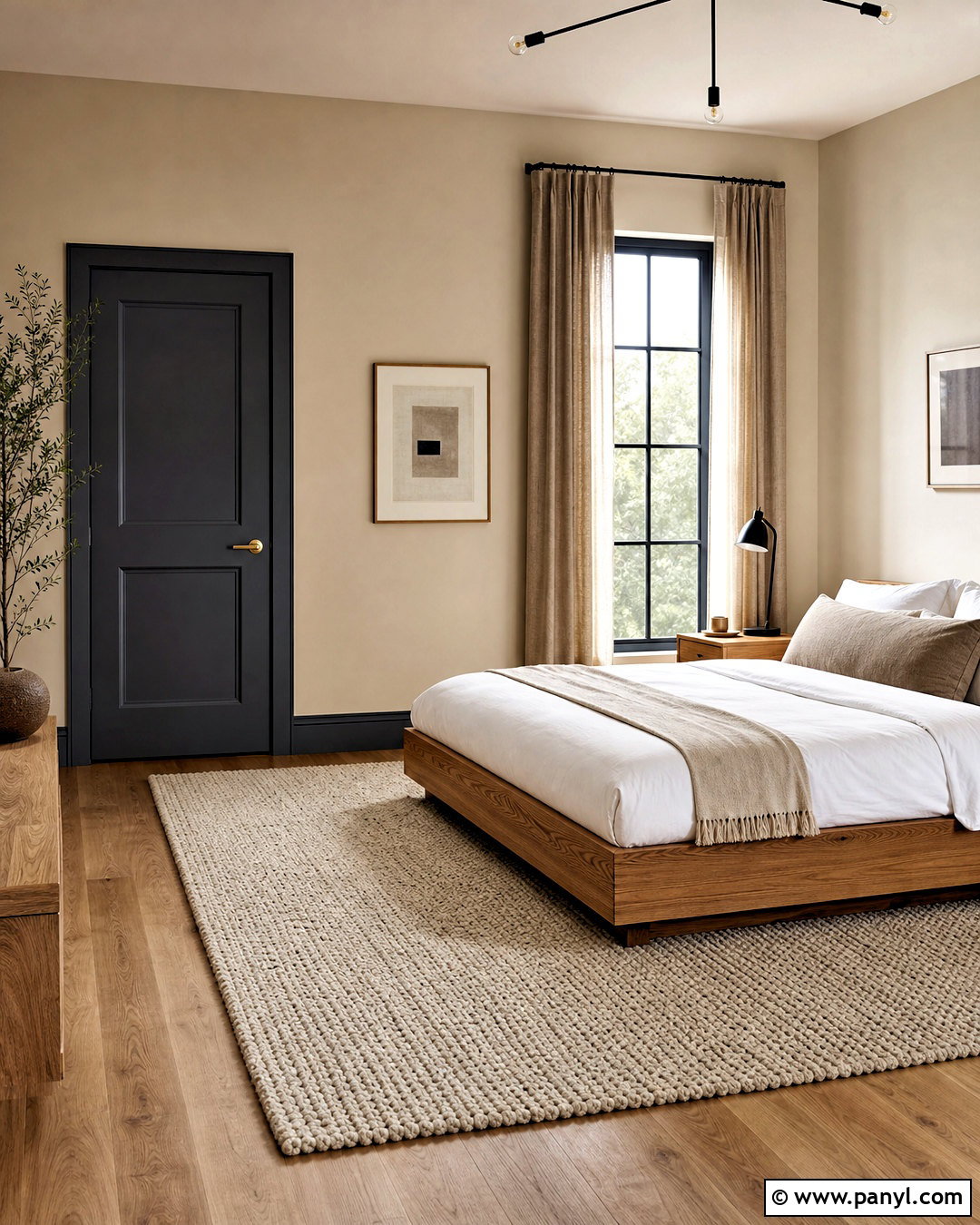
An Iron Ore bedroom door can add definition without turning the entire sleeping space dark. Paint the interior-facing door and its casing charcoal, then use soft beige or warm white on the walls. Build the room around a low oak bed, ivory bedding, taupe curtains, and a textured wool rug. Repeat Iron Ore on slim bedside lamps or picture frames so the door connects with the furnishings. Aged-brass hardware adds warmth and stands out clearly against the dark paint. Keep the ceiling and remaining trim light to preserve an open feeling. This balanced scheme works well in both small and large bedrooms because the deep color is concentrated on one architectural feature while the main surfaces stay restful, warm, and easy on the eyes.
17. Iron Ore Bathroom Door
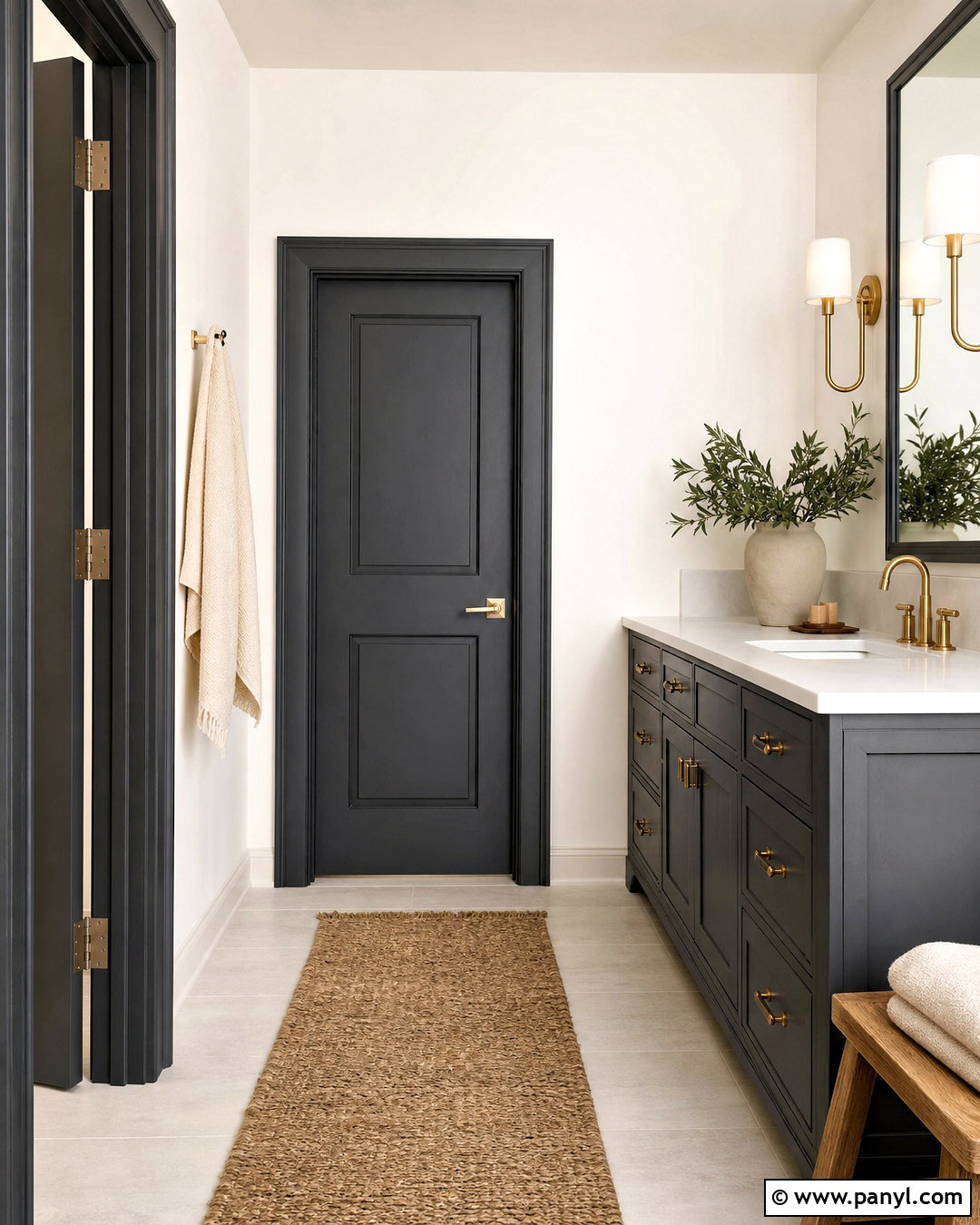
A bathroom entrance painted Iron Ore can connect beautifully with dark vanity hardware and pale stone surfaces. Use a paneled charcoal door with matching casing, then pair it with warm white walls and light porcelain tile. Inside the bathroom, repeat the color on the vanity or mirror frame, but keep the countertop white quartz and the shower tile light to maintain balance. Brushed brass levers, faucets, and sconces introduce warmth against the charcoal. Add an oak bath stool, cream towels, and a small natural-fiber runner for softness. Choose a durable, washable paint finish suitable for doors and moisture-prone areas. The complete design feels cohesive from the hallway into the bathroom, rather than treating the dark door as a disconnected accent.
18. Iron Ore Pantry And Laundry Doors
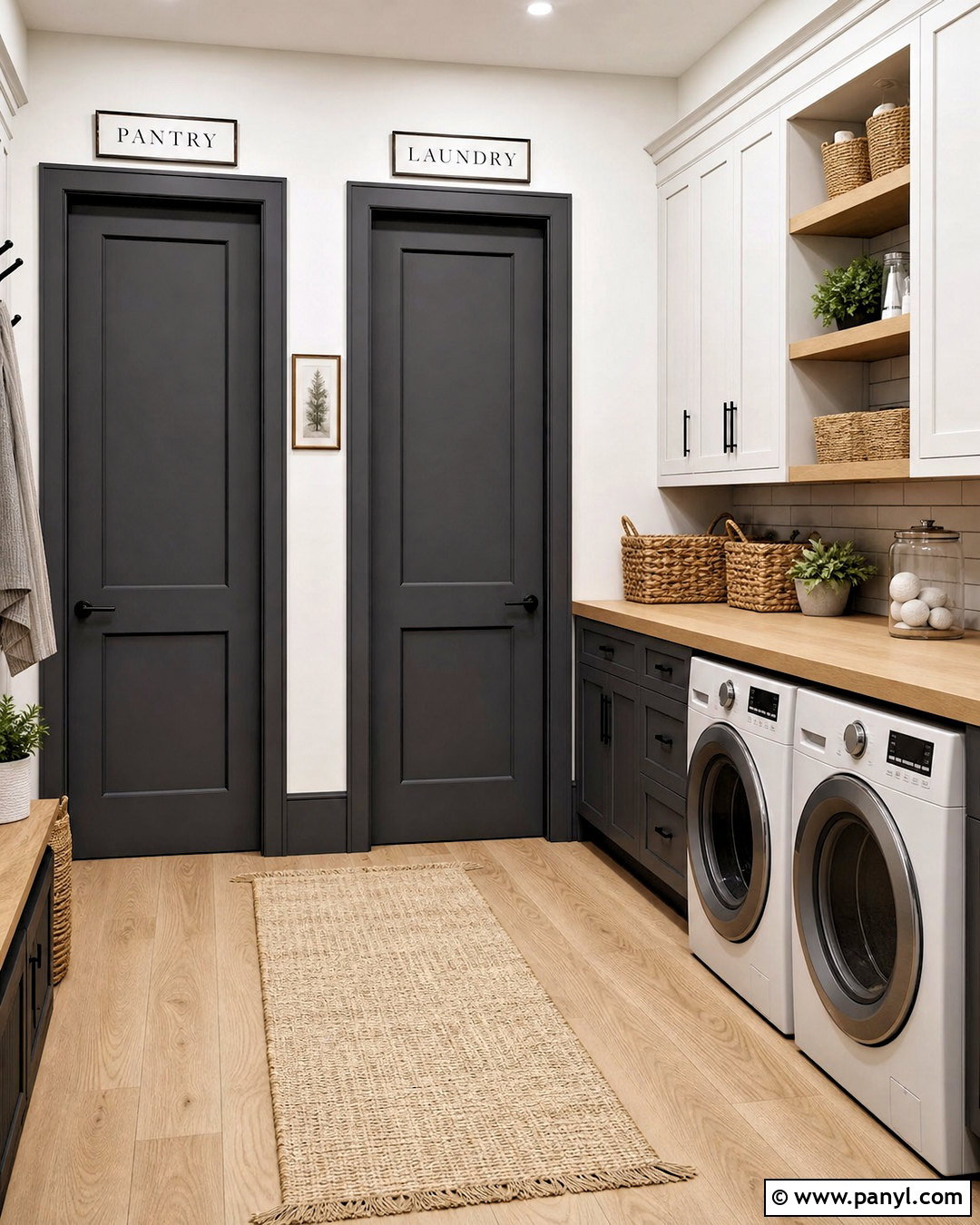
Utility spaces deserve the same attention as visible living areas. Paint adjoining pantry and laundry doors Iron Ore to create an organized focal point near the kitchen. Use simple Shaker panels with matching charcoal casings and practical matte black levers. Surround them with warm white walls, pale oak or light tile flooring, and streamlined cabinetry. In the laundry area, repeat Iron Ore on lower cabinets while keeping upper cabinets white to avoid excessive darkness. Woven baskets, labeled-free glass containers, and natural wood shelves add useful storage without visual noise. A washable beige runner softens the floor. This coordinated design makes practical rooms feel intentional and helps visually connect separate service areas through one consistent door color and material palette.
19. Iron Ore Home Office Door
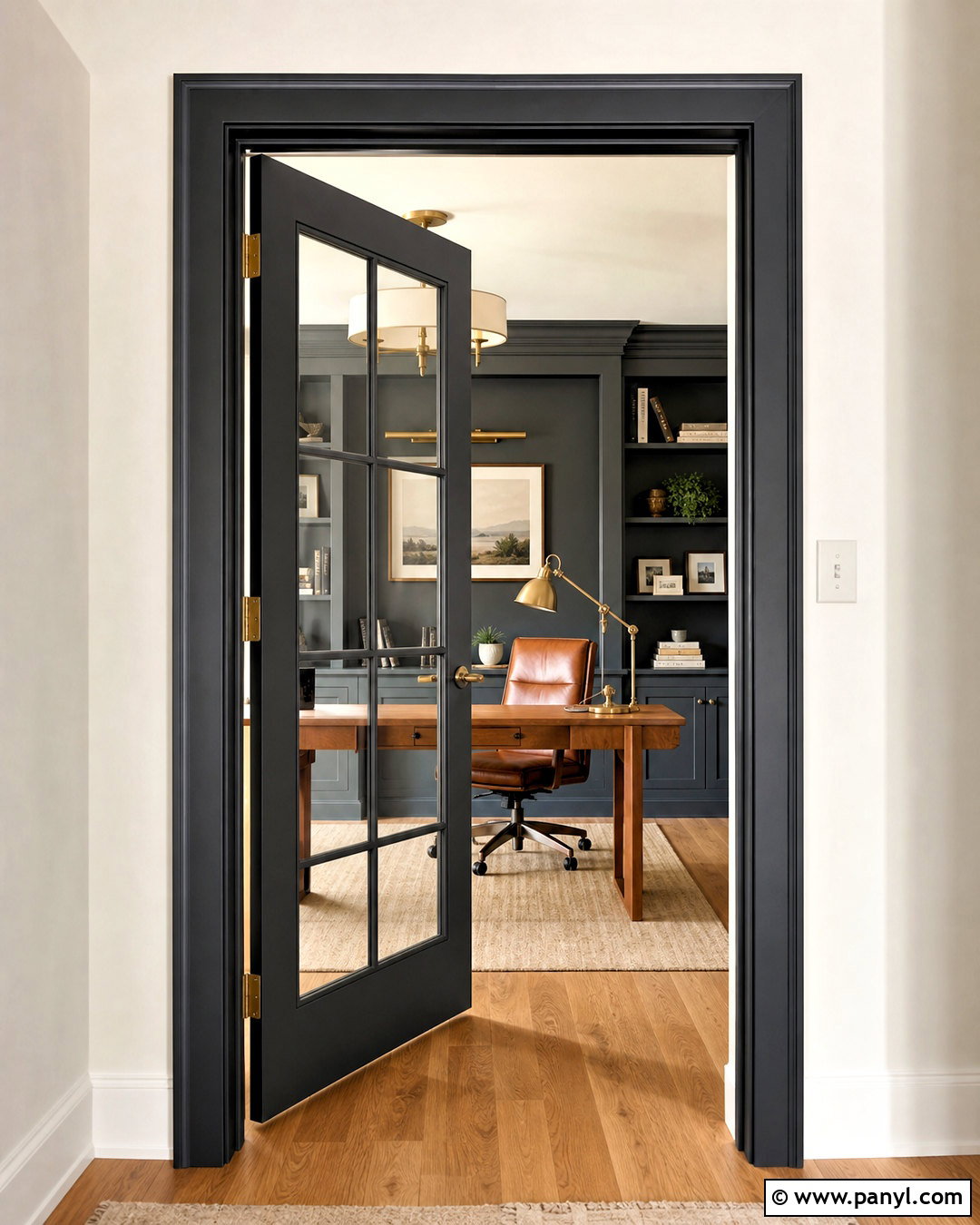
An Iron Ore office door creates a clear transition from a busy household into a focused workspace. Choose a glass-paneled or solid Shaker door depending on the level of privacy needed, then paint the door and casing charcoal. Inside, repeat the color on built-in shelves or the desk base. Warm white walls, oak flooring, a camel leather desk chair, and a beige wool rug prevent the office from becoming too dark. Use aged-brass hardware and a matching desk lamp for subtle warmth. Organized books, ceramic accessories, and one large framed print complete the space. This look feels professional without becoming corporate, and the repeated Iron Ore elements give the compact room structure, depth, and a strong visual connection to the hallway.
20. Iron Ore Interior Front Door
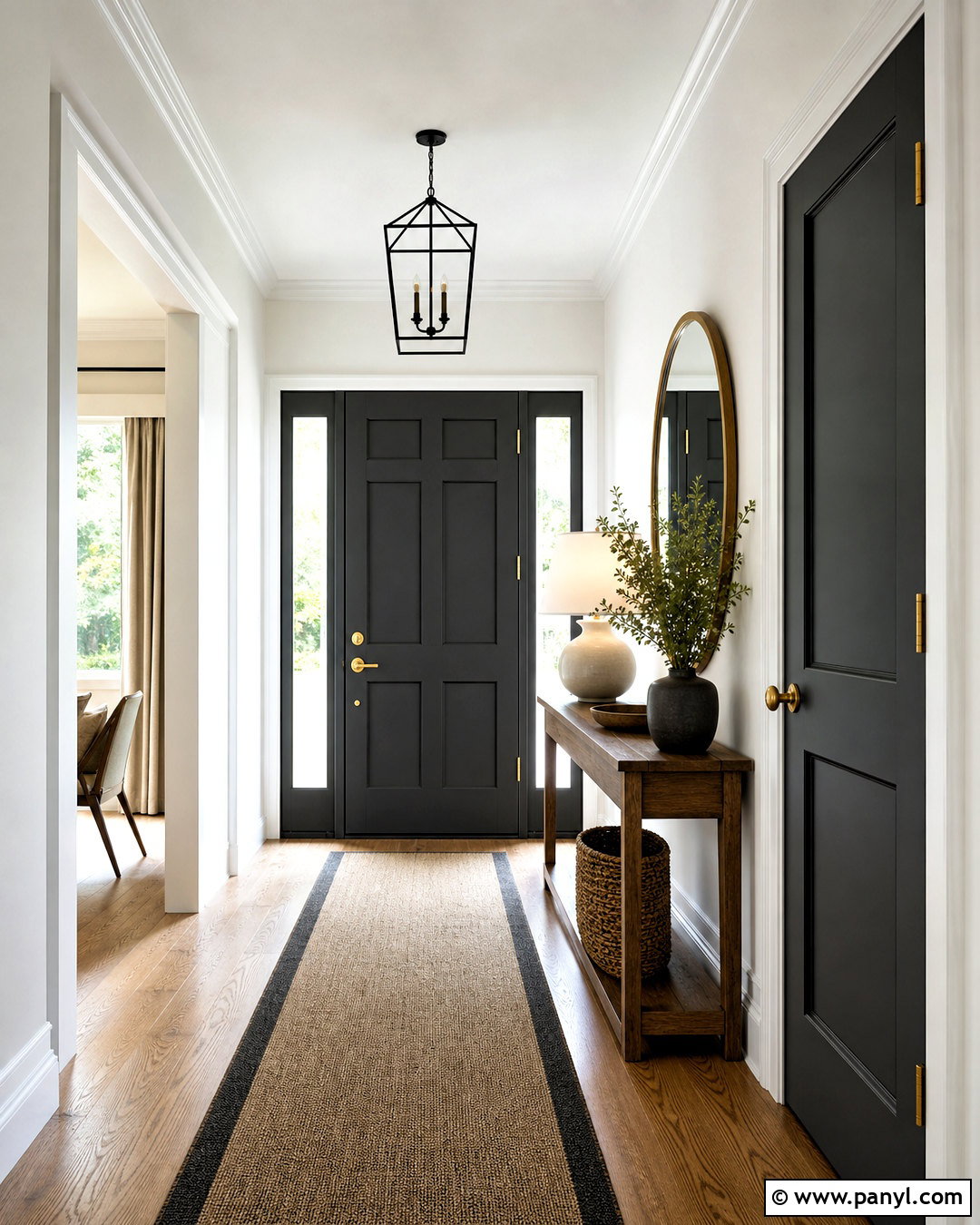
Painting the interior side of the front door Iron Ore gives the entry immediate depth and contrast. Extend the color across the door, sidelights, and casing if the foyer receives generous daylight. In a smaller entry, keep the casing warm white so the dark door feels more contained. Pair the charcoal finish with aged-brass hardware, warm white walls, and medium oak flooring. Add a narrow wood console, a round brass mirror, and a durable beige runner with a subtle charcoal border. A ceramic table lamp and simple greenery make the entrance welcoming without hiding the door. Repeating Iron Ore on a nearby stair rail or picture frame helps the feature feel connected to the rest of the home rather than added as an isolated accent.
Conclusion:
These **20 iron ore doors interior ideas** show how one charcoal paint color can support many different home looks. The key is to design the entire space around the door rather than treating dark paint as a stand-alone feature. Warm white or greige walls create balance, while oak, walnut, stone, linen, and woven fibers introduce natural softness. Hardware also changes the result. Matte black feels quiet and modern, while aged brass creates warmer contrast. Before painting every door, test Iron Ore on one surface and view it throughout the day. Once the undertone and contrast feel right, repeat the finish thoughtfully across nearby doors, trim, furniture, or small accents for a cohesive interior.

Related Ideas and Inspiration:
Leave a Reply