
The best **20 wood accent wall ideas** do more than cover an empty surface. They shape the room, create a clear focal point, and connect furniture, colors, lighting, and decor into one finished look. Wood can feel rustic, modern, coastal, minimalist, or traditional depending on the species, stain, plank direction, and surrounding materials. Before choosing a design, consider the wall’s size, existing flooring, natural light, and any doors, outlets, or mounted fixtures. Light oak can brighten a compact bedroom, while walnut or black-stained panels bring definition to a large living area. From affordable plywood treatments to detailed herringbone installations, the following **20 wood accent wall ideas** offer complete looks you can adapt to your space.

1. Vertical Wood Slat Accent Wall
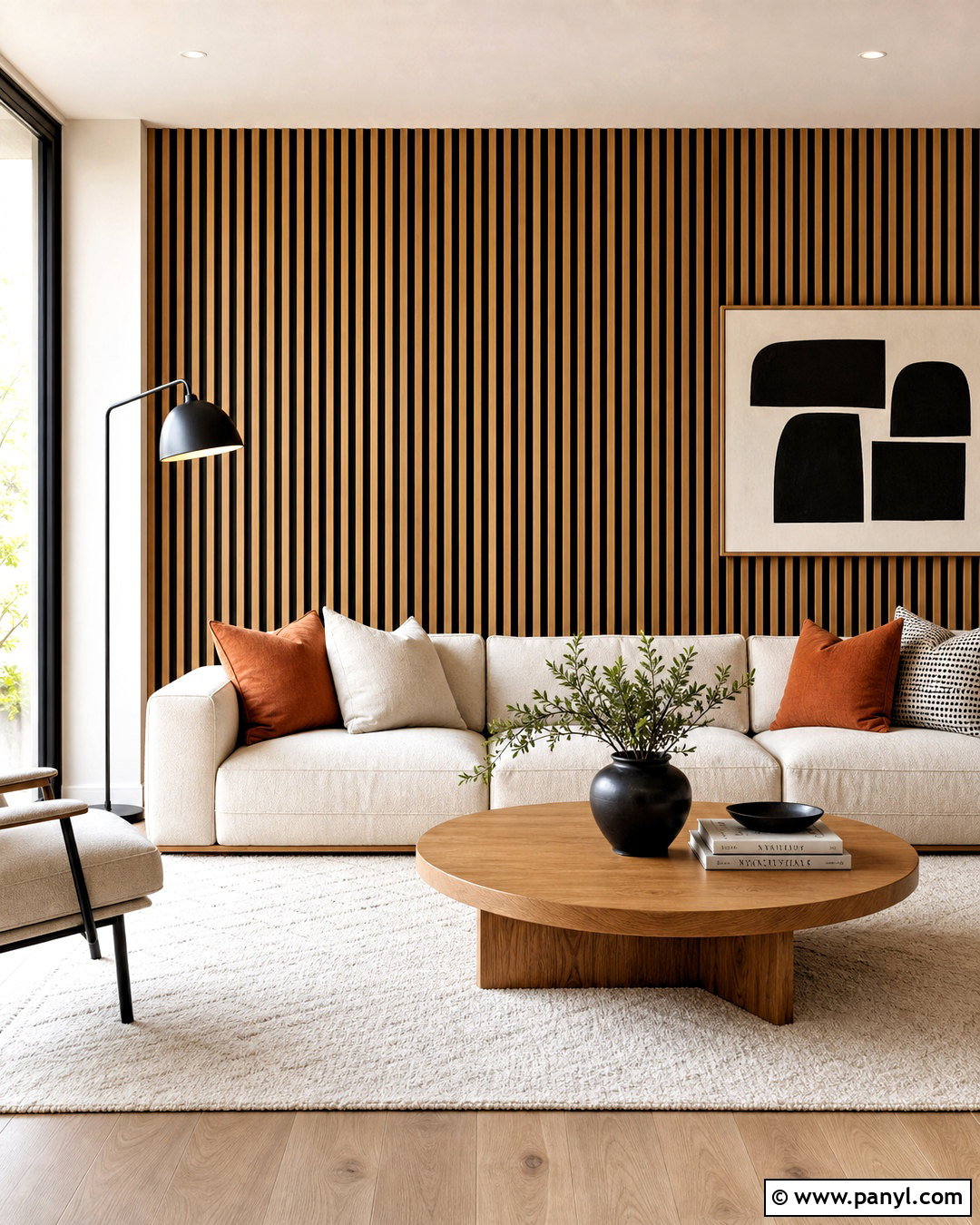
A vertical wood slat accent wall creates a clean focal point while drawing attention toward the ceiling. Use slim white oak slats over a charcoal or black backing so the narrow gaps remain visible. In a living room, position the wall behind a low cream sofa and add a round oak coffee table, textured ivory rug, and matte black floor lamp. Keep nearby walls warm white to prevent the wood pattern from overwhelming the space. Simple oatmeal curtains and rust-colored pillows can introduce softness without competing with the linear design. For balanced spacing, make a small wood spacer before installation. Continue the slats from baseboard to ceiling for a tailored, architectural finish that looks intentional from every angle.
2. Reclaimed Wood Accent Wall
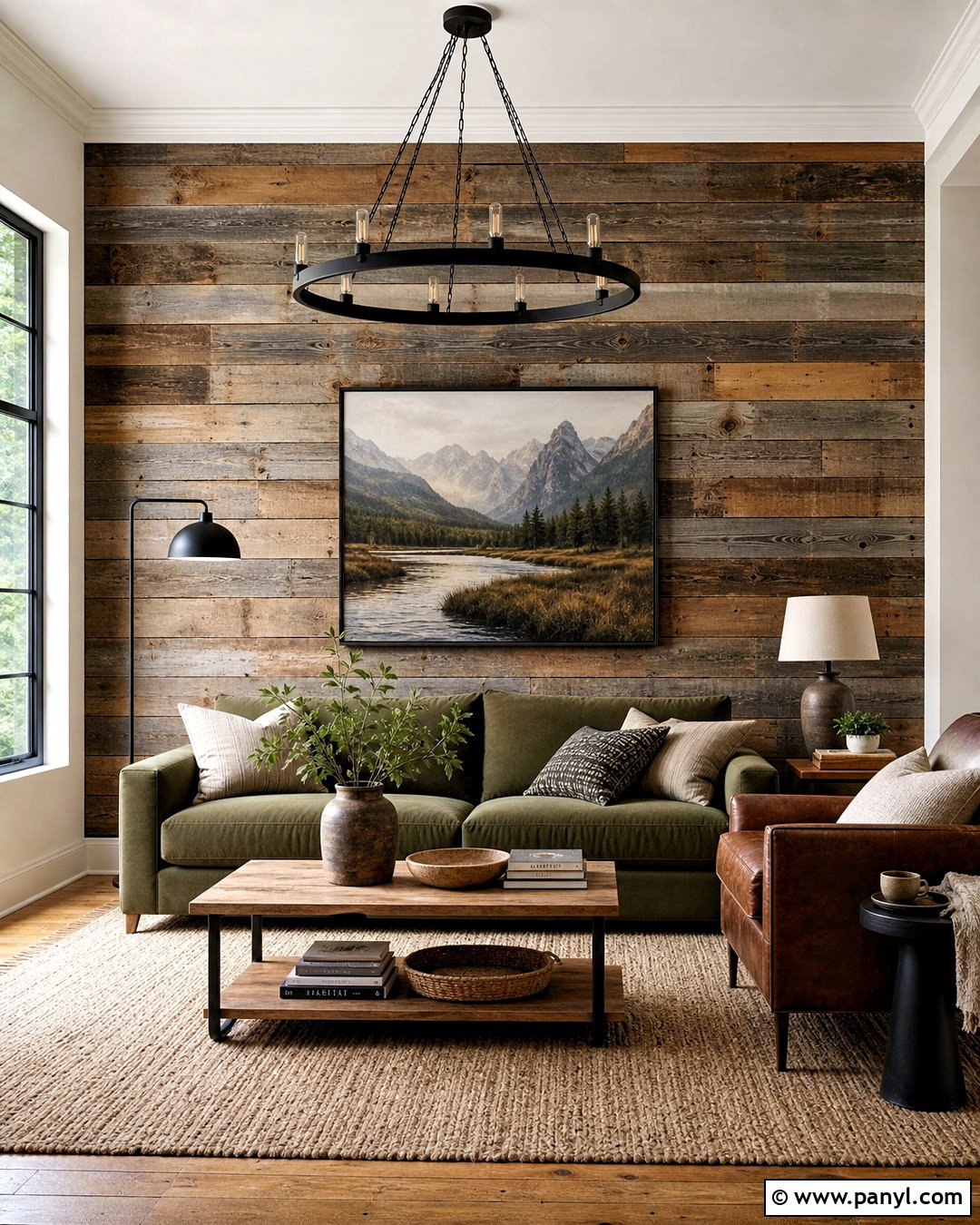
Weathered boards give a living room warmth, texture, and a sense of history. Build the accent wall with reclaimed planks in muted brown, gray, and sun-faded tan tones, arranging the boards horizontally in varied lengths. Place a deep olive sofa in front of the wall, then add a woven wool rug, aged leather chair, and simple black metal lighting. The remaining walls should stay soft cream to balance the rough wood. Avoid filling the feature wall with small decorations because knots, saw marks, and color variations already provide visual interest. One oversized landscape print or a pair of minimal sconces is enough. Clean and seal authentic reclaimed boards before installation, and inspect them carefully for old nails, loose fragments, or unwanted residue.
3. White Shiplap Wood Accent Wall
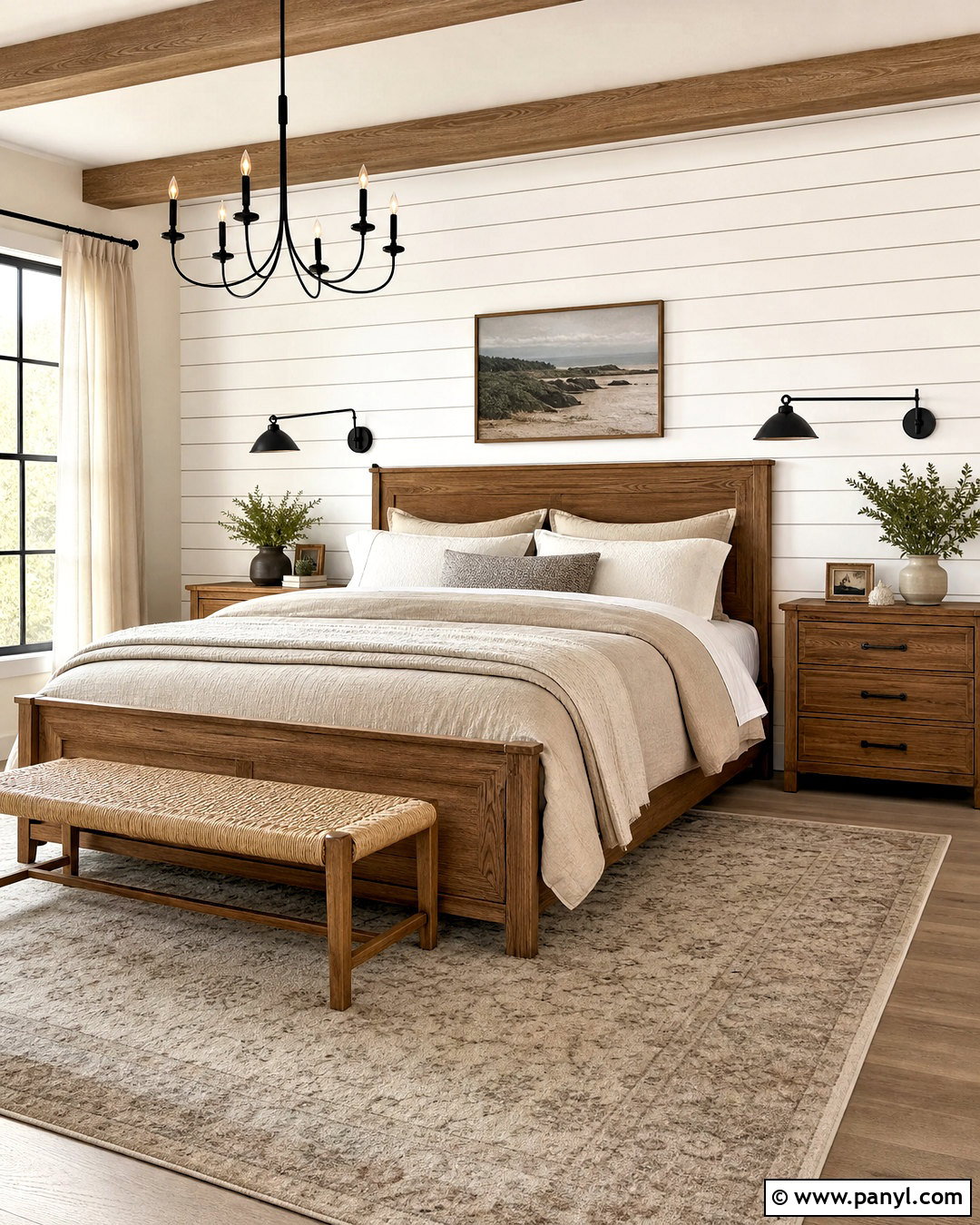
Crisp white shiplap offers texture without making a room feel visually heavy. Install horizontal boards behind the bed and paint them a soft warm white rather than a cold, blue-based shade. A natural oak bed, layered beige bedding, striped lumbar pillow, and black swing-arm sconces complete a relaxed modern farmhouse bedroom. Use medium-toned wood nightstands to create gentle contrast against the painted wall. Pale greige on the surrounding walls keeps the overall palette calm and connected. Leave the shiplap mostly uncovered so its evenly spaced lines remain visible. A simple framed print above the headboard and a woven bench at the foot of the bed add character. Finish the room with linen curtains and a lightly patterned neutral rug.
4. Walnut TV Wood Accent Wall
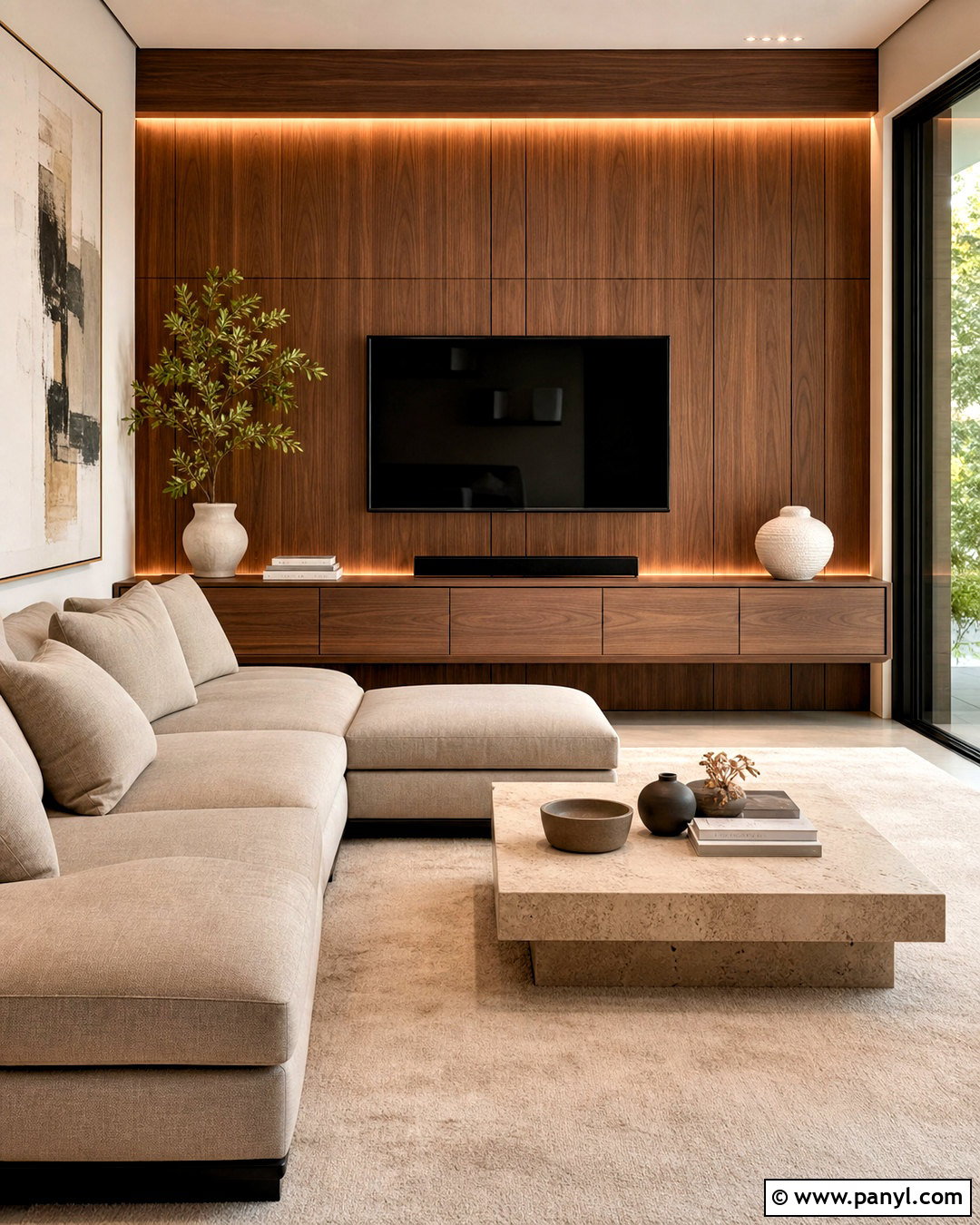
Rich walnut paneling can transform a television wall into a polished part of the living room instead of a collection of electronics. Cover the central section with warm walnut veneer panels and mount the TV directly over a long floating cabinet in the same finish. Surround the wood with soft greige walls and use a light taupe sectional to keep the dark grain from dominating. Conceal wires inside the wall or behind the panel system for a streamlined result. Add a slim linear light above the cabinetry, ceramic objects, and one leafy plant at the side. A pale wool rug and travertine coffee table introduce lighter textures. Keep the panel joints straight and symmetrical around the television for a professional, built-in appearance.
5. Herringbone Wood Accent Wall
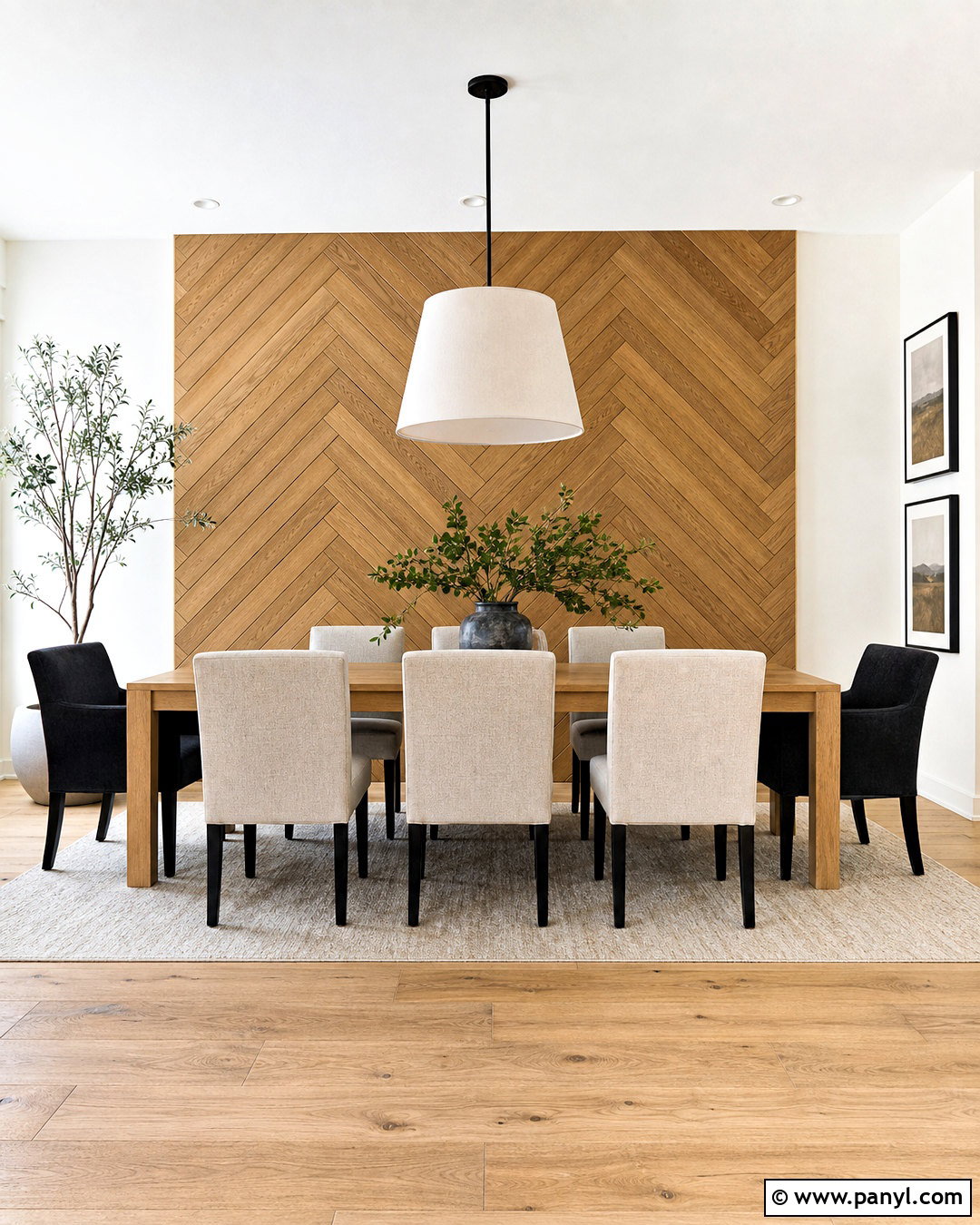
A herringbone wood accent wall brings movement to a dining room while maintaining a natural, sophisticated palette. Choose medium oak planks with subtle grain variation and arrange them in a precise V-shaped pattern across the main wall. Center a rectangular oak dining table in front of it, surrounded by upholstered beige chairs and two black end chairs. A simple linen pendant keeps attention on the craftsmanship without leaving the ceiling empty. Paint the other walls a quiet off-white and use light wood flooring in a slightly different tone so the surfaces complement rather than match exactly. Limit wall decor to one slim console or a pair of understated sconces. Careful centerline planning is important because even small alignment problems become noticeable in repeating patterns.
6. Chevron Wood Accent Wall
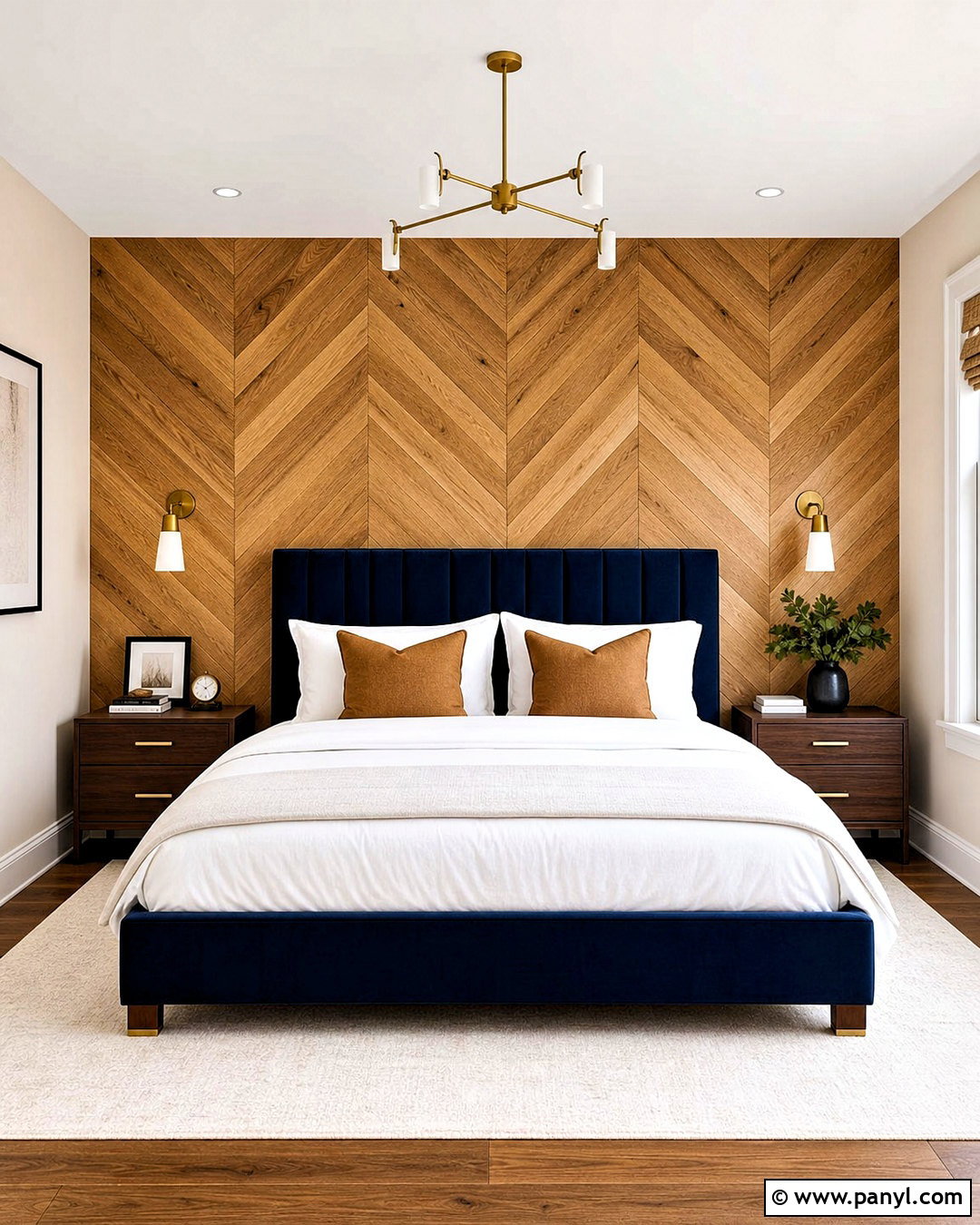
For a sharper geometric look, use chevron boards that meet in clean points instead of overlapping like herringbone. A honey-toned oak chevron wall works especially well behind a navy upholstered bed. Add white bedding, camel-colored pillows, brass bedside lights, and compact walnut nightstands for a warm but refined bedroom. Keep the remaining walls pale beige and choose an ivory rug to soften the strong directional pattern. The central point of the chevron should align with the middle of the headboard, creating an orderly composition. Use boards with similar coloring if you want the pattern to feel calm. Greater tone variation produces a more dramatic statement. Finish the wall with a clear matte coating that protects the surface without adding distracting shine.
7. Black Wood Accent Wall
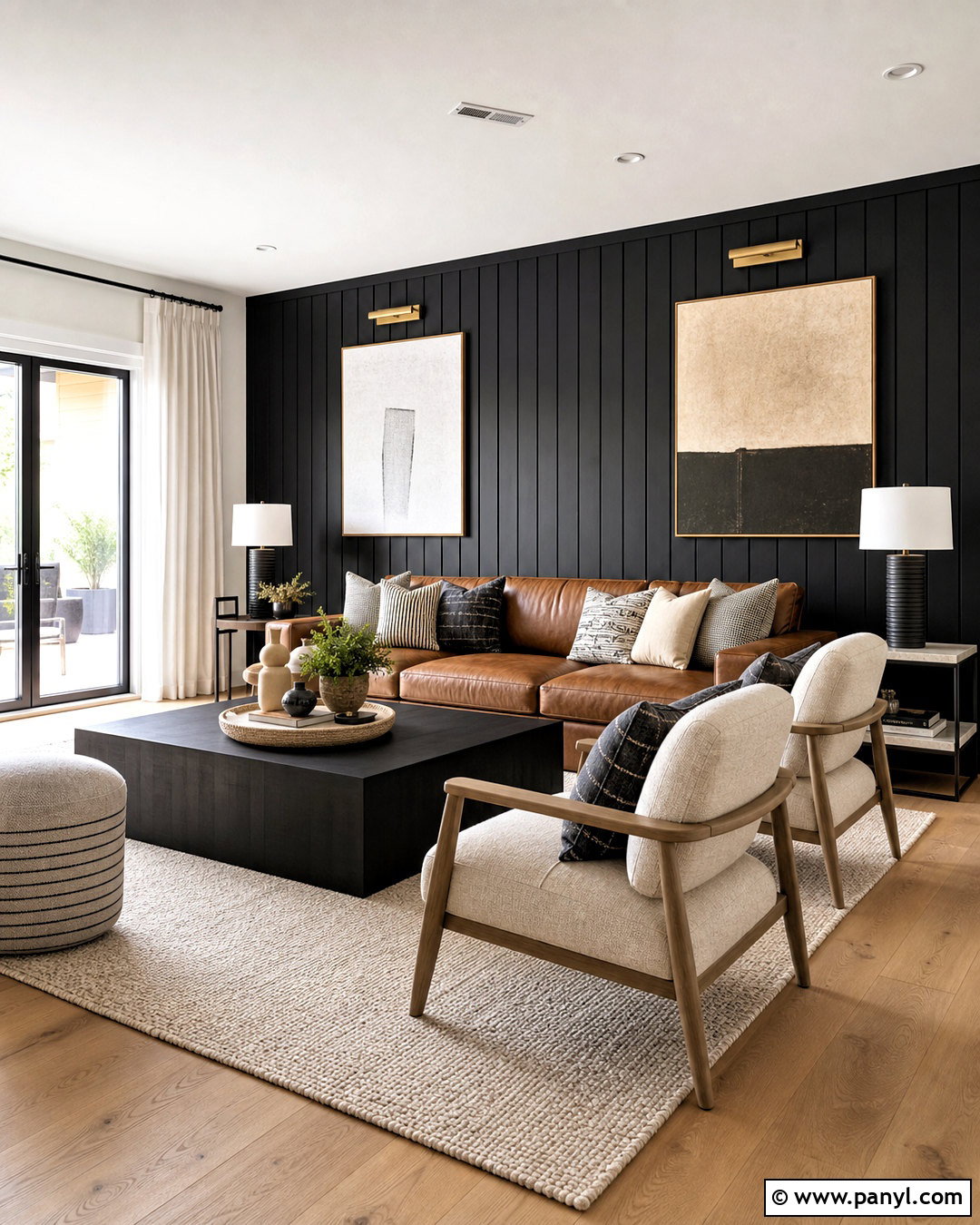
Black-painted wood can make a bright room feel grounded rather than gloomy. Install wide vertical tongue-and-groove boards behind a caramel leather sofa, then paint the entire surface a soft matte black. Pair it with warm white surrounding walls, pale oak flooring, and a large cream rug to maintain contrast. A light wood coffee table, linen armchairs, and tan pillows prevent the palette from feeling severe. Use brass picture lights or opal glass sconces to bring gentle brightness to the dark surface. One oversized abstract artwork with cream and rust tones can unify the furnishings. This look works best when the room receives dependable natural light. Paint the baseboard and trim black as well, allowing the accent wall to read as one complete architectural feature.
8. Light Oak Bedroom Wood Accent Wall
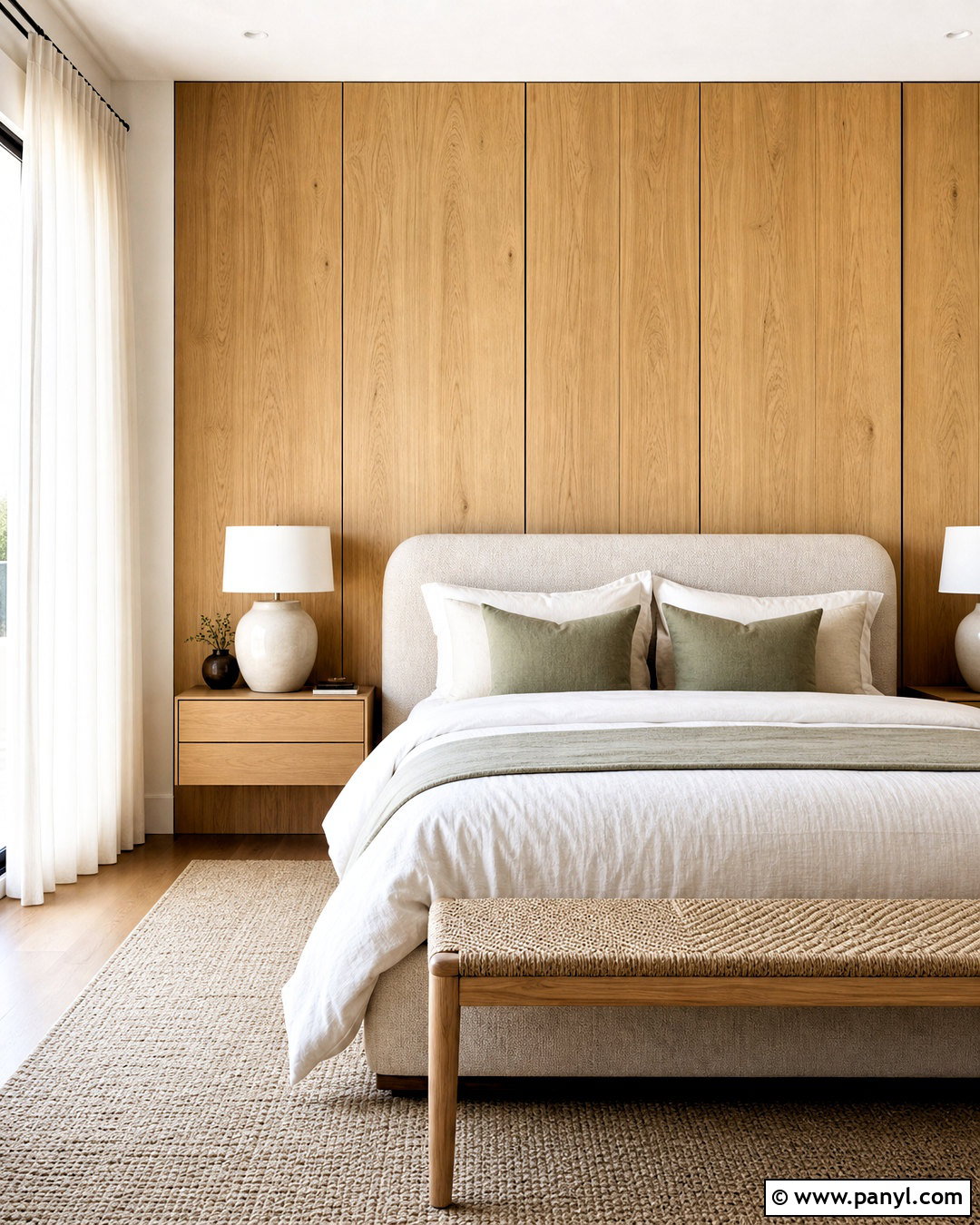
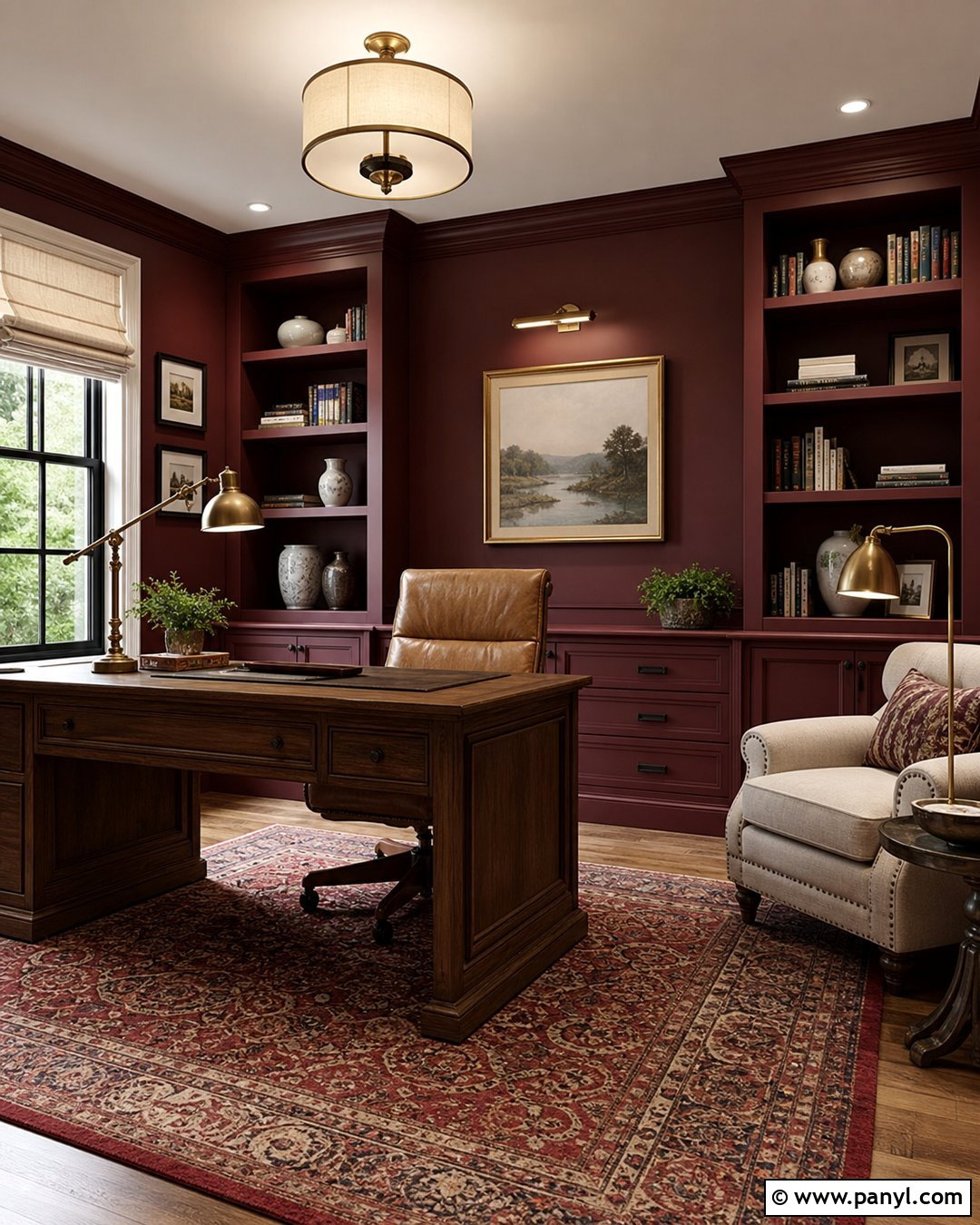
Imagine waking up beside a wall filled with soft, natural grain instead of a flat painted surface. Cover the entire wall behind the bed with wide light oak panels installed vertically, using a matte finish that preserves their pale beige coloring. Add an oatmeal upholstered bed, white linen bedding, and muted sage pillows for a restful organic palette. Floating oak nightstands keep the floor open, while rounded cream lamps soften the straight panel lines. Choose a low-pile wool rug and sheer curtains to spread daylight throughout the room. Avoid yellow-toned lighting, which can make pale oak appear overly orange. Minimal artwork, a ceramic vase, and one sculptural branch are enough. Matching panel widths will give the bedroom a calm, orderly rhythm.
9. Half Wall Wood Panel Accent Wall
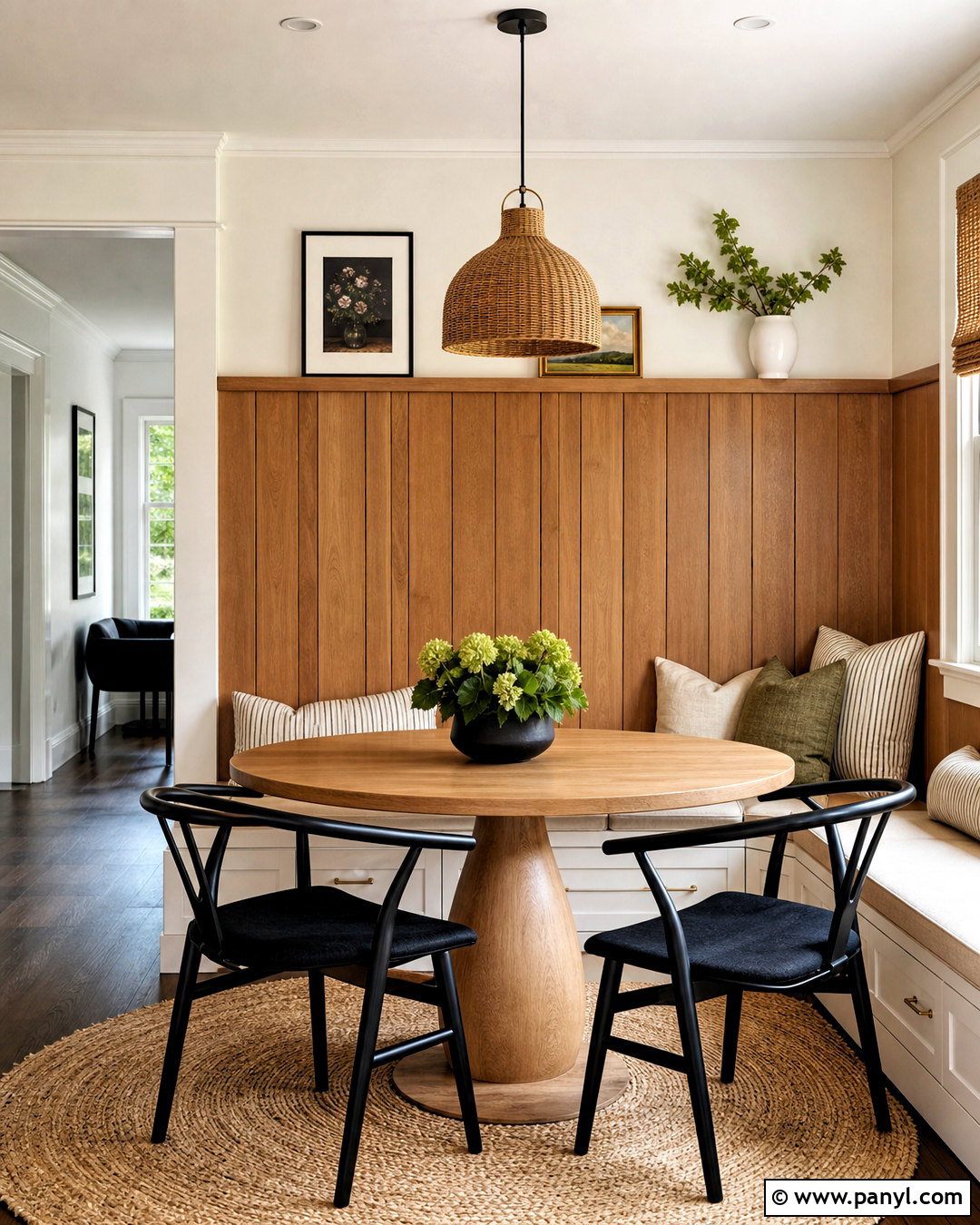
A half-height wood accent wall adds architectural structure without covering every inch of the room. Install medium oak paneling from the floor to approximately chair-rail height in a dining nook, then paint the upper wall warm ivory. Top the paneling with a narrow ledge that can hold two or three framed prints without creating clutter. Pair the treatment with a built-in cream bench, striped cushions, a round pedestal table, and curved black dining chairs. A woven pendant and natural fiber rug reinforce the casual, welcoming character. Paint nearby trim the same ivory as the upper wall for continuity. This approach is useful when you want noticeable wood texture while preserving a lighter background. Align the upper edge carefully around corners, windows, and door casings.
10. Geometric Wood Trim Accent Wall
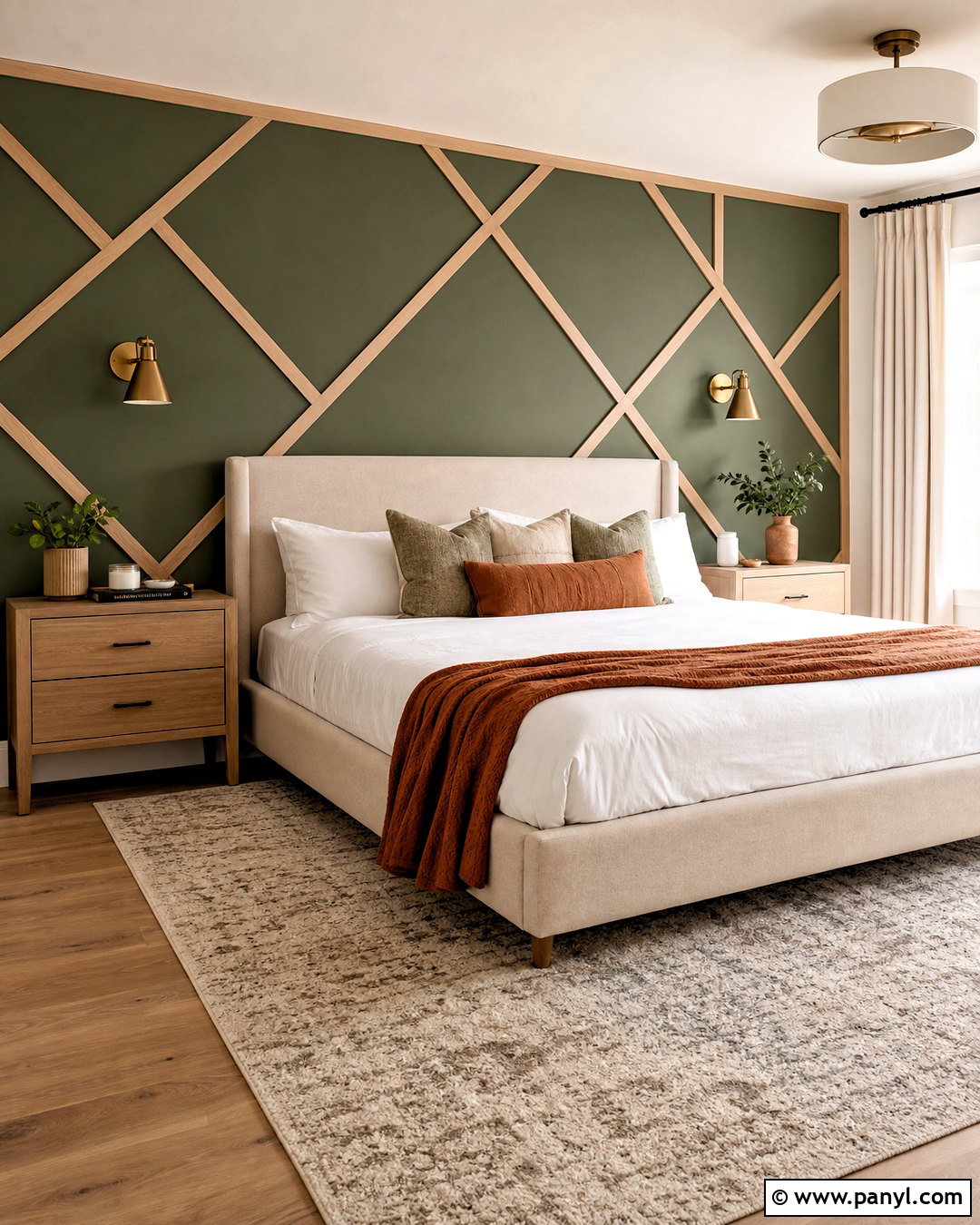
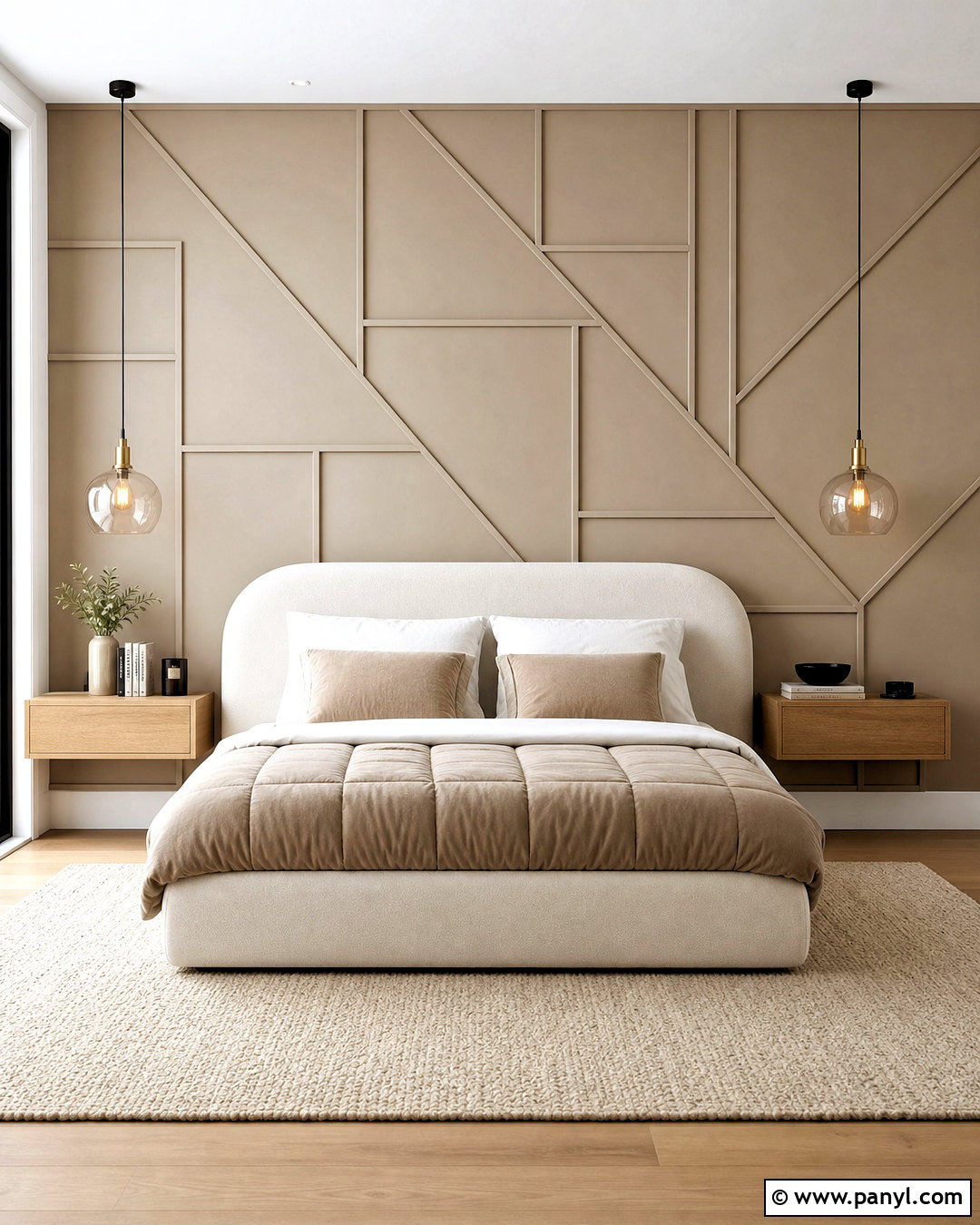
Simple wood strips can turn a plain bedroom wall into an affordable geometric feature. Begin with a deep sage green background, then attach narrow natural pine boards in large diagonal and rectangular shapes. Keep the pattern open rather than overly complicated so it remains relaxing behind the bed. A beige upholstered headboard, white bedding, terracotta throw, and light oak nightstands build a warm transitional palette around the wall. Use matching brass sconces on both sides to create symmetry. Before cutting wood, map the complete arrangement with painter’s tape and check how it relates to the bed, outlets, and ceiling line. Stain all trim pieces before installation for cleaner edges. Finish with warm white curtains and a neutral rug that quietly supports the stronger wall design.
11. Fluted Wood Dining Room Accent Wall
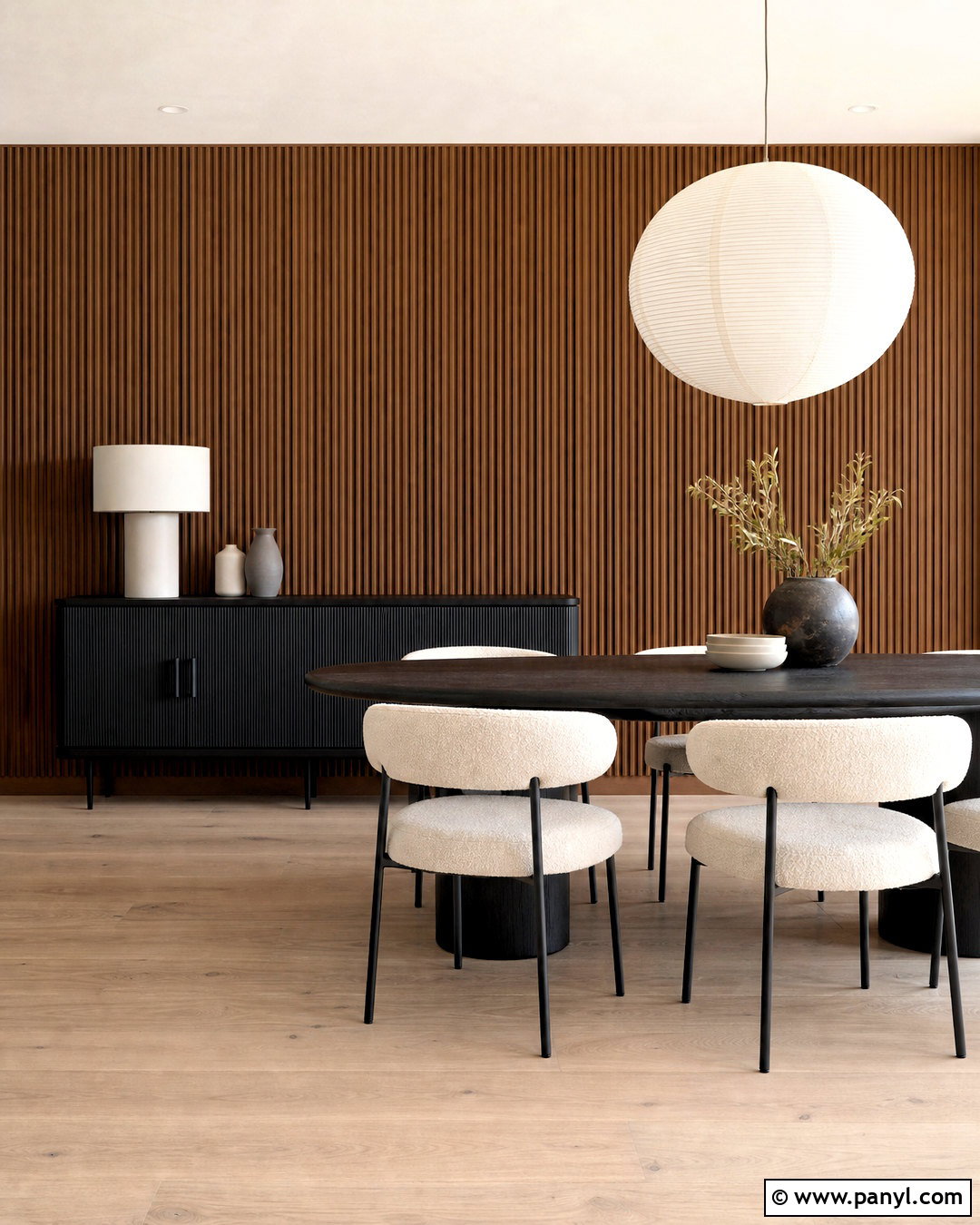
Fluted wood panels produce fine shadows and a furniture-like finish that suits a contemporary dining room. Choose medium walnut panels with rounded vertical grooves and cover the wall behind a slim buffet. Add a dark oval dining table, cream bouclé chairs, and a large paper pendant for a balanced mix of hard and soft textures. Keep the side walls light greige and use pale oak flooring so the walnut remains the strongest material in the space. On the buffet, display one ceramic bowl and a tall branch arrangement rather than numerous small accessories. A large frameless mirror can reflect daylight while allowing the fluted texture to remain visible. Use clean corner trims and carefully matched panel seams to achieve a polished, uninterrupted appearance.
12. Fireplace Wood Accent Wall
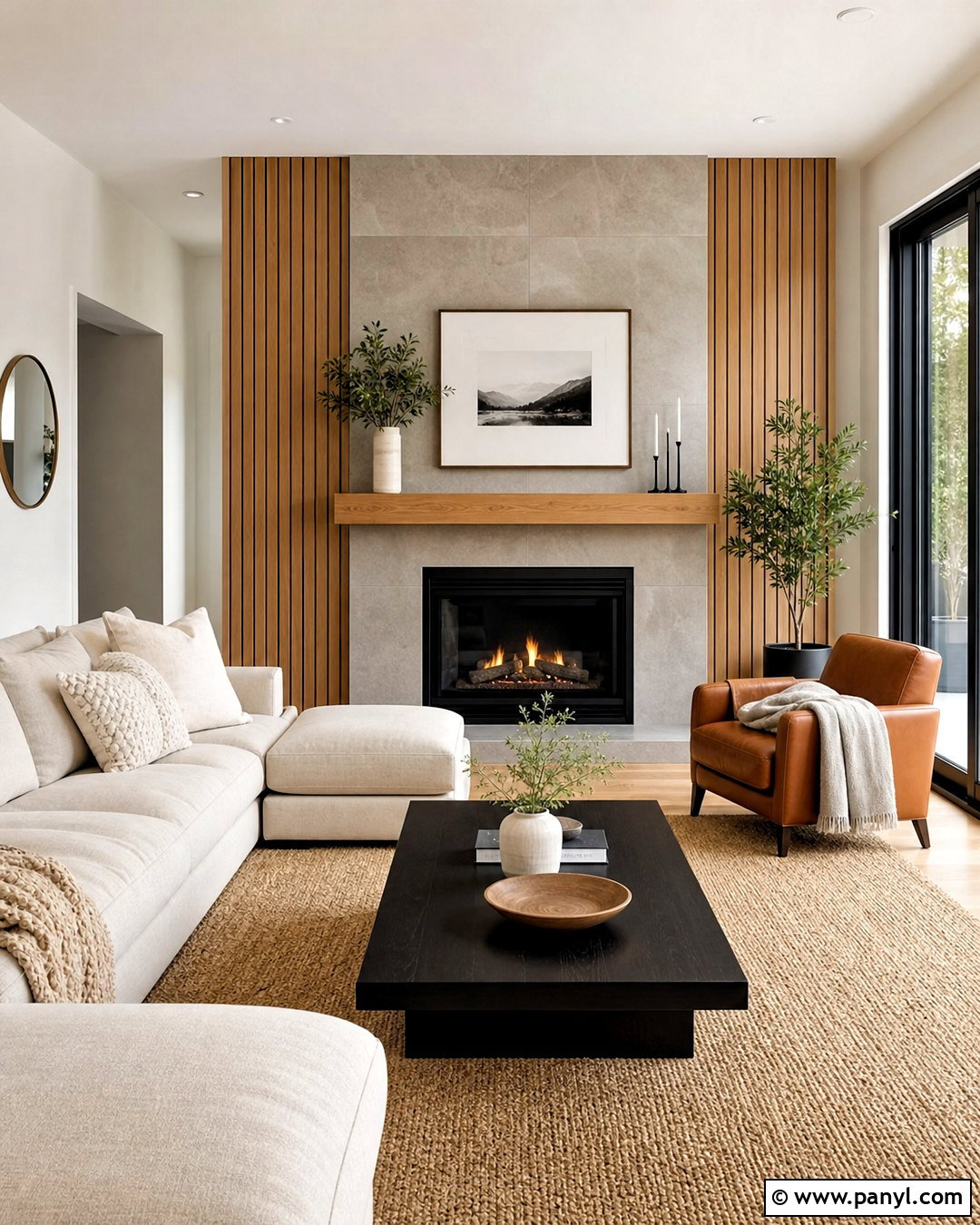
A fireplace becomes more connected to the room when its surround and wall treatment share a clear material plan. Frame a simple black firebox with large warm gray stone slabs, then cover the upper wall and adjacent side sections with vertical white oak boards. Install a thick oak mantel that matches the paneling without hiding too much of the grain. Arrange a cream sectional, cognac lounge chair, and black metal coffee table around the fireplace to establish a comfortable conversation area. Soft white walls and a textured beige rug keep the setting bright. Use one understated artwork above the mantel rather than a crowded display. Always follow the fireplace manufacturer’s clearance requirements and local building rules when placing combustible wood near the opening or heat source.
13. Home Office Wood Accent Wall
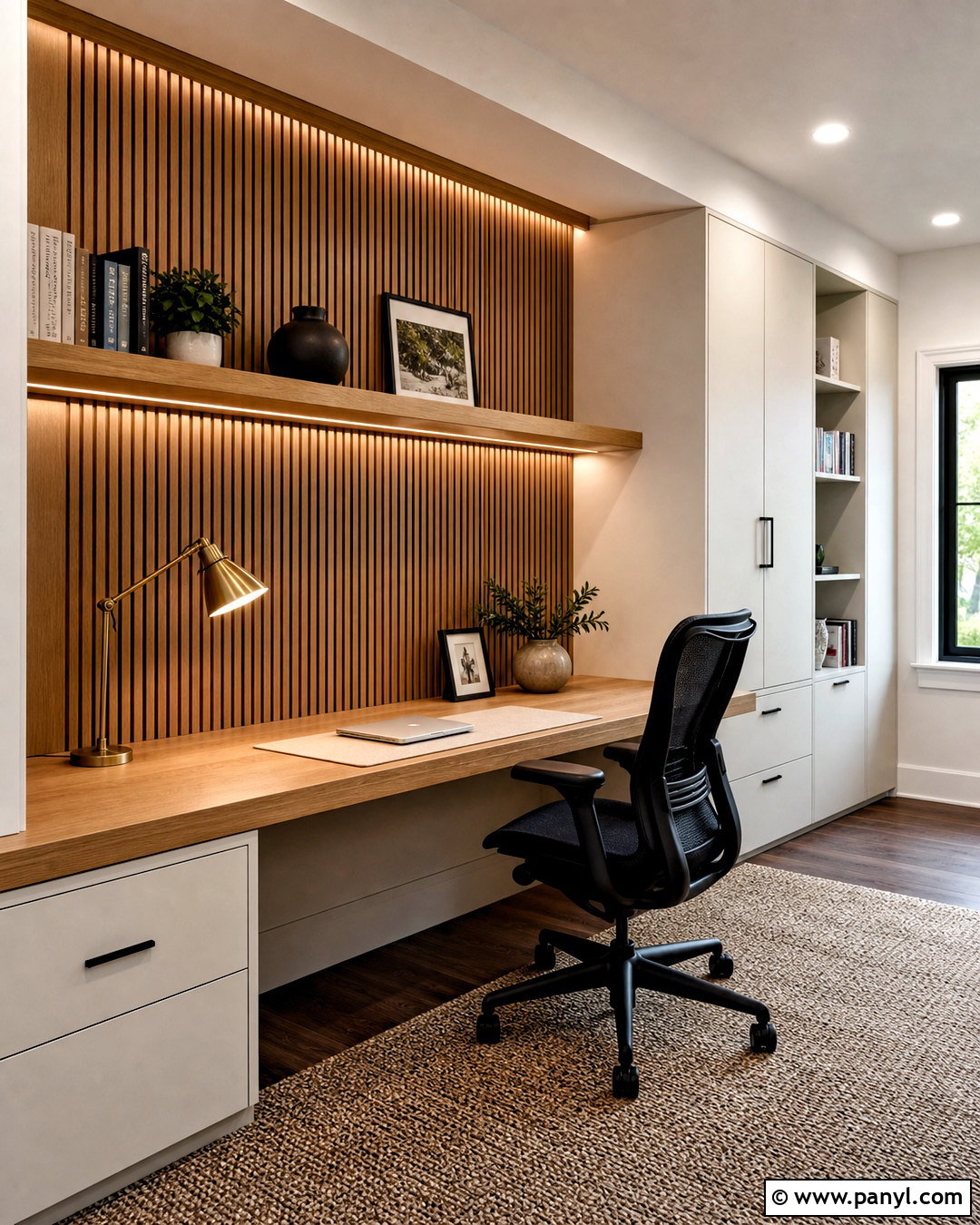
Working from home feels more organized when the desk wall combines storage, texture, and practical lighting. Use vertical oak slats on the center portion of the wall and place matte off-white built-in cabinets on both sides. A floating oak desktop can span the lower section, creating a cohesive workstation without bulky furniture legs. Add a supportive black chair, brass task lamp, wool rug, and closed storage for supplies. Paint the rest of the room pale gray-green to complement the natural wood. Include one long shelf across the slats for books, framed art, and a small plant, but leave enough open space to maintain visual calm. Hidden cable channels and properly positioned outlets will keep computer cords from interrupting the clean, carefully planned design.
14. Entryway Wood Accent Wall
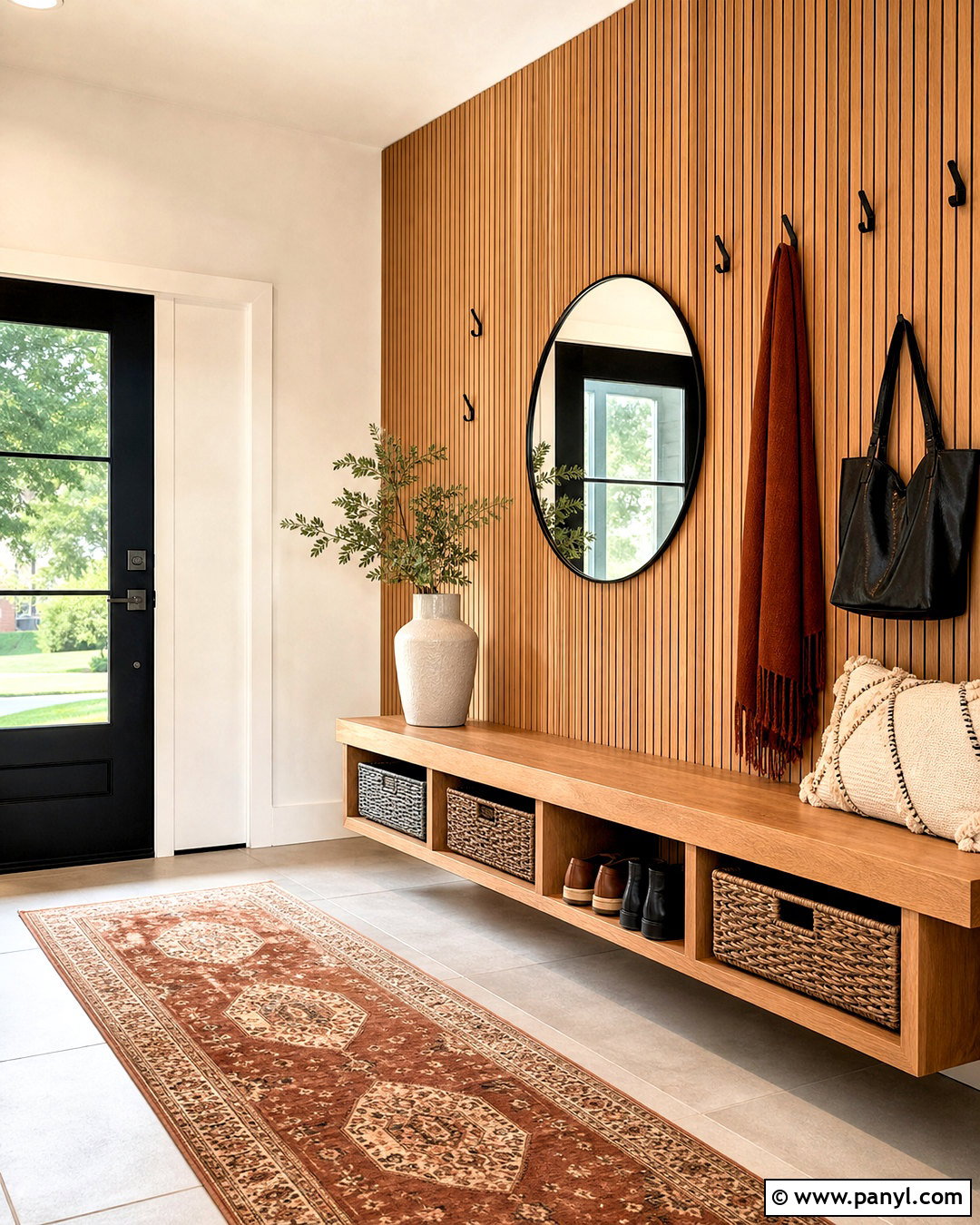
A small entry can become a complete drop zone with a practical wood feature wall. Cover the main surface with narrow vertical oak boards, then add a floating bench in a matching finish. Matte black hooks provide space for everyday bags and light jackets, while woven baskets underneath hold shoes and seasonal accessories. Pair the wood with warm white walls, durable light stone flooring, and a washable runner in muted rust and beige. A round black-framed mirror above the bench gives the arrangement a clear focal point. Include a slim wall sconce if the entry lacks natural light. Keep the wood treatment limited to one wall so the area does not feel enclosed. Sealed, wipeable finishes will help protect the lower boards from moisture, dirt, and frequent contact.
15. Nursery Wood Accent Wall
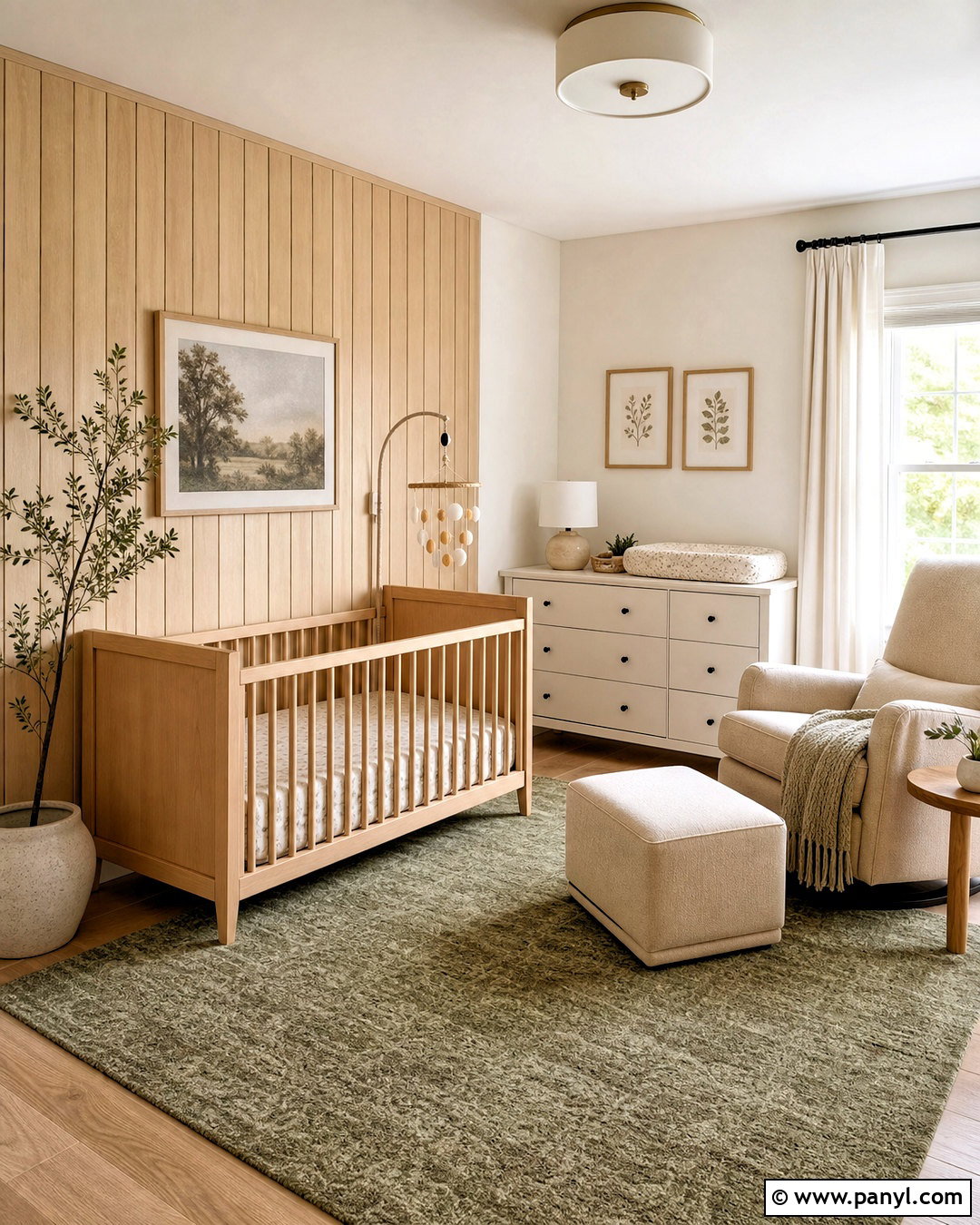
Soft wood paneling can create a comforting nursery backdrop without relying on a busy theme. Install pale maple boards vertically on the crib wall, stopping a few inches below the ceiling to leave a narrow band of warm white paint. Choose a natural wood crib, oatmeal glider, ivory curtains, and a washable sage green rug. A low white dresser balances the wood while keeping the room bright. Add simple animal prints in light oak frames, but position decor safely away from the crib. Rounded shapes, including a globe pendant and curved side table, soften the panel lines. Use a water-based, low-odor finish and allow the room to air thoroughly before use. The finished space should feel calm, uncluttered, and flexible enough to grow with the child.
16. Rustic Cabin Wood Accent Wall
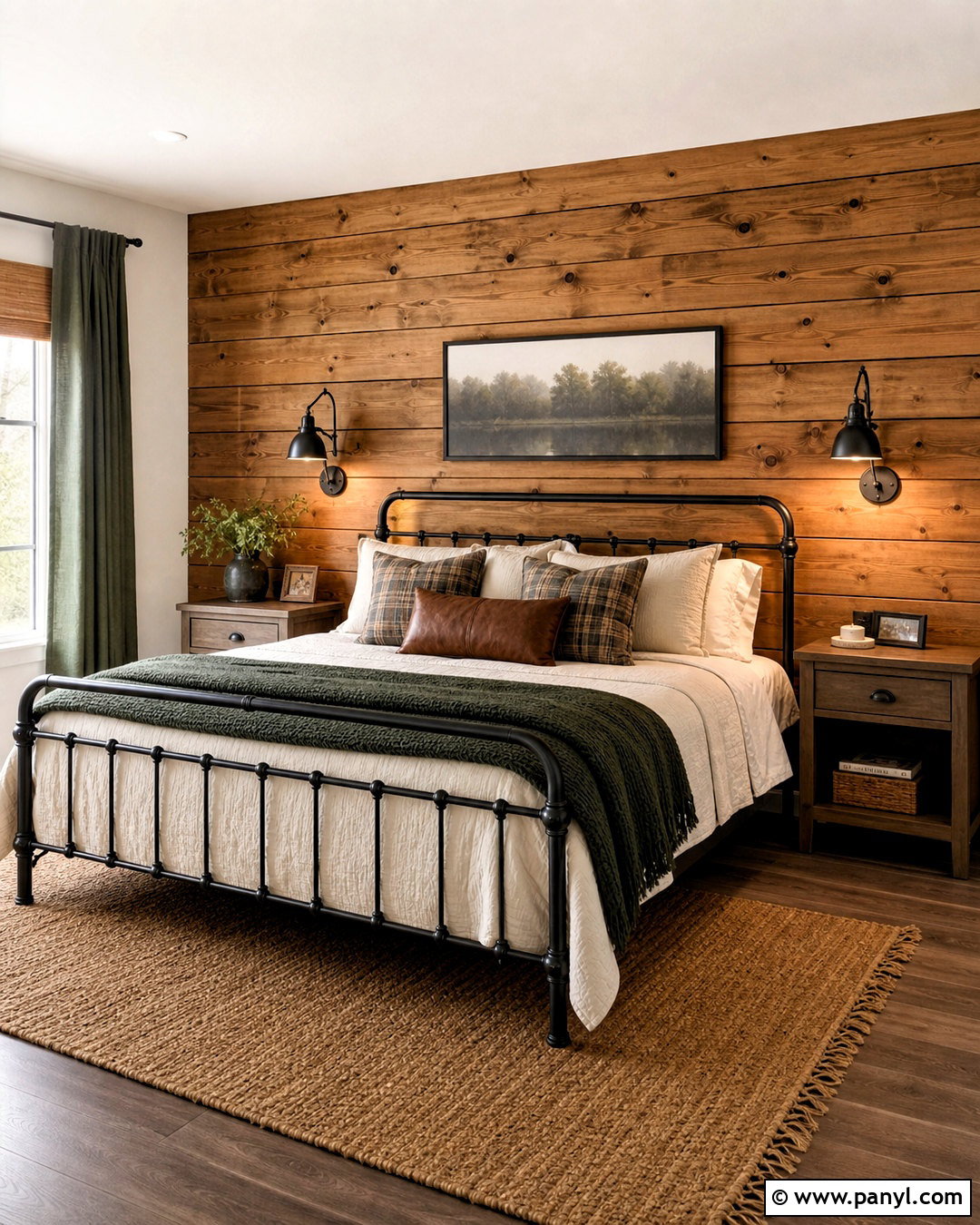
Deeply textured wood works naturally in a cabin-inspired bedroom when the surrounding furnishings remain simple. Build the headboard wall with wide knotty pine planks in medium brown tones, arranging them horizontally to emphasize the room’s width. Add a black iron bed, cream quilt, forest green blanket, and plaid accent pillows in subdued colors. Two compact wood nightstands and dark metal sconces reinforce the rustic character without making the setting feel themed. Use warm white paint on the remaining walls and a woven tan rug over simple oak flooring. A wooden bench at the foot of the bed completes the practical layout. Choose planks with controlled variation, and use a matte protective finish. Too much glossy orange stain can make the room feel dated and visually heavy.
17. Coastal Wood Accent Wall
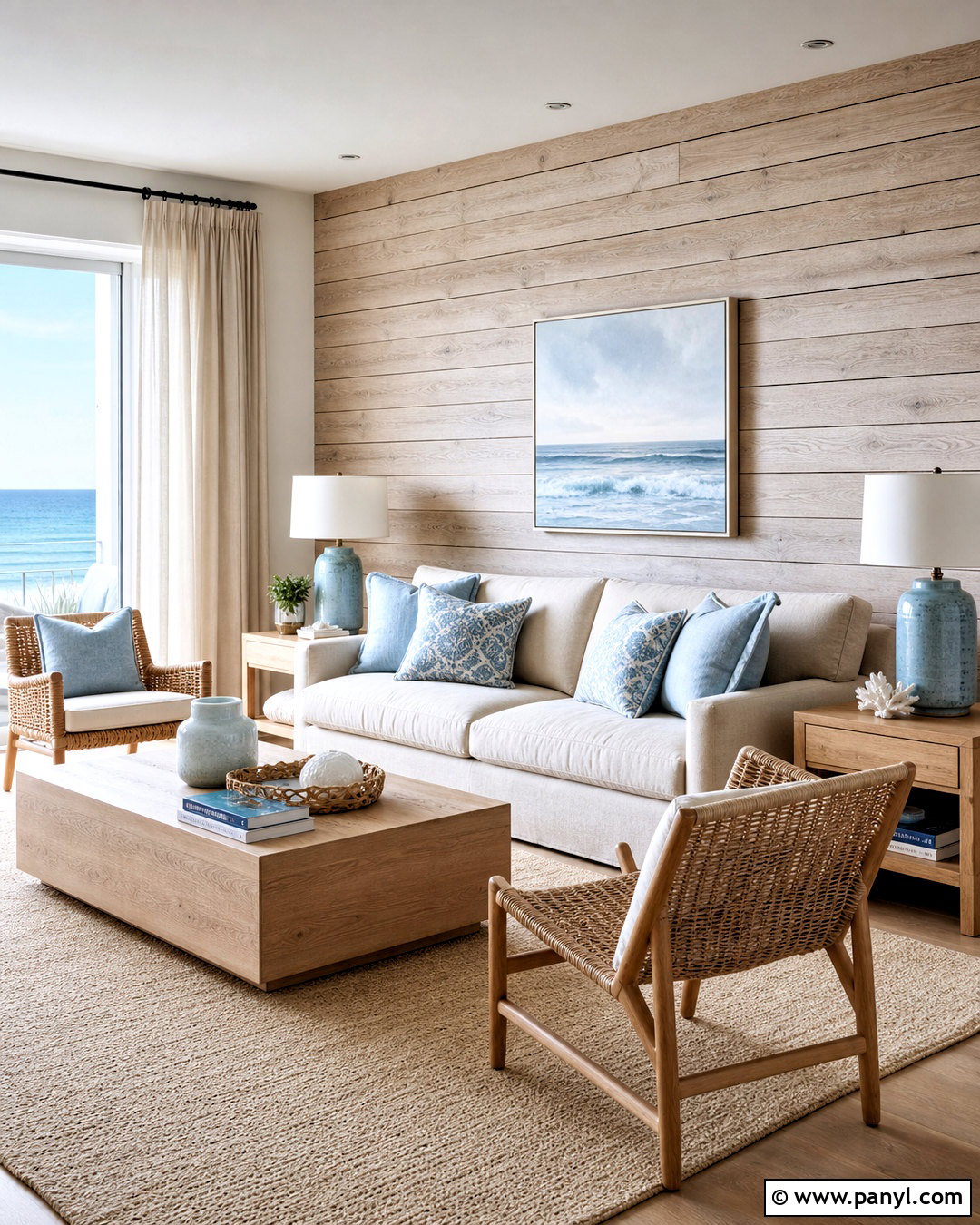
A coastal wood wall should feel airy and relaxed rather than heavily distressed. Use wide horizontal boards finished in a pale whitewashed oak tone behind a slipcovered sand-colored sofa. Combine the wall with soft blue pillows, a bleached wood coffee table, woven side chairs, and an ivory jute-blend rug. The other walls can remain clean white, while linen curtains filter strong daylight. Add a large seascape in muted blue and gray, a ceramic table lamp, and one woven basket for storage. Avoid obvious nautical decorations so the room feels natural and timeless. The wood grain should remain visible beneath the whitewash, giving the surface depth without darkening it. Light oak flooring and brushed nickel details complete the bright, casual living room scheme.
18. Japandi Wood Accent Wall
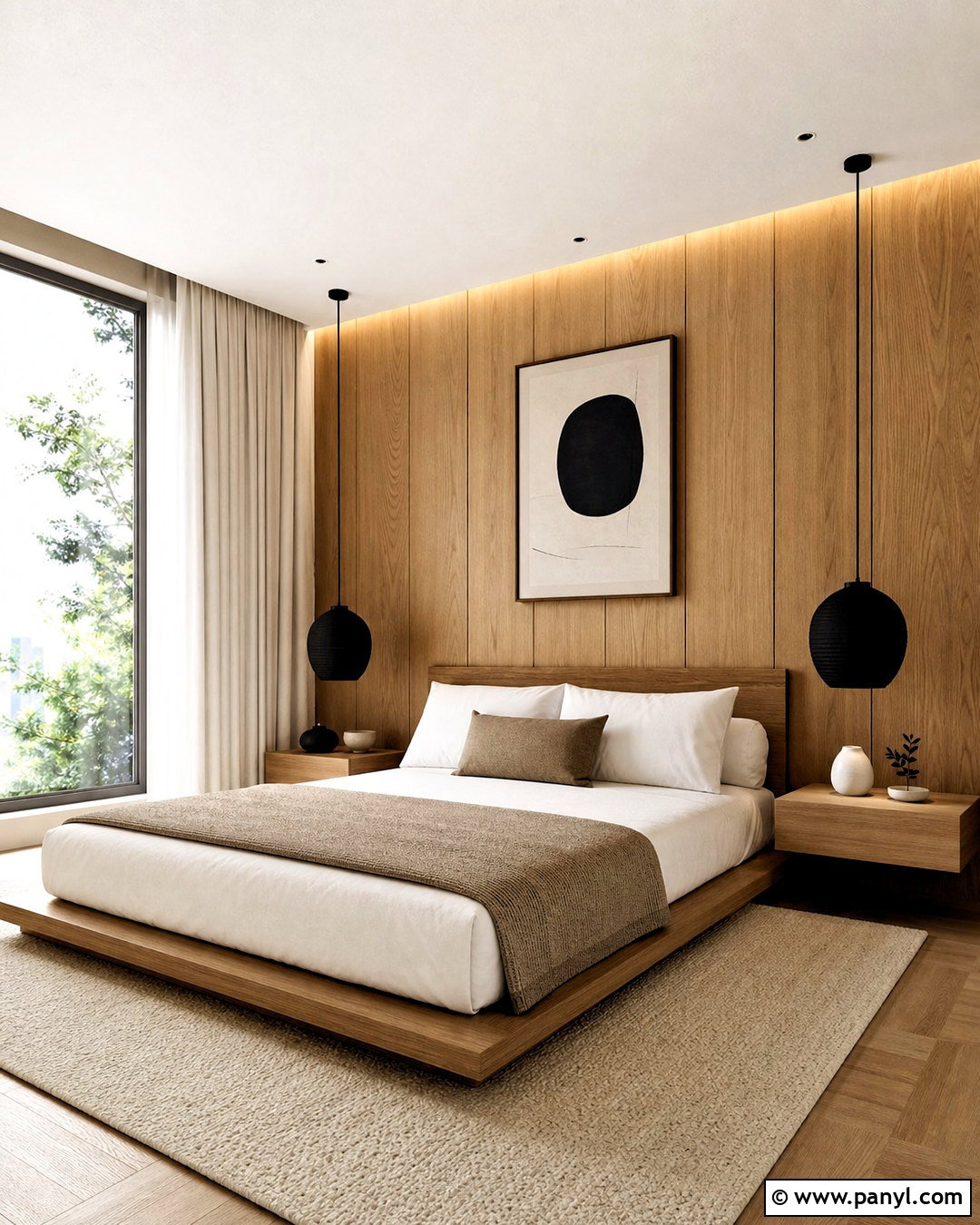
Quiet colors and careful spacing make a Japandi wood accent wall feel calm instead of decorative. Install flat white oak panels behind a low platform bed, keeping the grain vertical and the seams narrow. Pair the wall with crisp white bedding, a taupe coverlet, black paper pendant lights, and floating oak nightstands. Use warm greige paint elsewhere and choose a large textured wool rug in pale beige. A single ceramic vessel, one framed abstract print, and a simple branch arrangement provide enough decoration. Keep furniture low and leave generous open space around each piece. The panel finish should be matte and close to the wood’s natural color. Concealed fasteners, aligned seams, and restrained accessories are essential because every detail remains visible in such a minimal bedroom.
19. Mixed Wood And Stone Accent Wall
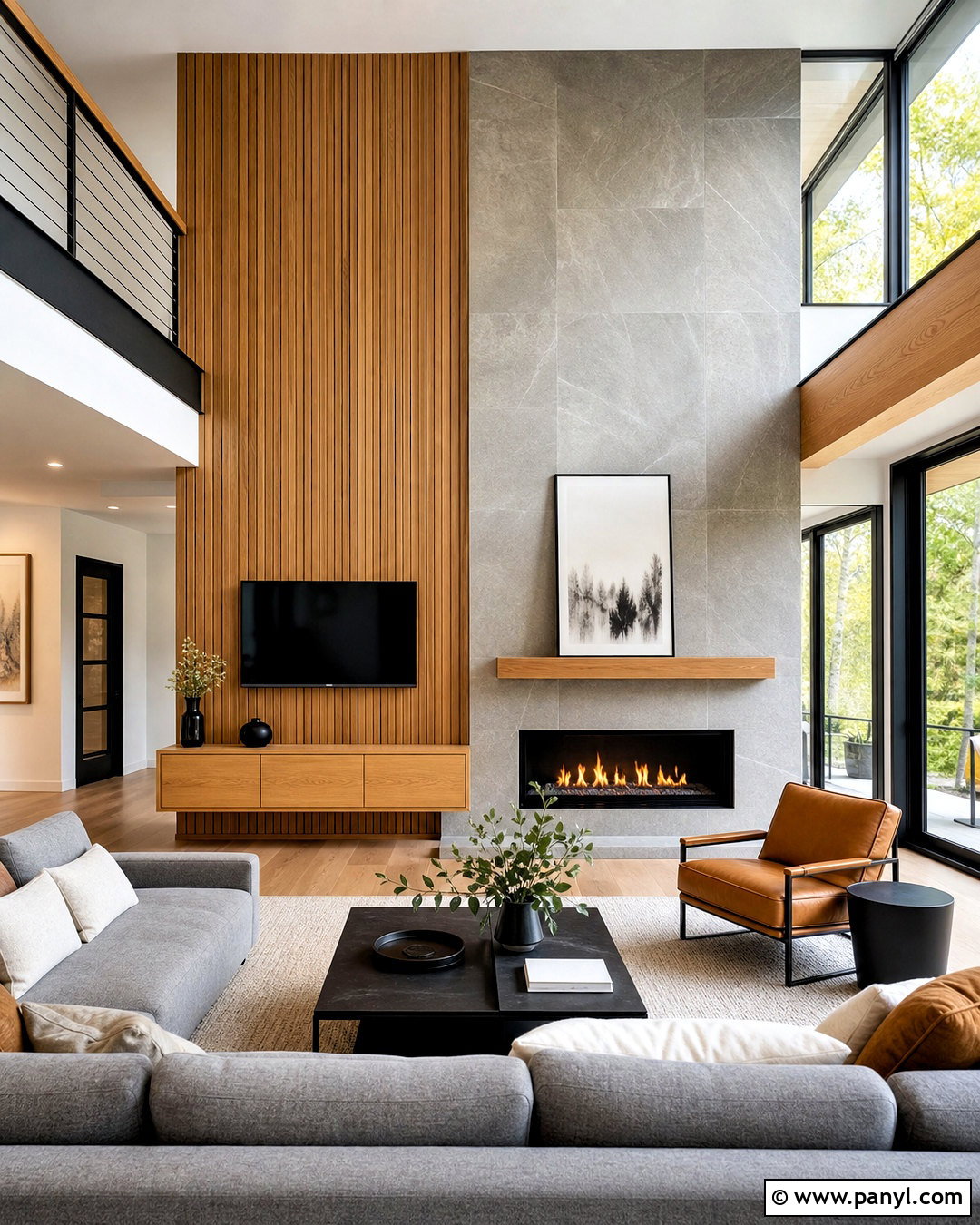
Combining wood and stone creates a layered focal point suited to an open living room. Cover roughly two-thirds of the wall with vertical medium oak panels, then use large warm gray stone tiles around an off-center fireplace. A floating oak cabinet can bridge both materials and visually connect the composition. Furnish the room with a soft gray sectional, camel leather chair, black side table, and cream area rug. Recessed lighting above the wood highlights the grain, while the stone adds a cooler counterpoint. Keep nearby walls soft white and repeat small amounts of black in window frames or lighting. Plan the transition line before installation so neither material looks added later. Clean joints and coordinated undertones will make the contrasting surfaces feel purposeful and unified.
20. Plywood Wood Accent Wall
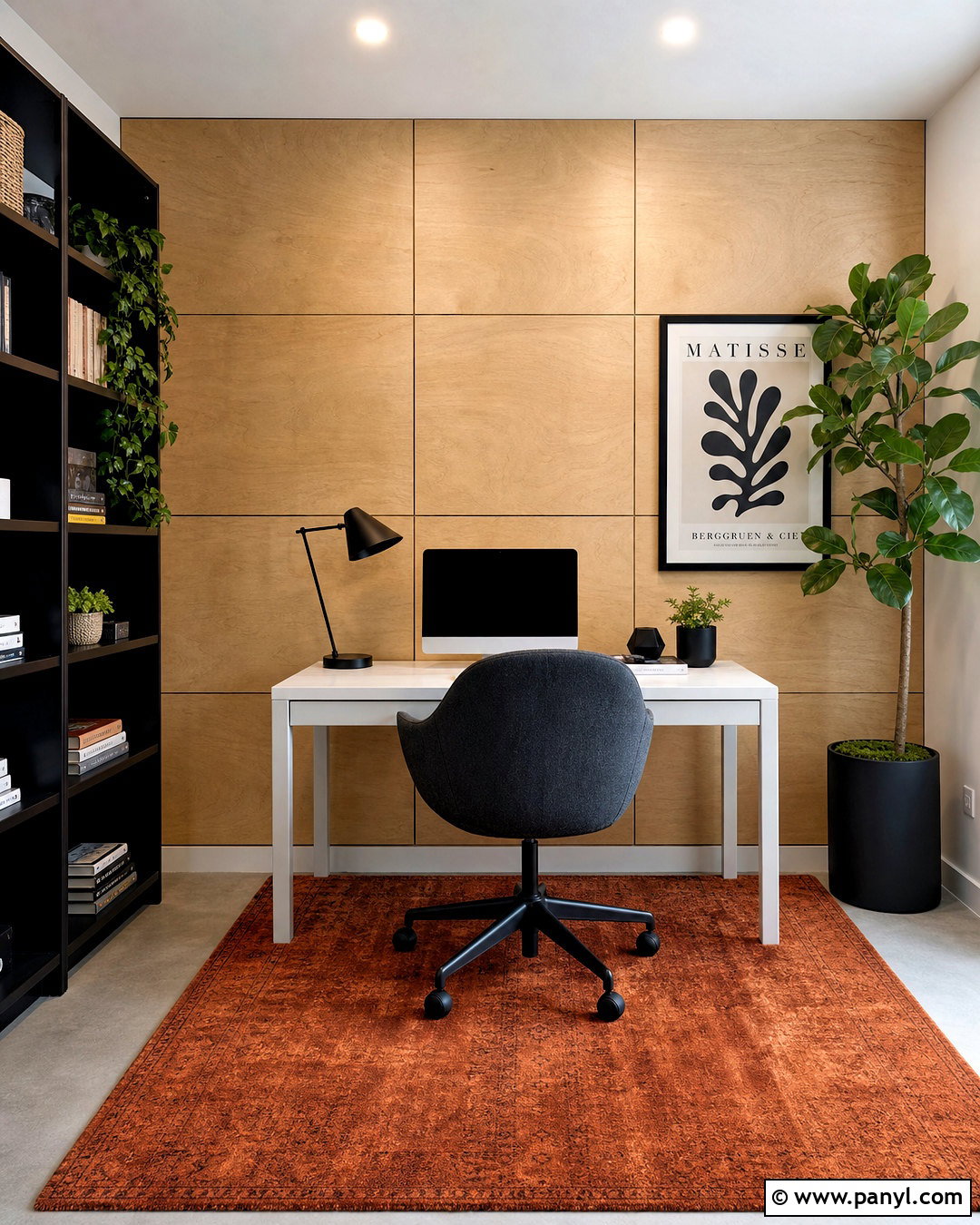
Budget-friendly plywood can look surprisingly polished when the panel layout is treated as part of the design. Cut cabinet-grade birch plywood into large equal rectangles and install them behind a simple home office desk. Leave narrow, consistent reveals between panels or cover the joints with thin matching battens. Apply a clear matte finish to preserve the pale golden tone. Pair the wall with a white desk, charcoal office chair, black shelving, and a rust-colored rug for a practical modern workspace. Warm white side walls and a large window keep the plywood from feeling unfinished. Sand every edge carefully and plan panel positions around outlets before cutting. One oversized print and a leafy floor plant complete the room without concealing the clean grid pattern.
Conclusion:
These **20 wood accent wall ideas** show how one well-planned surface can shape an entire room. The most successful design considers more than the wood itself. Plank direction, stain color, furniture placement, lighting, flooring, and surrounding paint all contribute to the finished effect. Pale oak and white shiplap work well in bright, relaxed spaces, while walnut, reclaimed boards, and black paneling create stronger contrast. Before installing anything, measure carefully, test material samples in the room, and map out seams around outlets and architectural features. Whether you choose simple plywood panels or an intricate herringbone pattern, connect the wall to the room’s broader palette so it feels intentional, balanced, and lasting.

Related Ideas and Inspiration:
Leave a Reply