
Natural wood brings warmth, texture, and lasting character to rooms that feel flat or unfinished. The best natural wood accent wall ideas go beyond covering a surface with random boards. They connect the wall’s grain, color, pattern, and scale with the furniture, lighting, flooring, and surrounding decor. Current options range from narrow oak slats and smooth walnut panels to reclaimed planks, geometric layouts, and practical storage walls. () You can use pale wood to brighten a compact room, rich timber to create intimacy, or mixed boards to introduce rustic personality. Careful placement also helps the feature feel intentional rather than overwhelming. The complete looks below offer approachable inspiration through 20 natural wood accent wall ideas.

1. Reclaimed Wood Accent Wall Living Room
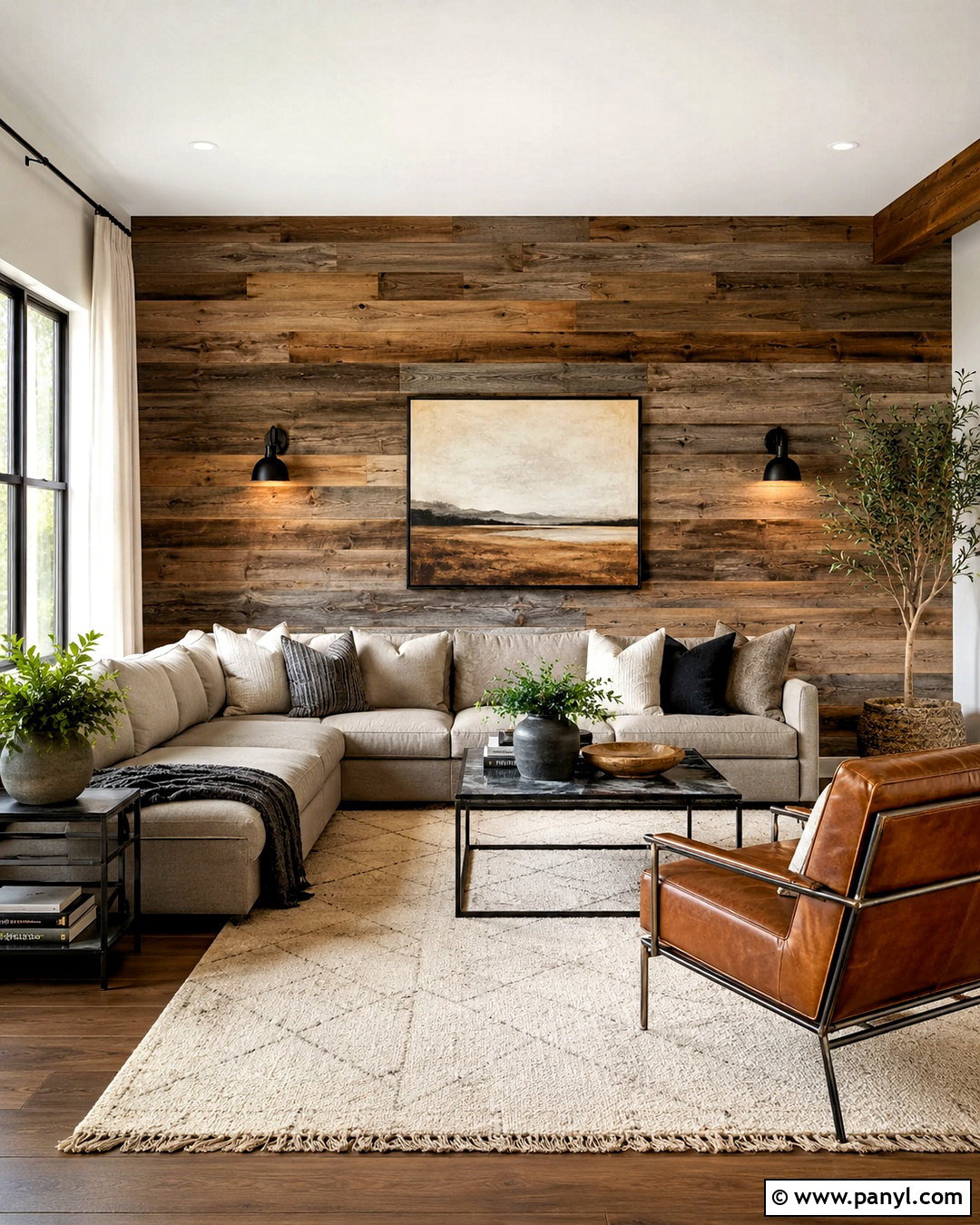
A reclaimed wood accent wall gives a living room warmth without requiring ornate decor. Install weathered planks horizontally behind the main sofa, arranging the boards so lighter and darker tones feel balanced. Keep the remaining walls warm white to prevent the room from becoming too brown. A soft greige sectional, woven cream rug, black metal coffee table, and cognac leather chair create a relaxed conversation area. Choose simple linen curtains and matte black sconces that highlight the wood’s uneven grain. One large neutral canvas is enough artwork because the boards already provide visual movement. Finish the room with leafy plants and ceramic accessories. Seal the wood with a clear matte finish to preserve its aged appearance while making dusting easier.
2. White Oak Slat Wood Accent Wall
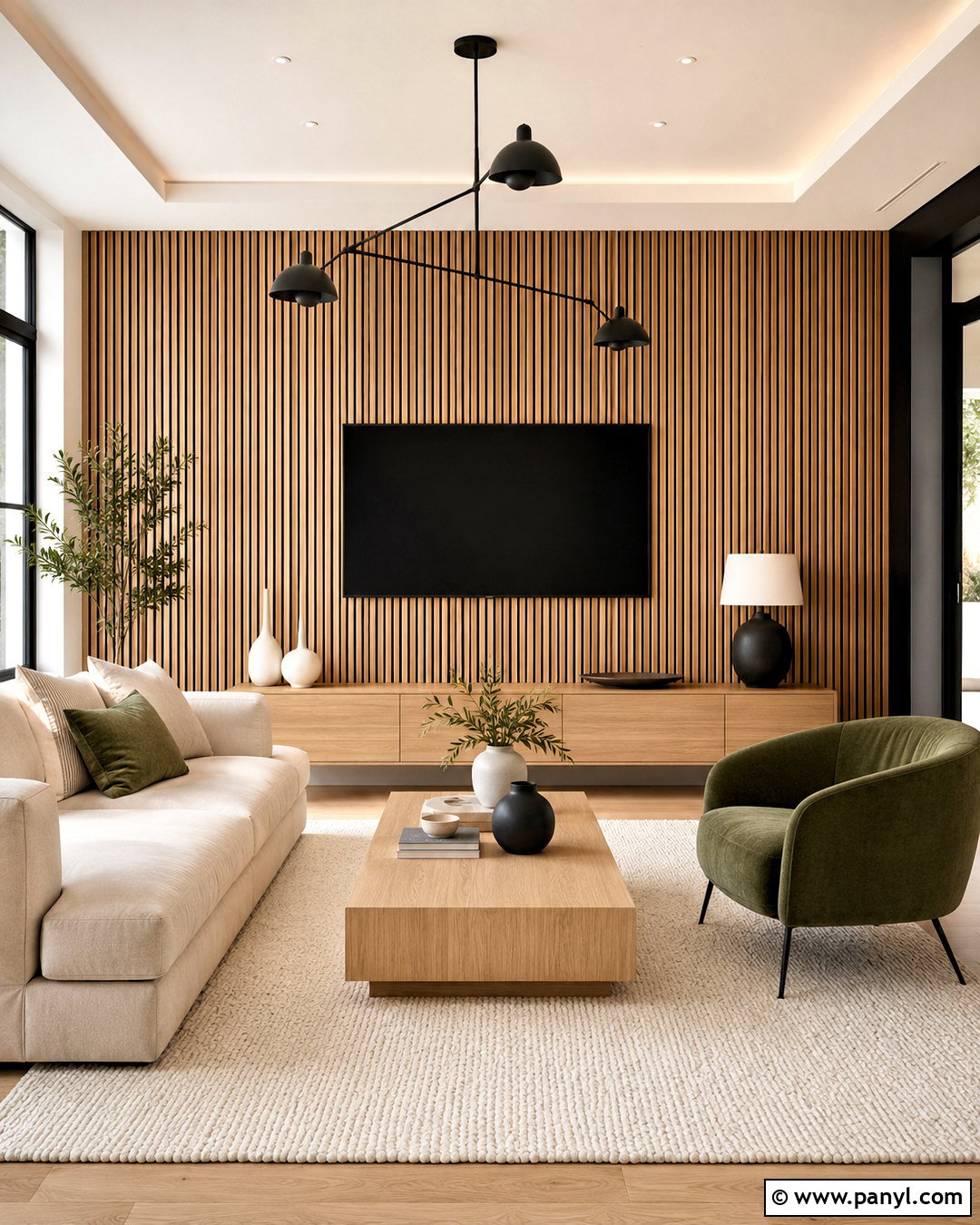
Clean vertical lines make a white oak slat wood accent wall especially effective in a modern living room. Run narrow slats from floor to ceiling behind a low media console, leaving slim dark gaps between each piece for definition. A warm white wall or black acoustic backing can show through the openings. Furnish the room with a streamlined oatmeal sofa, pale oak coffee table, textured ivory rug, and one muted green lounge chair. Keep the television centered and conceal visible cords so the wall remains orderly. Black picture lights or compact ceiling spots can emphasize the vertical rhythm. Add a few rounded ceramics and soft linen cushions to balance the straight lines. The result feels architectural, warm, and polished without relying on elaborate decoration.
3. Walnut Wood Accent Wall Bedroom
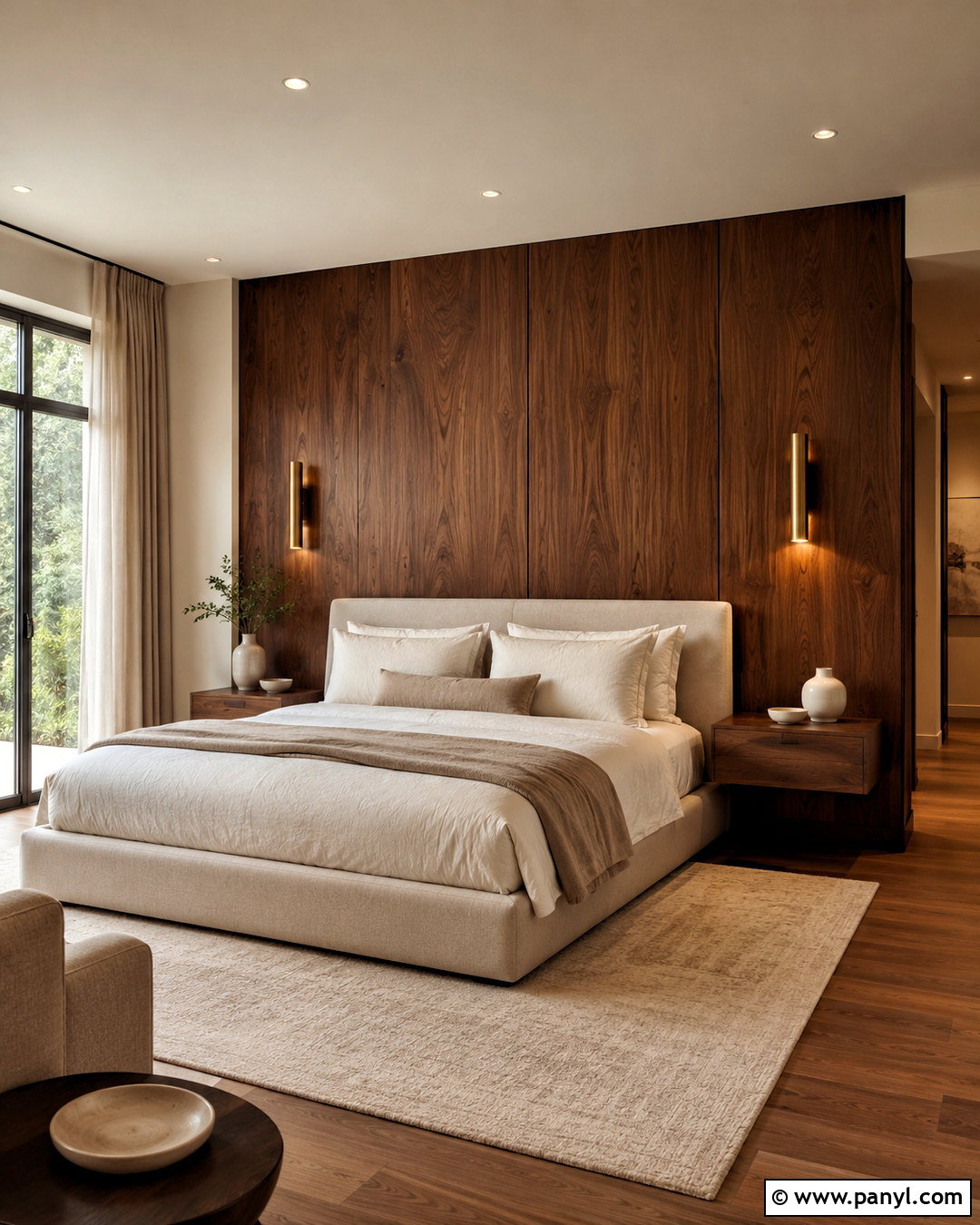
Rich walnut can turn the bed wall into a calm, tailored focal point. Cover the full wall with wide, book-matched veneer panels or smooth walnut boards, allowing the natural chocolate-brown grain to provide movement. Choose an upholstered oatmeal bed with a low profile so plenty of wood remains visible. Layer the bedding with ivory linen, warm taupe, and muted olive accents. Matching floating walnut nightstands create a seamless look, while brushed brass sconces add a subtle reflective finish. Use a pale beige rug and soft cream paint elsewhere to keep the darker timber from closing in the room. Minimal artwork works best here. A single sculptural piece, ceramic vase, and leafy branch will complete the bedroom without competing with the dramatic natural wood accent wall.
4. Vertical Pine Wood Accent Wall Bedroom
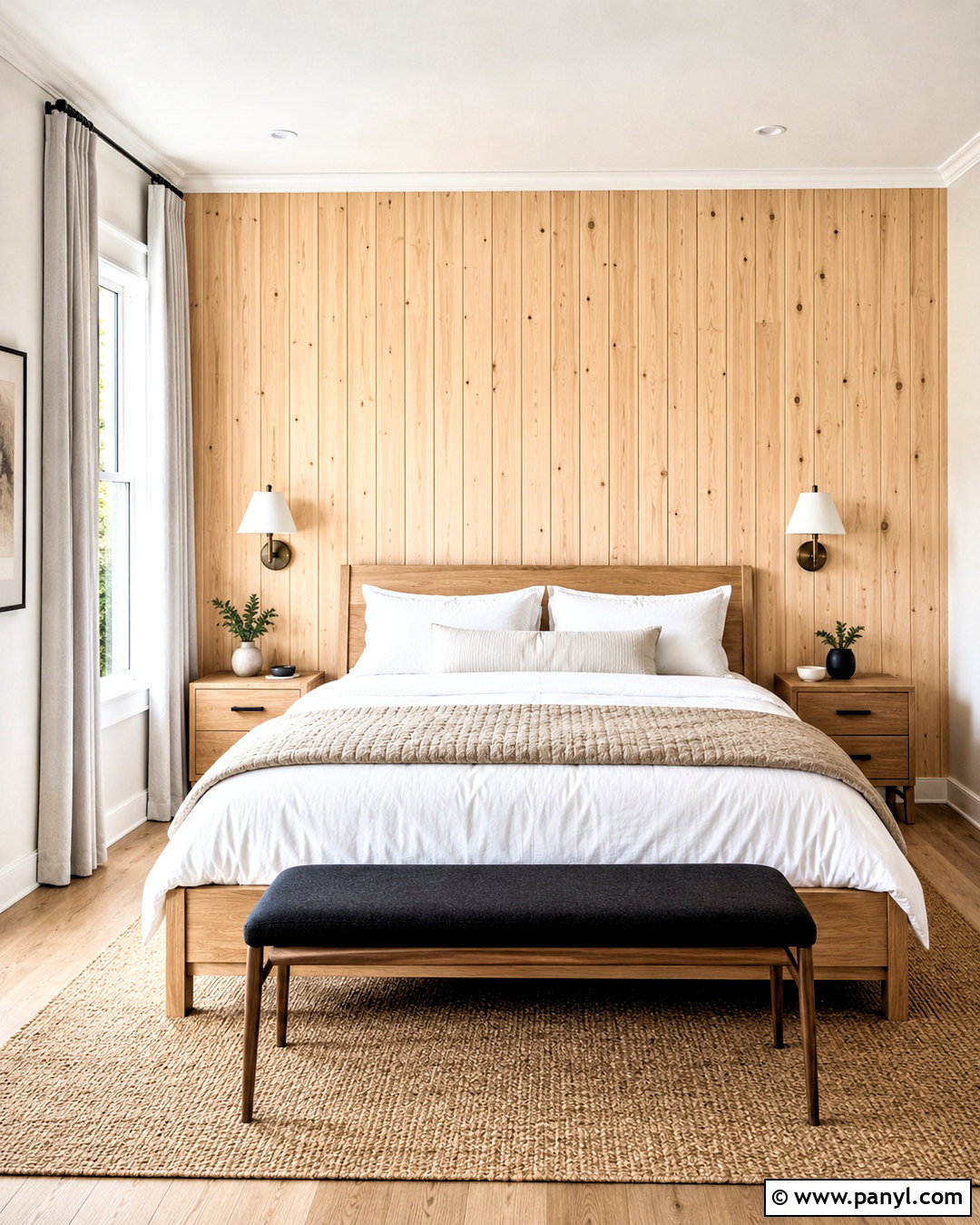
A vertical pine wood accent wall can make a small bedroom appear taller and more open. Select smooth tongue-and-groove boards with a pale honey tone, then install them from the baseboard to the ceiling behind the bed. A clear matte sealant keeps the pine looking natural instead of glossy or orange. Pair it with a simple white oak bed, crisp white sheets, a sand-colored quilt, and light gray linen curtains. Wall-mounted cream sconces save space on compact nightstands. Introduce soft contrast through a charcoal bench or dark bronze hardware, but avoid adding several competing wood stains. A woven wool rug and one understated landscape print bring the design together. The complete room will feel airy, comfortable, and intentionally organized.
5. Cedar Wood Accent Wall Dining Room
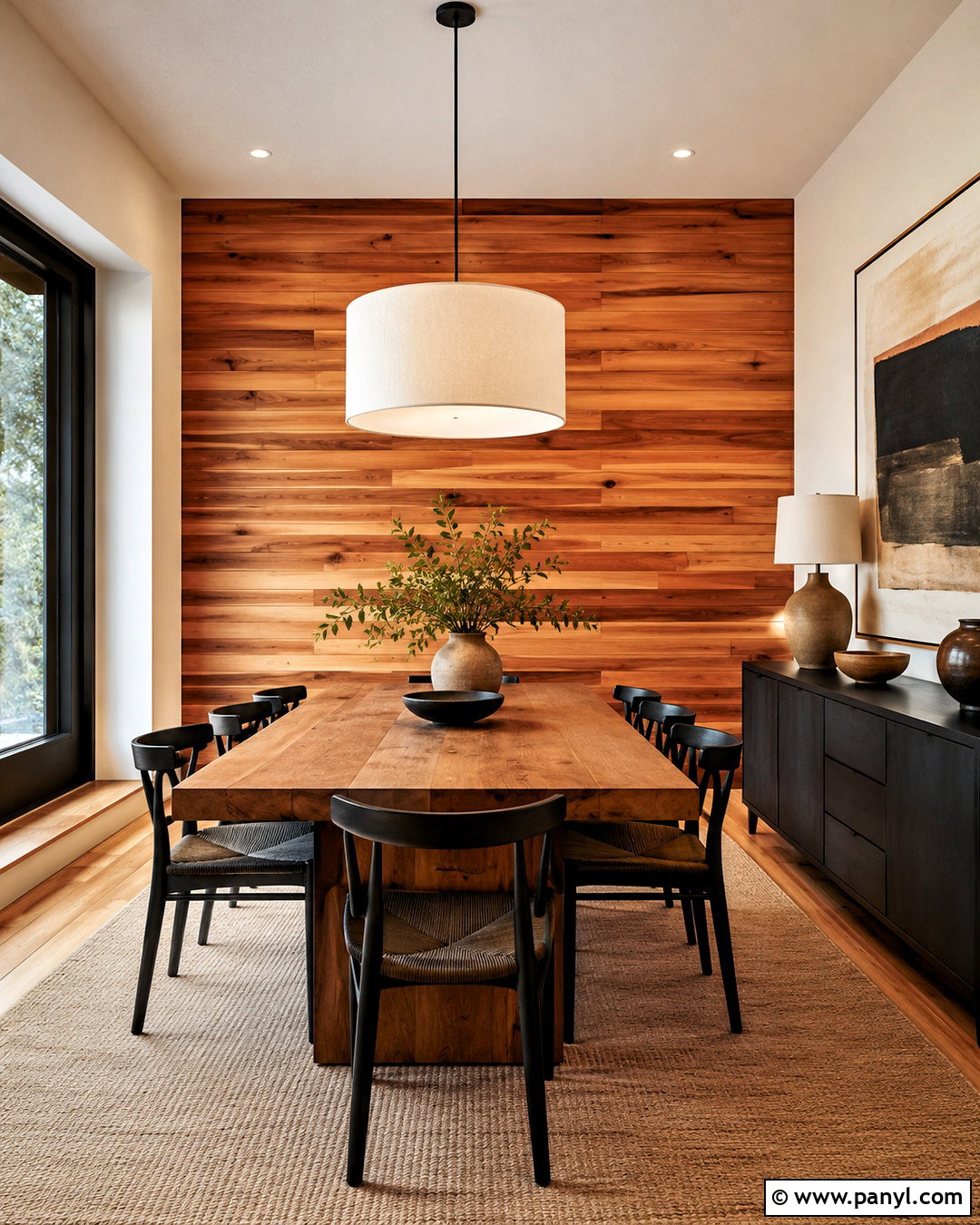
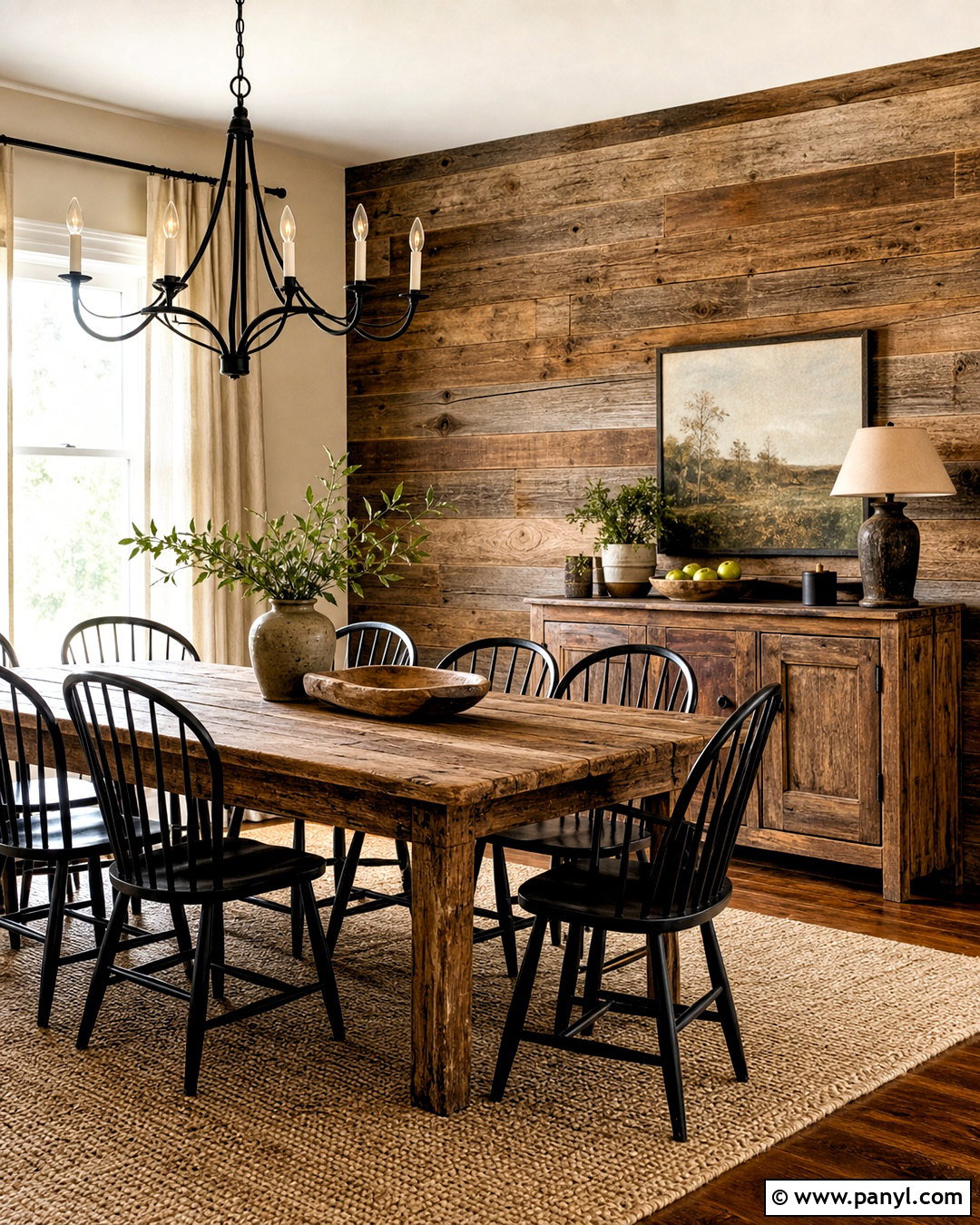
The varied reddish and golden tones of cedar create a welcoming backdrop for casual meals. Install horizontal cedar planks across the dining room’s longest uninterrupted wall, selecting boards with visible knots but relatively consistent widths. Center a solid oak table in front of the feature, then add woven-seat chairs in matte black or deep brown. A large cream pendant light softens the stronger wood color and keeps the dining area feeling fresh. Use warm white paint on adjacent walls and a flat-weave beige rug beneath the table. A slim black sideboard can hold neutral pottery, serving pieces, and a small plant. Rather than hanging many decorations, display one oversized abstract print. Its pale background will break up the wood while allowing the cedar grain to remain prominent.
6. Herringbone Wood Accent Wall Entryway
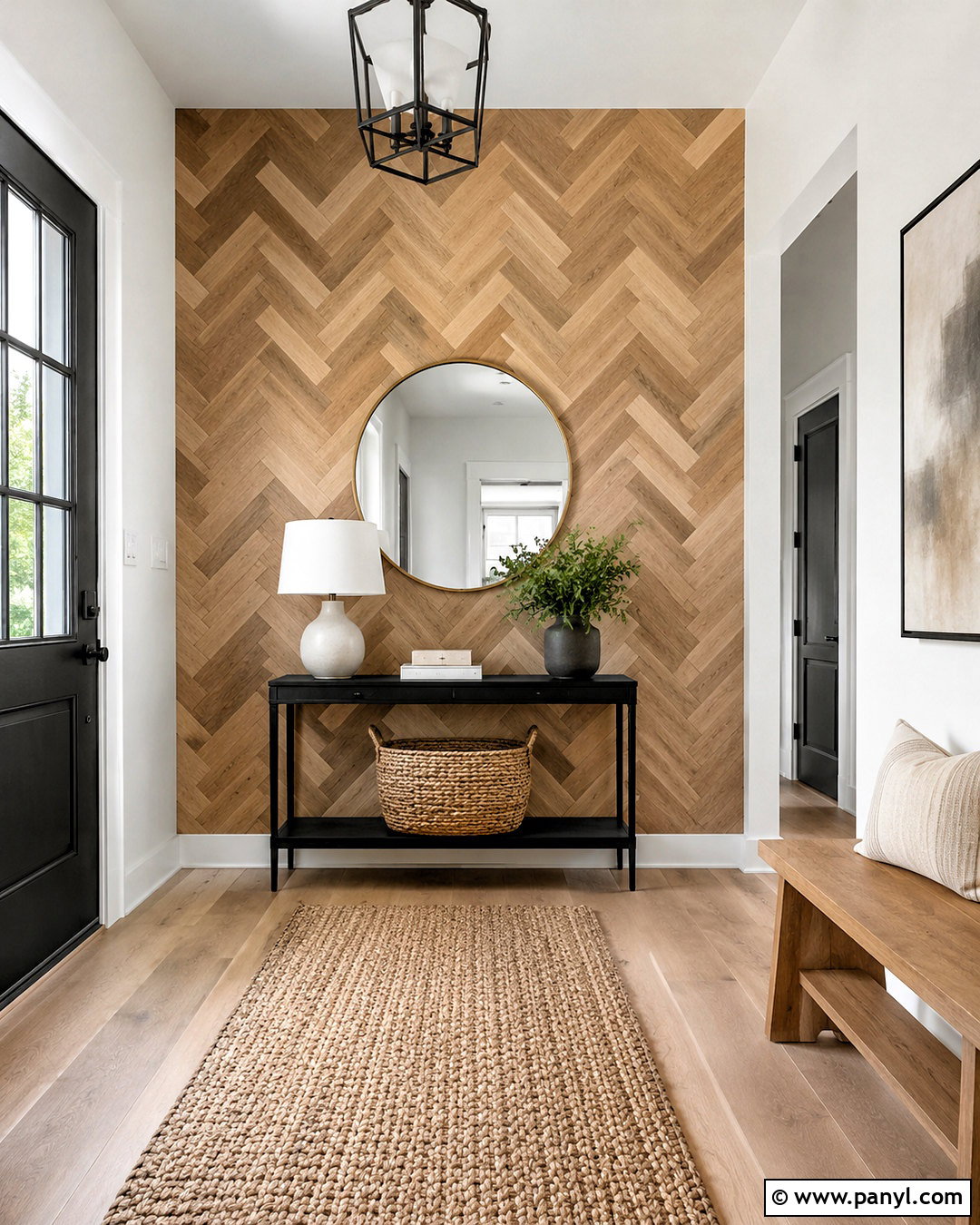
Give a plain entryway a strong focal point with natural oak boards arranged in a herringbone pattern. Position the feature behind a slim console so visitors see it immediately after entering. Consistent board lengths and a centered layout help the detailed pattern feel orderly rather than busy. Choose light to medium oak tones with subtle variation, then protect the surface with a low-sheen clear finish. Complete the entry with a narrow black console, rounded brass-framed mirror, woven runner, and compact ceramic lamp. A closed basket below the console can store shoes or outdoor accessories. Keep nearby walls soft white and repeat the oak through a small bench or picture frame. This combination creates a polished arrival area while preserving practical walking space and everyday storage.
7. Chevron Wood Accent Wall Home Office
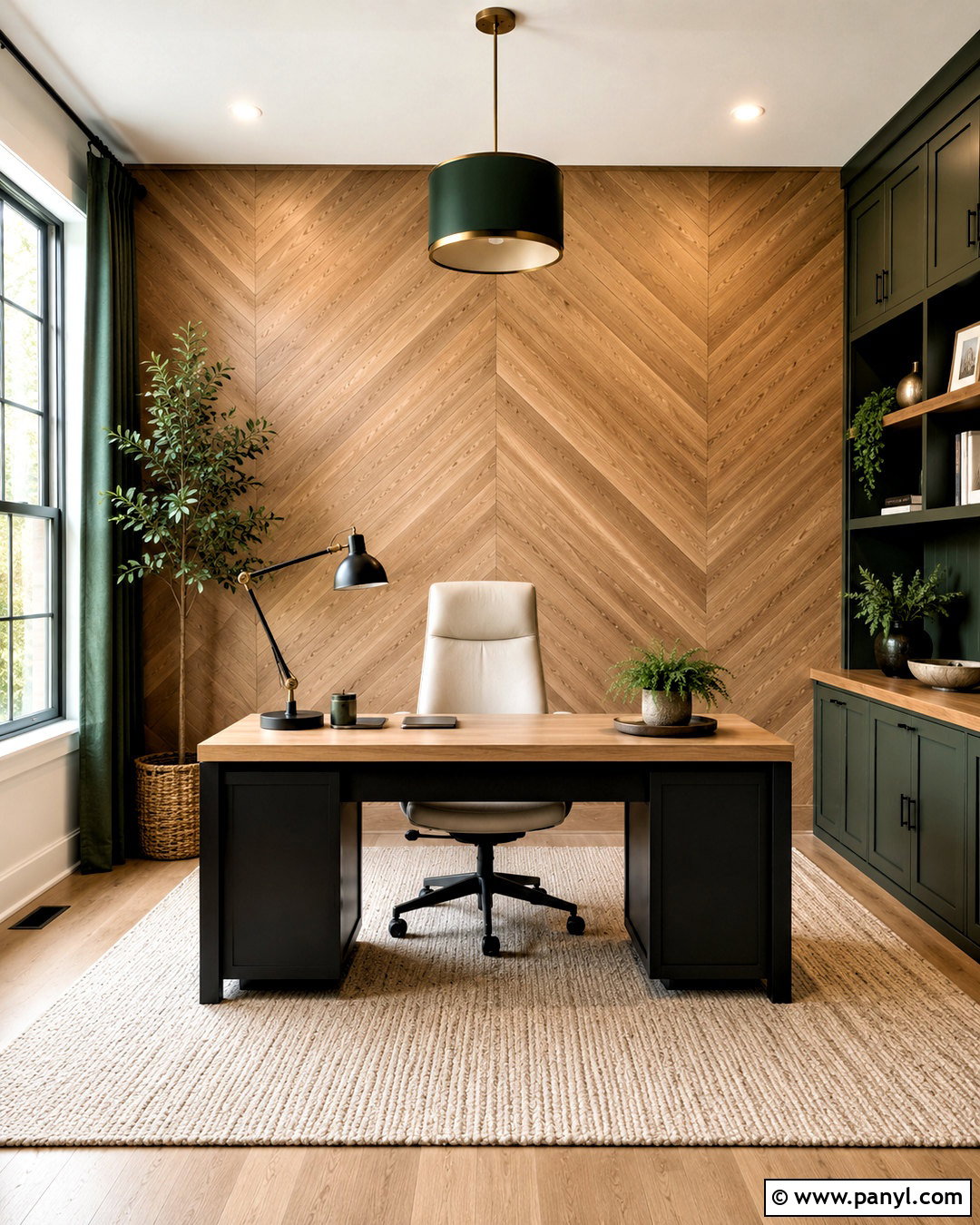
A chevron wood accent wall adds energy to a home office without using bright color. Build the pattern with medium-toned oak planks meeting in clean points behind the desk. Carefully align the center seam with the desk and ceiling light so the entire workspace looks balanced. Choose a matte black desk with an oak top, a supportive cream chair, and simple closed storage along one side. Deep forest green accessories can introduce color through document boxes, a desk lamp, or one upholstered guest chair. Keep the other walls warm white and use pale flooring or a neutral rug to prevent visual overload. Floating shelves should be minimal because the chevron pattern already provides decoration. Good task lighting will also reveal the natural grain and precise board arrangement.
8. Mixed Width Wood Accent Wall
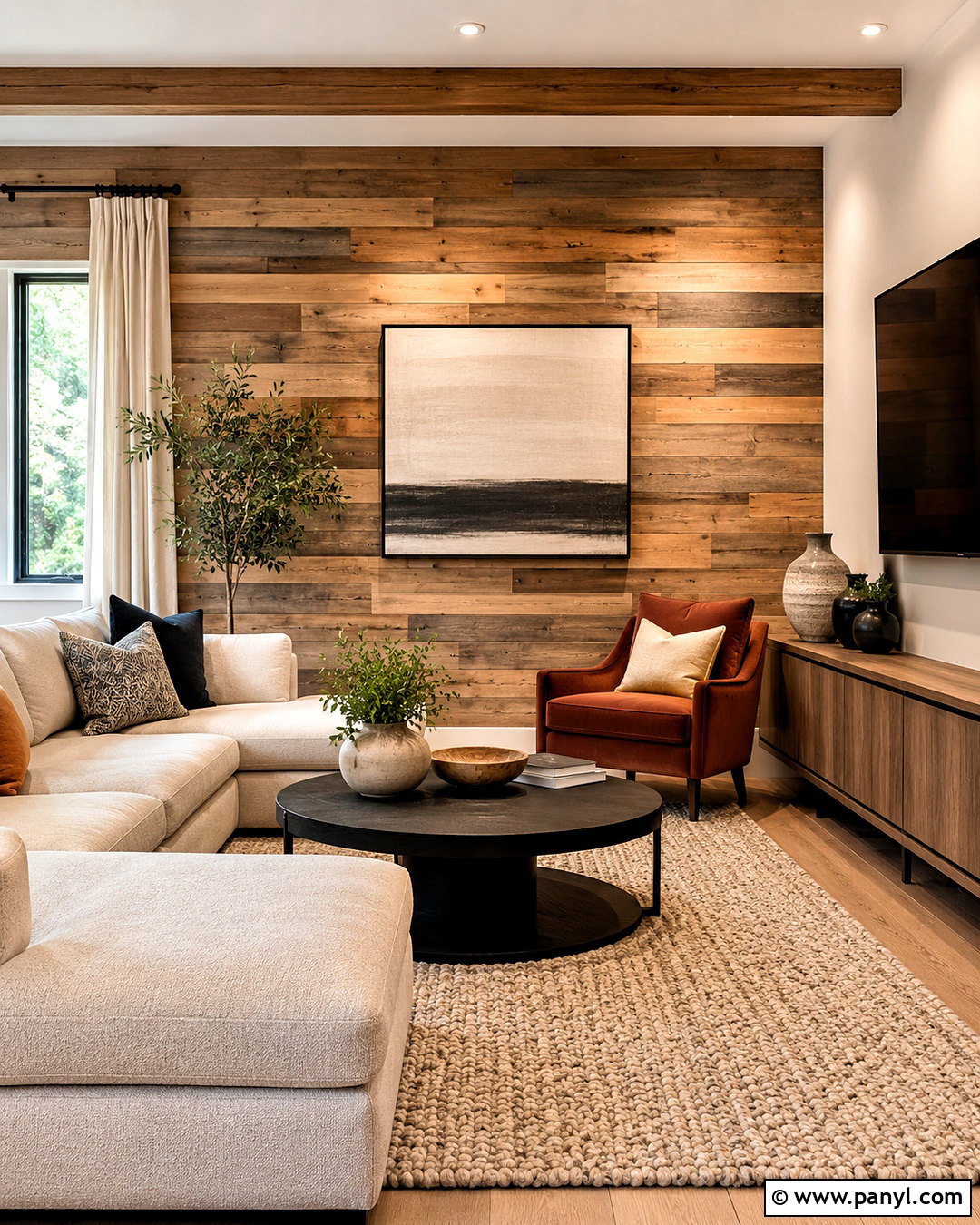
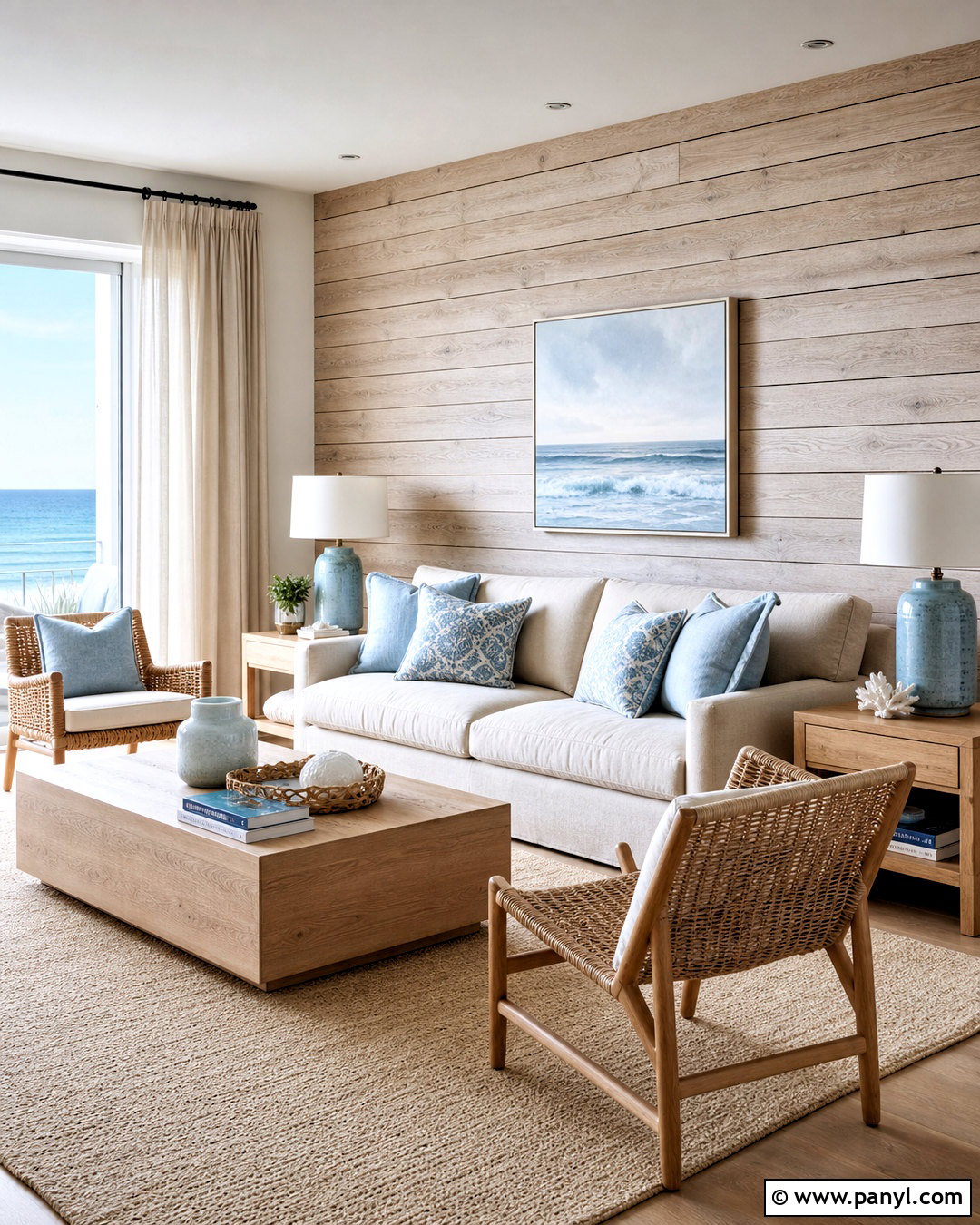
Mixed-width planks produce a relaxed wood accent wall that feels collected rather than manufactured. Use natural boards in several widths but maintain a controlled palette of honey oak, soft brown, and muted gray-brown. Install them horizontally behind a family room sectional, staggering the seams to avoid obvious vertical lines. Keep the room comfortable with a durable beige sofa, rust-colored armchair, chunky cream rug, and round black coffee table. Repeat only one or two wall tones through pillows and pottery. A low oak media cabinet can sit opposite the feature so the wood is distributed naturally around the room. Avoid heavily patterned curtains or artwork. Instead, use linen window treatments and one simple framed piece. This allows the varied boards to remain the room’s primary decorative feature.
9. Half Wall Oak Accent Wall
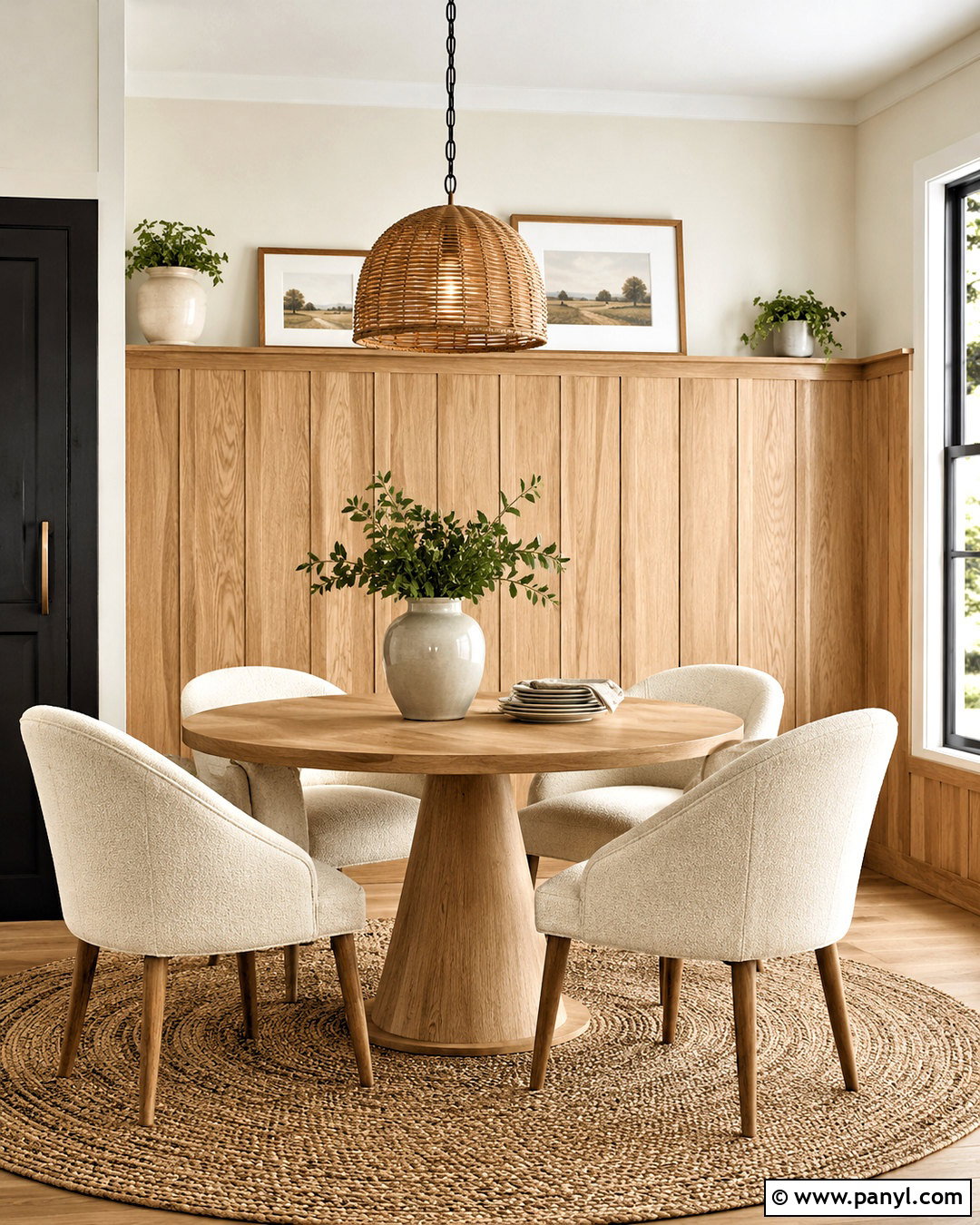
Covering only the lower portion of a wall offers natural texture without dominating the room. Install vertical white oak boards from the baseboard to approximately two-thirds of the wall height, finishing the top with a slim matching ledge. Paint the upper section soft ivory to create a light, clean transition. This treatment works beautifully in a dining nook with a round oak pedestal table, curved cream chairs, and a woven pendant. Place a small collection of neutral framed prints above the ledge, leaving generous blank space around them. A washable taupe rug helps define the eating area, while black window frames or hardware add crisp contrast. Keeping the boards evenly toned gives the room a modern appearance, while the partial-height layout makes installation more approachable and budget-conscious.
10. Wood And Stone Fireplace Accent Wall
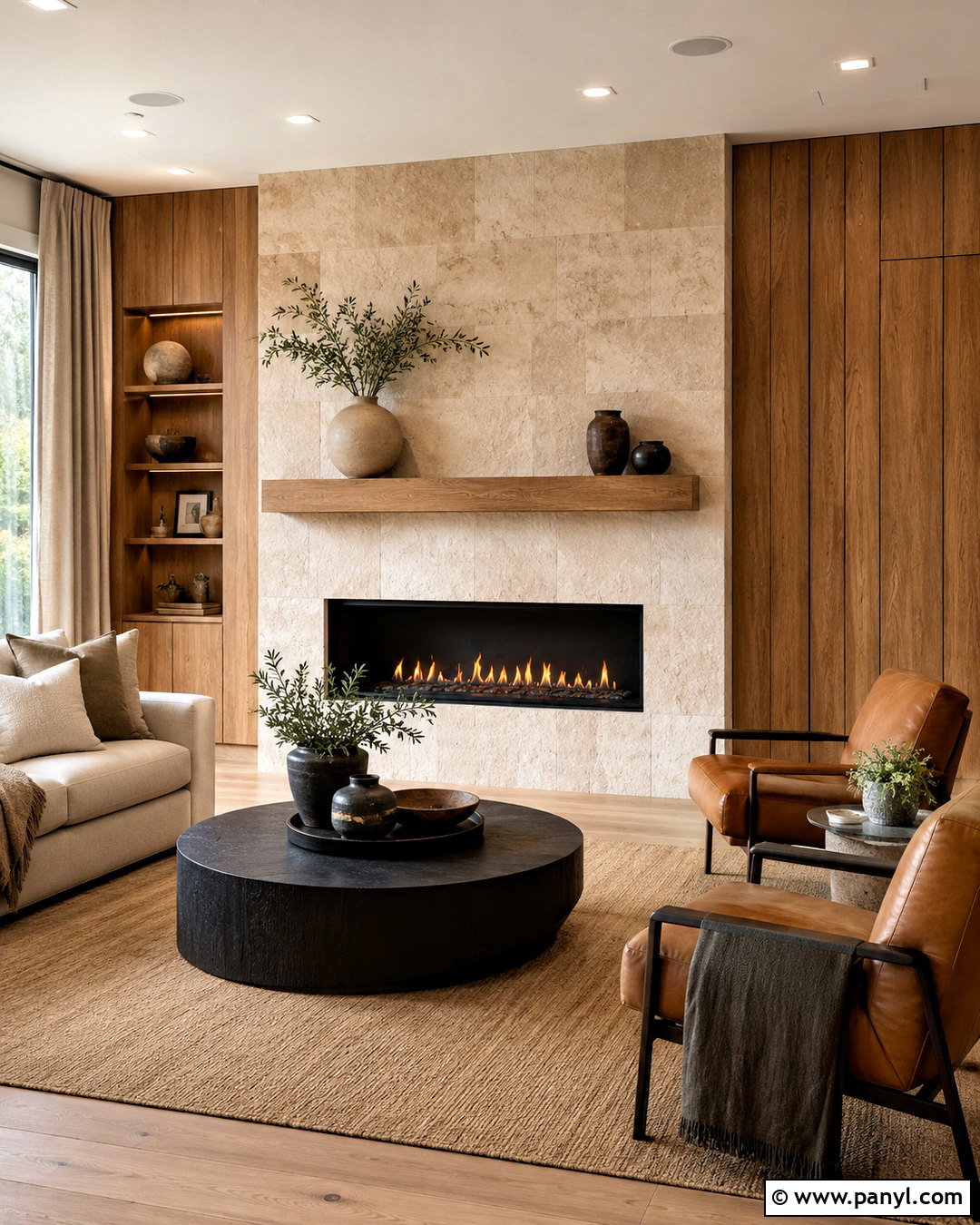
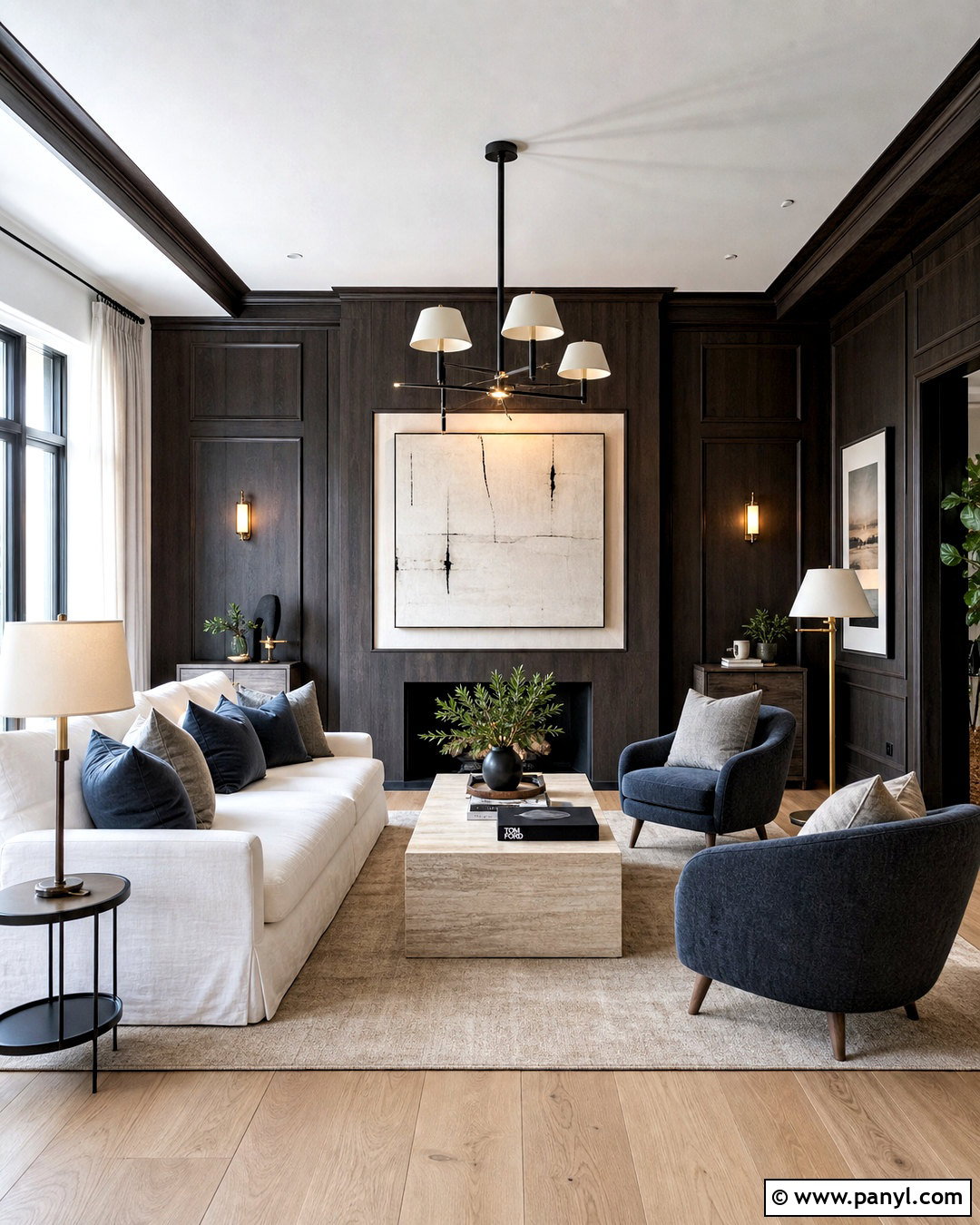
Combining wood with stone creates a substantial fireplace wall that still feels balanced. Frame a central fireplace with large, warm limestone tiles, then cover the surrounding wall in vertical natural oak panels. Extend the oak to the ceiling to emphasize height and integrate a floating timber mantel where the two materials meet. Arrange a cream sofa, two camel leather chairs, and a textured beige rug around a dark round coffee table. Keep the fireplace surround uncluttered, using only one ceramic vessel or a simple framed piece above the mantel. Recessed ceiling lights can wash gently across both stone and wood. Repeat the limestone color in pillows and curtains. This coordinated palette prevents the contrasting surfaces from looking disconnected while creating a comfortable, sophisticated living room centerpiece.
11. Wood Accent Wall With Built In Shelves
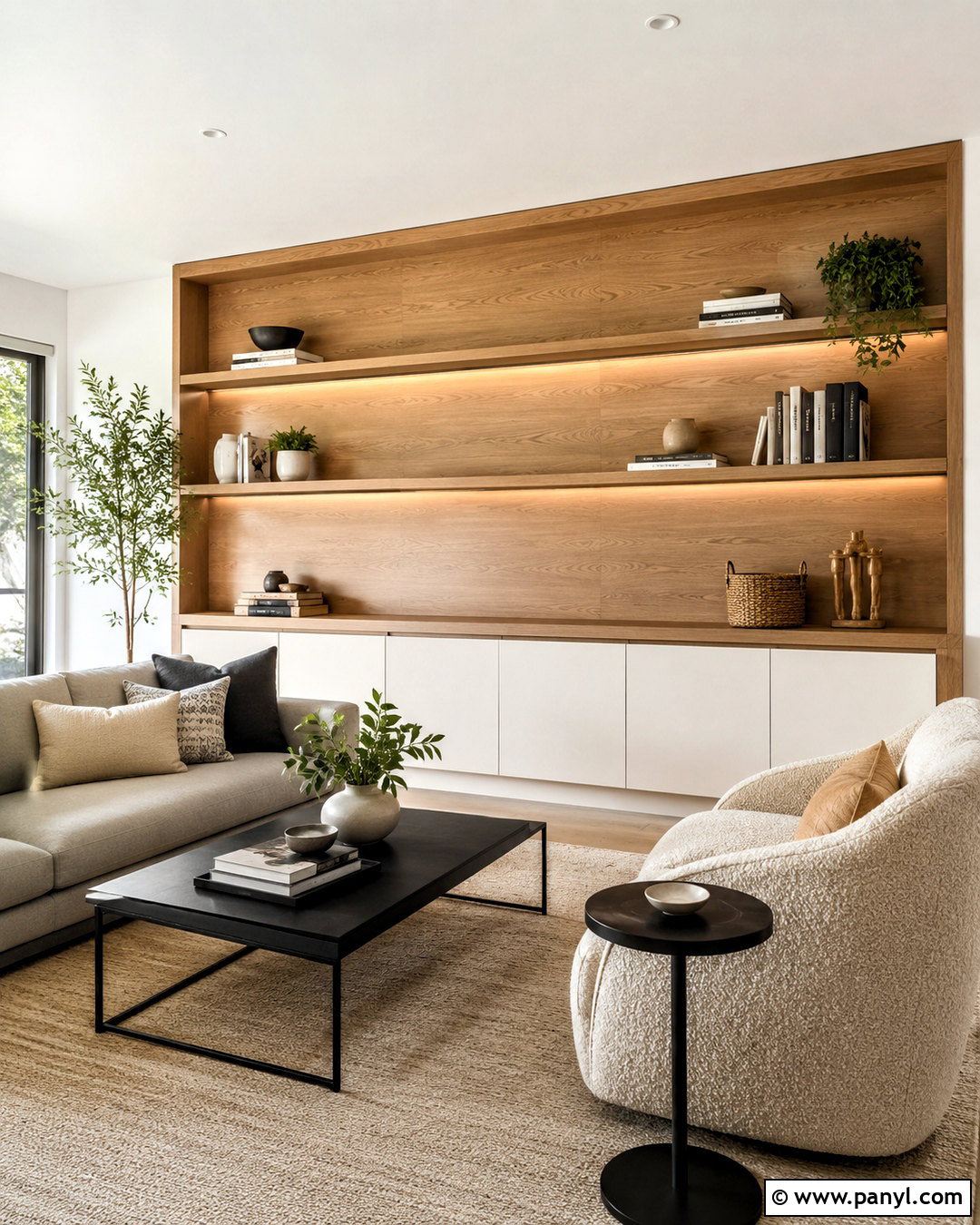
Turn an accent wall into useful storage by combining natural oak panels with built-in shelving. Cover the central wall in flat oak veneer, then place warm white cabinets and open shelves on both sides. A low cabinet across the bottom can hide electronics, games, or office supplies. Keep the oak center visible by mounting only one television or oversized artwork there. Furnish the living room with a light gray sofa, ivory boucle chair, warm beige rug, and black metal coffee table. Style the shelves with books, baskets, ceramics, and small plants, leaving open areas between groups. Integrated shelf lighting adds depth and highlights the wood grain. Repeating oak on the cabinet handles or side tables will help the storage wall feel connected to the rest of the room.
12. Curved Wood Accent Wall
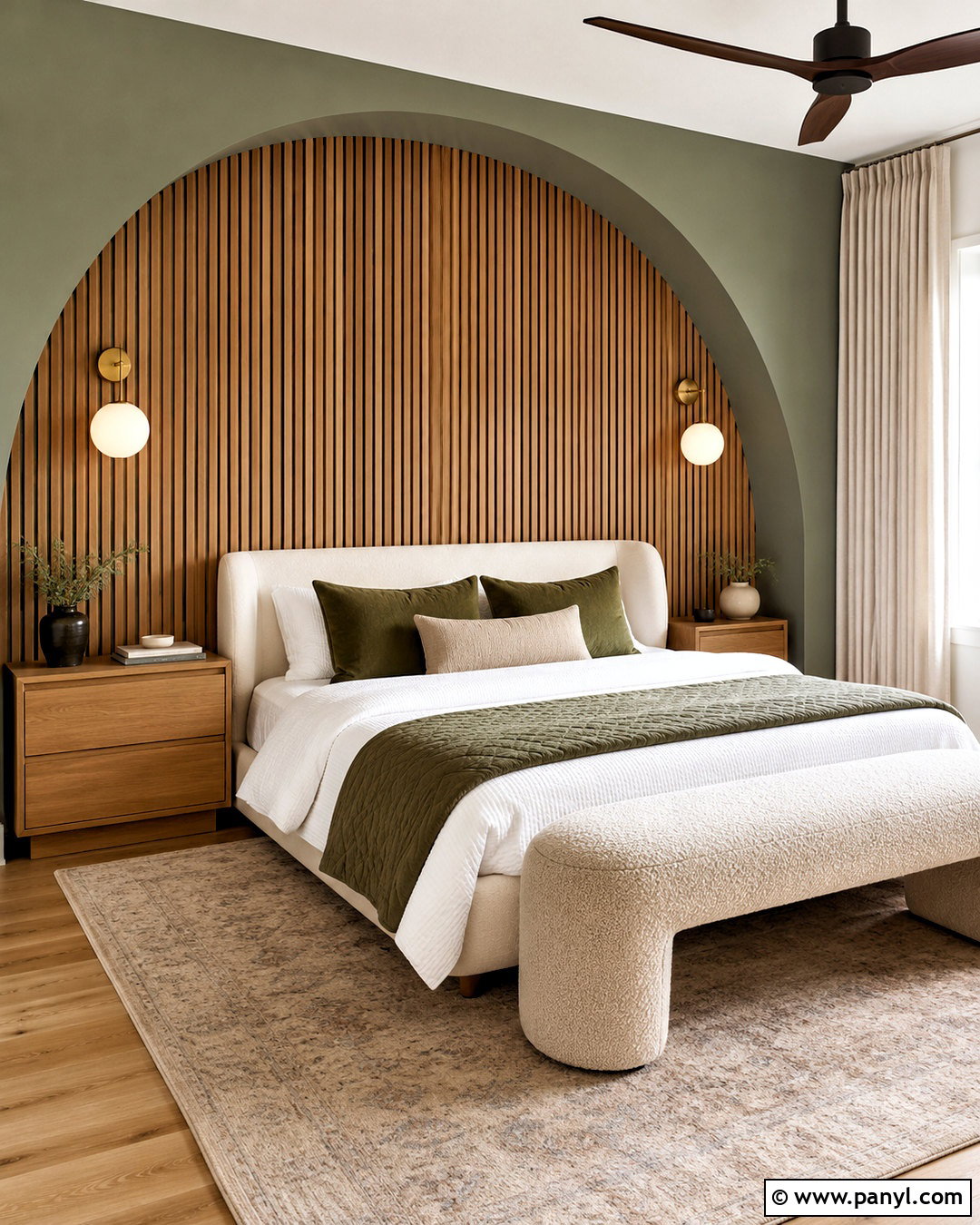
Soft curves can give a natural wood accent wall a more custom appearance. Create a wide arch behind a bedroom headboard using flexible oak veneer panels or closely spaced vertical slats cut to follow the rounded outline. Paint the surrounding wall muted sage green so the warm wood shape stands out clearly. Center a low cream upholstered bed within the arch and add simple oak nightstands on both sides. Globe sconces in aged brass reinforce the curved theme without becoming overly decorative. Choose white bedding, a moss green throw, and a softly patterned beige rug. Keep artwork off the wood so its architectural shape remains easy to see. A bench with rounded corners and light linen curtains will repeat the gentle lines, producing a restful bedroom with a distinct focal point.
13. Maple Wood Accent Wall Nursery
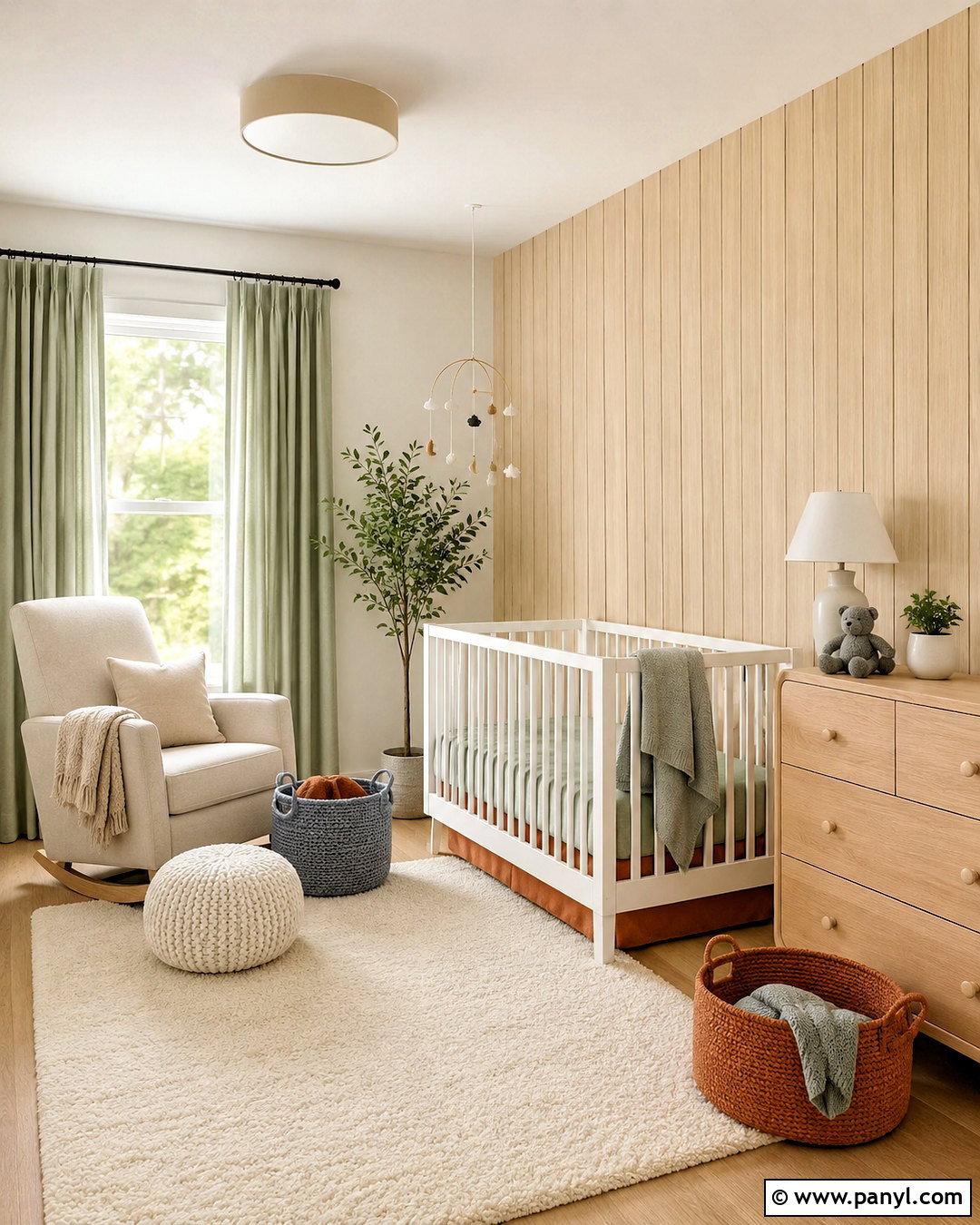
Pale maple creates a bright, gentle backdrop for a nursery or young child’s room. Install smooth vertical panels behind the crib, selecting boards with subtle grain and minimal knots. Use a water-based clear finish that preserves the maple’s creamy blond color. Complete the room with a white crib, oatmeal glider, washable ivory rug, and light-filtering curtains in muted sage. A rounded maple dresser on the opposite wall will repeat the natural material without making the room feel heavily matched. Add soft color through dusty blue, clay, or green storage baskets and bedding. Keep decorations securely placed away from the crib and avoid overcrowding the feature wall. One simple mobile and a small floor plant elsewhere provide enough interest. The finished room feels peaceful, practical, and adaptable as the child grows.
14. Rustic Wood Accent Wall Bedroom
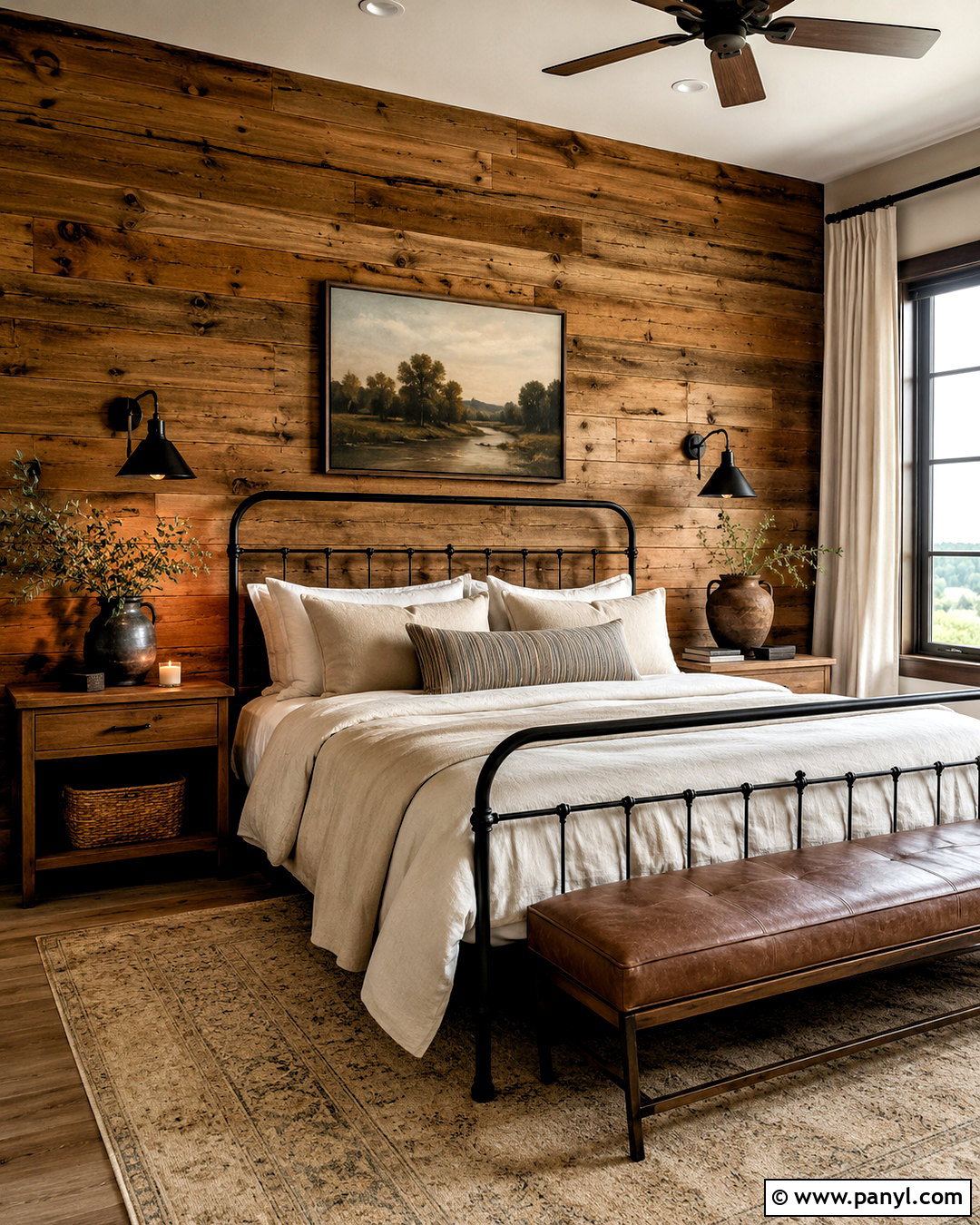
Rough-sawn boards bring authentic rustic character to a bedroom when the surrounding pieces remain simple. Cover the wall behind the bed with medium brown wood planks featuring visible saw marks, knots, and slight color differences. Install them horizontally to make the room feel wider. Choose a black iron bed, natural linen bedding, a cream wool blanket, and solid wood nightstands with uncomplicated shapes. Soft white paint on the other walls will brighten the heavier materials. Add a faded beige rug, black reading sconces, and one leather bench at the foot of the bed. Avoid novelty farmhouse signs or excessive accessories, which can make the design feel themed. Instead, use handcrafted pottery, a woven basket, and a restrained landscape print for a more natural, enduring rustic look.
15. Japandi Oak Wood Accent Wall
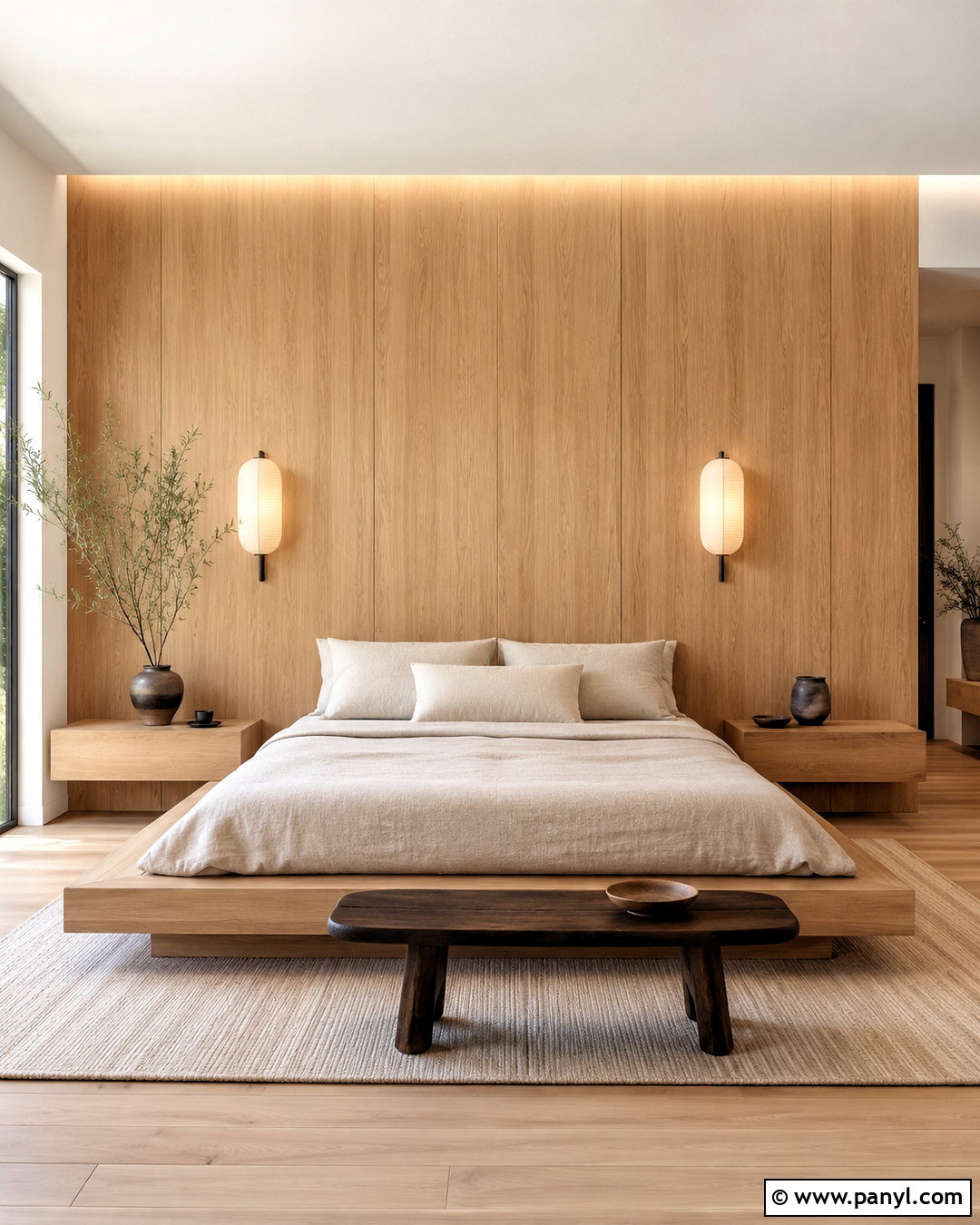
A Japandi wood accent wall should feel quiet, balanced, and closely connected to the room’s simple layout. Use smooth, pale oak panels with narrow vertical seams behind a low platform bed. Let the boards run from floor to ceiling without decorative trim. Pair the wall with warm white plaster, light oak flooring, oatmeal linen bedding, and a flat-woven wool rug. Floating bedside ledges maintain open floor space, while small paper-inspired wall lights provide gentle visual contrast. Choose one dark brown bench or ceramic lamp to ground the pale palette. Decorative objects should be limited to a handmade vessel, a simple branch, and one textured cushion. With restrained furnishings and natural finishes, the wood becomes part of a complete calming environment rather than an isolated statement added to the room.
16. Midcentury Walnut Wood Accent Wall
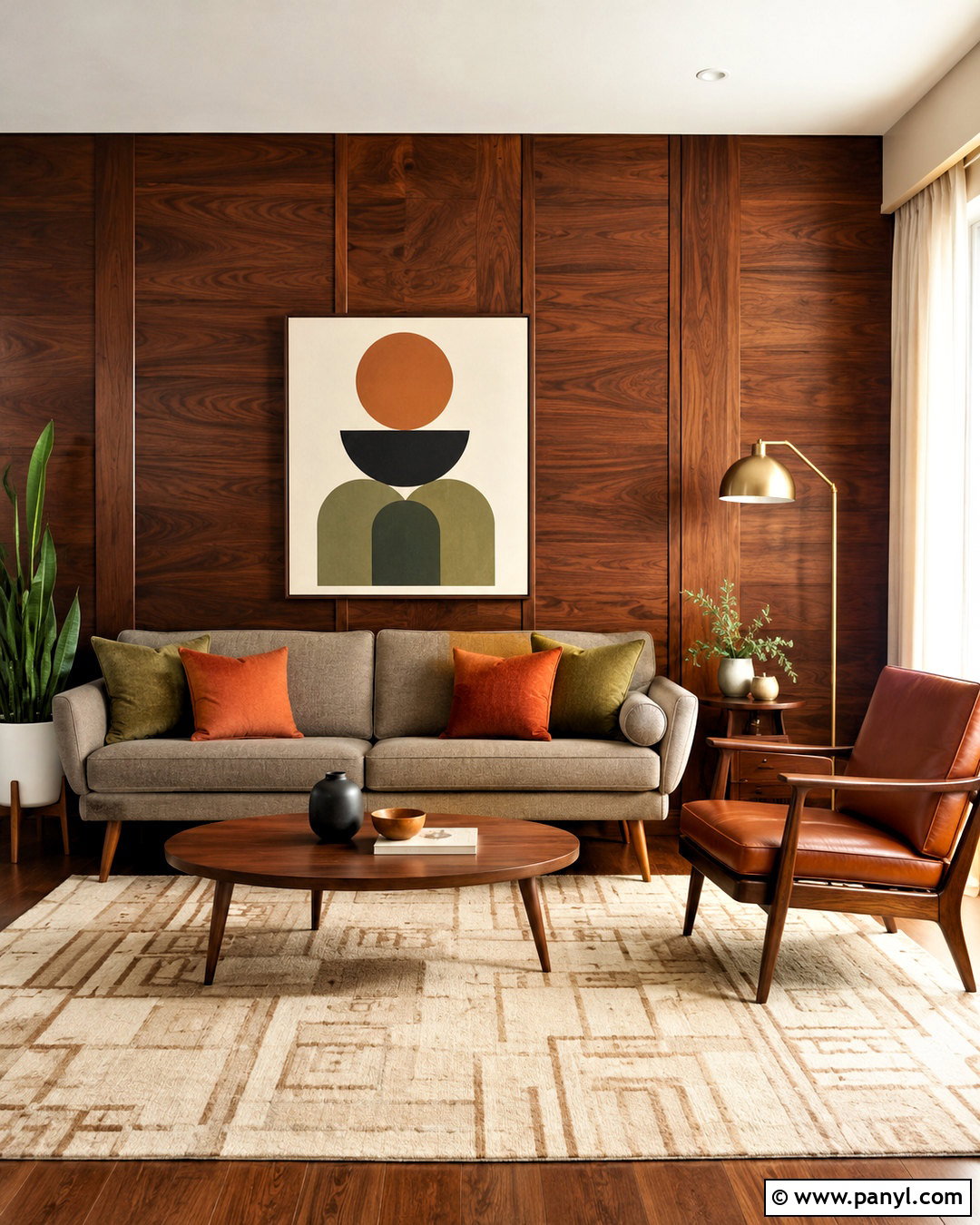
Midcentury interiors pair naturally with walnut because its deep grain complements streamlined furniture and earthy color. Panel the living room wall behind a low media console using broad walnut sheets with clean vertical joins. Add a tapered-leg sofa in warm gray, a cognac leather lounge chair, and an oval wood coffee table. Burnt orange and muted olive cushions bring period-inspired color without making the room look like a set. Use a cream geometric rug and off-white curtains to brighten the darker paneling. A brass floor lamp and a few black accents provide definition. Instead of filling the wall with small art, hang one large graphic print beside the television. The controlled arrangement allows the walnut to deliver warmth while the furniture creates a comfortable, functional midcentury living space.
17. Whitewashed Wood Accent Wall
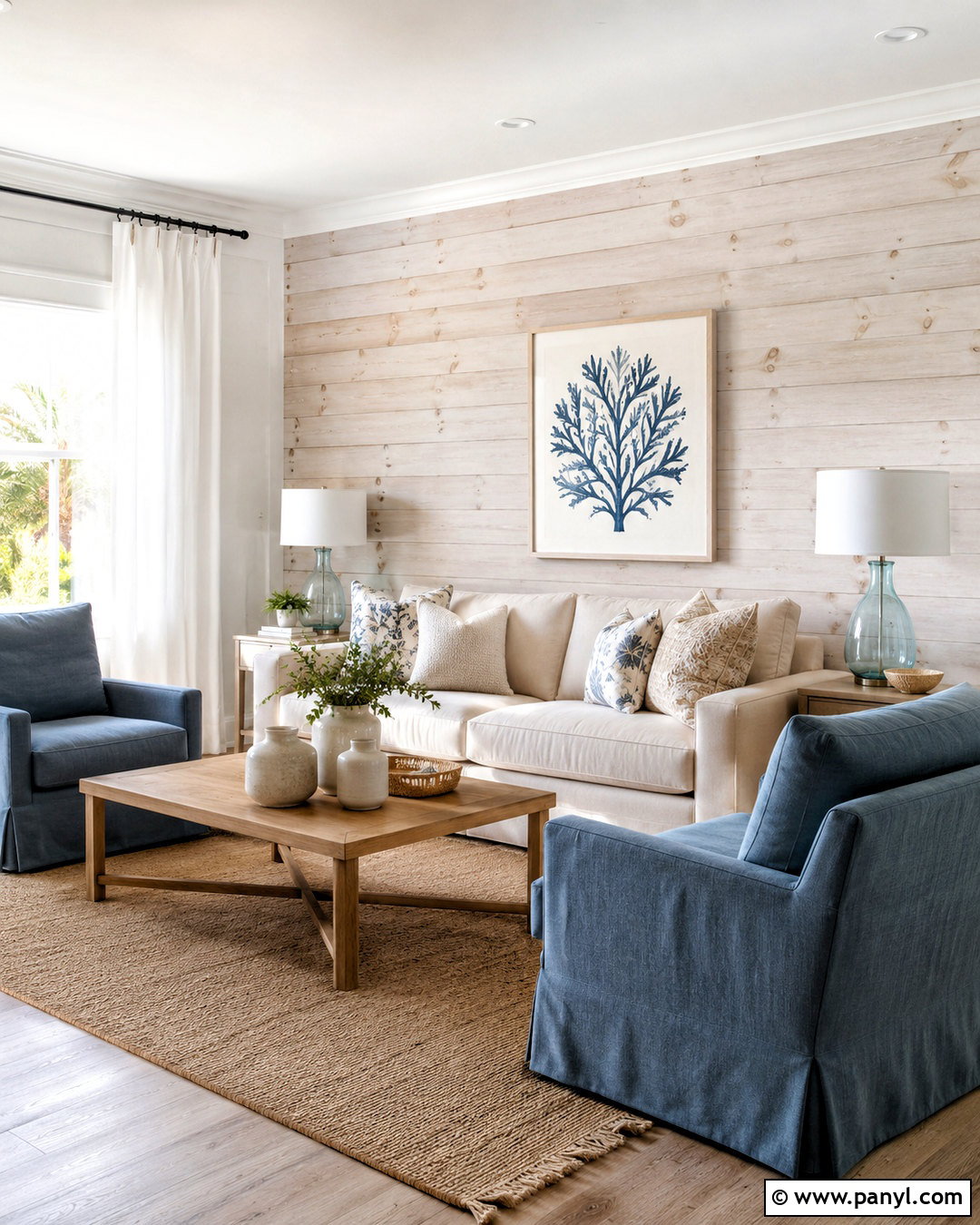
Whitewashing offers a lighter version of a natural wood accent wall while keeping the grain visible. Use horizontal pine or reclaimed boards with a thin, translucent white finish behind a coastal living room sofa. Let subtle beige knots and pale gray streaks show through instead of applying opaque paint. Add a slipcovered sand-colored sofa, light oak coffee table, woven jute rug, and soft blue-gray armchairs. White linen curtains and clear glass lamps will keep the room bright. Decorate with textured pillows, ceramic vessels, and framed botanical artwork rather than obvious seaside symbols. A few black or dark bronze details can stop the pale scheme from appearing washed out. The full room feels casual and breezy, yet the visible wood texture gives it more depth than a standard white painted wall.
18. Natural Wood Grid Accent Wall
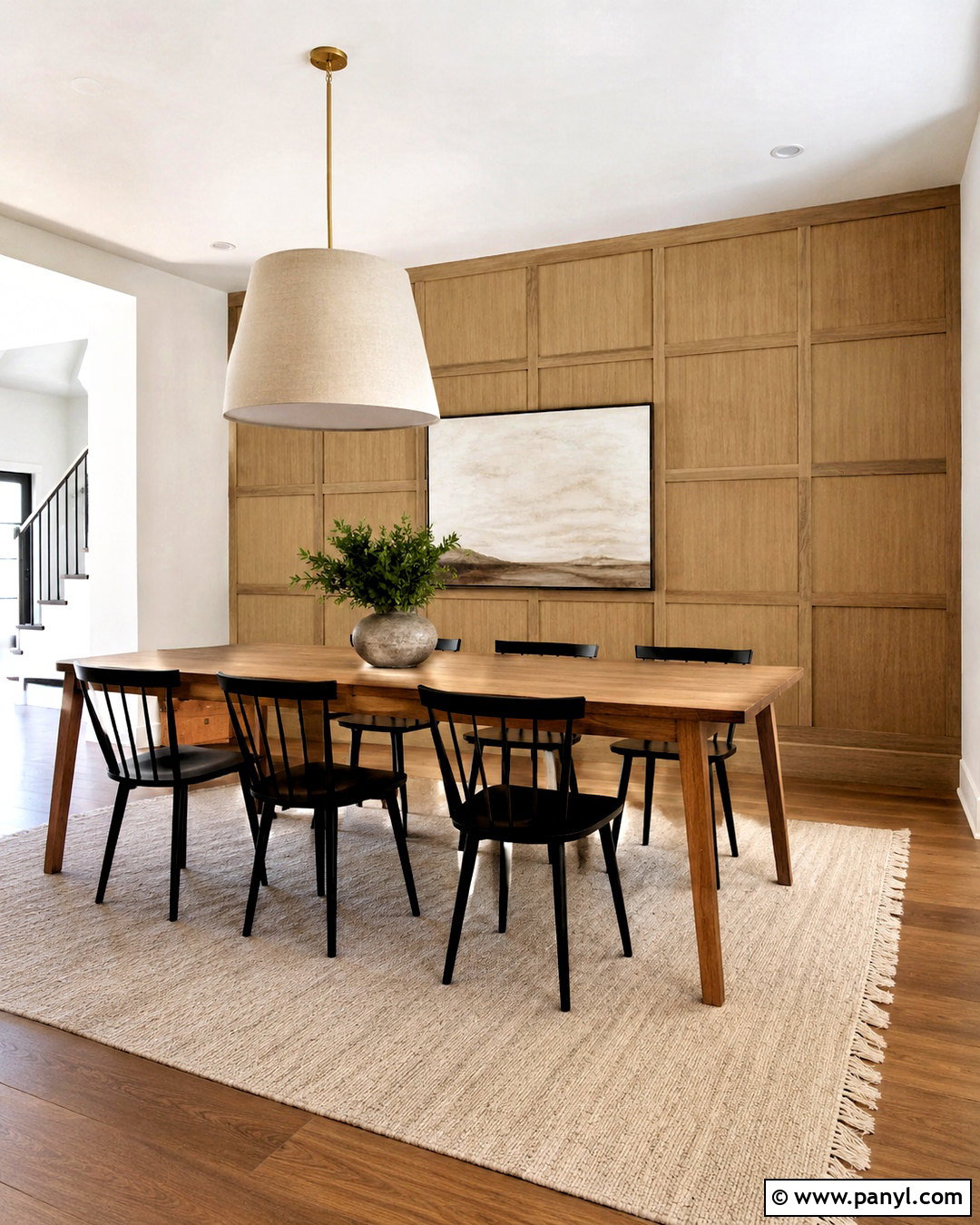
A grid pattern creates structure while allowing the character of natural wood to remain visible. Form large rectangular sections with flat oak strips over an oak veneer background, keeping every opening equal for a clean architectural effect. Use the treatment behind a dining table or home office desk where furniture will not conceal the pattern. Warm white walls, medium oak flooring, and matte black accents create a coordinated base. For a dining room, add a rectangular oak table, black spindle chairs, and a large linen pendant. A cream rug and soft green centerpiece can reduce the grid’s formality. Skip small wall decorations because they may compete with the framework. One centered artwork or an unadorned wall will let the precise woodwork become the focal point of the complete space.
19. Peel And Stick Wood Accent Wall
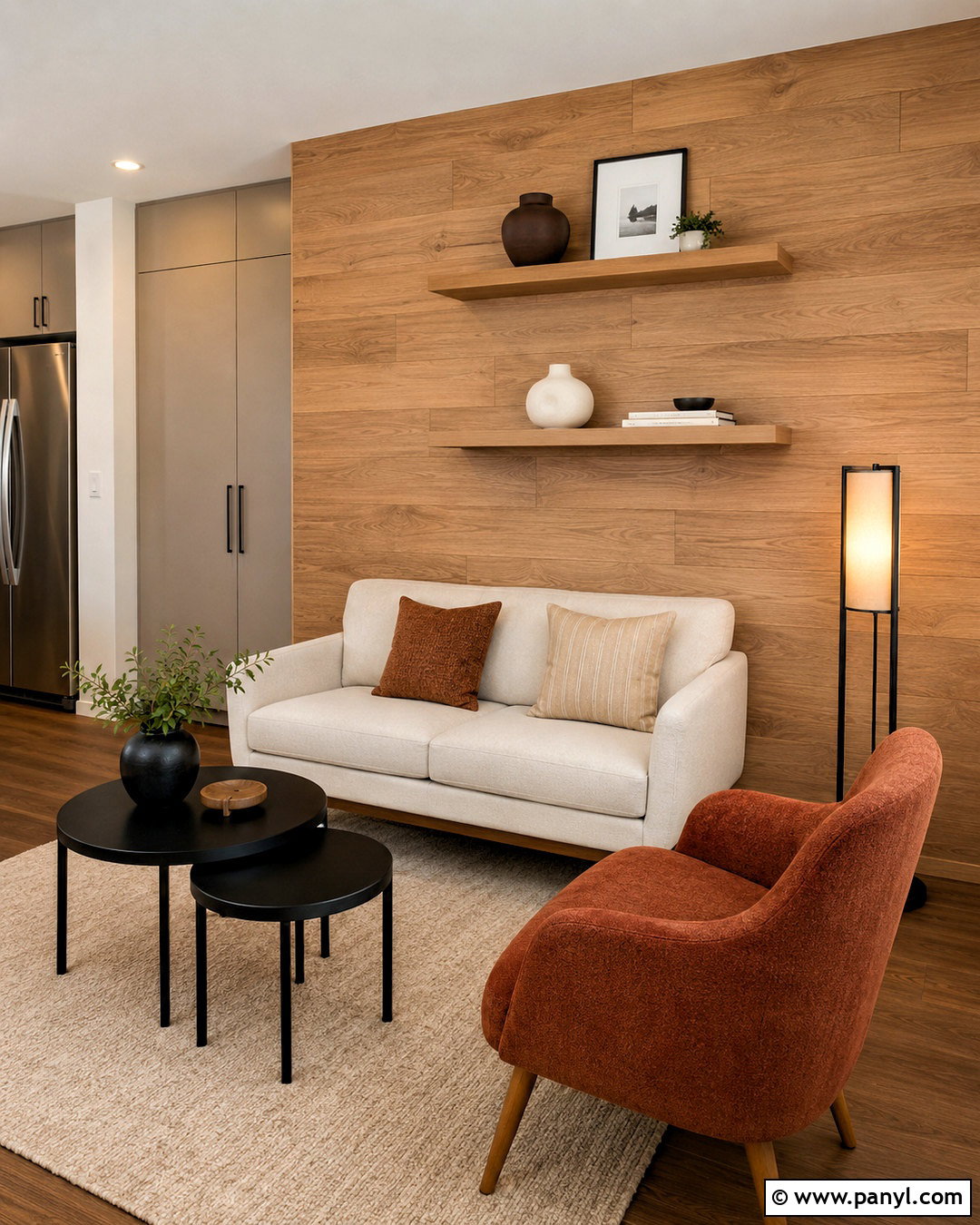
Peel-and-stick wood panels can create a convincing feature wall when permanent construction is not practical. Choose real wood veneer planks in consistent light oak tones rather than highly varied imitation boards. Apply them to a clean, smooth wall behind a small apartment sofa, using a level to keep every row straight. Pair the wall with a compact cream loveseat, nesting black tables, a washable beige rug, and one rust-colored accent chair. A narrow floor lamp and wall-mounted shelves preserve valuable floor space. Keep the shelves close in color to the panels so they blend into the composition. Before installation, verify that the product suits the existing wall finish and removal needs. The resulting room feels warmer and more finished without requiring thick boards or extensive carpentry.
20. Ceiling To Wall Wood Accent Wall
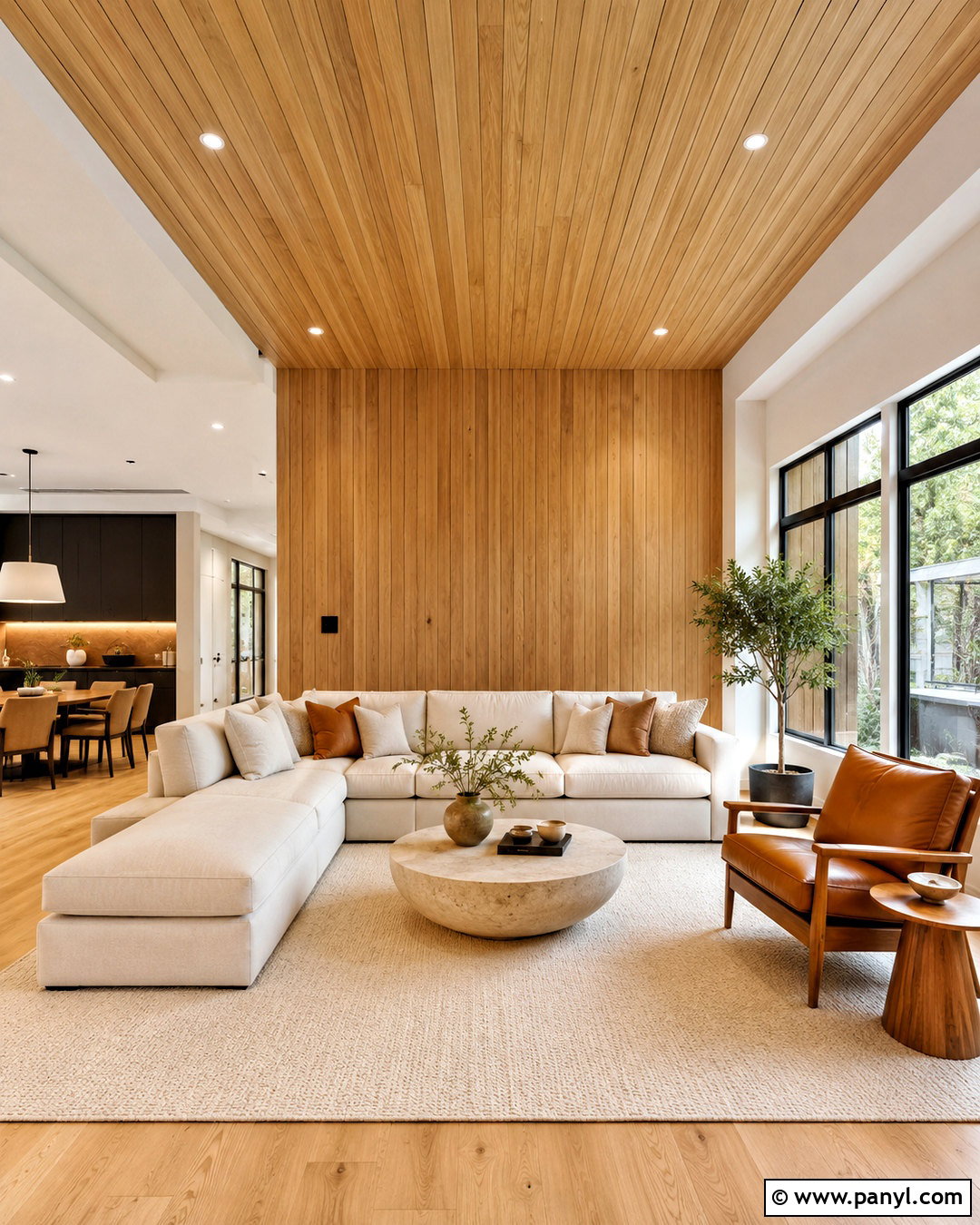
Wrapping wood from the wall onto the ceiling creates an immersive focal zone in an open room. Run narrow natural oak boards vertically behind the seating area, then continue them across a portion of the ceiling. Keep the transition seamless and align every board carefully. The wood can visually define a reading corner or living area without adding a physical divider. Furnish the zone with an ivory sectional, caramel lounge chair, round stone coffee table, and thick cream rug. Use discreet recessed lighting between or beside the ceiling boards to showcase the grain. Surrounding walls should remain warm white, while black-framed windows add contrast. Limit additional wood furniture to one or two pieces. This prevents the wraparound installation from overwhelming the otherwise bright, contemporary room.
Conclusion:
Natural wood can make an ordinary wall feel warmer, more dimensional, and better connected to the rest of a home. The most successful 20 natural wood accent wall ideas consider the complete room rather than the feature surface alone. Wood tone, board direction, furniture scale, lighting, textiles, and nearby colors should work as one coordinated plan. Pale oak and maple suit airy spaces, while walnut and reclaimed timber create a richer atmosphere. Patterns can introduce movement, and built-ins can add function. Before installing anything, test samples in the room’s daylight and evening lighting. Choose a design that complements your existing floors and furniture, then use a matte finish to keep the grain looking natural.

Related Ideas and Inspiration:
Leave a Reply