
Light sage green brings gentle color into a home without making rooms feel busy or overly themed. Its soft blend of green, gray, and earthy undertones can work like a neutral while still adding personality. The right shade can refresh walls, cabinets, trim, built-ins, and even exterior siding. However, natural light and nearby finishes can change how sage appears, so test large samples on more than one wall before committing. Warm sage shades complement oak, cream, and brass, while cooler versions suit marble, charcoal, and polished nickel. () Whether you prefer cozy cottage rooms, clean modern spaces, or relaxed coastal decor, these complete looks offer practical ways to use **light sage green paint ideas** throughout your home.
1. Light Sage Green Living Room
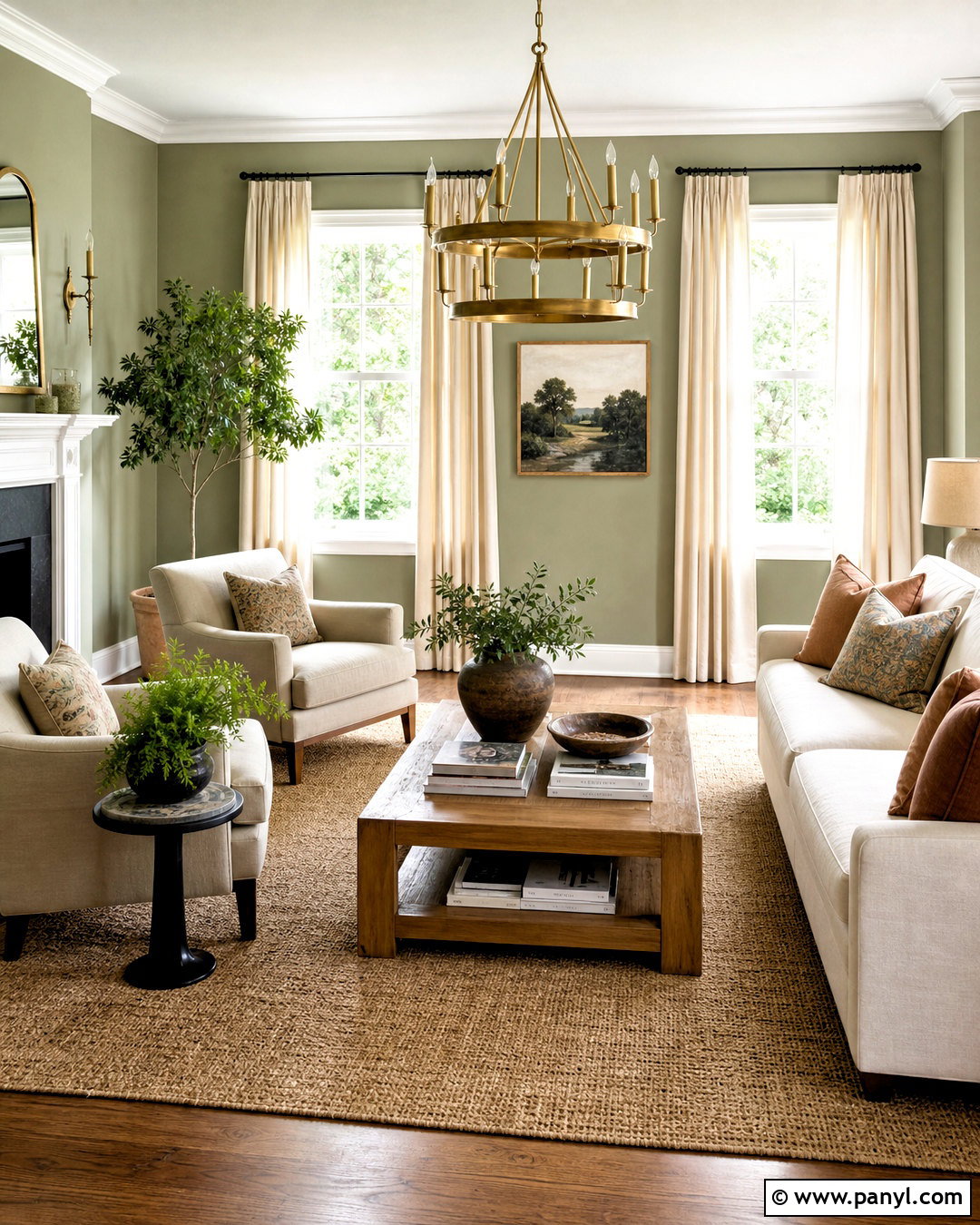
Create a calm living room by covering every wall in a balanced light sage green with subtle gray undertones. Add a warm ivory sofa, two oatmeal linen chairs, and a large natural jute rug to keep the palette soft. A medium-tone oak coffee table gives the room warmth without creating heavy contrast. Hang simple landscape artwork in thin antique-brass frames and use cream curtains that reach the floor. For lighting, choose an aged-brass floor lamp and a white ceramic table lamp. A few olive, clay, and muted rust pillows will give the room depth. Finish the look with leafy plants in stoneware pots and understated black accents, such as curtain rods and a narrow console table.
2. Light Sage Green Bedroom
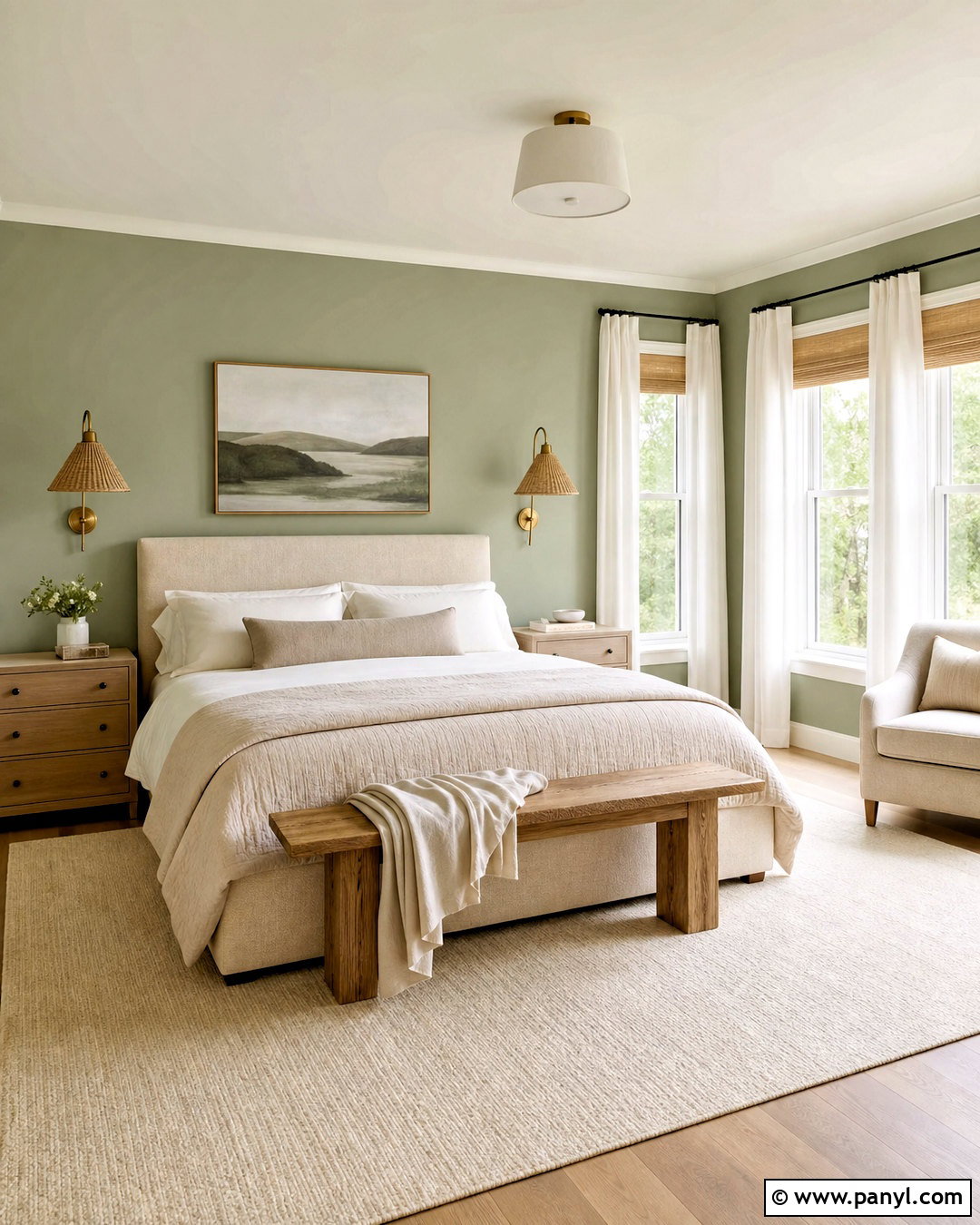
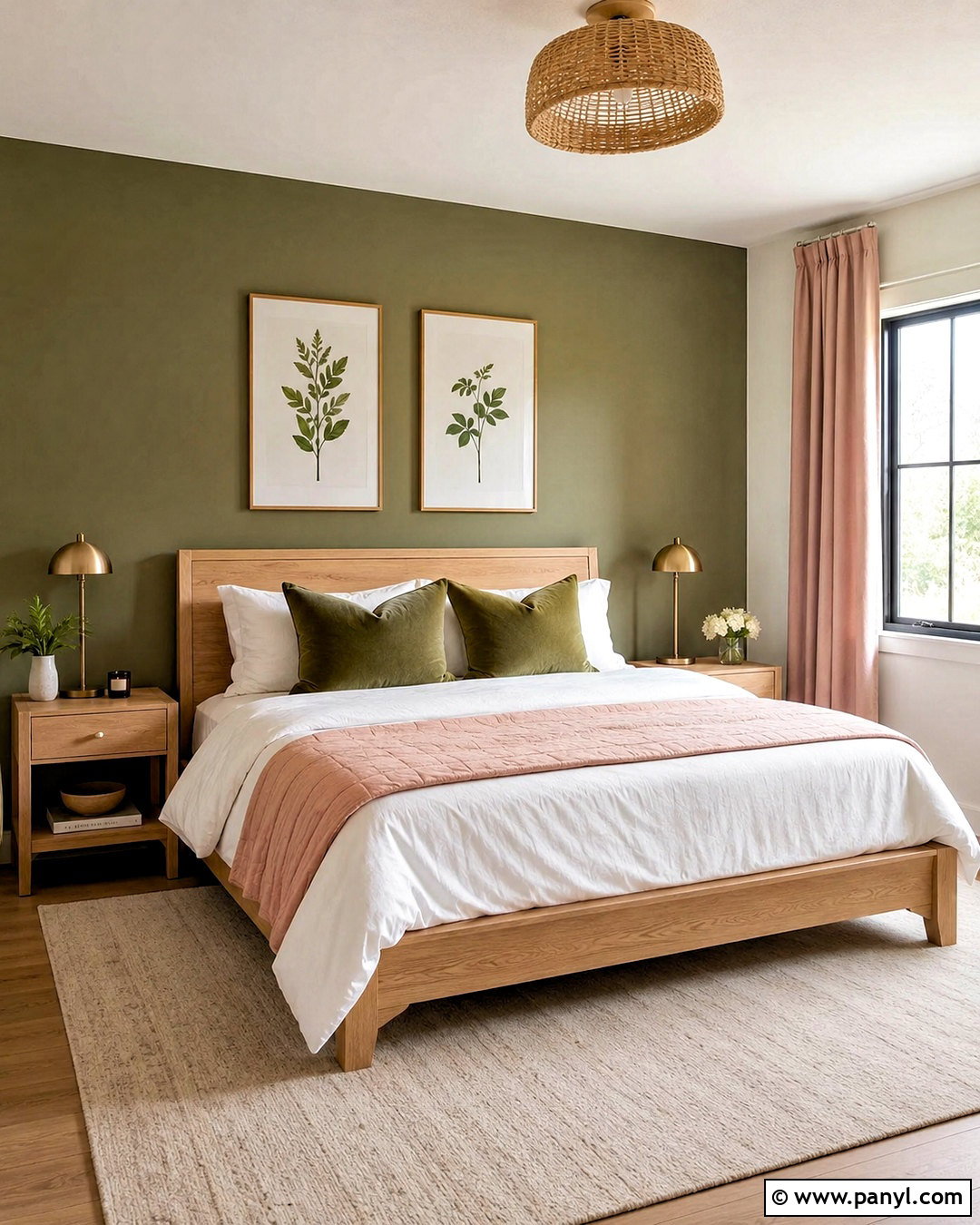
Imagine waking up in a bedroom that feels quiet, airy, and connected to nature. Paint the walls a warm light sage green, then pair them with a tall oatmeal upholstered bed and crisp ivory bedding. Layer a pale taupe quilt across the foot of the bed and add two muted botanical pillows. Light oak nightstands will reinforce the natural palette, while small brushed-brass sconces add a polished touch. Choose a textured cream rug large enough to extend beyond the bed. For the windows, use woven bamboo shades beneath sheer white curtains. A simple oak bench, ceramic vases, and one large landscape print complete the room. Keep clutter hidden so the gentle wall color remains the main visual feature.
3. Light Sage Green Kitchen Cabinets
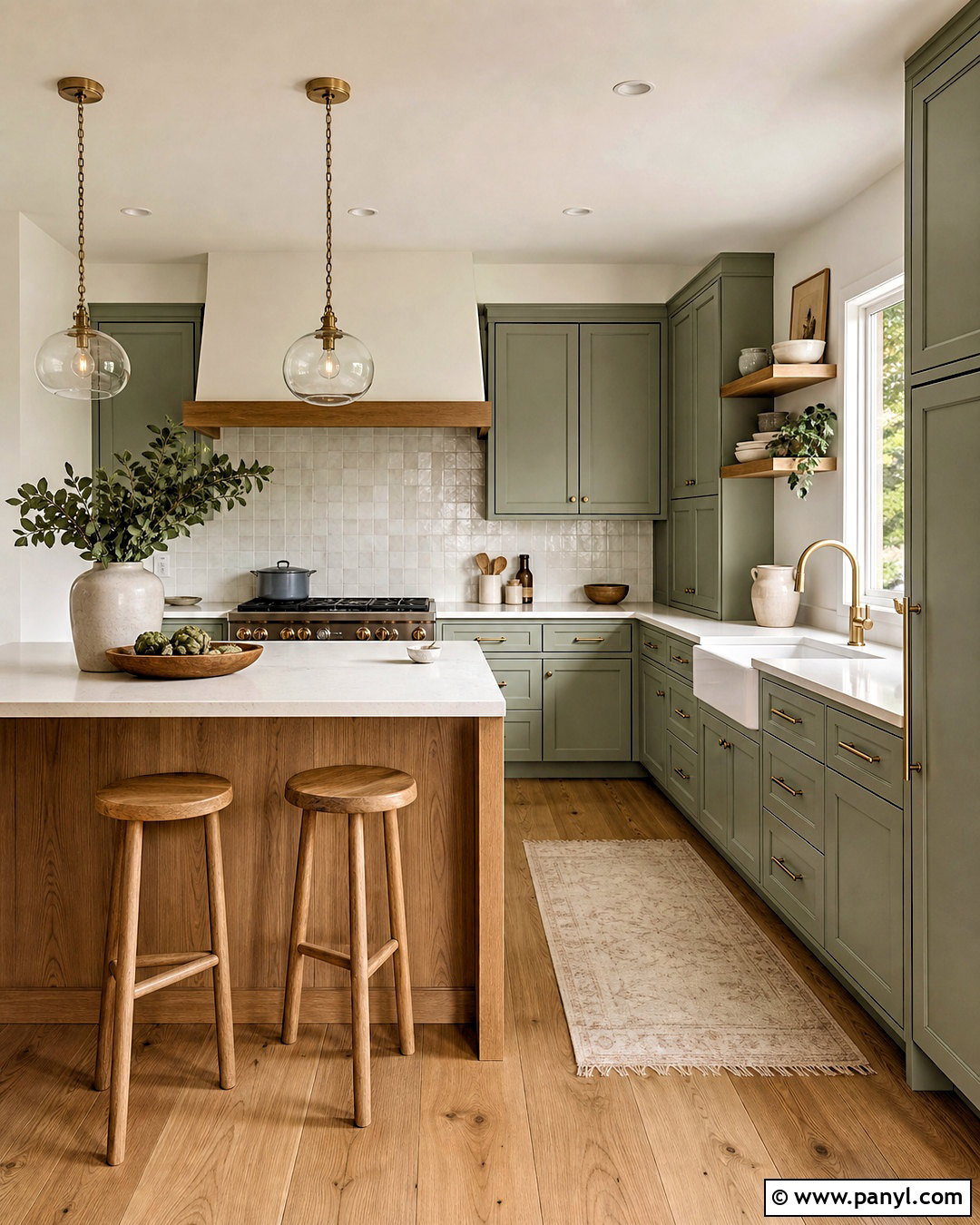
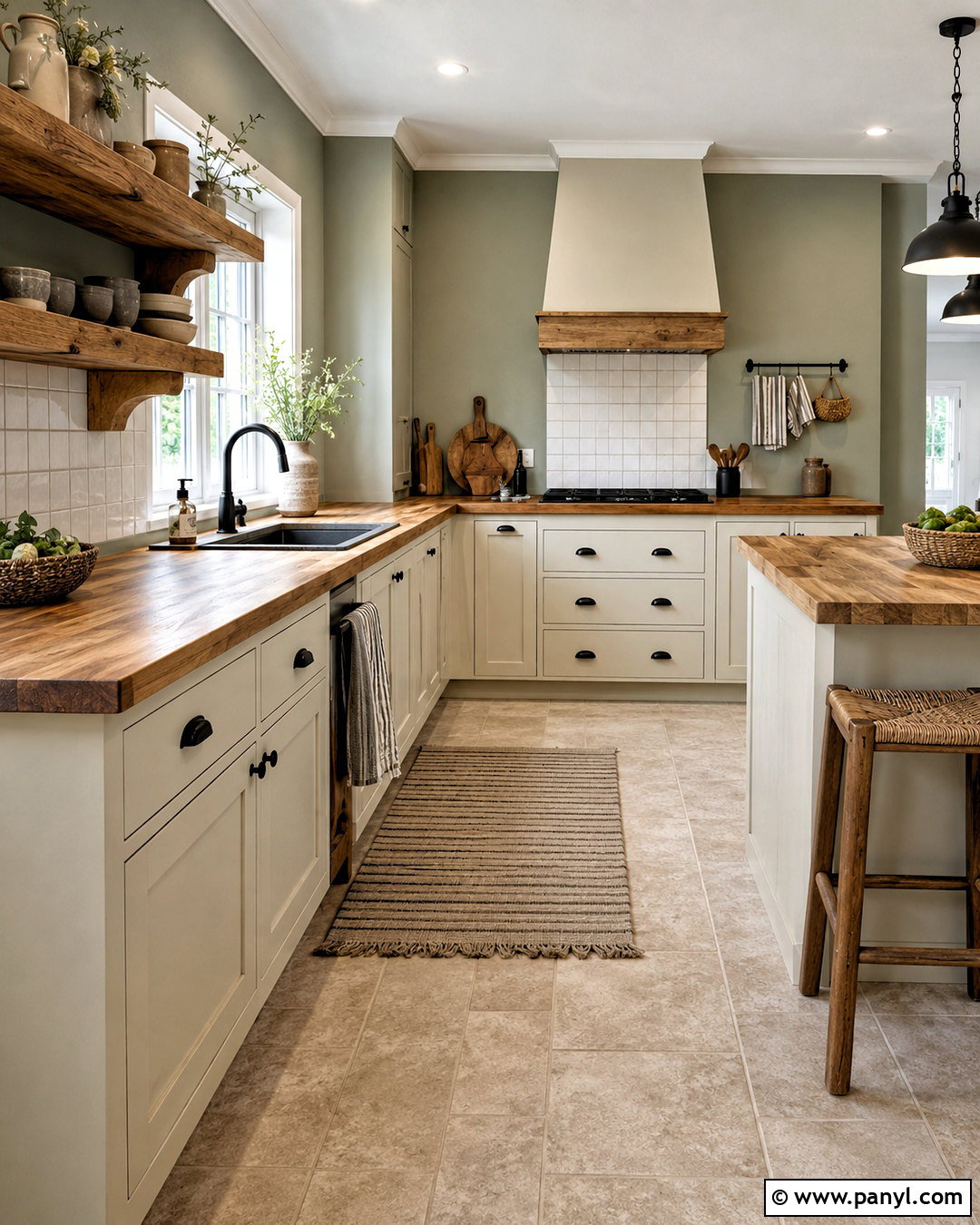
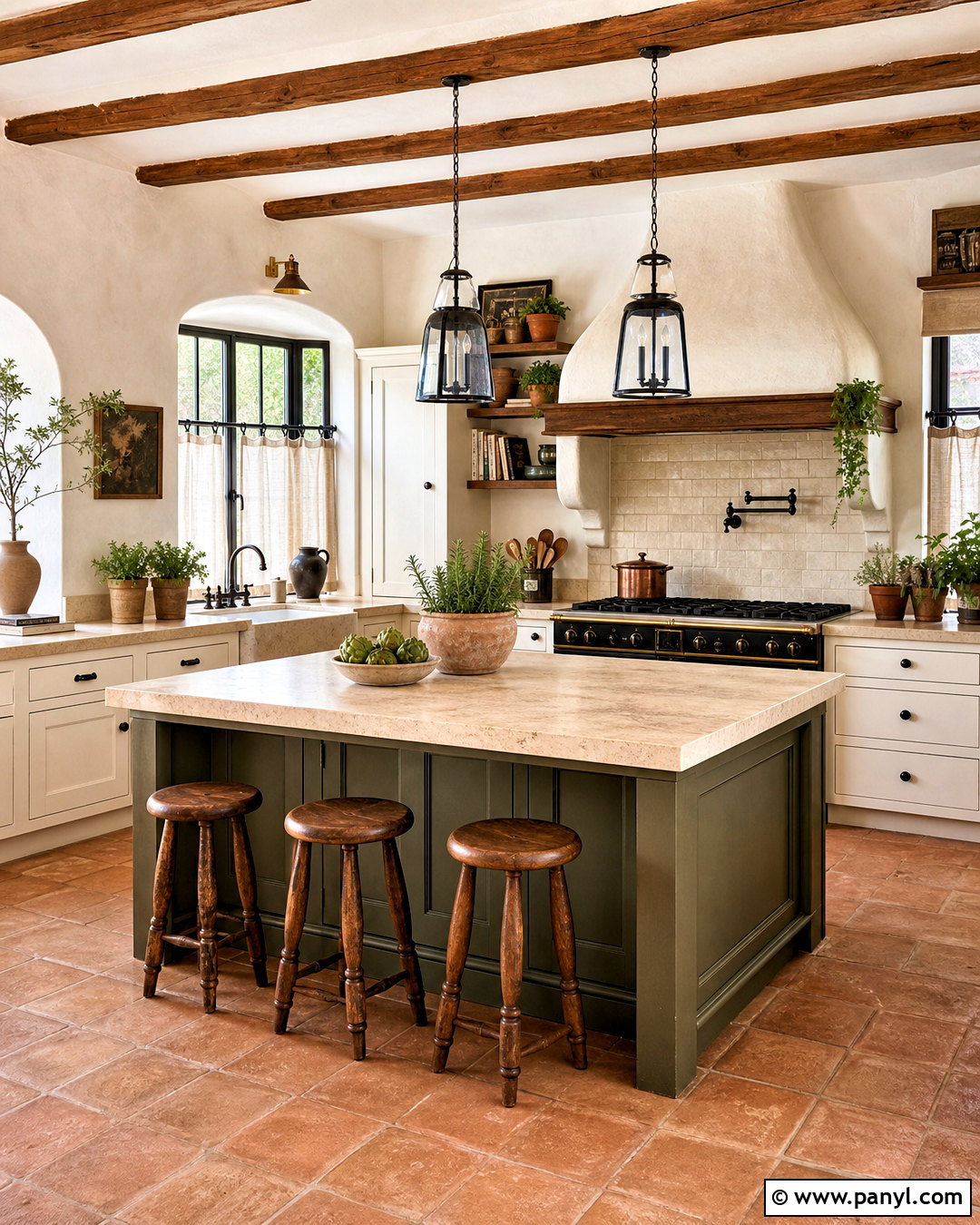
Light sage green cabinets can make a kitchen feel colorful while remaining easy to coordinate. Use the paint on both upper and lower cabinetry for a unified look, then add warm white quartz counters with subtle beige veining. An off-white zellige tile backsplash introduces texture without competing with the cabinets. Choose brushed-brass pulls, an unlacquered brass faucet, and warm oak stools to bring out the green’s earthy side. Medium oak flooring will keep the entire kitchen grounded. Paint the walls creamy white so the cabinetry stays clearly defined. Complete the scheme with clear glass pendant lights, simple stoneware dishes, and a few wooden cutting boards. The finished kitchen will feel fresh, inviting, and practical rather than overly rustic.
4. Light Sage Green Bathroom
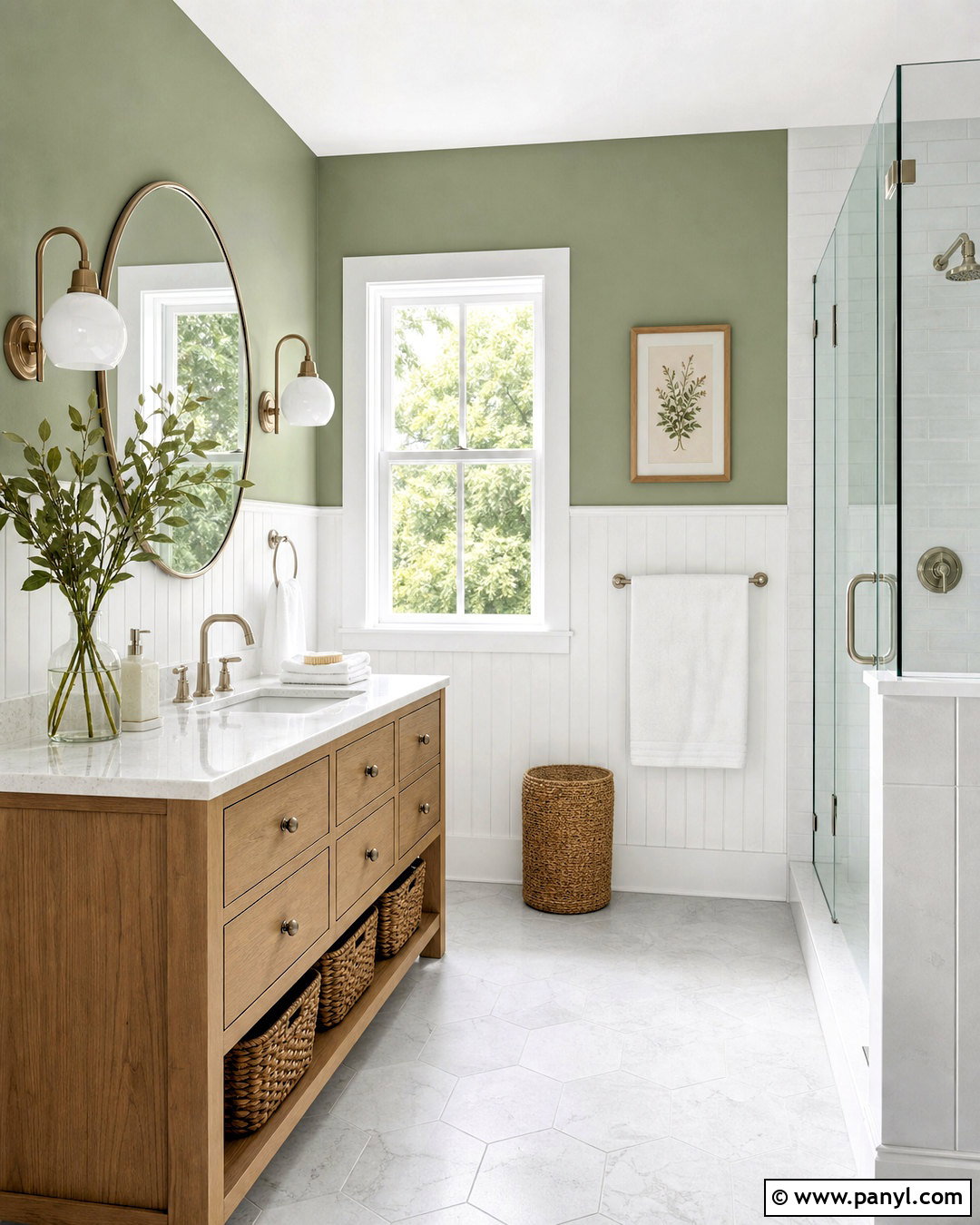
A light sage green bathroom feels especially refreshing when paired with clean white fixtures and natural textures. Paint the upper walls sage and install simple white vertical paneling on the lower half. Use a white oak vanity with a pale quartz top, brushed-nickel faucet, and round framed mirror. White porcelain floor tile keeps the room bright, while a small sage-and-cream patterned runner creates continuity. Add fluffy white towels, a natural wood stool, and woven baskets for attractive storage. Clear glass shower panels prevent the compact room from feeling divided. For lighting, place two milk-glass sconces beside the mirror. Finish with understated greenery and ceramic accessories, avoiding too many decorative items so the bathroom maintains its clean, peaceful character.
5. Light Sage Green Dining Room
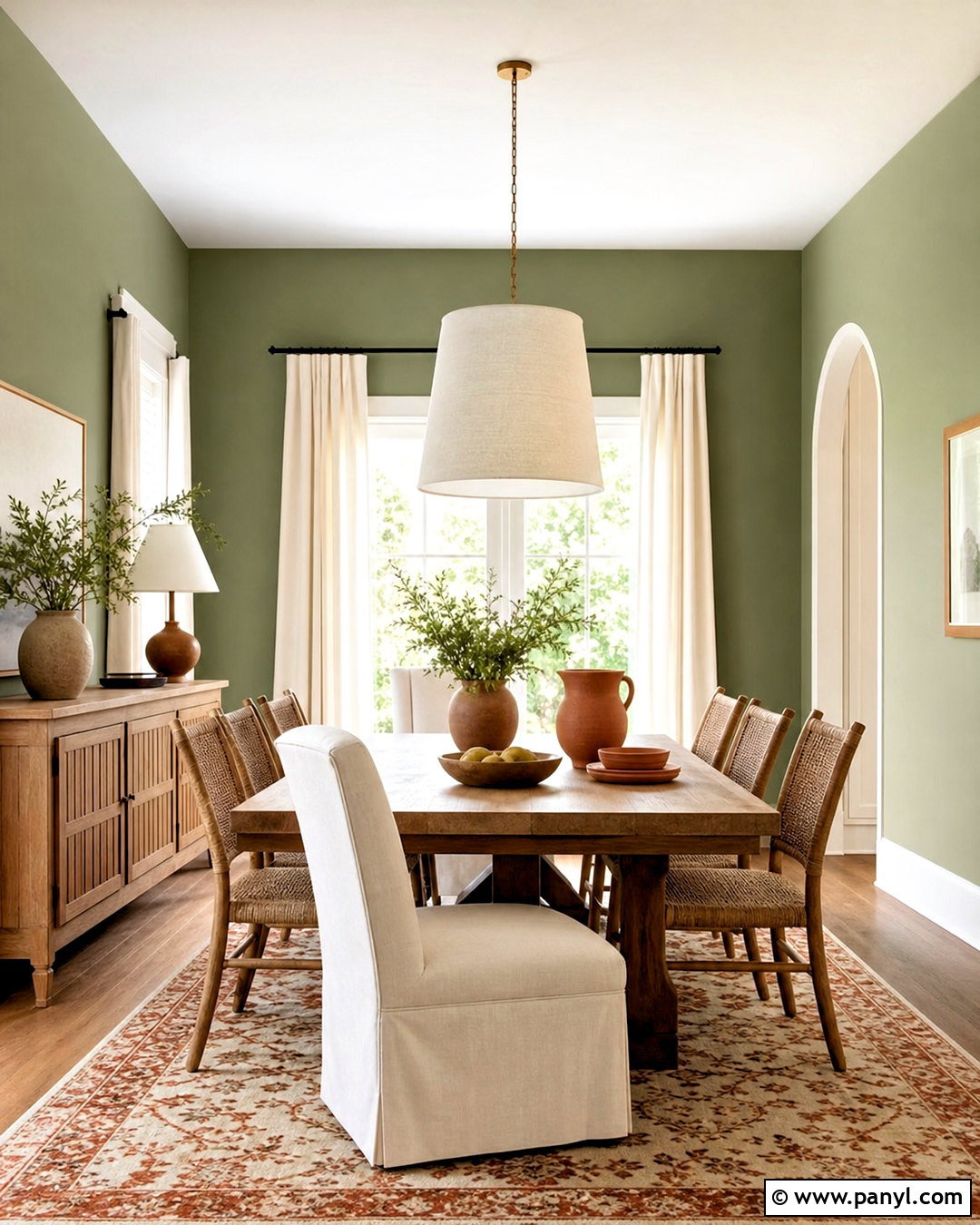
Warm wood and earthy accents bring out the welcoming side of light sage green paint. Cover the dining room walls in a slightly yellow-leaning sage, then center a medium oak table beneath a wide linen pendant. Mix upholstered end chairs with woven cane side chairs for a collected but coordinated arrangement. A cream-and-rust patterned rug will define the dining zone and introduce warmer color. Hang a large vintage-inspired landscape print above a slim wood sideboard. Terracotta serving pieces, amber glass vases, and linen napkins provide simple decoration without crowding the table. Use off-white curtains and antique-brass hardware to soften the windows. This complete palette creates a relaxed dining room that works equally well for everyday meals and casual gatherings.
6. Light Sage Green Home Office
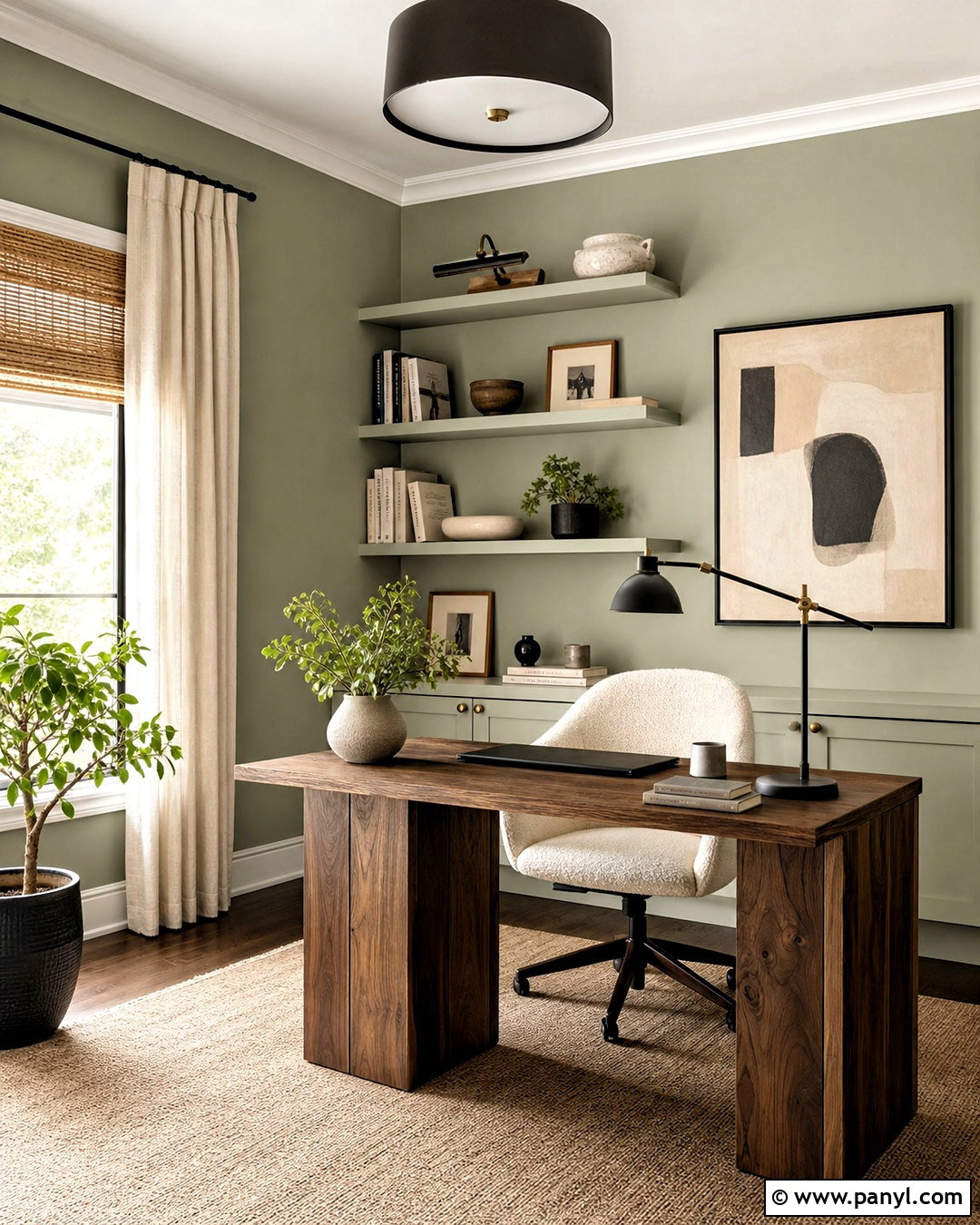
For a home office that encourages focus without feeling cold, pair light sage green walls with streamlined wood furniture. Position a walnut or medium oak desk facing into the room, with practical storage placed along one wall. A cream boucle desk chair softens the harder furniture lines, while a flat-woven beige rug adds quiet texture. Install light sage floating shelves that match the walls for a built-in effect. Style them with neutral books, lidded boxes, pottery, and only a few personal objects. Matte-black task lighting and cabinet hardware create crisp definition. Hang one large abstract print containing cream, charcoal, and muted green. Finish with woven shades and a healthy floor plant to create a polished workspace that still feels relaxed and comfortable.
7. Light Sage Green Entryway
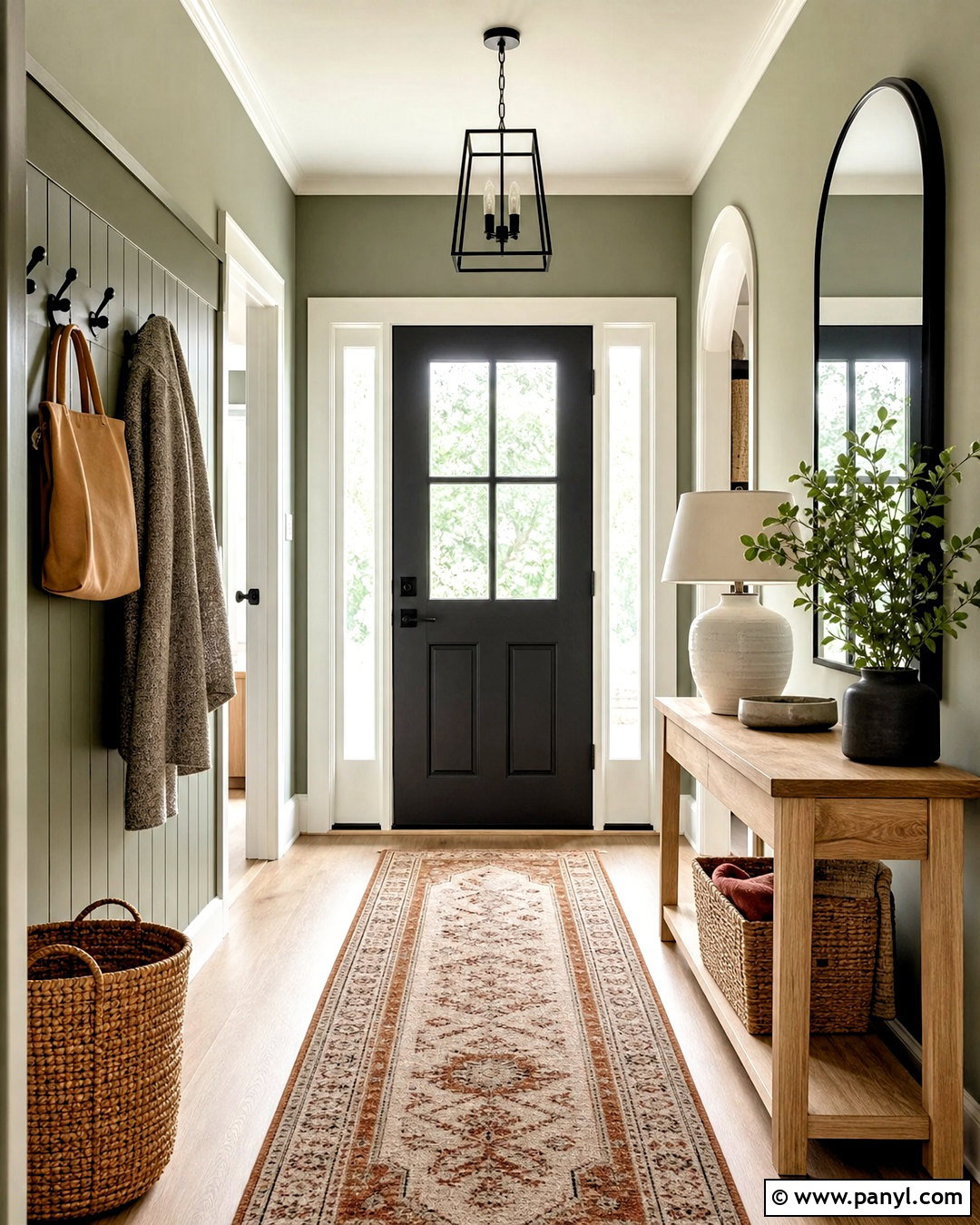
A small entryway can handle more character when every element works together. Paint the walls light sage green and add a narrow natural oak console with rounded corners. Above it, hang an oversized arched mirror with a slim black frame to reflect light and visually expand the space. A washable runner in cream, faded rust, and olive will hide everyday dirt while adding warmth. Place a woven basket underneath the console for shoes or reusable bags. Simple black hooks provide convenient storage without making the wall feel crowded. Use a white ceramic lamp, one stone bowl for keys, and a few leafy branches as decoration. Cream trim and warm oak flooring will finish the welcoming, practical look and connect it to nearby rooms.
8. Light Sage Green Nursery
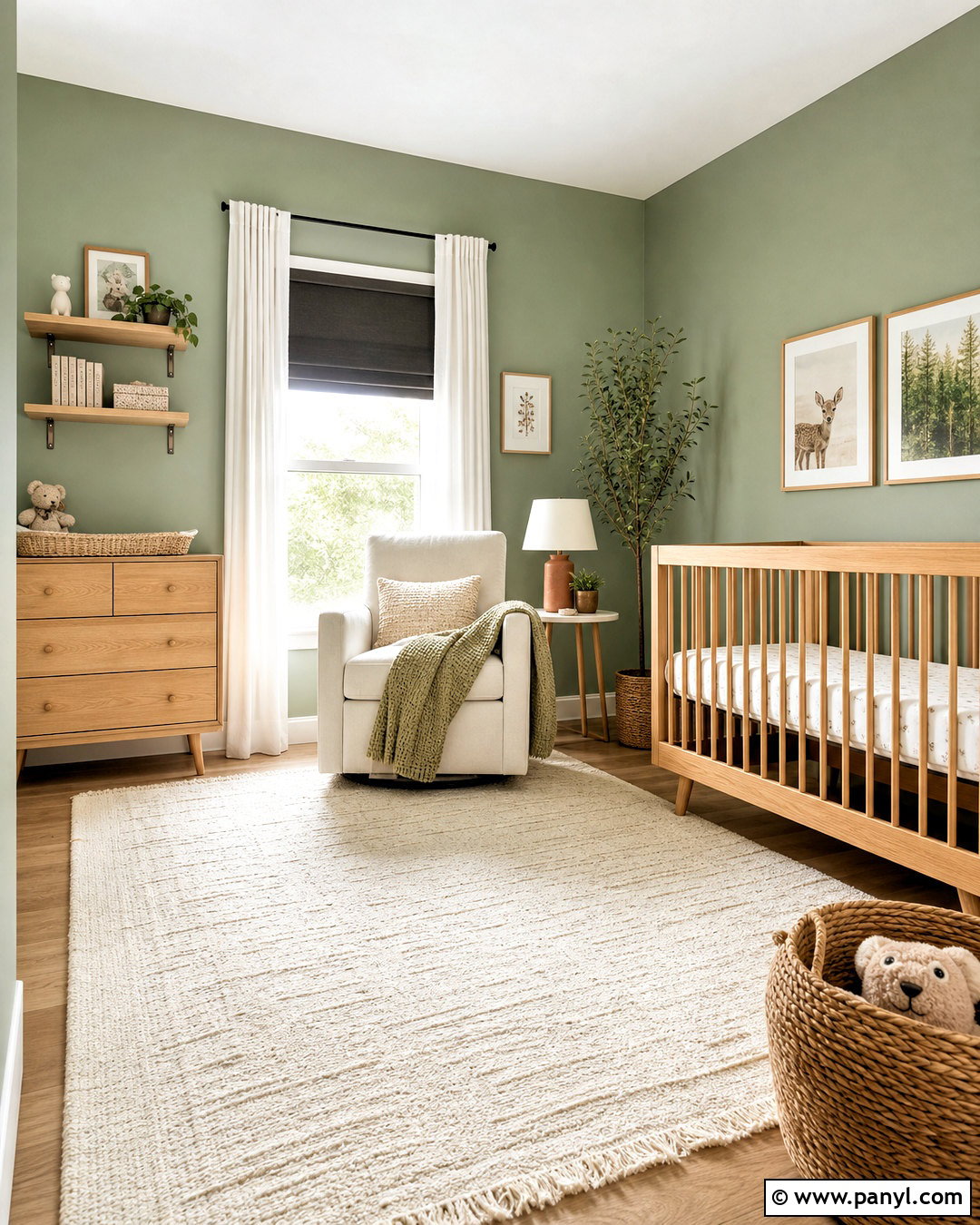
Light sage green creates a nursery that feels gentle without relying on a strongly themed color scheme. Paint all four walls in a soft, warm sage and use creamy white for the ceiling and trim. Choose a natural wood crib, a comfortable ivory glider, and a light oak dresser that can later become regular bedroom furniture. A washable cream rug with a small geometric pattern will add softness underfoot. Hang linen curtains over blackout shades to control daylight while maintaining an airy appearance. Decorate with simple woodland prints, woven baskets, and muted clay-colored accessories. A dimmable flush-mount light and shaded floor lamp provide flexible lighting. Keep the crib wall uncluttered and use secure closed storage for a peaceful, organized finished room.
9. Light Sage Green Laundry Room
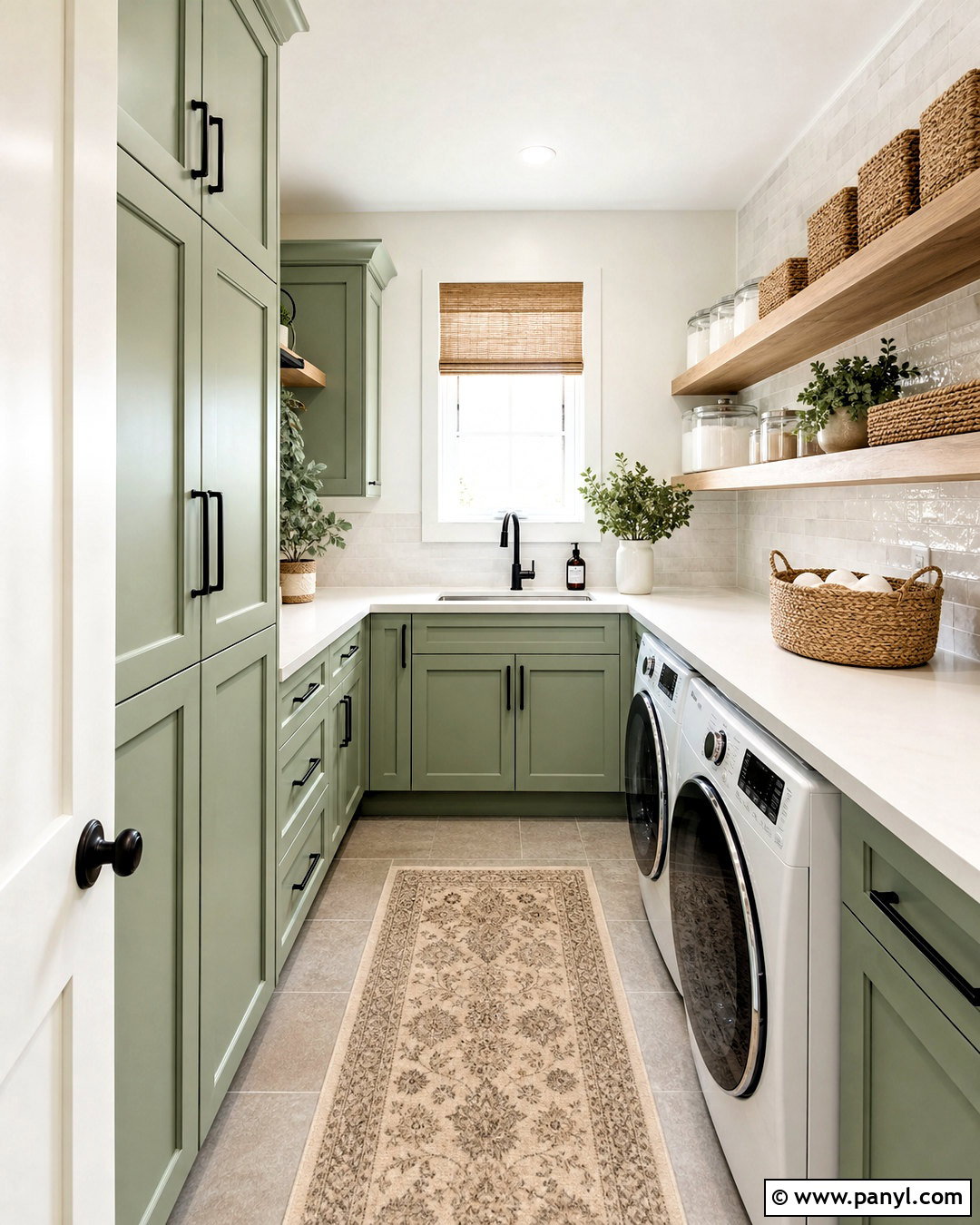
Turn a hardworking laundry room into a coordinated space with light sage green cabinetry and warm white walls. Install full-height cabinets around the washer and dryer to hide cleaning supplies, extra linens, and bulky household items. Use a durable white quartz counter above front-loading machines for folding clothes. A creamy handmade-look tile backsplash adds subtle movement, while matte-black pulls and a black hanging rail provide definition. Choose warm gray porcelain flooring that can handle water and regular traffic. Open oak shelves can hold matching baskets, glass containers, and neatly folded towels. Add a small washable runner for comfort. This palette makes even a compact utility room feel considered, bright, and connected to the rest of the home.
10. Light Sage Green Mudroom
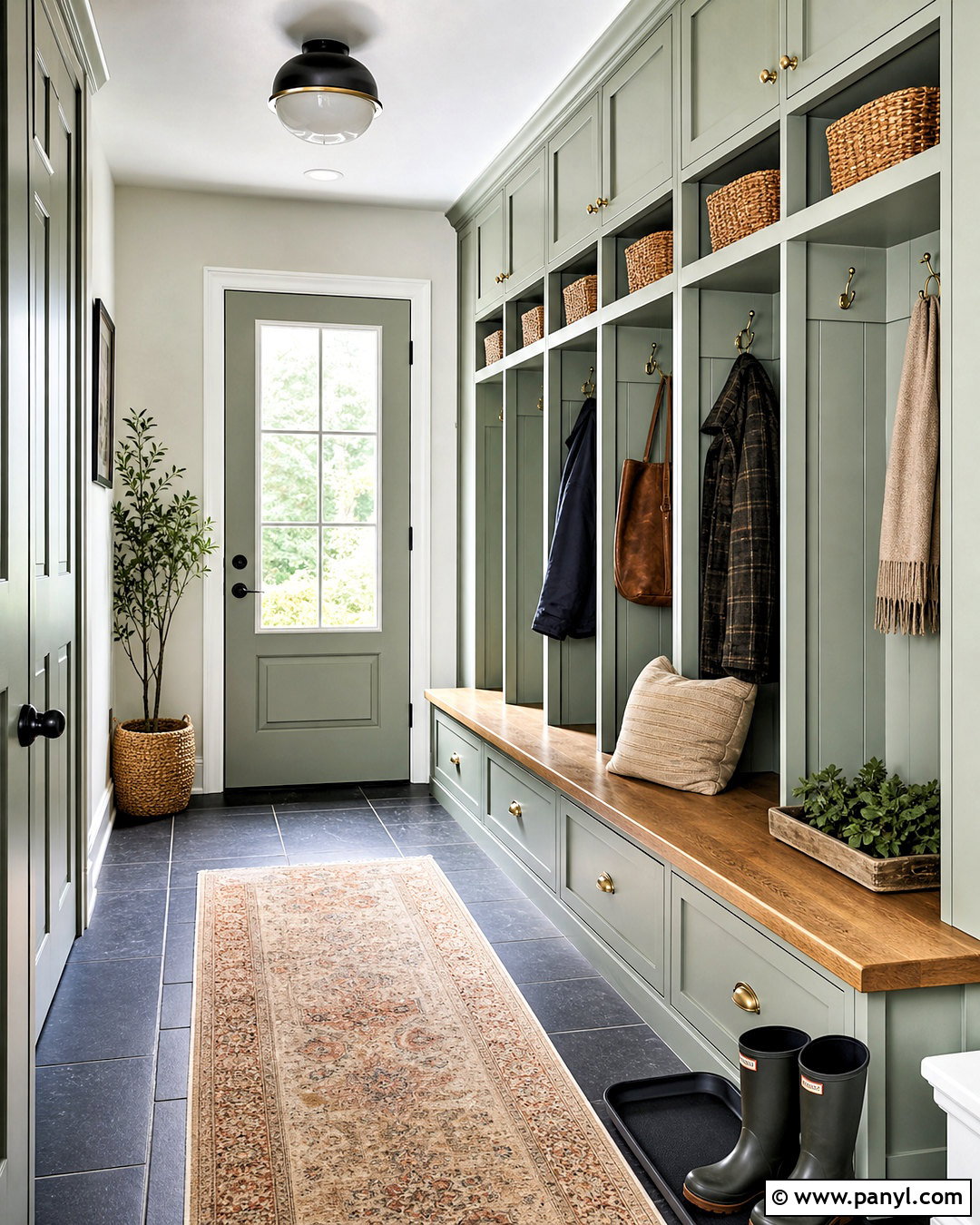
Could your busiest entrance feel both organized and welcoming? Paint built-in lockers, bench drawers, and overhead cabinets light sage green, then keep the surrounding walls warm white. A thick natural oak bench seat will provide contrast and withstand everyday use. Install aged-brass hooks for jackets, bags, and hats, with labeled woven baskets stored overhead. Durable charcoal slate-look flooring helps disguise tracked-in dirt, while a patterned indoor-outdoor runner softens the space. Add vertical paneling behind the hooks for architectural detail and easier maintenance. A black-framed ceiling light introduces clean contrast. Finish with a boot tray, closed shoe drawers, and a small cushion in cream-and-olive fabric. Every item gains a place without sacrificing the room’s inviting appearance.
11. Light Sage Green Sunroom
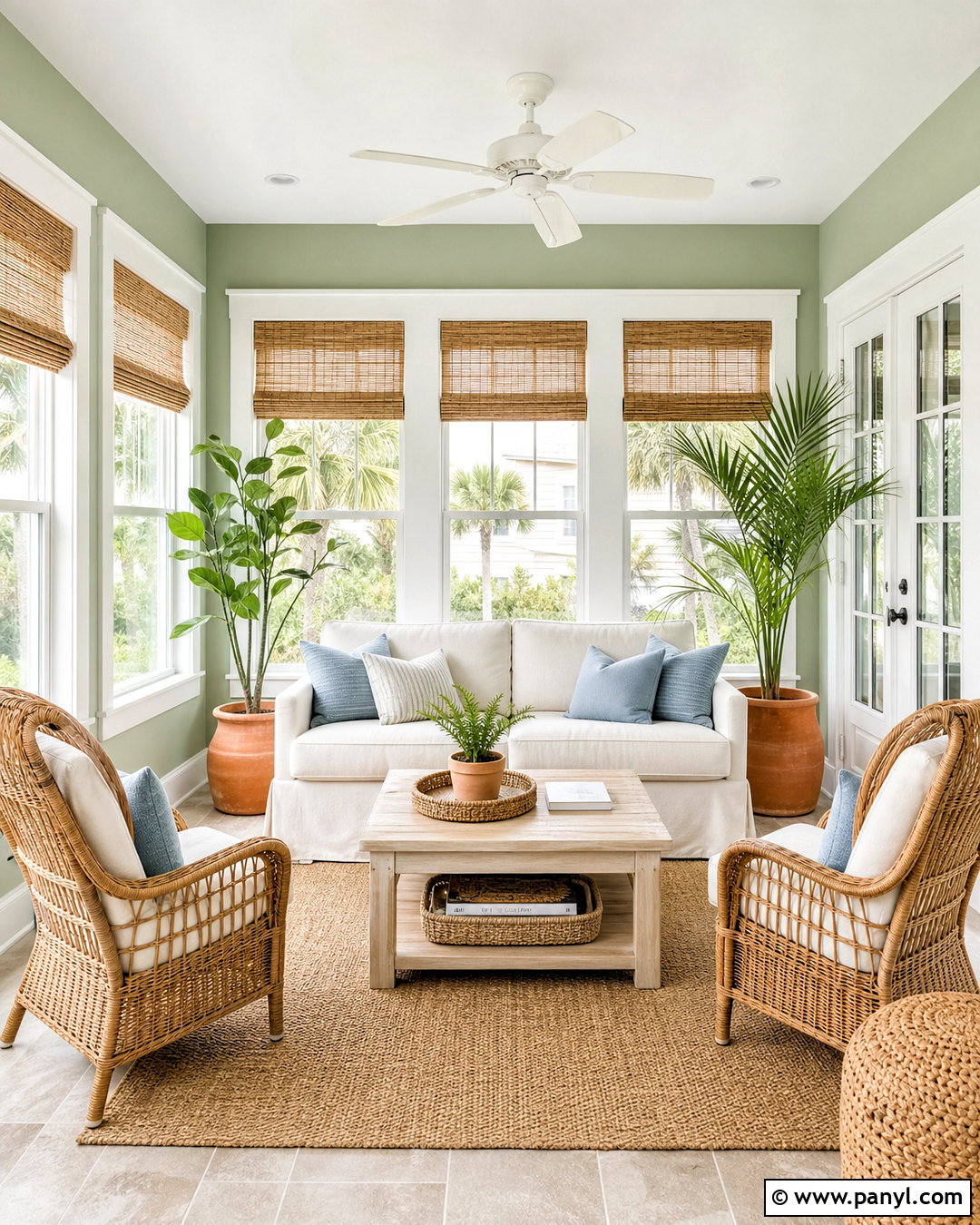
Sunlight can make light sage green appear fresh and lively, making it a natural choice for a relaxed sunroom. Paint the walls sage and leave the window trim crisp white to frame outdoor views. Arrange a cream slipcovered sofa with two woven rattan chairs around a pale wood coffee table. Ground the seating with a large natural fiber rug and add cushions in soft blue, ivory, and muted botanical prints. Use woven shades for glare control without blocking too much daylight. Terracotta planters, leafy houseplants, and ceramic garden stools strengthen the indoor-outdoor connection. A white ceiling fan keeps the room practical during warm weather. The resulting space feels casual, comfortable, and designed for reading, conversation, or morning coffee.
12. Light Sage Green Fireplace Wall
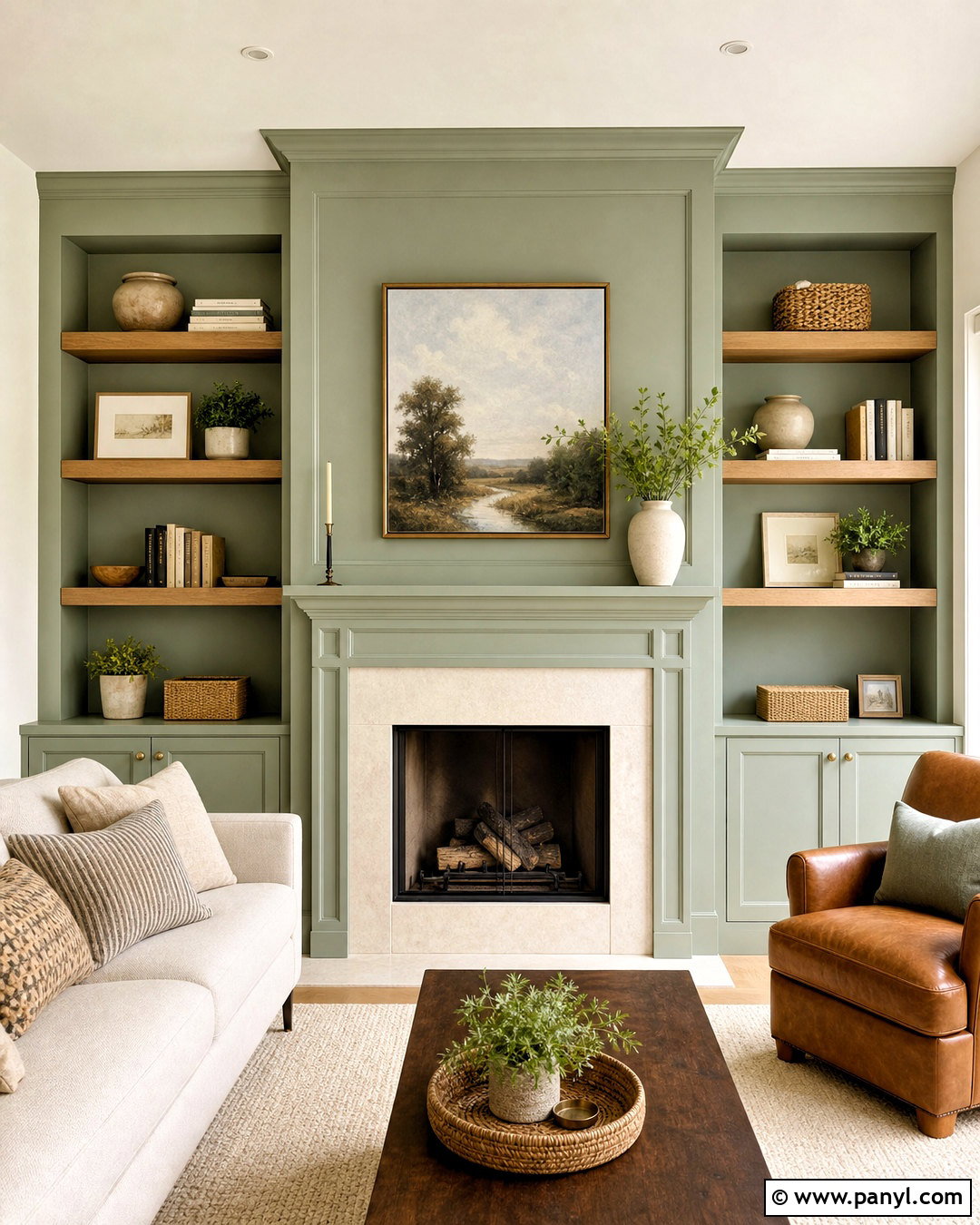
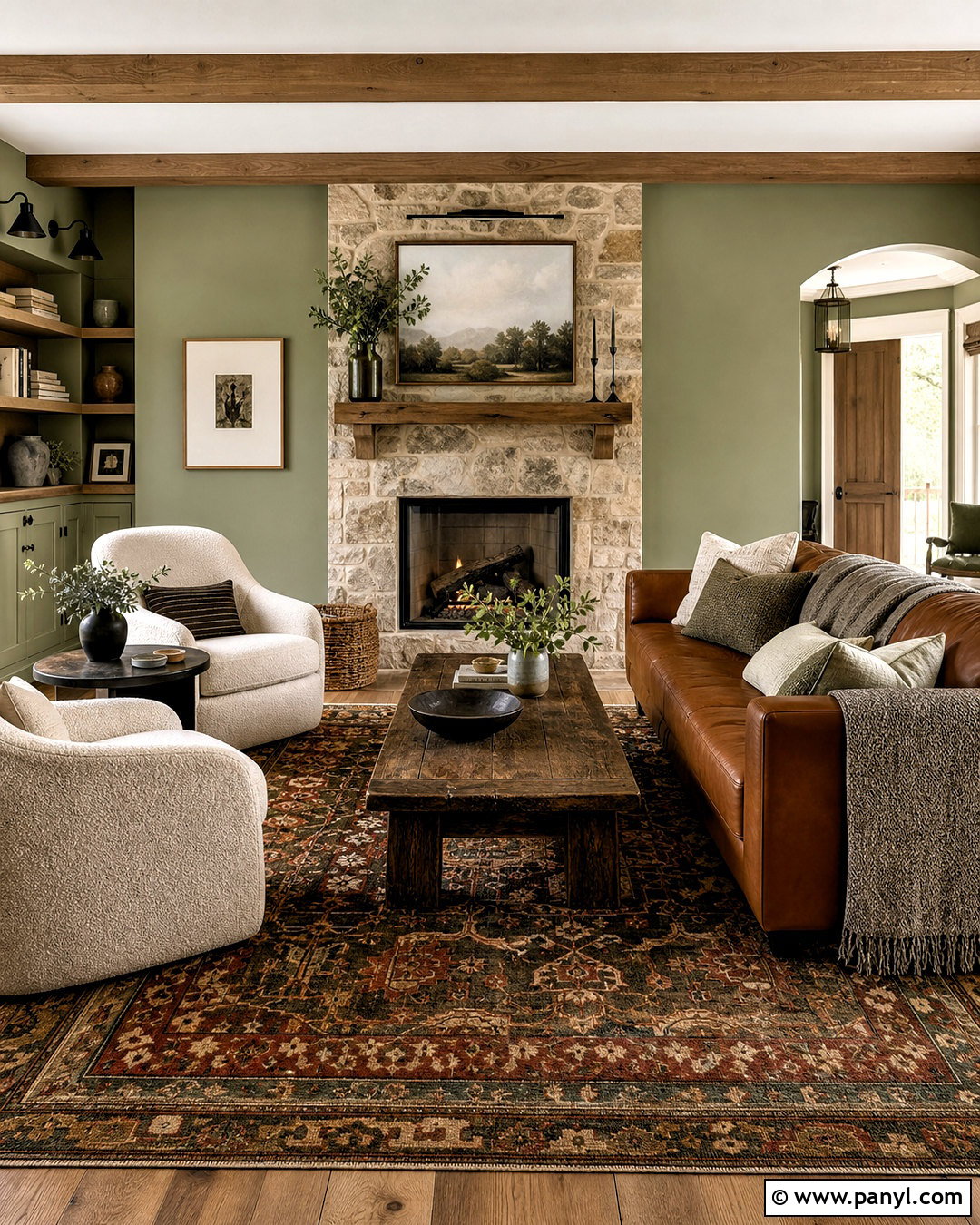
Make a fireplace wall feel intentional by painting the mantel, surrounding built-ins, and connecting wall in one light sage green tone. Keep the remaining walls creamy white so the feature becomes noticeable without appearing heavy. Use pale limestone or warm white tile around the firebox, then mount a simple framed landscape above the mantel instead of crowding it with small accessories. Natural oak shelves add warmth inside the sage built-ins. Style them with books, handmade pottery, baskets, and a few dark metal objects for contrast. Arrange a beige sofa and cognac leather chair nearby over a textured ivory rug. This complete composition gives the room a clear focal point while maintaining a comfortable, balanced palette.
13. Light Sage Green Color Drenching
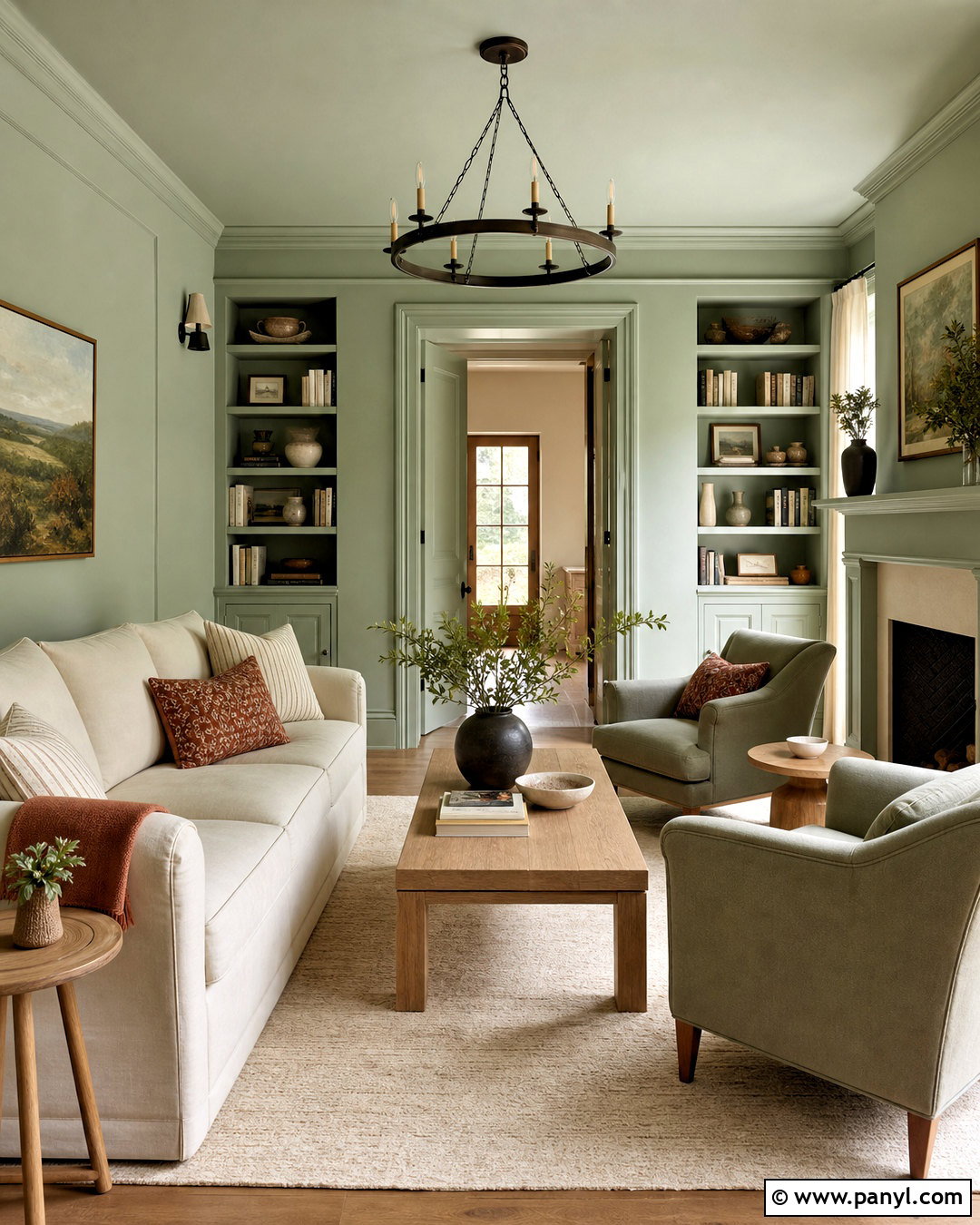
For a seamless look, use light sage green across the walls, trim, doors, and built-in storage. Choose an eggshell finish for walls and a durable satin finish for woodwork so the surfaces remain subtly distinct. Keep the ceiling a lighter tint of the same sage to maintain brightness. Furnish the room with an ivory sofa, pale oak tables, and a cream wool rug. Add definition through dark bronze lighting, antique-brass frames, and one charcoal side table. Textiles in oatmeal, muted olive, and soft rust prevent the room from appearing flat. This approach works especially well in a snug, library, or smaller living room where visual continuity can reduce distracting boundaries and make the architecture feel more cohesive.
14. Light Sage Green Wainscoting
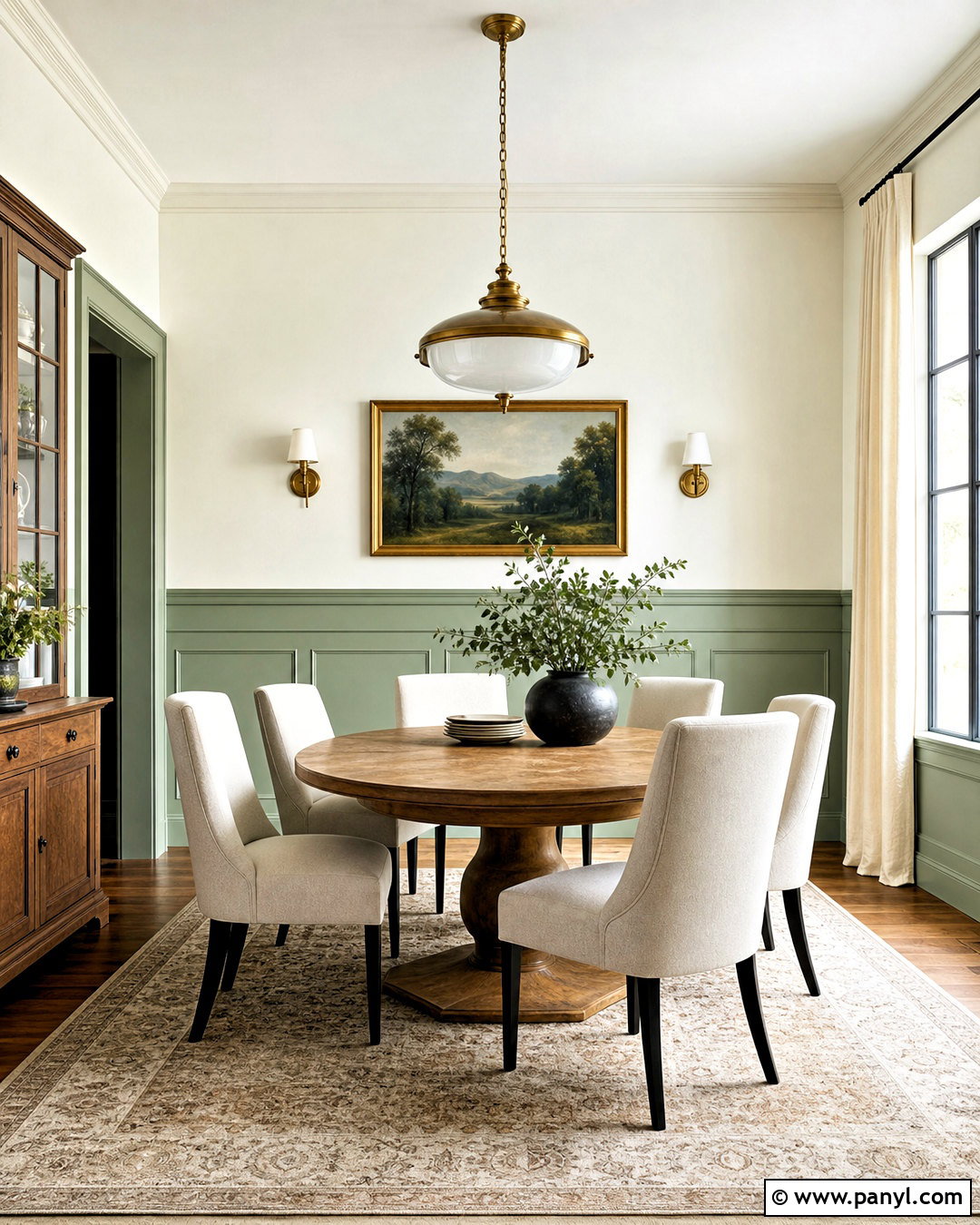
Light sage green wainscoting gives a room color and architectural detail while leaving space for brighter upper walls. Paint paneled molding on the lower two-thirds of the wall and use a soft warm white above it. In a dining room, pair the treatment with a round oak pedestal table and comfortable cream upholstered chairs. Hang a large brass pendant above the table and add a traditional landscape painting in a dark wood frame. A neutral patterned rug will soften the floor and connect the green, cream, and brown tones. Keep curtains simple with ivory linen panels. Finish the room with a narrow vintage-style cabinet and restrained ceramic decor. The result feels classic, practical, and adaptable rather than formal or overly decorative.
15. Light Sage Green Coastal Living Room
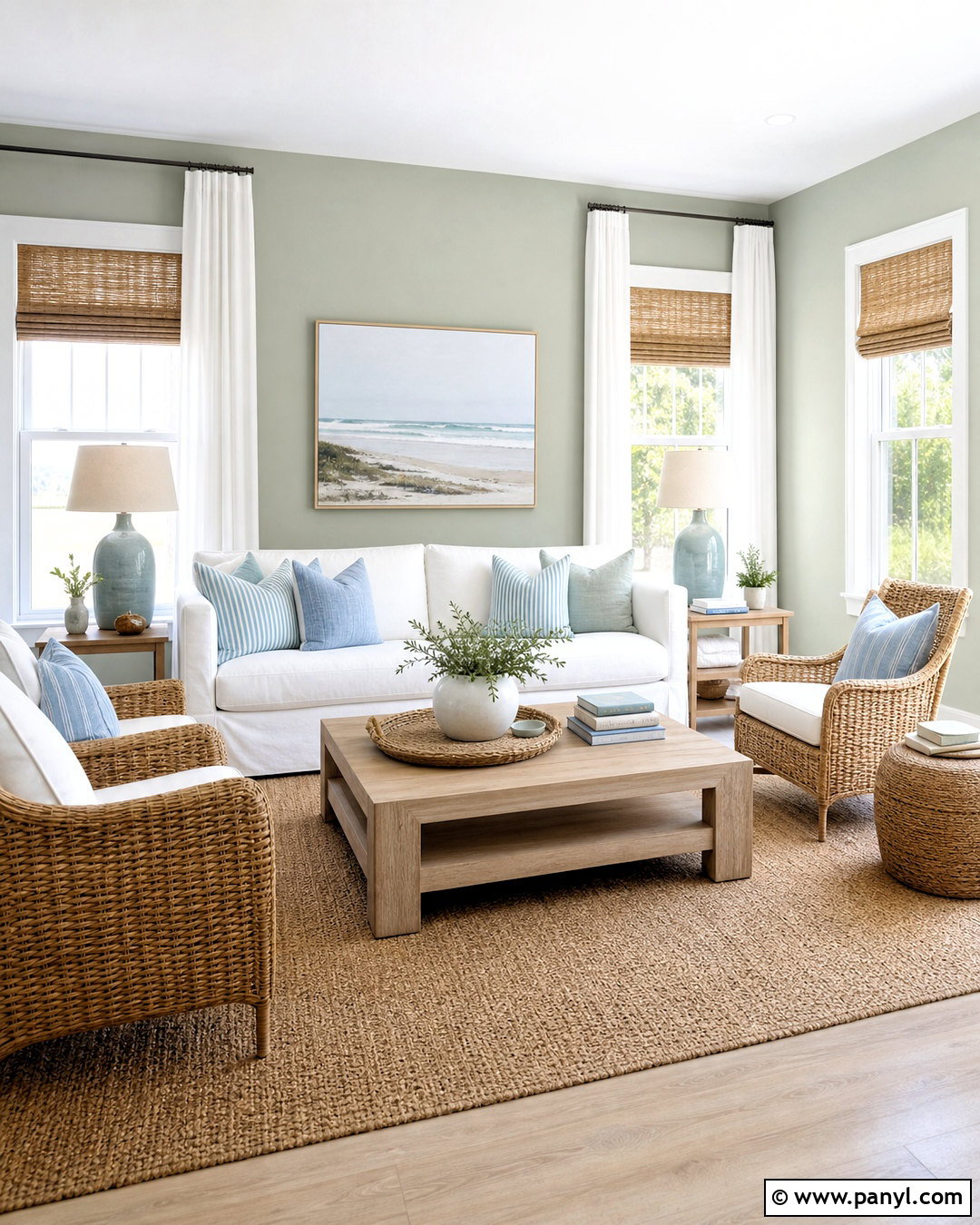
Skip predictable bright blues and build a subtle coastal living room around pale sage walls. Combine the paint with a relaxed white sofa, pale oak furniture, and woven seagrass accents. Use dusty blue only in small amounts through striped pillows, ceramic lamps, and a lightweight throw. A large cream rug with a faint linear pattern will keep the room open and comfortable. Choose white linen curtains, natural woven shades, and matte-nickel hardware for an easy coastal finish. Frame abstract shoreline artwork in light wood rather than adding obvious nautical decorations. A pair of woven lounge chairs provides extra seating and texture. The finished space suggests the coast through color, materials, and sunlight while remaining polished enough for an everyday family room.
16. Light Sage Green Farmhouse Kitchen
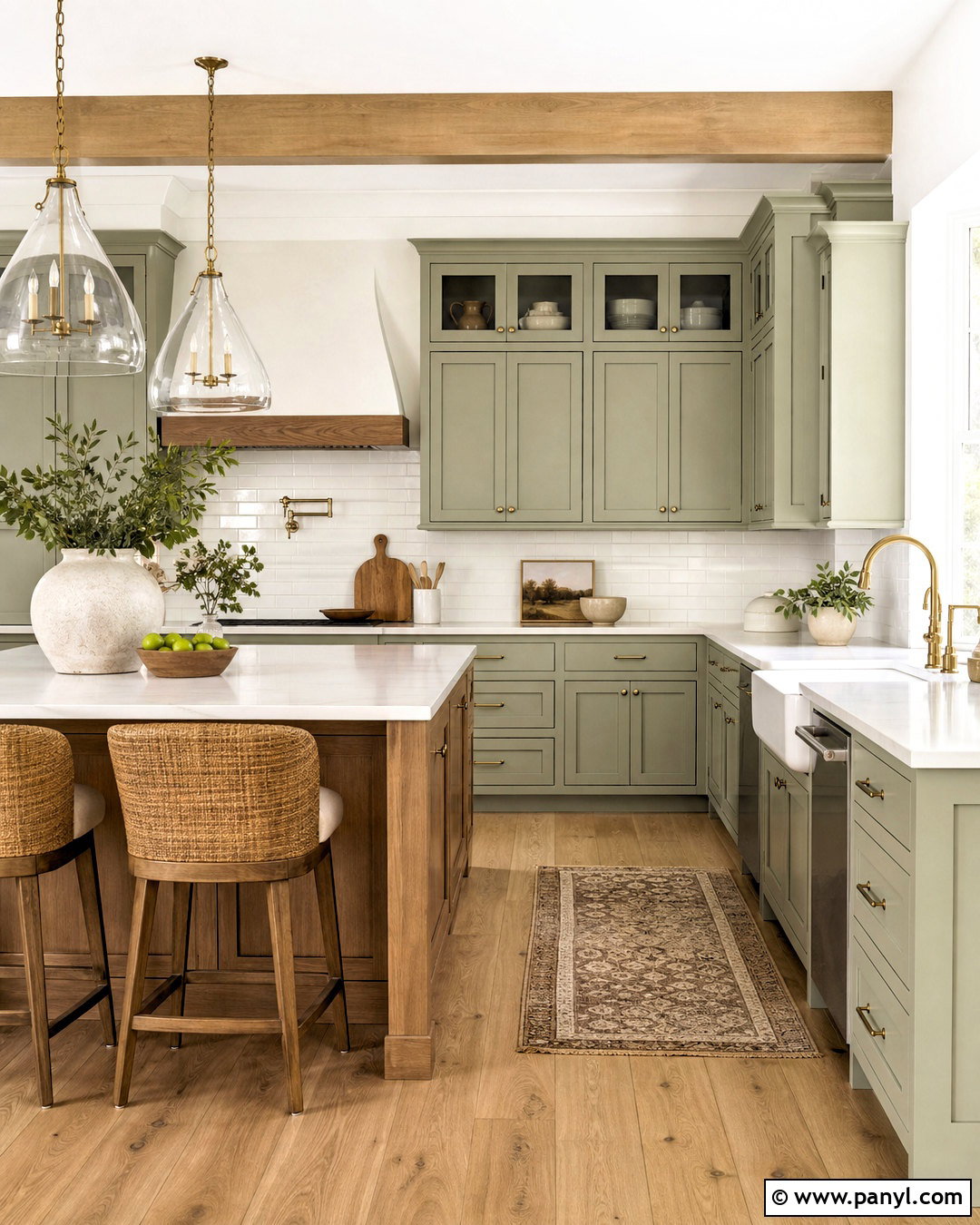
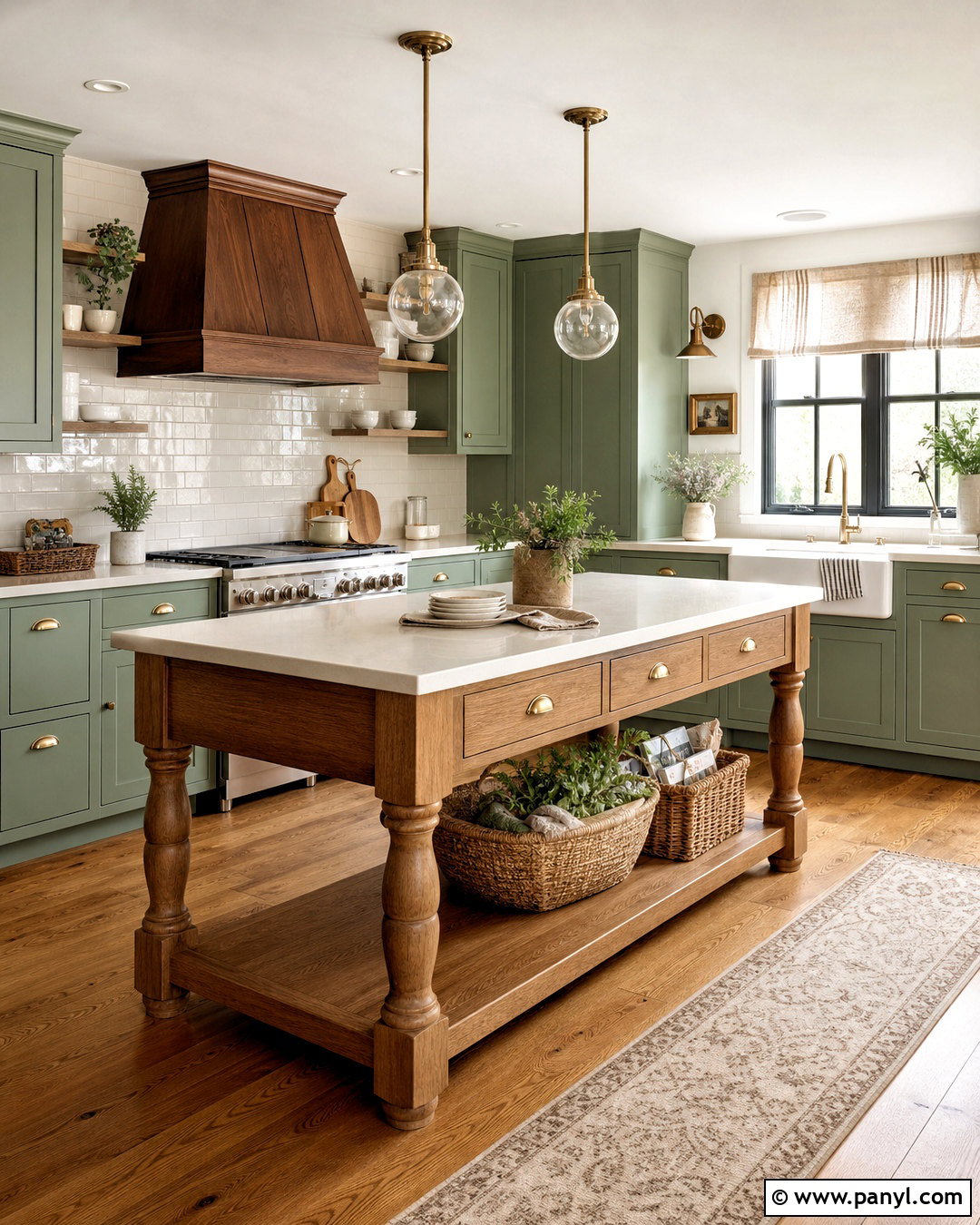
A farmhouse kitchen feels fresher when light sage green replaces stark white on the main cabinetry. Pair sage shaker cabinets with a large stained-oak island and durable cream quartz counters. Use handmade white subway tile for the backsplash and warm medium oak planks underfoot. A white apron-front sink, aged-brass bridge faucet, and simple brass knobs bring in traditional character. Above the island, install two oversized glass pendants with dark bronze fittings. Add counter stools with woven seats and black wood frames. Keep accessories useful by displaying stoneware crocks, wood boards, and neatly arranged cookbooks. Rather than adding excessive rustic signs, let the cabinetry, natural materials, and practical details create a warm farmhouse look that feels current and uncluttered.
17. Light Sage Green Modern Bedroom
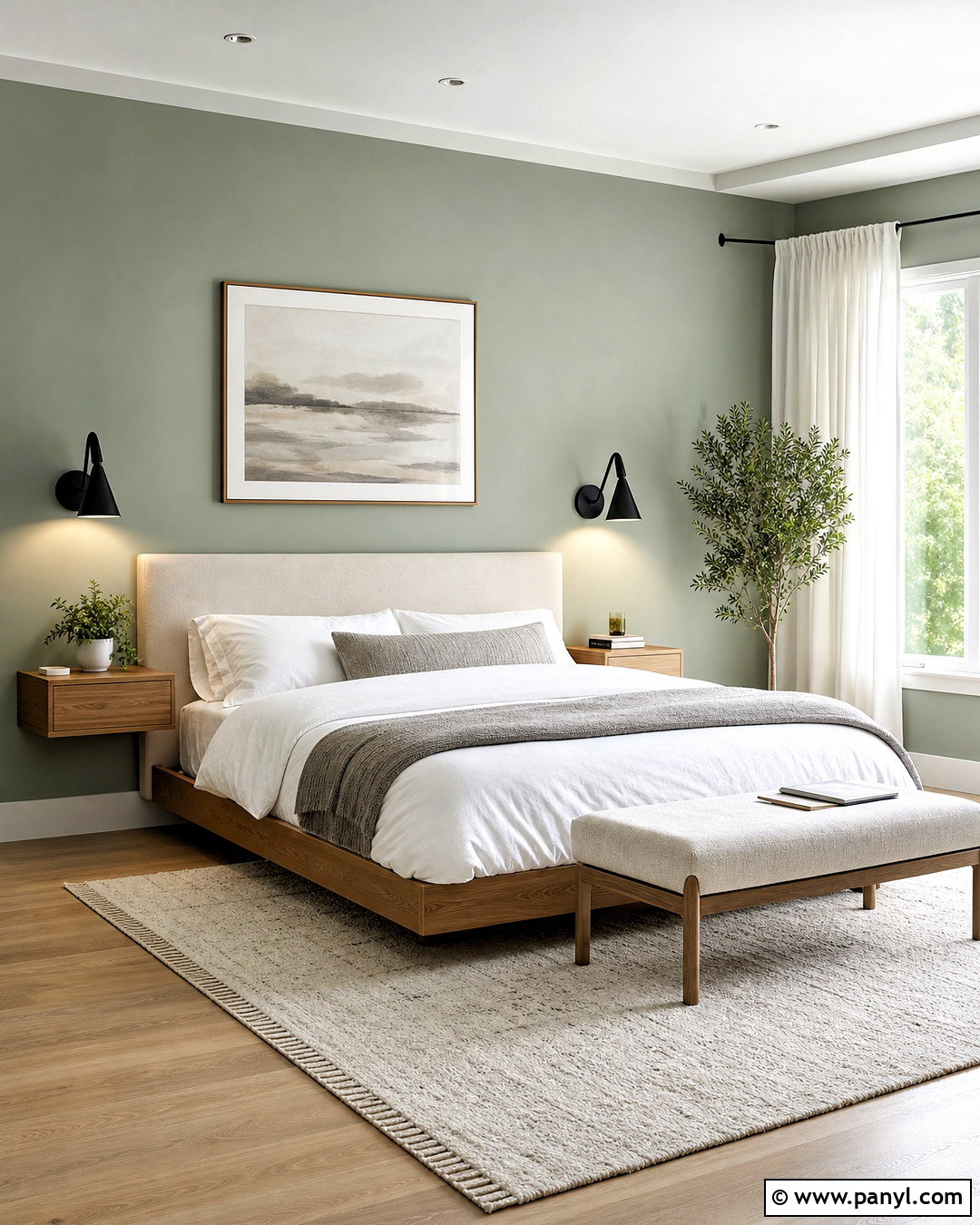
Pair light sage green with black and pale wood for a bedroom that feels clean, modern, and restful. Paint the walls a cooler gray-green, then introduce a low-profile oak bed with an upholstered cream headboard. Dress it in white cotton bedding, a textured gray blanket, and two deep green accent pillows. Choose floating oak nightstands to keep the floor visually open. Slim matte-black sconces will provide sharp contrast without taking up surface space. A large abstract artwork can combine sage, beige, charcoal, and off-white. Add a simple cream rug and full-height white curtains for softness. Keep accessories minimal, using one ceramic vase, a small stack of books, and an understated bench to complete the uncluttered arrangement.
18. Light Sage Green Cottage Exterior
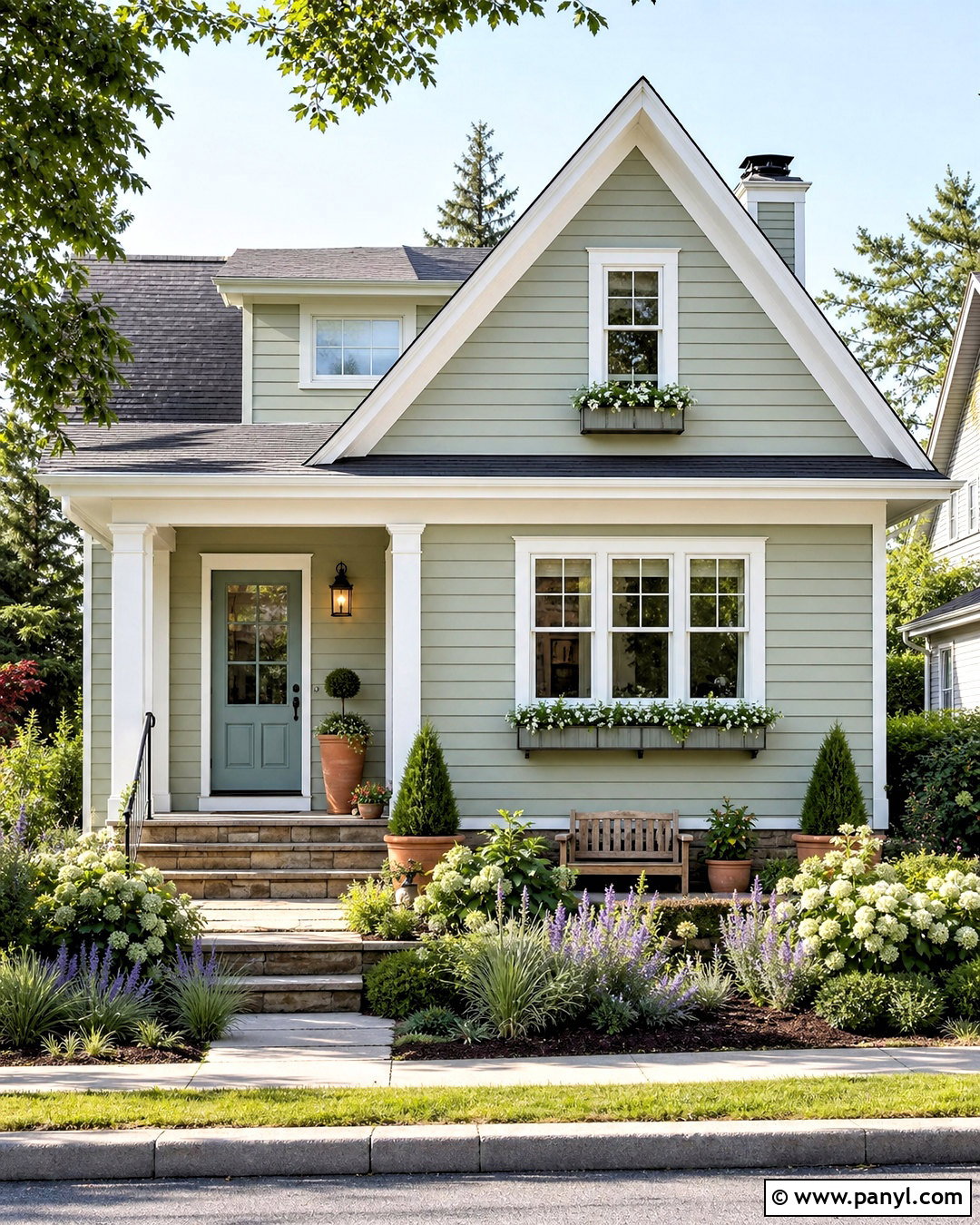
Light sage green siding gives a modest cottage a natural, welcoming presence. Use the color across horizontal lap siding, then add warm white trim around the windows, roofline, and porch columns. A muted blue-green front door can provide gentle contrast without disrupting the soft palette. Choose a charcoal gray roof and aged-brass porch lights for definition. Natural stone along the foundation will connect the house to its landscaping. Frame the walkway with lavender, ornamental grasses, hydrangeas, and low evergreen shrubs. A small wood bench and simple terracotta planters complete the porch. This exterior scheme feels charming without becoming overly quaint, and its mix of green, cream, stone, and wood sits comfortably within a garden setting.
19. Light Sage Green Front Door
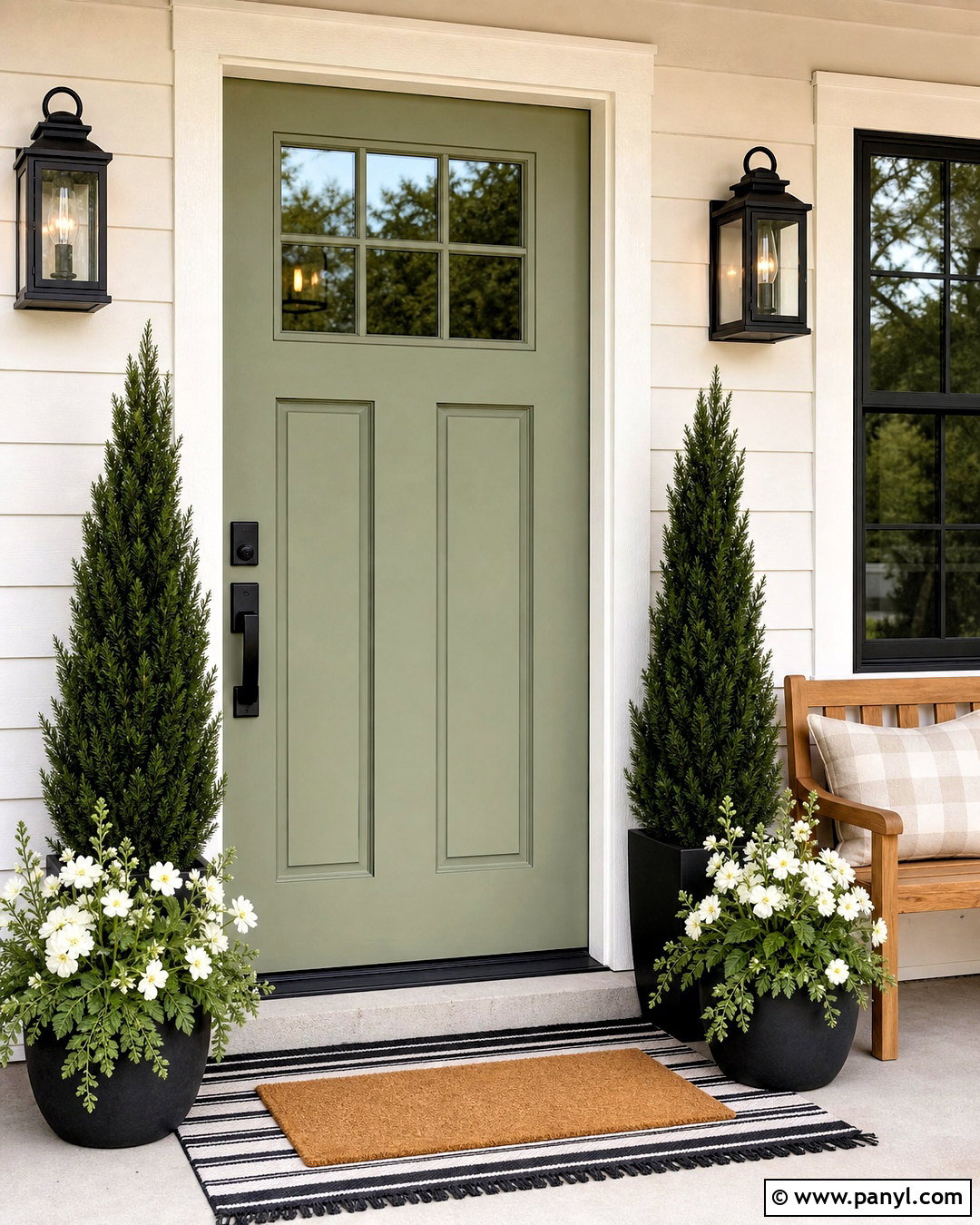
Give a neutral house a thoughtful update by painting the front door light sage green and redesigning the porch around it. The color looks especially clear against warm white siding, cream stucco, or pale beige brick. Use a satin or semigloss finish so the door is durable and easy to clean. Add matte-black hardware, black lantern sconces, and a simple natural coir mat for contrast. Place two tall planters beside the entrance, filling them with evergreen foliage and seasonal white flowers. A natural wood bench can warm up a larger porch, while a narrow striped outdoor rug defines the entry. Keep surrounding trim creamy white so the door remains the focal point without appearing disconnected from the facade.
20. Light Sage Green Powder Room
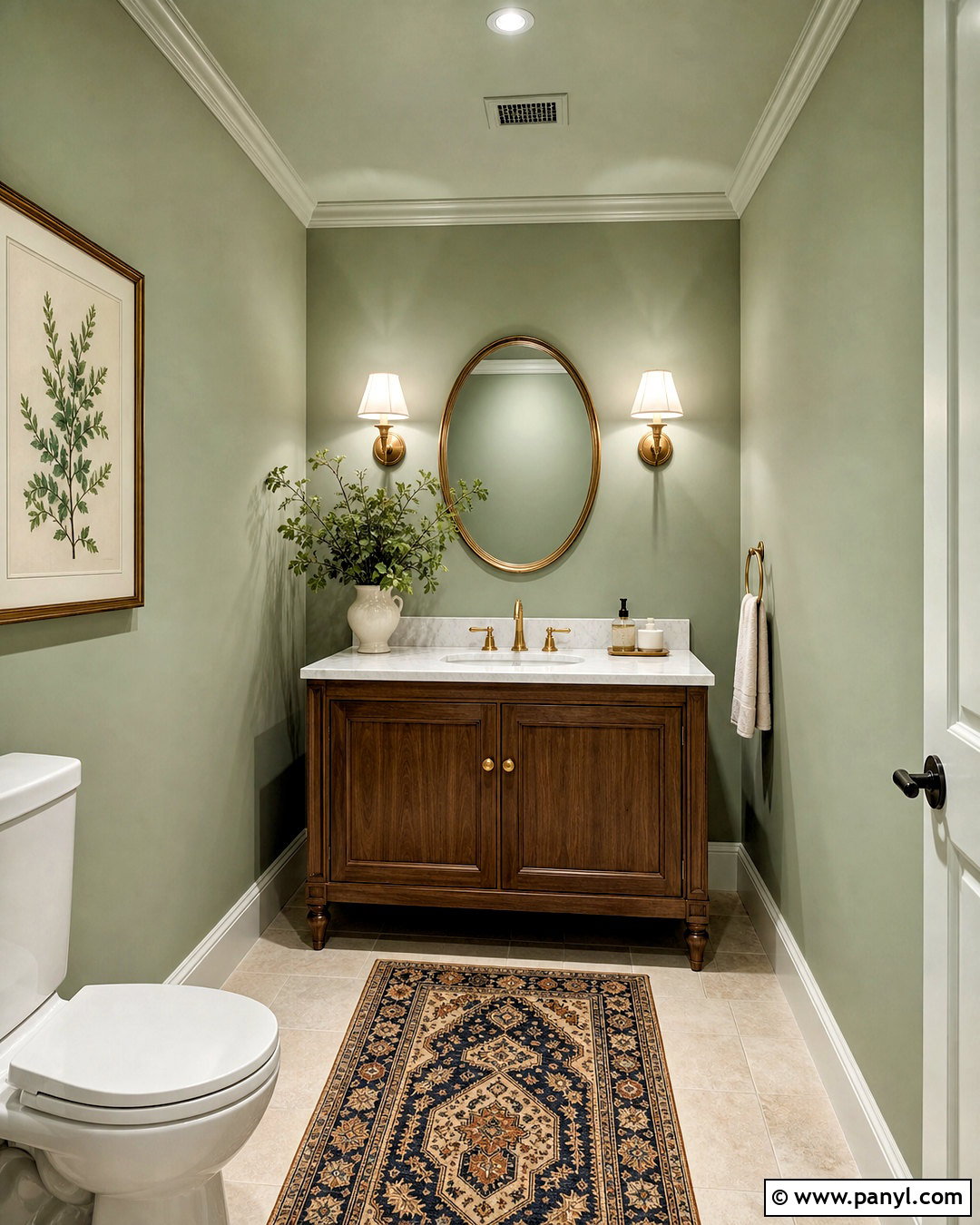
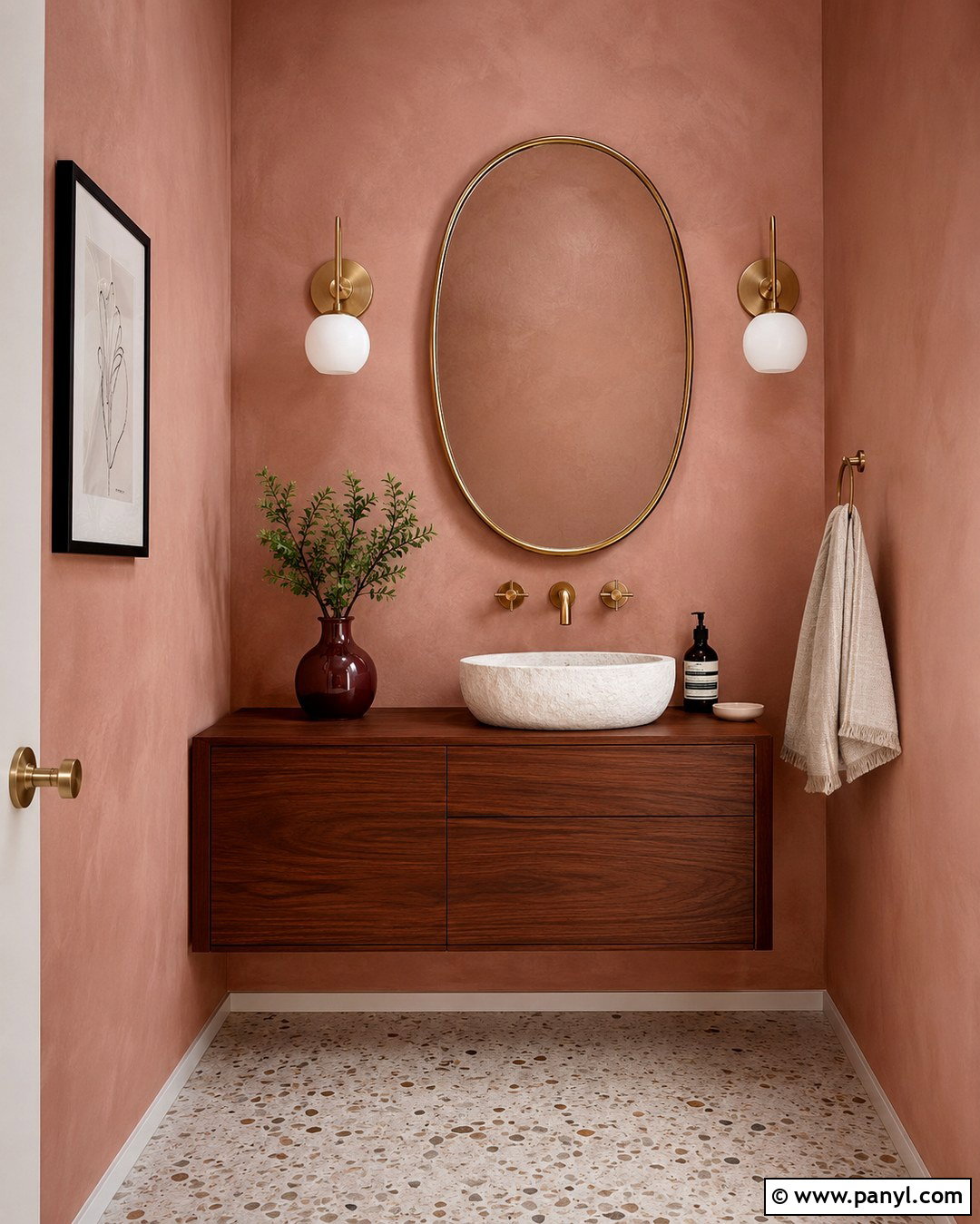
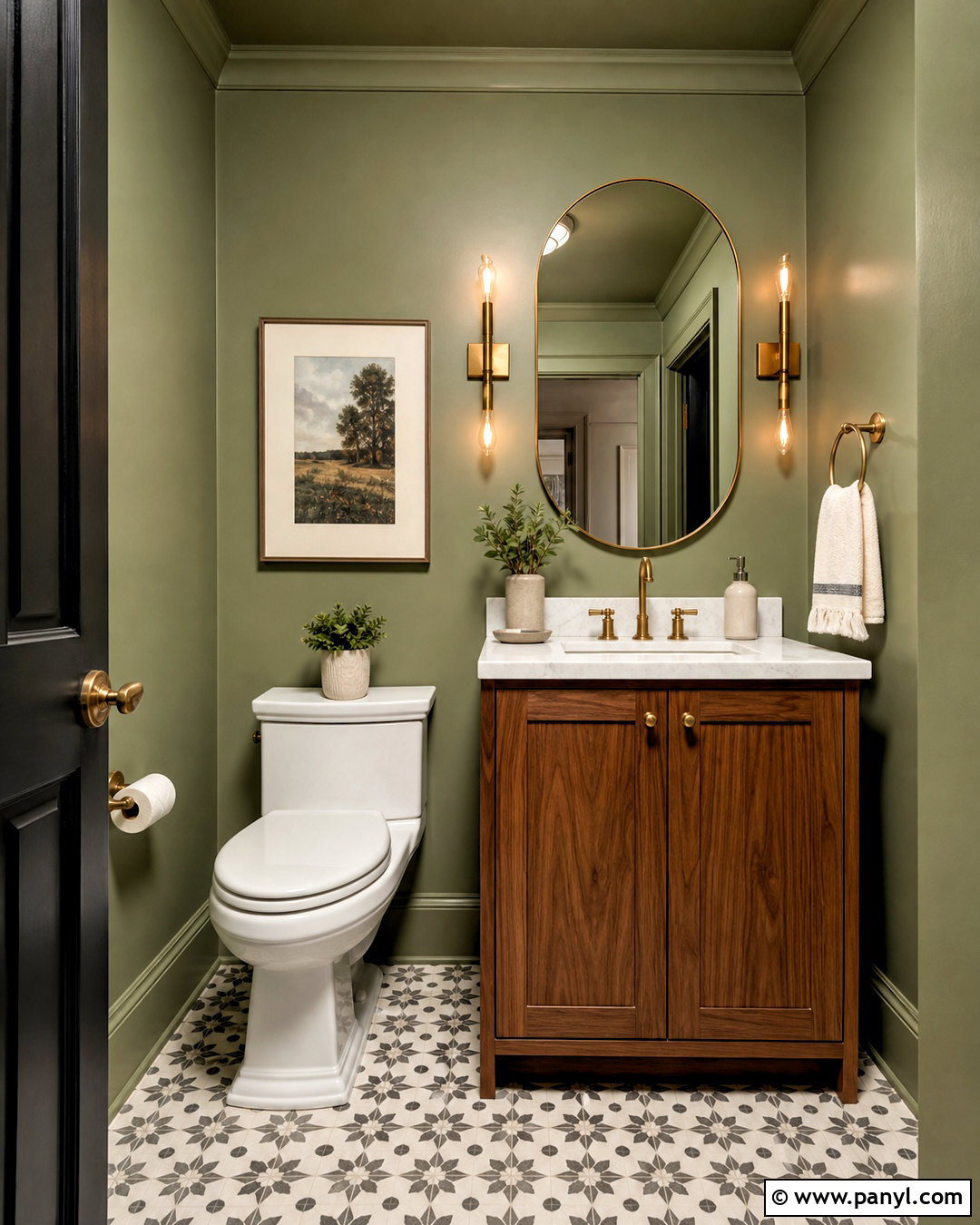
A powder room is an ideal place to build a complete, memorable look around light sage green. Paint the walls and ceiling in the same soft shade to reduce visual breaks in the small space. Install a compact walnut vanity with a white stone counter and an oval brass-framed mirror. A warm white tile floor will reflect light, while a slim vintage-inspired runner adds pattern. Choose an aged-brass faucet, towel ring, and two shaded wall sconces to create a cohesive finish. One framed botanical print and a small ceramic vase are enough decoration. Use bright white for the sink and toilet so the fixtures feel crisp. The finished room will feel layered and distinctive without relying on dark colors or excessive accessories.
Conclusion:
These **20 light sage green paint ideas** show how one soft color can support many different decorating approaches. Sage can calm a bedroom, refresh kitchen cabinets, organize a mudroom, or give an exterior a garden-friendly finish. The strongest designs coordinate the paint with flooring, furniture, hardware, textiles, and lighting rather than treating it as an isolated color. Before painting, compare large samples during the morning, afternoon, and evening. Pay attention to whether the shade appears warm, cool, gray, or yellow beside your permanent finishes. Once you find the right undertone, use the complete room palettes above to create a home that feels colorful, comfortable, and thoughtfully connected.

Related Ideas and Inspiration:
Leave a Reply