
These 20 sage green interior ideas show how this soft, earthy color can make every part of a home feel calmer and more welcoming. Sage works like a neutral, yet it brings more character than beige or gray. It can look light and modern with white, cozy with warm wood, or dramatic beside black and deep brown. Current interiors are also moving beyond the familiar accent wall, using sage on cabinetry, built-ins, tile, textiles, and fully color-drenched rooms. () The key is choosing supporting colors and materials that create a complete, balanced look. Whether you are updating one corner or planning an entire room, these practical 20 sage green interior ideas offer plenty of inspiration.

1. Sage Green Living Room With Cream Sofa
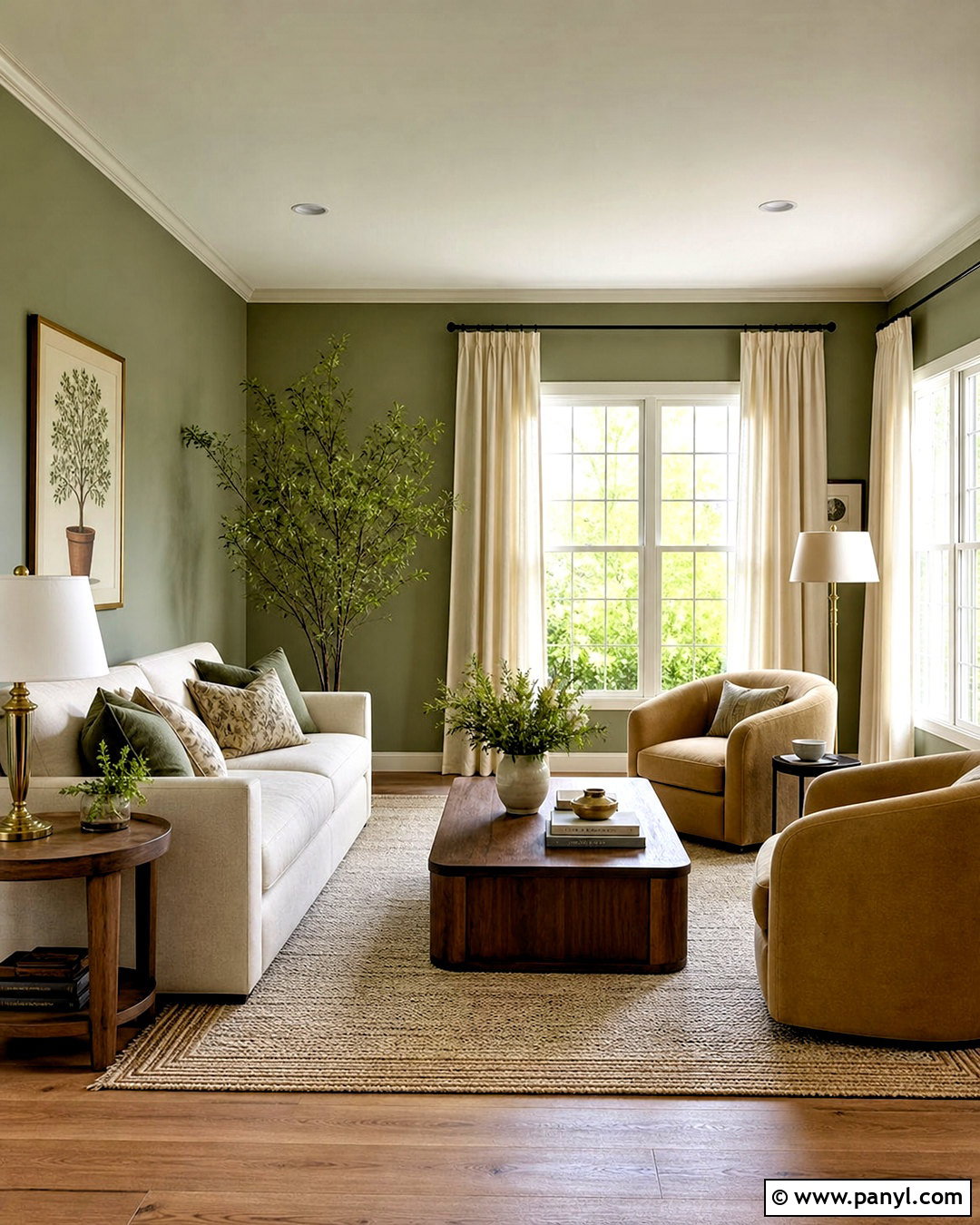
A cream sofa creates a clean, comfortable foundation for a sage green living room. Paint every wall a soft, warm sage, then introduce an oatmeal-colored area rug and full-length ivory curtains. Place the sofa opposite a low oak media console, with two rounded tan armchairs forming a relaxed conversation area. A walnut coffee table adds enough contrast to keep the pale palette from feeling washed out. Complete the room with ceramic lamps, botanical artwork, linen cushions, and a few darker olive accents. Use aged brass for small details such as curtain rods and picture frames. Light oak flooring makes the room airy, while layered natural textures give it the warmth needed for everyday family living.
2. Sage Green Living Room With Brown Leather
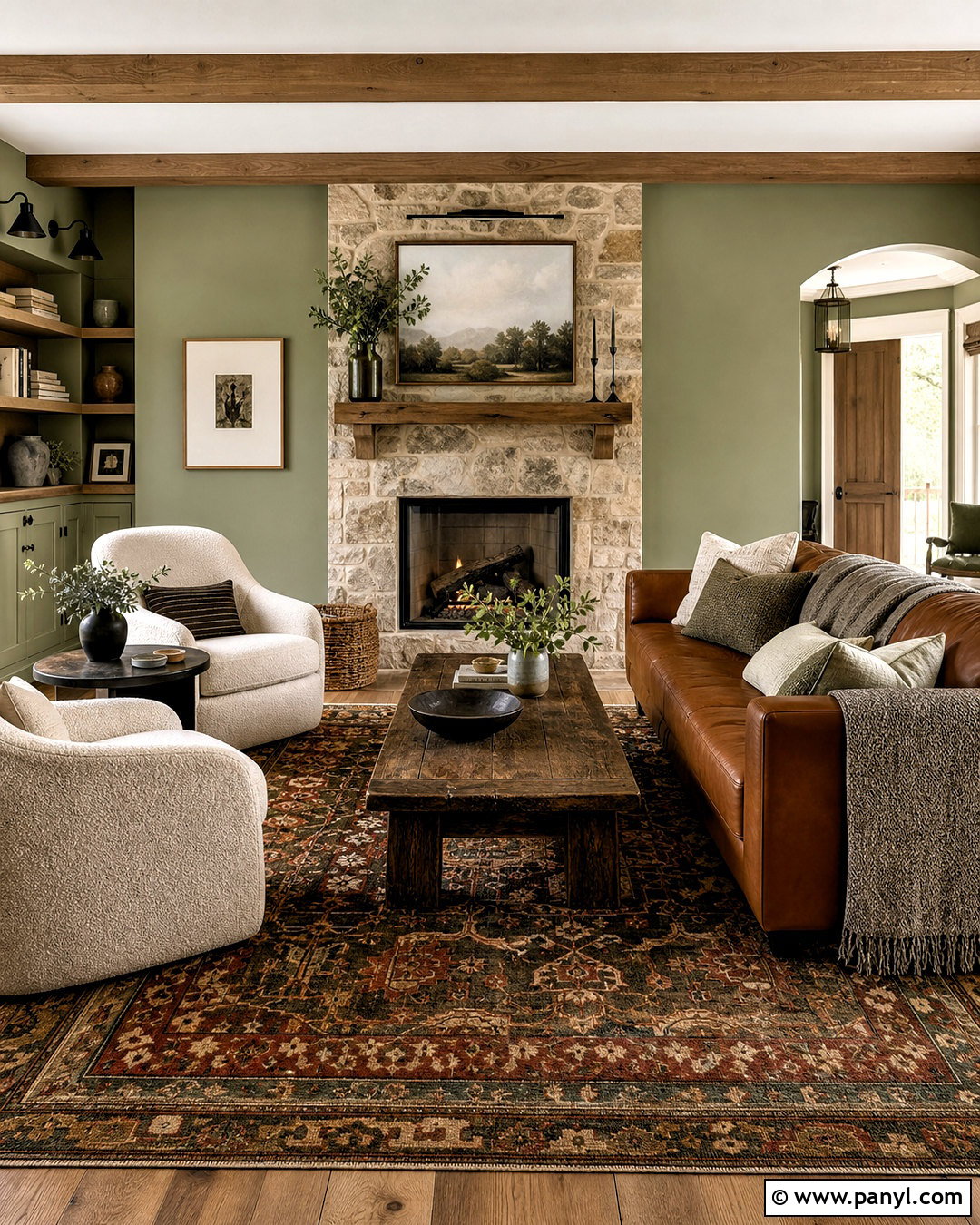
Rich brown leather gives sage green a grounded, slightly rustic character. Begin with medium sage walls and warm white trim, then center the room around a cognac leather sofa. Add two cream boucle chairs, a vintage-style patterned rug, and a chunky reclaimed-wood coffee table. Black metal floor lamps and curtain rods provide crisp definition without making the room feel industrial. For balance, use rust, oatmeal, and muted gold across pillows, throws, and artwork. A stone or brick fireplace can become the natural focal point, especially with a simple oak mantel. Keep the layout open and conversational, with furniture pulled slightly away from the walls. The finished room feels collected, comfortable, and suitable for both traditional and modern homes.
3. Sage Green Bedroom With Warm Neutrals
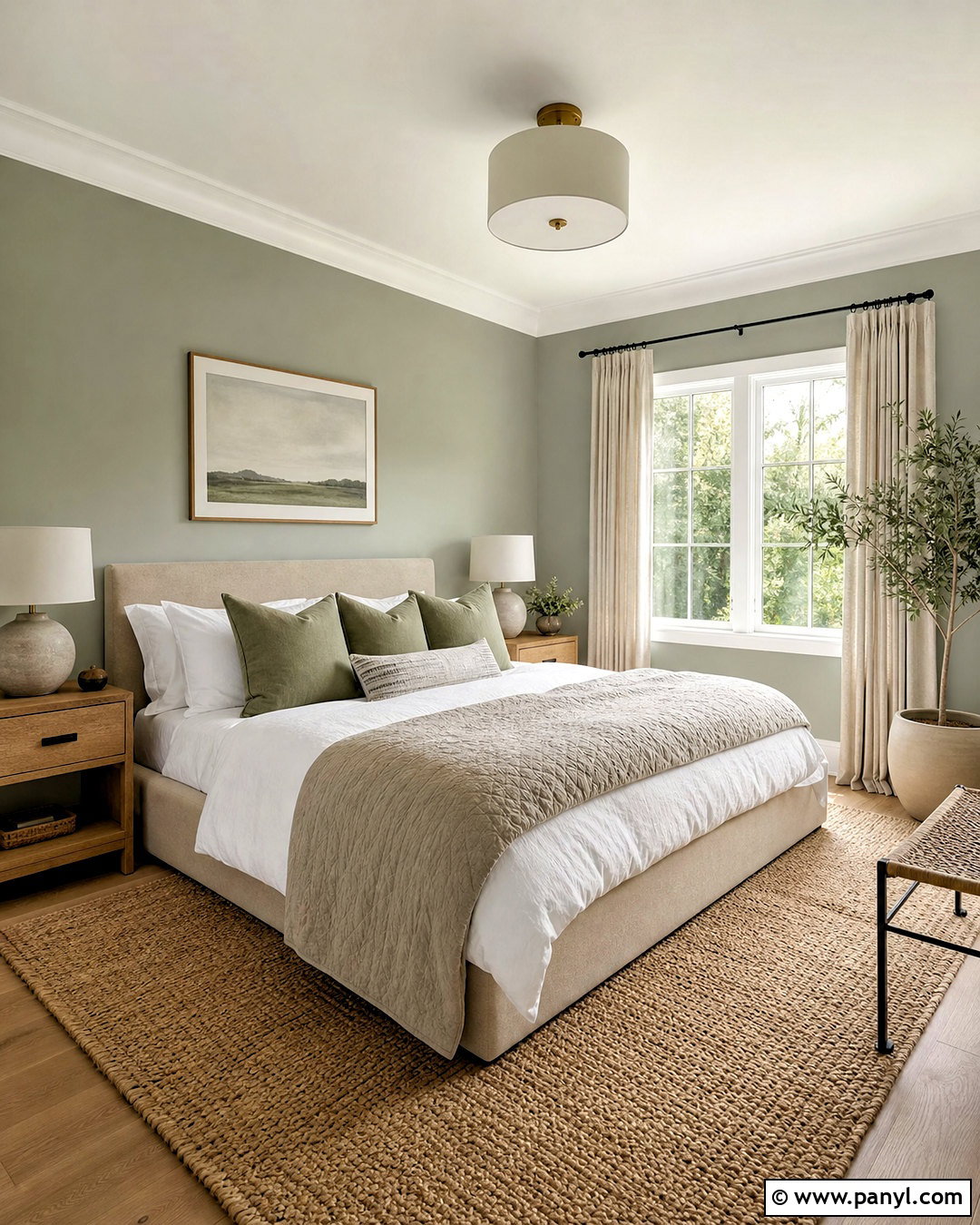
Imagine waking up in a bedroom filled with soft greens, warm beige, and gentle morning light. Cover the walls in a pale gray-based sage and choose an upholstered oatmeal bed with a tall, simple headboard. Layer white cotton sheets with a taupe quilt, sage linen pillows, and a textured cream throw. Matching light oak nightstands keep the design balanced, while ceramic lamps add a handcrafted touch. Place a large natural-fiber rug beneath the bed and hang full-length flax-colored curtains near the ceiling. Minimal landscape artwork introduces muted brown and green tones without creating visual clutter. Finish with a slim wooden bench and one leafy plant. The restrained palette supports rest while still making the bedroom feel finished and personal.
4. Sage Green Bedroom With Floral Wallpaper
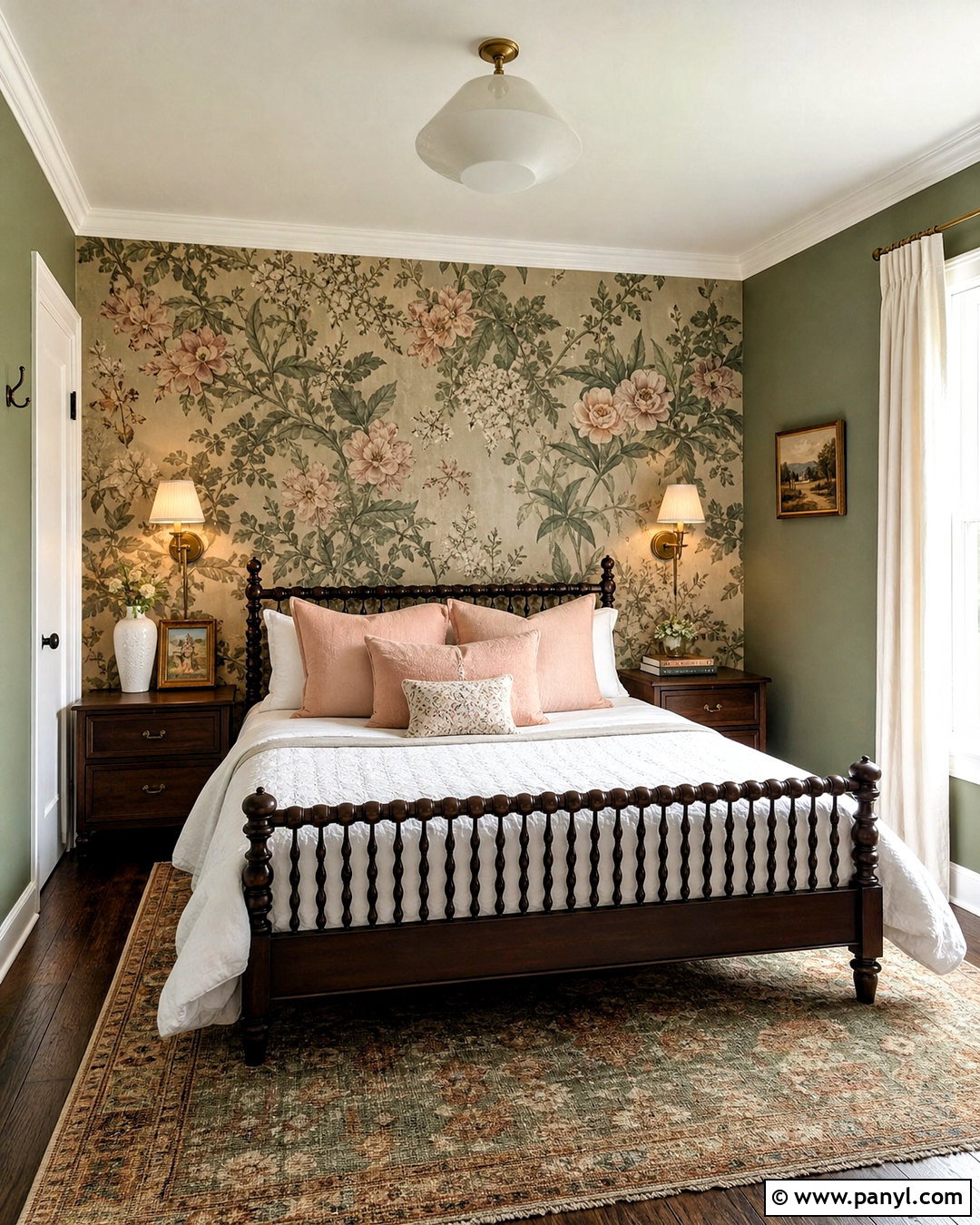
For a bedroom with more pattern, combine sage green paint with delicate botanical wallpaper. Use wallpaper behind the bed, choosing a print with sage leaves, dusty pink flowers, and a warm cream background. Paint the remaining walls in a matching muted sage to connect the surfaces. A dark wood spindle bed gives the room structure, while crisp white bedding prevents the floral pattern from feeling heavy. Add blush cushions, a faded traditional rug, and pleated linen lampshades for gentle color repetition. Antique-style brass sconces free up space on narrow bedside tables. Keep larger furniture simple, including a cream dresser and a small upholstered bench. This complete scheme feels romantic and traditional without appearing overly formal or dated.
5. Sage Green Kitchen With White Countertops
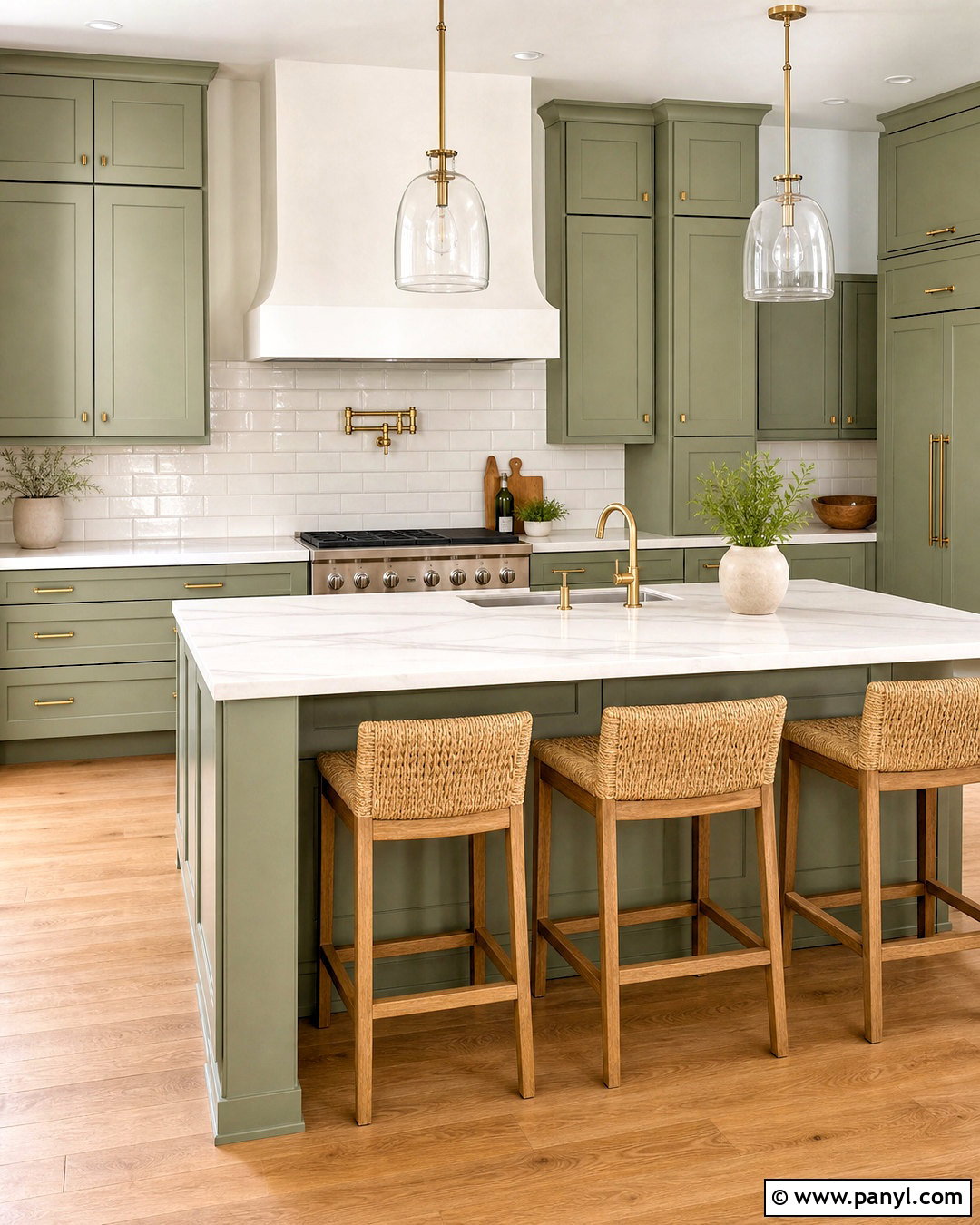
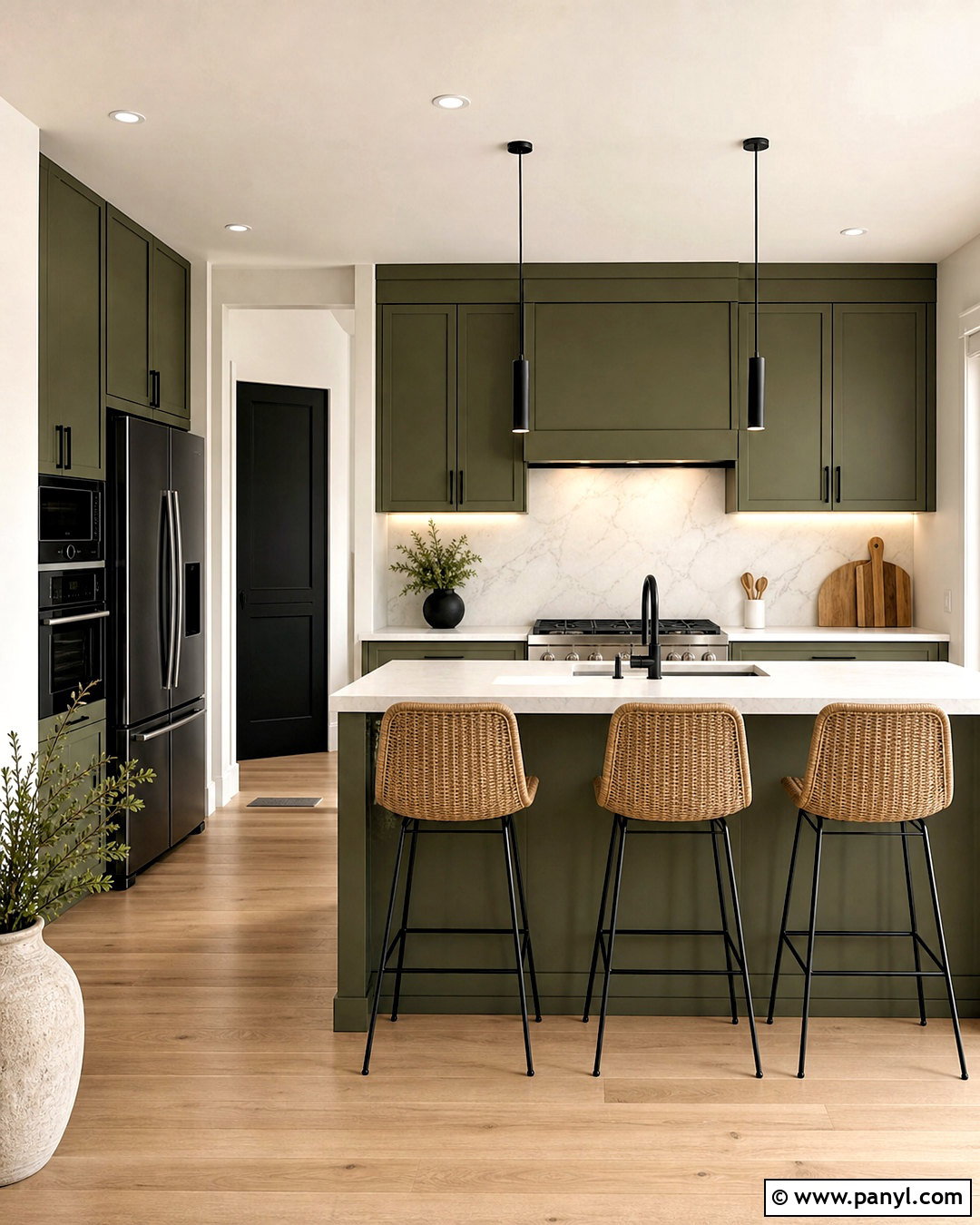
Sage green Shaker cabinets and white countertops create a kitchen that feels fresh without looking cold. Use sage on both upper and lower cabinets for a cohesive appearance, then add lightly veined white quartz counters and a glossy off-white subway tile backsplash. Warm brass handles and a matching bridge faucet introduce a polished accent. Balance the painted cabinetry with oak flooring, woven counter stools, and a few wooden serving boards. A white plaster range hood can break up the cabinetry while keeping the room bright. Choose simple glass pendants over the island and warm white paint for any open walls. Black appliances or window frames may be used sparingly for definition. The final kitchen feels practical, approachable, and visually balanced.
6. Sage Green Kitchen With Natural Wood
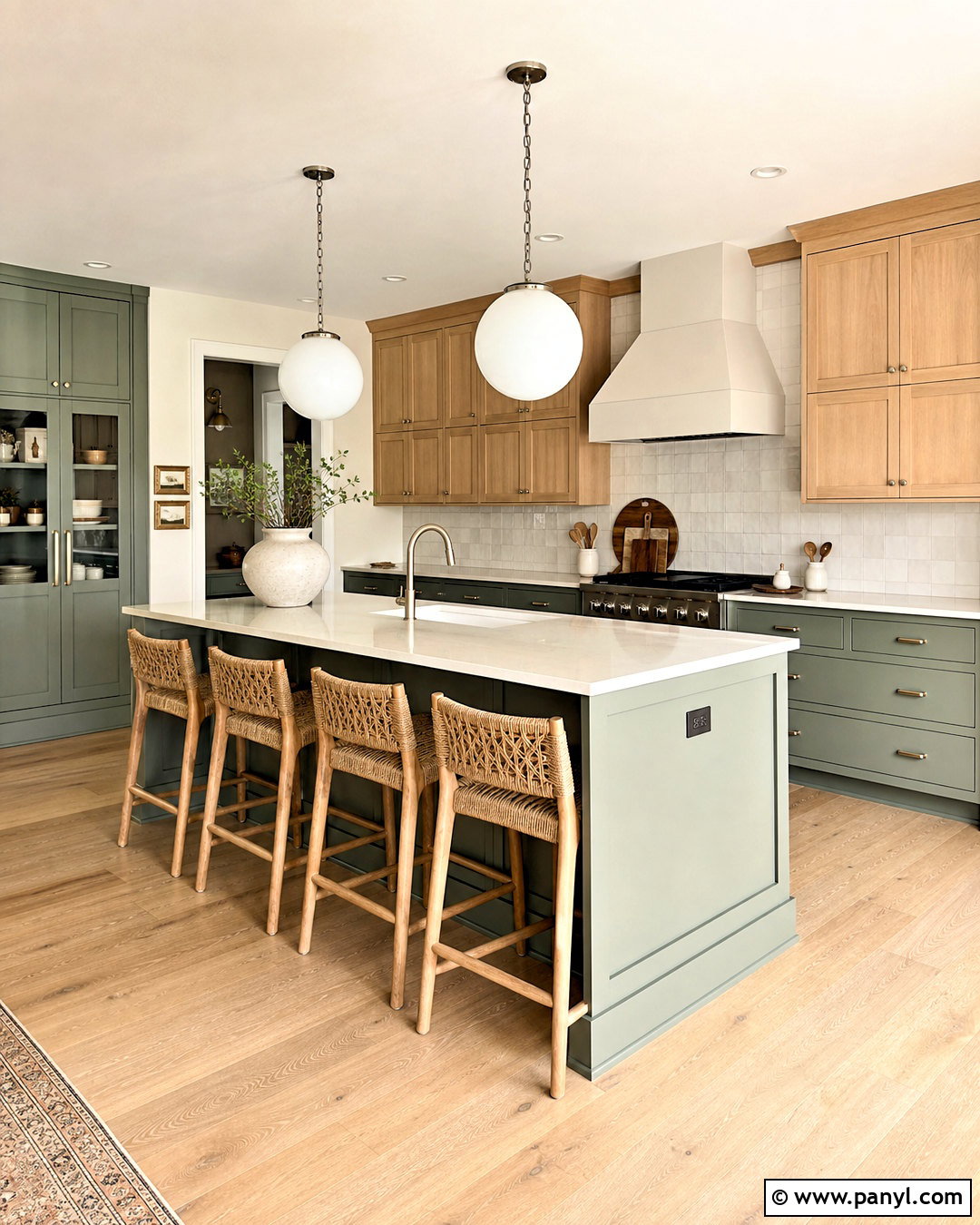
Not every cabinet needs to be painted to make sage green the main feature. Pair sage lower cabinets with natural oak uppers or tall pantry storage for a warm, organic kitchen. Continue the color on the island to anchor the open layout. Cream quartz countertops, handmade ivory backsplash tile, and brushed nickel hardware keep the combination light and relaxed. Choose medium oak flooring that relates to the wood cabinetry without matching it perfectly. Over the island, install simple white globe pendants with aged brass fittings. Add counter stools with woven seats and display neutral ceramics on one short open shelf. This mixed-finish approach gives the kitchen more depth than a single cabinet color while maintaining a calm, unified appearance.
7. Sage Green Dining Room With Dark Wood
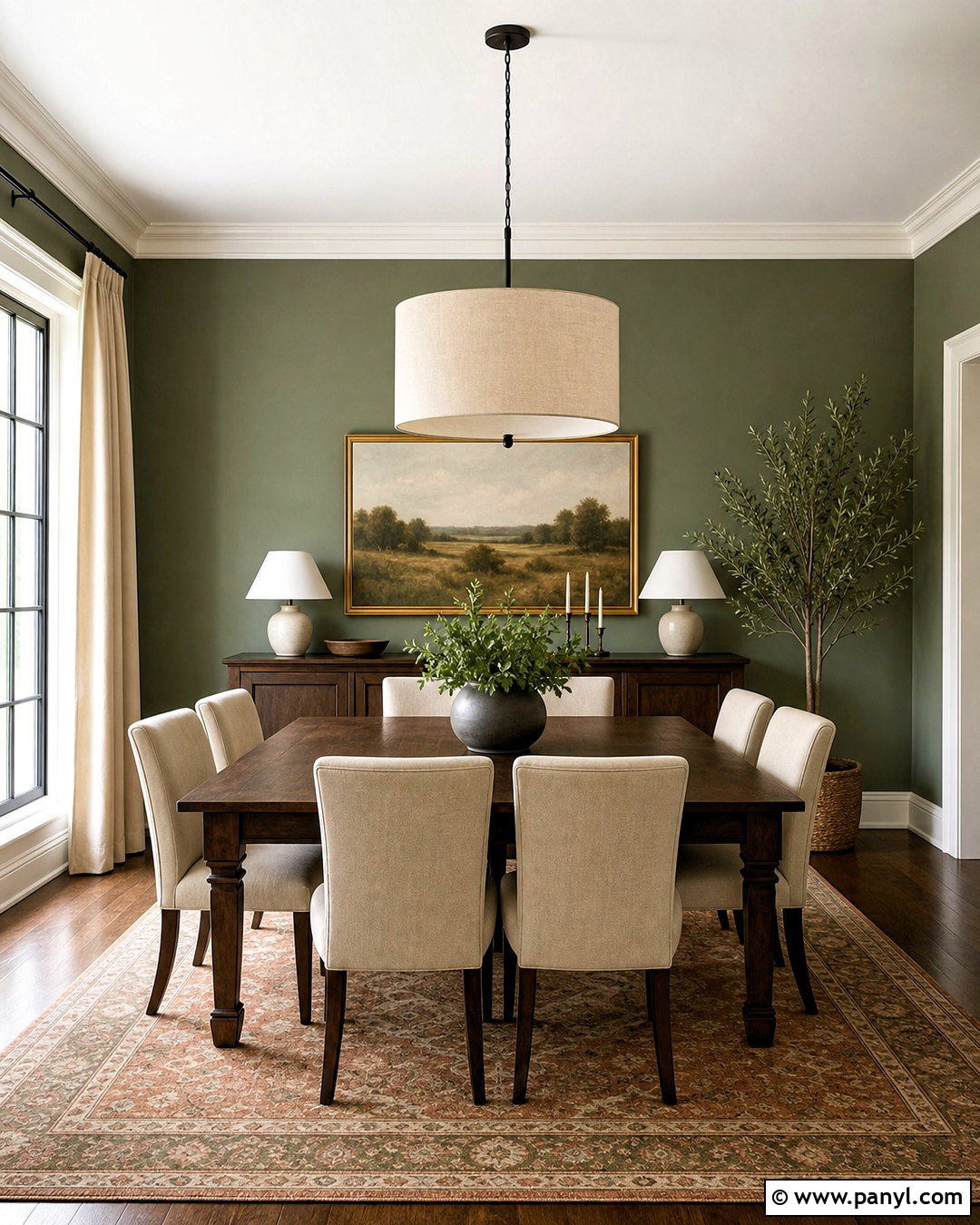
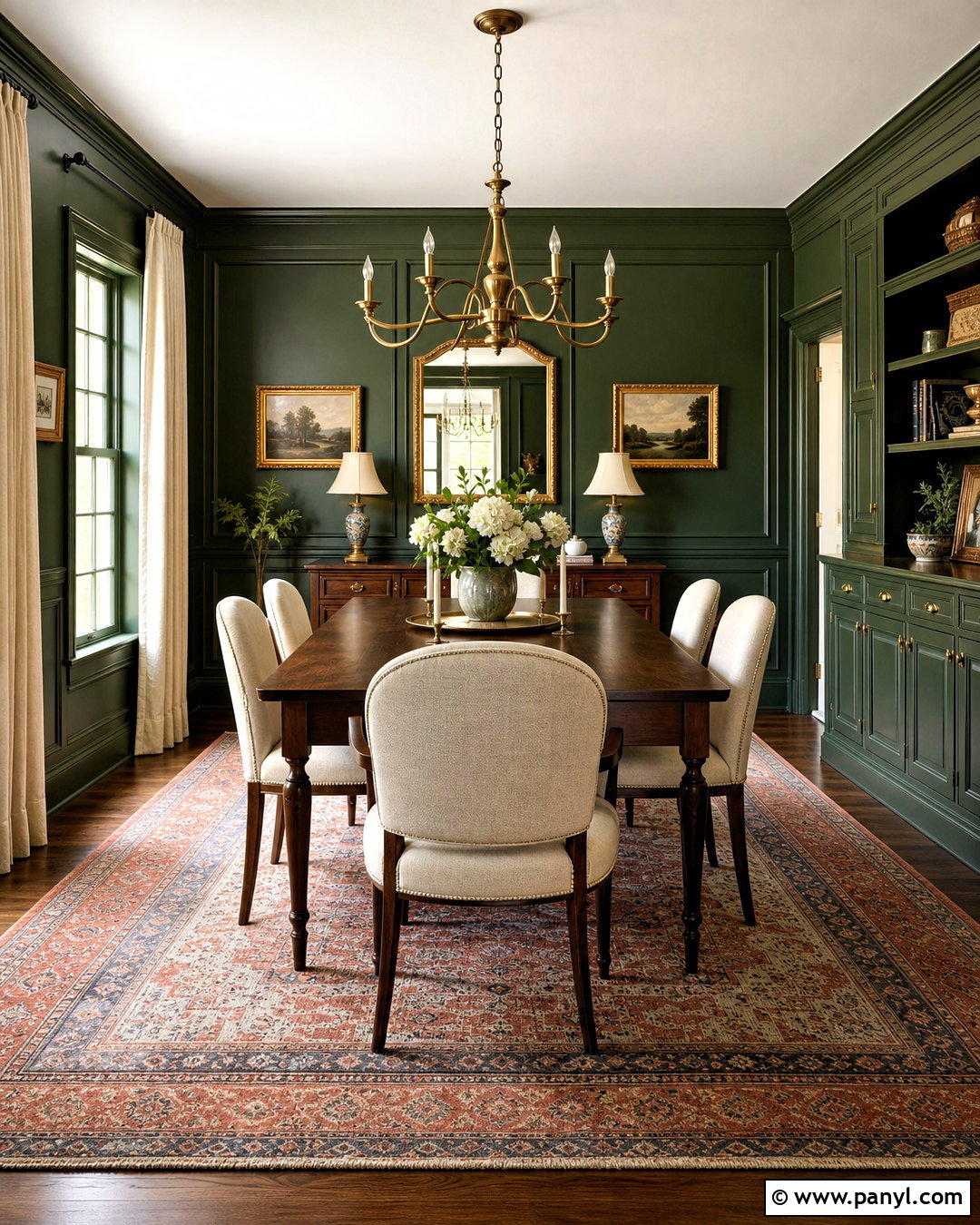
A dining room can handle a deeper sage because it is often used during softer parts of the day. Paint the walls in a rich, dusty sage and pair them with warm white ceilings and substantial matching trim. Center a dark walnut table beneath a large linen drum pendant or simple brass chandelier. Upholstered cream chairs lighten the furniture arrangement, while a vintage patterned rug introduces faded rust, brown, and olive. Add a dark wood sideboard along one wall with a large landscape painting above it. Linen curtains in a natural flax color soften the windows without competing with the wall color. Stoneware dishes, candlesticks, and a simple branch arrangement complete a dining space that feels intimate, useful, and thoughtfully layered.
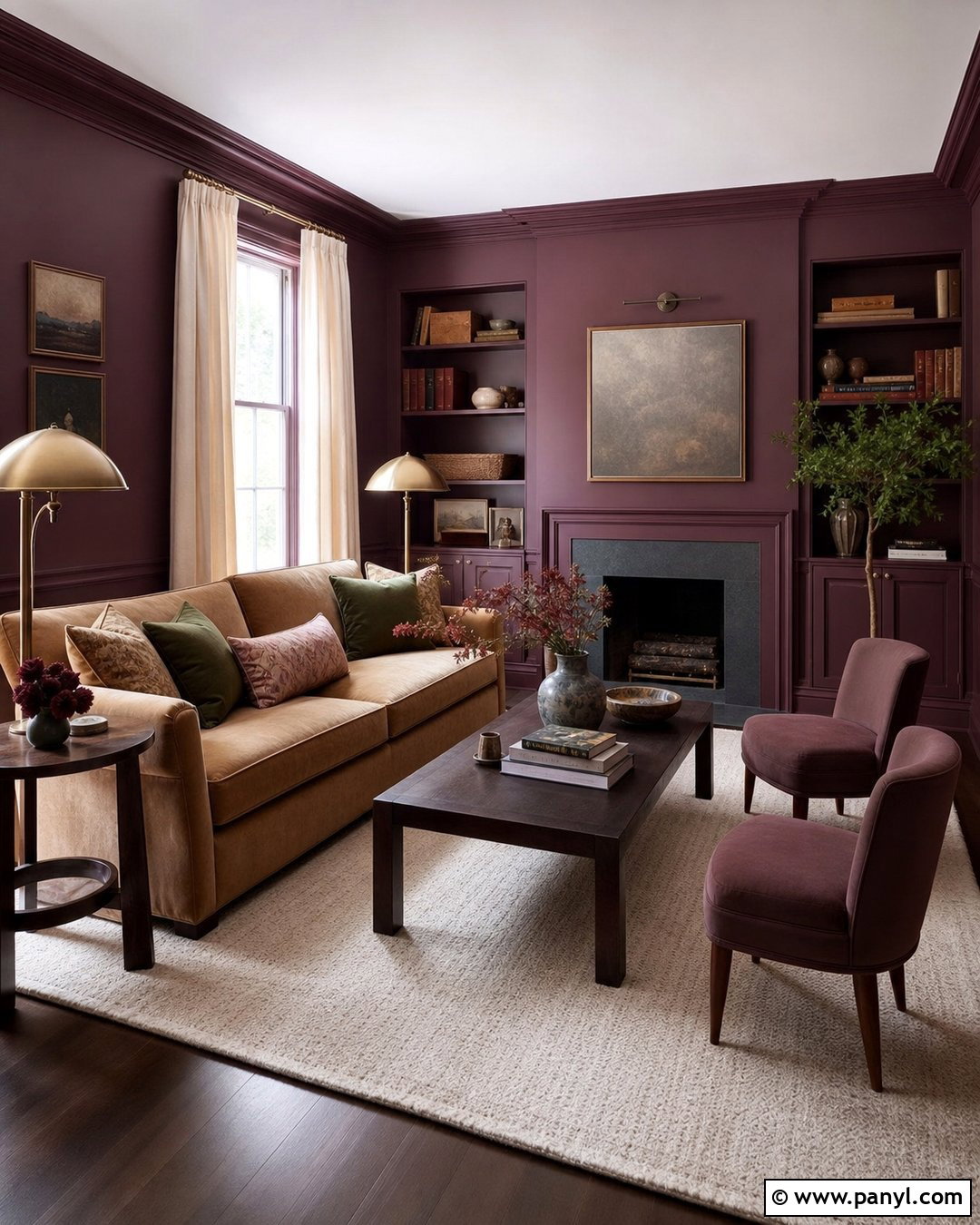
8. Sage Green Bathroom With Brass
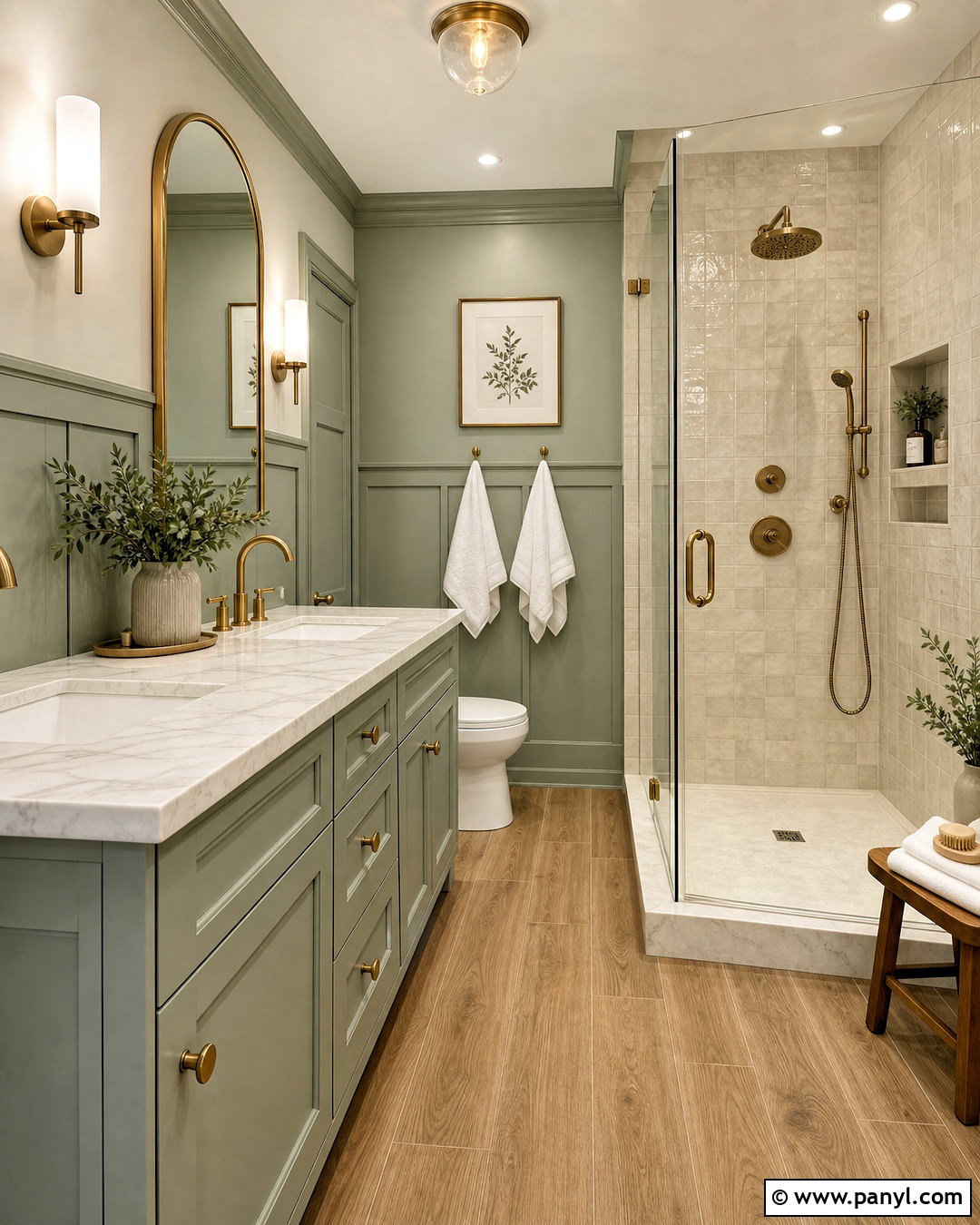
Soft sage walls and warm brass fixtures can transform a basic bathroom into a polished retreat. Choose a sage green vanity with Shaker doors, a white marble-look countertop, and an undermount sink. Continue warm white across the upper walls, while using sage-painted paneling below for more architectural depth. A frameless glass shower with creamy zellige tile keeps the room bright and textured. Install an arched brass mirror, matching sconces, and a brushed brass faucet to create consistent metallic details. White oak flooring or realistic wood-look porcelain tile adds natural warmth underfoot. Finish with folded white towels, a small woven stool, and minimal ceramic accessories. The complete room feels elevated, but every element remains practical for daily routines.
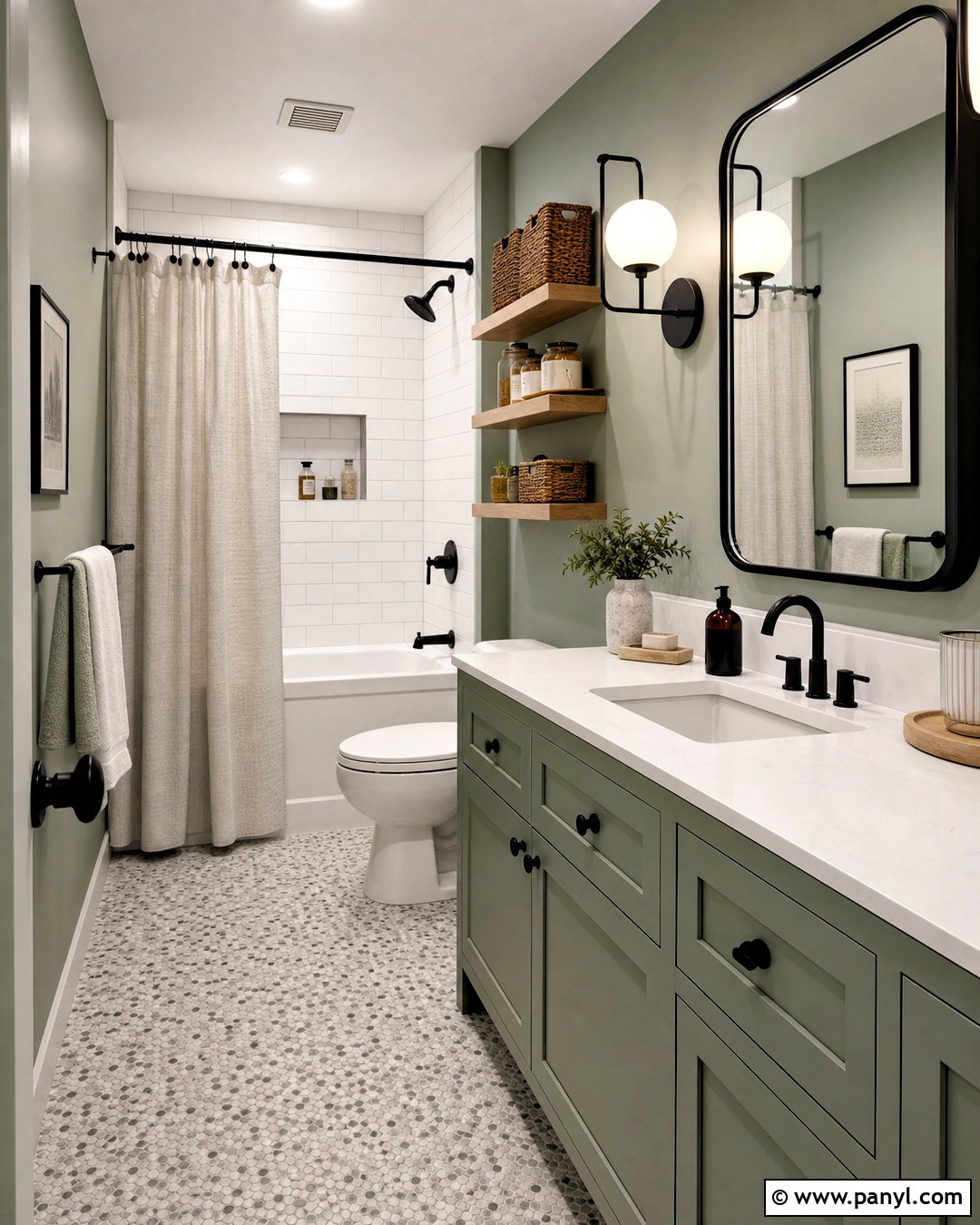
9. Sage Green Bathroom With White Tile
Clean white tile allows sage green to stand out in a small bathroom without making the space feel crowded. Use classic white subway tile around the bathtub or shower, extending it to the ceiling for a taller appearance. Paint the remaining walls a medium sage and repeat the color on a compact vanity. Matte black hardware, a black-framed mirror, and simple globe sconces create modern contrast. Select a white quartz vanity top and black-and-white mosaic floor tile to reinforce the crisp palette. A light wood medicine cabinet or narrow storage shelf introduces warmth. Finish with white towels, a textured shower curtain, and one small plant near the window. This design works especially well in guest bathrooms where easy maintenance and broad appeal matter.
10. Sage Green Home Office
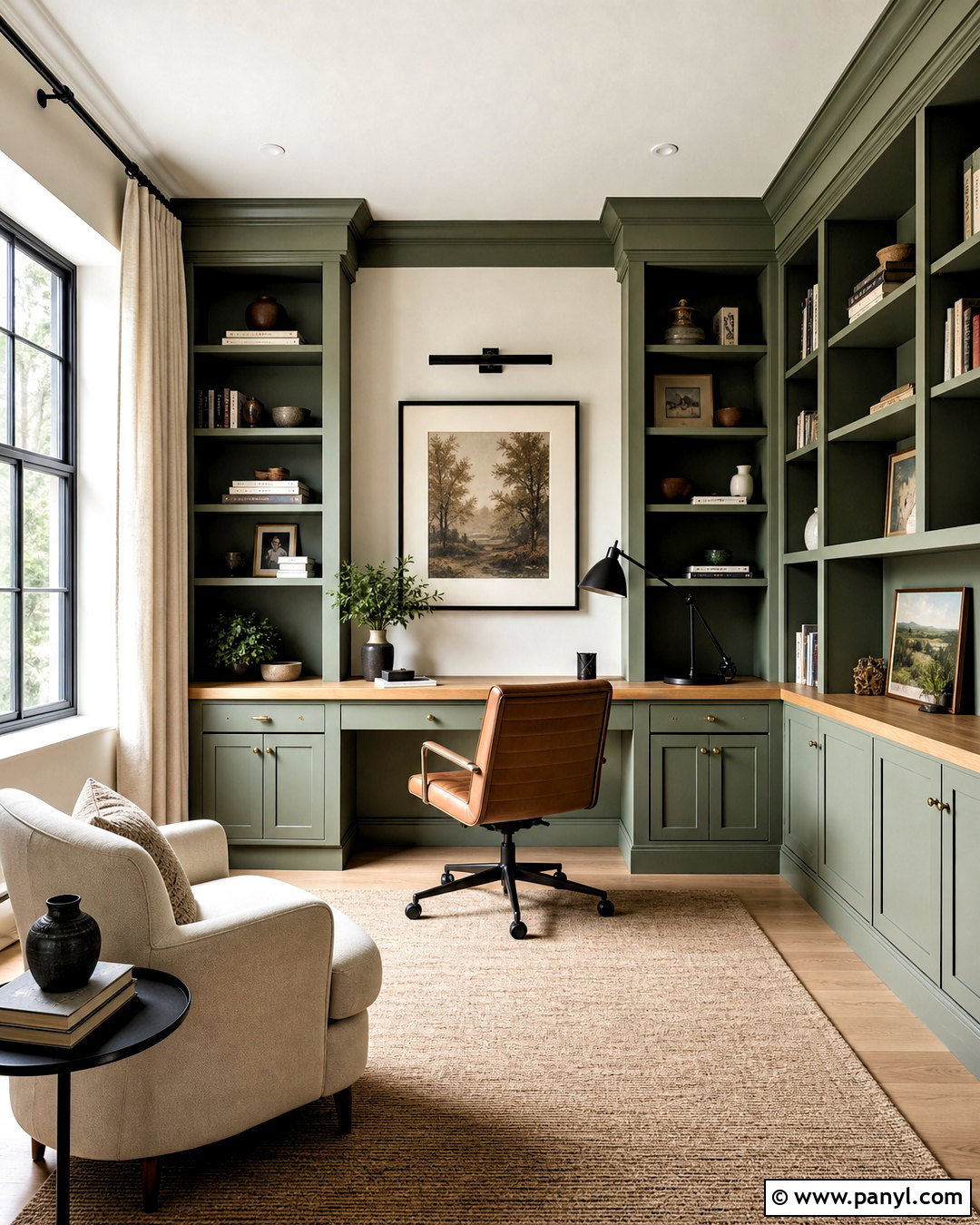
Does your workspace feel more functional than inviting? Built-in sage green cabinetry can turn a plain home office into a focused and organized room. Install a long oak desktop between sage base cabinets, then continue matching shelves above for books and concealed storage. Paint the surrounding walls warm white so the cabinetry remains the clear focal point. Use a comfortable tan leather desk chair and a small cream lounge chair if space allows. A flat-woven rug softens the floor, while a black adjustable task lamp adds useful contrast. Keep accessories limited to storage boxes, framed artwork, and neutral ceramics. Full-length linen curtains filter glare during the day. The finished office feels calm enough for concentration but polished enough for video meetings.
11. Sage Green Entryway
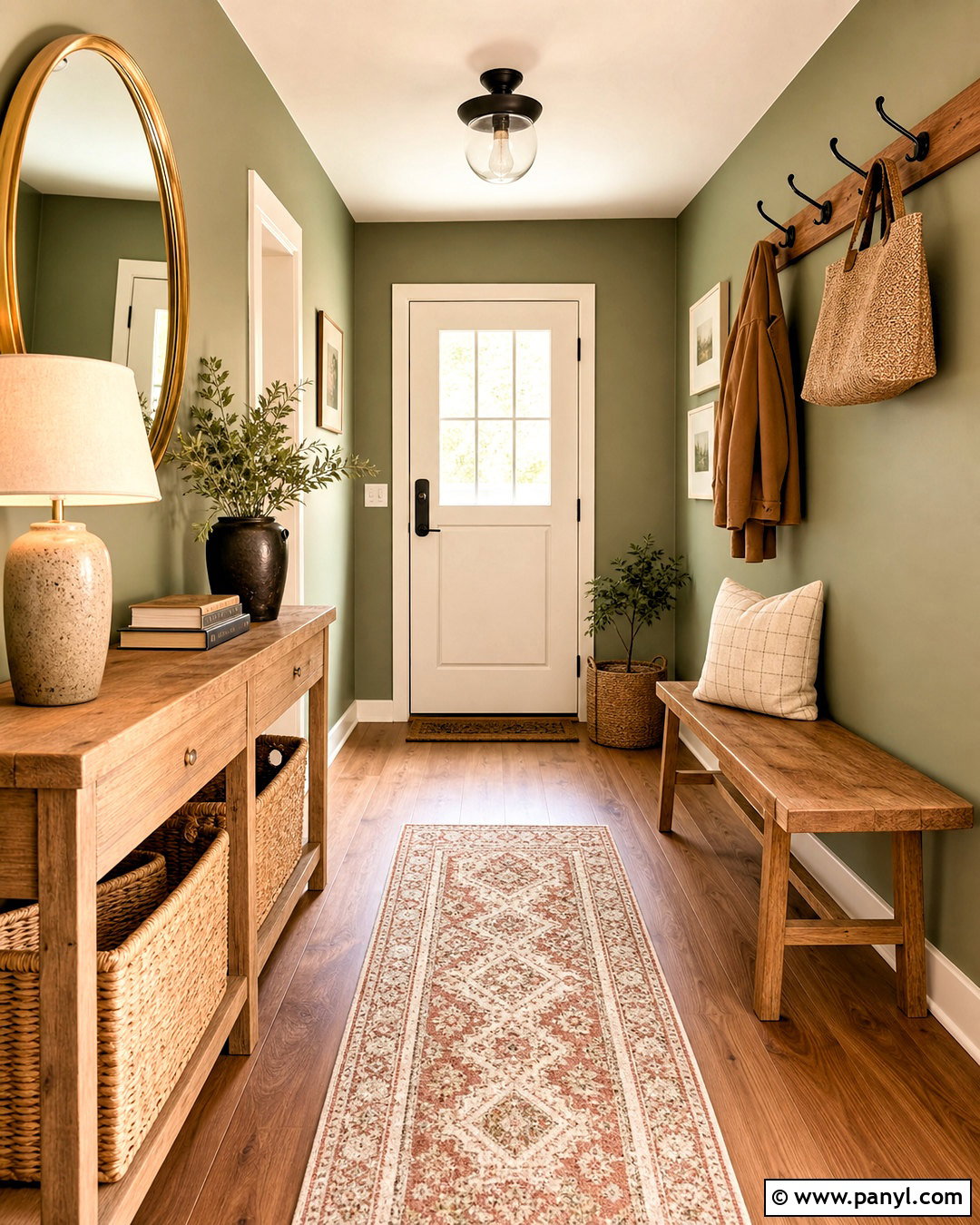
A sage green entryway creates a gentle transition between the outdoors and the rest of the home. Paint the walls a warm, mid-tone sage and add a slim natural oak console beside the main walkway. Above it, hang a large round mirror with a thin aged brass frame to reflect light. A patterned runner featuring cream, olive, and faded terracotta brings durability and personality to the floor. Include a wooden bench with woven baskets underneath for shoes and daily accessories. Black wall hooks provide a practical place for bags and jackets while sharpening the soft color scheme. Finish with a ceramic table lamp, a shallow catchall bowl, and one framed print. The arrangement keeps the entry useful, uncluttered, and welcoming from the moment someone arrives.
12. Sage Green Laundry Room
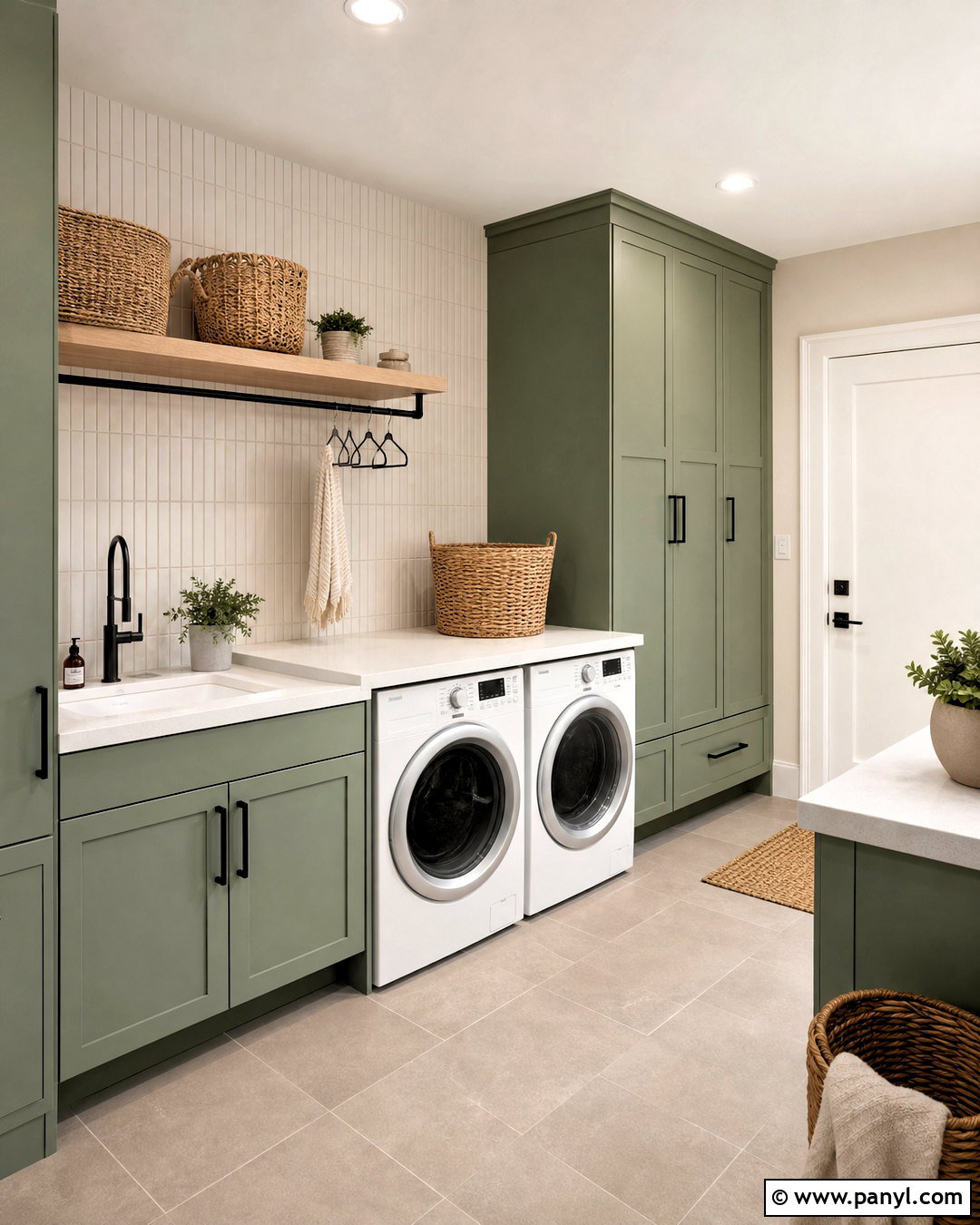
Even a hardworking laundry room can feel thoughtfully designed. Paint lower cabinets and tall storage units sage green, then balance them with warm white walls and simple white quartz counters. Place a light oak floating shelf above the washer and dryer for baskets, glass containers, and frequently used supplies. A soft cream backsplash with subtle vertical tile adds texture while protecting the wall. Choose matte black cabinet pulls and a matching hanging rail to give the pastel color more structure. Durable greige floor tile hides everyday marks better than bright white flooring. If space permits, include a narrow sink and a section of counter for folding. The complete layout makes chores easier while giving this practical room the same attention as visible living areas.
13. Sage Green Nursery
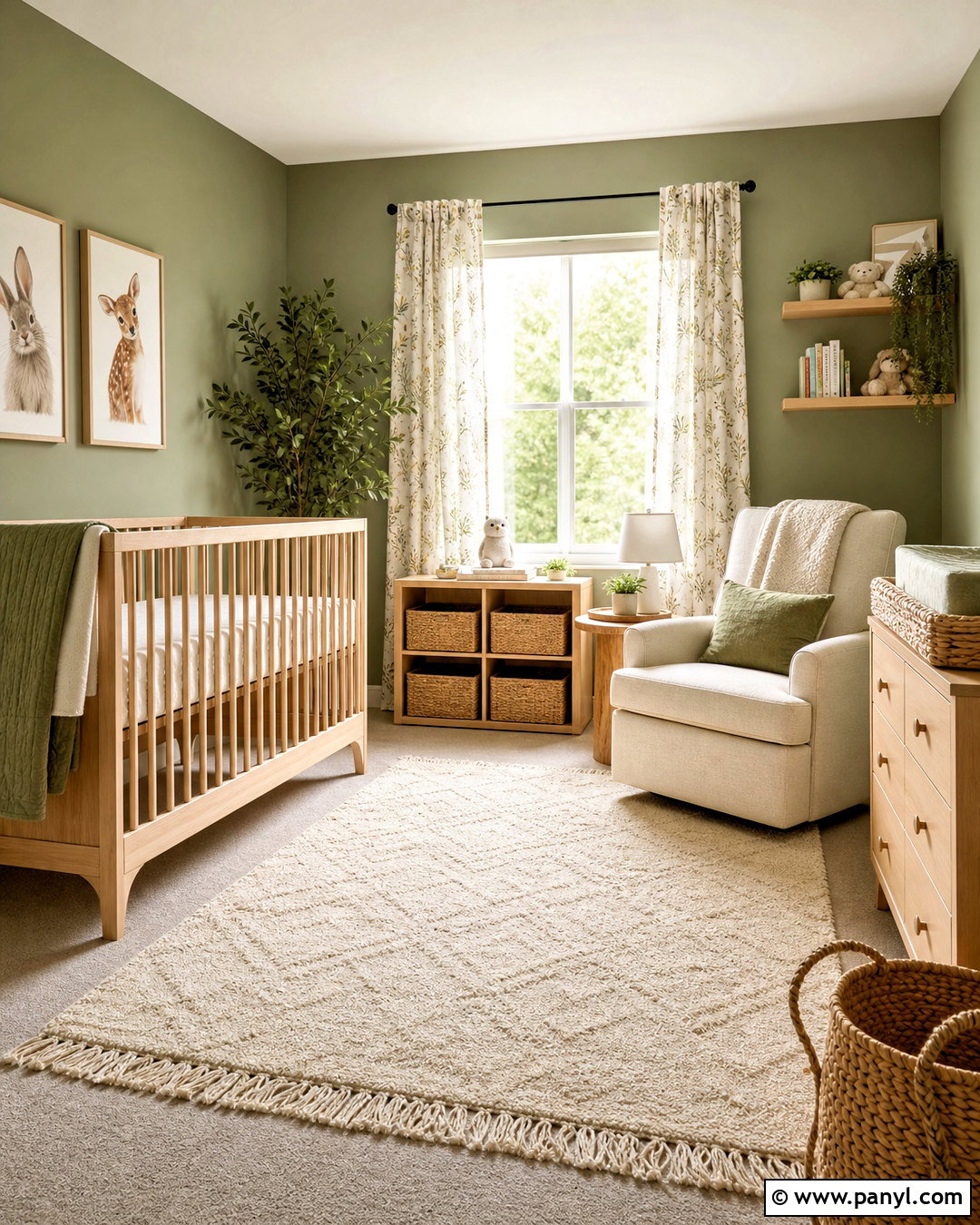
A muted sage nursery feels peaceful while remaining flexible as a child grows. Paint all four walls a soft, warm sage and choose a natural maple crib with clean, rounded lines. Position a cream upholstered glider beside a small oak table and add a washable ivory rug beneath the main furniture. White curtains with a subtle botanical print introduce pattern without overwhelming the room. Use a low oak dresser as both clothing storage and a changing station. Woven baskets keep blankets and toys organized, while simple animal artwork adds a playful touch. Avoid filling every surface with decorations. Instead, select a few meaningful accessories in cream, tan, dusty blue, or muted peach. The result is gentle, functional, and easy to update over time.
14. Sage Green Kids’ Room
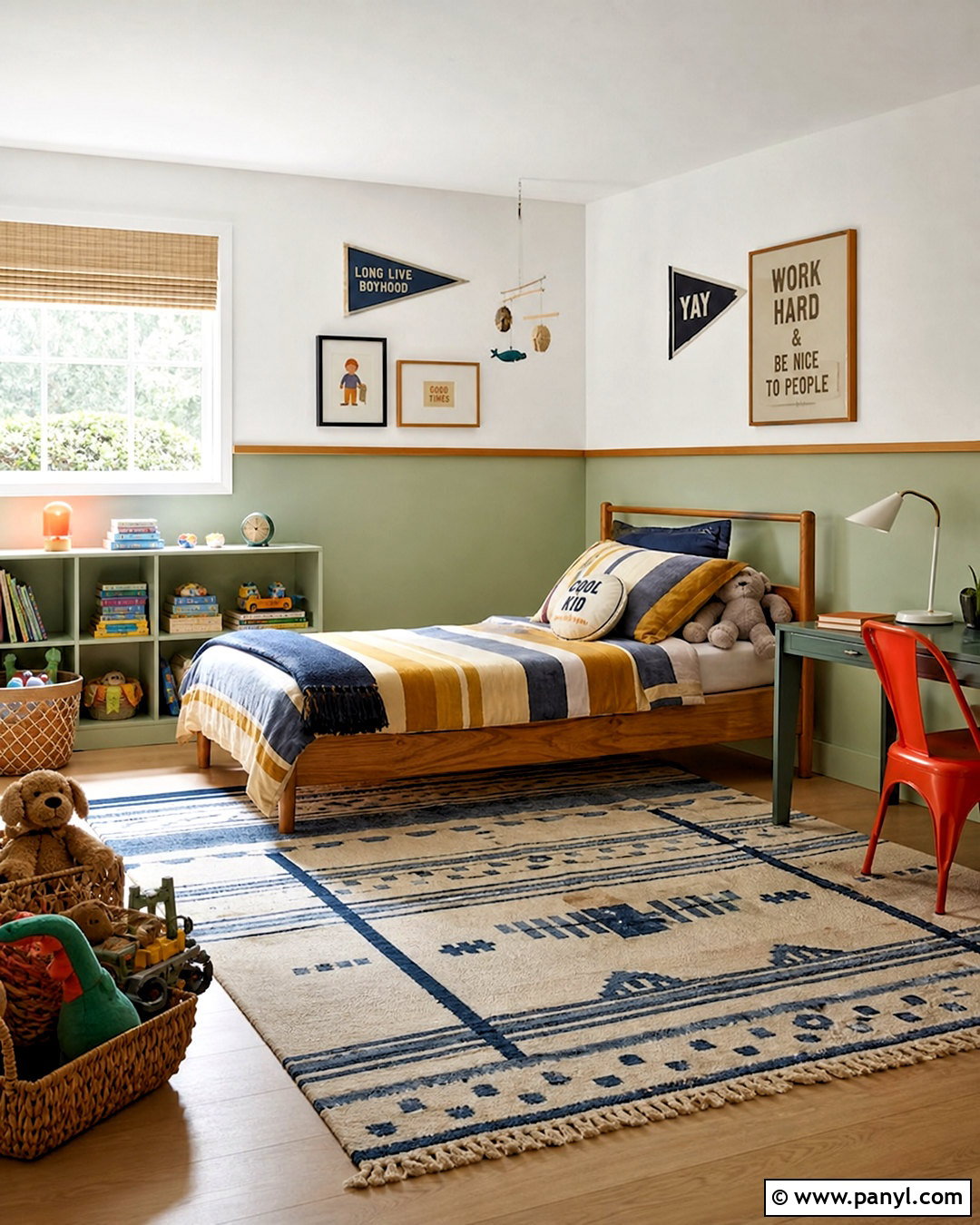
Sage green can also support a brighter, more energetic children’s room. Use sage on the lower two-thirds of the walls and warm white above, separating the colors with a narrow wooden picture rail. Choose a simple white or natural wood bed and layer it with striped bedding in mustard, blue, cream, and green. Add a washable patterned rug that defines the play area without making the floor look busy. A low bookcase and labeled woven baskets encourage easy organization. Include a compact desk near the window with a colorful metal chair for crafts and homework. Framed illustrations bring personality to the upper walls. The complete space feels cheerful and youthful, yet the furniture and main color palette can remain useful for many years.
15. Sage Green Reading Nook
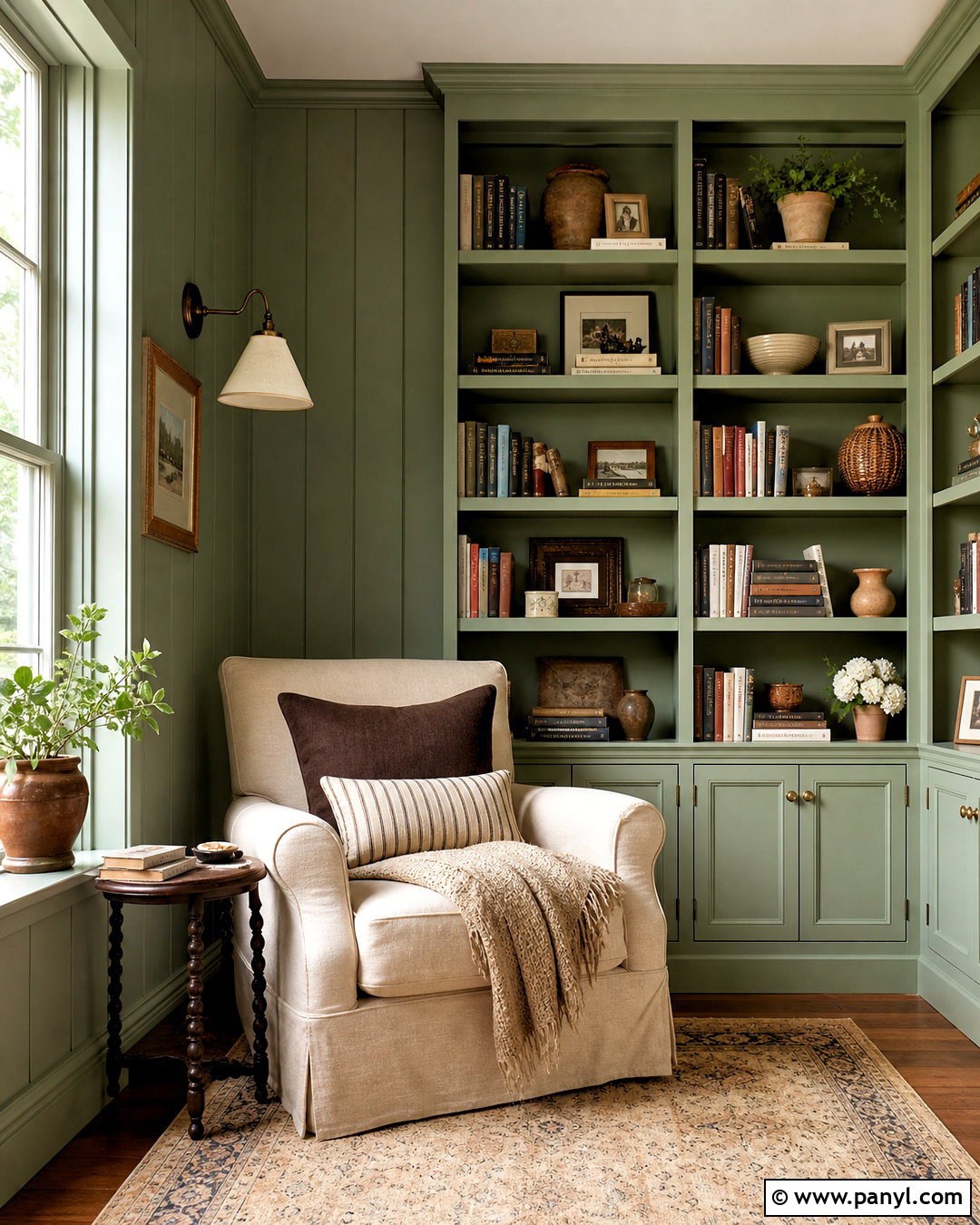
A forgotten corner can become a complete reading nook with sage green built-ins and comfortable seating. Frame a window with floor-to-ceiling sage bookcases, adding lower cabinets for concealed storage. Place a wide cream armchair or built-in bench between the shelves, depending on available space. Layer the seat with a deep brown cushion, a striped lumbar pillow, and a soft oatmeal throw. Install a small aged brass wall lamp above the reading area for focused light. Warm oak flooring and a compact vintage rug make the nook feel connected to the surrounding room. Arrange books vertically and horizontally, leaving space for pottery and framed photographs. This balanced approach creates a cozy destination without making the shelving appear crowded or purely decorative.
16. Sage Green Sunroom
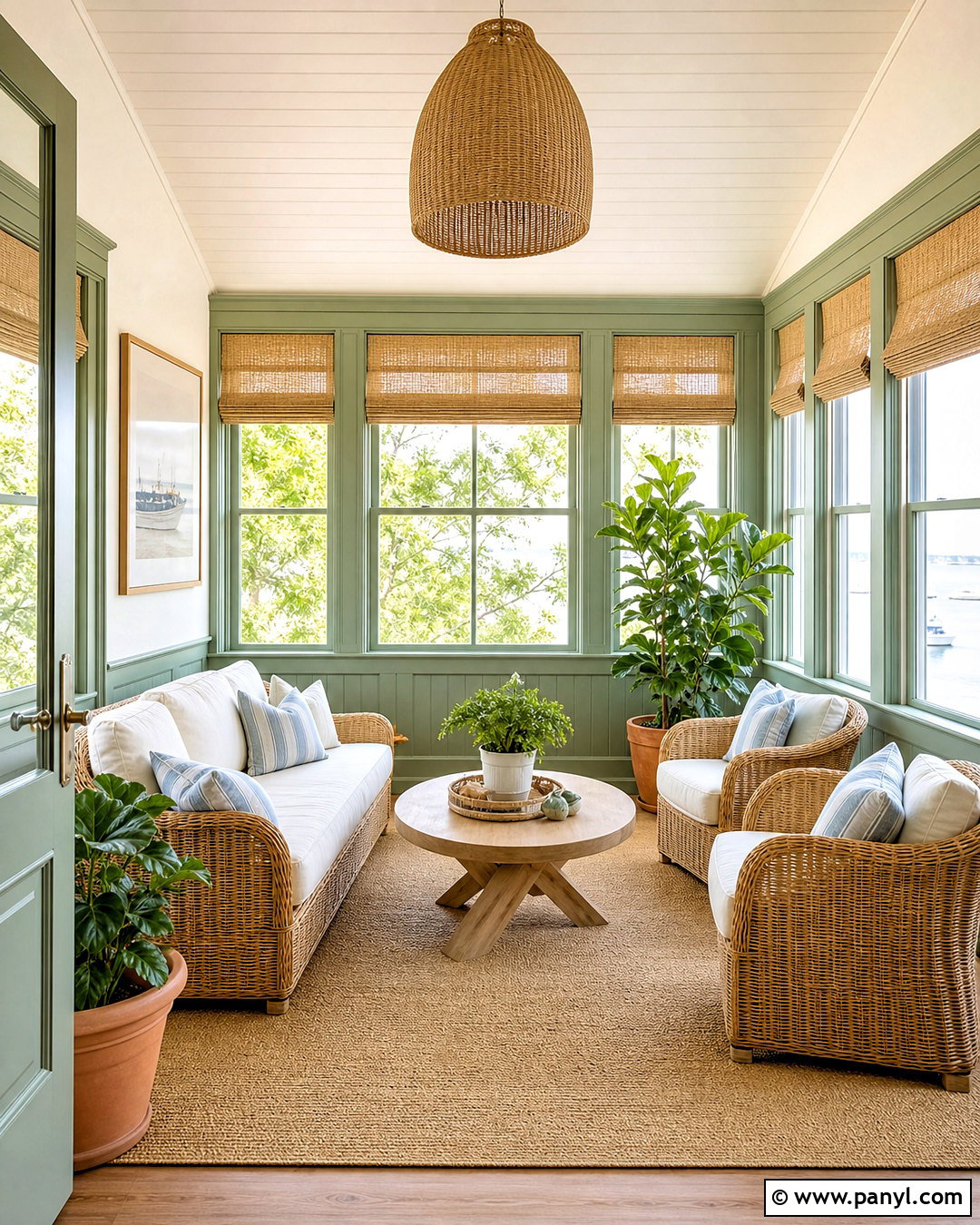
Sunlight brings out the natural warmth hidden inside sage green. Paint a sunroom’s window frames, trim, and lower paneling in a soft sage, while keeping the ceiling and upper walls creamy white. Arrange a light rattan sofa with two matching lounge chairs around a round oak coffee table. Use seat cushions in durable ivory fabric and add striped sage, tan, and pale blue pillows. A large jute rug visually anchors the seating arrangement and handles casual foot traffic. Introduce several leafy plants in terracotta and stone pots, varying their heights around the windows. Woven shades help manage strong afternoon light without closing off the outdoor view. The finished sunroom feels airy and connected to nature, with enough structure for comfortable daily use.
17. Sage Green Hallway
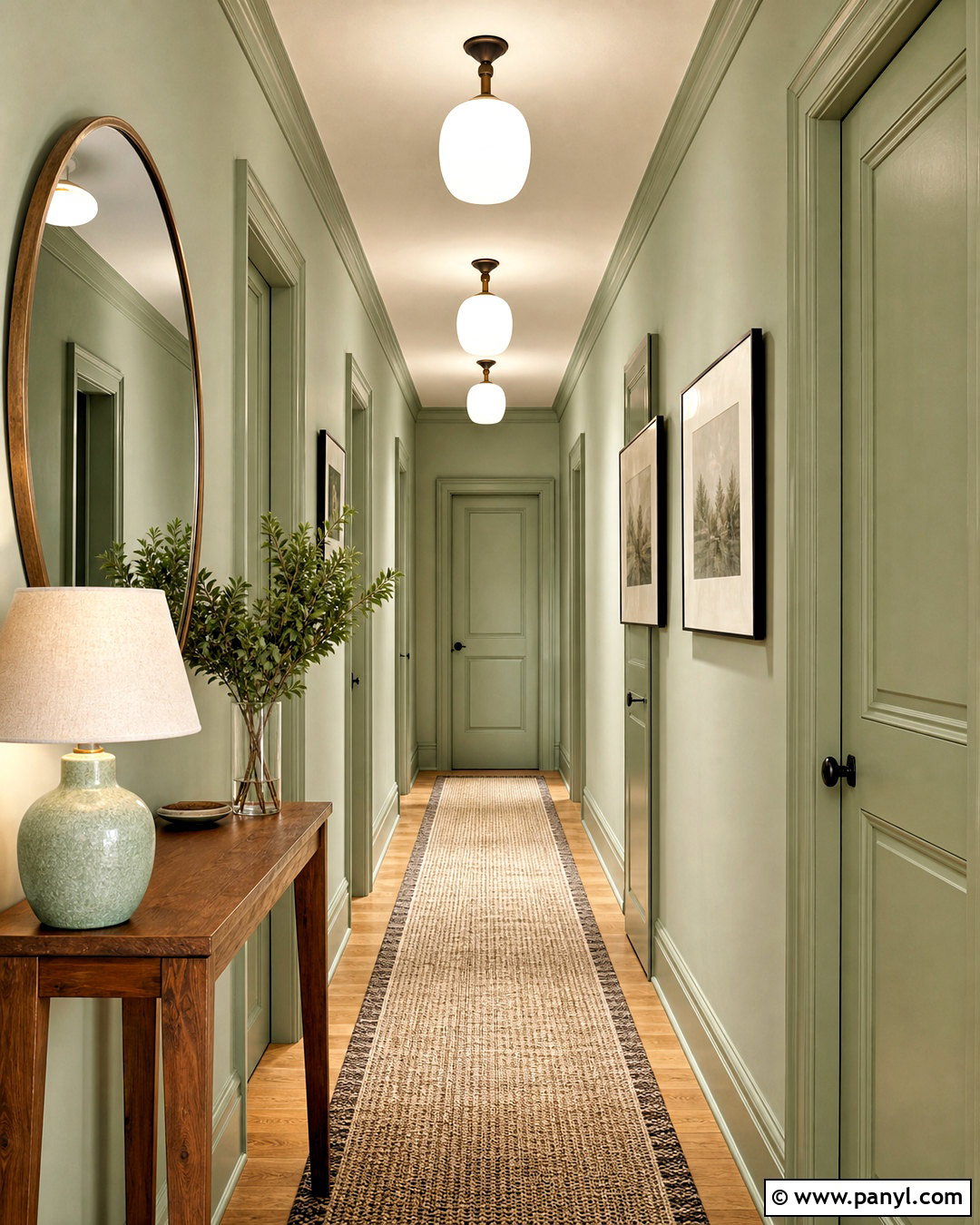
Long hallways often need more than a few framed pictures to feel intentional. Paint the walls and trim in the same pale sage green, using a durable satin finish on doors and baseboards. This low-contrast approach visually connects the surfaces and gives a narrow passage a smoother appearance. Add a flat-woven runner with cream, brown, and muted green details to lead the eye through the space. Install evenly spaced brass or opal glass ceiling lights for consistent illumination. A slim wooden console can fit at the widest point, paired with one mirror and a small table lamp. Keep artwork orderly, using matching oak or black frames. The complete design turns a transitional area into a calm extension of the adjoining rooms.
18. Sage Green Built-In Shelves
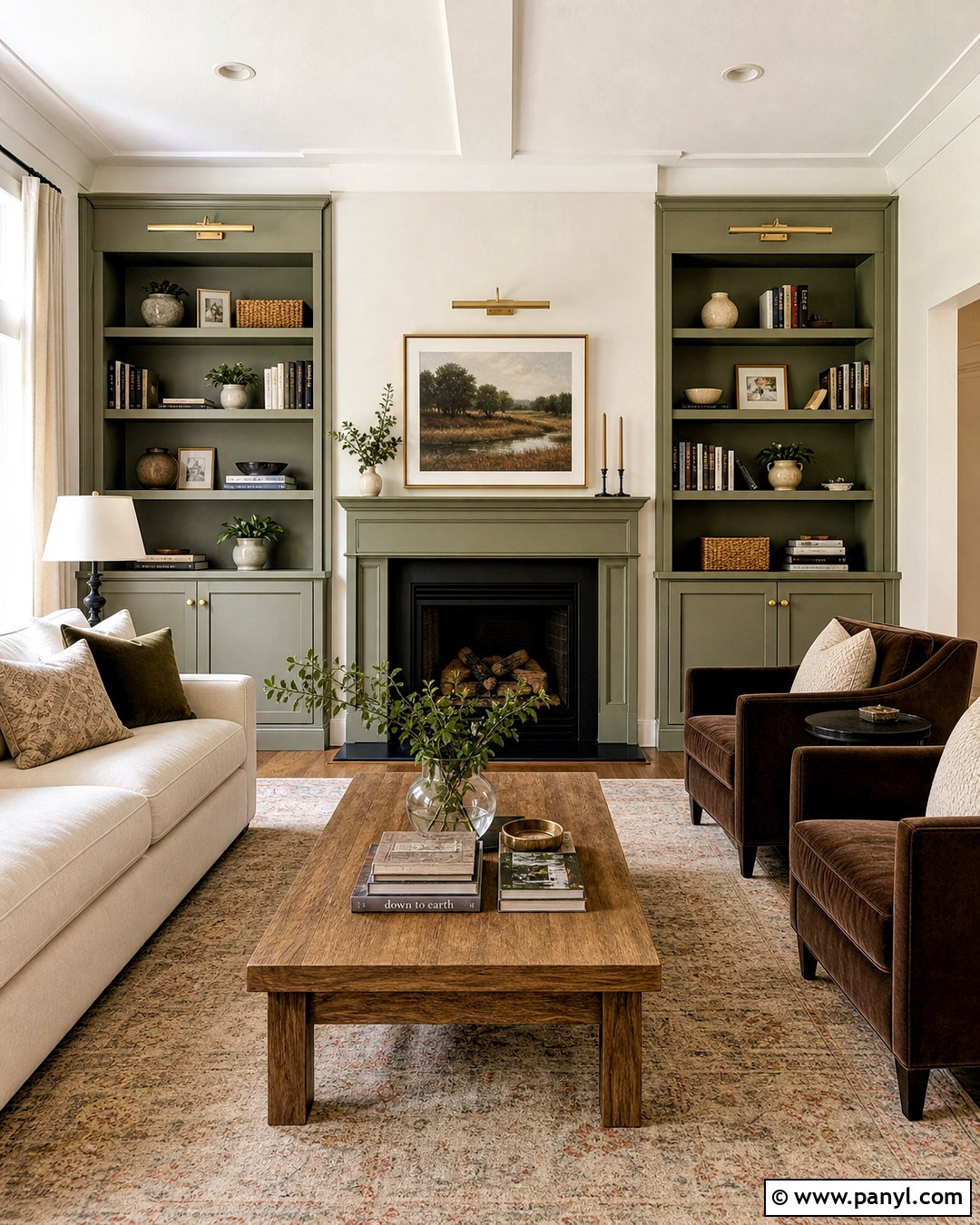
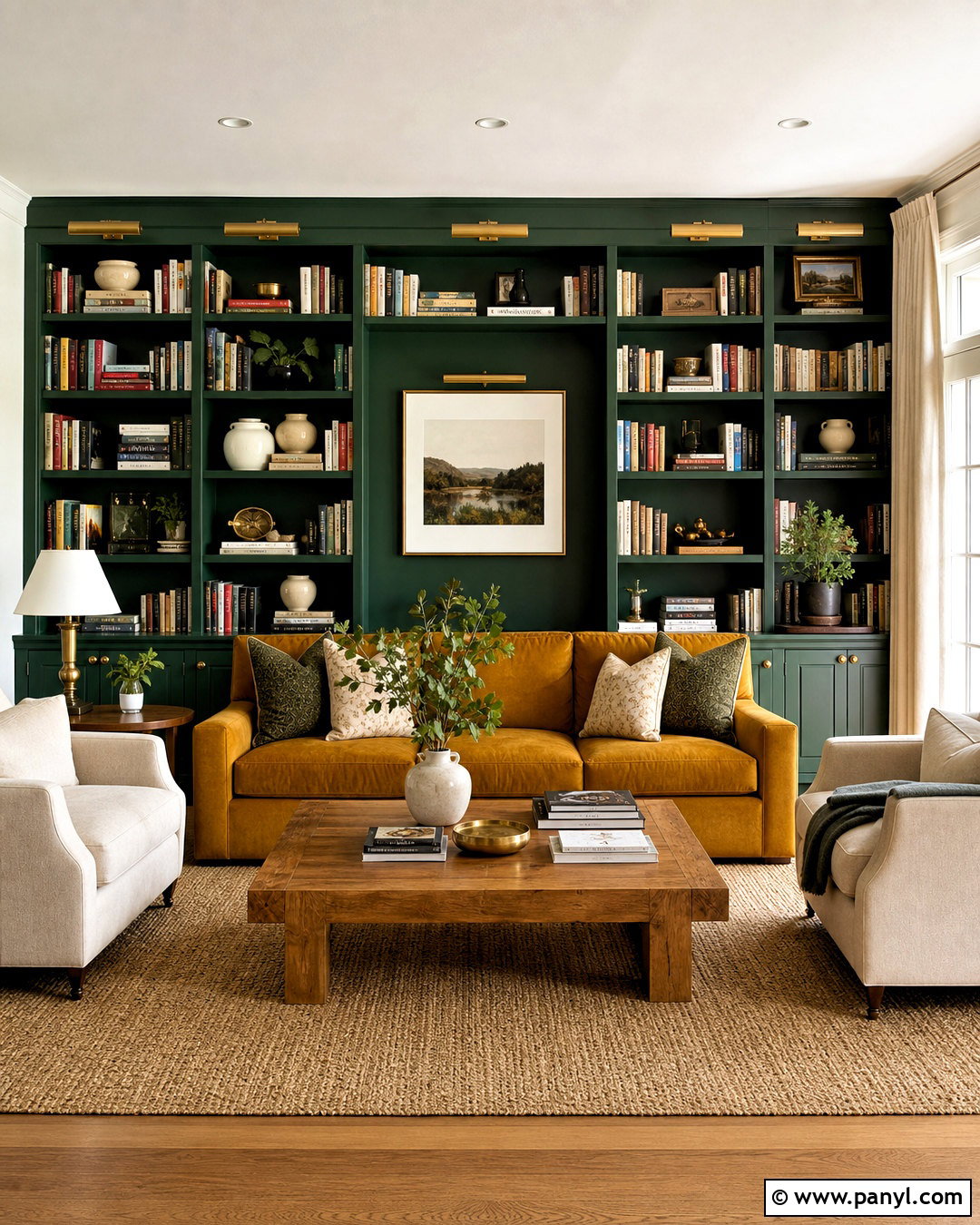
Sage built-in shelves offer a practical way to introduce color without painting an entire living room. Cover the cabinets, shelving, and wall behind the shelves in one medium sage tone for a seamless finish. Place the unit around a fireplace or television so it becomes an architectural focal point rather than separate storage furniture. Use warm white on the surrounding walls and select an oak coffee table, cream sofa, and chocolate brown accent chairs. Style shelves with books, framed art, baskets, and ceramics in varied heights. Leave some open space so the arrangement can breathe. Small brass picture lights above the shelving create a polished detail. This complete layout balances colorful storage with comfortable, neutral furniture suitable for everyday living.
19. Sage Green Color-Drenched Room
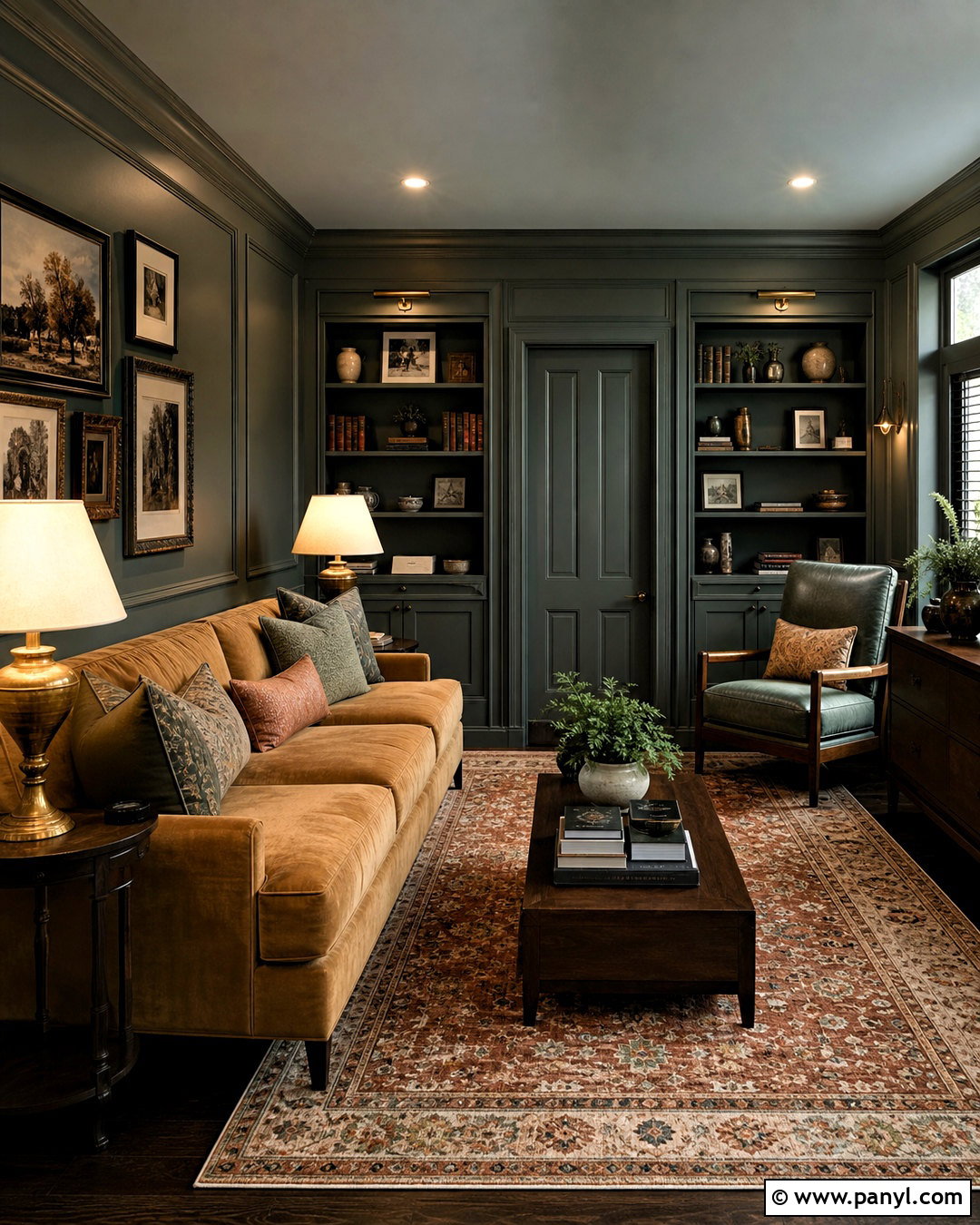
For a bolder result, carry sage green across the walls, trim, doors, shelving, and ceiling. Choose a slightly deeper, gray-based sage so the room feels enveloping rather than overly bright. This approach suits a den, library, or small sitting room where a cozy atmosphere is welcome. Add a camel velvet sofa, dark wood side tables, and a large patterned rug with rust, cream, and forest green. Brass lamps and warm white shades provide contrast against the painted surfaces. Hang artwork in dark wood frames, allowing generous space around each piece. Use layered lighting instead of relying on one ceiling fixture. The finished room has depth and character, while the repeated color visually simplifies architectural details and awkward corners.
20. Sage Green Small Apartment
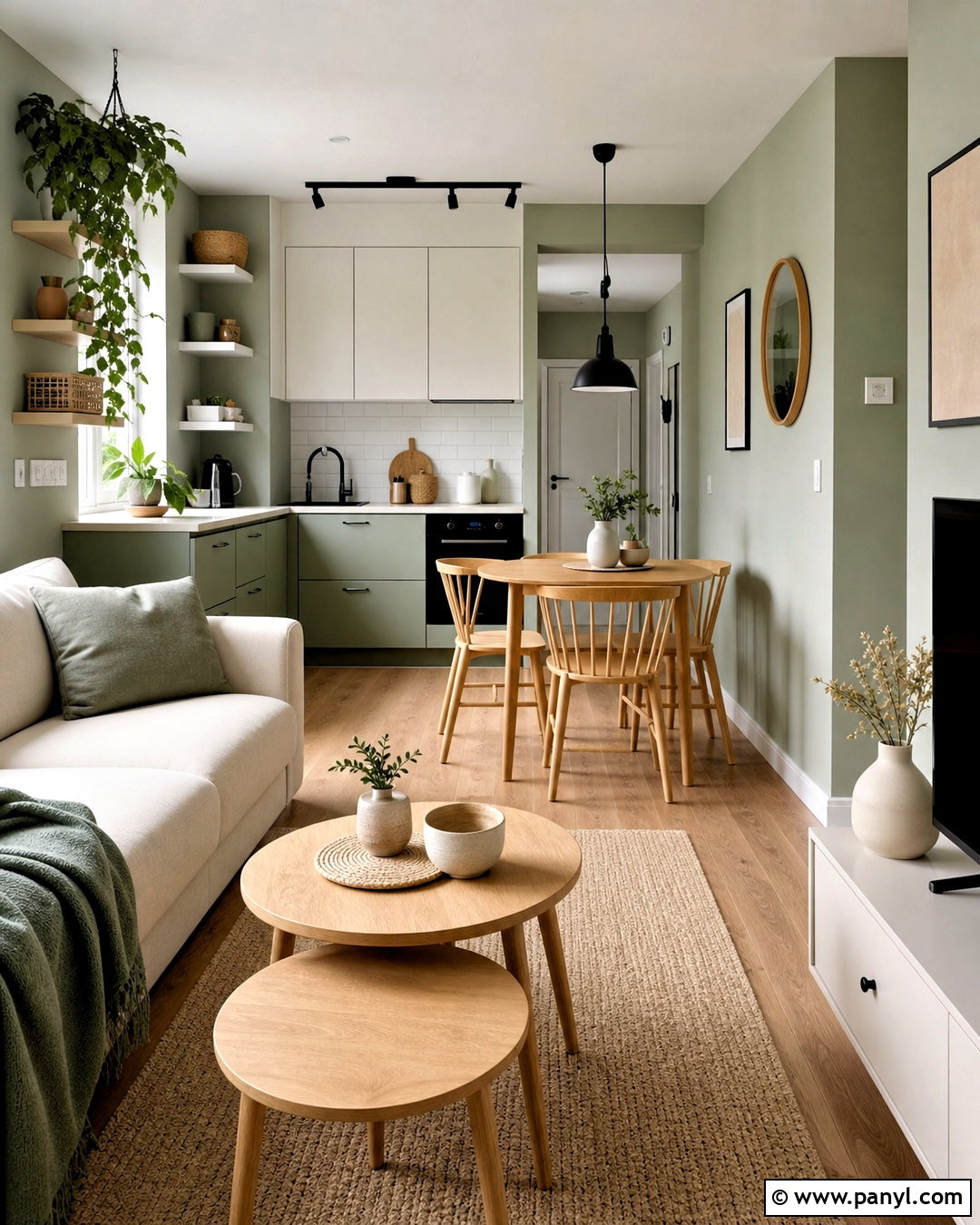
In a small apartment, a consistent sage green palette can connect separate areas without making every room identical. Use pale sage on the main living room walls, then repeat it on kitchen base cabinets, curtains, and selected textiles. Keep ceilings, upper cabinets, and larger upholstered furniture warm white to preserve brightness. Choose compact oak furniture with visible legs, including a round dining table, nesting coffee tables, and a slim media console. A cream rug defines the seating zone, while black accents add structure through lighting and frames. Limit decorative objects, but vary textures with linen, woven baskets, ceramics, and natural wood. Repeating the same green in measured amounts creates flow throughout the apartment and makes the overall design feel planned.
Conclusion:
The best sage green rooms combine color, layout, furniture, lighting, and texture instead of relying on one painted wall. Sage can support many moods, from a fresh white kitchen to a cozy brown-and-green den. Before committing, test paint samples in morning, afternoon, and artificial light because gray, yellow, and blue undertones can shift noticeably. Then select two or three supporting colors and repeat them throughout the room. Warm wood, cream fabric, aged brass, matte black, and natural stone are dependable companions. Most importantly, choose a complete scheme that fits how the space is used. These 20 sage green interior ideas can help you create a home that feels coordinated, comfortable, and personal.

Related Ideas and Inspiration:
Leave a Reply