
Sage green brings natural softness to a living room while remaining versatile enough for modern, traditional, farmhouse, coastal, and eclectic interiors. Its muted gray undertones work especially well with warm neutrals, natural wood, richer greens, and restrained accent colors. () The key is building a complete palette instead of choosing green paint in isolation. Consider how the walls, sofa, flooring, curtains, lighting, and decorative pieces will support one another. You can keep the result airy with cream and oak, create contrast with charcoal, or introduce warmth through terracotta and cognac leather. The following complete looks offer practical layouts, materials, and accent combinations for recreating these 20 sage green living room color scheme ideas.

1. Sage Green Living Room With Cream And Oak
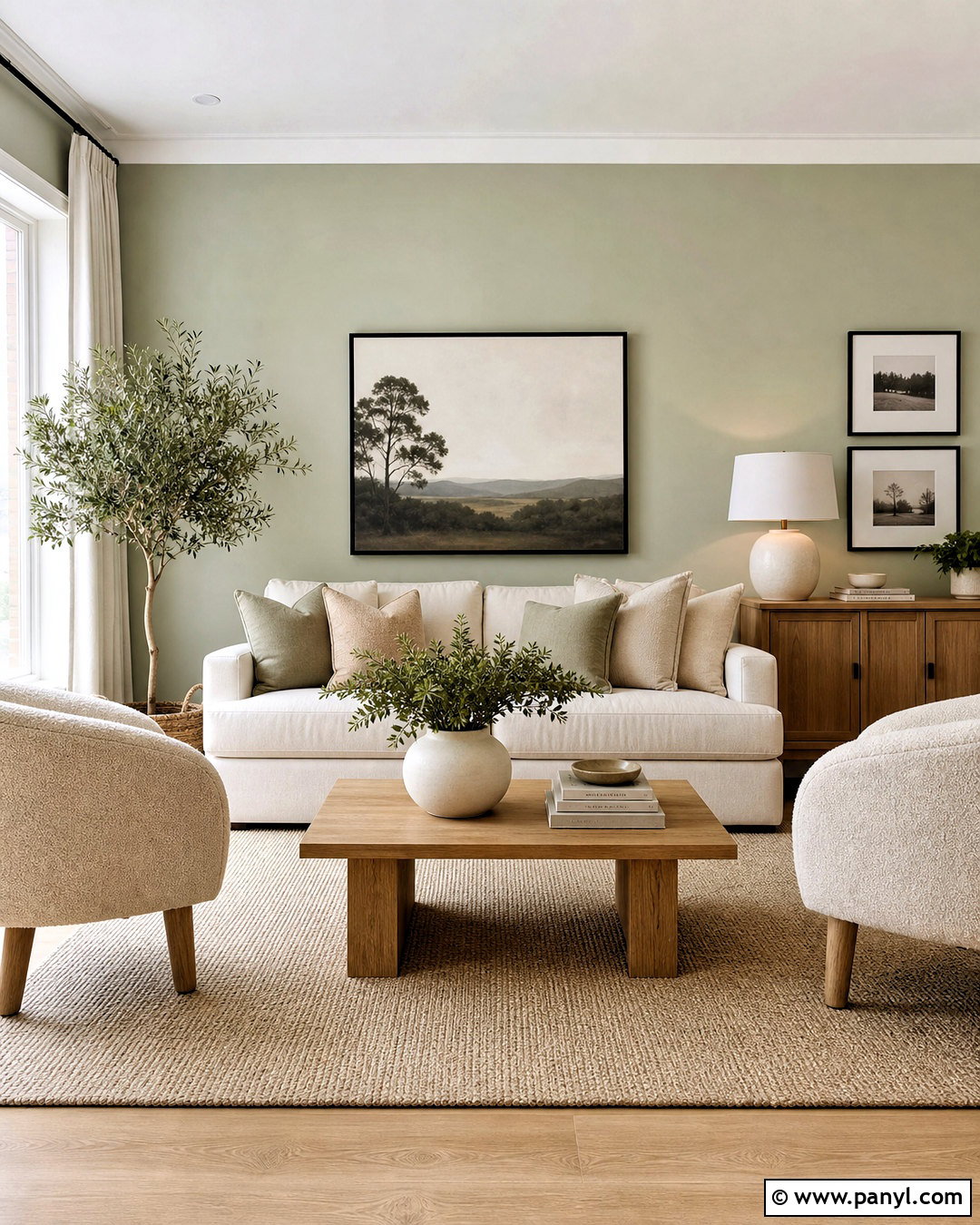
Soft sage green walls create an inviting foundation for a cream sofa, ivory curtains, and a lightly textured oatmeal rug. Bring warmth into the room with a natural oak coffee table, matching side tables, and a slim oak media cabinet. Keep the main seating arrangement open by placing the sofa opposite the media unit and adding two cream boucle chairs near the window. Linen pillows in sage, beige, and subtle botanical patterns connect the palette without making it overly themed. Choose warm white lampshades and simple ceramic accessories for a relaxed finish. A few matte black details, such as curtain rods and picture frames, provide definition. This balanced scheme suits Scandinavian, organic modern, and casual contemporary homes.
2. Sage Green Living Room With Cognac Leather
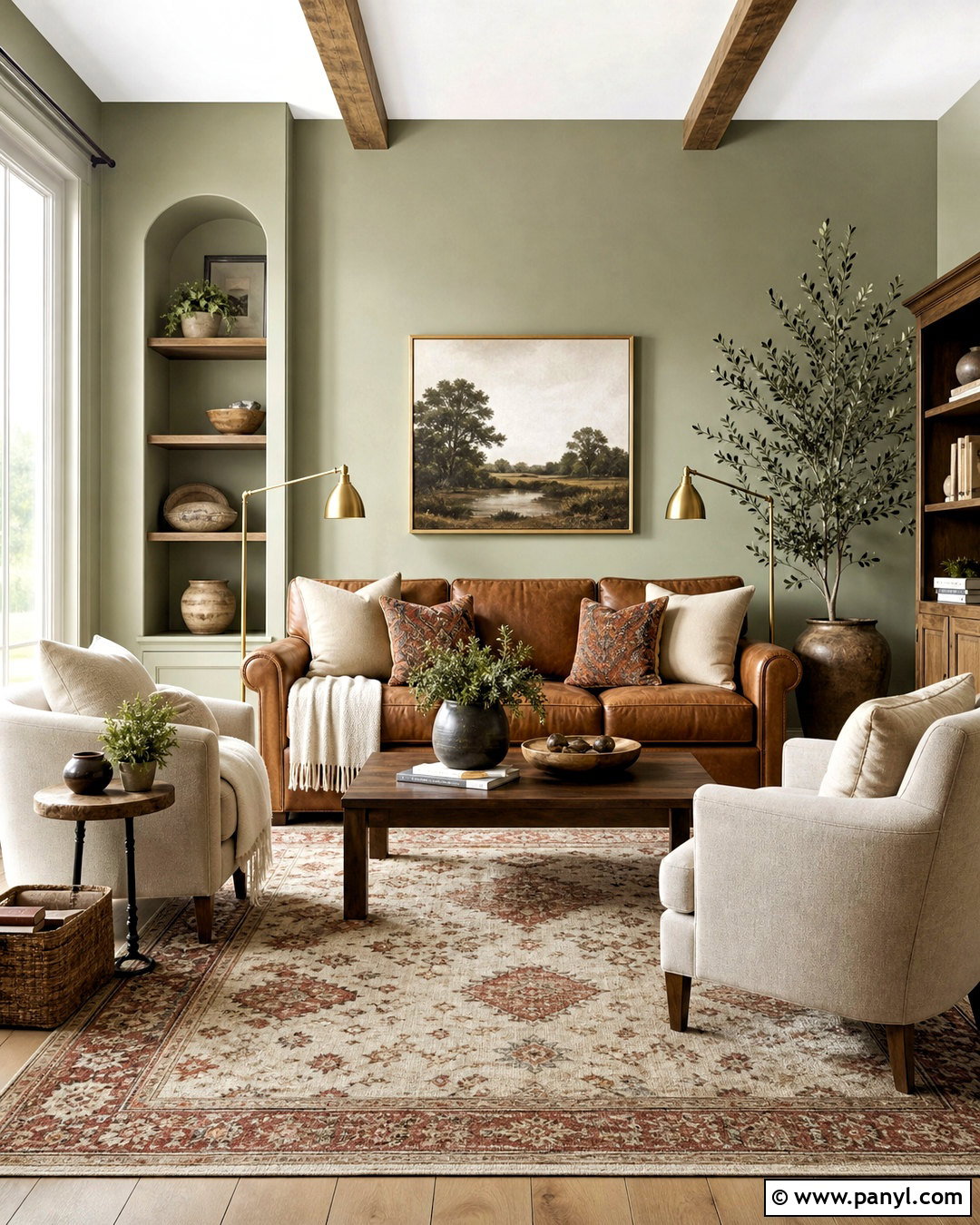
Imagine a comfortable cognac leather sofa placed against muted sage green walls. The rich brown upholstery immediately warms the cooler green backdrop and gives the room a grounded, collected character. Add two oatmeal linen armchairs to lighten the seating area, then center everything around a medium-toned wood coffee table. A faded cream, rust, and sage rug can quietly unite the main colors. Use off-white curtains, aged brass lamps, and black metal picture frames for contrast. Instead of filling every surface, display a few handmade pottery pieces and leafy plants. Walnut floating shelves or a low media console will reinforce the earthy palette. This complete arrangement feels welcoming, practical, and particularly appropriate for transitional or updated rustic interiors.
3. Sage Green Living Room With Charcoal Gray
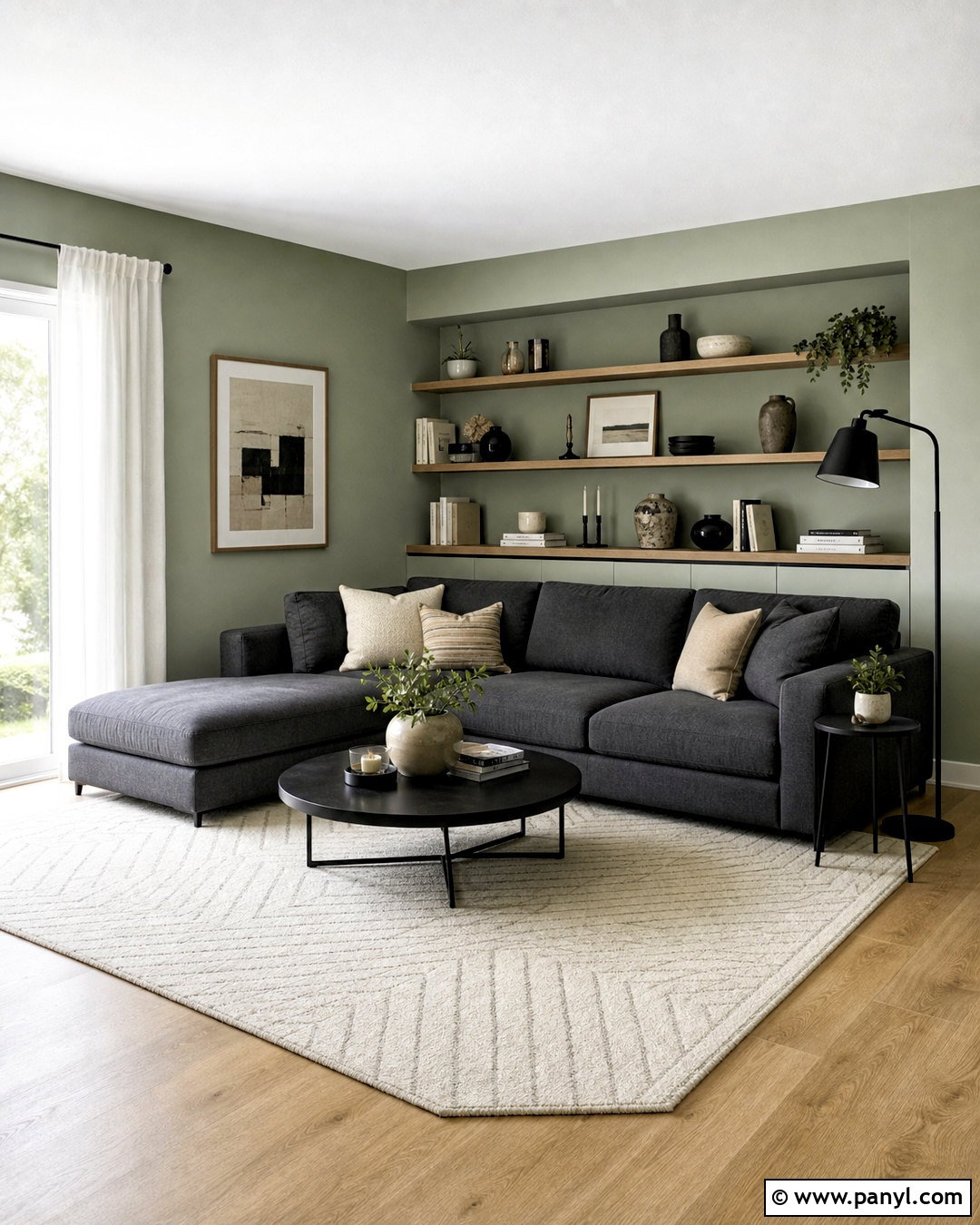
For a more contemporary result, combine pale sage green walls with a charcoal gray sectional and crisp black accents. The deep sofa anchors the room, while the light green backdrop prevents the layout from feeling severe. Choose a large ivory rug with a subtle geometric pattern to brighten the floor and define the seating area. A round black coffee table, black-framed artwork, and a slender metal floor lamp repeat the dark contrast around the space. Add pillows in sage, warm gray, and off-white rather than introducing several unrelated colors. White oak shelving and a few light ceramic pieces soften the scheme. Hang sheer white curtains at ceiling height to maintain an open appearance. The finished room feels polished, comfortable, and uncluttered.
4. Sage Green Living Room With Blush Pink
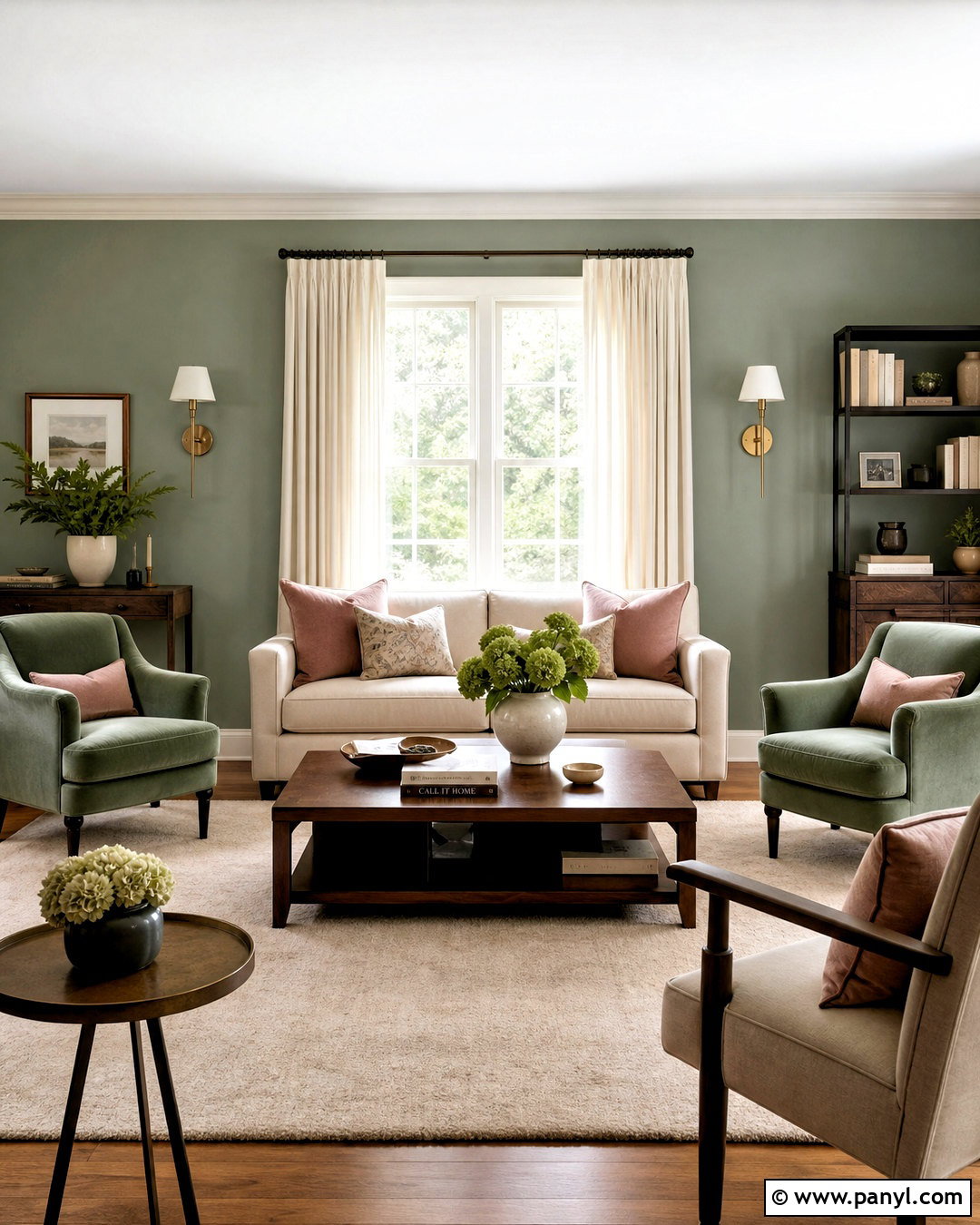
Blush pink gives sage green a gentle warmth that works beautifully in a bright, comfortable living room. Use dusty sage on the walls and select a cream sofa with blush velvet pillows and a folded rose-colored throw. Two sage upholstered chairs can strengthen the green without requiring every wall or furnishing to match. Ground the pastel palette with a warm beige rug and a walnut coffee table. Brushed brass sconces, lamp bases, and a thin mirror frame introduce a refined glow. Keep window treatments simple with ivory linen panels. Botanical artwork containing green, pink, cream, and brown will make the color combination feel intentional. The resulting space is soft rather than sugary, making it suitable for modern, vintage, and transitional homes.
5. Sage Green Living Room With Navy Blue
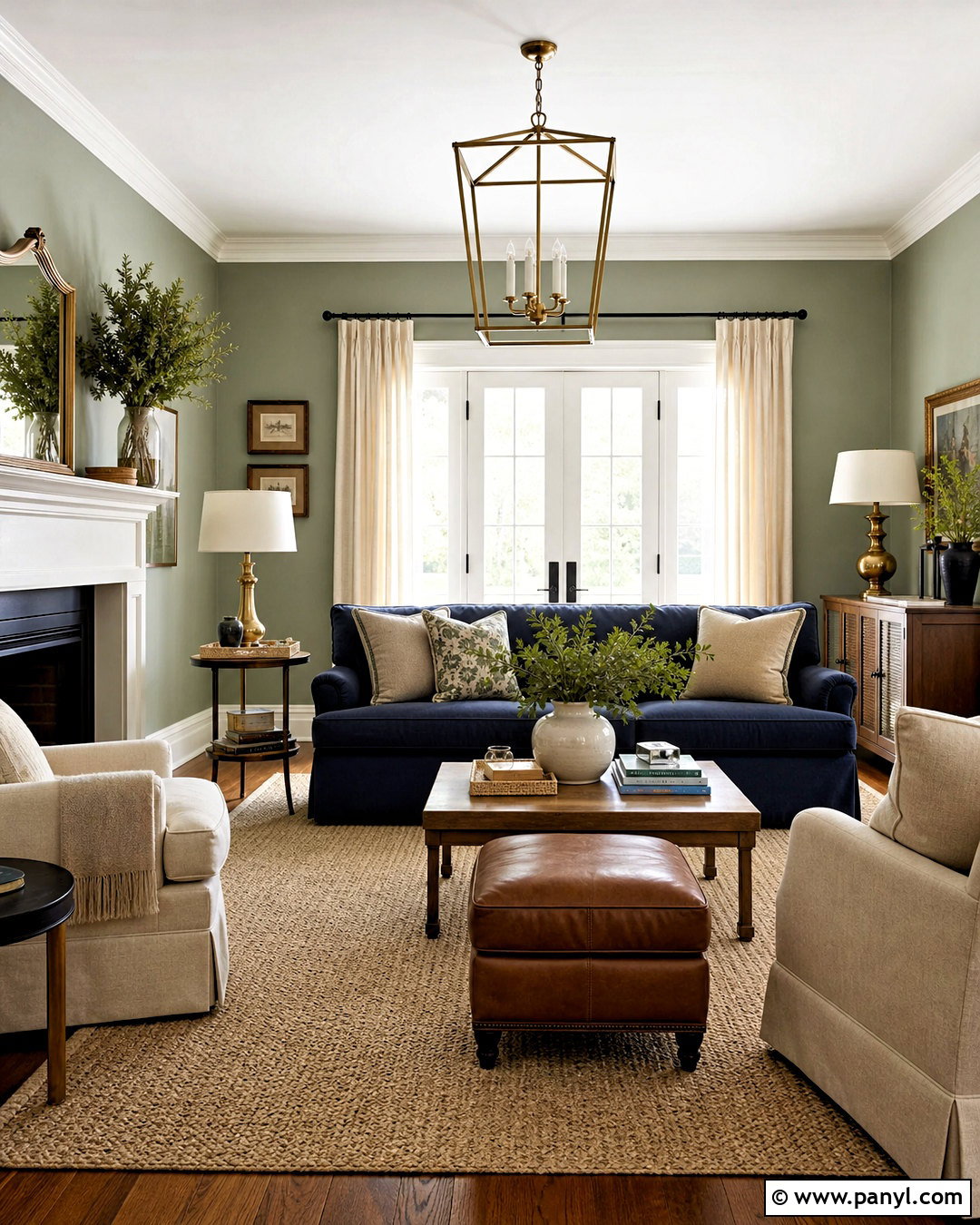
Deep navy provides confident contrast against sage green while preserving the room’s calm character. Paint the walls a light, earthy sage and use a navy blue sofa as the central anchor. Balance its visual weight with two cream accent chairs and a large beige wool rug. A medium oak coffee table and cognac leather ottoman will add warmth between the cool colors. Repeat navy through a patterned pillow, a ceramic vase, and selected details in the artwork rather than covering every surface with blue. Warm white curtains keep the windows bright, while antique brass lamps introduce a classic finish. This complete palette works especially well in traditional and transitional rooms where tailored furniture, symmetrical arrangements, and restrained decorative layers feel natural.
6. Sage Green Living Room With Terracotta
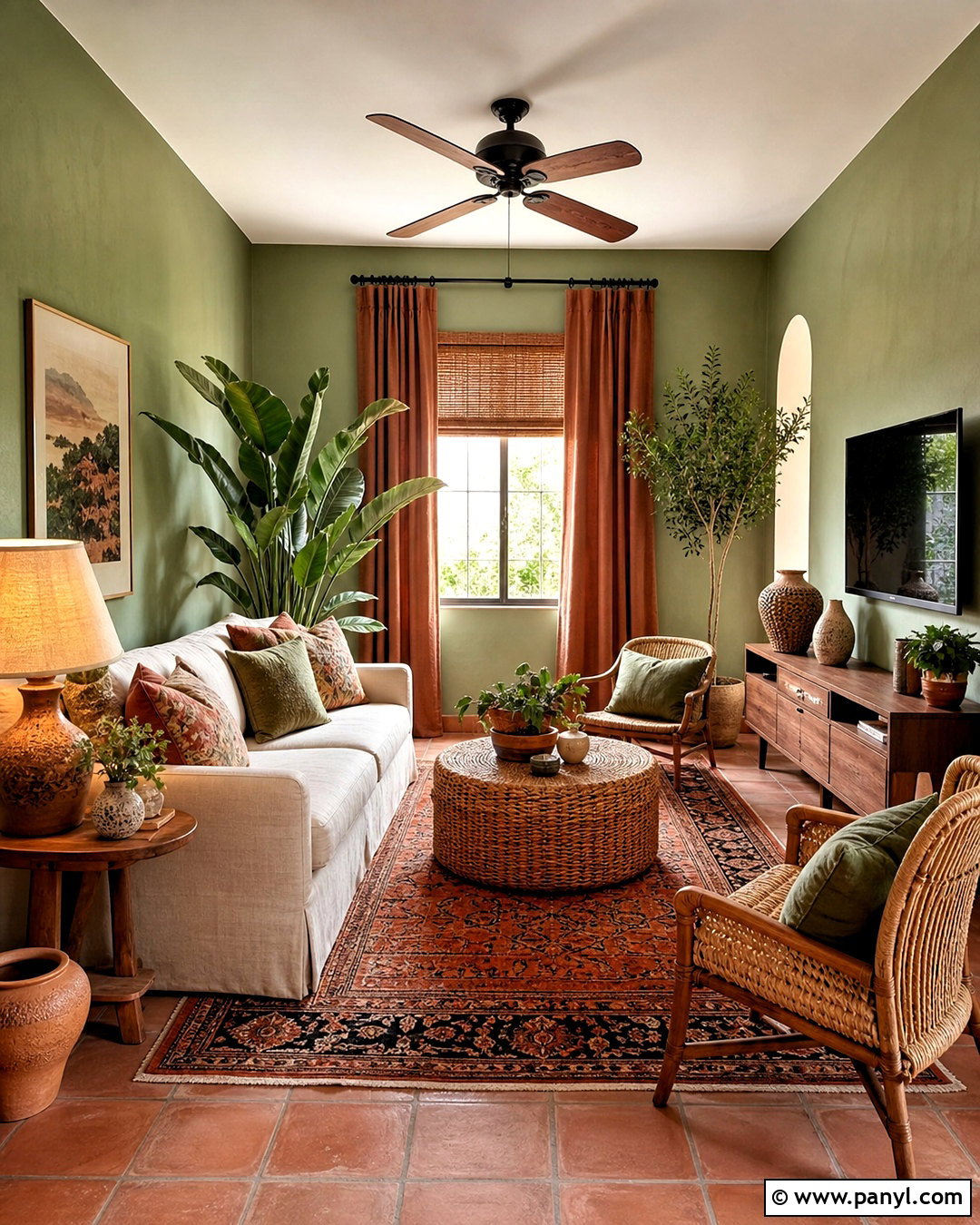
Earthy and relaxed, terracotta accents bring sun-warmed color to a sage green living room. Start with warm sage walls and a natural oatmeal sofa, then add terracotta pillows, clay-colored curtains, and a vintage-inspired rust rug. Place a low rattan coffee table at the center and use woven side chairs to introduce texture without making the room heavy. Medium wood flooring and a simple walnut media console reinforce the organic palette. Display unglazed pottery, linen-covered books, and a few leafy plants in substantial ceramic pots. Cream lampshades and light ceiling fixtures keep the overall effect bright. This coordinated look draws from Southwestern, Mediterranean, and bohemian interiors while remaining tidy enough for an everyday family living space.
7. Sage Green Living Room With Mustard Yellow
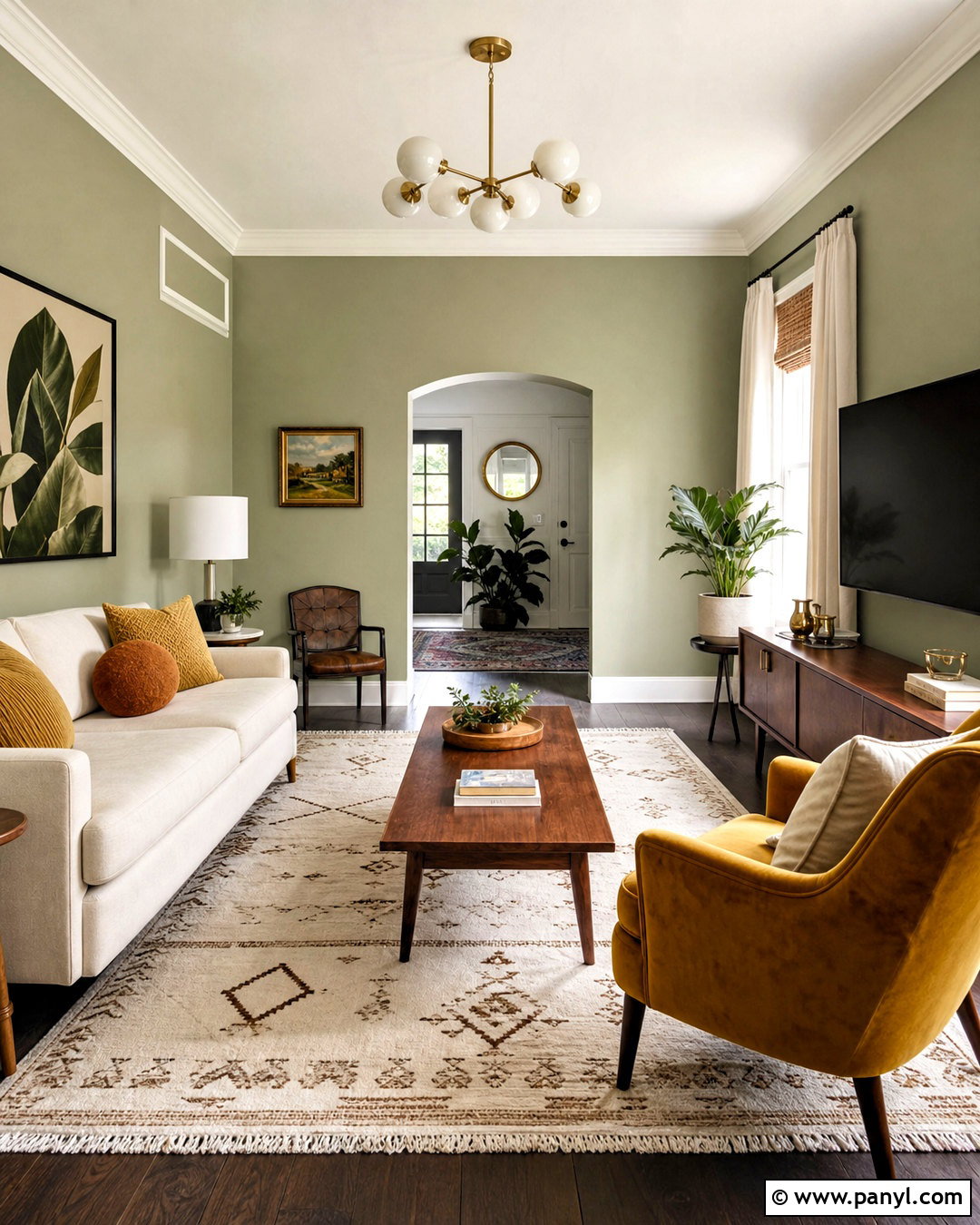
A controlled dose of mustard yellow can make sage green feel cheerful without overwhelming its quiet appeal. Cover the walls in a soft sage shade and furnish the room with a warm ivory sofa. Add one mustard velvet armchair as the primary accent, then repeat yellow in two small pillows or a section of patterned artwork. A walnut coffee table and dark wood media cabinet give the palette depth. Choose a cream rug containing fine sage and golden lines to connect the colors. Antique brass lighting supports the yellow tones more naturally than shiny chrome. Finish with off-white curtains and simple black frames. This complete arrangement feels welcoming and slightly retro, making it an effective choice for midcentury-inspired or eclectic living rooms.
8. Sage Green Living Room With Dusty Blue
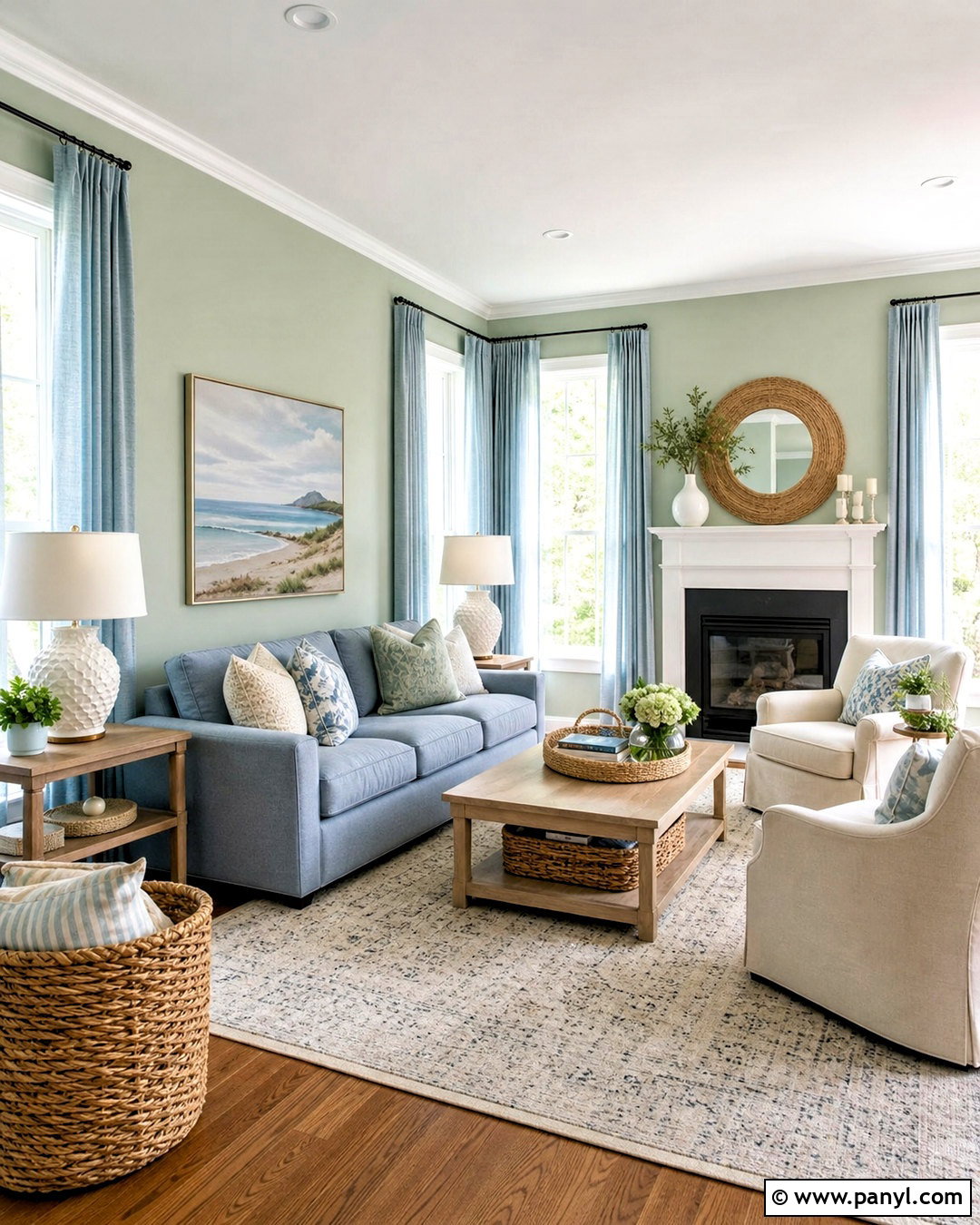
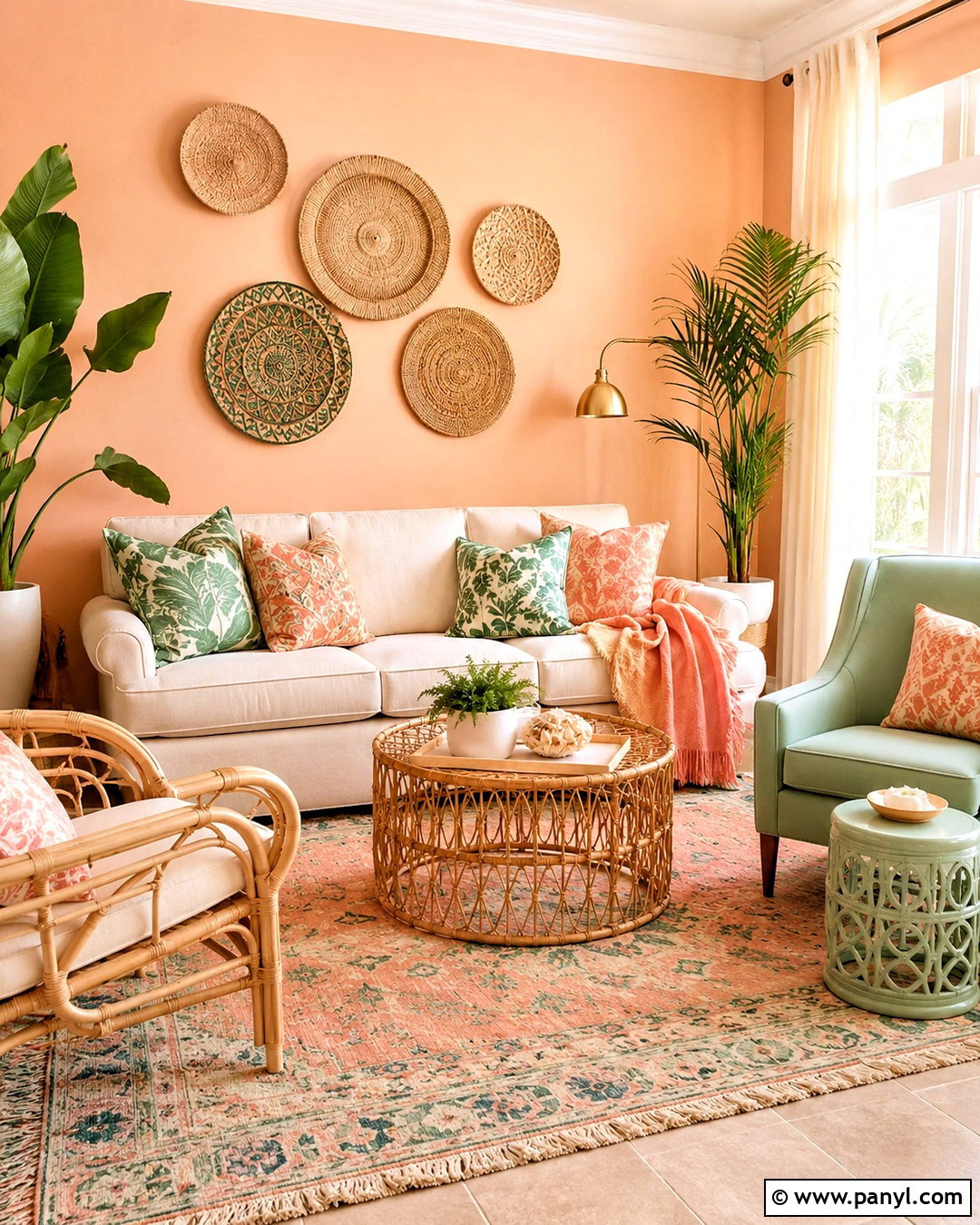
Sage green and dusty blue create a fresh, low-contrast palette suited to rooms with abundant natural light. Paint the walls a pale sage and choose a soft blue-gray sofa with clean, comfortable lines. Place two ivory chairs across from the sofa to create a conversational layout around a light oak coffee table. A cream rug with faded blue and green patterning will tie the seating together. Use sage pillows, powder blue curtains, and white ceramic lamps to distribute the colors evenly. Natural woven baskets and a pale wood media console prevent the cooler tones from feeling flat. Keep decorative items restrained and select artwork featuring softened landscapes or abstract shapes. The finished room has an airy coastal character without relying on obvious seaside decorations.
9. Sage Green Living Room With Lavender
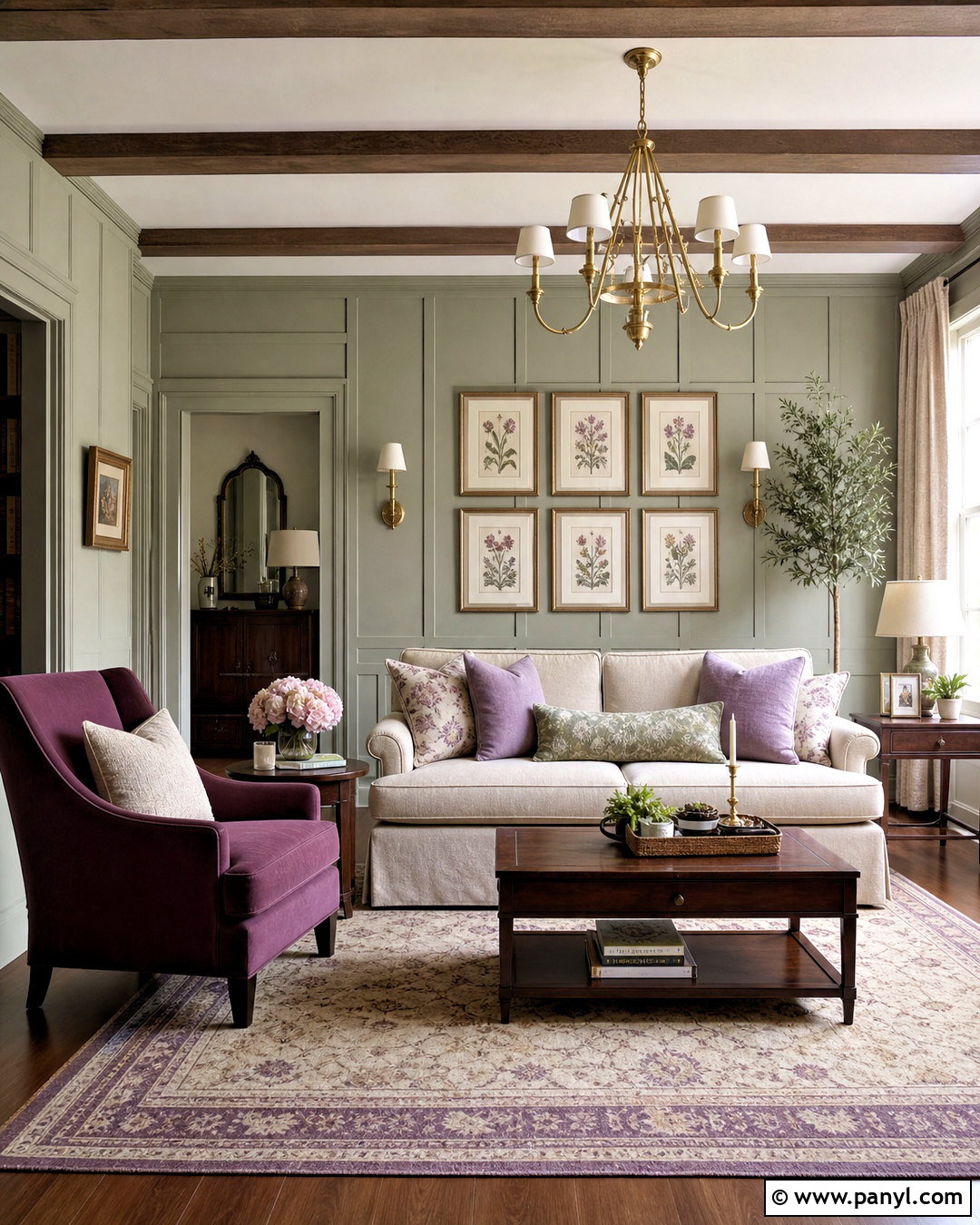
Muted lavender introduces an unexpected but elegant layer to a sage green living room. Choose a gray-toned sage for the walls and use a light greige sofa as the neutral center of the room. Add lavender pillows, one plum-toned accent chair, and a faded rug combining cream, sage, and dusty purple. Dark walnut furniture grounds the softer colors, while antique brass lighting adds warmth. Hang natural linen curtains rather than bright white ones to keep the contrast gentle. Botanical or abstract artwork can repeat the green and purple in small amounts. A few deep green plants provide richer variation within the palette. This design feels sophisticated when the purple remains muted, making it suitable for traditional, cottage, or quietly eclectic living spaces.
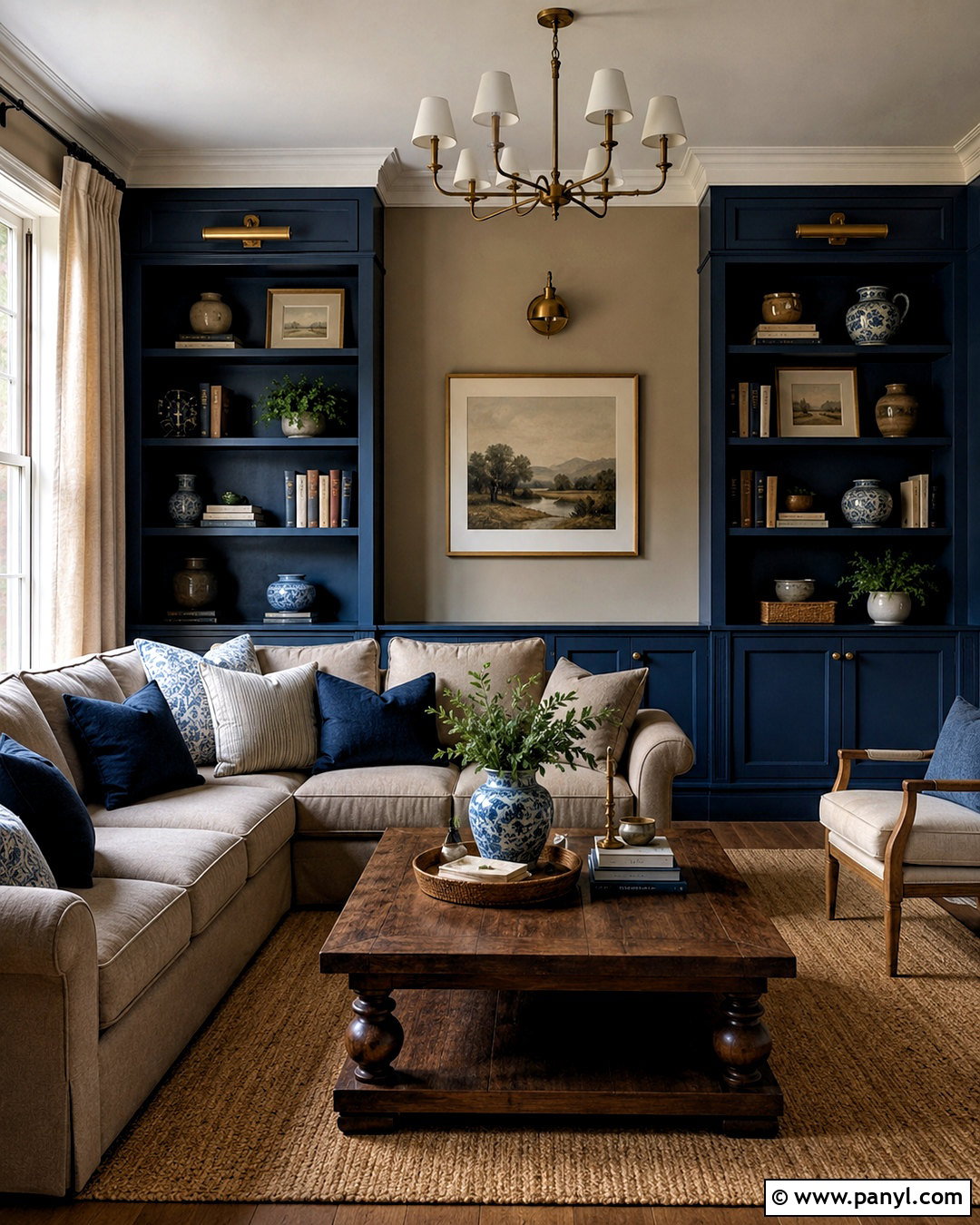
10. Sage Green Living Room With Burgundy
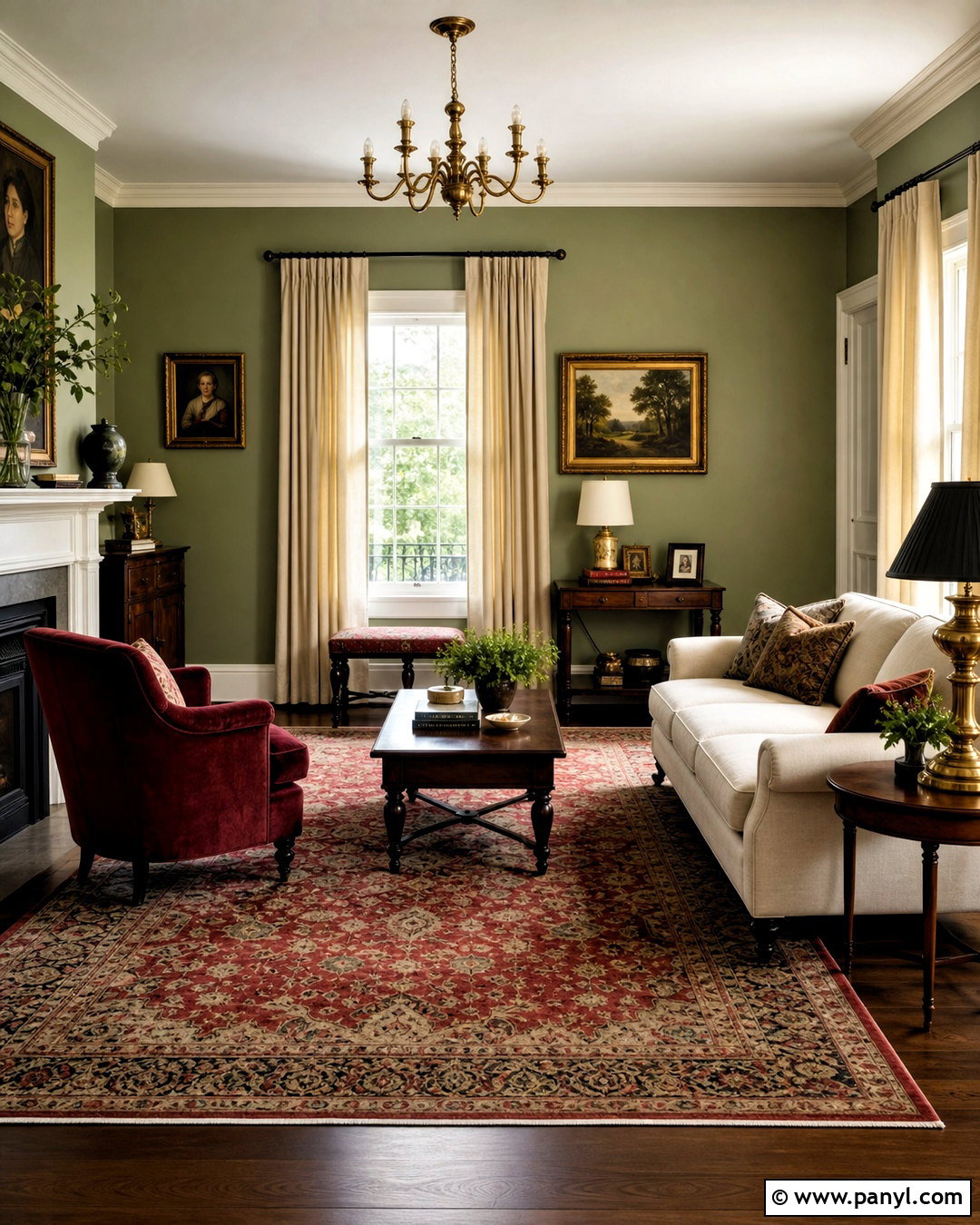
For a richer living room palette, pair medium sage green with restrained burgundy and warm ivory. Sage walls provide an earthy backdrop for a cream sofa, while a burgundy velvet chair creates a strong focal point near the fireplace or window. Use a traditional patterned rug that includes faded red, green, beige, and brown to connect the room. Dark walnut tables, aged brass lamps, and substantial wood frames reinforce the classic mood. Keep curtains a warm cream so the darker accents do not reduce the room’s brightness. Burgundy pillows should be balanced with plain sage and oatmeal textiles. Add landscape artwork and a few vintage ceramic pieces rather than numerous small accessories. The result feels established, comfortable, and ideal for traditional architecture.
11. Monochromatic Sage Green Living Room
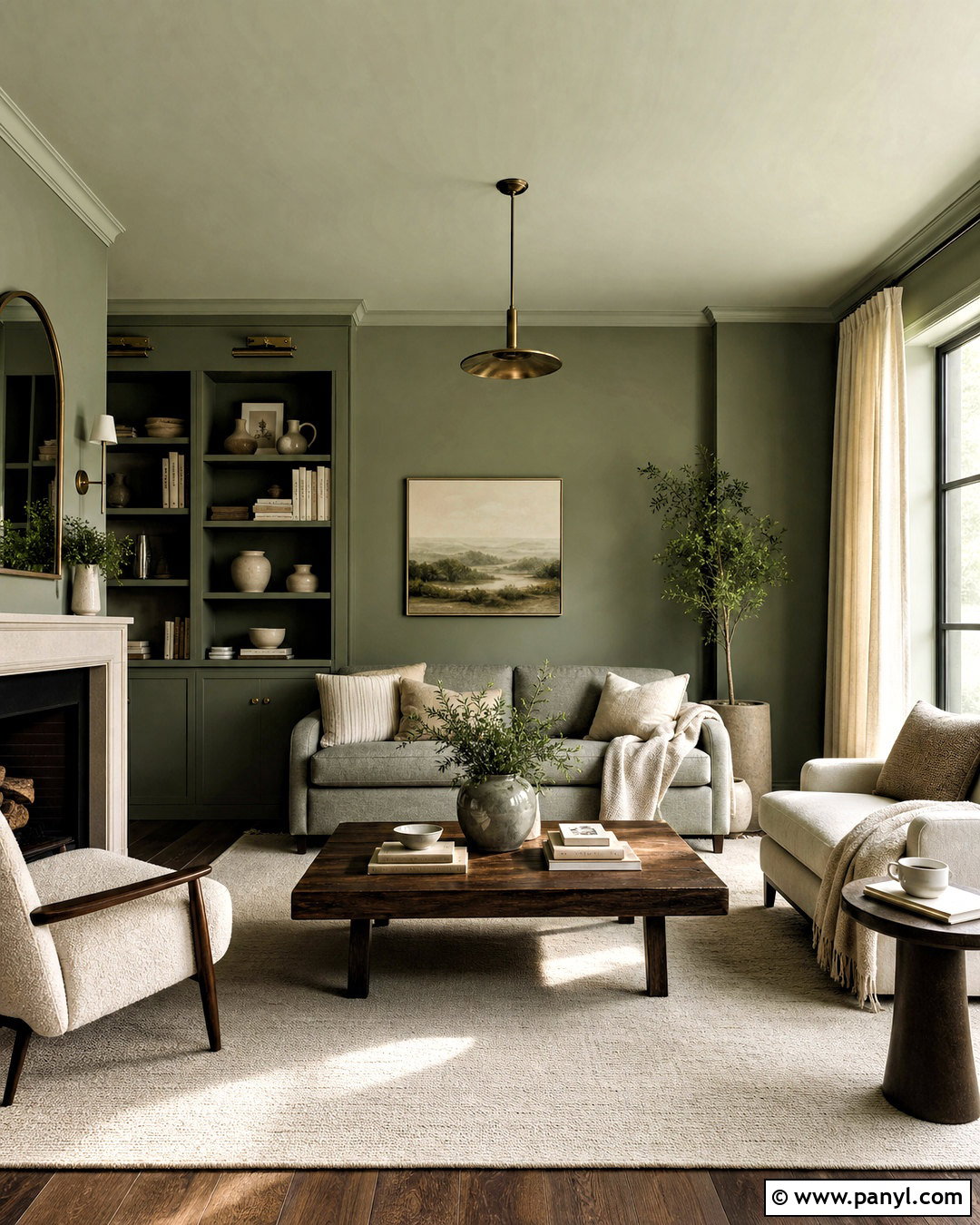
A monochromatic scheme can make sage green feel layered and sophisticated rather than repetitive. Use a pale sage on the ceiling, a medium sage across the walls and trim, and a deeper olive-sage shade on built-in shelving. Select a sofa in gray-green linen, but separate it visually from the walls with cream pillows and an ivory rug. A dark oak coffee table adds necessary contrast at the center of the seating area. Mix materials through velvet chairs, woven baskets, matte pottery, and subtly patterned curtains. Incorporate warm brass lighting so the green does not feel overly cool. Small amounts of black in frames or table legs will sharpen the design. Varying the depth and texture of green creates an immersive yet livable room.
12. Sage Green Living Room With Greige
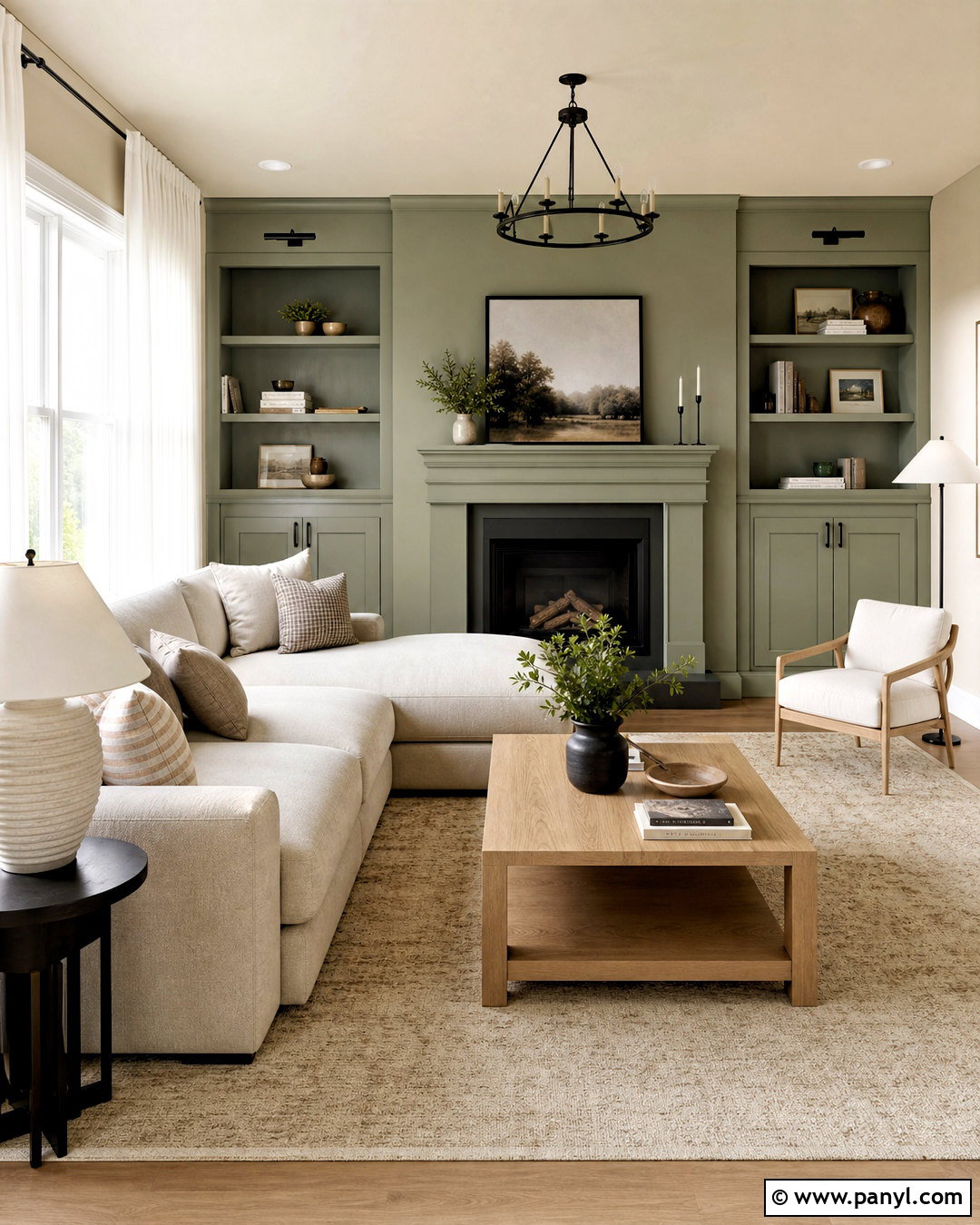
Greige offers a quiet neutral base that lets sage green appear soft and natural. Paint the main walls a warm greige, then use sage on the fireplace surround, built-in cabinets, or the wall behind the sofa. Choose an oatmeal sectional with simple lines and arrange it around a rectangular light oak coffee table. Layer the seating with sage, cream, and taupe pillows in linen and wool. A large ivory and beige rug should extend beneath the front legs of every seat, creating a unified layout. Add warm white curtains, ceramic table lamps, and understated black hardware. One or two leafy plants can deepen the green connection. This approachable color scheme works well in open-plan homes because it transitions smoothly into beige, white, or wood-toned adjoining spaces.
13. Sage Green Living Room With Black And White
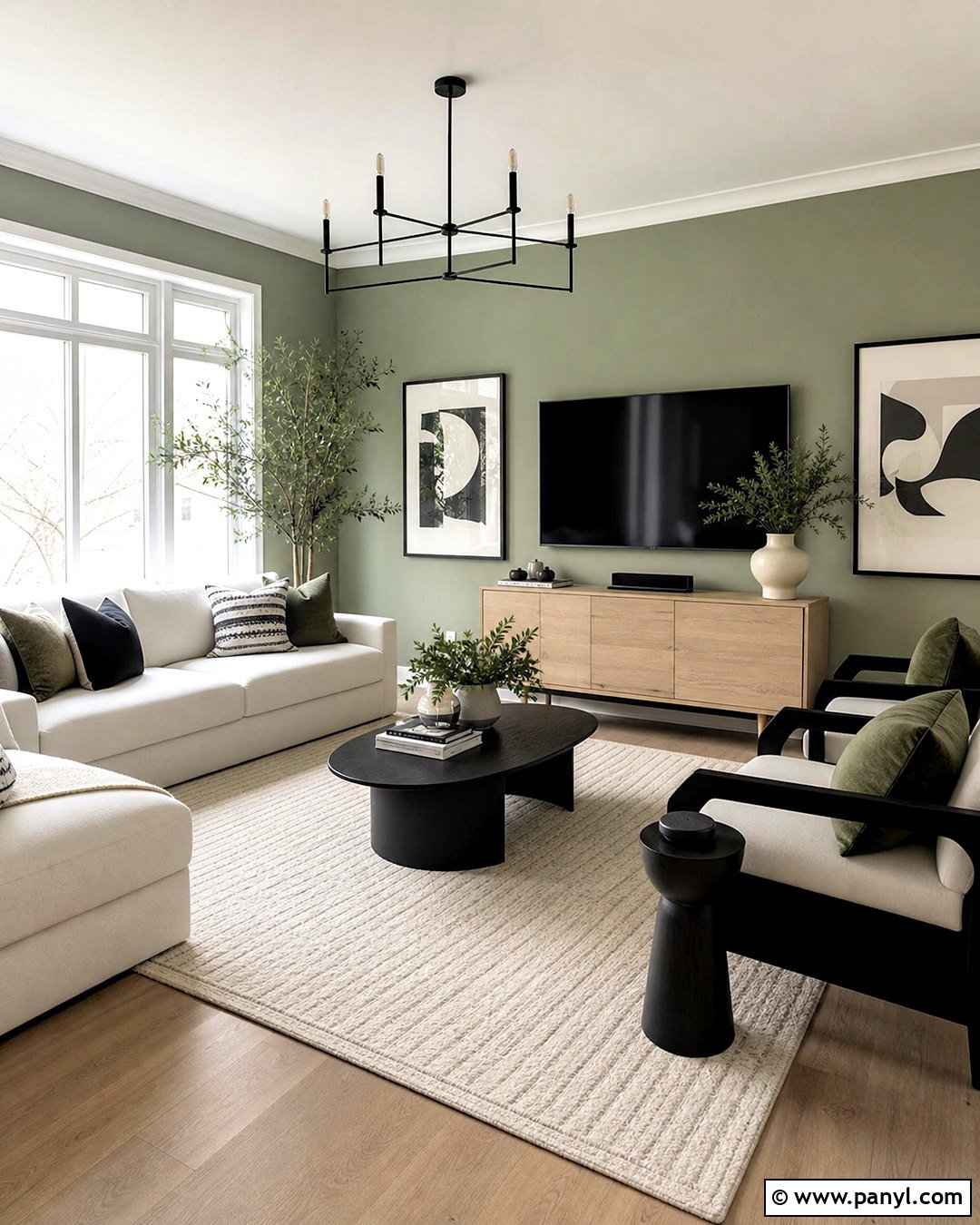
Clean black and white accents give sage green a crisp modern edge. Cover the walls in a clear, muted sage, then introduce a white sofa with straight lines and black-framed lounge chairs. Center the arrangement with a black oval coffee table over a cream rug patterned with thin black lines. Use white curtains to brighten the perimeter and install black curtain rods for visual definition. Simple graphic artwork in black, white, and sage can connect the main surfaces without adding another color. A pale oak media console softens the high contrast and keeps the room from feeling stark. Finish with matte black lamps, white ceramic vessels, and a few structured green plants. The completed look feels fresh, practical, and distinctly contemporary.
14. Sage Green Living Room With Coastal Beige
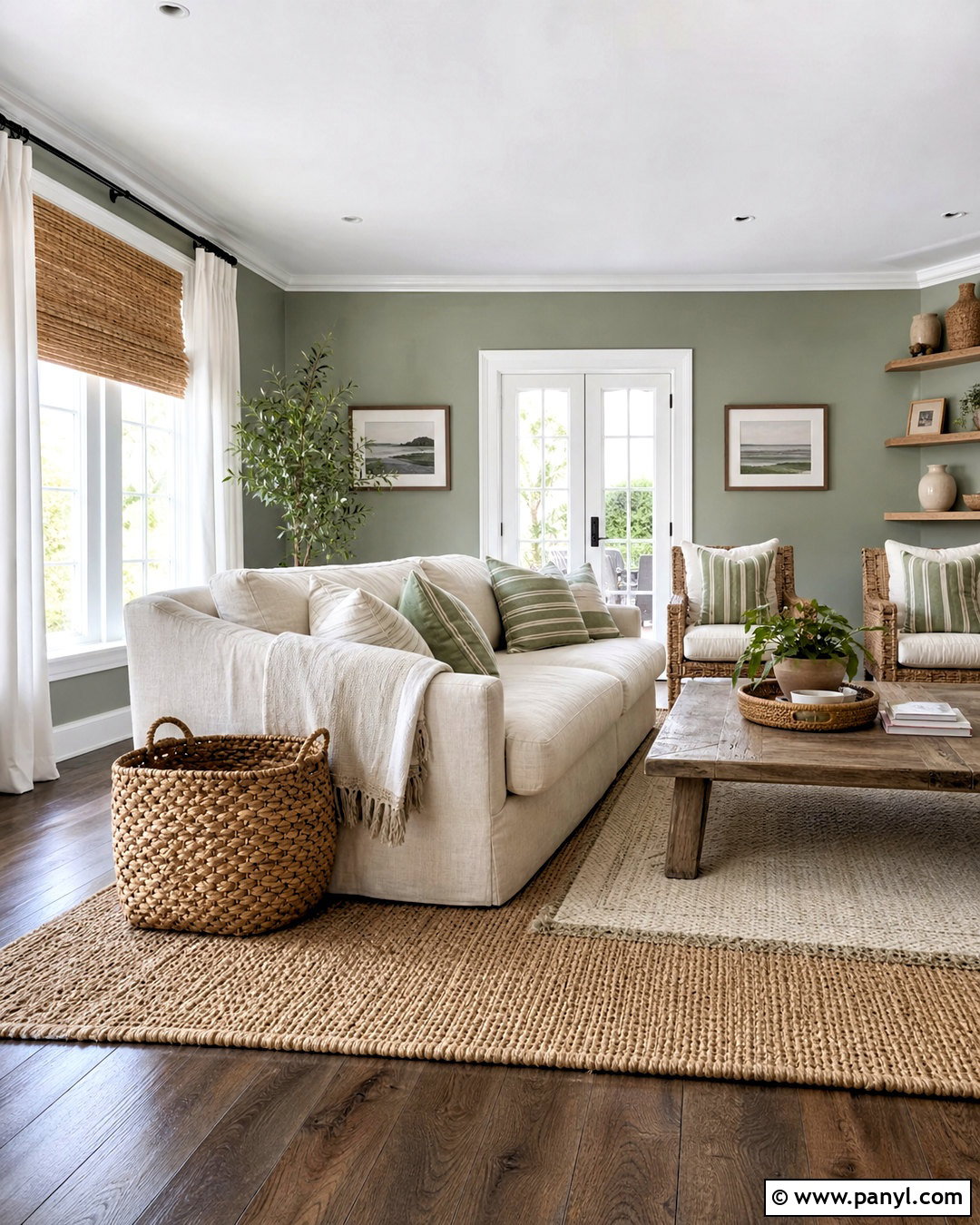
For a subtle coastal look, combine washed sage green with sandy beige, warm white, and weathered wood. Paint the walls a very light sage and choose a slipcovered beige sofa with relaxed cushions. Add two woven armchairs and position them opposite the sofa around a weathered oak coffee table. A natural jute rug layered beneath a smaller cream rug will give the seating area softness and definition. Use striped sage-and-ivory pillows sparingly, avoiding literal nautical motifs. Lightweight white linen curtains, woven shades, and pale ceramic lamps maintain the breezy atmosphere. Finish with driftwood-toned frames, seagrass baskets, and one large landscape print. The full room feels casual and bright while remaining refined enough for a year-round home.
15. Sage Green Living Room With Rust Orange
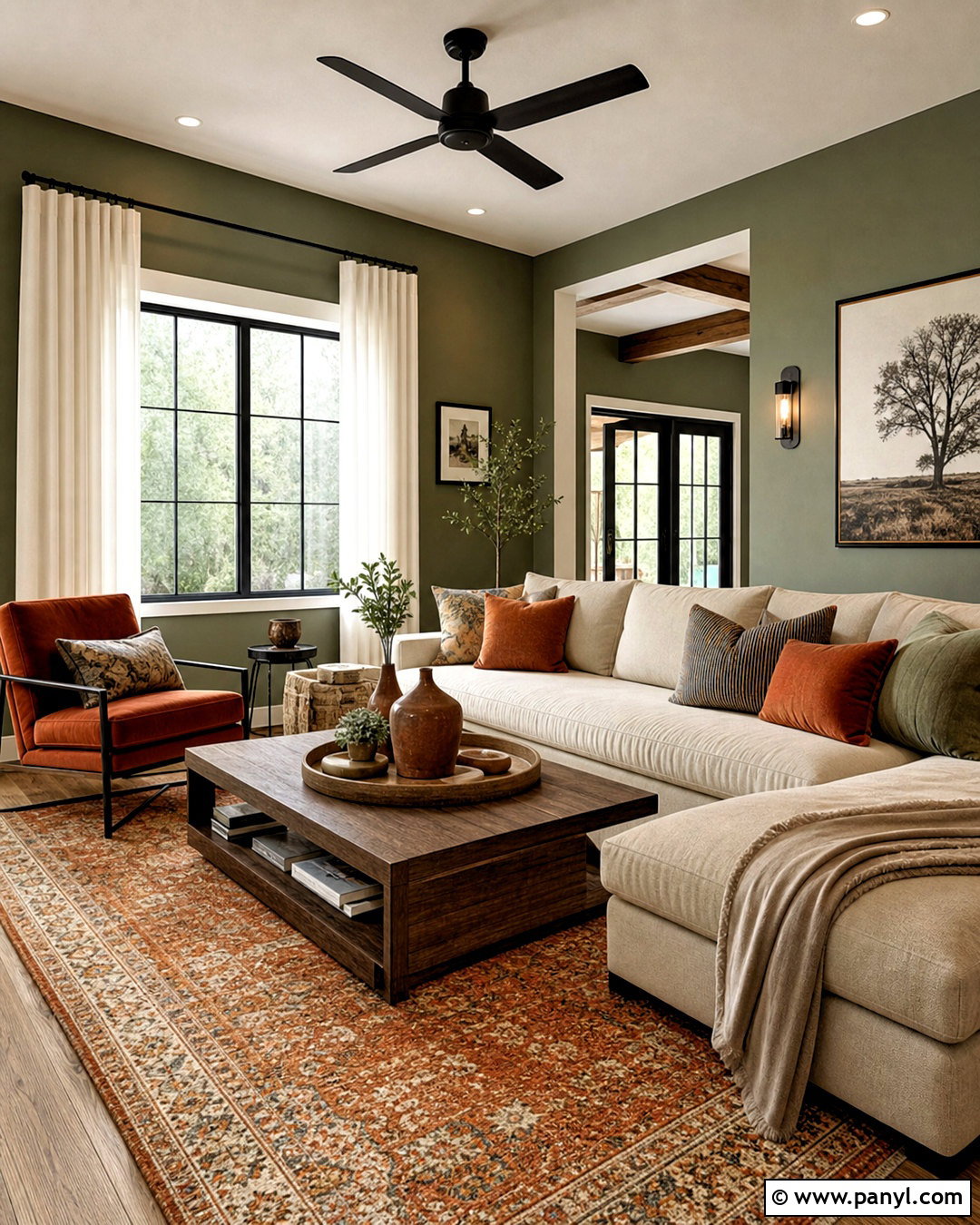
Rust orange creates a deeper, more dramatic companion for sage green than light terracotta. Use medium sage walls and place a warm beige sectional along the room’s longest side. Introduce rust through a velvet lounge chair, thick throw, and patterned rug containing cream, brown, green, and burnt orange. A dark walnut coffee table gives the center of the room appropriate weight. Choose ivory curtains and warm white lampshades to protect the overall brightness. Black metal details can appear on the curtain rod, side tables, and artwork frames. Add decorative pieces in smoked glass and matte clay for extra texture. This coordinated color scheme suits modern rustic and midcentury rooms, particularly those with wood floors, exposed beams, or a substantial fireplace.
16. Sage Green Living Room With Chocolate Brown
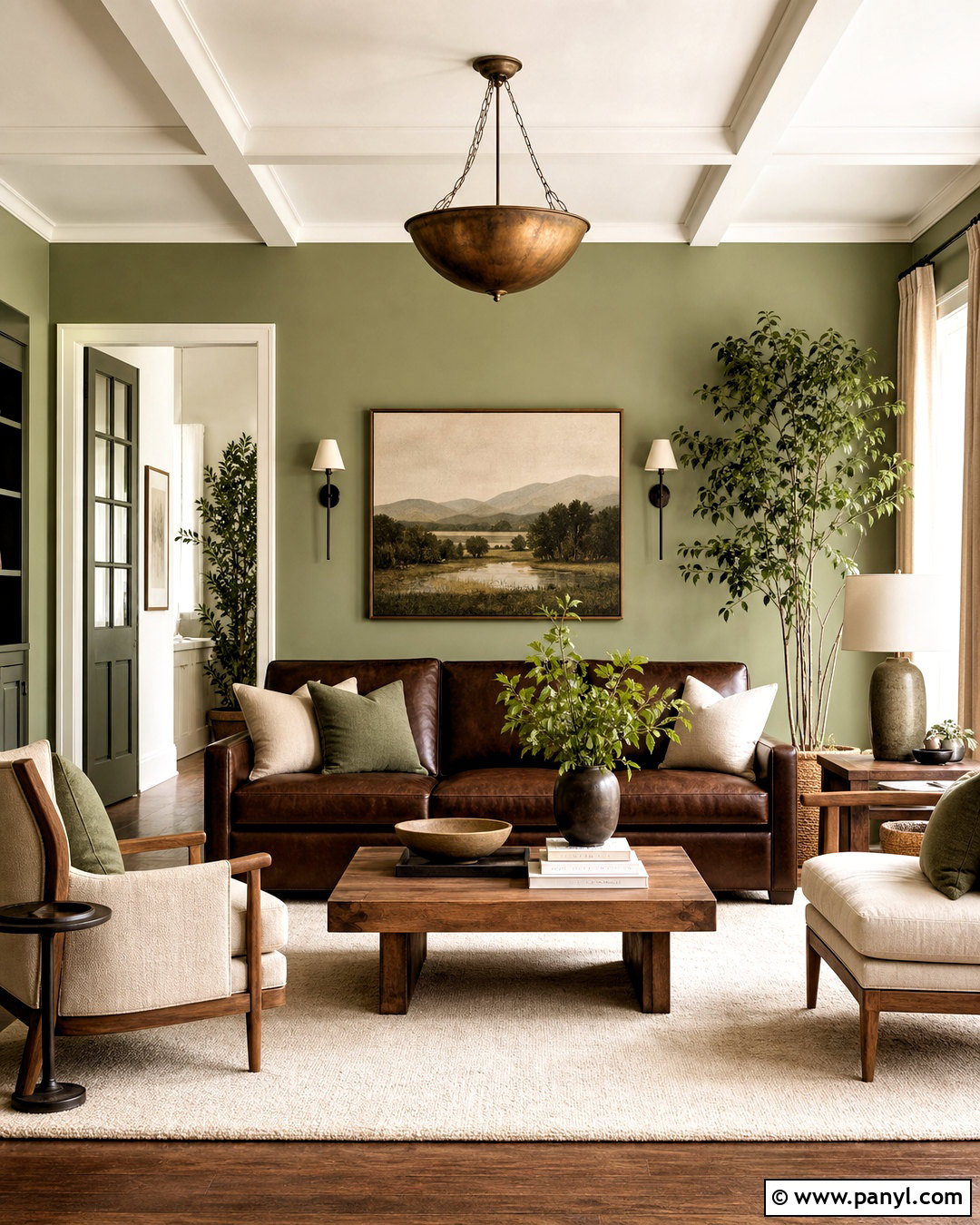
Chocolate brown makes sage green feel grounded, warm, and tailored. Begin with pale sage walls and a substantial dark brown sofa in leather, velvet, or textured fabric. Add two cream upholstered chairs to keep the seating arrangement from becoming visually heavy. An ivory wool rug and medium oak coffee table will brighten the central area while maintaining the earthy direction. Use chocolate-colored curtains only in a large, sunlit room; otherwise, select oatmeal linen panels and repeat brown through pillows and frames. Aged bronze lighting works naturally with both colors. Complete the room with landscape art, a tall leafy plant, and a wood media cabinet. The palette feels especially appropriate for Craftsman, traditional, and updated lodge-inspired living rooms.
17. Sage Green Living Room With Soft Peach
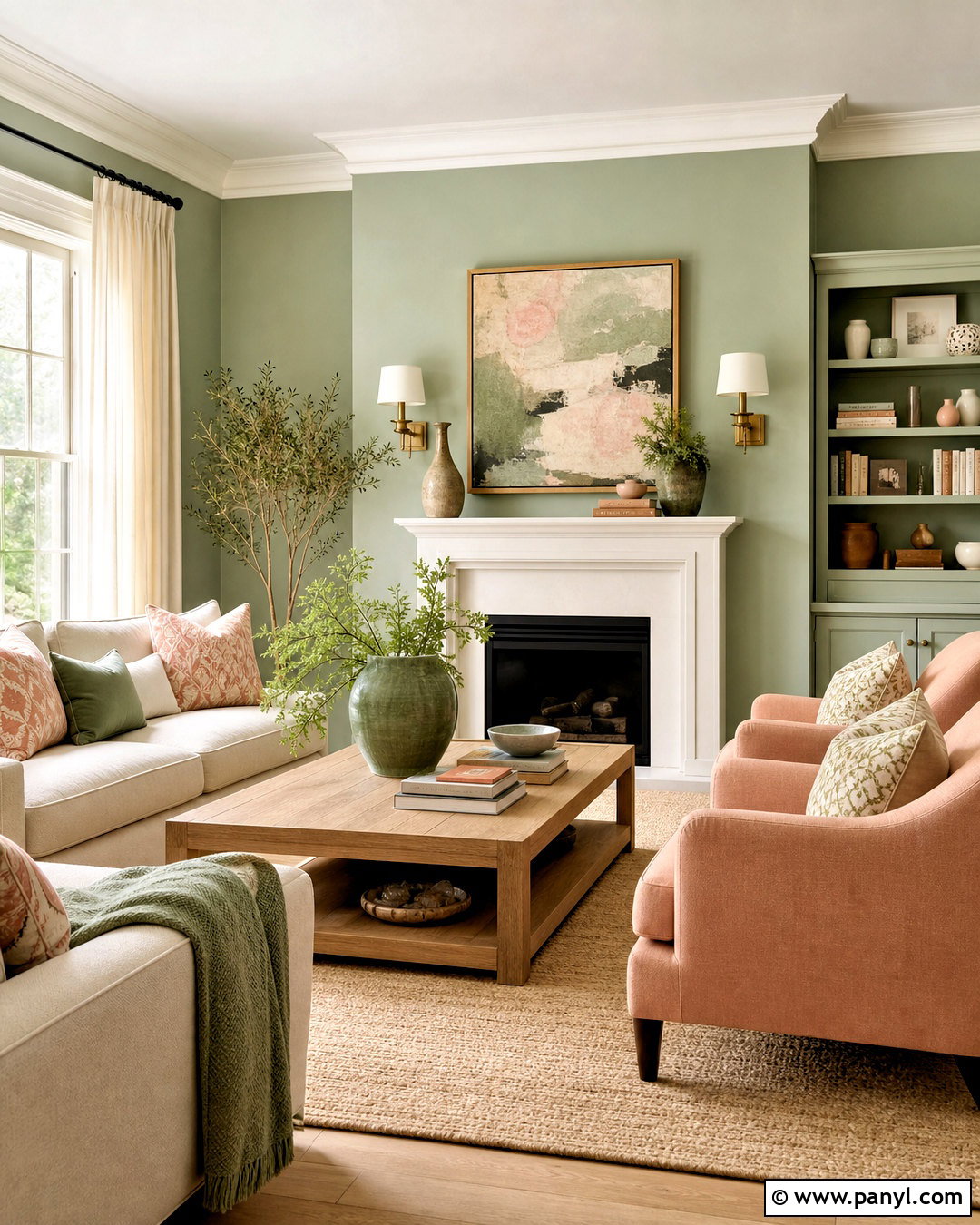
Soft peach can gently warm a sage green room without creating an overly bright or youthful palette. Apply light sage paint to the walls and select a cream or pale beige sofa for the main seating. Introduce peach through a pair of linen accent chairs, subtly patterned pillows, and an abstract print above the sofa. A light oak coffee table and woven beige rug continue the relaxed warmth. Choose creamy curtains and brushed brass lighting to support the peach undertones. Small sage accessories, such as ceramic vases and a folded throw, distribute green beyond the walls. Keep every shade dusty rather than saturated. The finished room feels sunny, comfortable, and suitable for cottage, contemporary, or casual transitional interiors.
18. Sage Green Living Room With Muted Teal
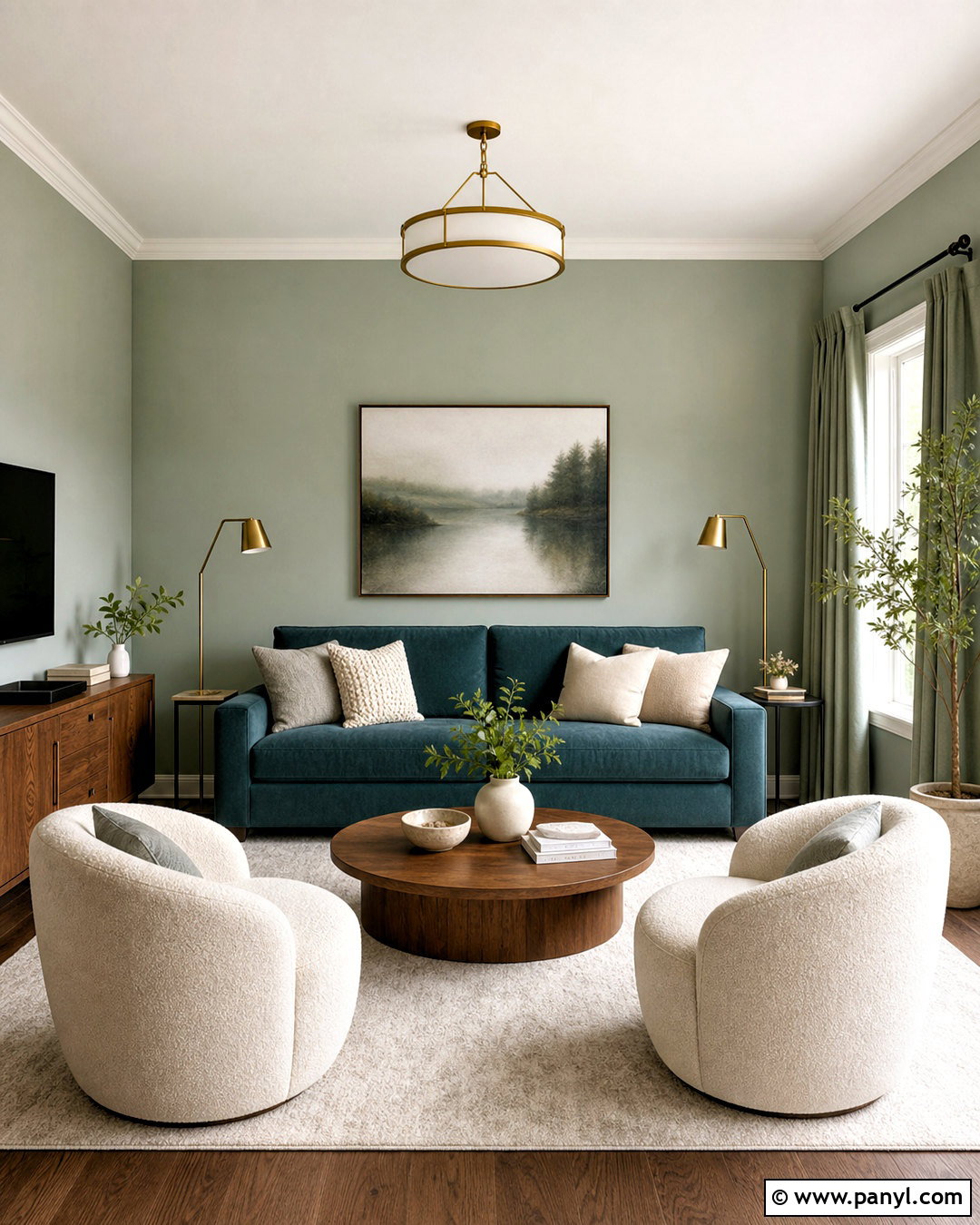
Muted teal gives sage green greater depth while keeping the palette connected to nature. Paint the walls a light gray-sage and choose a deep teal sofa as the room’s central statement. Balance it with cream boucle chairs and an expansive oatmeal rug. A walnut coffee table and matching media cabinet warm both green-based colors. Repeat teal in a small section of artwork or a single patterned pillow, allowing the sofa to remain the strongest feature. Use sage curtains for a subtle tonal layer, or choose ivory linen if the room receives limited daylight. Brass floor lamps and dark bronze hardware add polish. This scheme works particularly well in modern and art deco-inspired rooms when furniture shapes remain streamlined and accessories are carefully edited.
19. Sage Green Living Room With Butter Yellow
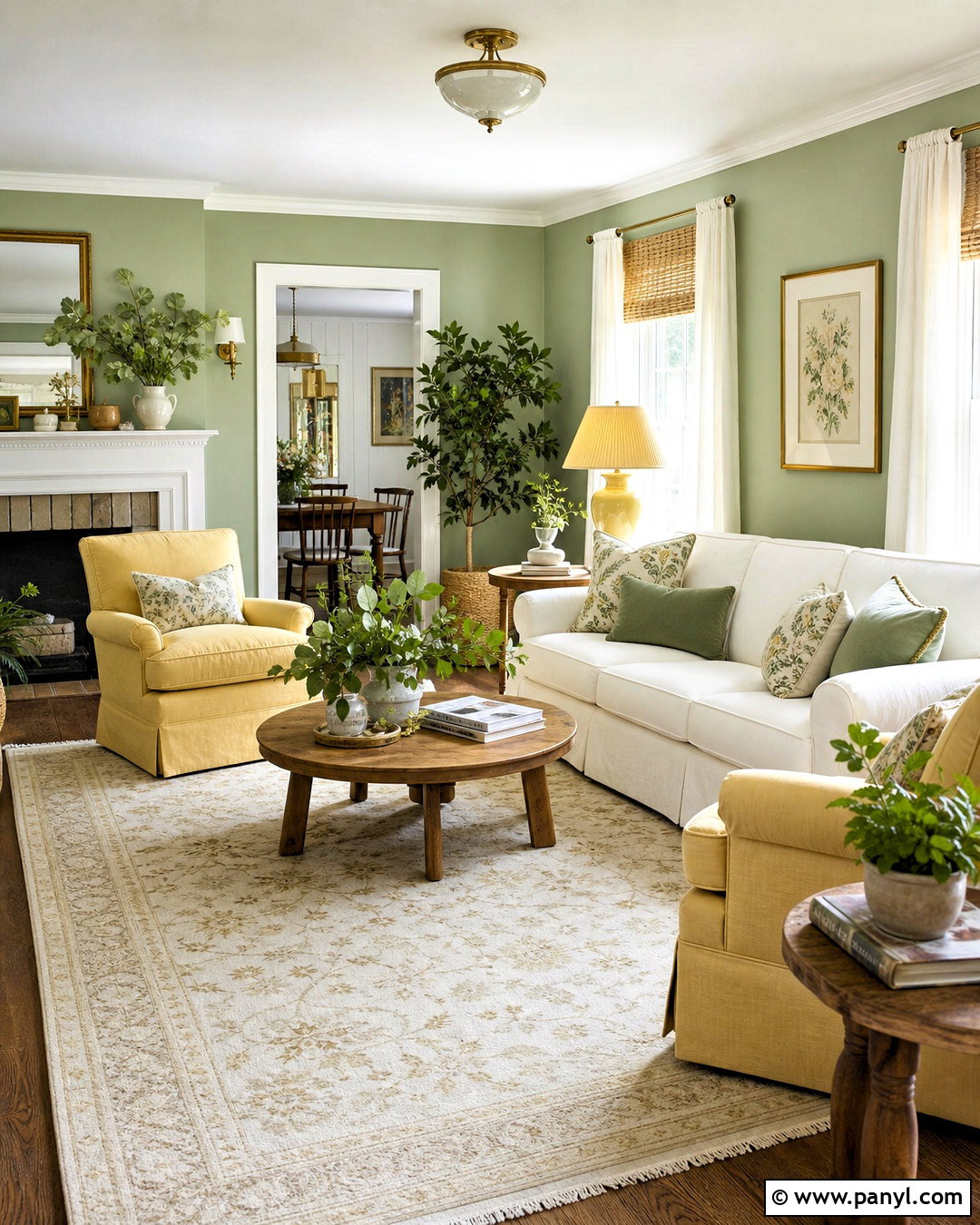
Butter yellow creates a light, optimistic companion for sage green. Use soft sage walls, a warm white sofa, and two pale yellow armchairs arranged around a round oak coffee table. Choose an ivory rug with a restrained green-and-yellow pattern so the seating group feels connected. White linen curtains will reflect daylight, while natural woven shades add warmth and privacy. Repeat yellow through one lamp base, selected artwork details, and a small pillow rather than scattering it everywhere. Sage ceramics and leafy plants strengthen the green side of the palette. Keep the wood finishes light to medium and avoid very dark furniture. The complete room feels bright and welcoming, making it a practical choice for small living rooms, cottages, and family-friendly interiors.
20. Sage Green Living Room With Natural Stone
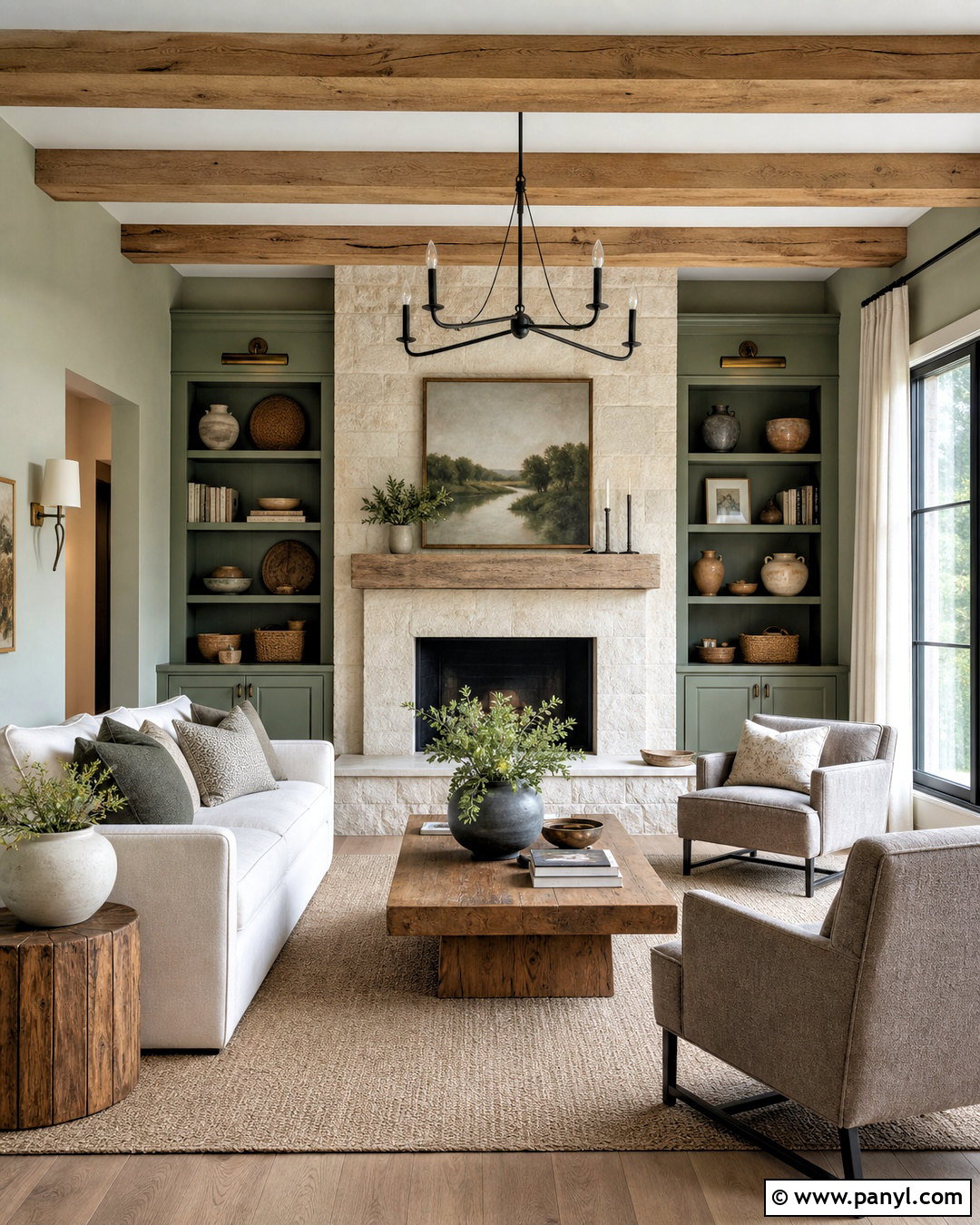
Natural stone gives a sage green living room an architectural, timeless quality. Build the palette around a limestone or pale stacked-stone fireplace, then use muted sage across the surrounding walls and built-in shelves. Position a warm ivory sofa opposite two taupe armchairs to create a comfortable conversation area. A medium oak coffee table and beige wool rug will connect the furniture to the stone. Choose off-white curtains, bronze sconces, and dark wood picture frames for gentle definition. Decorative objects should include rough pottery, woven baskets, and simple greenery rather than glossy accessories. If the room has wood ceiling beams, leave them in a natural finish. The complete combination feels organic, substantial, and equally suitable for traditional and modern rustic homes.
Conclusion:
These 20 sage green living room color scheme ideas show how easily this muted color can shift from airy and relaxed to rich and dramatic. Cream, beige, oak, and natural stone create calm foundations, while navy, burgundy, charcoal, teal, and chocolate brown add stronger contrast. Softer accents such as blush, lavender, peach, and butter yellow offer warmth without overpowering the green. Before committing, view fabric and paint samples together in the room during morning, afternoon, and evening light. Then repeat each major color at least a few times through furniture, textiles, artwork, or finishes. A thoughtfully balanced palette will make your sage green living room feel complete, comfortable, and intentionally designed.

Related Ideas and Inspiration:
Leave a Reply