
Blue can make a living room feel airy, polished, cozy, or dramatic depending on its depth, undertone, and placement. Current blue paint living room ideas range from pale sky walls and restrained blue-gray schemes to saturated navy rooms with matching trim. Natural wood, warm neutrals, crisp white, aged metals, and textured fabrics help balance the cooler character of blue while giving the room a complete, layered appearance. () Before committing, view large paint samples throughout the day because sunlight and artificial lighting can noticeably change how a blue reads. The following complete room schemes include furniture, finishes, layouts, and accent colors, making it easier to recreate these 20 blue paint living room ideas.

1. Navy Blue Living Room
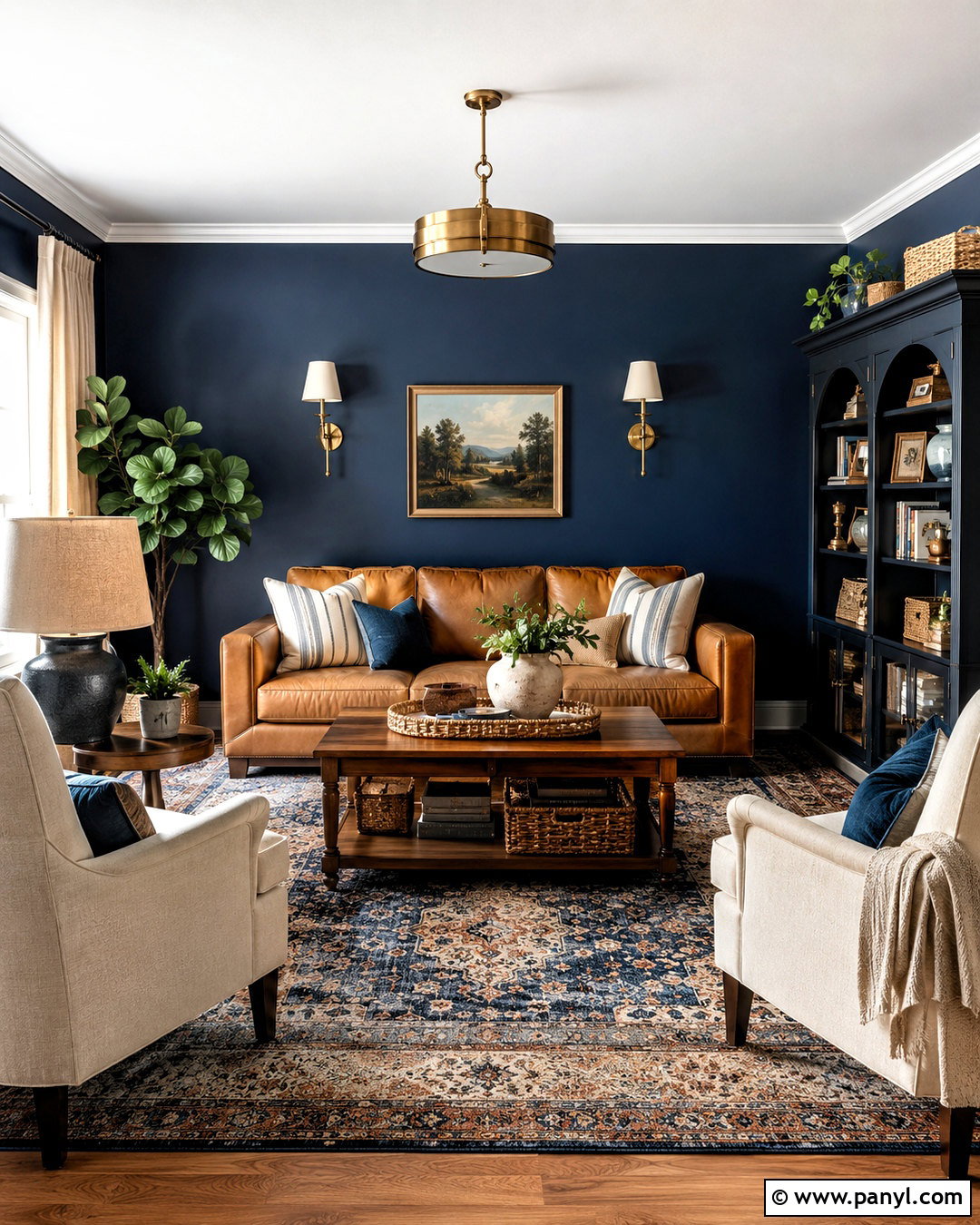
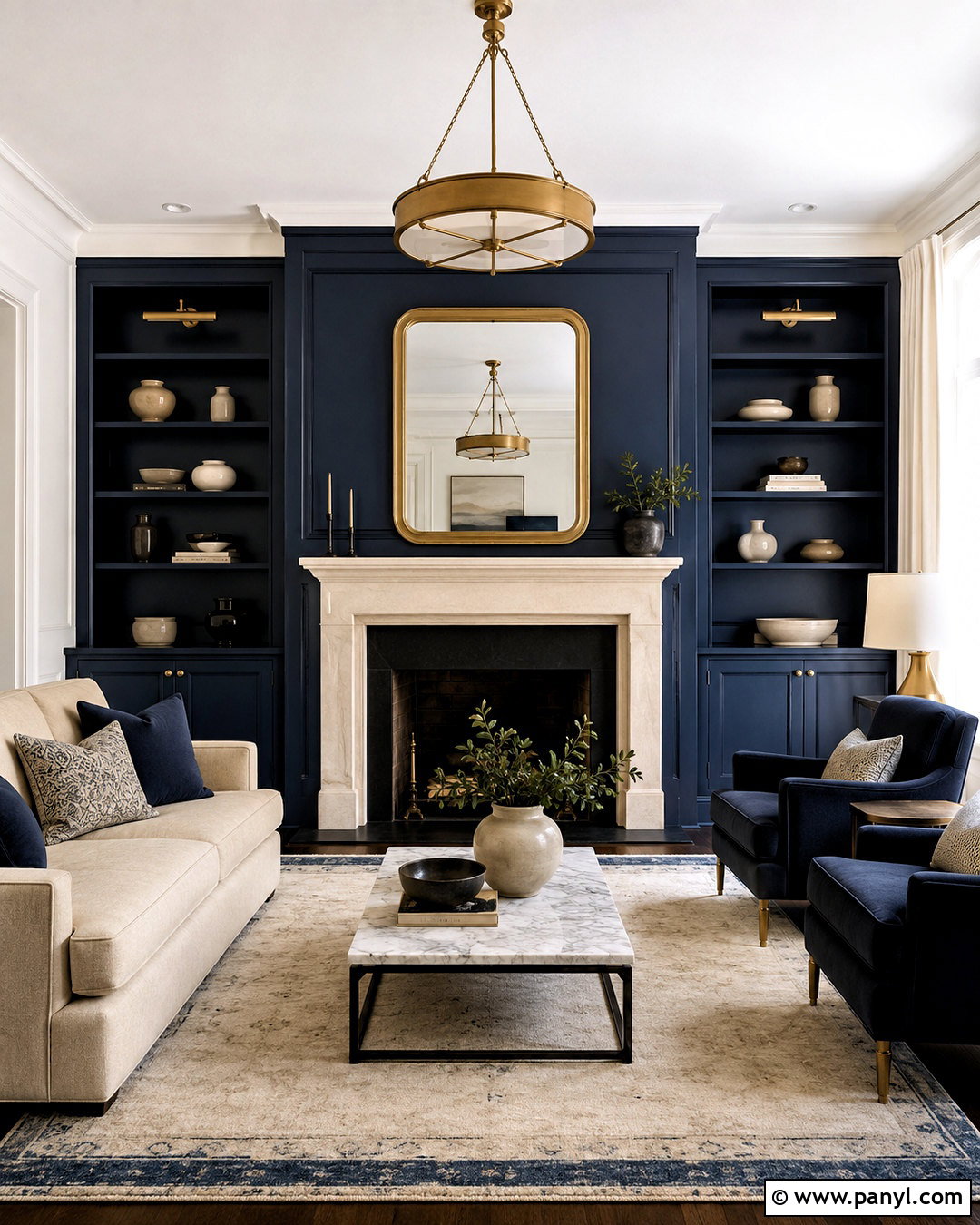
Deep navy walls create a comfortable, enveloping living room that works especially well for evening relaxation. Paint every wall navy, but keep the ceiling warm white to prevent the room from feeling closed in. Position a camel leather sofa opposite a simple fireplace or media console, then add two cream upholstered chairs to lighten the seating arrangement. A vintage-style rug with navy, rust, and beige tones connects the contrasting colors. Choose medium-tone oak tables instead of black furniture, which can make the palette feel too heavy. Brass sconces and a linen-shaded floor lamp provide warm highlights. Finish the room with oversized neutral artwork, striped pillows, and natural woven baskets for a balanced, collected look.
2. Light Blue Living Room
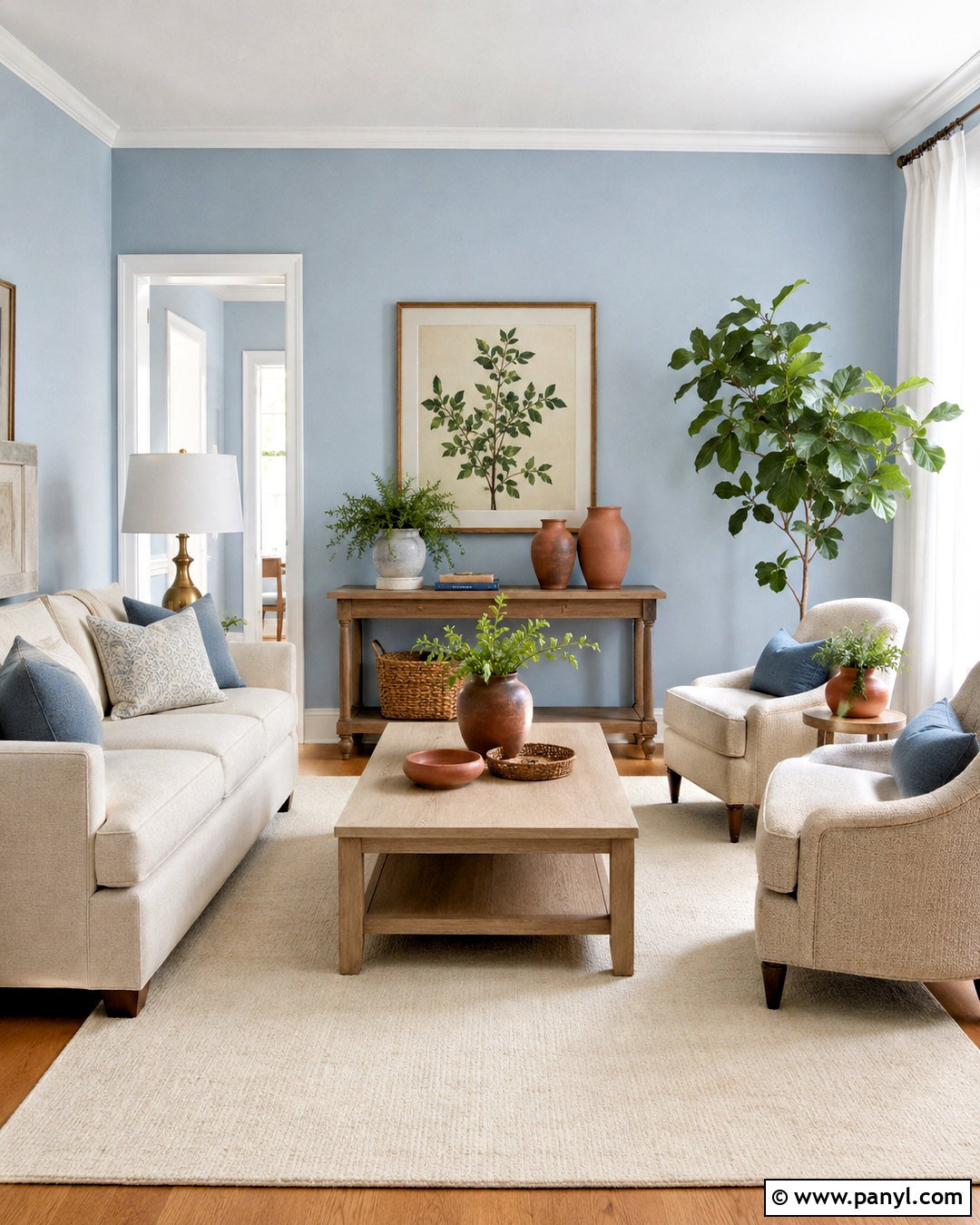
Soft light blue walls can give an everyday living room a fresh, spacious appearance without making it feel cold. Select a blue with a slightly warm or muted undertone rather than a clear pastel. Pair it with a cream sofa, pale oak coffee table, and two oatmeal-colored accent chairs arranged for conversation. Ivory curtains should hang close to the ceiling and fall to the floor, creating a taller visual line. Add a faded blue and beige rug to ground the furniture while maintaining the airy palette. Small touches of terracotta, warm brown, and antique brass keep the room from looking overly sweet. Simple botanical artwork and leafy plants complete this relaxed, approachable design.
3. Blue Gray Living Room
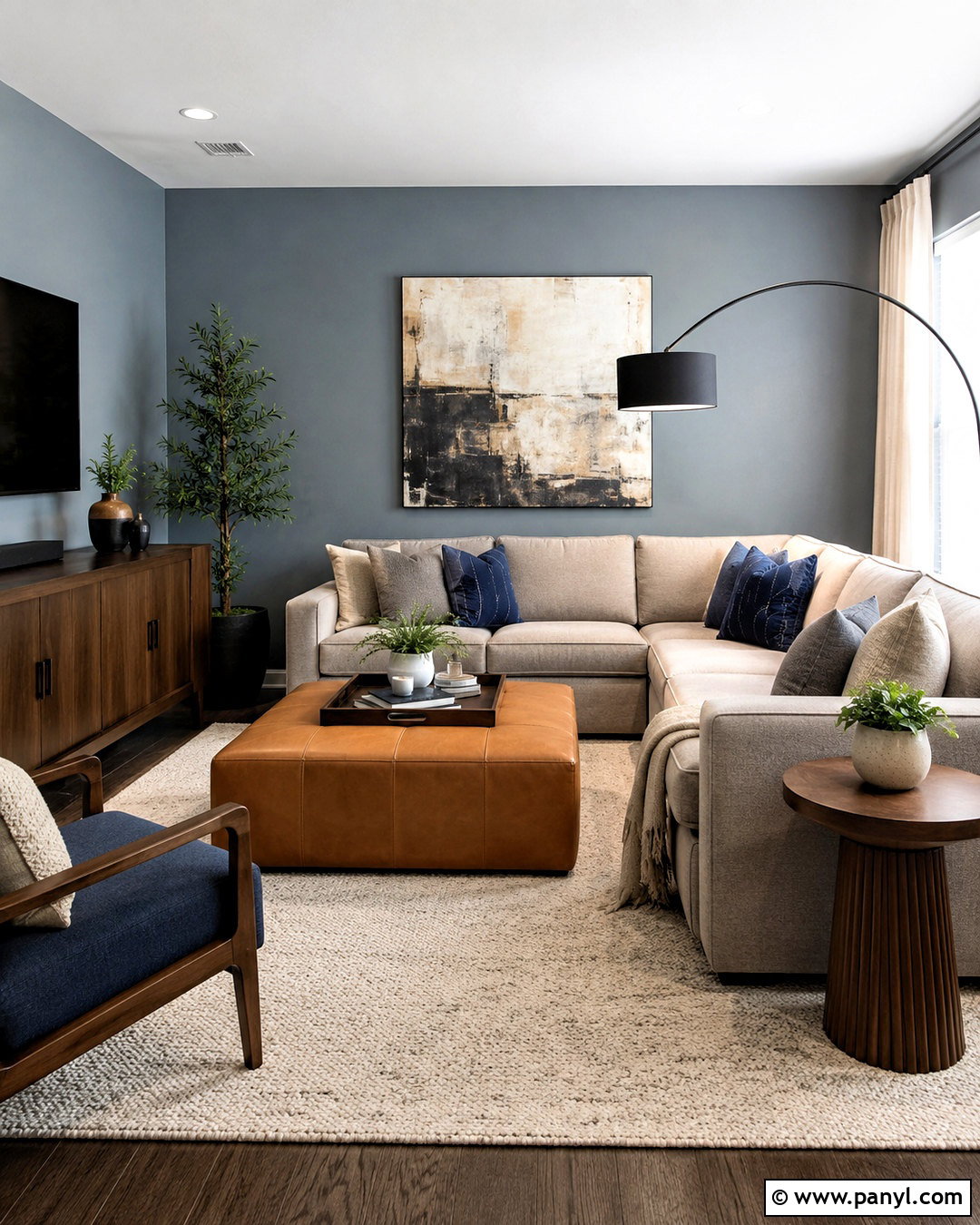
A muted blue-gray paint provides more character than standard gray while remaining easy to coordinate with existing furniture. Use it across the walls of a contemporary living room with a warm greige sectional and a low walnut media cabinet. An ivory textured rug will brighten the floor and separate the gray upholstery from the painted background. Introduce darker blue through patterned pillows and one upholstered ottoman rather than matching every accessory to the walls. Matte black lamps and slim curtain rods add definition, while natural linen drapes soften the room. To create warmth, include caramel leather, walnut, and woven materials. Abstract artwork featuring cream, charcoal, and muted blue will tie the entire understated palette together.
4. Coastal Blue Living Room
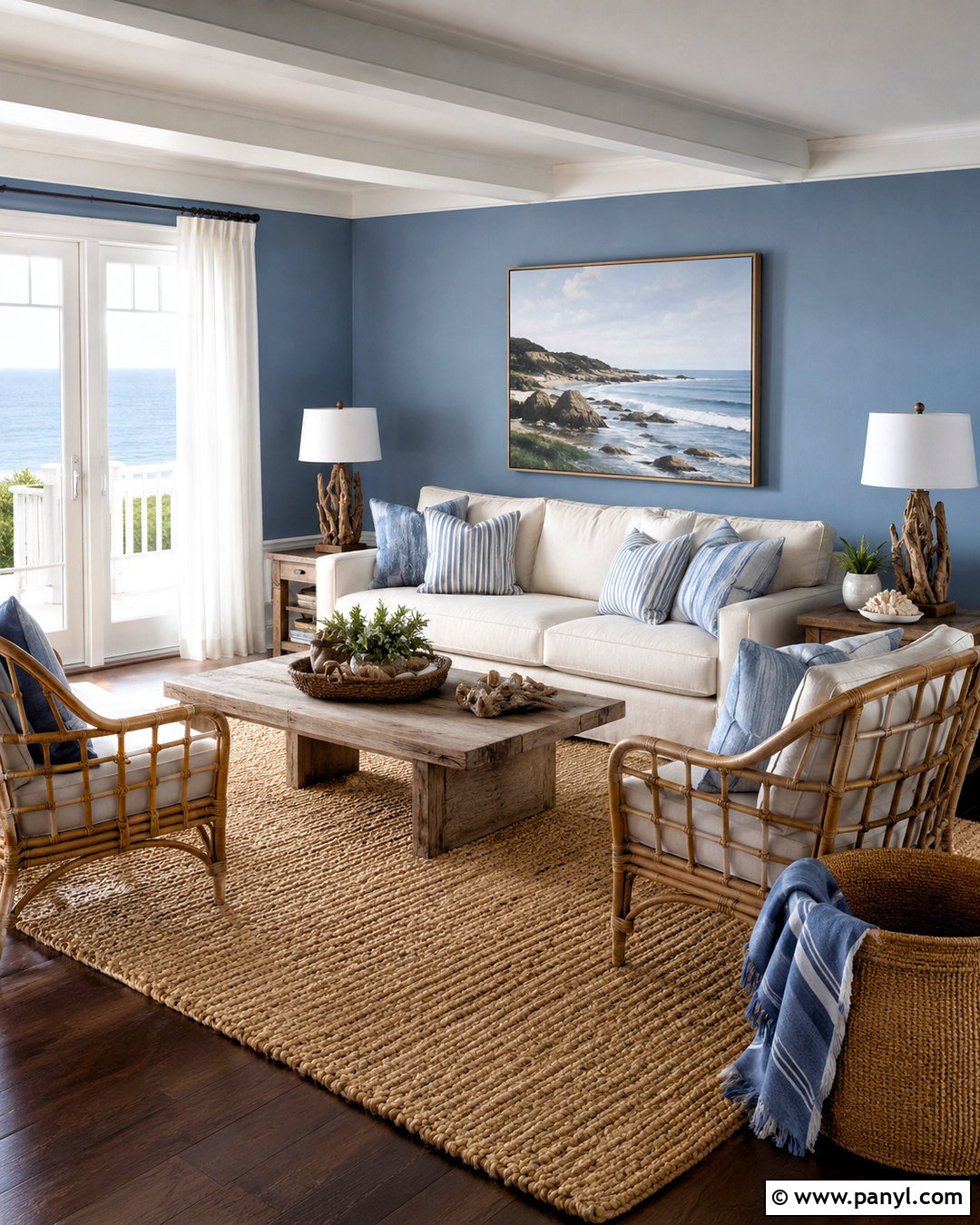
For a coastal living room that feels natural rather than themed, choose a hazy ocean blue for the walls and combine it with sandy neutrals. Center a slipcovered white or oatmeal sofa on a woven jute rug, then place two light rattan chairs across from it. A weathered oak coffee table adds an informal, sun-washed quality. Keep window treatments simple with white linen curtains that allow plenty of daylight into the room. Use faded blue stripes, soft beige pillows, and one or two ceramic vessels as accents. Avoid covering every surface with nautical objects. Instead, complete the setting with large coastal landscape artwork, pale wood frames, seagrass baskets, and a few sculptural pieces of natural driftwood.
5. Dark Blue Living Room
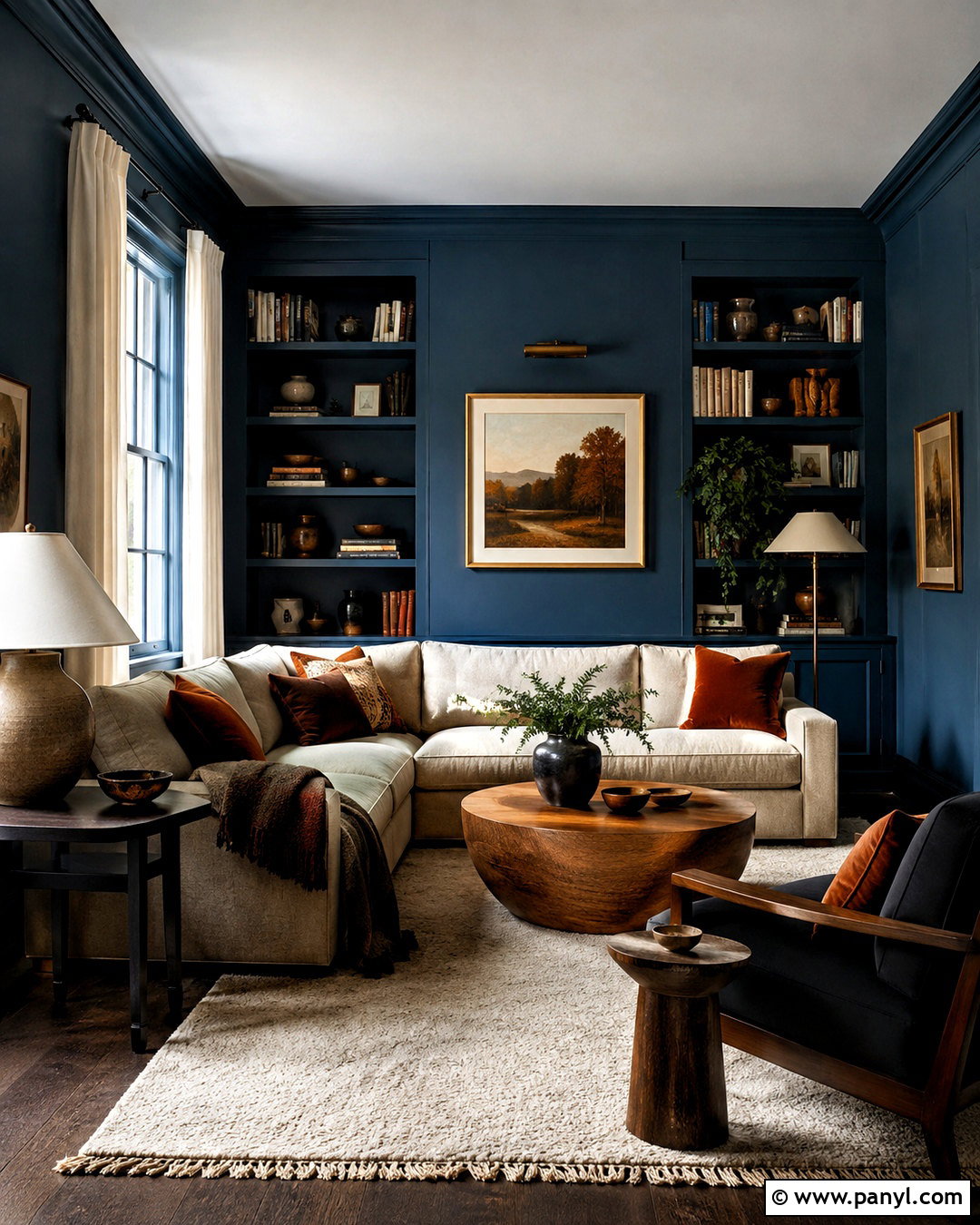
Rich dark blue paint can turn a plain living room into an intimate retreat, especially when the furniture and lighting are planned together. Cover the walls and built-in shelving in the same matte blue for a seamless backdrop. Add a generous oatmeal sectional, a rounded wood coffee table, and a thick cream rug to break up the darkness. Place table lamps at several heights so the corners remain inviting after sunset. Rust-colored velvet pillows and muted red details bring warmth without competing with the walls. Display books, pottery, and framed art across the shelving, leaving some open space between objects. Light oak flooring and off-white curtains provide enough contrast to make the deep color feel intentional.
6. Powder Blue Living Room
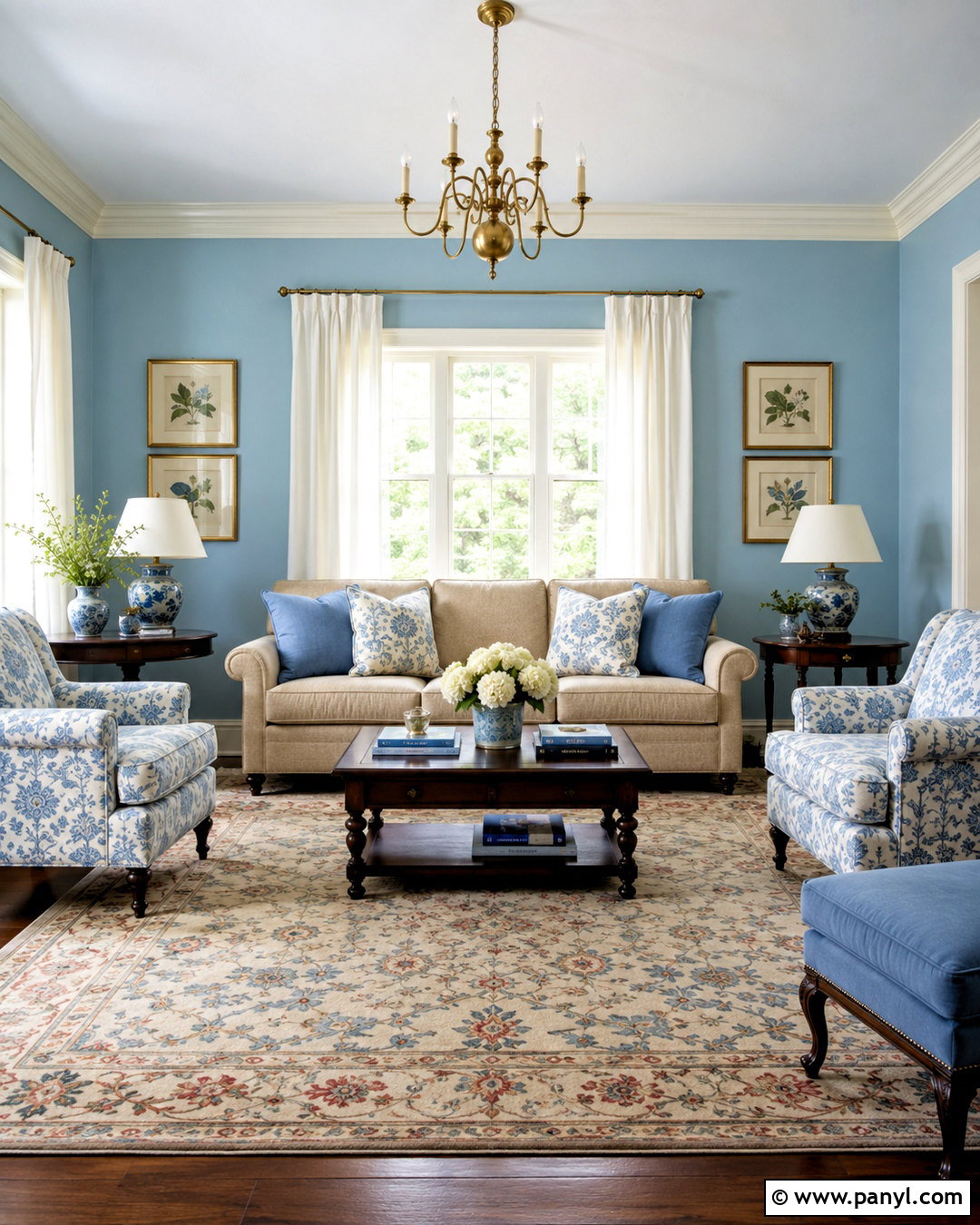
Powder blue creates a gentle, classic foundation that suits a living room with traditional furniture and architectural details. Paint the walls this soft blue while keeping crown molding, baseboards, and the fireplace surround a clean ivory. Arrange a tailored beige sofa with two blue-and-white patterned armchairs around a rectangular wood coffee table. A subtle floral or Persian-style rug can introduce dusty rose, cream, and deeper blue without overwhelming the room. Hang full linen curtains in a warm white, and choose antique brass lighting for an elegant finish. Botanical prints, ceramic lamps, and a small collection of hardcover books make the design feel established. Dark walnut accents give the pale palette needed depth and definition.
7. Teal Blue Living Room
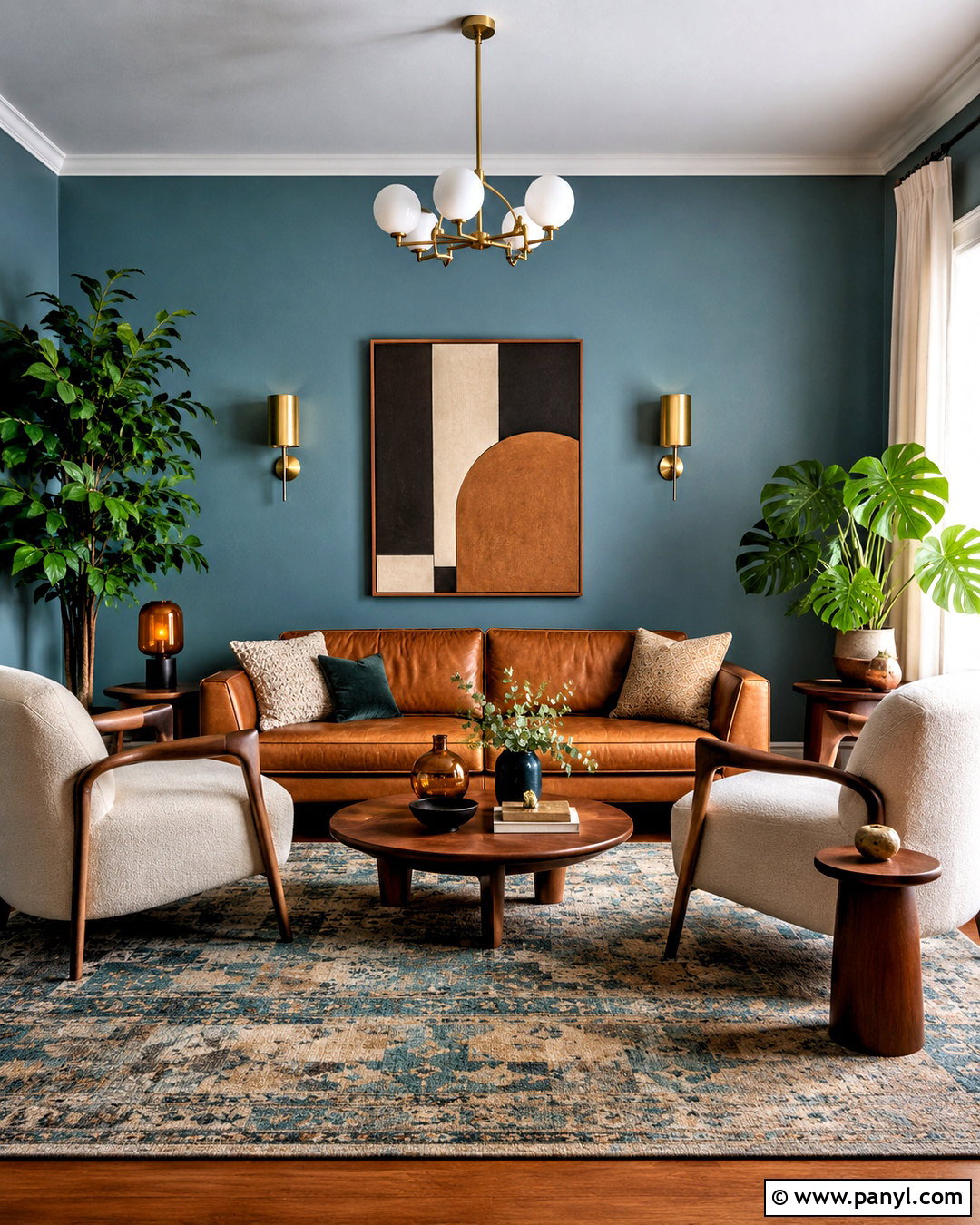
Teal blue walls bring energy and richness to a living room while still feeling grounded when paired with earthy finishes. Choose a muted teal rather than a highly saturated turquoise, then add a cognac leather sofa as the main warm contrast. Place a pair of cream boucle chairs nearby and anchor the seating with a patterned rug containing teal, tan, and charcoal. Walnut tables and aged brass lighting reinforce the sophisticated palette. Keep the ceiling and trim warm white unless the room has abundant daylight. For decoration, use graphic artwork, amber glass, and leafy plants with broad green foliage. Simple natural curtains will soften the bold wall color and help the space remain comfortable for everyday use.

8. Denim Blue Living Room
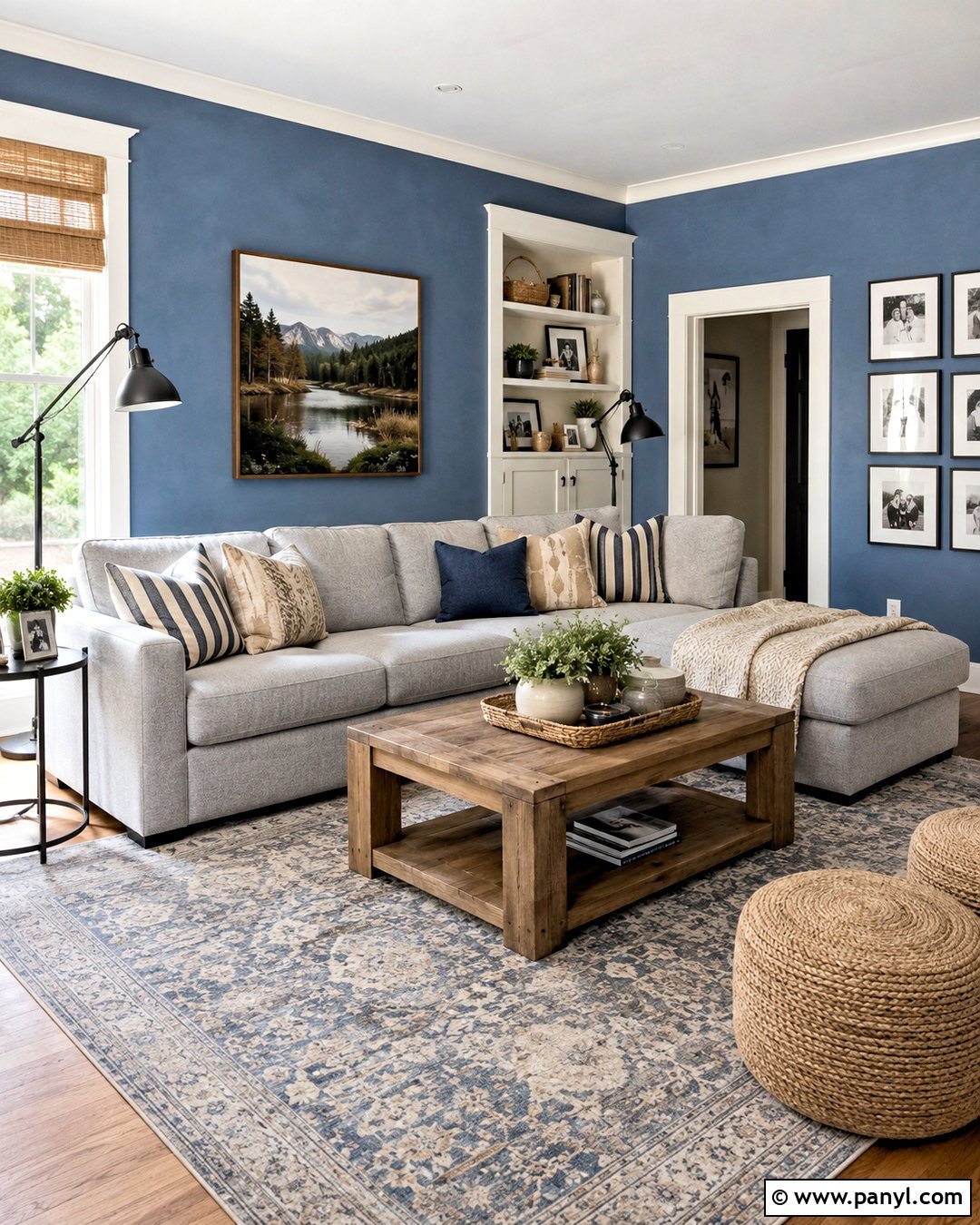
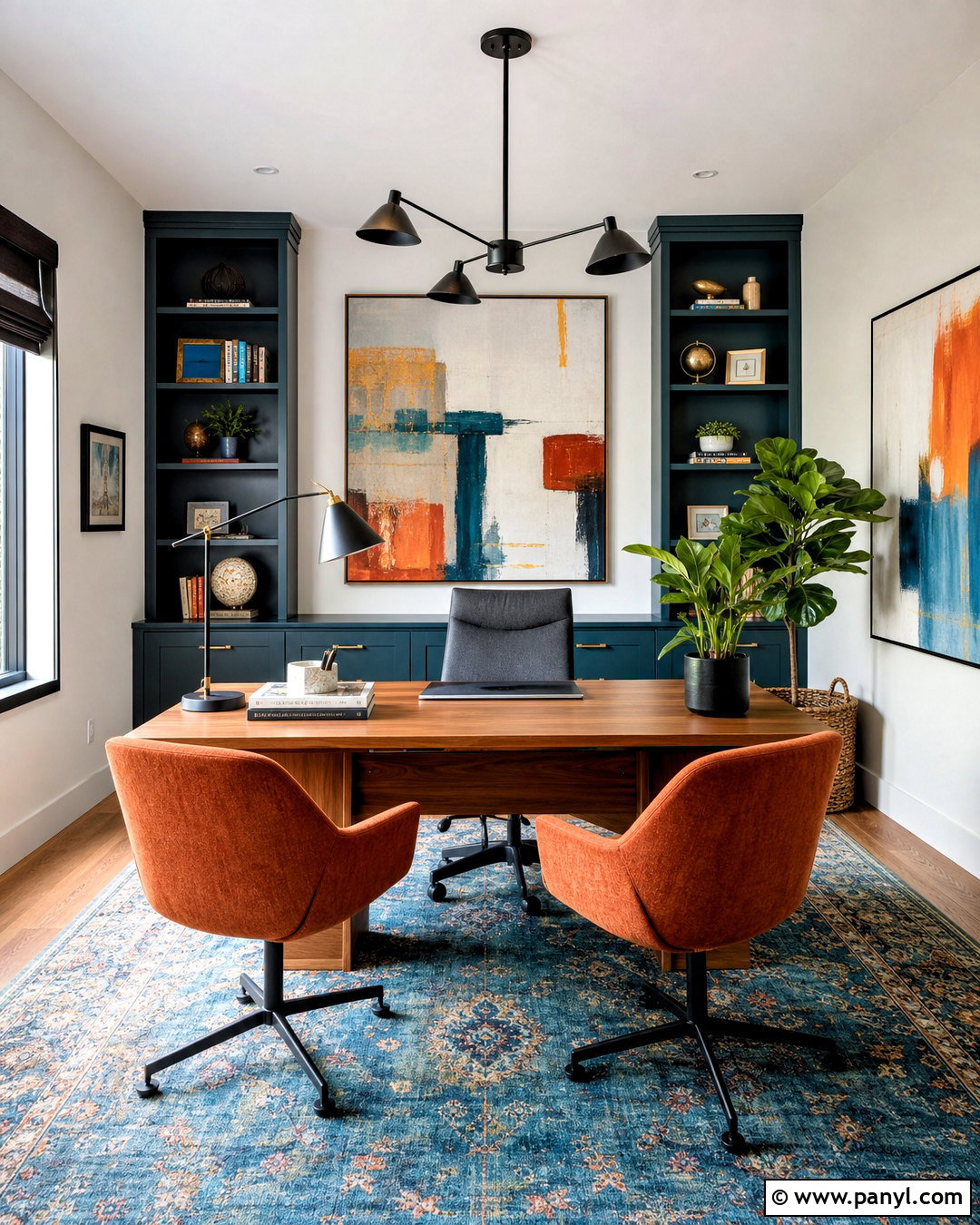
A midtone denim blue gives a living room casual color without the weight of navy or the sweetness of pale blue. Use it on all four walls with crisp cream trim and medium oak flooring. A light gray sectional offers practical seating, while a faded patterned rug adds softness beneath a chunky wood coffee table. Bring in relaxed layers through striped cushions, woven throws, and upholstered poufs in sand and faded red. Black metal lamps create clean outlines against the blue walls. Keep artwork informal by combining landscapes, sketches, and family photographs in coordinated wood frames. The finished room should feel comfortable and slightly worn-in, making this scheme a practical choice for a busy family space.
9. Blue Accent Wall Living Room
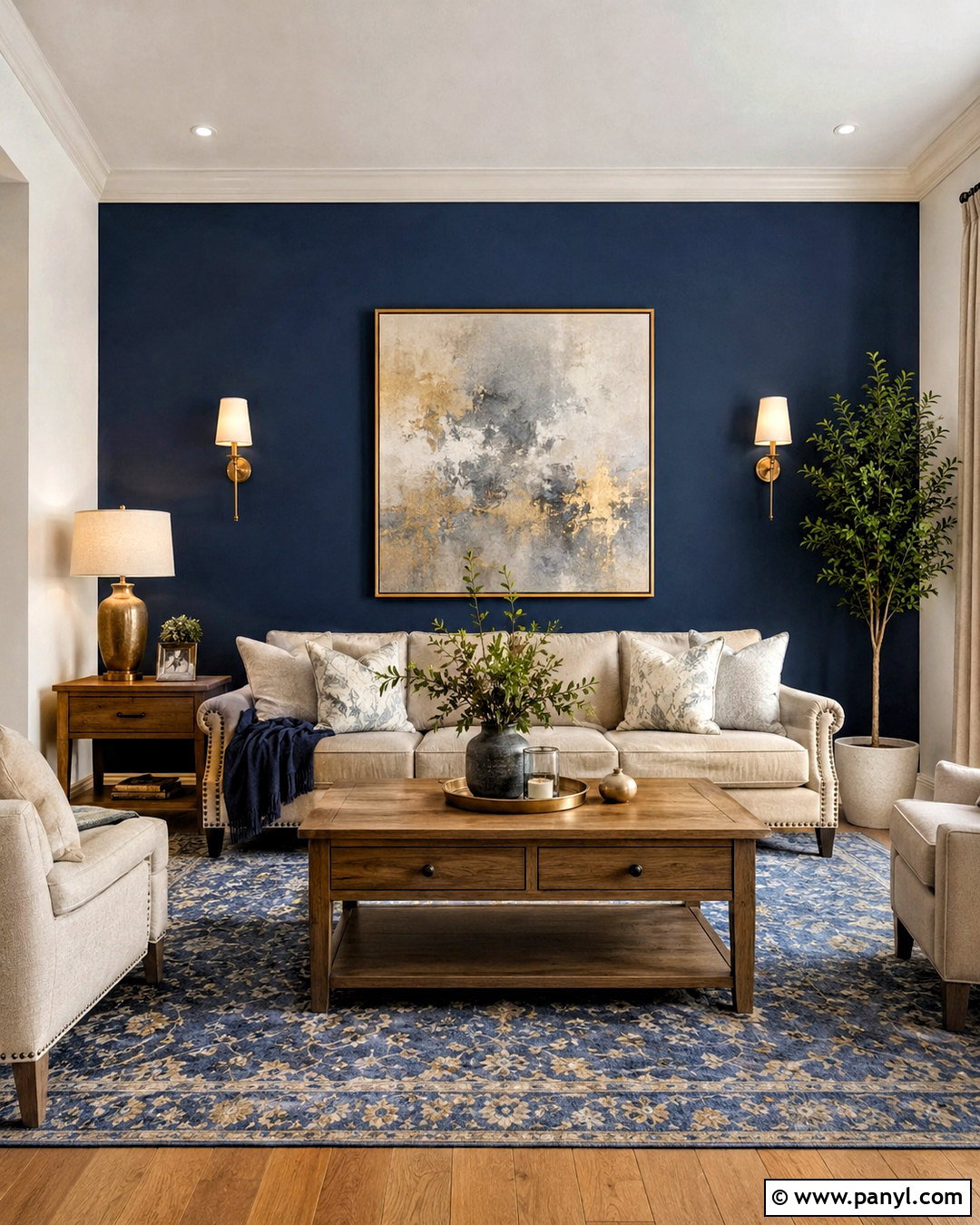
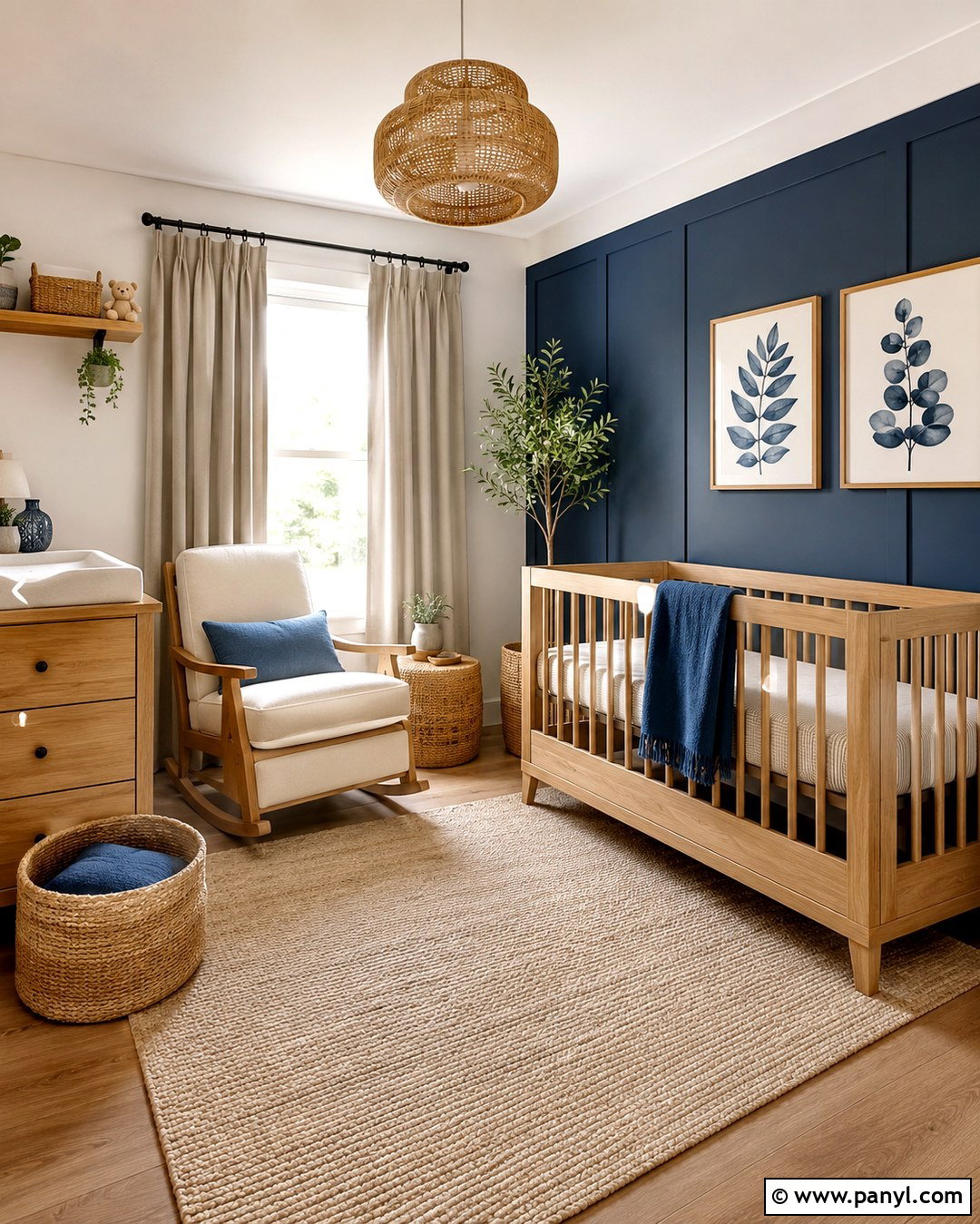
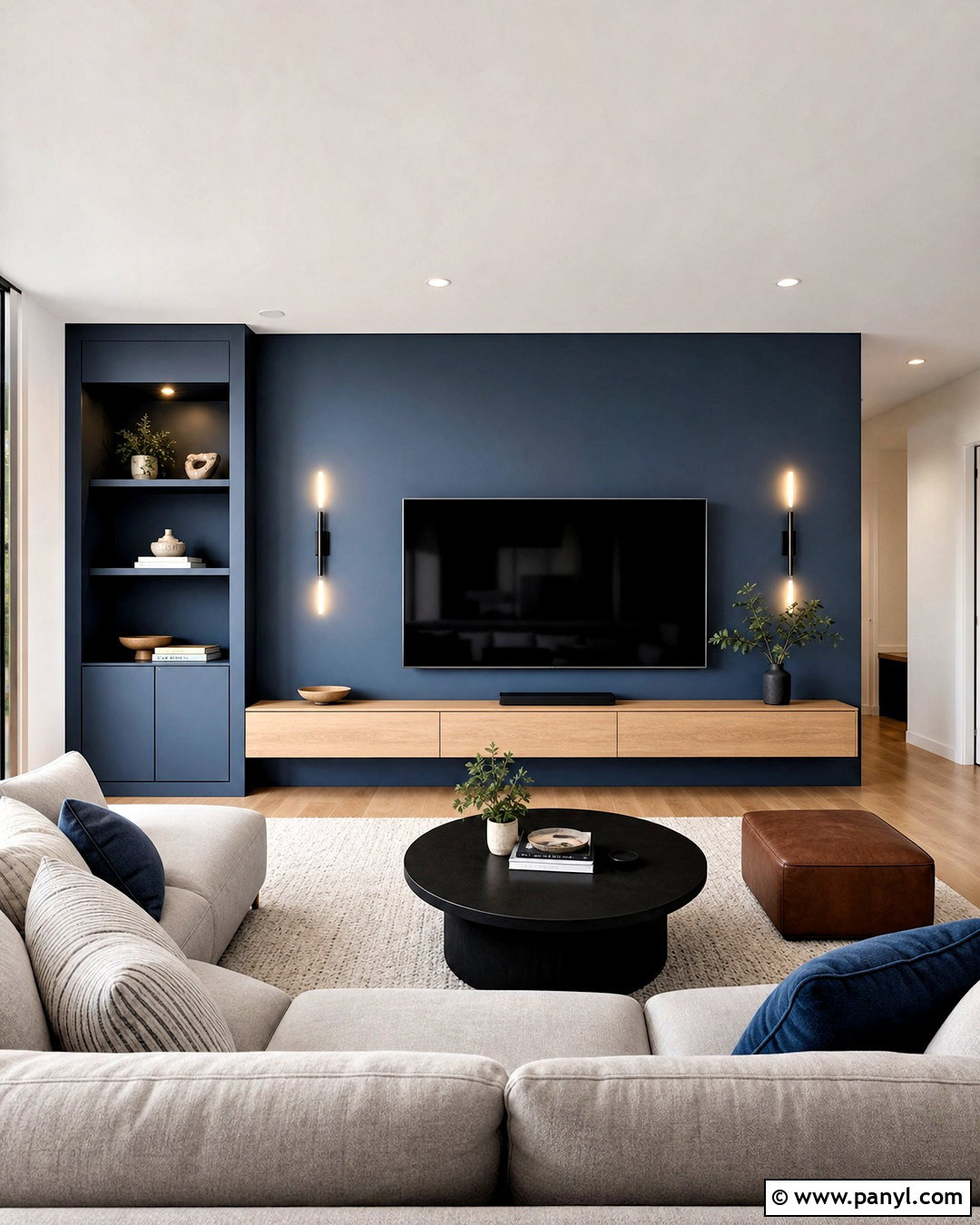
A blue accent wall works best when it highlights an important architectural or functional area instead of appearing randomly placed. Paint the wall behind the sofa, fireplace, or built-in media unit a deep slate blue. Keep the remaining walls soft warm white, then repeat the blue through a rug pattern and a few carefully chosen pillows. A beige sofa and oak furniture will bridge the dark feature wall with the lighter surfaces. Install wall sconces or place a large piece of artwork at the center to strengthen the focal point. Use full-length neutral curtains and warm metallic accessories throughout the room. This balanced layout introduces strong color without requiring a complete color-drenched paint treatment.
10. Two Tone Blue Living Room
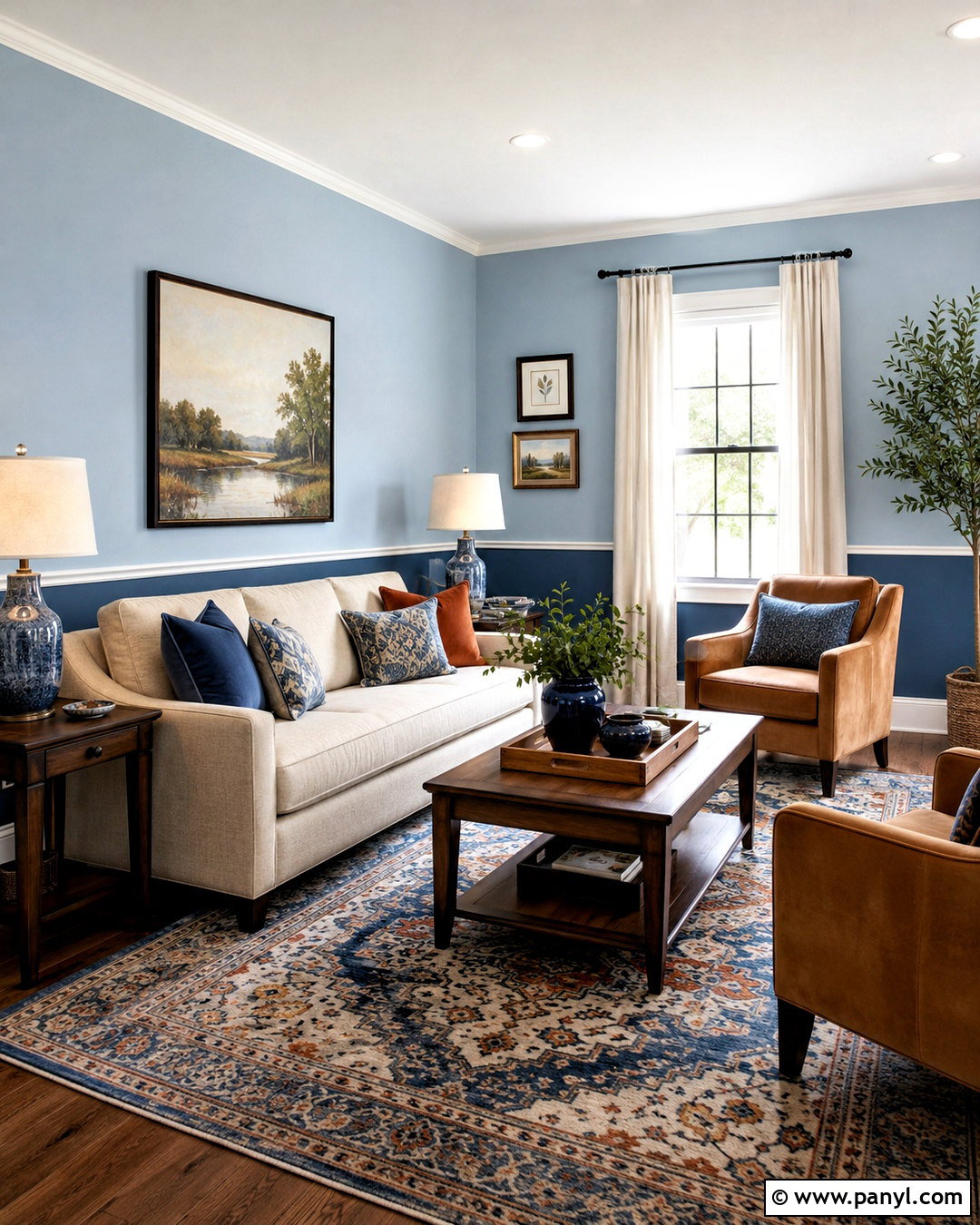
Two shades of blue can add architectural interest to a simple living room, even when the walls lack original molding. Paint the lower third or half of each wall a medium slate blue and the upper portion a pale misty blue. A narrow painted rail can create a crisp division between the colors. Furnish the space with a cream sofa, walnut coffee table, and comfortable tan chairs so the room contains enough warmth. Select a rug that combines both blue tones with ivory and muted rust. Natural linen curtains should coordinate with the light upper walls. Complete the scheme with framed artwork positioned above the dividing line, ceramic lamps, and understated cushions that repeat the layered blue palette.
11. Blue Color Drenched Living Room
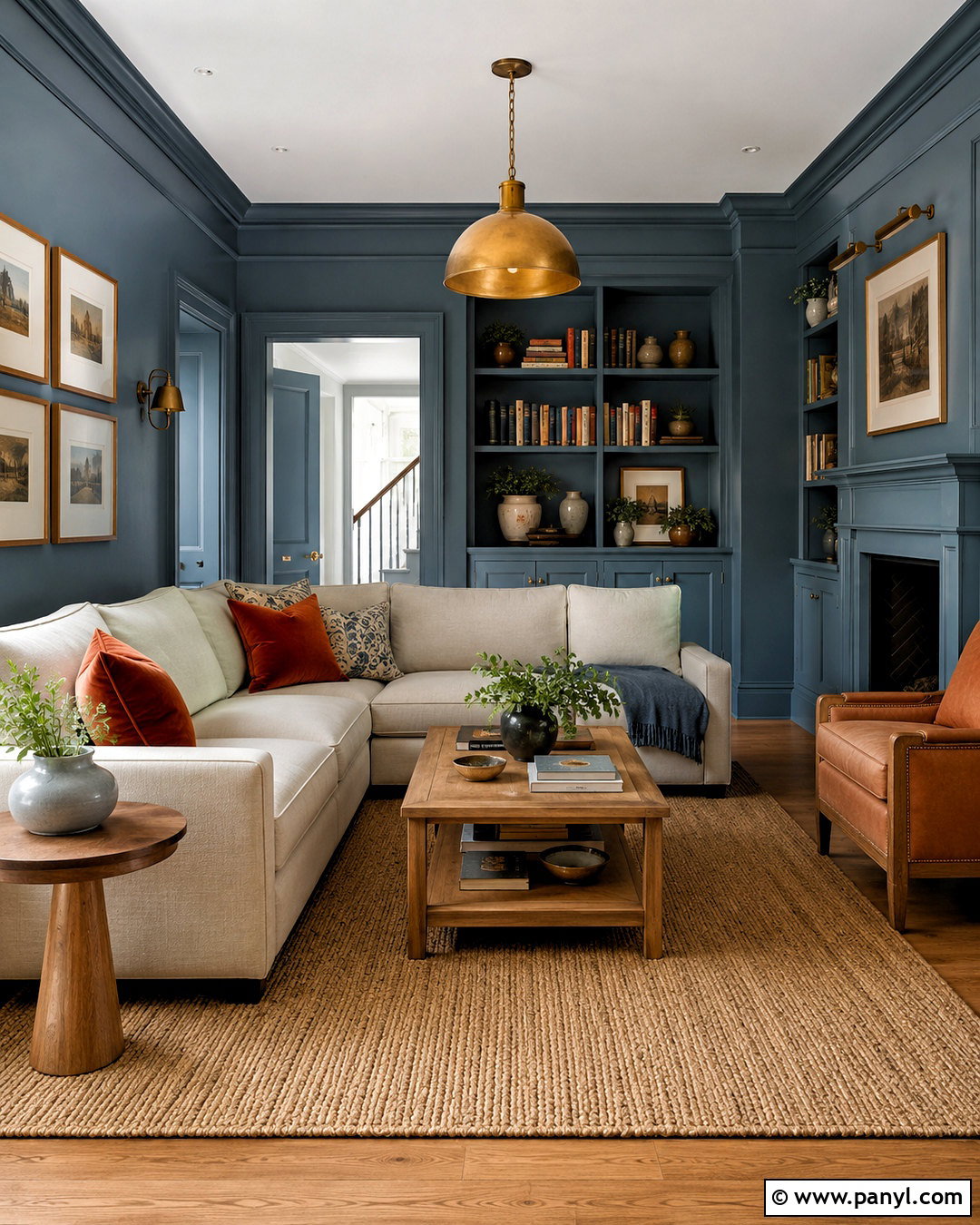
Color drenching creates a cohesive living room by carrying one blue shade across the walls, trim, doors, and built-ins. Choose a sophisticated midtone blue with gray or green undertones, which will be easier to live with than an intensely bright hue. Use a matte finish on walls and a more durable satin finish on woodwork to add subtle variation. Break up the blue envelope with a cream sectional, natural wool rug, and warm oak tables. Burnt orange pillows and aged brass lighting provide restrained contrast. Hang artwork with generous cream matting so it remains visible against the painted background. This approach feels most complete when small architectural surfaces are included rather than left in sharply contrasting white.
12. Blue Living Room With White Trim
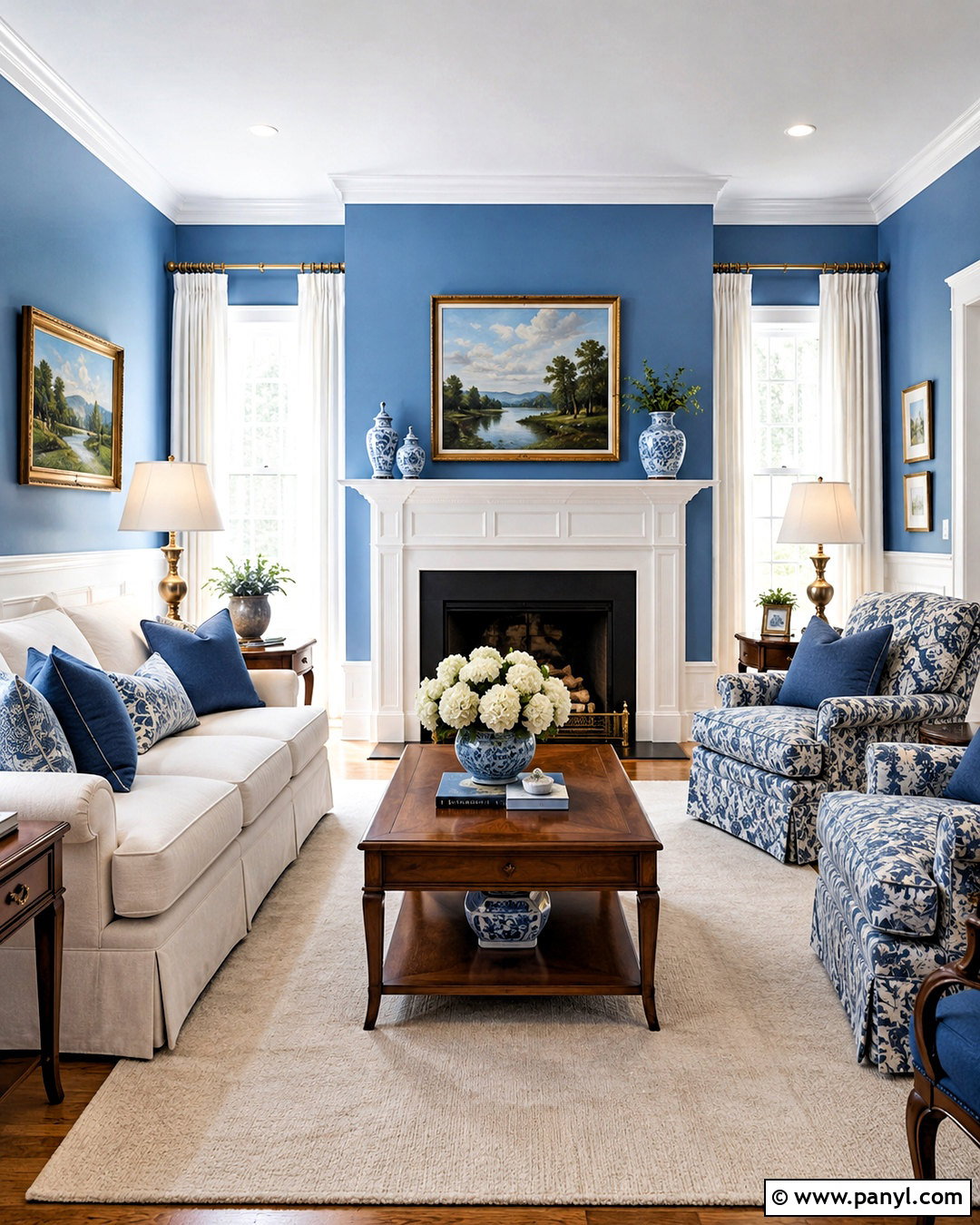
Crisp white trim gives blue walls a structured, traditional appearance and emphasizes windows, doorways, and molding. Select a medium cornflower or colonial blue for the walls, then use a soft white on baseboards, crown molding, window frames, and the fireplace. A tailored off-white sofa keeps the palette bright, while patterned armchairs add navy, soft green, and beige. Position everything around a medium wood coffee table and a large neutral rug. White curtains can blend with the trim and visually enlarge the windows. Add polished nickel or brass lamps, depending on whether you prefer a cooler or warmer finish. Landscape paintings and classic ceramic accessories complete this balanced, timeless living room arrangement.
13. Blue Living Room With Wood Furniture
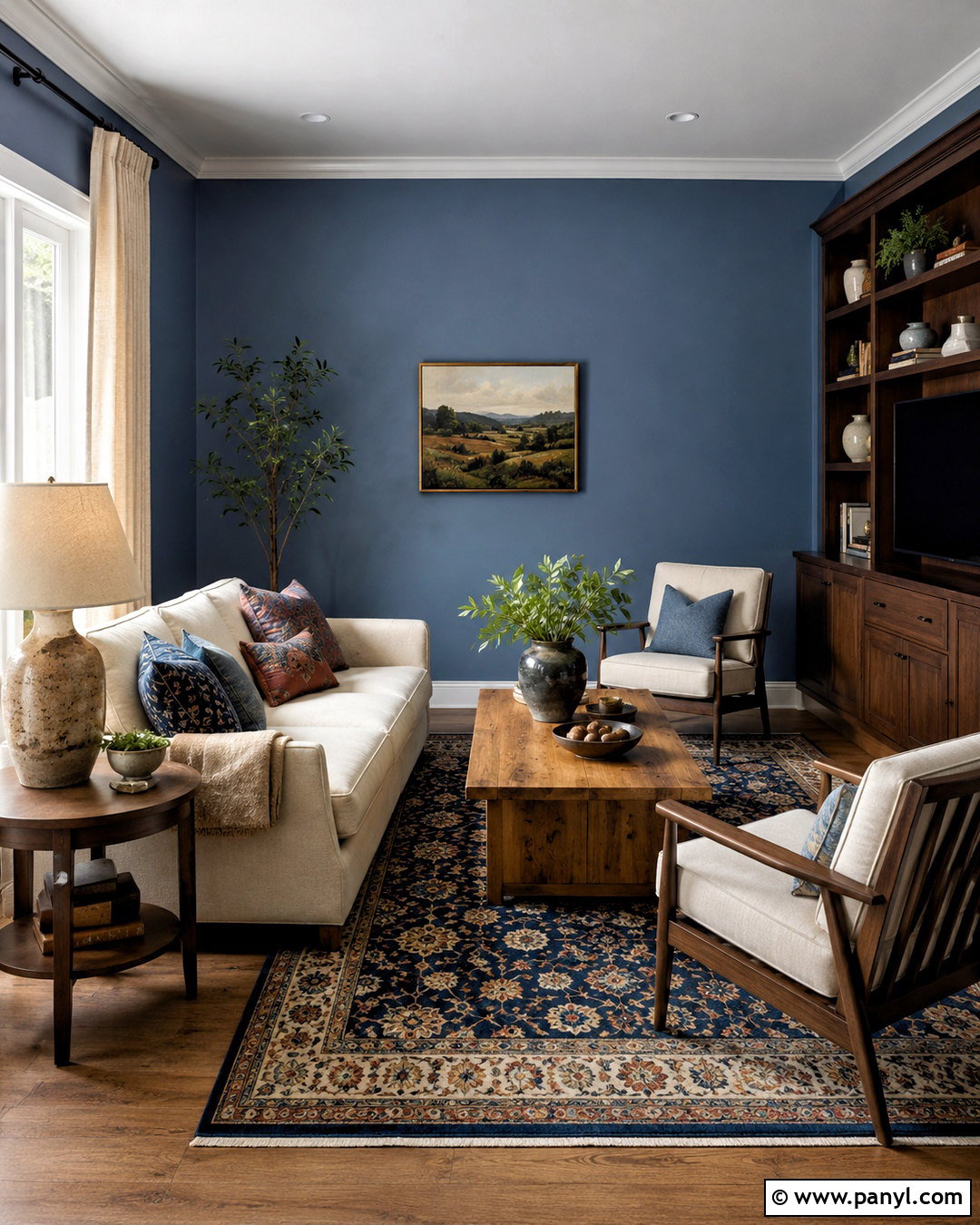
Warm wood furniture brings out the natural depth in blue paint and prevents the space from feeling overly cool. Choose a muted medium blue for the walls, then build the room around a walnut media console, oak coffee table, and wood-framed lounge chairs. A cream sofa provides a light central anchor, while a geometric rug combines navy, ivory, and cinnamon brown. Use table lamps with linen shades to cast comfortable light across the wood grain. Window treatments in natural flax or warm beige will reinforce the organic palette. Decorate with handmade pottery, landscape artwork, and a few green plants. Mixing two complementary wood tones creates a collected appearance, but avoid adding too many competing stains.
14. Blue And Beige Living Room
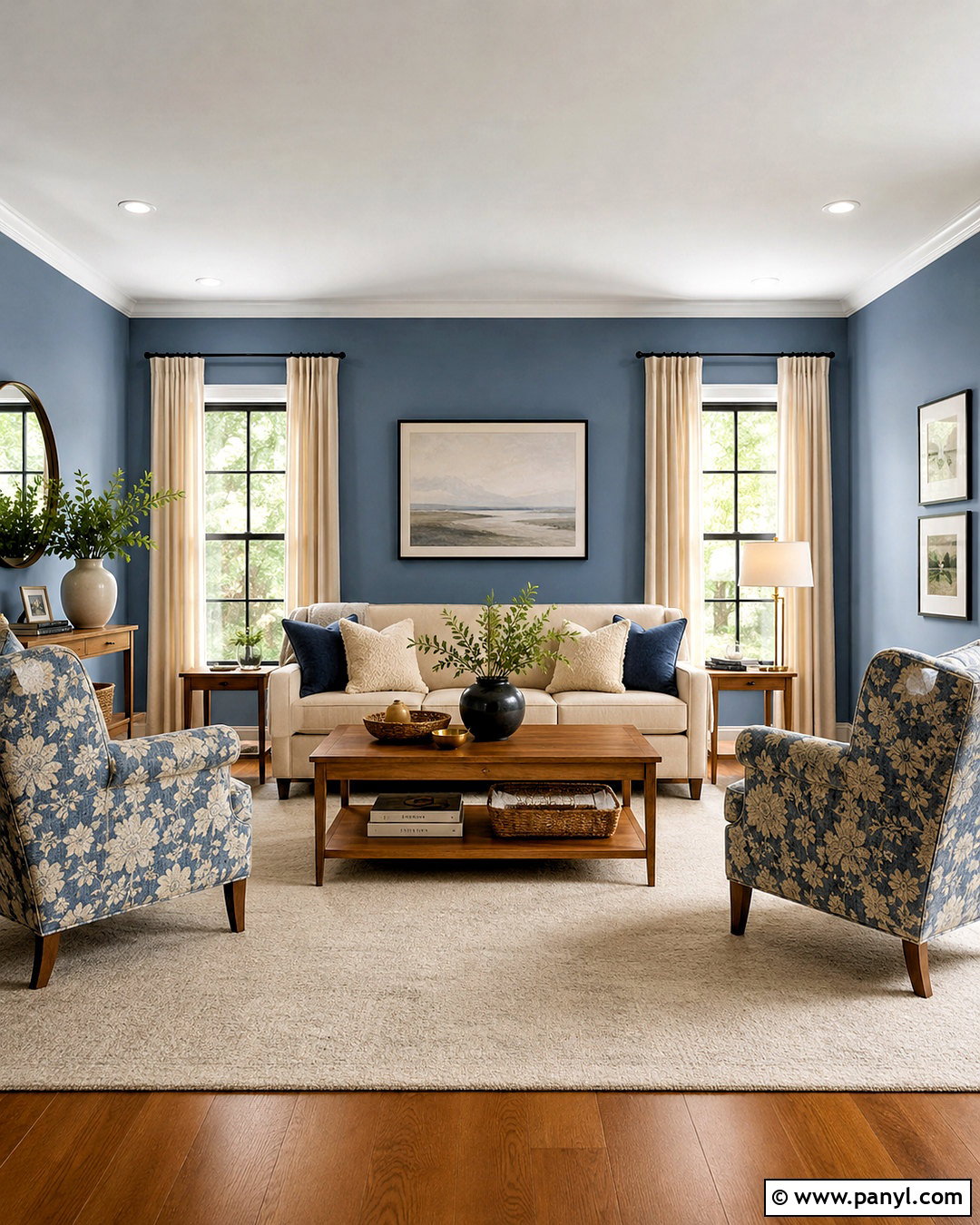
Blue and beige create an easy, versatile living room palette that feels both polished and comfortable. Paint the walls a softened steel blue, then choose a warm beige sofa and matching floor-length curtains. Add two patterned chairs containing blue, cream, and brown to connect the major colors. A pale wool rug and medium oak tables will keep the room light without making it look washed out. Introduce texture through boucle, linen, woven baskets, and a chunky knit throw. Matte black picture frames and small brass accents provide needed contrast. Keep the layout symmetrical around a fireplace or media console for a calm appearance. Minimal abstract art and simple ceramic pieces finish the room without disrupting its restful character.
15. Blue And Green Living Room
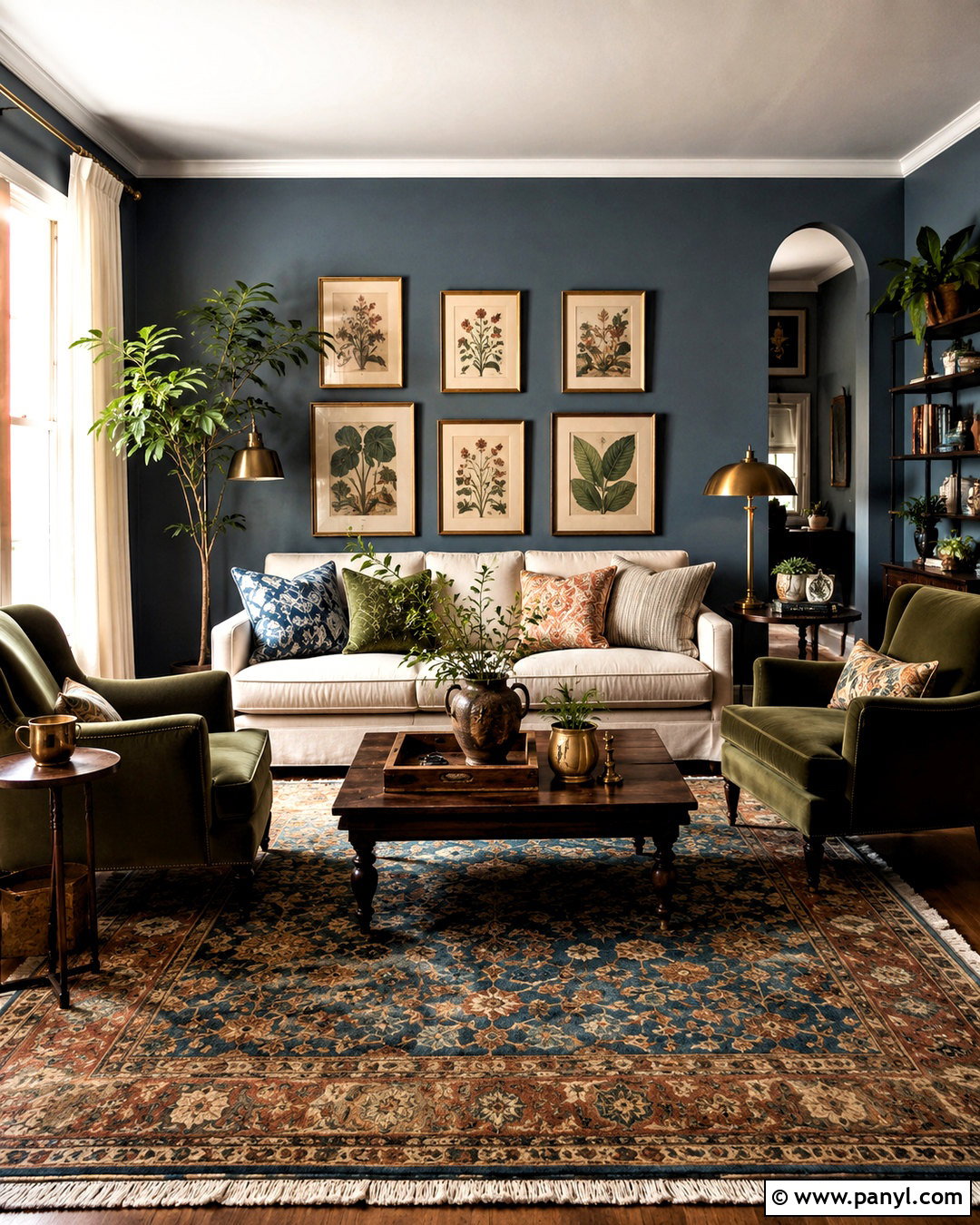
Blue and green can share a living room naturally when their undertones and saturation levels feel connected. Start with smoky blue walls, then introduce olive green through two upholstered chairs or a substantial velvet ottoman. A warm cream sofa gives the eye a neutral resting point. Ground the arrangement with a vintage-inspired rug that includes blue, green, rust, and beige. Dark wood tables and antique brass lamps support the rich, earthy mood. Add patterned pillows sparingly so the palette remains controlled. Botanical artwork and indoor plants reinforce the connection between the colors without becoming overly literal. Warm white trim, natural curtains, and a light ceiling keep this layered room bright enough for daily living.
16. Blue And Orange Living Room
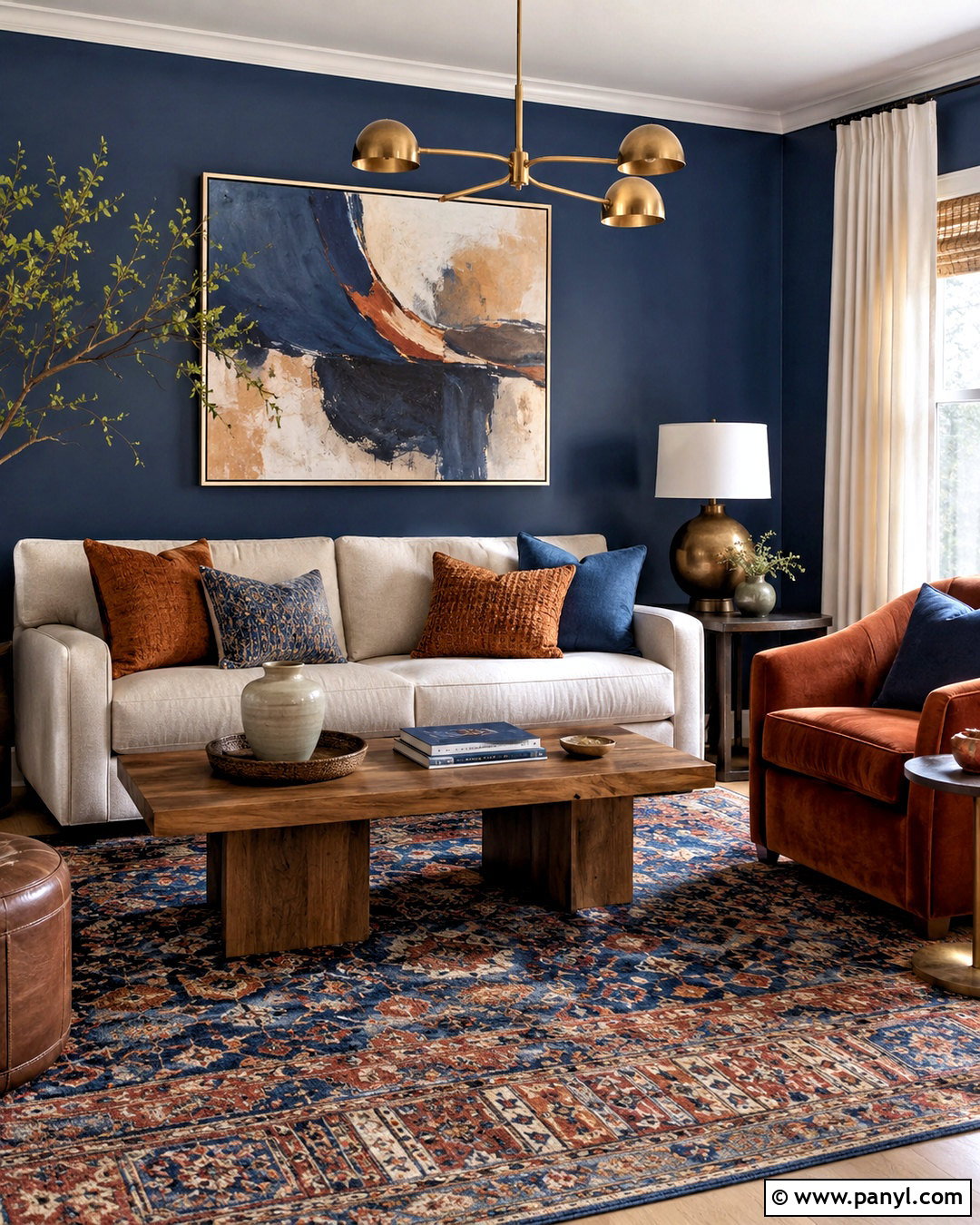
Because orange offers clear contrast against blue, small doses can make a painted living room feel lively and intentional. Use a deep muted blue on the walls and choose a neutral sofa in cream, flax, or light gray. Introduce burnt orange through a velvet accent chair, patterned rug, and two or three cushions rather than large matching furniture pieces. A walnut coffee table complements the orange accents and provides warmth against the blue background. Choose brass or bronze lighting instead of cool silver finishes. Off-white curtains and a pale ceiling will balance the stronger colors. Finish with modern artwork containing restrained blue and rust details, plus simple pottery and a few natural branches for softer texture.
17. Small Blue Living Room
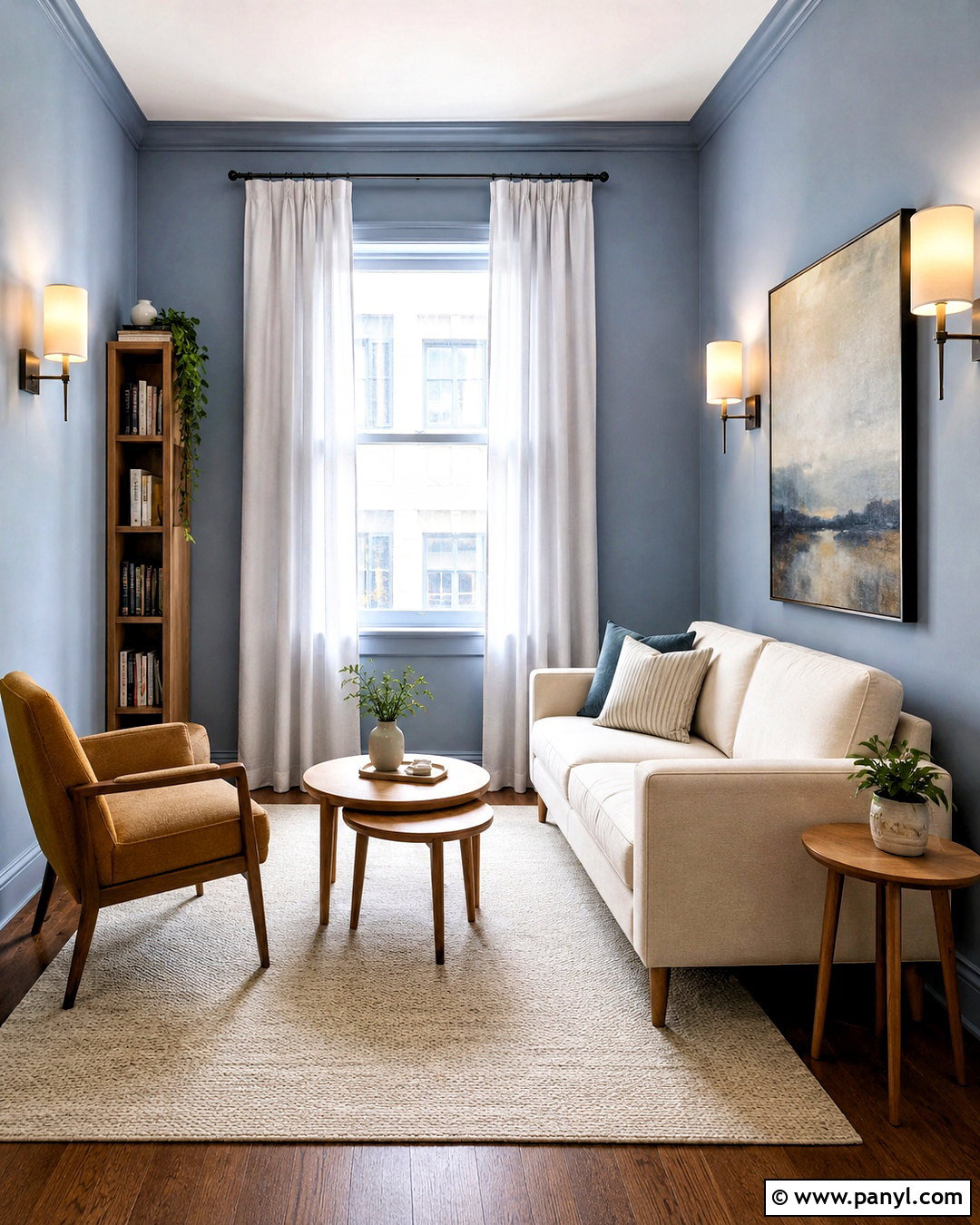
A small living room can handle blue paint when the shade and furniture proportions support the limited floor area. Choose a pale blue-gray for the walls and paint the trim in a closely related light color to reduce harsh visual breaks. Use a compact sofa with raised legs, one comfortable accent chair, and nesting tables rather than bulky furniture. A large light rug can visually connect the seating arrangement and make the floor feel less fragmented. Install wall sconces or a slim floor lamp to preserve table space. Hang curtains near the ceiling and keep window areas unobstructed. Finish with one large artwork, a narrow bookcase, and a few purposeful accessories instead of many small decorative objects.
18. Modern Blue Living Room
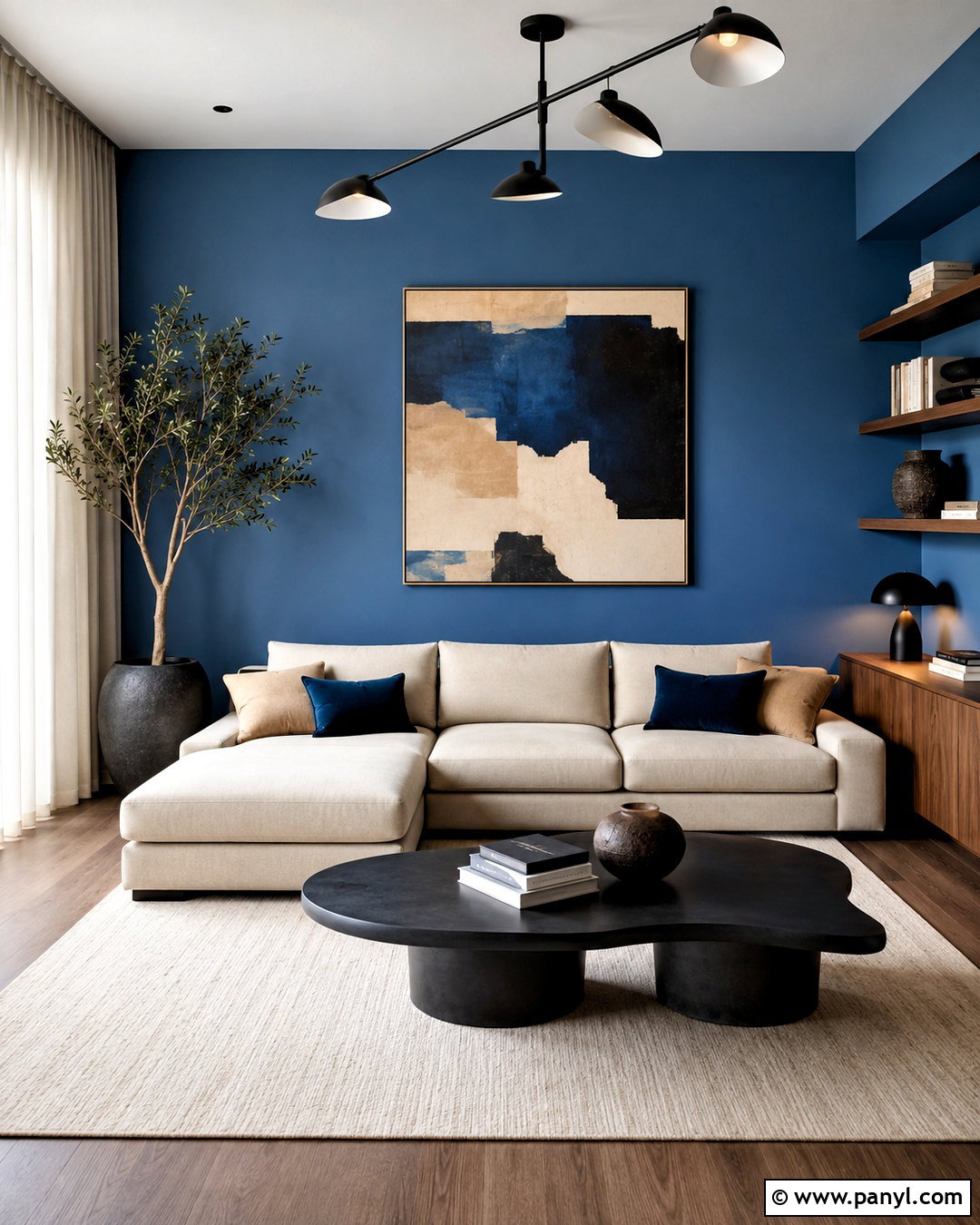
A modern blue living room looks strongest with clean shapes, deliberate contrast, and a limited material palette. Paint the walls a clear medium blue, then introduce a low cream sectional with streamlined arms. Place a sculptural black coffee table at the center and use a large ivory rug to define the seating zone. Walnut cabinetry adds warmth, while matte black lighting repeats the table finish. Choose one oversized abstract artwork containing blue, tan, and off-white instead of a busy gallery wall. Floor-to-ceiling curtains in a light neutral fabric soften the straight architectural lines. Keep accessories minimal but substantial, such as a large ceramic vessel, stacked books, and one healthy indoor tree in a simple planter.
19. Traditional Blue Living Room
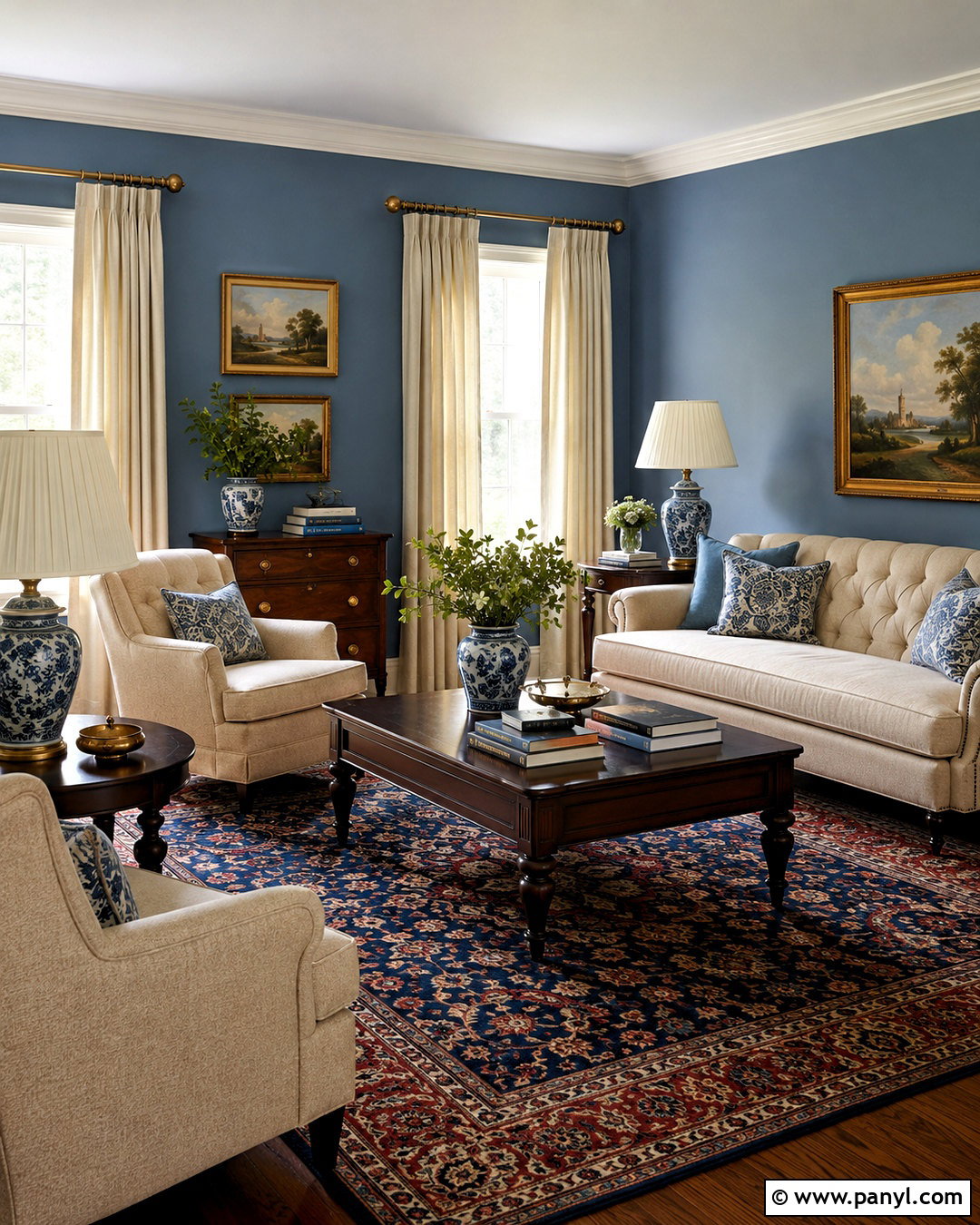
Traditional rooms suit blue paint particularly well because the color highlights decorative molding, fireplaces, and classic furniture silhouettes. Select a muted historical blue for the walls and a creamy white for the detailed woodwork. Center the arrangement around a tufted neutral sofa, rolled-arm chairs, and a dark wood coffee table. A Persian-style rug containing navy, faded red, and beige adds depth and age. Hang pleated linen curtains from substantial brass rods, allowing the fabric to frame each window fully. Use ceramic table lamps and framed landscapes to build a familiar, collected mood. Books, small boxes, and botanical pieces can decorate side tables, but leave enough open surface area to keep the finished room orderly.
20. Farmhouse Blue Living Room
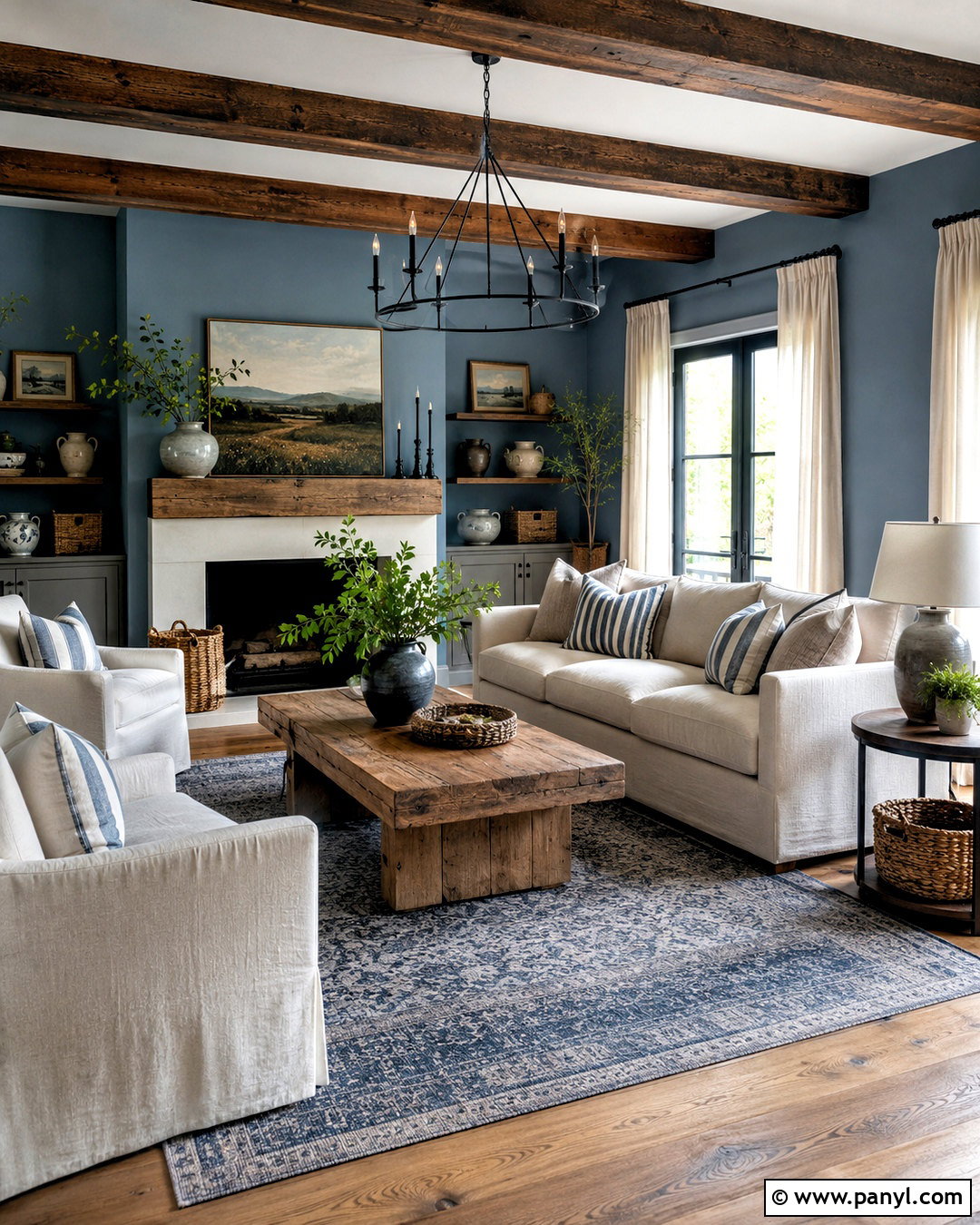
A farmhouse living room feels fresher with dusty blue walls instead of predictable white or gray. Choose a muted blue with a slightly weathered quality, then pair it with a comfortable oatmeal sofa and two slipcovered armchairs. A reclaimed wood coffee table provides a rustic center without making the entire room look heavily distressed. Layer a flat-weave blue rug over natural wood flooring and add simple striped pillows in cream and faded navy. Black metal lighting and curtain hardware supply clean contrast. Use natural linen curtains, woven baskets, and handmade pottery for warmth and texture. A restrained mix of landscape art, vintage books, and leafy branches completes the relaxed room while preserving a practical, uncluttered farmhouse character.
Conclusion:
The most successful 20 blue paint living room ideas treat wall color as part of a complete design rather than an isolated decision. Pale blue works beautifully with cream upholstery and light woods, while navy and teal become more inviting beside leather, walnut, brass, and warm textiles. Blue-gray provides a flexible option for quieter contemporary rooms, and color drenching offers a bolder, more immersive finish. Always compare samples beside flooring, furniture, trim, and curtains before selecting the final shade. View them during morning, afternoon, and evening light whenever possible. Once the undertone feels right, repeat the blue in a few fabrics or accessories to create a living room that looks balanced, connected, and thoughtfully finished.

Related Ideas and Inspiration:
Leave a Reply