
Concrete walls can feel cold or unfinished, but the right stain color turns their natural texture into a purposeful design feature. Unlike an opaque painted finish, a translucent stain can preserve tonal movement, pores, form lines, and subtle imperfections. Solid stains offer more even coverage when the existing wall needs visual consistency. Acid-reactive stains typically create earthy variation, while water-based products provide a wider color range. Final results can shift according to the concrete’s base tone and condition, so testing the stain directly on the wall is essential. () From warm neutrals to dramatic dark shades, these complete room and exterior schemes show practical ways to decorate with **20 Concrete Wall Stain Colors**.

1. Warm Gray Concrete Wall Stain
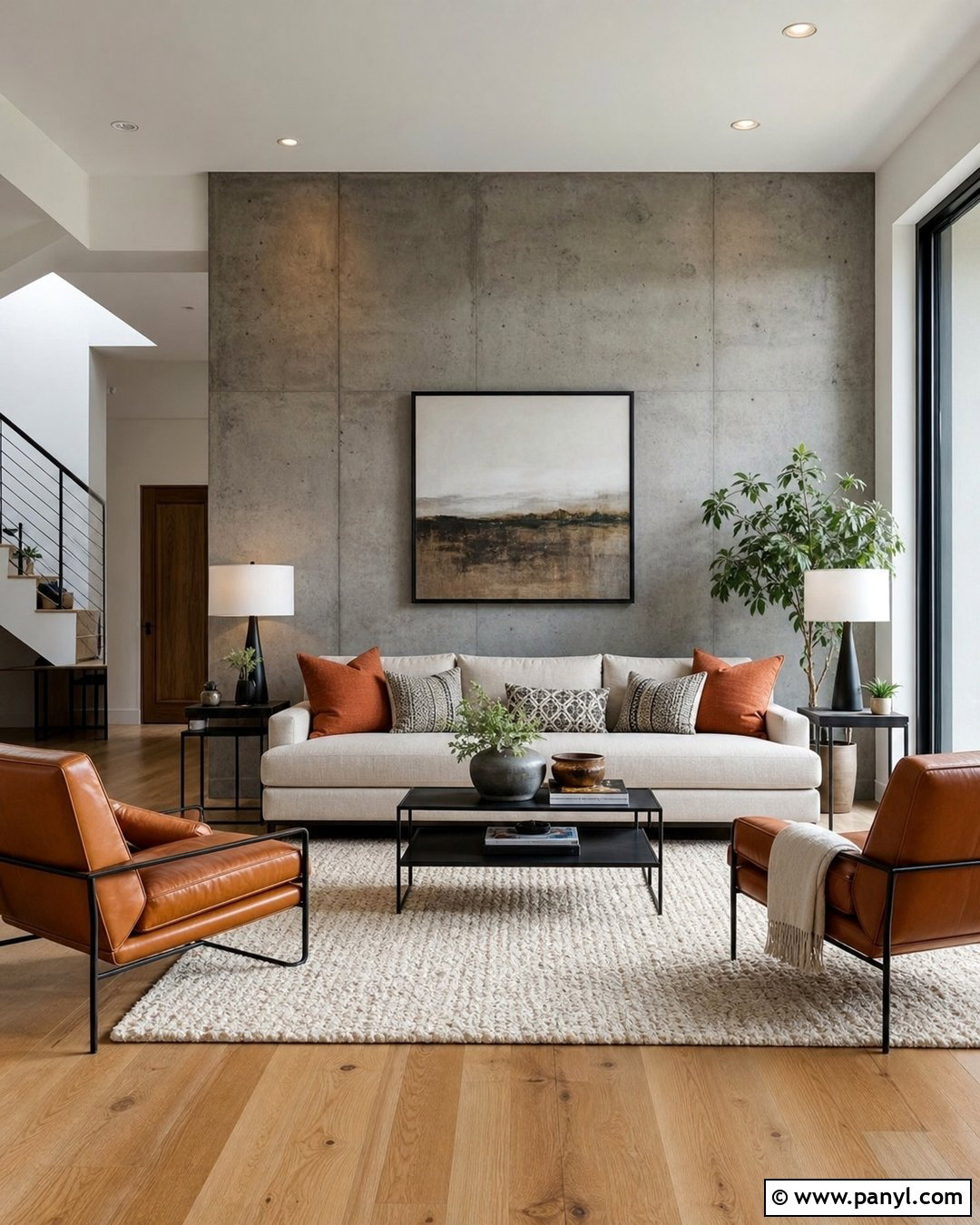
Warm gray gives concrete a softer appearance without concealing its industrial character. Use this stain on a living room feature wall, then add a low-profile oatmeal sofa, medium oak flooring, and a textured ivory rug. Black metal side tables and a slim linear floor lamp provide crisp contrast. Bring warmth to the composition with cognac leather chairs, rust-colored cushions, and simple ceramic vessels. The gray should have a subtle beige undertone rather than a cool blue cast, especially in a north-facing room. Choose a translucent formula if you want form marks and natural variation to remain visible. Finish the wall with restrained artwork or one large abstract canvas so the concrete texture still plays a leading role.
2. Charcoal Concrete Wall Stain
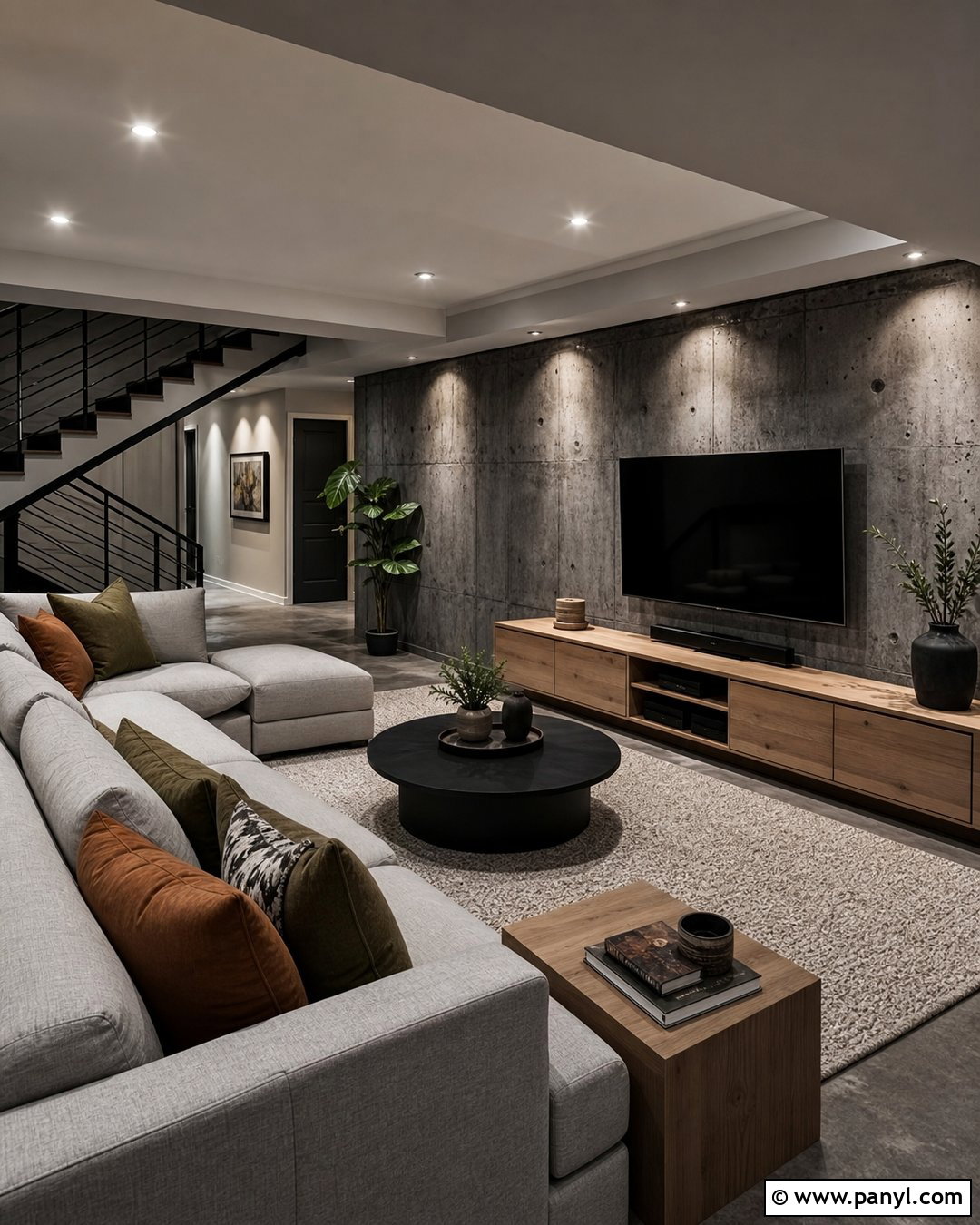
A charcoal-stained concrete wall creates an impressive backdrop for a modern media room or basement lounge. Balance its depth with a pale gray sectional, light wood media cabinetry, and warm white ceiling paint. A matte-black television blends into the dark wall instead of becoming the room’s dominant feature. Add softness through a thick wool rug, linen curtains, and cushions in clay, cream, and muted olive. Wall washers or adjustable track lights can emphasize the concrete texture while keeping the room comfortable and bright. Rather than staining every wall charcoal, limit the color to one broad focal surface. The surrounding lighter finishes prevent the space from feeling enclosed and give the darker concrete a clean, architectural presence.
3. Light Gray Concrete Wall Stain
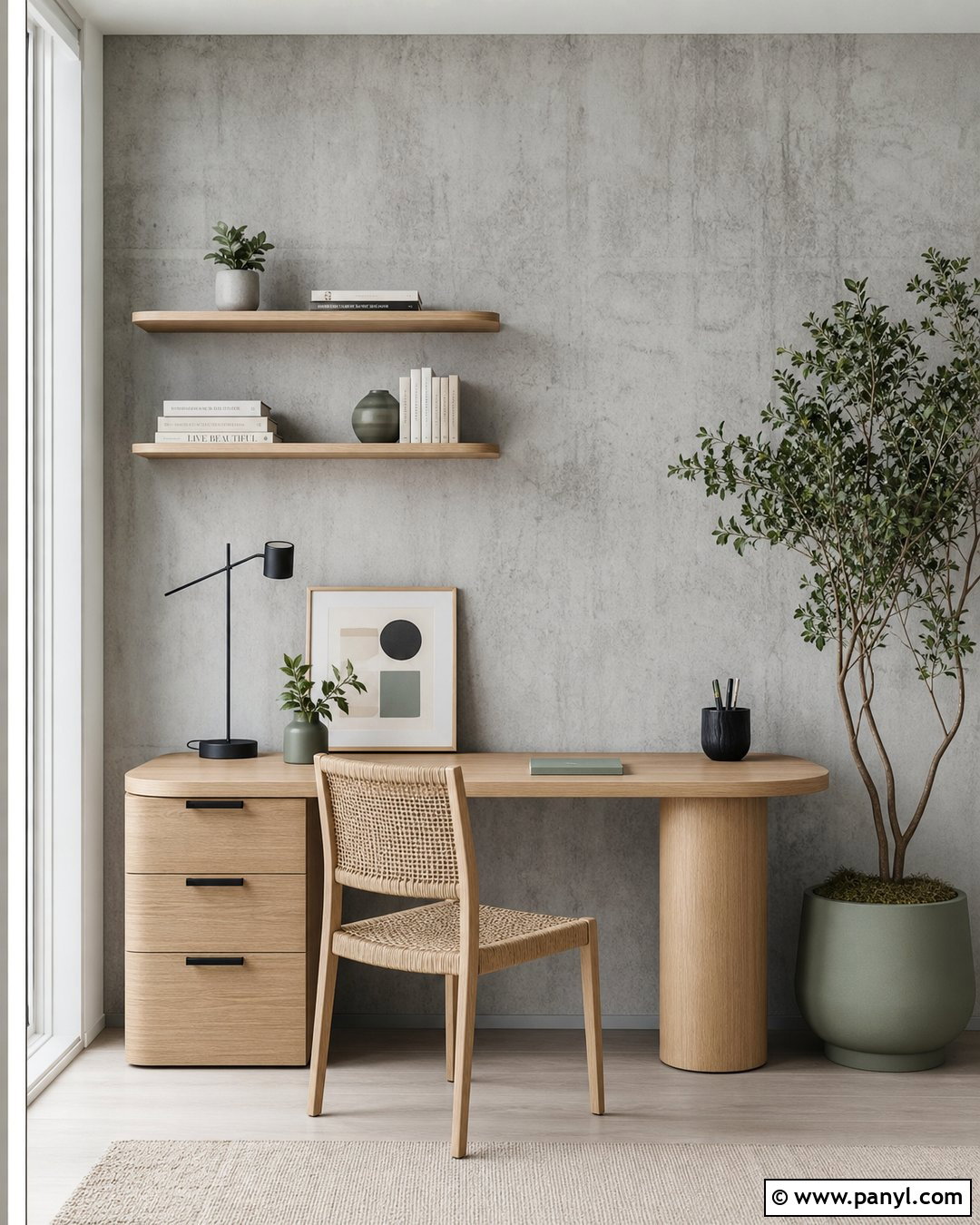
Light gray is a practical choice for a small basement, hallway, or home office where brightness matters. Pair the stained concrete wall with white oak furniture, warm white paint, and pale natural flooring. A compact desk with rounded edges keeps the office feeling open, while a woven desk chair adds texture. Include matte-black hardware in small amounts to define the gentle palette. Sage green accessories and a tall leafy plant bring in a quiet natural color without overwhelming the wall. Select a light gray stain that remains visibly different from plain unfinished concrete. A soft, semi-transparent treatment should unify discoloration while preserving subtle movement. This complete scheme feels fresh, organized, and contemporary rather than harsh or overly industrial.
4. Greige Concrete Wall Stain
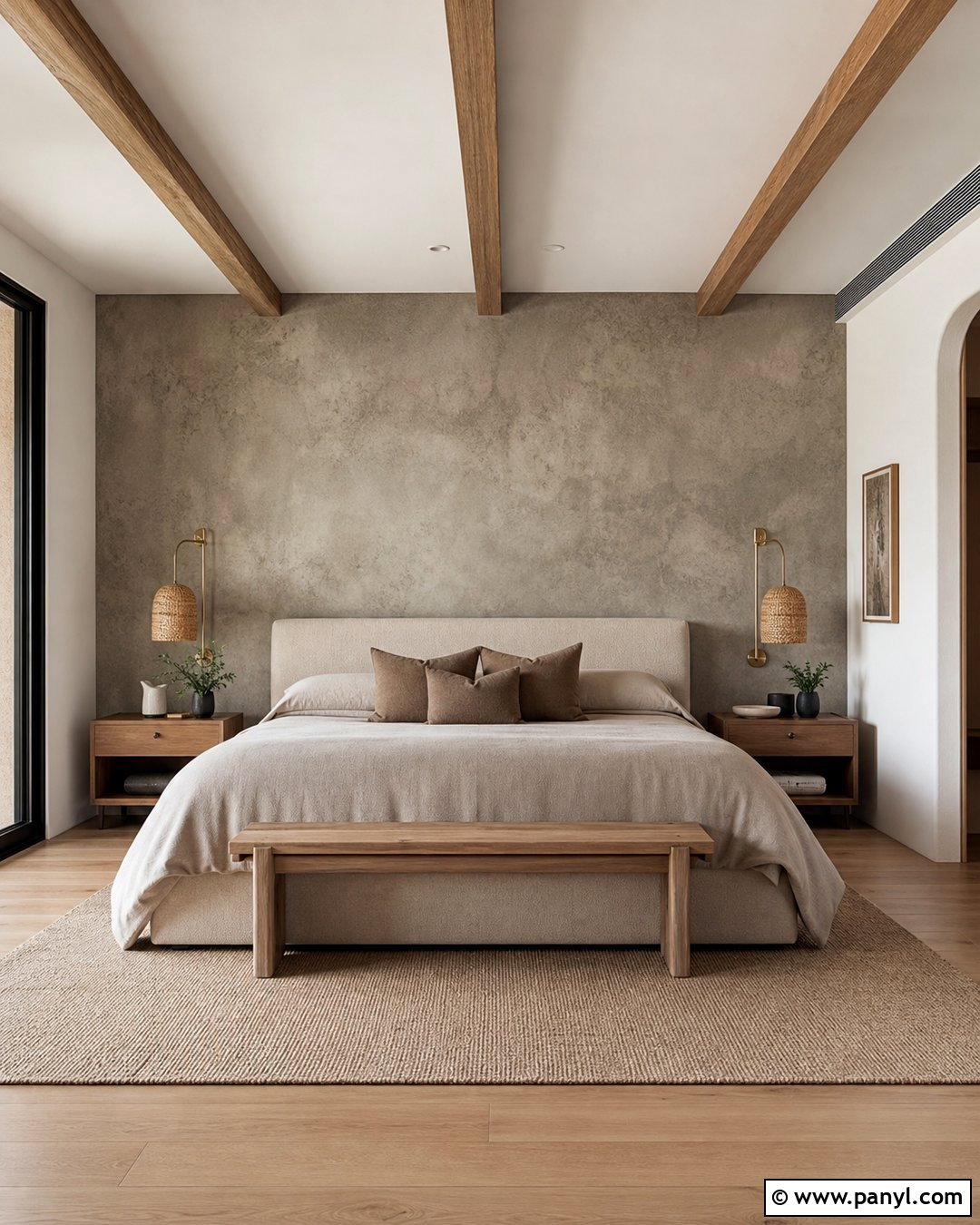
Greige concrete provides the balance of gray structure and beige warmth that works beautifully in a calm bedroom. Place the stained wall behind an upholstered cream bed with simple oak nightstands on each side. Layer white sheets, a taupe quilt, and muted brown pillows for a comfortable tonal effect. Brushed brass sconces introduce a gentle glow and prevent the neutral room from looking flat. Choose natural woven shades and light oak flooring to support the warm undertone. A greige stain with translucent variation can make the concrete resemble softly weathered limestone. Keep artwork minimal because the wall already offers pattern and depth. The overall room should feel relaxed, tactile, and residential while retaining the authentic character of exposed concrete.
5. Off-White Concrete Wall Stain
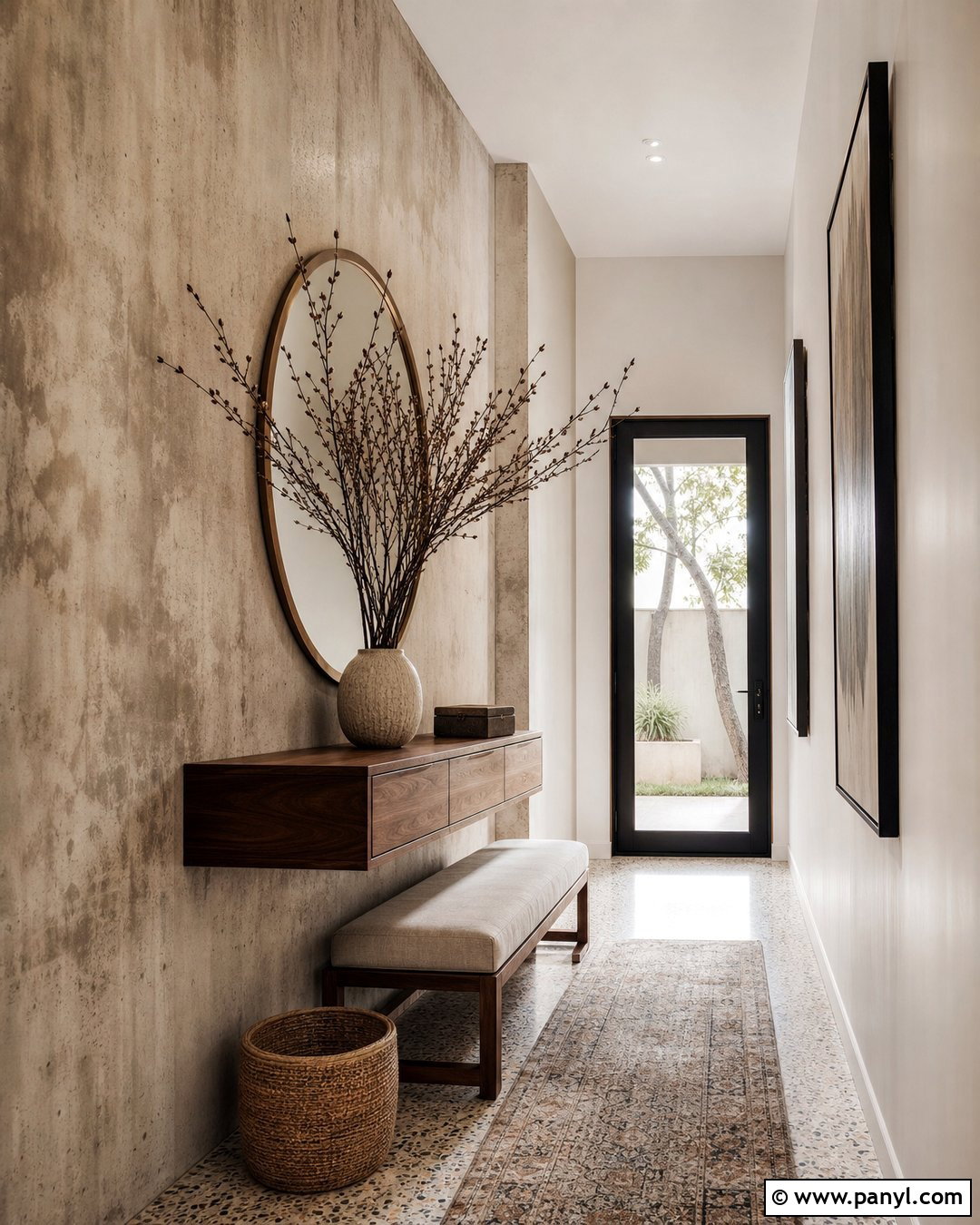
Off-white stain brightens a concrete wall while allowing faint pores and casting marks to show through. It is especially effective in a narrow entryway that needs to feel welcoming and open. Combine the wall with pale terrazzo flooring, a floating walnut console, and a rounded mirror with a thin bronze frame. Add a linen bench, woven basket, and softly patterned runner to make the hard surface feel more approachable. Select a creamy off-white rather than a sharp white, which can appear stark beside natural wood. A solid or lightly translucent finish can help calm strong discoloration. Complete the entry with warm white lighting and one sculptural branch arrangement. The finished space feels clean and refined without losing the wall’s concrete identity.
6. Sand Concrete Wall Stain
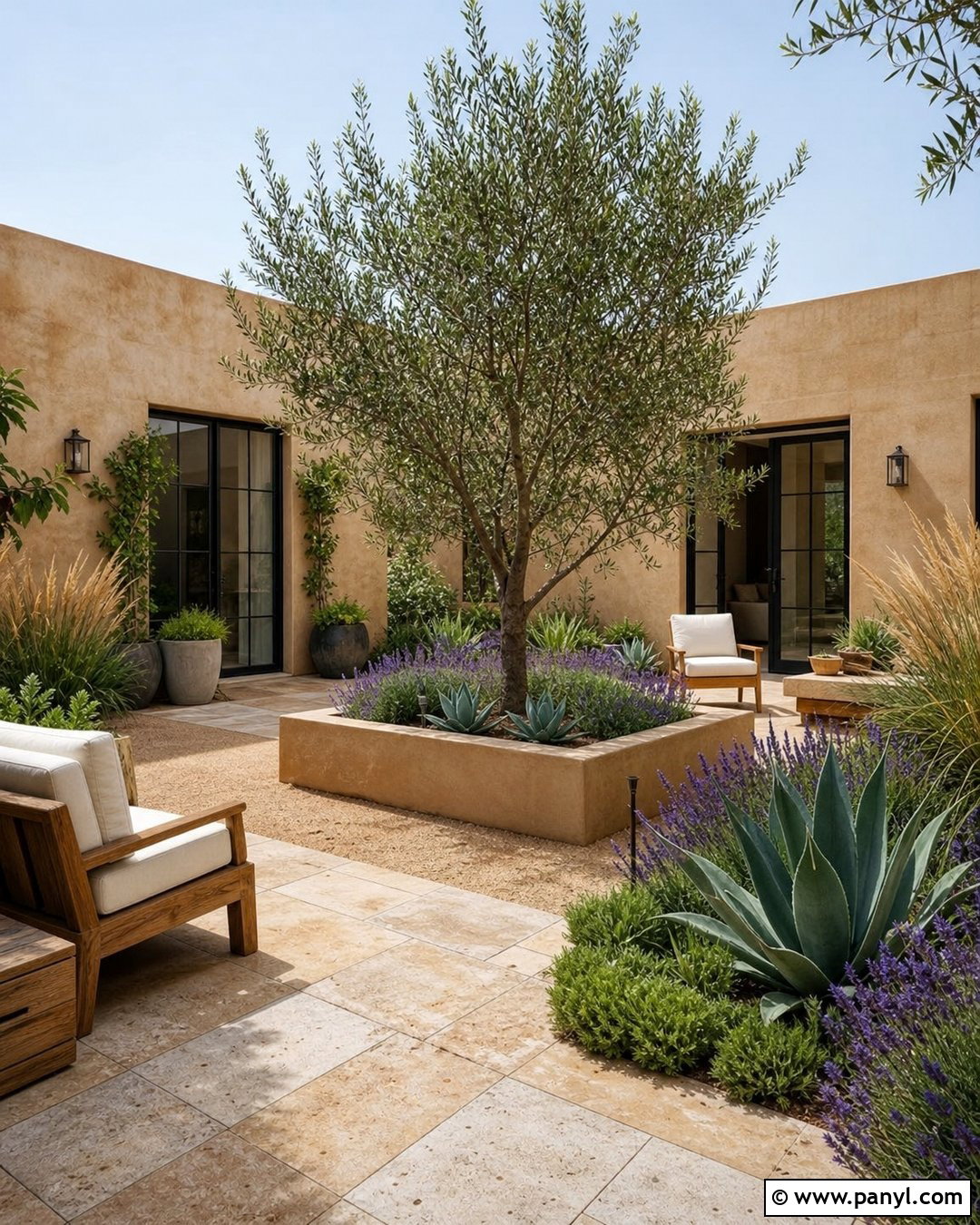
Sand stain gives an outdoor concrete wall a sun-washed color that blends naturally with gravel, pale stone, and drought-tolerant planting. Use it on a courtyard boundary wall surrounded by decomposed granite and large rectangular pavers. Furnish the space with a teak bench, cream outdoor cushions, and a low concrete table. Plant olive trees, ornamental grasses, lavender, and compact agaves in simple groups rather than scattered rows. Black-framed doors or windows provide a strong outline against the light wall. Choose a sandy beige with muted golden undertones, avoiding anything too yellow. The concrete’s subtle tonal variation will complement the changing textures of the landscape. This coordinated scheme creates a bright, low-maintenance courtyard with an inviting Mediterranean influence.
7. Taupe Concrete Wall Stain
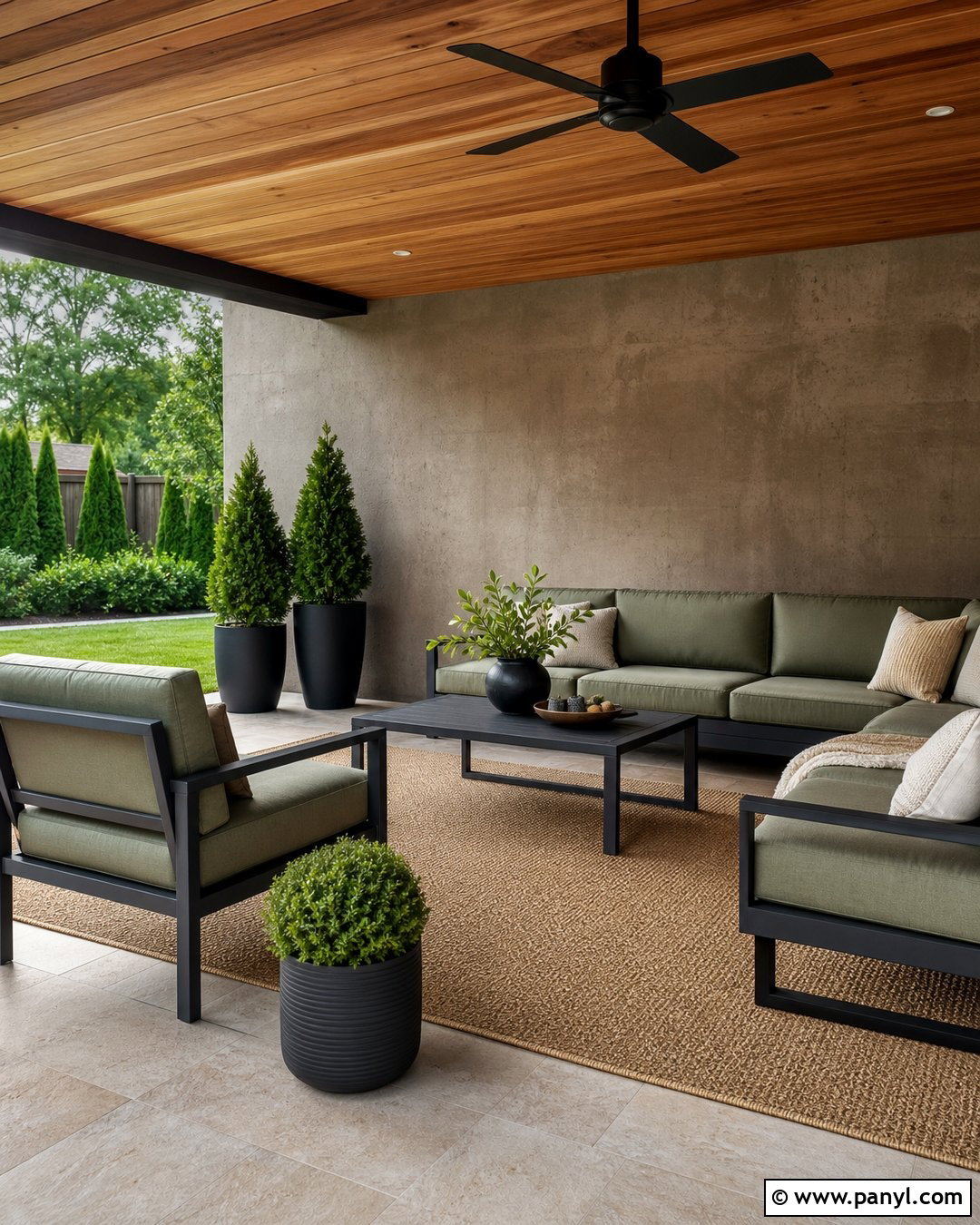
A taupe-stained concrete wall can make a covered patio feel connected to both the house and landscape. Pair the medium brown-gray surface with a cedar ceiling, limestone flooring, and charcoal aluminum furniture. Use cushions in warm white and faded sage, then add a woven outdoor rug to soften the seating zone. Large black planters filled with evergreen shrubs create structure around the perimeter. Taupe works particularly well when the home has beige stone, brown roofing, or warm siding because it bridges those colors gracefully. Keep nearby trim creamy rather than pure white. A translucent stain will reveal the wall’s texture and produce gentle shifts in tone. The complete patio looks grounded, comfortable, and polished without becoming too formal.
8. Caramel Concrete Wall Stain
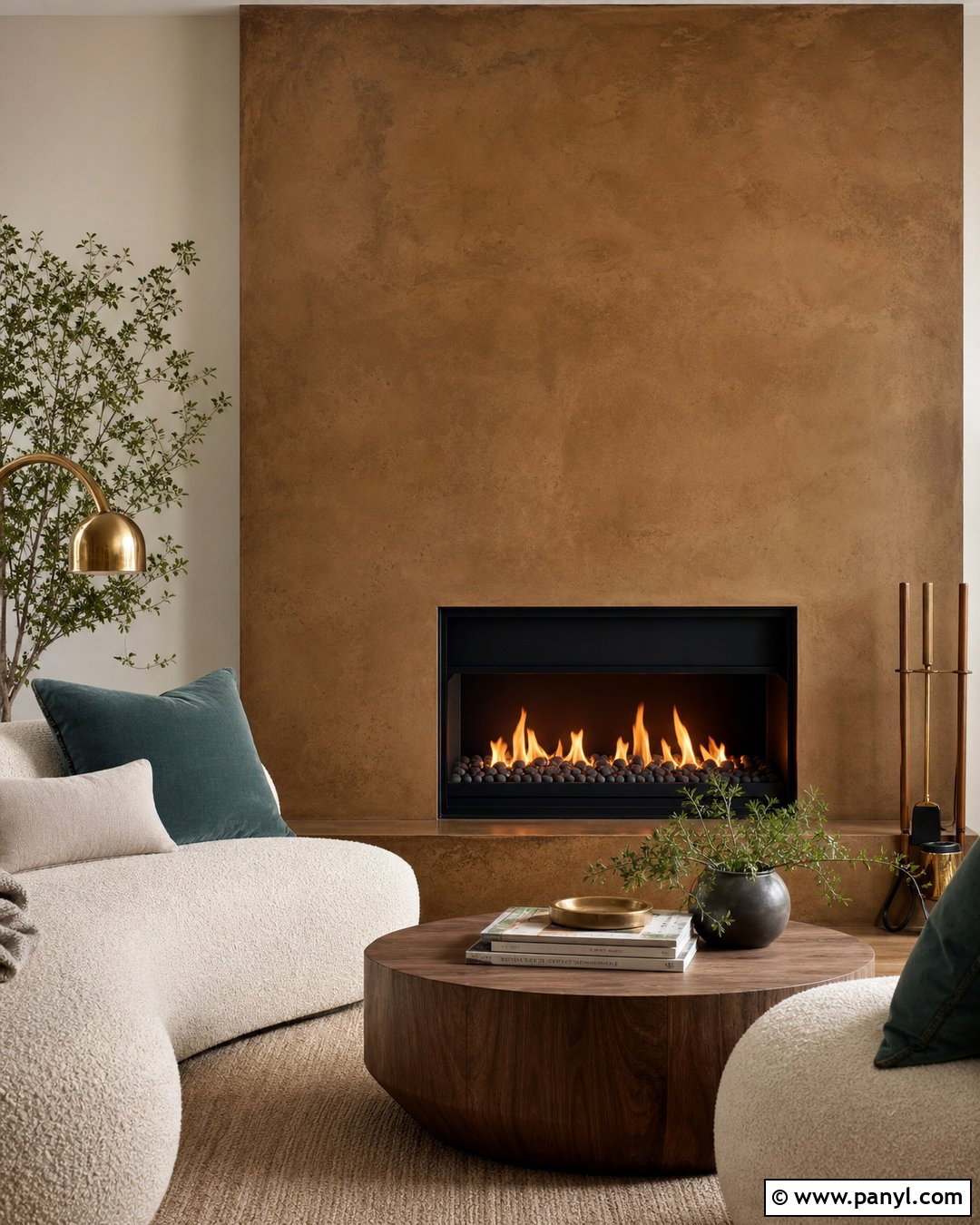
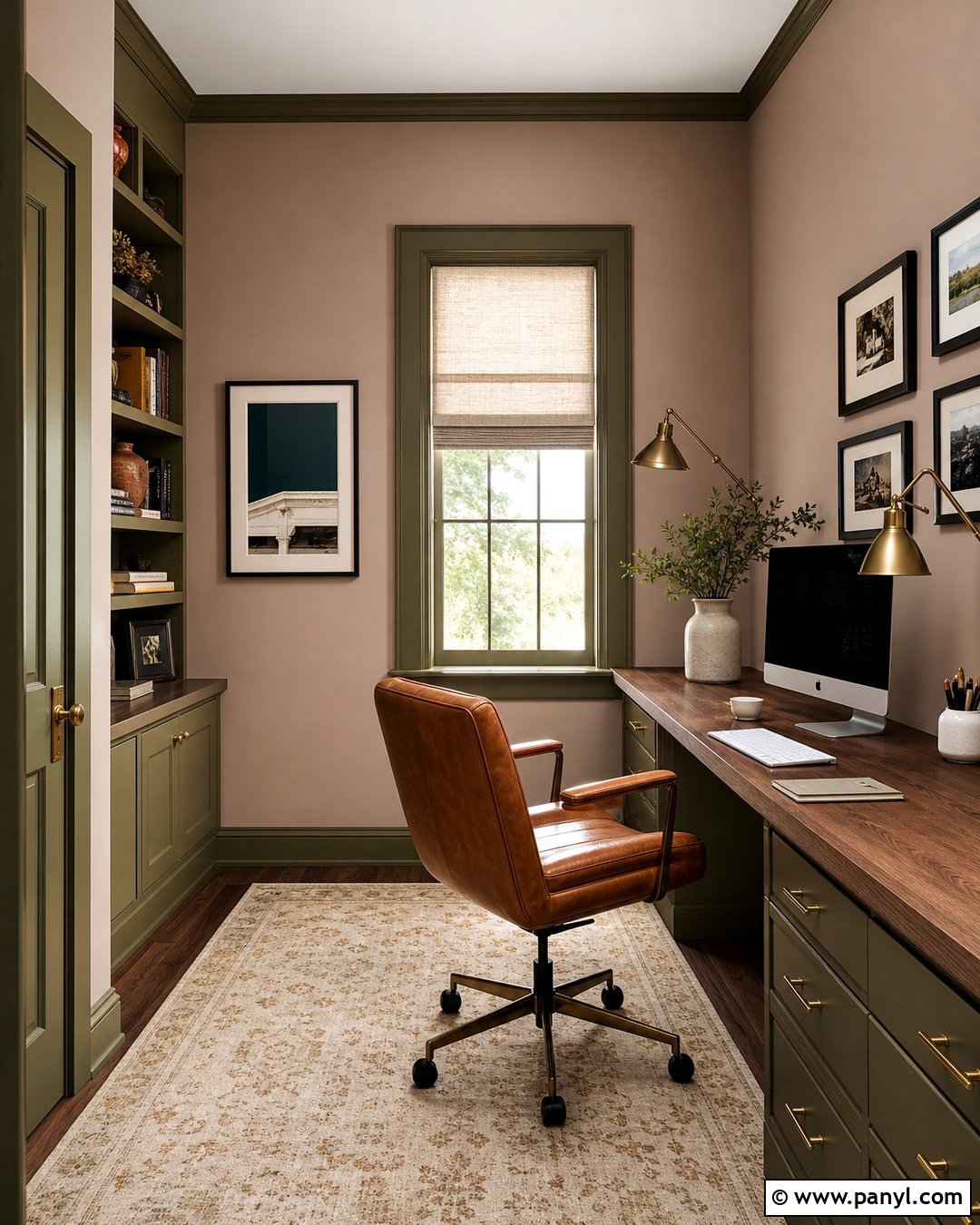
Caramel stain brings golden-brown warmth to a concrete fireplace wall and makes the surface feel almost leather-like. Build the living room around that richness with a cream boucle sofa, walnut coffee table, and soft beige rug. Place dark bronze fireplace tools beside a streamlined black firebox for definition. Muted teal pillows or a single blue-gray chair can cool the warm palette and prevent it from feeling too brown. Choose lighting with pale fabric shades and simple brass details. The stain should have visible amber and tan variation rather than a uniform orange finish. Keep the mantel minimal or omit it entirely so the concrete remains the focus. This layered arrangement creates a warm contemporary room with natural materials and balanced contrast.
9. Walnut Brown Concrete Wall Stain
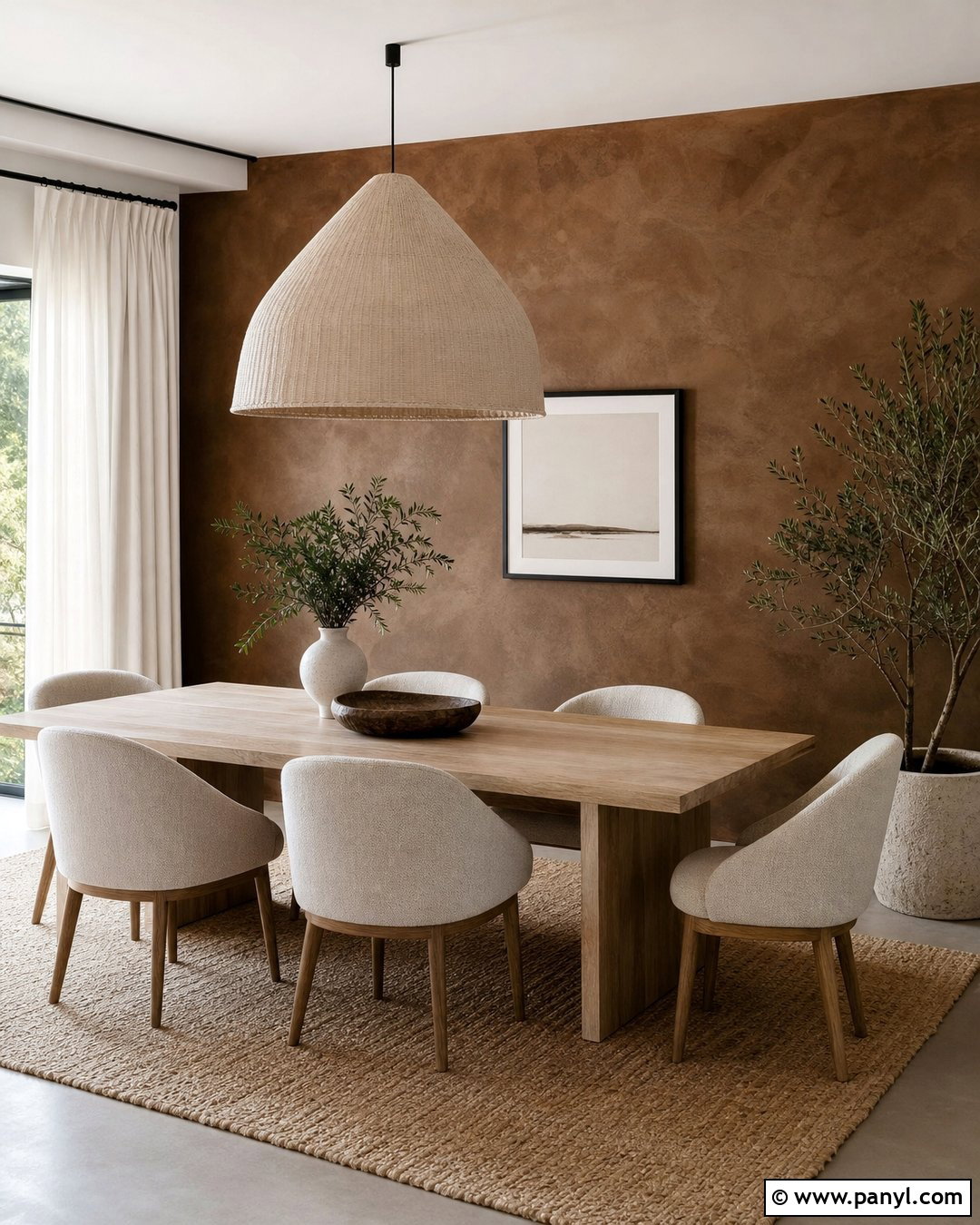
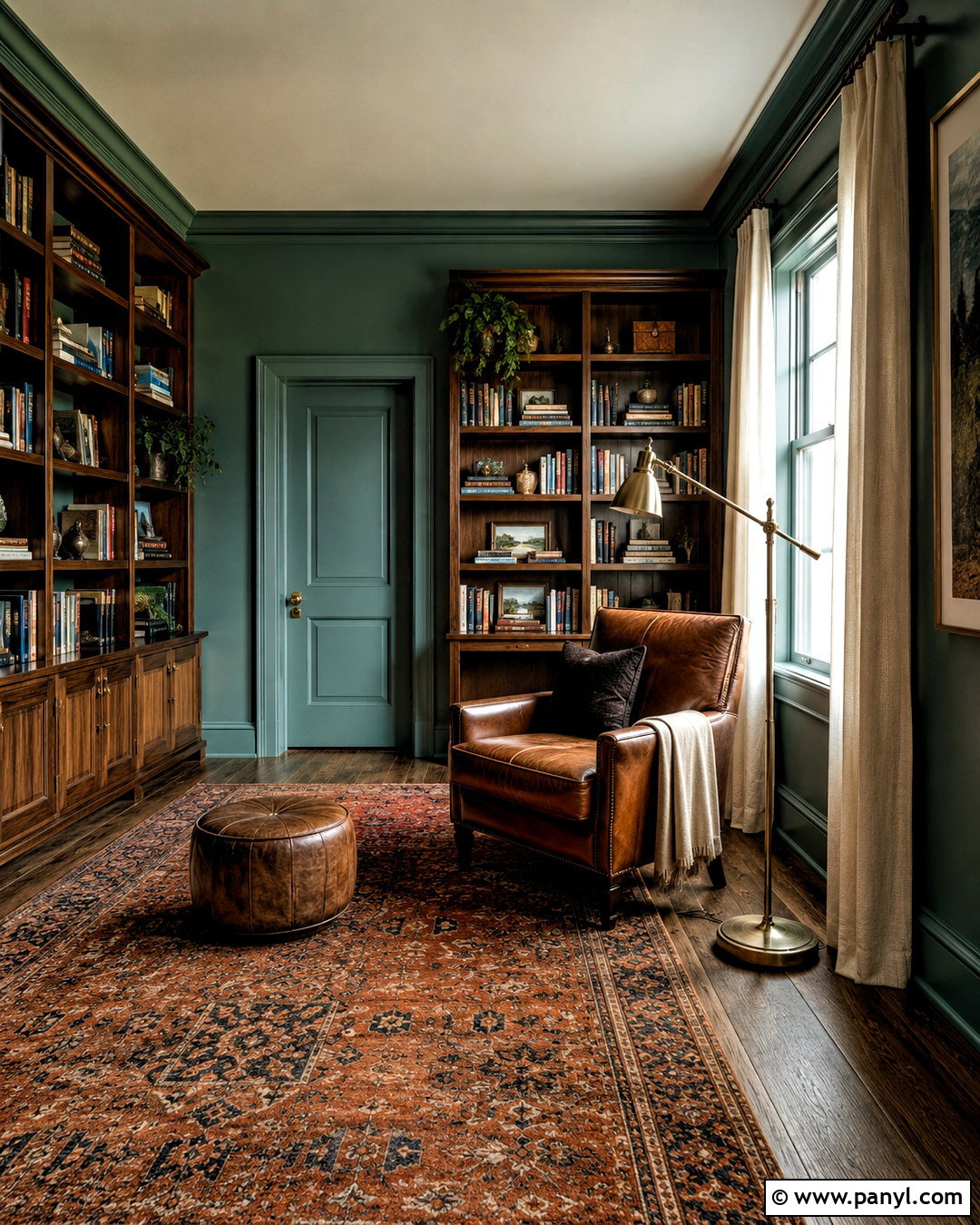
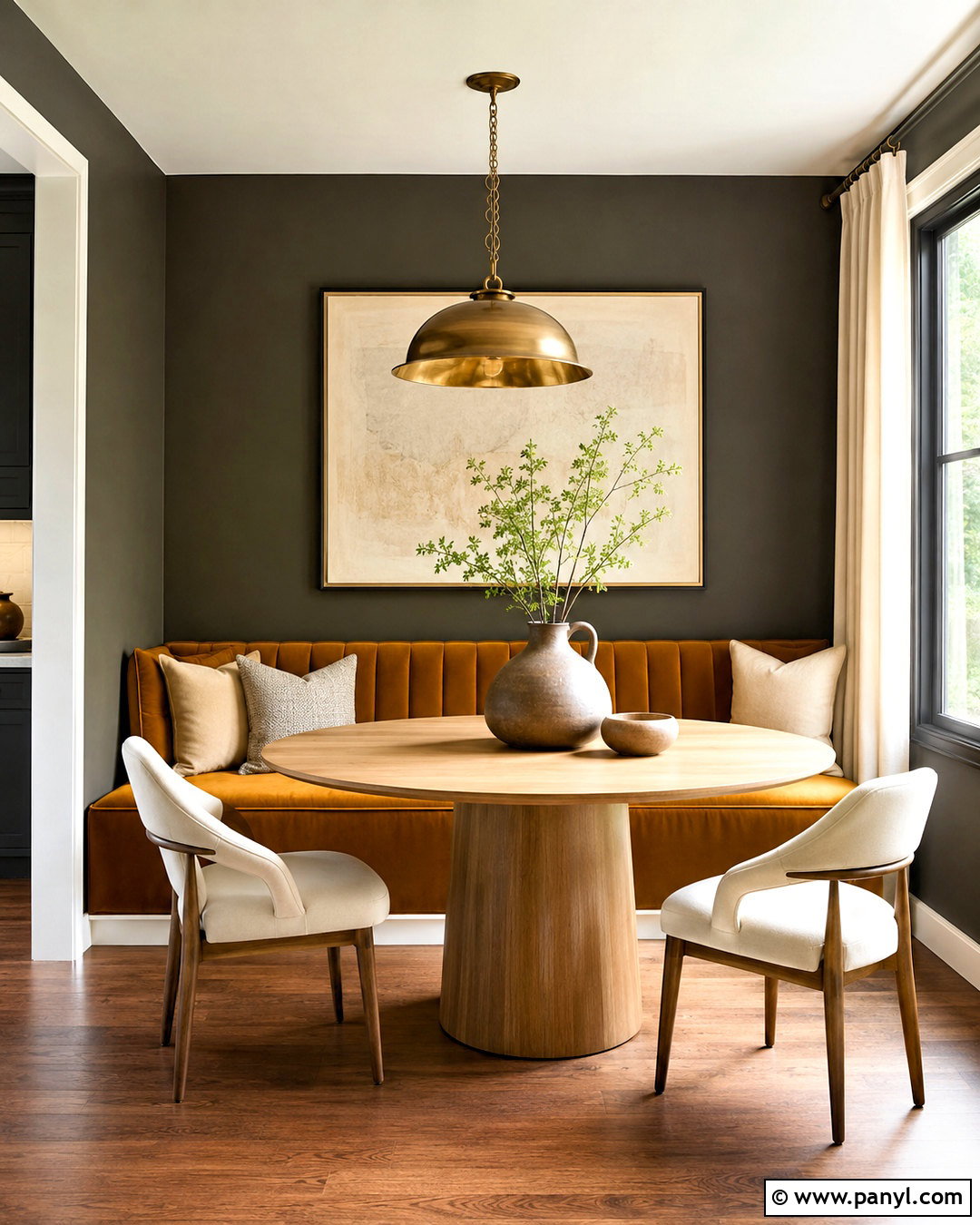
Deep walnut brown transforms a poured concrete dining room wall into a rich background for lighter furnishings. Center a pale oak table in front of the wall and surround it with upholstered oatmeal chairs. An oversized linen pendant can brighten the dining surface while adding softness overhead. Use cream curtains, warm white adjacent walls, and a natural jute rug to keep the brown stain from dominating. Black-framed artwork and slim bronze accessories provide definition without adding visual clutter. A walnut stain looks especially effective when its color shifts between cocoa, umber, and toasted brown across the wall. Finish the room with simple greenery in a stone vessel. The result feels intimate and grounded while still appearing fresh enough for everyday dining.
10. Espresso Concrete Wall Stain
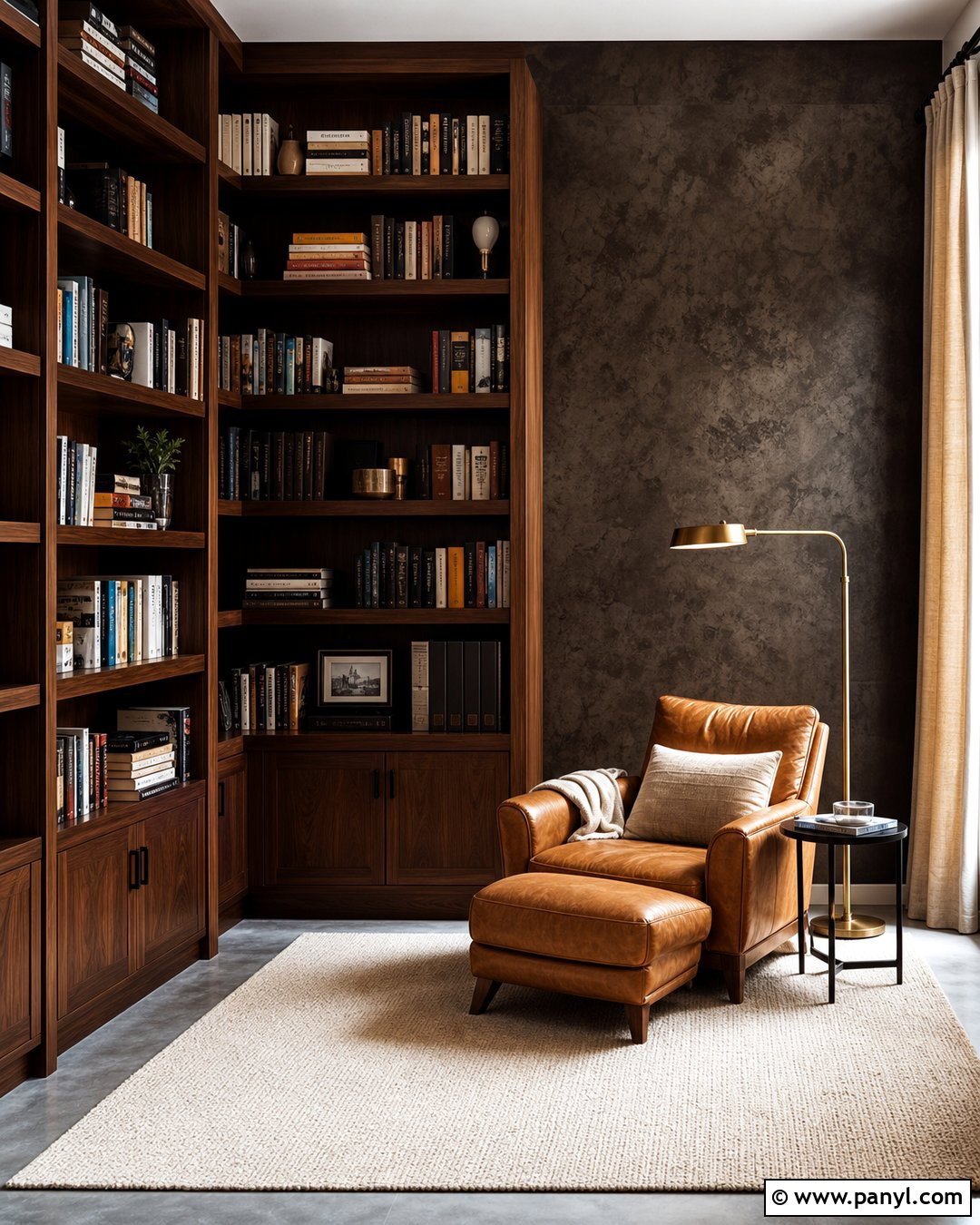
Espresso stain produces a near-black brown wall that suits a sophisticated home library or reading room. Place walnut bookcases against adjoining walls rather than covering the stained concrete focal surface. A caramel leather lounge chair, brass reading lamp, and ivory wool rug create a comfortable spot in front of it. Add a compact side table and floor-length beige curtains to soften the hard architectural finishes. The ceiling and remaining walls should stay warm white to maintain a sense of space. Select an espresso tone with noticeable brown undertones so it does not read as flat black. Gentle directional lighting can reveal the mottled stain pattern. This complete look feels cozy and substantial, with enough lighter materials to keep the room visually balanced.
11. Terracotta Concrete Wall Stain
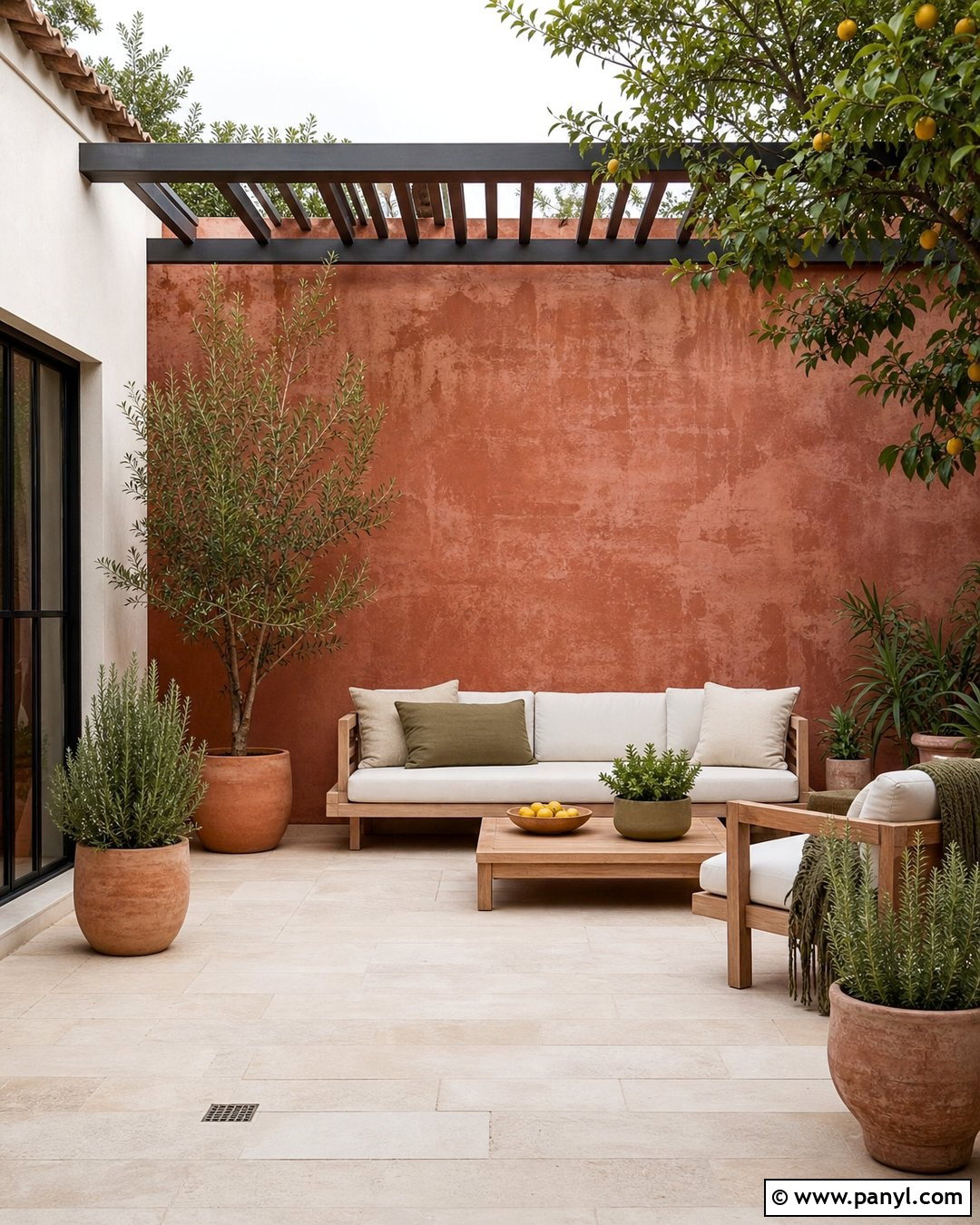
Terracotta stain turns a plain courtyard wall into a warm backdrop inspired by sunbaked clay. Pair it with pale limestone pavers, light wood seating, and cushions in cream and dusty olive. Use oversized clay planters filled with rosemary, citrus trees, and soft grasses to repeat the wall’s earthy color in different textures. A black metal pergola introduces a contemporary structure and creates a clean contrast with the reddish-orange surface. Keep surrounding house walls warm white so the courtyard remains bright. Choose a muted terracotta rather than a vivid red, allowing the concrete variation to produce natural depth. With a small fountain or simple stone bowl as a focal point, the entire outdoor space feels relaxed, cohesive, and welcoming.
12. Brick Red Concrete Wall Stain
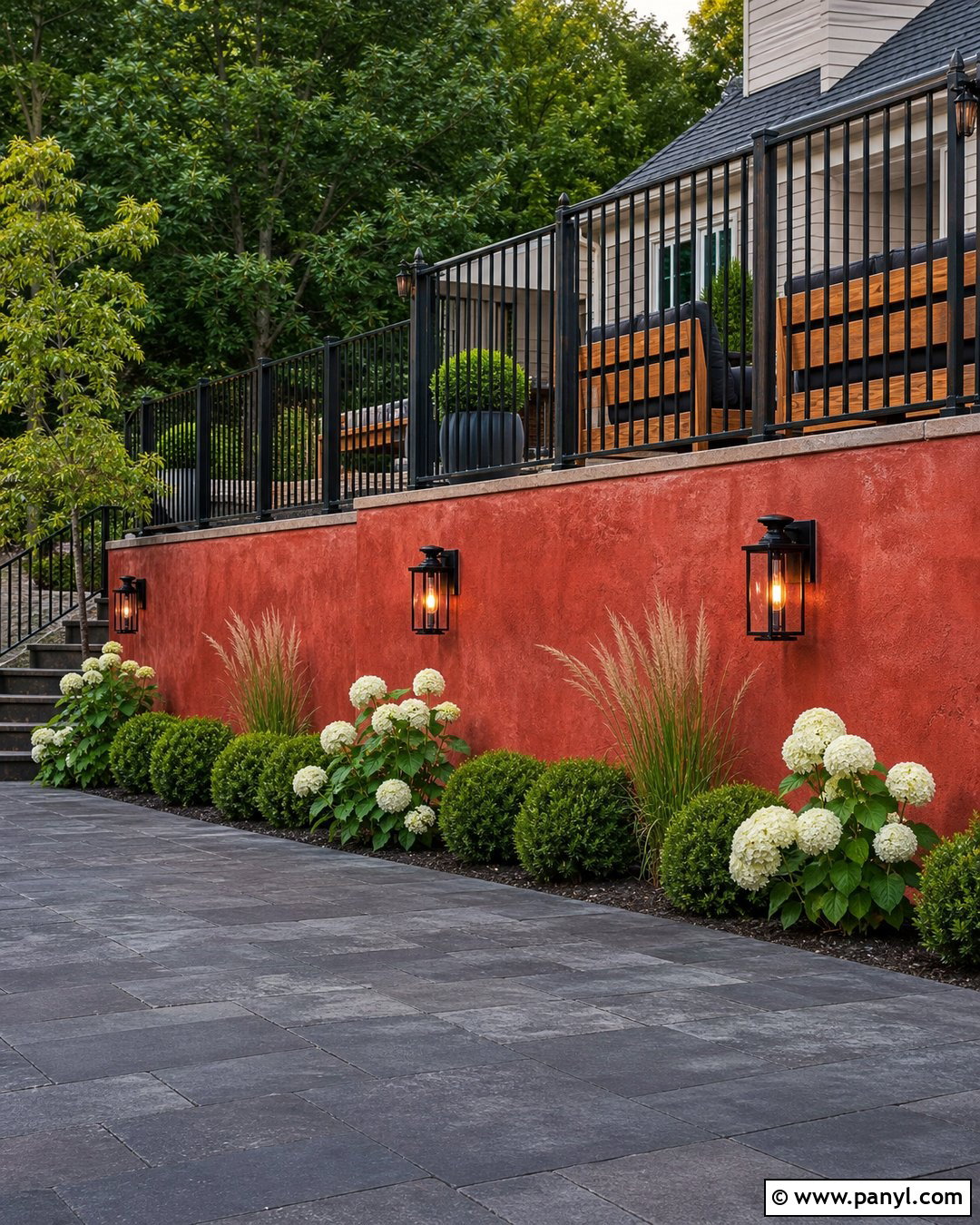
Brick red is a strong concrete wall stain color that can unify a backyard retaining wall with traditional brick architecture. Combine it with charcoal pavers, dark bronze railings, and a cedar seating area for a balanced exterior scheme. Plant deep green boxwood, white hydrangeas, and feathery ornamental grasses along the wall to soften its weight. The stain should be a subdued red-brown rather than a bright primary red. This allows it to complement weathered brick, wood, and natural stone. Add black lantern-style wall lights at even intervals for definition. In a compact yard, use the color on one principal wall and keep other masonry neutral. The completed landscape feels established and intentional, with enough greenery and lighter accents to offset the saturated surface.
13. Clay Concrete Wall Stain
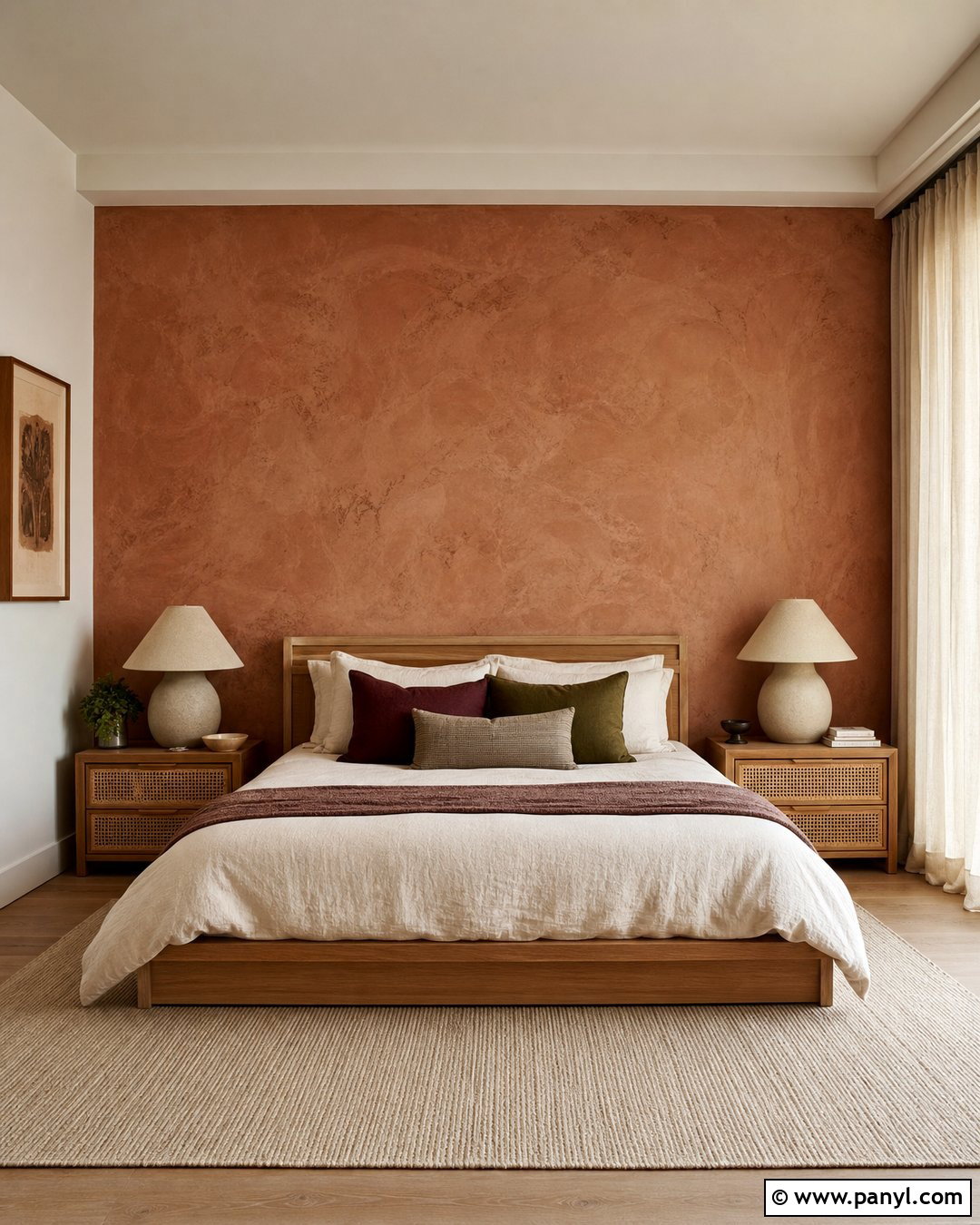
Soft clay stain sits between beige, pink, and muted brown, giving concrete an earthy character without the intensity of terracotta. Use it on a bedroom feature wall with a low oak bed, ivory linen bedding, and a pale wool rug. Add nightstands in natural cane or ash wood, then introduce small accents of burgundy and olive for depth. Rounded plaster lamps and simple cotton curtains support the gentle, organic look. Keep the other walls a creamy white that relates to the clay undertone. A lightly mottled application makes the surface feel handmade and naturally aged. Avoid excessive wall decor; one woven textile or understated canvas is enough. The complete bedroom feels warm, restful, and distinctive while remaining easy to update over time.
14. Golden Ochre Concrete Wall Stain
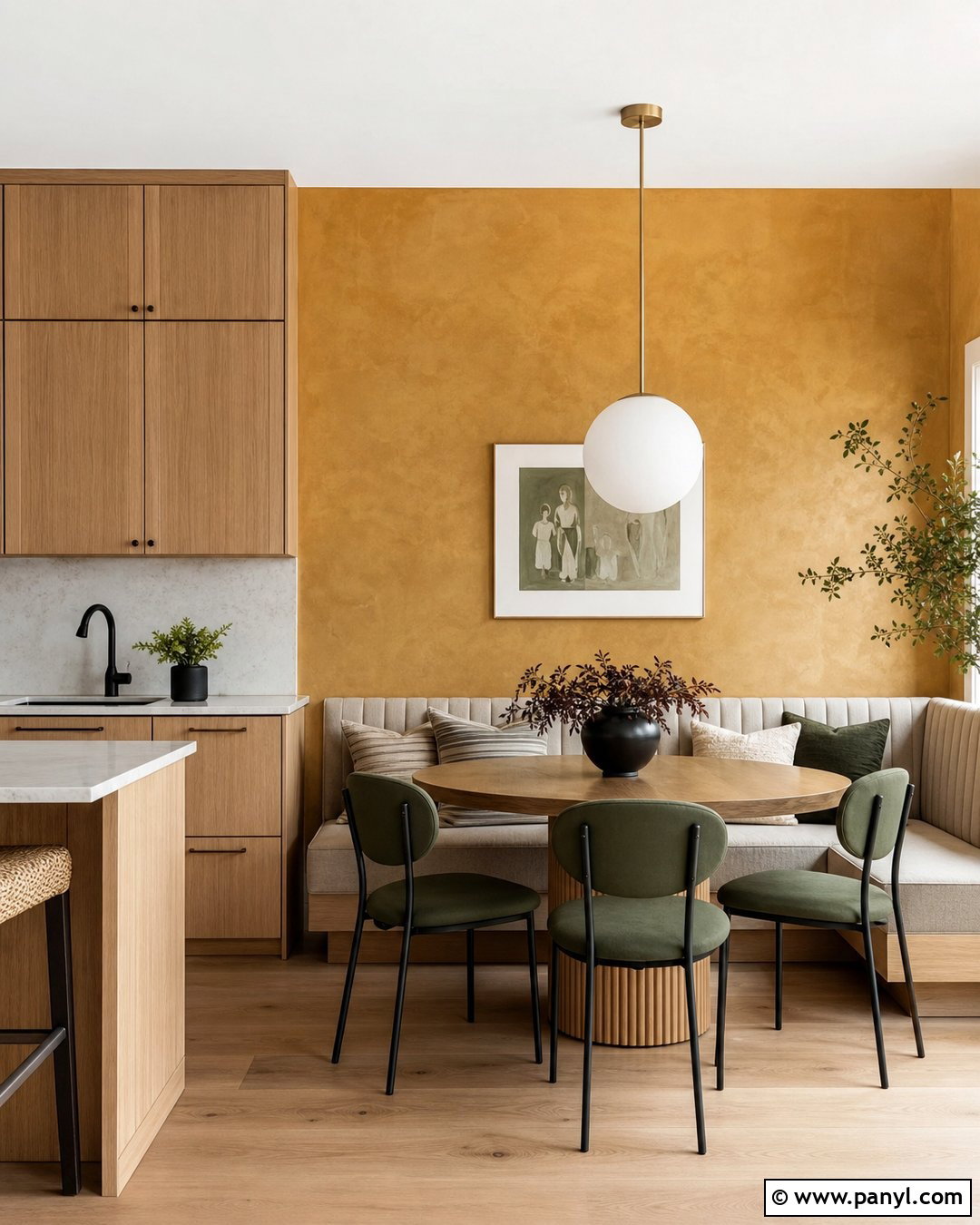
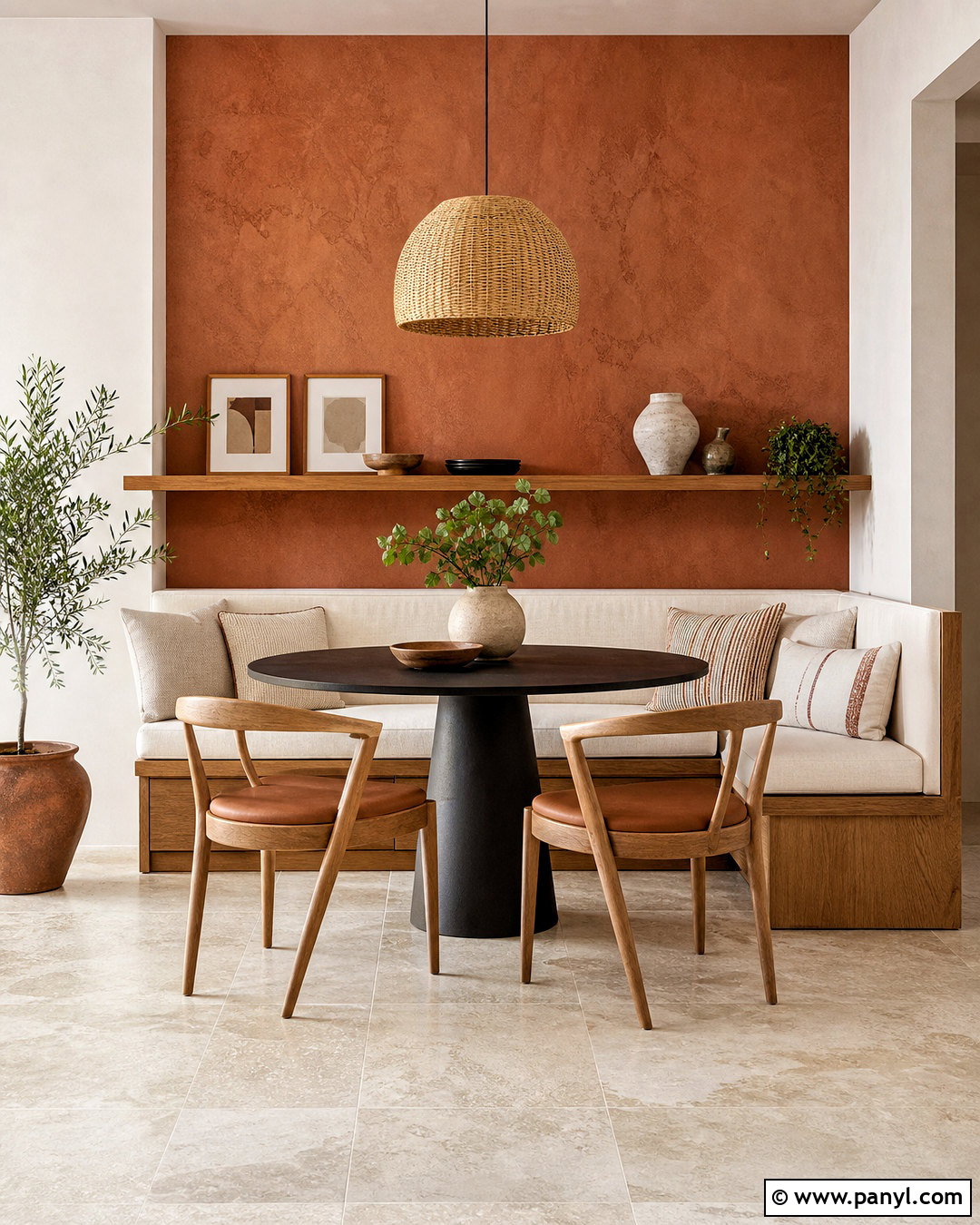
Golden ochre creates an energetic but grounded wall for a kitchen or breakfast nook. Apply it to a concrete banquette wall and pair it with white oak cabinetry, creamy quartz counters, and matte-black fixtures. A built-in bench upholstered in oatmeal fabric provides a soft break between the table and textured wall. Add dining chairs in muted green and a simple globe pendant in warm white glass. The ochre should resemble natural mineral pigment, with brown and yellow variation rather than a bright mustard finish. Pale tile flooring helps reflect light and keeps the compact eating area open. Finish the look with pottery, linen napkins, and small herb planters. This scheme feels cheerful and modern while remaining connected to natural materials.
15. Sage Green Concrete Wall Stain
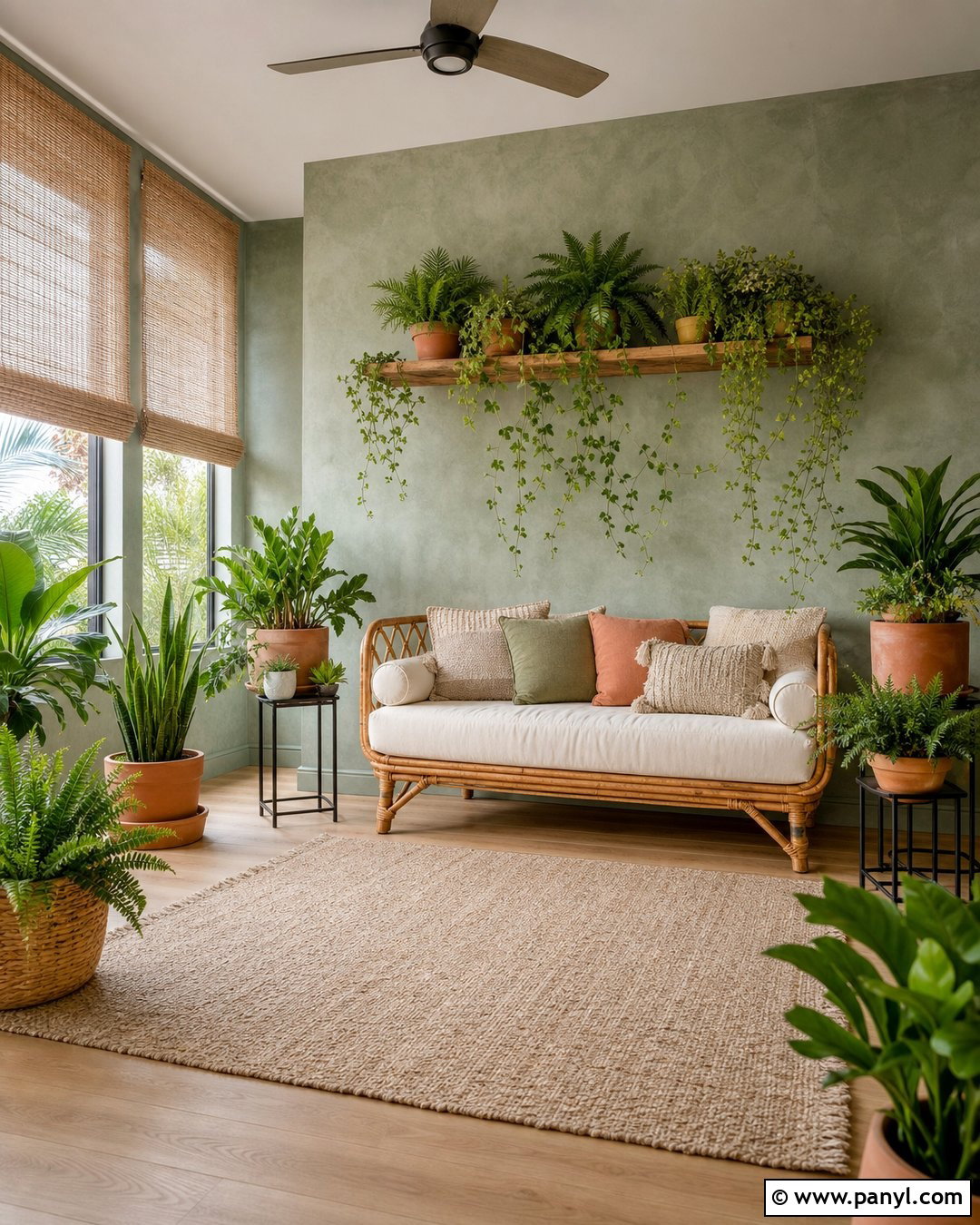
Sage green stain softens concrete and gives a sunroom or indoor garden space a natural, restorative atmosphere. Pair the wall with a rattan daybed, light oak floor, and layered cream cushions. Use black metal plant stands to display ferns, trailing vines, and broad-leaf plants at different heights. Linen shades filter strong daylight and create gentle shadows across the stained texture. Select a gray-green sage rather than a vivid botanical green, ensuring the wall remains versatile. Terracotta pots and a muted rust throw introduce warmth, while a pale woven rug defines the seating area. Keep the surrounding walls warm white. The completed room feels fresh and peaceful, with the concrete acting as a durable architectural backdrop for natural furniture and abundant greenery.
16. Olive Green Concrete Wall Stain
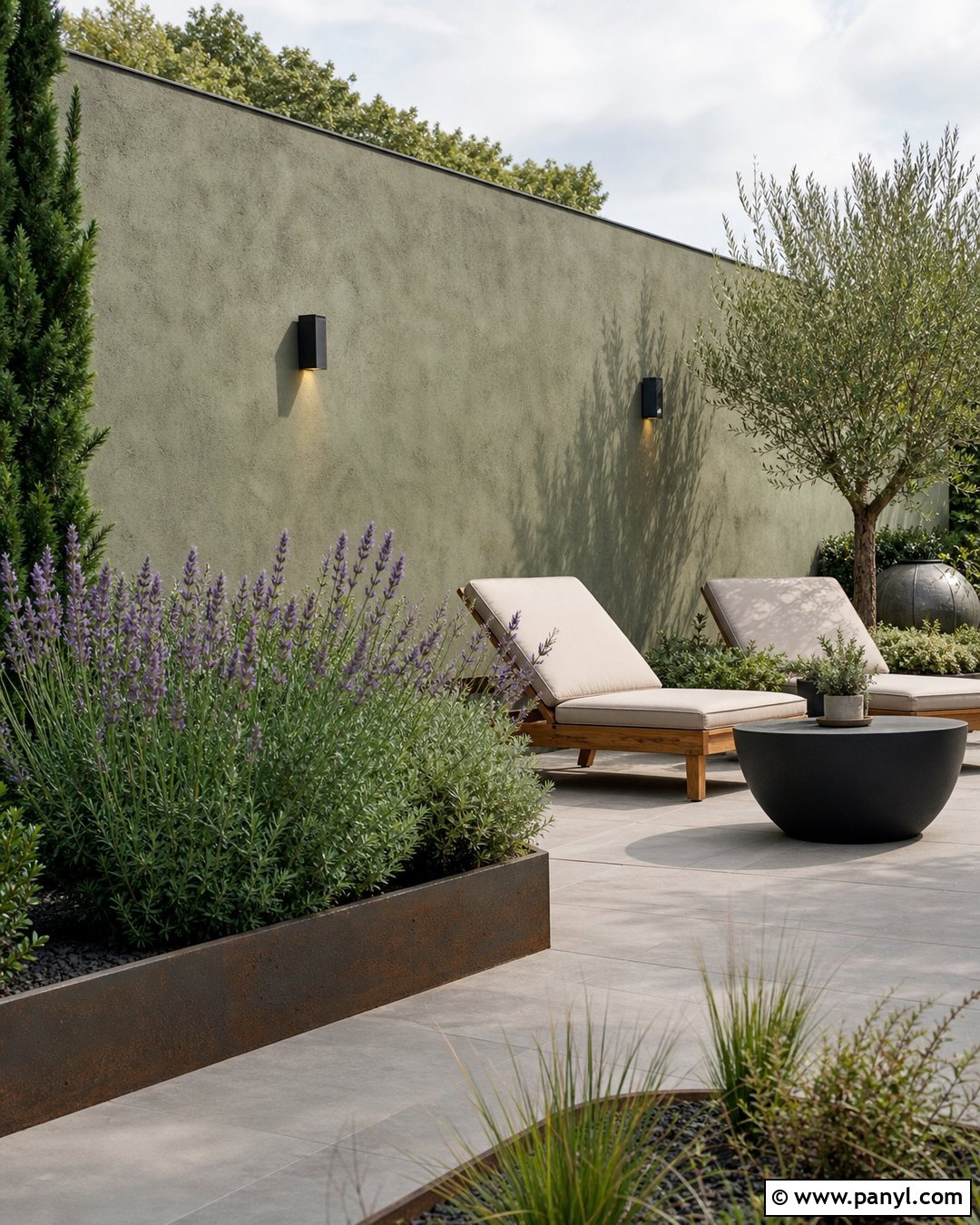
Olive green gives an exterior concrete garden wall a mature color that settles easily into dense landscaping. Design the surrounding terrace with warm gray stone pavers, teak lounge chairs, and beige outdoor cushions. Plant silvery lavender, deep green shrubs, and wispy grasses in wide beds along the wall. Weathered steel edging can add a subtle rust-colored accent that complements the olive tone. Use matte-black wall lights and simple metal planters for structure. The stain should appear mossy and muted, allowing natural concrete variation to create lighter and darker areas. Avoid placing too many competing flower colors nearby. White blooms and soft purple flowers are enough. The finished terrace feels private, established, and connected to the garden in every season.
17. Slate Blue Concrete Wall Stain
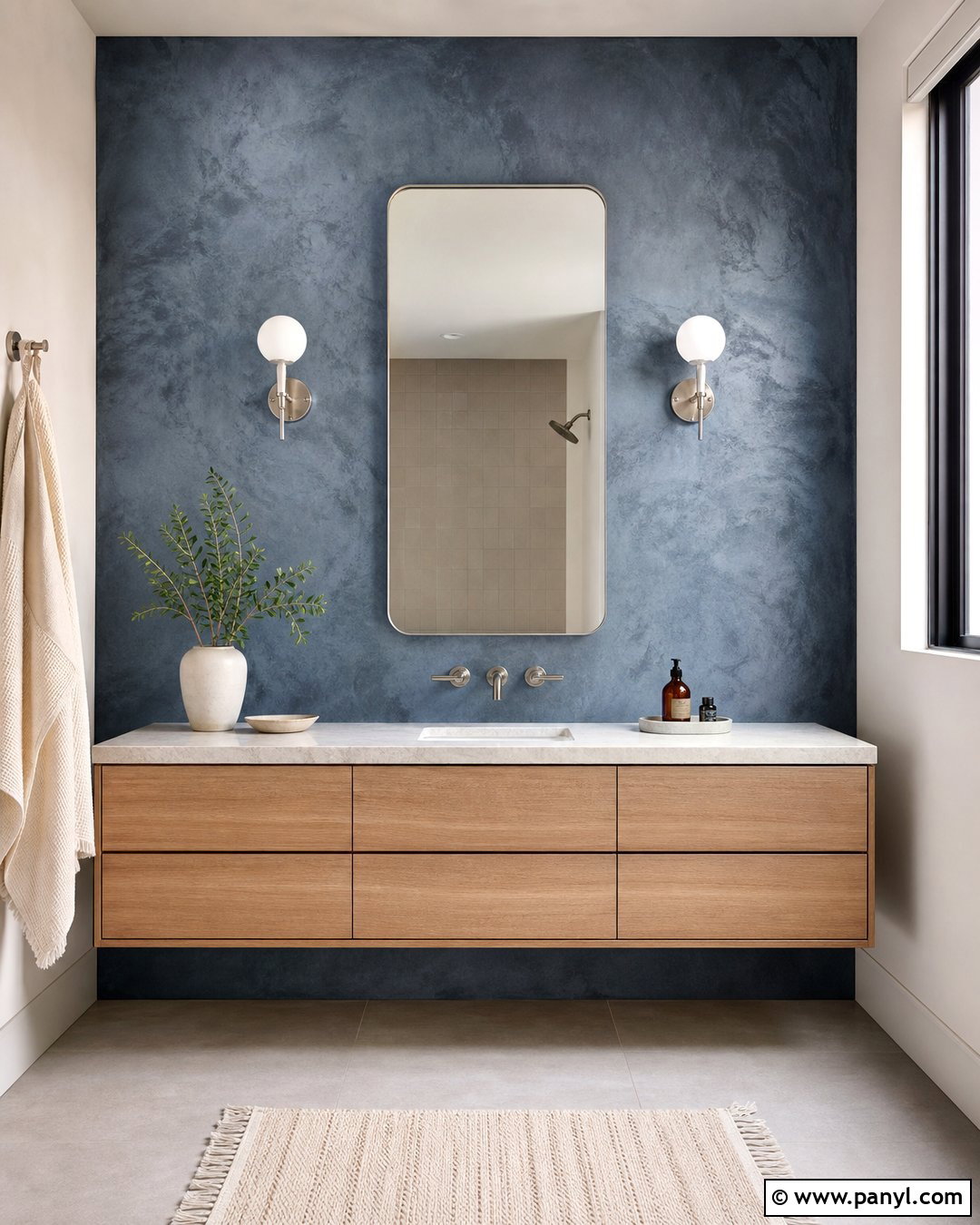
Slate blue makes a concrete bathroom wall feel serene while preserving a modern architectural edge. Use the stained wall behind a floating white oak vanity with a pale stone countertop and brushed nickel fixtures. Install a frameless mirror and simple white globe sconces to keep the arrangement light. Large warm gray floor tiles provide a neutral base, while white towels and a cream bath mat soften the room. Choose a desaturated blue with noticeable gray undertones rather than a bright coastal color. A translucent finish can create subtle cloudlike movement across the concrete. Add one small plant and a few ceramic accessories, but avoid unnecessary clutter. The final bathroom feels calm, clean, and carefully coordinated without looking cold or overly themed.
18. Deep Navy Concrete Wall Stain
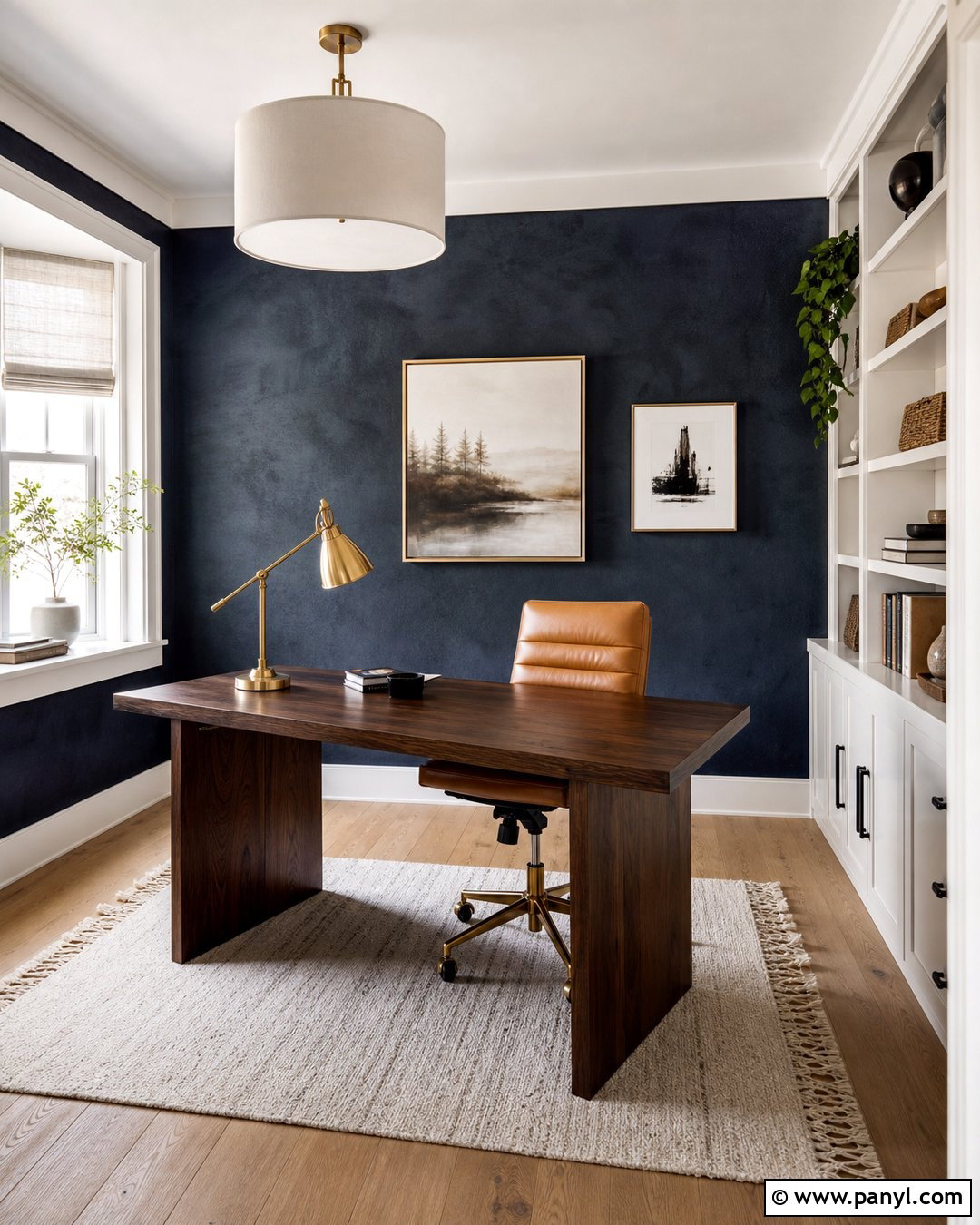
A deep navy concrete wall creates a dramatic background for a home office without relying on conventional painted drywall. Pair it with a long walnut desk, tan leather chair, and streamlined brass task lamp. Use pale oak flooring and a warm ivory rug to balance the dark surface. White built-in shelves on an adjacent wall provide practical storage and prevent the office from becoming visually heavy. Choose a navy stain with a slightly smoky undertone so the texture remains visible. Framed artwork in cream, rust, and muted blue can tie the room together. Add a linen window shade and one substantial plant for softness. The complete design feels focused and professional, yet warm enough for comfortable daily work at home.
19. Soft Black Concrete Wall Stain
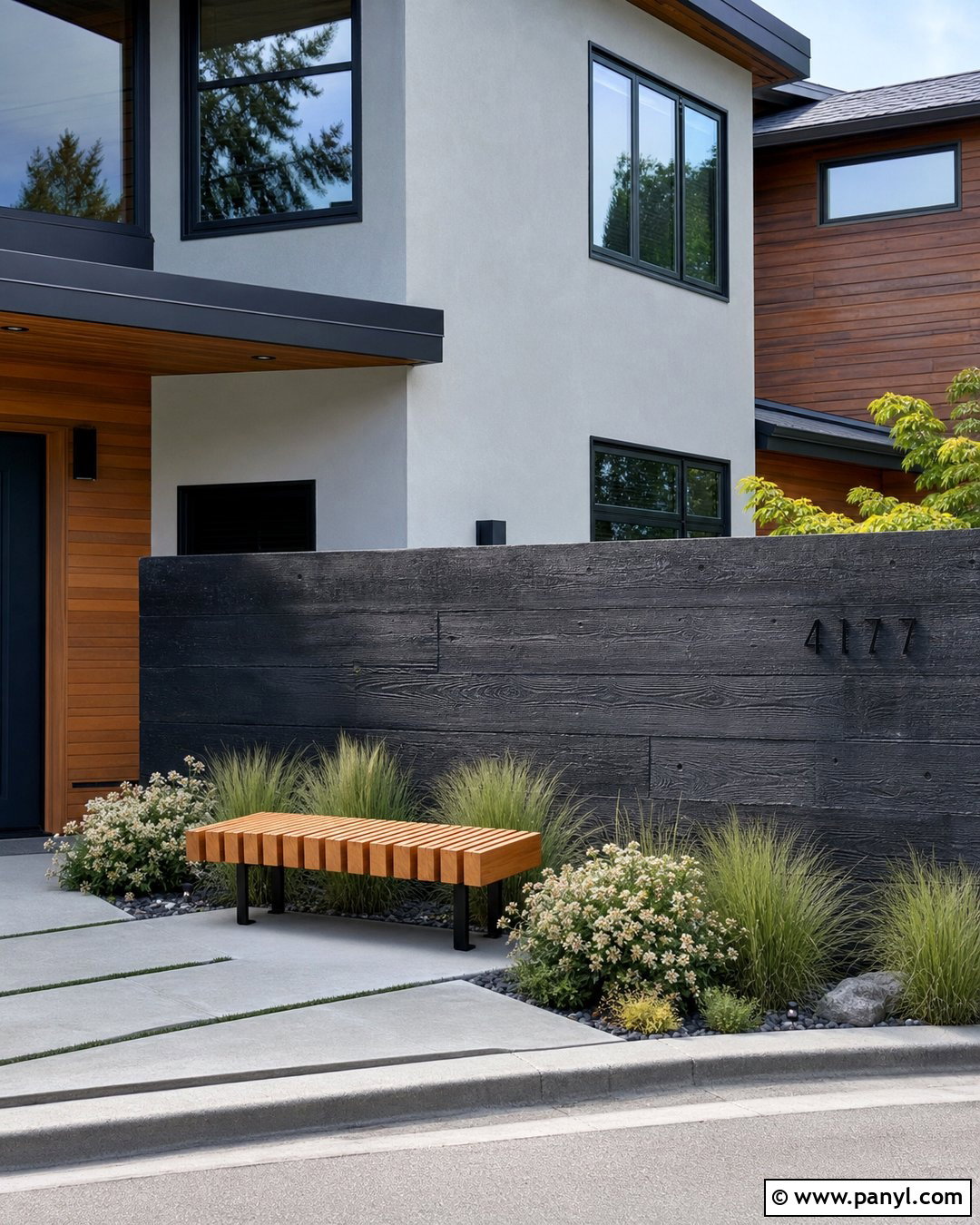
Soft black stain emphasizes board-formed concrete and gives a modern exterior a sharp, cohesive finish. Apply it to a low privacy wall beside a light gray stucco house with natural cedar siding. Repeat the black on window frames, gates, and narrow exterior lights to create continuity. Use pale concrete pavers and beds of ornamental grasses to brighten the foreground. A simple wood bench or slatted cedar screen can add warmth near the dark wall. Choose a softened black with charcoal undertones so sunlight can still reveal seams and surface texture. Keep the landscaping restrained, using green foliage and white flowers. This full exterior scheme feels bold and contemporary while the natural wood, light hardscape, and planting prevent it from appearing severe.
20. Blue-Green Concrete Wall Stain
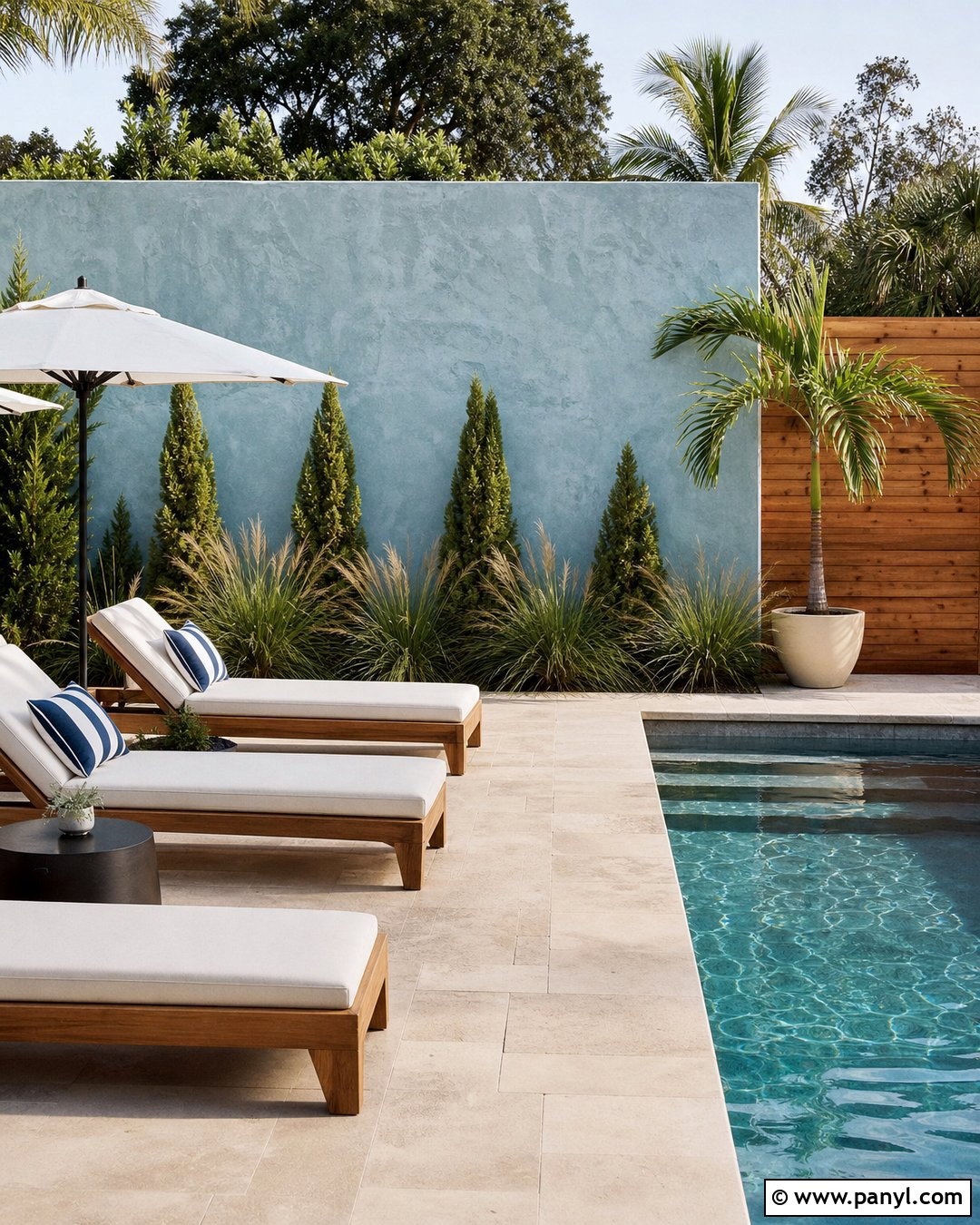
Blue-green stain can turn a poolside concrete wall into a refreshing focal point that relates naturally to water and landscaping. Select a muted teal with gray undertones, then pair it with pale limestone decking and clean-lined teak loungers. Use white cushions, striped blue pillows, and matte-black side tables for a crisp resort-inspired arrangement. Plant palms, ornamental grasses, and compact evergreen shrubs around the wall without blocking its textured surface. Warm wood fencing can introduce contrast along one edge of the yard. The stain should show natural variation between sea green, mineral blue, and soft gray. With balanced materials and uncluttered planting, the completed pool area feels colorful and distinctive while remaining suitable for a relaxed residential backyard.
Conclusion:
The best concrete stain color should complement the wall’s setting, surrounding materials, natural light, and existing surface variation. Warm neutrals can make indoor concrete feel comfortable, while charcoal, navy, and black create strong architectural focal points. Earthy reds, ochres, and browns work naturally with wood and stone. Muted greens and blues connect concrete to gardens, pools, and relaxed living spaces. Before covering the entire wall, clean the surface properly and test the selected product in a discreet area because the concrete’s original tone can affect the final result. Whether your goal is bright and understated or deep and dramatic, these **20 Concrete Wall Stain Colors** offer complete, coordinated looks that can guide a confident transformation.

Related Ideas and Inspiration:

Leave a Reply