
Choosing the right paint can make a compact sleeping space feel brighter, calmer, and far more intentional. These **20 small bedroom wall colors** include airy neutrals, restful pastels, earthy shades, and darker options for a cozy effect. Light colors can visually soften boundaries, while rich colors can create depth when they are carried across the walls with confidence. The best choice depends on your daylight, flooring, furniture, and preferred mood—not simply the room’s square footage. Always test large samples beside the bed, window, and trim because undertones shift throughout the day. Then coordinate bedding, lighting, storage, and decor around one clear palette. Use the complete room looks below to find practical inspiration among these **20 small bedroom wall colors**. ()

1. Soft White Small Bedroom

Soft white walls create an open background without making a small bedroom feel cold or unfinished. Choose white with a subtle warm undertone, then continue it across the ceiling and trim for a seamless appearance. Place a simple oak platform bed against the longest uninterrupted wall and use floating nightstands to preserve floor space. Layer the bed with oatmeal linen, white cotton, and one muted blue throw for gentle contrast. A natural jute rug adds definition without visually crowding the room. Hang full-length ivory curtains slightly above the window to emphasize height. Complete the look with brushed brass sconces, one large landscape print, and a narrow oak dresser. Soft textures prevent the light palette from appearing flat or overly basic.
2. Creamy Ivory Small Bedroom

Creamy ivory brings warmth to a bedroom that receives limited daylight. It works especially well with beige carpet, medium wood floors, or furniture that has golden undertones. Paint the walls ivory and keep the ceiling a slightly lighter cream so the transition remains soft. Center an upholstered camel-colored bed on the main wall and add compact walnut nightstands on either side. Use white bedding layered with tan, muted rust, and soft brown textiles. An antique brass ceiling light reinforces the warmth without requiring a large fixture. Choose woven shades with lightweight cream curtain panels for flexible privacy. Finish the room with framed botanical prints, a rounded mirror, and one leafy plant. The coordinated neutral palette feels comfortable, bright, and thoughtfully finished rather than plain.
3. Light Greige Small Bedroom
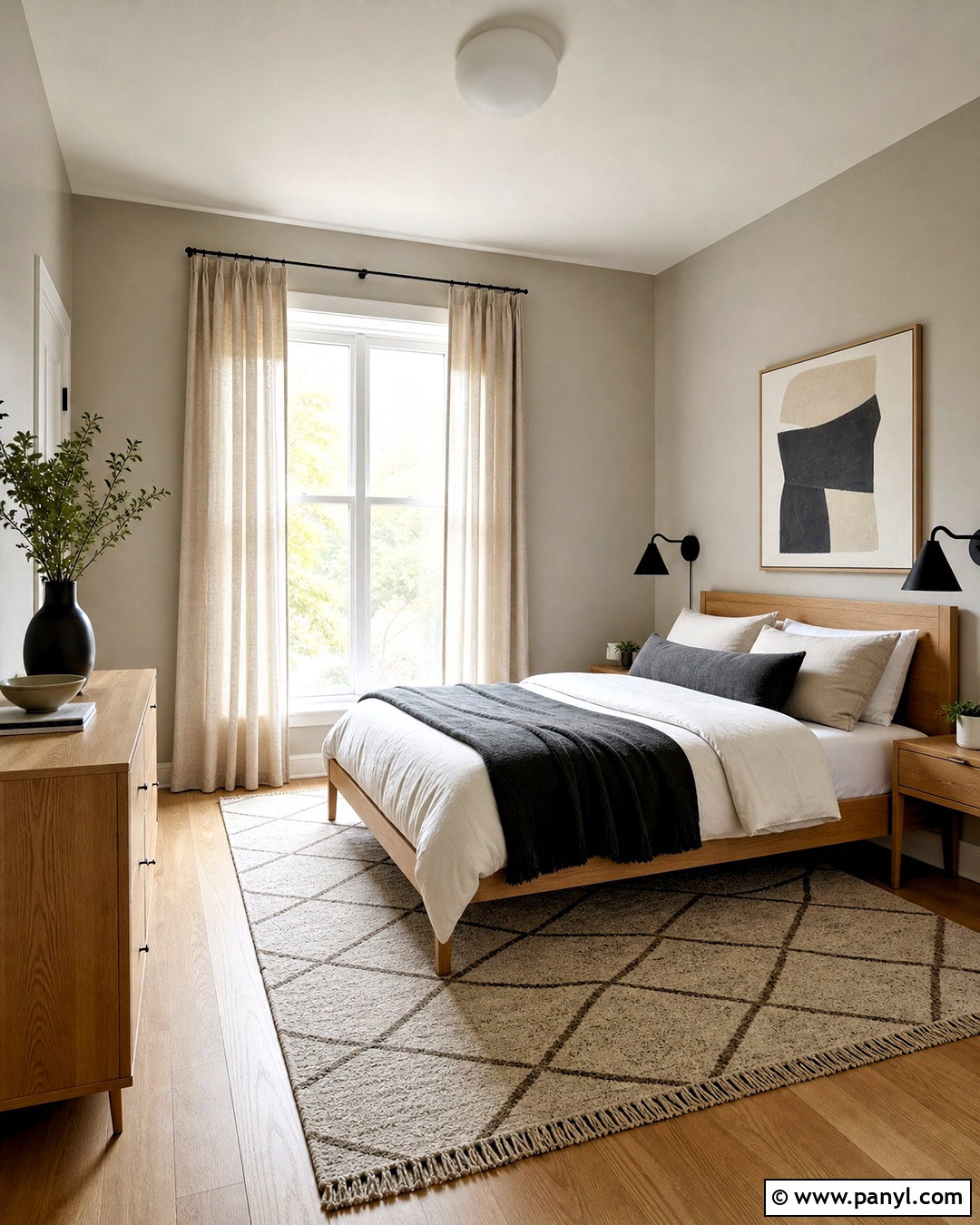
Light greige balances the warmth of beige with the clean appearance of gray, making it useful when a bedroom contains mixed finishes. Cover all four walls in a pale greige and use warm white on the ceiling, doors, and baseboards. A light oak bed with slim legs keeps the arrangement visually open, while narrow black sconces introduce crisp definition. Dress the bed in white, mushroom, and charcoal textiles, limiting strong contrast to a few small accents. Choose a low-profile dresser that closely matches the flooring so it blends into the room. Full-length linen curtains should sit near the wall color rather than creating a sharp border. Add a soft geometric rug, abstract artwork, and one ceramic lamp. The finished bedroom feels modern, balanced, and easy to personalize.
4. Pale Taupe Small Bedroom

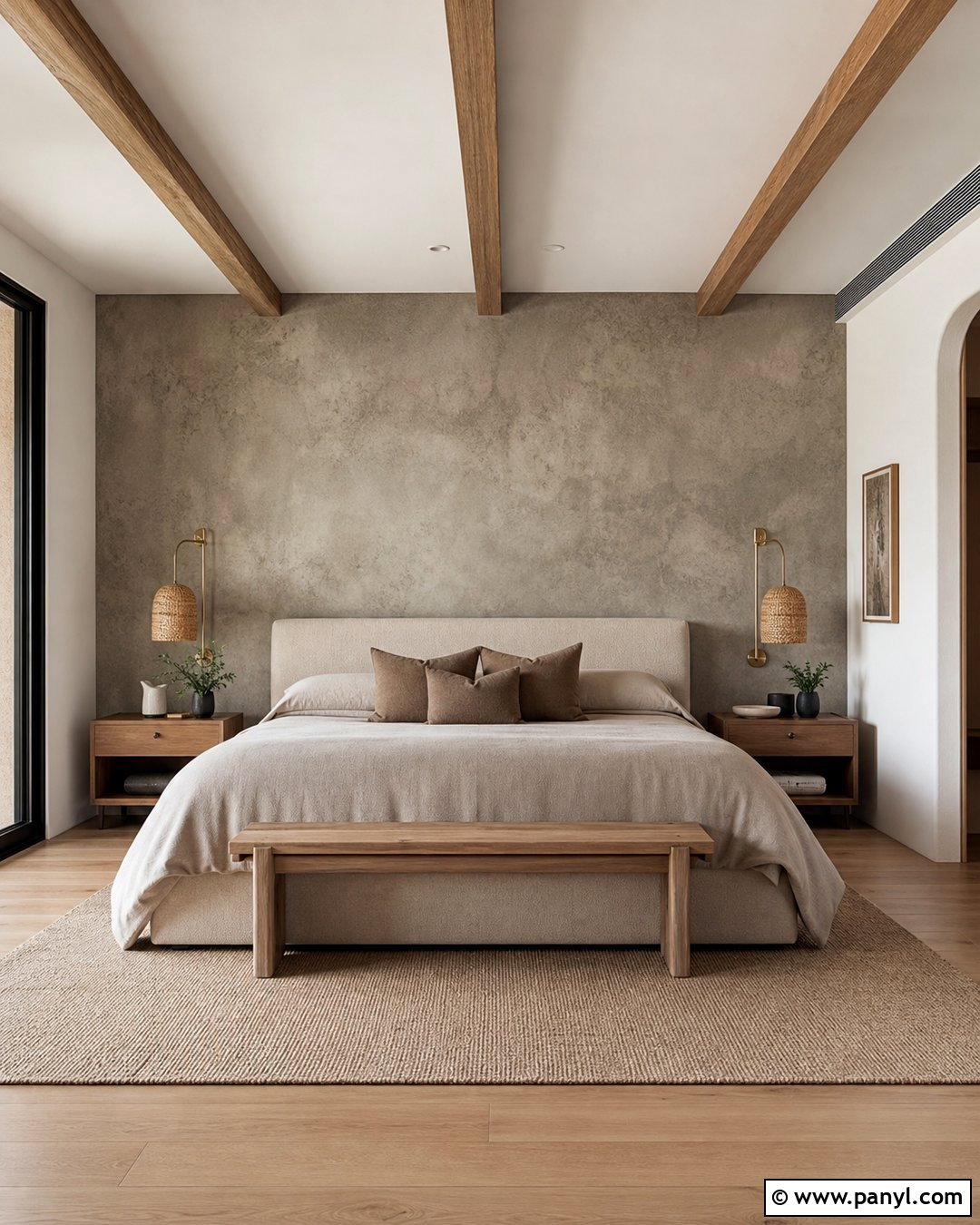
Pale taupe gives a small bedroom a polished, restful character while remaining warmer than conventional gray. Select a shade with subtle brown or mauve undertones, then pair it with soft white trim and a matching pale ceiling. Create a tailored focal point with a low cream boucle headboard and two wall-mounted reading lights. Walnut nightstands and a slim walnut dresser deepen the palette without taking over the room. Layer ivory sheets with taupe pillows, a cocoa throw, and touches of dusty rose. Use a tonal wool rug to make the floor feel continuous and uncluttered. A large round mirror reflects light from the window, while simple line drawings decorate the opposite wall. Keep accessories minimal so the nuanced wall color remains the room’s unifying feature.
5. Misty Gray Small Bedroom

Misty gray suits a compact bedroom with strong natural light and cool-toned flooring. Look for a pale gray with a gentle blue or green undertone rather than a flat, industrial shade. Paint the walls gray, but use clean white on the ceiling and trim to sharpen the edges. A white storage bed provides hidden organization and keeps bulky bins out of sight. Add pale wood floating shelves instead of a freestanding bookcase, leaving breathing room around each displayed object. White bedding, a slate-blue quilt, and silver-gray pillows establish a calm layered palette. Install sheer curtains beneath simple white panels to filter daylight. Matte black sconces, a narrow framed photograph, and a small glass lamp add structure. The result feels crisp and organized without becoming stark.
6. Pale Blue Gray Small Bedroom
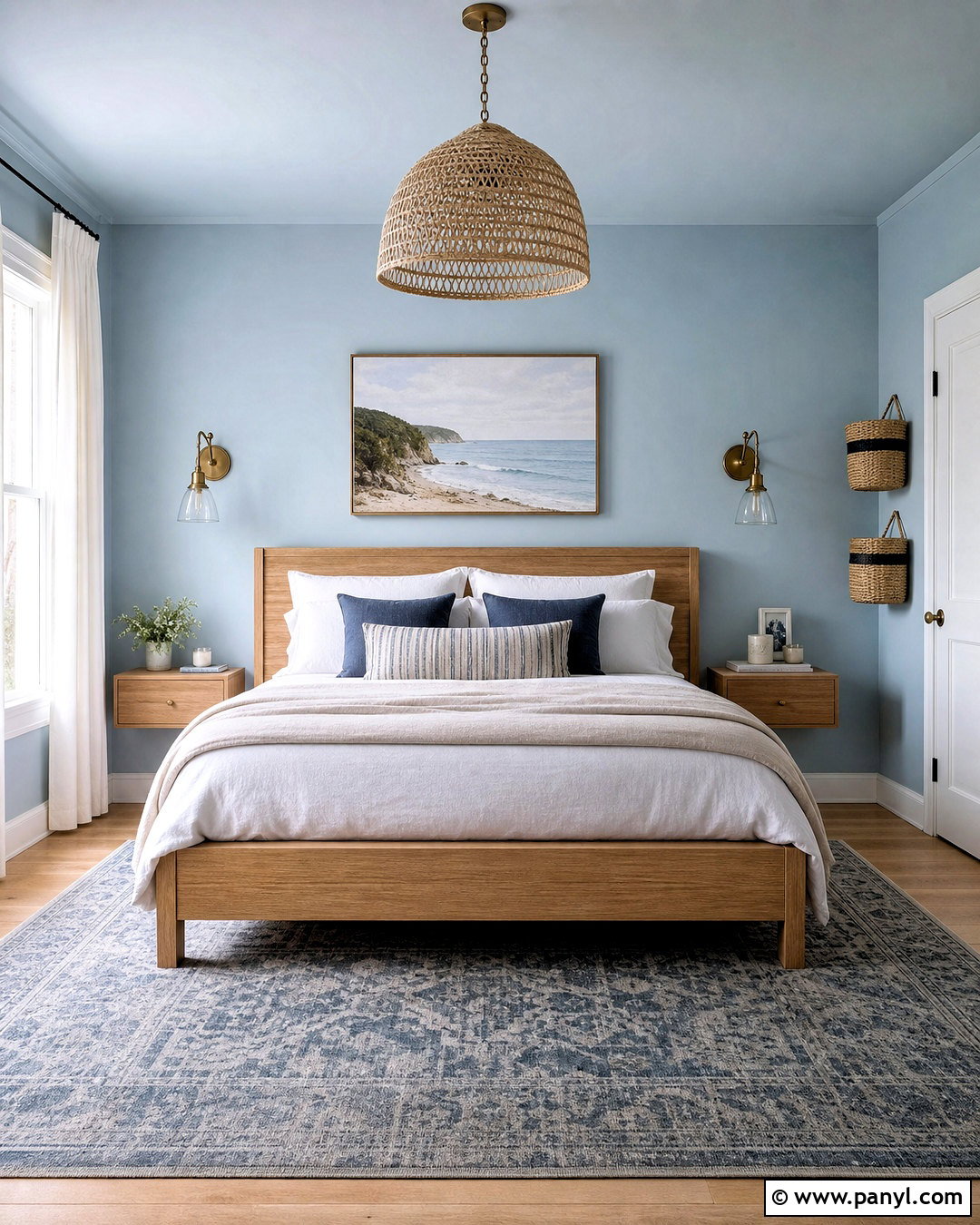
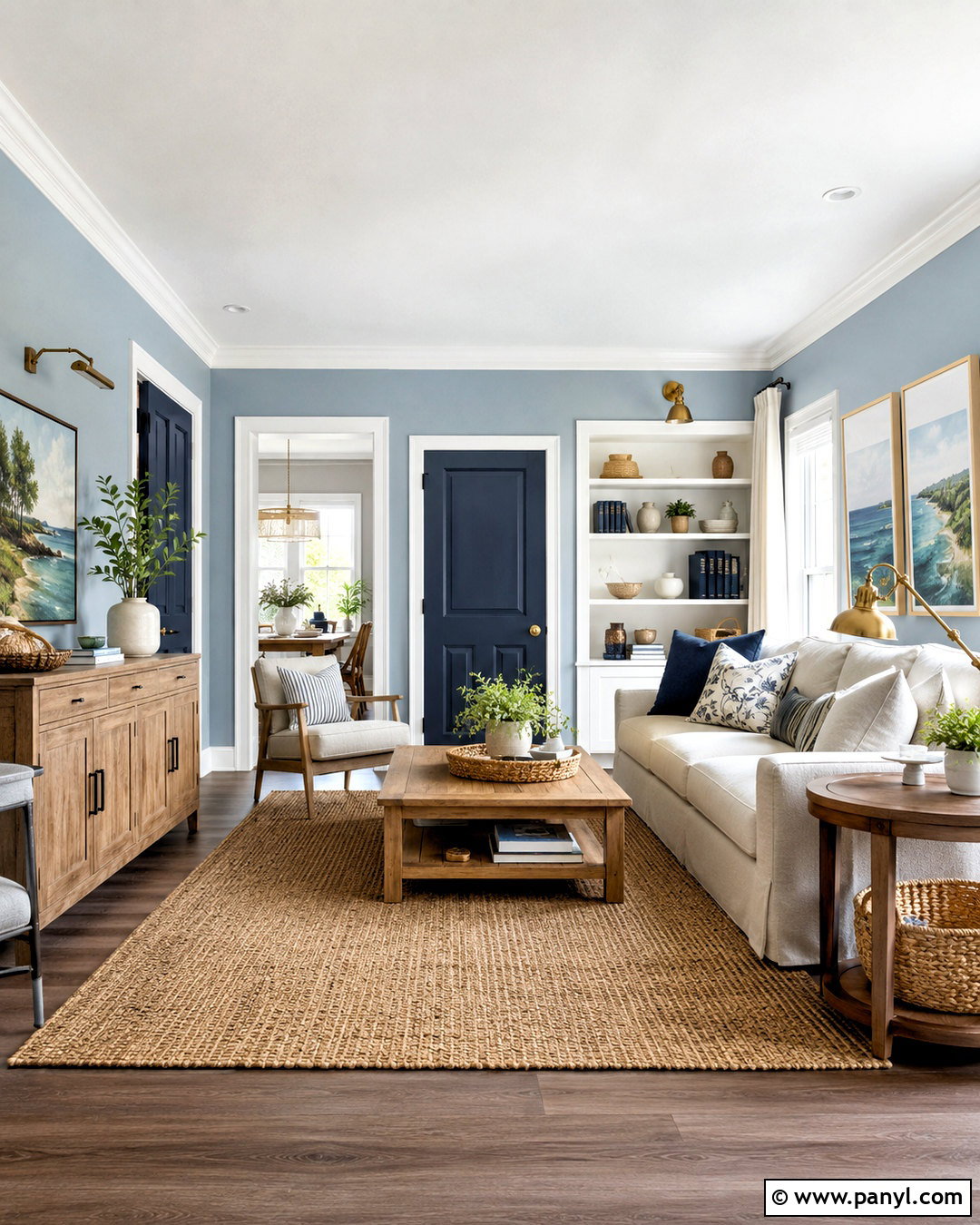
Pale blue-gray walls can make a small bedroom feel peaceful and lightly atmospheric. Choose a low-saturation shade that remains visibly blue in daylight but turns softer under warm evening lamps. Continue the color onto the ceiling if the room has awkward angles, creating one uninterrupted envelope. Pair it with a natural oak bed, white bedding, and a textured flax-colored blanket. Floating oak nightstands offer useful surfaces without adding heavy visual blocks. Introduce muted navy through a lumbar pillow and a small patterned rug, then repeat warm wood in a narrow dresser. White linen curtains keep the window area bright. Finish with aged brass sconces, coastal landscape artwork, and woven storage baskets. The complete scheme feels airy, relaxed, and mature rather than overly themed. ()
7. Powder Blue Small Bedroom
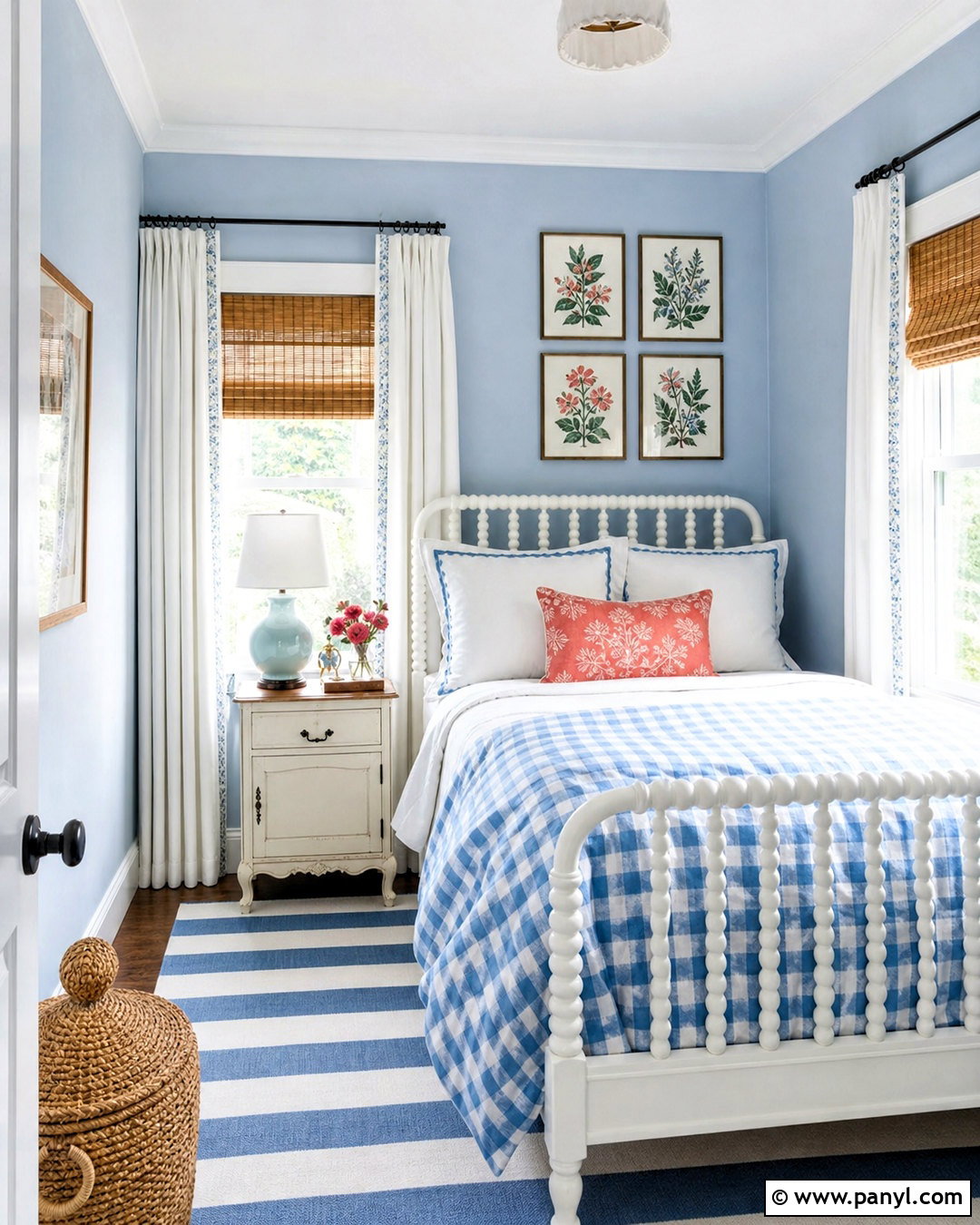
Powder blue brings a fresh, cheerful quality to a small bedroom while remaining gentle enough for everyday use. Paint the walls a soft, slightly chalky blue and retain bright white trim for a clean contrast. Position a white spindle bed against the main wall, then use one petite vintage-style nightstand instead of forcing matching pieces into tight corners. Layer crisp white bedding with pale blue checks, sand-colored linen, and a small coral accent pillow. A striped flat-weave rug introduces pattern without making the floor feel busy. Choose bamboo shades beneath simple white curtains to add natural warmth. A compact white dresser, ceramic table lamp, and three small botanical prints complete the room. The finished look is lighthearted, practical, and suitable for a guest room or everyday bedroom.


8. Dusty Blue Small Bedroom
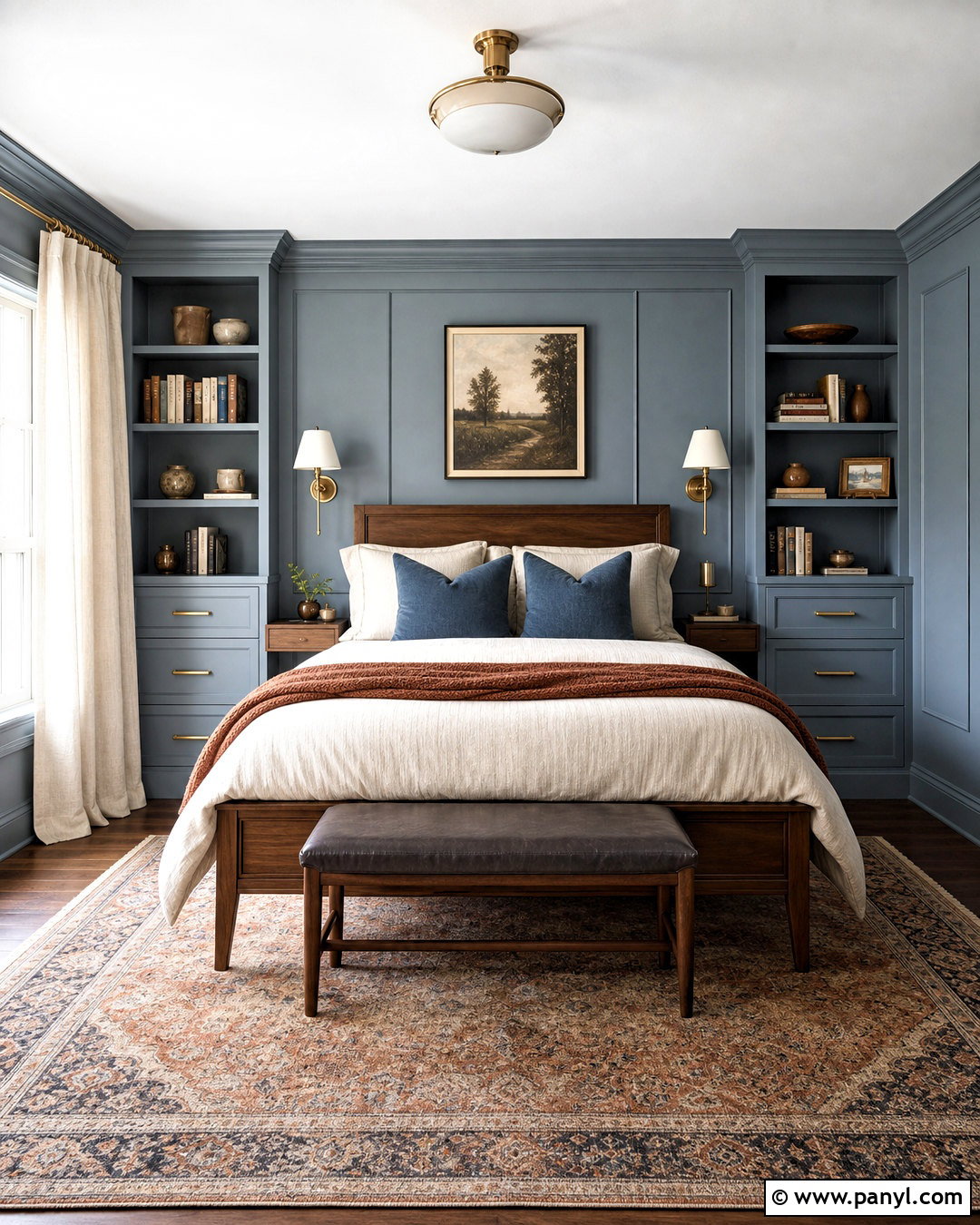
Dusty blue has enough gray in it to feel sophisticated, yet it still gives a small bedroom clear color and personality. Apply it across the walls and built-in storage so cabinetry visually settles into the background. Keep the ceiling warm white, especially if the room has limited natural light. Choose a simple walnut bed and dress it with cream sheets, denim-blue pillows, and a rust-colored throw. A vintage-inspired rug can combine faded blue, beige, and muted red without overwhelming the floor. Install adjustable brass sconces above compact wall-mounted nightstands to free valuable surface space. Linen curtains in a shade slightly lighter than the walls create a tonal window treatment. Complete the arrangement with framed sketches, a small leather bench, and minimal ceramics for a comfortable, collected appearance.
9. Muted Sage Green Small Bedroom

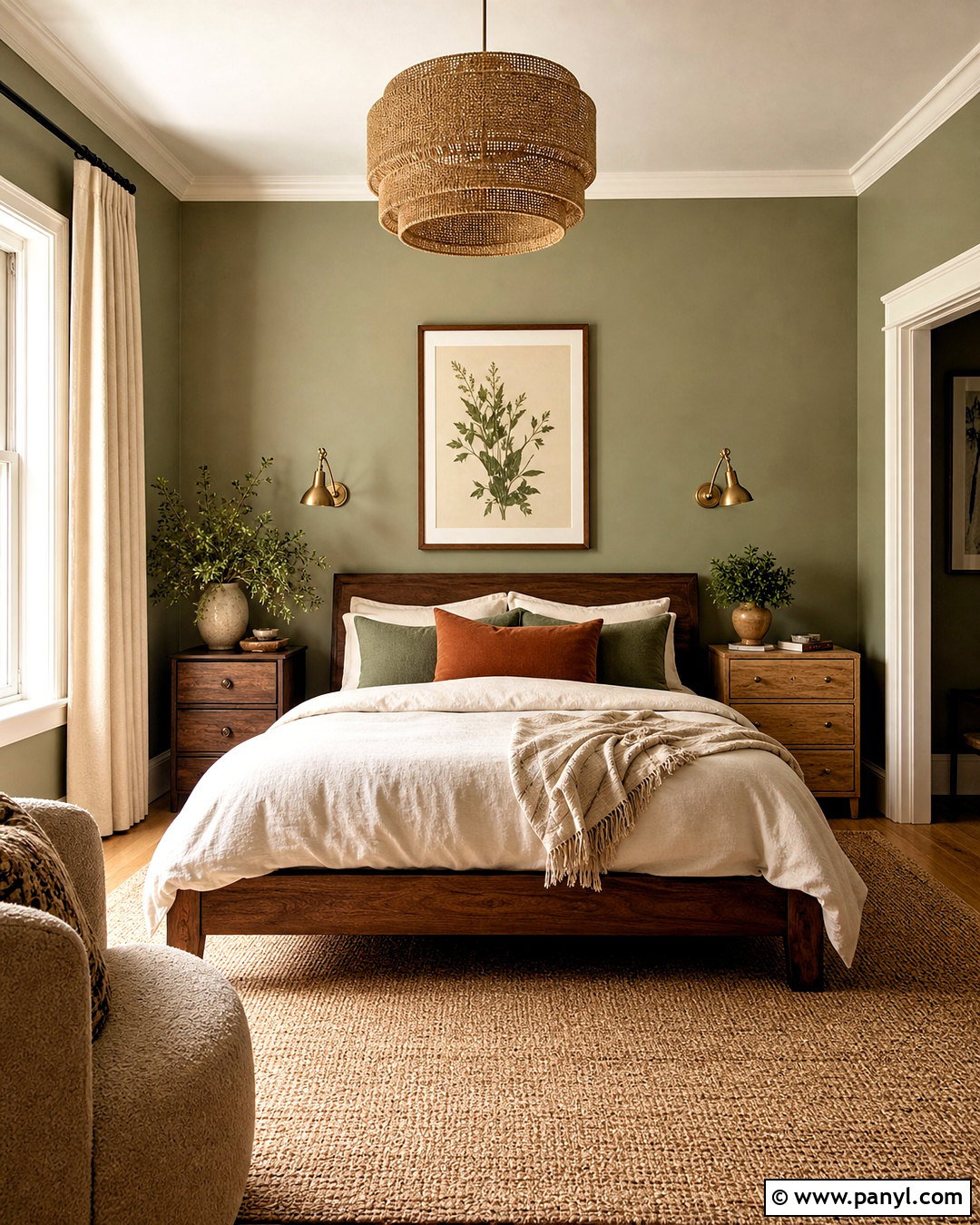
Muted sage green connects a small bedroom to natural colors while behaving almost like a neutral. Select a soft, gray-based sage and use it on every wall, including behind open shelving, for a consistent background. Pair the color with warm white trim, light oak furniture, and an upholstered oatmeal headboard. White bedding keeps the center of the room bright, while moss, tan, and faded terracotta accents add gentle depth. Place a woven rug beneath the lower two-thirds of the bed so the layout feels anchored. Linen curtains, ceramic sconces, and simple wood-framed artwork support the relaxed palette. Include plants only if daylight allows, and limit them to one or two healthy specimens. This complete natural scheme makes the room feel restful, grounded, and welcoming without looking heavily decorated.

10. Warm Eucalyptus Small Bedroom

Warm eucalyptus green offers more body than pale sage while remaining softer than forest green. It is especially effective in a bedroom with warm wood flooring and creamy daylight. Paint the walls and closet doors the same muted green so storage does not create a distracting visual break. Add a low cane bed, compact oak nightstands, and ivory bedding with olive and clay-colored layers. Use woven Roman shades at the window, then frame them with lightweight cream curtains for softness. A faded botanical rug can repeat green, beige, and dusty red near the floor. Finish with matte brass sconces, terracotta pottery, and one oversized abstract print. The natural materials and restrained color changes create a comfortable, current bedroom that feels cohesive from wall to wall. ()
11. Pale Olive Small Bedroom

Pale olive walls give a small bedroom an earthy character without requiring dark paint. Choose an olive softened with beige undertones, especially if the room faces north or receives cool daylight. Pair the walls with cream trim and a warm white ceiling rather than a brilliant white that could look harsh. A walnut bed introduces deeper contrast, while ivory sheets and a sand-colored quilt maintain brightness. Add striped pillows in olive and cream, then place a narrow wooden bench at the foot of the bed only if circulation remains comfortable. Natural woven shades, linen curtains, and an aged brass pendant strengthen the organic palette. A vintage landscape, clay vase, and small wool rug complete the look. The result is calm, mature, and pleasantly different from standard neutral bedrooms.
12. Soft Blush Small Bedroom
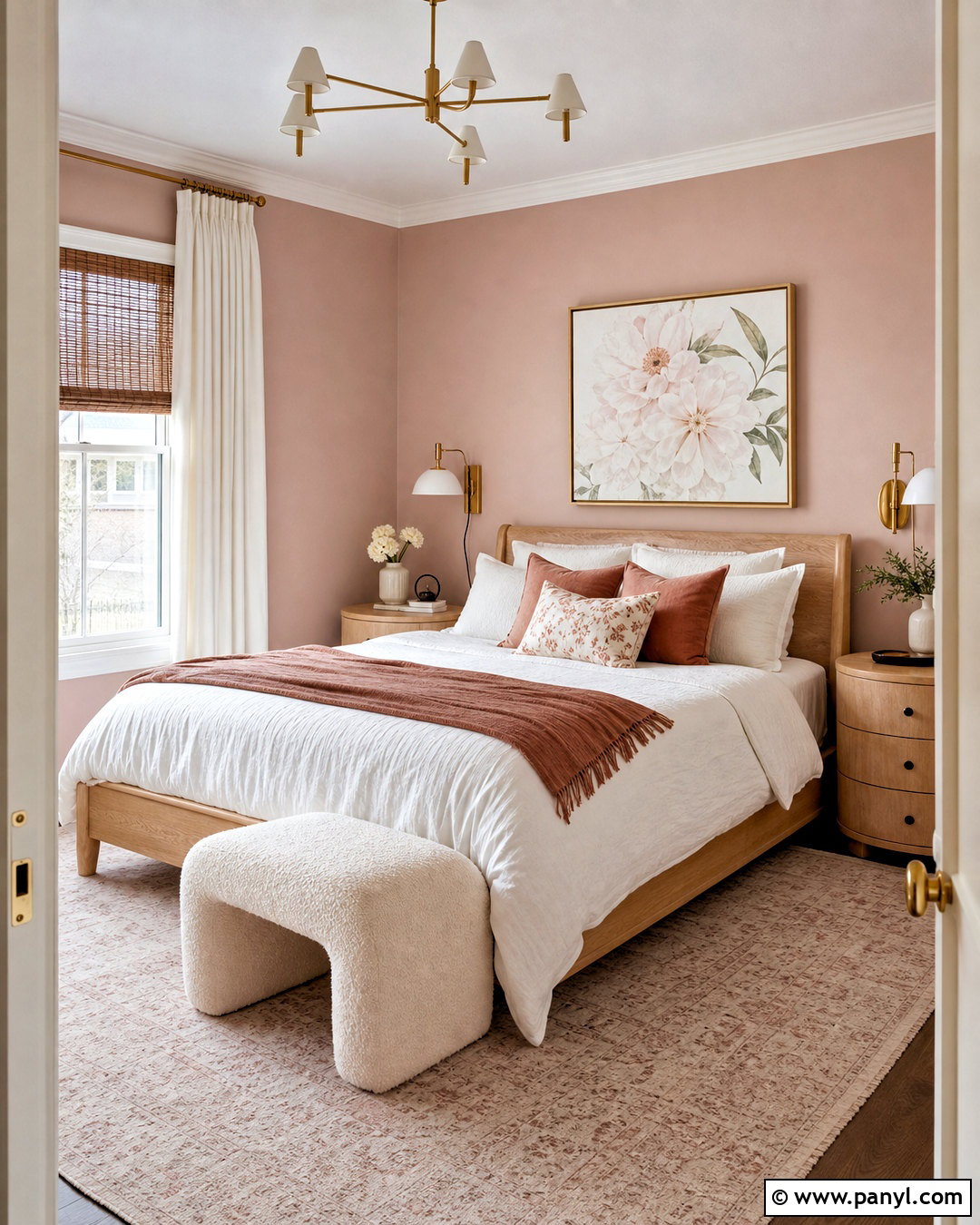
Soft blush creates warmth without making a small bedroom look sugary or overly youthful. Look for a dusty pink with beige or gray undertones, then paint every wall for an even, subtle wash of color. Keep the ceiling and trim warm white to maintain definition. A light oak bed, rounded nightstands, and a cream boucle stool provide simple shapes that work well in limited space. Layer the bedding with white linen, blush pillows, and a cinnamon-colored throw for richer contrast. Use natural woven shades and airy ivory curtain panels to soften the window. A pale patterned rug can connect the pink walls with tan flooring and wood furniture. Complete the room with brushed brass lighting, minimalist floral artwork, and one sculptural ceramic vase for an understated, grown-up finish.
13. Dusty Rose Small Bedroom
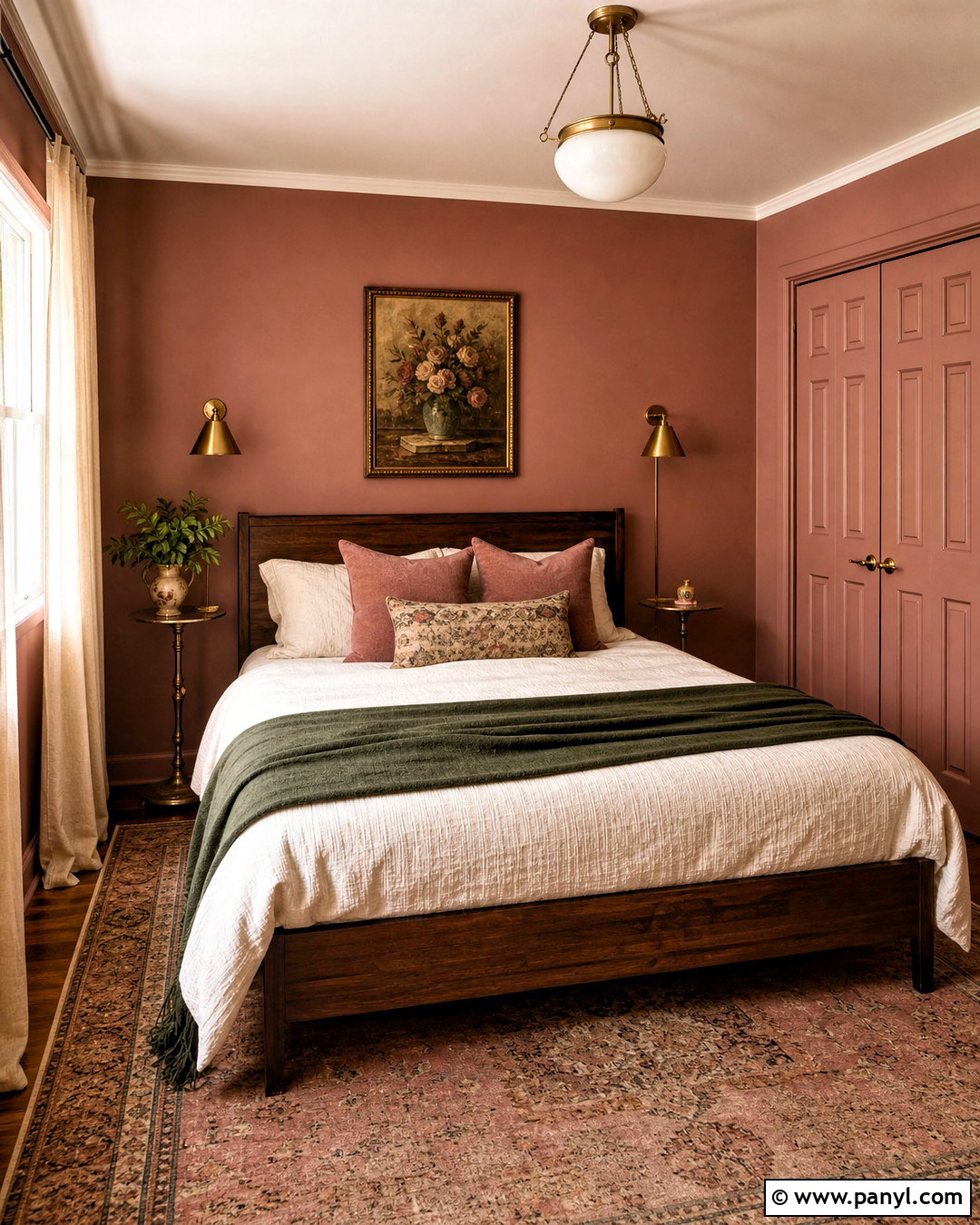
Dusty rose provides a deeper, more enveloping alternative to blush while still working beautifully in compact rooms. Use the color on all four walls and repeat it on the closet doors to reduce visual fragmentation. A warm white ceiling prevents the effect from becoming too heavy. Choose a dark walnut or black metal bed for definition, then soften it with ivory bedding, muted rose pillows, and a deep green throw. An antique-style rug featuring faded pink, cream, and brown creates a collected foundation. Replace bulky bedside tables with narrow pedestal tables and wall-mounted brass lights. Hang full-length oatmeal curtains and one large vintage-inspired print rather than several small frames. The finished room feels intimate and layered, with enough neutral texture to balance the stronger wall color.
14. Pale Lavender Small Bedroom
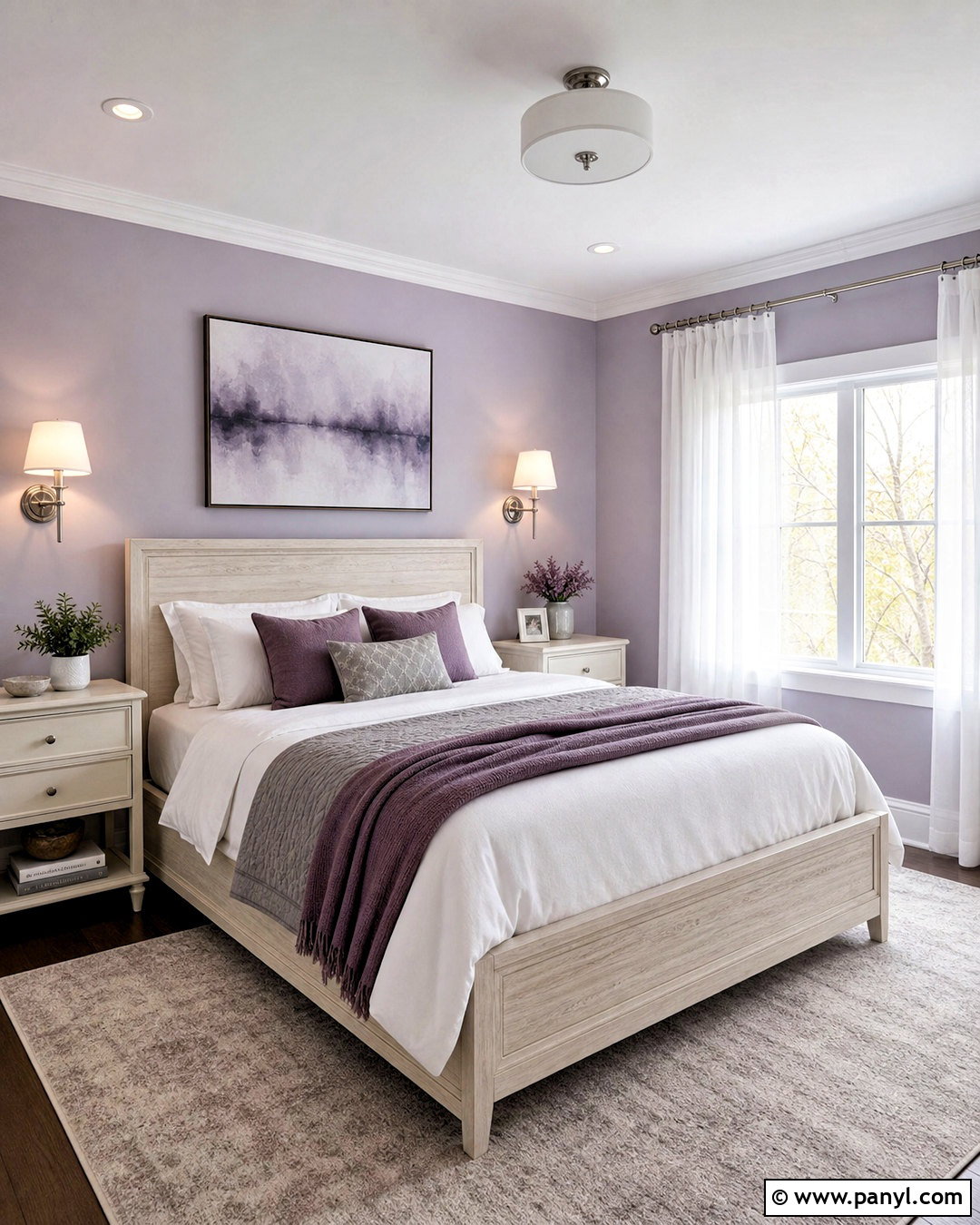
Pale lavender can brighten a small bedroom while adding more personality than white or gray. Select a restrained lavender with a noticeable gray undertone so it changes gently between daylight and evening light. Pair it with soft white trim, a whitewashed oak bed, and compact cream nightstands. Dress the bed in white cotton, light gray linen, and muted plum accents used sparingly. A pale gray rug keeps the floor quiet and helps the bedroom feel wider. Install simple silver or polished nickel sconces to complement the cooler palette. Sheer white curtains allow daylight to pass through while providing softness around the window. Finish with abstract artwork containing lavender, taupe, and blue-gray. The complete room feels fresh and serene without resembling a child’s bedroom. ()
15. Light Lilac Small Bedroom
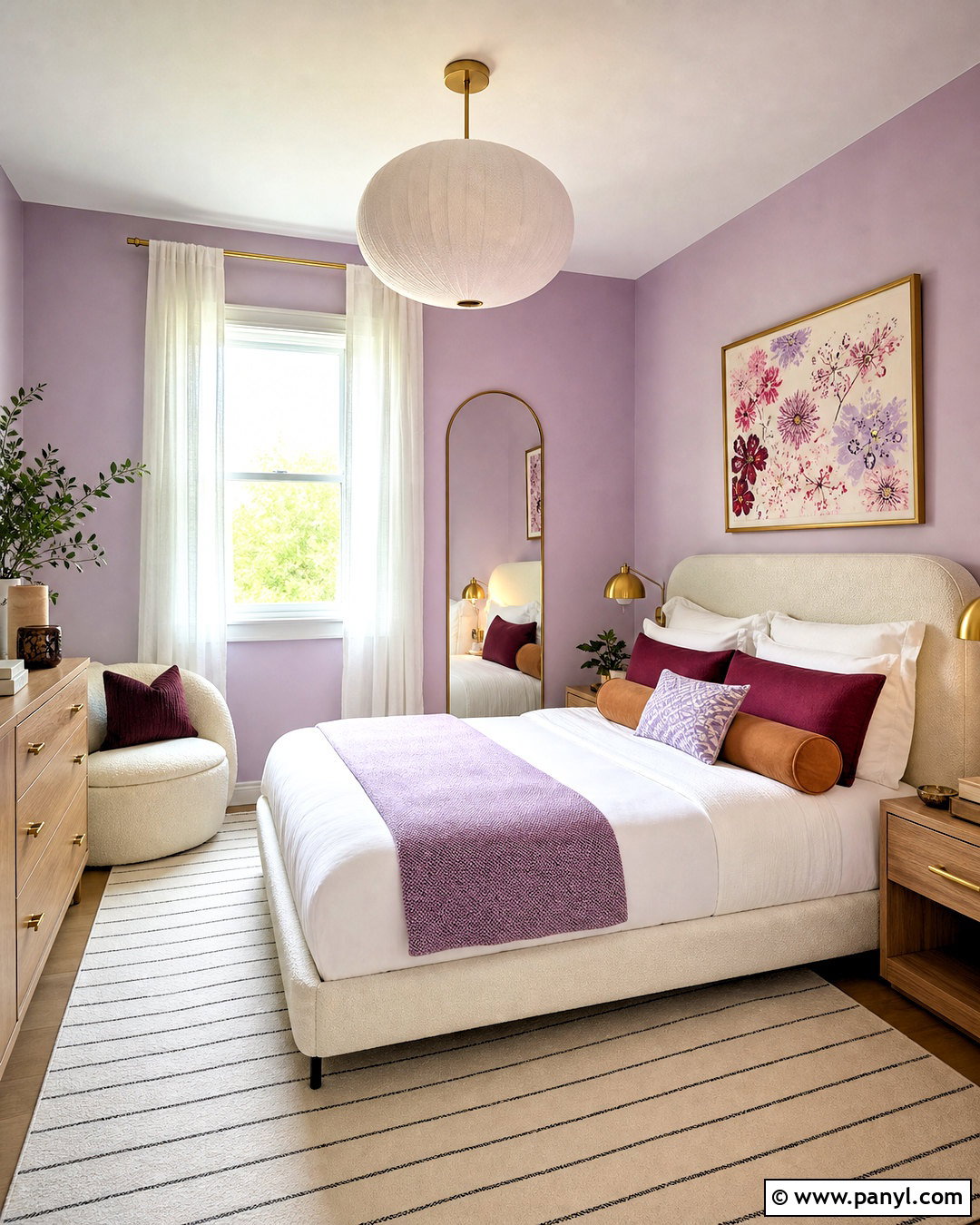
Light lilac gives a compact room a playful edge while staying soft enough for a restful bedroom. Choose a lilac that leans slightly pink if the room receives cool northern light, or a grayer version for a sunny room. Paint the walls lilac and keep the ceiling white to preserve a clean sense of height. Add an ivory upholstered bed, pale wood nightstands, and a narrow dresser with rounded corners. White bedding creates a bright center, while lilac, berry, and camel textiles build a balanced palette. Ground the arrangement with a cream rug that includes a subtle linear pattern. Use warm brass lamps rather than cool metal to prevent the scheme from feeling chilly. Gauzy curtains, a curved mirror, and understated floral artwork finish the space with gentle color and practical simplicity.
16. Buttery Cream Small Bedroom

Buttery cream adds a sunny glow to a small bedroom without the intensity of bright yellow. Choose a pale, warm shade that appears creamy in daylight and softly golden under lamps. Paint the walls cream, then use warm white for the trim and ceiling to create quiet separation. A medium-tone oak bed and matching floating nightstands give the room a grounded center. Layer the bedding with white, oatmeal, muted mustard, and soft blue for a balanced finish. Hang woven shades at the window and use lightweight white curtains to keep the space feeling open. A blue-and-cream flat-weave rug adds fresh contrast near the floor. Complete the look with ceramic lamps, simple landscape prints, and a small wooden stool. The resulting bedroom feels bright, comfortable, and cheerful throughout the year.
17. Peach Beige Small Bedroom
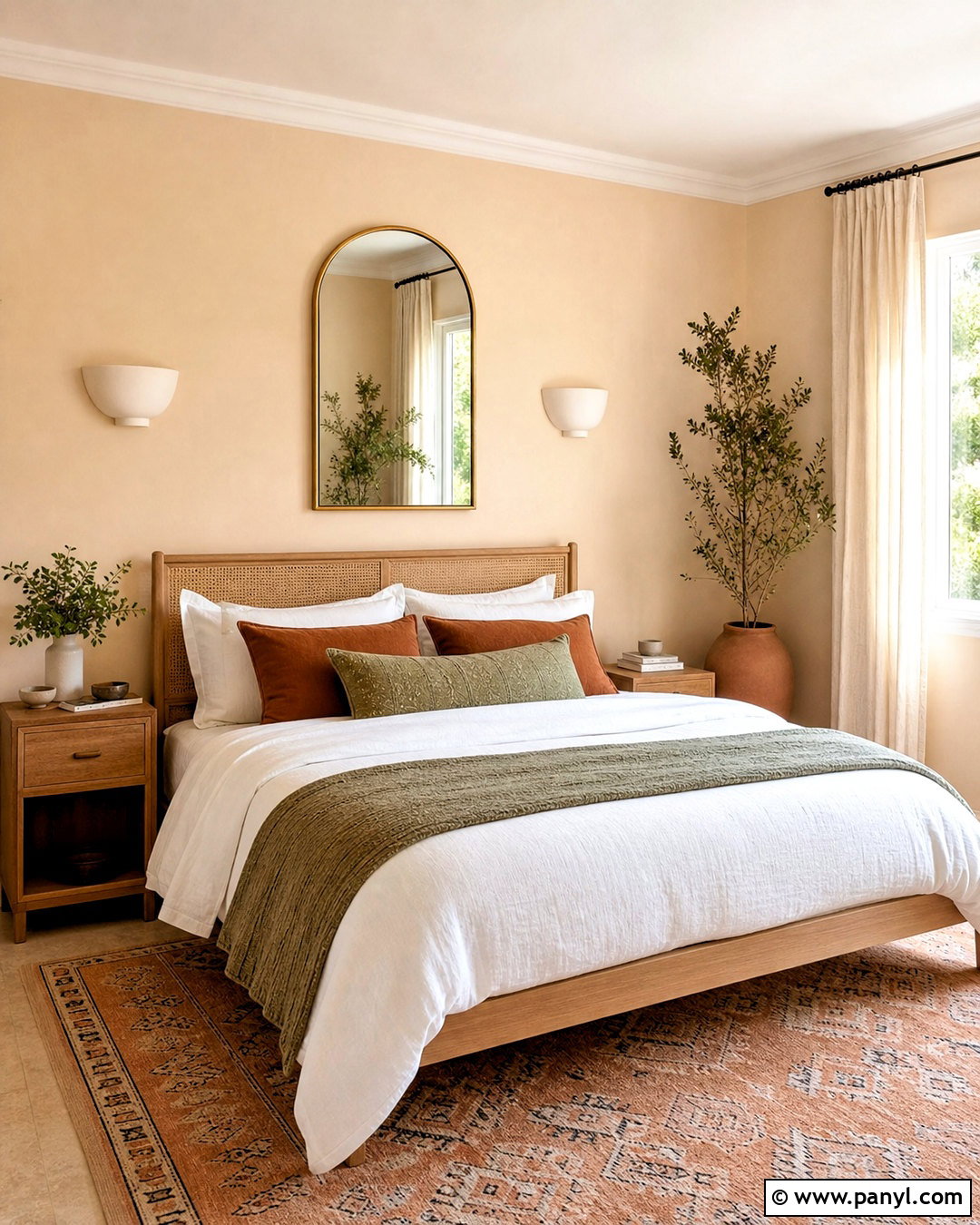
Peach beige offers a warm alternative to conventional tan and creates a flattering glow in a small bedroom. Select a subdued shade that combines sandy beige with a slight peach undertone. Cover the walls evenly and pair them with creamy white trim. A cane or light oak headboard reinforces the relaxed warmth, while white bedding keeps the main surface crisp. Add terracotta pillows, a muted sage throw, and a patterned rug containing peach, cream, and brown. Compact wooden nightstands should provide drawers for hidden storage without looking bulky. Use cream linen curtains, an arched brass mirror, and small plaster wall lights to add softness. A few dark brown details, such as picture frames or hardware, provide definition. The complete palette feels inviting and colorful while remaining easy to live with.
18. Soft Terracotta Small Bedroom

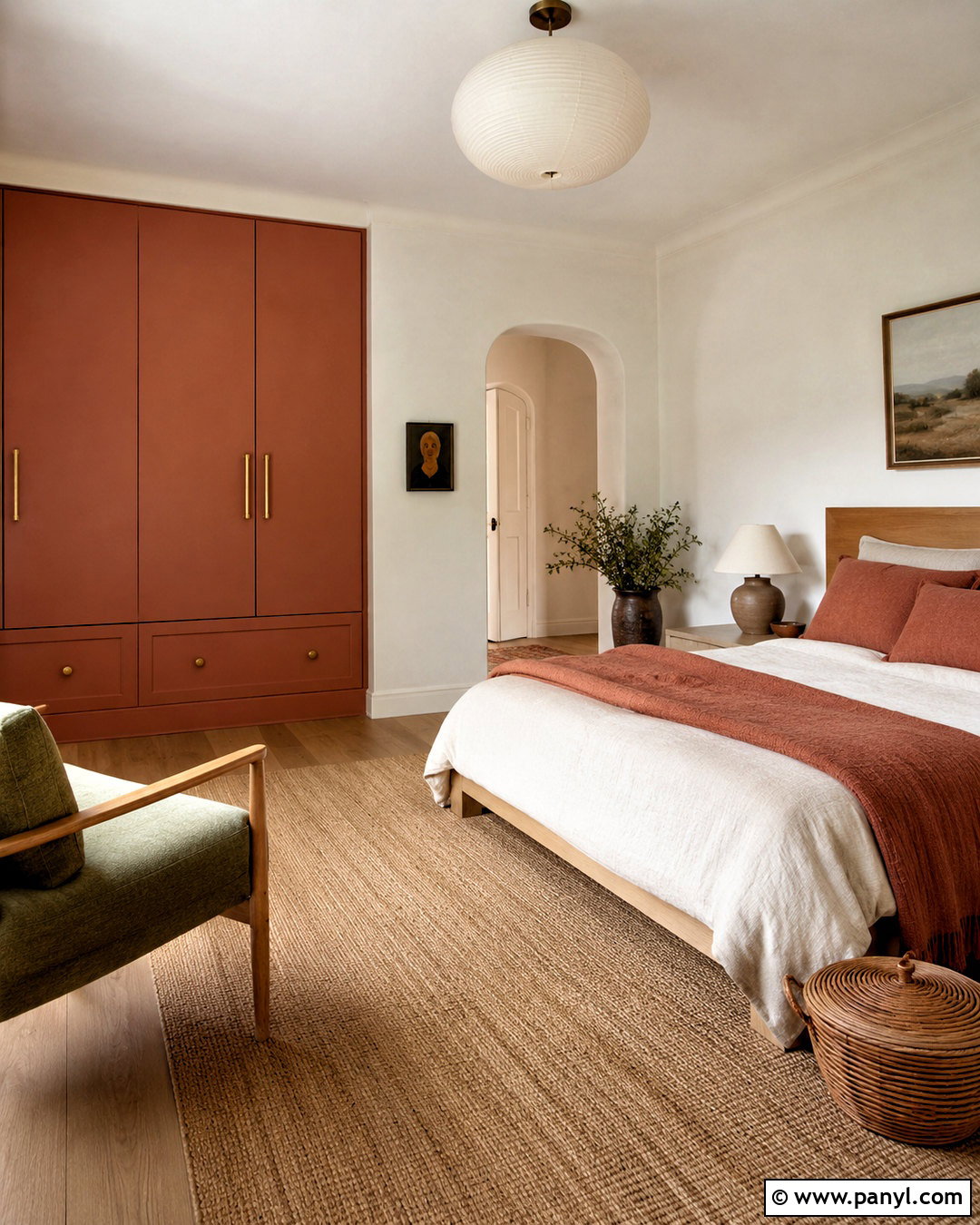
Soft terracotta turns a compact bedroom into a warm retreat without relying on a bright orange finish. Choose a clay-based shade softened by beige or dusty pink, and consider painting the walls, trim, and doors in the same color for a cohesive effect. Keep the ceiling a lighter clay tone if full color drenching feels too intense. Add a simple black metal bed to create contrast, then layer it with ivory linen, rust pillows, and an olive-green blanket. A cream wool rug lightens the floor and defines the sleeping area. Use oak wall shelves, woven blinds, and black swing-arm sconces to maximize function. Minimal desert landscape artwork and handmade-looking pottery complete the scheme. The room feels earthy, cozy, and deliberate rather than visually cramped.
19. Deep Navy Small Bedroom
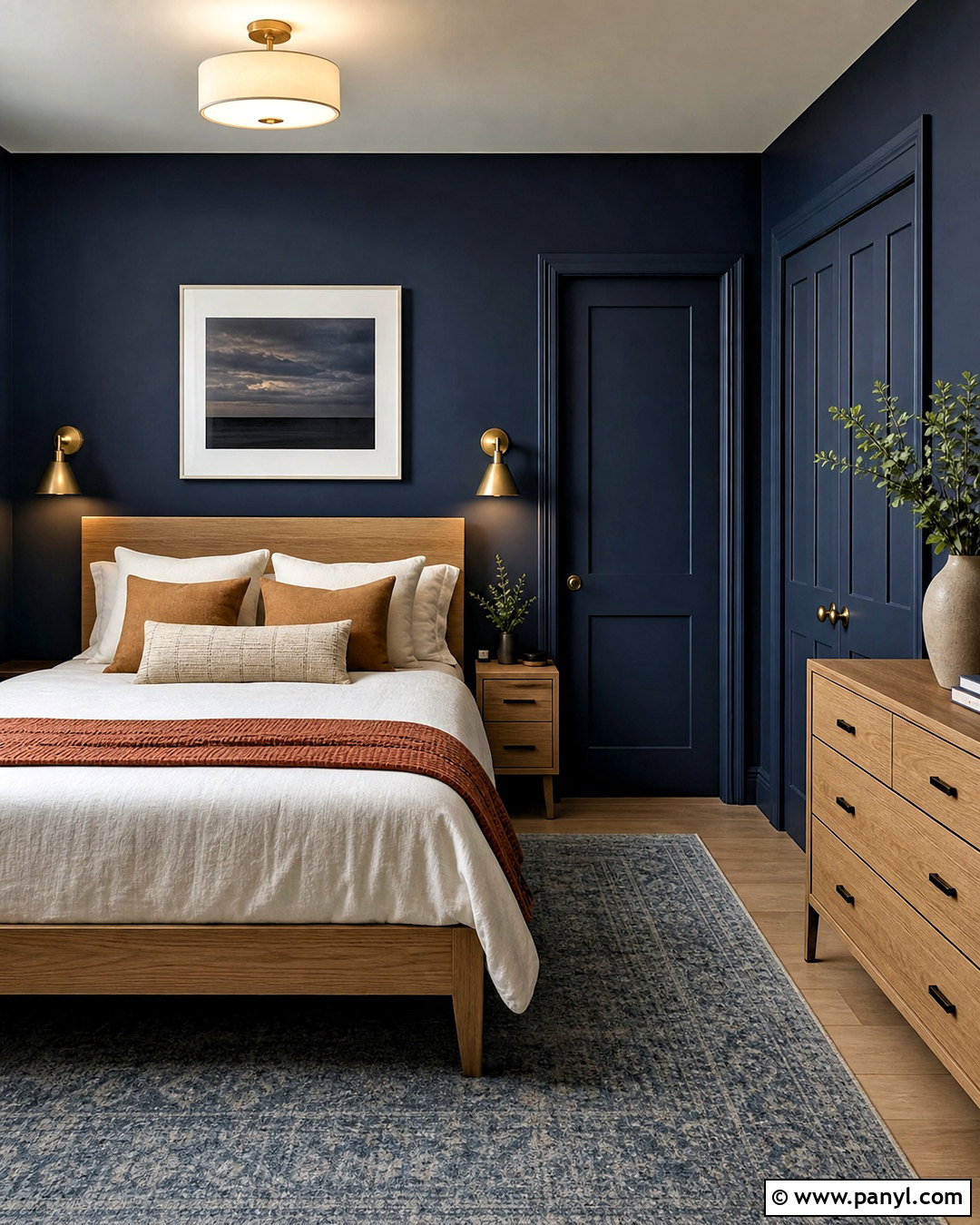
Deep navy can make a small bedroom feel intimate and structured when it is treated as a complete room color rather than a random accent. Paint the walls, trim, and closet doors in the same matte navy to reduce sharp visual boundaries. Use warm white on the ceiling if the room is low, or continue navy overhead for a fully cocooned effect. A light oak bed and ivory bedding provide strong but balanced contrast. Add camel-colored pillows, a rust throw, and a faded blue rug for warmth. Brass sconces and a warm ceiling light prevent the palette from feeling cold. Choose one large framed print and a narrow oak dresser instead of many small furnishings. The final bedroom feels confident, restful, and surprisingly cohesive. ()
20. Deep Green Small Bedroom

Deep green creates a peaceful, enclosed atmosphere that can make a small bedroom feel purposeful instead of undersized. Choose a rich green with muted gray or black undertones, then carry it across the walls and built-in storage. Paint the ceiling in warm white for contrast or use the same green when a dramatic color-drenched finish is preferred. Center a walnut bed against the main wall and layer it with cream bedding, moss pillows, and a tan wool blanket. A vintage rug featuring burgundy, olive, and beige adds warmth at floor level. Install aged brass sconces above slim nightstands to provide focused lighting. Natural linen curtains, botanical artwork, and a leather storage bench finish the look. Keep accessories limited so the deep color remains elegant rather than overwhelming.
Conclusion:
The best wall color should support both the proportions of your bedroom and the atmosphere you want to create. Soft whites, greiges, pale blues, and muted greens can produce an airy effect, while dusty rose, terracotta, navy, and deep green create a more intimate retreat. Whatever shade you choose, connect it to the flooring, furniture, bedding, lighting, and window treatments for a complete look. Test paint samples on several walls and view them during morning, afternoon, and evening light before deciding. Most importantly, do not assume a compact room must remain white. These **20 small bedroom wall colors** show that thoughtful coordination matters more than following one fixed rule.

Related Ideas and Inspiration:



Leave a Reply