
Light colors can make a bedroom feel more open, peaceful, and comfortable without leaving it plain or unfinished. The best **light bedroom colors** also provide enough softness to support restful sleep while creating a flexible backdrop for furniture, textiles, and personal decor. Current bedroom palettes favor gentle blues, natural greens, warm whites, creams, and nuanced neutrals rather than cold, sharply contrasting shades. () Before choosing paint, consider the direction of your windows, the warmth of your flooring, and how the shade appears under evening lamps. Always test a large sample on more than one wall because undertones can shift throughout the day. The complete room schemes below will help you confidently decorate with **20 light bedroom colors**.

1. Warm White Bedroom
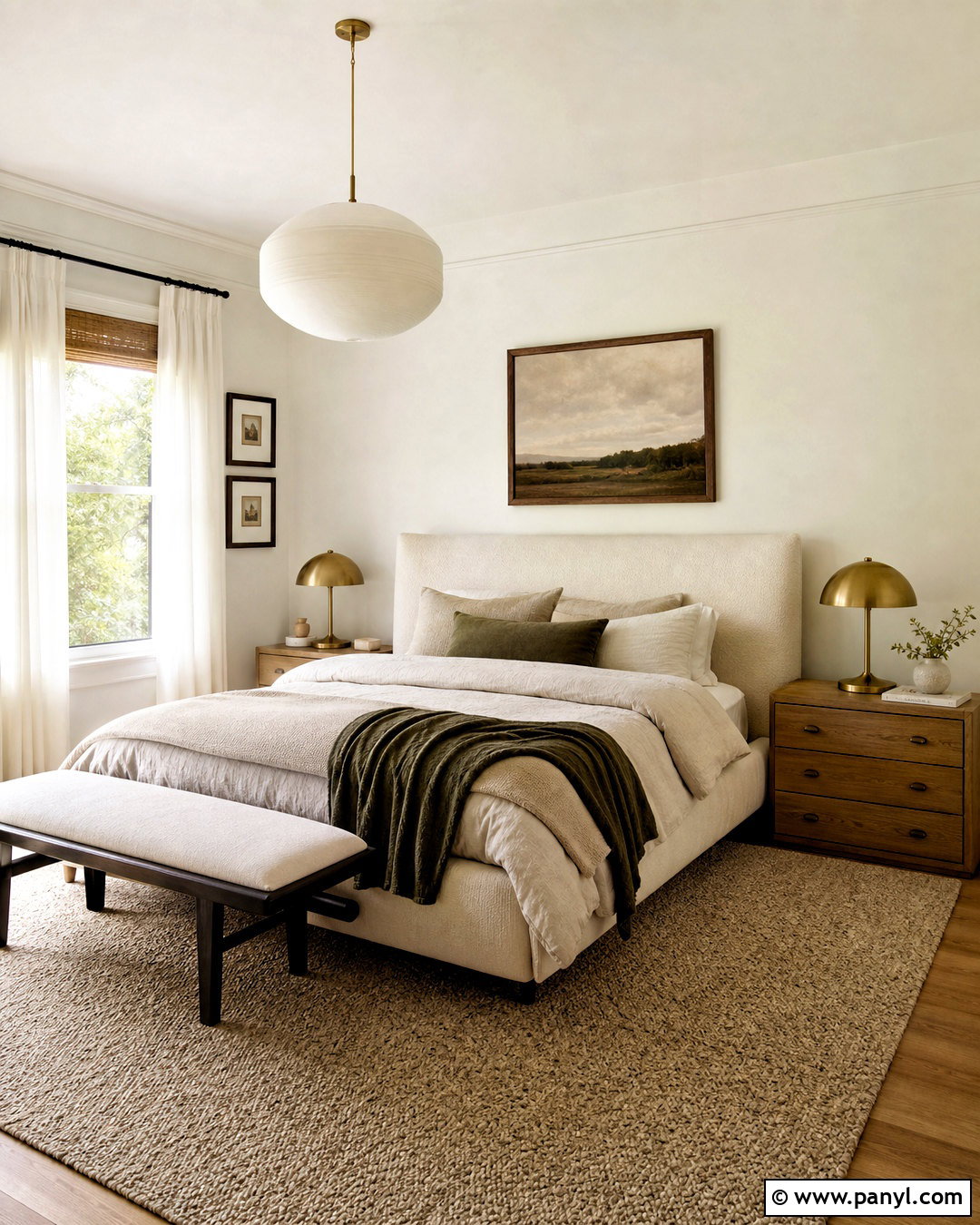
Warm white walls create a bright bedroom without the clinical feeling that sometimes comes with pure white paint. Choose a white with subtle cream or beige undertones, then repeat that warmth through oatmeal linen bedding, an ivory upholstered bed, and light oak nightstands. Natural woven shades soften the windows, while full-length off-white curtains make the ceiling appear taller. Ground the room with a thick beige wool rug and add contrast through aged brass lamps, walnut picture frames, and one muted olive throw. Keep the ceiling and trim slightly cleaner and brighter than the walls so architectural details remain visible. This complete scheme works especially well in north-facing bedrooms, where warmer undertones can balance cool natural light and create a welcoming appearance.
2. Soft Cream Bedroom

Soft cream gives a bedroom a sunny, comfortable quality, even when the room receives limited daylight. Build the scheme around creamy walls, antique white trim, and a medium-tone oak or pine bed. Layer the bed with white sheets, a quilted cream coverlet, camel-colored pillows, and a pale blue throw for gentle contrast. A woven jute rug and linen drum pendant bring natural texture without making the space busy. Use warm brass hardware and ceramic bedside lamps with off-white shades to continue the inviting palette. Soft cream looks especially attractive beside traditional furniture, curved silhouettes, and subtle floral artwork. Avoid pairing it with stark blue-white furnishings, which may make the walls look yellow. Instead, select warm whites that create a smooth, intentional transition.
3. Light Ivory Bedroom
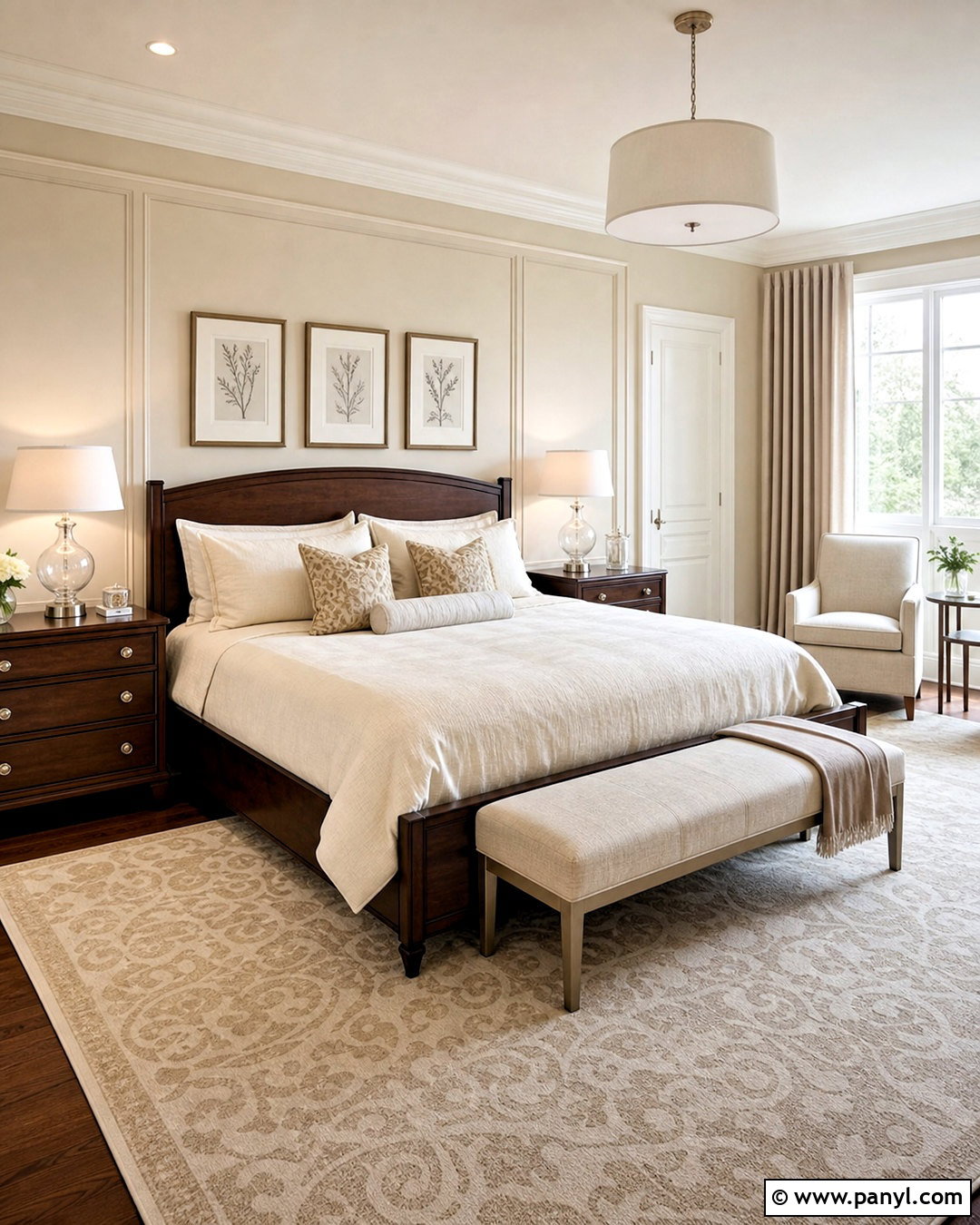
Ivory creates a refined neutral bedroom that feels softer and more layered than a basic white space. Paint the walls a pale ivory and use matching trim in a satin finish to create subtle depth without introducing another color. A dark walnut bed provides an elegant focal point, while ivory bedding, a tailored beige bench, and pale mushroom curtains maintain the light appearance. Add polished nickel lamps, clear glass accessories, and framed botanical sketches for restrained decoration. A light patterned rug combining ivory, tan, and faint blue can visually connect the furnishings. This palette is a practical choice for a classic primary bedroom or guest room because it complements both traditional and updated pieces. Finish with symmetrical nightstands and balanced lighting to give the entire room a calm, organized presence.
4. Light Greige Bedroom
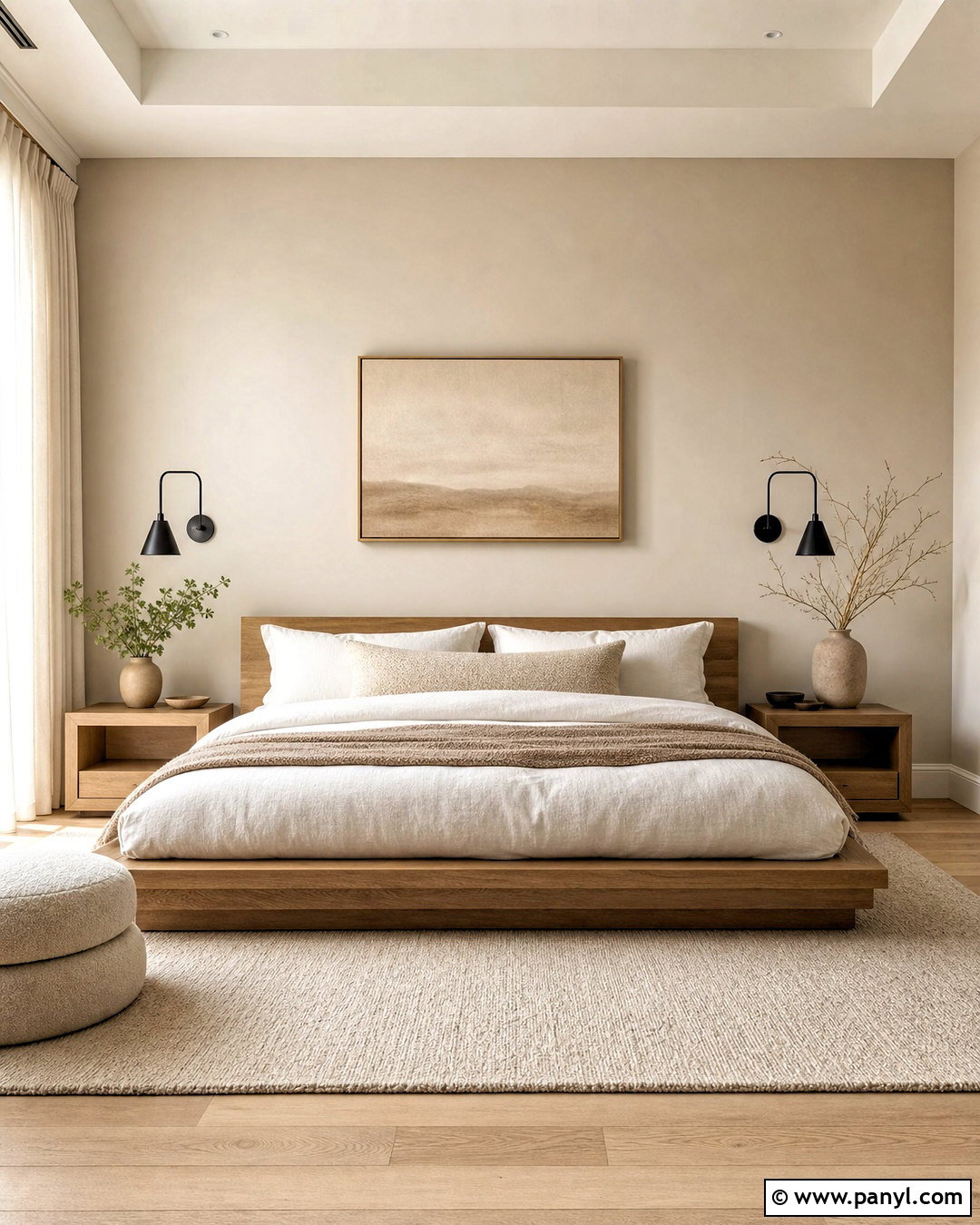
Can’t decide between gray and beige? Light greige offers the cool balance of gray with enough brown warmth to feel comfortable and inviting. Use greige across the walls, then bring in a low oak platform bed, crisp white bedding, and a textured taupe blanket. Black metal sconces add definition, while cream curtains and a pale wool rug keep the overall composition airy. Choose simple furniture with straight lines for a modern organic look, and introduce softness through boucle pillows, ceramic vessels, and dried branches. Light greige can change noticeably between morning and evening, so test it beside your flooring before painting the whole room. Select a warmer version for north-facing spaces and a more balanced neutral greige when strong southern sunlight already provides plenty of warmth.
5. Pale Beige Bedroom
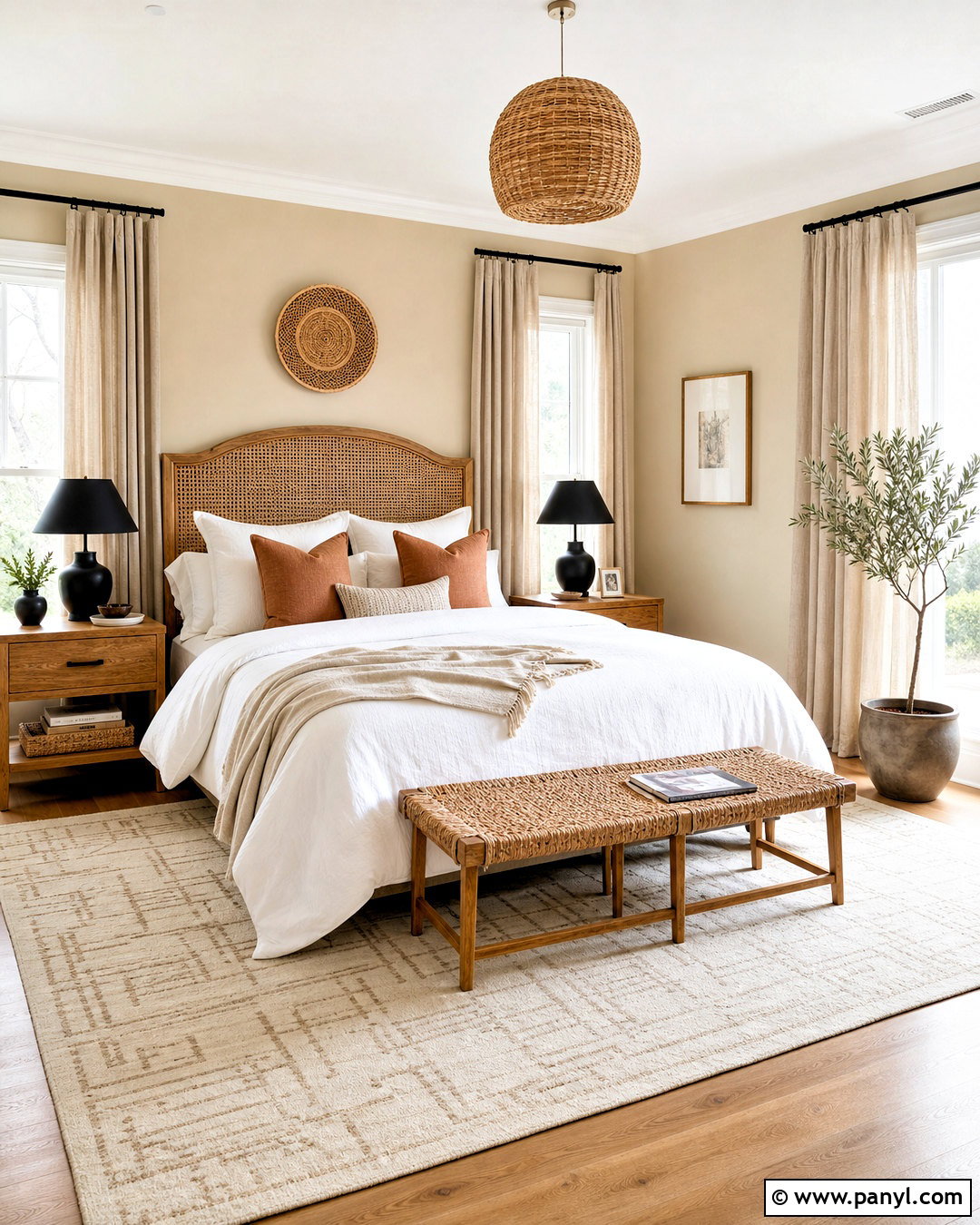
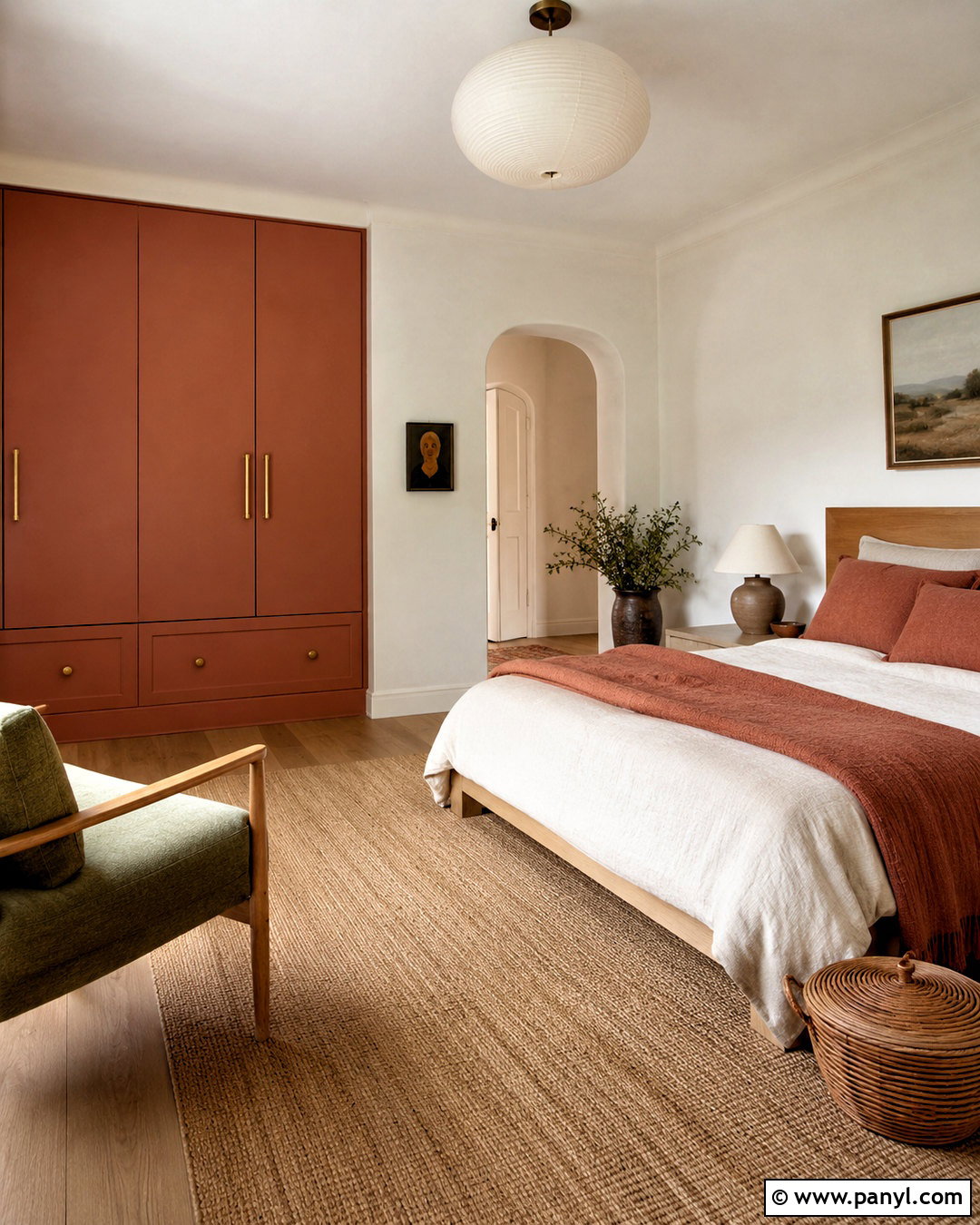
Pale beige creates a relaxed bedroom that looks grounded but never dark. Pair beige walls with warm white trim, a woven cane headboard, and matching light wood nightstands. Dress the bed with white cotton sheets, a sand-colored duvet, and soft rust or muted terracotta accent pillows. These small earthy touches keep the neutral palette from appearing flat. Add a cream area rug with a subtle geometric pattern and hang lightweight linen curtains close to the ceiling. Black curtain rods and bedside lamps provide enough contrast to define the room. This full scheme suits modern farmhouse, coastal, and casual transitional homes. To maintain a fresh result, choose beige paint with restrained golden undertones, and repeat the wall color through natural fibers rather than filling the bedroom with several unrelated brown finishes.
6. Light Oatmeal Bedroom
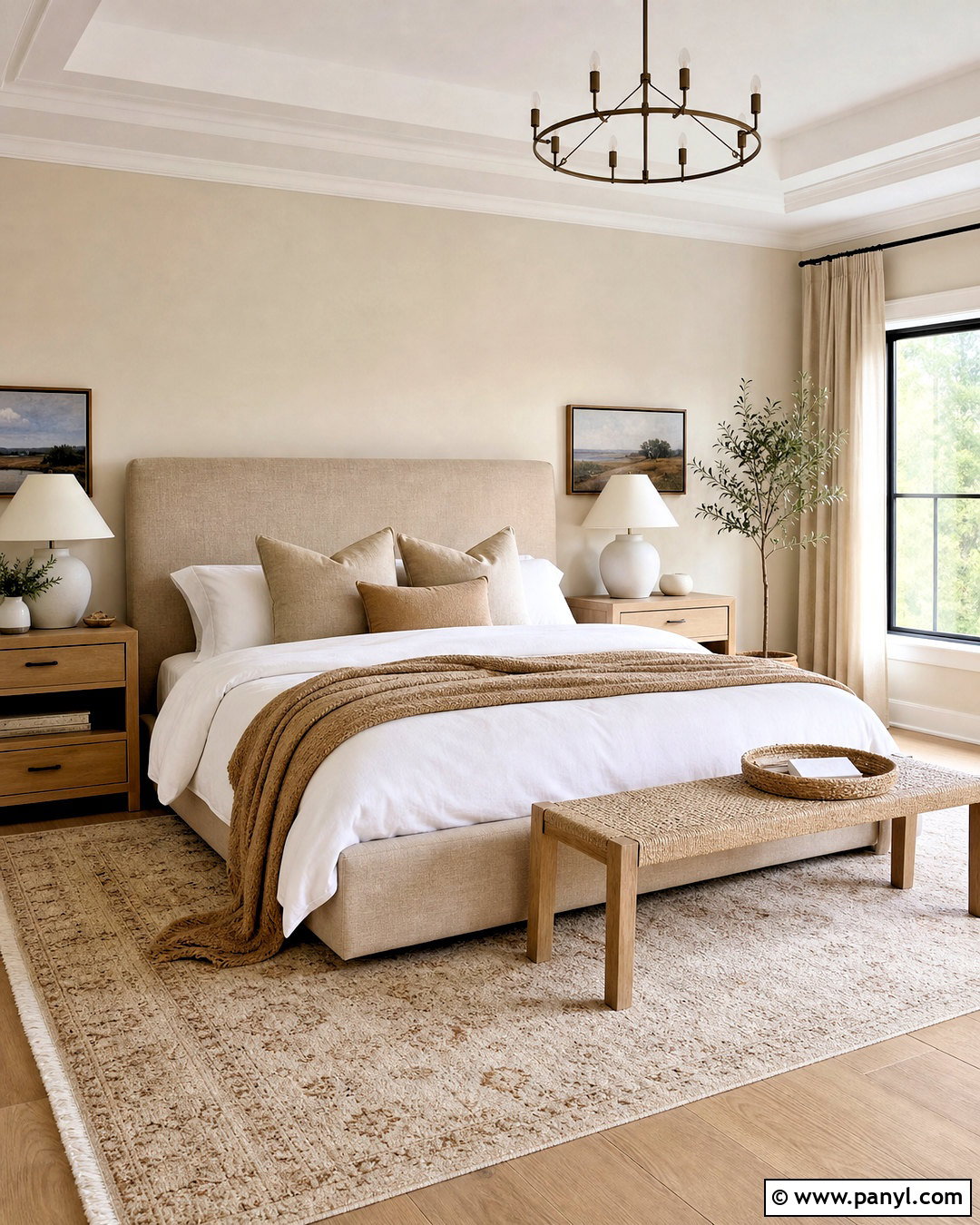
Light oatmeal sits between cream and beige, producing a soft backdrop that feels natural and quietly cozy. Cover the walls in an oatmeal tone and choose an upholstered bed in slightly deeper flax-colored linen. White bedding prevents the palette from becoming muddy, while a chunky camel throw and striped neutral pillows create dimension. Place pale oak dressers or nightstands against the walls and add rounded ceramic lamps in warm white. A large wool rug in cream and tan anchors the furniture arrangement. Complete the room with woven baskets, simple landscape artwork, and natural linen curtains. Because oatmeal is understated, texture becomes especially important. Mix smooth cotton, slubby linen, woven grass, matte pottery, and brushed metal so the finished bedroom feels thoughtfully layered rather than like a collection of nearly identical beige objects.
7. Light Taupe Bedroom
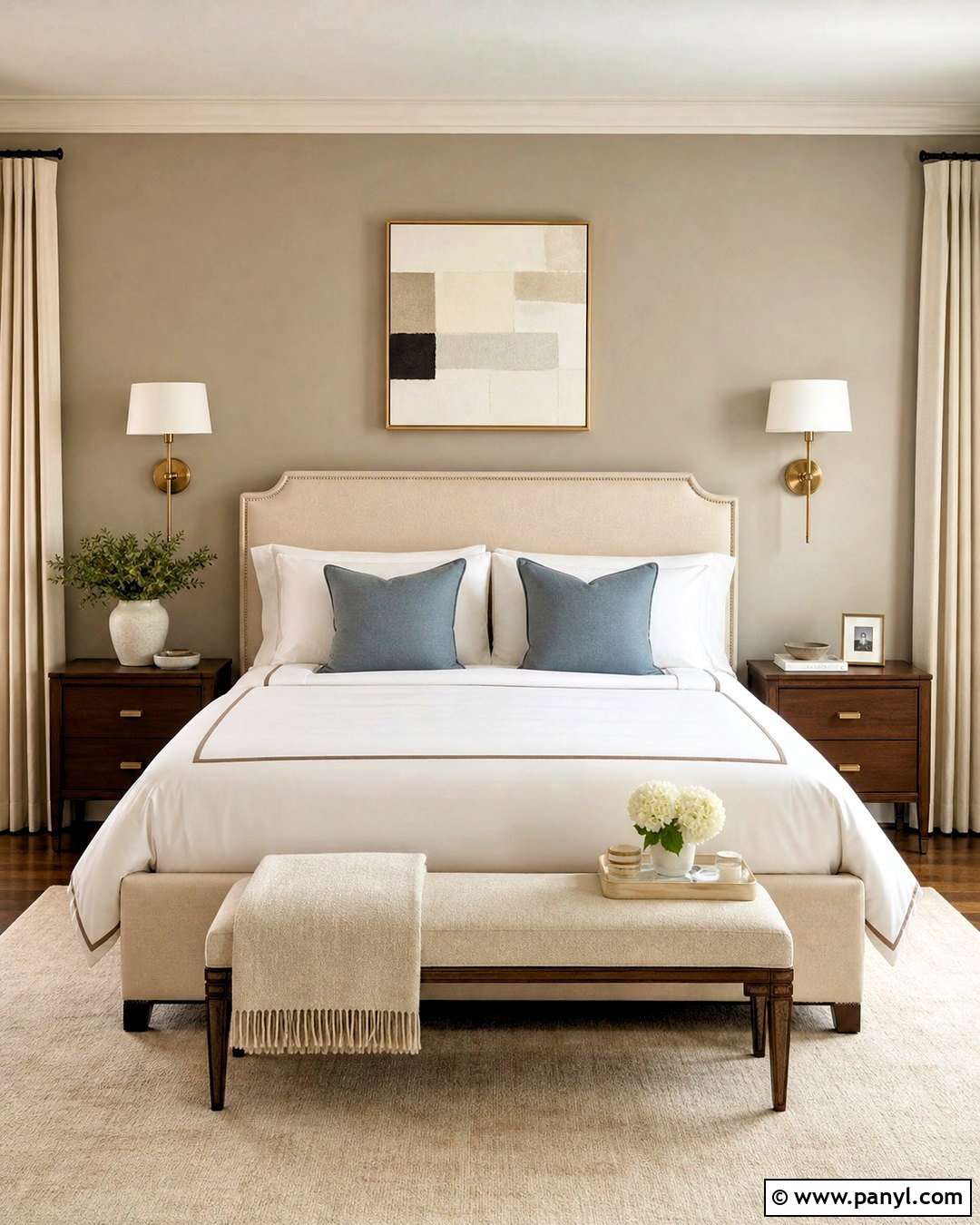
Light taupe delivers more depth than beige while remaining gentle enough for an airy bedroom. Choose taupe walls with a subtle rosy or gray undertone, depending on the room’s flooring and natural light. Pair them with an ivory bed, walnut nightstands, and white bedding edged with thin brown piping. Dusty blue pillows introduce cool contrast, while a taupe-and-cream rug connects the whole arrangement. Hang simple abstract artwork in oak frames and install warm brass sconces to add a polished finish. Full-length ivory curtains will prevent the palette from feeling heavy. This bedroom look works beautifully in transitional interiors where traditional shapes meet cleaner modern details. Keep the ceiling warm white, and limit deeper brown accents to a few carefully placed pieces so the light taupe walls remain the main unifying feature.
8. Pearl Gray Bedroom
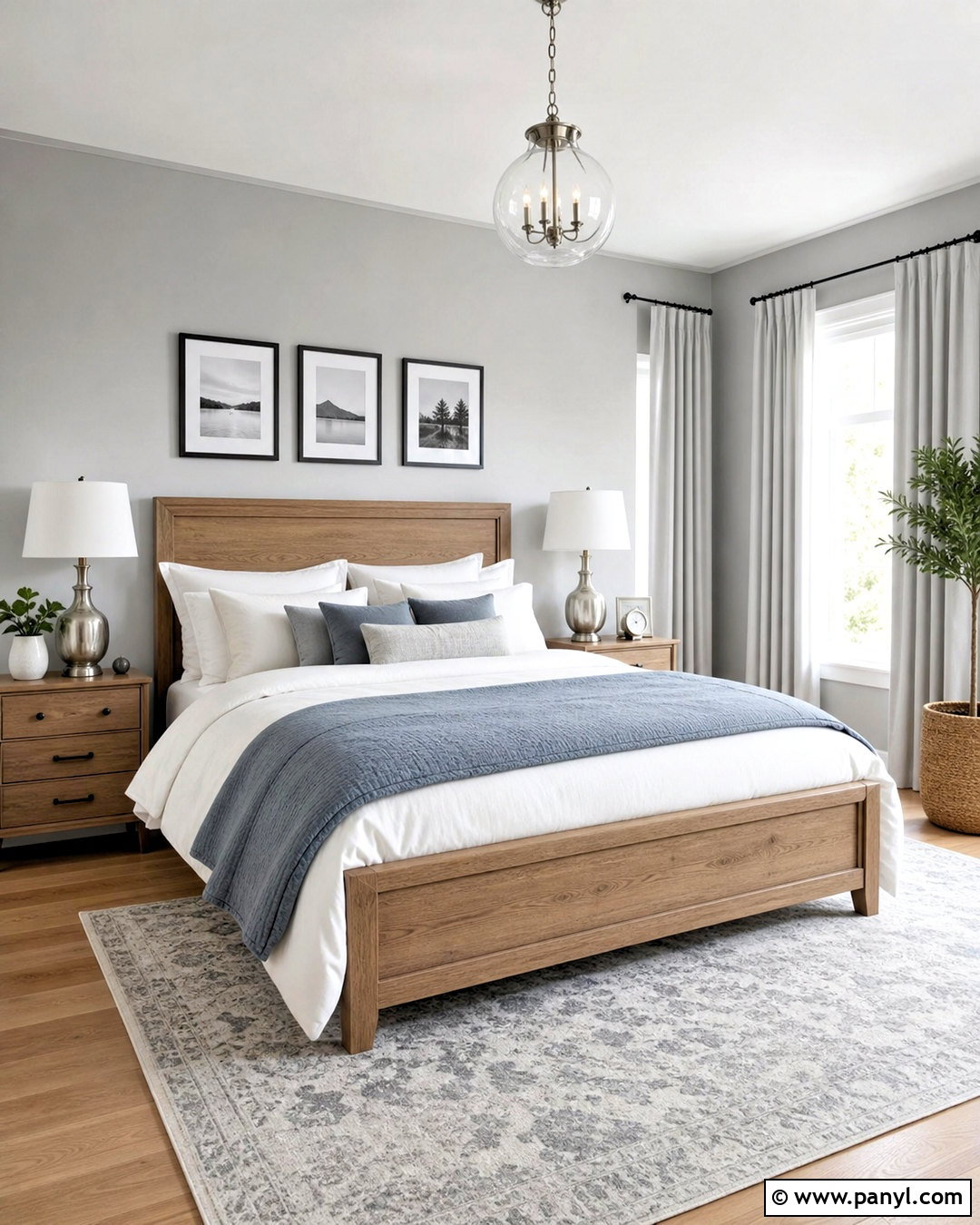
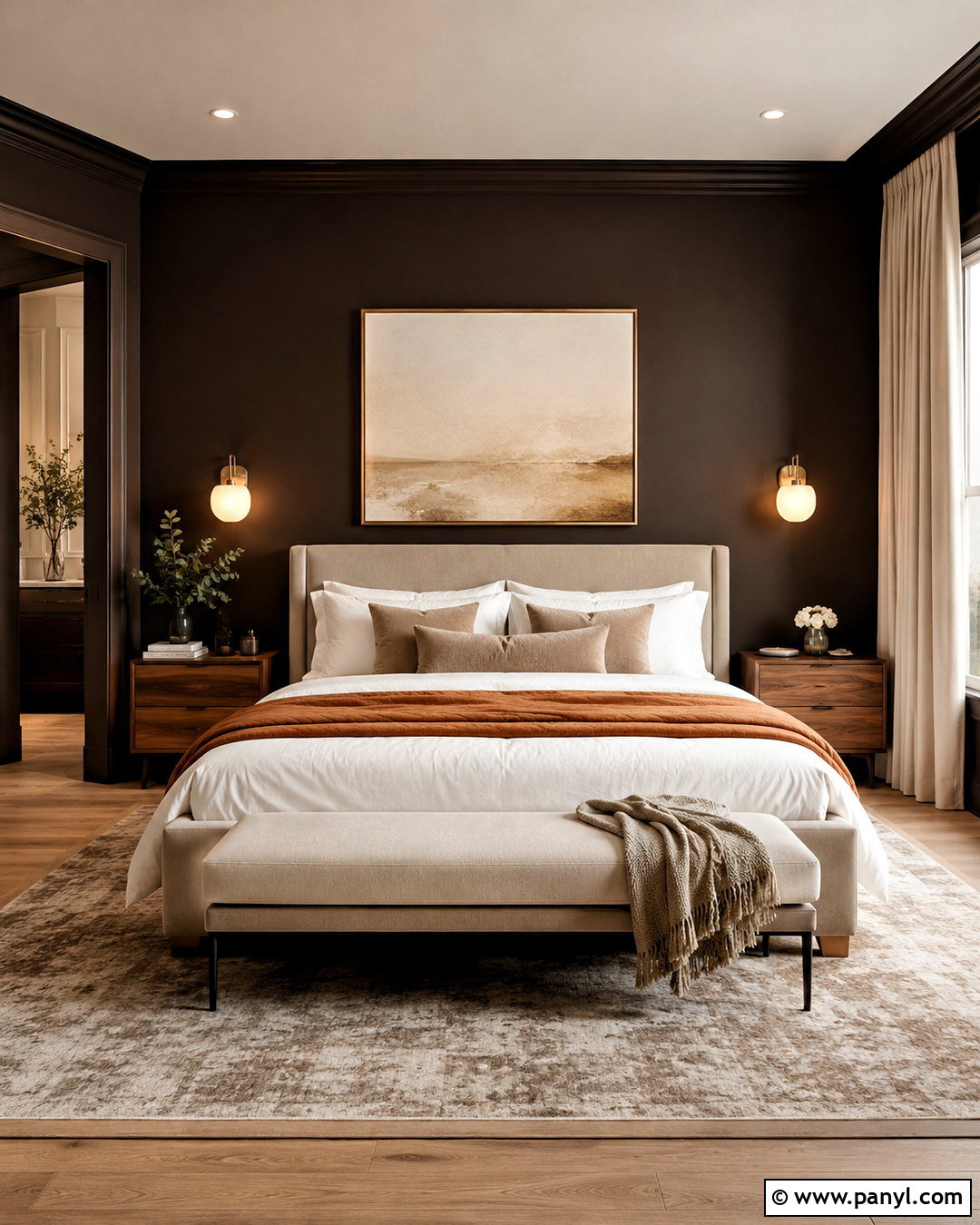
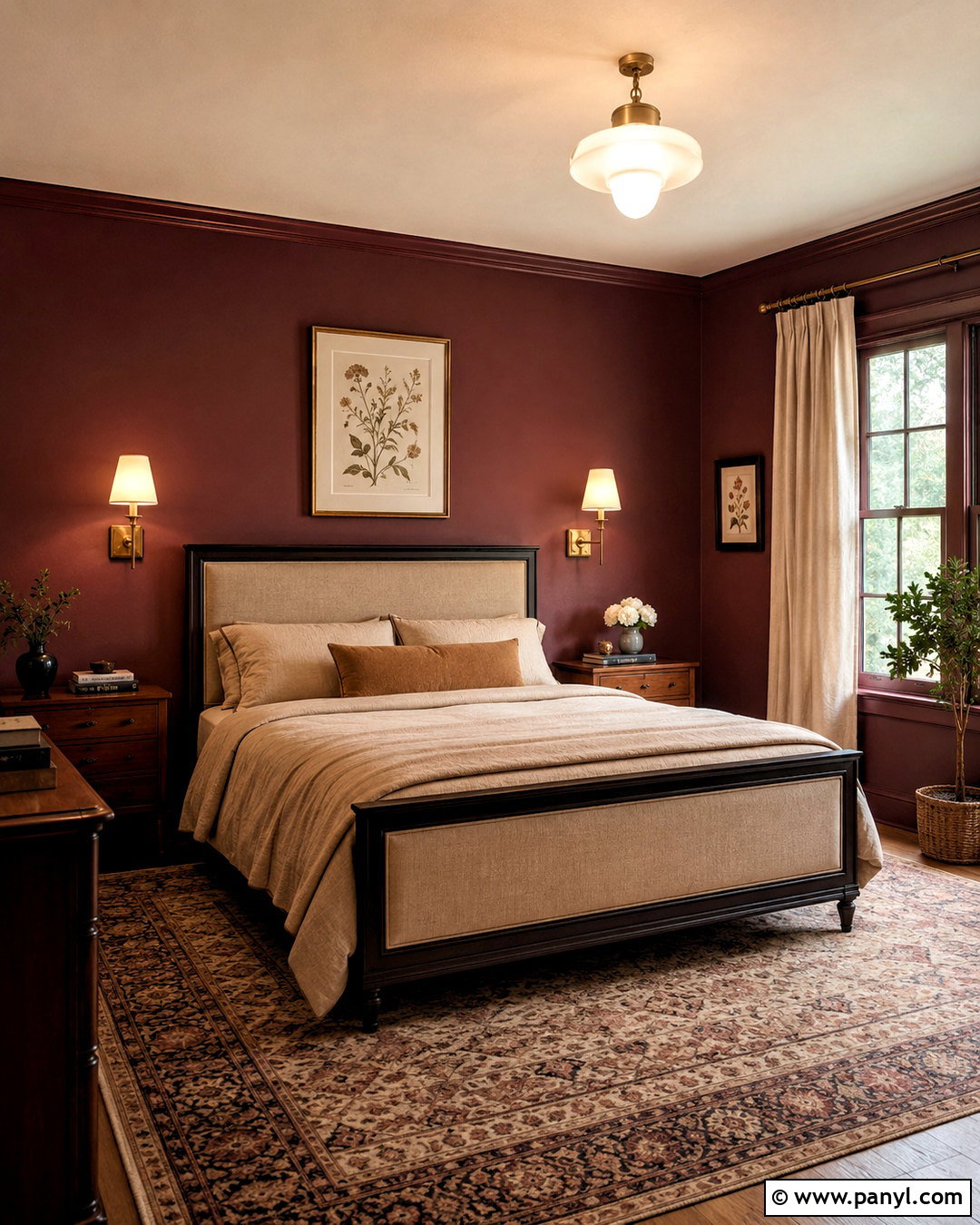
Pearl gray offers a luminous alternative to flat, industrial-looking gray. Select a pale gray with a soft, balanced undertone, then warm it with a natural oak bed and creamy white textiles. A white quilt, silver-blue blanket, and charcoal piping create gentle layers without overwhelming the space. Use pearl-colored curtains that nearly match the walls to produce a seamless, expansive effect. Brushed nickel lamps and a clear glass pendant reinforce the light-reflective quality, while a pale patterned rug adds softness underfoot. Include one or two black accents, such as slim picture frames or drawer pulls, for visual structure. Pearl gray works best when supported by warm wood and tactile fabrics. Without these elements, the room may feel cooler than intended, particularly under north-facing or low-level natural light.
9. Light Blue Gray Bedroom
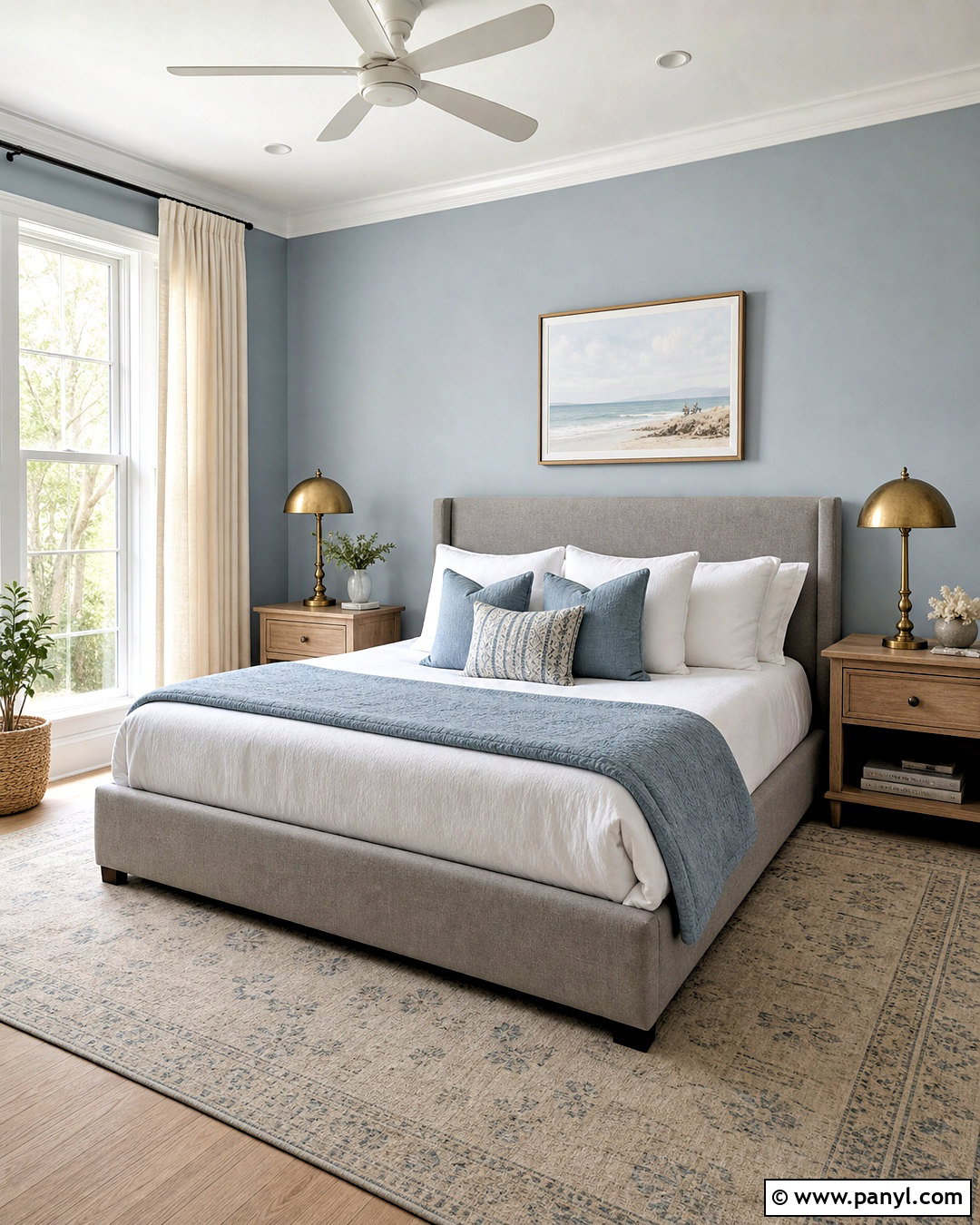
Light blue-gray walls can make a bedroom feel cool, quiet, and gently sophisticated. Build the room around this calming color with an upholstered gray bed, crisp white sheets, and a quilt in a slightly deeper dusty blue. Light oak nightstands prevent the cool palette from looking sterile, while brass lamps add a small amount of warmth. Choose ivory curtains instead of bright white ones to soften the transition around the windows. A cream rug with blue-gray detailing should extend beyond the sides of the bed, visually grounding the layout. Complete the space with understated coastal artwork, ceramic accessories, and one charcoal pillow for definition. In darker rooms, select a blue-gray with less gray pigment so it remains visibly blue rather than becoming dull under artificial lighting.
10. Powder Blue Bedroom
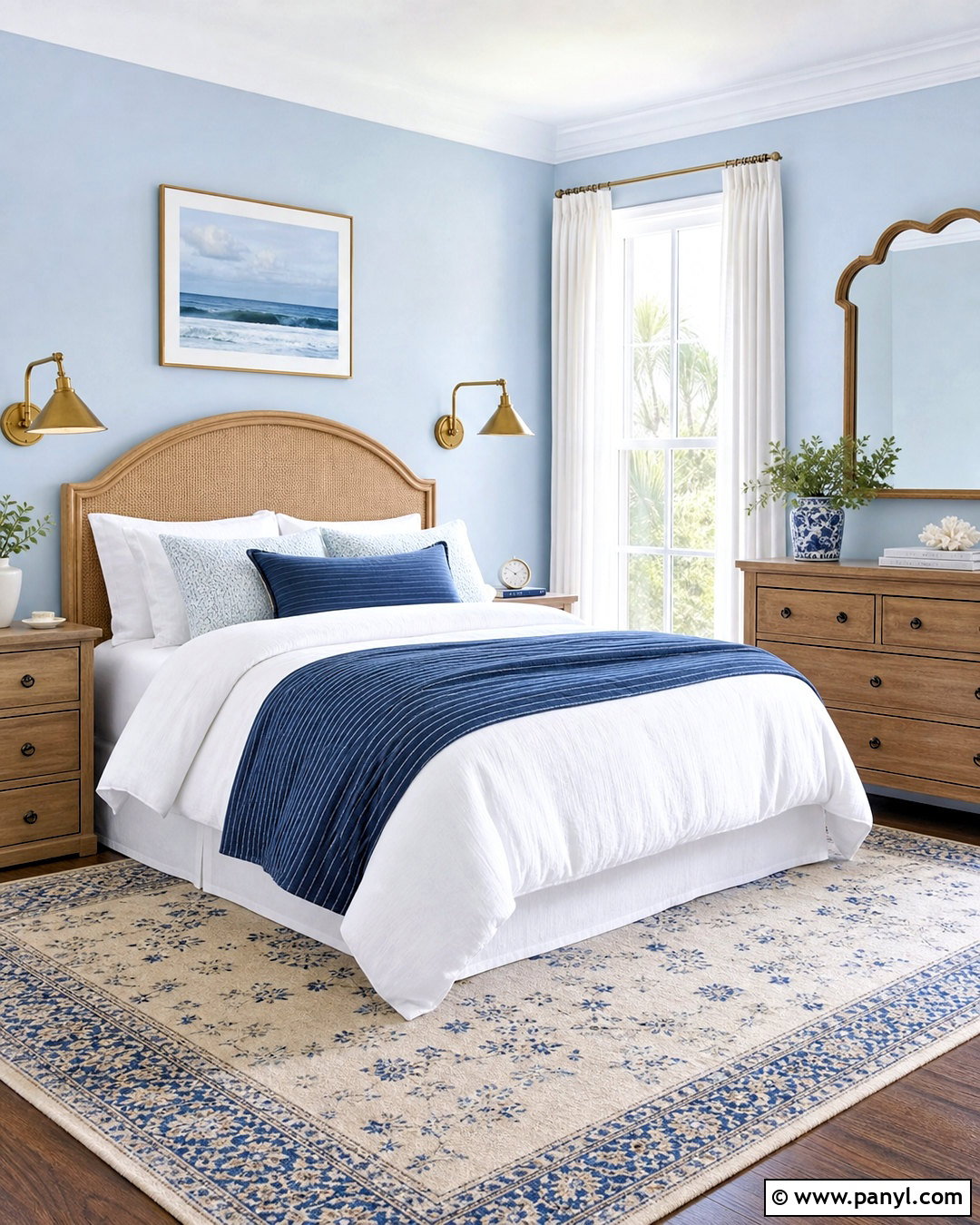
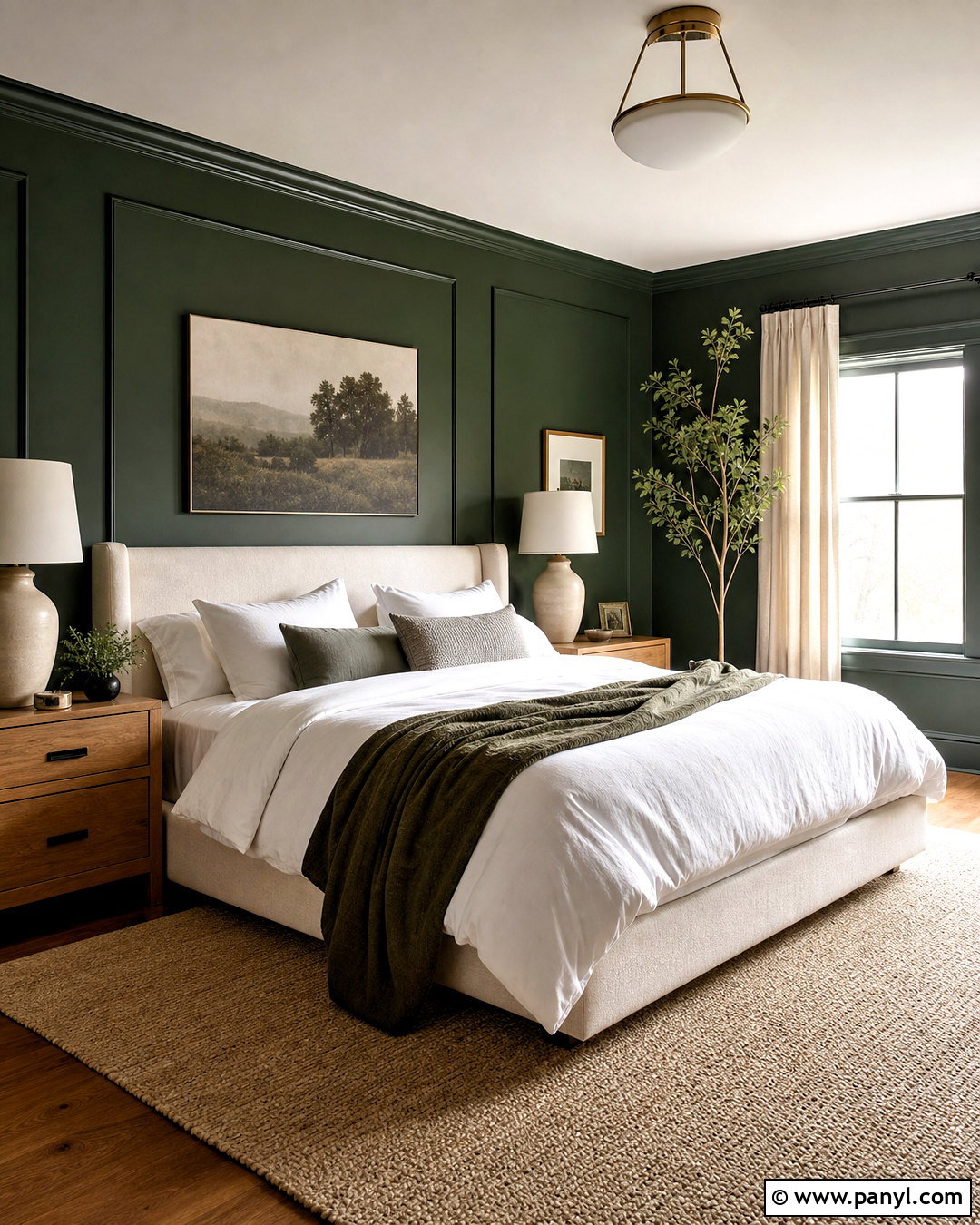
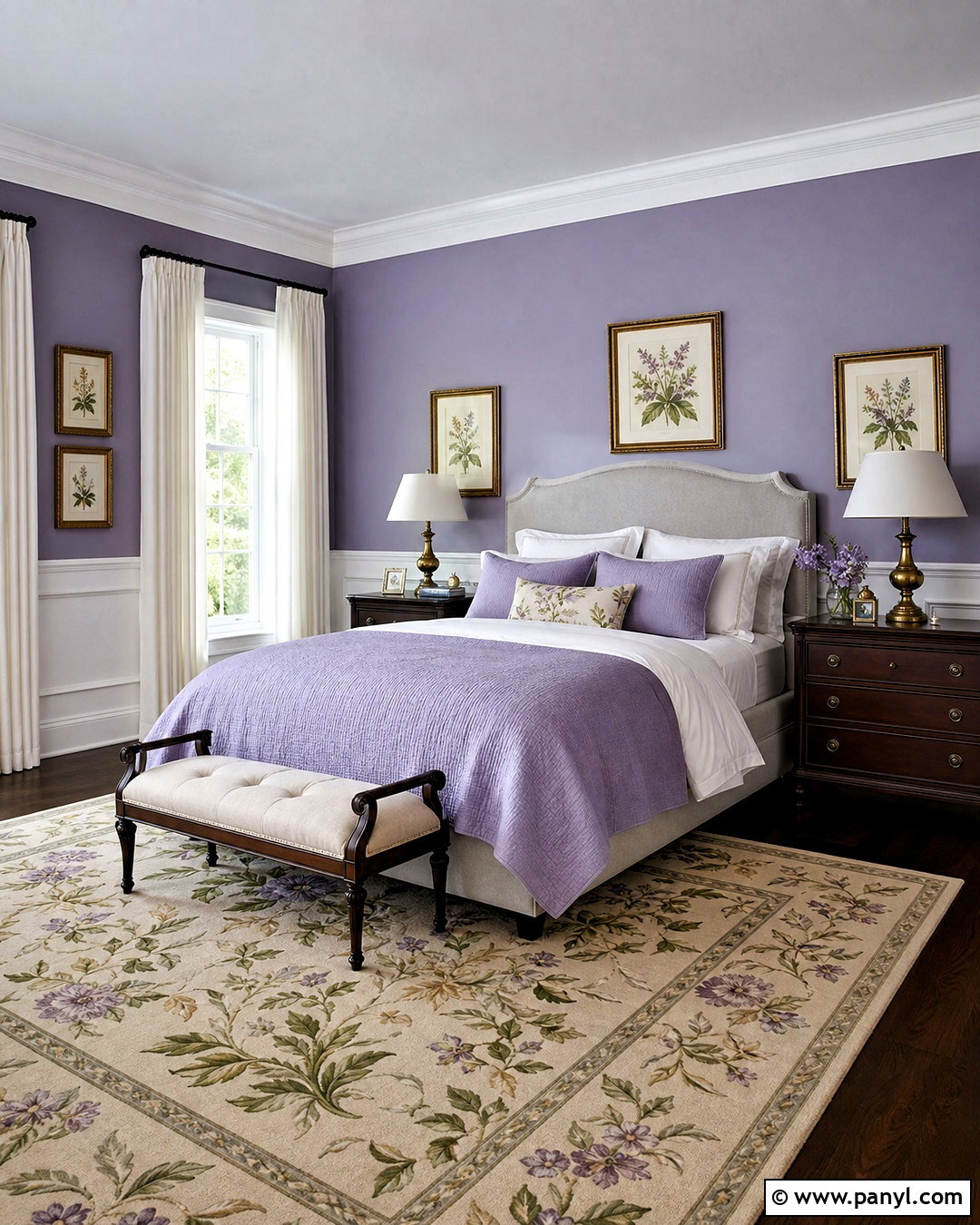
Powder blue creates a fresh bedroom that feels peaceful without looking overly themed or childish. Paint all four walls this delicate blue, then introduce an arched natural wood headboard, white linen bedding, and a navy pinstripe blanket. Warm wood keeps the color grounded, while the darker blue accent gives the pale walls more presence. Hang white curtains with a subtle woven texture and place a cream-and-blue patterned rug beneath the bed. A pair of aged brass sconces and a traditional wood dresser can add character to the otherwise breezy palette. Finish with framed seascapes or abstract prints rather than obvious nautical decorations. The resulting room feels light, timeless, and suitable for year-round use. Powder blue is particularly effective in sunny bedrooms where clear daylight reveals its softness.
11. Pale Sky Blue Bedroom
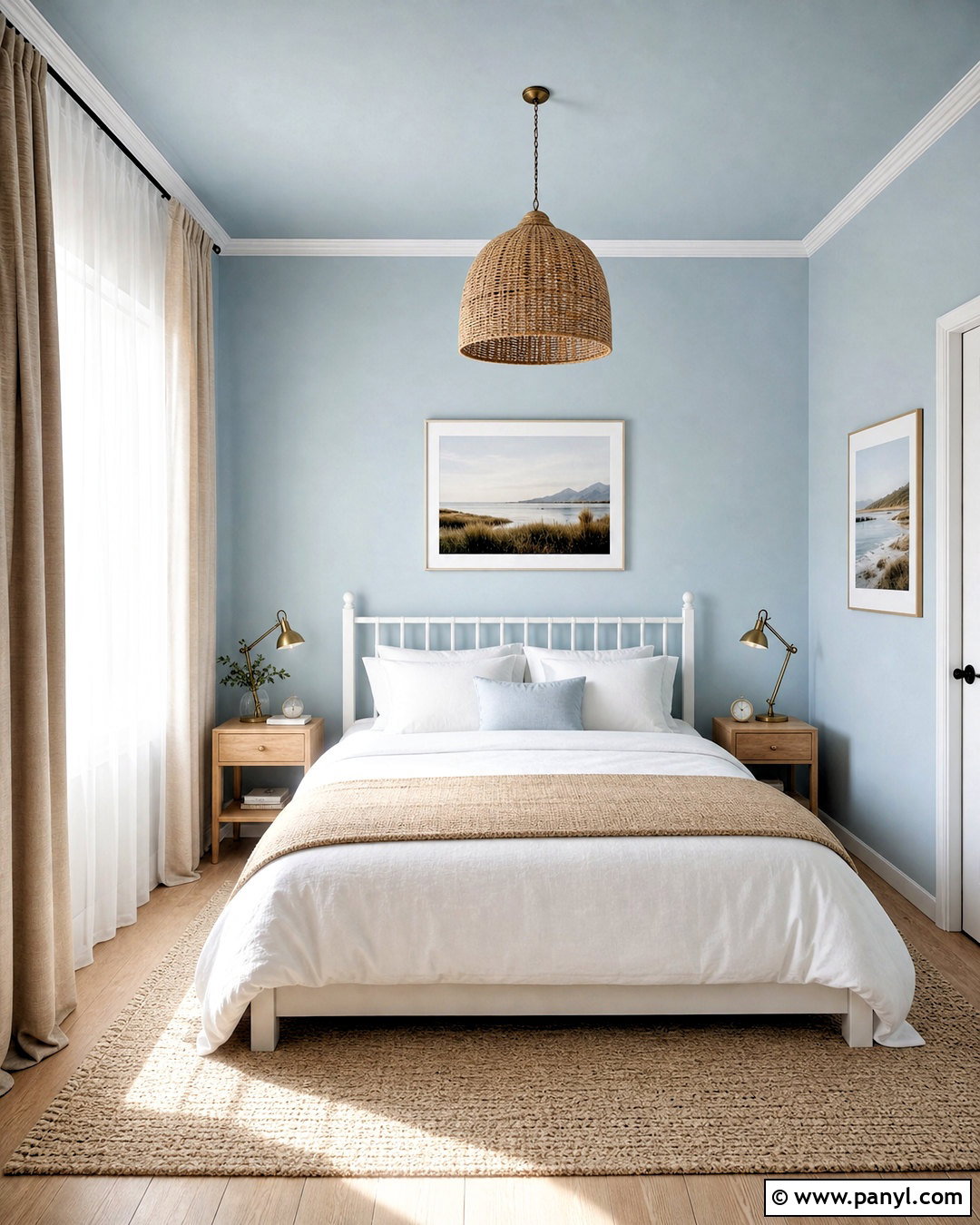
Imagine waking beneath a clear morning sky. Pale sky blue can bring that same open, uplifting feeling into a small bedroom. Paint the walls and ceiling in closely related blue tones to blur hard boundaries and make the room appear more expansive. Add a simple white bed, lightweight cotton bedding, and a soft tan coverlet for warmth. Blonde wood nightstands and a woven pendant support the relaxed, natural character. Use sheer white curtains layered with light beige drapes so daylight remains adjustable. A low-pile cream rug will brighten darker flooring and visually center the bed. Keep decorative pieces minimal, choosing pale blue glass, small landscape prints, and one leafy plant. This complete scheme suits coastal, cottage, and Scandinavian-inspired rooms without depending on obvious decorative themes.
12. Pale Aqua Bedroom

Pale aqua blends blue and green, giving a bedroom an airy, refreshing look with a subtle spa-like quality. Pair aqua walls with warm white trim and a light ash wood bed to keep the color from becoming overly cool. Layer white bedding with sea-glass green pillows, a sand-colored quilt, and a textured ivory throw. Natural Roman shades and off-white curtains bring warmth to the window wall. Add matte brass lamps and simple ceramic accessories in cream and pale green. A beige rug with a faded aqua pattern can tie the room together without competing with the paint. Avoid filling the space with bright turquoise accents, which may overpower the quiet backdrop. Instead, use muted colors and organic materials to create a complete bedroom that feels relaxed, balanced, and grown-up.
13. Soft Sage Green Bedroom
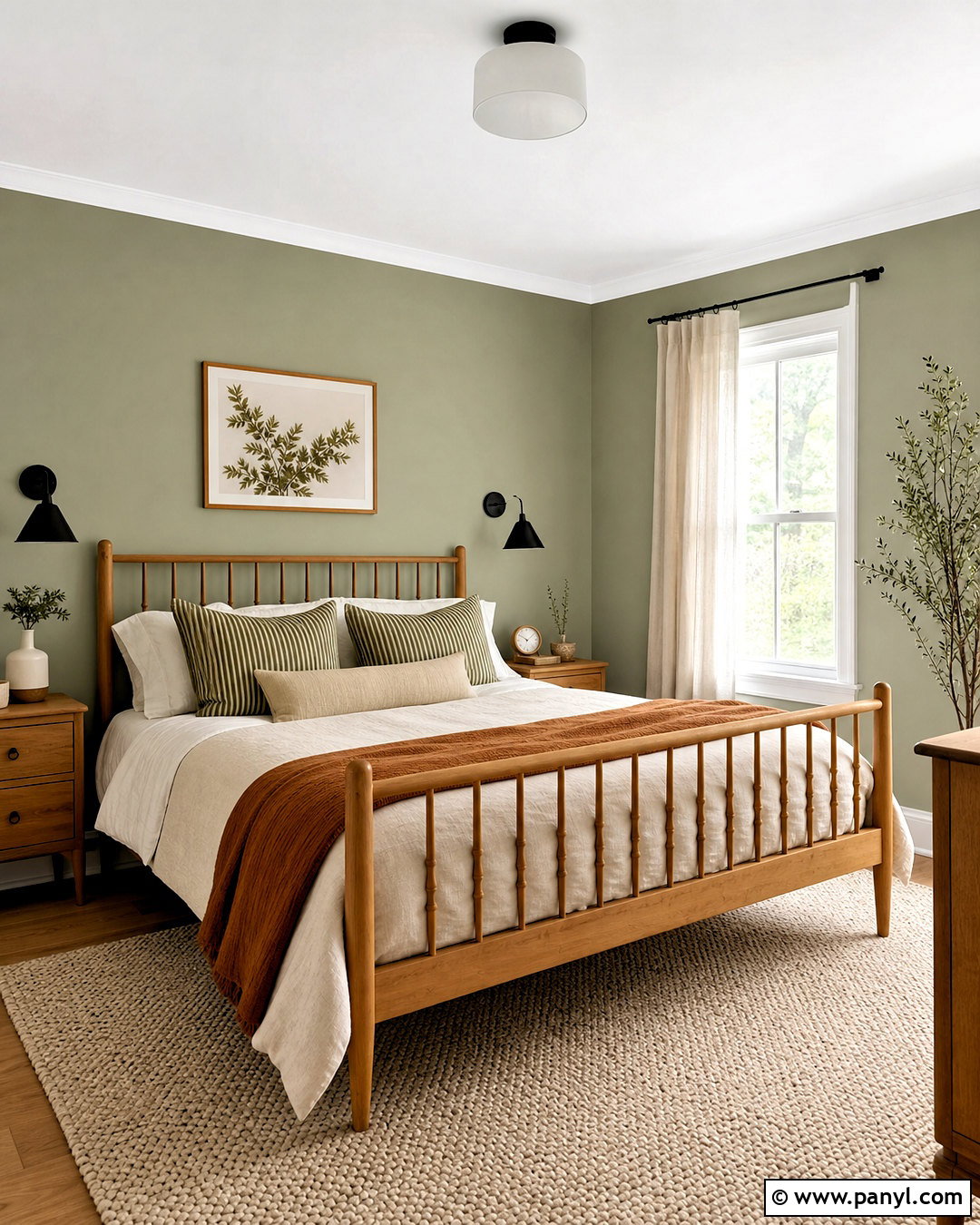
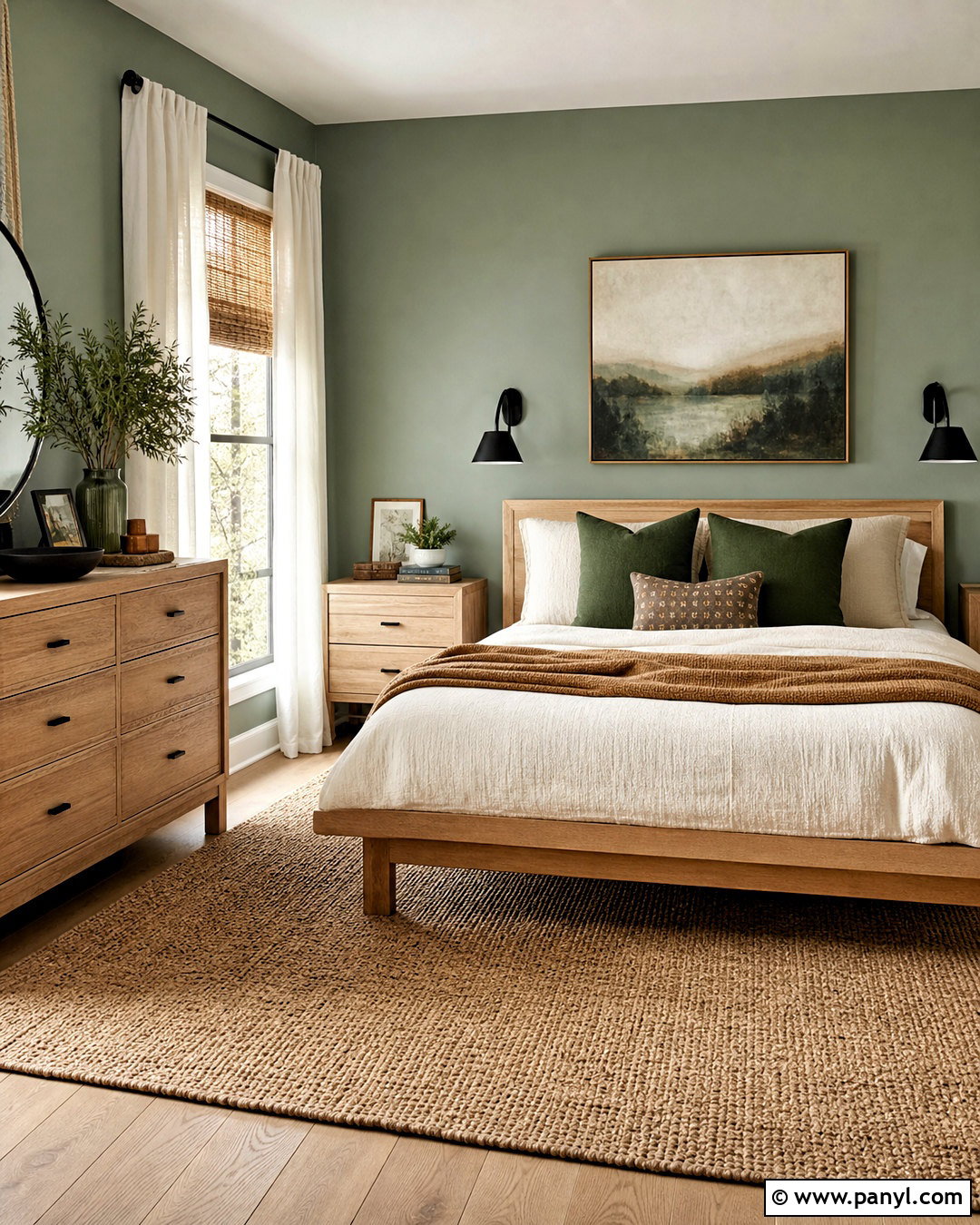
Soft sage green connects a bedroom to nature while remaining light enough for a restful, open atmosphere. Cover the walls in muted sage and pair them with warm white trim, an oak spindle bed, and natural linen bedding. Use an ivory duvet as the base, then add olive-striped pillows and a clay-colored throw for earthy contrast. A woven wool rug in beige and cream will soften the floor while continuing the organic palette. Select black metal sconces, a simple wood dresser, and botanical artwork with restrained green details. Linen curtains in warm white should filter daylight without introducing another strong hue. This full room works especially well with views of trees or a garden. For visual continuity, repeat sage in only two or three accessories rather than matching every decorative item to the walls.
14. Light Mint Green Bedroom
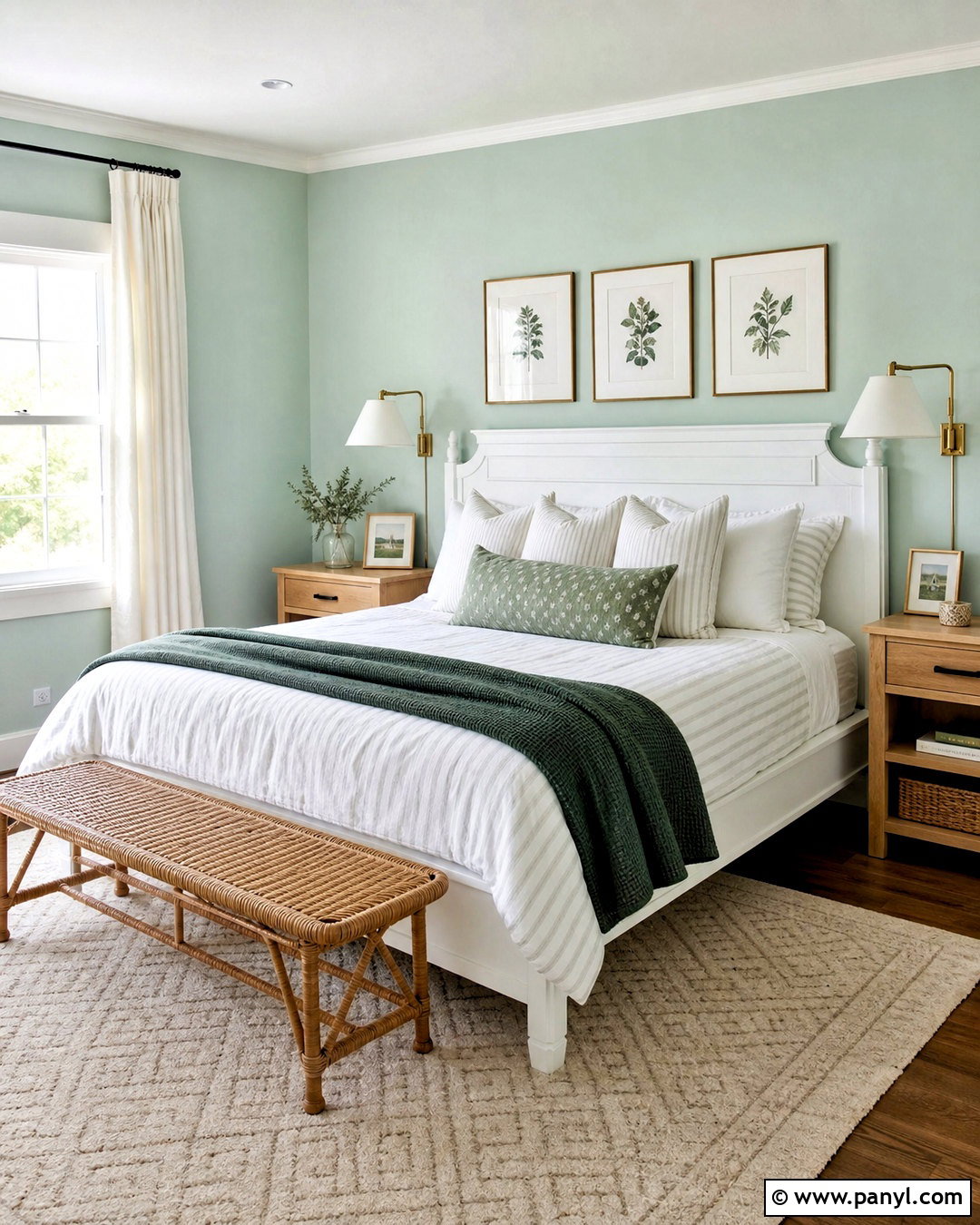
Light mint green can feel crisp and cheerful when balanced with warm materials and clean furniture. Choose a softened, slightly gray mint rather than a highly saturated pastel. Pair it with a white painted bed, pale oak nightstands, and white bedding featuring thin green or beige stripes. A natural rattan bench introduces texture at the foot of the bed, while ivory curtains soften bright sunlight. Use brushed brass lamps and a cream rug with a small geometric motif to keep the room polished. Add framed plant illustrations and one deeper green blanket for controlled contrast. This palette suits guest bedrooms, children’s rooms, and compact spaces that need an uplifting quality. Keeping the ceiling, doors, and trim warm white will make the mint walls appear fresh without creating a sharp or overly colorful result.
15. Pale Celadon Bedroom
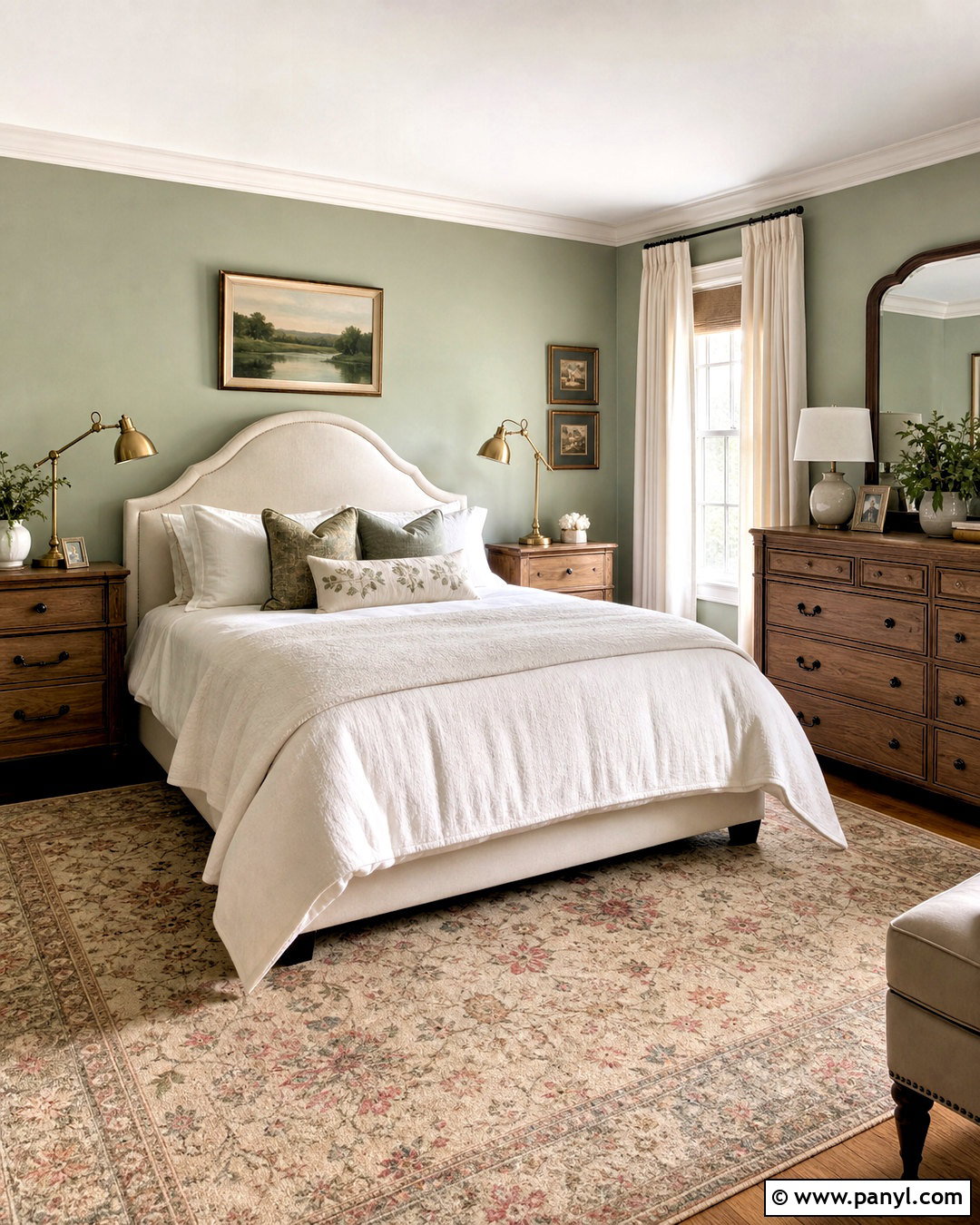
Pale celadon is a quiet green with subtle blue or gray undertones, making it ideal for an elegant, restorative bedroom. Use celadon on the walls and pair it with a curved cream headboard, warm white bedding, and soft gray-green accent pillows. Medium oak nightstands give the light scheme enough visual weight, while antique brass lamps provide a classic finish. Add floor-length ivory drapes and a muted floral rug featuring celadon, beige, and faded blue. A traditional dresser, small ceramic vase, and framed landscape painting complete the collected look. Because celadon can shift between green and blue, view samples during both daylight and evening hours. Warm lamp bulbs, natural wood, and cream fabrics will help preserve its inviting character once direct sunlight disappears from the bedroom.
16. Pale Blush Pink Bedroom
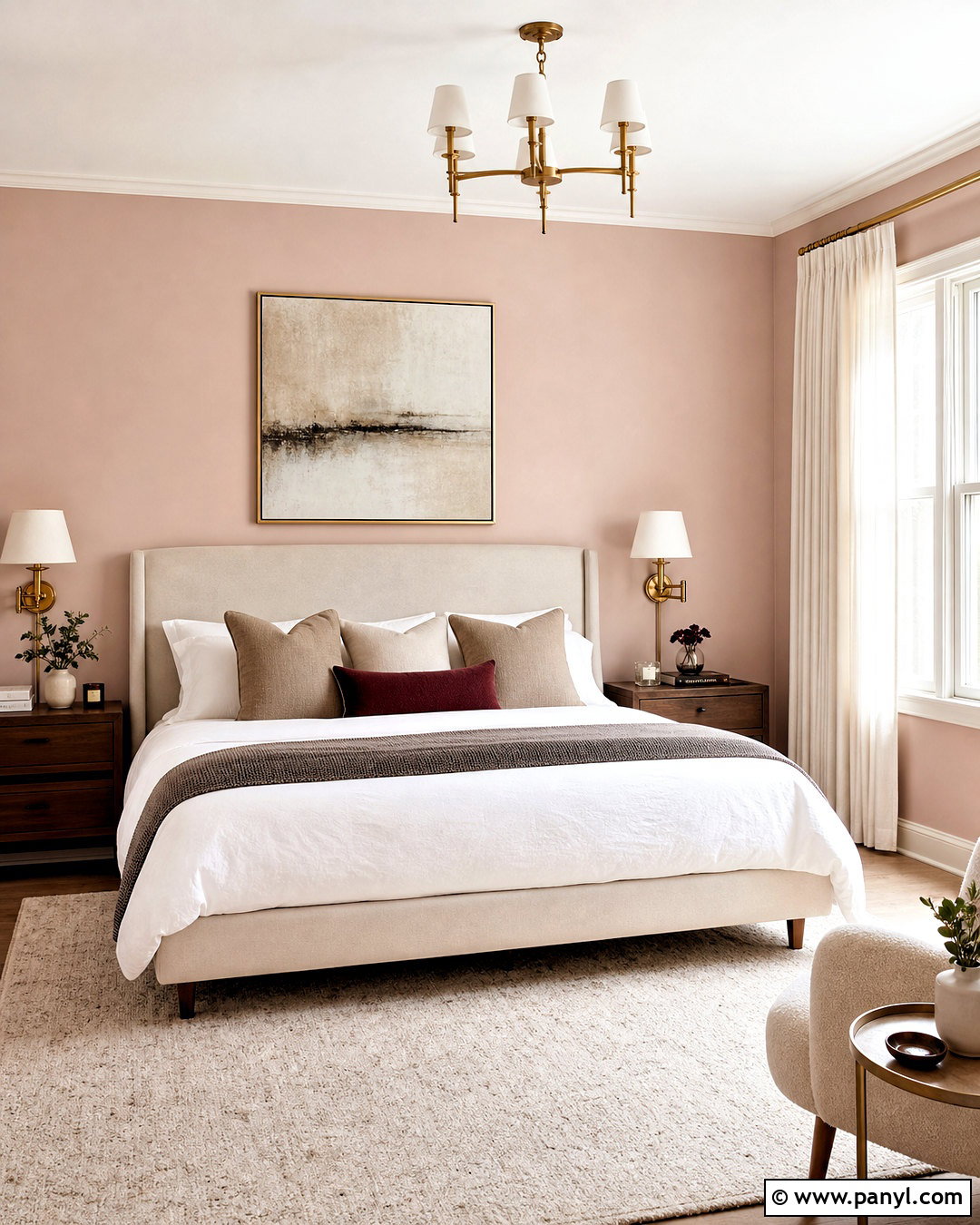
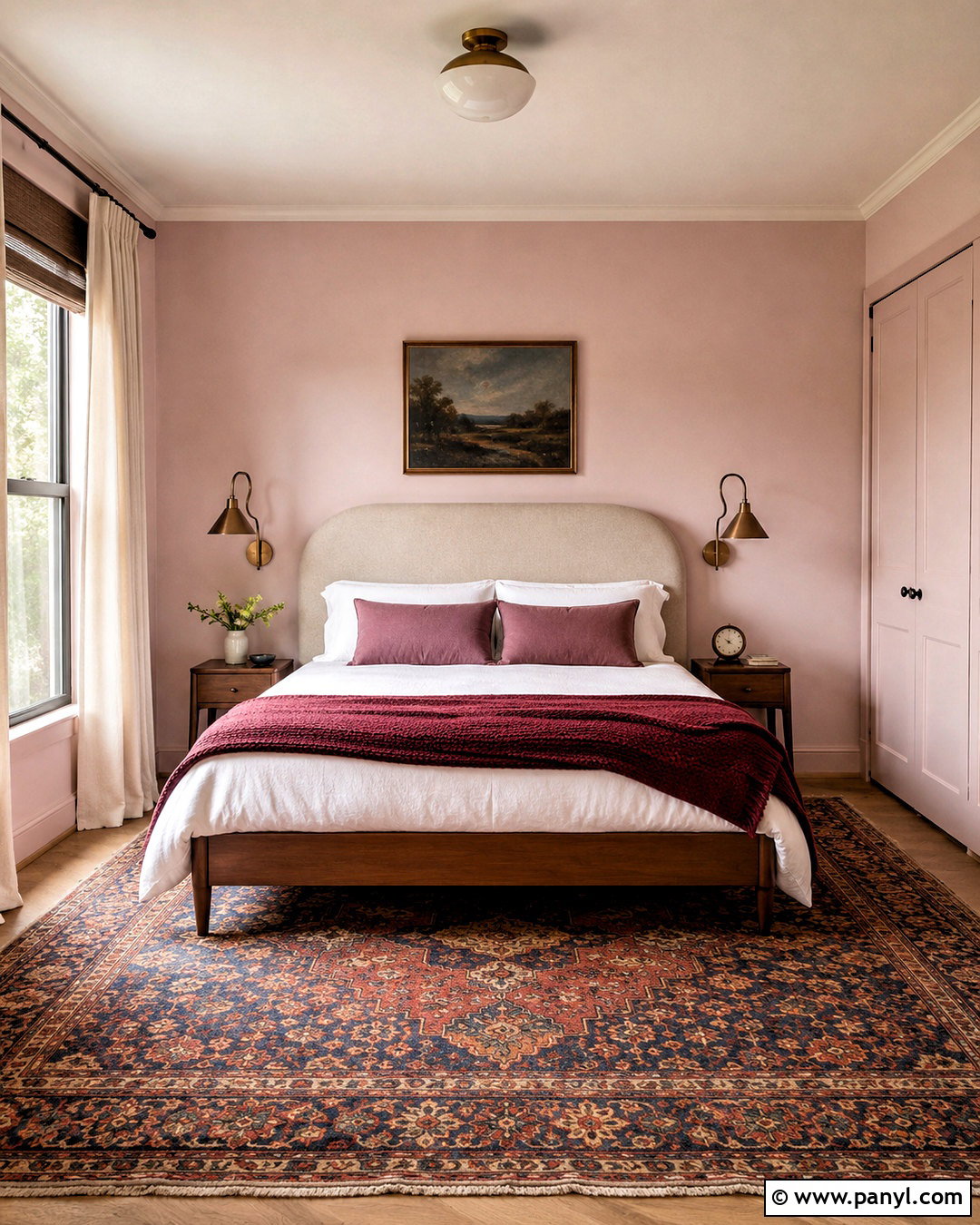
Pale blush pink can function like a warm neutral when the shade is muted and the rest of the bedroom remains balanced. Paint the walls a dusty, barely pink tone, then introduce an ivory upholstered bed and medium walnut nightstands. Crisp white sheets keep the room fresh, while taupe pillows and a soft burgundy accent cushion add maturity. Use natural linen curtains, a cream wool rug, and aged brass lighting to strengthen the warm palette. Abstract artwork with blush, brown, and off-white details can connect the colors without making the space overly decorative. Avoid an entirely pink furniture scheme. Instead, let the walls provide gentle warmth while wood, cream, and restrained darker accents give the room structure. This approach creates a sophisticated primary bedroom with a subtle romantic quality.
17. Dusty Rose Bedroom
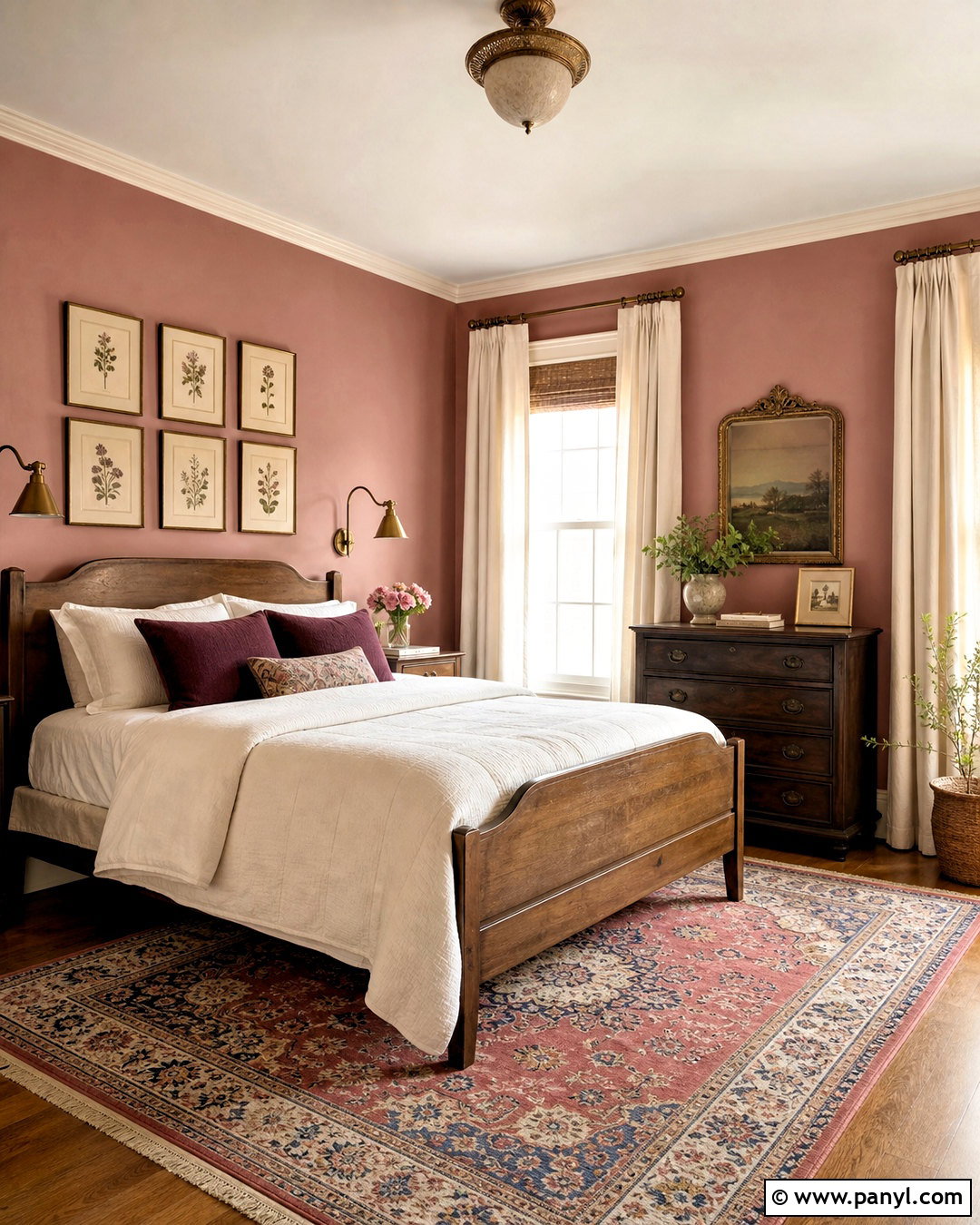
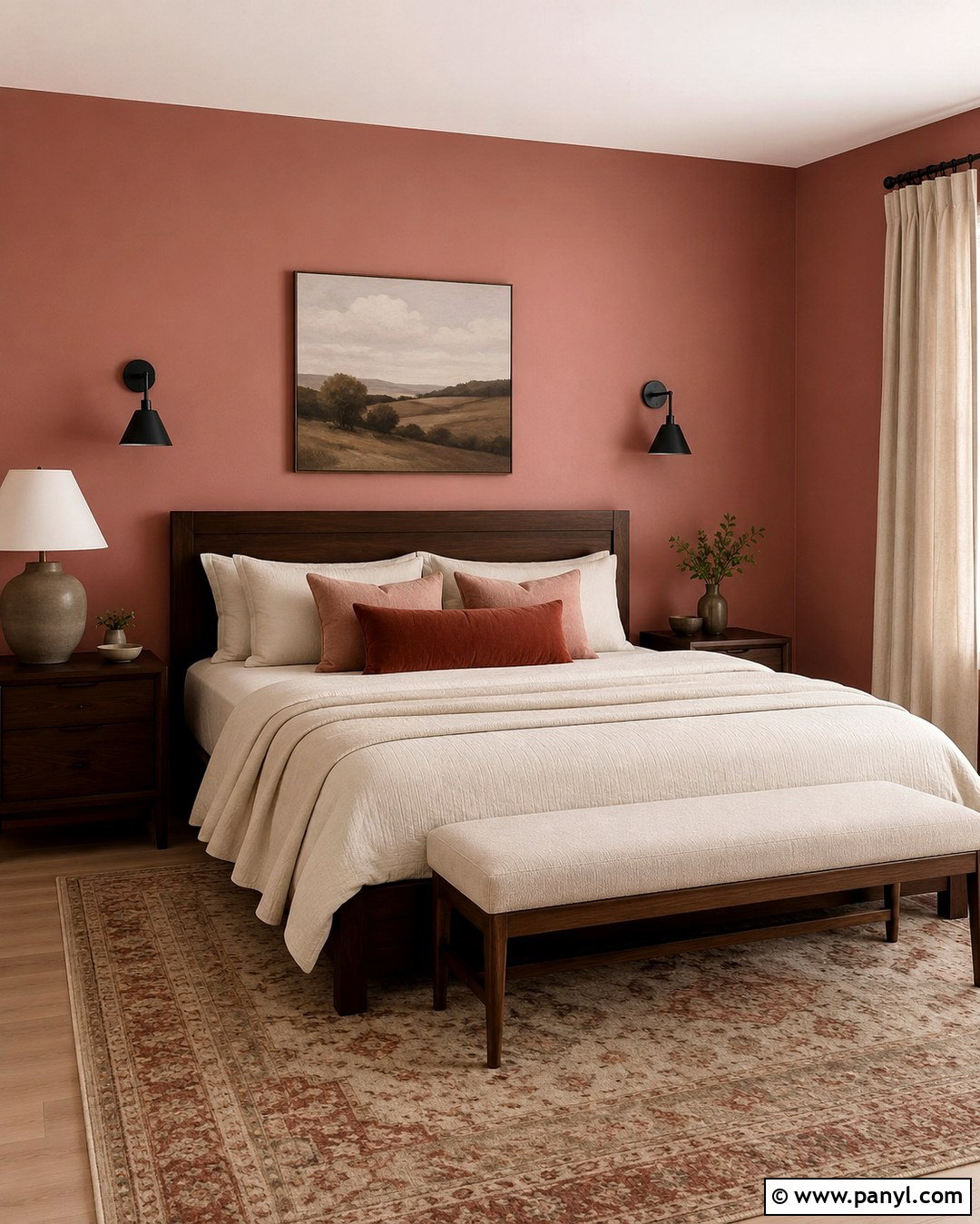
Dusty rose offers slightly more depth than blush while still creating a light, comfortable bedroom. Choose a faded rose wall color with brown or gray undertones, then balance it with warm white trim and a natural oak bed. Dress the bed in cream linen, a pale taupe quilt, and muted plum pillows. A vintage-style rug in rose, beige, and blue brings pattern to the lower half of the room without making the walls feel busy. Add antique brass sconces, a dark wood dresser, and simple botanical prints. Full ivory curtains will reflect natural light and keep the overall palette airy. Dusty rose works particularly well in bedrooms with traditional molding or vintage furniture. The neutral supporting pieces ensure the result feels collected and timeless rather than overly sweet.
18. Pale Peach Bedroom
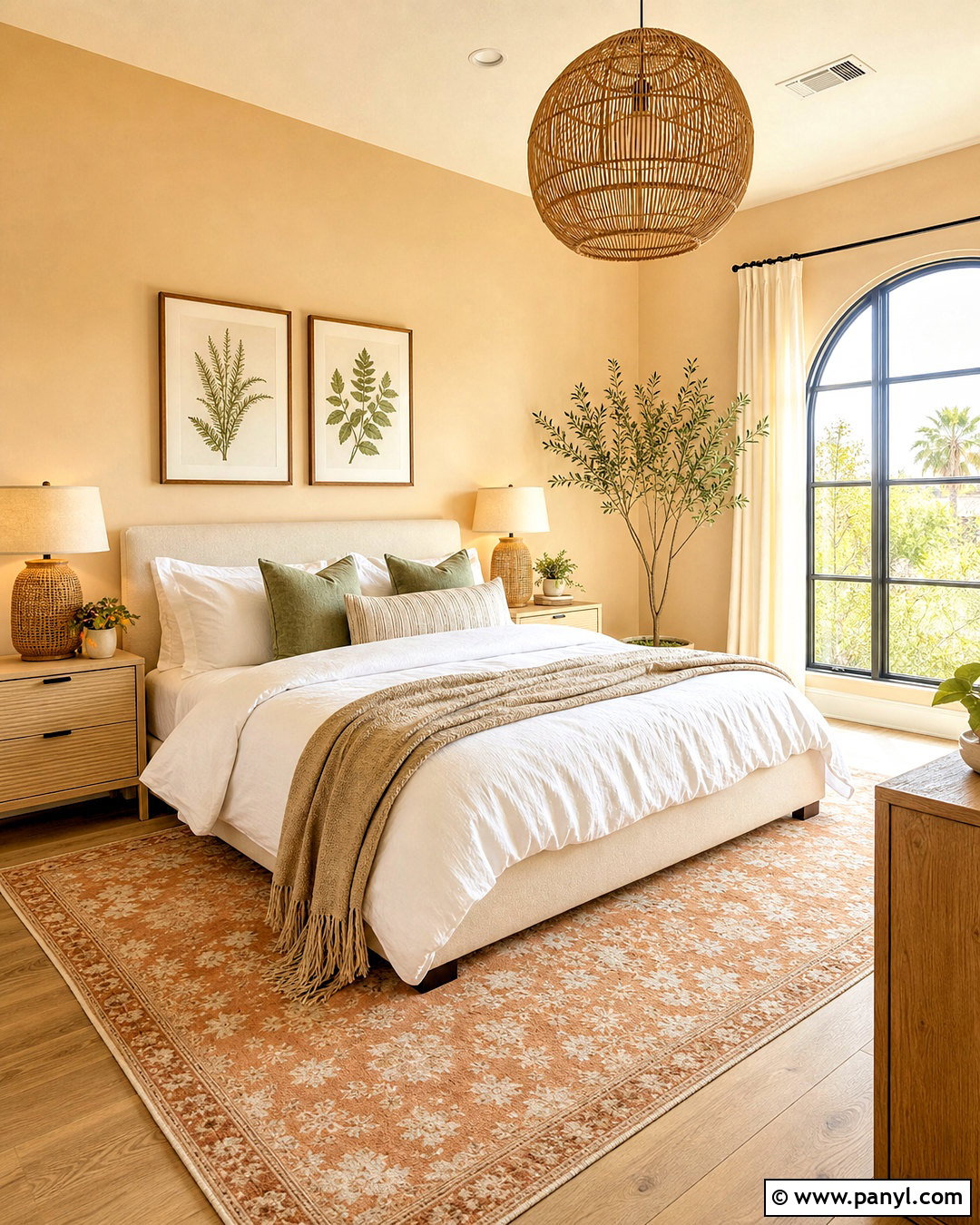
Pale peach fills a bedroom with soft warmth and looks especially inviting in morning or late-afternoon sunlight. Select a low-saturation peach with beige undertones, then combine it with an ivory bed, white bedding, and a light camel throw. Pale wood nightstands and woven lamps create a casual, sun-washed effect. Use cream curtains and a beige rug with a subtle terracotta pattern to connect the warm colors. Small accents in muted green, such as pillows or botanical artwork, provide natural contrast and stop the scheme from becoming too orange. Keep large furniture pieces neutral so the wall color remains sophisticated. This complete bedroom palette works beautifully in cottage, Mediterranean-inspired, and modern organic interiors, offering more personality than beige while maintaining a soft and peaceful appearance.
19. Soft Butter Yellow Bedroom
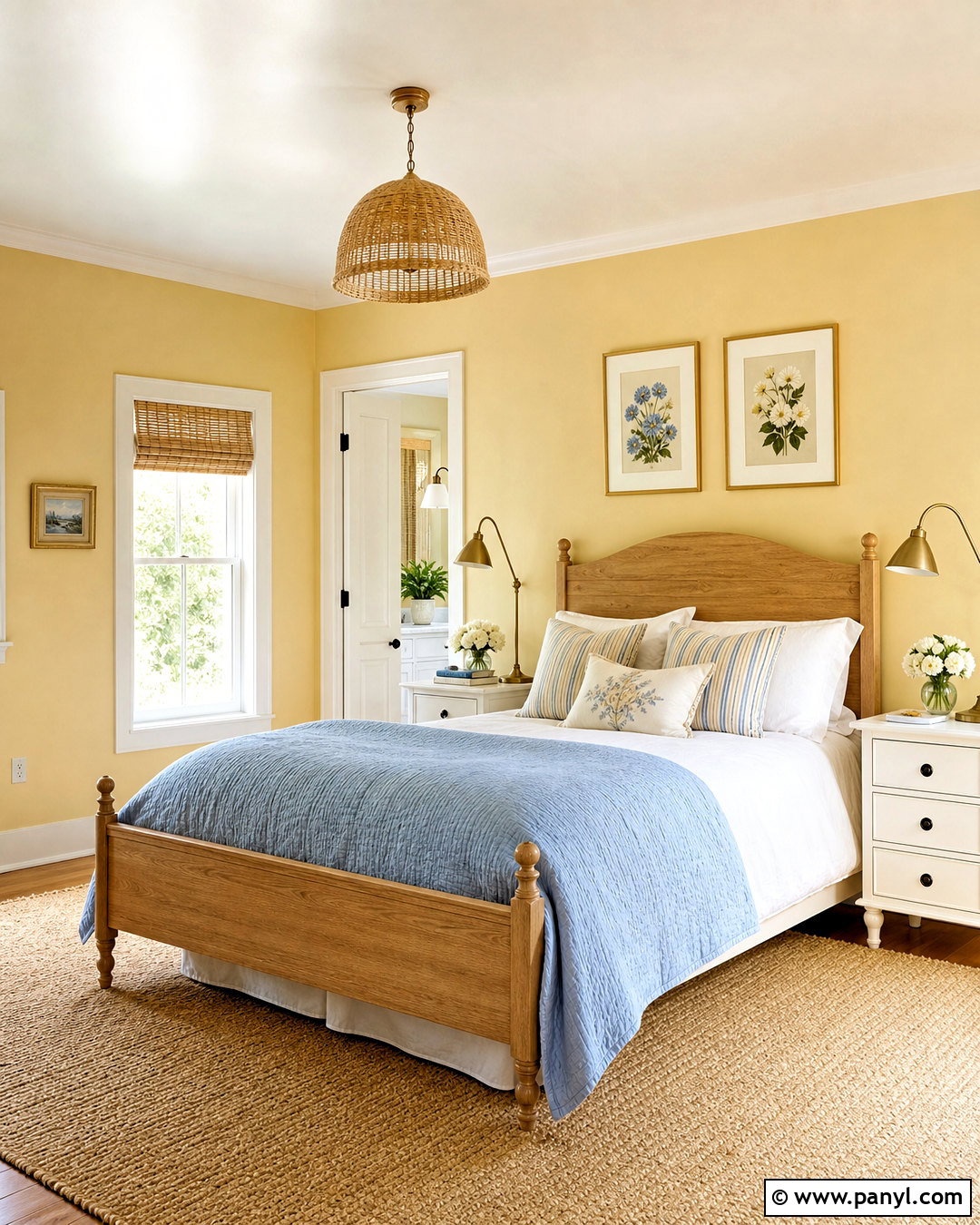
Soft butter yellow gives a bedroom a cheerful glow without the intensity of bright primary yellow. Choose a creamy, restrained shade and pair it with warm white trim, a simple wood bed, and white cotton bedding. Add a pale blue quilt and small gingham or striped pillows for a fresh country-inspired contrast. A natural fiber rug, woven window shades, and painted white nightstands keep the arrangement light and approachable. Include brass reading lamps and framed floral prints with limited yellow details. Butter yellow is useful in darker bedrooms because its warmth can offset cool, gray daylight, although a large test sample is essential. Avoid combining it with too many golden wood finishes. Light oak, white paint, and touches of blue will create a clearer, more balanced finished space.
20. Soft Lavender Bedroom
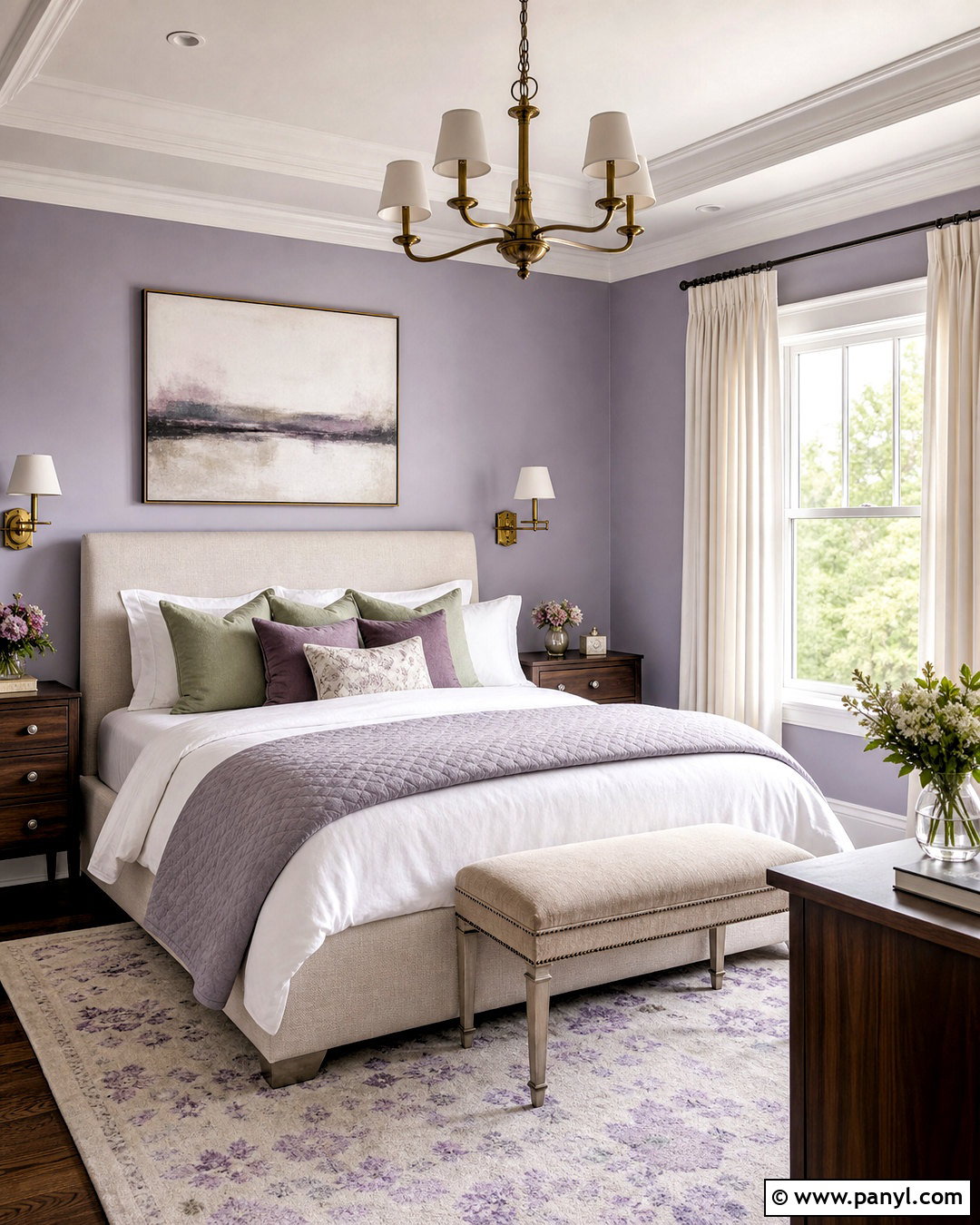
Soft lavender creates a gentle bedroom with more individuality than gray while preserving a calm, airy mood. Look for a muted lavender with gray or pink undertones rather than a bright purple pastel. Pair the walls with a cream upholstered bed, white linen bedding, and a pale gray quilt. Walnut nightstands and antique brass sconces add warmth, while dusty plum and sage pillows provide controlled color variation. Choose ivory curtains and a cream rug with a faint lavender pattern to create continuity. Minimal floral artwork or soft abstract prints will complement the walls without making the room overly ornate. Since lavender may appear cooler in north-facing light, support it with warm woods and creamy fabrics. The completed design feels soft, refined, and suitable for either a primary or guest bedroom.
Conclusion:
Choosing among these **20 light bedroom colors** becomes easier when you consider the entire room instead of viewing paint as an isolated decision. Warm whites, cream, beige, and greige provide flexible neutral foundations. Pale blues and greens introduce a refreshing, natural calm, while blush, peach, yellow, and lavender add soft personality. Coordinate the wall color with your flooring, furniture, bedding, curtains, lighting, and decorative accents to create a complete design. Before committing, paint large samples on different walls and observe them in morning light, afternoon sun, and evening lamplight. With thoughtful testing and balanced materials, a light color palette can make almost any bedroom feel brighter, more spacious, and comfortably finished.

Related Ideas and Inspiration:
Leave a Reply