
Choosing wall paint for a bathroom with a gray vanity can shape the entire room. The right shade should complement the vanity’s undertone, countertop, flooring, fixtures, and available light. White and pale neutrals create an open look, while blue, green, pink, and earth tones add more personality. Deeper colors can also work beautifully when balanced with bright tile, reflective mirrors, and layered lighting. Designers commonly recommend comparing warm and cool undertones and testing paint in the actual room before committing. () Each option below presents a complete bathroom scheme, including finishes, hardware, lighting, and decor, so you can recreate a polished look. Explore these **35 grey vanity bathroom wall colors** to find a combination that suits your space.

1. Crisp White Bathroom Walls
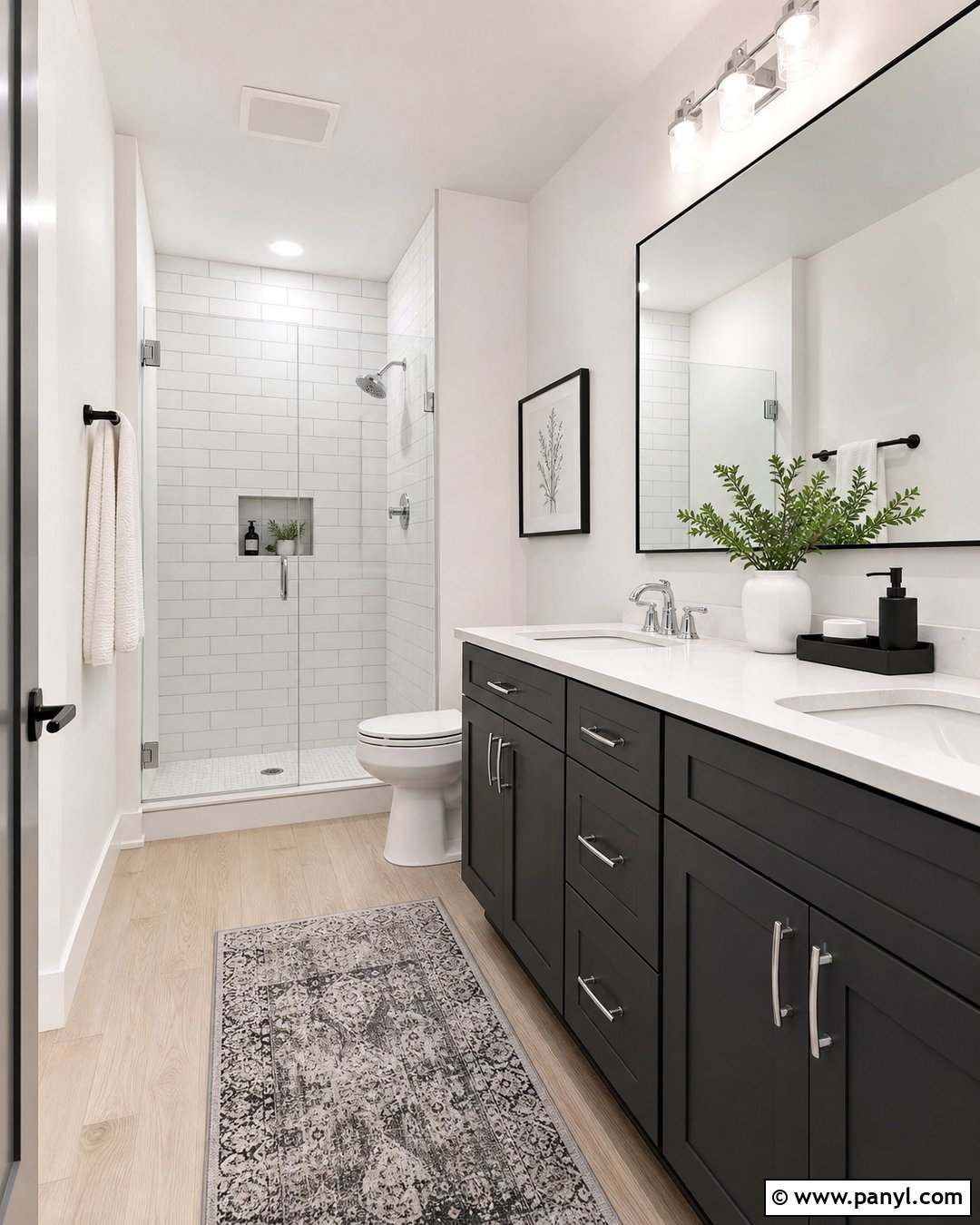
Crisp white walls make a medium or charcoal gray vanity look clean, defined, and timeless. Use bright white paint with a neutral undertone rather than an icy blue-white, especially if the bathroom has limited natural light. Complete the room with a white quartz countertop, polished chrome faucet, and frameless rectangular mirror. White subway tile in the shower keeps the background consistent, while light gray grout quietly connects it to the vanity. Add pale oak flooring or warm stone-look porcelain tile to prevent the scheme from feeling sterile. Soft gray towels, a woven bath mat, and one leafy plant provide gentle texture. This combination is especially useful in compact bathrooms because the light walls create an airy backdrop around the darker cabinetry.
2. Warm White Bathroom Walls
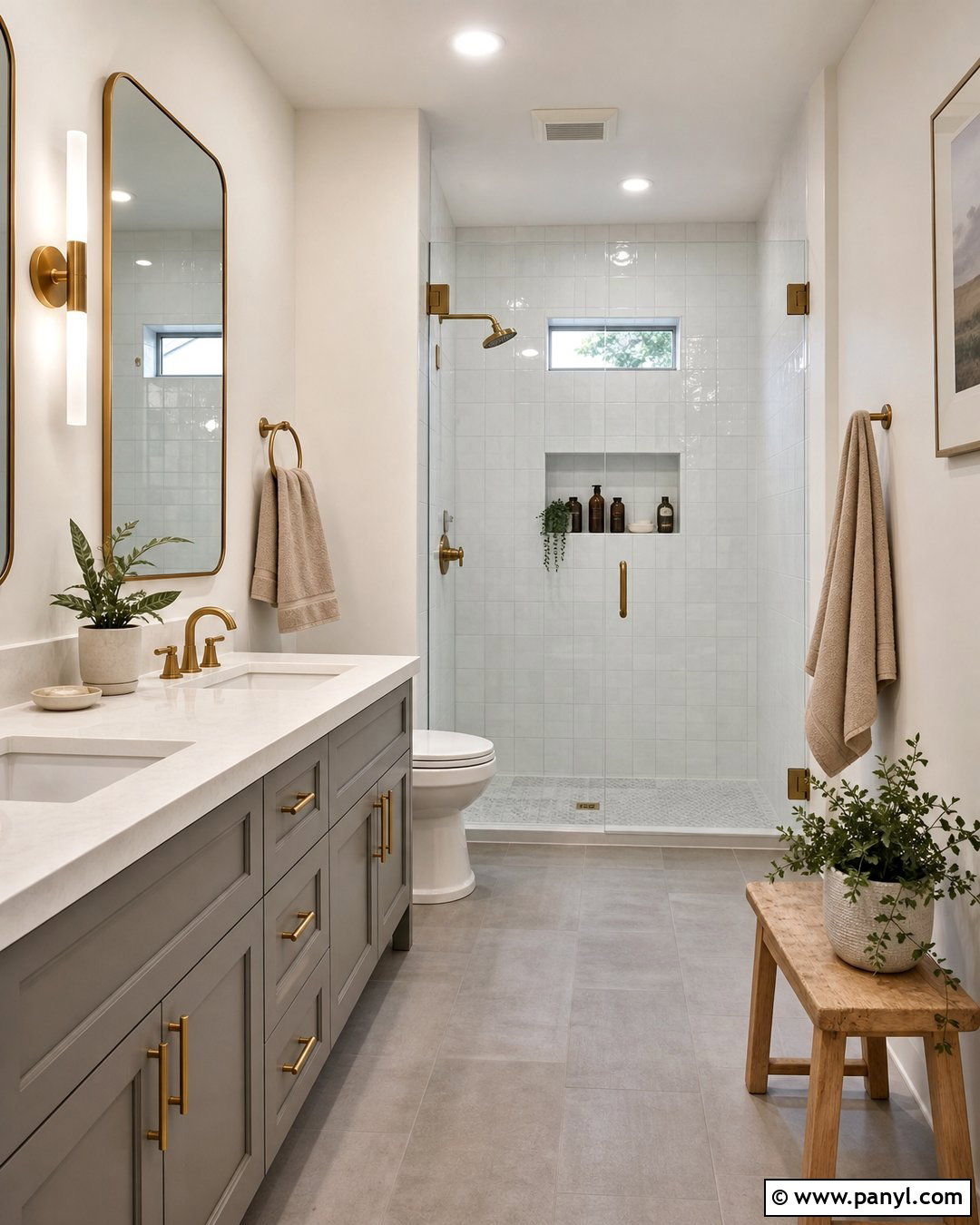
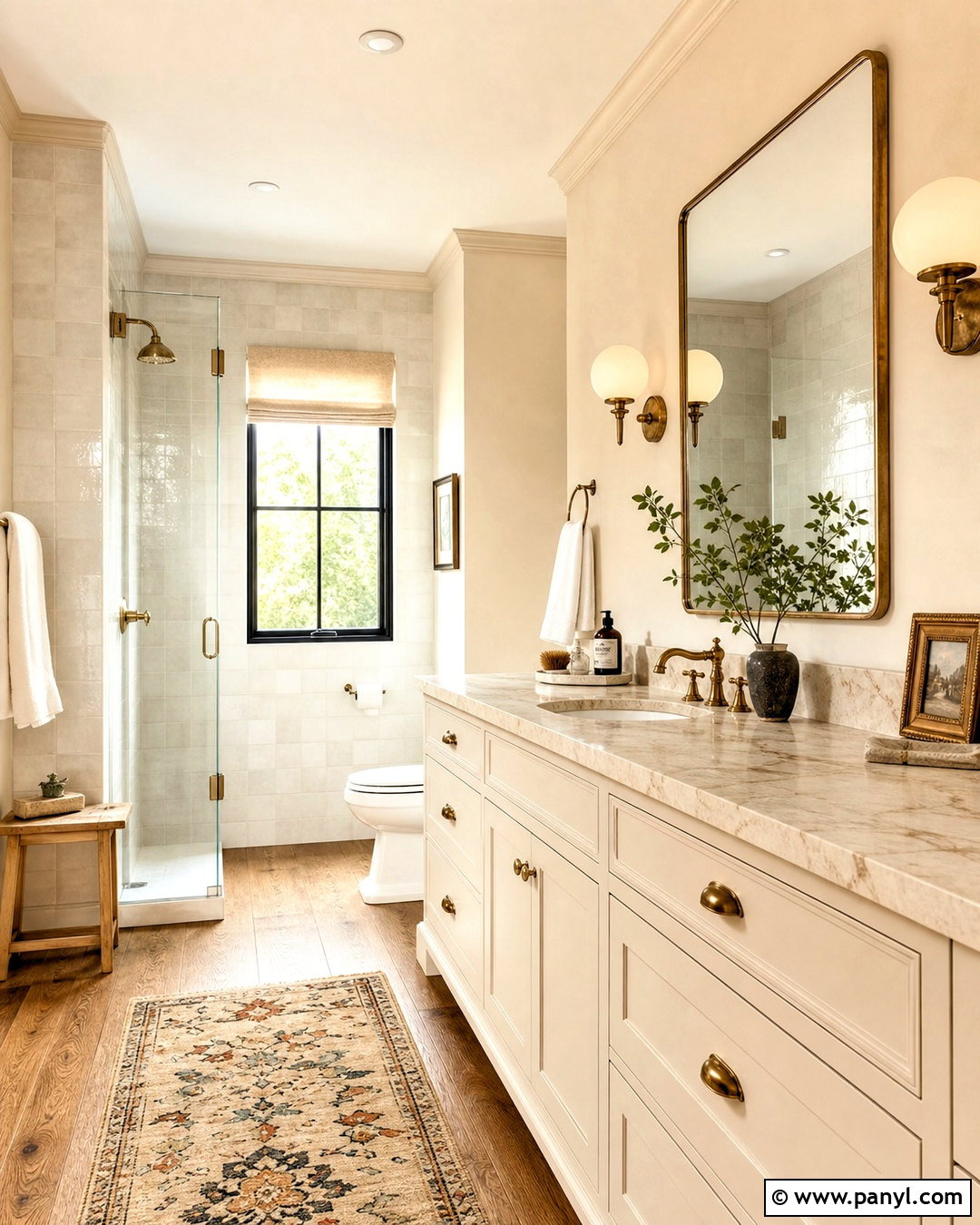
Warm white walls soften a cool gray vanity without making the bathroom look yellow. Choose a creamy white with subtle beige undertones, then repeat that warmth through an ivory quartz countertop and brushed brass hardware. A rounded brass mirror gives the vanity area a softer shape, while handmade white shower tile adds texture. Ground the room with warm gray porcelain flooring that coordinates with the cabinet but does not match it exactly. Natural linen towels, a light wood stool, and a simple ceramic vase create a comfortable, layered finish. This palette suits transitional, farmhouse, and contemporary bathrooms alike. It is also a practical choice when adjacent rooms use warmer neutrals, since the bathroom will feel connected without losing the crisp character expected in a hardworking space.
3. Ivory Bathroom Walls
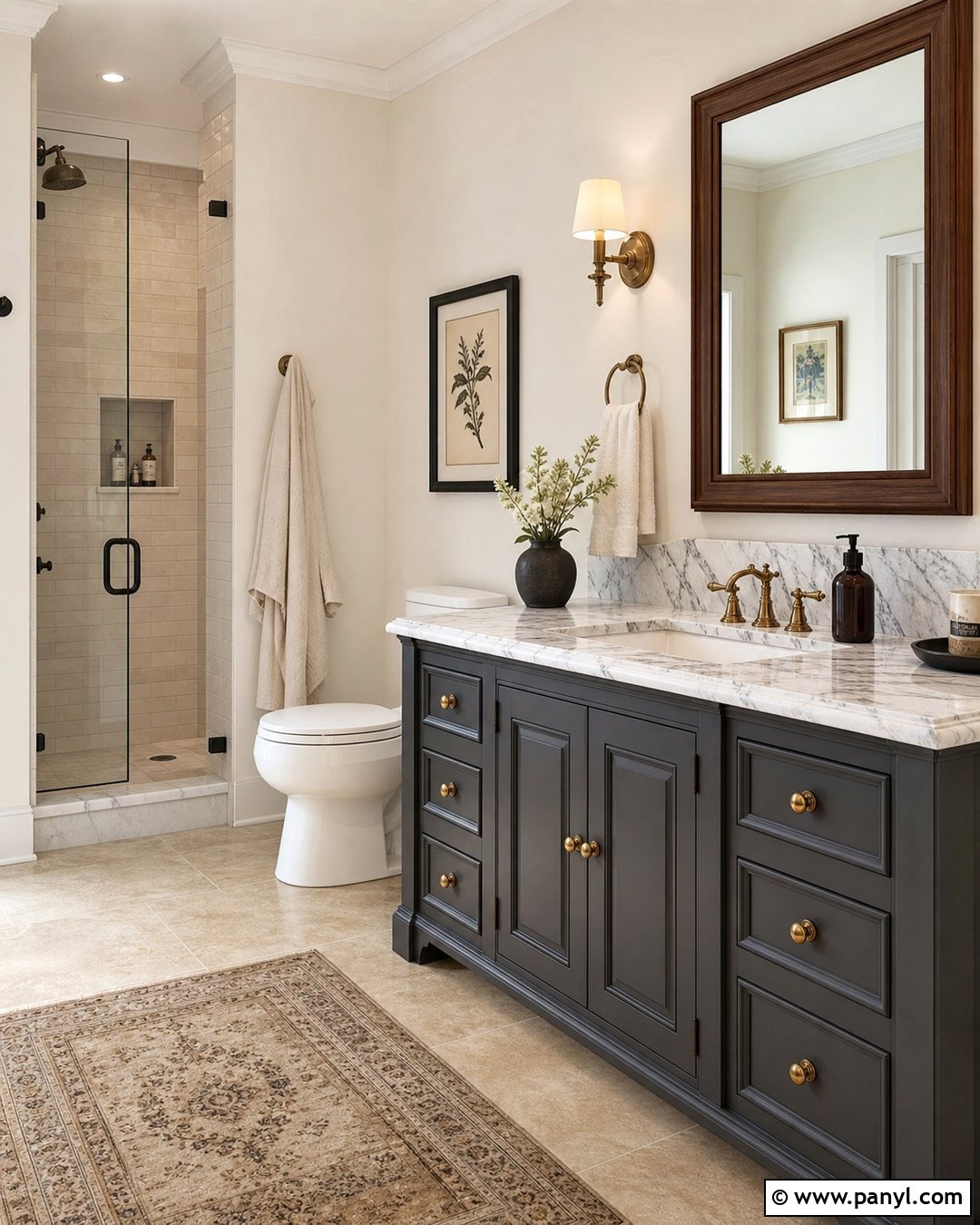
Ivory walls create a calm, traditional background for a dark gray vanity. Unlike pure white, ivory has a gentle warmth that pairs naturally with beige stone, brass, and wood. Top the vanity with lightly veined marble or quartz and install antique brass knobs for a collected appearance. A framed mirror in warm walnut introduces contrast above the gray cabinet. Use cream shower tile, oatmeal-colored floor tile, and ivory cotton towels to build a cohesive neutral palette. Small black accents, such as a sconce frame or soap dispenser, add definition without overpowering the room. This complete look works particularly well in a guest bathroom where you want something welcoming, polished, and easy to maintain. Keep decorative accessories minimal so the warm color relationships remain the main feature.
4. Cream Bathroom Walls
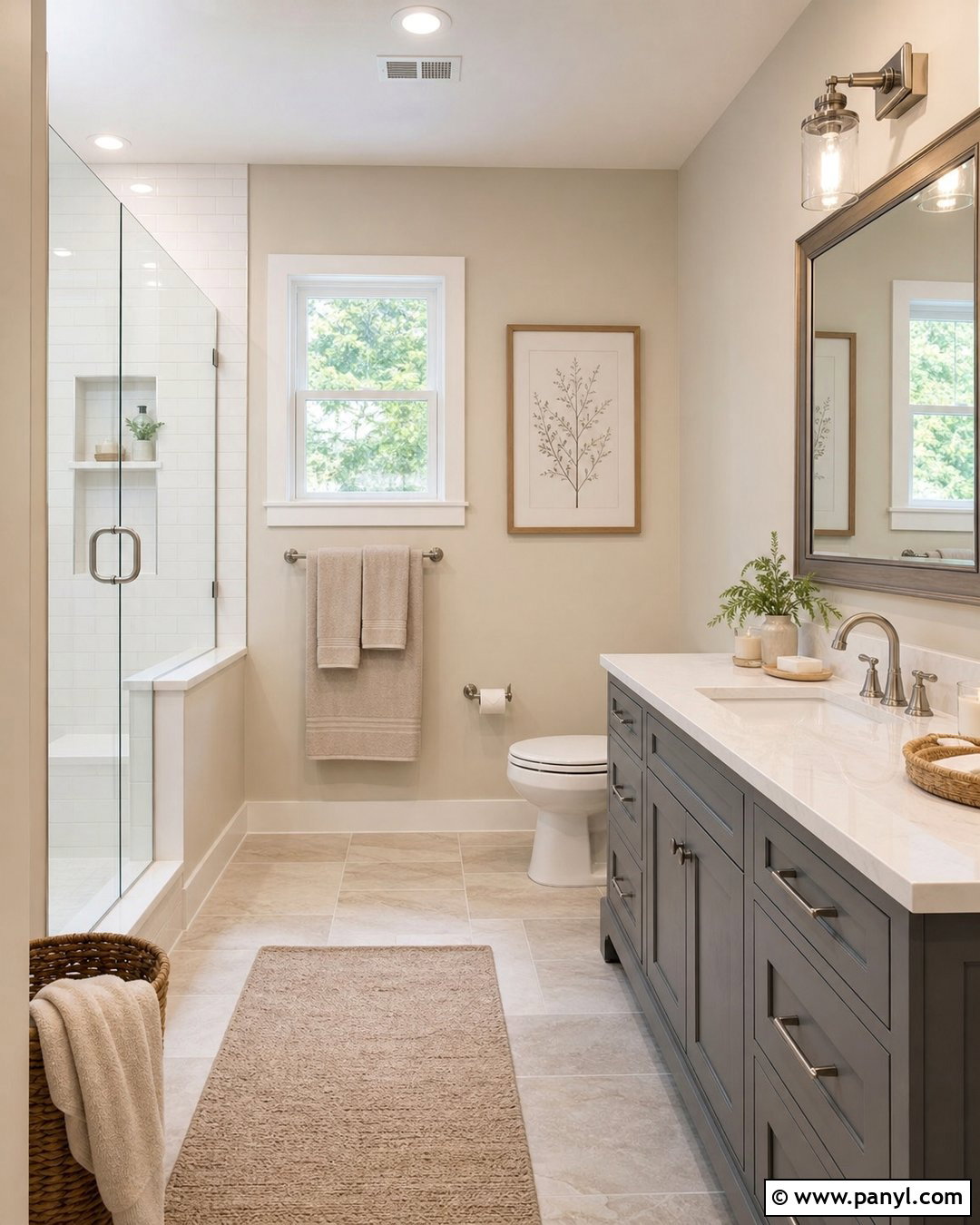
Soft cream walls bring warmth and brightness to a bathroom anchored by a cool slate-gray vanity. Select a cream that looks muted rather than buttery, especially beside white sinks and fixtures. Pair the vanity with a warm white countertop, brushed nickel faucet, and simple nickel-framed mirror. On the floor, use limestone-look porcelain tile with subtle cream and gray movement. A shower lined with glossy off-white rectangular tile reflects light and creates gentle variation. Finish the room with flax-colored towels, a natural jute-style bath runner, and pale wood accessories. The combination balances cool cabinetry with warmer architectural surfaces, making the bathroom feel comfortable instead of stark. It works beautifully in rooms facing north or bathrooms that rely mostly on artificial lighting throughout the day.
5. Soft Greige Bathroom Walls
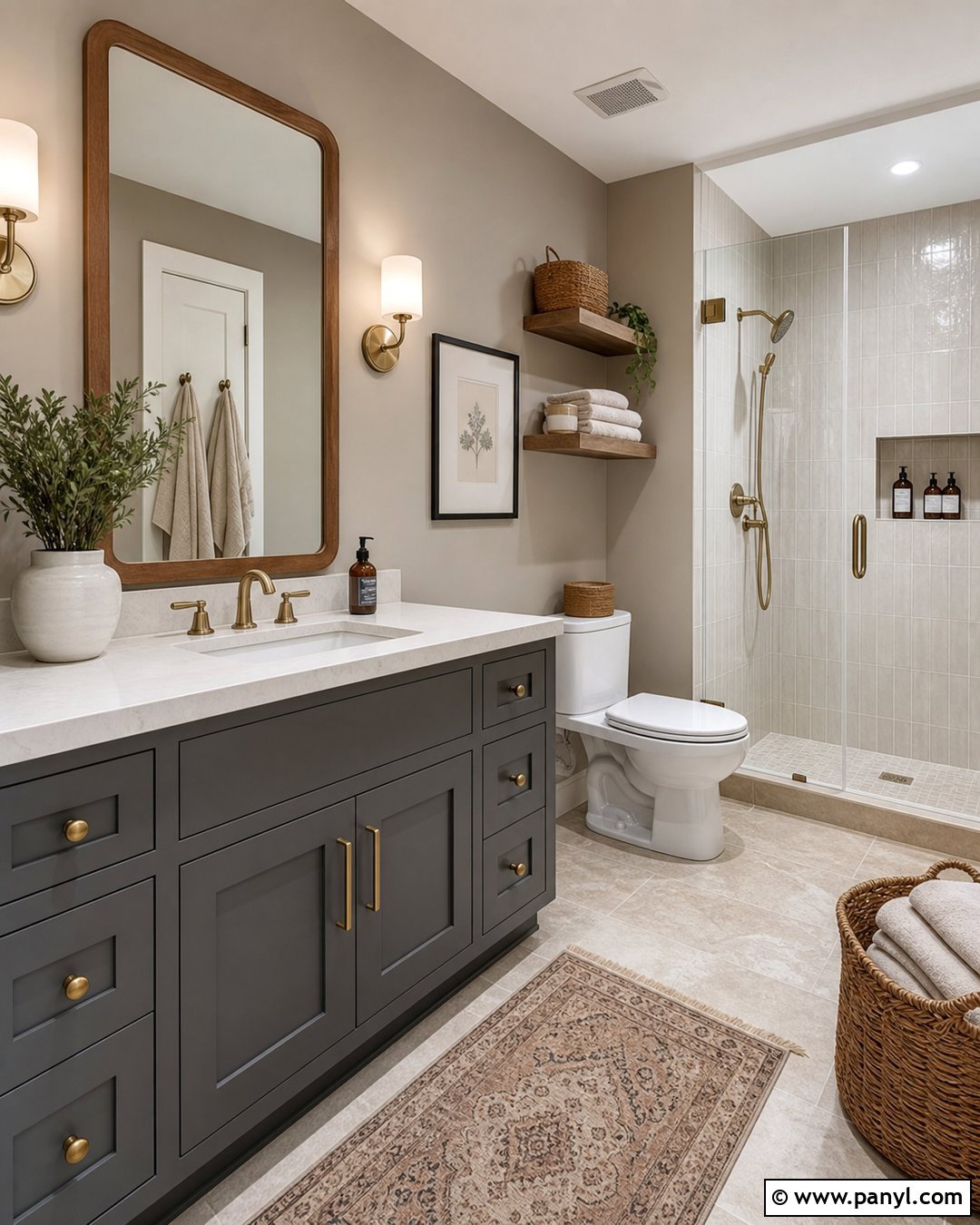
Soft greige walls bridge the gap between a gray vanity and warmer materials elsewhere in the bathroom. Look for a balanced shade with both beige and gray undertones, then place it beside a slightly darker graphite or pewter vanity. A white quartz counter keeps the sink area fresh, while brushed brass hardware adds a controlled touch of warmth. Use pale travertine-look floor tile and glossy cream shower tile to support the greige background. An oak-framed mirror, woven baskets, and oatmeal towels make the room feel layered but uncluttered. This scheme works well when the vanity gray appears too cool beside existing beige flooring. Rather than replacing expensive finishes, the transitional wall color helps unify them into one intentional, contemporary bathroom palette.
6. Warm Beige Bathroom Walls
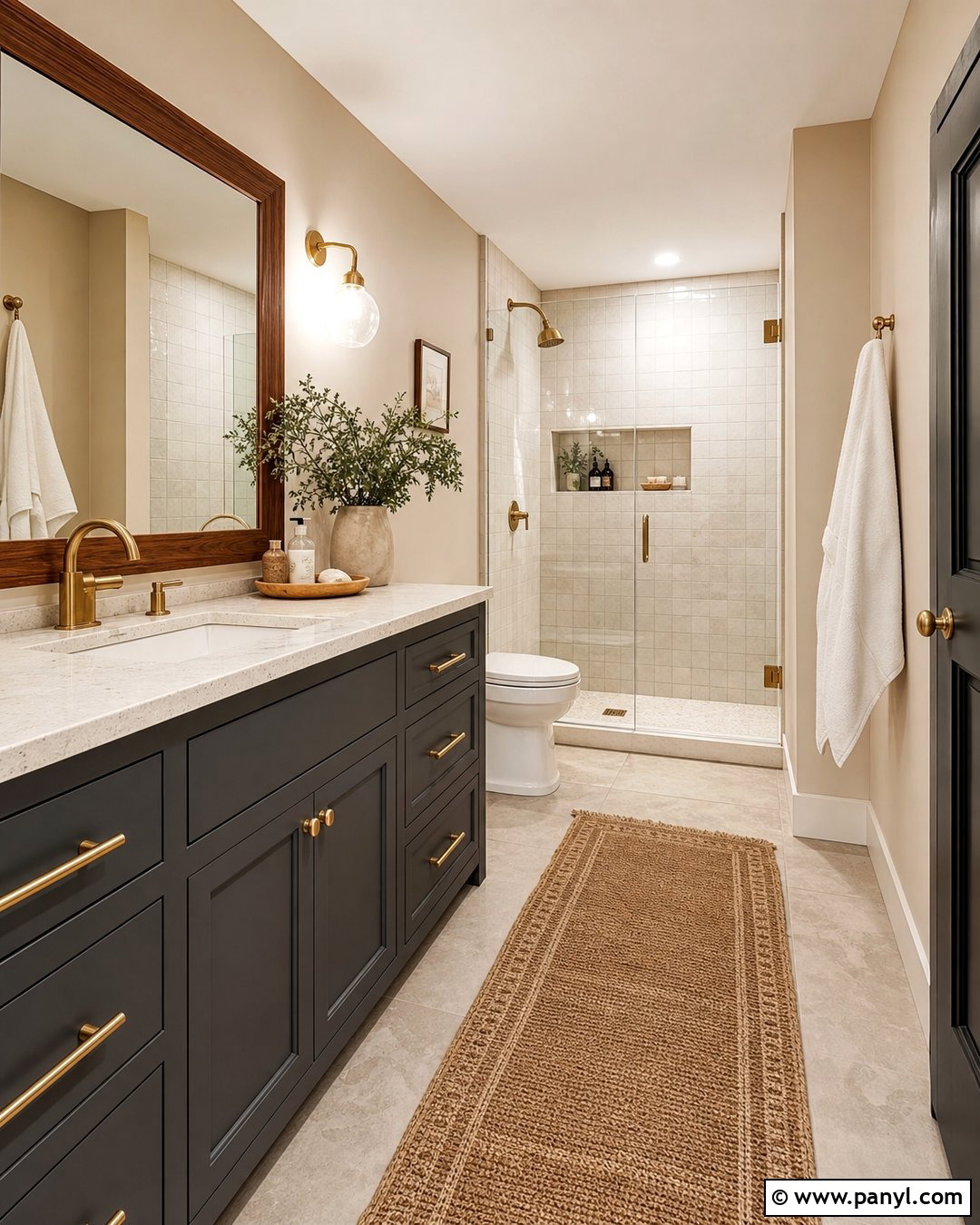
Warm beige bathroom walls make a deep gray vanity feel softer and more inviting. Choose a light sandy beige that has no strong yellow or orange cast. Complete the vanity with a creamy quartz top, aged brass faucet, and brass cabinet pulls. Beige stone-look floor tile creates a seamless foundation, while an off-white tiled shower keeps the room bright. Add a large walnut-framed mirror to repeat the warmth of the walls and provide contrast above the cabinetry. Fluffy white towels, a tan runner, and ribbed ceramic accessories create subtle depth. This finished design is ideal for homeowners who want a warmer alternative to an all-gray bathroom. The beige surfaces prevent the gray cabinetry from dominating while still allowing it to serve as the room’s strongest visual anchor.
7. Light Taupe Bathroom Walls
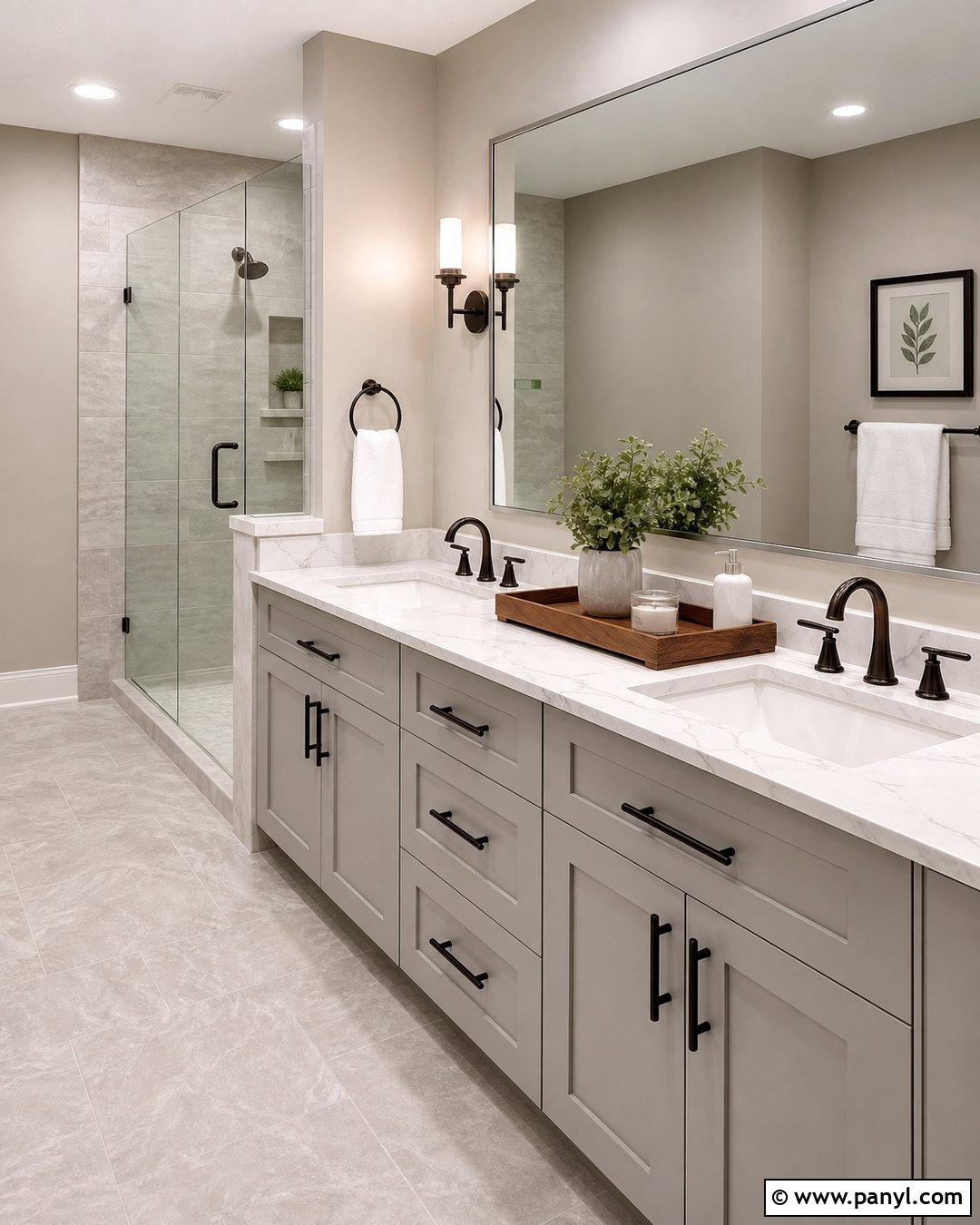
Light taupe walls give a gray vanity an elegant, slightly earthy backdrop. The best taupe for this pairing combines muted brown with a small amount of gray, creating warmth without looking muddy. Use a light gray vanity with a white marble-look countertop and dark bronze hardware. Taupe porcelain floor tile can extend into the shower for a continuous, spacious appearance. Add an oversized frameless mirror and streamlined bronze sconces to keep the design modern. White towels and a cream shower curtain brighten the neutral palette, while a small walnut tray introduces natural texture. This look is especially effective in medium-size bathrooms with good lighting. The subtle wall color adds more character than white but remains flexible enough for seasonal linens and changing accessories.
8. Mushroom Bathroom Walls
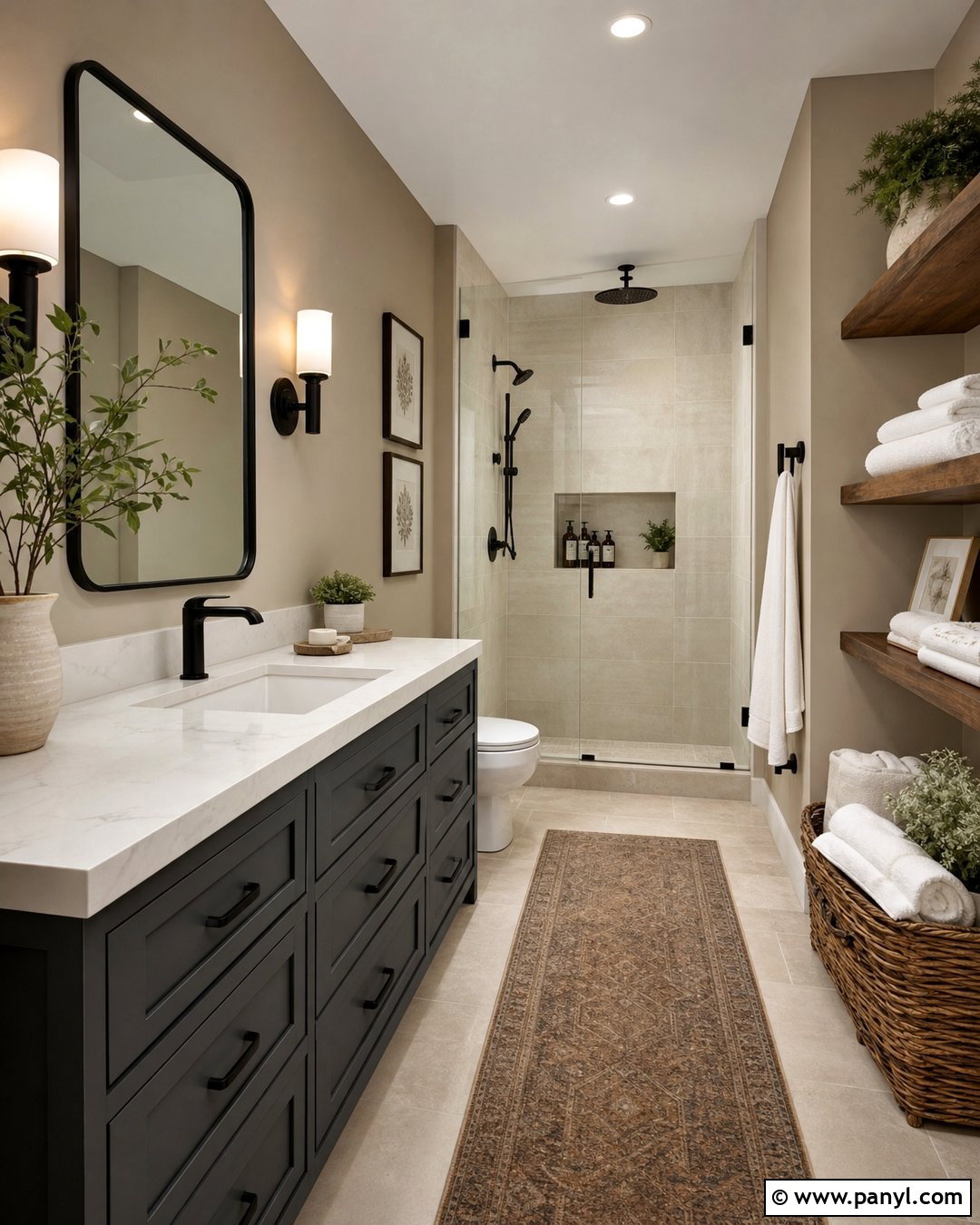
Mushroom-colored walls surround a charcoal gray vanity with rich, natural warmth. This soft brown-gray shade feels deeper than beige but lighter than traditional taupe. Pair it with a thick white quartz countertop and matte black faucet for a crisp contemporary edge. Choose warm limestone-look tile for the floor and large creamy tiles in the shower. A black-framed mirror links the hardware to the vanity area, while walnut shelves add organic color. Finish the bathroom with white towels, stone accessories, and a muted brown runner. The result feels grounded and sophisticated without becoming dark. Mushroom walls are particularly useful when the room contains mixed warm and cool materials, because their balanced undertones can visually connect gray cabinetry, beige tile, white fixtures, and natural wood.
9. Pale Gray Bathroom Walls
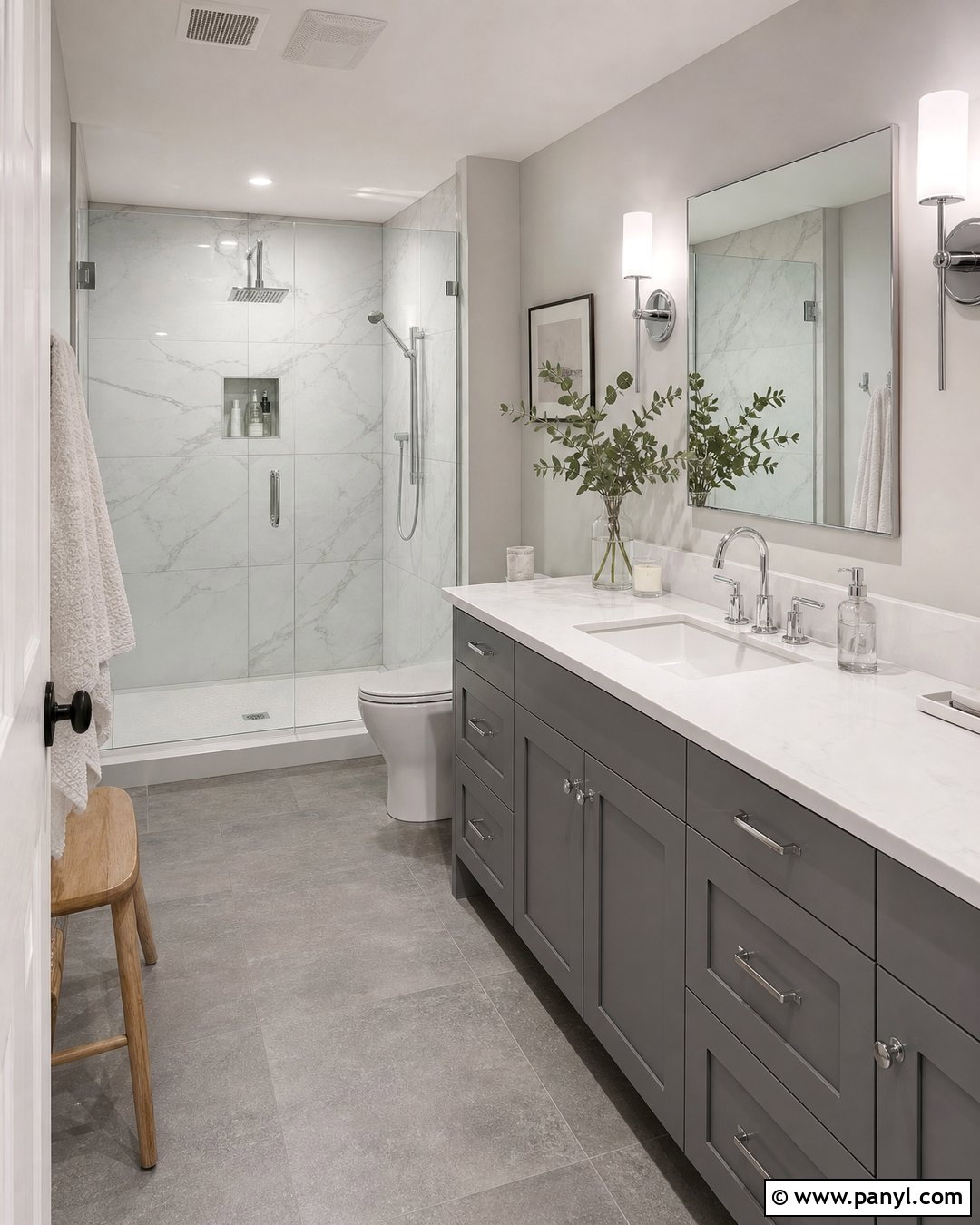
Pale gray walls create a layered monochromatic bathroom when paired with a darker gray vanity. The two shades should have compatible undertones and enough contrast to remain visually separate. Use a cool pale gray around a blue-gray vanity or a warmer pale gray beside greige cabinetry. Add a bright white quartz countertop, polished chrome faucet, and large frameless mirror to reflect light. White marble-look shower tile introduces movement, while medium-gray floor tile anchors the room. Bring in white towels, clear glass accessories, and one pale wood stool to prevent the design from feeling flat. This polished scheme works best with strong overhead lighting and vanity sconces. Varying sheen, texture, and value allows the limited color palette to feel deliberate rather than repetitive.
10. Dove Gray Bathroom Walls
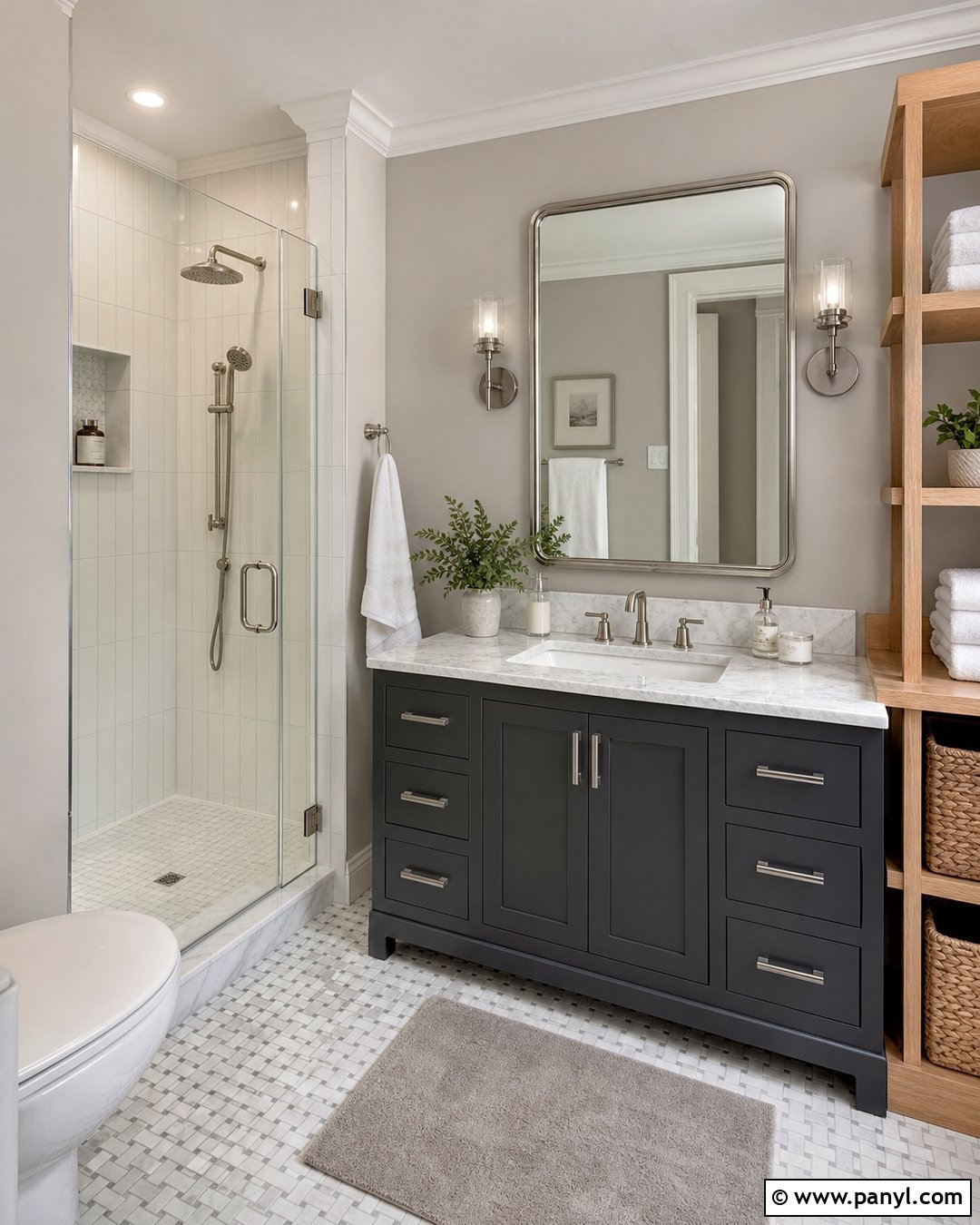
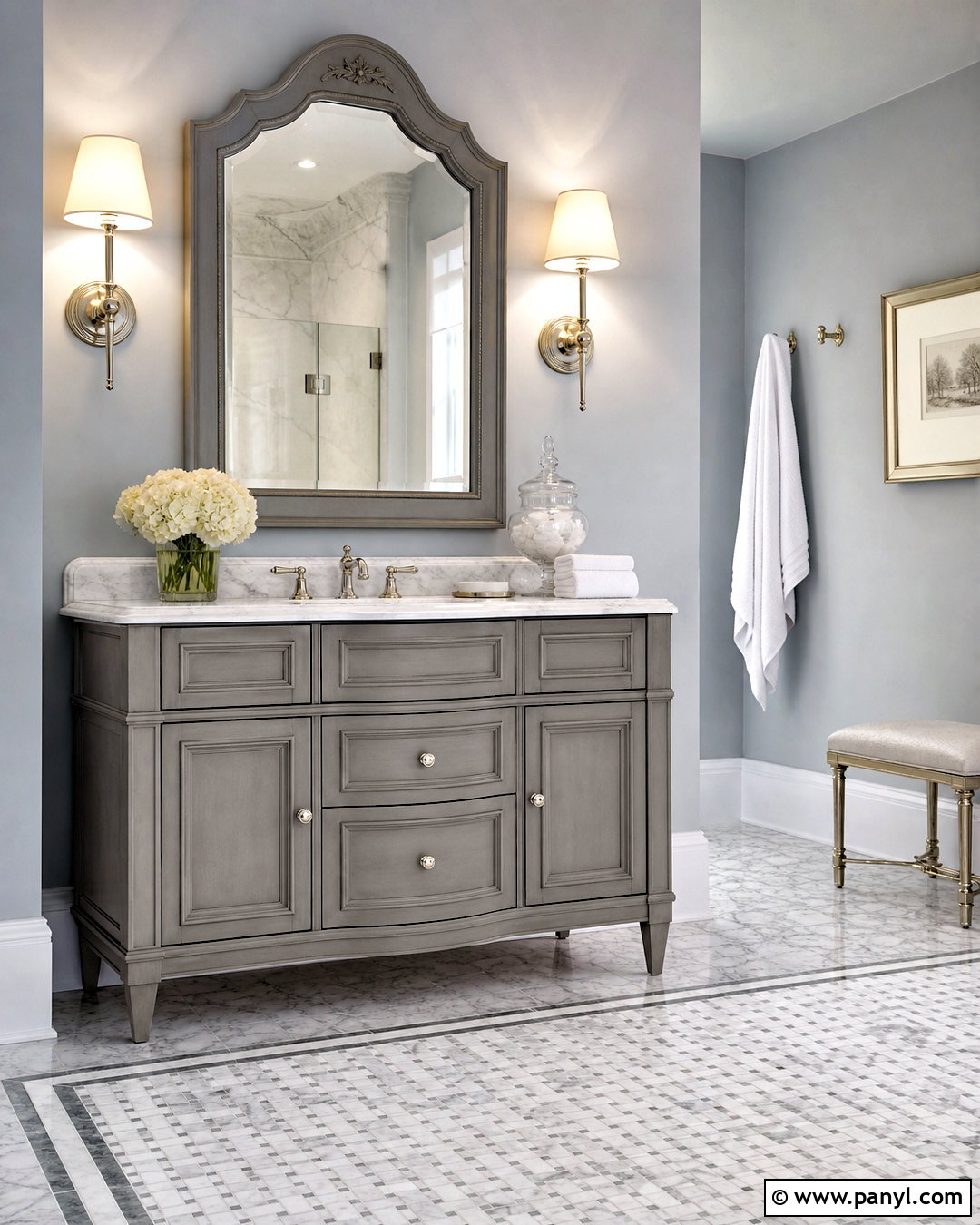
Dove gray walls offer a soft, refined background for a medium charcoal vanity. Because dove gray usually carries a gentle warm undertone, it feels more welcoming than a sharp silver gray. Pair the vanity with a white marble top, brushed nickel hardware, and a wide mirror framed in slim silver metal. Install white vertical shower tile to make the ceiling appear taller, then use small gray-and-white mosaic tile on the floor. White cotton towels and a pale gray bath mat continue the calm palette. A light oak shelf and woven storage basket introduce needed warmth. This complete bathroom has a quiet hotel-inspired character without requiring expensive decorative features. Keep counters clear and use closed vanity storage to preserve the streamlined, restful atmosphere.
11. Blue Gray Bathroom Walls
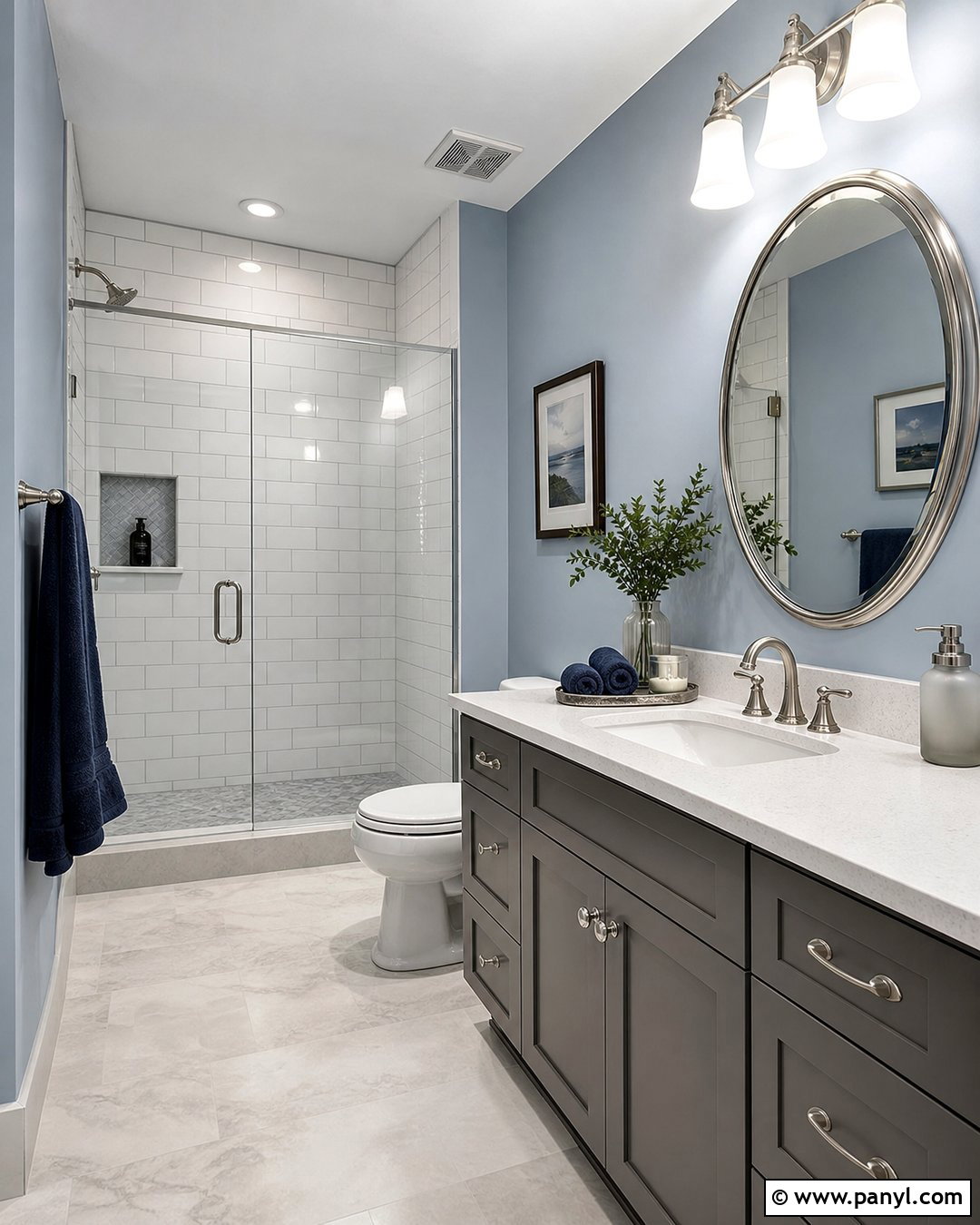
Blue-gray walls complement a neutral gray vanity while giving the bathroom a peaceful, watery character. Choose a muted shade that reads blue in daylight but becomes softer under warm evening lighting. A medium warm-gray vanity provides enough contrast without competing with the walls. Add a white quartz countertop, polished nickel faucet, and nickel-framed oval mirror. White shower tile with blue-gray grout reinforces the color story, while pale stone flooring keeps the room grounded. Use navy hand towels, frosted glass accessories, and a small eucalyptus arrangement as restrained accents. This scheme is well suited to primary bathrooms because it feels calm and cohesive. Balanced warm lighting is important, since overly cool bulbs can make both the walls and cabinet appear colder than intended.
12. Charcoal Bathroom Walls
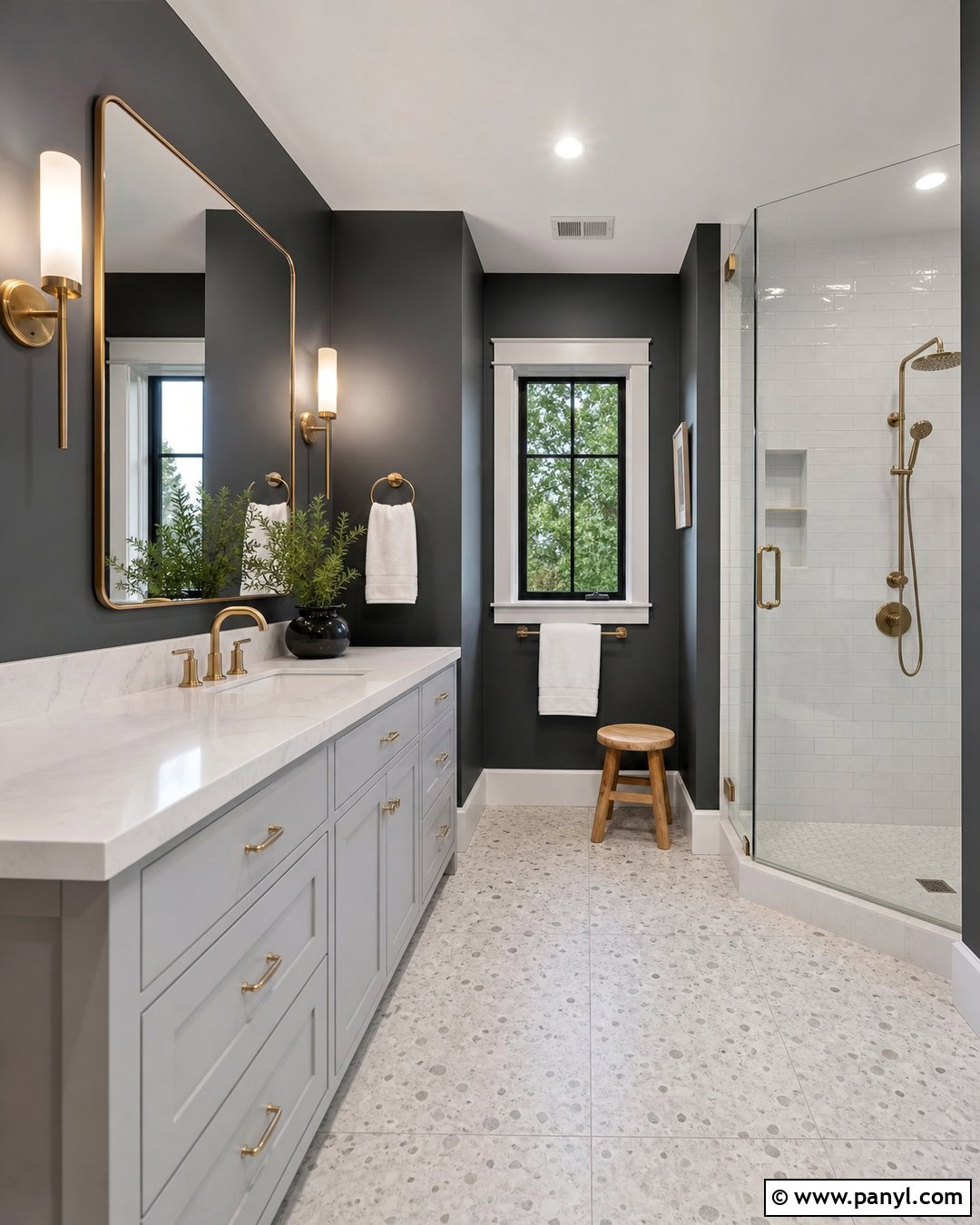
Charcoal walls create a dramatic envelope around a light gray vanity. To keep the bathroom usable and bright, reserve the dark paint for areas outside the shower and add generous white surfaces. A white quartz vanity top, white vessel or undermount sink, and glossy white shower tile provide strong contrast. Choose brushed brass faucets, sconces, and cabinet pulls to warm the gray palette. Large mirrors help distribute light, while pale terrazzo flooring adds subtle pattern underfoot. Finish with white towels, a cream rug, and a small light wood stool. This bold combination works especially well in a powder room or bathroom with a window. Use high-quality layered lighting so the charcoal walls look rich and dimensional rather than dull or shadowy.
13. Soft Black Bathroom Walls
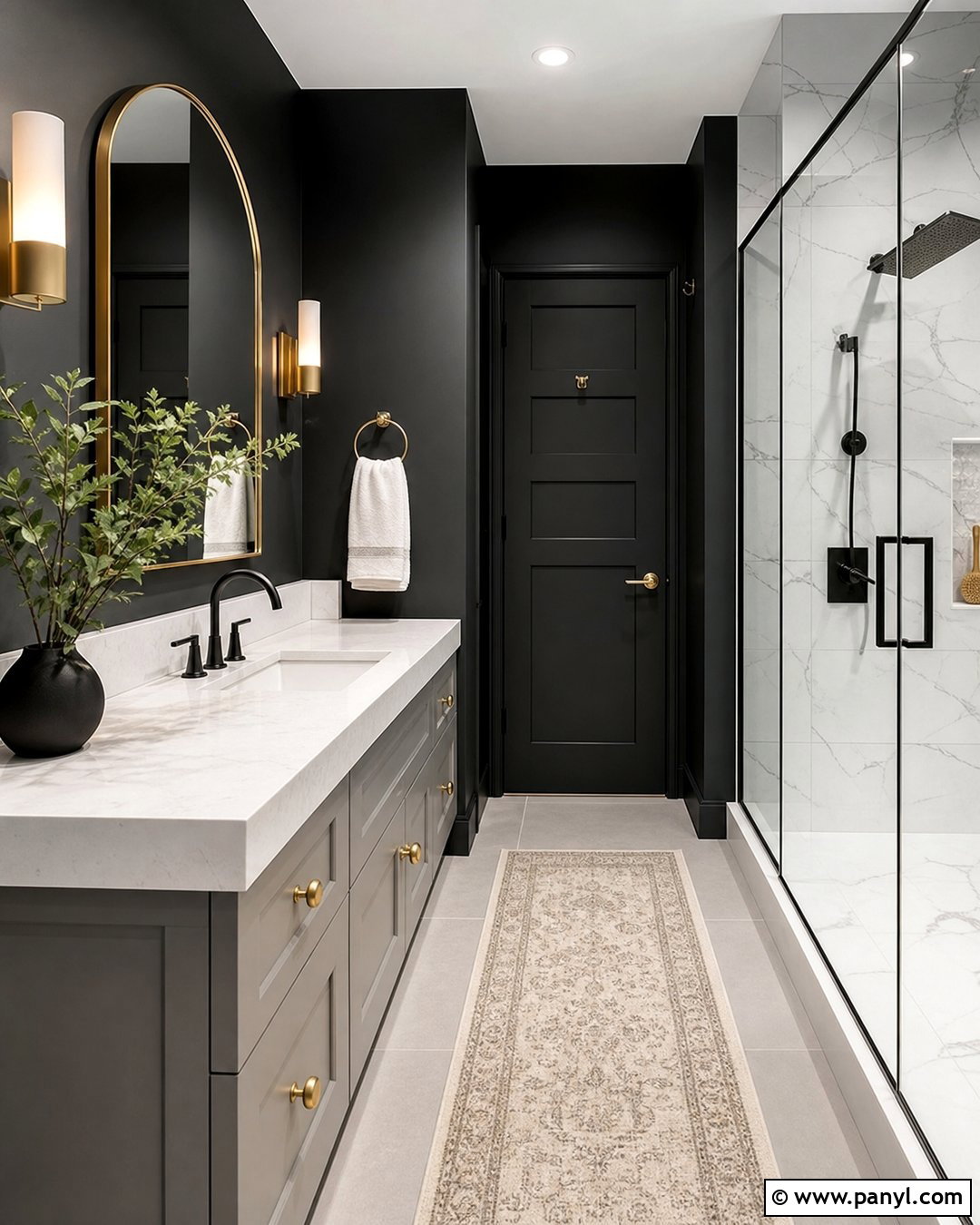
Soft black walls turn a pale gray vanity into a striking focal point. Choose an off-black with charcoal or warm brown undertones instead of a flat, absolute black. Pair the vanity with a thick white quartz counter and matte black faucet for a graphic connection to the walls. Brass cabinet knobs and sconces introduce warmth, while a large arched mirror breaks up the dark surface. Use white marble-look tile in the shower and light gray porcelain tile across the floor. White towels and a pale woven runner further balance the scheme. This design suits a confident powder room or well-lit primary bathroom. A satin or washable matte wall finish keeps the color sophisticated while making splashes and everyday cleaning easier to manage.
14. Pale Blue Bathroom Walls
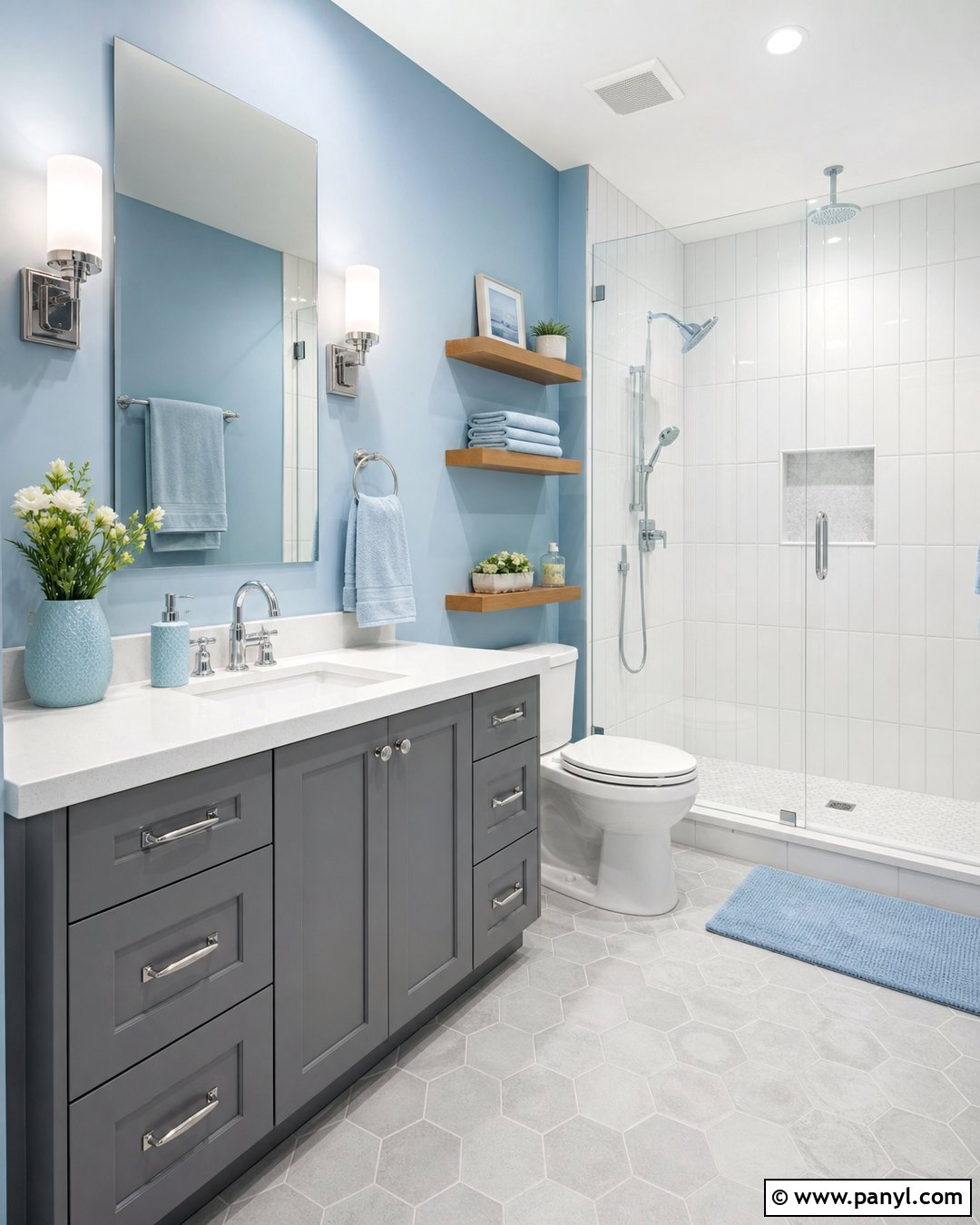
Pale blue walls make a gray vanity bathroom feel fresh, light, and relaxed. Select a quiet blue with a soft gray undertone so it complements the cabinetry instead of appearing overly sweet. Use a medium-gray vanity topped with white quartz and polished chrome fixtures. White vertical subway tile in the shower creates height, while pale gray hexagonal floor tile adds gentle pattern. A frameless mirror and clear glass shower enclosure maintain the open quality of the color scheme. Add white towels, light blue accessories, and a narrow oak shelf for warmth. This complete look is especially effective in small bathrooms because the color remains airy while offering more personality than white. Warm-white bulbs will keep the blue walls from feeling chilly during evening use.
15. Powder Blue Bathroom Walls
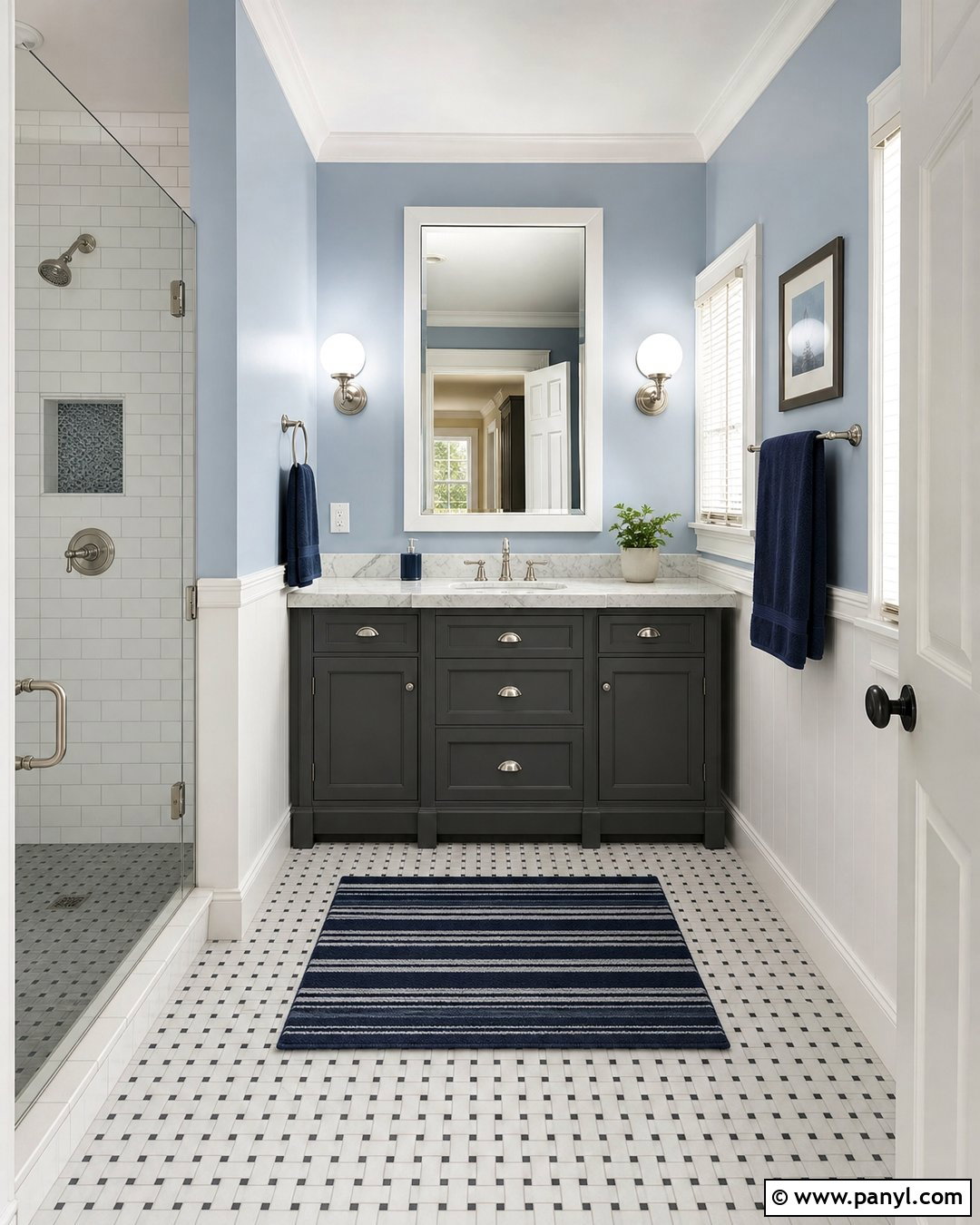
Powder blue walls give a charcoal vanity a classic, comfortable appearance. The stronger contrast allows the dark cabinet to ground the room, while the soft walls keep it approachable. Install a white marble-look countertop and polished nickel faucet, then use matching nickel knobs on the vanity. A white-framed mirror and traditional globe sconces support the clean, timeless character. For the floor, choose small white-and-gray basketweave tile. Continue white ceramic tile through the tub or shower area. Navy towels, a striped bath mat, and simple ceramic containers provide a few deeper accents. This bathroom scheme works well in older homes because it respects traditional materials without looking dated. Keep trim bright white to create a crisp border around the colored walls.
16. Sky Blue Bathroom Walls
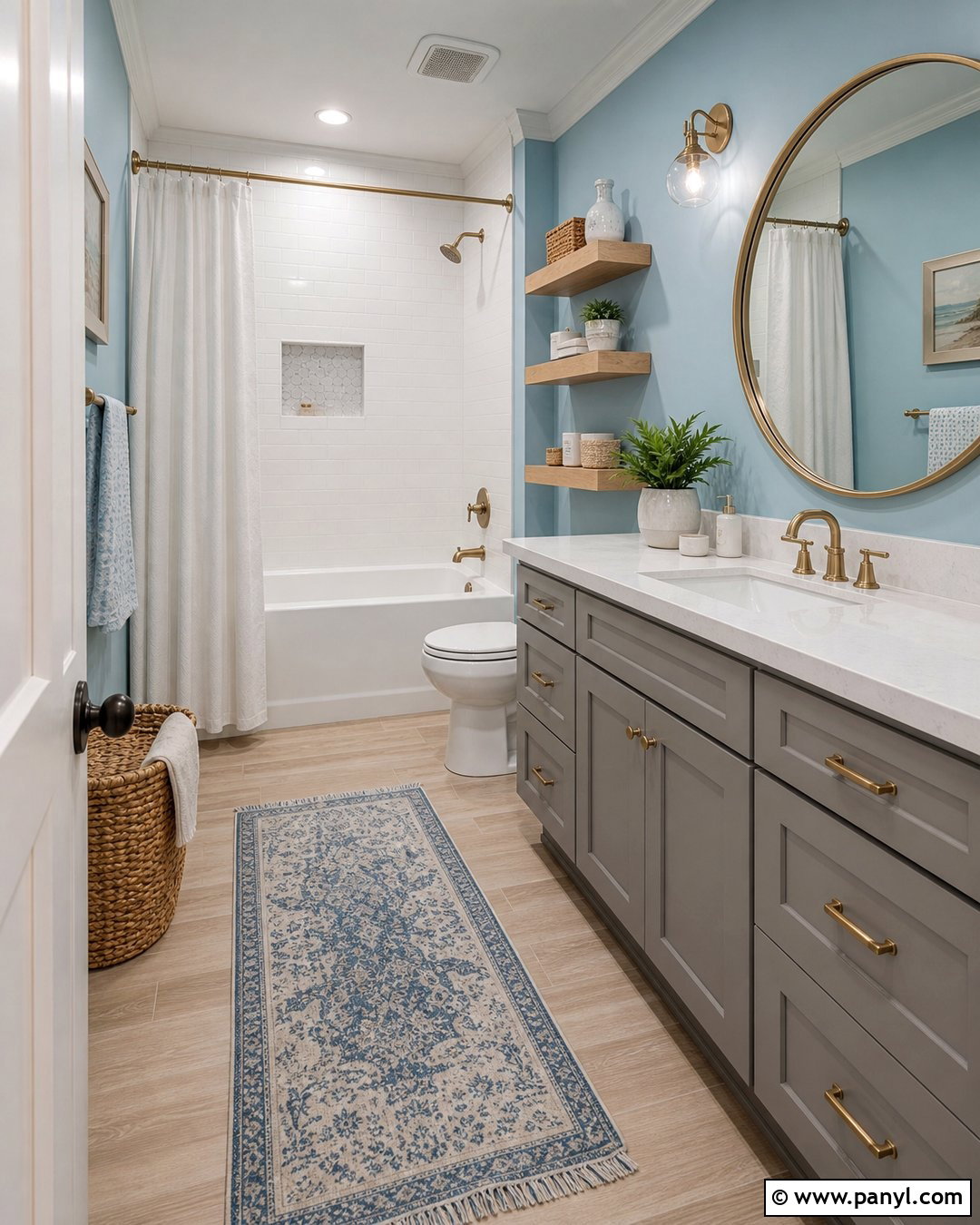
Clear sky-blue walls create an upbeat backdrop for a warm-gray vanity. Choose a moderately light blue rather than a highly saturated shade, allowing the color to energize the room without overwhelming it. Top the vanity with white quartz and add brushed brass fixtures for a sunny contrast. White shower tile and a clear glass enclosure preserve brightness, while pale oak-look porcelain flooring warms the lower half of the room. A round brass mirror echoes the faucet and cabinet pulls. Finish with white towels, woven baskets, and a blue-and-cream runner. This cheerful scheme works nicely in a family bathroom where color can be playful yet polished. Repeating the blue only in small textiles keeps the walls as the main colorful feature.
17. Slate Blue Bathroom Walls
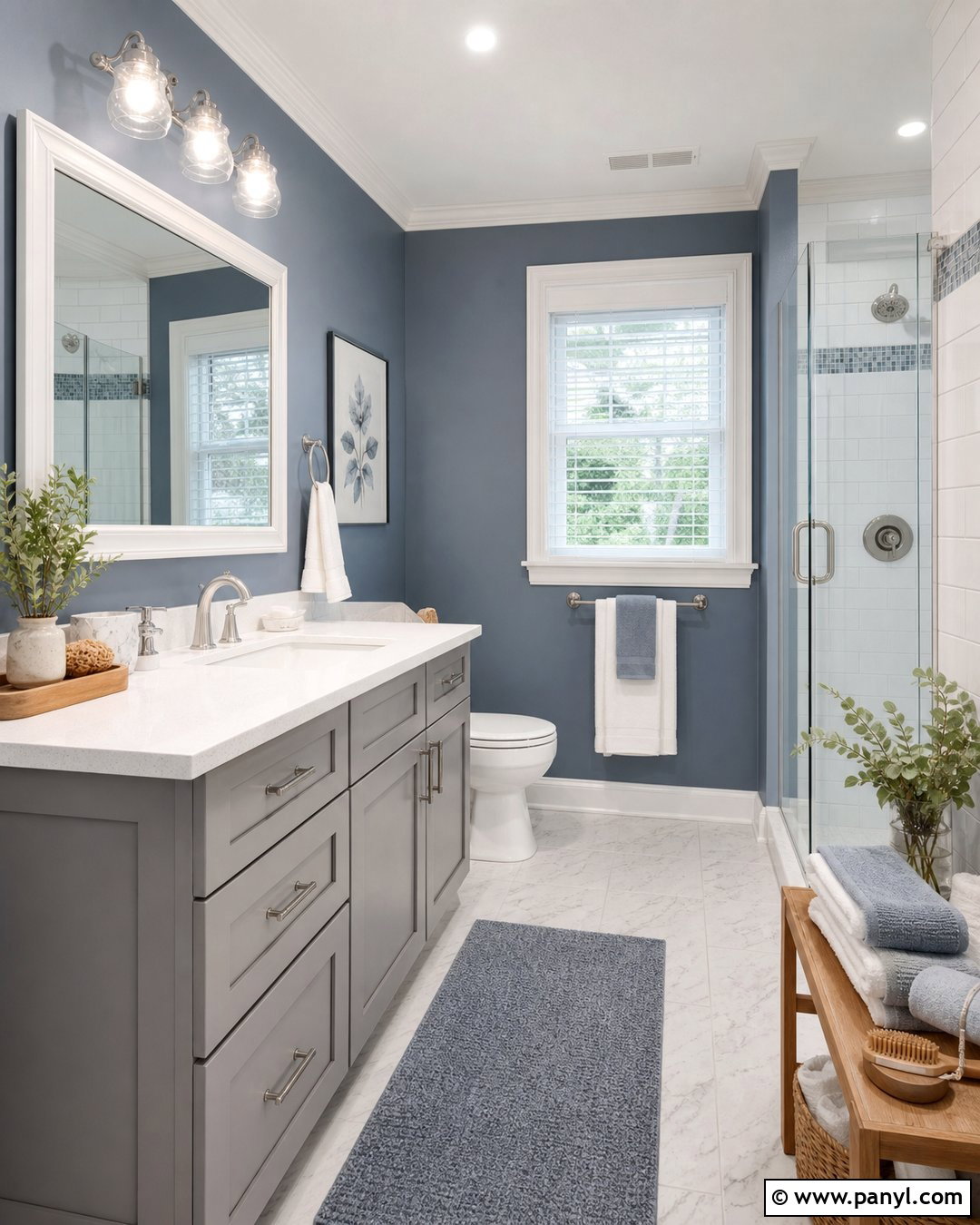
Slate-blue walls create a sophisticated contrast with a pale gray vanity. Their muted depth works particularly well in bathrooms with white tile and strong natural or artificial light. Use a bright white quartz vanity top, polished nickel faucet, and nickel hardware to maintain a cool, tailored palette. A large white-framed mirror breaks up the darker wall surface. Install marble-look porcelain tile on the floor and glossy white tile in the shower. White towels, a blue-gray runner, and light wood accessories keep the finished room balanced. For a more traditional effect, add simple white wall molding beneath the paint. The pale vanity should remain visibly lighter than the walls so it stands out as a complete furniture piece instead of disappearing into the blue-gray background.
18. Navy Bathroom Walls
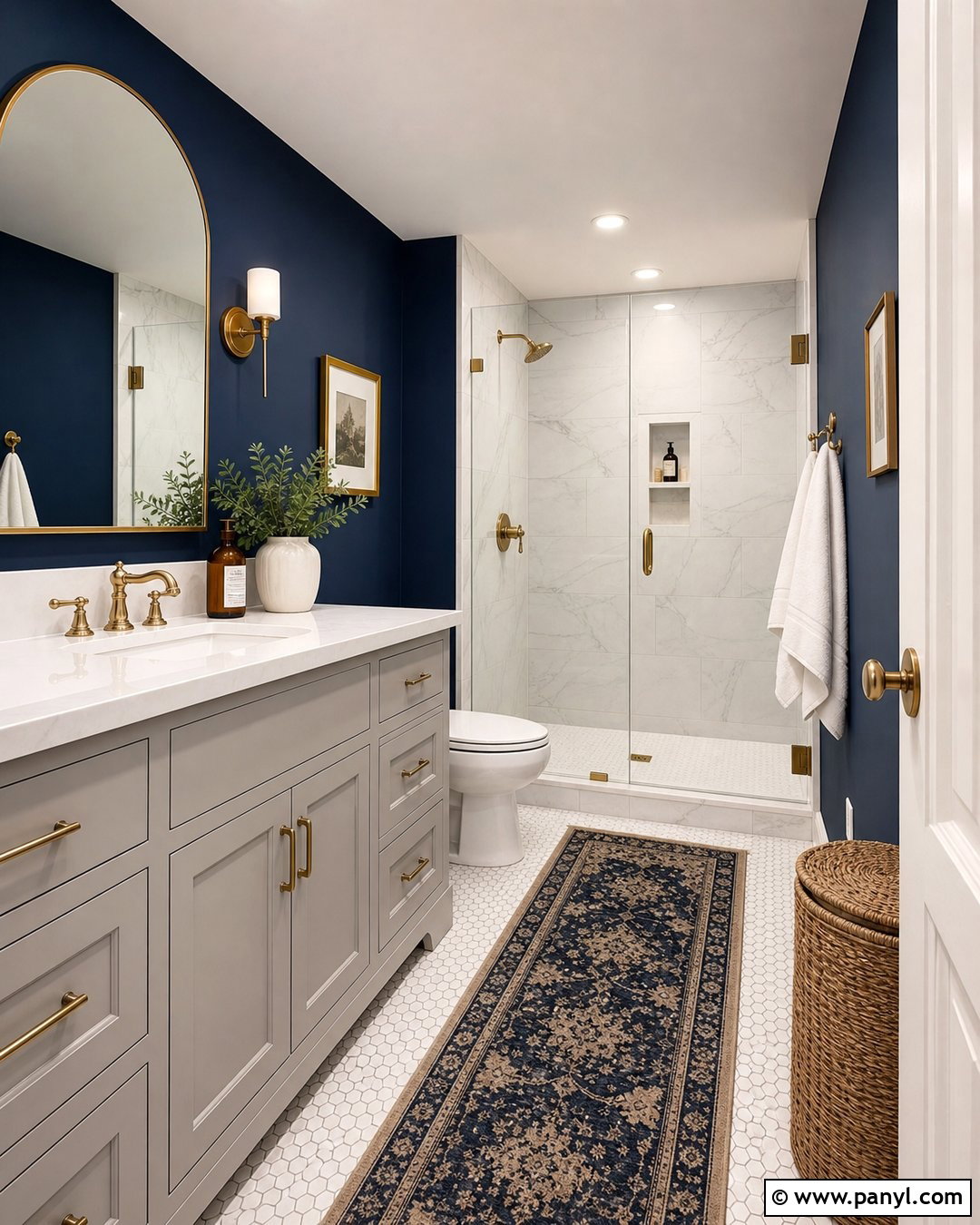
Navy walls make a light gray vanity look crisp and substantial. This high-contrast combination is best balanced with bright white tile, a pale countertop, and a large mirror. Choose a soft navy with slightly muted undertones, then pair it with white quartz, brushed brass faucets, and matching cabinet pulls. White marble-look shower tile adds movement, while small white hexagonal floor tile keeps the room lively. An arched brass mirror and two bright globe sconces make the vanity area feel finished. Add white towels, a natural woven basket, and a restrained navy-patterned runner. In a small bathroom, navy can create intentional depth rather than making the room feel cramped, provided the ceiling, trim, shower surfaces, and lighting remain bright and reflective.
19. Seafoam Bathroom Walls
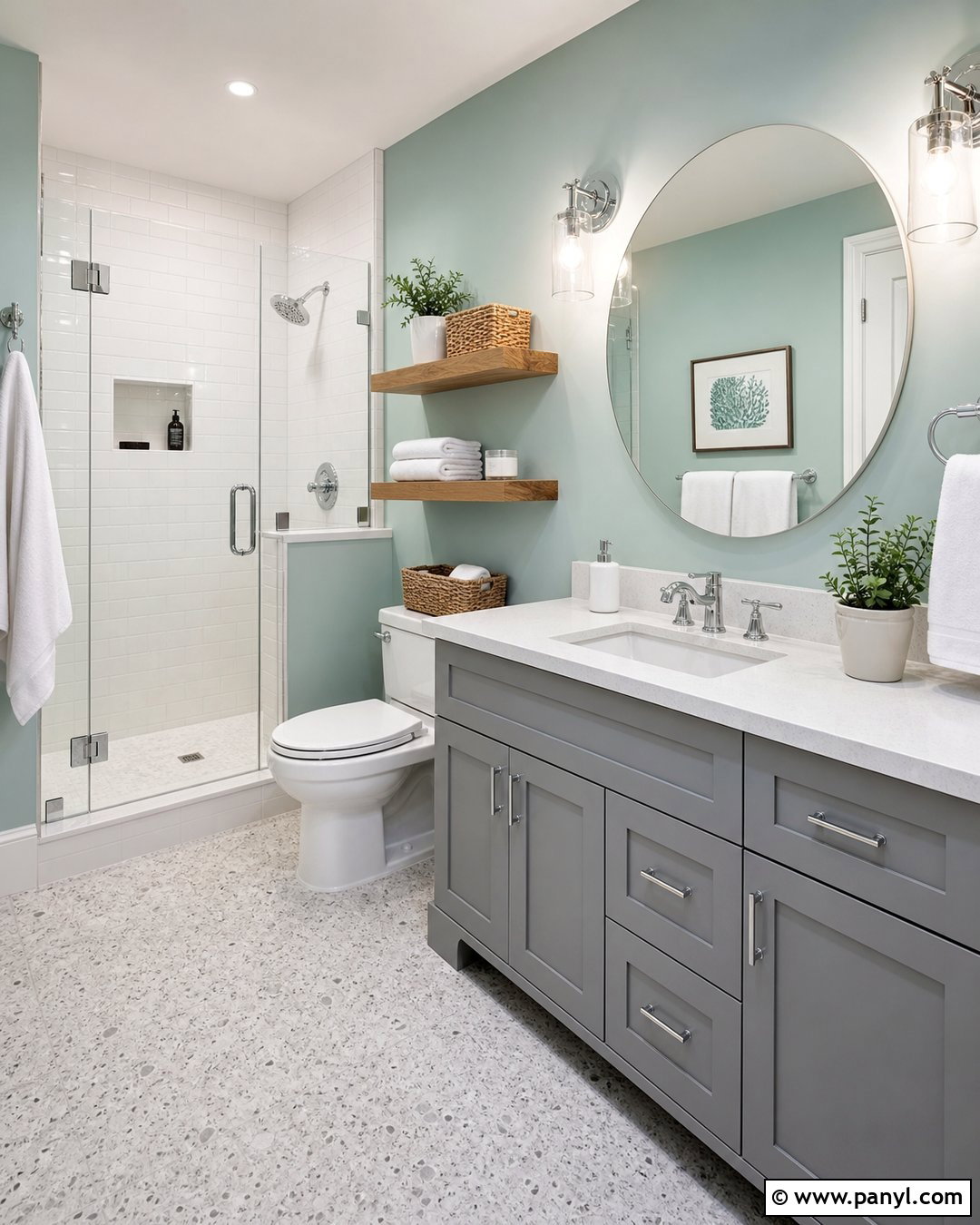
Seafoam walls blend pale green and blue, creating a gentle backdrop for a cool-gray vanity. Select a subdued seafoam rather than a bright mint to maintain a grown-up, relaxing atmosphere. Pair the vanity with a white quartz counter, polished chrome faucet, and streamlined chrome hardware. White shower tile allows the wall color to remain the room’s defining feature, while pale gray terrazzo flooring adds subtle texture. Use a round frameless mirror, simple glass sconces, and white towels for a clean finish. Light oak shelving and woven baskets introduce natural warmth. This complete scheme works well in bathrooms without much outdoor scenery because it brings a fresh, nature-inspired color indoors. Keep decorative objects minimal so the soft wall color remains calm and uncluttered.
20. Pale Sage Bathroom Walls
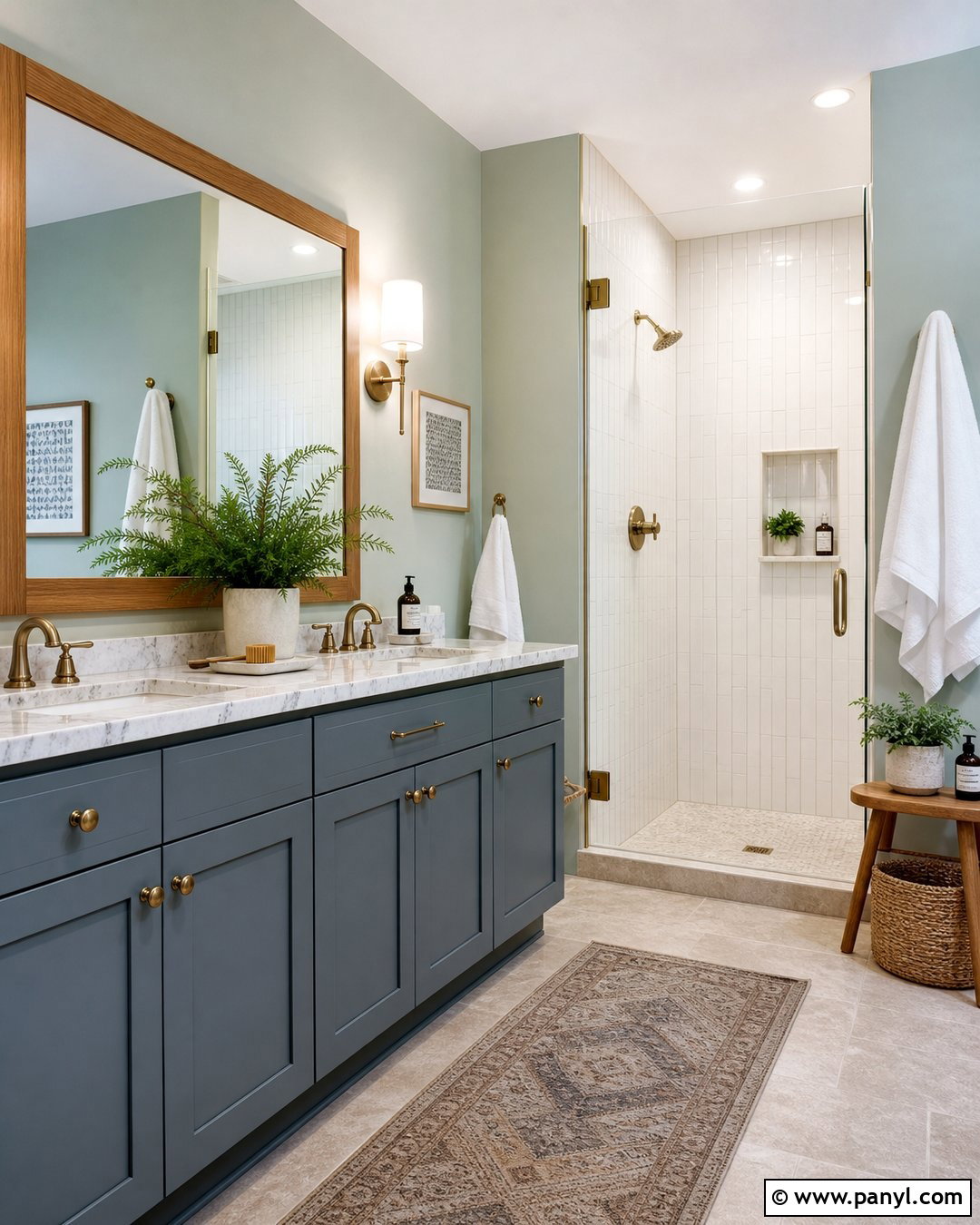
Pale sage walls warm up a blue-gray vanity while preserving the restful quality of a neutral bathroom. Choose a muted green with gray undertones, then add a white quartz or softly veined marble countertop. Brushed brass faucets and pulls bring out sage’s warmer side. Use warm white shower tile, beige-gray stone flooring, and a light oak-framed mirror to create an organic foundation. White towels, natural baskets, and one potted fern complete the room without making it overly themed. This color combination feels current yet adaptable because both gray and sage behave like soft neutrals. It works in modern farmhouse, transitional, and simple contemporary bathrooms. Test the wall color beside the vanity to ensure it stays green rather than turning muddy in the room’s lighting.
21. Eucalyptus Green Bathroom Walls
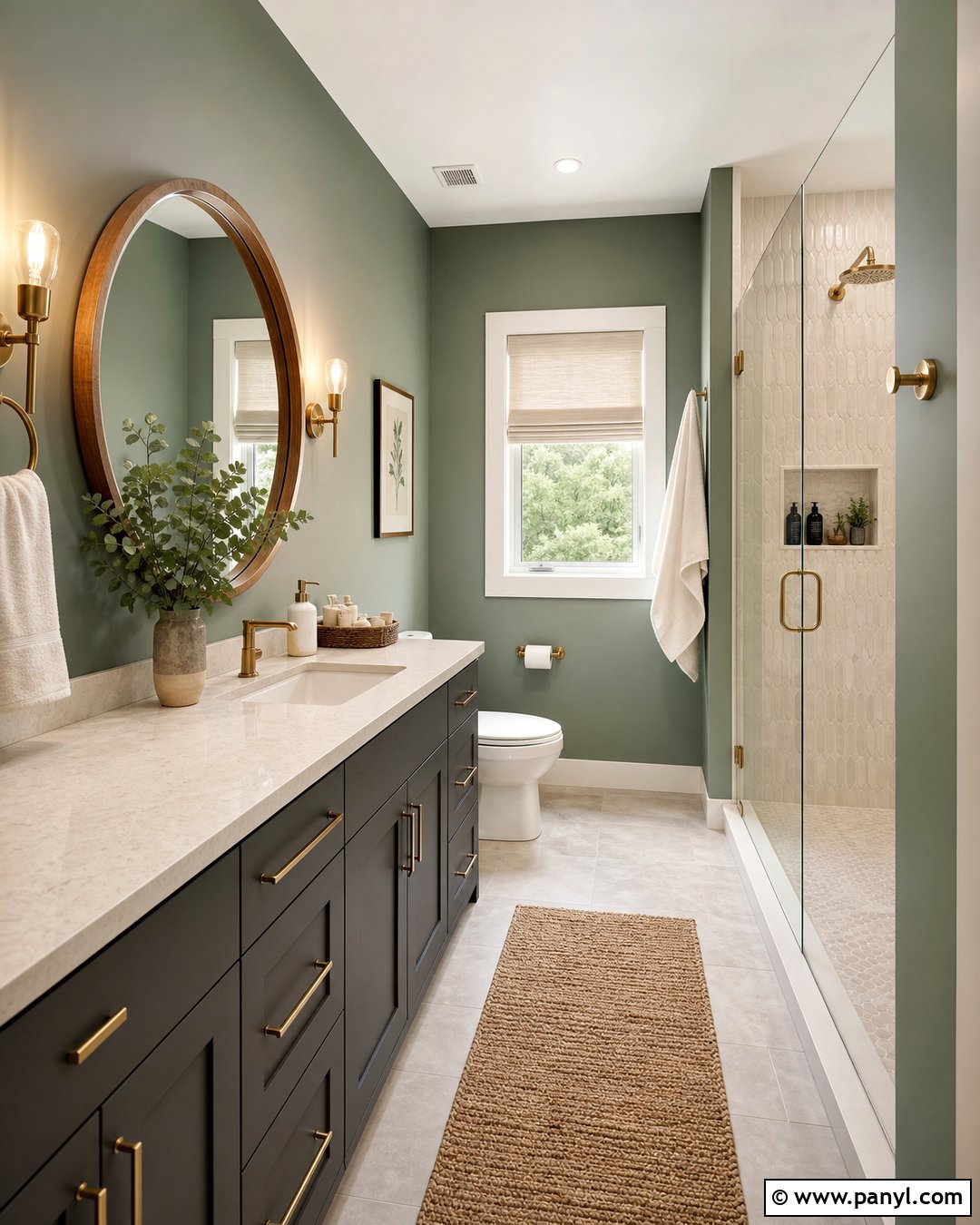
Eucalyptus green walls give a charcoal-gray vanity a richer botanical setting. This medium muted green has enough depth to hold its own beside dark cabinetry but remains softer than emerald. Add a warm white quartz counter and brushed brass faucet for contrast. Cream zellige-style shower tile introduces texture, while light limestone-look flooring keeps the room from becoming too heavy. A rounded oak mirror and slim brass sconces create a balanced vanity composition. Finish with off-white towels, a woven runner, and a small plant in a stone pot. This bathroom works best when the green is repeated sparingly through one or two accessories. The combination of gray, eucalyptus, cream, brass, and oak creates a complete natural palette that feels warm, practical, and carefully coordinated.
22. Olive Green Bathroom Walls
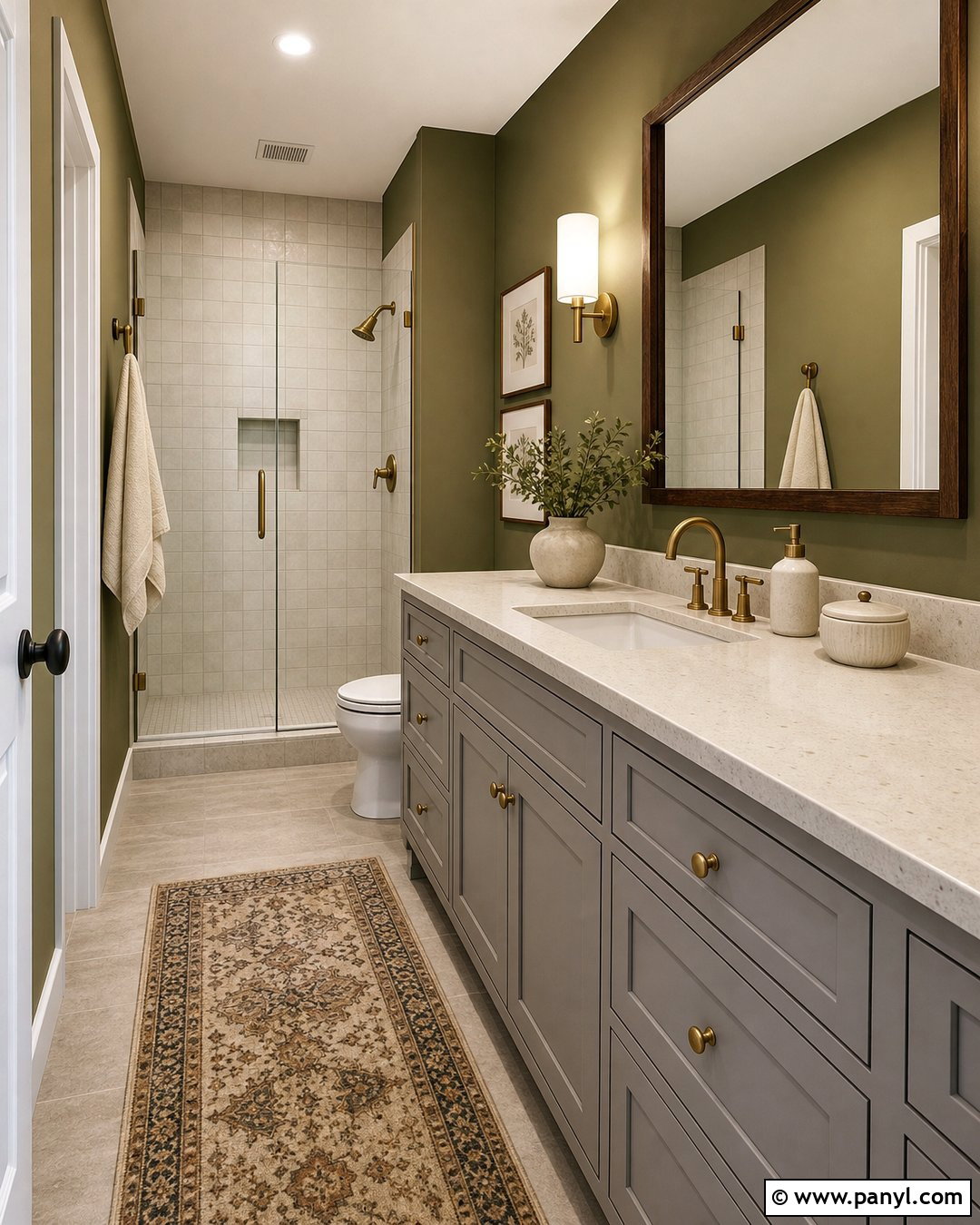
Olive-green walls create an earthy, character-rich bathroom around a light gray vanity. Choose a muted olive with brown undertones rather than a vivid yellow-green. A creamy quartz countertop and aged brass fixtures complement the warmth of the walls. Use off-white square shower tile with matching grout, then ground the room with tan stone-look porcelain flooring. A walnut-framed mirror adds another natural tone above the vanity. Ivory towels, a patterned neutral runner, and handmade ceramic accessories make the room feel collected and comfortable. Because olive can absorb light, include bright vanity sconces and a clear glass shower enclosure. The pale cabinet provides necessary contrast, allowing this deeper wall color to feel intentional even in an average-size guest or primary bathroom.
23. Forest Green Bathroom Walls
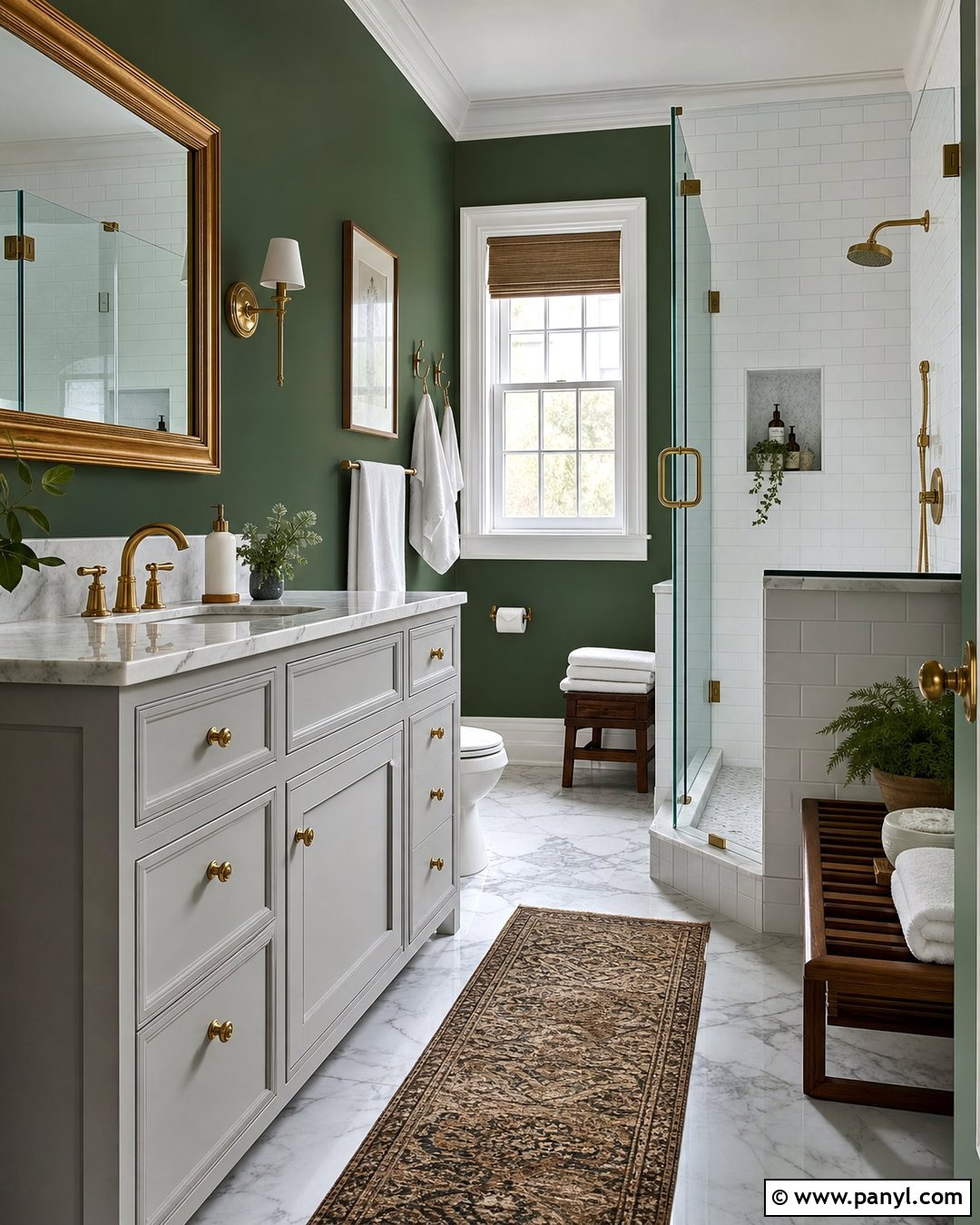
Forest-green walls give a pale gray vanity a dramatic, classic background. Use the deep green on all painted walls in a powder room, or combine it with white tile in a larger bathroom. A white marble countertop, polished brass faucet, and brass knobs create a refined contrast against the greenery. Choose white-and-gray marble-look flooring and glossy white shower tile to brighten the lower surfaces. An oversized gold-framed mirror reflects light and gives the vanity wall a strong focal point. Finish with white towels, a dark green runner, and walnut accessories. The vanity’s pale gray finish prevents the scheme from becoming predictable or overly traditional. Bright globe sconces and a white ceiling are essential for keeping this deeply colored bathroom clear, practical, and visually balanced.
24. Blush Pink Bathroom Walls
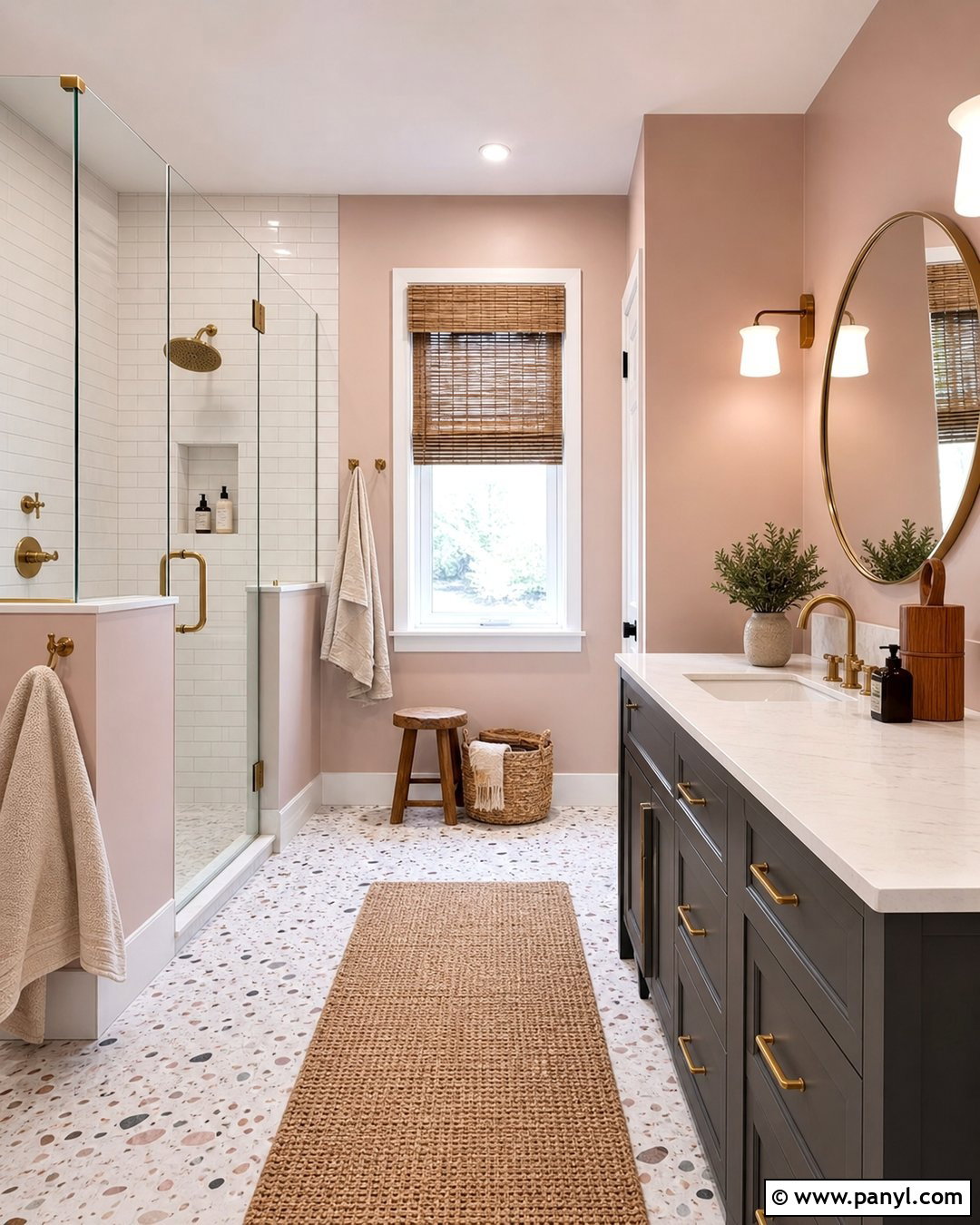
Blush-pink walls soften a charcoal-gray vanity and give the bathroom warmth without overwhelming it. Choose a dusty, beige-leaning blush rather than a sugary pastel. Pair the vanity with white quartz, brushed brass hardware, and a round brass mirror. Warm white shower tile maintains brightness, while pale terrazzo flooring with gray and blush flecks ties the main colors together. Add cream towels, a natural wood tray, and a simple woven rug for texture. Black accents can be used sparingly through a soap dispenser or sconce frame to sharpen the gentle palette. This complete bathroom feels modern and welcoming, especially when the gray vanity has cool undertones. The muted pink walls counterbalance that coolness while remaining neutral enough for a primary or guest bathroom.
25. Dusty Rose Bathroom Walls
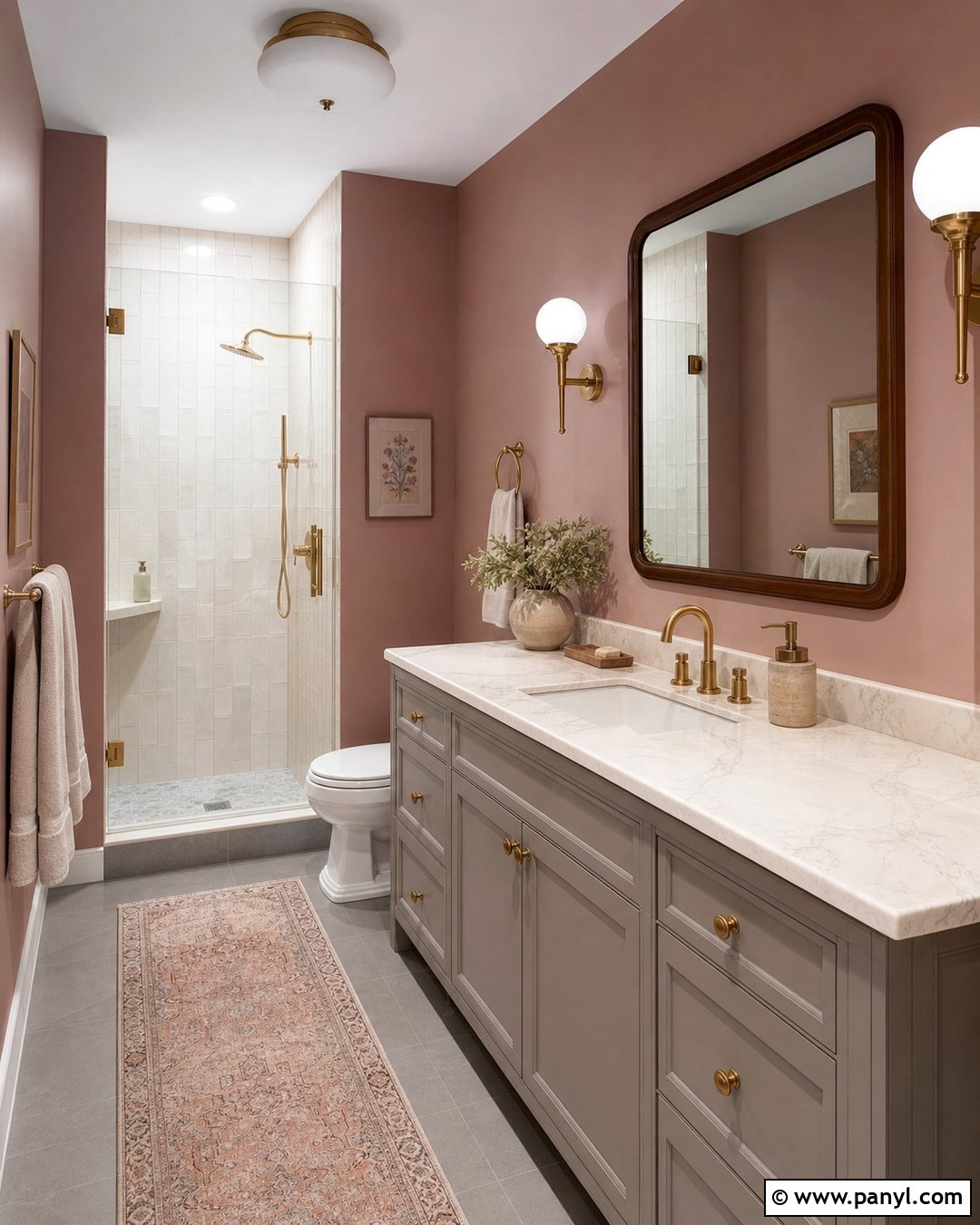
Dusty rose walls create a richer, more grounded setting for a light gray vanity. The muted red-brown undertone gives the room depth while still feeling soft. Add a creamy marble-look countertop and aged brass faucet to support the warmth. Use ivory shower tile, warm gray floor tile, and a walnut-framed mirror for a layered transitional look. Linen-colored towels and a faded rose runner repeat the palette without making every surface match. A pair of simple opal-glass sconces keeps the vanity area bright. This color works especially well in a powder room where a more distinctive wall treatment is welcome. Keep the vanity pale and the ceiling white so the dusty rose paint appears sophisticated and enveloping rather than visually heavy.
26. Soft Lavender Bathroom Walls
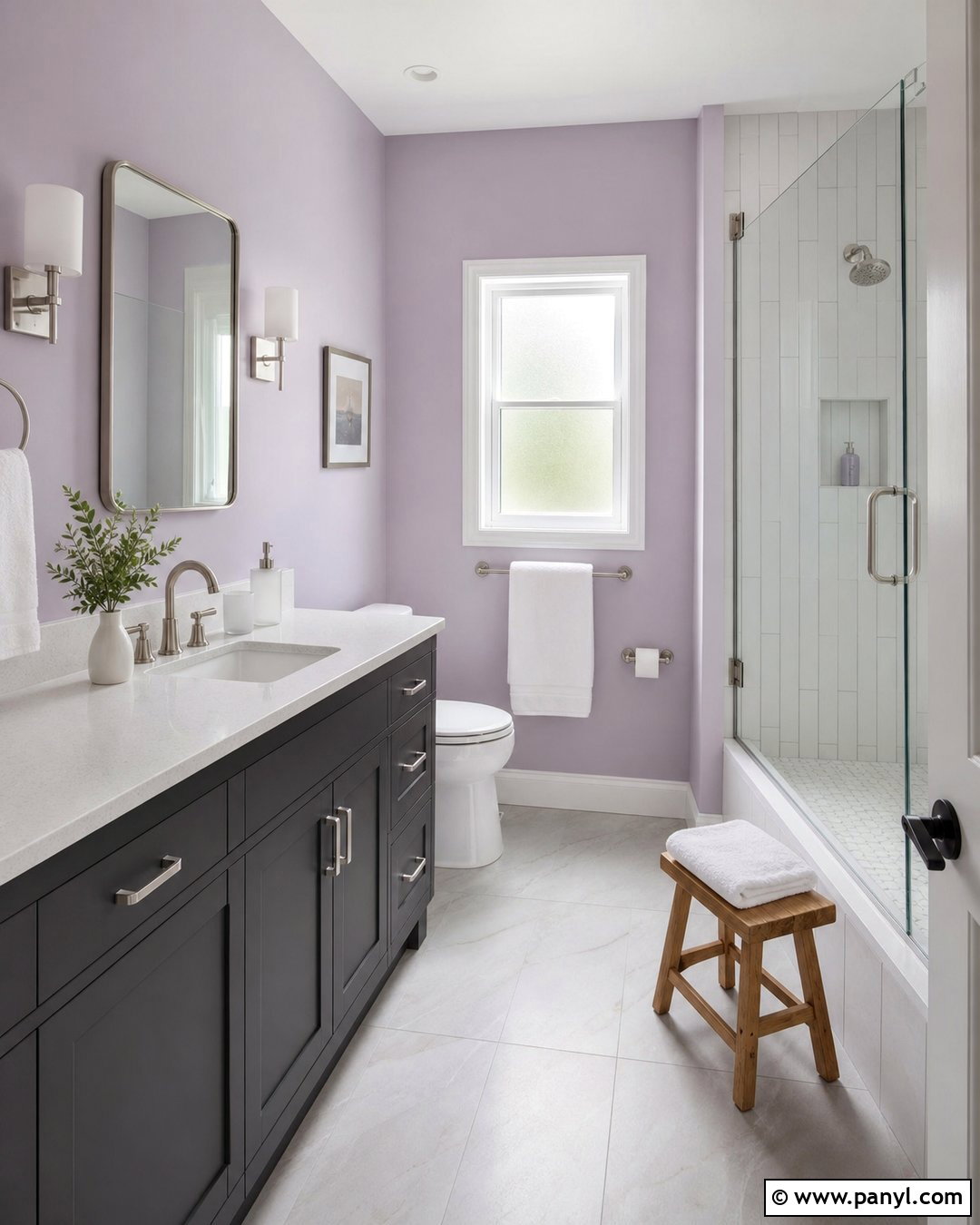
Soft lavender walls bring an unexpected but calming color to a bathroom with a charcoal vanity. Select a smoky lavender containing enough gray to connect naturally with the cabinet. Use a clean white quartz countertop, polished nickel faucet, and nickel-framed mirror to maintain a cool, refined scheme. White vertical shower tile and pale marble-look flooring brighten the room and prevent the purple tone from becoming dominant. Add white towels, a light gray rug, and frosted glass accessories. A small oak stool can provide one warm element without disturbing the restrained palette. This finished look is ideal for anyone who wants color beyond blue or green. Balanced white lighting helps the lavender remain true instead of shifting pink, blue, or dull gray.
27. Muted Plum Bathroom Walls

Muted plum walls transform a light gray vanity into a sophisticated focal point. Choose a subdued plum with brown and gray undertones rather than a bright jewel tone. Top the vanity with creamy quartz and add brushed brass faucets, knobs, and sconces. Warm white tile in the shower balances the deep walls, while beige-gray porcelain flooring connects the cabinet to the room. A wide brass-framed mirror reflects light and visually opens the vanity area. Complete the scheme with ivory towels, a taupe runner, and walnut accessories. This bold wall color works particularly well in a powder room, but it can also suit a larger bathroom with plenty of tile. Keep the ceiling and trim warm white to frame the plum walls and maintain brightness.
28. Pale Yellow Bathroom Walls
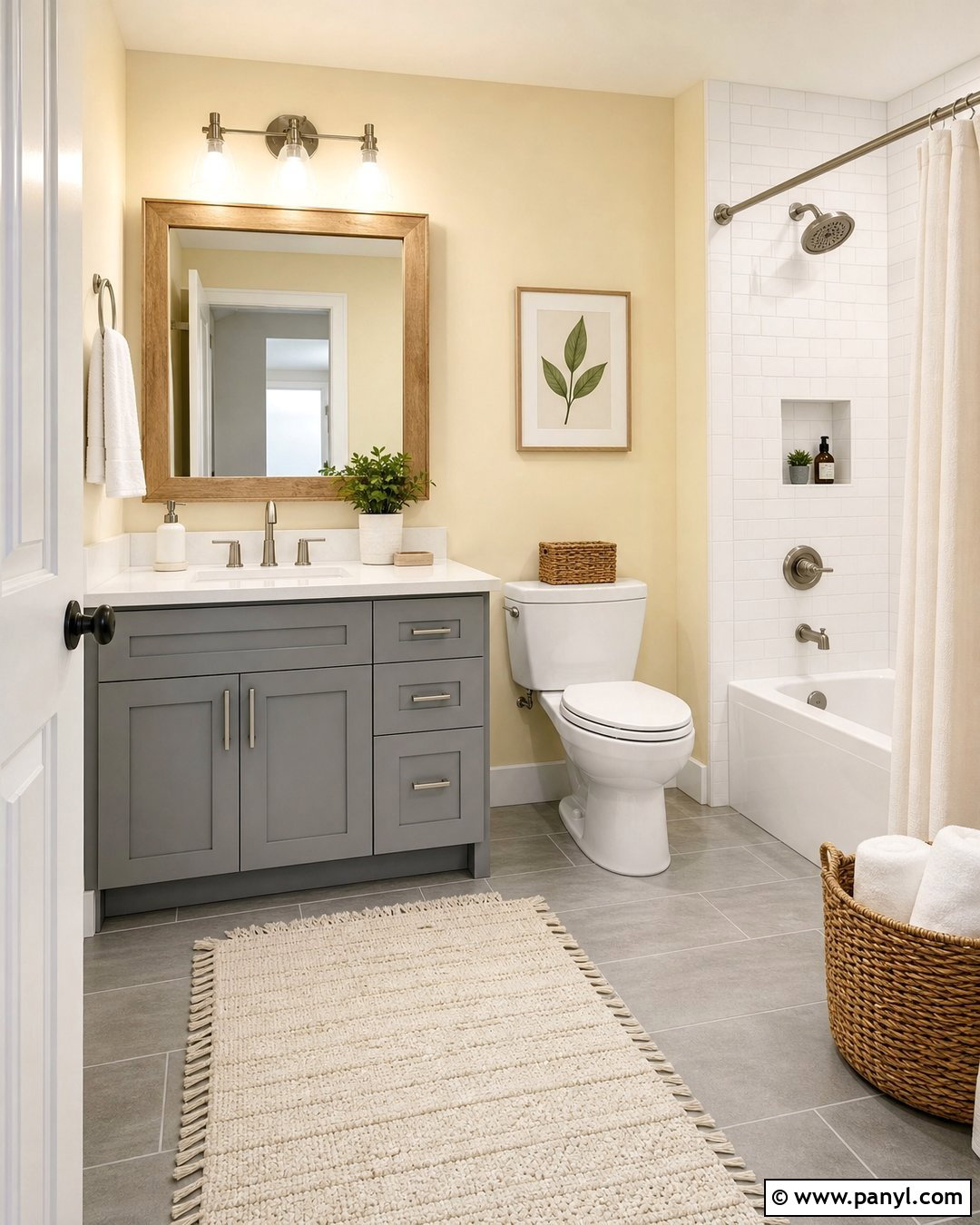
Pale-yellow walls add gentle sunshine around a medium-gray vanity. Choose a muted yellow with creamy undertones, avoiding highly saturated lemon shades that could make the cabinet appear blue. Pair the vanity with a white quartz counter, brushed nickel faucet, and simple nickel hardware. White shower tile keeps the scheme crisp, while warm gray floor tile balances the sunny walls. A light oak mirror, white towels, and woven baskets create a friendly, casual finish. Use soft white bulbs so the yellow remains warm without becoming intense. This complete bathroom palette is especially helpful in a windowless space that needs visual warmth. The gray vanity grounds the light wall color, giving the room enough contrast to feel structured rather than washed out.
29. Buttercream Bathroom Walls
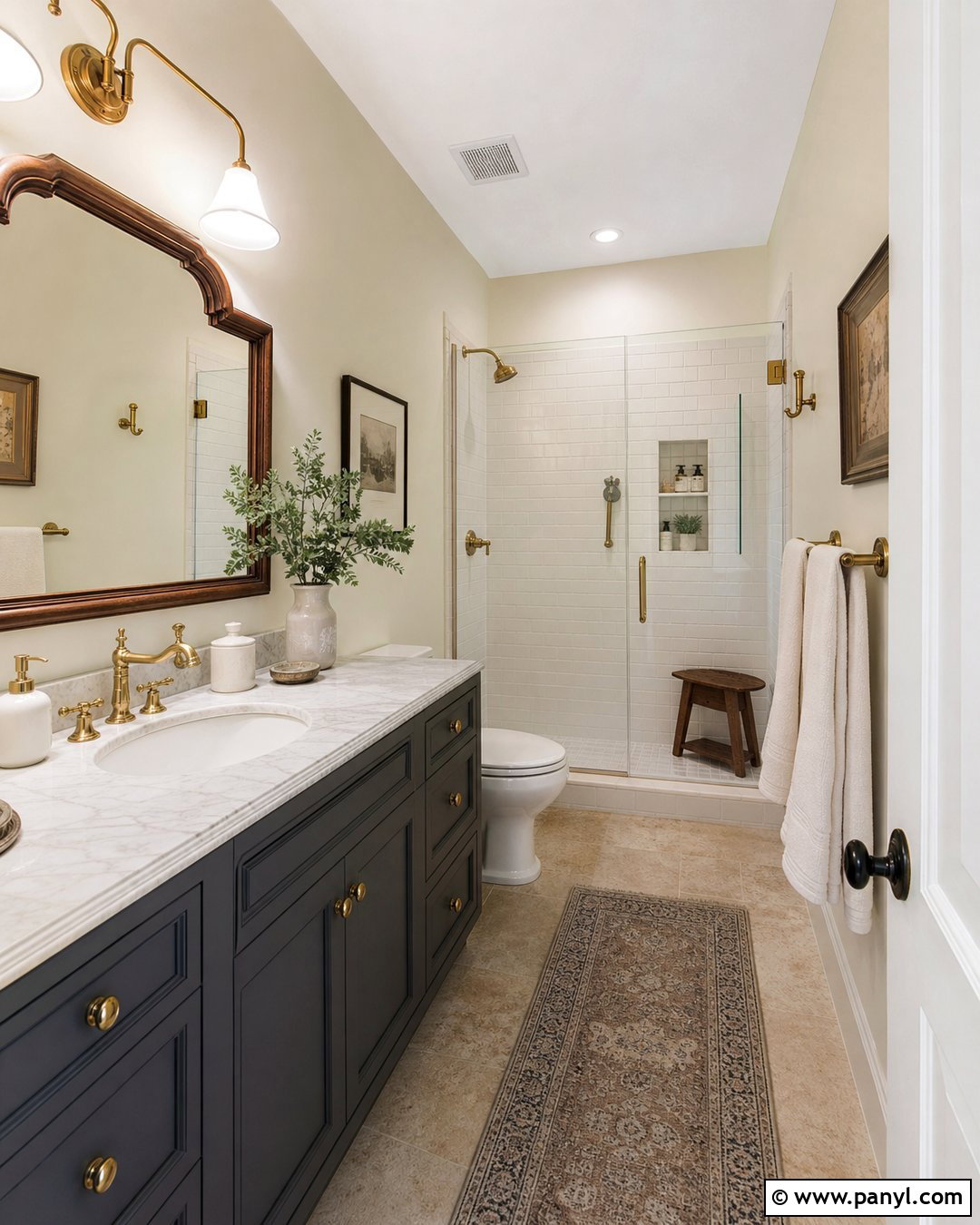
Buttercream walls create a cozy, traditional setting for a dark charcoal vanity. Select a pale cream-yellow with restrained warmth, then repeat it through ivory towels and lightly patterned textiles. A creamy marble countertop and antique brass faucet reinforce the welcoming palette. Use off-white subway tile in the shower and warm limestone-look tile on the floor. Add a walnut-framed mirror and classic brass sconces to give the vanity wall architectural presence. A beige runner and ceramic accessories complete the layered look. Buttercream works best with a warm or neutral gray cabinet rather than one with obvious blue undertones. Paint a large test area first, since bathroom lighting can strengthen yellow pigments. When balanced correctly, the result feels sunny, polished, and comfortably timeless.
30. Terracotta Bathroom Walls
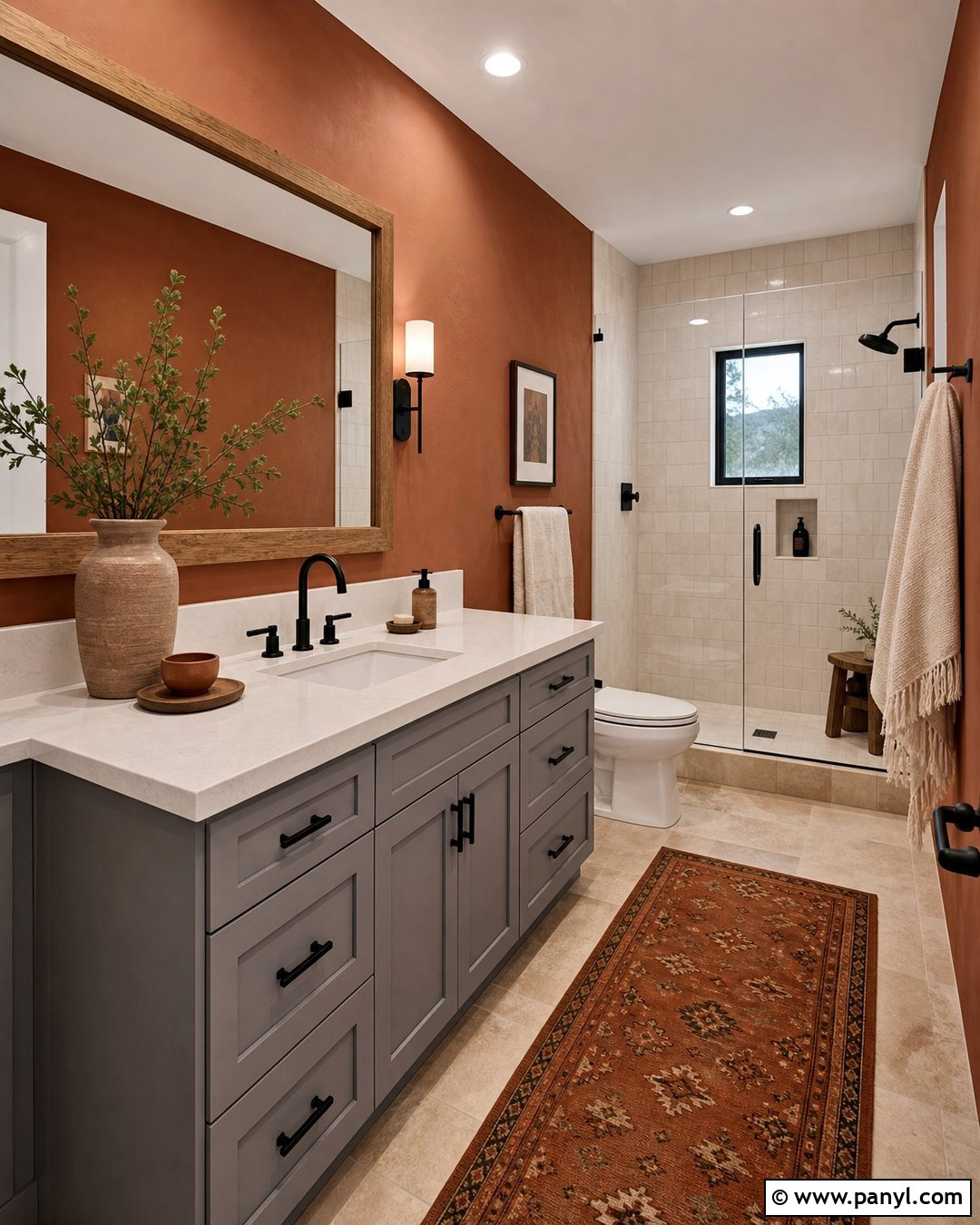
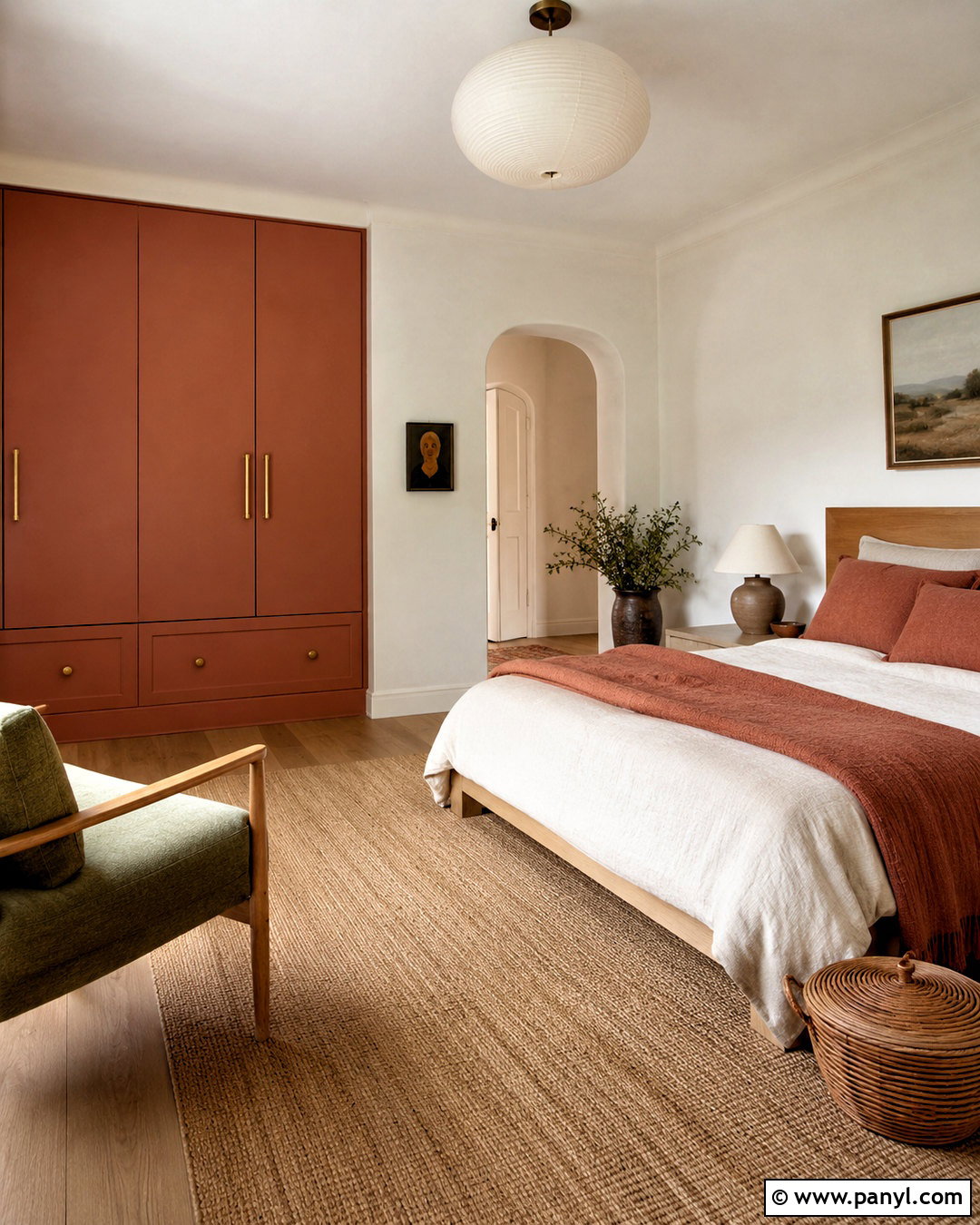
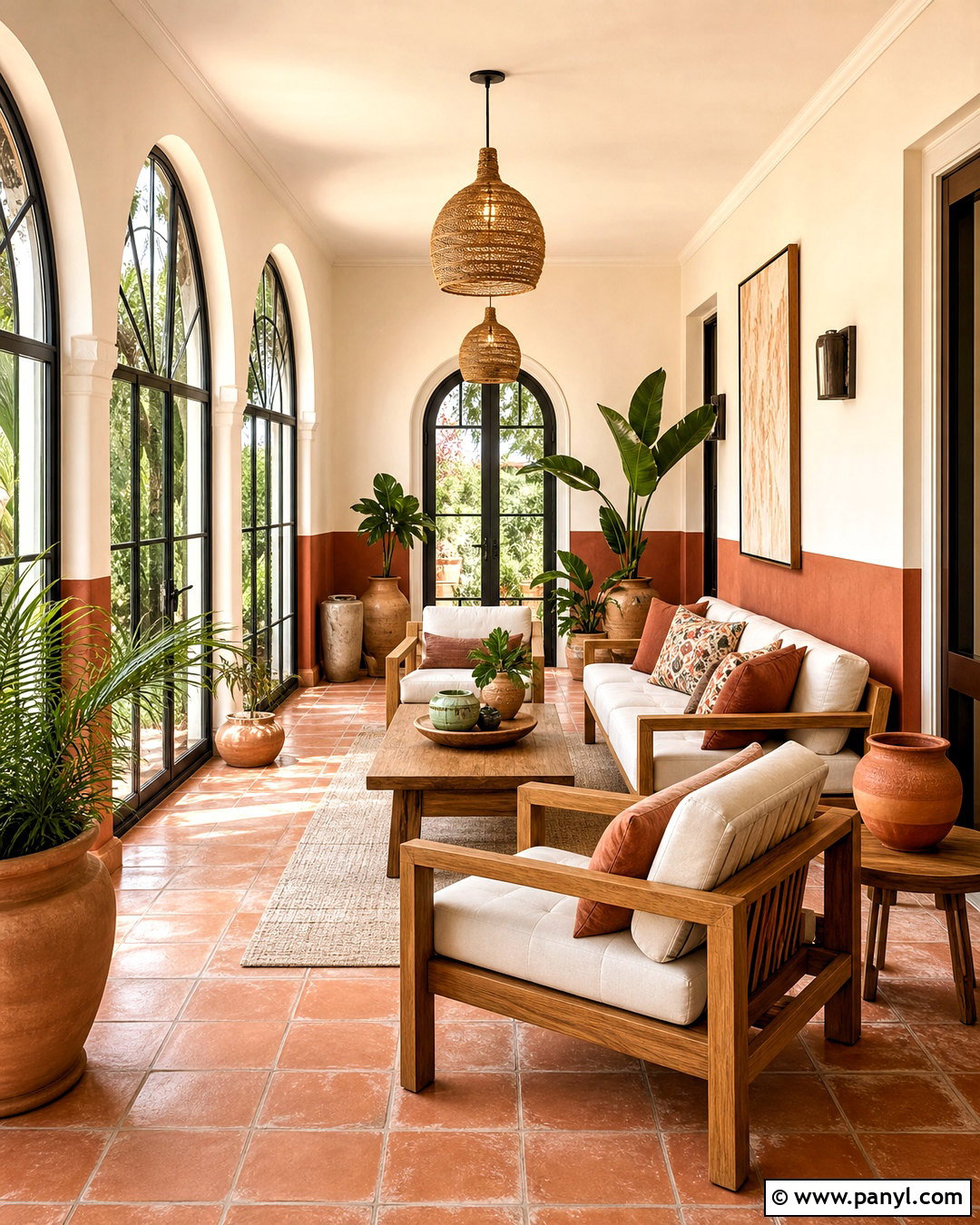
Terracotta walls bring strong earthy warmth to a pale gray vanity. Use a softened clay-red shade rather than a bright orange, and balance it with large areas of cream and white. Choose a warm white quartz countertop, matte black faucet, and black cabinet hardware for crisp definition. Cream shower tile and beige stone flooring lighten the room, while a broad oak-framed mirror adds natural texture. Finish with ivory towels, a patterned clay-and-cream rug, and simple ceramic containers. This wall color creates a welcoming Southwestern or organic contemporary look without requiring themed decor. The pale gray vanity introduces a cool counterpoint that keeps the palette from becoming too warm. Generous lighting is important so the terracotta appears rich, clear, and dimensional throughout the day.
31. Clay Beige Bathroom Walls
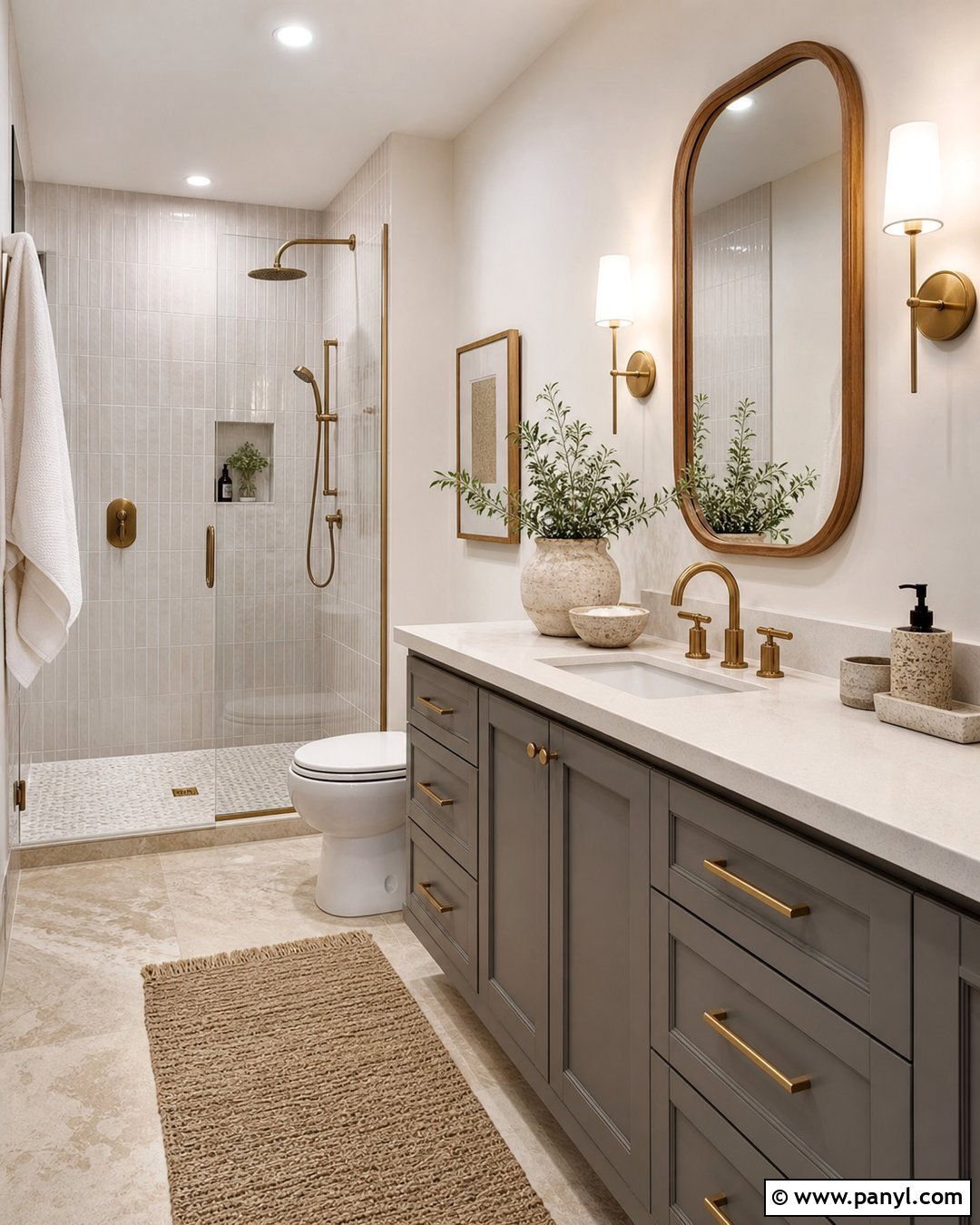
Clay-beige walls give a cool gray vanity an understated earthy background. This color sits between beige, tan, and soft terracotta, providing warmth without the strength of orange paint. Pair a medium-gray vanity with creamy quartz, brushed brass hardware, and a rounded oak mirror. Use off-white shower tile and light sand-colored porcelain flooring for a continuous natural palette. White towels provide freshness, while a textured tan runner and handmade stone accessories add depth. The finished bathroom feels relaxed and modern, with enough contrast to define each surface. Clay beige is particularly useful when the bathroom already contains warm wood doors or beige flooring. It connects those elements to the gray vanity, making previously mismatched finishes appear part of one coordinated design.
32. Soft Peach Bathroom Walls
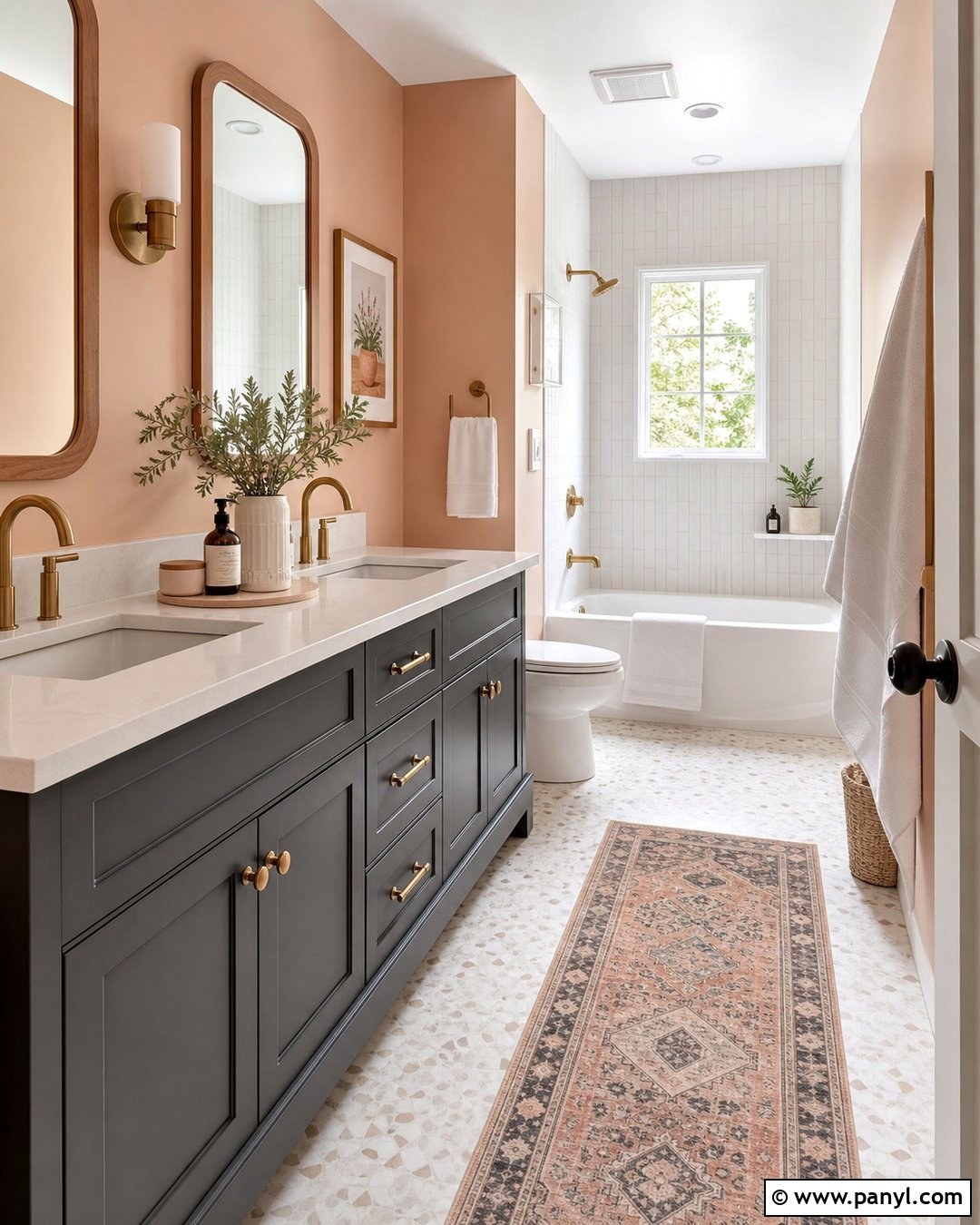
Soft peach walls make a charcoal-gray vanity look warmer and less severe. Choose a pale, muted peach with beige undertones rather than a bright coral-orange. Add a white quartz countertop and brushed brass faucet to create a clean, sunny vanity area. Warm white shower tile, pale terrazzo flooring, and a natural oak mirror maintain the light character of the room. Finish with white towels, cream accessories, and a peach-and-gray patterned runner that gently repeats both main colors. This approachable palette works beautifully in a family or guest bathroom because it feels cheerful without becoming childish. Keep the trim and ceiling warm white, and use bright neutral lighting. The dark vanity will anchor the pastel walls, giving the finished room structure and visual balance.
33. Muted Coral Bathroom Walls
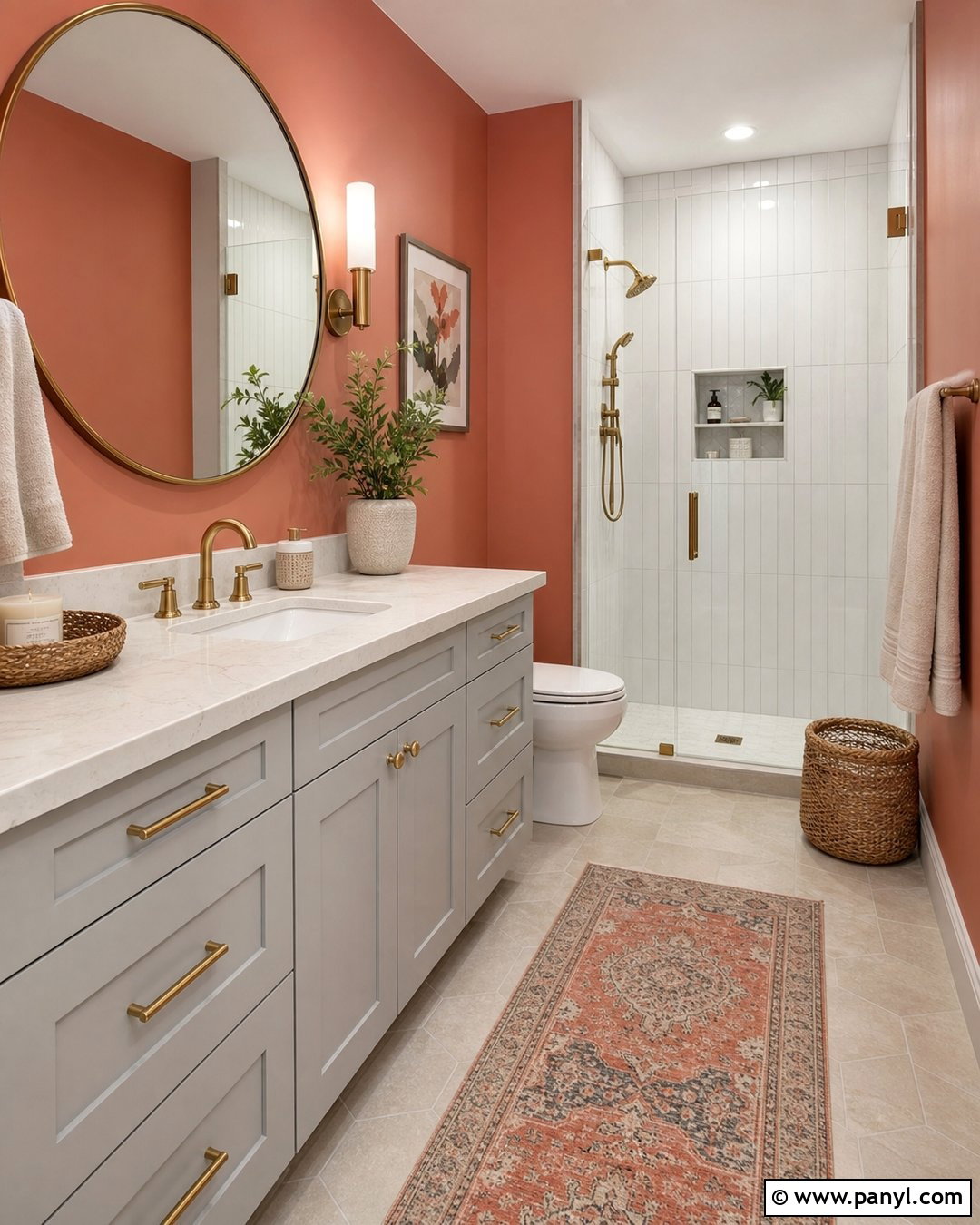
Muted coral walls provide lively contrast against a pale gray vanity. Look for a softened coral with dusty pink and clay undertones, which will feel more sophisticated than a bright tropical shade. Use a creamy white countertop, brushed brass fixtures, and a large round brass mirror. White vertical shower tile gives the eye a quiet place to rest, while pale beige floor tile grounds the colorful walls. Add ivory towels, natural baskets, and a patterned runner containing coral, gray, and cream. This combination is especially successful in a powder room or cheerful guest bath. Keep decorative items simple because the wall color already supplies plenty of personality. The pale cabinet should remain understated, allowing the coral background and warm metallic details to lead the design.
34. Muted Teal Bathroom Walls
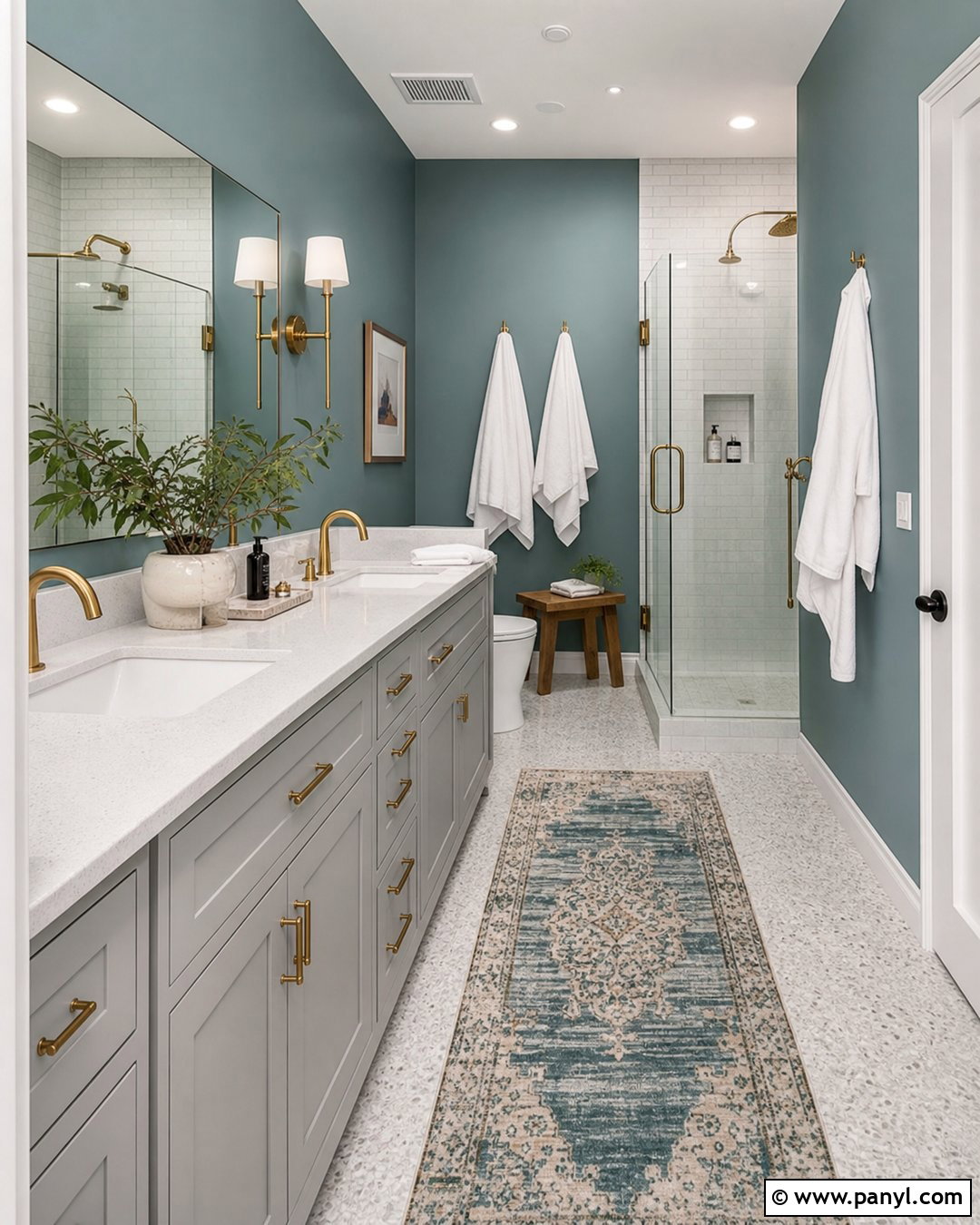
Muted teal walls create a bold, balanced backdrop for a light gray vanity. Choose a medium teal softened with gray so it feels rich without looking overly bright. Pair it with white quartz, brushed brass faucets, and slim brass cabinet pulls. White shower tile and light gray terrazzo flooring keep the deeper wall color from closing in the space. A wide frameless mirror reflects the teal while maintaining a modern, uncluttered vanity area. Finish with white towels, a natural wood stool, and a teal-and-cream runner. This complete scheme combines cool cabinetry and blue-green walls with enough brass and wood to provide warmth. Strong vanity lighting and a bright white ceiling ensure that the saturated color remains clear, inviting, and practical.
35. Dusty Aqua Bathroom Walls
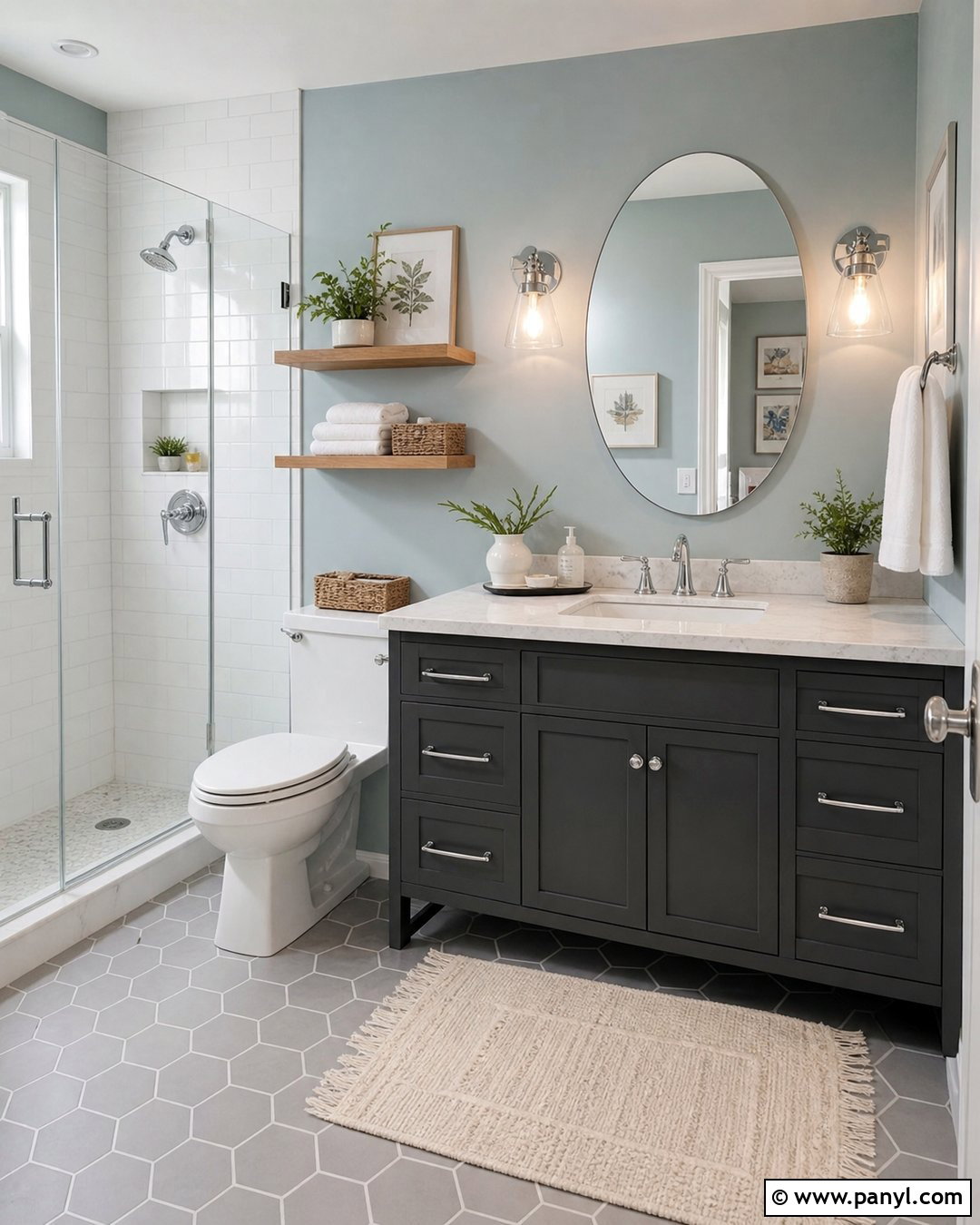
Dusty-aqua walls offer a light blue-green backdrop that complements both warm and cool gray vanities. Choose a muted aqua with visible gray undertones for an easy, sophisticated finish. Pair a medium charcoal vanity with a white marble-look countertop, polished chrome faucet, and chrome cabinet hardware. Use glossy white shower tile to reflect light, then add pale gray hexagonal flooring for gentle contrast. A frameless oval mirror, glass sconces, and white towels keep the room bright. Introduce warmth through an oak shelf, woven baskets, and a cream bath mat. This fresh bathroom palette feels coastal without relying on obvious themed decor. The charcoal cabinetry grounds the watery wall color, while clean white surfaces keep the finished design crisp and suitable for everyday use.
Conclusion:
The best wall color should connect the gray vanity with every permanent finish in the bathroom. Start by identifying whether the cabinet leans cool, warm, blue, green, or brown. Then compare possible paint colors beside the countertop, flooring, tile, and hardware. Light whites, greiges, blues, and greens create an easy, open appearance. Navy, forest green, plum, and terracotta offer more drama when supported by bright tile and strong lighting. Always test a large painted sample on more than one wall and observe it at different times of day, since lighting can noticeably change color perception. () With thoughtful testing and coordinated materials, these **35 grey vanity bathroom wall colors** can inspire a bathroom that feels balanced, personal, and complete.

Related Ideas and Inspiration:
Leave a Reply