
Choosing the right wall and trim pairing can shape the mood, character, and visual flow of an entire room. These 20 wall and trim colors ideas move beyond basic white molding, offering complete palettes for living rooms, bedrooms, kitchens, hallways, and other everyday spaces. You will find soft neutrals, earthy shades, deep dramatic colors, and playful combinations that still feel practical. Each look also includes furniture, flooring, lighting, and decor suggestions, making it easier to picture the finished space. Before committing, sample both colors beside the flooring and fixed finishes, then check them throughout the day. Use these 20 wall and trim colors ideas to find a polished combination that fits your home and personal style.

1. Warm White Walls With Soft White Trim
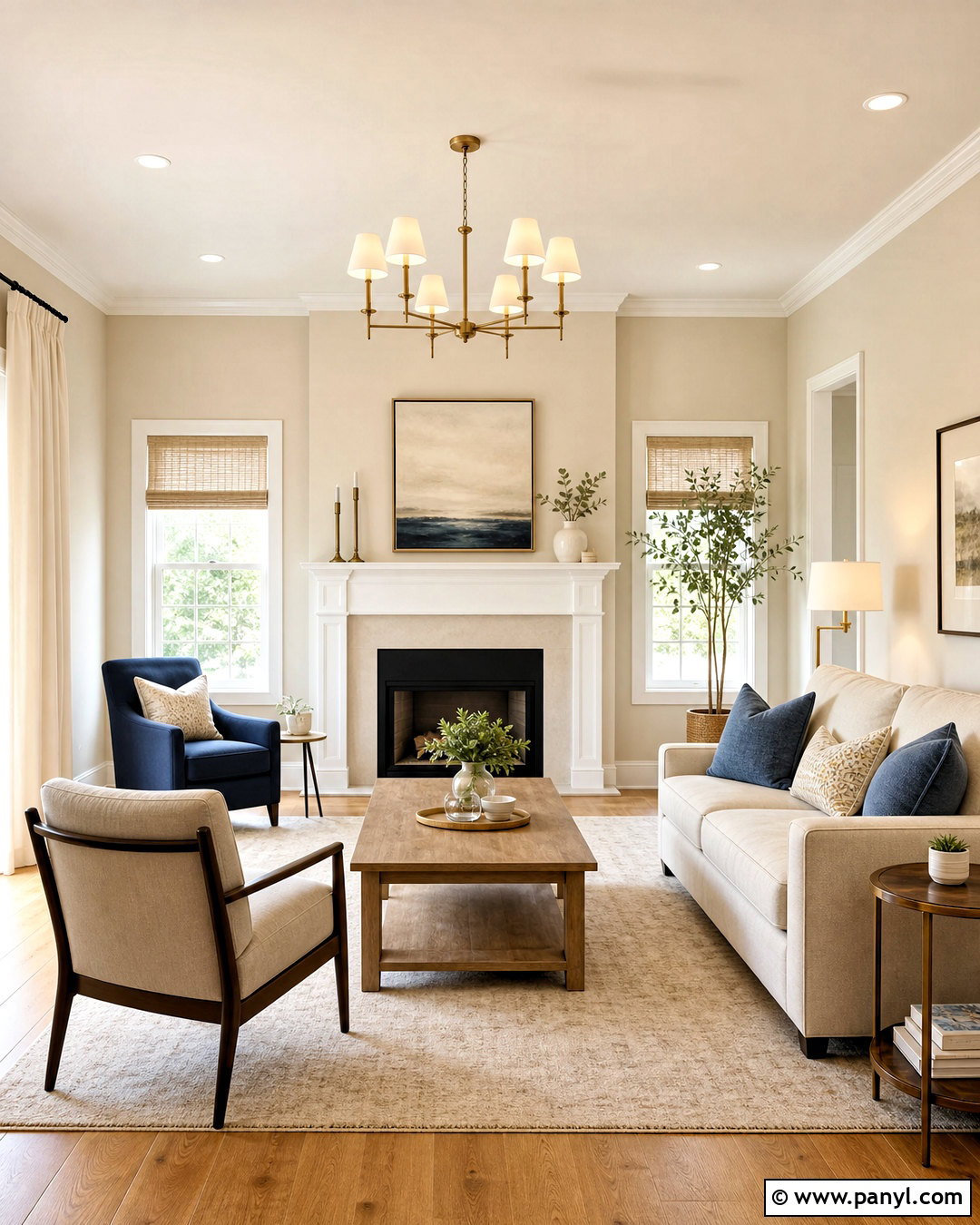
Warm white walls paired with slightly cleaner soft white trim create a bright room without making it feel cold. Use a creamy ivory on the walls and a gentle neutral white on baseboards, doors, window casings, and crown molding. The subtle contrast outlines the architecture while keeping the overall palette quiet. This combination works especially well in a transitional living room with light oak flooring, an oatmeal sofa, and woven linen curtains. Add a natural wood coffee table, muted blue pillows, and brushed brass lighting for controlled warmth. Keep the ceiling close to the trim color for an uninterrupted finish. Choose eggshell for the walls and satin for the trim, allowing the molding to stand out through sheen rather than strong color.
2. Greige Walls With Crisp White Trim
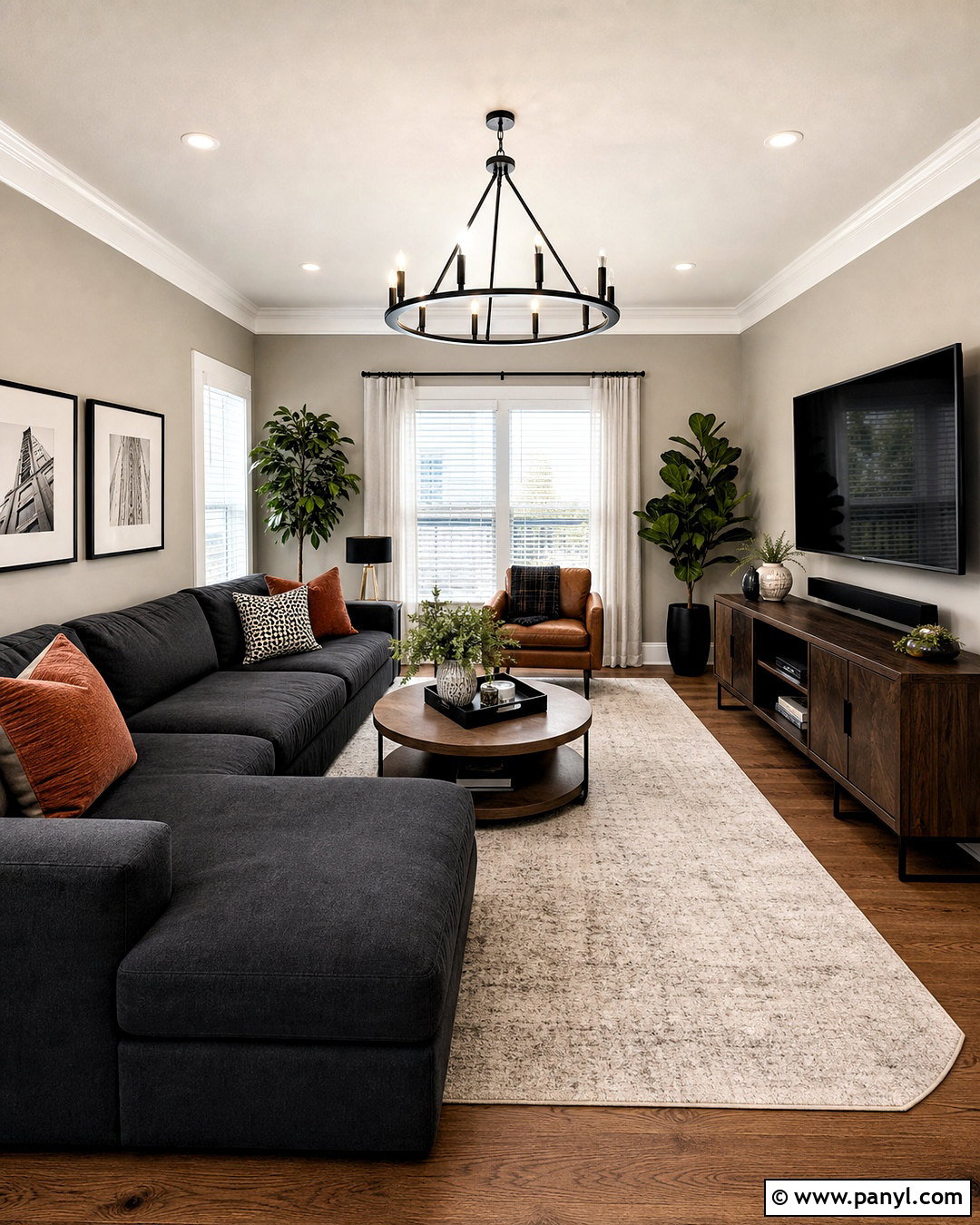
Do you want a neutral room that feels clean but not plain? Choose balanced greige walls with crisp white trim for a flexible backdrop that works with warm and cool furnishings. The greige should carry enough beige to complement oak flooring, while a clear white gives the doors and moldings sharper definition. Build a comfortable family room around this pairing with a charcoal sectional, cream rug, walnut media console, and black metal lighting. Terracotta pillows and leafy plants prevent the palette from looking flat. Repeat crisp white on the ceiling and built-in shelving so the architectural details feel connected. Because greige can shift noticeably under different lighting, test large samples beside the flooring, sofa fabric, and nearby kitchen finishes before selecting the final shade.
3. Beige Walls With Cream Trim
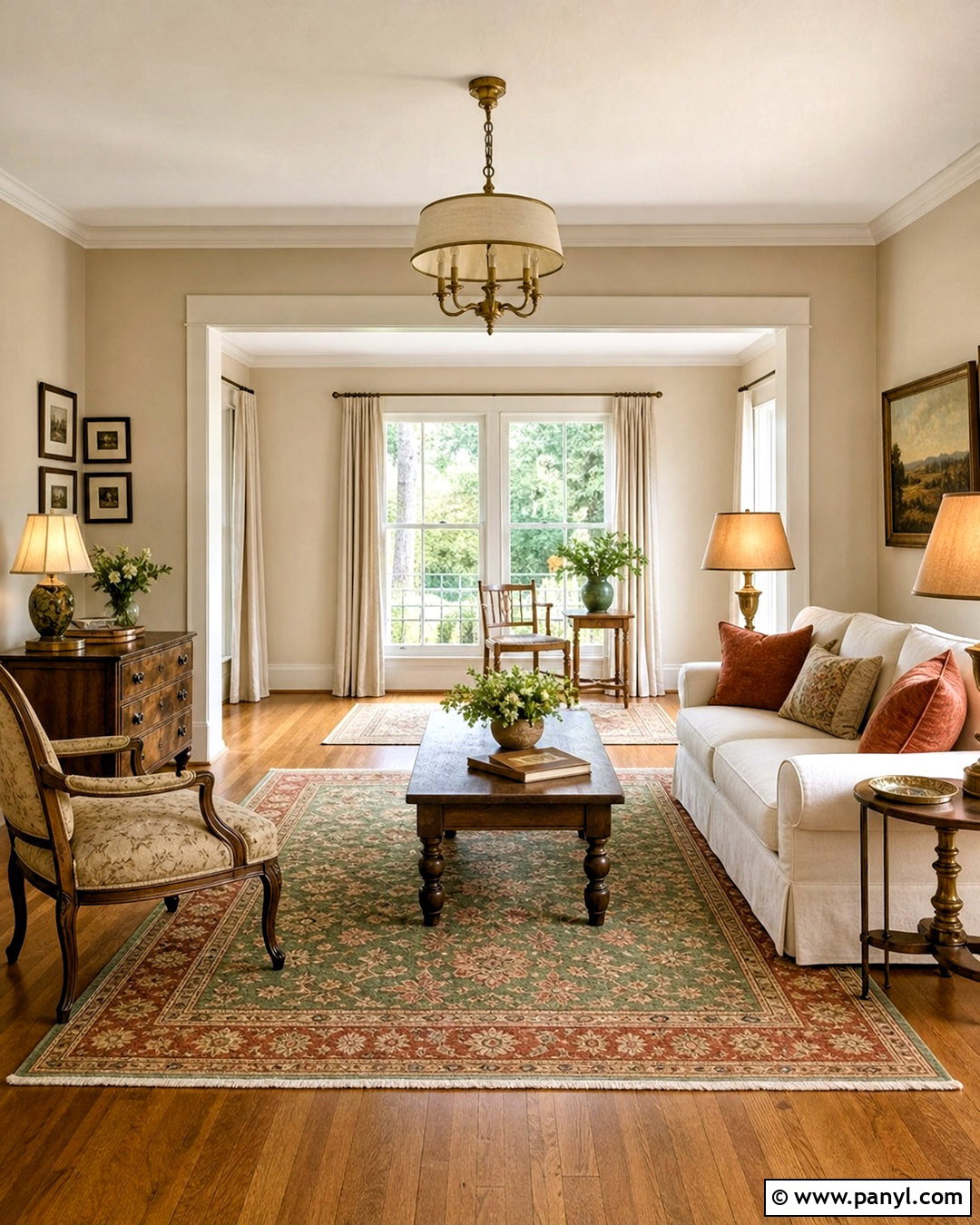
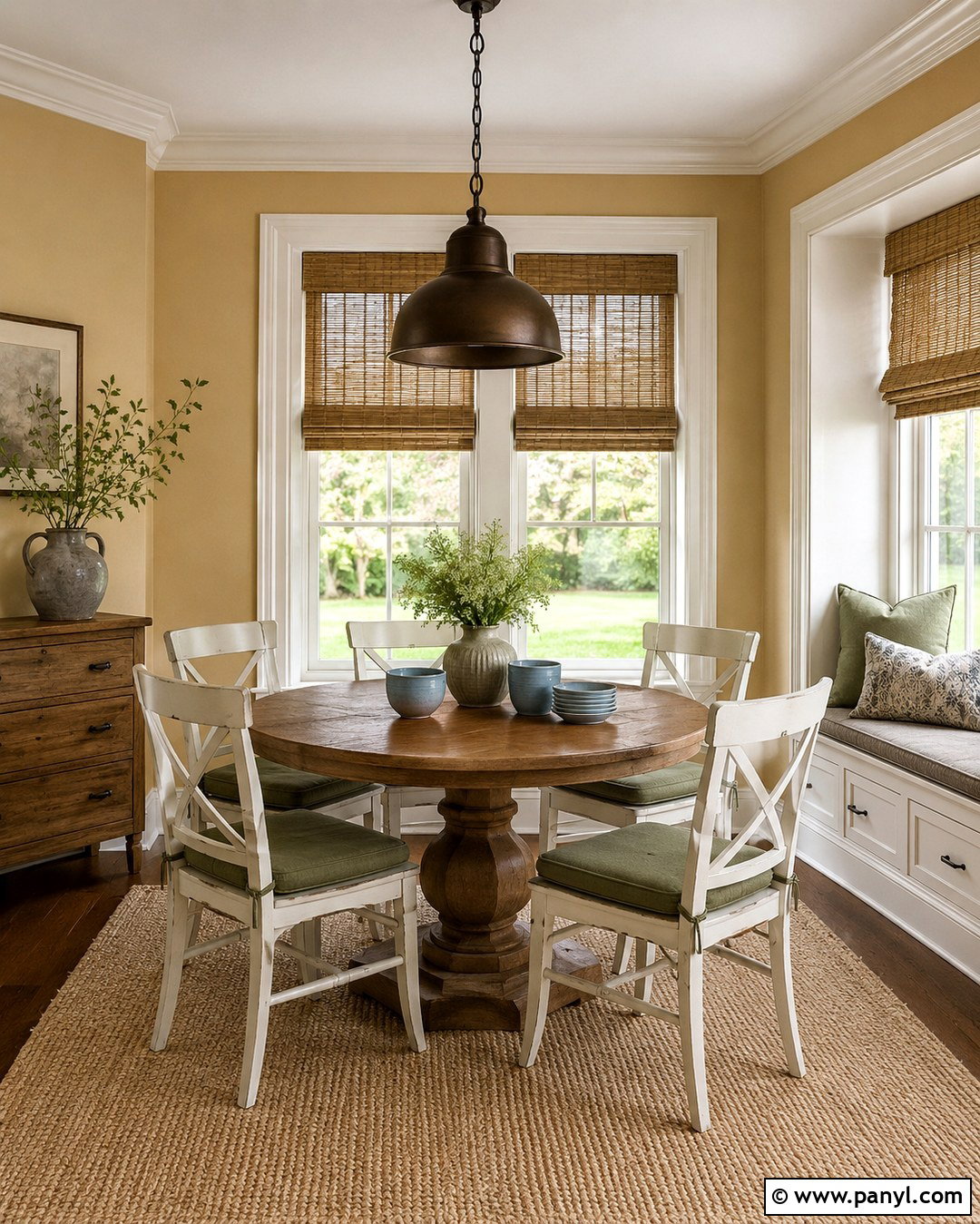
Sunlight feels especially inviting against sandy beige walls and rich cream trim. This low-contrast combination suits traditional dining rooms, relaxed living spaces, and bedrooms with warm wood furniture. Paint the walls a light camel beige, then choose creamy trim with a similar golden undertone. Avoid a stark white that could make the beige appear dull or muddy. Complete the room with medium-toned oak flooring, an ivory upholstered sofa, rust-colored pillows, and natural linen window panels. A vintage-style wool rug can introduce muted green, brown, and faded red without disrupting the calm palette. Use warm metal finishes, such as antique brass or aged bronze, on lamps and curtain rods. The completed look feels layered, comfortable, and grounded rather than overly matched.
4. Taupe Walls With Dark Brown Trim
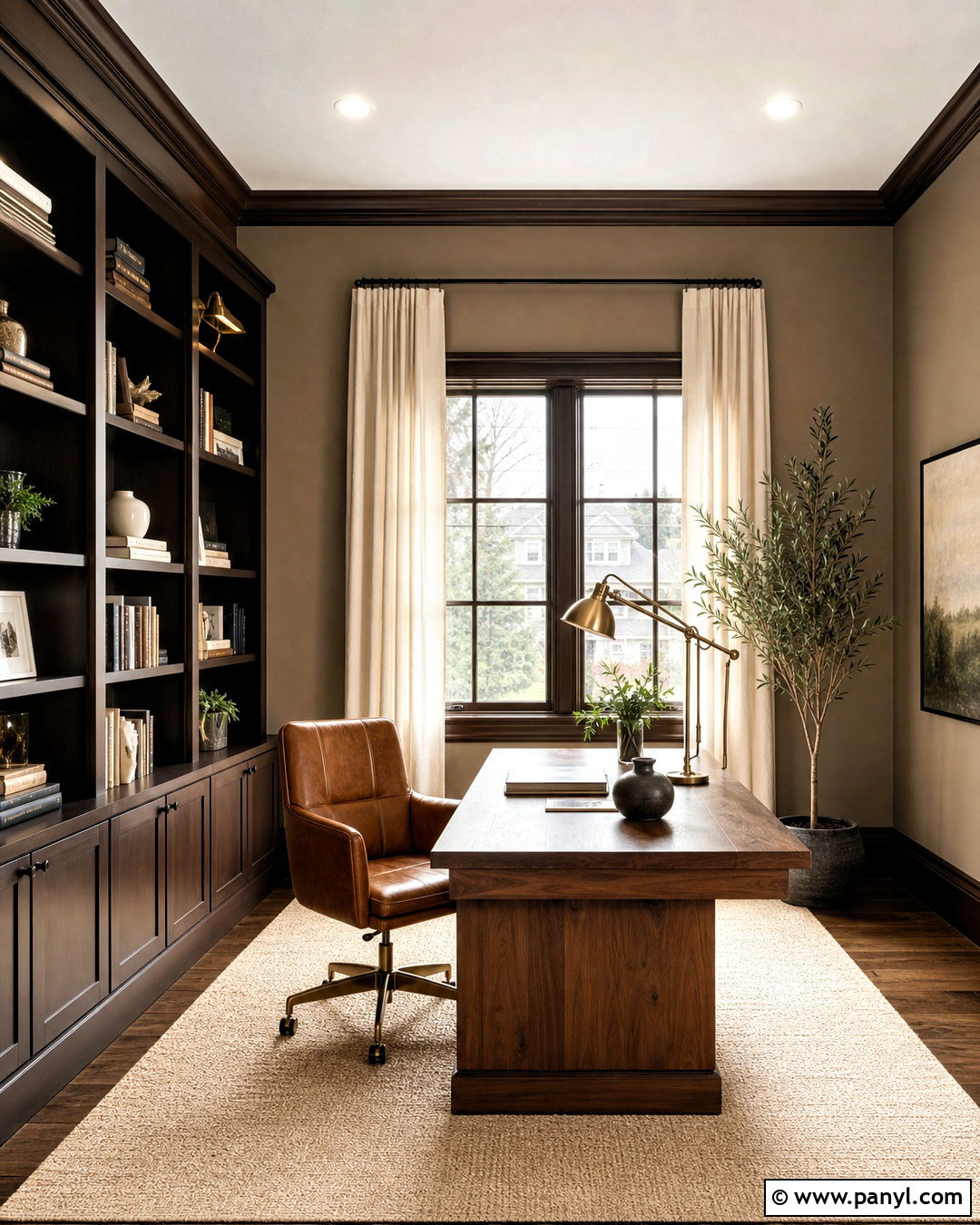
Rich chocolate-brown trim gives quiet taupe walls a tailored, architectural presence. This pairing is ideal for a home office, library, or den where a deeper palette feels appropriate. Cover the walls in a medium mushroom taupe and use dark espresso brown on the baseboards, window frames, doors, and built-in bookcases. Balance those strong edges with a camel leather chair, walnut desk, and cream textured rug. Off-white curtains keep the windows from becoming visually heavy, while brass task lighting adds a warm reflective finish. Consider carrying the brown onto the interior door for a more cohesive result. Keep the ceiling a soft warm white to preserve brightness overhead. The contrast should feel intentional, with repeating dark brown accents linking the trim to the furniture.
5. Sage Green Walls With Warm White Trim
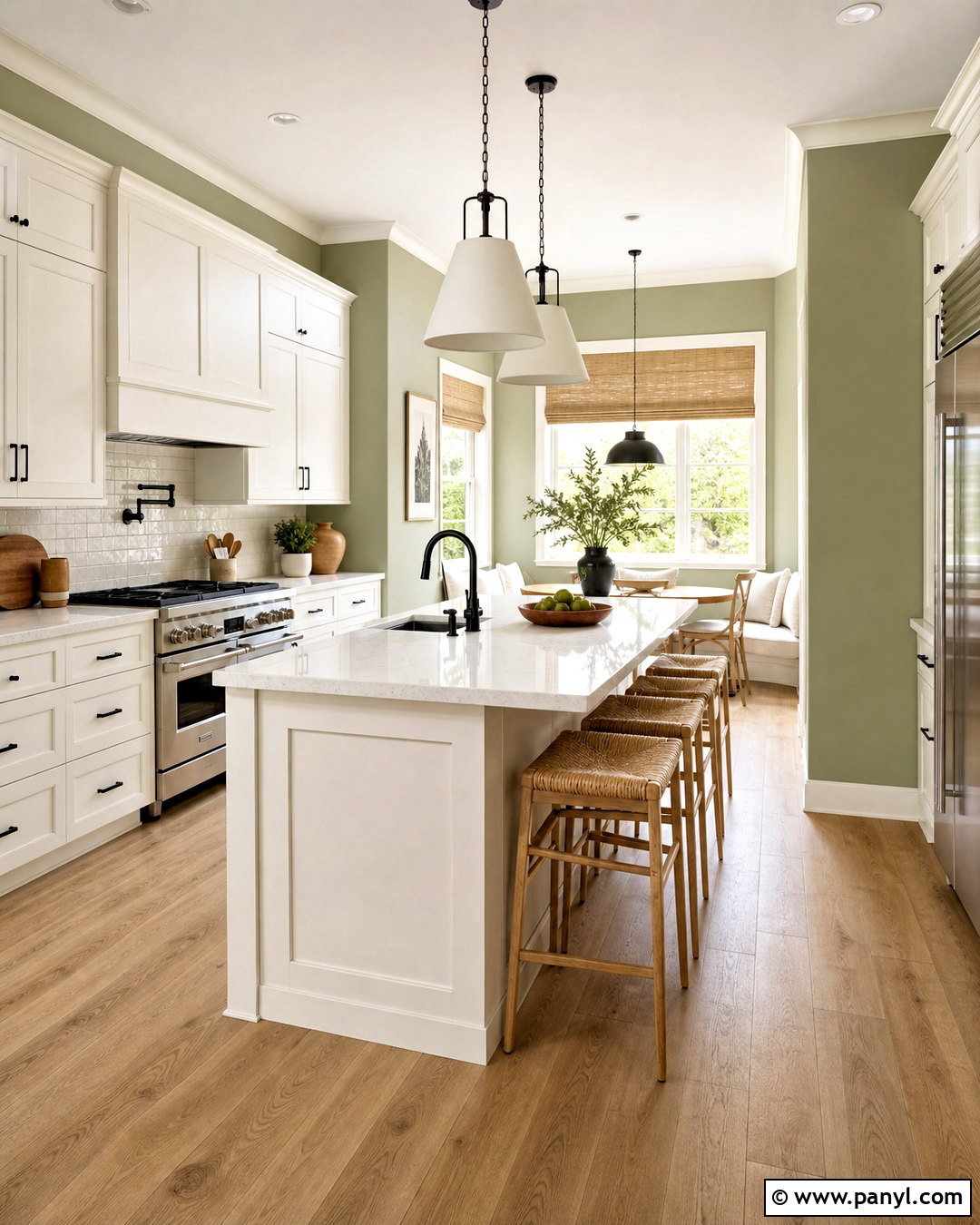
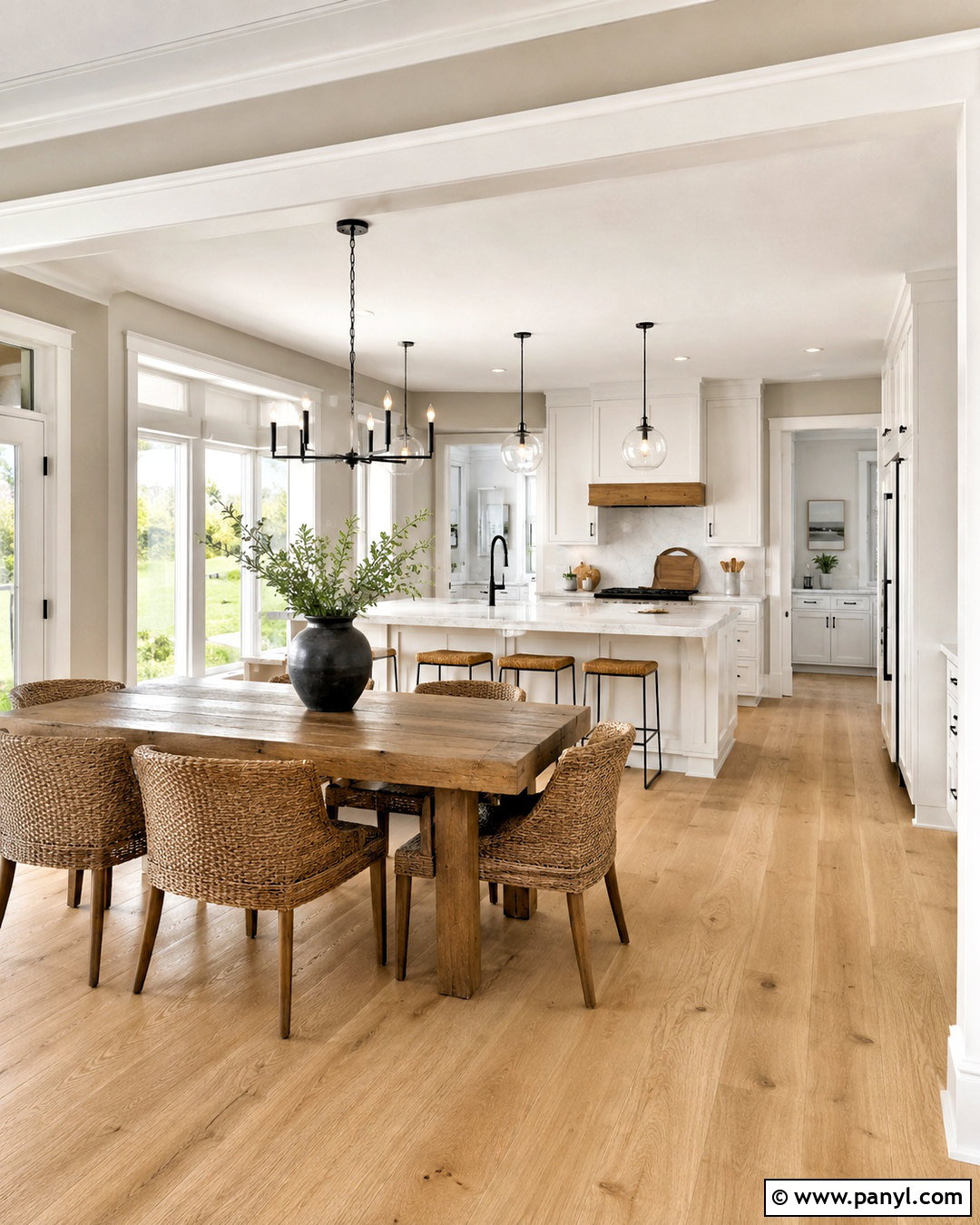
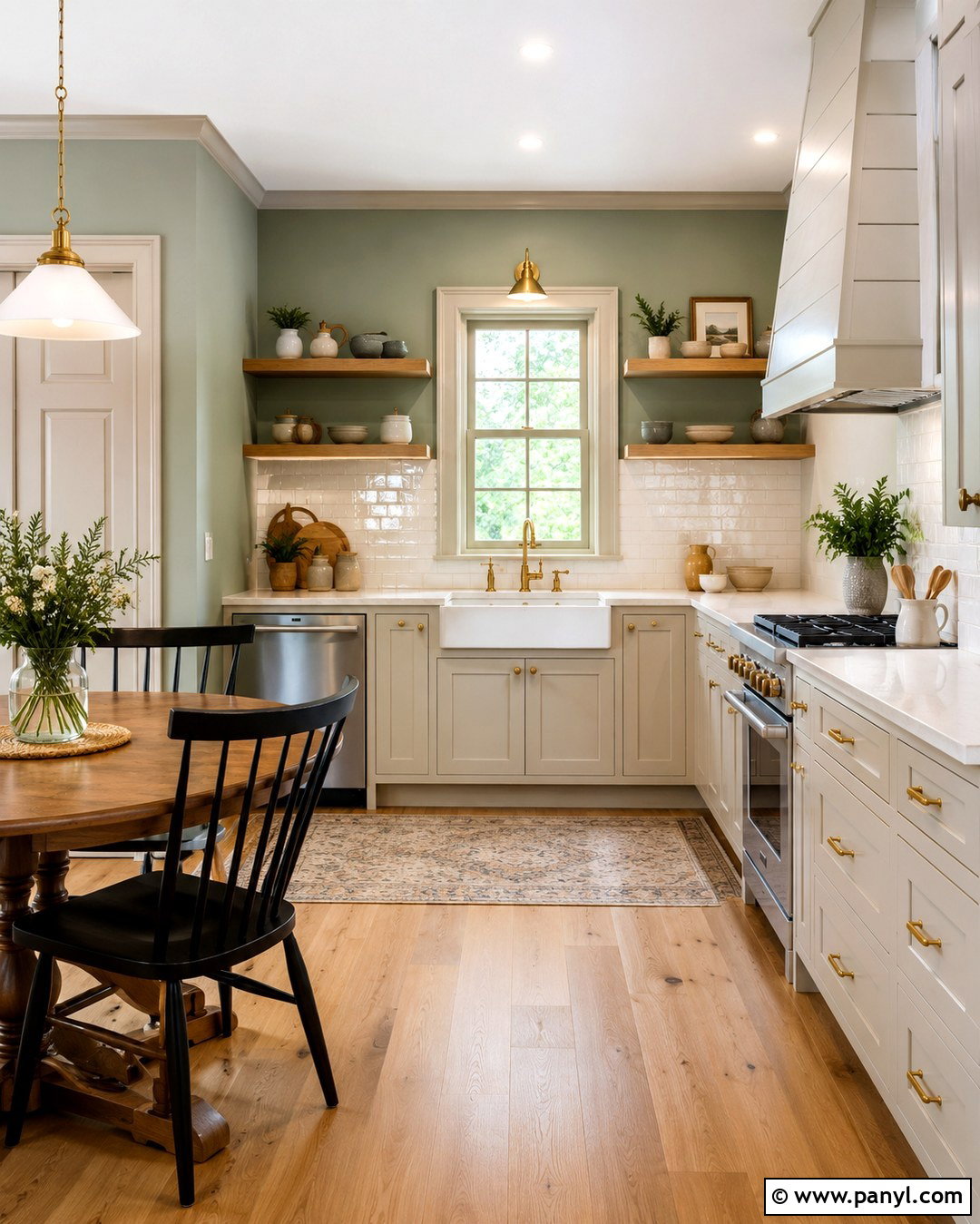
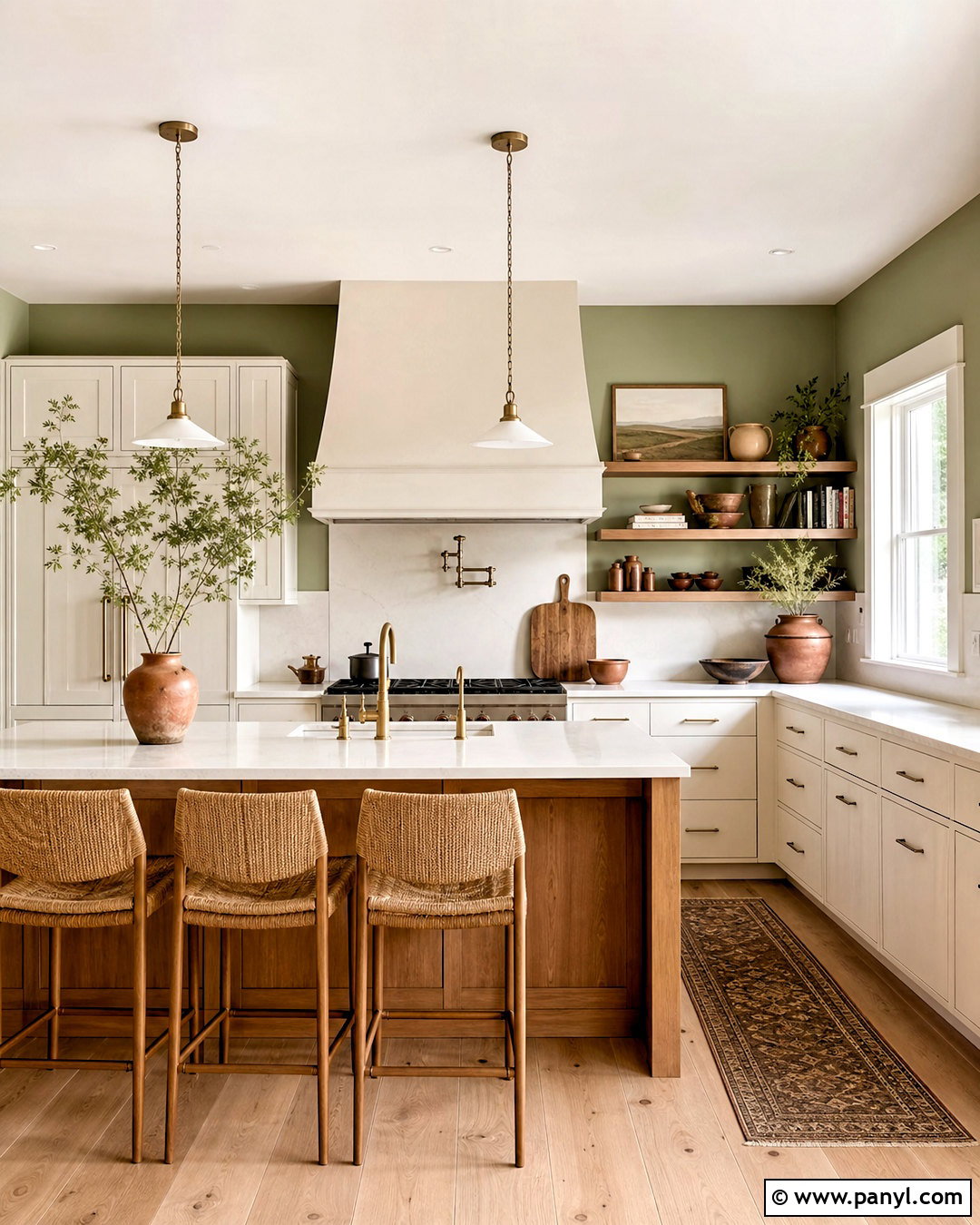
Soft sage green walls can turn a busy kitchen or breakfast room into a calm, nature-inspired space. Pair the green with warm white trim that has a faint creamy undertone rather than a bright blue-white finish. Use the warm white on windows, door casings, baseboards, and simple shaker cabinets for consistency. Light oak flooring, woven counter stools, and pale quartz countertops support the organic palette. Introduce matte black hardware in small amounts to create definition without overwhelming the gentle colors. Linen Roman shades and ceramic accessories in ivory or muted terracotta finish the room. If the kitchen receives limited daylight, select a sage with a slightly warmer base. This prevents the walls from becoming too gray and keeps the complete design fresh and welcoming.
6. Olive Green Walls With Greige Trim
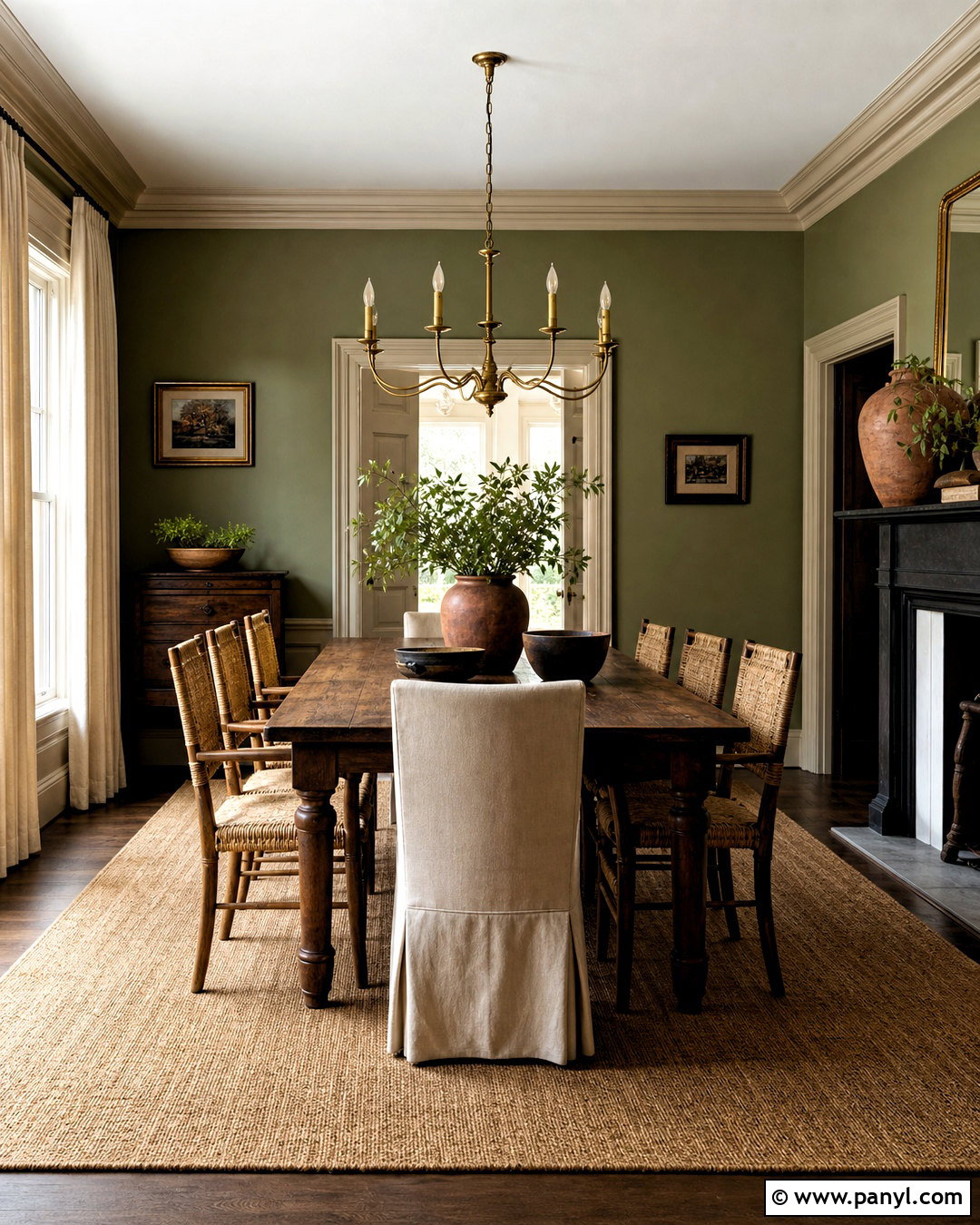
Olive green walls and understated greige trim create an earthy room with more depth than a standard neutral scheme. Try this combination in a dining room with substantial molding, where the greige can soften the contrast around windows and doorways. Choose a muted olive rather than a bright yellow-green, then repeat the greige on the ceiling for a wrapped, sophisticated effect. A dark oak dining table, woven chairs, and a natural jute rug reinforce the grounded palette. Add cream upholstery, aged brass lighting, and simple pottery in rust and black. Keep window treatments light and unpatterned so the darker walls do not feel crowded. The finished room should balance saturated color with natural texture, giving the dining area a comfortable, collected character suitable for everyday meals.
7. Forest Green Walls With Matching Trim
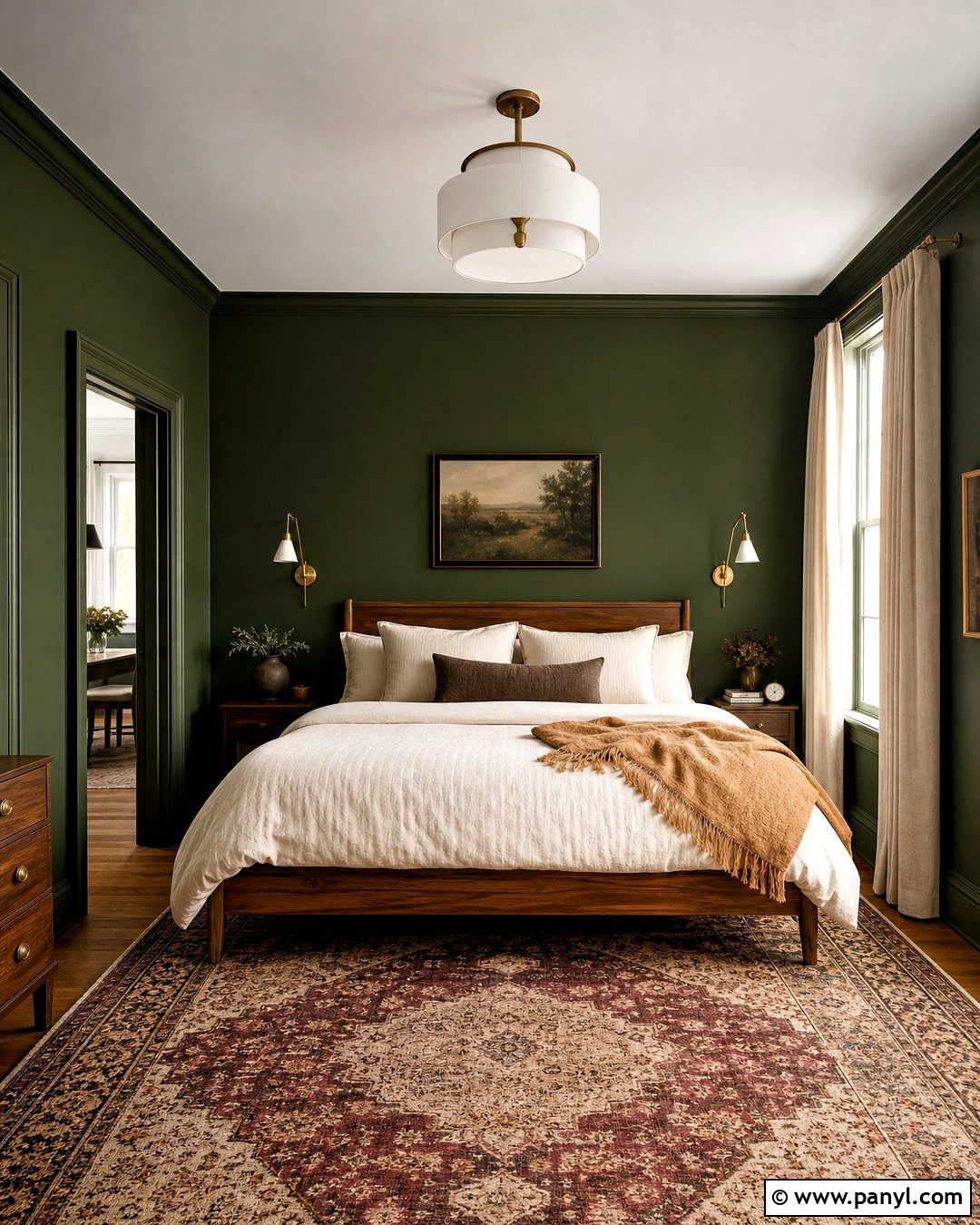
A full forest green color wrap creates an immersive bedroom with striking depth. Paint the walls, baseboards, door, window casing, and crown molding in the same deep green, but use eggshell on the walls and satin on the woodwork. The change in finish reveals the trim without interrupting the color. Choose a warm white ceiling if you want visual relief, or continue the green overhead for a cozier result. Furnish the room with a walnut bed, ivory bedding, camel throw, and vintage-inspired rug containing faded green and burgundy. Brass sconces provide a warm accent, while linen curtains in oatmeal soften the windows. Limit extra wall decor so the saturated architectural envelope remains the focus. The result feels bold, unified, and restful rather than busy.
8. Pale Blue Walls With Bright White Trim
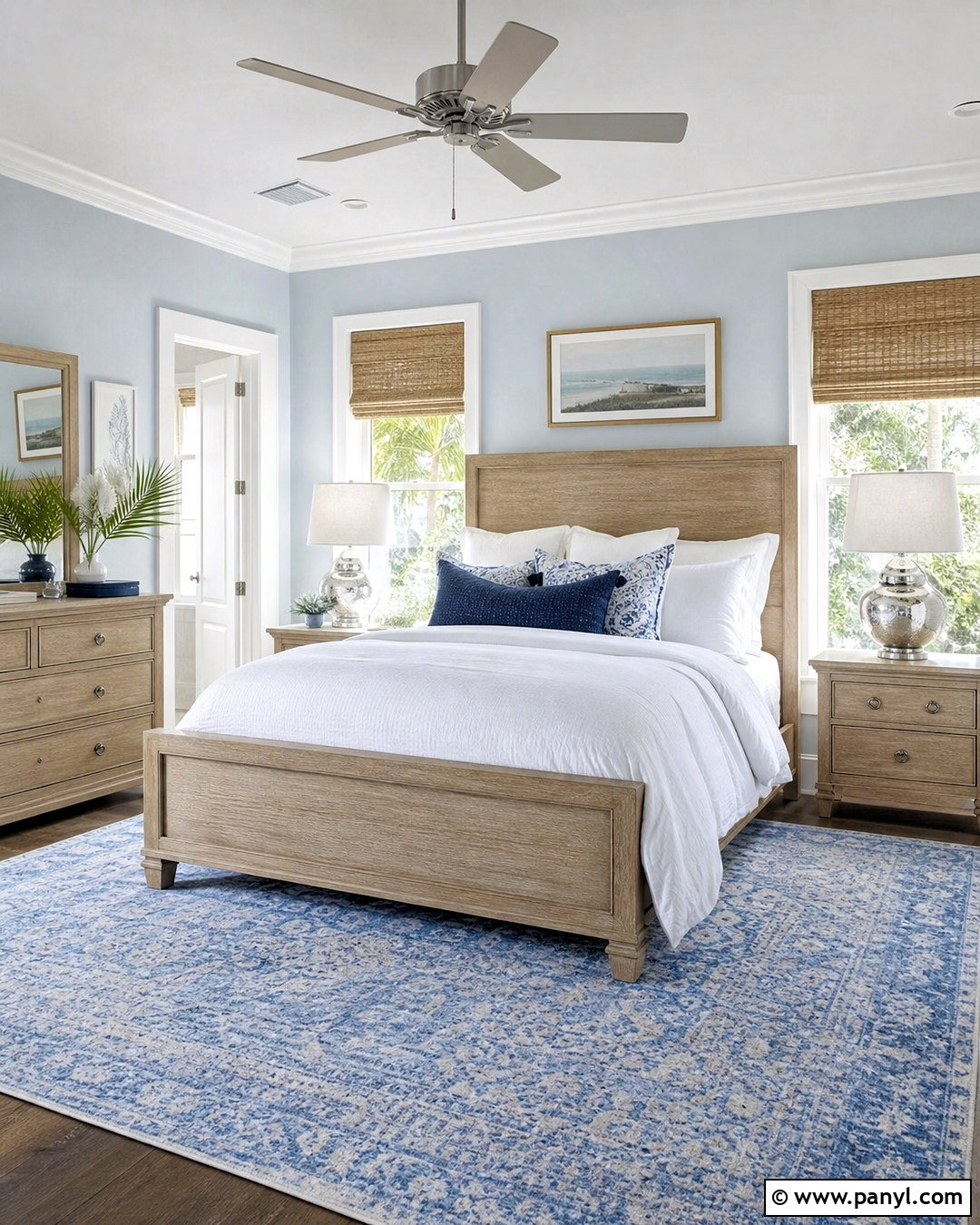
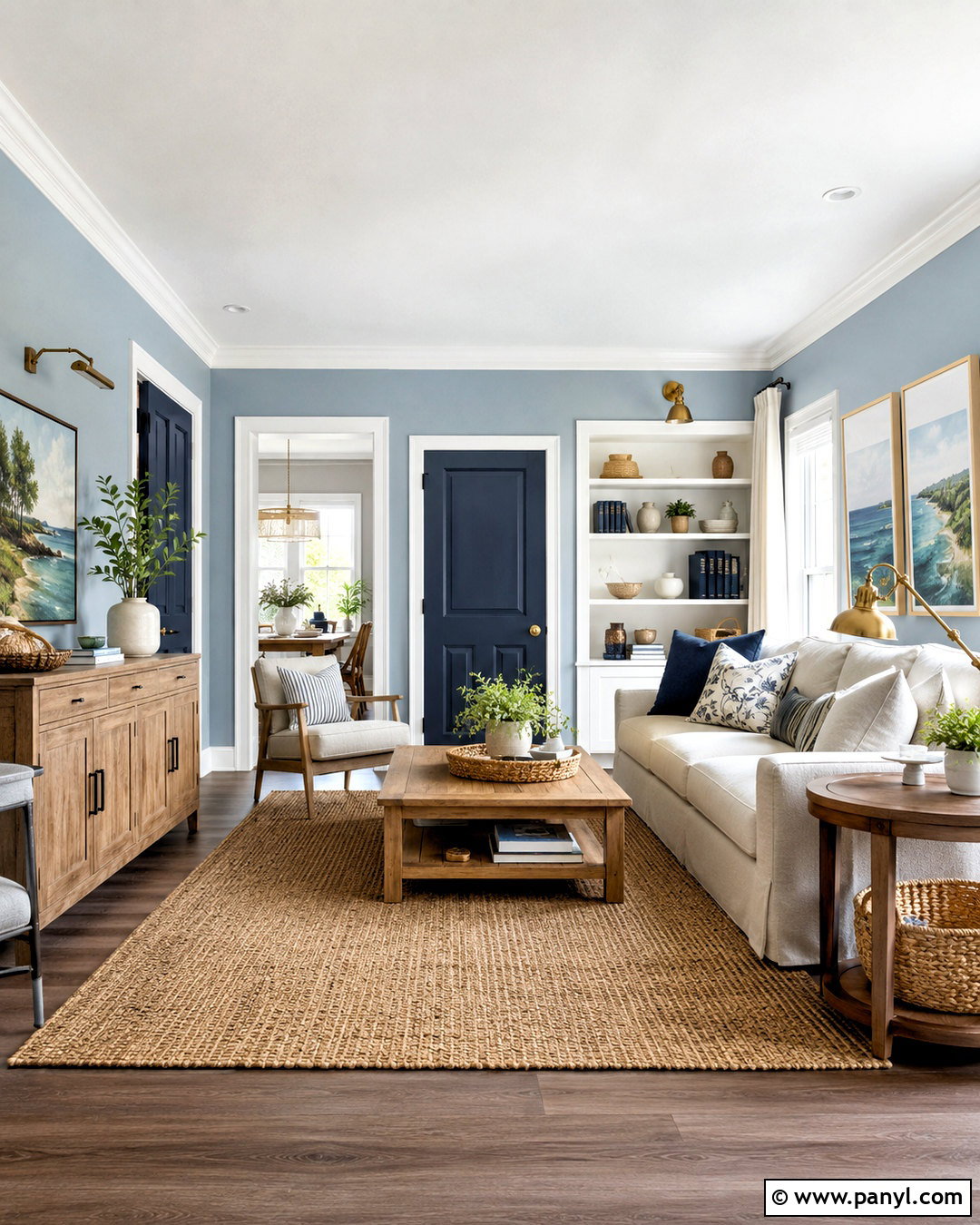
Imagine a breezy bedroom where pale blue walls meet bright white molding and fresh cotton textiles. This familiar pairing feels most polished when the blue has a gentle gray undertone rather than a sugary pastel appearance. Apply clean white to the baseboards, window trim, door, ceiling, and simple wall paneling. Add a light oak bed, white linen bedding, a soft blue patterned rug, and woven shades for natural warmth. Small navy accents can appear on pillows, artwork, or a bedside lamp to give the lighter colors structure. Silver or polished nickel hardware supports the cool palette without drawing too much attention. In rooms with cool northern light, sample several blues carefully and select one with enough warmth to prevent the completed bedroom from feeling chilly.
9. Navy Blue Walls With Cream Trim
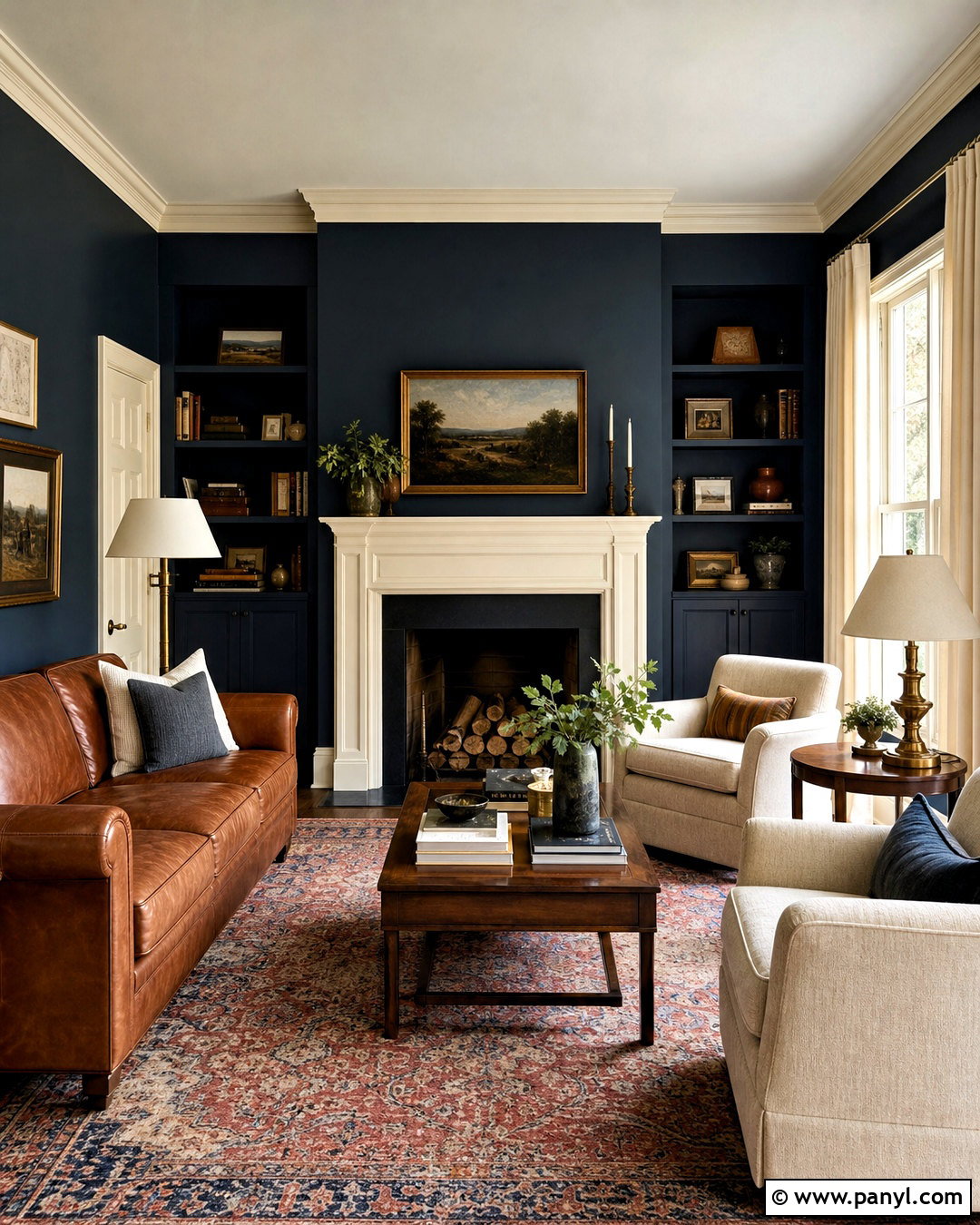
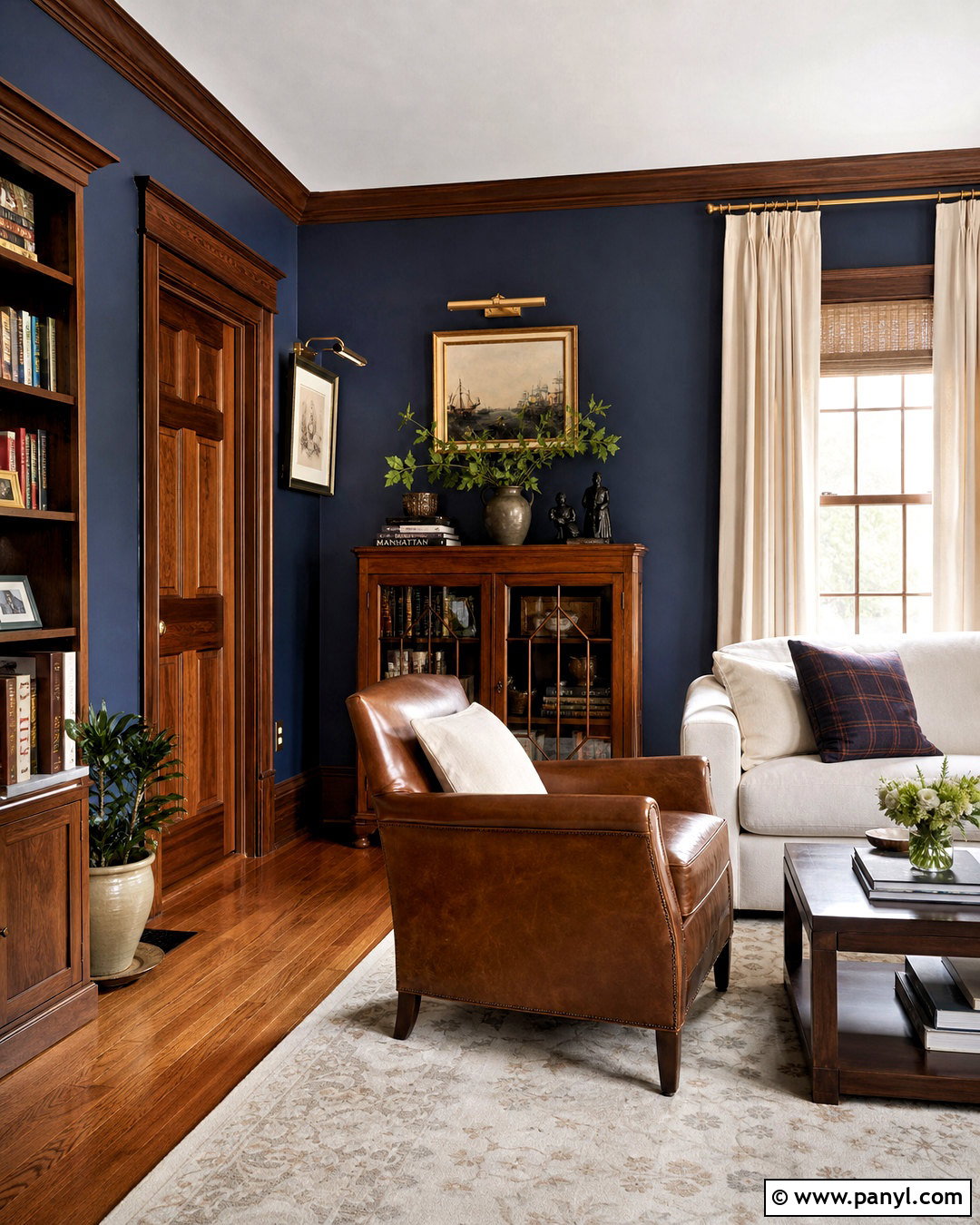
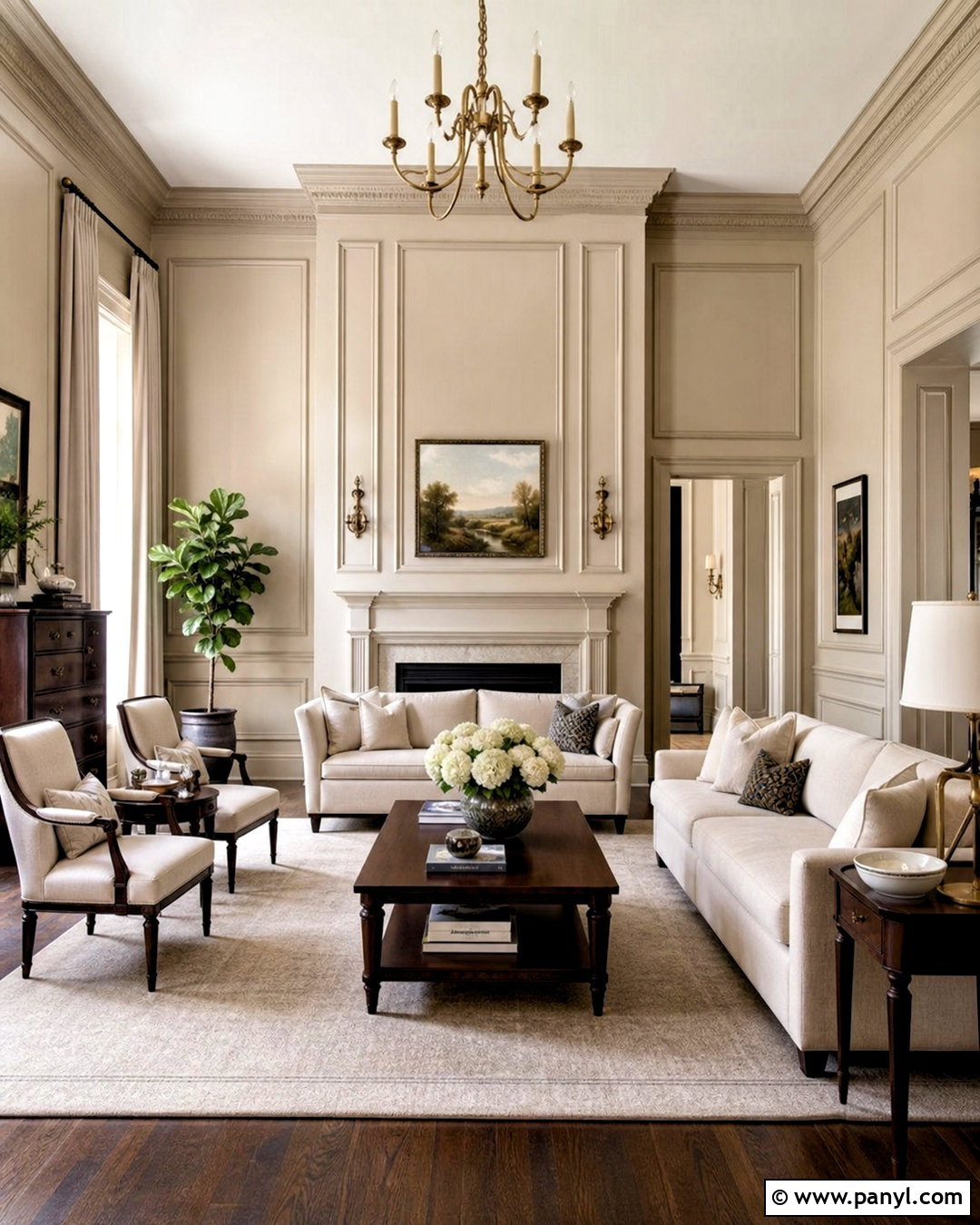
Deep navy walls become warmer and more livable when framed by cream trim instead of brilliant white. Use this combination in a living room with substantial windows, a fireplace, or traditional molding that deserves attention. Paint the walls a rich inky navy and cover the fireplace surround, baseboards, crown molding, doors, and window casings in soft cream. Furnish the space with a cognac leather sofa, oatmeal armchairs, and a faded red-and-blue rug. Walnut tables and antique brass lamps connect naturally with the cream details. Hang light linen curtains to balance the dark walls and reflect daylight into the room. Repeating cream through lampshades, upholstery, and artwork mats keeps the trim from appearing isolated, producing a dramatic but comfortable room designed for regular use.
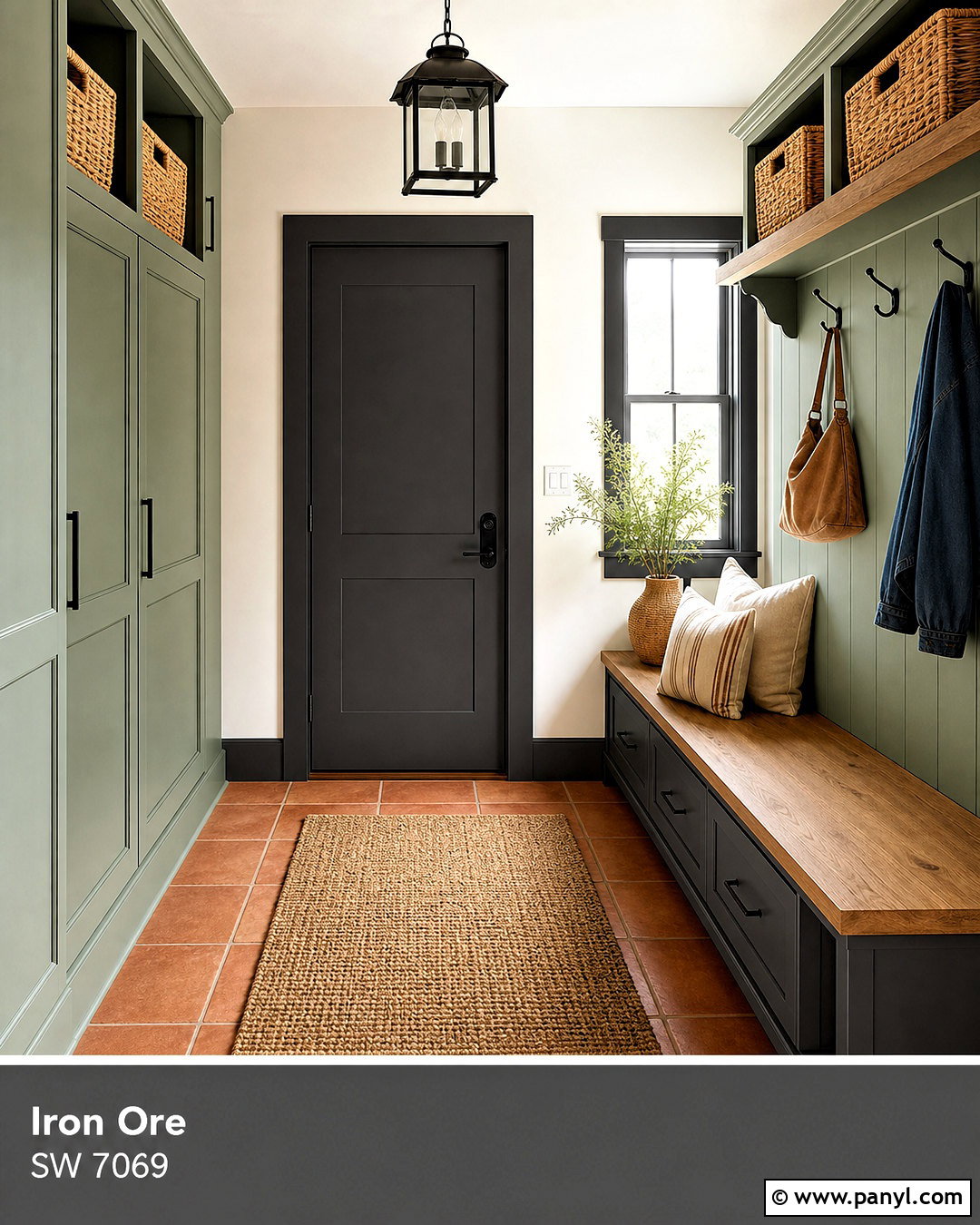
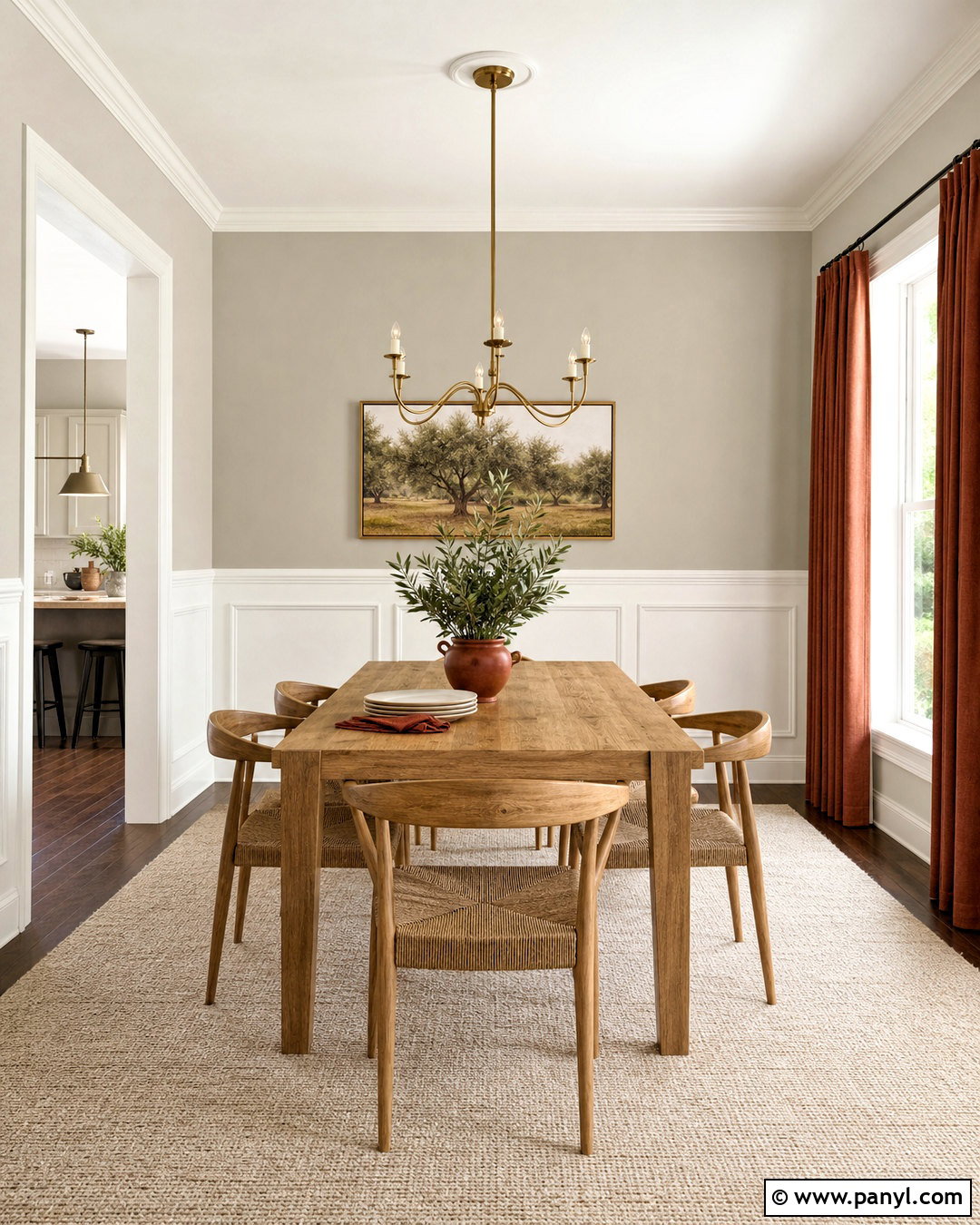
10. Dusty Blue Walls With Charcoal Trim
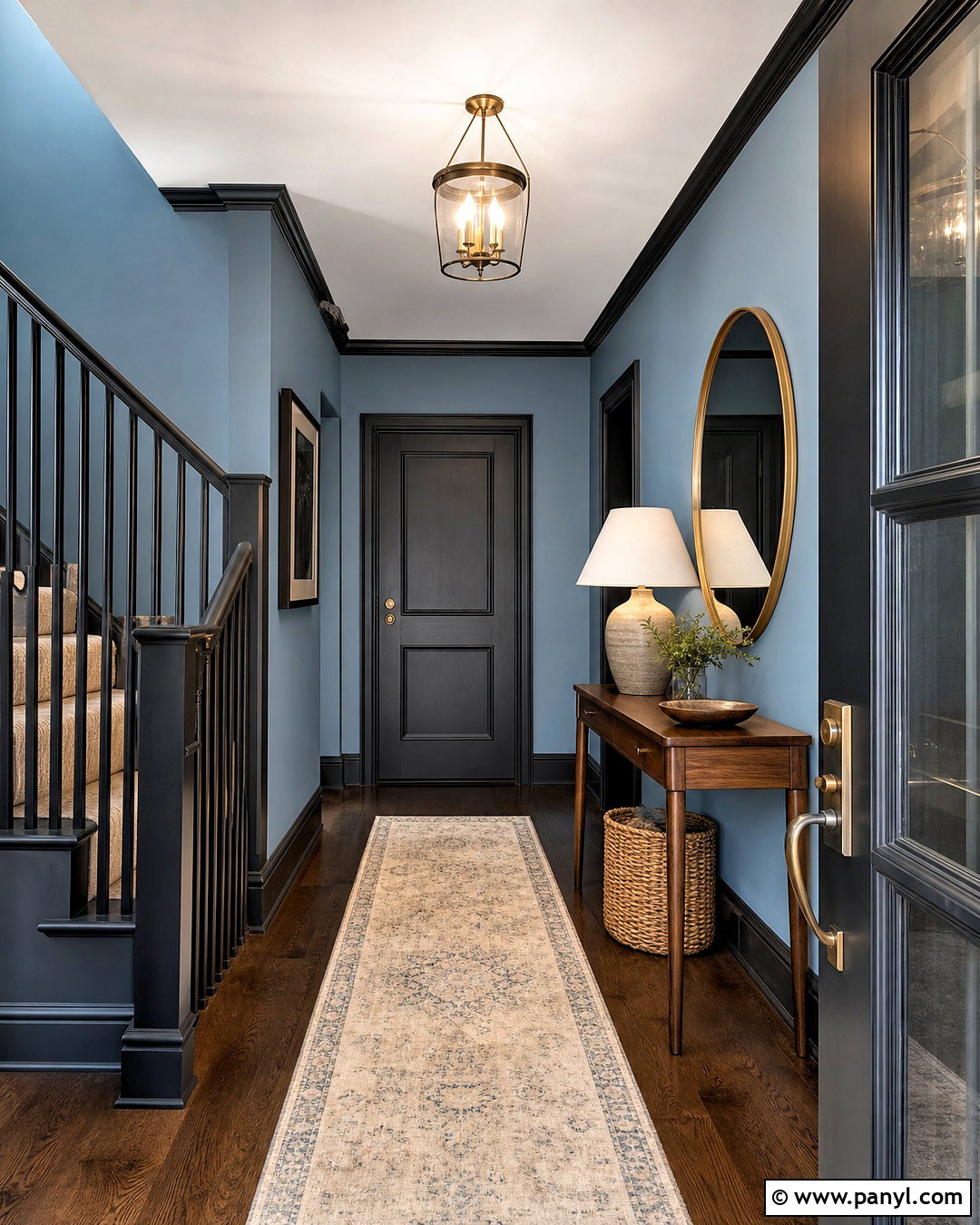
Dusty blue walls and charcoal trim offer a crisp alternative to predictable blue-and-white rooms. This combination works beautifully in an entryway, where dark door frames and baseboards can establish a strong first impression. Choose a muted medium blue with gray undertones, then apply soft charcoal to the interior door, stair railing, window trim, and lower molding. Add a slim walnut console, a pale patterned runner, and a round brass mirror to warm the cooler colors. A woven basket and ceramic lamp bring practical texture without adding clutter. Keep the ceiling a gentle off-white to lift the compact area. Connect the charcoal trim to nearby rooms through black or dark bronze hardware, helping the entry palette flow naturally into the rest of the house.
11. Light Gray Walls With White Trim
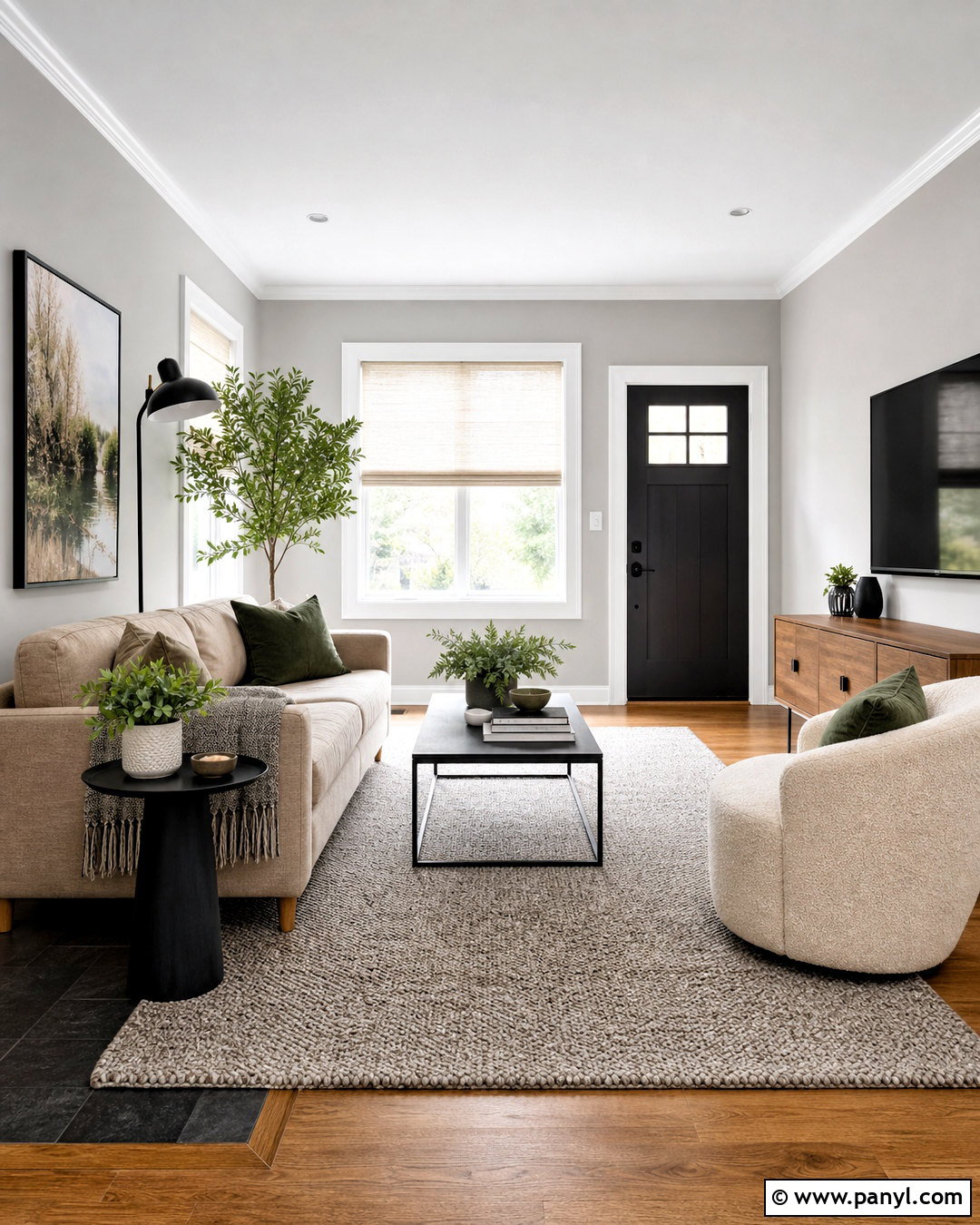
Light gray walls with clean white trim can feel fresh and welcoming when the room includes enough warmth and texture. Select a soft gray that looks neutral beside your flooring instead of one with obvious blue or purple undertones. Use white on the crown molding, baseboards, windows, doors, and built-in storage to create clear architectural edges. Complete a modern living room with a cream boucle chair, warm oak media cabinet, beige sofa, and textured wool rug. Add black accents sparingly through picture frames and a floor lamp. Muted green pillows and natural plants introduce gentle color. Avoid filling the room with more gray furniture, which can make the design feel flat. Layering warm neutrals against the cooler walls produces a balanced, comfortable finished space.
12. Medium Gray Walls With Dark Gray Trim
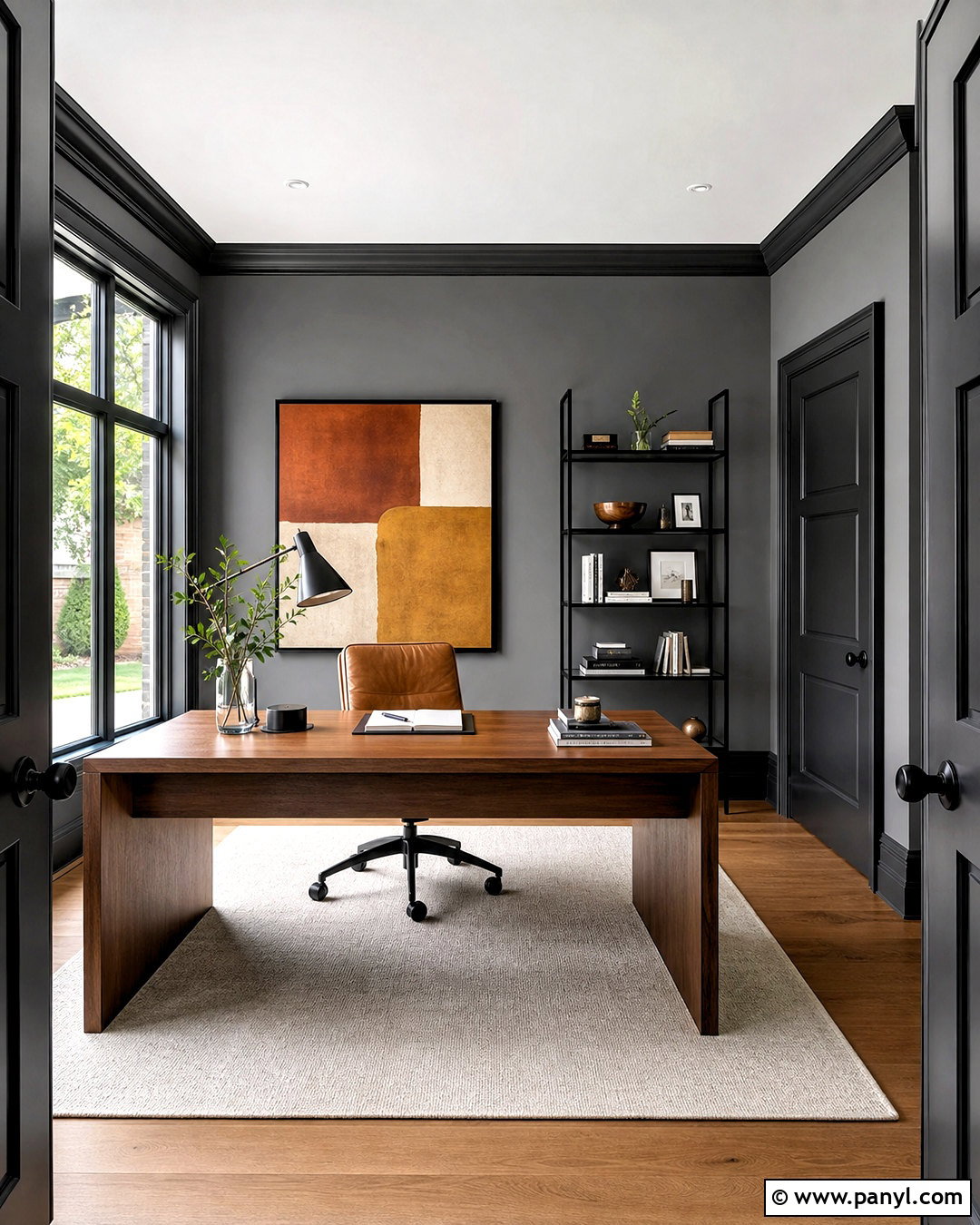
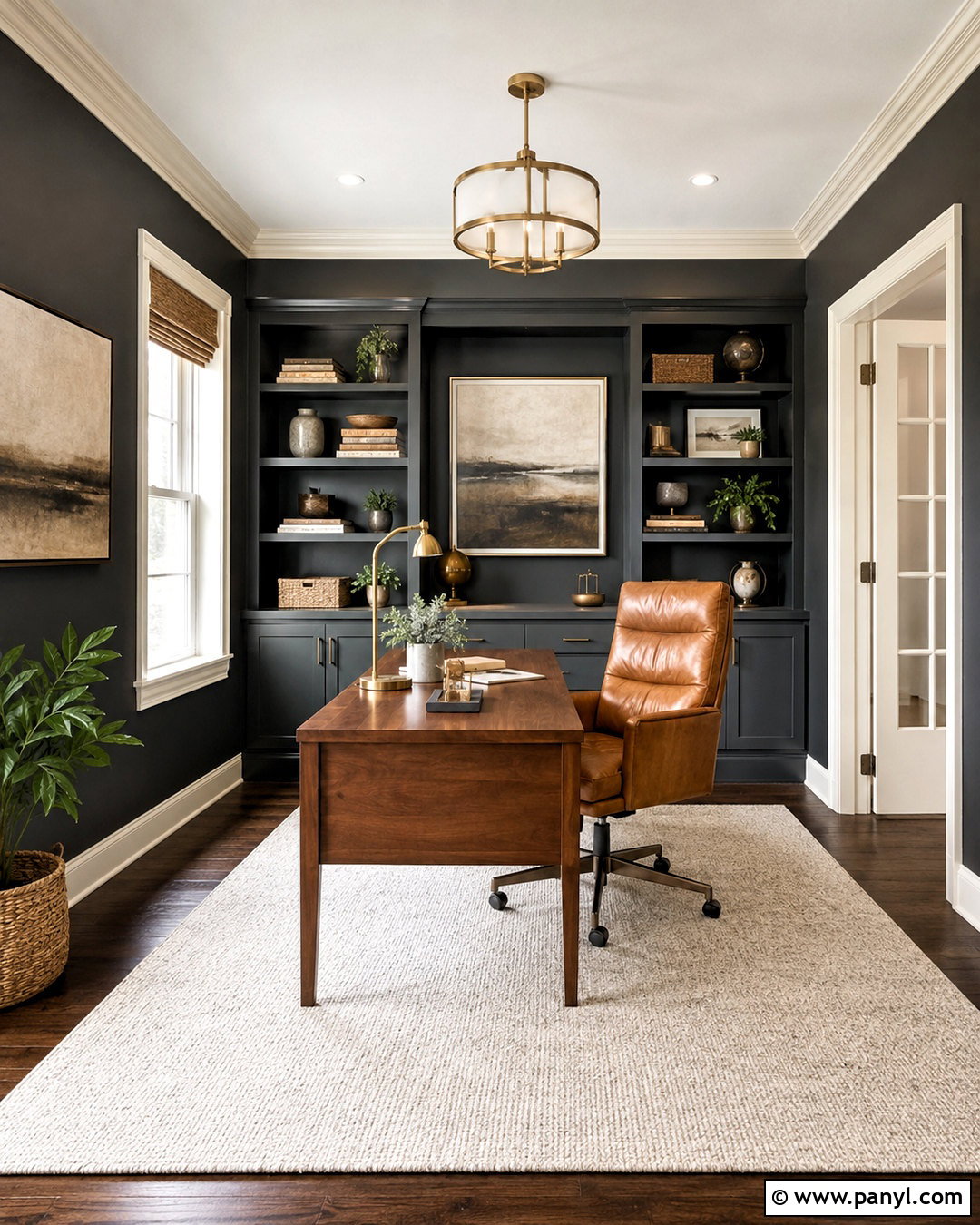
For a monochromatic room with visible structure, pair medium gray walls with trim several shades darker. This tonal approach suits a contemporary office, media room, or hallway where strong white outlines might feel distracting. Choose a balanced stone gray for the walls and a deep graphite gray for the doors, baseboards, and window casings. Keep the ceiling pale gray or soft white to prevent the scheme from becoming too enclosed. Furnish the room with a walnut desk, cognac chair, ivory rug, and matte black shelving. Artwork containing rust, ochre, and cream will bring warmth to the gray backdrop. Use satin paint on the darker woodwork so it remains easy to clean and subtly reflective. The finished room feels streamlined, deliberate, and comfortably layered.
13. Charcoal Walls With Black Trim
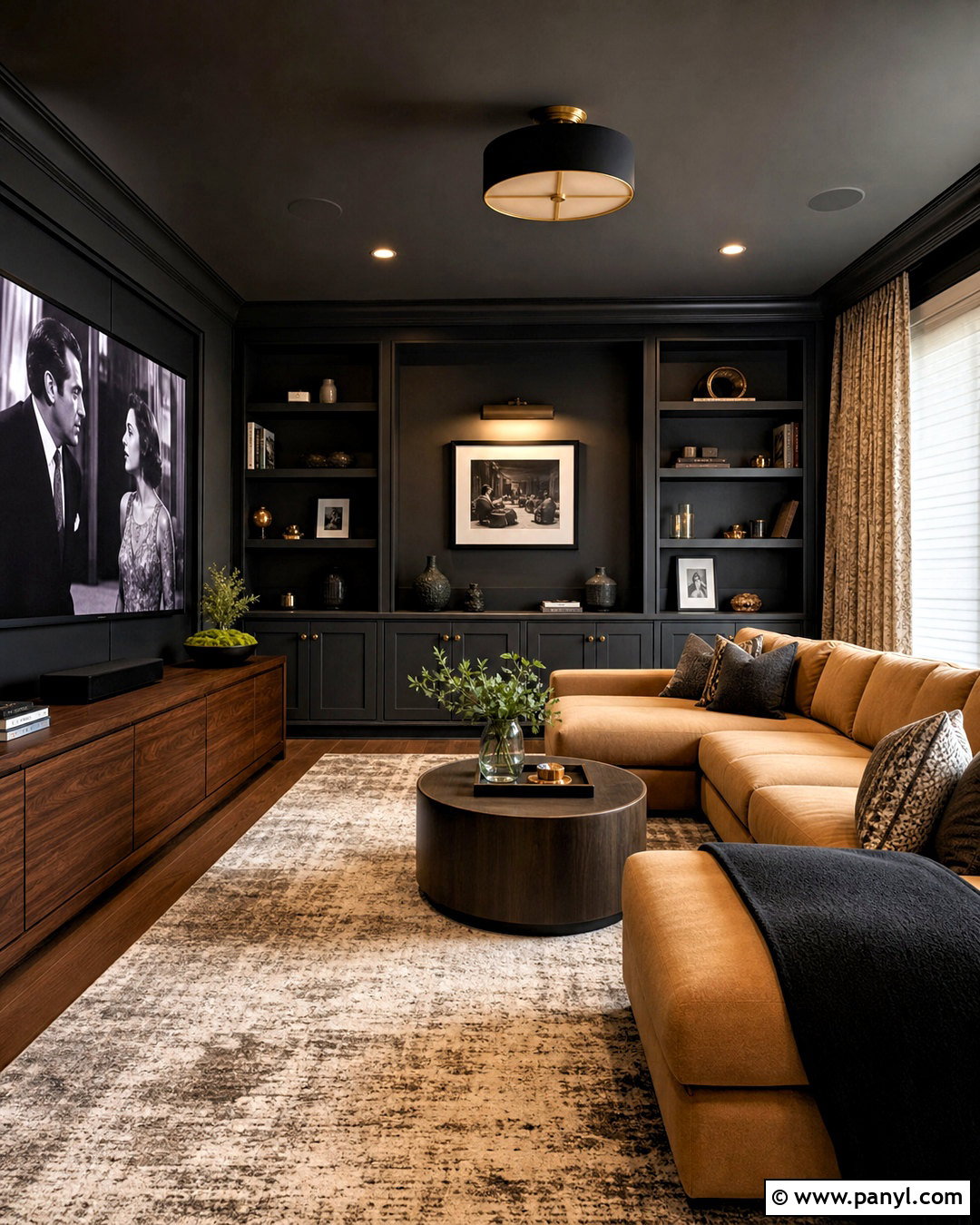
Charcoal walls and soft black trim can create a dramatic media room without relying on decorative clutter. Choose charcoal walls with a warm undertone, then deepen the door, baseboards, window casing, and built-in cabinets with a velvety black. Using closely related colors allows the room’s architectural lines to remain visible while limiting sharp contrast around the screen. Add a large camel sectional, a low walnut console, and an ivory-and-gray area rug to prevent the space from becoming visually heavy. Warm white lamps, bronze hardware, and textured beige curtains provide balance. Paint the ceiling a lighter charcoal for continuity without completely closing in the room. This full scheme works best with layered lighting, including ceiling fixtures, floor lamps, and discreet cabinet illumination.
14. Blush Pink Walls With Burgundy Trim
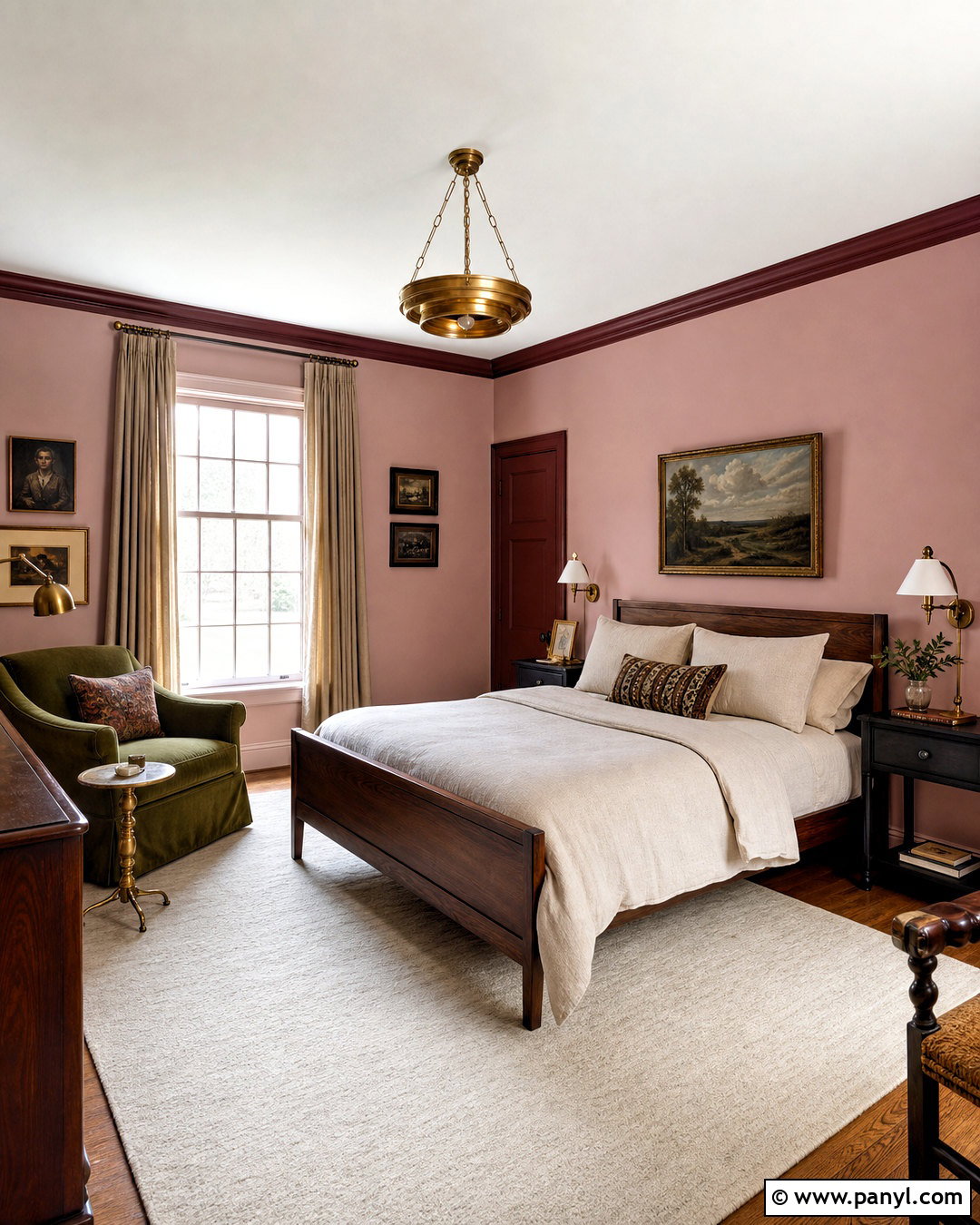
Blush pink walls framed by burgundy trim create a playful room that still feels mature and thoughtfully designed. Use a dusty, muted pink on the walls and a deep red-burgundy on window frames, the interior door, baseboards, and picture molding. This combination is especially effective in a guest bedroom or creative workspace. Balance the colors with a walnut bed or desk, natural linen textiles, and an ivory rug. Olive green pillows or a small upholstered chair provide a grounded complementary accent. Choose aged brass lighting rather than shiny gold to maintain the softened appearance. Keep the ceiling warm white and use simple curtains in oatmeal or cream. Repeating burgundy through a patterned rug or small decorative objects helps the stronger trim color belong within the complete room.
15. Terracotta Walls With Cream Trim
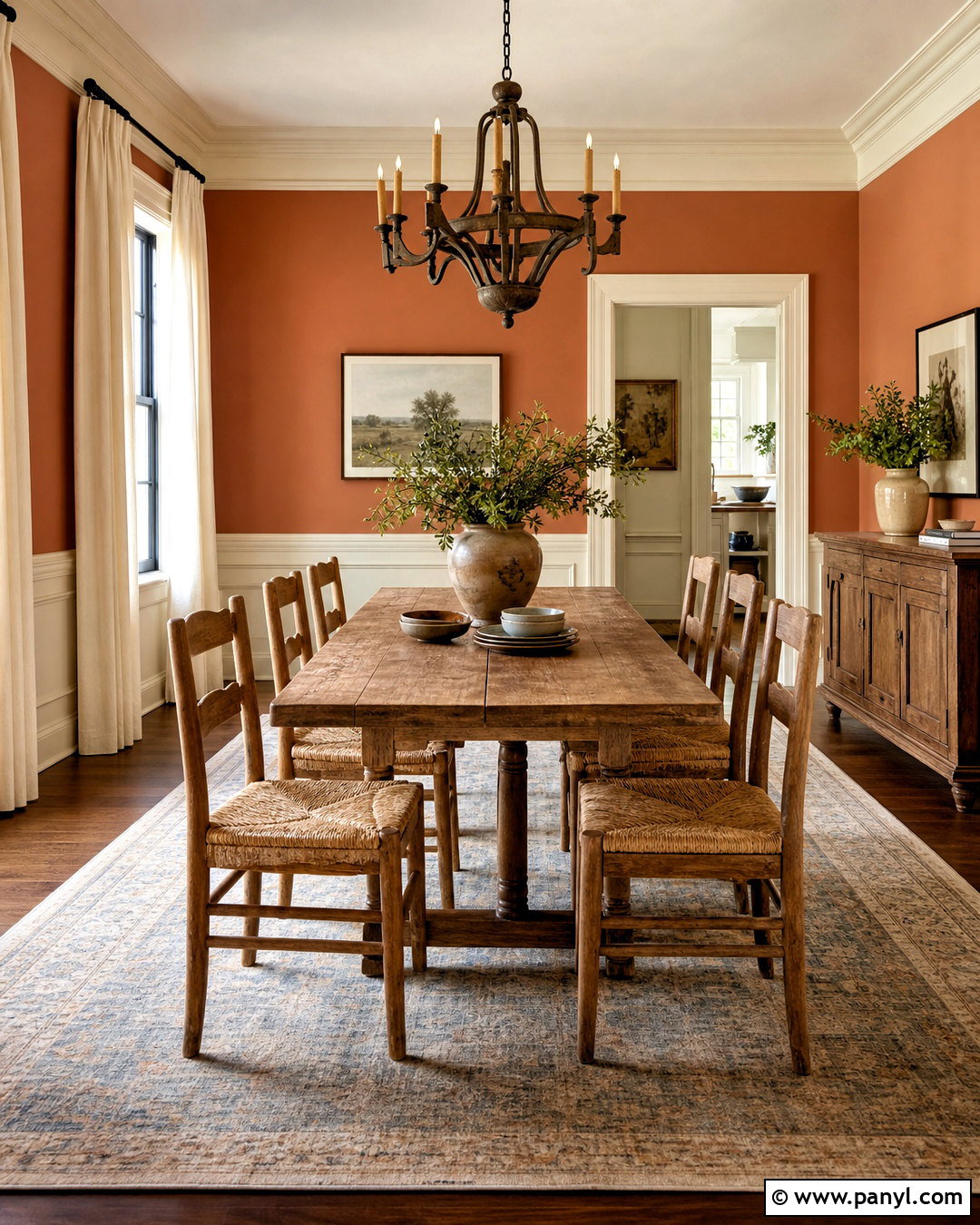
Terracotta walls bring a sun-warmed glow to a dining room, while cream trim keeps the color approachable. Select a softened clay tone with brown and orange undertones rather than a highly saturated red-orange. Paint the windows, doors, baseboards, ceiling, and any wall molding in a rich creamy white. A rustic oak dining table, woven rush chairs, and a flat-weave rug in beige and faded blue create a relaxed foundation. Add off-white curtains, handmade ceramic bowls, and aged bronze lighting for texture. Natural greenery introduces contrast without competing with the wall color. If the room has wainscoting, paint it cream along with the trim and place terracotta above it. This arrangement gives the room visual balance while preserving the warmth of the complete palette.
16. Mustard Walls With Deep Green Trim
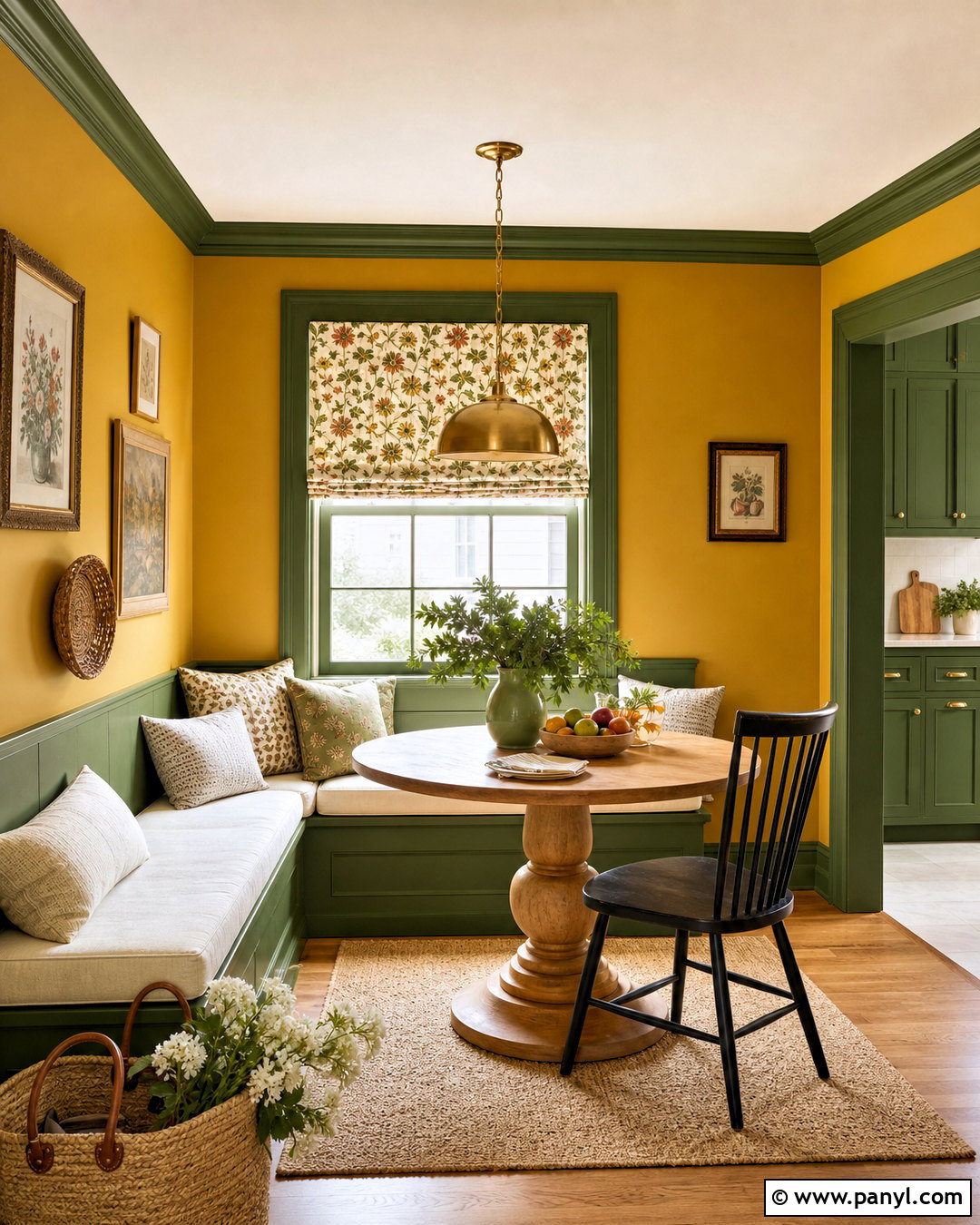
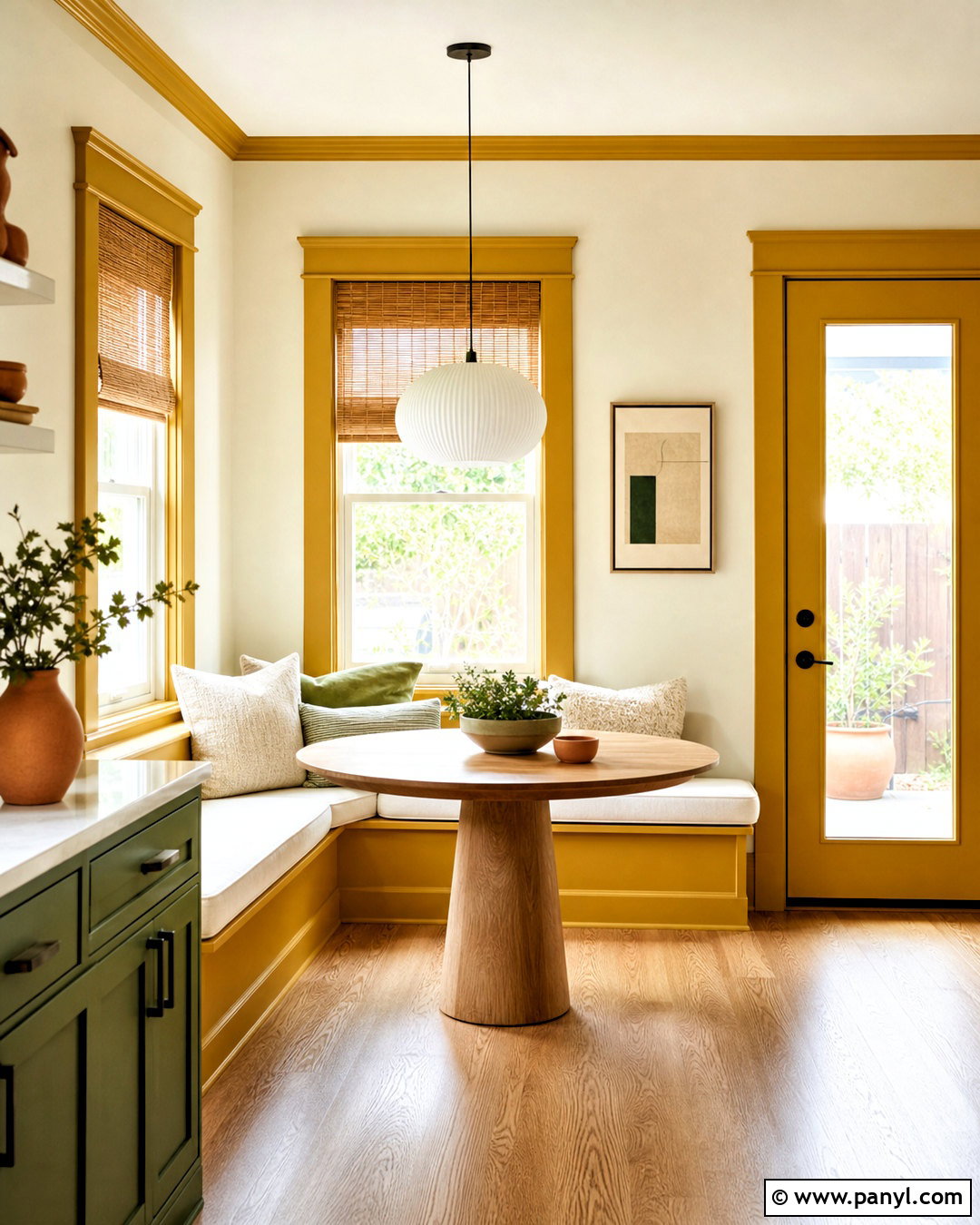
A cheerful mustard and deep green combination can transform a small breakfast nook into a memorable destination. Choose a muted ochre mustard for the walls and a dark moss or forest green for the window frame, baseboards, door, and built-in bench. The colors feel bold, so keep the furniture simple. Use a round oak pedestal table, cream seat cushions, and a compact brass pendant. A patterned Roman shade containing green, ivory, and rust can connect the palette without overwhelming the window. Paint the ceiling warm white to keep the nook bright. Add a few dark green ceramics and natural woven accessories for repetition. The completed space feels energetic and grounded, with enough neutral material to make the colorful pairing comfortable for daily breakfasts and casual meals.
17. Lavender Walls With Plum Trim
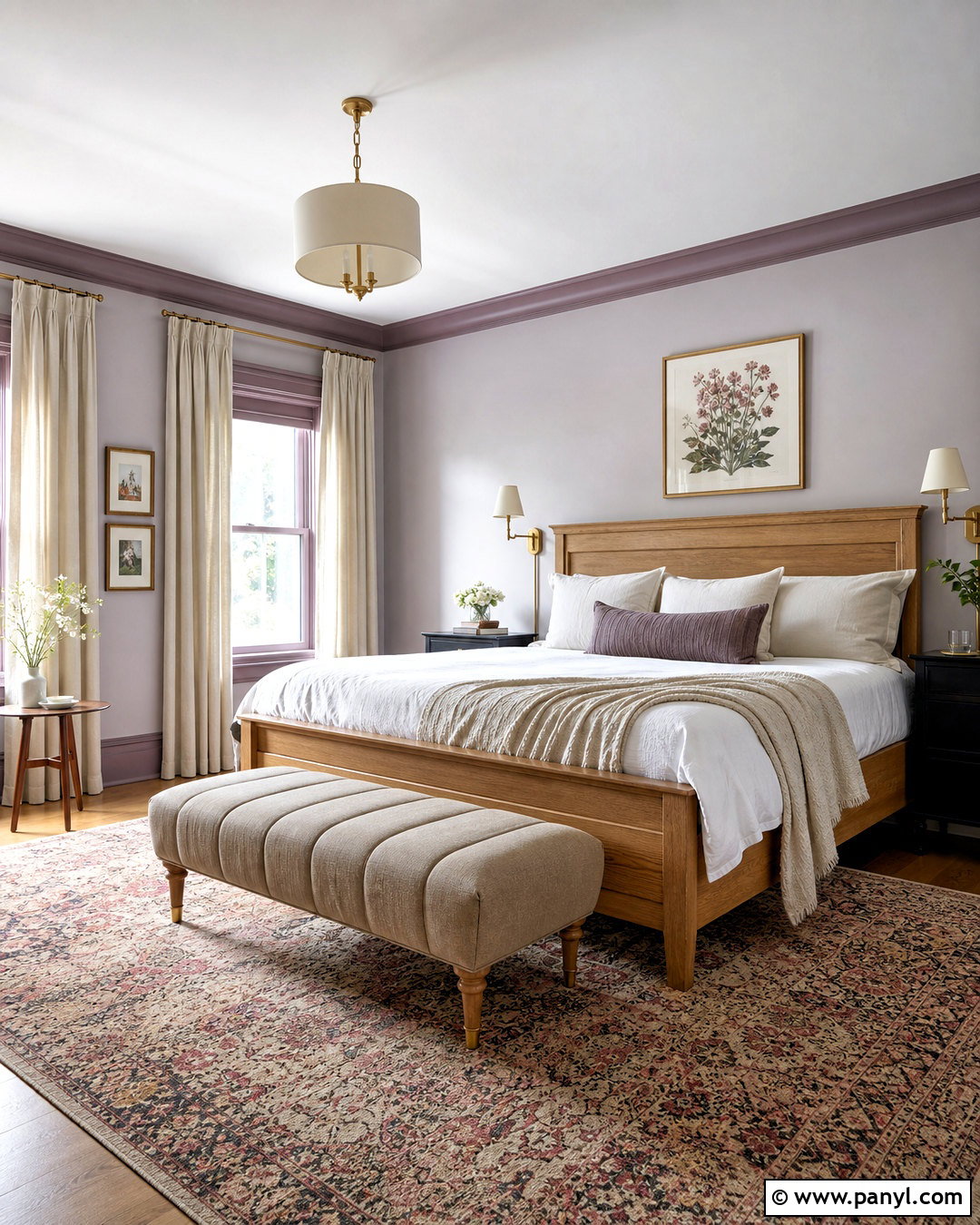
Lavender walls with plum trim offer a refined approach to purple that works particularly well in a bedroom. Start with a pale, gray-tinted lavender on the walls, then use muted plum on the baseboards, window casing, door, and slender crown molding. Choose a natural oak bed, soft white bedding, and a taupe upholstered bench to balance the color. Muted green accents on pillows or botanical artwork add gentle contrast, while brushed brass sconces bring warmth. Keep curtains light and simple, using cream linen that allows daylight to filter through. A vintage-style rug with lavender, brown, and faded rose can unite the room. Avoid overly glossy trim; a soft satin finish gives the plum definition without making it look harsh against the restful wall color.
18. White Walls With Black Trim
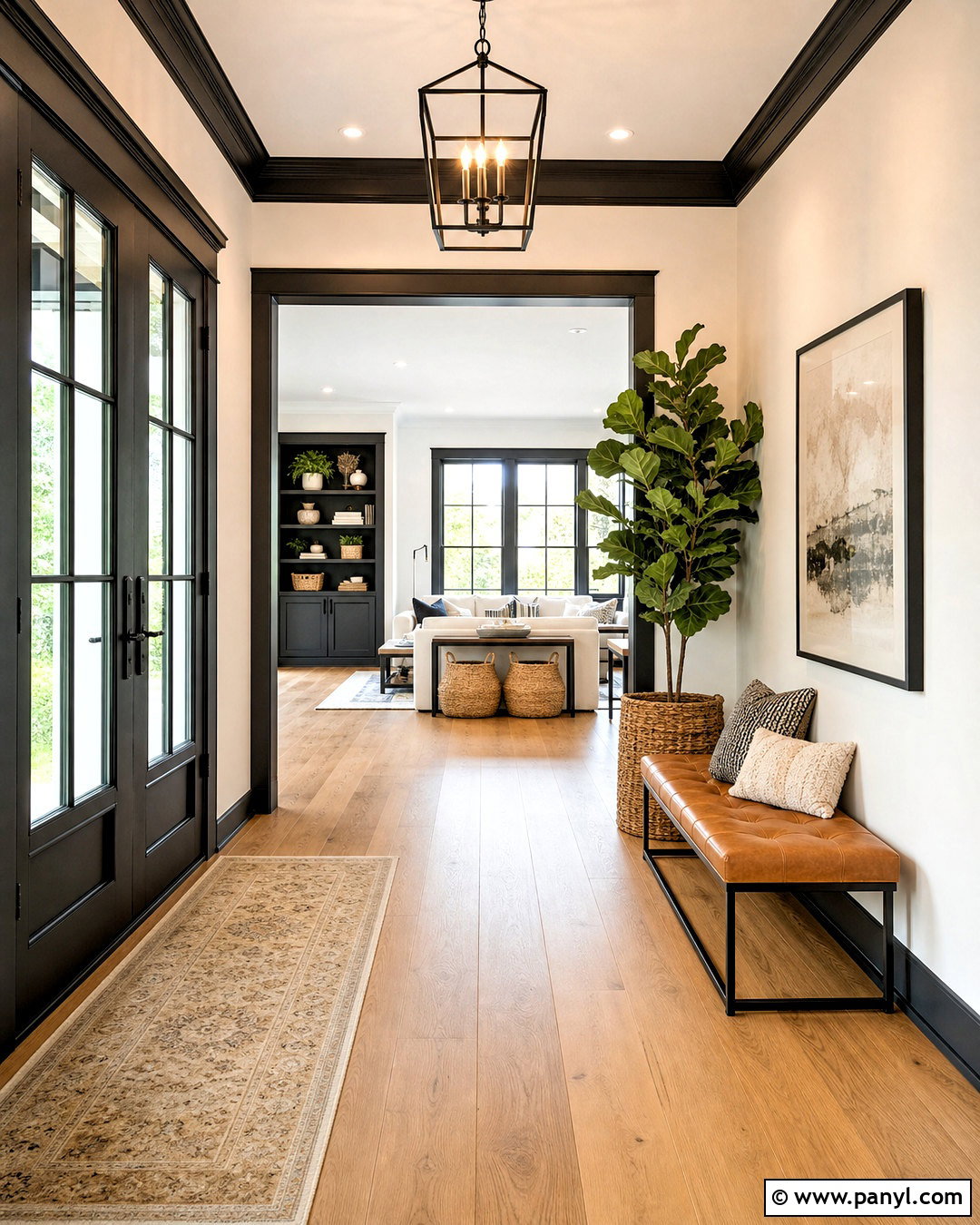
Few combinations outline architecture as clearly as white walls with black trim. Use a warm, livable white across the walls and ceiling, then apply soft black to the windows, interior doors, baseboards, and stair railing. This look works well in a modern entry or open living area with simple molding. Support the contrast with medium oak flooring, a tan leather bench, a cream rug, and black metal lighting. Add woven baskets and natural greenery to soften the graphic palette. If painting every baseboard black feels too strong, limit the dark color to doors and window casings while keeping lower trim white. Repeating black in frames, hardware, and furniture legs creates continuity. The finished room should feel balanced, not dominated by disconnected dark outlines.
19. Cream Walls With Blue Green Trim
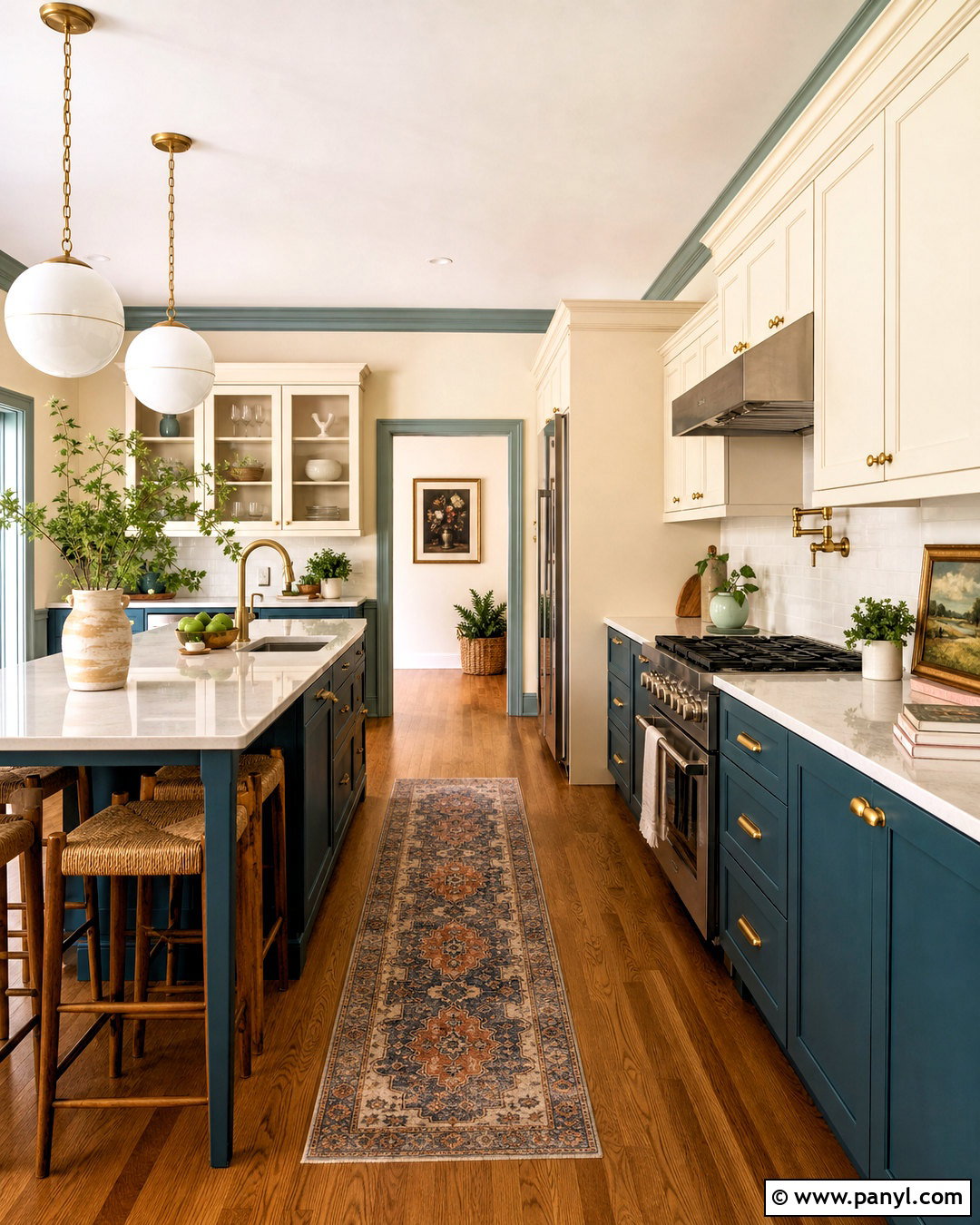
Cream walls and blue-green trim bring personality to a kitchen while remaining softer than a highly contrasting scheme. Cover the walls in a warm vanilla cream, then use muted teal or deep blue-green on the window frames, door casings, baseboards, and lower cabinets. Keep upper cabinets cream so the room stays open and bright. Add pale quartz counters, warm oak flooring, brushed brass hardware, and simple globe pendants. A small patterned runner with rust, teal, and beige can connect the colors along the floor. Use natural wood stools and white ceramic accessories to maintain an easy, practical finish. The blue-green should be muted enough to coordinate with fixed materials, creating a complete kitchen that feels colorful, balanced, and comfortable rather than overly themed.
20. Tan Walls With Rust Trim
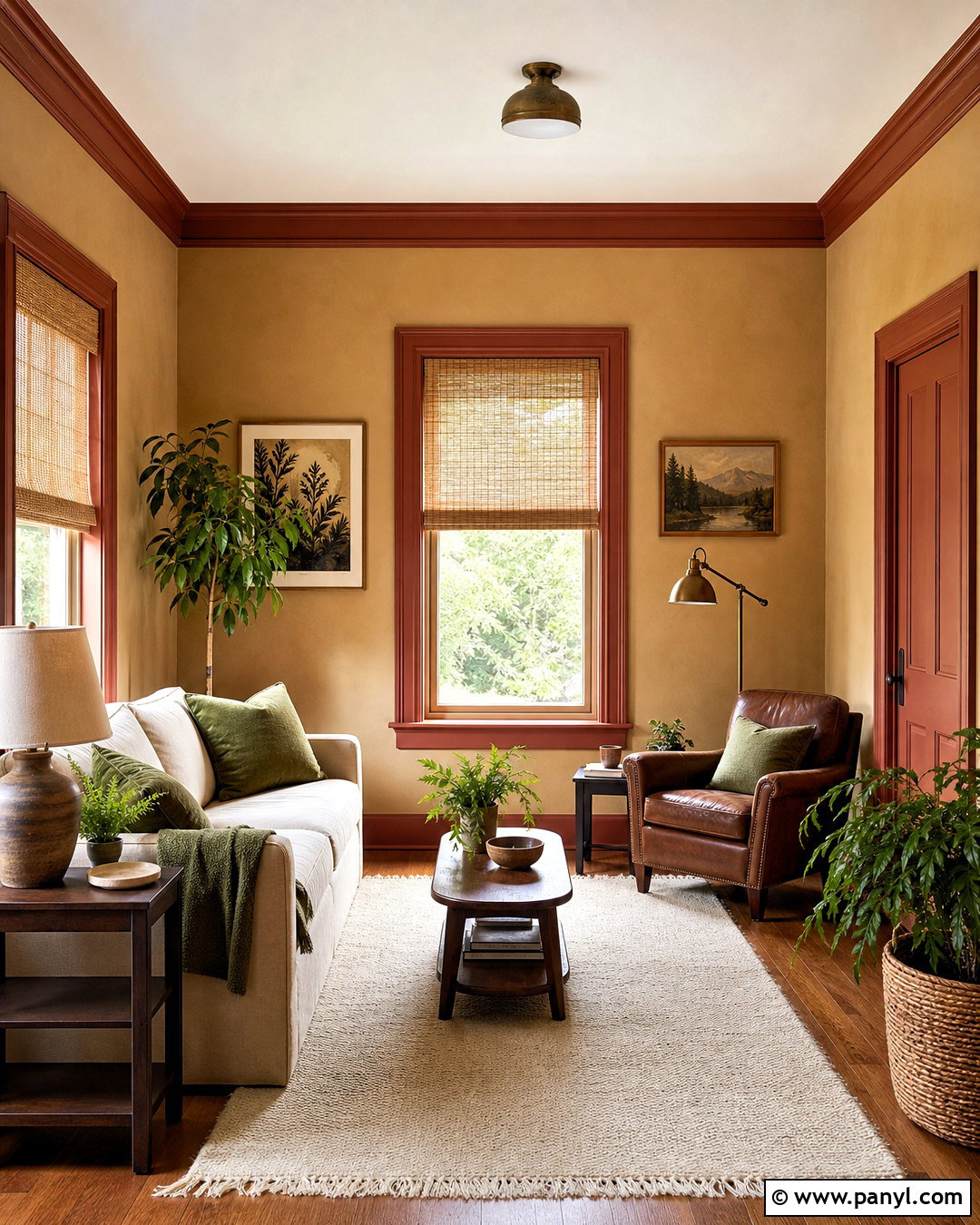
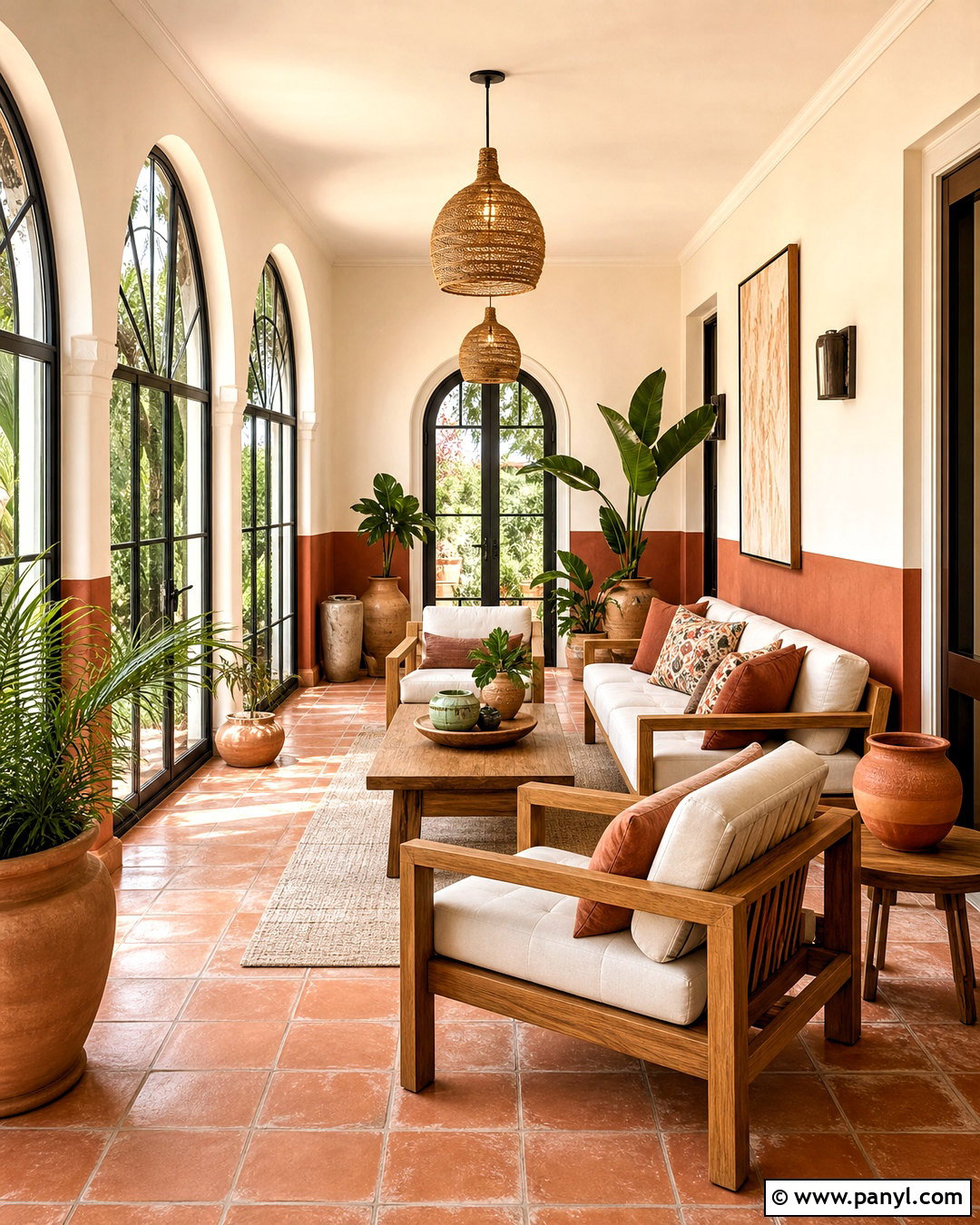
Warm tan walls outlined with earthy rust trim create a cozy palette inspired by natural clay, leather, and wood. This pairing is well suited to a sunroom, casual living room, or reading space with plentiful natural texture. Choose a light caramel tan for the walls and a deeper burnt rust for window frames, doors, and baseboards. Add an oatmeal sofa, dark wood side tables, woven shades, and a cream wool rug. Olive green pillows and indoor plants provide a cooling counterpoint to the warm paint colors. Use black or aged bronze lighting to give the scheme clear definition. Keep the ceiling creamy white for brightness. Repeating rust in a patterned textile or ceramic accessory makes the trim feel integrated into the room instead of appearing as an isolated accent.
Conclusion:
The best wall and trim combinations connect paint with every permanent and decorative element in a room. Consider the flooring, countertops, furniture, natural light, and nearby spaces before making a final decision. Low-contrast pairings create a gentle, continuous background, while darker or colorful trim brings stronger definition to doors, windows, and molding. You can also use one color in different finishes for a simple, unified effect. Always test large painted samples on multiple walls and view them in morning, afternoon, and evening light. Whether you prefer airy neutrals, earthy greens, dramatic blues, or playful accent trim, these 20 wall and trim colors ideas provide complete, practical looks you can confidently adapt to your home.

Related Ideas and Inspiration:
Leave a Reply