
Green walls can feel calming, dramatic, earthy, or fresh, depending on the trim color placed beside them. The right pairing does more than outline doors and windows. It shapes the room’s contrast, affects how the green undertone appears, and connects the walls with flooring, furniture, and architectural details. Warm sage often works beautifully with creamy neutrals, while emerald and forest green can handle sharper whites or deep contrasting trim. You can also choose tonal green woodwork for a seamless look or introduce brown, blue, blush, and terracotta for more personality. Before committing, test both colors together in morning and evening light. The complete room schemes below explore 20 practical, stylish, and versatile trim colors for green walls.

1. Crisp White Trim With Green Walls
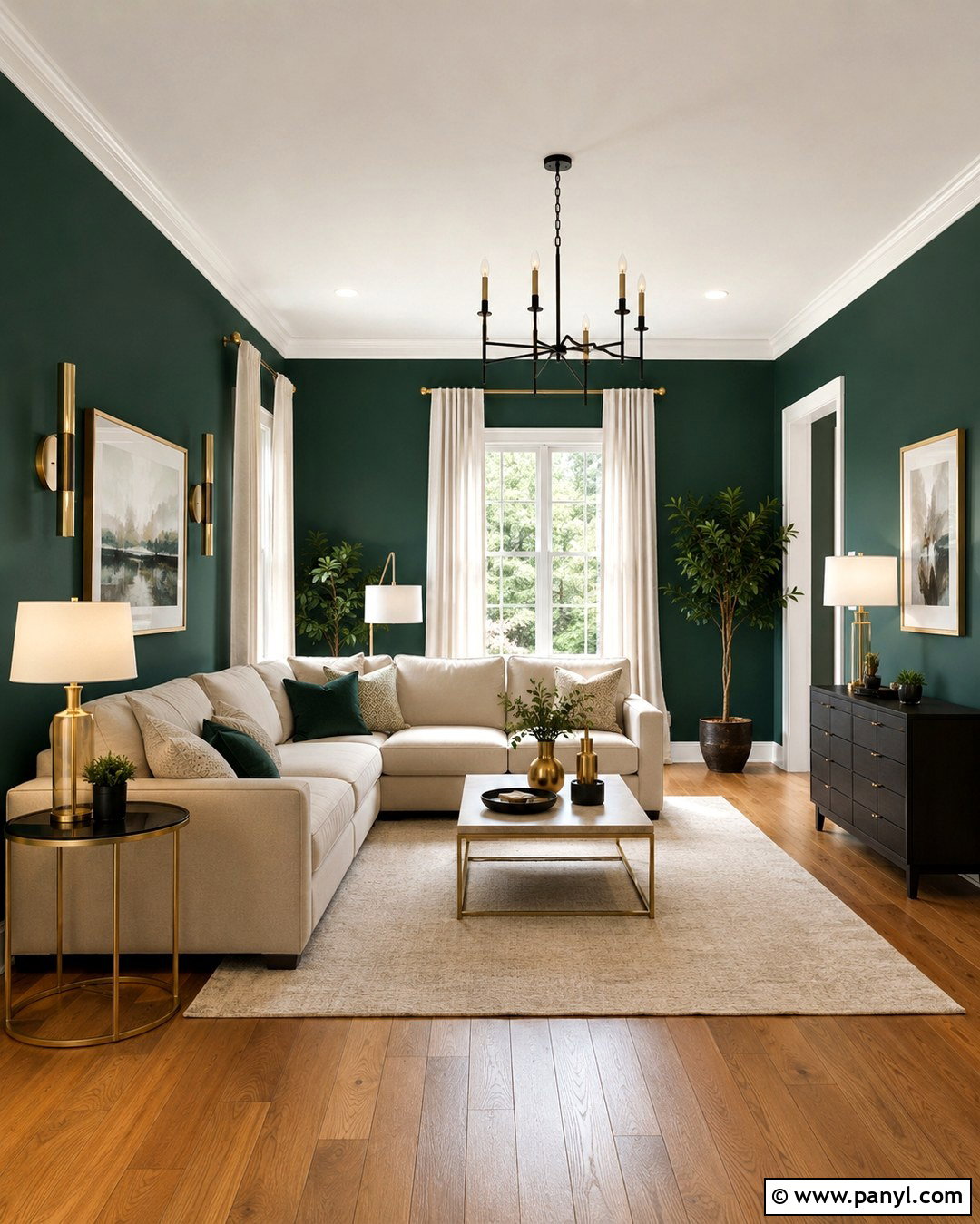
Crisp white trim gives green walls a clean, defined edge that works especially well with emerald, forest, and blue-green shades. Use a clear white without strong yellow undertones on baseboards, door frames, crown molding, and window casings. In a living room, balance this sharp contrast with a light beige sofa, medium oak flooring, and a simple cream rug. Add black metal lighting and small brass accents for definition. White linen curtains keep the windows bright without competing with the wall color. This pairing is helpful in rooms with detailed molding because the bright trim emphasizes every architectural line. Choose satin or semi-gloss for the woodwork, while keeping the green walls matte or eggshell.
2. Warm White Trim With Green Walls
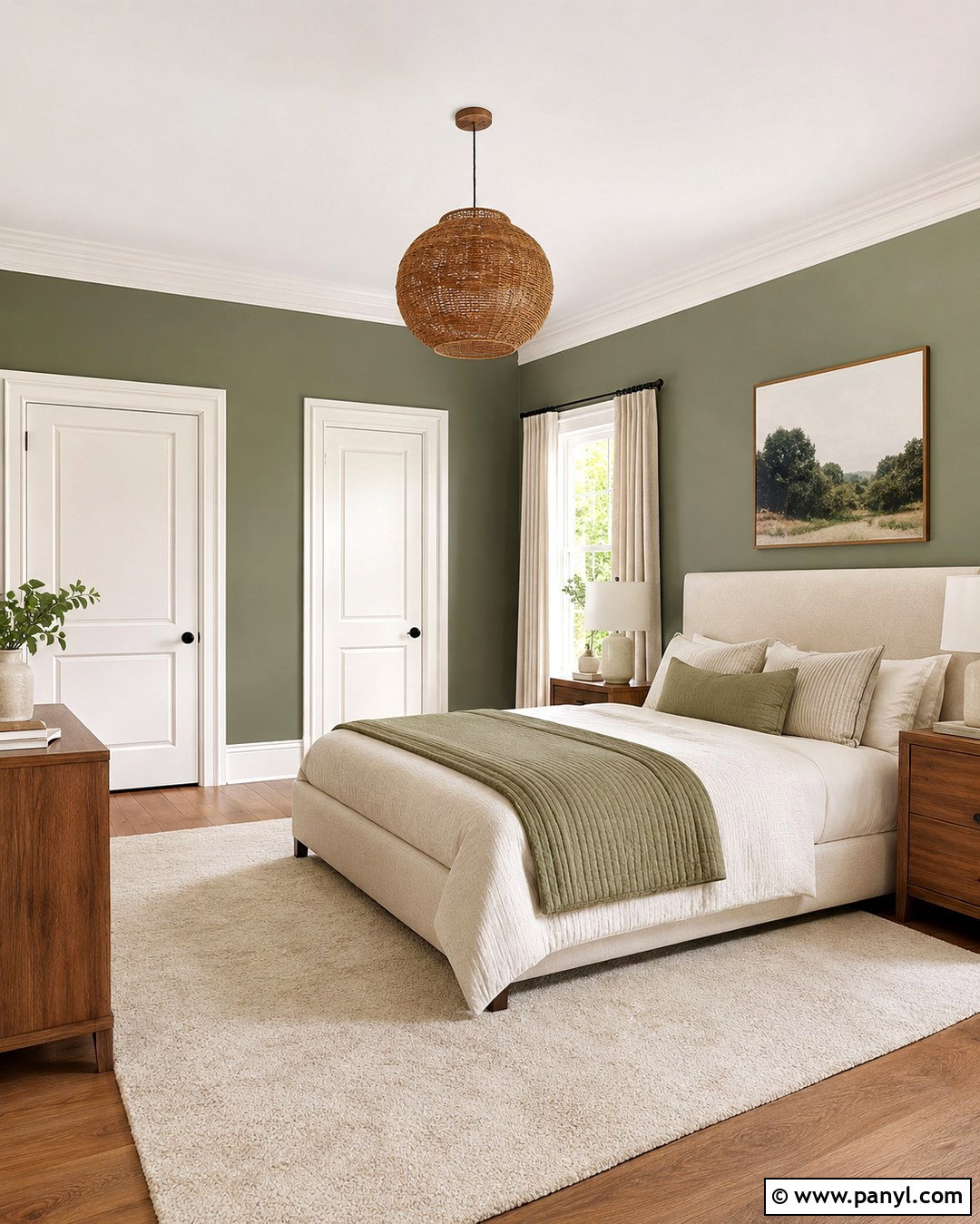
Does crisp white feel too sharp beside your sage or olive walls? Warm white trim offers gentler contrast while still making the room look finished. Select a white with subtle cream, beige, or soft gray undertones rather than an obviously yellow shade. Build a comfortable bedroom around the palette with warm sage walls, oatmeal bedding, walnut nightstands, and woven pendant lighting. Natural linen curtains and an ivory wool rug reinforce the relaxed effect. Carry the warm white onto the ceiling to create a smooth visual transition above the green. This combination works particularly well with warm wood flooring and aged brass hardware. Always compare samples against the wall because an overly creamy white can look dingy beside cooler green paint.
3. Ivory Trim With Green Walls
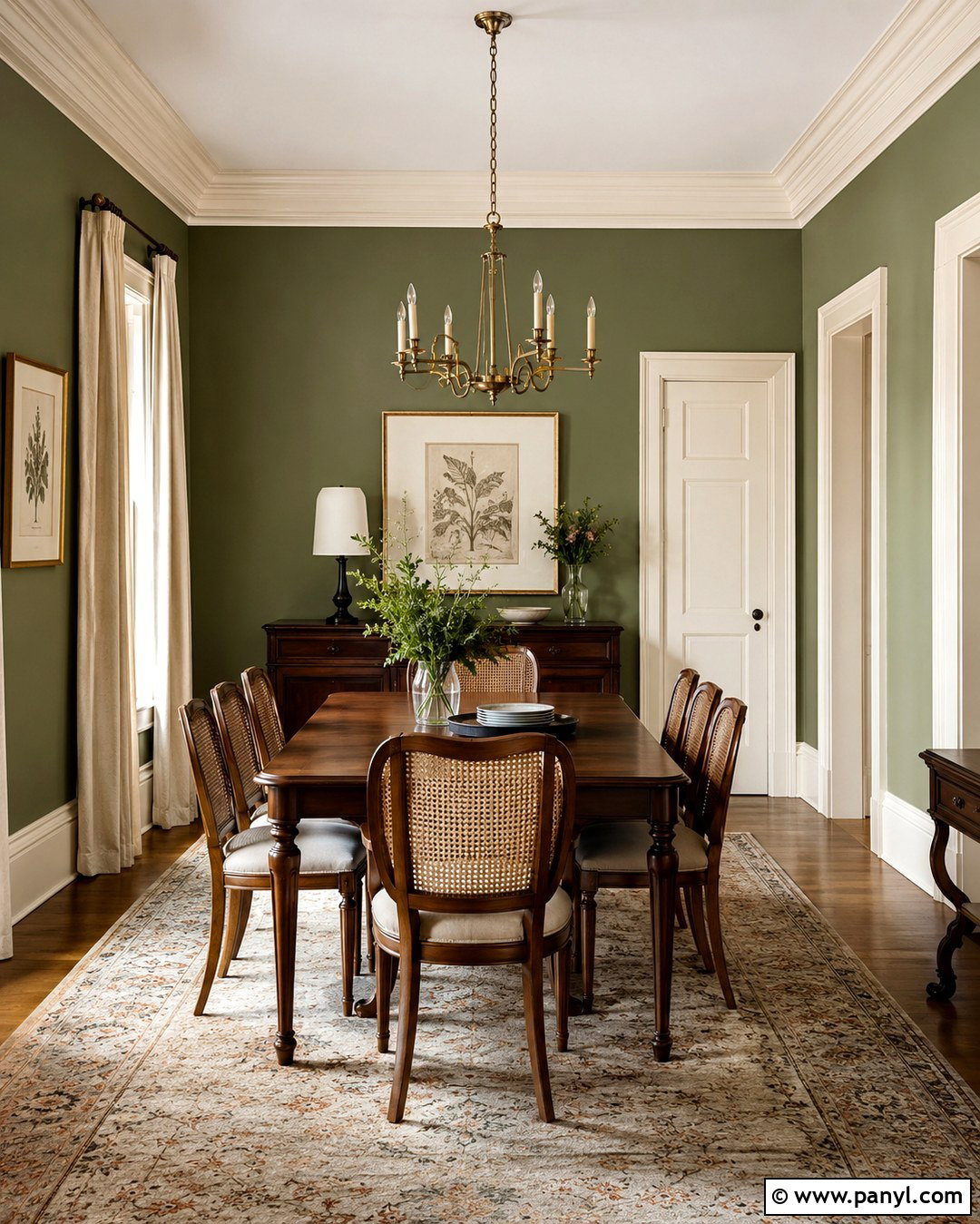
Ivory trim creates a soft, traditional frame around muted green walls without producing harsh contrast. It is particularly attractive with moss, olive, and heritage-inspired greens. Picture a dining room with olive walls, ivory crown molding, paneled doors, and a matching ceiling. A medium walnut table anchors the space, while cane-backed chairs introduce lighter texture. Complete the room with an antique brass chandelier, an understated botanical print, and flax-colored curtains. Ivory is warmer and slightly deeper than standard off-white, so it pairs naturally with brown wood, aged metals, and creamy textiles. Avoid mixing it with bright white furnishings, which can make the trim appear yellow. Instead, repeat ivory through lampshades, ceramics, and patterned fabric.
4. Cream Trim With Green Walls
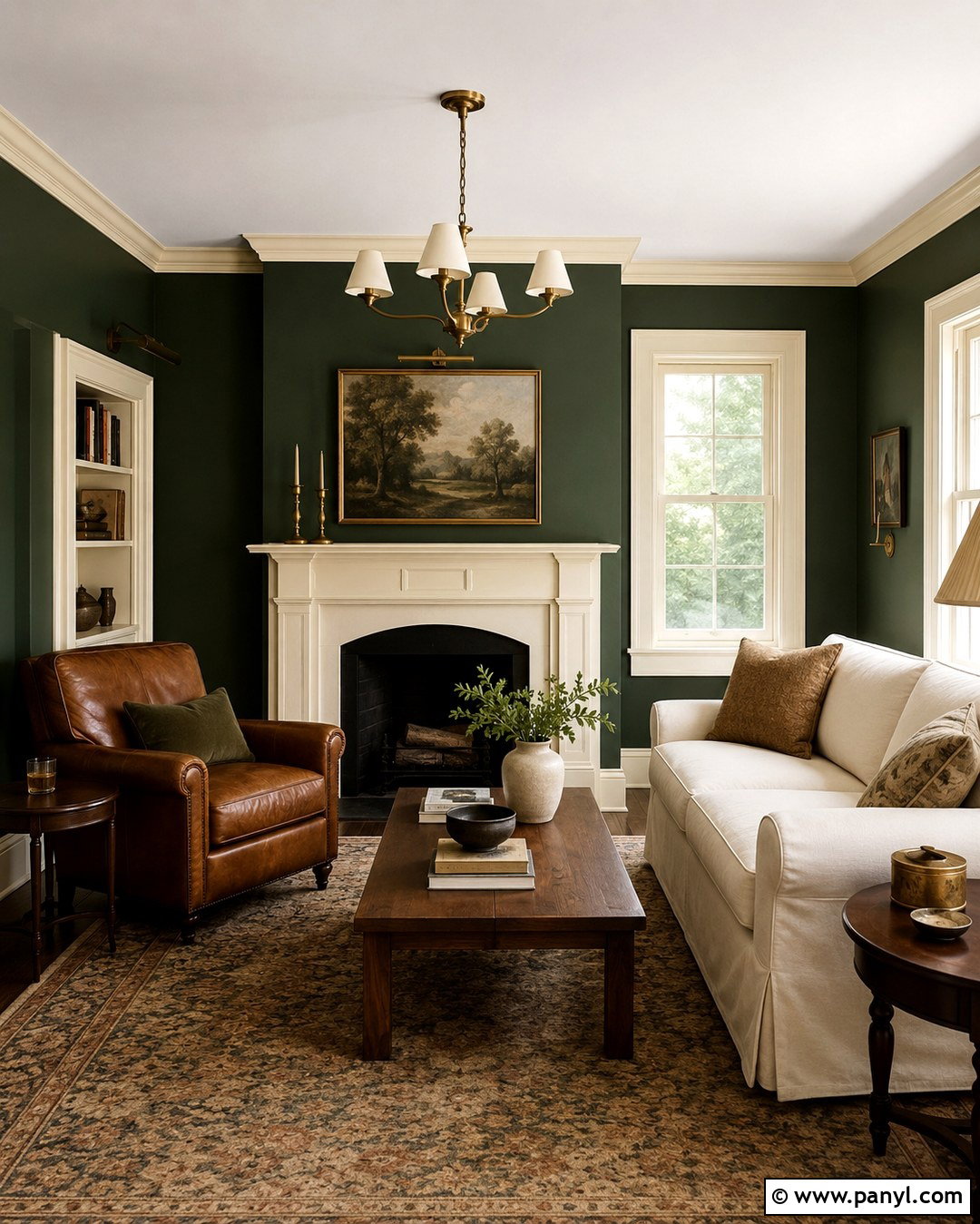
Cream trim brings warmth and softness to deep green walls, making it a welcoming choice for traditional living rooms, reading rooms, and bedrooms. Pair dark forest green walls with substantial cream baseboards, window frames, and a simple fireplace surround. Furnish the room with a camel leather chair, a neutral slipcovered sofa, and a vintage-style rug containing green, tan, and muted rust. Walnut furniture and antique brass lighting deepen the cozy character. Keep the ceiling a lighter version of the cream so the upper part of the room remains airy. Because cream has visible yellow warmth, it usually looks best beside yellow-based greens rather than cool mint. Test the pairing beside flooring and fabrics before painting the entire room.
5. Soft Beige Trim With Green Walls
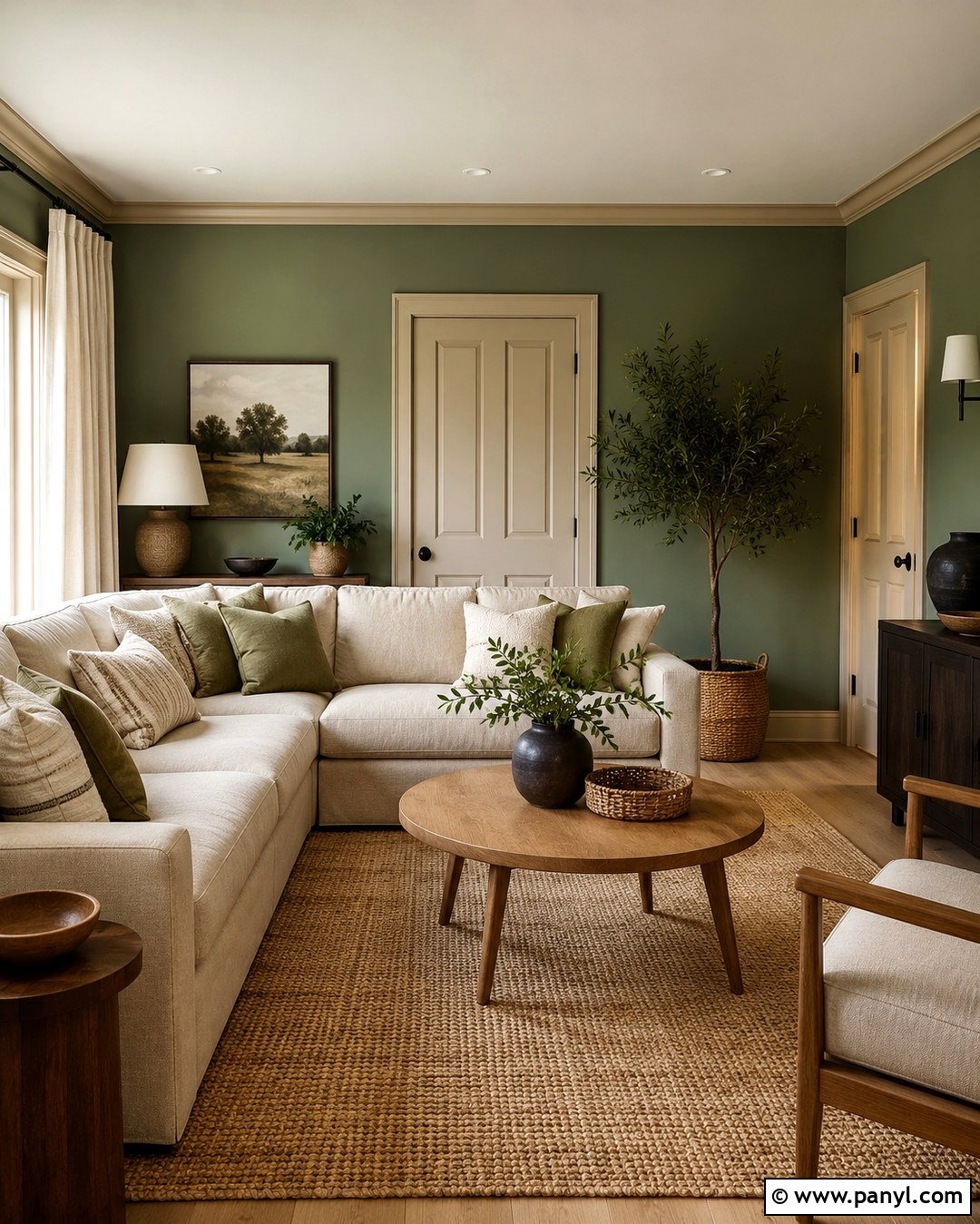
Soft beige trim lowers the contrast around green walls and creates an earthy, connected room. It works beautifully with eucalyptus, sage, and subdued olive because all these shades share a natural, quiet quality. For a relaxed family room, use eucalyptus green on the walls and pale sandy beige on the molding, doors, and ceiling. Add a deep oatmeal sectional, a textured jute rug, oak tables, and woven storage baskets. Black accents can appear in small amounts through picture frames and curtain rods, preventing the scheme from becoming washed out. Choose a beige that is noticeably lighter than the walls but not strongly pink or gold. Repeating the trim color in upholstery and ceramics helps the entire room feel deliberate and balanced.
6. Greige Trim With Green Walls
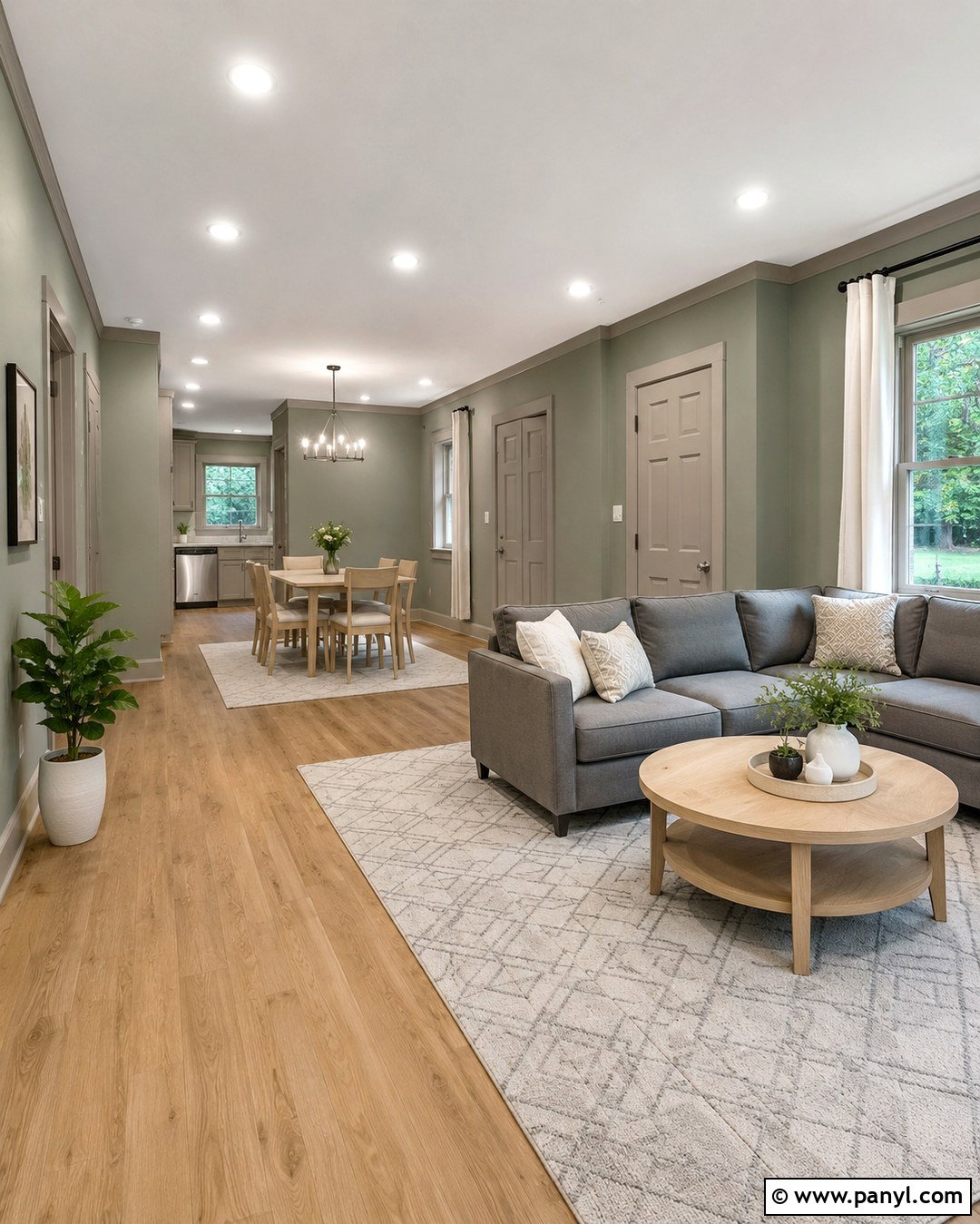
Greige trim is a useful bridge between green walls and mixed warm and cool finishes. Its combination of gray and beige feels softer than white but more contemporary than cream. Pair medium sage walls with light greige doors, baseboards, crown molding, and window casings. In an open living area, add a warm gray sofa, pale oak coffee table, ivory curtains, and a geometric rug containing cream, charcoal, and muted green. Brushed nickel lighting can connect with the gray undertone, while natural wood keeps the design comfortable. Choose a greige that remains clearly lighter than the wall color, especially in rooms with limited daylight. This measured contrast gives architectural details presence without making them the main focal point.
7. Light Taupe Trim With Green Walls
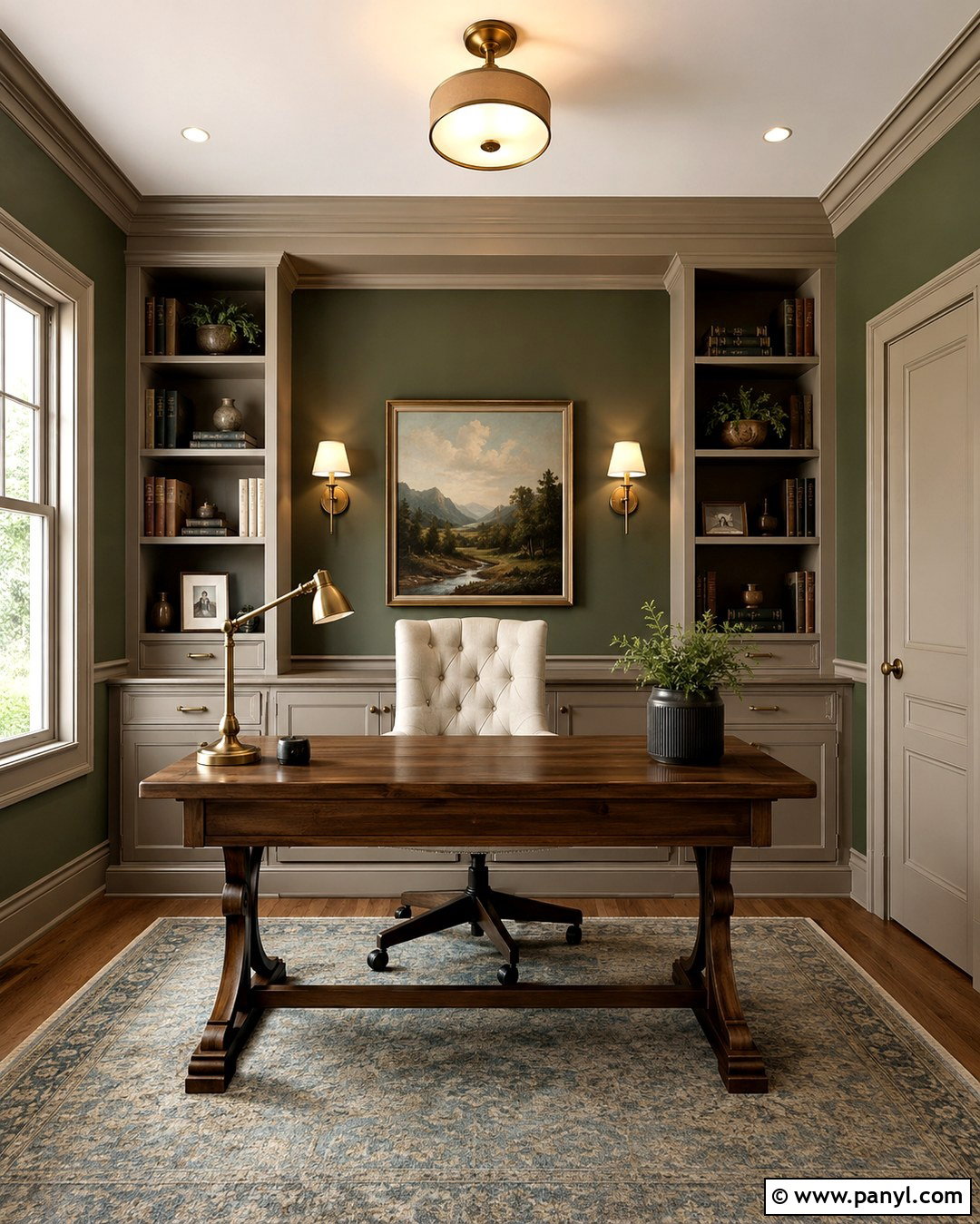
Light taupe trim gives green walls a grounded, sophisticated appearance while offering more depth than beige or off-white. This pairing is especially effective with gray-green, khaki green, and muted moss walls. Create a polished home office with moss green walls, light taupe woodwork, and a matching built-in bookcase. Include a walnut desk, an upholstered cream chair, and a low-pile rug featuring taupe and faded blue. Aged brass sconces add warmth, while framed landscape art strengthens the natural palette. Taupe often carries gray, brown, or violet undertones, so sampling is essential. Select a restrained version that supports the green rather than turning noticeably purple. Continue the taupe on interior doors for a cohesive, architectural finish.
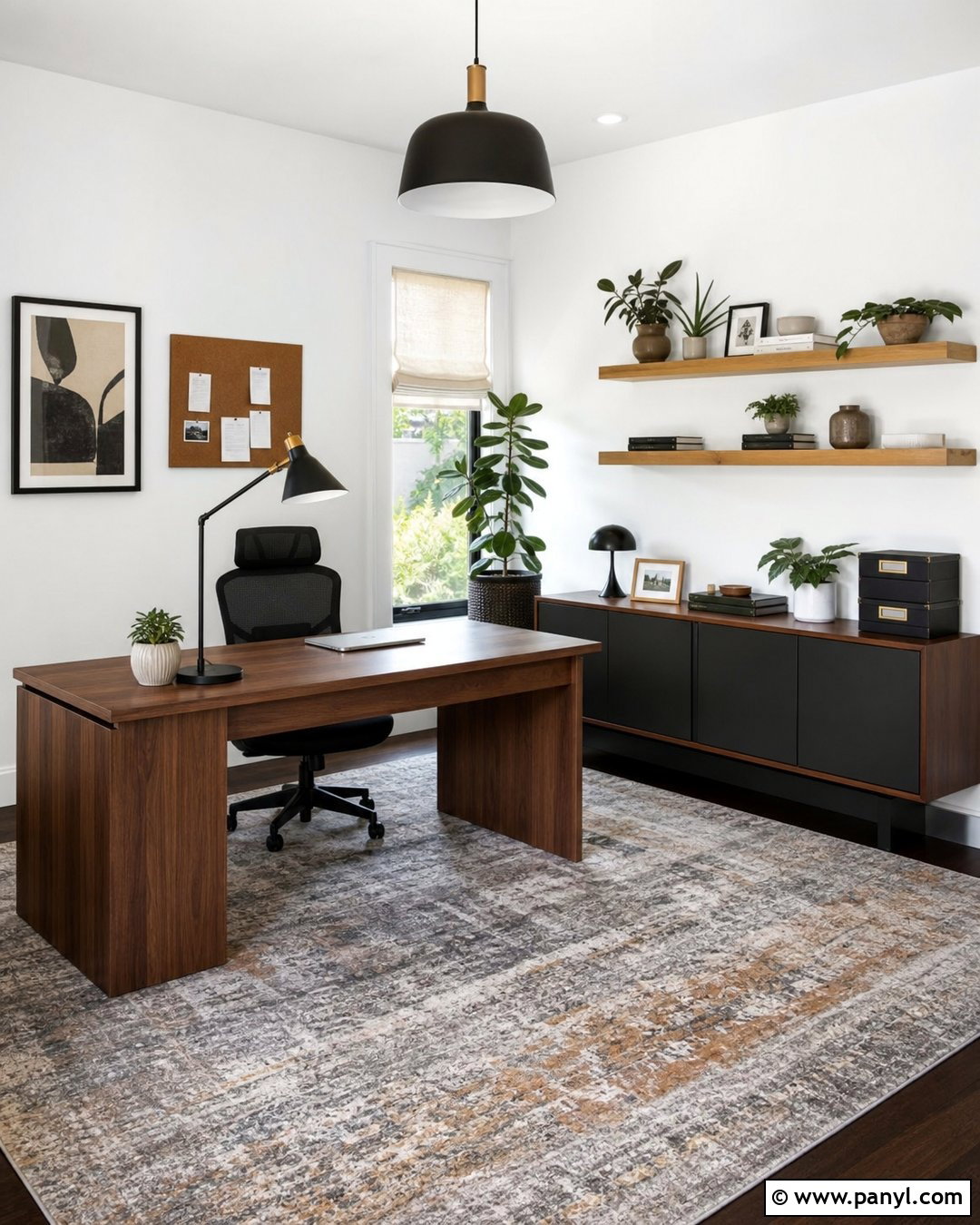

8. Mushroom Trim With Green Walls
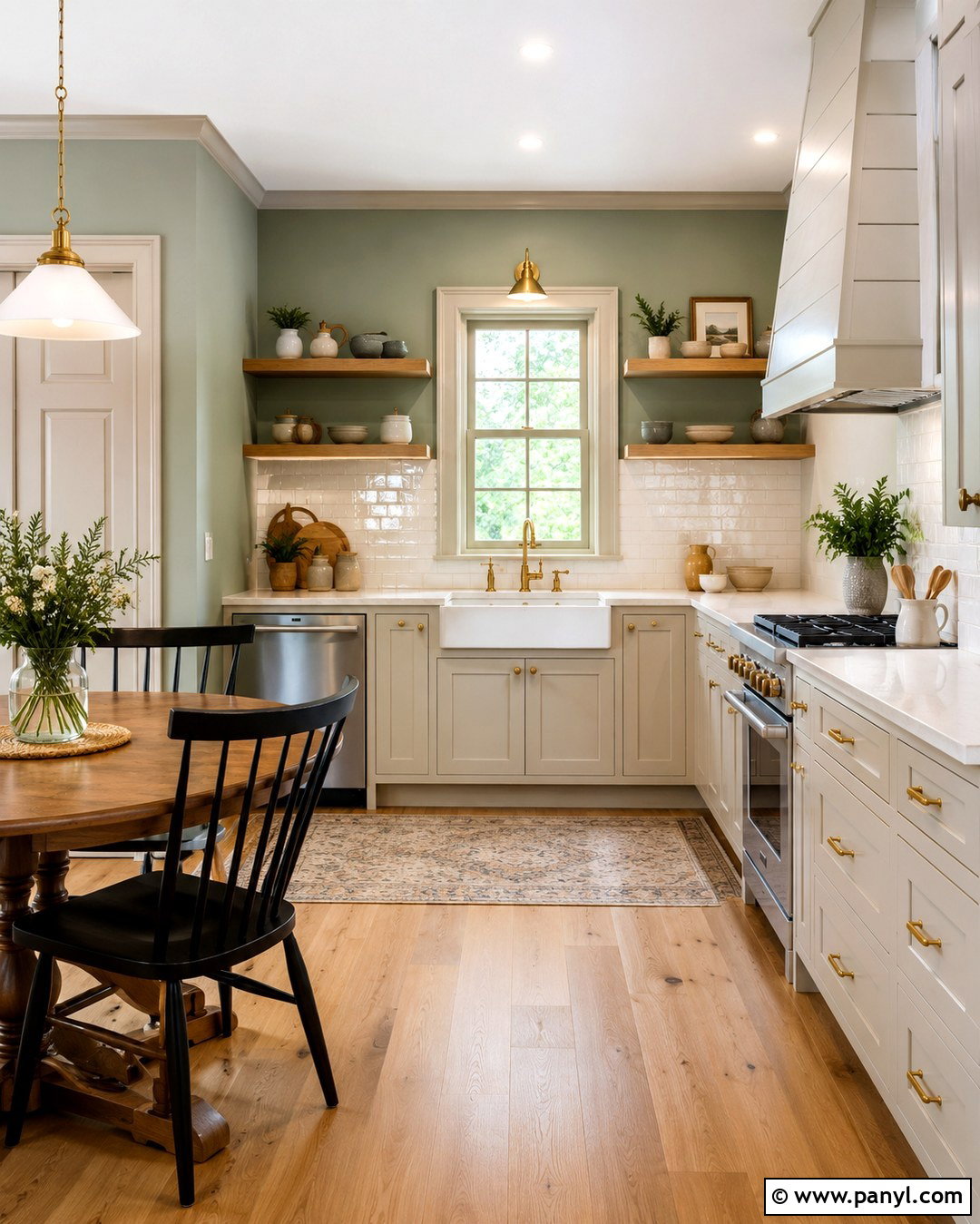
Mushroom trim feels deeper and earthier than standard greige, giving pale green walls a subtle sense of structure. Use it with soft sage or celadon when you want visible contrast without the bold outline created by black or charcoal. In a cottage-inspired kitchen, combine sage walls with mushroom-painted door frames, window casings, baseboards, and lower cabinets. Add creamy quartz counters, handmade ivory tile, medium oak shelves, and unlacquered brass hardware. A small wood table with rush-seat chairs completes the approachable design. Mushroom can have brown, gray, and slightly rosy undertones, which help it coordinate with stone and weathered wood. Keep the ceiling warm white so the layered neutral palette remains light rather than enclosed.
9. Pale Gray Trim With Green Walls
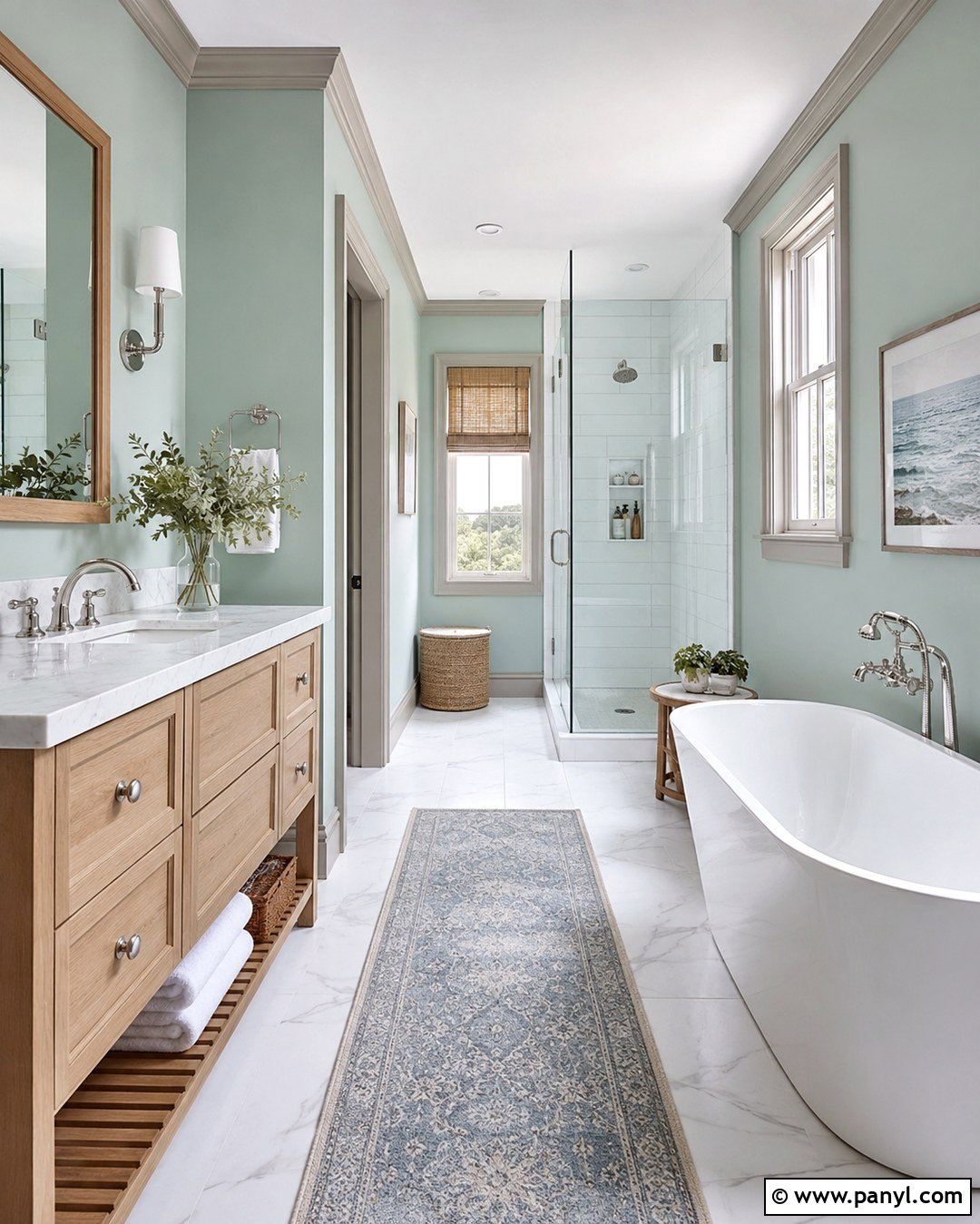
Cool green walls can look especially fresh beside pale gray trim. The gray provides definition without producing the bright flash of pure white. Pair sea-glass or blue-green walls with soft gray baseboards, doors, window casings, and ceiling molding in a light-filled bathroom. Use white marble-look tile, a pale oak vanity, polished nickel fixtures, and neatly folded white towels. A woven shade introduces necessary warmth, while a simple blue-gray runner connects the trim with the walls. Avoid gray with heavy blue undertones if the green is already very cool, as the room may feel chilly. A balanced pale gray with a slight neutral base usually works best. Use moisture-resistant satin paint on bathroom trim for easier cleaning.
10. Charcoal Gray Trim With Green Walls
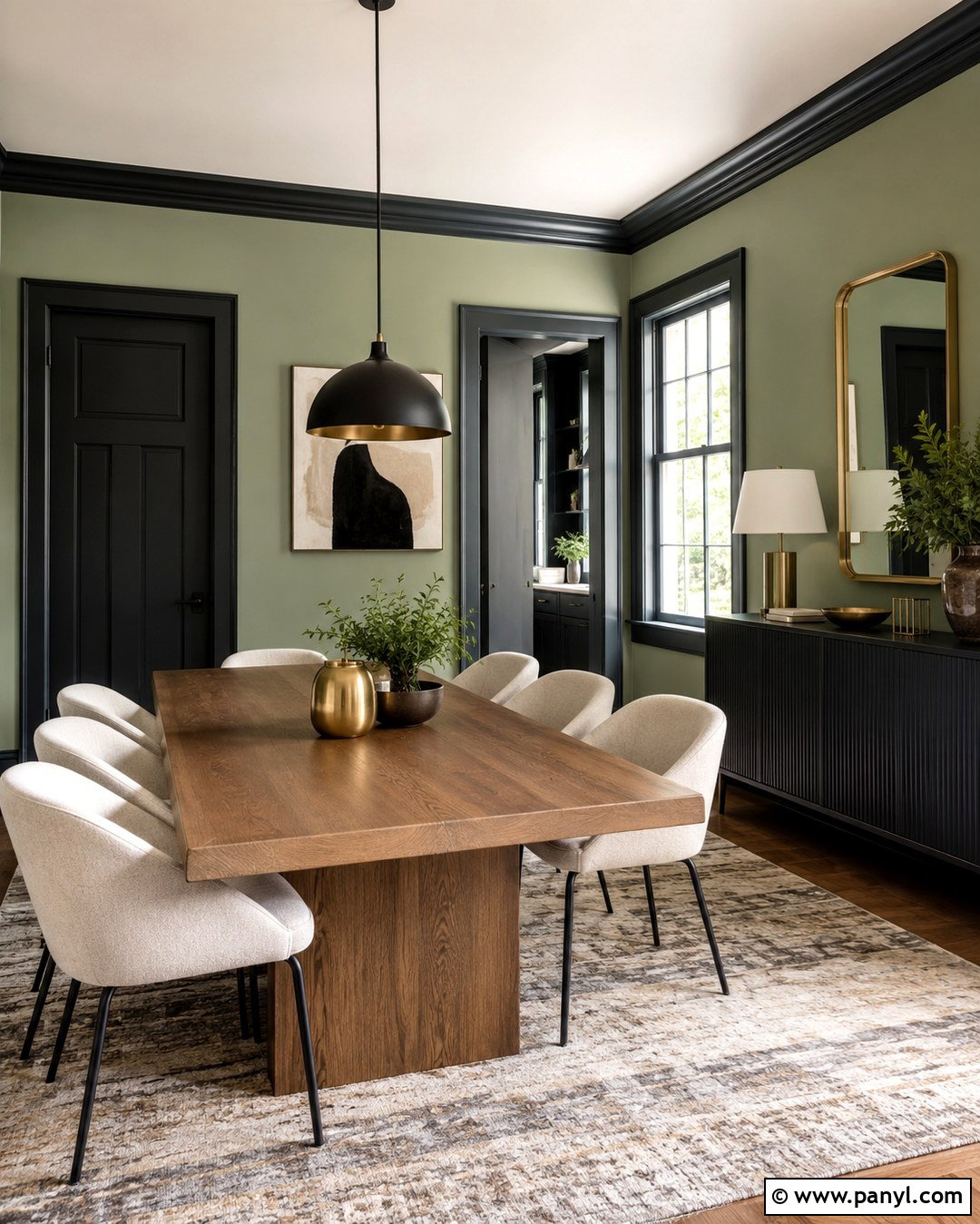
Charcoal gray trim adds strong architectural contrast to light green walls without feeling as severe as true black. It suits modern dining rooms, offices, and entryways where door frames or tall windows deserve attention. Pair pale sage walls with charcoal baseboards, crown molding, doors, and window casings. Add a streamlined oak dining table, cream upholstered chairs, and a flat-weave rug in beige and dark gray. Matte black lighting can echo the trim, while warm brass accessories prevent the palette from appearing cold. Keep the ceiling pale sage or warm white, depending on how enclosed you want the room to feel. For the most balanced result, select charcoal with soft warm undertones rather than a distinctly blue industrial gray.
11. Matte Black Trim With Green Walls
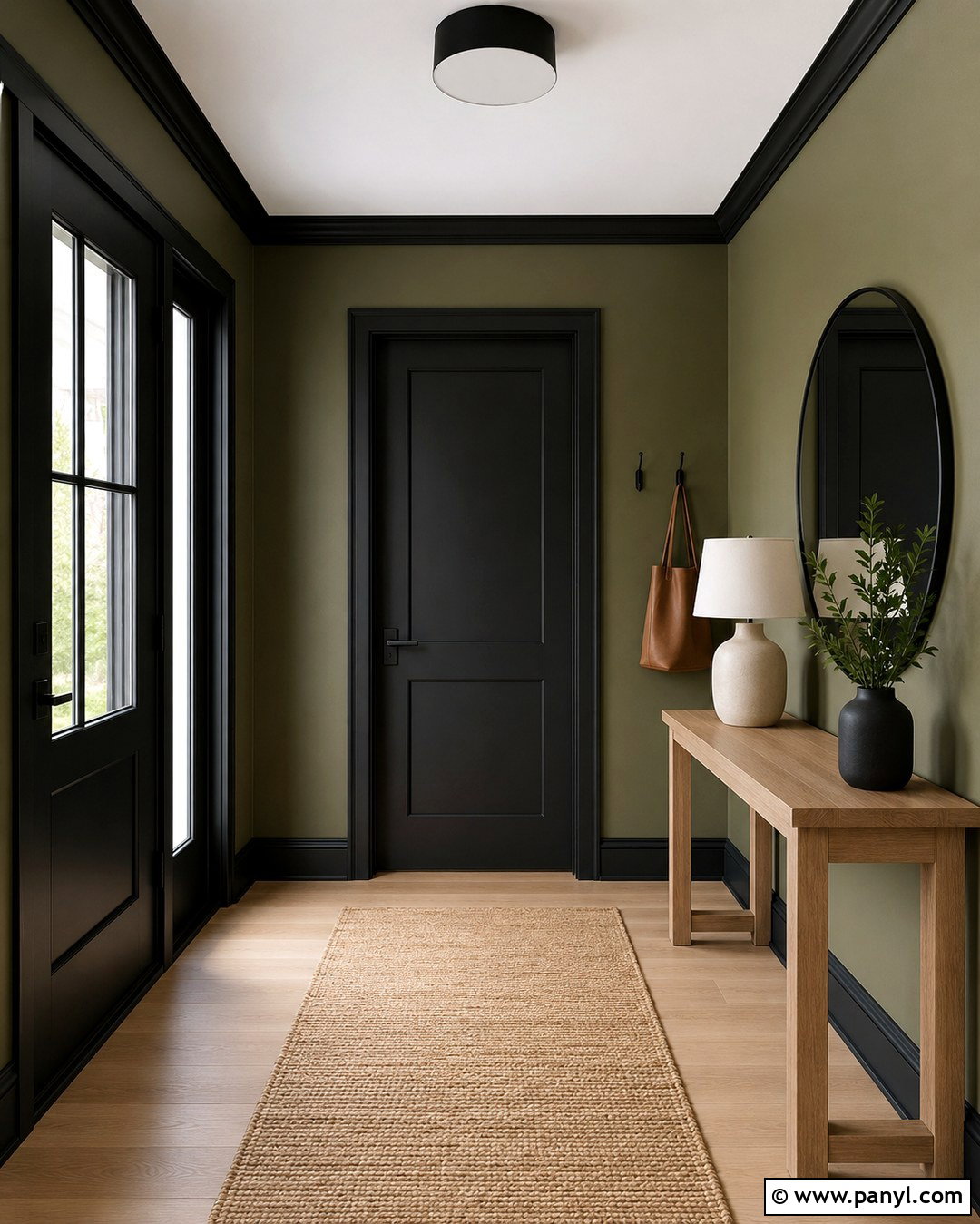
Matte black trim creates a bold graphic frame around green walls and brings instant focus to windows, doors, and built-in features. Use it beside muted sage or medium olive so the contrast feels intentional rather than overpowering. A modern entryway could feature olive walls, black door casings, black baseboards, and a black-painted interior door. Add a slim oak console, a large round mirror, a natural fiber runner, and a ceramic table lamp with a cream shade. Repeat black through hooks and hardware, but keep larger furnishings warm and light. Although the visual effect is matte, choose a durable satin or low-luster trim paint for easier cleaning. Simple molding profiles generally suit this sharp, contemporary color combination best.
12. Deep Navy Trim With Green Walls
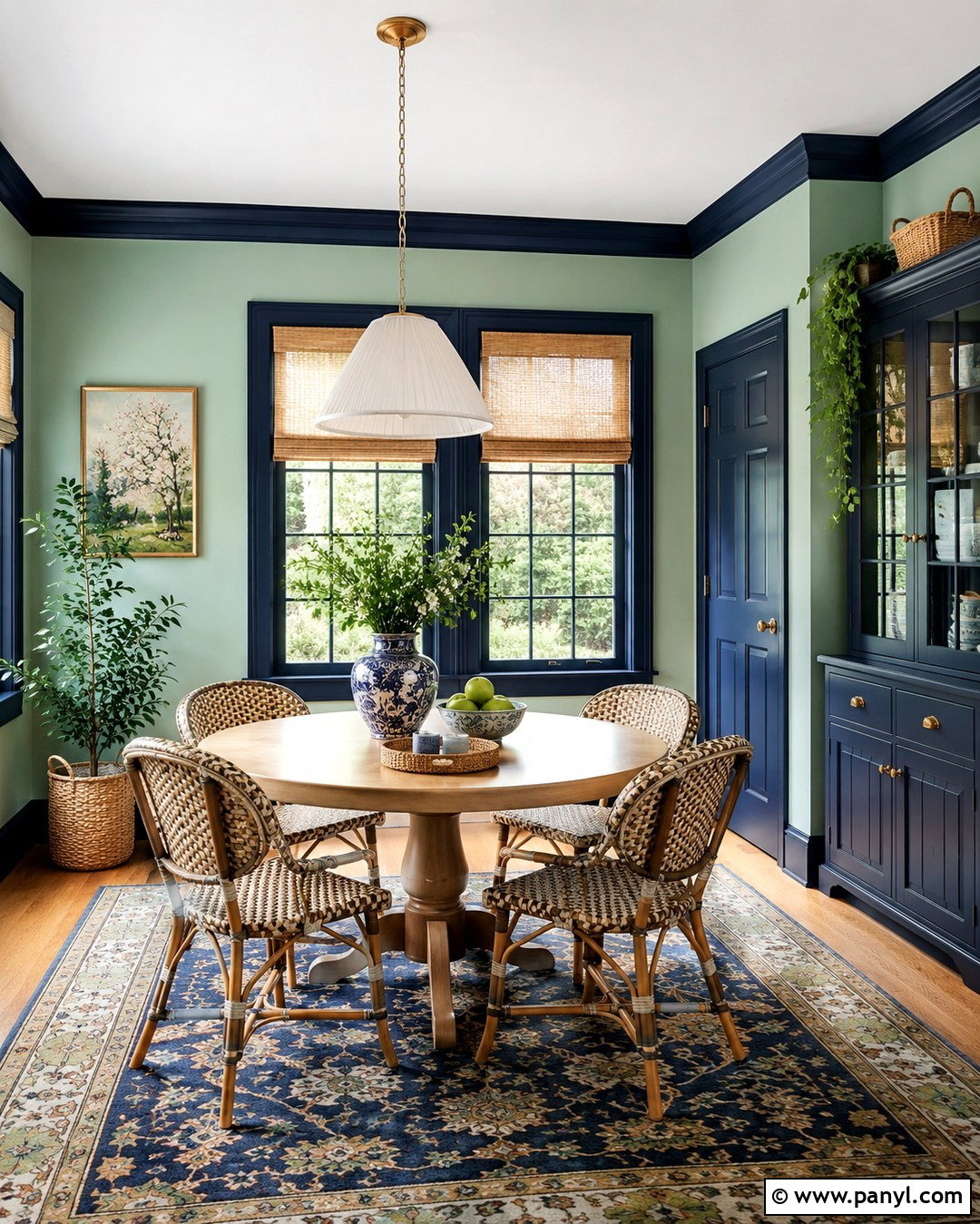
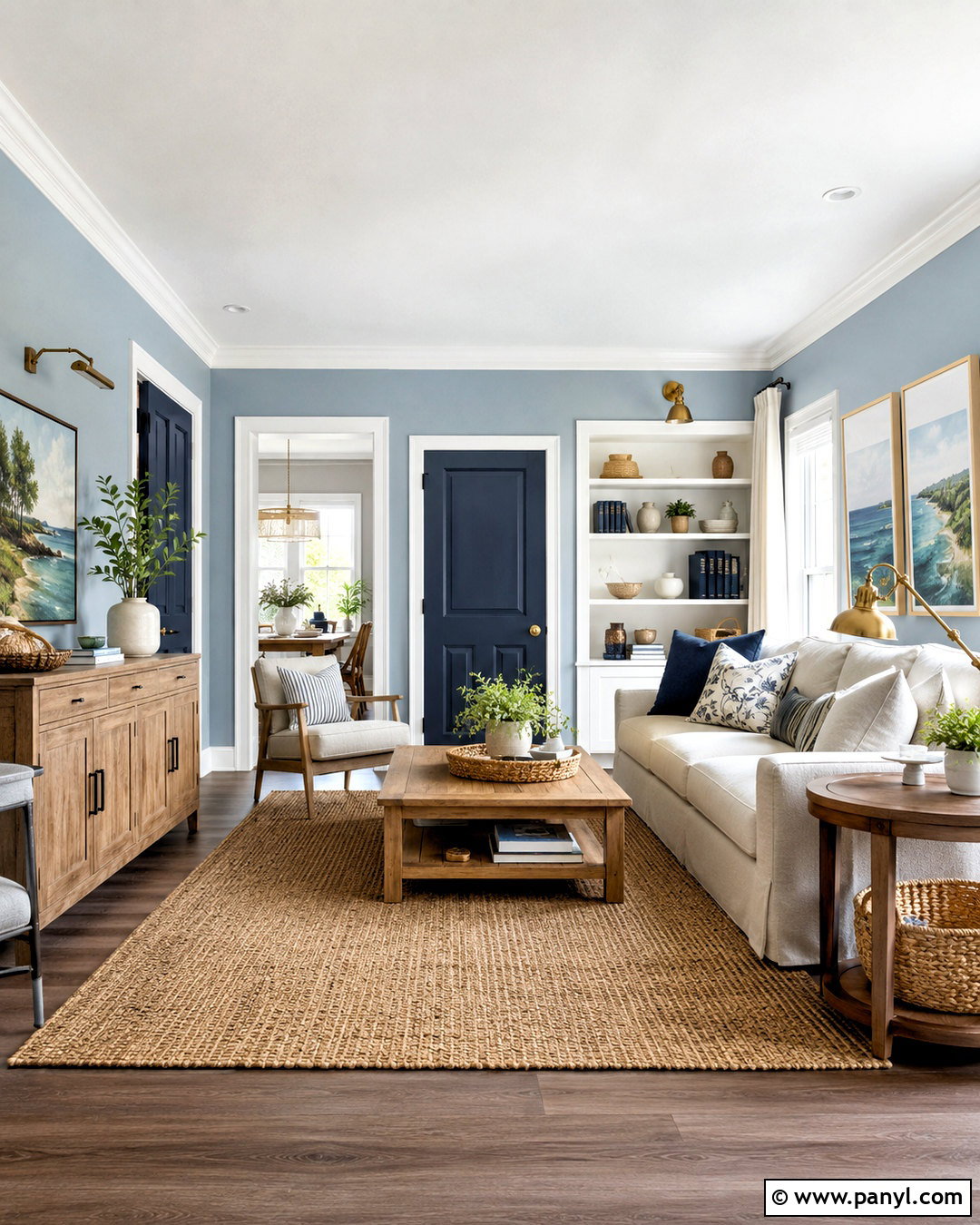
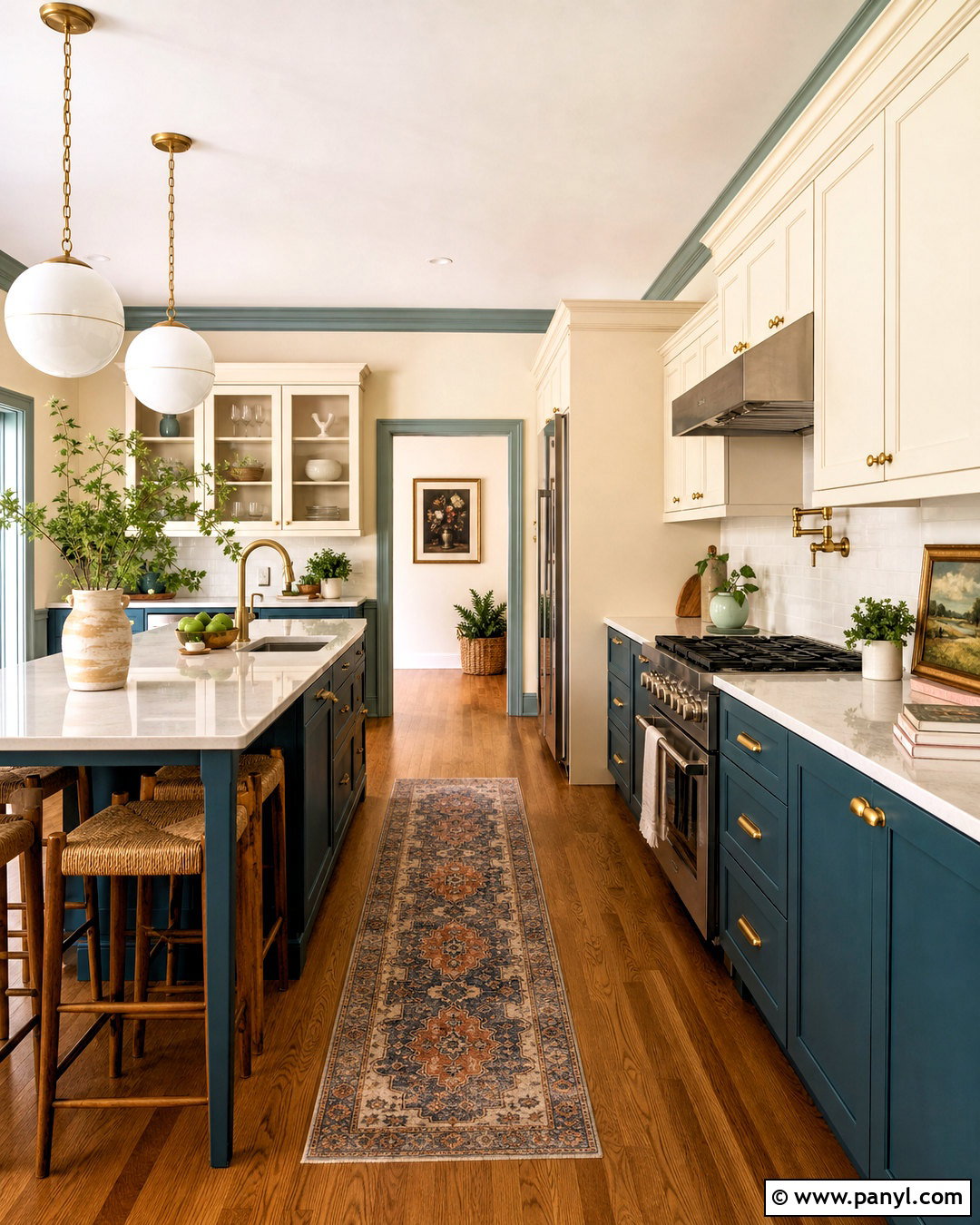
Deep navy trim offers colorful contrast while remaining refined and surprisingly versatile. It pairs best with lighter sage, mint, and blue-green walls because the colors share cool undertones. Design a cheerful breakfast room with soft mint walls, navy window trim, navy baseboards, and a navy-painted door. Introduce a round light oak table, woven chairs, and an ivory pendant fixture to soften the stronger colors. A patterned rug containing navy, green, and warm tan will make the combination feel connected. Add a few copper or aged brass accents for warmth. Choose a navy that appears clearly blue in daylight instead of almost black. Carrying the trim color onto a nearby cabinet can make this unusual pairing look purposeful.
13. Chocolate Brown Trim With Green Walls
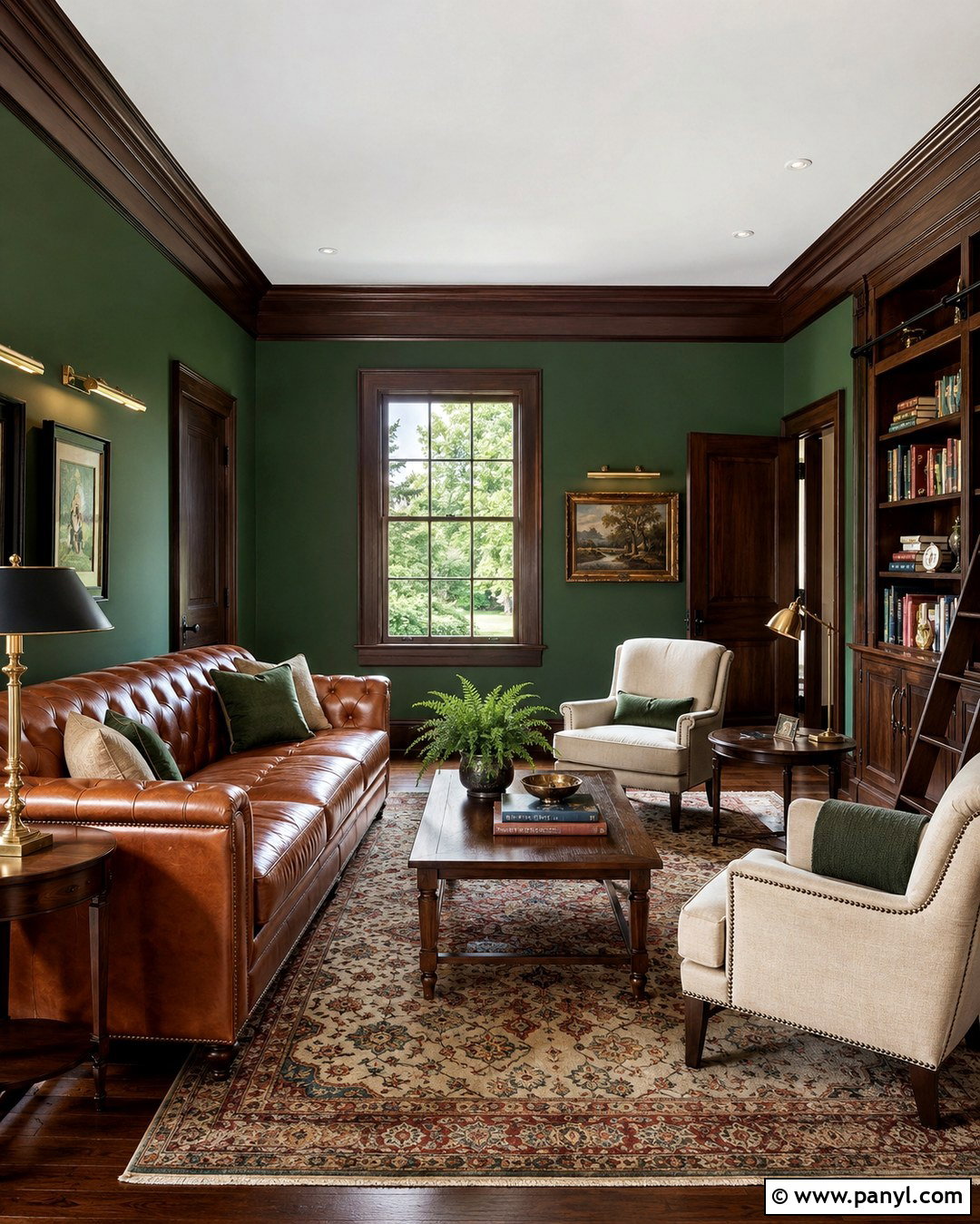
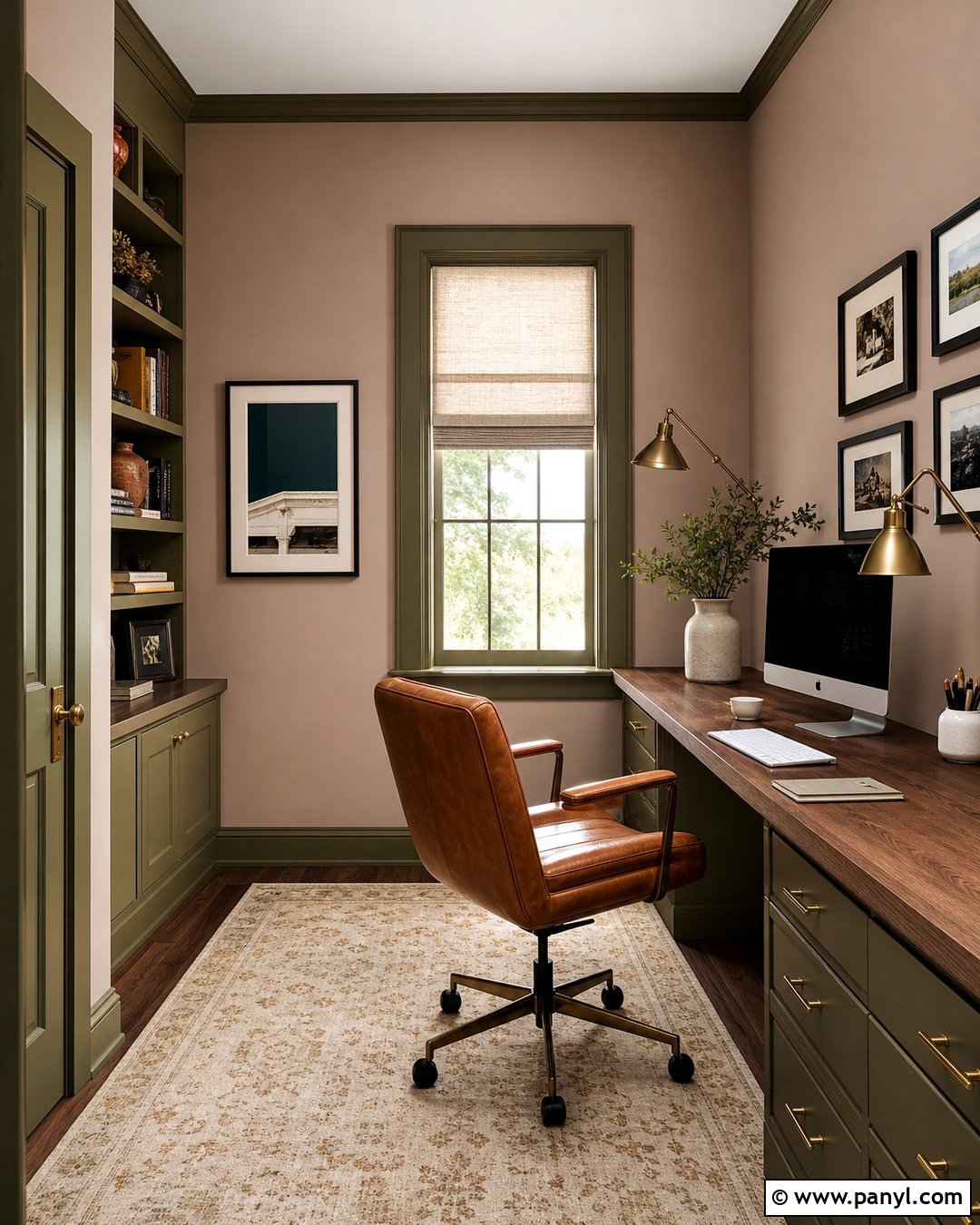
Chocolate brown trim brings richness to green walls and works naturally with rooms containing dark wood furniture. The pairing is ideal for olive, fern, and muted forest shades with warm undertones. Create a library-inspired sitting room with fern green walls, chocolate-painted bookcases, door frames, baseboards, and crown molding. Furnish it with a cognac leather sofa, a walnut coffee table, and two cream reading chairs. A traditional rug in tan, muted red, and green adds pattern without disrupting the earthy palette. Use warm brass picture lights and linen curtains to keep the room inviting. Select a brown that is deep but still visibly brown. Near-black espresso may create a heavier, more formal result than soft chocolate.
14. Natural Oak Trim With Green Walls
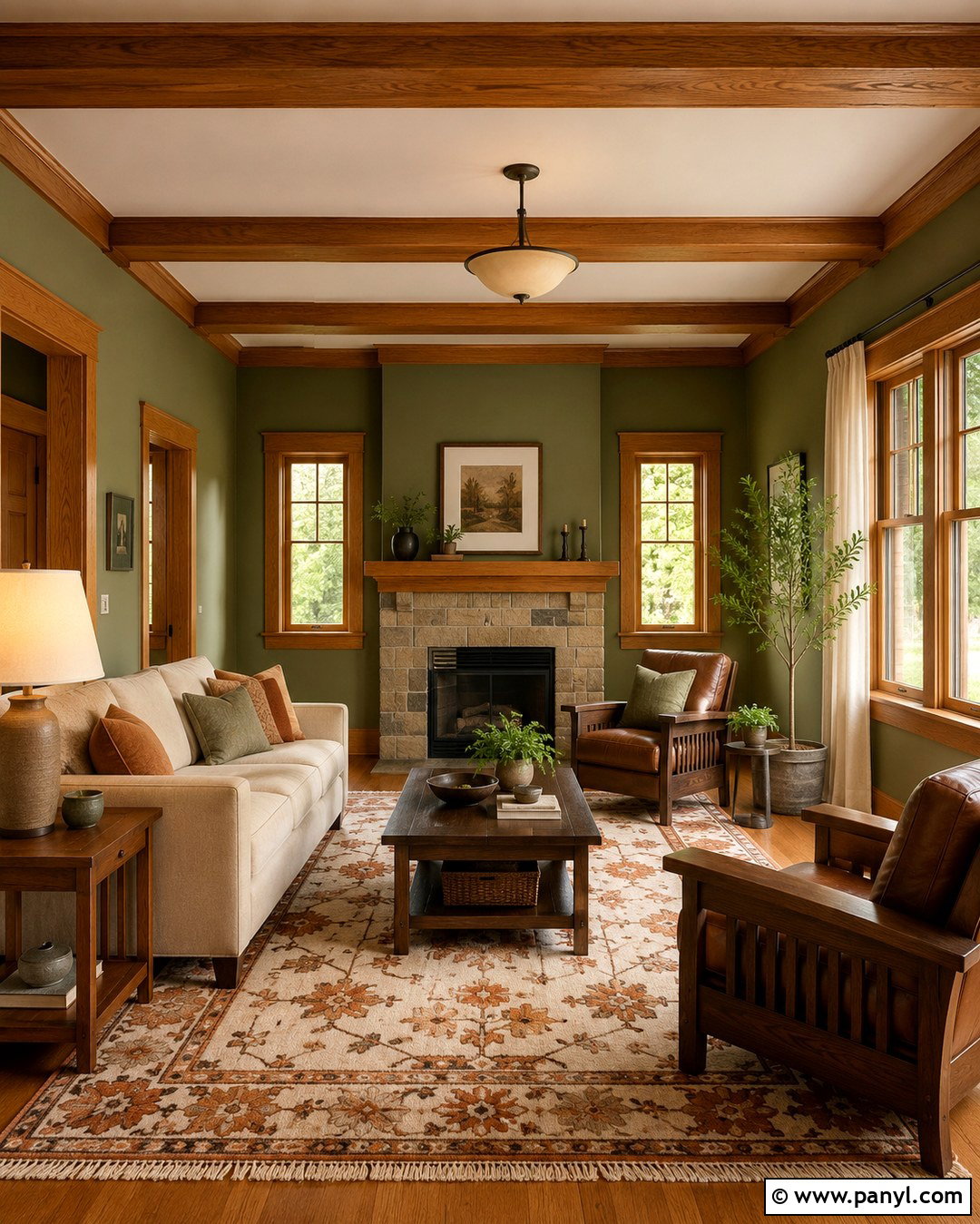
Natural oak trim introduces genuine warmth and texture instead of another painted surface. Honey or white oak looks particularly attractive beside sage, moss, and woodland green walls. In a calm craftsman-inspired living room, retain oak window casings, door frames, baseboards, and ceiling beams. Pair them with muted moss walls, an oatmeal sofa, leather accent chairs, and a wool rug in cream and rust. Simple linen curtains should sit inside the window frame so the wood remains visible. Repeat the oak through tables or built-in shelving, but vary the tones slightly to avoid a matched furniture-set appearance. A clear matte or satin finish protects the trim while preserving the grain. Avoid orange-heavy stain if the green has distinctly cool blue undertones.
15. Matching Green Trim With Green Walls
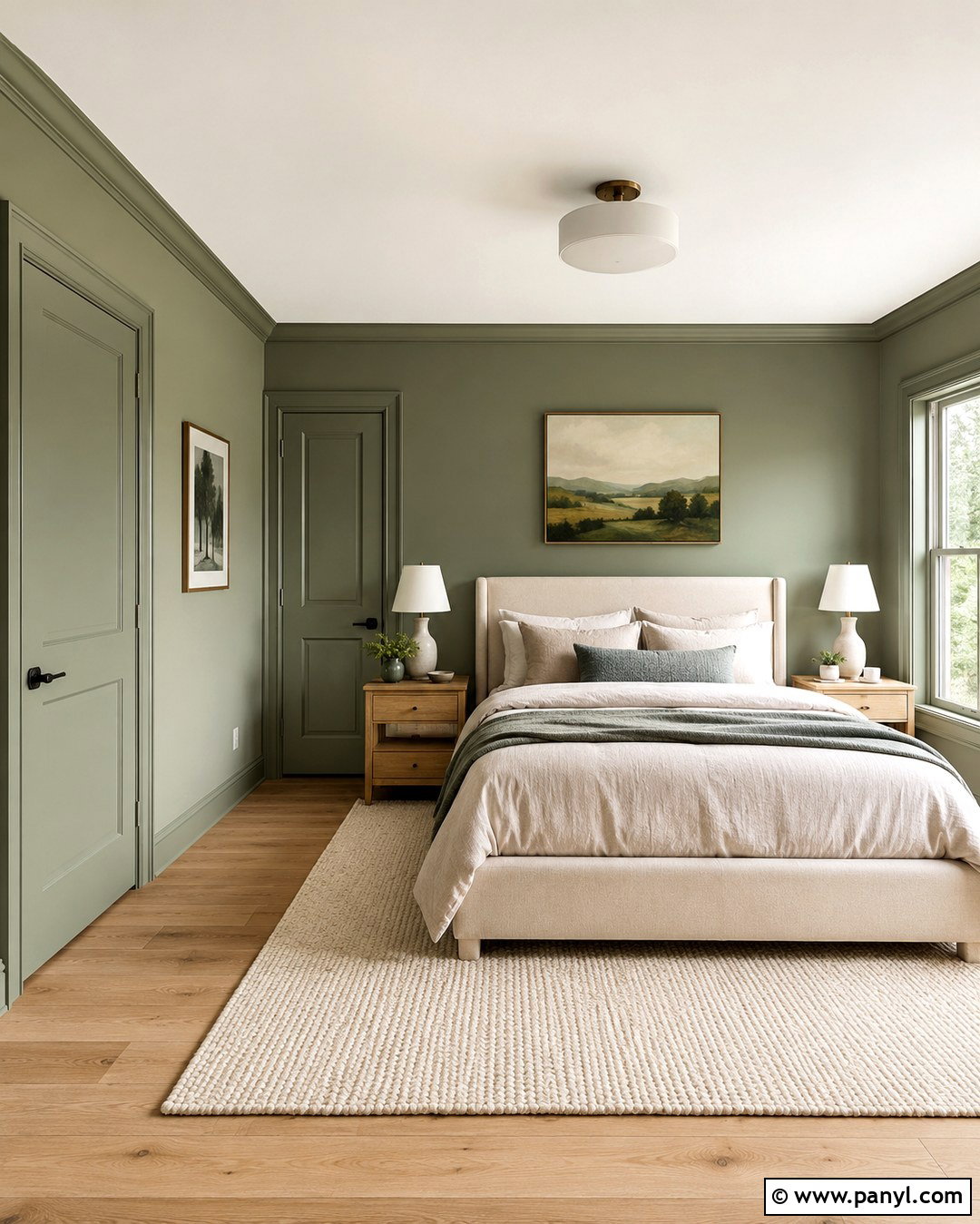
Painting trim the same green as the walls creates a smooth, immersive room with fewer visual interruptions. The difference in sheen provides enough definition: use matte or eggshell on walls and satin on woodwork. This approach is excellent for small bedrooms, studies, and rooms with many doors or uneven architectural details. Cover sage walls, baseboards, window casings, doors, and crown molding in one consistent shade. Add a cream upholstered bed, medium oak nightstands, flax linen bedding, and a warm white ceiling. Textured fabrics and natural wood prevent the single-color envelope from feeling flat. If the room has attractive molding, the higher sheen will catch light and reveal its shape. Sample the paint on every surface before making the full commitment.
16. Light Green Trim With Green Walls
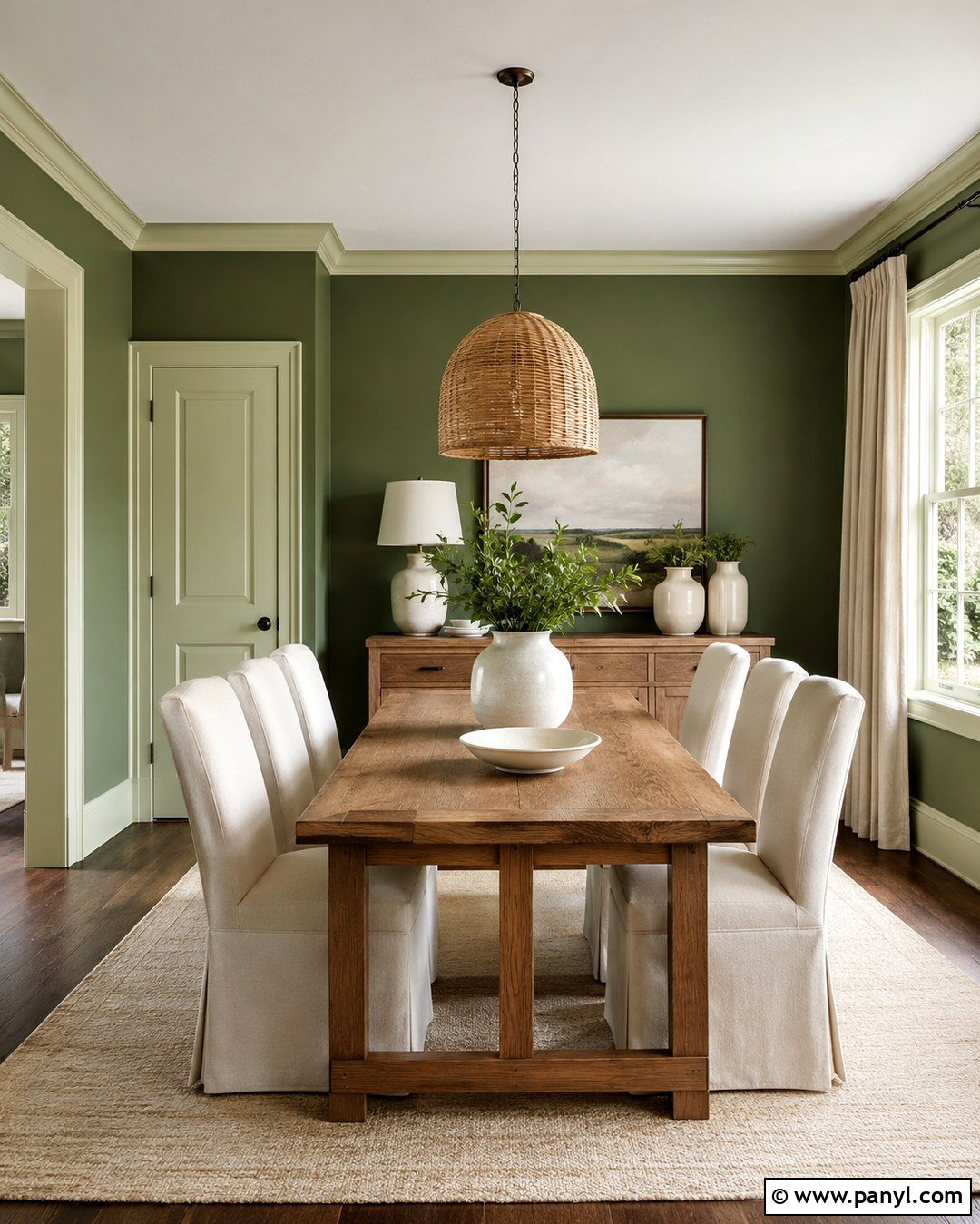
Light green trim provides gentle tonal contrast when paired with walls several shades deeper. It preserves the room’s natural character while highlighting molding more softly than white. Try medium olive walls with pale celery trim on the doors, baseboards, windows, and crown molding. Build a relaxed dining room around the combination using a warm oak table, cream chairs, linen curtains, and a woven pendant. Add ceramic pieces in ivory and muted yellow for small moments of brightness. The two greens should share a similar warm or cool undertone so they look related. Avoid choosing tones that are almost identical, since accidental near-matches can appear inconsistent. A clear difference in depth creates a more deliberate and readable layered-green palette.
17. Dark Green Trim With Green Walls
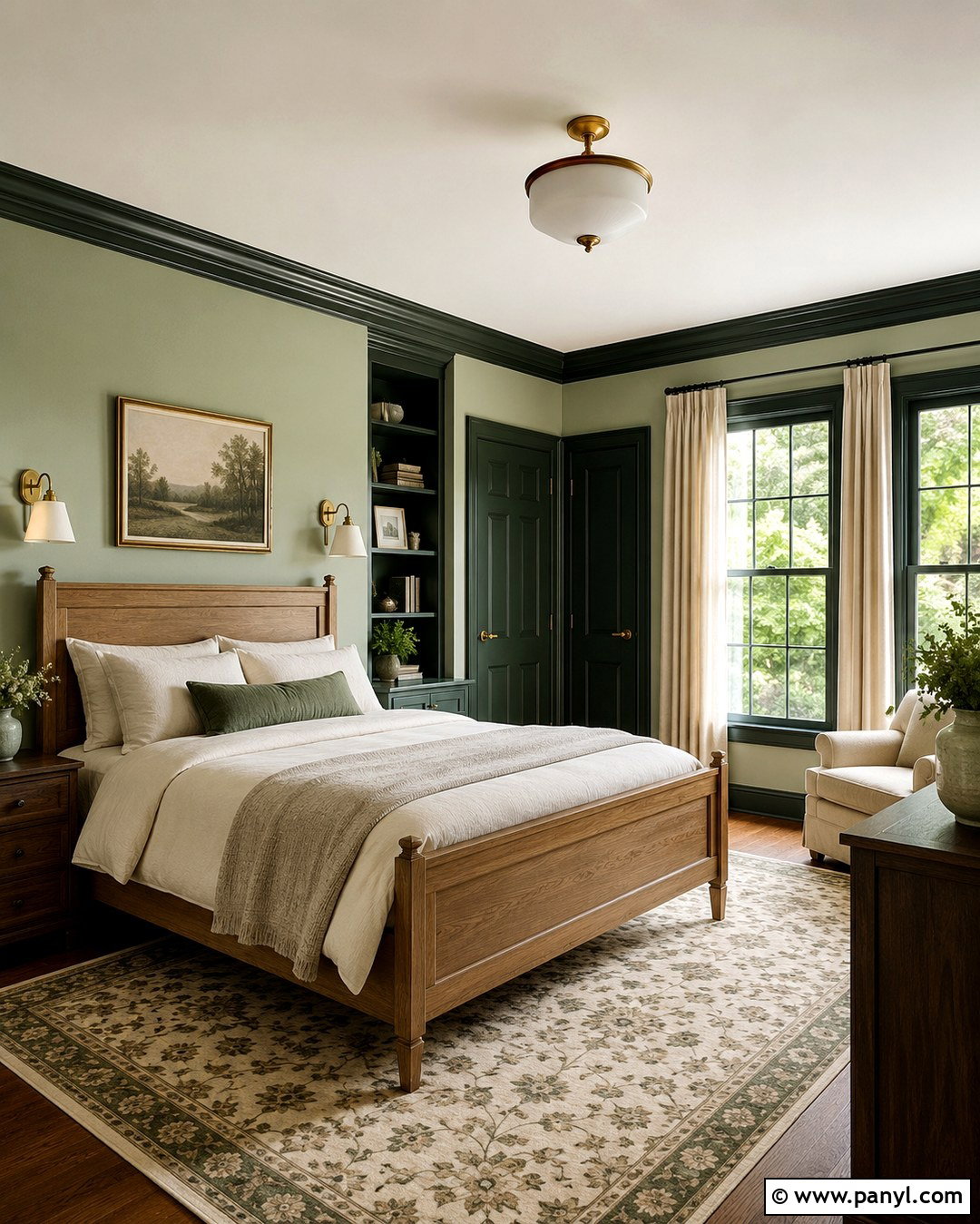
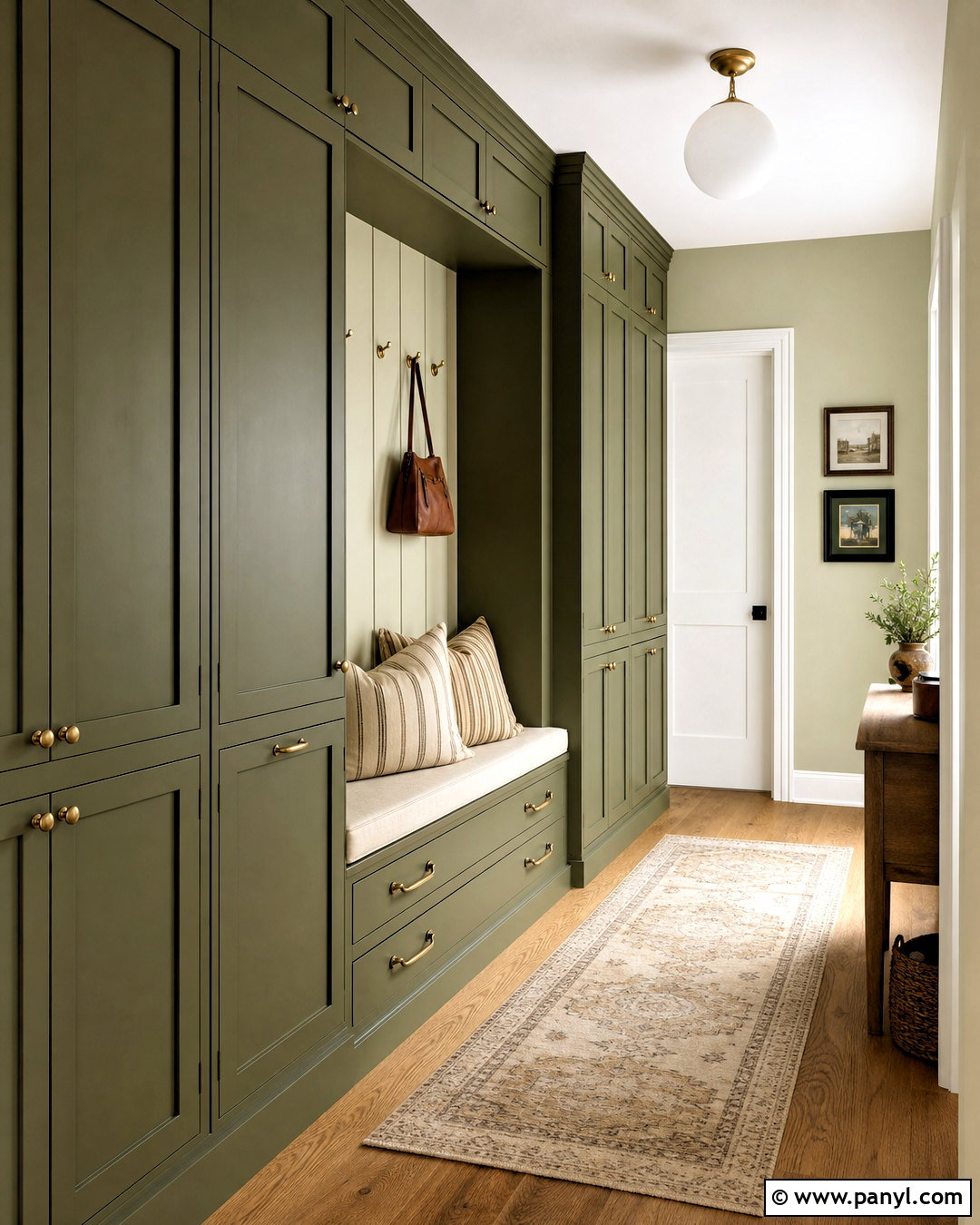
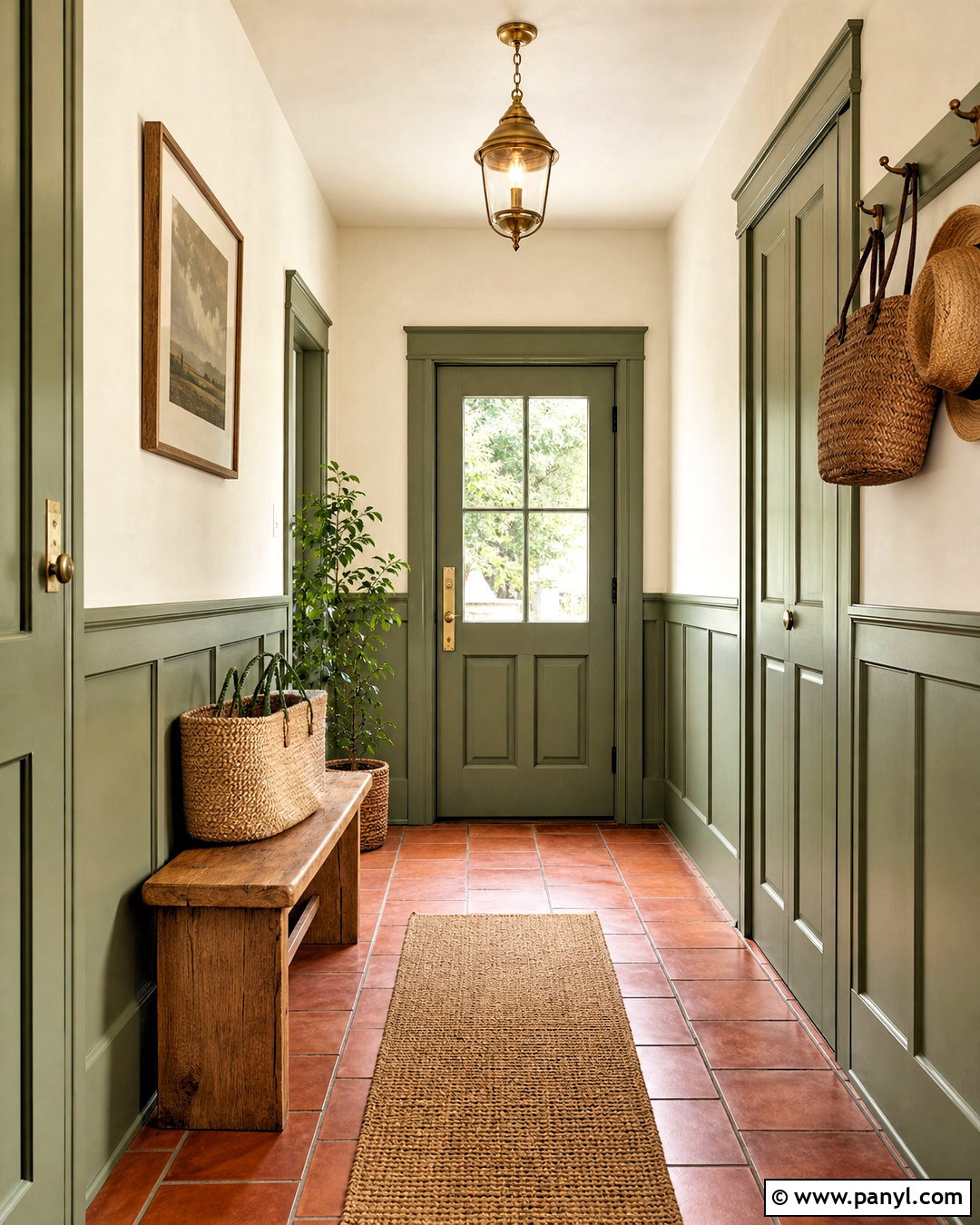
Dark green trim can ground lighter walls while creating a sophisticated tonal outline. Pair pale sage walls with deep forest green baseboards, window frames, doors, and built-in cabinetry. This combination works beautifully in a bedroom with a natural oak bed, crisp ivory bedding, and a patterned rug containing cream, sage, and dark green. Hang simple linen curtains that leave the darker window casings visible. Antique brass sconces and warm wood furniture keep the palette from becoming too cool. The trim green should be several levels darker than the wall color and should share its main undertone. Extend the forest shade onto closet doors or a dresser to distribute the visual weight instead of concentrating all the darkness around the room’s edges.
18. Dusty Blue Trim With Green Walls
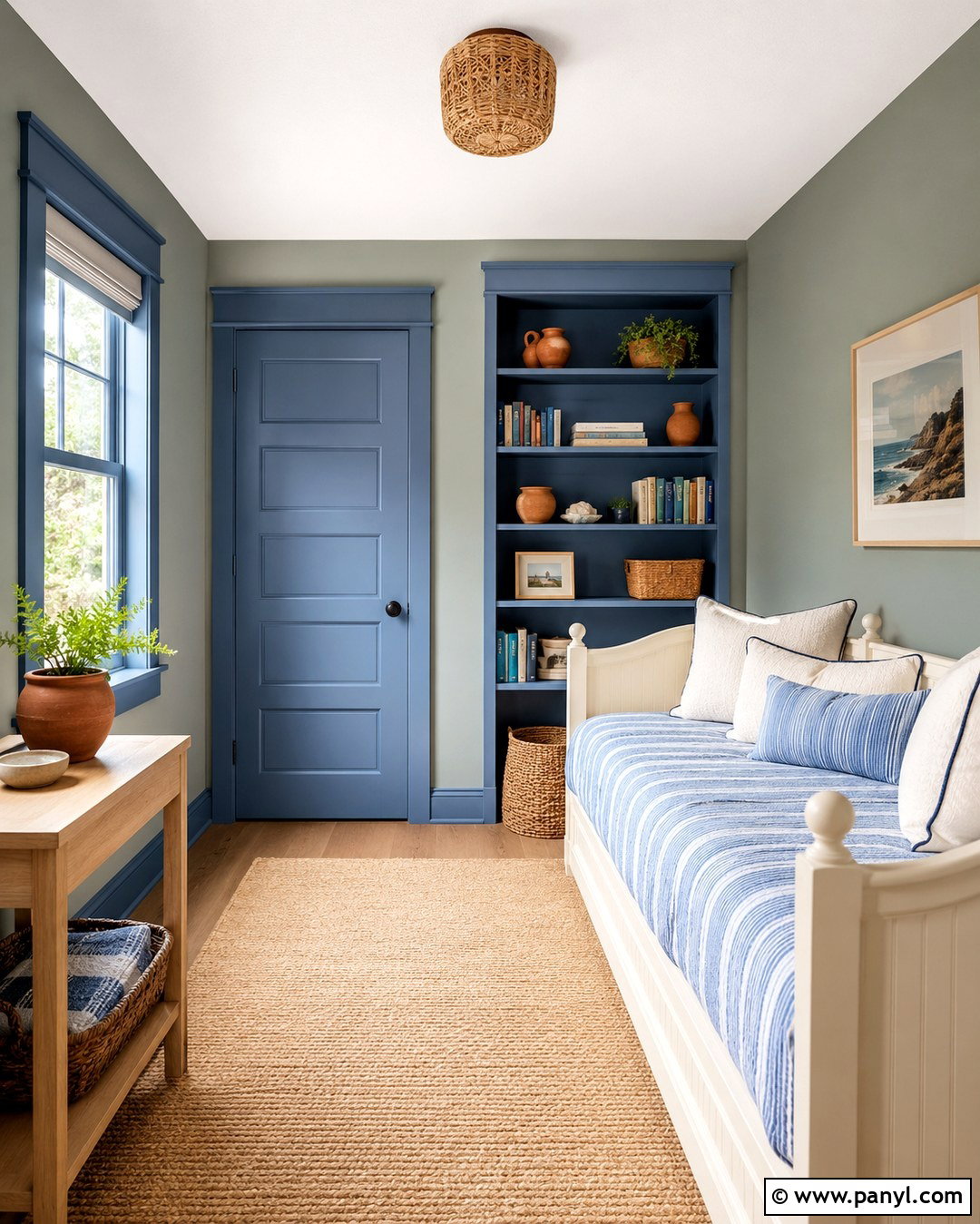
Dusty blue trim creates a calm, collected contrast with muted green walls. Because blue and green sit close together visually, the pairing feels colorful without becoming overly busy. Use gray-green walls with subdued slate-blue trim in a guest bedroom or quiet reading room. Paint the baseboards, door, window casing, and a small built-in bookcase blue. Add an ivory daybed, striped blue-and-cream bedding, a light oak side table, and a neutral woven rug. Small terracotta accessories can introduce warmth and keep the cool palette balanced. Choose softened, gray-based versions of both colors rather than highly saturated paint. Repeat the blue in one or two textiles so the trim feels connected to the complete room rather than unexpectedly decorative.
19. Soft Blush Trim With Green Walls
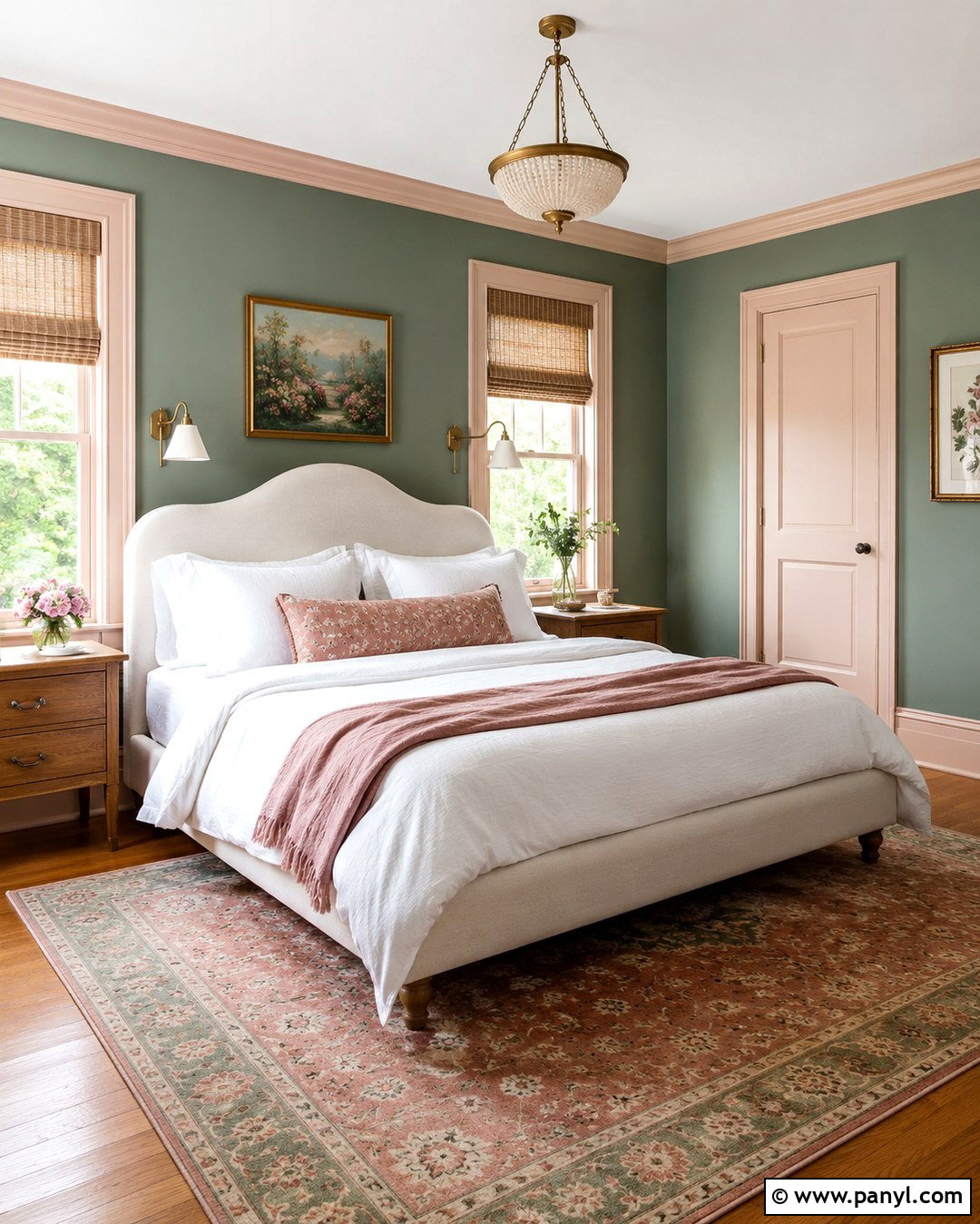
Soft blush trim brings subtle warmth and character to sage or eucalyptus walls. Green and pink naturally create contrast, but muted versions feel more comfortable and livable than bright shades. Design a charming bedroom with eucalyptus walls, pale blush baseboards, window casings, crown molding, and an interior door. Add an ivory upholstered bed, warm oak nightstands, white linen bedding, and a vintage-inspired rug containing dusty rose and green. Brass lighting strengthens the warmth, while natural woven shades prevent the room from appearing overly sweet. Select a blush with beige or clay undertones instead of a candy-like pink. Keeping furniture shapes simple and repeating blush only in small textile details produces a balanced, grown-up room that still feels distinctive.
20. Muted Terracotta Trim With Green Walls
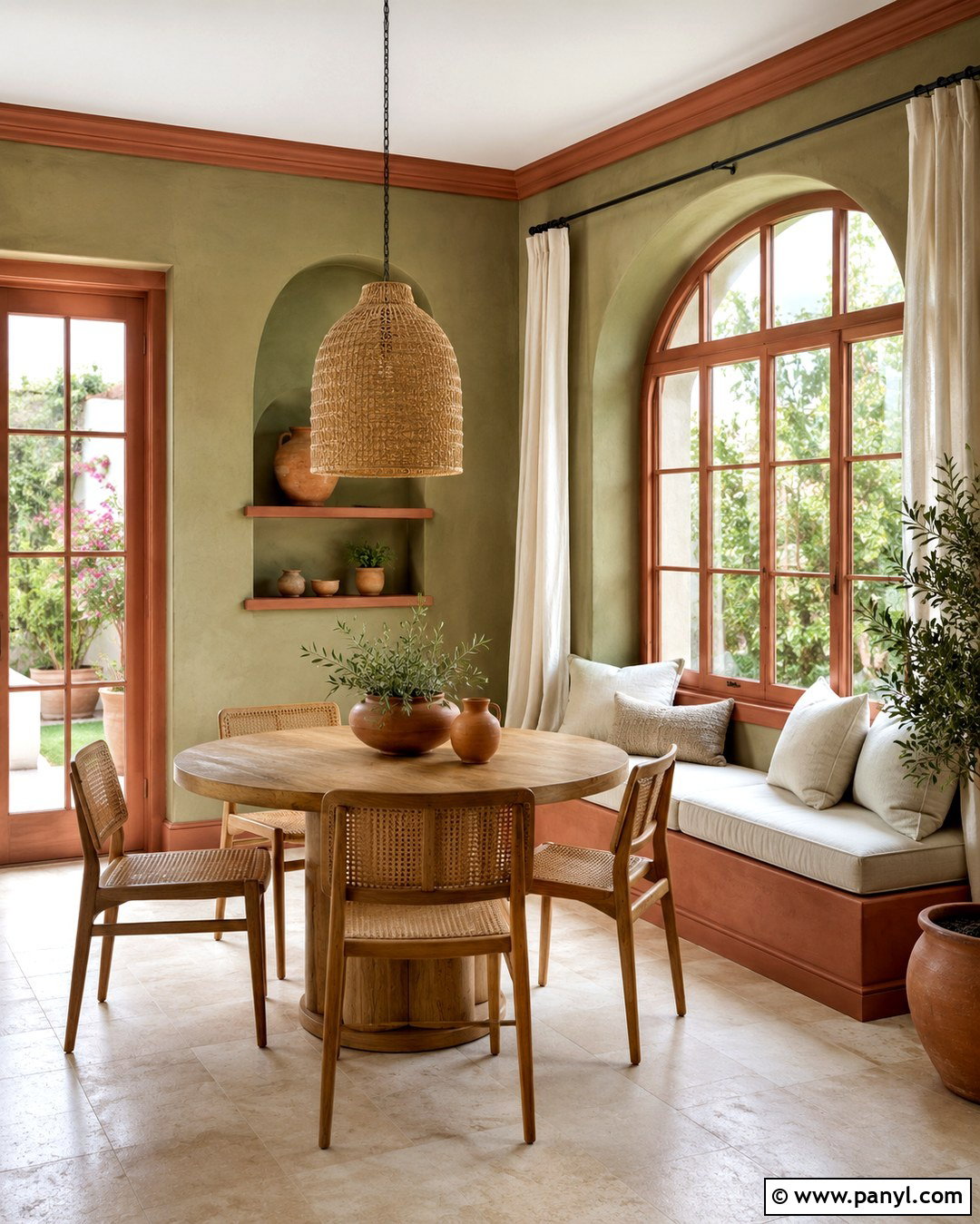
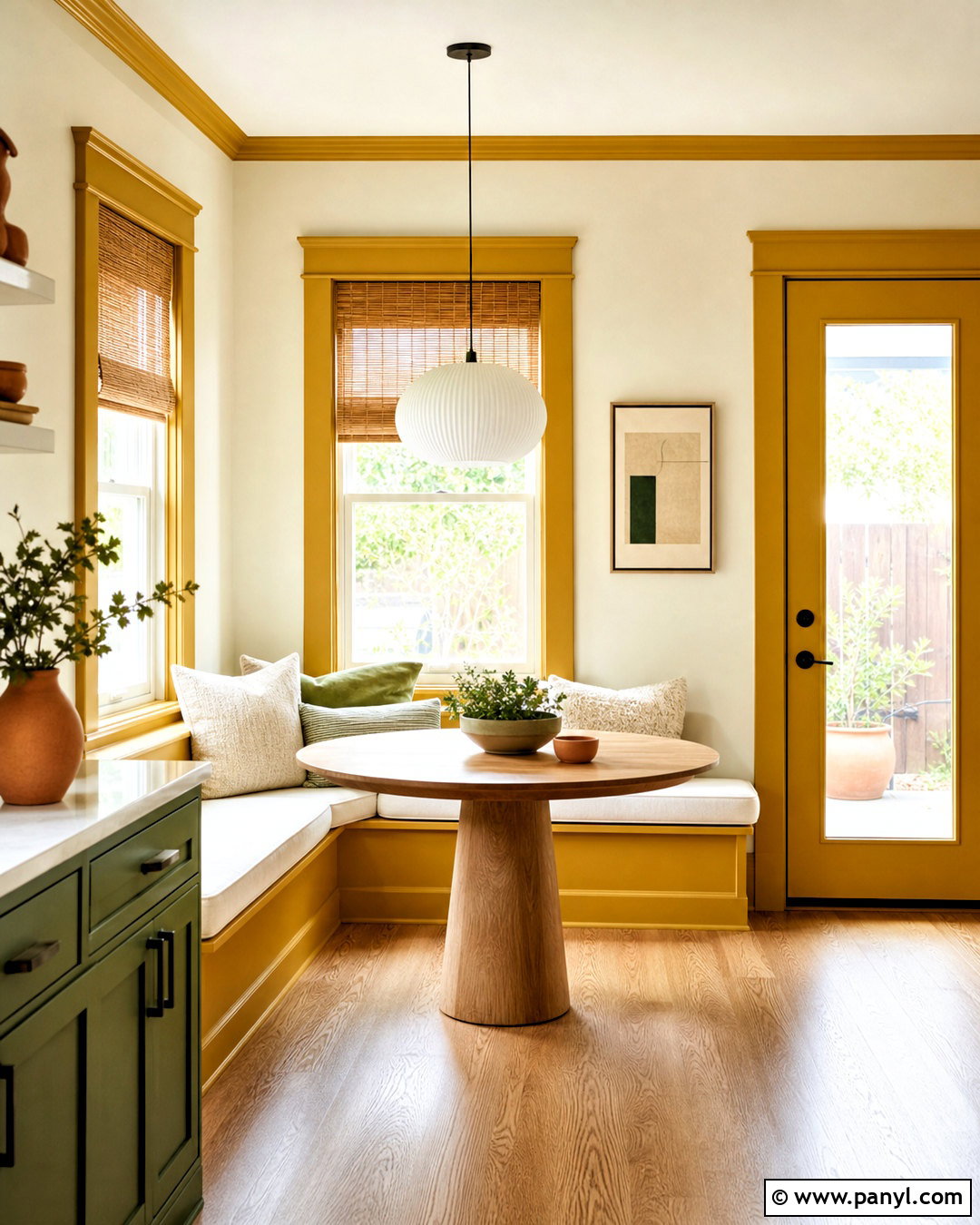
Muted terracotta trim creates an earthy, expressive pairing with olive, moss, and sage walls. Its warm red-orange base contrasts with green while still connecting naturally to wood, clay, and woven materials. In a sunny dining nook, use soft olive walls with subdued clay-colored window trim, baseboards, and a painted bench. Add a round oak table, cane chairs, cream seat cushions, and a woven natural-fiber pendant. Ivory curtains and a light neutral ceiling keep the richer colors from making the space feel heavy. Choose a dusty terracotta rather than a vivid orange, and repeat it sparingly through pottery or a patterned rug. This trim choice is especially effective in Southwestern, Mediterranean, eclectic, and relaxed modern interiors.
Conclusion:
Choosing trim colors for green walls begins with understanding the green’s undertone, the room’s natural light, and the finishes that must remain. Crisp and warm whites offer familiar contrast, while beige, greige, taupe, and mushroom create softer transitions. Black, navy, charcoal, and brown can emphasize architecture, while tonal greens produce a seamless, immersive effect. For something more expressive, dusty blue, blush, or terracotta can give the room a memorable identity. Whatever pairing you prefer, paint large sample boards and view them beside the flooring, furniture, and wall color throughout the day. The best trim colors for green walls should connect the entire room rather than simply outline it.

Related Ideas and Inspiration:
Leave a Reply