
Dark basement paint colors can turn a plain lower level into a cozy family room, focused office, stylish guest suite, or immersive home theater. Deep hues absorb more light than pale shades, but that can be an advantage when you want less screen reflection, stronger contrast, and a more enveloping atmosphere. The key is balancing dark walls with layered lighting, warm flooring, reflective accents, and furniture that creates clear visual breaks. Paint samples should also be tested under the basement’s actual bulbs because artificial lighting can noticeably change undertones. () Whether you prefer charcoal, navy, forest green, or rich brown, every palette below forms a complete and practical room. Explore these coordinated looks featuring 20 dark basement paint colors.

1. Charcoal Gray Dark Basement
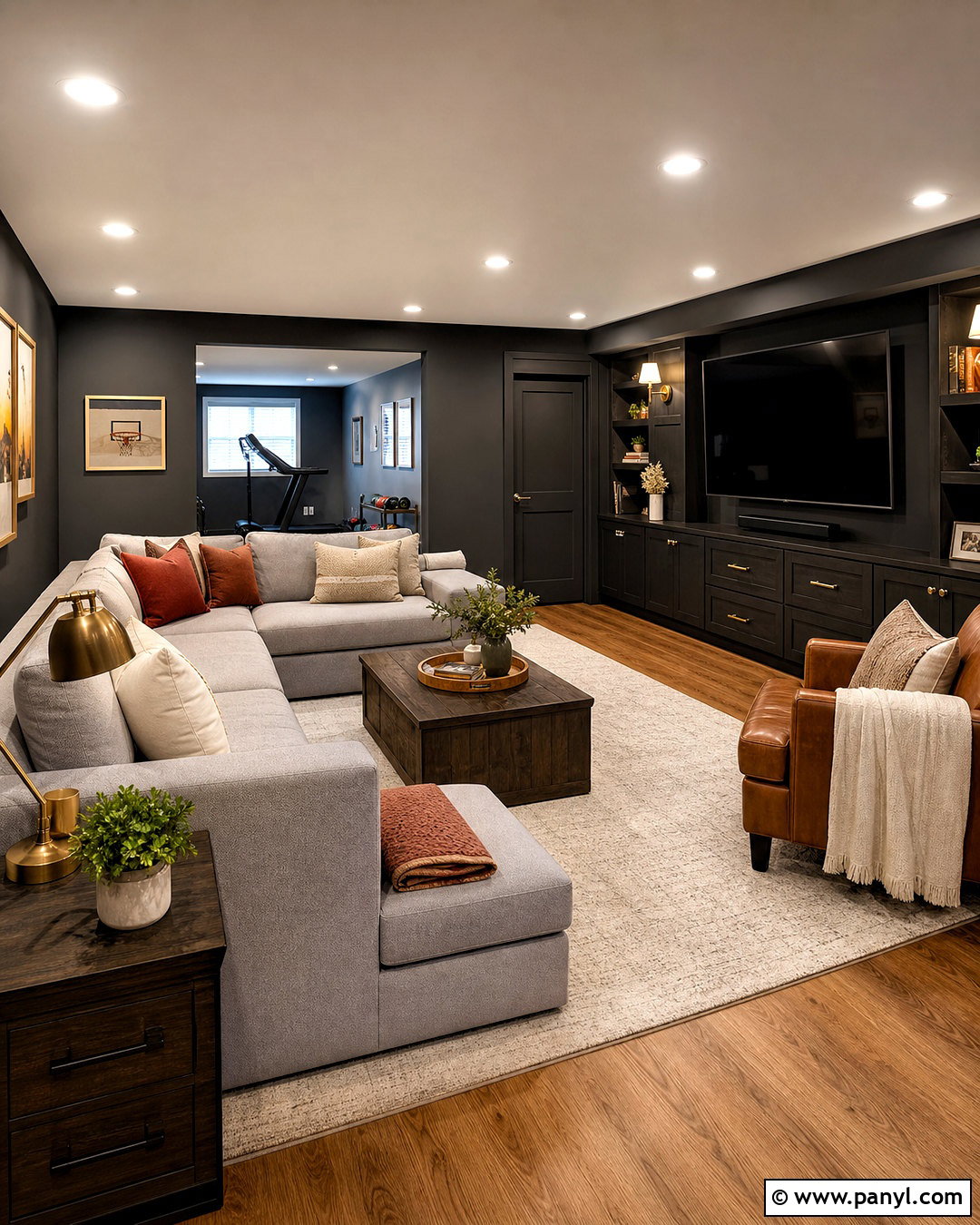
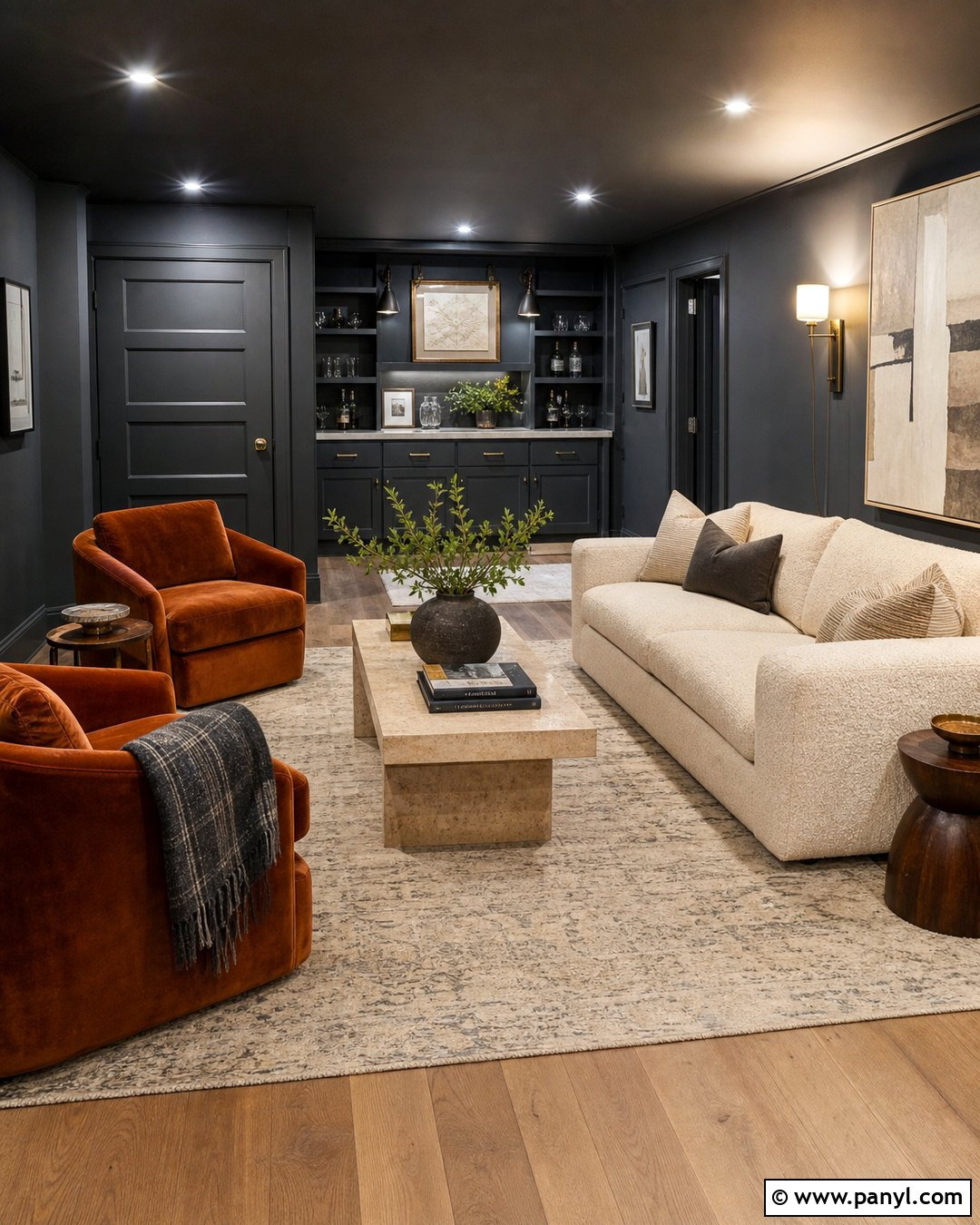
Charcoal gray creates a polished family room that feels dramatic without looking completely black. Paint the main walls a warm charcoal with subtle brown undertones, then use soft white on the ceiling to maintain a sense of height. Choose medium oak flooring or warm wood-look vinyl to prevent the room from feeling cold. A light gray sectional, cognac leather chair, and cream textured rug will break up the deeper backdrop. Add matte black shelving with natural wood interiors for practical storage and contrast. Brass floor lamps and evenly spaced recessed lights provide warm layers of illumination. Finish the room with rust, camel, and ivory pillows, oversized abstract artwork, and a few green plants in pale ceramic pots.
2. Soft Black Dark Basement
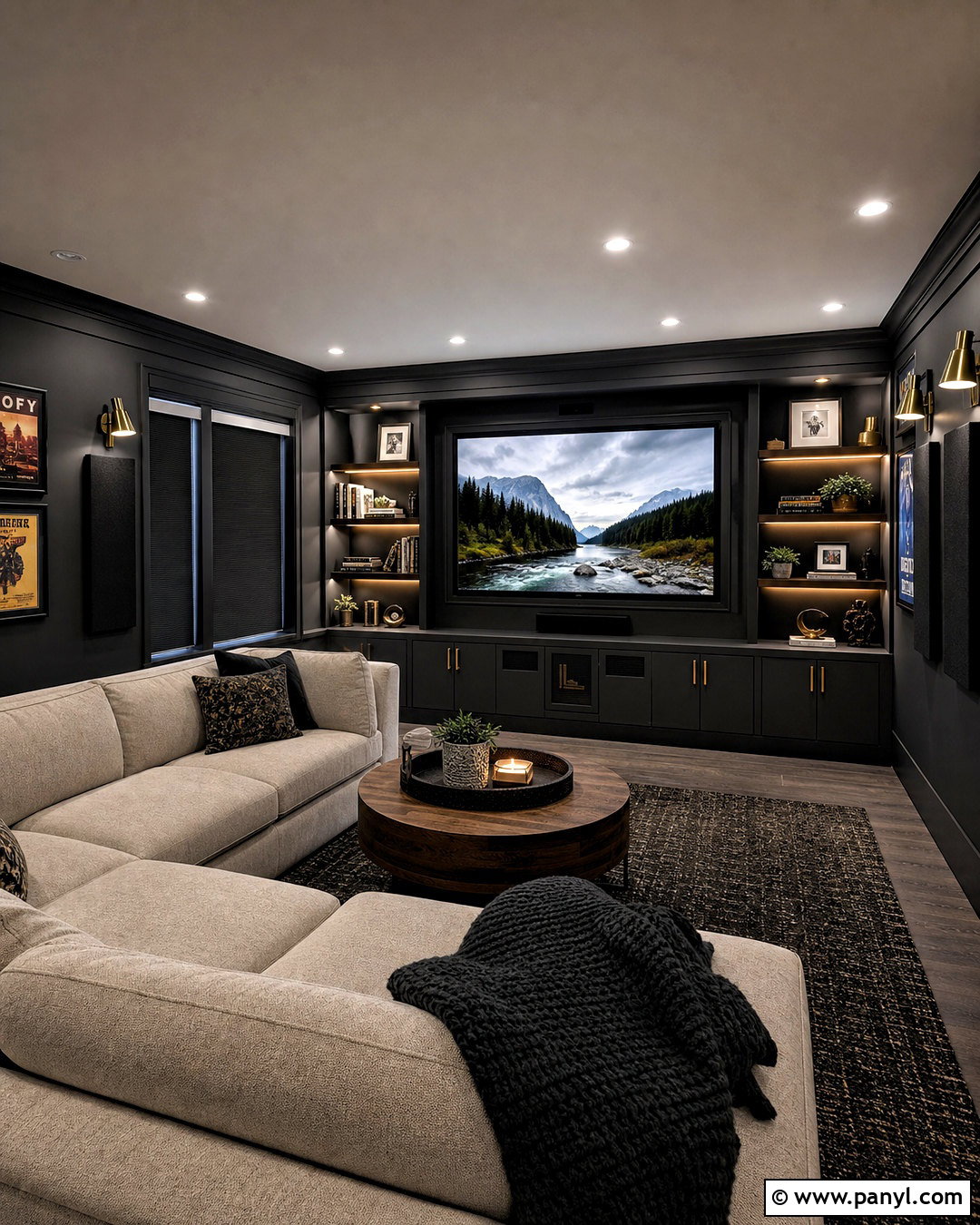
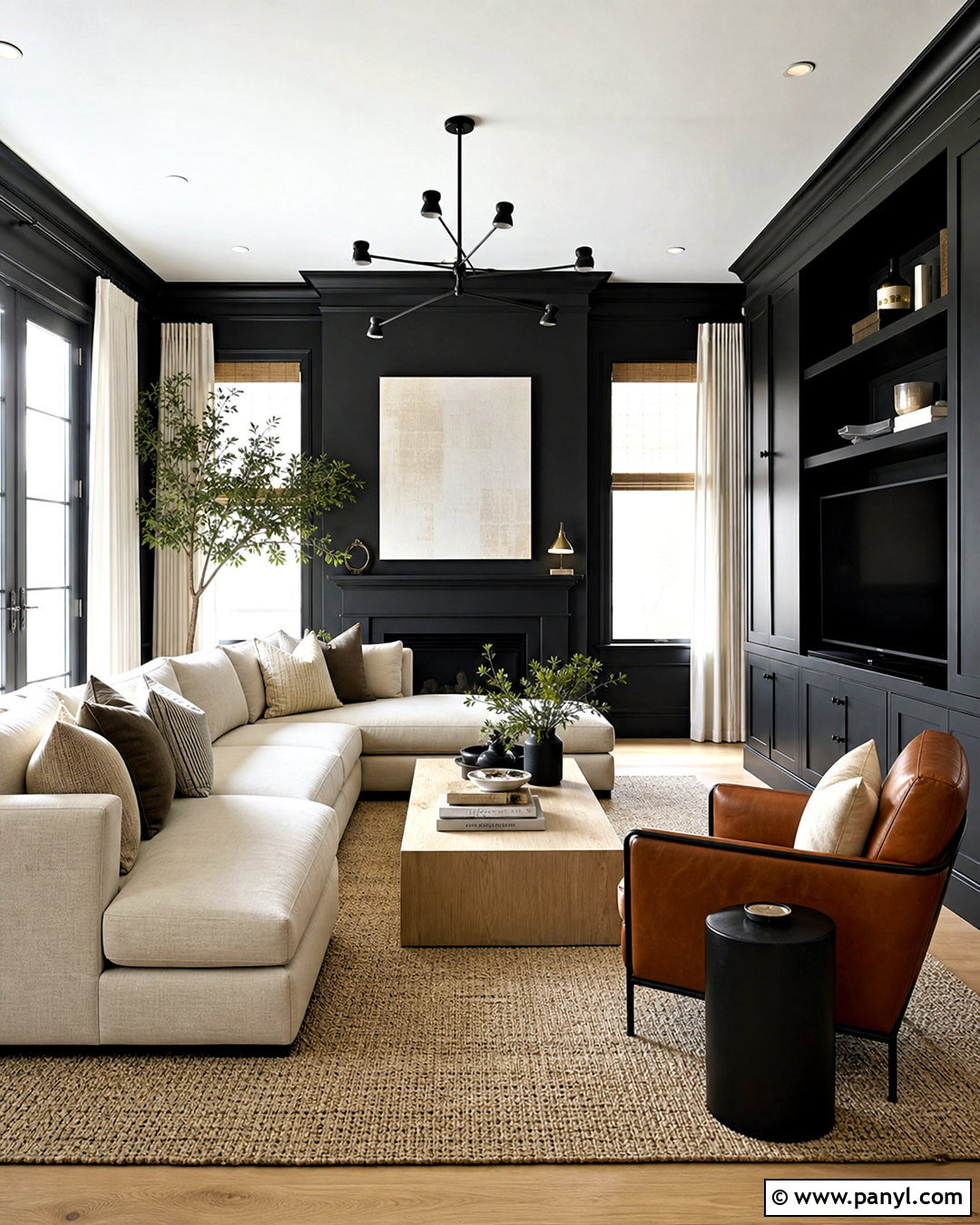
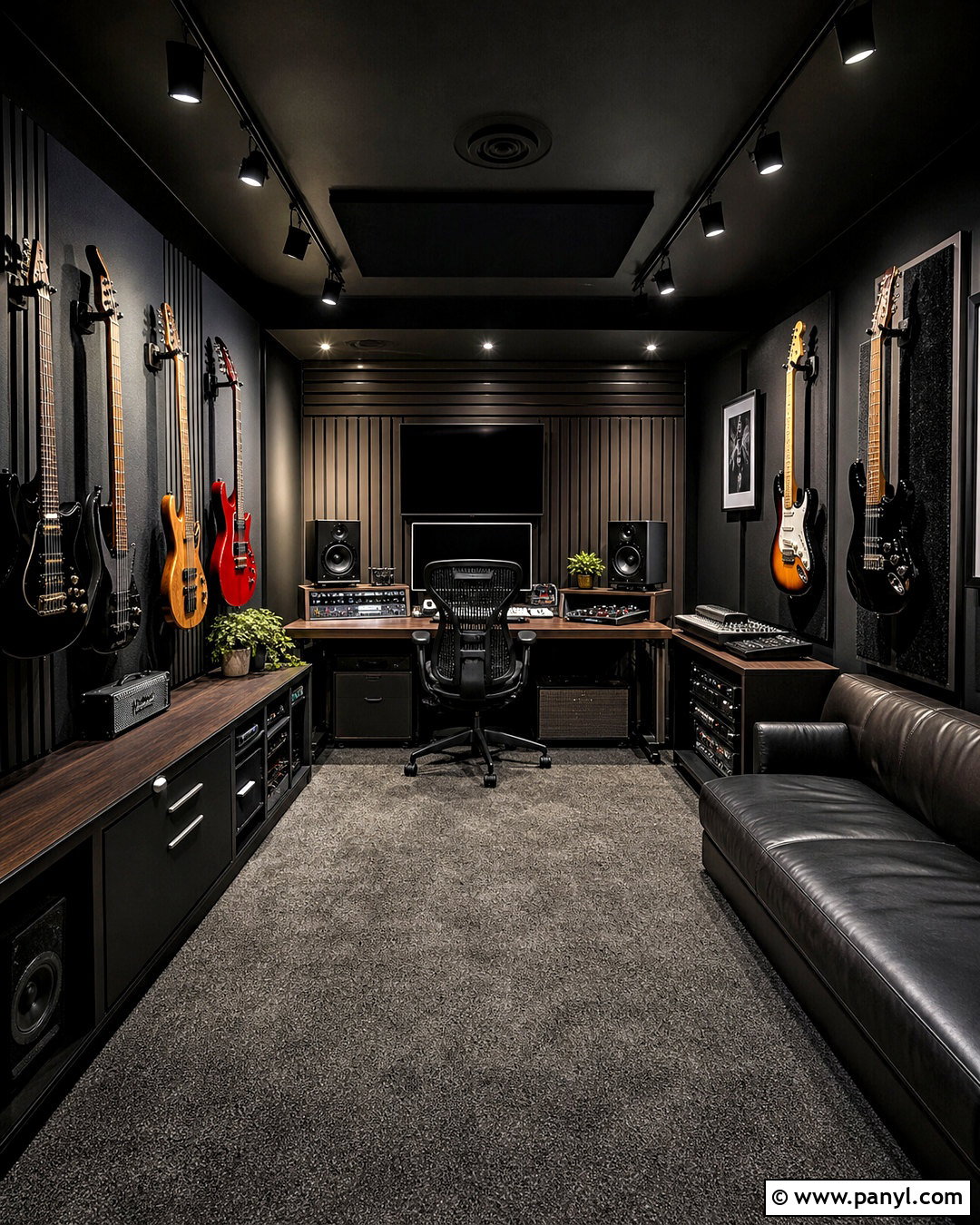
Soft black paint gives a basement media room a cinematic atmosphere while remaining easier to decorate than a harsh jet black. Choose a black with muted gray or brown undertones and carry it across the walls, trim, and built-in media cabinetry. Keep the ceiling one shade lighter if the room is low. A large oatmeal-colored sectional creates a bright focal point, while a dark patterned rug reduces glare near the screen. Install walnut floating shelves, closed storage cabinets, and slim black wall sconces for a seamless finish. Light oak side tables and brushed brass accents add warmth. Complete the layout with blackout shades, acoustic fabric panels, and dimmable recessed lighting that can become bright when the theater is not in use.
3. Deep Navy Dark Basement
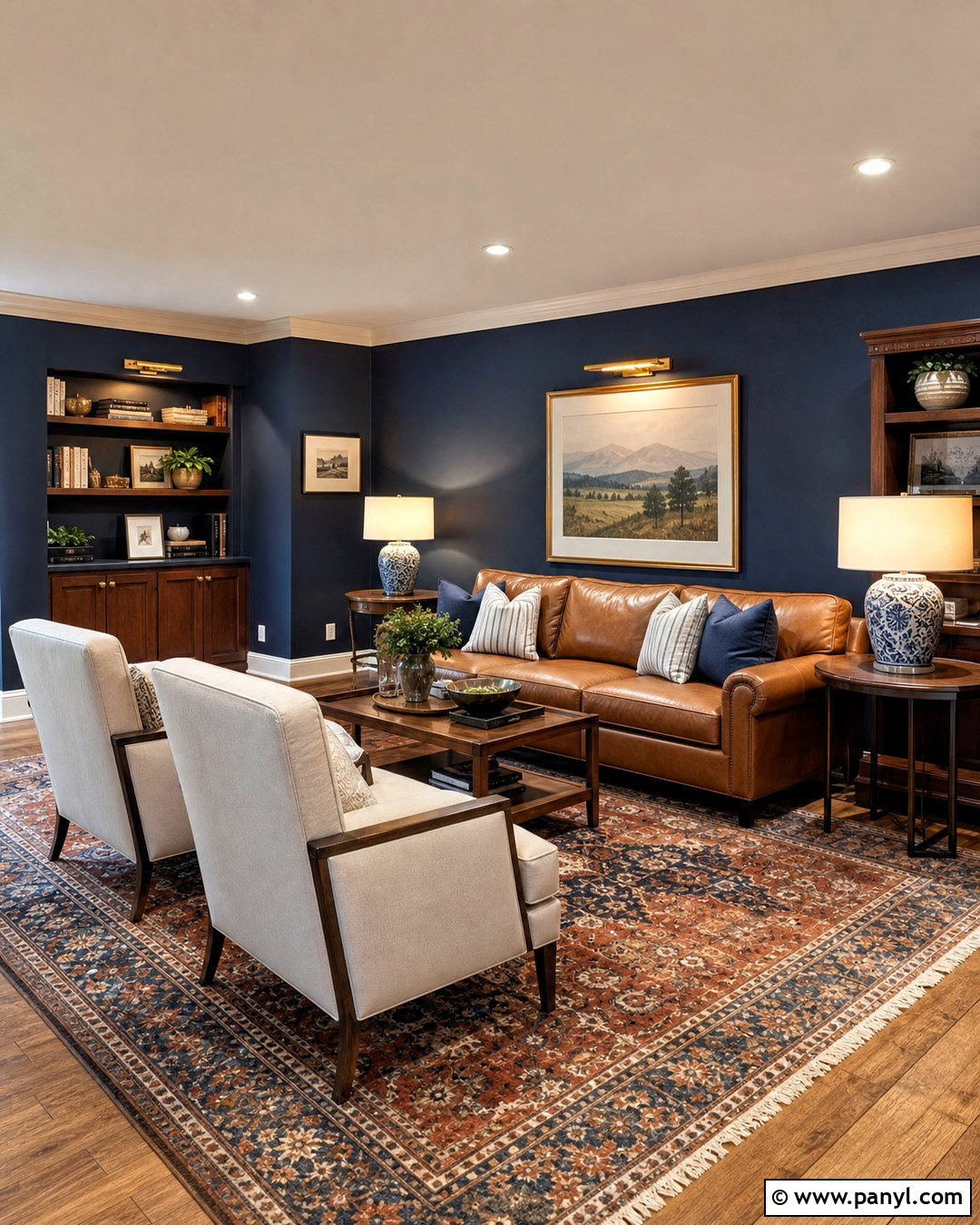
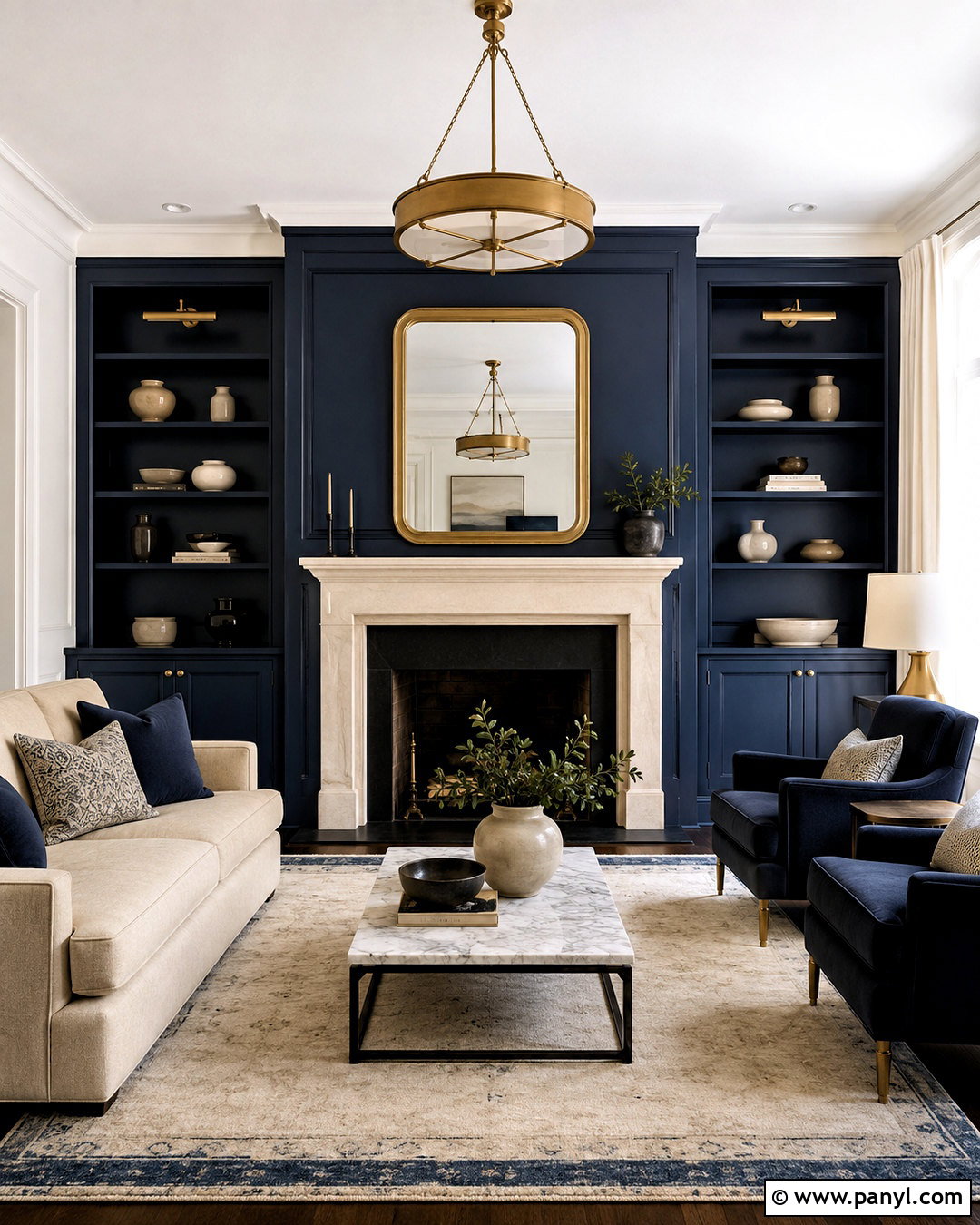
Deep navy walls can make a basement lounge feel tailored, comfortable, and surprisingly versatile. Use the blue on every wall, then add crisp off-white trim and a pale ceiling to outline the room clearly. A warm camel leather sofa and two cream upholstered chairs provide strong contrast without disrupting the relaxed mood. Ground the seating area with a vintage-inspired rug containing navy, rust, beige, and faded blue. Walnut cabinets can hold games, books, and media equipment along one wall. Add aged brass picture lights, a large round mirror, and ceramic table lamps with white shades. Medium-toned wood flooring and woven window coverings bring natural texture, while checked pillows and simple landscape prints create an inviting finished basement that suits everyday gatherings.
4. Midnight Blue Dark Basement
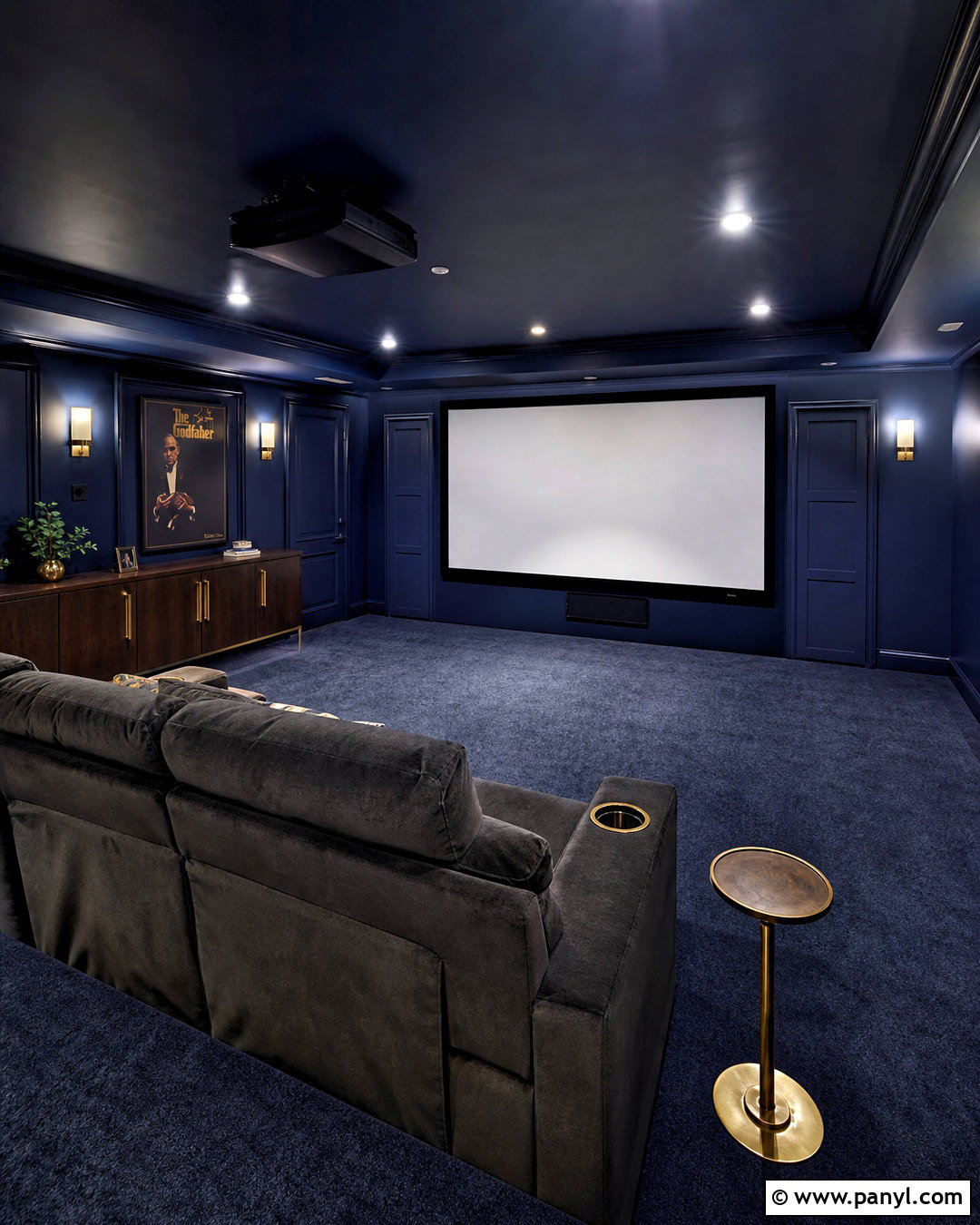
Imagine a basement home theater wrapped in midnight blue from floor to ceiling. This nearly black blue helps the walls visually recede, allowing the screen and seating area to become the main focus. Paint the ceiling, trim, doors, and walls the same color for a smooth, uninterrupted effect. Arrange two rows of low-profile charcoal seating with a narrow walkway between them. Use deep blue carpet or a dense patterned rug to soften sound and create a finished appearance. Wall-mounted sconces with diffused white shades provide controlled lighting without producing harsh glare. Add black acoustic panels framed like artwork, dark walnut snack storage, and a slim console behind the seating. Small brass details keep the monochromatic room from appearing flat.
5. Slate Blue Dark Basement
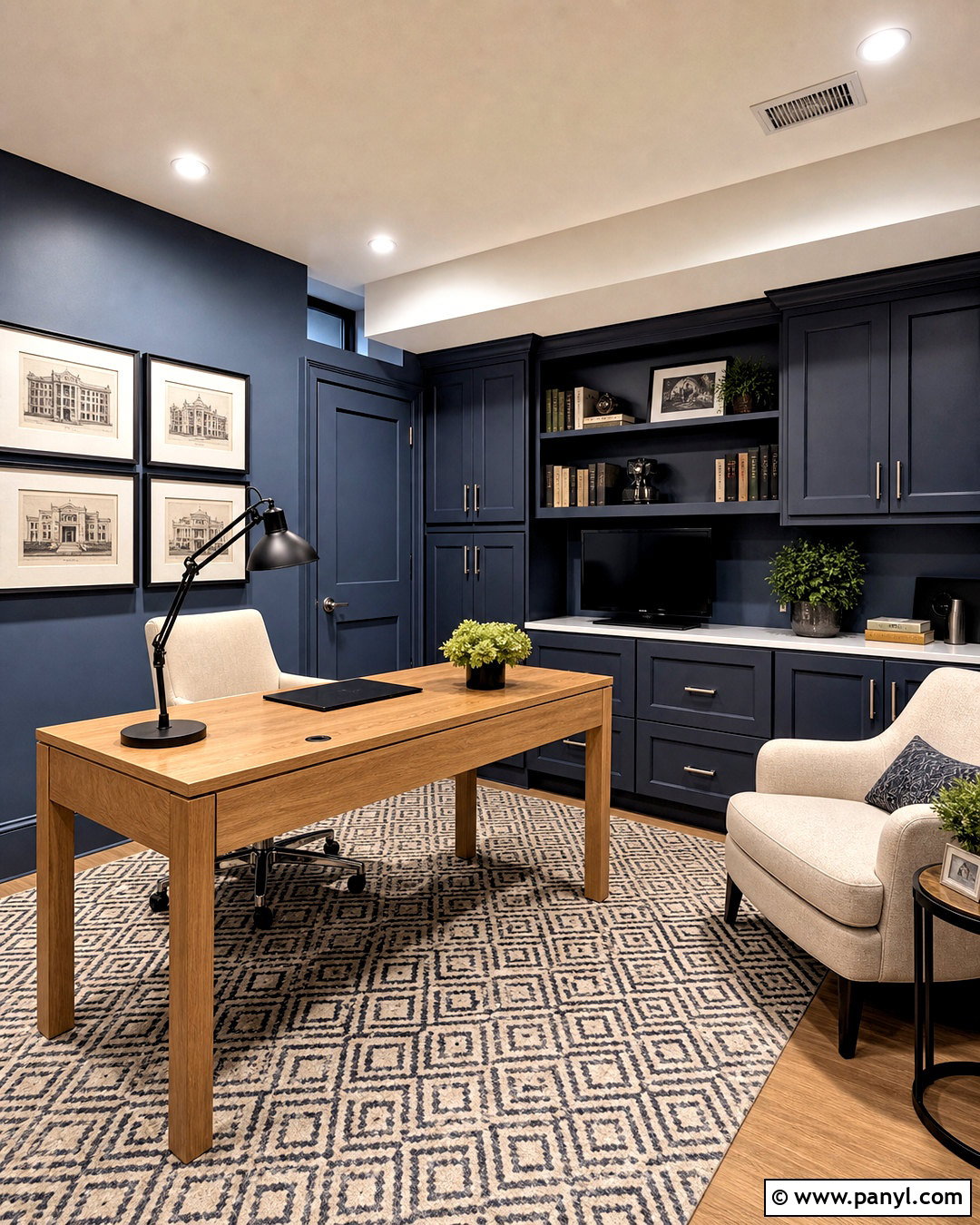
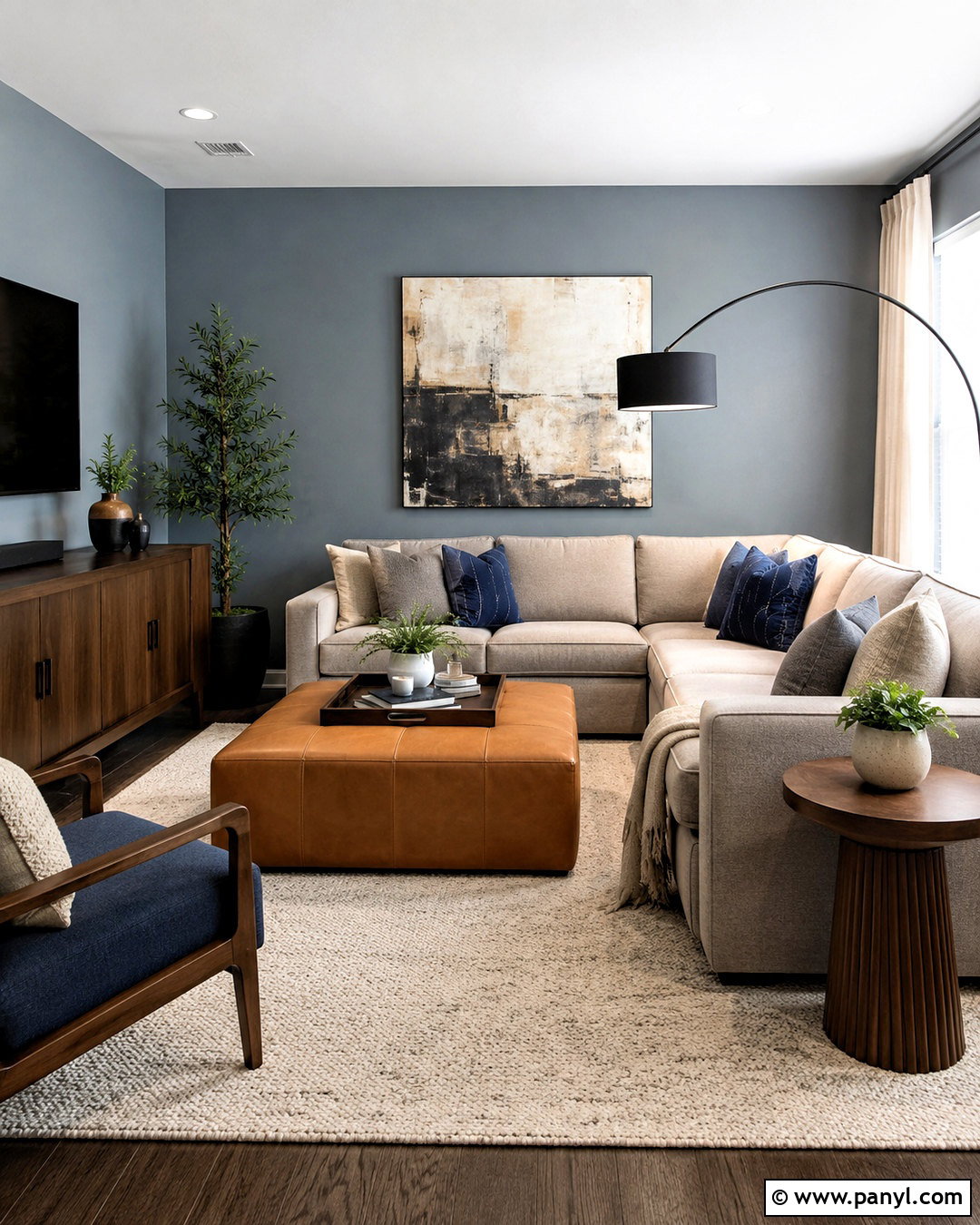
Slate blue works beautifully in a basement home office because it offers depth while still feeling calm and organized. Paint the walls a dark blue-gray, but keep the ceiling warm white to reflect overhead light. Position a natural oak desk where recessed lighting reaches the work surface, and place dark built-in cabinets behind it for concealed storage. A cream swivel chair, faded geometric rug, and linen Roman shade soften the practical layout. Use brushed nickel hardware and black metal task lighting for a clean, modern finish. Framed architectural prints with wide white mats create contrast against the slate walls. Include a compact reading chair, floor lamp, and narrow bookcase so the office can also function as a quiet study or homework space.
6. Dark Teal Basement
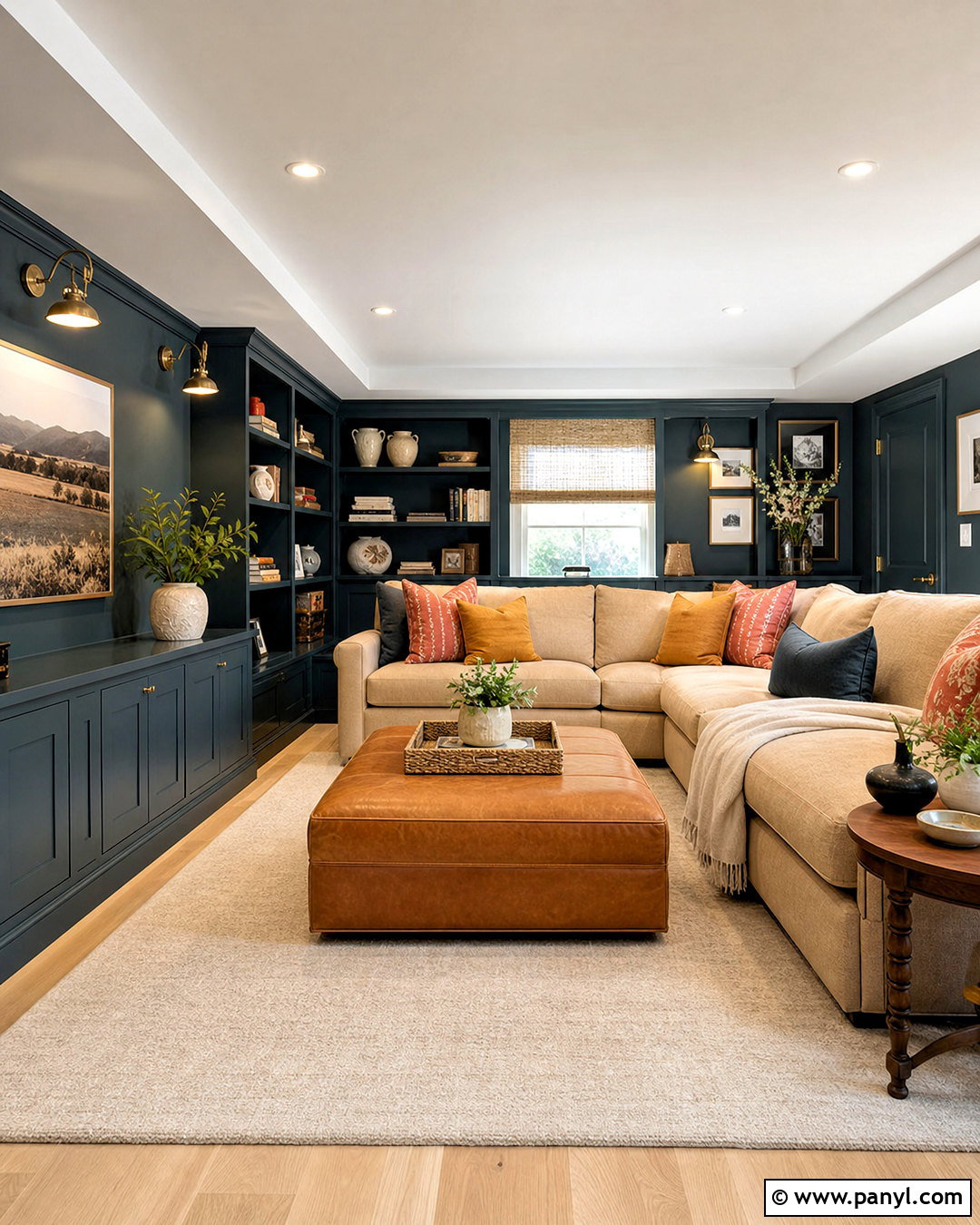
Dark teal gives a basement living area a rich, colorful identity without sacrificing comfort. Cover the walls in a deep blue-green, then repeat the color on built-in bookcases for a cohesive background. Keep the ceiling soft white and select pale oak flooring to balance the saturated paint. A warm beige sectional, saddle-brown leather ottoman, and ivory rug make the center of the room feel lighter. Add coral, mustard, and muted blue textiles in small amounts to build a layered palette. Brass sconces and clear glass table lamps reflect light around the space. Decorate the shelves with cream pottery, books, baskets, and framed photographs, leaving some open space between objects. The result feels colorful and complete rather than crowded or overly themed.
7. Forest Green Dark Basement
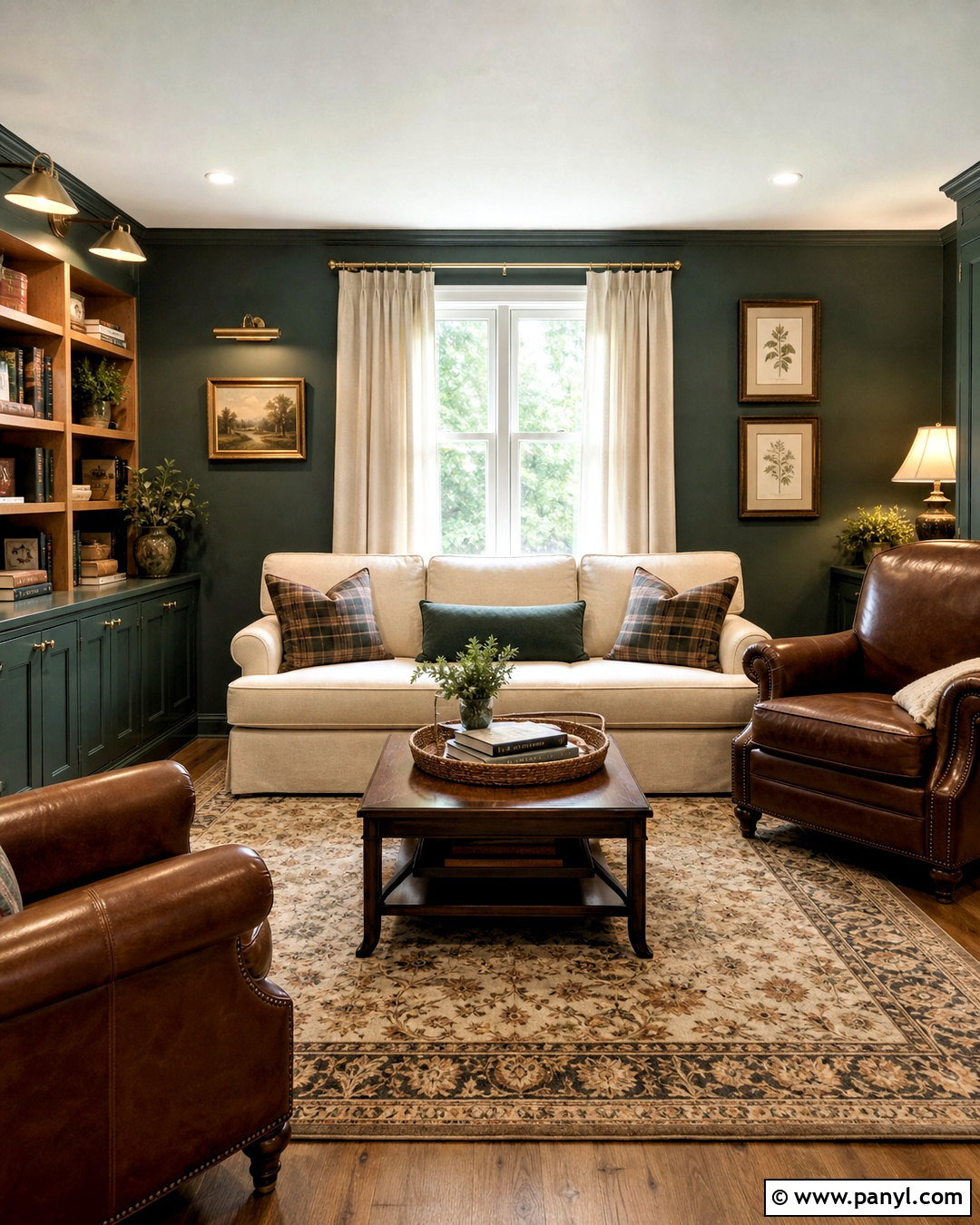
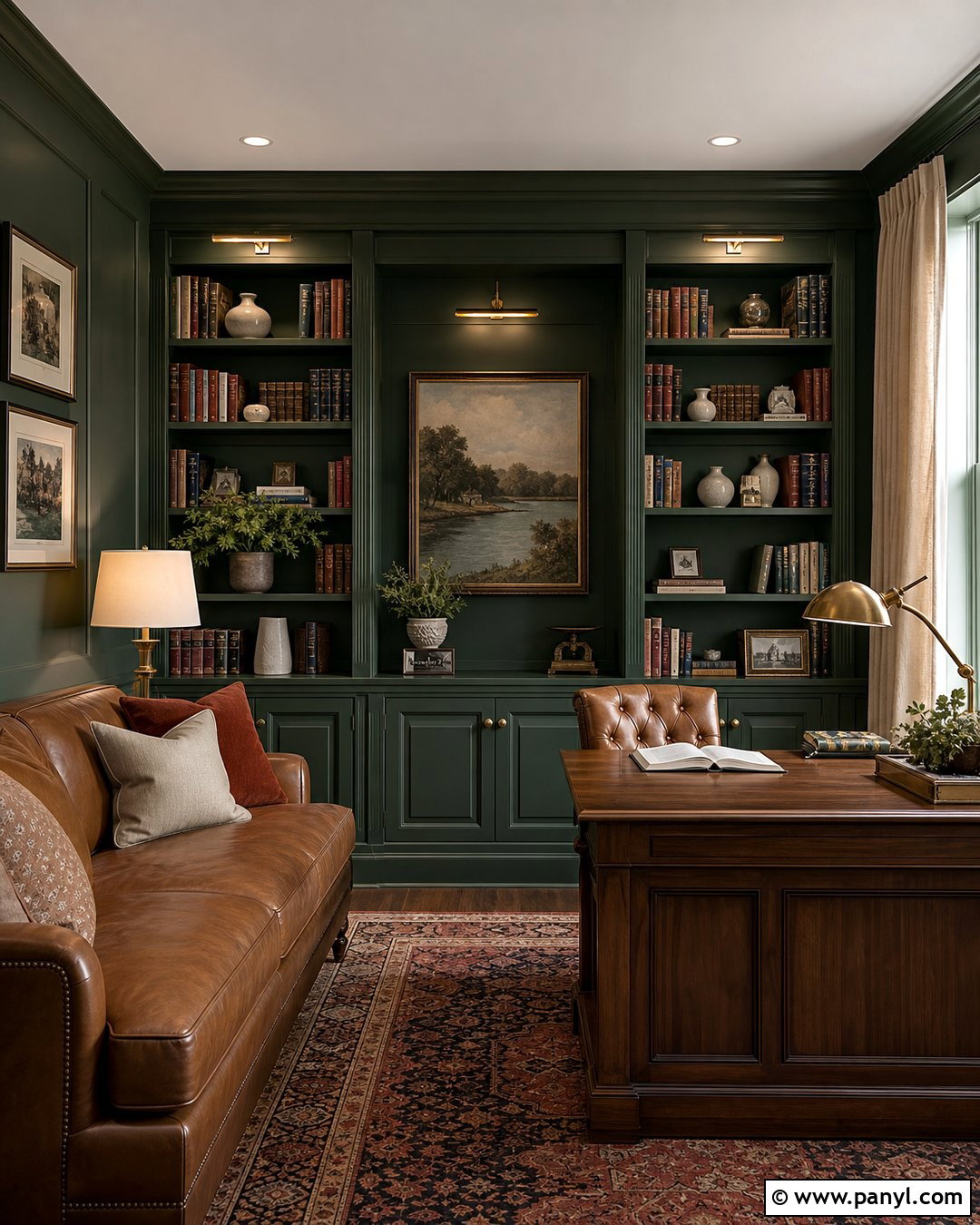
Forest green can transform a basic basement into a grounded reading room and family retreat. Paint the walls and lower built-in cabinets in the same deep green, pairing them with warm white ceiling paint and natural oak shelving. Arrange a cream sofa opposite two brown leather club chairs to create an intimate conversation zone. A muted botanical rug can connect the green walls, warm upholstery, and medium wood flooring. Install aged brass library lights above the shelving and use shaded table lamps beside the sofa for comfortable reading. Add linen curtains around small basement windows to soften their shape. Framed nature sketches, plaid pillows, wool throws, and stoneware accessories complete the room while keeping the overall design mature, practical, and easy to maintain.
8. Dark Olive Green Basement
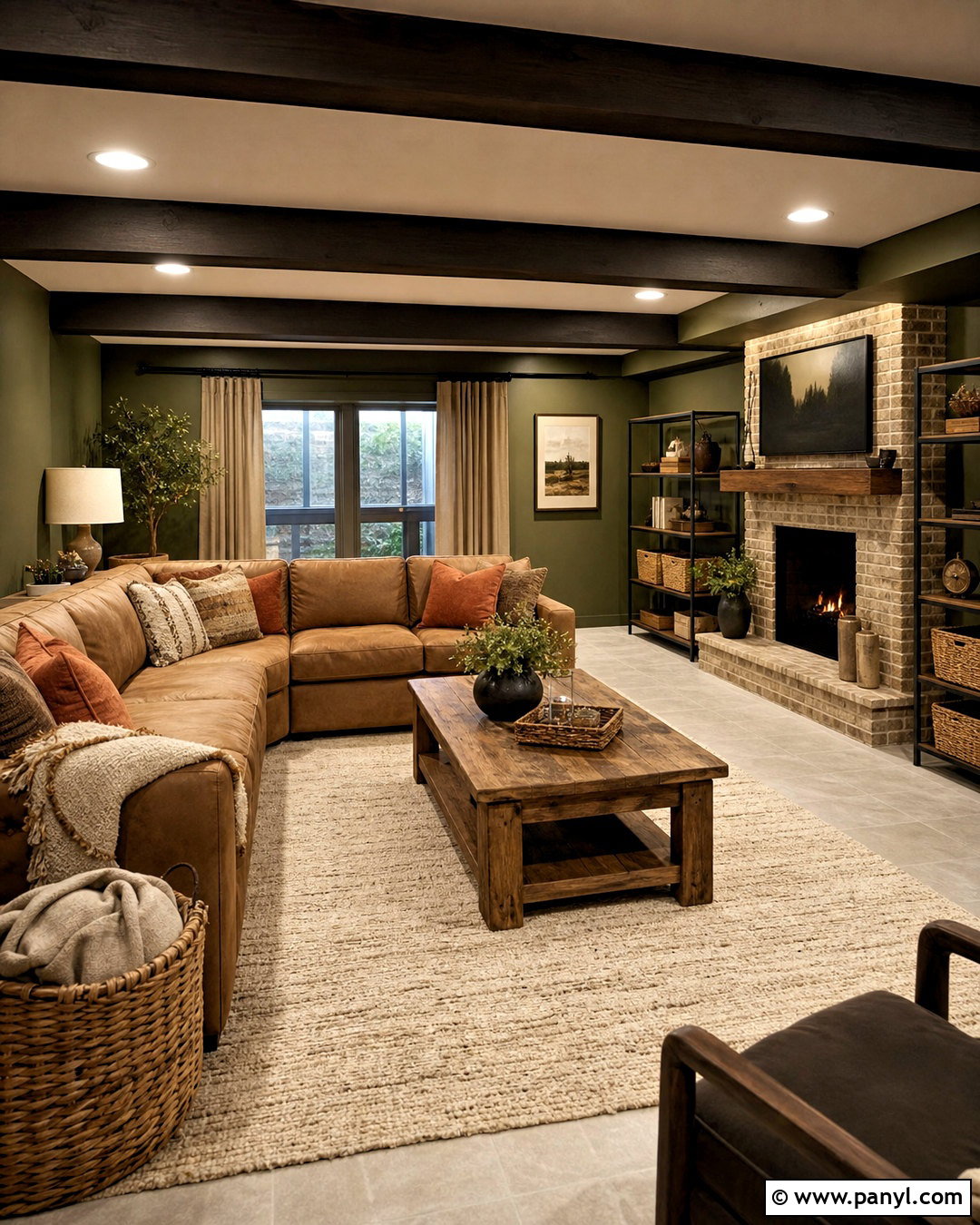
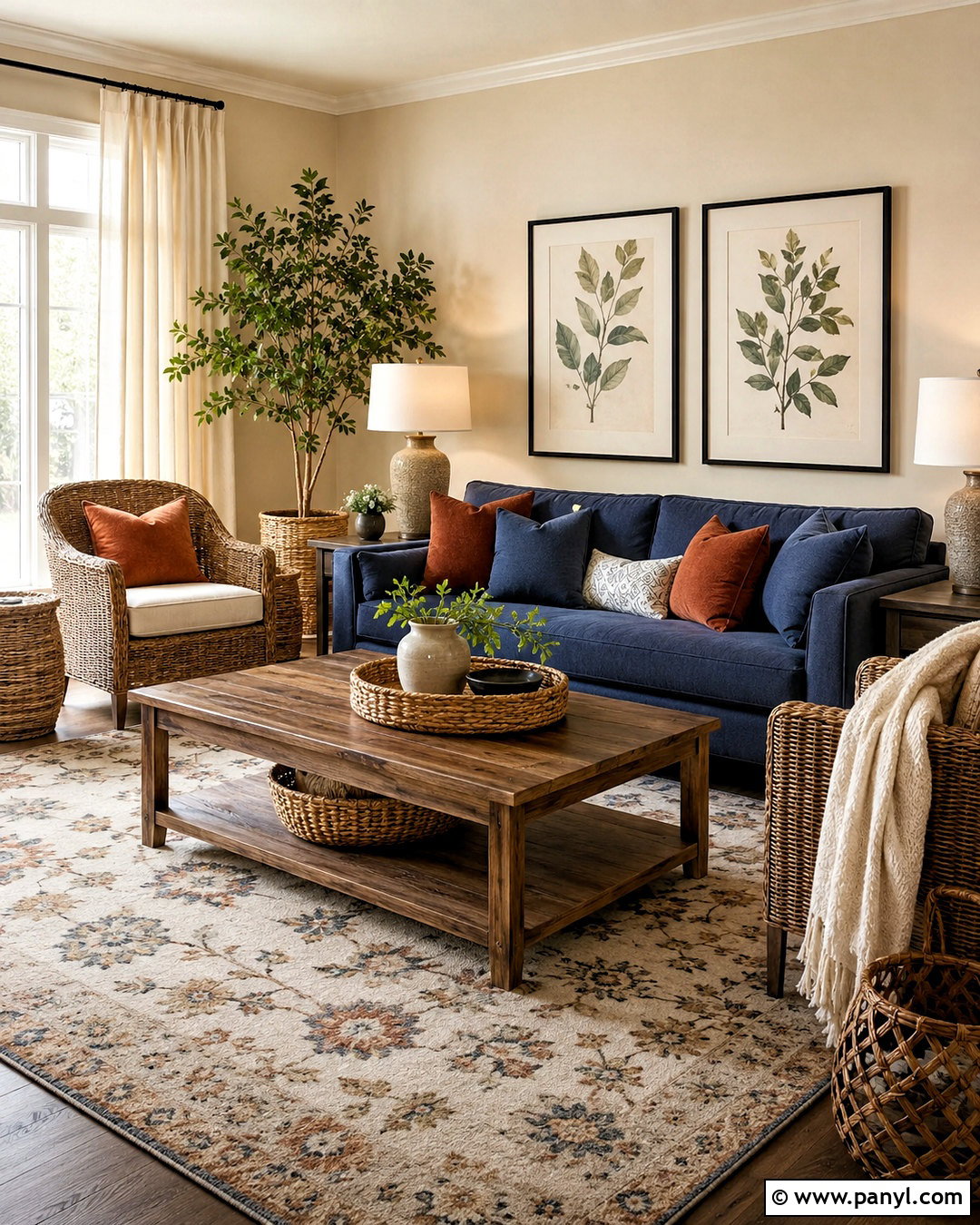
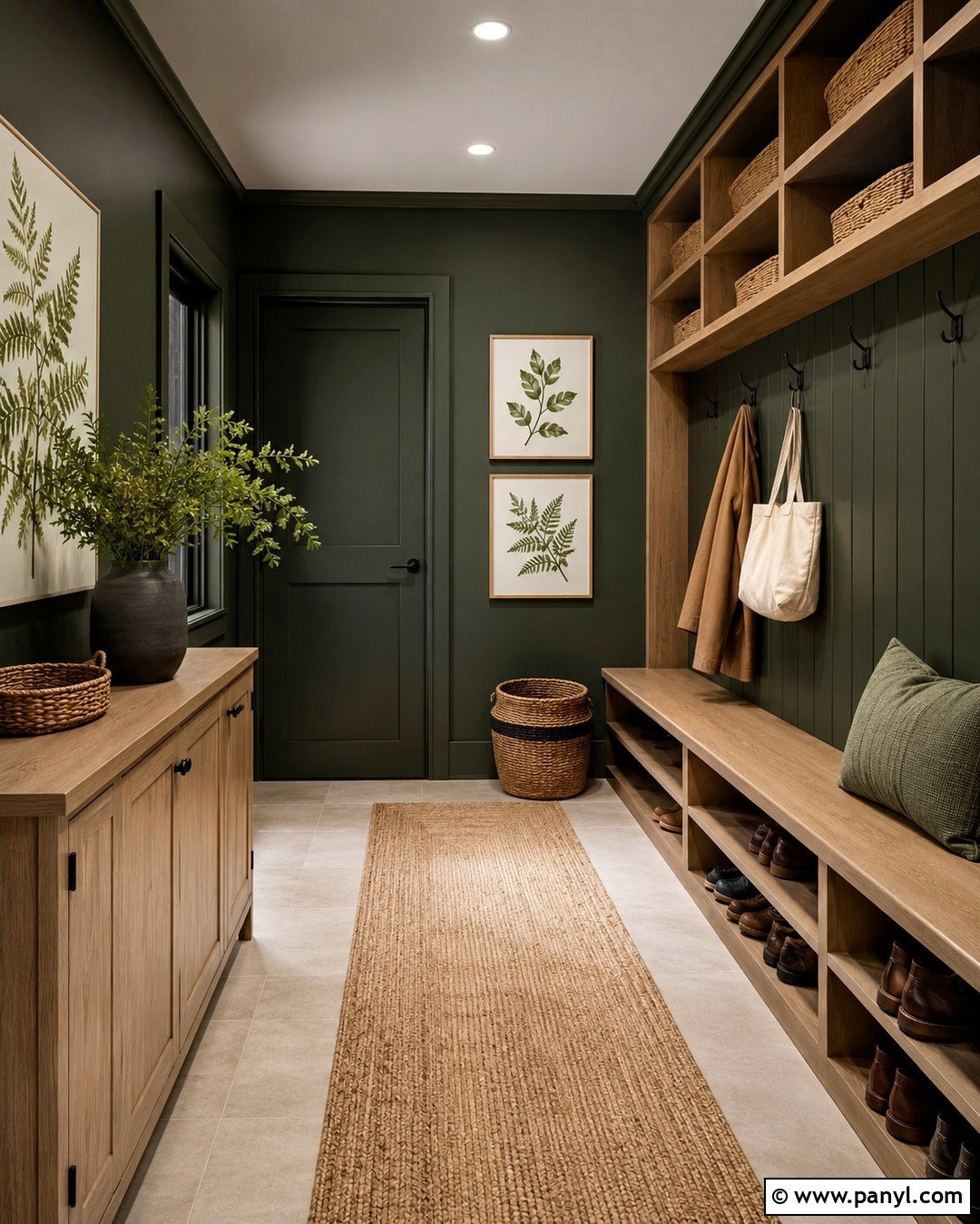
Dark olive green brings warmth to a basement that has concrete, brick, or other cool architectural surfaces. Use olive across the main walls and paint exposed ceiling beams a deep brown-black for definition. A caramel sectional, chunky cream rug, and rustic oak coffee table will create a comfortable gathering area. Introduce black metal through shelving, lamp bases, and cabinet hardware, but keep these accents slim so the room does not feel heavy. Terracotta-colored pillows and muted tan curtains enhance the earthy palette. If the basement has a brick fireplace, leave the brick natural or apply a warm limewashed finish. Finish with woven baskets, handmade pottery, and soft landscape art. Bright recessed lights will keep the complex green undertones clear and attractive.
9. Emerald Green Dark Basement
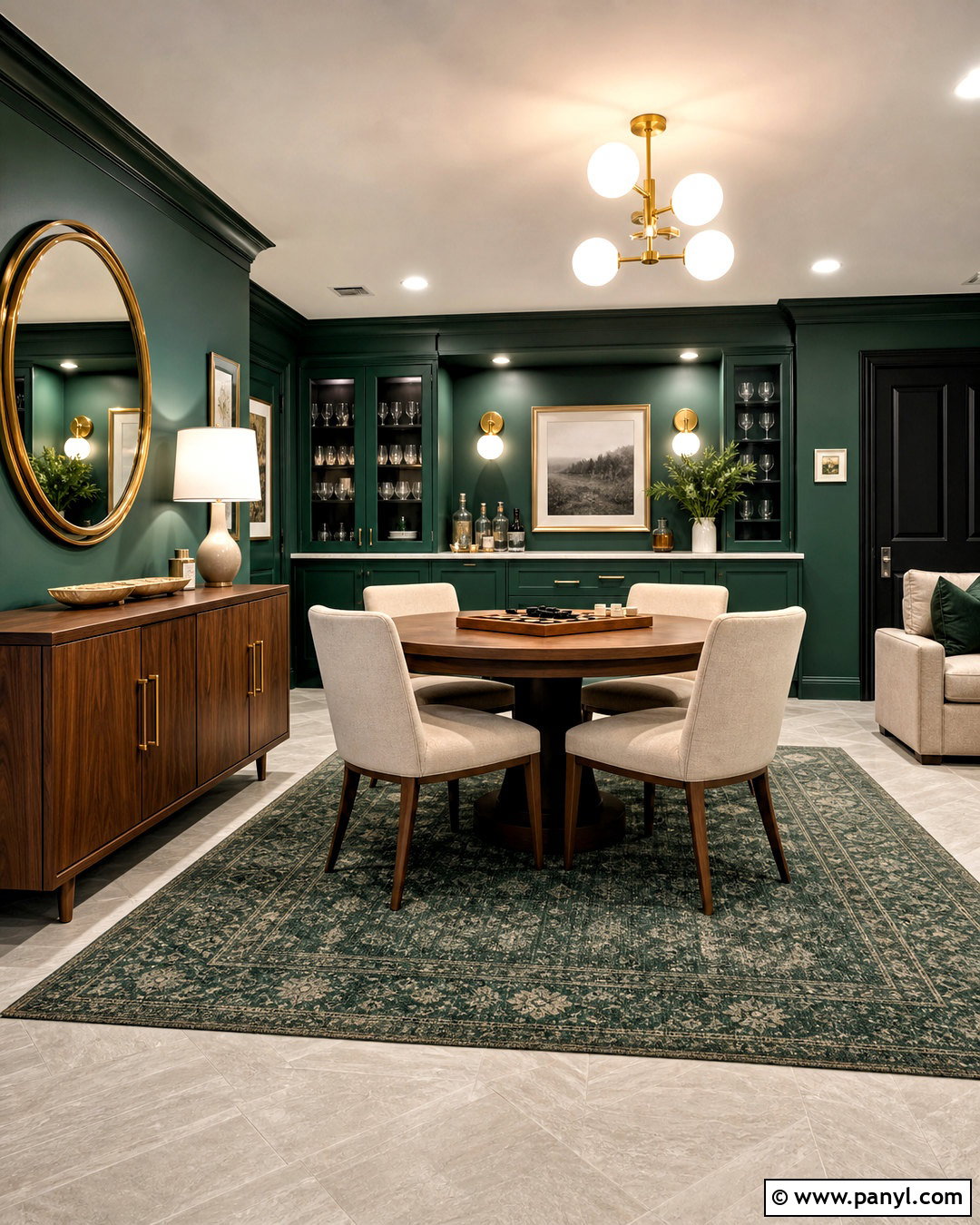
Emerald green creates a bold basement entertaining space with a refined, jewel-toned appearance. Use the color on the walls and cabinetry, then add narrow cream trim to sharpen the edges of the room. Choose a long walnut console with storage, a round game table, and upholstered dining chairs in light beige performance fabric. Pale stone-look flooring or warm oak planks prevent the green from overpowering the lower level. Hang a large brass-framed mirror where it can reflect ceiling light into the room. White globe fixtures and slim brass sconces provide brightness from several directions. Add graphic artwork, striped pillows, and a patterned rug containing emerald, cream, and muted gold. The completed room feels energetic enough for entertaining but still polished for everyday use.
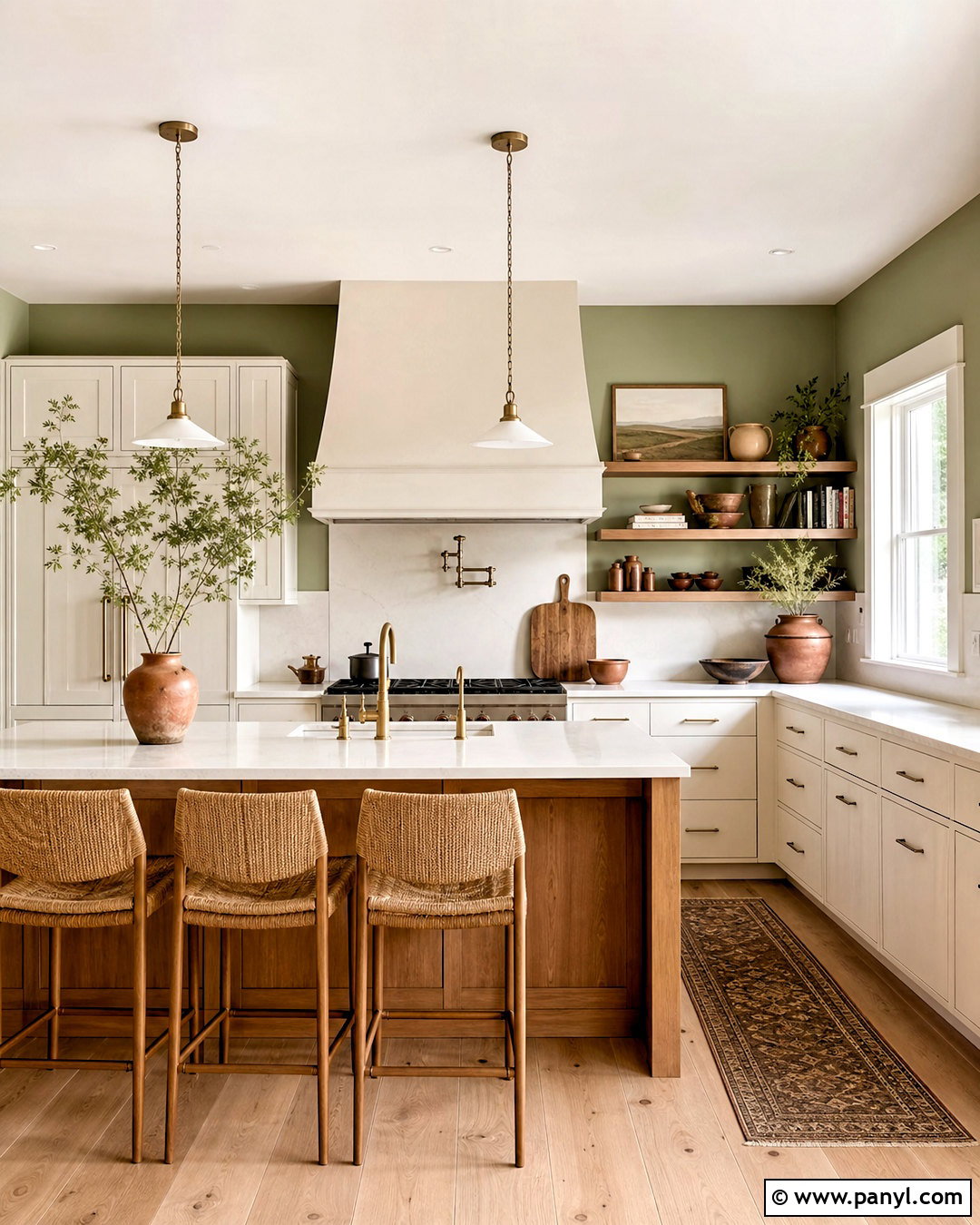
10. Blue Green Dark Basement
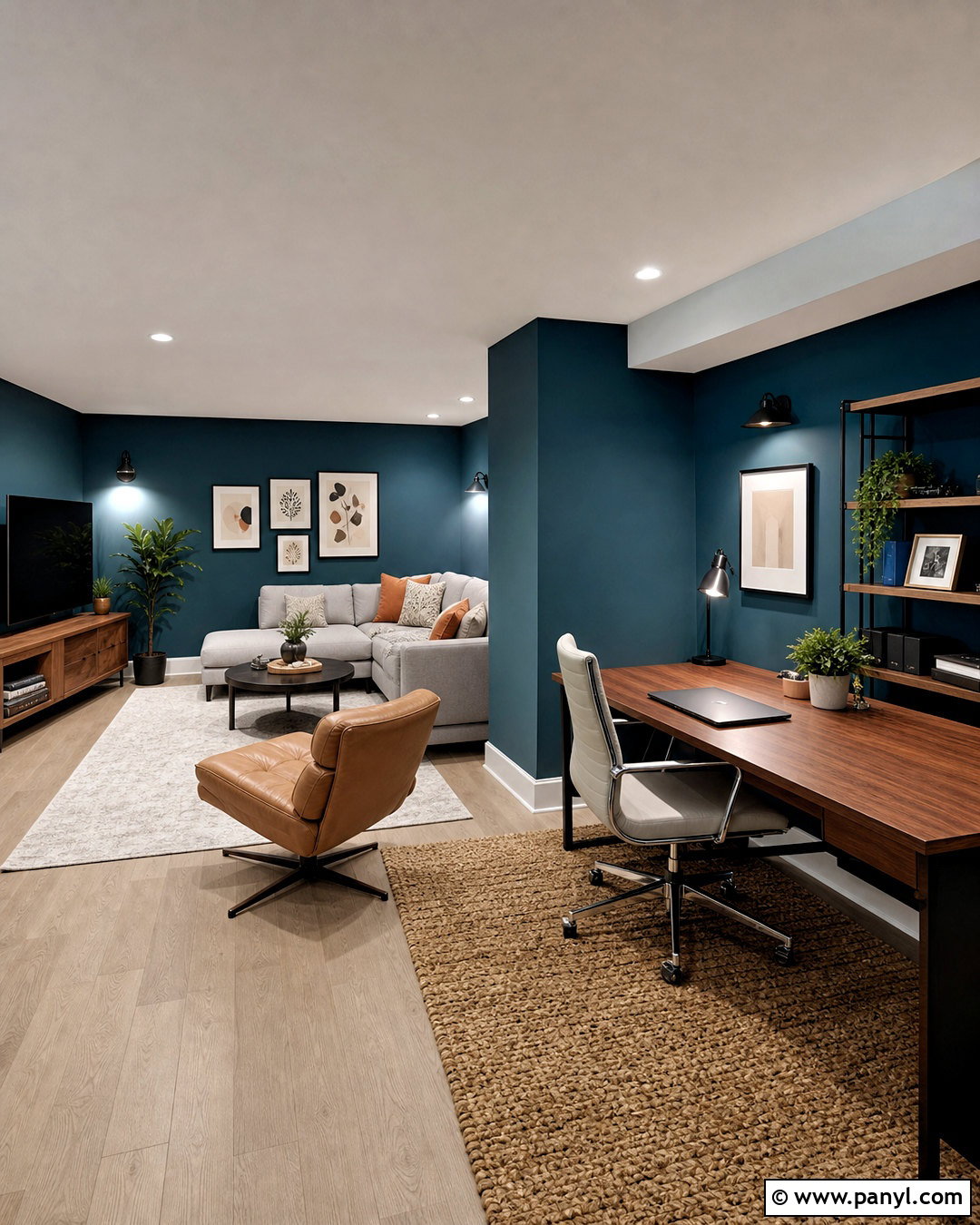
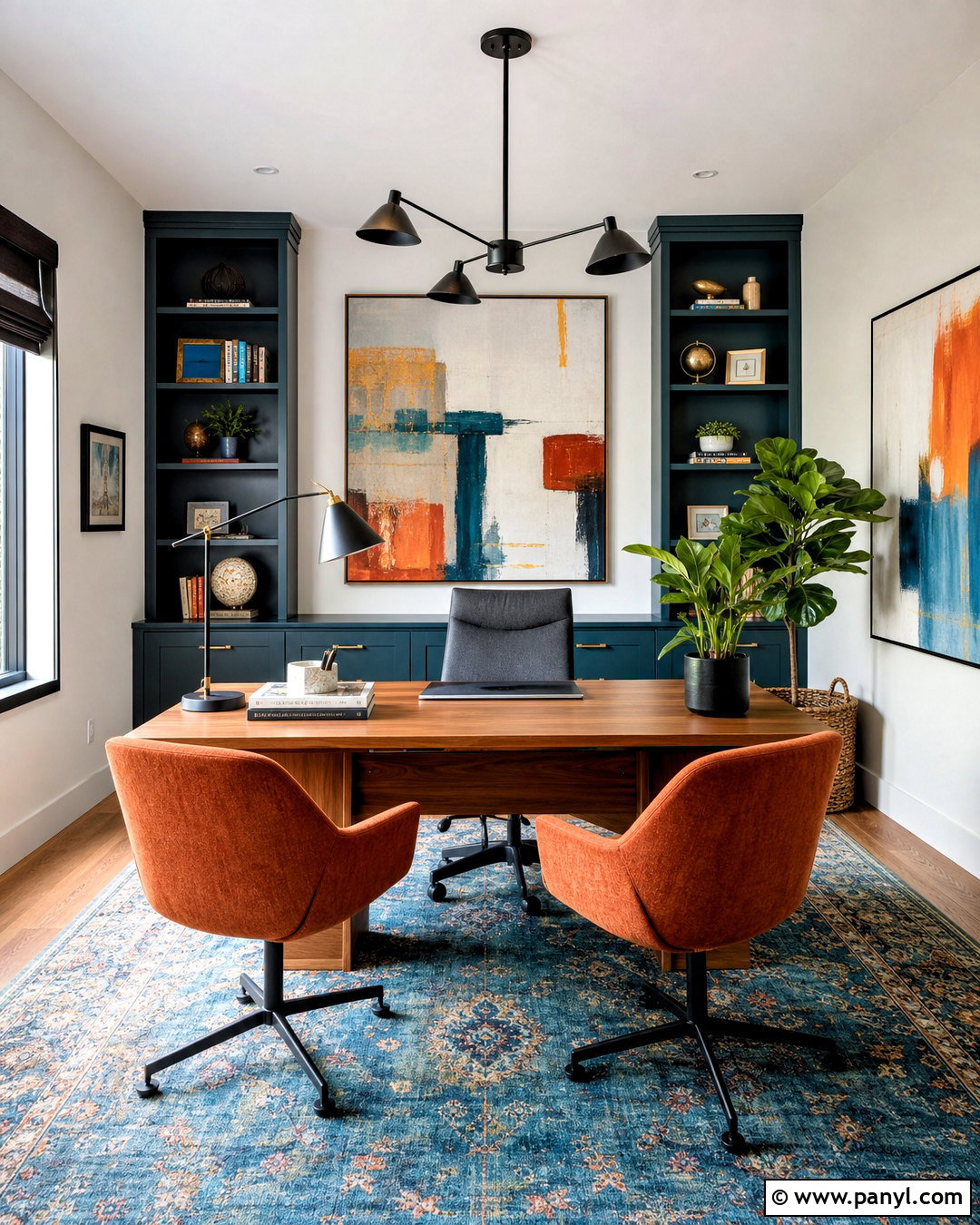
A dark blue-green wall color offers a flexible middle ground between classic navy and earthy teal. It works especially well in an open basement with a family room on one side and a small workspace on the other. Use the same paint throughout to connect both zones, then define them with separate rugs and lighting. Choose a light gray sofa, oak media cabinet, and tan lounge chair for the seating area. Furnish the workspace with a compact walnut desk and cream task chair. Matte black fixtures, simple white shades, and pale artwork help brighten the walls. Add muted orange cushions and green ceramic accessories for controlled color. Keeping the flooring consistent across the basement makes the multifunctional layout feel spacious and intentionally designed.
11. Burgundy Dark Basement
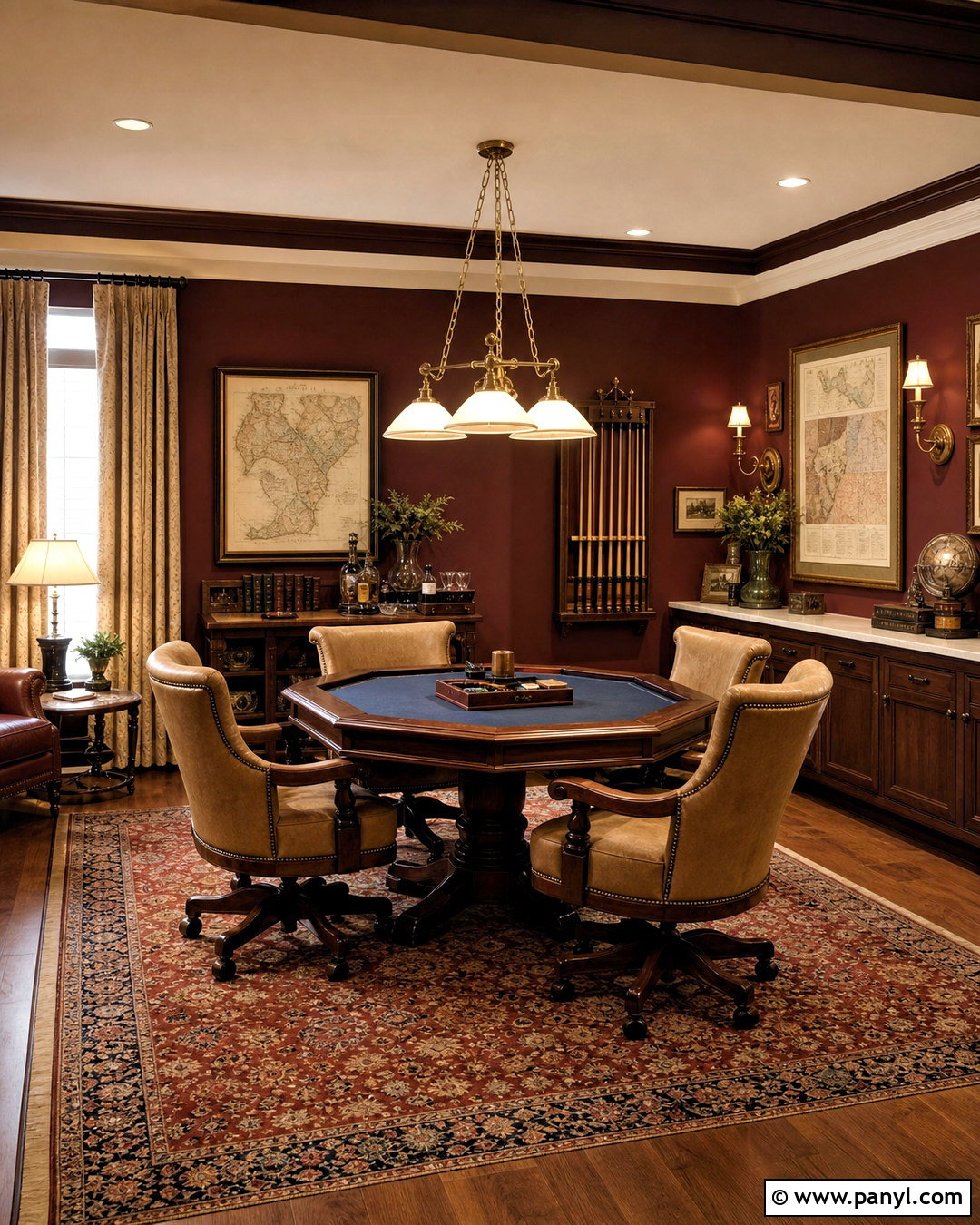
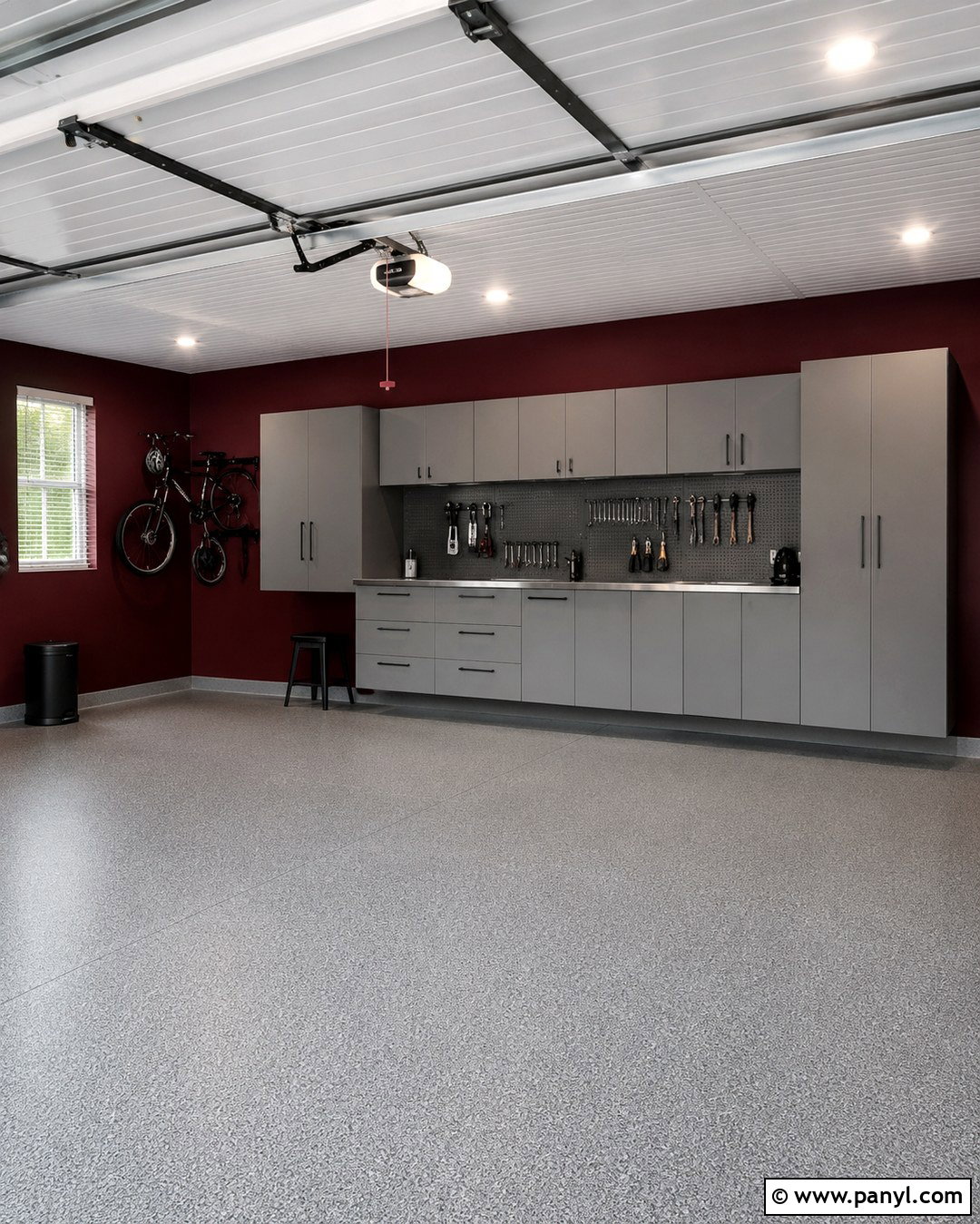
Burgundy paint can give a basement game room a warm, welcoming atmosphere with plenty of personality. Select a deep red with brown undertones rather than a bright, highly saturated version. Paint the walls burgundy and use warm cream for the ceiling, door frames, and baseboards. Center the room around a medium walnut game table with upholstered tan chairs. Along one wall, install low cabinets with a light stone top for storage and serving space. A faded Persian-style rug can introduce navy, beige, rust, and burgundy without appearing overly coordinated. Use antique brass lighting, framed vintage maps, and linen curtains to soften the setting. Balanced recessed illumination is important because it prevents the red paint from becoming muddy or overly brown.
12. Aubergine Dark Basement
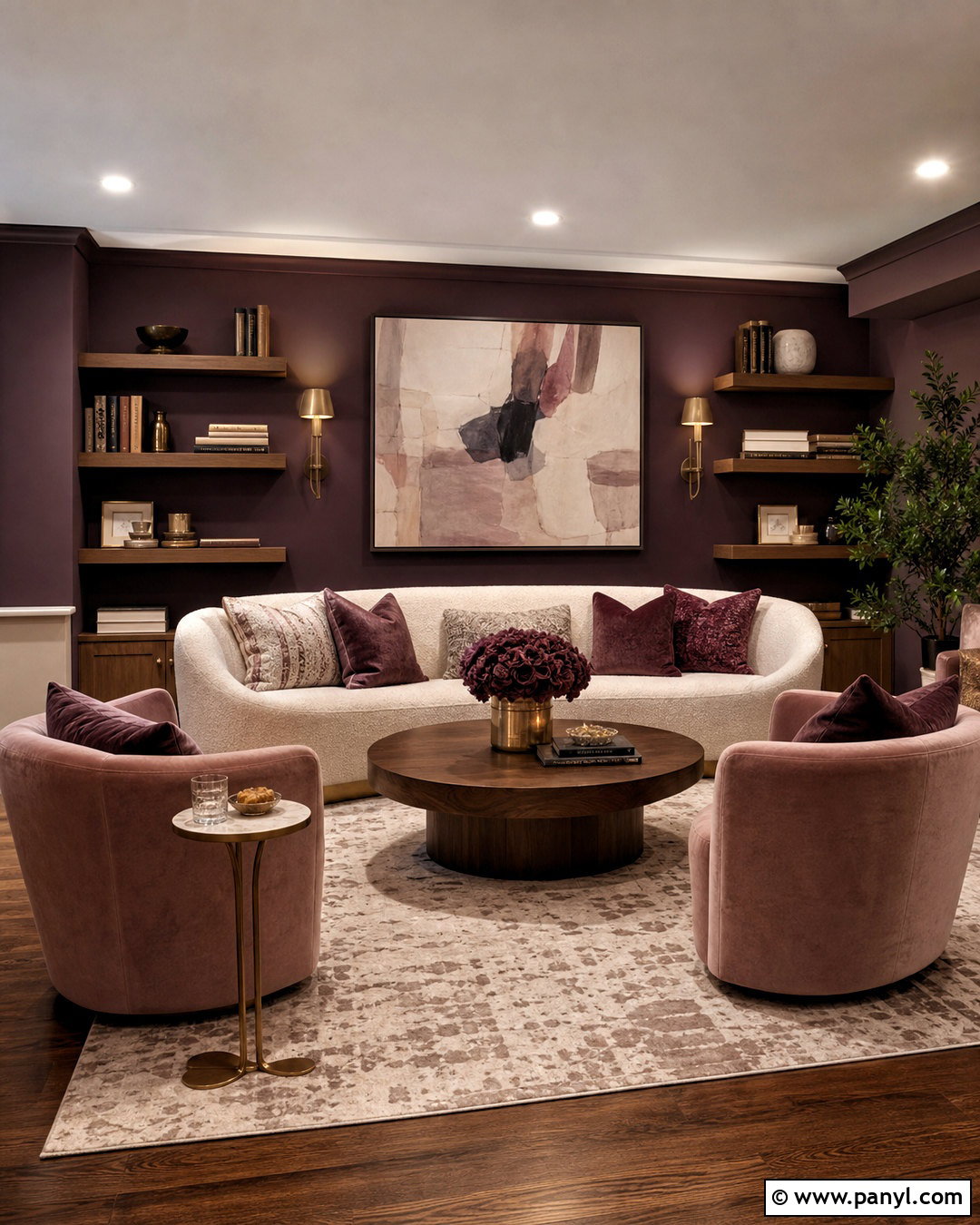
Deep aubergine creates a cozy basement sitting room that feels softer than black and more unexpected than navy. Paint the walls a muted purple with warm brown undertones, pairing it with mushroom-colored trim and a pale neutral ceiling. A curved cream sofa and two dusty rose chairs create a comfortable arrangement around a dark wood coffee table. Use an ivory and taupe rug to brighten the floor, especially if the basement has limited windows. Add aged brass lamps, dark walnut shelving, and simple abstract artwork in beige, plum, and soft gray. Velvet pillows can reinforce the rich palette, while linen upholstery keeps the room from feeling too formal. Several table lamps and recessed fixtures will reveal the paint’s depth without making it look excessively purple.
13. Deep Plum Dark Basement
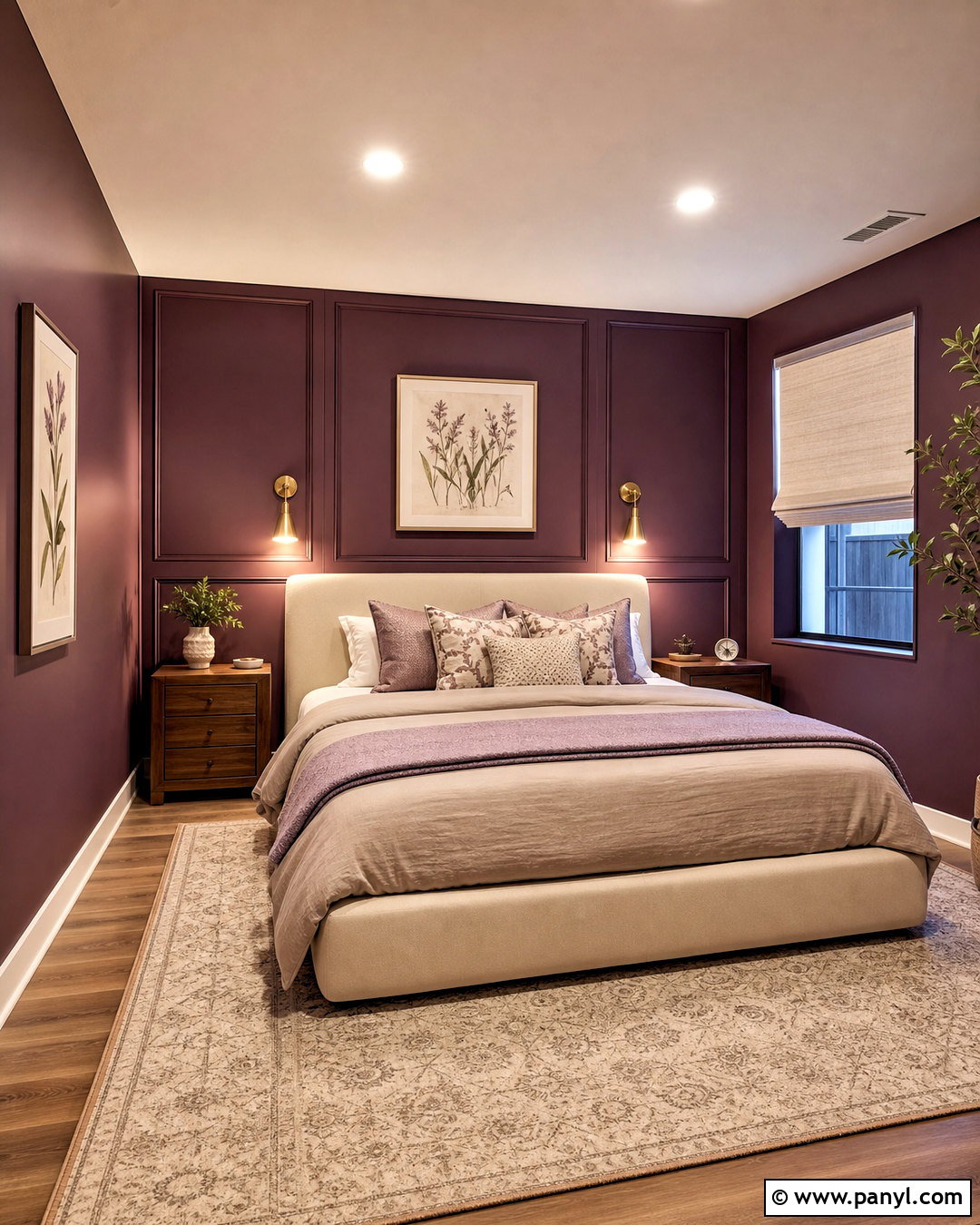
Deep plum works well in a basement guest room because it creates an enveloping, restful setting. Apply the color to the walls and paneled headboard wall, then use a warm white ceiling to preserve visual height. Place an upholstered oatmeal bed against the longest wall, with walnut nightstands and compact brass sconces on each side. Layer the bedding in ivory, taupe, and muted lavender rather than matching everything to the paint. A light patterned rug will soften hard flooring and visually enlarge the sleeping zone. Add a narrow wood dresser, round mirror, and comfortable accent chair near the window. Linen shades and bright white bedside lighting keep the room functional, while simple botanical prints and textured throws give the guest suite a thoughtful, finished appearance.
14. Chocolate Brown Dark Basement
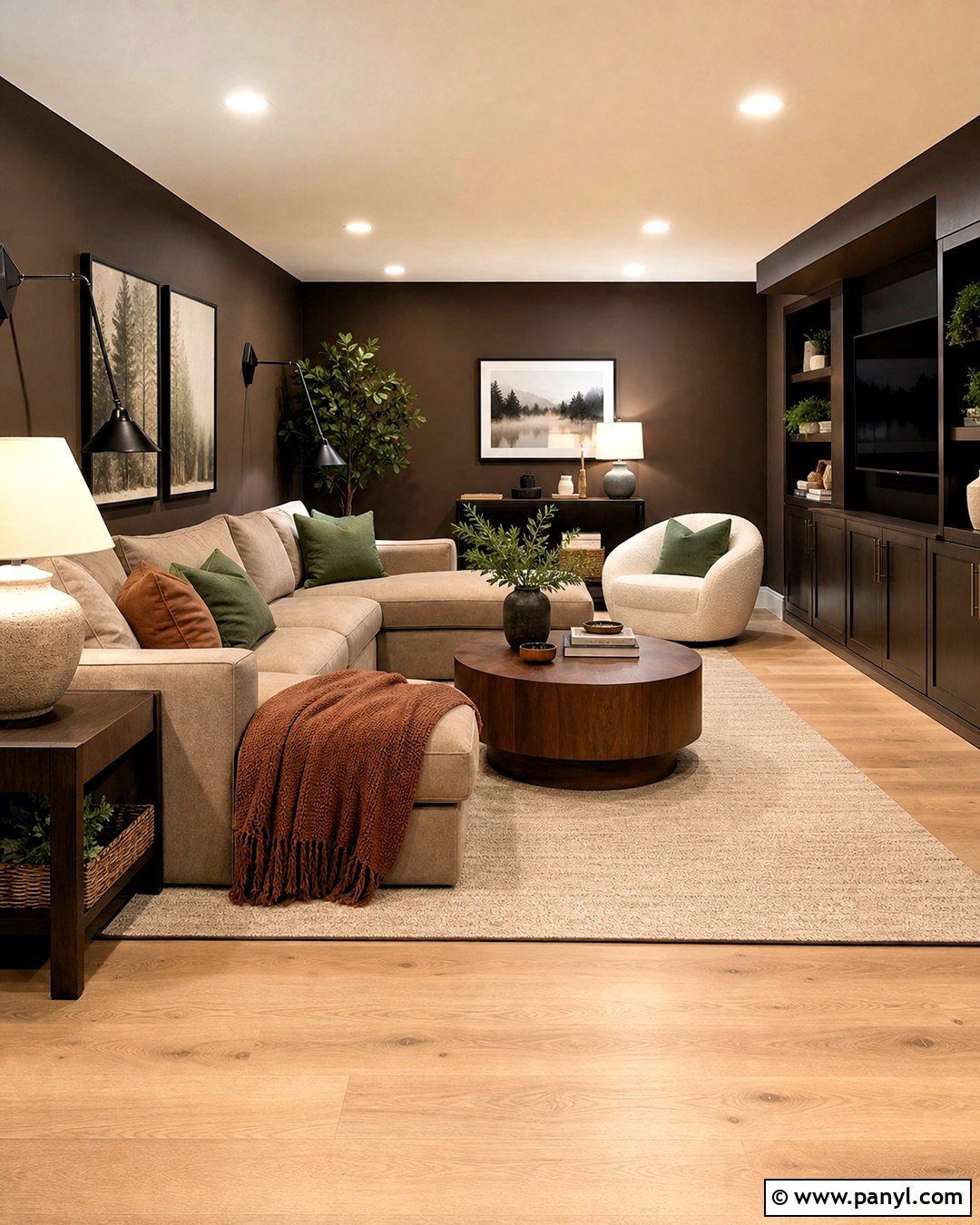
Chocolate brown walls can make a basement family room feel warm and secure, especially when paired with lighter natural materials. Choose a dark cocoa brown with minimal red undertones and paint the walls in an eggshell finish. Keep the ceiling creamy white, then add white oak flooring or a pale wood-look alternative. A sand-colored sectional, ivory boucle chair, and beige wool rug provide enough contrast to define the seating area. Use black metal and walnut furniture for a balanced mix of modern and traditional finishes. Large cream artwork, woven baskets, and ceramic lamps prevent the brown walls from appearing blank. Accents in sage green and muted rust bring gentle color, while recessed fixtures and wall sconces distribute light evenly throughout the full basement.
15. Espresso Brown Dark Basement
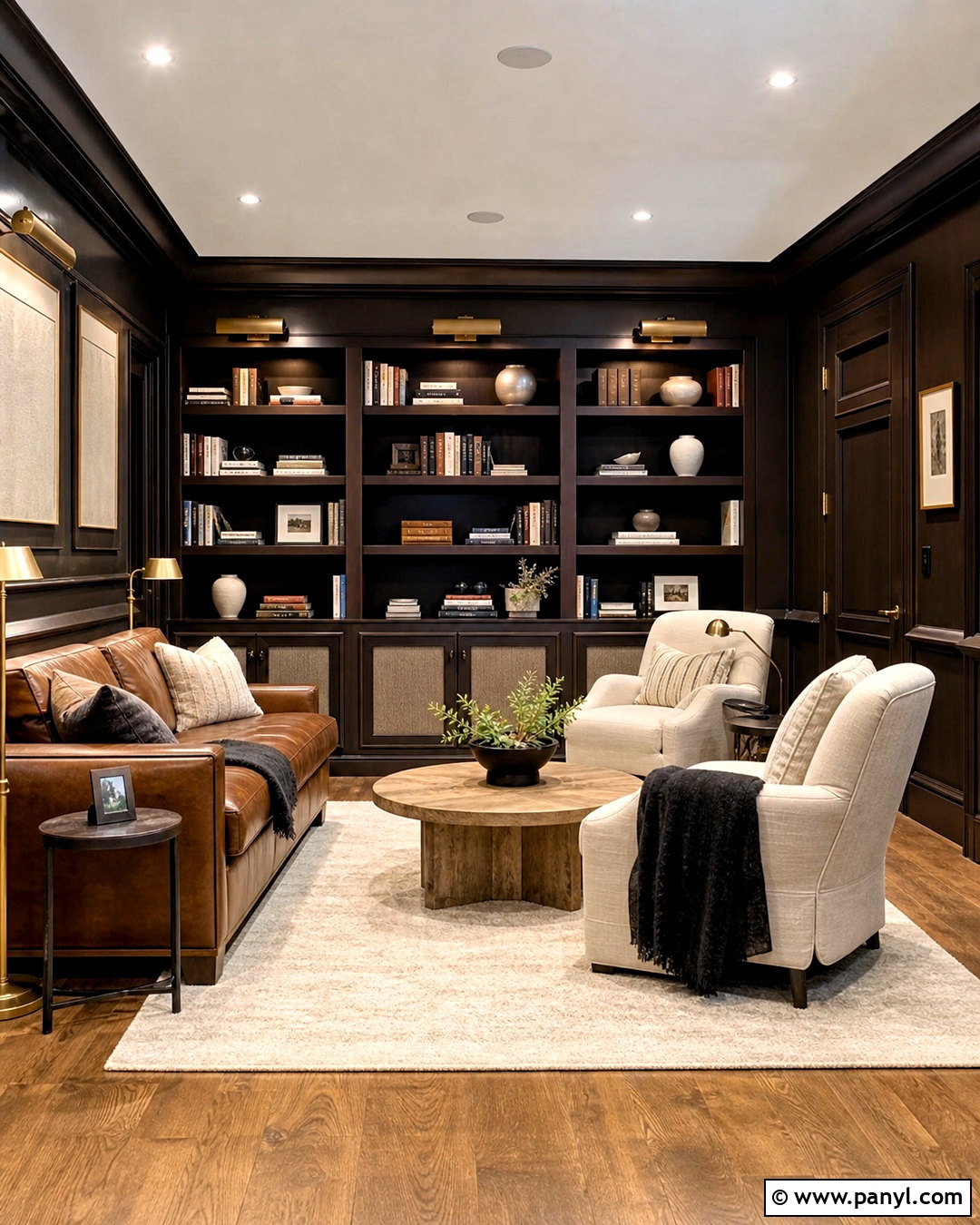
Espresso brown is an effective choice for a basement library or quiet study where a focused atmosphere is desirable. Color-drench the walls, trim, doors, and built-in shelving in the same deep brown for a seamless architectural look. Keep the flooring medium oak so the individual wood tones remain visible rather than blending together. Place a camel leather sofa beneath the shelves and add two cream reading chairs around a round wood table. Brass picture lights, shaded floor lamps, and bright recessed fixtures provide illumination at different heights. Style the shelves with books, pale pottery, framed art, and woven boxes, leaving breathing room between arrangements. An ivory rug and linen window panels lighten the center of the room while preserving the cozy, library-inspired character.
16. Dark Mushroom Basement
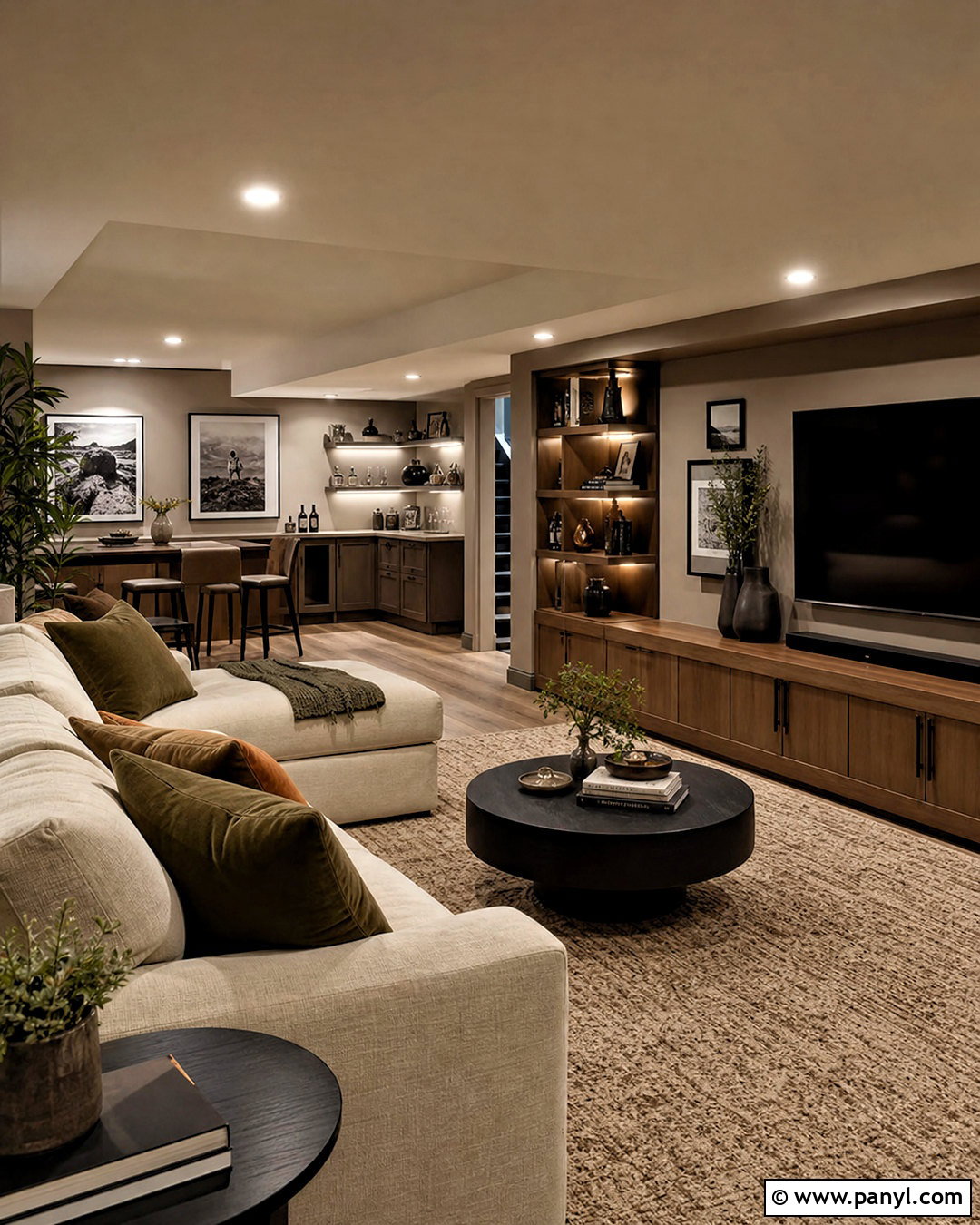
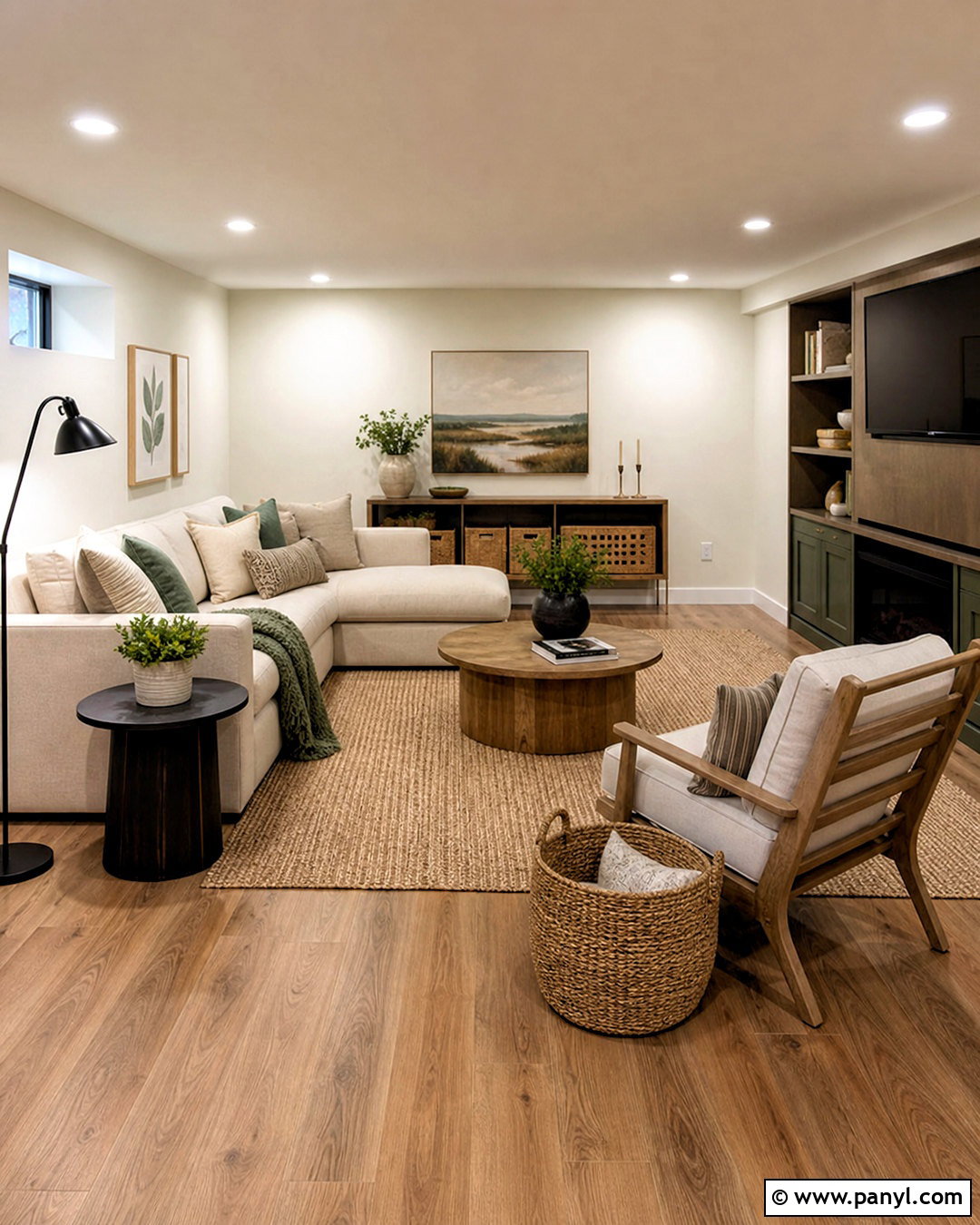
Dark mushroom paint blends brown, gray, and taupe, making it a forgiving choice for a multipurpose basement. Use it across the walls and storage cabinetry, then choose a slightly lighter mushroom tone for the ceiling. This tonal treatment creates continuity without becoming as intense as full color drenching. Furnish the room with a cream modular sectional that can be rearranged for guests, movies, or family activities. Add a walnut media unit, black metal side tables, and a textured beige rug. Muted olive and rust pillows introduce earthy color, while large black-and-white photographs keep the walls visually clean. Recessed lights, floor lamps, and under-shelf lighting are useful throughout the space. The neutral scheme also allows future furniture changes without requiring another complete repaint.
17. Dark Pewter Gray Basement

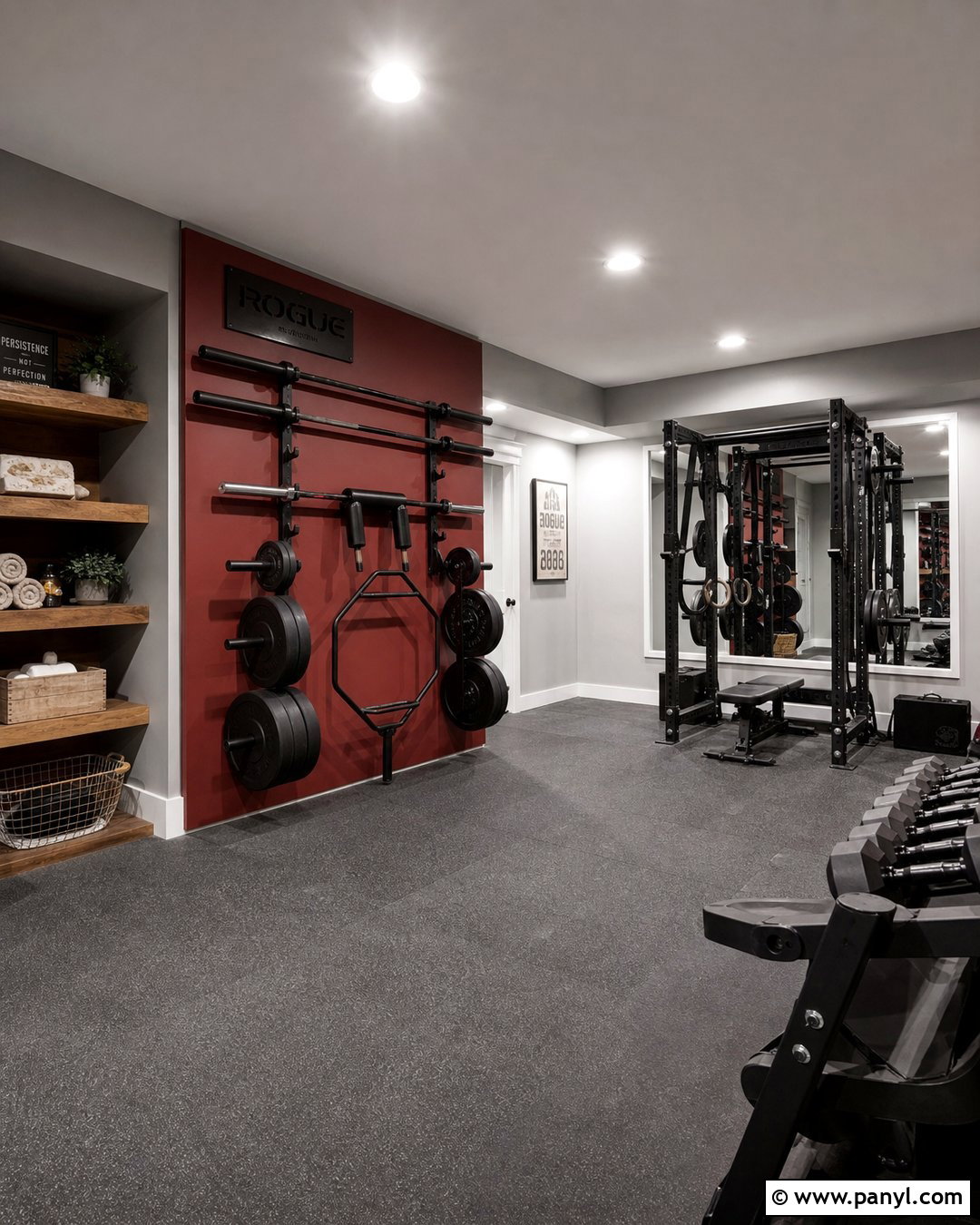
Dark pewter gray offers a sophisticated backdrop for a basement gym that still feels connected to the rest of the home. Paint the walls in a charcoal-gray shade with subtle blue undertones and use matte black on exposed ceiling elements. Install durable medium-gray rubber flooring in the workout area, then define a stretching corner with a washable beige rug. Position a large wall mirror opposite the brightest fixtures to distribute light and improve visibility. Store equipment in streamlined black cabinets with oak fronts to soften the industrial materials. Add a compact bench, neatly arranged weights, and wall hooks for mats and towels. Bright linear ceiling lights provide clear illumination, while one or two green plants and warm wood details keep the finished gym from looking stark or commercial.
18. Muted Rust Dark Basement
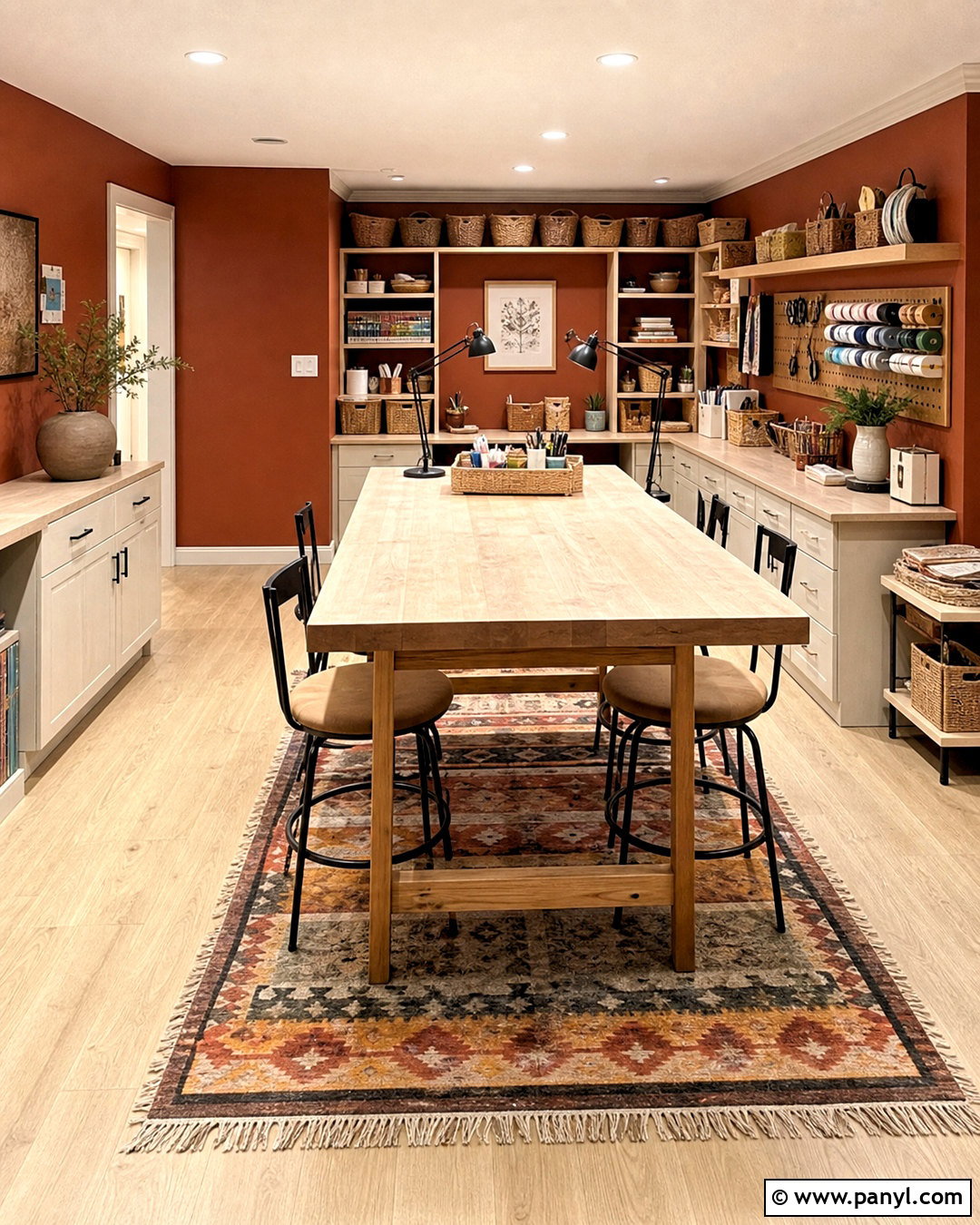
Muted rust paint brings warmth and energy to a basement craft room, studio, or casual gathering space. Choose a dark burnt orange with earthy brown undertones and apply it to the primary walls. Balance it with a warm white ceiling, pale oak flooring, and cream storage cabinets. A large natural wood worktable can anchor the center of the room, surrounded by black metal chairs with tan seats. Install open shelving for neatly arranged baskets, supplies, books, and pottery. Use bright white pendants above the table and adjustable wall lights near task areas. A flat-woven rug in rust, beige, charcoal, and faded blue ties the palette together. Black-framed artwork and a few olive green accents prevent the warm color scheme from becoming overly orange.
19. Deep Terracotta Dark Basement
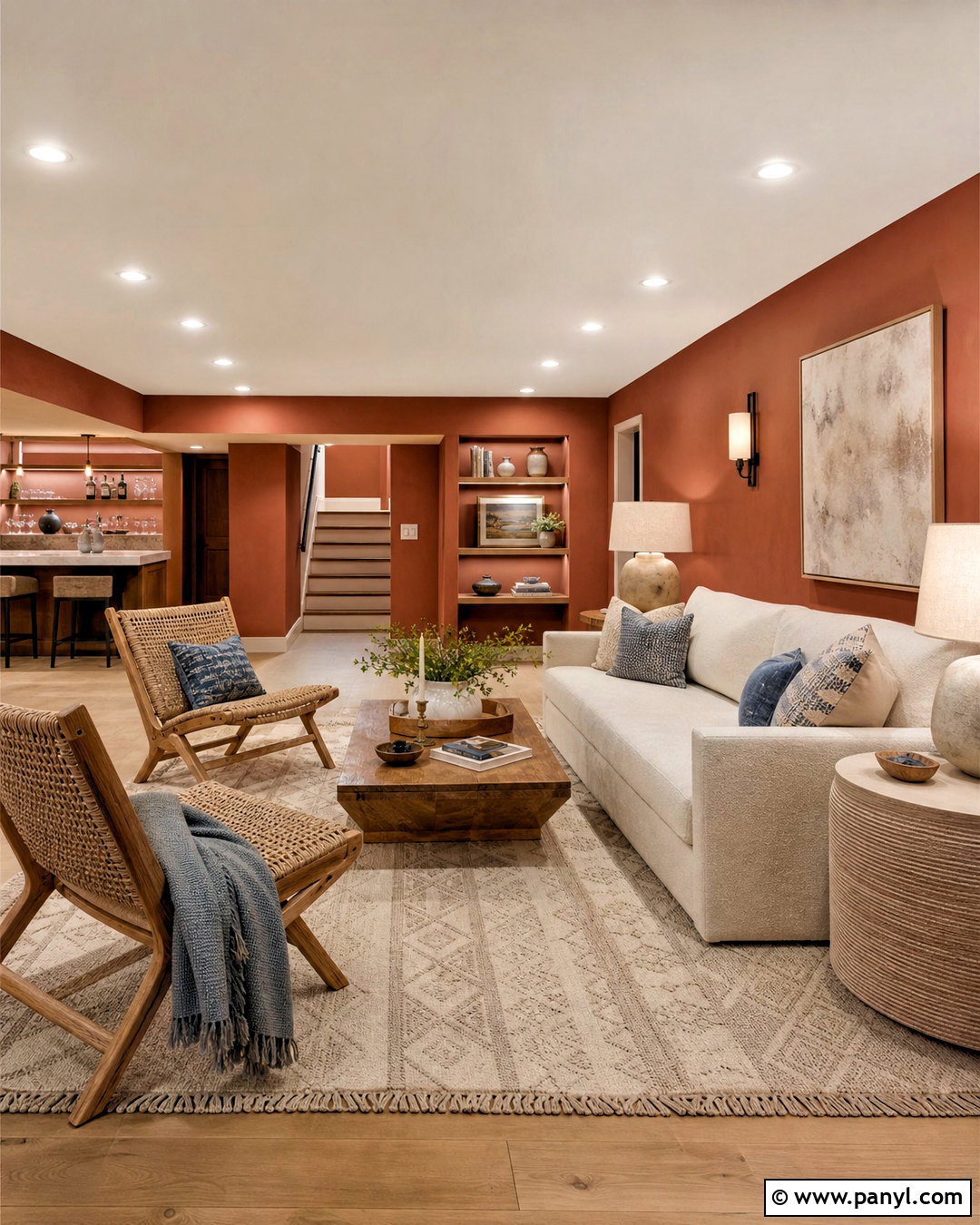
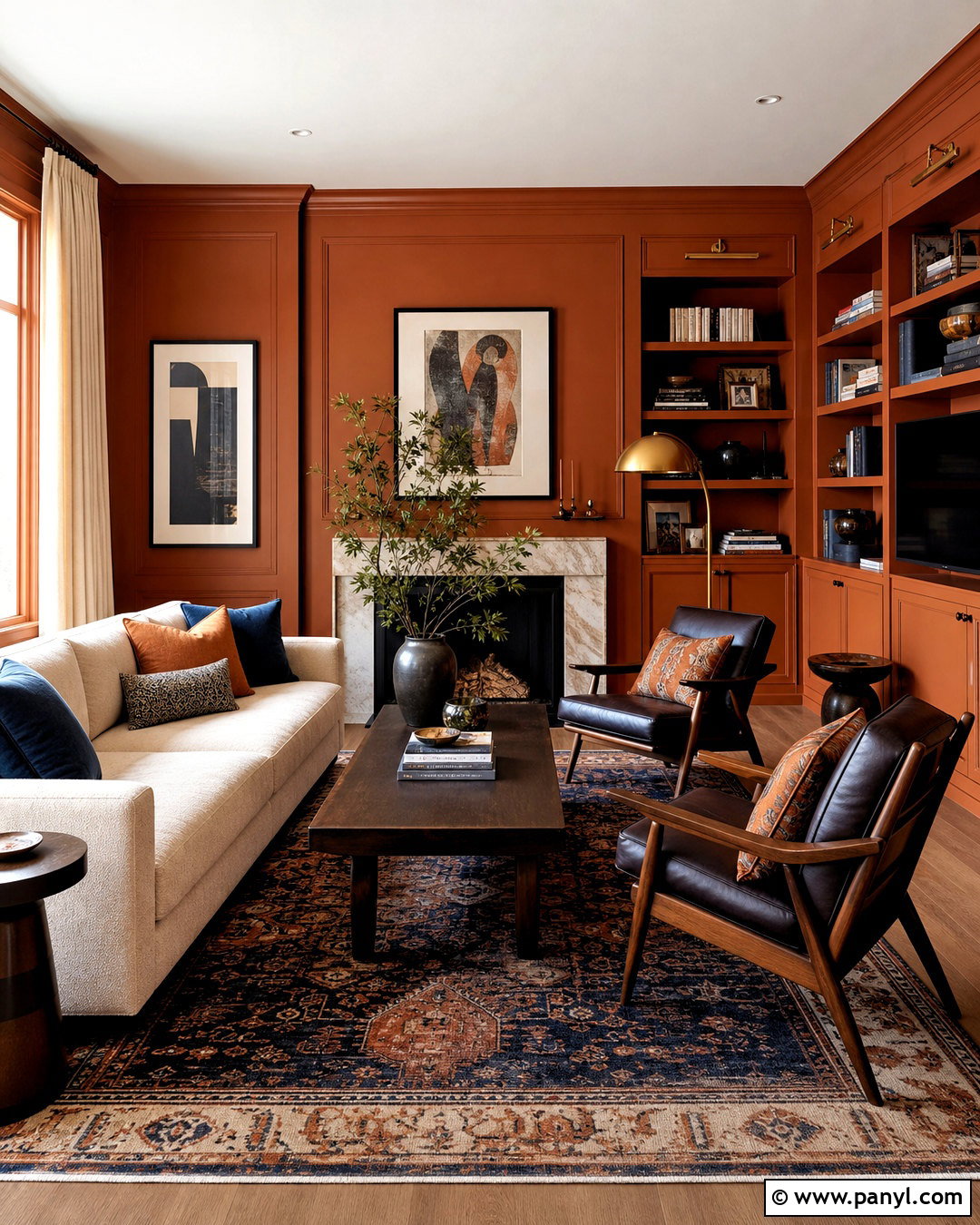
Deep terracotta creates an inviting basement guest lounge with a sun-warmed feeling, even when natural light is limited. Paint the walls a rich clay color and use soft cream on the ceiling and trim. Choose a low-profile beige sofa, woven lounge chairs, and a medium oak coffee table for a relaxed arrangement. A geometric rug in ivory, terracotta, brown, and dusty blue will brighten the floor while reinforcing the wall color. Add plaster-look table lamps, black metal sconces, and linen window treatments for varied texture. One wall can hold a cream media cabinet with closed storage, while another displays oversized neutral artwork. Keep decorative objects simple and sculptural. Bright recessed lighting will help the terracotta stay earthy and vibrant instead of turning dull.
20. Ink Blue Dark Basement
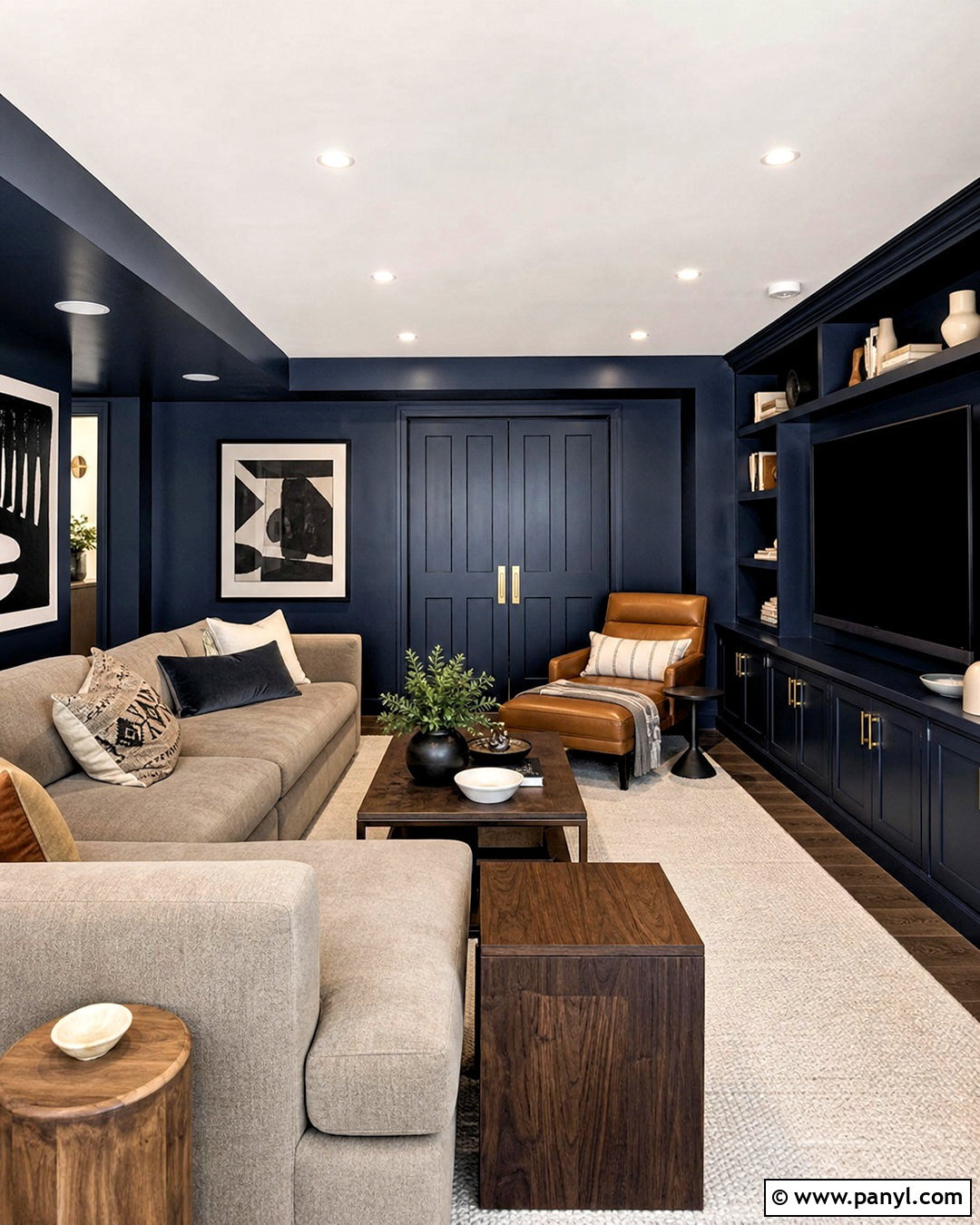
Ink blue delivers a strong finish for a modern basement living room, combining the depth of black with the familiarity of navy. Paint the walls, interior doors, and media cabinetry in the same inky blue, but leave the ceiling soft white for contrast. Arrange a light taupe sectional across from the media wall and add a cognac leather chaise near a reading lamp. A large ivory rug will establish a bright central area over dark wood or charcoal flooring. Use brushed brass hardware, walnut tables, and white ceramic accessories to create visual highlights. Graphic artwork with generous white space keeps the room crisp. Finish with dimmable recessed fixtures, sleek wall sconces, and hidden cabinet lighting so the blue remains clear, layered, and welcoming.
Conclusion:
The best dark basement paint colors do more than cover the walls. They establish the atmosphere, support the room’s purpose, and connect every furnishing and finish. Charcoal and ink blue suit media spaces, while forest green and espresso create comfortable reading rooms. Burgundy, plum, rust, and terracotta bring richer personality to guest rooms and entertaining areas. Whichever palette you choose, test a large sample under every basement light before painting the full space. Balance deep walls with pale upholstery, warm wood, practical storage, and lighting at several heights. With thoughtful planning, these 20 dark basement paint colors can make an overlooked lower level feel intentional, comfortable, and fully connected to your home.

Related Ideas and Inspiration:
Leave a Reply