
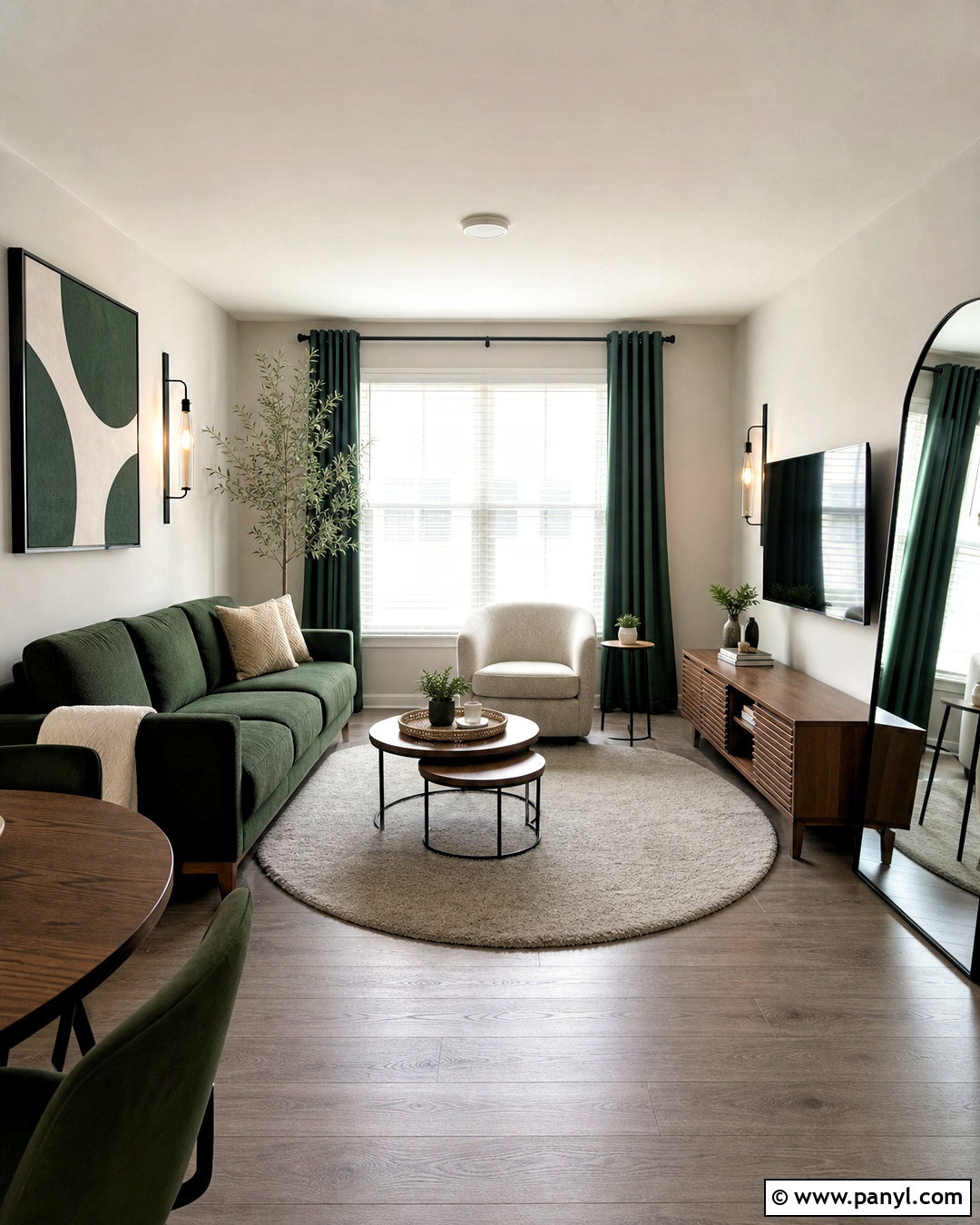
Dark paint can turn an ordinary living room into a cozy, polished space with depth and personality. The key is designing the entire room around the wall color rather than treating it as an isolated feature. Deep teal, earthy green, chocolate brown, and other grounded shades are especially relevant for creating rich, livable interiors. () Balance them with thoughtful lighting, warm wood, comfortable upholstery, reflective finishes, and lighter accents. You can also use color drenching, painted trim, or one dark focal wall depending on the room’s size and natural light. From dramatic black interiors to relaxed olive rooms, these complete schemes offer practical ways to embrace darker color. Explore these 20 dark paint living room ideas to find a look that suits your home.
1. Dark Charcoal Living Room
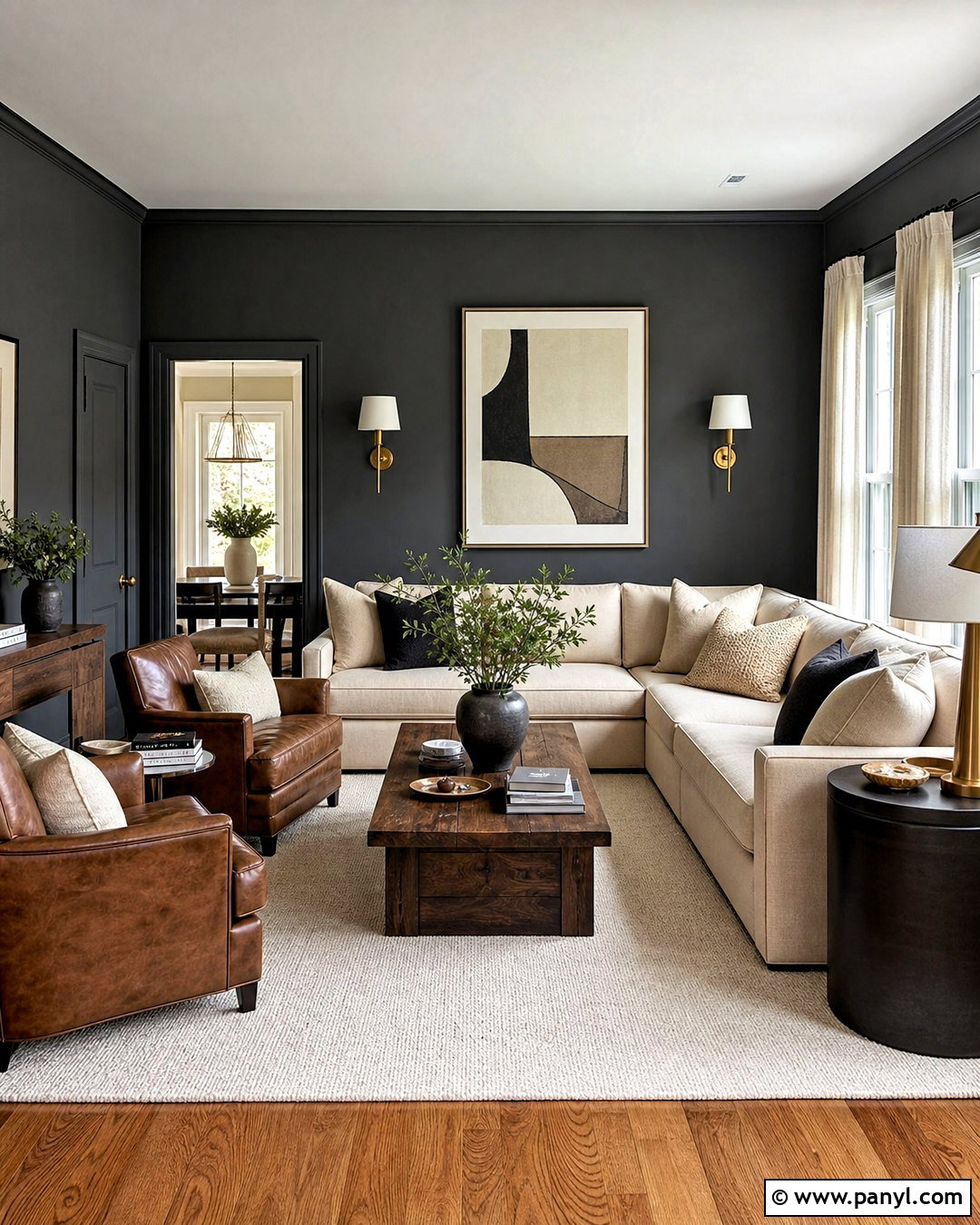
Charcoal walls create a sophisticated foundation without feeling as intense as solid black. Paint all four walls in a warm charcoal with subtle brown undertones, then keep the ceiling soft white to provide visual lift. Center a light oatmeal sectional on a large ivory wool rug and add a rectangular walnut coffee table. Cognac leather chairs bring warmth, while linen curtains soften the windows without blocking daylight. Finish the arrangement with brushed brass lamps, cream pillows, and oversized abstract artwork containing rust, beige, and muted green. Medium-toned oak flooring prevents the palette from becoming overly cool. Place lighting at several heights, including a ceiling fixture, floor lamp, and table lamps, so the dark living room remains comfortable throughout the evening.
2. Dark Navy Living Room
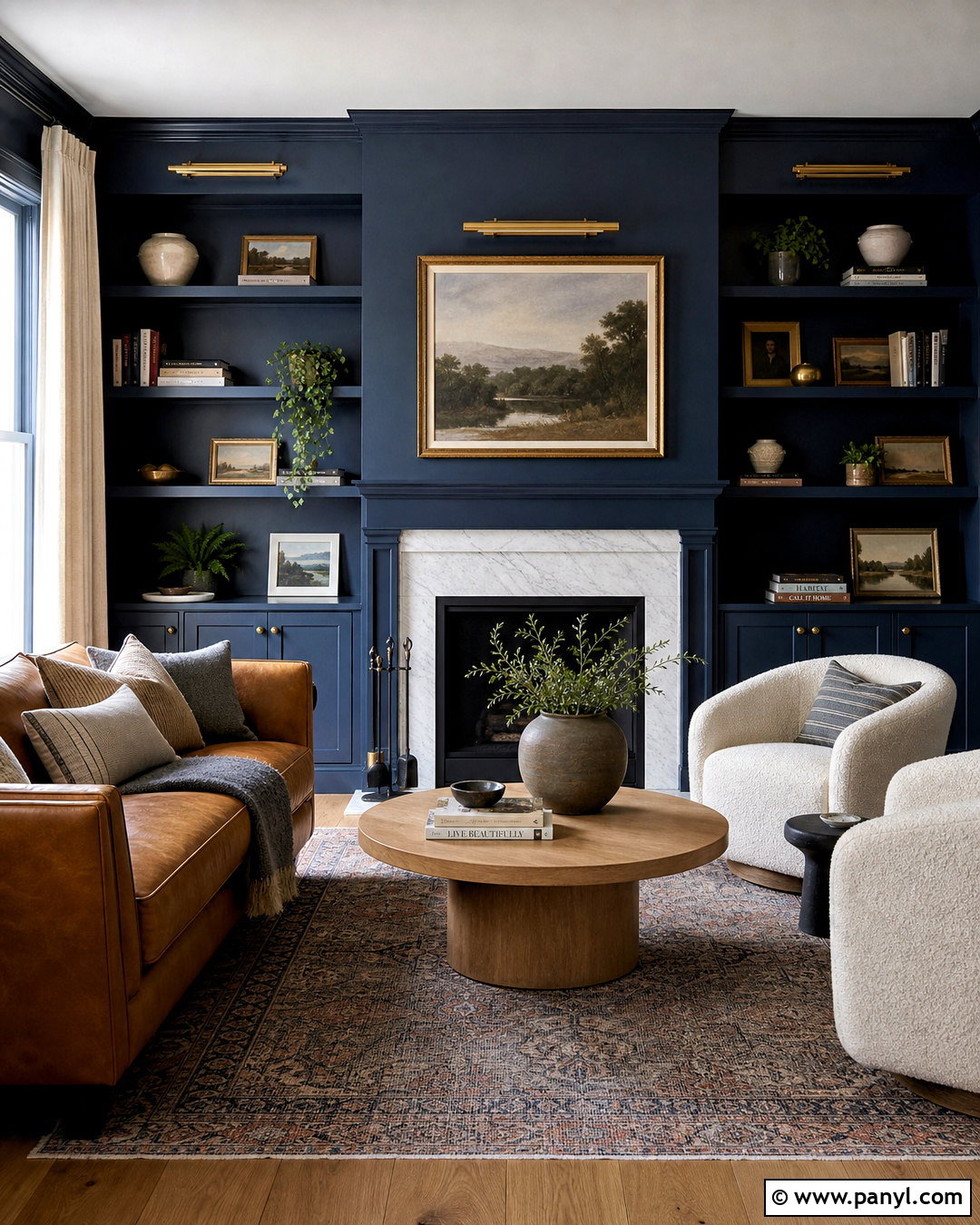
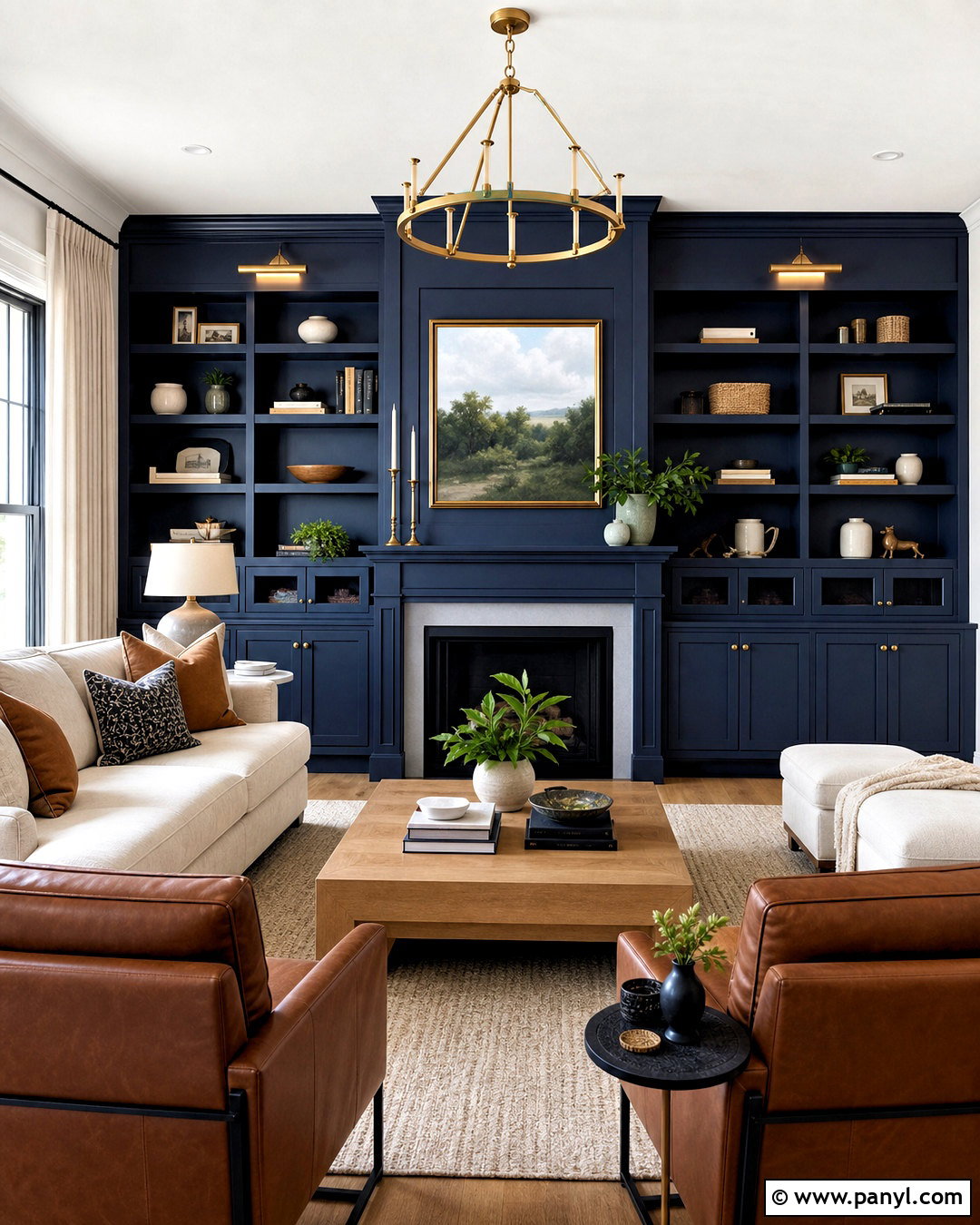
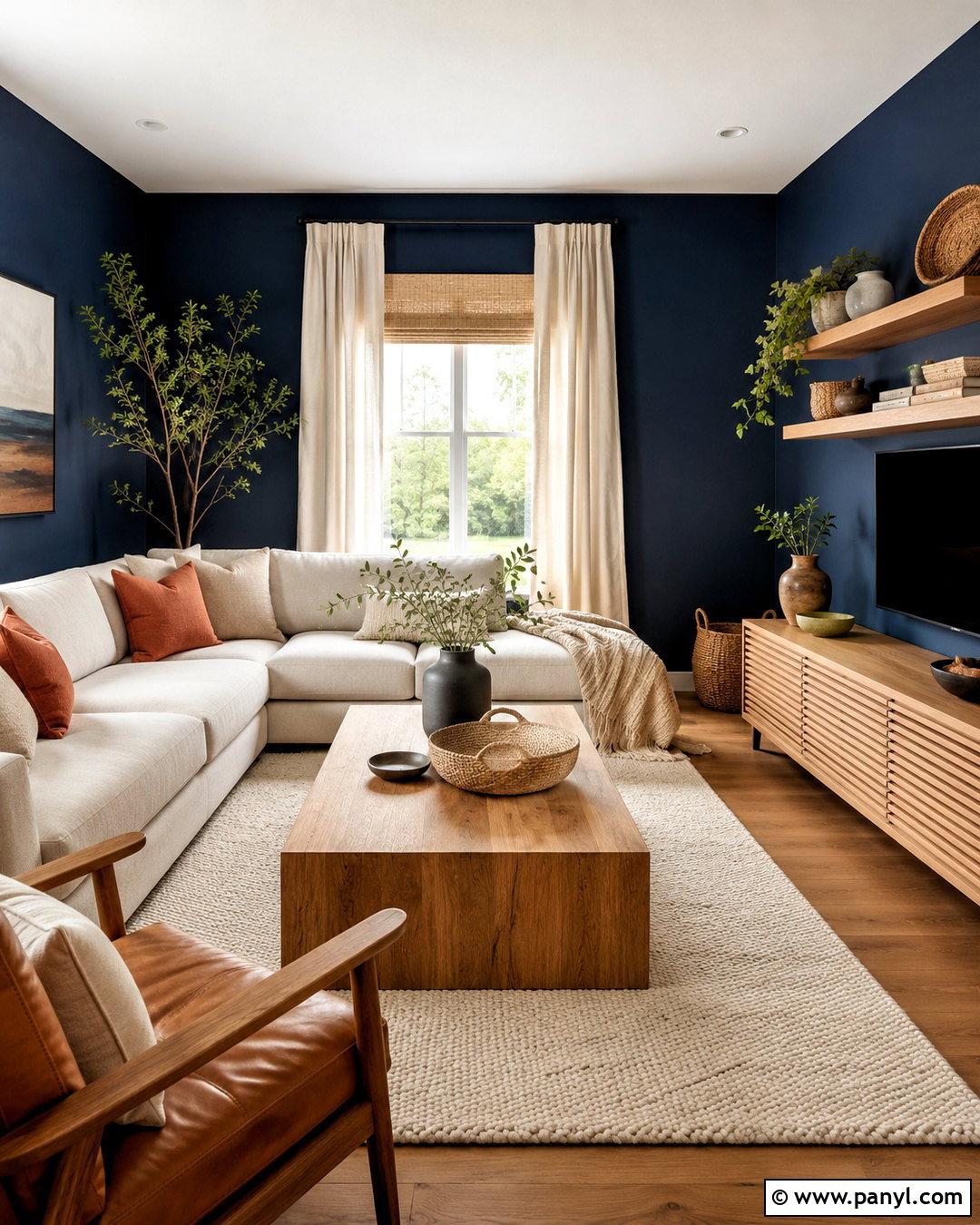
Deep navy paint can make a living room feel calm, tailored, and surprisingly versatile. Use navy across the walls and built-in shelving to create a connected backdrop, but leave the ceiling warm white for contrast. Arrange a camel leather sofa opposite two cream bouclé chairs, with a round oak coffee table in the center. A faded red and blue rug adds pattern without competing with the walls. Choose natural linen curtains, antique brass picture lights, and simple framed landscapes for a relaxed traditional look. A marble fireplace surround can become the room’s brightest architectural feature. Add touches of medium walnut through side tables and shelving decor. These warmer materials balance the cool blue paint and keep the finished room welcoming rather than formal.
3. Dark Forest Green Living Room
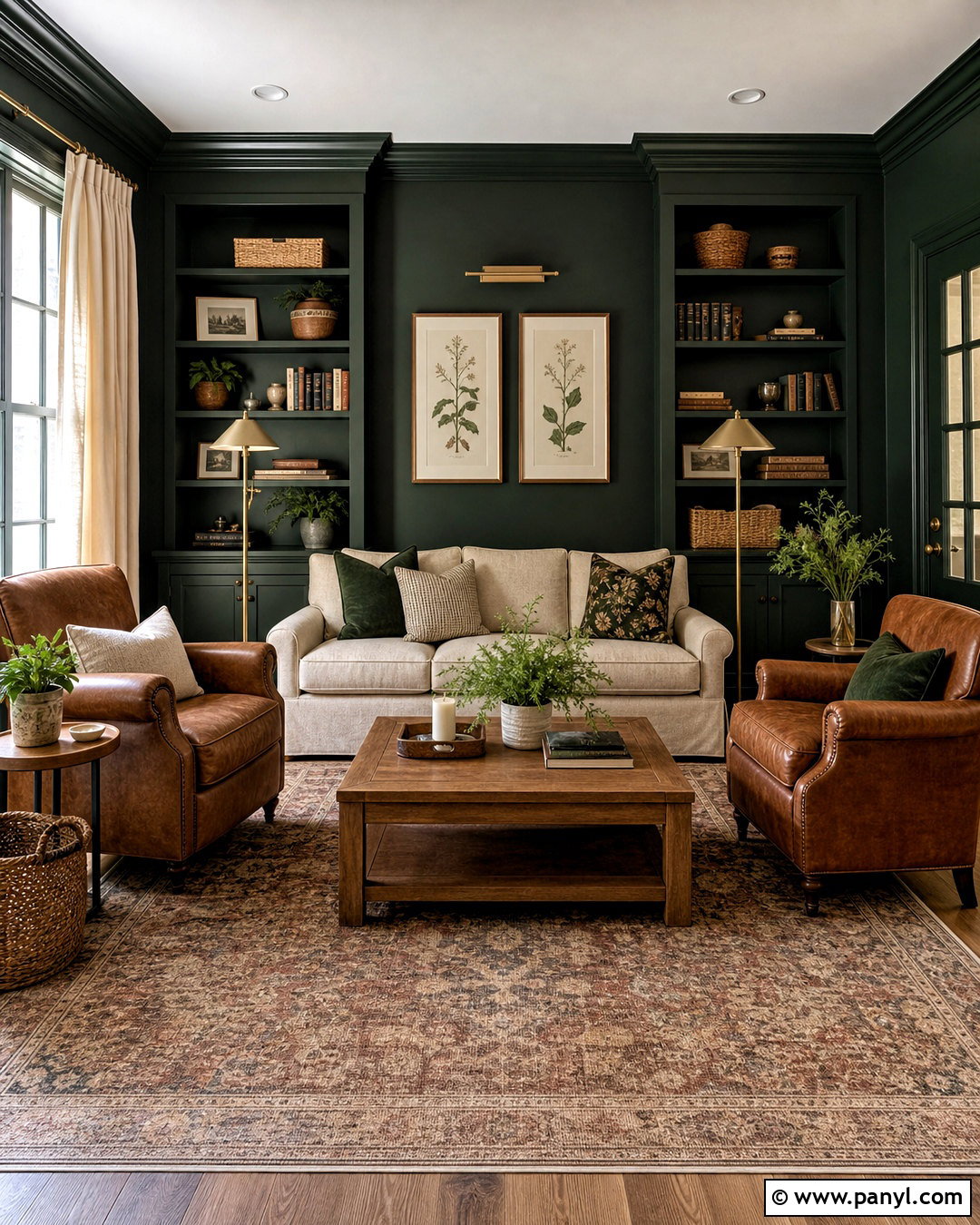
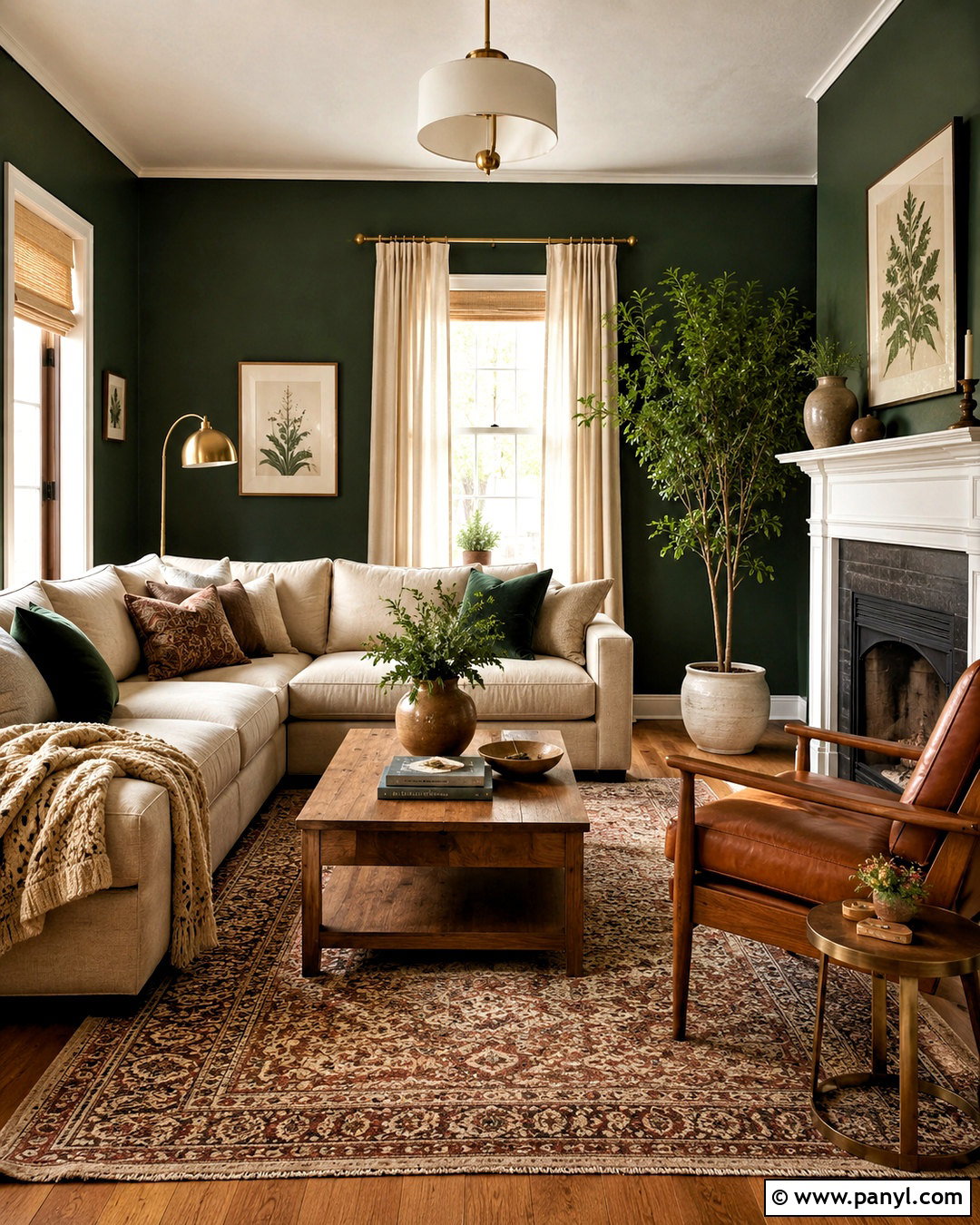
Forest green walls pair beautifully with natural materials and comfortable, traditional furnishings. Carry the paint across the walls, baseboards, and bookcases for a seamless appearance, while keeping the ceiling a gentle cream. Position a tan linen sofa in front of the main wall and flank it with deep brown leather armchairs. A vintage-inspired rug featuring faded gold, red, and green connects the furniture to the paint. Use medium oak tables, woven baskets, and aged brass lamps to introduce warmth and texture. Botanical prints in narrow wood frames reinforce the organic palette without becoming too literal. Finish with off-white curtains and layered cushions in rust, camel, and moss. The complete design feels grounded, collected, and suitable for both everyday relaxation and entertaining.
4. Dark Chocolate Brown Living Room
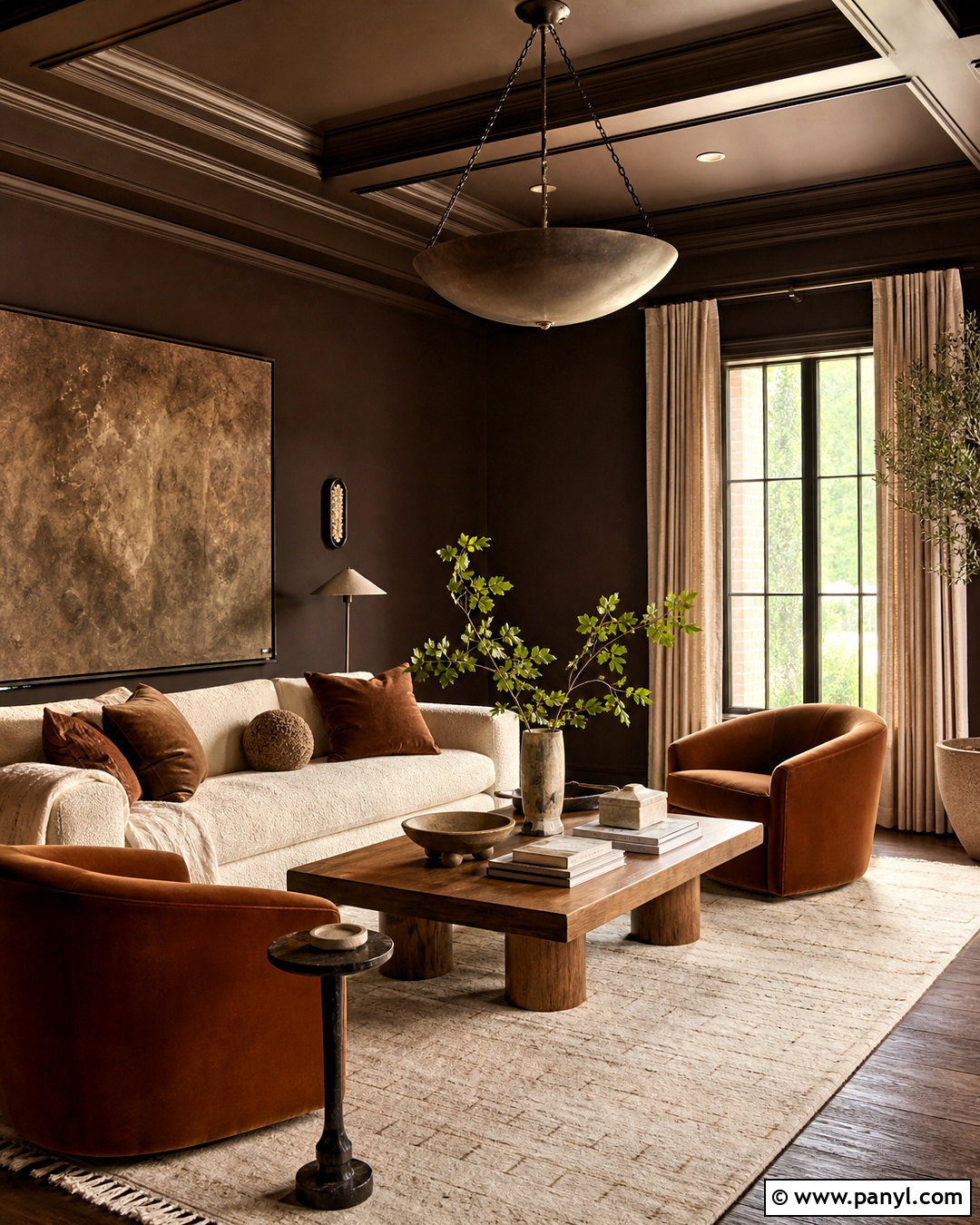
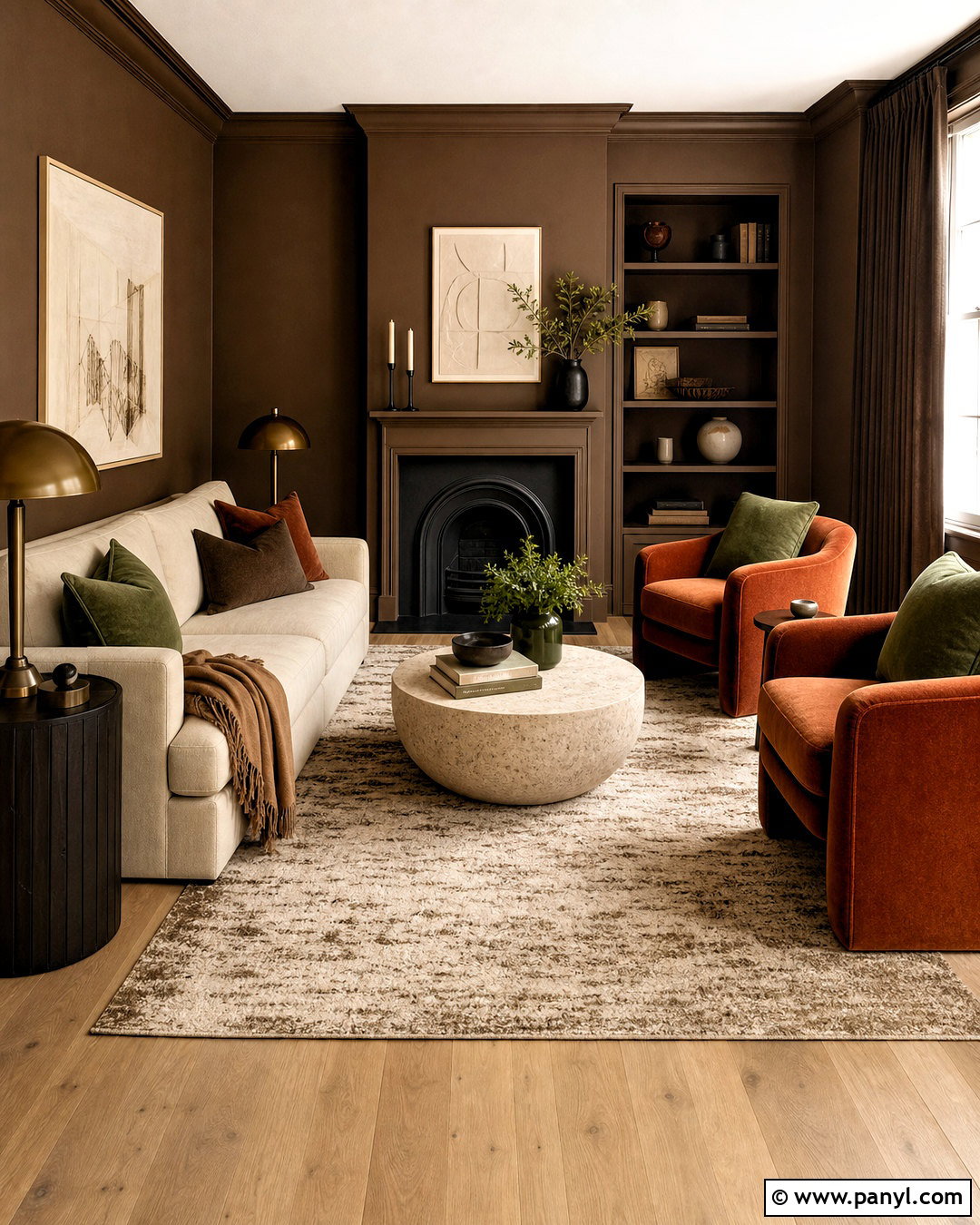
Chocolate brown paint gives a living room rich warmth while working like a dramatic neutral. Choose a deep cocoa shade with soft red undertones and apply it to the walls and trim. Contrast the color with a creamy boucle sofa, two caramel velvet chairs, and an ivory area rug with a subtle geometric pattern. Dark walnut tables blend naturally into the scheme, while travertine accessories add a lighter stone finish. Hang oversized artwork containing beige, clay, and pale blue to break up a large wall. Brushed bronze lighting feels softer than shiny gold and complements the brown background. Add flax-colored curtains and a few green plants near the windows. The resulting room feels cozy and refined without relying on excessive decoration or overly heavy furniture.
5. Dark Teal Living Room
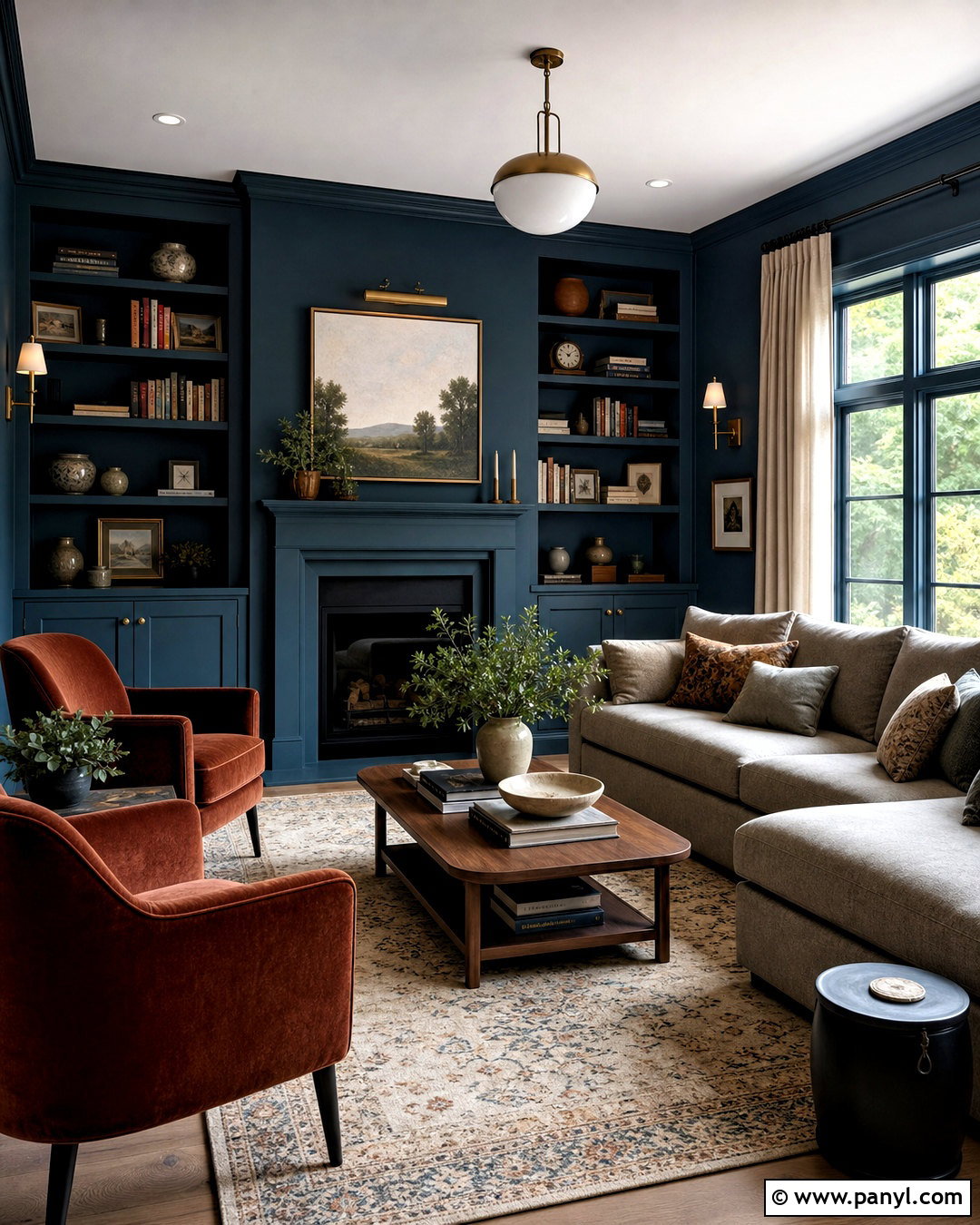
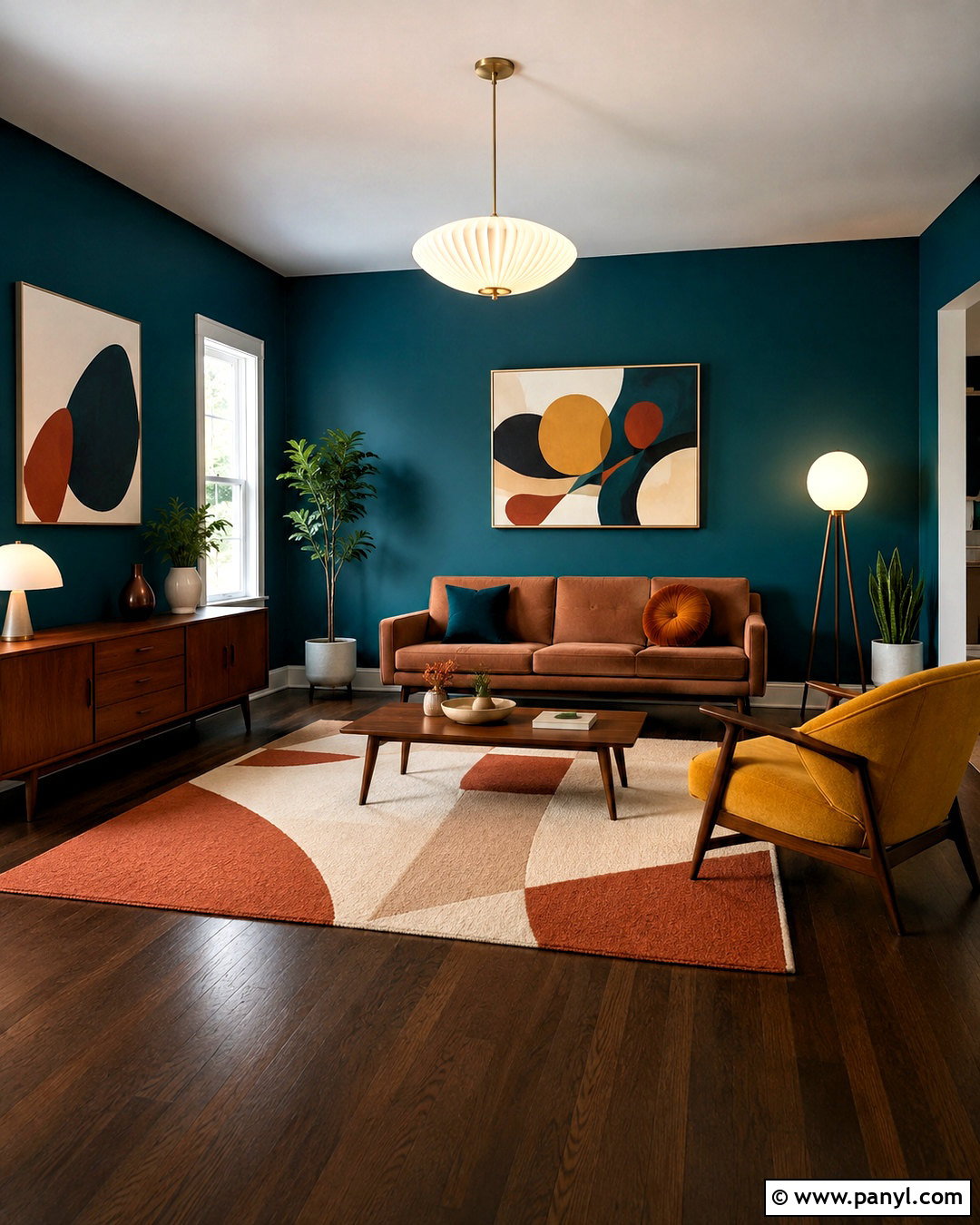
Dark teal offers the drama of navy with the natural character of green. Use a muted blue-green paint across the walls, fireplace surround, and built-in cabinetry to create a unified background. A warm gray sectional keeps the largest piece quiet, while a pair of cinnamon velvet chairs provides a lively contrast. Ground the layout with a cream rug patterned in faded teal and rust. Add a sculptural walnut coffee table, aged brass sconces, and linen curtains in a soft natural tone. Ceramic lamps and handmade pottery can repeat the blue-green color in varied finishes. Keep shelves loosely arranged with books, framed art, and pale decorative objects. This layered approach makes the living room colorful and inviting while maintaining an organized, balanced appearance.
6. Dark Black Living Room
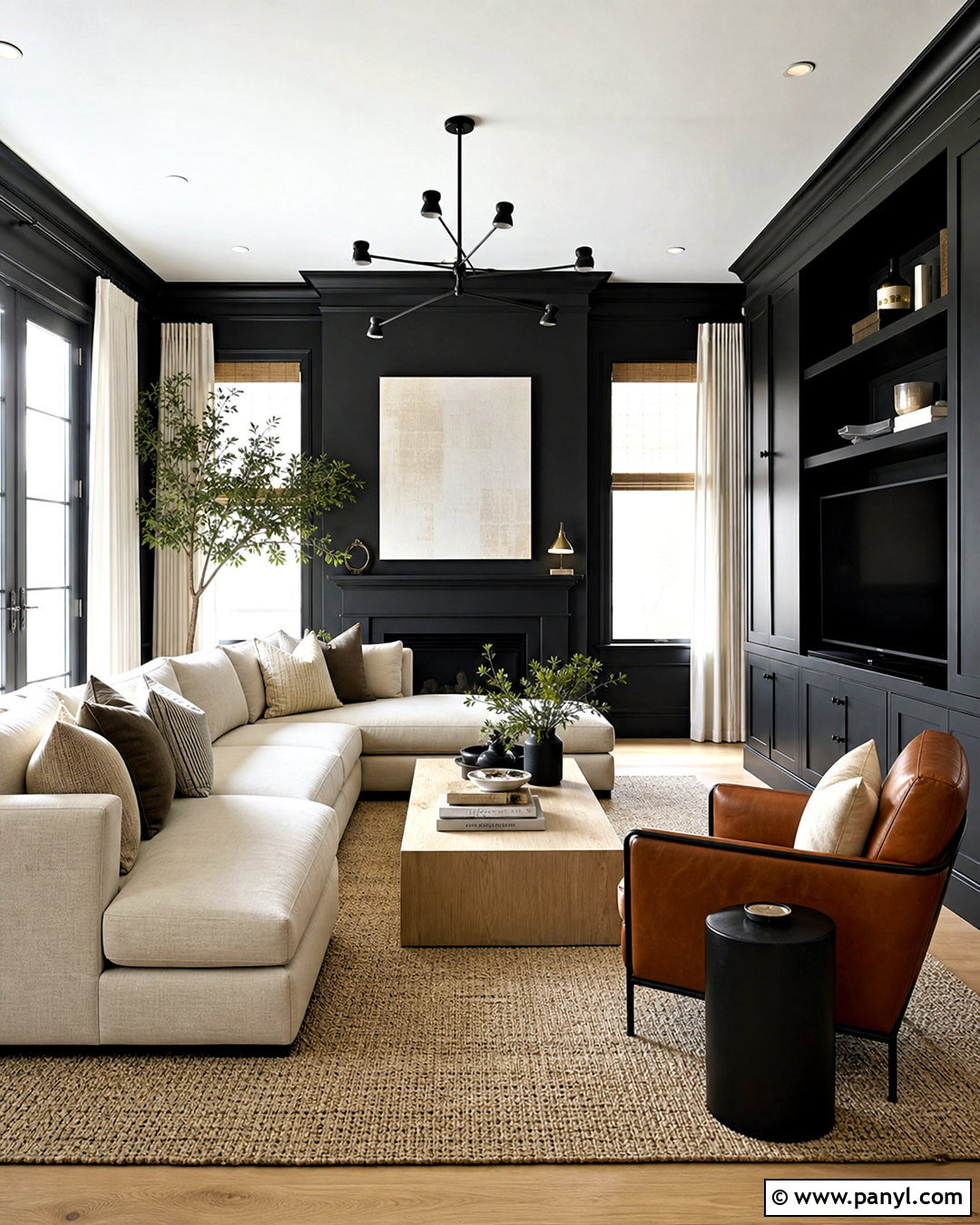
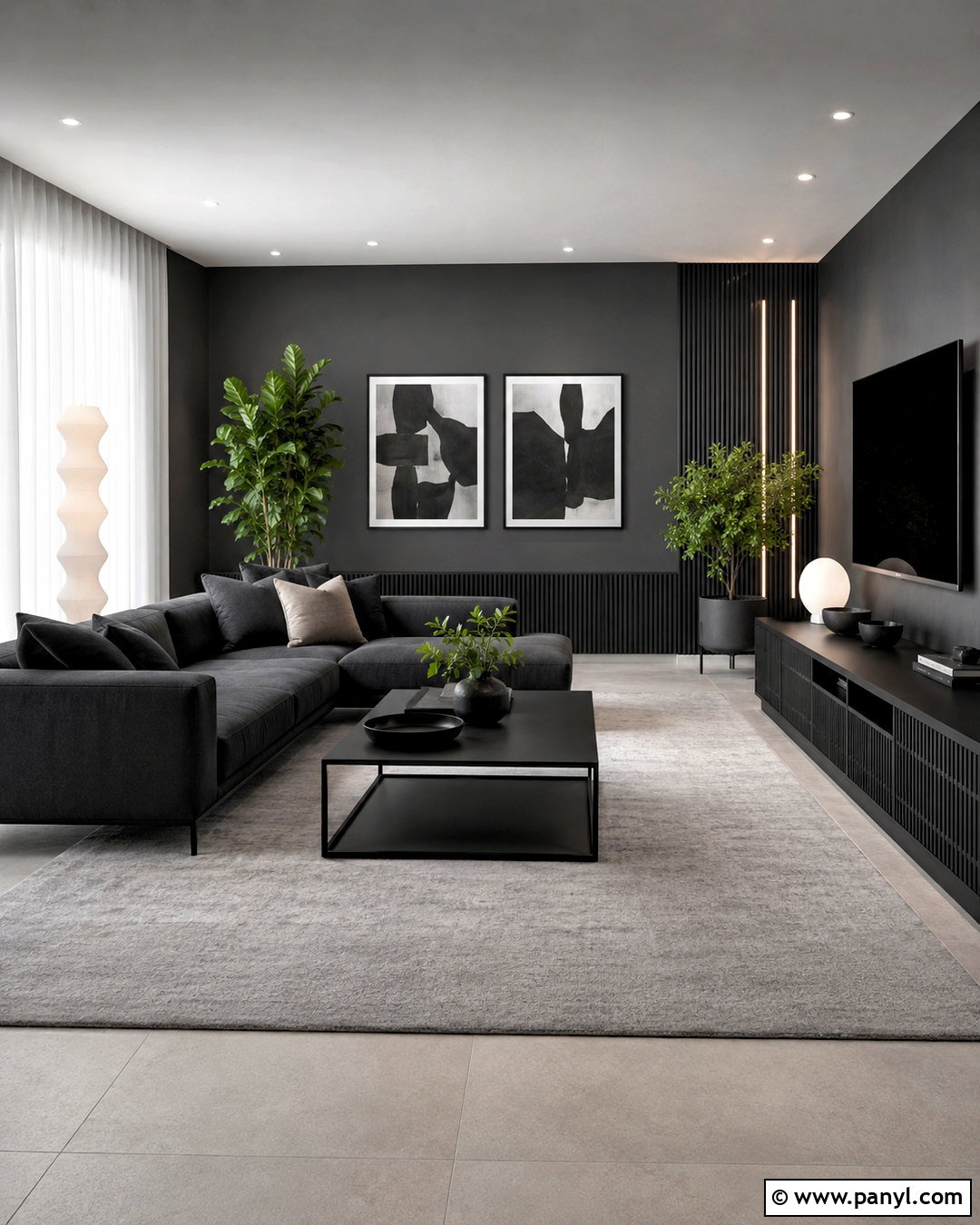
A black living room can feel clean and modern when the design includes strong contrast and plenty of texture. Select a softened matte black rather than a harsh blue-black, and paint the walls, trim, and built-in media cabinet consistently. Introduce a large ivory sectional with simple lines, then place it over a textured cream rug. Pale oak flooring and a matching coffee table brighten the lower half of the room. Add woven shades, white linen curtains, and black metal lighting for a controlled monochrome effect. One cognac leather lounge chair provides essential warmth. Use large artwork with generous white space instead of filling every wall. The restrained furniture arrangement and bright upholstery prevent the dark shell from becoming visually crowded or uncomfortably enclosed.
7. Dark Burgundy Living Room
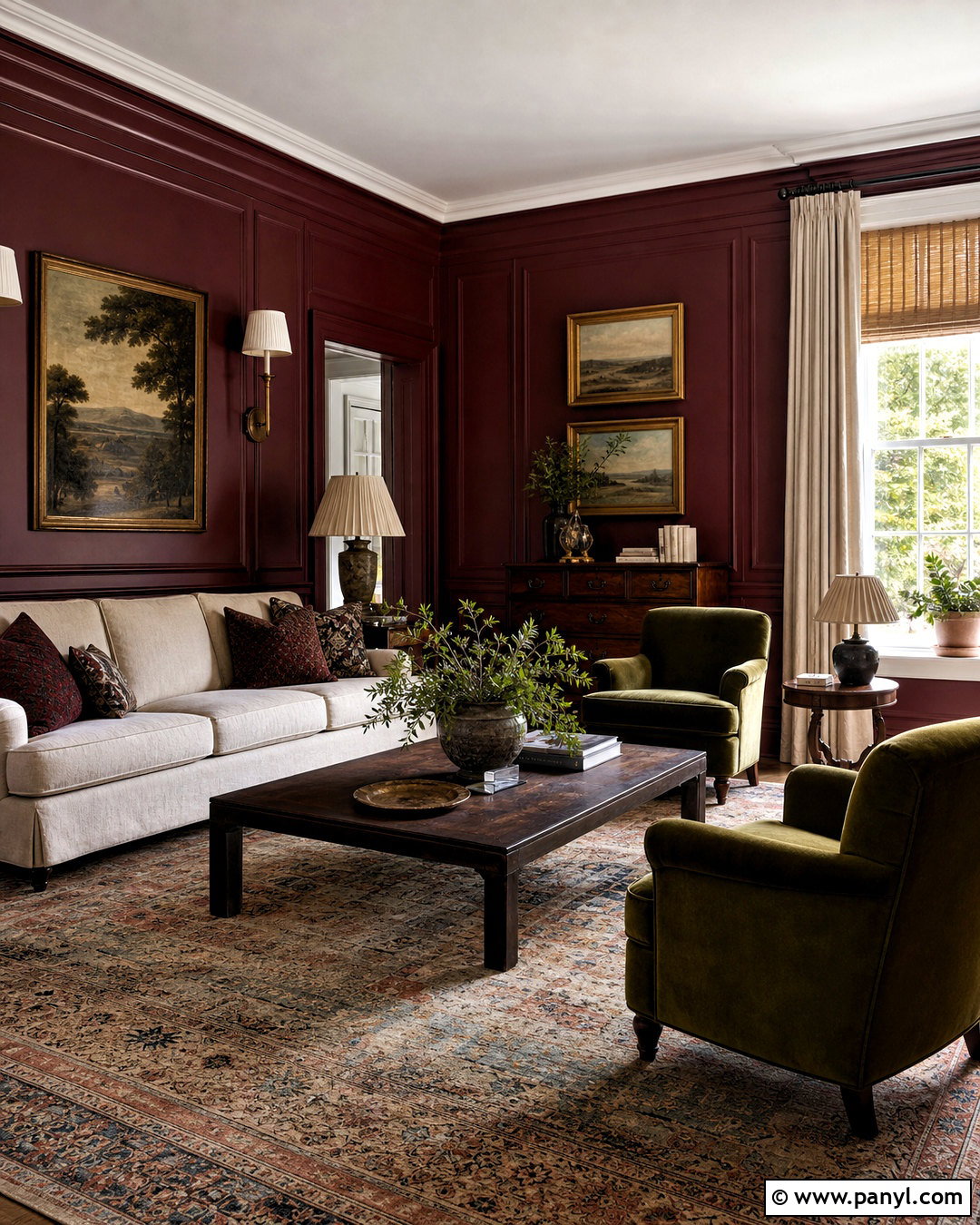
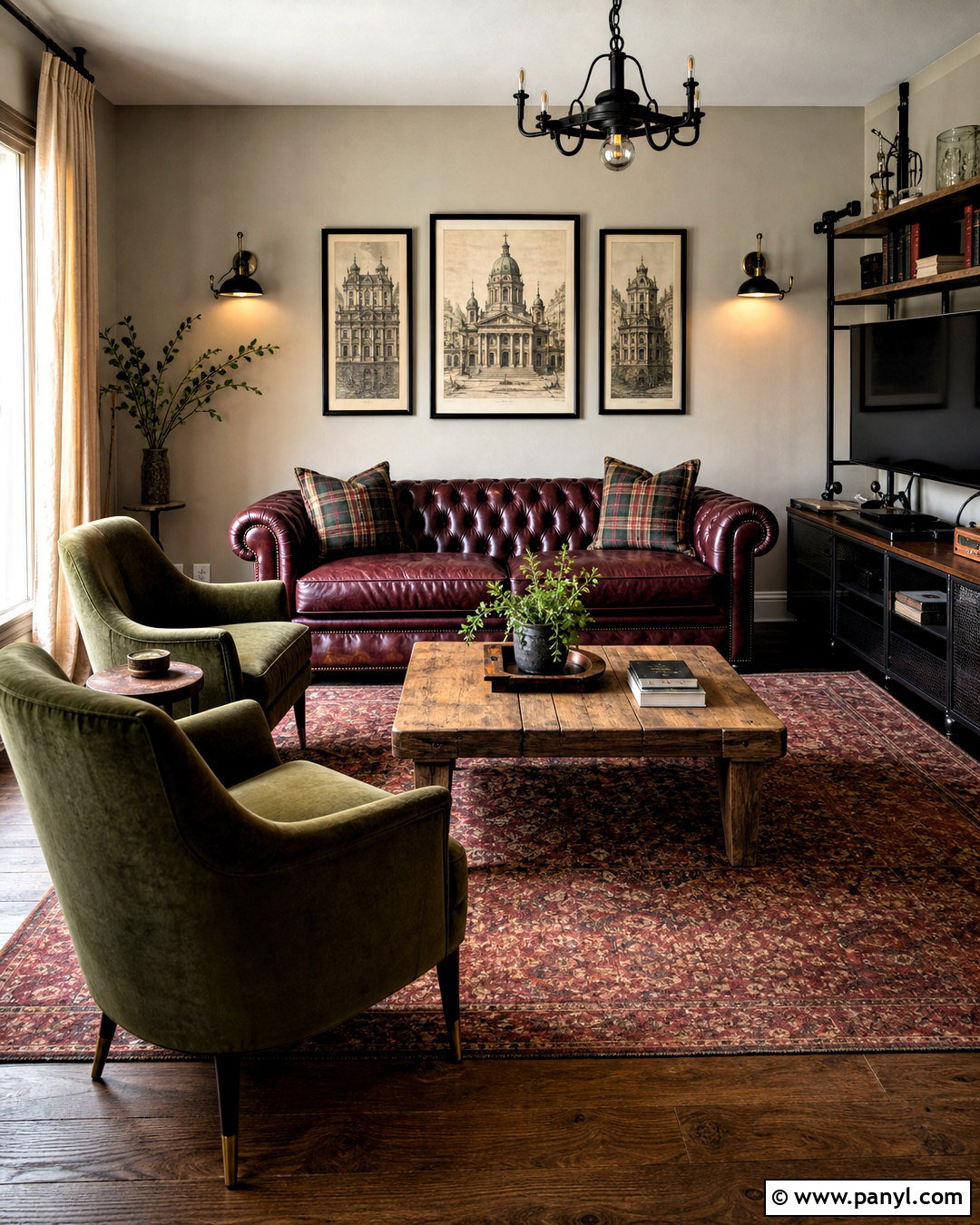
Burgundy paint brings a warm, heritage-inspired character to a living room without requiring ornate furniture. Choose a deep wine-red shade with brown undertones and use it on the walls and traditional molding. Pair it with a tailored beige sofa, olive velvet armchairs, and a dark wood coffee table. An antique-style rug containing faded red, cream, and blue creates a smooth transition between every color. Frame vintage landscapes in warm gold, then add pleated lampshades and bronze wall sconces for gentle evening illumination. Natural linen curtains keep the windows lighter and more casual. Introduce small amounts of dusty blue through pillows or ceramics to cool the red palette. The finished design feels established and elegant while remaining comfortable enough for daily family use.
8. Dark Olive Green Living Room
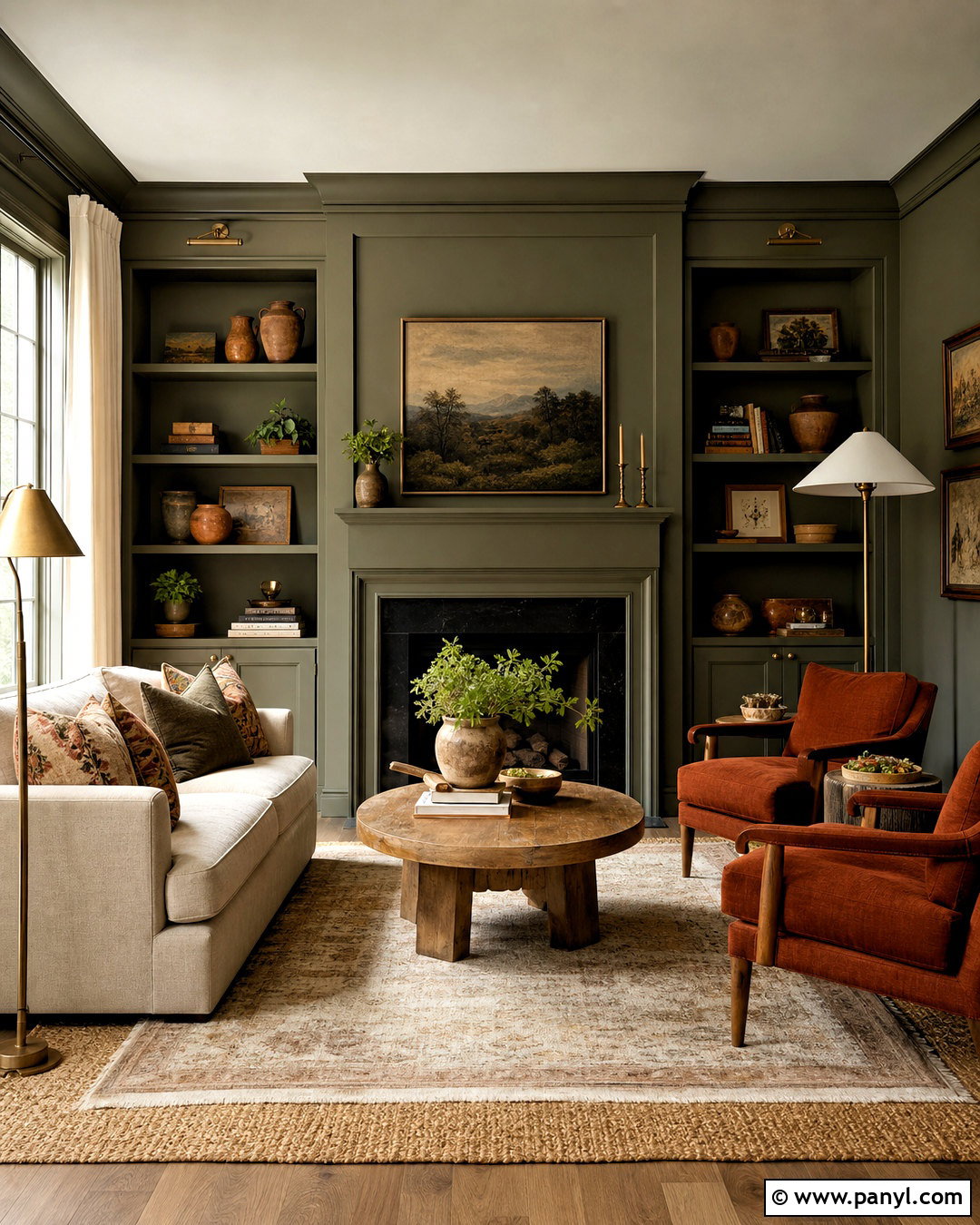
Dark olive paint creates a softer, earthier room than cooler forest green. Cover the walls and shelving in a muddy olive shade, then use a pale warm beige on the ceiling. Build the seating arrangement around a relaxed oatmeal sofa with washable linen upholstery. Add two low-profile chairs in rust-colored fabric and a substantial oak coffee table with rounded corners. A natural jute rug layered beneath a smaller patterned wool rug gives the floor extra depth. Choose off-white curtains, matte black curtain rods, and aged brass table lamps. Terracotta pottery and landscape artwork strengthen the earthy palette, while touches of charcoal add definition. This complete living room feels calm and casual, making it especially suitable for a home with rustic or transitional architecture.
9. Dark Plum Living Room
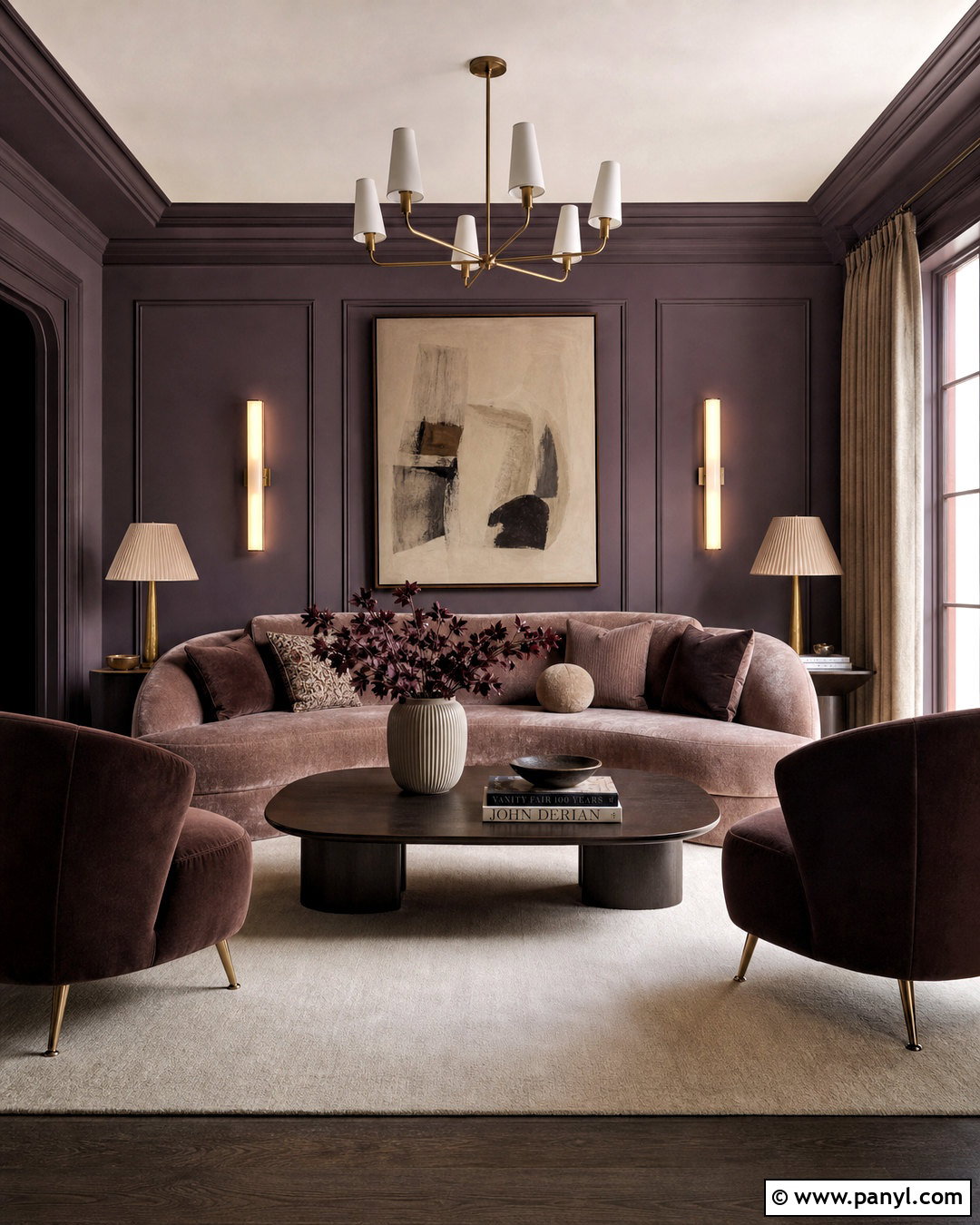
Plum walls can look sophisticated rather than overly sweet when balanced with brown, cream, and natural wood. Select a dark muted purple with strong gray undertones and apply it across the room’s walls and baseboards. Introduce a curved taupe sofa, chocolate brown velvet chairs, and a smoked oak coffee table. An ivory rug brightens the seating zone and separates the dark furniture from the flooring. Use brushed brass lamps and framed abstract art with touches of lavender, ochre, and beige. Full-length mushroom-colored curtains soften the windows while supporting the subdued palette. Keep accessories simple, choosing stoneware, stacked books, and one sculptural branch arrangement. The completed room feels distinctive and grown-up, with enough light contrast to make the unusual paint color approachable.
10. Dark Blue Gray Living Room
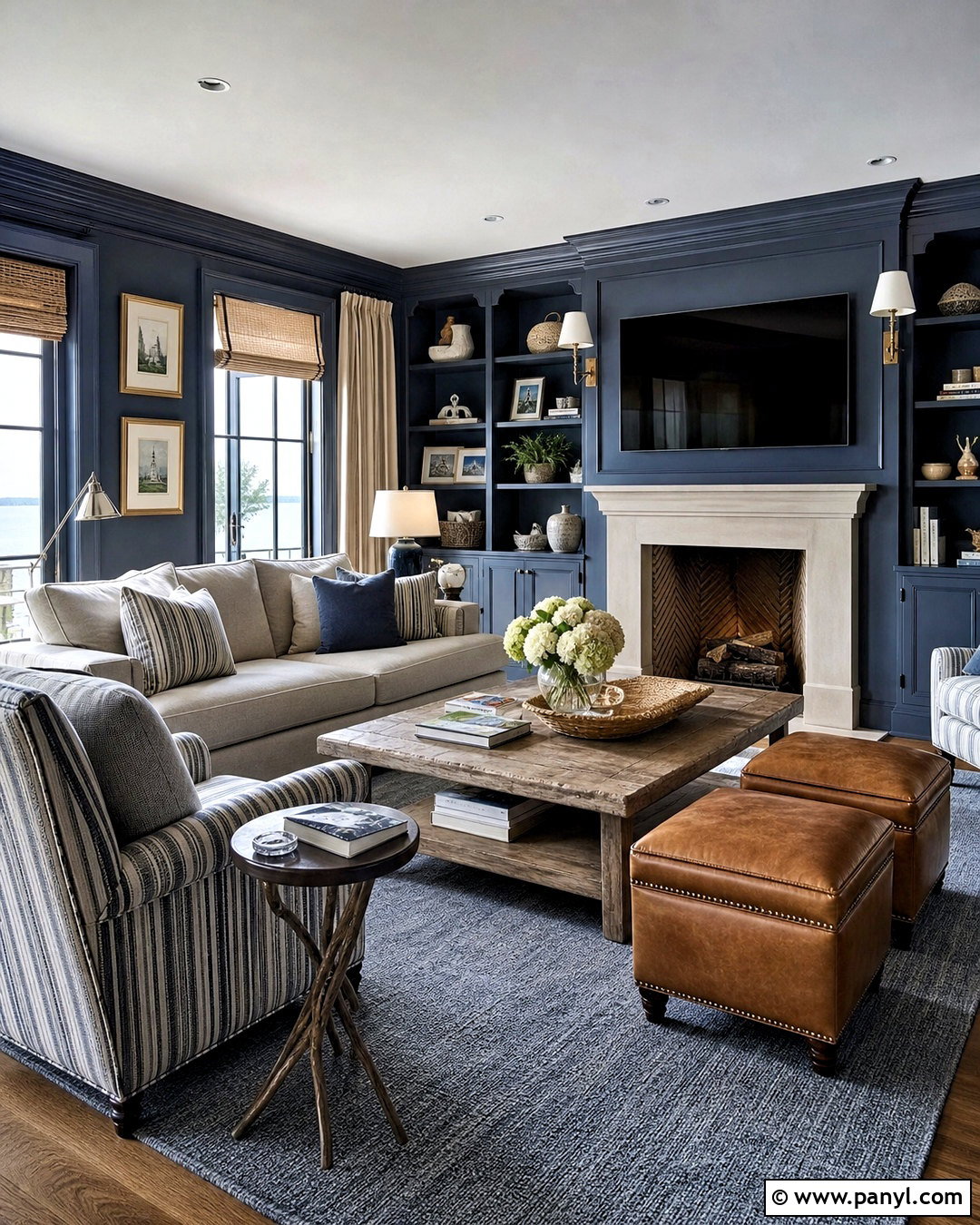
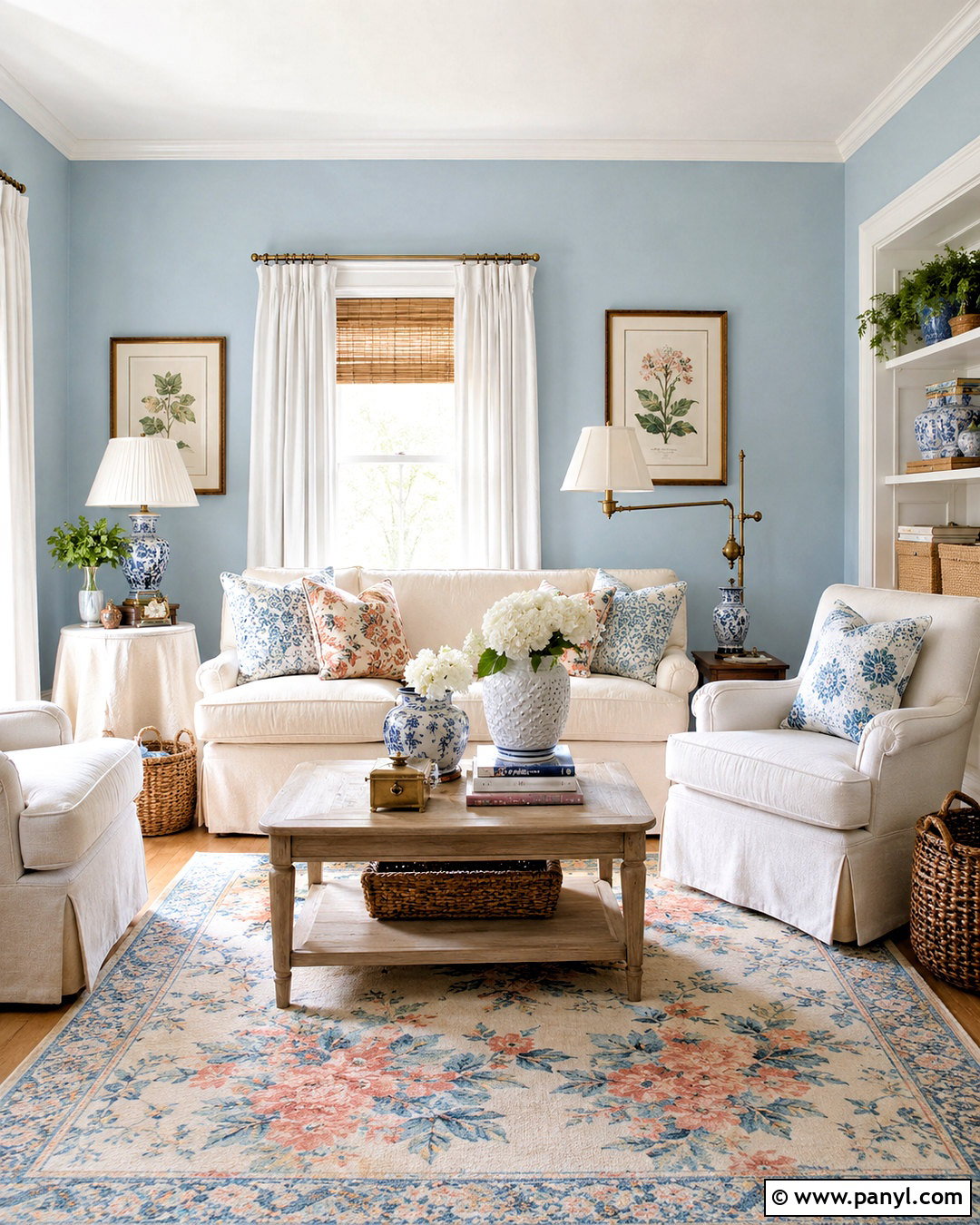
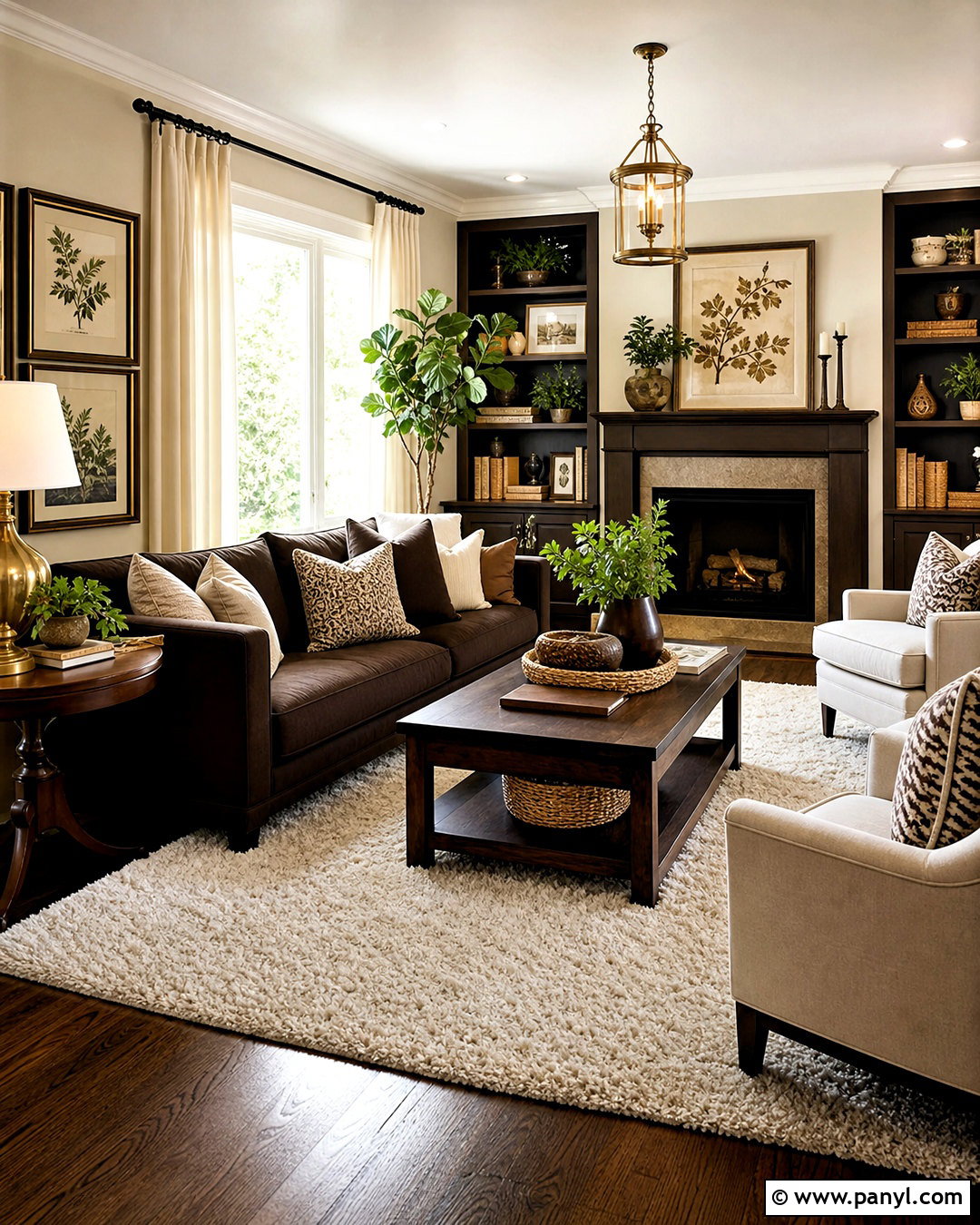
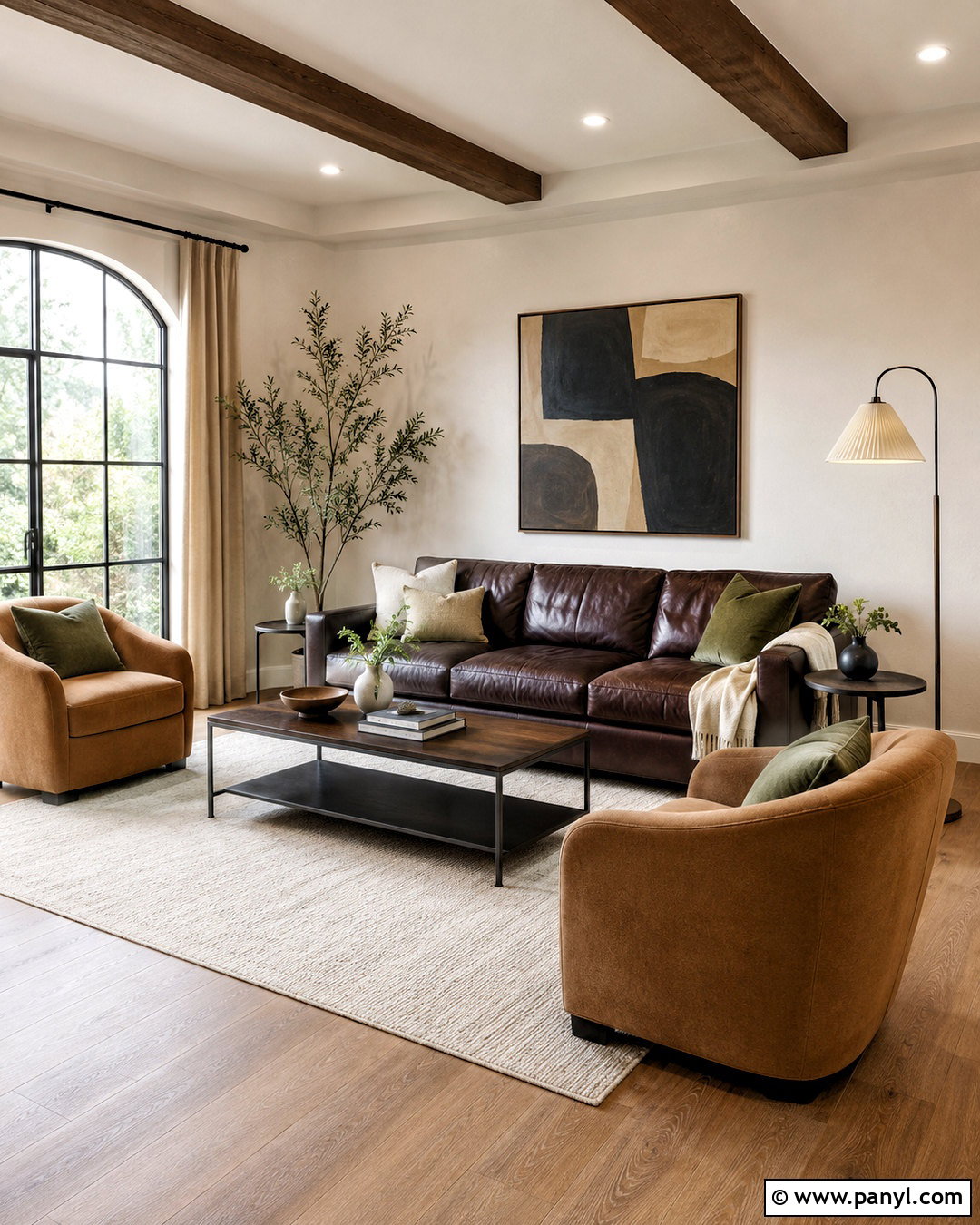
Blue-gray paint creates a peaceful dark living room that works well in coastal, transitional, or classic homes. Choose a deep slate blue and apply it to the walls and built-in cabinets. Keep the ceiling, crown molding, and fireplace surround creamy white for a crisp architectural outline. Furnish the space with a pale gray sofa, striped linen armchairs, and a weathered oak coffee table. A large wool rug in sand and faded blue anchors the conversation area. Add polished nickel lamps, woven window shades, and navy patterned pillows for subtle repetition. Warm the scheme with tan leather ottomans and natural baskets. The blend of cool paint, light upholstery, and organic texture creates a comfortable room that feels dramatic but still fresh during daylight hours.
11. Dark Espresso Living Room
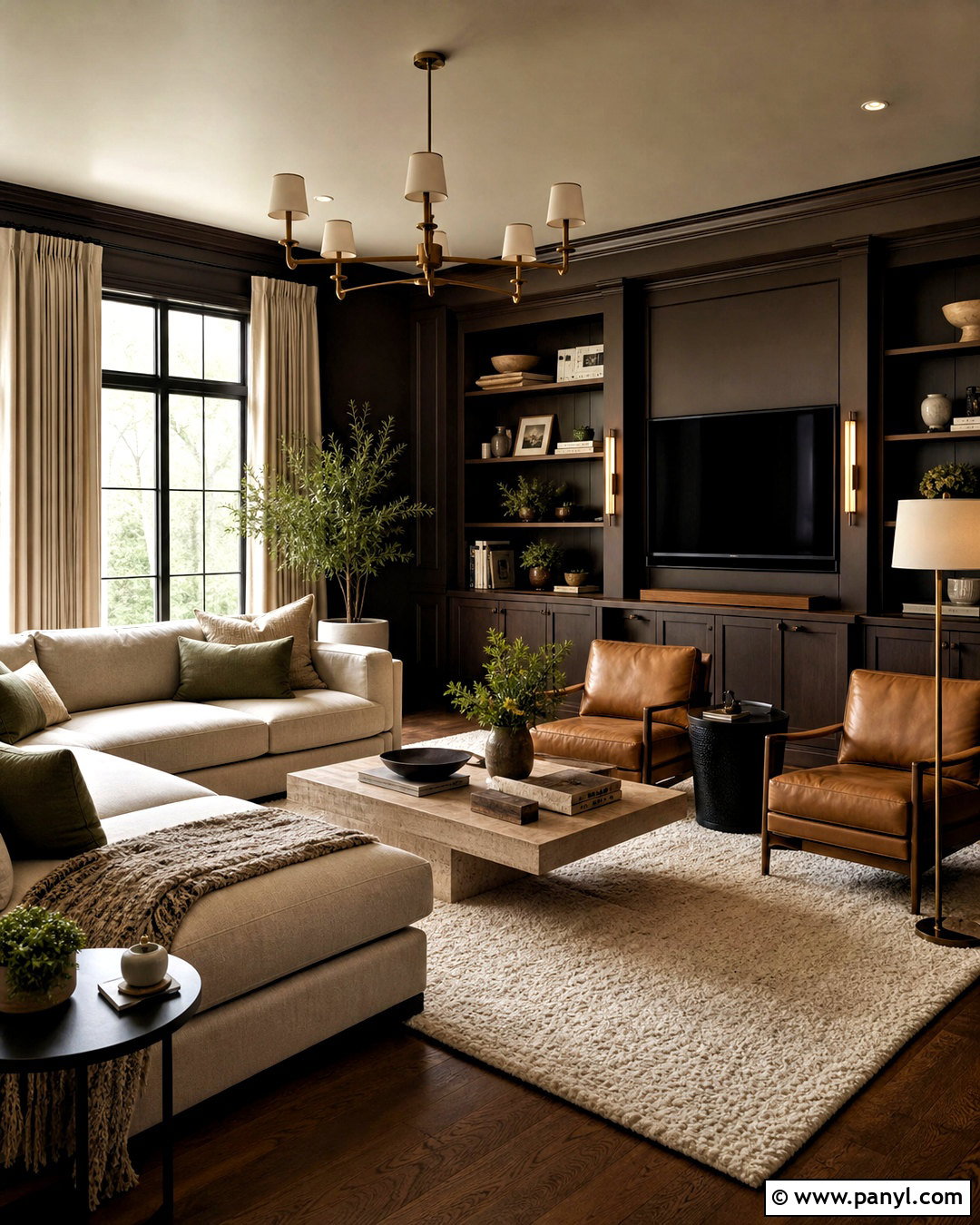
Espresso paint delivers almost-black depth with a warmer and more forgiving finish. Use the color on the walls, door frames, and low media cabinetry, then choose a warm white ceiling to preserve brightness overhead. A flax linen sectional and two camel leather chairs provide light and medium tones against the dark backdrop. Place them around a chunky travertine coffee table on a cream loop-pile rug. Introduce walnut shelving, bronze lighting, and textured beige curtains to develop the brown palette without making everything match. Artwork with pale backgrounds creates useful breathing room on the walls. A few olive green pillows and leafy plants add a natural accent. This design works especially well in a living room with large windows, wood floors, and simple architecture.
12. Dark Slate Living Room
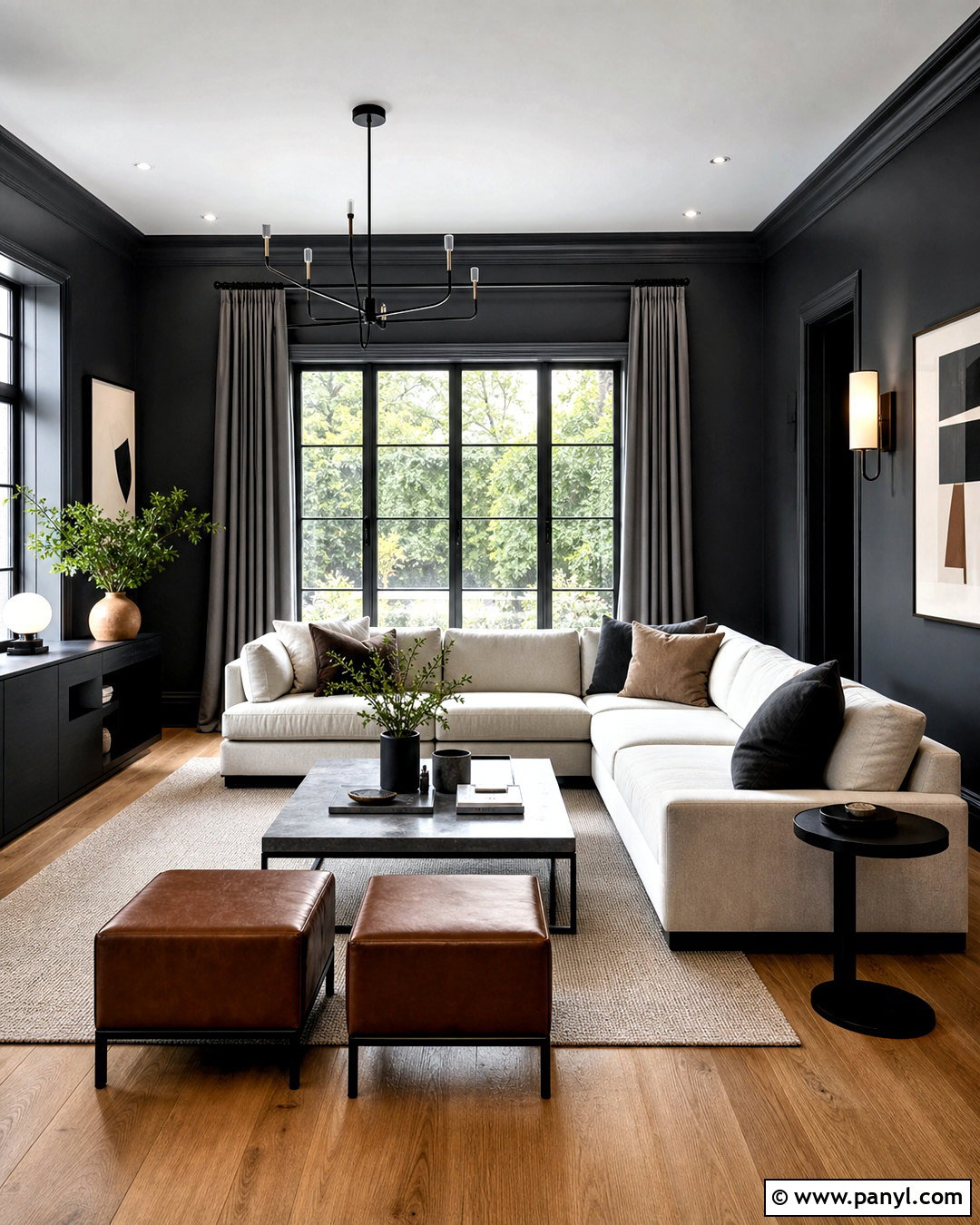
Slate paint sits between charcoal and blue, giving a modern living room subtle color that changes with the light. Coat the walls and window trim in a deep matte slate, but keep the ceiling pale gray instead of bright white. Choose a modular cream sofa with low arms and pair it with a black metal coffee table topped in honed stone. Medium oak flooring, a warm beige rug, and tobacco leather stools prevent the cool paint from dominating. Hang one large graphic artwork above the sofa and add slim black sconces on either side. Floor-to-ceiling gray linen curtains make the windows look taller. Keep accessories minimal but tactile, using ribbed ceramics, wool pillows, and a soft throw to create warmth within the streamlined layout.
13. Dark Terracotta Living Room
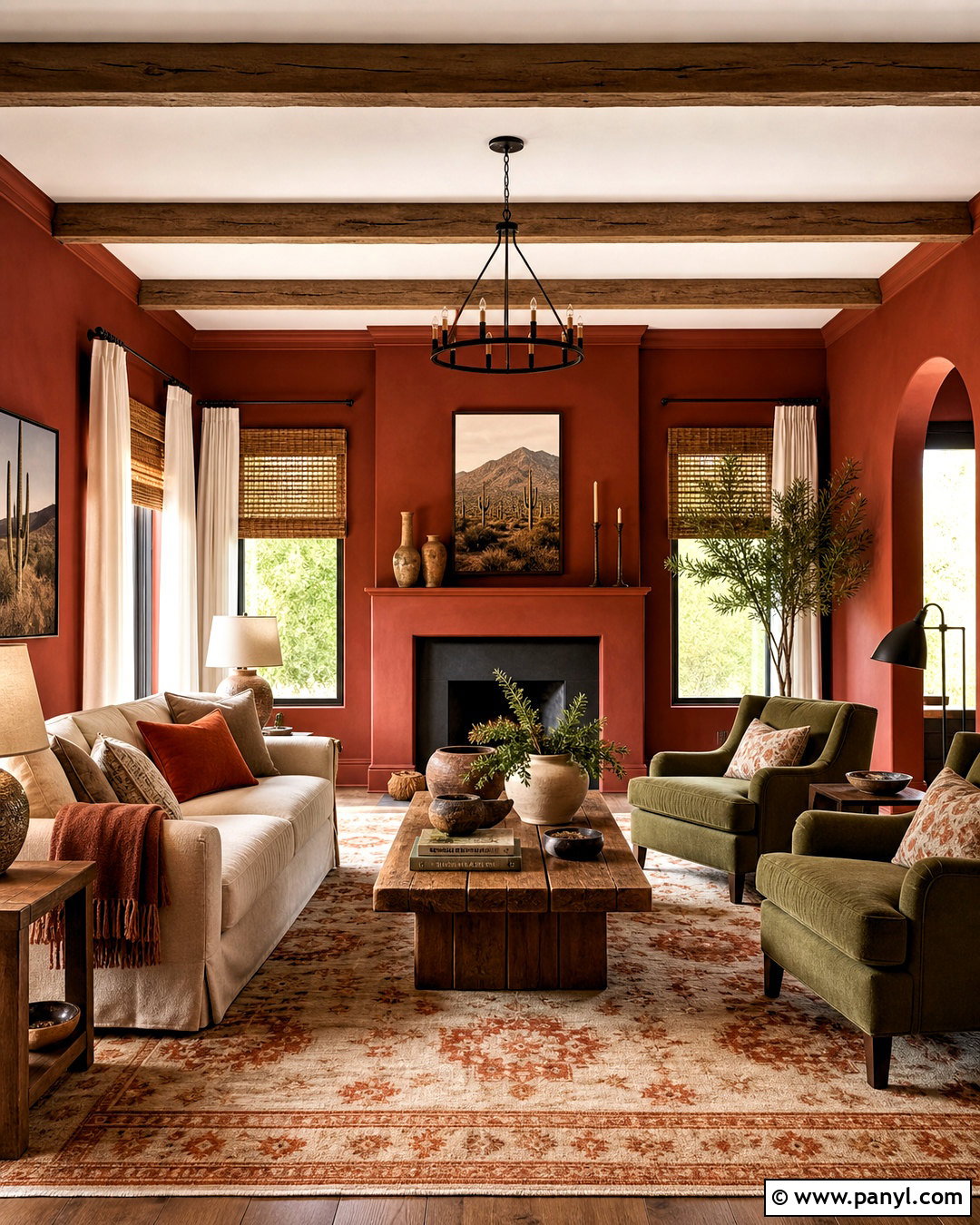
Dark terracotta walls can make a living room feel sunbaked, comfortable, and full of natural warmth. Choose a deep clay-red paint with brown undertones and continue it across the trim for a cohesive finish. Arrange a beige slipcovered sofa with two olive green armchairs around a reclaimed wood coffee table. A cream and rust patterned rug links the upholstery with the surrounding paint. Add woven bamboo shades and off-white curtains to filter sunlight gently. Black metal lamps and curtain rods provide sharper definition against the earthy colors. Decorate with handmade pottery, simple desert landscapes, and cushions in mustard, brown, and faded pink. Pale oak flooring keeps the room relaxed. The overall scheme suits Southwestern, rustic, and globally influenced homes without becoming overly themed.
14. Dark Aubergine Living Room
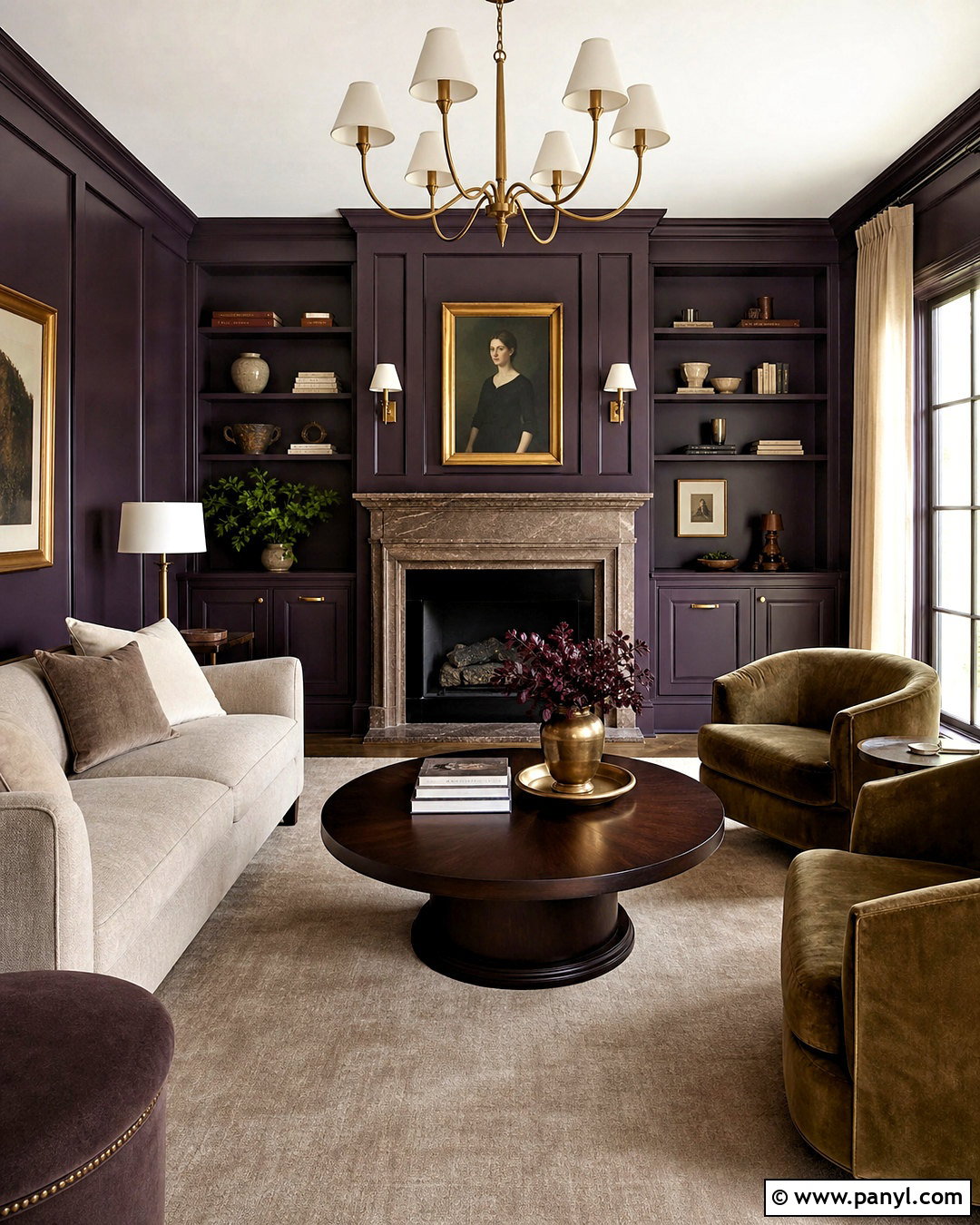
Aubergine paint creates an intimate living room with more complexity than standard gray or navy. Select a deep eggplant color with muted brown undertones and use it across paneled walls, trim, and built-in storage. Balance its richness with a soft stone-colored sofa and light taupe carpet or a large wool rug. Add olive velvet chairs, a round dark oak table, and antique brass lighting. Cream curtains bring softness to the windows, while patterned pillows in plum, rust, and beige connect the full palette. Choose artwork with pale mats and slim gold frames so it remains visible against the dark paint. A marble fireplace surround introduces a brighter natural surface. The resulting room feels elegant and enveloping while still containing enough neutral space for everyday comfort.
15. Dark Hunter Green Living Room
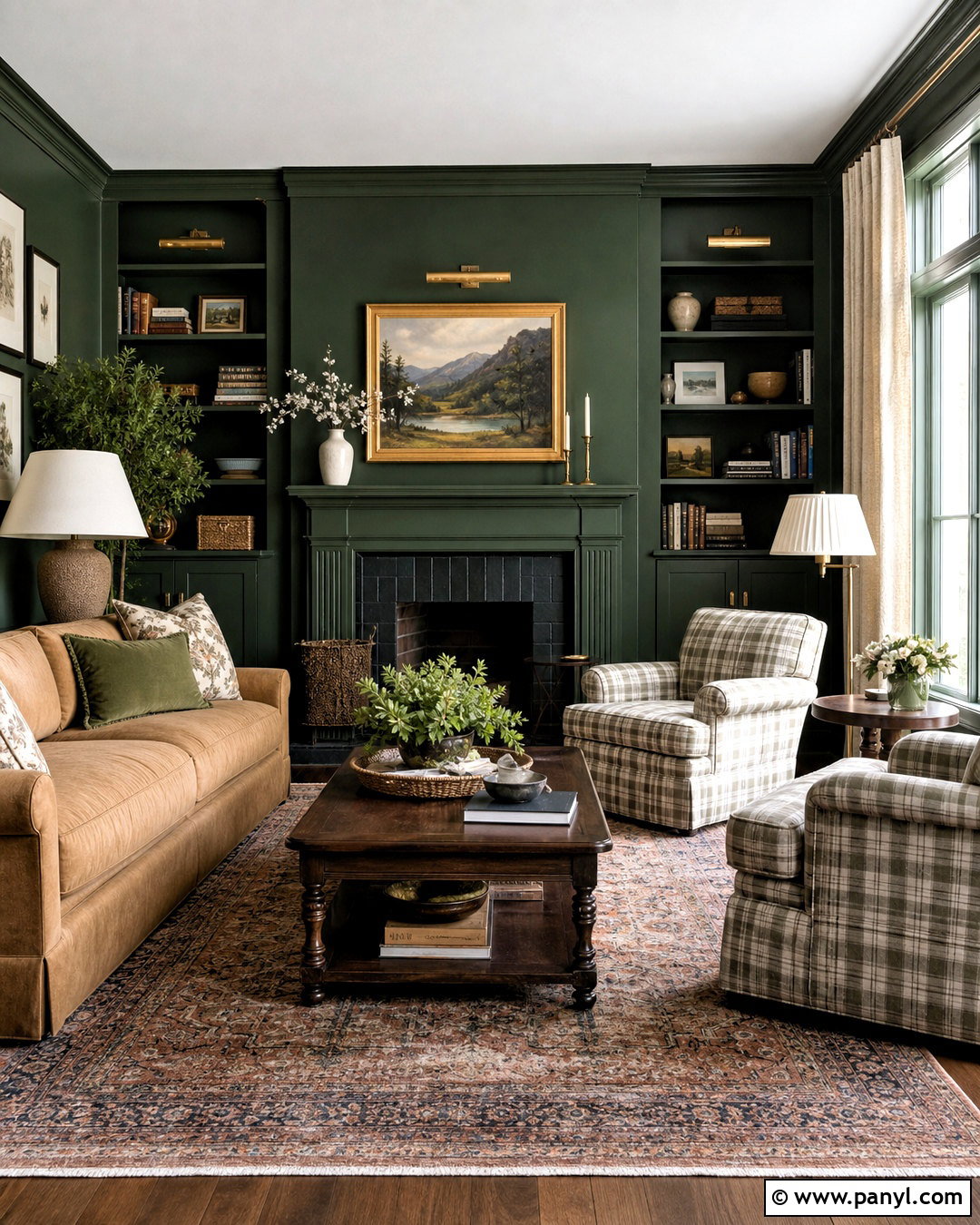
Hunter green gives a living room a formal foundation, but relaxed furniture can keep it from feeling stiff. Paint all walls and a traditional fireplace mantel in the same deep green, then leave the ceiling warm white. Place a comfortable camel sofa opposite two plaid armchairs in cream, green, and brown. Center the grouping on a dark wood coffee table and a faded Persian-style rug. Add warm brass picture lights above framed landscapes and use pleated fabric shades on table lamps. Full linen curtains in oatmeal soften the strong wall color. Built-in shelves can hold books, white ceramics, and small framed photographs with plenty of open space between them. The complete look combines classic color with practical furnishings suited to a welcoming family living room.
16. Dark Greige Living Room
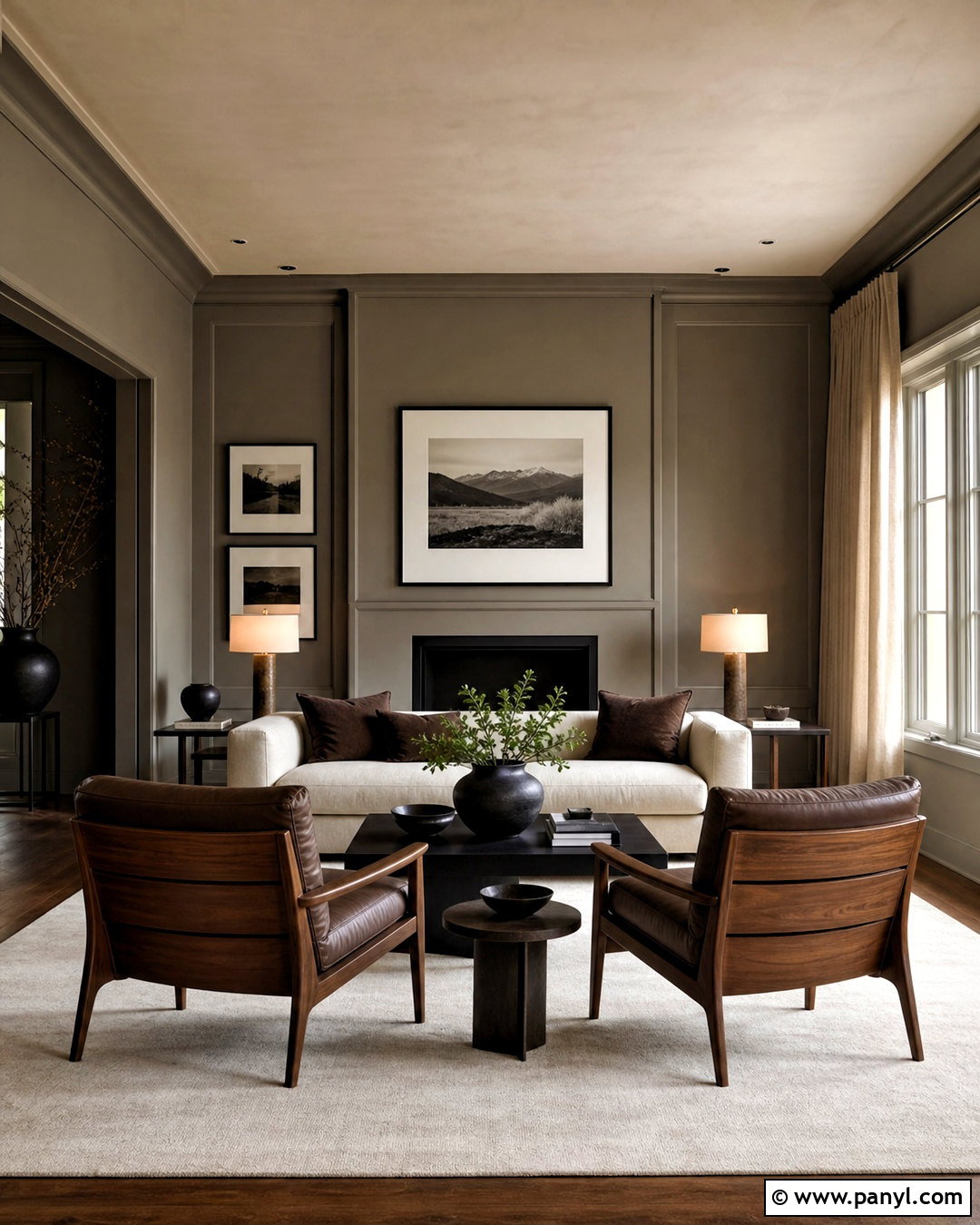
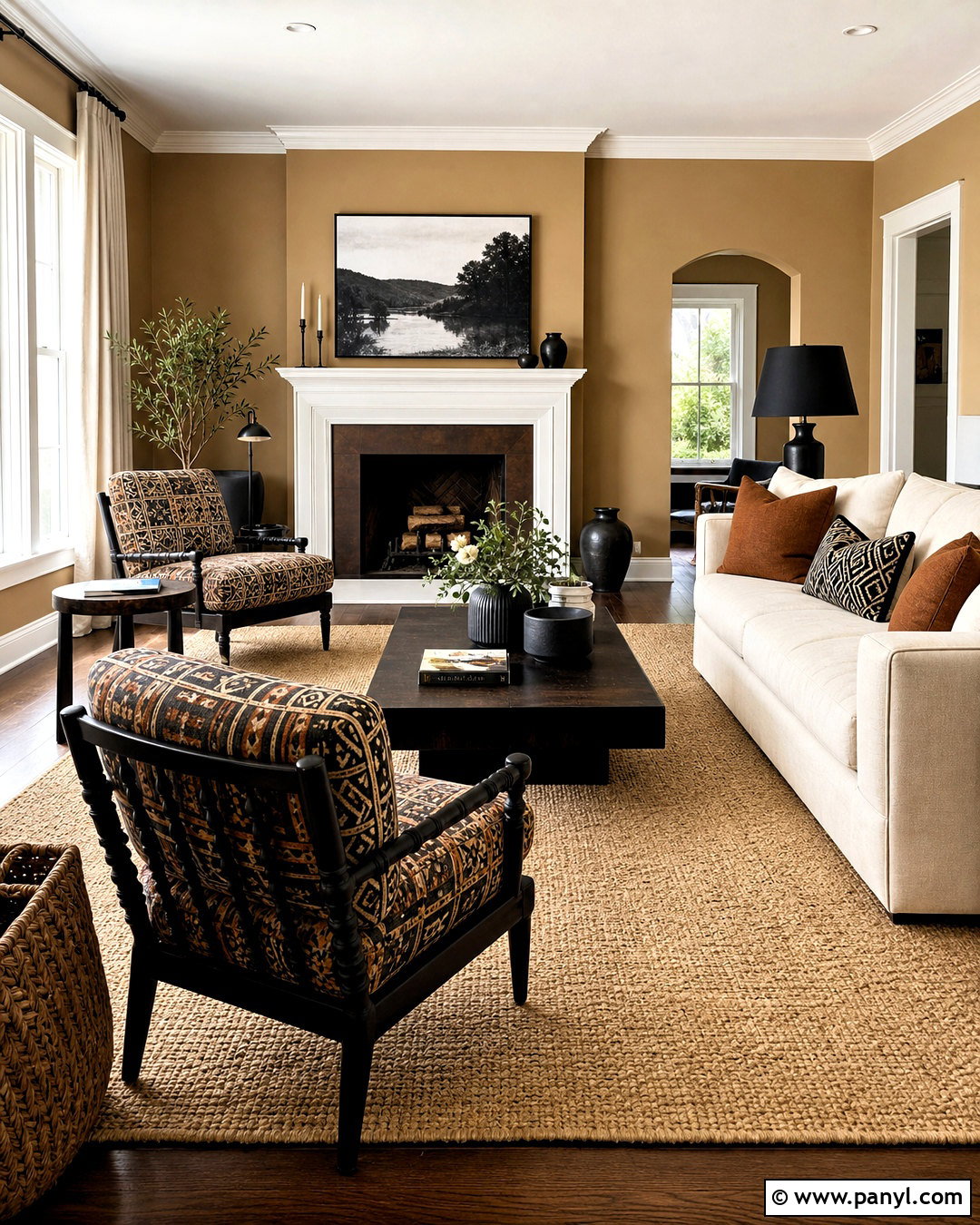
Dark greige is ideal when you want depth without committing to an obvious color. Choose a rich taupe-gray paint with warm brown undertones and carry it from the walls onto the trim. Use a lighter mushroom tone on the ceiling for a gentle, low-contrast transition. Furnish the room with an ivory sofa, walnut lounge chairs, and a substantial black coffee table. A textured cream rug and long flax curtains brighten the larger surfaces. Introduce depth through chocolate pillows, bronze lamps, and charcoal ceramics rather than bold accent colors. Large black-and-white photography gives the walls a modern focal point. Keep furniture silhouettes simple and include several natural finishes. The completed living room feels quiet and polished, with enough tonal variation to avoid appearing flat or overly neutral.
17. Dark Ink Blue Living Room
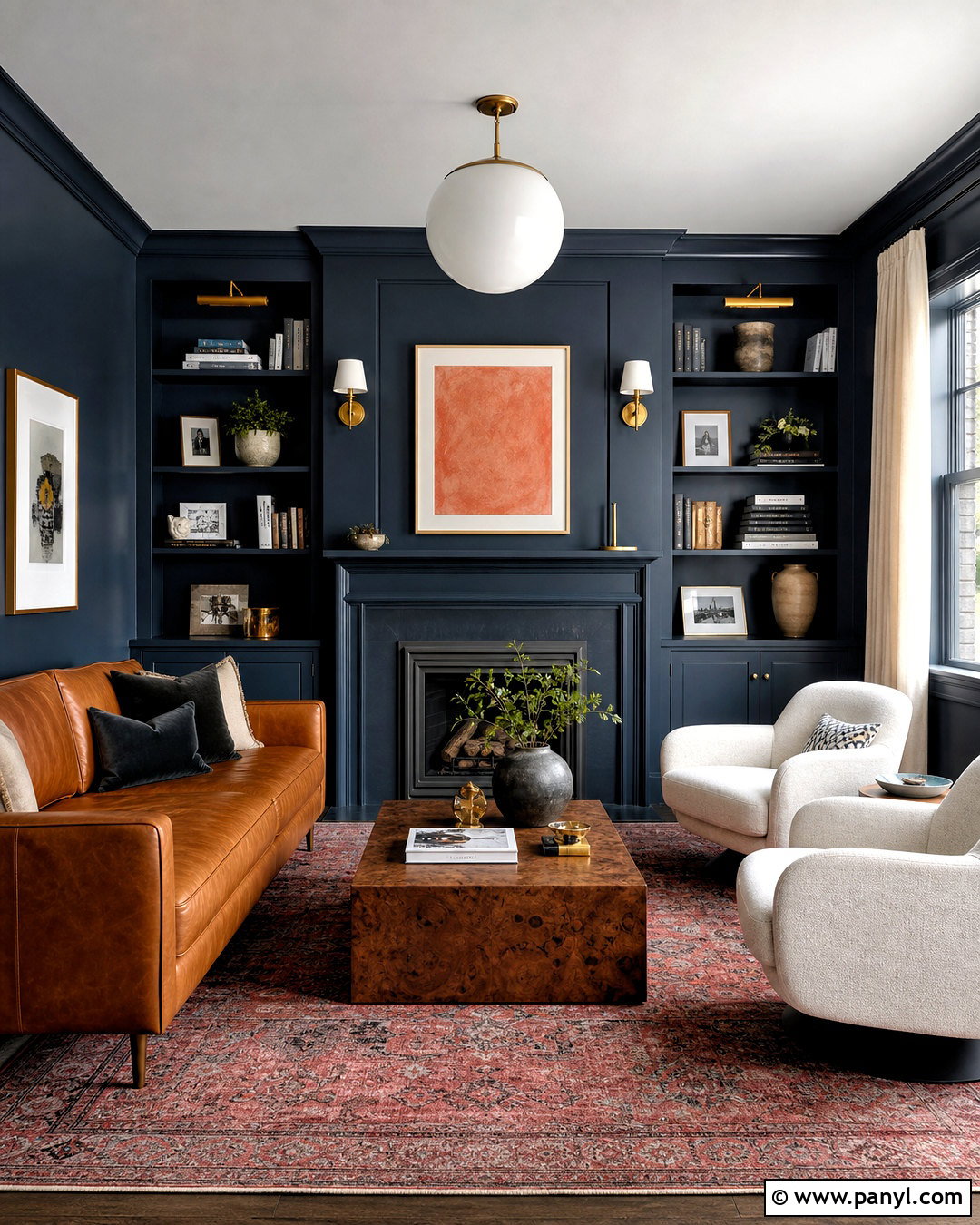
Ink blue paint creates an immersive backdrop that feels richer and darker than traditional navy. Apply it to the walls, trim, shelving, and fireplace for a consistent color-drenched finish. A warm white ceiling can remain if the room has limited natural light. Choose a caramel leather sofa, cream swivel chairs, and a round burl wood coffee table for contrast. Layer a faded red rug beneath the seating to add warmth and subtle pattern. Brass sconces and a white globe ceiling fixture introduce reflective surfaces without looking overly decorative. Hang modern artwork featuring coral, pale blue, and ivory. Finish with natural linen curtains and pillows in rust and soft gold. The combined palette feels dramatic and contemporary while keeping the living room comfortable and visually balanced.
18. Dark Red Living Room
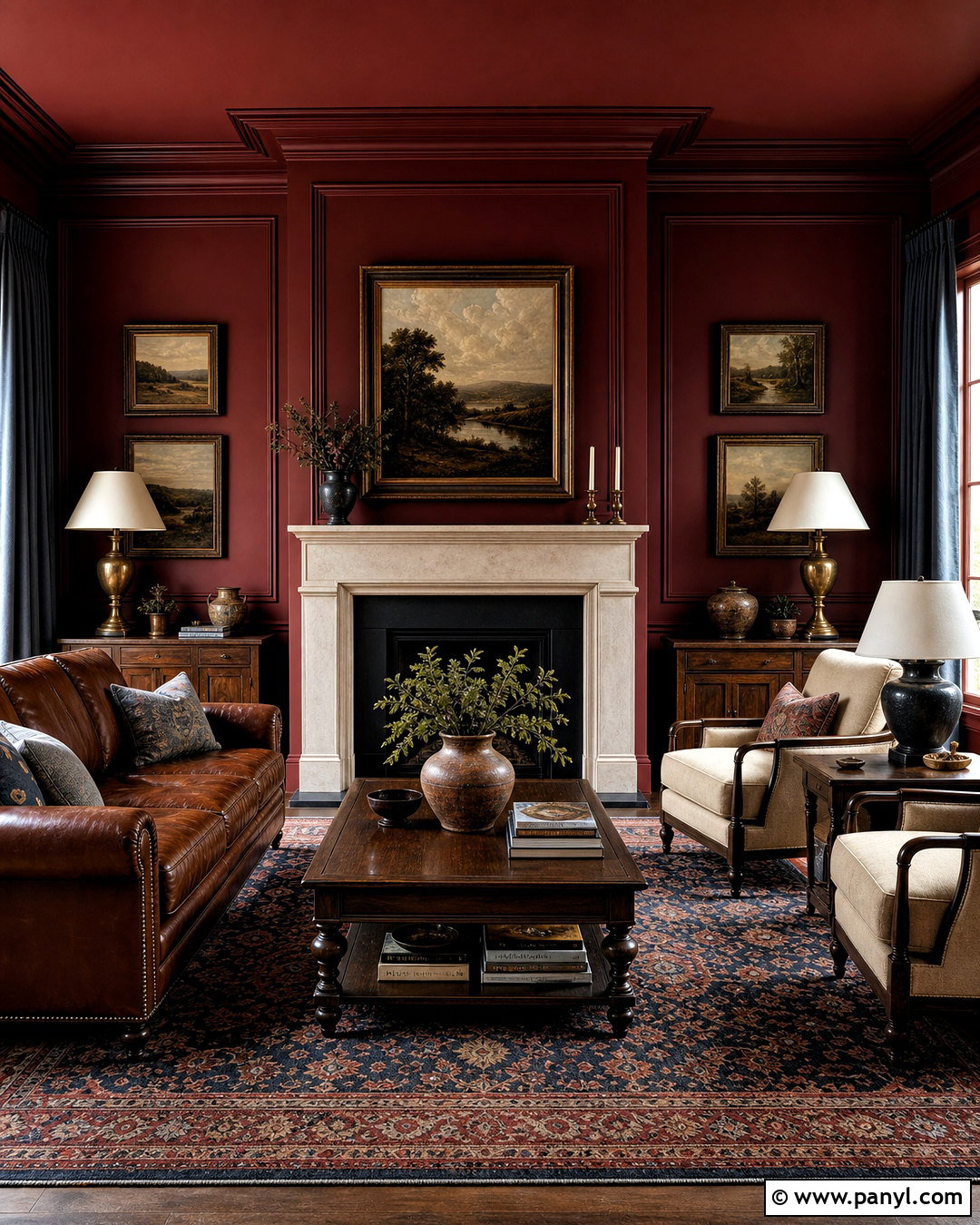
Deep red walls give a living room warmth, energy, and a memorable traditional character. Choose an earthy oxblood or brick-red paint rather than a bright primary red. Apply it to the walls and molding, then balance it with a cream ceiling and pale stone fireplace. A tobacco leather sofa, beige upholstered chairs, and a dark oak coffee table build a layered tonal foundation. Add a vintage rug with navy, faded red, and ivory details. Soft blue-gray curtains provide a surprising cool contrast at the windows. Use aged brass lamps, landscape paintings, and simple pottery as finishing touches. Avoid filling the room with additional saturated colors. A controlled palette and symmetrical furniture arrangement allow the dark paint to remain the main feature without making the space feel chaotic.
19. Dark Color Drenched Living Room
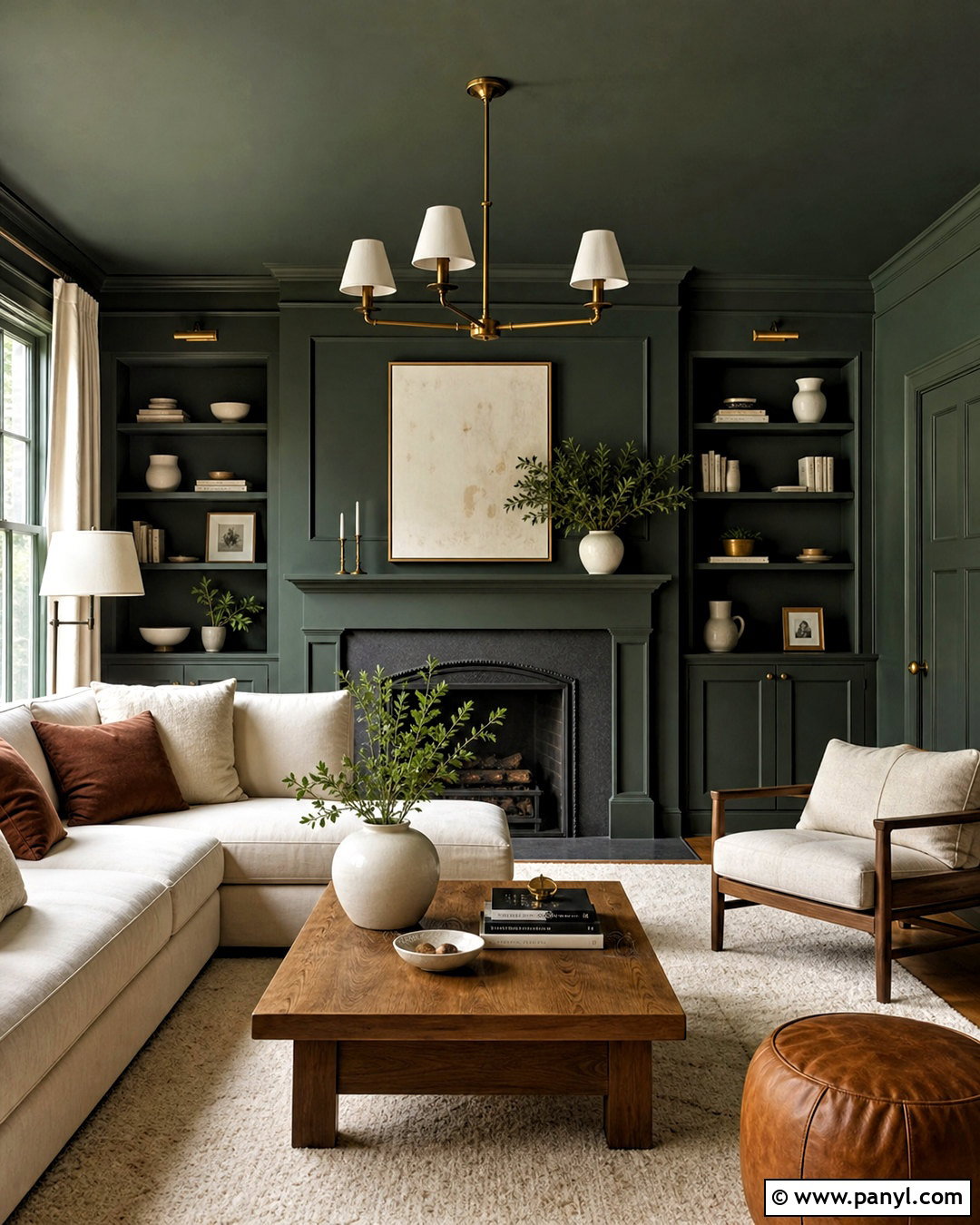
Color drenching turns the entire living room into one connected, enveloping space. Choose a smoky deep green, muted teal, or blue-black and paint the walls, ceiling, trim, doors, fireplace, and built-in shelves in the same shade. Use an eggshell finish on walls and a slightly glossier finish on woodwork to create quiet variation. Bring contrast through a large cream sectional, natural oak tables, and an ivory wool rug. Add rust-colored pillows, a tan leather ottoman, and aged brass lighting to warm the scheme. Keep window treatments close to the wall color so they blend into the background. Pale artwork and white ceramics provide small highlights. The finished room feels intentional and expansive because architectural interruptions disappear into one continuous field of color.
20. Dark Accent Wall Living Room
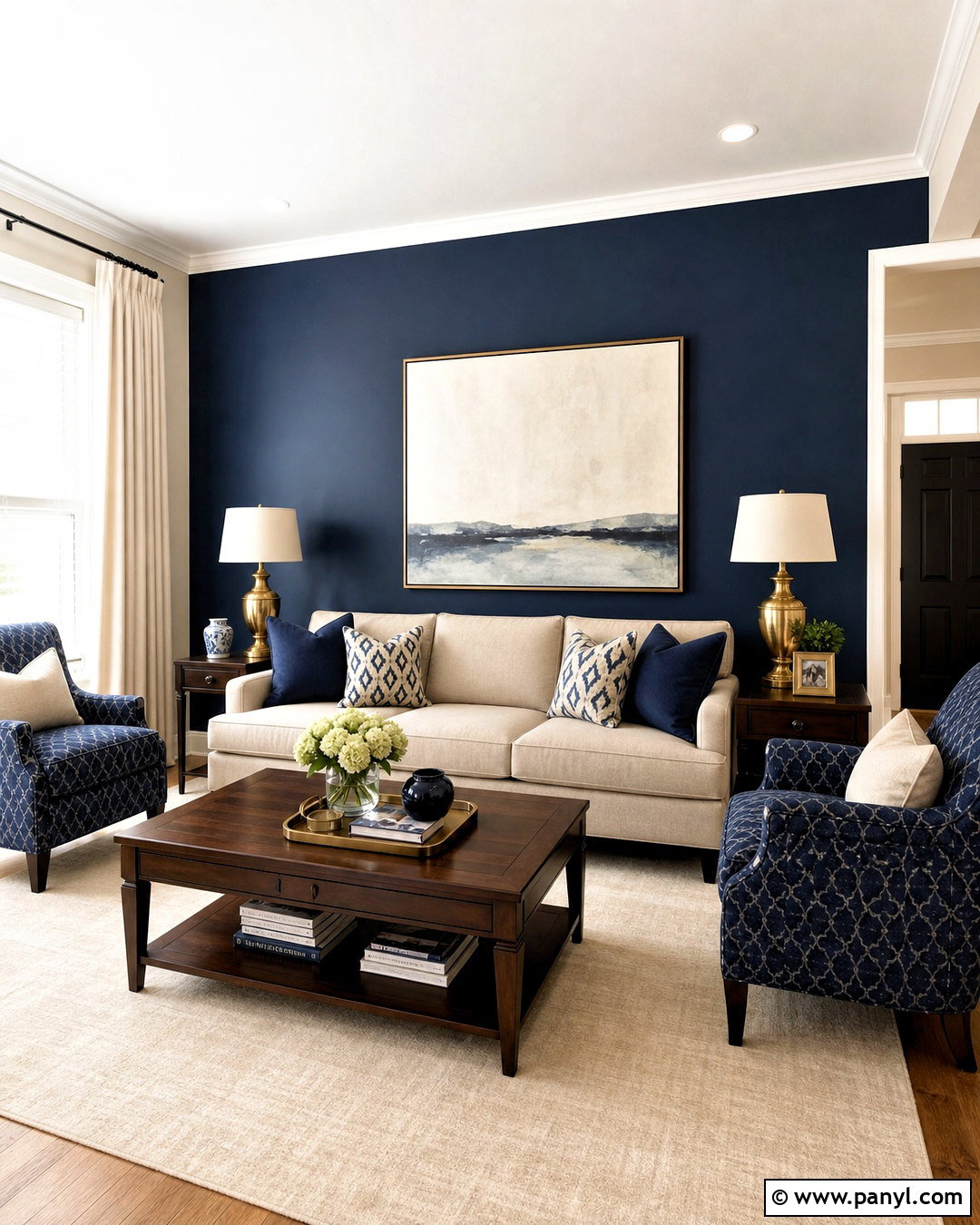
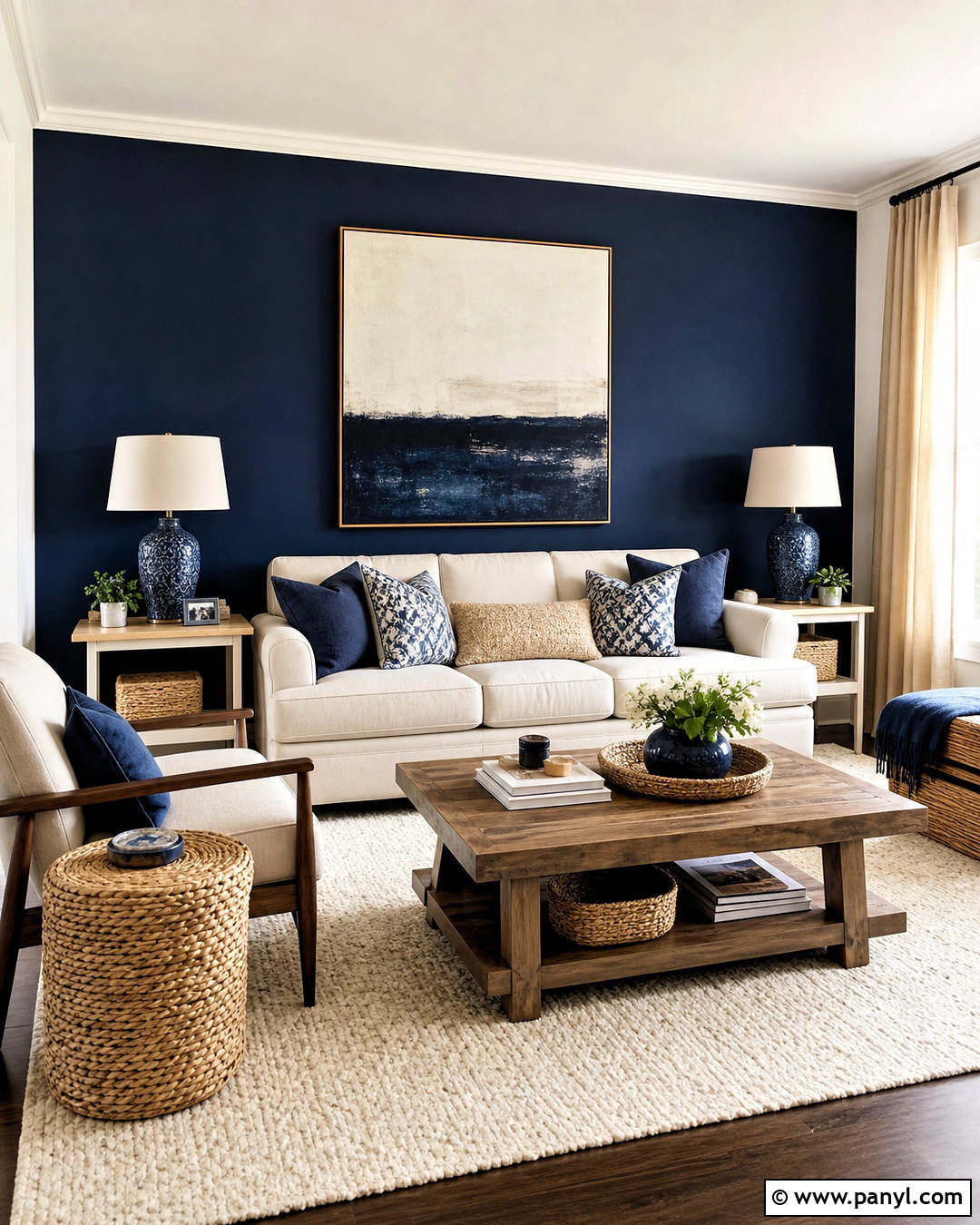
A dark accent wall offers a practical option when painting the entire living room feels too bold. Select the room’s strongest focal wall, ideally behind the sofa, fireplace, or media unit, and paint it deep charcoal, navy, or forest green. Use a warm off-white on the remaining walls and repeat the dark shade through smaller furnishings. For example, pair a navy feature wall with a beige sofa, blue patterned chairs, and a walnut coffee table. Ground the room with a cream rug and hang large light-toned artwork on the painted wall. Natural curtains and brass lamps add warmth. Carrying the accent color into pillows, ceramics, and rug details makes the wall feel integrated rather than random, producing a complete and balanced living room design.
Conclusion:
The most successful 20 dark paint living room ideas balance deep wall color with light, warmth, texture, and practical illumination. Charcoal and greige provide flexible neutral backgrounds, while navy, teal, burgundy, and forest green create stronger personalities. Before painting, view large samples on several walls during the day and evening. Consider the flooring, fixed finishes, upholstery, and window exposure instead of choosing a shade by itself. Then build a complete palette with warm wood, pale textiles, layered rugs, and lighting placed at different heights. Whether you paint one focal wall or color-drench the entire room, repeating the chosen shade through smaller details will make the finished space feel cohesive, comfortable, and thoughtfully designed.

Related Ideas and Inspiration:
Leave a Reply