
A fresh wall color can turn an unfinished garage into a bright, organized extension of your home. This guide to **35 Garage Walls Paint Colors** covers practical neutrals, richer accent shades, two-tone combinations, and complete color schemes for workshops, parking areas, storage rooms, and garage gyms. Each look coordinates the walls with flooring, cabinetry, lighting, trim, and storage so the finished space feels intentional rather than pieced together. Consider natural light, ceiling height, floor color, and daily messes before choosing your palette. Satin or semi-gloss paint generally creates a washable surface, while a lighter ceiling helps maintain visibility. From clean white to deep navy and earthy sage, you will find a functional, achievable look among these **35 Garage Walls Paint Colors**.
1. Bright White Garage Walls
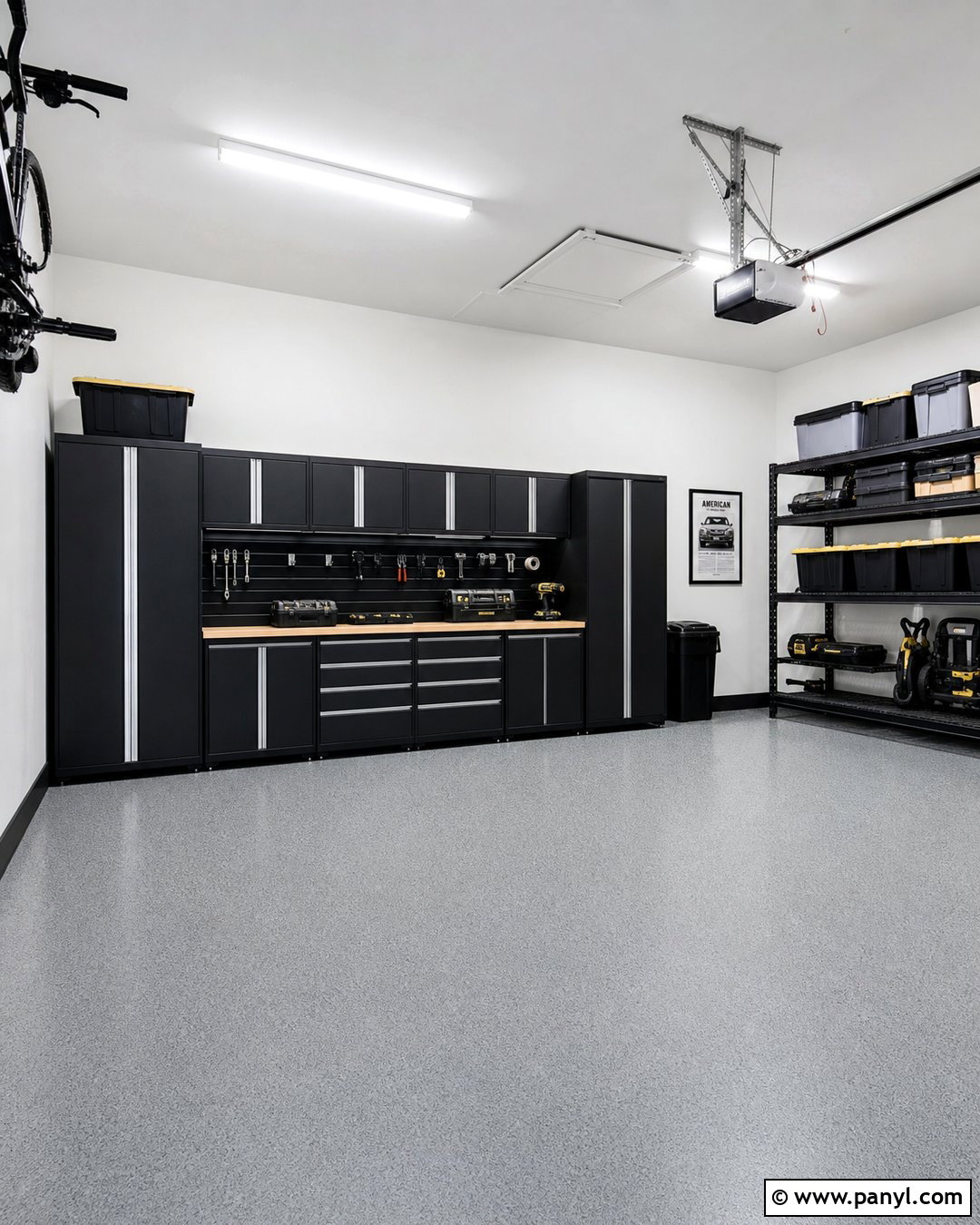
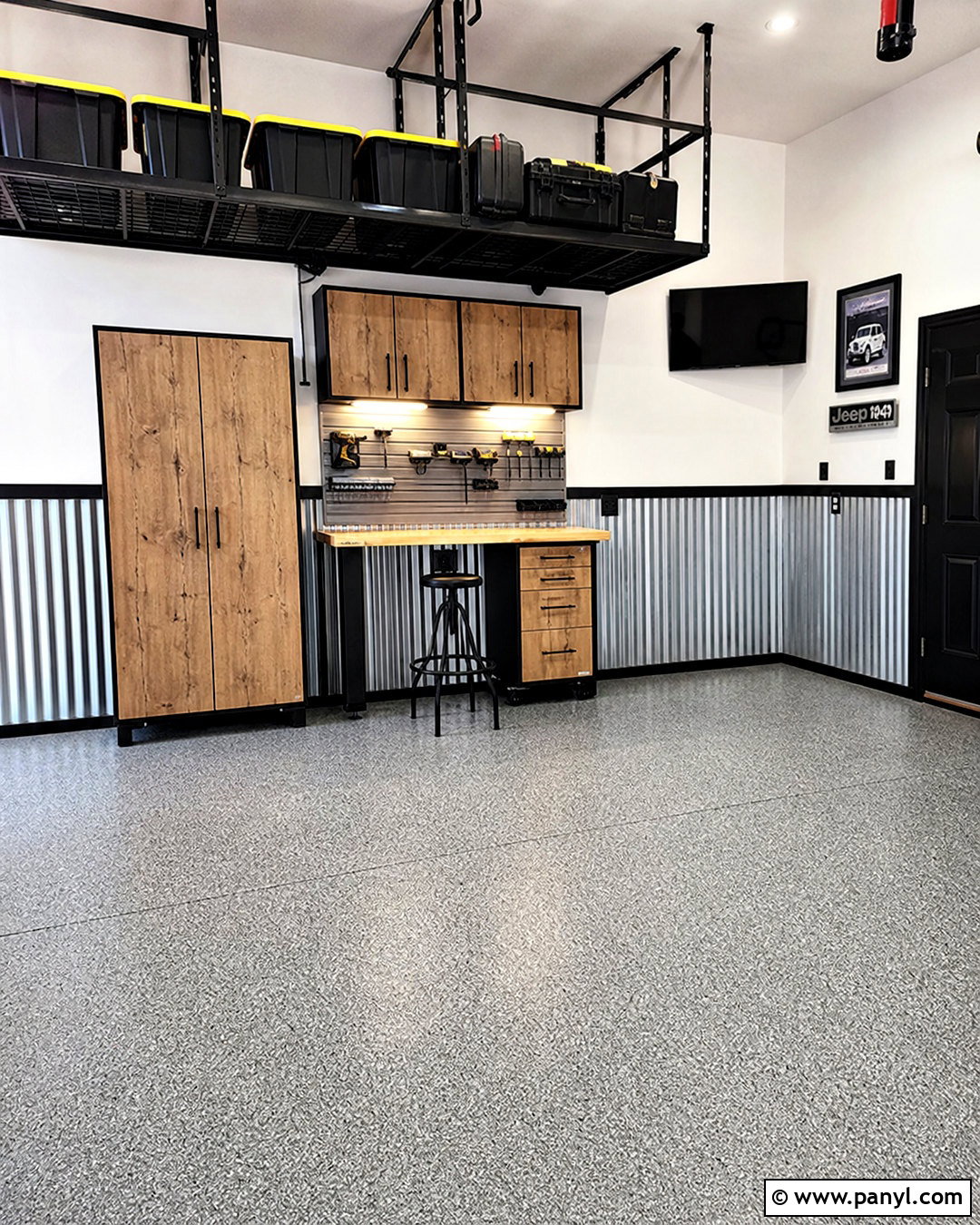
Bright white walls create a clean, highly visible garage that works especially well in spaces with few or no windows. Continue the white onto the ceiling to establish a seamless background, then add contrast through matte black storage cabinets, dark metal shelving, and a medium-gray epoxy floor. Closed cabinetry keeps visual clutter controlled, while a black slatwall above the workbench gives frequently used tools a defined home. Choose cool white LED ceiling fixtures so the wall color remains crisp instead of appearing yellow. This complete palette suits a compact garage, detailed workshop, or laundry area where good visibility matters. For easier upkeep, use a washable satin finish and install a dark protective baseboard along high-contact walls.
2. Warm White Garage Walls
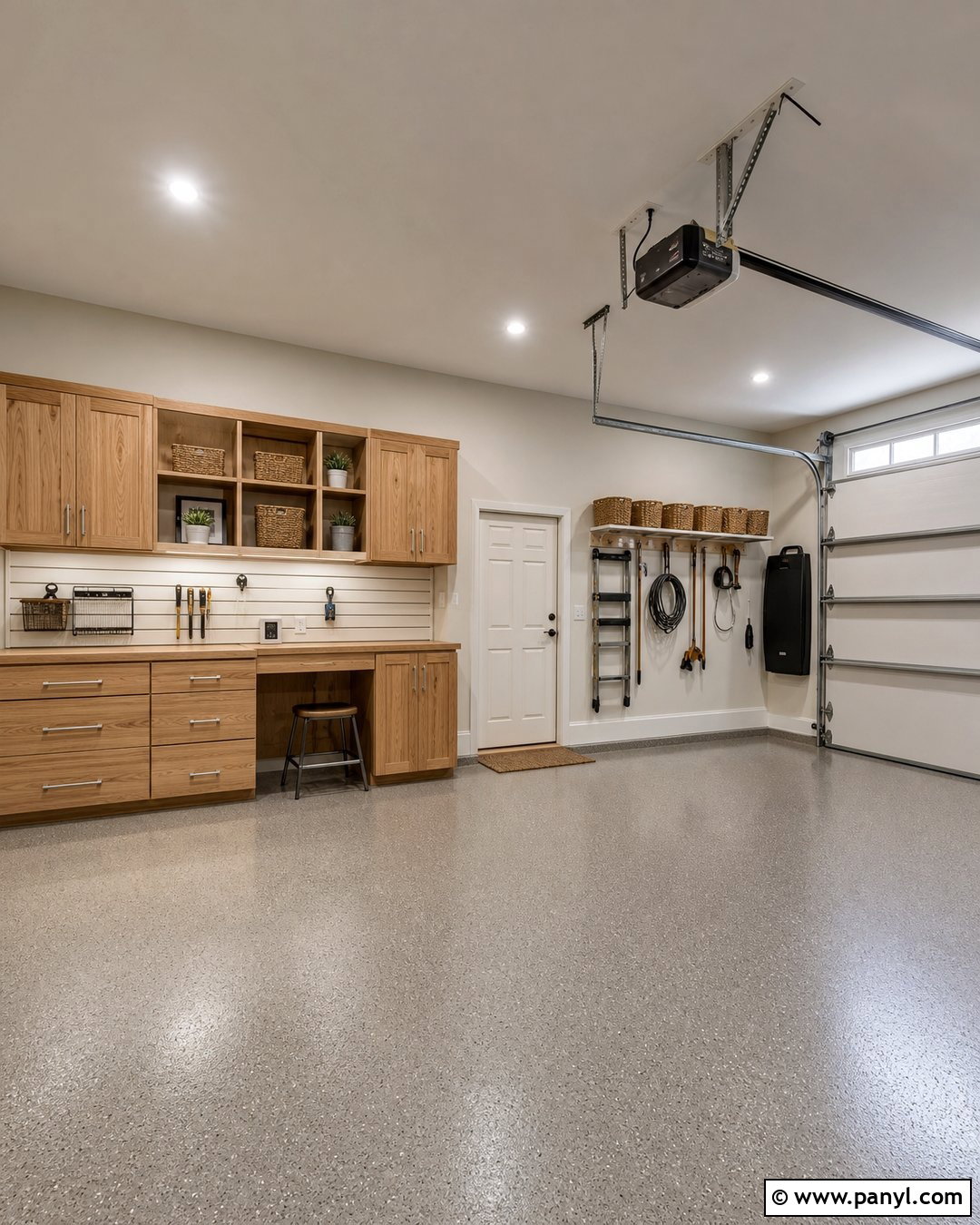
Warm white makes a garage feel welcoming without losing the open appearance associated with lighter paint. Pair the walls with a clean white ceiling, natural oak cabinets, and a warm gray floor containing subtle beige flecks. Brushed steel hardware and black shelf brackets provide enough contrast to keep the room from looking overly soft. Add a butcher-block workbench, woven storage baskets, and cream-colored utility doors for a coordinated transition into the house. This scheme works beautifully when the garage is also used for gardening, crafts, or household storage. Select a white with gentle cream or beige undertones rather than a strong yellow cast. Bright neutral lighting will keep the finished space fresh, practical, and comfortable throughout the day.
3. Cream Garage Walls
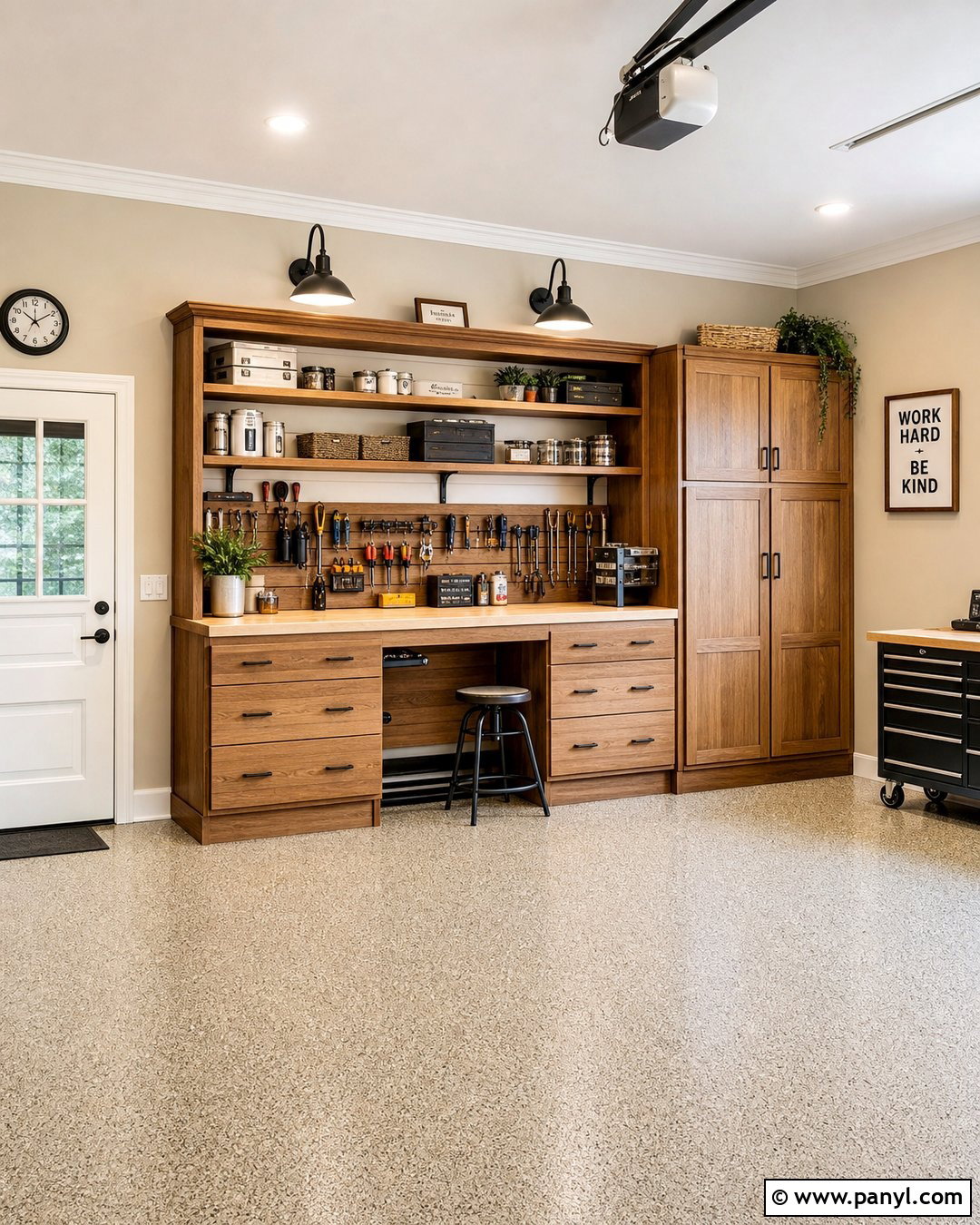
Cream walls soften the hard surfaces commonly found in garages and coordinate naturally with wood storage. Build the room around creamy paint, a white ceiling, medium-oak cabinets, and a speckled tan-and-gray floor. Use dark bronze hooks, cabinet pulls, and lighting frames to create definition. A sturdy wood workbench can anchor one side, while matching tall cabinets organize lawn supplies, tools, and seasonal items along the opposite wall. This palette is particularly effective in an attached garage that opens into a traditional or farmhouse-inspired home. Keep the trim slightly lighter than the walls so doors and windows remain crisp. A satin finish offers a subtle sheen without emphasizing every drywall seam, patch, or surface imperfection.
4. Light Gray Garage Walls
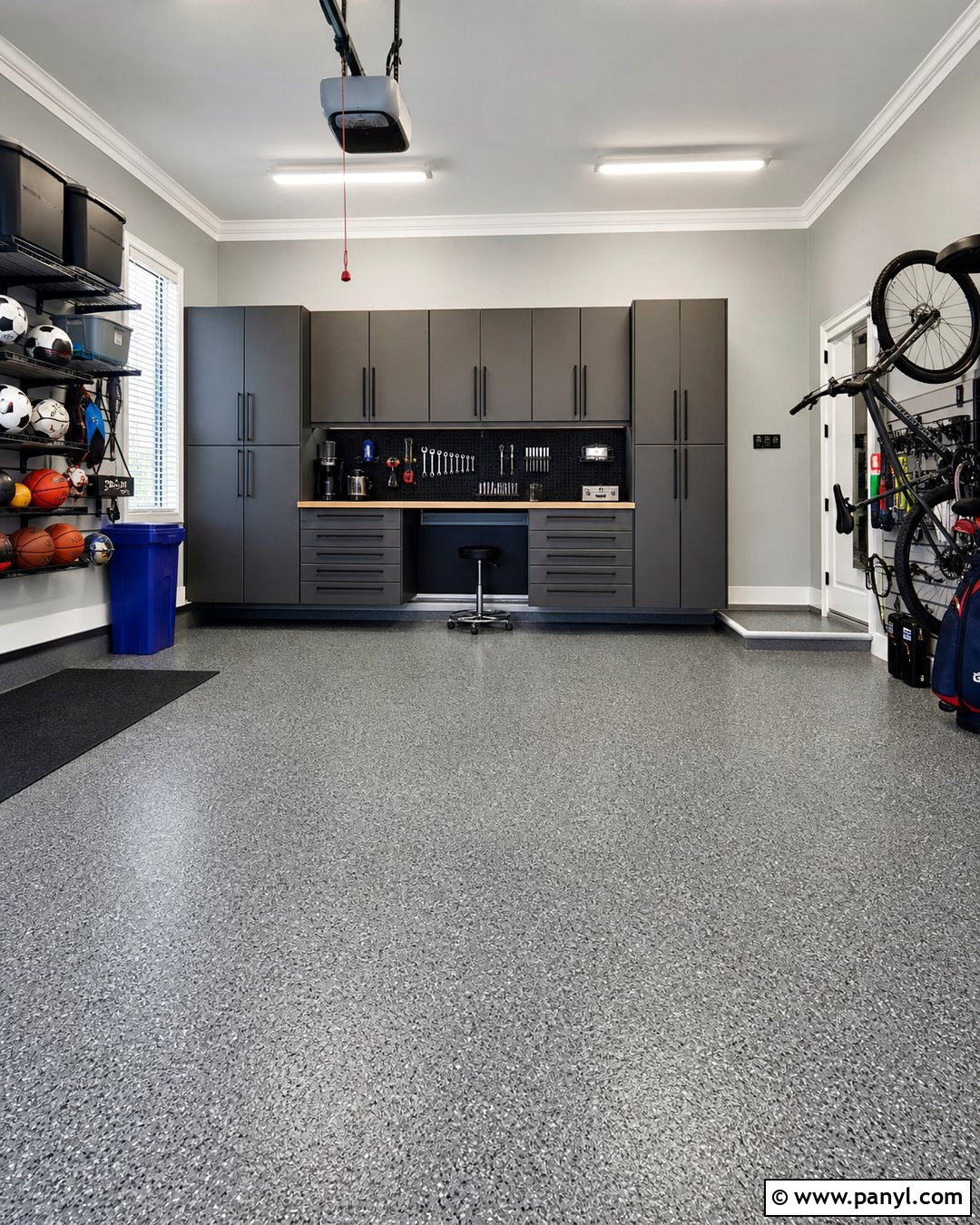
Light gray is a flexible choice that provides more depth than white while maintaining a bright, spacious appearance. Coordinate the walls with a flat white ceiling, graphite storage cabinets, and a medium-gray epoxy floor with white flakes. Black pegboard, streamlined steel shelves, and simple task lighting complete a modern workshop layout. Introduce warmth with a maple or butcher-block work surface so the gray palette does not feel overly industrial. This full scheme works in both one-car and multi-car garages because it visually supports cars, tools, sports equipment, and utility zones without competing with them. Choose a balanced gray that does not turn strongly blue or purple under LED lighting, and test it beside the finished flooring before painting every wall.
5. Dove Gray Garage Walls
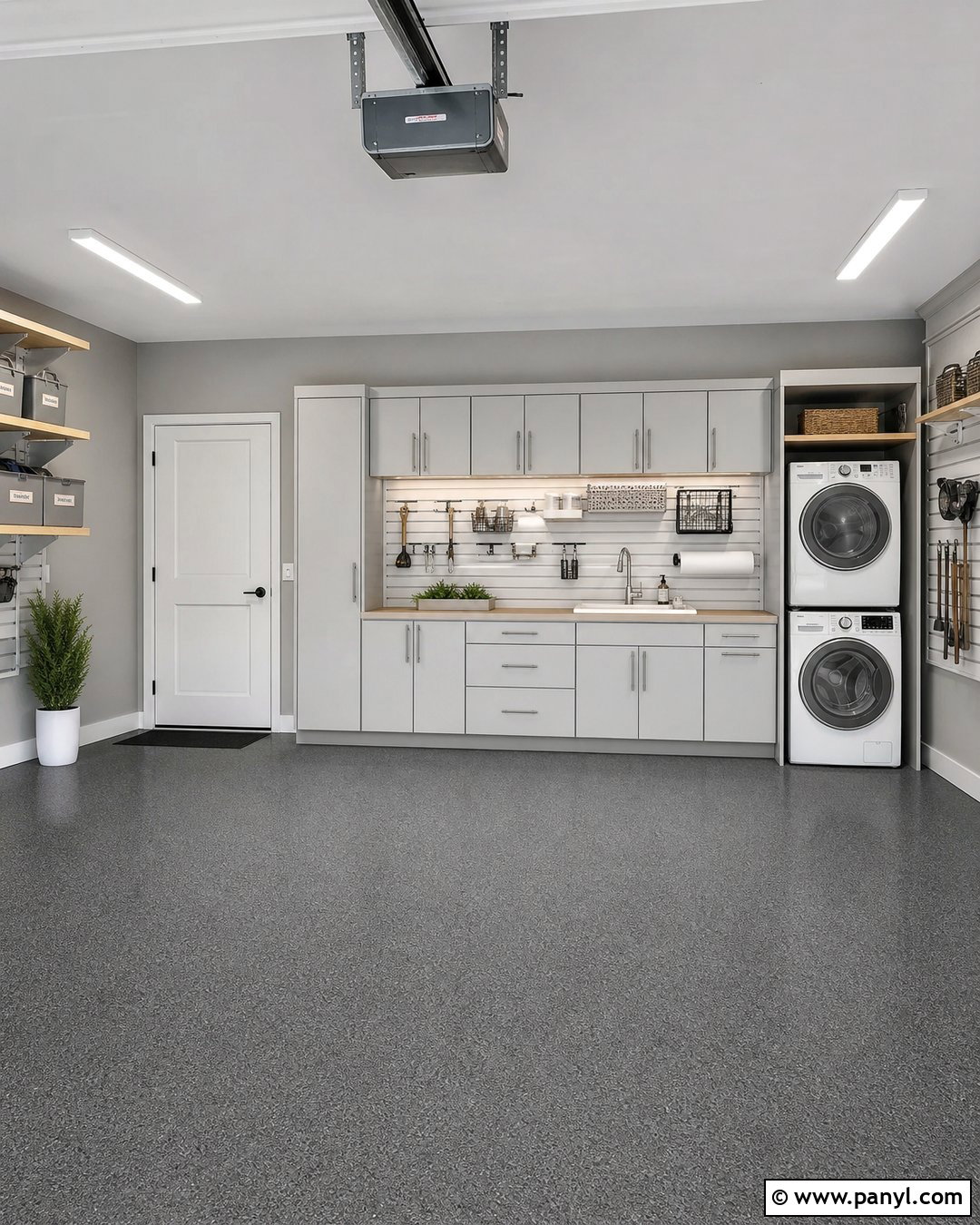
Dove gray walls bring a soft, polished finish to a multipurpose garage. The shade is light enough for comfortable visibility but has enough pigment to create separation from white doors, ceilings, and trim. Pair it with pale gray cabinets, brushed nickel hardware, and a charcoal floor for a calm monochromatic scheme. Add a white slatwall system behind the workbench and use labeled gray bins for overhead storage. A few natural wood shelves prevent the room from appearing flat. This look suits a garage connected to a contemporary home, especially when the area includes laundry machines or a mudroom entrance. Keep the layout uncluttered, use broad ceiling lights, and repeat the darker floor color in cabinet bases and protective wall trim.
6. Cool Gray Garage Walls
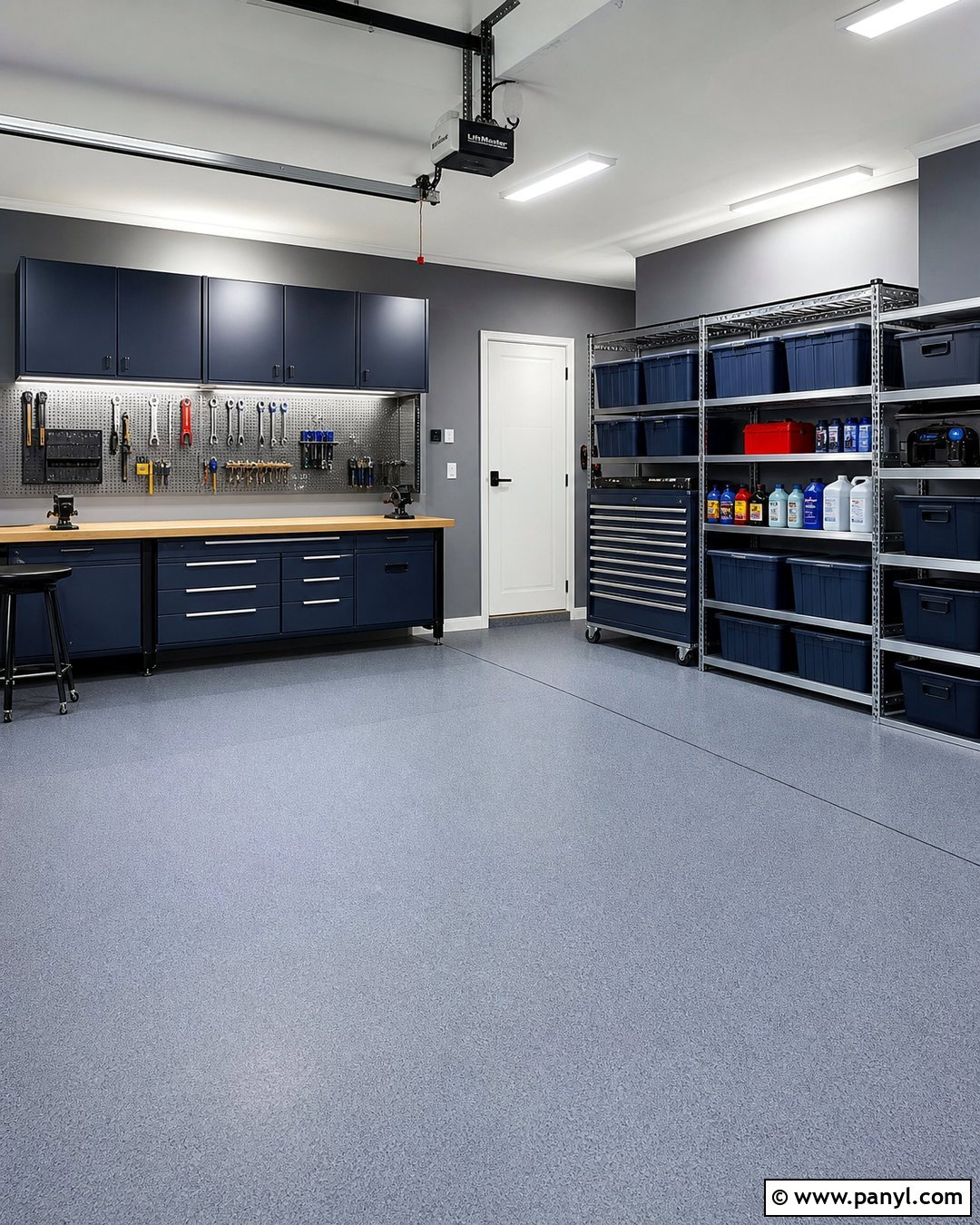
Cool gray walls complement stainless steel appliances, metal cabinets, and blue-gray flooring. Use the color throughout the main parking area, then keep the ceiling and door trim bright white to preserve an airy feeling. A row of navy base cabinets and a pale wood workbench can soften the cooler palette without disrupting its streamlined character. Organize tools on silver pegboard and place matching storage bins on open industrial shelving. This complete look feels especially cohesive around silver, black, or white vehicles. Since cool gray can appear darker in a garage with limited daylight, support it with evenly spaced bright white ceiling fixtures. A washable satin finish provides a practical surface for a busy garage while retaining a smooth, finished appearance.
7. Warm Greige Garage Walls
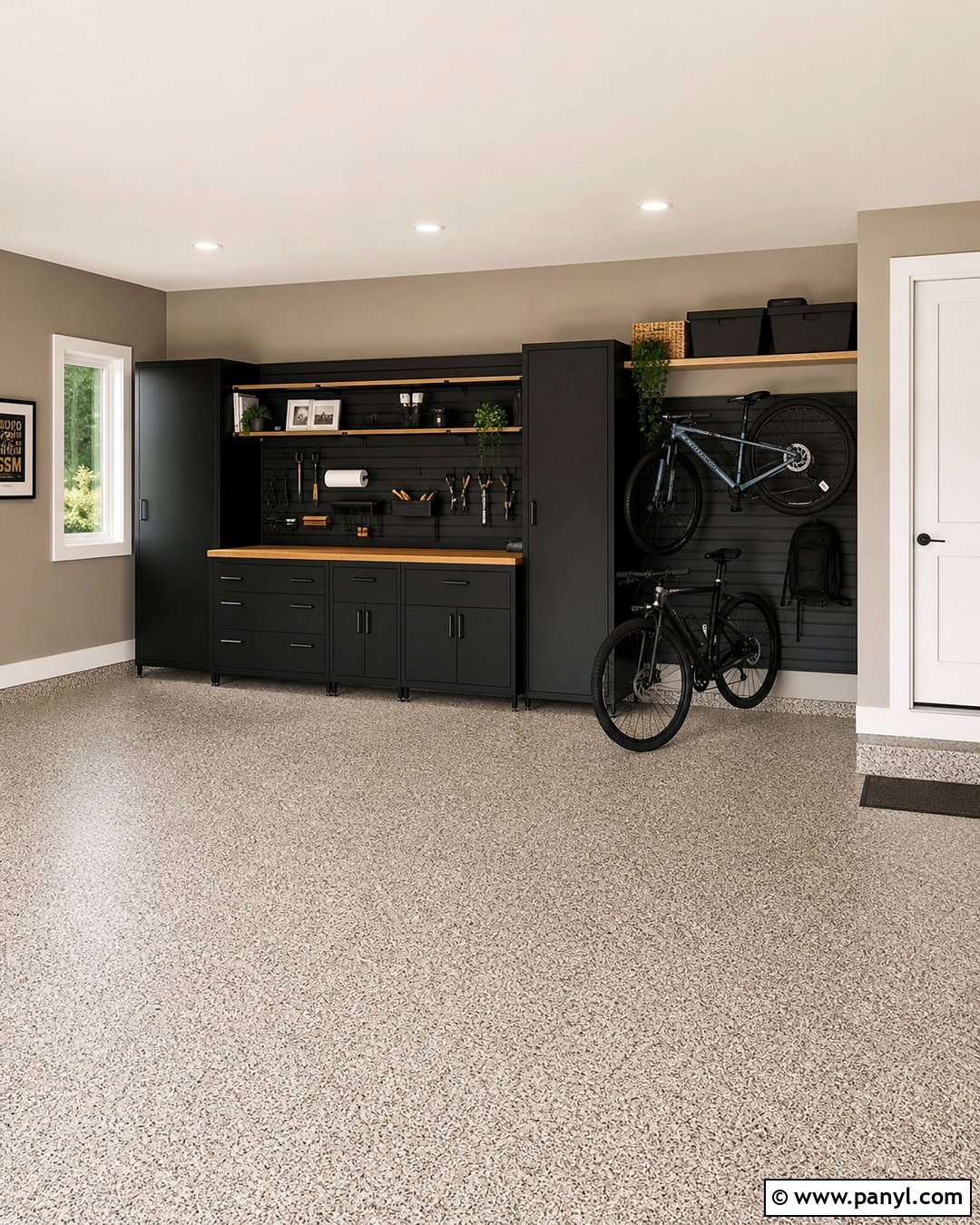
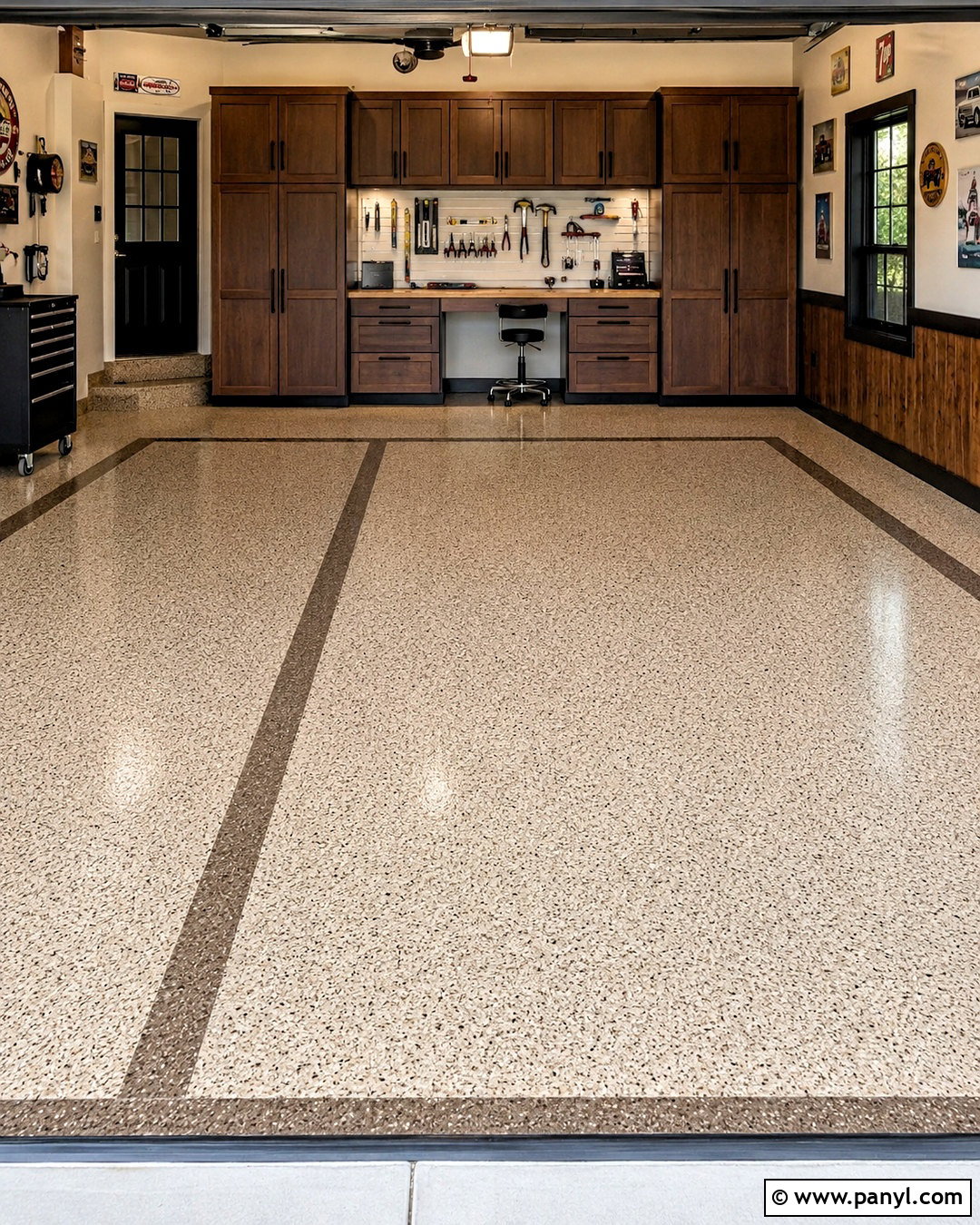
Warm greige combines the clean appearance of gray with the comfortable undertones of beige. Use it on every wall, paired with a soft white ceiling and warm taupe trim. Matte black cabinets, oak shelving, and a gray floor with tan flakes create a balanced mixture of industrial and natural finishes. Position tall cabinets near the interior door, place a wood-topped workbench along the longest wall, and reserve slatwall storage for bicycles and outdoor gear. Greige is particularly useful when the garage connects directly to beige, cream, or wood-toned interiors. The palette feels finished without calling too much attention to everyday storage. Choose a mid-light version to maintain brightness, and repeat the wall color on exposed utility enclosures for a more unified result.
8. Soft Beige Garage Walls
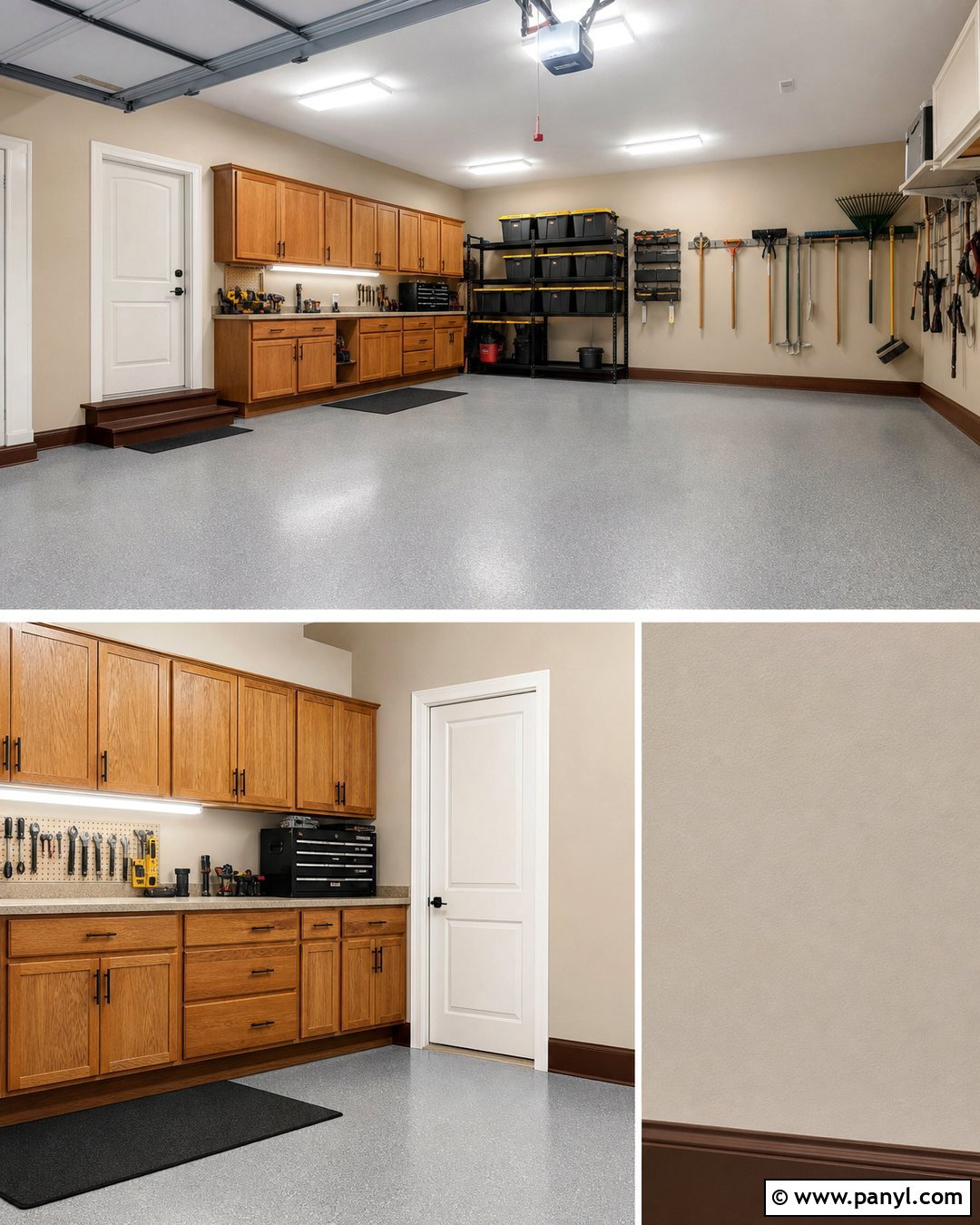
Soft beige garage walls establish a warm background for practical storage while feeling brighter than deeper tan. Pair the walls with creamy white trim, honey-oak cabinets, and a light gray epoxy floor to prevent the palette from becoming too yellow. Black metal shelving and charcoal storage bins introduce clean contrast. Arrange a long workbench beneath wall-mounted cabinets, with garden tools organized vertically near the garage door. This complete design suits traditional homes, family storage garages, and utility spaces where warmth is preferred over a sharp industrial look. Use neutral white lighting instead of strongly warm bulbs so the beige remains clear and modern. A medium-brown baseboard can protect the lower wall while visually connecting the cabinetry, flooring, and painted surfaces.
9. Sandstone Garage Walls
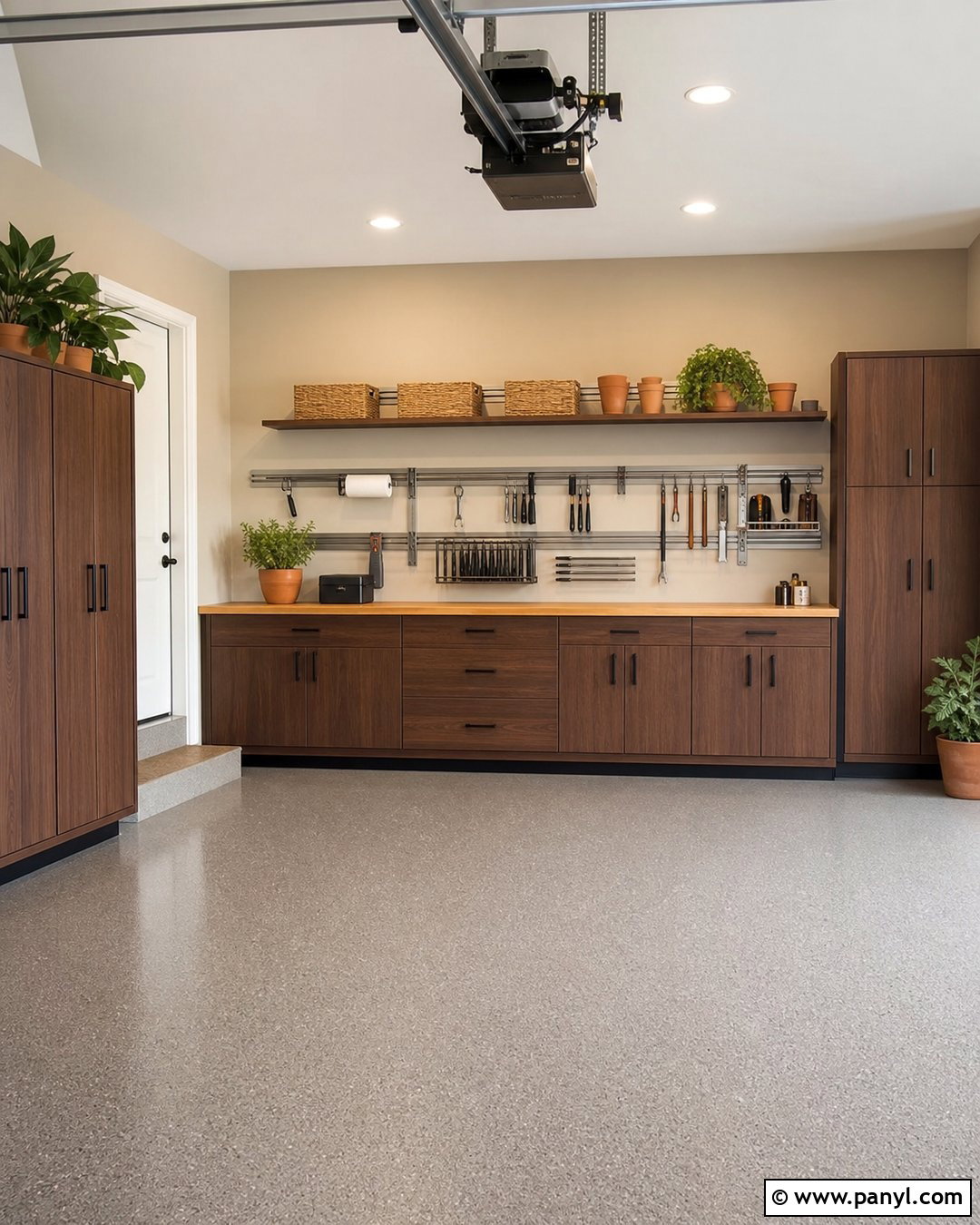
Sandstone walls create a practical desert-inspired garage with warm, grounded character. Combine the sandy beige paint with an off-white ceiling, walnut-colored cabinets, and a warm gray floor. Black hardware, steel tool rails, and woven storage baskets keep the design functional rather than rustic. Add a thick wood worktop and open shelving for frequently used supplies, then conceal bulky items inside full-height cabinetry. This scheme works especially well in garages with strong natural sunlight because the earthy wall color remains comfortable and balanced. Terracotta planters near a gardening station can reinforce the palette without overwhelming it. Use a slightly deeper tan along the bottom portion of high-traffic walls if you want additional visual protection around vehicles, work areas, and storage zones.
10. Taupe Garage Walls
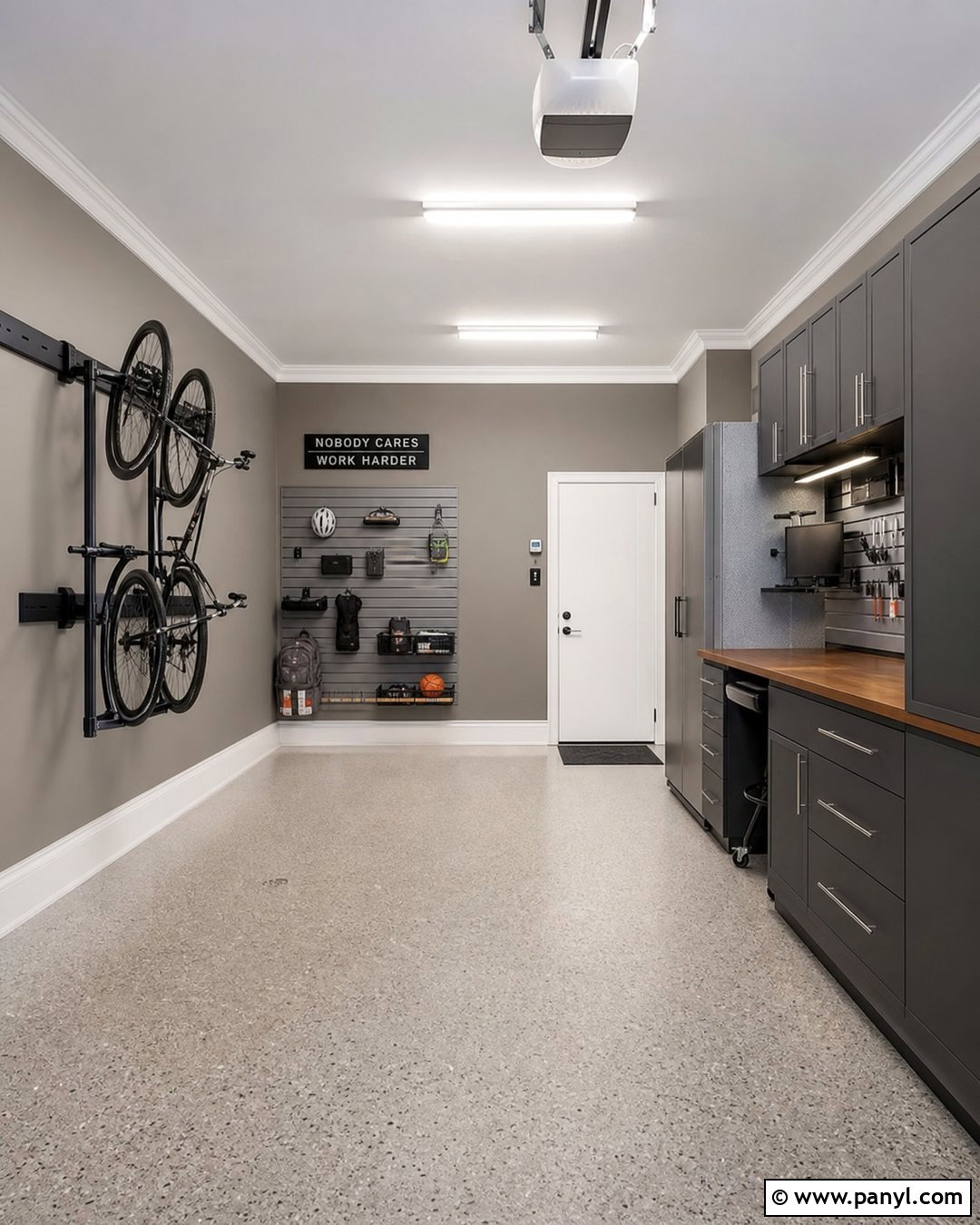
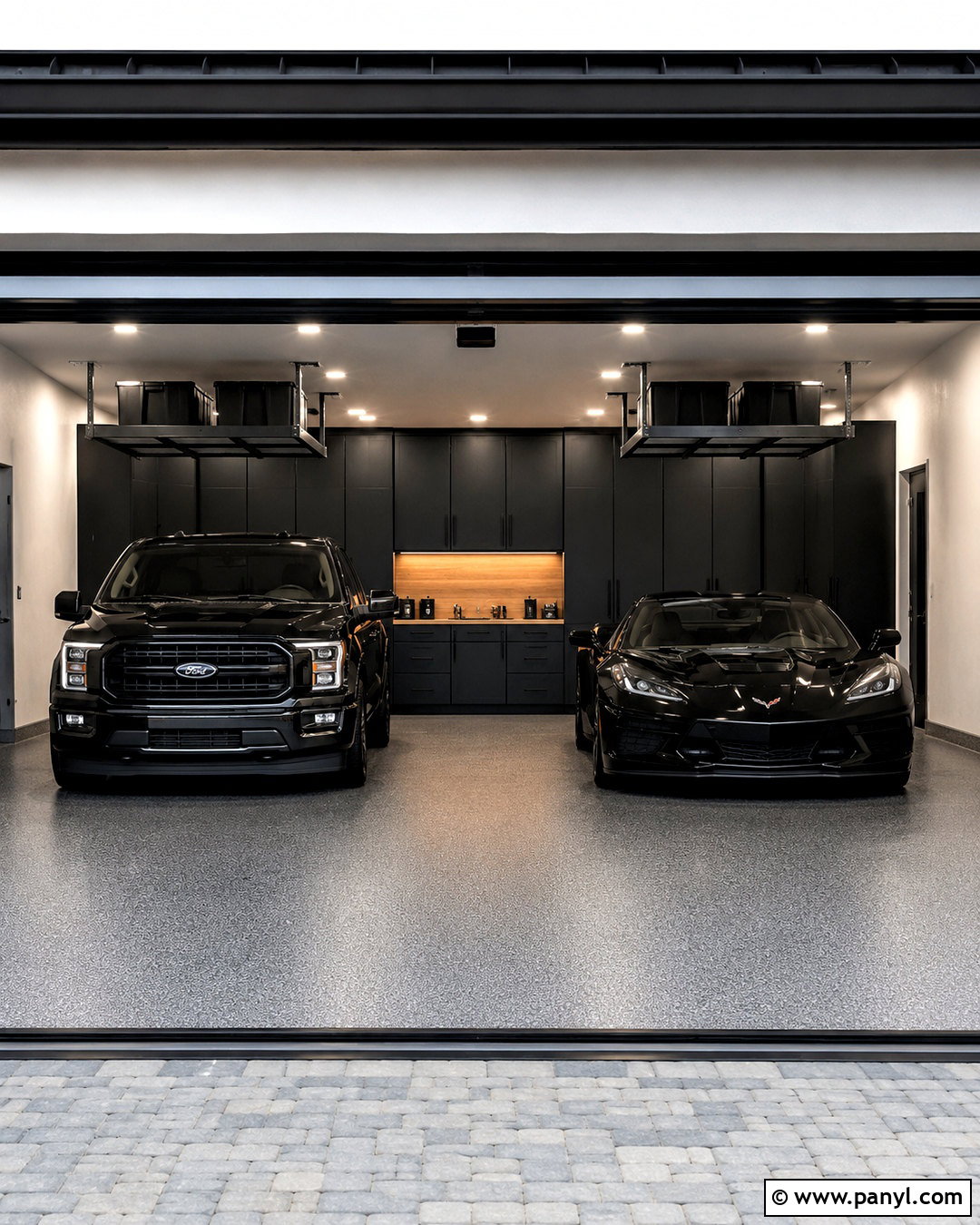
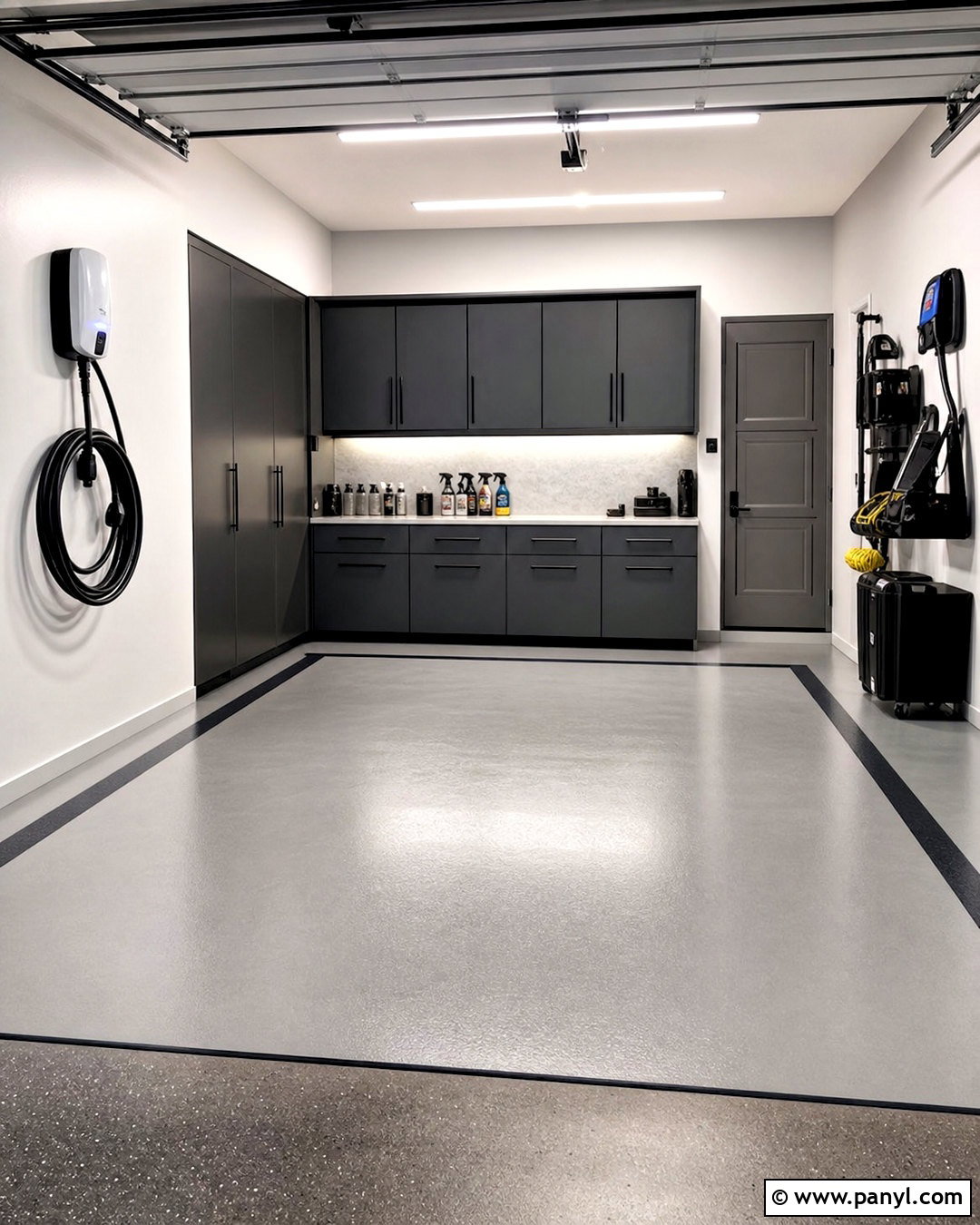
Taupe provides a sophisticated middle ground between gray and brown, making it easy to coordinate mixed materials. Paint the walls a medium-light taupe, leave the ceiling white, and select charcoal cabinets with brushed metal pulls. A light concrete-gray floor will brighten the lower half of the room, while a walnut workbench adds richness. Use black wall tracks for bicycles, garden tools, and folding chairs so storage becomes part of the design. This palette is ideal for a garage that doubles as a workshop or household project area. Repeat taupe on utility panels where appropriate to reduce visual interruptions. Because undertones vary widely, test the paint beside flooring and cabinetry, then check it under both daylight and installed ceiling lights before committing.
11. Mushroom Garage Walls
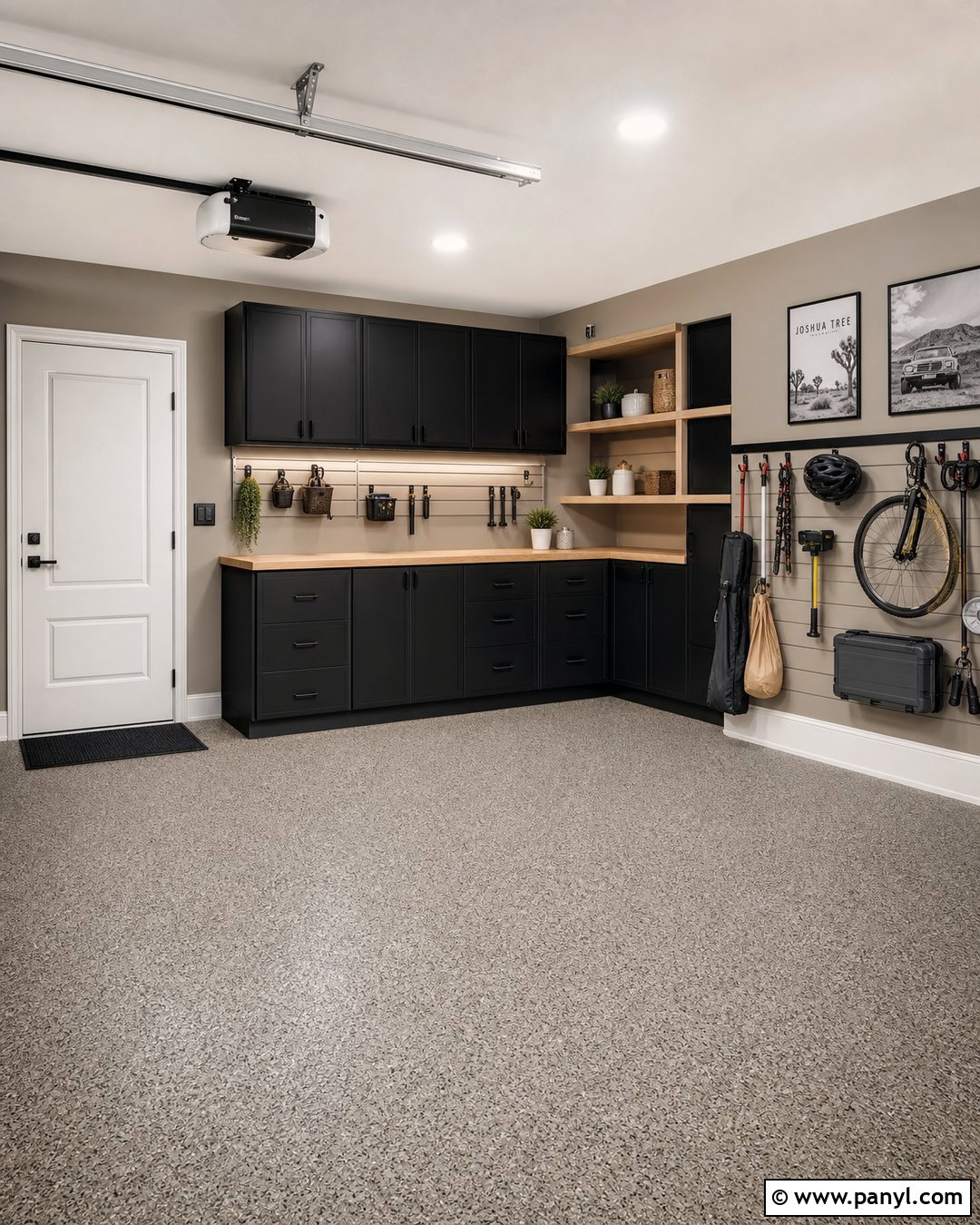
Mushroom paint gives garage walls an earthy, contemporary appearance without making the room feel dark. Its blend of beige, gray, and soft brown works well with cream trim, black cabinetry, and pale oak shelves. Finish the floor in warm gray with small tan flakes to connect the entire palette. A wide butcher-block workbench, closed overhead storage, and neatly arranged wall hooks create a refined working zone. Use matte black fixtures and bright ceiling lights for crisp contrast. This complete look complements transitional and organic modern interiors, making the garage feel connected to the rest of the home. Keep doors and the ceiling lighter than the walls, and use a washable finish so the muted color remains attractive around busy entrances, equipment, and parked vehicles.
12. Pale Sage Garage Walls
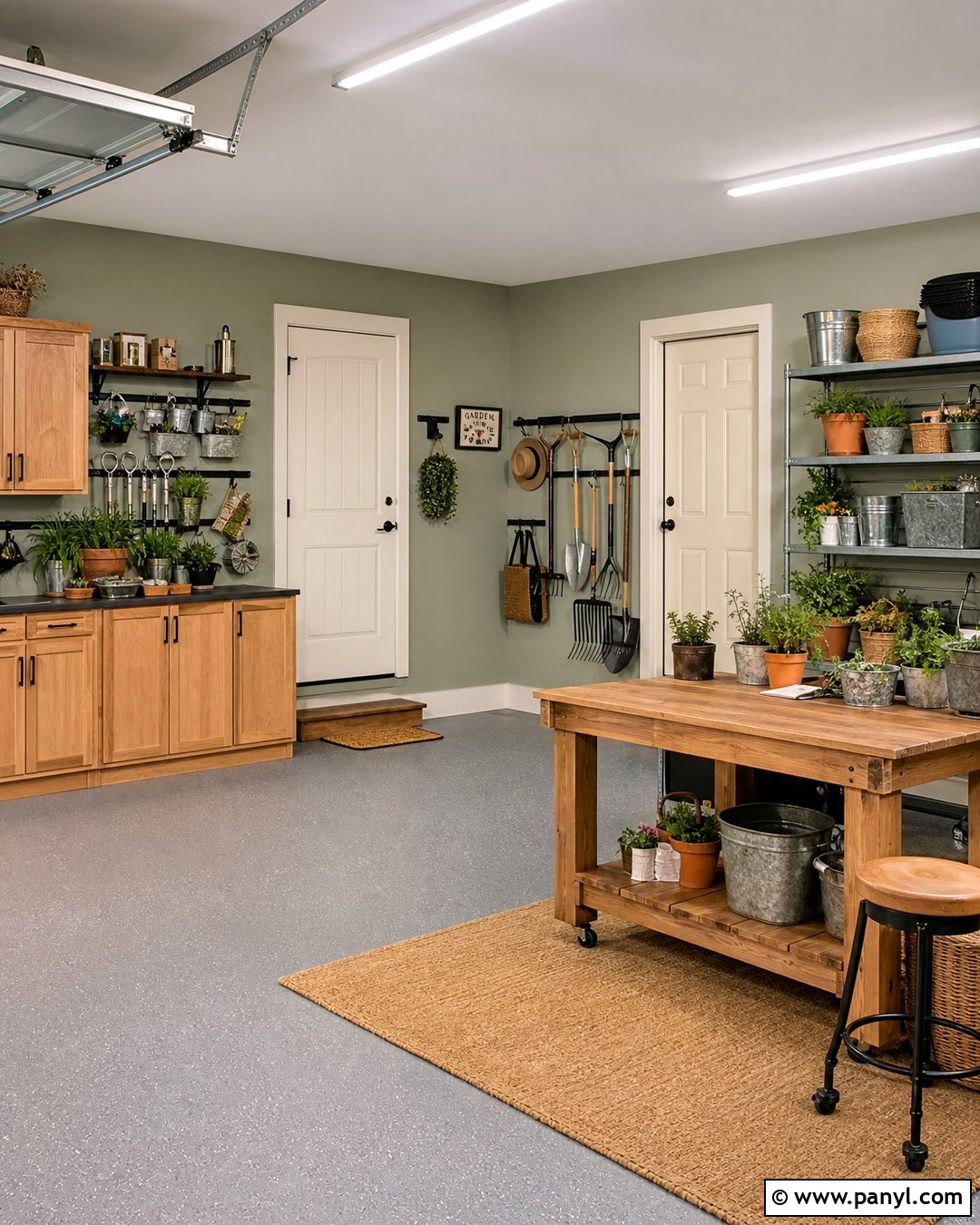
Pale sage introduces color while remaining quiet enough for a functional garage. Pair the green walls with warm white trim, a white ceiling, natural wood cabinets, and a medium-gray floor. Black storage rails and galvanized metal shelves provide an industrial counterpoint to the softer paint. Set up a gardening station with a wood workbench, wall-mounted tool hooks, and enclosed cabinets for soil, pots, and outdoor supplies. This coordinated look feels especially suitable for a garage opening toward a backyard or garden. Keep the sage muted rather than minty, and use bright neutral lighting to preserve its natural tone. Cream doors and subtle tan floor flecks will reinforce the warmth, creating an organized garage that feels fresh, practical, and visually connected to outdoor spaces.
13. Eucalyptus Green Garage Walls
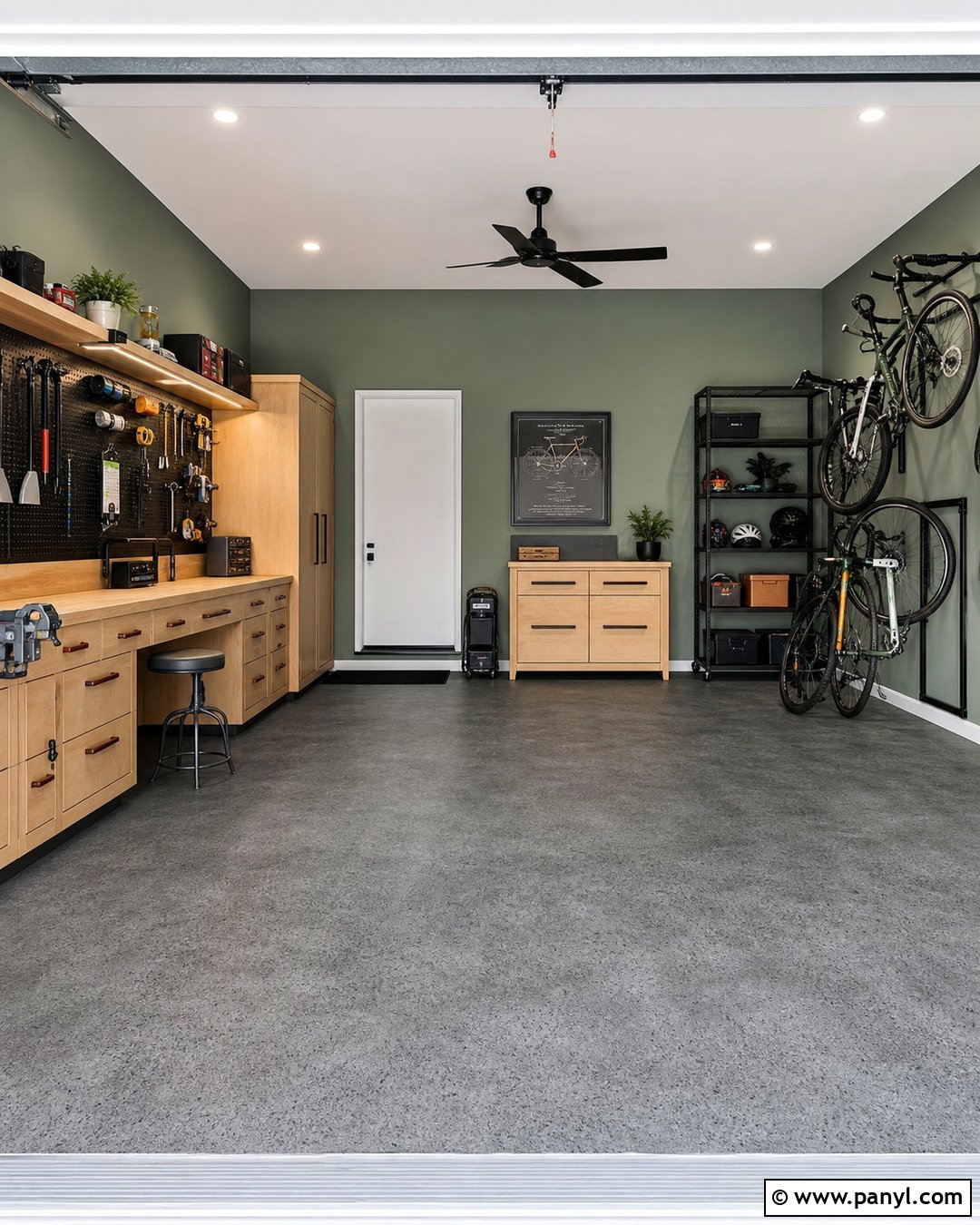
Eucalyptus green delivers more presence than pale sage while still creating a relaxed, nature-based palette. Apply it to the main walls and balance it with a bright white ceiling, light oak cabinetry, and a smooth charcoal floor. Black pegboard, simple steel shelves, and leather-colored storage handles introduce depth. Build a complete workshop on one wall with lower cabinets, a wood countertop, and focused task lighting. Reserve the opposite wall for bikes and outdoor equipment arranged on matching black racks. This color works best in a garage with strong overhead lighting or a window because its gray undertone can deepen in shadow. White trim around doors and windows keeps the edges sharp, while natural materials prevent the green from feeling overly decorative.
14. Olive Green Garage Walls
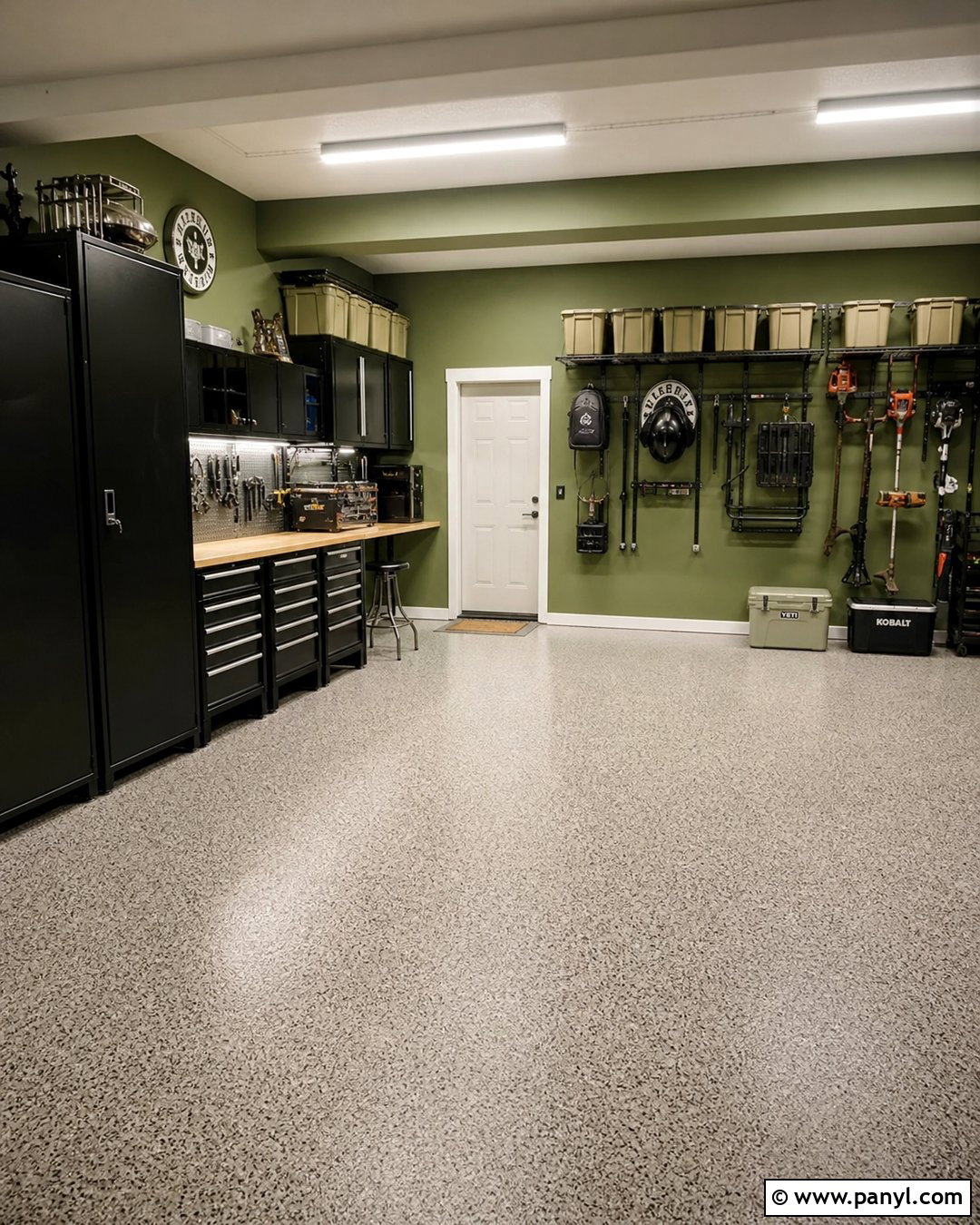
Olive green walls create a sturdy, utilitarian garage with warm military and workshop influences. Use a muted medium olive rather than a dark forest shade, then pair it with a cream ceiling, black cabinets, and a tan-speckled gray floor. A solid maple workbench and galvanized steel pegboard add practical contrast. Organize tools in black cases, use khaki-colored bins on open shelving, and keep door trim warm white for definition. This complete palette is well suited to woodworking, restoration projects, or outdoor equipment storage. Bright white linear ceiling fixtures are important because olive absorbs more light than pale neutrals. For balance, restrict the deeper green to the walls and use lighter finishes across the ceiling, work surfaces, and major storage pieces.
15. Forest Green Garage Accent Wall
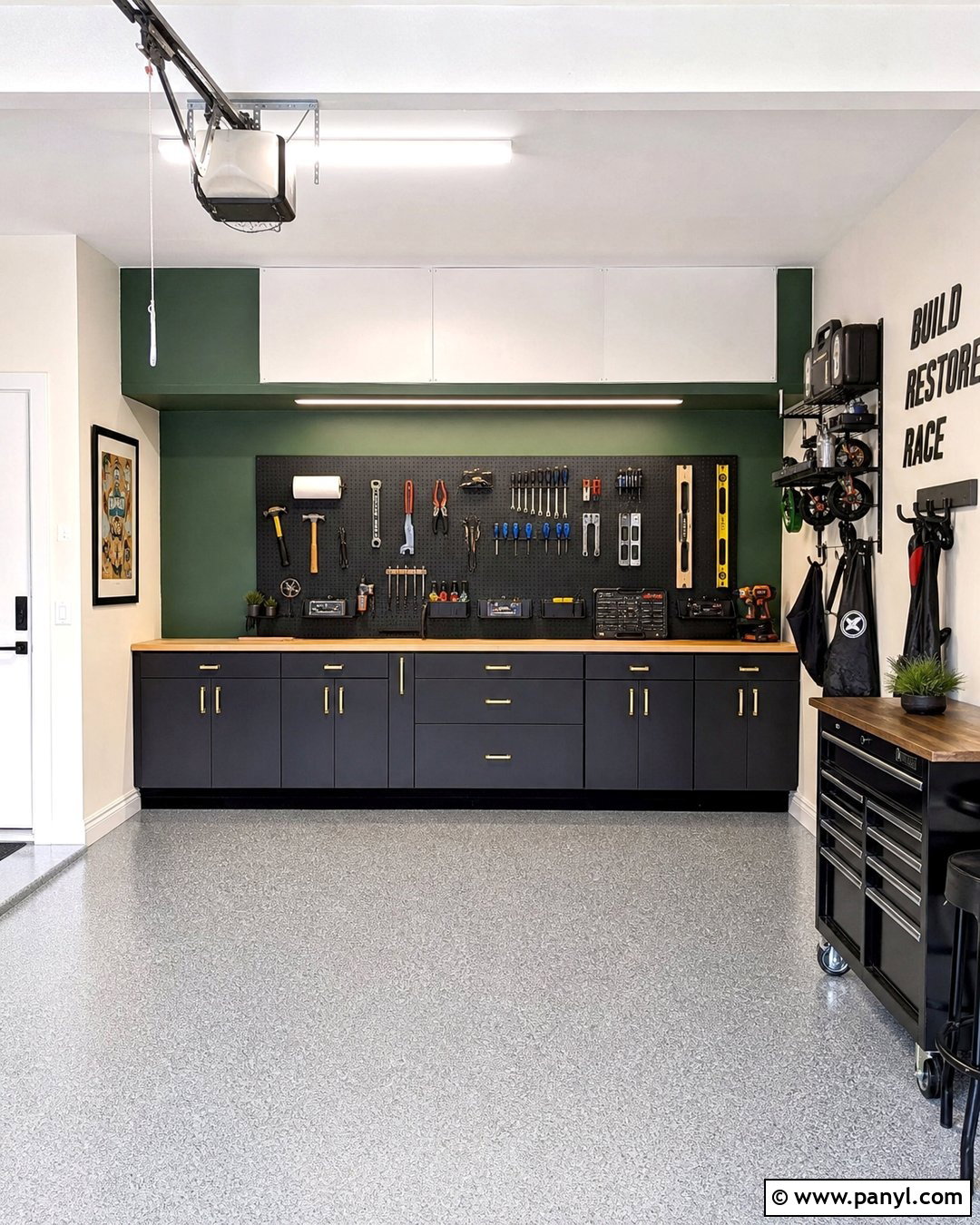
A forest green accent wall can give a spacious garage a distinctive focal point without reducing overall brightness. Paint the workbench wall deep green, while keeping the remaining walls warm white and the ceiling crisp white. Add matte black base cabinets, a natural oak countertop, and brass-toned utility hardware against the colored wall. A light gray epoxy floor and white overhead storage balance the dark accent. Use the green wall to organize hand tools on black pegboard so the feature remains functional. This full design suits a garage office, hobby area, or carefully maintained workshop. Repeat forest green in small cabinet labels or floor flecks, but avoid spreading it across every surface. Strong, even lighting will keep the contrast intentional and usable.
16. Pale Blue Garage Walls
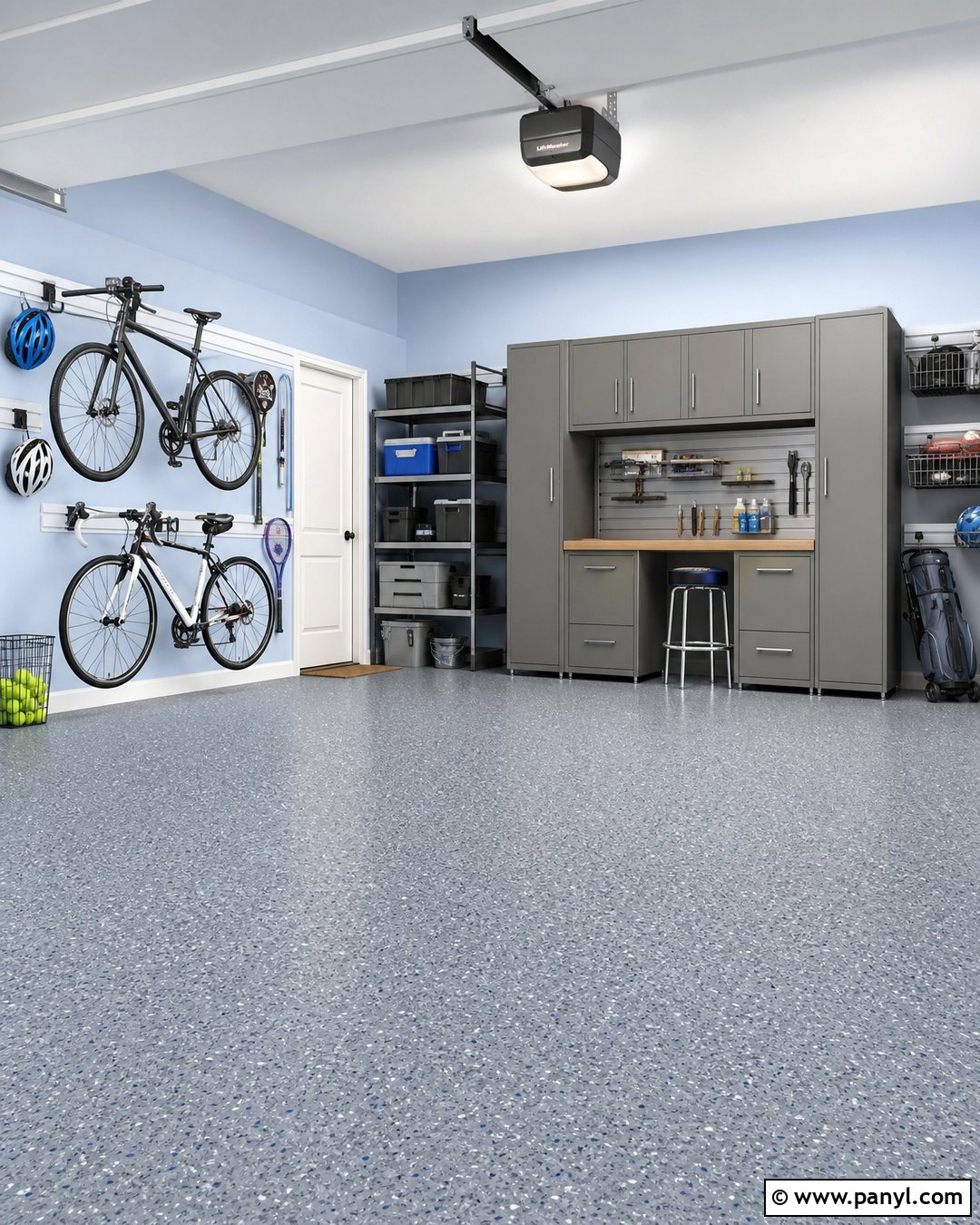
Pale blue walls can make a compact garage feel clean, relaxed, and visually open. Choose a soft blue with a slight gray undertone, then add white trim, a bright ceiling, and medium-gray cabinets. A cool gray floor with blue and white flakes supports the color without becoming overly themed. Install a light wood workbench and brushed metal shelving to warm the scheme. Sporting equipment, bicycles, and household supplies can be arranged on white wall tracks for a tidy finish. This complete palette is particularly effective in garages with natural daylight. Under artificial lighting, select bright neutral LEDs that do not push the blue toward green. Keep the largest storage units gray or white so the wall color remains the main decorative feature.
17. Blue Gray Garage Walls
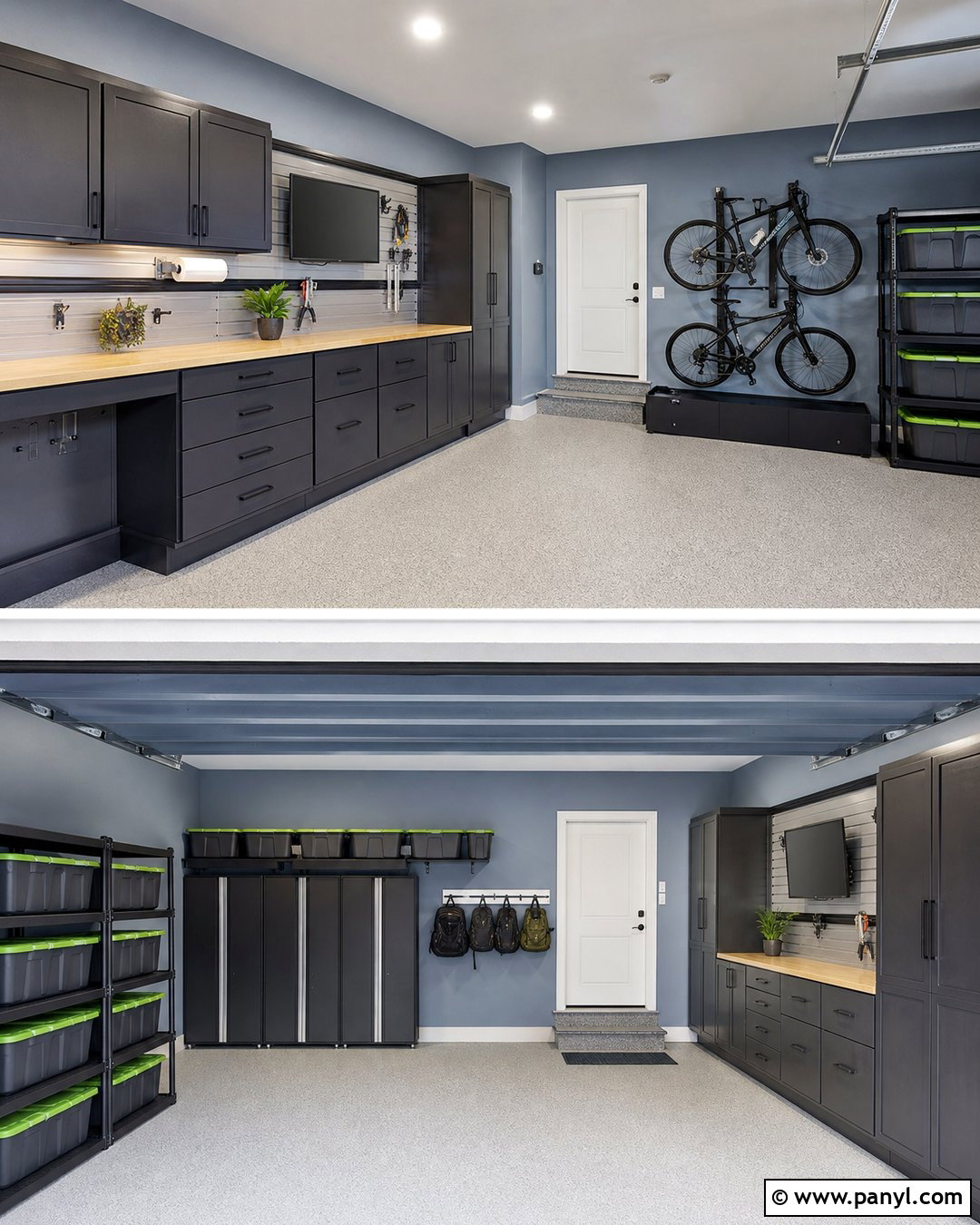
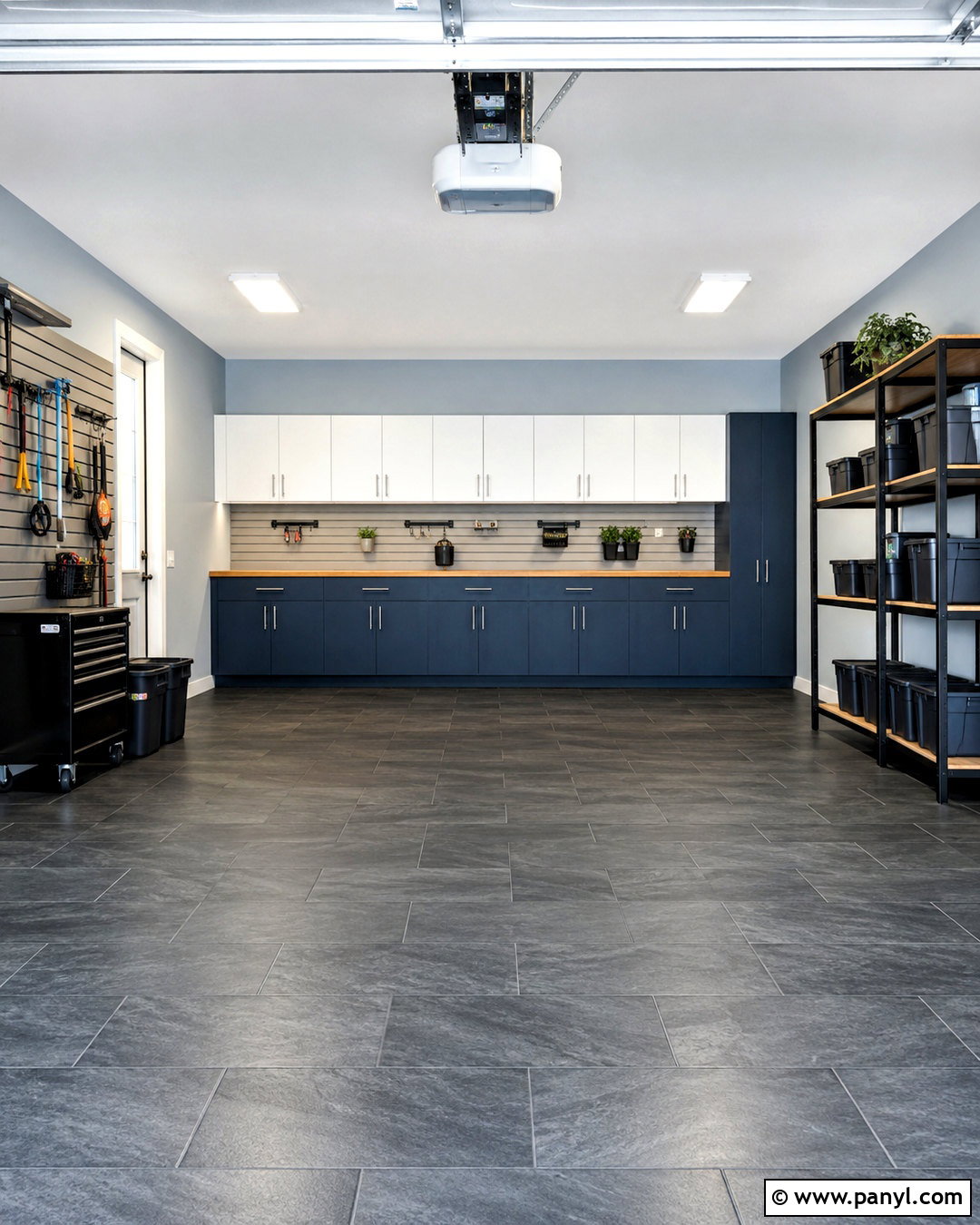
Blue-gray paint gives garage walls a crisp architectural quality while remaining easier to coordinate than a saturated blue. Cover the walls in a mid-light blue gray, then use white on the ceiling, doors, and window trim. Charcoal cabinets and a pale maple countertop create a substantial work area, while a light gray floor reflects overhead lighting. Add black bicycle racks, metal shelving, and matching bins for a consistent storage system. This color scheme suits a modern garage used for parking, repairs, and sports equipment. Introduce only a few warm materials to maintain the clean appearance. Before painting, compare the chosen blue gray with the garage floor because some combinations can appear overly cool. Balanced white lighting will help the color stay clear and sophisticated.
18. Steel Blue Garage Walls
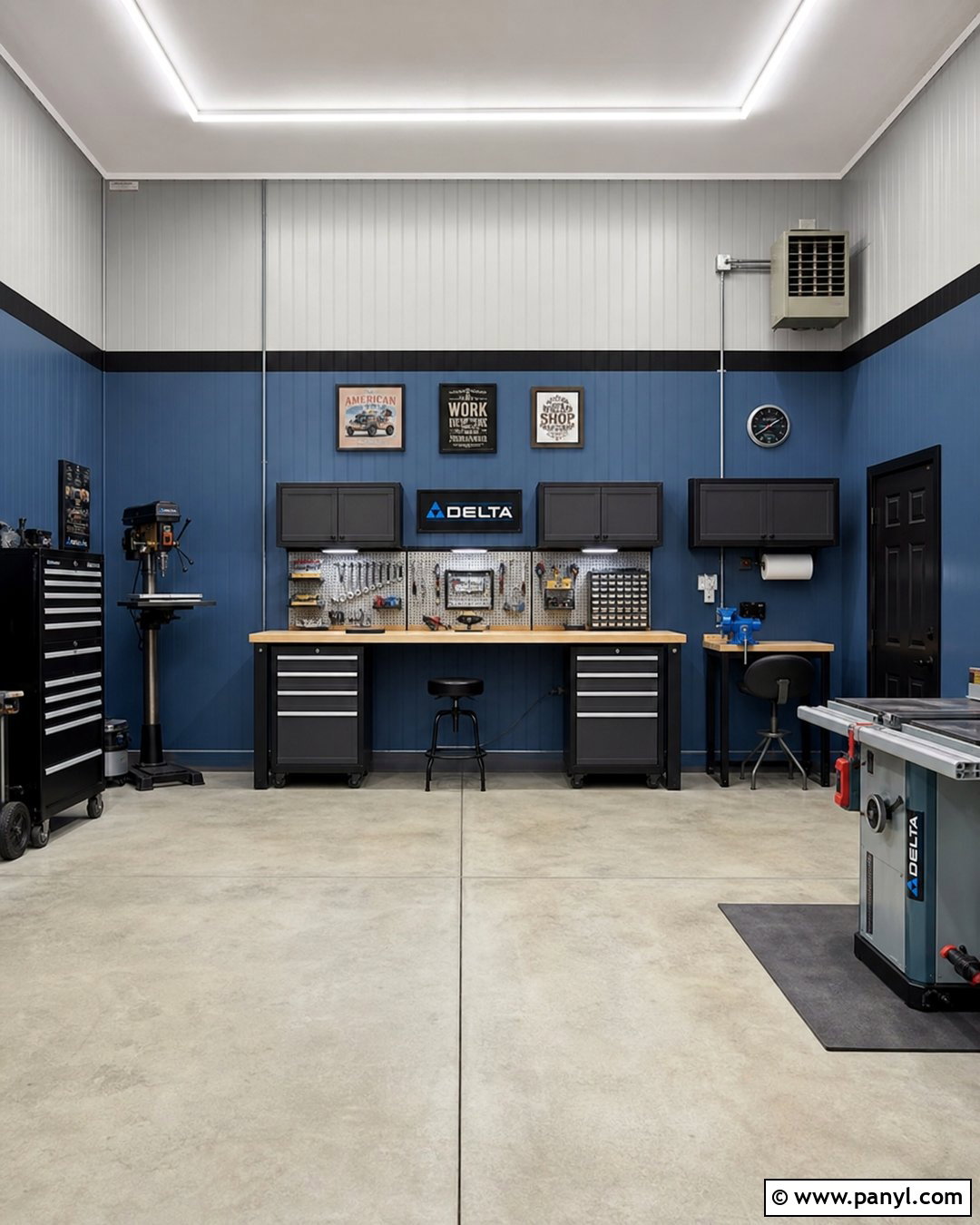
Steel blue walls establish a confident workshop atmosphere that coordinates naturally with machinery and metal storage. Use the shade on the lower two-thirds of the walls, with light gray above and bright white across the ceiling. A slim black dividing rail creates a clean horizontal transition. Install dark gray cabinets, a thick wood workbench, and silver pegboard along the main project wall. Finish the floor in pale concrete gray so the deeper wall color does not overwhelm the space. This complete look works best in a two-car garage with generous overhead lighting. Repeat steel blue on selected cabinet doors or storage labels for continuity. Keeping the upper walls light maintains visibility, while the darker lower area grounds equipment and visually reduces everyday scuffs.
19. Dusty Blue Garage Walls
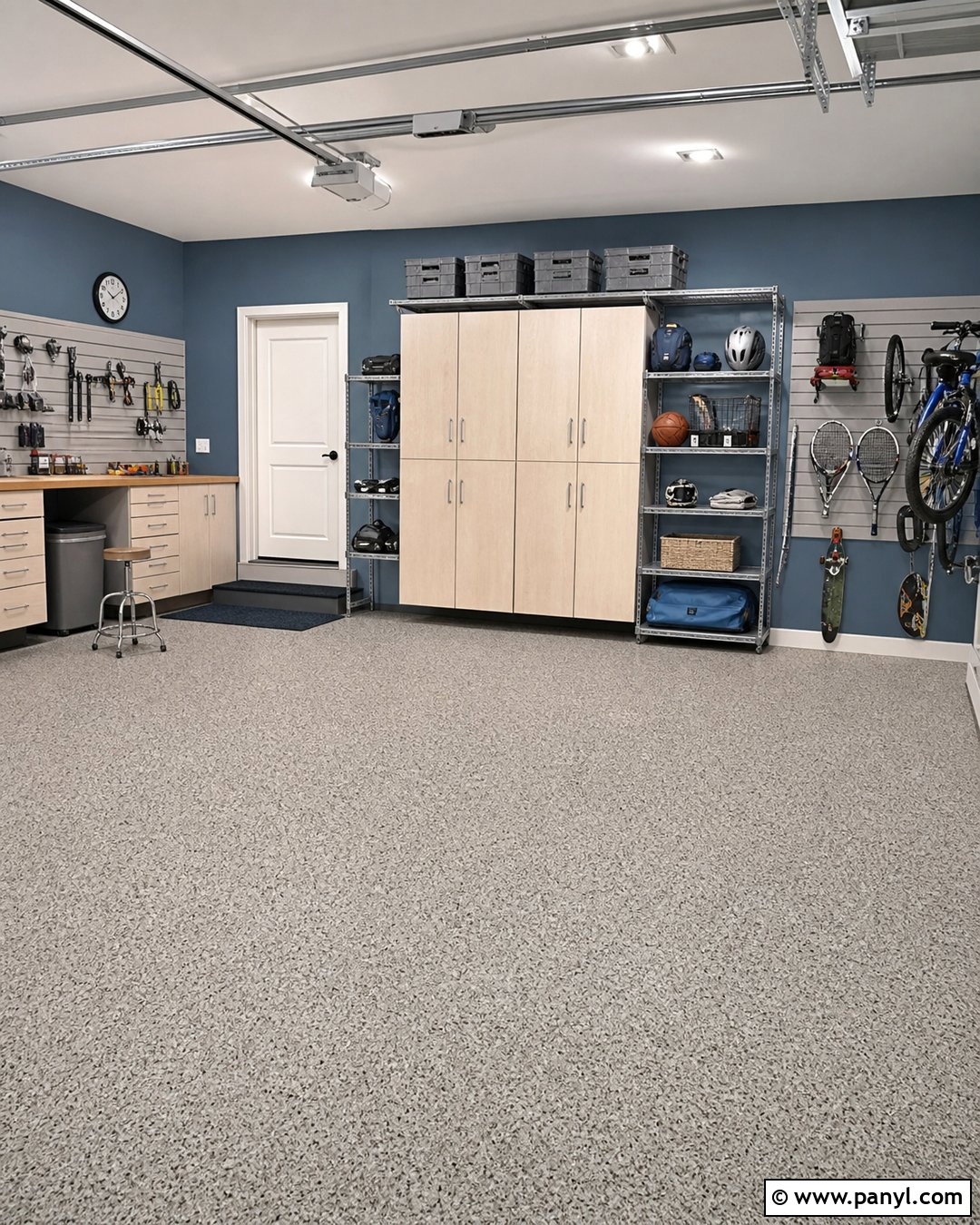
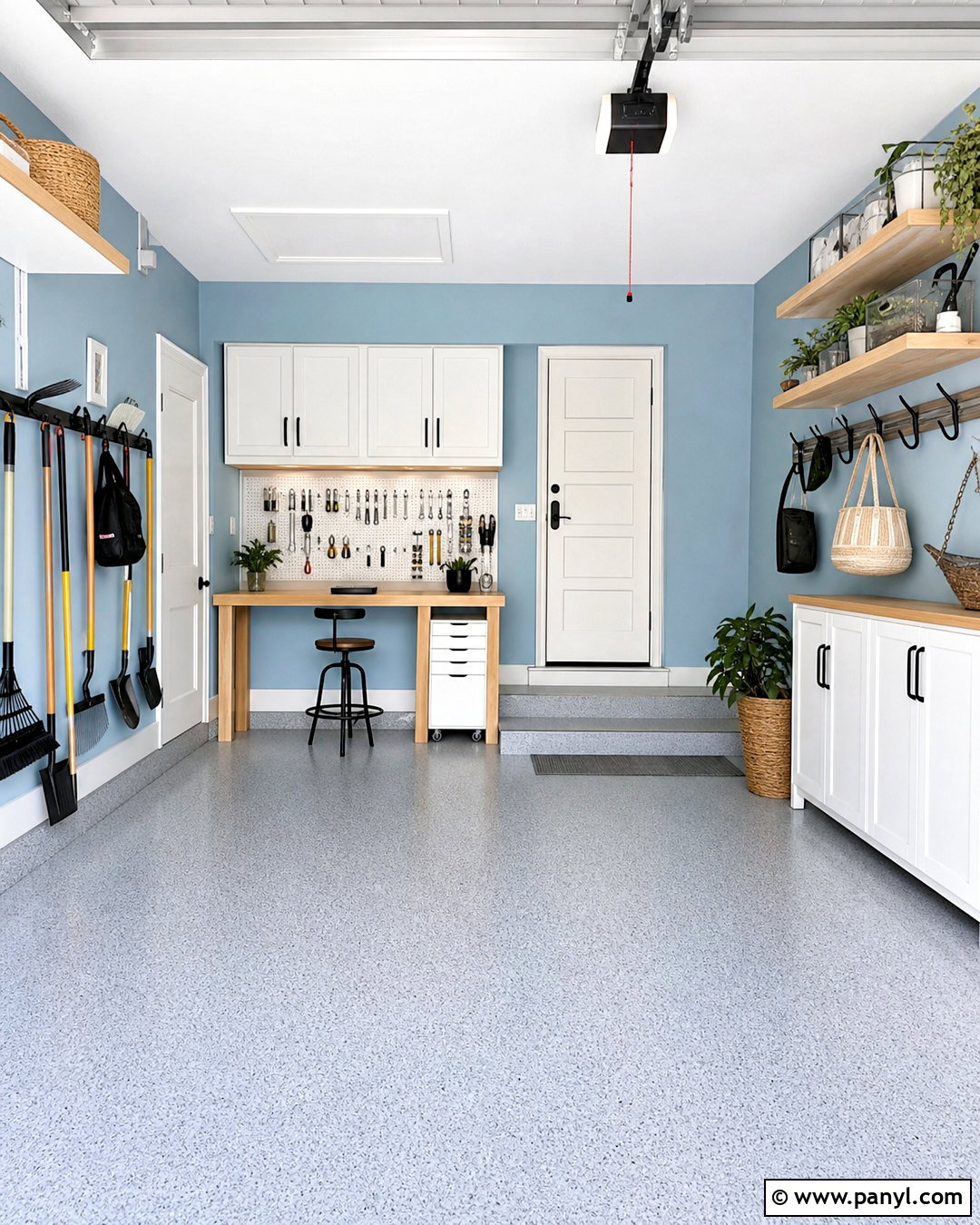
Dusty blue creates a softer garage interior than steel or navy while still providing visible color. Pair the muted blue walls with warm white trim, birch cabinetry, and a medium-gray floor containing subtle cream flakes. Black wall hooks, galvanized shelves, and brushed nickel cabinet pulls add definition. Create a multipurpose layout with enclosed storage near the house entrance, a workbench under the window, and sports equipment arranged along the far wall. This palette feels especially comfortable when the garage includes a mudroom or laundry zone. Use woven baskets and natural wood accessories sparingly to warm the blue. A white ceiling and bright lighting prevent the shade from becoming dull, while a satin wall finish supports a neat, practical appearance throughout the finished space.
20. Navy Garage Accent Wall
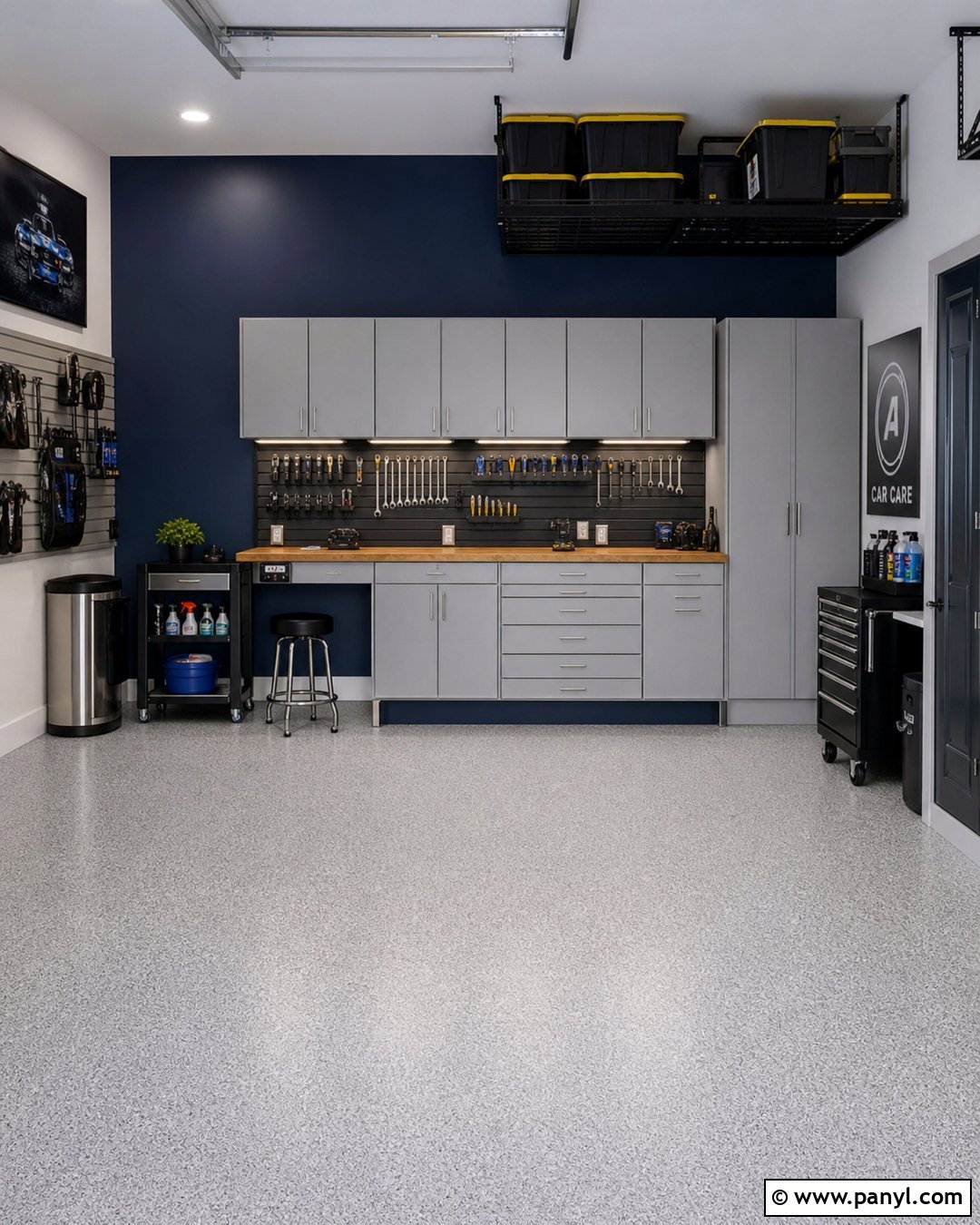
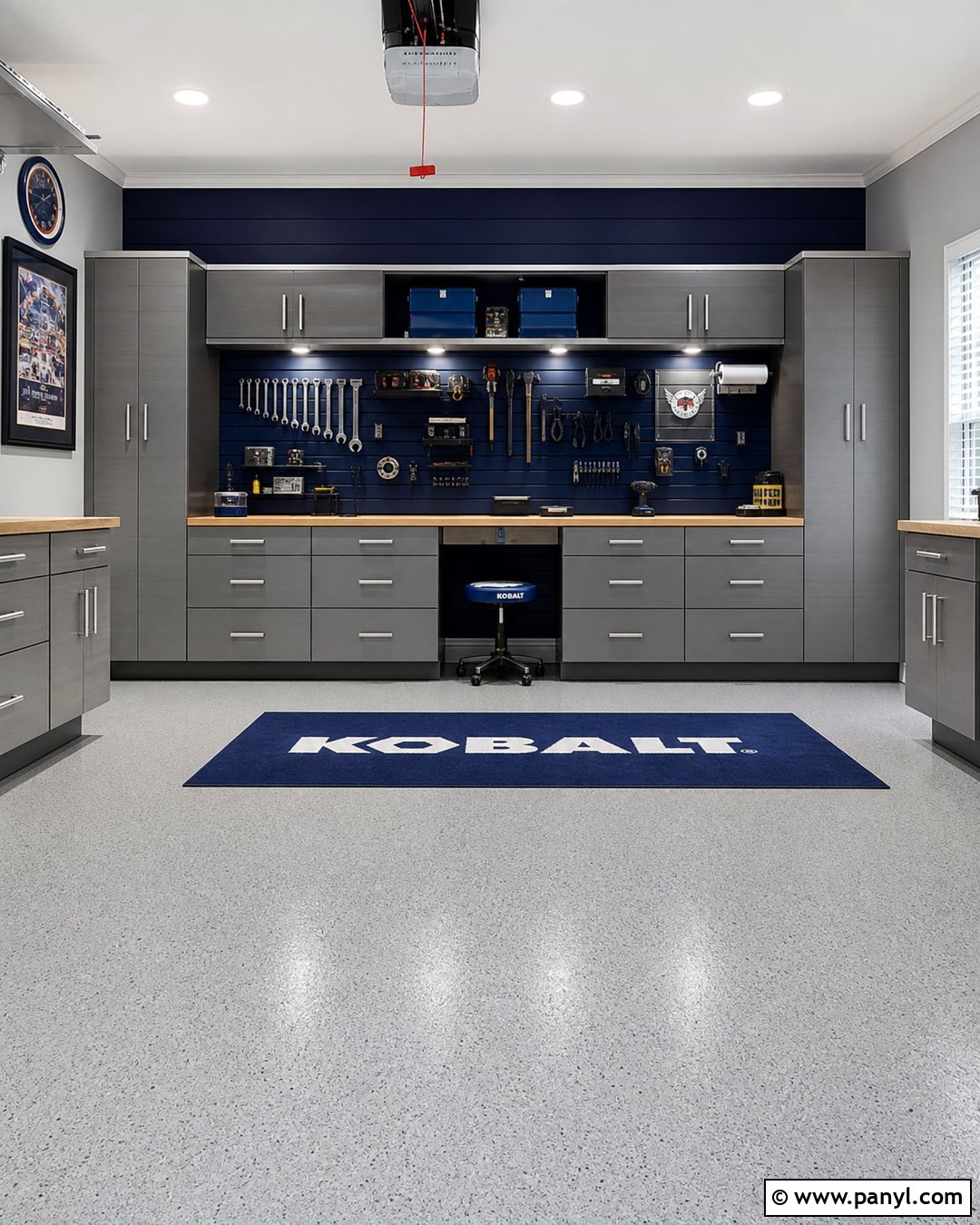
Navy creates a dramatic showroom effect when used strategically rather than across a poorly lit garage. Place the deep blue on the back wall, with soft white paint covering the side walls and ceiling. Install white or light gray cabinets against the navy surface, topped with a warm wood workbench. Black tool panels and brushed steel fixtures add sharp detailing, while a pale gray epoxy floor maintains brightness. Use the accent wall to frame a neatly organized car-care station, work zone, or display shelving. This complete palette is particularly effective in a wide two-car garage. Repeat navy through narrow cabinet panels or floor flecks for cohesion. Strong overhead fixtures and under-cabinet task lighting will keep the dark wall useful, dimensional, and visually balanced.
21. Charcoal Garage Walls
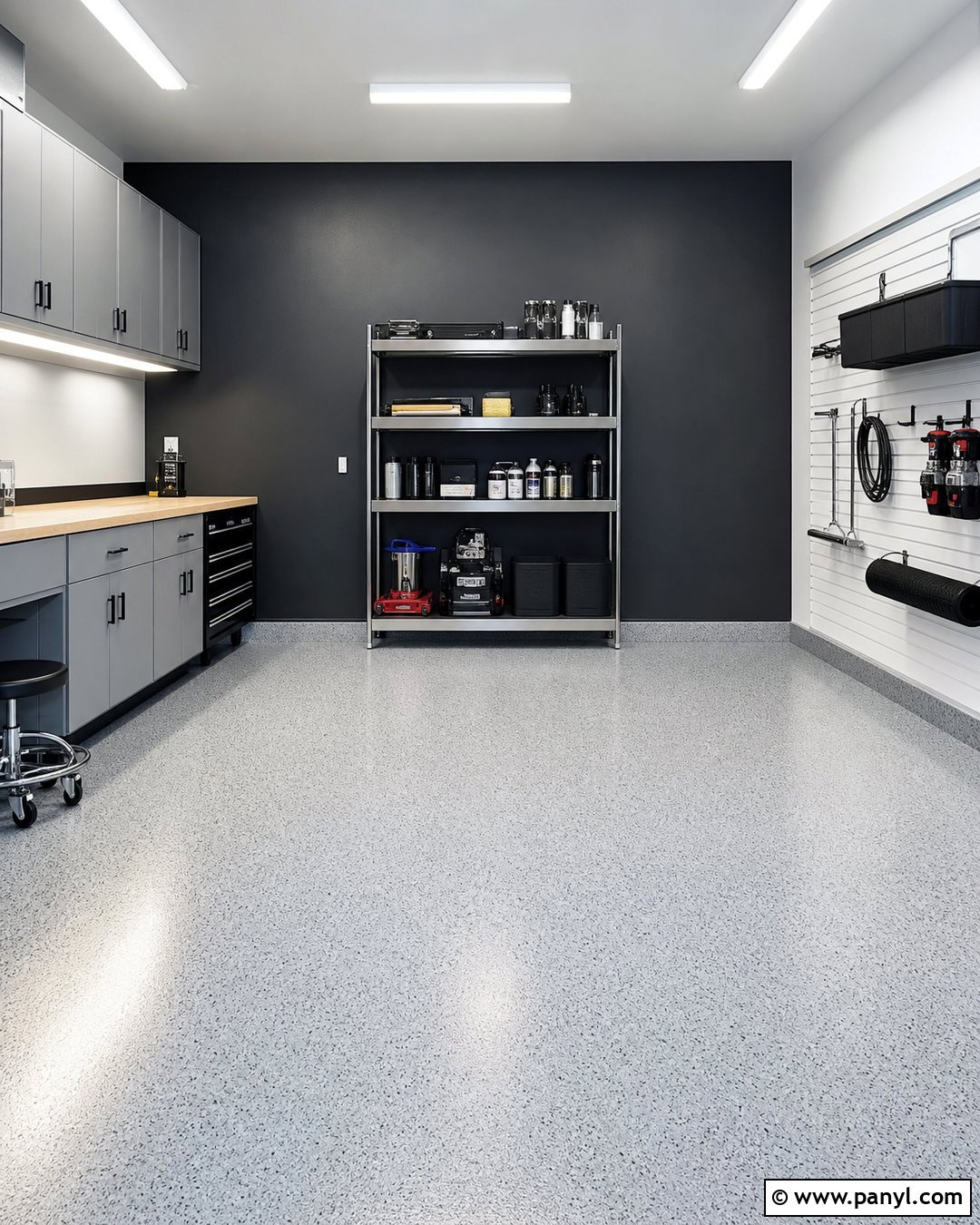
Charcoal walls produce a bold industrial garage, but the surrounding surfaces must provide enough contrast. Use charcoal on one long wall and the lower half of the remaining walls. Paint the upper walls and ceiling bright white, separated by a narrow black rail. Choose light gray cabinets, stainless steel shelving, and a pale floor with dark flakes. A maple worktop adds warmth to the tool area, while white slatwall keeps stored items easy to locate. This finished scheme works well for car enthusiasts and active workshops where a darker backdrop feels appropriate. Avoid painting every plane charcoal unless the garage receives abundant daylight. Multiple bright ceiling fixtures, white doors, and lighter storage units will preserve visibility while allowing the rich wall color to remain the defining element.
22. Slate Gray Garage Walls
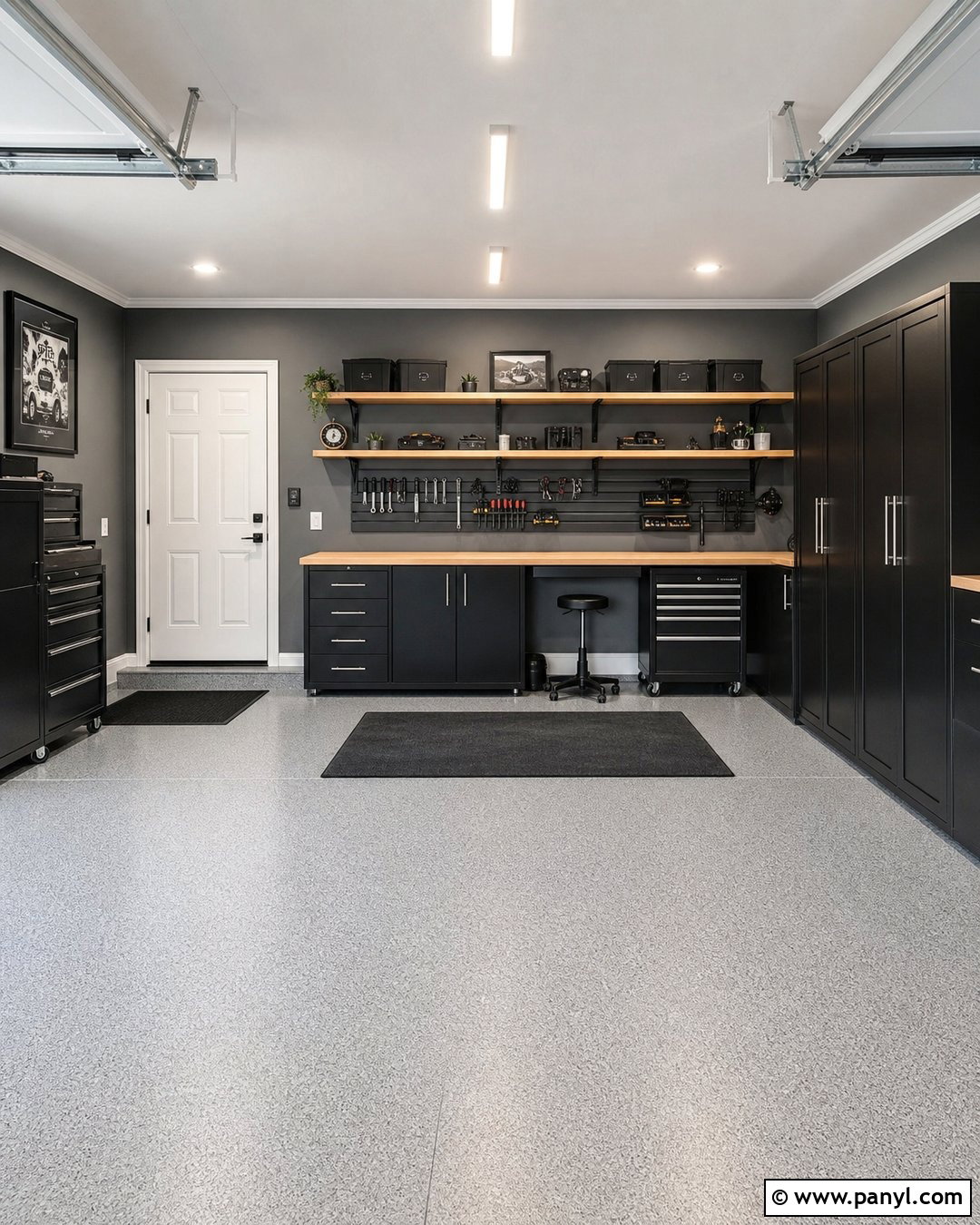
Slate gray offers greater depth than standard gray while retaining a versatile, tailored appearance. Apply it to the main walls, then use soft white for the ceiling and trim. Pair the paint with matte black cabinets, stainless steel hardware, and a light gray polyaspartic-style floor. A natural wood workbench and open oak shelves introduce warmth along the project wall. Keep bulky storage inside tall cabinets, and mount smaller tools on a black rail system for an orderly layout. This color works best in medium or large garages with bright overhead lighting. For a smaller space, paint only the lower half slate and use pale gray above. The completed palette feels substantial and modern without relying on strong accent colors that could compete with vehicles or equipment.
23. Soft Black Garage Accent Wall
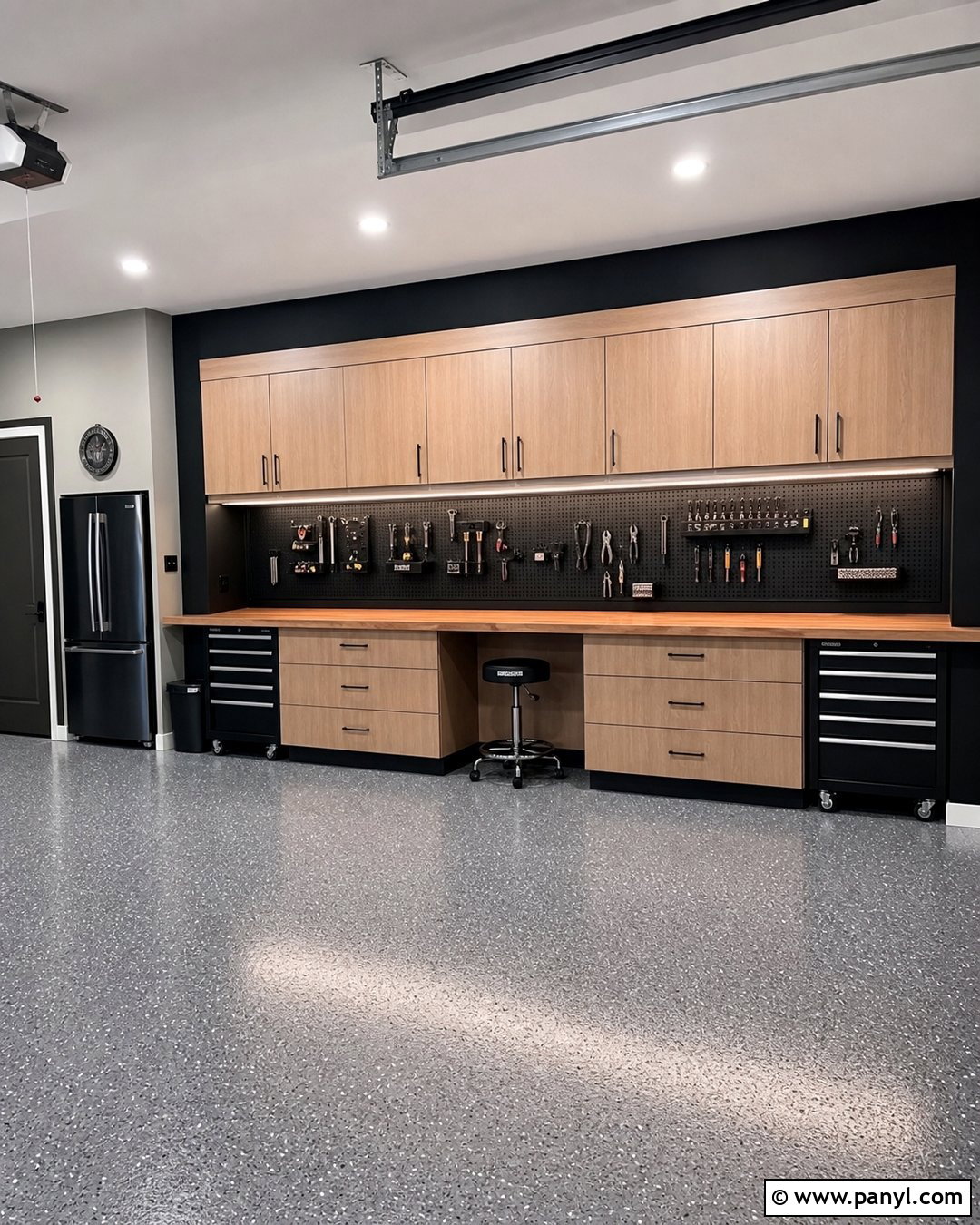
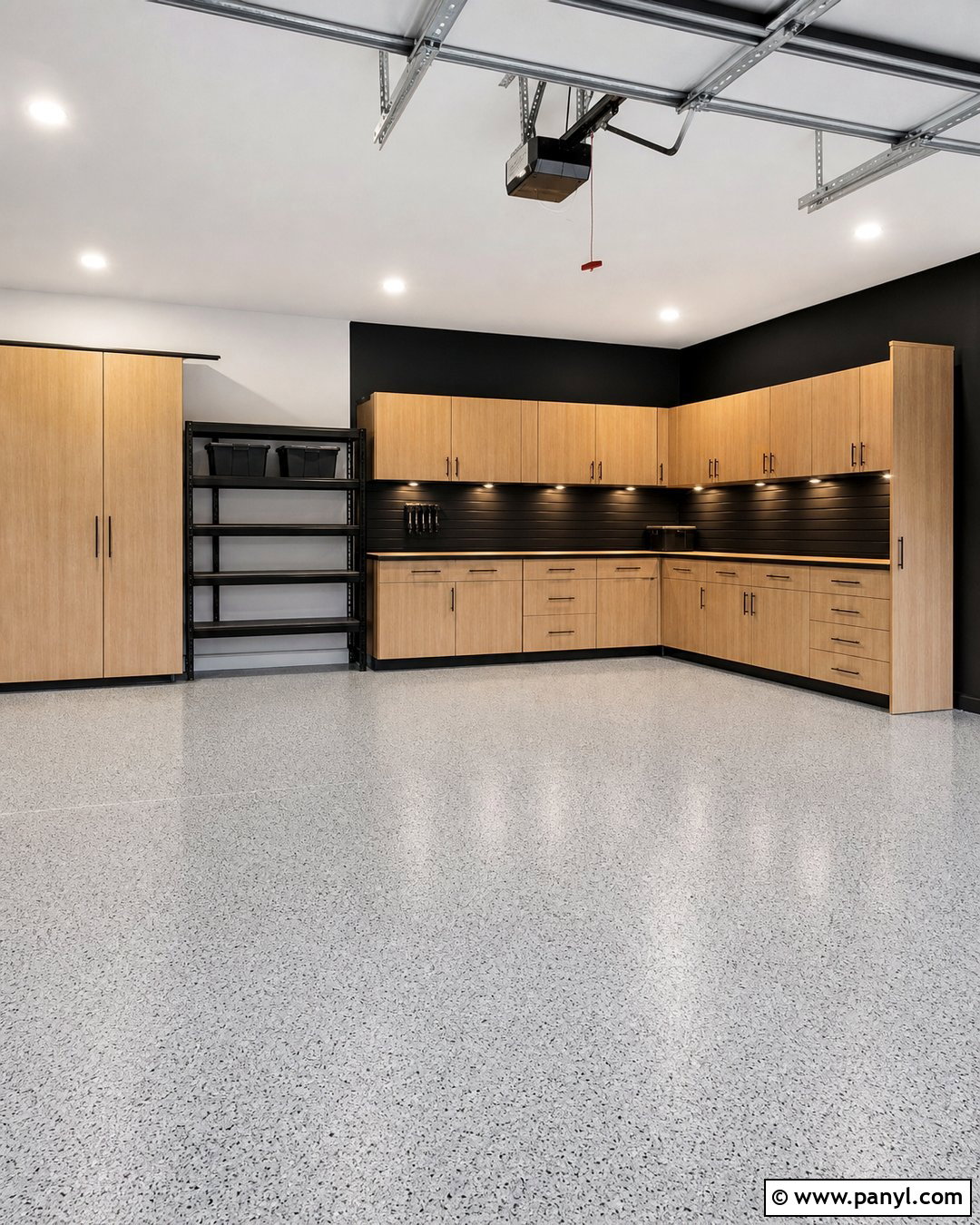
Soft black can transform one garage wall into a clean focal point without creating the harshness of pure jet black. Use it behind the primary workbench, then paint the other walls light greige and the ceiling bright white. Add pale wood cabinets, a matching butcher-block counter, and black perforated tool panels. A medium-gray floor with white flecks will connect the dark and light surfaces. Install under-cabinet task lights so tools remain visible against the black background. This complete design suits a modern workshop, garage gym, or display area. Repeat soft black on door frames, shelf brackets, and baseboards rather than on large additional surfaces. The controlled contrast creates drama while maintaining enough reflected light for repairs, cleaning, storage, and everyday movement.
24. White And Gray Garage Walls
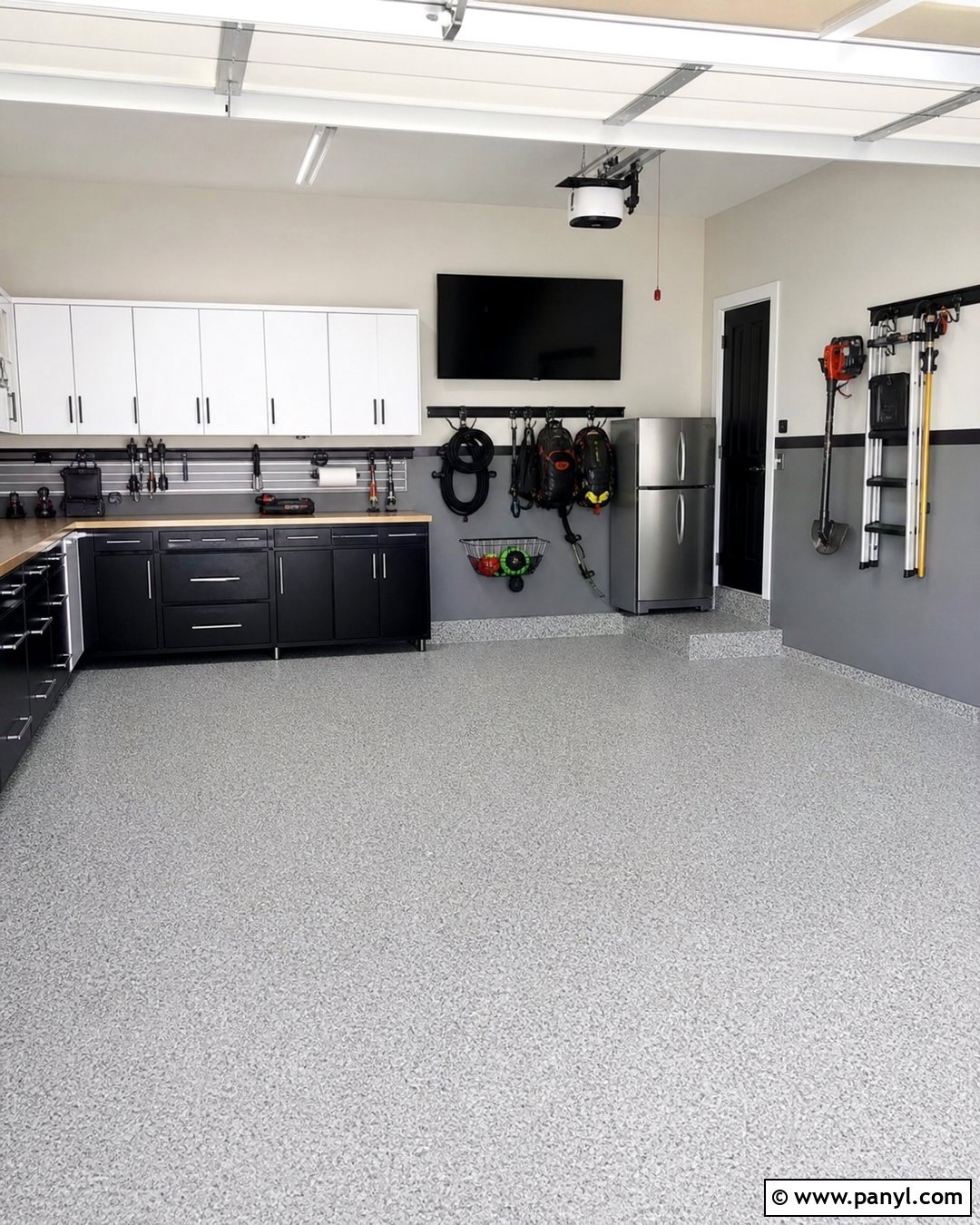
A white-and-gray wall combination creates clear visual zones without introducing a strong decorative color. Paint the upper two-thirds warm white and the lower third medium gray, adding a narrow charcoal divider between them. Continue bright white across the ceiling and use gray on interior doors for a connected look. Install black lower cabinets, white upper cabinets, and a maple workbench along the main wall. A light gray floor with charcoal flakes completes the layered neutral palette. This design is practical for an active family garage because the darker lower area visually anchors bikes, carts, and equipment. Keep storage rails aligned with the dividing stripe for a structured appearance. Broad ceiling lights will make the white upper walls feel bright while revealing the depth of the gray.
25. Light Gray And Charcoal Garage Walls
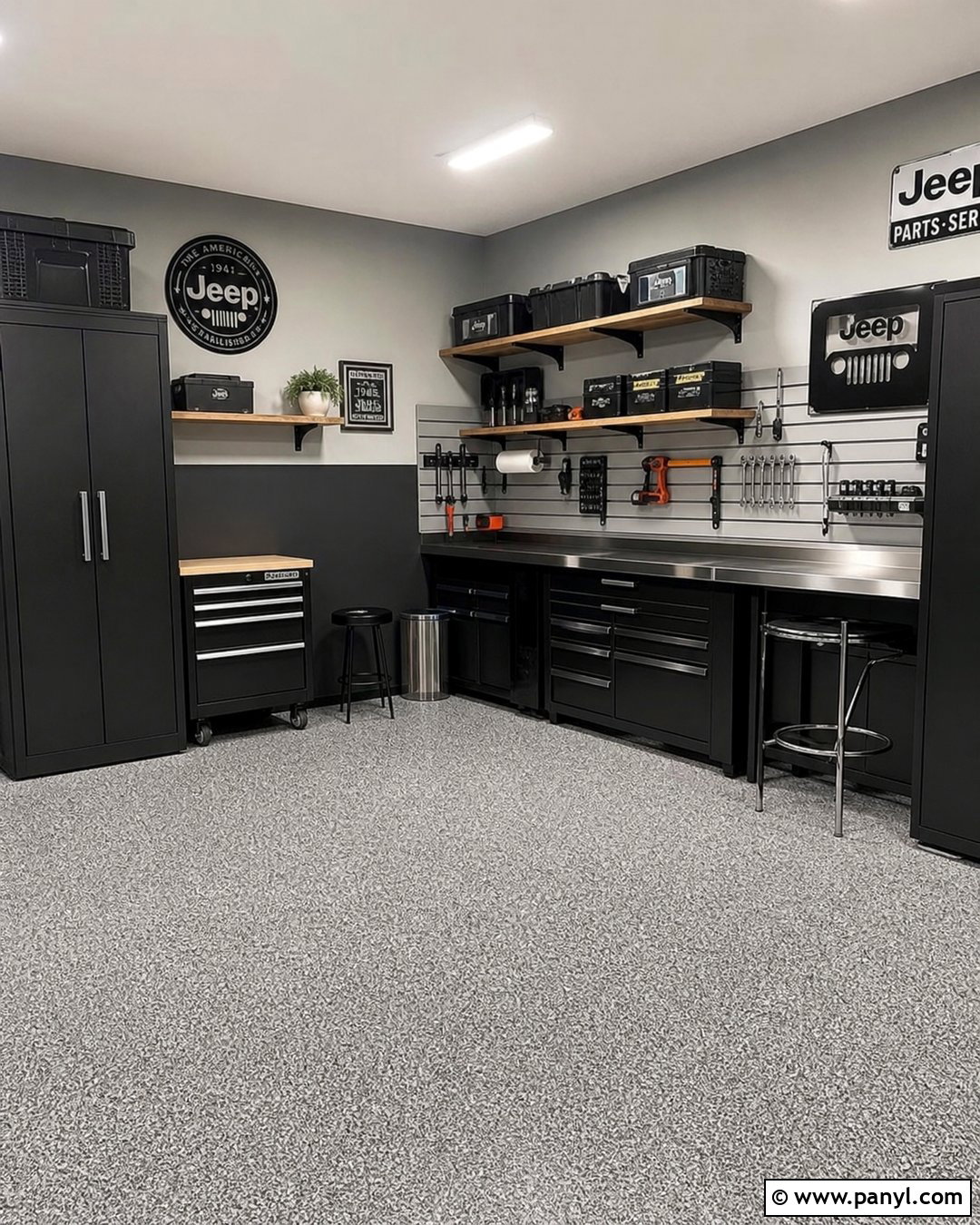
Pairing light gray with charcoal gives a garage an organized, high-contrast finish. Use light gray on the upper walls and charcoal below, placing the transition around workbench height. Add a slim red, blue, or black stripe if you want a sportier detail, or retain a fully neutral look with a metal divider. Paint the ceiling white and coordinate the floor with medium-gray flakes. Black cabinets, stainless steel counters, and light wood shelves create a balanced workshop area. Arrange tools against the charcoal portion so the darker background frames them clearly. This complete layout works for parking, repairs, and household storage. The light upper section maintains spaciousness, while the deep lower color grounds heavy equipment and makes the wall arrangement feel deliberate.
26. Greige And White Garage Walls
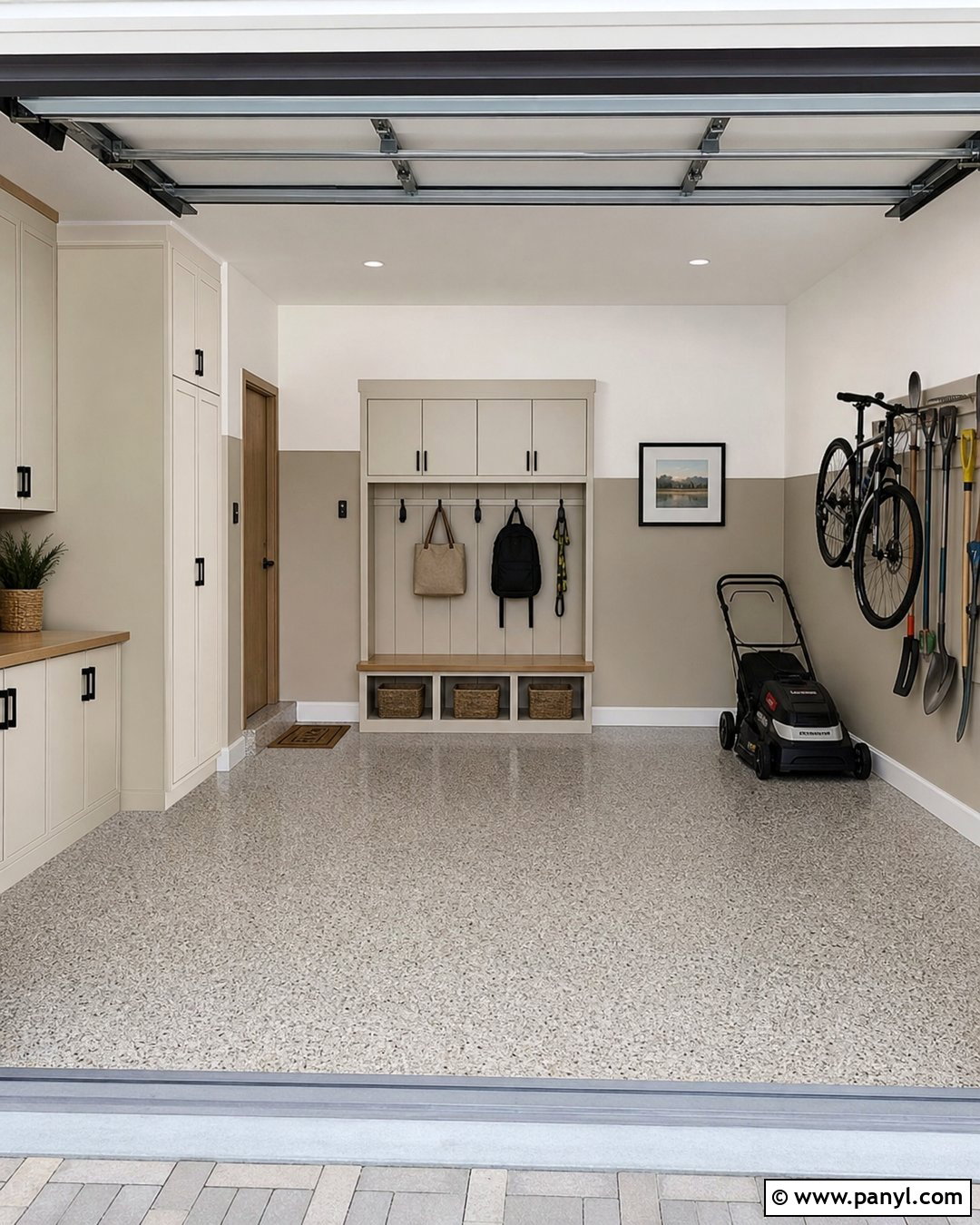
Greige lower walls paired with white upper walls create a warm, bright garage that connects smoothly with most home interiors. Set the dividing line slightly above the workbench, then add a narrow taupe rail for a finished transition. Choose cream cabinets, black hardware, and oak countertops to reinforce the neutral warmth. A pale gray floor with beige flecks ties the two wall colors together. Position enclosed storage near the entry door and organize outdoor equipment on black wall tracks farther into the garage. This coordinated design works well for a garage that also functions as a mudroom, laundry area, or household project space. Use white on the ceiling and doors to reflect light, while the greige lower section adds visual weight around busy work and storage zones.
27. Beige And Brown Garage Walls
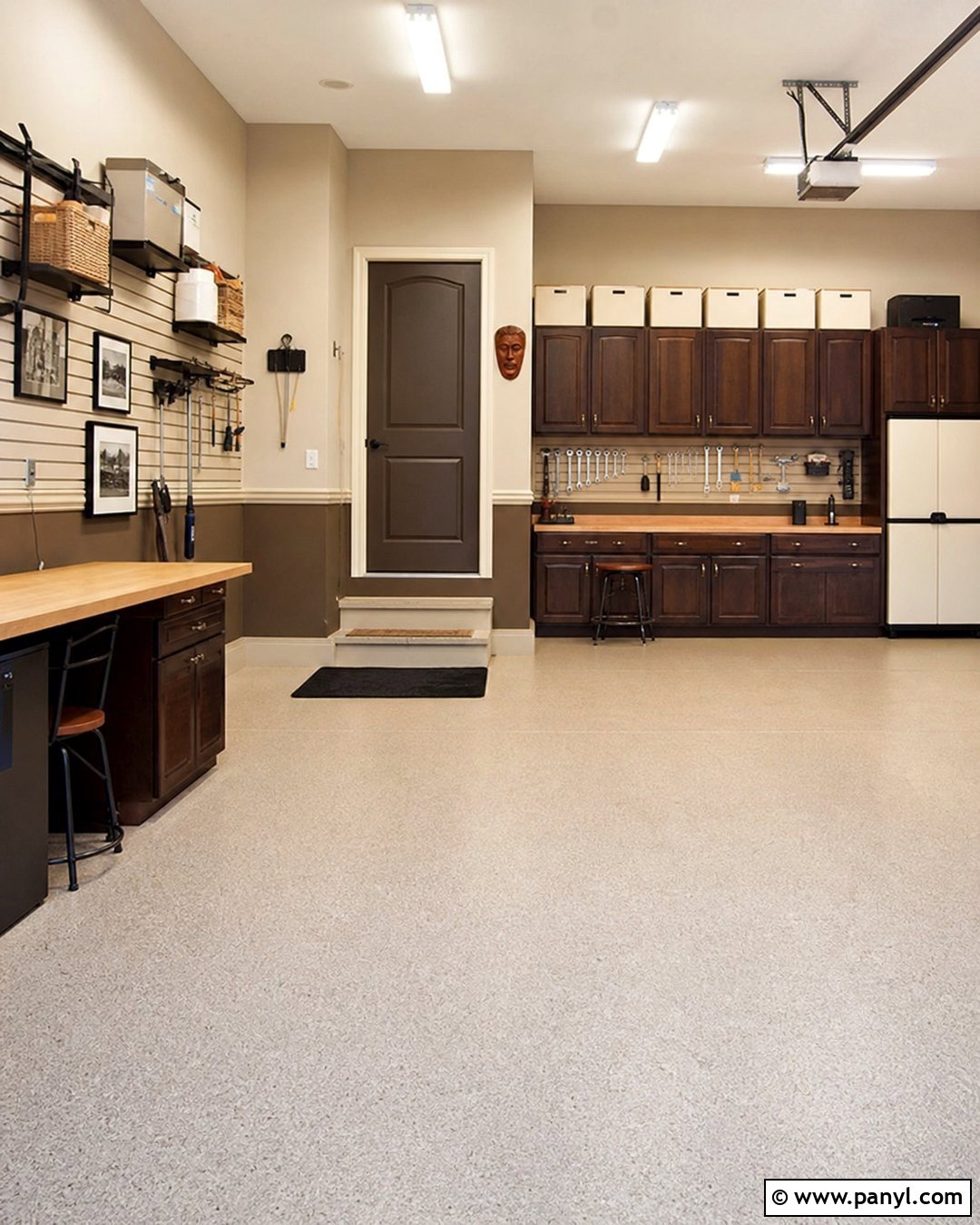
A beige-and-brown garage palette feels warm, durable, and particularly compatible with traditional homes. Paint the upper walls soft beige and the lower section a medium cocoa brown, separated by a simple cream molding strip. Use warm white on the ceiling, walnut-colored cabinets, and black metal shelving. A light tan-and-gray floor prevents the darker lower walls from making the room feel heavy. Complete the workshop with a maple countertop, bronze hardware, and neatly arranged cream storage bins. This scheme is ideal for gardening supplies, woodworking tools, and general family storage. Keep the brown muted rather than reddish so it coordinates with concrete and metal surfaces. Bright neutral lighting will sharpen the color boundaries and keep the warm palette from appearing dim or dated.
28. Sage And Cream Garage Walls
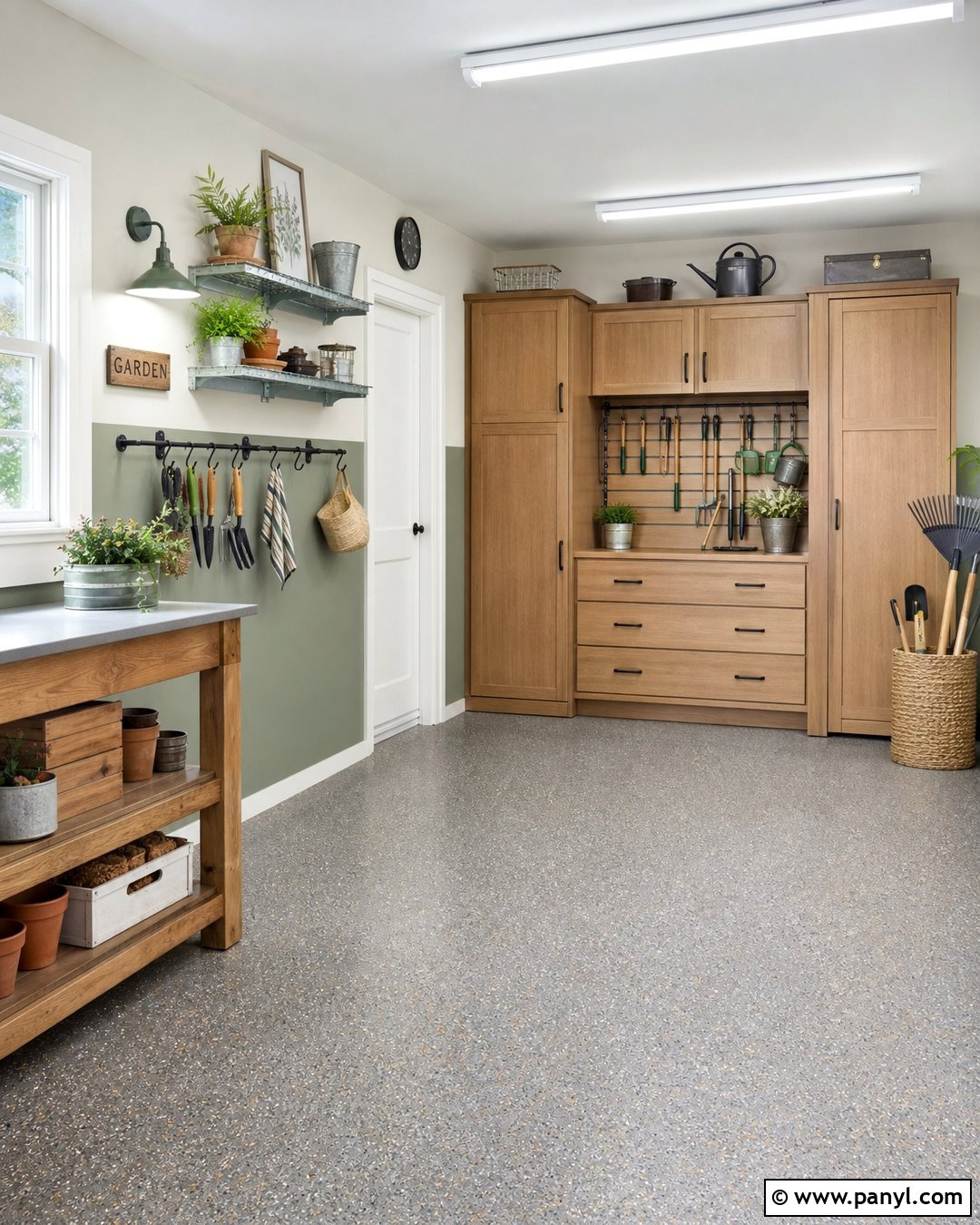
Sage and cream create a fresh garage palette that works naturally with gardening, mudroom, and outdoor storage zones. Paint the lower walls muted sage and the upper walls creamy white, then continue the lighter color across the ceiling. Use oak cabinetry, black handles, and galvanized shelving to combine warmth with utility. A medium-gray floor with tan flecks provides a neutral foundation. Place a potting bench beneath a window, store yard tools on black wall rails, and conceal chemicals or equipment inside tall cabinets. This complete scheme feels calm but still highly functional. A thin wood strip between the two wall colors can connect the cabinetry and workbench. Keep decorative items limited so the natural color pairing remains clean, practical, and easy to maintain.
29. Blue And White Garage Walls
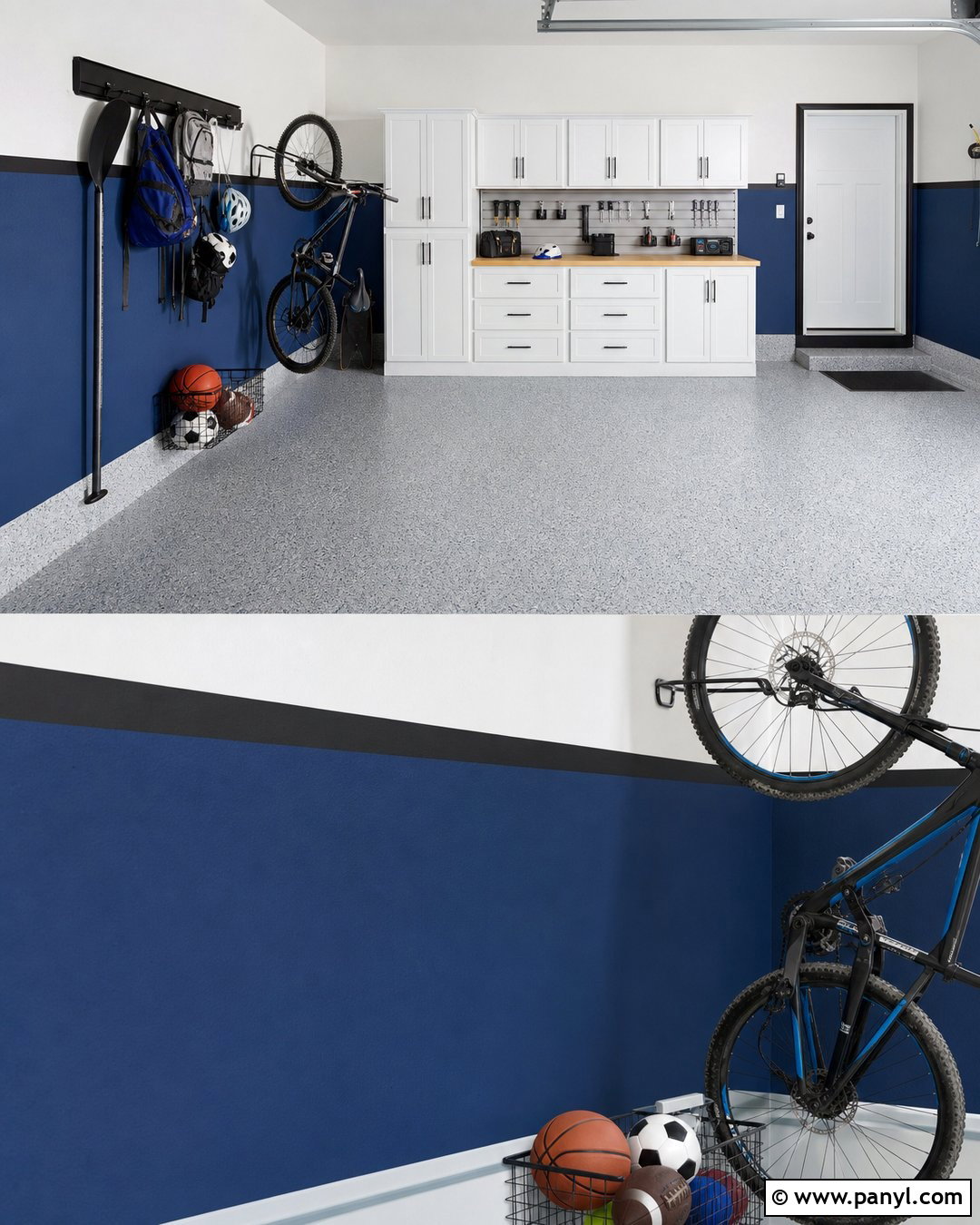
Blue and white walls give a garage a crisp, energetic appearance without requiring a complicated decorative plan. Use medium blue on the lower half and bright white above, with a slim charcoal stripe separating the colors. White cabinets, a light wood countertop, and black storage rails create a balanced work zone. Finish the floor in pale gray with blue and black flecks for subtle coordination. Arrange bicycles and sports gear along one side, leaving the opposite wall clear for parking and household access. This scheme works especially well in a family garage or coastal-inspired home. Keep the ceiling white and install strong overhead lighting to maintain visibility. Choosing a slightly muted blue will help the finished room feel polished instead of resembling a commercial or themed space.
30. Teal Garage Accent Wall
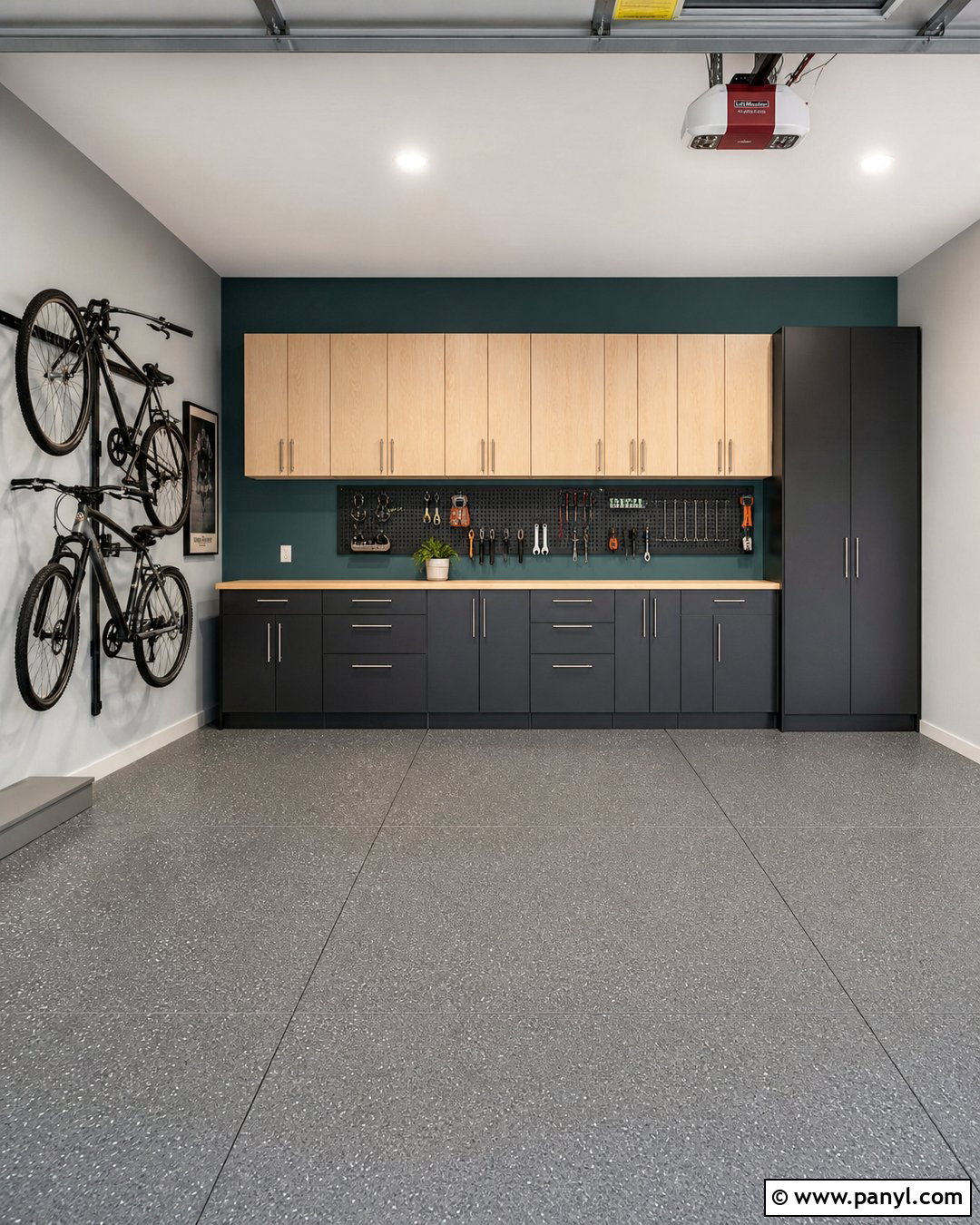
A muted teal accent wall brings personality to the garage while remaining compatible with gray and natural wood. Apply teal behind the workbench or storage system, then paint the remaining walls light gray and the ceiling white. Install charcoal base cabinets, birch upper cabinets, and a pale wood countertop against the colored wall. Black pegboard and brushed steel hardware provide crisp definition. Use a medium-gray floor with small teal and white flakes to repeat the palette subtly. This complete look fits a creative workshop, bike garage, or organized hobby space. Avoid covering every wall in teal, especially in a small room. Bright overhead lighting, white trim, and lighter cabinetry will preserve openness while allowing the accent color to create a memorable focal point.
31. Terracotta Garage Accent Wall
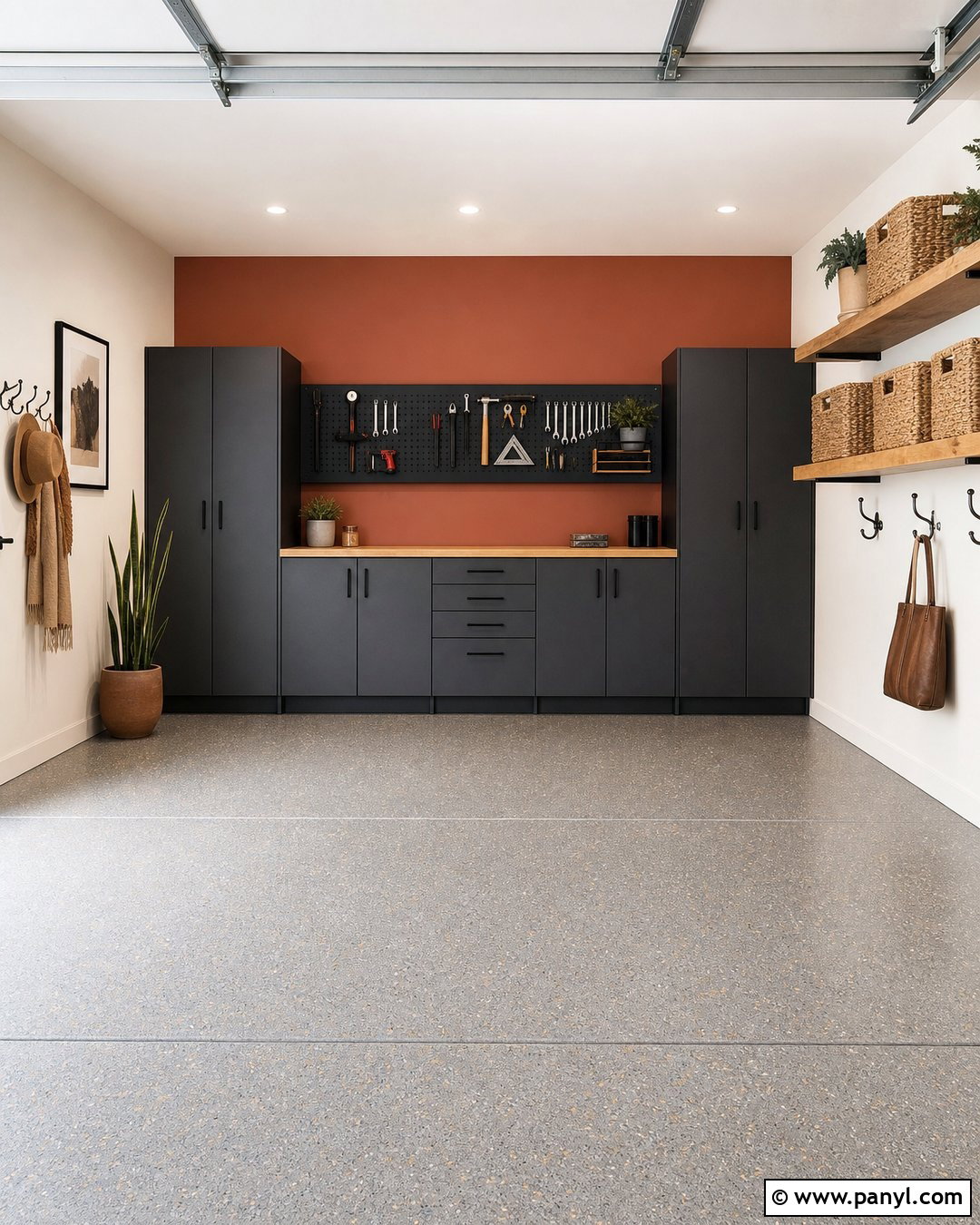
Terracotta adds earthy warmth to a garage without relying on beige or brown throughout the entire space. Paint one work or storage wall muted clay terracotta, then use creamy white on the other walls and ceiling. Pair the accent with charcoal cabinets, a butcher-block countertop, and black metal tool panels. A warm gray floor with tan flecks creates a grounded foundation. Add oak shelves, woven bins, and dark bronze hooks to support the natural palette. This complete design works beautifully for a gardening garage, craft workspace, or Southwestern-inspired home. Keep the terracotta dusty rather than bright orange for a more adaptable finish. Strong white lighting will show the color accurately, while the pale surrounding walls prevent the warm accent from making the garage feel enclosed.
32. Muted Yellow Garage Walls
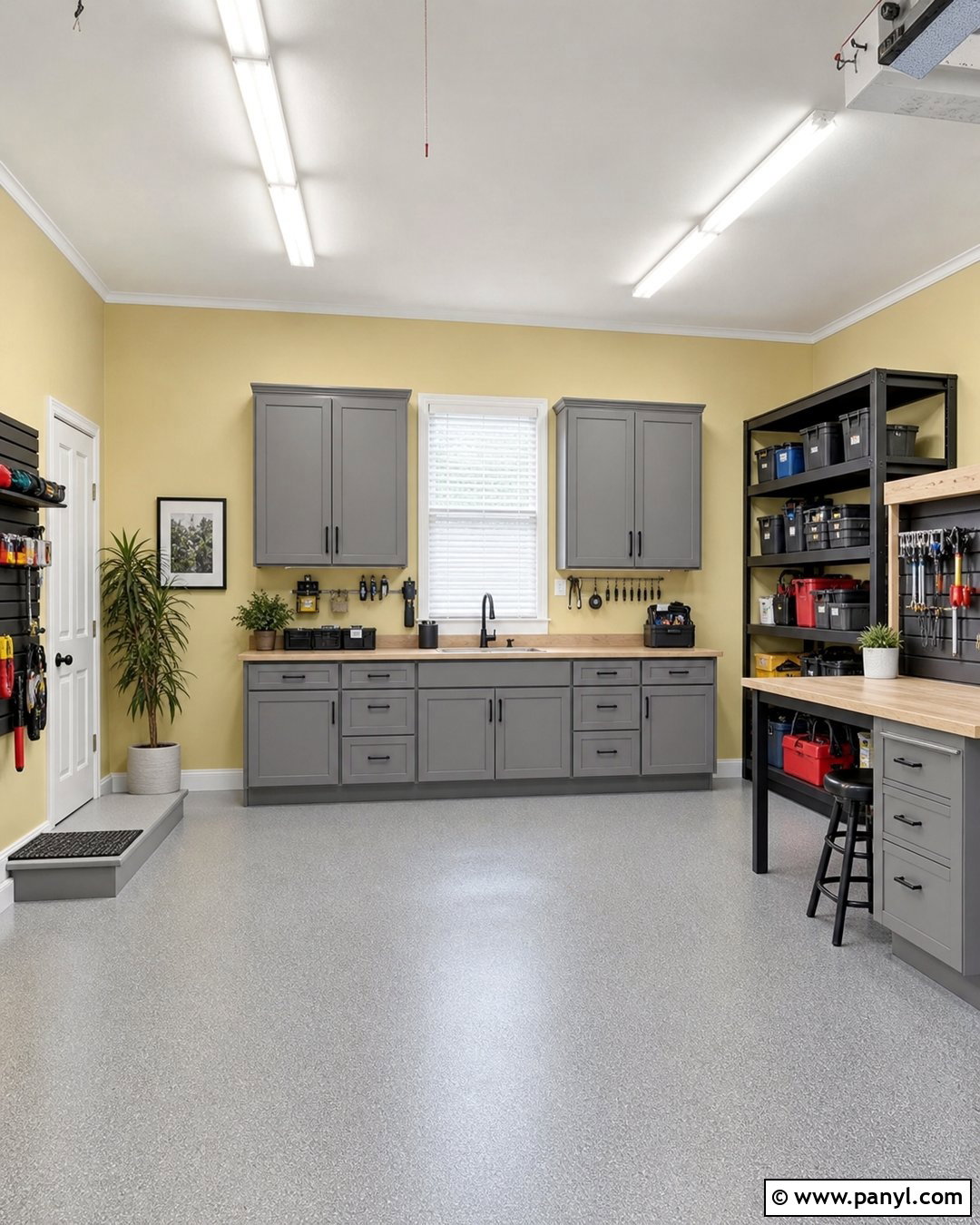
Muted yellow walls can brighten a windowless garage when the shade is soft, warm, and lightly grayed. Pair the walls with white trim, a bright white ceiling, gray cabinetry, and a medium-gray floor. Black utility shelves and tool rails introduce necessary contrast, while a pale wood workbench reinforces the warmth. Build an organized project station along one wall and use closed cabinets to limit colorful visual clutter. This complete palette works for craft spaces, family storage, and cheerful laundry zones within the garage. Avoid highly saturated lemon yellow, which can become intense under large ceiling fixtures. Instead, choose a subdued straw or butter tone. Cool white lighting and gray finishes will balance the warmth and produce a comfortable, functional room rather than an overly colorful one.
33. Dusty Orange Garage Accent Wall
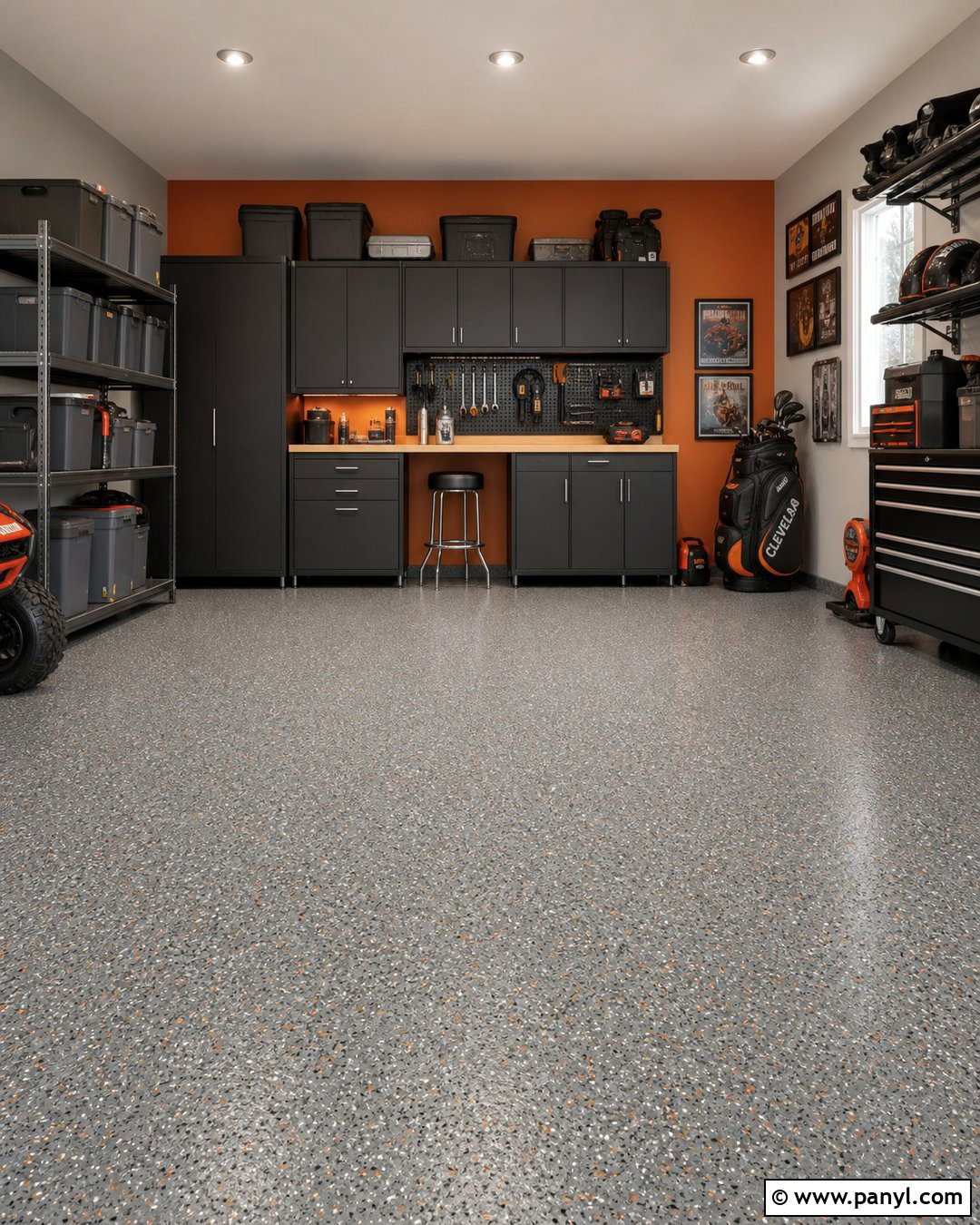
Dusty orange creates an energetic focal wall that feels warmer and more sophisticated than a bright automotive orange. Use it behind charcoal storage cabinets and a natural wood workbench, while painting the other walls light greige and the ceiling white. Add black pegboard, steel shelving, and a medium-gray floor with subtle orange and white flakes. The accent wall can define a repair station, garage gym, or hobby area without taking over the entire room. Keep large storage containers black, gray, or tan to control the palette. This full design works best under bright, evenly distributed ceiling lighting. Repeat the dusty orange only through a few small cabinet panels or equipment details, allowing the main wall to remain the clear visual anchor.
34. Deep Red Garage Accent Wall
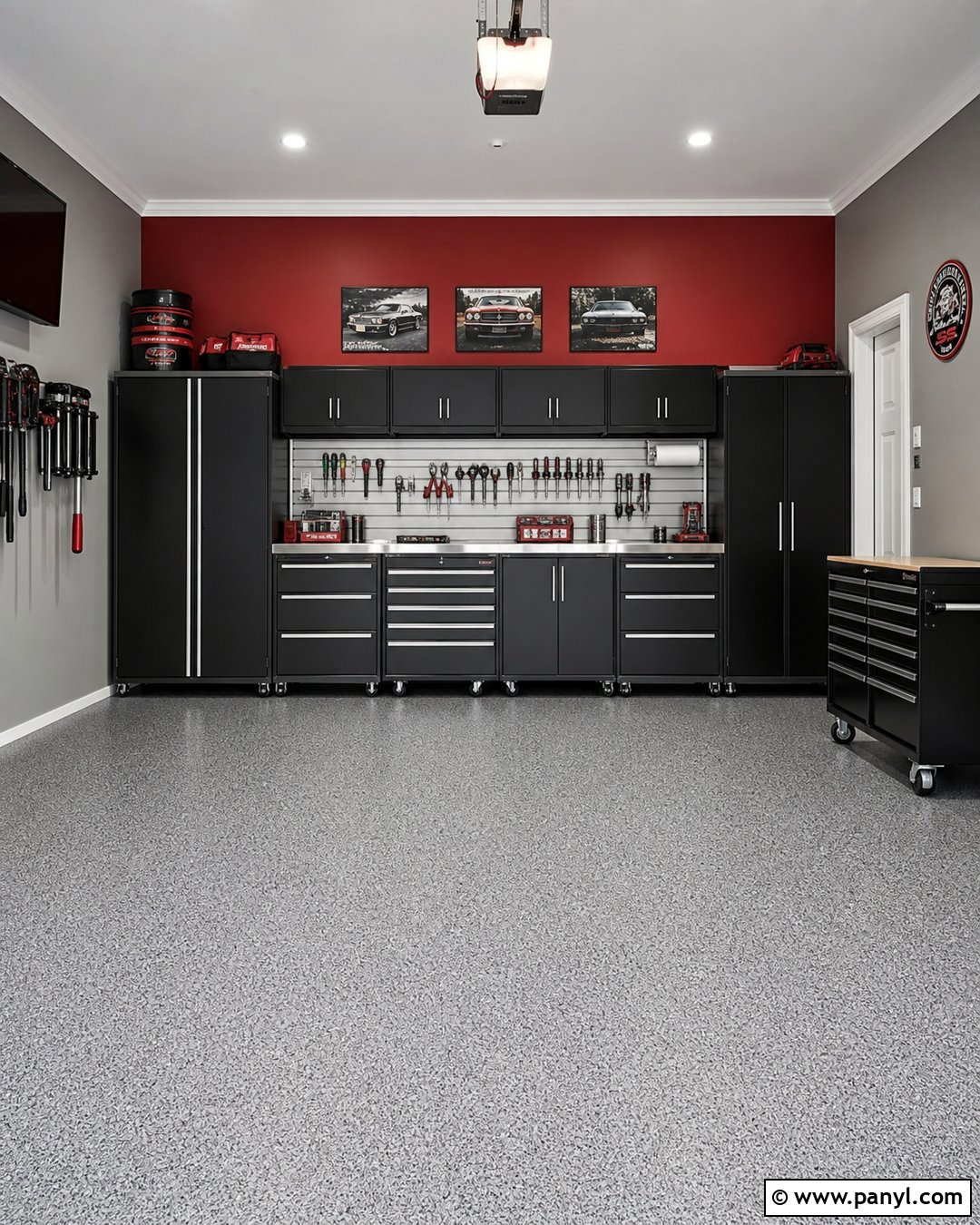
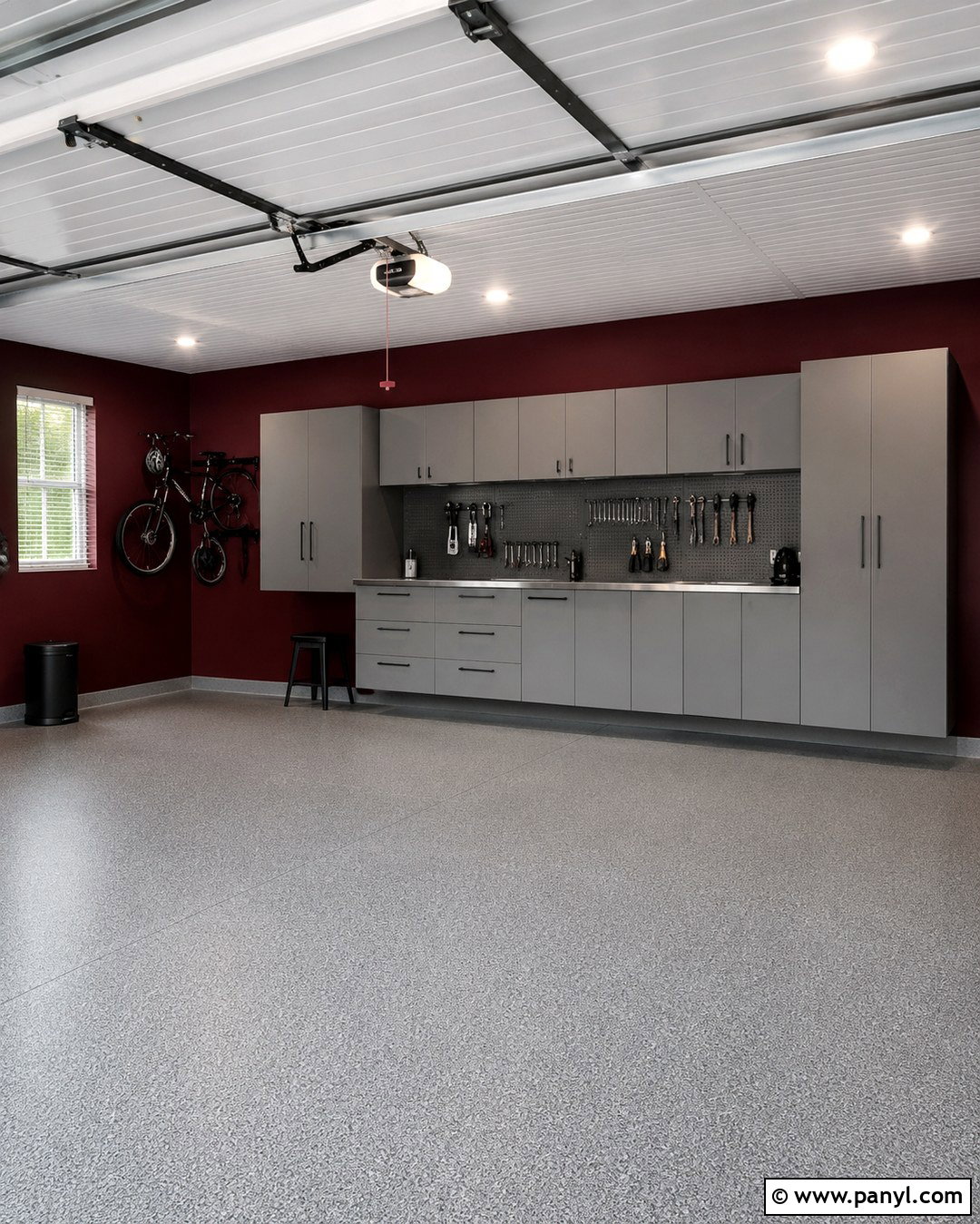
Deep red can give a garage a polished performance-inspired look when balanced with generous neutral surfaces. Paint the back wall a muted burgundy or brick red, then keep the side walls light gray and the ceiling bright white. Use black cabinets, stainless steel countertops, and silver tool panels against the colored wall. A pale gray floor with charcoal flakes helps reflect light and grounds the stronger hue. Organize car-care products, tools, and equipment inside closed storage to maintain a streamlined appearance. This scheme works particularly well in a larger vehicle garage or dedicated workshop. Avoid using vivid red across every wall. Focused task lights, broad ceiling fixtures, white trim, and lighter flooring will keep the finished room bright, controlled, and practical.
35. Mocha Garage Walls
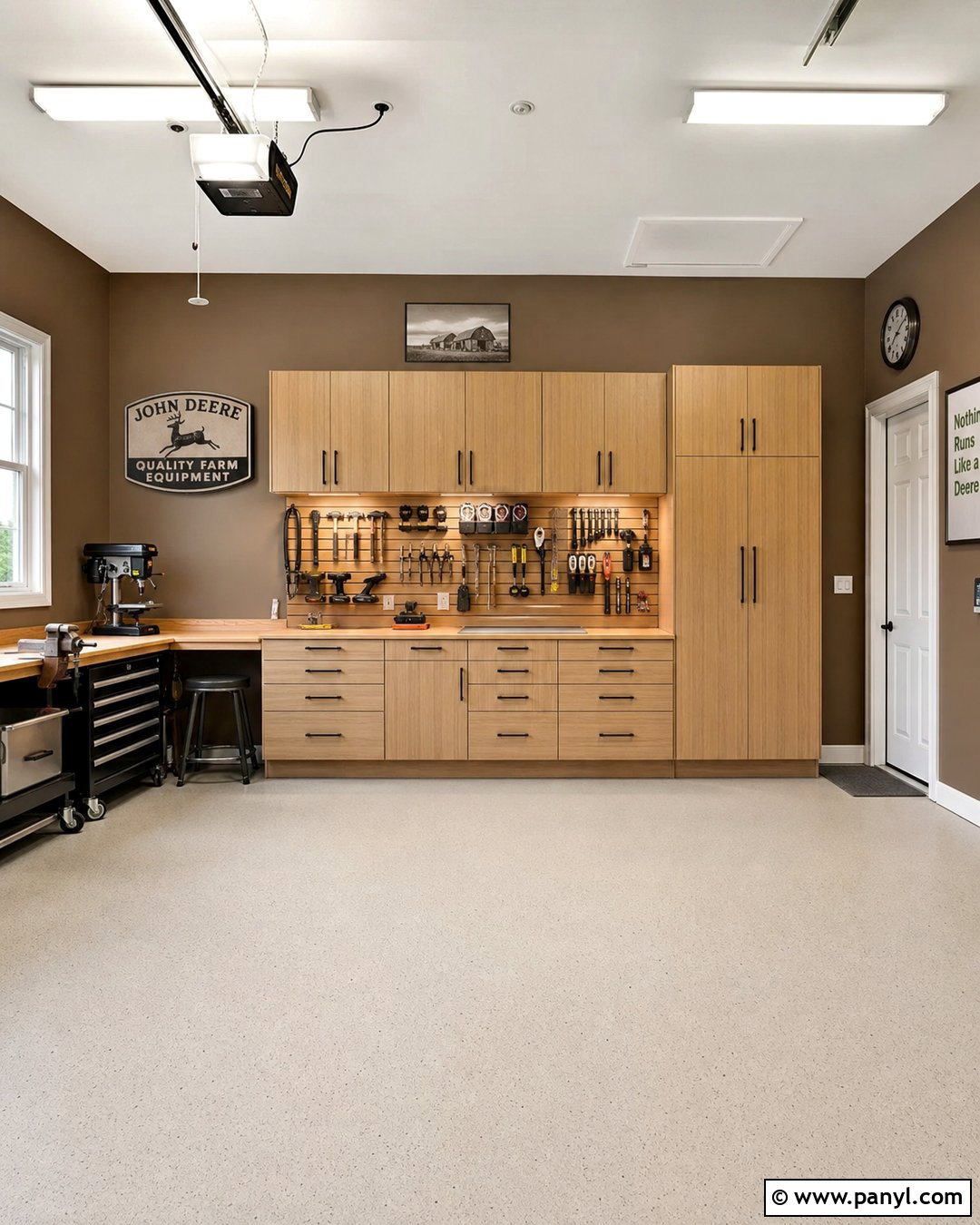
Mocha walls deliver a rich, warm neutral for homeowners who want more depth than beige without committing to charcoal. Choose a medium-light coffee brown with balanced gray undertones, then pair it with a cream ceiling, off-white trim, and light oak cabinets. Matte black hardware and tool rails create modern contrast. Use a pale warm-gray floor to brighten the room and prevent the brown walls from feeling heavy. Complete the layout with a butcher-block workbench, tall enclosed storage, and matching neutral bins. This palette suits woodworking spaces, traditional garages, and home workshops filled with natural materials. Bright white ceiling lights are essential for clarity. Keeping doors, countertops, and major storage pieces light will produce a comfortable, grounded garage that still feels open and organized.
Conclusion:
Choosing garage paint involves more than finding an attractive shade. The wall color should work with your lighting, flooring, storage, vehicles, and the way you use the room. Light neutrals improve visual openness, earthy colors add warmth, and darker accents can define workshops or display areas. Two-tone walls offer another practical option by combining a bright upper surface with a grounded lower color. Always test samples beside the floor and cabinets under the garage’s actual lighting before making a final decision. Finish the room with coordinated trim, organized storage, and durable, washable surfaces. With these **35 Garage Walls Paint Colors**, you can create a garage that looks polished while supporting parking, projects, hobbies, and everyday household storage.

Related Ideas and Inspiration:
Leave a Reply