
Two-tone nursery walls make it easy to add color, character, and visual structure without overwhelming a baby’s room. The best combinations go beyond simply dividing the wall in half. They connect the paint placement with the crib, flooring, textiles, storage, lighting, and decorative theme. Current nursery designs often pair painted sections with chair rails, beadboard, board-and-batten, wallpaper, or clean color-blocked edges for greater depth and definition. () A darker lower section can ground the room and hide everyday marks, while a lighter upper color keeps the space feeling open. You can also reverse the layout or extend the upper shade onto the ceiling. The following 25 Two Tone Nursery Walls offer complete, practical looks for many decorating preferences.
1. Sage Green And Cream Nursery Walls
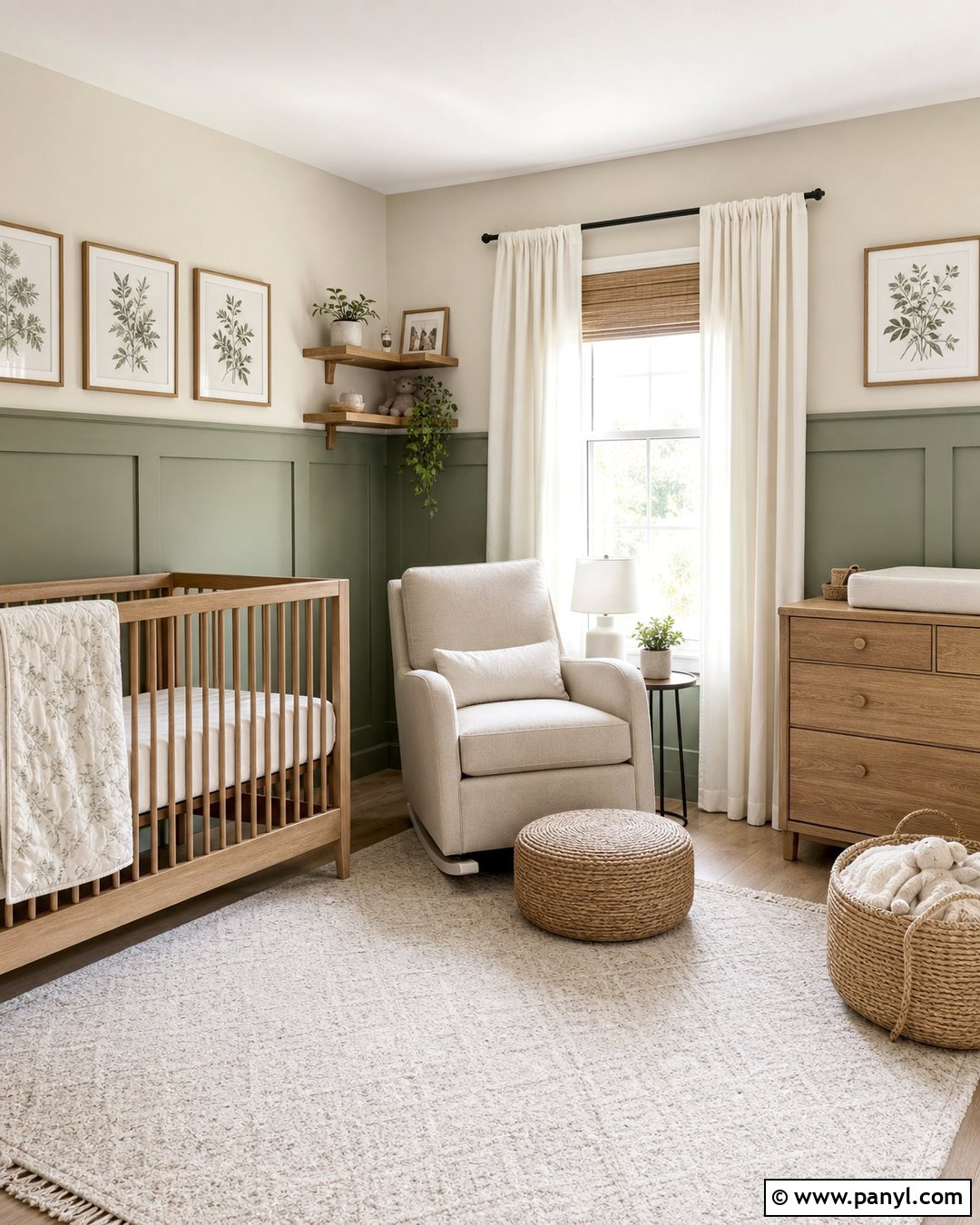
Soft sage green on the lower third creates a calm foundation, while warm cream above keeps the nursery bright and welcoming. Add simple picture-frame molding to the sage section for subtle architectural character. A natural oak crib, matching dresser, and woven pendant light bring warmth without making the room feel rustic. Ground the layout with an ivory wool rug featuring a small green border. Cream curtains, botanical prints, and a comfortable oatmeal-colored glider complete the gentle palette. Keep the baseboards and window trim cream so the upper wall flows smoothly around the room. This combination works especially well with medium or light wood flooring. Small touches of muted mustard or clay can be introduced through baskets, blankets, and toys.
2. Blush Pink And White Nursery Walls
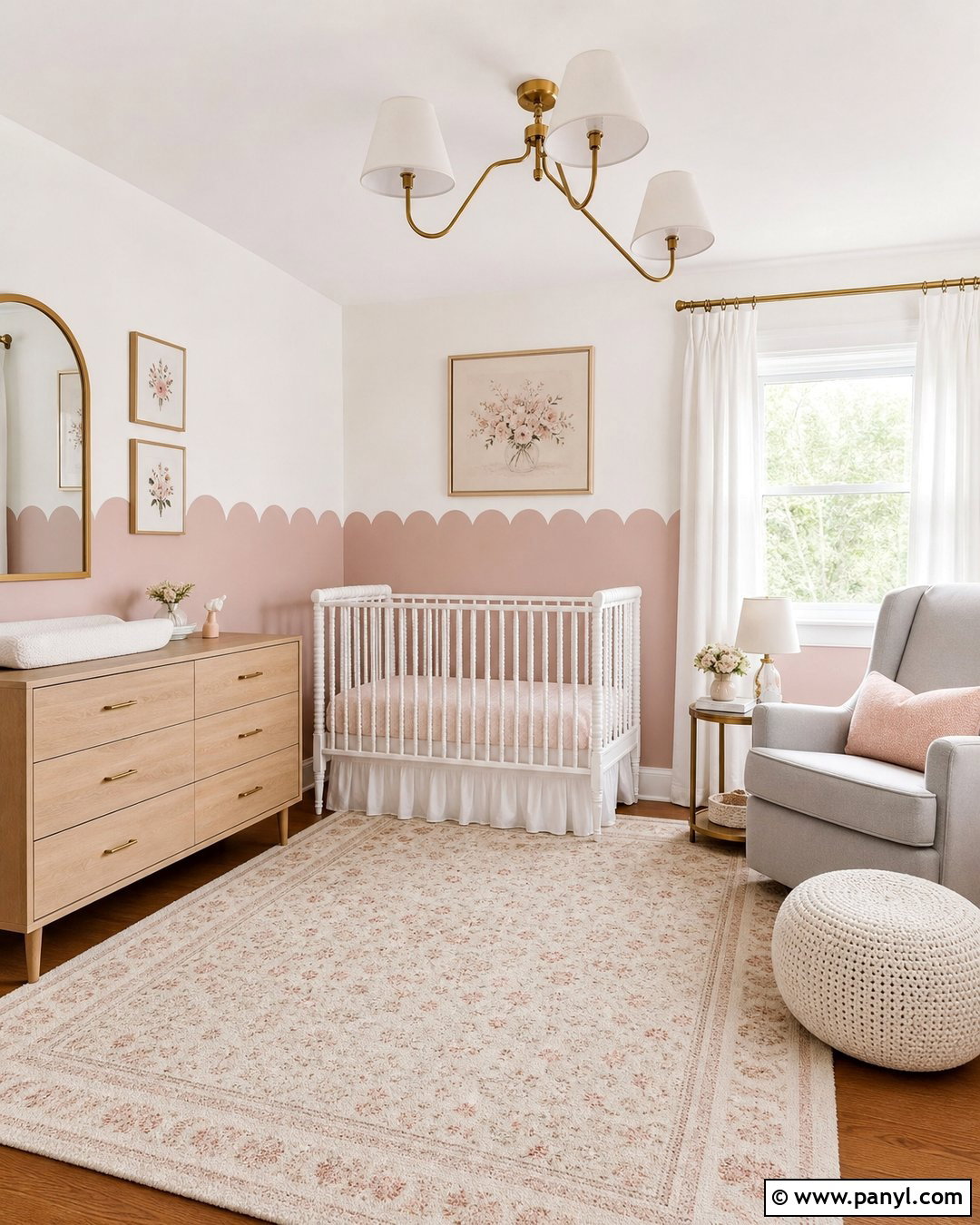
A blush pink lower wall paired with crisp white above creates a sweet nursery that still feels clean and modern. Position the dividing line slightly below the crib rail instead of directly at the wall’s midpoint. A slim white chair rail gives the transition a finished appearance. Choose a white spindle crib, pale oak dresser, and soft gray upholstered glider to prevent the room from becoming overly pink. A cream rug with a delicate blush pattern ties the furniture and walls together. Add white linen curtains, brushed brass lighting, and simple floral artwork in natural wood frames. For an extra playful detail, paint a narrow scalloped border along the top of the blush section. Keep accessories limited to pink, cream, gray, and warm wood.
3. Navy Blue And Light Gray Nursery Walls
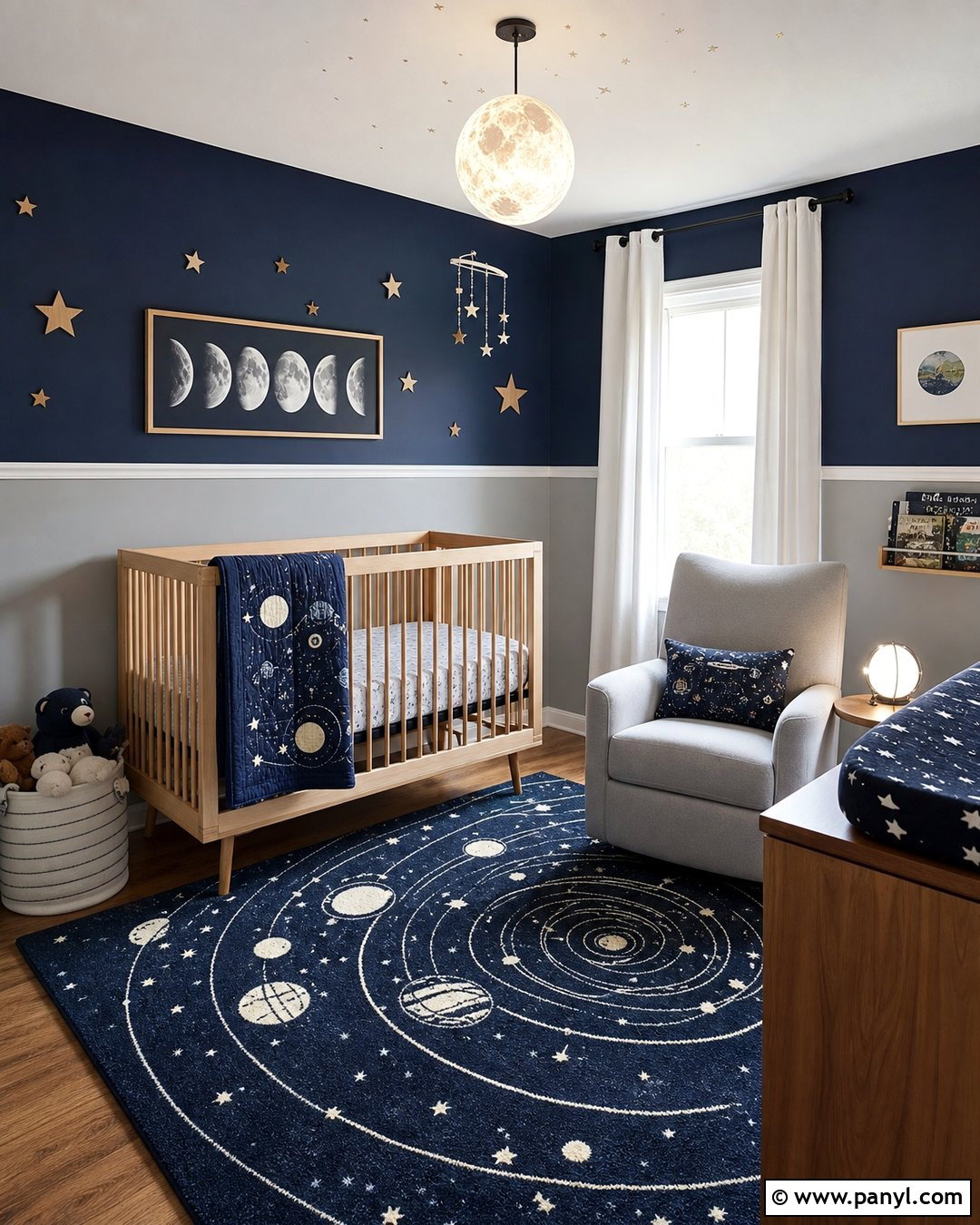
Deep navy blue across the lower half gives a space-themed nursery a strong, cozy base. Use pale gray above to resemble an open sky without creating harsh black-and-white contrast. A narrow white molding strip clearly separates the colors and coordinates with the doors and window trim. Place a natural wood crib against the navy section, then add a light gray glider and a navy-and-cream geometric rug. Framed moon phases, small wooden stars, and a globe-inspired ceiling fixture support the theme without turning the room into a novelty space. White blackout curtains with a subtle gray edge keep the window area light. Repeat navy on storage baskets and one crib sheet, leaving the remaining textiles soft and neutral.
4. Terracotta And Warm White Nursery Walls
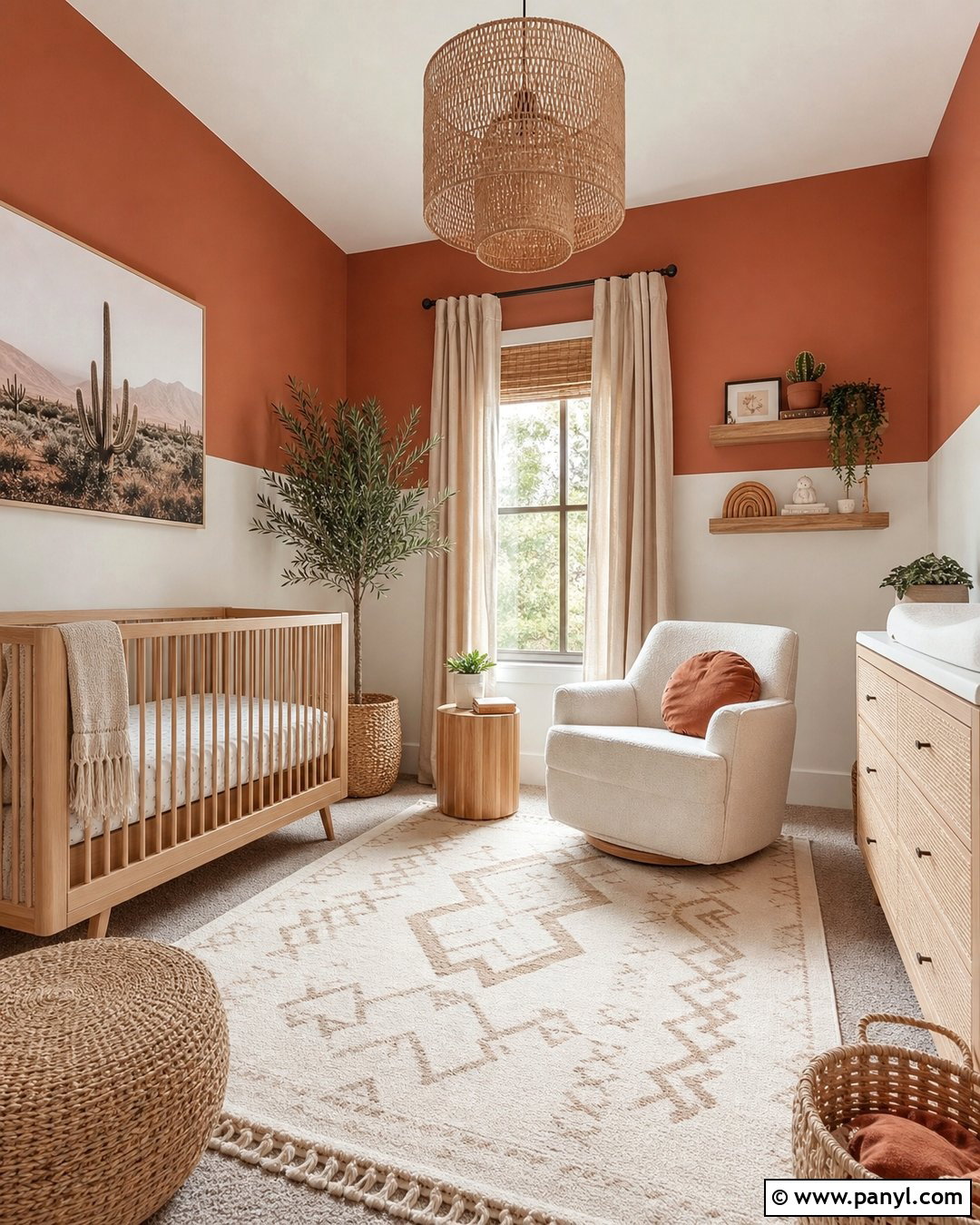
Earthy terracotta below warm white walls brings relaxed color into a boho nursery. Raise the terracotta section to about two-thirds of the wall for a cozy, enveloping look that still leaves breathing room near the ceiling. Skip contrasting molding and use a sharp painted line for a simple finish. A light oak crib, cane-front dresser, and ivory boucle glider soften the rich wall color. Add a washable cream rug with terracotta and tan details, woven baskets, and natural linen curtains. A rattan ceiling light continues the organic material palette. Keep wall decor minimal with one large desert landscape print or a grouping of simple sun and rainbow shapes. Muted olive accessories can add contrast while remaining connected to the earthy scheme.
5. Dusty Blue And White Nursery Walls
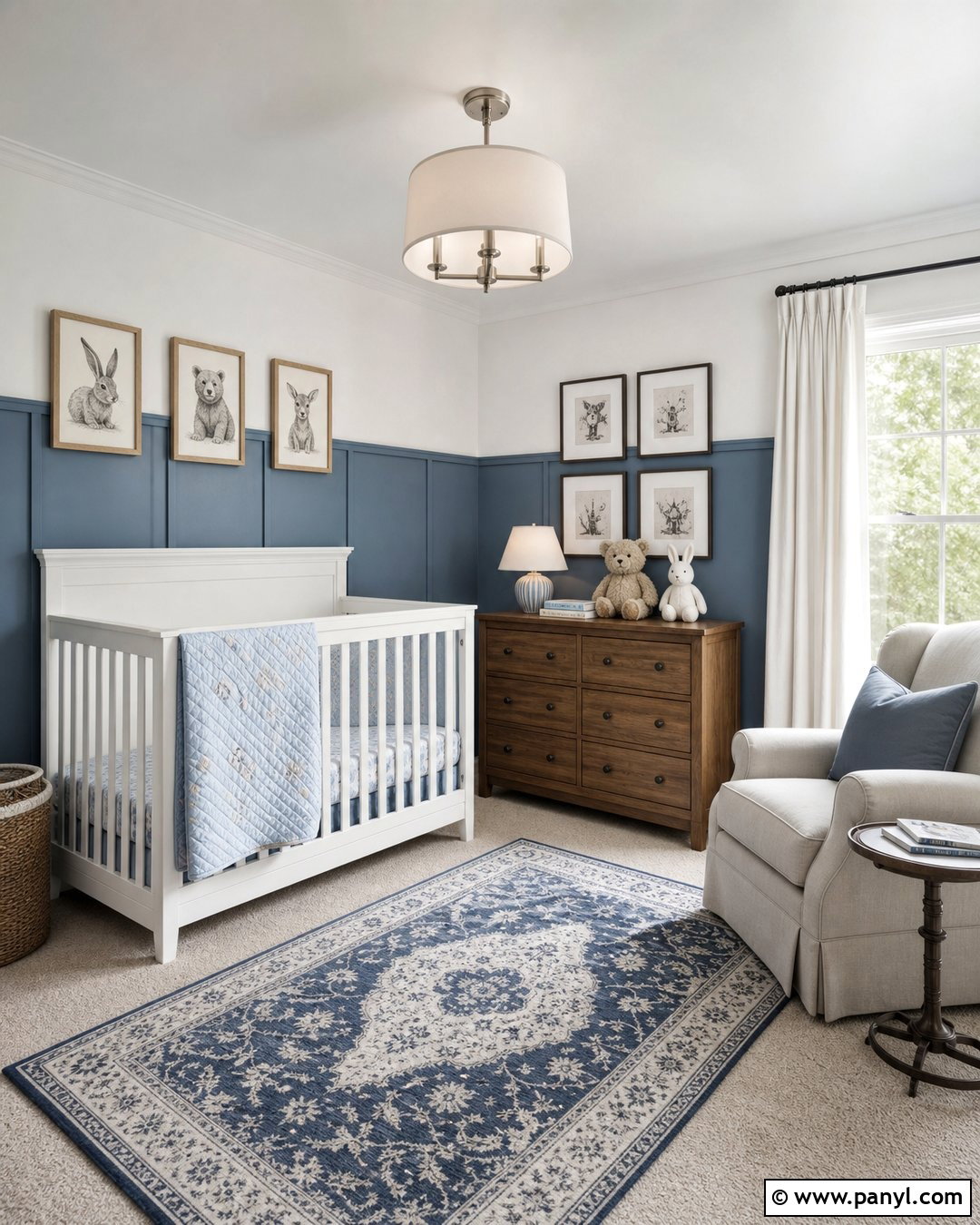
Dusty blue board-and-batten on the lower portion creates a classic nursery foundation with plenty of practical durability. Paint the upper walls soft white and carry that shade across the ceiling to make the room feel taller. The paneling should rise slightly above the changing table so furniture sits comfortably within the colored area. Choose a white crib, medium-tone wood dresser, and oatmeal glider for a balanced mix of finishes. Navy piping on the curtains or rug adds definition without darkening the space. Finish the room with silver or brushed nickel lighting, pale blue crib linens, and framed animal sketches. This complete look suits traditional and transitional homes, yet it can easily grow with a child by replacing the baby-focused artwork and accessories later.
6. Forest Green And Botanical Nursery Walls
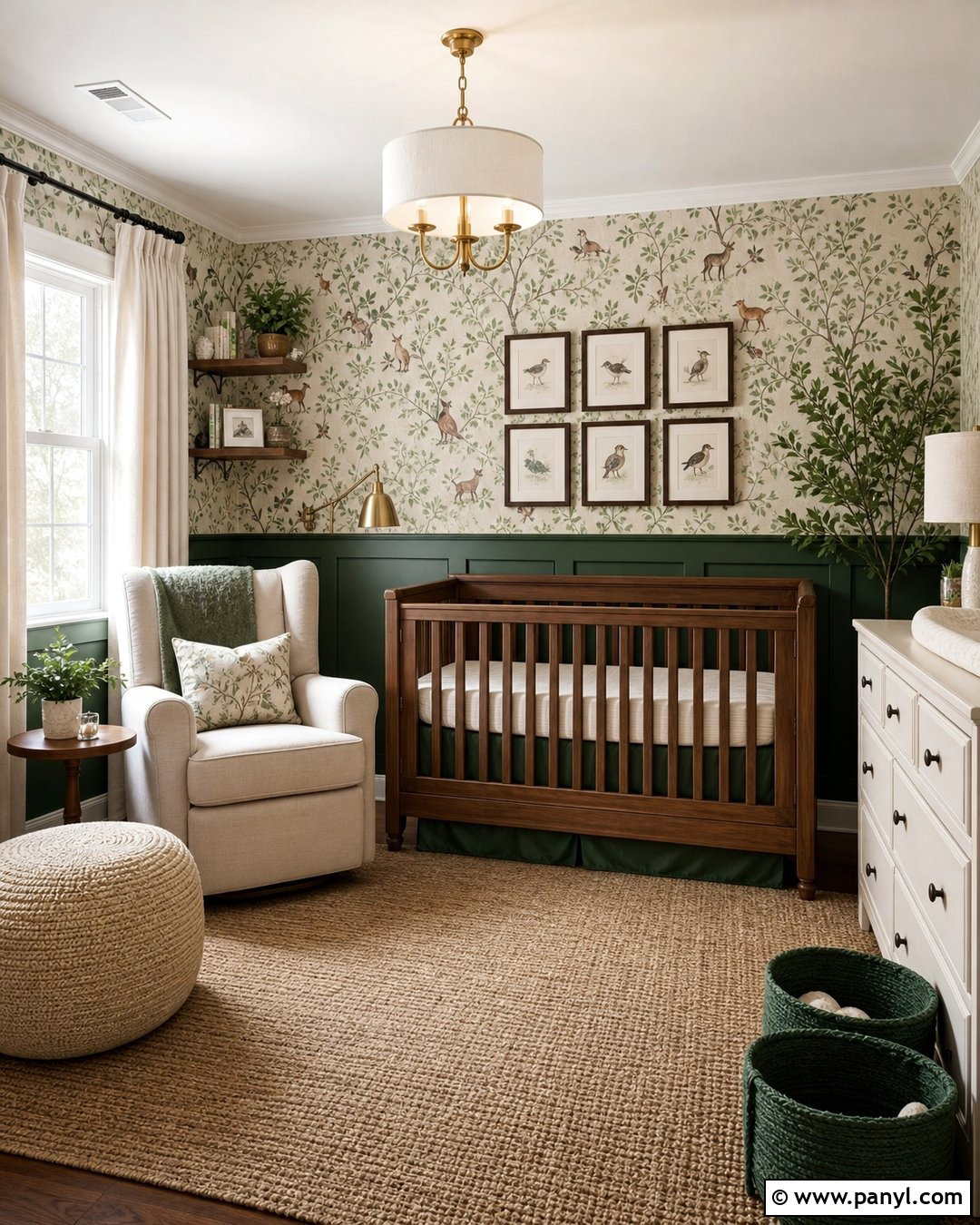
Forest green lower walls and botanical wallpaper above create a cozy nursery inspired by nature. Select wallpaper with a cream background and softly illustrated leaves, trees, or woodland animals. Paint the chair rail, baseboards, and lower wall the same deep green for a seamless, built-in effect. A walnut crib looks especially rich against this palette, while an ivory dresser keeps the room from feeling too heavy. Add an oatmeal glider, a tan woven rug, and off-white curtains that allow the pattern to remain the focal point. A shaded brass ceiling fixture brings soft polish to the finished room. Use forest green storage baskets and cream bedding to repeat the wall colors. Limit additional patterns so the wallpaper and wood grain can stand out.
7. Mustard Yellow And Cream Nursery Walls
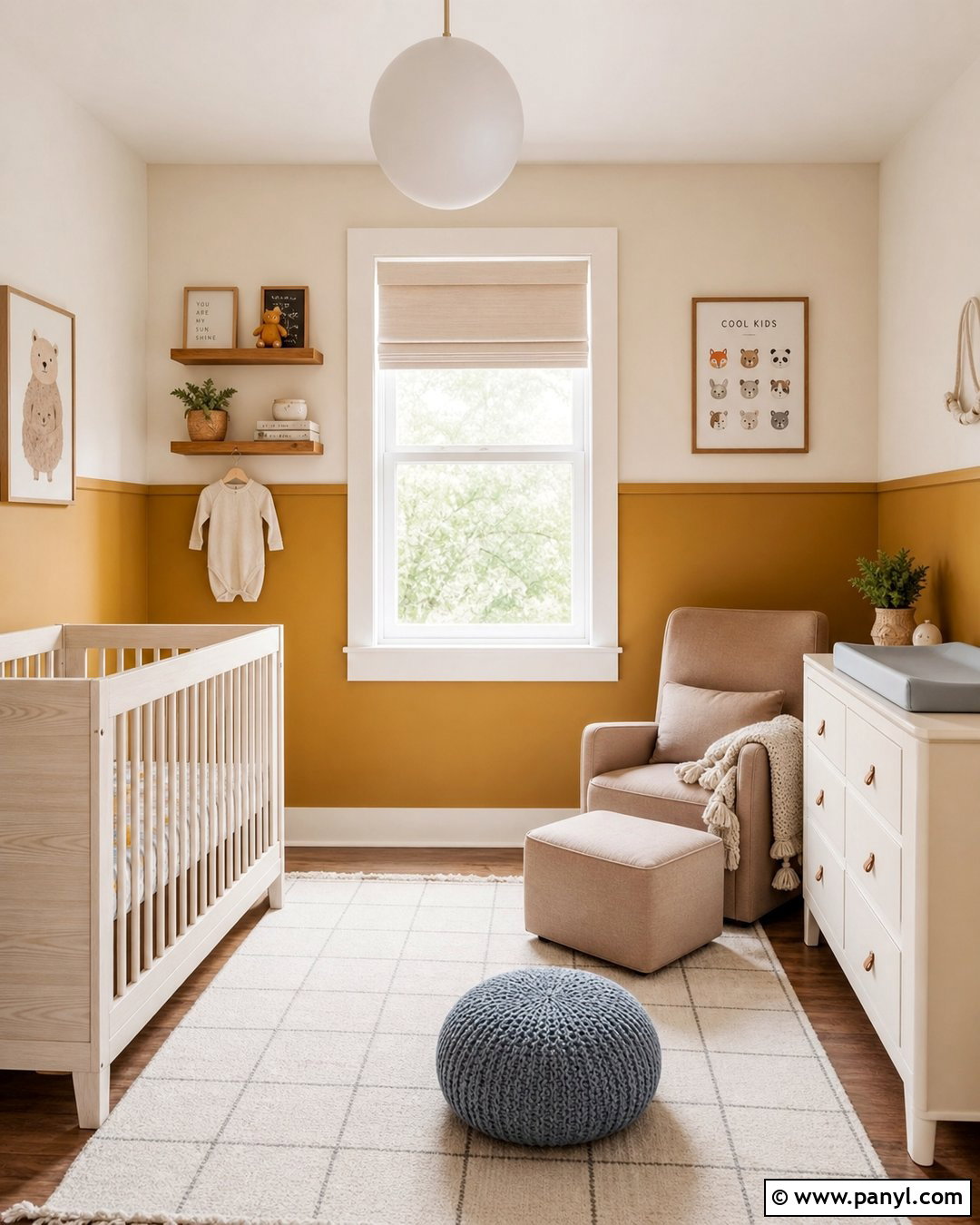
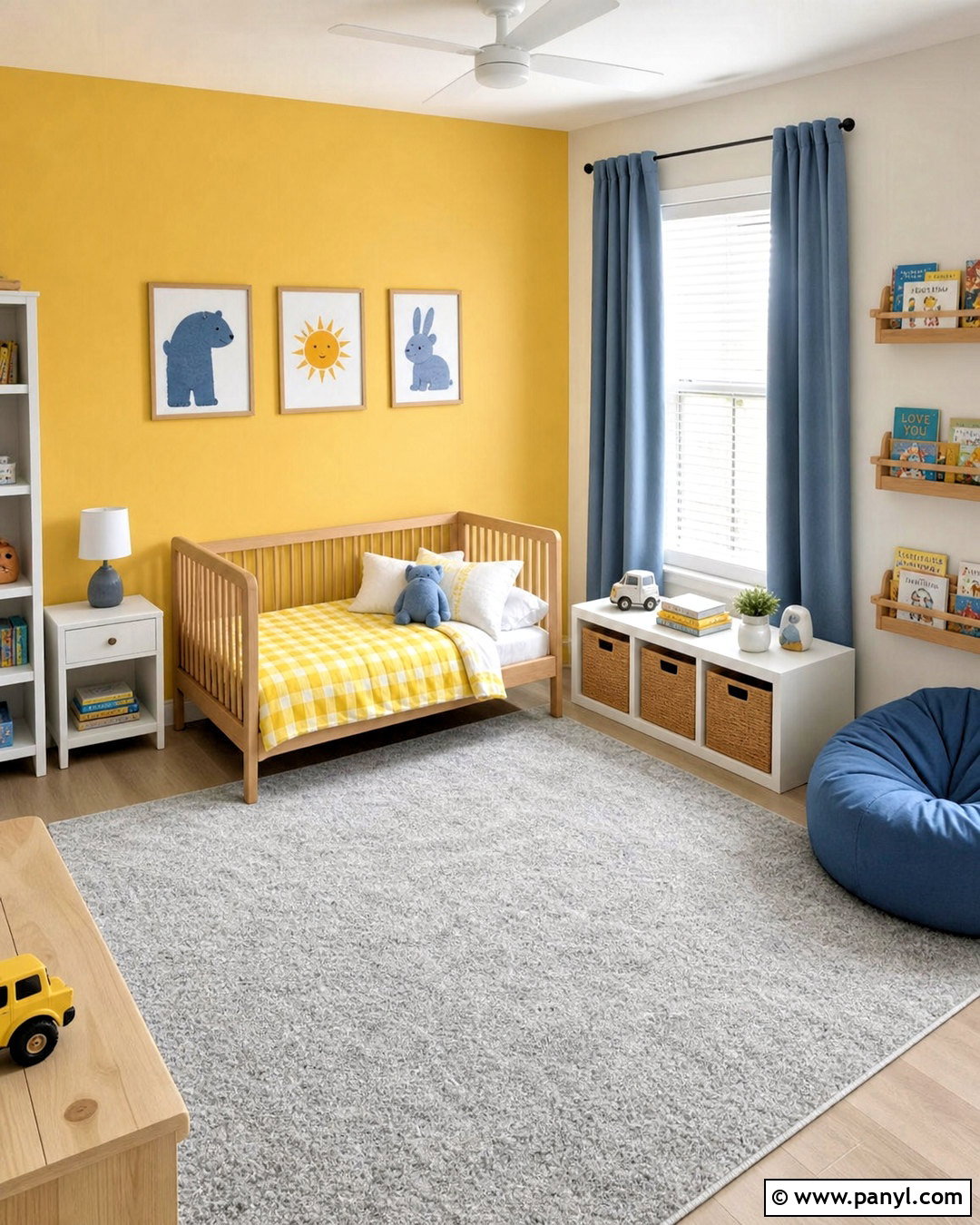
Mustard yellow can feel surprisingly soothing when it covers the lower third of a nursery and is balanced by creamy walls above. Use a straight painted divide for a modern color-blocked finish, or install a slim natural wood rail for added warmth. A white oak crib, cream changing dresser, and camel-colored glider create a cheerful but grounded furniture arrangement. Choose a washable ivory rug with a restrained mustard grid pattern. Simple linen curtains and a white globe ceiling light keep the design airy. Decorate with wooden shelves holding neutral books, soft toys, and a few dusty blue accessories. The combination works well in rooms receiving limited natural light because the yellow introduces warmth while the cream reflects available brightness throughout the upper part of the space.

8. Lavender And Greige Nursery Walls
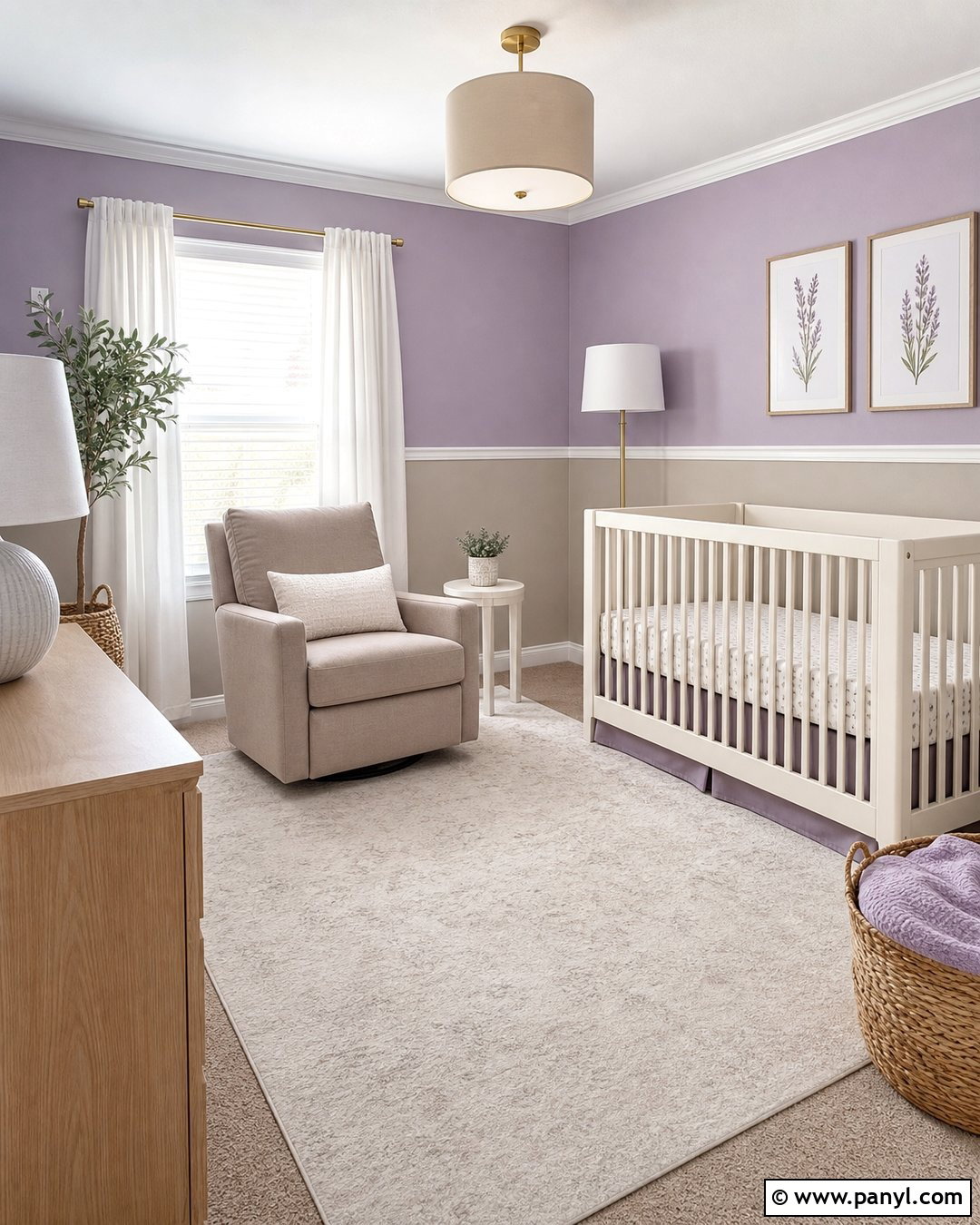
Muted lavender above a warm greige lower wall gives the nursery gentle color without relying on a predictable pastel scheme. Install a narrow white chair rail between the shades to make the split look intentional. A cream crib and light wood dresser keep the furniture visually quiet, while a soft taupe glider connects with the lower color. Layer an ivory rug with a faded lavender border over natural wood flooring. White curtains, ceramic table lamps, and small botanical prints add lightness around the room. Include plum only in tiny doses, such as a pillow or storage bin, to create depth. This palette looks most cohesive when both wall colors have warm undertones. Avoid icy gray accents, which can make the lavender and greige feel disconnected.
9. Mint Green And Lemon Nursery Walls
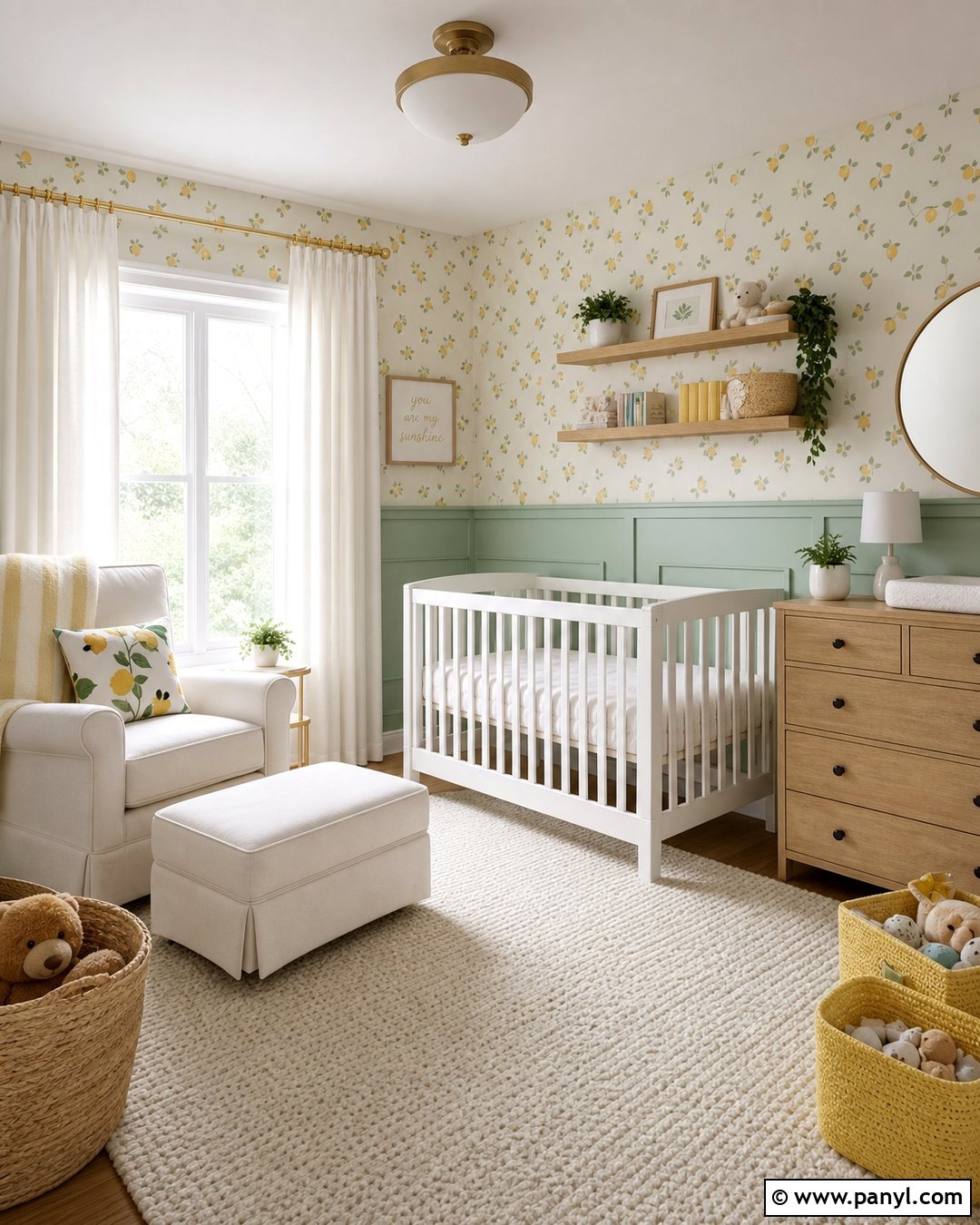
A mint green lower wall paired with lemon-patterned wallpaper above makes a nursery feel fresh, playful, and gender-neutral. Use wallpaper with a pale cream background and small yellow fruit or floral motifs rather than an oversized print. Paint the chair rail and lower wall the same mint shade to produce a clean transition. A white crib and natural wood dresser prevent the palette from feeling too themed. Place a soft cream glider beside the window and anchor the room with a woven ivory rug. Solid white curtains give the patterned walls visual relief. Repeat lemon yellow sparingly through a blanket, lamp base, and two storage baskets. Simple wood shelves and neutral bedding ensure the finished nursery remains bright, balanced, and easy to update as the child grows.
10. Taupe And Ivory Nursery Walls
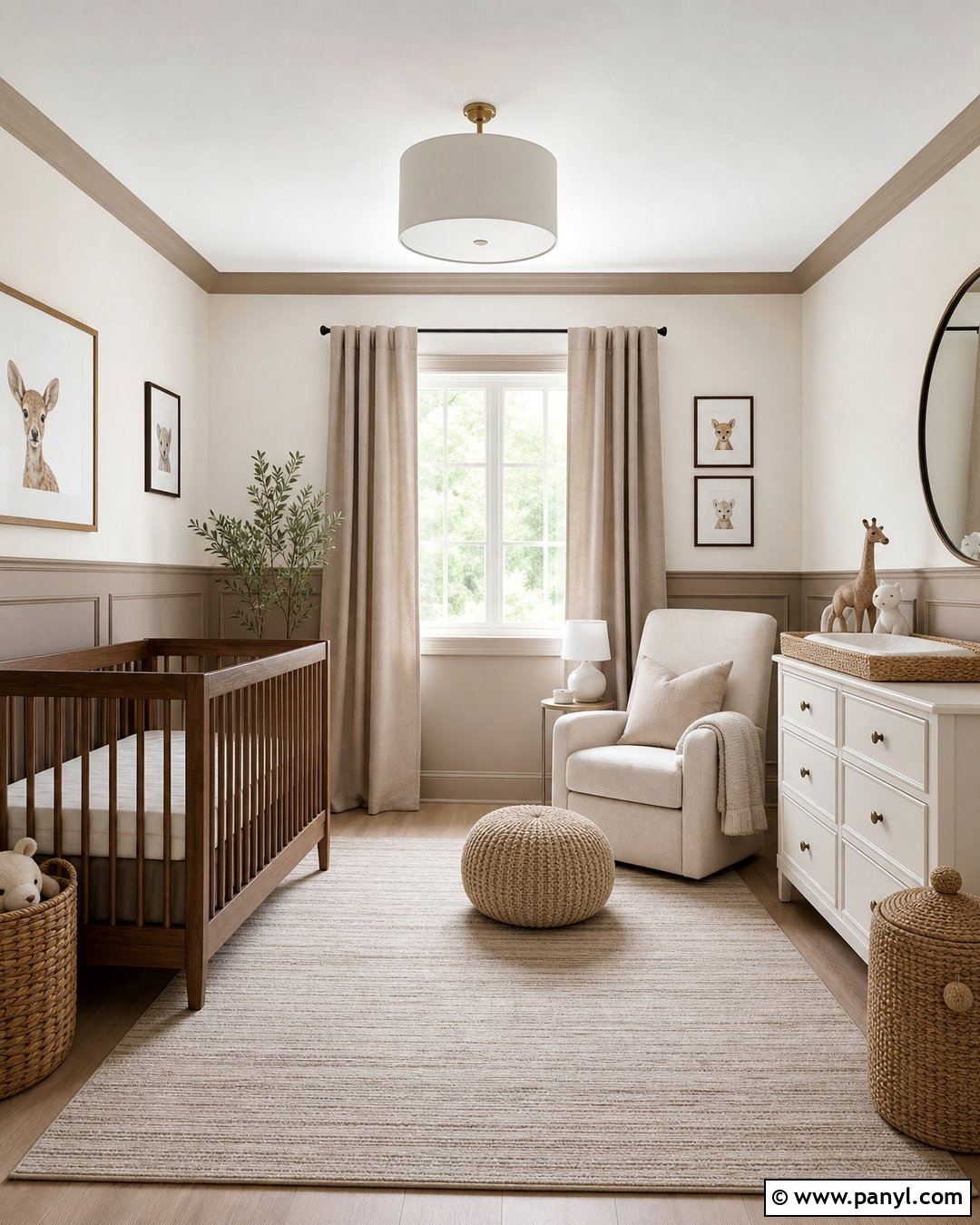
Two warm neutrals can create plenty of depth when their undertones and finishes are carefully coordinated. Paint the lower half soft mushroom taupe and the upper half creamy ivory. Add taupe picture-frame molding below the dividing rail to introduce detail without another color. A walnut crib, ivory dresser, and oatmeal performance-fabric glider produce a warm, layered furniture scheme. Choose a plush beige rug with a subtle linear pattern and use flax-colored curtains for softness. Black accents should be limited to thin picture frames or a small floor lamp. Bring character through woven baskets, ceramic animals, and textured crib linens rather than bright colors. This understated nursery works particularly well in an open or highly visible room because it connects easily with neutral finishes used elsewhere in the home.
11. Black And White Nursery Walls
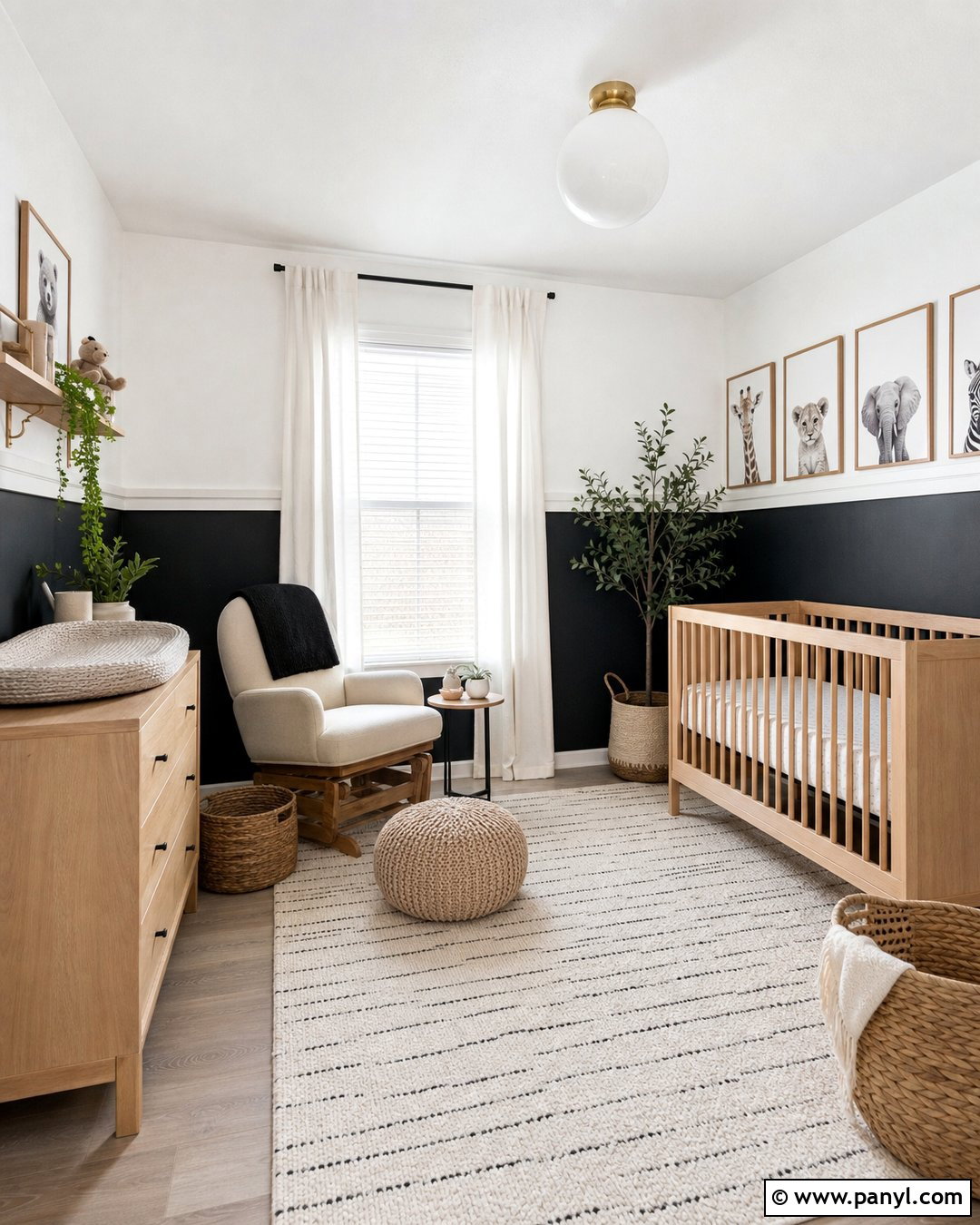
A black lower wall can look striking and sophisticated when balanced by generous white space above. Keep the dark color below the chair rail and use a durable satin finish that is easier to clean. White upper walls, ceiling, trim, and curtains prevent the nursery from feeling enclosed. Choose a natural maple crib and dresser to warm the high-contrast palette. An ivory glider and a large cream rug with thin black lines soften the graphic effect. Hang simple animal prints in oak frames and add a white globe pendant for rounded contrast. Tan baskets, beige bedding, and one muted green plant motif introduce natural color. Avoid filling every surface with black-and-white patterns. A few carefully repeated lines will make the complete room feel playful rather than visually busy.
12. Peach And Pale Pink Nursery Walls
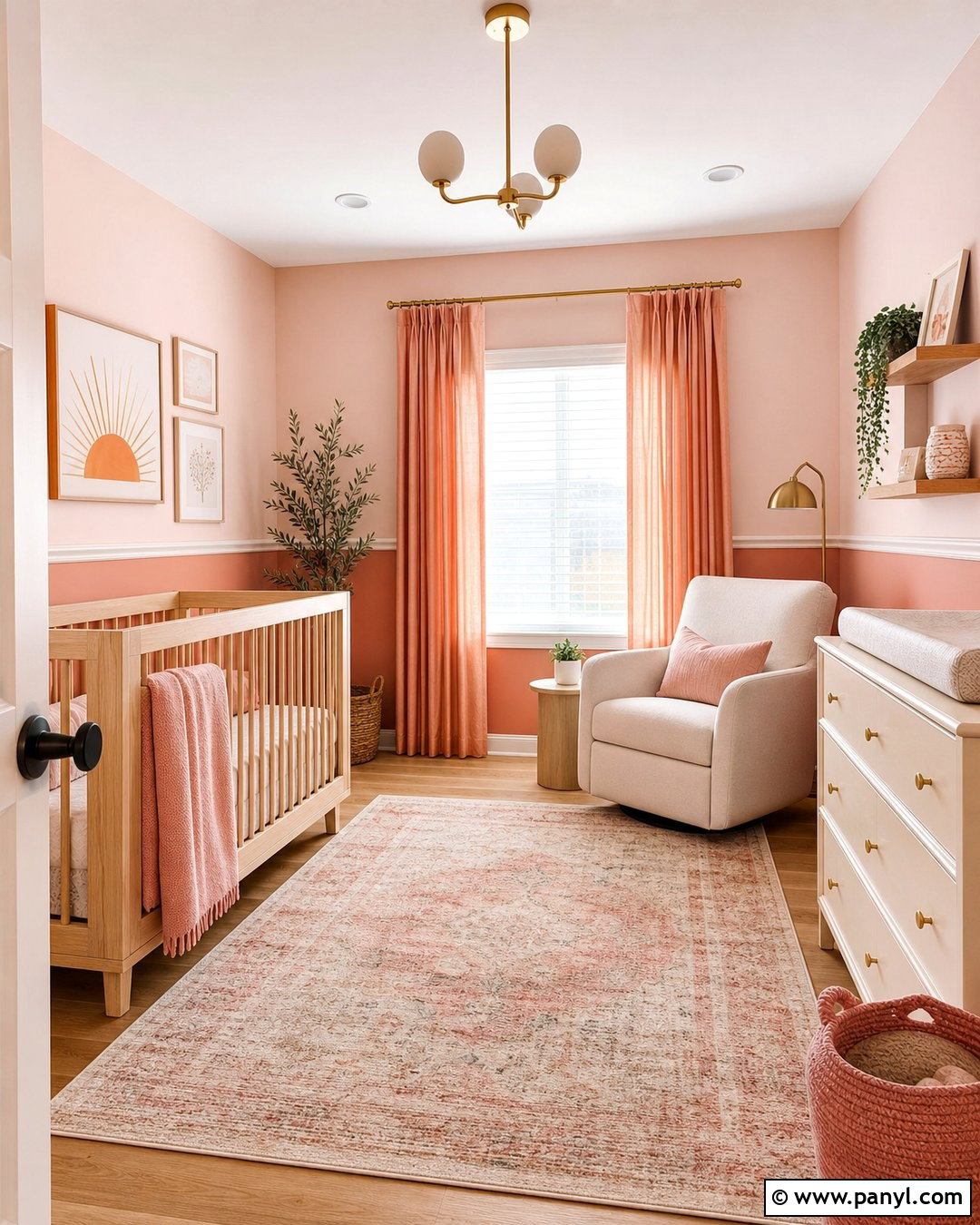
Peach on the lower wall and pale pink above creates a warm, sunset-inspired nursery with a soft tonal transition. Use a thin cream rail between the colors so each shade remains distinct. A light oak crib and cream dresser complement the warmth of the walls, while an ivory glider adds a comfortable neutral anchor. Select a cream rug with faded peach, rose, and tan details to unite the palette. Sheer white curtains layered with peach blackout panels provide flexible light control. Decorate with simple sun artwork, a rounded mirror, and brushed brass lighting. A few dusty rose storage baskets add depth without introducing an unrelated color. Keep the ceiling and trim creamy white, since a cool white could make the peach and pink walls appear brighter and less harmonious.
13. Sky Blue And Cloud White Nursery Walls
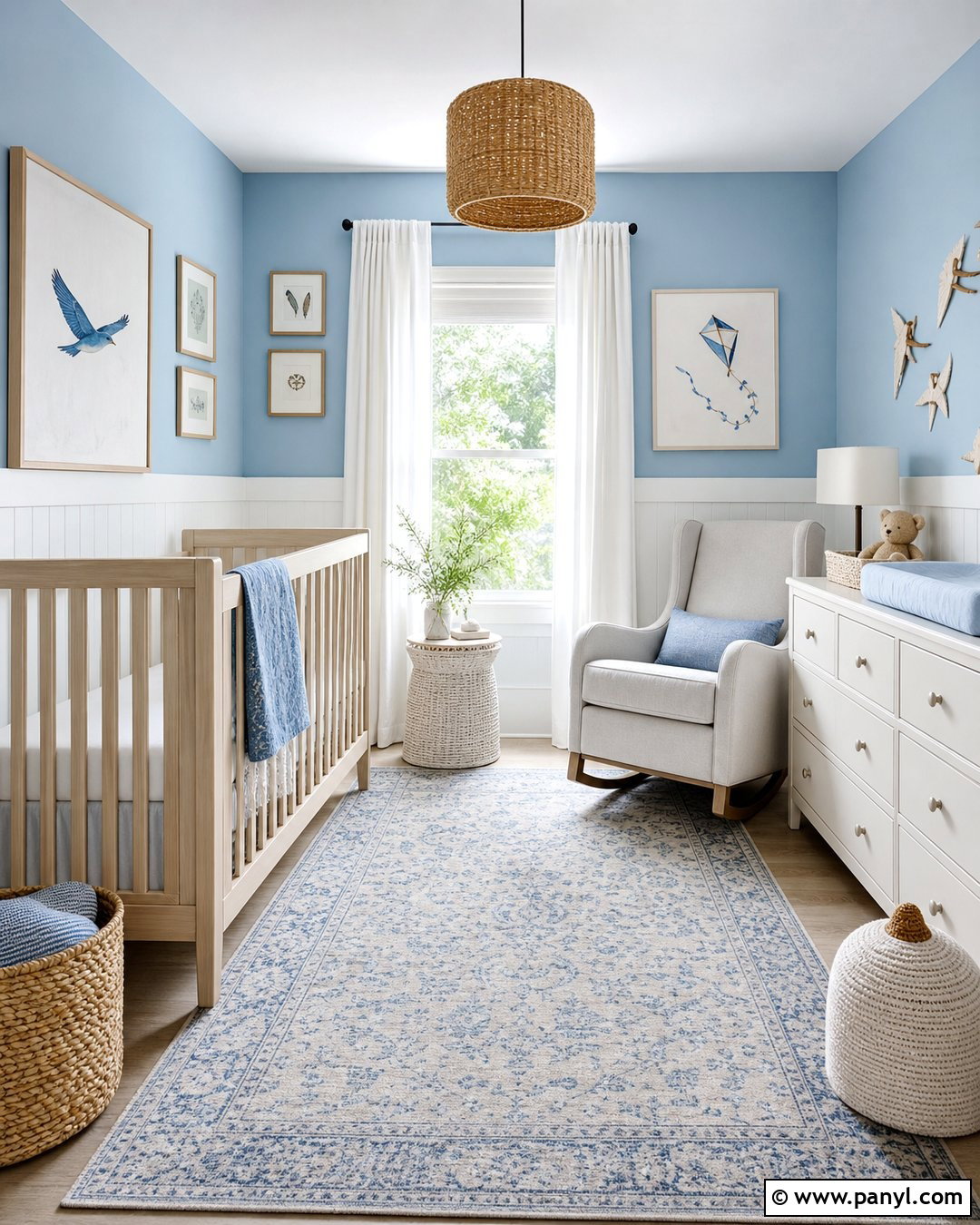
Sky blue across the upper two-thirds of the walls creates an airy backdrop, while cloud white below keeps the nursery crisp and practical. Use white beadboard for the lower section to add texture and protect heavily used areas. Continue the white across the baseboards, chair rail, doors, and window trim. A pale wood crib, white dresser, and light gray glider form a relaxed furniture arrangement. Place a blue-and-cream rug in the center and add white blackout curtains edged with a narrow blue border. Small bird, kite, or cloud prints can support the open-sky theme without overwhelming it. Warm the cooler palette with woven baskets and a natural rattan light fixture. Soft blue bedding and one muted yellow blanket provide enough color to complete the cheerful look.
14. Olive Green And Beige Nursery Walls
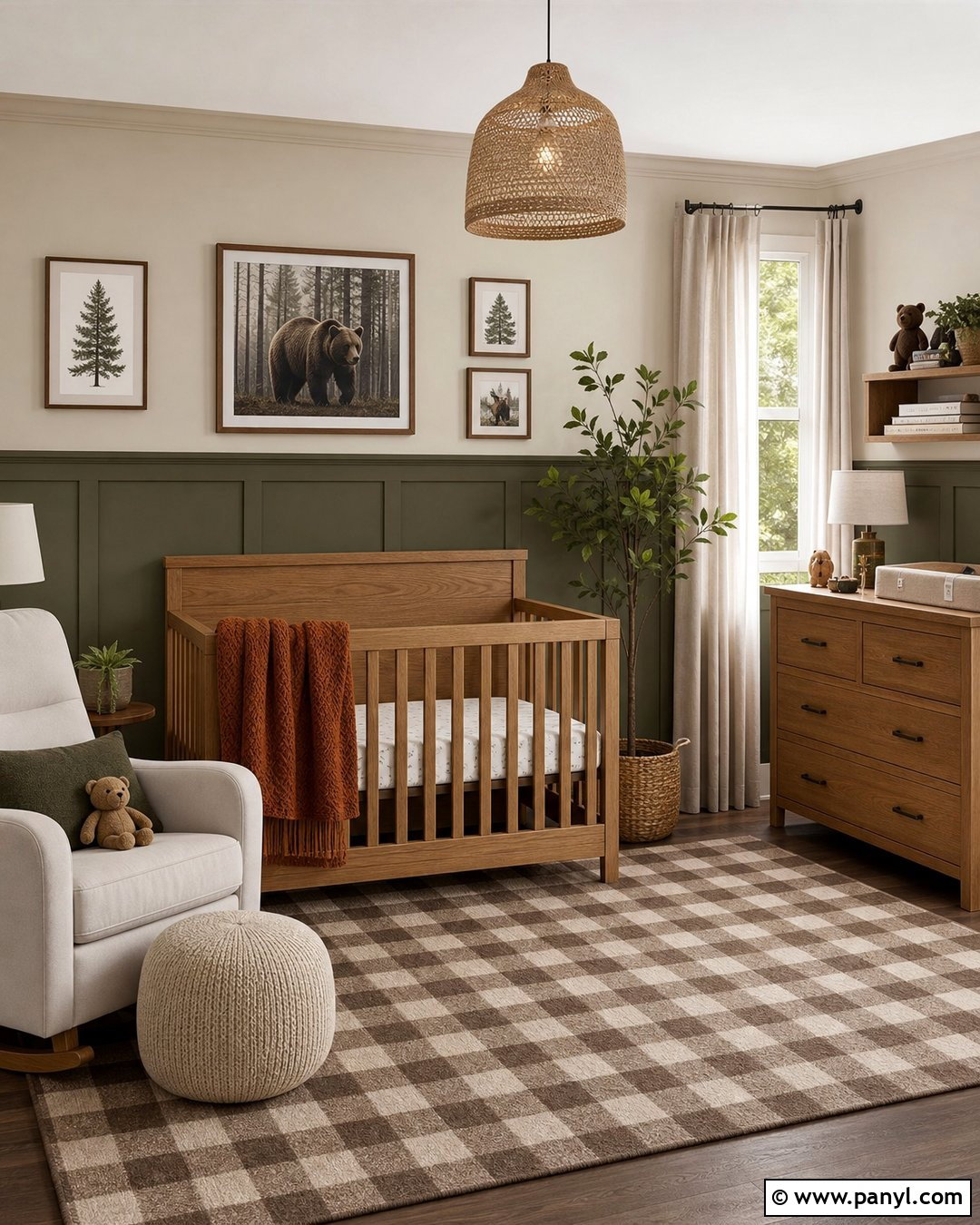
Olive green lower walls and sandy beige above offer a mature woodland palette that can transition beyond the nursery years. Build slim board-and-batten panels across the green section and paint the trim in the same olive finish. A medium oak crib and matching dresser enhance the earthy character, while a cream glider prevents the room from becoming too dark. Add a beige rug with a small brown check, flax linen curtains, and a woven ceiling shade. Woodland artwork should use subtle illustrations of trees, rabbits, and birds rather than bright cartoon graphics. Repeat olive on a storage bench or bookshelf, then bring in muted rust through blankets and baskets. This complete combination feels grounded and calm, especially in rooms with warm flooring and plenty of natural afternoon light.
15. Teal And Soft Aqua Nursery Walls
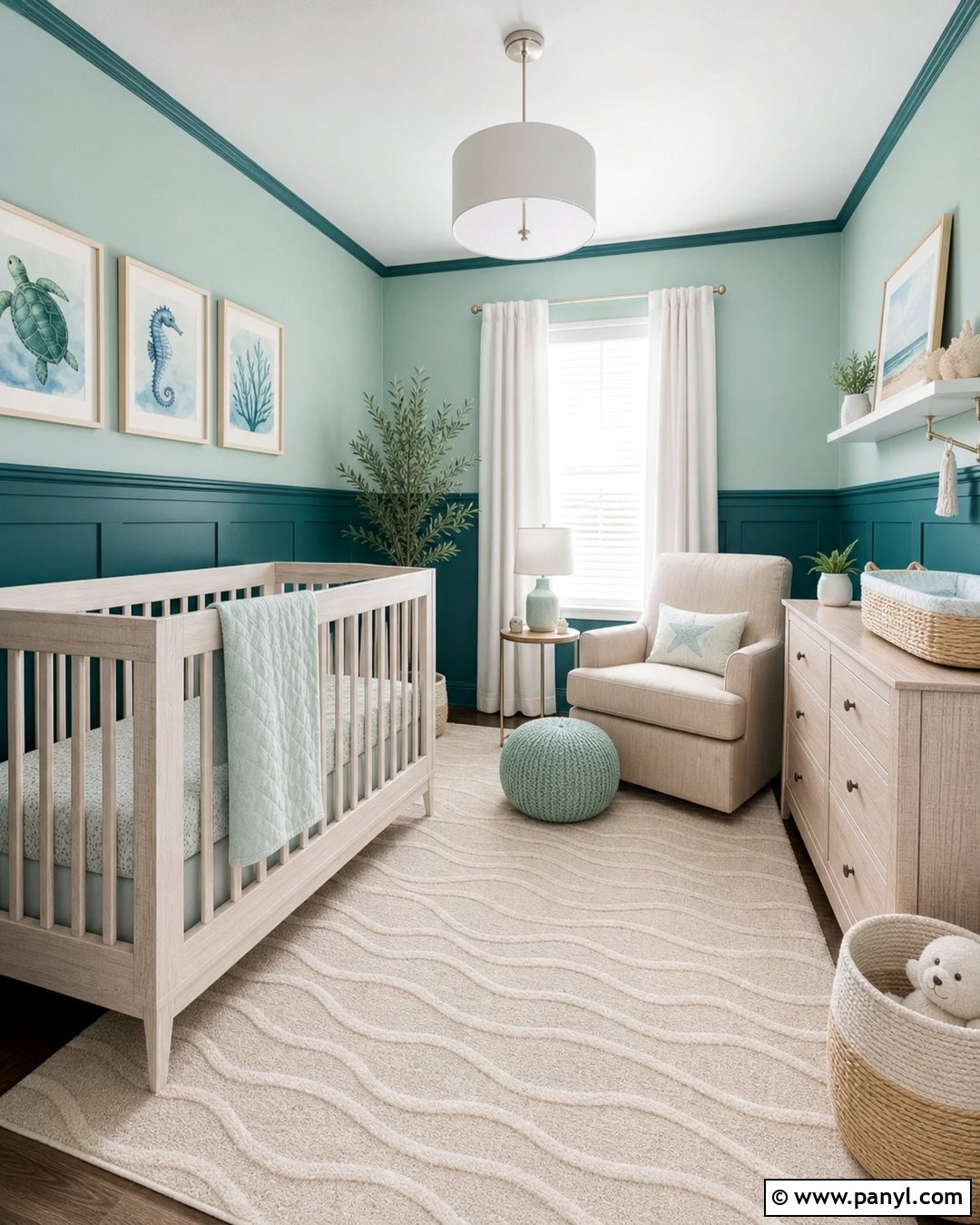
A deep teal lower section combined with soft aqua above creates an ocean-inspired nursery without requiring literal nautical decorations. Set the dividing line near the lower third to keep the darker color from dominating. Paint a slim chair rail teal so it visually merges with the base. A white crib, pale wood dresser, and light beige glider brighten the cool palette. Use a cream rug with subtle blue-green waves, white linen curtains, and brushed nickel lighting. Framed watercolor sea life or abstract coastal prints can establish the theme in a gentle way. Add natural rope baskets and driftwood-colored shelves for warmth. Keep crib linens mostly white and aqua, using deep teal on only one blanket or cushion. The finished room will feel refreshing, restful, and visually balanced.
16. Rust And Sand Nursery Walls
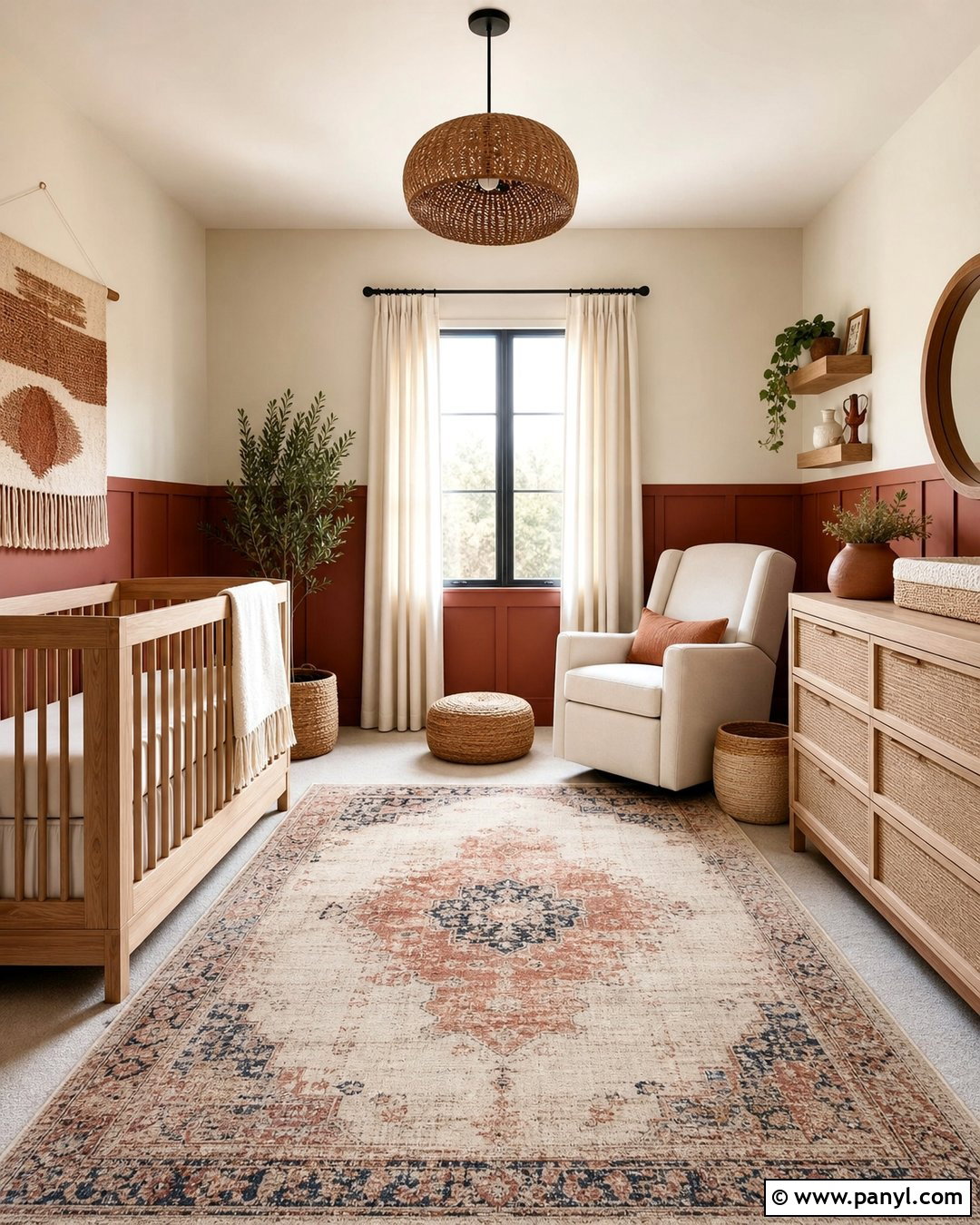
Muted rust along the lower half brings warm personality to a nursery, while pale sand above keeps the look soft and adaptable. Add narrow vertical molding to the rust section for understated architectural interest. A natural oak crib and cane-front dresser continue the desert-inspired material palette. Place an ivory upholstered glider in one corner with a small wood side table and a cream floor lamp. A washable rug featuring rust, beige, and faded blue creates a comfortable play area. Use simple off-white curtains to balance the saturated base color. Decorate with abstract desert hills, woven wall baskets, and clay-colored storage bins. One or two dusty blue accents provide cool contrast. Avoid overly bright orange accessories, since the restrained rust shade should remain the room’s main warm statement.
17. Coral And Cream Nursery Walls
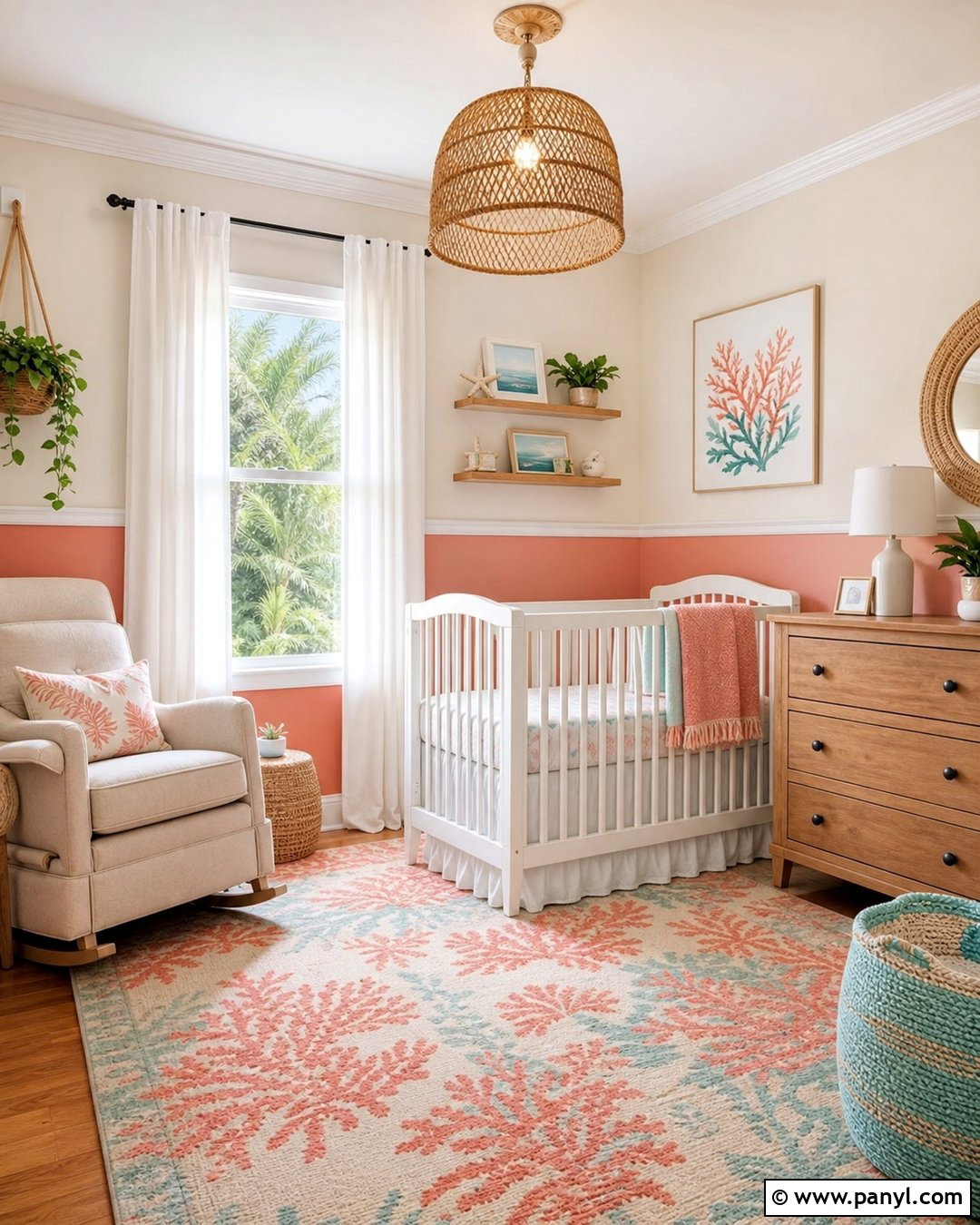
Soft coral lower walls paired with creamy white above produce a lively nursery that still feels gentle enough for rest. Choose a softened coral with peach undertones rather than a bright tropical orange. A simple cream chair rail can divide the colors and connect with the baseboards. Use a white crib, honey-toned wood dresser, and beige glider to create a light furniture mix. A cream rug with small coral and blue details brings the wall color toward the center of the room. Add airy white curtains and a woven pendant light for texture. Framed coastal plants, shells, or abstract waves can shape a relaxed seaside theme. Introduce muted aqua through a blanket and storage baskets, but keep most accessories neutral so the walls remain colorful without making the nursery overstimulating.
18. Gray And White Nursery Walls
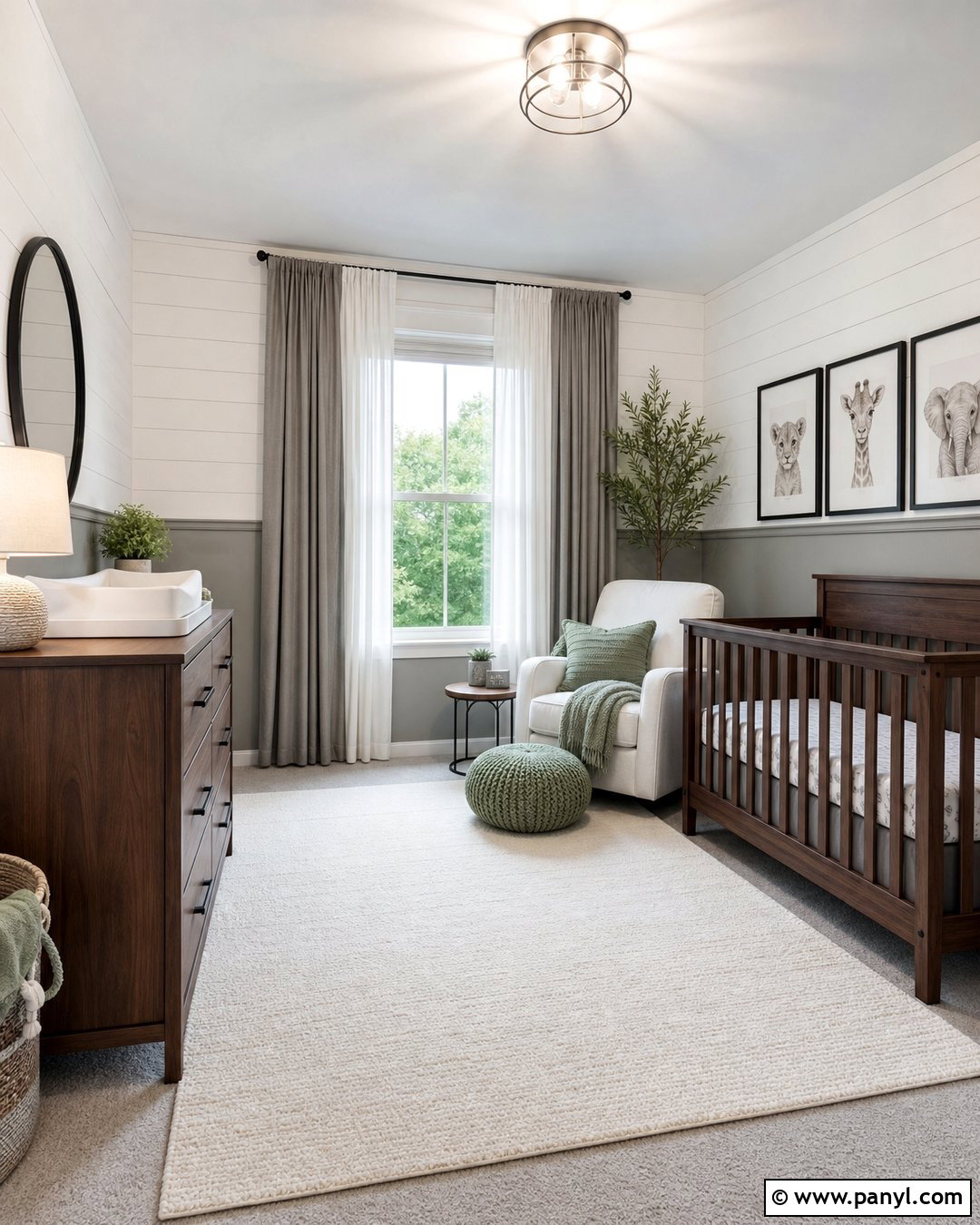
Medium warm gray below bright white walls creates a versatile nursery foundation that can support nearly any decorative theme. Use white shiplap on the upper half for subtle horizontal texture, then keep the lower gray section smooth for contrast. A medium walnut crib and dresser prevent the room from appearing too cool. Add a white upholstered glider, a large ivory rug, and gray blackout curtains with white sheers. Simple black-and-white animal drawings provide definition, while muted blue or sage accessories introduce a small amount of color. Choose a warm white ceiling fixture rather than a stark industrial design. The result is clean but comfortable, with enough texture to feel finished. As the child grows, the neutral walls can easily accommodate new bedding, artwork, and storage colors.
19. Plum And Blush Nursery Walls
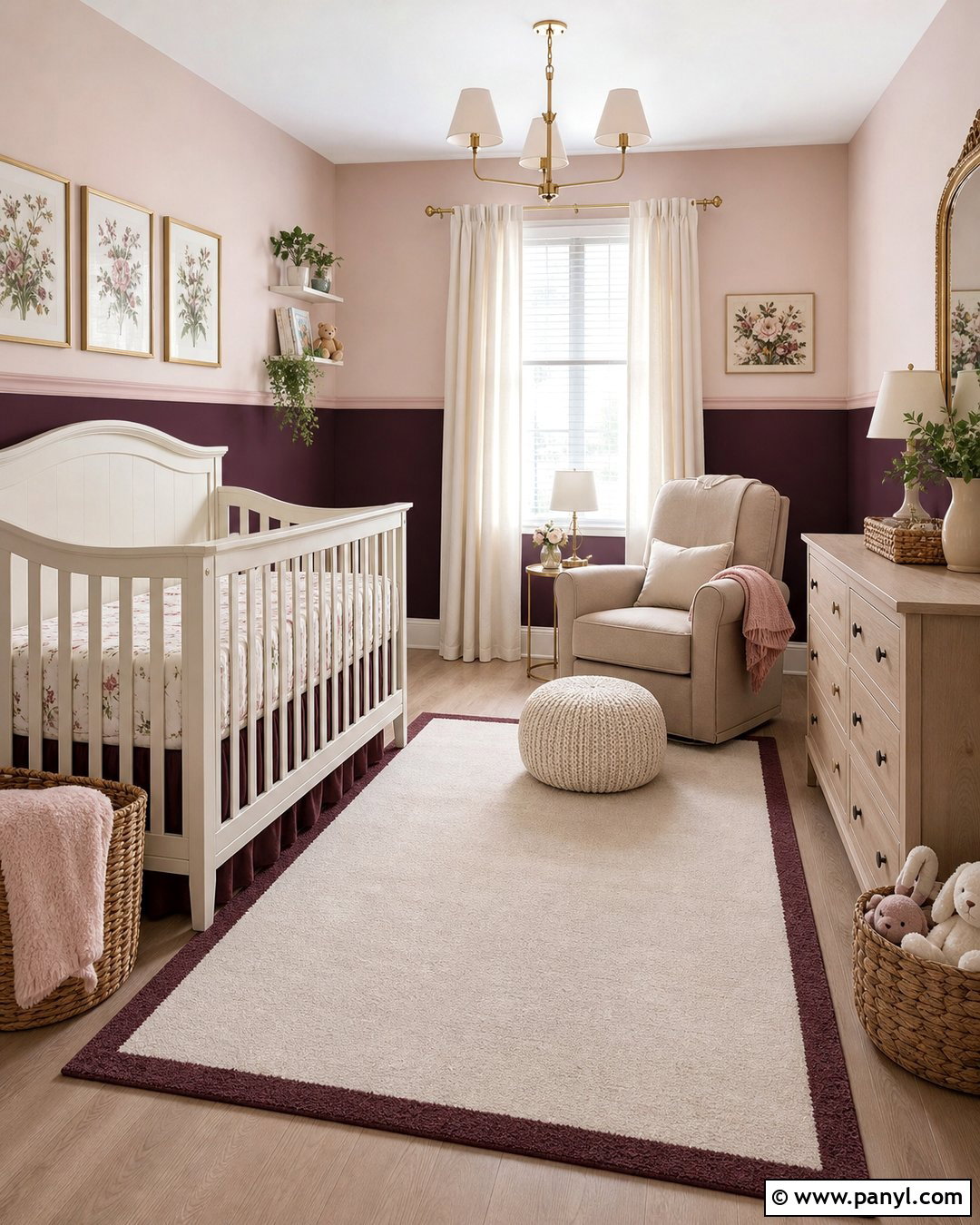
Deep plum below pale blush creates a rich nursery palette that feels cozy without becoming overly dark. Keep the plum section to roughly one-third of the wall and divide it with a blush-painted chair rail for a softer transition. A cream crib, pale oak dresser, and beige glider lighten the room while complementing both wall shades. Anchor the center with an ivory rug featuring a delicate plum border. Off-white curtains and brushed brass lighting add brightness and warmth. Floral or garden artwork can include muted rose, burgundy, and green, but avoid introducing too many saturated colors. Use plum storage baskets and blush bedding to repeat the walls at different heights. This combination works best with warm bulbs and natural wood accents that soften the stronger lower color.
20. Chocolate Brown And Cream Nursery Walls
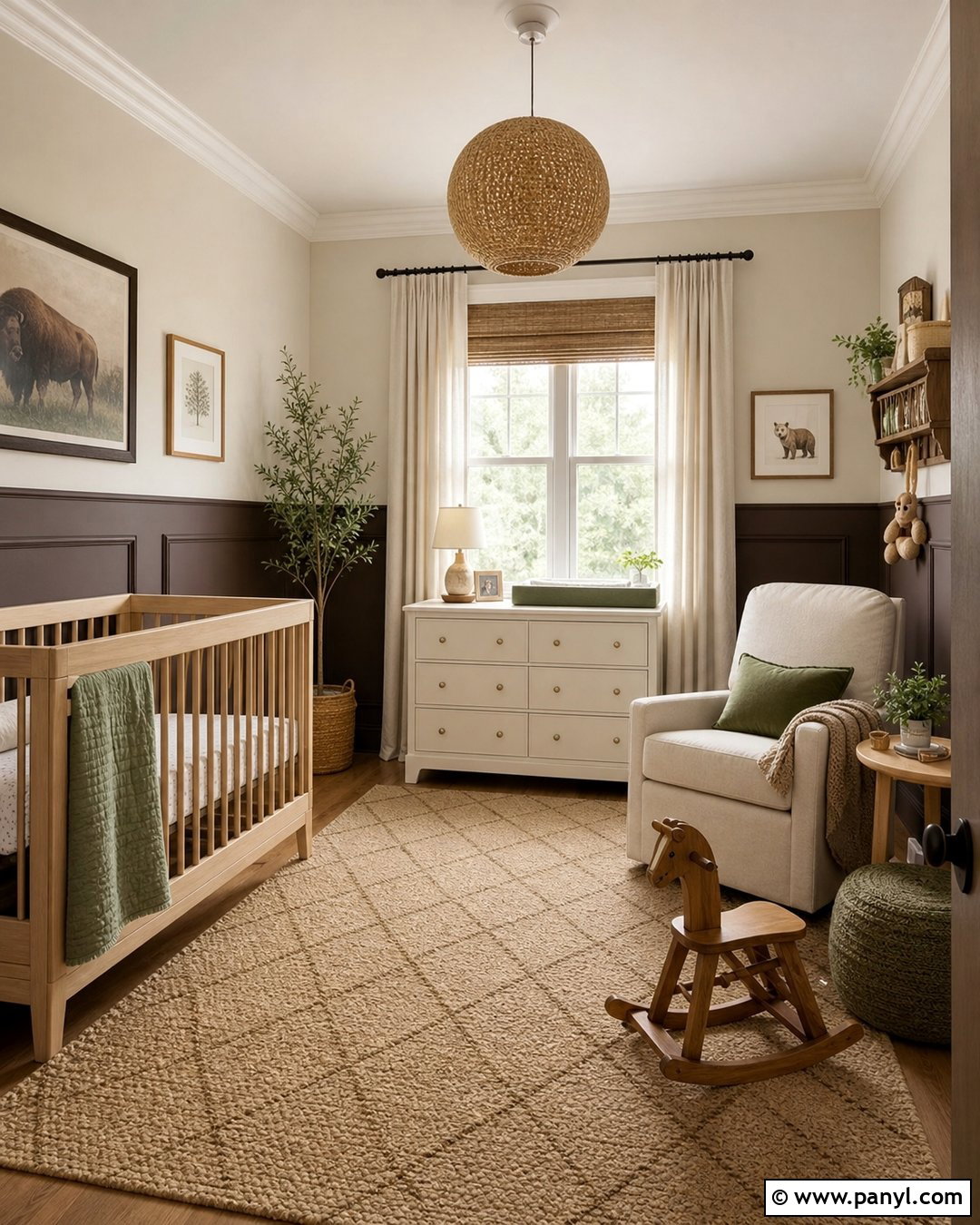
Chocolate brown wainscoting brings warmth and depth to a cream nursery, especially when paired with natural materials. Install picture-frame molding on the lower third and paint the panels, chair rail, and baseboards one consistent brown. Keep the upper walls, ceiling, and window trim creamy white. A natural ash crib stands out gently against the dark base, while an ivory dresser and oatmeal glider balance the room. Add a tan rug with a small cream diamond pattern, linen curtains, and an oversized woven pendant light. Woodland prints, carved wooden toys, and soft beige textiles support the organic look. Include only a small amount of moss green through a blanket or basket. The finished nursery should feel warm and cocooning rather than heavy, formal, or overly traditional.
21. Blue Green And White Nursery Walls
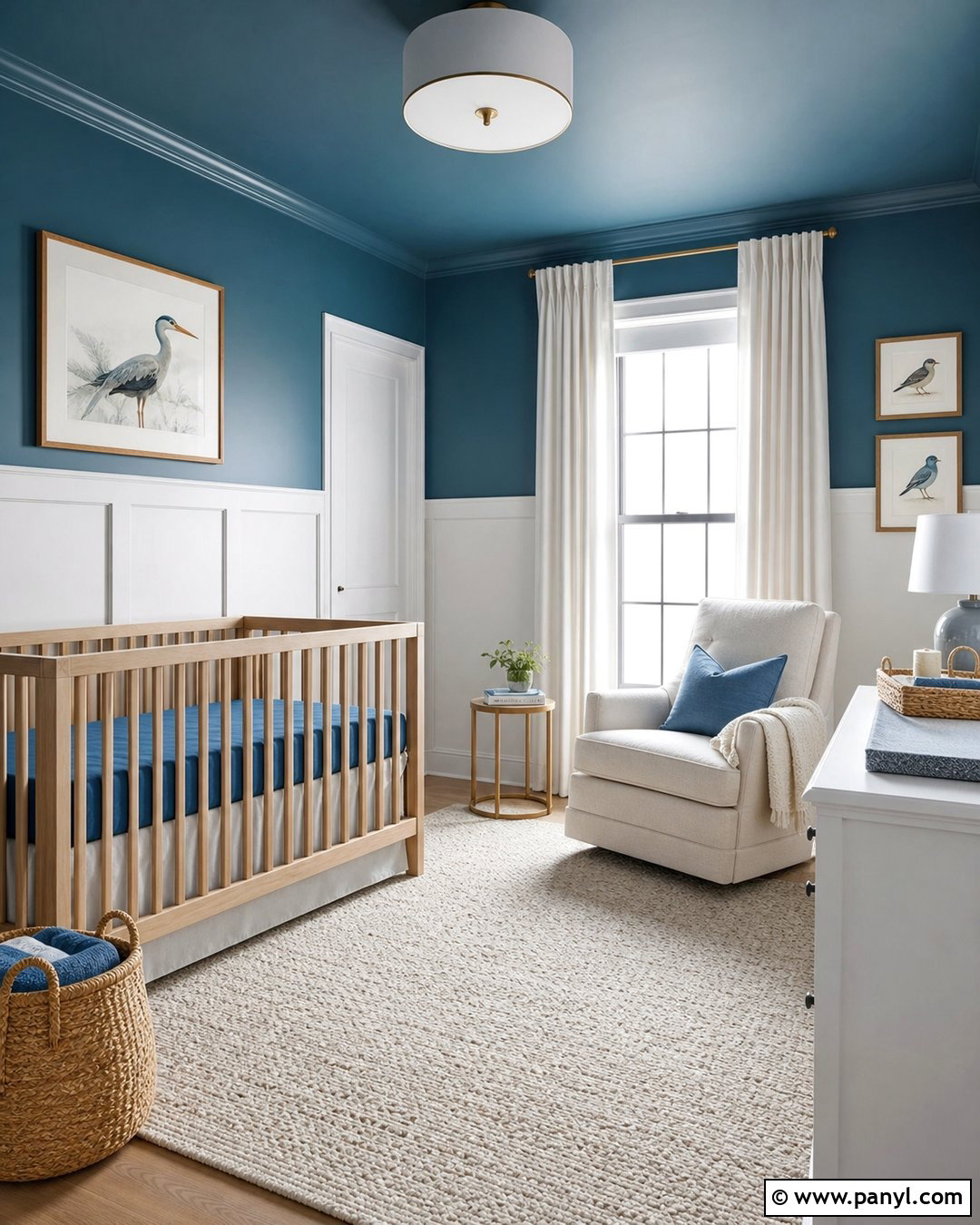
Painting blue-green across the upper walls and ceiling creates an immersive canopy effect, while clean white below gives the room a bright foundation. Set the dividing line high, approximately two-thirds up the wall, and use a slim white picture rail around the room. A pale oak crib, white dresser, and oatmeal glider keep the floor-level furnishings light. Add floor-length white curtains, a cream rug with a blue-green border, and a simple white pendant light. The ceiling color makes the room feel connected and cozy, particularly when paired with soft daylight. Decorate with subtle woodland or bird artwork, natural baskets, and light blue bedding. Avoid adding several unrelated accent colors. Repeating blue-green through one shelf, pillow, or changing pad cover will make the full design feel deliberate.
22. Blue And Beige Color Block Nursery Walls
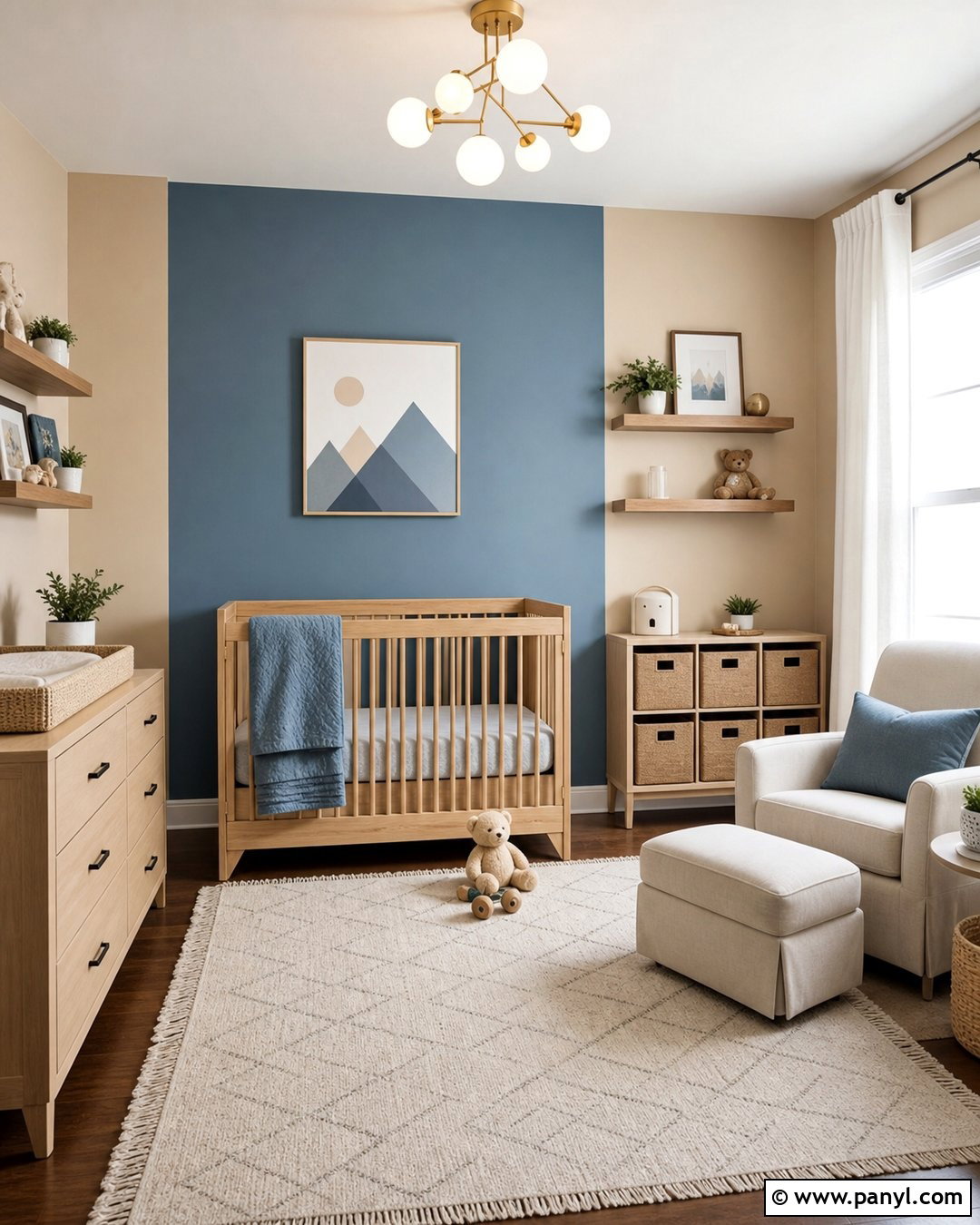
Vertical color blocking offers a fresh alternative to the usual horizontal wall split. Paint one wide blue section behind the crib and continue warm beige across the remaining wall area. Extend both colors around adjacent corners for a wrapped, architectural effect rather than creating one isolated accent wall. Choose a light wood crib and position it fully within the blue block. A beige dresser, ivory glider, and cream rug keep the furniture connected to the lighter walls. Add white curtains, natural woven baskets, and a modern globe ceiling light. Use simple artwork that overlaps neither paint edge, allowing the color geometry to remain clear. A blue blanket and tan storage bins repeat both wall colors. Precise taped lines are essential for making this complete nursery appear polished.
23. Clay And Floral Nursery Walls
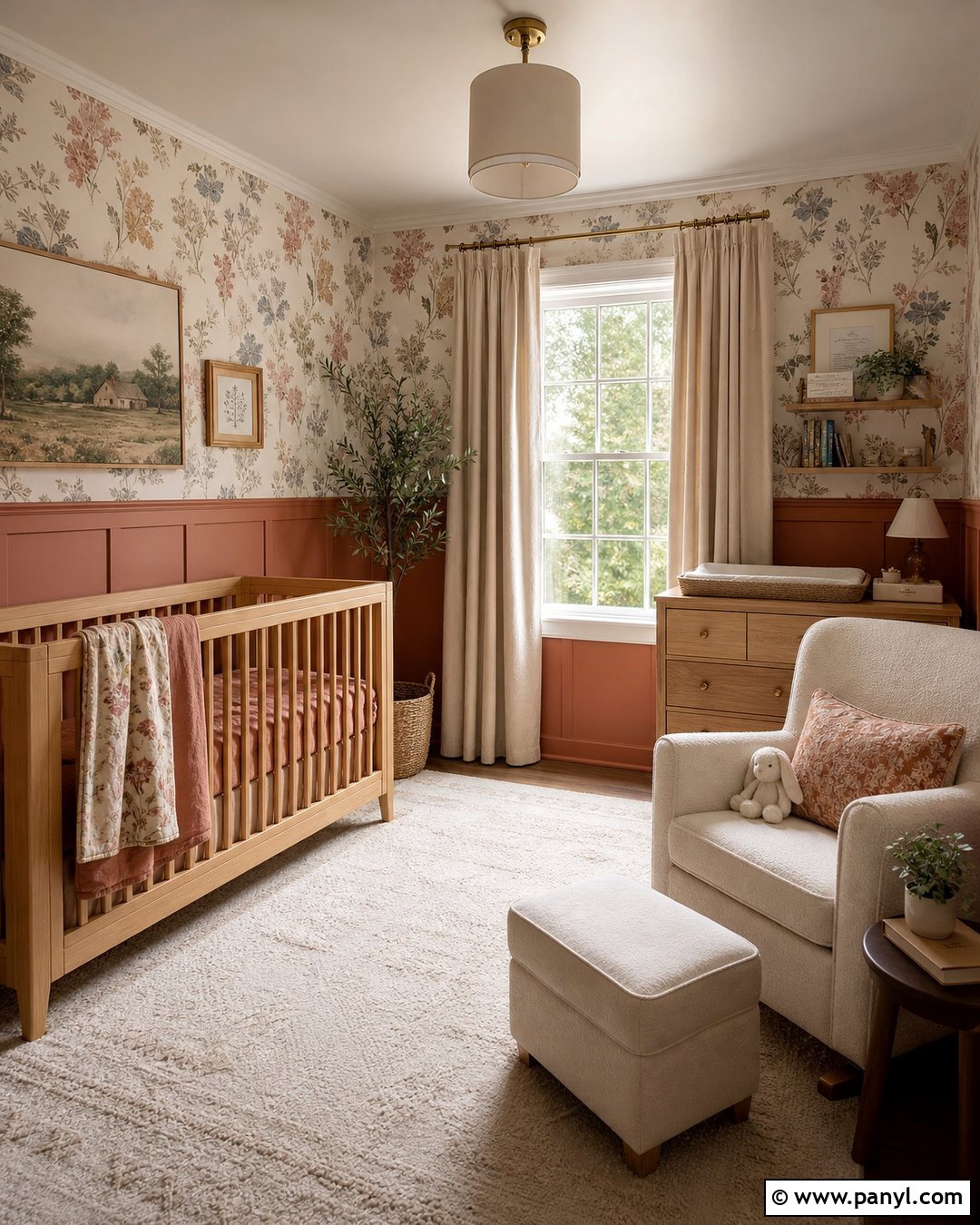
Clay-colored board-and-batten below floral wallpaper creates a warm nursery with decorative detail and lasting character. Choose wallpaper with a light cream background and a loose pattern of dusty pink, olive, and muted blue flowers. Pull the soft clay shade from the print for the lower paneling, chair rail, and baseboards. A white oak crib and matching dresser add natural warmth, while a cream glider gives the patterned room a quiet resting place. Use plain linen curtains and an ivory rug so the walls remain the main feature. Brushed brass lighting and wood picture frames complement the earthy tones. Keep bedding mostly cream, adding one floral sheet or clay blanket. This coordinated approach makes the wallpaper and painted panels feel like one intentional two-tone treatment.
24. Denim Blue And White Nursery Walls
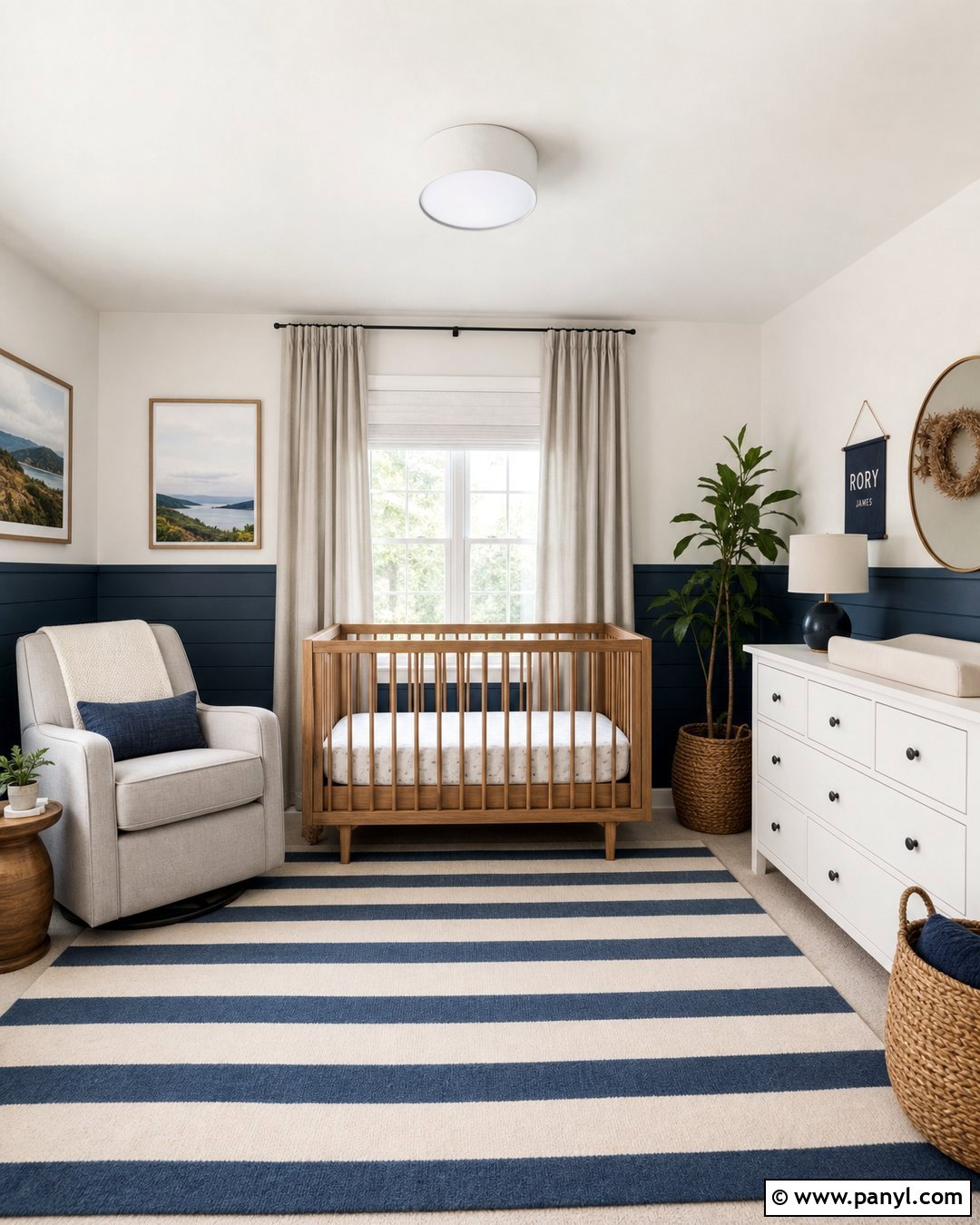
Denim blue shiplap across the lower half brings casual texture to a bright white nursery. Paint the boards and top cap in the same blue for a clean, built-in appearance. Keep the upper walls, ceiling, and trim soft white to maintain an open atmosphere. A medium wood crib, white dresser, and light gray glider create an easy furniture mix with enough contrast. Layer a cream-and-blue striped rug over warm wood floors and add natural linen curtains. Simple sailboat, landscape, or animal prints can guide the decorative theme without making it too literal. Use leather-look drawer pulls, woven baskets, and a matte white ceiling light for practical finishing details. The denim shade offers more softness than navy while remaining substantial enough to hide everyday marks near the floor.
25. Greige And White Nursery Walls
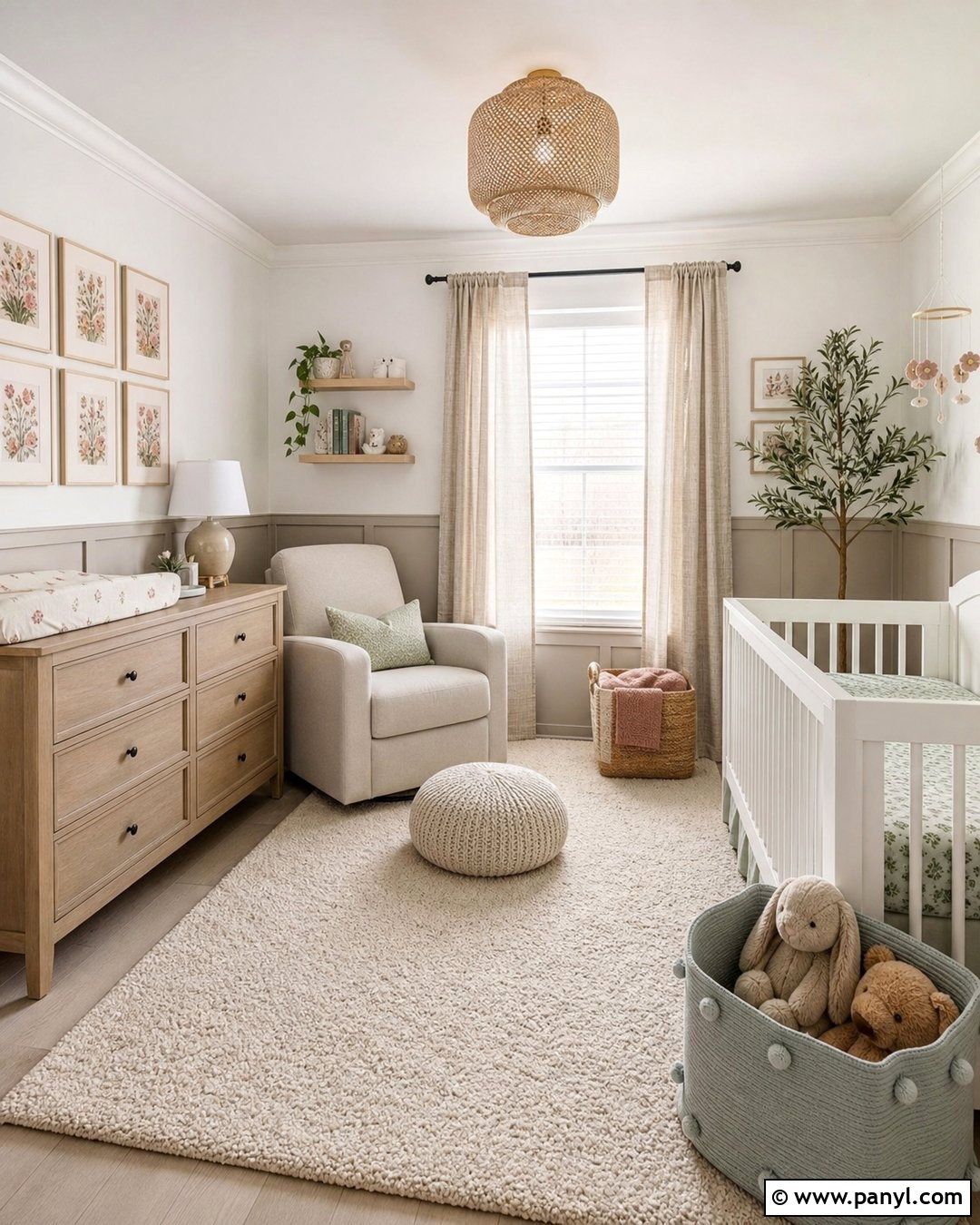
Warm greige lower walls with soft white above offer a timeless solution for parents who prefer a quiet, flexible nursery. Add narrow picture-frame molding below a white chair rail to create definition without making the room ornate. A white crib, pale oak dresser, and oatmeal swivel glider maintain the neutral palette while varying the finishes. Choose a thick ivory rug, flax curtains, and a natural woven light fixture to add visible texture. Introduce gentle color through sage green bedding, muted blue storage baskets, or dusty rose artwork depending on the desired direction. Keep the larger furniture pieces neutral so the nursery can change easily over time. This two-tone arrangement is especially useful in a compact room because the bright upper wall keeps the visual weight close to the floor.
Conclusion:
Thoughtfully designed two-tone walls can give a nursery more structure, color, and personality while keeping the room restful. Start with the mood you want to create, then choose two shades that share similar undertones. Connect those colors to the crib, rug, curtains, lighting, storage, and artwork so the entire space feels planned. Chair rails and wall paneling provide a traditional finish, while sharp painted lines and color blocks create a cleaner look. Consider washable paint for lower walls and test every color in the room’s natural and artificial light. Whether you prefer warm neutrals, gentle pastels, or deep earthy shades, these 25 Two Tone Nursery Walls provide practical inspiration for building a complete, comfortable nursery.

Related Ideas and Inspiration:
Leave a Reply