
Blank walls do not need layers of decor to feel complete. The best 20 minimal wall ideas use thoughtful color, natural texture, balanced proportions, and a few meaningful pieces to shape the entire room. Warm limewash, restrained gallery arrangements, oversized artwork, wood paneling, and tone-on-tone molding can provide interest without creating visual clutter. Current minimalist interiors also lean warmer and more personal, using earthy neutrals and tactile finishes instead of relying only on stark white surfaces. () Each look below connects the wall treatment with furniture, lighting, textiles, and surrounding finishes, so it feels practical rather than isolated. Whether you are refreshing a living room, bedroom, hallway, or office, start with these 20 minimal wall ideas.
1. Neutral Limewash Wall
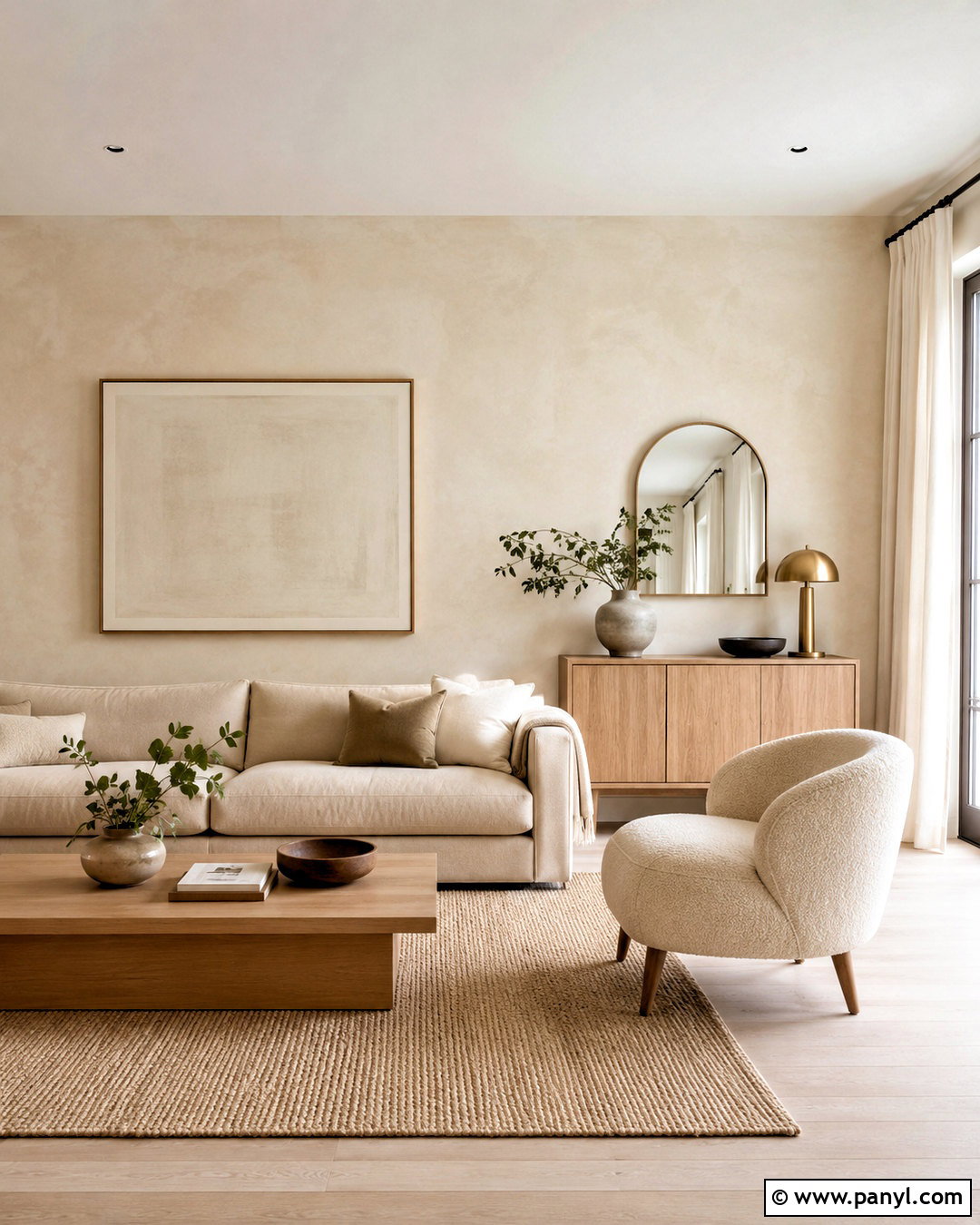
A neutral limewash wall creates gentle movement while keeping the room calm and uncluttered. Choose warm ivory, pale mushroom, or sandy beige, then carry those tones into an oatmeal sofa, linen curtains, and a softly patterned wool rug. The finish works best when the wall remains mostly open, allowing its subtle variation to become the decoration. Place one low oak console against it and add a rounded ceramic lamp, two stacked books, and a small branch arrangement. A cream boucle chair can complete the seating area without competing with the background. Keep metals soft and understated, such as aged brass or brushed nickel. The final room feels warm, natural, and carefully layered, even though very little is hanging on the wall.
2. Oversized Abstract Art Wall
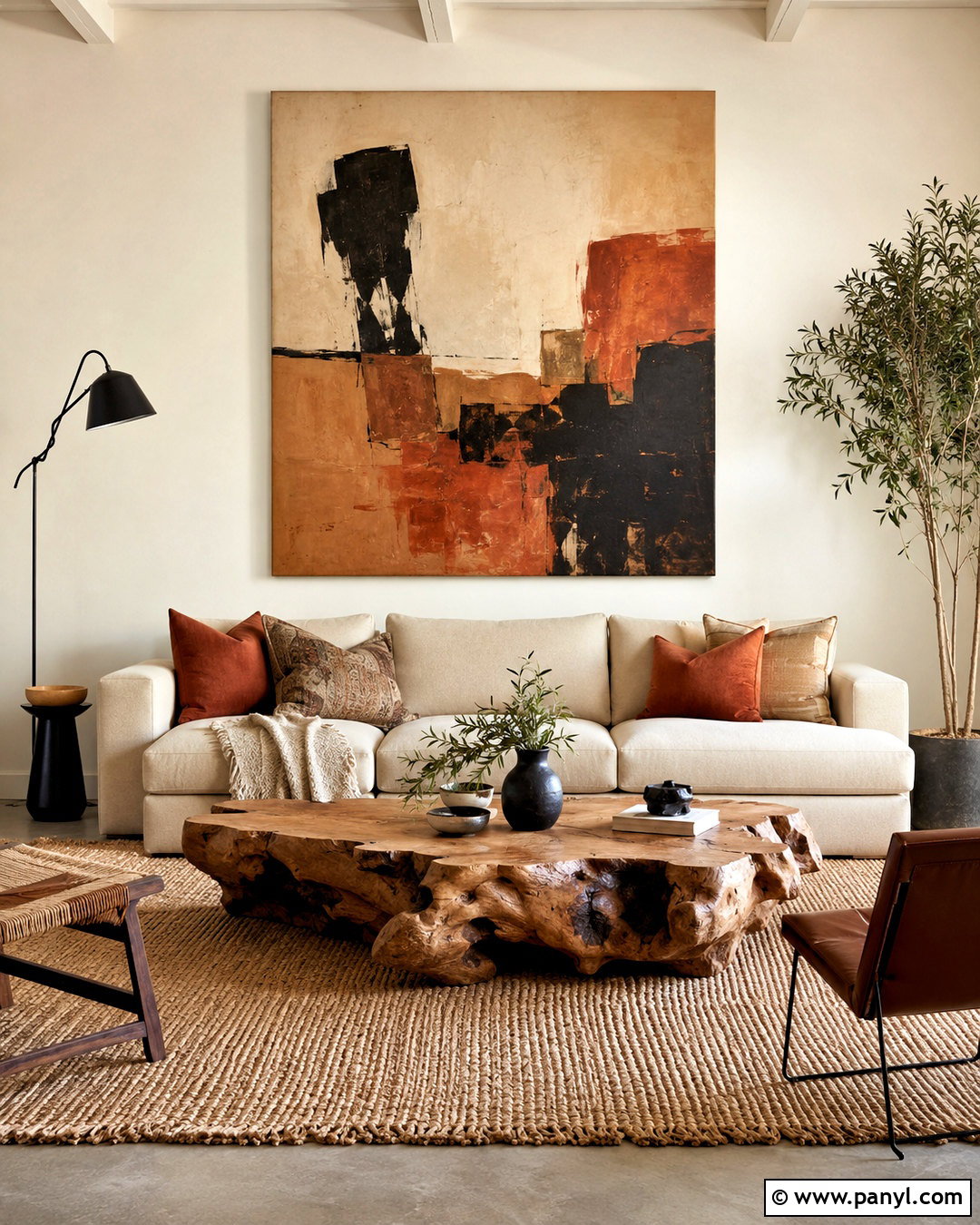
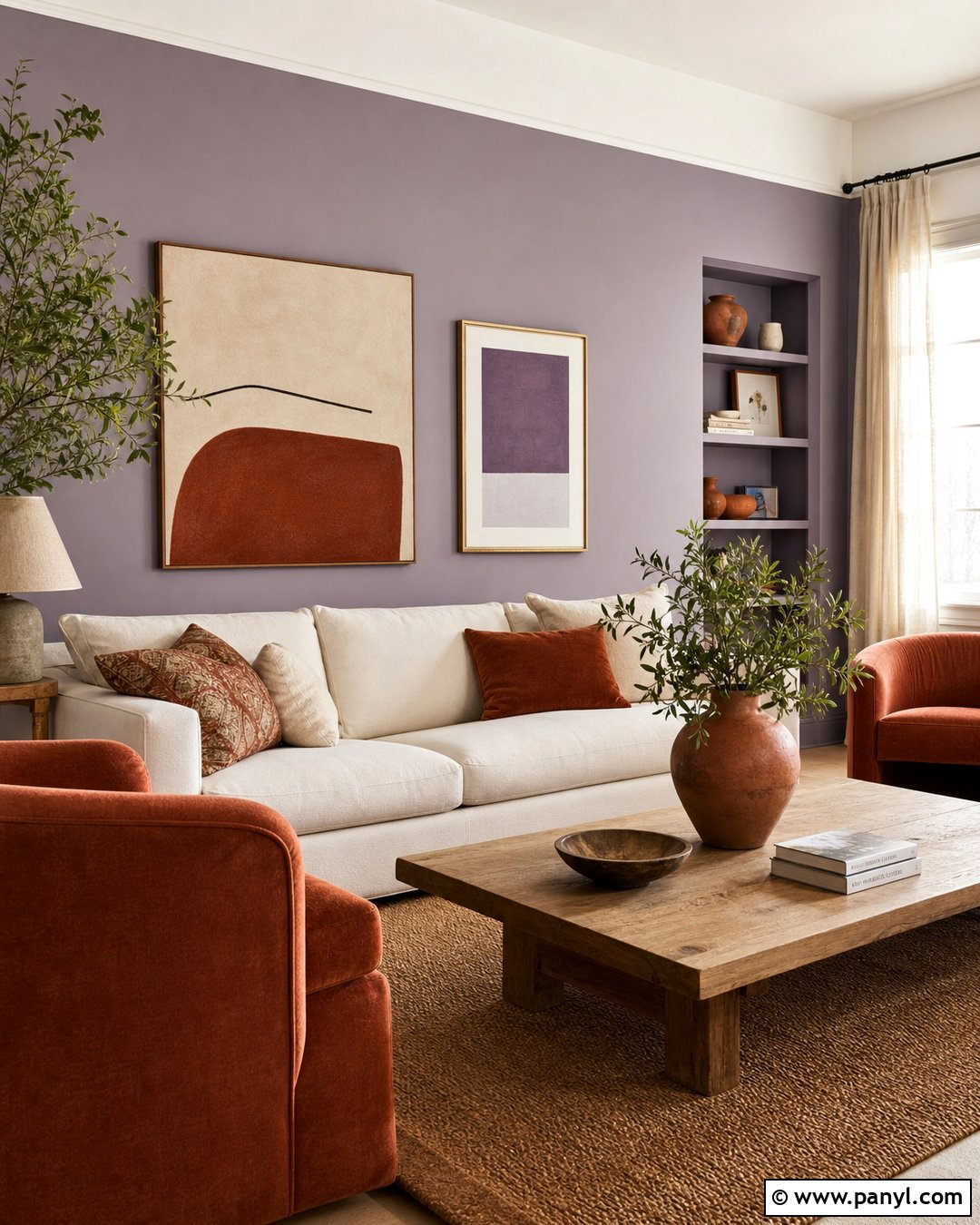
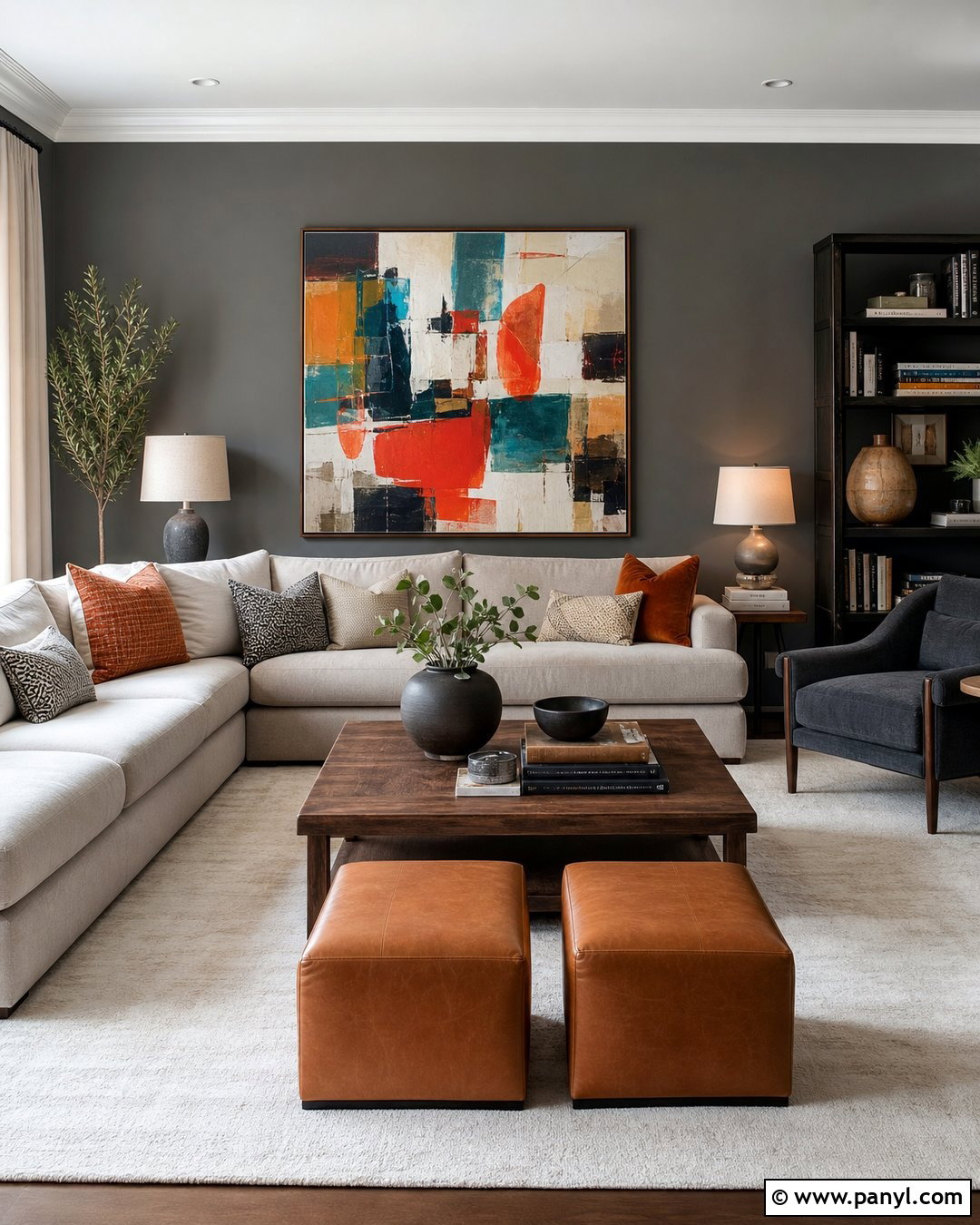
One oversized abstract canvas can organize an entire living room more effectively than several unrelated decorations. Select a piece that covers roughly two-thirds of the furniture below it, leaving open wall space around the edges. A canvas featuring cream, muted rust, charcoal, and tan works beautifully above a low beige sofa. Repeat those colors through terracotta pillows, a black metal floor lamp, and a natural jute rug. Choose a slim oak or matte black frame so the art looks finished without becoming heavy. A sculptural coffee table and one leafy plant can balance the composition. The result is minimal but not empty. Because the artwork establishes the palette, every supporting piece feels intentional, and the room gains a clear focal point without unnecessary accessories.
3. Oak Slat TV Wall
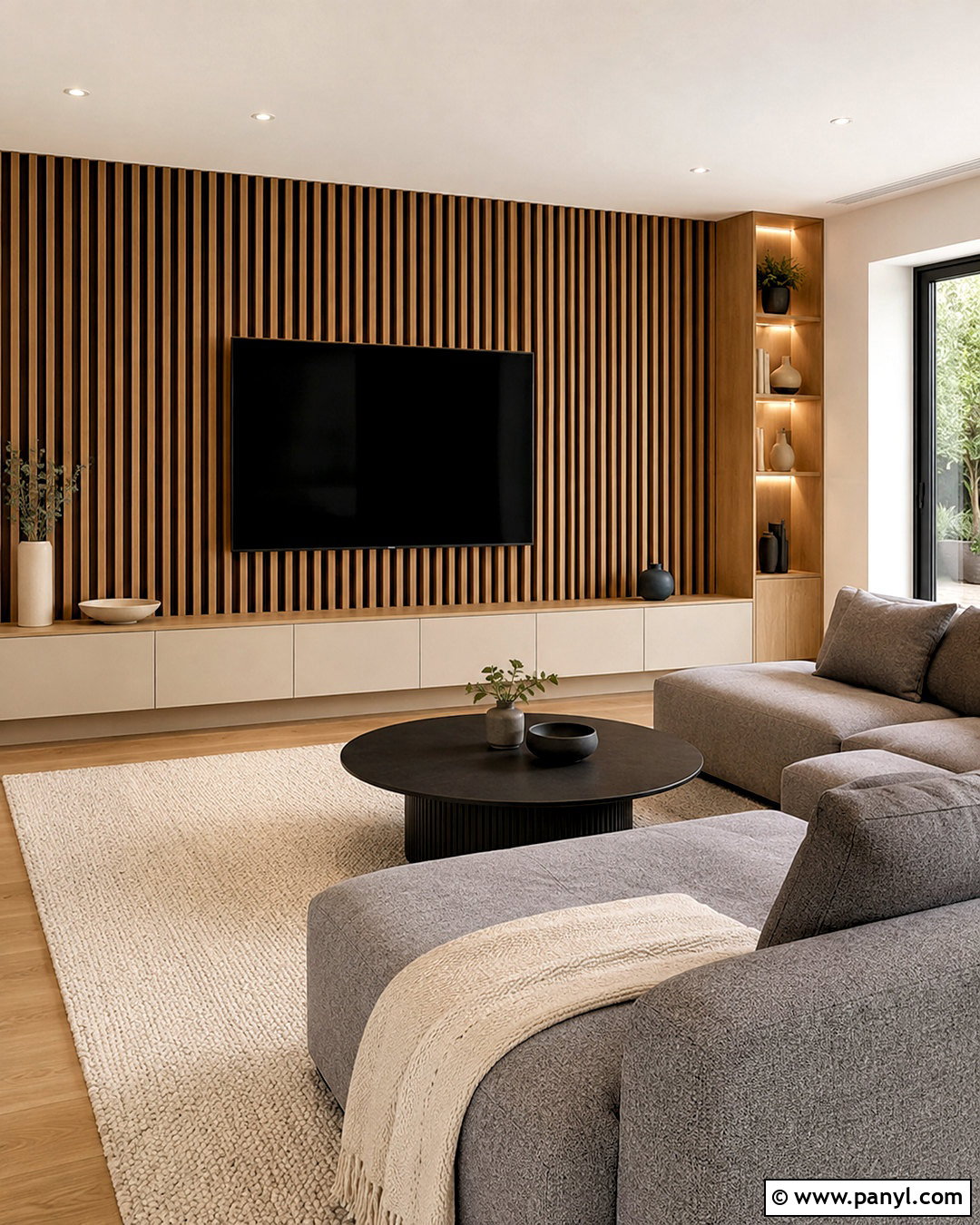
An oak slat TV wall brings warmth and structure to a modern living room while helping the television blend into its surroundings. Cover the central portion of the wall with evenly spaced vertical oak slats over a dark charcoal backing. Mount the television directly on the panel and place a long, handle-free cream media cabinet below it. Leave the remaining walls warm white to keep the room bright. Add a light gray sectional, a textured ivory rug, and a round black coffee table for balanced contrast. Conceal cables and limit the cabinet display to one ceramic vessel and a small stack of books. The repeated vertical lines provide enough visual detail on their own, creating a finished media area that does not need extra artwork or crowded shelving.
4. Minimal Gallery Wall
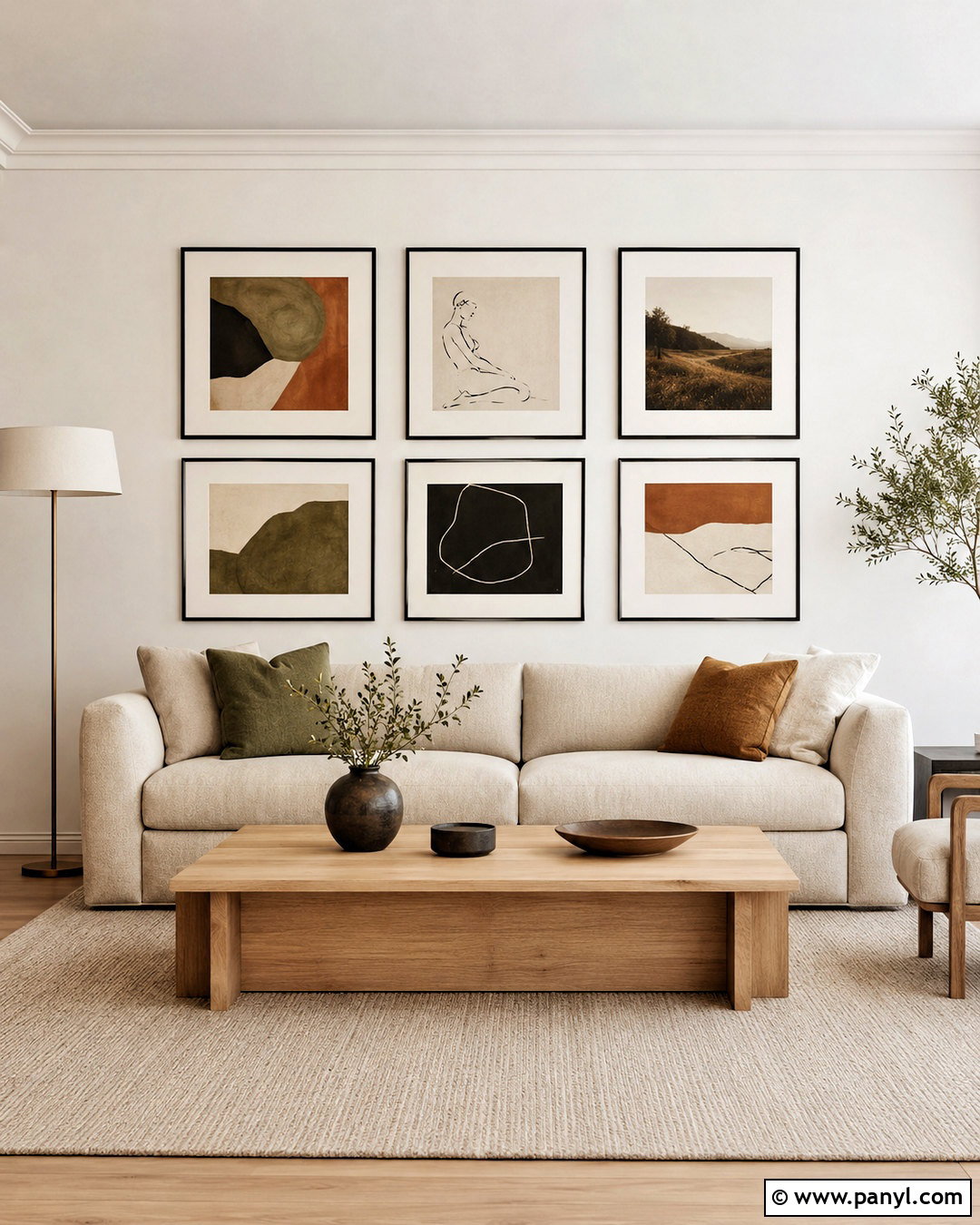
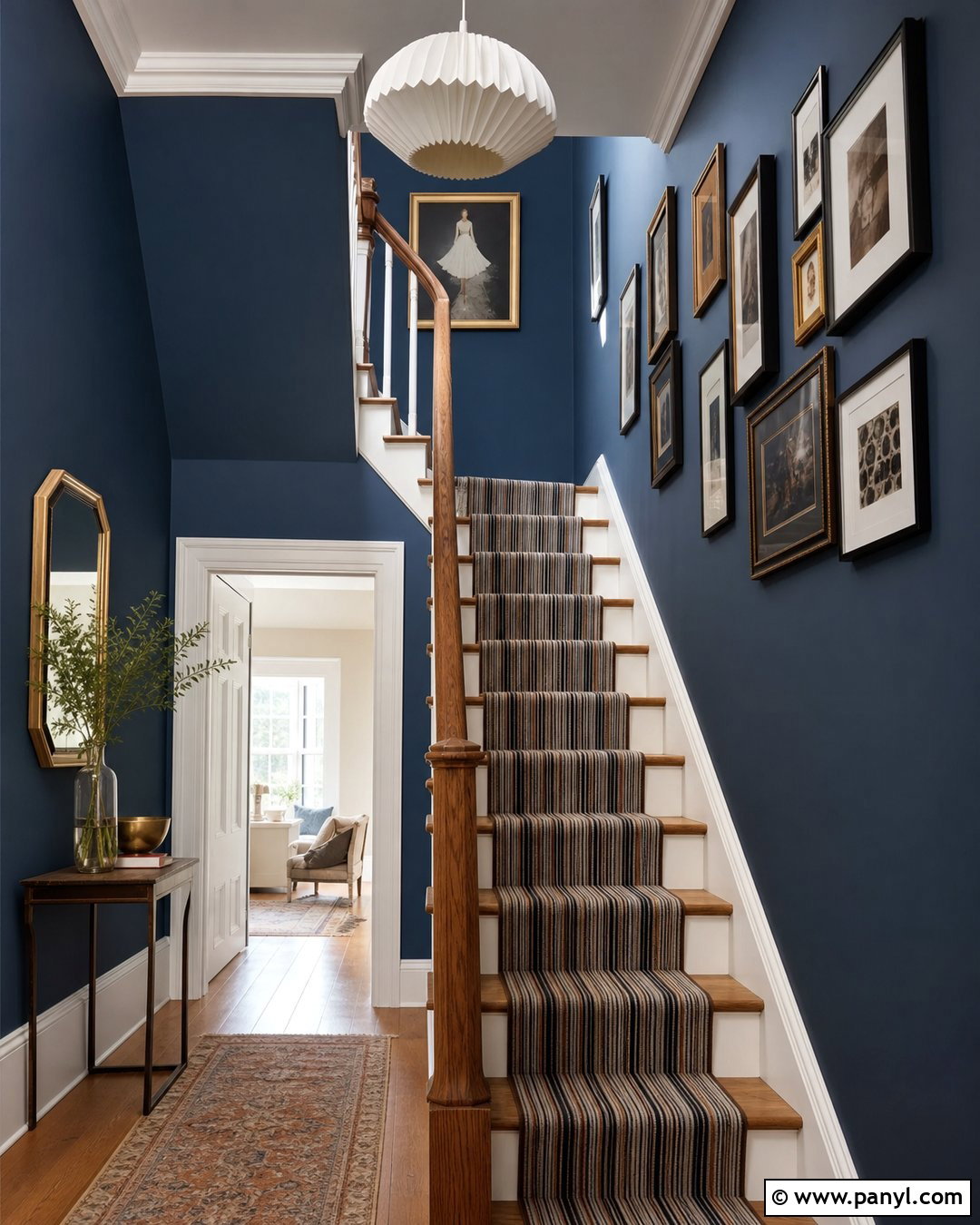
A gallery wall can still look minimal when the artwork, frames, and spacing follow a controlled plan. Arrange five or six pieces above a simple linen sofa, using a mix of abstract forms, line drawings, and quiet landscape photography. Keep the palette limited to black, cream, olive green, and soft clay. Matching thin black frames create continuity, while generous gaps prevent the arrangement from appearing crowded. Build the rest of the room around the artwork with a pale oak side table, a cream floor lamp, and one olive throw pillow. Avoid filling every corner of the wall. The open background is part of the composition. This approach provides personality and variety while preserving the orderly, restful character expected from a minimal interior.
5. Floating Picture Ledge Wall
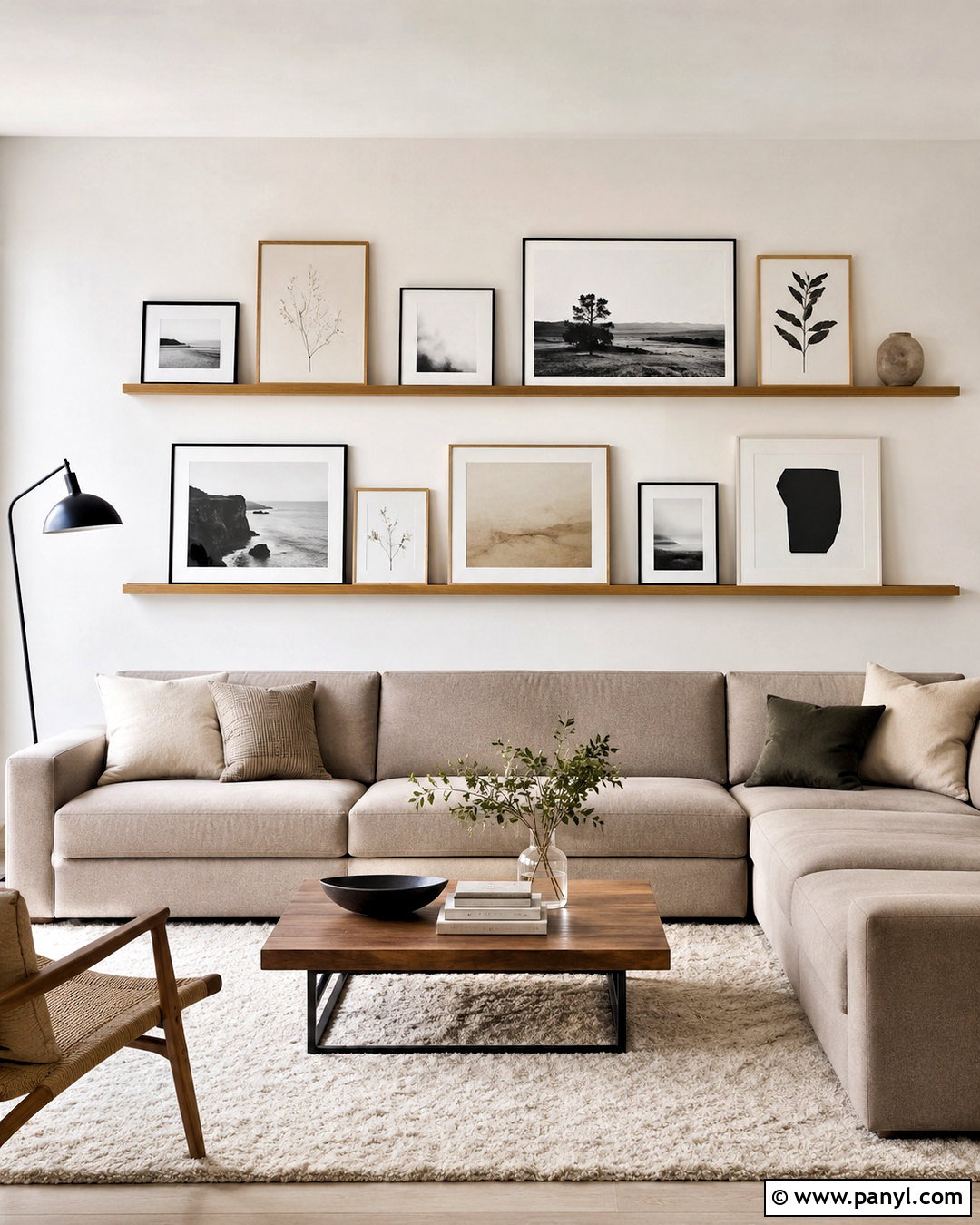
Floating picture ledges offer a flexible alternative to a permanently arranged gallery wall. Install two slim oak ledges in a straight horizontal line above a low console or sofa. Layer a few framed prints in different heights, keeping the largest piece toward one side and balancing it with a smaller frame and ceramic object. Use muted botanical drawings, monochrome photography, and soft abstract artwork for a cohesive display. A warm white wall allows the natural wood and quiet colors to stand out. Complete the room with a taupe sofa, a wool rug, and a single black reading lamp. Leave visible gaps along each ledge rather than filling the entire length. The open spacing gives every object room to breathe and makes seasonal updates easy.
6. Tonal Grid Panel Wall
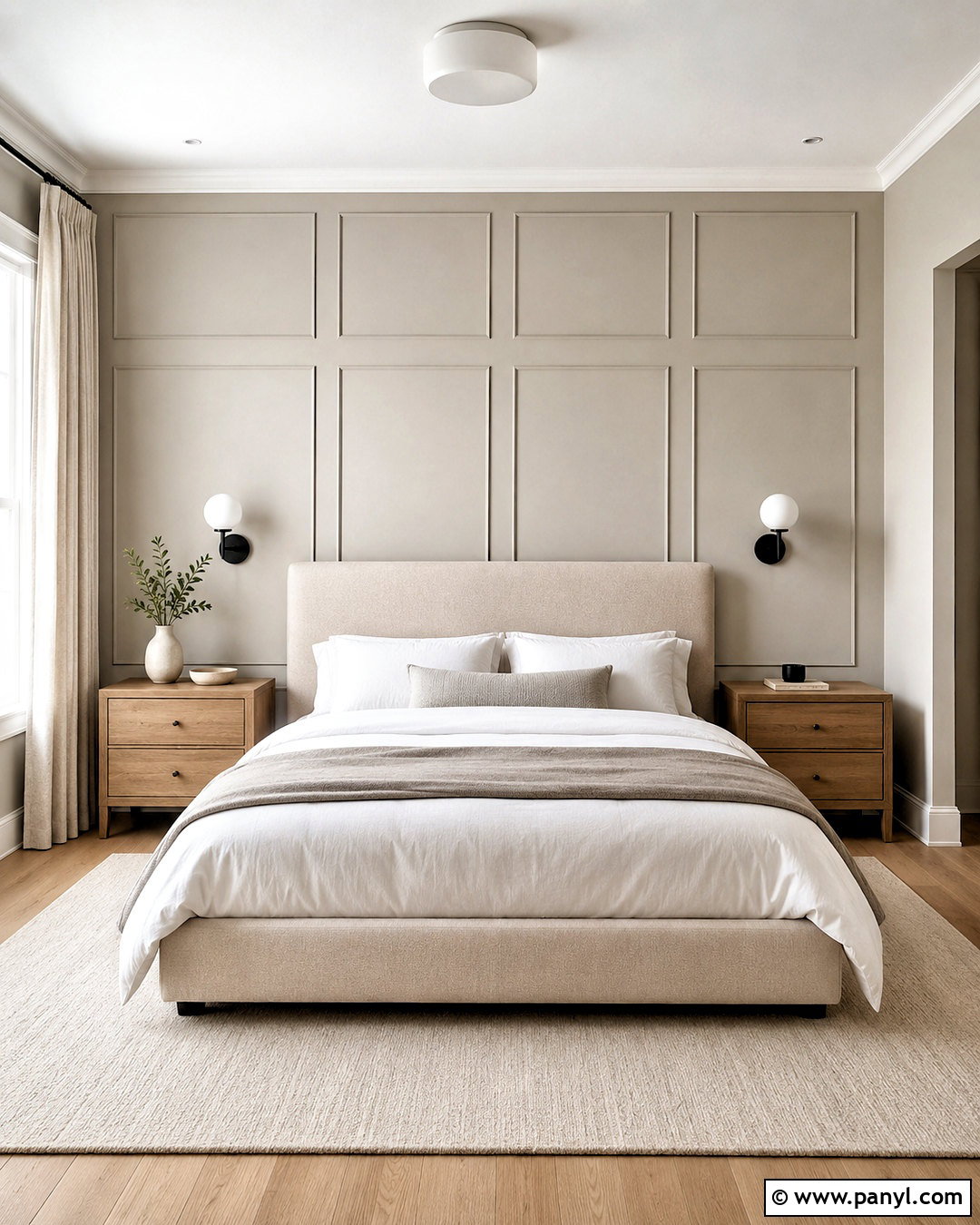
Box molding becomes subtle and modern when it is painted the same color as the wall. Create a clean grid behind a bed or sofa using narrow trim with balanced rectangular proportions. Cover both the molding and wall in soft greige, dusty sage, or warm putty paint. The gentle shadows add architectural depth without introducing another color or material. In a bedroom, pair the treatment with an upholstered oatmeal bed, crisp white bedding, and matching oak nightstands. Small globe sconces can sit within two outer panels, leaving the center open and restful. Add a light wool rug and one lumbar pillow in a deeper version of the wall color. This tonal approach makes a plain room feel tailored while maintaining a quiet, cohesive appearance.
7. Arched Painted Wall
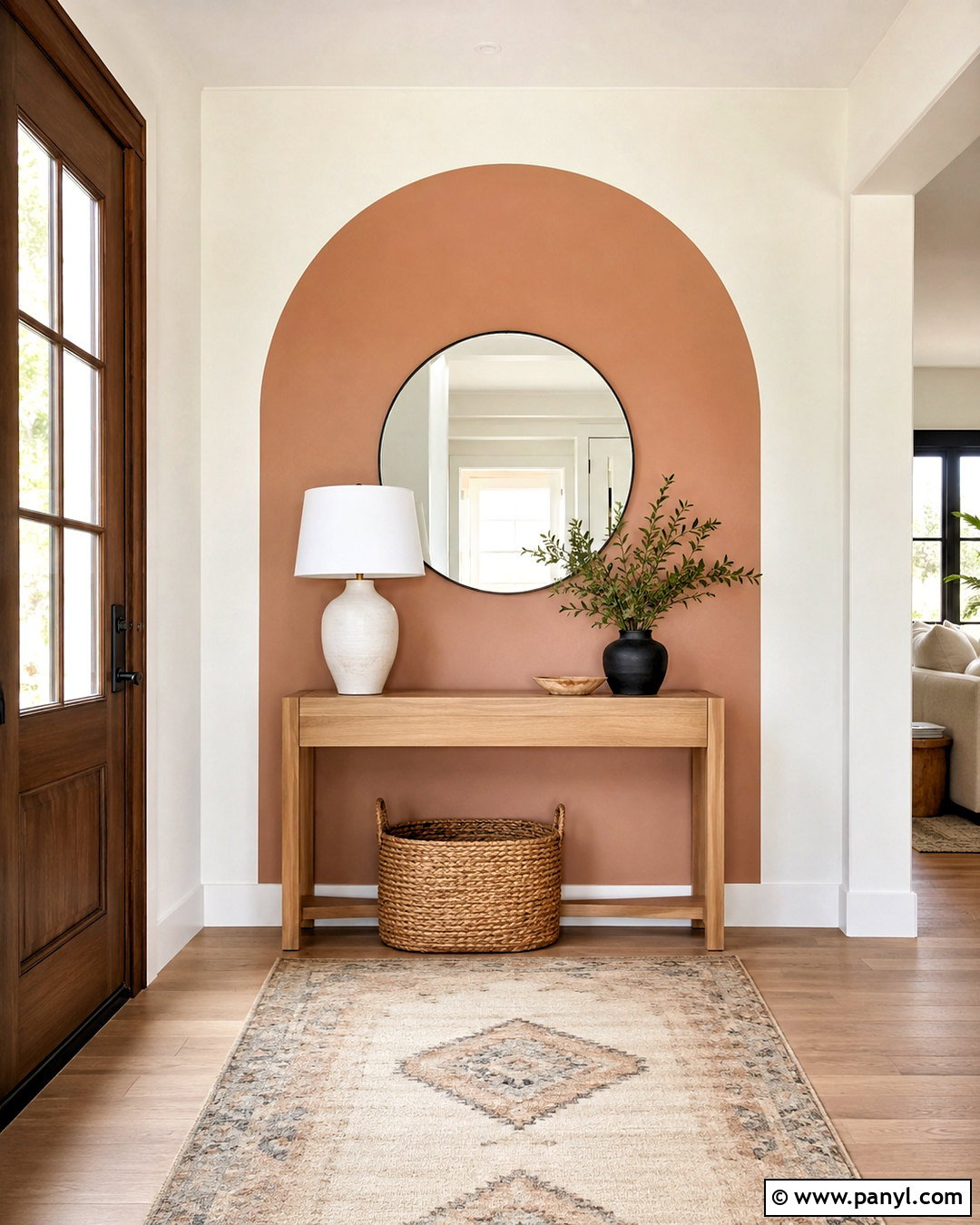
A painted arch can define a focal area without requiring construction, paneling, or expensive materials. Use a warm clay, muted olive, or beige arch behind a console, bed, or reading chair. Keep its edges crisp and make the shape wide enough to frame the furniture rather than looking like a small decorative patch. Against a creamy white room, pair a clay arch with a pale oak console, woven basket, and simple ceramic lamp. One round mirror centered inside the shape emphasizes its curves. Repeat the accent color in a cushion or rug detail so it feels connected to the room. The surrounding wall should remain mostly bare. This creates a graphic but approachable composition that is especially useful in apartments, small bedrooms, and narrow entryways.
8. Plaster Fireplace Wall
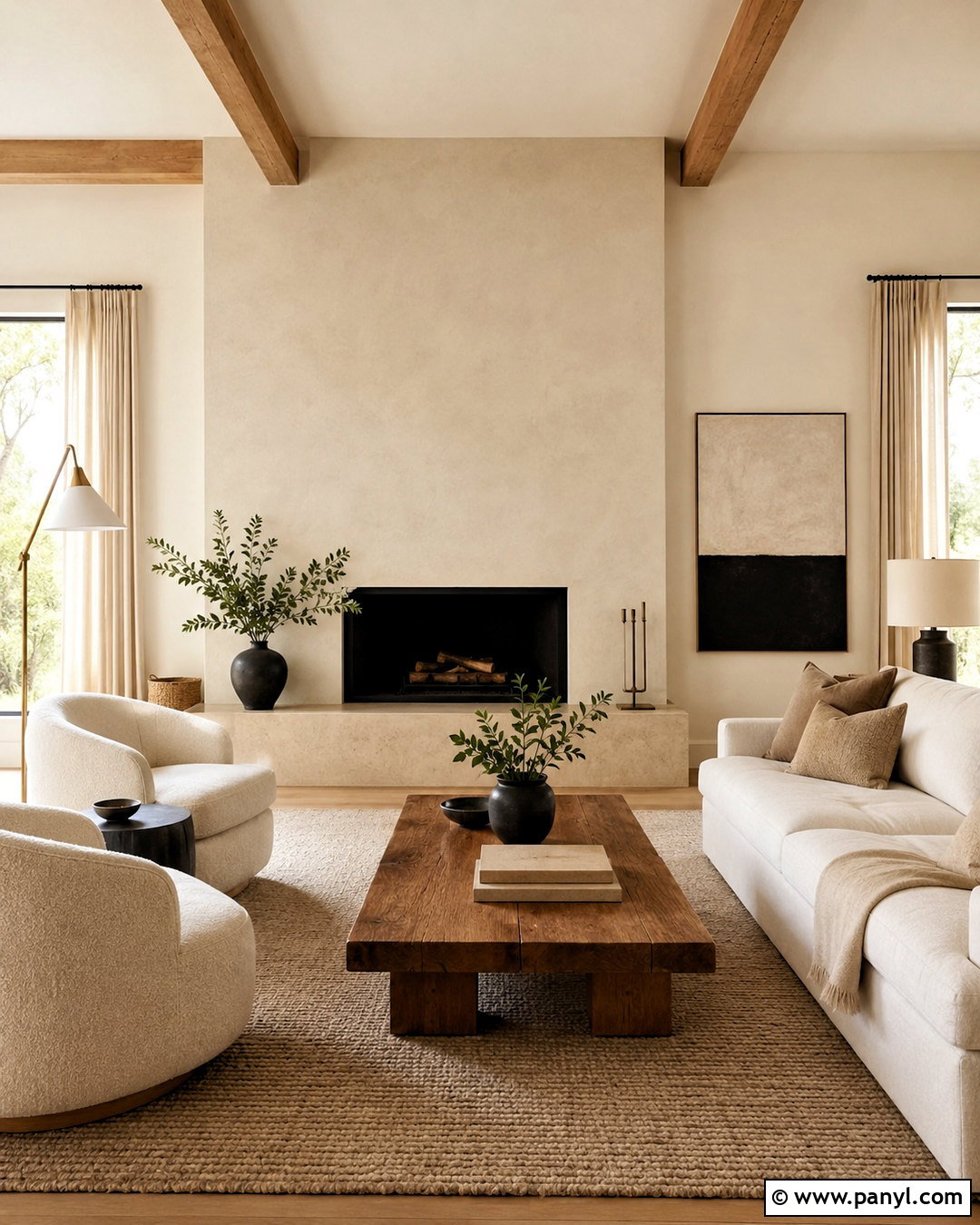
A plaster fireplace wall delivers a seamless focal point with fewer visual interruptions than a traditional mantel arrangement. Finish the entire chimney breast in warm off-white, pale taupe, or light greige plaster. Surround a simple rectangular firebox with the same material, then add a low limestone or concrete hearth. Instead of filling the upper wall, hang one restrained abstract canvas or leave it completely bare. Arrange a cream sofa and two curved accent chairs around a solid oak coffee table. Linen curtains, a textured wool rug, and a few dark bronze details provide soft contrast. Keep the hearth styling limited to one floor vase or a small stack of firewood. The continuous finish makes the fireplace feel architectural, calm, and naturally connected to the room.
9. Built-In Shelf Wall
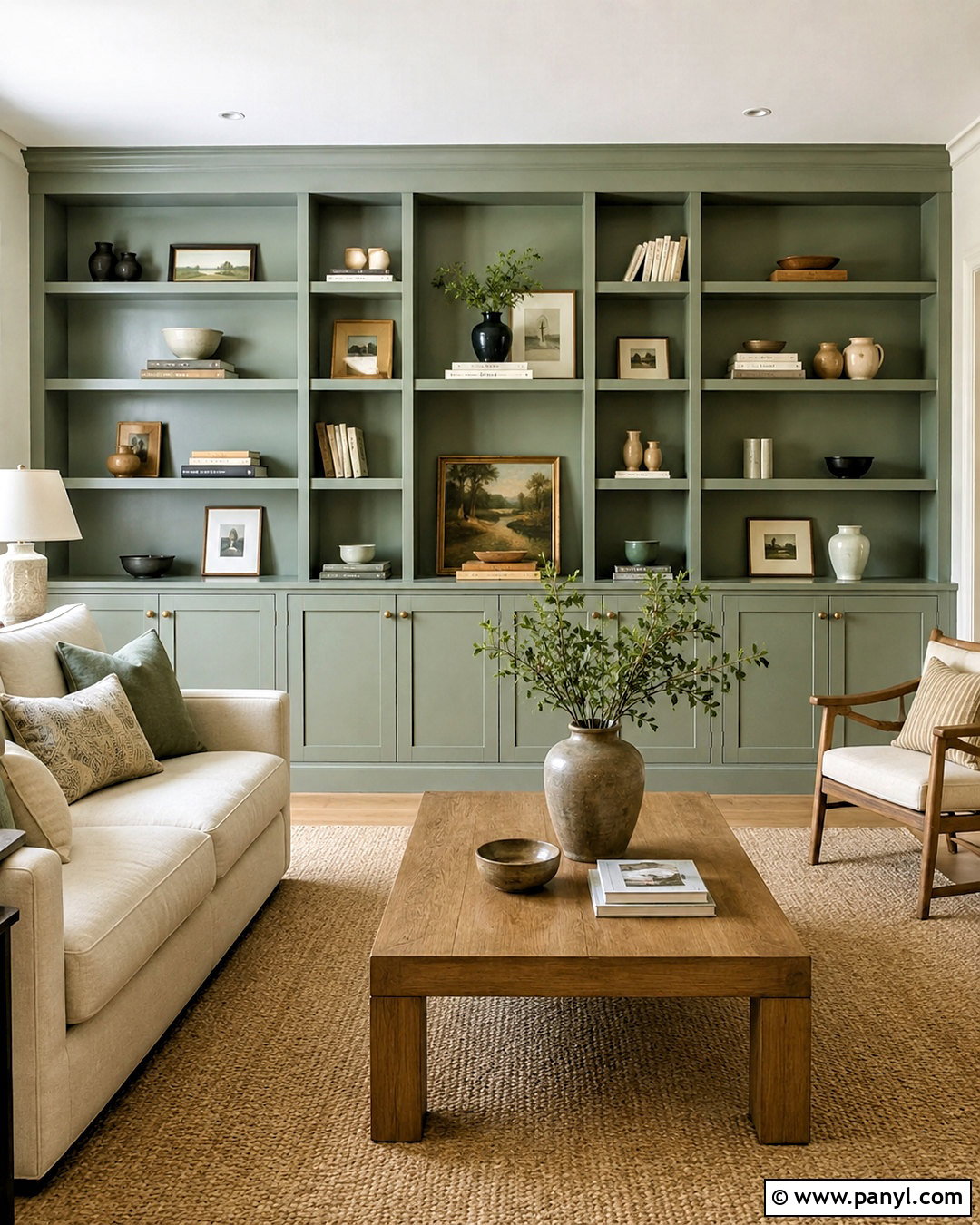
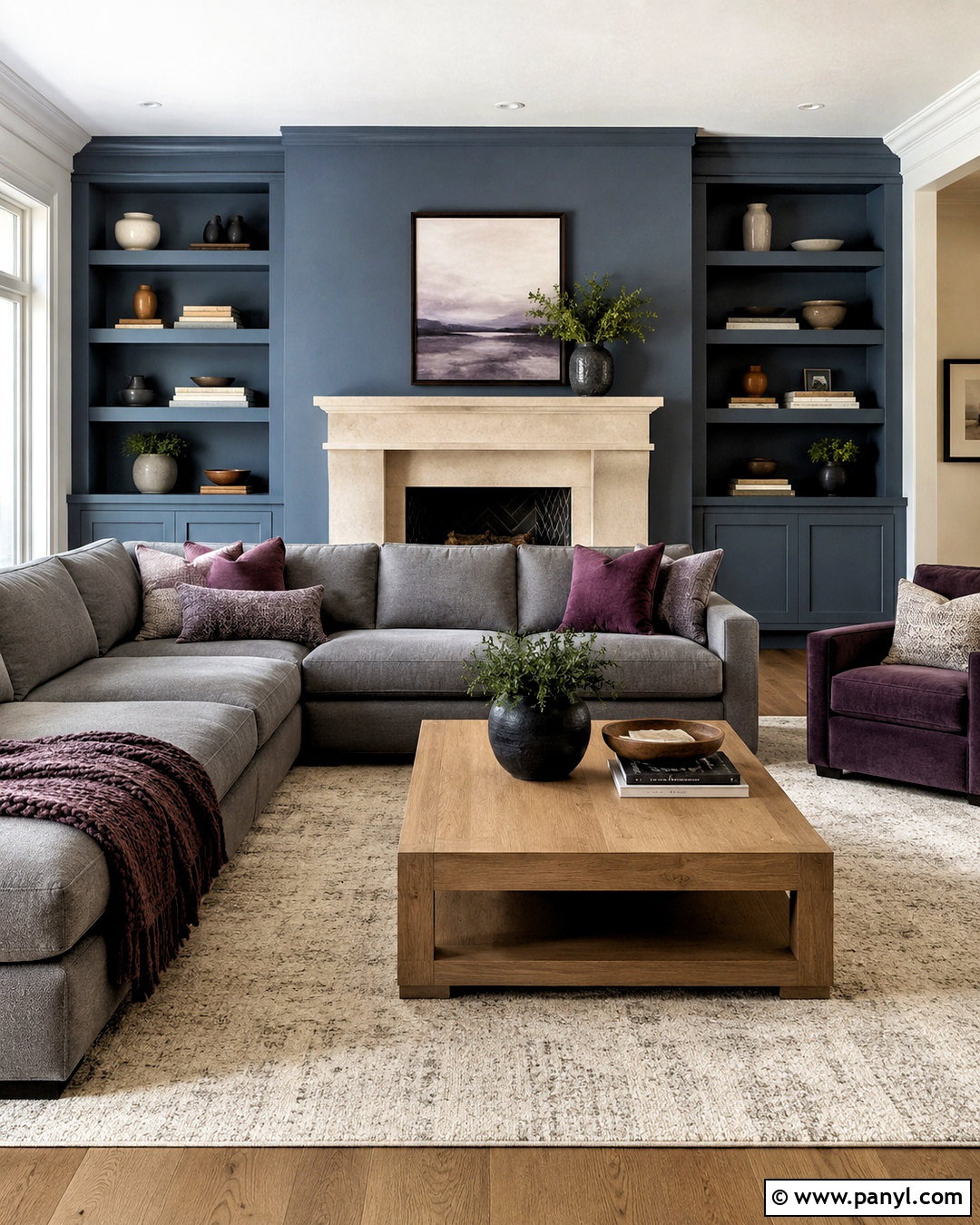
A wall of built-in shelving can look minimal when the cabinetry blends with the architecture and the styling remains restrained. Paint floor-to-ceiling shelves in the same warm white, pale greige, or soft sage used on the surrounding walls. Include closed cabinets along the bottom to conceal electronics, games, and household items. On the open shelves, alternate small groups of books with pottery, framed art, and empty space. Avoid placing an object in every compartment. A central niche can hold a low television, a large canvas, or a sculptural vase. Complete the room with a clean-lined sofa, an oak coffee table, and a neutral rug. The finished wall provides storage and visual balance without resembling a crowded collection or an oversized entertainment unit.
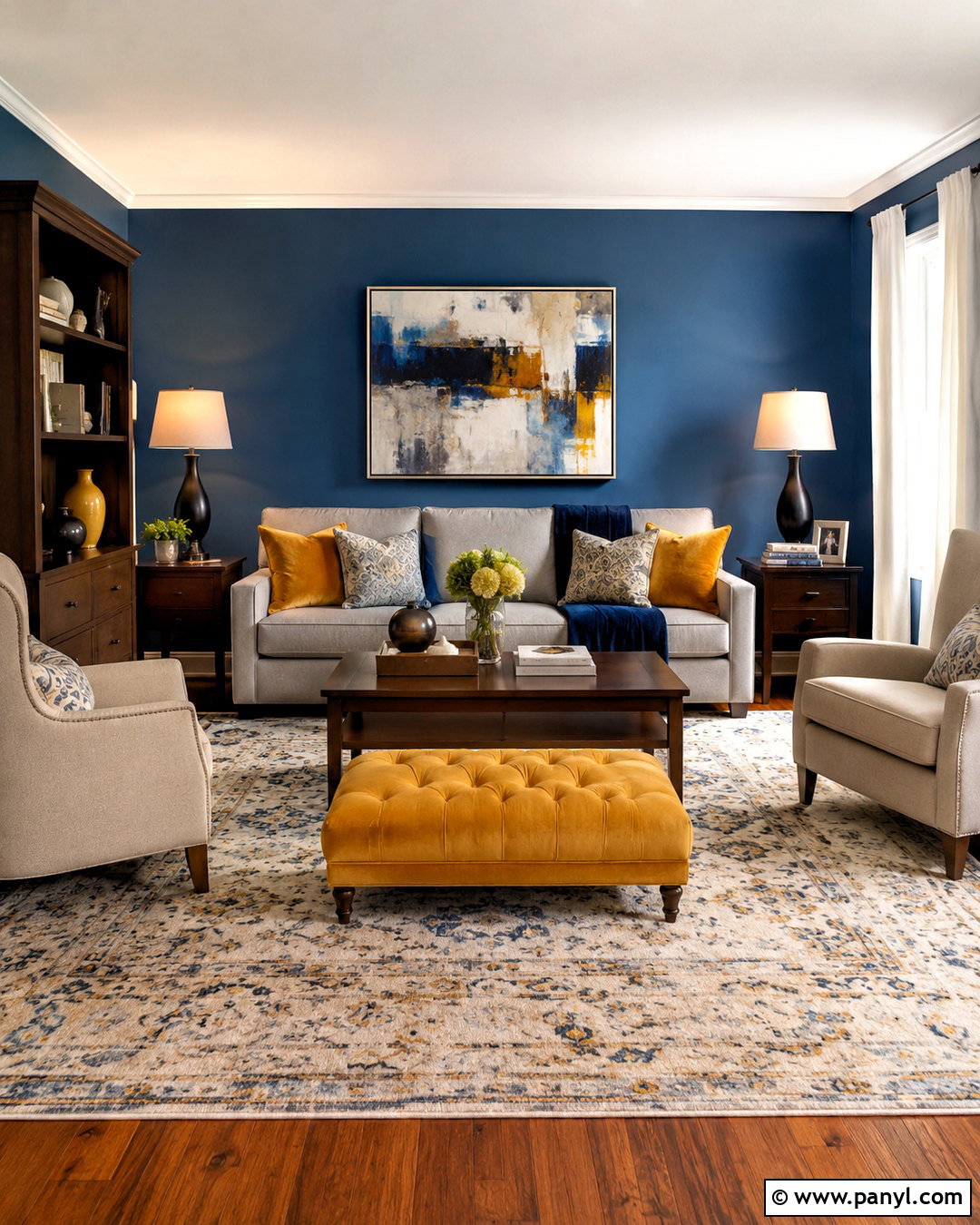
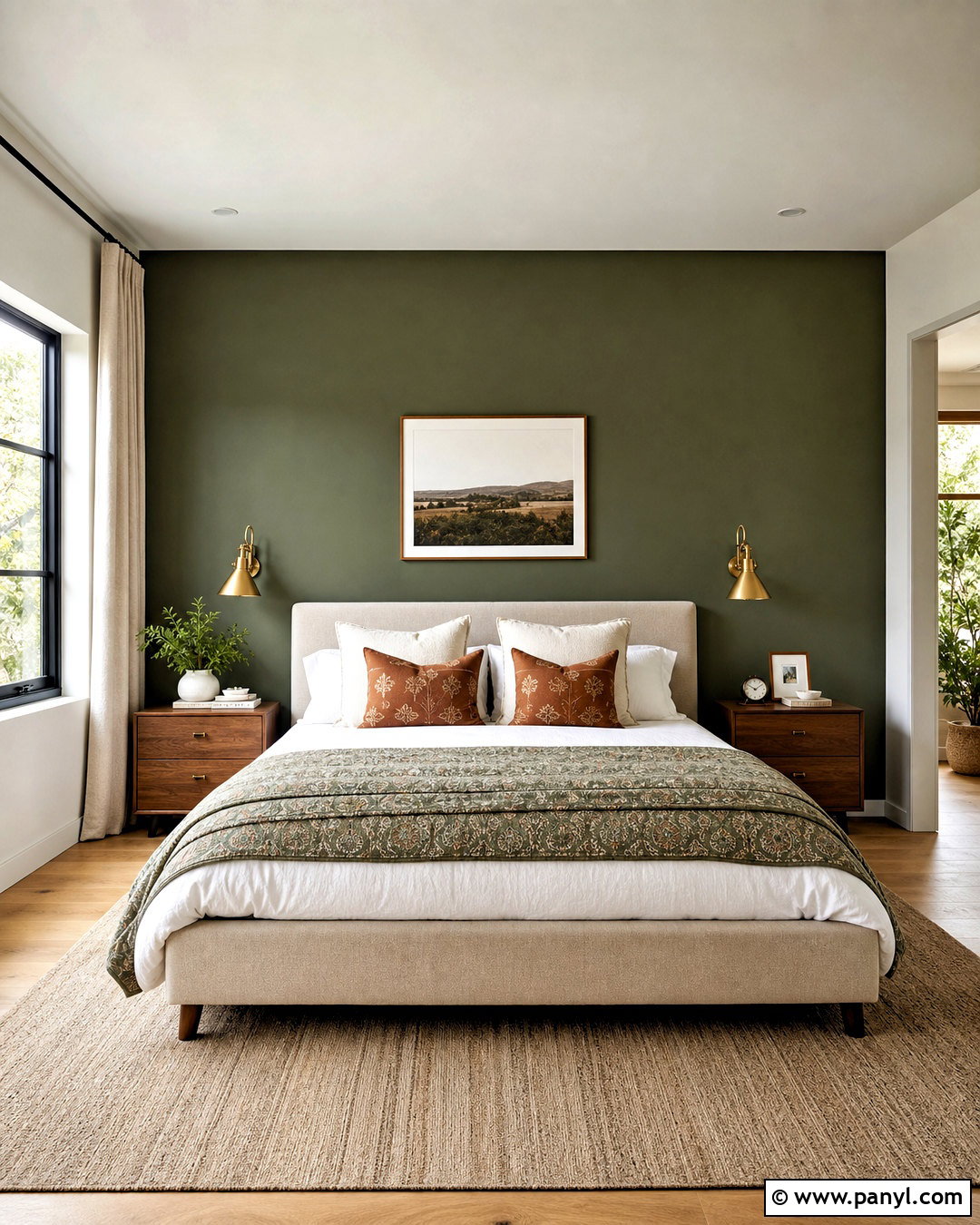
10. Black And White Photo Wall
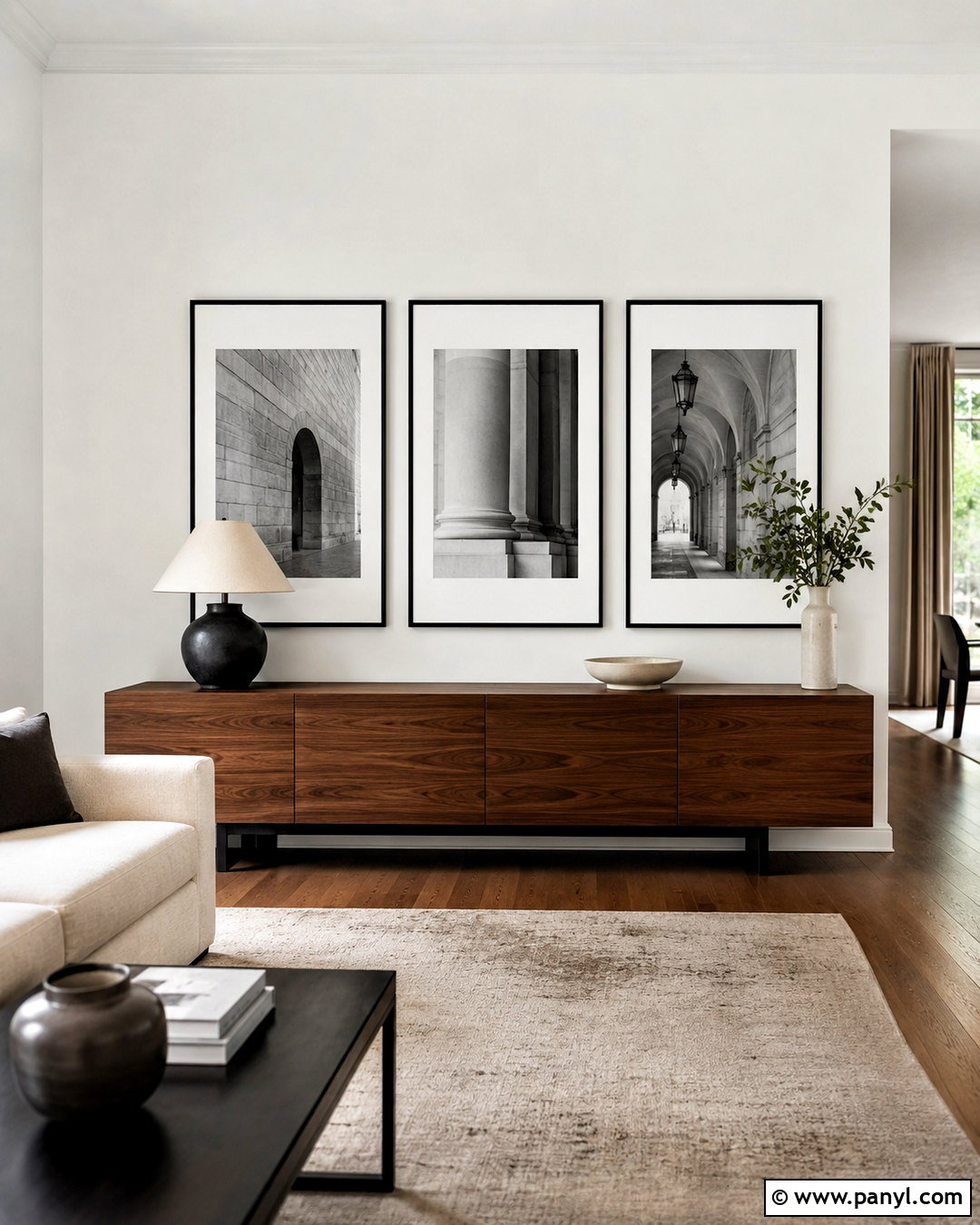
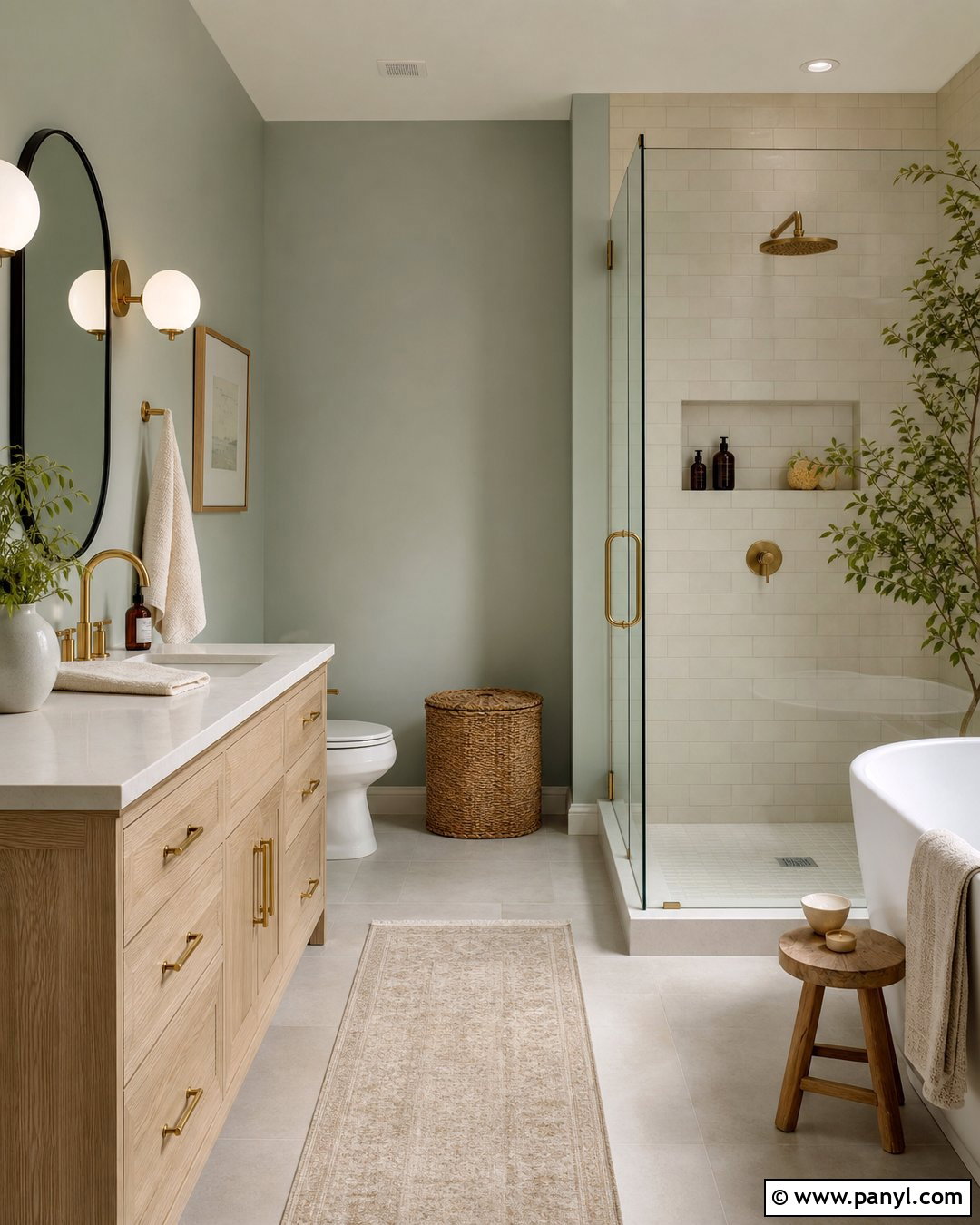
Black and white photography creates a personal wall display while maintaining a controlled palette. Choose three large photographs with similar contrast and subject matter, such as architecture, coastal scenery, or quiet family moments. Print them at the same size and hang them in a straight row using thin black frames and wide white mats. Position the arrangement above a walnut console or tailored gray sofa. Add a black table lamp, a cream ceramic bowl, and one leafy branch to continue the monochrome look with natural texture. Warm wood flooring and a soft beige rug keep the room from feeling cold. Consistent frame sizes and equal spacing are essential. This structured layout gives photographs importance while preserving the simple rhythm of the surrounding interior.
11. Woven Textile Wall
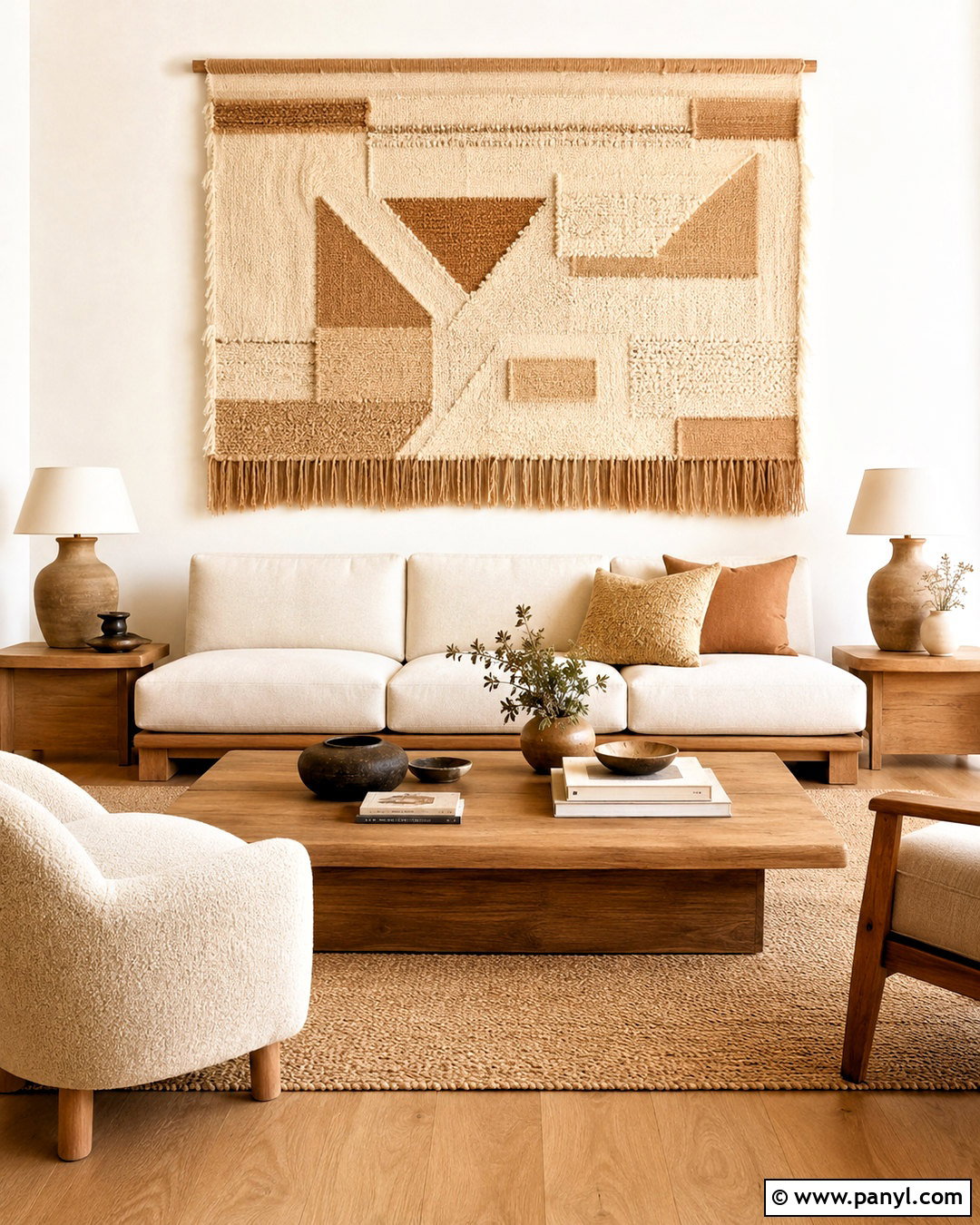
A woven textile introduces warmth, softness, and dimension without requiring several separate wall decorations. Choose one large handwoven piece in ivory, tan, muted brown, or soft black, and center it above a low bed or sofa. Look for a simple geometric pattern with visible fibers rather than long fringe or busy colors. Pair it with warm white walls, natural oak furniture, and relaxed linen upholstery. A jute rug and boucle chair can repeat the tactile quality at floor level. Use ceramic lamps with fabric shades for gentle, even illumination. Keep nearby surfaces lightly styled with books and one organic vessel. The textile should remain the clear focal point, allowing the full room to feel comfortable, collected, and minimal rather than bare or overly polished.
12. Minimal Bedroom Wall
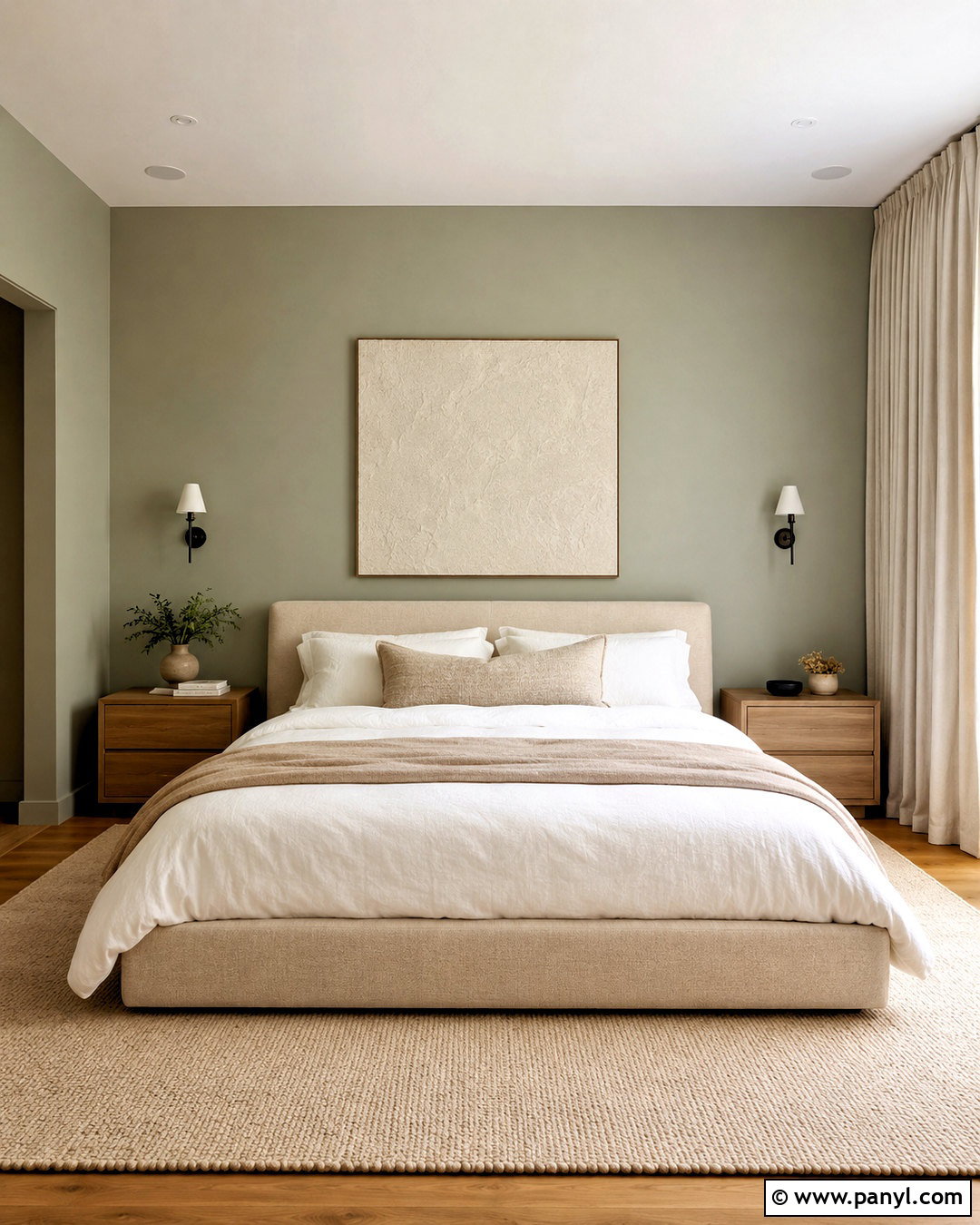
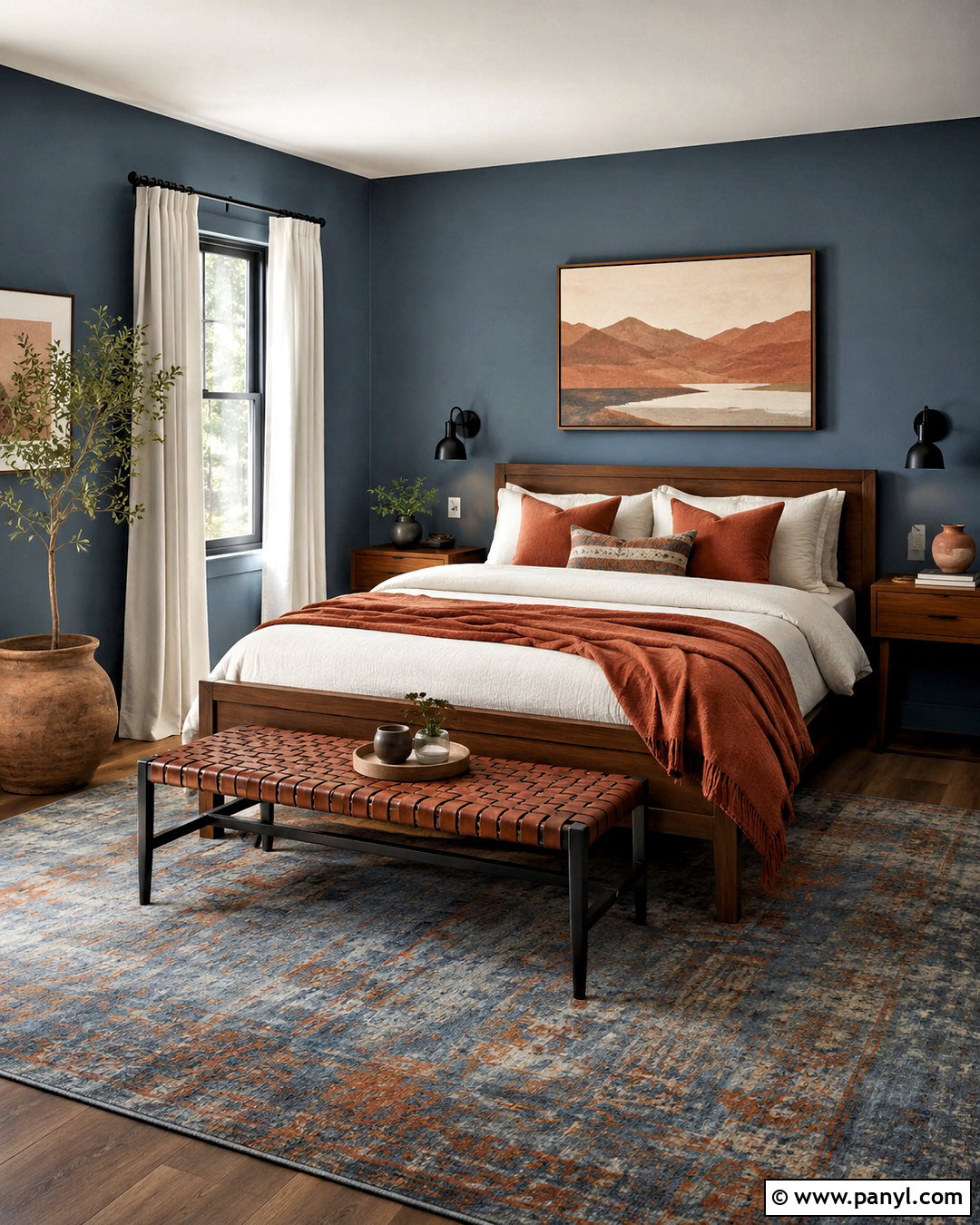
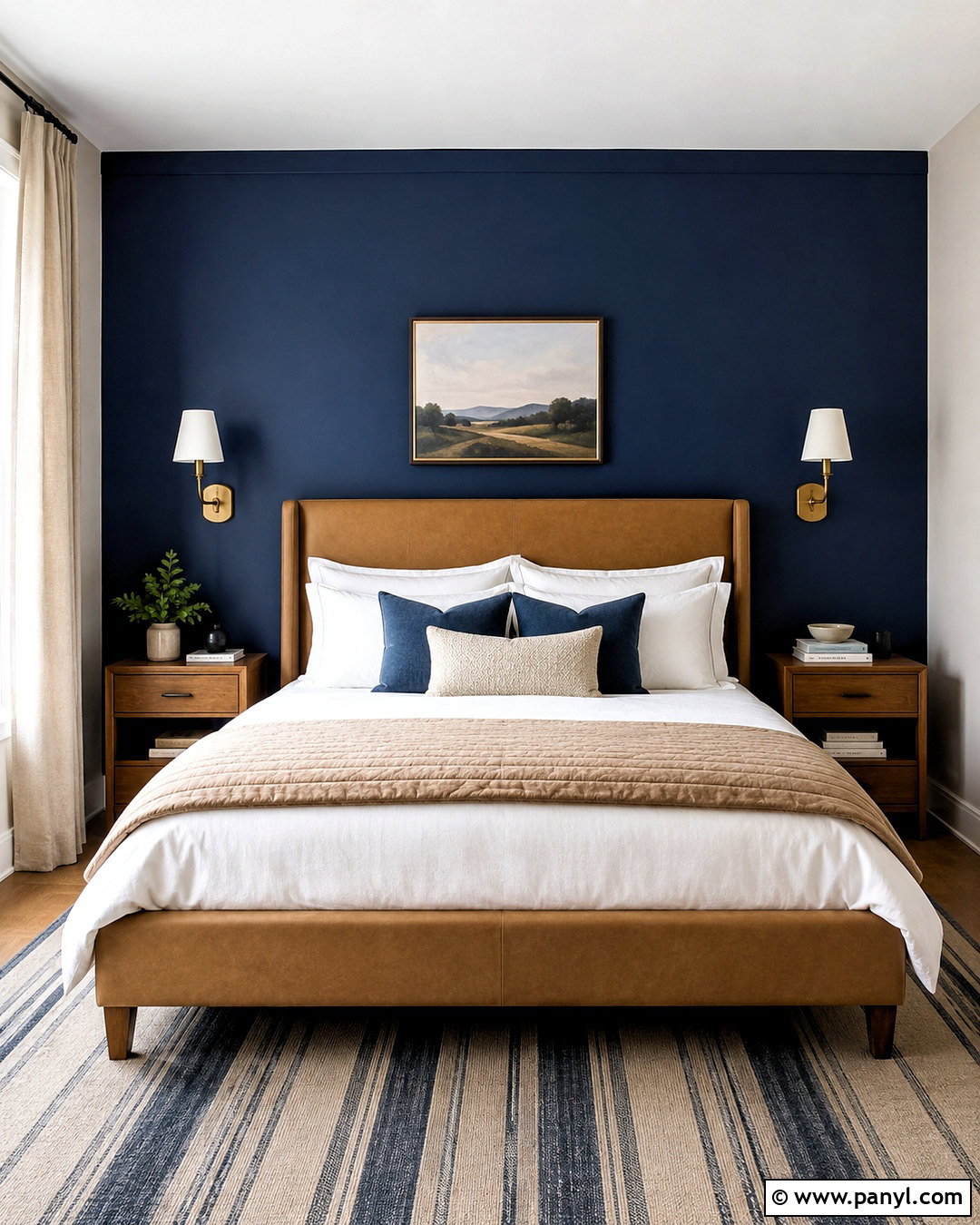
The wall behind a bed should support rest rather than demand constant attention. Paint it a calming shade such as warm white, pale mushroom, muted sage, or dusty blue. Center one large textured canvas above an upholstered bed, leaving comfortable space between the frame and headboard. Choose bedding in layered neutrals, combining white cotton sheets, a flax linen duvet, and a taupe throw. Matching oak nightstands create symmetry, while small wall-mounted sconces free the surfaces from bulky lamps. Add a low-pile wool rug and simple floor-length curtains in a shade close to the wall color. Limit accessories to a book, a ceramic dish, and one branch. This complete bedroom feels peaceful because every wall element contributes to balance, softness, and visual order.
13. Entryway Mirror Wall
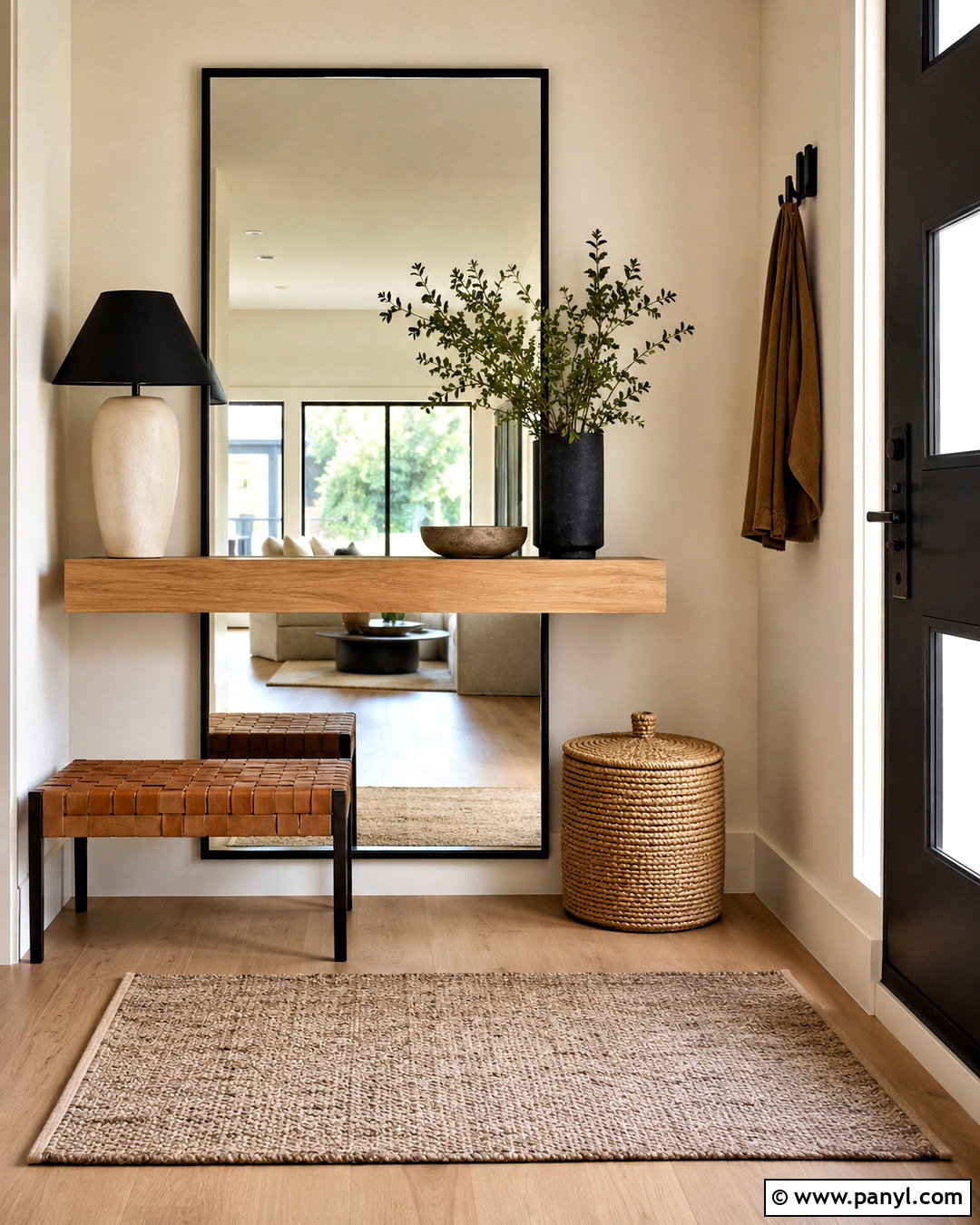
A large mirror can brighten an entryway and provide a practical focal point without overwhelming a narrow space. Choose a full-length mirror with a thin black, brass, or natural oak frame. Lean it securely against the wall or mount it several inches above a slim floating console. Paint the background warm white or pale beige and add a compact bench with a woven seat. A small ceramic bowl can hold keys, while one sculptural lamp provides soft light. Place a durable neutral runner along the floor and tuck a lidded basket beneath the console for concealed storage. Keep coats and bags behind closed doors when possible. The mirror expands the visual depth of the entry, and the carefully limited furnishings maintain an open, welcoming path through the space.
14. Minimal Plate Wall
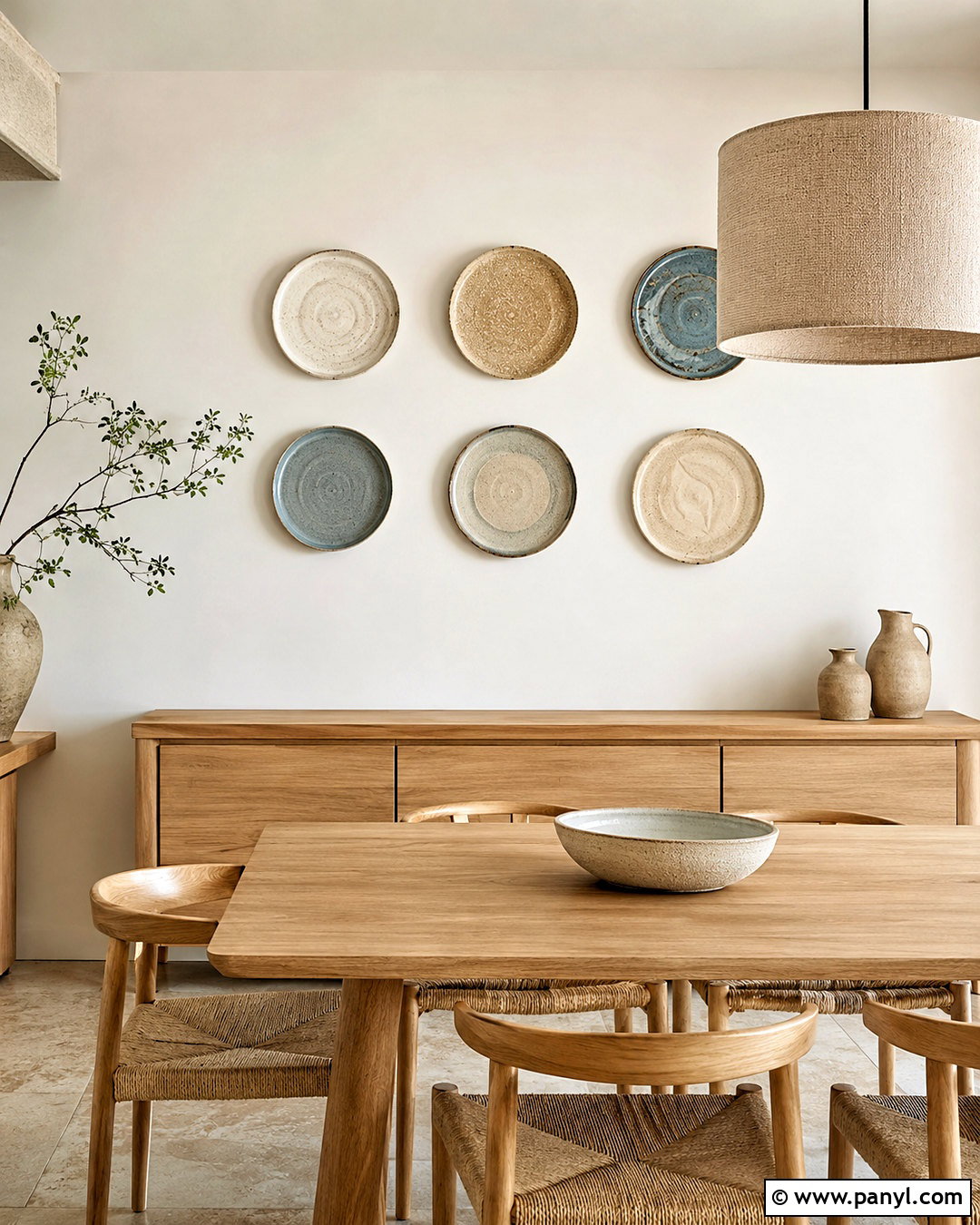
A plate display can feel contemporary when the shapes and colors remain consistent. Select seven to nine ceramic plates in warm white, sand, pale gray, and muted blue. Arrange them in a loose oval above a dining room sideboard, balancing different diameters while maintaining even spacing. Handmade finishes and slightly irregular edges add character without introducing visual noise. Pair the display with a light oak dining table, woven chairs, and a simple linen pendant. Paint the wall creamy white so the subtle ceramic tones remain visible. On the sideboard, place only a shallow bowl and a small table lamp. The finished dining room feels artistic yet restrained. Because the plates share a narrow palette, the arrangement reads as one unified installation rather than a random collection.
15. Botanical Print Wall
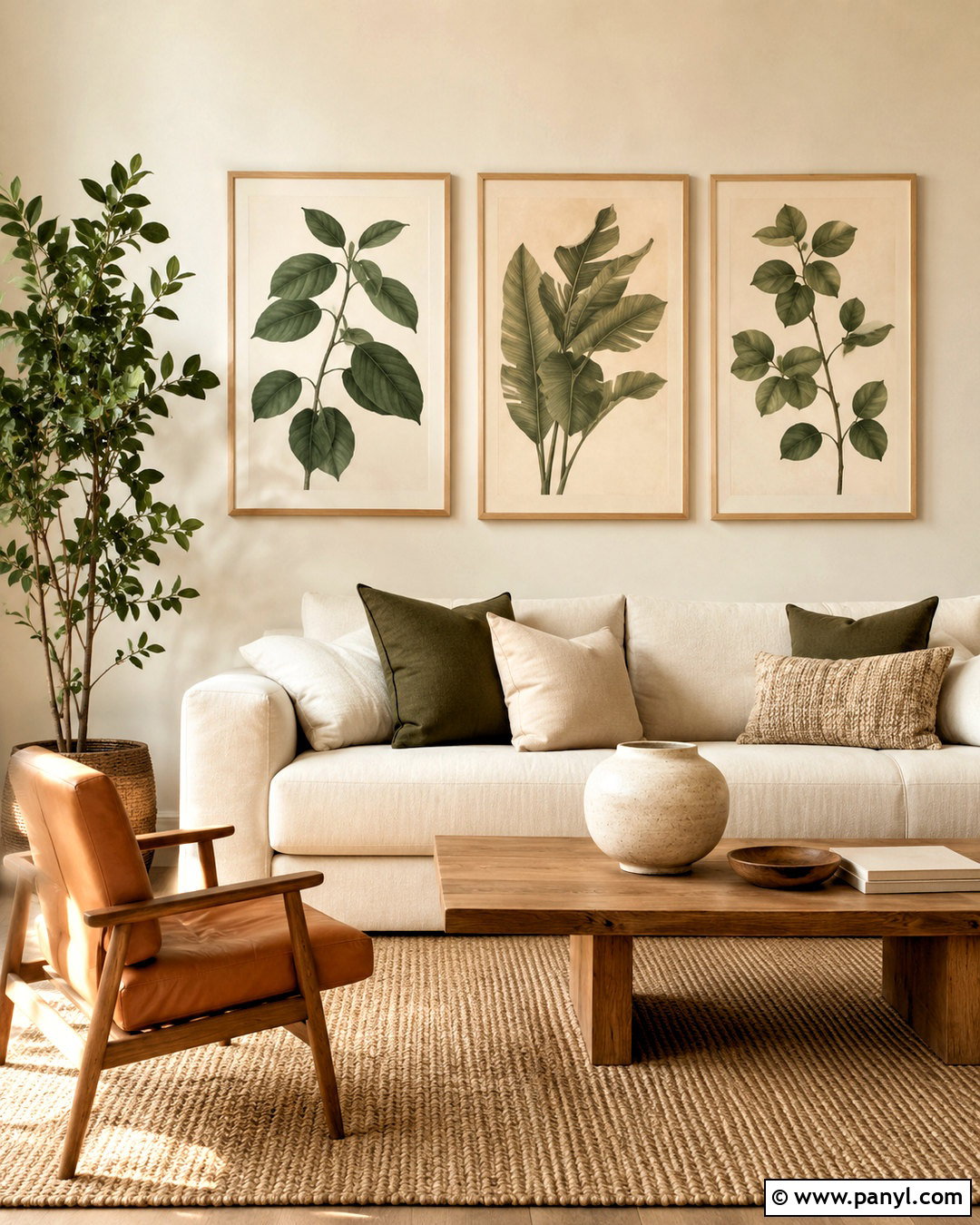
A botanical print wall introduces natural color without turning the room into a heavily themed space. Hang two or three large plant studies in matching pale oak frames above a sofa, desk, or dining bench. Choose prints with plenty of white space and illustrations in muted olive, forest green, and soft brown. Set them against a warm cream wall and repeat the greenery through one real plant placed nearby. A camel leather chair, oatmeal upholstery, and a woven wool rug create an earthy supporting palette. Keep other decorative objects simple, using stoneware, clear glass, and natural wood. The result is fresh and balanced rather than busy. Large matching frames also give the botanical subjects enough presence to decorate the wall without requiring numerous smaller pieces.
16. Wood Peg Rail Wall
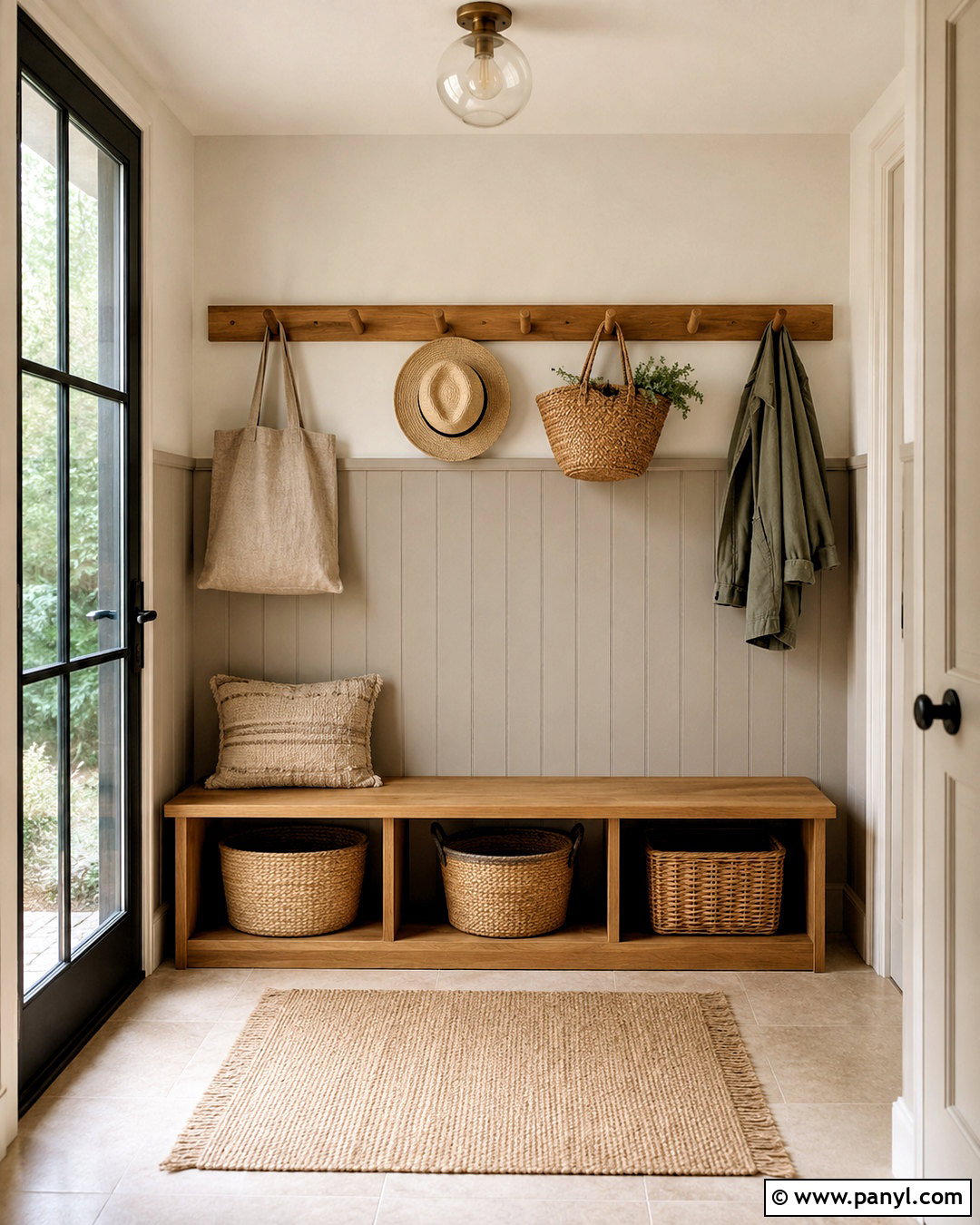
A continuous wood peg rail adds useful storage while creating a simple horizontal line around an entry, kitchen, or mudroom. Install a natural oak or painted warm white rail at shoulder height, then keep the items hanging from it intentionally limited. A linen market bag, straw hat, small basket, and lightweight jacket can provide practical texture. Below the rail, add a narrow oak bench with concealed shoe storage and one neutral cushion. Paint the upper wall soft ivory and use durable greige paint below for a quiet two-tone effect. A woven runner and matte black ceiling light can complete the space. The peg rail becomes part of the architecture, helping everyday belongings look organized instead of scattered while maintaining an approachable minimal design.
17. Two-Tone Painted Wall
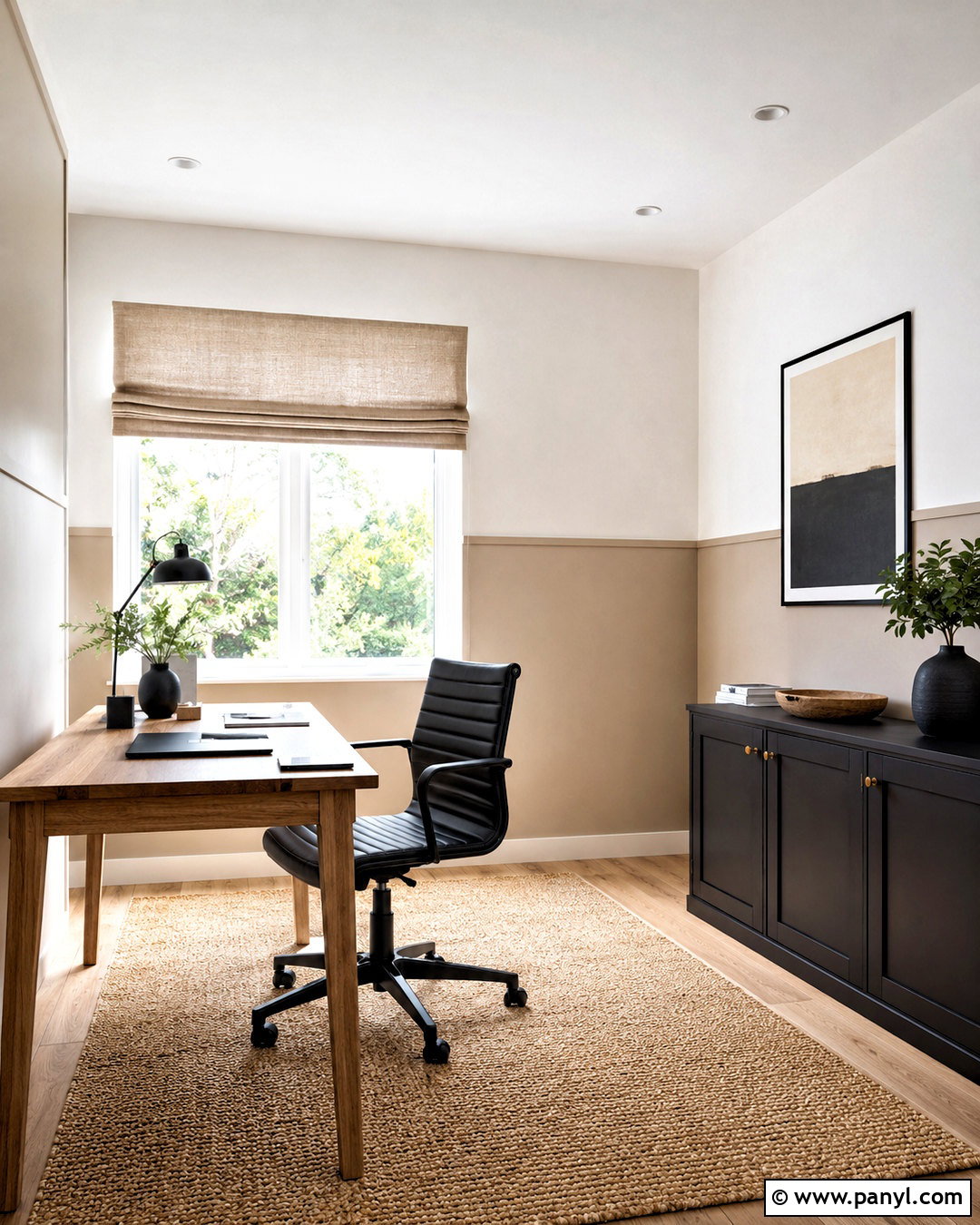
A two-tone wall gives a room definition using paint alone. Place the darker color on the lower third or half of the wall and keep the upper portion light. Warm beige beneath creamy white creates a soft neutral effect, while dusty blue under pale gray feels cooler and more tailored. Mark the transition with a narrow picture rail painted to match the lower section. In a home office, coordinate the wall with a slim oak desk, black task chair, and closed storage cabinet. Hang one small framed print above the desk and leave the remaining area clear. A woven rug and linen Roman shade can soften the straight lines. The horizontal color division grounds the furniture while making the ceiling appear open and visually uncluttered.
18. Sculptural Sconce Wall
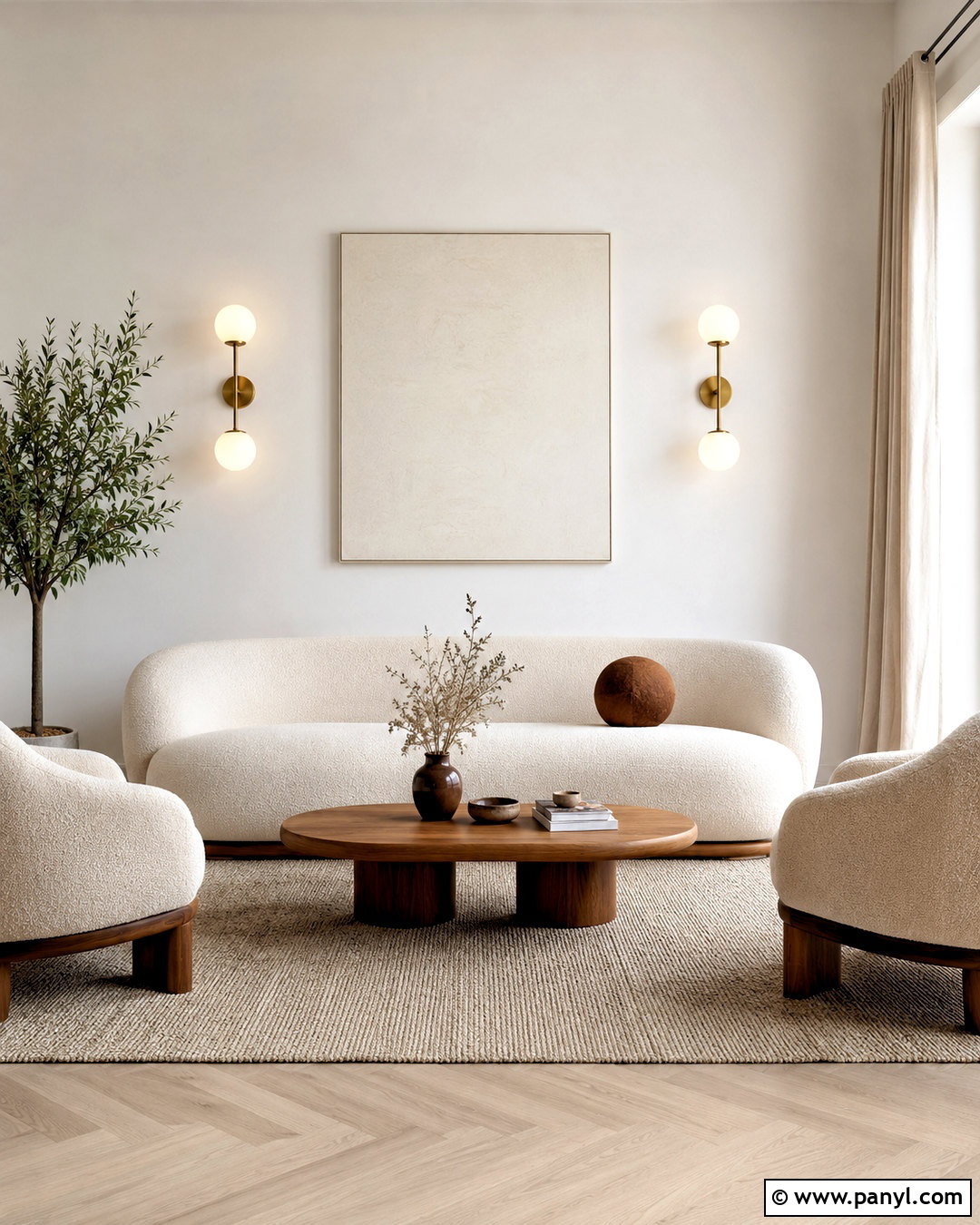
Wall sconces can serve as both lighting and decoration when their forms are strong enough to stand alone. Install a matching pair of plaster, opal glass, or aged brass sconces on either side of a sofa, bed, or console. Keep the central wall open, or place one simple canvas between them. A warm white background highlights the fixtures without creating harsh contrast. Build the rest of the room with curved furniture, such as a rounded cream sofa, oval coffee table, and softly shaped side chairs. Choose a neutral rug and floor-length linen curtains to maintain the relaxed lines. Concealed wiring creates the cleanest finish. This wall treatment is particularly effective in smaller rooms because it adds atmosphere, symmetry, and architectural interest without consuming floor or surface space.
19. Minimal Home Office Wall
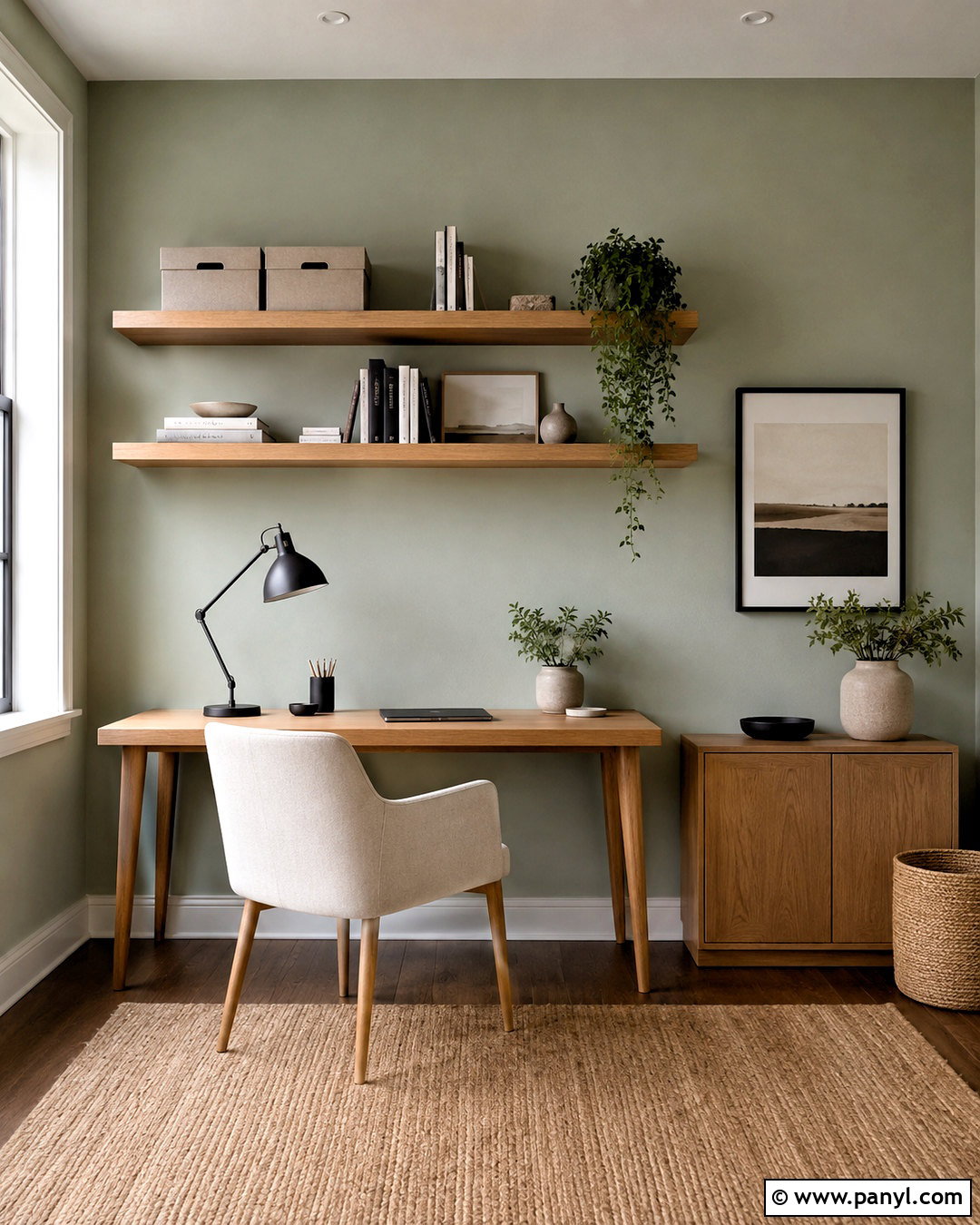
A focused home office needs enough wall storage to function without becoming visually distracting. Center a slim oak desk against a soft greige or pale sage wall. Install two floating shelves above it, aligning them with the width of the desk. Style the shelves with a few matching storage boxes, several books, one framed print, and a trailing plant. Leave at least one-third of each shelf open. Add a comfortable black or oatmeal desk chair, a compact task lamp, and a low cabinet for paperwork. Cable management should keep cords hidden beneath the desk. A flat-woven rug and light-filtering Roman shade complete the setup. The result is an efficient workspace where the wall provides organization, but the overall room still feels quiet, spacious, and easy to maintain.
20. Renter-Friendly Wall
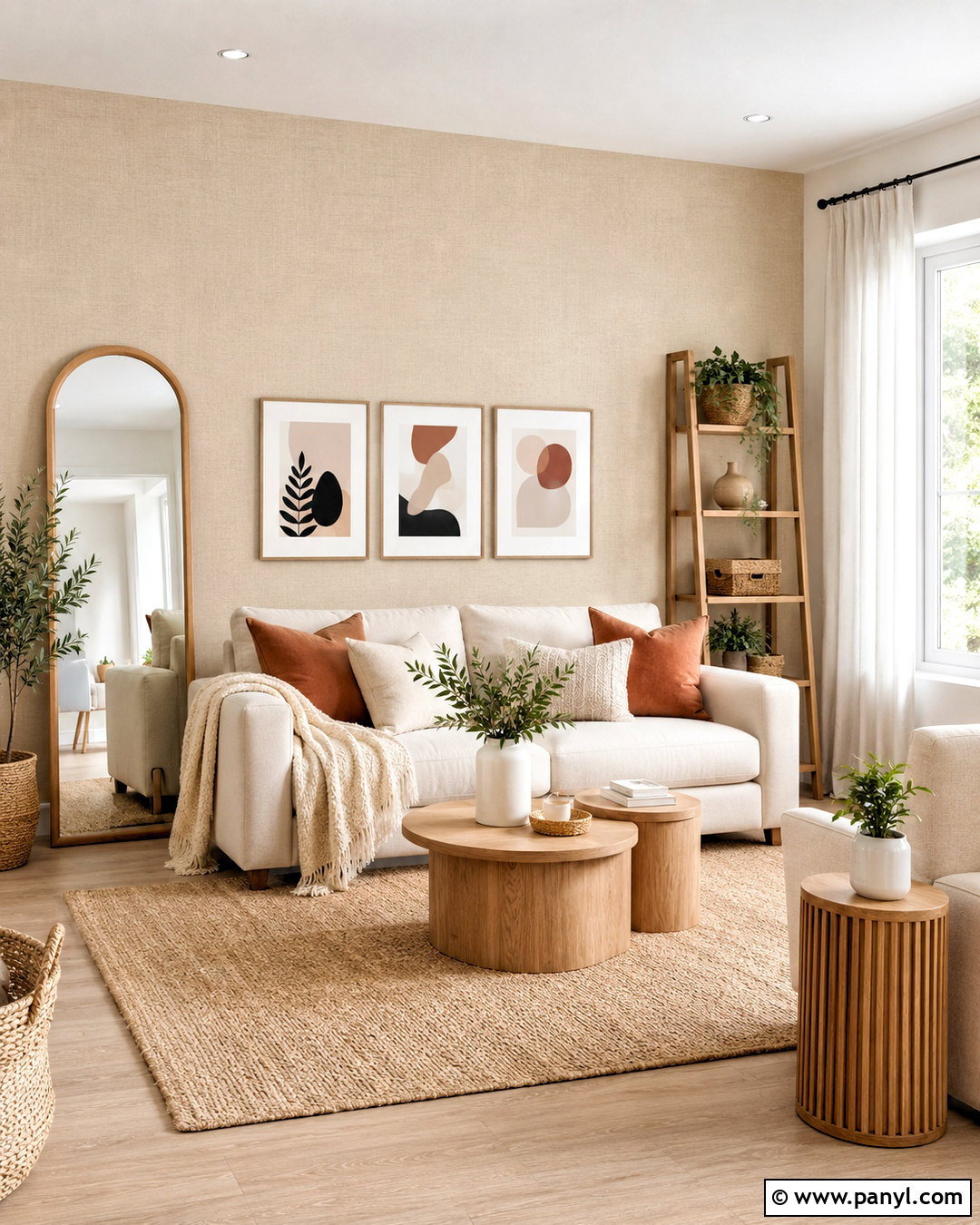
A renter-friendly wall can look polished without permanent paint, nails, or built-in construction. Start with removable wallpaper in a subtle linen texture, warm beige stripe, or pale plaster effect. Apply it to one complete wall behind a sofa or bed so the treatment appears intentional. Add lightweight framed prints using removable hanging strips, keeping the arrangement small and balanced. A leaning floor mirror and freestanding ladder shelf provide height without requiring installation. Coordinate the room with a neutral sofa, oak side tables, and washable linen-look curtains mounted on a tension or damage-free rod. Use baskets to conceal everyday clutter. By repeating the wall’s soft colors through textiles and furniture, the space feels cohesive and personal while remaining easy to restore when it is time to move.
Conclusion:
Minimal walls feel successful when they are intentional, balanced, and connected to the rest of the room. Instead of adding decoration simply to fill space, choose one clear focal point and support it with coordinated furniture, lighting, color, and texture. Limewash, oversized artwork, tonal molding, wood slats, practical shelving, and well-spaced photographs can each create a complete look with relatively few elements. Always consider the size of the wall and the furniture below it before selecting materials or artwork. Leave enough open space for every detail to register clearly. With thoughtful proportions and a restrained palette, these 20 minimal wall ideas can make any room feel warmer, calmer, more functional, and visually complete.

Related Ideas and Inspiration:
Leave a Reply