
A terracotta accent wall can make almost any room feel warmer, more grounded, and more inviting. Its earthy red-orange character works with many palettes, from creamy white and pale oak to olive green, navy blue, and charcoal gray. The key is designing the entire room around the wall rather than treating the color as an isolated feature. Furniture placement, flooring, lighting, textiles, and decorative finishes should all support the chosen terracotta shade. You can also change the effect through matte paint, limewash, wallpaper, panel molding, tile, or color blocking. The following complete room looks include modern, rustic, bohemian, traditional, and minimalist approaches for spaces large and small. Explore these practical **35 terracotta accent wall ideas** to find a look that fits your home.

1. Terracotta Accent Wall With Cream Sofa
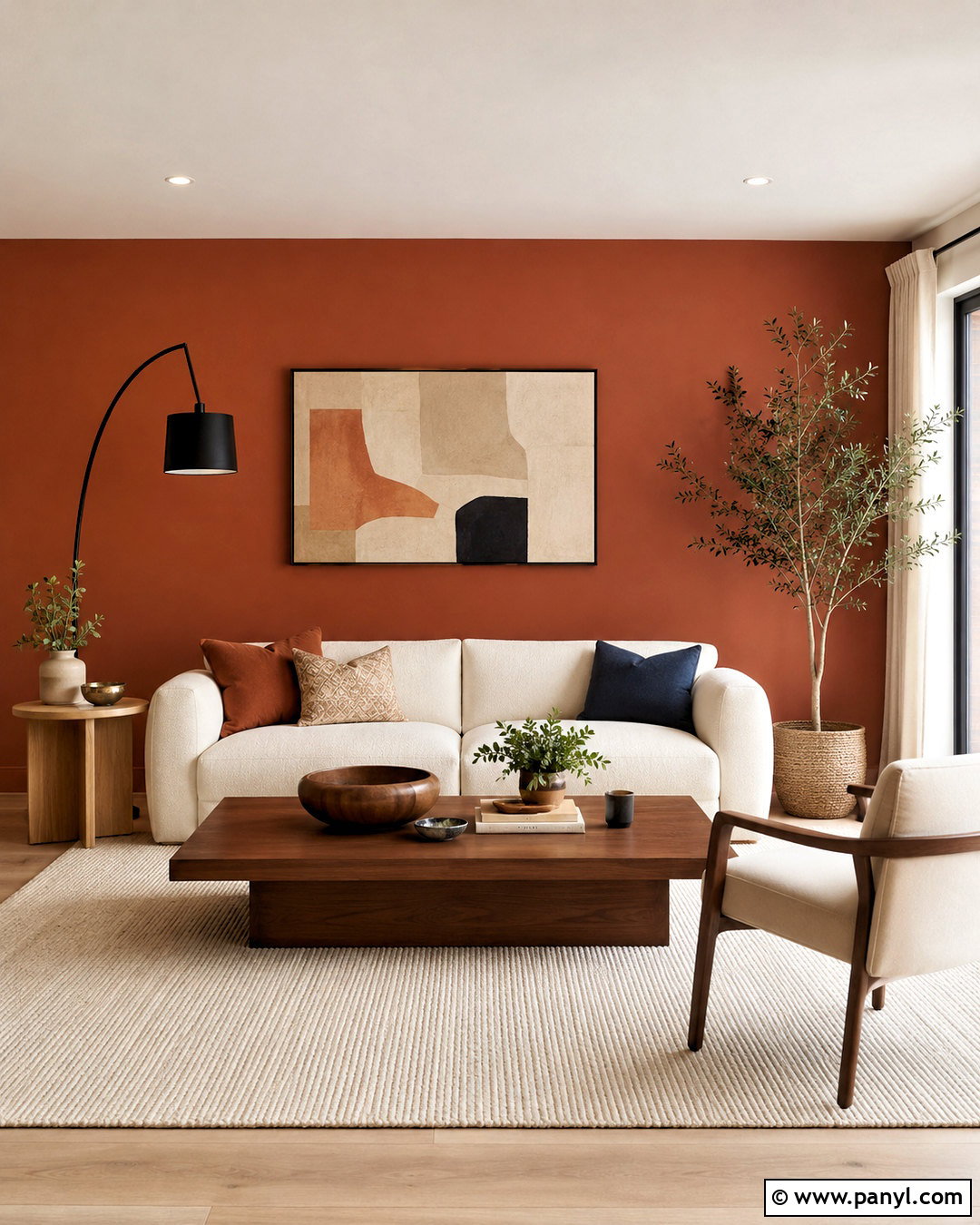
A medium terracotta accent wall creates a welcoming living room when paired with a soft cream sofa. Position the sofa directly against the painted wall to establish a clear focal point. Add pale oak side tables, a low walnut coffee table, and a textured ivory rug to balance the strong color. Linen curtains in warm white keep the windows light, while rust, beige, and muted olive pillows connect the room’s palette. Choose matte black curtain rods and a simple black floor lamp for definition. Above the sofa, hang one oversized abstract artwork with cream and charcoal details. A tall indoor tree in a natural clay planter finishes this comfortable, contemporary arrangement without making the room feel overly decorated.
2. Terracotta Accent Wall With Sage Green Decor
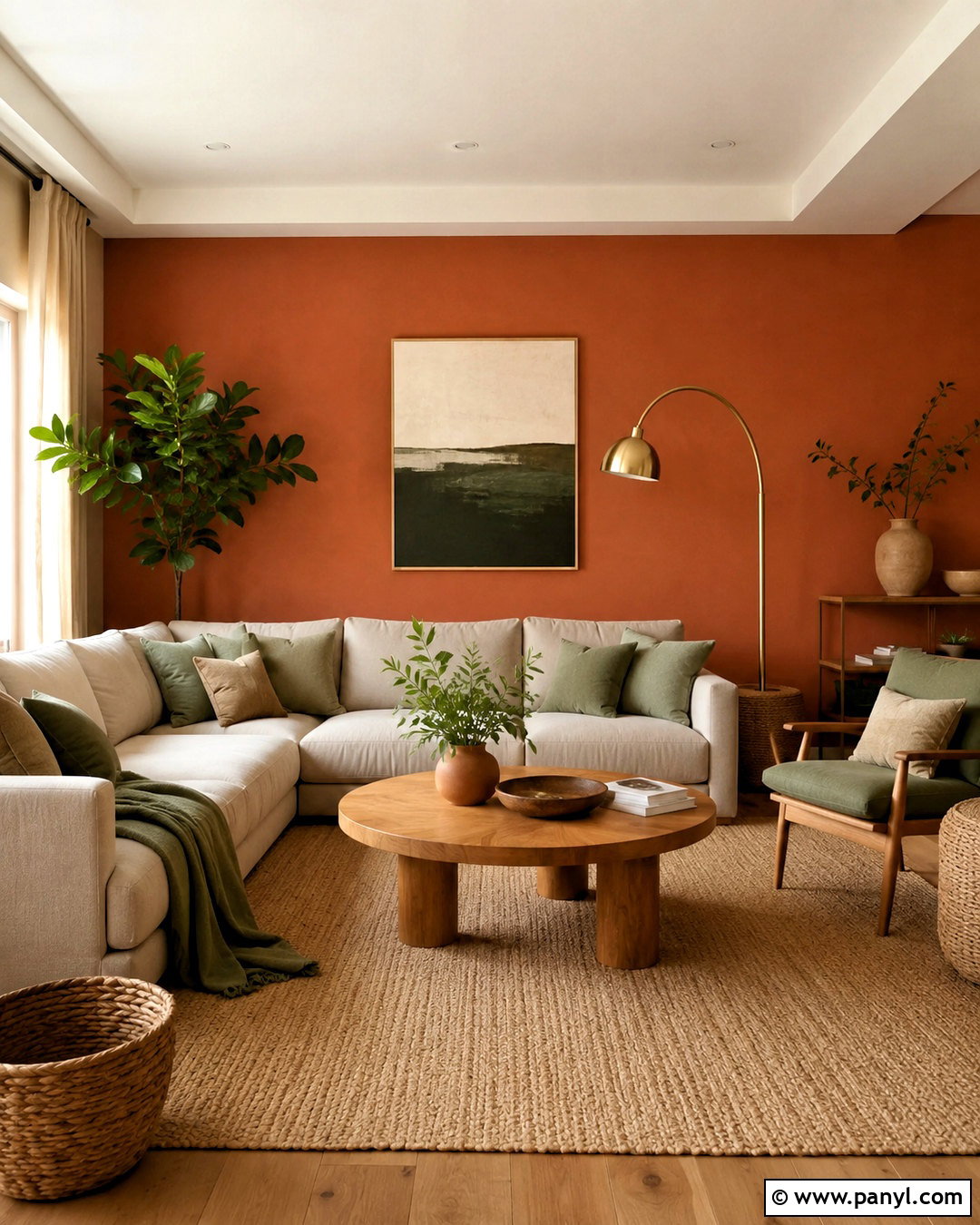
Terracotta and sage green create a calm, nature-inspired living room that feels colorful without becoming overwhelming. Use muted clay-colored paint on the wall behind a warm beige sectional. Bring in sage through linen pillows, an upholstered accent chair, and a few glazed ceramic pieces. Natural oak furniture keeps the combination light, while woven baskets and a jute-blend rug introduce casual texture. Choose creamy white for the surrounding walls so the room stays open and balanced. A wood-framed landscape print can connect the green and terracotta tones above the sofa. Complete the look with leafy plants, off-white curtains, and antique brass lighting. Repeating each main color at least twice makes the finished room appear thoughtfully coordinated rather than randomly assembled.
3. Terracotta Accent Wall With Navy Blue Furniture
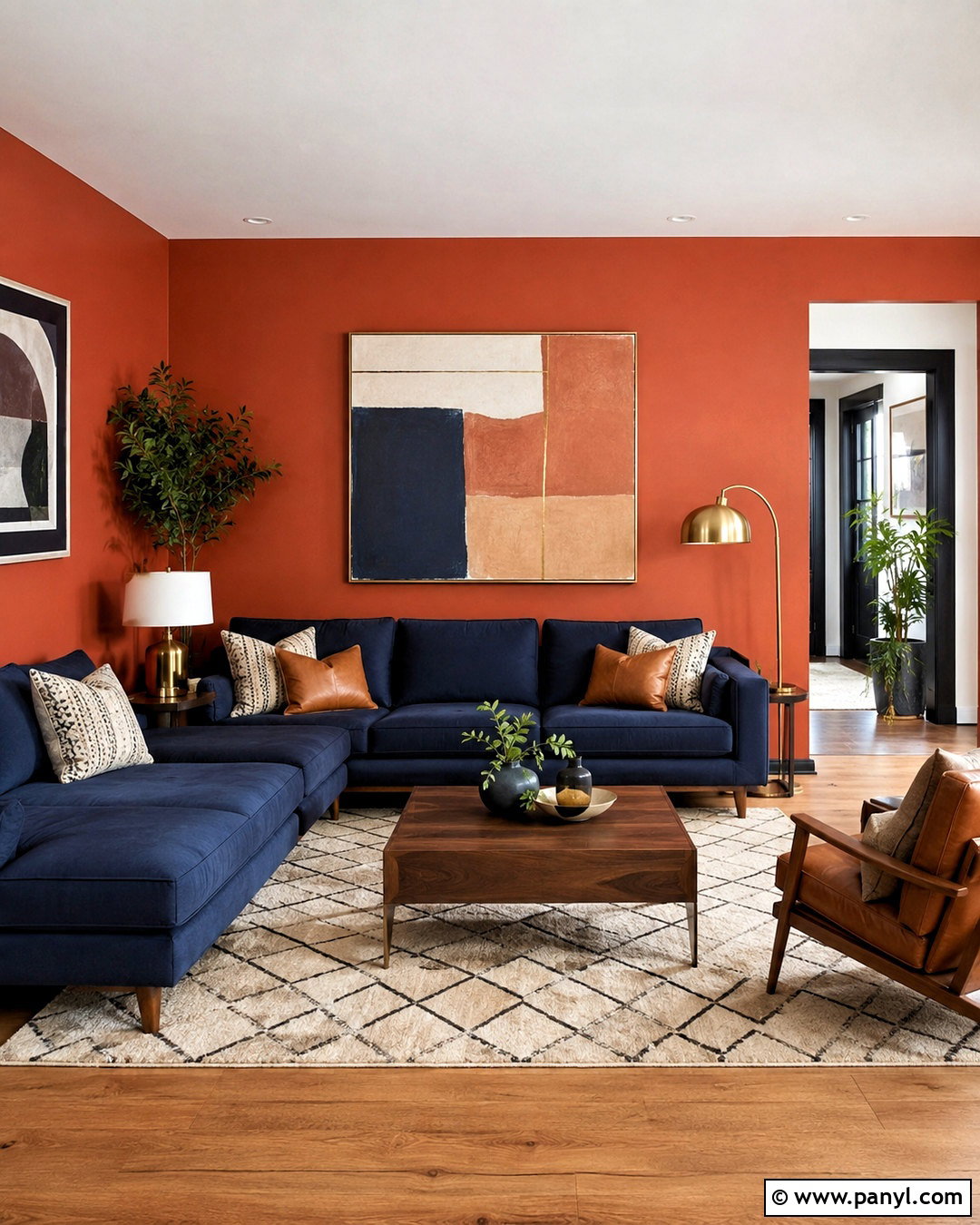
Would you prefer a room with stronger contrast? Pair a burnt terracotta accent wall with a deep navy blue sofa for a confident living room scheme. Keep the remaining walls warm white and select medium oak flooring to soften the saturated colors. A cream rug with a subtle geometric pattern creates breathing room between the wall and furniture. Add camel leather pillows, a walnut coffee table, and brushed brass lamps for extra warmth. Artwork with navy, rust, and ivory details will visually join the contrasting elements. Avoid filling every surface with accessories. Instead, use a few larger pieces, such as a ceramic table lamp, an oversized vase, and a sculptural bowl. The final room feels rich and layered while remaining practical for daily life.
4. Terracotta Accent Wall With Charcoal Gray Sofa
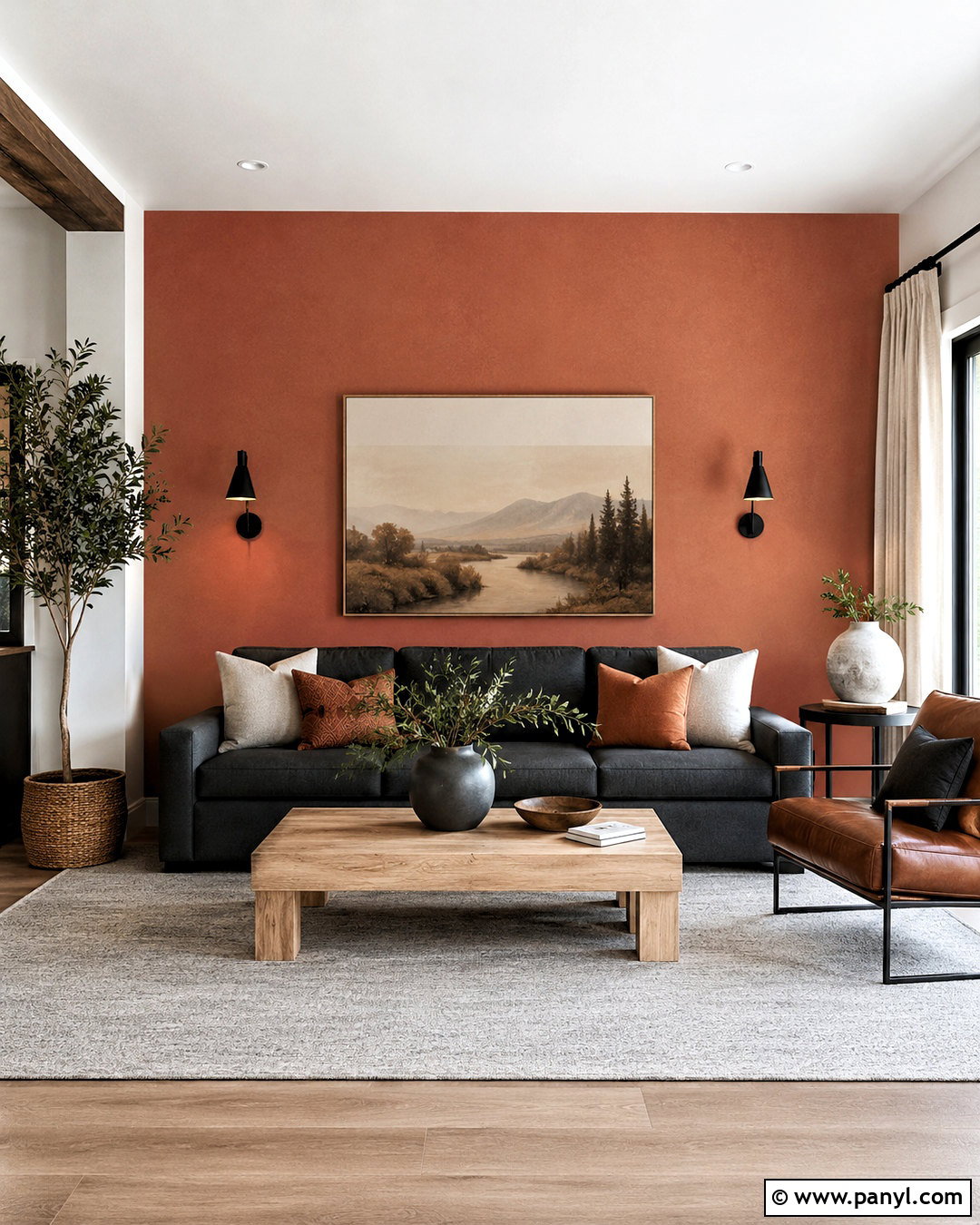
A charcoal gray sofa can look cold on its own, but a warm terracotta accent wall immediately gives it more depth. Choose a slightly muted terracotta shade rather than a bright orange tone. Place the sofa against the wall and layer it with oatmeal, rust, and black pillows. A light gray wool rug and pale wood coffee table prevent the palette from becoming too heavy. Use black metal sconces on each side of a large neutral artwork for symmetry. Keep window treatments soft and simple with off-white linen curtains. One cognac leather chair adds another warm material without matching the wall too closely. Finish with a broad-leaf plant and a few matte ceramic objects for a polished modern living room.
5. Terracotta Accent Wall With Boho Decor
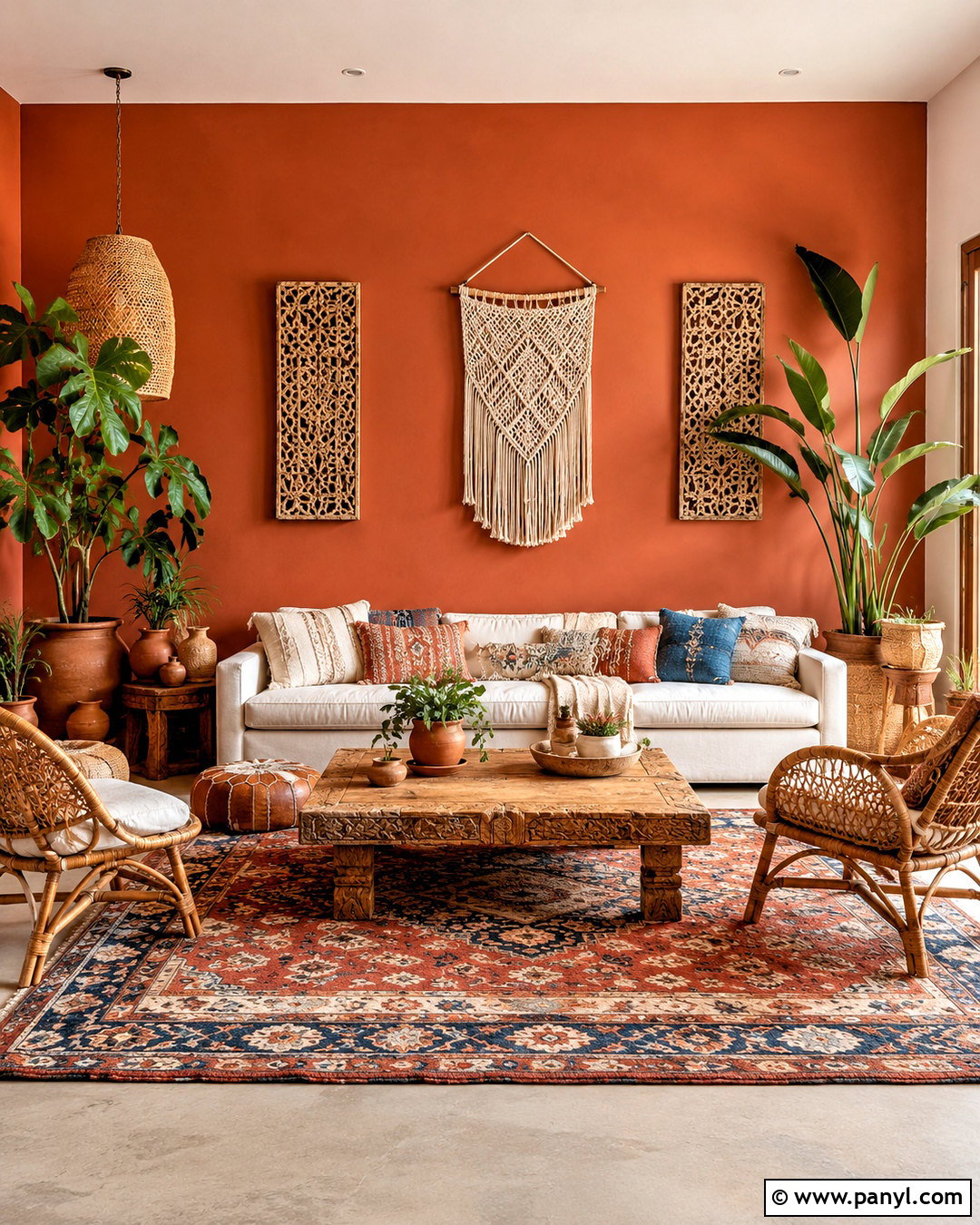
Rich texture is the foundation of a boho living room with a terracotta accent wall. Start with a warm clay shade behind a low cream sofa, then arrange rattan chairs to create a relaxed conversation area. Layer a patterned rug in rust, faded blue, tan, and ivory over natural wood flooring. Macramé, woven baskets, and carved wood decor can add character, but leave open wall space so the room does not feel crowded. Use linen pillows with small-scale patterns and a soft tasseled throw. Several plants in clay and woven planters reinforce the earthy palette. A large bamboo pendant provides a strong finishing feature. The complete room should feel collected and comfortable, with coordinated colors keeping the varied materials visually connected.
6. Terracotta Accent Wall With Midcentury Furniture
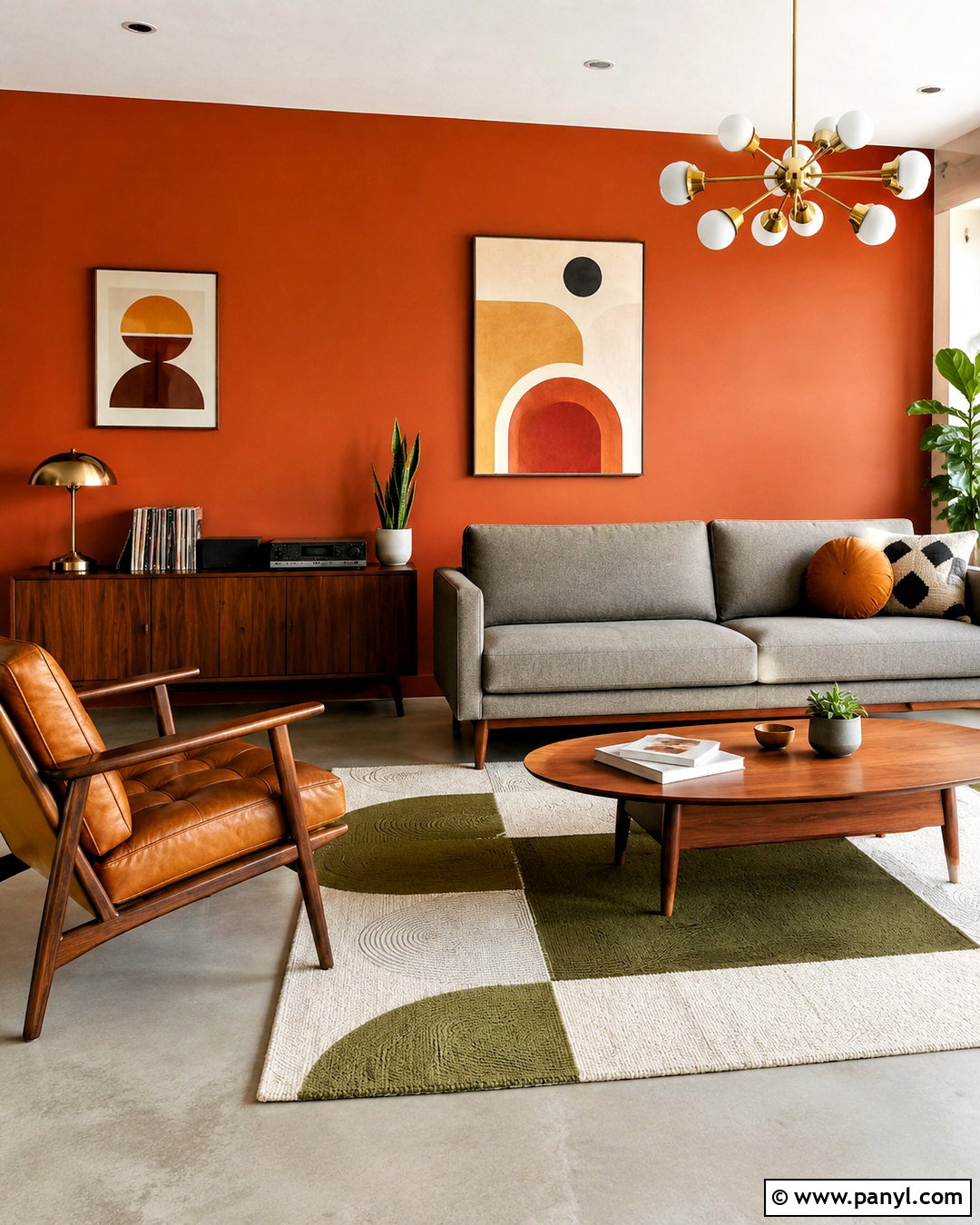
Clean-lined furniture gives a terracotta accent wall a distinctive midcentury look. Paint the wall behind a walnut media console or streamlined sofa in a deep, slightly brown clay tone. Choose furniture with tapered legs and simple silhouettes, including a caramel leather chair and an oval wood coffee table. A geometric rug in cream, mustard, olive, and rust can unify the room without competing with the wall. Add globe-shaped lighting in opal glass and brushed brass. Framed abstract prints should use restrained blocks of color rather than elaborate patterns. Keep the surrounding walls warm white and let natural wood remain visible throughout the room. This approach feels nostalgic but not dated because the layout stays uncluttered and the finishes remain practical.
7. Terracotta Accent Wall With Farmhouse Decor
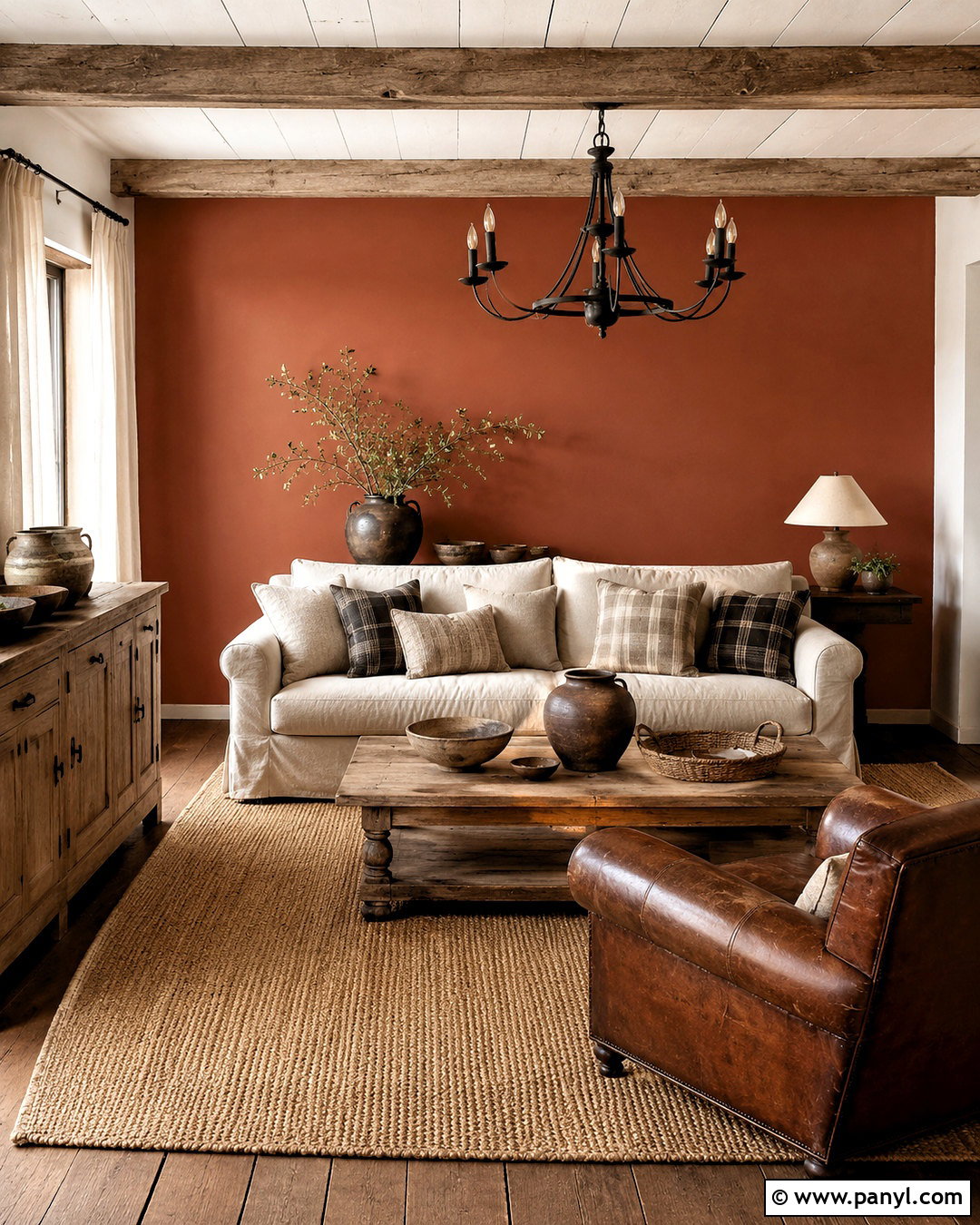
Terracotta can bring welcome warmth to farmhouse decor when it is balanced with simple, familiar materials. Use a dusty clay shade on the wall behind a slipcovered oatmeal sofa or a weathered wood dining table. Add creamy white walls, medium-tone oak flooring, and a neutral woven rug. Black metal lighting supplies crisp contrast, while linen curtains and checked pillows create a casual finish. Instead of filling the wall with many small decorations, hang one reclaimed wood shelf with stoneware, framed artwork, and a trailing plant. An aged leather chair can make the room feel more established. Keep decorative objects useful and understated, such as baskets, pottery, and books. The result is relaxed farmhouse character with a warmer, updated color palette.
8. Terracotta Accent Wall With Minimalist Decor
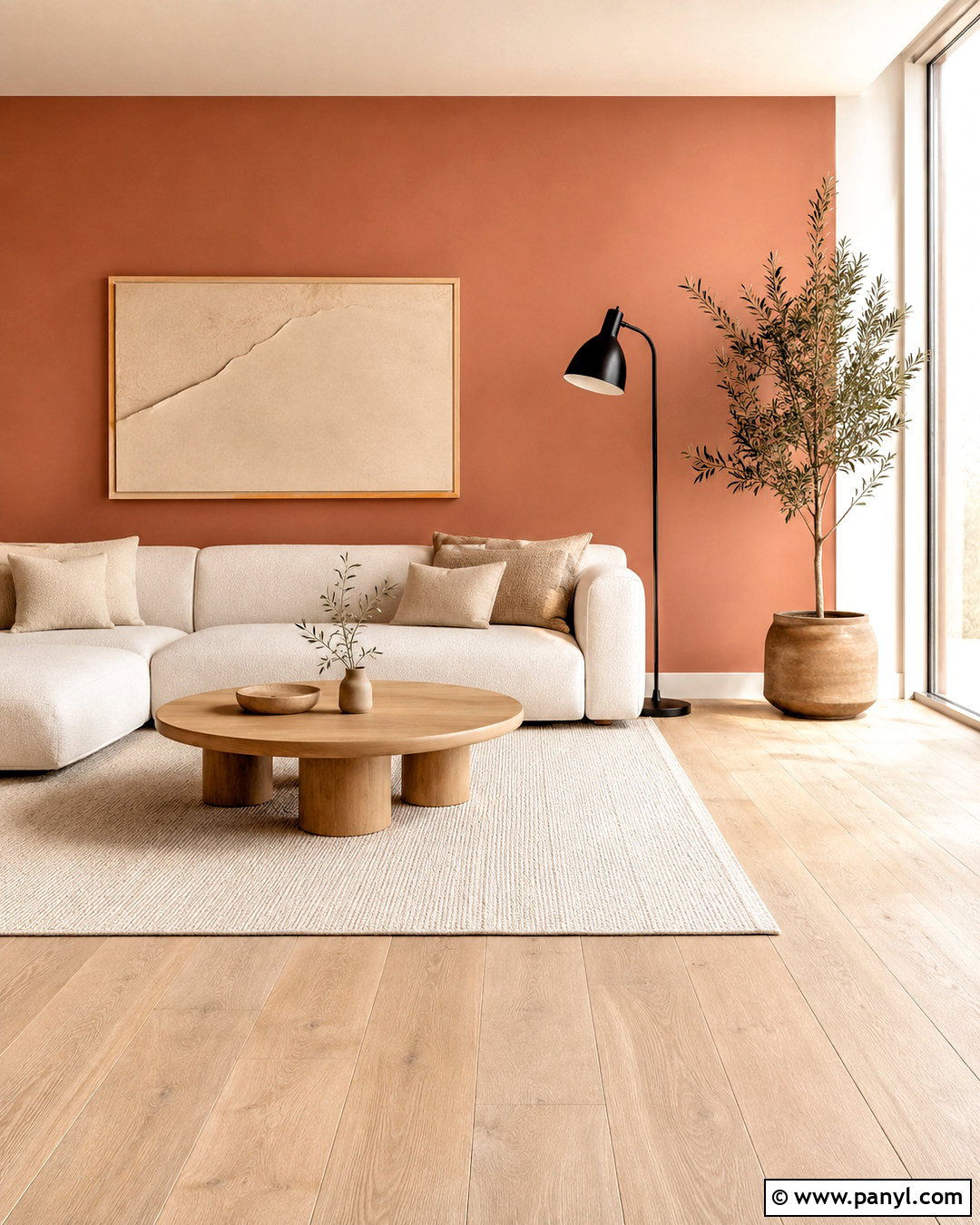
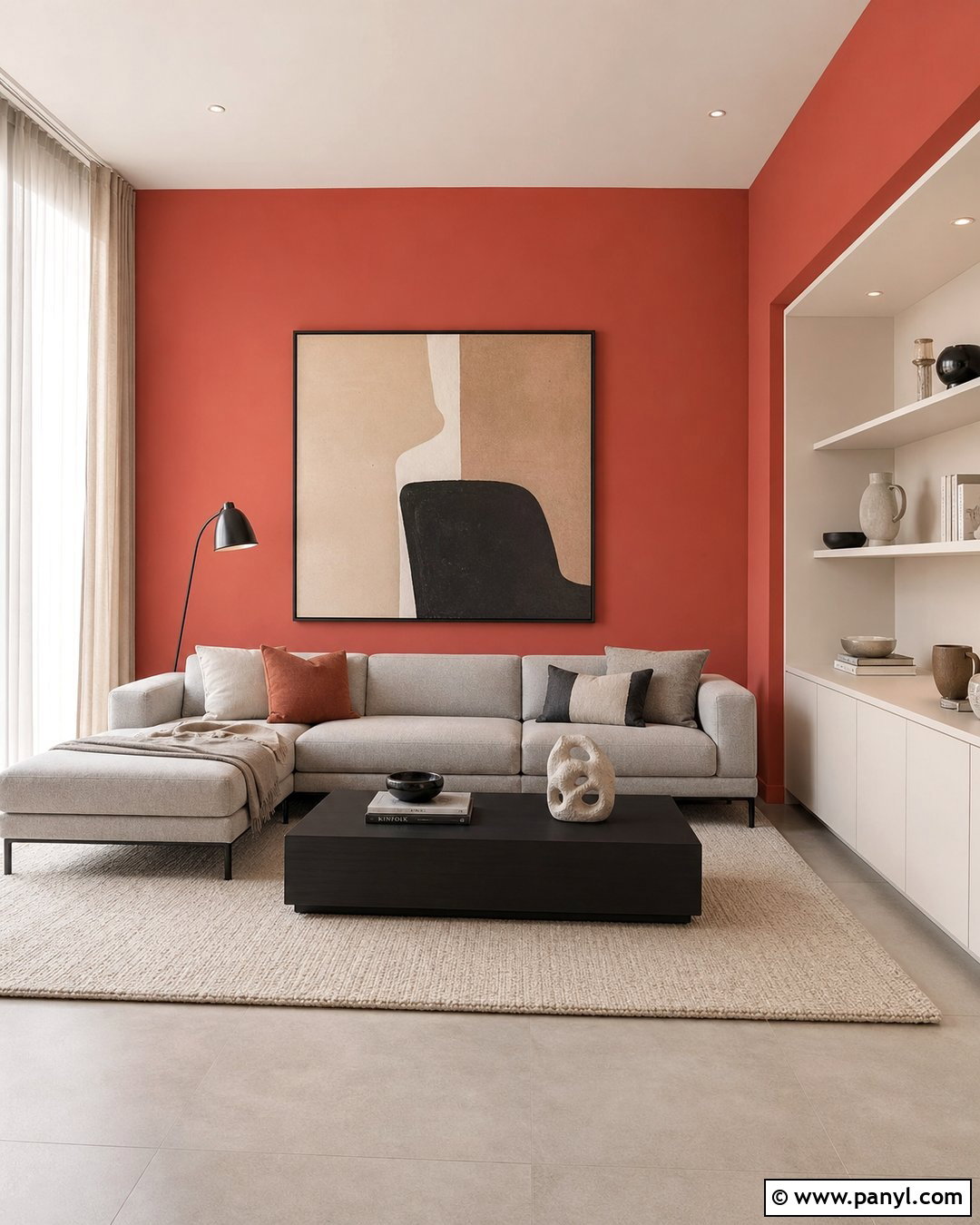
A minimalist room benefits from the visual warmth of terracotta without needing many accessories. Choose a smooth matte finish in a soft, desaturated clay tone for the wall behind a low-profile ivory sofa. Use pale oak flooring, a simple cream rug, and one sculptural wood coffee table. The remaining walls should be a warm off-white rather than a sharp, cool white. Add a single black floor lamp and one large piece of neutral artwork with plenty of open space. Keep pillows limited to two or three in linen and boucle fabrics. A tall olive tree in a plain ceramic planter can provide the room’s only organic decoration. Careful spacing, clean lines, and concealed storage allow the accent wall to remain the central feature.
9. Terracotta Limewash Accent Wall
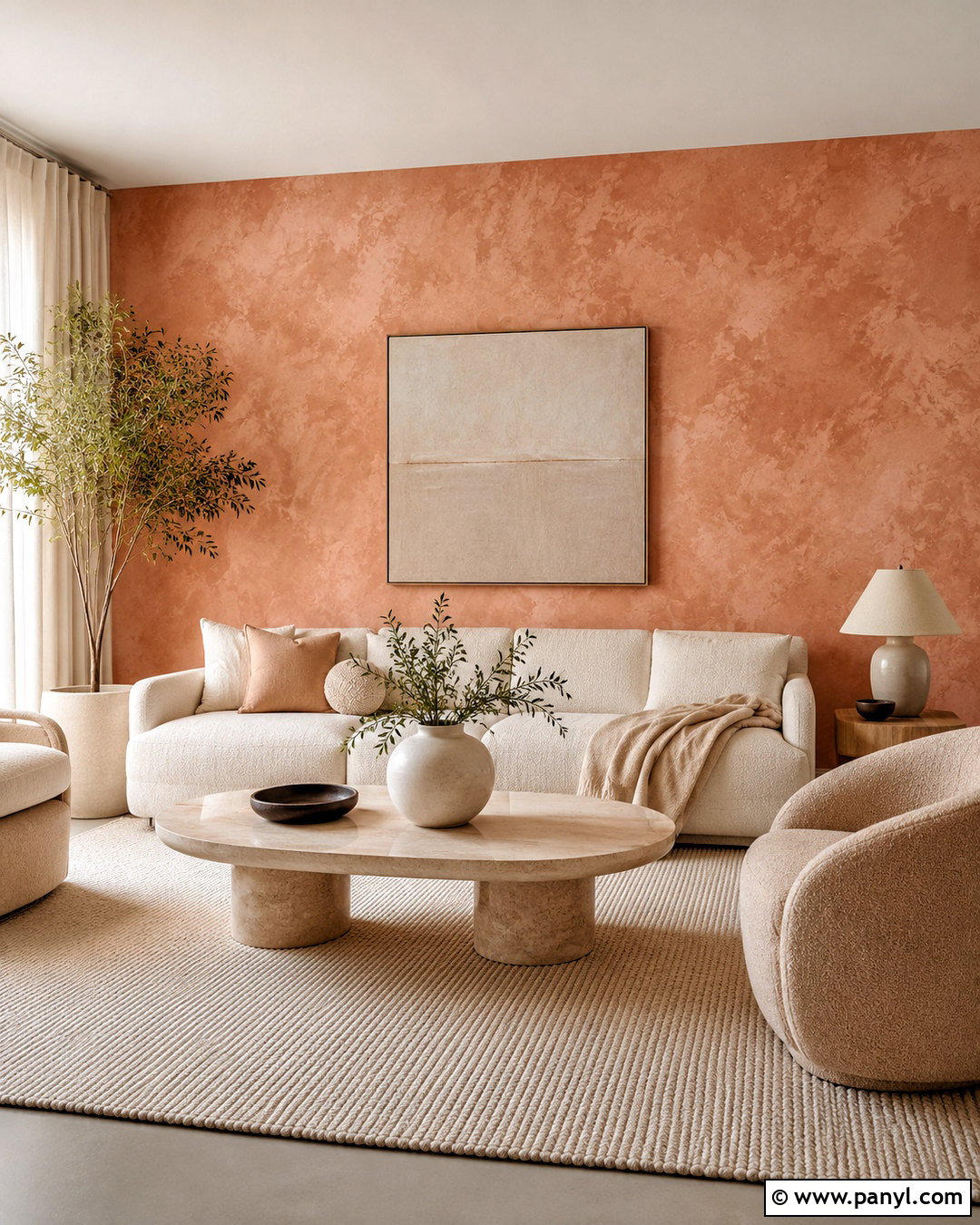
Soft variations in color make a terracotta limewash accent wall feel dimensional and handcrafted. Use it in a living room with an oatmeal sofa, rounded lounge chair, and pale oak furniture. The cloudy wall finish should include muted clay, dusty peach, and subtle brown undertones rather than harsh streaks. Pair it with warm white surrounding walls and a lightly textured cream rug. Handmade ceramic lamps, linen curtains, and a travertine coffee table complement the imperfect surface. Keep artwork minimal because the limewash already contributes movement and depth. One large tonal canvas or a small group of simple wood-framed prints is enough. Indirect lighting and wall-washing sconces will highlight the texture while preserving the room’s calm, comfortable, and contemporary appearance.
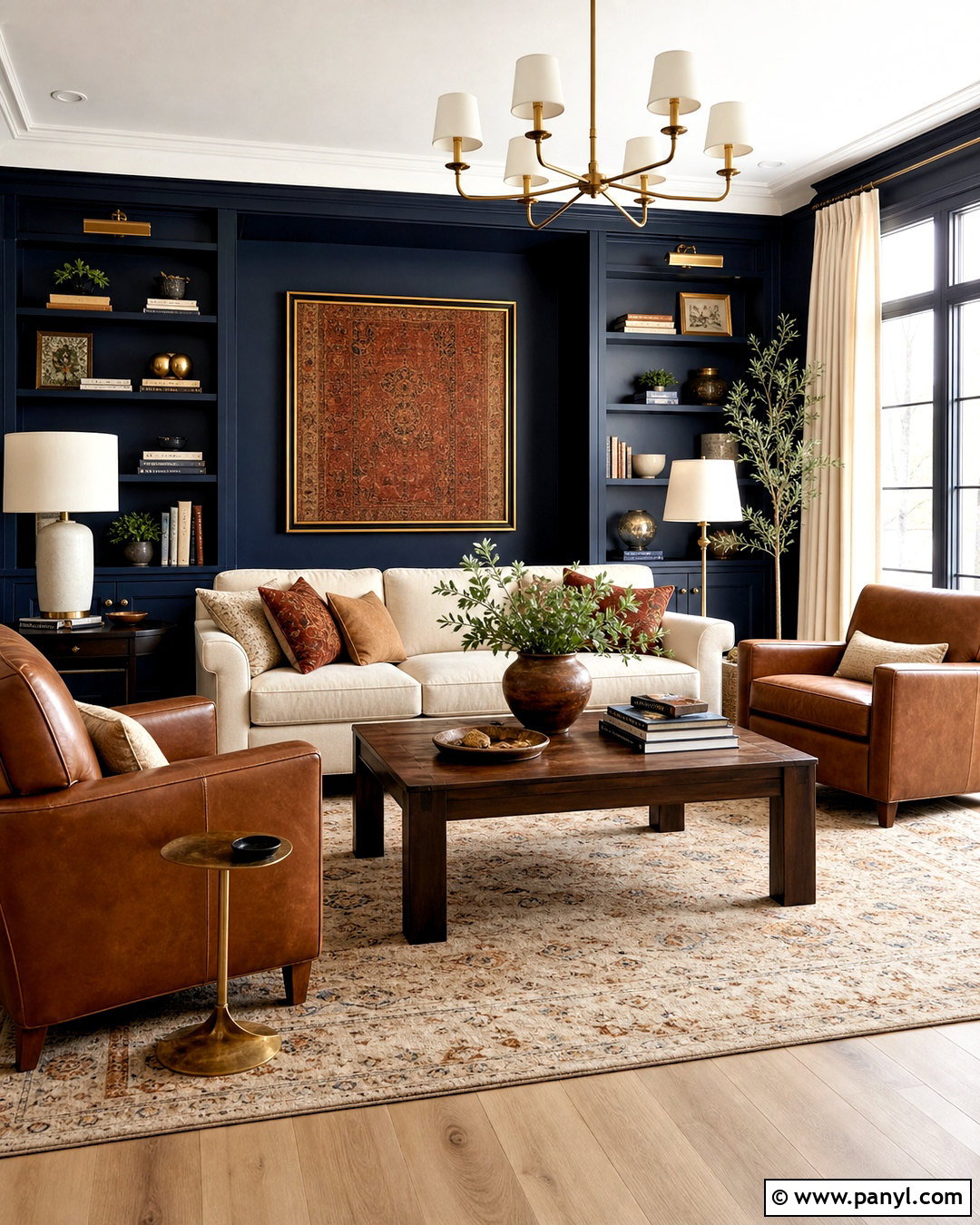
10. Terracotta Arch Accent Wall
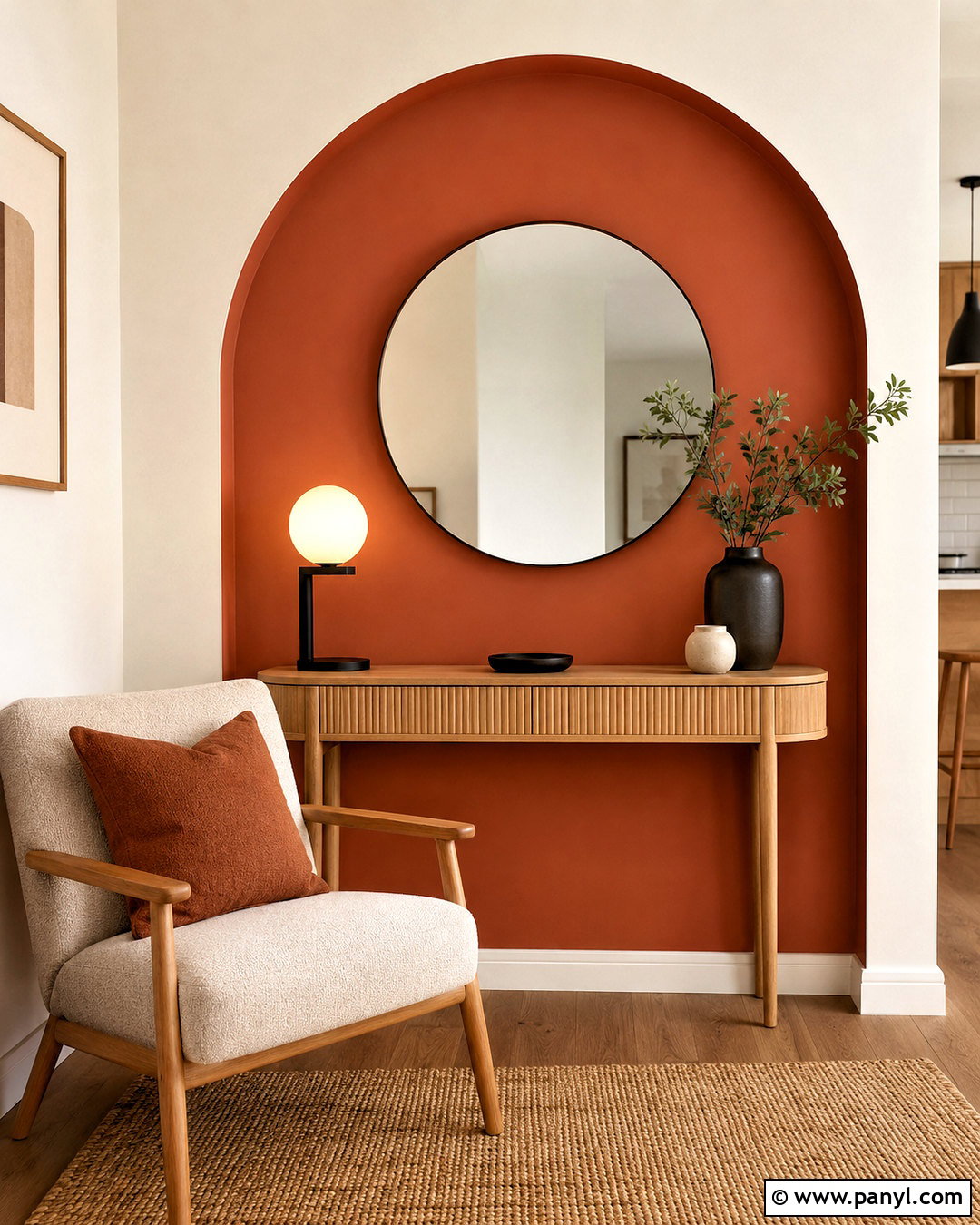
A painted terracotta arch can define a small area without covering an entire wall. Create the arch behind a slim console, reading chair, bed, or compact desk, making it slightly wider than the furniture below it. Use muted terracotta against a creamy white wall for a gentle but noticeable contrast. Repeat the curved form with a round mirror, globe lamp, or circular side table. Light oak and woven materials keep the design casual, while a few black details create definition. Keep the edges clean and the surrounding decor restrained so the shape reads clearly. This treatment works especially well in apartments and multipurpose rooms because it establishes a visual zone without construction. The completed space feels organized, warm, and intentionally designed.
11. Terracotta Accent Wall With Panel Molding
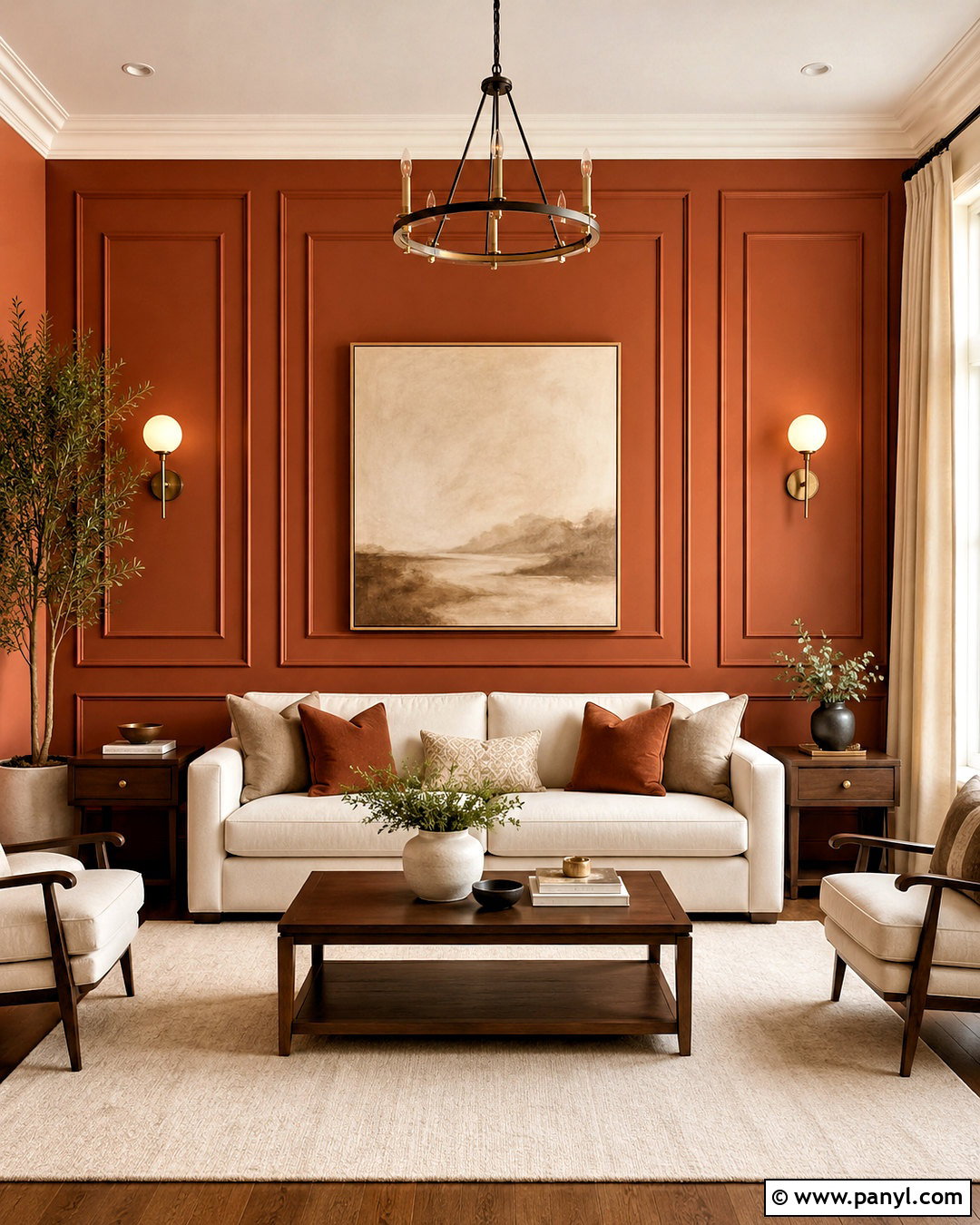
Panel molding adds architectural structure to a painted terracotta accent wall. Install evenly spaced rectangular trim across the wall behind a sofa, bed, or dining table, then paint the molding and wall the same matte clay color. The uniform finish creates depth without introducing another competing shade. Pair the wall with ivory upholstery, medium walnut furniture, and a cream rug. Traditional brass sconces or contemporary globe lights can be placed within the panels for a balanced arrangement. Keep artwork large and centered, or leave the molding mostly uncovered so its proportions remain visible. Warm white surrounding walls and simple linen curtains prevent the design from feeling too formal. This complete look combines classic wall detailing with an approachable, earthy color palette.
12. Terracotta Accent Wall With Wood Slats
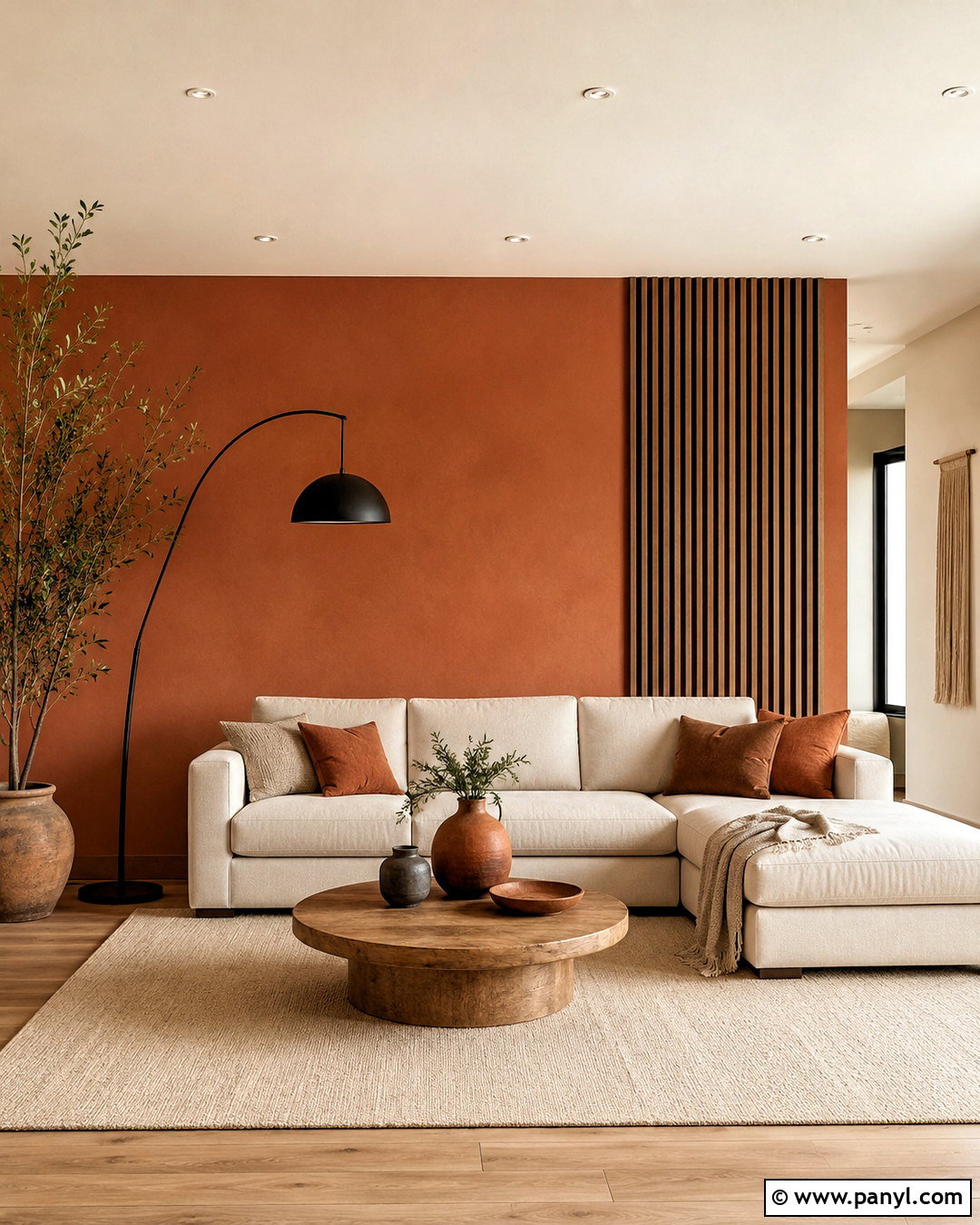
Combining terracotta paint with vertical wood slats creates a feature wall with warmth, rhythm, and useful visual structure. Paint the entire wall in a muted clay tone, then install narrow walnut or oak slats across one-third of the surface. Position the slats behind a television, desk, or side of the sofa rather than covering everything. Choose a cream sectional, black metal lighting, and a simple wood coffee table to continue the modern palette. A light neutral rug keeps the lower half of the room bright. Add only a few accessories, such as pottery, books, and one leafy plant. The wood should contrast gently with the wall while repeating furniture finishes, producing a cohesive room rather than two unrelated accent treatments.
13. Terracotta Fireplace Accent Wall
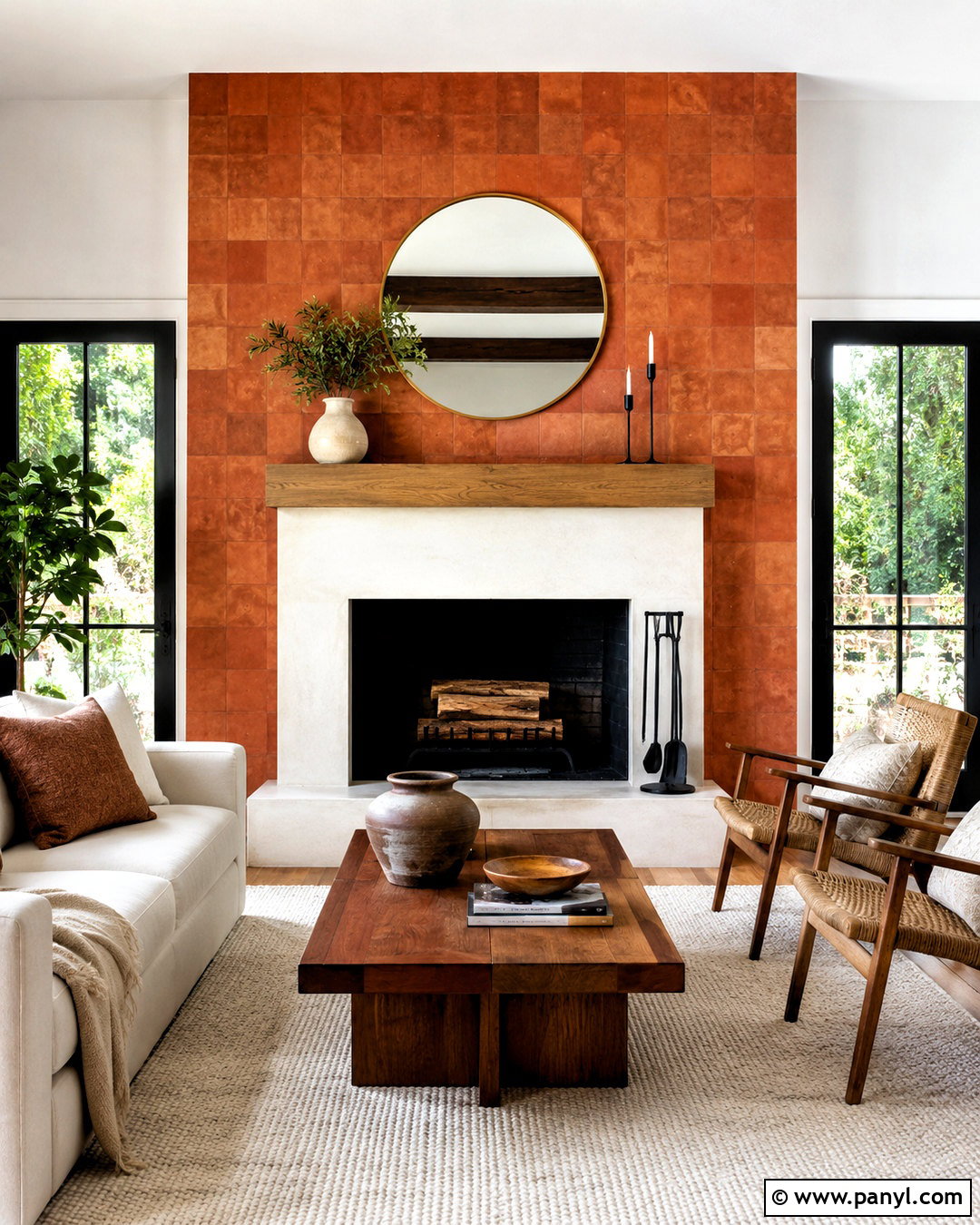
A fireplace wall becomes a natural centerpiece when finished in a rich terracotta shade. Paint the full chimney breast or projecting fireplace wall while leaving adjacent walls creamy white. A simple plaster, stone, or warm white tile surround will stand out clearly against the earthy color. Arrange a neutral sofa and two woven or leather chairs toward the fireplace to reinforce it as the room’s focal point. Use a large wood mantel with restrained decor, such as a round mirror, ceramic vase, and small framed print. An ivory rug and oak coffee table lighten the composition. Black fireplace tools and sconces contribute contrast. This approach works best when the terracotta extends from floor to ceiling, emphasizing the architecture and creating a balanced gathering area.
14. Terracotta TV Accent Wall
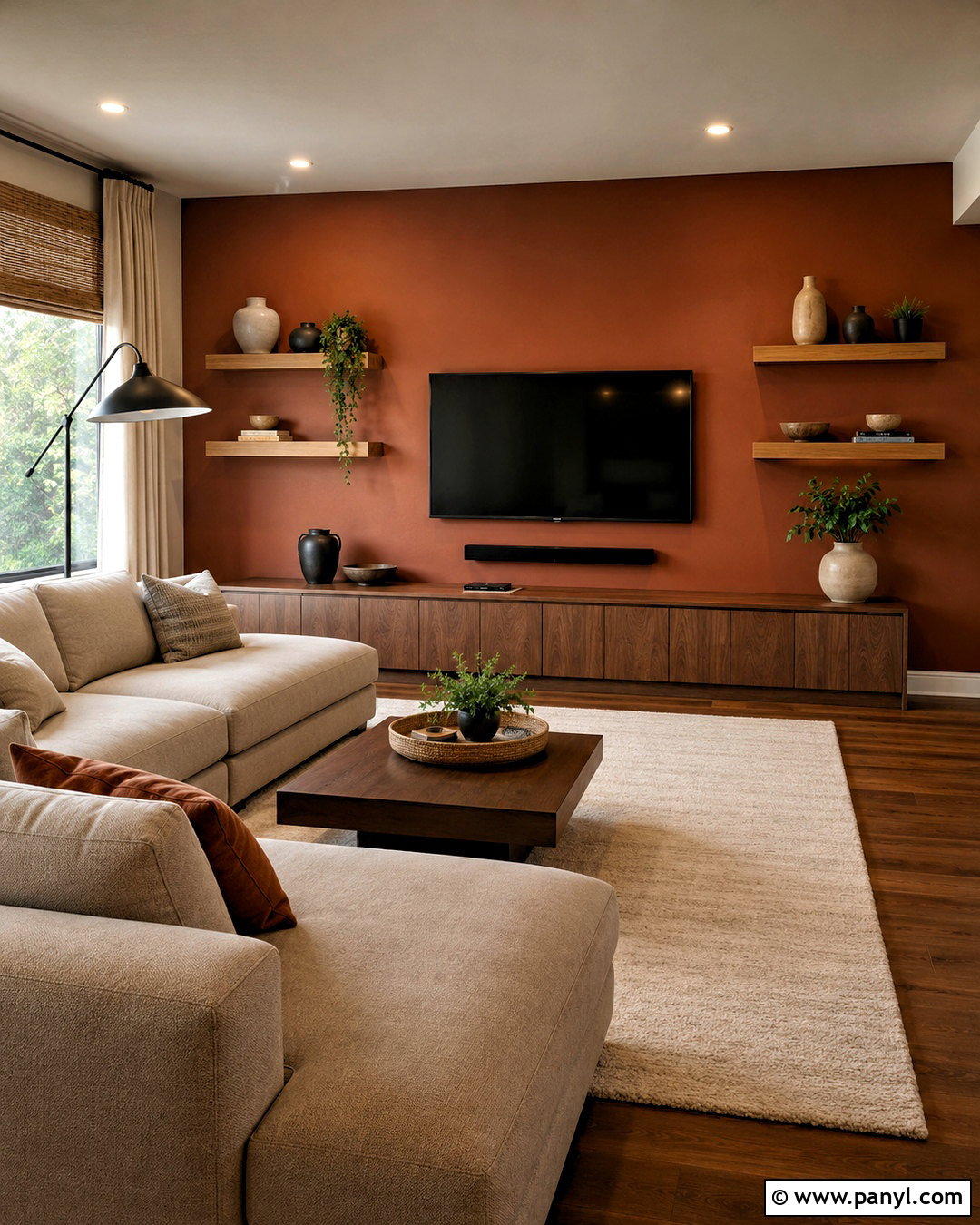
A terracotta TV wall can make a black screen feel less severe while giving the media area a finished appearance. Select a medium-dark clay shade with brown undertones, then mount the television above a low walnut console. Hide cables and keep the surrounding surface uncluttered. Floating oak shelves on one side can hold a small plant, books, and neutral ceramics without distracting from viewing. Pair the wall with a light greige sectional, cream rug, and black metal floor lamp. Use warm white on the remaining walls to maintain brightness. Soft lighting behind or beside the television can reduce strong visual contrast. Repeating terracotta in one or two pillows connects the media wall to the seating area and completes the modern living room layout.
15. Terracotta Bedroom Accent Wall With White Bedding
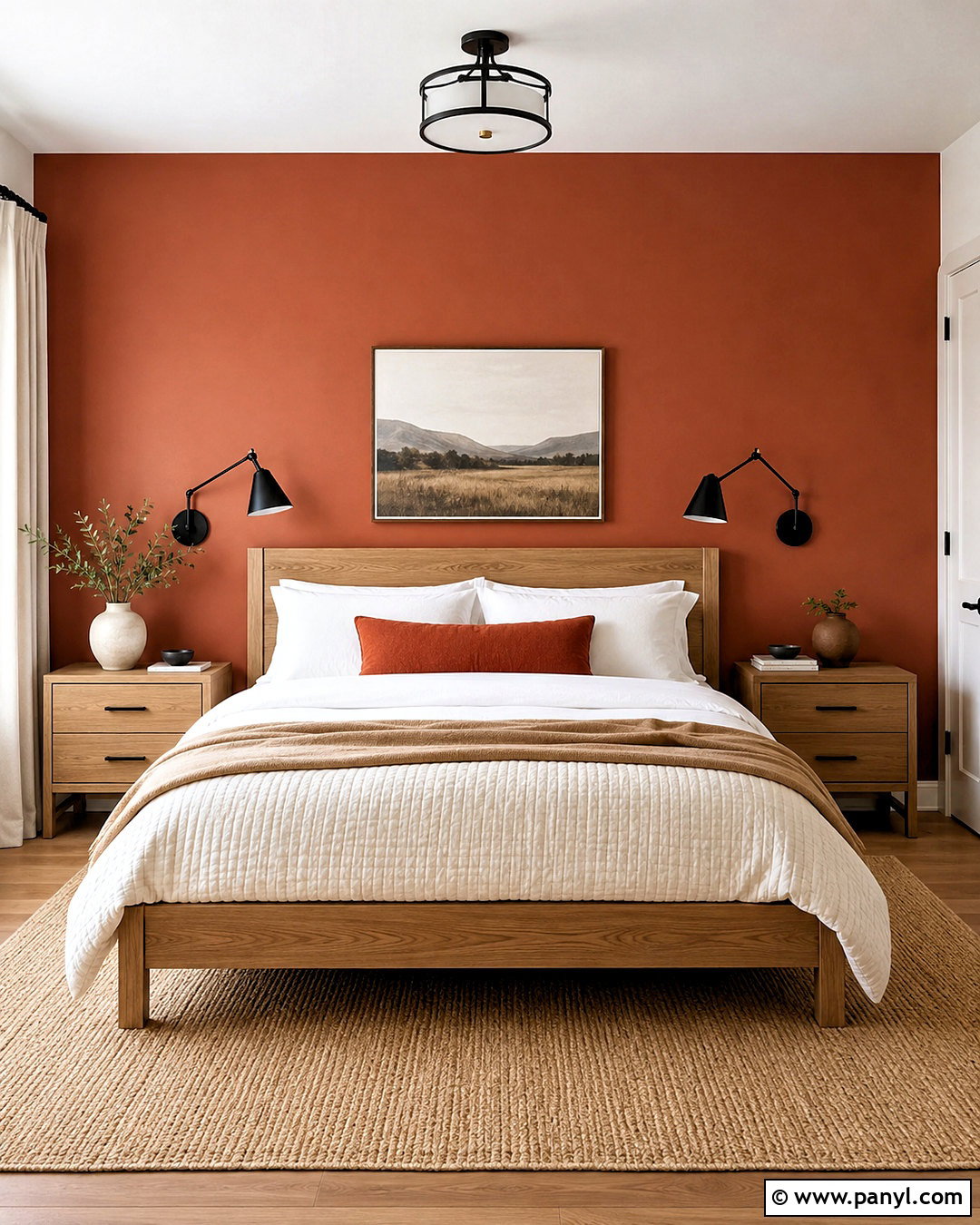
Crisp white bedding looks softer and more inviting against a warm terracotta bedroom accent wall. Paint the wall behind the headboard in a medium clay shade and keep the other walls creamy white. Choose a simple oak or upholstered beige bed with matching wood nightstands. Layer the bedding with an ivory quilt, rust lumbar pillow, and light tan throw to bridge the contrast. Brass or black swing-arm sconces free space on the bedside tables and frame the bed evenly. Add a woven rug beneath the lower two-thirds of the bed for texture. Window treatments should be light linen rather than heavy fabric. One wide landscape print or a group of three understated pieces above the headboard completes the restful, balanced bedroom design.
16. Terracotta Bedroom Accent Wall With Olive Green
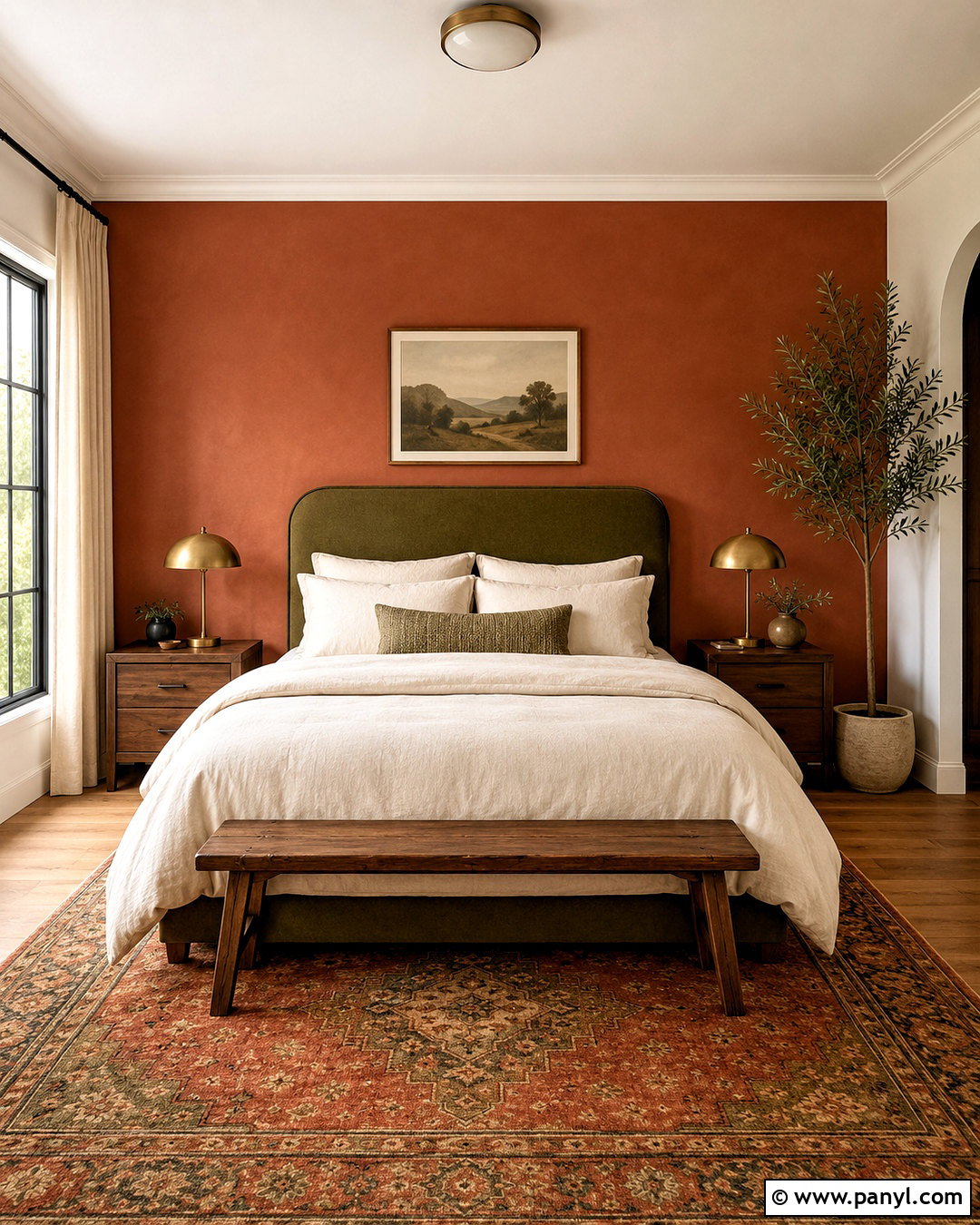
Terracotta and olive green produce a bedroom palette that feels earthy, restful, and mature. Use a dusty terracotta shade behind the bed, then introduce olive through the upholstered headboard, coverlet, or full-length curtains. Keep sheets and larger bedding pieces cream to separate the two stronger colors. Walnut nightstands and aged brass lamps reinforce the room’s warm character. A vintage-inspired rug can include faded rust, olive, beige, and muted blue details. Add a simple wood bench at the foot of the bed and one tall plant near the window. Artwork should remain quiet and nature focused. Because both primary colors carry substantial visual weight, avoid adding several unrelated bright accents. The completed bedroom feels layered while maintaining a calm, connected appearance.
17. Terracotta Bedroom Accent Wall With Blush Pink
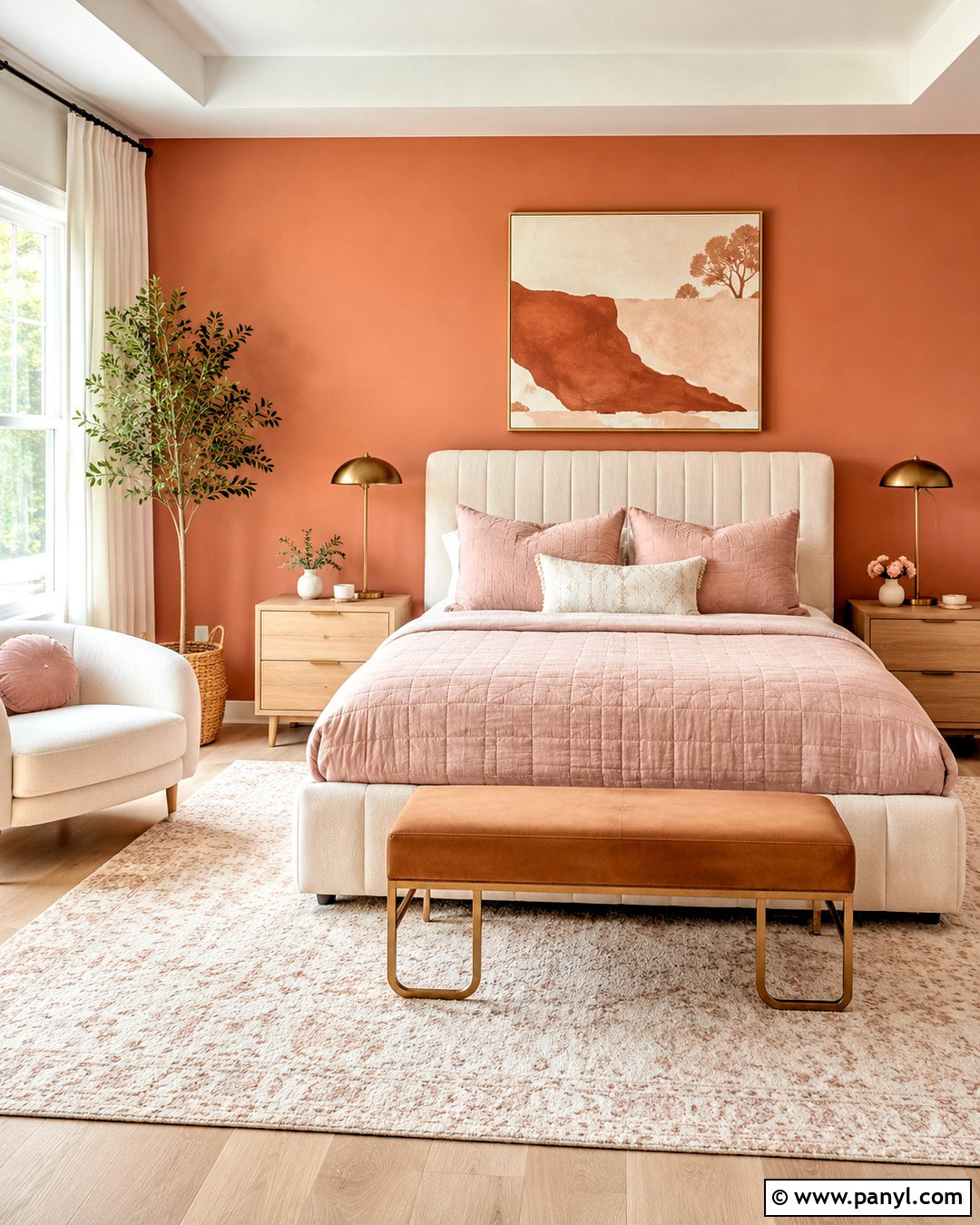
For a softer interpretation, combine a muted terracotta accent wall with dusty blush bedding and warm neutral furniture. Select terracotta with pink or peach undertones rather than a strongly brown shade. An ivory upholstered bed keeps the palette light, while pale oak nightstands and a cream rug add natural texture. Use blush in smaller layers, including pillows, a lightweight quilt, and a bench at the foot of the bed. Matte brass lamps introduce a subtle reflective finish. To prevent the room from becoming overly pink, include tan, off-white, and a few dark brown details. Abstract artwork with clay, beige, and charcoal shapes can anchor the wall. The final bedroom appears warm and refined, with enough tonal variation to create dimension.
18. Terracotta Bedroom Accent Wall With Dark Wood
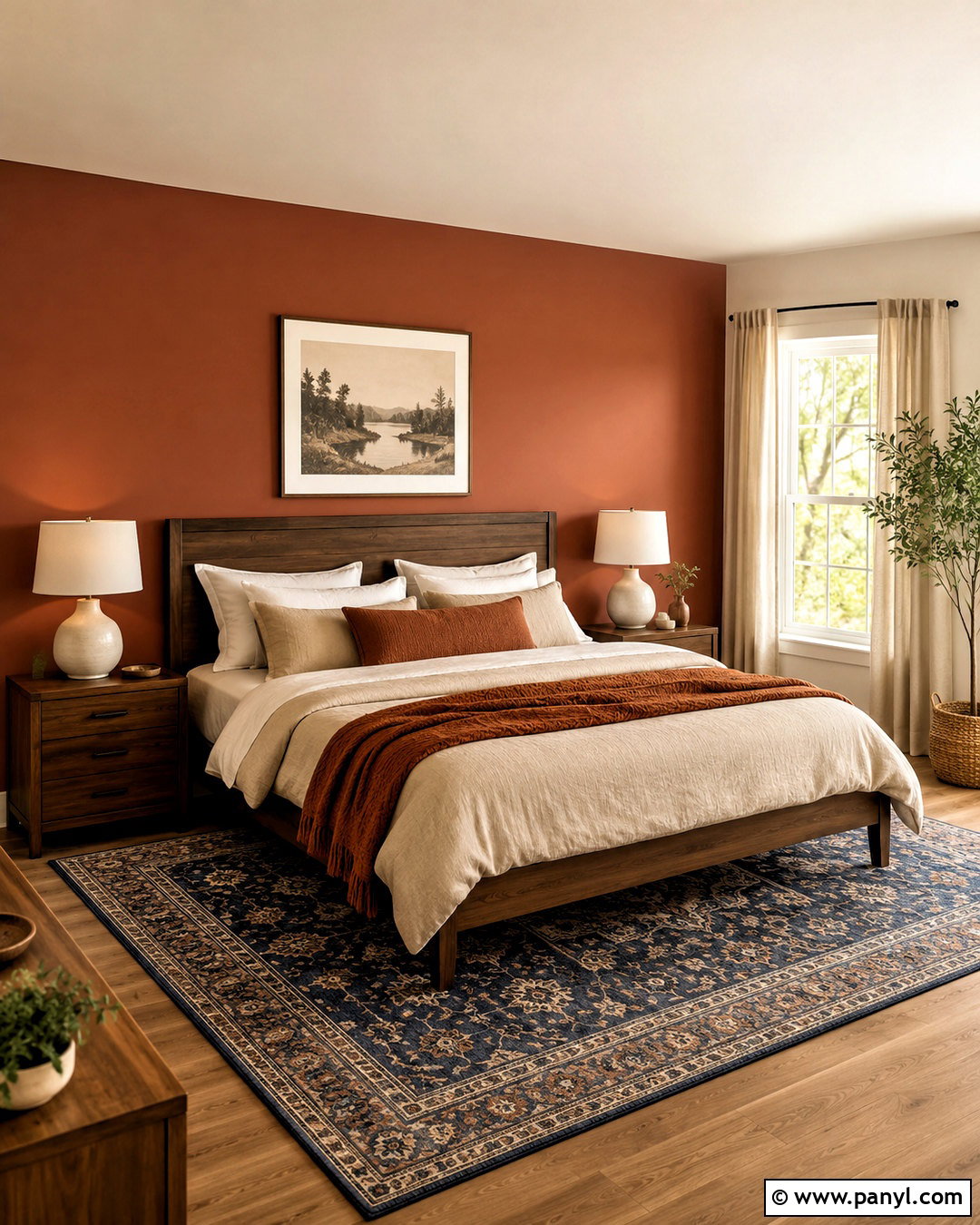
Dark wood furniture brings out the deeper, earthier side of a terracotta bedroom accent wall. Choose a reddish-brown clay shade behind a walnut or espresso wood bed. Keep the remaining walls pale cream so the room does not feel enclosed. Dress the bed in oatmeal linen, warm white sheets, and one deep rust throw. Matching dark nightstands create symmetry, while ceramic lamps in off-white or sand provide contrast. Use a vintage-style rug with faded red, navy, and beige details beneath the bed. Light curtains and a large mirror can reflect natural light around the darker furnishings. Limit artwork to a simple framed textile or tonal landscape. This combination creates a grounded bedroom that feels substantial, comfortable, and carefully balanced.
19. Terracotta Accent Wall in a Small Bedroom
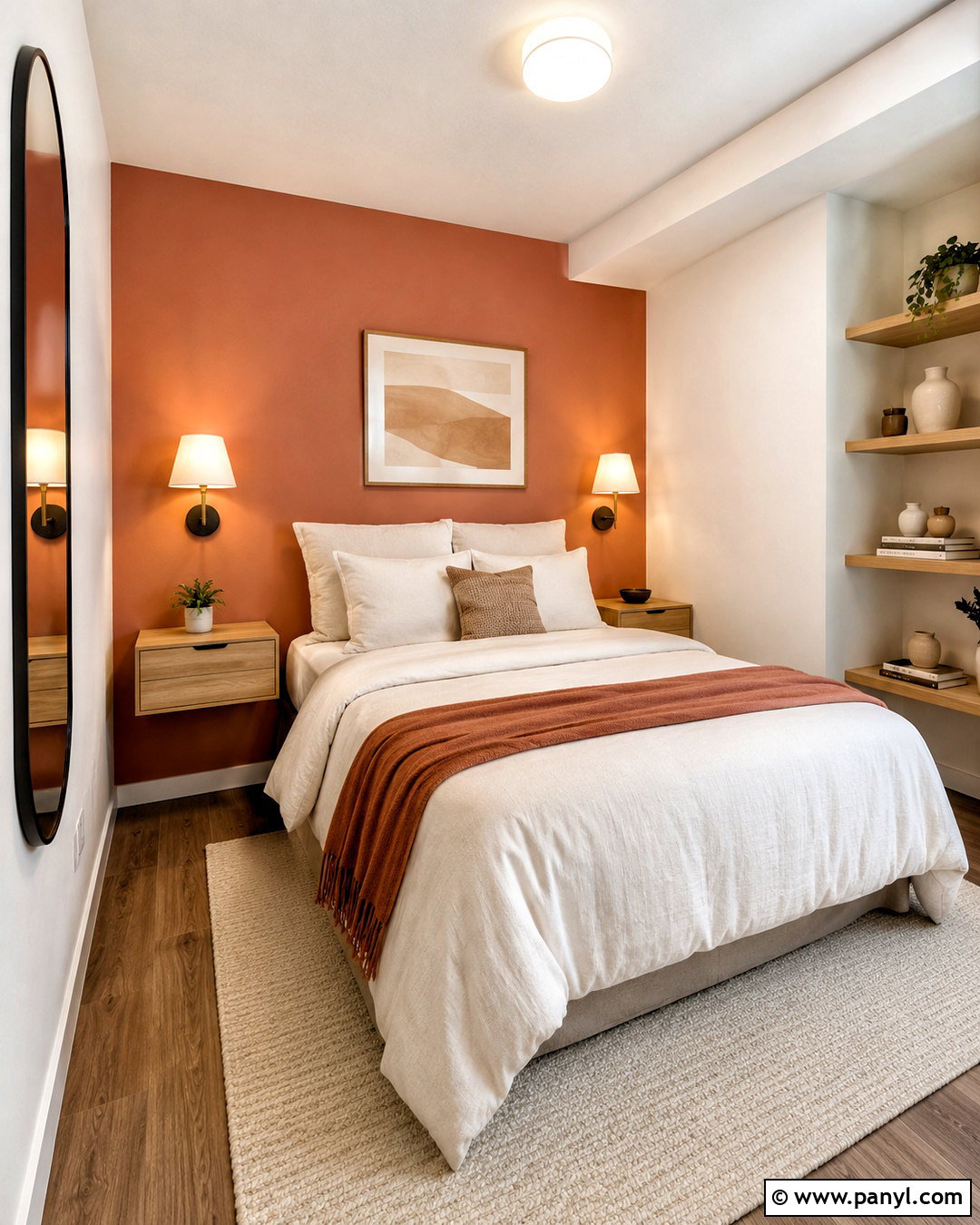
A small bedroom can handle terracotta when the wall, furniture, and lighting are carefully balanced. Paint only the wall behind the bed in a light, muted clay shade. Keep all other walls warm white and choose a bed with a slim frame or no bulky footboard. Pale wood nightstands, wall-mounted sconces, and floating shelves preserve valuable floor space. Use white or cream bedding with a narrow rust throw instead of layering many dark textiles. A large mirror placed perpendicular to the accent wall can reflect light and make the color feel less enclosing. Select one compact rug in ivory and tan to soften the floor. Keeping furniture low and decorative pieces minimal allows the warm wall to add personality without visually shrinking the room.
20. Terracotta Accent Wall in a Nursery
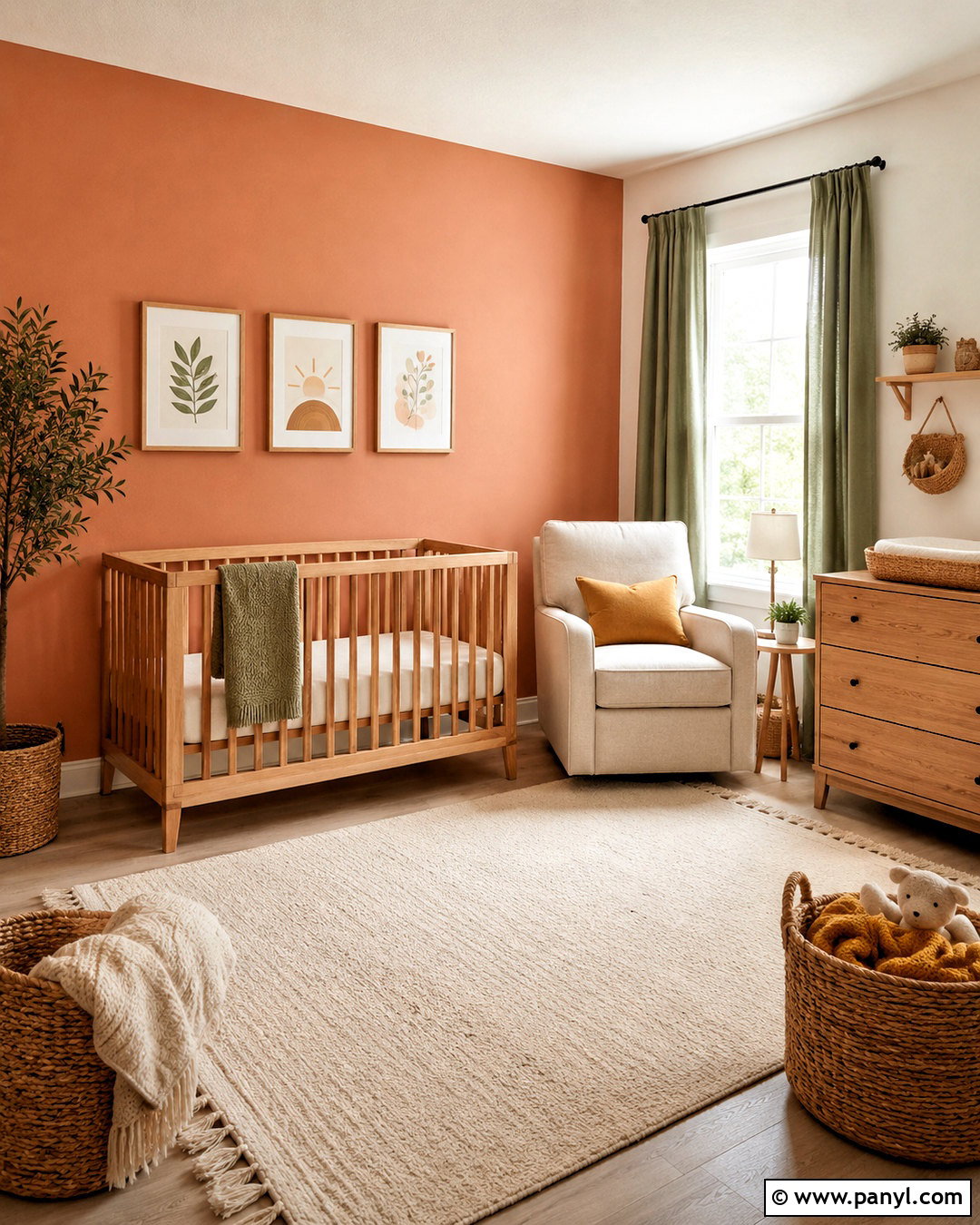
A gentle terracotta accent wall gives a nursery warmth while remaining flexible as the child grows. Use a soft peach-clay shade behind a natural wood crib and keep the surrounding walls warm white. Add an oatmeal upholstered glider, a washable cream rug, and light oak storage furniture. Sage green, muted mustard, and ivory can appear through curtains, crib sheets, baskets, and simple artwork. Choose securely installed wall decor with uncomplicated shapes, leaving the area directly above the crib clear when appropriate for safety. Blackout curtains can match the wall’s warm undertone without making the room dark. Closed storage reduces clutter, while woven baskets keep everyday items accessible. The finished nursery feels calm, practical, and coordinated rather than overly themed.
21. Terracotta Accent Wall in a Dining Room
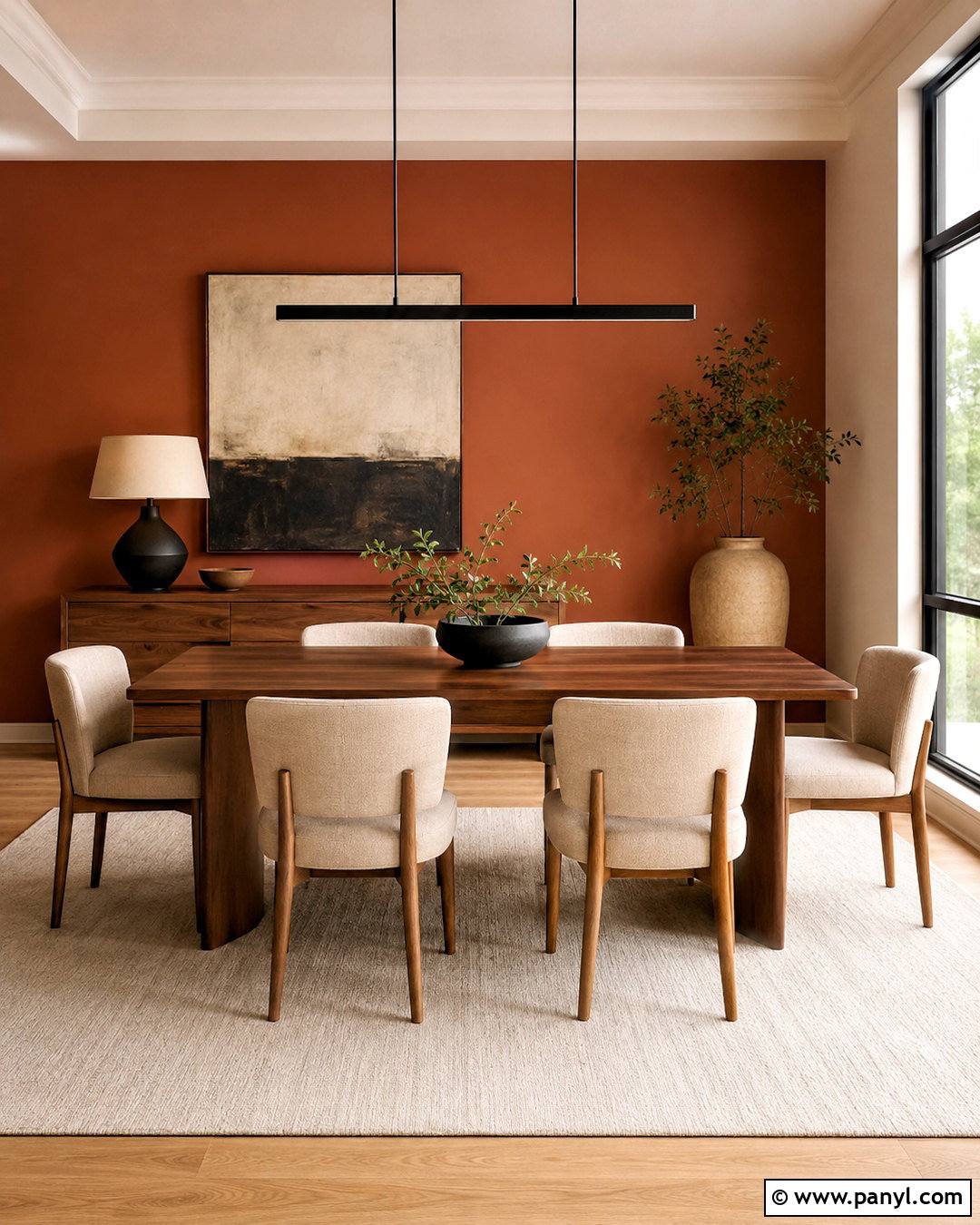
A terracotta accent wall can make a dining room feel more intimate and established. Paint the wall behind a solid oak or walnut dining table in a muted burnt clay shade. Choose upholstered chairs in cream, oatmeal, or light camel to soften the strong background. A linear pendant in black metal, aged brass, or woven fiber should center directly over the table. Place a low sideboard against the painted wall and style it with a ceramic lamp, large artwork, and one sculptural vase. A neutral rug defines the dining zone while protecting the floor. Keep adjacent walls warm white and repeat terracotta through napkins or pottery in small amounts. This balanced arrangement works for everyday meals as well as more formal gatherings.
22. Terracotta Accent Wall in a Kitchen
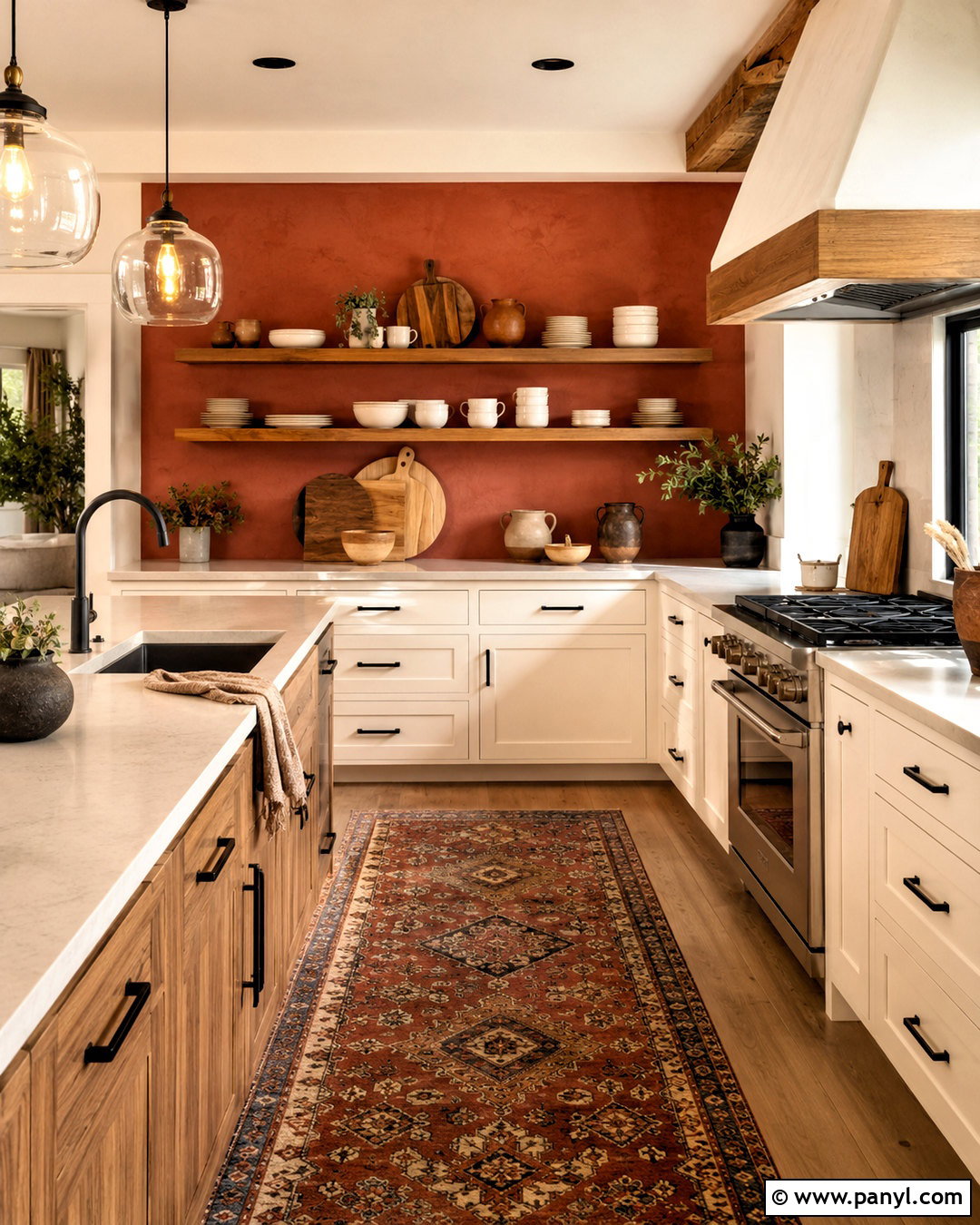
Terracotta can warm a white or wood kitchen without requiring new cabinets. Use washable matte or eggshell paint on a clear wall behind open shelving, a breakfast counter, or a freestanding storage unit. Pair the accent wall with warm white cabinetry, light quartz counters, and pale oak details. Black hardware and simple pendant lights provide clean contrast. Open shelves can display cream dishes, clear glassware, wood boards, and a few handmade ceramic pieces. Keep the backsplash neutral so it does not compete with the wall. A washable runner in rust, tan, and faded blue connects the palette at floor level. With restrained accessories and practical finishes, the complete kitchen feels colorful, organized, and welcoming rather than busy or overly rustic.
23. Terracotta Accent Wall in a Breakfast Nook
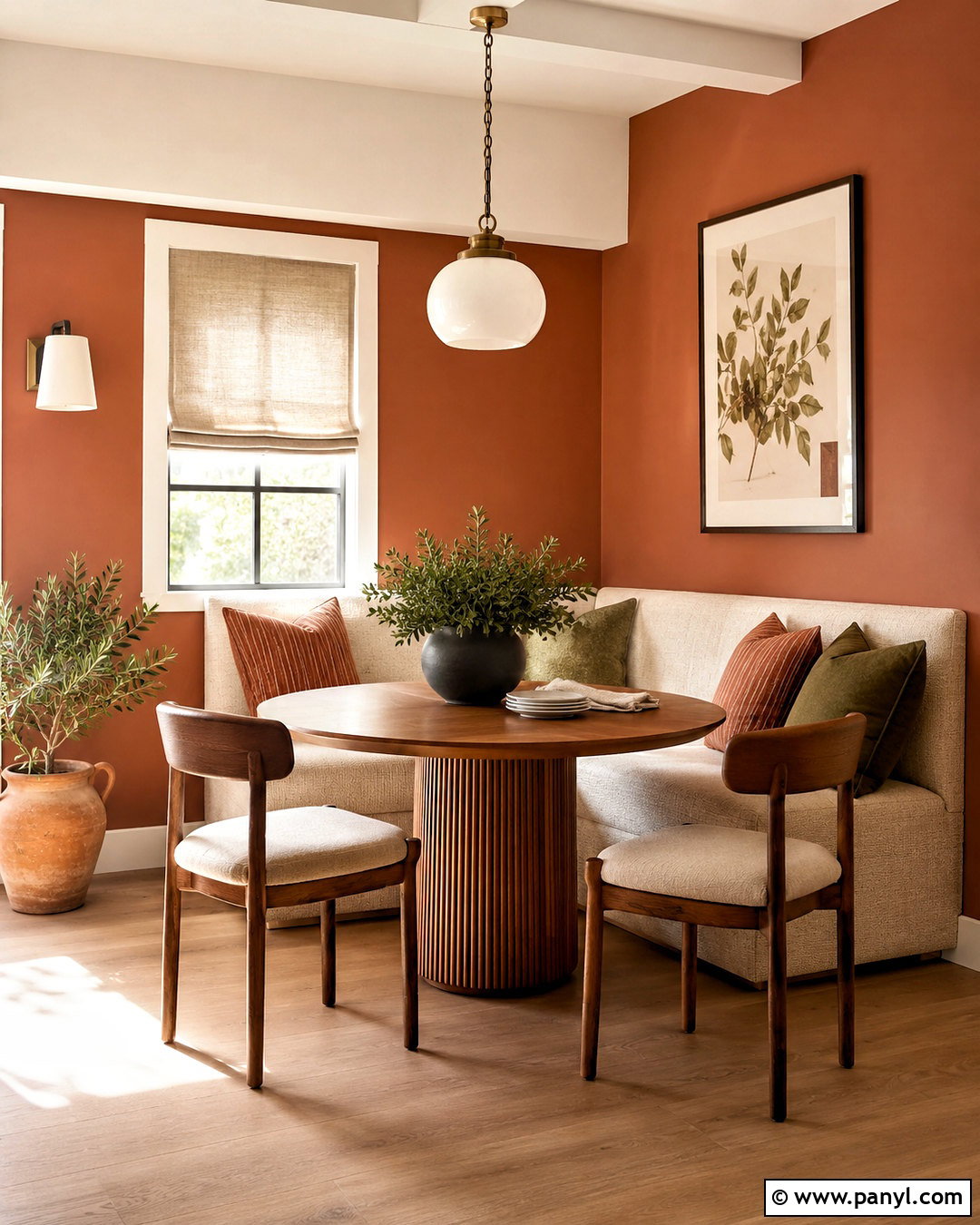
Morning light can make a terracotta breakfast nook feel especially warm and comfortable. Paint the wall behind a built-in or freestanding banquette in a soft clay shade. Choose oatmeal upholstery and layer the bench with olive, cream, and striped rust pillows. A round pedestal table improves movement in a compact corner, while two curved wood chairs complete the seating arrangement. Hang a small woven or opal glass pendant above the table and use light linen shades at nearby windows. One framed botanical print or shallow display shelf provides simple wall decoration. Add closed drawers beneath the banquette if extra storage is needed. The coordinated seating, lighting, and earthy palette transform an overlooked kitchen corner into a practical everyday dining area.
24. Terracotta Accent Wall in a Home Office
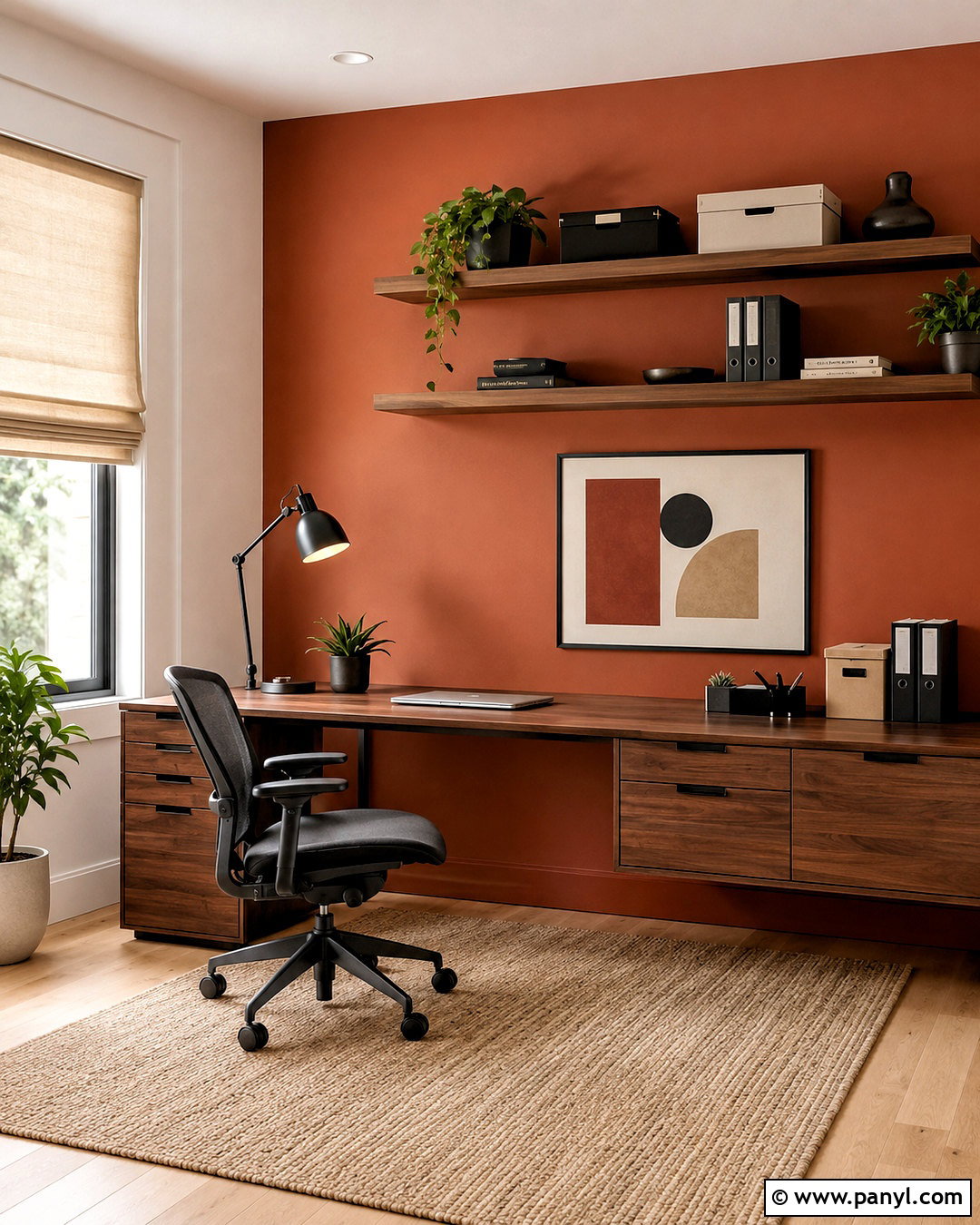
A terracotta accent wall can give a home office a distinct background while keeping the room professional. Place a streamlined walnut or oak desk against the painted wall and choose a supportive chair in black, camel, or cream. Floating shelves above the desk should match the wood finish and hold only organized books, boxes, and a few ceramic objects. Paint the surrounding walls warm white to protect brightness during long work sessions. A flat-woven neutral rug, linen window shade, and adjustable black task lamp complete the functional setup. Add a framed abstract print or pinboard with clean edges rather than several unrelated decorations. Concealed cable management and closed storage are important because the strong wall color naturally draws attention toward the workspace.
25. Terracotta Accent Wall in a Reading Nook
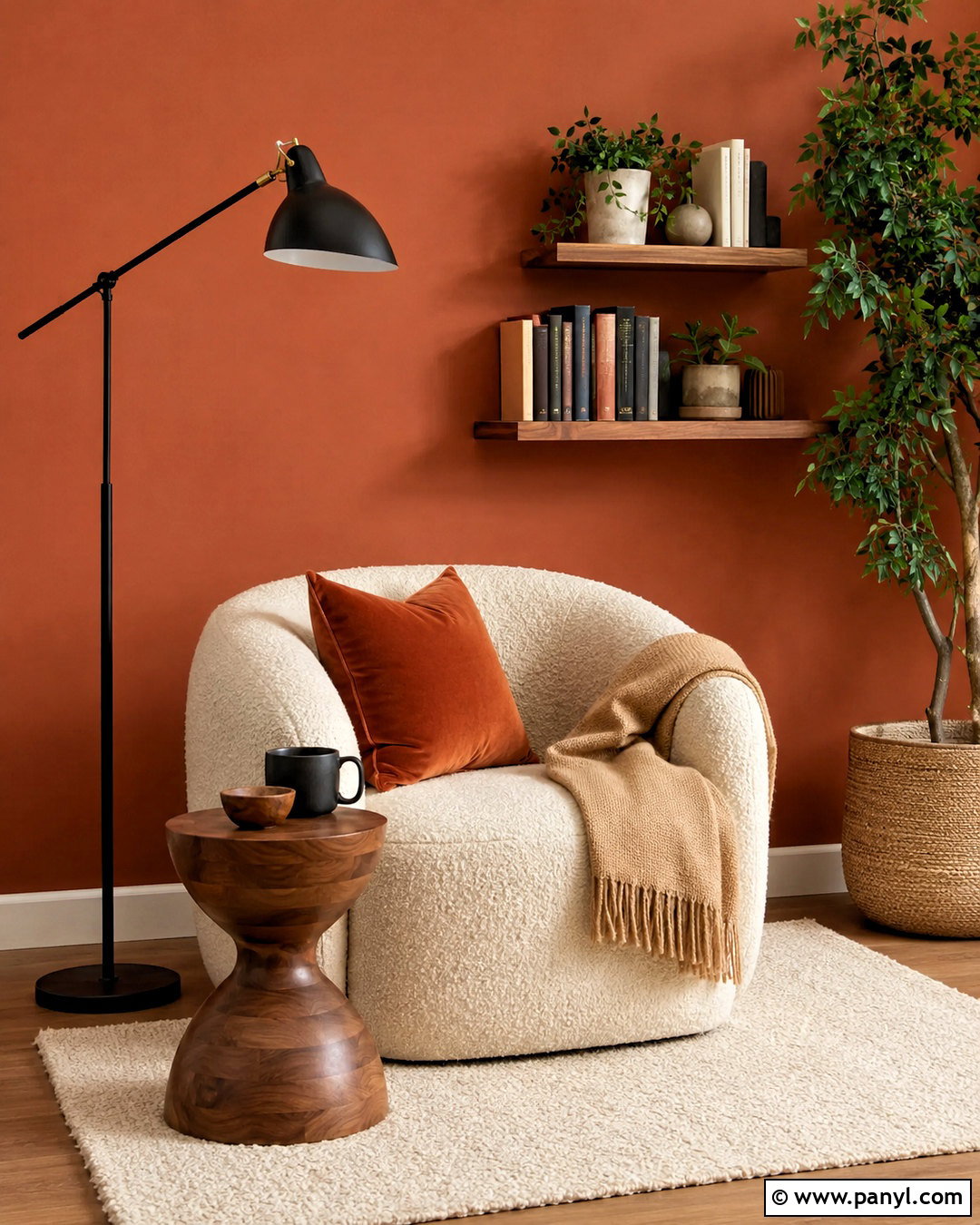
Turn an unused corner into a complete reading nook with a terracotta accent wall as its visual boundary. Paint the wall behind a comfortable cream boucle or olive green chair, then add a small walnut side table and an adjustable floor lamp. A compact wool rug defines the nook and makes it feel separate from the larger room. Install two narrow floating shelves for books, leaving enough open space to avoid a crowded appearance. A soft lumbar pillow and folded throw bring in rust, tan, or muted blue. Place a tall plant nearby if natural light permits. The accent wall, focused lighting, and compact furniture arrangement should work together as one destination, creating a comfortable place that feels purposeful rather than like leftover space.
26. Terracotta Accent Wall in an Entryway
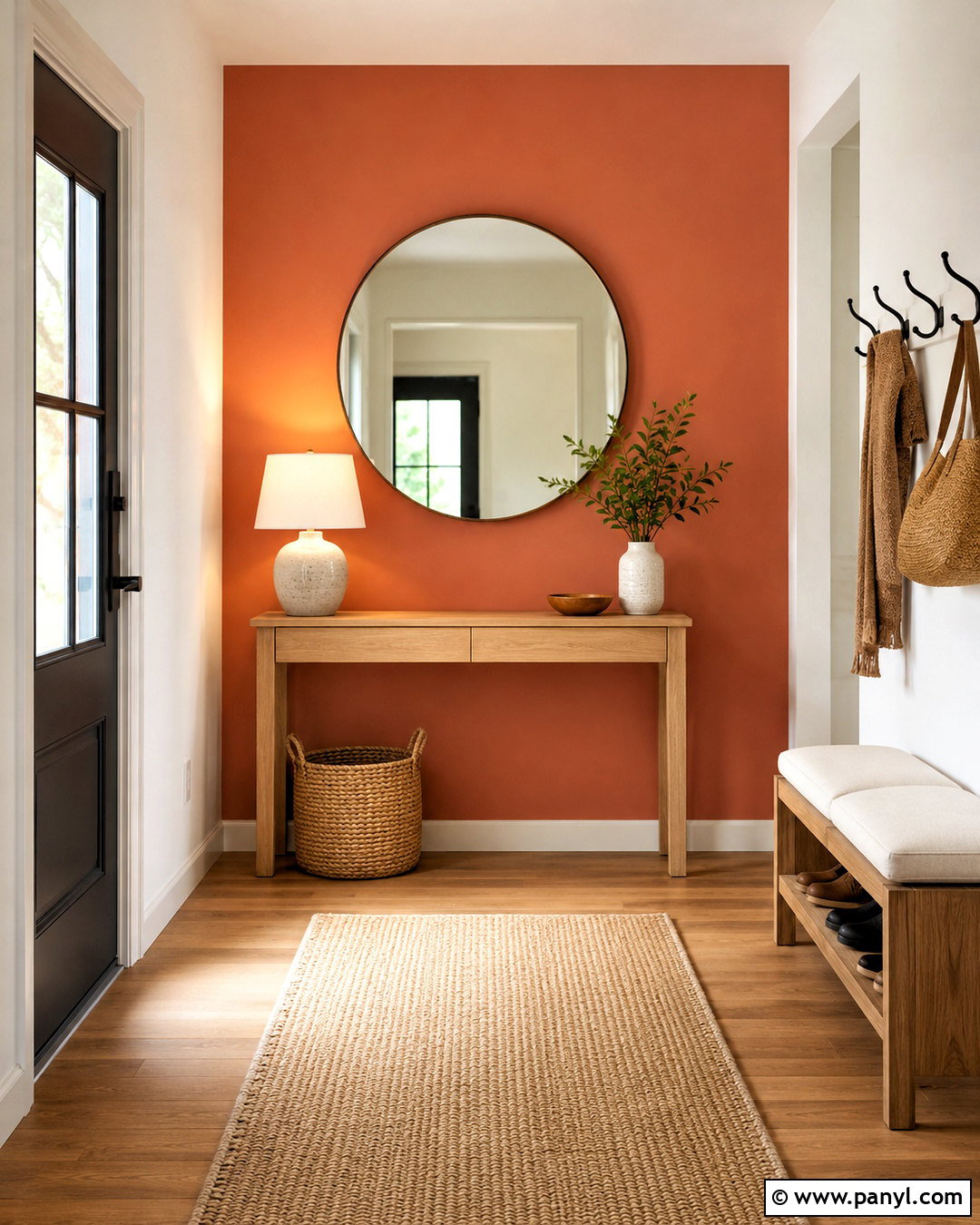
First impressions become warmer when an entryway includes a well-planned terracotta accent wall. Paint the wall behind a narrow wood console in a medium clay tone, leaving adjacent walls light and neutral. Hang a large round mirror to reflect light and open the limited space. A ceramic lamp, shallow bowl, and small vase can provide useful decoration without taking over the console. Place a woven runner along the floor and add a closed basket or compact bench for shoes. Black hooks or a slim wall rail introduce practical storage and clear contrast. If the entry lacks natural light, choose a lighter terracotta shade. The completed arrangement feels welcoming, organized, and connected to the rest of the home from the moment someone enters.
27. Terracotta Accent Wall in a Hallway
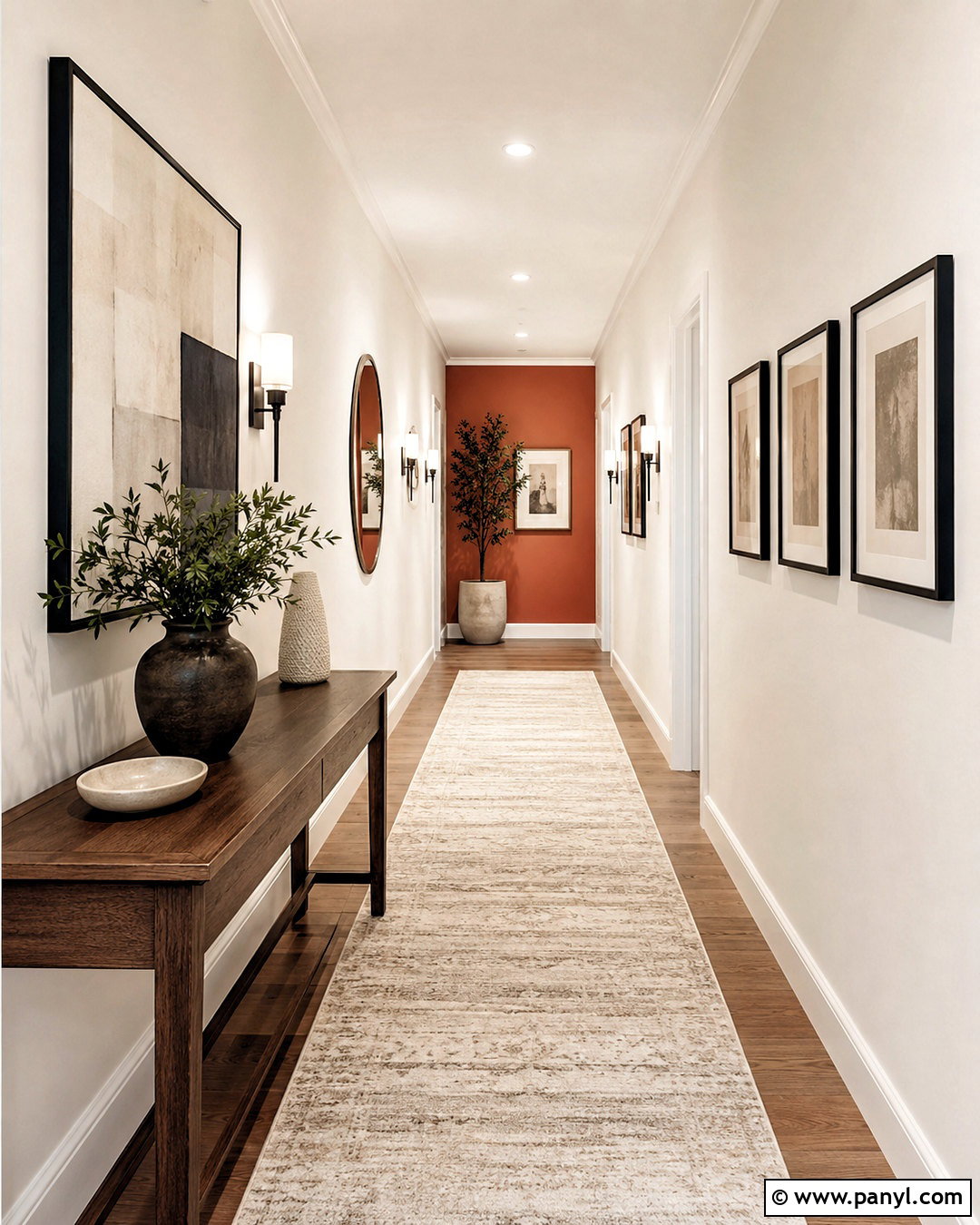
Long hallways often need definition, and a terracotta accent wall at the far end can create a clear destination. Paint the end wall rather than both long side walls to preserve a sense of width. Position a slim console, bench, or large framed artwork against the colored surface. Keep the remaining walls creamy white and use a light runner with small rust and charcoal details. Repeating black picture frames or wall sconces along the hallway gives the passage a consistent rhythm. Choose shallow furnishings so circulation remains comfortable. A mirror on one side can bounce light toward the warm accent. This complete approach uses terracotta to improve the hallway’s proportions while adding personality, storage, and a visually satisfying endpoint.
28. Terracotta Accent Wall in a Bathroom
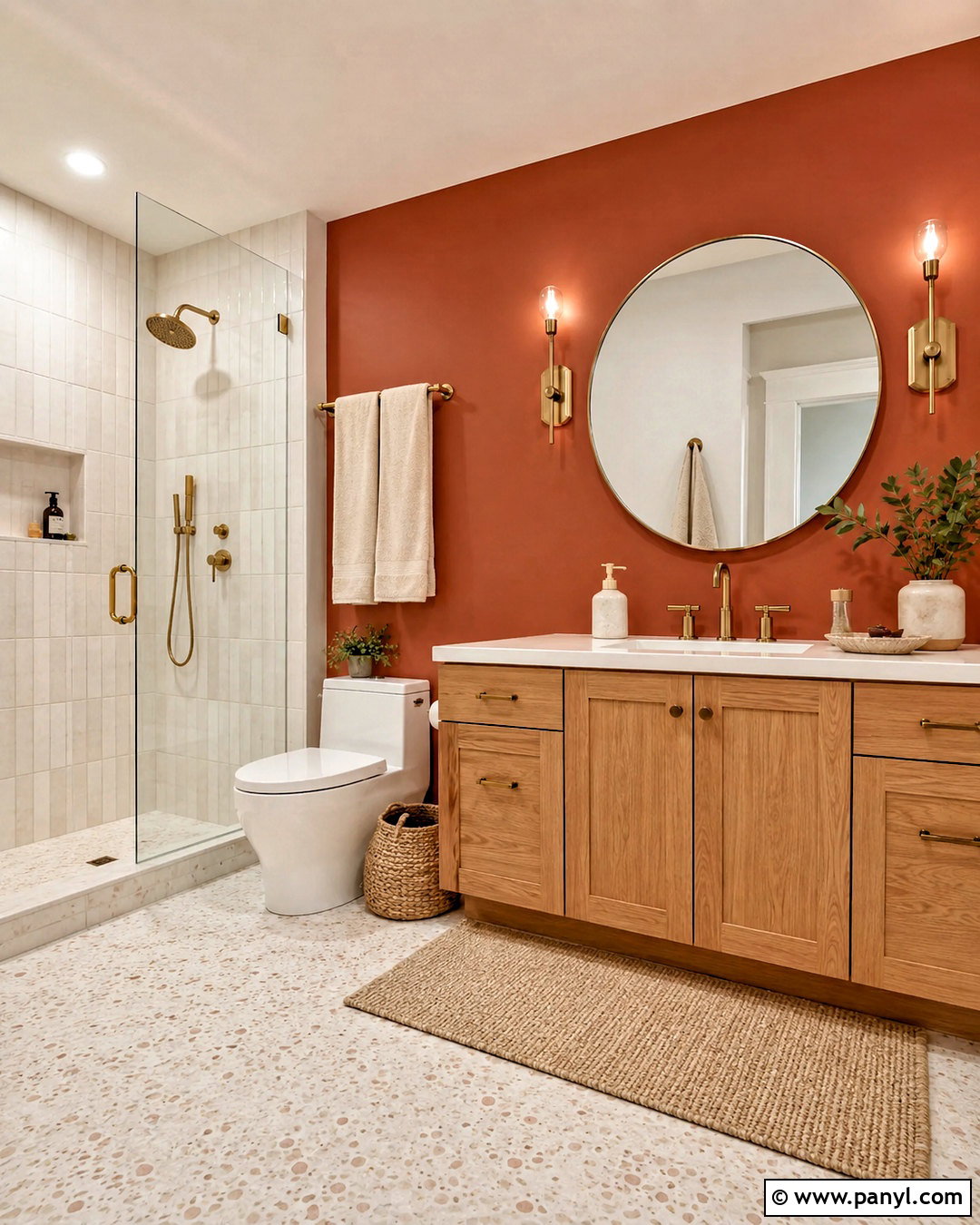
In a bathroom, a terracotta accent wall works best when the finish is appropriate for moisture and easy cleaning. Use durable bathroom paint on the vanity wall, keeping wet shower surfaces tiled. Pair the clay color with an oak vanity, white quartz counter, and matte black or brushed brass fixtures. A frameless round mirror and simple globe sconces maintain a clean appearance. Choose warm white tile for the floor or shower so the space remains bright. Towels in cream, olive, or tan can repeat the earthy palette without creating clutter. Add one small plant and a lidded basket for useful texture. Proper ventilation and restrained accessories help the room feel fresh, while the accent wall adds warmth to otherwise hard bathroom materials.
29. Terracotta Accent Wall in a Powder Room
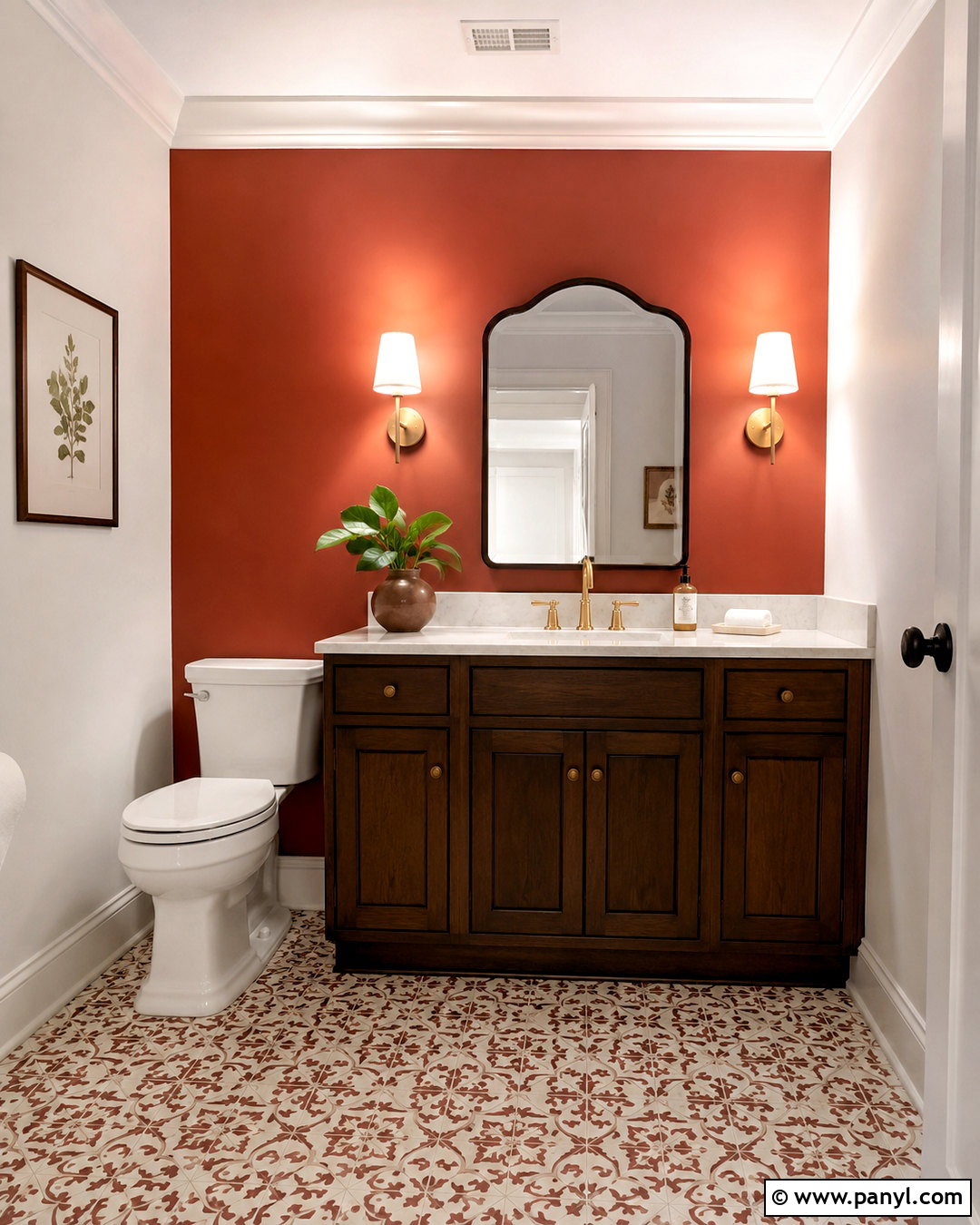
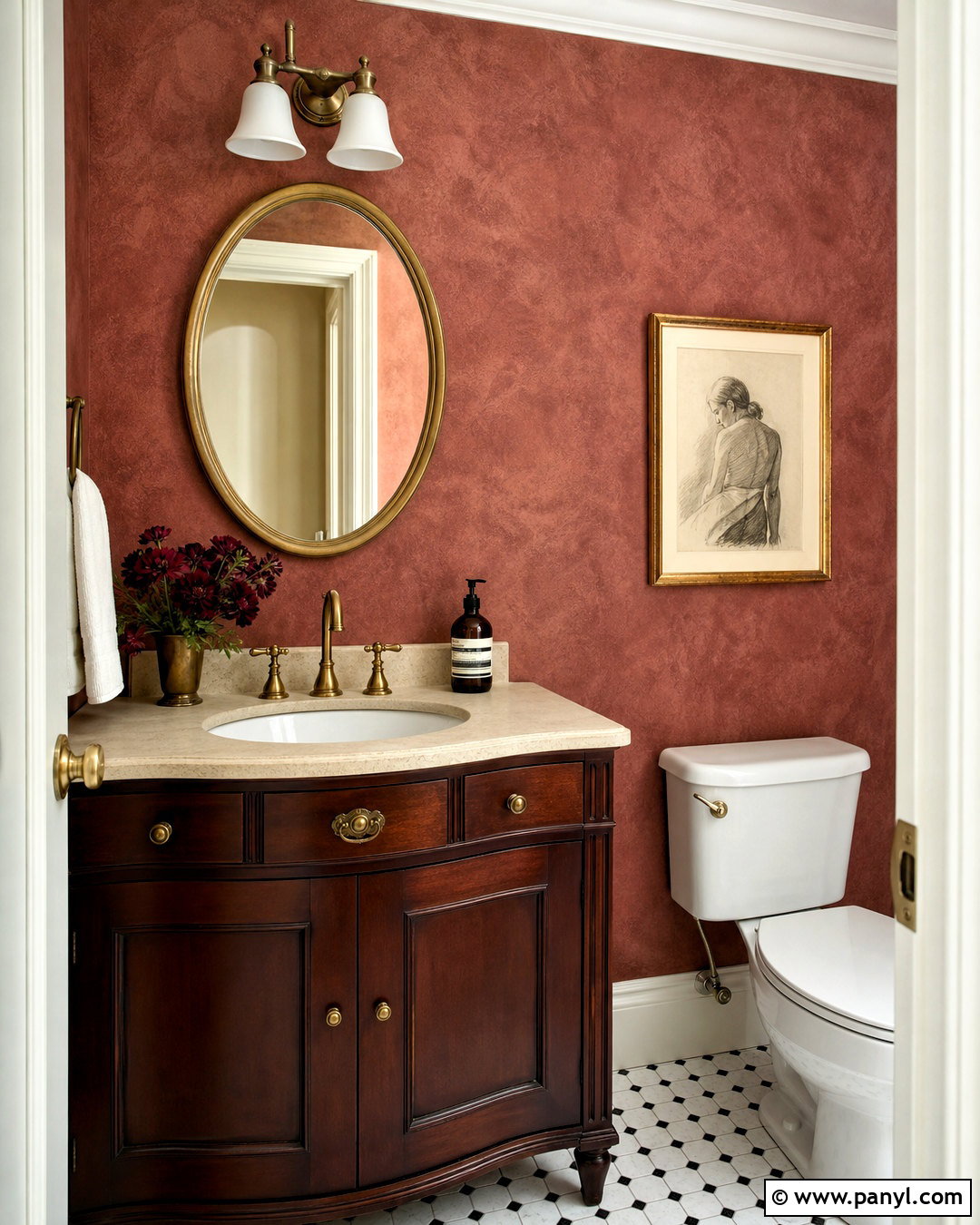
A powder room offers an ideal setting for a deeper, more dramatic terracotta wall treatment. Paint the wall behind a compact vanity in rich burnt clay, while using warm ivory on the remaining surfaces. A dark walnut vanity, white stone counter, and aged brass faucet create an elegant contrast. Hang a framed mirror with a curved or softly irregular shape to break up the room’s straight lines. Wall-mounted sconces save counter space and provide balanced illumination. Add a small patterned floor tile in cream, rust, and charcoal for additional detail. Keep accessories limited to a soap dispenser, hand towel, and one small vase. Because the room is compact, repeating a few strong materials creates greater impact than filling it with numerous decorative objects.
30. Terracotta Accent Wall in a Laundry Room
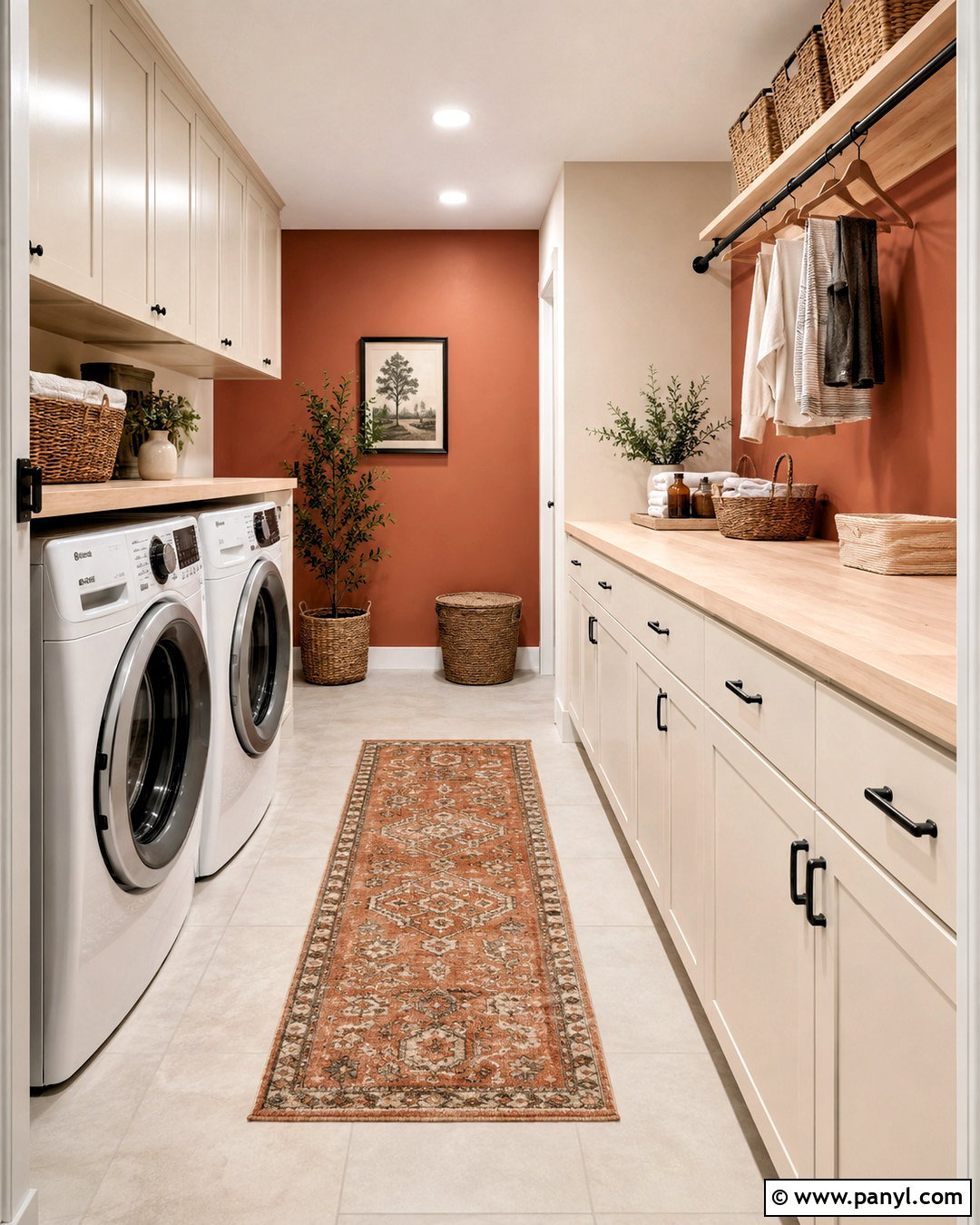
Even a hardworking laundry room can benefit from a cheerful terracotta accent wall. Use washable paint behind white machines, a utility sink, or a folding counter. Pair the wall with warm white cabinets and a pale wood countertop to create a bright, practical palette. Black cabinet pulls, hooks, and a hanging rail provide clean definition. Install closed upper storage for supplies, then reserve one small open shelf for baskets and neutral containers. A patterned runner in terracotta, beige, and muted blue softens the floor and ties the colors together. Good overhead lighting is essential, especially in windowless rooms. The finished laundry space feels orderly and intentional because storage, work surfaces, and decorative details support the warm accent instead of competing with it.
31. Terracotta Accent Wall in a Studio Apartment
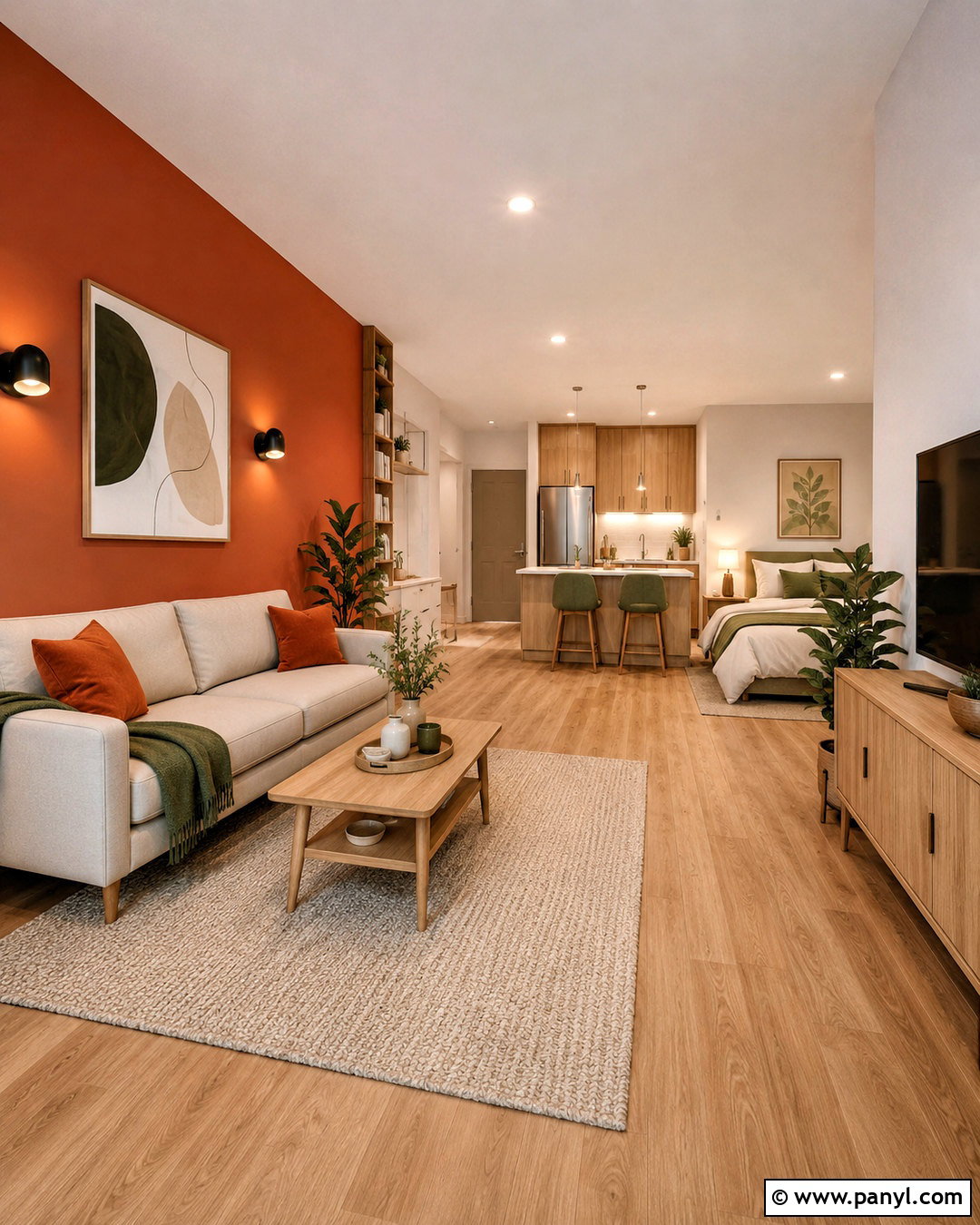
In a studio apartment, a terracotta accent wall can separate the sleeping or living zone without adding a physical divider. Paint the wall behind the bed or sofa, choosing whichever piece anchors the main layout. Keep the rest of the apartment creamy white and use light oak furniture to maintain visual continuity. A neutral rug defines the seating area, while coordinated rust pillows repeat the wall color in small amounts. Choose furniture with raised legs so more floor remains visible. Wall-mounted lighting and vertical storage reduce clutter. If the bed and sofa share the same view, select bedding and upholstery from one cream, tan, and olive palette. The completed studio feels organized because the accent wall provides a clear focal point and functional zoning.
32. Terracotta Accent Wall in a Basement Family Room
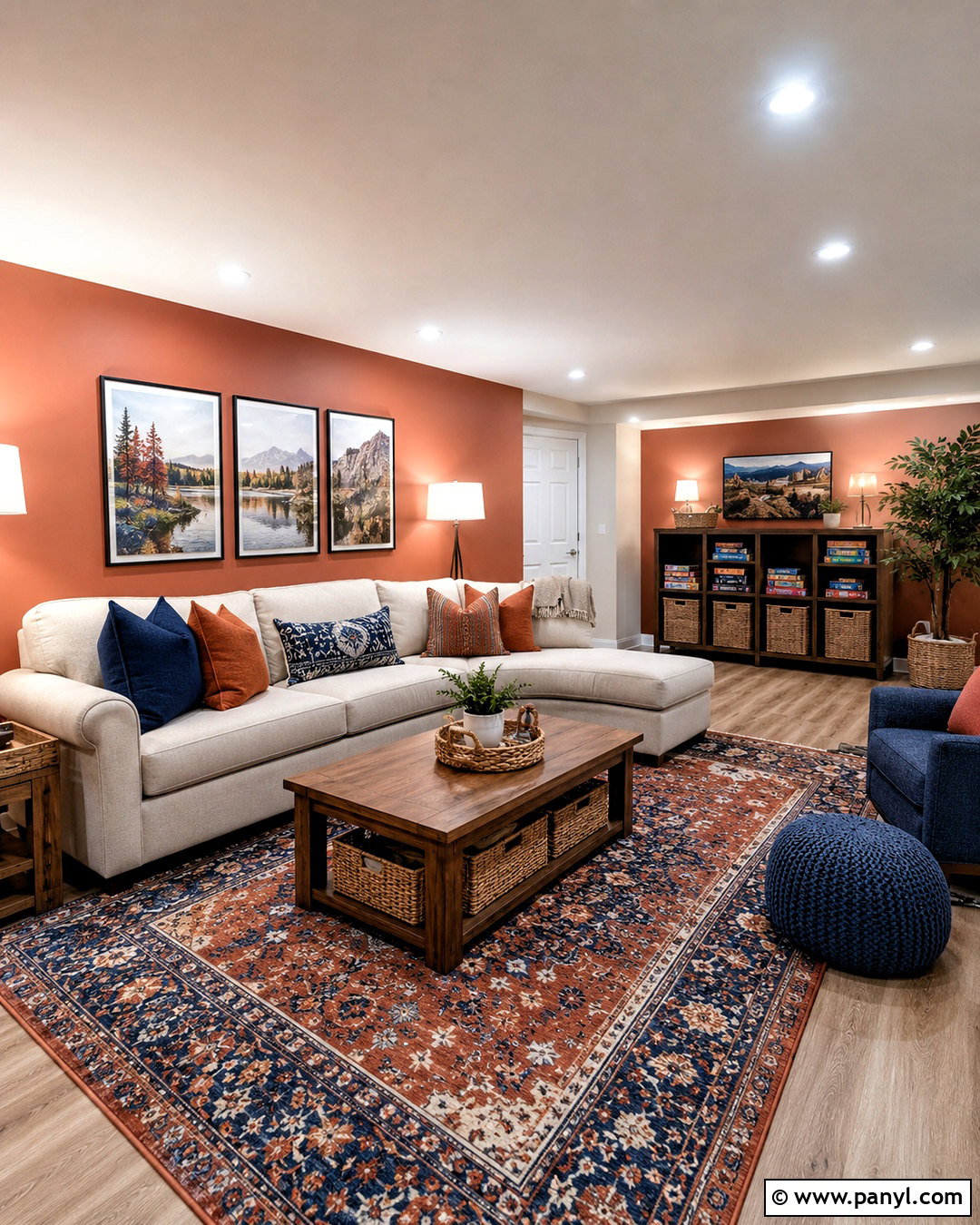
A basement family room can feel warmer and less utilitarian with a muted terracotta accent wall. Choose a lighter clay tone if the room receives limited natural light. Position a large cream or light gray sectional against the wall, then add a durable patterned rug with rust, tan, and navy details. Medium oak tables and woven storage baskets contribute practical warmth. Use several bright light sources, including recessed ceiling lights, table lamps, and a floor lamp, rather than relying on one fixture. Keep the other walls warm white and select pale flooring when possible. Framed artwork, board game storage, and washable pillows can make the room family friendly. The finished space feels comfortable and bright enough for everyday relaxation.
33. Terracotta Accent Wall in a Sunroom
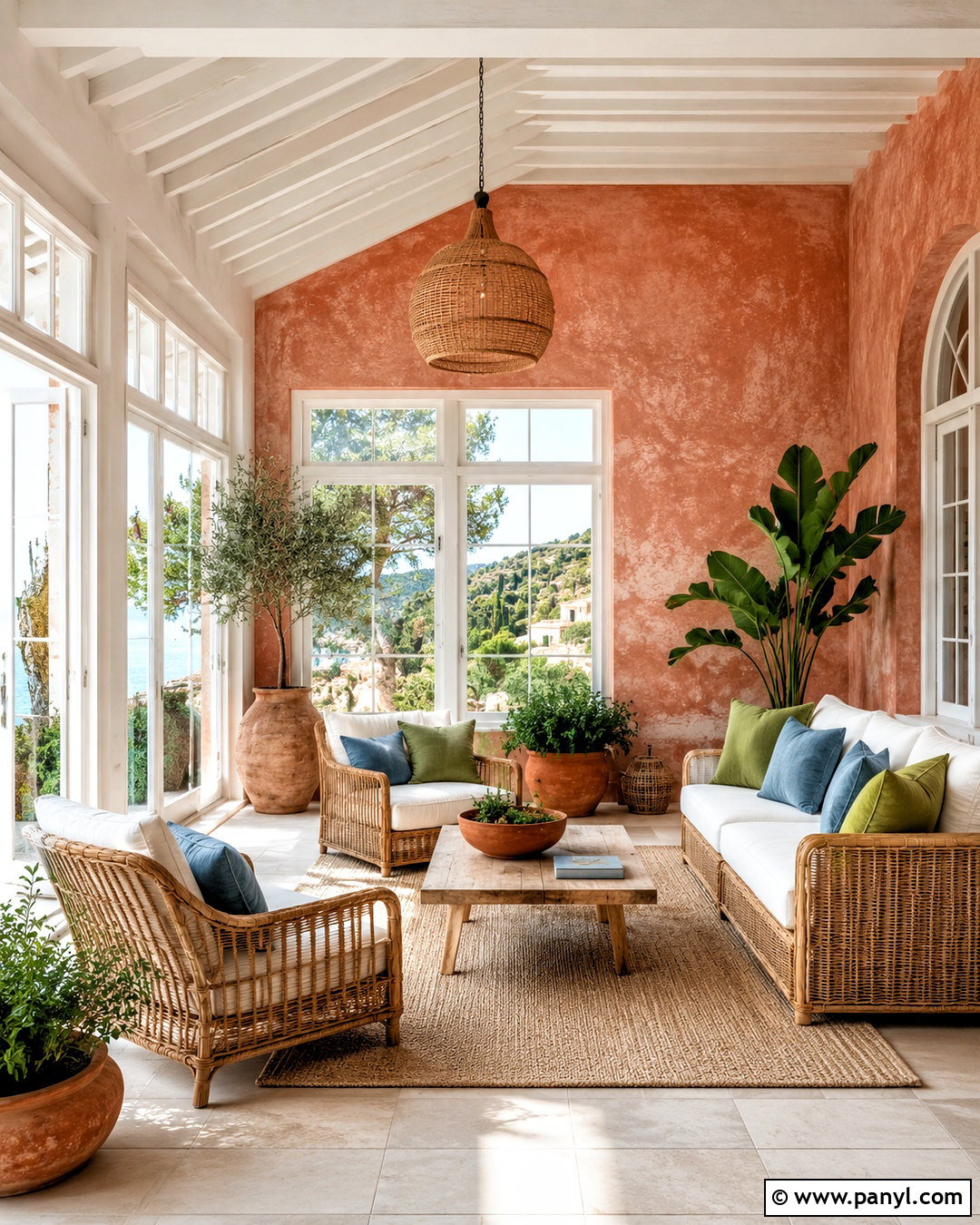
Sunlight brings out the natural warmth and variation of a terracotta accent wall. Use a soft, sun-faded clay shade on the main solid wall of the sunroom, balancing it with white window frames and pale flooring. Arrange a rattan sofa, two woven lounge chairs, and a low wood table to create an easy conversation area. Upholstery in cream or oatmeal keeps the room from appearing overly orange. Add olive green and muted blue through pillows and a washable indoor-outdoor rug. Large leafy plants in natural clay pots connect the interior palette with outdoor views. Lightweight linen shades can control glare without blocking daylight. The final sunroom feels relaxed and airy, with the accent wall grounding the many reflective windows and lighter furnishings.
34. Terracotta Tile Accent Wall
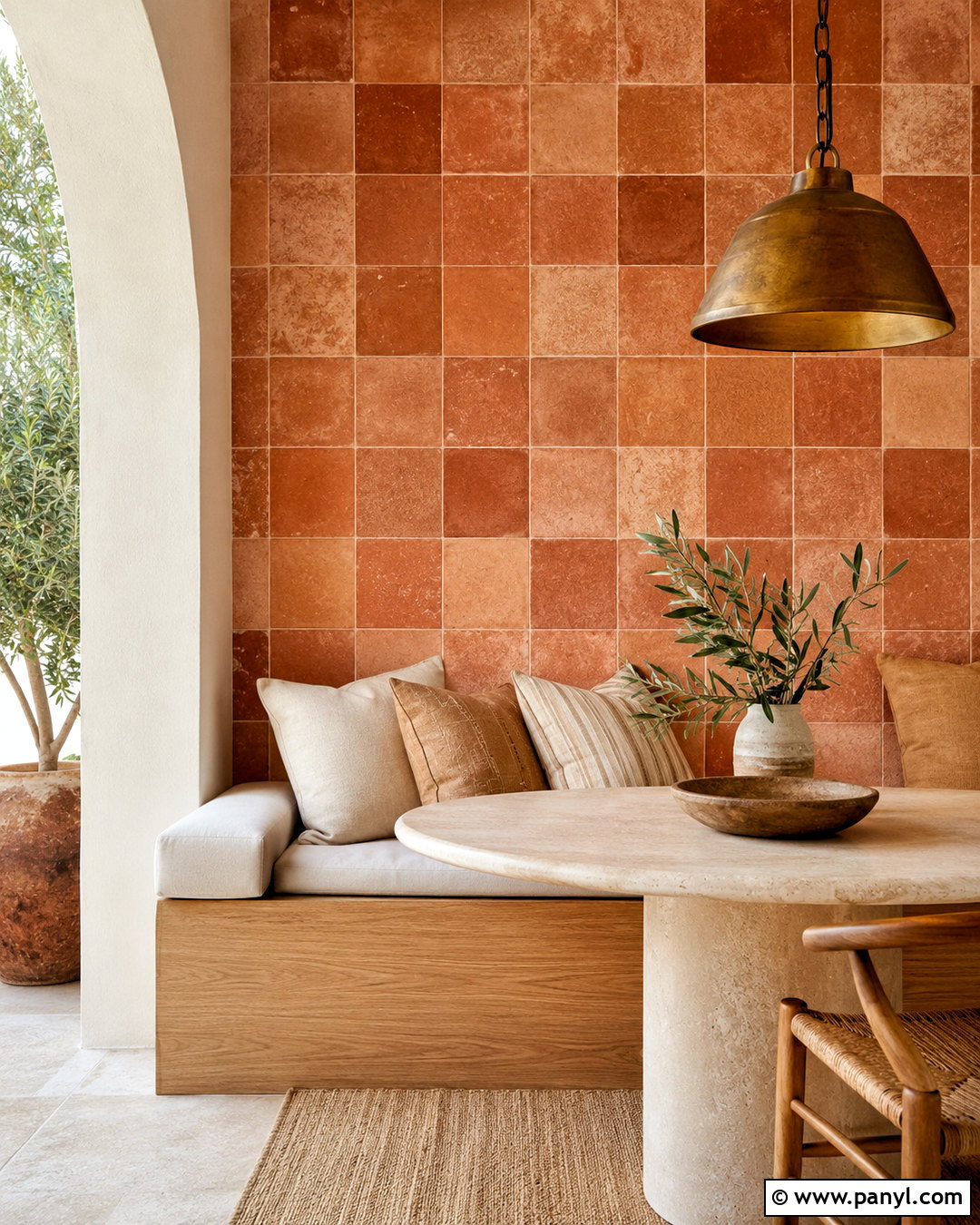
Real terracotta tile creates an accent wall with visible texture, tonal variation, and lasting character. Use square, rectangular, or slim handmade-look tiles behind a dining banquette, fireplace, kitchen counter, or bathroom vanity. Choose a matte finish with variations from peachy clay to deep rust. Pair the wall with simple cream plaster, oak cabinetry, and light stone surfaces so the tile remains the focus. Minimal grout lines in a warm beige shade create a softer, more continuous appearance. Black or aged brass hardware adds definition without competing with the material. Because tiled walls already contain movement, keep furniture silhouettes clean and wall decor limited. The complete space should balance the substantial tile surface with brighter finishes, natural fibers, and uncluttered styling.
35. Terracotta Wallpaper Accent Wall
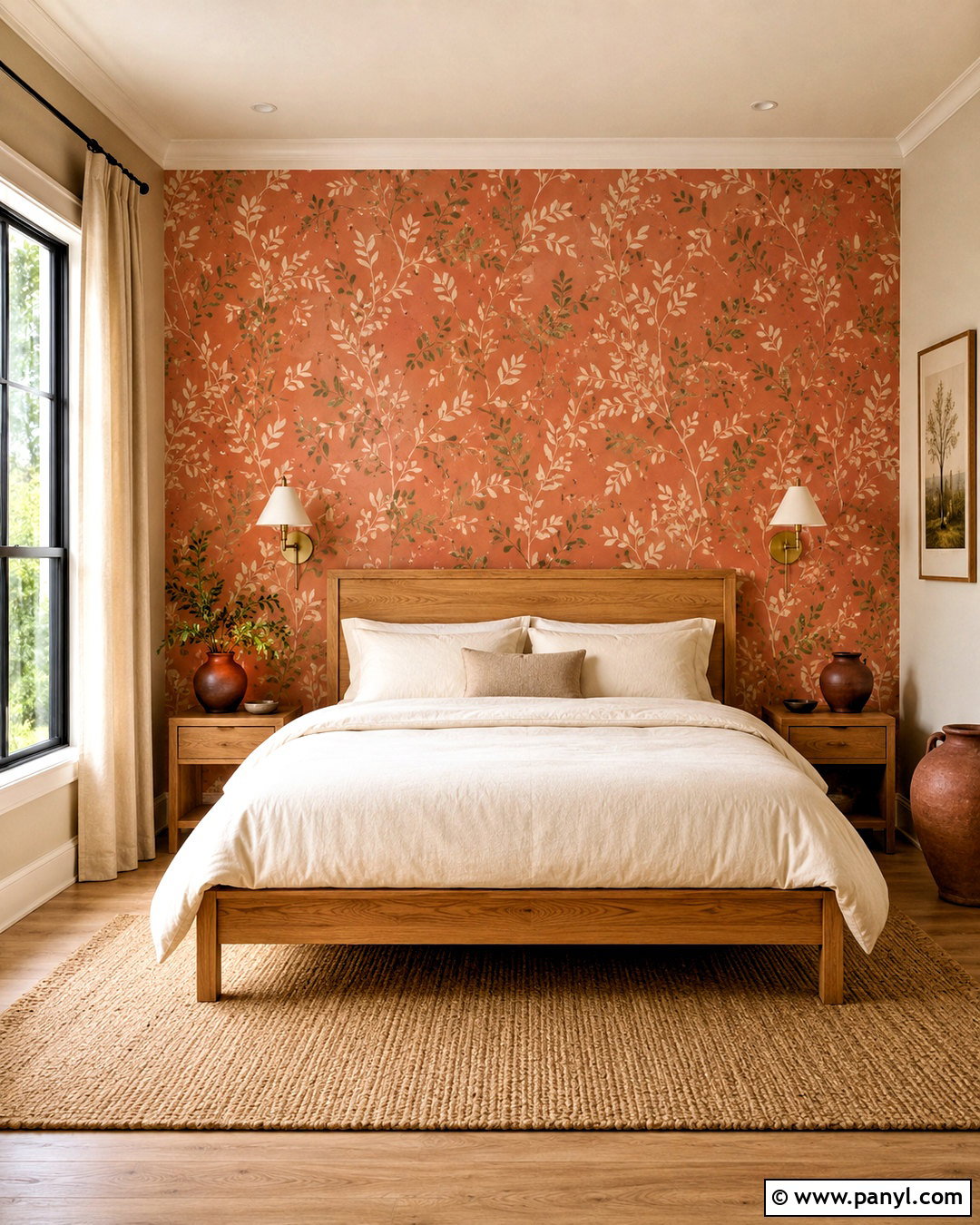
Terracotta wallpaper can deliver more pattern and depth than solid paint while preserving the same warm color story. Choose a design with a clay-colored background and restrained botanical, geometric, or textured details in cream, tan, and muted olive. Apply it behind a bed, sofa, or dining table so the pattern has a clear purpose. Pair the wall with simple upholstery, solid curtains, and natural wood furniture. Avoid adding several competing prints; instead, repeat one wallpaper color through pillows, rugs, or pottery. Black or brass lighting can sharpen the finished arrangement. Measure carefully so the pattern aligns at each seam. With surrounding surfaces kept quiet, the wallpaper becomes a polished focal point while the complete room remains comfortable and visually balanced.
Conclusion:
The best **35 terracotta accent wall ideas** show how flexible this earthy color can be. A single clay-toned wall can warm a bright kitchen, define a studio apartment, soften a bedroom, or give a living room a stronger focal point. Terracotta also works beyond standard paint. Limewash, panel molding, tile, wallpaper, arches, and wood-slat combinations introduce distinctive texture and shape. Before committing, compare samples in the room during morning, afternoon, and evening light. Then coordinate the wall with flooring, furniture, textiles, and nearby finishes. Whether you prefer cream, olive, navy, blush, or charcoal accents, a balanced palette will make your terracotta feature feel intentional, comfortable, and connected to the entire space.

Related Ideas and Inspiration:
Leave a Reply