
Green paint can make a room feel calm, grounded, energetic, or dramatic, depending on the shade and placement. These 20 green wall painting ideas explore complete room schemes rather than isolated colors, helping you coordinate walls with furniture, flooring, lighting, textiles, and architectural details. Soft sage and mint work beautifully in bright, restful spaces, while olive, forest, and emerald create warmth and depth. Current interiors are also moving beyond basic accent walls toward color drenching, tonal layering, painted molding, and creative color blocking. () Before choosing, test a large sample beside your flooring and view it throughout the day. Whether you prefer subtle neutrals or saturated color, the complete looks below offer practical 20 green wall painting ideas.
1. Sage Green Living Room Walls
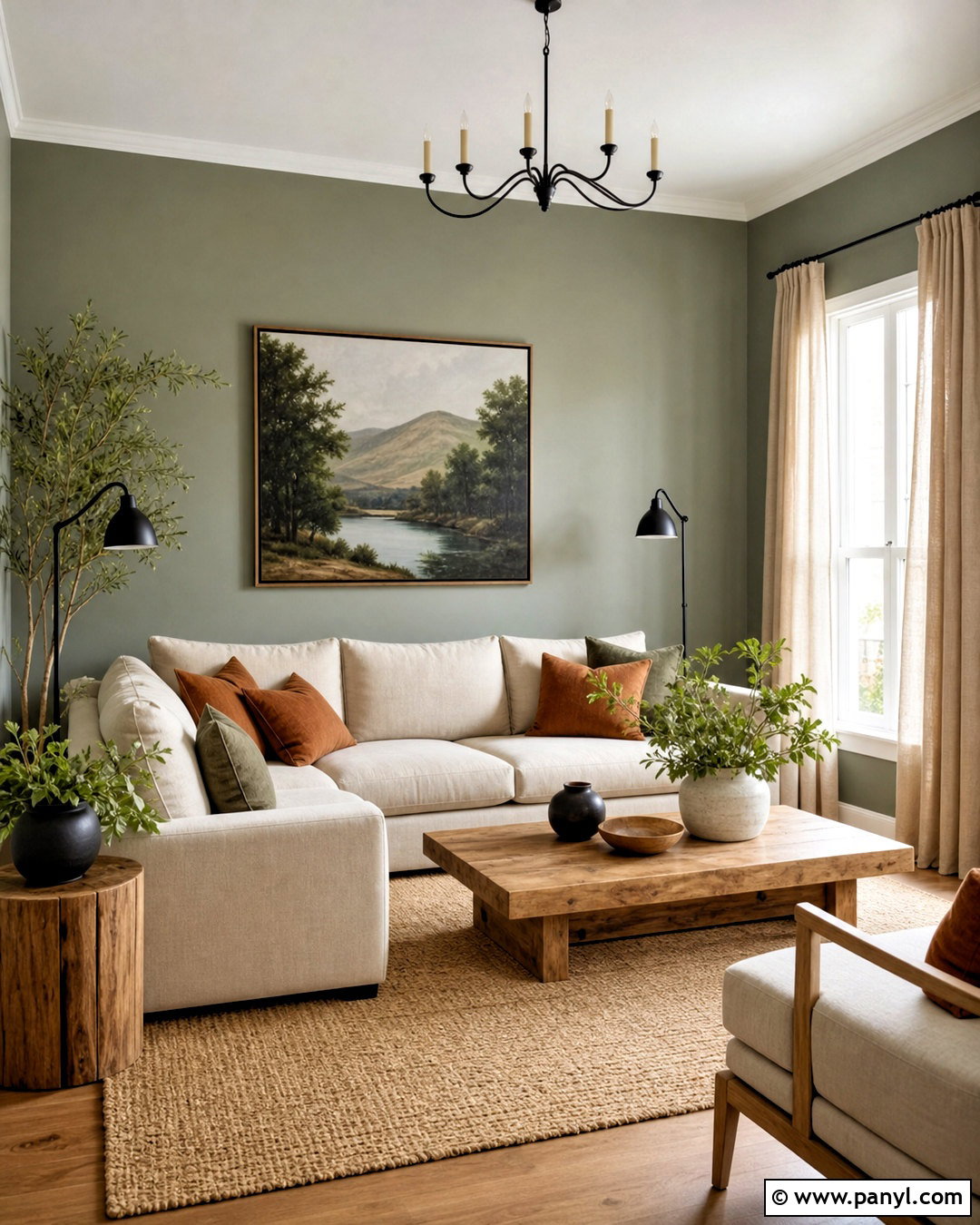
Soft sage green walls create a relaxed living room that still feels polished and intentional. Paint every wall in a muted sage with warm gray undertones, then keep the ceiling and trim creamy white for gentle contrast. A light oatmeal sofa, natural oak coffee table, and woven jute rug reinforce the earthy palette without making the room overly green. Add rust, tan, and muted blue through pillows and framed artwork. Linen curtains allow daylight to soften the paint, while black metal floor lamps provide a clean modern edge. Place larger plants near the windows, but avoid filling every corner with greenery. The finished room should balance painted color, warm wood, comfortable upholstery, and plenty of open visual space.
2. Olive Green Dining Room Walls
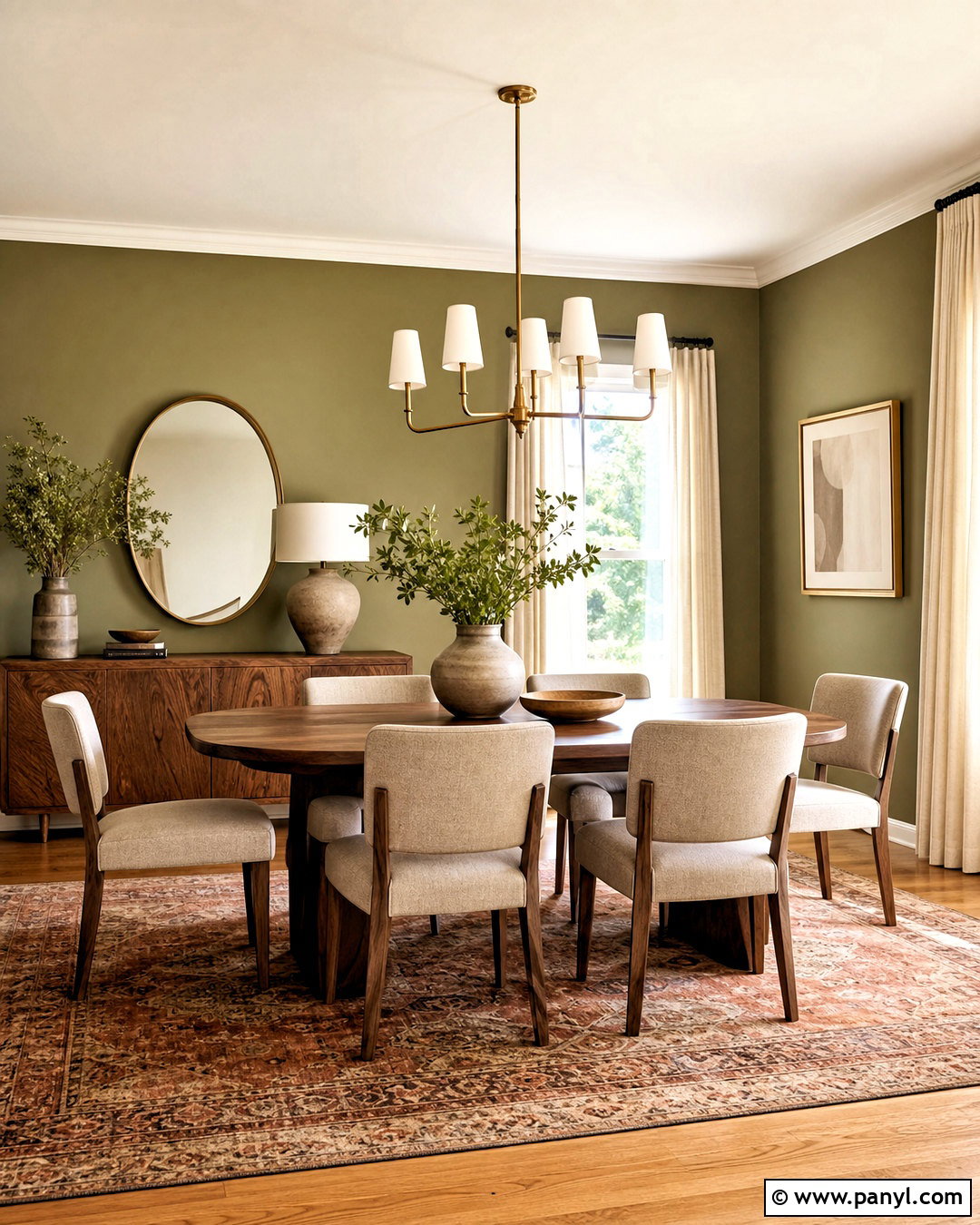
Warm olive green can turn an ordinary dining room into an inviting space for everyday meals and gatherings. Cover all four walls in a medium olive shade, pairing it with warm white trim and a natural wood floor. Center a rectangular walnut dining table beneath a simple aged-brass chandelier, then add upholstered chairs in oatmeal or camel fabric. A low oak sideboard provides practical storage and keeps the room grounded. Decorate it with ceramic vessels, a rounded mirror, and one leafy branch arrangement. Cream curtains prevent the deep walls from feeling heavy, while a traditional rug in faded terracotta and beige introduces pattern. Matte black frames and hardware add definition without competing with the olive green wall color.
3. Forest Green Bedroom Accent Wall
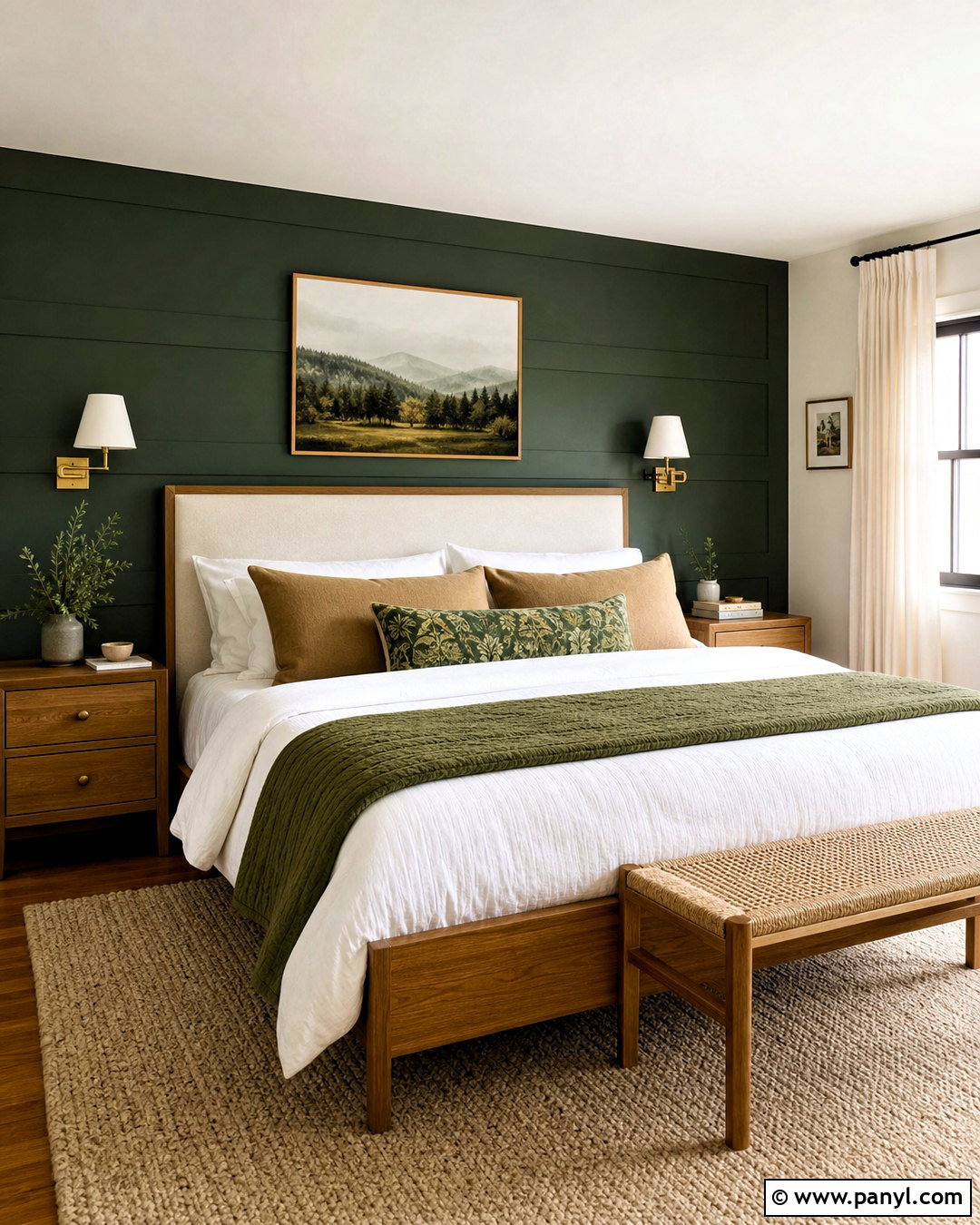
A forest green wall behind the bed creates a strong focal point while keeping the remaining bedroom bright. Choose a deep green with slightly warm undertones and paint the full headboard wall, including any awkward corners. Leave the other walls soft ivory and repeat that color through linen bedding and curtains. A medium-tone oak bed, matching nightstands, and woven bench bring warmth to the darker paint. Add two brass sconces directly against the green wall so the color remains visible around the headboard. Layer the bed with cream, tan, and muted botanical green textiles rather than exact color matches. A large neutral rug and simple landscape artwork complete this comfortable bedroom without making the accent wall feel disconnected.
4. Emerald Green Home Office Wall
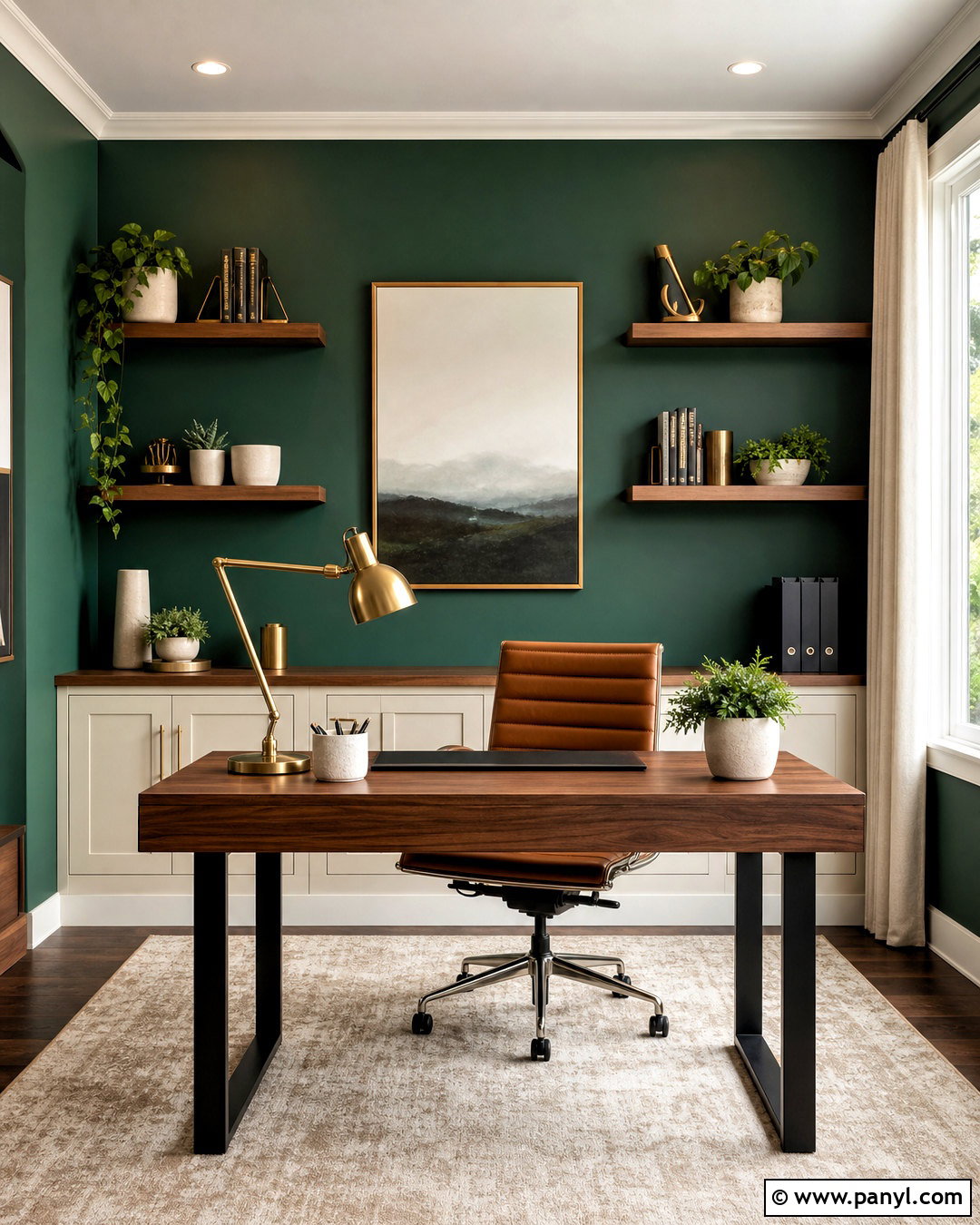
Would a bold background help your home office feel more defined? Paint the wall behind the desk in a saturated emerald green, then use soft white across the remaining walls and ceiling. Select a streamlined walnut desk with slim black legs and position it directly against the painted wall. Closed storage cabinets in warm white keep paperwork controlled, while floating walnut shelves connect the desk to the deeper color. Add a cognac leather chair, a cream patterned rug, and brushed-brass task lighting for richness. Keep accessories limited to ceramic organizers, small plants, and framed artwork with white matting. The emerald wall supplies energy and personality, while the practical furniture arrangement creates a professional workspace that remains comfortable enough for daily use.
5. Mint Green Kitchen Walls
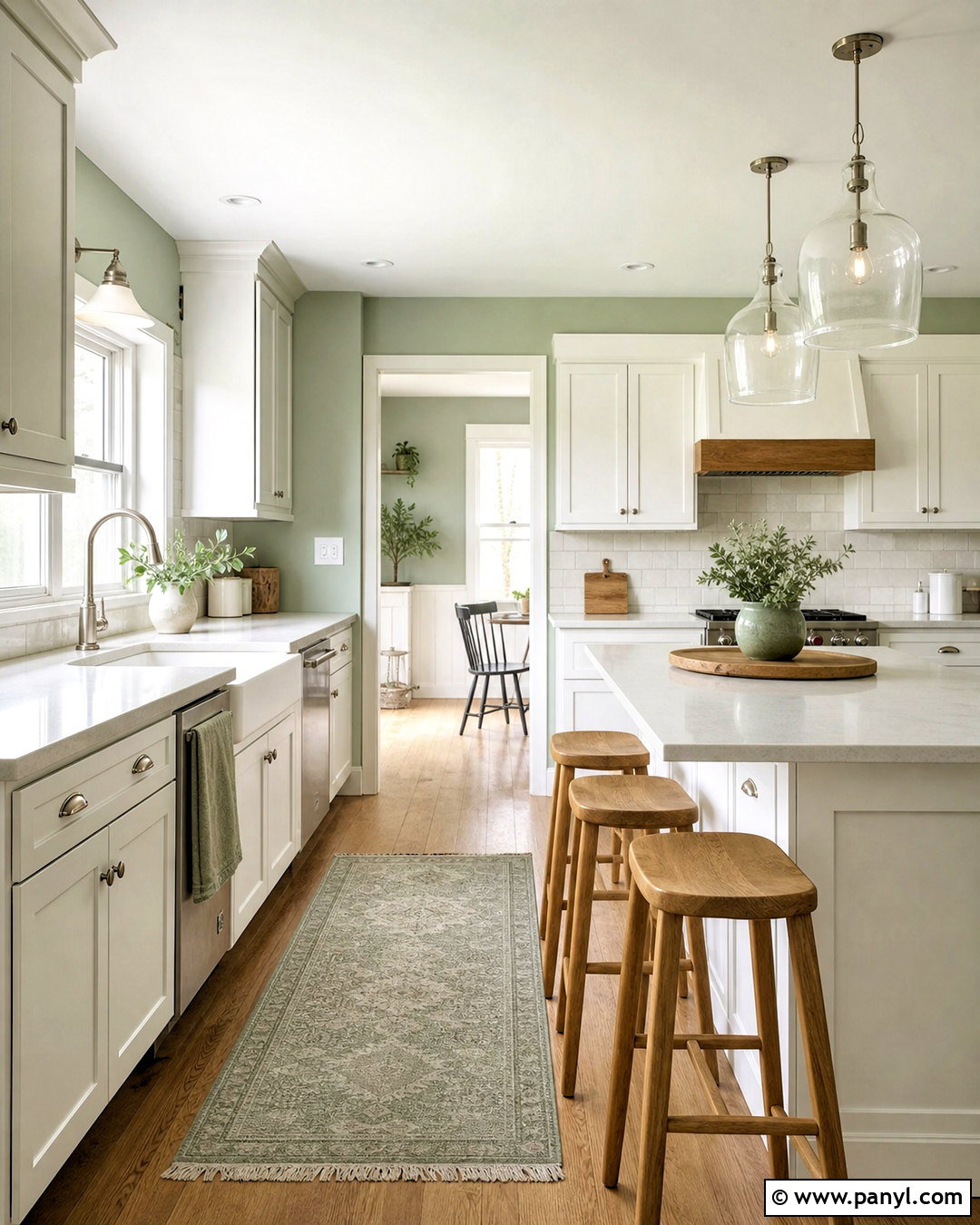
Pale mint green walls can freshen a kitchen without overwhelming cabinets, countertops, or backsplash materials. Use a dusty mint rather than a bright candy shade, especially when the kitchen receives strong natural light. Pair it with warm white Shaker cabinets, light quartz countertops, and a backsplash made from simple off-white tile. Natural oak stools and floating shelves prevent the room from looking cold. Choose brushed-nickel hardware for a clean finish, or aged brass for a warmer appearance. Ground the light palette with medium oak flooring and a washable runner containing muted green, gray, and beige. Glass pendants keep the sightlines open above the island. This complete scheme feels cheerful, practical, and easy to maintain without relying on excessive decorative accessories.
6. Hunter Green Color Drenched Library
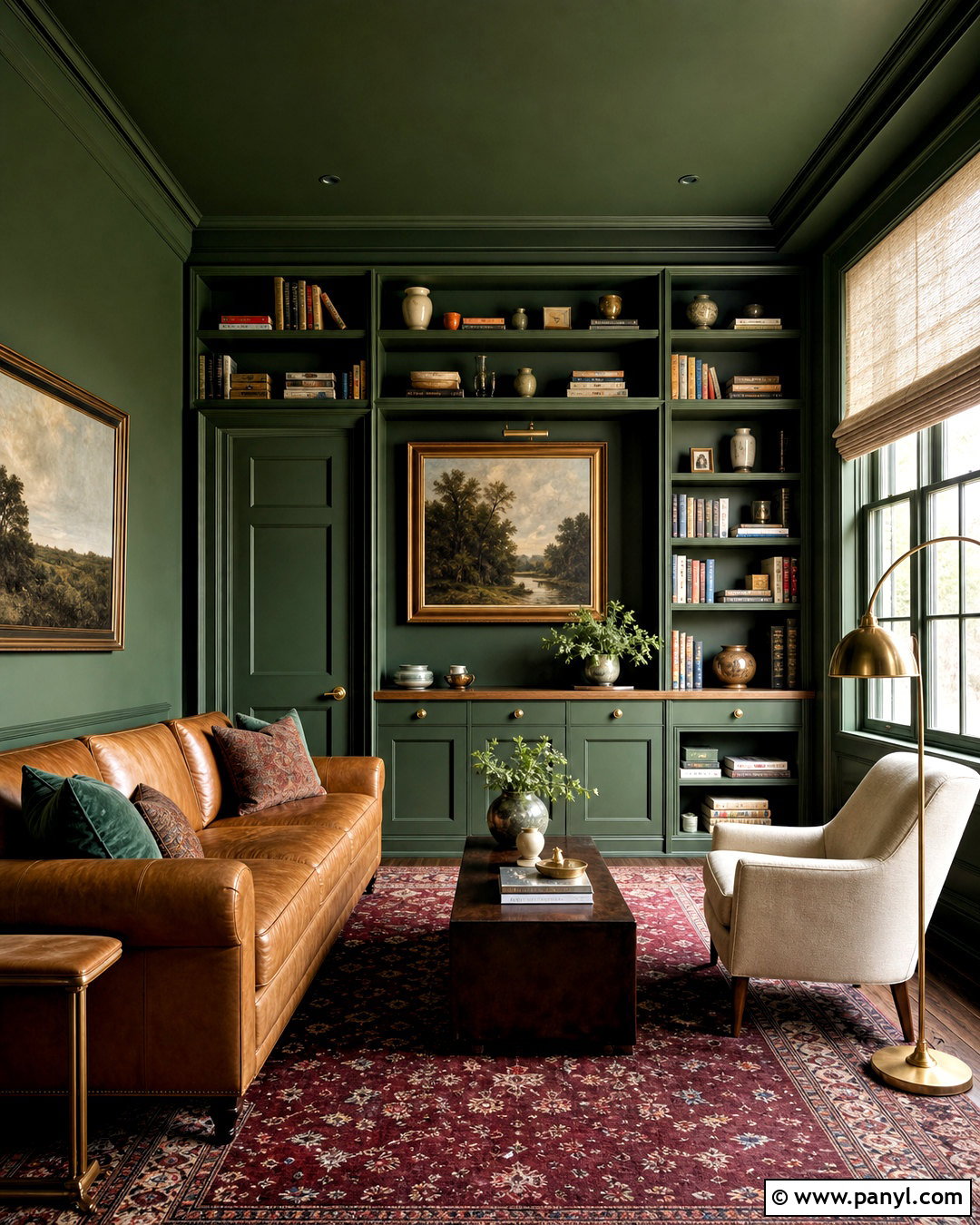
Deep hunter green color drenching gives a reading room or library an enveloping, built-in appearance. Paint the walls, bookcases, trim, doors, and ceiling in the same rich green, using a slightly glossier finish on woodwork for subtle dimension. Fill the shelves with books, framed photographs, and light ceramics so the dark background remains visible. A camel leather sofa adds warmth, while a patterned wool rug introduces burgundy, cream, and muted gold. Place a brass floor lamp beside a comfortable reading chair and use warm white bulbs to balance the saturated surfaces. Pale linen shades can soften daylight without breaking the color scheme. The result is immersive and cozy, yet careful lighting and lighter furnishings keep the complete room from feeling closed in.
7. Seafoam Green Bathroom Walls
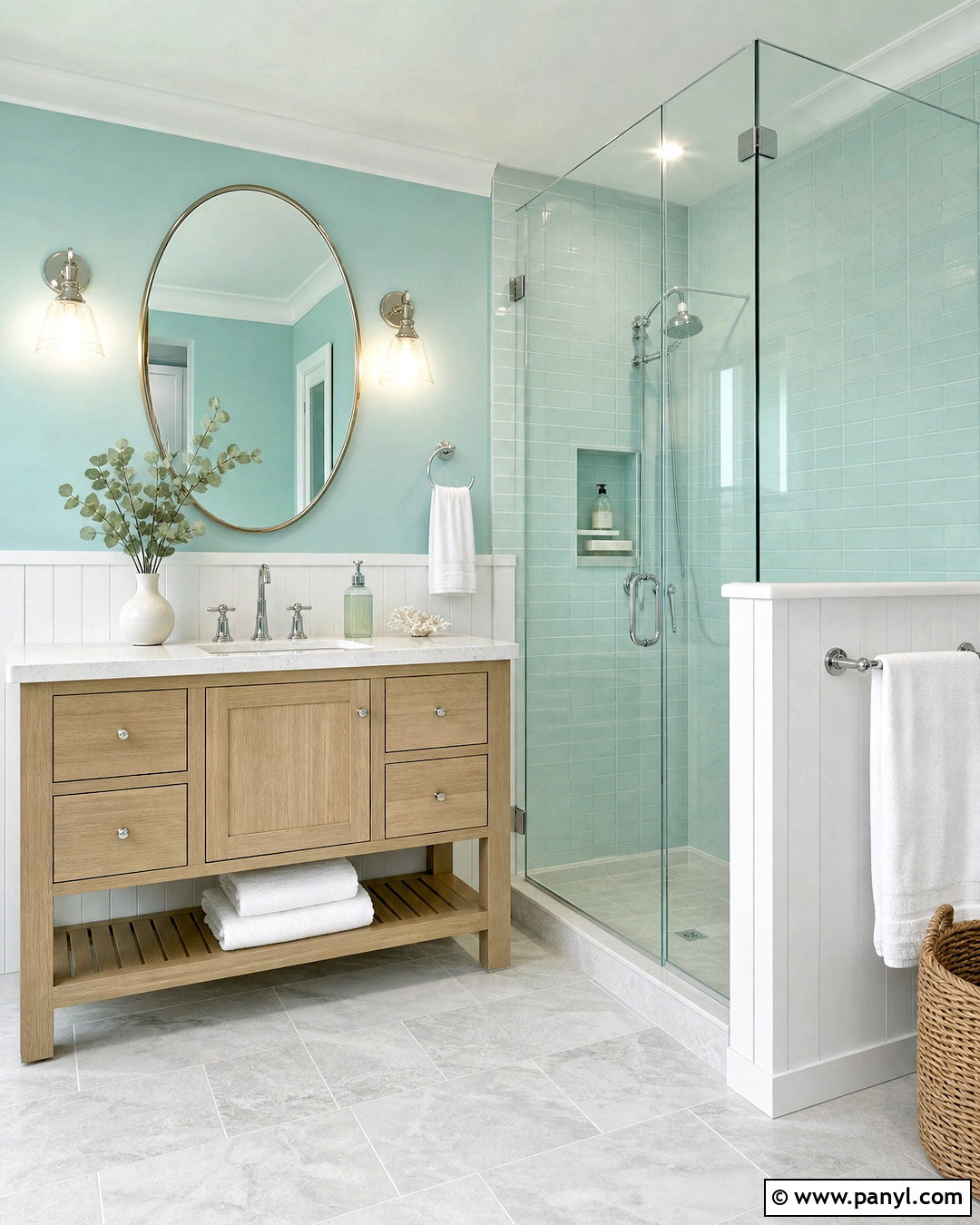
Seafoam green walls can make a bathroom feel clean and refreshing without appearing sterile. Select a soft blue-green shade and use moisture-resistant paint above white vertical wall tile or classic beadboard. A light oak vanity with a white quartz top introduces natural warmth, while polished chrome faucets reflect light around the room. Install a rounded mirror and two simple glass sconces for balanced task lighting. Choose pale gray floor tile with subtle variation, then add white towels and a washable striped runner. A frameless glass shower enclosure keeps the compact room visually open. Small ceramic containers and one moisture-loving plant are enough for decoration. This palette works especially well when every material remains light, simple, and connected to the gentle seafoam walls.
8. Two Tone Green Living Room Wall
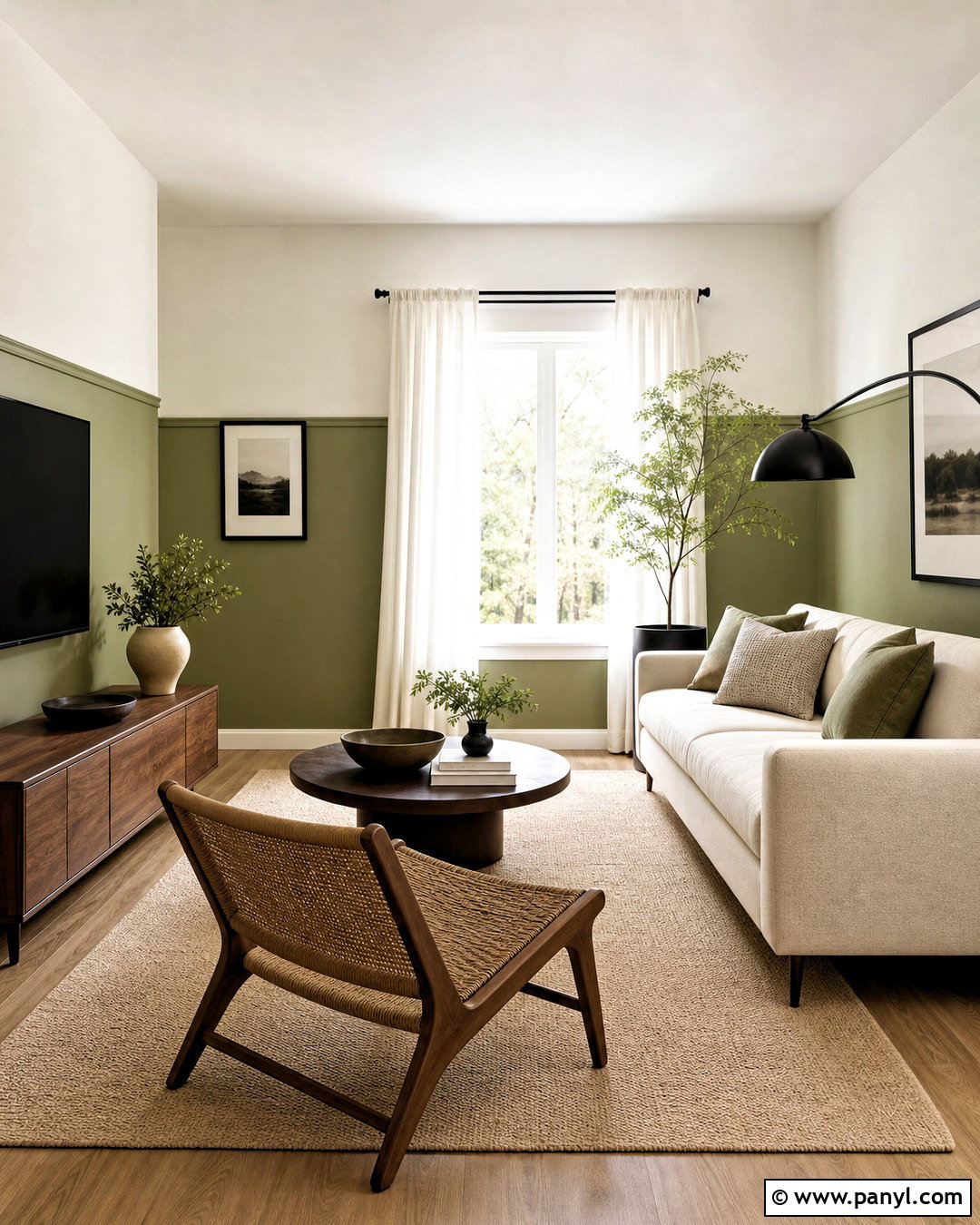
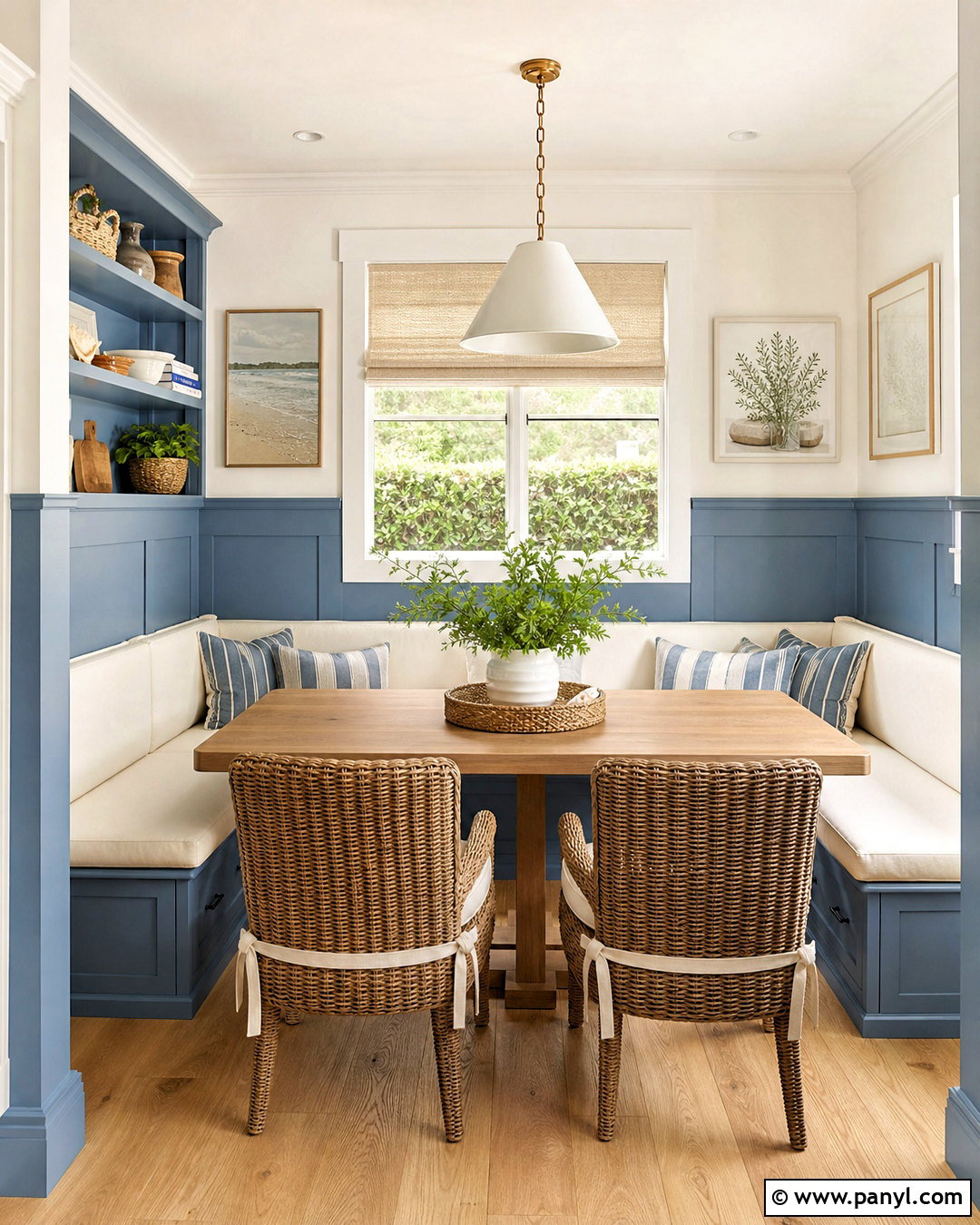
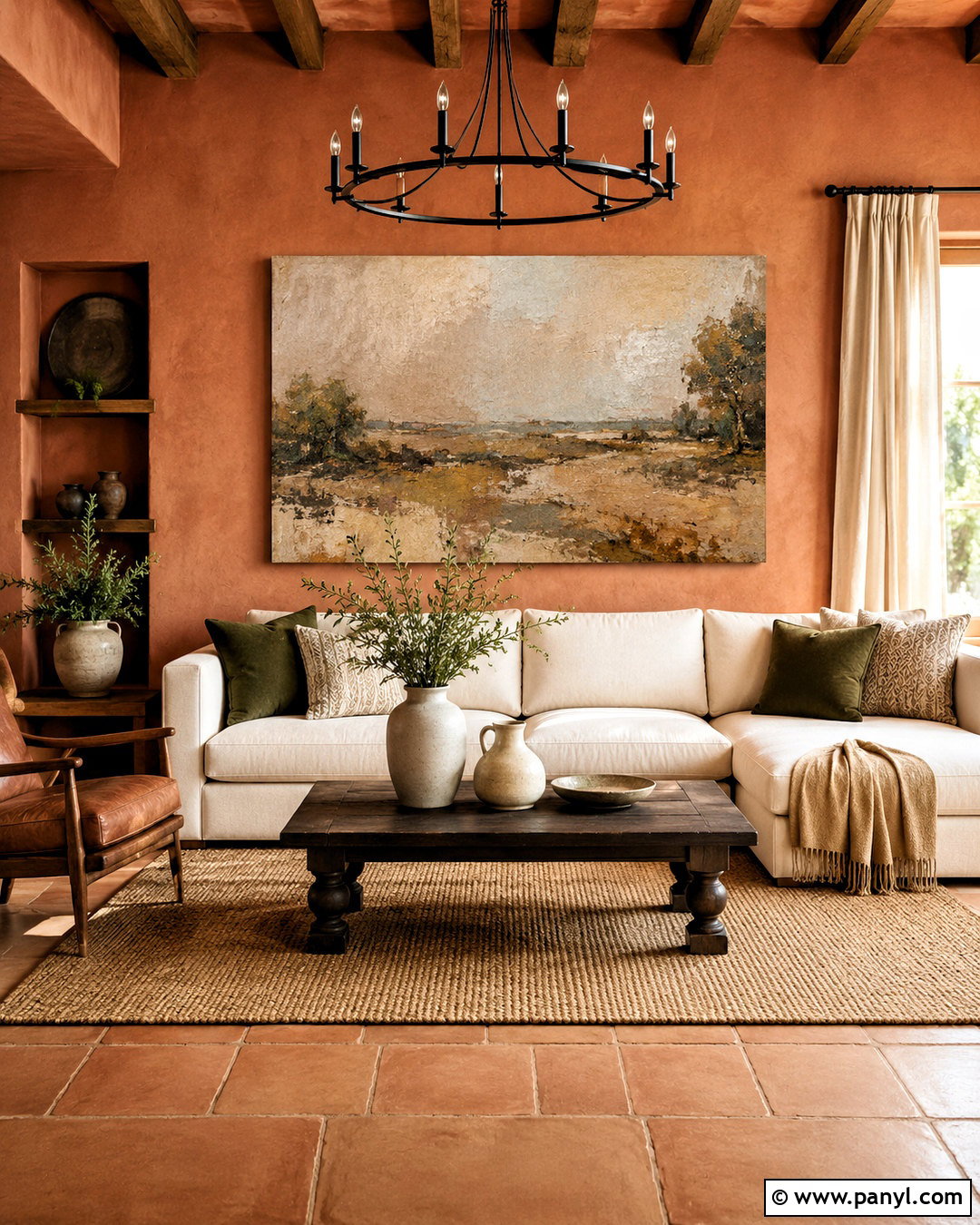
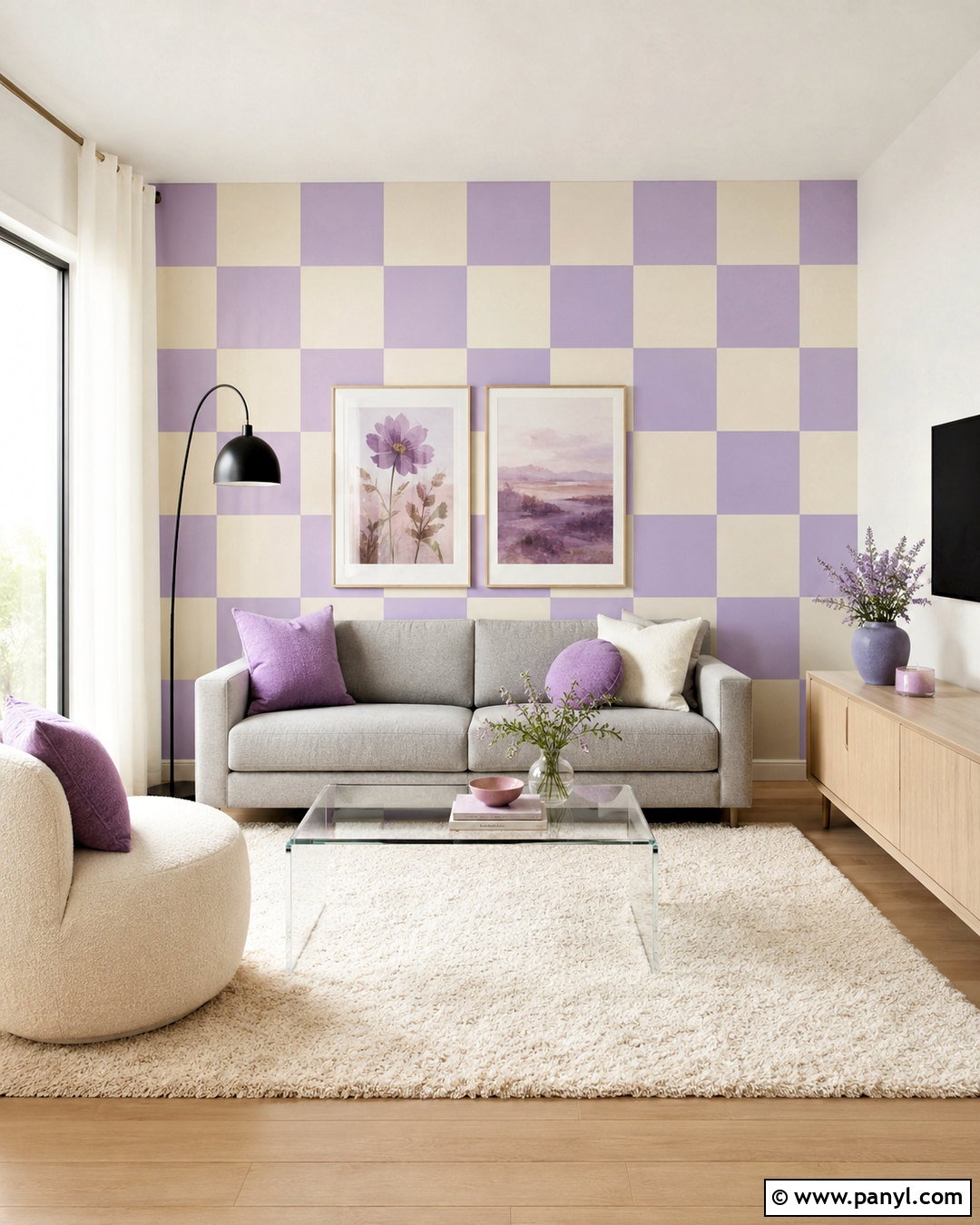
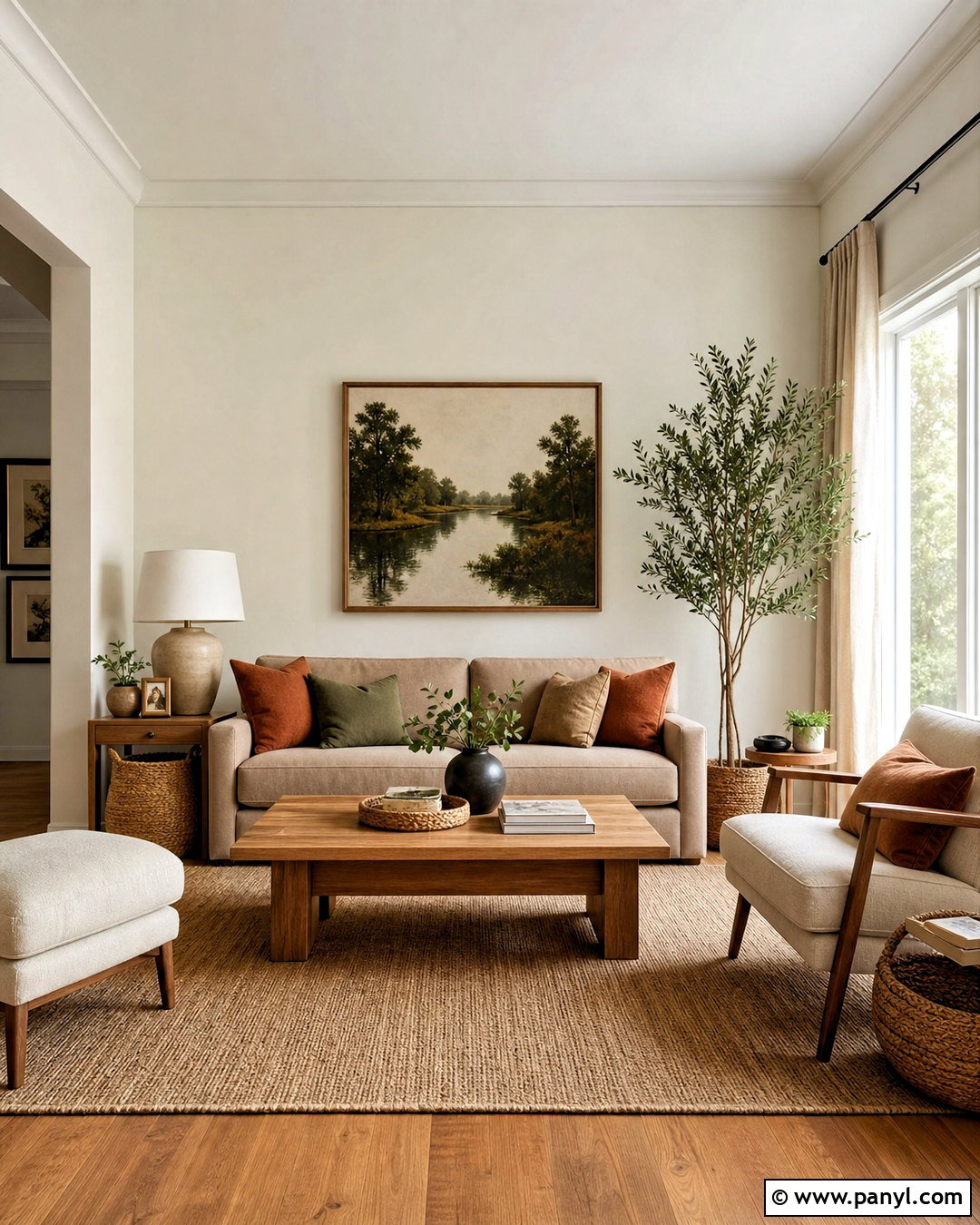
Two-tone walls provide a creative way to use green without covering the entire room in one saturated shade. Paint the lower two-thirds of the walls in medium moss green and the upper section in soft warm white. Separate the colors with a narrow painted chair rail or simple wood molding. Arrange a cream sofa against the green portion so it creates strong, comfortable contrast. Add a walnut media console, woven lounge chair, and neutral rug with small green details. Long white curtains visually connect with the upper walls and help the ceiling appear taller. Black lighting and picture frames add definition. This complete layout works best when the dividing line continues around the room, making the paint treatment look architectural rather than like an unfinished accent wall.
9. Green Wall With Picture Frame Molding
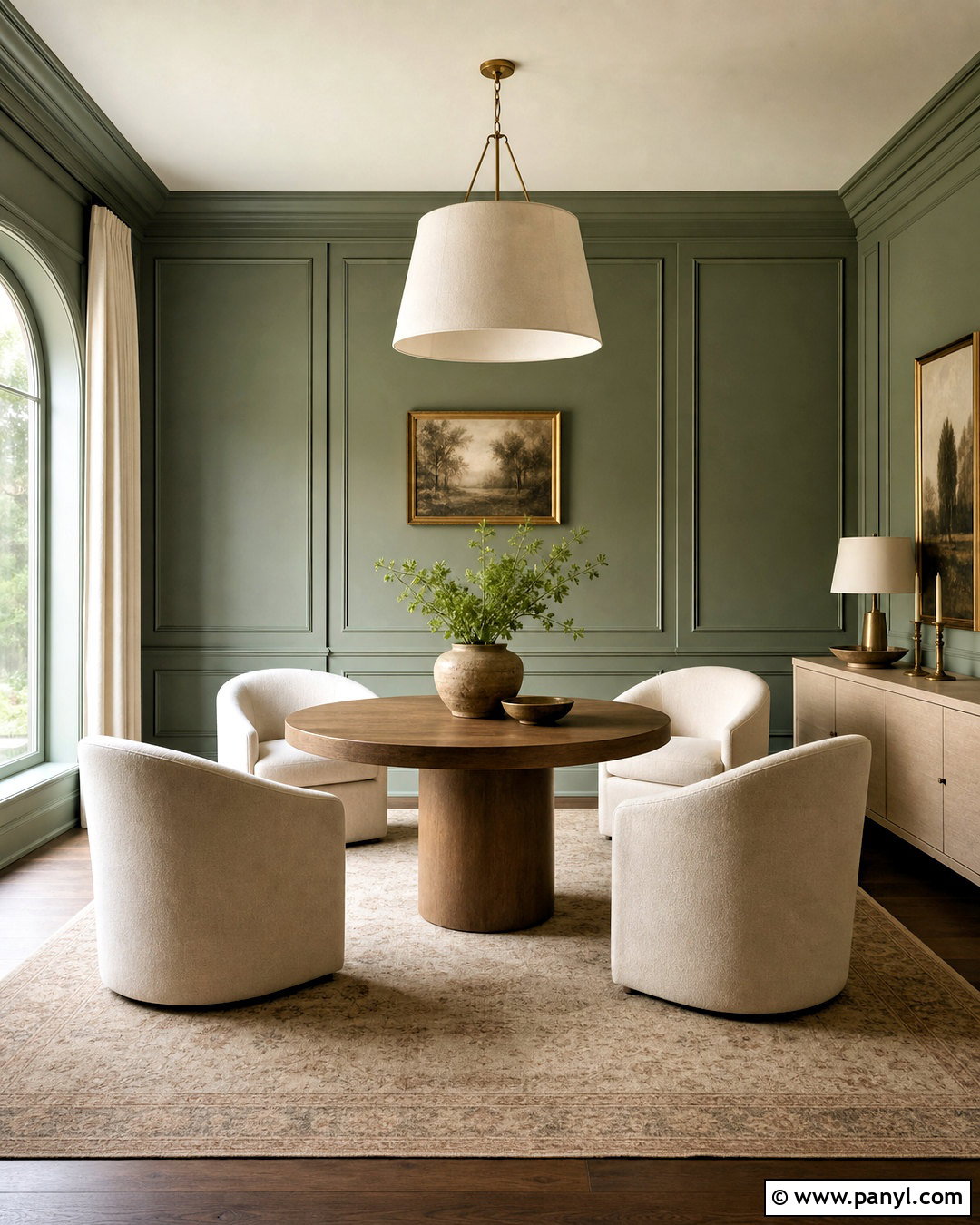
Picture frame molding gives a green-painted room classic character without requiring expensive paneling. Install evenly spaced rectangular molding across all walls, then paint the walls and trim together in a muted eucalyptus green. Keep the ceiling warm white to lighten the upper part of the room. In a dining or sitting room, combine the painted detail with a round oak table, curved upholstered chairs, and a simple linen pendant. Hang artwork inside selected molding panels rather than filling every section. A low cream cabinet and antique-brass accents provide contrast while respecting the traditional architecture. Choose a lightly patterned neutral rug to soften the room. The finished design feels tailored and complete because the wall treatment, furniture shapes, lighting, and decorations share a restrained palette.
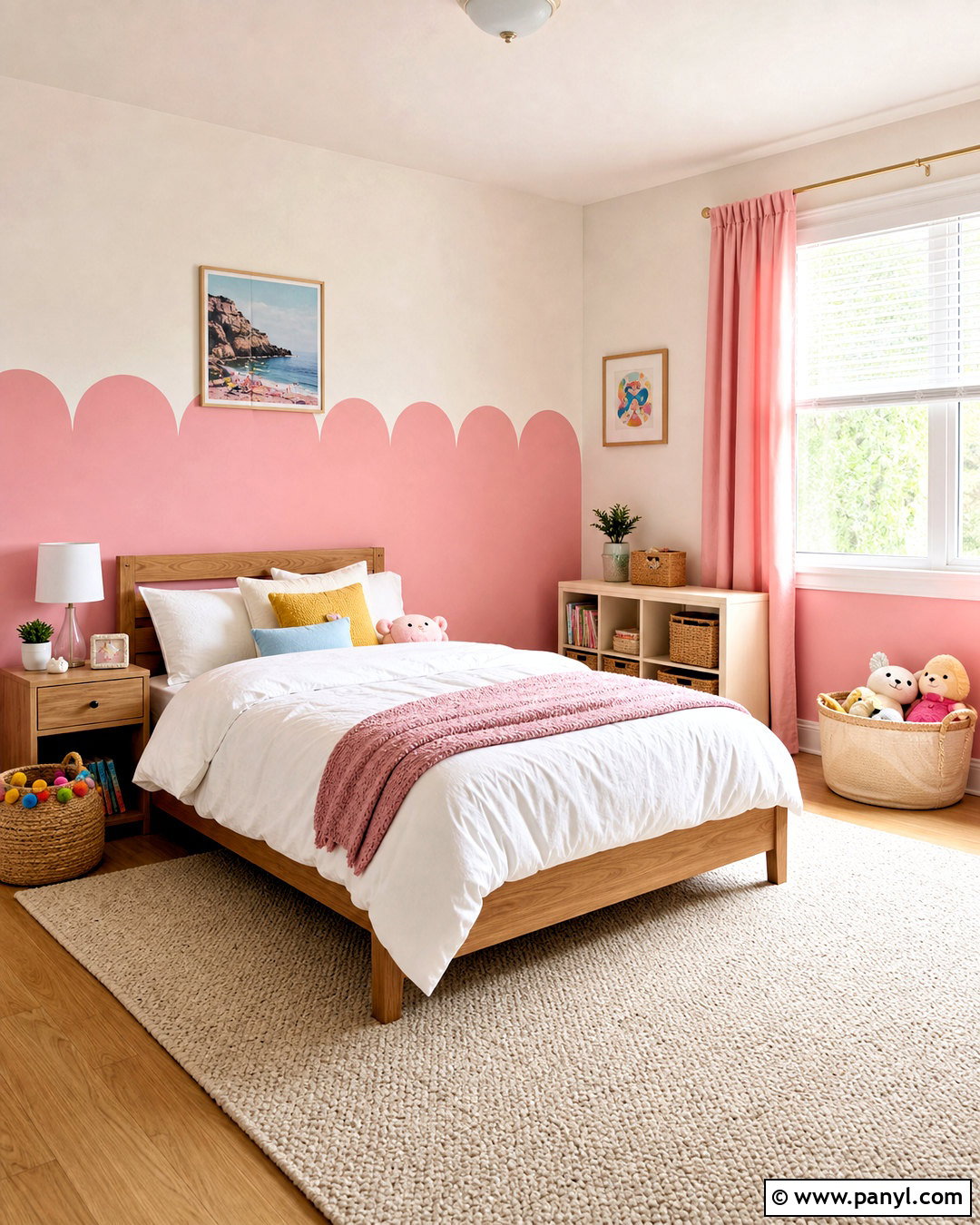
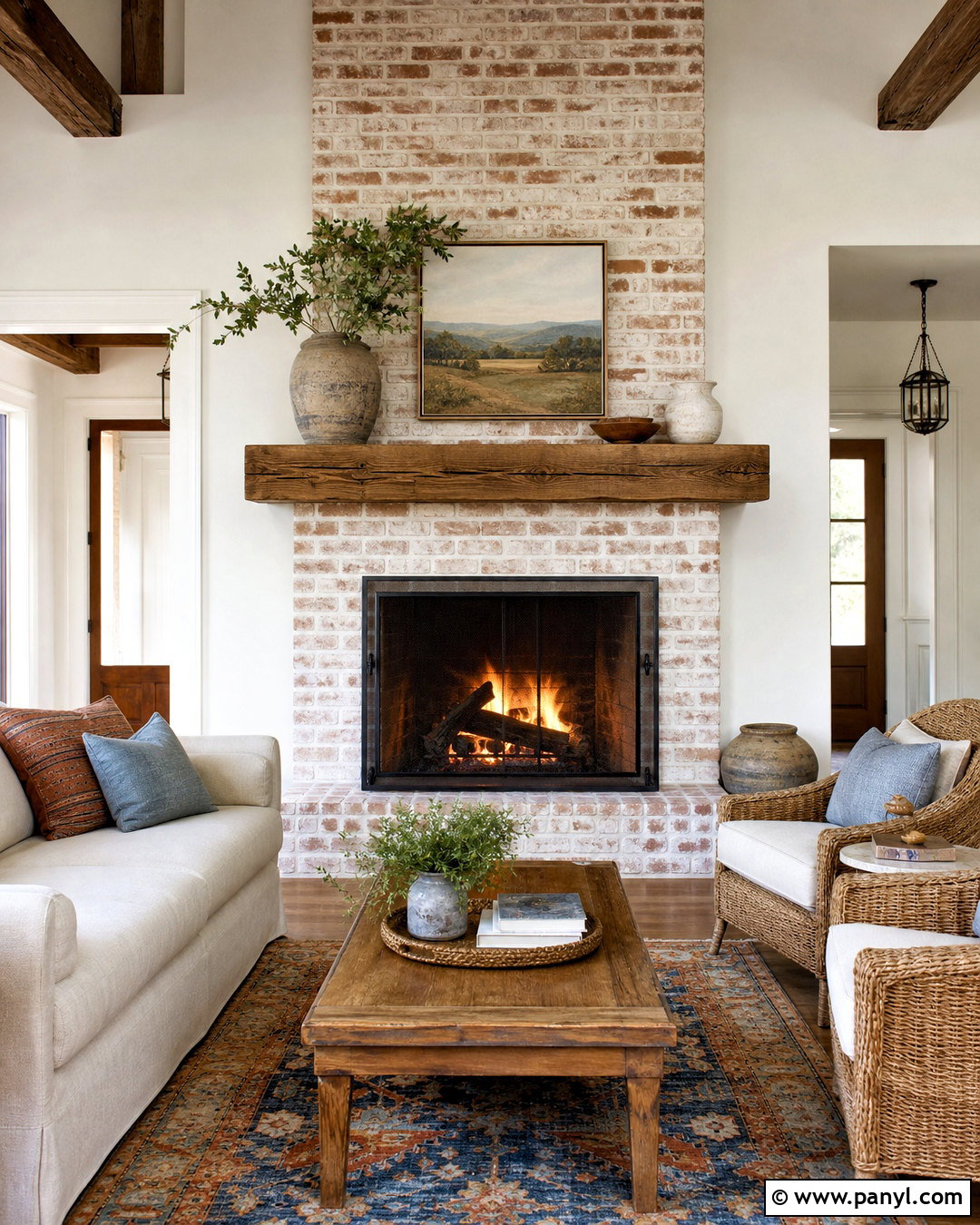
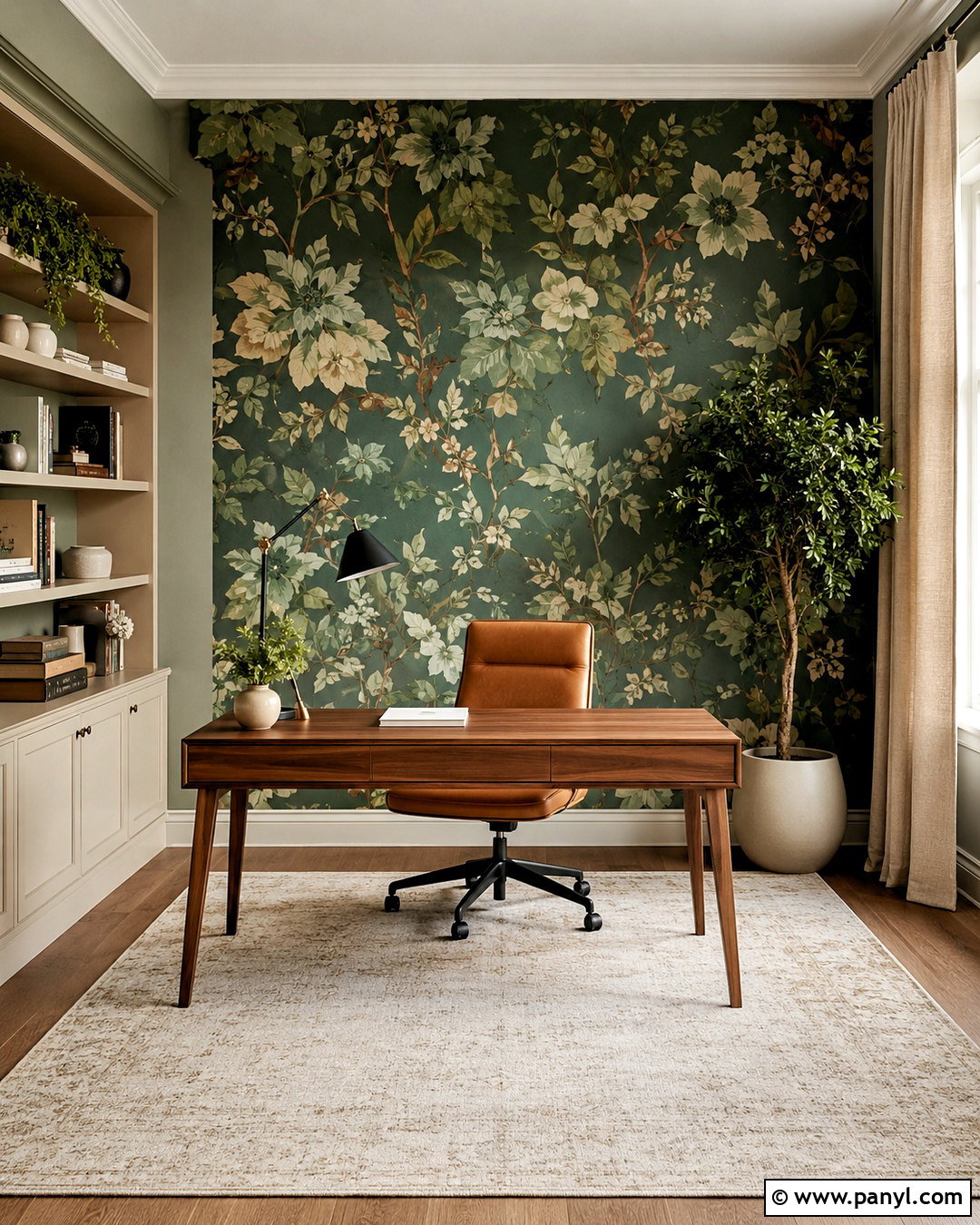
10. Green Limewash Living Room Wall
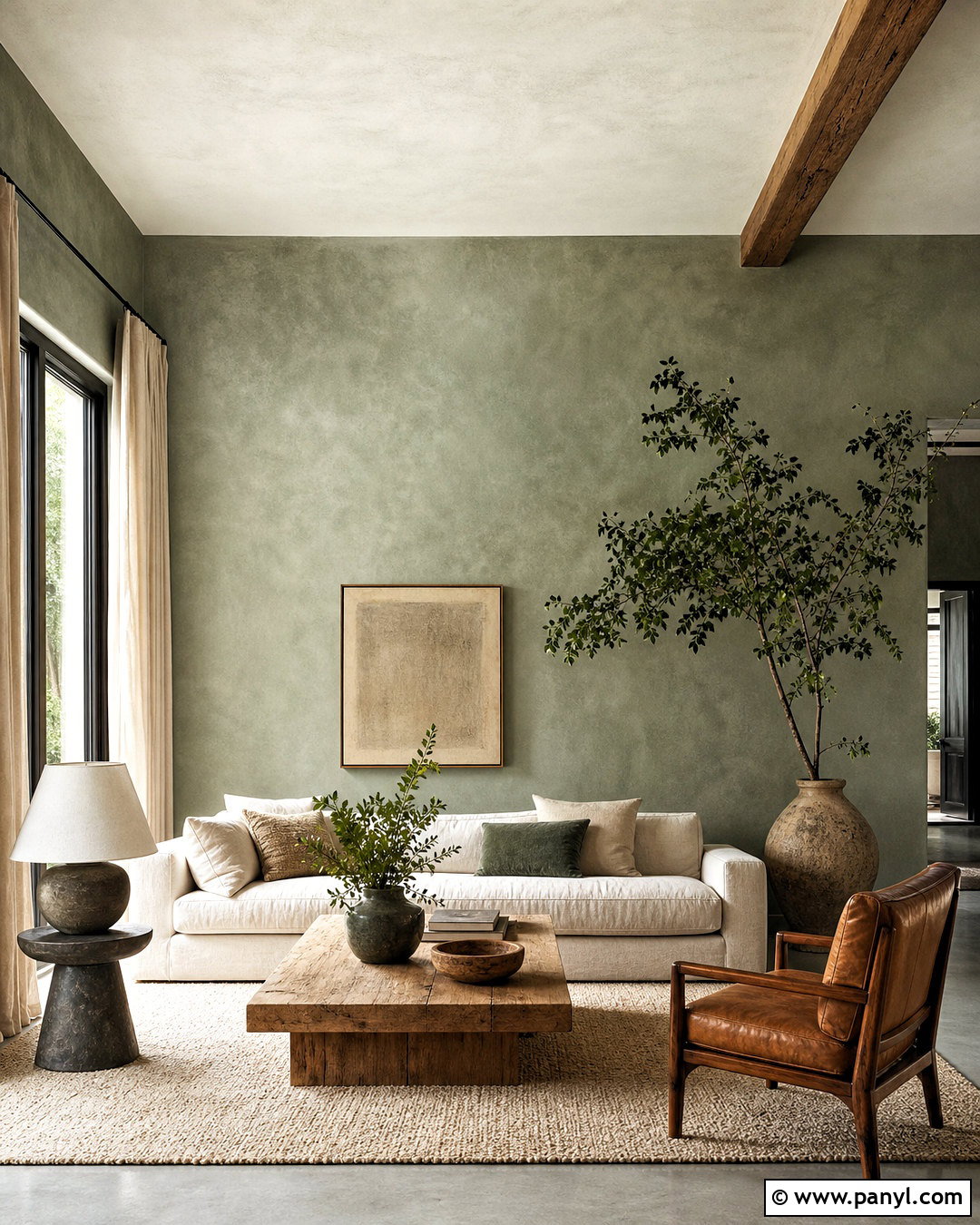
Green limewash creates gentle movement that can make plain walls feel layered and handcrafted. Apply a muted gray-green limewash across every wall, using broad overlapping strokes to create soft tonal variation. Pair the textured finish with low-profile furniture in cream linen, medium oak, and warm brown leather. A chunky wool rug and raw wood coffee table support the natural character of the paint. Keep window treatments simple with full-length flax linen curtains. Sculptural ceramic lamps and a few oversized branches add shape without distracting from the walls. Avoid glossy furniture or highly polished metal because these surfaces can compete with the chalky finish. The complete living room should feel relaxed, tactile, and contemporary, with the mottled green walls serving as a quiet architectural background.
11. Green Ombre Bedroom Wall
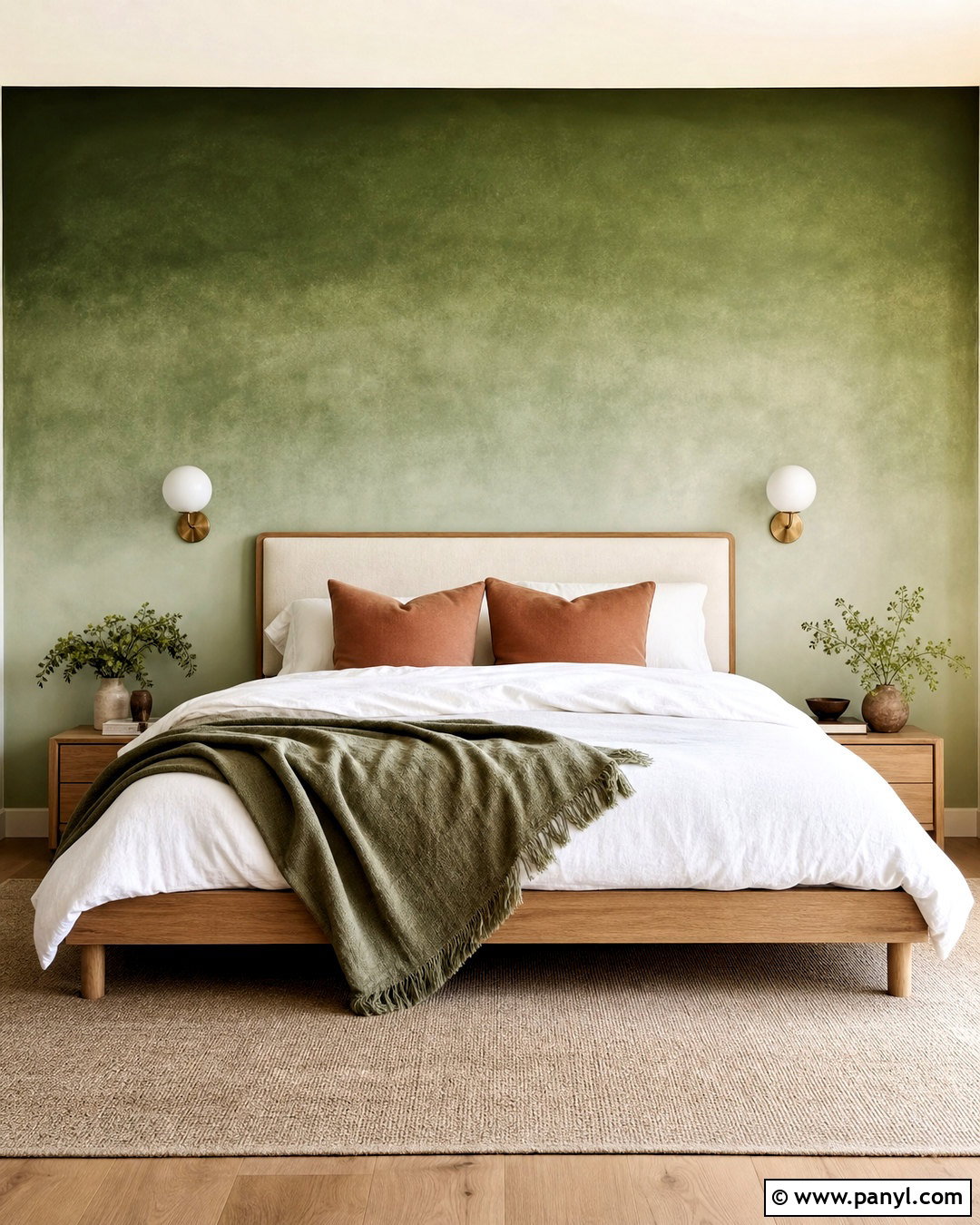
An ombre wall brings soft color progression to a bedroom while creating a clear focal point. Begin with deep leafy green near the floor, blend into medium sage around the center, and finish with pale green near the ceiling. Keep the remaining walls warm white so the painted effect remains special. Position a simple oak bed against the ombre wall, using an upholstered cream headboard that does not hide too much of the gradient. Dress the bed with white linen, a moss throw, and clay-colored pillows. Light wood nightstands and white globe sconces maintain an airy appearance. Finish with a beige wool rug and minimal artwork. Smooth blending is essential, so work in small sections while the neighboring paint colors remain wet.
12. Green Geometric Painted Wall
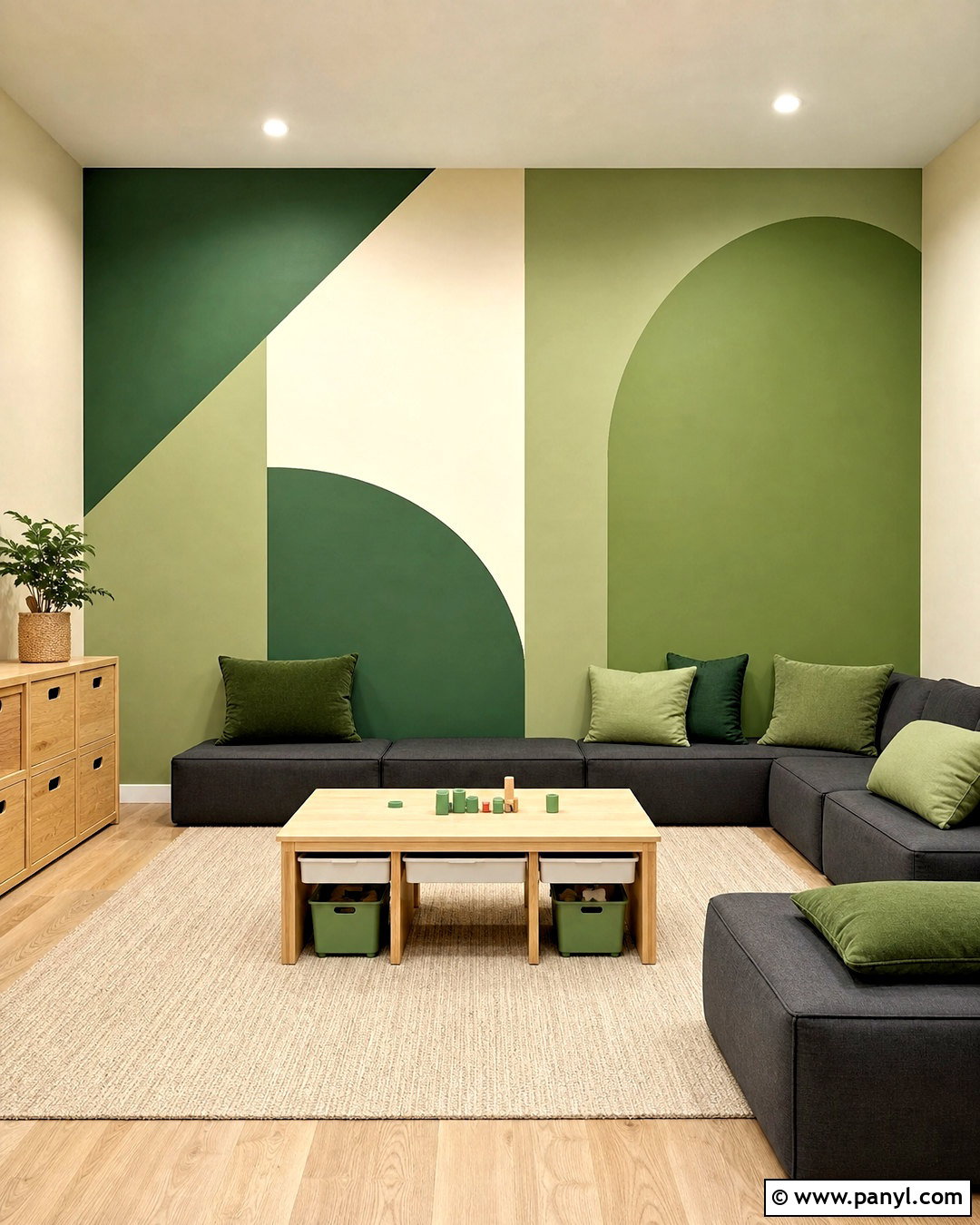
A geometric green wall can energize a playroom, creative office, or casual family space when the pattern remains organized. Build the design from large overlapping shapes in sage, olive, deep forest green, and warm cream. Keep the pattern on one main wall, then paint the surrounding walls in the same cream used within the design. Anchor the room with a simple charcoal sofa or modular seating, a light wood table, and practical closed storage. Repeat one or two greens through washable cushions and storage baskets. Avoid adding heavily patterned rugs or curtains because they can compete with the painted feature. Clean tape lines and an intentionally limited palette make the wall feel modern. The finished room stays functional while gaining a strong visual identity.
13. Green Painted Arch Wall
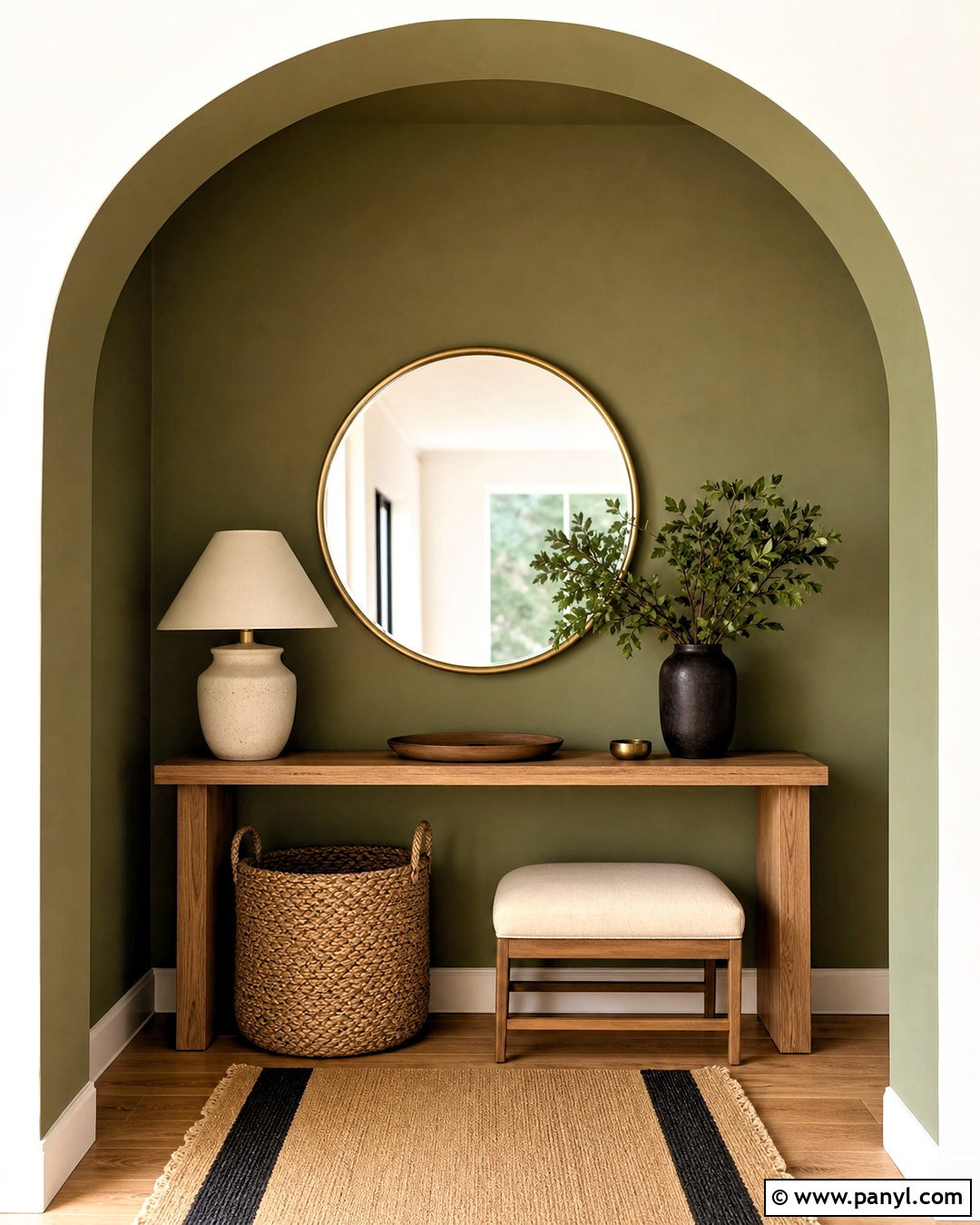
A painted green arch can define a small zone without adding walls or bulky furniture. Create a wide, rounded arch in muted olive green behind a console, desk, reading chair, or bed. Keep the surrounding wall warm white so the shape appears crisp and intentional. For an entryway, place a narrow oak console inside the arch with a round brass mirror centered above it. Add a ceramic lamp, woven basket, and small upholstered stool that can slide underneath. Use a washable runner in tan and black to guide movement through the space. The arch should be slightly wider than the furniture to create a balanced frame. This simple treatment transforms an overlooked wall into a complete destination while using less paint than a traditional accent wall.
14. Green Ceiling And Walls
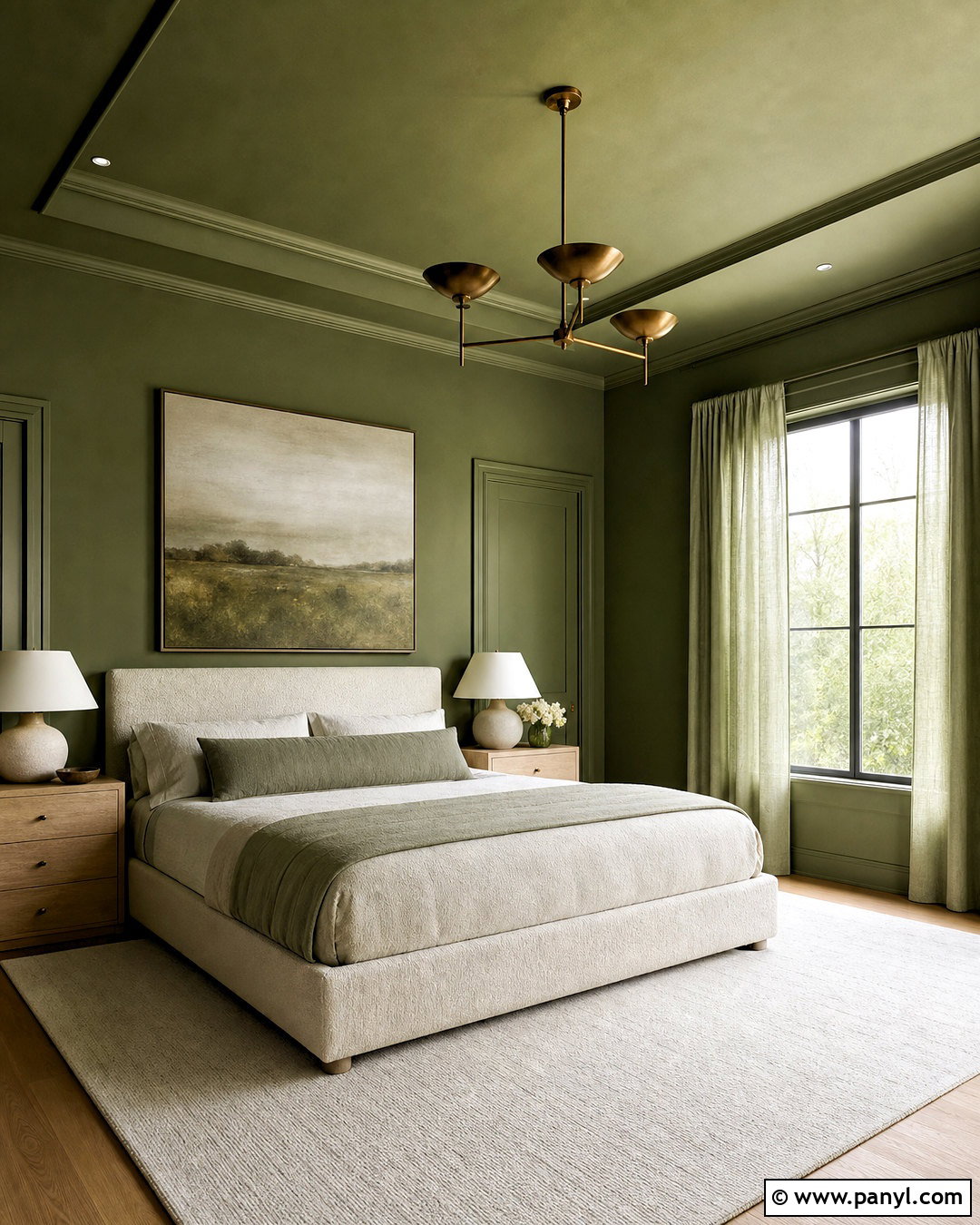
Painting the ceiling and walls green can make a bedroom or sitting room feel unified rather than visually chopped into separate surfaces. Choose a soft moss or gray-green that is deep enough to create atmosphere but light enough to reflect daytime brightness. Apply the same flat finish to the ceiling and walls, then use satin paint in the matching color on trim and doors. Balance the enveloping treatment with an ivory sofa or upholstered bed, pale oak furniture, and a large cream rug. Add black or bronze lighting for clear contrast. Linen curtains in a slightly lighter green create tonal depth without interrupting the palette. Keep artwork large and limited. This approach works particularly well in rooms with sloped ceilings or unusual architectural angles.
15. Dark Green Fireplace Wall
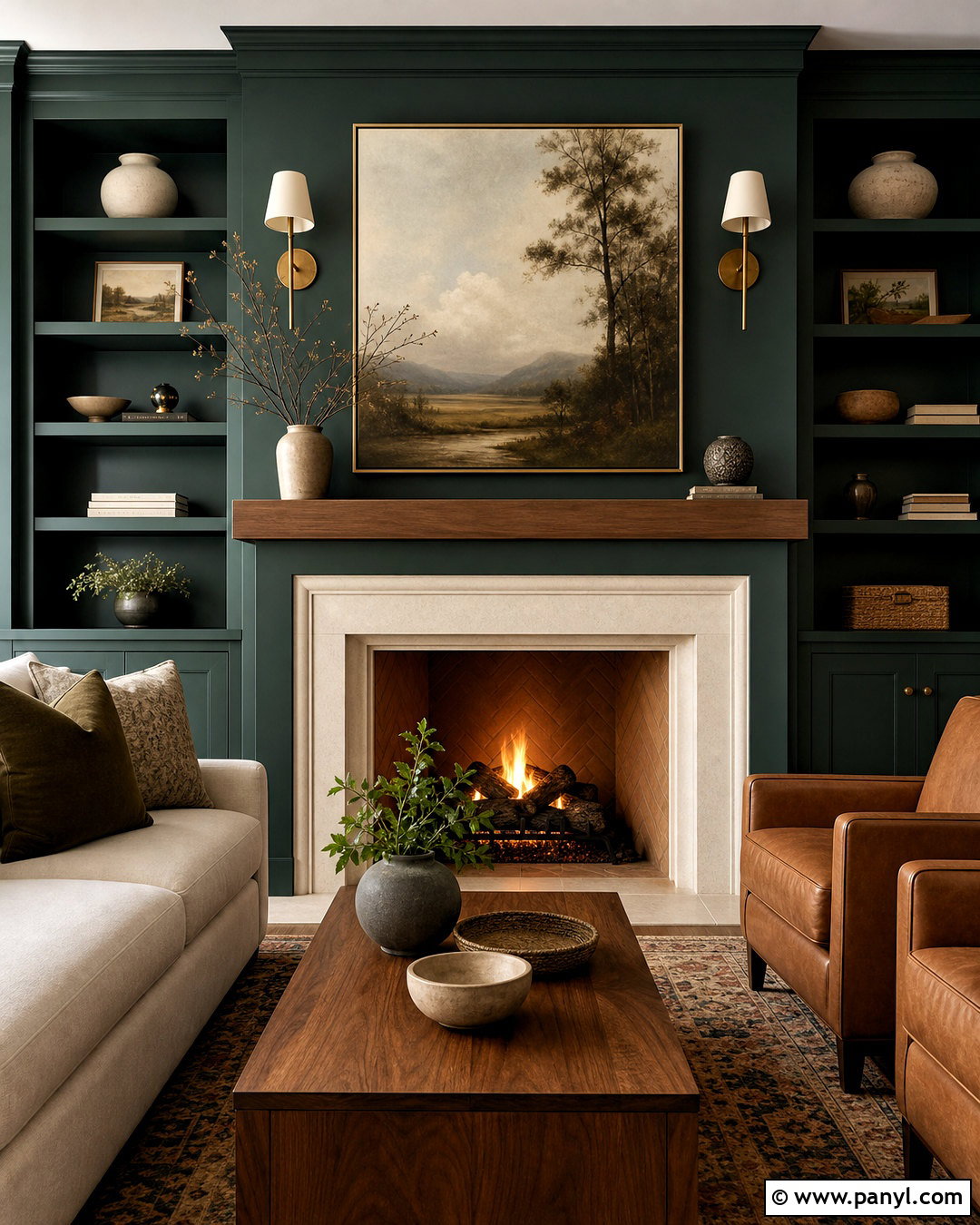
A dark green fireplace wall can establish a natural focal point in a living room, especially when the existing fireplace lacks visual weight. Paint the entire chimney breast or fireplace section in deep pine green, including built-in shelves if they surround the feature. Retain a light stone, brick, or plaster fireplace opening for contrast. Arrange a neutral sofa facing the fireplace and place two tan leather chairs nearby to form a balanced conversation area. A walnut coffee table and vintage-inspired rug add warmth underfoot. Decorate the mantel with one large framed artwork, a ceramic vessel, and simple branches. Brass sconces on either side create symmetry. Repeat small amounts of green in cushions so the fireplace wall feels connected to the whole room.
16. Green Hallway Walls
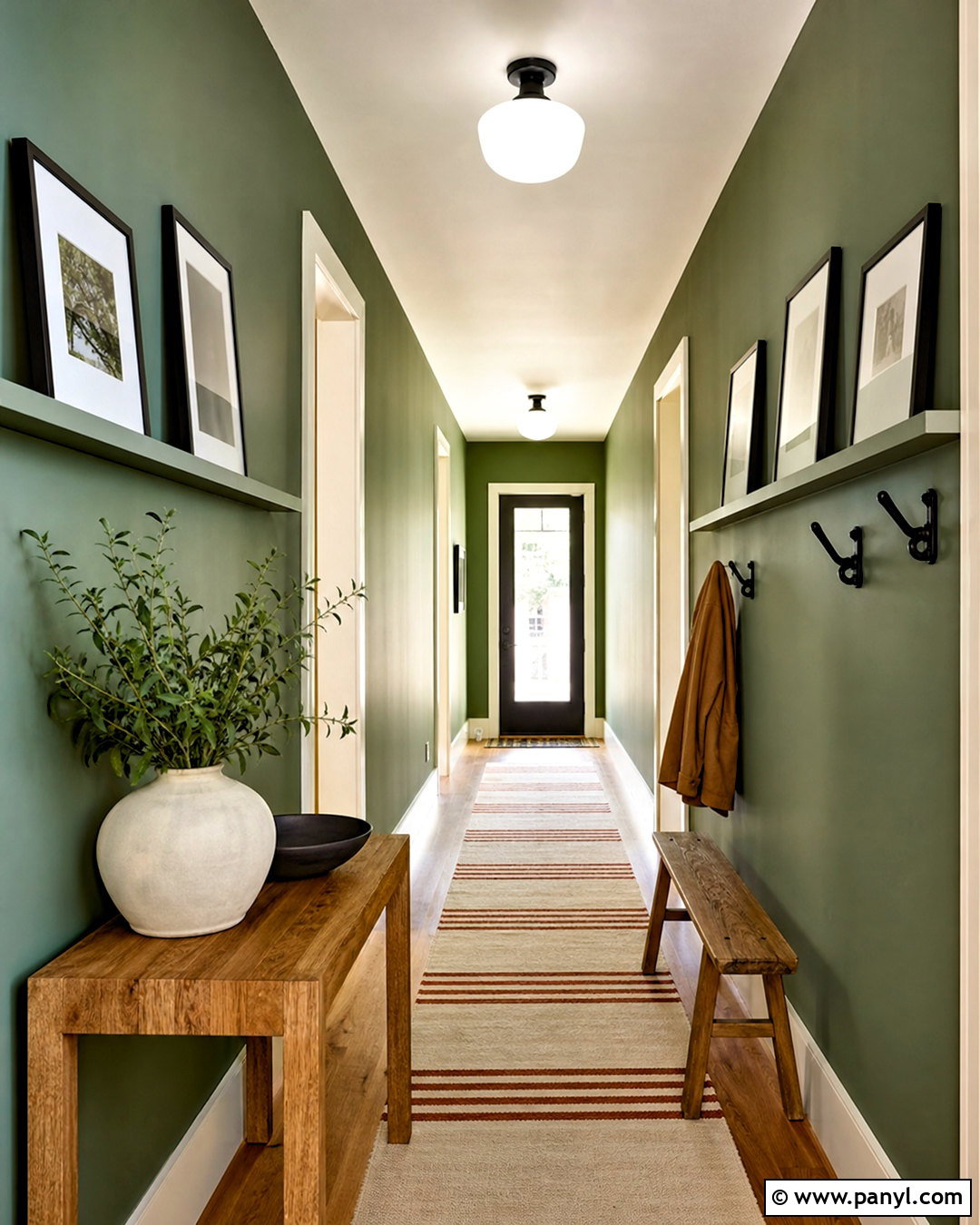
A hallway can handle more color than expected because it is a transition space rather than a room used for long periods. Paint the walls in medium fern green and keep the trim bright warm white for a clean outline. Add a narrow oak console where space allows, or install shallow picture ledges for framed family photographs and artwork. A durable striped runner in cream, rust, and green brings pattern to the floor while disguising daily wear. Use matching semi-flush ceiling lights to create consistent illumination along the full passage. Black hooks and a small bench can make the area practical near an entrance. Continue the green around corners instead of stopping randomly. This creates a complete, intentional hallway that connects surrounding neutral rooms through color.
17. Soft Green Nursery Walls
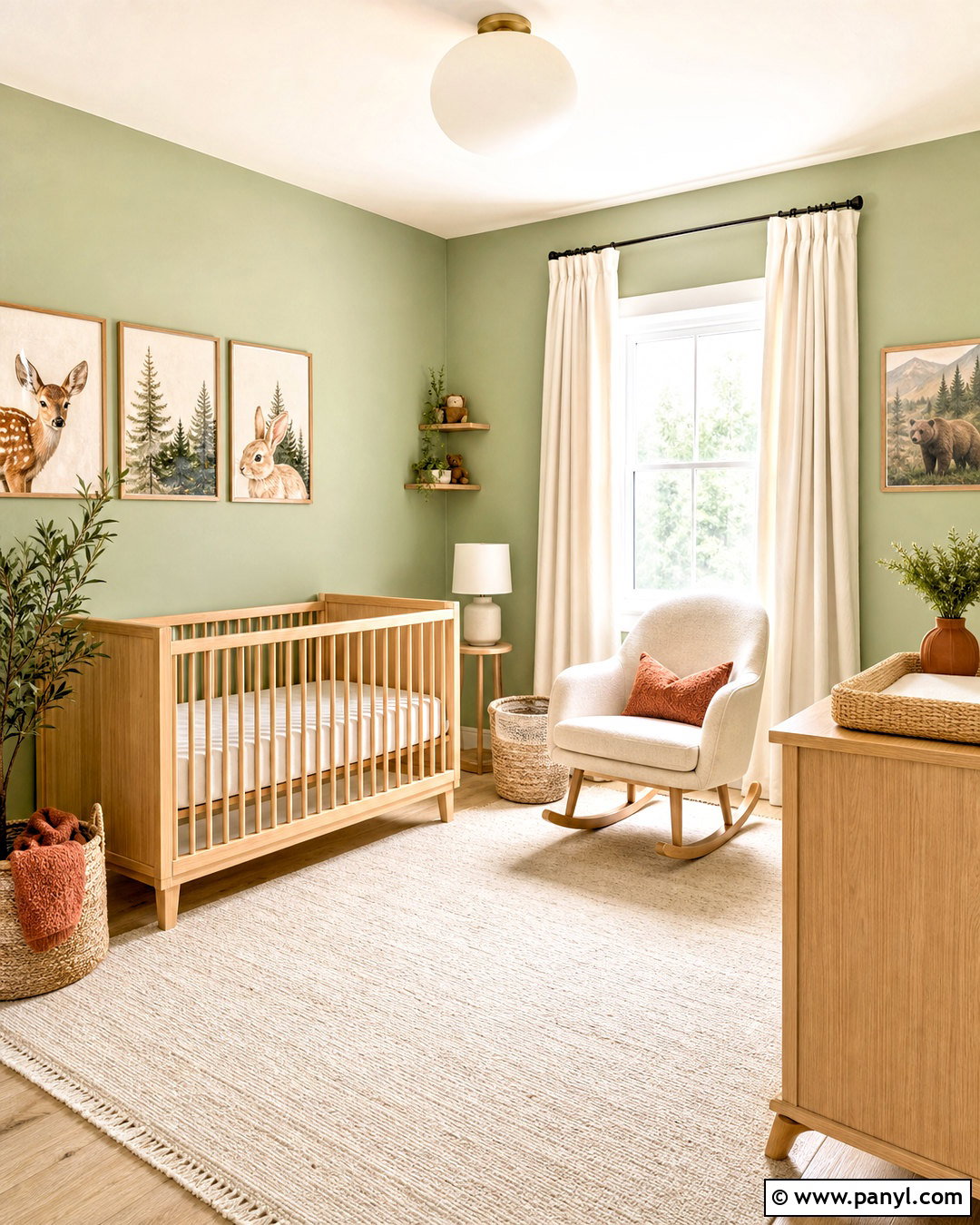
Soft green walls offer a flexible nursery foundation that can adapt as a child grows. Paint all four walls in a pale celadon or gentle sage with minimal yellow undertones. Pair the color with a natural maple crib, matching dresser, and comfortable cream rocking chair. Use blackout curtains in warm white and layer a washable wool-look rug in beige beneath the main furniture grouping. Add interest through woodland artwork, woven baskets, and a small amount of muted terracotta or dusty blue. Keep shelving securely installed and maintain clear floor space around the crib. A white ceiling and simple globe light preserve brightness. The finished nursery feels calm and welcoming, while the neutral furniture and restrained decorations prevent the soft green palette from becoming overly themed.
18. Green Mudroom Walls
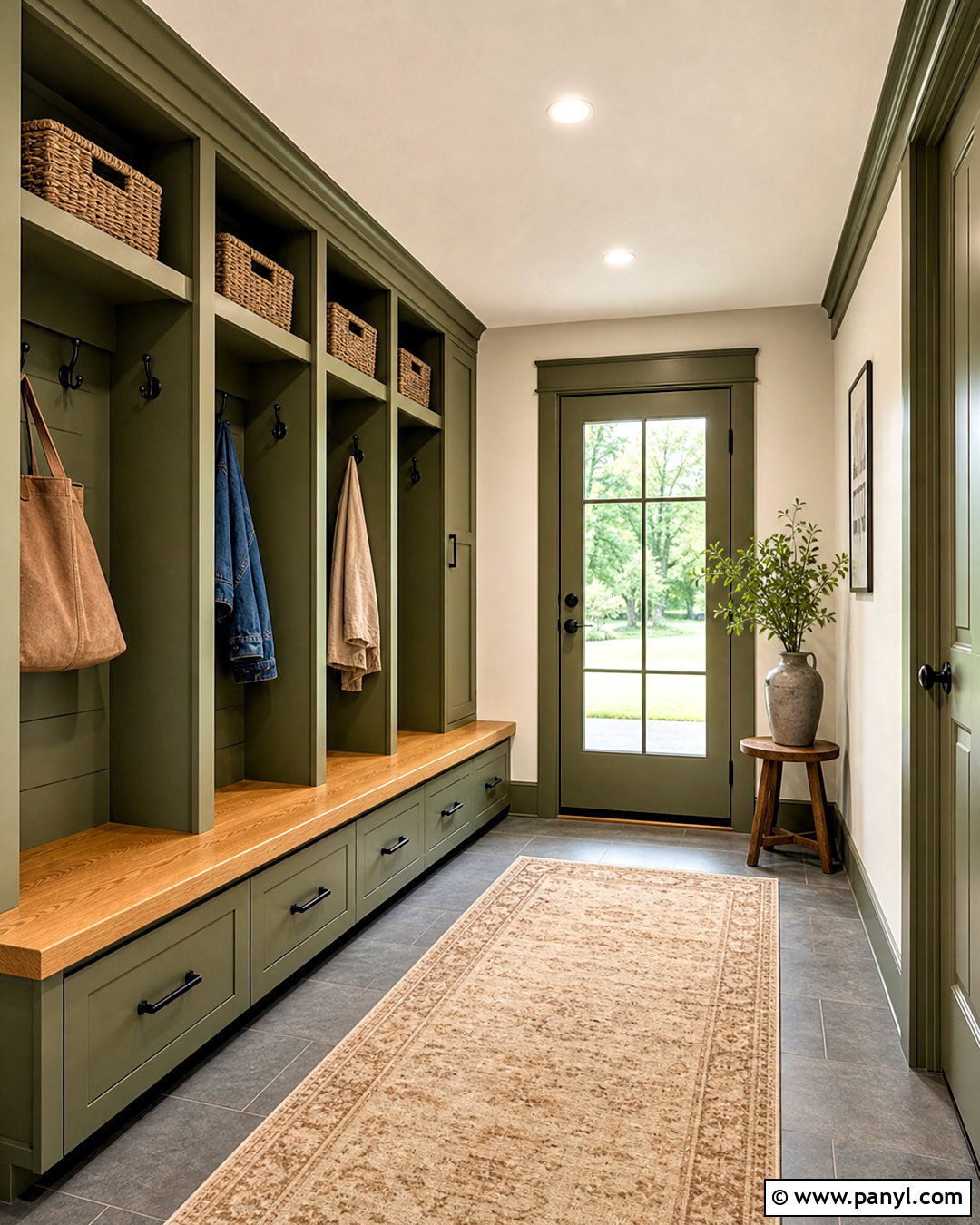
Mudrooms benefit from grounded colors that can visually handle busy storage and everyday traffic. Use a durable satin paint in warm army green across the walls and built-in lockers. Install a natural oak bench with deep drawers below and open cubbies above for baskets. Black hooks, cabinet pulls, and a simple ceiling fixture provide practical contrast. Choose slate-look porcelain floor tile in medium gray to disguise dirt, then add a washable runner in cream and brown. Paint the ceiling warm white to prevent the compact area from feeling too enclosed. Labels and small accessories should remain minimal so the cabinetry looks orderly. This complete green mudroom combines wall color, storage, seating, and hard-wearing materials in one practical design that feels welcoming from the doorway.
19. Teal Green Basement Walls
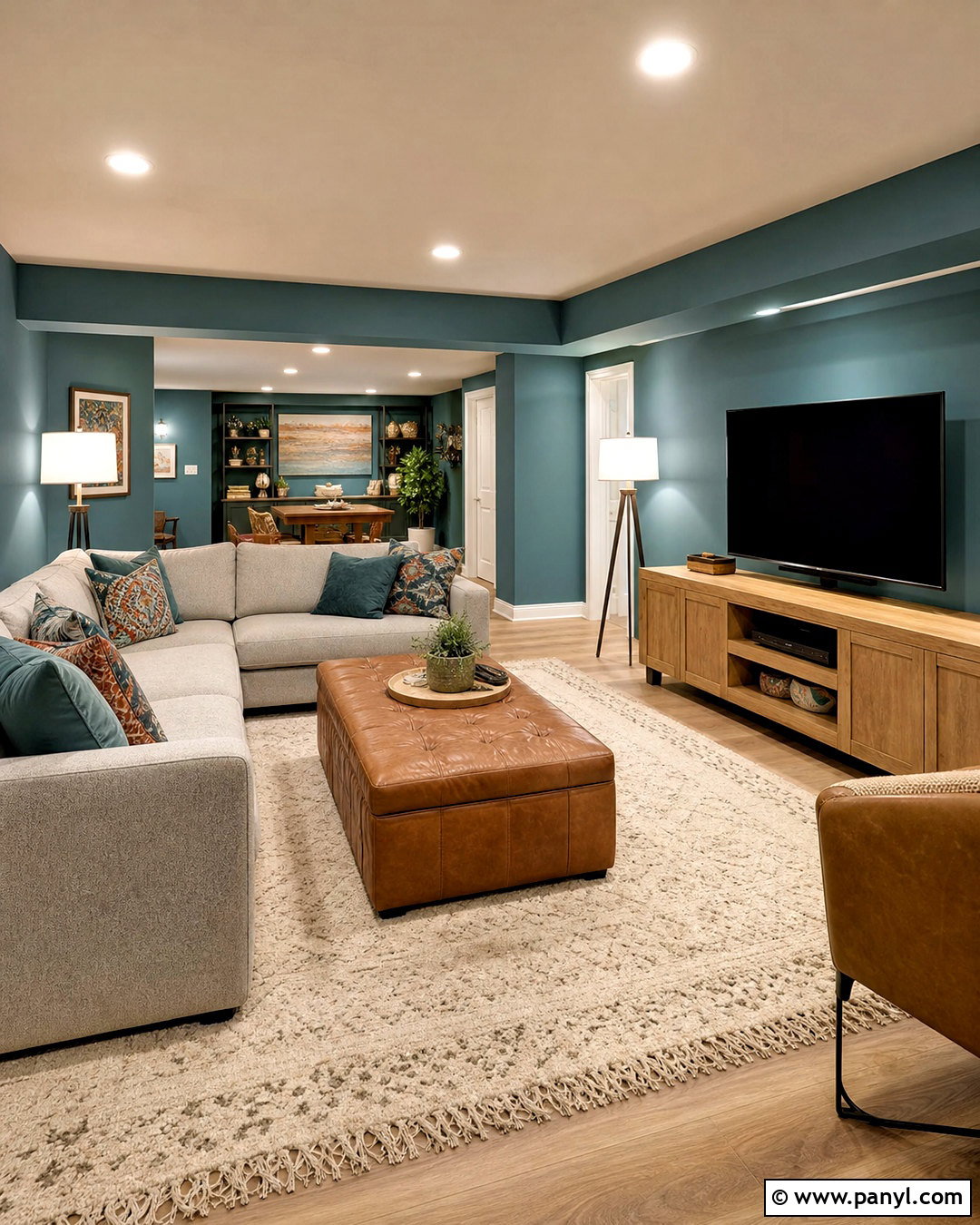
Teal green walls can add personality to a basement while working with limited natural light. Select a medium teal-green with a balanced blue undertone, then paint all walls for a cohesive finish. Use a warm white ceiling to reflect artificial lighting and prevent the room from becoming overly saturated. Arrange a light gray sectional around a pale oak media console, leaving wide walkways between activity zones. Add a large cream rug, camel-colored ottoman, and patterned pillows containing teal, rust, and ivory. Multiple floor lamps and recessed lights should spread brightness evenly instead of creating shadowy corners. If the basement includes a game or craft area, repeat the same furniture finishes there. The consistent palette makes separate functions feel like one finished family room.
20. Botanical Green Wall Mural
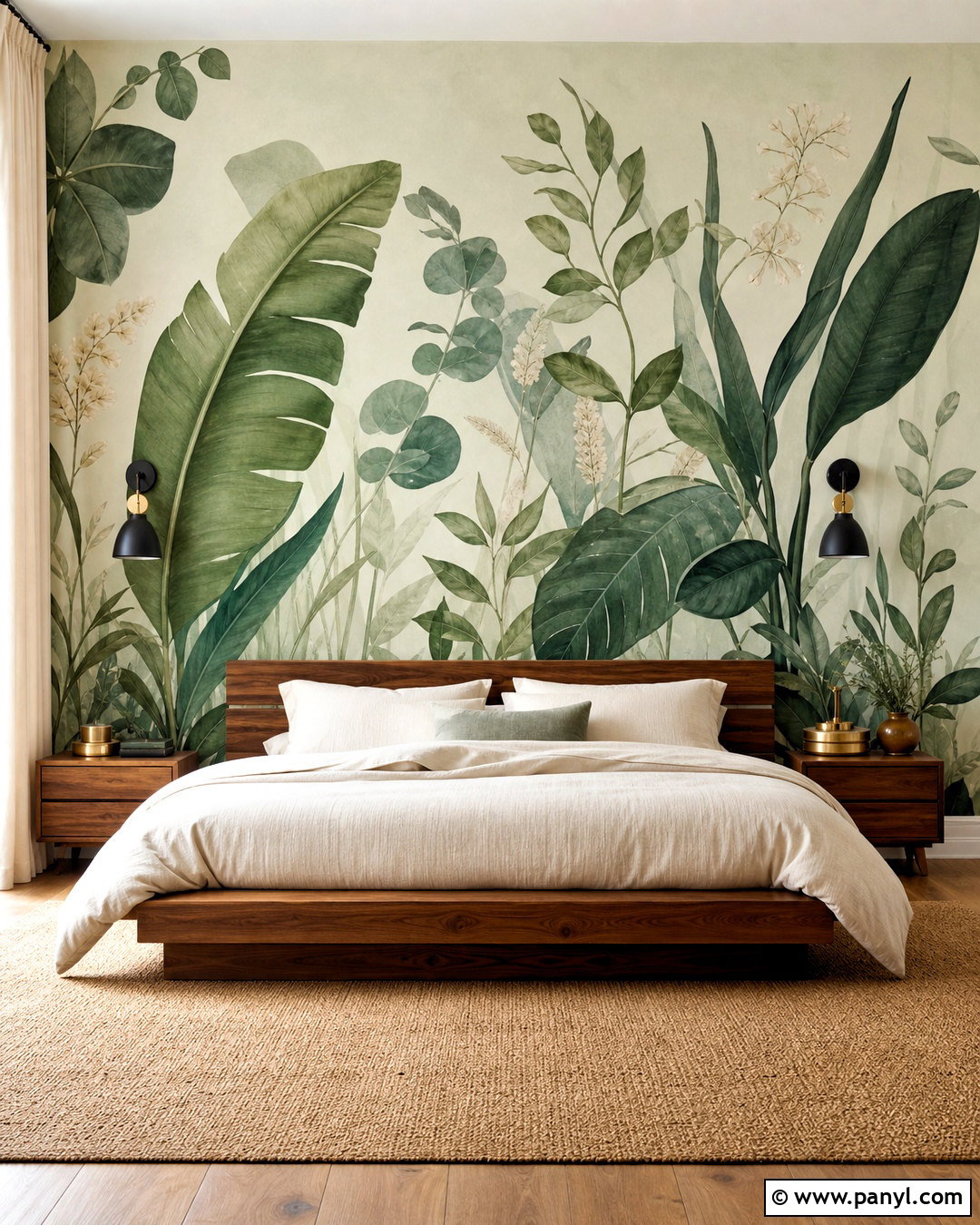
A hand-painted botanical mural turns a blank wall into artwork while supporting a complete nature-inspired room. Begin with a pale sage background, then paint oversized leaves and branches in forest green, olive, eucalyptus, and small touches of cream. Keep the shapes broad and simplified rather than highly detailed. In a bedroom or reading room, place a low walnut bed or cream chaise against the mural without covering its main composition. Use solid bedding, plain curtains, and a lightly textured rug so other patterns do not compete. Black sconces and small brass accents provide definition. Carry one mural color onto the remaining walls in a much lighter tone. The final space feels immersive and artistic while staying comfortable, coordinated, and realistic for everyday living.
Conclusion:
The best 20 green wall painting ideas combine the right shade with furniture, lighting, flooring, and architectural details that support it. Pale sage, mint, and seafoam can brighten restful rooms, while olive, hunter, emerald, and forest green bring stronger depth. Consider full-room paint, color drenching, picture frame molding, two-tone walls, murals, arches, or limewash instead of automatically choosing a single accent wall. Always test large samples in the actual room and examine them in morning, afternoon, and artificial light. Pay attention to nearby wood tones, countertops, fabrics, and flooring before making the final decision. With thoughtful planning, green walls can feel timeless, comfortable, and naturally connected to the rest of your home.

Related Ideas and Inspiration:
Leave a Reply