
Sage green brings the softness of nature indoors while remaining neutral enough for everyday decorating. These 20 sage green wall paint ideas explore complete room looks rather than isolated color choices. You will find airy living rooms, cozy bedrooms, practical kitchens, peaceful bathrooms, and hardworking entryways. Each design combines the wall color with furniture, flooring, trim, lighting, textiles, and decorative accents, making the finished look easier to recreate. Because sage can lean warm, cool, gray, or yellow, always test a large sample on multiple walls and view it throughout the day before painting. The room’s natural light and paint finish can noticeably change its appearance. () Use the following complete schemes to discover approachable 20 sage green wall paint ideas.

1. Sage Green Living Room Walls With Cream Furniture
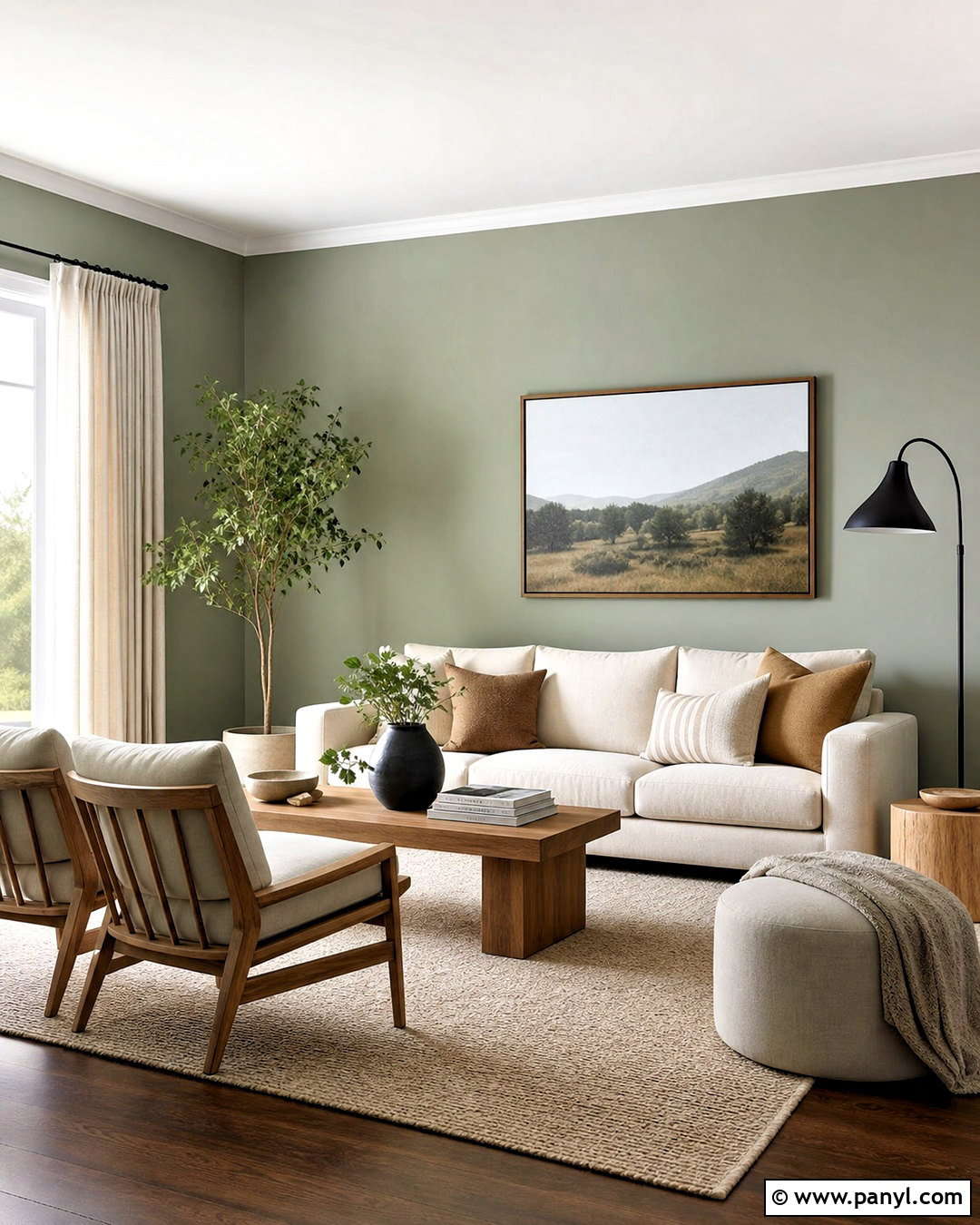
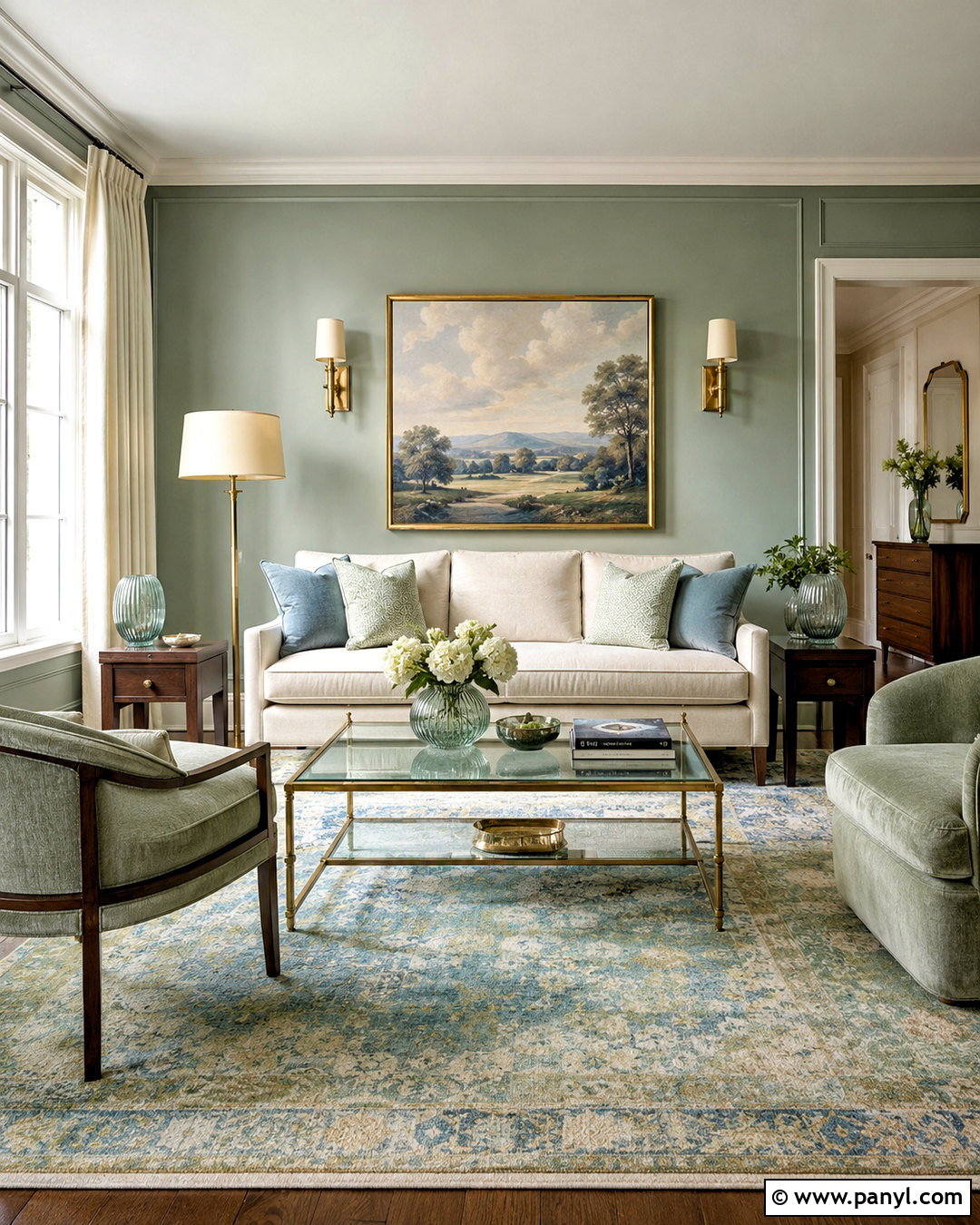
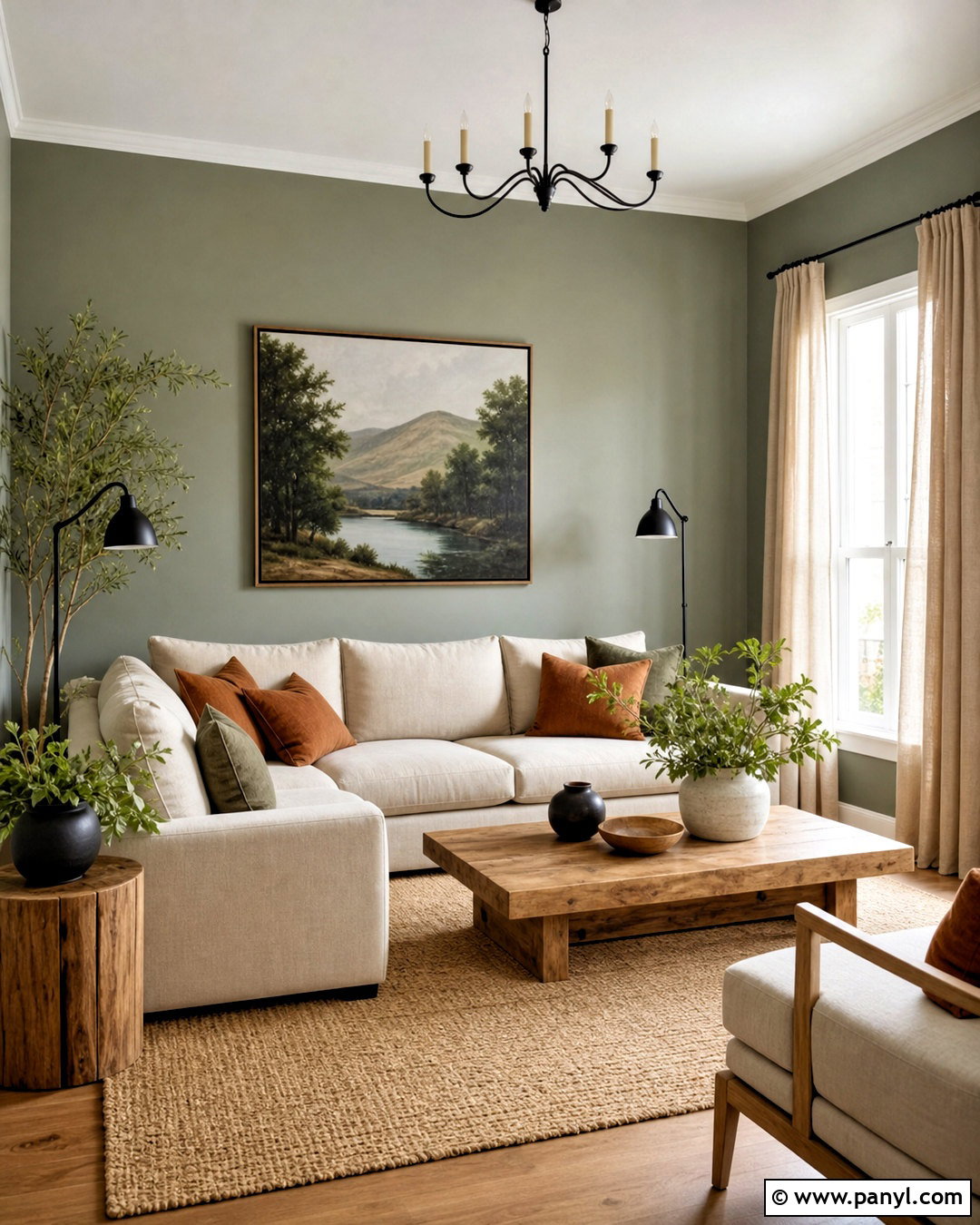
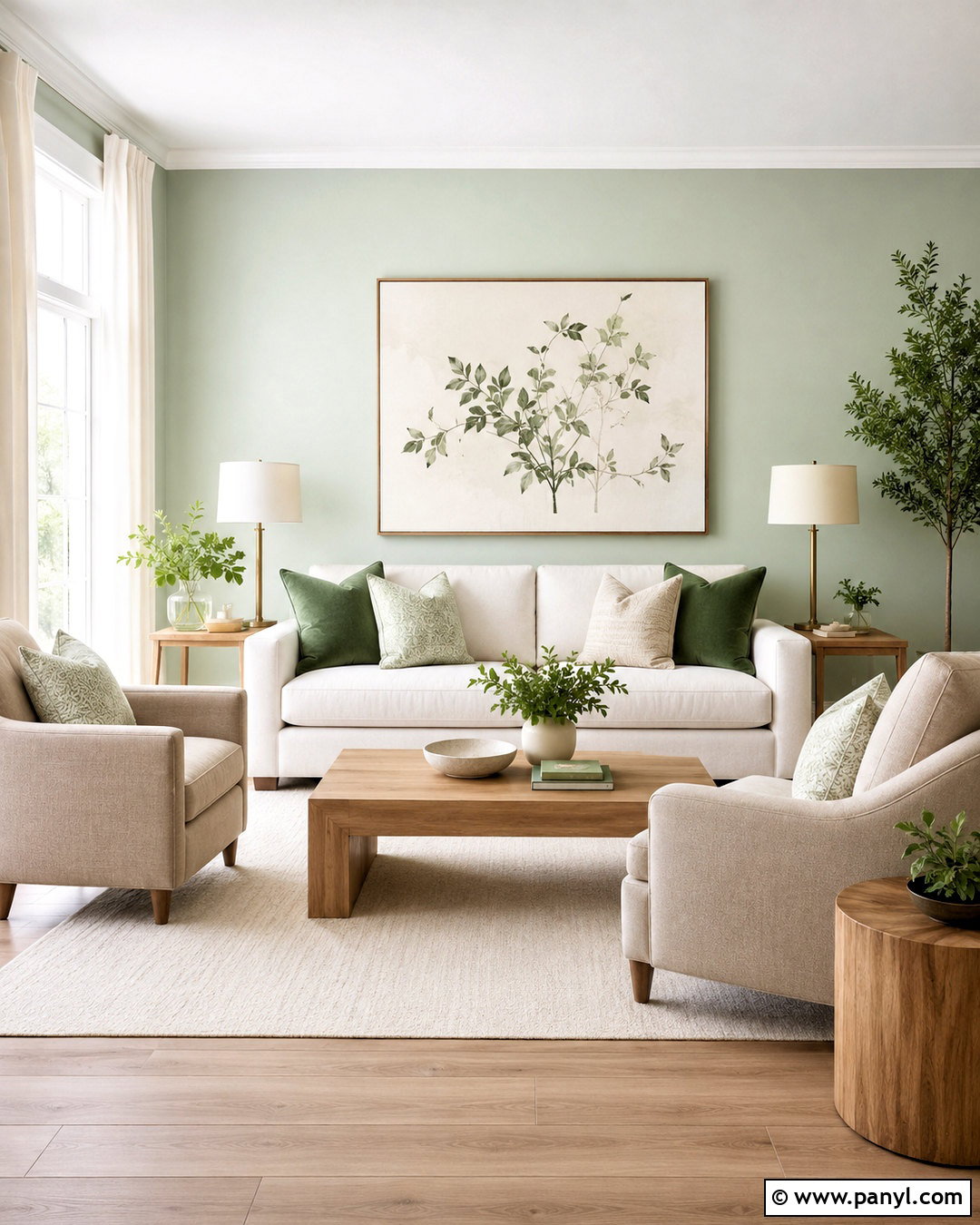
Create a relaxed living room by covering every wall in a soft, gray-toned sage green. Choose a warm cream sofa with clean lines, then add two light oak accent chairs positioned toward a simple rectangular coffee table. An oatmeal wool rug will soften the floor and connect the neutral furniture to the muted walls. Use natural linen curtains rather than bright white panels, which can appear too stark beside sage. A few charcoal accents, such as a floor lamp, picture frames, and side table, will give the pale palette definition. Finish the room with textured cushions, ceramic pottery, and one large landscape print. This combination feels fresh and comfortable without making sage green look overly rustic or themed.
2. Sage Green Bedroom Walls With White Bedding
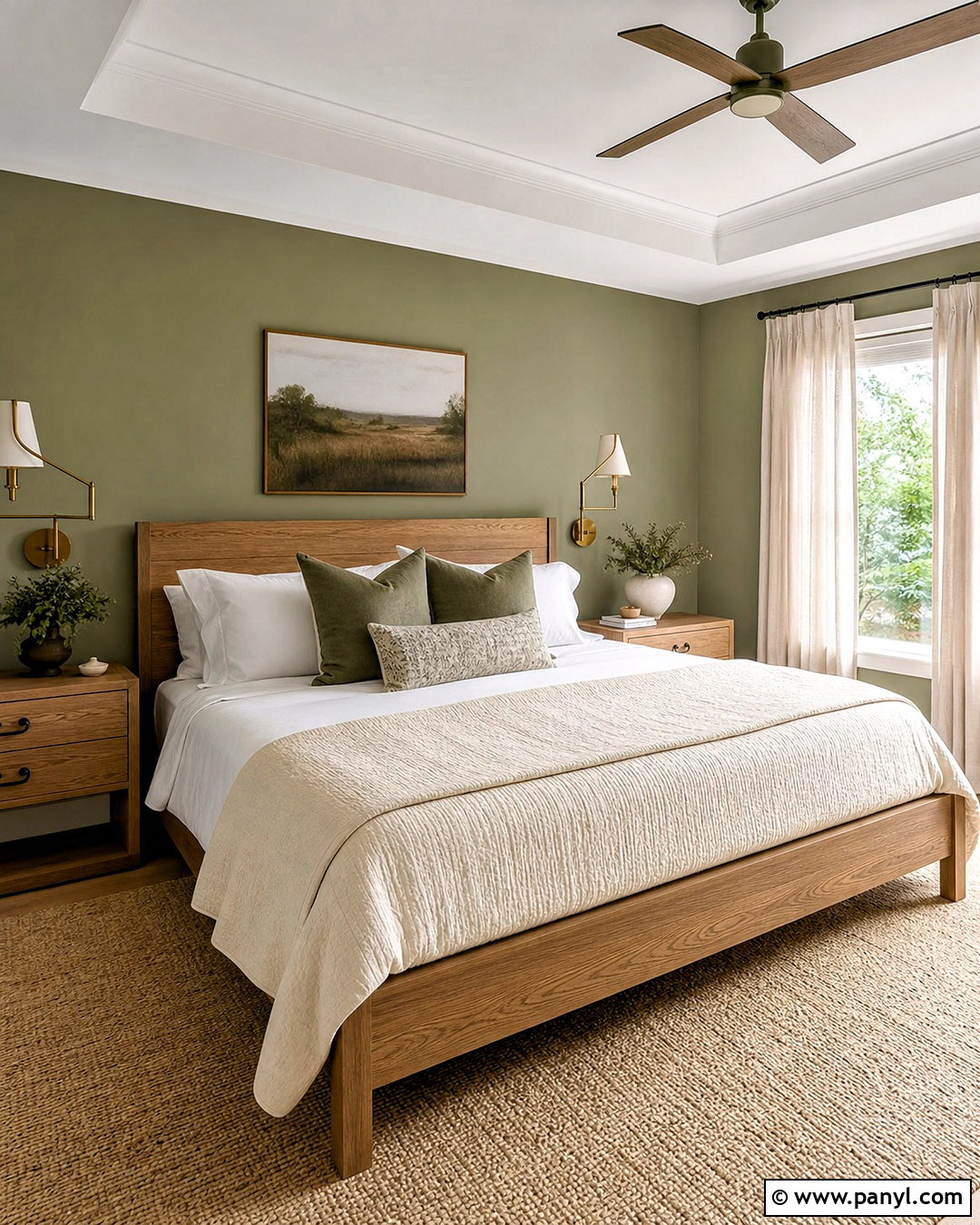
Imagine waking up in a bedroom that feels quiet, clean, and connected to nature. Paint all four walls a light, slightly warm sage green, then keep the ceiling and trim soft white for a crisp boundary. Center a natural oak bed against the longest uninterrupted wall and dress it with white cotton bedding, a cream quilt, and muted green pillows. Matching oak nightstands and small brass sconces add warmth without visual clutter. Ground the room with a woven beige rug extending beyond both sides of the bed. Hang simple botanical prints in pale wood frames, but avoid covering every wall. Sheer white curtains filter daylight beautifully, while a lined roller shade provides privacy and better control over morning light.
3. Dark Sage Green Bedroom Accent Wall
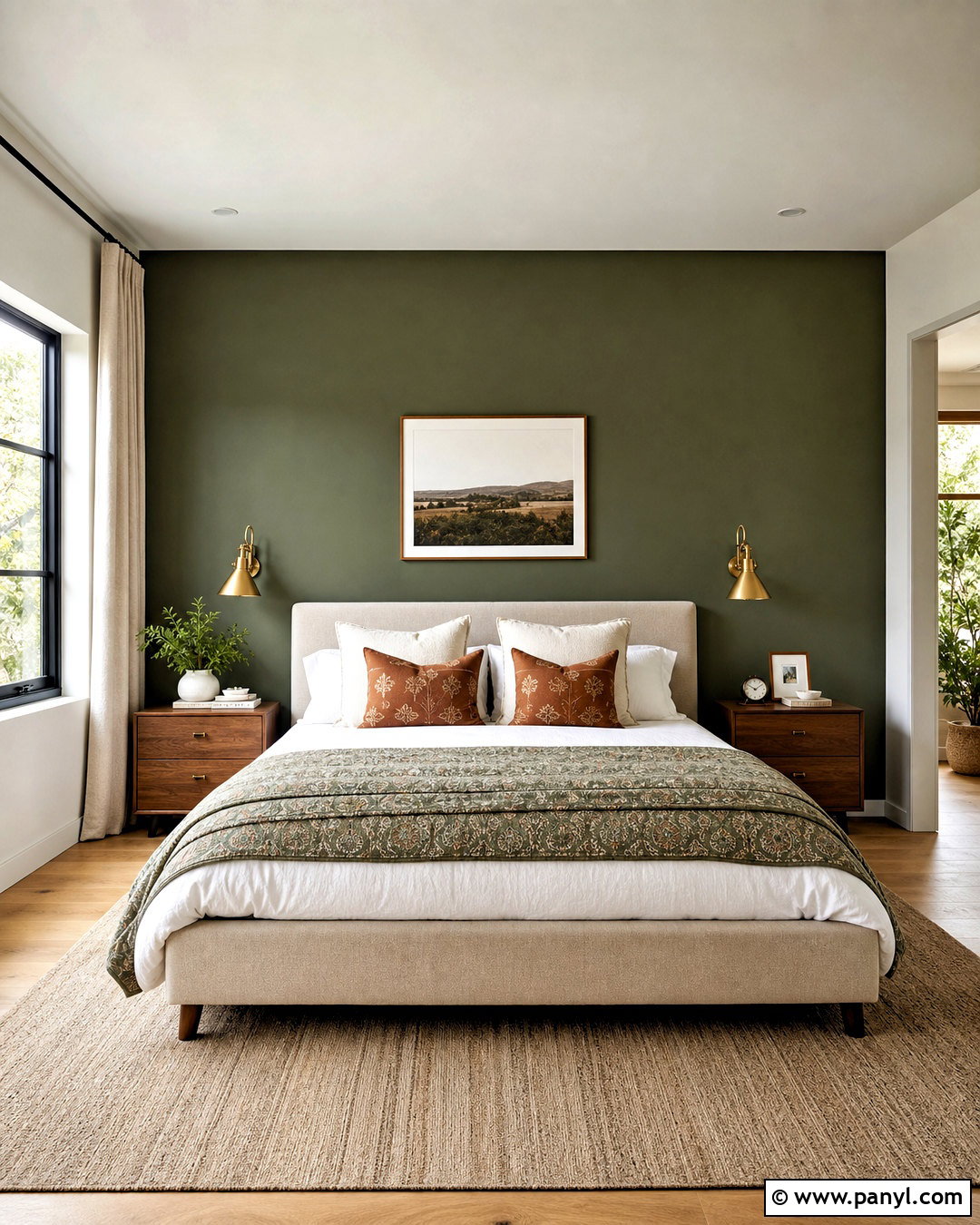
A deeper sage green wall can give a bedroom more presence without making the entire space feel enclosed. Paint the wall behind the bed in a rich, smoky sage and leave the remaining walls a warm off-white. Choose a low-profile upholstered bed in oatmeal linen so its shape stands out against the dark background. Walnut nightstands, antique brass reading lights, and rust-colored pillows introduce warmth and prevent the green from feeling cold. Use white bedding as the main layer, then add a patterned quilt containing sage, tan, and muted terracotta. A large neutral rug brightens dark flooring. Keep artwork minimal because the strong wall color already creates a focal point. This look works especially well in medium or generously sized bedrooms.
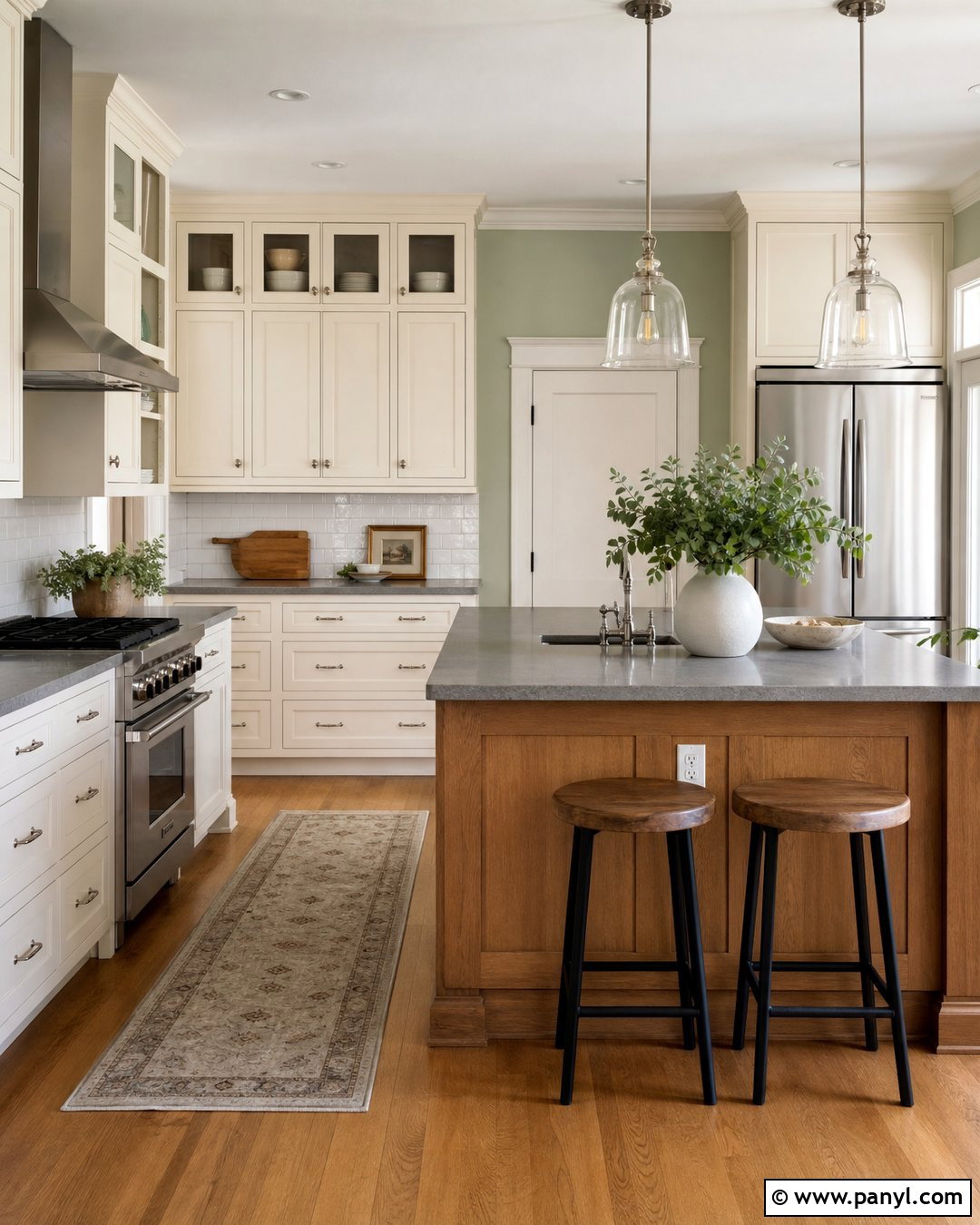
4. Sage Green Kitchen Walls With White Cabinets
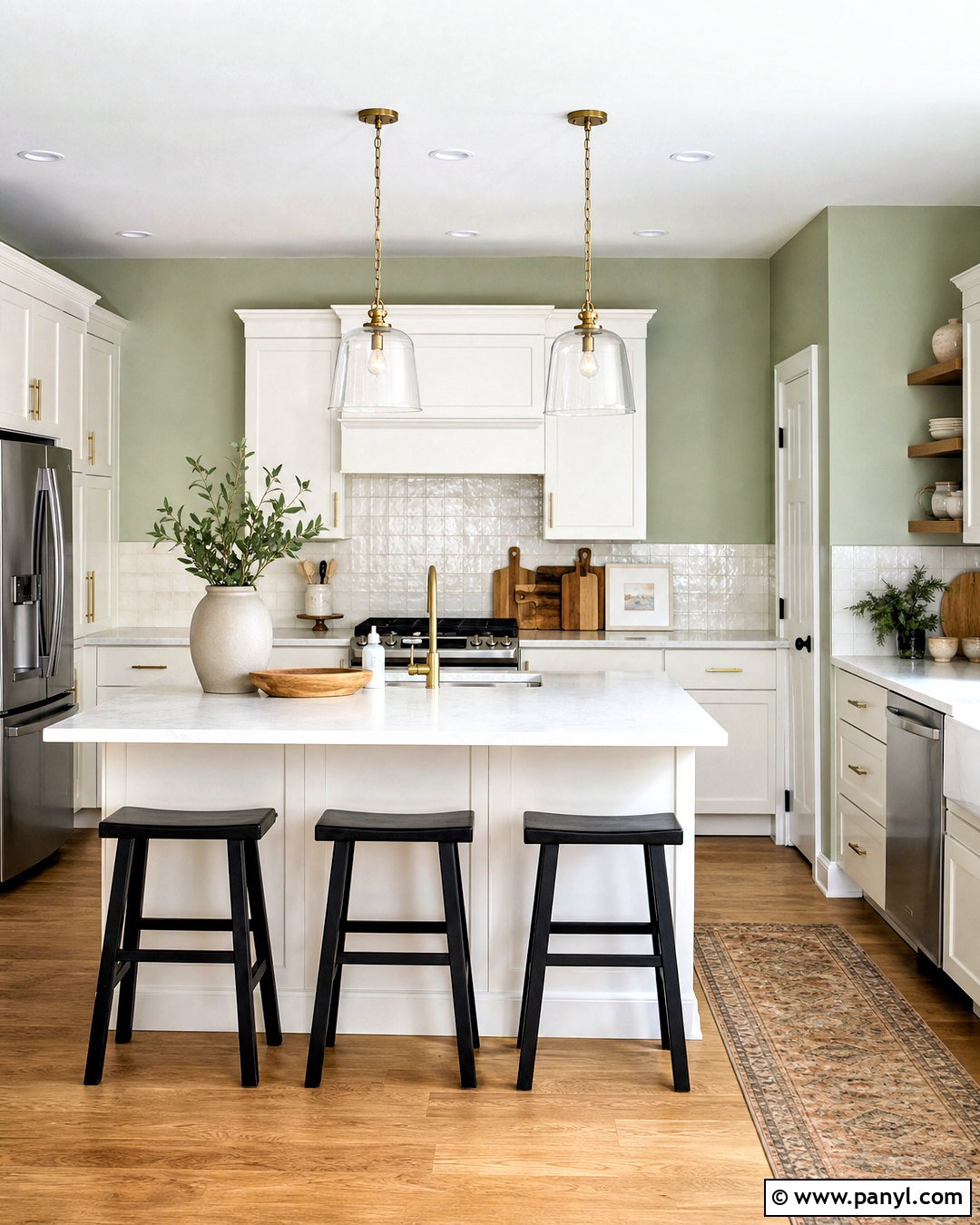
Sage green walls can soften a bright white kitchen and make standard cabinets feel more thoughtfully selected. Use a pale, balanced sage on the open wall areas, then pair it with warm white Shaker cabinets and a lightly veined quartz countertop. A handmade white tile backsplash adds texture while preserving the airy palette. Choose medium-tone oak flooring to bring natural warmth beneath the cool cabinetry. Brushed brass cabinet pulls, a matching faucet, and clear glass pendant lights add restrained polish. Introduce black through counter stools or a slim window frame for contrast. Complete the kitchen with wood cutting boards, cream ceramics, and one or two leafy plants. The finished room feels welcoming, practical, and updated without requiring green cabinets or a dramatic renovation.
5. Sage Green Dining Room Walls With Dark Wood
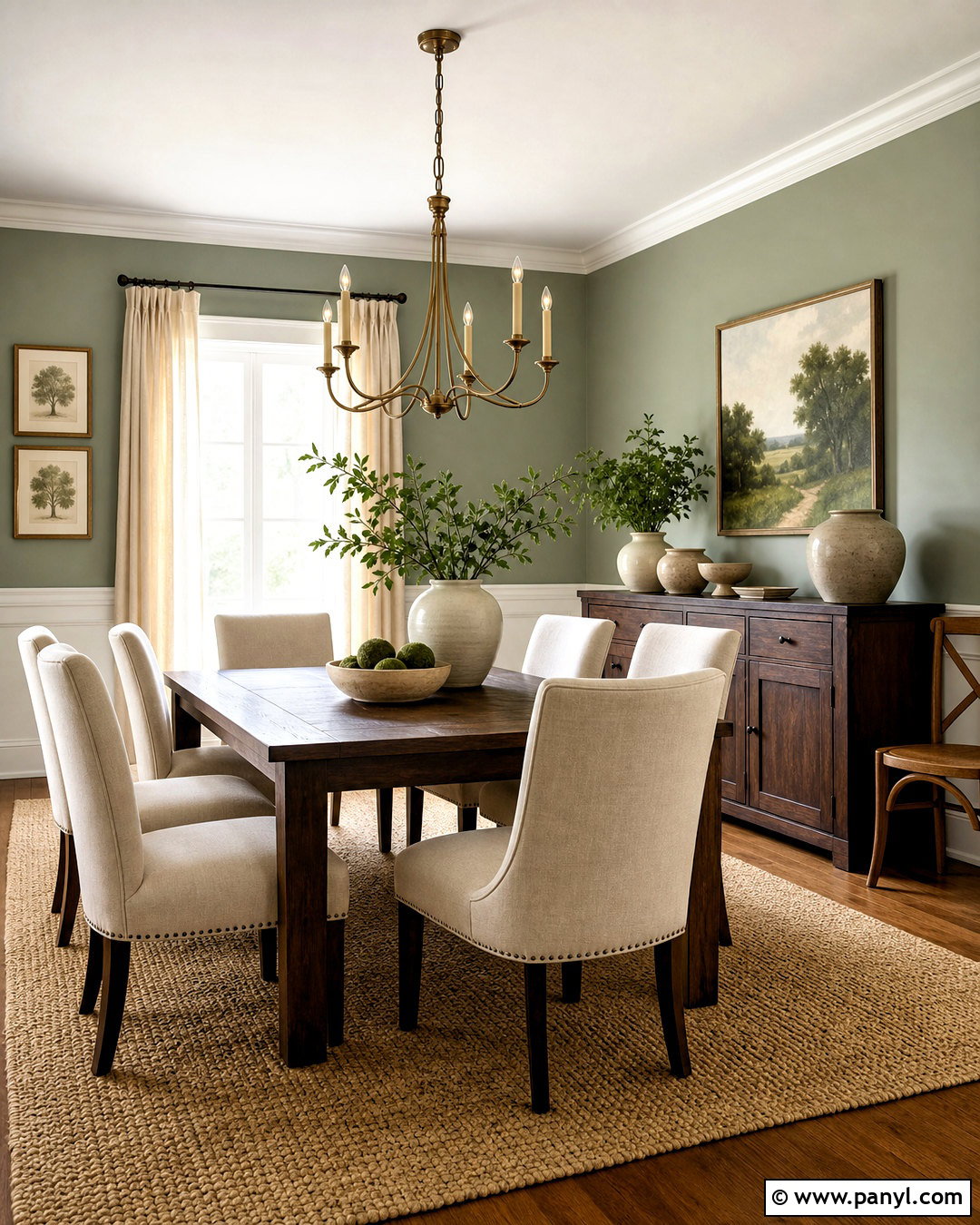
For a dining room that feels grounded and inviting, combine medium sage green walls with substantial dark wood furniture. Place a walnut or espresso-stained table at the center, surrounded by upholstered chairs in cream performance fabric. A natural fiber rug beneath the table lightens the dark furniture and protects the floor. Hang a simple aged-brass chandelier low enough to define the dining zone without blocking sightlines. Warm white trim will create a gentle frame around the sage rather than a sharp contrast. Add floor-length linen curtains, a narrow wood sideboard, and a large landscape painting with muted brown, blue, and green tones. Stoneware dishes and a ceramic vase complete the organic palette, resulting in a polished room suitable for everyday meals and special gatherings.
6. Sage Green Bathroom Walls With White Tile
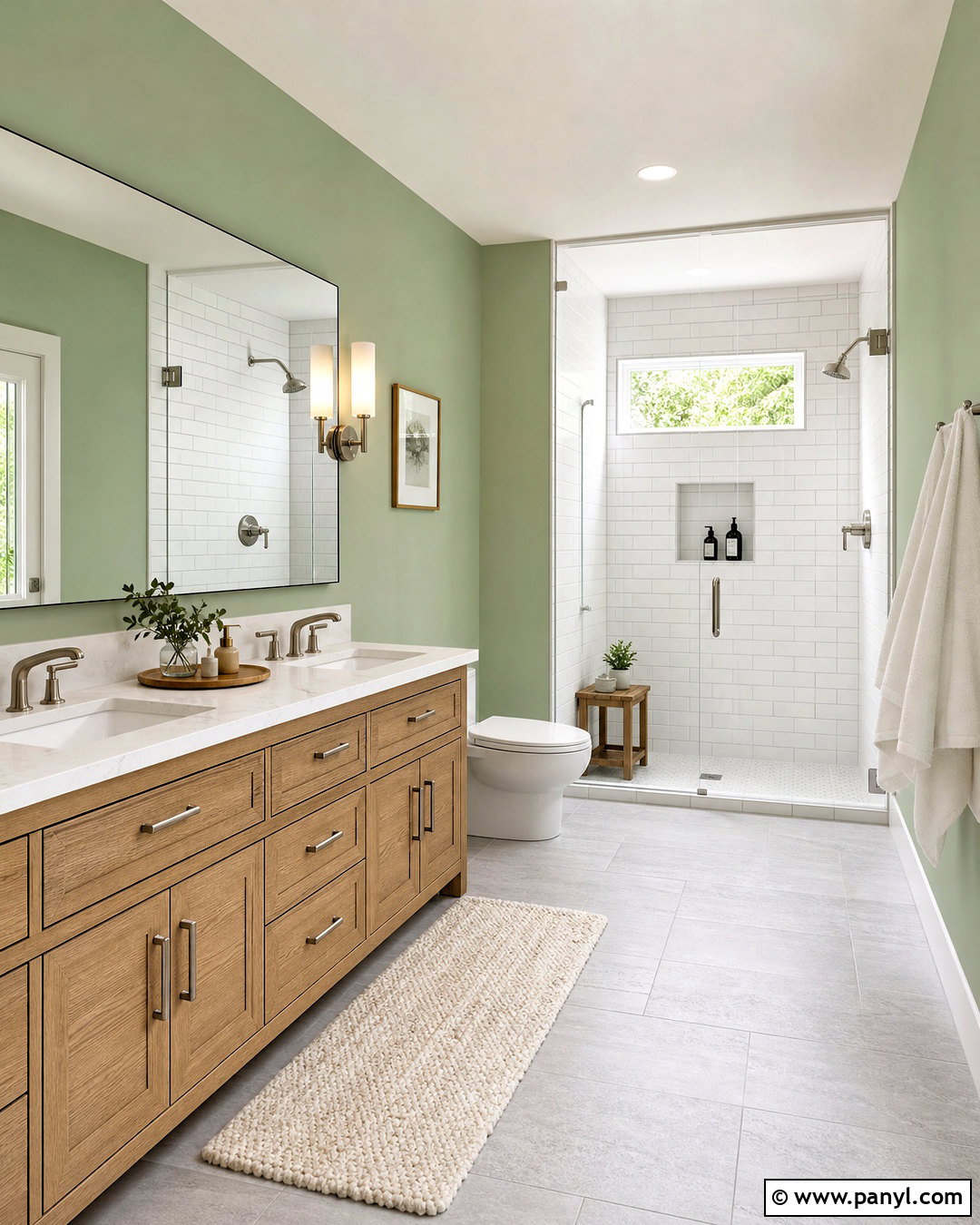
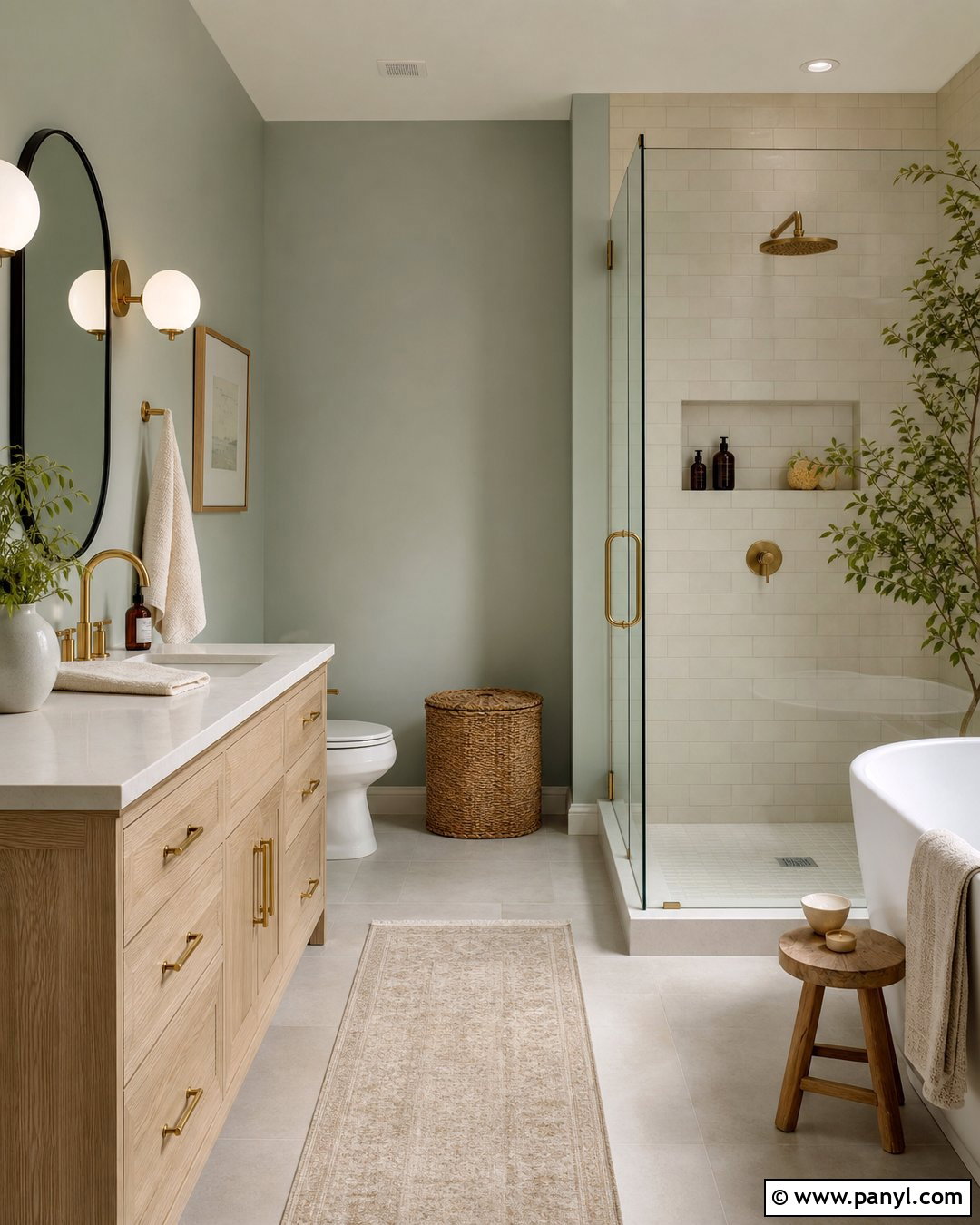
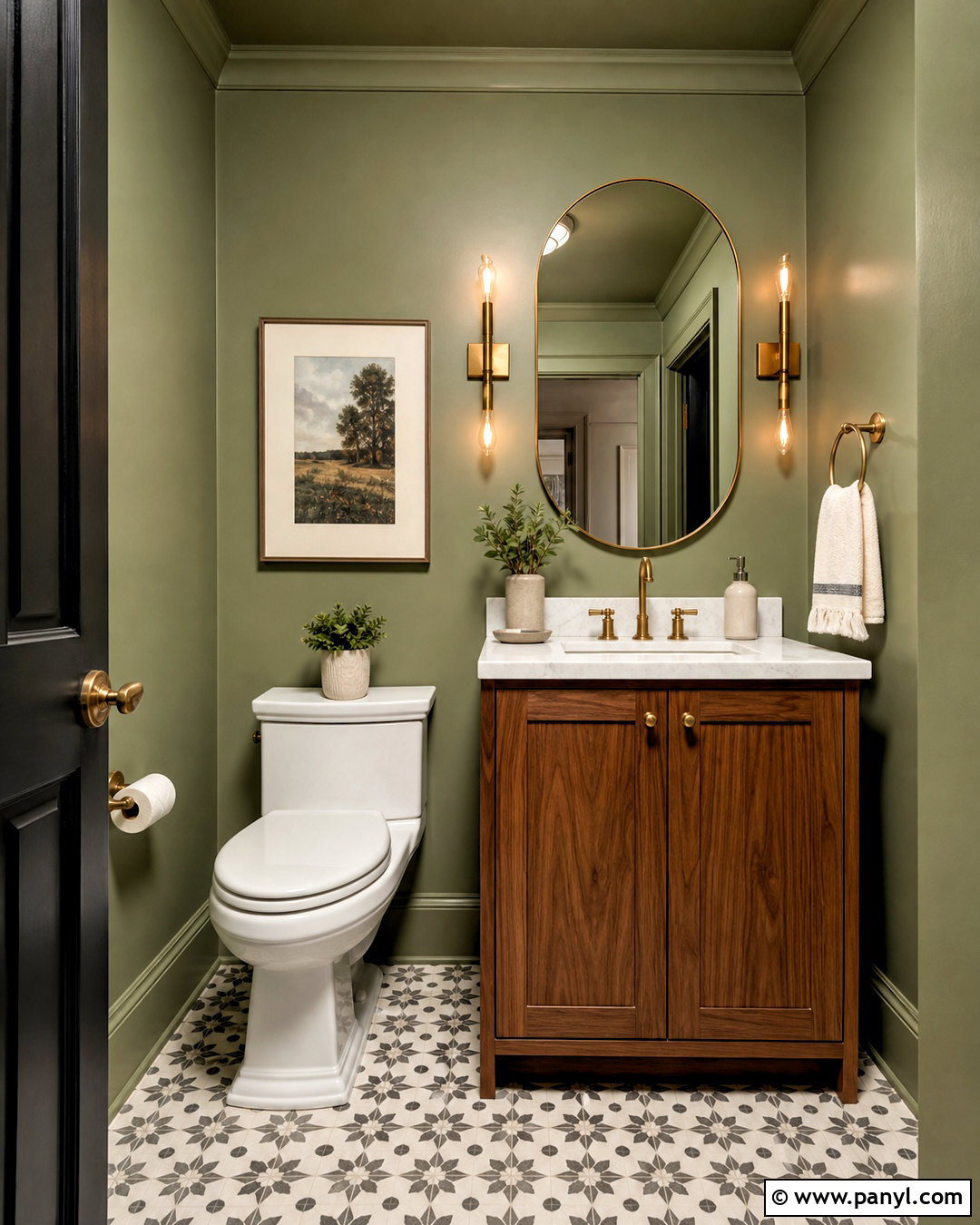
Turn a basic bathroom into a fresh retreat by using sage green paint above simple white wall tile. Run glossy white subway tile around the tub or shower, then paint the remaining upper walls in a moisture-resistant satin sage. A light oak vanity introduces warmth, while a white quartz counter keeps the room bright and practical. Choose brushed nickel fixtures for a quiet finish or aged brass for a warmer appearance. A frameless mirror and two opal glass sconces will spread light evenly around the vanity. Finish with a pale gray floor tile, white towels, and a washable cream bath mat. Keep accessories limited to a wood stool, covered storage jars, and one small plant so the complete space remains functional, open, and easy to maintain.
7. Sage Green Home Office Walls With Oak Furniture
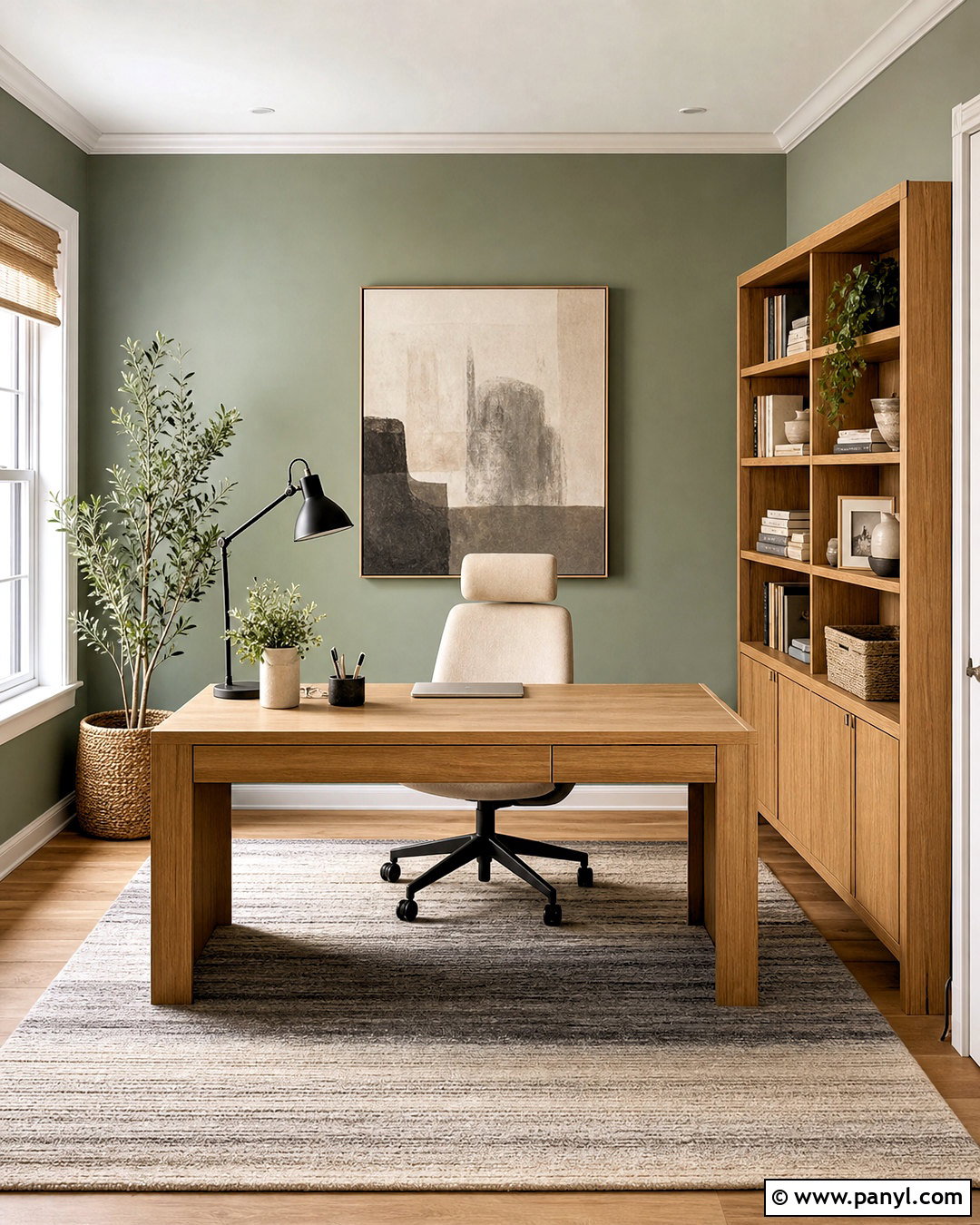
Need a workspace that feels focused without looking plain? Paint the entire home office in a clean, muted sage green and position a streamlined oak desk near the best natural light. Add a comfortable cream desk chair and a tall oak bookcase on the opposite wall to balance the room. Use a flat-weave rug in beige and charcoal beneath the desk, leaving enough exposed floor to keep the layout open. Matte black task lighting, shelf brackets, and cabinet hardware provide useful contrast. Hang one large abstract print containing tan, black, and off-white instead of several small distractions. Woven storage baskets hide supplies while supporting the natural palette. The result is a calm, organized office that looks intentional during both daily work and video meetings.
8. Sage Green Nursery Walls With Natural Wood
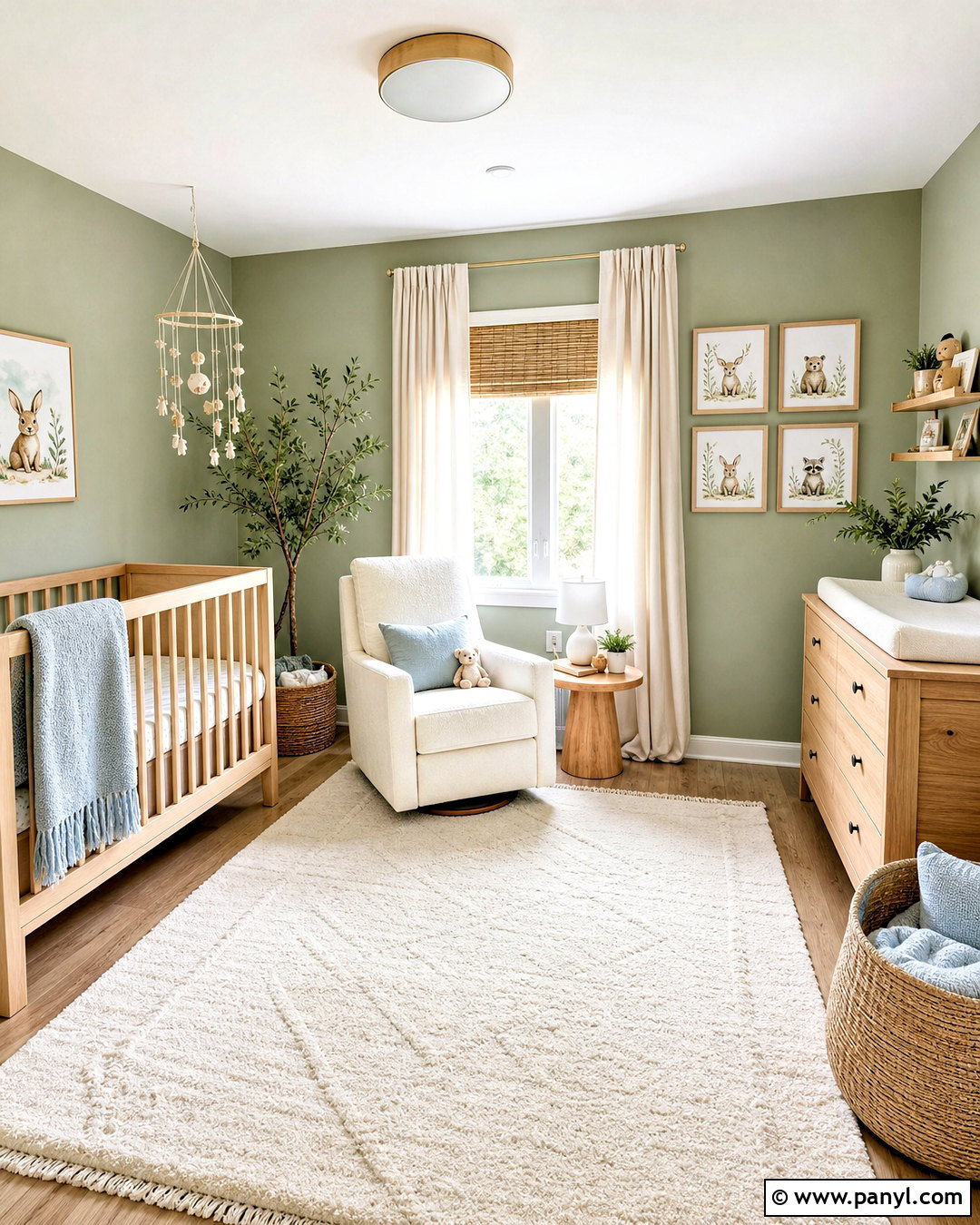
A gentle sage green nursery offers color while remaining flexible as a child grows. Cover all four walls in a pale, warm sage and select a natural maple crib as the room’s focal point. Place a comfortable cream glider in one corner with a small oak side table and a wall-mounted reading light. Use a washable ivory rug to soften the floor and hang lined linen curtains for better light control. A low wood dresser can double as a changing station, reducing the need for extra furniture. Decorate with simple woodland prints, woven baskets, and soft accents in cream, dusty blue, or muted peach. Keep the area above the crib clear of heavy objects. This complete scheme feels peaceful, practical, and suitable beyond the baby years.
9. Sage Green Entryway Walls With Black Accents
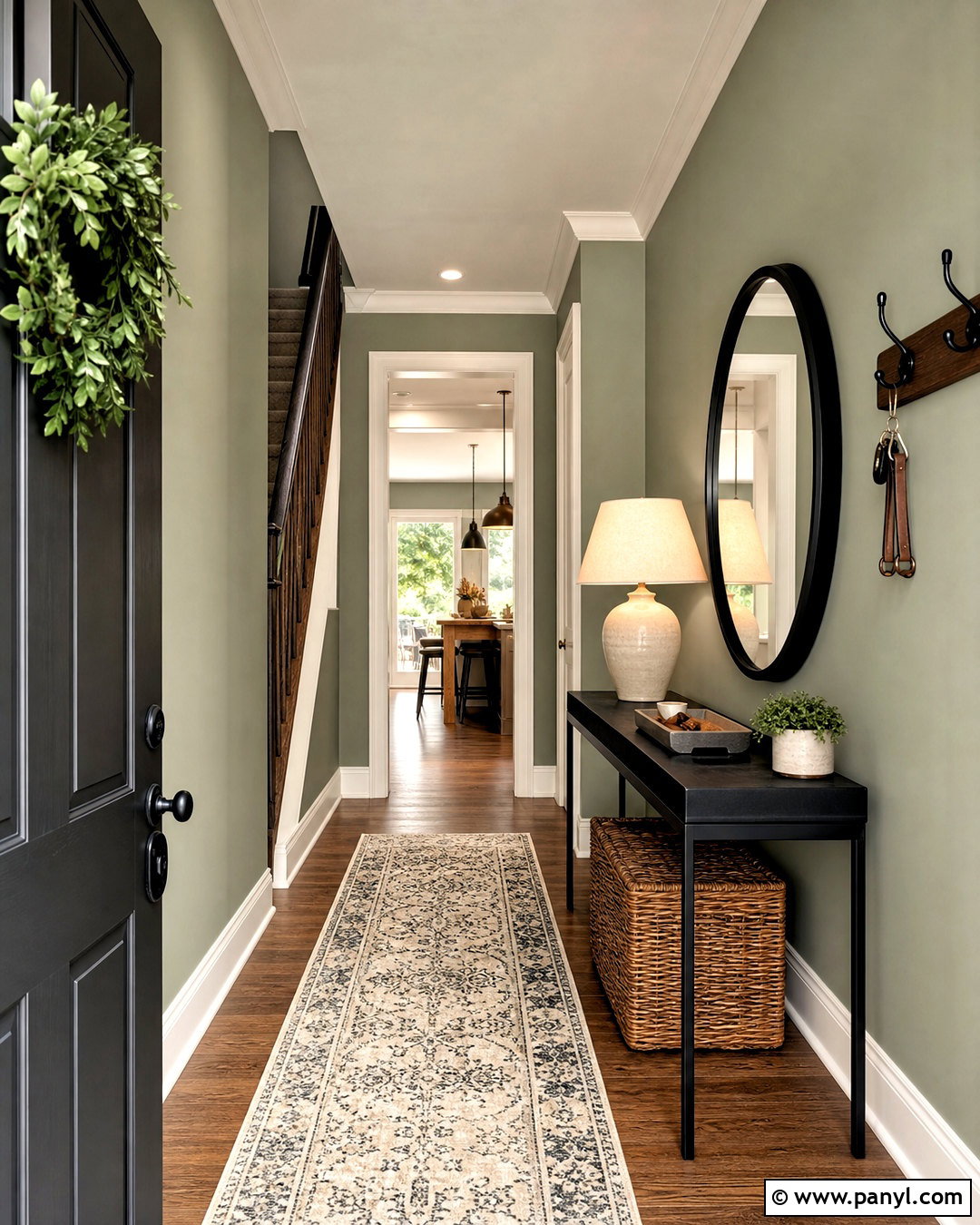
Even a narrow entrance can handle sage green when the surrounding pieces are simple and well proportioned. Paint the walls in a medium gray-green sage and keep the baseboards, ceiling, and interior doors warm white. Place a slim black console against one wall, leaving a clear path through the entry. Above it, hang a large round mirror with a thin black frame to reflect light and visually widen the area. Add a durable patterned runner featuring cream, sage, and charcoal. A woven basket beneath the console can hold shoes or seasonal accessories, while wall hooks provide convenient storage. Complete the entryway with a small ceramic lamp and a shallow tray for keys. The dark details make the soft wall color feel structured rather than overly delicate.
10. Sage Green Wall Paneling With Neutral Walls
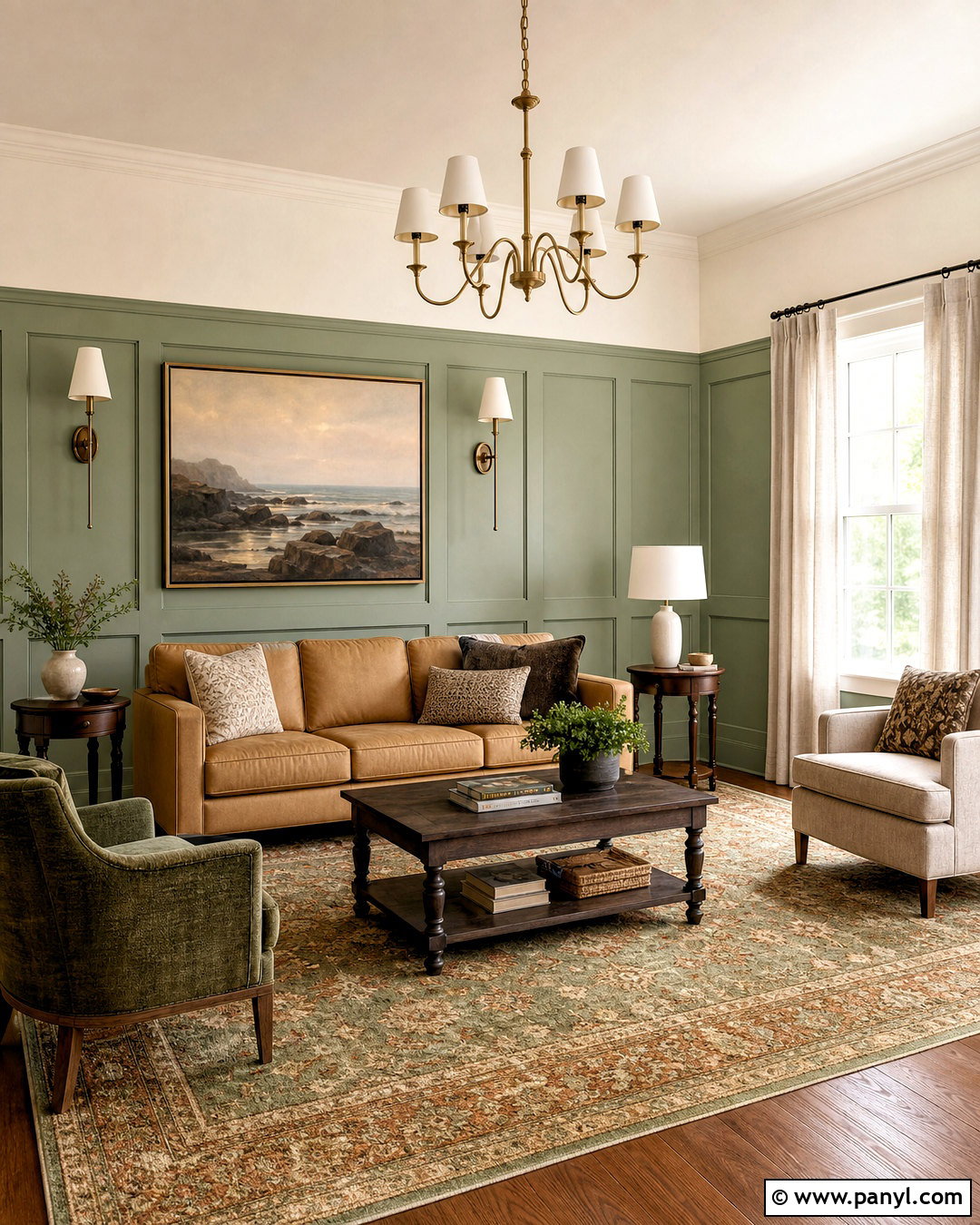
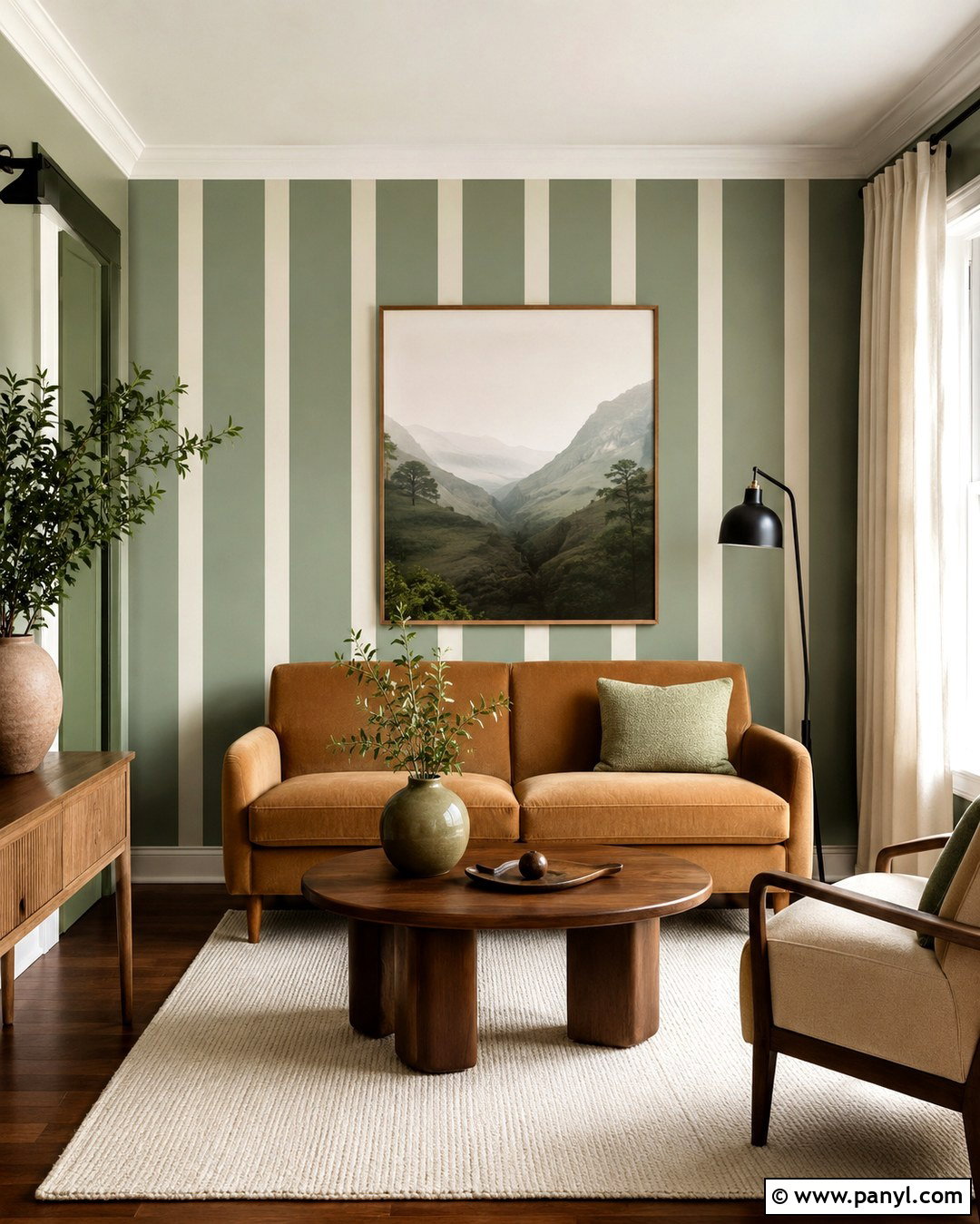
Painted paneling offers an architectural way to use sage green without covering every surface. Install simple rectangular molding or vertical panels across the lower two-thirds of the room, then coat the woodwork in a medium matte sage. Paint the upper wall and ceiling a creamy off-white to keep the room feeling tall and open. In a living or dining space, add a tan sofa or dark wood table so the furniture visually connects both color zones. Choose linen curtains, an aged-brass light fixture, and a traditional rug containing faded green and rust. Keep artwork above the paneling large and restrained. By combining color with dimensional trim, this look gives a standard room more character while maintaining a practical, balanced palette that is easy to decorate.
11. Sage Green Color Drenched Living Room
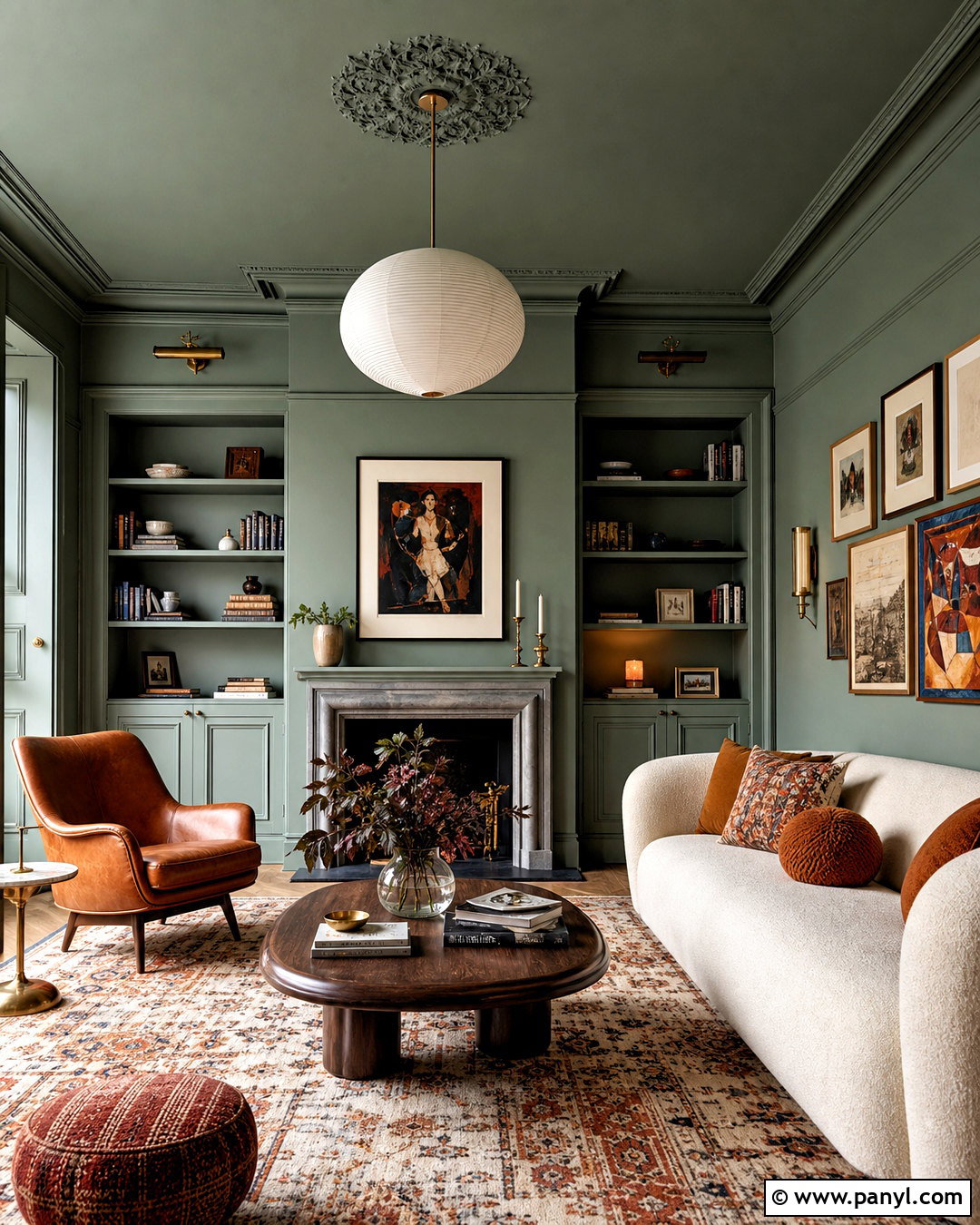
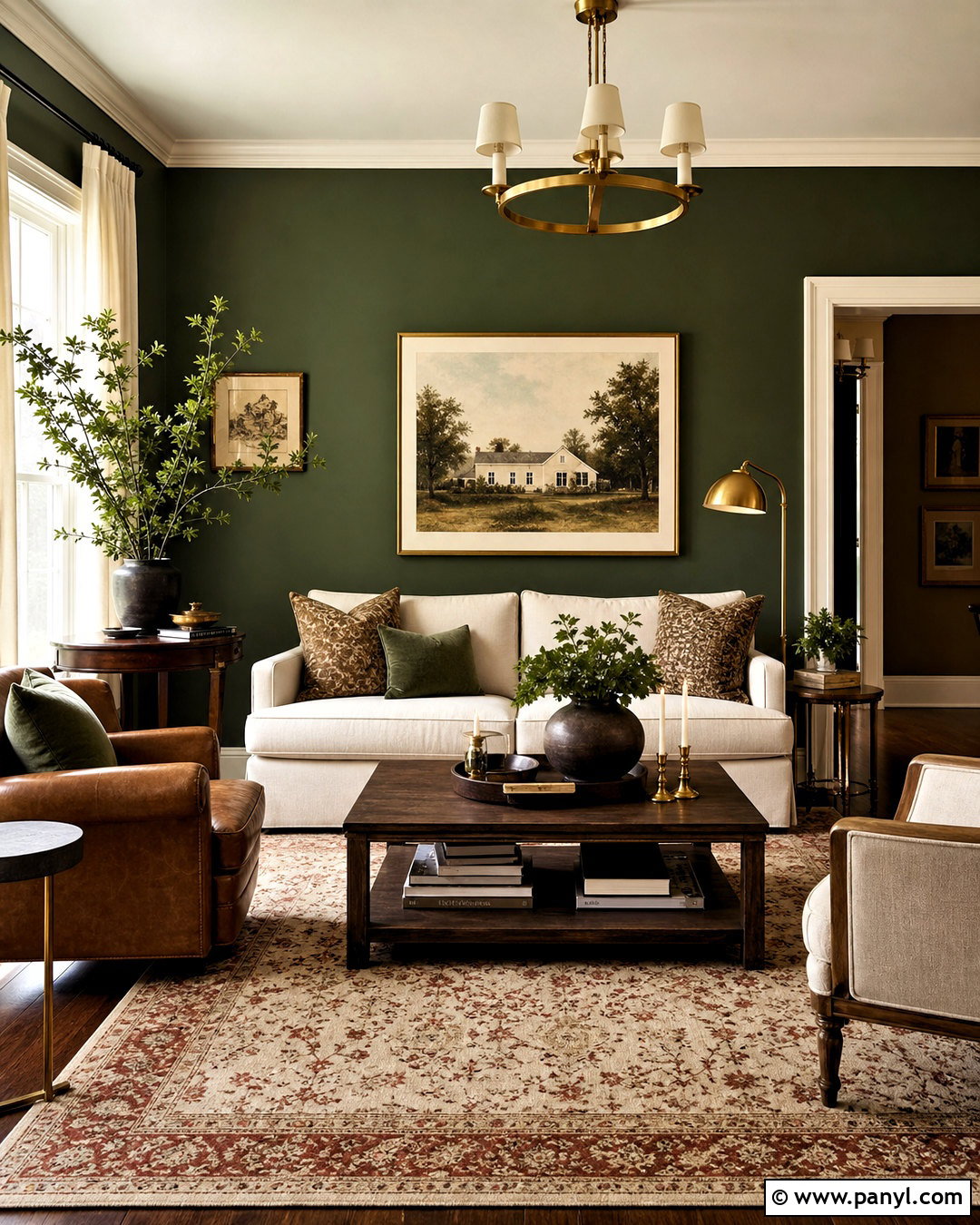
For a more immersive look, carry sage green across the walls, trim, doors, built-in shelves, and ceiling. Choose a light to medium shade with a slightly gray undertone so the color remains livable across large surfaces. Vary the finishes rather than the color: use washable matte paint on walls, satin on trim and cabinetry, and flat paint overhead. Furnish the room with a cream boucle sofa, cognac leather chair, and dark walnut coffee table. A patterned rug with ivory, faded rust, and green will keep the space from appearing flat. Add brass sconces and warm white lamps for comfortable evening light. Because the architecture blends together, carefully chosen furniture and artwork become more noticeable. The final room feels cohesive, enveloping, and surprisingly uncluttered.
12. Sage Green Half Wall With Warm White Paint
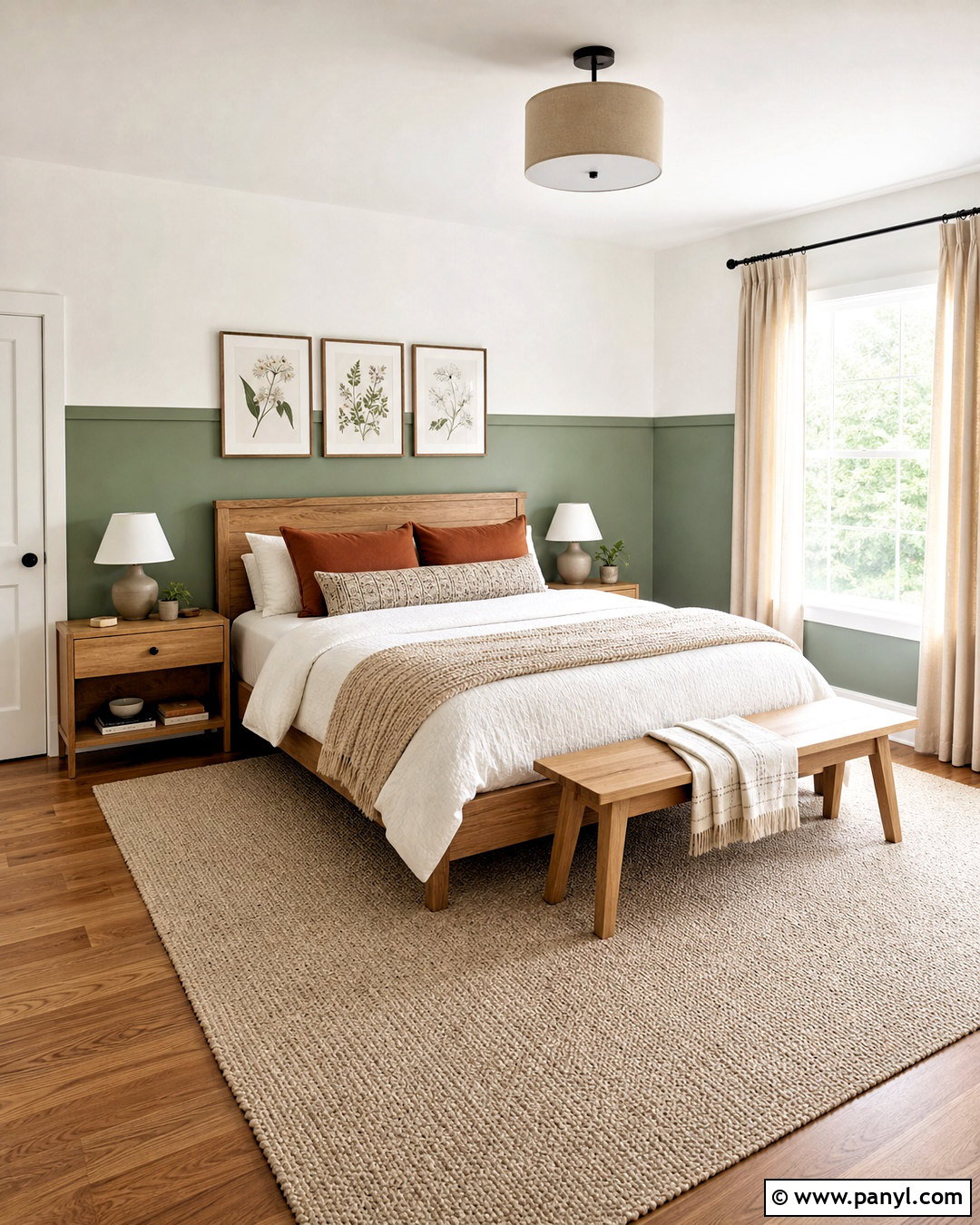
A horizontal two-color treatment can make a plain bedroom, hallway, or playroom more interesting without overwhelming it. Paint the lower half of the walls in medium sage green and use warm white above. Create a clean transition with a narrow painted chair rail, positioned slightly above the midpoint for better proportions. Choose oak or pine furniture, a cream rug, and simple curtains that repeat the upper wall color. Terracotta, mustard, or dusty pink accents can add warmth through cushions and artwork. Keep large furniture mostly against the green portion so the pieces feel visually anchored. This approach is particularly helpful when you want noticeable color while preserving brightness near the ceiling. It also creates a natural backdrop for low storage cabinets, benches, and beds.
13. Sage Green Fireplace Wall With Built-In Shelves
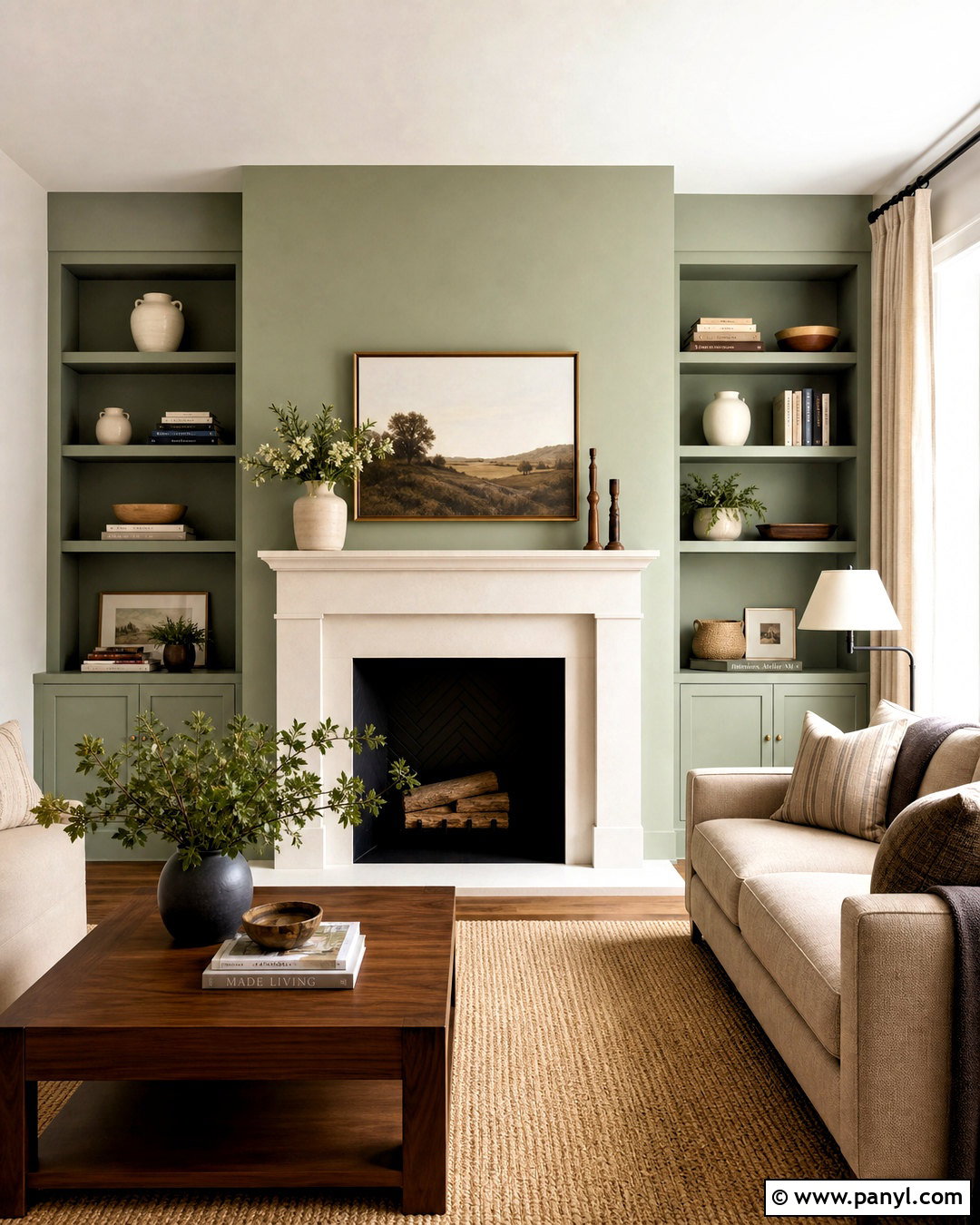
Make the fireplace wall feel like one unified feature by painting the chimney breast and surrounding built-ins the same sage green. Select a mid-tone shade that is dark enough to define the architecture but not so deep that shelves disappear. Use a simple white or limestone fireplace surround for contrast, then style the built-ins with cream ceramics, books, wood objects, and small framed art. A warm beige sofa facing the fireplace keeps the main seating area light. Add a walnut coffee table, natural woven rug, and linen curtains to complete the room. Instead of filling every shelf, leave open space around displayed pieces. Matching the wall and cabinetry reduces visual interruptions, allowing the entire fireplace composition to appear wider, calmer, and professionally planned.
14. Sage Green Laundry Room Walls With White Storage
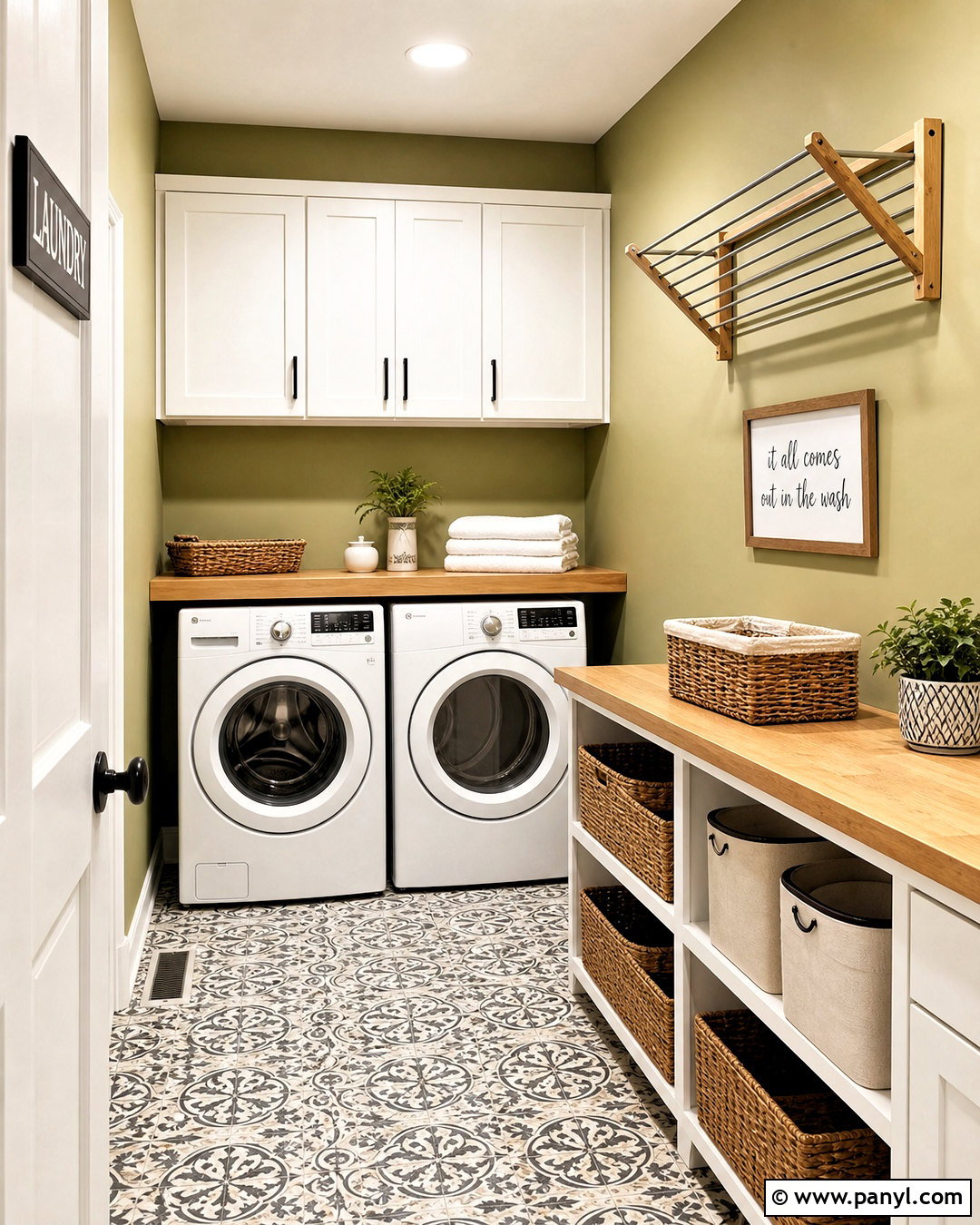
Laundry rooms are practical spaces, but their finishes can still form a complete and attractive design. Paint the walls in a cheerful yellow-leaning sage, then install white upper cabinets or open shelves above the appliances. A butcher-block counter spanning the washer and dryer supplies a warm work surface for folding clothes. Use durable patterned floor tile in cream and charcoal to hide everyday marks. Black cabinet pulls, hanging rods, and utility hooks give the pale palette a defined edge. Store detergents in labeled containers inside baskets or cabinets rather than leaving colorful packaging exposed. A compact wall-mounted drying rack adds function without consuming floor space. Together, sage walls, bright storage, natural wood, and graphic flooring make the room feel organized, welcoming, and intentionally finished.
15. Sage Green Mudroom Walls With Wood Bench
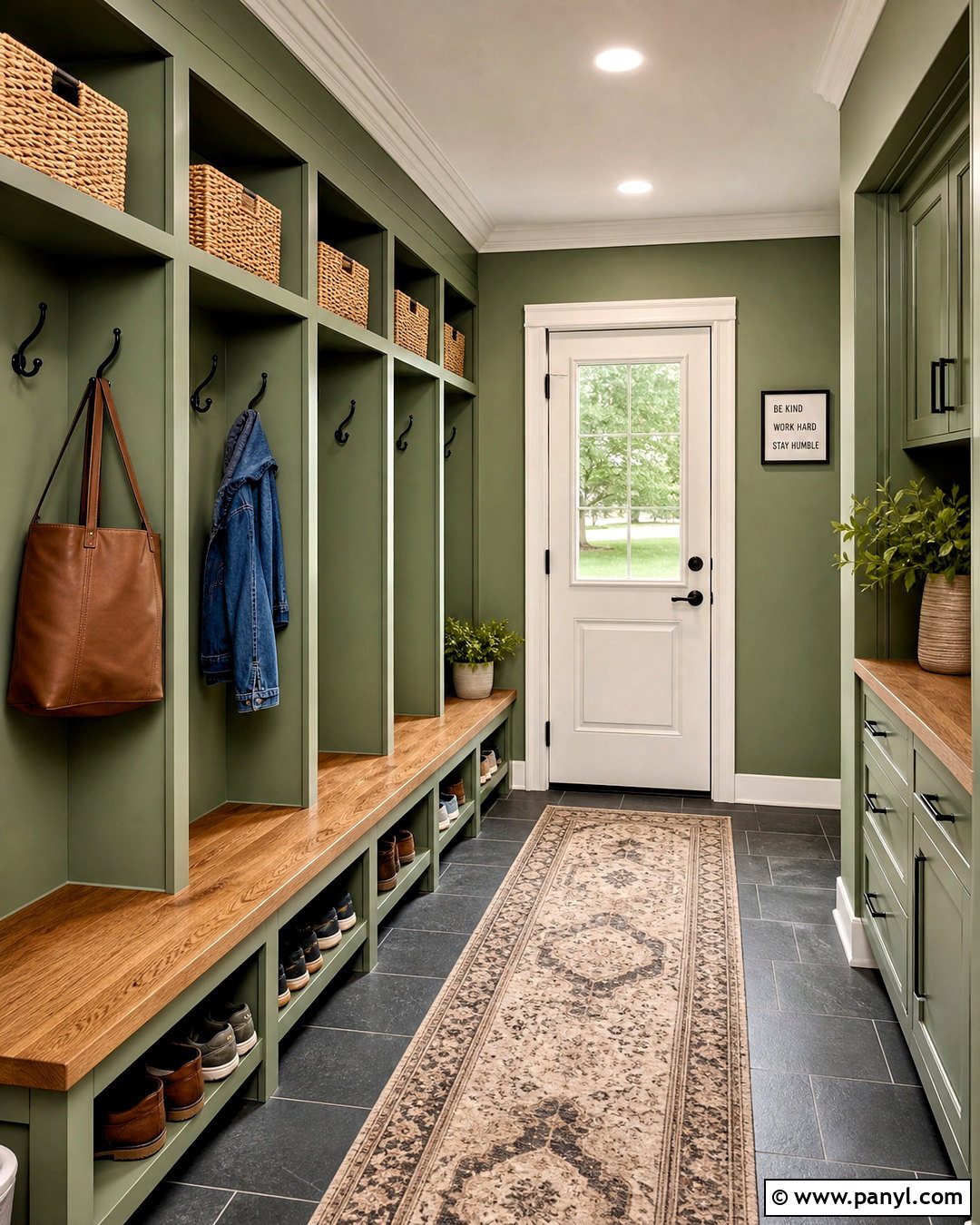
Muddy shoes and busy mornings feel more manageable in a mudroom with a clear, durable layout. Use medium sage green on the walls and built-in cubbies, choosing a satin finish that can be wiped clean. Add a solid oak bench with open shoe storage below and individual hooks above for coats and bags. A warm white ceiling prevents the compact area from feeling too heavily colored. Choose slate-look porcelain flooring or a patterned washable runner that can handle moisture and dirt. Black hooks and cabinet pulls bring definition, while woven baskets conceal smaller accessories. If space allows, include a narrow closed cabinet for cleaning supplies. The coordinated sage paint connects every storage feature, producing an orderly transition zone that still feels like part of the home.
16. Sage Green Guest Room Walls With Blue Accents
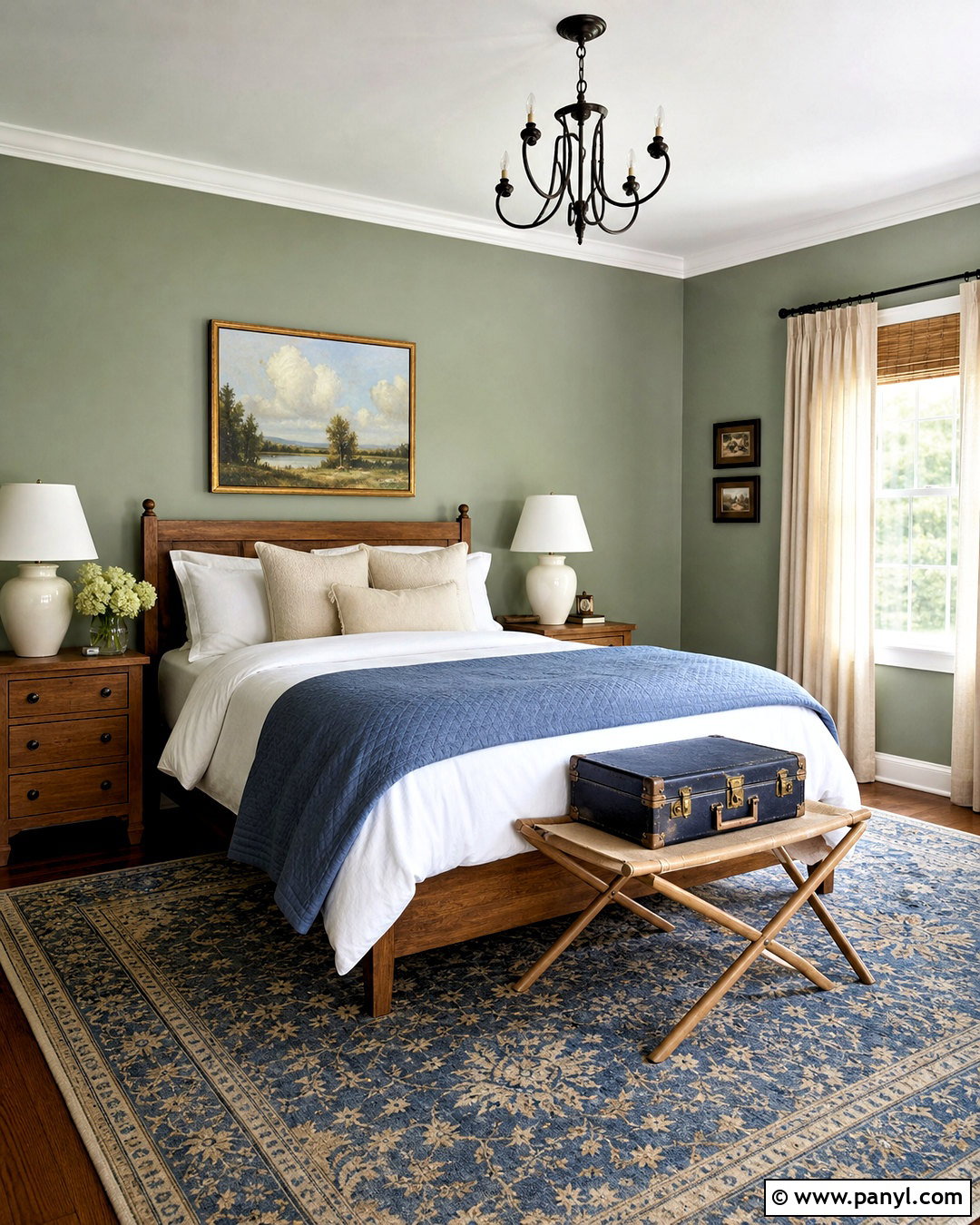
Sage green and muted blue create a comfortable guest room that feels colorful without becoming busy. Paint every wall in a soft sage with noticeable gray undertones. Place a medium-tone wood bed against the main wall and layer it with white sheets, a blue-gray quilt, and cream pillows. A vintage-style rug containing faded navy, sage, and beige will tie the colors together. Use small wood nightstands and white ceramic lamps to keep the layout practical for visitors. Linen curtains in natural ivory soften the windows without matching the walls too closely. Complete the room with a luggage bench, a simple landscape print, and an empty section of dresser storage. The balanced furniture plan and restrained palette create a welcoming space suitable for guests of different ages.
17. Sage Green Reading Room Walls With Leather Chair
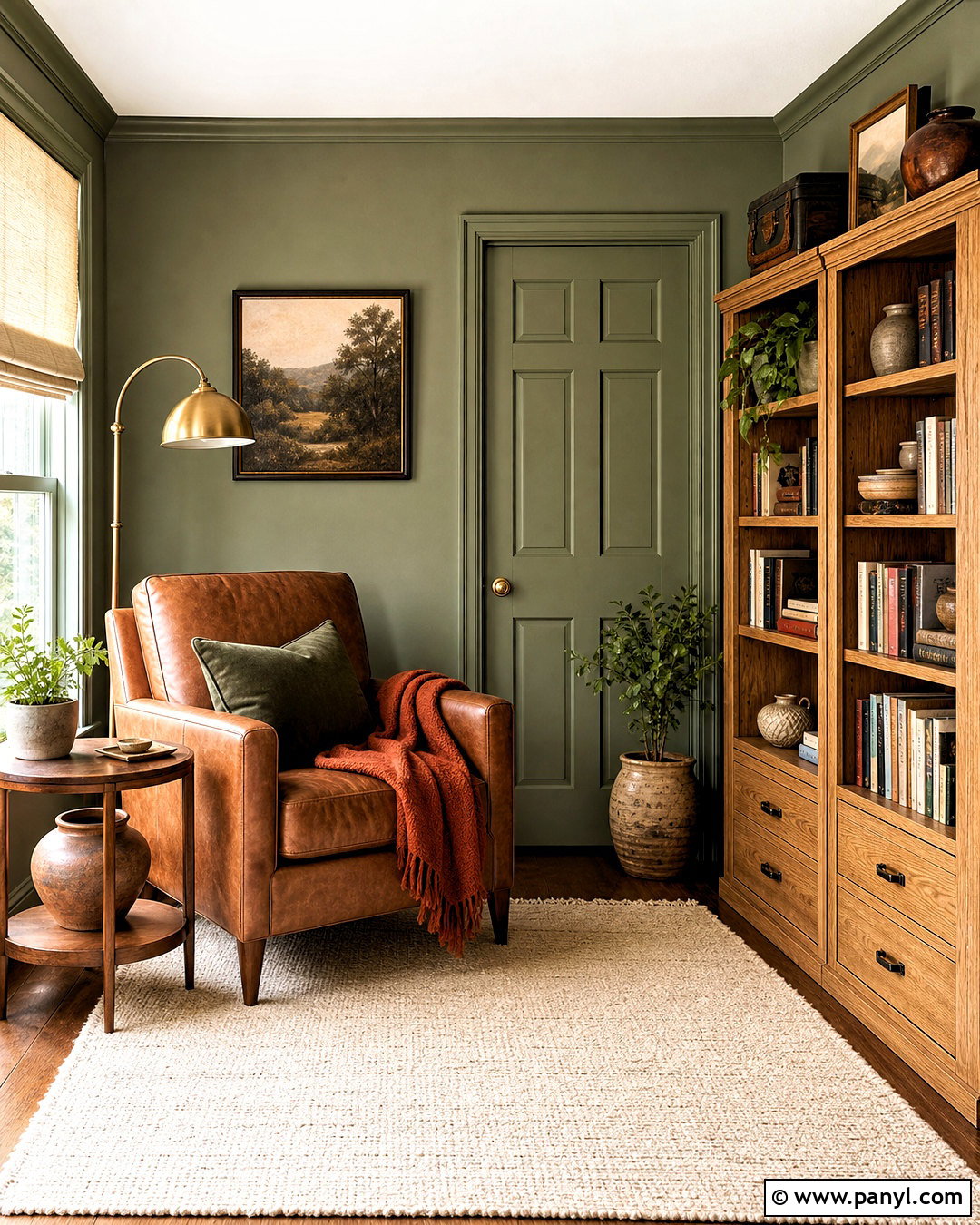
Soft sage walls can transform an unused corner or small spare room into a dedicated place for reading. Paint the full room in a warm, medium sage, including the door for a more continuous backdrop. Position a cognac leather chair beside a tall oak bookcase and add an adjustable aged-brass floor lamp. A small round side table provides enough room for books and a mug without crowding the chair. Cover the floor with a thick cream rug and add a simple Roman shade in natural linen. Use the shelves for a balanced mix of books, framed pictures, and pottery rather than tightly packed accessories. A rust-colored throw and patterned lumbar pillow introduce extra warmth. The compact finished room feels cozy, useful, and visually separate from busier household areas.
18. Sage Green Hallway Walls With Gallery Frames
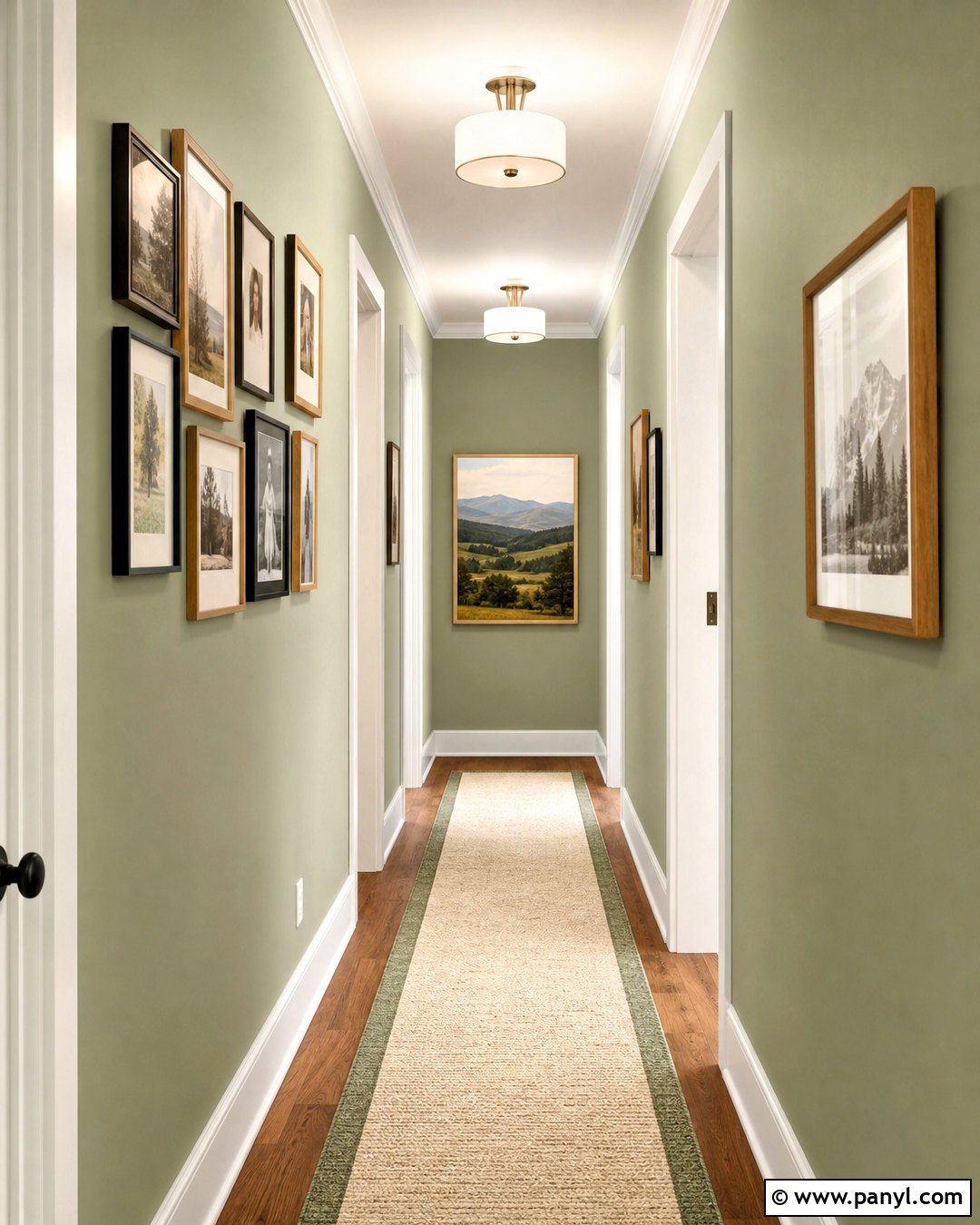
Long hallways often need more than white paint, yet they rarely have room for furniture. Apply a light-reflective sage green to both walls and keep the ceiling, doorframes, and baseboards soft white. Arrange a consistent gallery of black or oak frames along one side, using family photos, landscapes, or simple art with plenty of white space. Install two or three flush or semi-flush ceiling lights to distribute brightness along the full passage. A narrow cream runner with a subtle sage border softens the floor while emphasizing the hallway’s length. If the end wall is visible from another room, place one larger framed artwork there as a destination point. This coordinated design gives the passage personality while maintaining an open path and a clean, orderly appearance.
19. Sage Green Kitchen Dining Nook Walls
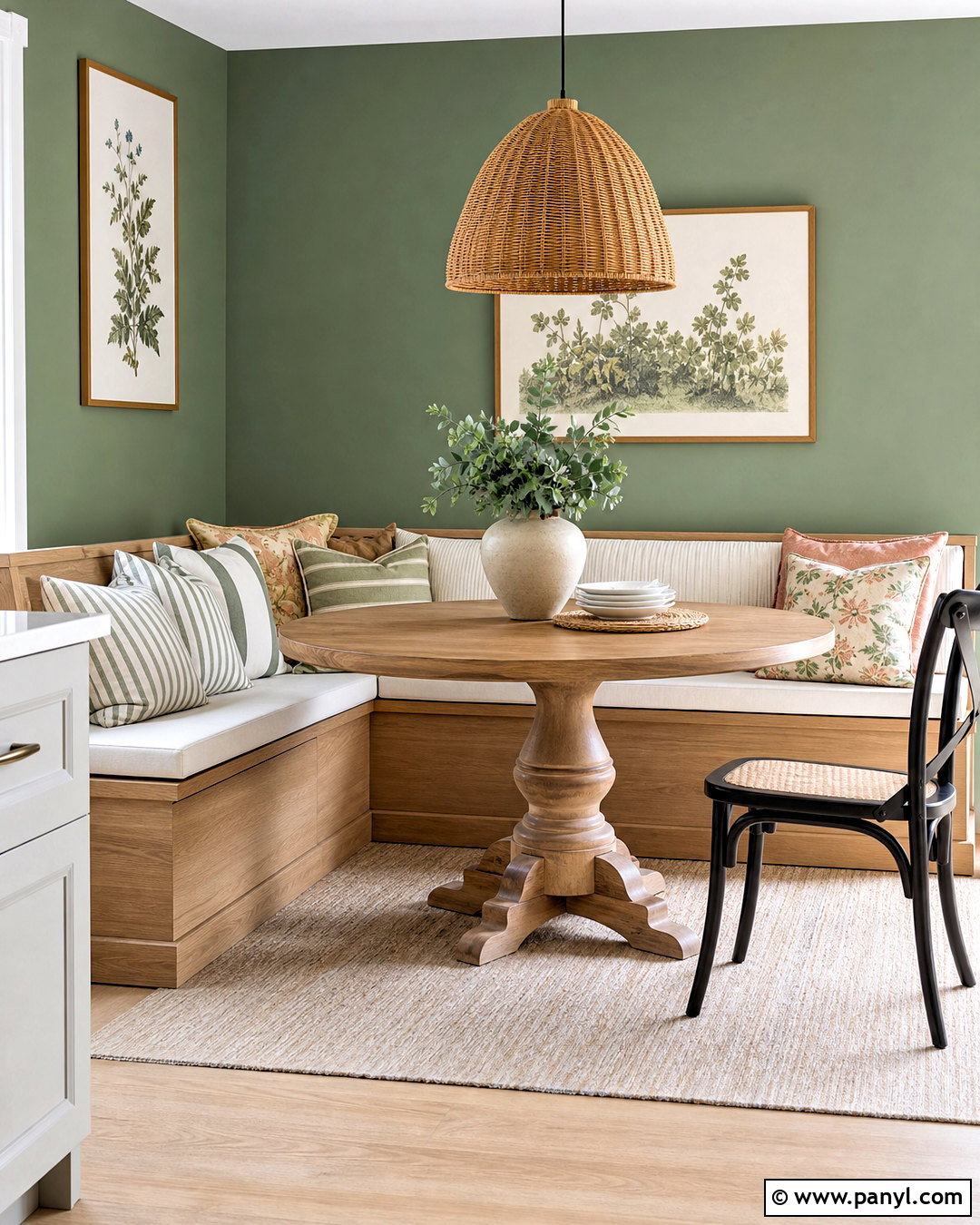
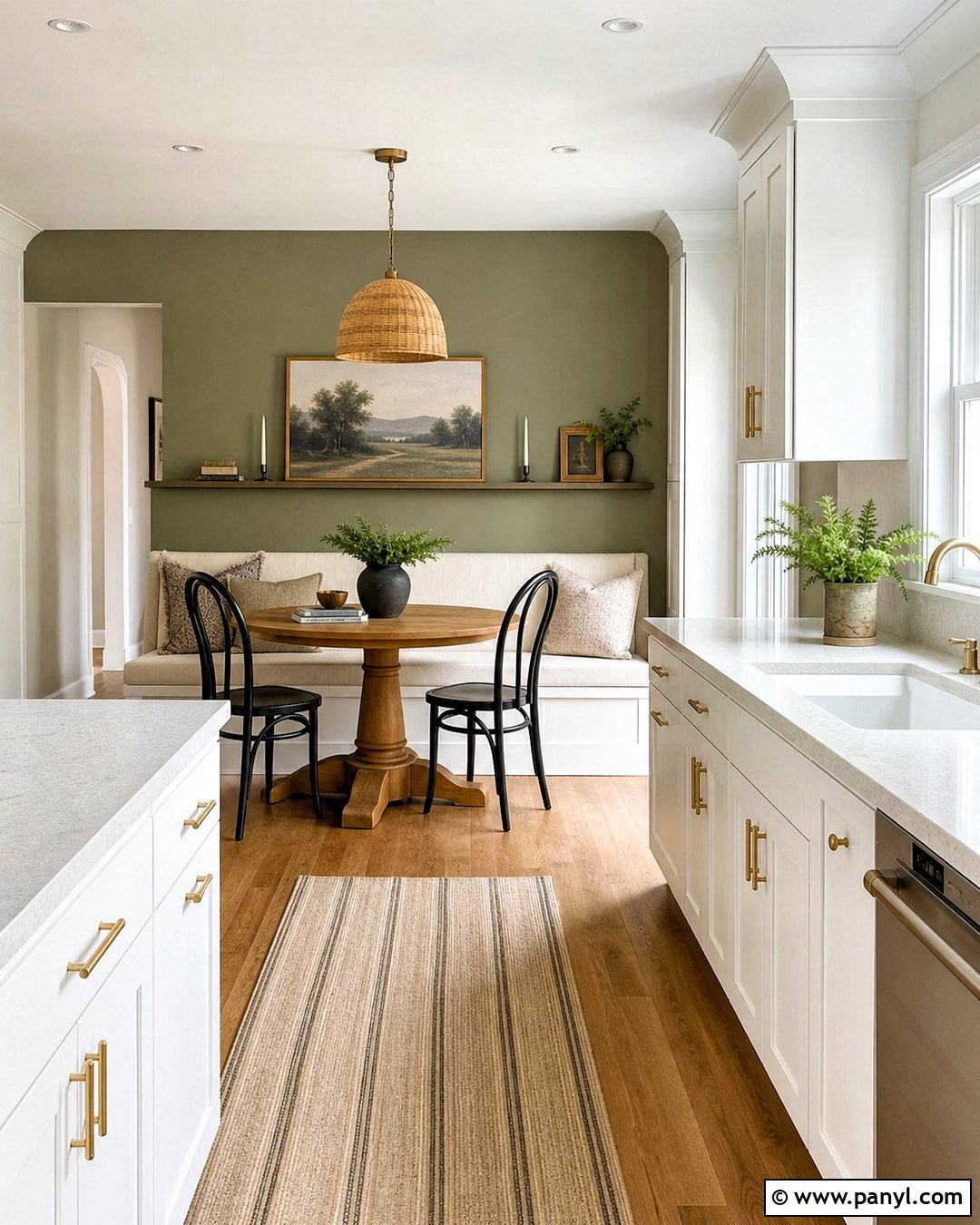
Give a breakfast nook its own identity by painting the surrounding walls a slightly deeper sage than the adjoining kitchen. Build an L-shaped bench in warm white or light oak and add a round pedestal table that makes movement through the compact area easier. Upholster the bench in durable cream fabric, then layer striped and botanical cushions containing sage, tan, and muted rust. A woven pendant centered over the table brings texture and defines the eating zone. Use a washable natural-look rug if the floor needs softness, but leave enough clearance around the bench. Finish with one large framed print and a small ceramic vase. The wall color visually separates the nook while still coordinating with white cabinetry, wood flooring, and neutral kitchen finishes.
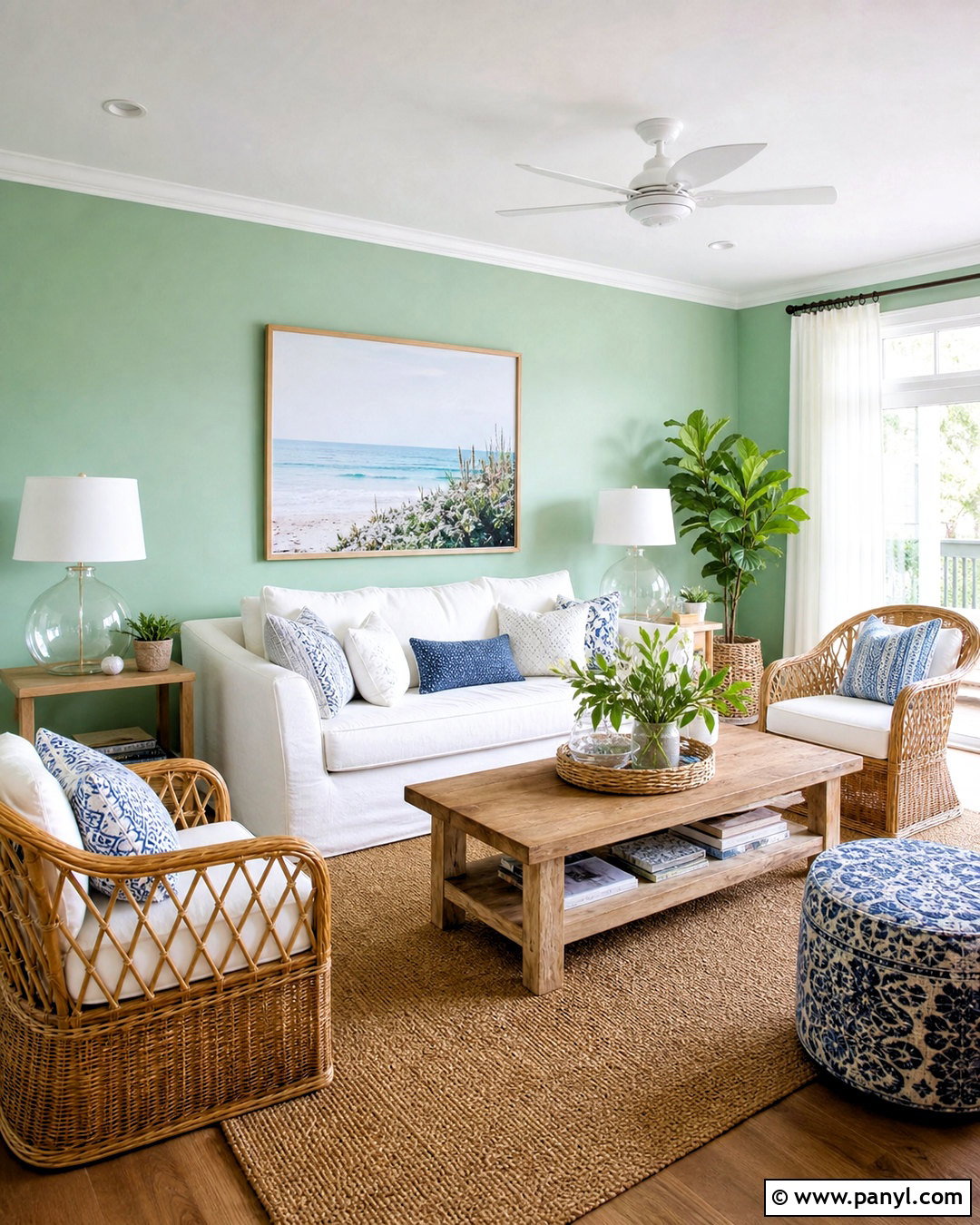
20. Sage Green Sunroom Walls With Wicker Furniture
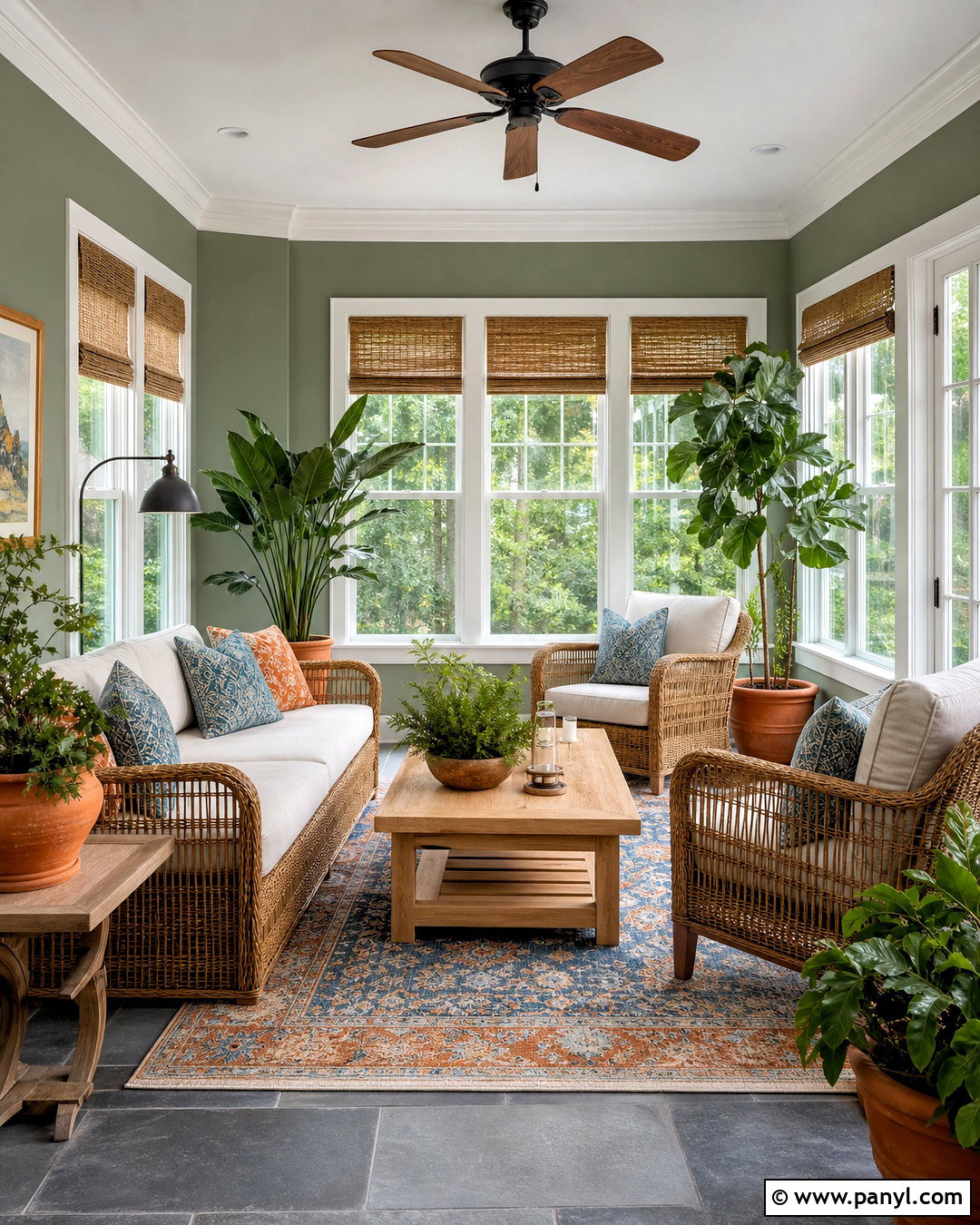
Sunlight can bring out sage green’s natural warmth, making it an excellent choice for a casual sunroom. Paint the walls in a soft gray-green and keep window trim bright white to emphasize the architecture. Arrange a wicker sofa and two matching chairs around a light wood coffee table, leaving clear paths to doors and windows. Use cream performance cushions with washable covers, then add patterned pillows in blue, rust, and deeper green. A flat-weave indoor-outdoor rug will handle heavy use while grounding the seating group. Hang lightweight natural shades for glare control without blocking the view. Finish with terracotta pots, leafy plants, and a few ceramic accents. The completed sunroom feels connected to the landscape while remaining comfortable, polished, and practical throughout the year.
Conclusion:
The best sage green room begins with more than a beautiful paint shade. Natural light, undertones, finish, furniture, flooring, and accent colors all influence the final result. Pale sage works well in open, relaxed rooms, while smoky or deeper versions can define architectural features and create coziness. Warm wood, cream textiles, white trim, black details, and aged metals are dependable companions, but small touches of rust, blue, or dusty pink can add personality. Before committing, paint large samples on different walls and study them during morning, afternoon, and evening light. Whether you prefer one accent wall or a fully color-drenched room, these 20 sage green wall paint ideas offer complete, practical looks you can adapt to your home.

Related Ideas and Inspiration:
Leave a Reply