
Green walls can make a home feel restful, grounded, cheerful, or dramatic, depending on the shade and surrounding finishes. Soft sage works like a warm neutral, while olive, moss, emerald, and forest green create richer rooms with more depth. Green also pairs naturally with wood, stone, cream, terracotta, blue, muted pink, and aged metals, making it adaptable to modern, traditional, cottage, and eclectic homes. Current interiors often balance green with tactile materials, warm neutrals, and layered lighting rather than stark white accents. () The following 50 green walls show how furniture, flooring, trim, textiles, and decor can form a complete, practical design. Explore these 50 green walls to find a combination that fits your room, natural light, and personal style.
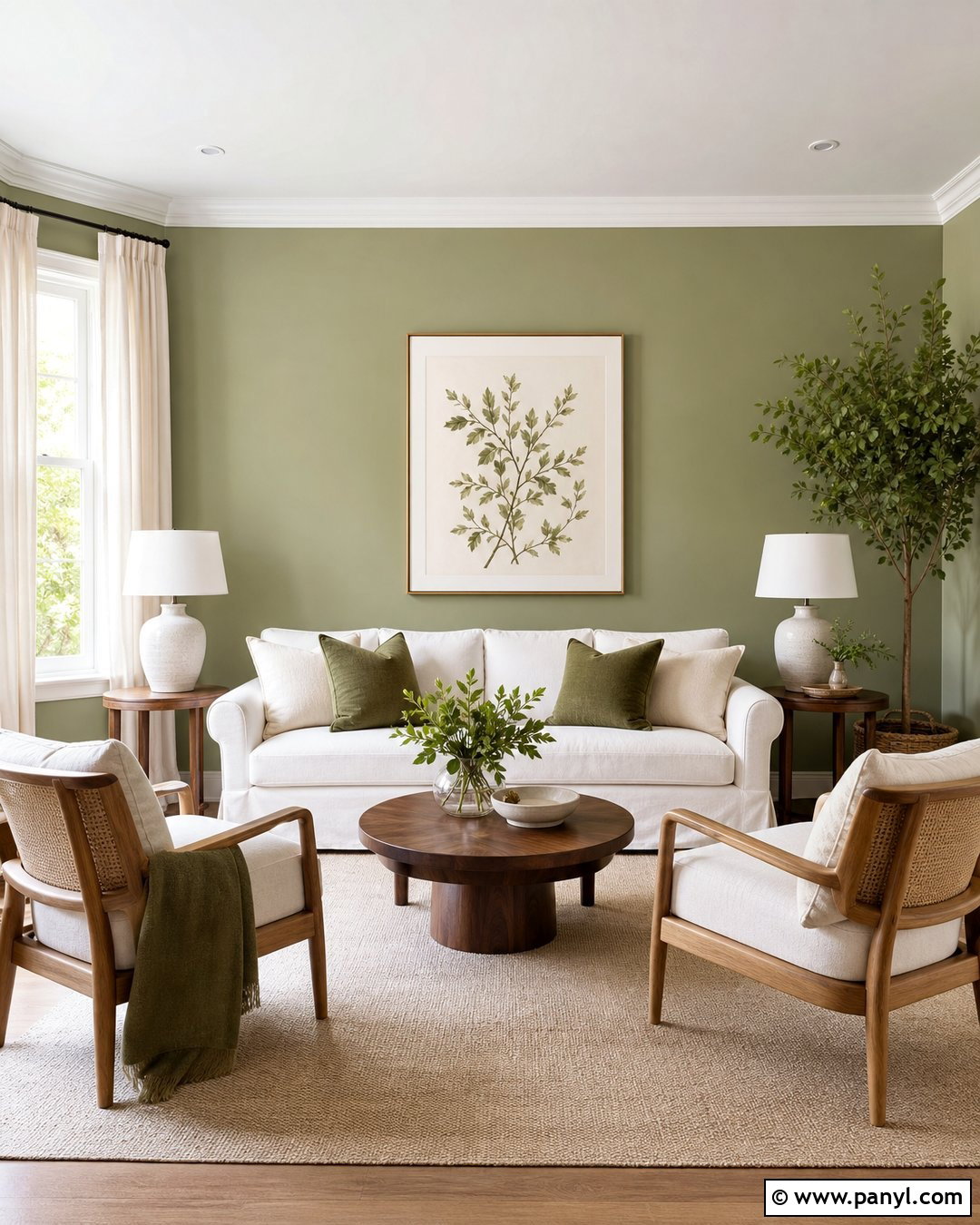
1. Sage Green Living Room Walls
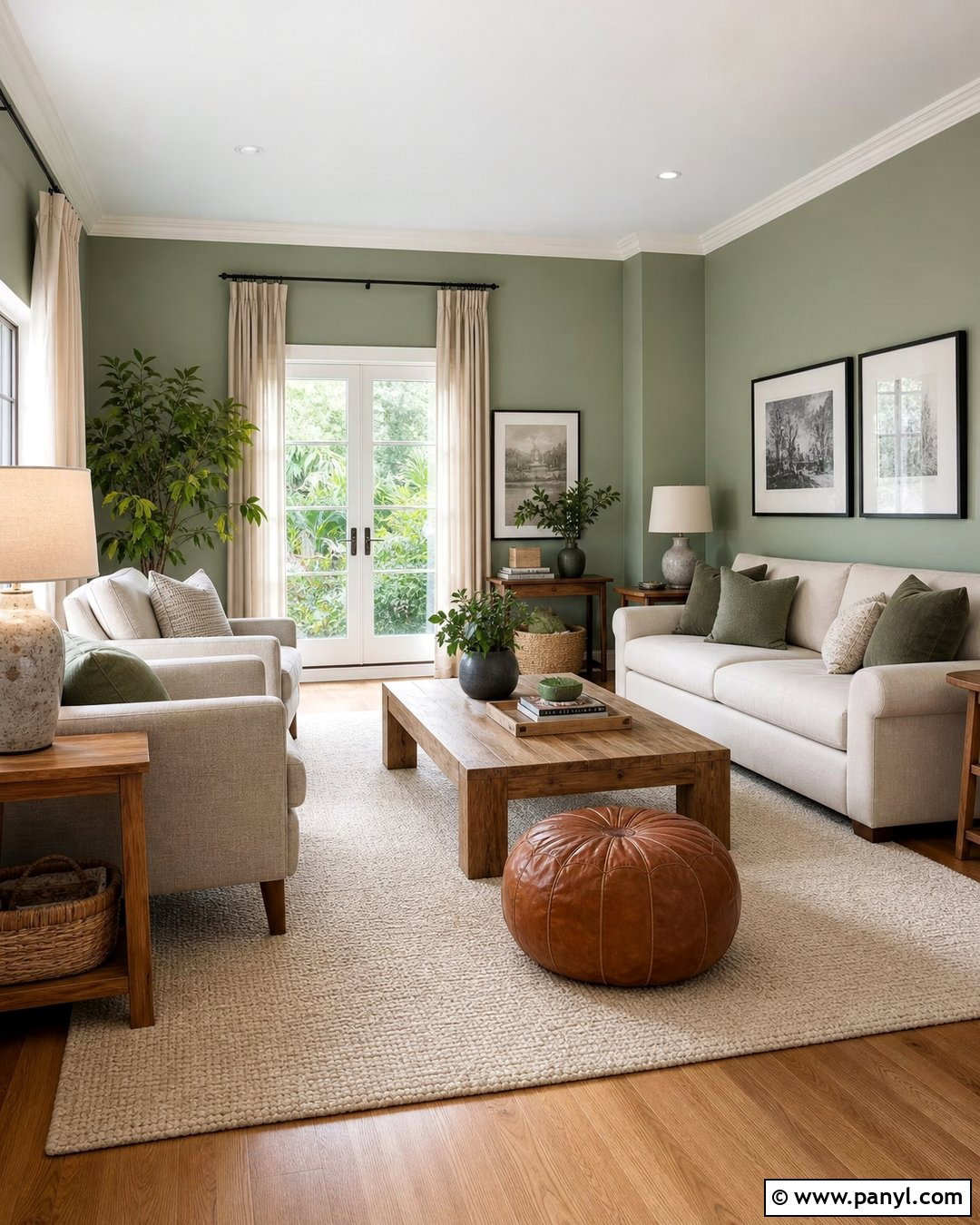
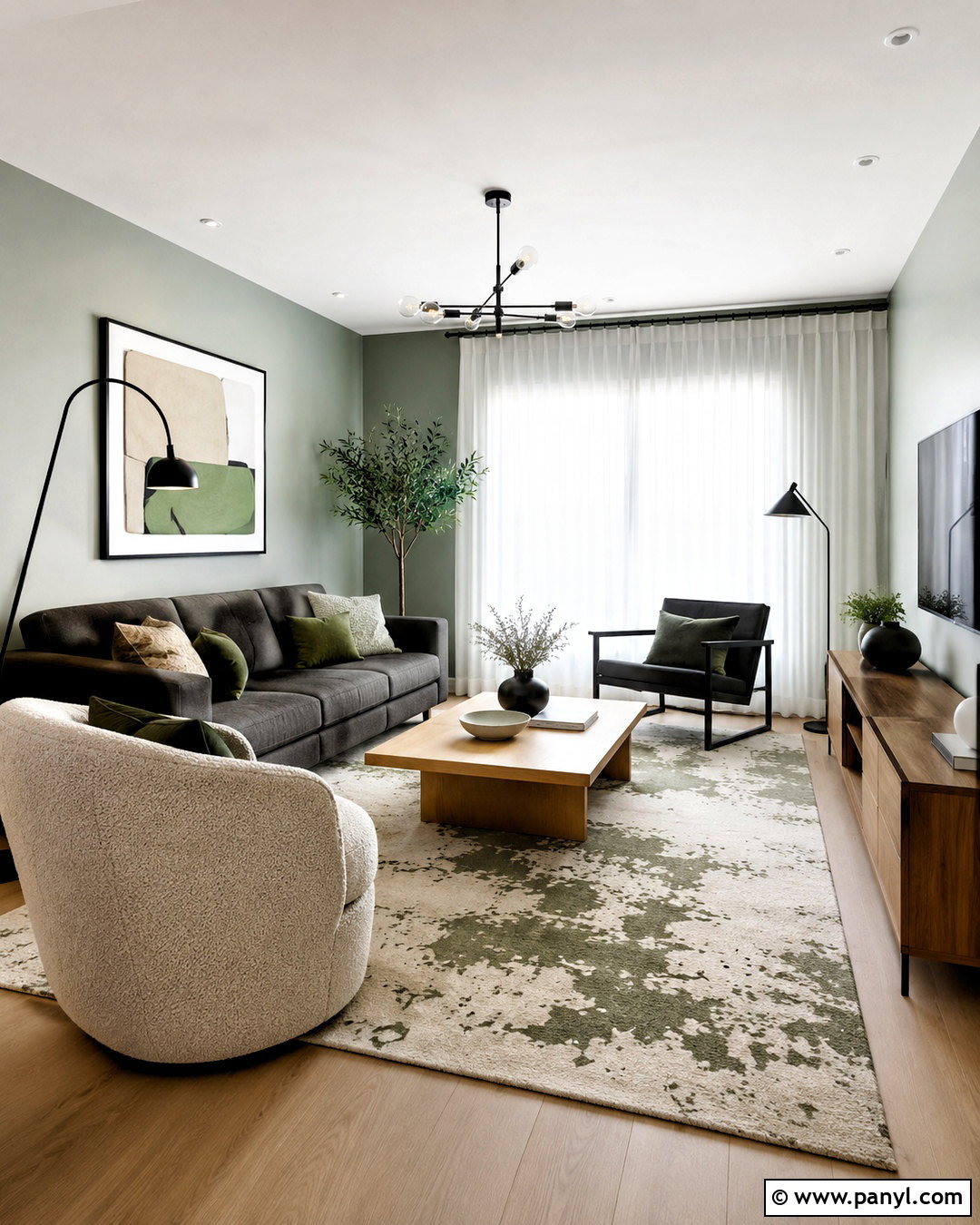
Soft sage walls create a relaxed living room that feels colorful without becoming overwhelming. Pair them with a warm ivory sofa, two oatmeal linen chairs, and a rectangular oak coffee table. A textured cream rug keeps the arrangement light, while tobacco-brown leather adds definition through a pouf or small accent chair. Choose full-length flax curtains instead of bright white panels so the windows blend gently into the palette. Black picture frames and a slim black floor lamp provide clean contrast. Finish the room with ceramic lamps, woven baskets, landscape artwork, and several leafy plants. Medium oak flooring and warm off-white trim complete this balanced look, making it especially suitable for an everyday family room.
2. Dark Green Living Room Walls
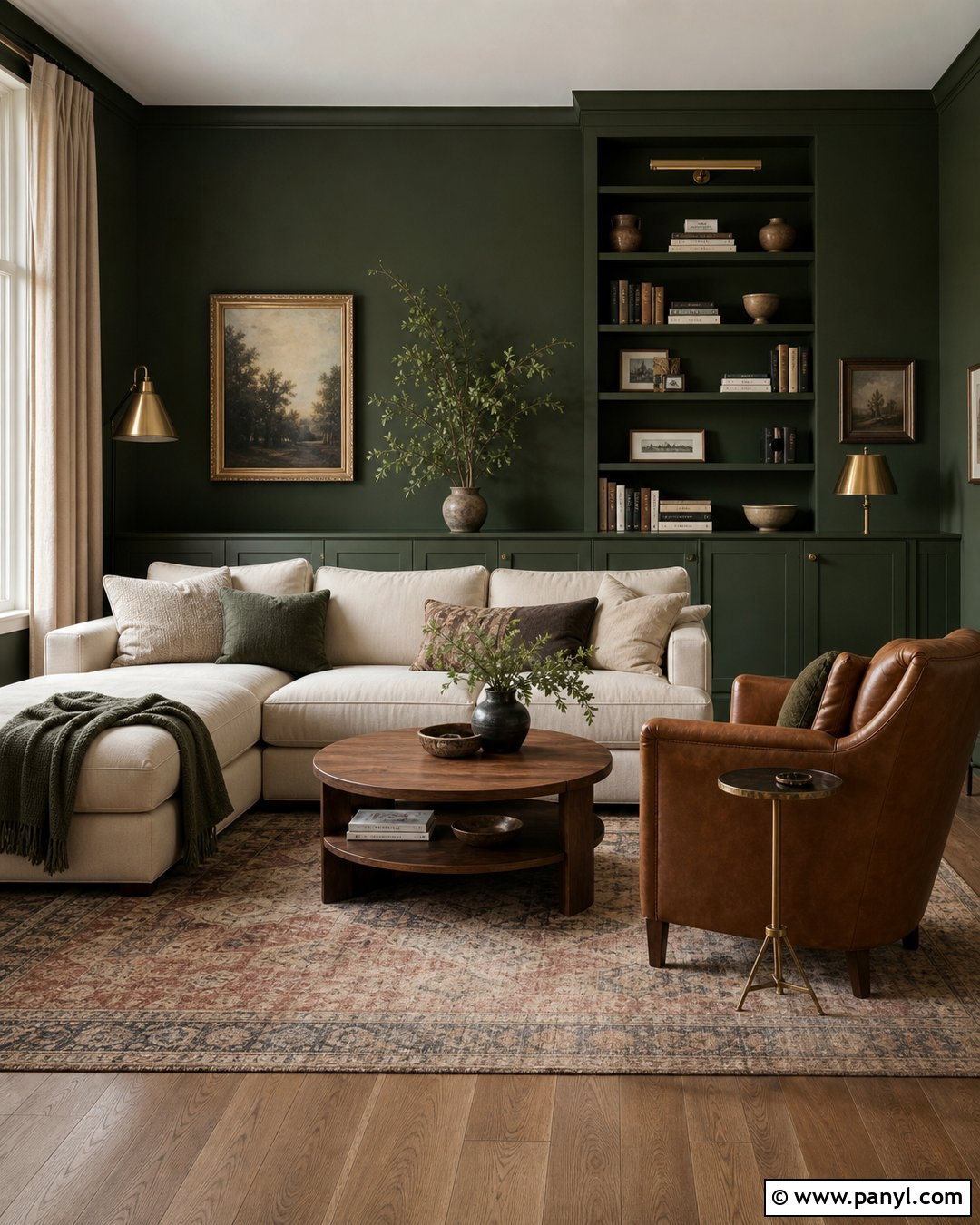
Dark green walls can make a bright living room feel intimate and polished. Paint every wall in a deep forest green, then soften the color with a large cream sectional and pale beige curtains. A walnut coffee table, cognac leather chair, and antique brass lighting bring warmth into the darker setting. Keep the ceiling a gentle warm white rather than a sharp, blue-based white. Underfoot, use a vintage-inspired rug that combines rust, faded blue, tan, and small touches of green. Hang oversized artwork with cream matting to break up broad wall surfaces. Built-in shelves painted the same green create a seamless backdrop for books, pottery, and framed photographs while reducing visual clutter.
3. Olive Green Bedroom Walls
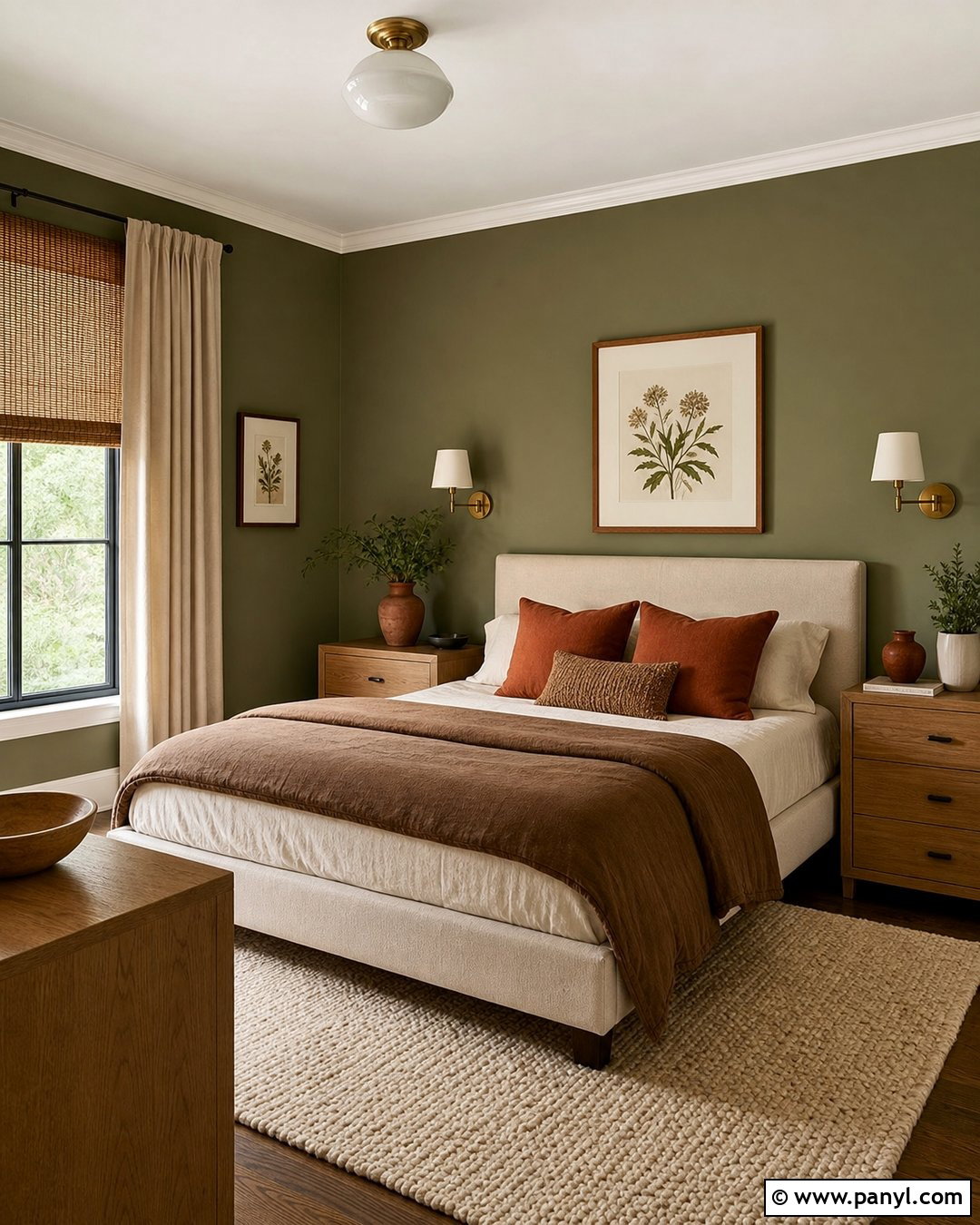
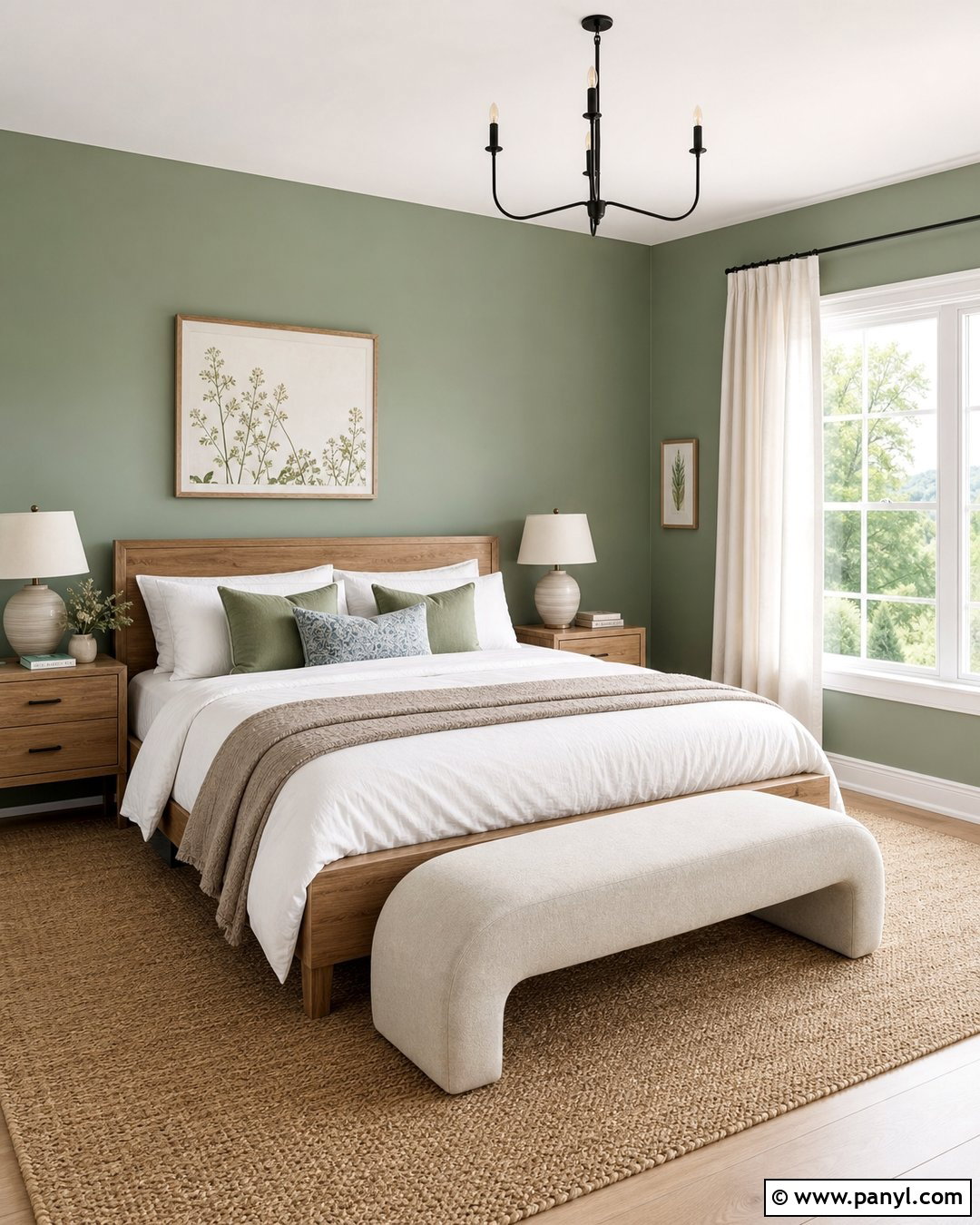
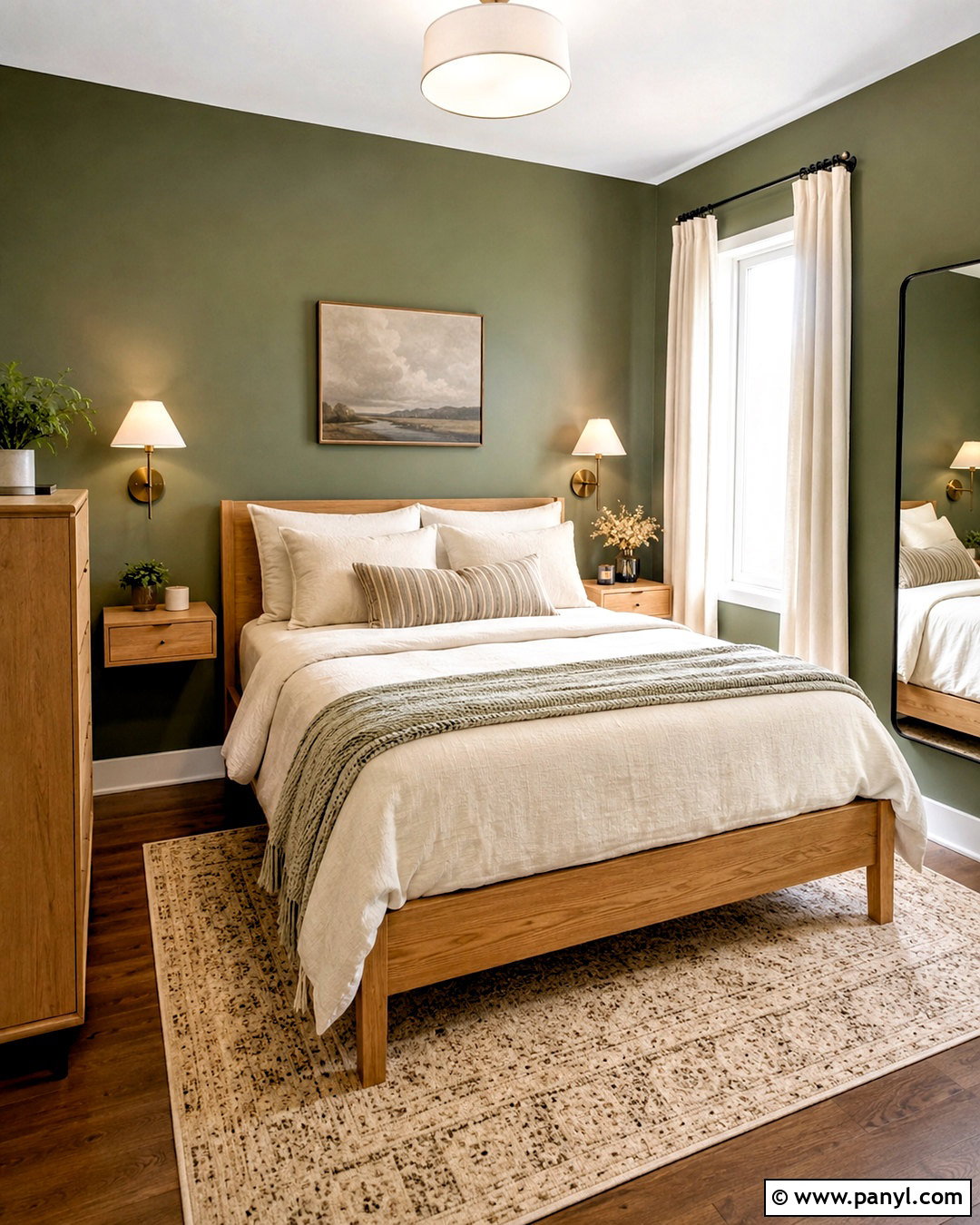
Muted olive walls give a bedroom a warm, earthy character that feels particularly comfortable in evening light. Build the room around an upholstered oatmeal bed with simple oak nightstands on both sides. Layer ivory sheets, a brown linen coverlet, and rust-colored accent pillows for subtle contrast. A flat-weave wool rug in cream and tan adds softness without introducing a busy pattern. Use woven Roman shades beneath full-length neutral curtains to control daylight. Antique brass sconces, botanical prints, and handmade ceramic accessories strengthen the natural palette. Paint the baseboards and doors in a creamy off-white. This complete scheme works best with uncluttered furniture placement and several open areas around the bed.
4. Forest Green Bedroom Walls
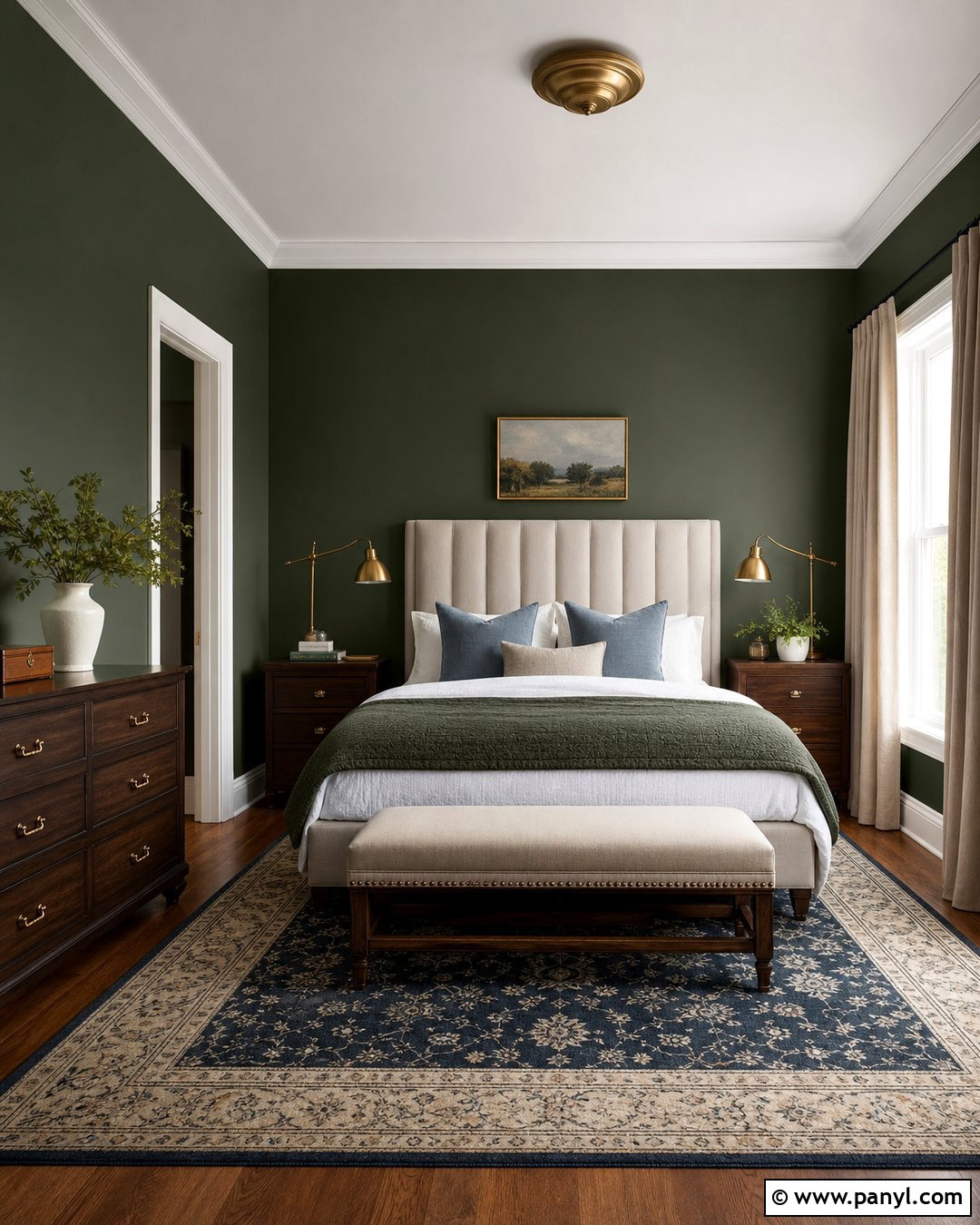
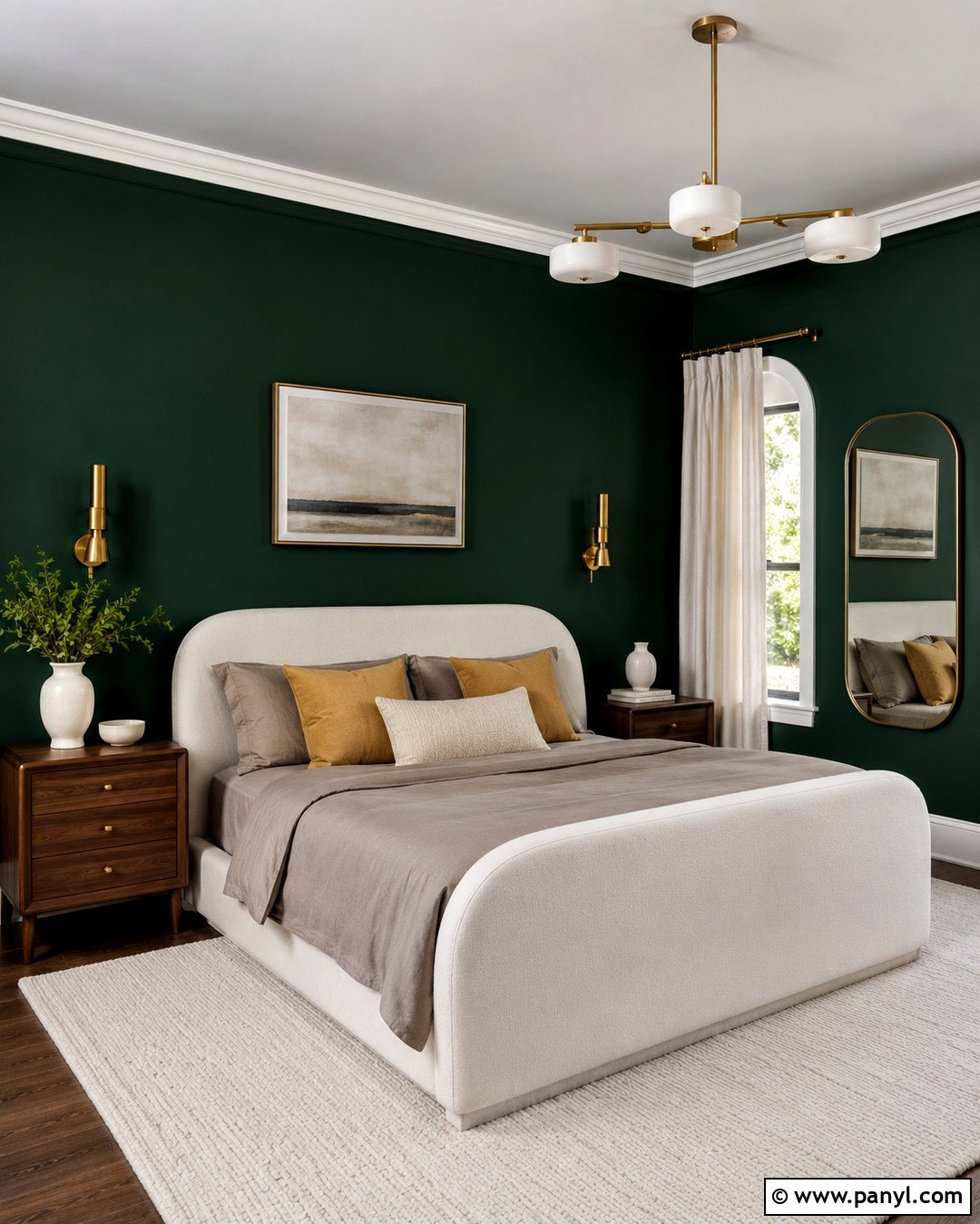
Imagine entering a bedroom wrapped in rich forest green with crisp architectural details and soft, inviting fabrics. A tall beige headboard gives the bed a clear focal point without competing with the walls. Add white bedding, a deep green quilt, and muted blue pillows to build layers within the cool palette. Dark walnut nightstands and brass reading lamps introduce warmth. Choose a traditional rug with faded navy, cream, and brown details, then hang linen curtains in a soft mushroom tone. A low dresser, one upholstered bench, and restrained artwork keep the room orderly. Carrying the green onto the interior doors can make the design feel intentional, especially when the ceiling remains warm white.
5. Mint Green Kitchen Walls
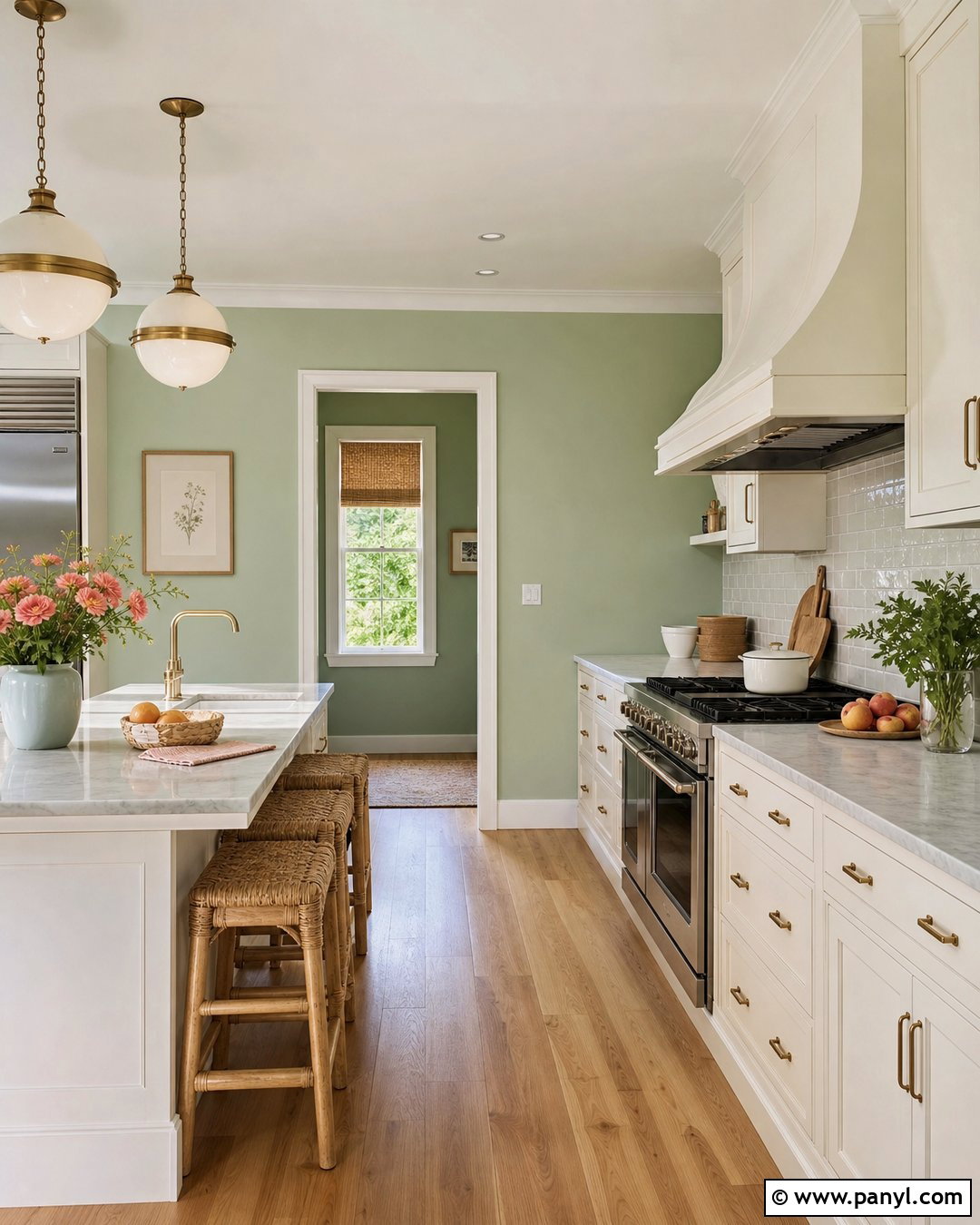
Mint green walls can brighten a kitchen while preserving a soft, nostalgic feeling. Pair the color with creamy white cabinets, brushed brass hardware, and pale gray marble-look counters. A glossy white subway tile backsplash reflects light and prevents the pastel palette from feeling flat. Warm oak flooring grounds the room, while woven counter stools add a casual natural texture. Display only a few useful items, such as wood cutting boards, white ceramics, and clear storage jars. Over the island, install simple opal glass pendants with brass fittings. Small touches of peach or coral can appear in artwork and textiles. The finished kitchen feels airy, cheerful, and practical rather than overly themed.
6. Emerald Green Dining Room Walls
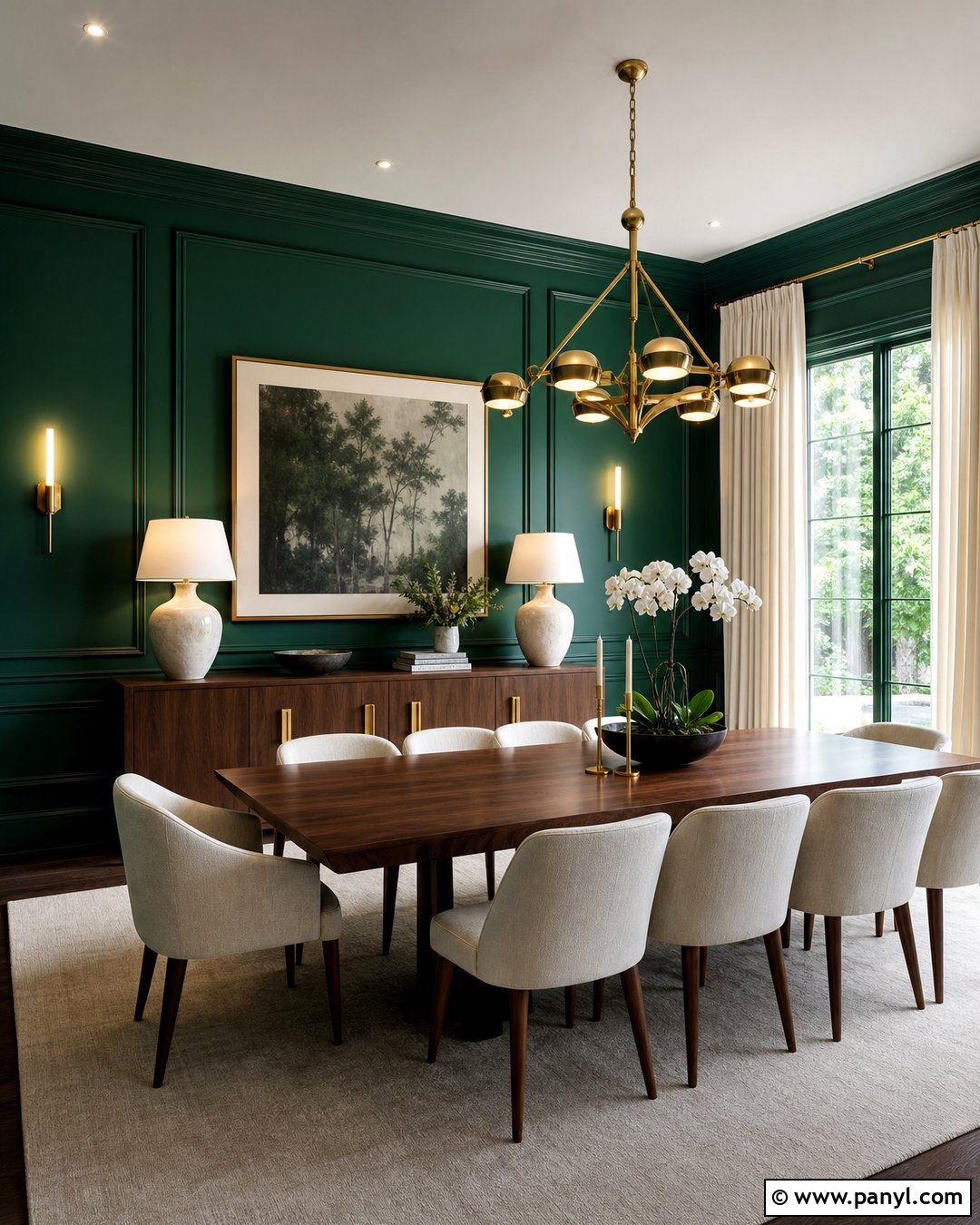
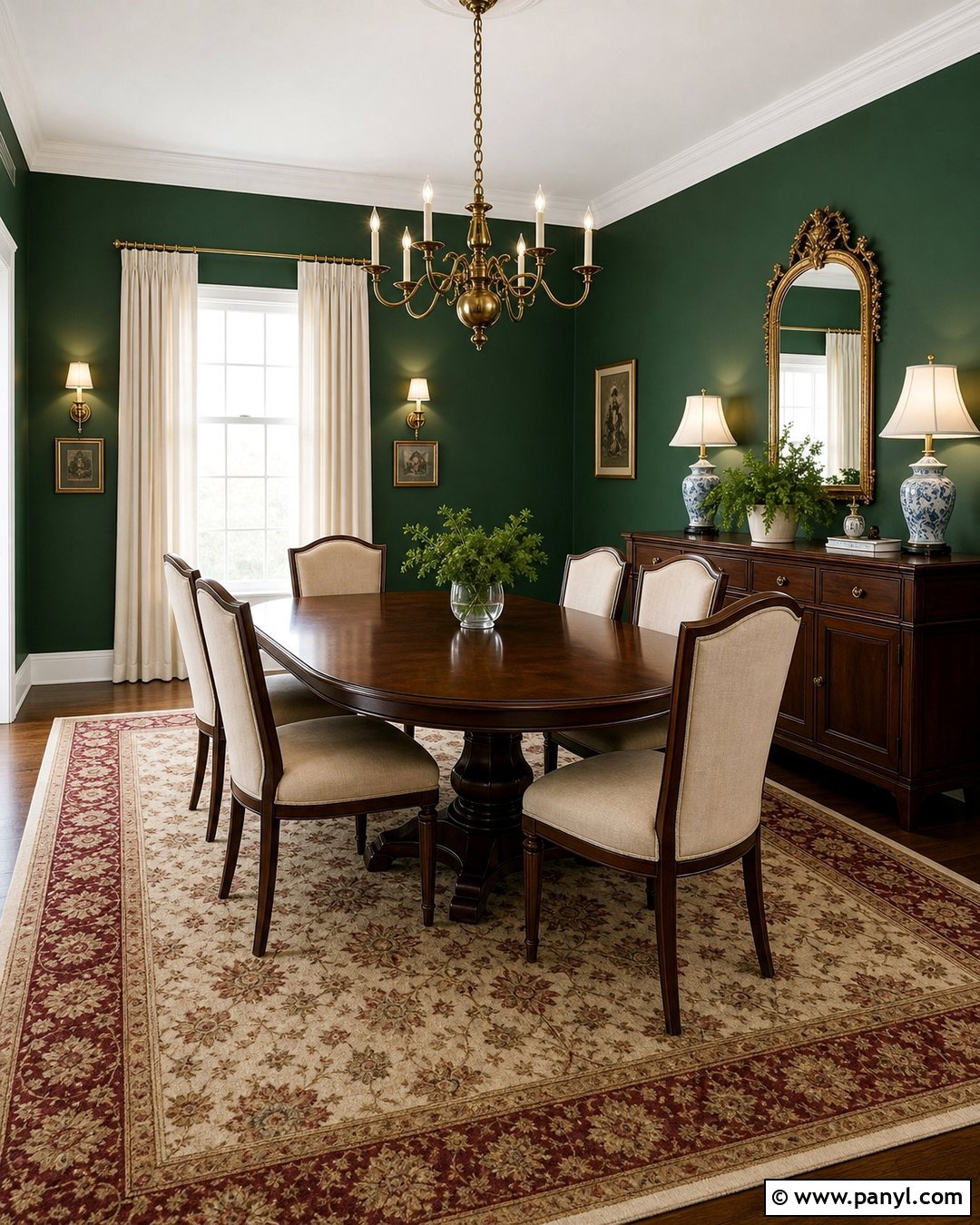
Emerald green walls provide a dramatic setting for dinners without requiring elaborate furniture. Center the room around a long walnut table with comfortably upholstered cream chairs. A sculptural brass chandelier introduces a reflective finish that stands out beautifully against the saturated walls. Choose substantial ivory curtains, a traditional wool rug, and warm white ceiling paint to balance the deeper color. An oak or walnut sideboard can hold lamps, serving pieces, and one large framed artwork. Black accents should remain limited to thin frames or curtain rods. For a more complete appearance, paint simple wall molding in the same emerald shade, creating depth through shadows rather than adding another contrasting color.
7. Moss Green Dining Room Walls
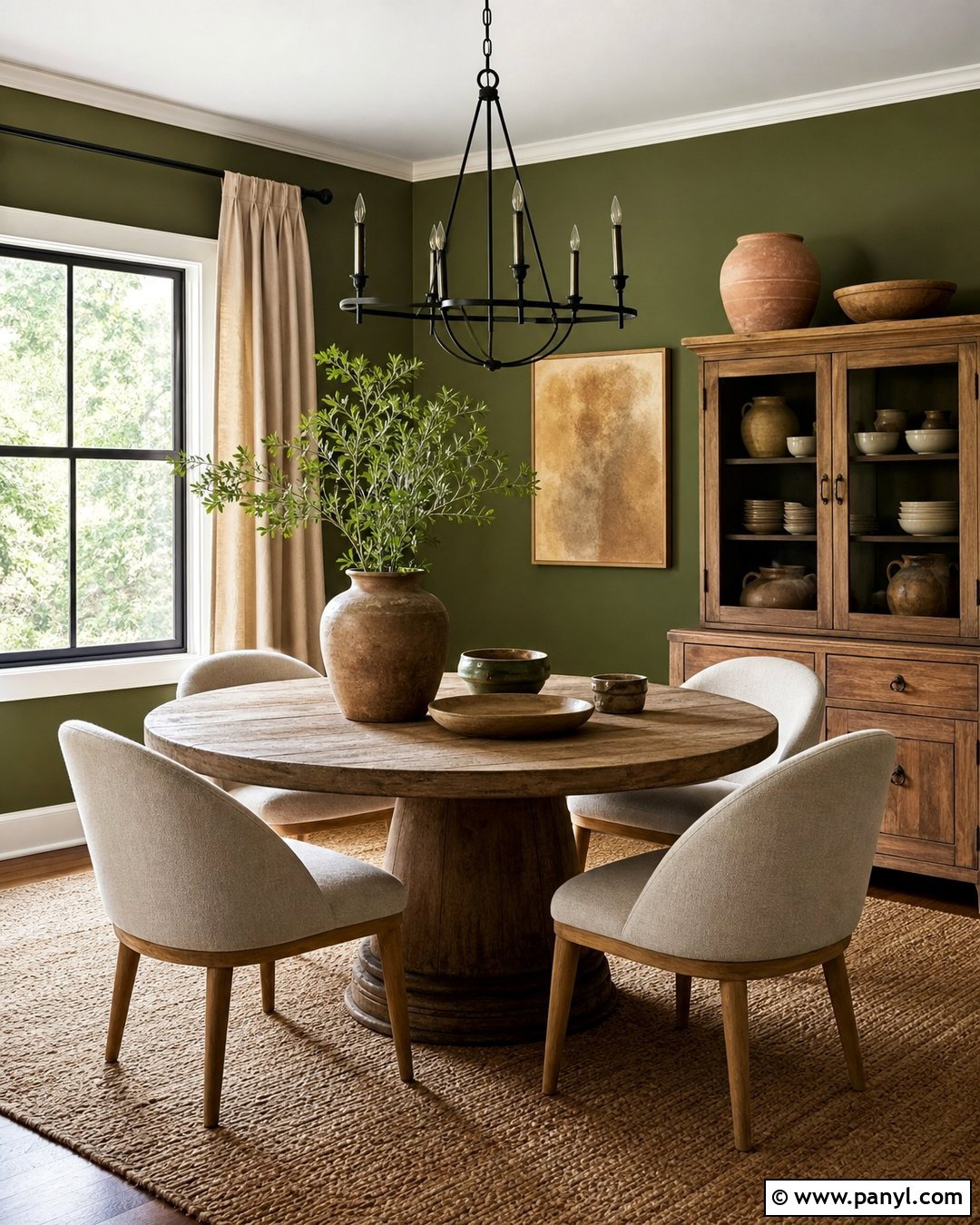
Moss green has brown and gray undertones that make a dining room feel calm, mature, and connected to nature. Combine moss walls with a round weathered-oak table and curved dining chairs upholstered in natural linen. A jute or wool rug defines the eating area, while a black iron chandelier adds structure above it. Use a vintage wood cabinet for storage and decorate it with stoneware, branches, and stacked serving bowls. Warm beige curtains prevent the space from becoming too cool. Terracotta pottery and muted ochre artwork provide modest color variation. Keep the trim a creamy stone shade, and select warm bulbs for evening lighting so the green remains inviting after sunset.
8. Hunter Green Home Office Walls
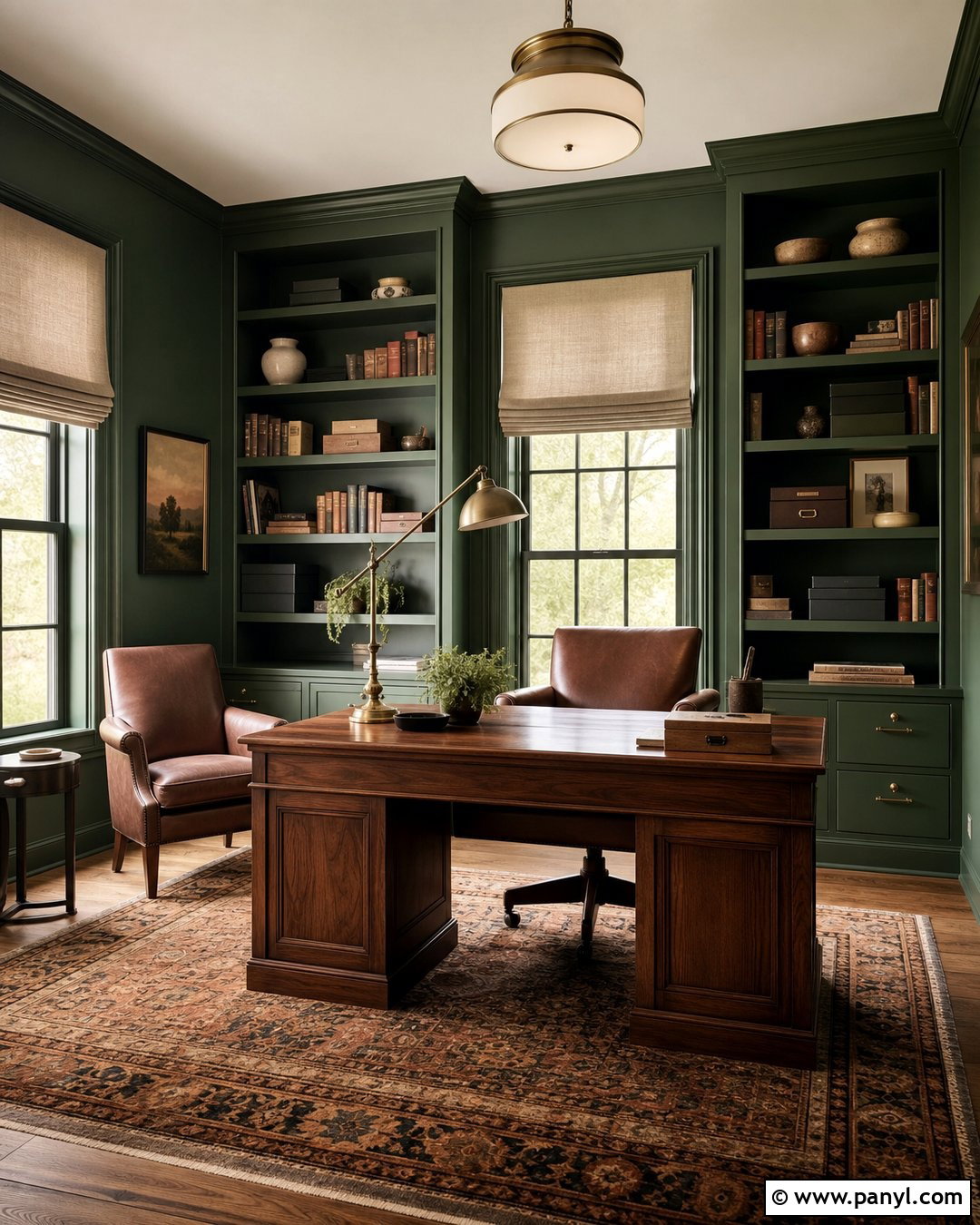
Hunter green walls can turn a basic home office into a focused, library-like workspace. Position a substantial walnut desk toward the center rather than pushing every piece against a wall. Behind it, install bookcases painted in the matching green for a cohesive built-in effect. A brown leather desk chair, traditional patterned rug, and aged brass task lamp create warmth and professional character. Use natural linen Roman shades to soften daylight and reduce glare. Open shelves should combine books, document boxes, and a few meaningful objects instead of excessive decor. Add one comfortable reading chair near a floor lamp. Cream ceiling paint and medium oak flooring keep the dark office from feeling enclosed.
9. Seafoam Green Bathroom Walls
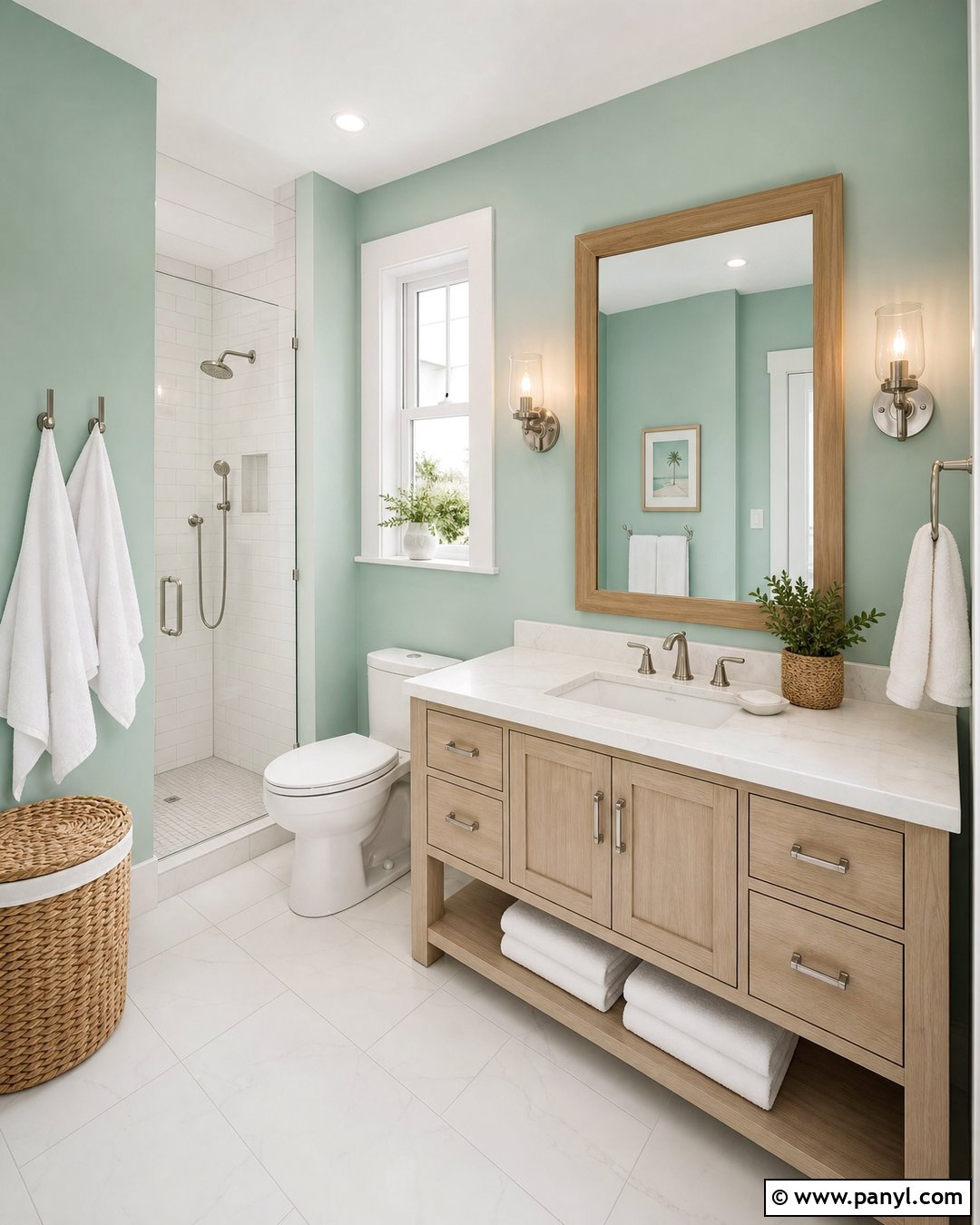
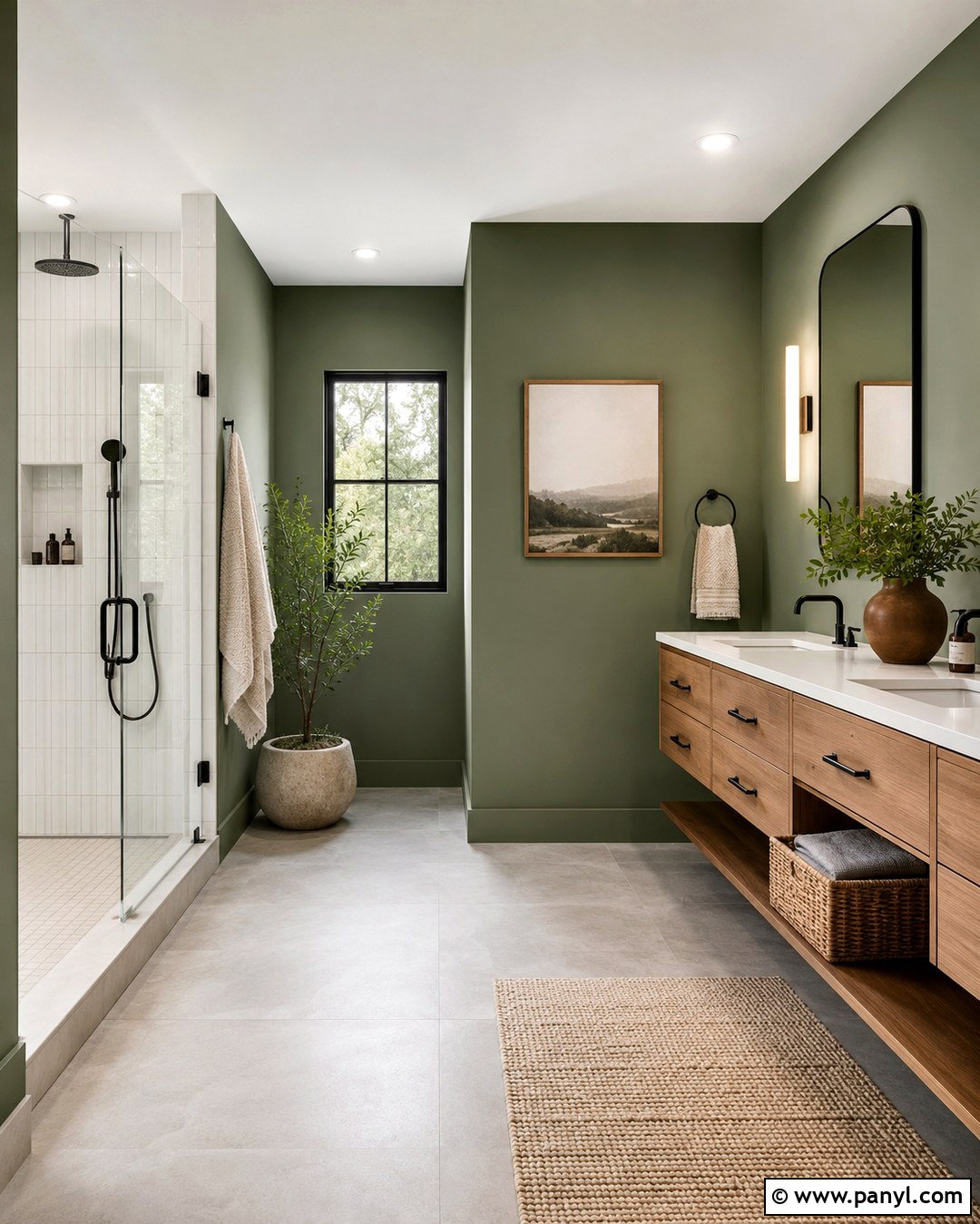
Seafoam green walls give a bathroom a clean, coastal quality without relying on themed accessories. Pair the gentle blue-green shade with a white oak vanity, white quartz counter, and brushed nickel fixtures. Large matte white floor tiles make the space feel open, while a narrow vertical backsplash adds subtle texture behind the sink. Choose a frameless glass shower so the green walls remain visible throughout the room. White towels, a natural woven hamper, and a pale gray bath mat complete the quiet palette. Add one wood-framed mirror and two simple glass sconces. Avoid cluttering the counters; a ceramic soap dispenser and a small leafy plant provide enough decoration for a fresh finish.
10. Deep Green Bathroom Walls
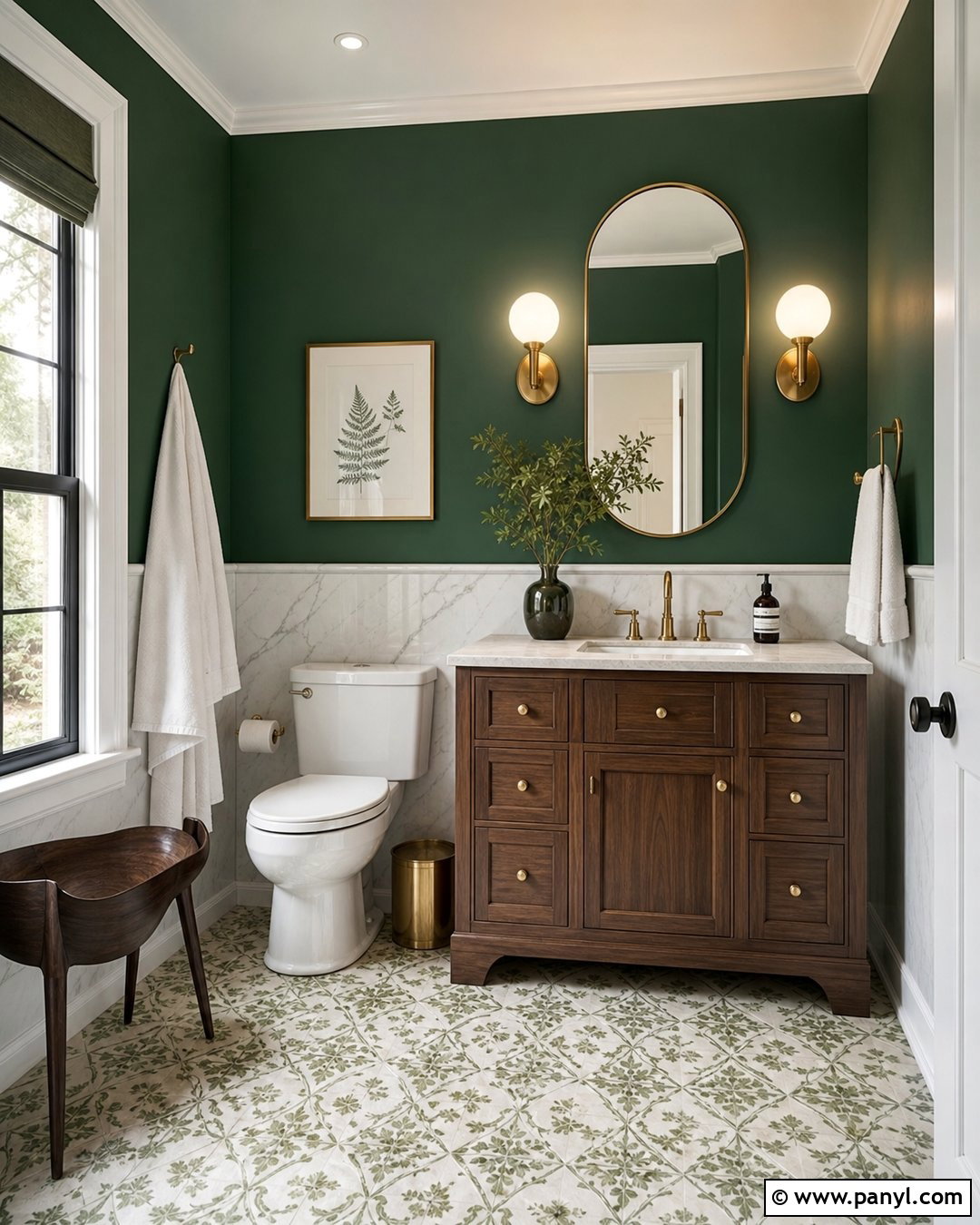
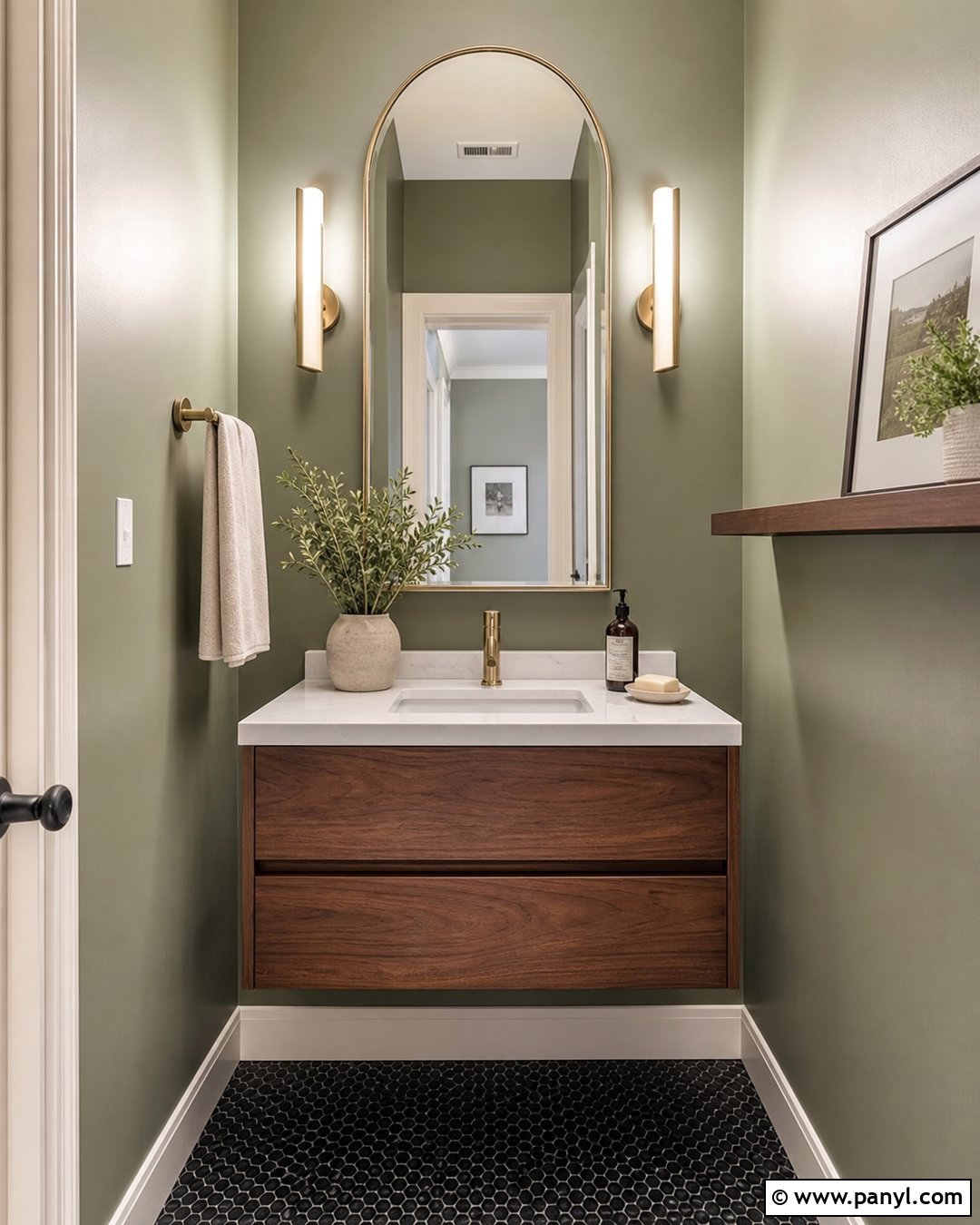
A deep green bathroom can feel sophisticated when the darker paint is balanced with reflective and pale materials. Use saturated bottle-green walls above white marble-look wainscoting or tile. Select a medium walnut vanity with a light stone countertop and polished nickel hardware. A large rounded mirror helps bounce light around the room, while globe sconces provide even illumination at face level. Keep towels and shower curtains in warm ivory rather than pure white. Small black accents can outline the mirror or shower enclosure, but brass accessories will create a warmer result. Finish with patterned floor tile in cream, green, and charcoal, giving this compact room a complete and carefully connected palette.
11. Pale Green Nursery Walls
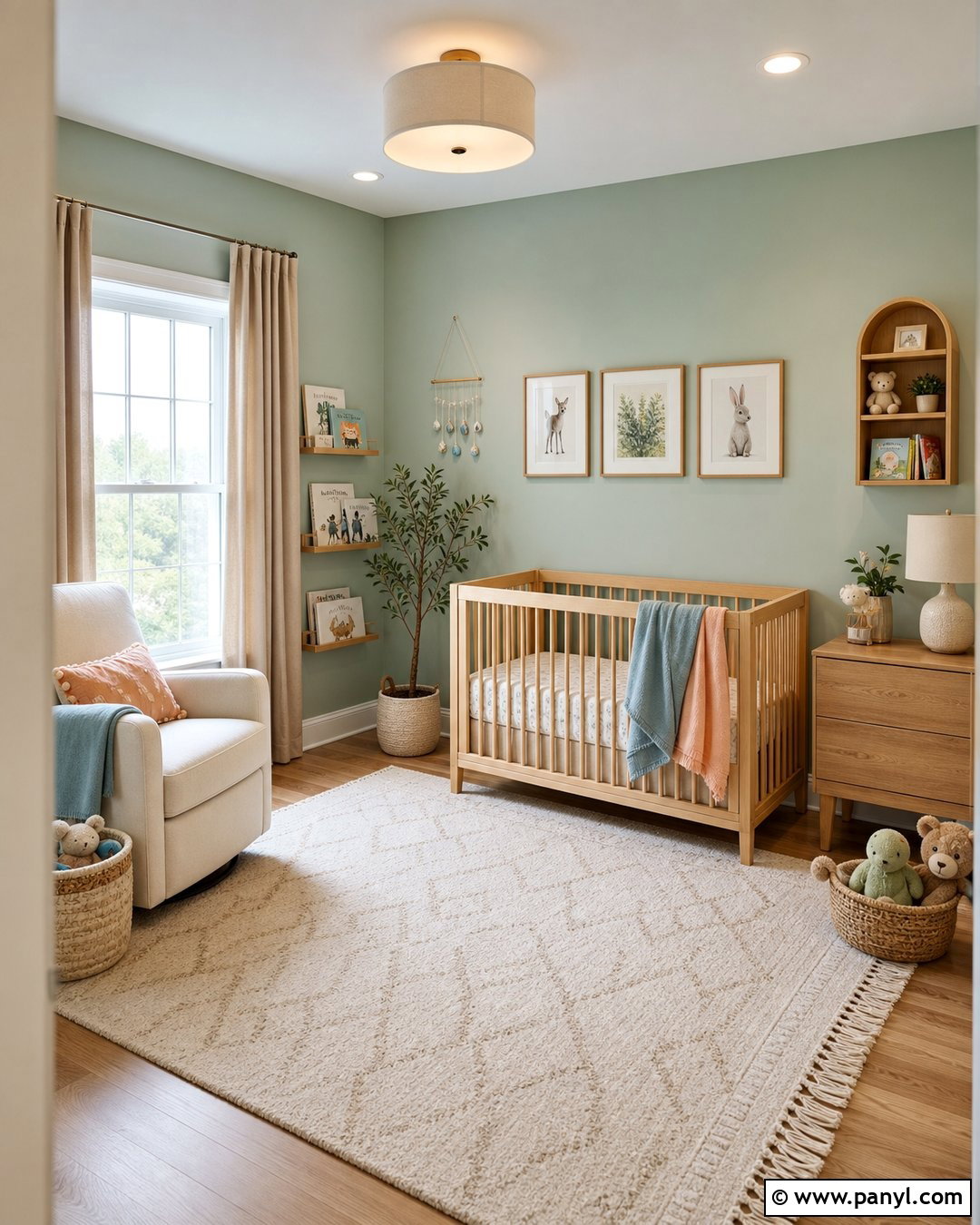
Pale green walls offer a gentle nursery backdrop that can adapt as a child grows. Choose a natural maple crib, an ivory upholstered glider, and a low oak dresser that doubles as a changing station. A washable cream rug with a subtle geometric pattern keeps the floor soft and practical. Hang blackout curtains in warm beige, then layer in dusty blue, muted peach, or golden yellow through blankets and framed illustrations. Closed baskets control small-item clutter, while wall shelves keep books easy to reach. Use a dimmable ceiling fixture and a shaded floor lamp for flexible lighting. The result feels playful and welcoming without depending on short-lived decorative themes.
12. Gray Green Entryway Walls
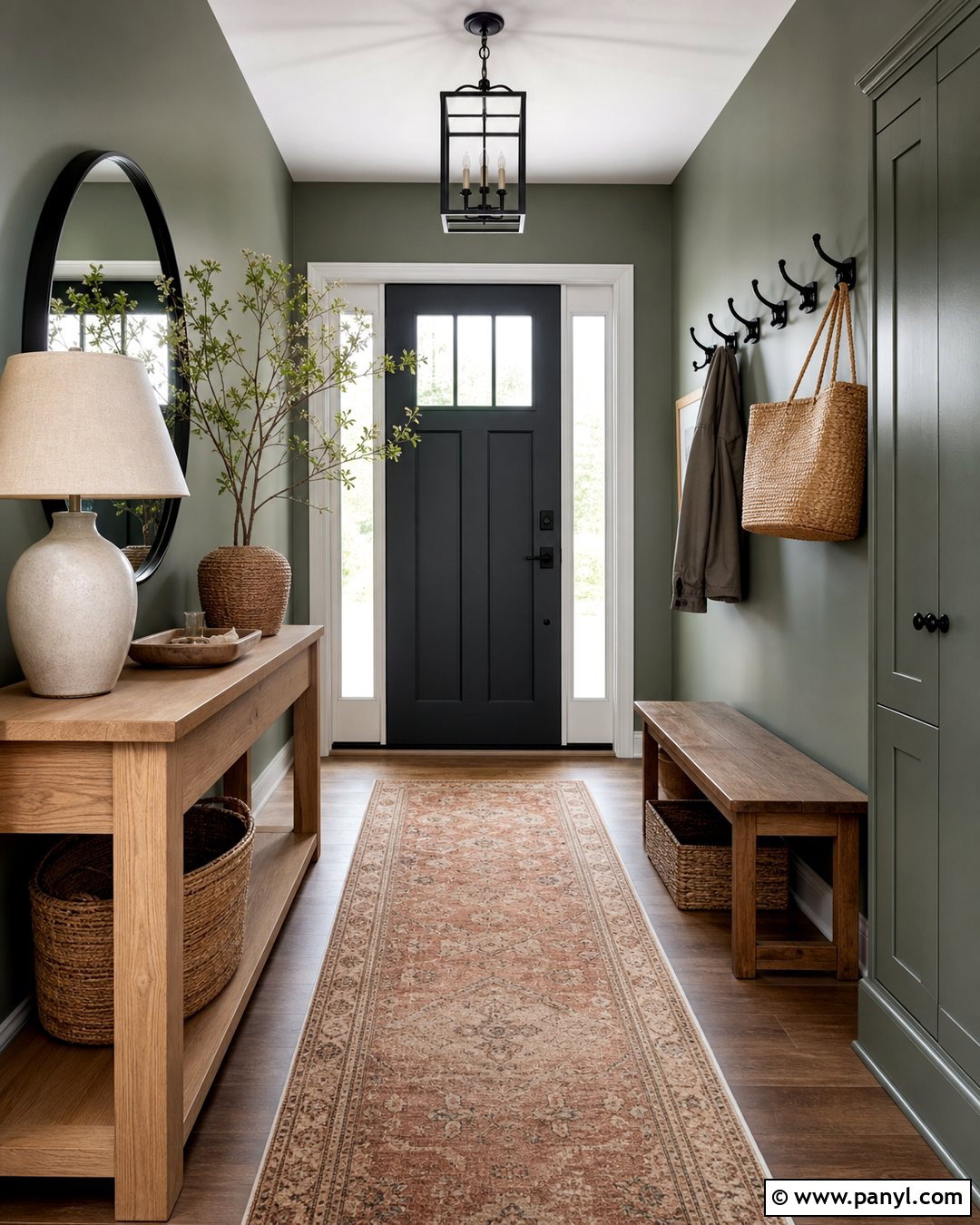
Gray-green walls can make an entryway feel composed even when the space is small or busy. Place a narrow oak console against the main wall with a round black-framed mirror above it. Add a closed shoe cabinet or woven baskets beneath the console to keep daily items contained. A durable runner in beige, rust, and charcoal hides wear while warming the muted paint color. Black hooks, a simple ceiling lantern, and a wooden bench create a functional landing area. Use warm white on the trim and ceiling to maintain brightness. A ceramic lamp, shallow key tray, and one vase of branches provide enough decoration without reducing the clear walking path through the entrance.
13. Kelly Green Entryway Walls
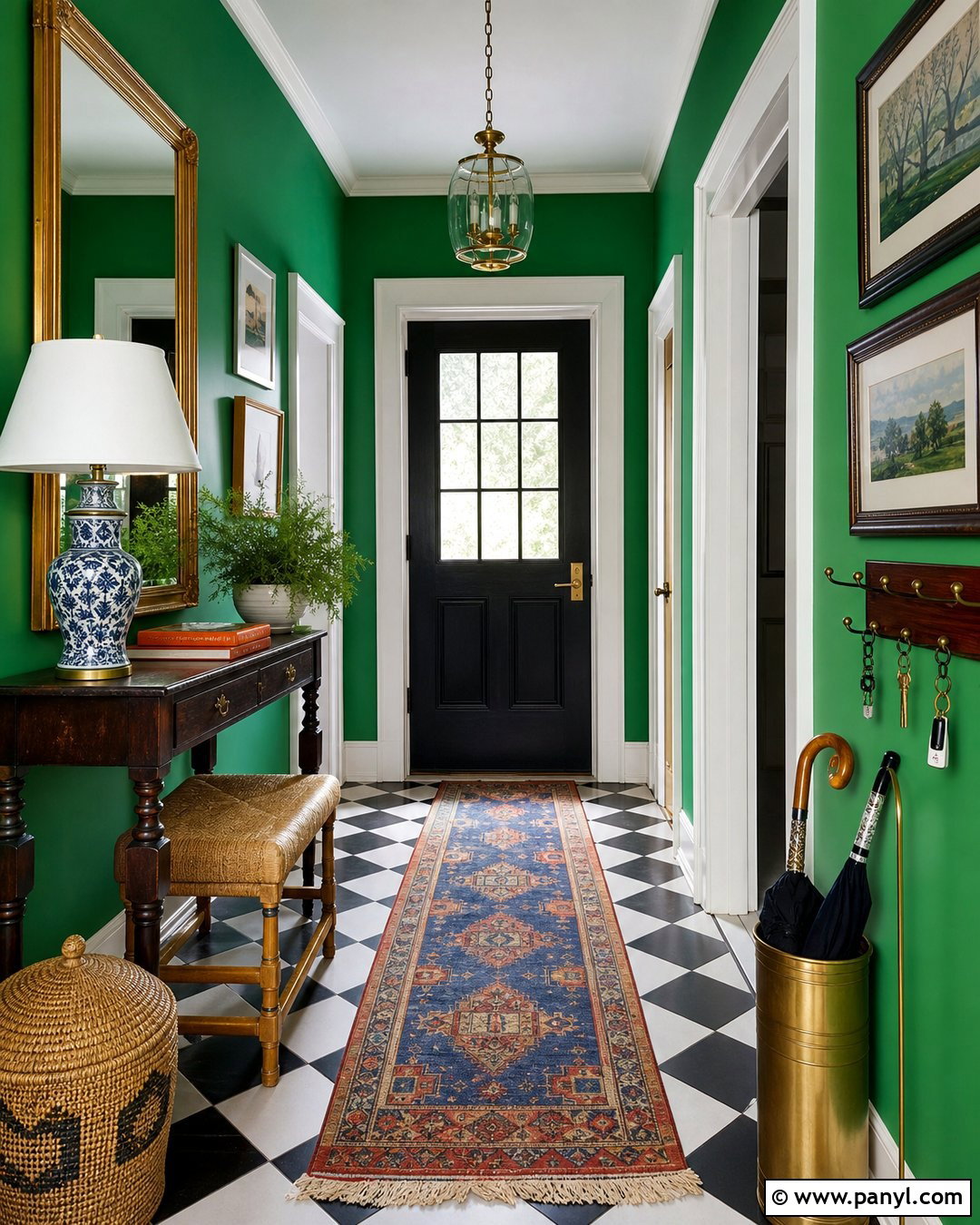
Kelly green brings lively energy to an entryway and creates a memorable first impression. Balance the clear, confident color with a black-and-white checkerboard floor or a simple cream tile surface. A slim dark wood console, brass mirror, and woven stool establish a collected look without overcrowding the area. Paint the doors and trim in warm white so their shapes appear crisp against the green. Add a colorful runner containing blue, coral, and tan to connect the walls with nearby rooms. One table lamp softens the strong color after dark. Practical elements such as a wall-mounted key rack, lidded basket, and umbrella stand should coordinate with the main metal and wood finishes.
14. Green Color Drenched Living Room
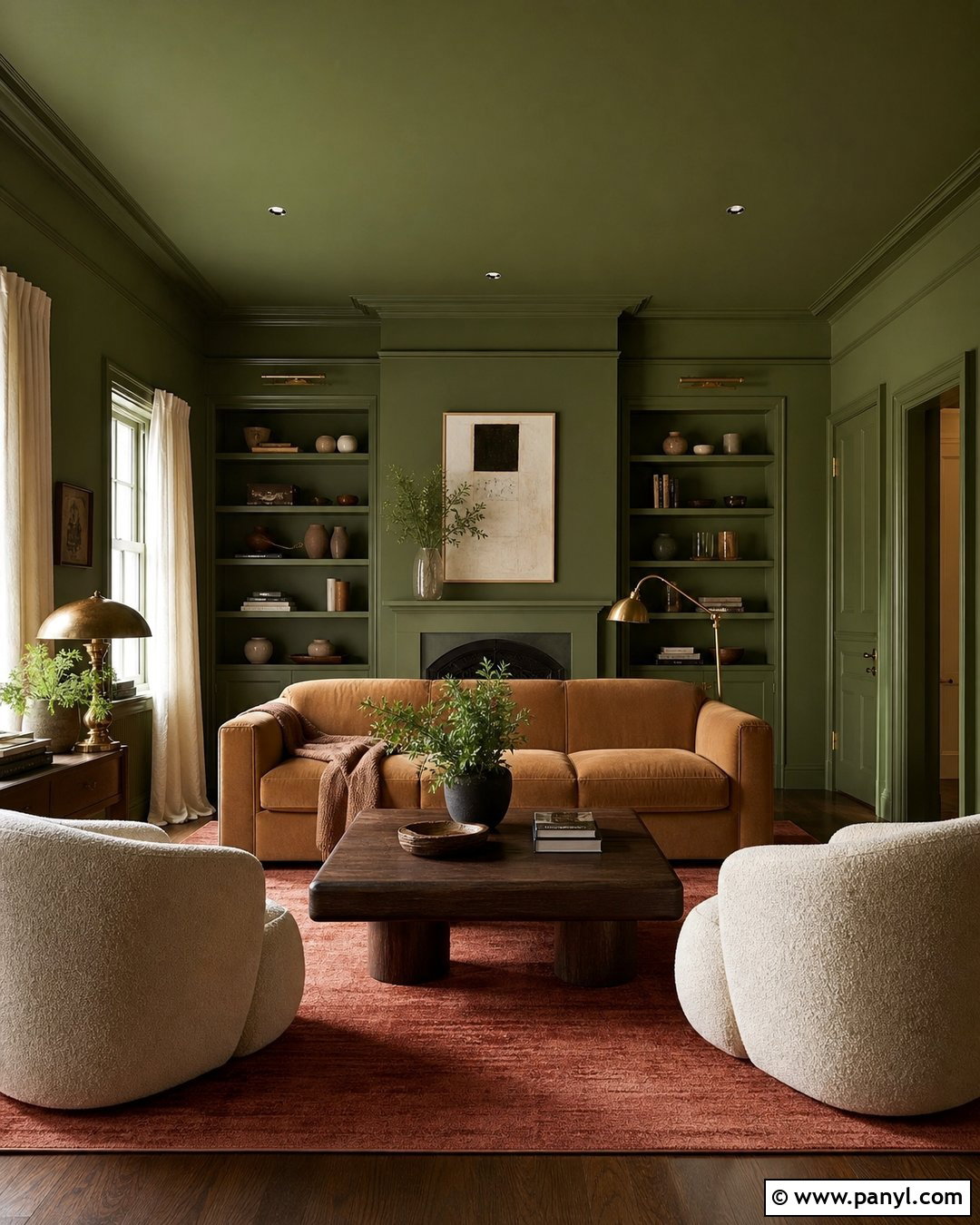
Color drenching creates an immersive green living room by carrying one muted shade across the walls, trim, doors, and built-in shelving. Choose a medium olive or gray-green that has enough softness for broad coverage. Furnish the room with a camel sofa, cream boucle chairs, and a dark oak coffee table. Since the architecture blends together, introduce contrast through textiles and furniture silhouettes rather than additional wall colors. A faded rust rug, linen curtains, and sculptural brass lamps provide warmth. Keep the ceiling in the green when the room receives generous daylight, or use a slightly lighter version for lower ceilings. The finished space should feel enveloping, coordinated, and comfortable rather than dark.
15. Green Accent Wall Living Room
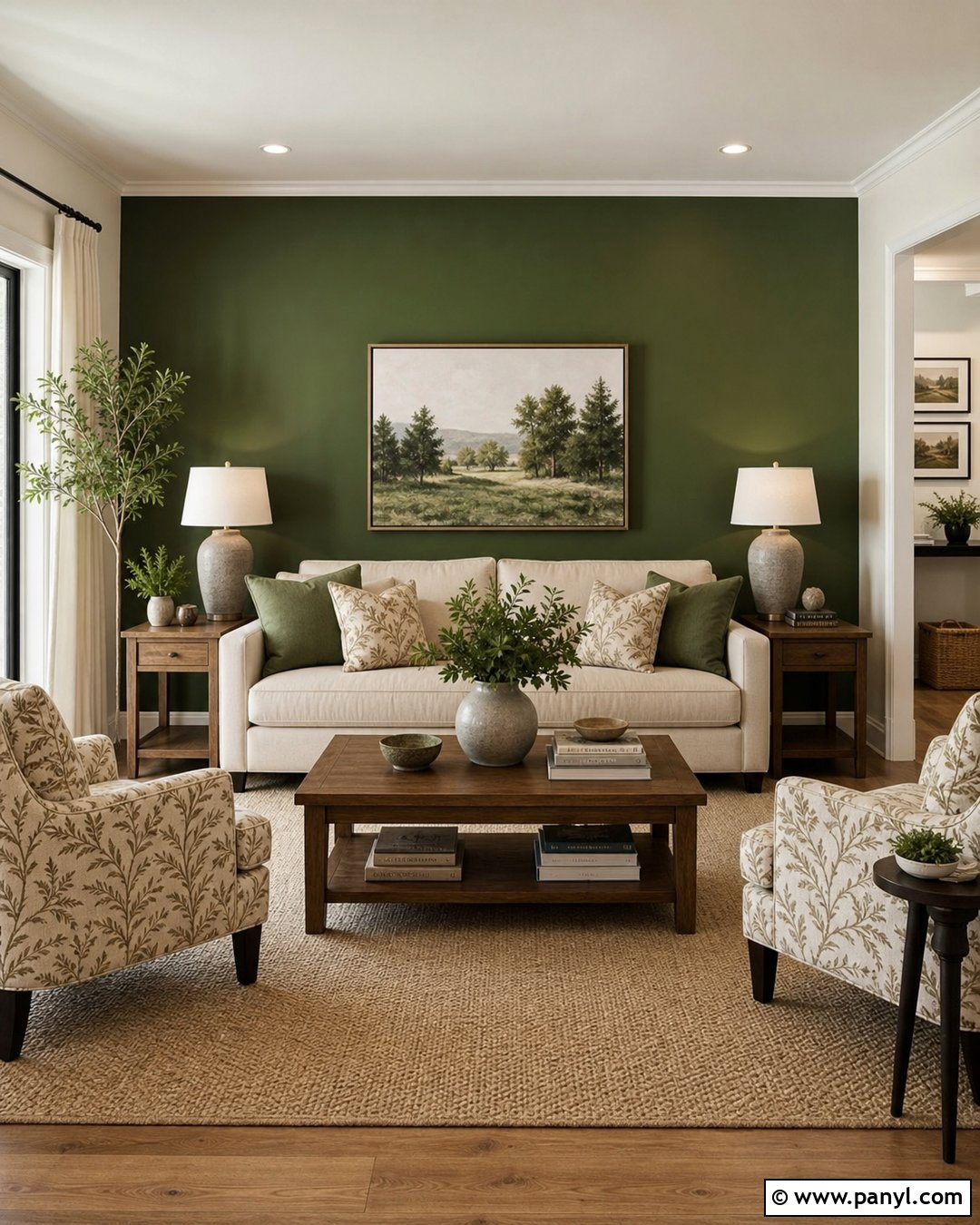
A green accent wall works best when it supports a clear furniture arrangement instead of appearing randomly selected. Paint the wall behind the sofa in a rich moss or fern green, then use warm off-white on the remaining walls. Center a light beige sofa against the green and flank it with wood side tables and matching lamps. Add two patterned chairs that combine green, cream, and rust to connect both sides of the room. A large landscape print provides scale above the sofa. Finish with an oak coffee table, textured neutral rug, and linen curtains. Repeating the green in small cushions and ceramics makes the feature wall feel integrated into the complete design.
16. Green Fireplace Wall
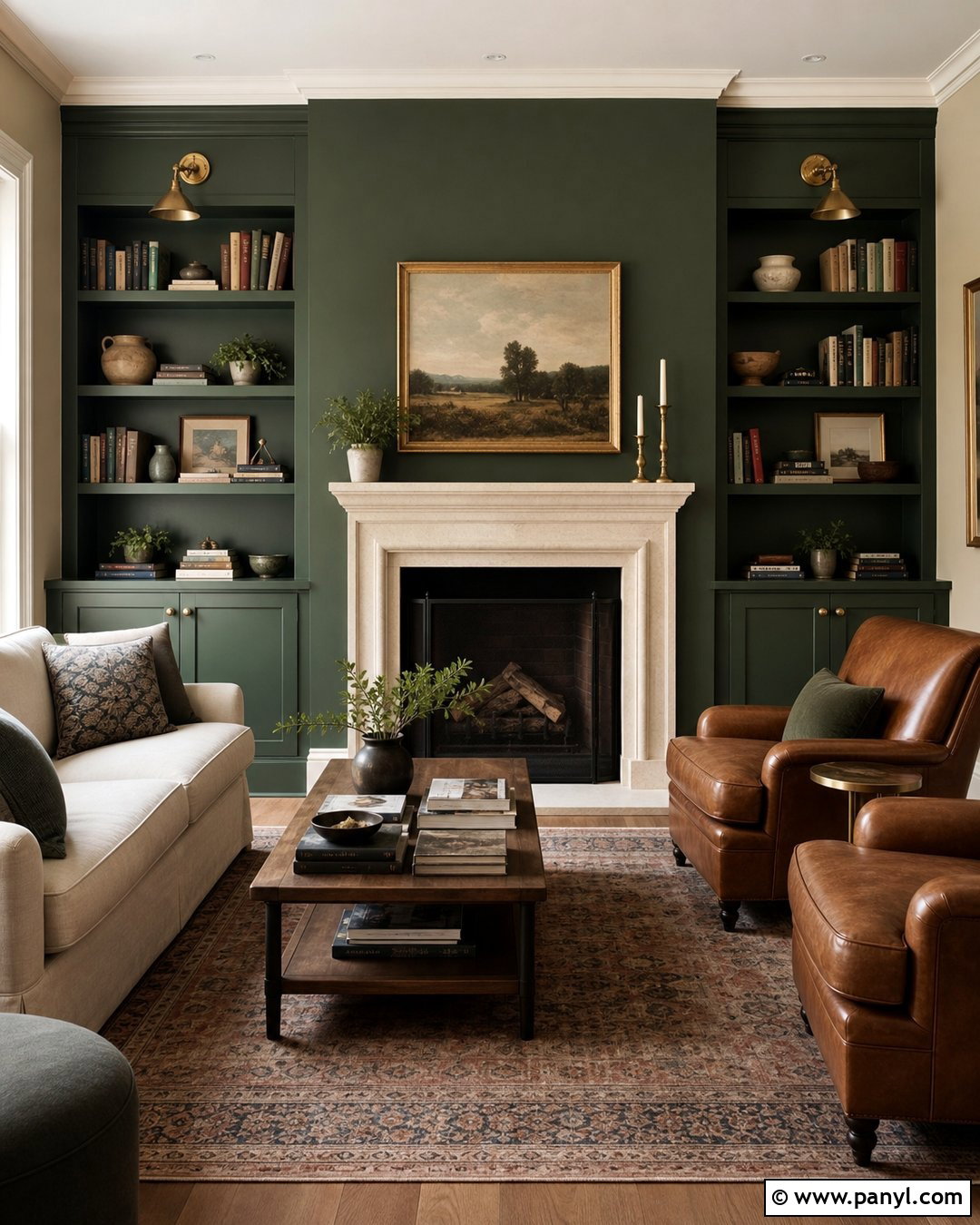
Give a fireplace greater presence by painting the entire chimney breast and surrounding built-ins a deep, earthy green. A simple limestone or warm white mantel creates contrast without overwhelming the architectural feature. Arrange a cream sofa and two cognac leather chairs around a rectangular wood coffee table, keeping the fireplace as the room’s focal point. Shelves should display books, pottery, and small framed art with comfortable open space between objects. Use a faded Persian-style rug to bring together green, rust, tan, and blue. Brass sconces above the shelves provide warm layered lighting. The remaining walls can be soft beige, allowing the green fireplace composition to appear intentional and substantial.
17. Green Wall Paneling
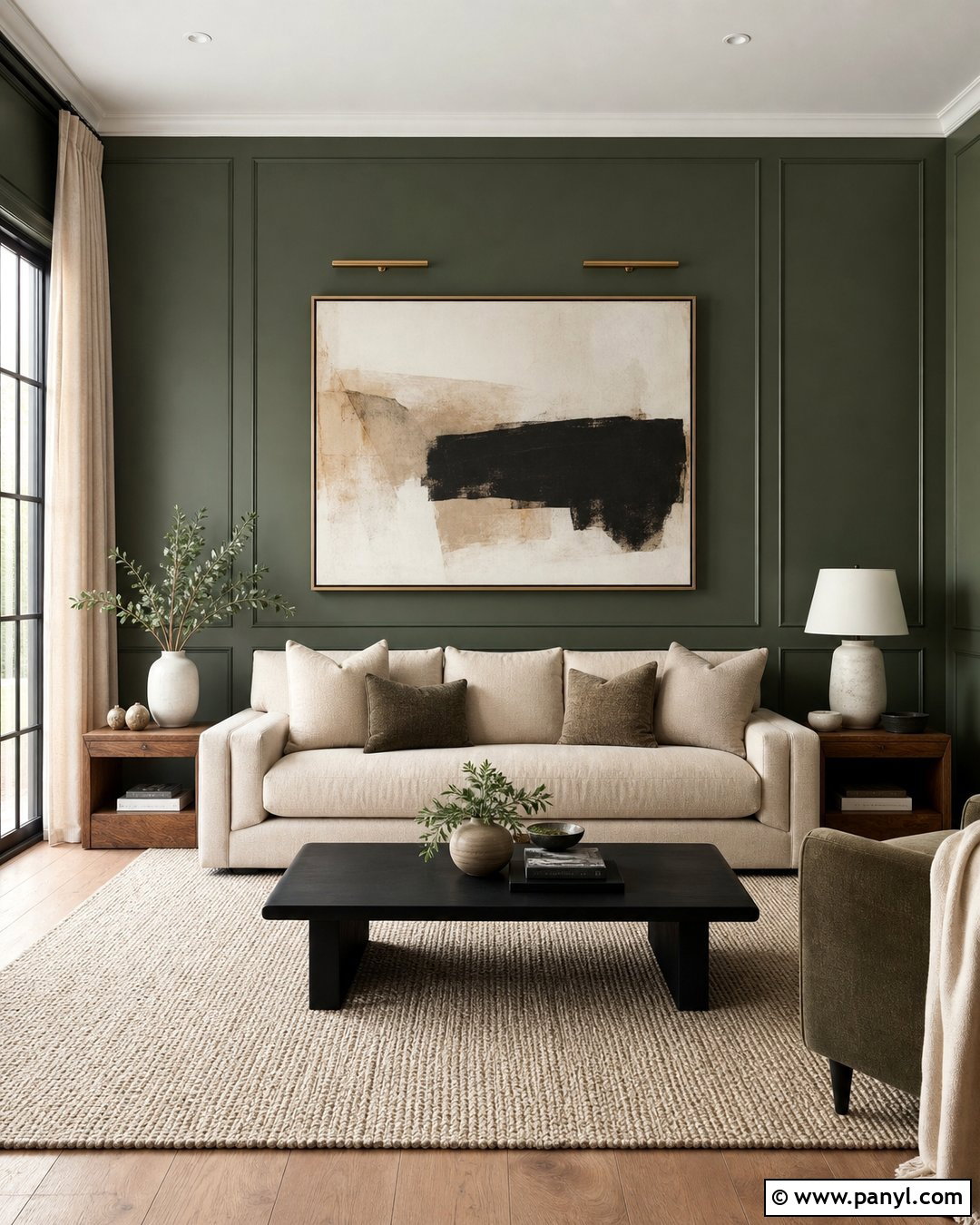
Green wall paneling adds architectural depth to a room through shadow lines, texture, and consistent color. Install simple rectangular molding or full-height shaker panels, then paint every surface in a muted eucalyptus green. Pair this backdrop with an oatmeal sofa, walnut side tables, and a low black coffee table for balanced modern contrast. A wool rug in cream and taupe softens the arrangement. Hang one large abstract artwork rather than several small pieces so the panel proportions remain visible. Linen drapes, brass picture lights, and ceramics in off-white complete the room. Matching the panels, baseboards, and door casing creates a built-in appearance that looks more polished than contrasting trim.
18. Sage Green Bedroom With Pink Accents
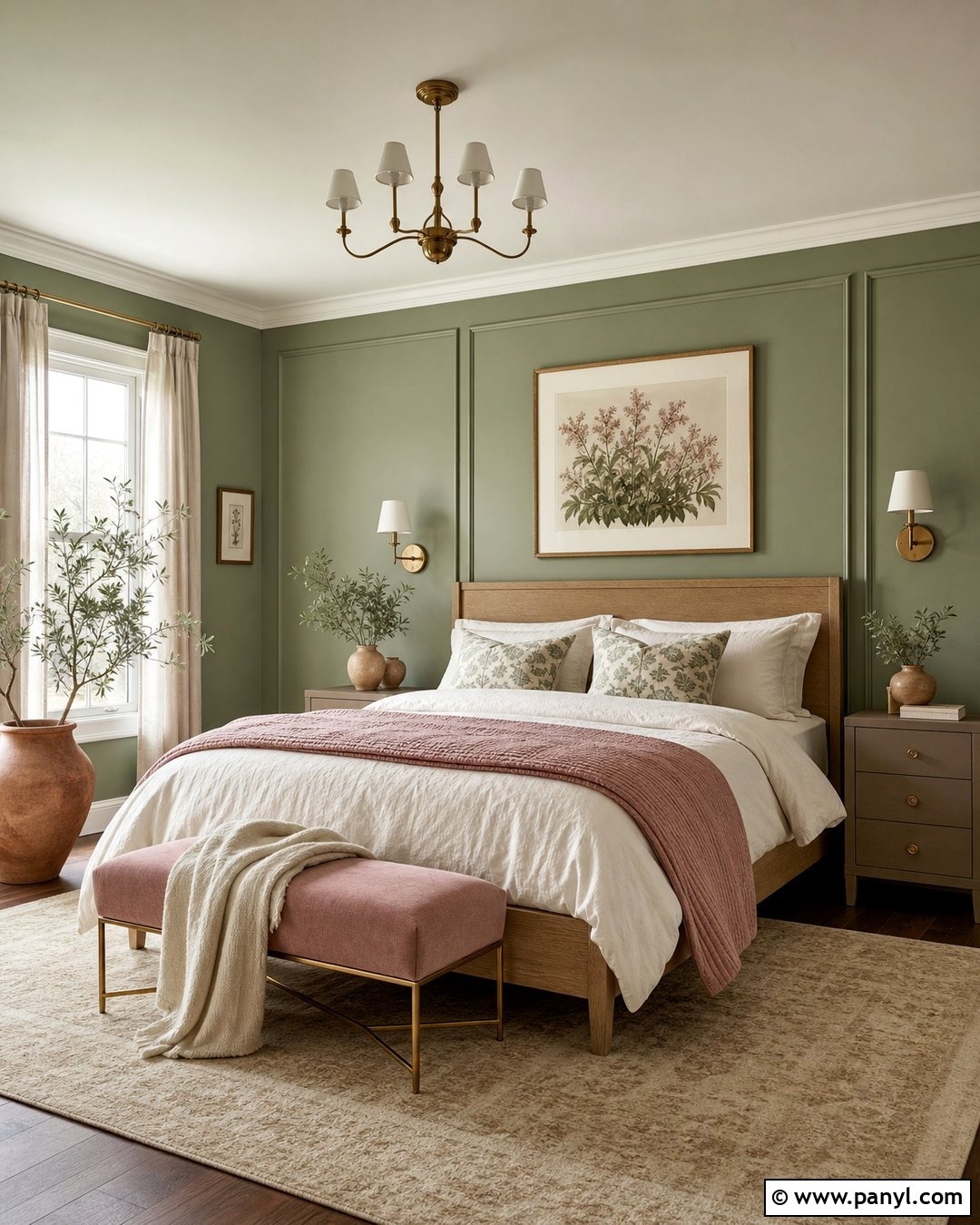
Sage green walls and muted pink furnishings can create a bedroom that feels grown-up, warm, and quietly colorful. Start with a natural oak bed and layer it with ivory bedding, a dusty rose quilt, and sage-patterned pillows. Add mushroom-colored nightstands or small vintage wood tables to avoid making the palette too sweet. A cream wool rug and linen curtains provide a calm neutral foundation. Use aged brass sconces, terracotta pottery, and botanical artwork to connect the pink and green through earthy undertones. Keep the ceiling and trim soft ivory. A blush upholstered bench at the foot of the bed adds practical seating while completing the coordinated, restful arrangement.
19. Olive Green Living Room With Terracotta
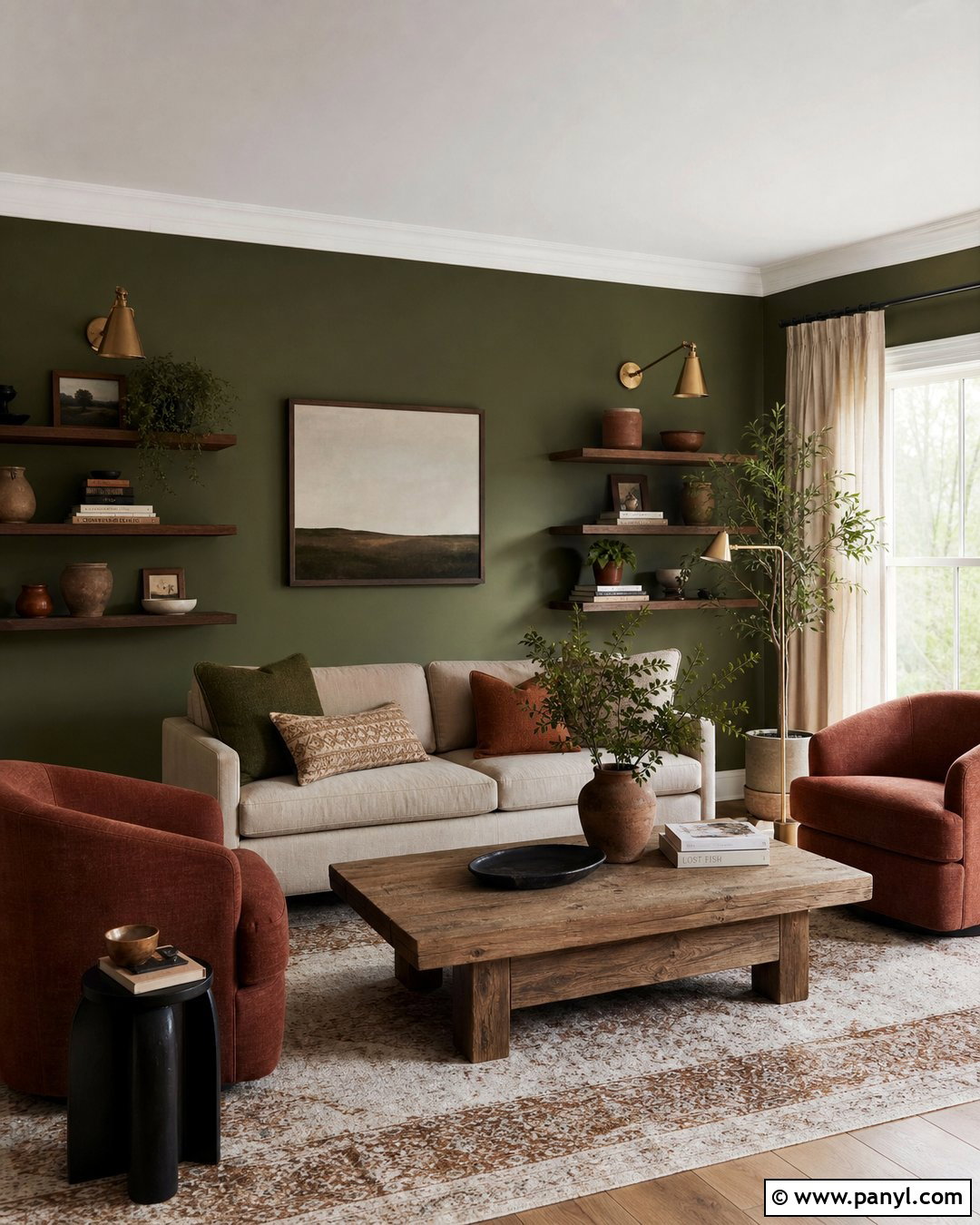
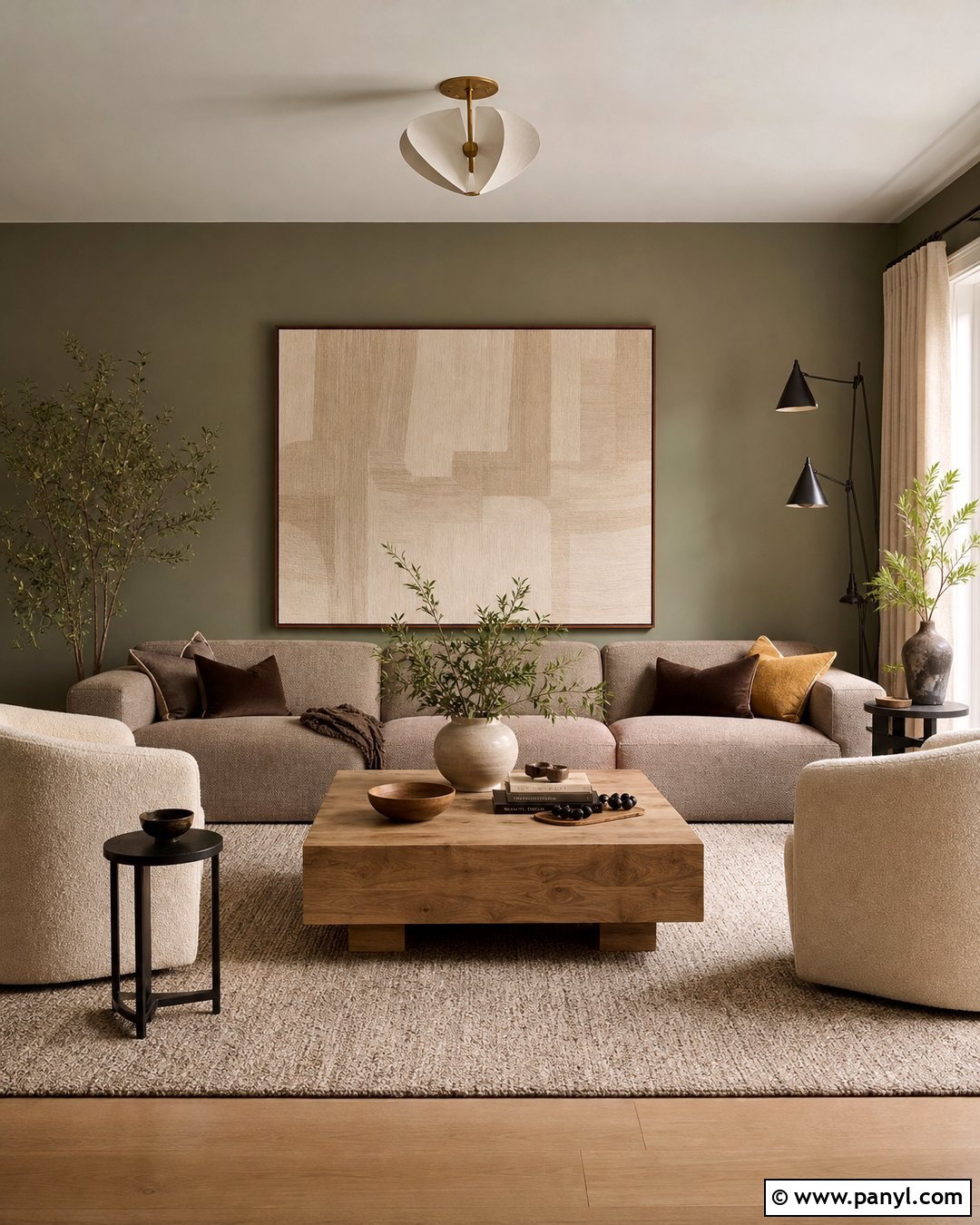
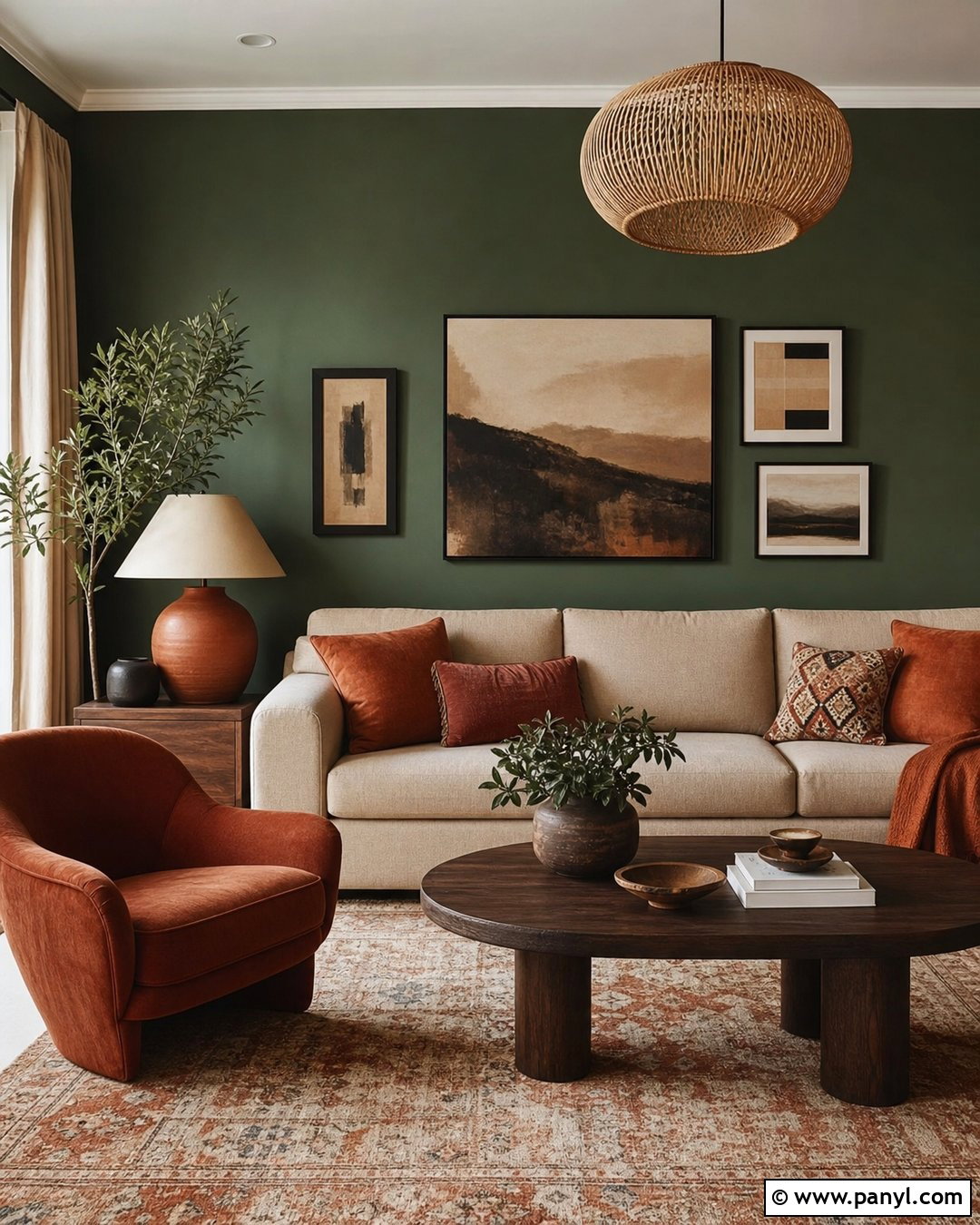
Warm terracotta brings out the earthy side of olive green walls and creates a sociable living room with plenty of character. Choose a sand-colored sofa, then add two rust or clay-toned lounge chairs facing it. A substantial oak coffee table and a cream-and-brown rug keep the strongest colors grounded. Use terracotta through cushions, pottery, and artwork rather than spreading identical orange accents everywhere. Walnut shelving and aged brass lamps add another warm layer. For the windows, select plain oatmeal curtains that allow the paint and furniture to remain central. A few dark green plants will deepen the nature-inspired palette, while black details offer enough structure to prevent the space from feeling overly rustic.
20. Forest Green Living Room With Leather Sofa
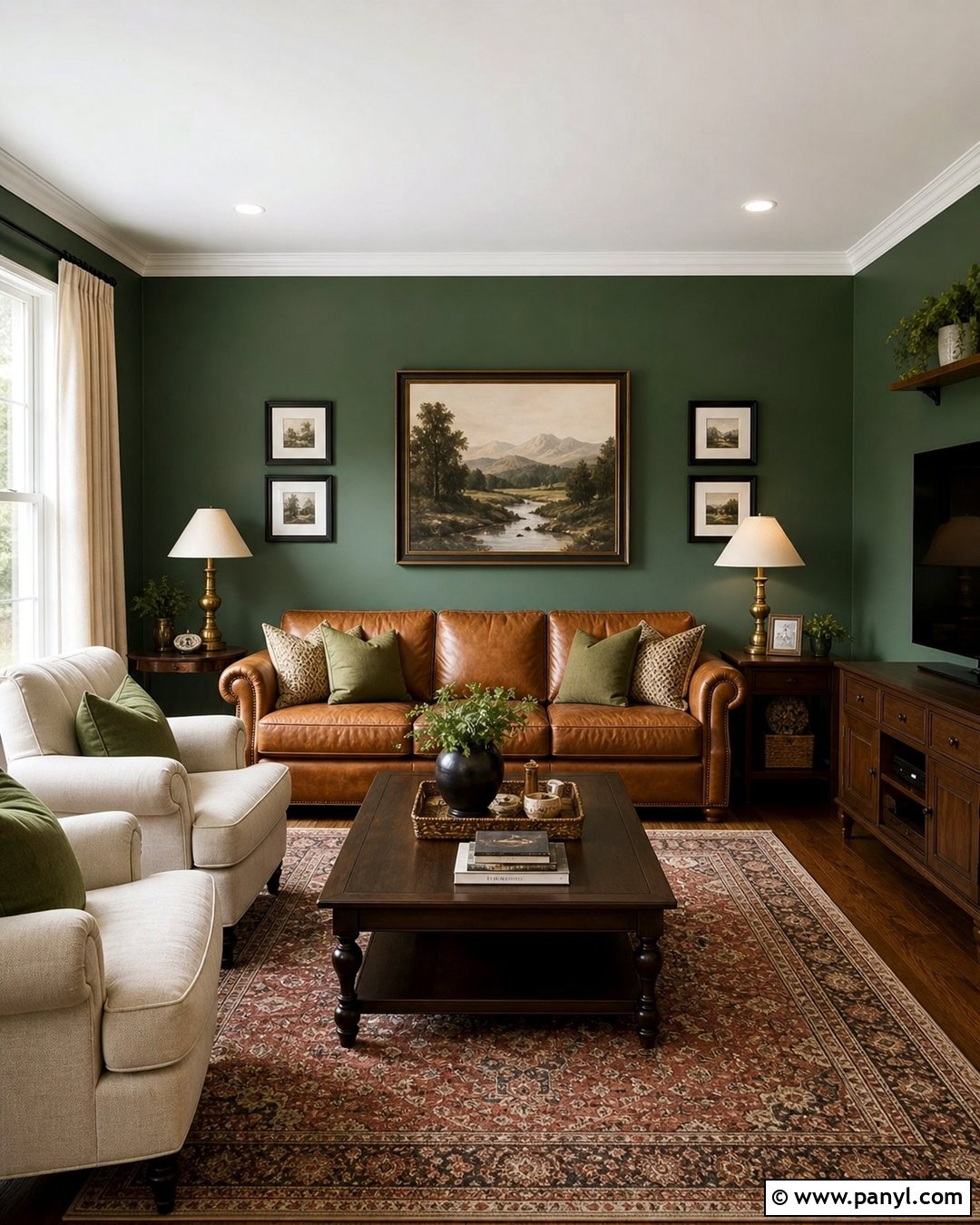
A caramel leather sofa stands out against forest green walls while sharing the same warm, natural character. Build the living room around this contrast with two cream armchairs, a dark wood coffee table, and a large traditional rug containing burgundy, tan, and faded blue. Full-length neutral curtains soften the windows and brighten the deeper backdrop. Use brass table lamps and black metal picture frames in controlled amounts. A wood media cabinet or low bookcase provides closed storage without introducing another painted finish. Finish with woven cushions, a wool throw, ceramic vessels, and landscape artwork. This combination creates a grounded, durable room that can handle everyday use while still feeling thoughtfully decorated.
21. Emerald Green Living Room With Velvet Sofa
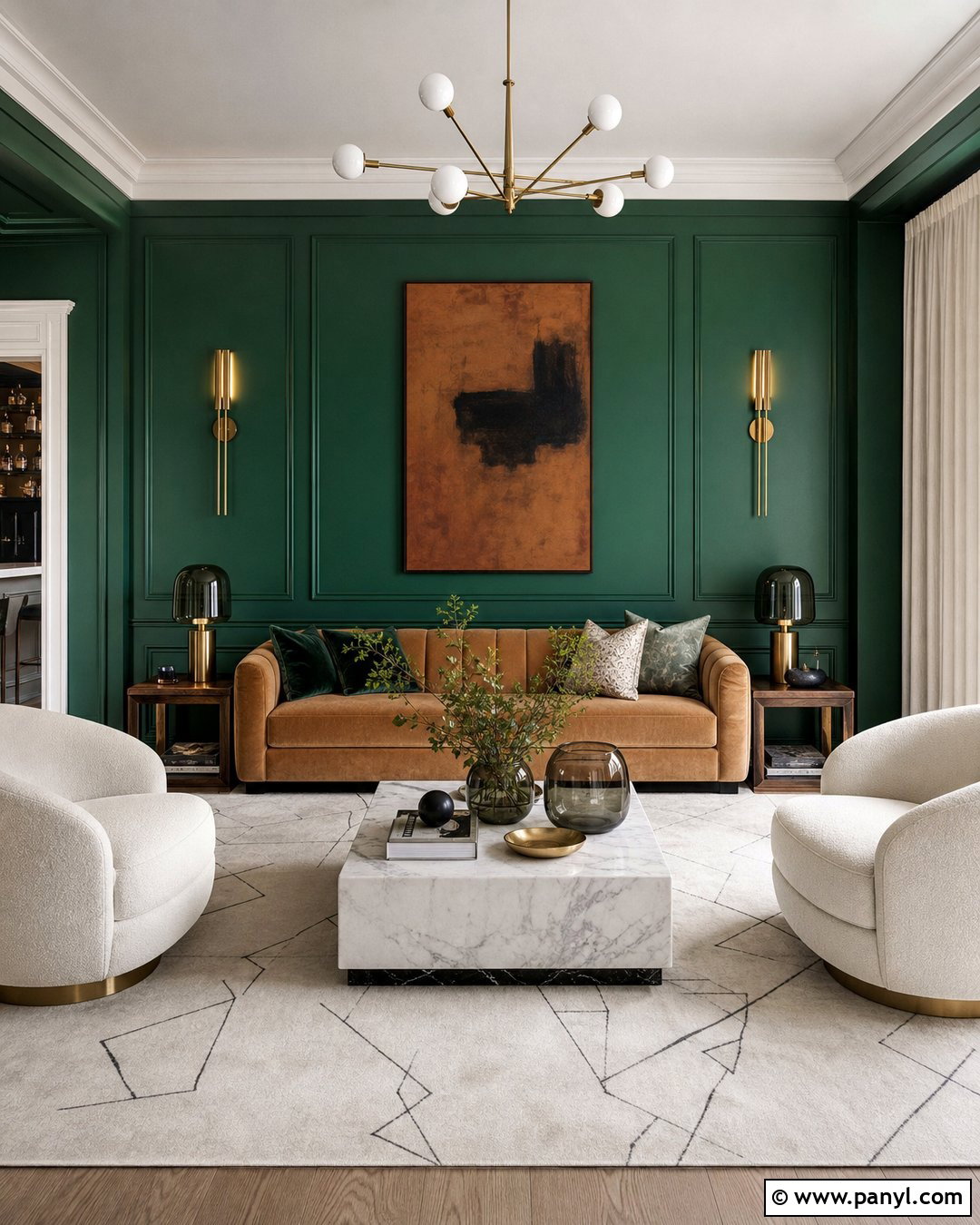
Emerald green walls can support a luxurious living room when the furnishings remain streamlined and comfortable. Select a camel or warm beige velvet sofa rather than matching green upholstery, then place two sculptural cream chairs opposite it. A marble-topped coffee table with a dark base introduces a cooler polished material. Ground everything with a large rug in ivory, charcoal, and muted gold. Brass sconces and a modern chandelier reinforce the jewel-toned atmosphere without making it excessive. Hang bold abstract artwork containing cream and rust for contrast. Walnut side tables, lined curtains, and a few smoked-glass accessories create a complete room that feels glamorous while staying practical for regular living.
22. Mint Green Bedroom With White Furniture
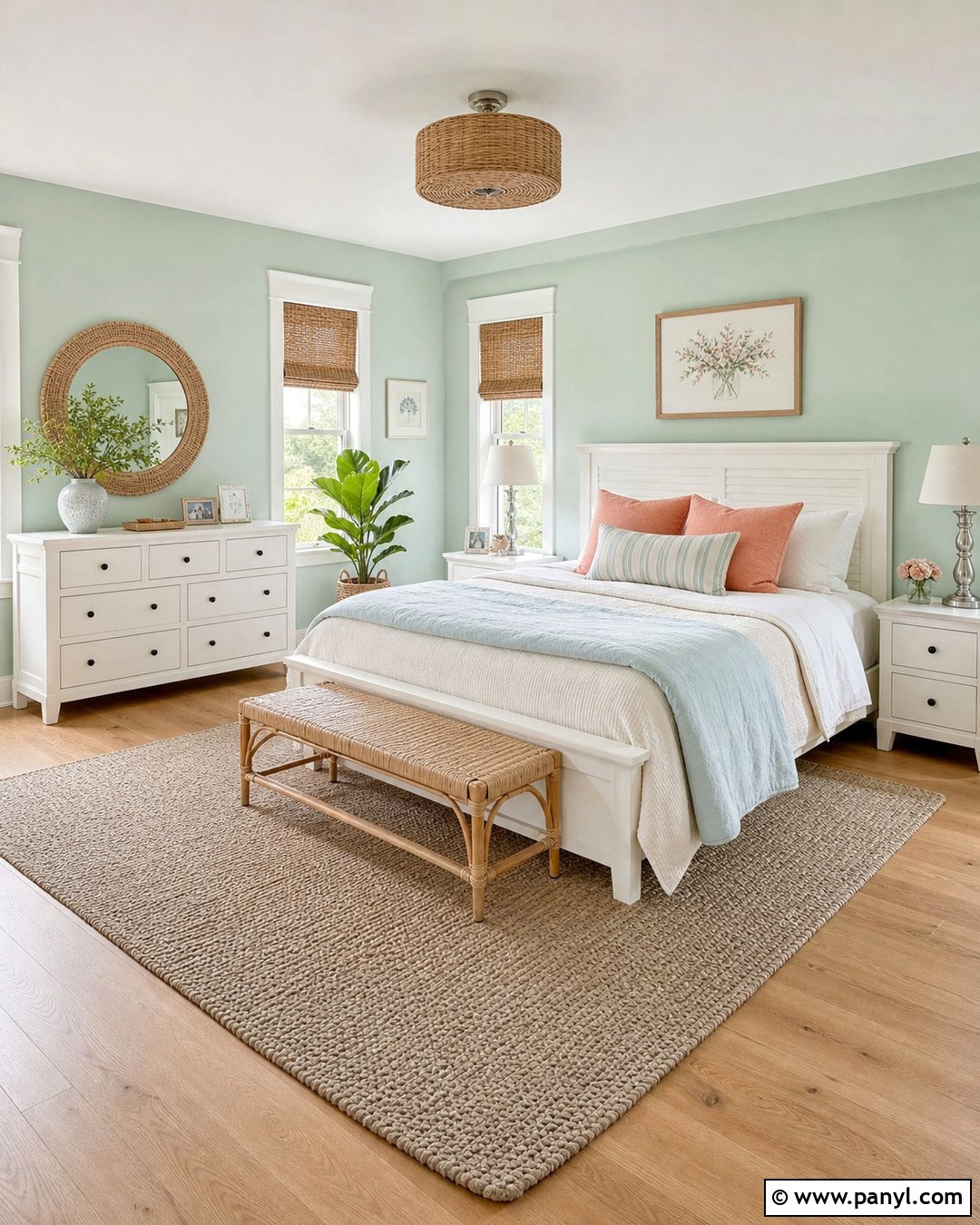
Mint green walls and white furniture create an airy bedroom, but warmer textures are needed to keep the space from feeling cold. Choose a simple white-painted bed, dresser, and nightstands with clean lines. Add ivory bedding, a pale blue quilt, and small peach cushions for gentle variation. Natural woven shades, a jute-blend rug, and rattan details bring warmth into the pastel setting. Use brushed nickel lamps for a fresh finish and hang light wood frames above the bed. Keep decorative objects limited to a ceramic vase, books, and one plant. Light oak flooring and soft white trim complete this bright scheme, which works especially well in compact bedrooms with good daylight.
23. Dark Green Bedroom With Wood Furniture
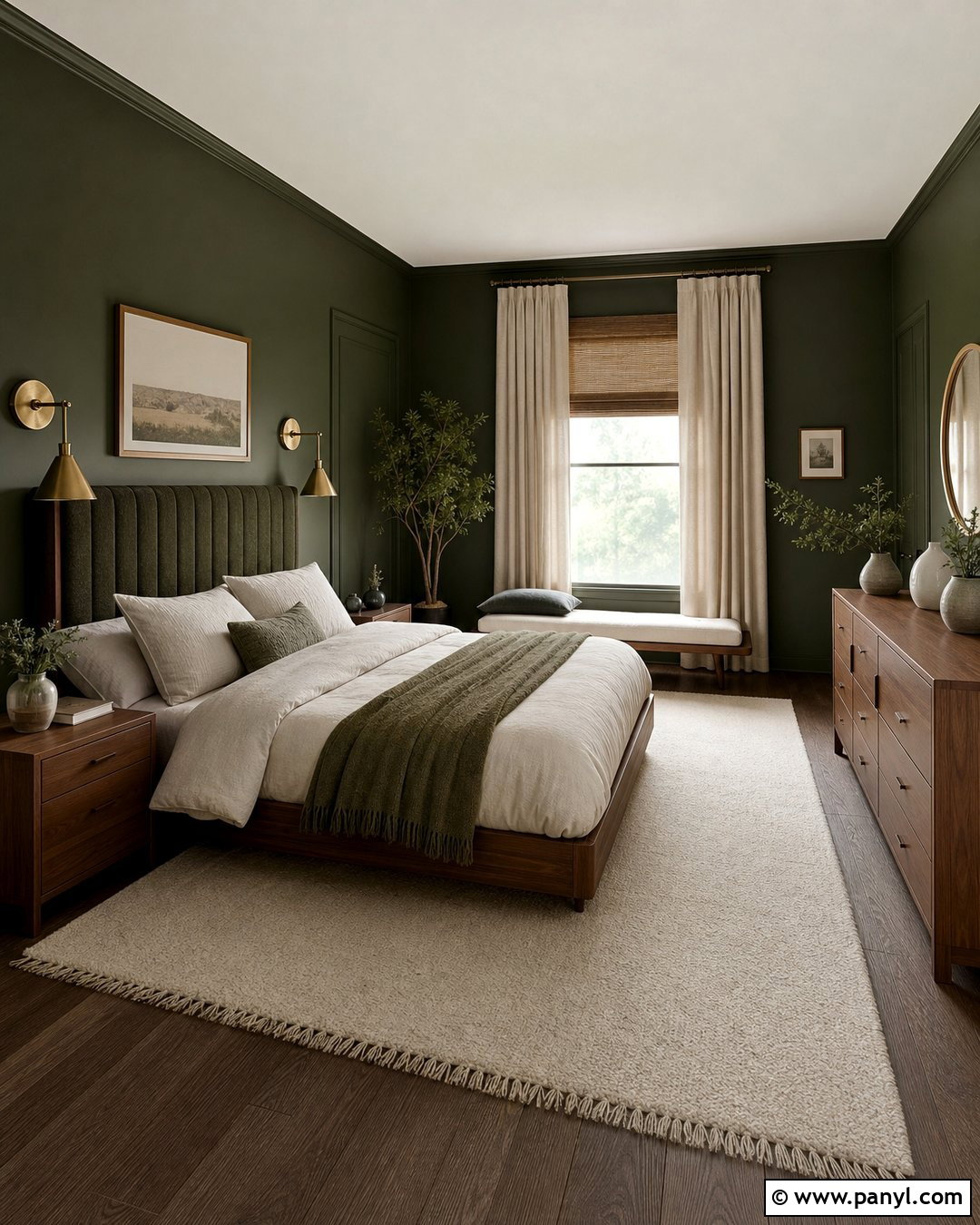
Dark green walls create a cocooning bedroom when paired with wood furniture and generous pale textiles. Use a walnut platform bed with a tall upholstered headboard, then add matching nightstands and a low dresser. White sheets, an oatmeal duvet, and a moss-colored blanket make the bed feel light against the walls. Choose warm brass reading sconces and a large cream rug to soften both the green paint and dark furniture. Mushroom linen curtains provide privacy without producing harsh contrast. Minimal framed artwork, one bench, and a few ceramic accessories keep the design restful. If the room lacks strong daylight, leave the ceiling warm white and provide several lighting sources at different heights.
24. Green Kitchen Walls With Wood Cabinets
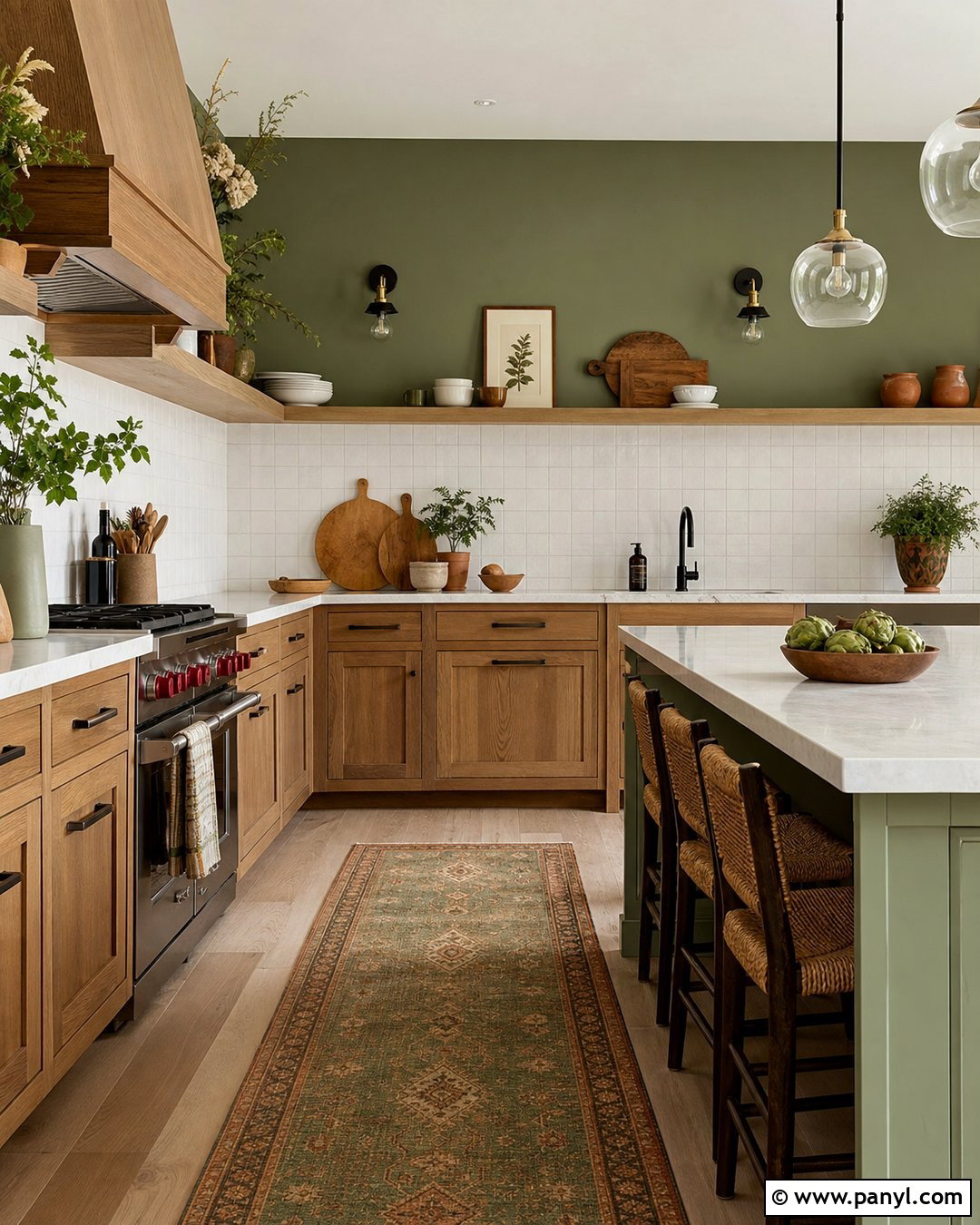
Green walls can update a kitchen with natural wood cabinets while preserving their warmth and texture. Choose a soft fern or muted sage paint that complements oak rather than competing with it. Add creamy quartz counters and a simple off-white tile backsplash to reflect light. Matte black cabinet pulls and faucet hardware introduce definition, while woven counter stools reinforce the relaxed organic palette. Use glass pendant lights over the island and warm under-cabinet lighting for practical brightness. Accessories should include wood boards, white stoneware, and a few terracotta pieces. A washable runner in green, beige, and rust connects the work zones and makes the finished kitchen feel layered, functional, and welcoming.
25. Dark Green Kitchen Walls With White Cabinets
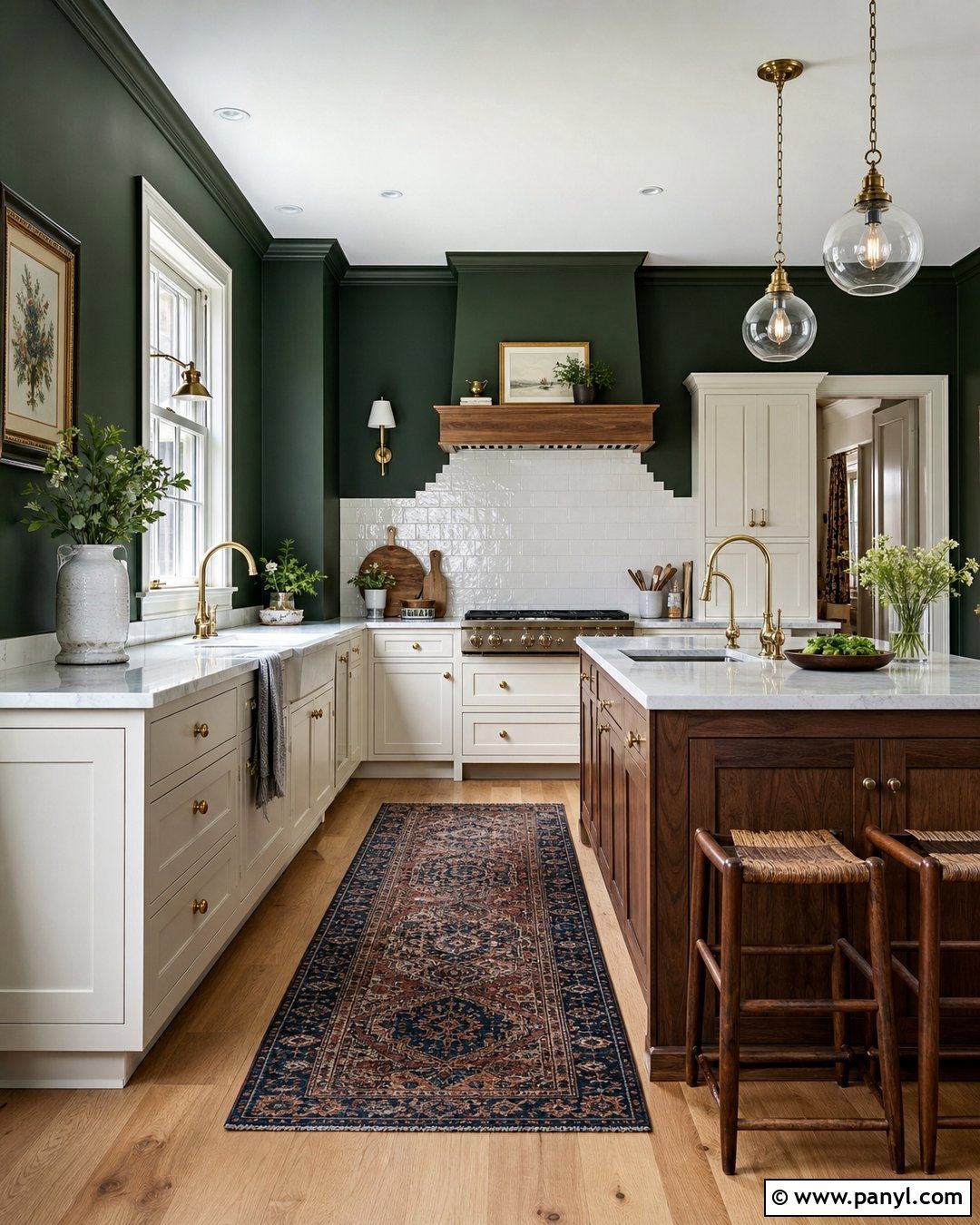
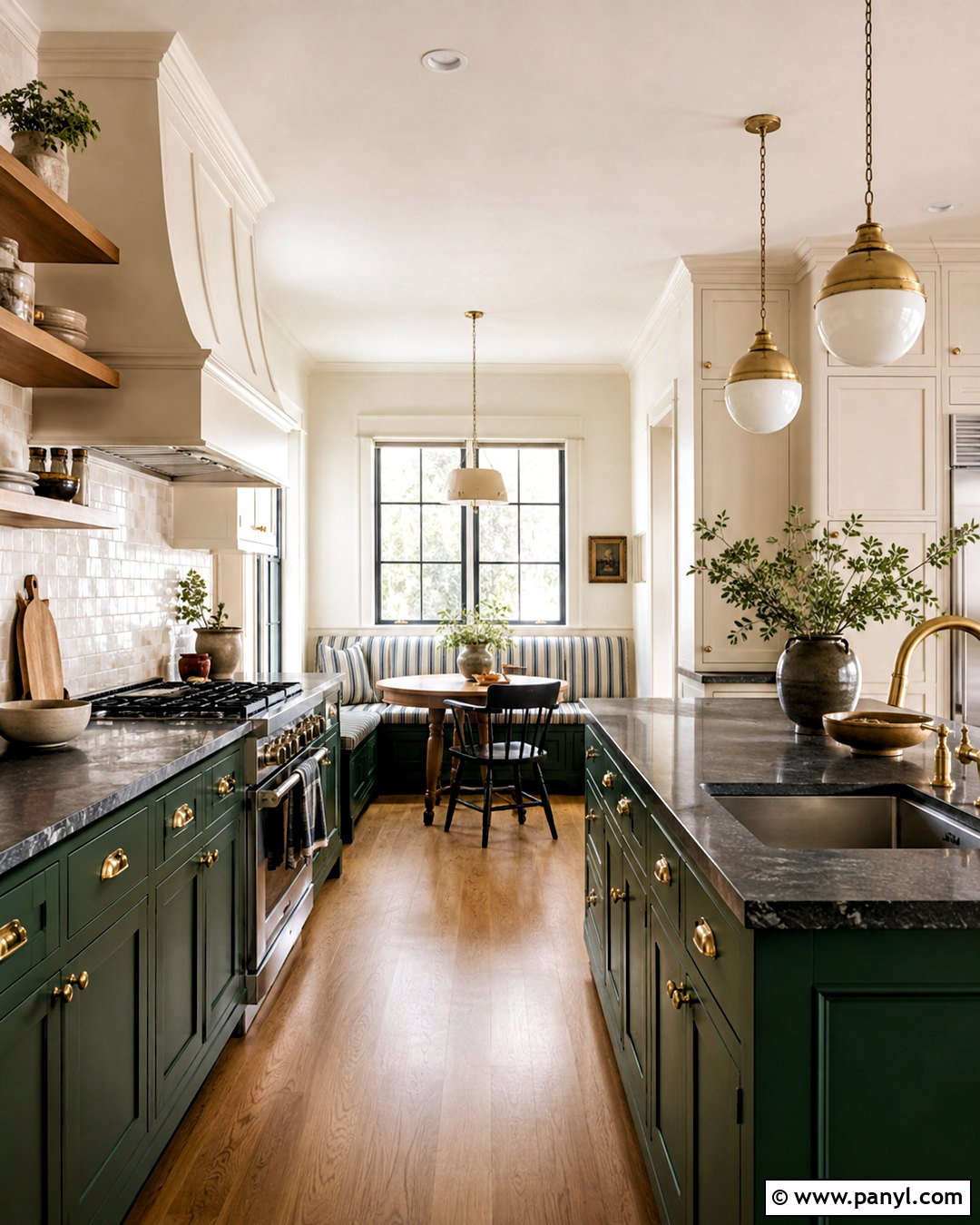
Deep green walls give white kitchen cabinets stronger definition and a more custom appearance. Select a warm forest shade, creamy white cabinetry, brushed brass pulls, and pale stone counters. Continue a handmade white tile backsplash behind the range so light moves around the darker room. A walnut island or wood counter stools can bridge the contrast between the walls and cabinets. Choose brass-and-glass pendants with clean silhouettes instead of oversized fixtures. Oak flooring adds warmth underfoot, while a patterned runner introduces rust or navy in a controlled way. Keep countertop accessories simple and useful. This balanced arrangement allows the green to look dramatic without sacrificing the kitchen’s bright, practical character.
26. Sage Green Dining Room With Oak Table
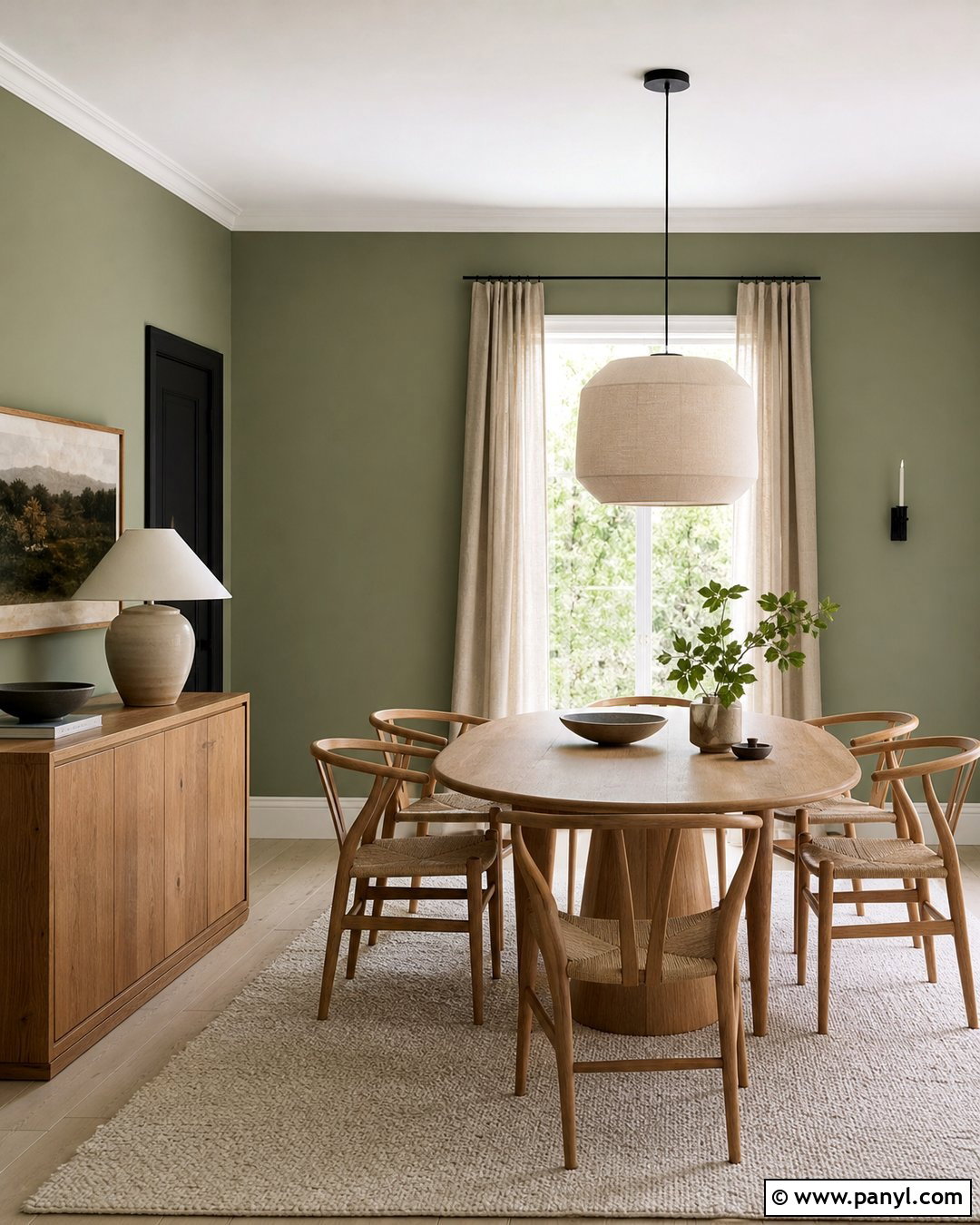
Sage green walls form a calm background for a casual dining room centered on natural oak. Choose a large oval table with simple legs and surround it with woven-seat chairs or upholstered beige chairs. A cream wool rug helps define the dining zone, while a linen pendant softens the light overhead. Install a low oak sideboard for closed storage and display one ceramic lamp, serving bowls, and a framed landscape. Flax curtains and warm white trim preserve the room’s gentle appearance. Add contrast through black curtain rods, chair details, or a slim picture frame. The overall design feels fresh and approachable, making it suitable for both everyday meals and relaxed gatherings.
27. Green Dining Room With Black Furniture
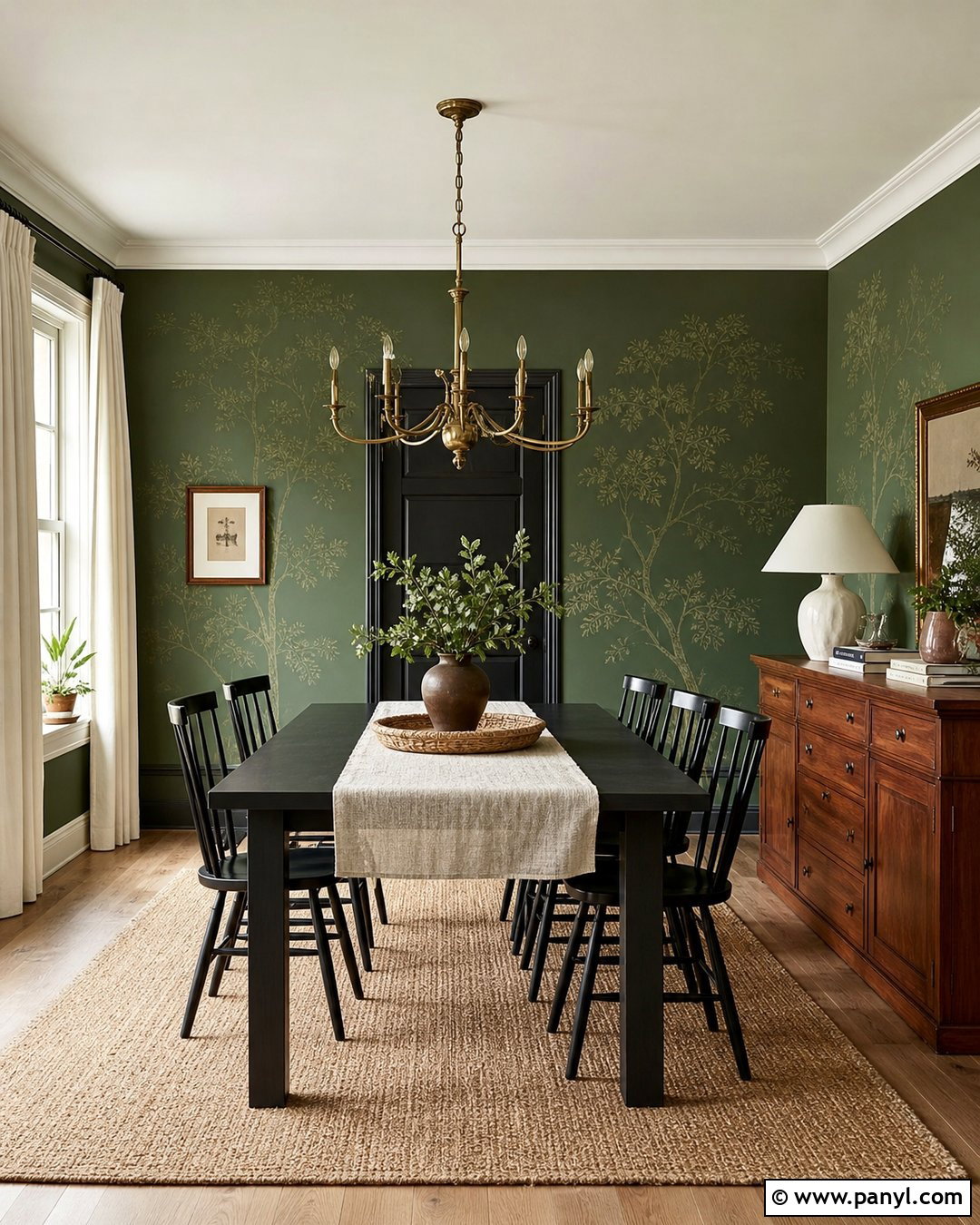
Green walls and black furniture create a strong dining room when warm materials prevent the palette from feeling severe. Paint the walls a medium botanical green, then use a black rectangular table and black spindle-back chairs as the central arrangement. Introduce a natural fiber rug, cream curtains, and a warm wood sideboard to soften the contrast. Above the table, hang an aged brass chandelier with simple curved arms. Framed art can incorporate tan, ivory, and subdued red to add personality. Use off-white trim and a warm white ceiling for balance. A ceramic table lamp, woven serving tray, and linen table runner complete the space without weakening the confident black-and-green foundation.
28. Green Home Office With Built-In Shelves
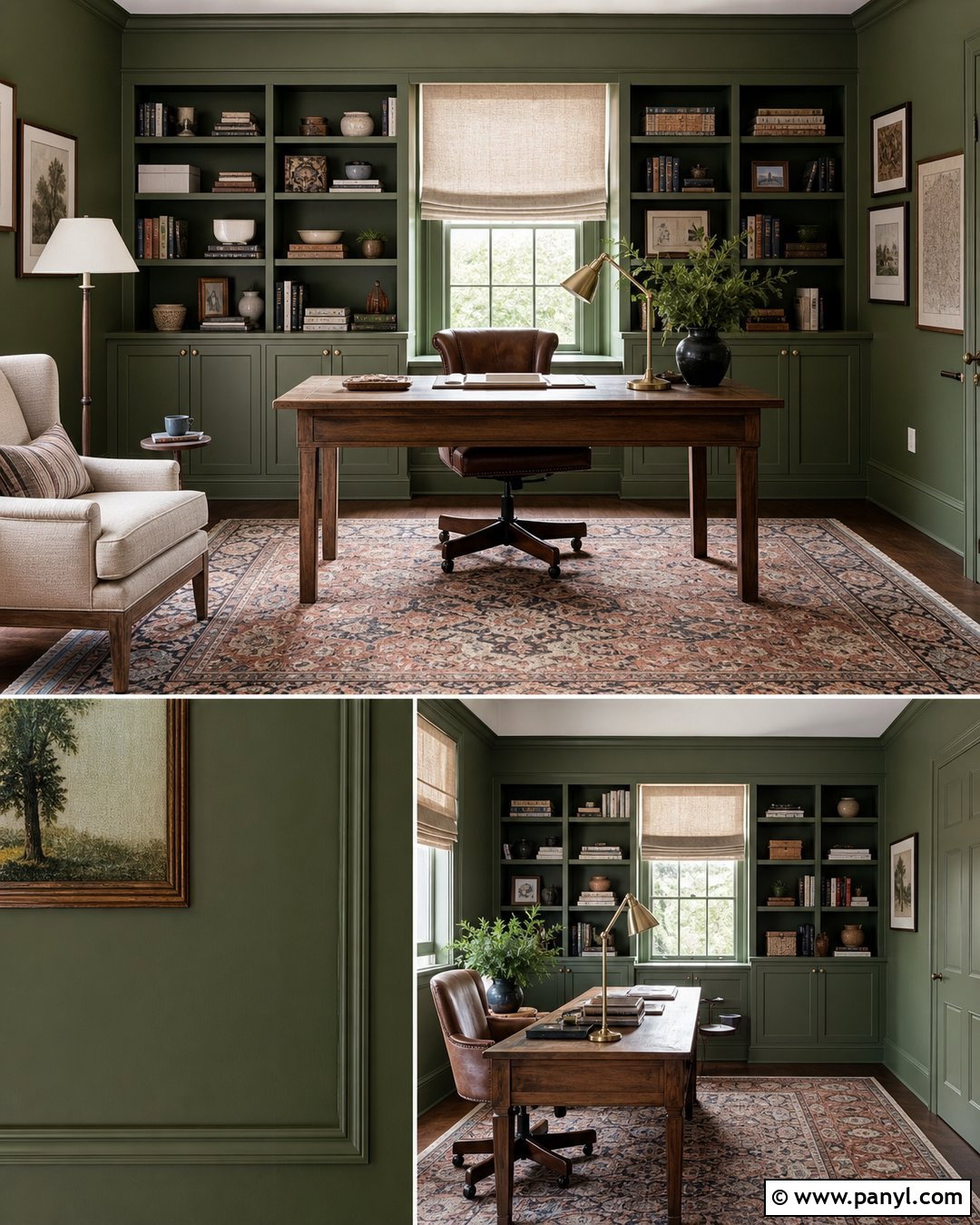
A wall of green built-in shelves can make a home office feel organized and architecturally complete. Paint the cabinetry and surrounding walls in the same medium moss shade, using a durable satin finish on shelves and trim. Position an oak desk in front of the built-ins with a comfortable brown leather chair. Closed lower cabinets conceal equipment and paperwork, while upper shelves hold books, storage boxes, art, and a few sculptural objects. A patterned wool rug, linen Roman shade, and brass desk lamp introduce warmth. Add a small reading chair if space allows. Keeping accessories within a limited cream, brown, black, and green palette produces a calm workspace with minimal visual distraction.
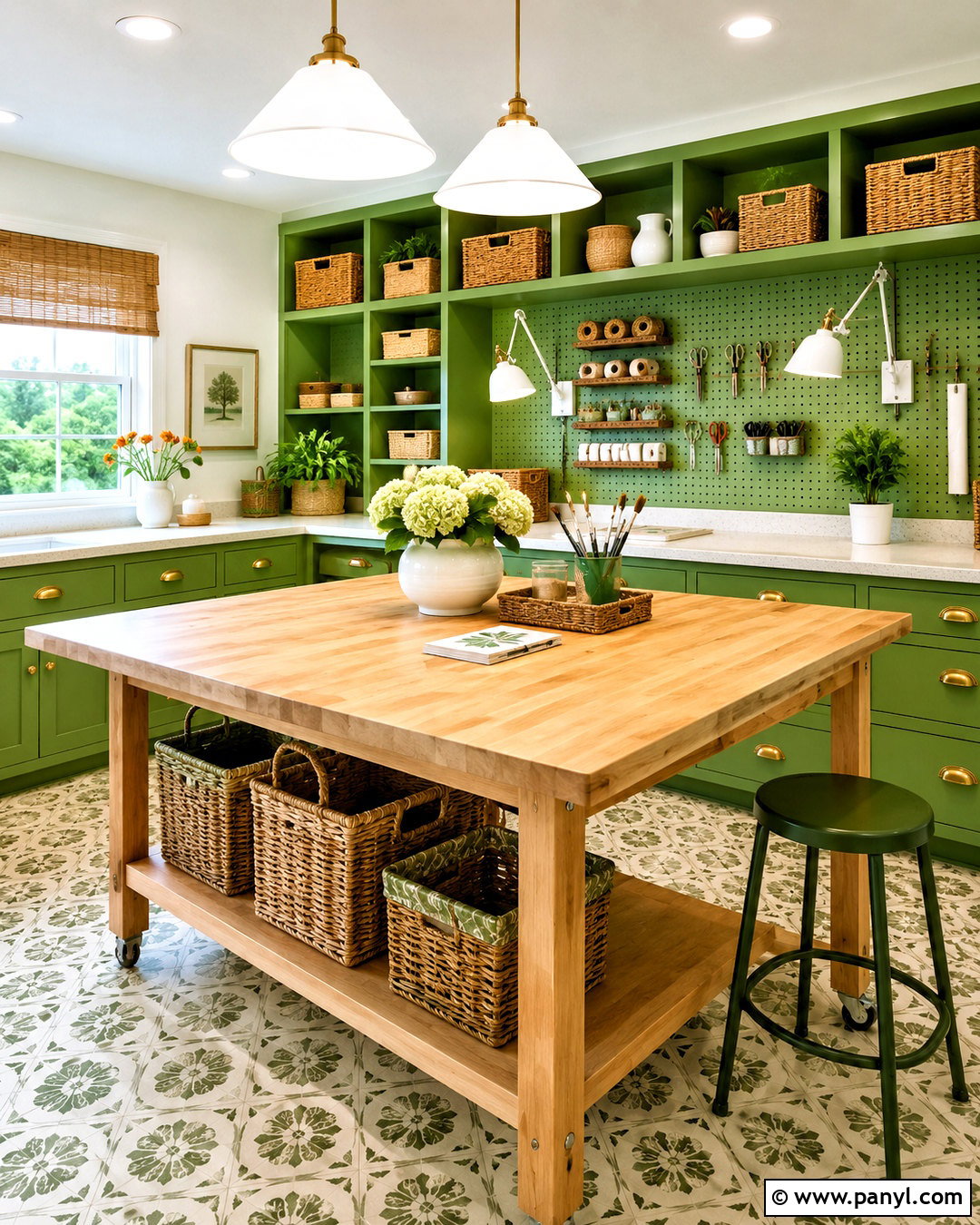
29. Soft Green Laundry Room Walls
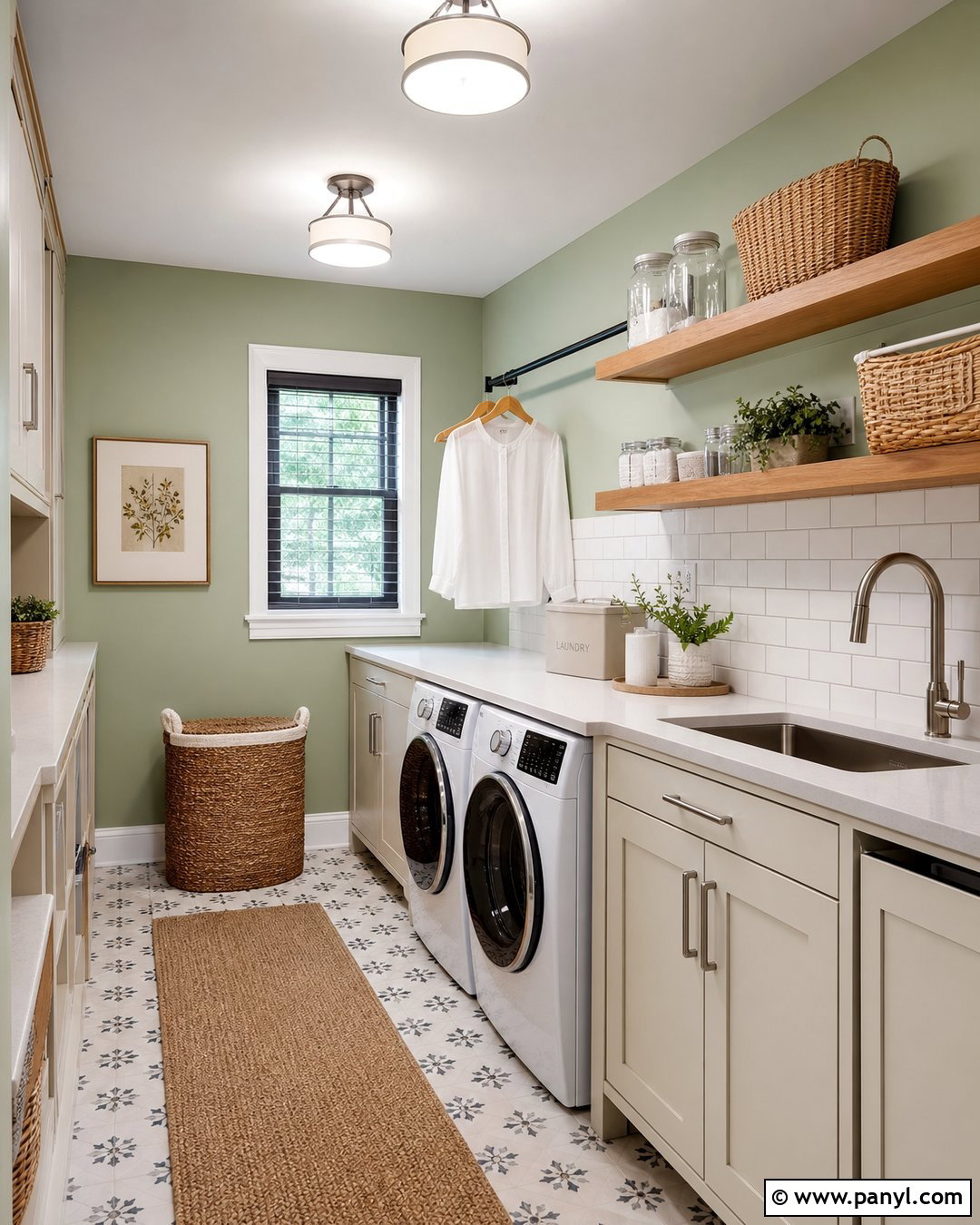
Soft green walls can make a hardworking laundry room feel cleaner, brighter, and more considered. Pair the color with warm white cabinets, a pale quartz folding counter, and a simple white tile backsplash. Install oak floating shelves above the counter for baskets, glass containers, and neatly folded linens. A patterned floor in cream and muted charcoal adds interest while disguising everyday marks. Brushed nickel hardware keeps the room fresh, and bright ceiling lighting ensures tasks remain easy to see. Include hanging space, concealed hampers, and wall hooks so the layout supports the actual laundry routine. One framed print and a small plant provide decoration without taking valuable space away from storage or work surfaces.
30. Olive Green Mudroom Walls
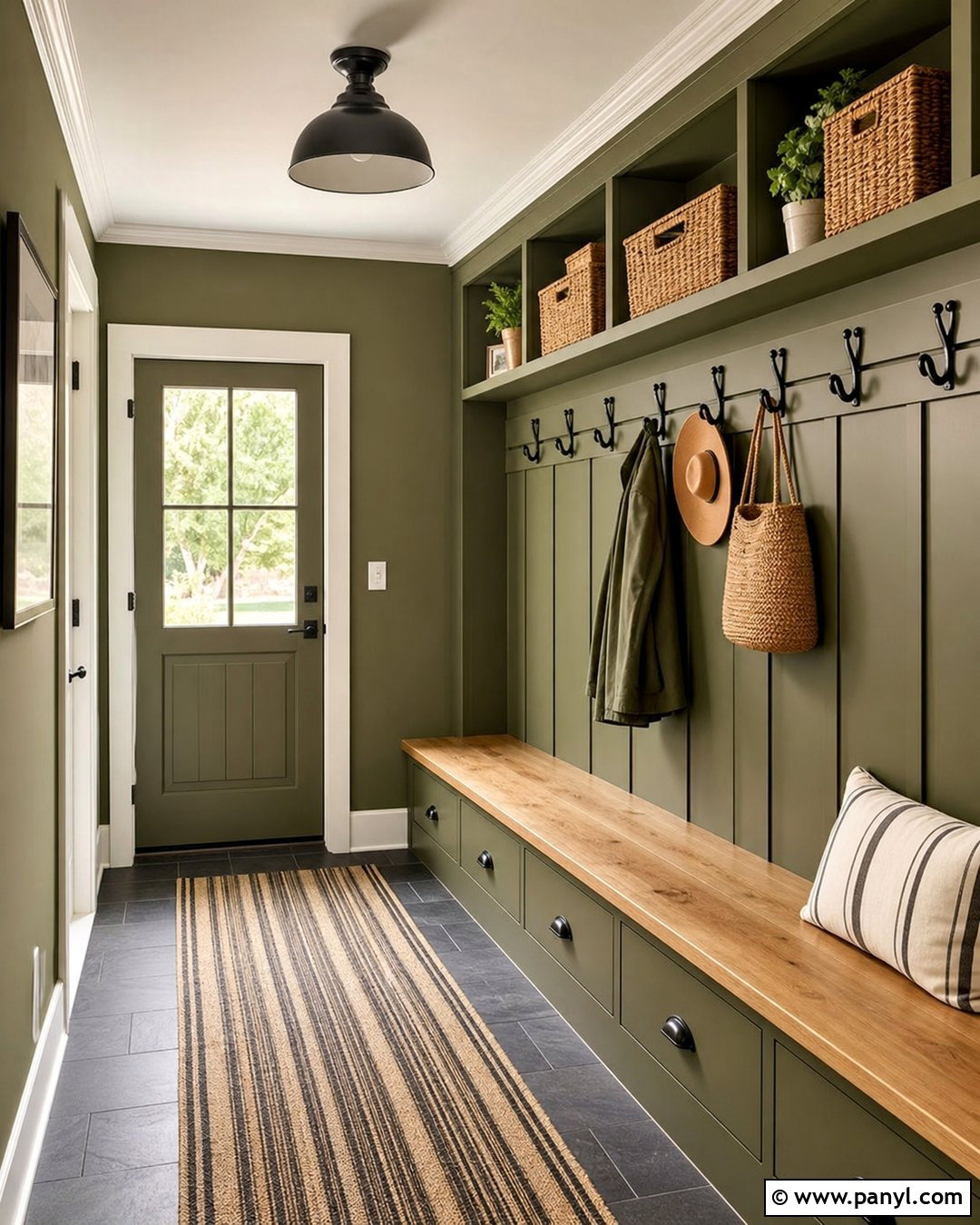
Olive green walls are practical and attractive in a mudroom because the earthy shade works naturally with durable materials. Install a long oak bench with drawers or shoe cubbies beneath it, then add black hooks and an upper shelf for bags and baskets. Use large slate-look floor tiles or brick flooring to handle frequent traffic. A striped indoor-outdoor runner in cream, brown, and green softens the walkway. Paint nearby cabinetry in the same olive for a unified built-in effect. Add warm white trim, a black metal ceiling light, and woven storage baskets. The finished mudroom should provide clear zones for shoes, coats, pet supplies, and seasonal accessories while maintaining an orderly appearance.
31. Green Hallway Walls With Gallery Art
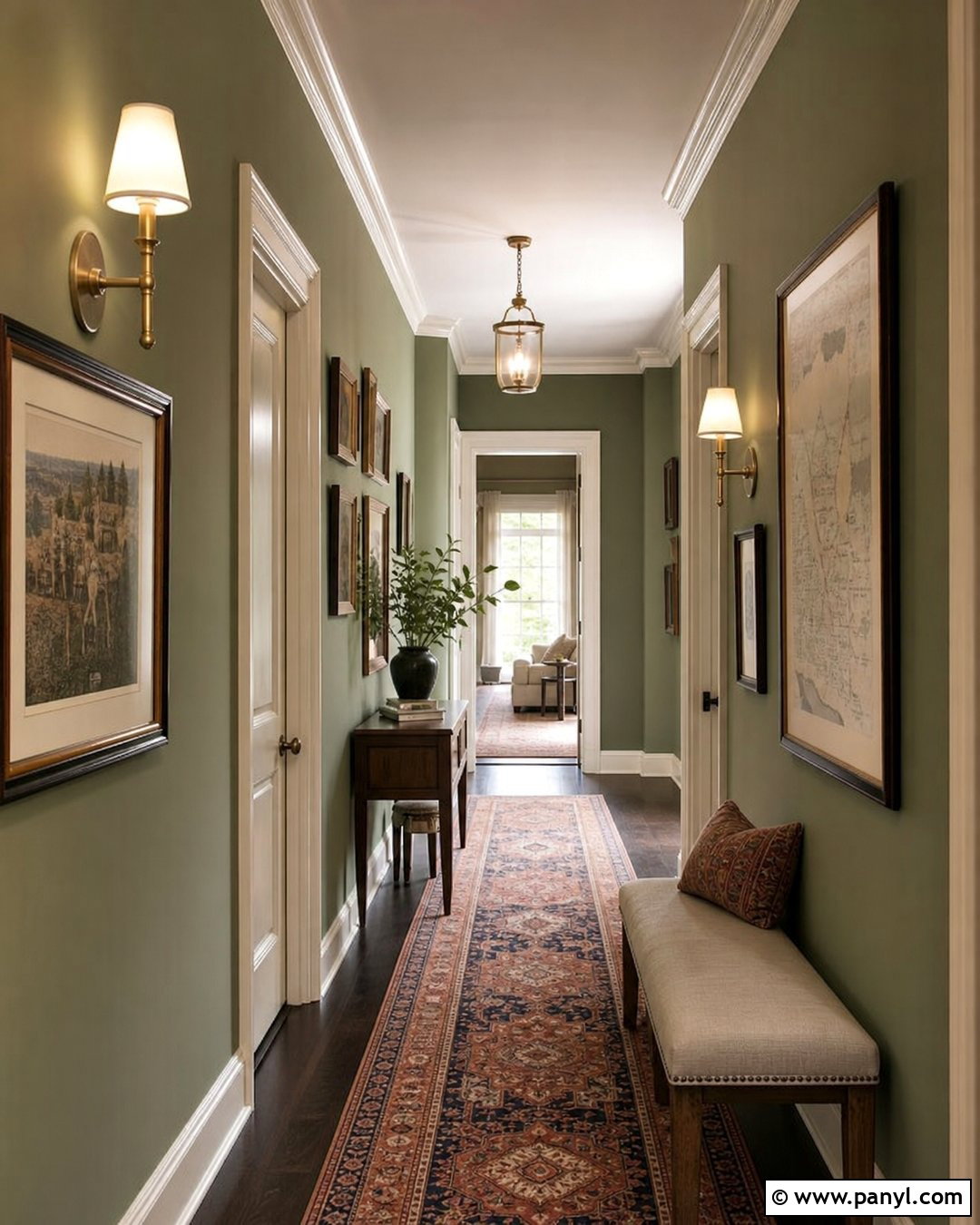
Green hallway walls can transform a pass-through area into a collected gallery without adding bulky furniture. Choose a muted medium green that supports artwork rather than overpowering it. Arrange frames in a consistent grid or balanced grouping, mixing warm wood, antique brass, and thin black finishes. Use cream mats to give each image breathing room. A narrow vintage runner adds rust, navy, and tan to the floor, while small wall sconces provide gentle illumination. If space permits, add a shallow console or upholstered bench at one end. Paint doors and trim in warm off-white for definition. Keeping the walking path open ensures the hallway remains useful while gaining visual depth and personality.
32. Two Tone Green Walls
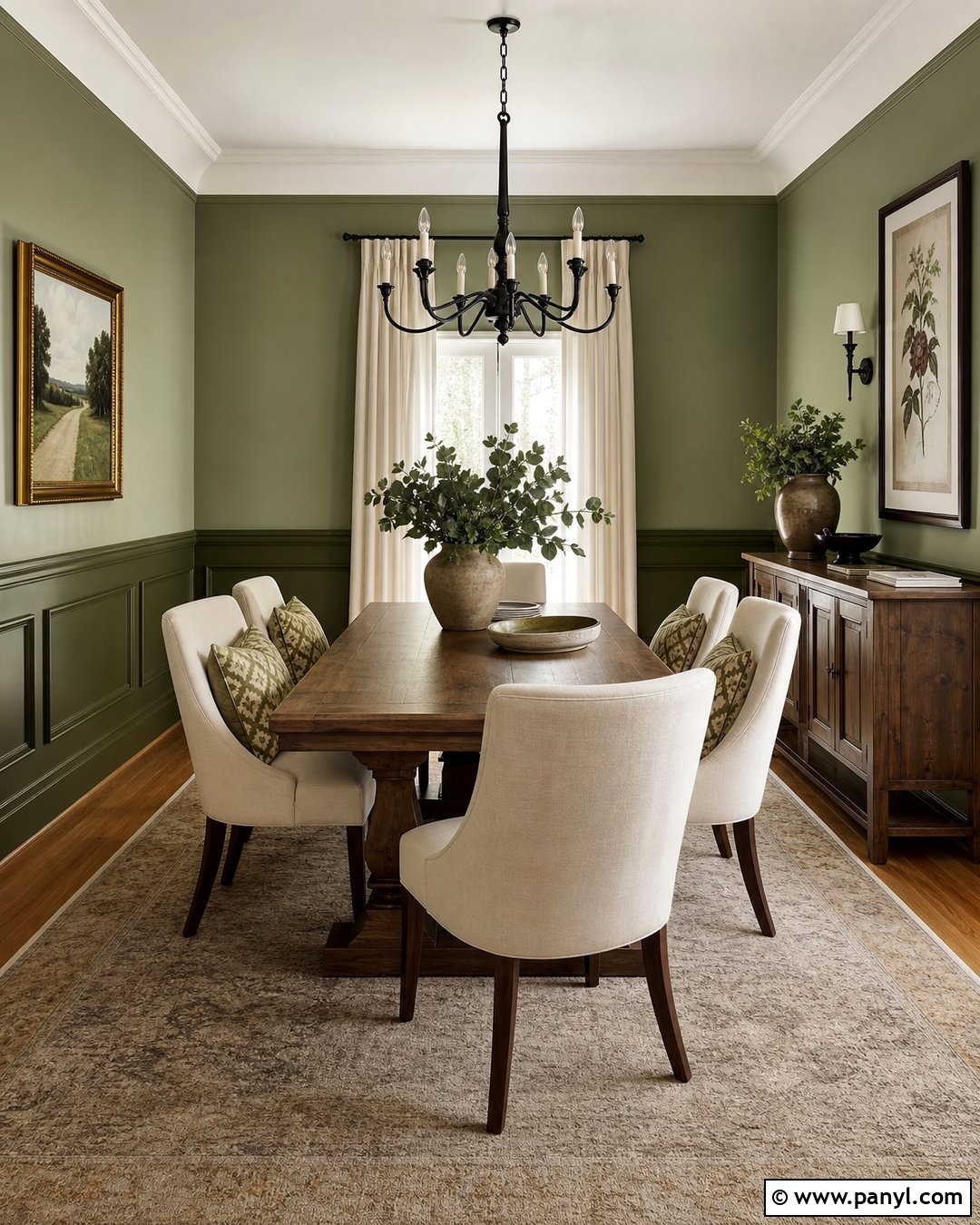
Two-tone green walls add structure when the dividing line follows the room’s architecture. Use dark olive below a chair rail and soft sage above it, creating depth without an abrupt color clash. In a dining room, pair this treatment with a medium oak table, cream upholstered chairs, and a simple black chandelier. A beige rug and linen curtains prevent the layered greens from becoming visually heavy. Paint the chair rail in the darker shade for a clean transition. Artwork with generous ivory matting will stand out on the lighter upper walls. Repeat both greens through a centerpiece, ceramics, or patterned cushions so the wall treatment connects naturally with the rest of the room.
33. Green Limewash Living Room Walls
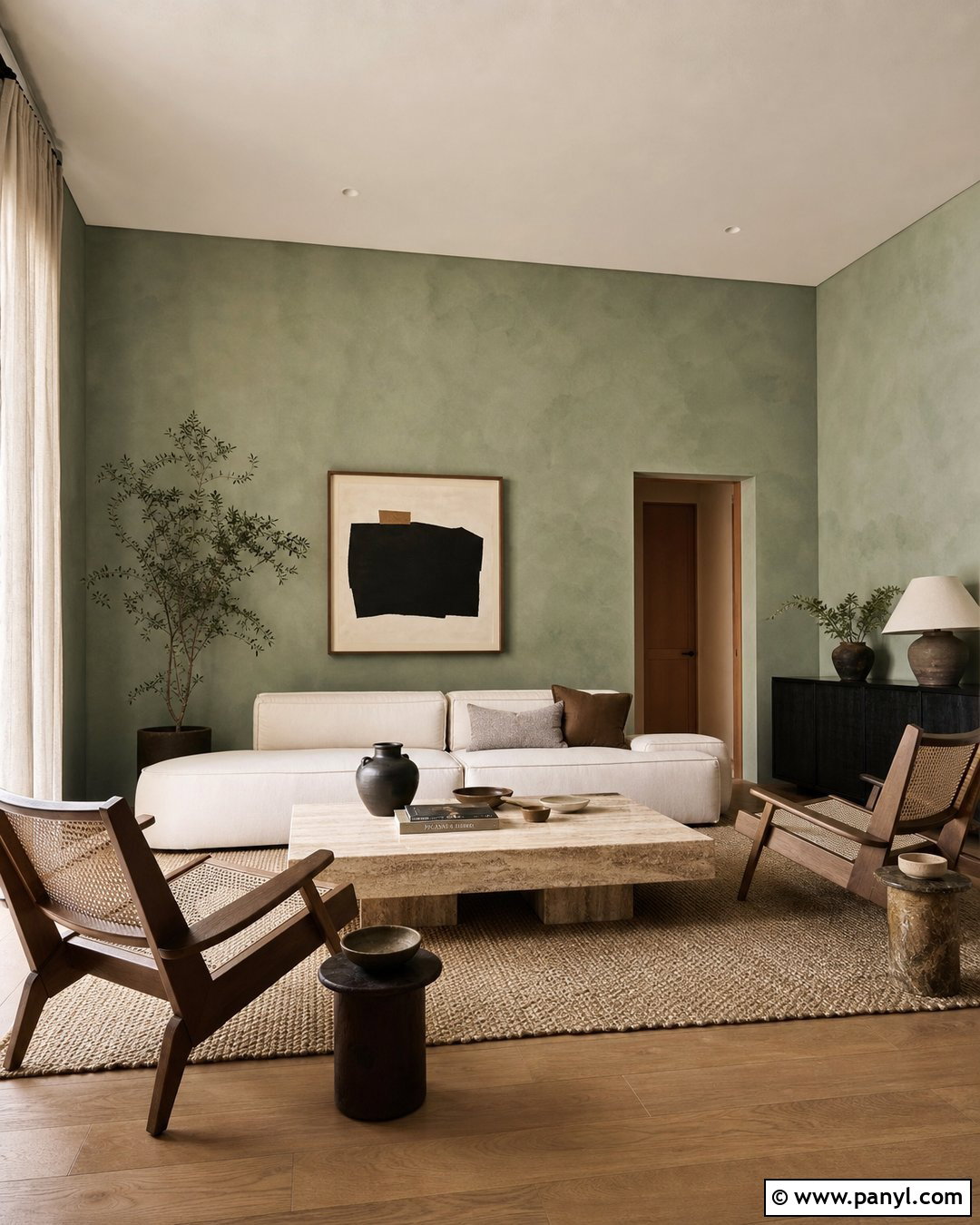
Green limewash walls introduce soft movement and variation that suits relaxed, material-focused interiors. Choose a pale olive or dusty sage finish with gentle tonal changes rather than a strongly mottled effect. Add a low cream sofa, oak lounge chairs, and a chunky travertine coffee table. A large wool rug in warm beige supports the quiet palette, while linen curtains diffuse natural light. Use handmade ceramics, woven baskets, and simple abstract artwork to complement the wall texture. Keep metal finishes limited to aged brass or dark bronze. Because limewash already adds visual depth, avoid overfilling the room with patterns. The complete space should feel tactile, open, and comfortably understated.
34. Green Wallpaper Bedroom Walls
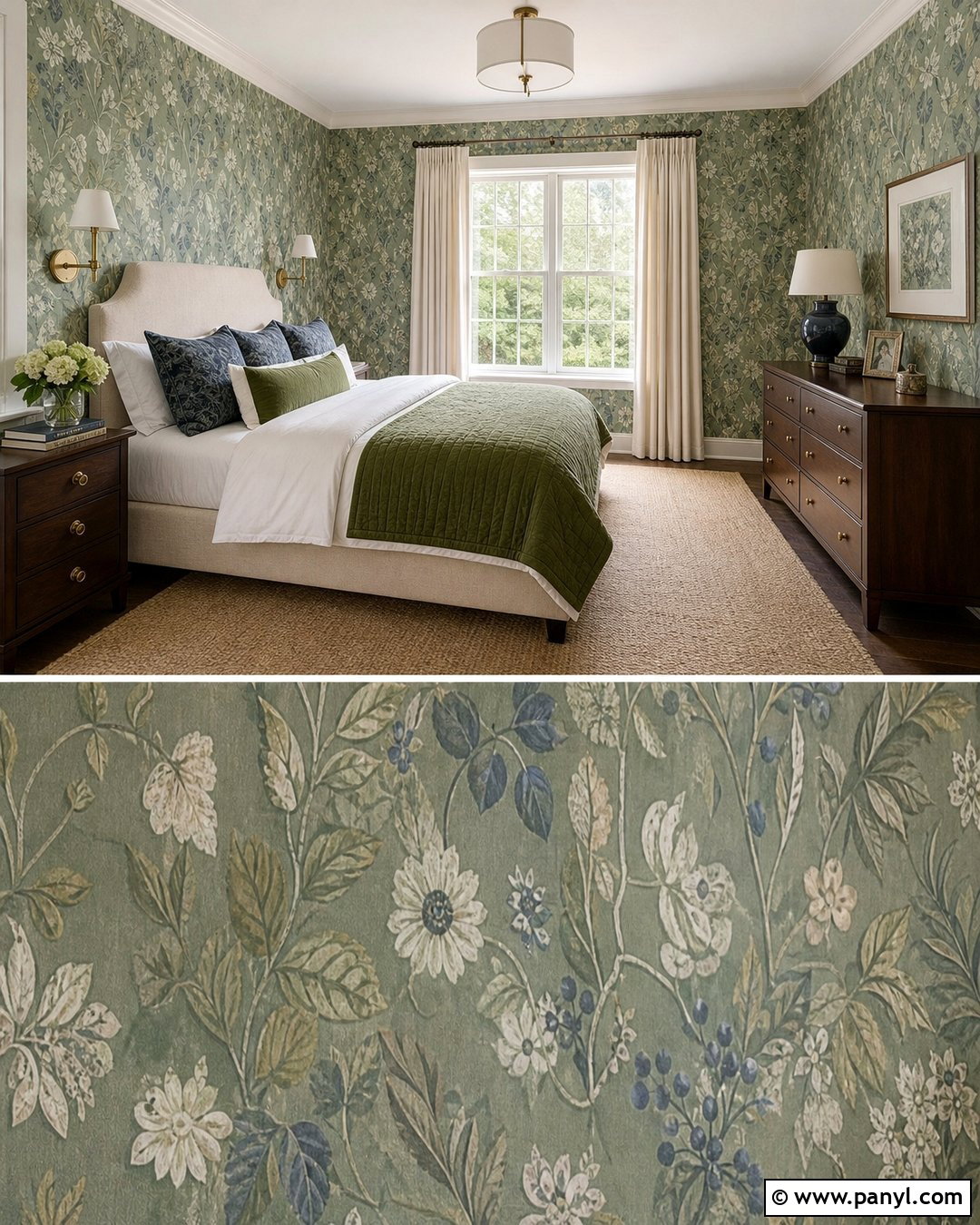
Green wallpaper can create a complete bedroom backdrop when its pattern is repeated thoughtfully through the furnishings. Select a botanical print with sage, olive, cream, and muted blue rather than an overly bright design. Apply it to every wall for an enveloping effect, then choose an upholstered beige bed with plain ivory bedding. Add a moss quilt, blue accent pillows, and dark wood nightstands. Brass sconces and a simple ceiling fixture provide warm contrast. Keep curtains solid and close to the wallpaper’s cream background so the room does not become too busy. A natural wool rug, one dresser, and restrained tabletop accessories allow the patterned green walls to remain the clear focal point.
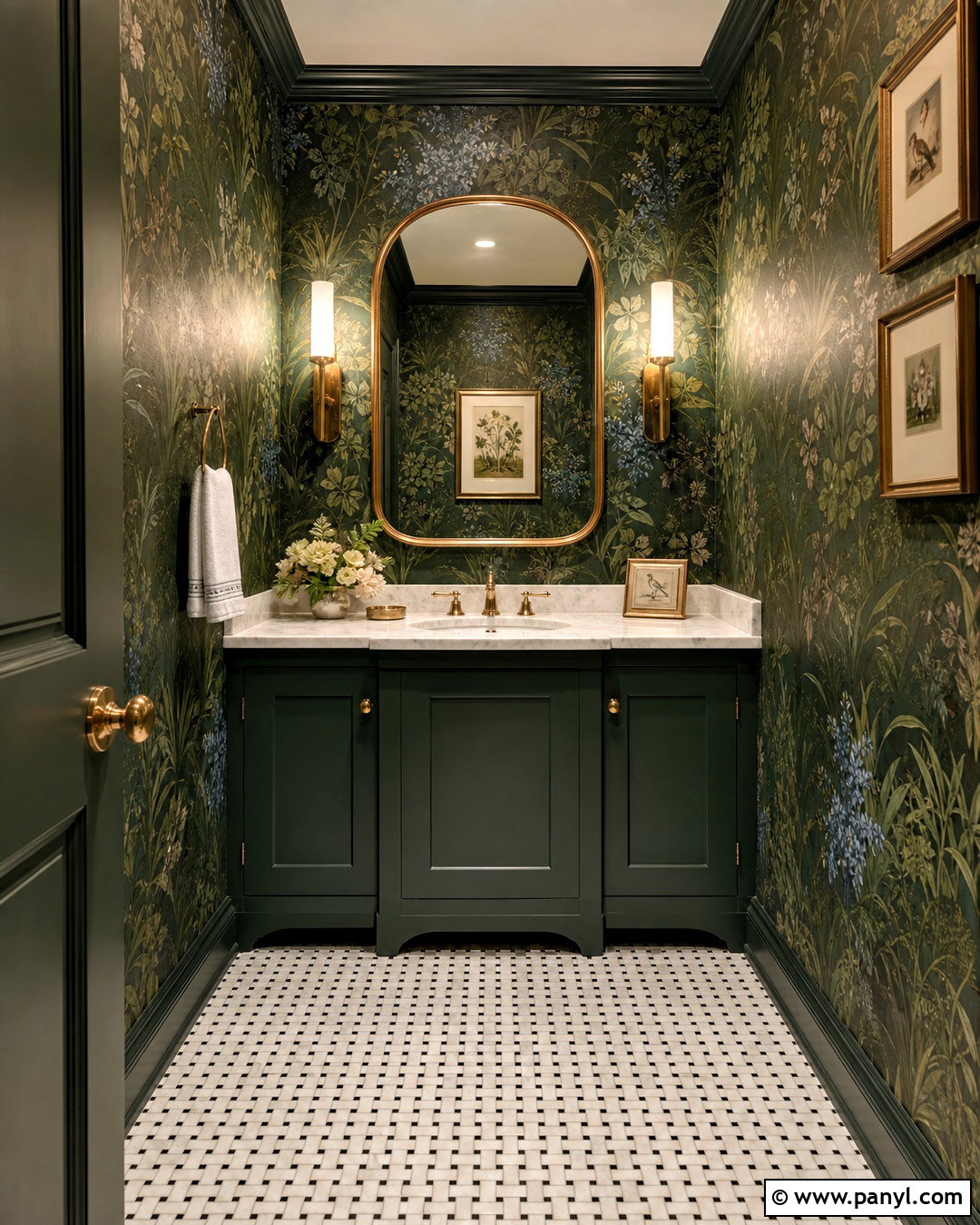
35. Green Floral Powder Room Walls
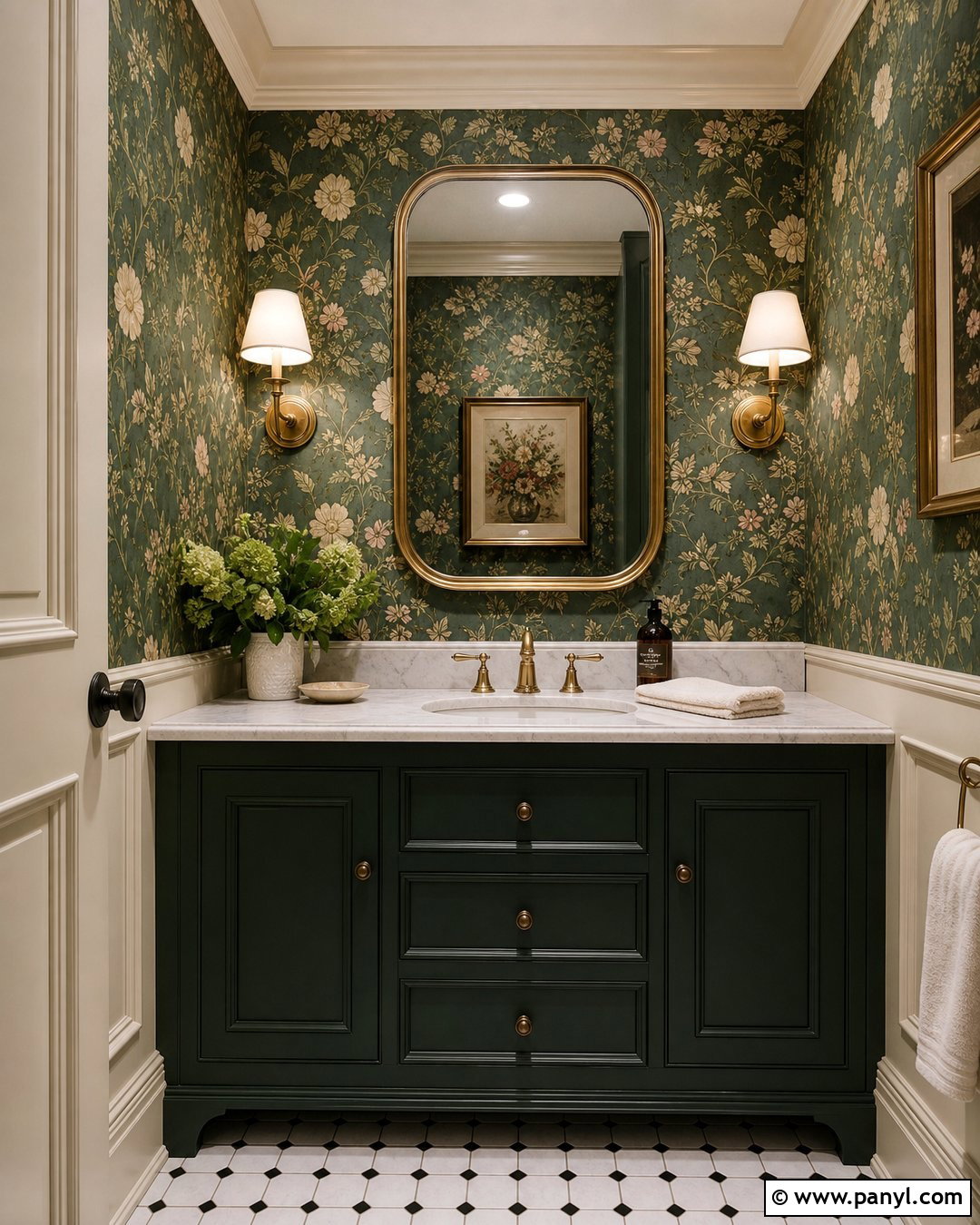
A powder room is an ideal setting for green floral walls because the compact space can support a stronger decorative statement. Choose wallpaper featuring leafy green branches, cream flowers, and small muted pink details. Pair it with a dark green vanity, white marble counter, and polished brass faucet. A rounded brass mirror and shaded wall sconces add warmth while preserving a traditional character. Use small-scale black-and-white floor tile to ground the pattern. Paint the ceiling and trim in the wallpaper’s creamy background shade. Keep countertop decor minimal, with only a soap dispenser and small hand towel. The coordinated finishes produce a memorable room that still feels polished, bright, and practical.
36. Green Geometric Office Walls
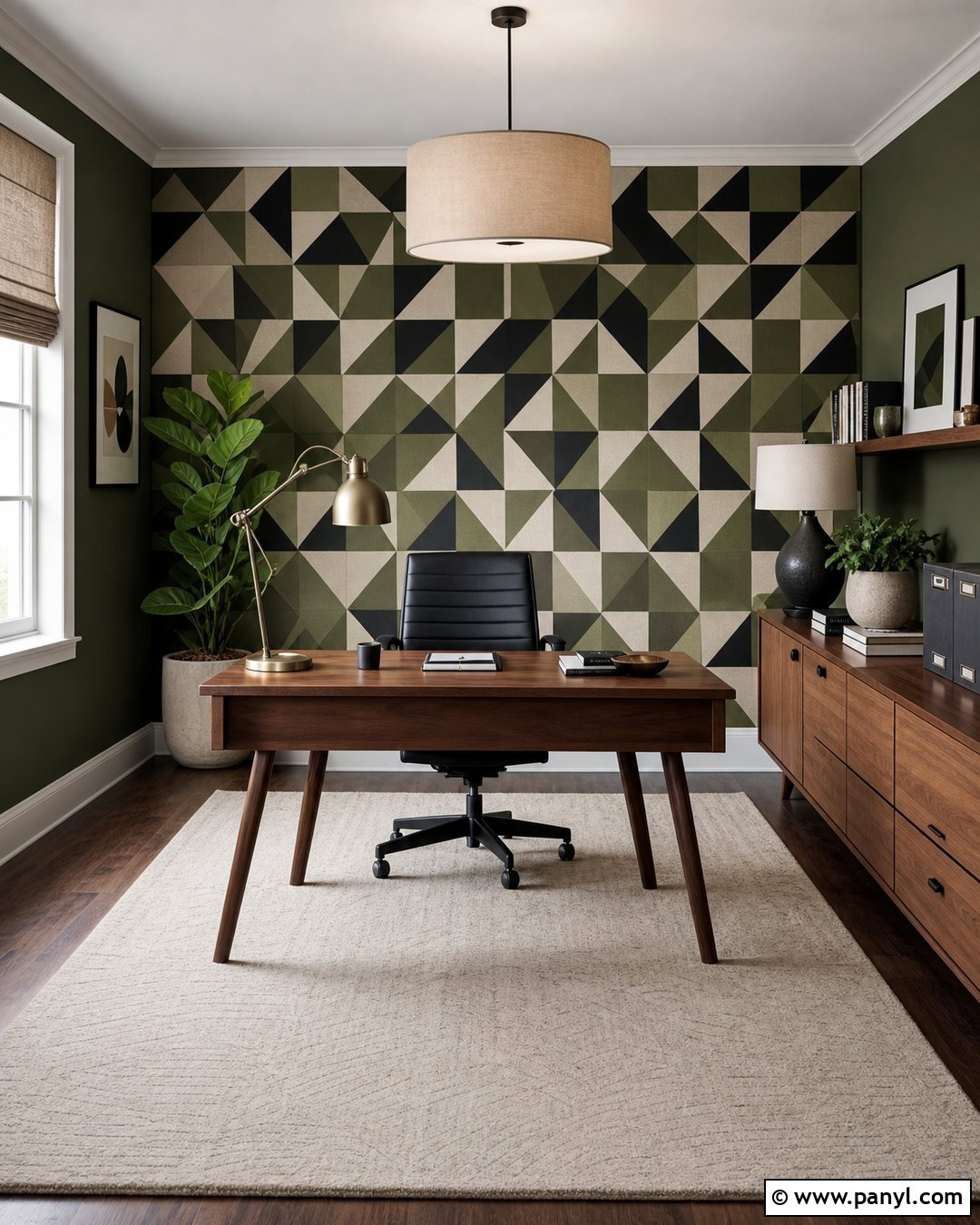
Geometric green wallpaper can energize a home office while maintaining an orderly, professional appearance. Select a small repeating pattern in olive, cream, and black, then cover the wall behind a streamlined walnut desk. Paint the remaining walls in the wallpaper’s muted green tone for continuity. Add a black desk chair, brass task lamp, and low wood credenza for concealed storage. A cream flat-weave rug and natural linen shade soften the graphic backdrop. Keep wall decor limited so it does not compete with the pattern. Books, matching document boxes, and one ceramic planter provide useful styling. The completed office feels distinctive but still supports focus, organization, and comfortable daily work.
37. Green Living Room With Blue Sofa
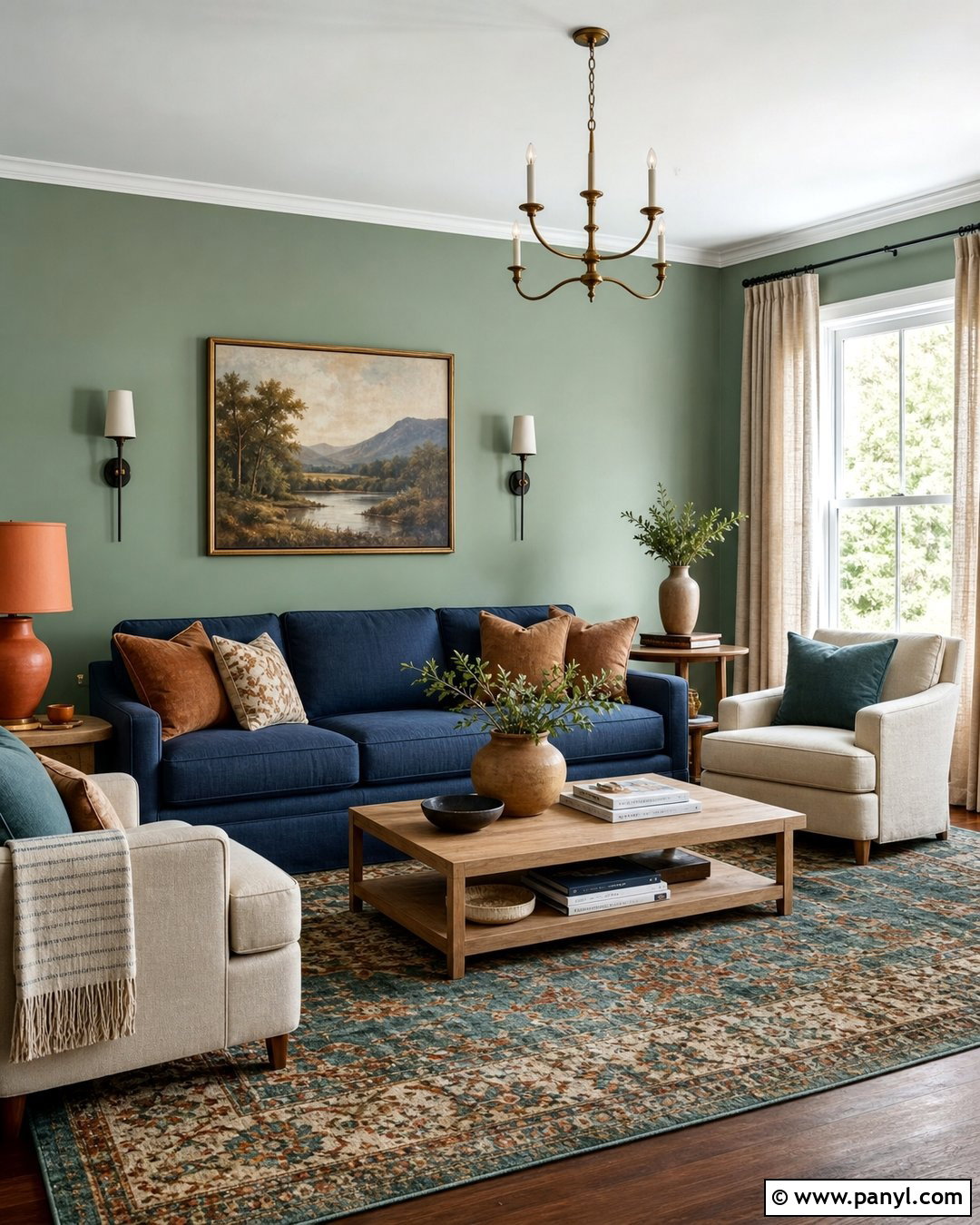
Do green walls work with a blue sofa? They can form a natural, layered palette when both colors share similar depth and softness. Choose muted sage or eucalyptus walls and a medium denim-blue sofa. Add two cream chairs, an oak coffee table, and a patterned rug containing blue, green, beige, and rust. Warm brown cushions and a terracotta lamp prevent the cool colors from feeling chilly. Use flax linen curtains and warm off-white trim around the windows. Artwork should include landscape tones or restrained abstract shapes rather than matching every color exactly. Dark bronze lighting and wood side tables complete this relaxed room, giving each color enough space to remain clearly visible.
38. Green Living Room With Cream Sofa
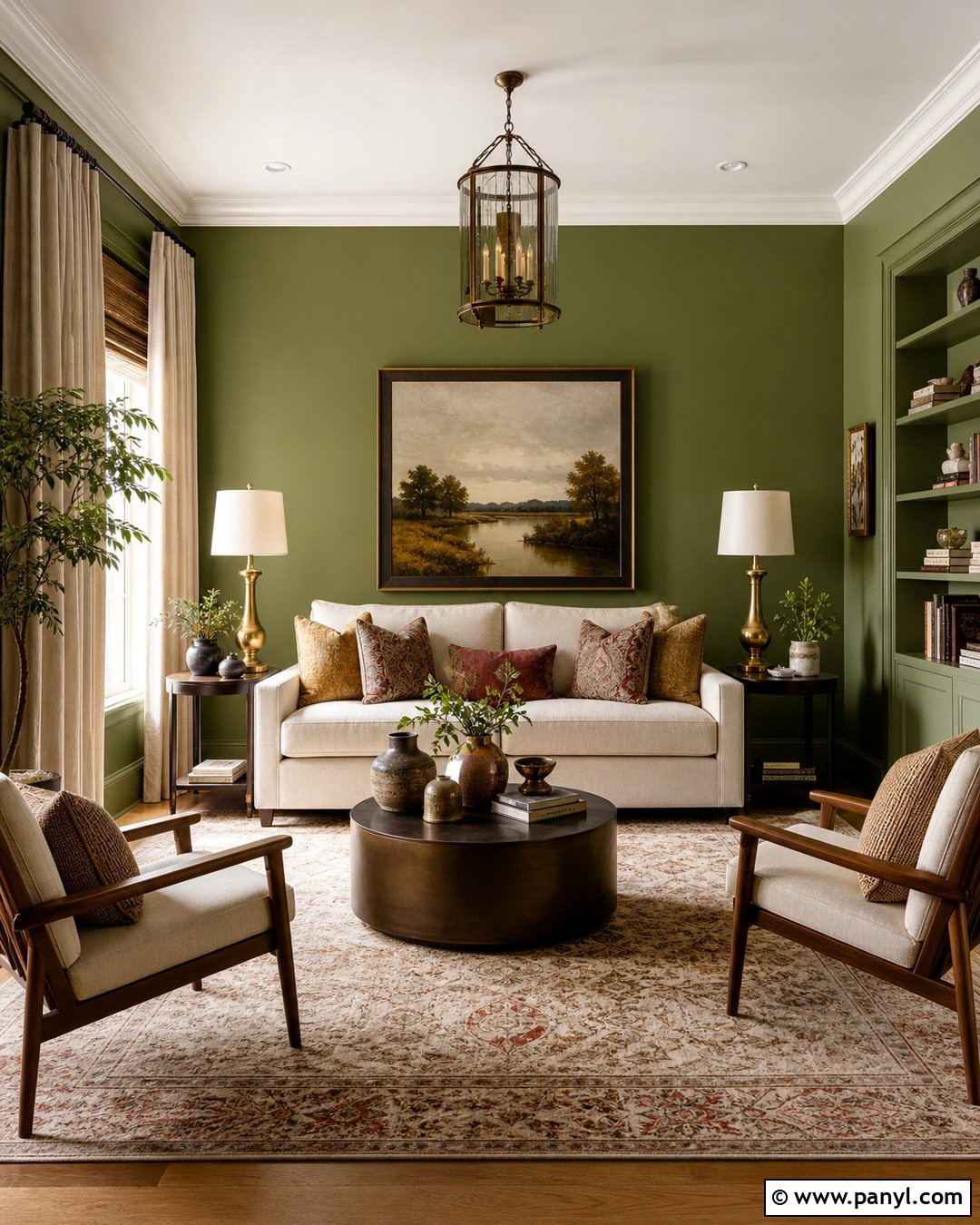
A cream sofa against green walls creates a flexible foundation that can shift between modern, traditional, and casual decor. Choose a medium moss green for the walls and a generously sized sofa in durable warm ivory fabric. Position two walnut or oak chairs across from it, then center the seating around a black or dark bronze coffee table. A patterned rug with beige, brown, and muted red adds character without competing with the paint. Finish with linen curtains, brass lamps, woven cushions, and large-scale artwork. Repeat cream through lampshades and ceramic pieces, but include enough wood and dark accents to create definition. The resulting living room feels bright, grounded, and cohesive.
39. Green Bedroom With Navy Accents
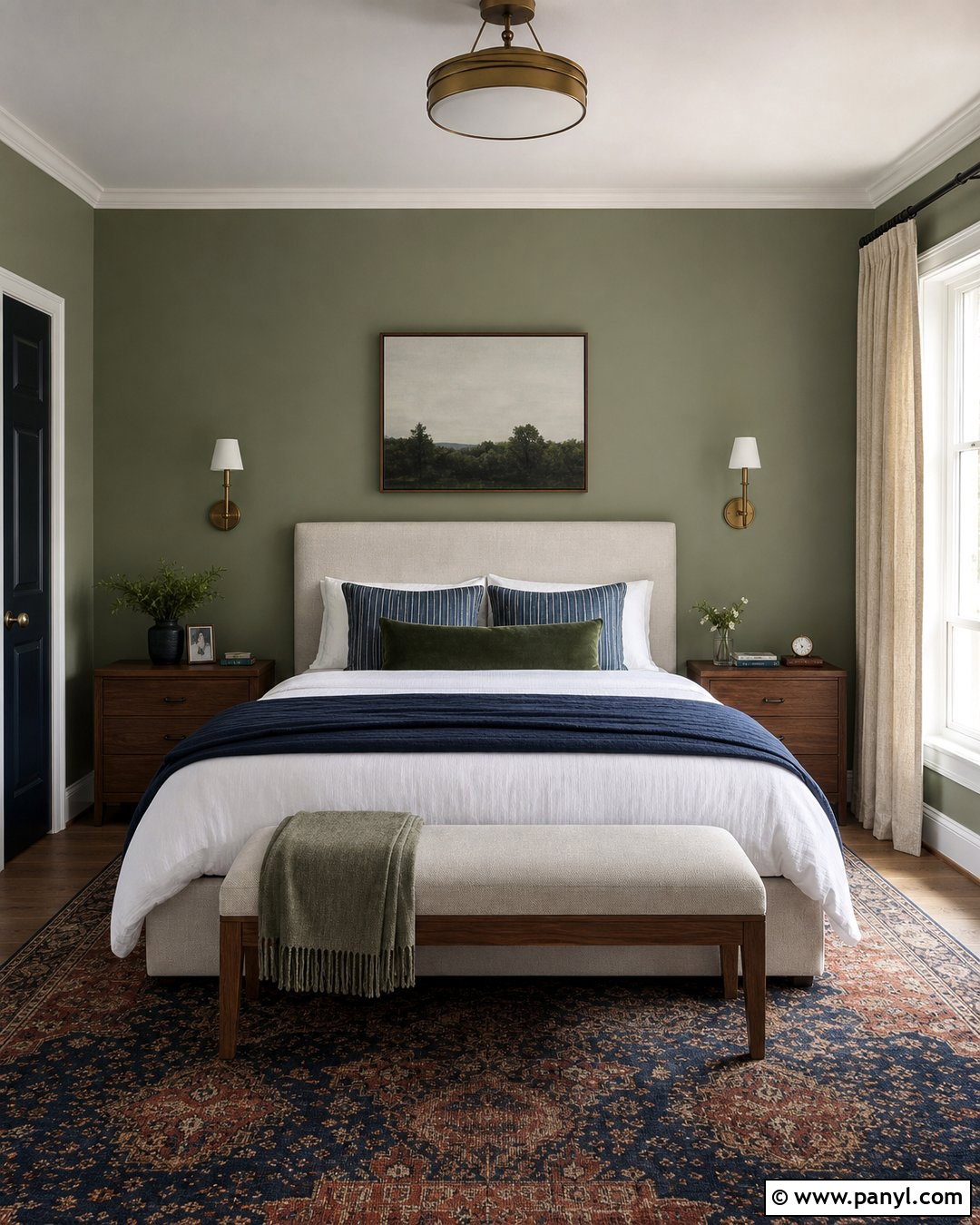
Green bedroom walls and navy accents produce a restful, tailored palette with more depth than a basic neutral scheme. Paint the room in a soft gray-green, then select a cream upholstered bed and warm walnut nightstands. Layer white bedding with a navy quilt, striped blue pillows, and one moss-green lumbar cushion. A vintage-style rug containing navy, tan, and faded rust ties the colors together. Use warm brass sconces and natural linen curtains so the cooler shades remain comfortable. Navy can appear again in a bench or small dresser, but it should not dominate every furnishing. Simple artwork, clear nightstand surfaces, and balanced lighting preserve the calm atmosphere needed in a bedroom.
40. Green Bedroom With Mustard Accents
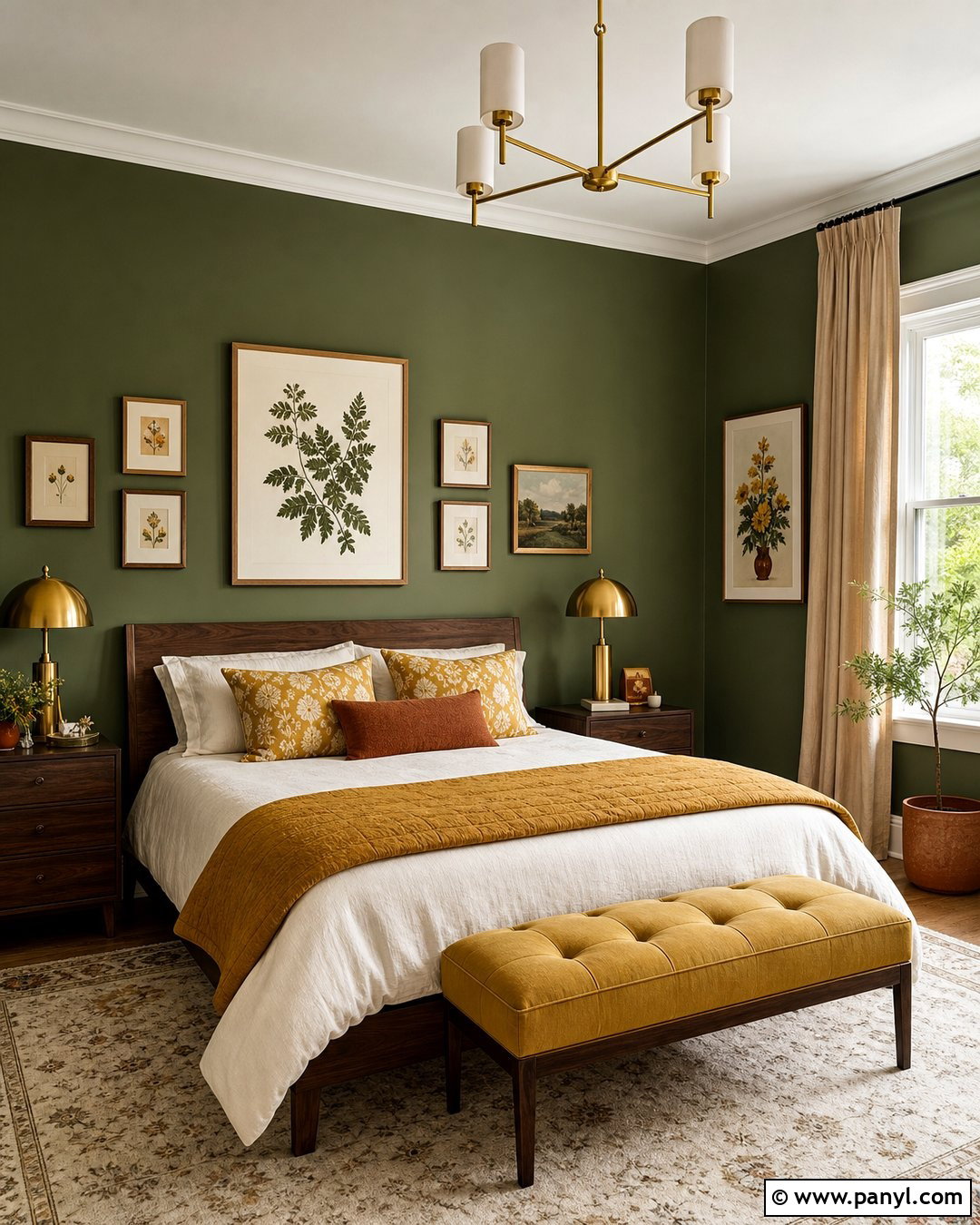
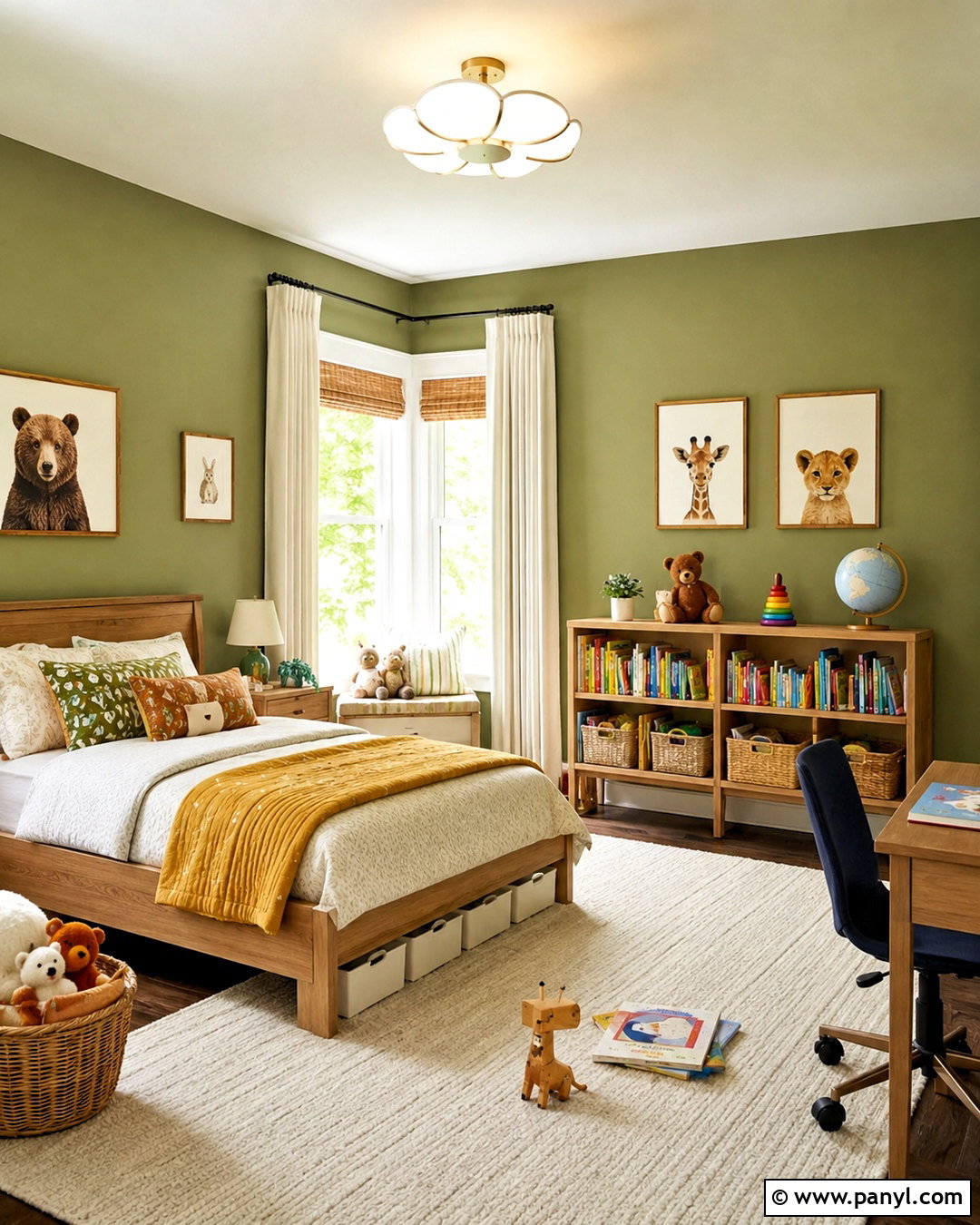
Mustard yellow gives muted green bedroom walls a warm, cheerful lift without creating a high-contrast primary palette. Start with soft olive walls, an oak bed, and plain ivory bedding. Introduce mustard through a folded quilt, one upholstered bench, and two patterned pillows. Balance these stronger accents with cream curtains, a beige wool rug, and walnut nightstands. Aged brass lamps blend smoothly with the yellow tones, while rust or brown details provide depth. Hang botanical or abstract artwork containing small areas of ochre, green, and cream. Keeping the major furniture natural and understated allows the yellow accents to remain lively but controlled, resulting in a cozy room with an earthy modern character.
41. Green Living Room With Blush Accents
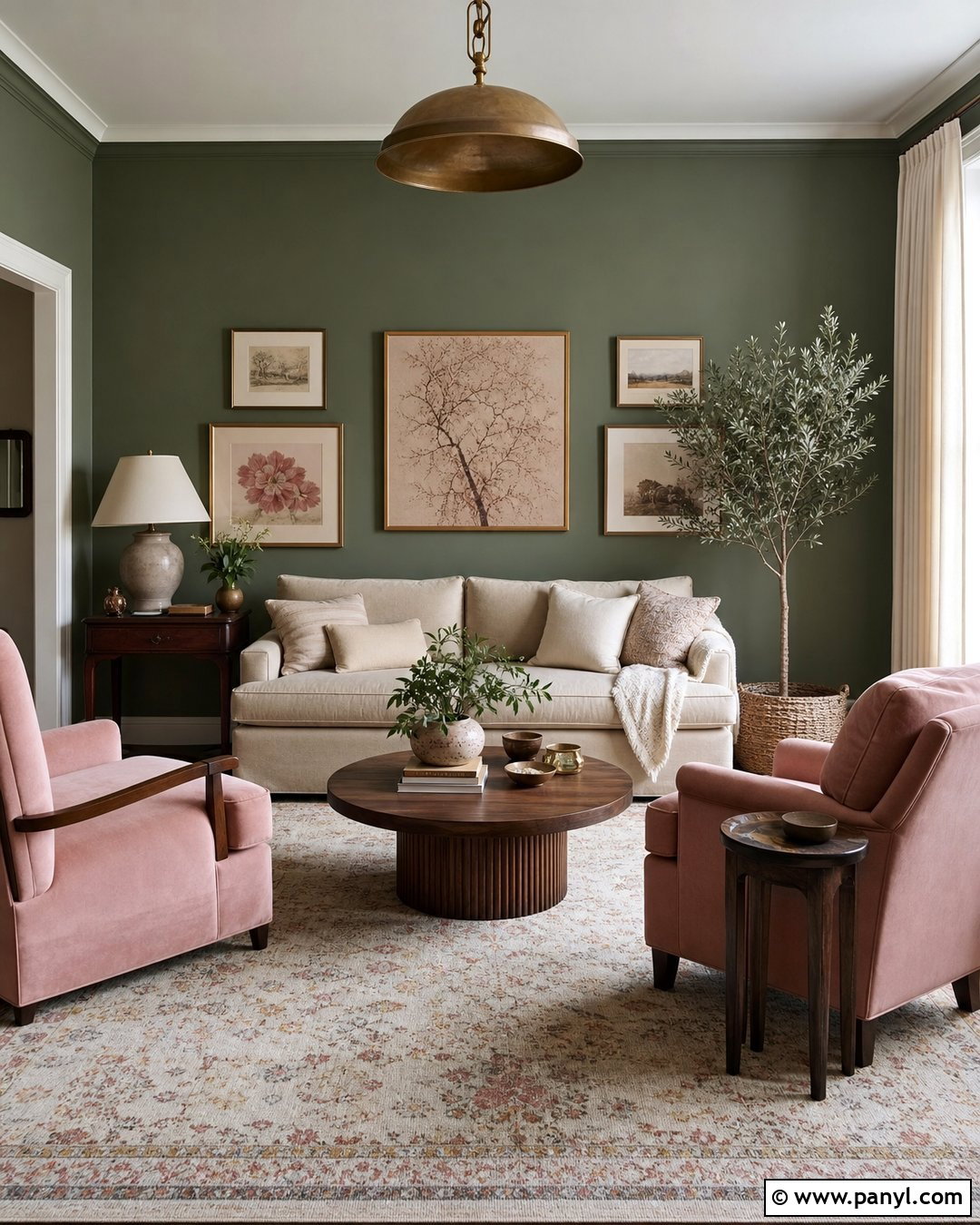
Blush accents can soften green living room walls while giving the space warmth and personality. Choose a dusty sage or muted olive wall color rather than a highly saturated green. Arrange a warm beige sofa with two blush upholstered chairs around a round walnut coffee table. A cream rug with faded rust and green detailing connects the palette at floor level. Use natural linen curtains, brass lighting, and dark wood side tables for balance. Blush should reappear sparingly through one cushion, artwork, or ceramic vase instead of covering every accessory. Add leafy plants and textured neutral throws to complete a comfortable, collected room that feels colorful without becoming overly delicate or formal.
42. Green Dining Room With Burgundy Accents
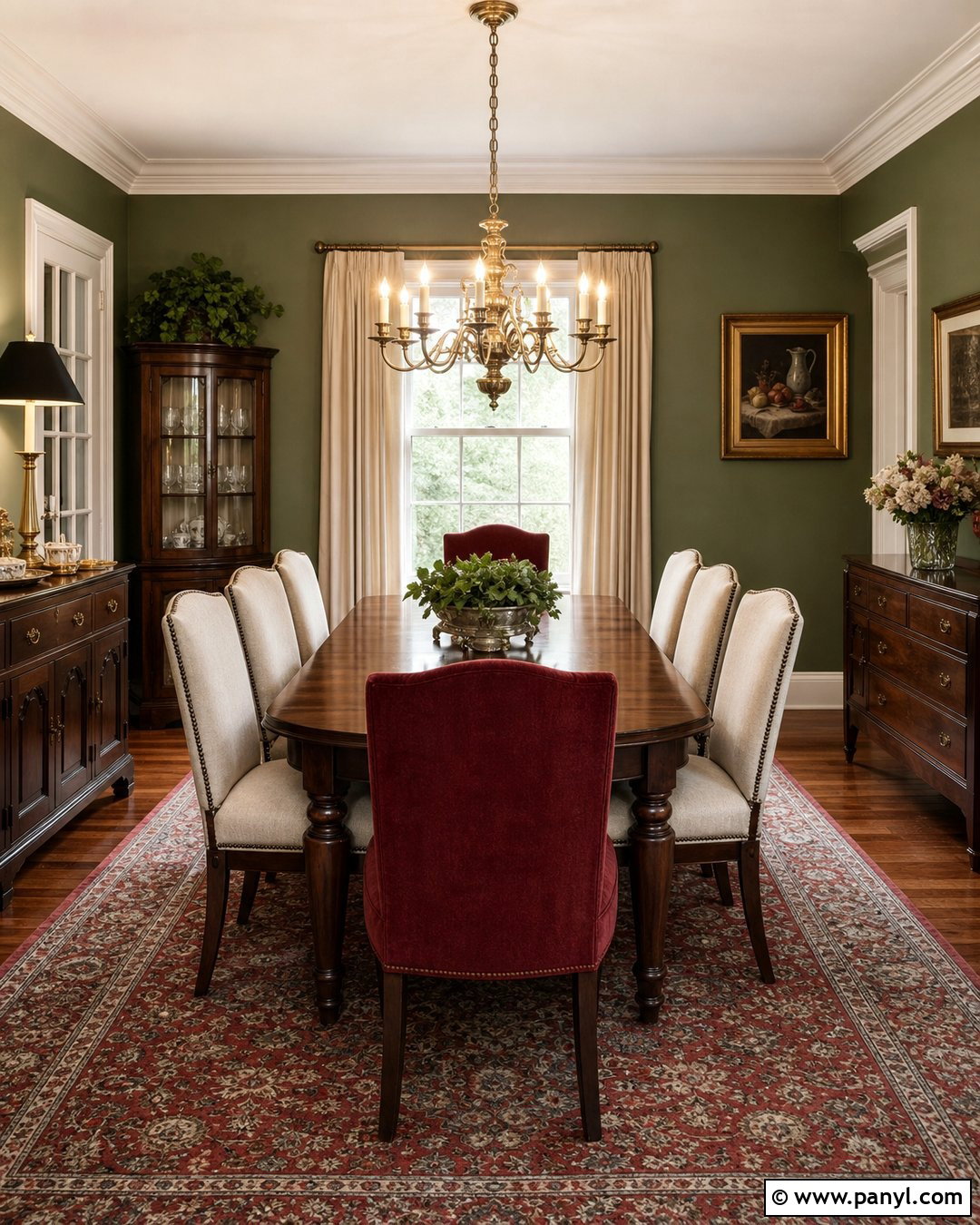
Burgundy accents bring richness to green dining room walls and create a mature palette suited to traditional or eclectic homes. Paint the walls a subdued olive or moss, then center the space around a dark walnut table. Choose cream chairs with burgundy piping or use two burgundy upholstered host chairs at the ends. A vintage rug can combine wine-free red tones, green, tan, and navy in a softened pattern. Add a brass chandelier and full-length oatmeal curtains for warmth. Framed still-life artwork and dark wood storage reinforce the collected character. Keep brighter reds out of the room so the combination remains earthy, balanced, and appropriate for use throughout the year.
43. Green Kitchen Breakfast Nook Walls
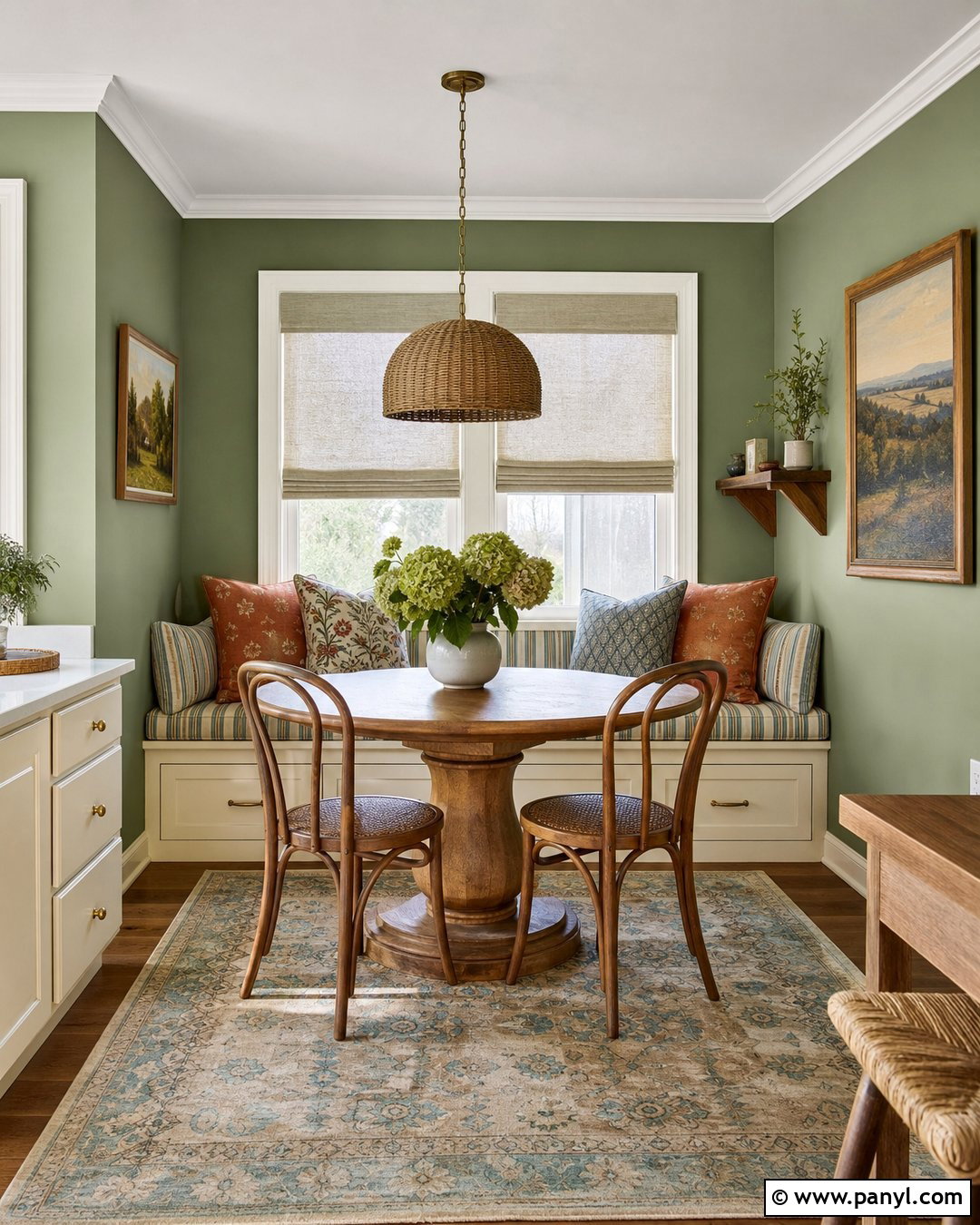
Green walls can turn a small breakfast nook into a defined destination within an open kitchen. Use a fresh sage shade around a built-in cream banquette with hidden storage beneath the seats. Add a round oak pedestal table and two curved wood chairs to keep circulation easy. Upholster the bench in a durable striped fabric combining green, beige, and muted blue. A woven pendant provides soft texture overhead, while a washable patterned rug anchors the seating. Hang one large framed landscape or a tidy row of botanical prints. Linen Roman shades and a few colorful cushions finish the nook, creating a bright place for casual meals, homework, and morning coffee.
44. Green Sunroom Walls
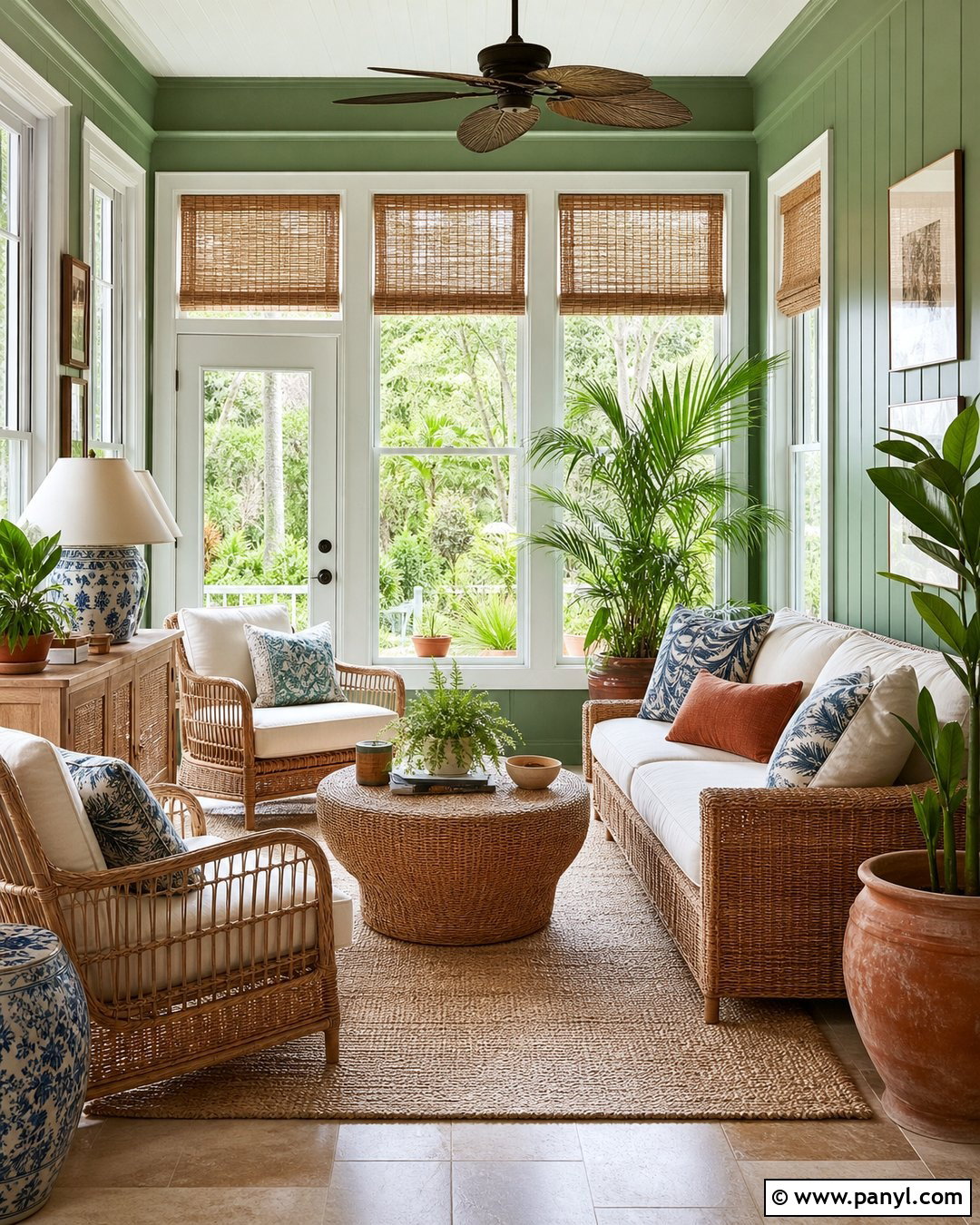
A sunroom with green walls can connect indoor comfort with outdoor views without trying to copy the garden exactly. Choose a pale fern green that remains fresh in strong daylight. Arrange a natural rattan sofa and two woven chairs around a light oak or wicker coffee table. Use thick cream seat cushions and washable pillows in blue, rust, and botanical patterns. A large natural fiber rug defines the seating area over tile or wood flooring. Keep window treatments minimal with woven shades that can filter glare. Terracotta planters, ceramic lamps, and a small wood console complete the room. The final design feels breezy, functional, and comfortable across changing seasons.
45. Green Reading Room Walls
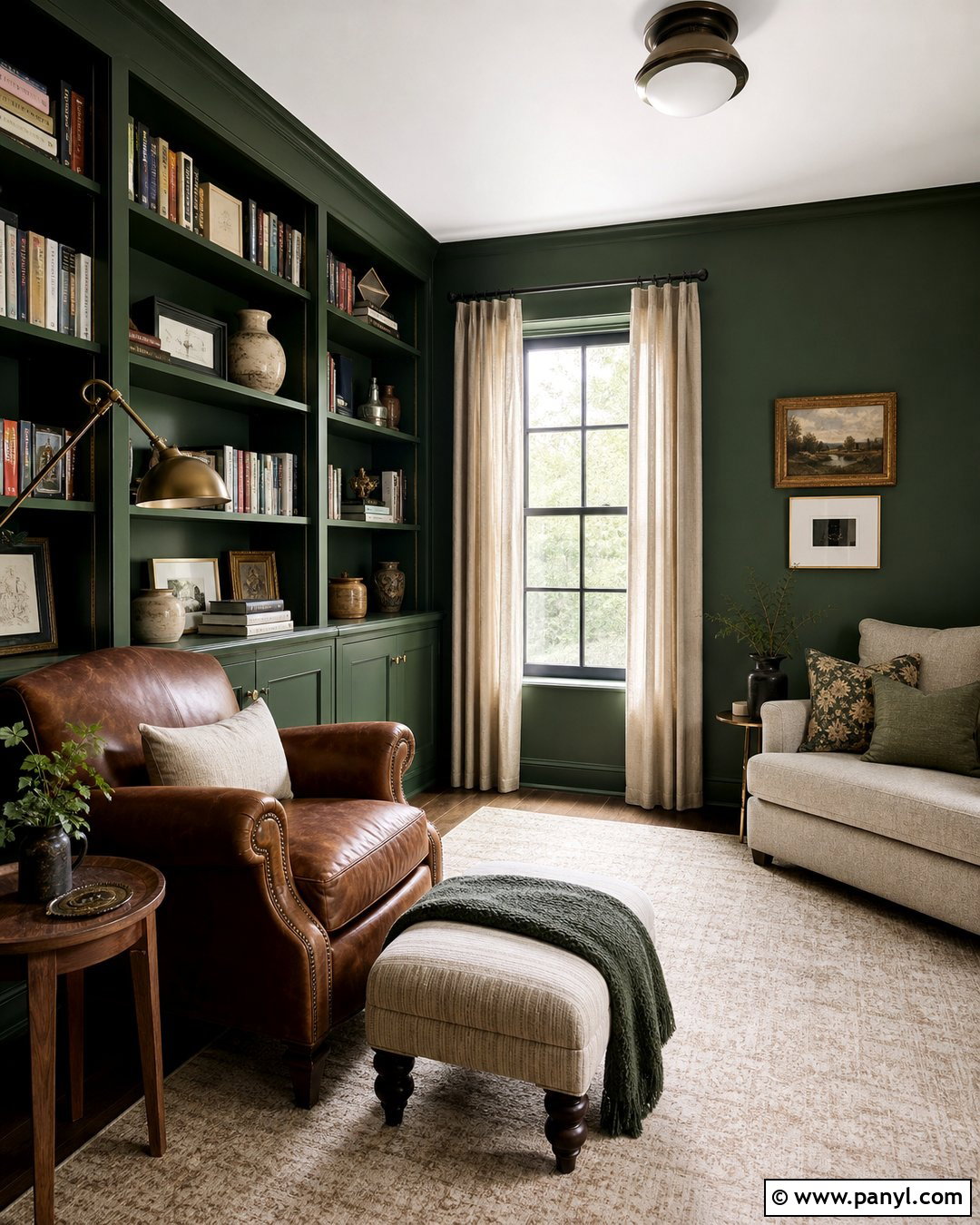
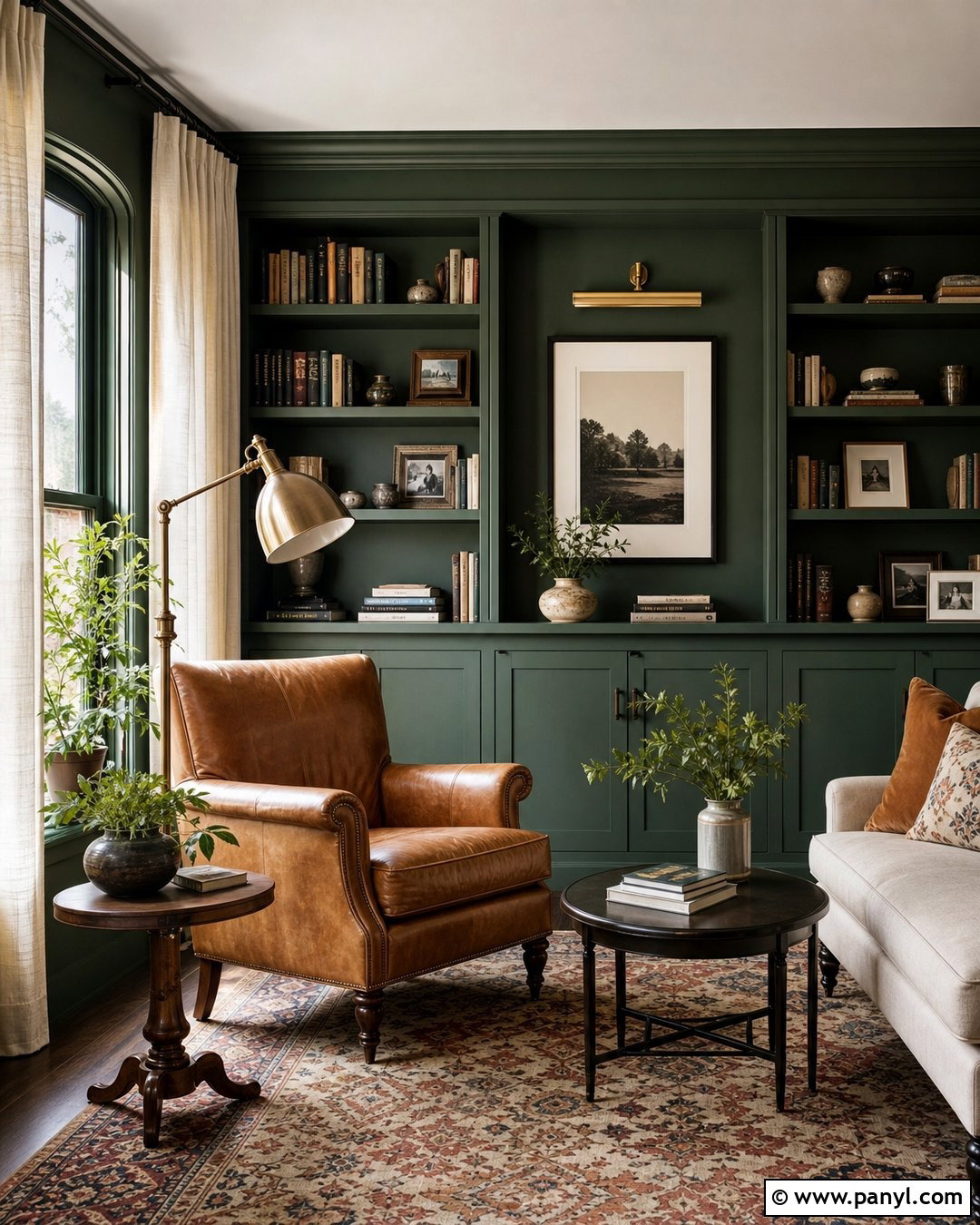
Deep green walls can make a dedicated reading room feel quiet and sheltered. Line one wall with matching green bookcases and place a comfortable cognac leather chair near the window. Add an upholstered ottoman, a small walnut side table, and an adjustable aged brass floor lamp. A cream wool rug brightens the floor, while heavy flax curtains soften outside light and improve the enclosed feeling. Shelves should balance books with open space, pottery, and a few framed objects. If room permits, include a compact loveseat in oatmeal fabric for shared seating. Warm white on the ceiling prevents excessive darkness. The finished room supports long reading sessions while maintaining an inviting, organized appearance.
46. Green Guest Room Walls
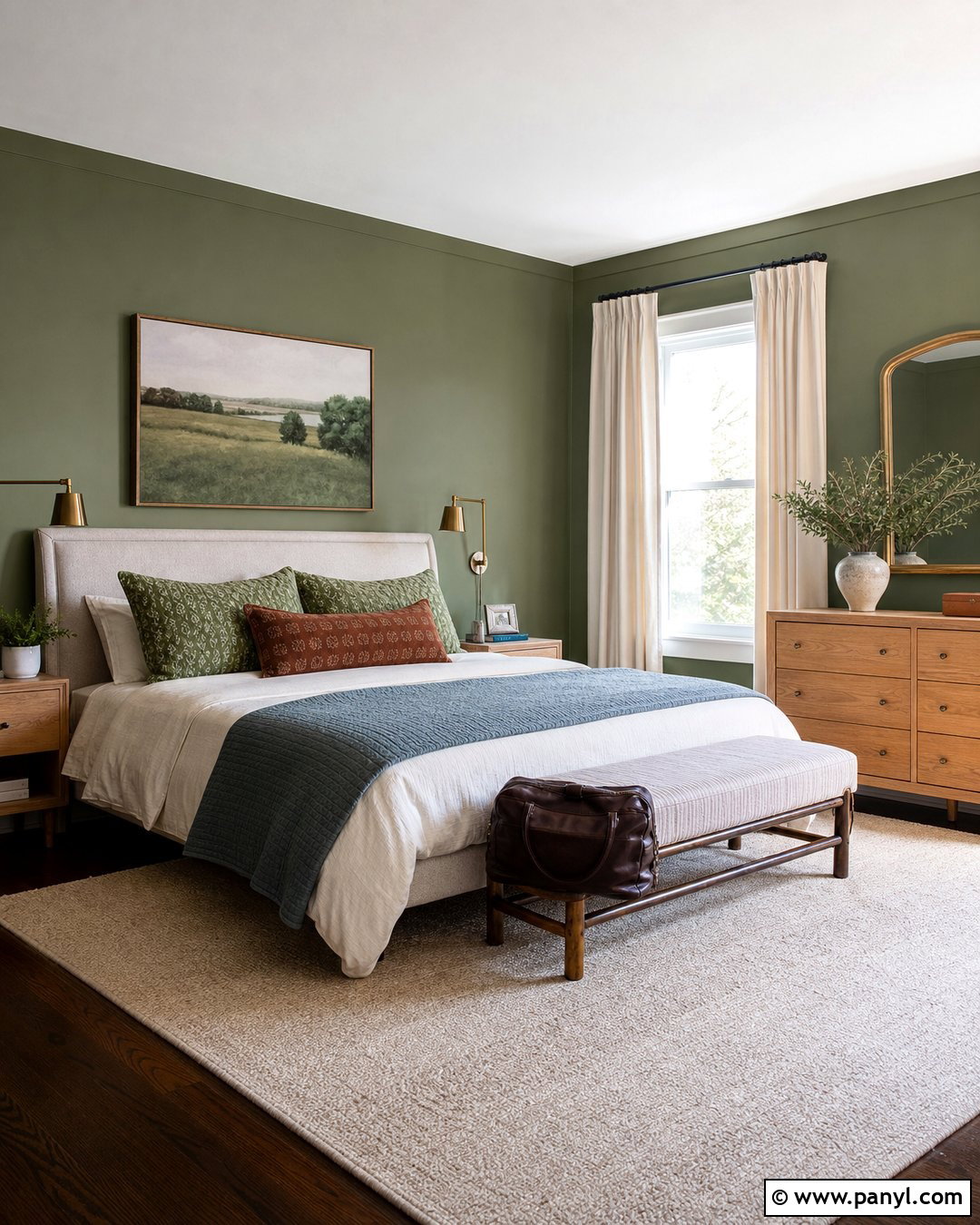
Green guest room walls create a welcoming setting that feels distinctive without depending on highly personal decor. Choose a medium sage with warm undertones, then use an upholstered oatmeal bed, oak nightstands, and crisp ivory bedding. Layer a muted blue coverlet and patterned pillows containing green, tan, and rust. Provide practical brass reading lamps, accessible outlets, and clear nightstand surfaces. A luggage bench at the foot of the bed and a small dresser make short stays more comfortable. Use lined cream curtains and a soft wool rug to control sound and light. Finish with calming landscape artwork, a mirror, and one plant, leaving enough open storage so visitors can unpack easily.
47. Green Attic Bedroom Walls
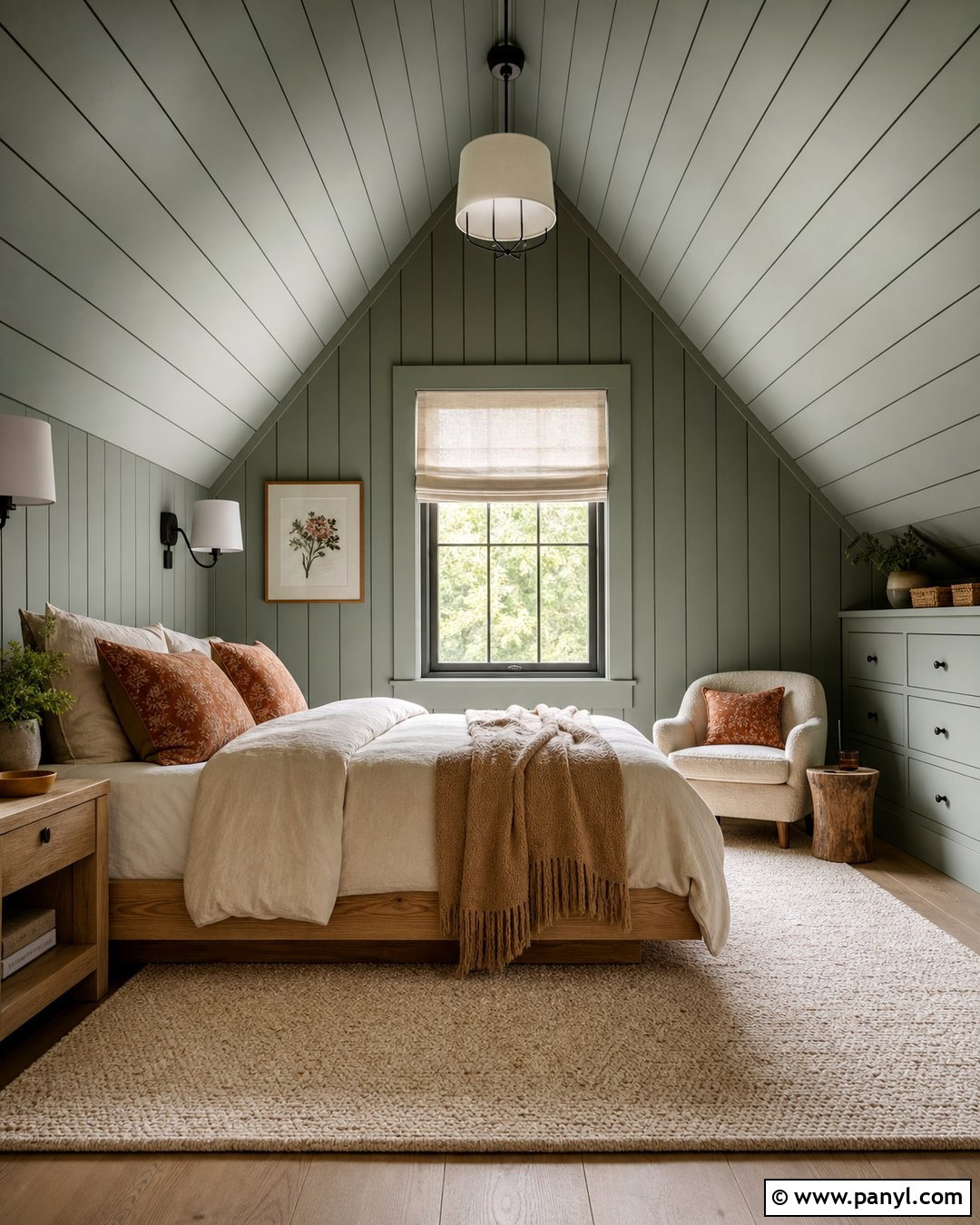
Green walls can make an attic bedroom’s angled architecture feel intentional rather than awkward. Paint the vertical walls and sloped ceiling in the same pale eucalyptus shade to simplify the irregular lines. Place a low oak bed beneath the highest section and keep bulky furniture away from narrow corners. Ivory bedding, a camel throw, and rust-patterned pillows add warmth. Built-in drawers under the eaves provide storage without reducing floor space. Use a cream rug, compact wall sconces, and simple linen shades to preserve brightness. A small upholstered chair and wood stool can form a reading corner near the window. The unified green envelope creates a cozy, visually calm retreat.
48. Green Basement Family Room Walls
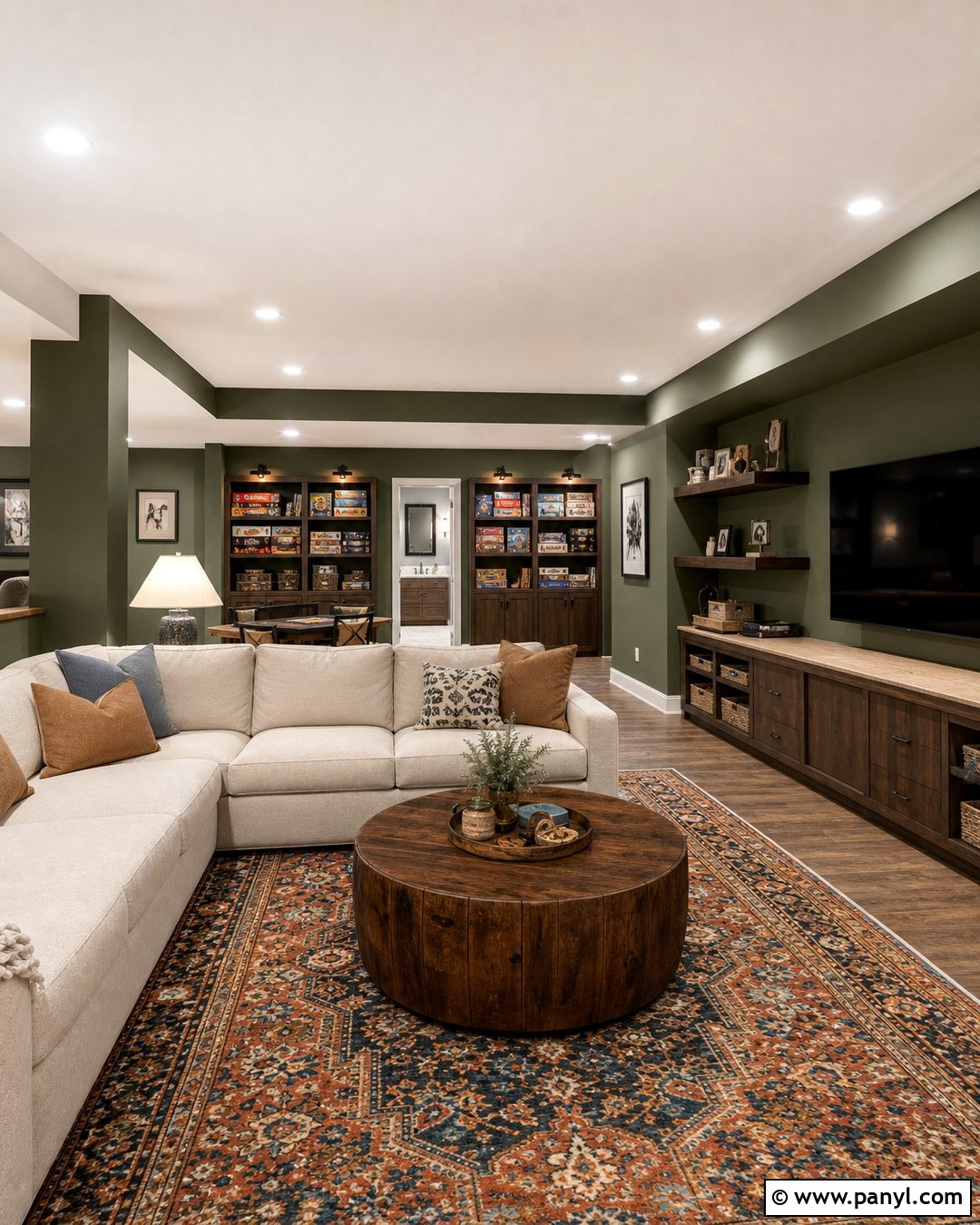
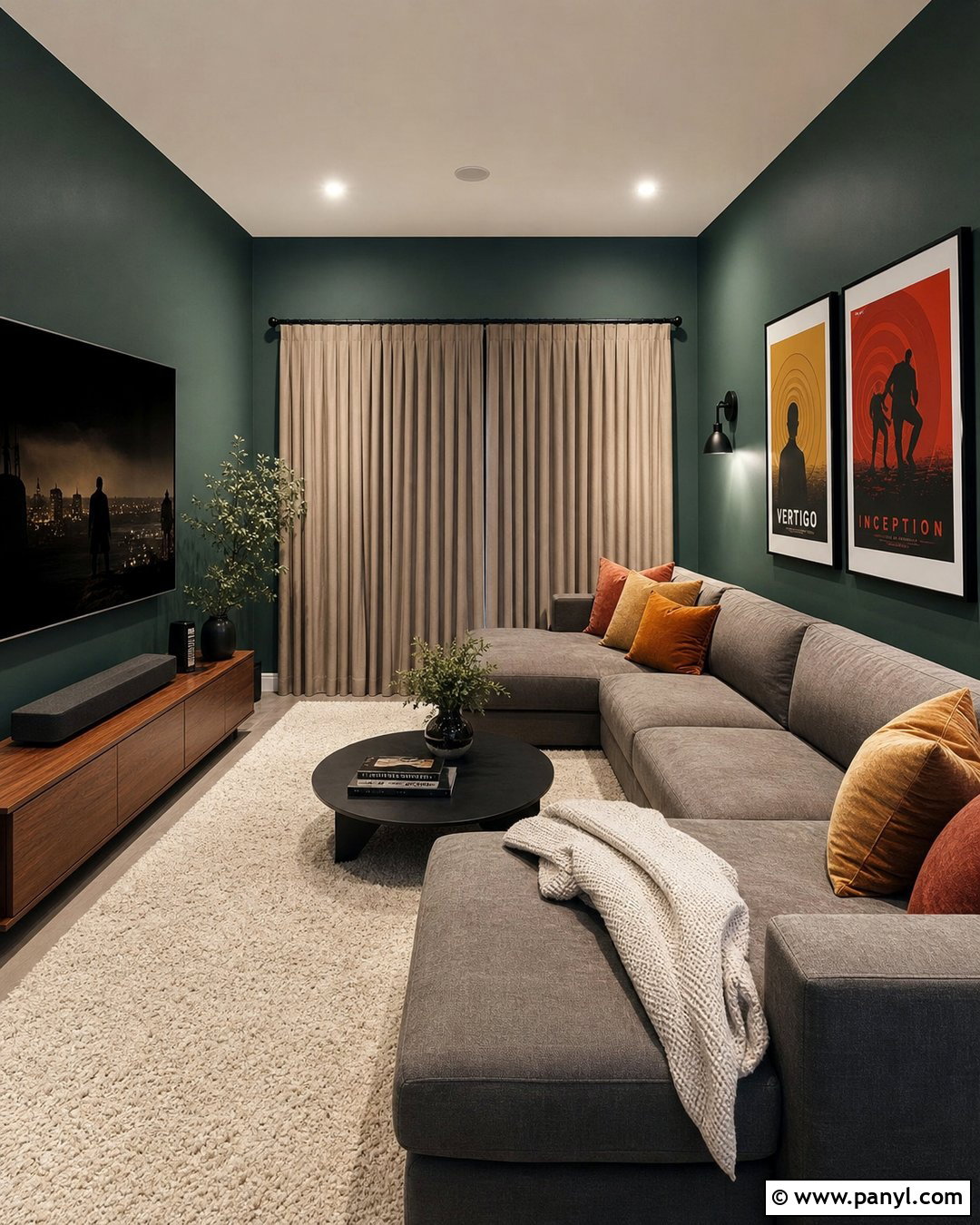
A basement family room benefits from a green shade that feels warm and lively under artificial light. Choose a medium olive-gray rather than a blue-based dark green. Add a large cream sectional, a washable patterned rug, and a sturdy oak coffee table with rounded corners. Use low walnut media storage and matching shelving to keep games, equipment, and blankets organized. Multiple light sources are essential, including ceiling fixtures, table lamps, and a floor lamp near a reading chair. Accent the palette with rust, tan, and muted blue cushions. Warm white trim and a light ceiling reflect illumination, helping the finished basement feel comfortable, durable, and connected to the rest of the home.
49. Green Staircase Walls
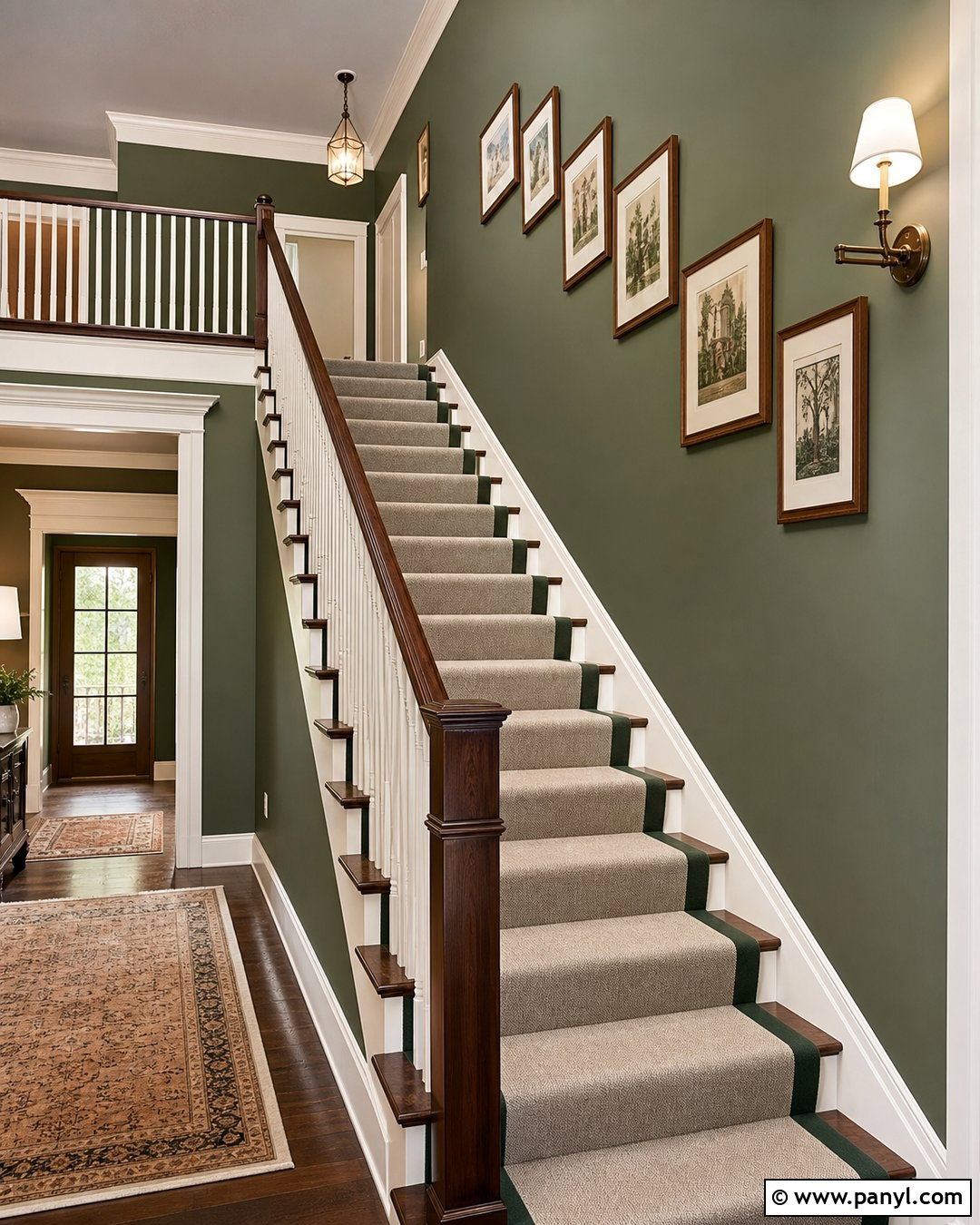
Green staircase walls can highlight the home’s architecture and give connecting spaces a stronger identity. Choose a muted moss shade that works with both upstairs and downstairs palettes. Paint the wall along the stairs green while keeping the balusters warm white and the handrail stained walnut or finished in matte black. A neutral runner with a narrow green or tan border adds safety and softness. Arrange framed artwork to follow the rise of the stairs, using consistent cream mats and mixed wood frames. Add a simple pendant above the landing and a wall sconce where extra lighting is needed. The complete treatment makes the staircase attractive without interfering with movement or visibility.
50. Green Open Plan Walls
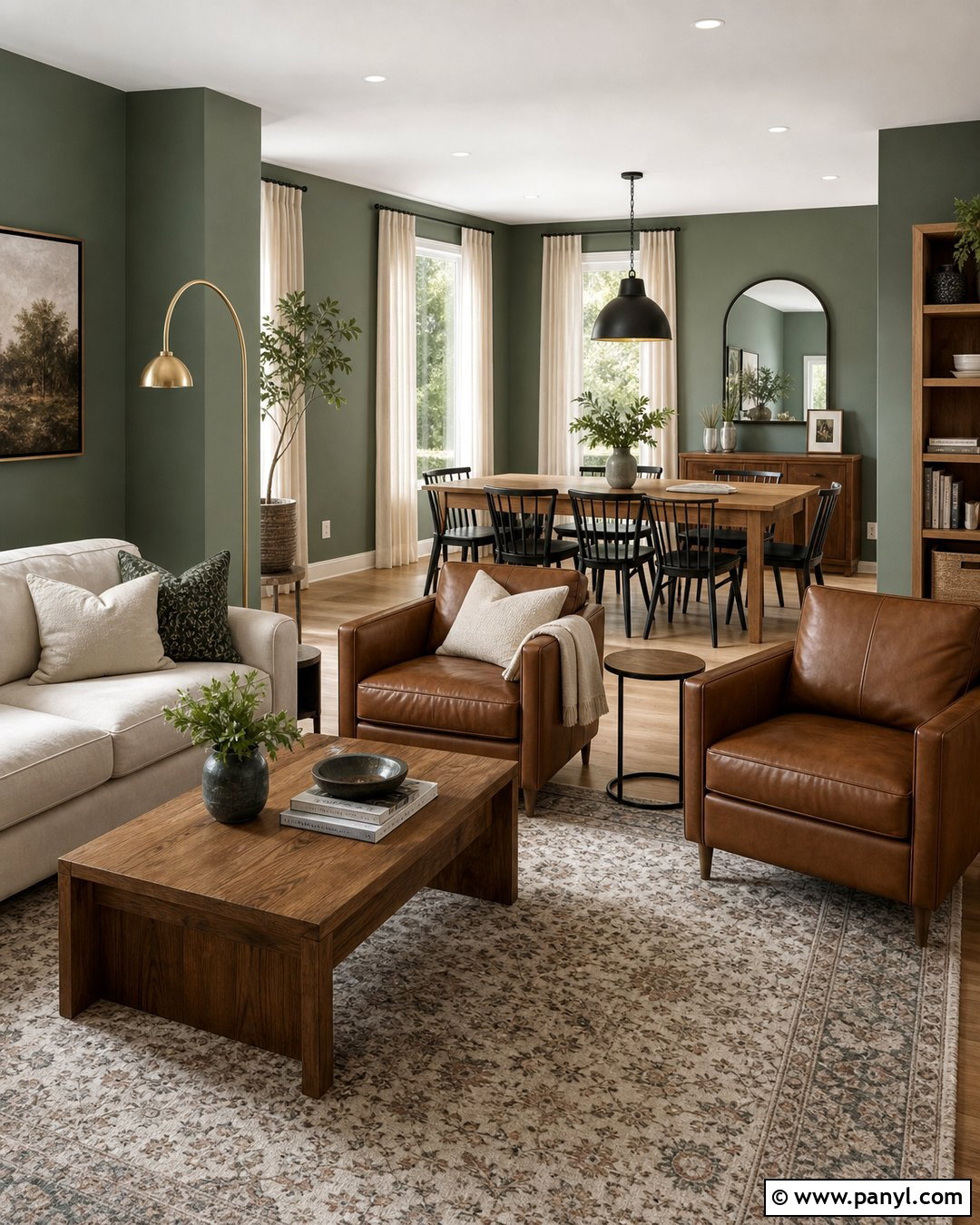
Green walls can unify an open-plan living and dining area when the same shade appears across connected zones. Select a calm mid-tone sage or olive that looks balanced in different lighting throughout the day. Define the living area with a cream sofa, brown leather chairs, an oak coffee table, and a large patterned rug. In the dining zone, repeat the oak through a simple table and use black chairs for contrast. Matching linen curtains create continuity across multiple windows. Use brass lighting in the living room and a black pendant above the table. Repeating green, cream, wood, and black in measured amounts gives the entire open space a coordinated, purposeful appearance.
Conclusion:
These 50 green walls demonstrate how one color family can support remarkably different interiors. Pale sage and mint brighten compact rooms, while forest, hunter, and emerald create deeper, more enveloping spaces. The strongest schemes consider the entire room rather than choosing paint in isolation. Coordinate the wall shade with flooring, trim, furniture, window treatments, lighting, and practical storage. Warm wood, cream textiles, natural stone, aged brass, and restrained black accents are especially useful for balancing green. Before committing, test a large painted sample in morning, afternoon, and evening light. With thoughtful undertones and a complete furnishing plan, these 50 green walls can inspire rooms that feel personal, comfortable, and lasting.

Related Ideas and Inspiration:
Leave a Reply