
Green can make almost any room feel fresher, calmer, and more connected to nature. These 20 green rooms ideas explore practical ways to use sage, olive, forest, mint, emerald, and moss tones throughout the home. Some designs rely on green walls, while others introduce the color through cabinets, furniture, wallpaper, tile, and textiles. Each complete look also considers flooring, lighting, layout, materials, and accent colors, so the room feels balanced rather than overly themed. Whether you prefer airy modern spaces, cozy traditional interiors, or bold color-drenched rooms, green offers plenty of flexibility. Use these approachable combinations to create a space that feels personal, comfortable, and polished as you explore the following 20 green rooms ideas.
1. Sage Green Living Room
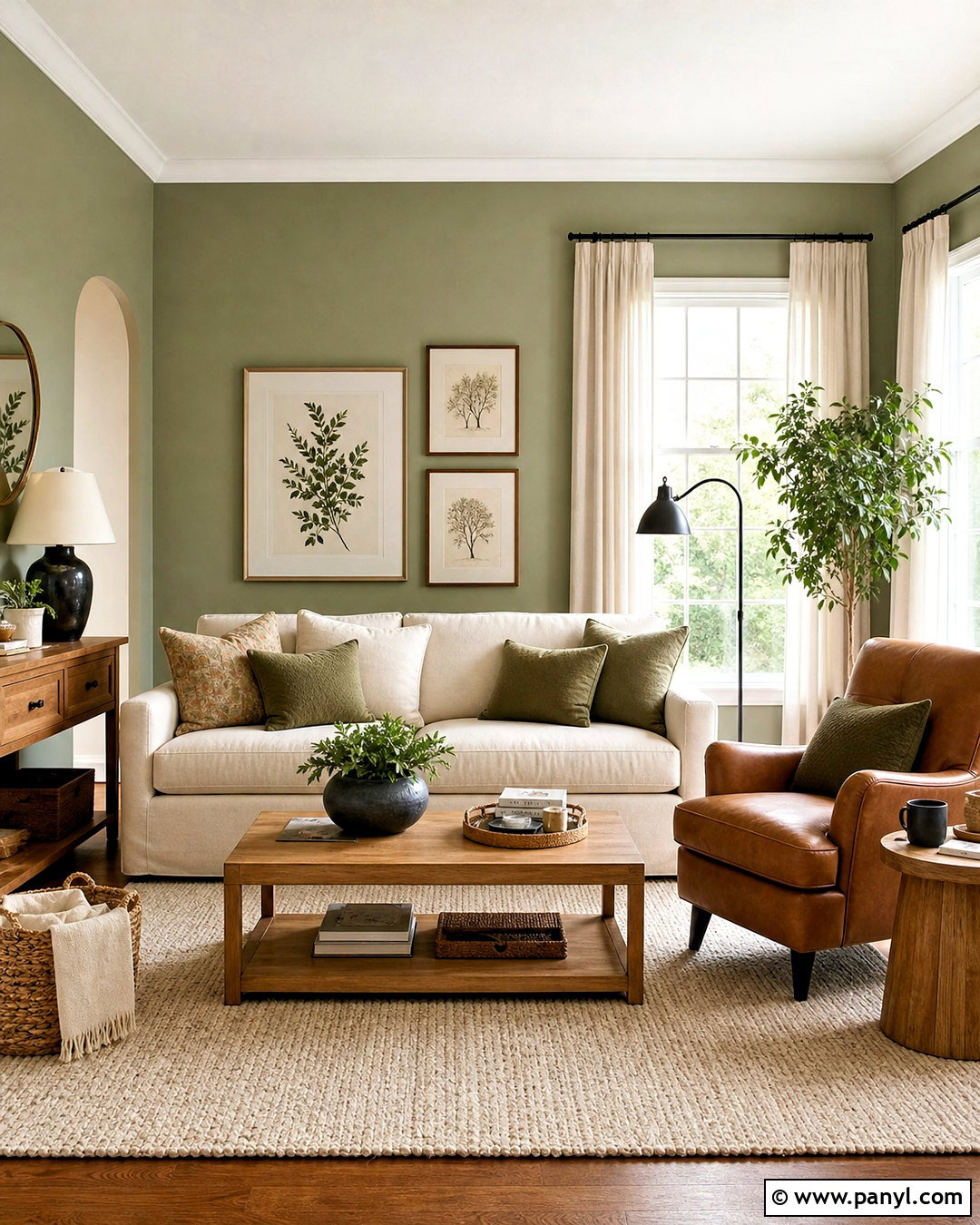
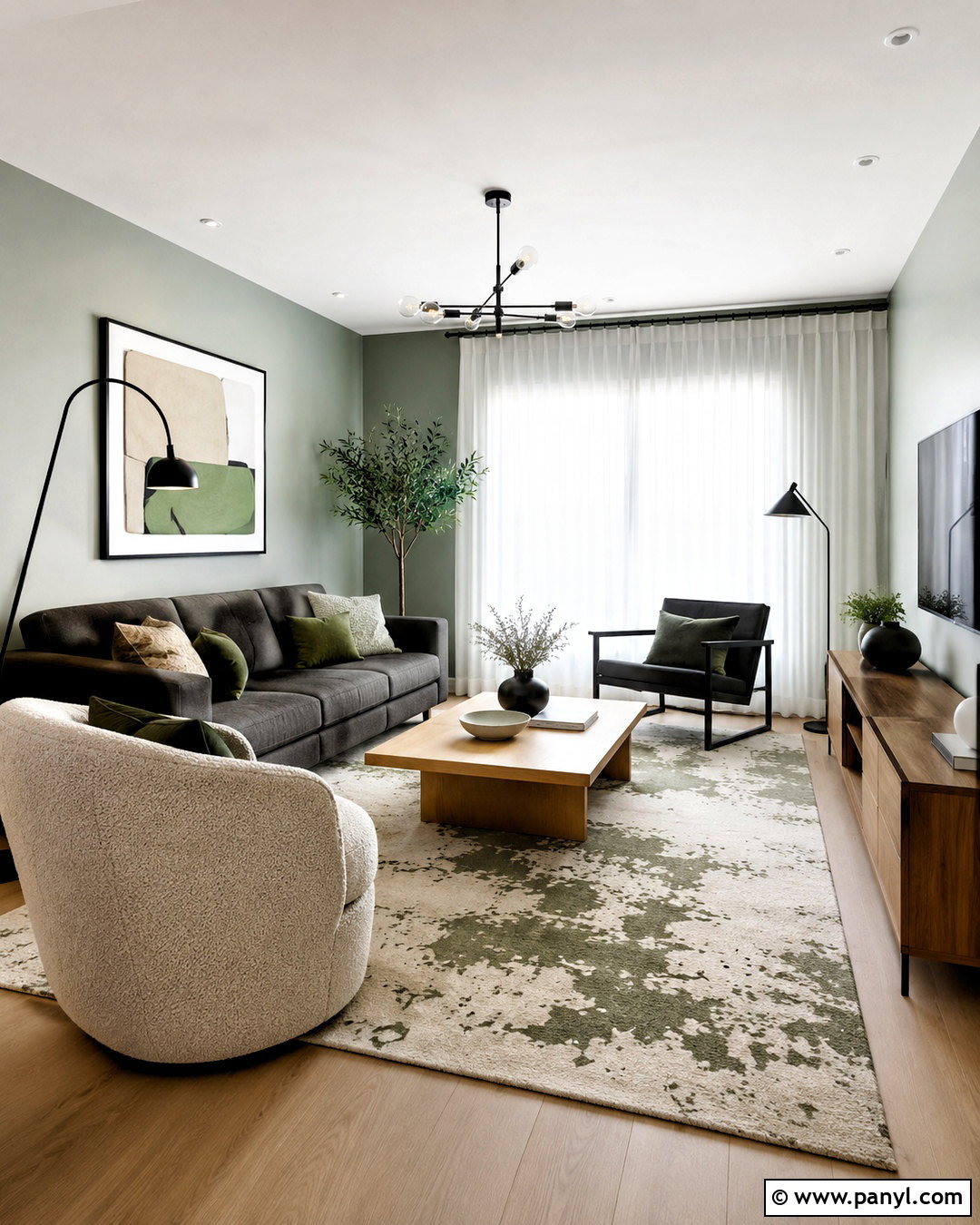
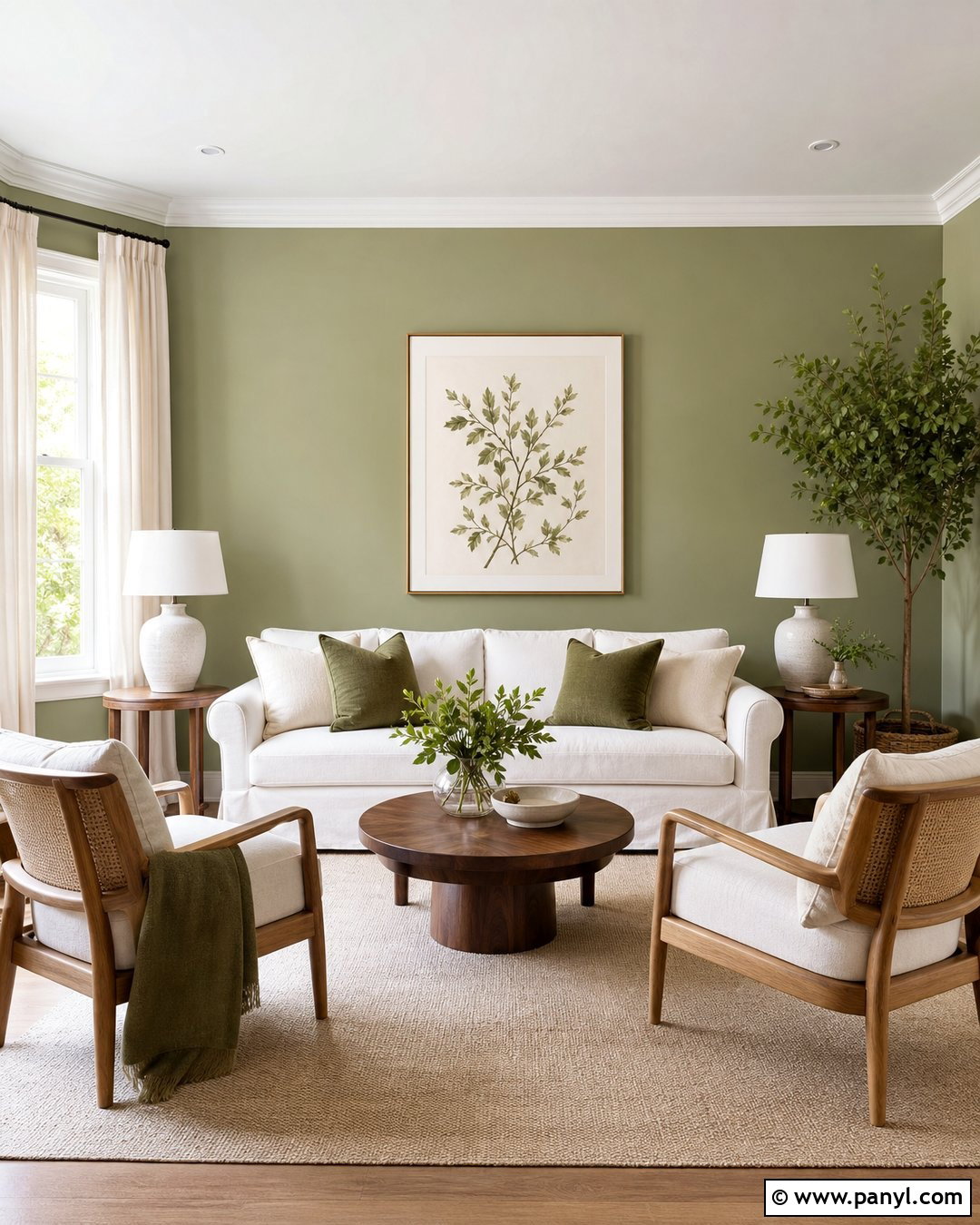
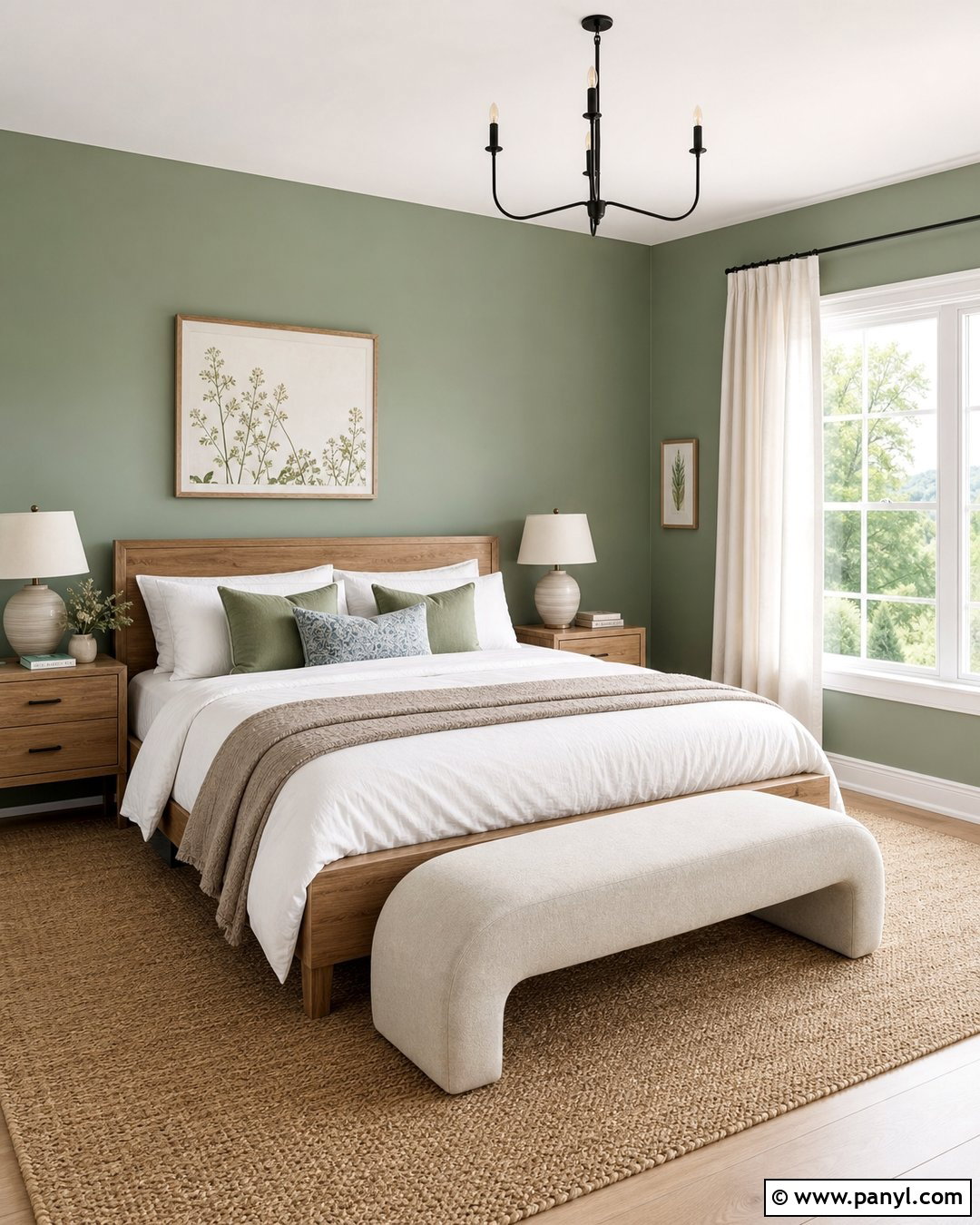
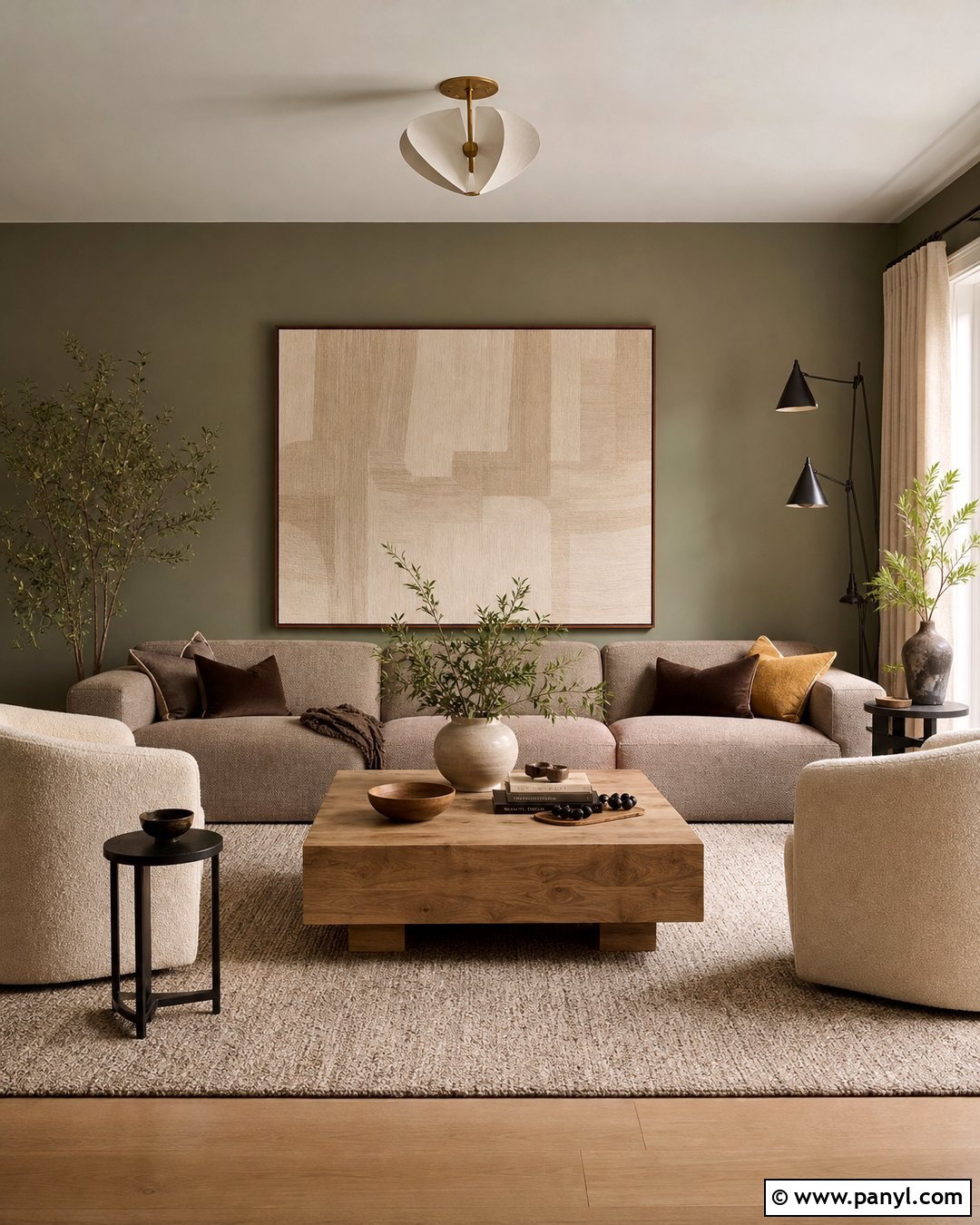
Soft sage walls create a relaxed foundation for a living room that feels bright and easy to maintain. Pair them with a warm cream sofa, two natural oak side tables, and a textured ivory rug. Linen curtains in an off-white tone keep the windows light without making the space feel bare. Add depth with olive pillows, a muted botanical print, and a caramel leather accent chair. A black metal floor lamp gives the pale palette a crisp edge. Keep the layout conversational by placing the chair across from the sofa and centering both around a simple wood coffee table. A few leafy plants reinforce the green scheme while woven baskets introduce practical storage and natural texture.
2. Dark Green Living Room
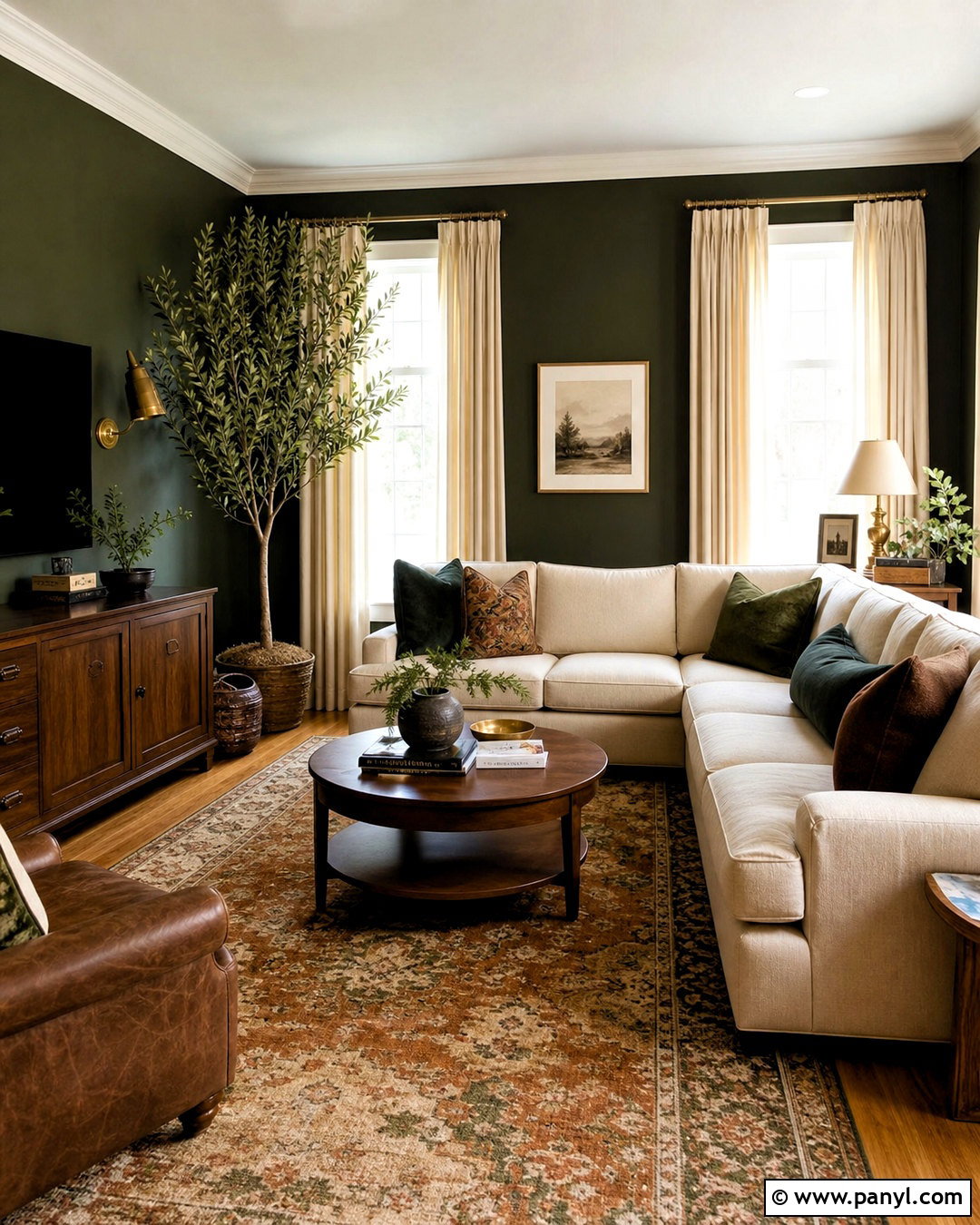
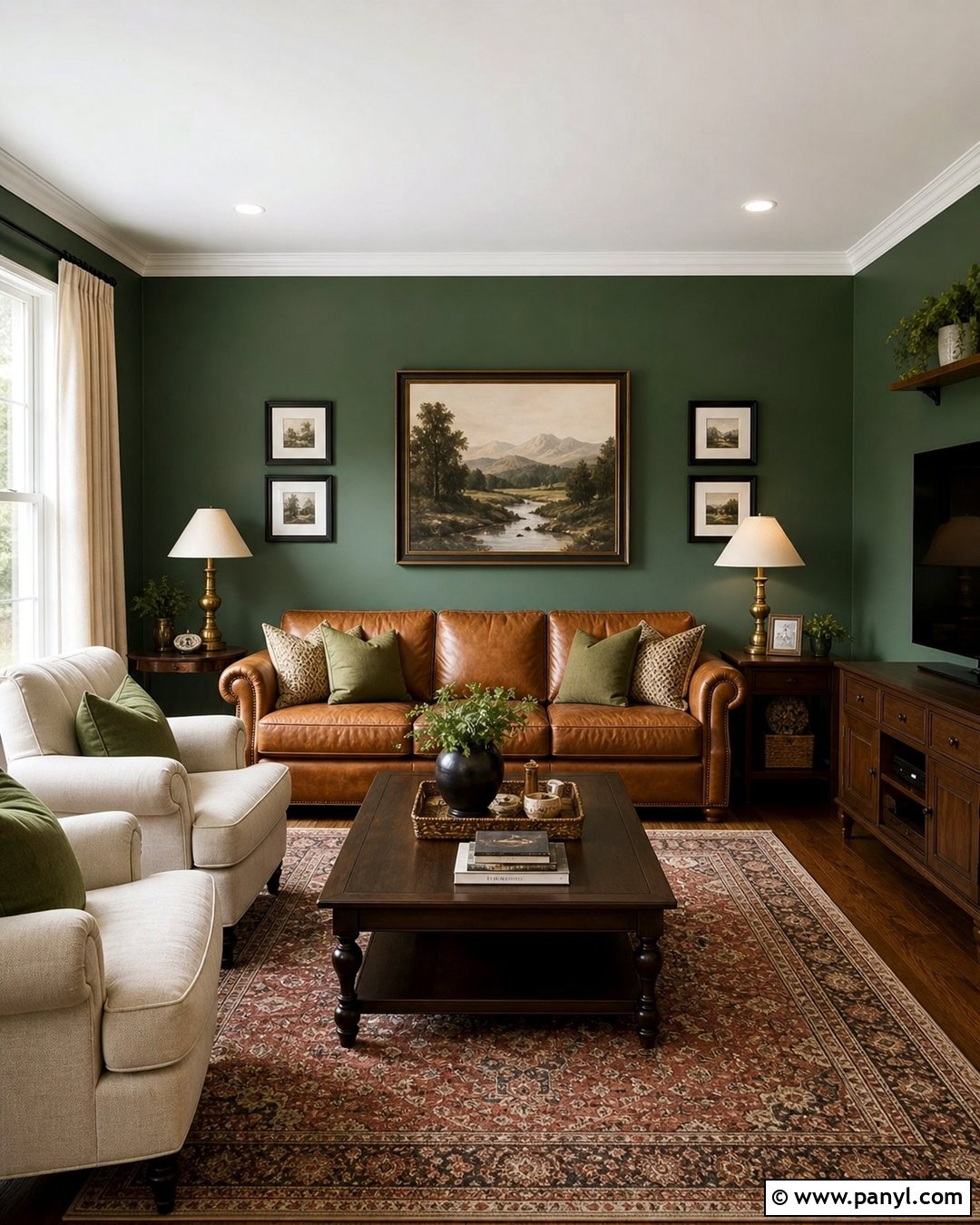
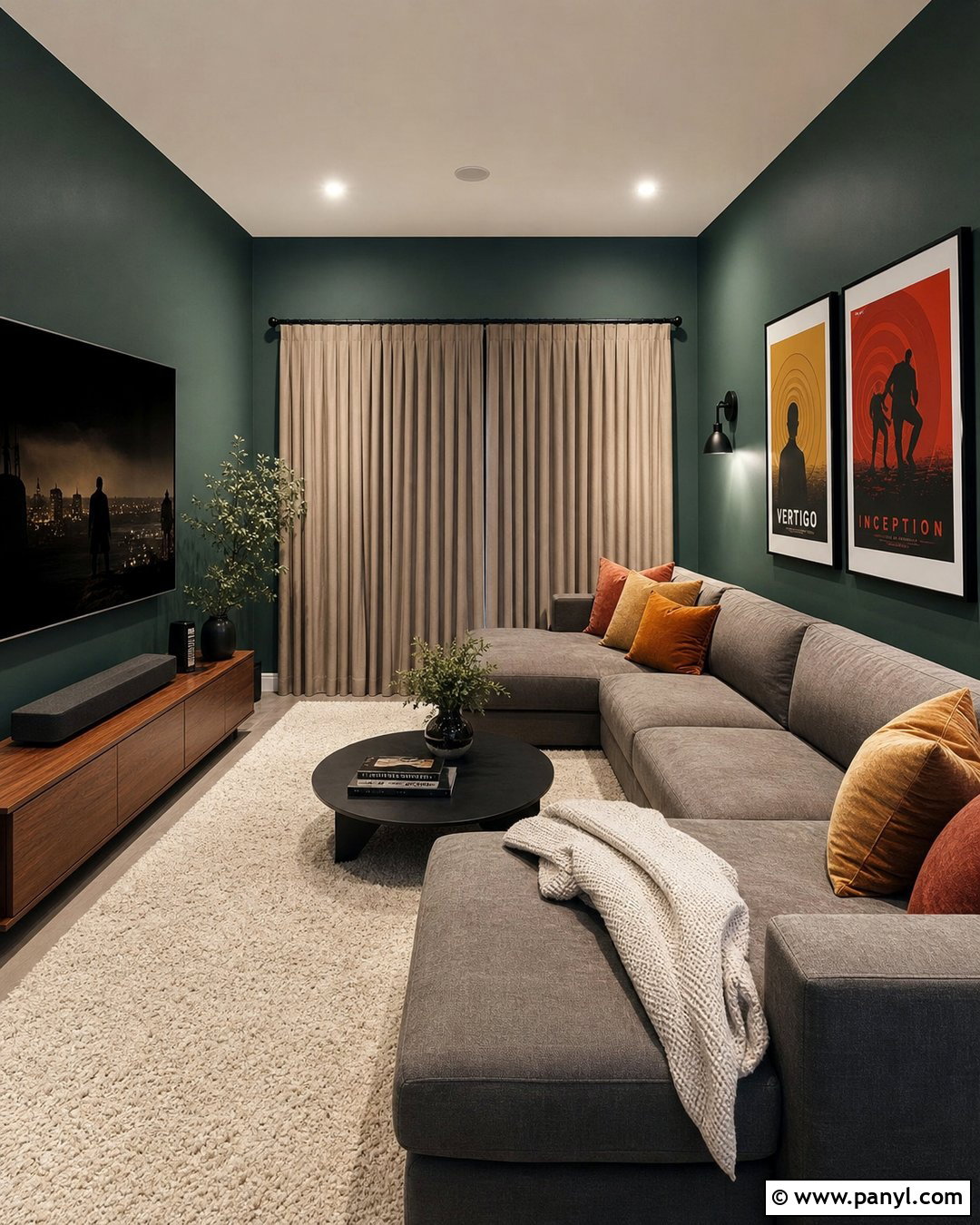
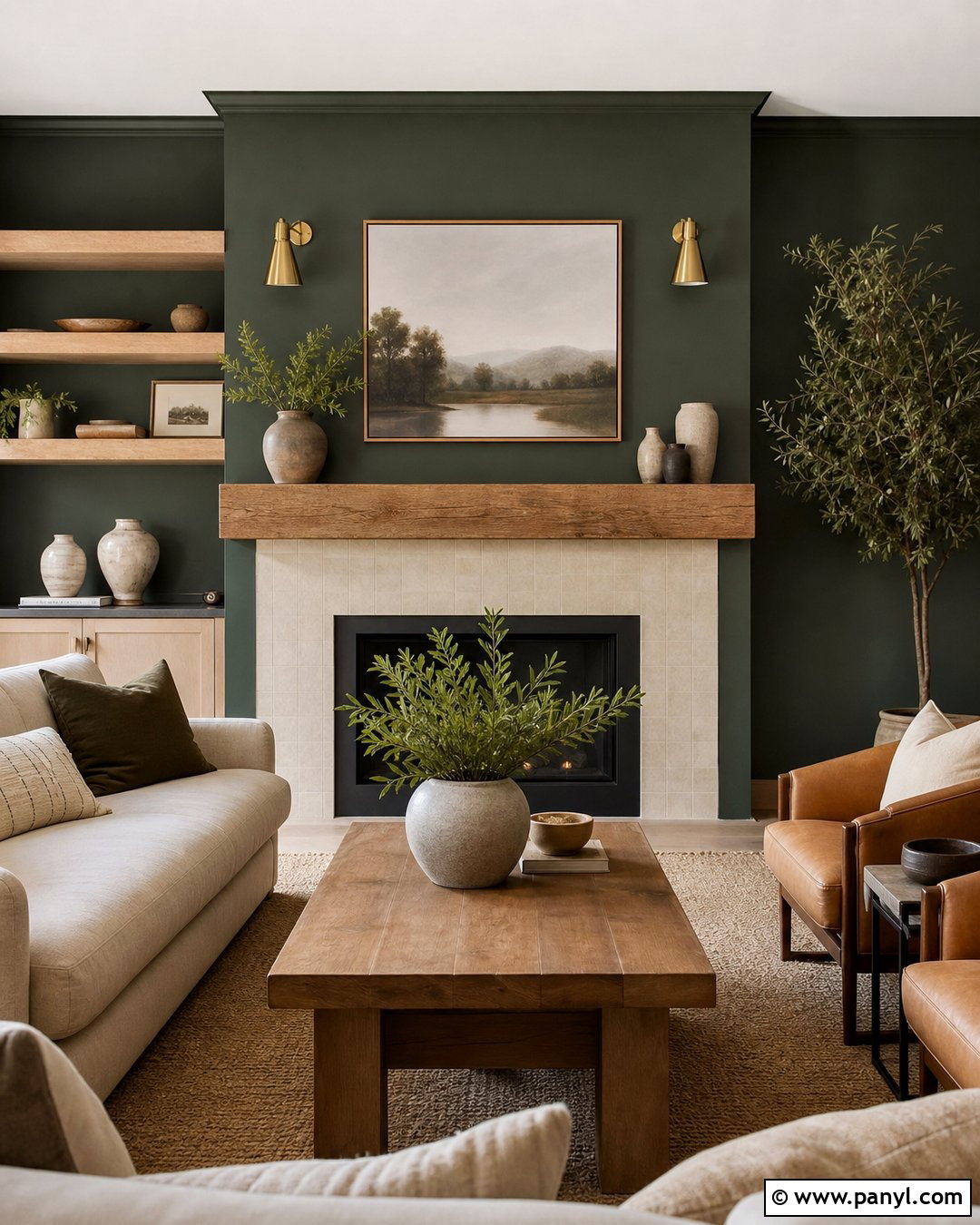
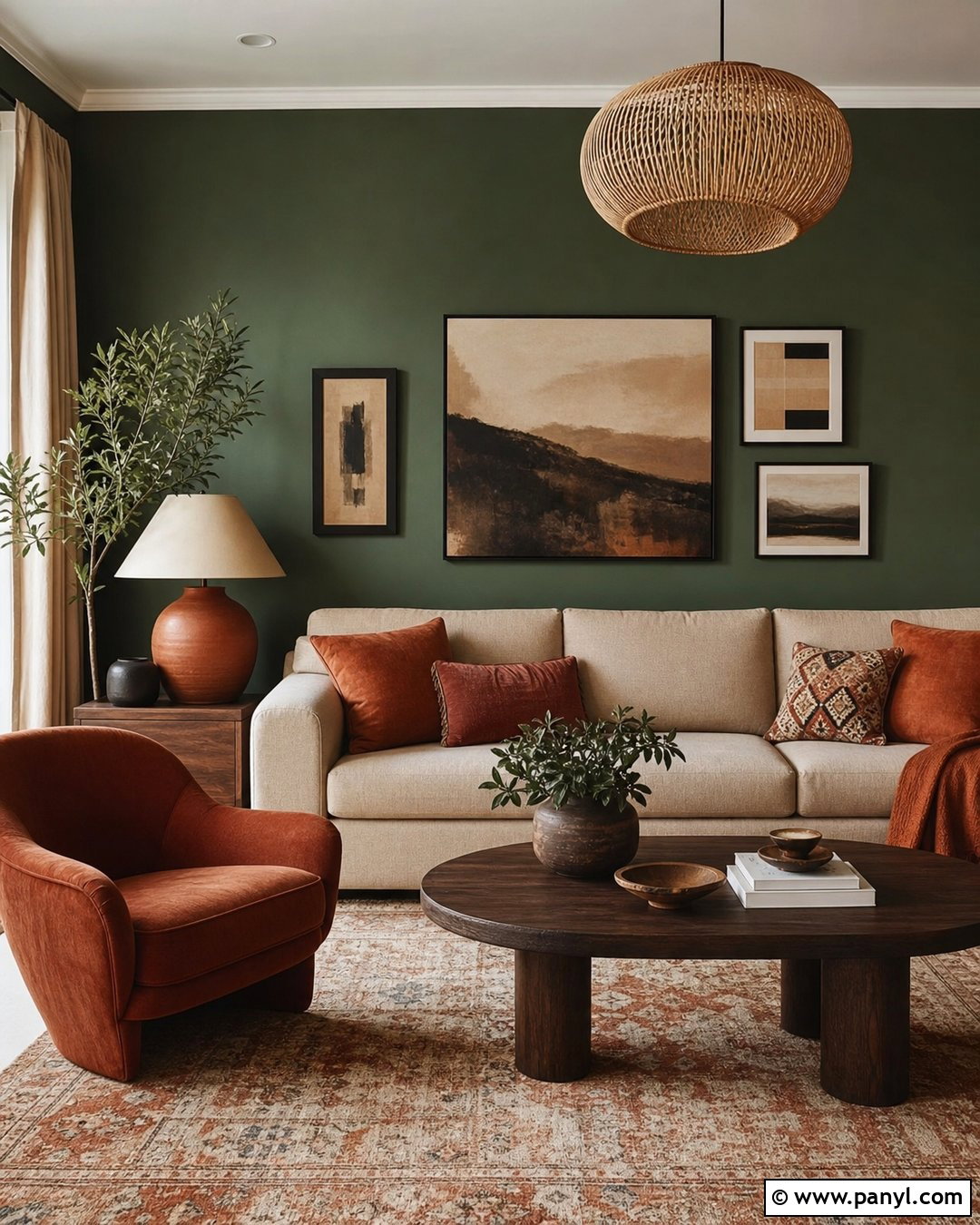
Deep forest green walls can make a living room feel intimate without becoming gloomy when the rest of the palette is carefully balanced. Choose a large oatmeal-colored sectional to lighten the room, then ground the seating area with a faded rust, cream, and green rug. Walnut furniture complements the warm undertones of the paint, while aged brass lamps add a gentle glow. Hang artwork with generous white matting to create breathing room against the dark walls. Natural linen curtains soften the windows and prevent the design from feeling overly formal. Finish the room with velvet pillows, a round wood coffee table, and one substantial indoor tree. The result feels cozy, layered, and comfortable for everyday use.
3. Olive Green Bedroom
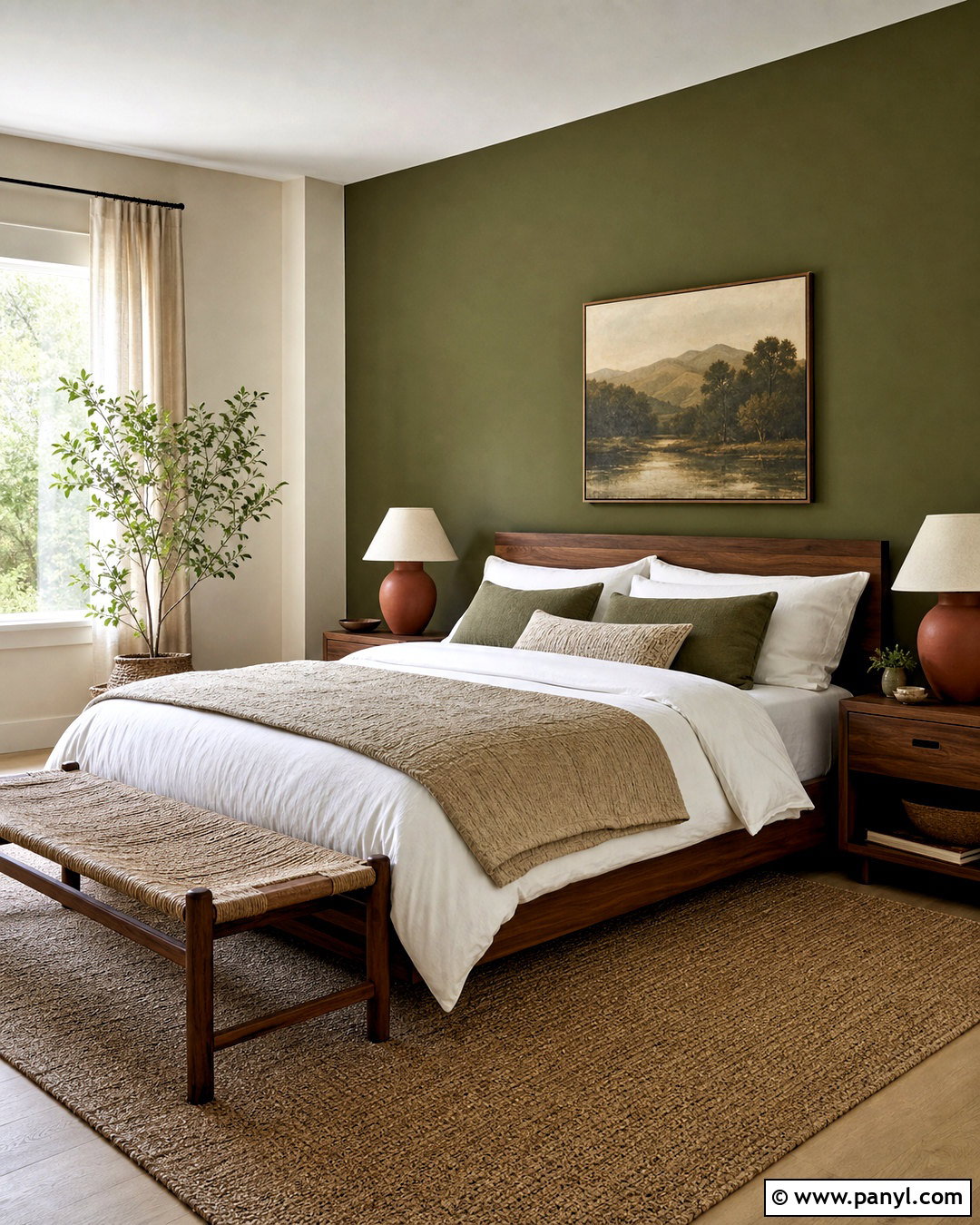
Olive green brings an earthy, restful quality to a bedroom, especially when paired with warm wood and quiet neutrals. Paint the wall behind the bed olive and keep the remaining walls soft cream for balance. Choose a low walnut bed with white cotton sheets, a beige quilt, and olive linen pillows. Terracotta lamps on matching nightstands add a warm color contrast without overpowering the room. A flat-weave rug in tan and muted green grounds the furniture, while natural flax curtains filter daylight. Keep artwork simple, such as an abstract landscape in brown, cream, and moss tones. Complete the space with a woven bench and minimal greenery for a bedroom that feels calm, natural, and thoughtfully finished.
4. Forest Green Bedroom
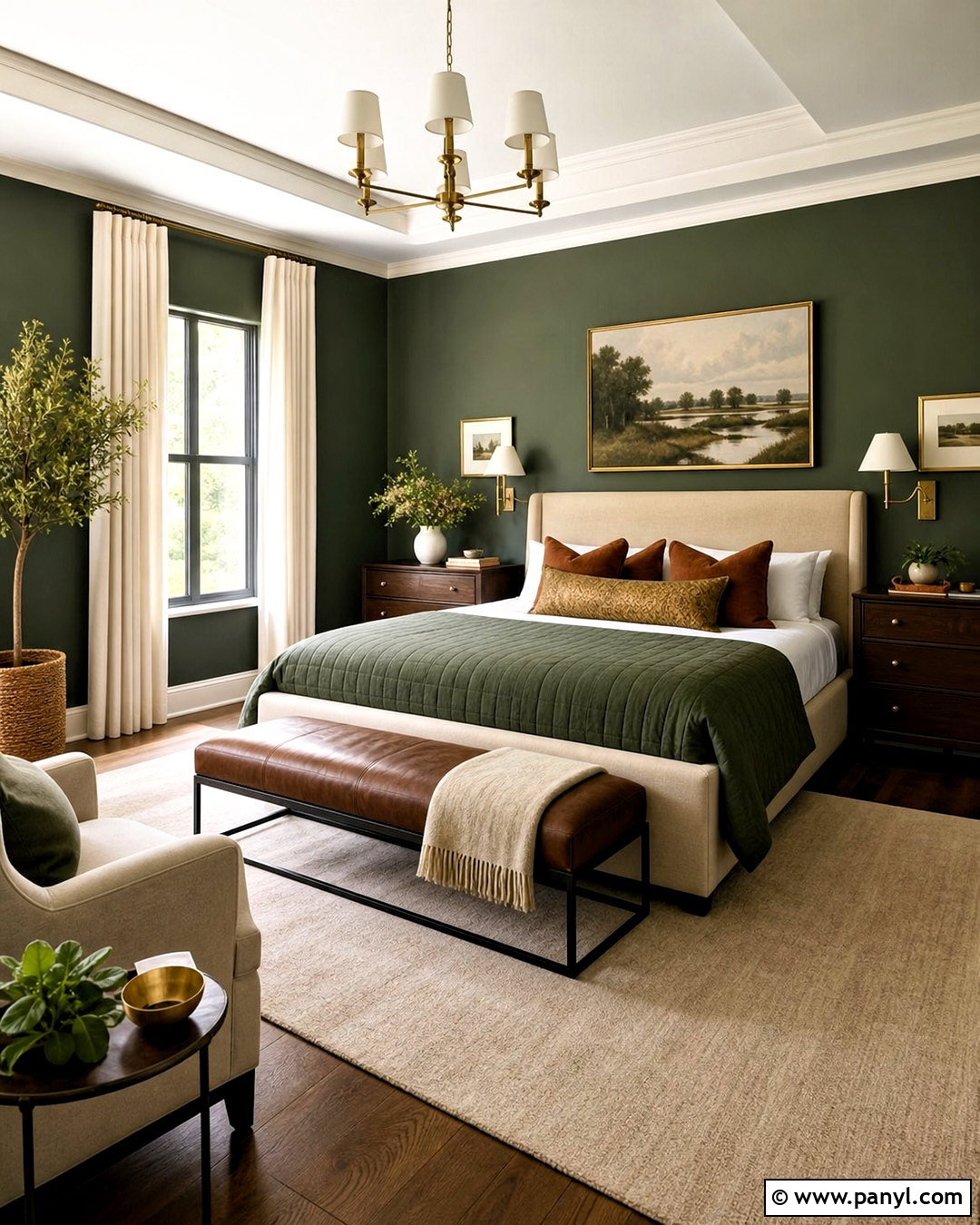
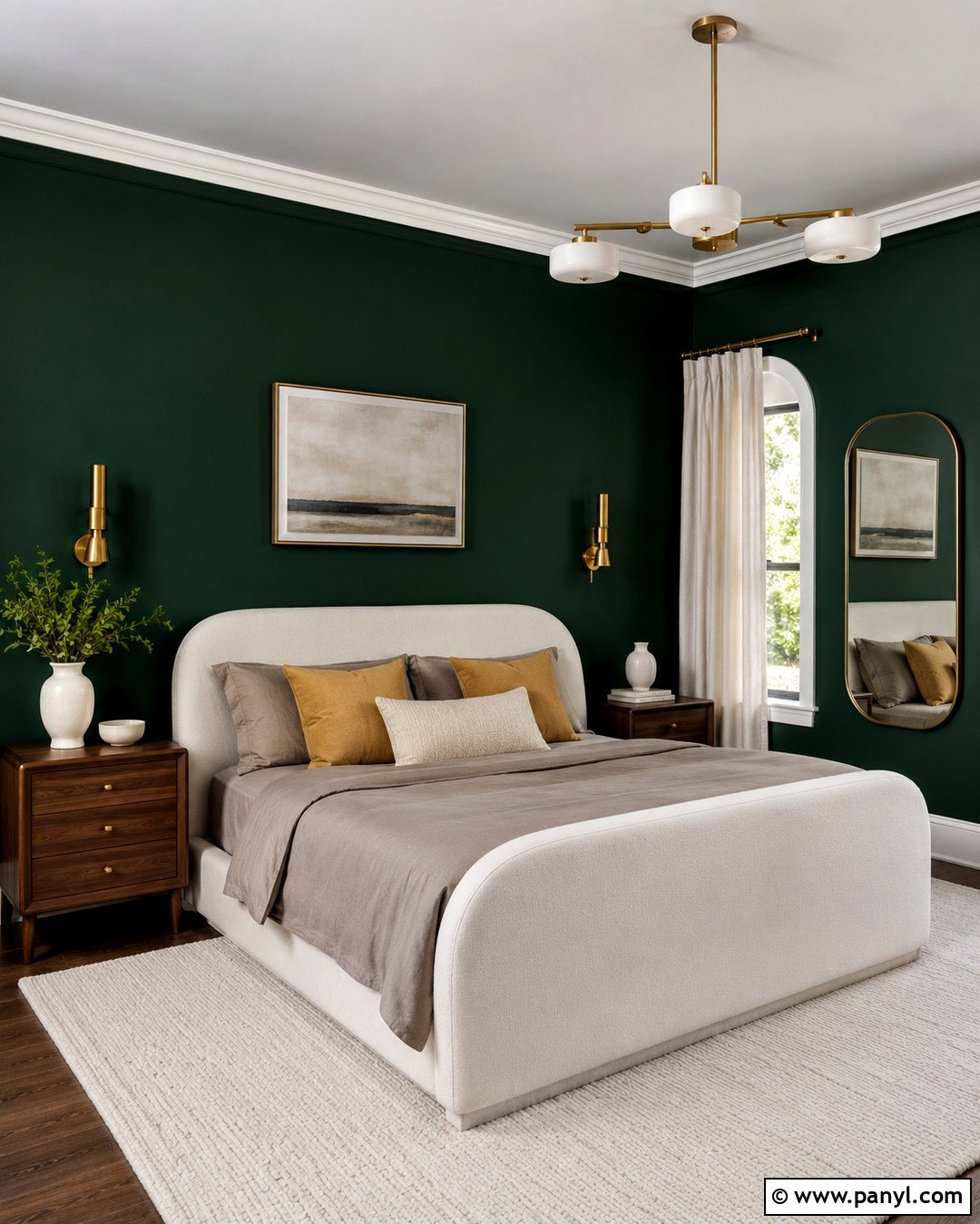
Would you like a bedroom that feels cozy, dramatic, and polished? Forest green walls provide a rich backdrop for a substantial upholstered bed in warm beige linen. Layer the bedding with crisp white sheets, a forest green coverlet, and patterned pillows featuring touches of rust and gold. Dark oak nightstands reinforce the grounded palette, while brushed brass sconces free up bedside surface space. Use a large cream rug to brighten dark flooring and visually frame the bed. Full-length ivory curtains keep the room from feeling enclosed. A vintage-style landscape above the headboard and a slim leather bench add character. Limit smaller accessories so the deep color remains intentional, relaxing, and clean rather than visually heavy.
5. Green And Cream Bedroom
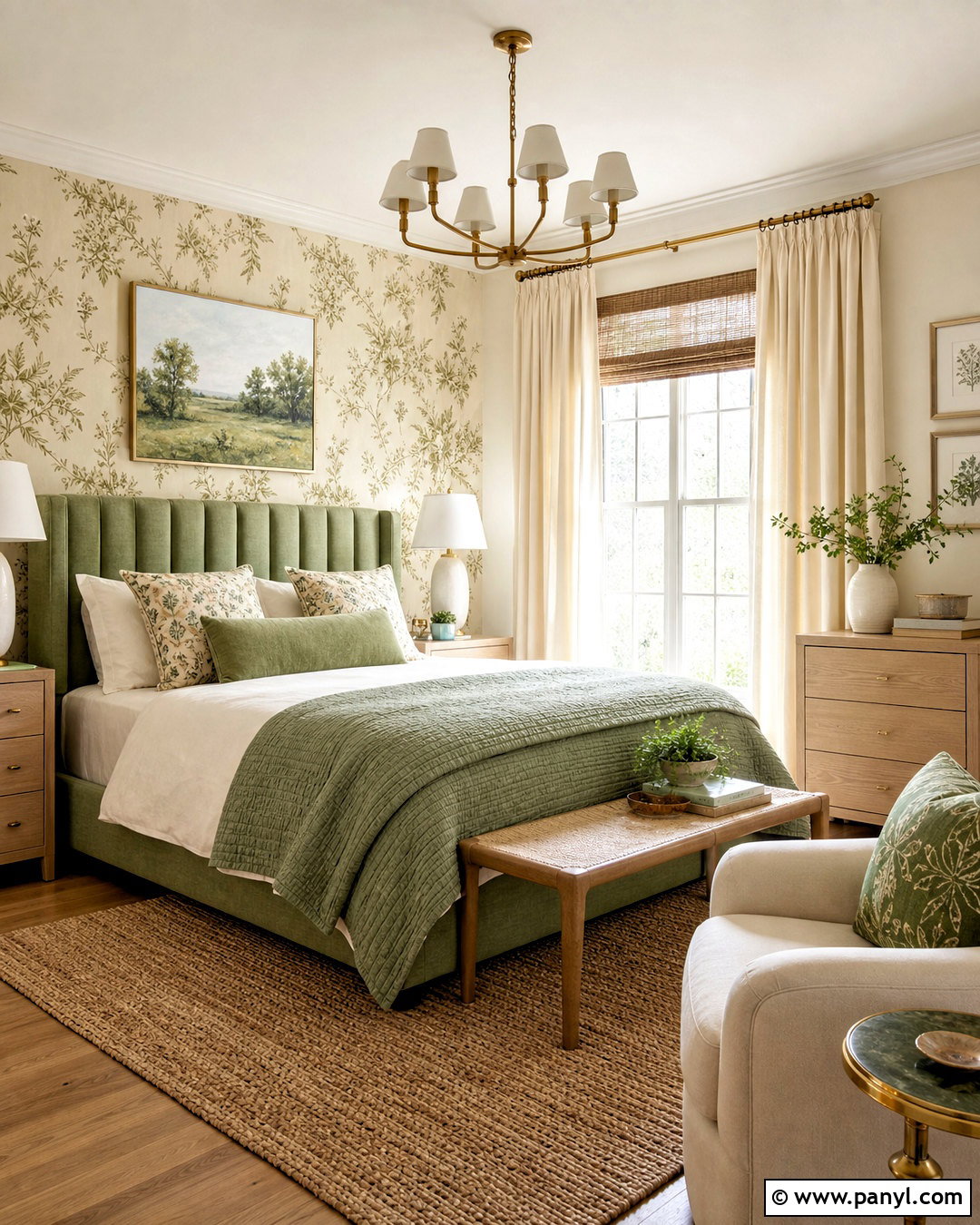
A green and cream bedroom offers color while preserving a soft, welcoming atmosphere. Begin with warm cream walls and introduce green through a channel-tufted sage headboard, floor-length curtains, and a lightweight quilt. Pale oak nightstands and a matching dresser prevent the room from appearing too formal. Use a subtle botanical wallpaper behind the bed if you want more pattern without overwhelming the restful palette. Brass table lamps, woven shades, and a natural jute rug add warmth. Keep the bedding mostly ivory, then repeat sage in two or three pillows for continuity. A comfortable cream armchair near the window completes the layout. This balanced approach works especially well in guest rooms, where calm colors and simple furniture feel inviting.
6. Emerald Green Dining Room
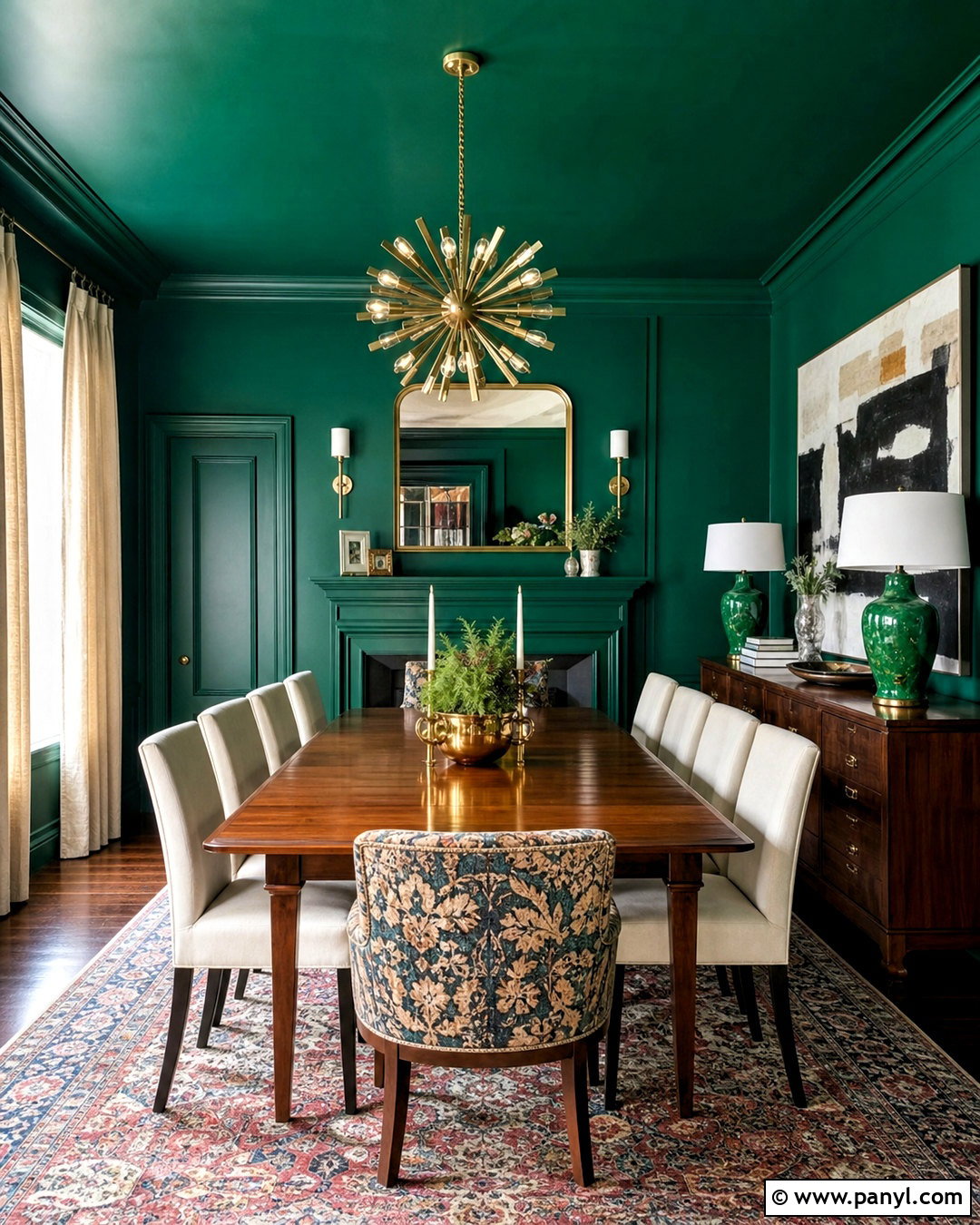
Emerald green can turn a dining room into a bold but sophisticated gathering space. Color-drench the walls and trim in the same rich green, using a slightly glossier finish on the woodwork for subtle contrast. Center a medium-toned walnut table beneath a sculptural brass chandelier. Upholstered dining chairs in warm ivory provide visual relief, while two patterned end chairs bring green, blue, and cream together. Add a large vintage-inspired rug to soften the room and improve acoustics. A dark wood sideboard creates storage for serving pieces without interrupting the palette. Finish with simple ceramic lamps, oversized artwork, and full-length cream curtains. The entire design feels dramatic, comfortable, and suitable for both casual meals and celebrations.
7. Sage Green Dining Room
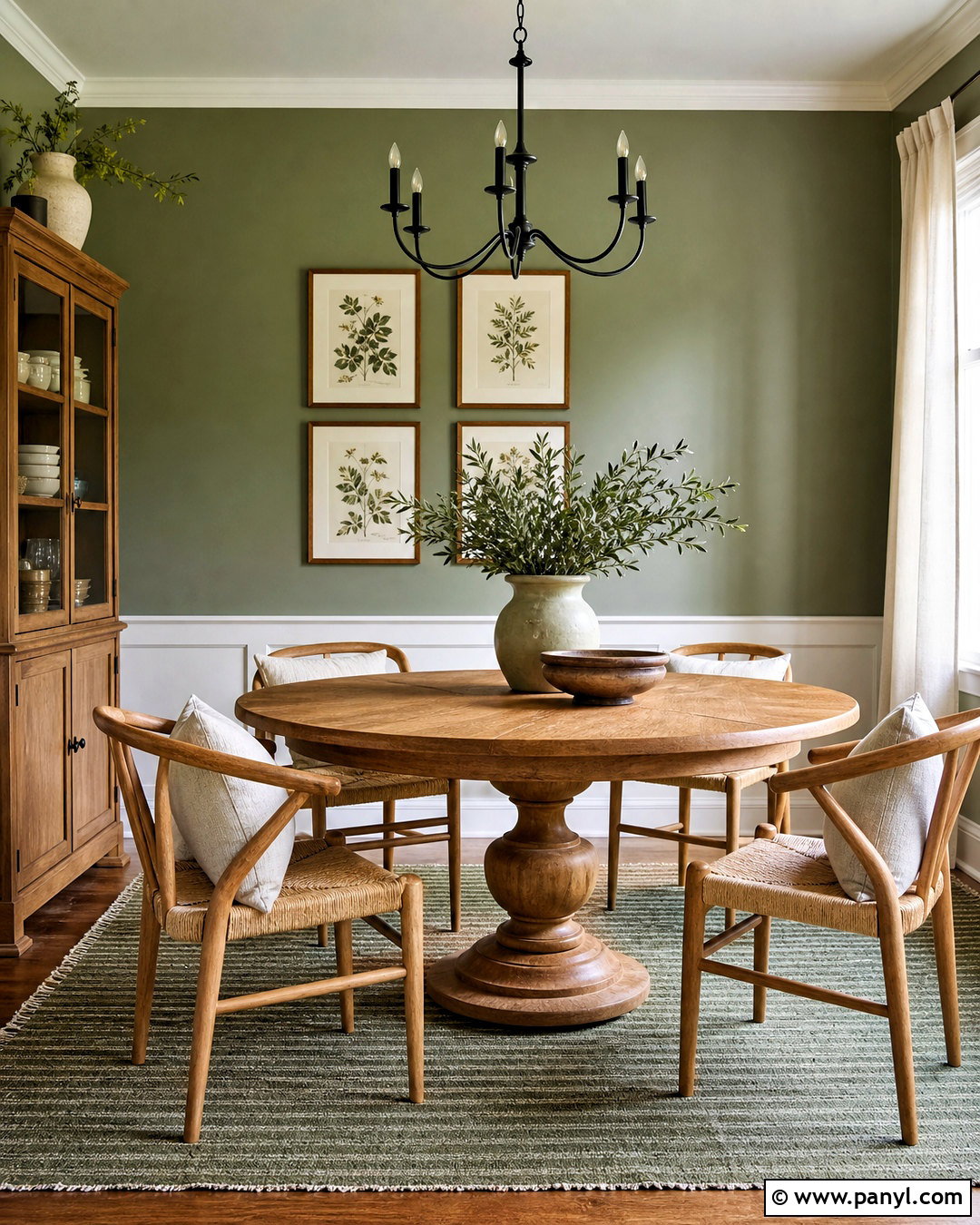
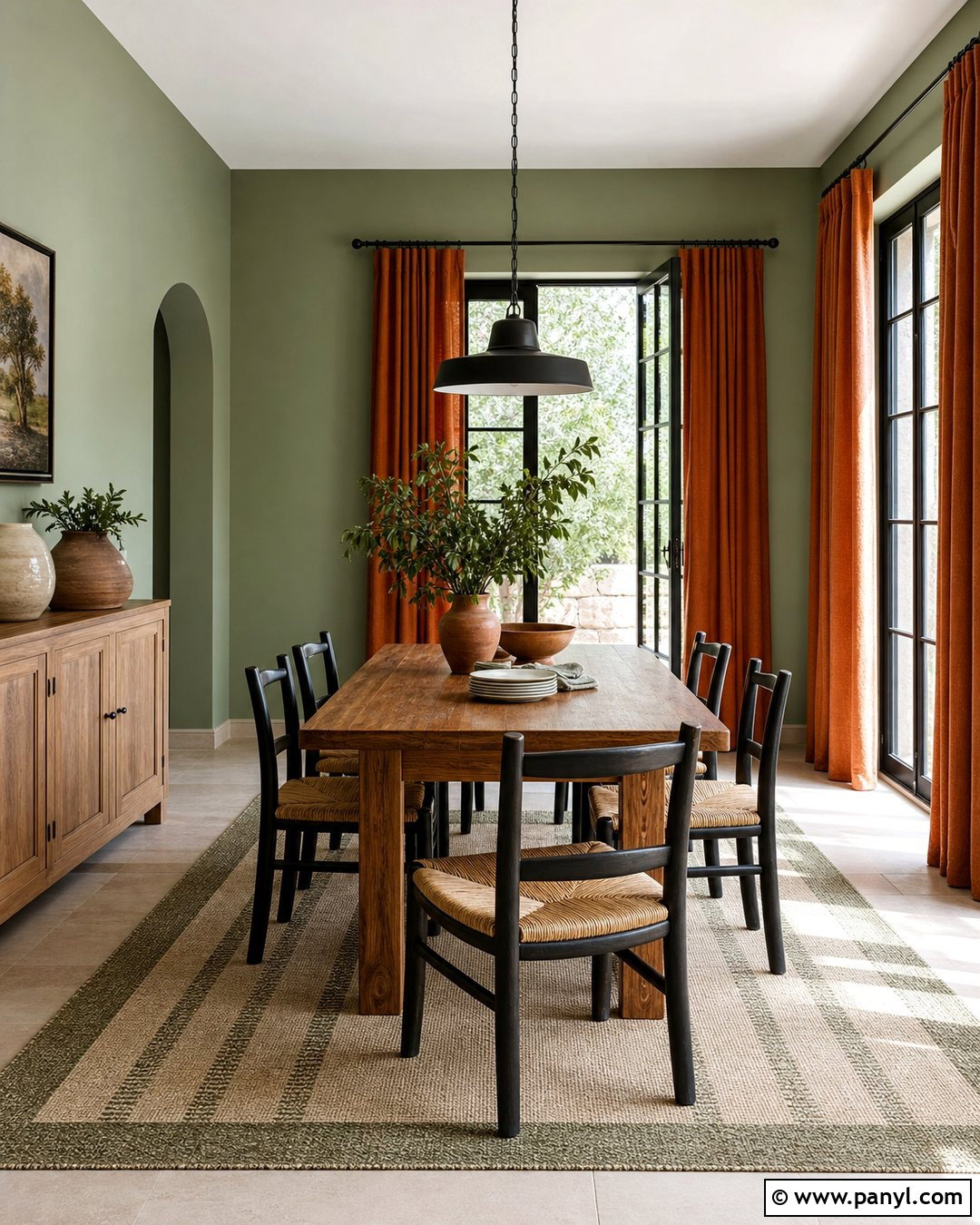
Morning light works beautifully with sage green, making it an appealing choice for a casual dining room. Paint the walls a muted, slightly warm sage and keep the ceiling and trim creamy white. A round oak pedestal table improves movement through the room and creates an intimate seating arrangement. Choose woven dining chairs with light wood frames, then add washable seat cushions in natural linen. A simple black chandelier provides contrast and coordinates with black-framed botanical artwork. Ground the area with a flat-weave rug featuring cream and faded green stripes. Place a narrow oak cabinet against one wall for tableware storage. Sheer curtains and a few handmade ceramic pieces complete this relaxed, functional room without making it feel overly decorated.
8. Green Kitchen Cabinets
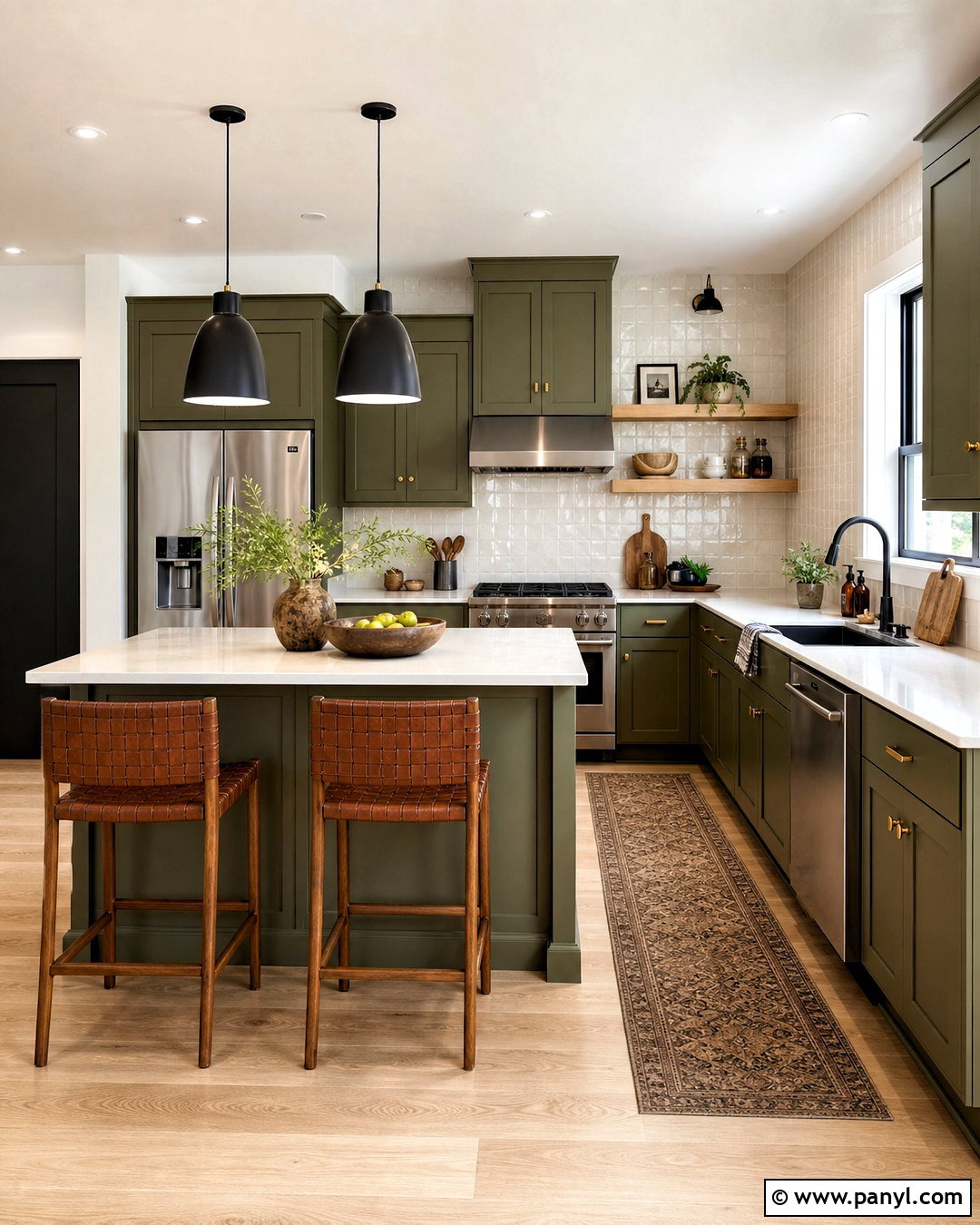
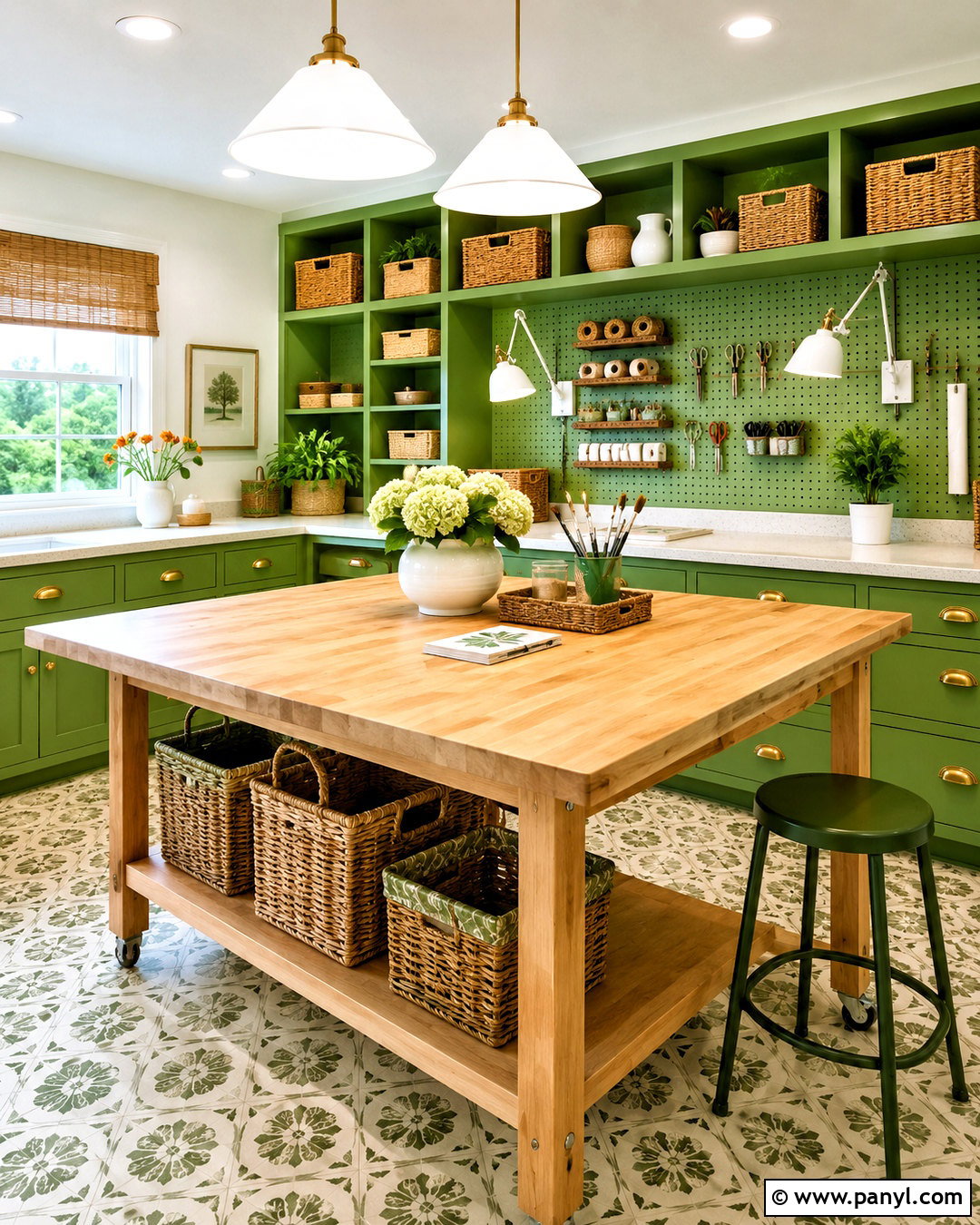
Green kitchen cabinets can feel timeless when they are supported by warm, practical materials. Choose medium olive-green cabinets with simple Shaker doors and satin brass hardware. Pair them with creamy quartz countertops and a handmade off-white tile backsplash for a soft contrast. White oak flooring warms the color scheme, while open oak shelves break up a long wall of cabinetry. Use matte black pendants above a compact island to add definition and coordinate with dark-framed windows. Counter stools in woven leather introduce another natural texture. Keep appliances in stainless steel for an approachable, hardworking finish. A washable runner, wood cutting boards, and small potted herbs complete a kitchen that feels colorful, organized, and comfortable rather than trend-driven.
9. Dark Green Kitchen
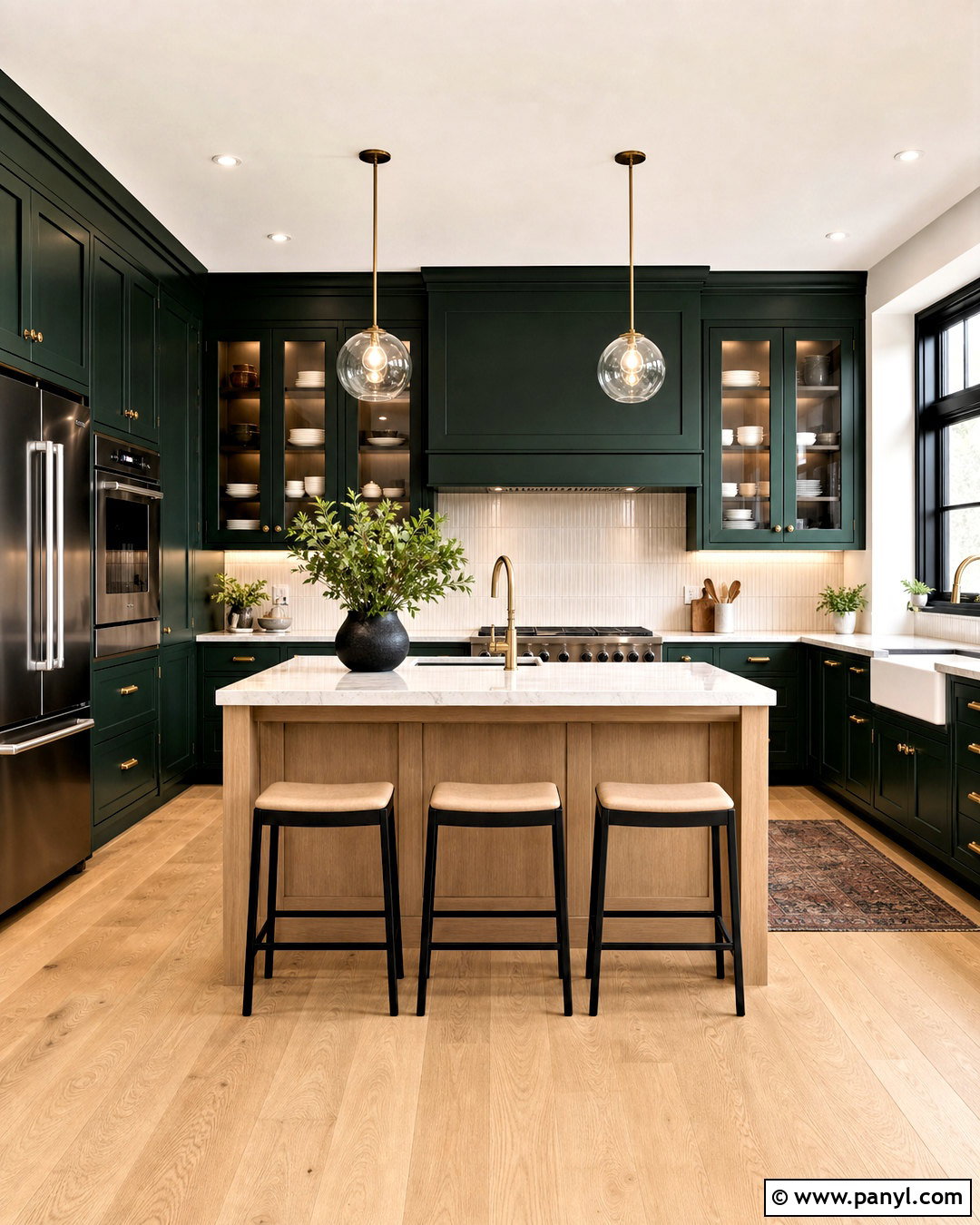
For a kitchen with greater depth, cover the lower and upper cabinets in a dark pine green. Balance that saturated color with white marble-look counters, pale walls, and a light oak floor. A full-height backsplash in creamy vertical tile draws the eye upward and reflects light across the work surfaces. Choose unlacquered brass hardware to warm the green, then repeat the finish on the faucet and pendant lights. If space allows, use a pale oak island rather than another dark green cabinet block. Backless stools keep walkways open and maintain a clean view. Glass-front cabinets can display white dishes and reduce visual weight. The completed kitchen feels bold and tailored, yet the lighter surfaces keep it suitable for an average family home.
10. Mint Green Bathroom
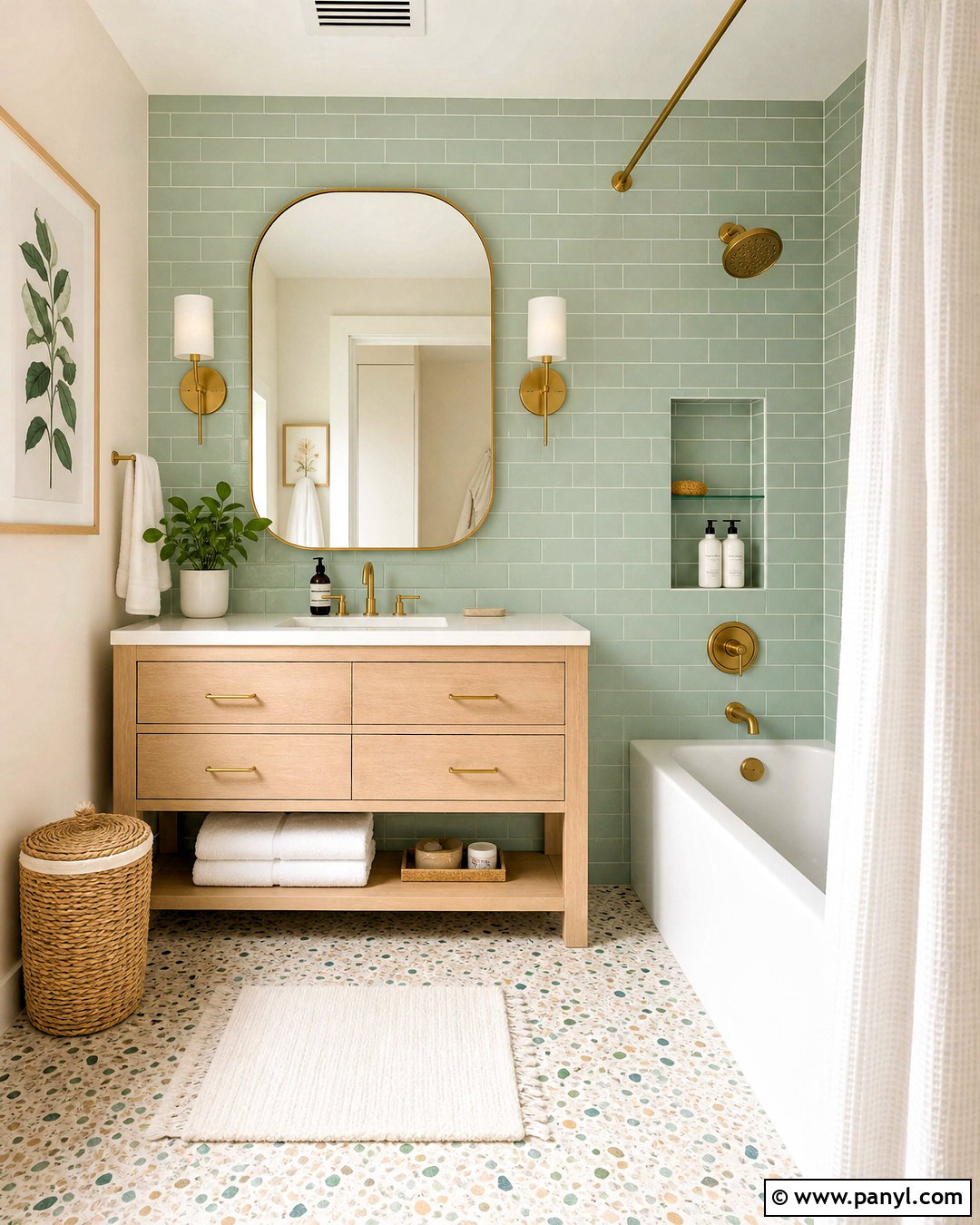
Fresh mint green gives a small bathroom an airy personality without sacrificing warmth. Use glossy mint subway tile around the tub and on the lower half of the walls, then paint the upper walls clean warm white. A light oak vanity with a white quartz top introduces natural contrast and useful concealed storage. Choose a rounded brass mirror, matching sconces, and simple brass fixtures for a polished finish. Terrazzo flooring with small green and beige flecks connects the room’s colors in a subtle way. Add white towels, a waffle-textured shower curtain, and a small woven hamper to keep the room relaxed. One framed botanical print and a moisture-friendly plant complete this bright, organized bathroom while allowing the mint tile to remain the clear focal point.
11. Green And White Bathroom
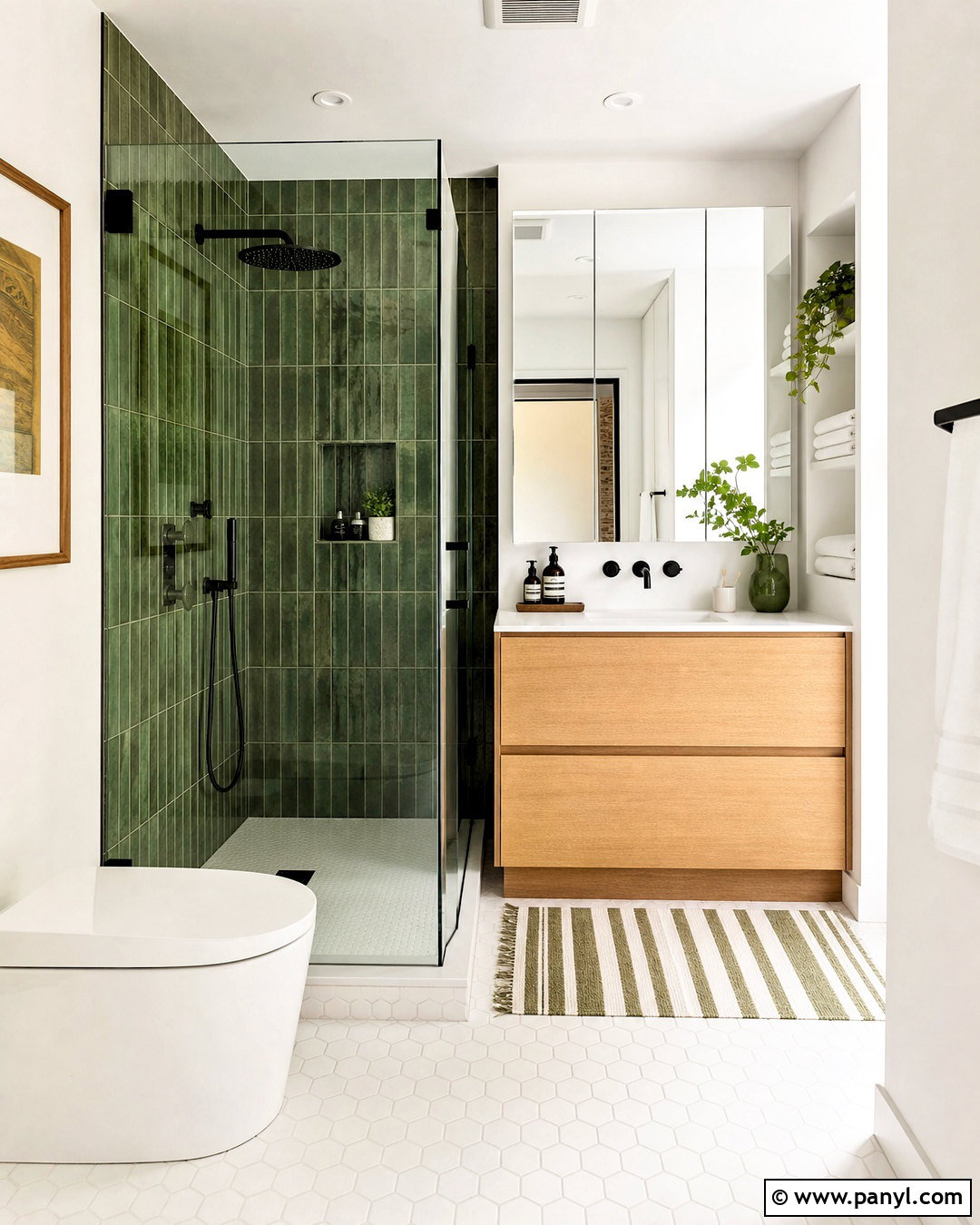
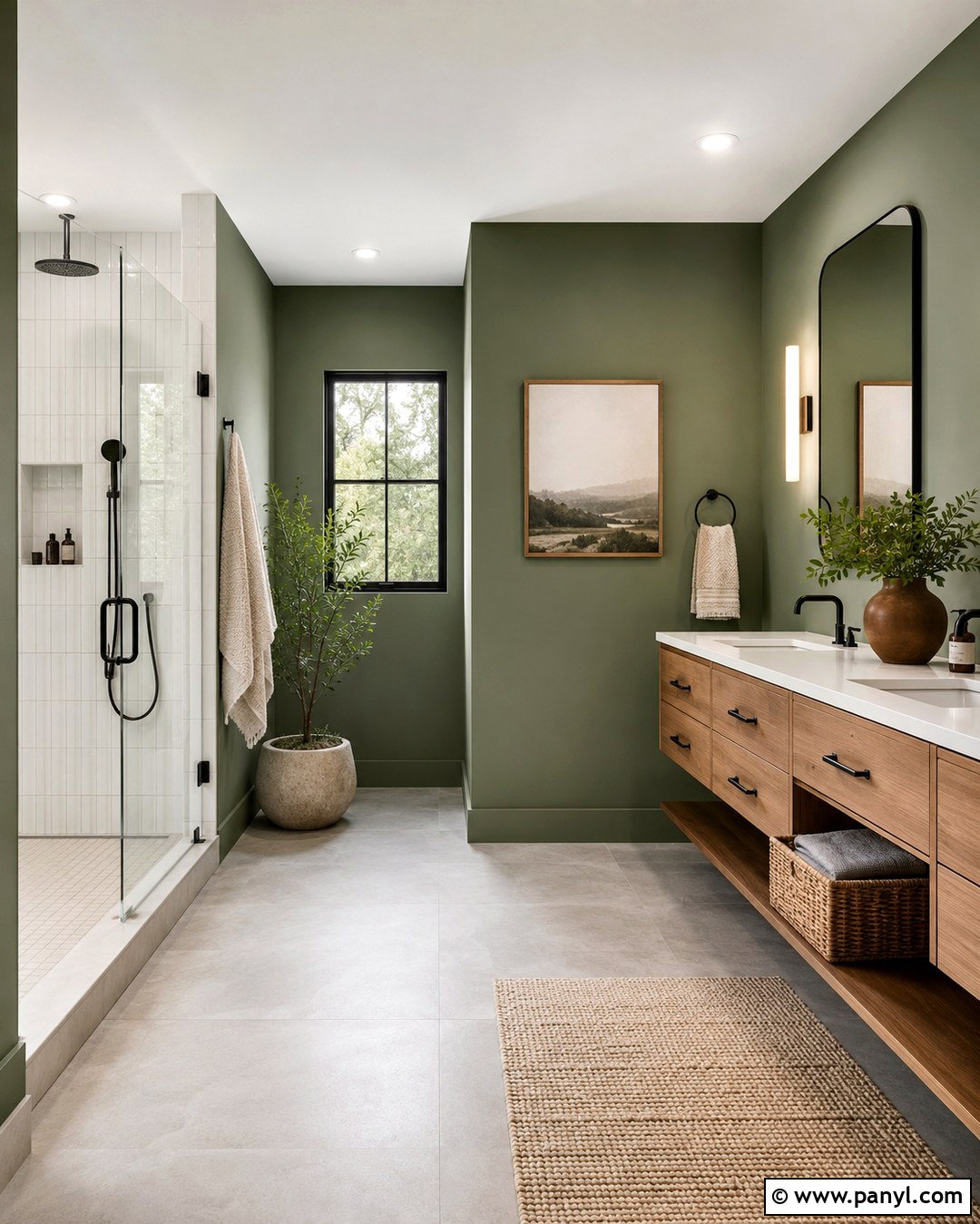
Crisp white and leafy green can make a bathroom feel clean, classic, and full of character. Install green glazed tile in the shower and continue it behind a white oak vanity for a strong, connected focal area. Keep the remaining walls white and choose small white hexagonal floor tiles with dark grout. A frameless glass shower enclosure allows the green surface to remain visible throughout the room. Matte black faucets, sconces, and cabinet pulls create definition and prevent the palette from feeling overly sweet. Use a wide mirrored cabinet for hidden storage and add open shelves for folded white towels. A striped bath mat, simple ceramic accessories, and one hanging plant finish the room with practical texture and a fresh, balanced appearance.
12. Green Home Office
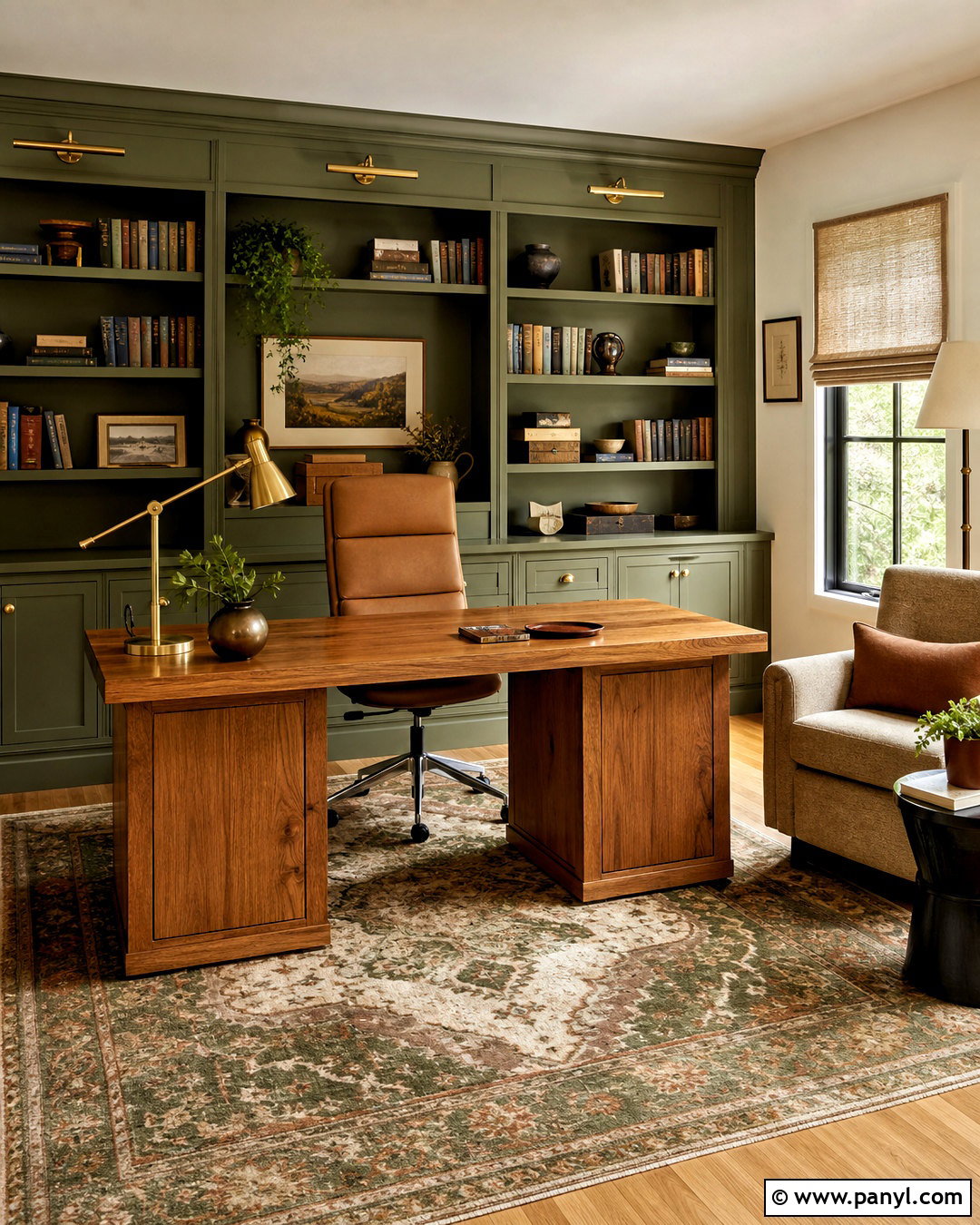
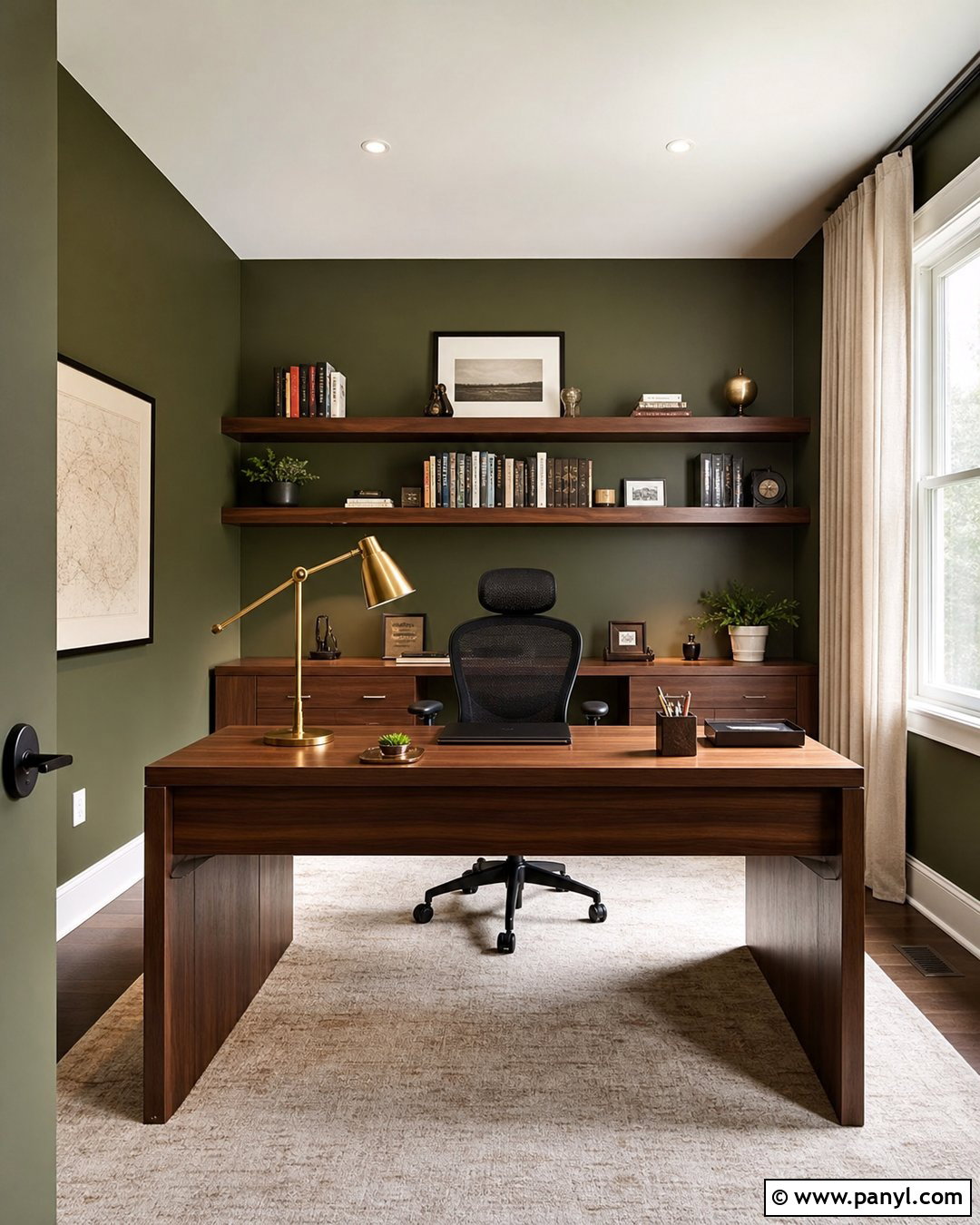
A muted green home office can support concentration while still feeling warm and residential. Paint built-in shelves and the wall behind the desk in dusty moss green, then keep adjacent walls a soft off-white. Position a substantial oak desk near the window so natural light reaches the work surface from the side. Choose an ergonomic chair upholstered in tan leather or durable brown fabric. A patterned wool rug brings together green, cream, and rust while helping define the work zone. Add an adjustable brass desk lamp and picture lights above the bookcases. Closed lower cabinets hide supplies, while open shelves display books and a few meaningful objects. Finish with linen shades and one comfortable reading chair for a complete, multipurpose workspace.
13. Green Entryway
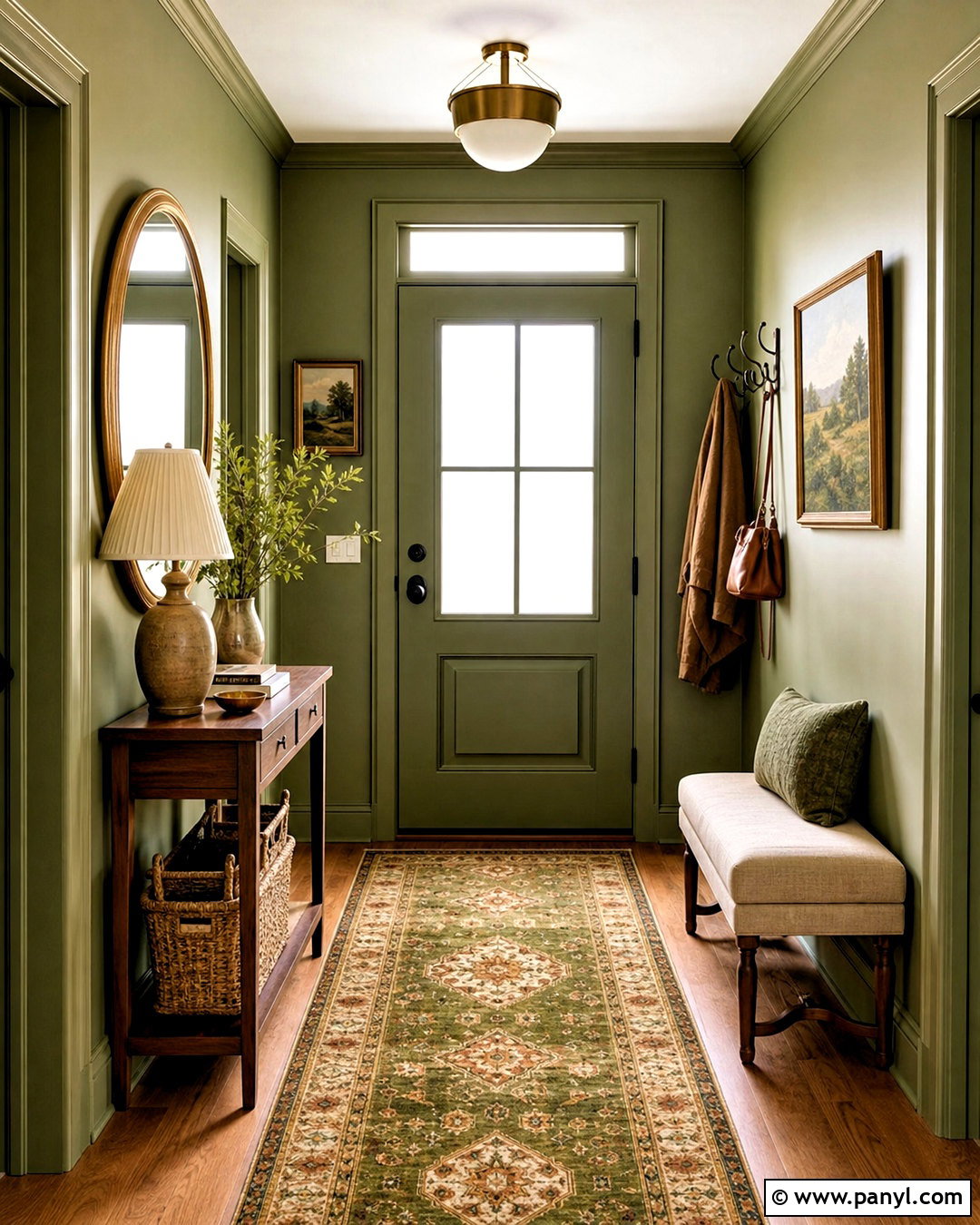
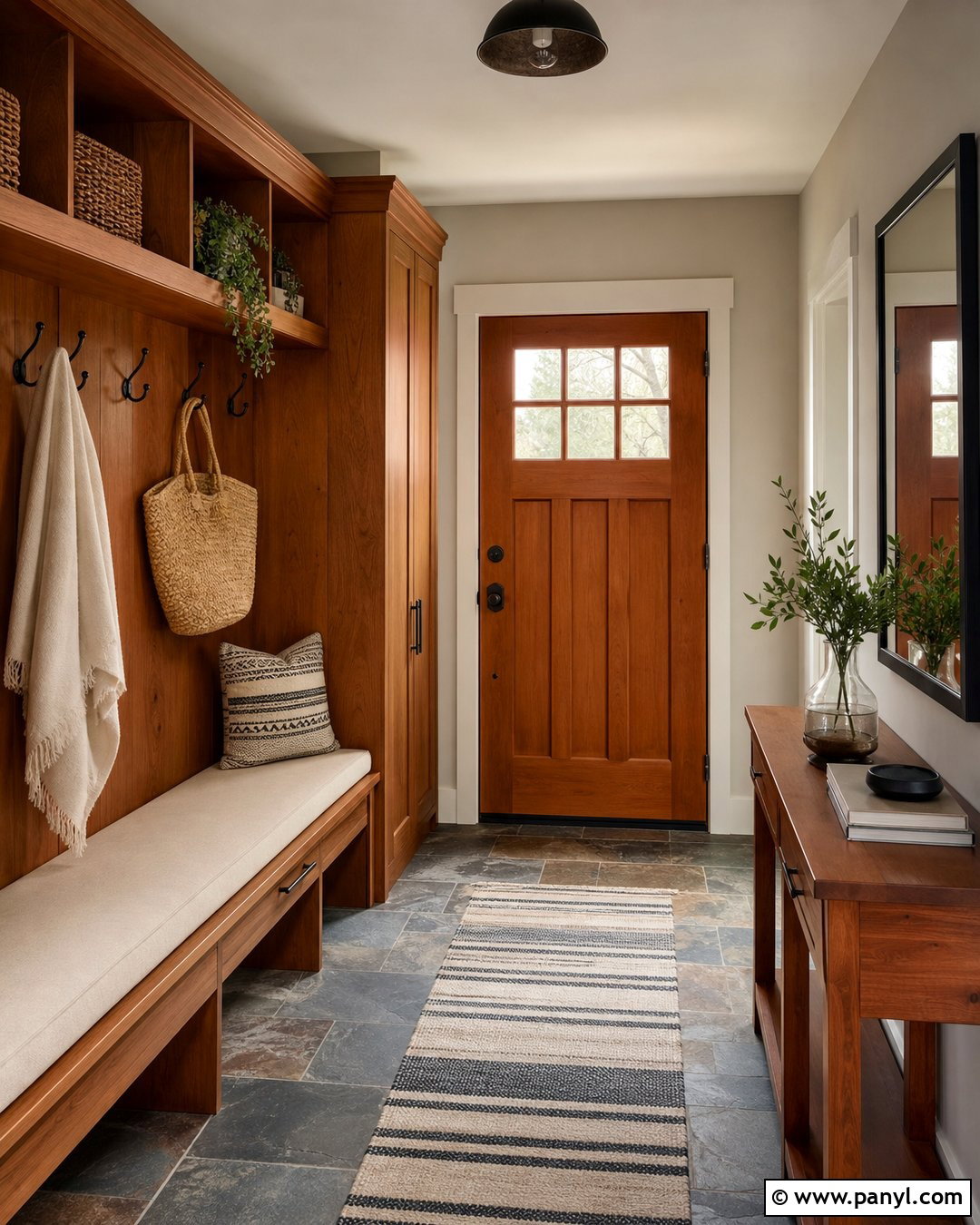
The entryway offers an easy place to experiment with a stronger green palette. Cover the walls in a medium moss green and paint the trim the same color for a seamless, enveloping effect. A narrow walnut console provides a practical landing area without crowding the walkway. Hang a large round brass mirror above it to reflect light and make the entrance feel more open. Place a washable vintage-style runner in green, tan, and rust along the floor. A compact upholstered bench gives guests a place to remove shoes, while baskets underneath contain everyday clutter. Finish with a ceramic table lamp, sturdy wall hooks, and one piece of landscape art. This complete setup feels welcoming while supporting the storage needs of a busy home.
14. Green Laundry Room
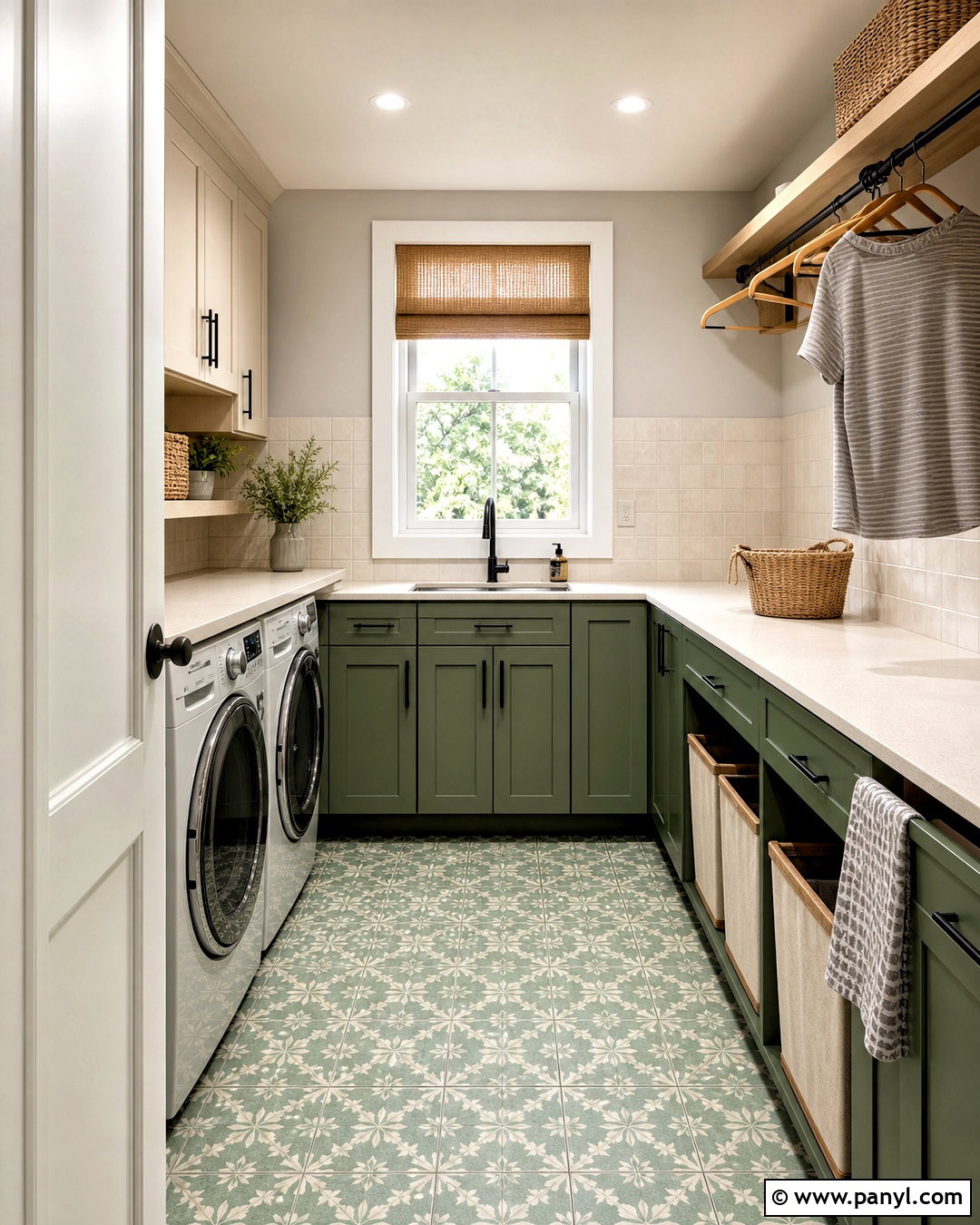
Even a hardworking laundry room can feel cheerful and well designed. Paint the lower cabinets a soft eucalyptus green and pair them with warm white upper cabinets to prevent the narrow space from looking crowded. Install a durable light quartz counter above front-loading machines for folding clothes. A backsplash of creamy square tile adds subtle texture and makes splashes easy to clean. Use pale wood shelves for baskets, detergents, and neatly labeled containers. Black cabinet pulls and a matching hanging rail give the room a clean modern edge. Choose patterned floor tile in muted green, gray, and white to disguise everyday dust. Bright ceiling lighting, a slim utility sink, and concealed hampers complete a functional room with an organized, approachable appearance.
15. Green Nursery
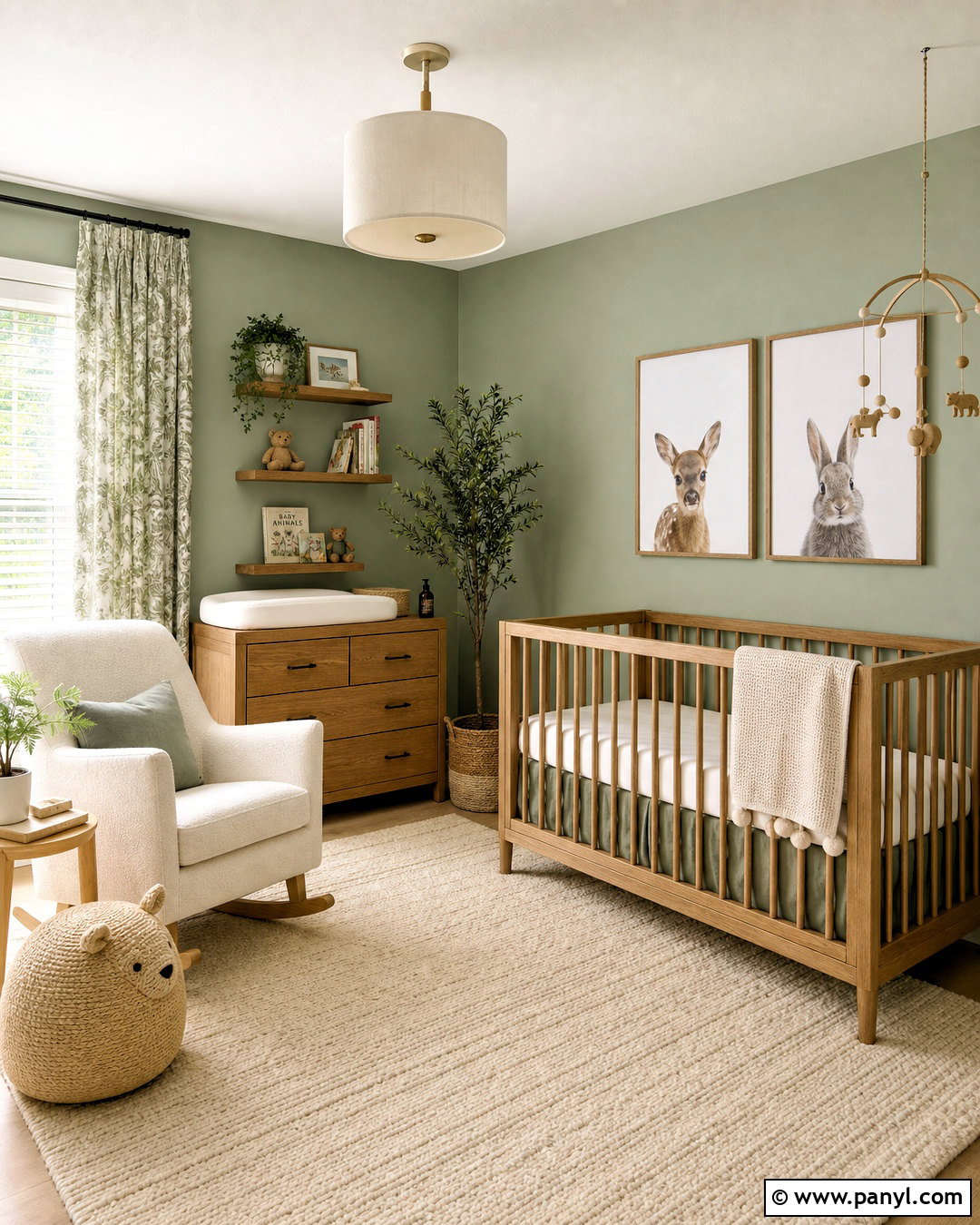
Soft celadon green creates a gentle nursery that can adapt as a child grows. Paint all four walls in the pale green shade, then add warm white trim and a natural wood crib. An ivory wool rug makes the floor comfortable, while a low oak dresser doubles as a changing station. Choose a supportive cream rocking chair with a small side table for feeding and reading. Blackout curtains in a subtle green-and-white pattern provide light control without making the room feel dark. Decorate with simple animal prints, woven storage baskets, and a wood mobile. A shaded ceiling fixture and dimmable wall sconce offer flexible lighting. Keeping the large pieces neutral makes it easy to update the room later without replacing the entire design.
16. Green Sunroom
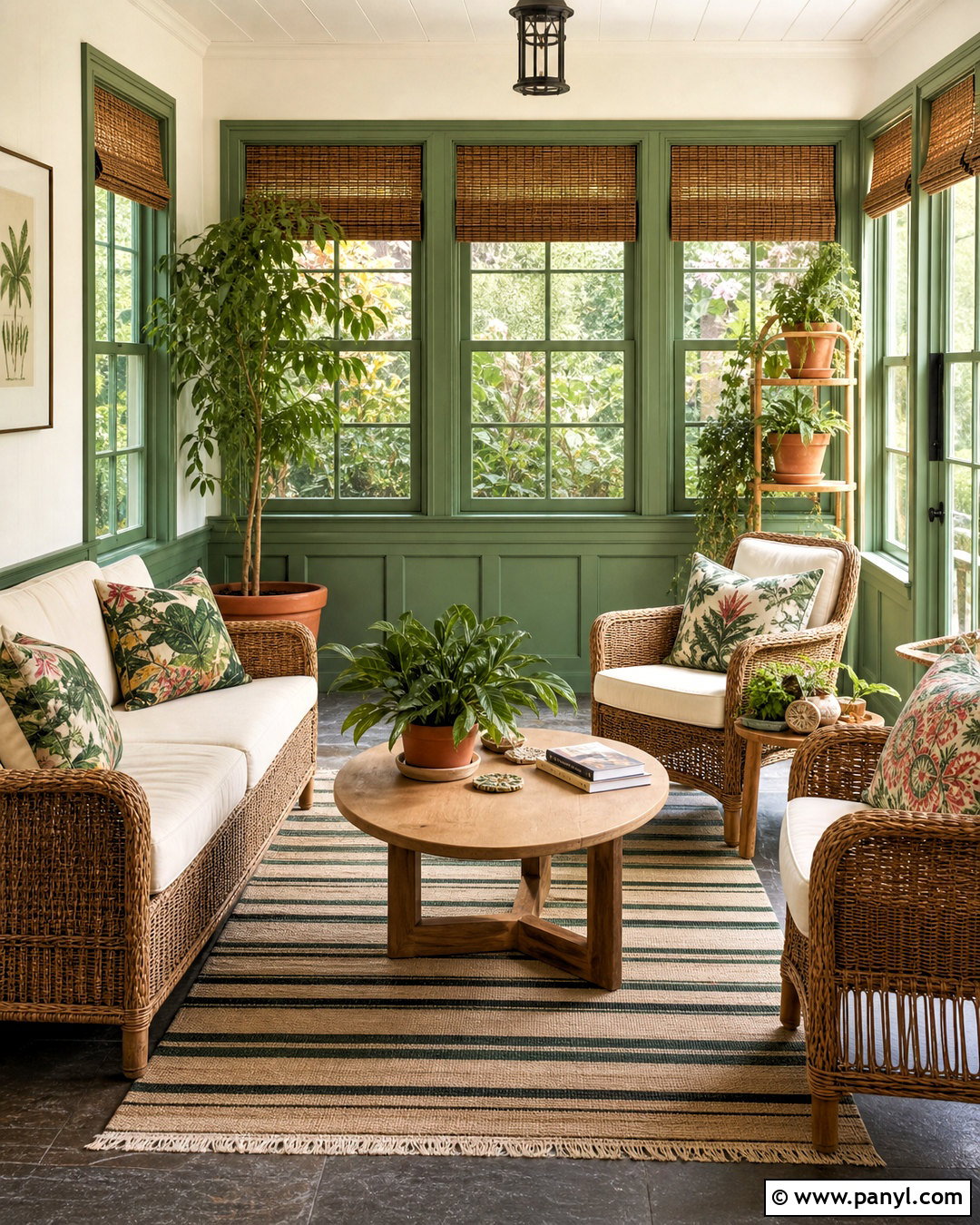
Sunlight, plants, and green finishes naturally belong together in a comfortable sunroom. Paint the window trim and lower wall paneling a fresh leaf green, leaving the upper walls warm white to maximize brightness. Arrange a woven rattan sofa and two matching chairs around a round oak coffee table. Use seat cushions in washable cream fabric, then add pillows with green, blue, and yellow botanical patterns. A striped indoor-outdoor rug defines the seating area and tolerates heavy use. Place tall plants in terracotta pots near the windows, while smaller pots sit on a simple wood stand. Bamboo shades control glare and add texture. The finished sunroom feels connected to the garden but remains practical enough for reading, conversation, and everyday relaxation.
17. Green Reading Room
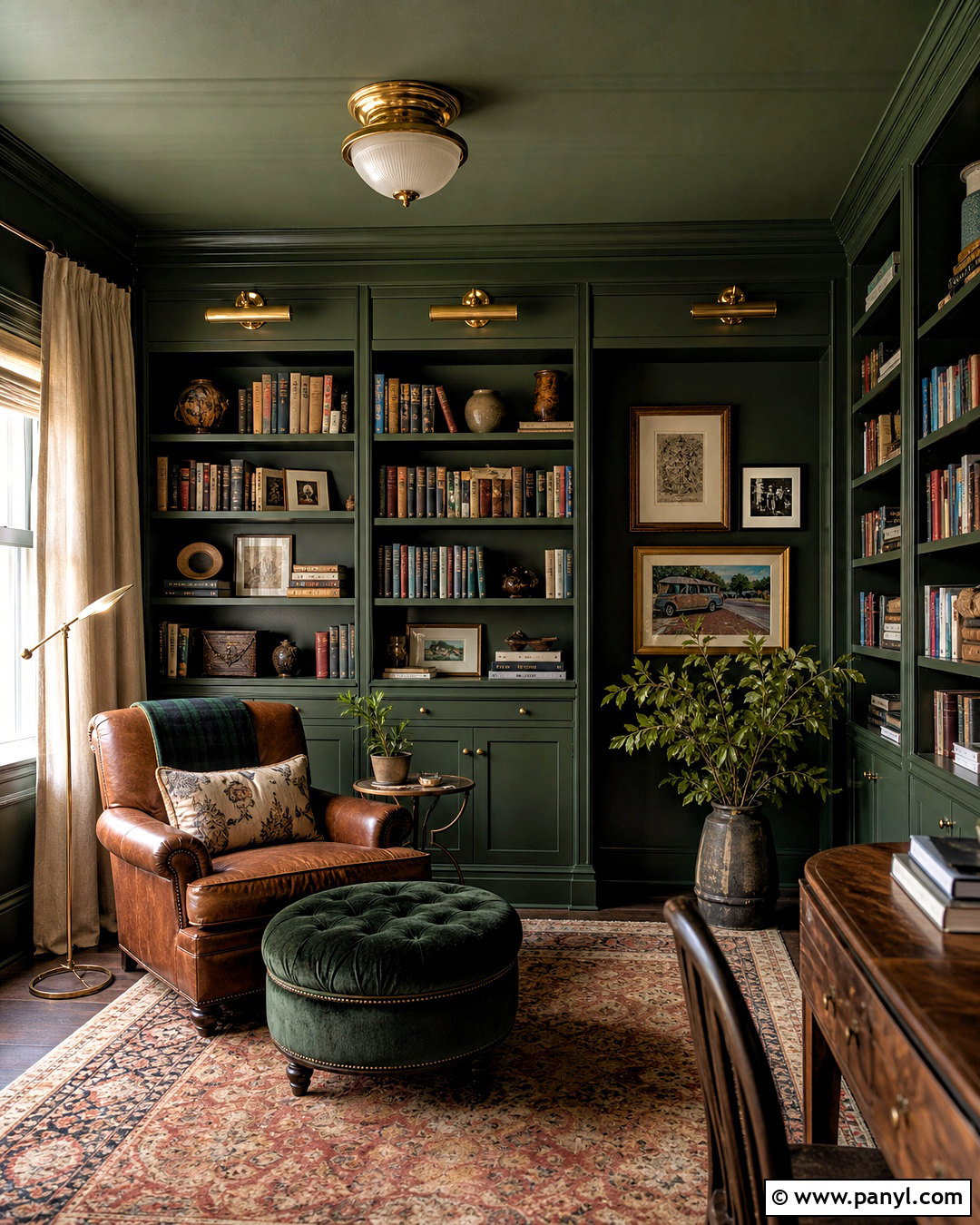
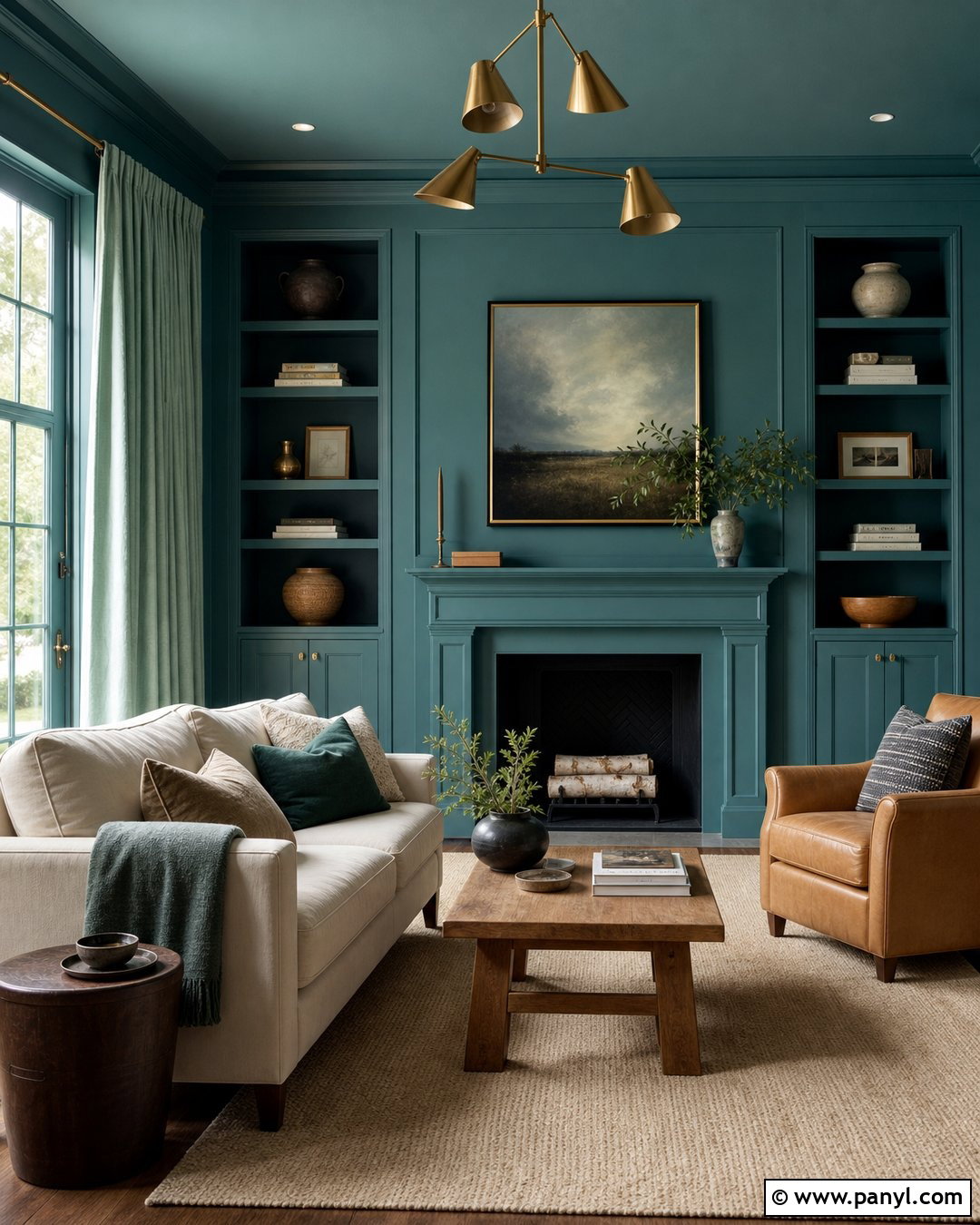
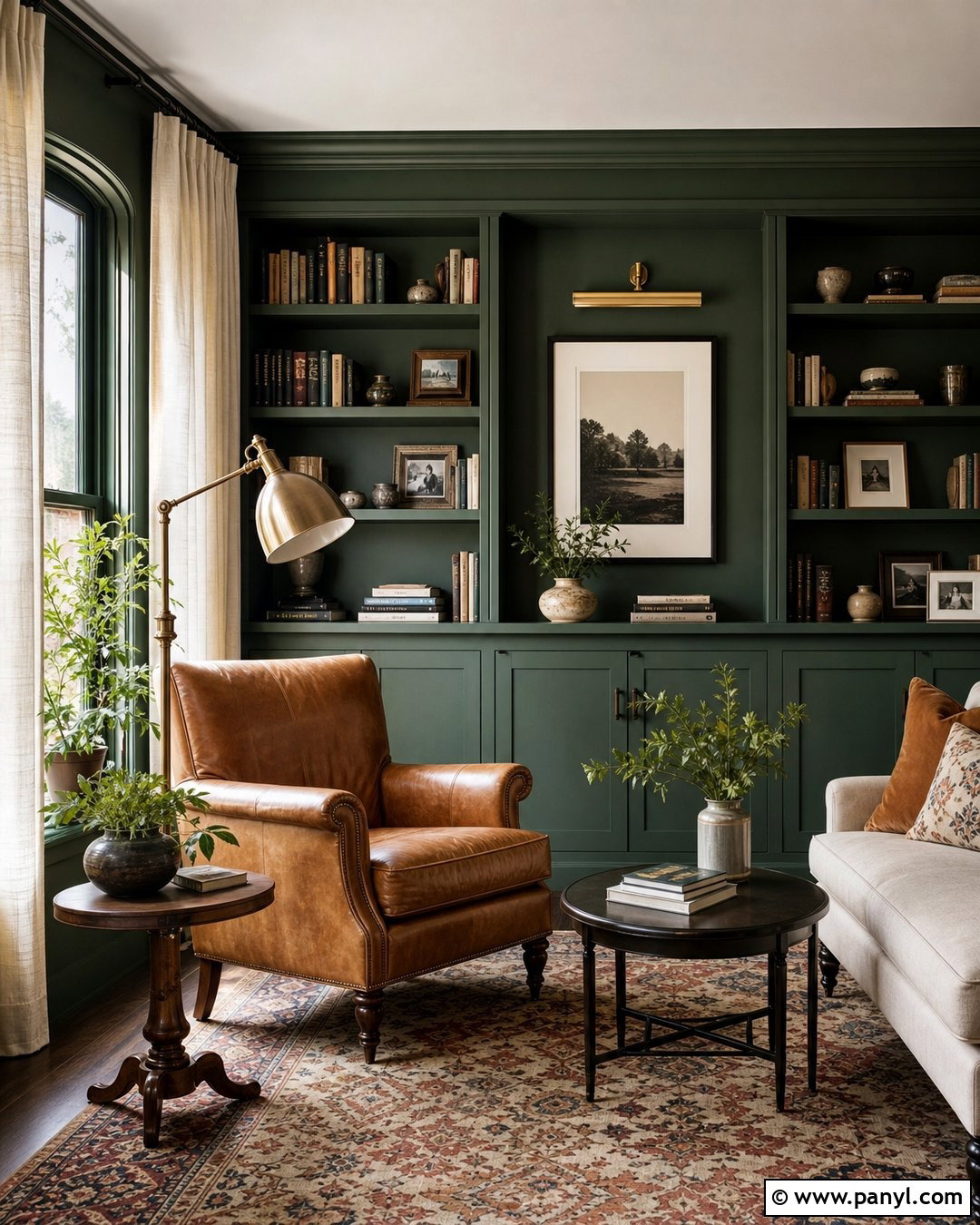
A compact reading room becomes especially inviting when wrapped in a deep, restful green. Paint the walls, shelving, and ceiling in the same muted hunter tone to create a unified backdrop. Fill the built-ins with books, leaving some open space for pottery and framed photographs. Place a generously sized camel leather chair near a floor lamp, then add a small round table for a book and mug. A faded Persian-style rug introduces rust, cream, and blue, which keep the green from feeling one-dimensional. Add a narrow velvet ottoman for comfort and linen curtains for softness. Warm brass picture lights highlight the shelving. With focused furniture and restrained accessories, the space feels cozy and collected instead of cramped or cluttered.
18. Green Guest Room
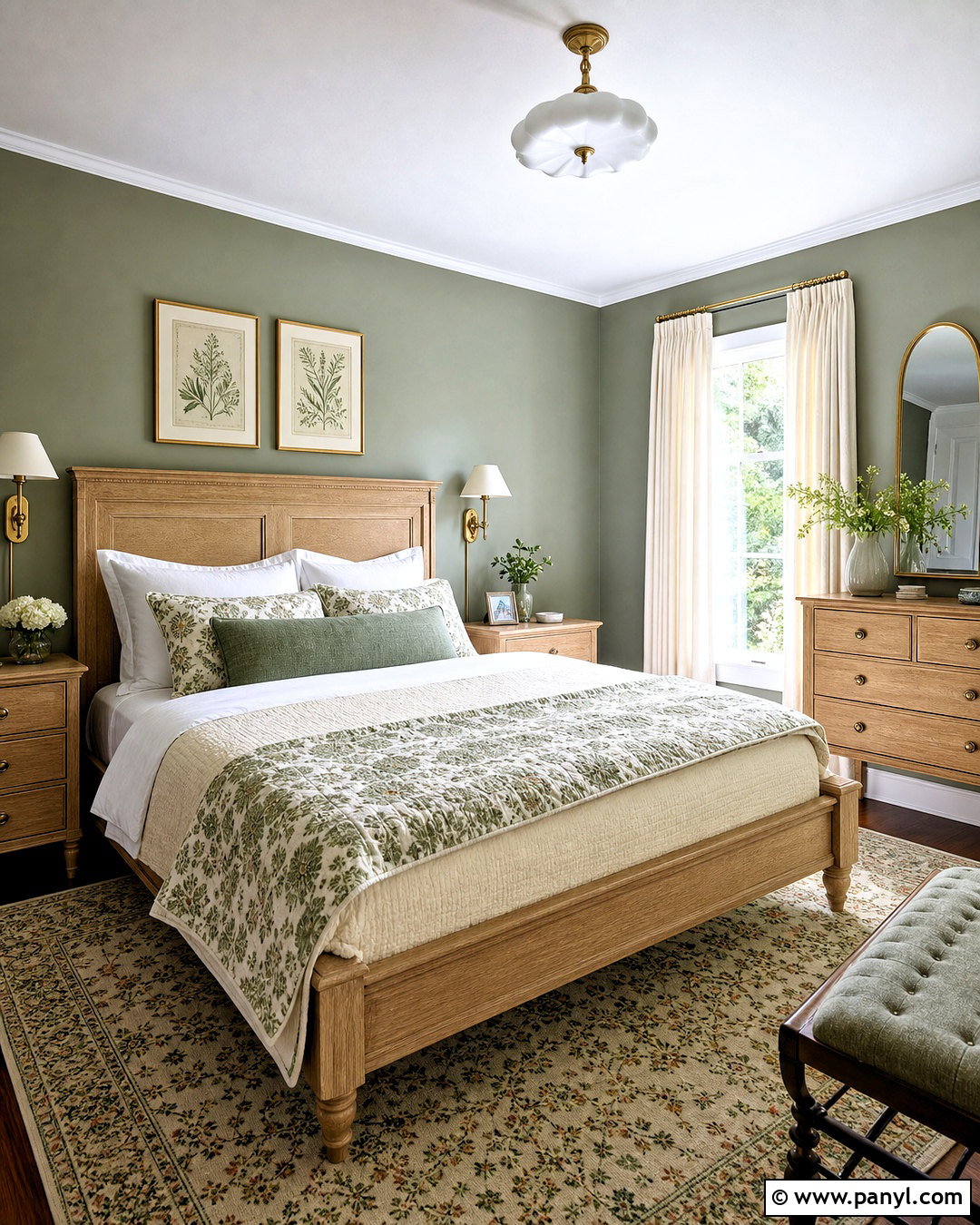
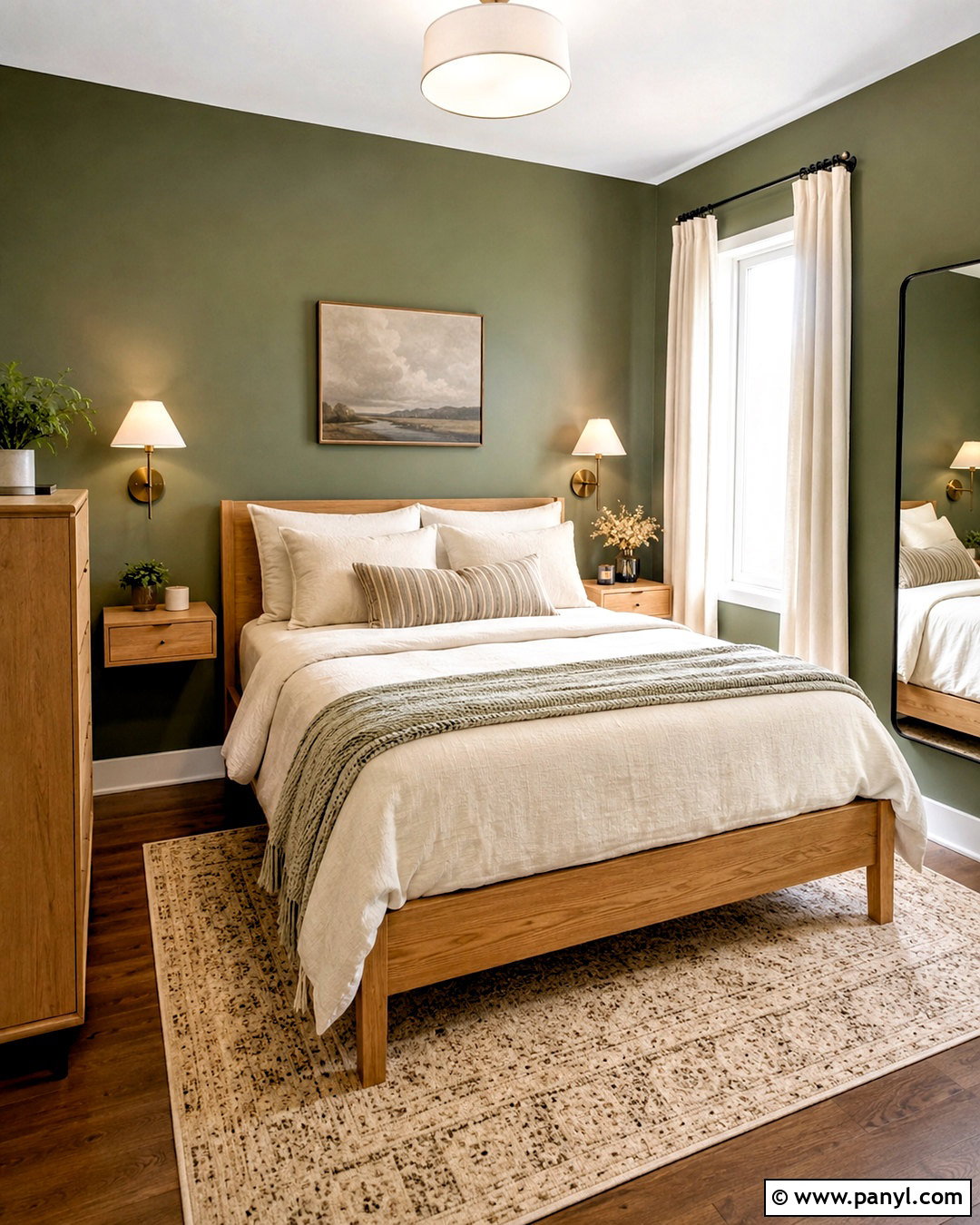
A welcoming guest room should feel finished without being overly personal. Use a soft fern green on the walls and build the room around a simple white oak bed. Dress it with white sheets, a cream coverlet, and a patterned green quilt folded neatly at the foot. Matching oak nightstands offer useful surfaces, while plug-in brass sconces provide convenient reading light. Add a medium-size rug in beige, sage, and faded blue to soften the floor. A compact dresser, wall mirror, and upholstered luggage bench improve everyday function for visitors. Hang botanical artwork in black frames for contrast, then finish the windows with ivory curtains. The resulting room feels peaceful, practical, and coordinated, with enough open space for guests to unpack comfortably.
19. Green Powder Room
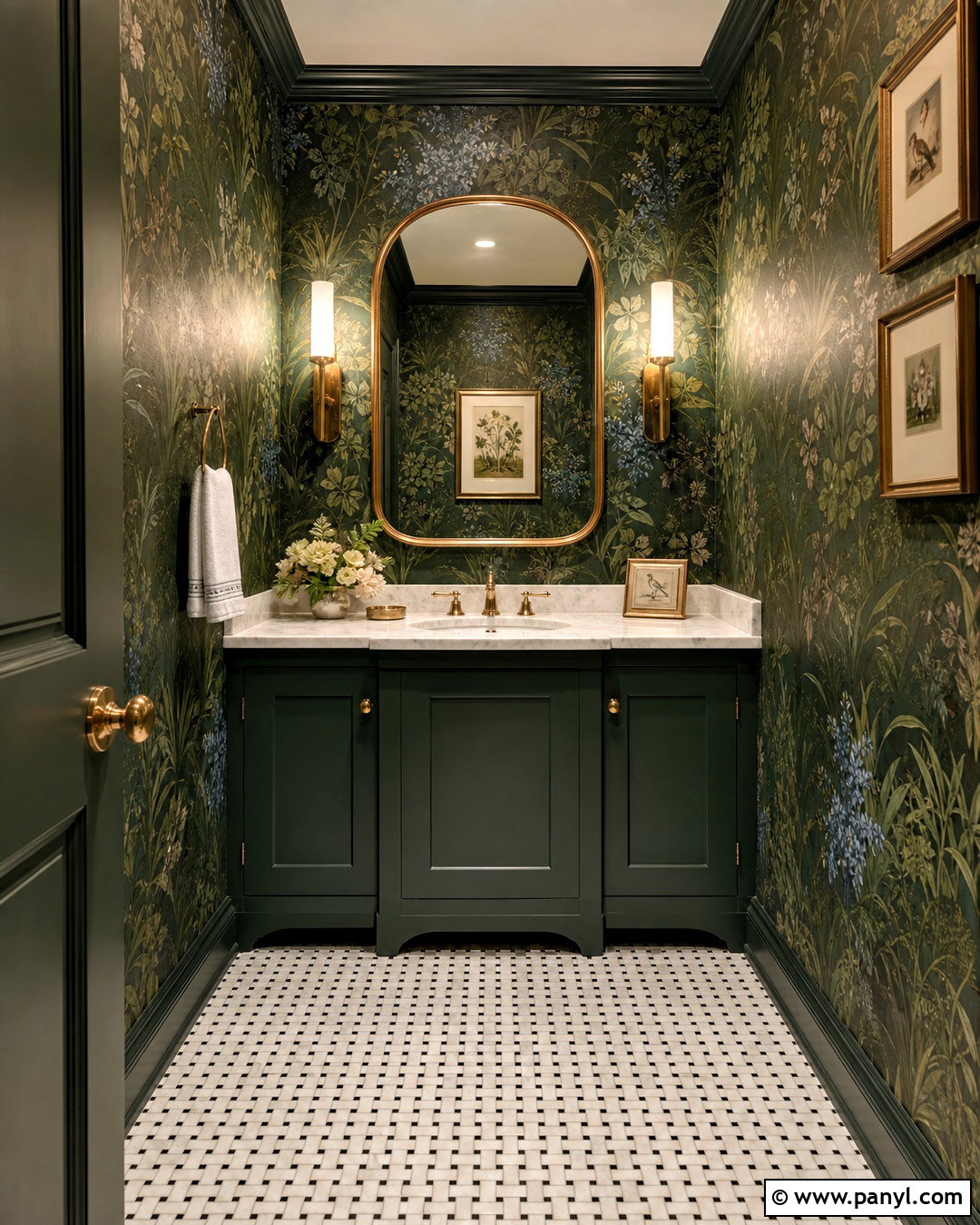
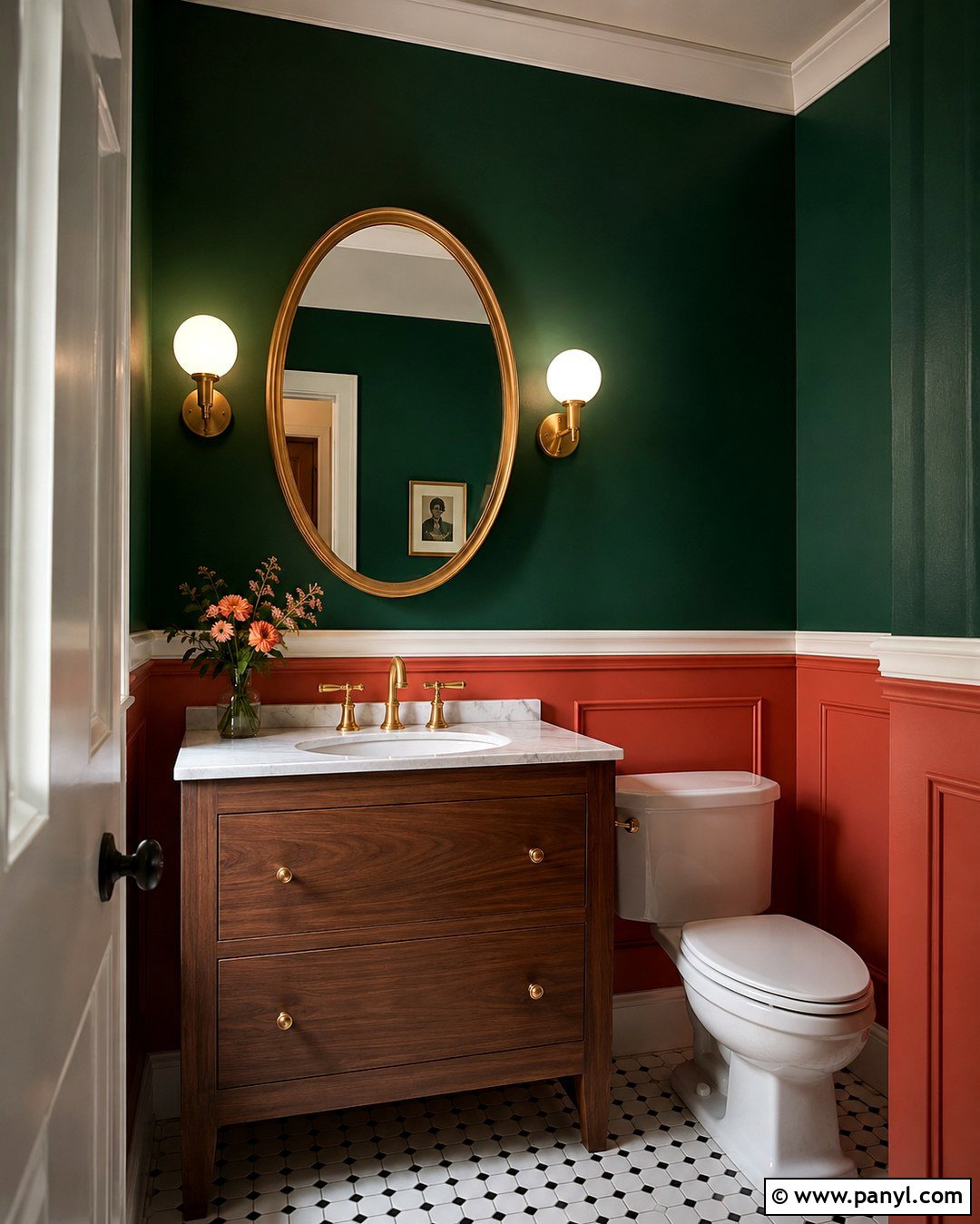
A powder room is an ideal setting for an expressive green design because the space is small and used for short periods. Cover the walls in patterned wallpaper featuring dark green leaves, cream details, and touches of muted blue. Pair it with a compact forest green vanity topped by pale marble. Brass hardware, a curved mirror, and two slim sconces bring warmth and polish to the limited footprint. Paint the ceiling soft cream so the wallpaper remains visually balanced. Choose dark green or black-and-white mosaic flooring for durability and contrast. A simple white sink, fresh hand towels, and one small framed print prevent the room from becoming busy. The finished space feels memorable, layered, and carefully planned from floor to ceiling.
20. Monochromatic Green Room
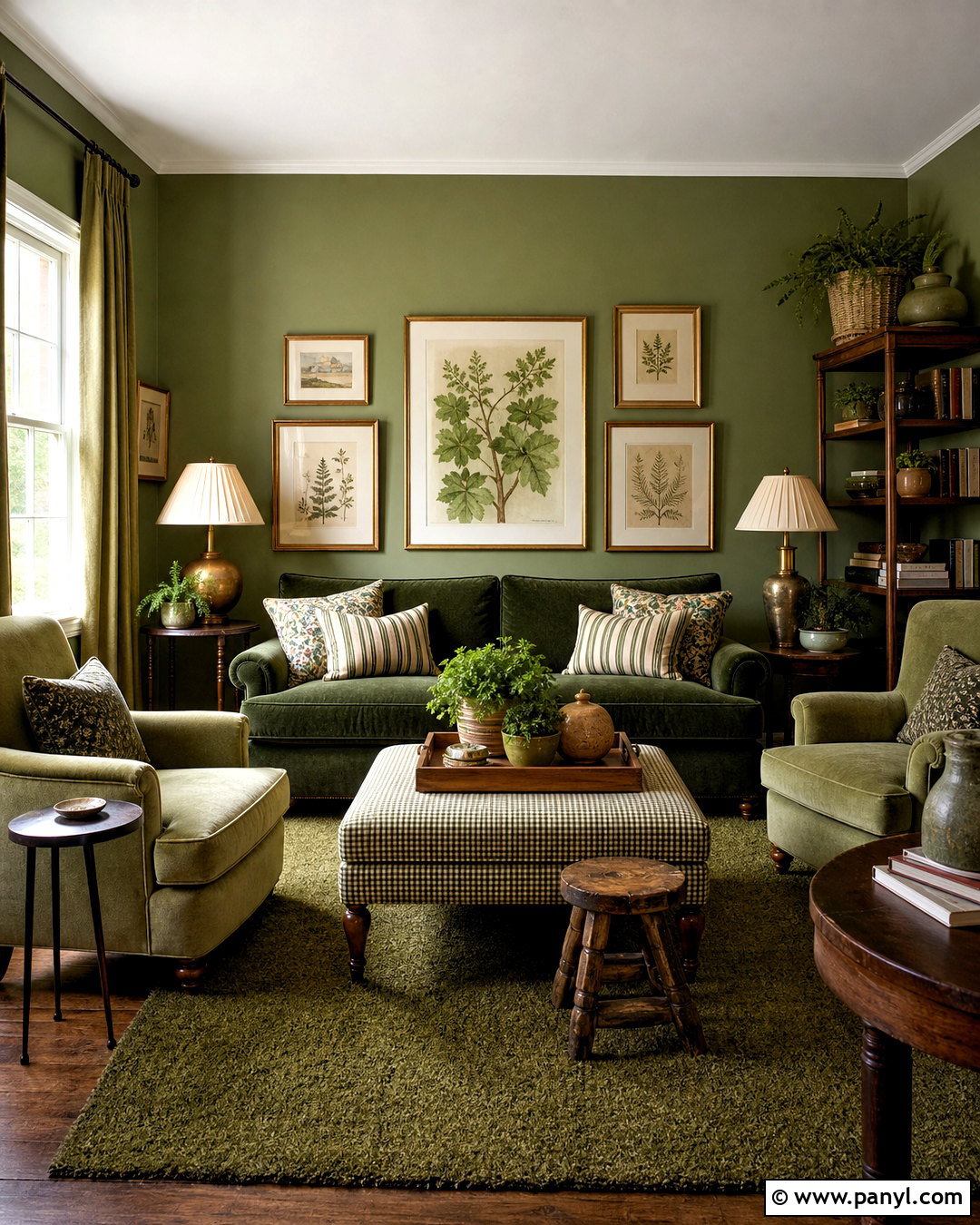
Layering several shades of green creates a room with depth, even when the palette remains monochromatic. Begin with muted mid-green walls and choose a slightly darker green velvet sofa as the main anchor. Add two pale sage chairs, olive curtains, and a moss-colored wool rug to build visible variation. Walnut tables and warm brass lamps break up the green while preserving its earthy character. Introduce patterns through striped pillows, botanical artwork, and a small checkered ottoman rather than relying on solid surfaces alone. Cream accents, including lampshades and ceramic pieces, provide small moments of relief. Repeat each green shade at least twice around the room so the arrangement feels deliberate. The final design is bold, cohesive, comfortable, and visually rich.
Conclusion:
The most successful 20 green rooms ideas use color as part of a complete, balanced design rather than treating it as an isolated accent. Pale sage and mint can open up smaller spaces, while olive, emerald, and forest green create warmth and definition. Natural wood, cream textiles, brass details, and layered patterns help these shades feel comfortable and connected. Before committing, test your chosen green in different areas of the room and observe it throughout the day. Then repeat the color through furniture, fabrics, artwork, or tile to create continuity. Whether you update one wall or redesign an entire space, a thoughtful green palette can make your home feel distinctive, restful, and welcoming.

Related Ideas and Inspiration:
Leave a Reply