
Choosing wall paint becomes much easier when you picture the entire room instead of judging a color on a tiny sample card. The best 20 Colors For Walls In House Ideas include versatile neutrals, nature-inspired greens, gentle blues, earthy reds, and deeper statement shades. Warm, grounded palettes are especially relevant now, while thoughtful undertones help rooms feel balanced and connected. () Before committing, compare each color with your flooring, trim, furniture, and natural light. Paint large test areas on different walls and observe them from morning through evening. The sections below provide complete, practical room schemes rather than isolated swatches, helping you confidently recreate these 20 Colors For Walls In House Ideas.

1. Warm White Living Room Walls
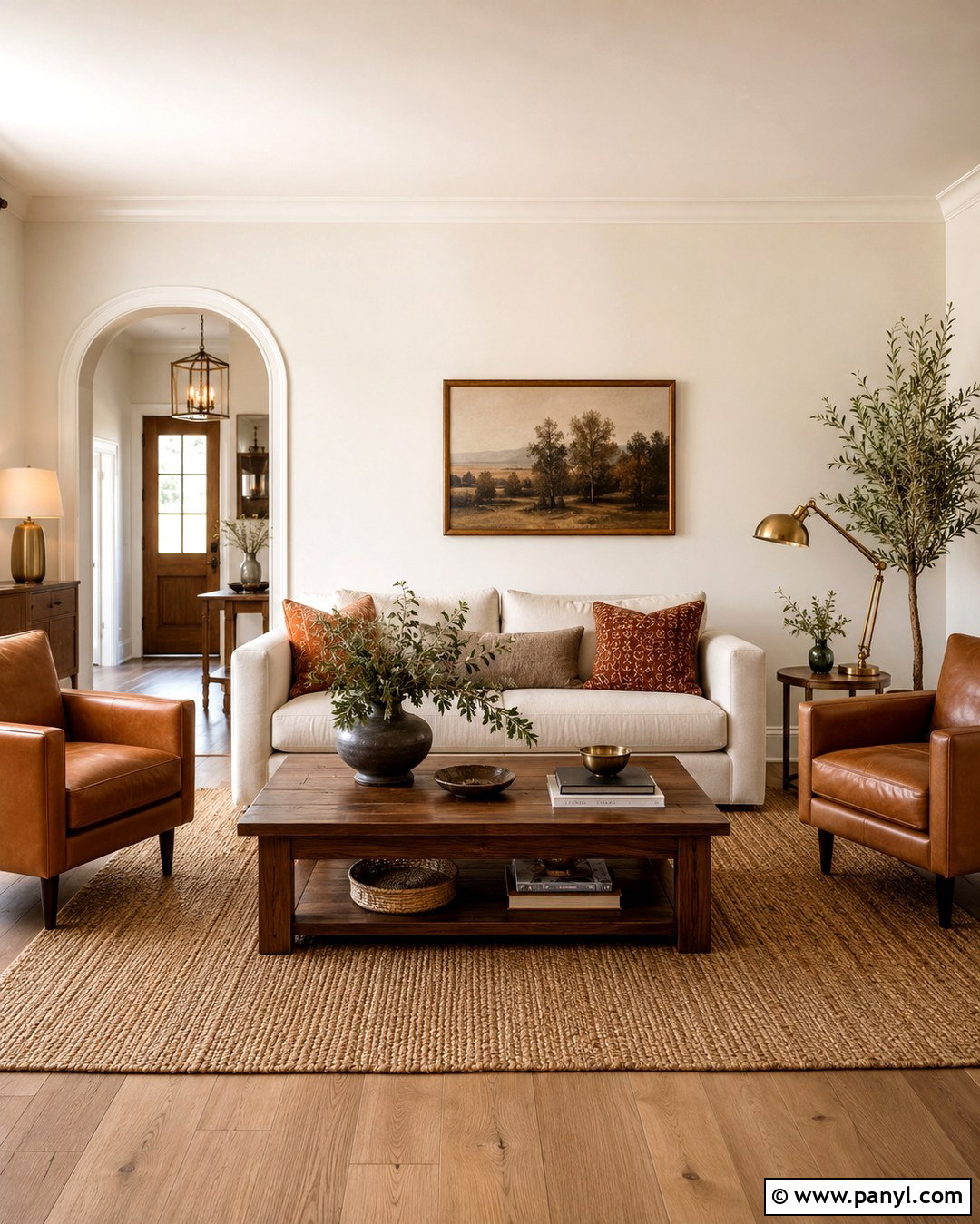
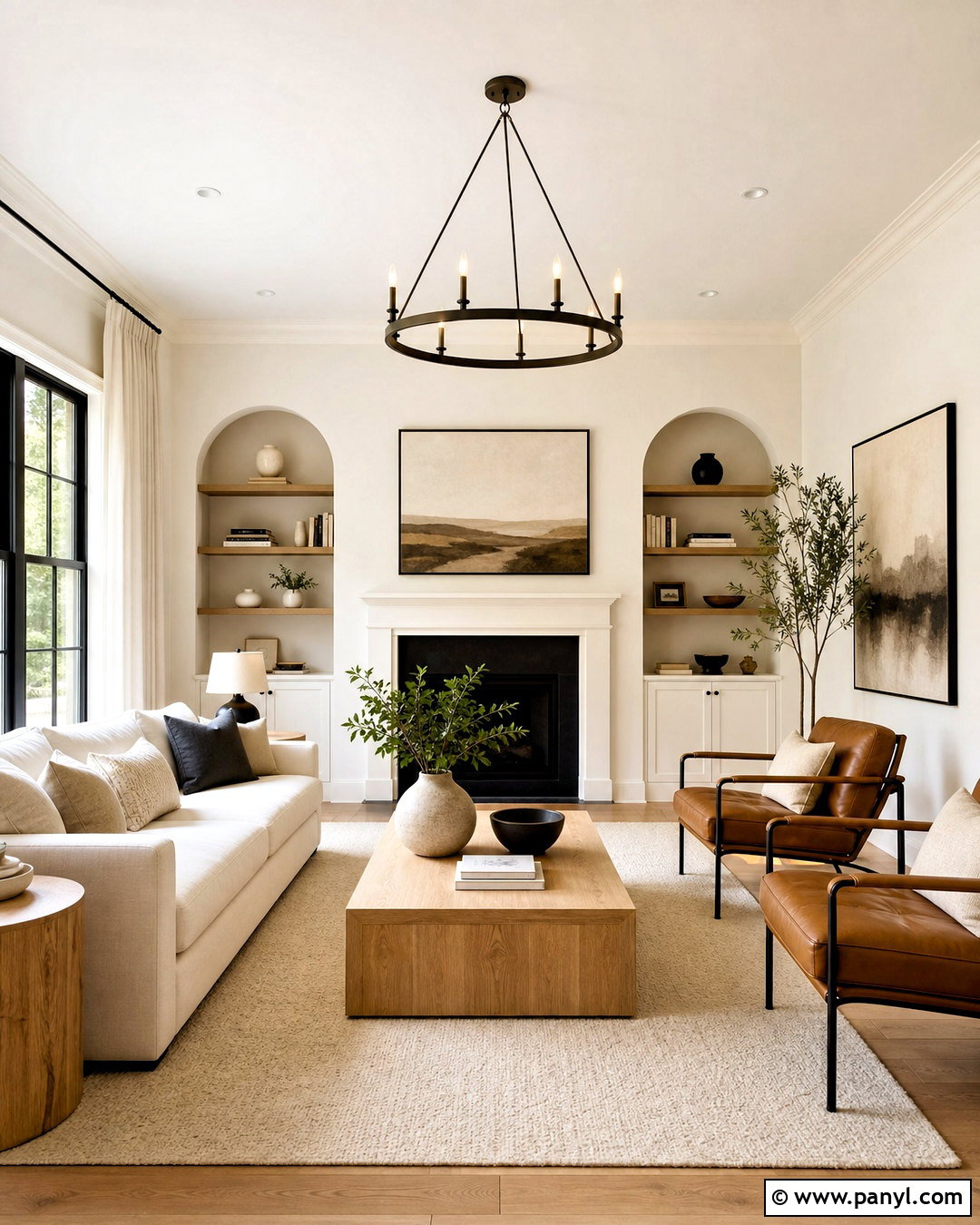
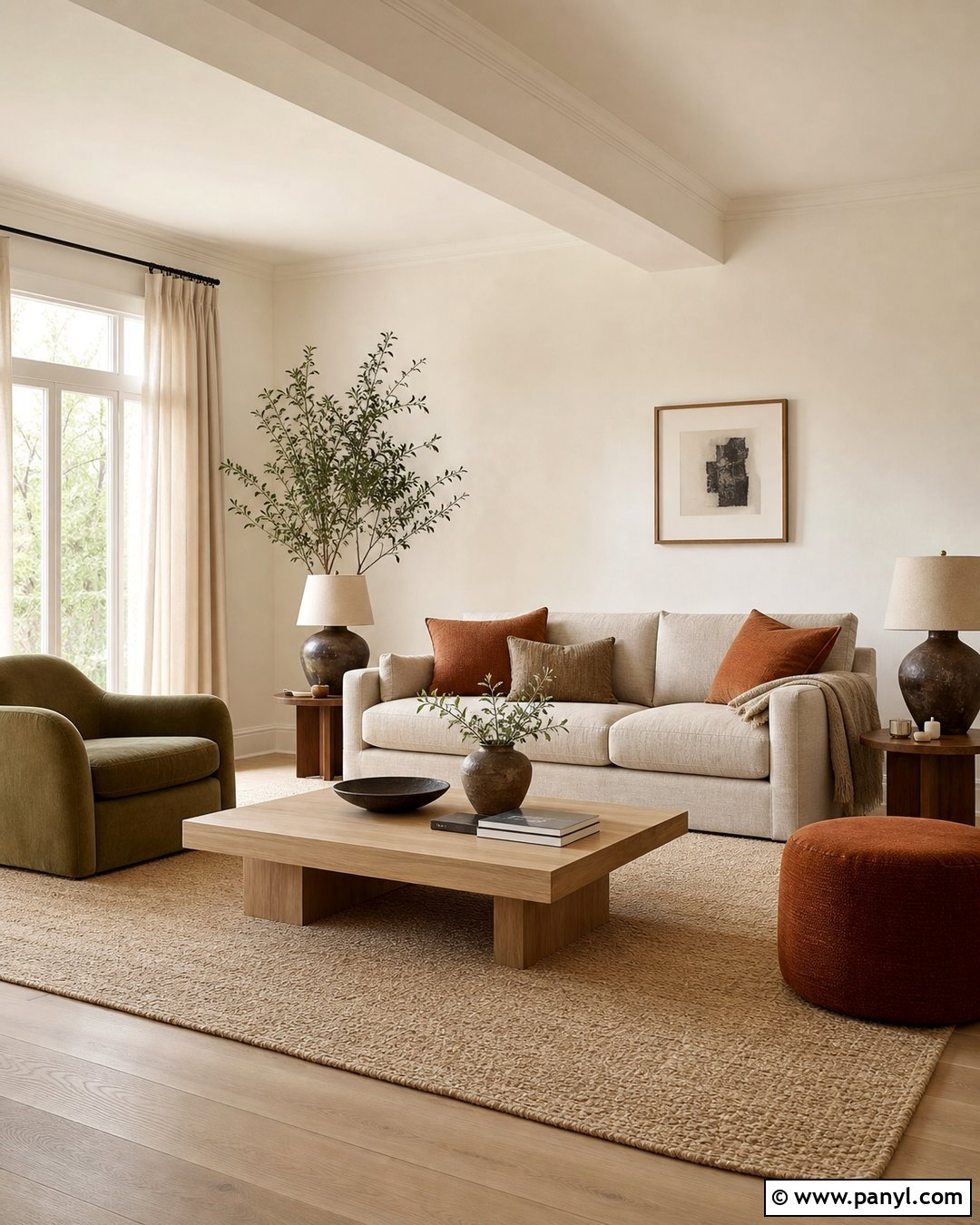
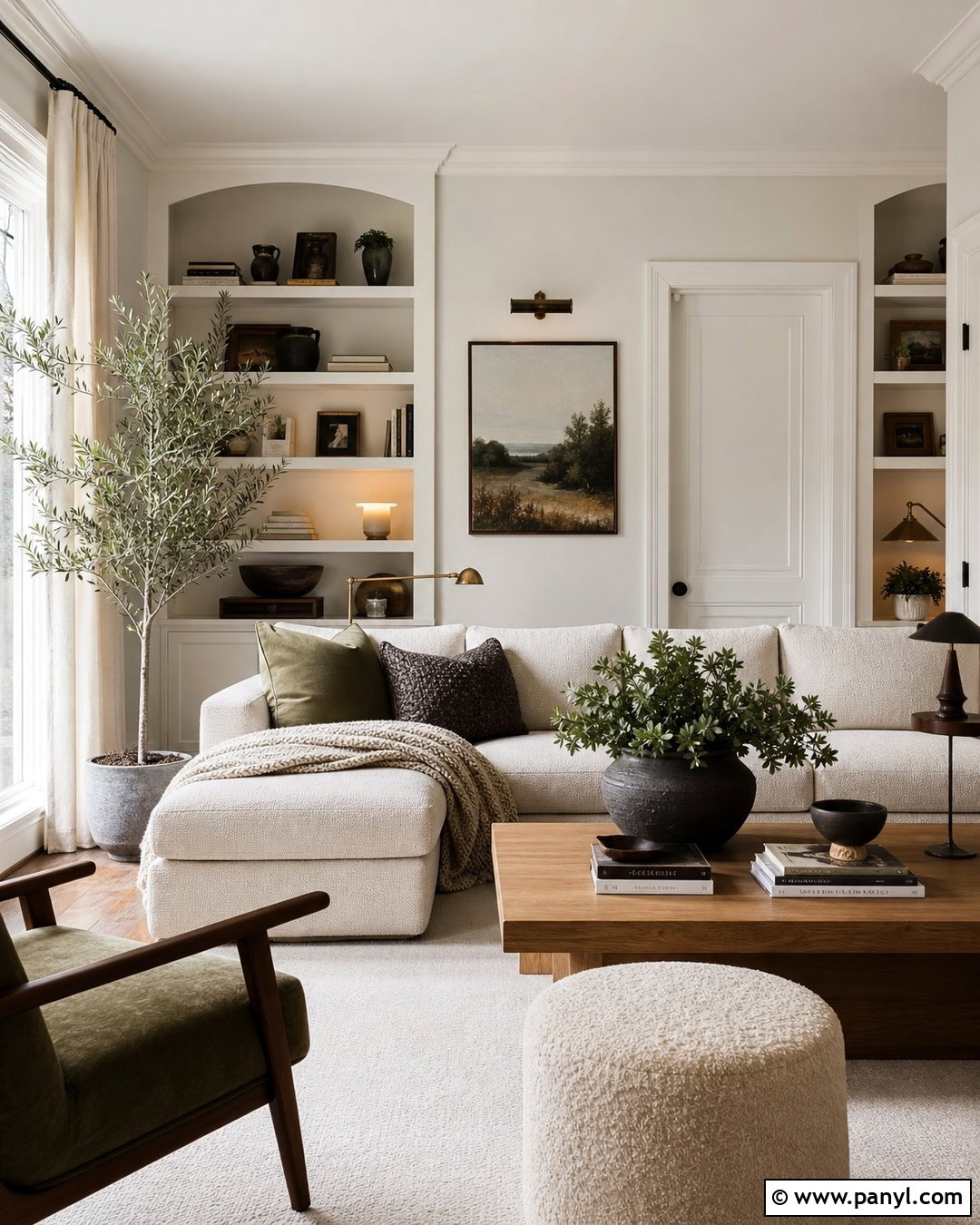
Warm white walls create a bright living room without the cold feeling associated with crisp, blue-based white. Choose a creamy white with subtle beige or yellow undertones, then repeat that warmth through natural oak flooring and an oatmeal-colored sofa. Add two caramel leather chairs, a woven jute rug, and linen curtains in soft ivory. A walnut coffee table gives the light palette necessary contrast. Use antique brass lamps and black picture frames for definition, but keep those dark accents limited. Paint the ceiling and trim a slightly cleaner white so the walls remain visibly warm. Terracotta pottery, olive branches, and rust-colored pillows complete a relaxed transitional room that feels comfortable, polished, and easy to update through every season.
2. Soft Cream Bedroom Walls
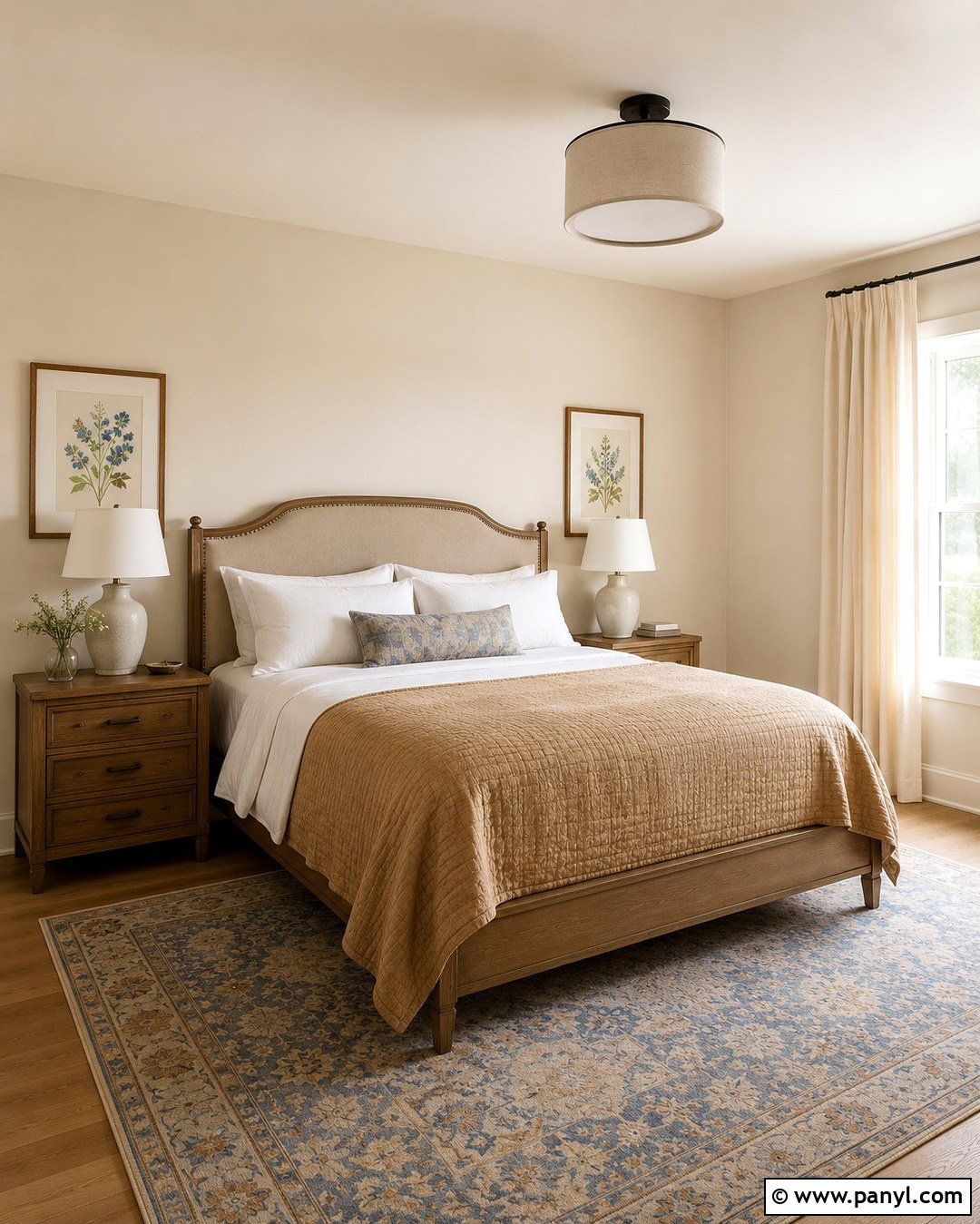
Soft cream walls can make a bedroom feel calm, sunlit, and more welcoming than plain white. Build the space around a medium oak bed with a tall upholstered headboard in warm oatmeal linen. Layer white sheets with a camel quilt, pale tan blanket, and muted floral pillows. Natural fiber curtains should closely match the walls, creating a seamless backdrop that visually softens the windows. Add matching wood nightstands, ceramic lamps, and a vintage-style rug containing faded blue, brown, and cream. Keep the ceiling and baseboards warm white for gentle contrast. A small brass mirror and framed botanical prints provide character without clutter. This complete palette works particularly well in traditional, cottage, transitional, and relaxed modern bedrooms.
3. Light Greige Open Floor Plan Walls
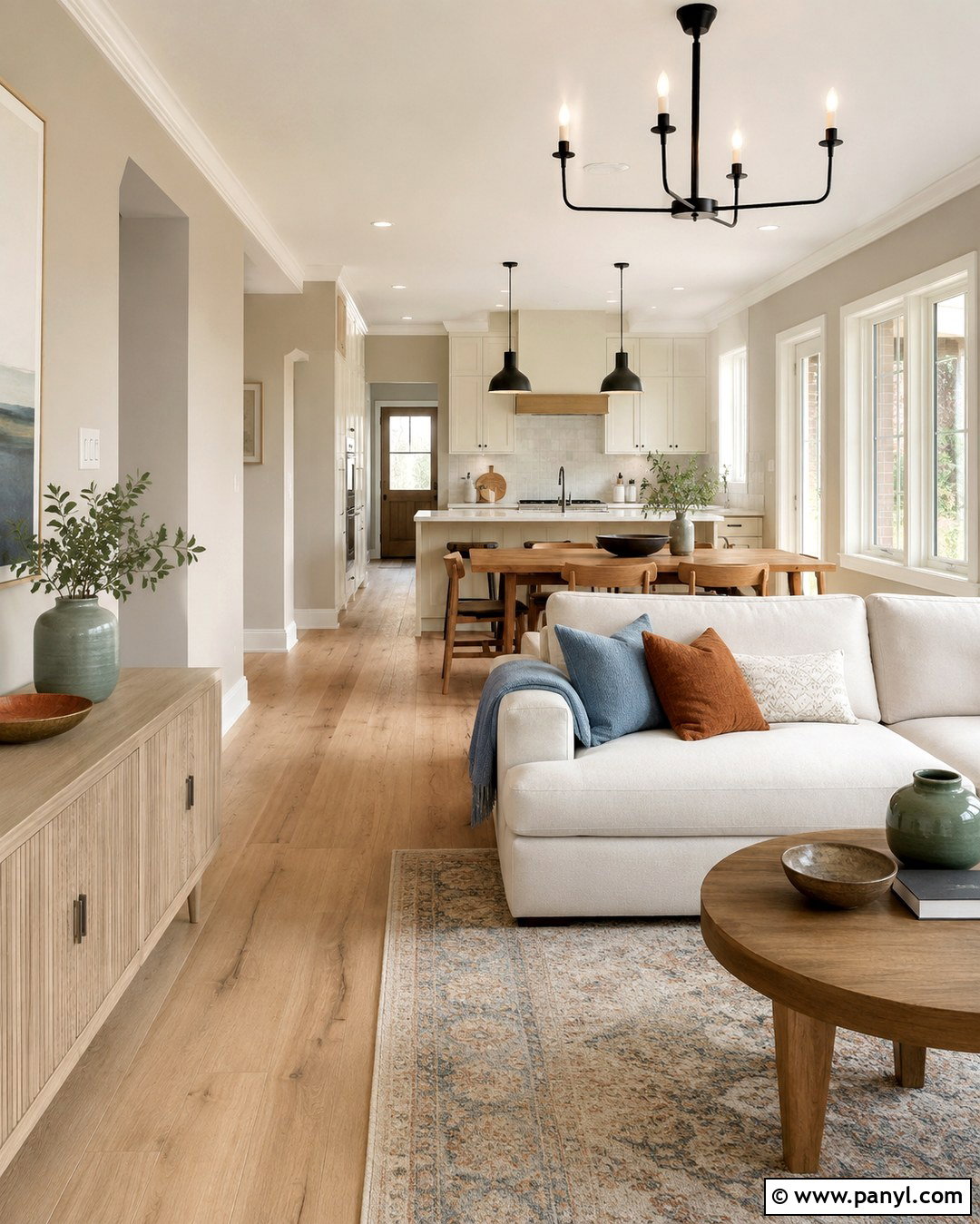
Light greige walls provide a flexible foundation for an open living, dining, and kitchen area. Select a balanced greige that does not appear noticeably purple or overly cool beside your flooring. Use it continuously across connected walls to establish flow, then define each zone through furniture and lighting. Pair the walls with warm white trim, light oak floors, ivory seating, and a natural wood dining table. Matte black pendants and curtain rods add a clean outline. Introduce color through muted blue pillows, sage ceramics, and a vintage rug with dusty rust details. In the kitchen, combine greige walls with creamy cabinets and softly veined quartz counters. The finished space feels connected and neutral while still offering enough contrast, warmth, and personality.
4. Warm Beige Family Room Walls
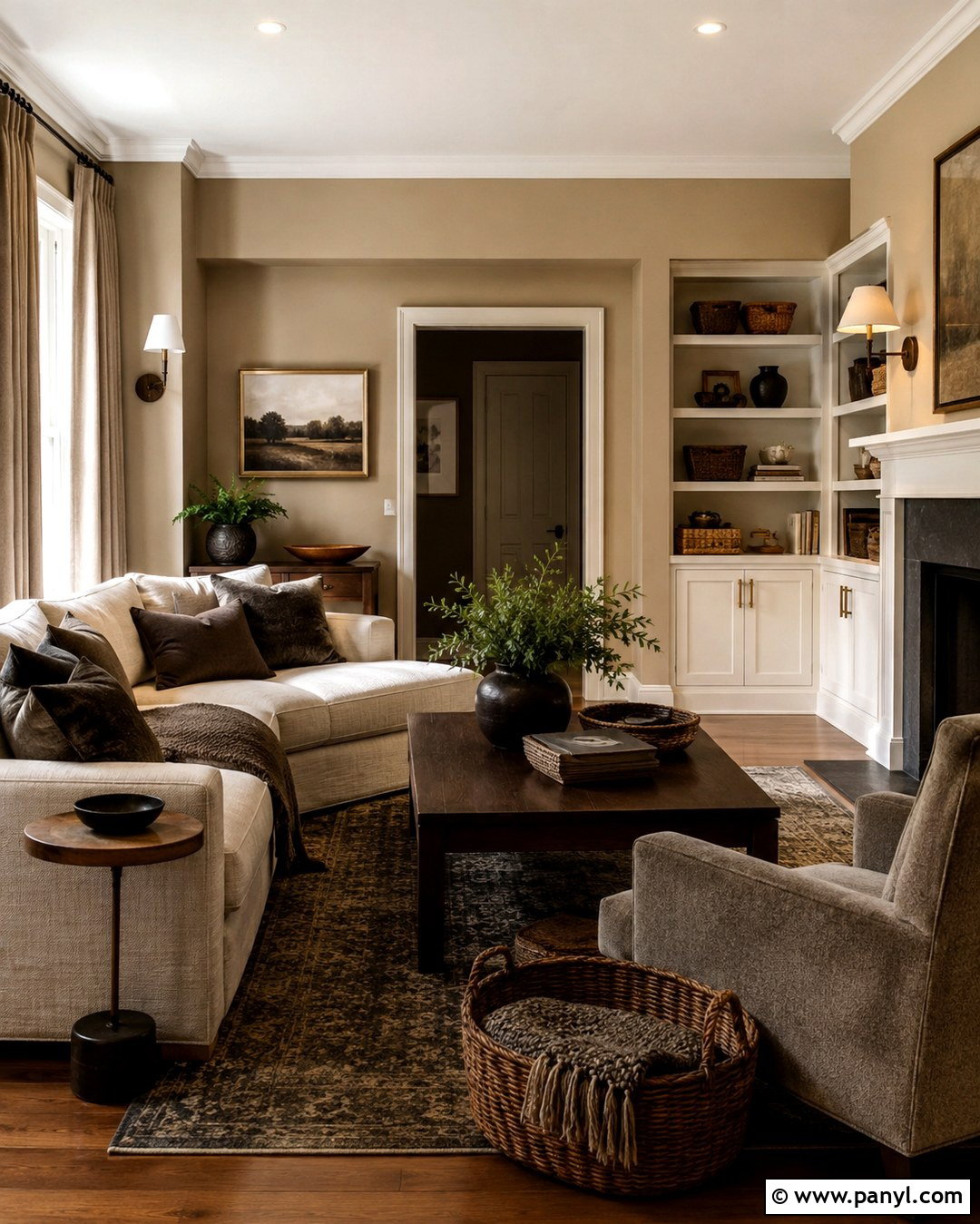
Imagine a family room that feels warm and relaxed but never dated. Soft beige walls set that tone when combined with cleaner, lighter furnishings and a few grounded accents. Choose a generously sized cream sectional, then anchor it with a patterned rug in beige, charcoal, and faded olive. Medium walnut tables prevent the room from appearing washed out. Add built-in shelving painted warm white, using books, baskets, and handmade pottery to create an organized display. Linen curtains in natural flax should fall from near the ceiling to the floor. Finish with bronze sconces, a large landscape print, and pillows in chocolate brown and moss green. This complete arrangement gives beige walls a fresh, practical look suited to everyday family living.
5. Taupe Dining Room Walls
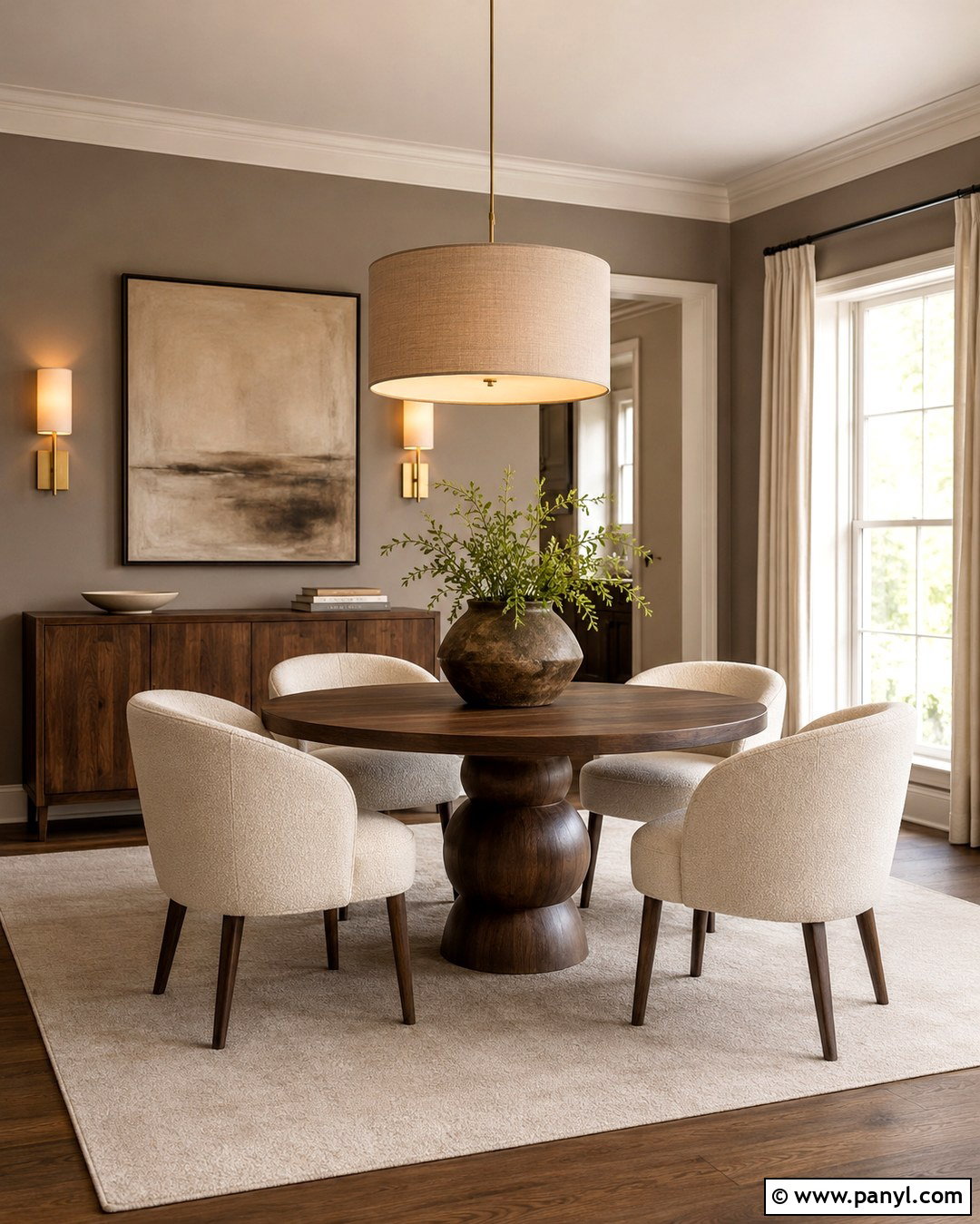
Taupe walls bring depth to a dining room while remaining easier to decorate than a stronger statement color. Select a warm taupe with brown rather than violet undertones. Pair it with creamy trim, a walnut pedestal table, and curved dining chairs upholstered in textured ivory fabric. A large natural linen pendant can soften the center of the room, while aged brass wall lights add a subtle reflective finish. Hang one oversized abstract artwork incorporating black, clay, and cream instead of filling every wall. A low wood sideboard provides useful storage and strengthens the room’s warm palette. Complete the setting with a flat-weave rug, off-white curtains, and simple ceramic vessels. The finished design feels intimate, tailored, and appropriate for daily meals or entertaining.
6. Mushroom Home Office Walls
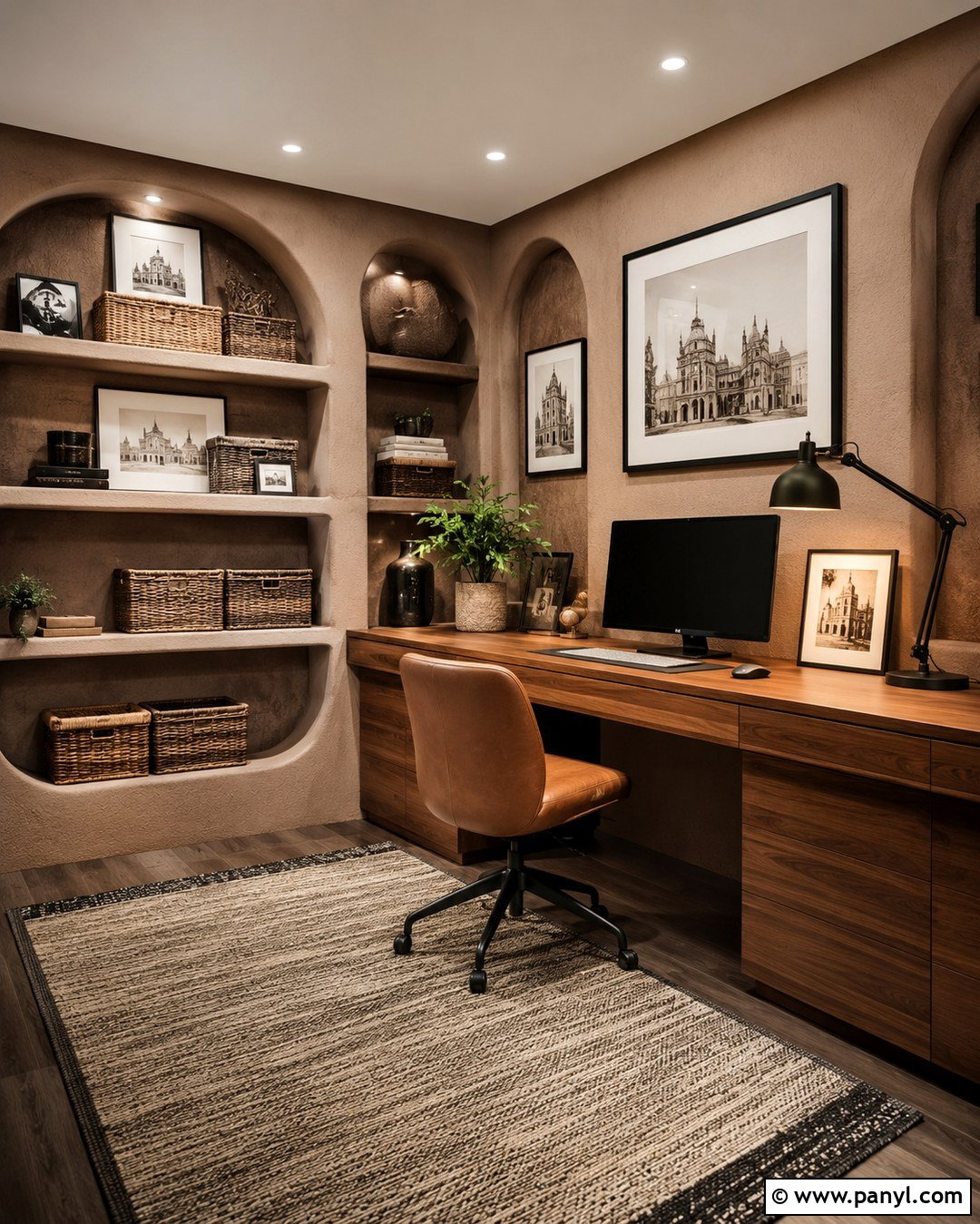
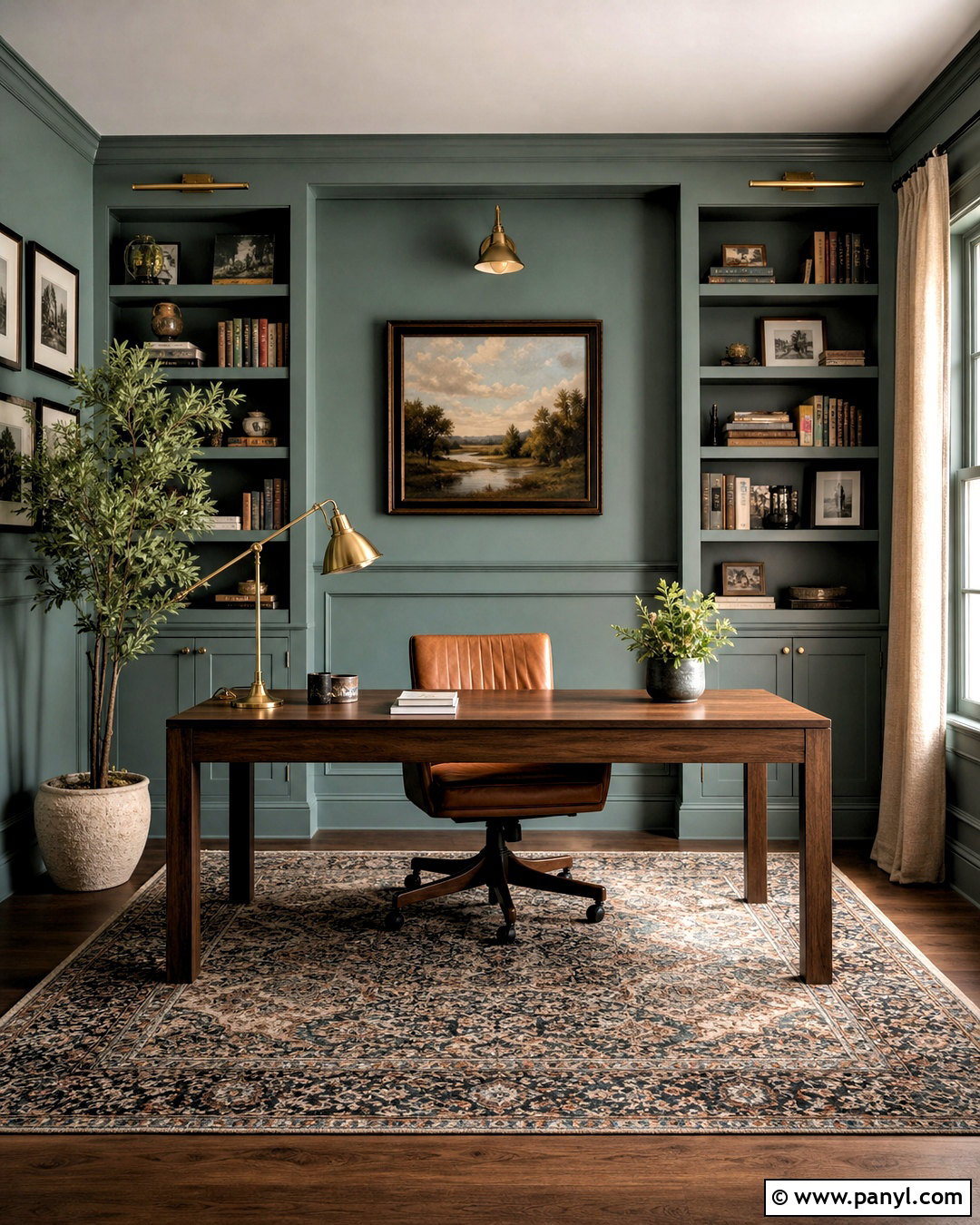
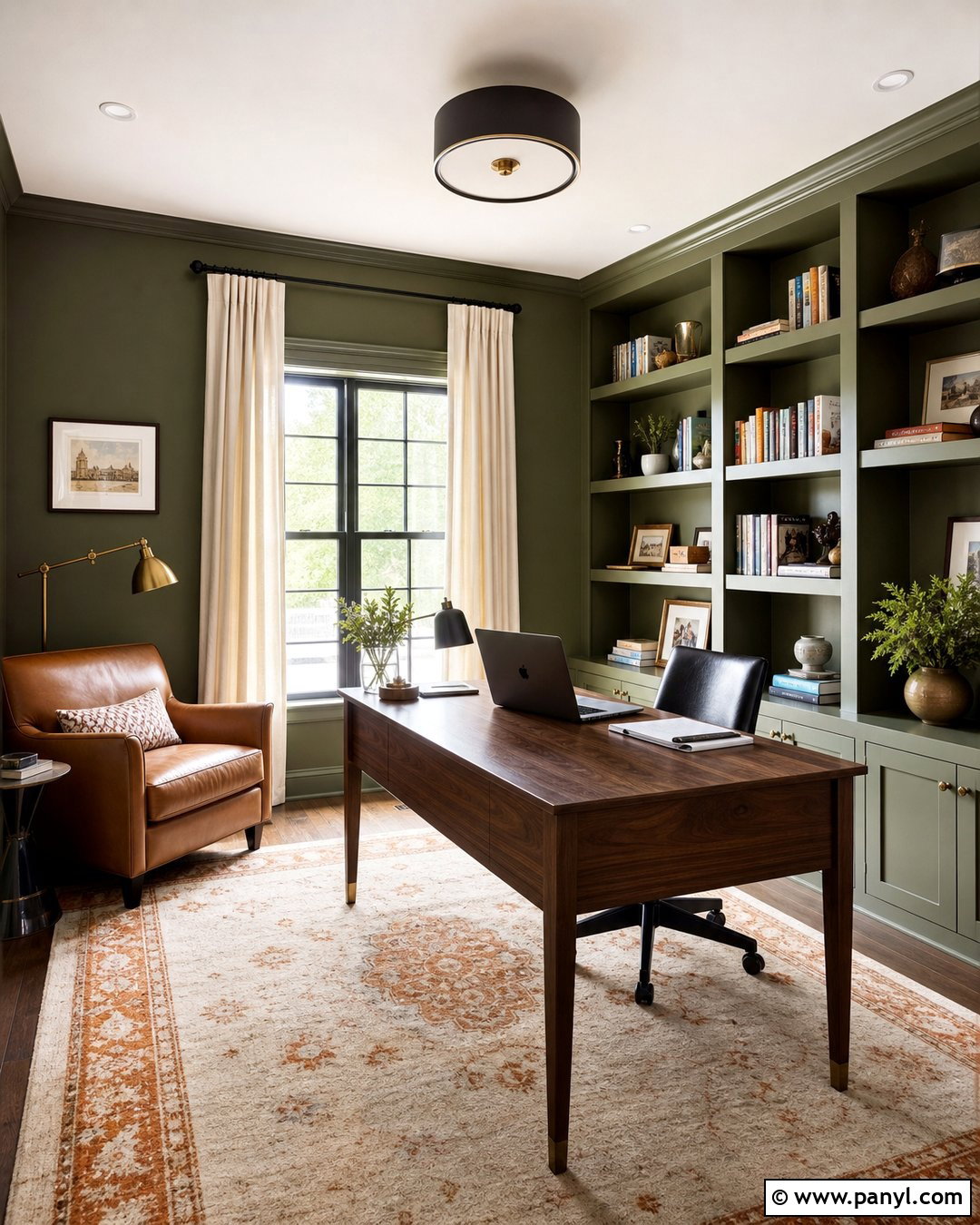
Mushroom-colored walls give a home office a quiet, sophisticated background that works beautifully with wood and black accents. This shade sits between beige, gray, and brown, so it can adapt to changing daylight without looking stark. Position a streamlined walnut desk against the main wall and add a comfortable tan leather chair. Install mushroom-painted built-ins or shelving for a seamless, color-drenched effect. Use warm white on the ceiling to keep the room open. A wool rug in cream and charcoal adds pattern beneath the furniture, while matte black task lighting brings sharper contrast. Finish the complete workspace with woven storage boxes, framed architectural prints, and one leafy plant. The result feels focused and professional without becoming cold or overly formal.
7. Pale Gray Kitchen Walls
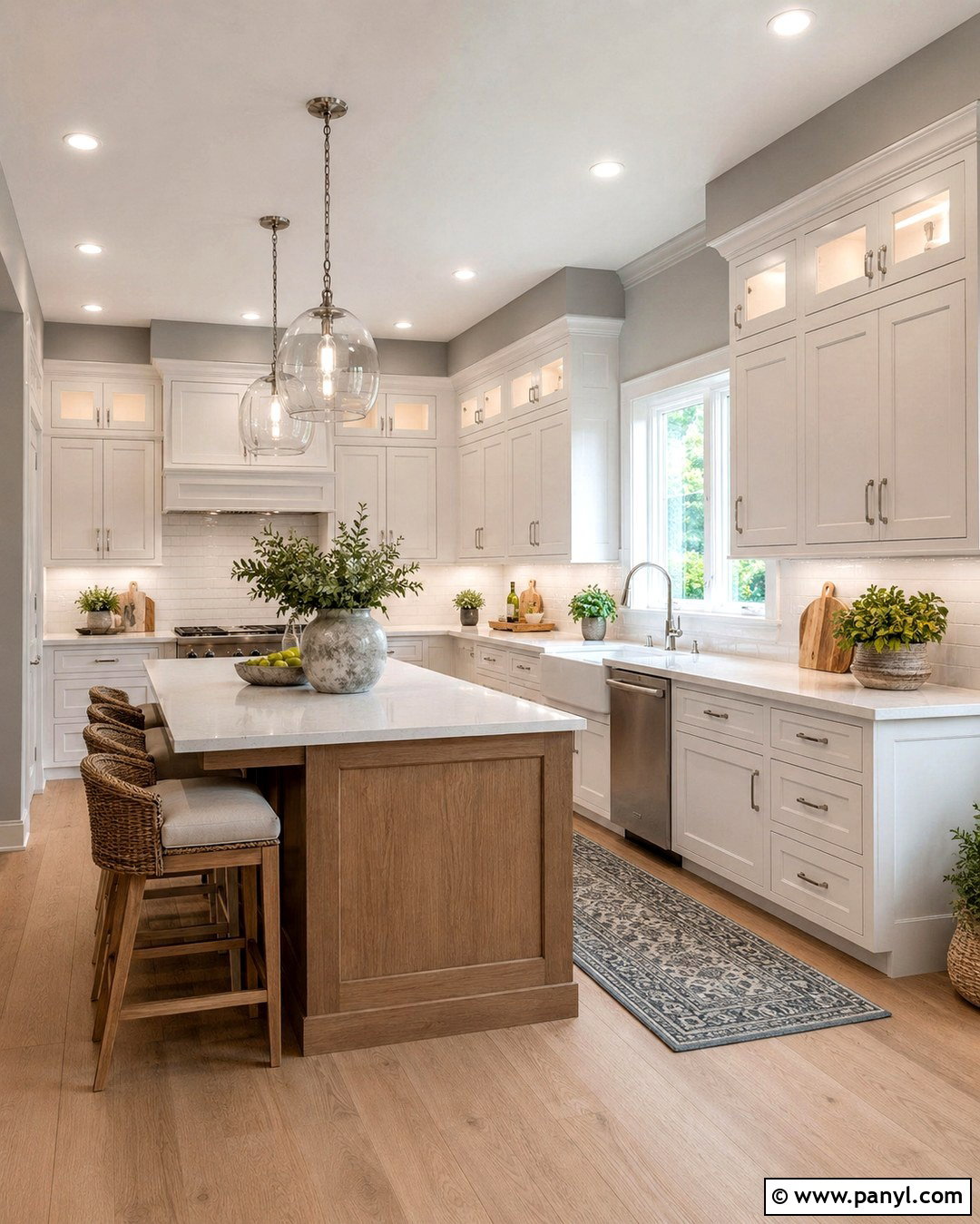
Pale gray walls can still feel inviting when the surrounding kitchen contains enough warmth and texture. Choose a soft gray with a slightly warm undertone, avoiding shades that turn icy blue in limited daylight. Combine it with creamy white cabinets, brushed nickel hardware, and lightly veined white quartz countertops. A natural oak island introduces warmth at the center, complemented by woven counter stools and pale wood flooring. Install simple glass pendants so the room remains visually open. A backsplash of glossy off-white subway tile reflects light and distinguishes the walls from the work area. Add blue-gray runners, wood cutting boards, and small green plants for gentle color. This balanced kitchen looks clean and current without relying on harsh black-and-white contrast.
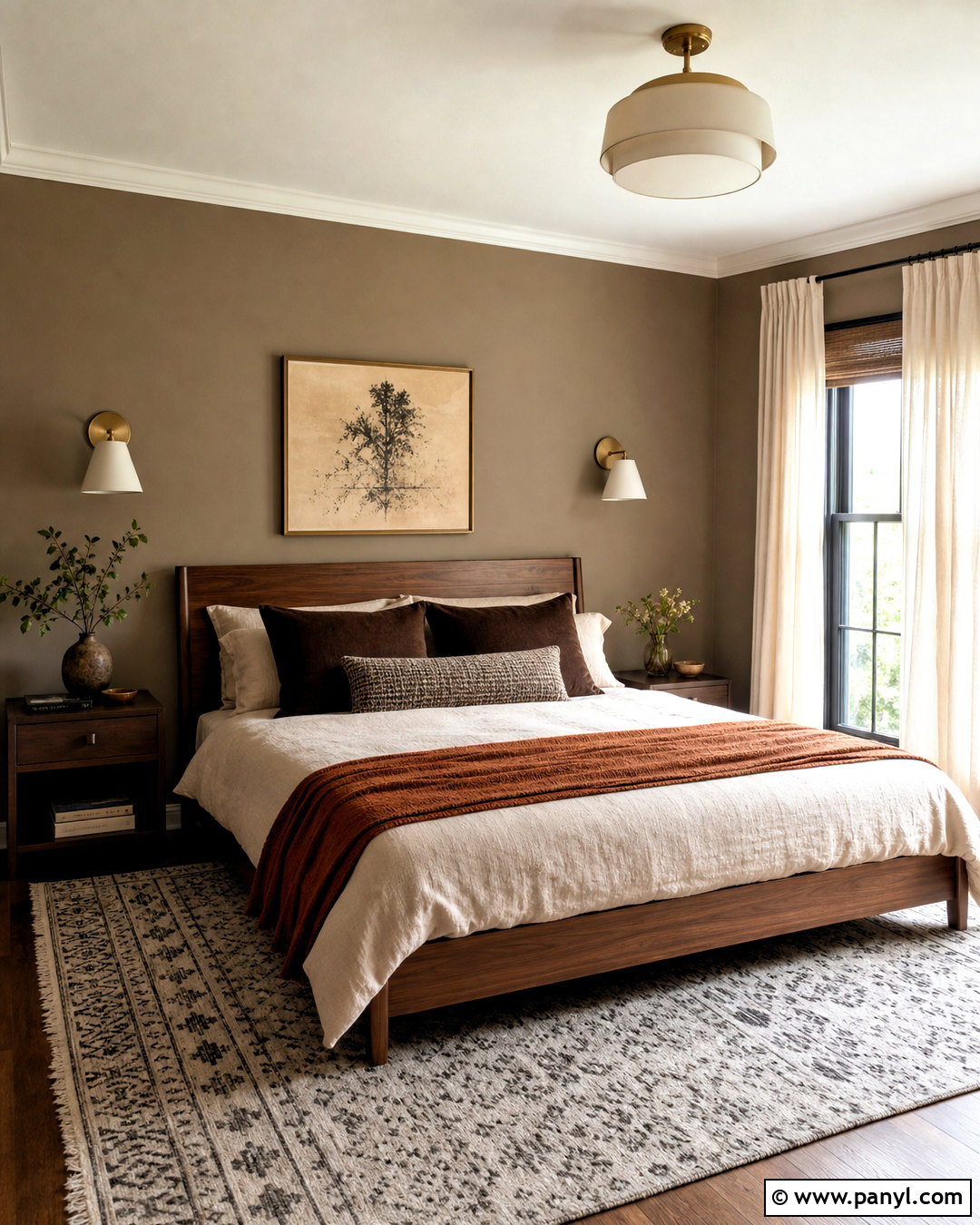
8. Powder Blue Guest Bedroom Walls
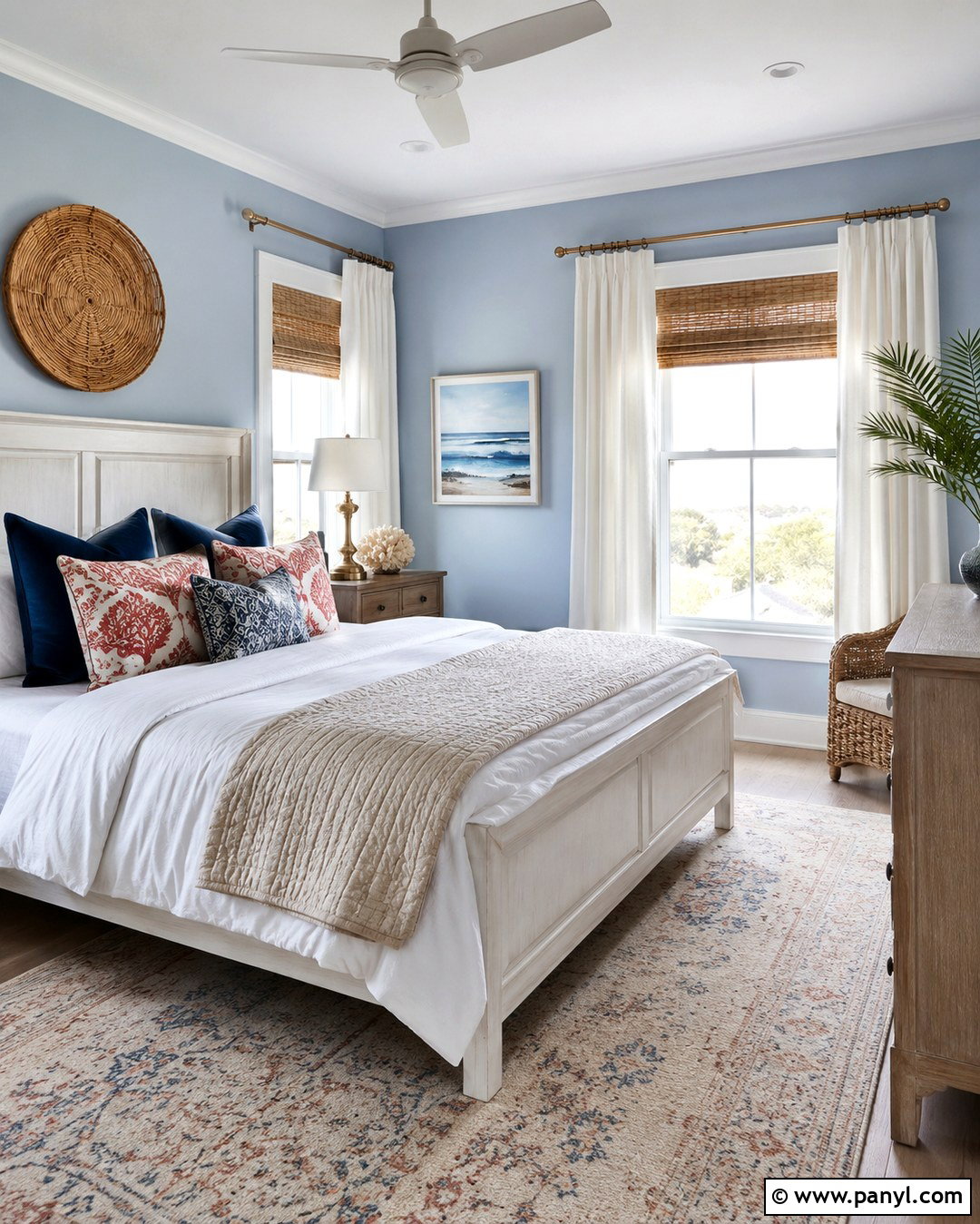
Powder blue walls offer a peaceful way to introduce color into a guest bedroom. Look for a muted blue with a slight gray or green undertone so the room feels soft rather than childlike. Place a white oak bed against the main wall and dress it with crisp white bedding, a sand-colored coverlet, and patterned pillows in navy and faded coral. Natural linen curtains maintain the airy mood, while a woven Roman shade adds privacy and texture. Use warm brass lamps on compact wood nightstands to balance the cool walls. A vintage-inspired rug can repeat the blue alongside cream and rust. Finish with simple coastal landscape artwork rather than themed accessories. The complete room feels welcoming, relaxed, and suitable for guests of any age.
9. Blue Gray Bathroom Walls
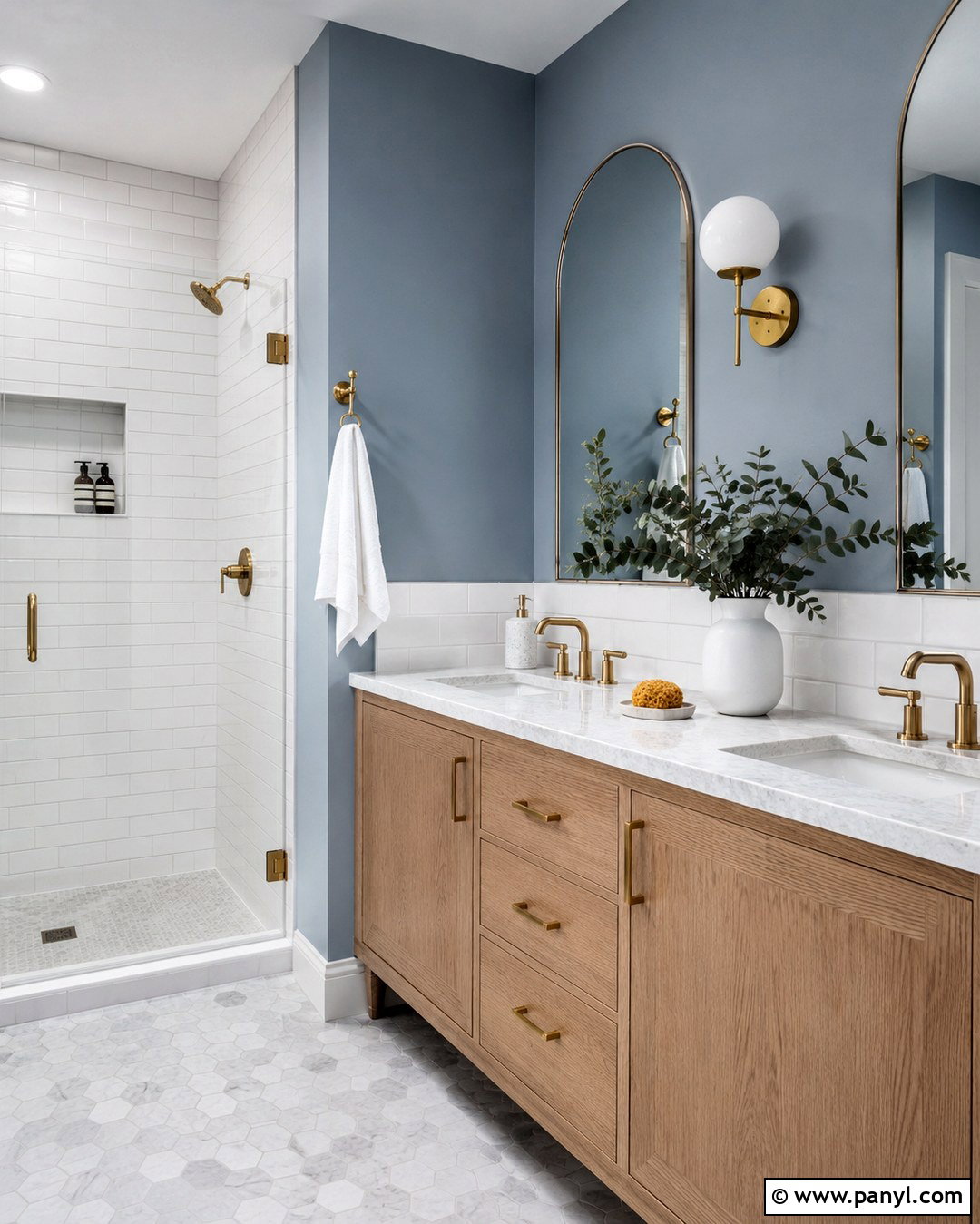
Blue-gray walls can transform a basic bathroom into a fresh, spa-like retreat. Choose a medium-light shade that remains visibly blue beside white tile. Pair it with a white oak vanity, brushed brass faucet, and quartz counter featuring quiet gray veining. Use warm white subway tile around the shower and continue the blue-gray paint on the remaining walls. Hexagonal marble-look flooring provides subtle pattern without overwhelming a small space. Hang a rounded brass mirror above the vanity and install two opal glass sconces for even illumination. White towels, a pale wood stool, and eucalyptus branches reinforce the clean palette. The finished bathroom combines cool color with warm materials, making it feel calm and polished rather than clinical or overly nautical.
10. Deep Navy Library Walls
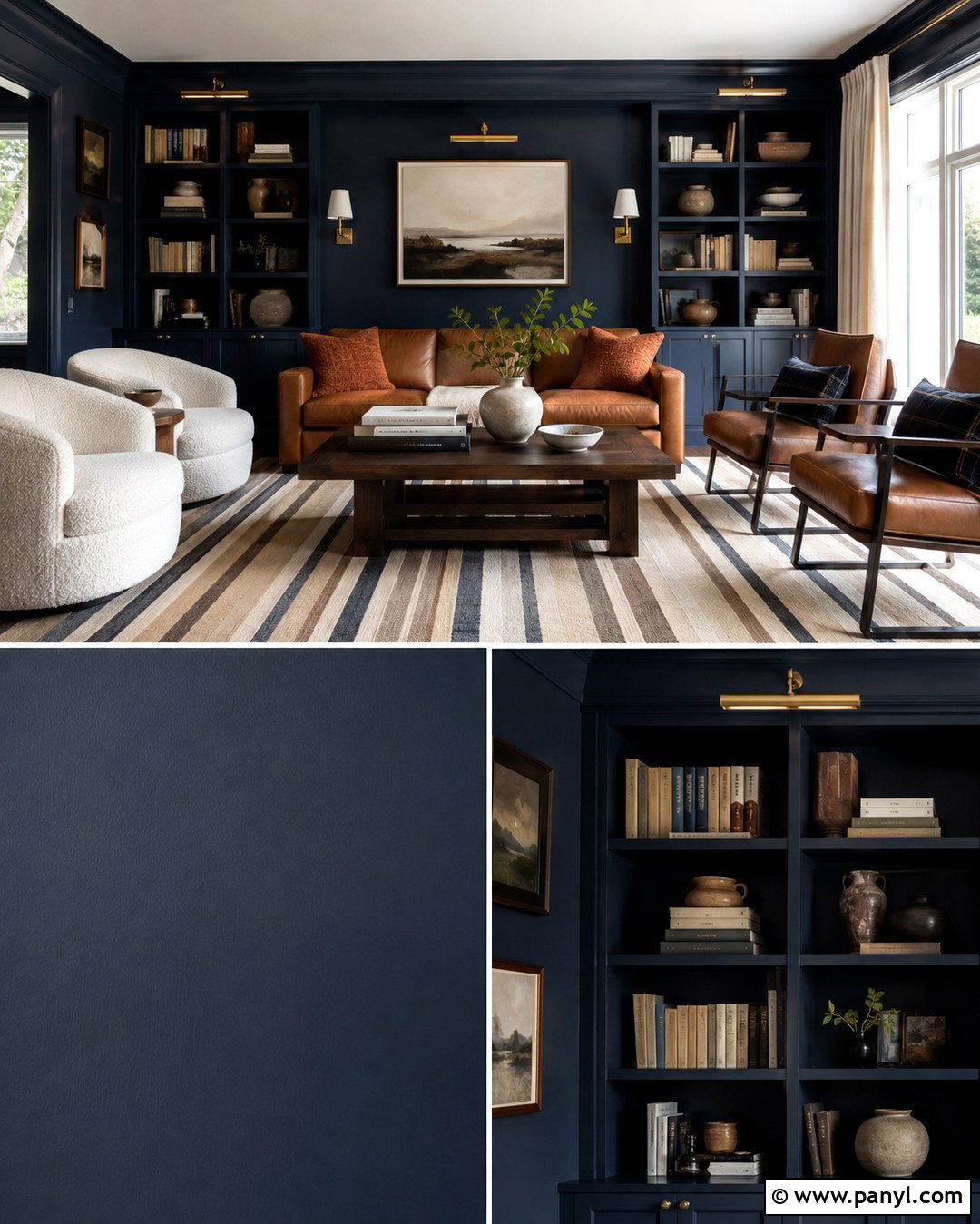
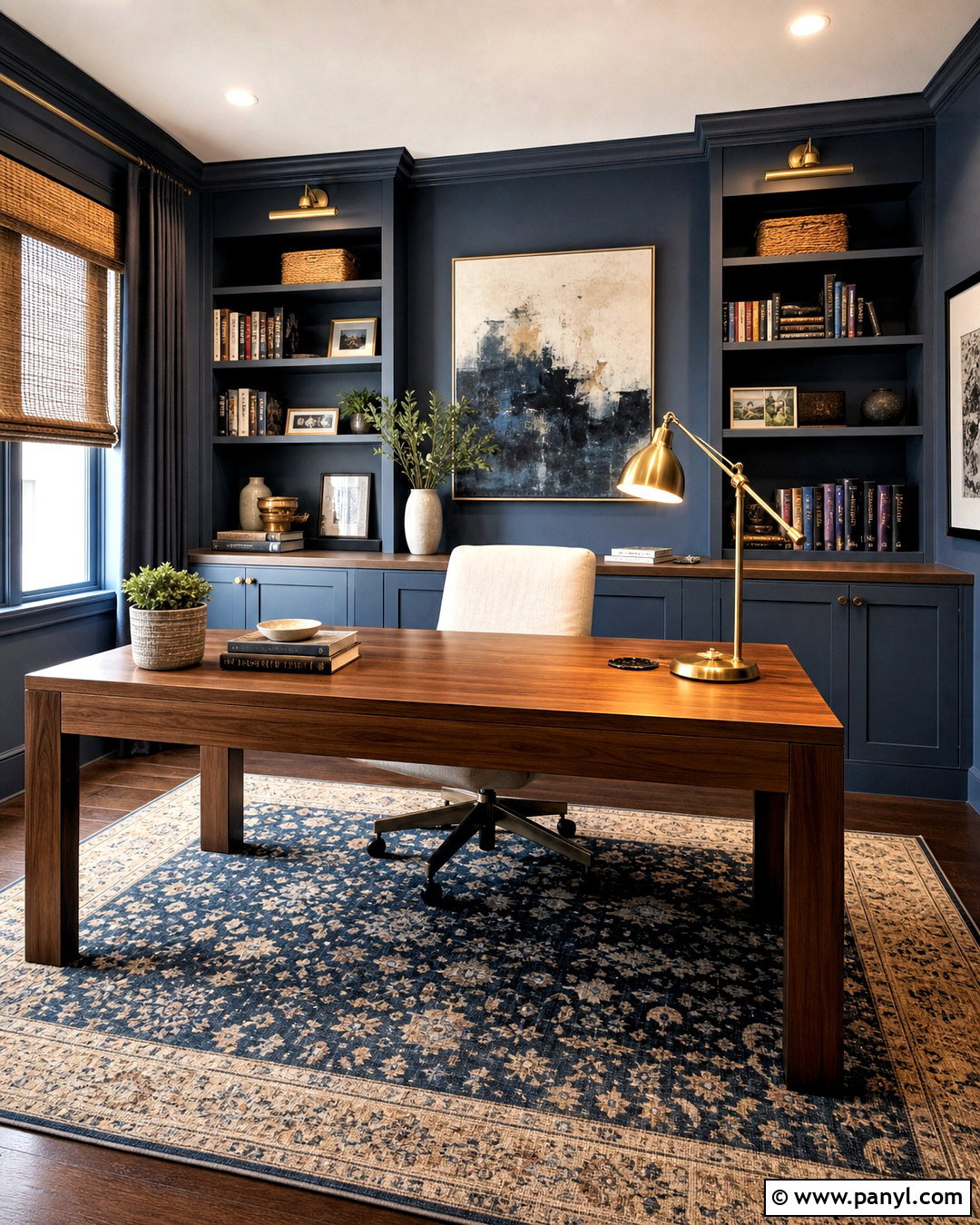
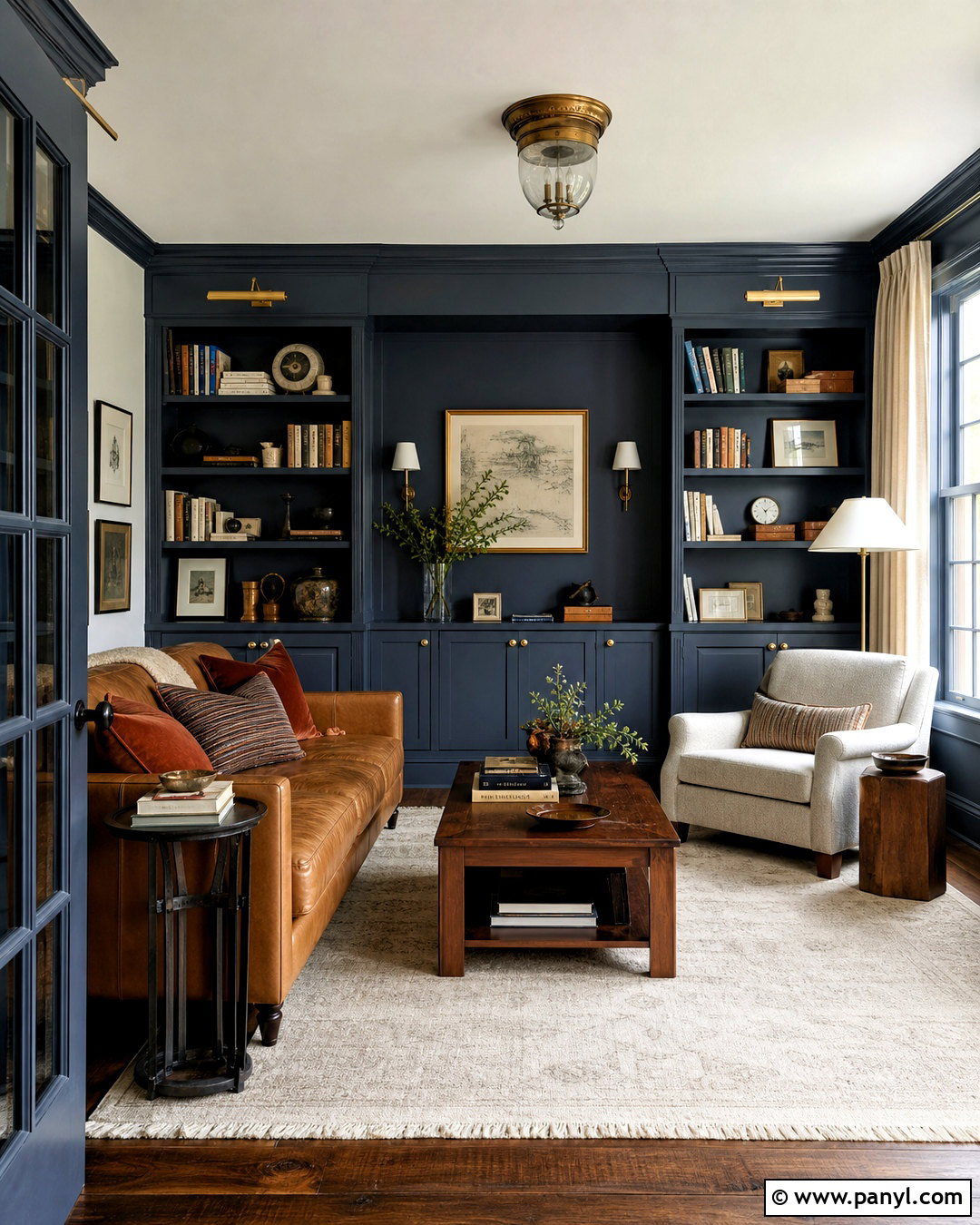
Deep navy walls create an enveloping library or reading room with lasting character. Carry the same navy across built-in bookcases and trim for a cohesive, color-drenched finish. Keep the ceiling warm white if the room is small, or paint it navy when you want a more immersive effect. Furnish the space with a cognac leather sofa, a striped wool rug, and a dark walnut coffee table. A pair of cream boucle chairs can lighten the arrangement and provide additional seating. Use aged brass picture lights above the shelves and a cream drum pendant overhead. Fill the bookcases thoughtfully, leaving room for pottery and framed photographs. Rust pillows, plaid throws, and warm wood tones ensure the complete room feels cozy rather than severe.
11. Sage Green Living Room Walls
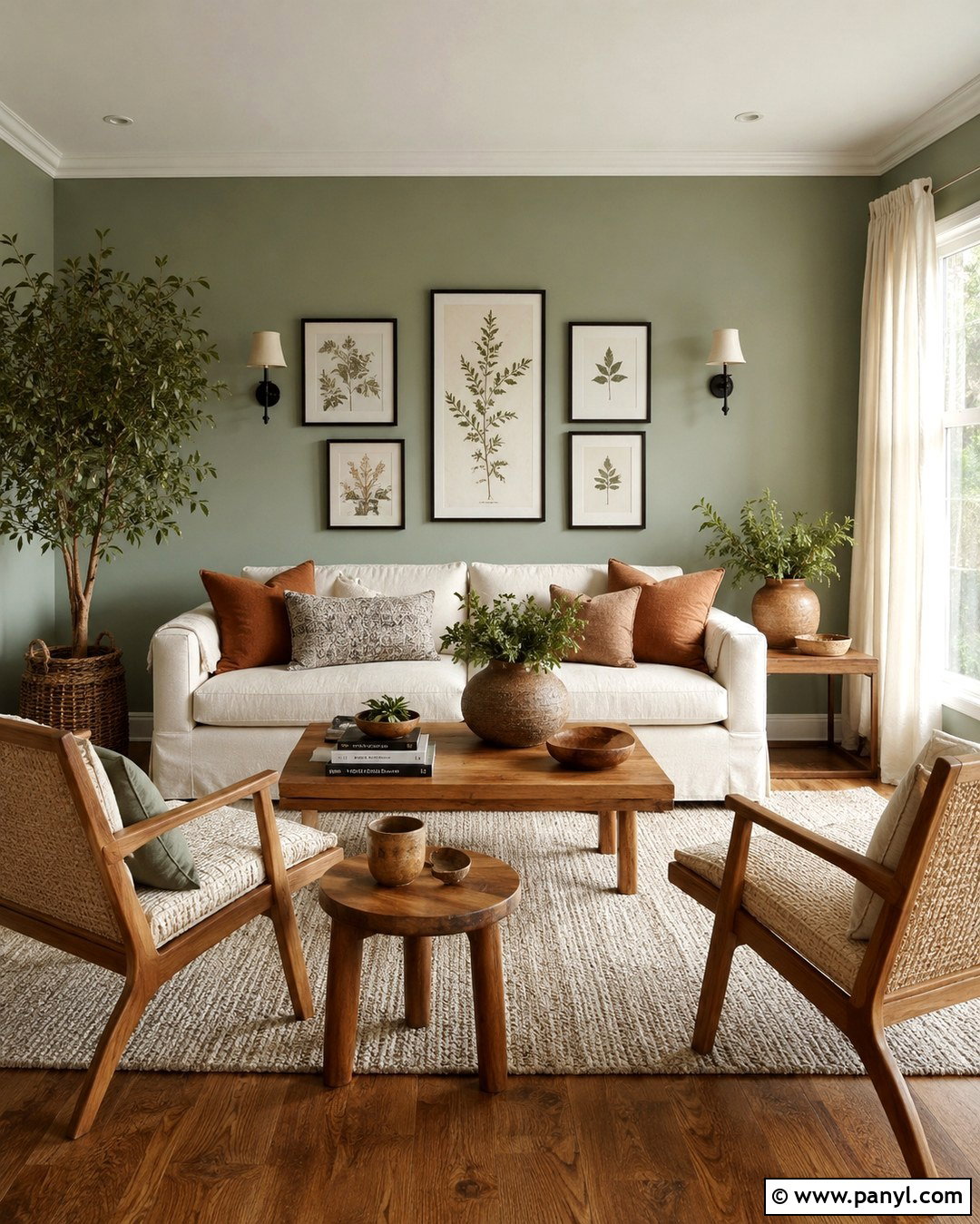
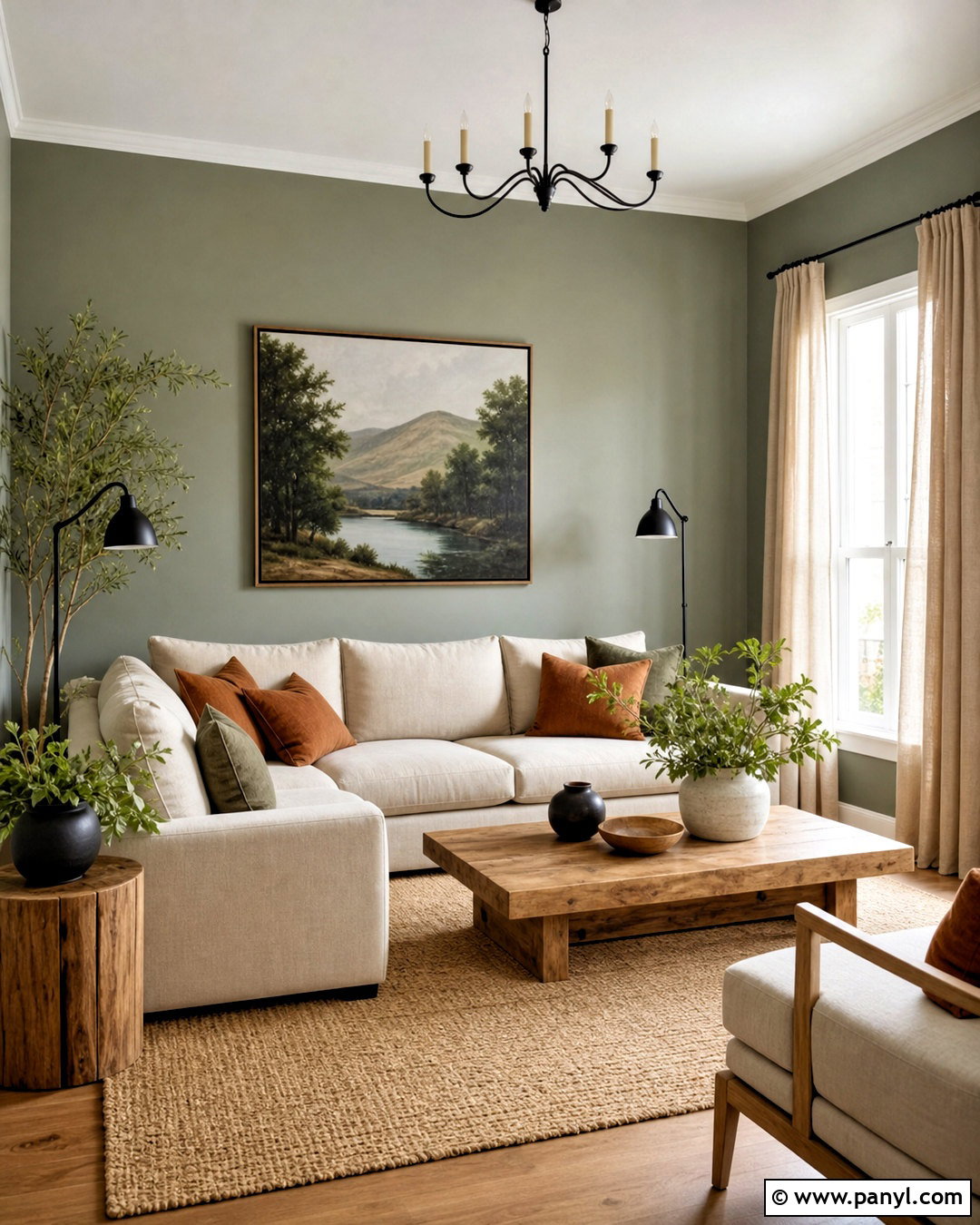
Sage green walls bring a gentle connection to nature while remaining neutral enough for a frequently used living room. Select a soft, dusty sage rather than a bright mint. Pair it with an ivory sofa, warm oak floors, and two woven accent chairs with cream cushions. A large wool rug in beige and muted green helps connect the seating area. Choose medium wood tables with simple profiles, then introduce black through a floor lamp and narrow picture frames. Warm white curtains keep the windows bright and prevent the green from dominating. Add clay pottery, botanical artwork, and pillows in rust, tan, and deeper olive. Together, these pieces create a complete organic modern room that feels peaceful, layered, and comfortable throughout the year.
12. Eucalyptus Green Bathroom Walls
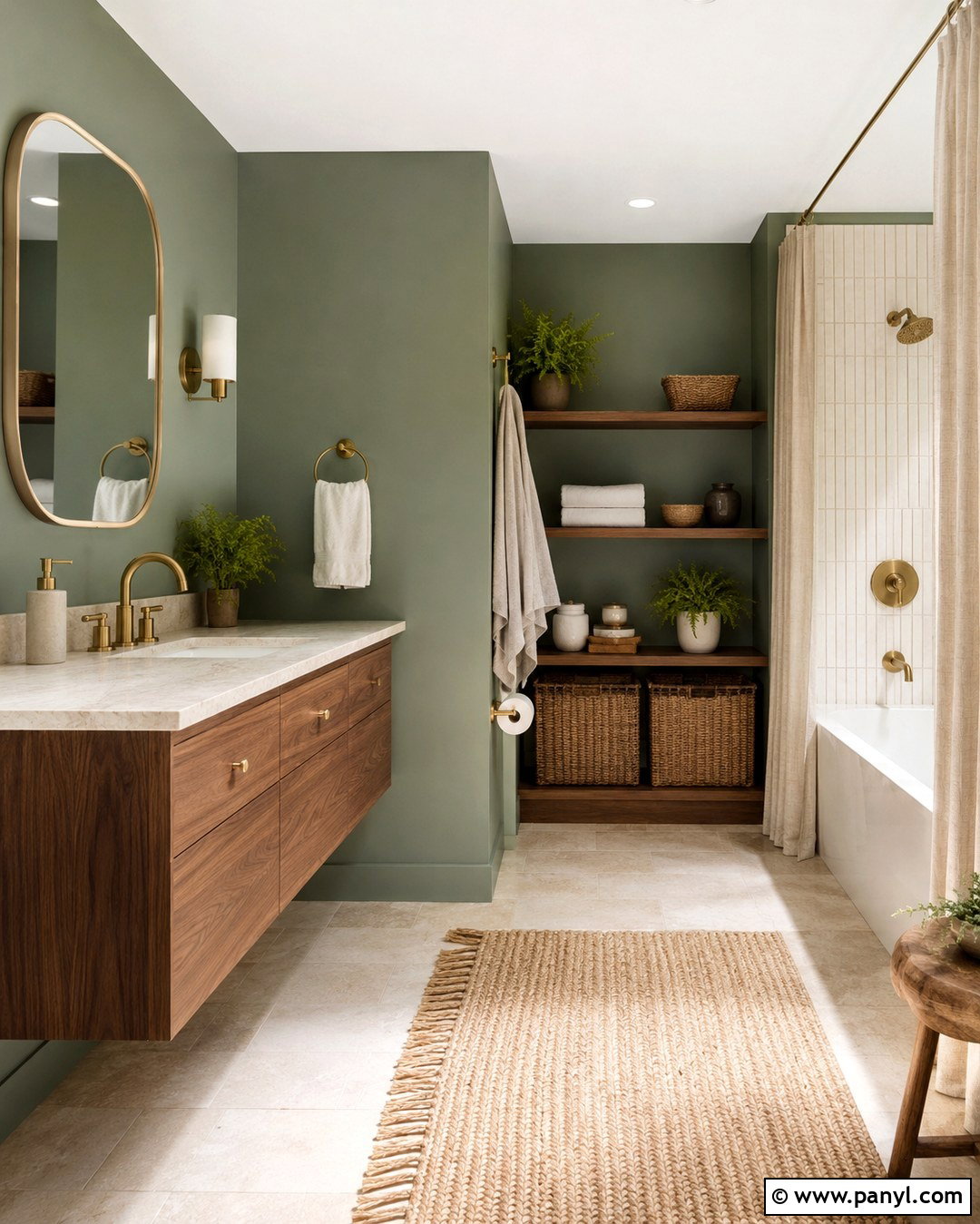
Eucalyptus green walls can give a bathroom a grounded, refreshing appearance without becoming too dark. Use the color above vertical cream tile or simple white beadboard, allowing the architectural surface to protect high-splash areas. A floating walnut vanity adds richness, while a pale stone counter keeps the design light. Choose brushed brass fixtures and a rounded mirror to introduce warmth and softer shapes. For flooring, use matte porcelain tile in a sandy limestone tone. Hang white cotton towels from matching brass hooks and place a woven basket beside the vanity for storage. A linen shower curtain and small potted fern complete the natural palette. This coordinated bathroom feels calm and restorative, with enough texture and contrast to prevent the green walls from looking flat.
13. Olive Green Kitchen Walls
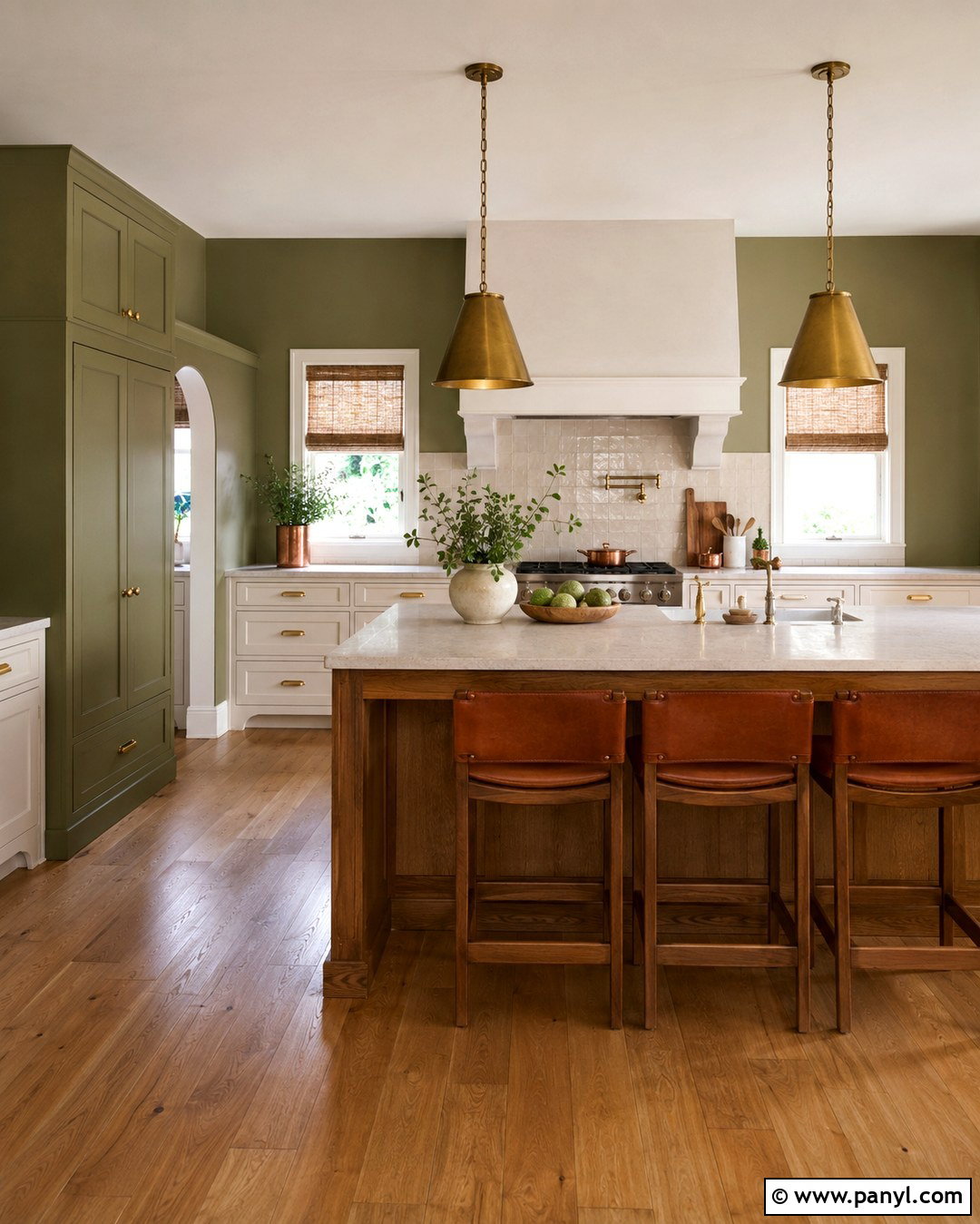
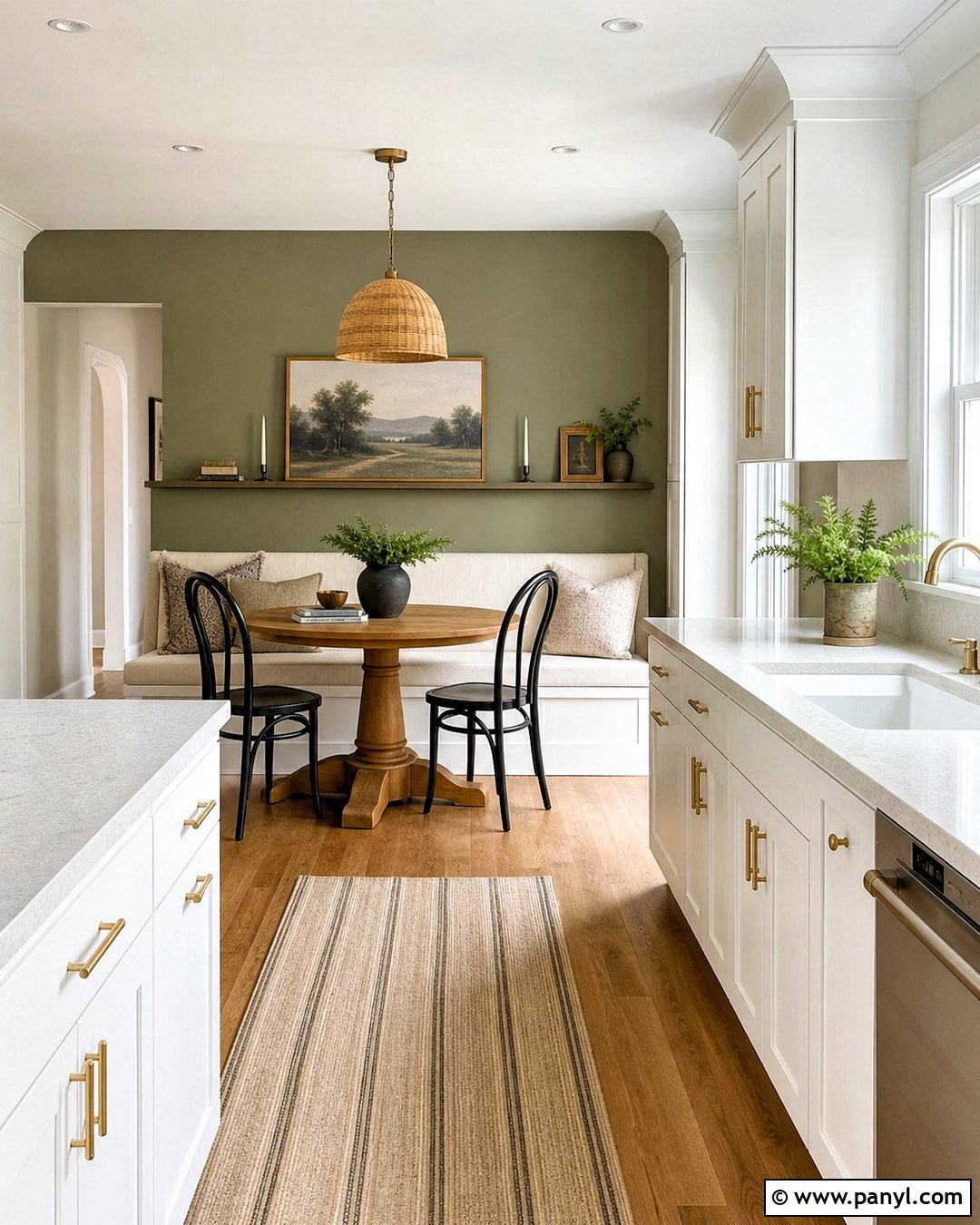
Olive green walls create an earthy kitchen that feels especially rich beside natural wood. Use a muted olive on the walls and repeat it on a freestanding pantry cabinet for continuity. Balance the color with warm white perimeter cabinets, creamy quartz counters, and a backsplash made from handmade ivory tile. A medium oak island should serve as the visual anchor, paired with saddle leather stools and aged brass pendants. Keep flooring simple with wide oak planks or warm stone-look porcelain. Display wood boards, neutral ceramics, and a few copper utensils rather than brightly colored accessories. Woven shades soften the windows and filter harsh light. The complete kitchen feels grounded and welcoming, blending rustic materials with clean, functional details suitable for a modern home.
14. Forest Green Dining Room Walls
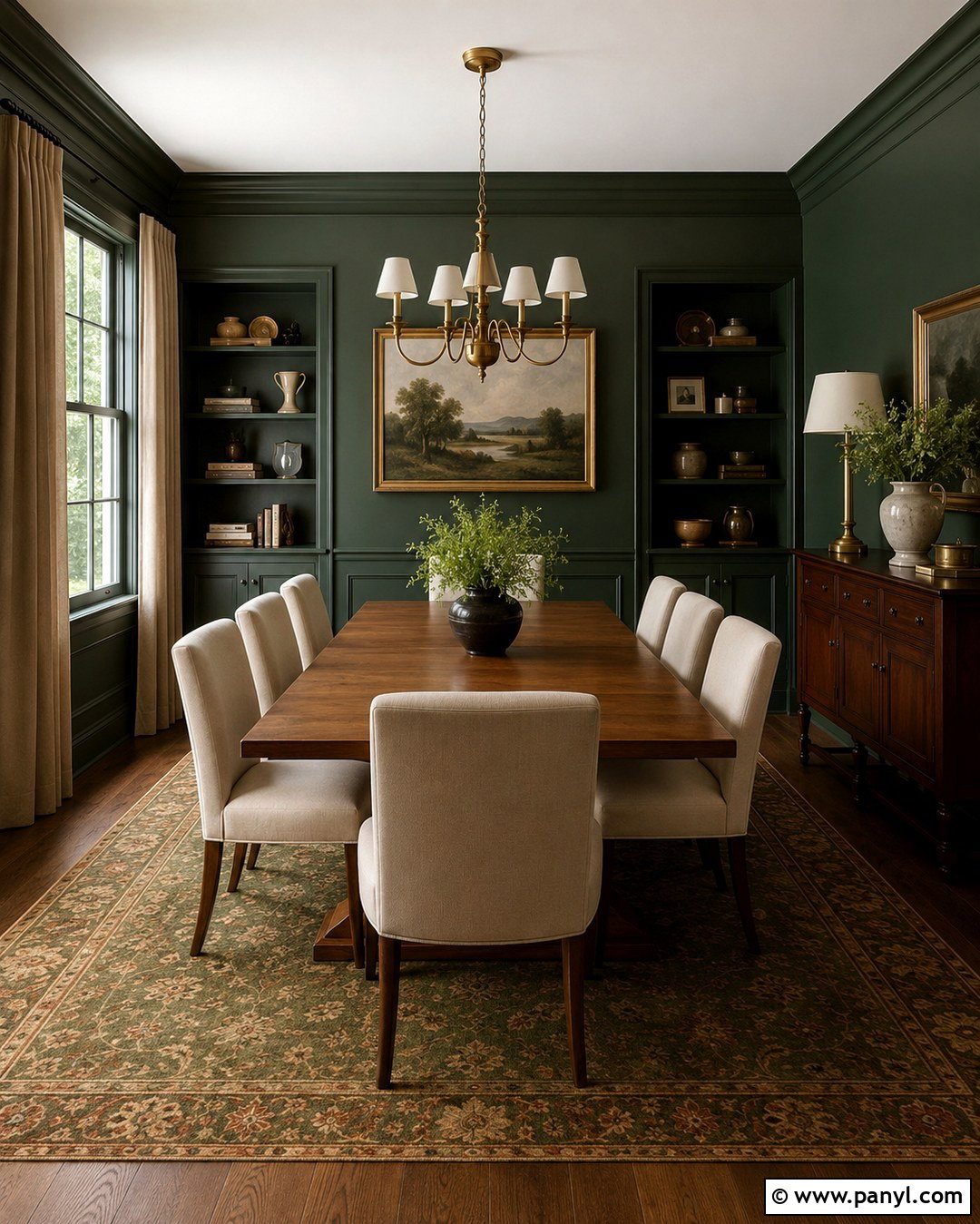
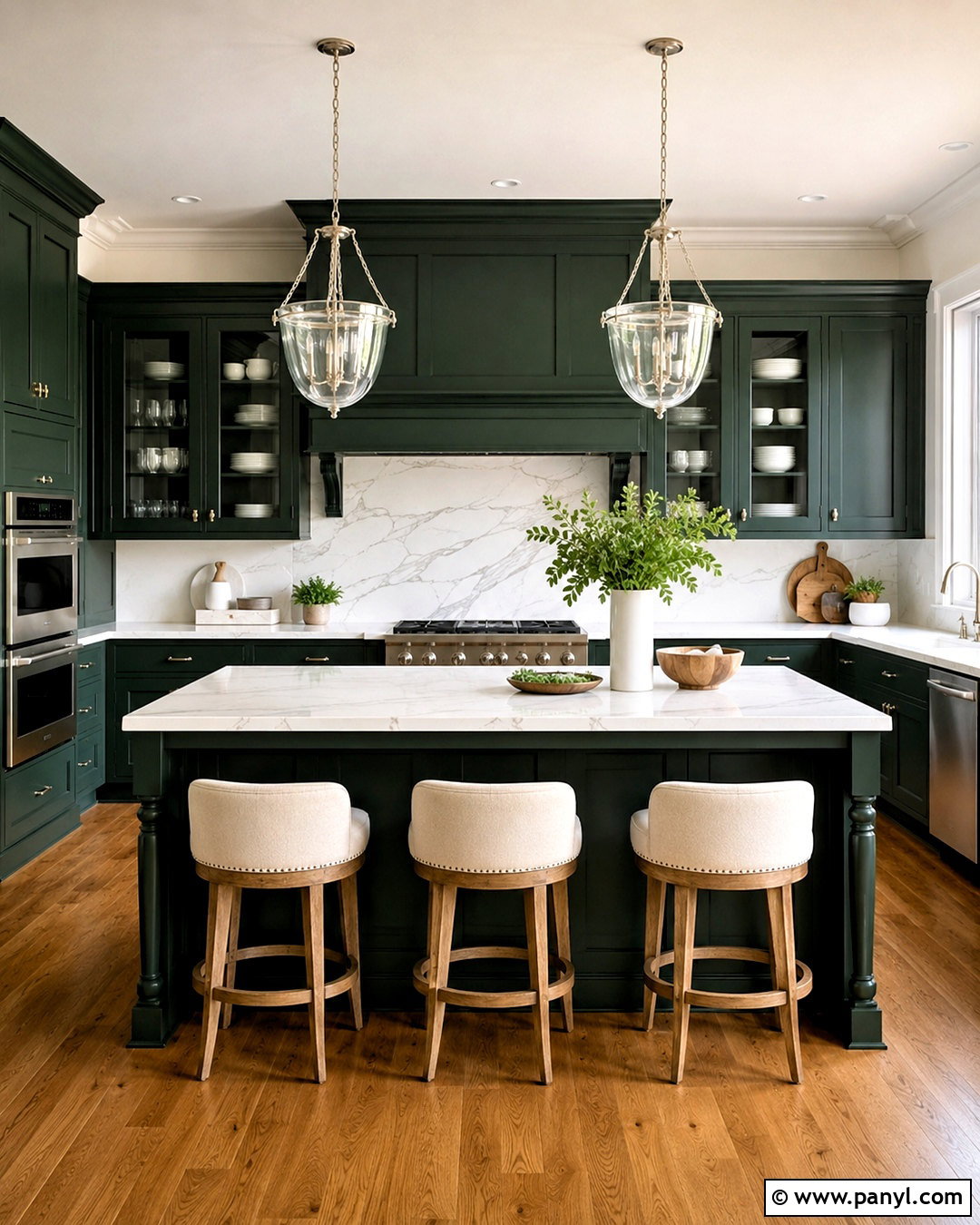
Forest green walls give a formal dining room dramatic depth and make light-colored furniture stand out beautifully. Paint the walls, molding, and built-in cabinet the same deep green for a unified effect. A medium oak dining table keeps the room grounded, while upholstered cream chairs offer clear contrast. Center a sculptural brass chandelier over the table and add matching picture lights above traditional landscape artwork. Full-length curtains in natural flax can soften the dark walls without interrupting the earthy palette. Choose a patterned rug containing olive, tan, rust, and ivory to connect every element. A dark wood sideboard and simple white ceramics complete the room. This whole design feels intimate and elegant, yet natural materials keep it approachable enough for regular family dinners.
15. Muted Terracotta Entryway Walls
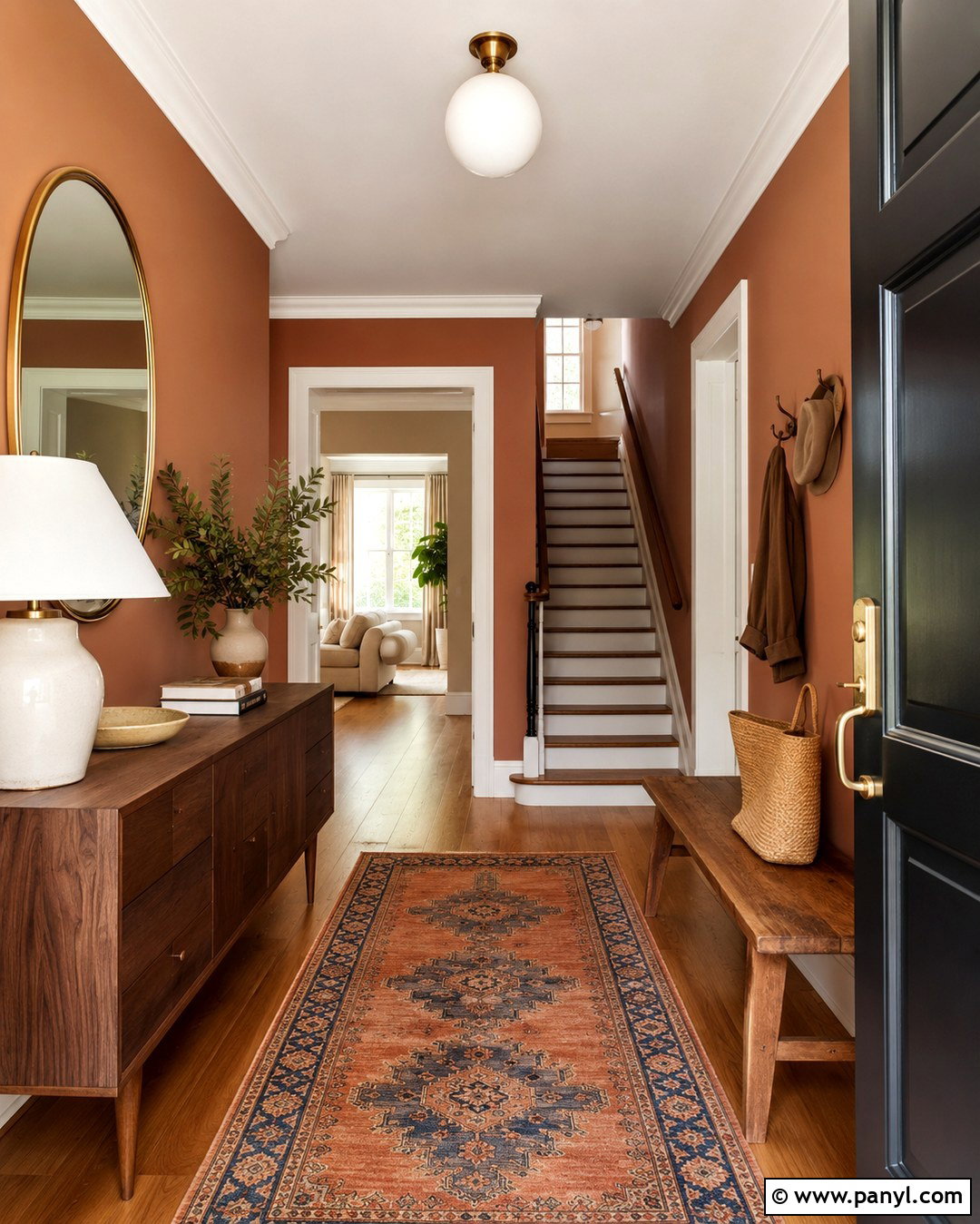
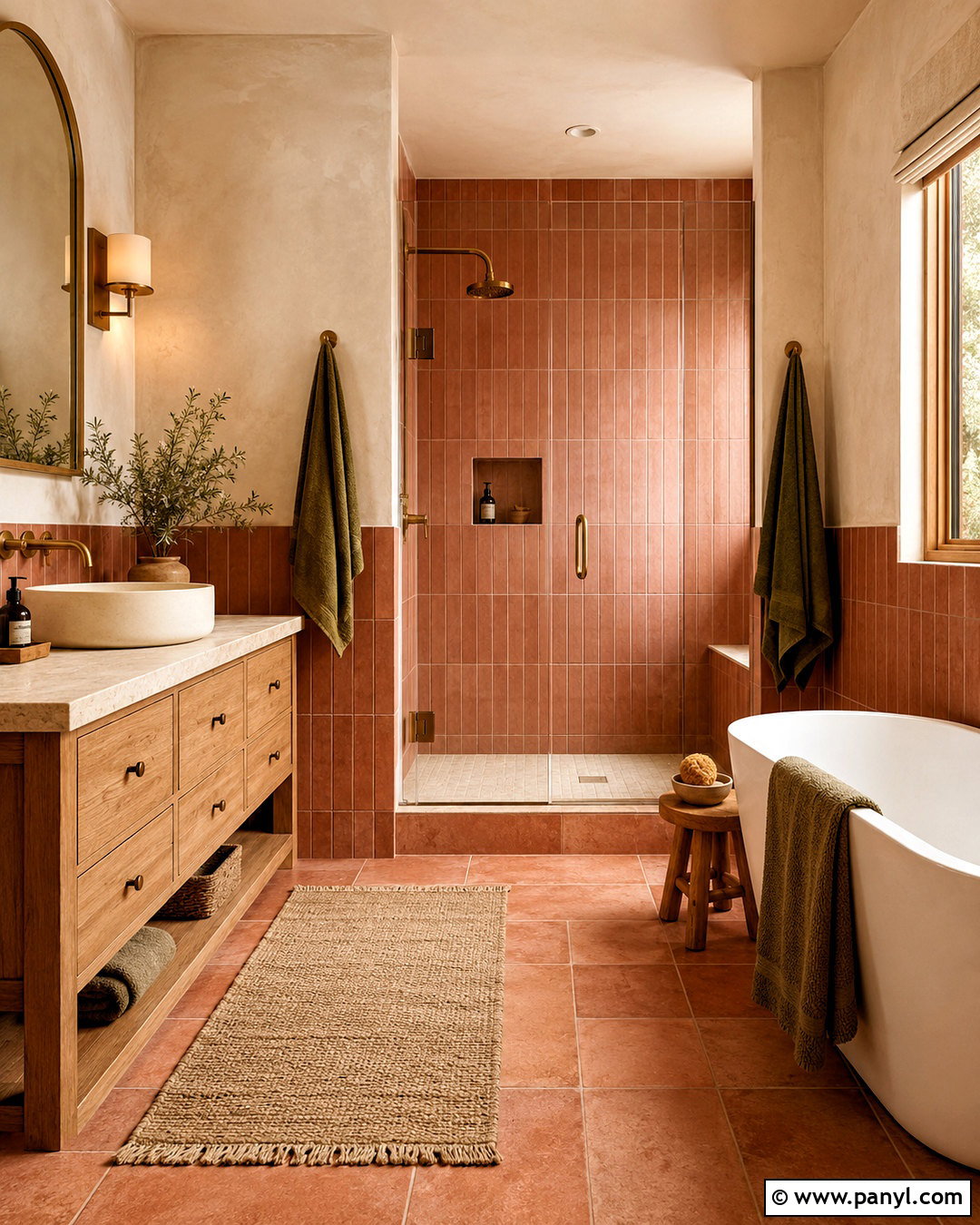
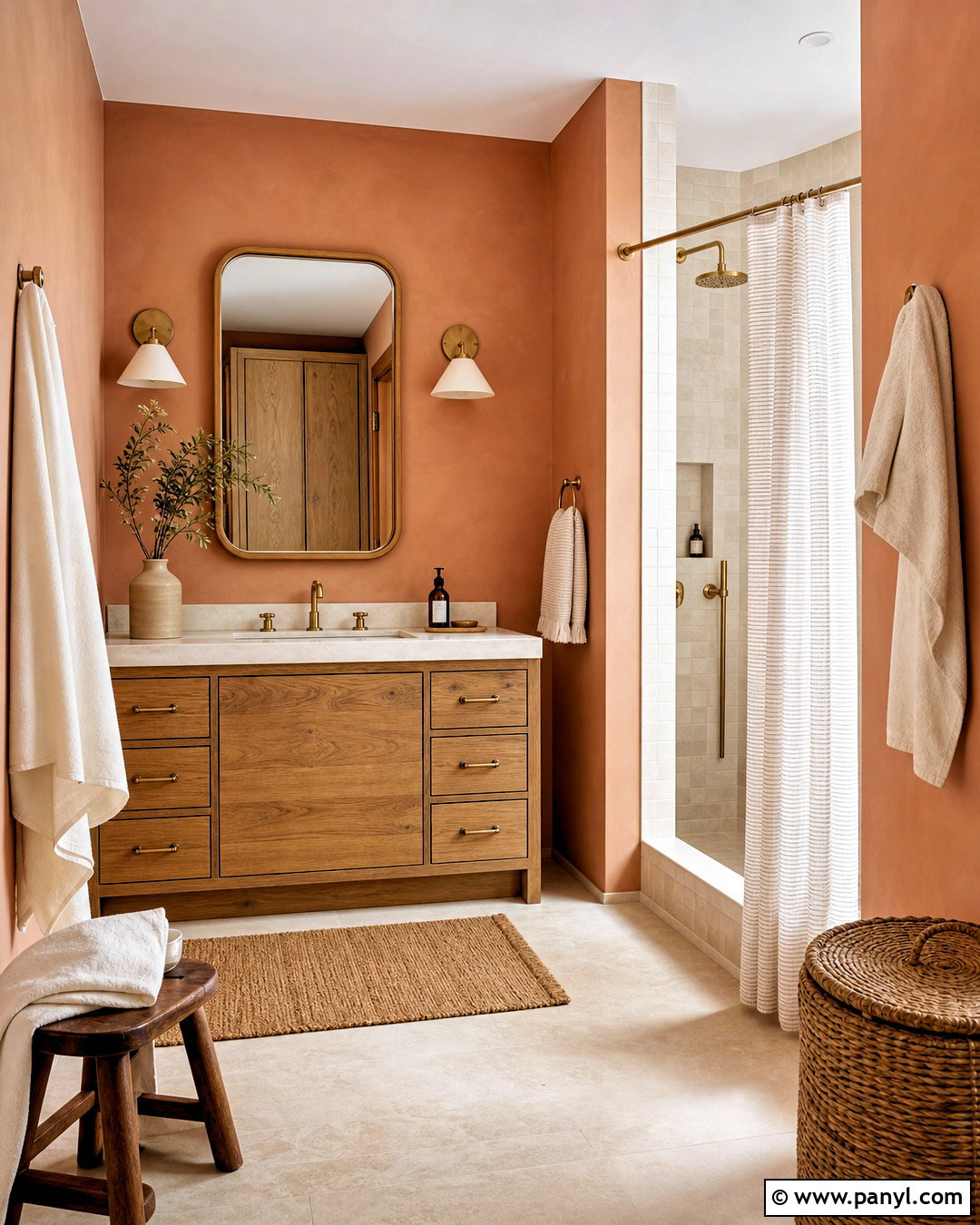
Muted terracotta walls can turn an overlooked entryway into a warm and memorable introduction to the home. Choose a dusty, clay-based shade rather than a vivid orange. Pair it with warm white trim and medium oak flooring to keep the passage bright. Place a narrow walnut console along one wall, topped with a rounded brass mirror and a cream ceramic lamp. A woven runner in rust, tan, faded blue, and ivory should guide the eye toward adjoining rooms. Add a simple wood bench with a neutral cushion, plus wall hooks for practical storage. Black accents can appear through a small tray, picture frames, or door hardware. The coordinated entry feels welcoming and collected while remaining organized, functional, and easy to maintain.
16. Soft Clay Bedroom Walls
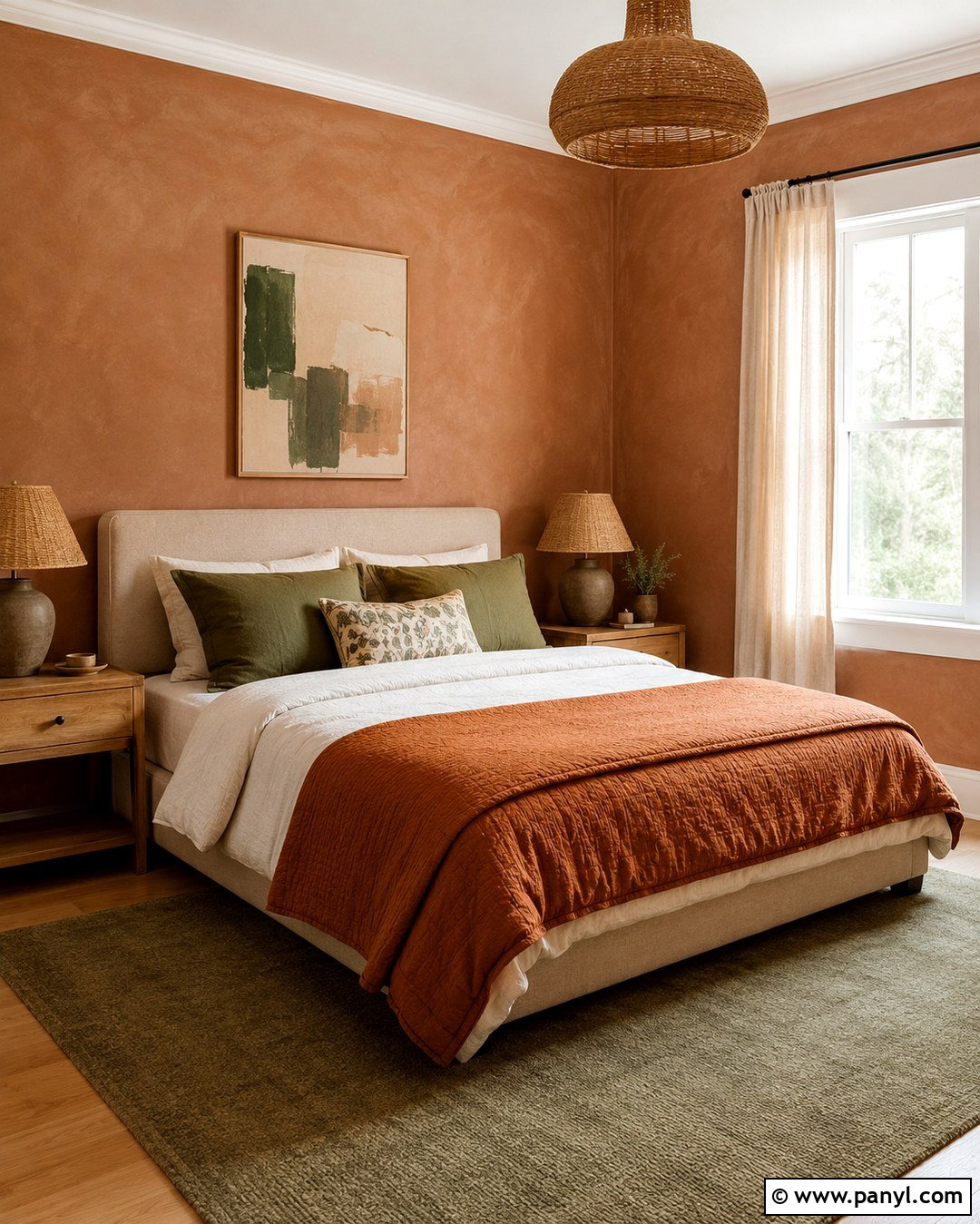
Soft clay walls create a warm bedroom that feels earthy without becoming overly pink or orange. Use the color on every wall, then choose warm white for the ceiling and trim to provide a clean edge. An upholstered bed in beige linen works as a quiet centerpiece, layered with cream sheets, a rust quilt, and olive accent pillows. Add light oak nightstands and ceramic lamps with woven shades. A patterned wool rug containing clay, brown, and faded green ties the scheme together. Natural linen curtains should closely match the bedding rather than the walls. Finish with black-framed abstract prints and a low oak bench at the foot of the bed. This complete palette supports a relaxed, comfortable bedroom with subtle color and plenty of texture.
17. Dusty Rose Sitting Room Walls
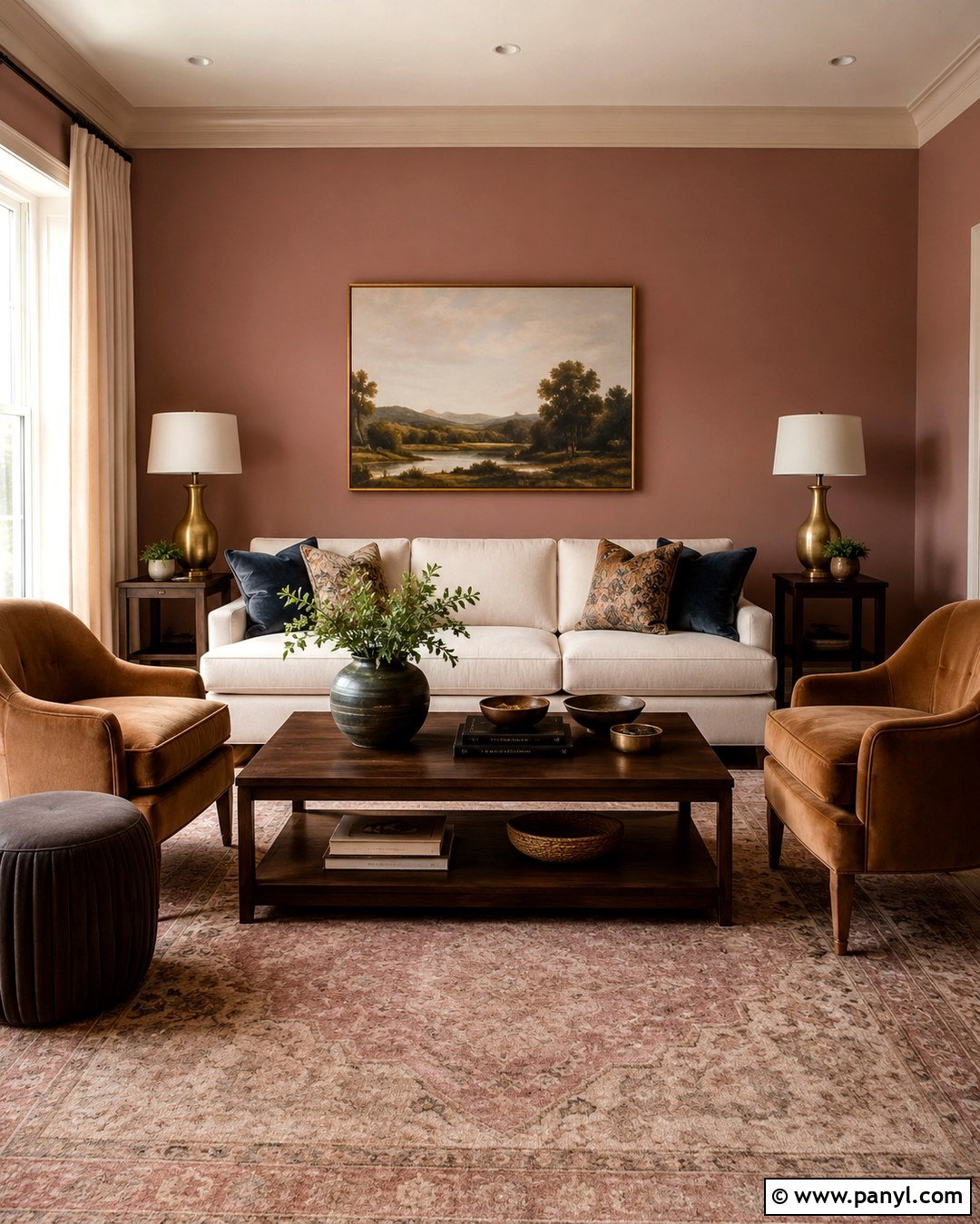
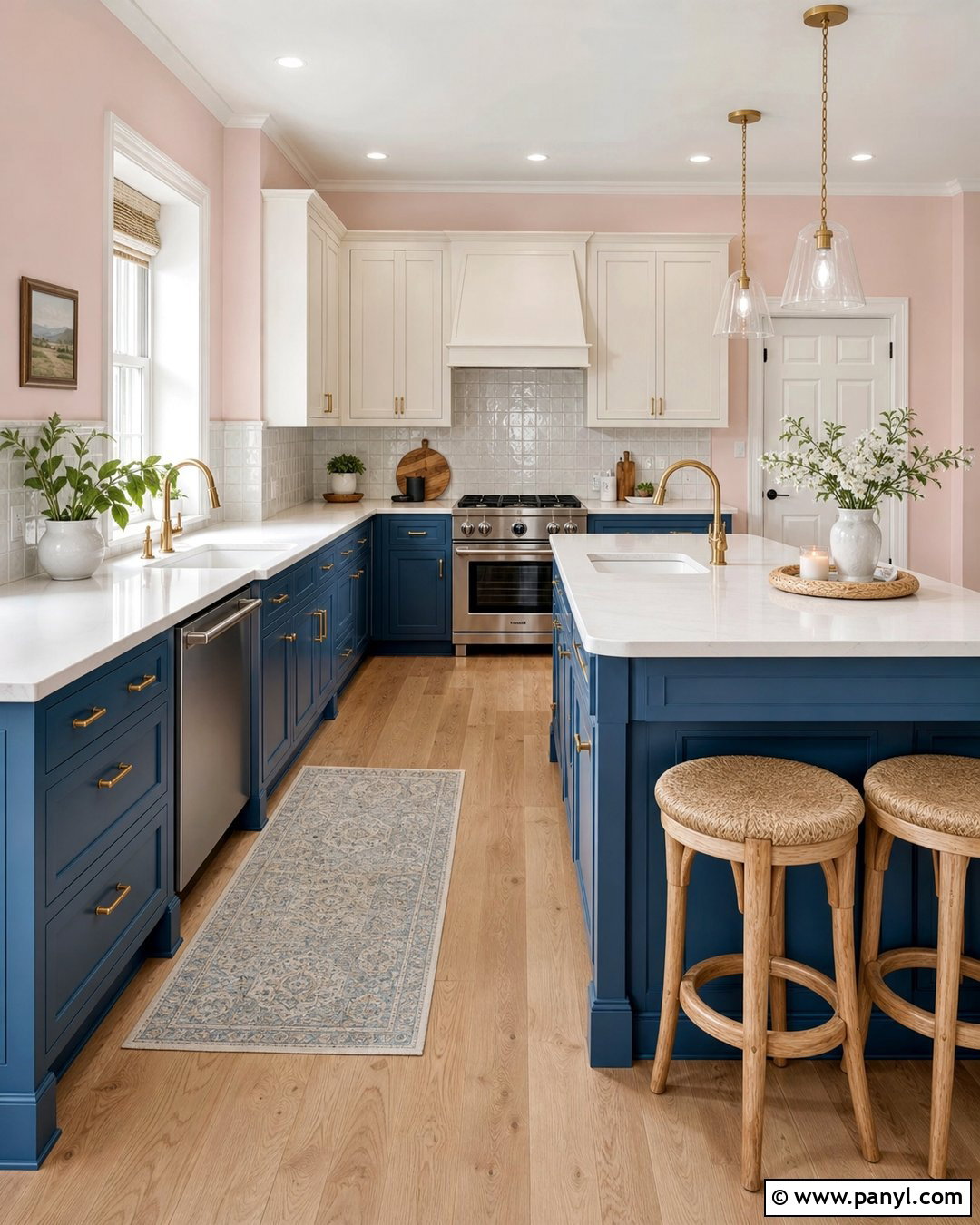
Dusty rose walls can look refined when combined with warm neutrals and structured furniture. Choose a subdued shade with brown or gray undertones instead of a sugary pink. Build the sitting room around a cream sofa, two camel velvet chairs, and a dark walnut coffee table. A vintage-style rug with faded rose, navy, taupe, and ivory will connect the wall color to deeper accents. Use warm white trim and full-length oatmeal curtains to frame the room. Aged brass lamps and a sculptural ceiling fixture add gentle shine. Introduce balance through navy pillows, dark picture frames, and one large landscape painting. The completed space feels grown-up, comfortable, and distinctive, proving that rose walls can work beautifully beyond children’s rooms or highly feminine interiors.
18. Butter Yellow Breakfast Room Walls
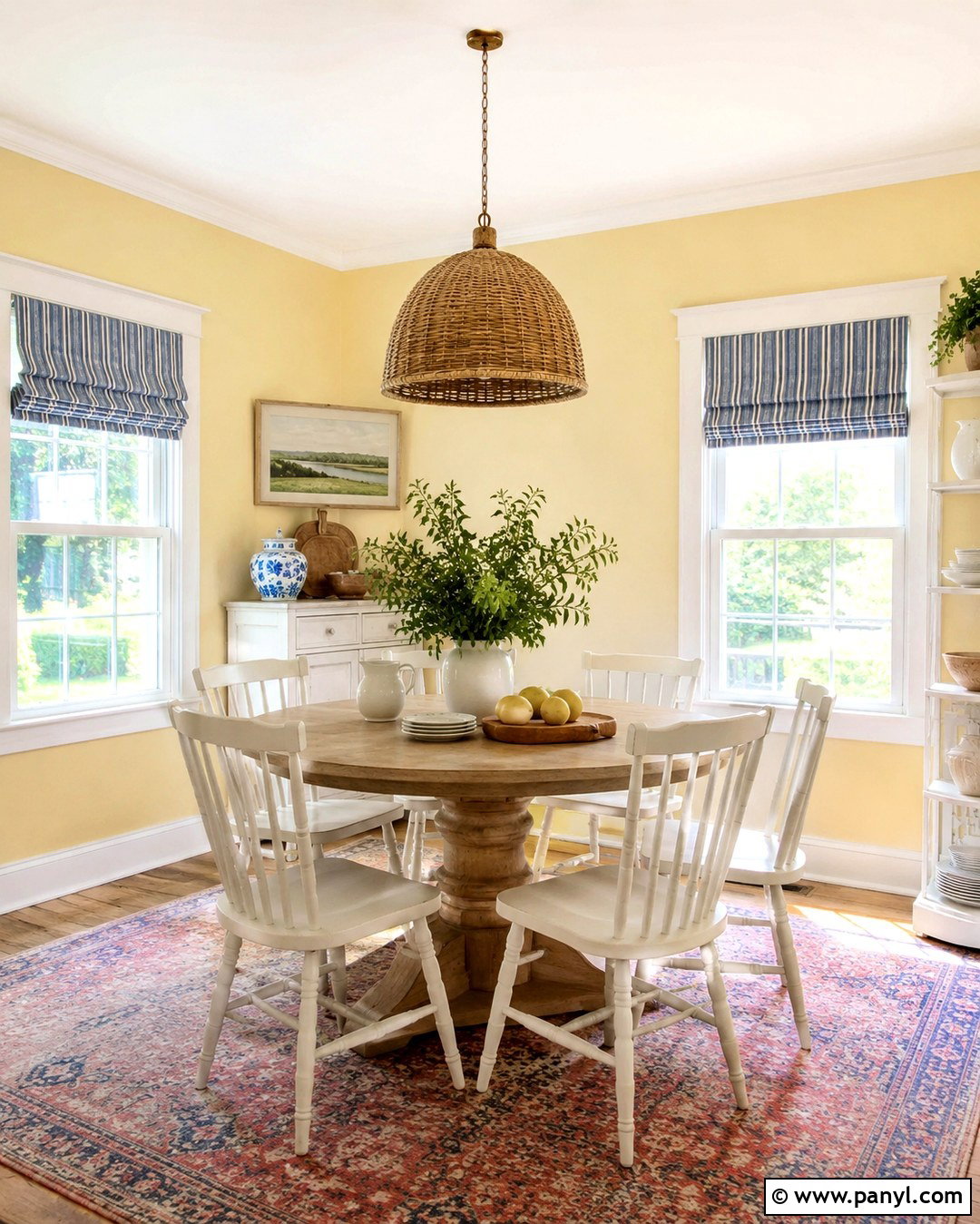
Butter yellow walls make a breakfast room feel cheerful without the intensity of bright primary yellow. Look for a soft, creamy shade that appears warm in both natural and artificial light. Pair it with a round white oak table and simple spindle-back chairs painted warm white. Hang a woven pendant above the table and install relaxed Roman shades in a narrow blue-and-cream stripe. A small vintage rug can introduce faded red, blue, and gold beneath the dining set. Display white ceramics and wood serving pieces in a shallow built-in cabinet. Fresh greenery provides an easy finishing touch. The complete room feels sunny, casual, and welcoming, making it suitable for morning coffee, family meals, homework, and other everyday activities.
19. Chocolate Brown Bedroom Walls
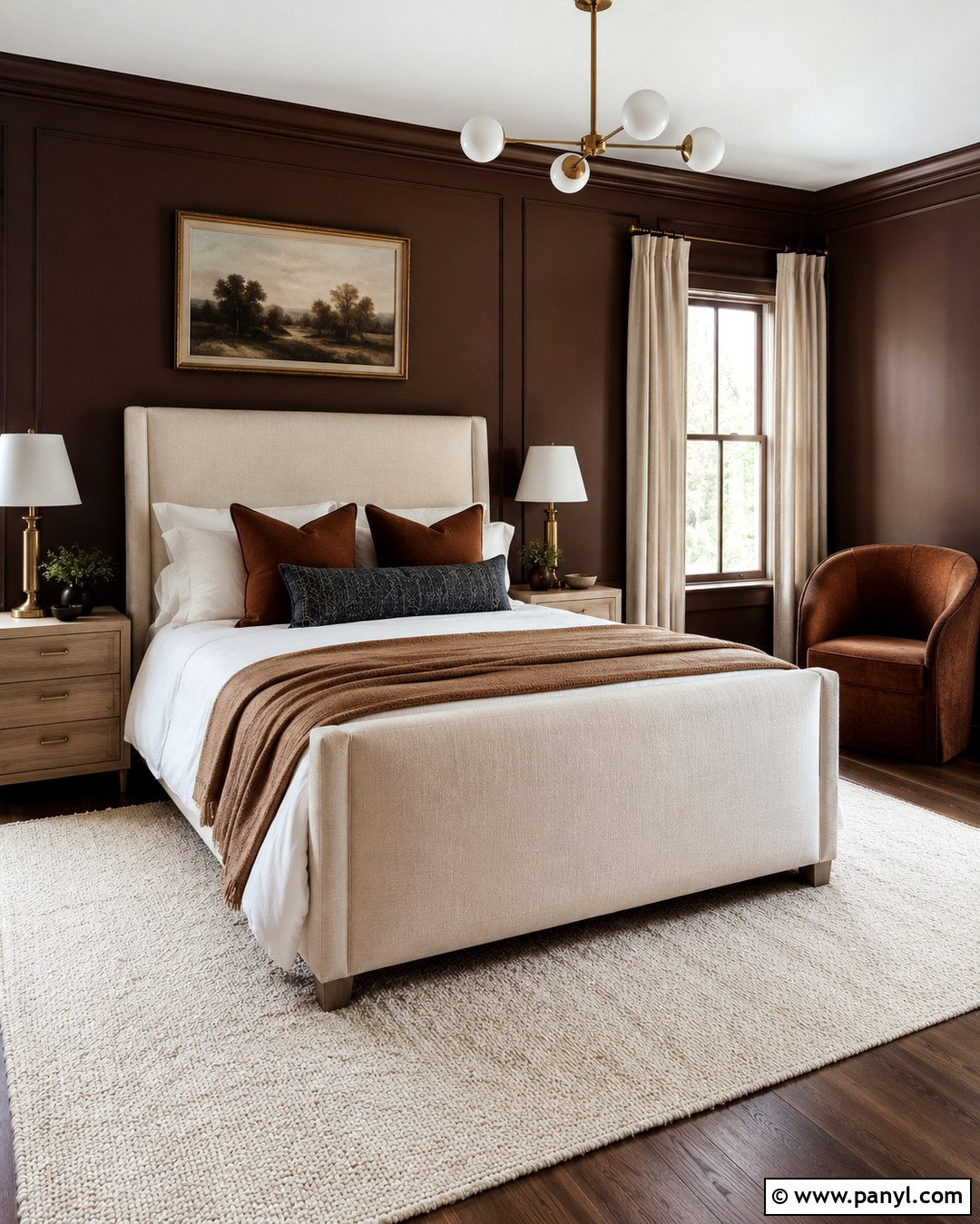
Chocolate brown walls create a deeply comfortable bedroom when balanced with generous amounts of cream and natural texture. Choose a rich brown with warm undertones, then paint the walls and trim together for an enveloping finish. Place a tall cream linen bed against the darkest wall and layer it with white bedding, a camel blanket, and pillows in rust and muted blue. Light oak nightstands help break up the deeper color, while brass lamps bring subtle reflection. Use a large cream wool rug to brighten the floor and natural flax curtains to frame the windows. Minimal landscape artwork and a wood bench complete the arrangement. The room feels sophisticated and restful, with a grounded palette that works in both traditional and contemporary homes.
20. Charcoal Media Room Walls
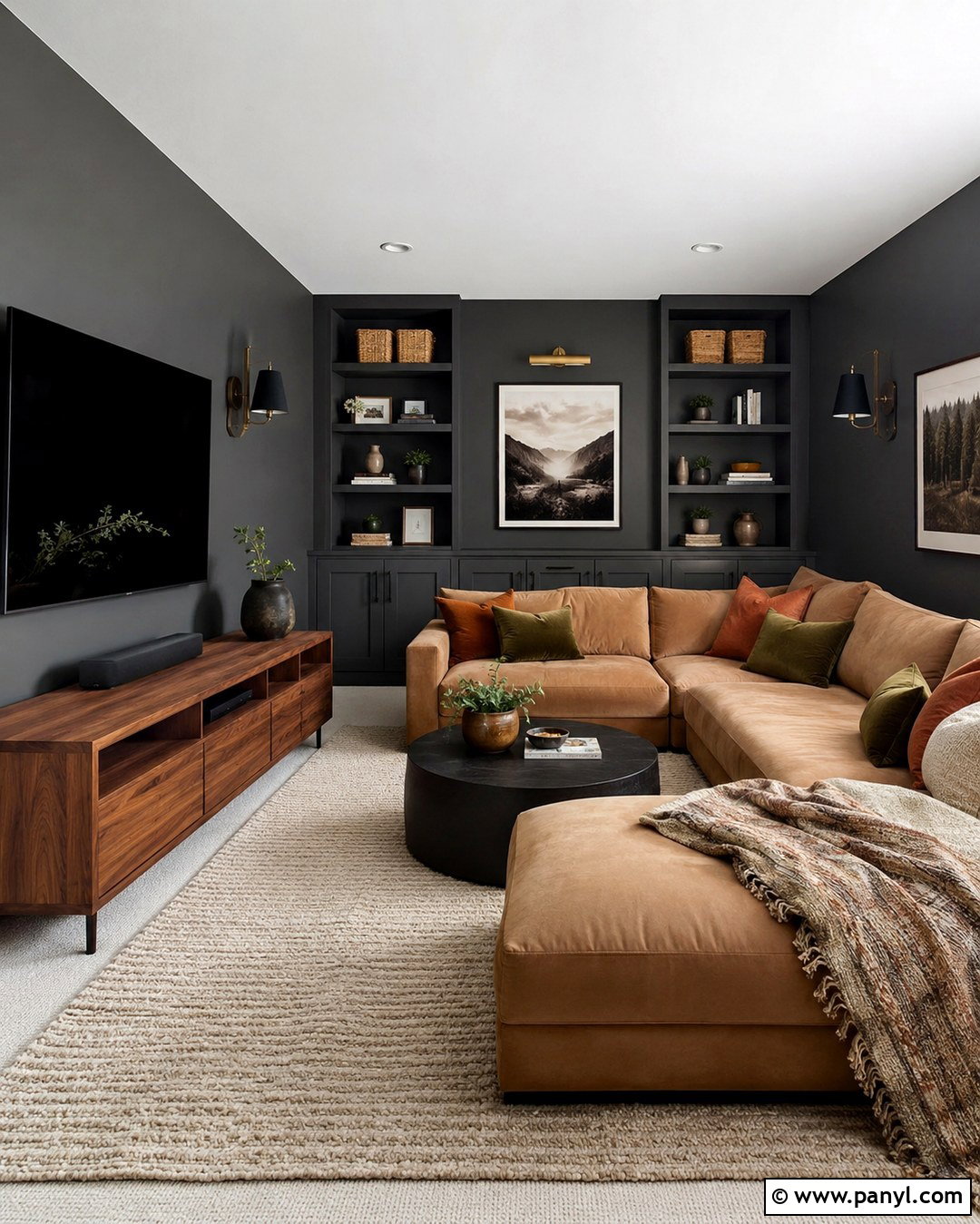
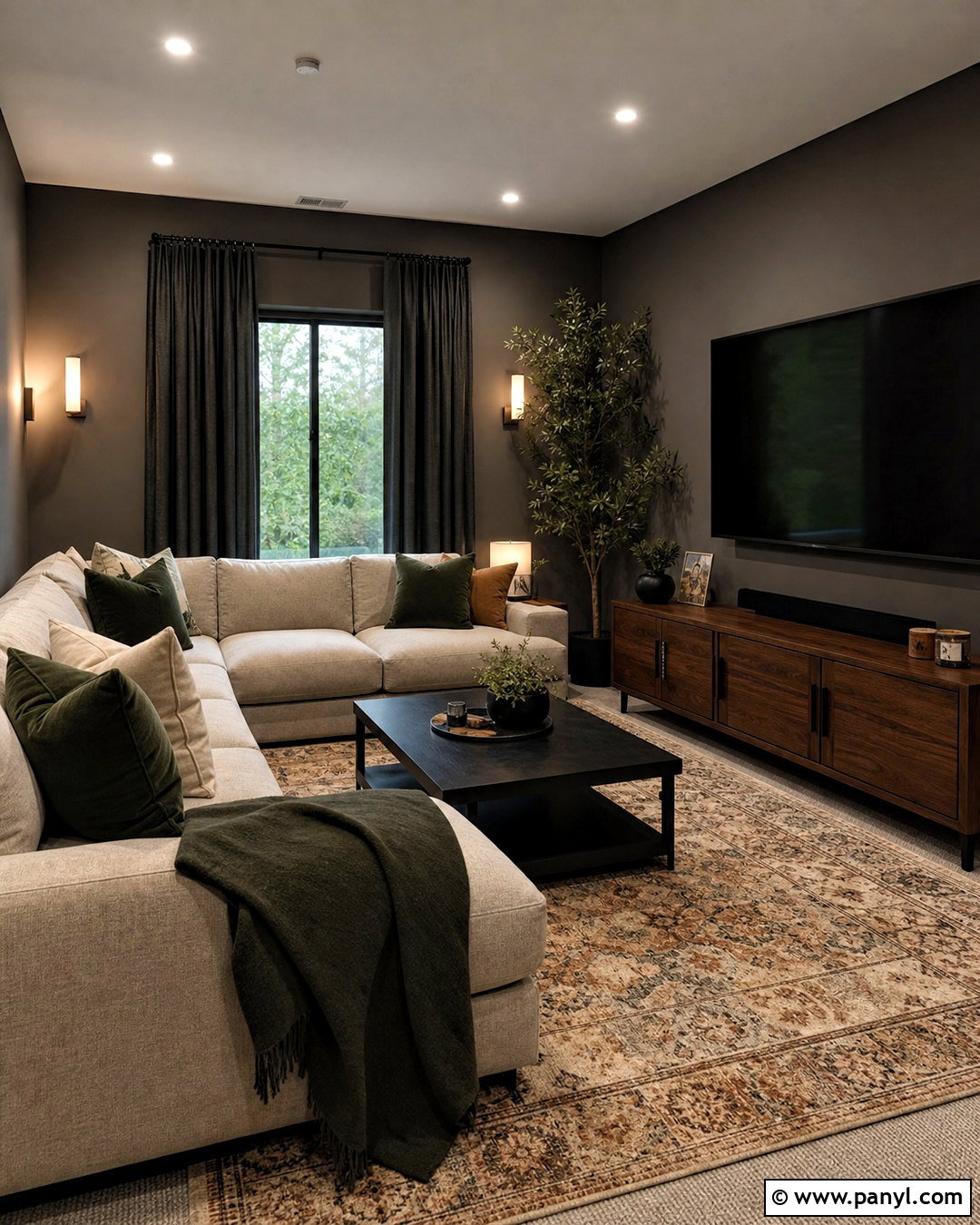
Charcoal walls are an excellent foundation for a media room because they reduce visual distraction and create a comfortable, enclosed atmosphere. Choose a softened charcoal rather than pure black, then continue it across built-in storage and trim. Anchor the room with a large camel-colored sectional facing a low walnut media console. Use a textured cream rug to lighten the floor and improve the room’s acoustic comfort. Add rust and olive pillows, soft woven blankets, and closed baskets for remotes or games. Black metal sconces can blend into the walls, while dimmable ceiling lighting provides flexibility. Framed artwork with cream mats prevents empty walls from feeling stark. This finished space looks intentional, organized, and equally suitable for movies, reading, or casual gatherings.
Conclusion:
The right wall color should support the furniture, flooring, lighting, and purpose of each room. These 20 Colors For Walls In House Ideas range from flexible warm white and greige to distinctive olive, terracotta, chocolate brown, and navy. Begin by identifying the undertones already present in permanent surfaces such as countertops, tile, and wood floors. Then test large painted samples in several locations before making a final decision. Connecting rooms do not need identical walls, but their colors should share similar warmth, softness, or saturation. With thoughtful trim, coordinated materials, and repeated accent colors, every selection can become part of a practical whole-house palette that feels balanced, comfortable, and personal.

Related Ideas and Inspiration:
Leave a Reply