
A fresh coat of paint can turn a dated hearth into the feature that pulls an entire room together. The best fireplace painting ideas consider more than color. Wall tone, flooring, mantel material, furniture, lighting, and decorative accents should all support the finished fireplace. Current looks range from warm white and soft greige to matte black, navy, forest green, limewash, and color-drenched treatments. () Before choosing, consider the fireplace material, the room’s natural light, and whether you prefer quiet contrast or a bold focal point. The following complete looks offer options for traditional, modern, farmhouse, cottage, and eclectic homes, making it easier to find practical fireplace painting ideas.

1. White Brick Fireplace
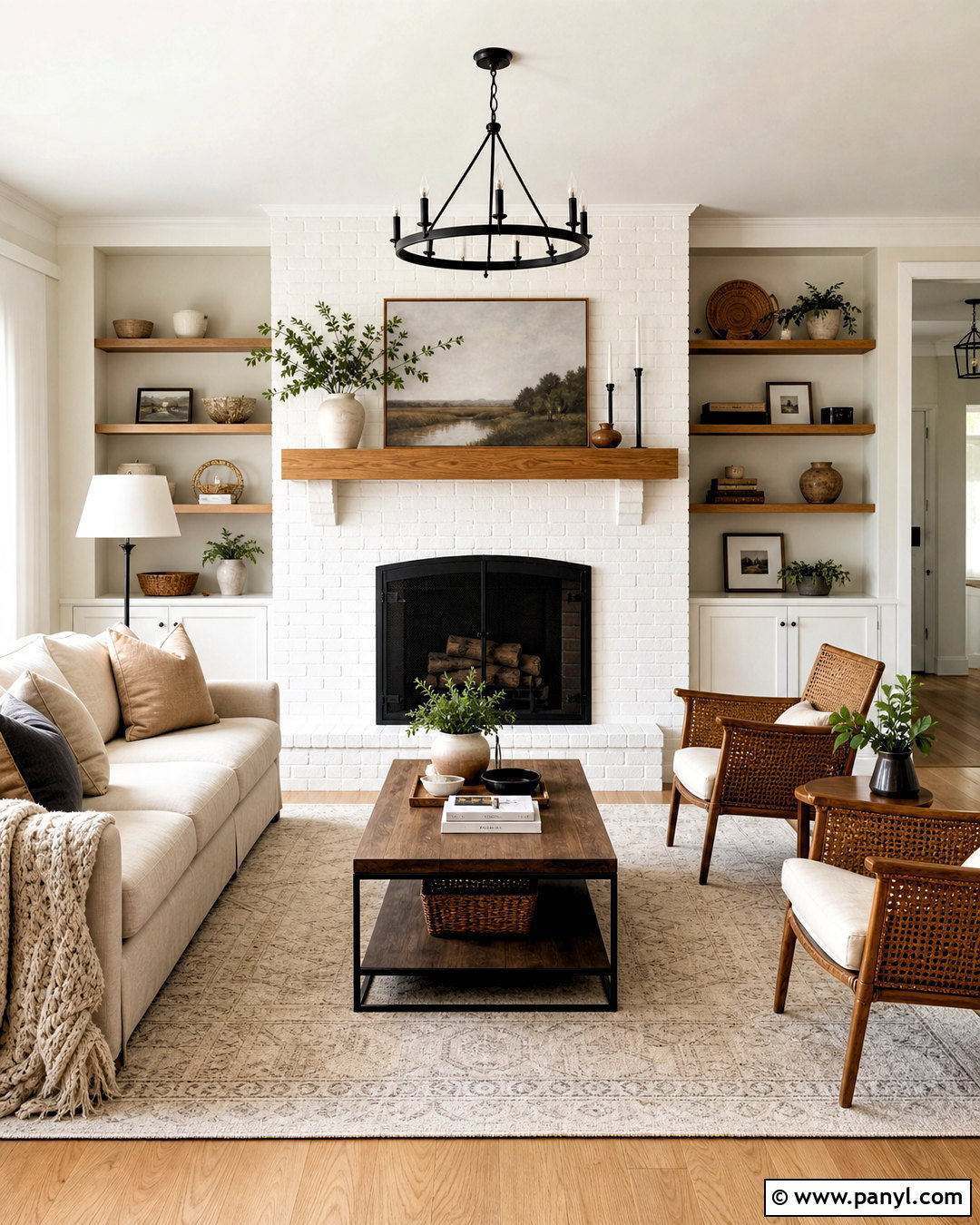
White paint gives a heavy brick fireplace a cleaner presence while helping a small or dark living room feel more open. Use a soft warm white rather than a stark blue-white, especially when the space has oak floors or beige upholstery. Add a medium-toned oak mantel to restore warmth and frame the opening with a simple matte black screen. Continue the relaxed palette with cream walls, a linen sofa, woven chairs, and a pale wool rug. A large landscape print and two ceramic vessels are enough for the mantel. This complete fireplace look works particularly well in casual farmhouse, coastal, and transitional rooms because it brightens the brick without making the surrounding design feel cold or overly polished.
2. Matte Black Brick Fireplace
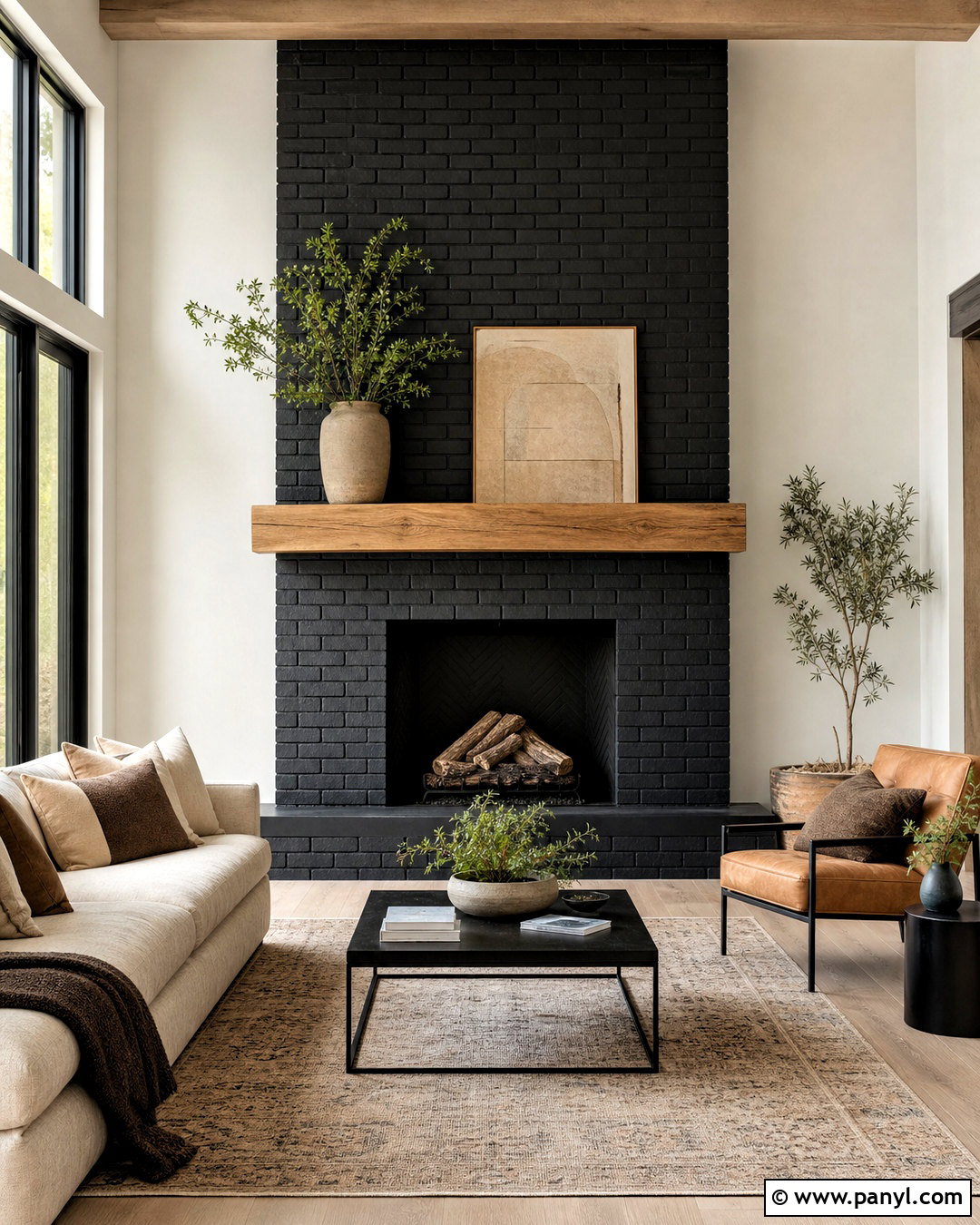
Matte black transforms textured brick into a strong architectural focal point. Balance the dark finish with warm white walls, light oak flooring, and furniture in oatmeal or camel tones. A chunky natural wood mantel softens the contrast and keeps the fireplace from feeling severe. Repeat black through slim curtain rods, a metal coffee table, and one or two picture frames rather than filling the room with dark accessories. Place a large neutral abstract print above the mantel and add a simple stoneware vase. This scheme is especially effective on a floor-to-ceiling fireplace because the saturated color emphasizes its height. Use layered lighting and pale textiles so the finished living room remains inviting, bright, and comfortable throughout the day.
3. Warm Greige Fireplace
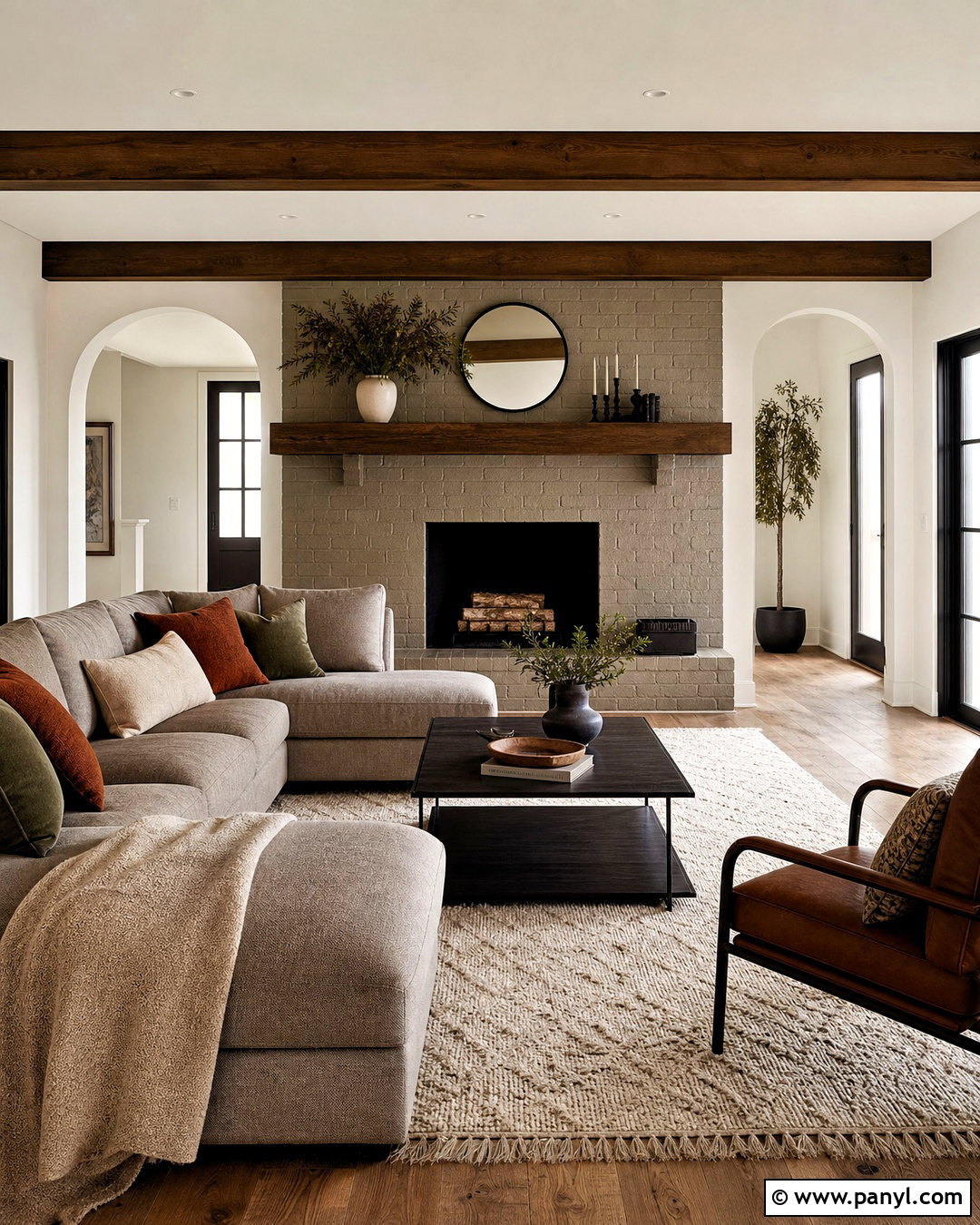
Can’t decide between gray and beige? A warm greige fireplace offers the softness of a neutral with enough depth to define the hearth. Paint the brick, surround, and chimney breast the same medium-light greige, then introduce a walnut mantel for gentle contrast. Pair it with creamy walls, a taupe sectional, black metal accents, and a textured ivory rug. Cushions in rust, olive, and muted blue prevent the room from looking flat. This complete palette works best when the flooring contains both warm and cool tones, such as weathered oak or beige stone. Keep mantel decor asymmetrical with one framed artwork, a low ceramic bowl, and a small branch arrangement. The finished fireplace feels calm, updated, and easy to coordinate through changing seasons.
4. Charcoal Gray Fireplace
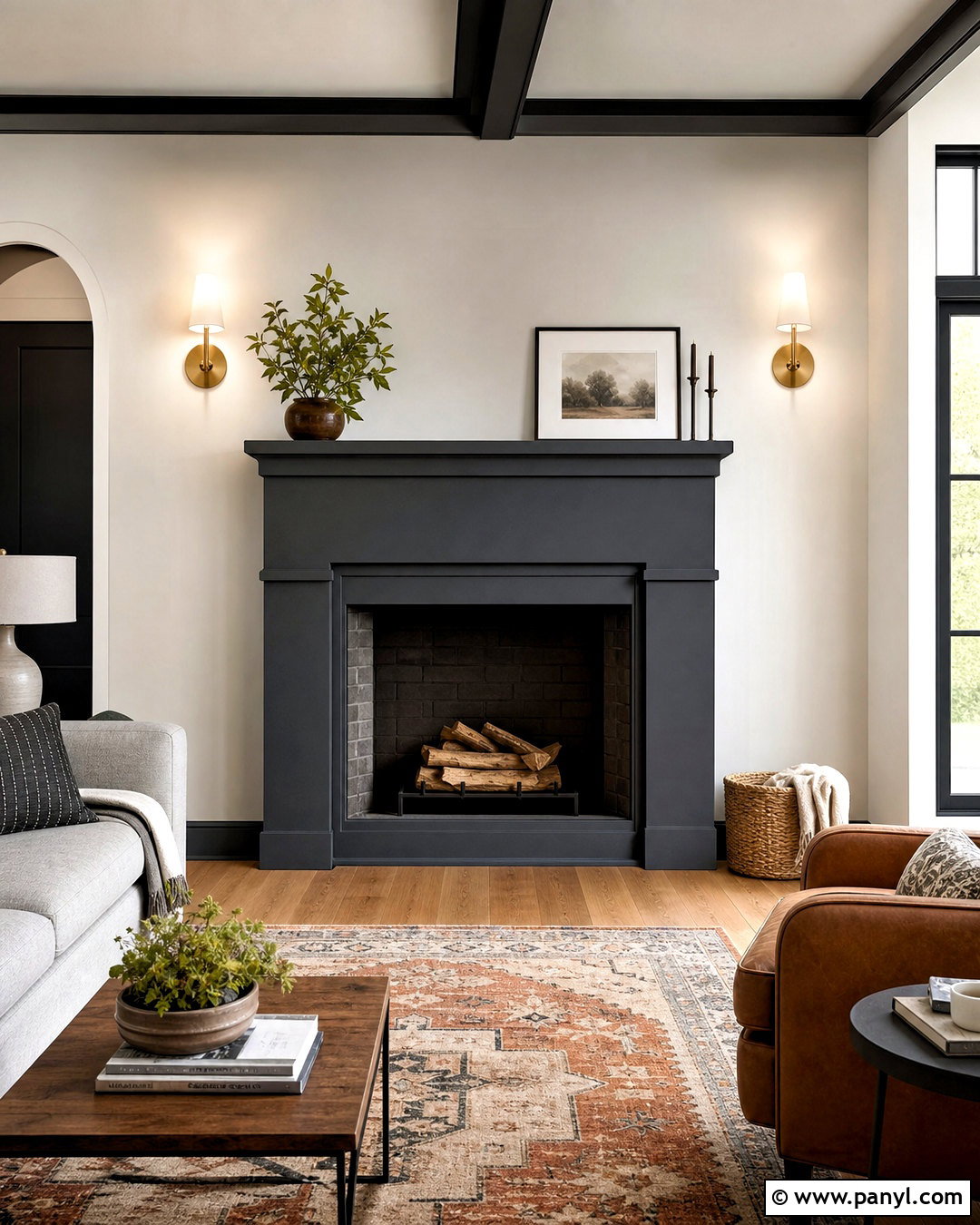
A charcoal gray fireplace creates drama without the visual weight of pure black. Choose a deep gray with warm undertones, then pair it with off-white walls and medium oak flooring. A slim matching charcoal mantel produces a streamlined, built-in appearance, while brass sconces bring warmth to the darker surface. Furnish the room with a light gray sofa, cognac leather chair, and patterned rug containing charcoal, cream, and faded rust. Above the fireplace, use oversized artwork with a pale background so it remains visible against the deep color. This full design feels contemporary yet comfortable. It is also a smart visual bridge when the room already includes black windows, stainless steel, gray stone, or dark metal lighting that needs stronger connection.
5. Navy Blue Fireplace
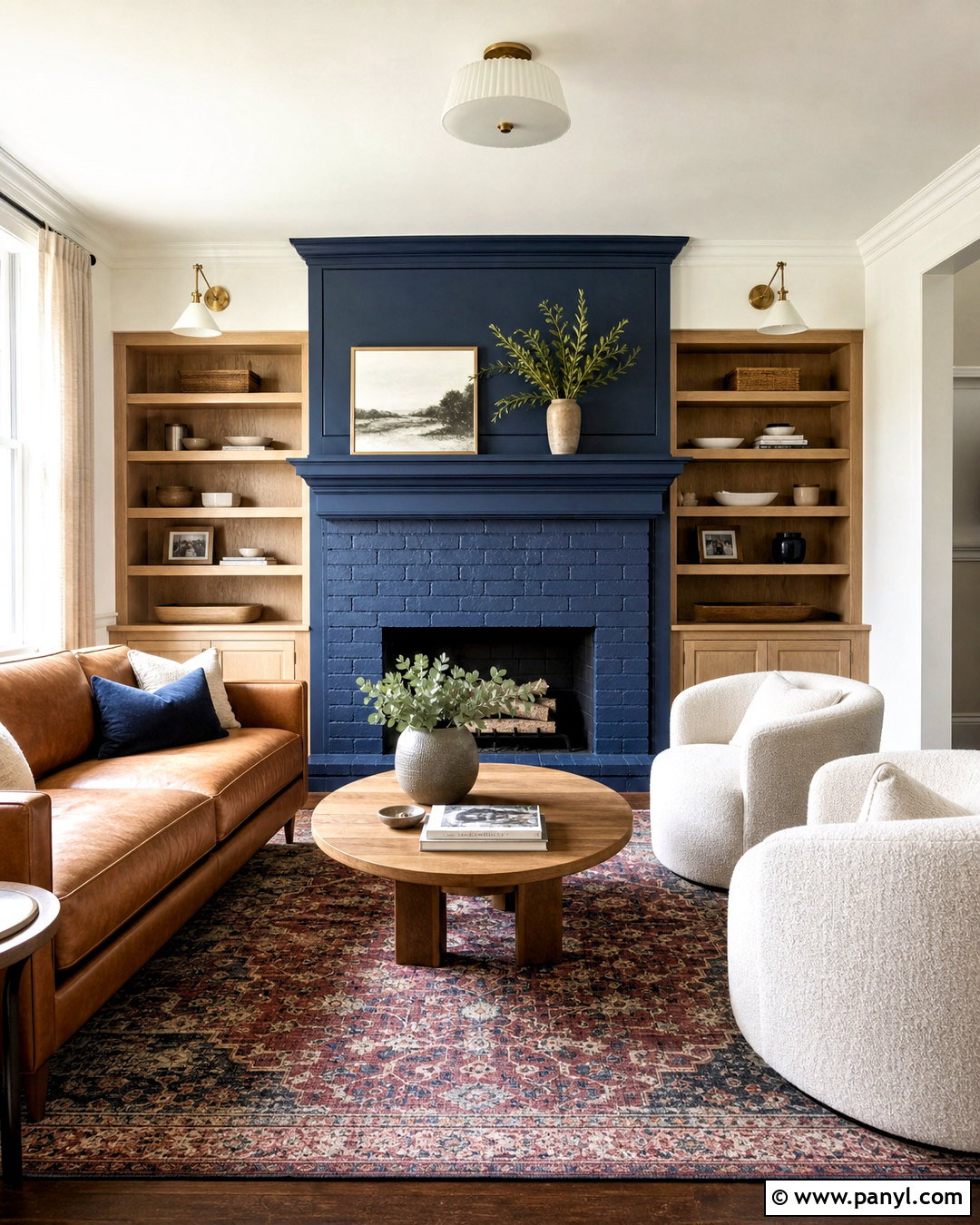
Deep navy blue makes a fireplace colorful while retaining the versatility of a classic neutral. Cover the brick and mantel in the same velvety navy finish for a unified look, then surround it with soft white walls and natural oak built-ins. A caramel leather sofa, cream boucle chairs, and a faded red-and-blue rug add warmth and depth. Use aged brass sconces or candlesticks to highlight the blue without making the room feel formal. Keep artwork simple, perhaps a coastal landscape or abstract piece with cream and muted sky blue. Repeating navy in one pillow and a nearby cabinet creates cohesion. This fireplace scheme suits traditional, coastal, and transitional rooms where subtle color is welcome but a bright statement would feel too distracting.
6. Forest Green Fireplace
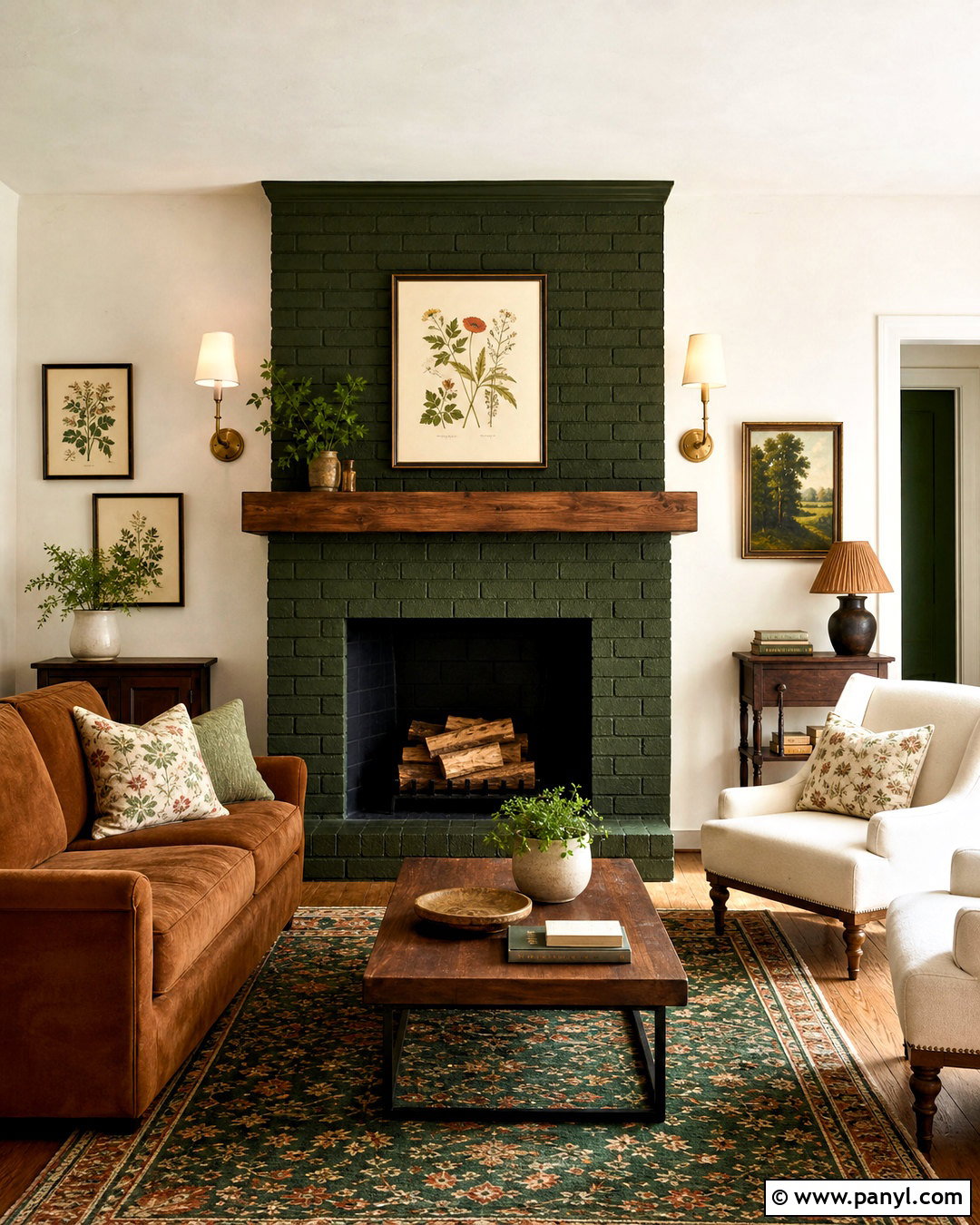
Forest green gives a fireplace a grounded, nature-inspired character that looks especially rich beside warm wood. Paint the full chimney breast and brick surround in a deep green with muted undertones. Add a simple walnut mantel, warm white walls, and medium brown oak flooring. Build out the room with a camel sofa, two cream armchairs, botanical artwork, and a patterned rug combining green, tan, and rust. Antique brass sconces reinforce the warm palette, while restrained mantel decor lets the saturated paint remain the star. This complete look works beautifully in Craftsman, traditional, and English cottage interiors. Plenty of natural light, light upholstery, and pale window treatments will prevent the dark fireplace from overpowering an average-size living room.
7. Sage Green Fireplace
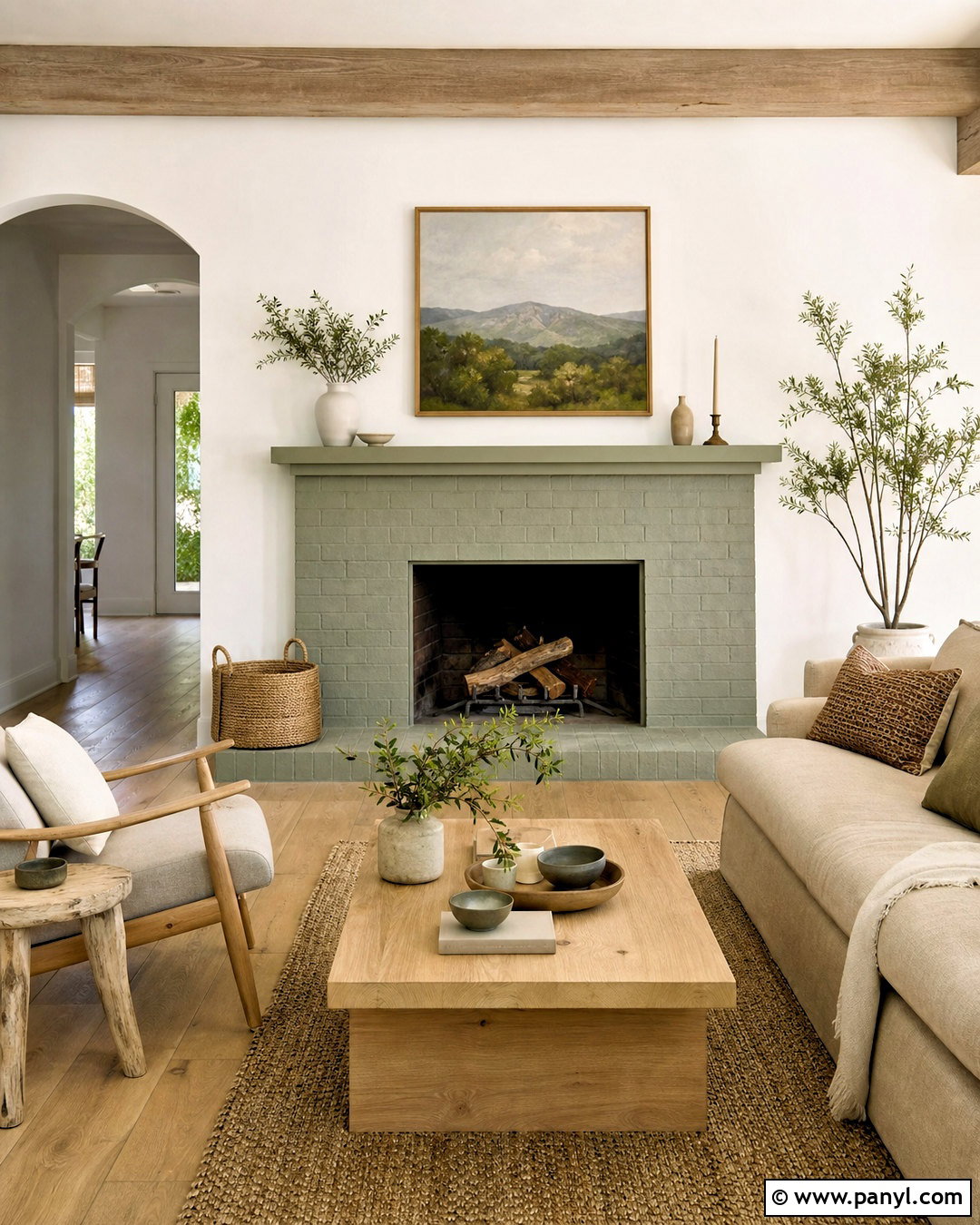
Soft sage green brings gentle color to a fireplace without making it dominate the room. Select a dusty, gray-based sage and apply it across the brick and simple mantel. Pair the fireplace with creamy white walls, pale oak floors, and relaxed furnishings in linen, oatmeal, and muted brown. A woven rug and light wood coffee table reinforce the organic feel. Complete the mantel with a landscape print, two handmade ceramic pieces, and a trailing plant placed safely away from heat. Add small touches of sage through pillows or curtains, but vary the shades to avoid a matched appearance. This calm fireplace design works in cottage, farmhouse, Scandinavian, and modern organic rooms, particularly where natural textures already shape the overall decorating scheme.
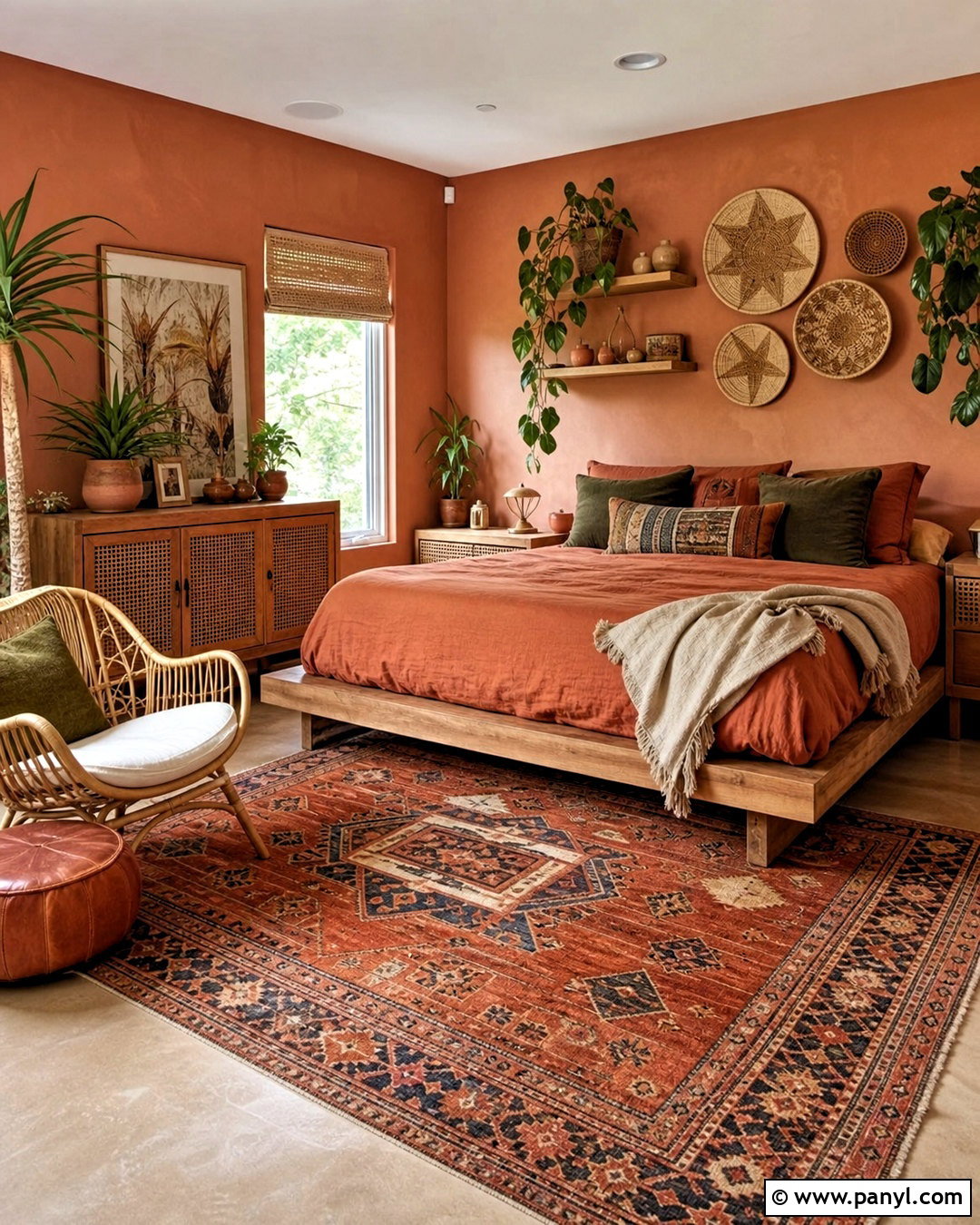
8. Dusty Blue Fireplace
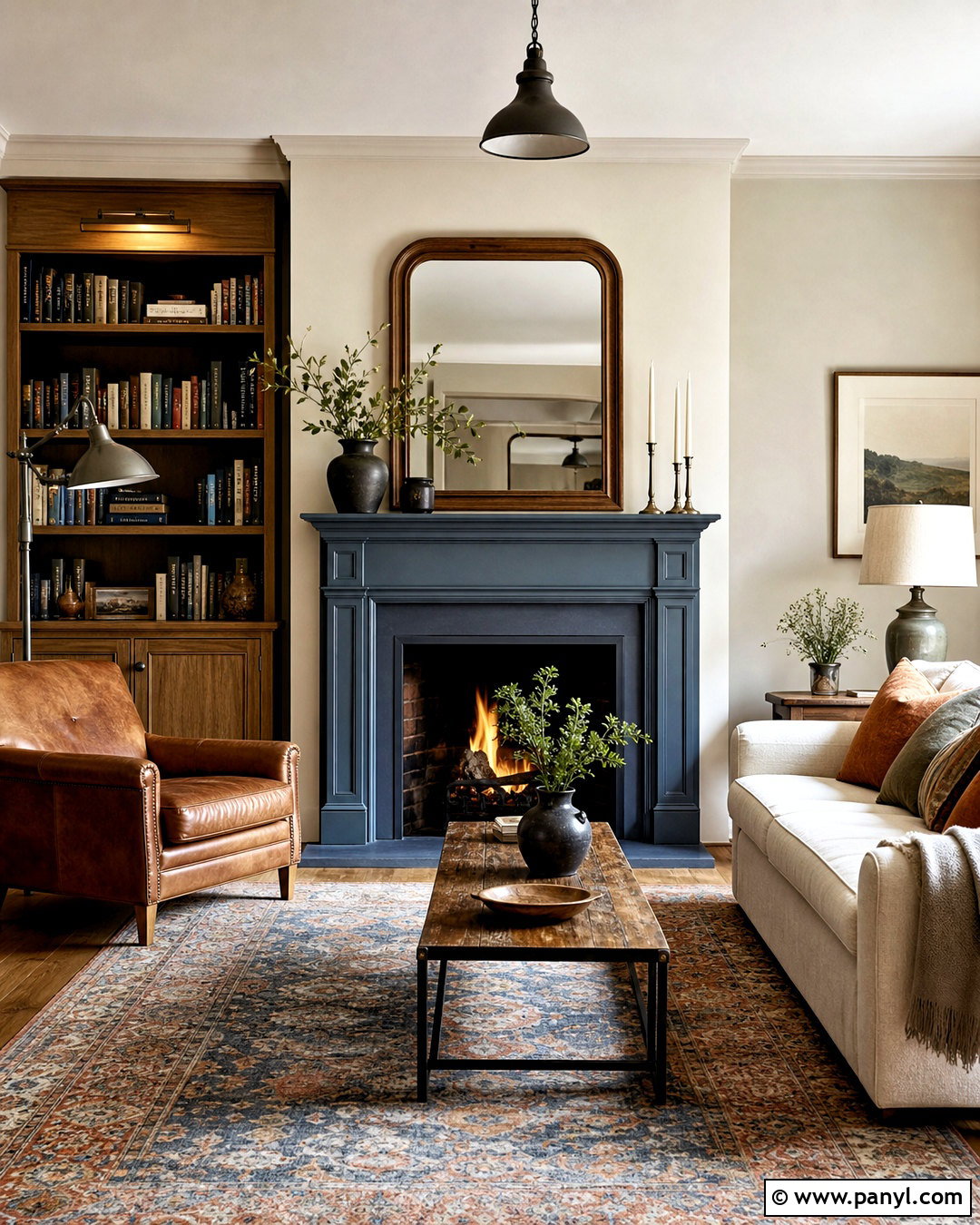
A dusty blue fireplace can make a reading room or compact living room feel peaceful and distinctive. Choose a softened blue with noticeable gray undertones rather than a bright pastel. Paint the brick and mantel together, then use warm ivory on the surrounding walls to create low, comfortable contrast. Introduce a light oak bookcase, a cream sofa, and a cognac leather reading chair near the hearth. A vintage-style rug in faded blue, rust, and beige connects the fireplace with the rest of the space. Finish the mantel with a simple wood-framed mirror and small matte ceramic vessels. Brushed nickel or pewter lighting complements the cool fireplace color, while wood, leather, and woven textiles keep the complete room from feeling chilly.
9. Terracotta Fireplace
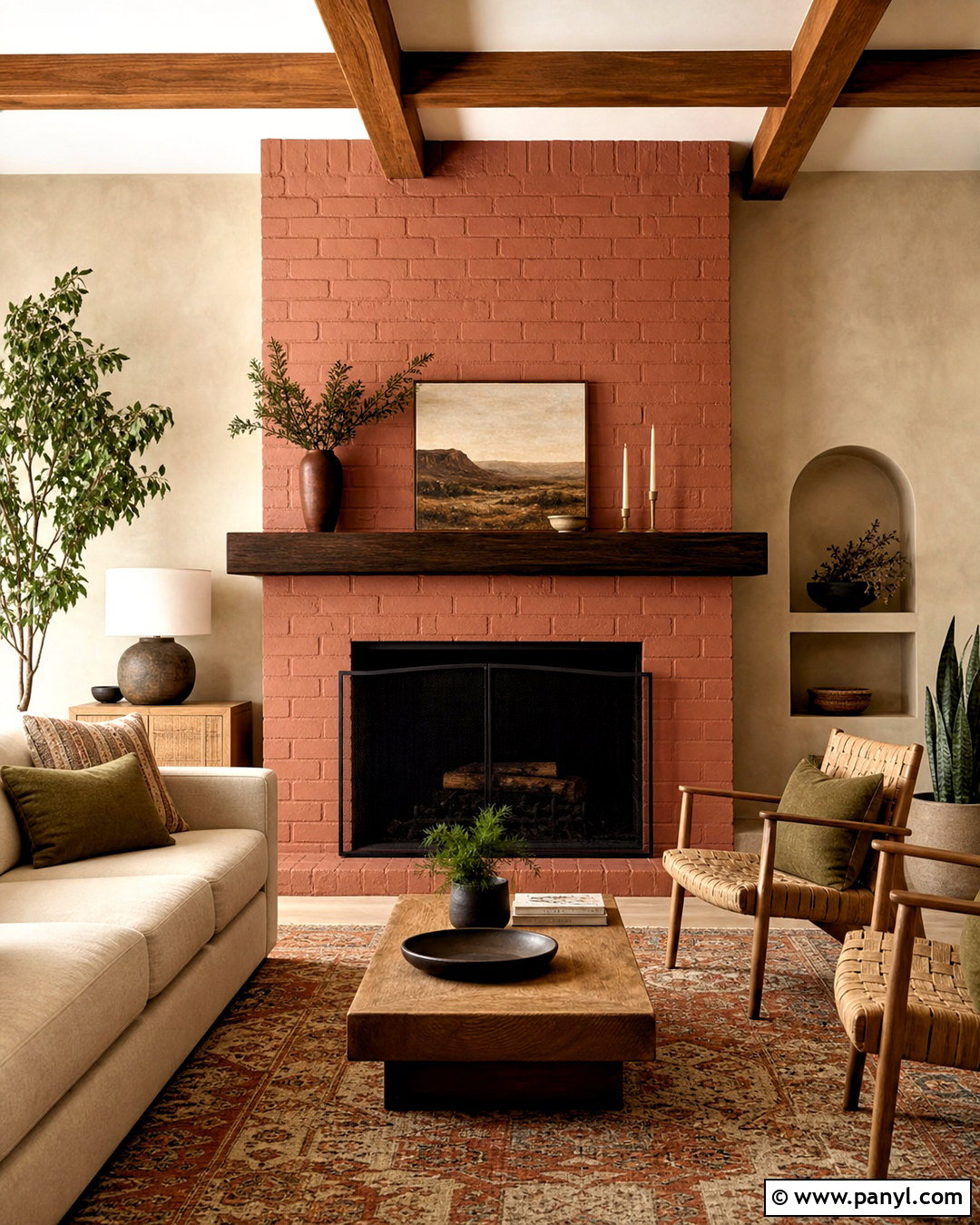
Warm terracotta paint gives a fireplace an earthy character that feels richer and softer than bright red brick. Use a muted clay shade across the brick, then add a dark walnut mantel and creamy plaster-look walls. Furnish the room with a beige sofa, woven lounge chairs, and a low wood coffee table. Olive green cushions and a vintage rug with rust, sand, and brown create a natural desert-inspired palette. Keep the hearth simple with dark stone or matte black tile, allowing the painted brick to remain prominent. Black metal lighting adds definition without competing with the warm color. This complete fireplace look works well in Southwestern, Mediterranean, bohemian, and modern organic interiors where handcrafted materials and sunbaked hues already feel at home.
10. Cream Fireplace
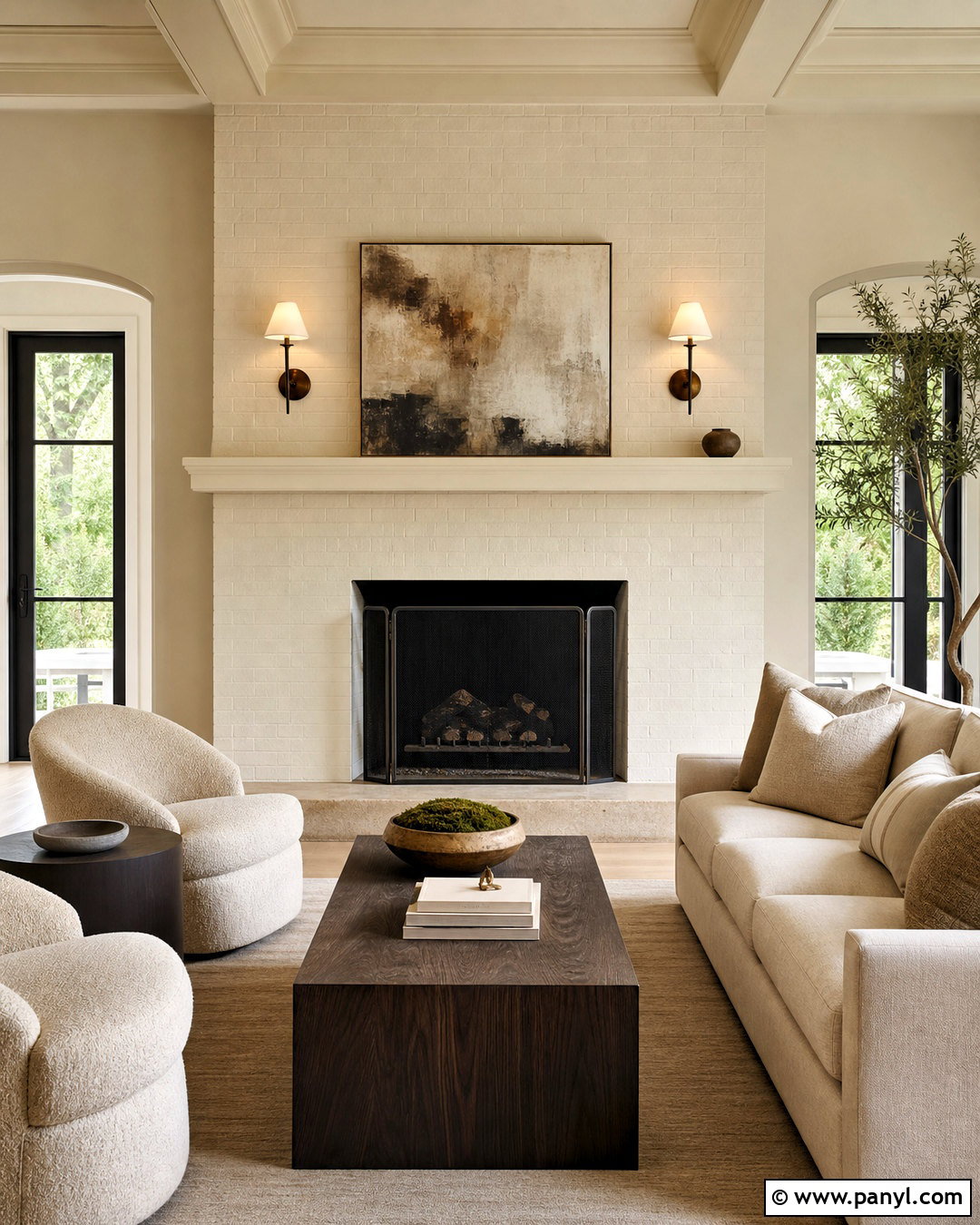
Cream paint is ideal when white seems too sharp but the original fireplace feels visually heavy. Choose a warm cream that relates closely to the wall color, then paint the brick and mantel for a smooth, low-contrast appearance. Add a honed beige stone hearth and light oak floors to continue the soft palette. The surrounding room can include an oatmeal sofa, rounded boucle chairs, and a subtle tan-and-ivory rug. Introduce definition through a black fireplace screen, bronze sconces, and dark wood side tables. A tonal abstract painting above the mantel adds interest without interrupting the restful design. This fireplace treatment feels polished and welcoming, making it especially suitable for traditional, transitional, quiet luxury, and contemporary neutral living rooms.
11. Taupe Fireplace
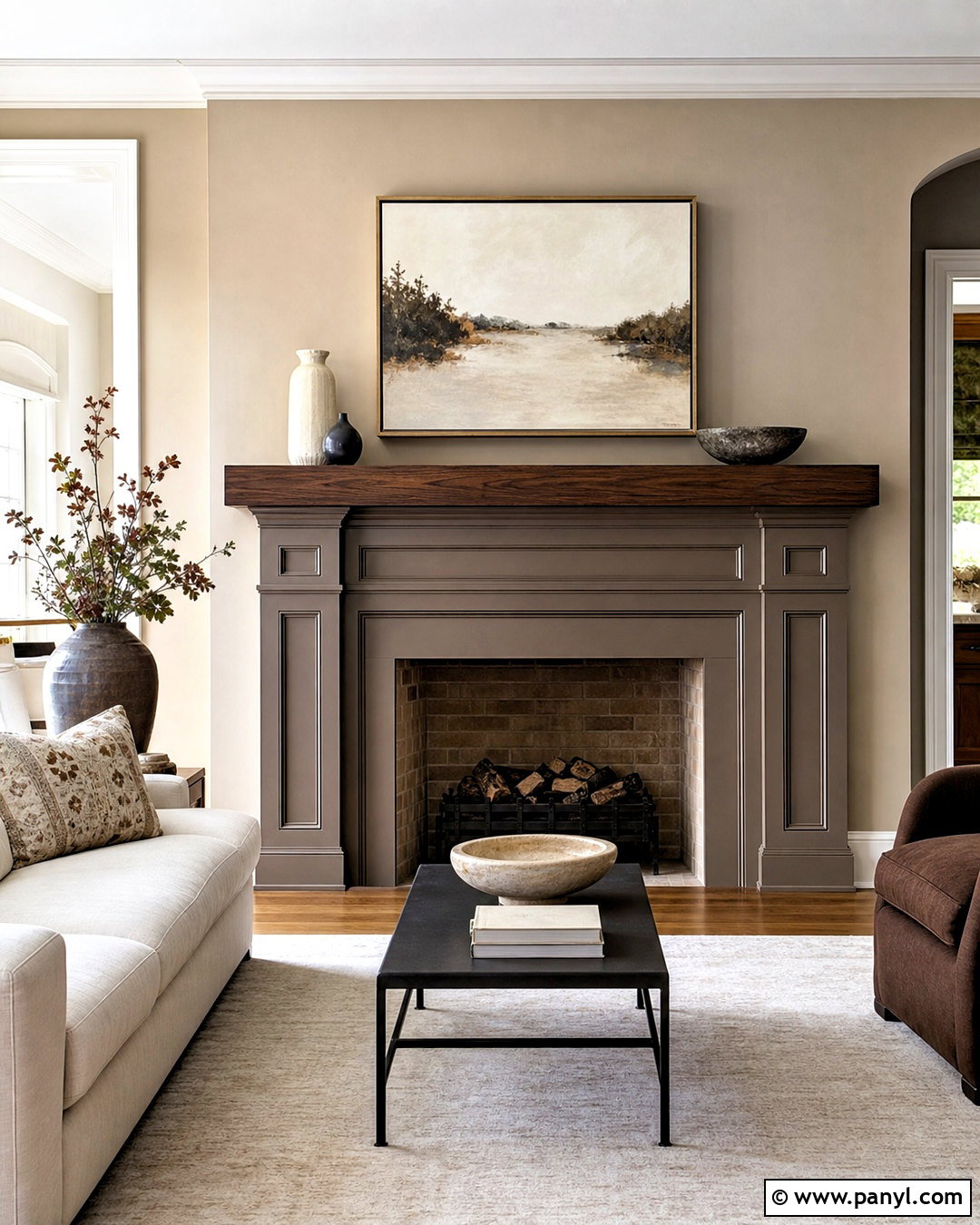
A taupe fireplace provides more definition than cream while remaining understated and highly adaptable. Paint the entire fireplace structure in a medium taupe with brown undertones and add a slightly darker stained oak mantel. Use pale mushroom walls, warm oak floors, and a large ivory rug around the seating area. A linen sofa, chocolate brown accent chair, and black metal coffee table create a balanced mix of soft and structured elements. Decorate the mantel with one oversized neutral print, a stone bowl, and a pair of dark candlesticks. For cohesion, repeat taupe in the curtains and patterned pillows. This complete scheme suits rooms where existing beige, brown, gray, and black finishes need to be connected through one calm architectural feature.
12. Two Tone Fireplace
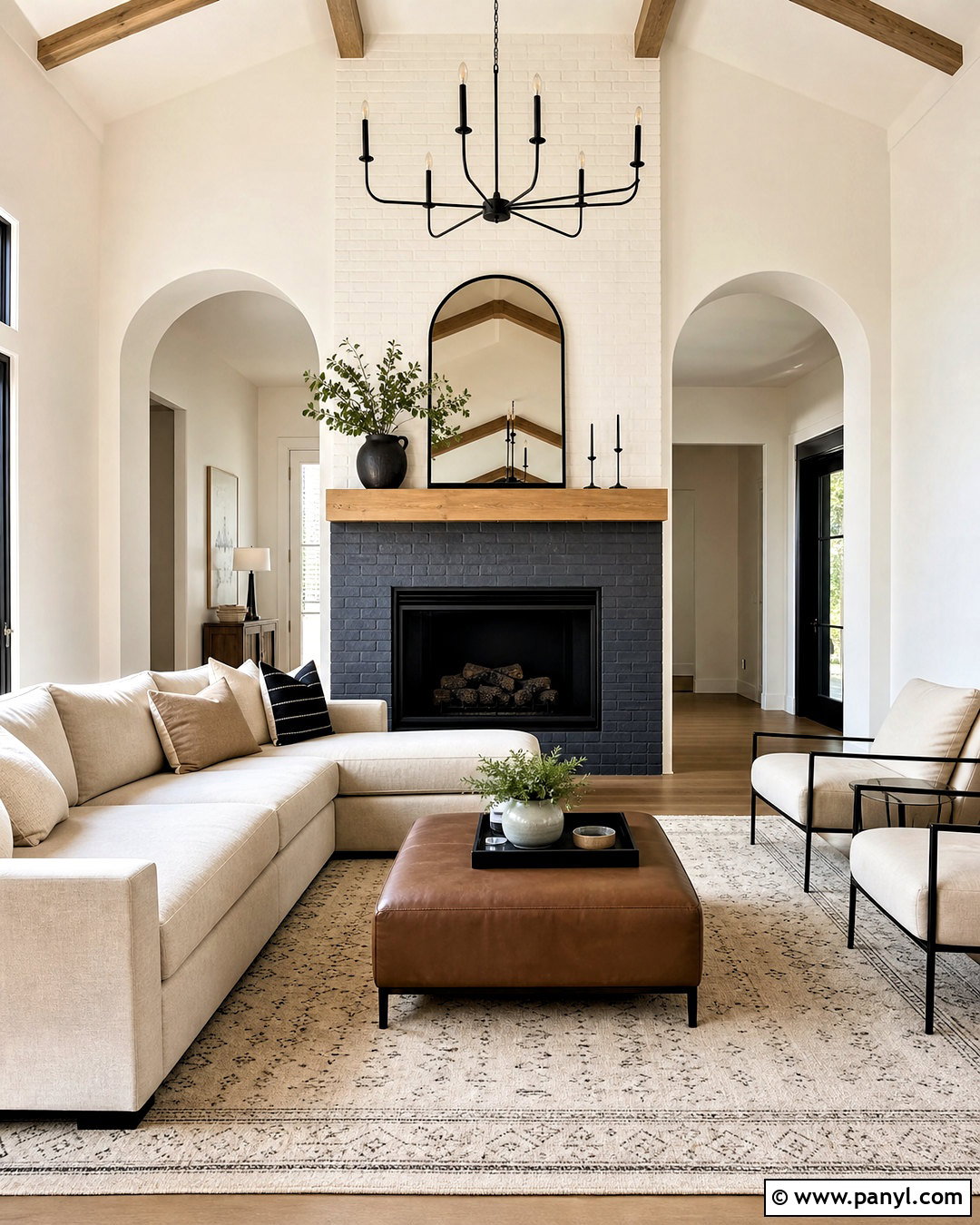
Two colors can visually reshape an oversized fireplace while adding depth around the opening. Paint the upper chimney breast warm white and cover the lower brick surround in charcoal gray. Separate the sections with a natural oak mantel that acts as a clear horizontal transition. Continue warm white on the walls and use charcoal in the window frames, fireplace screen, and coffee table. Furnish the room with a light beige sectional, a brown leather ottoman, and a patterned rug that contains both colors. Place large, pale artwork above the mantel to emphasize the brighter upper section. This balanced fireplace treatment preserves an airy feeling while grounding the firebox, making it useful for tall brick fireplaces that otherwise feel too bulky or visually dominant.
13. Color Drenched Fireplace
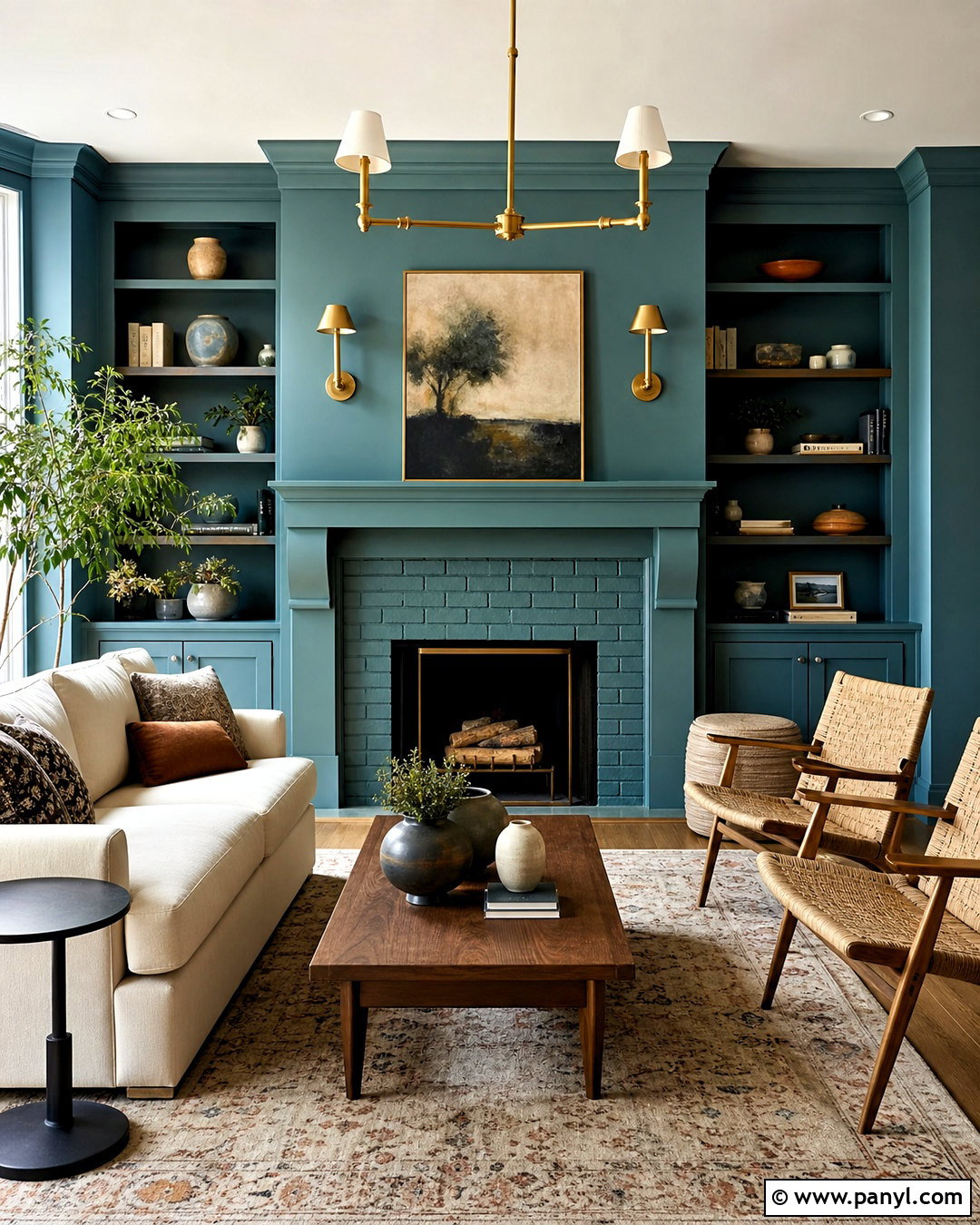
For an immersive look, paint the fireplace, mantel, surrounding wall, trim, and nearby built-ins in one continuous color. Deep muted teal works especially well because it feels bold without becoming harsh. Use a satin finish on woodwork and a flatter finish on masonry so the surfaces remain subtly distinct. Lighten the room with a cream sofa, natural woven chairs, and a pale patterned rug. Walnut shelves, aged brass sconces, and warm-toned artwork keep the teal from feeling cool. Arrange books and ceramics sparingly inside the matching built-ins. The result is a complete, enveloping living room where the fireplace feels integrated rather than applied as an accent. This approach works best with good daylight and thoughtfully layered lamps.
14. Whitewashed Brick Fireplace
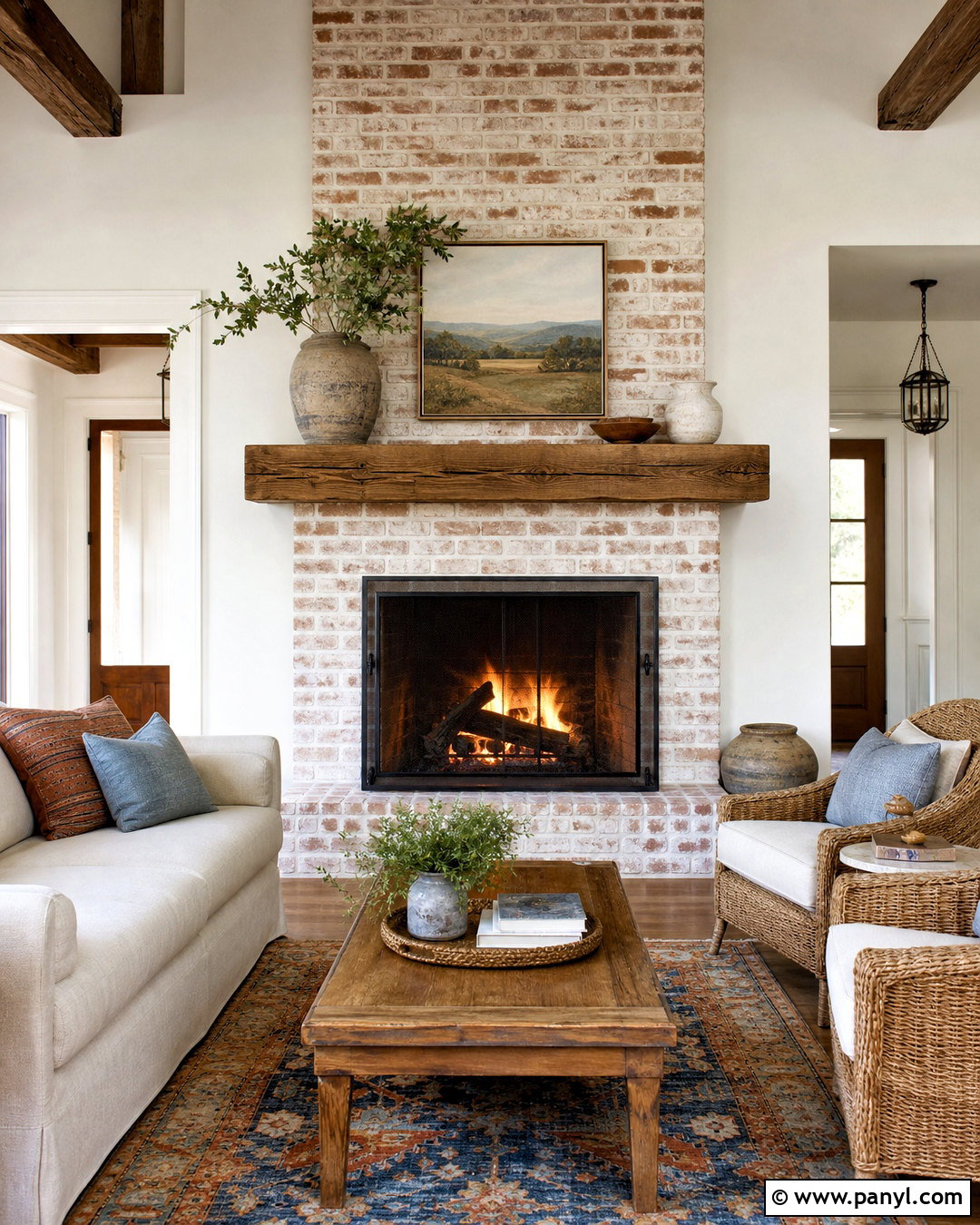
Whitewash softens red brick while allowing its natural color and texture to remain partly visible. Apply a translucent warm white treatment with intentionally varied coverage, leaving some darker brick showing around the edges and mortar lines. () Pair the rustic finish with a reclaimed oak mantel, warm white walls, and medium-toned wood flooring. Build a comfortable room around it using a slipcovered linen sofa, woven armchairs, and a faded blue-and-rust rug. A black fireplace screen gives the pale surface definition. Keep mantel decor casual with pottery, framed landscape art, and a simple branch arrangement. This complete fireplace design feels relaxed and timeworn, making it a natural fit for farmhouse, cottage, coastal, and traditional homes with visible wood grain.
15. Limewashed Brick Fireplace
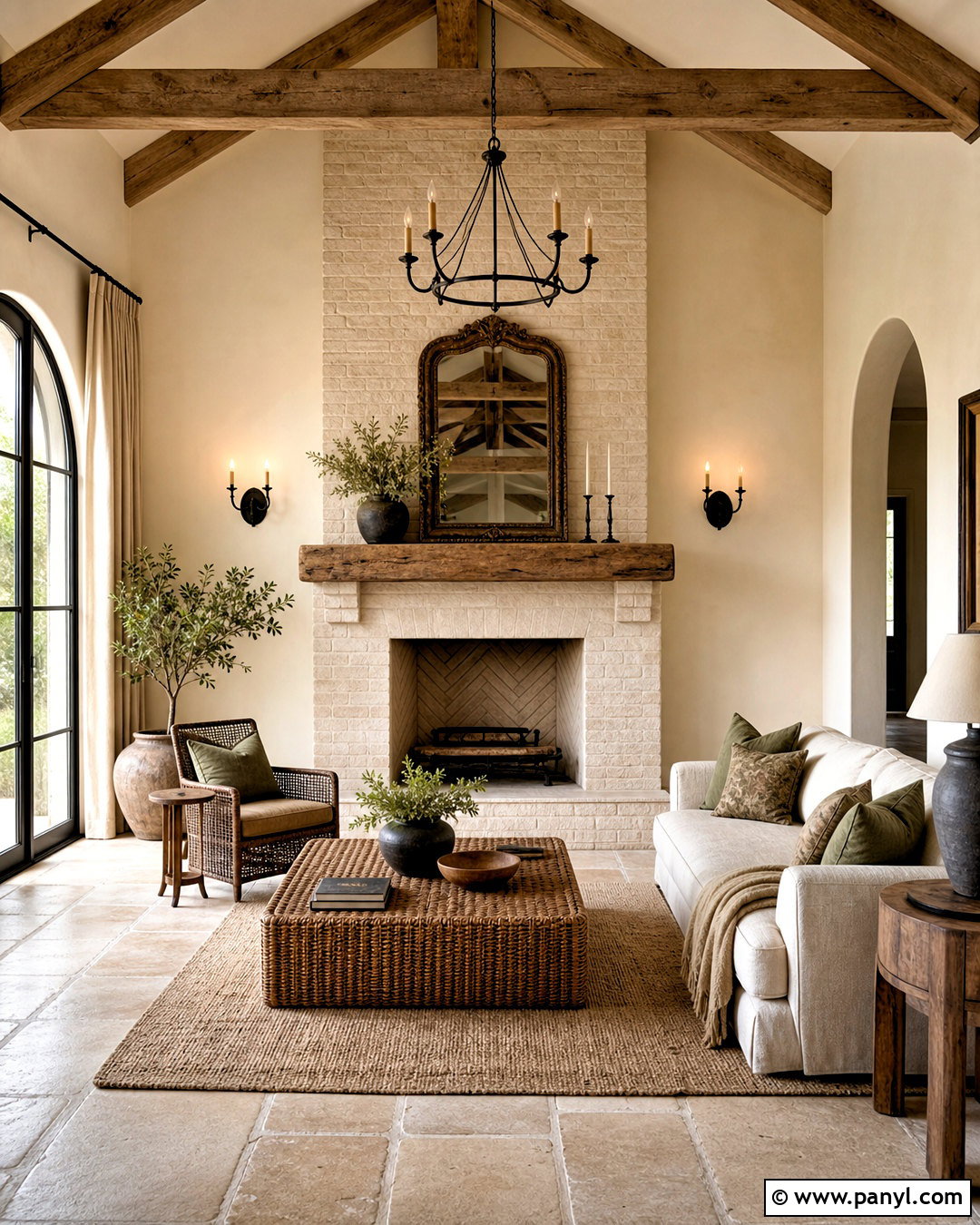
Limewash creates a chalky, softly mottled fireplace that feels appropriate in both old and newly built homes. Choose a warm ivory or pale putty tone and allow natural variations in the brick to show through the finish. Unlike a perfectly solid painted surface, the result should appear layered and gently aged. () Pair it with a thick weathered oak mantel, creamy walls, limestone-look flooring, and a neutral linen sofa. Add black iron lighting, a woven coffee table, and muted olive textiles for contrast. An antique-style mirror above the mantel completes the understated European mood. The full room should feel textured rather than busy, with natural materials and restrained decor supporting the fireplace’s quiet, handcrafted appearance.
16. German Schmear Fireplace
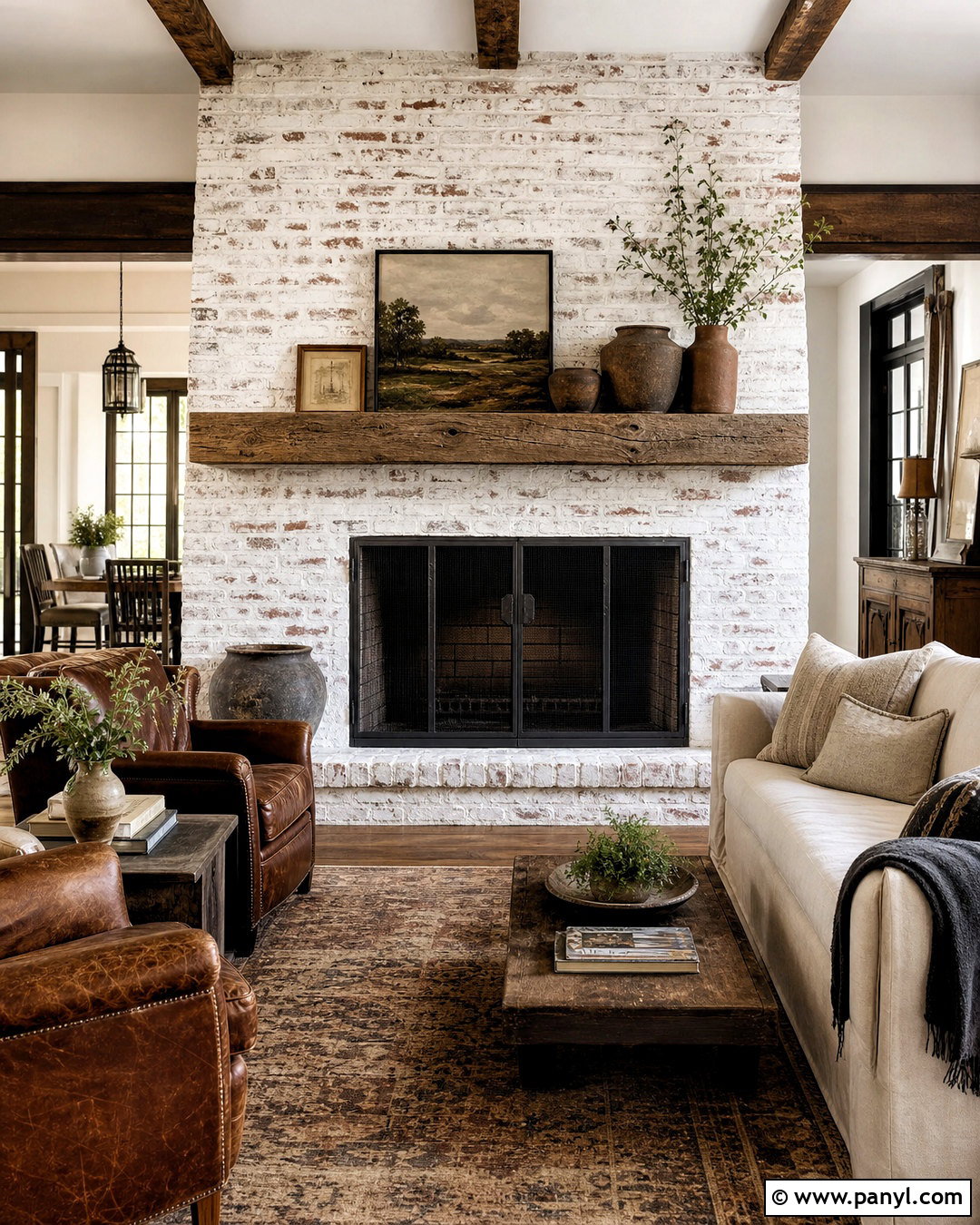
German schmear produces a heavily textured, old-world fireplace by emphasizing mortar lines and spreading an uneven layer over the brick faces. () Use a creamy white mortar tone while allowing patches of warm red and brown brick to remain visible. Finish the fireplace with a rough reclaimed beam mantel and a simple black metal screen. Surround it with warm white walls, wide-plank oak flooring, a flax linen sofa, and two worn brown leather chairs. A vintage-style rug and iron chandelier enhance the rustic European feeling. Keep the mantel uncomplicated with a landscape painting and two aged clay vessels. This complete look is especially convincing in farmhouse, cottage, French country, and traditional rooms where imperfect surfaces are part of the design.
17. Black Firebox With White Fireplace
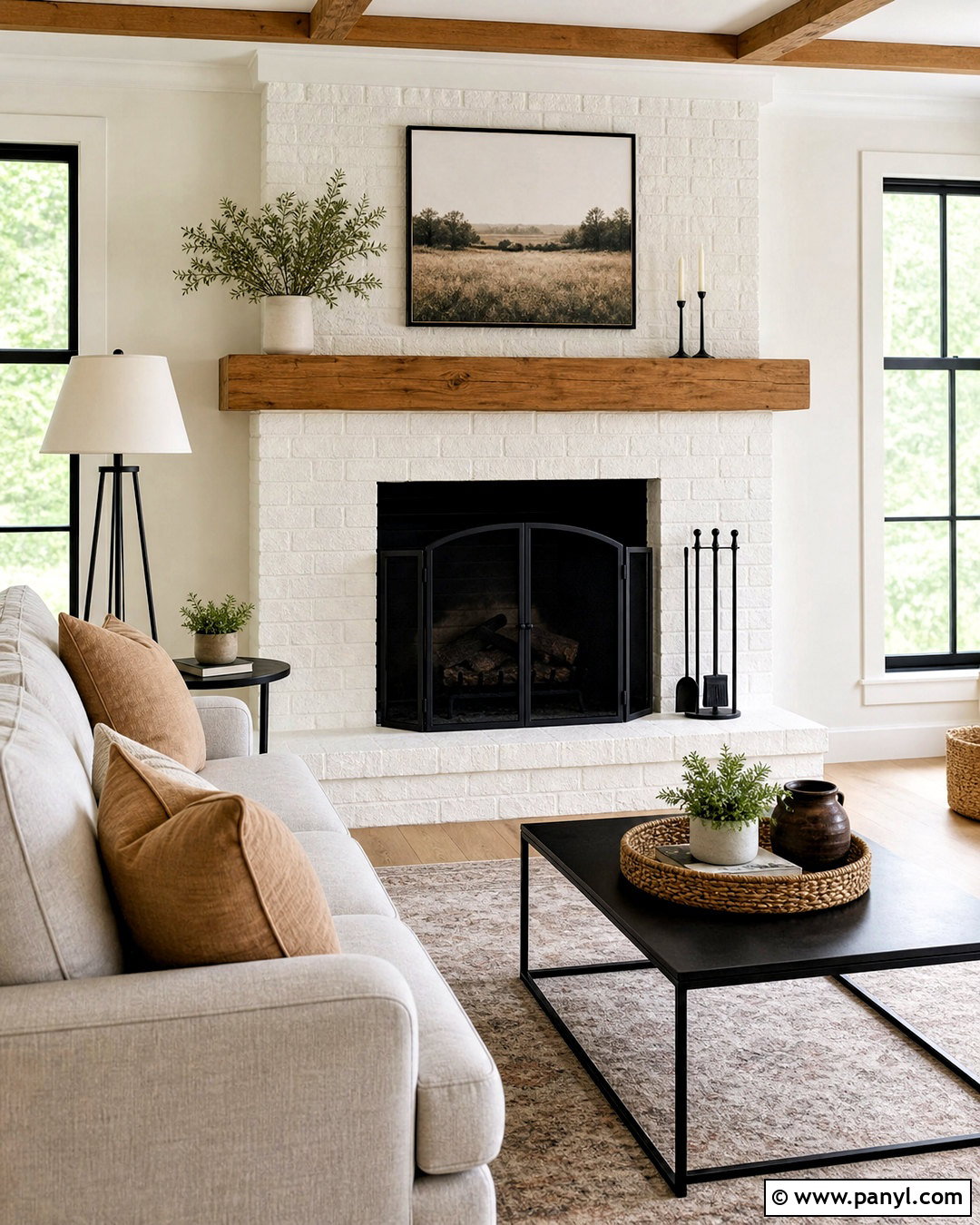
Painting the outer fireplace white and keeping the firebox black creates a crisp, practical contrast. Use warm white on the brick surround and chimney breast, then apply only a product specifically rated for the temperatures and surface inside the firebox. Follow the coating manufacturer’s preparation and ventilation directions carefully. () Add a medium oak mantel to bridge the light and dark finishes. Complete the room with ivory walls, pale wood flooring, a light gray sofa, and black-framed artwork. Repeat black through a slim coffee table and floor lamp, while tan cushions add warmth. This balanced fireplace design works across modern farmhouse, transitional, and contemporary interiors, giving the opening definition without turning the entire fireplace into a dark focal point.
18. Painted Stone Fireplace
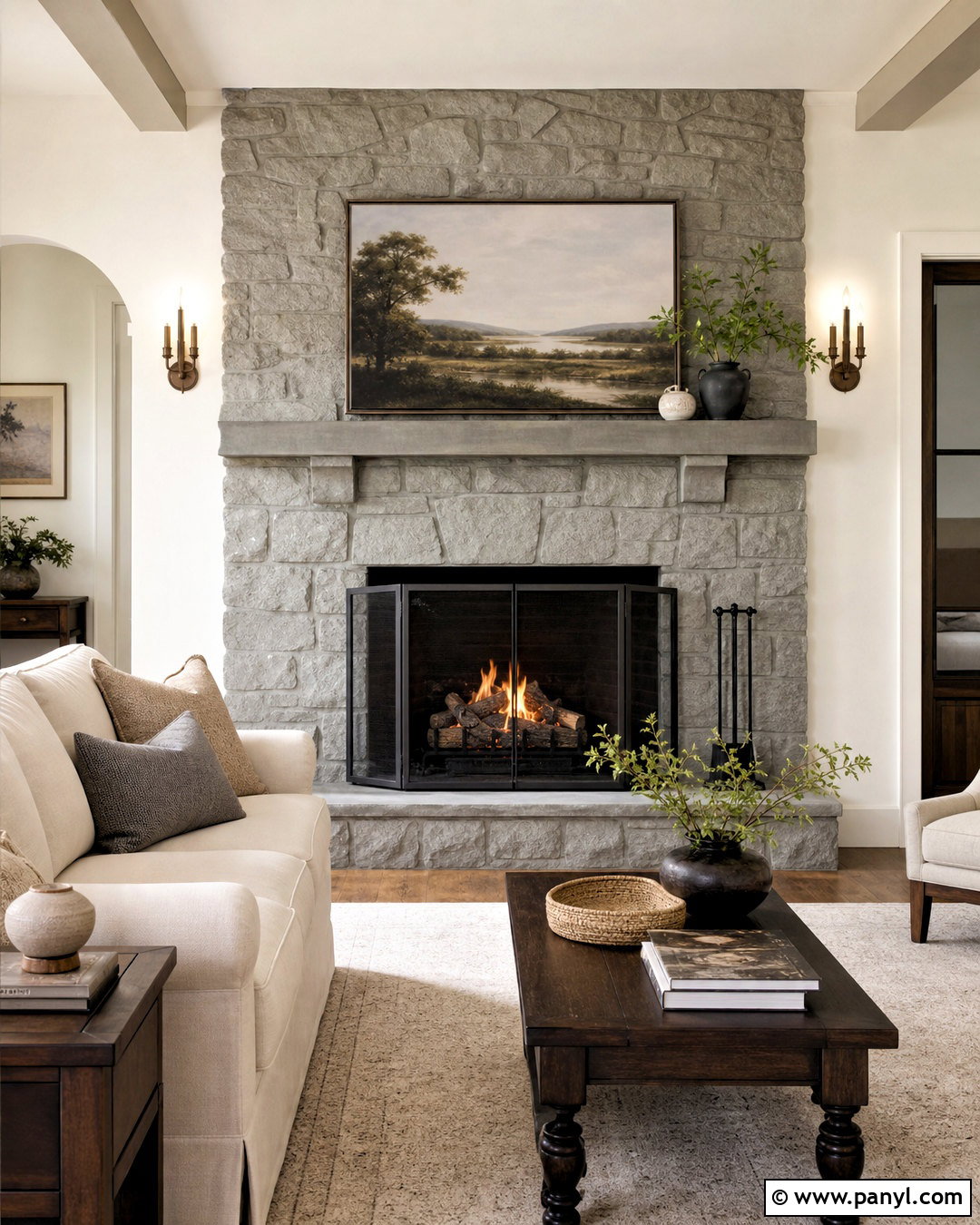
Paint can unify a stone fireplace when numerous contrasting colors make the room feel dated or busy. Cover the stone in a soft putty-gray finish that preserves its irregular shapes and dimensional texture. Paint the mantel the same color for a cohesive structure, then contrast it with warm white walls and honey oak flooring. Add a cream sofa, dark wood side tables, and an understated rug in gray, tan, and ivory. A black fire screen and bronze sconces provide clean definition. Choose a wide landscape print for the mantel rather than several small accessories, which can compete with the stone texture. This full design gives traditional stone a quieter, more contemporary presence while retaining the substantial character that makes the fireplace feel permanent.
19. Painted Tile Fireplace
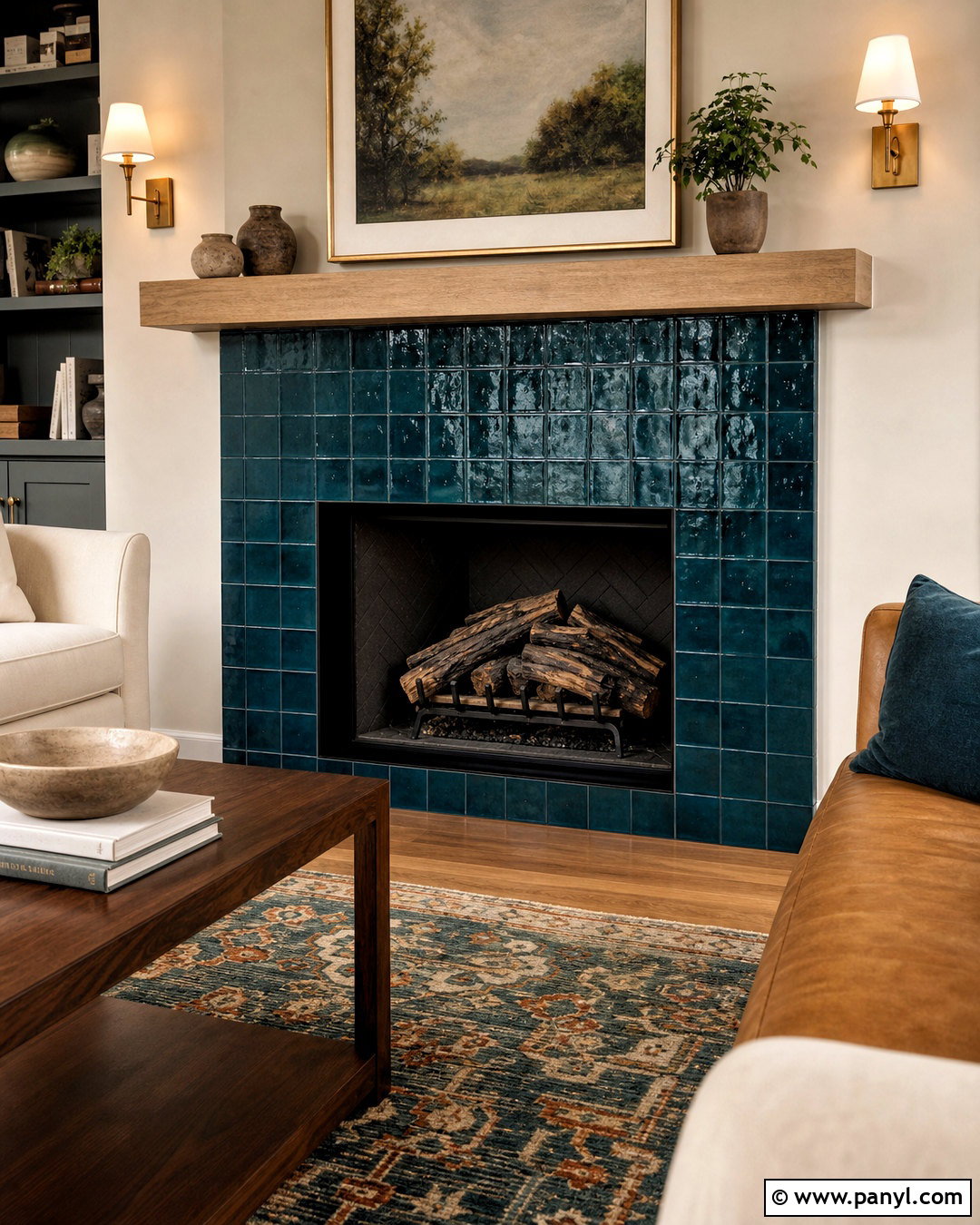
A painted tile surround can refresh an outdated fireplace without changing the entire mantel structure. Use a durable coating system suitable for the existing tile and its location, following all manufacturer requirements for cleaning, priming, curing, and heat exposure. Paint the tile a deep blue-green, then keep the wood mantel warm white for clear contrast. Surround the fireplace with pale greige walls, oak flooring, a camel sofa, and ivory chairs. Add a rug containing teal, rust, and beige to distribute the color through the room. Brass sconces and a walnut coffee table warm the cooler surround. This complete look works particularly well when the tile is structurally sound but its original pattern or color no longer fits the room.
20. Muted Pink Fireplace
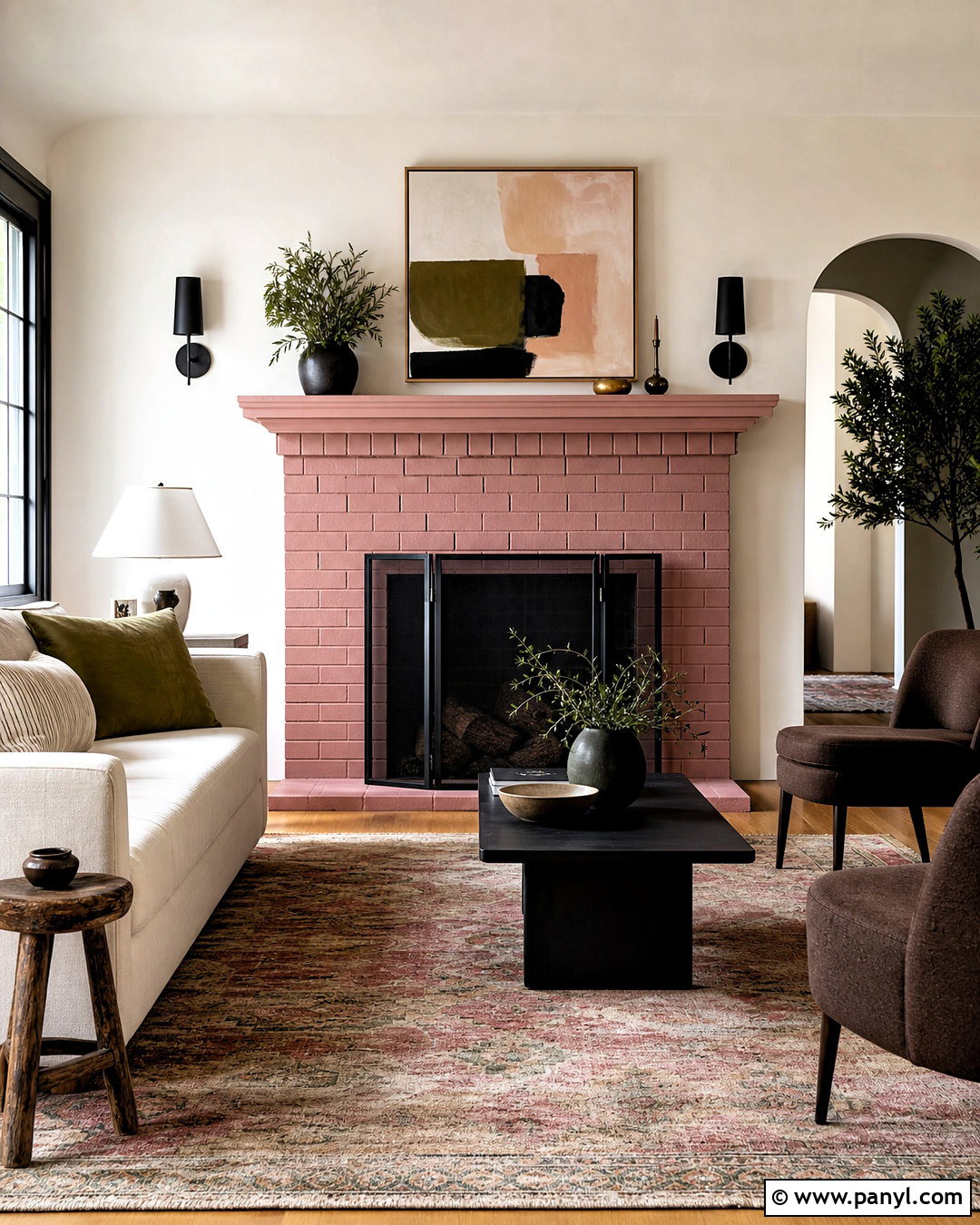
Muted pink gives a fireplace personality while remaining sophisticated when the shade contains brown, beige, or gray undertones. Paint the brick and mantel in a dusty clay-pink, then pair it with warm white walls and medium oak floors. Ground the color with a cream sofa, dark brown accent chairs, and a vintage rug featuring faded rose, olive, and tan. Matte black lighting and a simple fireplace screen add necessary structure. Above the mantel, hang an abstract artwork that includes only a small touch of pink, preventing the palette from becoming overly coordinated. This complete fireplace look suits eclectic, cottage, retro, and contemporary rooms. Natural fibers, dark wood, and restrained accessories help the unusual color feel intentional, comfortable, and easy to live with.
Conclusion:
The most successful fireplace painting ideas connect the hearth to every other part of the room. Begin with the fireplace material, existing flooring, natural light, and permanent architectural details. Then select a color that creates the right amount of contrast. Warm white, cream, greige, and taupe provide flexibility, while black, navy, green, terracotta, and muted pink make a stronger statement. Textured treatments such as whitewash, limewash, and German schmear can preserve more of the brick’s original character. Complete the transformation with a coordinated mantel, hearth, furniture palette, lighting, artwork, and textiles. Always prepare the surface carefully and choose products appropriate for the fireplace material, location, and expected heat exposure.

Related Ideas and Inspiration:
Leave a Reply