
Choosing the right fireplace color can completely reshape a living room, family room, bedroom, or outdoor gathering space. These 20 fireplace color ideas cover bright neutrals, earthy shades, classic brick treatments, and bold statement colors. Each look includes a complete palette, from the surround and mantel to the walls, flooring, furniture, and finishing accents. Before committing, test the color beside your existing finishes in daylight and evening light. Also consider whether you want the fireplace to blend quietly into the room or become its main focal point. From warm white brick to dramatic burgundy tile, the following complete designs make it easier to create a balanced, inviting space. Explore these 20 fireplace color ideas to find a look that works naturally with your home.

1. Warm White Fireplace
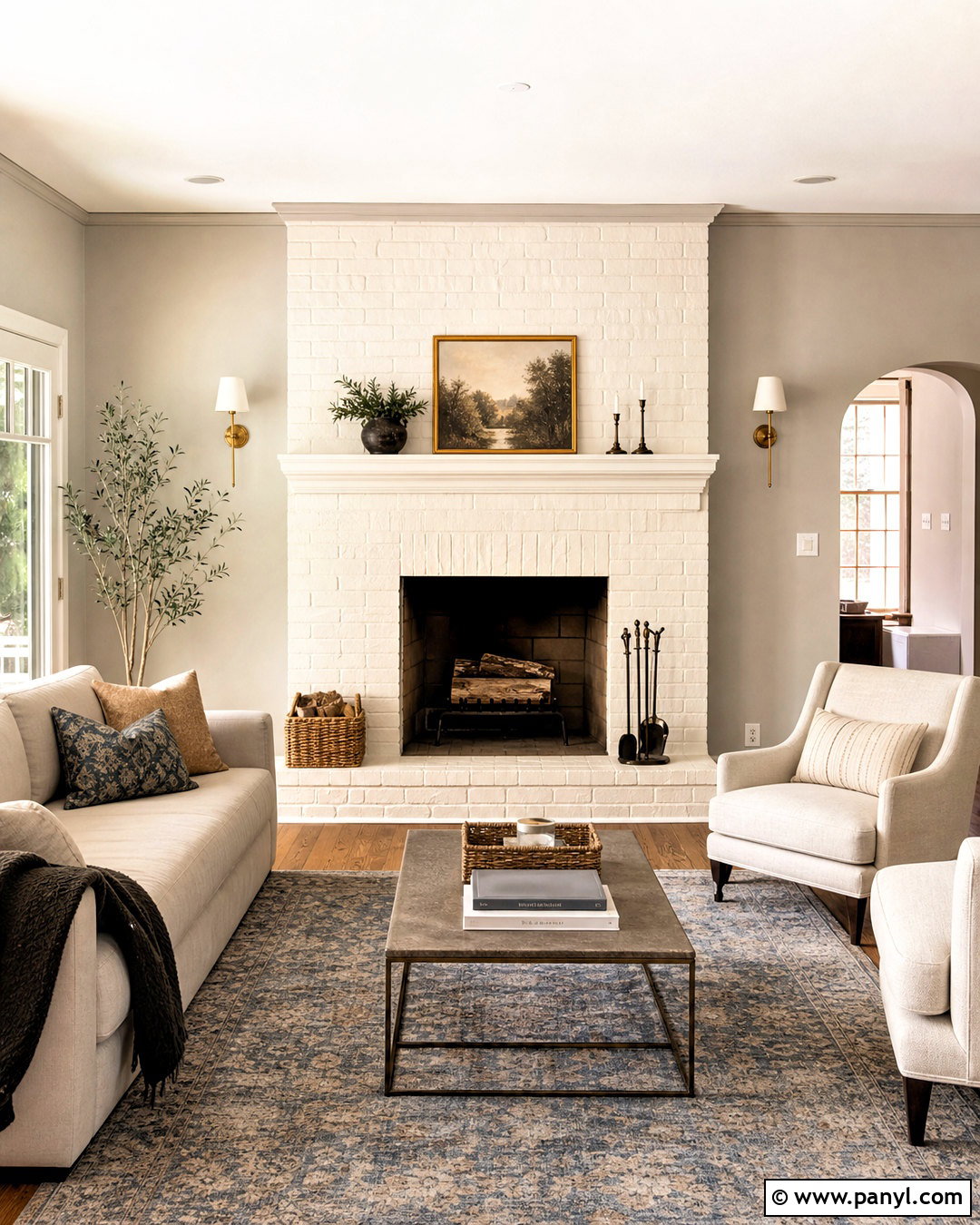
A warm white fireplace creates a clean look without making the room feel cold or overly modern. Paint the brick or surround a creamy white with subtle beige undertones, then continue the same color across a simple wood mantel. Soft greige walls provide gentle contrast while keeping the palette light. Choose medium oak flooring, a natural linen sofa, and oatmeal-colored chairs to reinforce the warmth. A faded blue-and-tan rug can add quiet pattern beneath the seating area. Finish the design with antique brass sconces, a large landscape print, and a few dark ceramic pieces on the mantel. This complete fireplace color scheme works especially well in traditional, transitional, and relaxed farmhouse living rooms where comfort matters as much as brightness.
2. Soft Cream Fireplace
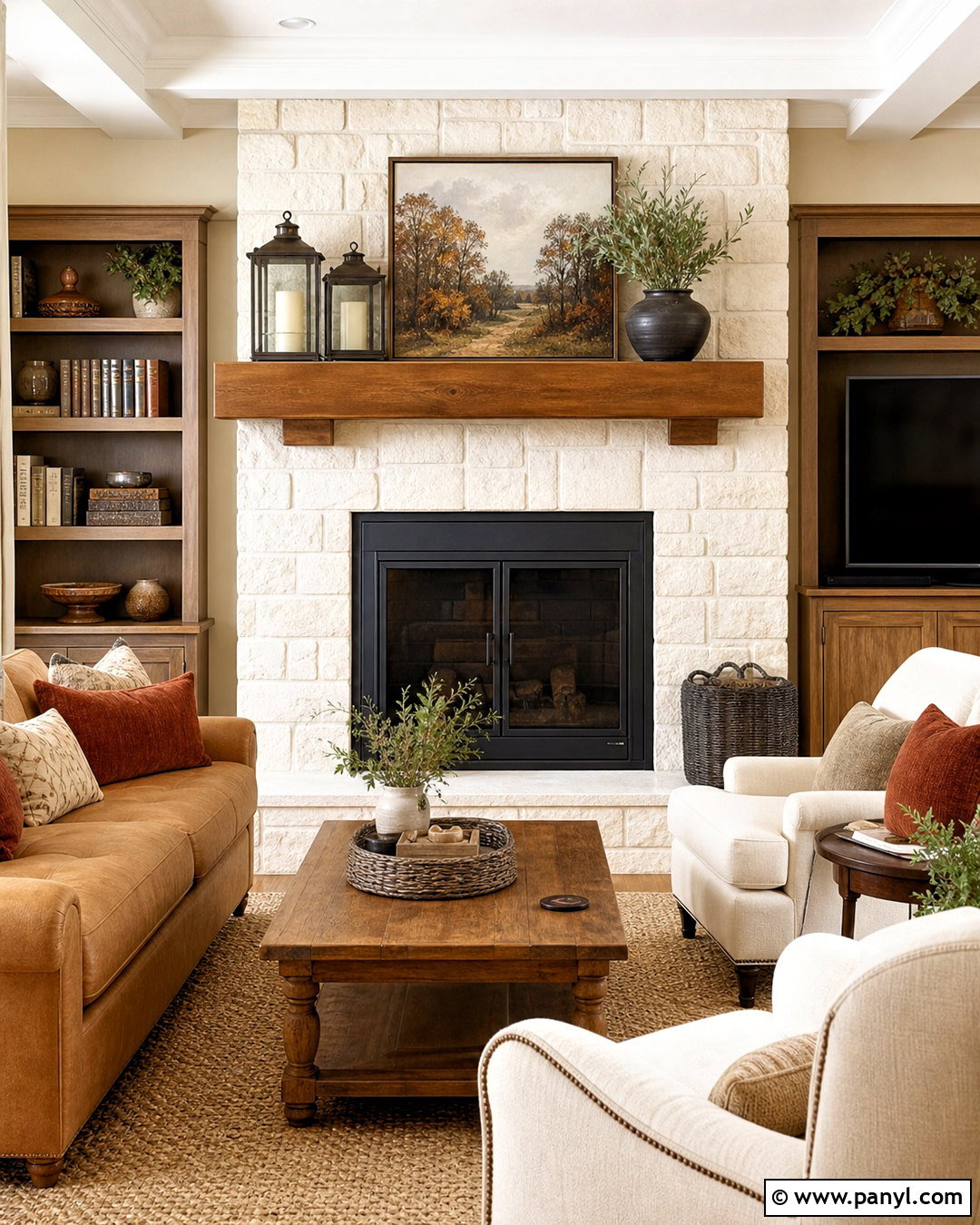
Imagine a fireplace that feels soft, sunny, and welcoming even when no fire is burning. A pale cream surround delivers that effect, especially when paired with light tan walls and honey-toned wood. Use an eggshell finish on painted brick to preserve its texture without creating distracting shine. Add a medium-stained oak mantel for definition, then repeat that wood tone through side tables and picture frames. A camel sofa, ivory armchairs, and muted rust pillows bring depth to the room. Ground everything with a woven wool rug in cream and brown. Black fireplace doors and a slender black floor lamp provide necessary contrast. The finished space feels layered and approachable rather than entirely beige, making cream a useful choice for rooms with limited natural light.
3. Greige Fireplace
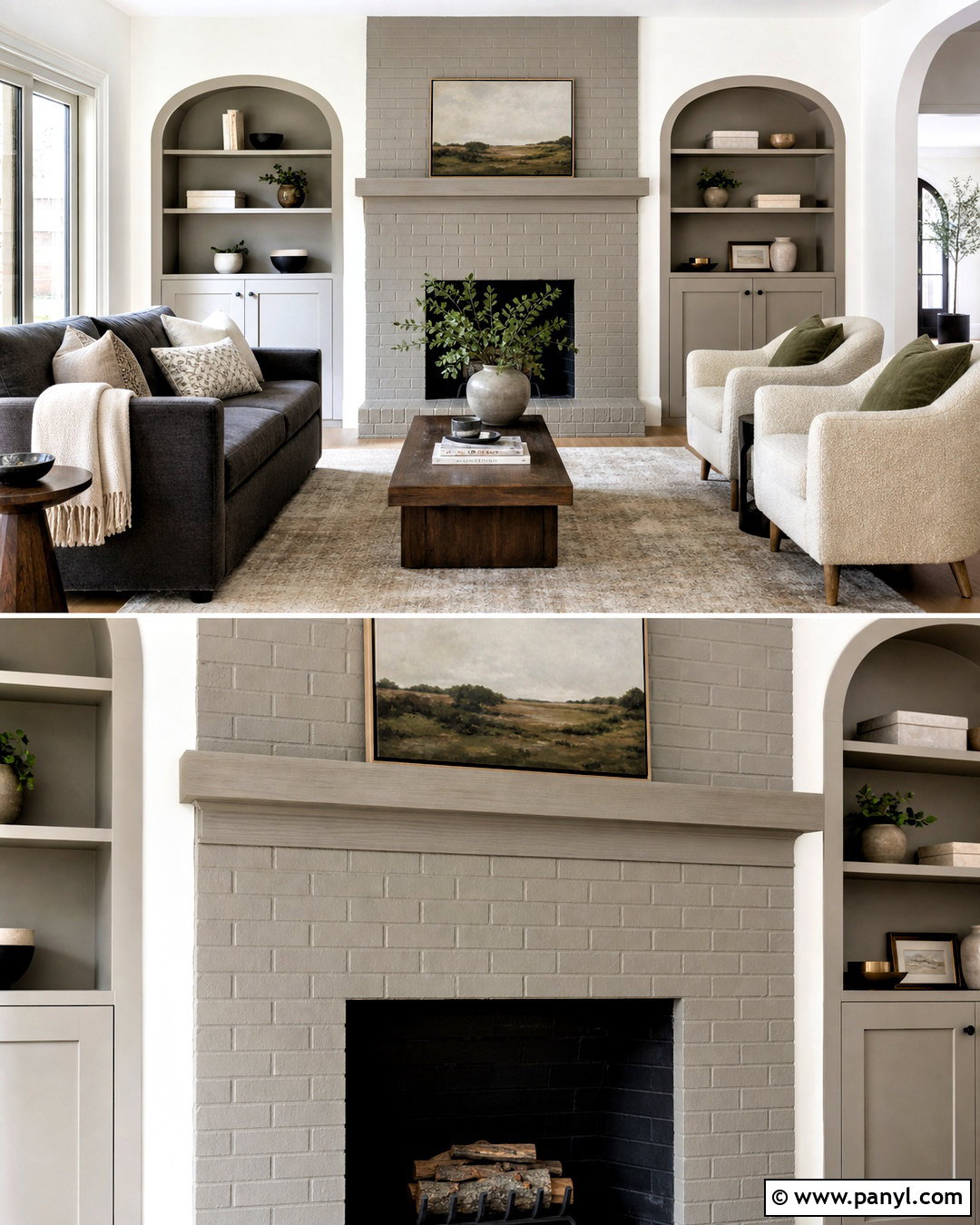
Do you want the fireplace to coordinate with both warm and cool furnishings? A balanced greige fireplace can connect those different undertones. Cover the full brick surround in a medium-light gray-beige, and paint the mantel the same shade for a streamlined appearance. Use soft white walls to frame the fireplace and wide-plank oak flooring to add organic warmth. A charcoal sofa, cream boucle chairs, and walnut tables create a modern mix of colors and textures. Bring in muted green through pillows, pottery, and a leafy plant beside the hearth. A black metal firebox and simple abstract artwork keep the arrangement crisp. This complete scheme allows the fireplace to feel substantial without overpowering the room, making it suitable for open-concept homes and transitional interiors.
4. Taupe Fireplace
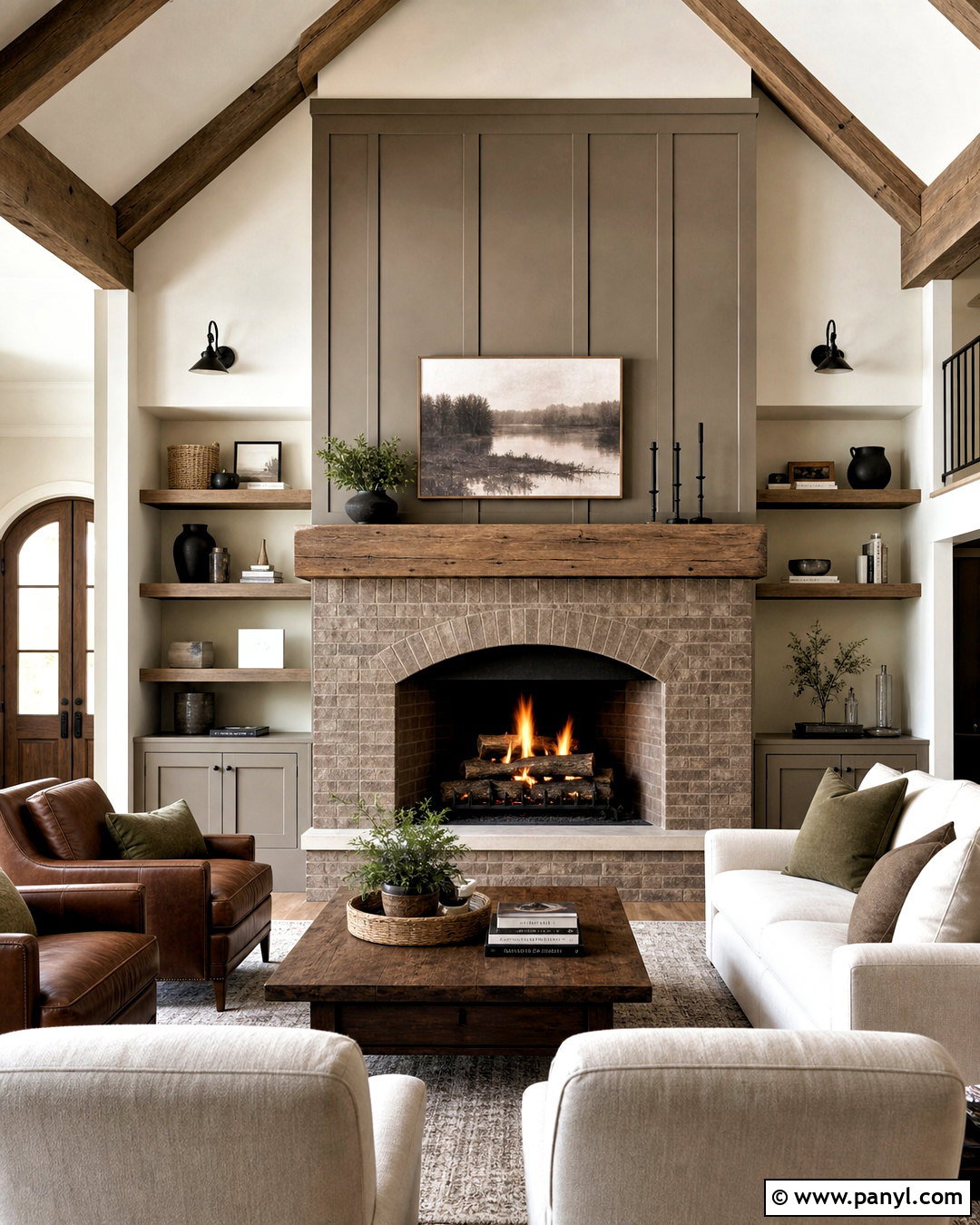
Rich taupe gives a fireplace a grounded appearance while remaining softer than dark brown or charcoal. Select an earthy taupe with subtle gray undertones for the brick, surround, and paneled chimney breast. Pair it with warm ivory walls and a natural limestone hearth. A chunky reclaimed-oak mantel introduces rustic character without making the design feel heavy. Arrange a cream sectional and two tobacco-brown leather chairs around a textured beige rug. Matte black curtain rods, fireplace doors, and table legs provide a clean outline throughout the room. Add muted olive pillows and aged brass lighting for gentle color. This fireplace palette feels especially cohesive when the taupe shade repeats in drapery or patterned upholstery, helping the entire seating area look thoughtfully connected.
5. Light Gray Fireplace
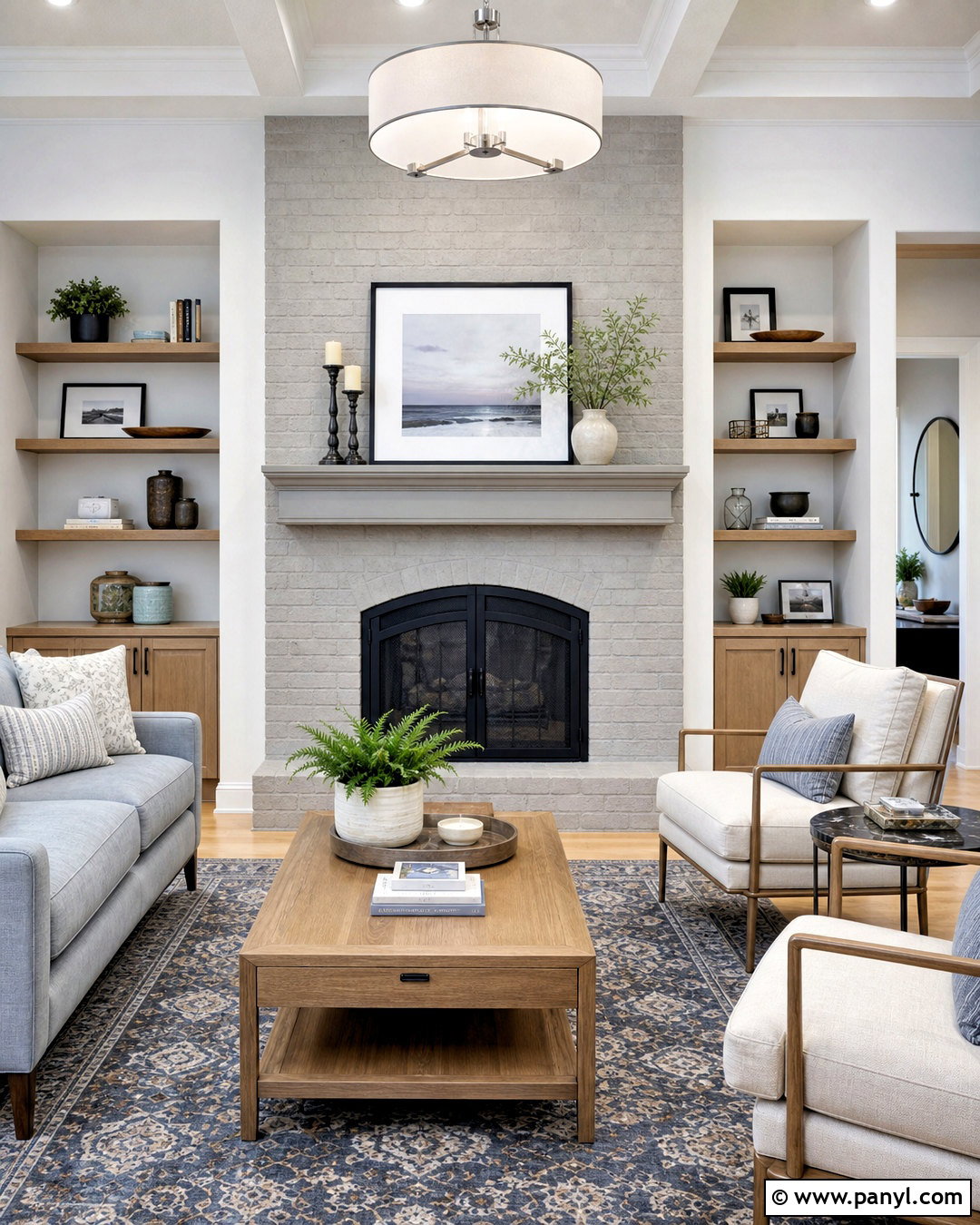
A light gray fireplace can brighten dated brick while giving the room more definition than pure white. Choose a soft gray with a warm undertone so it coordinates with wood floors and beige textiles. Paint the brick and mantel in one continuous color, then surround the feature with crisp white walls. Furnish the room with a pale blue-gray sofa, ivory accent chairs, and a natural oak coffee table. A patterned rug combining gray, cream, and faded navy helps bridge the palette. Keep the firebox black, and add brushed nickel or polished chrome lighting for a fresh finish. Minimal black-framed artwork above the mantel gives the fireplace a clear focal point. The completed look is calm, practical, and well suited to casual contemporary homes.
6. Charcoal Fireplace
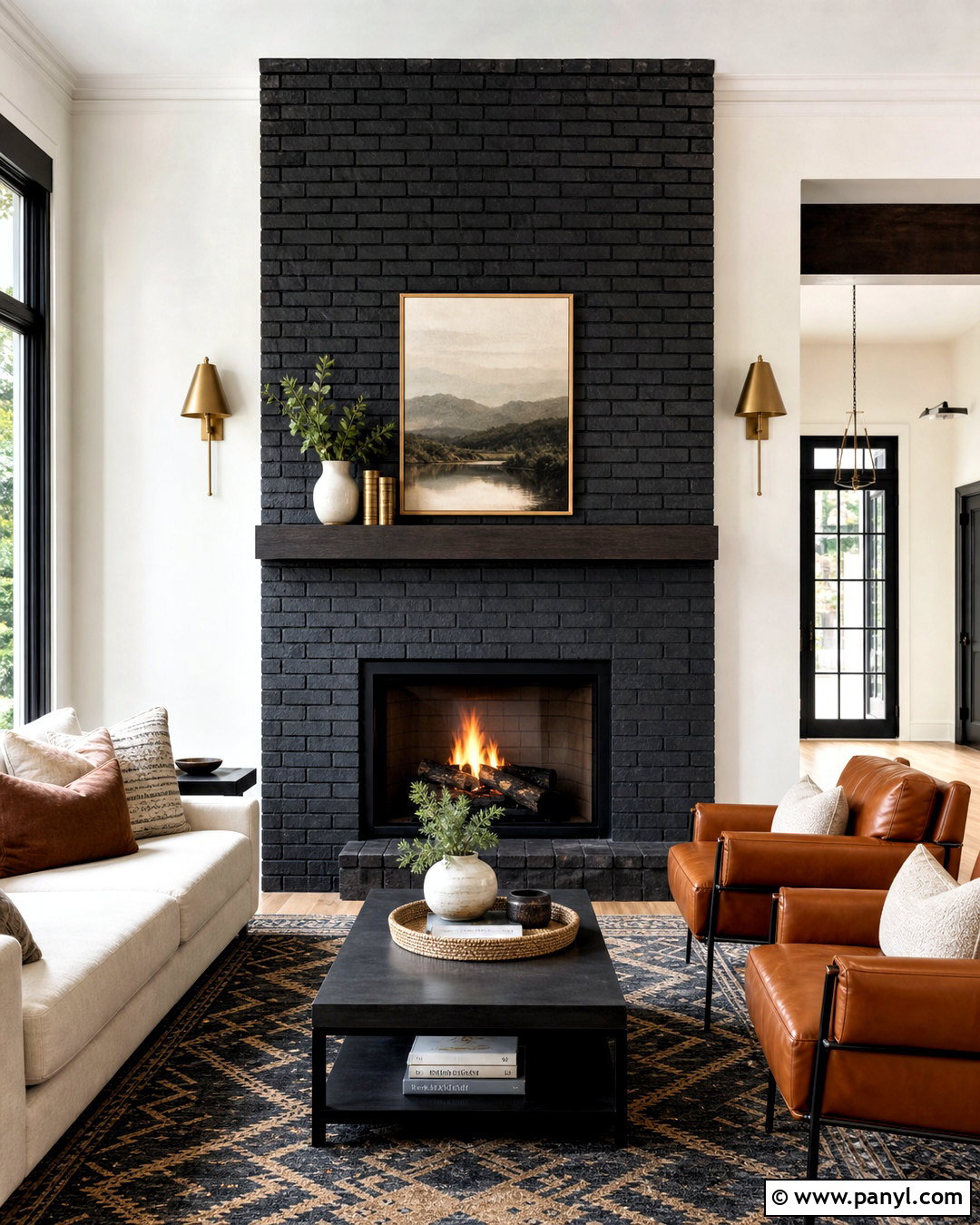
When a pale room lacks focus, a charcoal fireplace can provide the strong visual anchor it needs. Paint floor-to-ceiling brick in a deep warm charcoal, including the mantel if you want a modern monochromatic finish. Balance the dark feature with warm white walls, a pale oak floor, and an oversized cream sofa. Two cognac leather chairs bring richness and prevent the palette from feeling stark. Add a low black coffee table, oatmeal curtains, and a geometric rug containing charcoal, ivory, and tan. Over the mantel, choose one large piece of light-toned artwork rather than several small accessories. Brass sconces can soften the dark surface with subtle shine. This complete design makes the fireplace dramatic while keeping the surrounding room open and comfortable.
7. Matte Black Fireplace
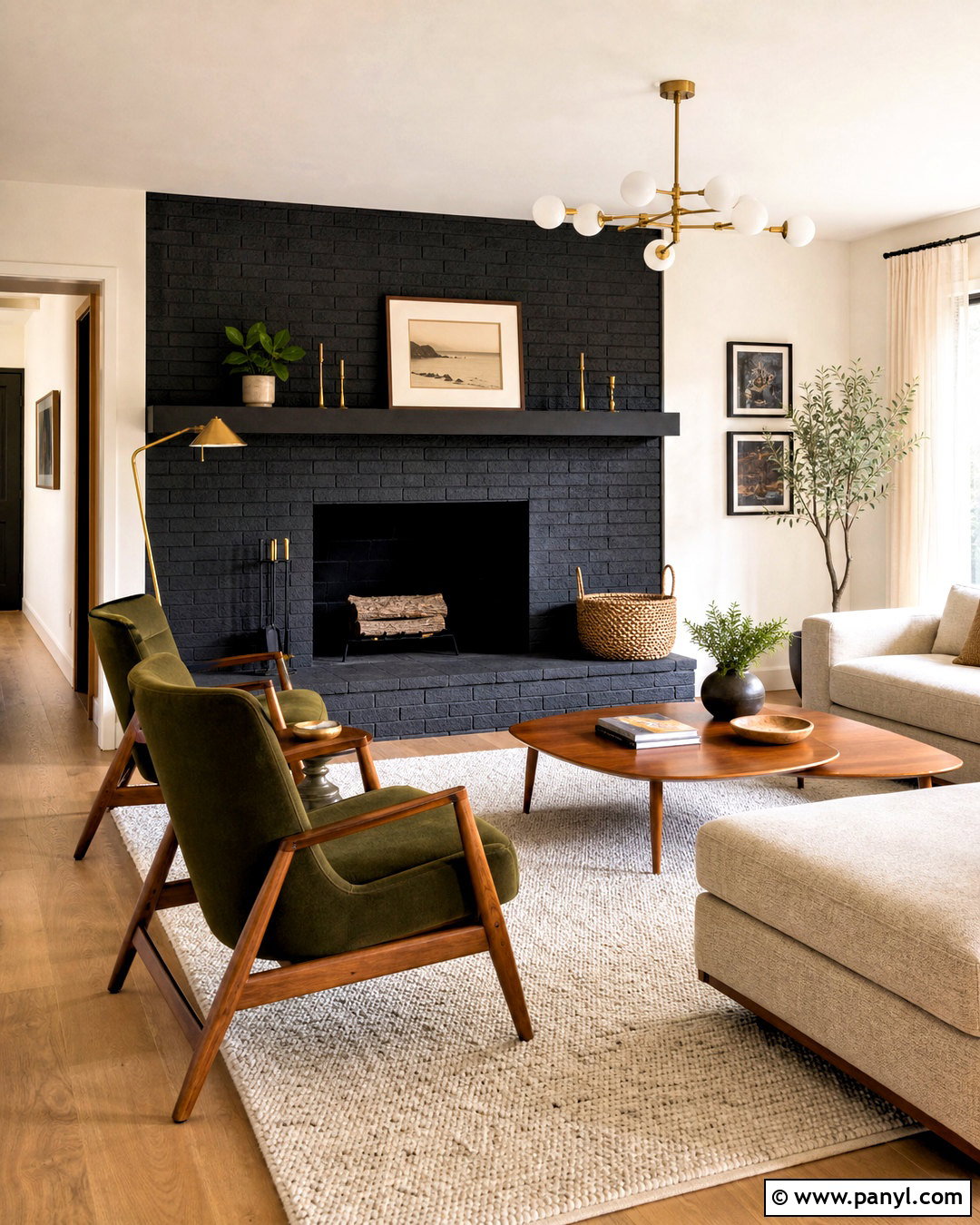
Few fireplace colors create a sharper focal point than matte black. Use it across the brick, mantel, and chimney breast for a bold architectural look that visually simplifies uneven surfaces. Keep nearby walls soft white and select light oak or natural maple flooring to balance the darkness. A low-profile beige sectional, a pair of olive lounge chairs, and a cream textured rug create a comfortable modern seating arrangement. Repeat black through window frames, a slim coffee table, and picture frames, but avoid filling the room with additional heavy dark furniture. Warm wood, woven baskets, and brushed brass lighting provide softness. The final fireplace design feels intentional and graphic, making it particularly effective in midcentury, industrial, minimalist, or contemporary living rooms.
8. Navy Blue Fireplace
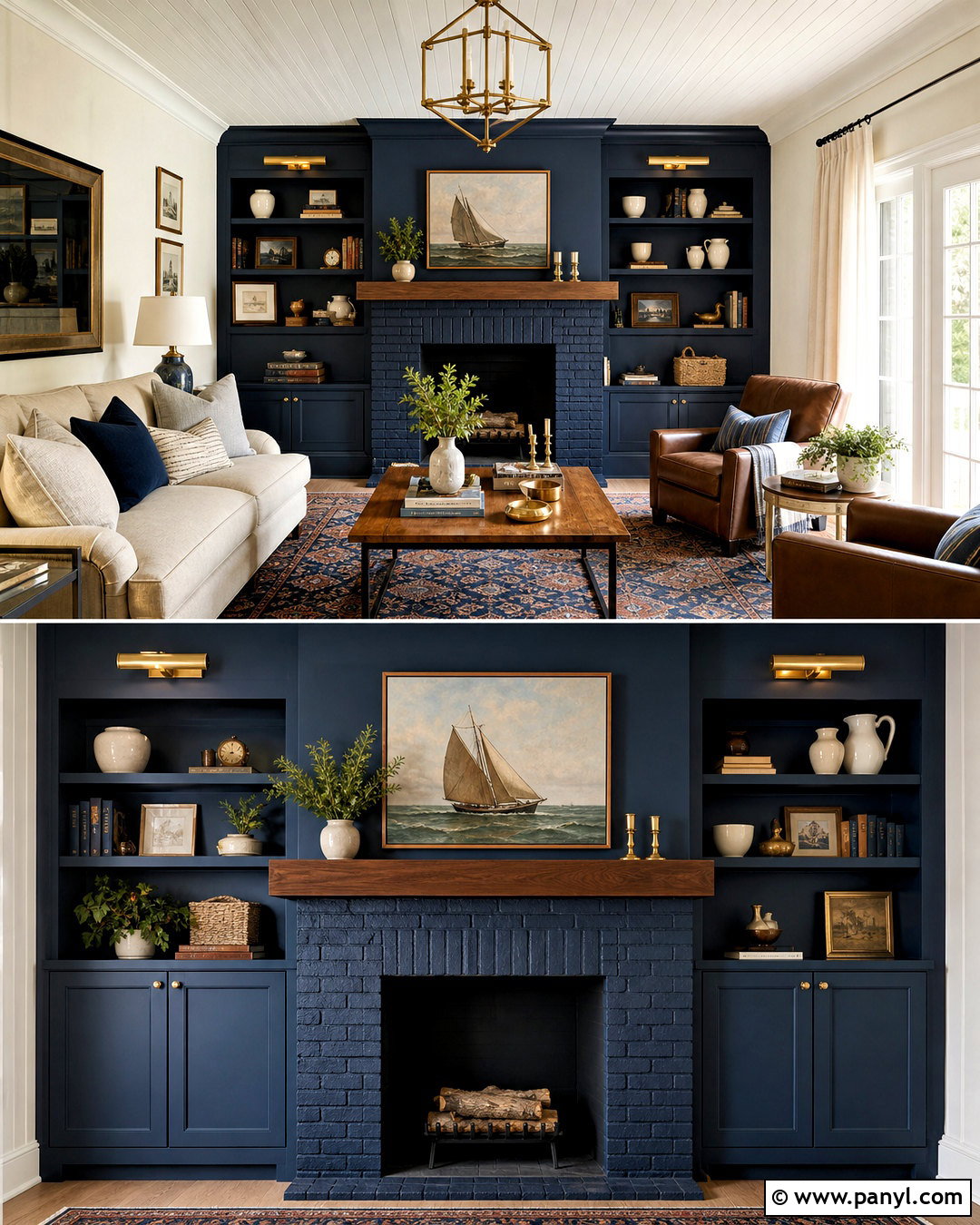
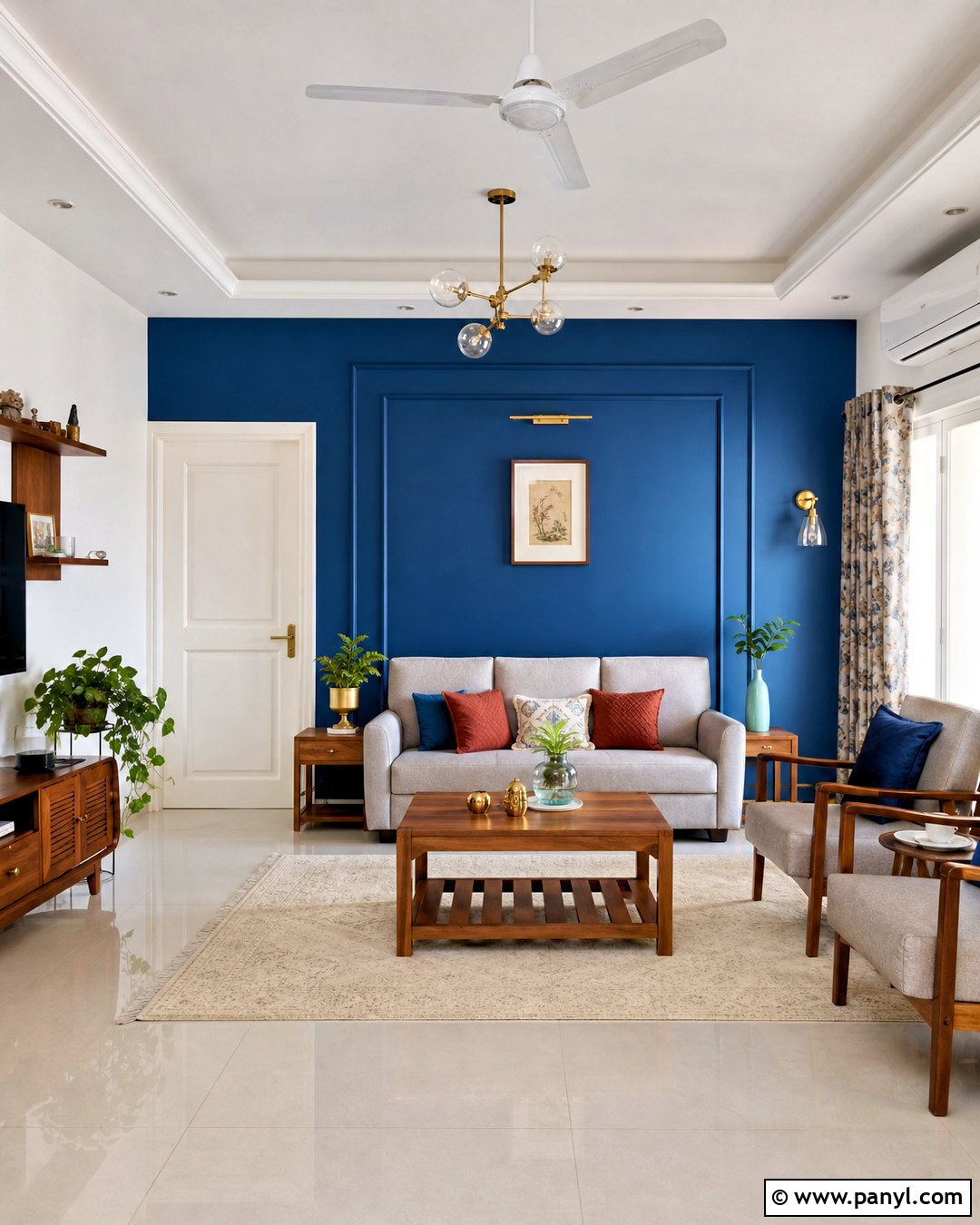
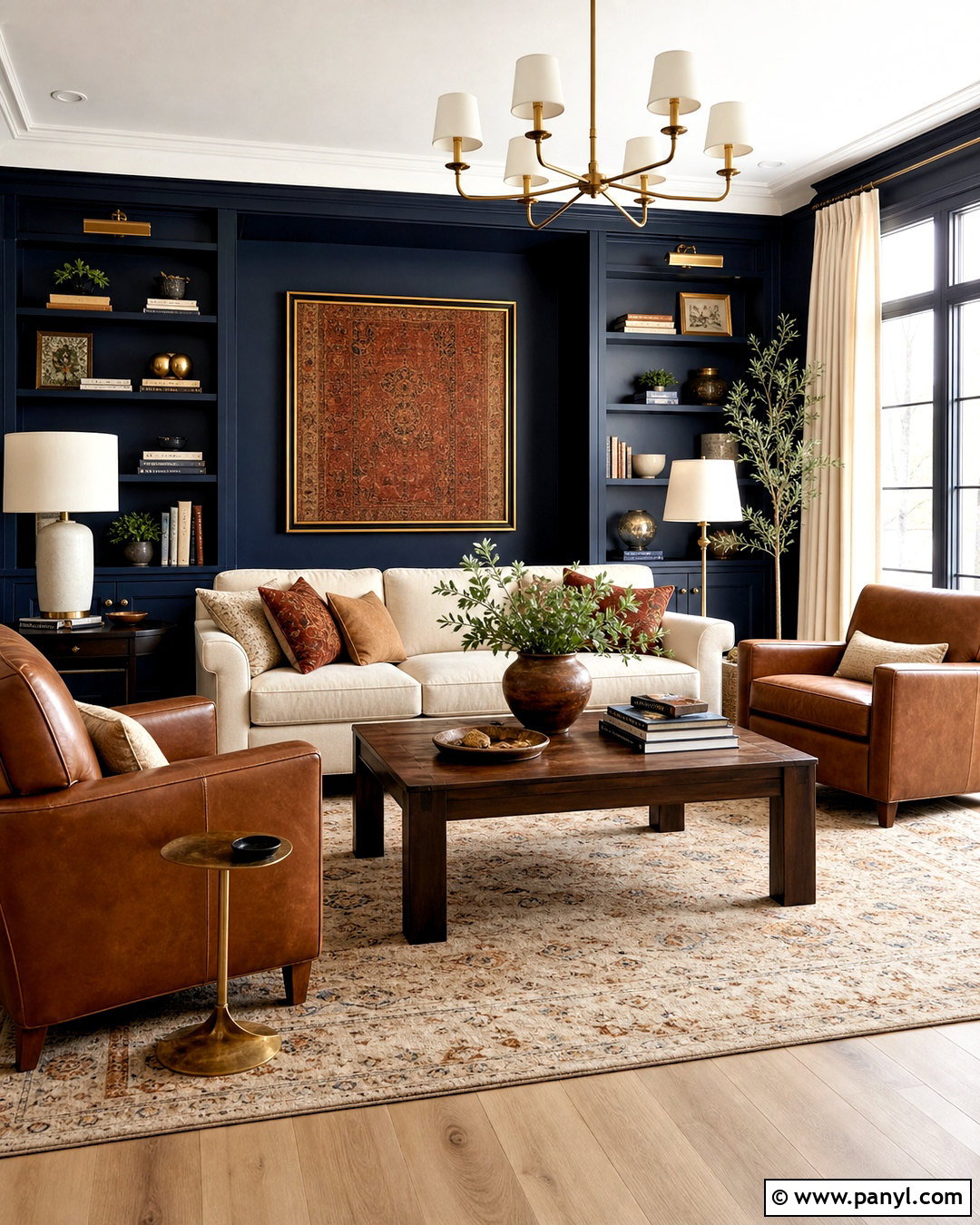
Deep navy blue turns a fireplace into a colorful focal point while remaining easy to pair with familiar neutrals. Paint the surround and built-in shelving navy, then use a medium walnut mantel to break up the saturated color. Warm white walls keep the room bright, while a light beige sofa and camel leather chair introduce relaxed contrast. Add a vintage-inspired rug containing navy, faded red, cream, and muted gold. Brass picture lights and cabinet hardware bring warmth to the blue surface. White pottery and natural books prevent the shelves from appearing too dark. Finish with navy pillows and a walnut coffee table. This coordinated scheme works beautifully in traditional and coastal-inspired rooms without relying on obvious nautical decorations or an overly themed color palette.
9. Slate Blue Fireplace
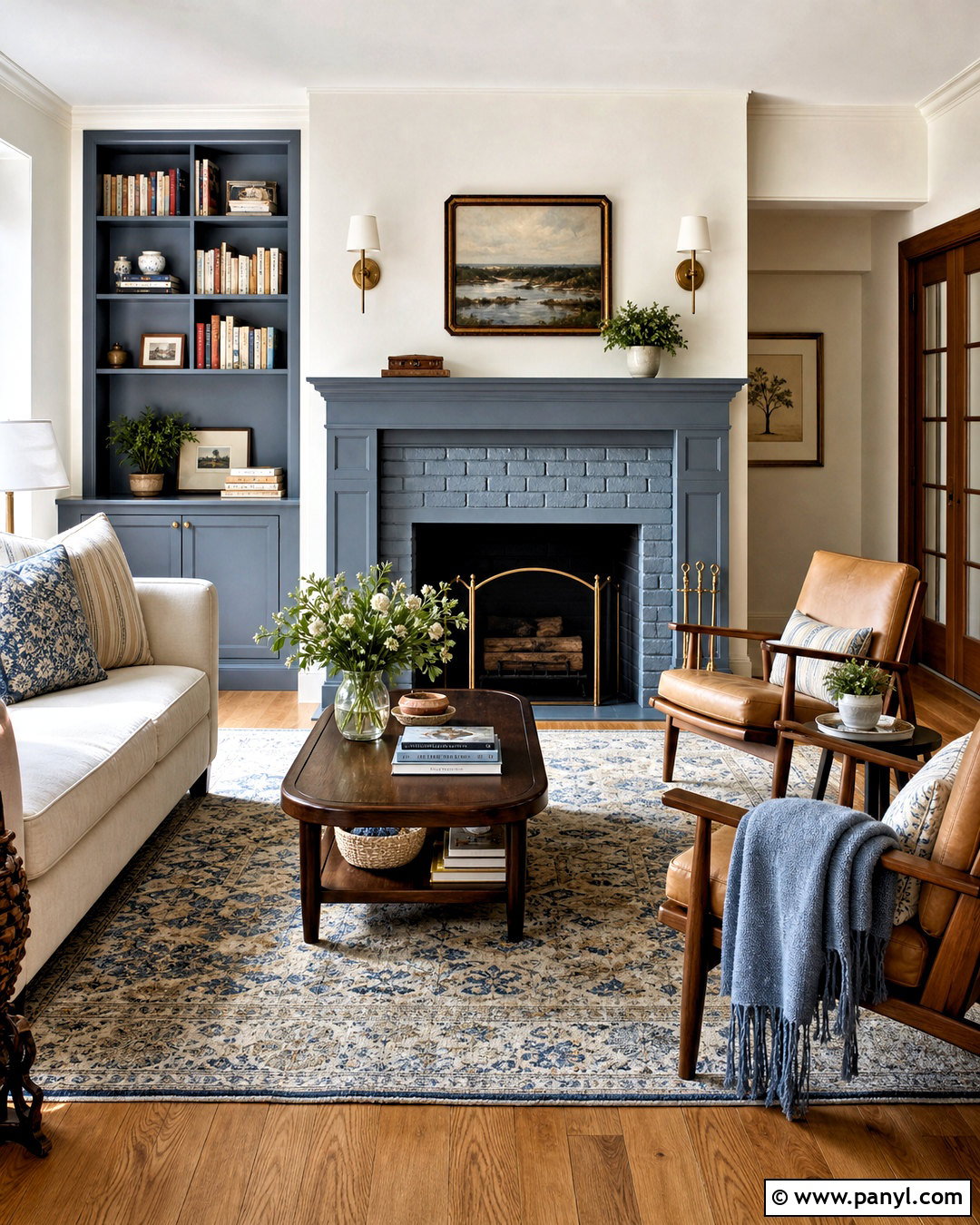
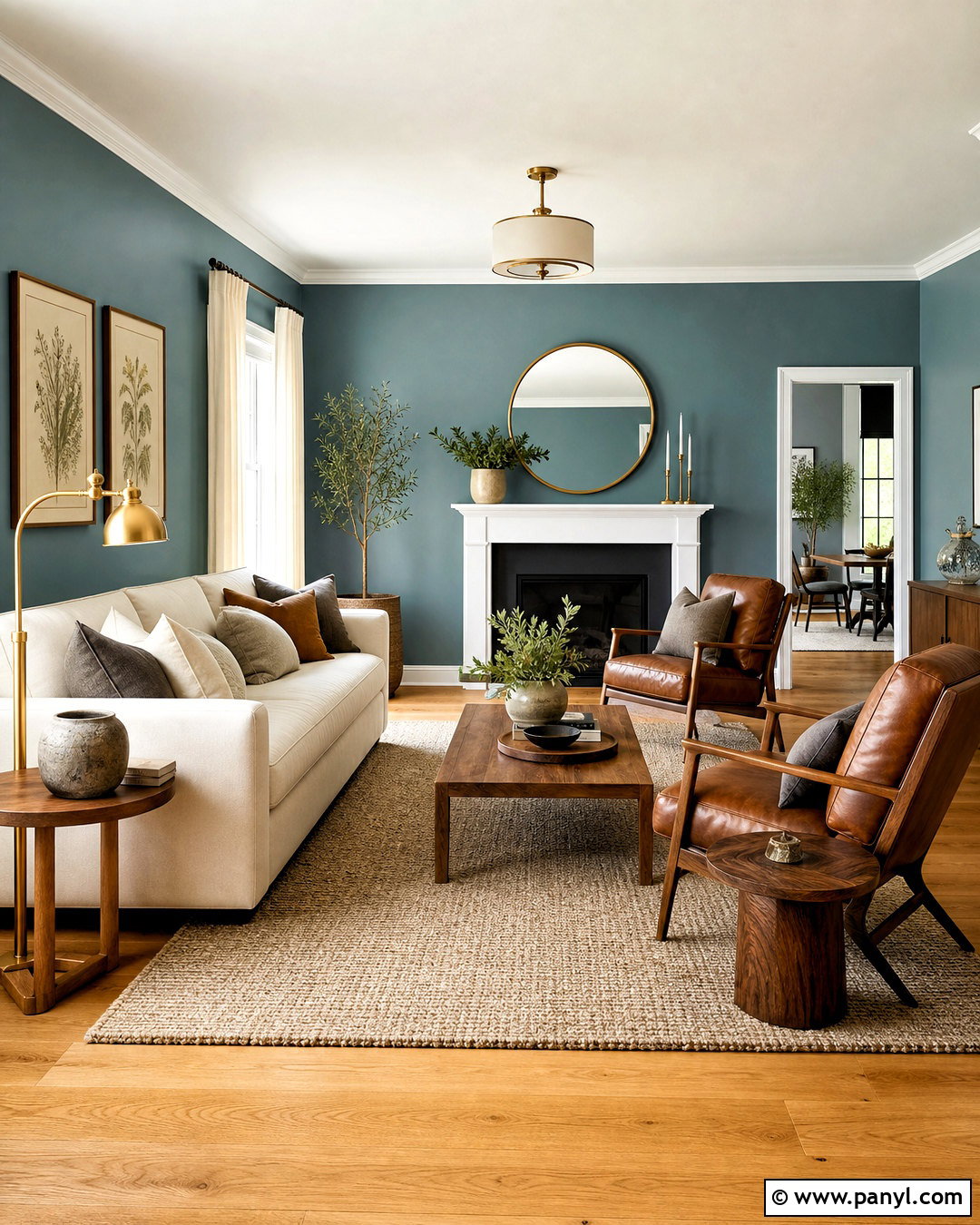
Soft slate blue gives a fireplace a calm presence with more personality than standard gray. Choose a dusty blue containing noticeable gray undertones, and apply it to the brick, mantel, and nearby lower cabinets. Pair the fireplace with warm white walls and medium oak floors to keep the blue from looking chilly. Furnish the room with an ivory sofa, two light brown chairs, and a washed blue-and-cream rug. A round walnut coffee table adds warmth at the center of the layout. Use aged brass sconces, dark bronze fireplace doors, and simple ceramic accessories for a balanced finish. The final look feels quiet and relaxed, making this color particularly suitable for reading rooms, small family rooms, coastal interiors, or bedrooms with compact fireplaces.
10. Sage Green Fireplace
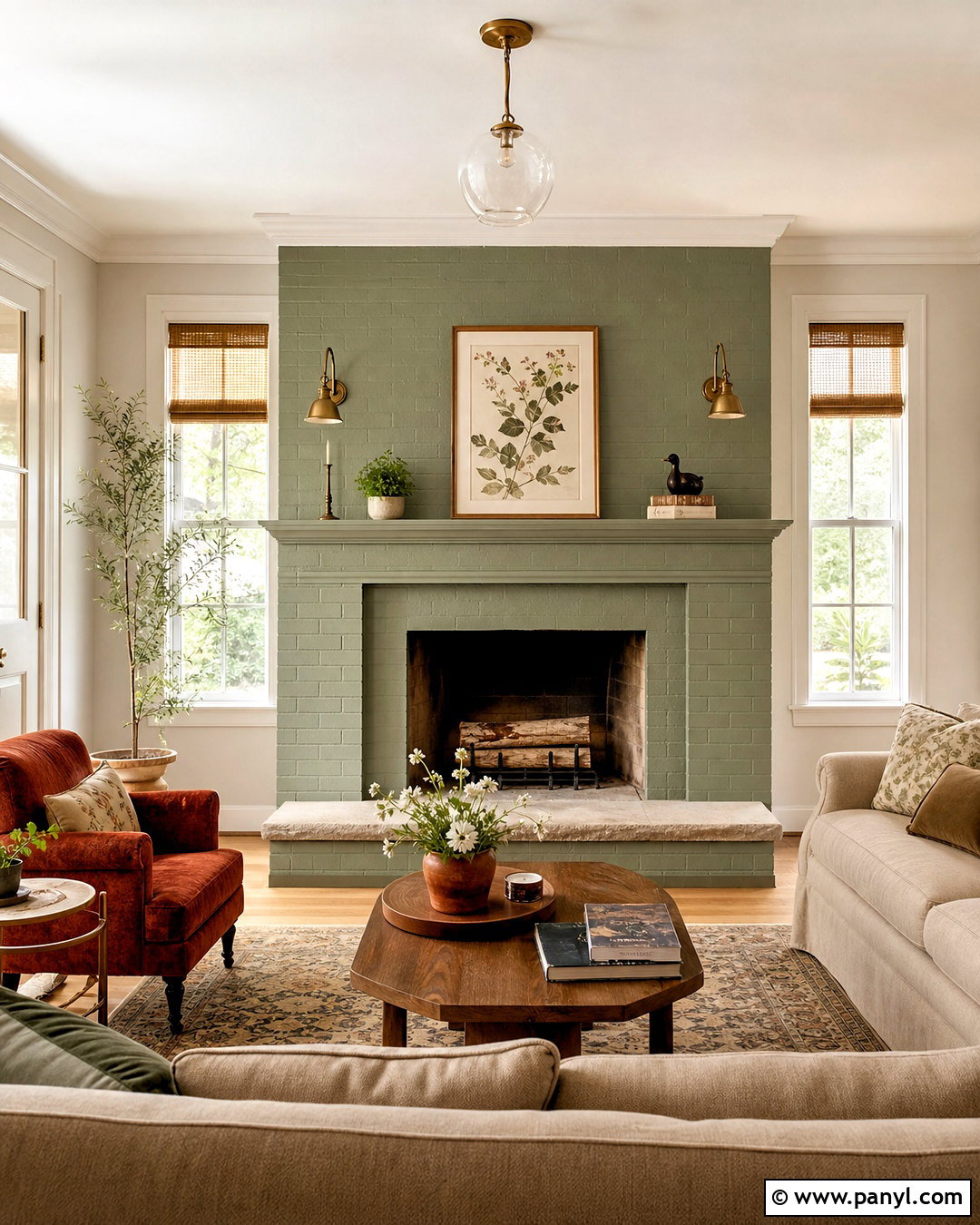
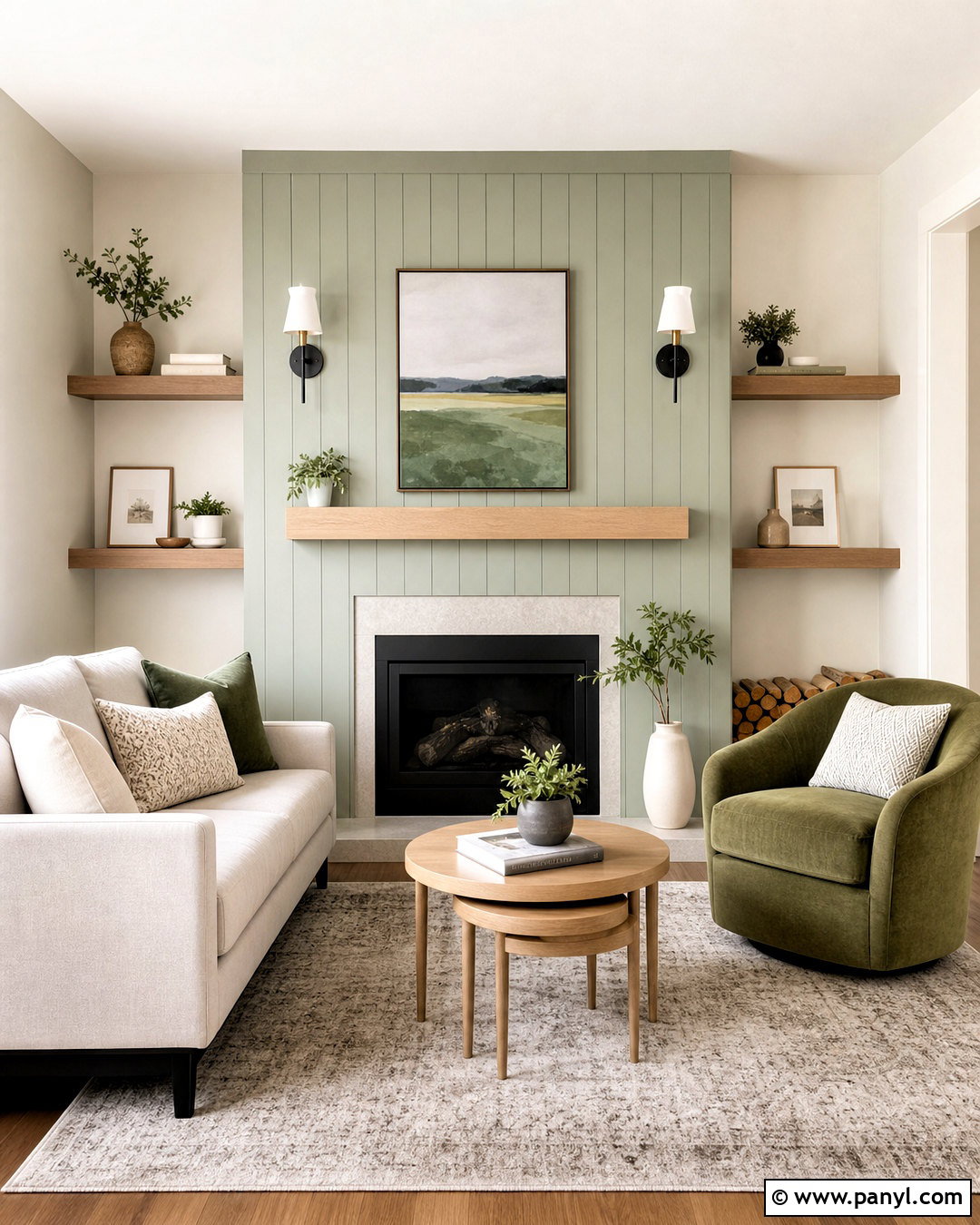
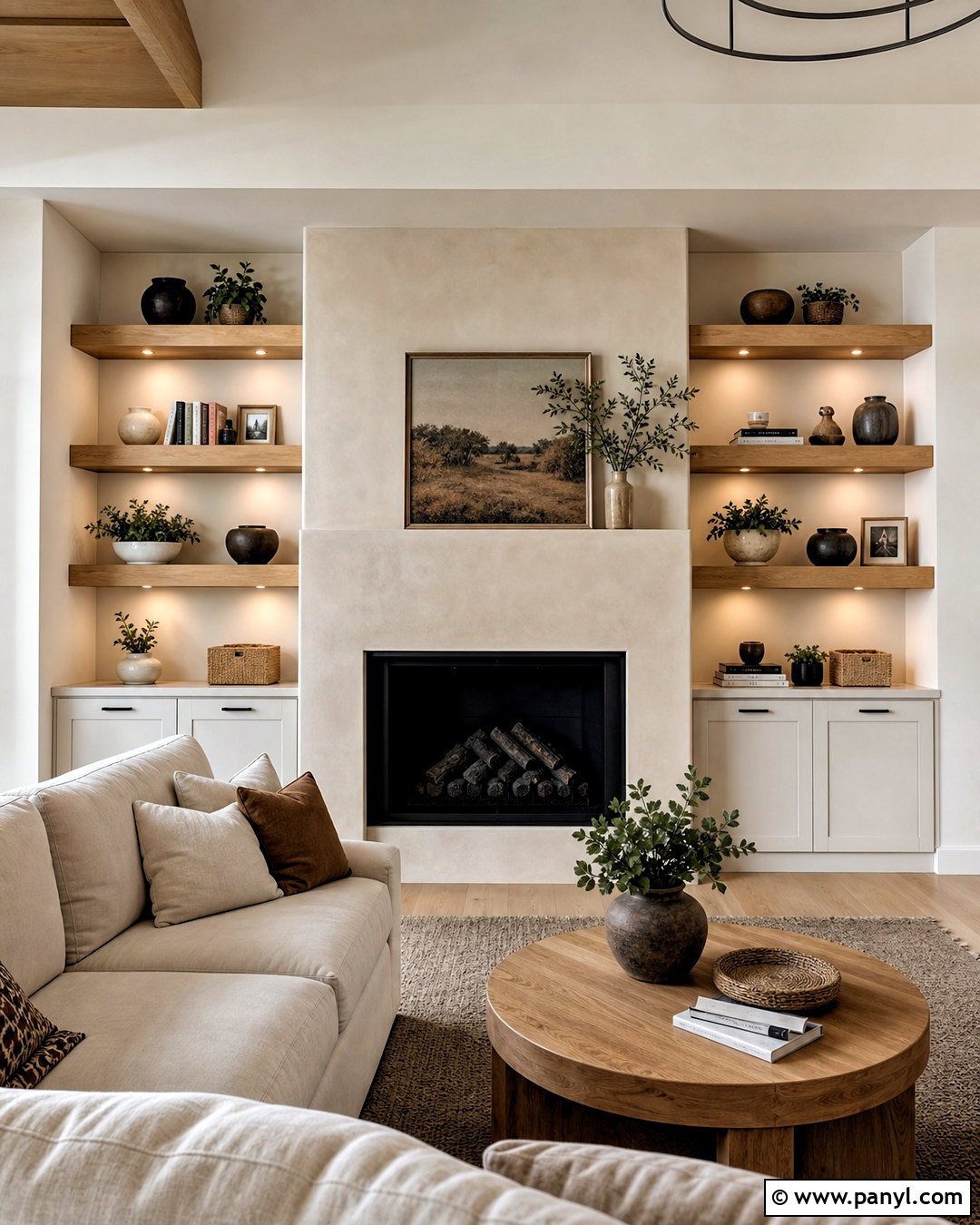
Sage green brings gentle natural color to a fireplace without dominating the room. Paint the brick surround and traditional wood mantel a muted warm sage, then use creamy off-white on the surrounding walls. A pale stone hearth, oak flooring, and a tan linen sofa create an earthy foundation. Add two rust-colored accent chairs to introduce complementary warmth, along with a patterned rug in sage, beige, and faded terracotta. Antique brass lighting and medium wood tables reinforce the cozy character. Keep mantel decor simple with framed botanical artwork, a low ceramic vessel, and a few stacked books. By repeating sage in pillows and curtains, the fireplace becomes part of a complete room palette rather than an isolated green feature, perfect for farmhouse and cottage interiors.
11. Olive Green Fireplace
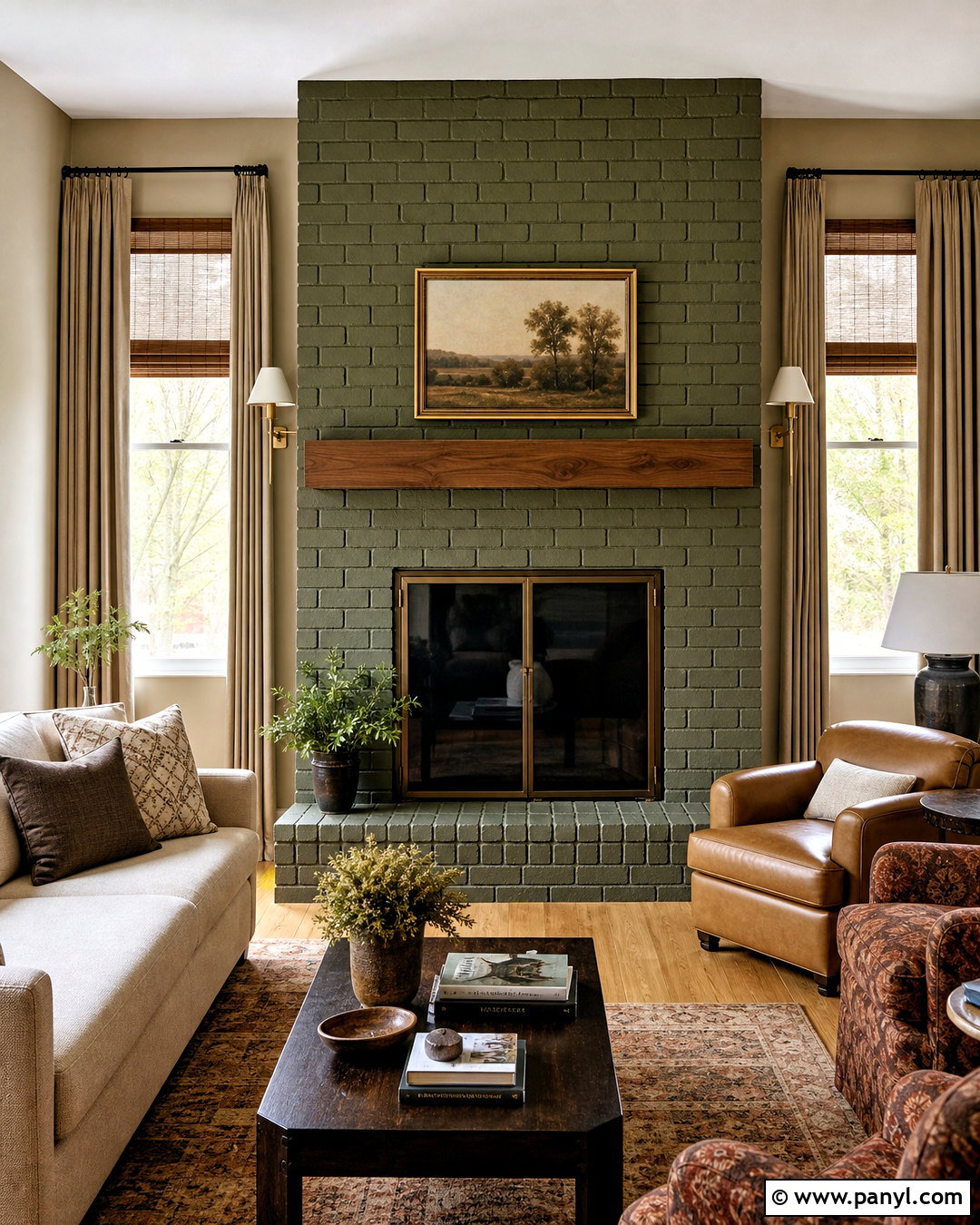
For a richer earthy palette, consider an olive green fireplace surrounded by warm woods and creamy textiles. Choose a medium olive shade for floor-to-ceiling brick, and add a thick walnut mantel that stands out against the green. Use light beige walls and medium-toned oak floors throughout the room. An oatmeal sectional, caramel leather ottoman, and patterned chairs in rust and cream make the seating area feel layered. Repeat the fireplace color through small pillow patterns rather than large matching surfaces. Bronze fireplace doors, woven shades, and aged brass sconces complement the olive undertones. A large landscape painting can complete the mantel arrangement. This full design feels warm and collected, offering a comfortable alternative to cooler gray or black fireplace schemes.
12. Forest Green Fireplace
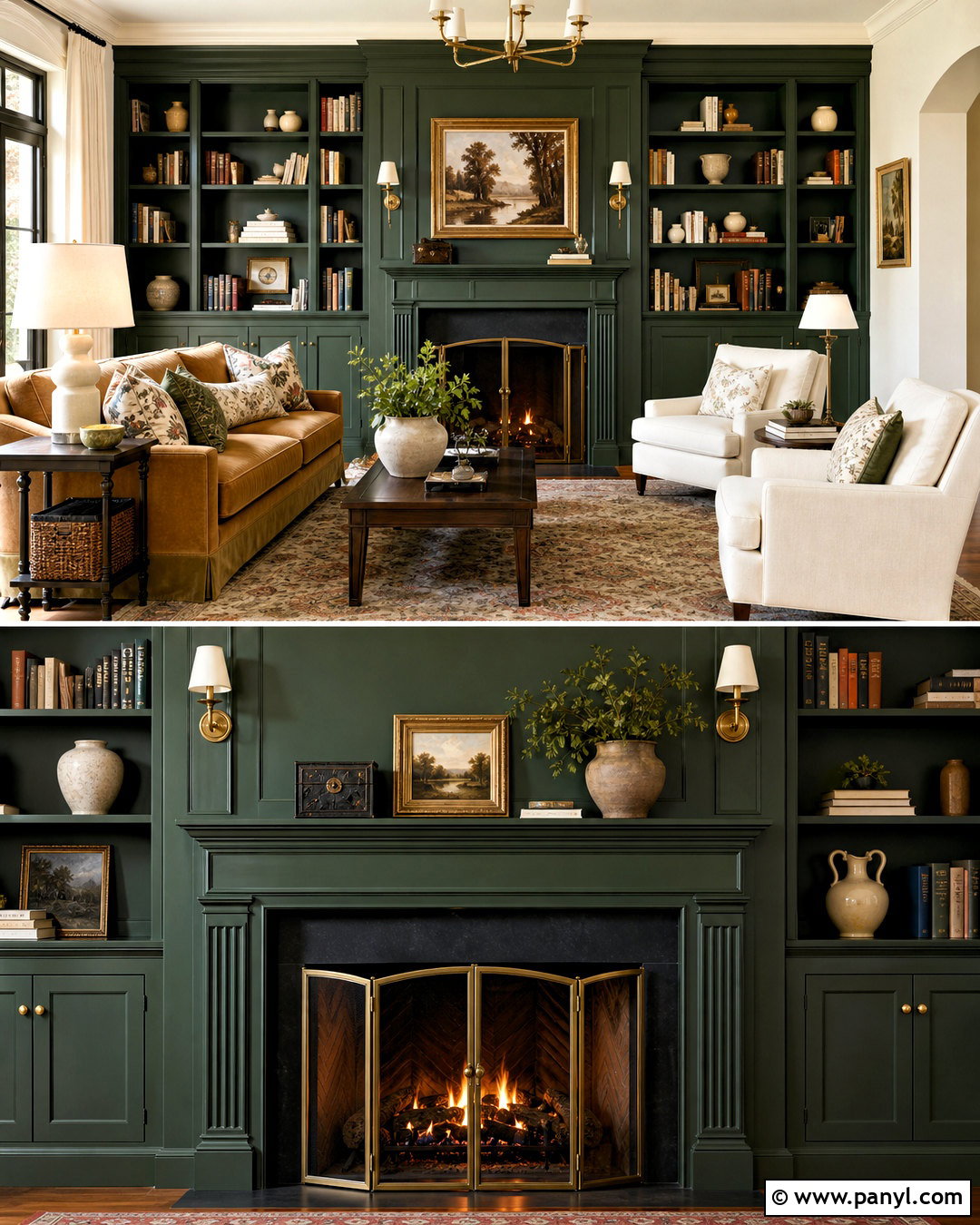
A forest green fireplace creates a deep, sophisticated focal point in a room with plenty of natural or artificial light. Carry the dark green over the fireplace surround, mantel, and adjacent built-ins for a cohesive color-drenched effect. Use soft cream on the remaining walls and warm walnut flooring underfoot. A camel velvet sofa, ivory armchairs, and a traditional rug with burgundy, green, and tan details build a rich but comfortable seating area. Add antique brass sconces and warm white lamps to keep the dark cabinetry visually balanced. Books, cream pottery, and framed artwork provide lighter accents across the shelves. This complete palette suits traditional libraries, moody family rooms, and refined living spaces while still feeling welcoming and connected to nature.
13. Terracotta Fireplace
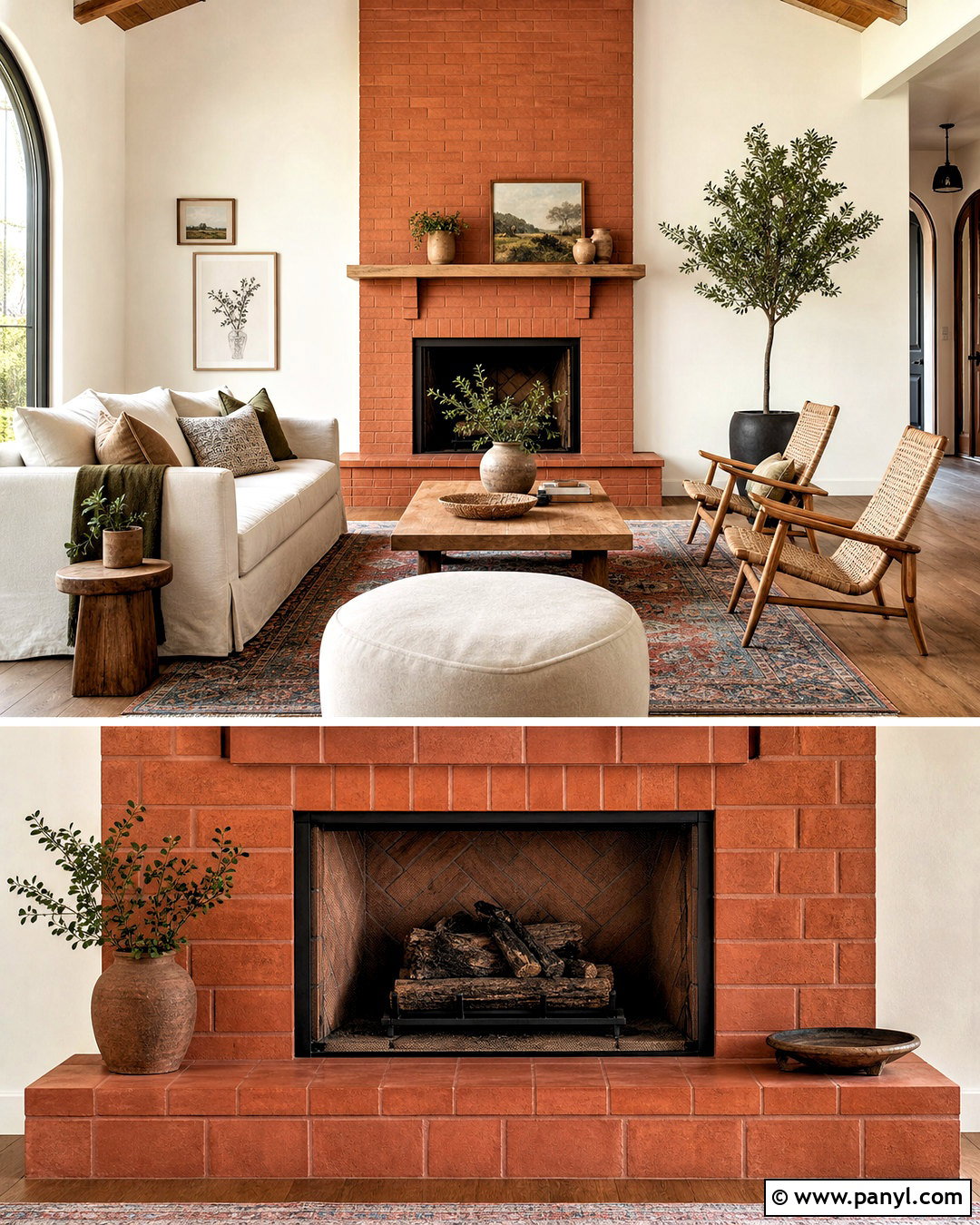
Terracotta can turn a plain fireplace into the warm heart of an earthy, relaxed living room. Select a muted red-orange clay color instead of a bright orange, and use it across the textured brick and simple mantel. Surround the feature with warm white plaster-look walls and natural oak flooring. A cream slipcovered sofa, woven lounge chairs, and a faded rust-and-blue rug establish a casual seating layout. Add a light wood coffee table, linen curtains, and handmade-looking ceramic decor. Small accents of dark olive and matte black provide contrast without competing with the fireplace. The completed palette feels sun-washed and organic, making terracotta a natural fit for Southwestern, Mediterranean, rustic, and modern bohemian rooms with plenty of tactile materials.
14. Muted Clay Fireplace
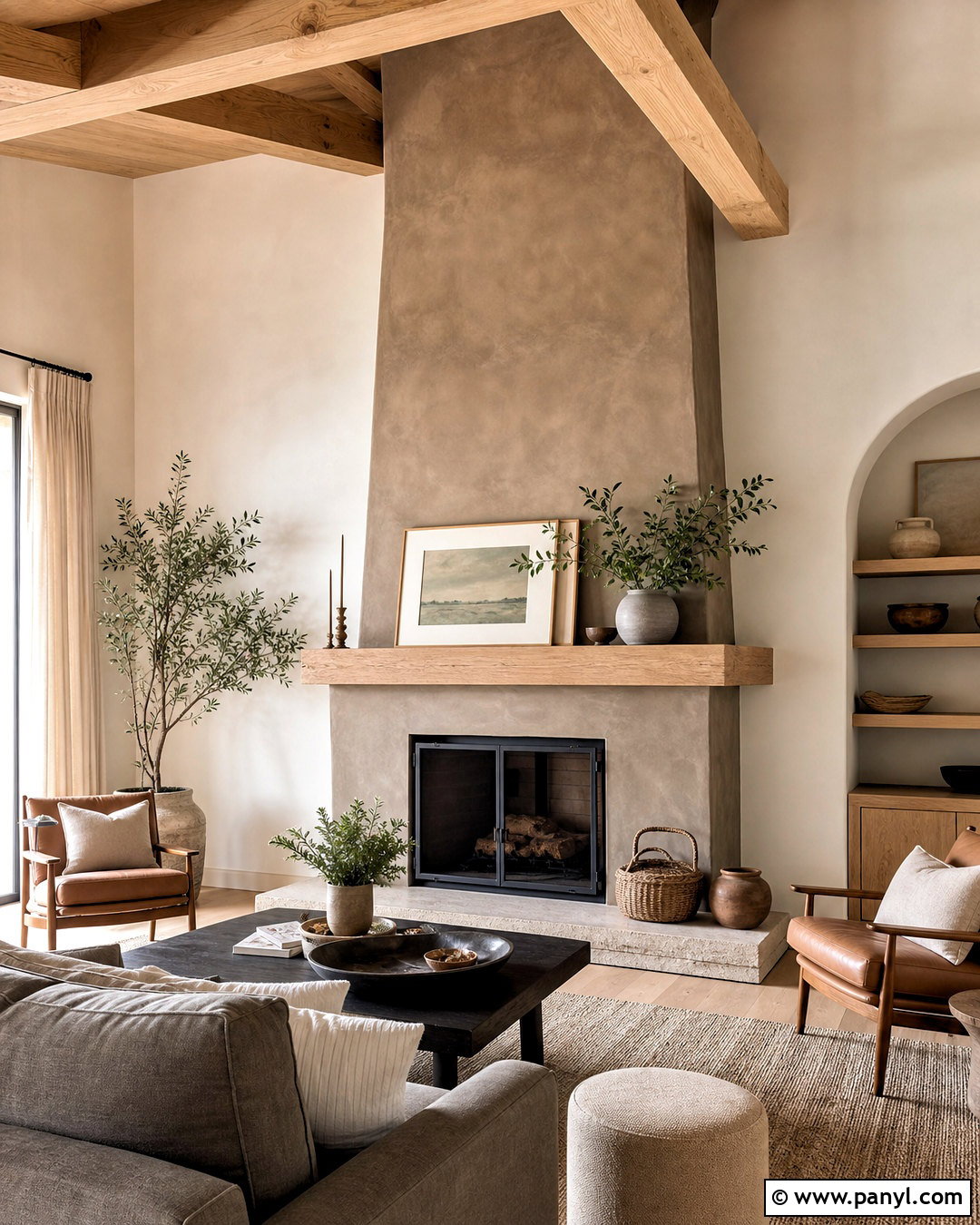
Muted clay offers warmth similar to terracotta but with a softer, dustier finish that is easier to use in everyday interiors. Paint the fireplace a pale brownish clay shade and pair it with creamy beige walls. A natural limestone hearth and light oak mantel keep the feature earthy and understated. Place a warm gray sofa opposite two tan upholstered chairs, then connect the arrangement with a vintage-style rug in clay, ivory, and faded charcoal. Black metal fireplace doors and slim black lamps give the gentle palette sharper definition. Include linen curtains, woven baskets, and a few unglazed pottery pieces to emphasize texture. This coordinated fireplace look works well in contemporary organic rooms where subtle color, comfortable furniture, and natural materials take priority.
15. Dusty Rose Fireplace
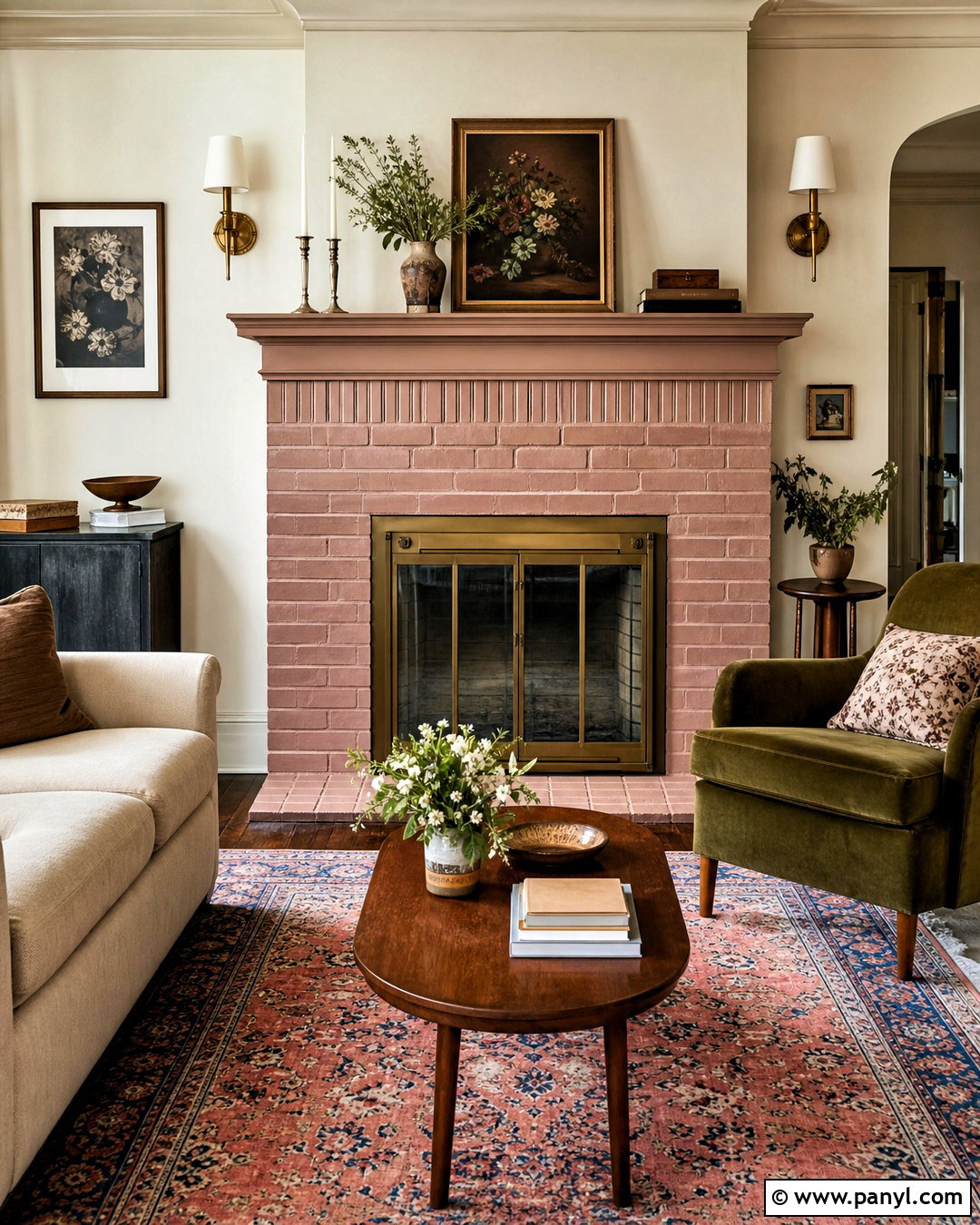
Could a pink fireplace look grown-up and versatile? A dusty rose shade with brown or gray undertones makes it possible. Apply the color to painted brick and a traditional mantel, then use warm ivory on the walls. Balance the pink with a beige sofa, walnut side tables, and two muted olive chairs. A patterned rug combining rose, cream, olive, and faded blue helps every color feel intentional. Choose aged brass sconces and dark bronze fireplace doors for warmth and definition. Above the mantel, hang an understated landscape or abstract artwork rather than overtly romantic decor. This complete room design feels distinctive without becoming overly sweet. It can work in vintage-inspired homes, eclectic living rooms, bedrooms, and cheerful reading spaces.
16. Burgundy Fireplace
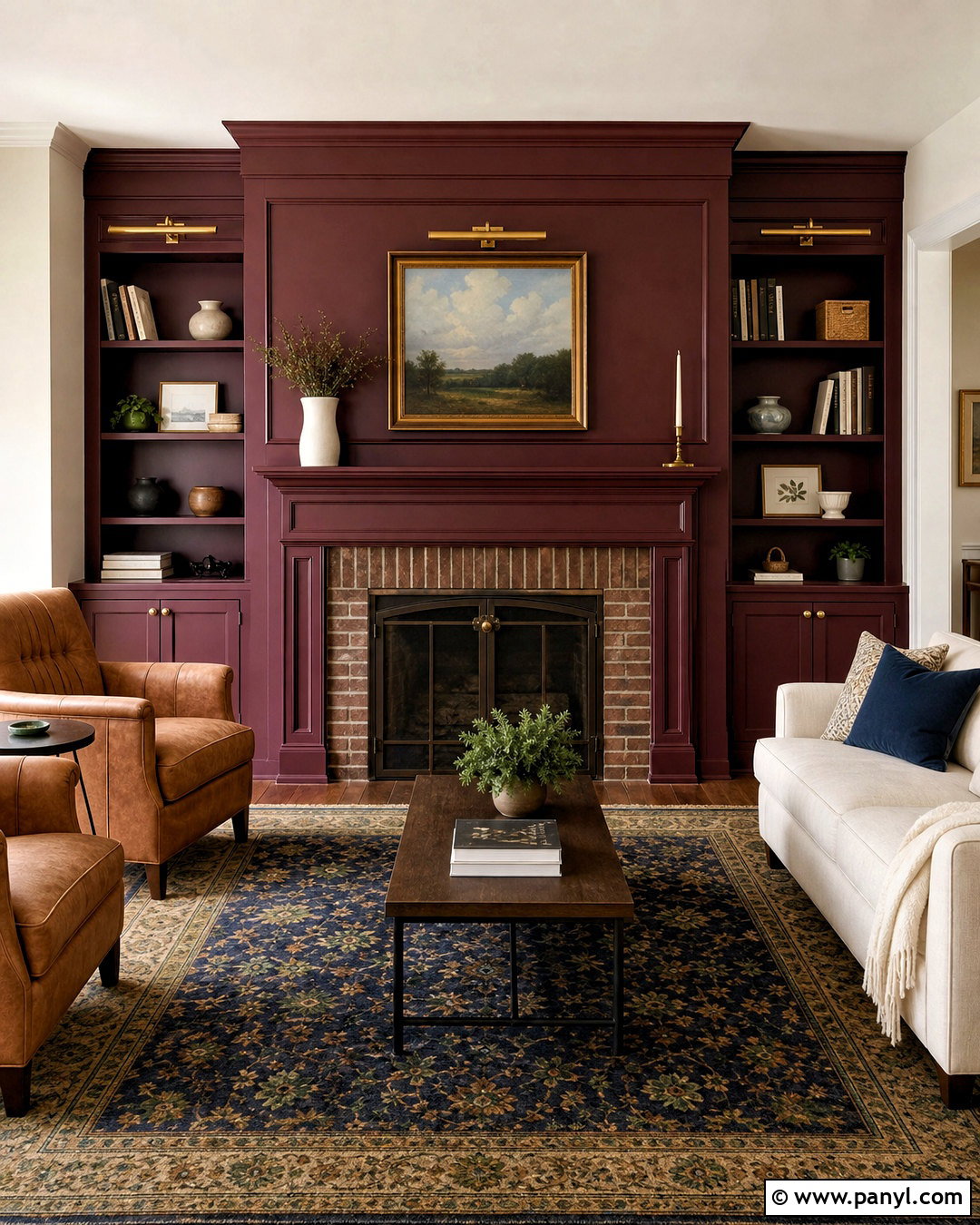
Deep burgundy gives a fireplace an enveloping sense of warmth and works especially well with traditional architectural details. Use a brown-based burgundy on the brick, mantel, and built-in cabinets, then balance it with warm cream walls. Dark walnut flooring or furniture reinforces the richness, while an ivory sofa and camel chairs keep the seating area from becoming too heavy. Add a classic rug with burgundy, navy, tan, and muted green patterning. Antique brass picture lights, bronze fireplace doors, and framed oil-style artwork complement the saturated color. Cream books and pottery can lighten the built-in shelves. The resulting room feels refined but comfortable, with the fireplace acting as the central color source rather than one of many competing statement features.
17. Mustard Yellow Fireplace
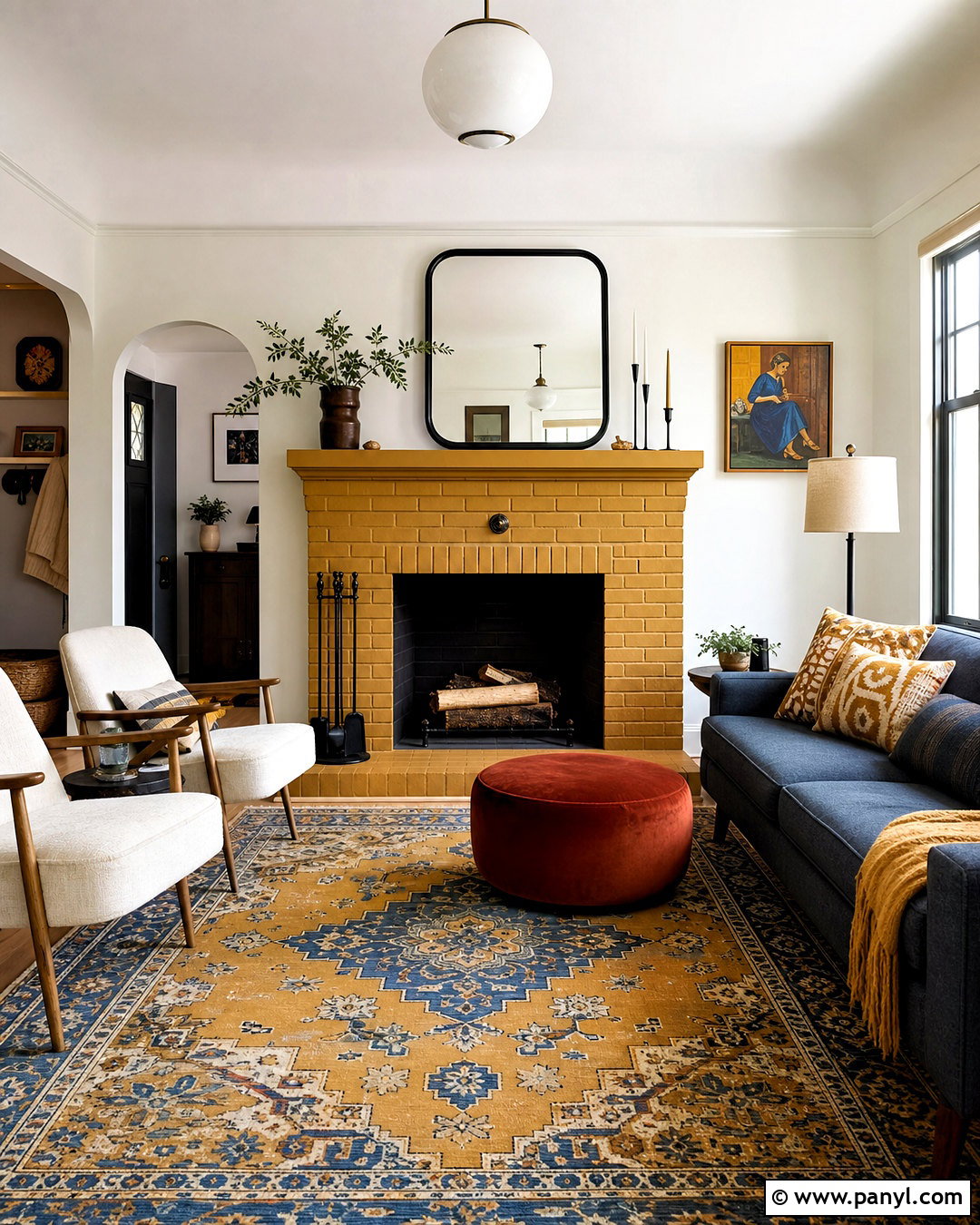
A muted mustard fireplace can bring cheerful warmth to a neutral room without looking too bright. Choose an ochre-based yellow with brown undertones and apply it to the brick surround and mantel. Keep the walls creamy white, and use medium oak floors to reinforce the golden palette. A charcoal sofa provides grounding contrast, while cream accent chairs and a rust-colored ottoman soften the arrangement. Add a patterned rug containing mustard, gray, ivory, and faded blue. Matte black fireplace doors, curtain rods, and lighting give the color a crisp outline. Finish the mantel with simple wood-framed artwork and dark ceramic vessels. This whole-room scheme feels energetic and welcoming, making it ideal for eclectic, retro, or casual family spaces.
18. Natural Red Brick Fireplace
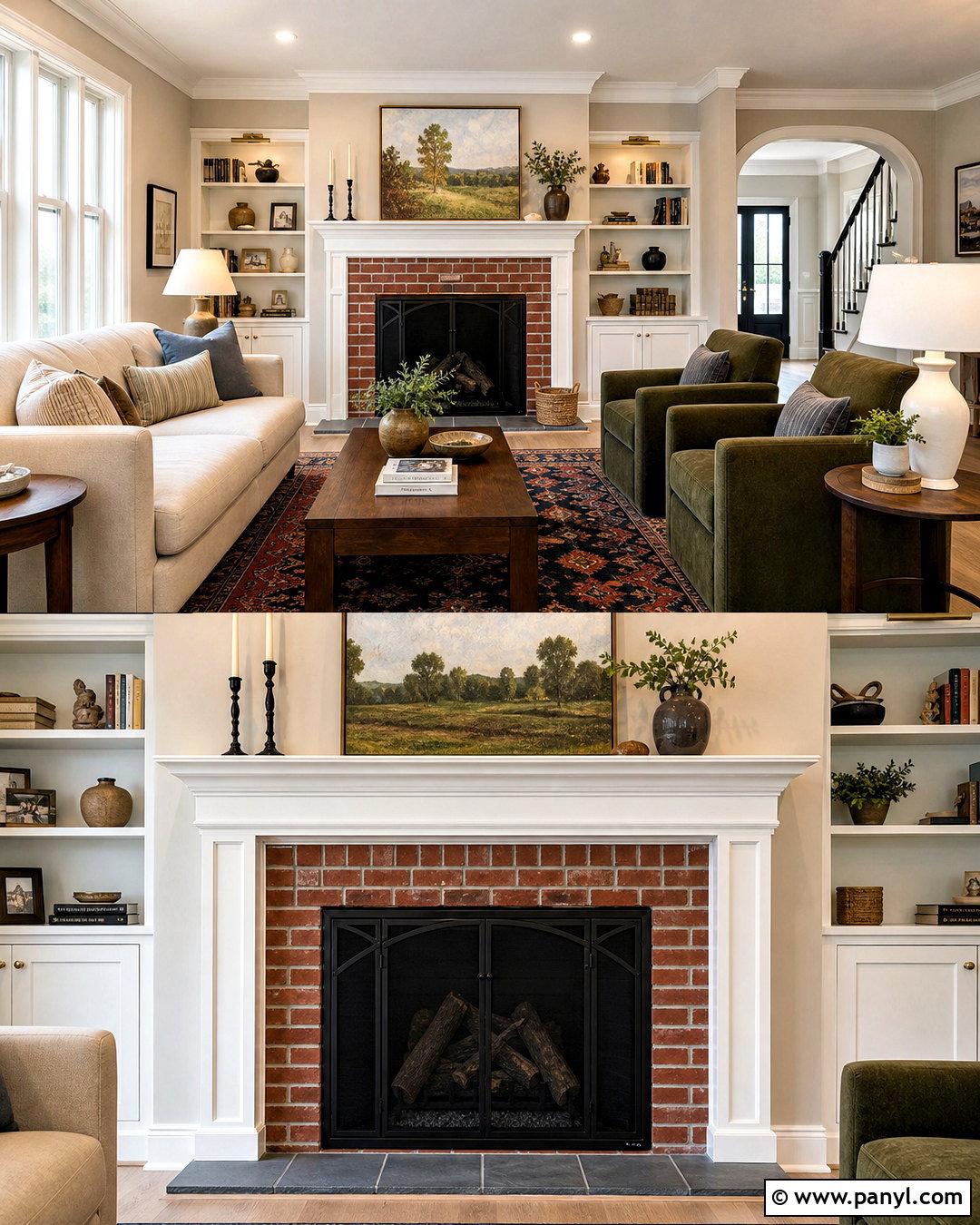
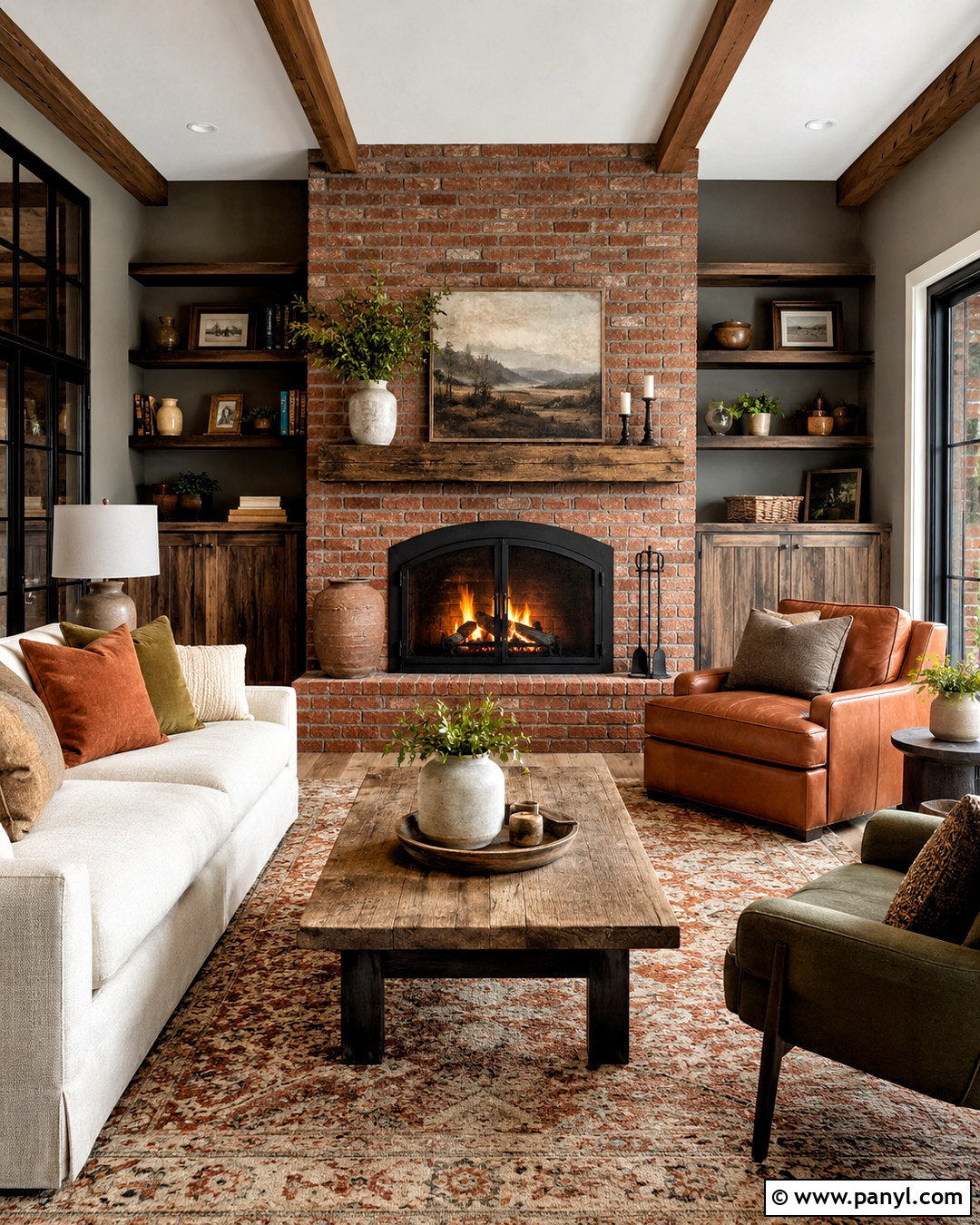
Painting is not the only way to create a strong fireplace color scheme. Clean natural red brick can become the foundation for a warm, updated room when its surrounding finishes are carefully selected. Keep the brick exposed, and add a creamy white mantel with a dark slate hearth. Paint the walls a soft warm greige to complement both the red and gray tones. Furnish the space with an oatmeal sofa, olive chairs, and medium walnut tables. A vintage rug containing brick red, navy, cream, and brown connects the fireplace to the seating area. Black fireplace doors provide a clean finish. Repeat the brick color sparingly through pillows or artwork so the room looks coordinated without becoming overly red or rustic.
19. Whitewashed Brick Fireplace
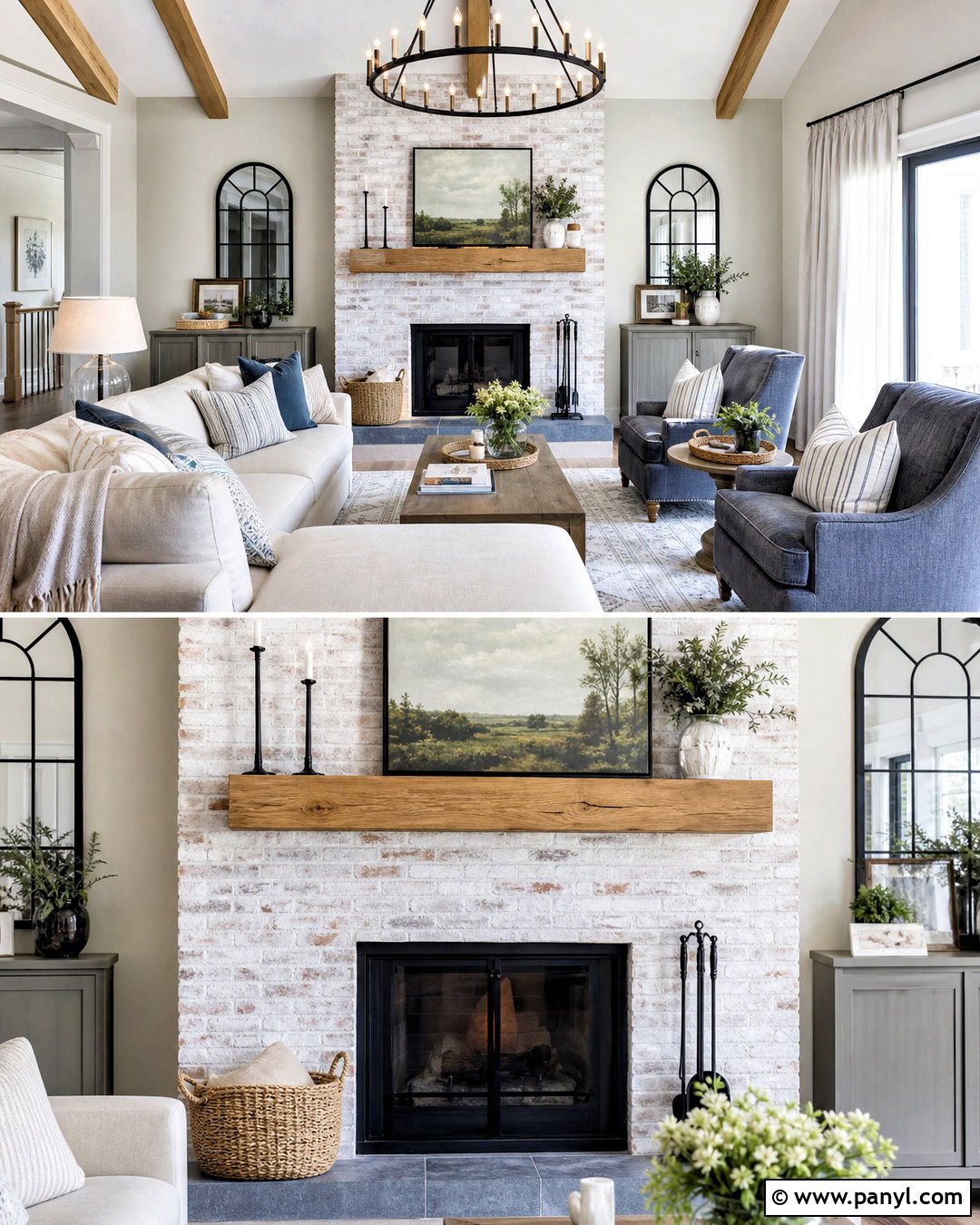
Whitewashing allows some original brick variation to remain visible while giving the fireplace a lighter appearance. Use a translucent warm white finish across the brick, letting soft red, tan, and gray tones show through unevenly. Pair it with a natural oak mantel and a charcoal stone hearth for contrast. Choose pale greige walls, warm oak floors, and a comfortable ivory sectional. Two blue-gray chairs and a faded patterned rug add quiet color to the seating area. Black fireplace doors and iron curtain rods create definition, while woven baskets and linen curtains support the relaxed texture. This complete fireplace palette suits cottages, farmhouses, and casual transitional rooms because it combines the character of aged masonry with a brighter, more flexible neutral backdrop.
20. Black And White Fireplace
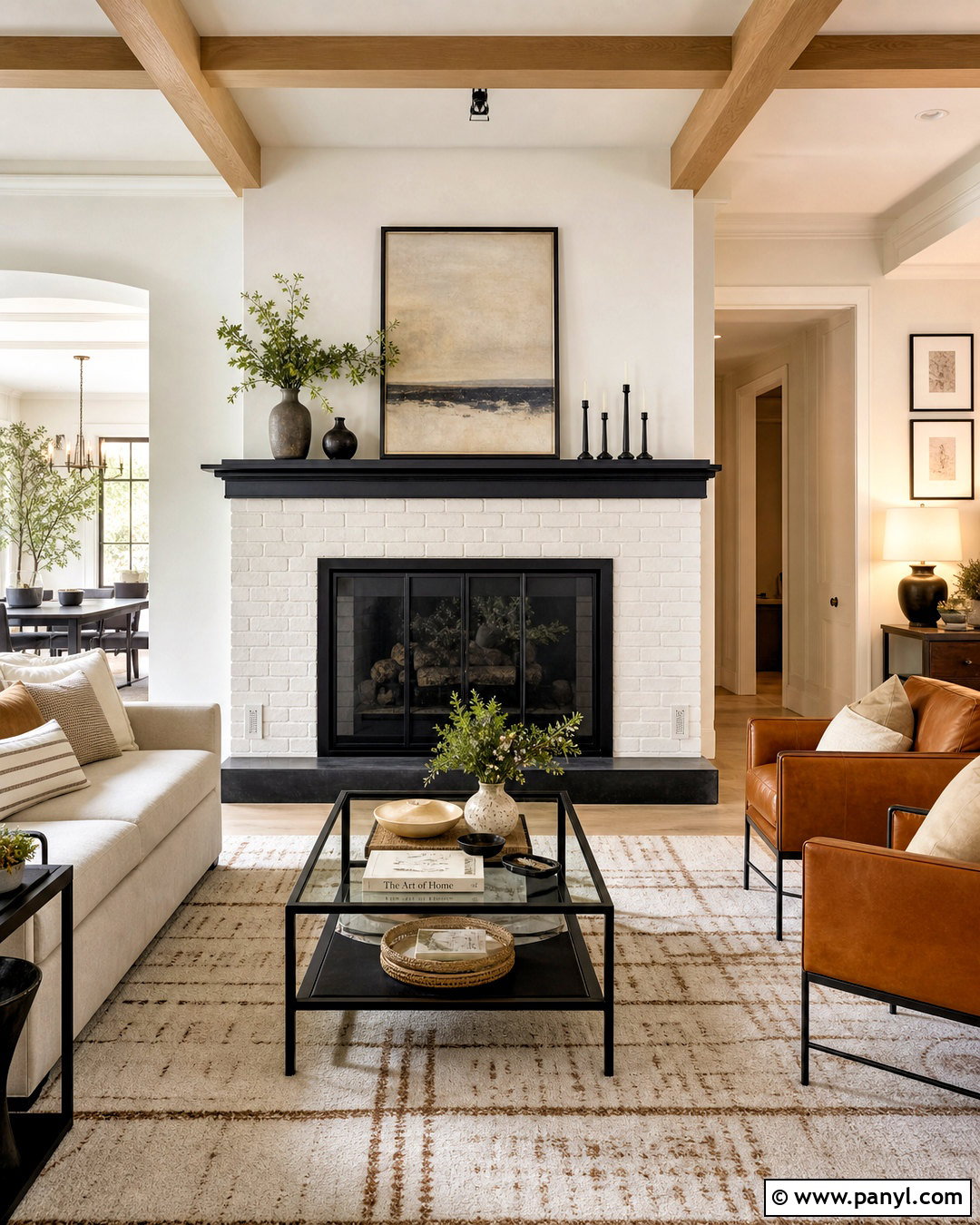
A black and white fireplace delivers clear contrast while remaining adaptable to many decorating preferences. Paint the brick surround crisp warm white, then use matte black on the mantel, firebox doors, and raised hearth. Continue warm white across the walls so the fireplace feels connected to the architecture. Add light oak flooring, a beige sofa, and two cognac leather chairs to prevent the scheme from becoming stark. A graphic rug in black, ivory, and tan defines the seating area. Repeat black through a simple chandelier, coffee table, and artwork frames. Use natural wood and greenery as softening elements. The completed look feels balanced, graphic, and timeless, with enough warmth to support everyday family living rather than resembling a formal display.
Conclusion:
The best fireplace color should connect the hearth to the room’s furniture, flooring, walls, and natural light. Warm white, cream, greige, and light gray provide flexible backgrounds, while charcoal, black, navy, and forest green create stronger focal points. Earthy shades such as sage, terracotta, clay, and olive can make the space feel more relaxed and inviting. Before painting brick, stone, tile, or wood, clean and prepare the material carefully, then select coatings appropriate for the surface and nearby heat levels. Test several samples beside your existing finishes before making a final choice. With these 20 fireplace color ideas, you can build a complete, coordinated room rather than simply changing one isolated feature.

Related Ideas and Inspiration:
Leave a Reply