
A well-chosen accent wall can give a living room focus, depth, and personality without requiring a full renovation. These 20 living room accent wall color ideas cover calming greens, warm earth tones, classic blues, rich neutrals, and expressive statement shades. Current color directions favor muted teals, grounded greens, dusty pinks, chocolate browns, and other earthy hues that feel comfortable rather than overly bright. () For the most balanced result, place the accent color behind the sofa, fireplace, media console, or another natural focal point. Repeat the shade through pillows, artwork, or small accessories, but keep the remaining walls quieter. The complete room schemes below make it easier to recreate these 20 living room accent wall color ideas.

1. Navy Blue Living Room Accent Wall
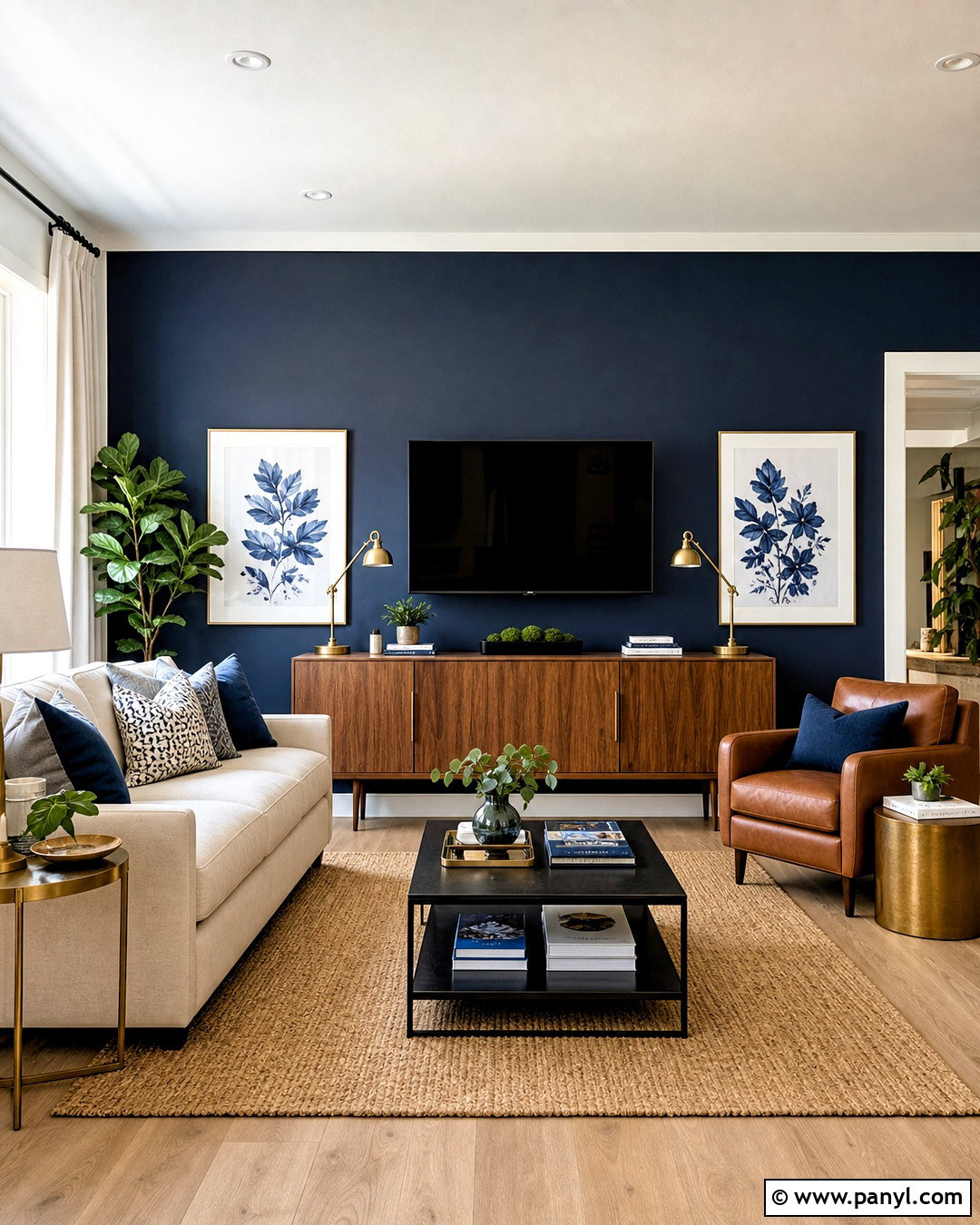
A navy blue accent wall creates a strong focal point while still feeling classic and easy to decorate around. Place it behind a cream sofa or a low walnut media console so the furniture stands out clearly. Paint the remaining walls warm white rather than stark white to soften the contrast. A light oak floor, natural jute rug, and caramel leather chair bring warmth into the scheme. Add brushed brass lamps, blue-and-white artwork, and a few patterned pillows that repeat navy in smaller amounts. This complete look works especially well in traditional, coastal, and transitional living rooms. If the room receives limited sunlight, choose a navy with a slightly softened or gray undertone so the wall does not appear nearly black.
2. Forest Green Living Room Accent Wall
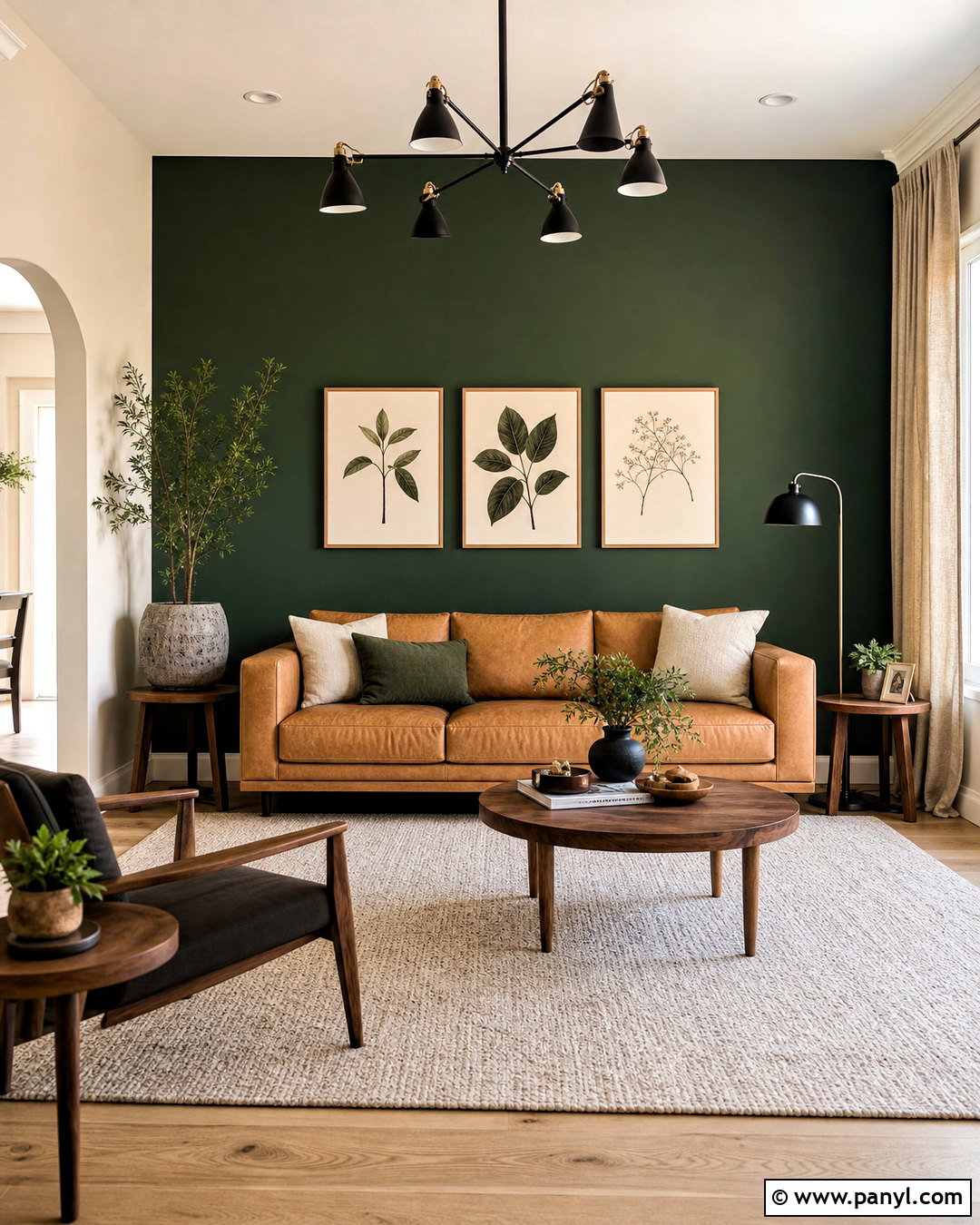
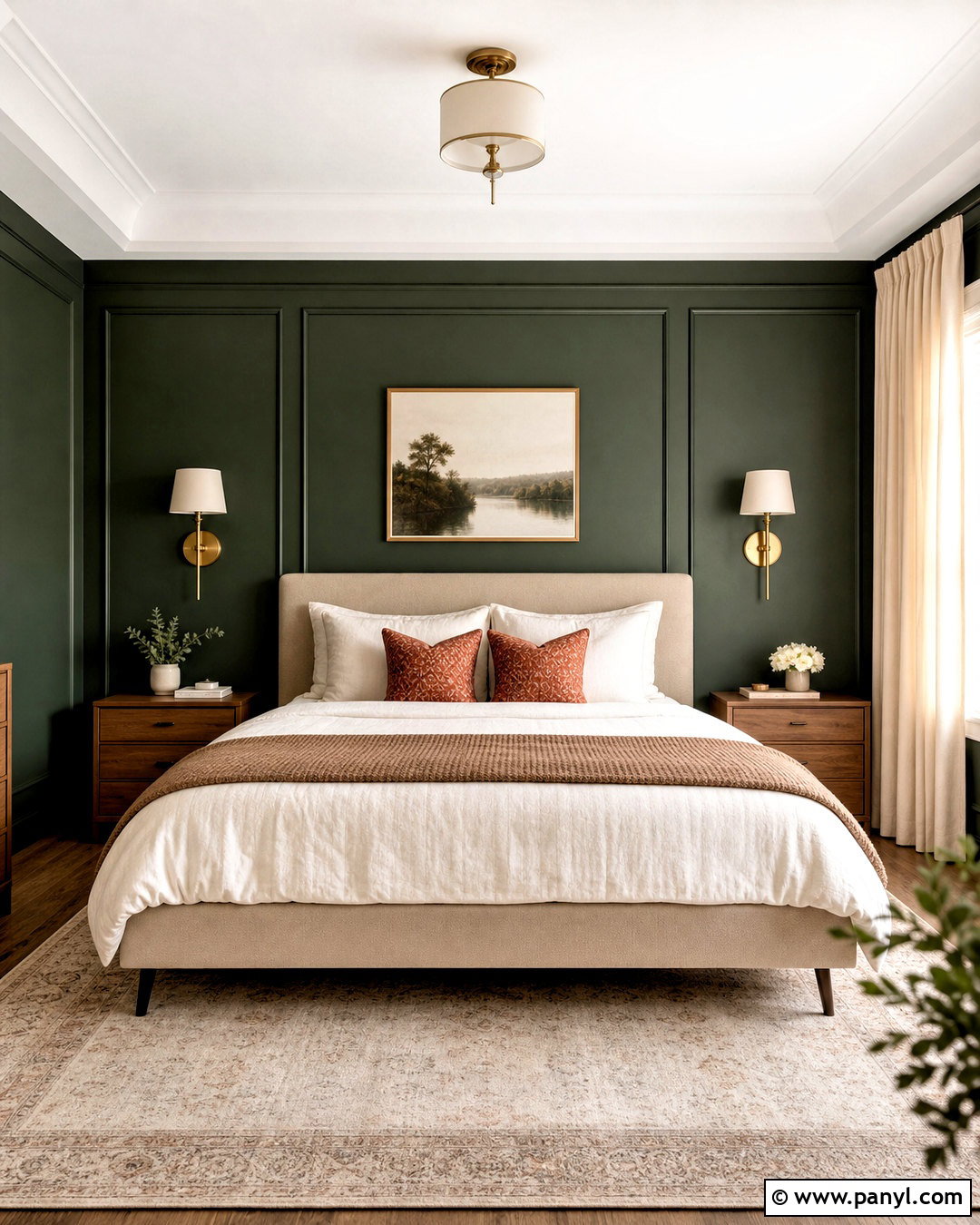
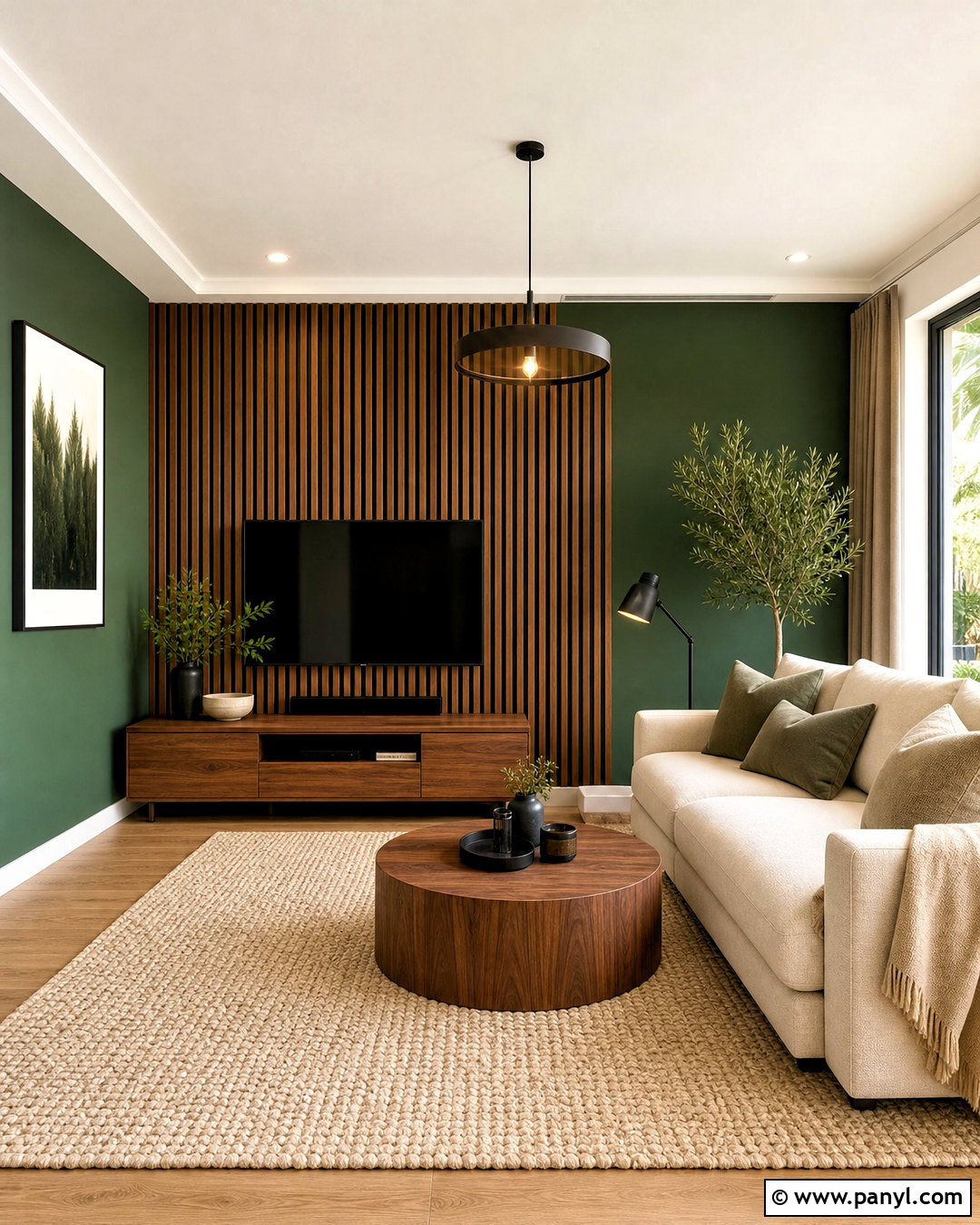
Deep forest green can make an ordinary living room feel grounded, comfortable, and connected to nature. Use it on the wall behind a camel leather sofa, then balance its richness with creamy surrounding walls and medium-toned oak flooring. A beige wool rug, linen curtains, and warm wood tables keep the room from becoming too dark. Introduce black metal through a floor lamp or slim picture frames for definition. Botanical artwork and textured pillows in moss, tan, and ivory reinforce the natural palette without making the theme too literal. This accent wall color suits rooms with generous daylight, especially those facing a yard or garden. For evening warmth, use layered lighting instead of relying on one bright ceiling fixture.
3. Sage Green Living Room Accent Wall
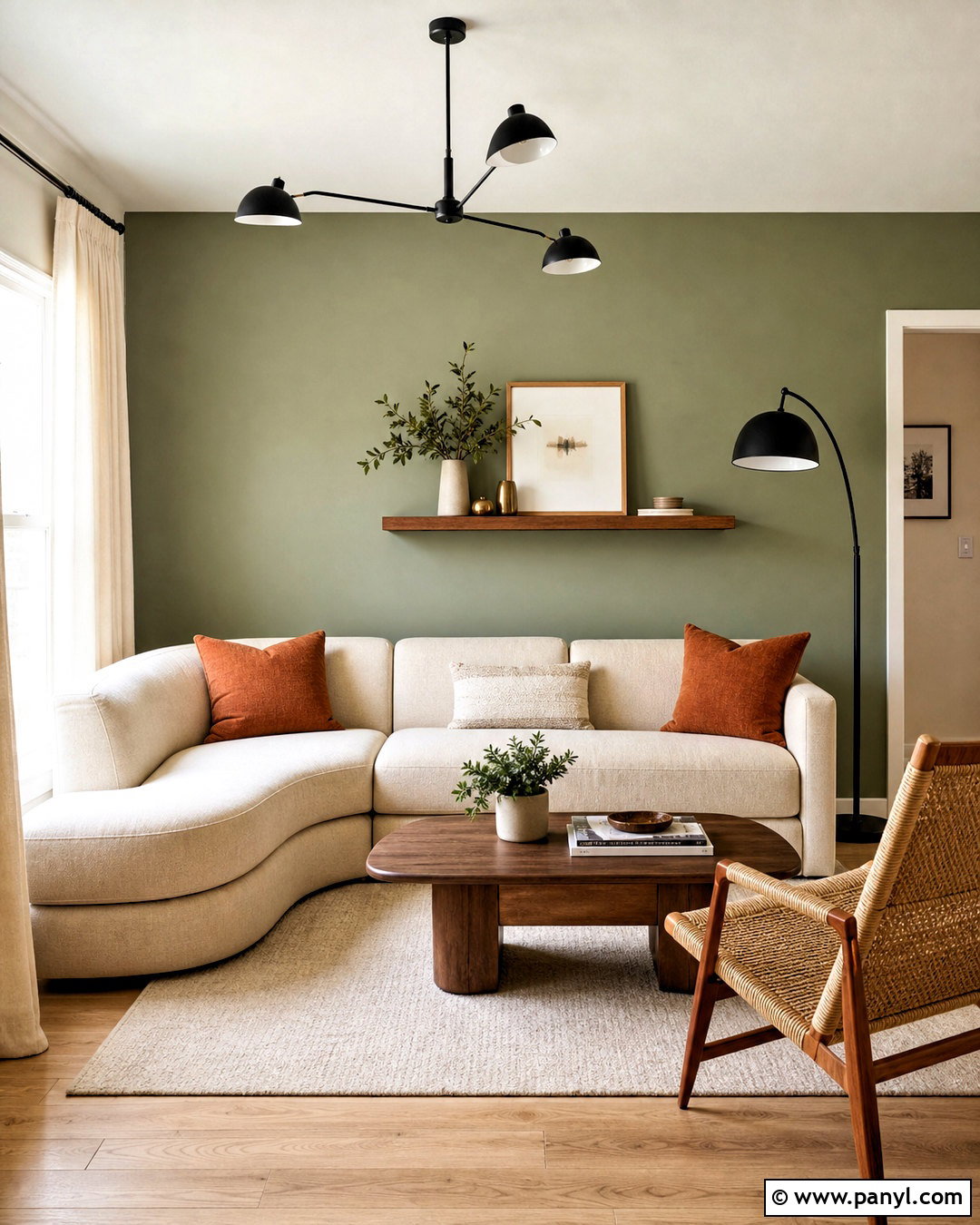
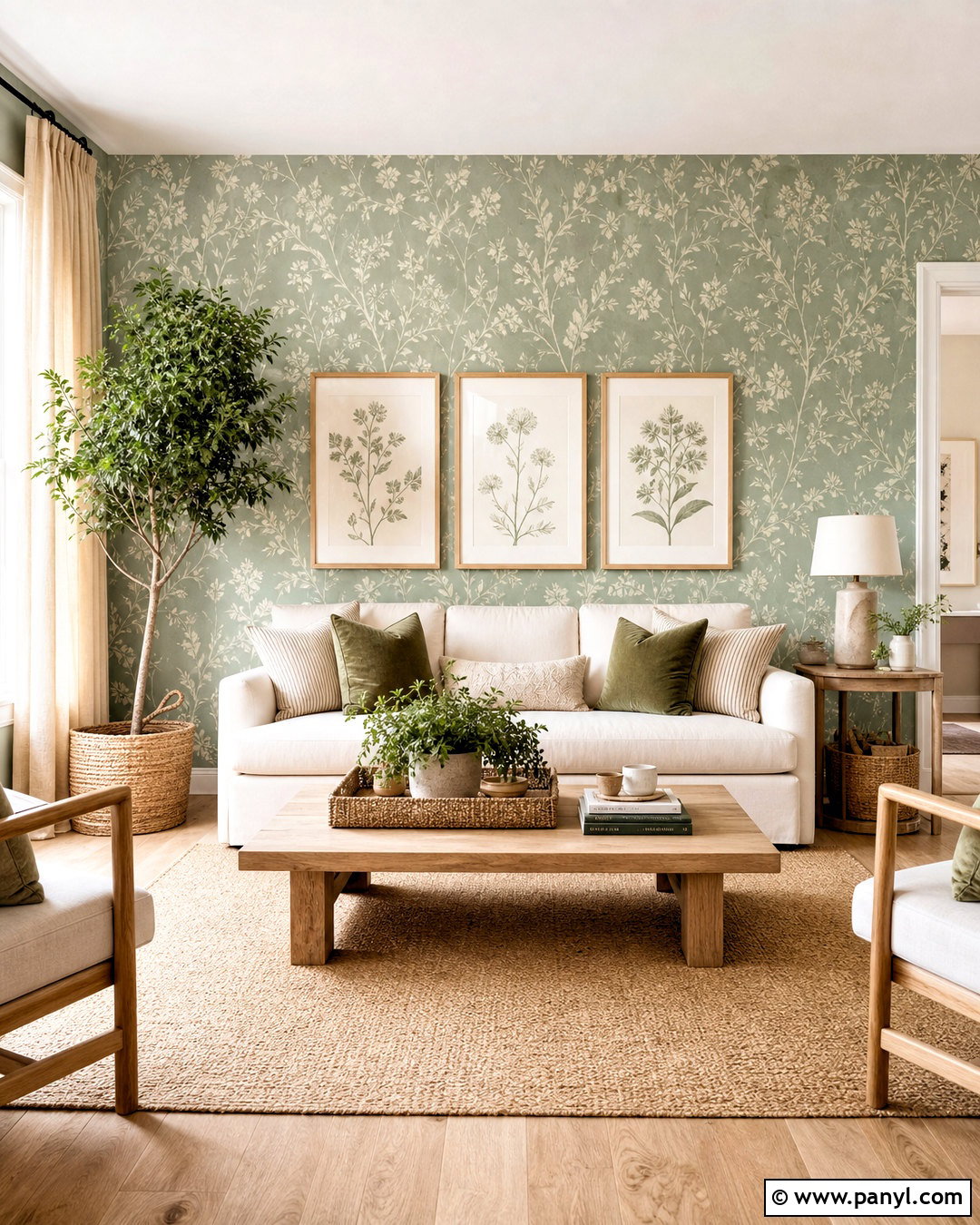
Soft sage green gives a living room gentle color without overpowering neutral furniture. Paint the main sofa wall sage, and surround it with warm white walls, pale oak flooring, and simple cream window treatments. Choose a light beige sofa with rounded edges, then add a walnut coffee table and woven side chair for natural contrast. Pillows in muted rust, ivory, and deeper green help connect the accent wall to the seating area. Black picture frames or a matte black floor lamp provide a small amount of structure. This complete scheme is ideal for smaller rooms because sage reflects more light than darker greens. Select a muted shade with gray undertones for a calm, modern finish that remains attractive across changing seasons.
4. Olive Green Living Room Accent Wall
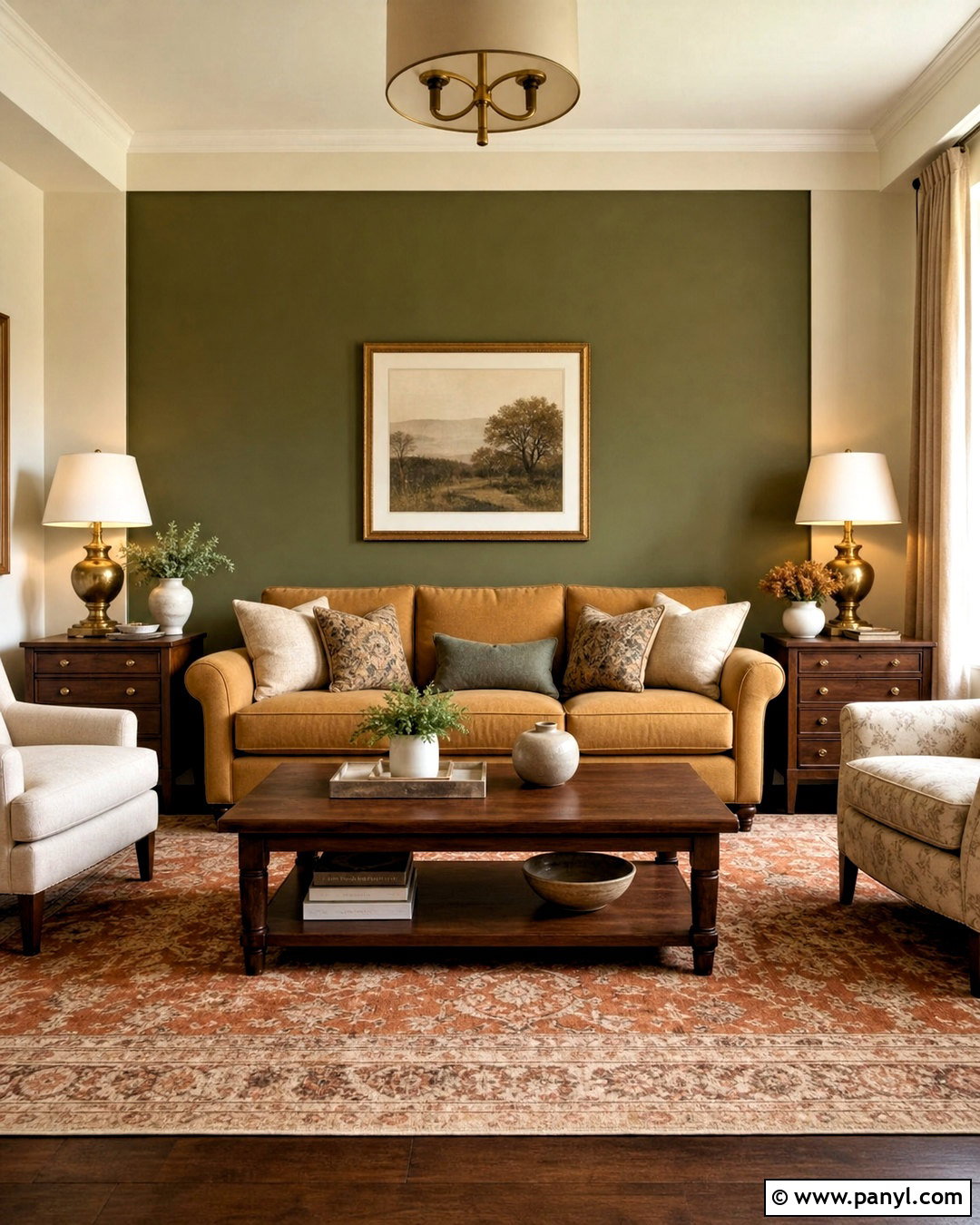
An olive green accent wall feels warmer and earthier than sage, making it a smart partner for vintage wood furniture and layered textiles. Position the color behind a tan sofa or fireplace, then paint the other walls a soft creamy beige. Use a faded patterned rug with touches of rust, brown, and muted gold to build a cohesive foundation. Walnut tables, aged brass lighting, and oatmeal curtains give the room an inviting, collected appearance. Avoid pairing olive with too many cool gray pieces, which can make the palette feel disconnected. Instead, repeat olive through one or two pillows and add ceramics in warm off-white. The finished room works beautifully in relaxed traditional, organic modern, and midcentury-inspired homes.
5. Muted Teal Living Room Accent Wall
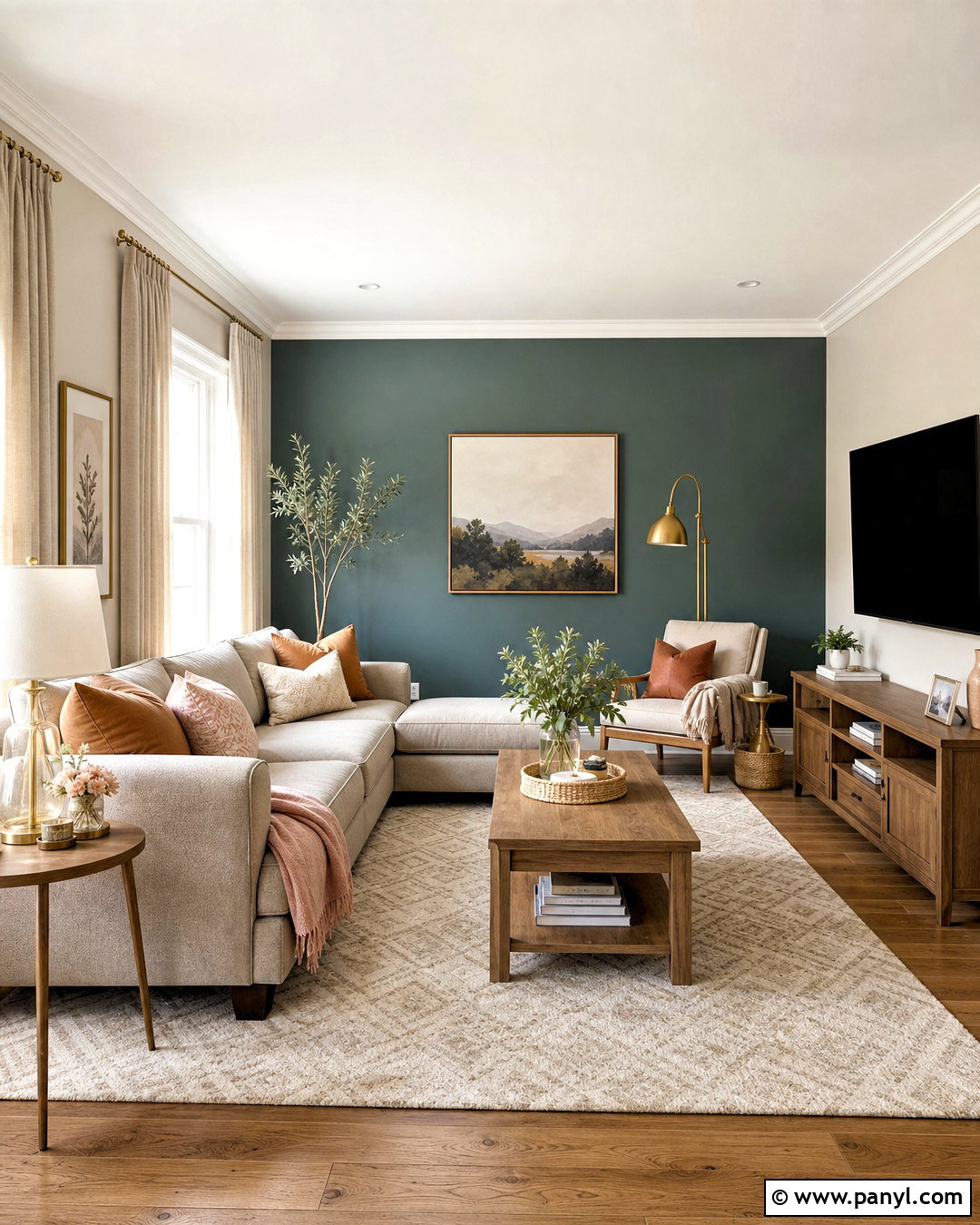
Muted teal combines the restful quality of blue with the organic character of green. Use it behind a warm gray sectional, built-in media unit, or streamlined fireplace to give the living room a clear visual anchor. Keep adjacent walls light greige and choose medium oak furniture to complement the shade’s blue-green depth. A cream rug with a subtle geometric pattern brightens the floor, while caramel pillows and dusty pink accents add warmth. Brass or bronze fixtures look softer beside teal than bright chrome. Choose curtains close to the surrounding wall color so the windows remain visually open. This complete living room feels colorful yet livable because every bold element is balanced by comfortable neutrals and restrained decorative details.
6. Charcoal Gray Living Room Accent Wall
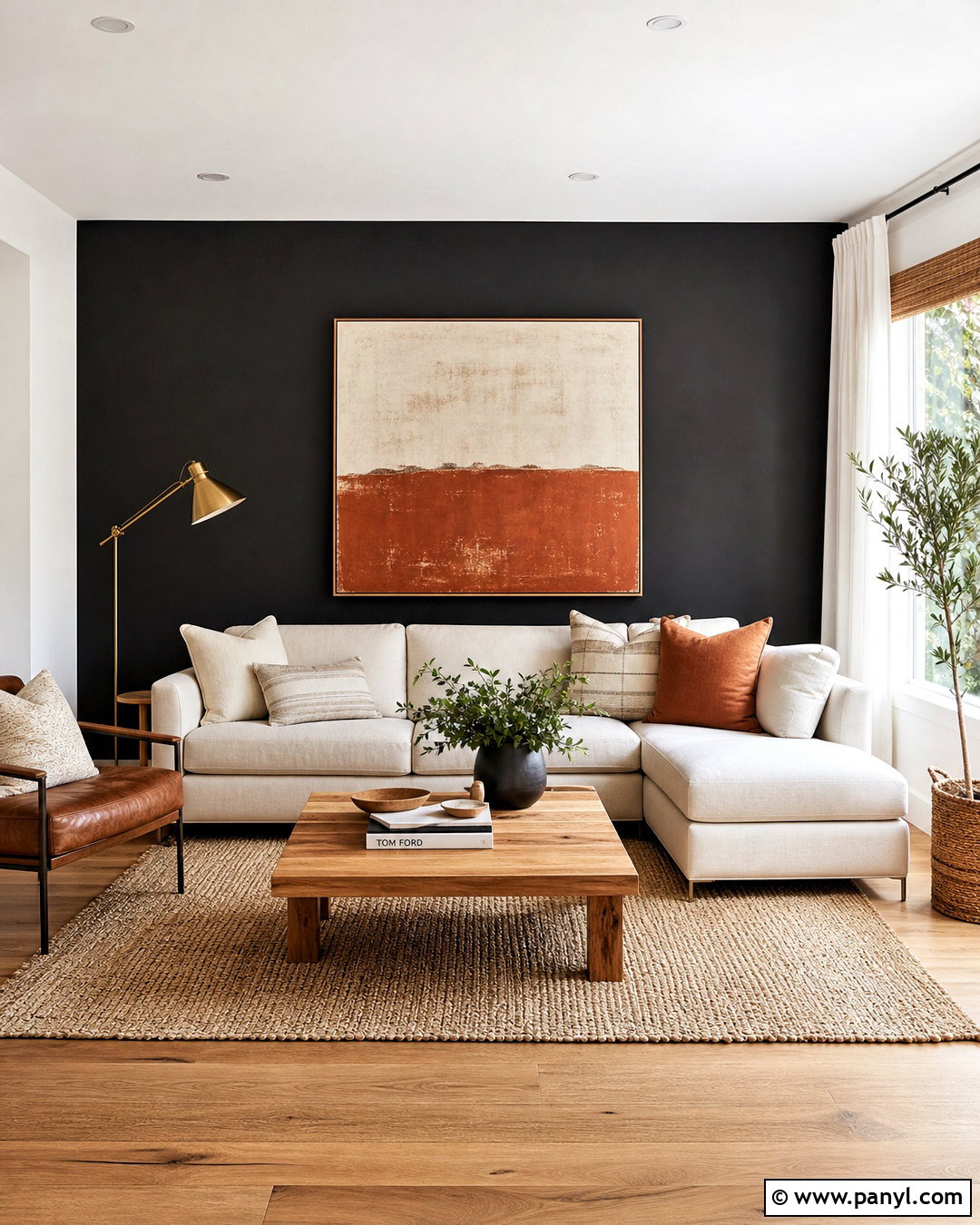
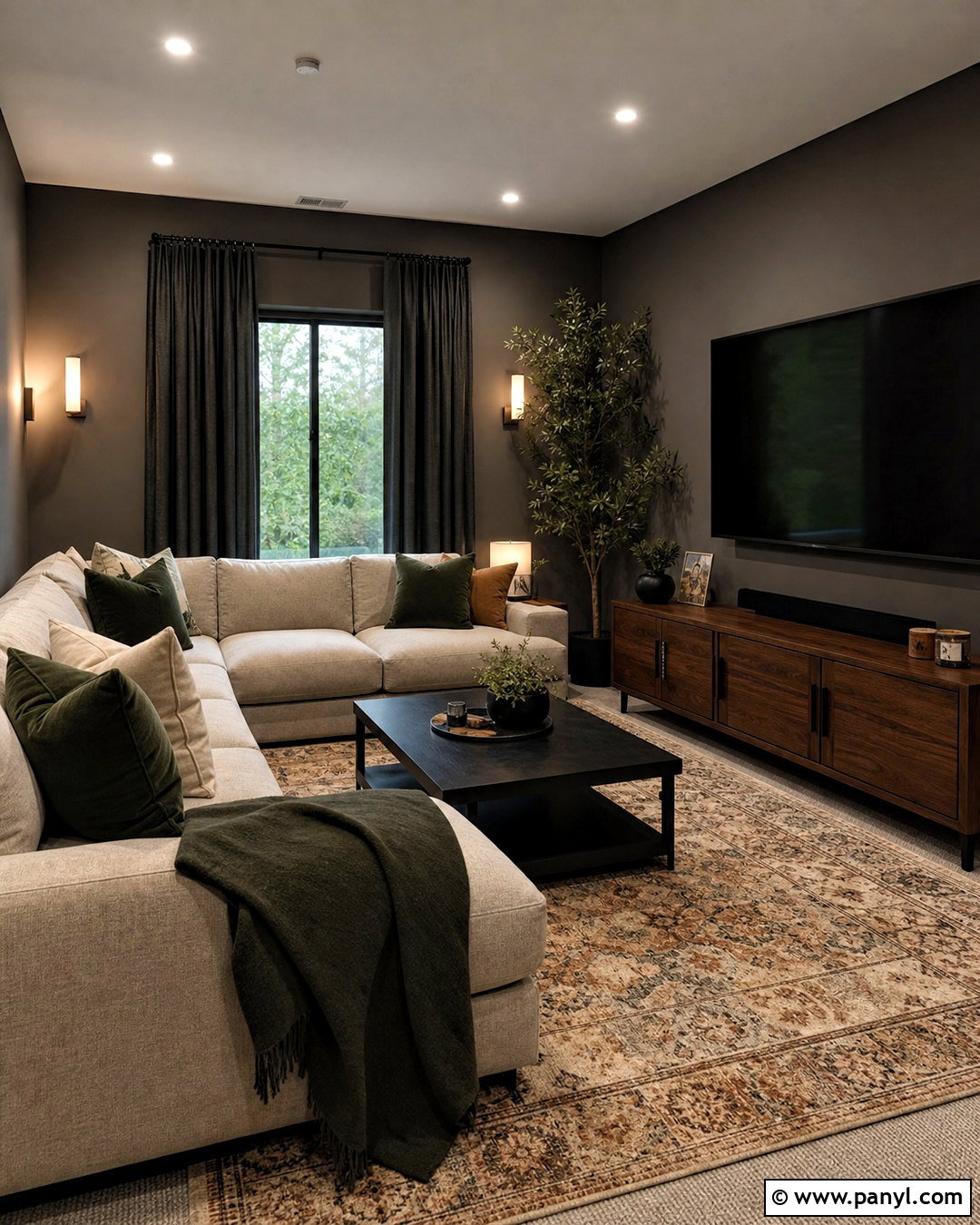
Charcoal gray can create a sophisticated backdrop when the rest of the living room includes enough warmth and texture. Paint the wall behind a pale oatmeal sofa, then use soft white on the remaining walls and ceiling. Introduce warmth through a natural oak coffee table, cognac leather chair, and woven tan rug. Large artwork with cream, rust, and muted black details prevents the dark wall from appearing empty. Add linen curtains and several textured pillows rather than filling the space with more gray. Brushed brass lighting can lift the palette, while matte black accents provide a clean connection to the wall. This scheme works particularly well in contemporary rooms with large windows, open layouts, and simple architectural lines.
7. Soft Black Living Room Accent Wall
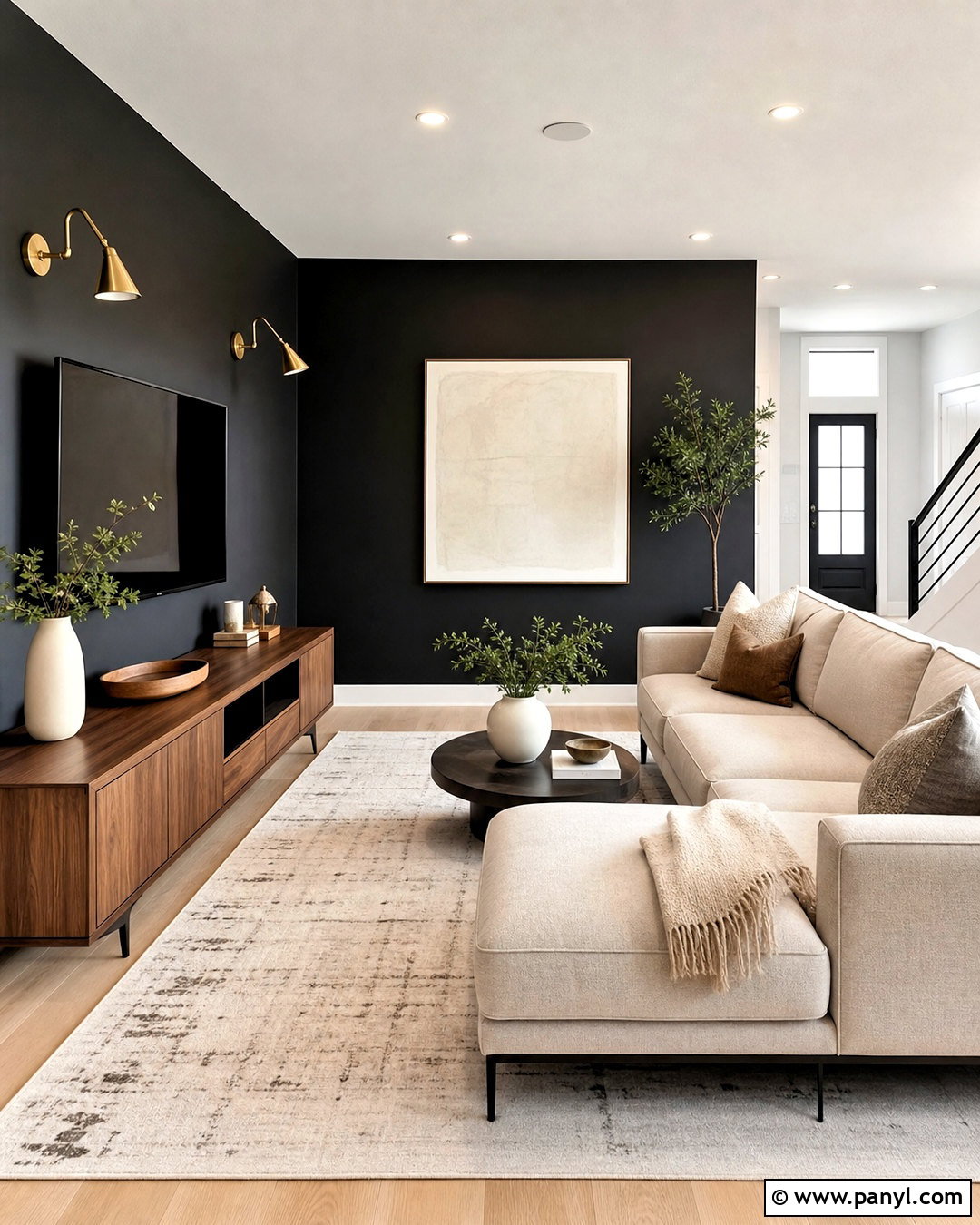
A soft black accent wall creates drama without the harshness of a pure, blue-based black. Choose a slightly warm charcoal-black finish for the fireplace or television wall, and keep the remaining surfaces creamy white. A light greige sectional, pale wood floor, and large ivory rug will make the room feel balanced rather than heavy. Use walnut shelving or a wood media console to introduce warmth against the dark background. Sculptural white ceramics, brass sconces, and oversized neutral artwork add dimension without clutter. Repeat black through narrow furniture legs and curtain rods, but avoid using it on every accessory. The finished look feels bold and modern while remaining approachable enough for a normal family living room.
8. Terracotta Living Room Accent Wall
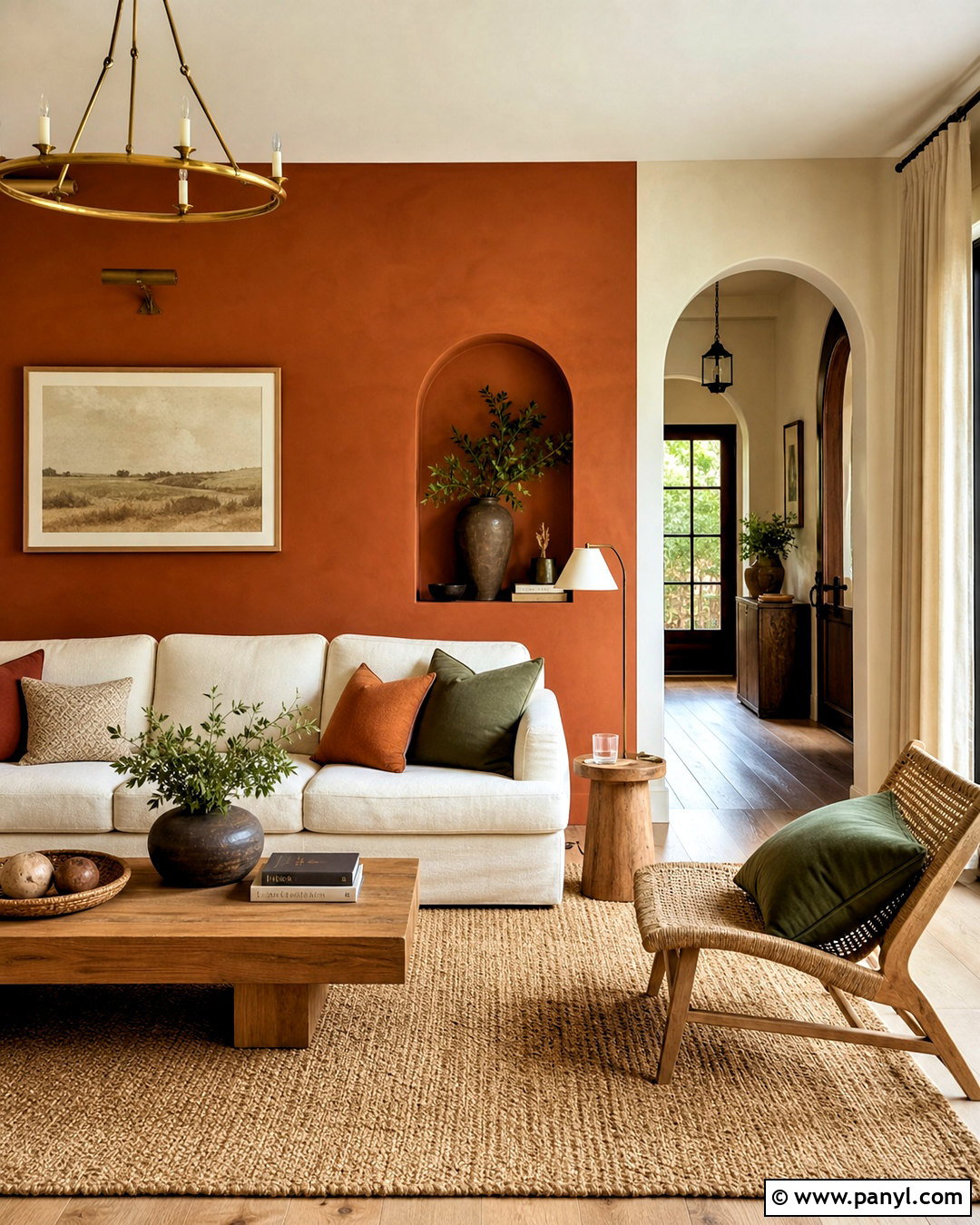
Warm terracotta gives a living room a sun-baked, welcoming character that works especially well with natural materials. Paint the wall behind a cream linen sofa, then use warm off-white on the surrounding walls to keep the room bright. A jute rug, oak tables, woven chair, and clay-colored pillows build a layered desert-inspired palette. Add muted green through a few cushions or leafy plants for balanced contrast. Linen curtains in sand or oatmeal soften the windows and prevent the room from feeling overly themed. Choose aged brass or dark bronze lighting instead of cool silver finishes. This complete design suits bohemian, Mediterranean, Southwestern, and organic modern spaces while still feeling polished, functional, and comfortable for everyday use.
9. Burnt Orange Living Room Accent Wall
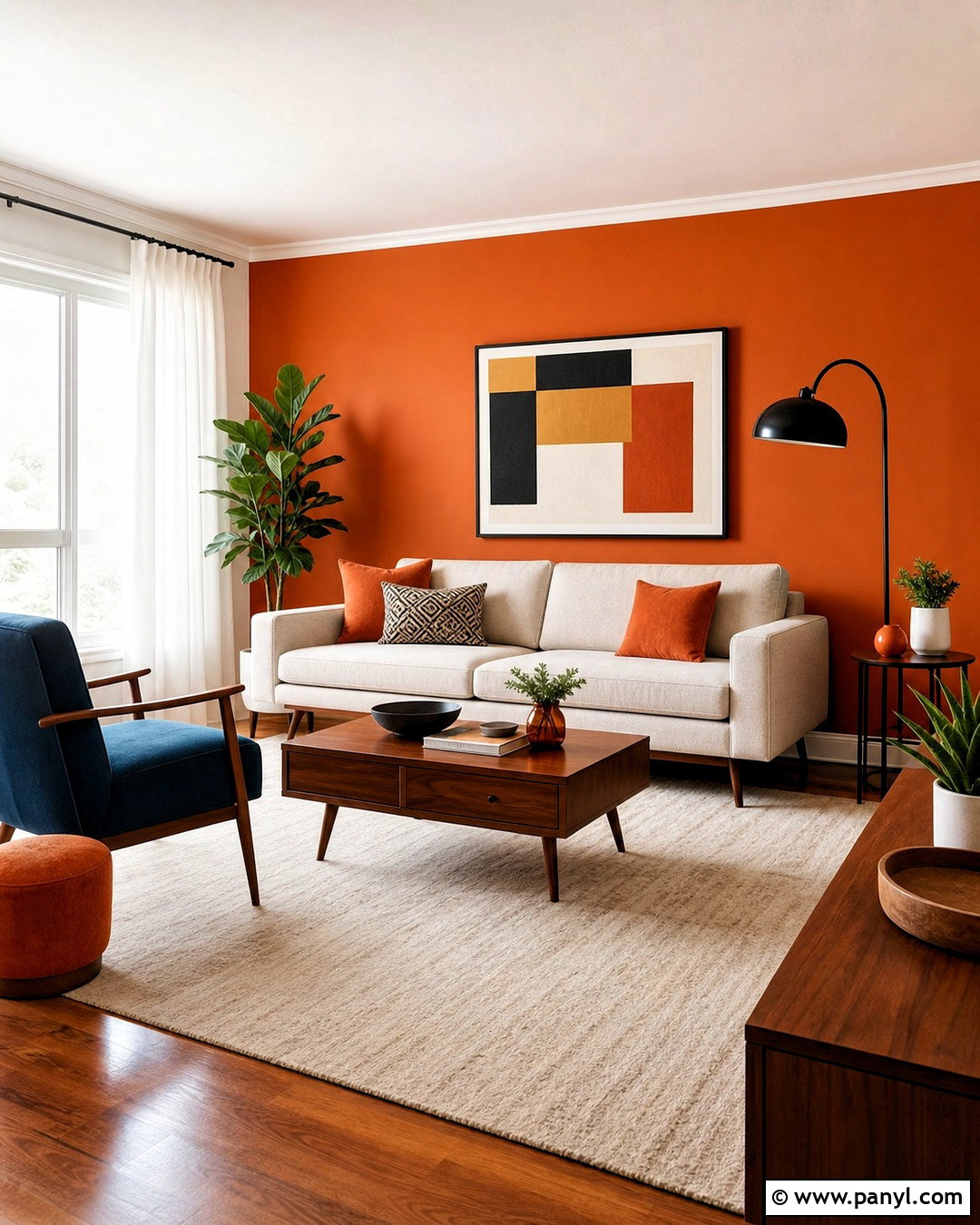
Burnt orange brings energy to a living room, but its brown undertone keeps it more usable than vivid orange. Apply it behind a neutral sofa or low bookcase, then select light beige for the remaining walls. A deep blue lounge chair creates a complementary contrast, while a cream rug and walnut coffee table visually settle the room. Repeat the orange through a patterned pillow or a small ceramic accessory rather than matching every decorative item. Use simple white curtains to preserve natural light, especially in a smaller space. Black metal lighting adds crisp structure to the warm color scheme. This coordinated look feels cheerful and retro-inspired, making it a strong choice for midcentury or eclectic living rooms.
10. Rust Living Room Accent Wall
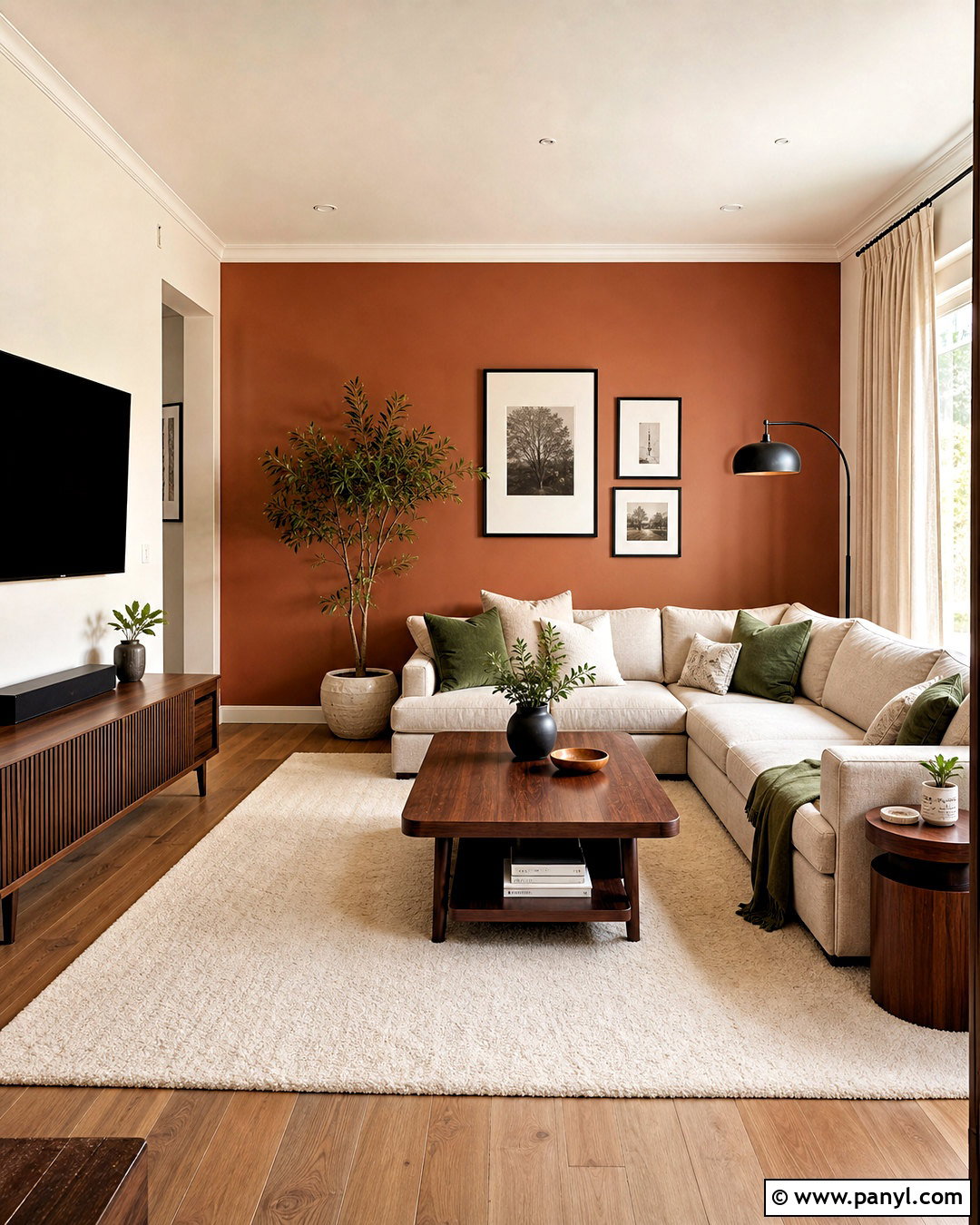
A rust accent wall delivers the warmth of red and orange in a subdued, earthy form. It looks particularly rich behind a beige sectional, built-in shelves, or a simple wood-burning fireplace. Surround the wall with warm white paint and use an ivory wool rug to create breathing room. Dark walnut furniture, olive green pillows, and linen curtains give the palette a refined natural quality. A few black accents, such as picture frames or a slim floor lamp, keep the room from looking overly rustic. Select artwork containing cream, rust, and muted green so the accent wall feels connected to the entire space. The resulting living room is cozy, mature, and well suited to both traditional and contemporary furniture.
11. Burgundy Living Room Accent Wall
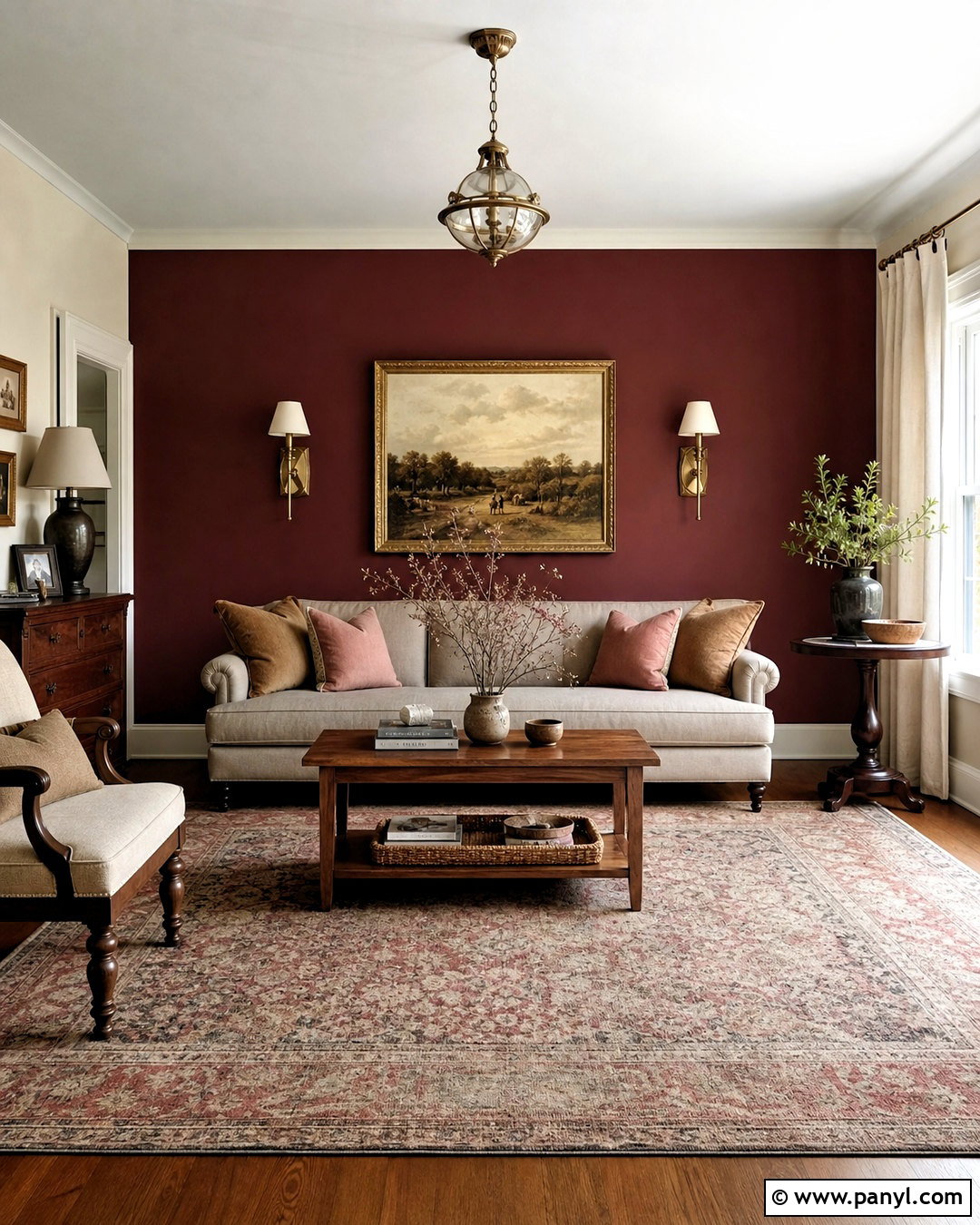
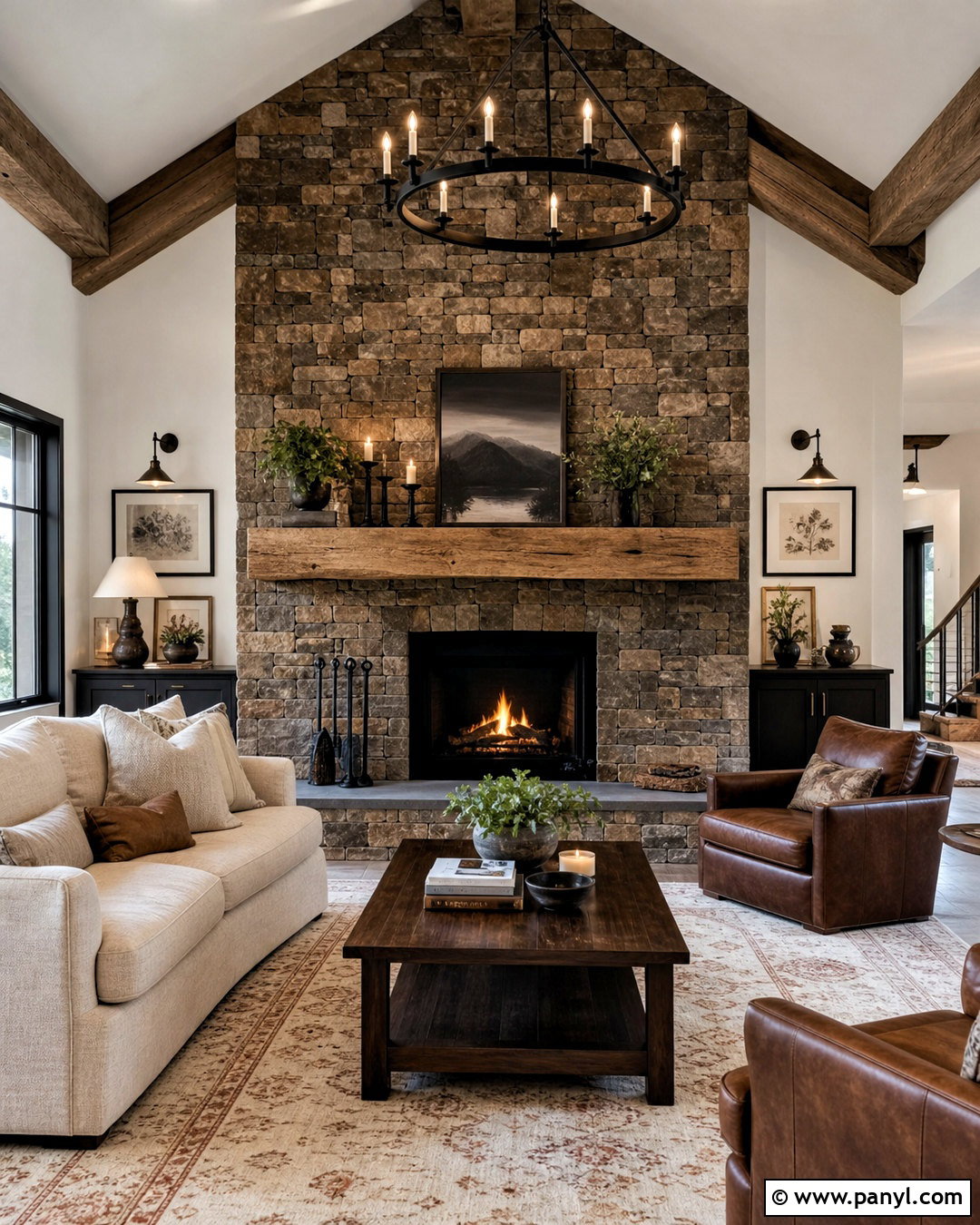
Burgundy can turn a plain living room into a rich and intimate gathering space. Use it on the wall behind a light taupe sofa or traditional fireplace, then paint adjacent walls a warm creamy white. Choose a faded Persian-style rug containing burgundy, navy, beige, and soft green to connect the room’s main colors. Medium walnut tables and antique brass lighting enhance the shade’s warmth without making the design feel formal. Add linen curtains and cushions in blush, camel, and ivory to lighten the composition. Burgundy performs best when the surrounding furnishings have varied textures rather than glossy finishes. This complete scheme creates a timeless library-like atmosphere that works in traditional, eclectic, and updated vintage interiors.
12. Chocolate Brown Living Room Accent Wall
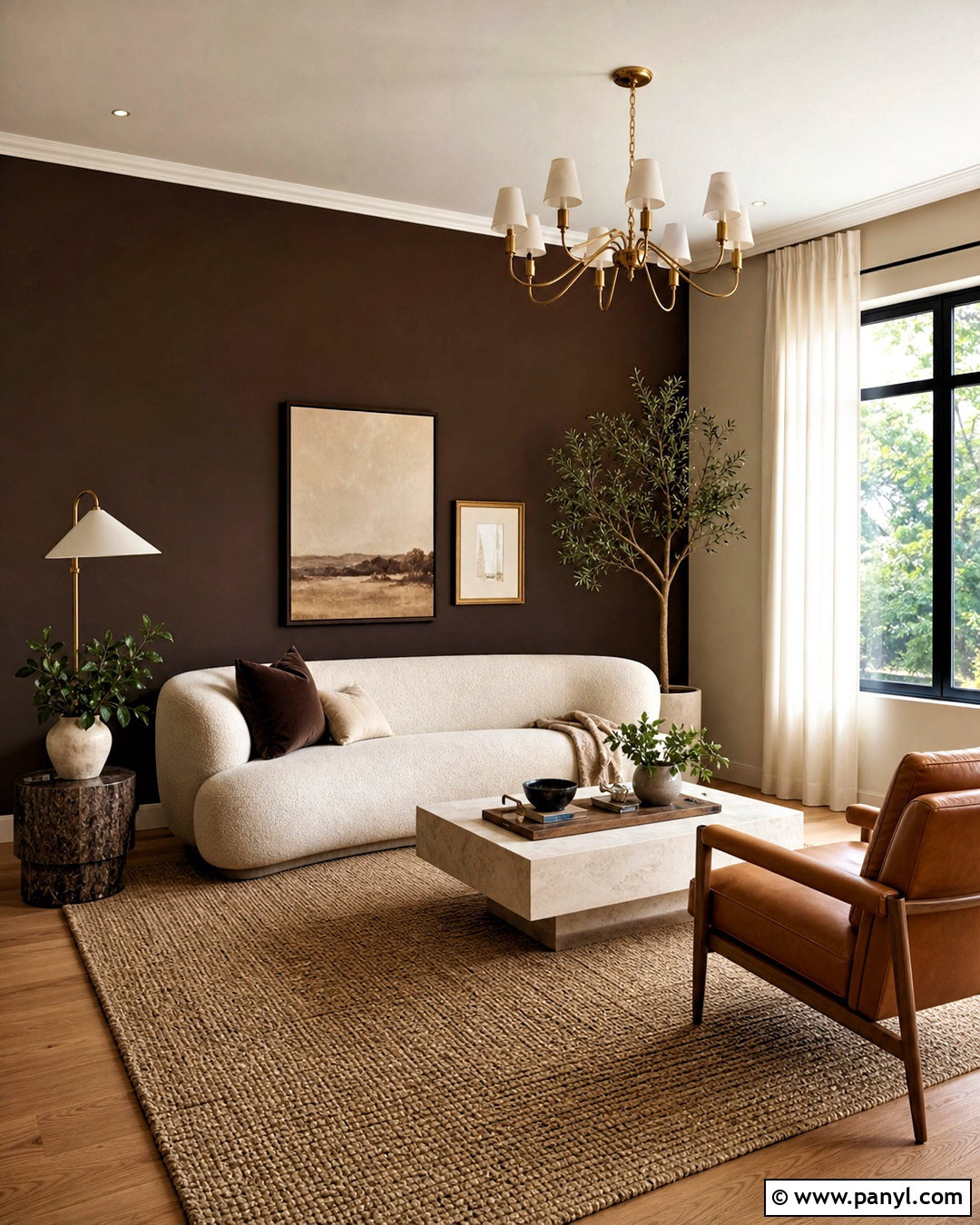
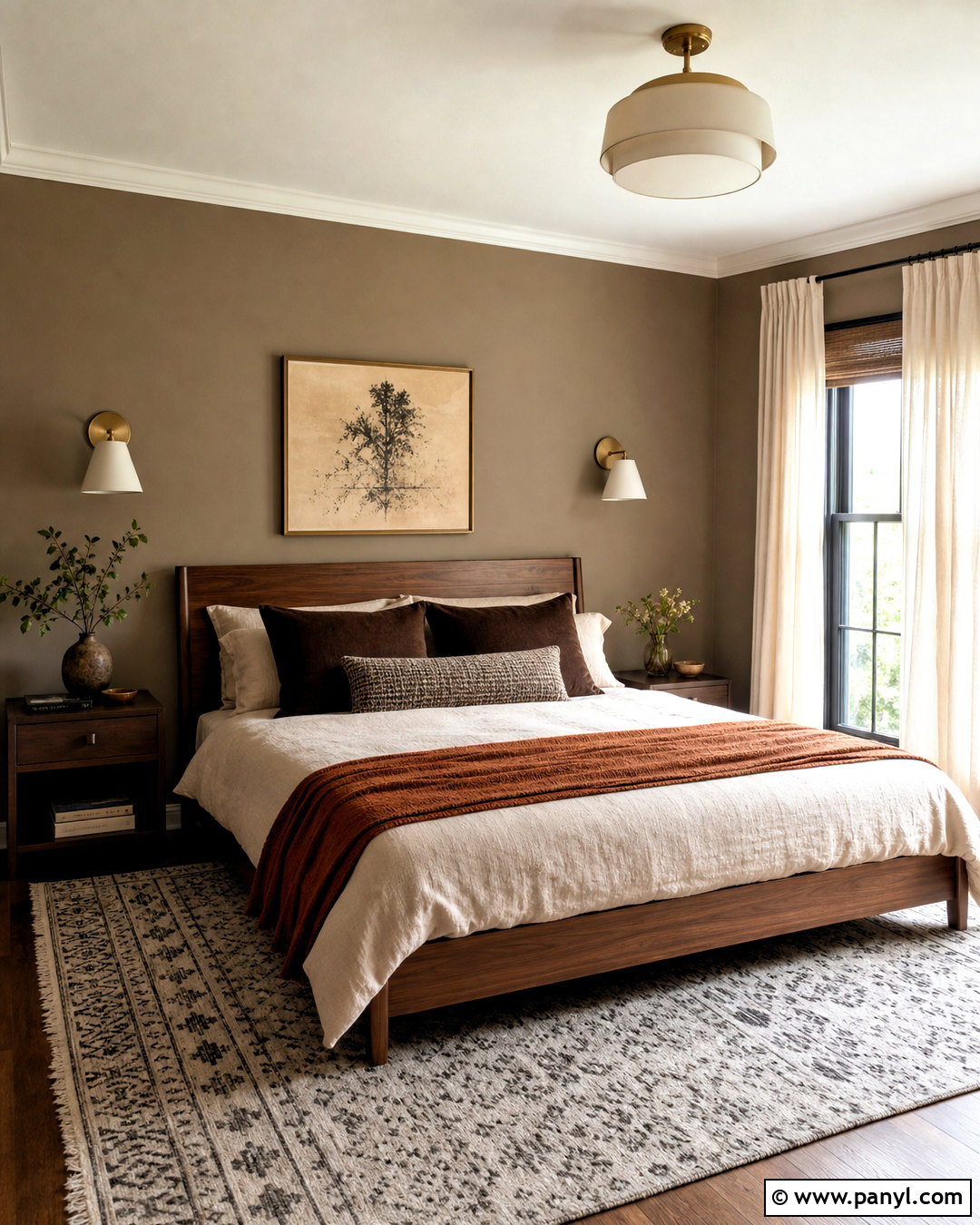
Chocolate brown offers deep contrast while feeling softer and warmer than black. Paint the focal wall behind a cream boucle sofa, then keep the other walls a pale mushroom or warm white. Add a medium oak floor, natural fiber rug, and caramel leather chair to create tonal variation. A pale stone coffee table can break up the darker wood shades and give the design a cleaner modern edge. Use brass lighting, ivory curtains, and artwork containing tan, cream, and muted blue. Because brown can absorb light, include table lamps and wall sconces at different heights. The completed living room feels enveloping and sophisticated, with a natural palette that supports modern, transitional, and organic furniture without appearing cold or overly trendy.
13. Warm Taupe Living Room Accent Wall
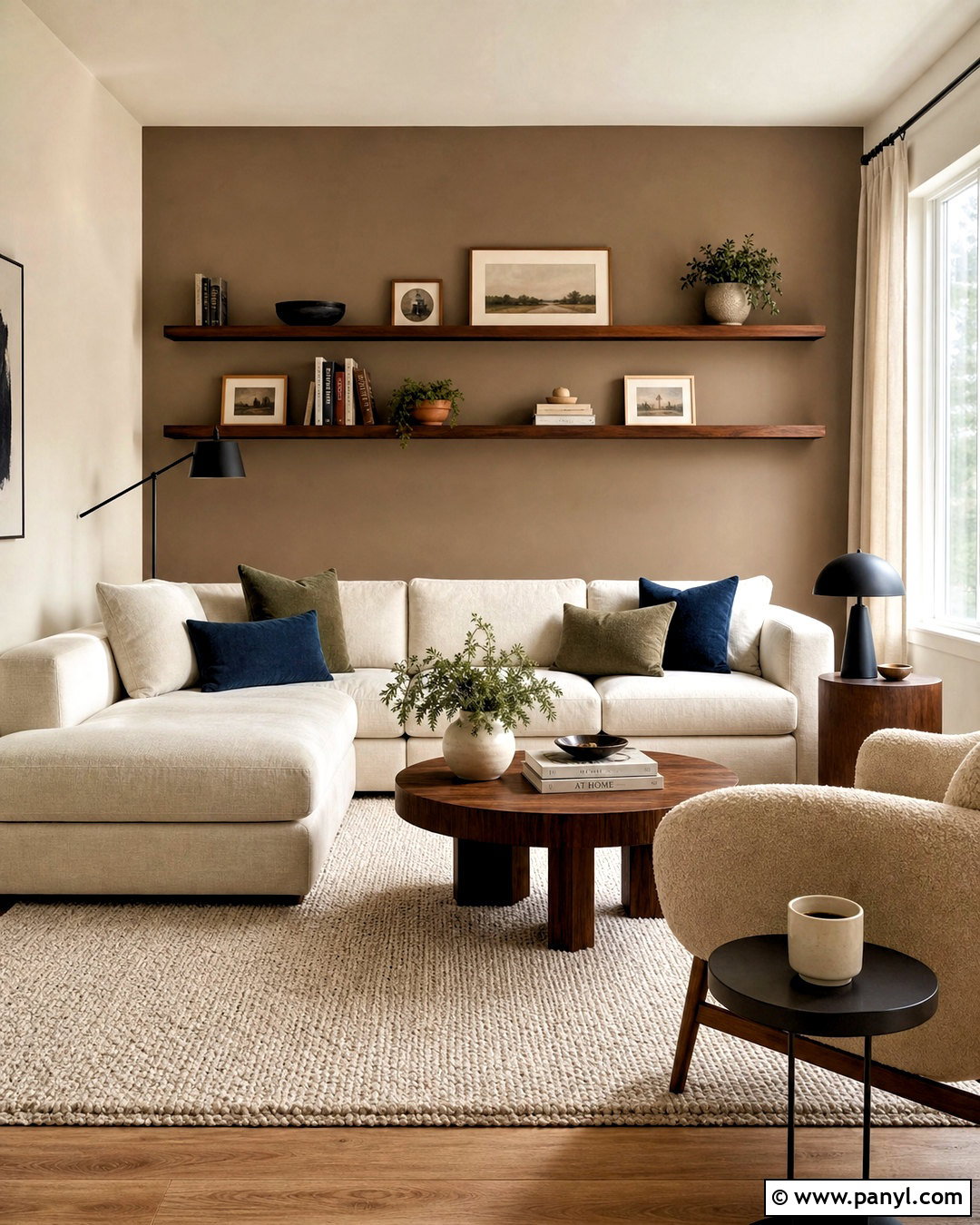
Warm taupe is an understated accent wall color for homeowners who want definition without a dramatic contrast. Apply it behind an ivory sofa, a pair of floating shelves, or a simple fireplace surround. Use creamy white on the other walls and introduce medium walnut furniture to emphasize taupe’s brown undertones. A textured wool rug, linen curtains, and boucle accent chair create a soft, layered foundation. Add muted blue or olive pillows for gentle color, then repeat black in small amounts through frames and lamp bases. The room should rely on texture rather than numerous decorative objects for visual interest. This balanced scheme works well in open-concept homes because taupe creates a focal area while blending smoothly with nearby neutral spaces.
14. Deep Greige Living Room Accent Wall
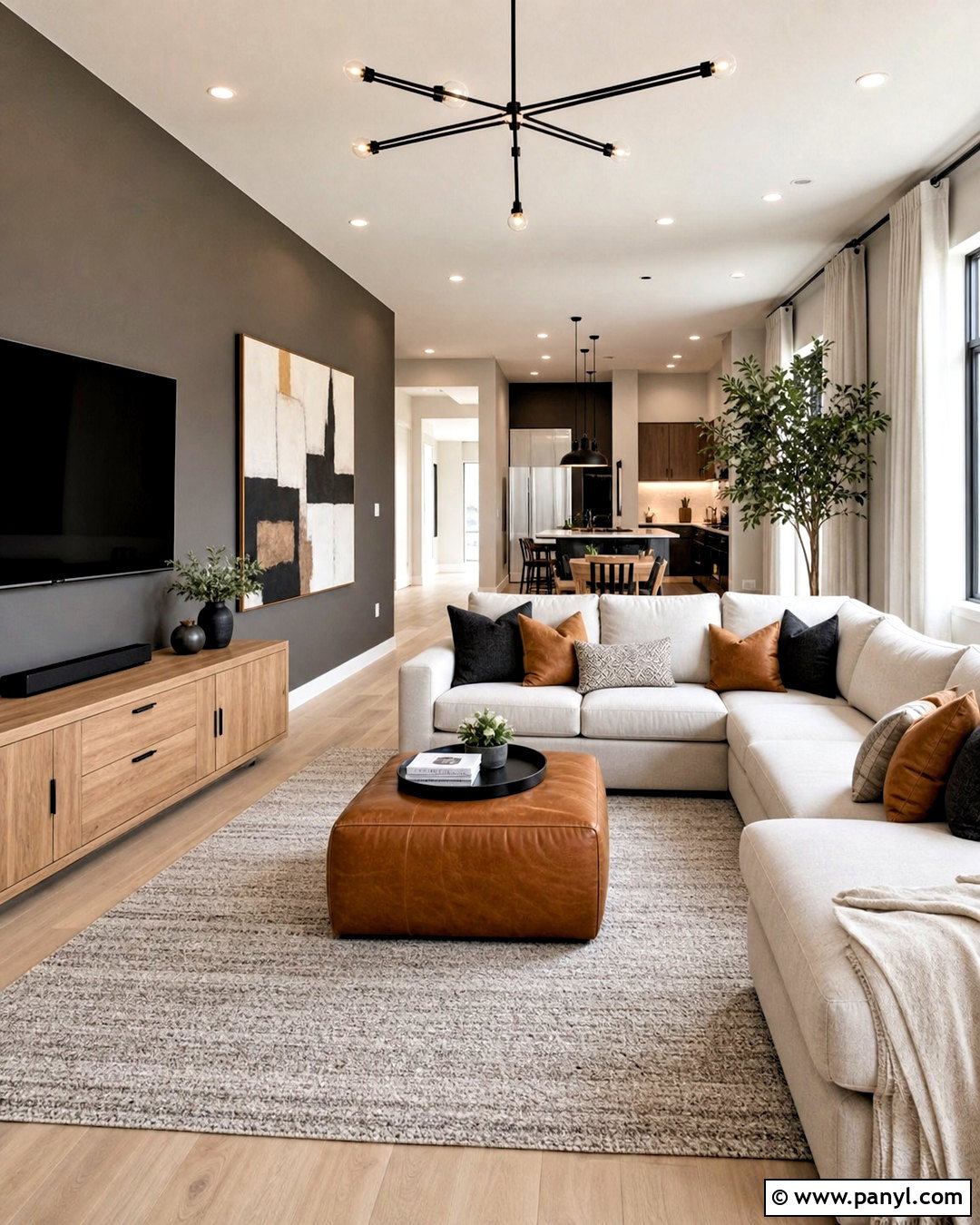
Deep greige delivers the structure of gray with enough beige to feel comfortable beside wood and warm fabrics. Use it on the media wall behind a low oak console, then choose a lighter warm greige for the remaining room. A cream sectional, oatmeal rug, and linen curtains create a relaxed neutral background. Bring in cognac leather through an accent chair or ottoman to keep the palette from becoming flat. Black metal lighting and simple abstract artwork add clear lines, while pillows in charcoal, camel, and ivory repeat the wall’s mixed undertones. This complete design is ideal for modern living rooms where bold color may not suit the surrounding spaces. The result feels refined, cohesive, and easy to update with seasonal accessories.
15. Dusty Blue Living Room Accent Wall
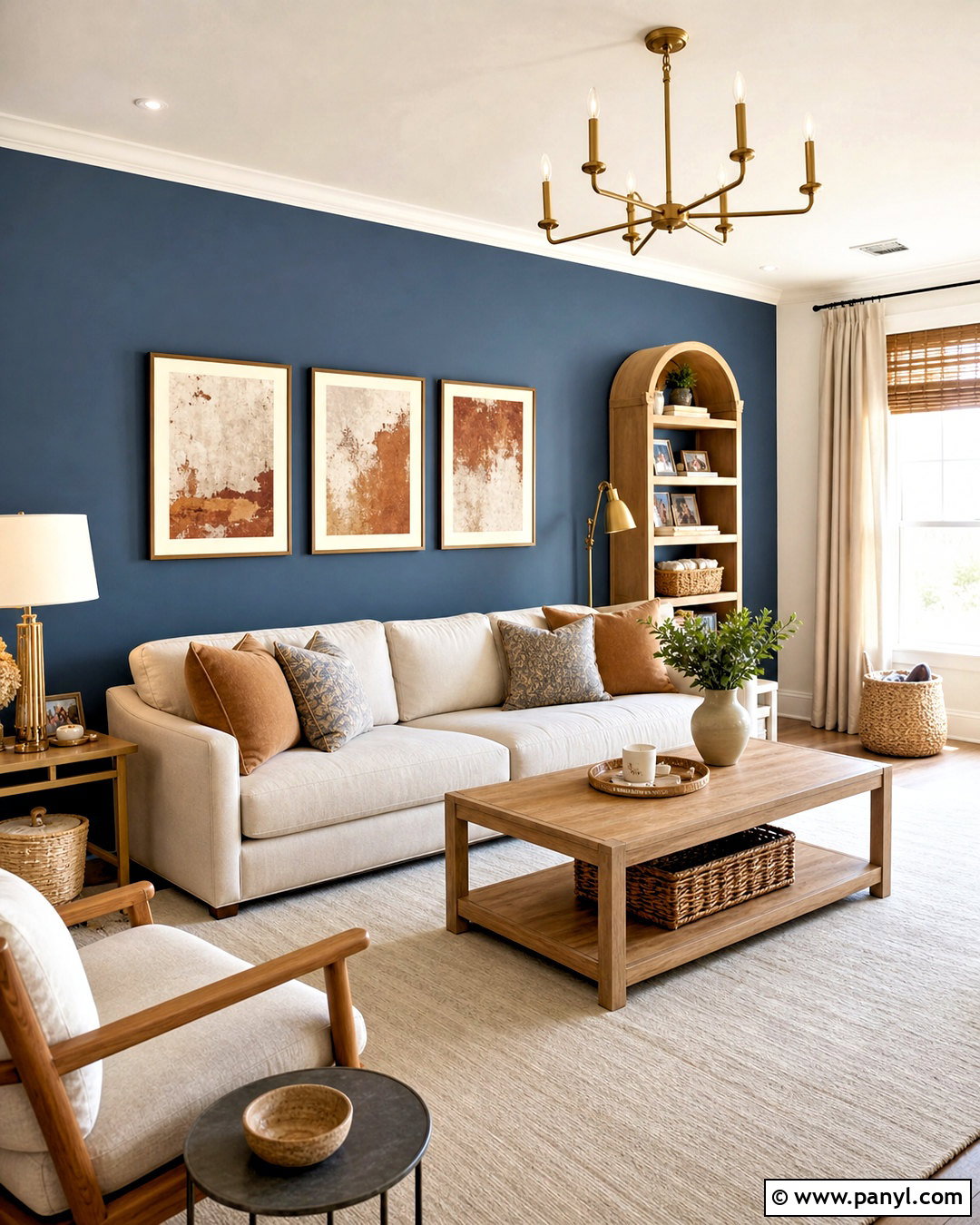
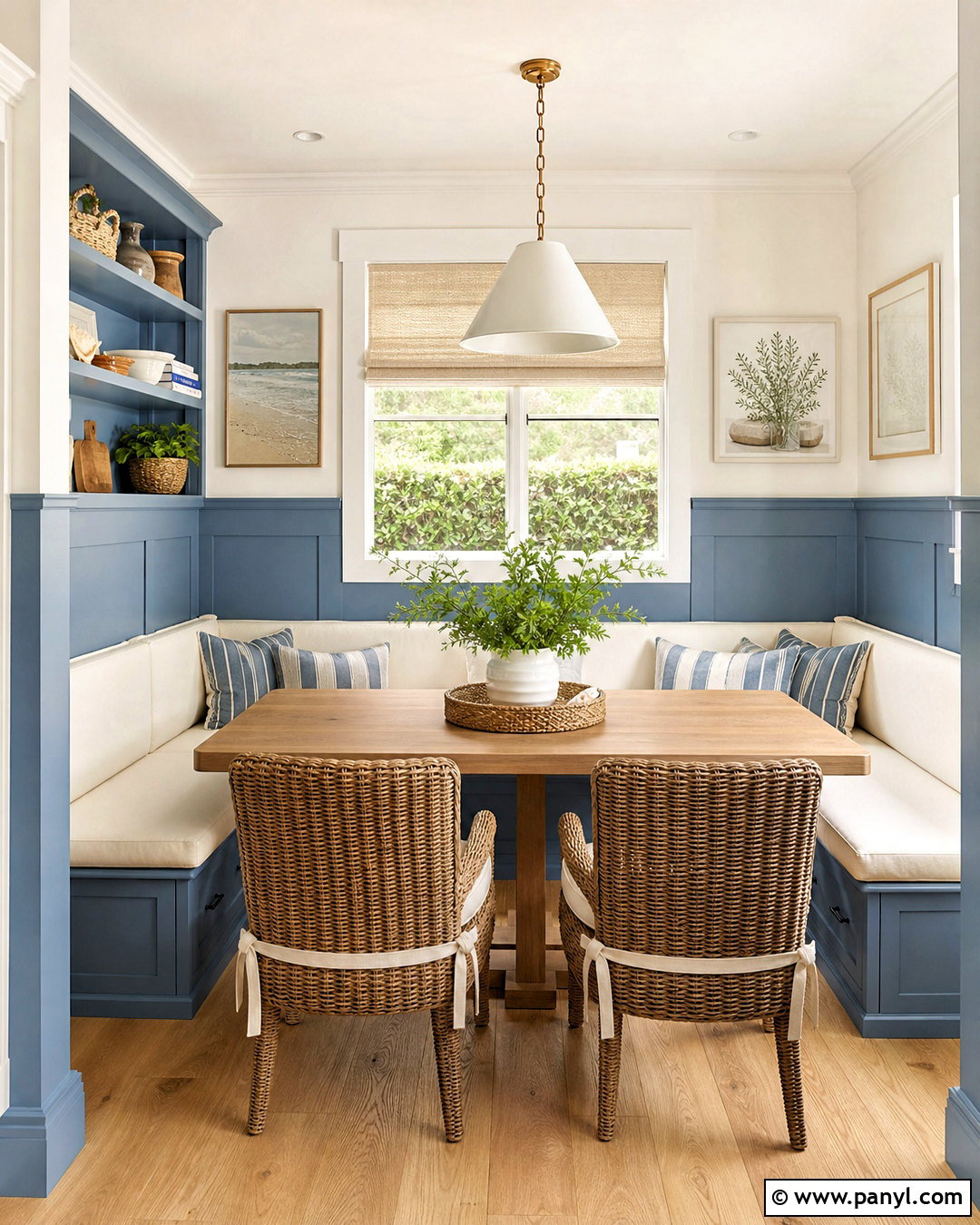
Dusty blue introduces a peaceful focal point while remaining muted enough for daily living. Paint the wall behind a beige sofa or natural wood console, and use soft warm white throughout the rest of the room. Pair the wall with an ivory rug, light oak furniture, and relaxed linen curtains to create an airy foundation. Add warmth through camel pillows, a woven basket, and small brass accents. Artwork containing cream, blue, and faded rust ties the palette together without looking overly coordinated. This scheme works in coastal homes, but it can also feel modern or traditional depending on the furniture shapes. Choose a blue with noticeable gray undertones to prevent the accent wall from appearing overly bright or childlike.
16. Powder Blue Living Room Accent Wall
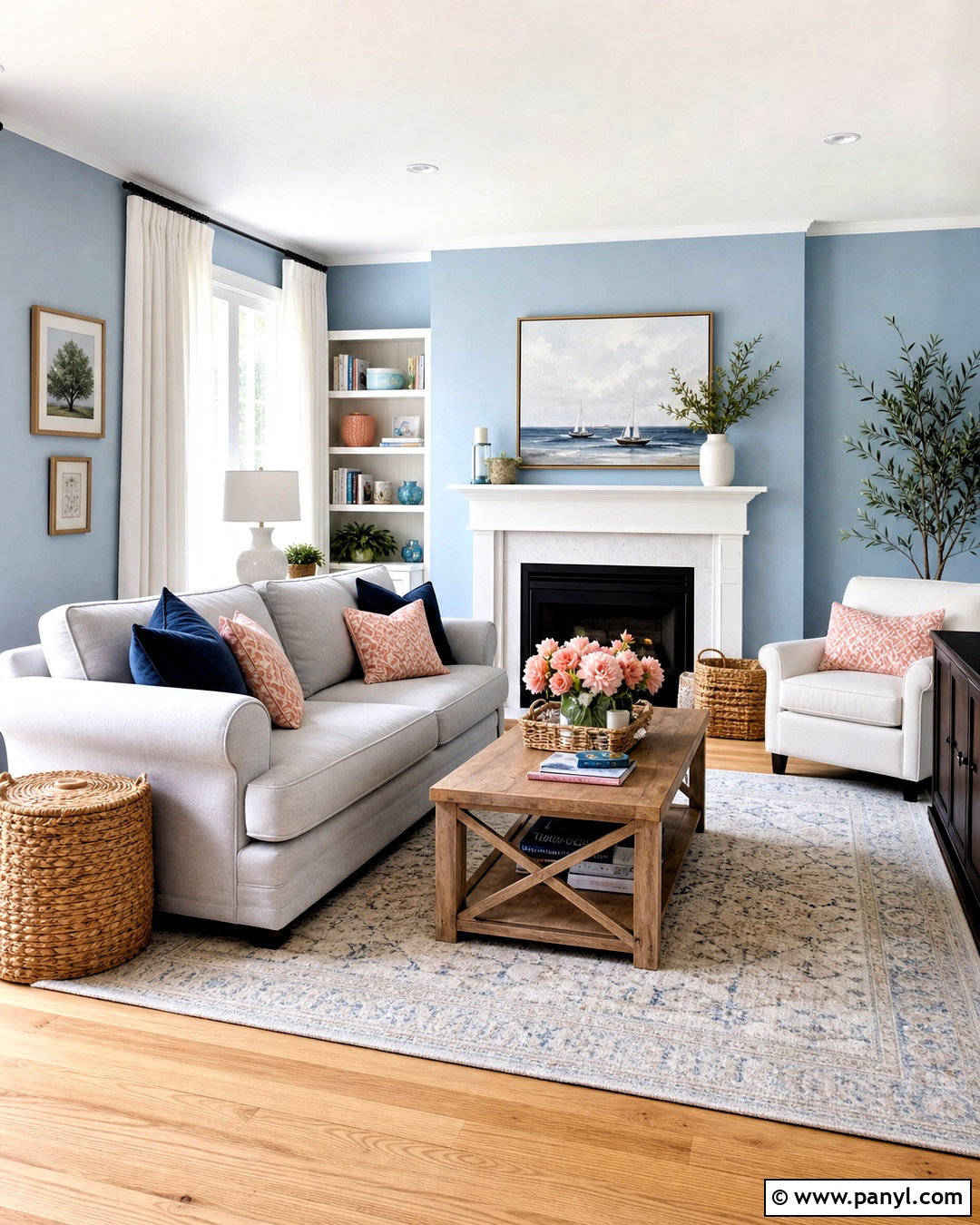
A powder blue accent wall can make a small living room feel open, fresh, and quietly colorful. Place it behind a white fireplace, pale gray sofa, or light wood media console. Keep the remaining walls warm white so the transition looks gentle rather than sharply contrasted. Natural oak flooring, a cream patterned rug, and woven accents bring warmth to the cool blue. Use navy pillows for depth, then include touches of soft coral or terracotta to prevent the palette from feeling chilly. White linen curtains maintain the bright atmosphere and visually extend the windows. This complete room design suits casual coastal, cottage, and transitional interiors, especially when the living area receives moderate daylight and needs a lighter focal feature.
17. Dusty Rose Living Room Accent Wall
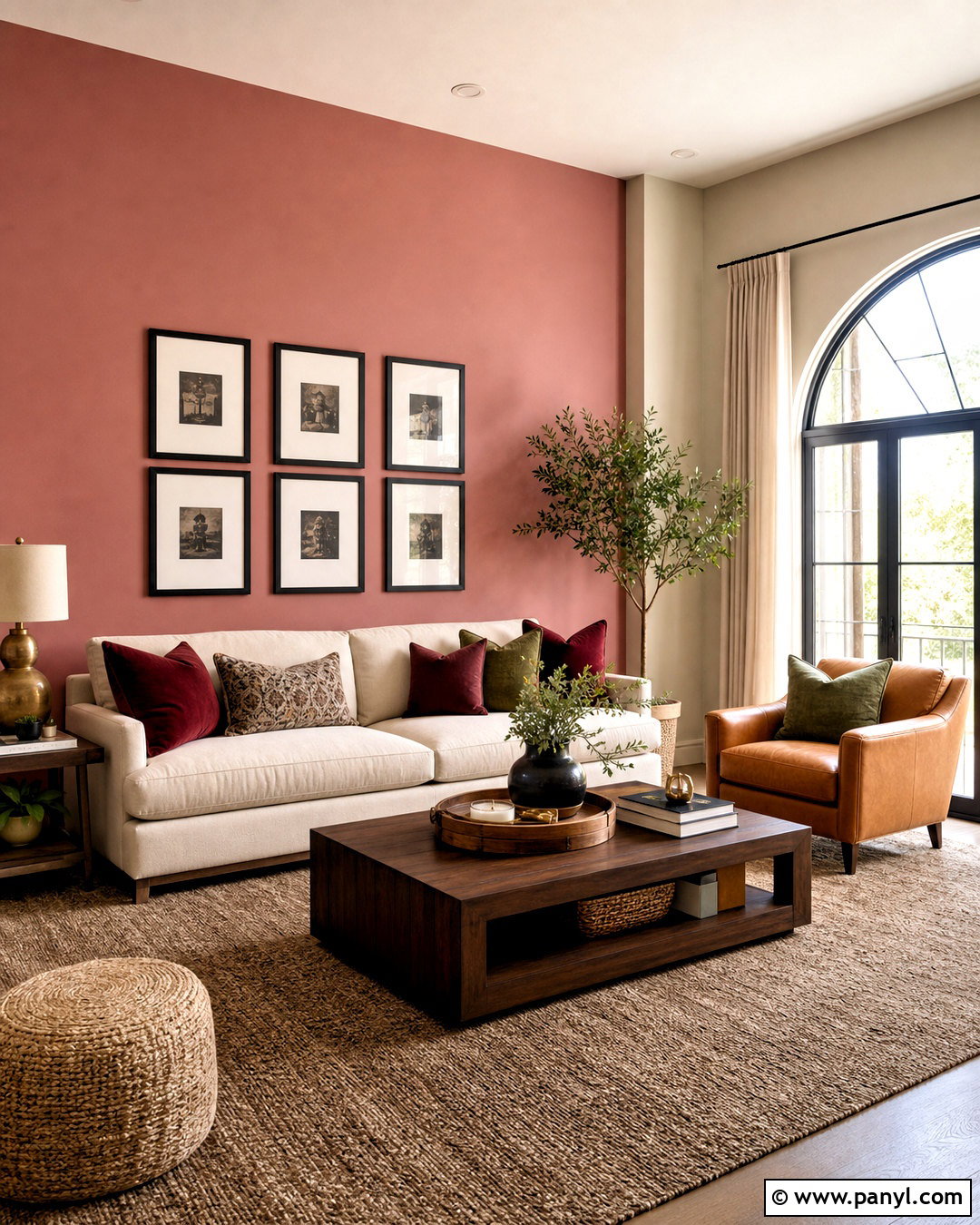
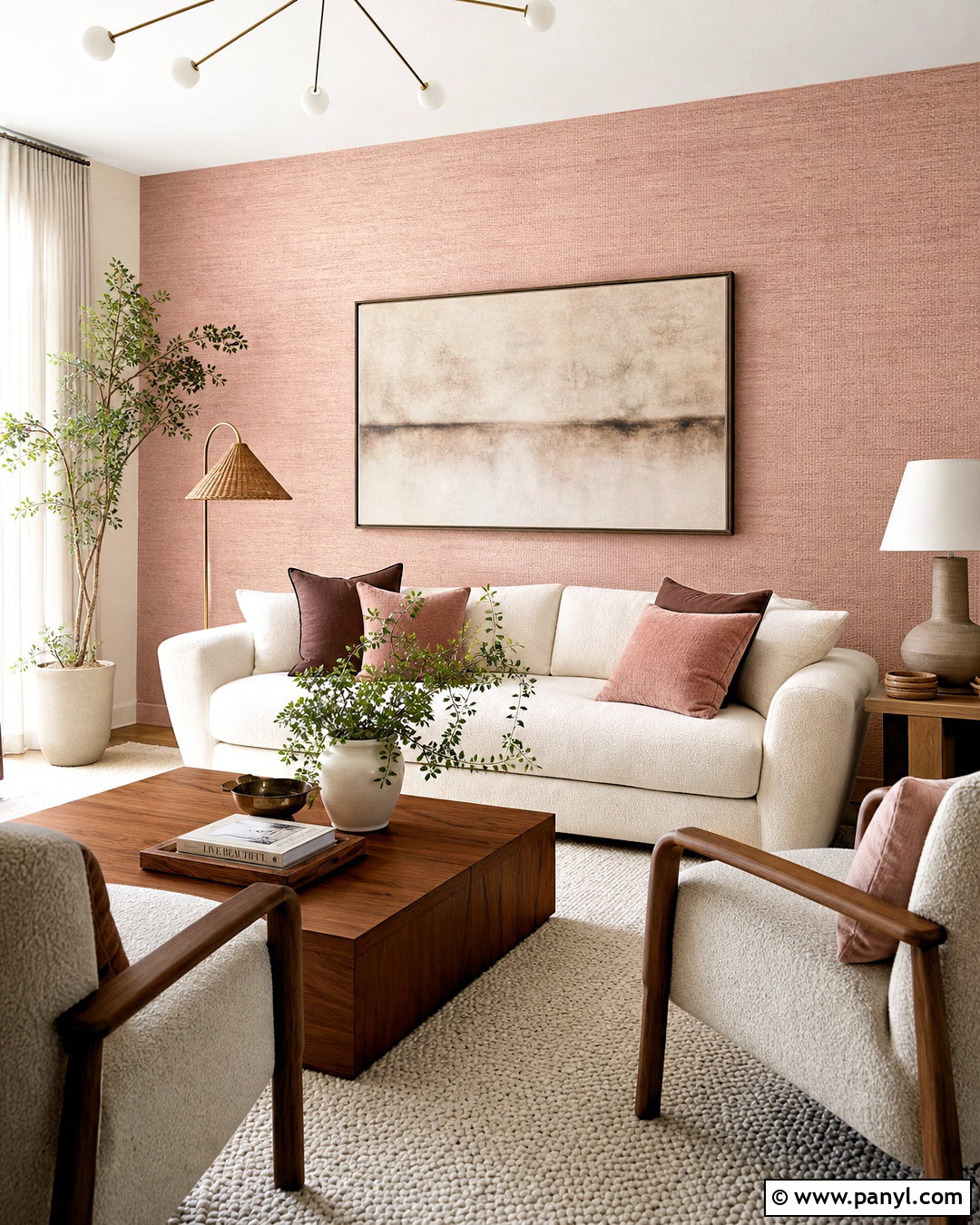
Dusty rose creates warmth and personality without the sugary appearance of brighter pink. Paint the focal wall behind a cream sofa, then use pale warm greige on the surrounding walls. A walnut coffee table, taupe rug, and camel-colored chair ground the pink with mature neutral tones. Add pillows in burgundy, ivory, and muted green for a layered palette that feels collected rather than themed. Antique brass lighting complements the wall’s warm undertone, while black frames introduce definition. Choose simple linen curtains and abstract artwork with restrained color to maintain a polished finish. This complete living room can suit modern, vintage, or eclectic homes and offers a softer alternative to the more common blue, green, or gray accent wall.
18. Plum Living Room Accent Wall
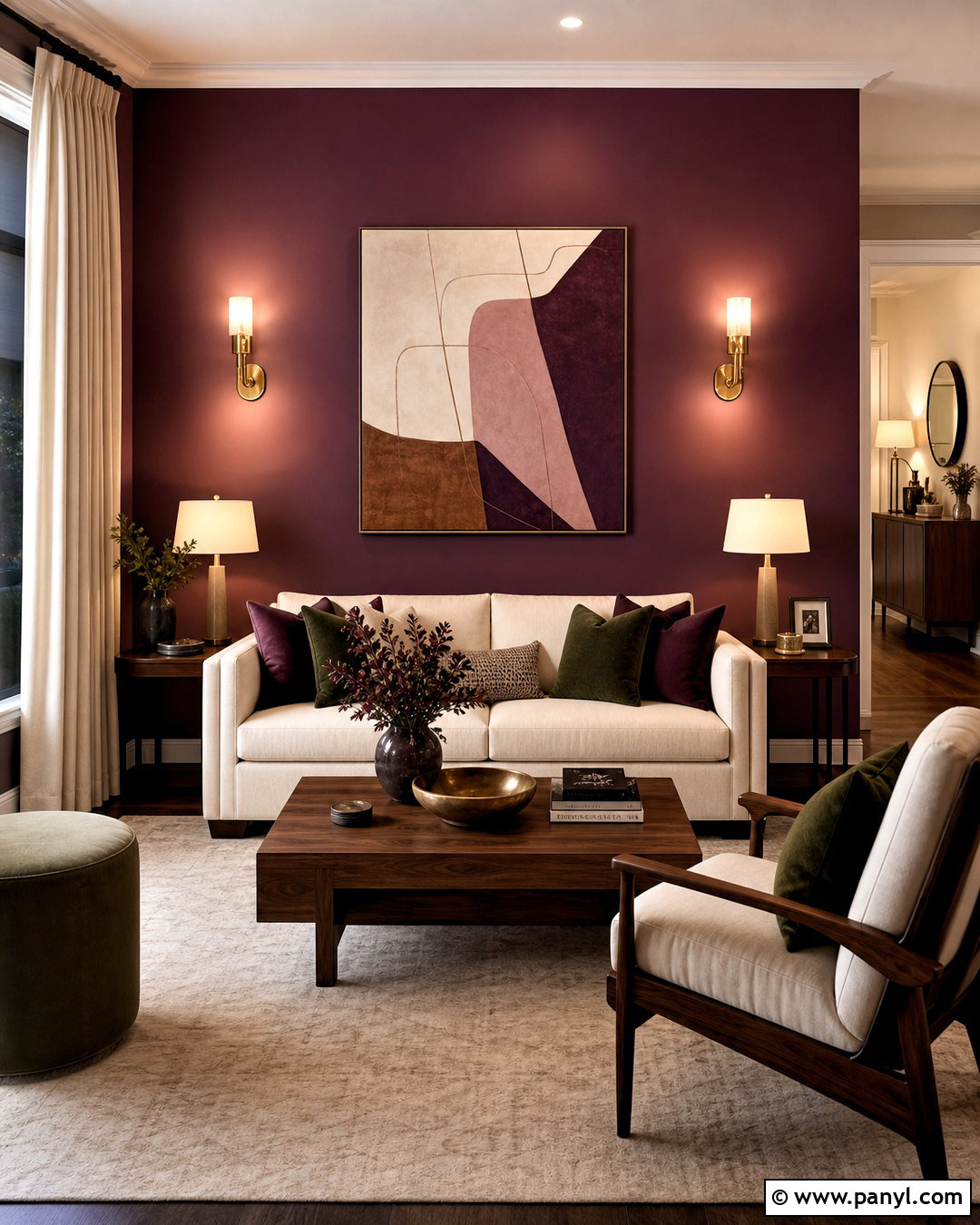
Deep plum can make a living room feel luxurious, expressive, and surprisingly cozy. Use it behind an ivory sofa or painted fireplace, then balance the intensity with warm white walls and a pale neutral rug. Walnut furniture complements plum’s red undertones, while olive or moss green cushions provide an earthy contrast. Add aged brass sconces, cream curtains, and abstract artwork containing plum, blush, and brown. Avoid combining the wall with bright white furniture, which may create an overly sharp transition. Softer creams and natural textures produce a more harmonious result. This full scheme is particularly effective in rooms used for evening relaxation, although layered lamps and reflective finishes will keep it welcoming during the daytime as well.
19. Mustard Yellow Living Room Accent Wall
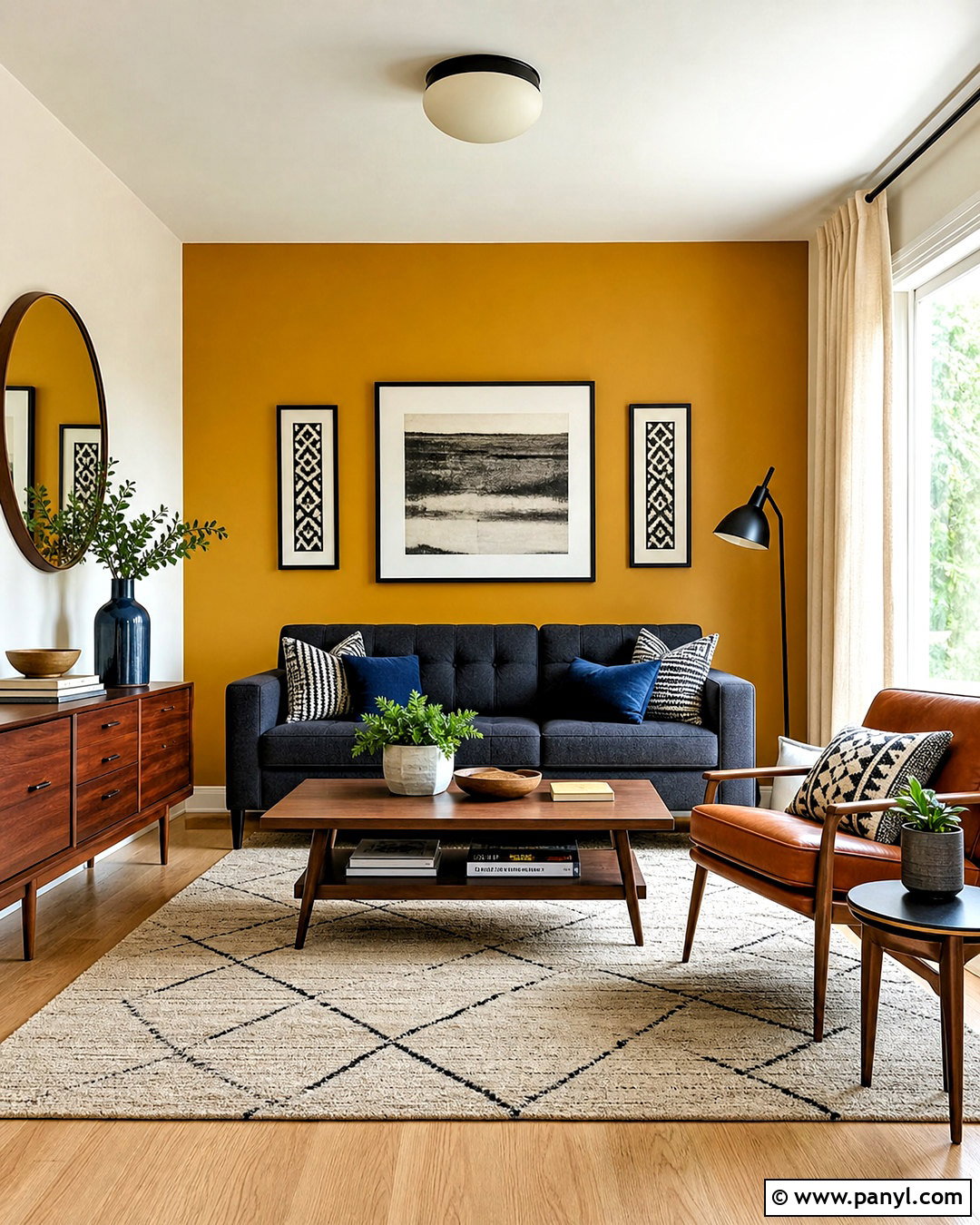
Mustard yellow gives a living room warmth and optimism while remaining more grounded than lemon yellow. Apply it to the wall behind a charcoal sofa or dark wood console for clear contrast. Paint the surrounding walls a soft cream and use a beige rug to prevent the palette from feeling busy. Walnut furniture, navy pillows, and cognac leather accents create a balanced midcentury-inspired scheme. Add white or natural linen curtains to keep the room bright, then introduce black through a floor lamp and narrow frames. One or two patterned textiles can repeat mustard in small amounts. The completed design feels energetic but controlled, making it suitable for family rooms, apartments, and living spaces that need a warmer visual focal point.
20. Deep Red Living Room Accent Wall
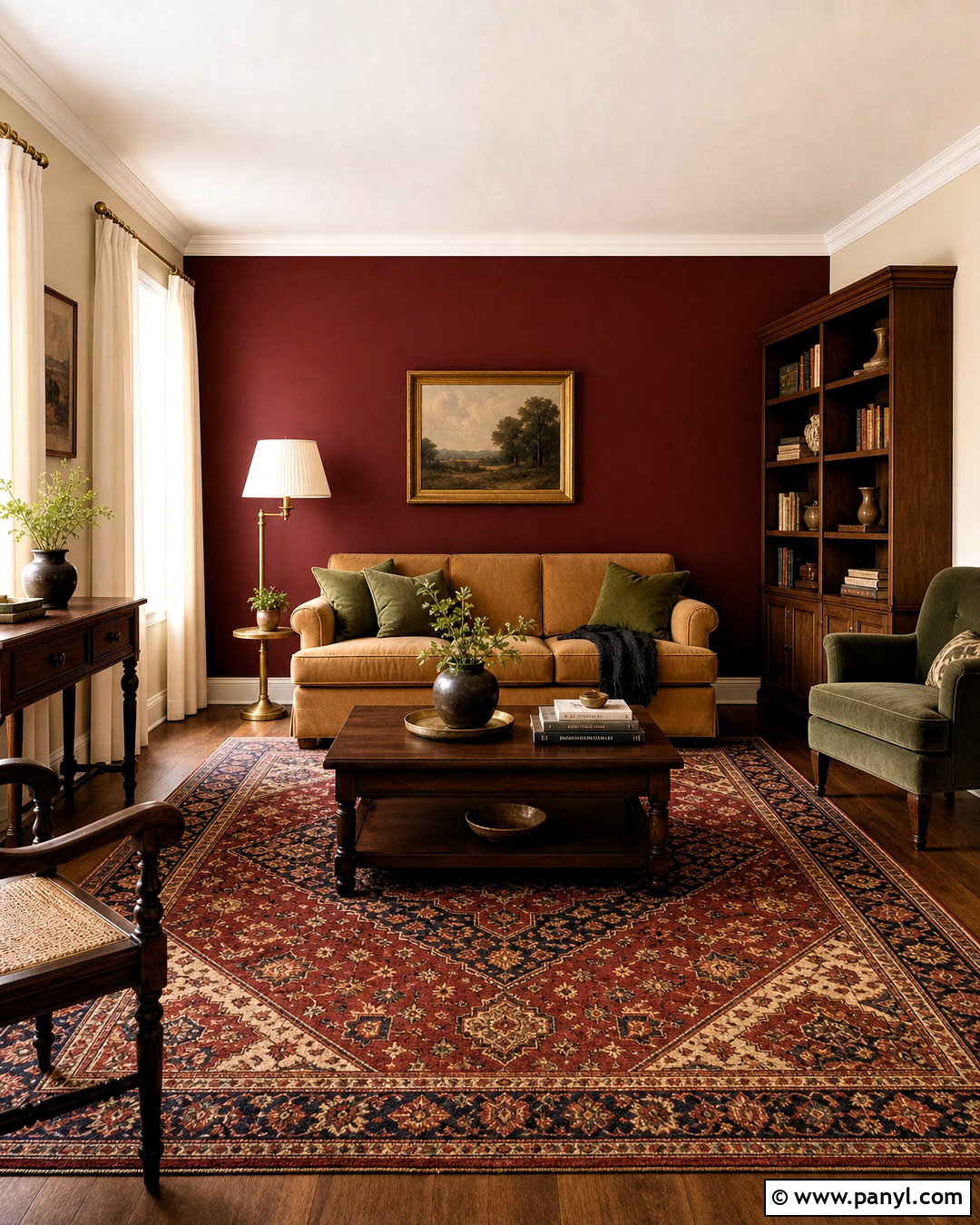
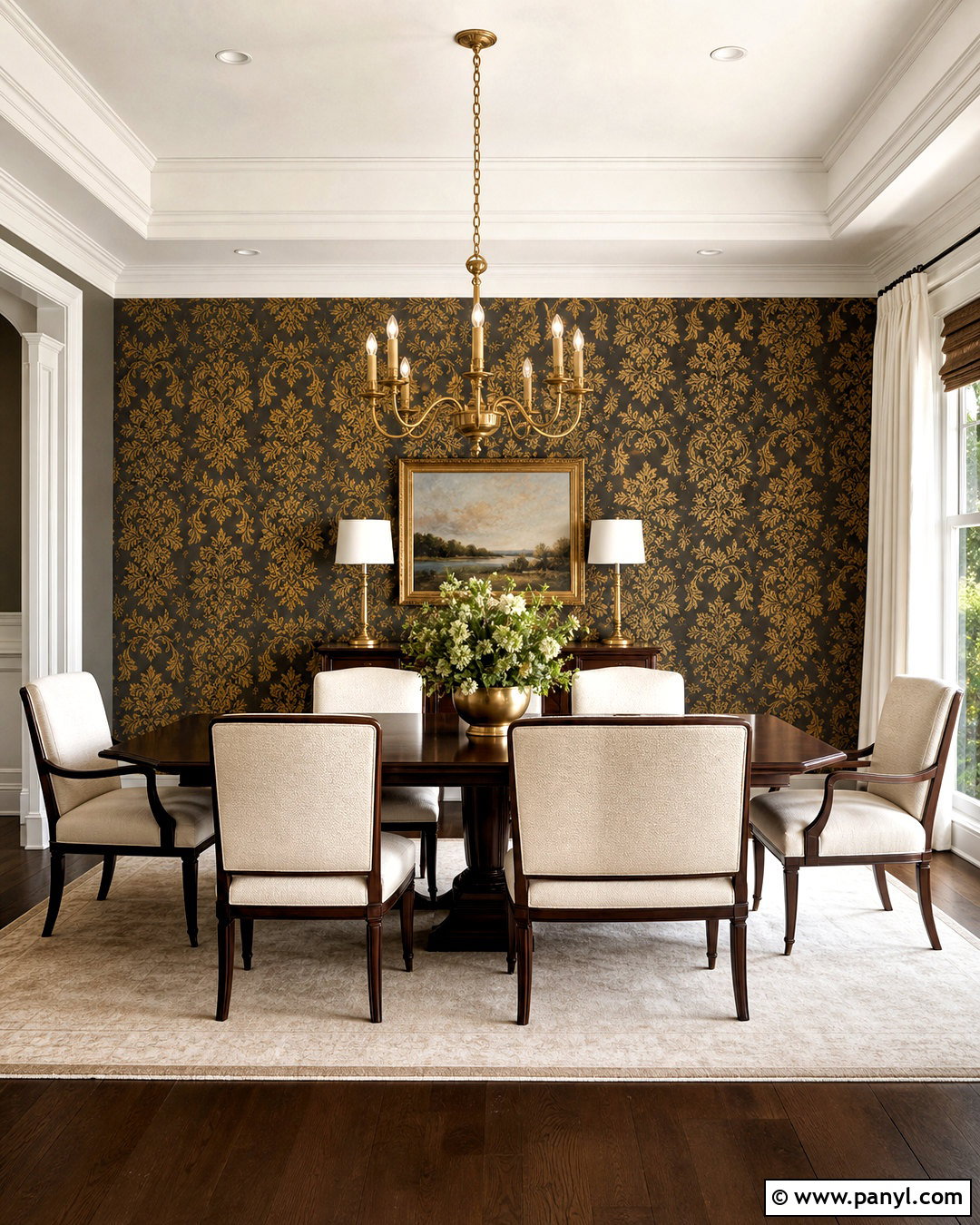
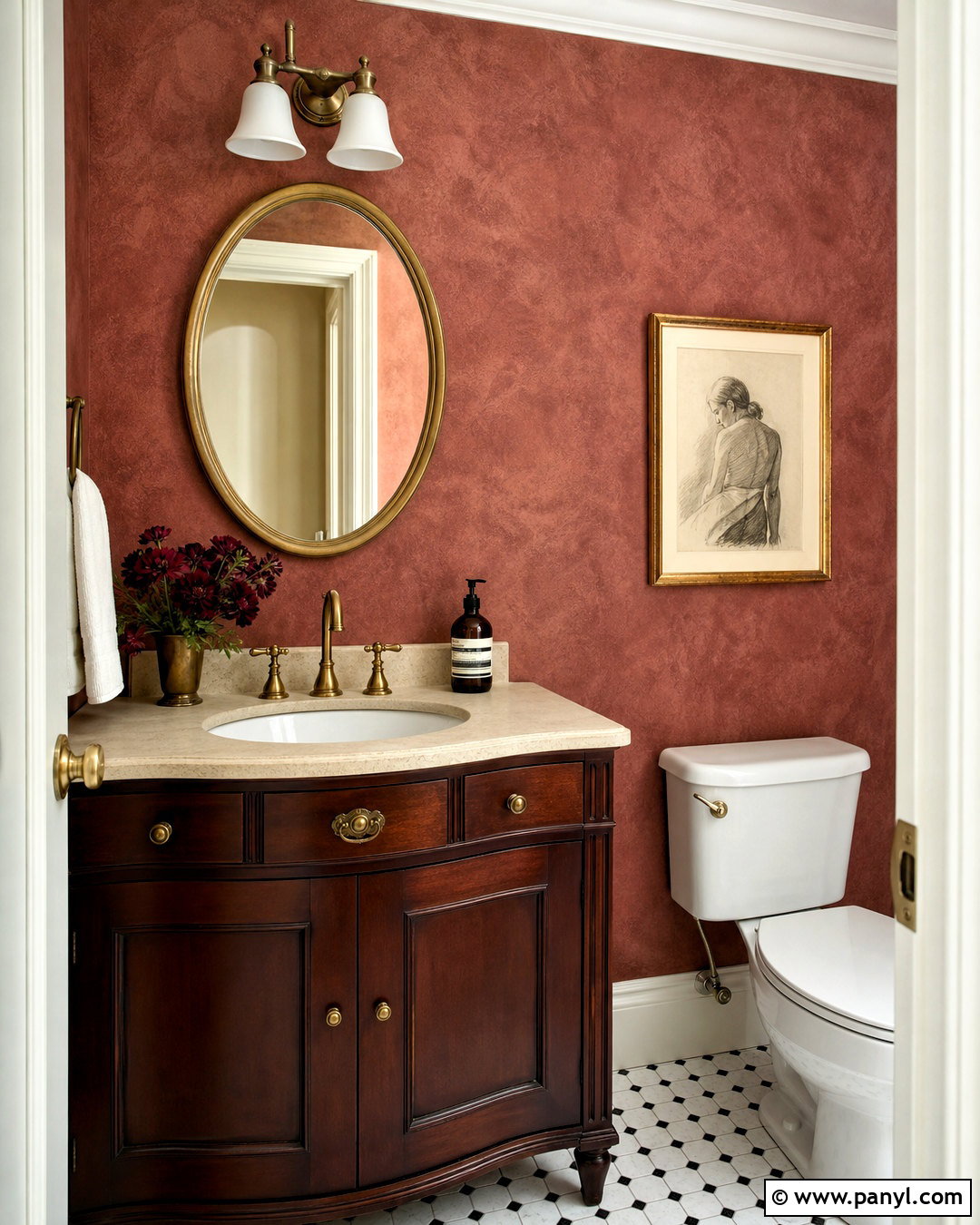
A deep red accent wall creates a confident focal point with warmth, history, and character. Choose a muted brick or oxblood red rather than a highly saturated primary shade. Position it behind a camel sofa, traditional mantel, or walnut bookcase, then paint the other walls creamy beige. A vintage-style rug with red, navy, and tan details will unite the palette across the floor. Use dark wood tables, aged brass lighting, and ivory curtains to balance richness with lightness. Olive pillows or a muted green chair provide subtle complementary contrast. This complete living room scheme feels timeless rather than flashy because the red is supported by earthy materials, comfortable upholstery, and restrained accessories instead of additional bright colors.
Conclusion:
The best accent wall does more than introduce a favorite color. It supports the furniture arrangement, highlights an architectural feature, and helps the entire room feel connected. Before painting, test a large sample on the chosen wall and observe it in morning, afternoon, and evening light. Pay attention to flooring, upholstery, and nearby rooms because their undertones can change how a color appears. Dark shades usually benefit from light furniture and layered lighting, while softer shades gain depth from wood, metal, and textured fabrics. Whether you prefer calming sage, classic navy, earthy terracotta, or dramatic burgundy, these 20 living room accent wall color ideas offer complete, practical looks that can be adapted to your home.

Related Ideas and Inspiration:
Leave a Reply