
A red backsplash can turn an ordinary kitchen into a warm, energetic, and memorable space. These 20 red backsplash kitchen ideas explore far more than one bright primary shade. You will find rich burgundy stone, rustic brick, earthy terracotta, glossy glass, handmade ceramic, and renter-friendly finishes. The key is creating balance across the entire room. Cabinet color, countertop material, flooring, hardware, lighting, and tile layout should all support the backsplash rather than compete with it. Red can feel modern beside crisp white, grounded beside natural wood, or sophisticated with black and brass. Whether you want a subtle accent or a dramatic feature wall, the following complete kitchen looks make it easier to use color confidently. Start planning your renovation with these 20 red backsplash kitchen ideas.

1. Red Subway Tile Backsplash
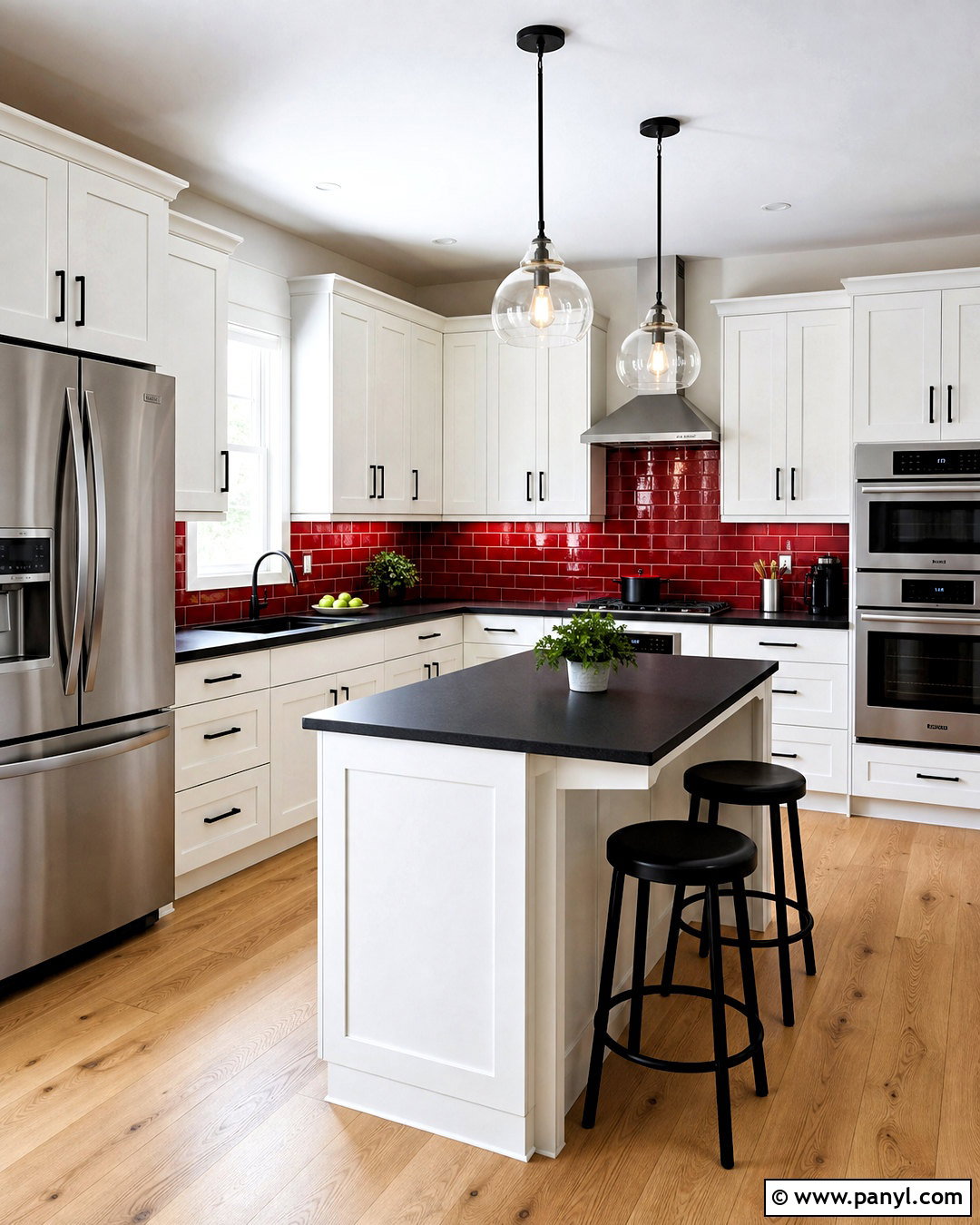
Glossy red subway tile creates a clean focal point without making a kitchen feel overly complicated. Run the tile in a traditional horizontal pattern between white Shaker cabinets and matte black quartz countertops. Bright white grout will sharpen the grid, while dark red grout creates a smoother, more continuous surface. Add stainless steel appliances, simple black cabinet pulls, and pale oak flooring to keep the room fresh. Clear glass pendants above a compact island provide light without introducing another strong visual element. Finish the space with white counter stools and a few natural wood accessories. This complete red backsplash kitchen works especially well in a transitional home where classic cabinet shapes need a bold, contemporary update.
2. Burgundy Zellige Tile Backsplash
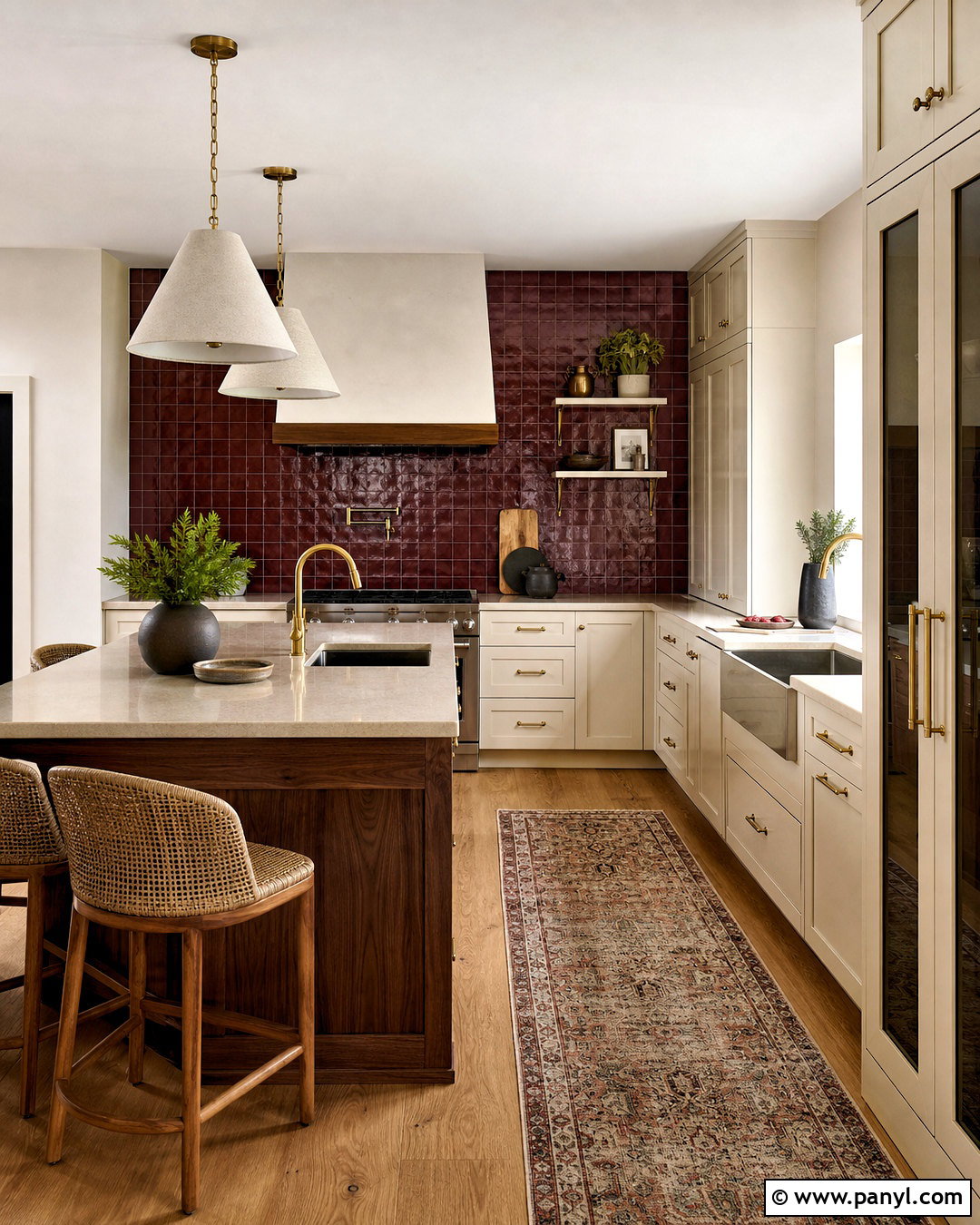
Deep burgundy Zellige tile offers a softer and more sophisticated alternative to bright red. Its slightly uneven surface catches the light differently across each tile, giving the backsplash natural movement. Pair it with warm cream cabinets, honed beige quartz countertops, and a walnut island for an inviting, layered look. Brushed brass faucets and cabinet knobs complement the wine-red color without feeling flashy. Choose medium oak flooring and simple linen pendant lights to support the handcrafted character. Extending the tile from the countertop to the ceiling behind the range makes the color feel intentional. Keep dishes and countertop decor neutral so the variations in the burgundy backsplash remain the strongest decorative feature in the kitchen.
3. Red Brick Backsplash Kitchen
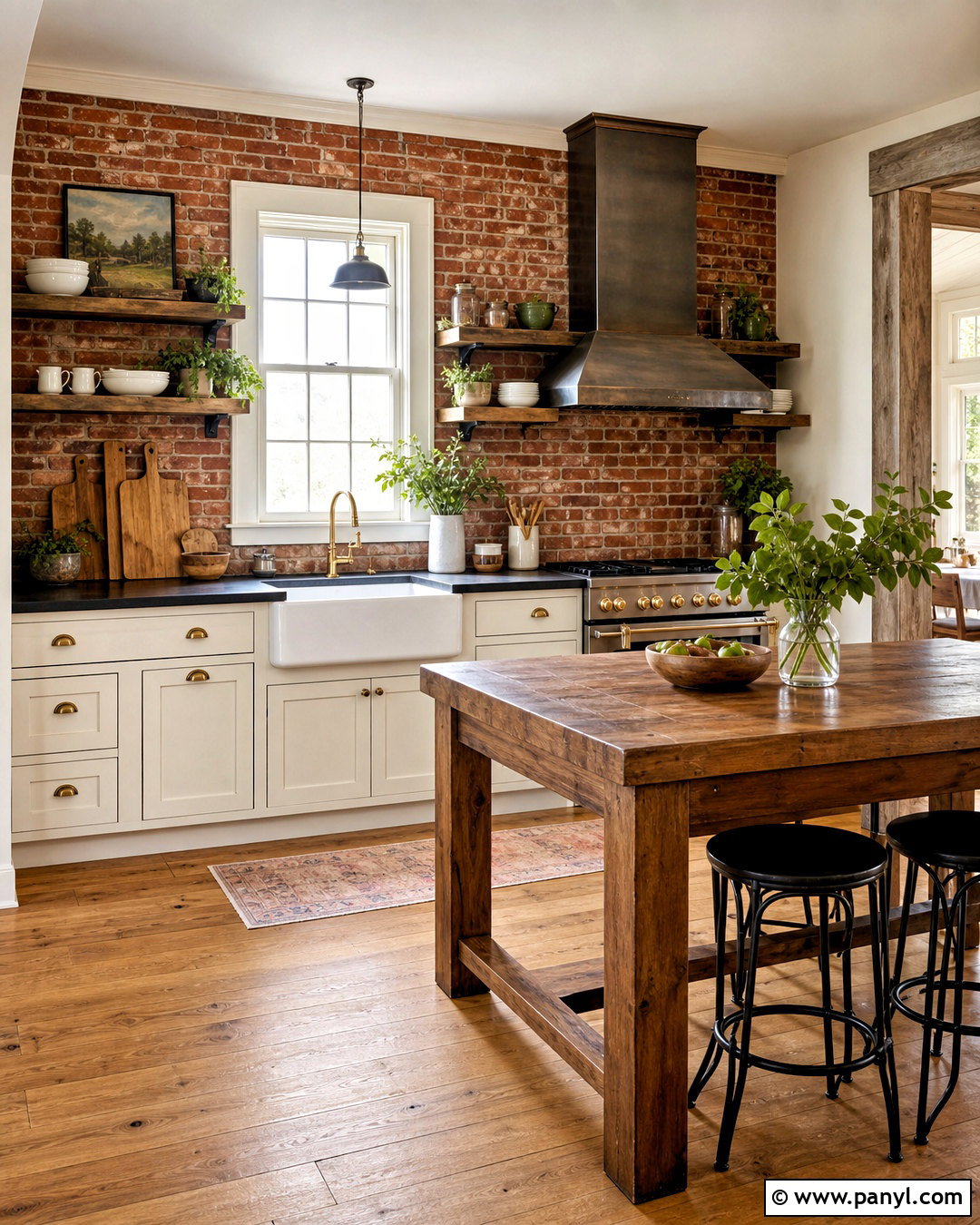
Nothing adds warmth and texture quite like a red brick backsplash. Use thin brick veneer to create the appearance of an original masonry wall without taking up excessive counter depth. Cream Shaker cabinets, soapstone countertops, and reclaimed wood shelves give the kitchen a relaxed farmhouse character. A white apron-front sink balances the darker surfaces, while aged brass hardware reinforces the rustic finish. Continue warm oak flooring through the room and place a sturdy wood island at the center. Soft white walls prevent the brick from making the space feel heavy. Around cooking areas, use properly sealed brick and an easy-to-clean protective treatment. The completed room feels established, comfortable, and full of authentic architectural character.
4. Terracotta Red Tile Backsplash
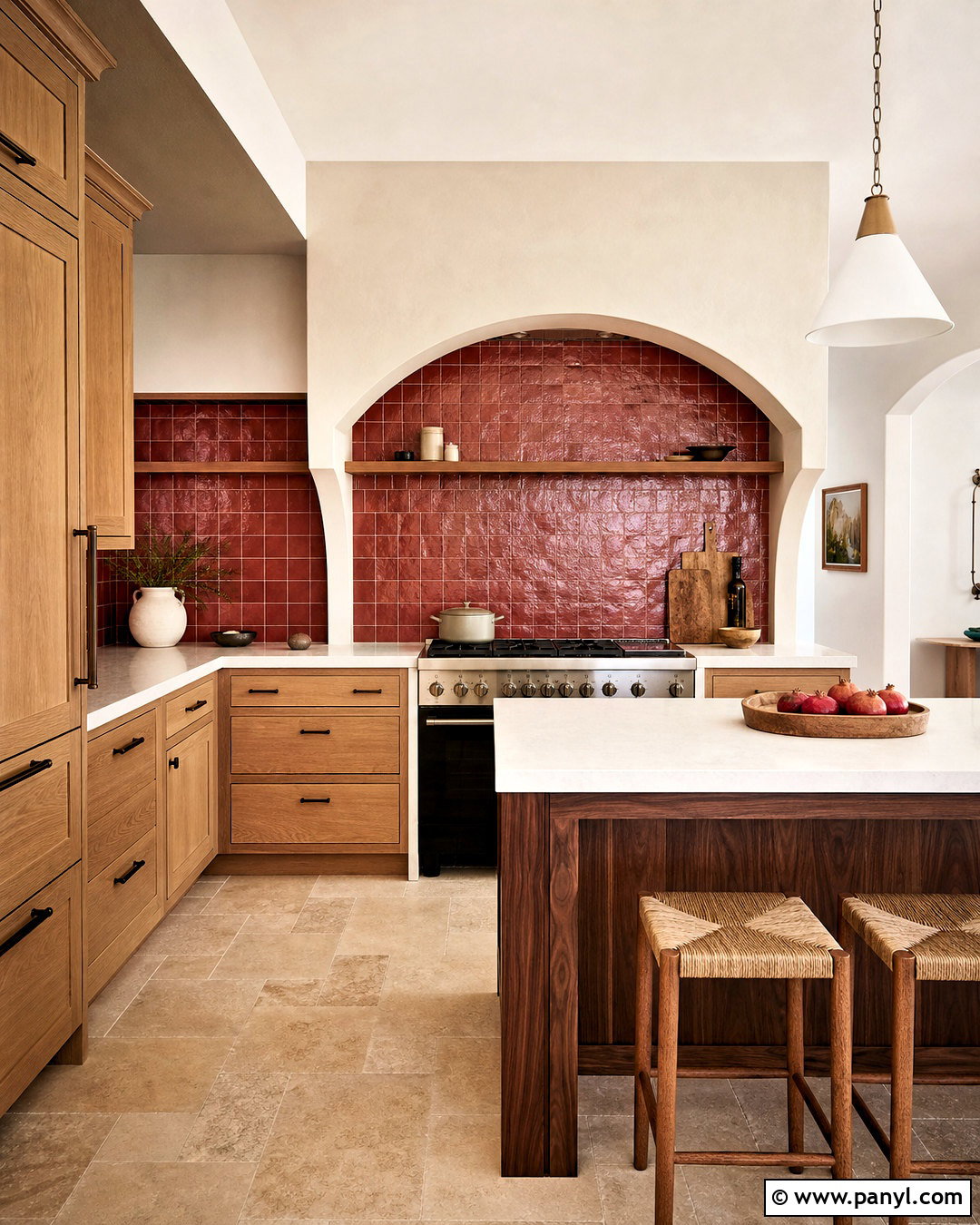
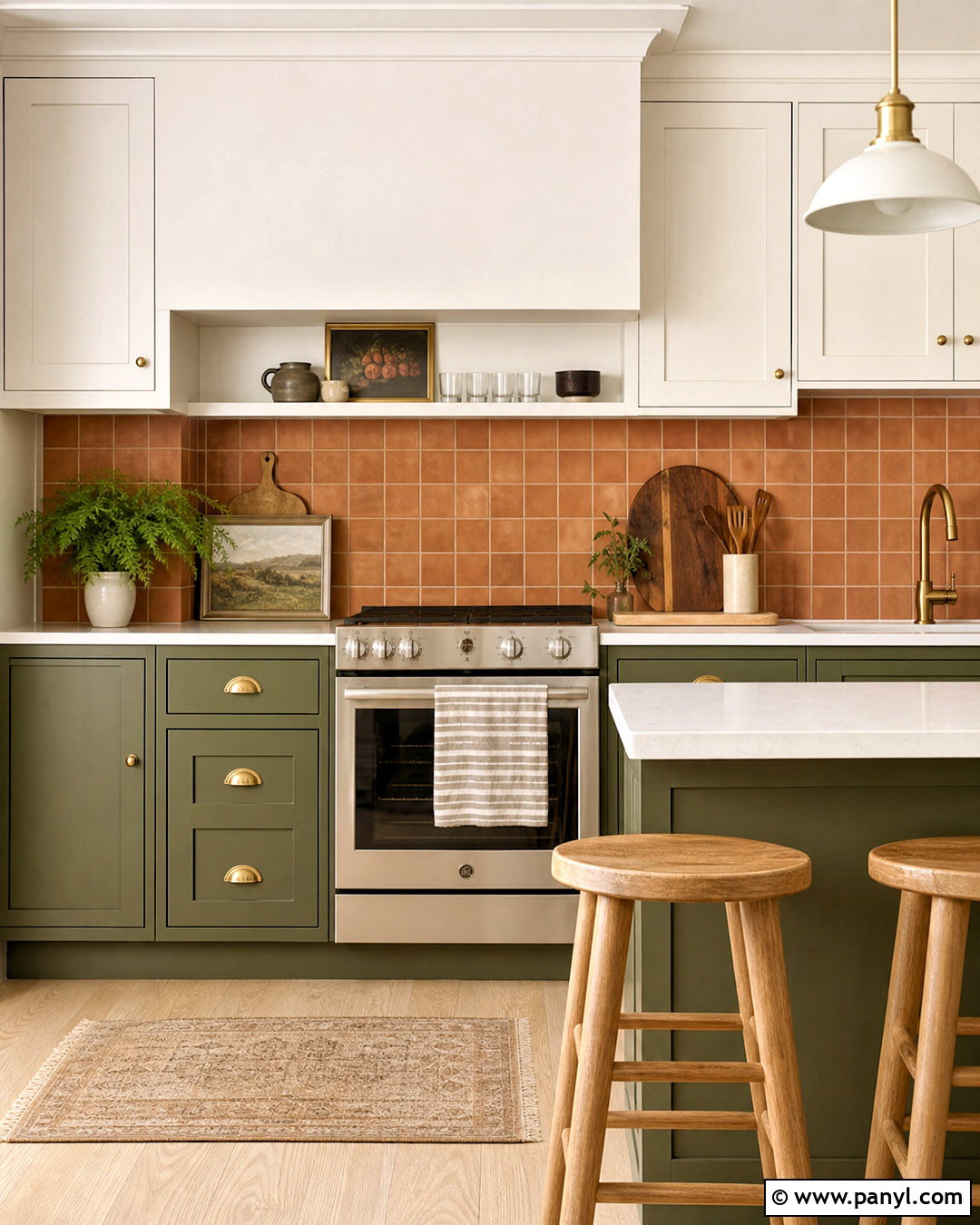
Earthy terracotta-red tile brings sunbaked color into a comfortable Mediterranean kitchen. Choose handmade square tiles with small variations in tone rather than a perfectly uniform factory finish. Install them behind creamy plaster-style walls, natural oak cabinets, and warm white quartz countertops. An arched range hood can provide a graceful focal point, especially when finished in the same soft cream as the walls. Add bronze hardware, woven counter stools, and light limestone-look flooring to complete the warm palette. A walnut dining table nearby will strengthen the connection between the backsplash and natural materials. Keep the layout open and uncomplicated. This combination allows the red backsplash to feel mellow and organic instead of sharp or overly saturated.
5. Red Glass Backsplash Kitchen
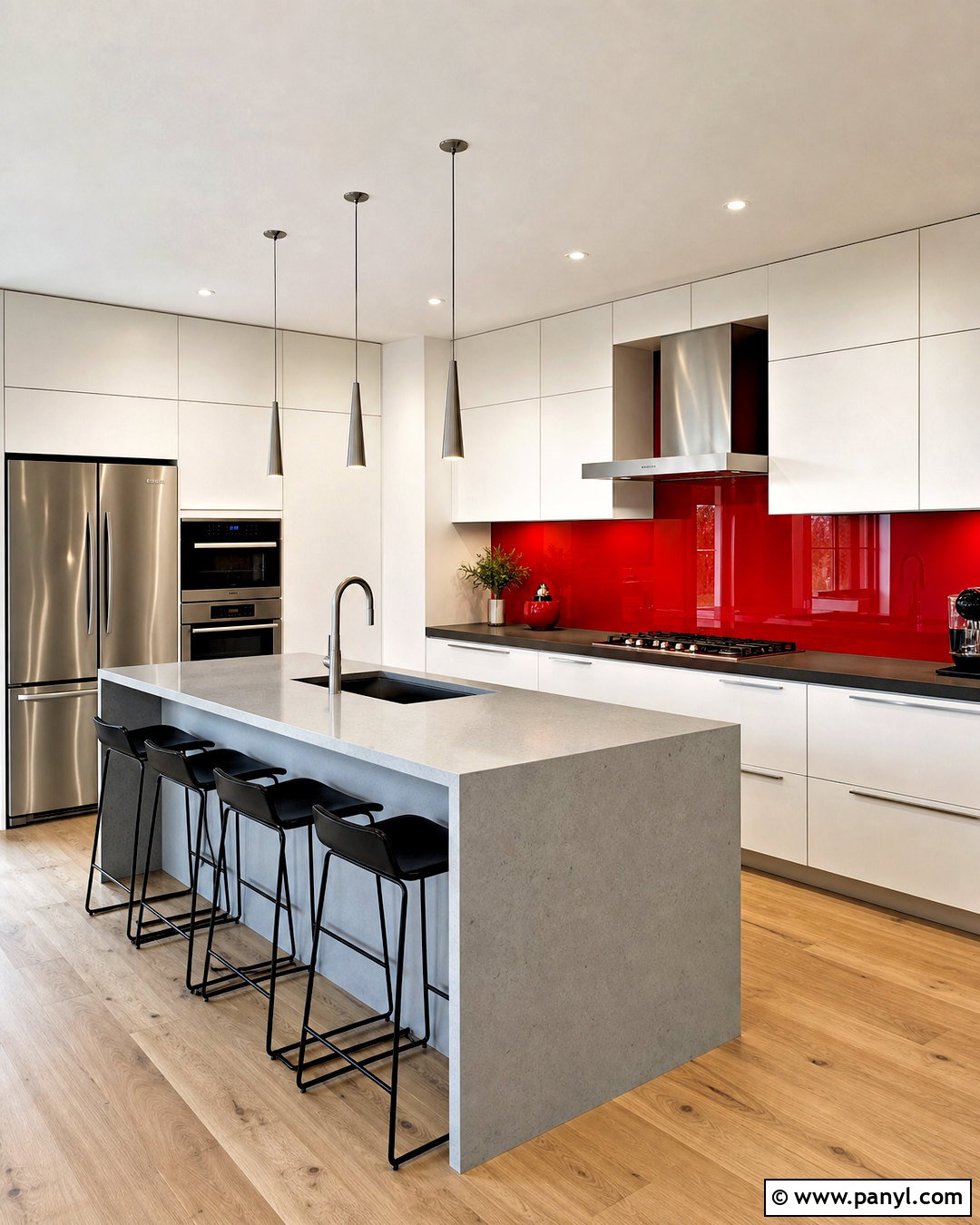
A seamless red glass backsplash produces a sleek, polished look with very few visual interruptions. Use a rich tomato-red panel behind flat-panel white cabinets and charcoal quartz countertops. The reflective finish distributes light across the cooking area, making the color appear especially clear and vibrant. Integrated appliances, minimal stainless steel pulls, and a streamlined range hood maintain the modern design. Add a waterfall island in pale gray quartz and choose light wood flooring to soften the harder surfaces. Under-cabinet LED lighting will illuminate the glass evenly and prevent shadowy sections. Because the backsplash is already dramatic, avoid busy patterns elsewhere. Simple white walls and restrained accessories create a balanced kitchen that feels bold, bright, and highly organized.
6. Red Marble Slab Backsplash
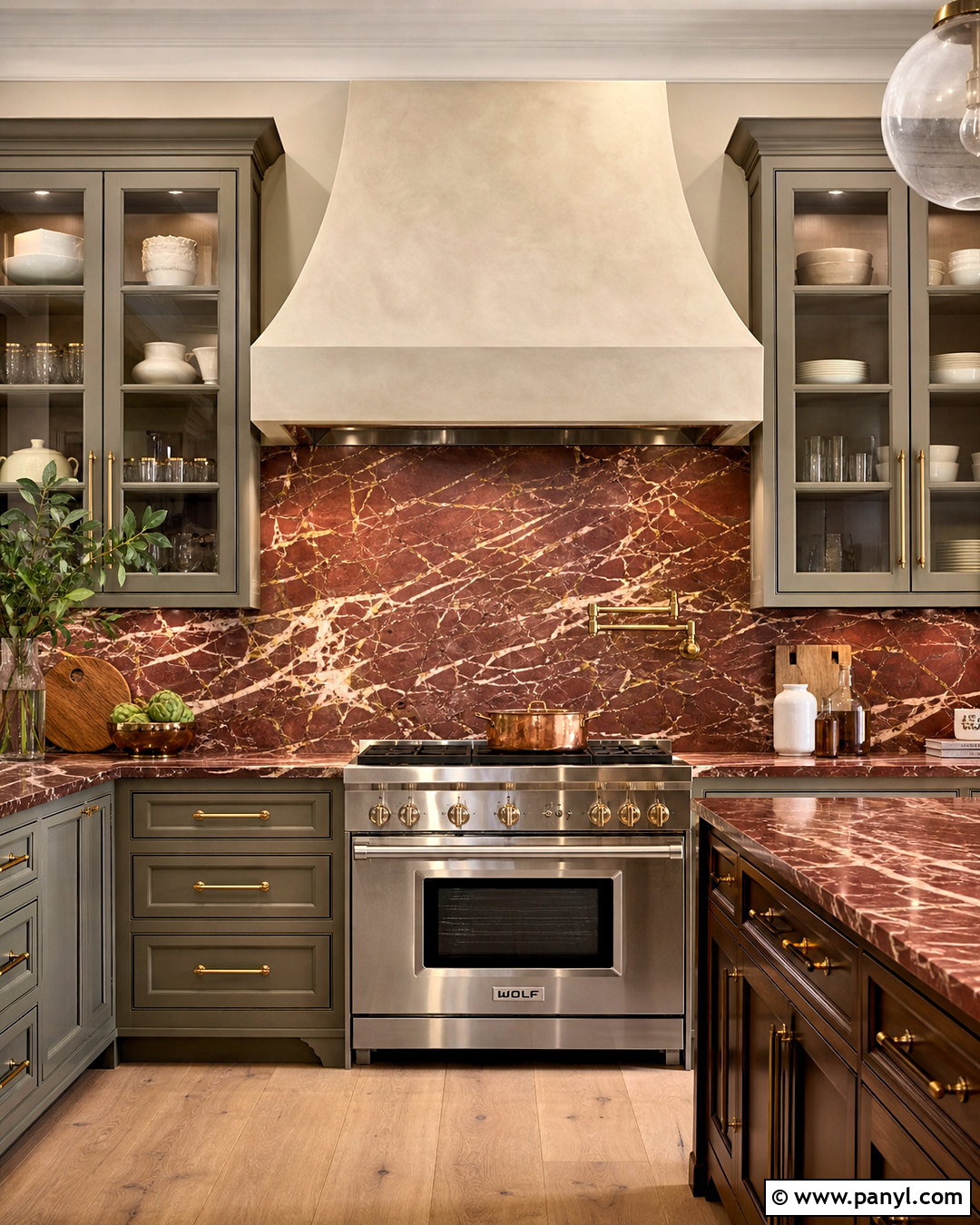
For a dramatic high-end kitchen, use a red marble slab with cream, rust, or white veining as both the backsplash and countertop. This continuous application highlights the stone’s natural pattern and eliminates distracting grout lines. Surround it with quiet taupe cabinets, a dark walnut island, and warm brass hardware. A simple plaster range hood allows the richly veined surface to remain the main attraction. Choose wide-plank oak flooring and upholstered counter stools in an oatmeal fabric for softness. Cabinet fronts should stay simple, with either slender Shaker details or flat panels. Carefully position the most attractive part of the slab behind the range. The completed design feels luxurious and artistic while remaining grounded by neutral colors and natural wood.
7. Red Geometric Tile Backsplash
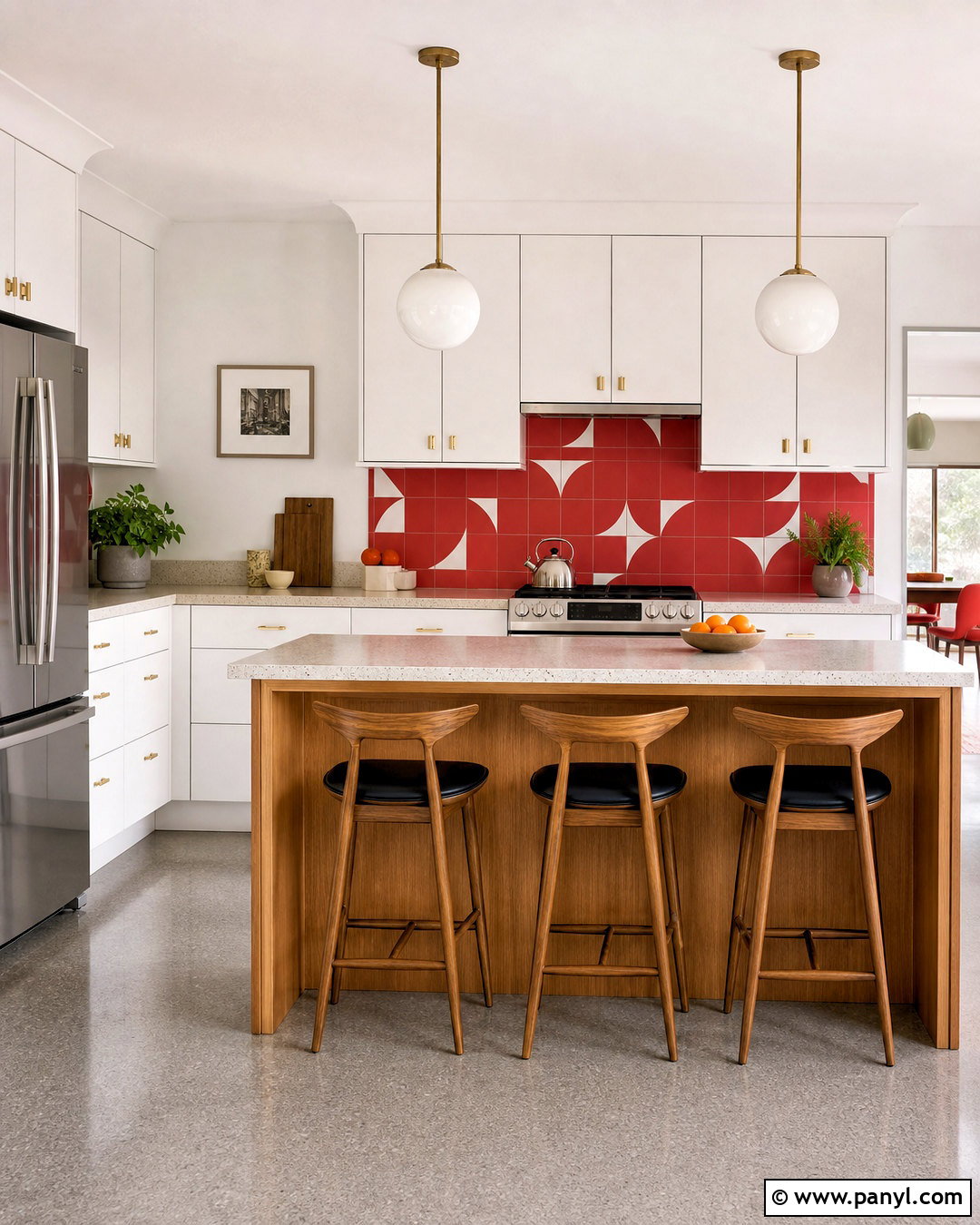
Could your kitchen use more movement and personality? A red geometric backsplash can energize the room while still looking controlled when the surrounding finishes remain simple. Select white ceramic tiles printed with a repeating red diamond, star, or angular pattern. Pair them with smooth white cabinets, pale terrazzo countertops, and a natural oak island. Small globe pendants and slim brass pulls add midcentury character without competing with the pattern. Use warm gray flooring to visually anchor the room. For the clearest result, continue the tile across one uninterrupted wall rather than breaking it into several narrow sections. Repeating the same red in a small appliance or counter stool creates cohesion, but keep other decorative colors to a minimum.
8. Red Penny Tile Backsplash
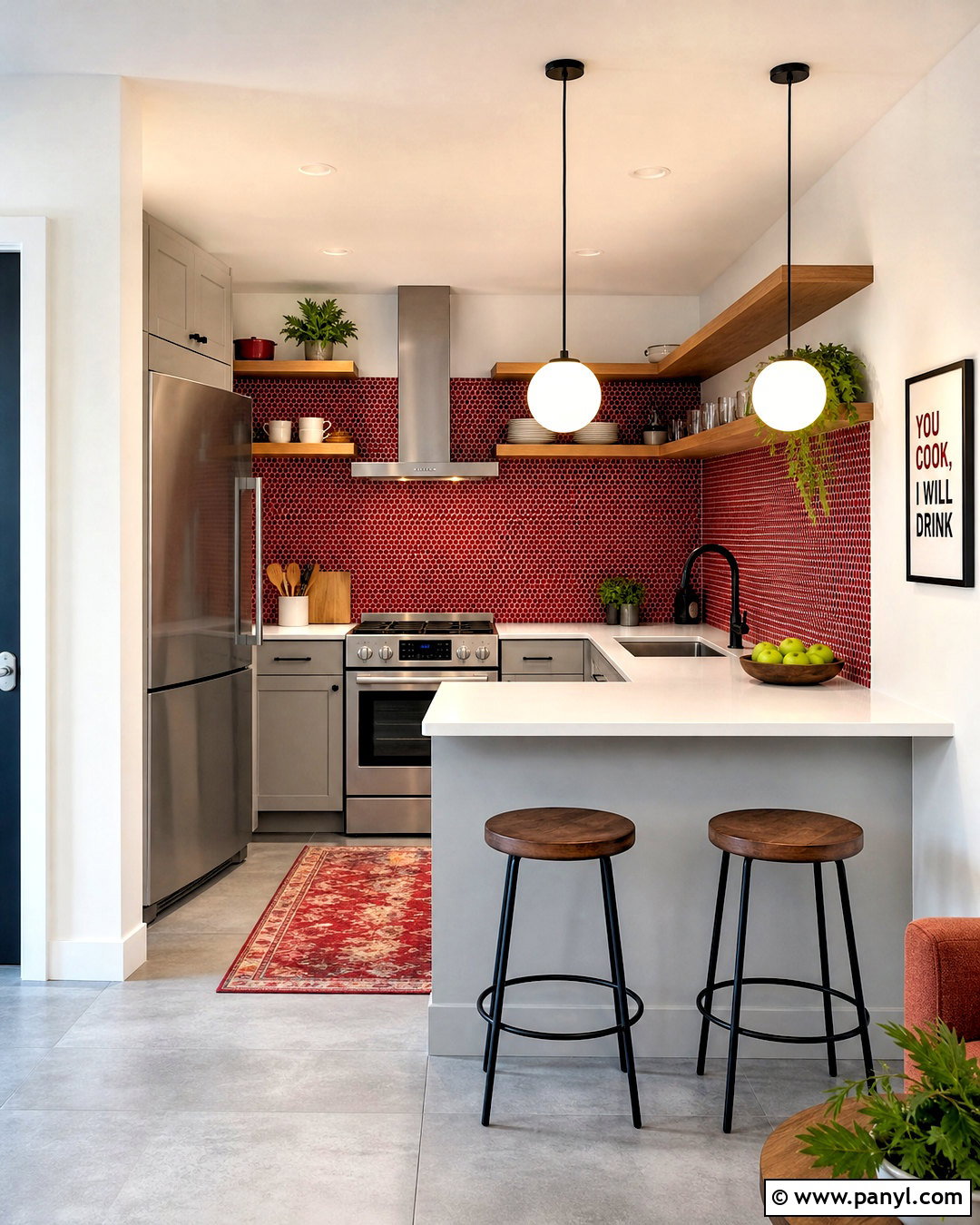
Tiny cherry-red penny tiles give a compact kitchen a lively surface without requiring a large decorative feature. Install them with matching red grout to create a smoother background and reduce the appearance of individual grout lines. Pair the backsplash with pale gray cabinets, white solid-surface countertops, and stainless steel appliances. Open oak shelves can replace a few upper cabinets, helping a small room feel lighter and giving the red tile more room to show. Choose light gray porcelain flooring and simple chrome hardware for a clean finish. A narrow peninsula with rounded stools adds useful preparation space without blocking circulation. The small tile scale feels playful, while the restrained cabinetry and uncluttered layout keep the overall kitchen practical and balanced.
9. Vertical Red Tile Backsplash
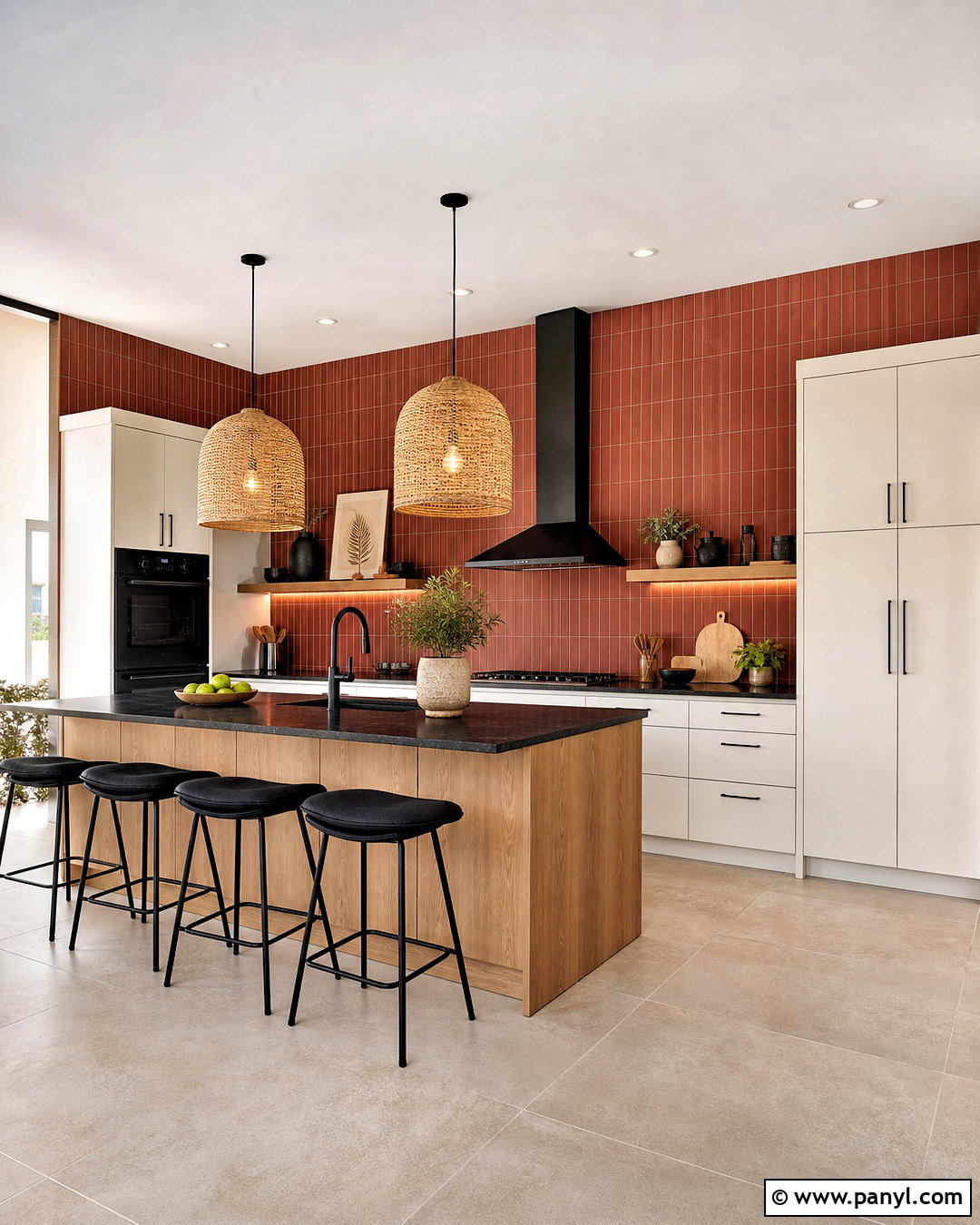
Long red tiles arranged vertically can make the backsplash area appear taller and more architectural. Choose a muted paprika-red ceramic tile with a matte finish, then extend it from the counter to the ceiling around a simple range hood. Warm white flat-panel cabinets will soften the color, while dark charcoal countertops provide a crisp visual boundary. Add a light oak island, black metal hardware, and woven pendant shades to create a comfortable contemporary look. Large-format beige floor tile keeps the lower half of the room calm. Align outlets carefully with the vertical pattern so the finished installation looks orderly. This red backsplash works particularly well in kitchens with low ceilings because the upright lines naturally draw attention upward.
10. Red Herringbone Backsplash
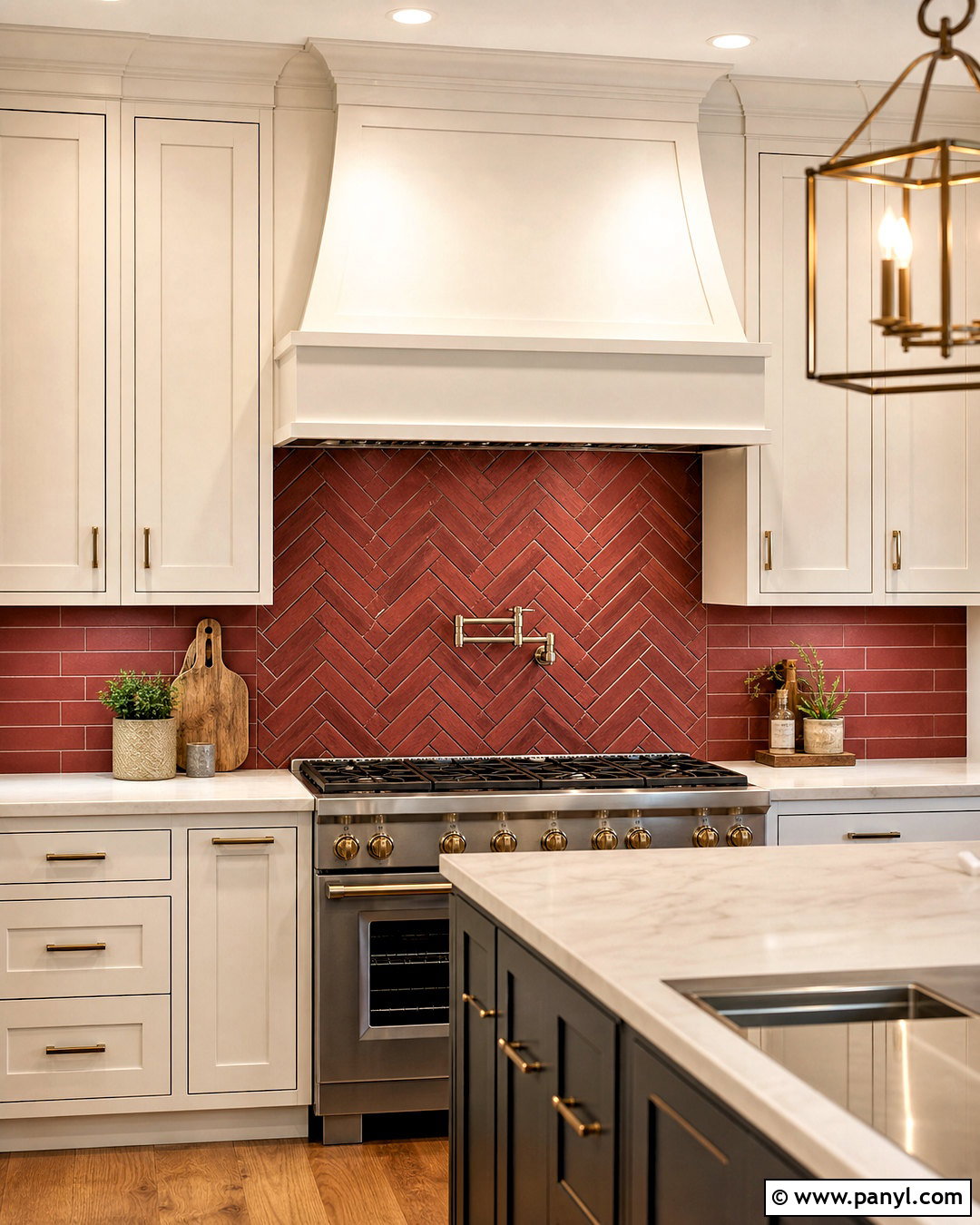
A herringbone layout gives classic red tile a more decorative and tailored appearance. Use slender brick-red ceramic tiles with subtle tonal variation, framed by warm white cabinets and light quartz countertops. Carry the herringbone pattern behind the range, then use the same material in a simpler horizontal layout across the remaining walls. This change keeps the focal area special without introducing another color. Add medium-tone oak flooring, antique brass hardware, and lantern-shaped pendants for transitional character. A navy or charcoal island can ground the warm red and white palette. Keep the range hood straightforward and coordinate its trim with the cabinets. The finished kitchen feels traditional at first glance but gains energy from the directional tile arrangement.
11. Red Mosaic Tile Backsplash
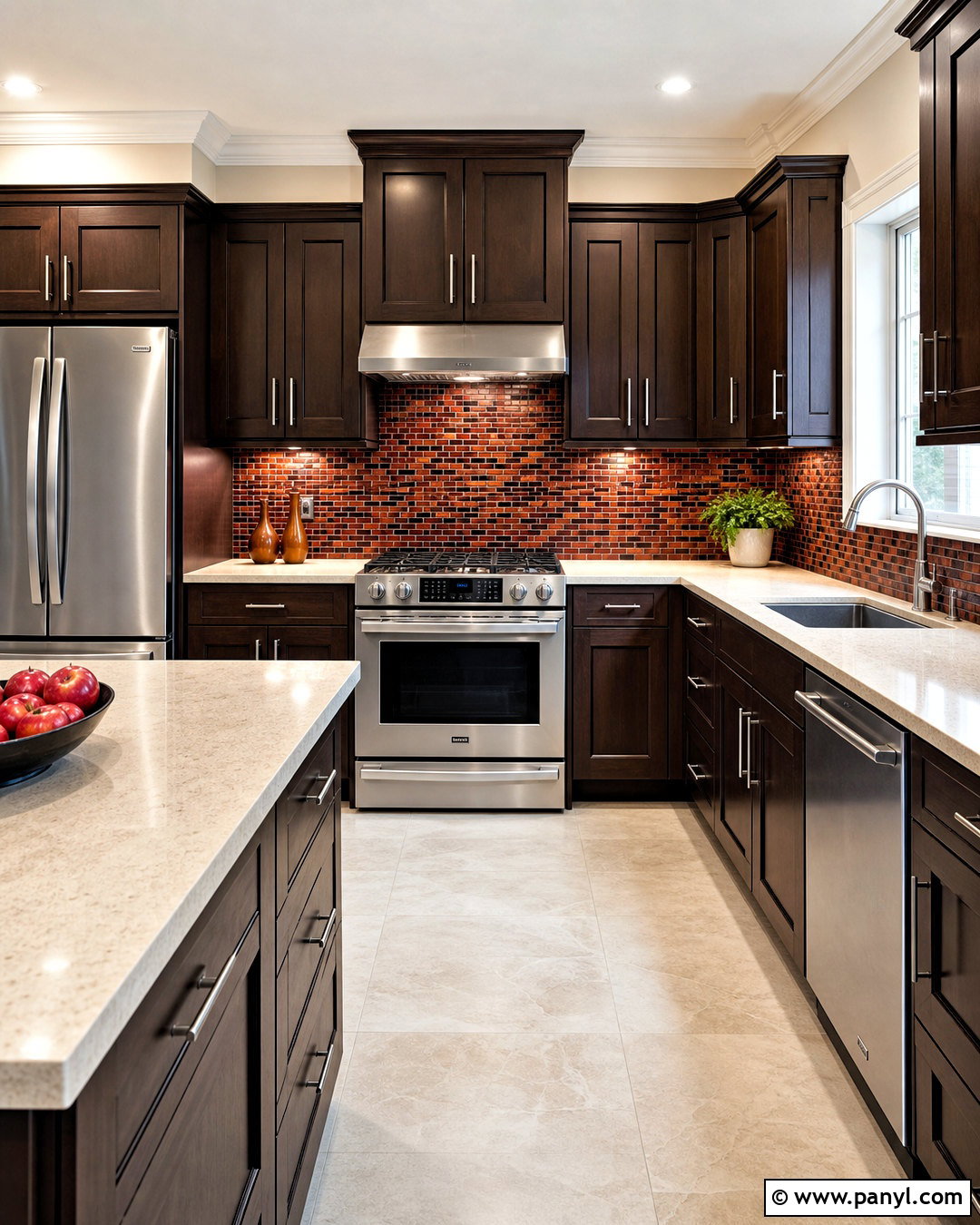
A red mosaic backsplash can unite several kitchen colors when its small pieces include crimson, rust, copper, and burgundy tones. Place the mosaic behind espresso-stained cabinets and warm cream granite or quartz countertops. Stainless steel appliances introduce a cool contrast that prevents the brown and red palette from feeling too heavy. Choose larger cabinet pulls in brushed nickel and use pale porcelain flooring to brighten the room from below. Under-cabinet lighting is essential because it reveals the variation within the mosaic and makes the surface sparkle. Limit the backsplash to the main counter walls rather than covering every vertical surface. Cream walls and a simple wood dining set will complete the kitchen without adding unnecessary pattern or visual competition.
12. Red And Pink Checkerboard Backsplash
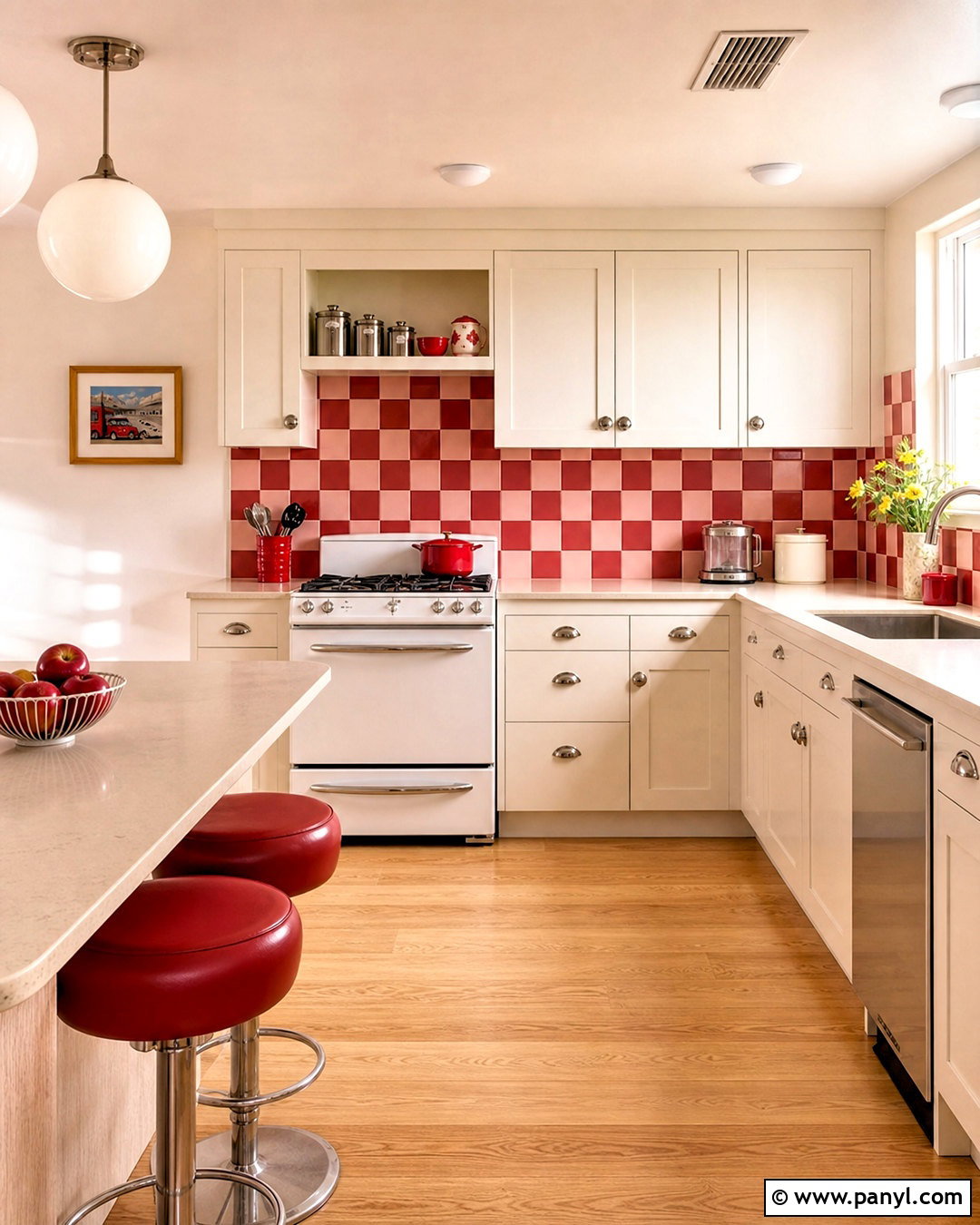
For a cheerful retro kitchen, alternate muted red and blush-pink square tiles in a checkerboard layout. Keep the cabinets creamy white and choose pale pink quartz or warm white laminate countertops for a soft transition. Rounded chrome pulls, a white range, and globe pendant lights reinforce the nostalgic mood without turning the room into a theme. Add red counter stools beside a compact peninsula and use light oak flooring to introduce a natural finish. The backsplash can run to the bottom of the upper cabinets or continue behind open shelving for greater impact. Avoid additional patterned fabrics, since the checkerboard already supplies plenty of visual rhythm. The completed space feels playful, bright, and surprisingly easy to personalize with simple accessories.
13. Rustic Red Ceramic Backsplash
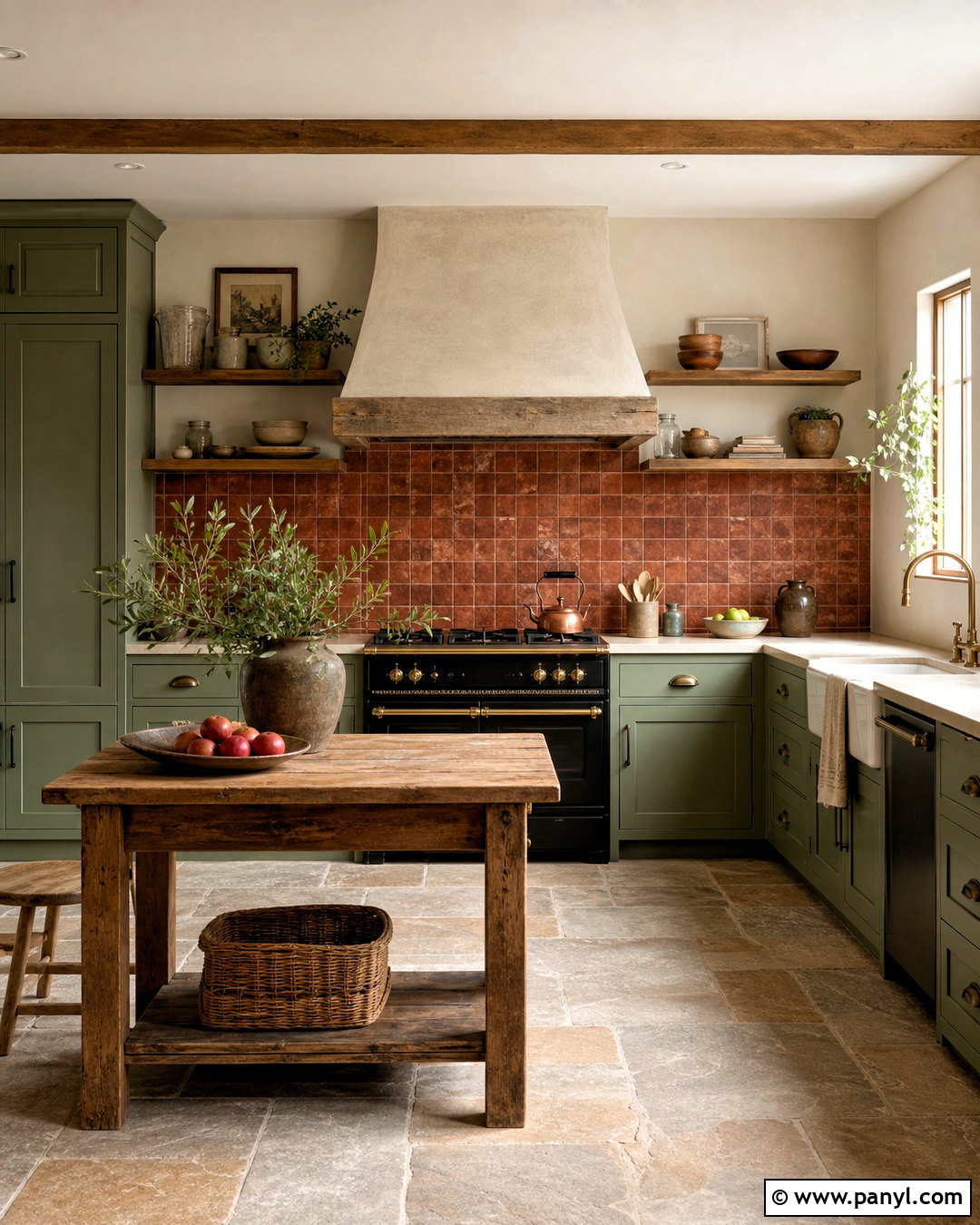
Handmade rustic red tiles pair beautifully with sage green cabinetry because the colors create a grounded, garden-inspired contrast. Select square ceramic tiles in faded red, clay, and burnt sienna tones, using warm beige grout to soften the joints. Combine them with honed cream countertops, oak shelves, and an apron-front sink. A black range and dark bronze hardware add definition, while natural stone-look flooring supports the earthy palette. Include a central wood worktable instead of a polished island for a relaxed country feeling. Small ceramic lamps placed on the counters can provide gentle task lighting beneath the shelves. Every material should look natural and slightly varied, allowing the red backsplash to feel collected and welcoming rather than bright and commercially uniform.
14. Metallic Red Backsplash Kitchen
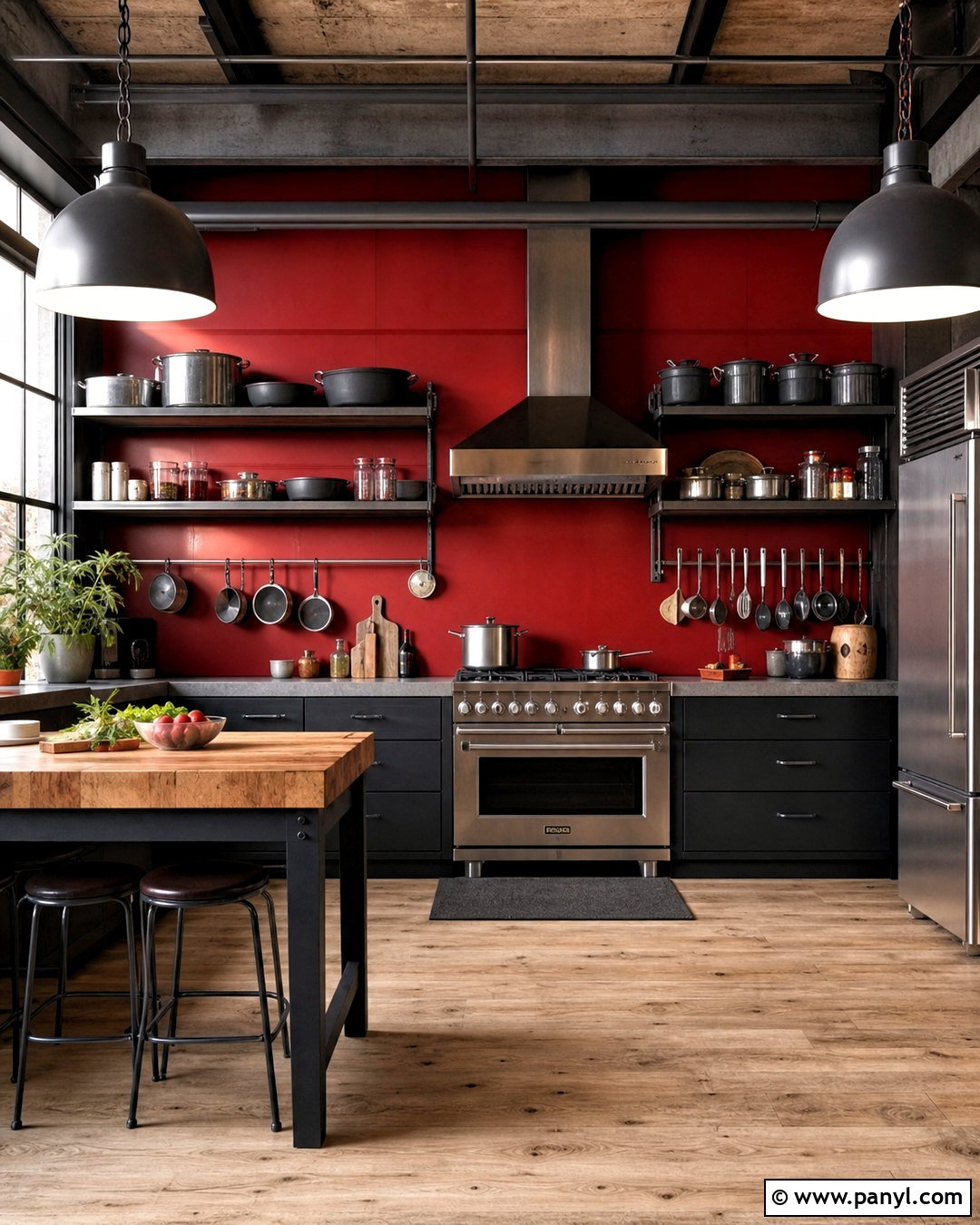
Metallic red panels create an unexpected backsplash for an industrial kitchen. Choose powder-coated steel in a deep crimson finish and install it behind matte black cabinets, concrete countertops, and a stainless steel range. Keep the panel seams minimal so the wall reads as one strong architectural surface. An exposed brick side wall can add texture, while pale wood flooring prevents the black and red combination from becoming too severe. Use open steel shelving for cookware and include a substantial butcher-block island with black legs. Track lighting and simple dome pendants reinforce the workshop-inspired atmosphere. The final kitchen should feel precise rather than cluttered, with most countertop items stored away. Red metal then becomes a bold, durable-looking backdrop instead of a decorative afterthought.
15. Spanish Red Patterned Backsplash
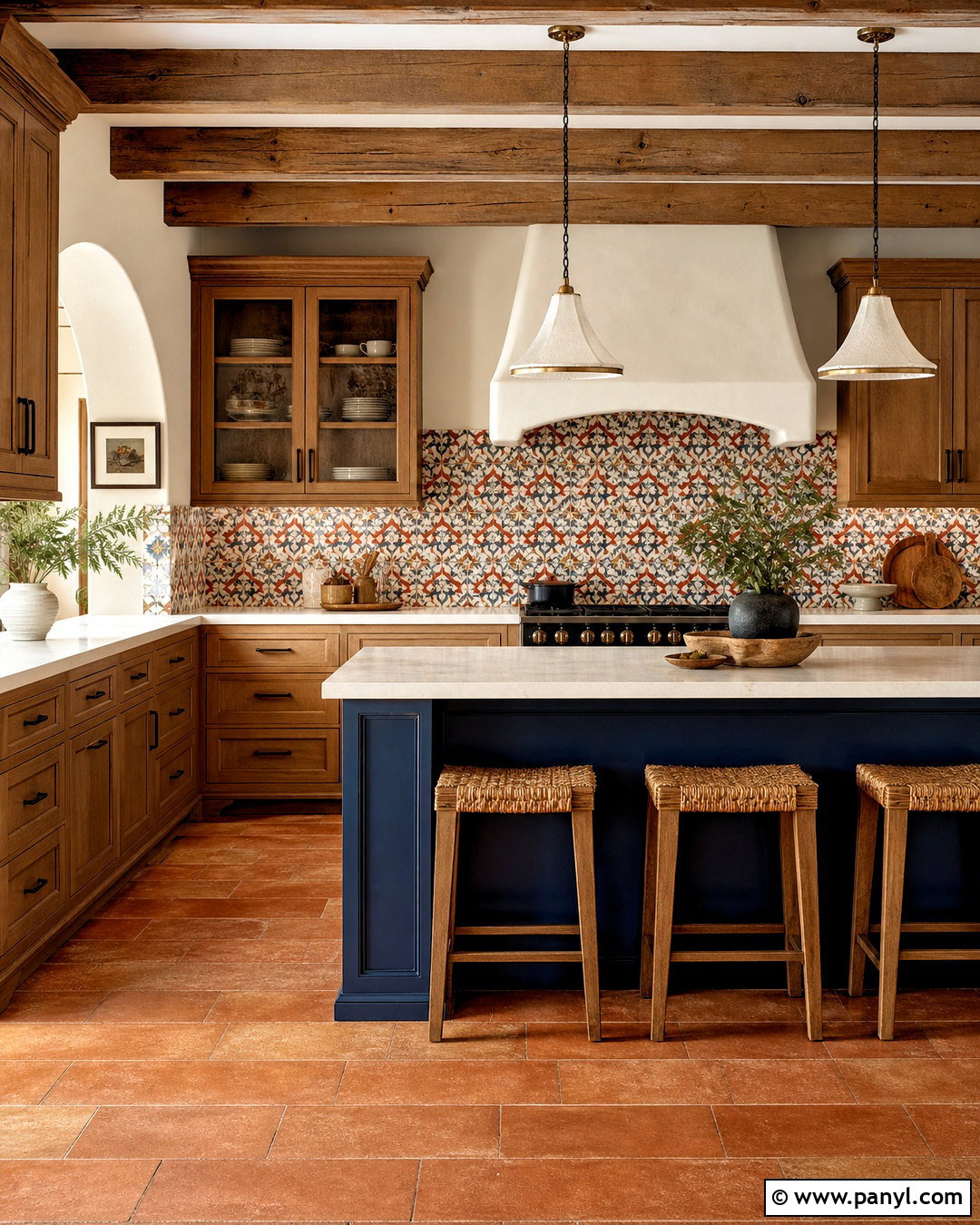
Patterned Spanish tile brings red into the kitchen alongside warm blue, cream, and ocher details. Select a repeating design with a clear red background, then install it across the range wall as a full-height feature. Use natural wood cabinets, creamy quartz countertops, and a plaster-finished range hood to support the handcrafted appearance. Dark bronze pulls and a bridge-style faucet coordinate with the old-world palette. Terracotta-look flooring and woven counter stools add warmth without copying the backsplash pattern. Keep the island simple, using deep blue paint to pick up a secondary tile color. White walls and uncluttered counters give the detailed surface breathing room. The finished room feels colorful and welcoming while maintaining a practical, cohesive arrangement.
16. Red Hexagon Tile Backsplash
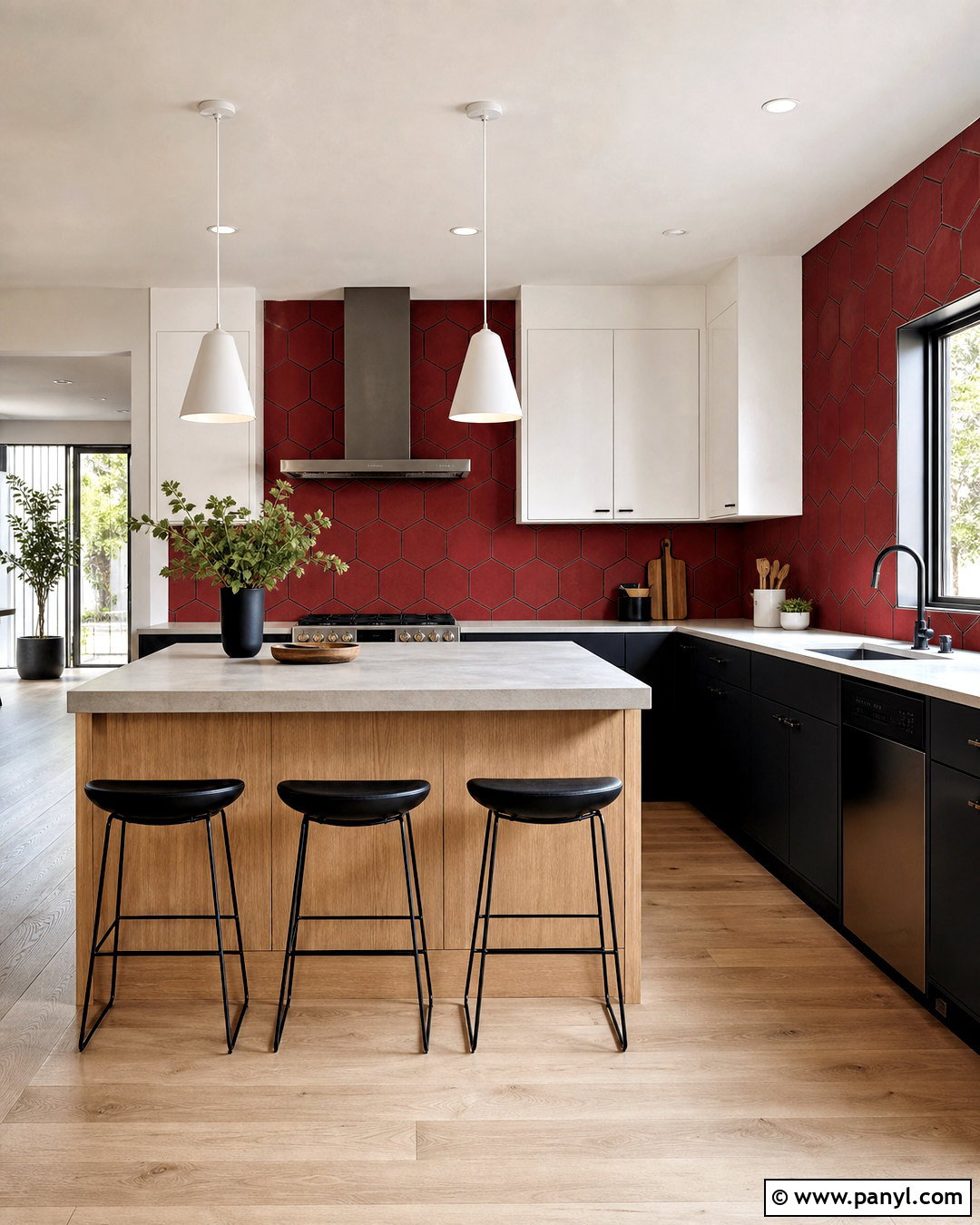
Large red hexagon tiles offer a bold shape that suits a crisp contemporary kitchen. Choose a deep ruby matte finish and pair it with black flat-panel lower cabinets, white upper cabinets, and pale concrete-look countertops. The divided cabinet colors stop the black surfaces from dominating the room. Use charcoal grout to define each hexagon and connect the backsplash to the lower cabinetry. Light oak flooring, a matching wood island, and simple white pendant lights introduce warmth and brightness. Keep appliances integrated where possible, and choose slim black hardware for a streamlined appearance. Carrying the hexagonal tile to the ceiling behind the range creates a striking feature. Elsewhere, stop it neatly beneath the upper cabinets to preserve a clean visual structure.
17. Red Quartz Slab Backsplash
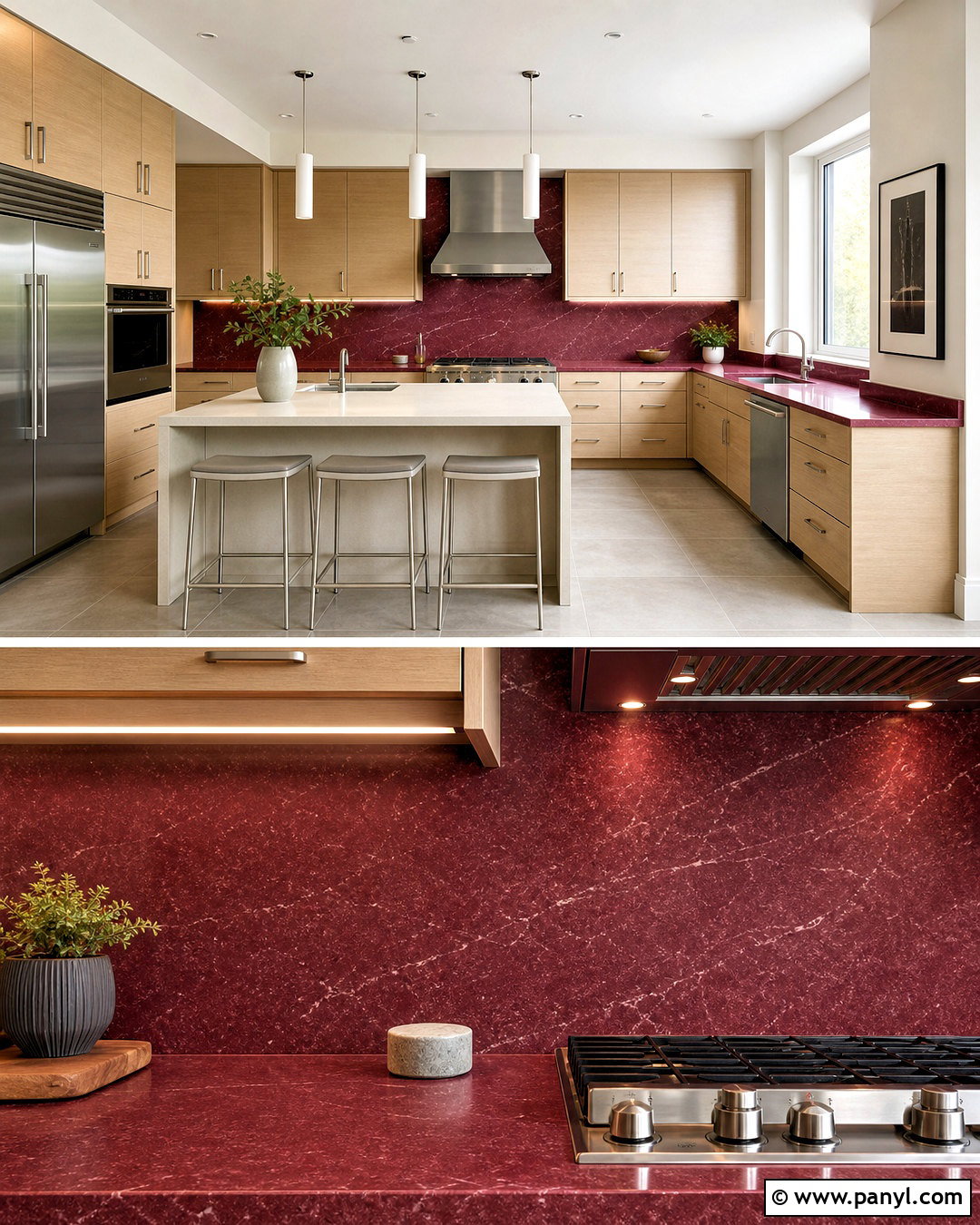
A red quartz backsplash provides intense color with a smooth, consistent appearance. Select a dark raspberry or oxblood slab with minimal pattern, then continue the same material across the countertops for a wrapped effect. Balance the saturated surface with pale rift-cut oak cabinets and a large cream-colored island. Brushed stainless steel appliances, understated nickel hardware, and simple cylindrical pendants keep the design contemporary. Use large light-gray floor tiles to create a quiet foundation. Because the red surfaces cover a significant area, leave the walls warm white and keep display pieces limited. A broad window above the sink will bring daylight across the quartz. The final kitchen feels graphic and confident but remains approachable because of the generous use of light wood.
18. Painted Red Beadboard Backsplash
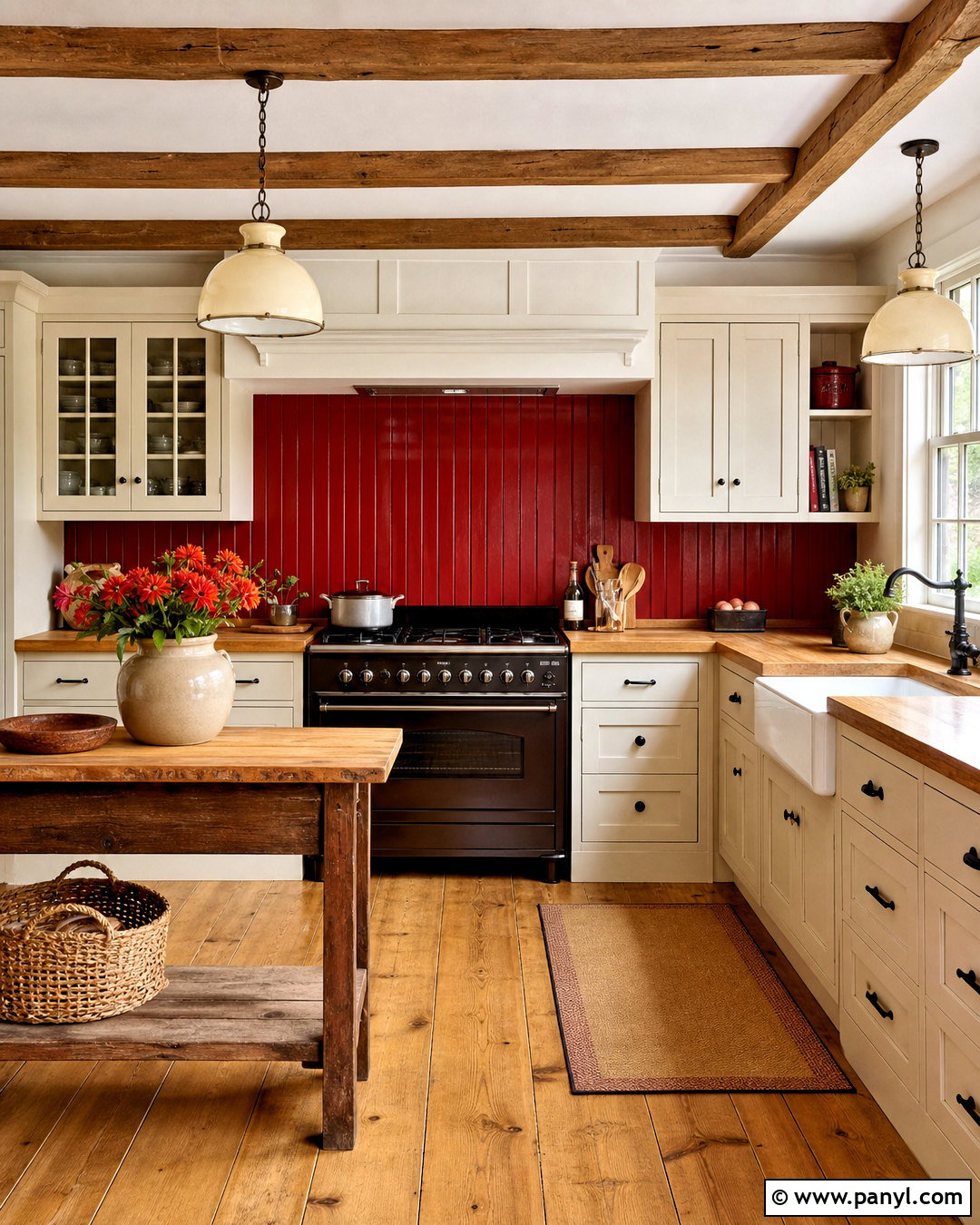
A painted beadboard backsplash offers a budget-conscious way to introduce red while preserving a traditional kitchen character. Use moisture-resistant panels painted in warm barn red, and protect the area directly behind the range with clear tempered glass. Pair the backsplash with ivory Shaker cabinets, butcher-block countertops, and black iron hardware. A farmhouse sink and simple bridge faucet strengthen the classic look. Add honey-toned wood flooring, a freestanding worktable, and cream pendant lights for an easygoing cottage atmosphere. Paint the walls soft beige rather than stark white to blend naturally with the warmer materials. The vertical grooves bring texture and help the backsplash feel architectural. Careful sealing around the sink and counters will give the installation a neat, finished appearance.
19. Peel And Stick Red Backsplash
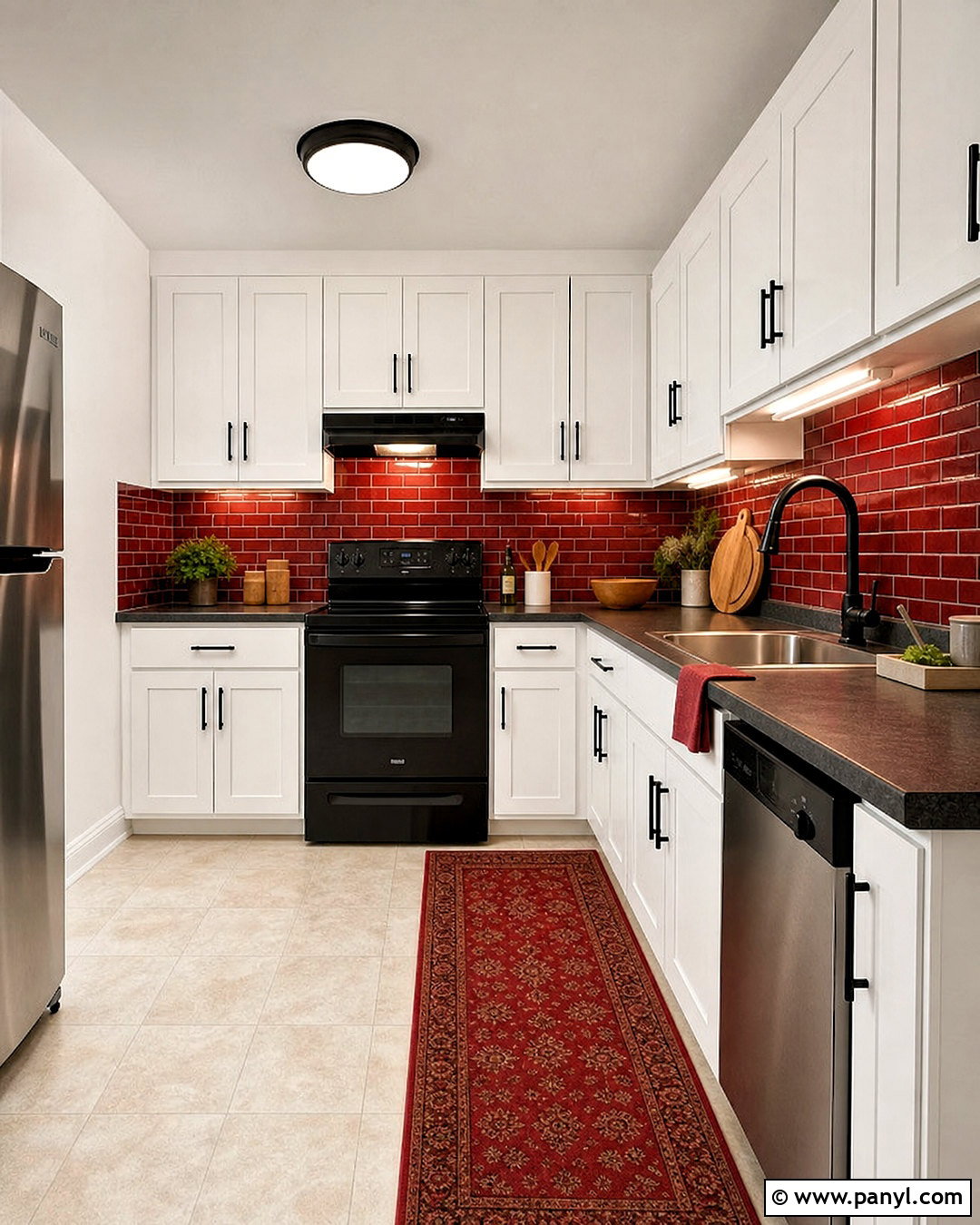
Renters and budget renovators can create a convincing red backsplash with removable peel-and-stick tile. Choose a glossy brick-red subway design with realistic grout lines, and apply it to a clean, smooth wall between white cabinets and charcoal laminate countertops. Matte black handles, a black faucet, and simple wood accessories will help the temporary surface feel like part of a complete plan. Add a washable red runner over pale vinyl flooring and install plug-in under-cabinet lighting for extra brightness. Keep countertop decor minimal so the backsplash remains crisp rather than busy. Measure around outlets carefully and align every row before pressing the panels firmly into place. The finished kitchen delivers bold color without requiring permanent masonry or a major construction project.
20. Red Range Backsplash Feature Wall
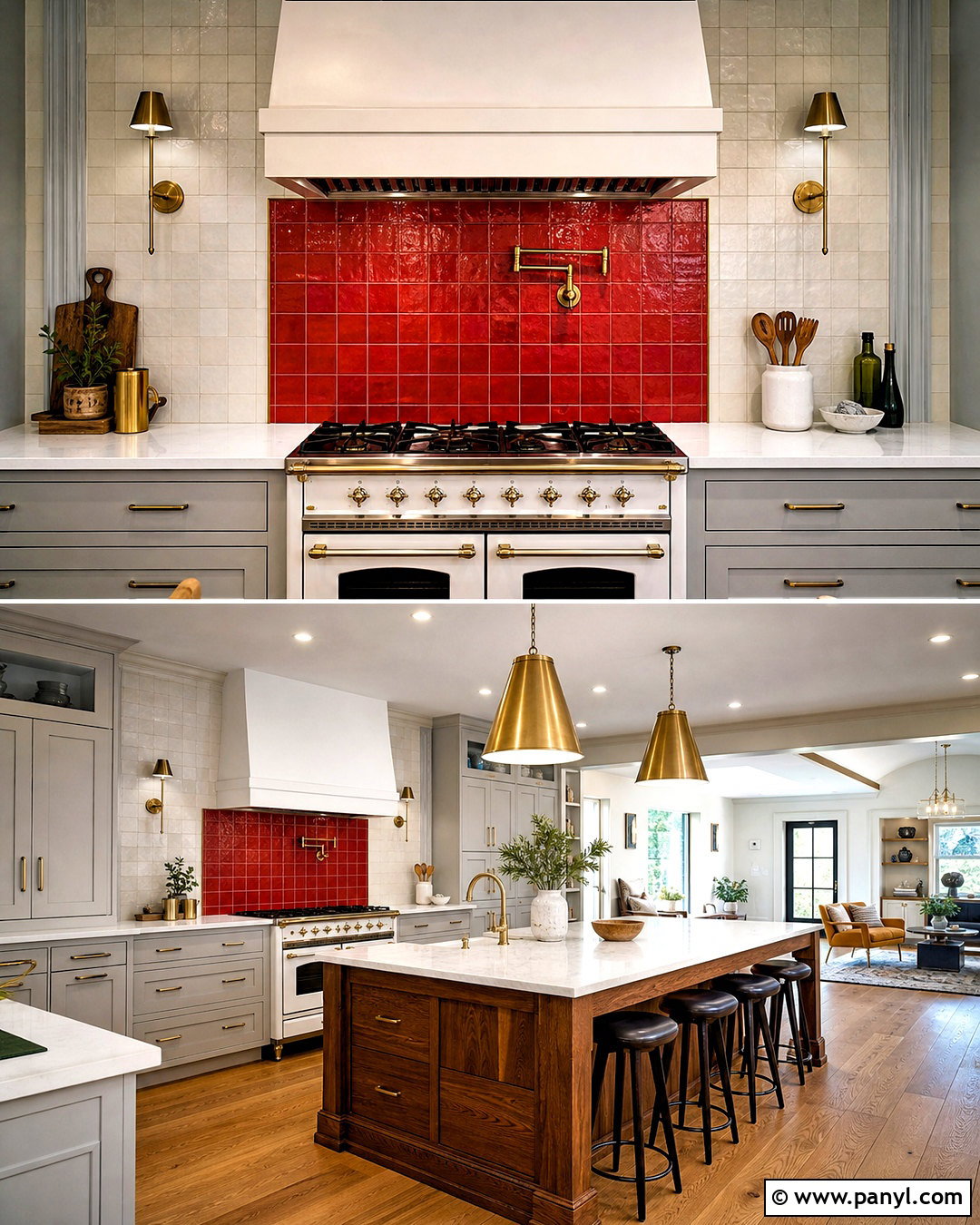
Not every kitchen needs red tile on every wall. Concentrating it behind the range creates a strong feature while allowing the remaining backsplash to stay quiet. Frame glossy scarlet square tiles with slim brass trim, extending the red section from the countertop to the ceiling. Use creamy white tile on adjacent walls, warm gray cabinets, and white quartz counters throughout the room. A walnut island, oak flooring, and brass pendant lights balance the concentrated color with natural warmth. Position a simple white range hood within the red area so its shape stands out clearly. This layered approach works well in open kitchens because the red remains visible from nearby living spaces without surrounding the entire room in a highly saturated surface.
Conclusion:
The best red backsplash feels connected to the entire kitchen rather than added as an isolated burst of color. Bright red subway tile can sharpen a white space, while burgundy stone, brick, and terracotta create a warmer, more grounded atmosphere. Pattern, finish, grout, and installation direction also affect how strong the color appears. Before choosing a material, compare samples beside your cabinets, countertops, flooring, and lighting at different times of day. You can then adjust the surrounding palette to make the red look intentional and balanced. From affordable removable panels to dramatic marble slabs, these 20 red backsplash kitchen ideas offer practical ways to build a complete room around this confident color.

Related Ideas and Inspiration:
Leave a Reply