
Red brick brings lasting warmth, texture, and character to a home, but the surrounding colors determine whether it looks dated, traditional, or freshly updated. The strongest red brick and paint combinations consider the brick’s undertone, mortar, roof, windows, and permanent stonework before selecting siding, trim, shutters, or doors. Warm brick often works beautifully with cream, taupe, and earthy green, while cooler brick can support charcoal, navy, and blue-gray. It is also smart to test large paint samples outdoors because sunlight can make exterior colors appear noticeably lighter. () From quiet neutrals to dramatic dark accents, the following complete exterior schemes offer practical inspiration for choosing 20 red brick and paint combinations.
1. Red Brick With Warm White Paint
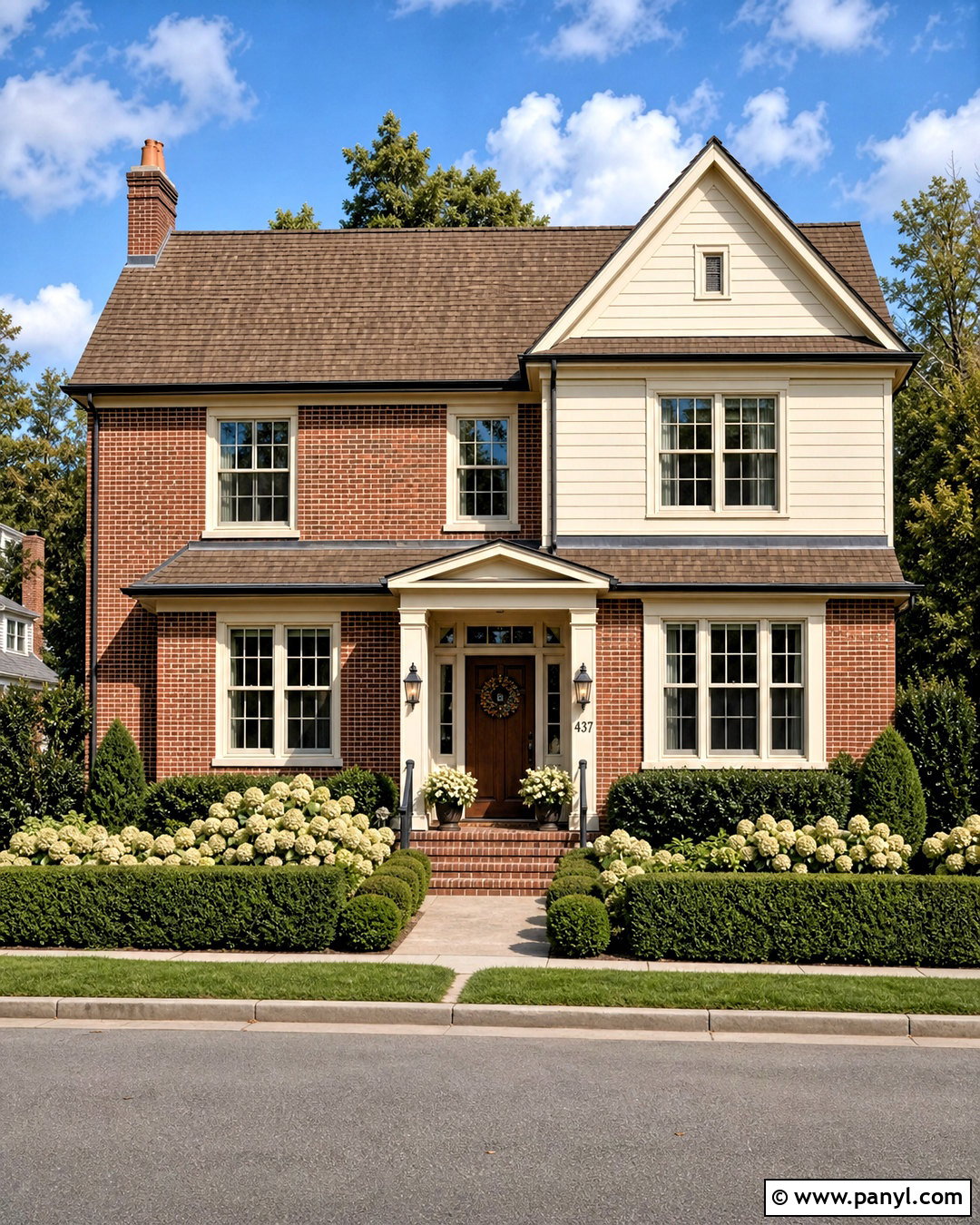
Warm white paint gives red brick a clean update without creating the sharp contrast of a bright, cool white. Use a creamy white on the siding, porch columns, fascia, and window trim. Keep the brick unpainted so its natural variation remains the main source of color and texture. A medium brown architectural-shingle roof will connect with the warmer shades in the masonry. Complete the exterior with a stained walnut front door, aged bronze lighting, and simple black house numbers. Layer the landscaping with clipped boxwoods, ornamental grasses, and pale hydrangeas. This combination works especially well on traditional homes where you want a brighter appearance but do not want the exterior to feel overly crisp, stark, or modern.
2. Red Brick With Cream Paint
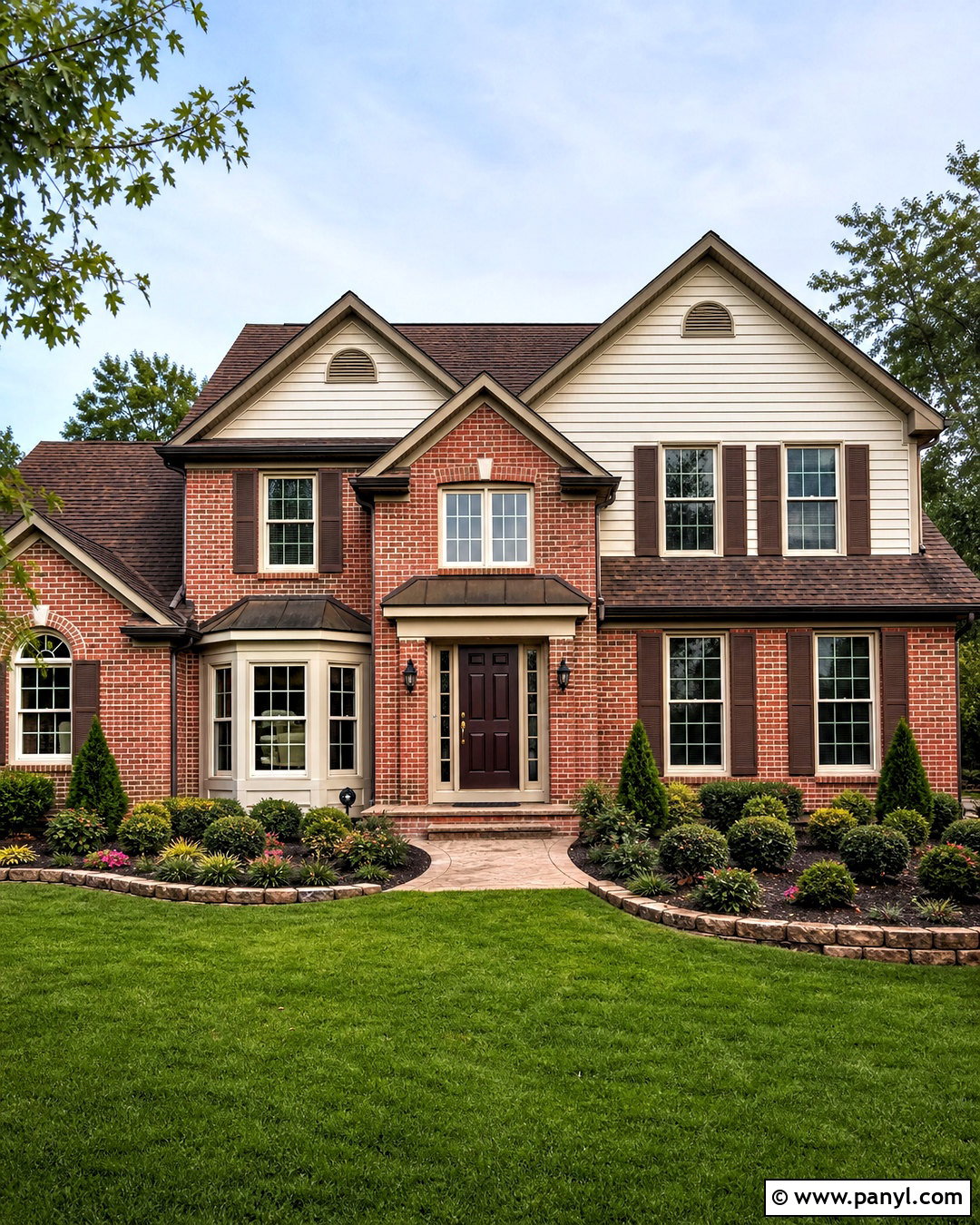
Soft cream siding brings out the tan, orange, and golden flecks commonly found in warm red brick. Apply cream to clapboard siding, dormers, soffits, and substantial porch columns. Use a slightly lighter ivory for narrow trim so the architectural details remain visible without introducing another strong color. A chocolate brown front door and matching shutters give the facade a grounded, traditional finish. Choose dark bronze gutters and lanterns instead of bright black hardware for a gentler transition. A weathered brown roof, curved planting beds, and natural stone edging reinforce the warm palette. This full scheme is a dependable choice for Colonial, Cape Cod, and suburban homes that need a welcoming update with comfortable contrast.
3. Red Brick With Light Greige Paint
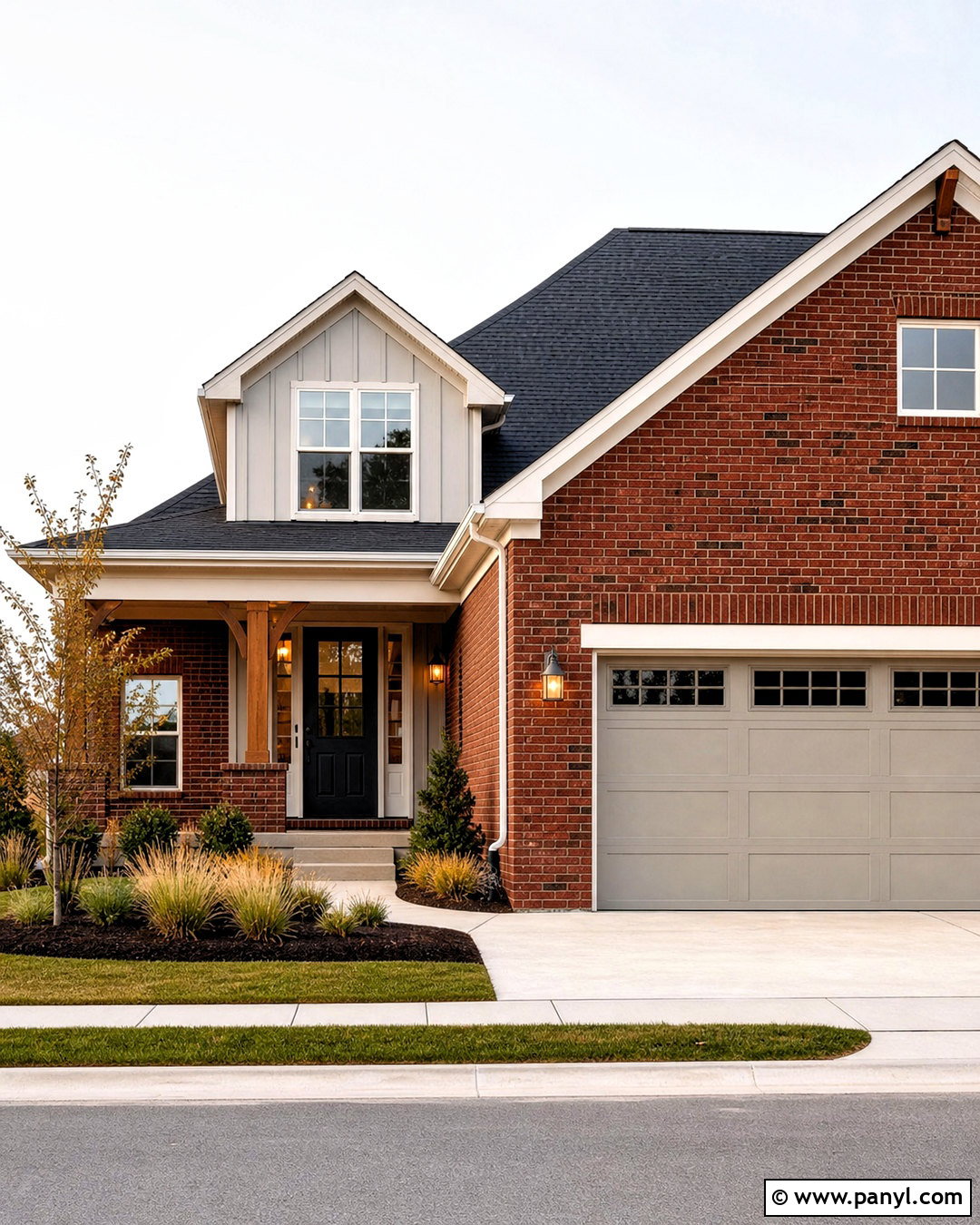
What if beige feels too warm but gray seems too cold? Light greige offers a balanced solution that sits comfortably beside many red brick exteriors. Choose a soft greige with subtle brown undertones for the siding and garage door. Add warm white trim around windows, rooflines, and porch supports to keep the house looking fresh. A muted black front door introduces definition, while brushed bronze sconces soften the dark accent. Use a charcoal roof only when similar dark tones appear within the brick or mortar. Finish the curb view with pale concrete walkways, rounded evergreen shrubs, and airy ornamental grasses. The complete look feels current and calm, yet neutral enough to suit both traditional architecture and streamlined renovations.
4. Red Brick With Taupe Paint
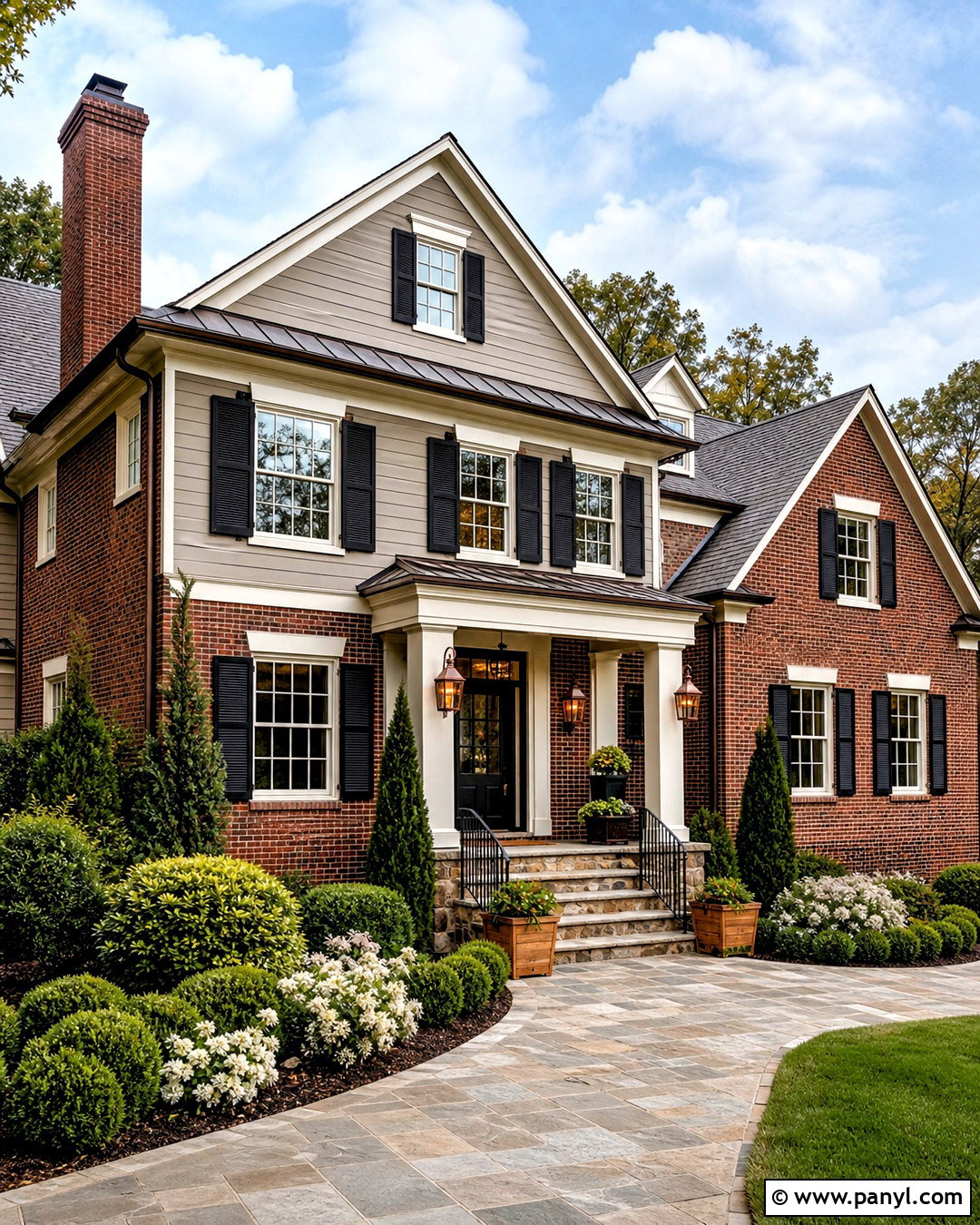
Taupe paint creates a quiet, earthy bridge between red masonry and neutral exterior materials. Select a medium taupe with brown or mushroom undertones for siding, upper gables, and the garage door. Paint the trim a soft linen white rather than a brilliant white, which can look disconnected from an aged brick facade. Deep espresso works well on the front door, shutters, gutters, and metal railings. If the house has stone steps, choose a warm gray-brown stone that repeats the taupe siding. Complete the design with copper-toned lanterns, cedar planters, and layered evergreen landscaping. This combination is particularly effective when the brick contains muted brown patches and creamy mortar, creating an understated exterior that feels thoughtfully coordinated.
5. Red Brick With Charcoal Gray Paint
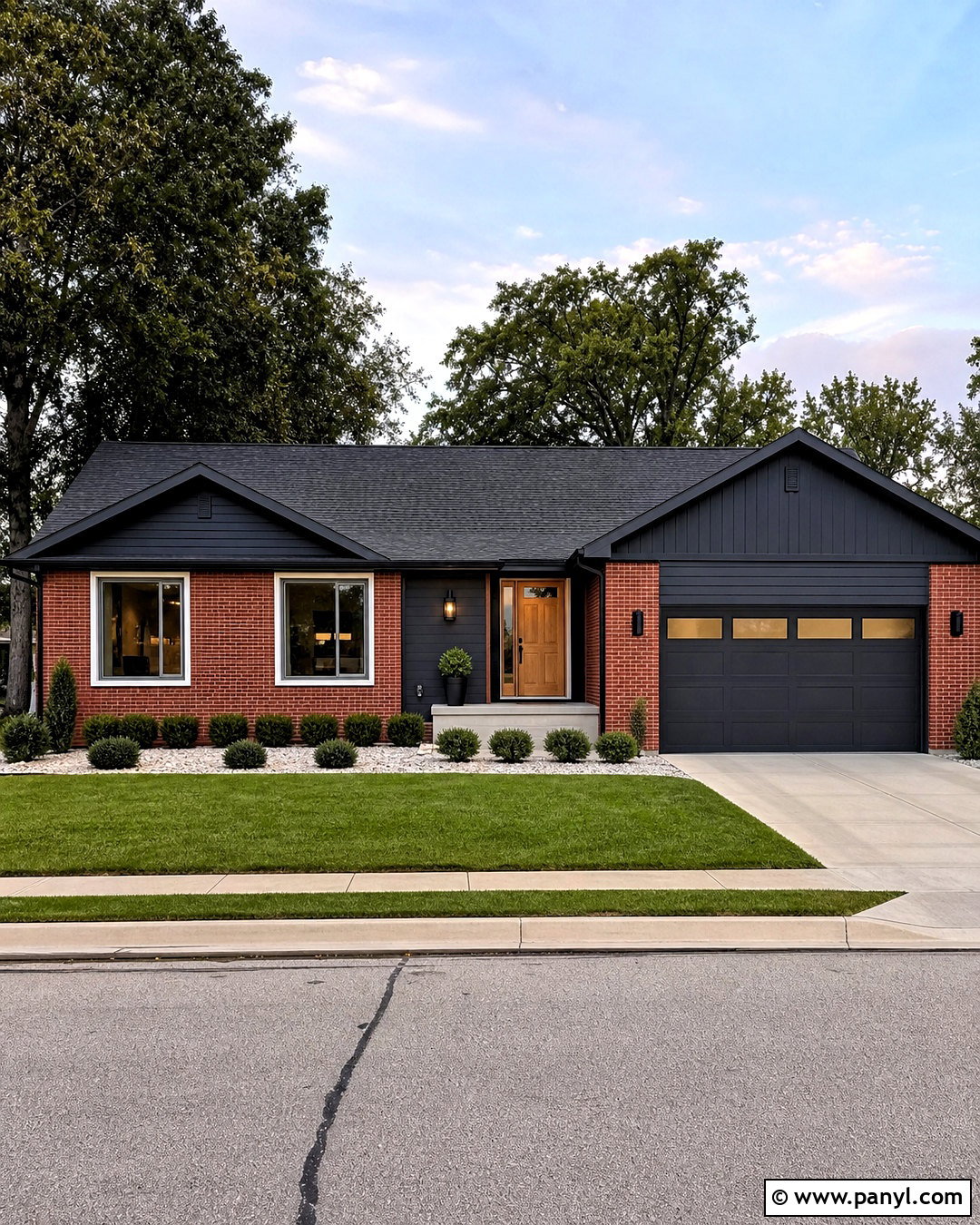
Charcoal gray creates bold structure around red brick and can make a conventional exterior look more architectural. Use the charcoal on horizontal siding, upper gables, shutters, and the garage door. Keep a restrained amount of warm white on window trim and soffits so the facade does not become excessively dark. A natural oak or medium cedar front door adds warmth between the saturated paint and masonry. Repeat charcoal through the roof, gutters, railings, and modern rectangular lighting. Low evergreen hedges and pale gravel beds will provide clean contrast near the foundation. This scheme works best when the brick includes smoky, burgundy, or dark gray notes that visually connect with the paint rather than fighting against it.
6. Red Brick With Soft Gray Paint
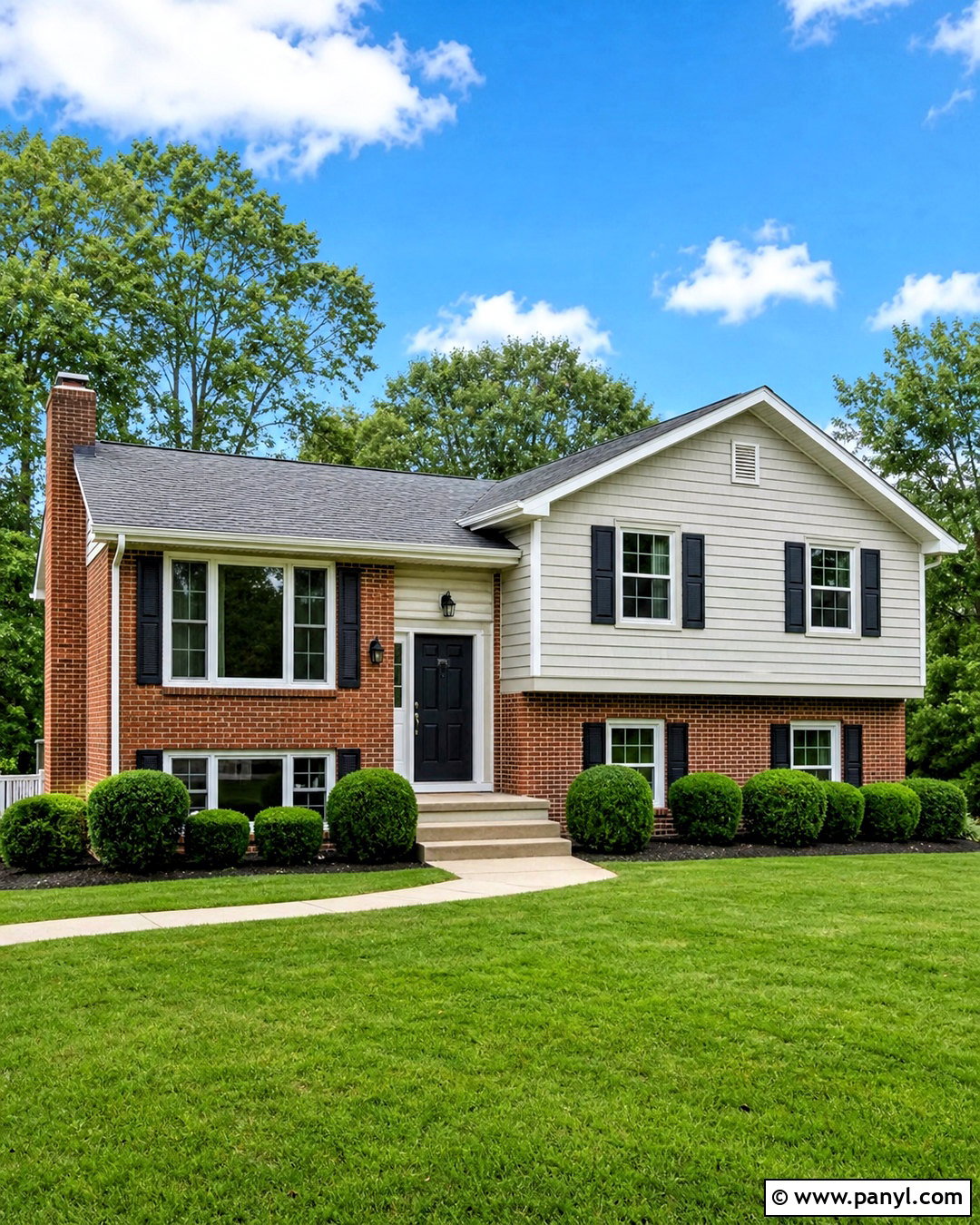
On a sunny street, soft gray siding can calm the visual weight of dark or highly varied red brick. Look for a warm gray with a faint beige undertone instead of a blue, silver gray. Apply it to siding, dormers, and the garage door, then frame the architecture with off-white trim. A deep charcoal front door and matching shutters create just enough contrast to keep the palette from appearing washed out. Choose a medium gray roof that relates to both the paint and darker marks in the brick. Black lanterns, simple concrete steps, and rounded green shrubs finish the composition. The result is polished and approachable, making it suitable for ranch houses, split-level homes, and traditional two-story exteriors.
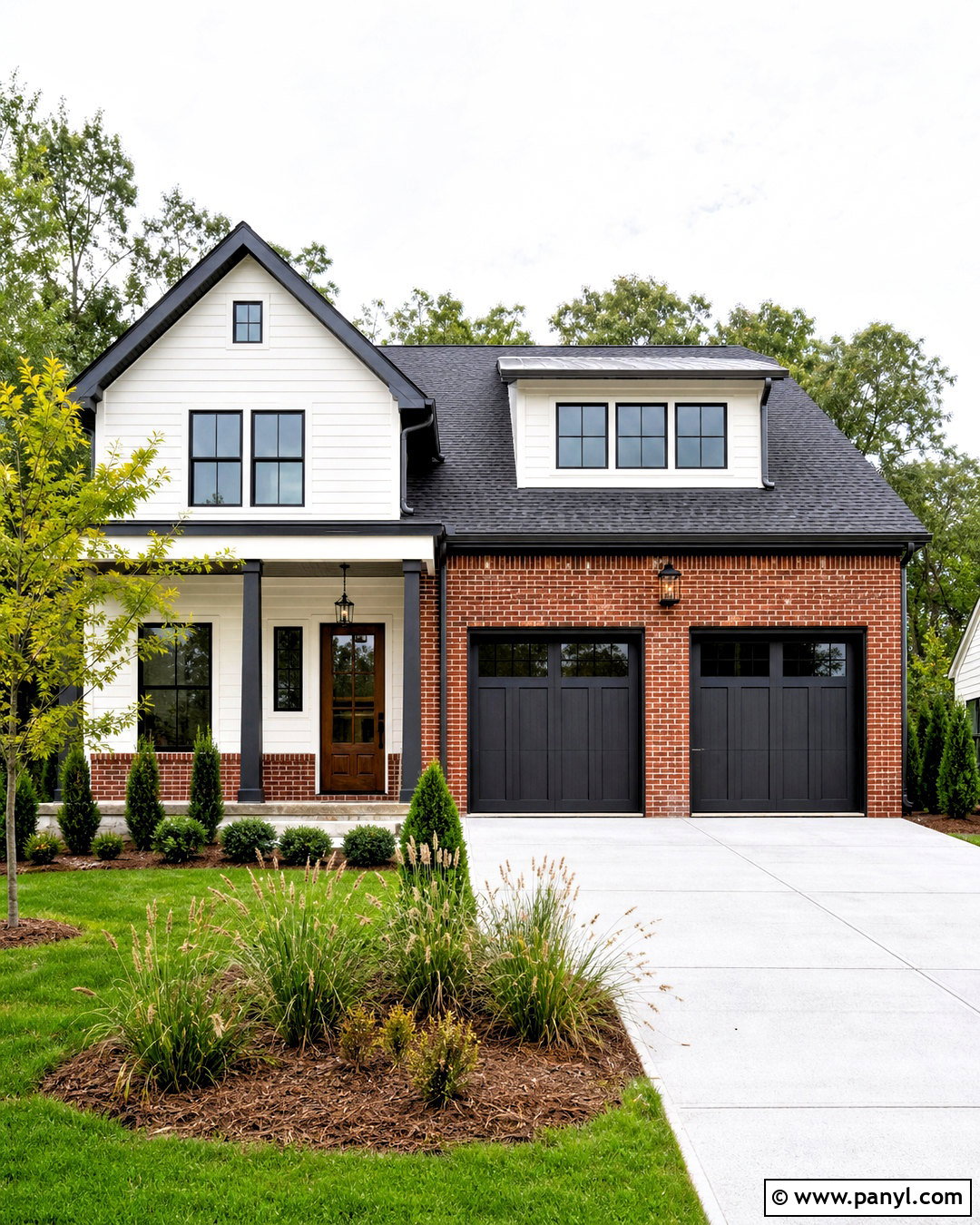
7. Red Brick With Black Paint
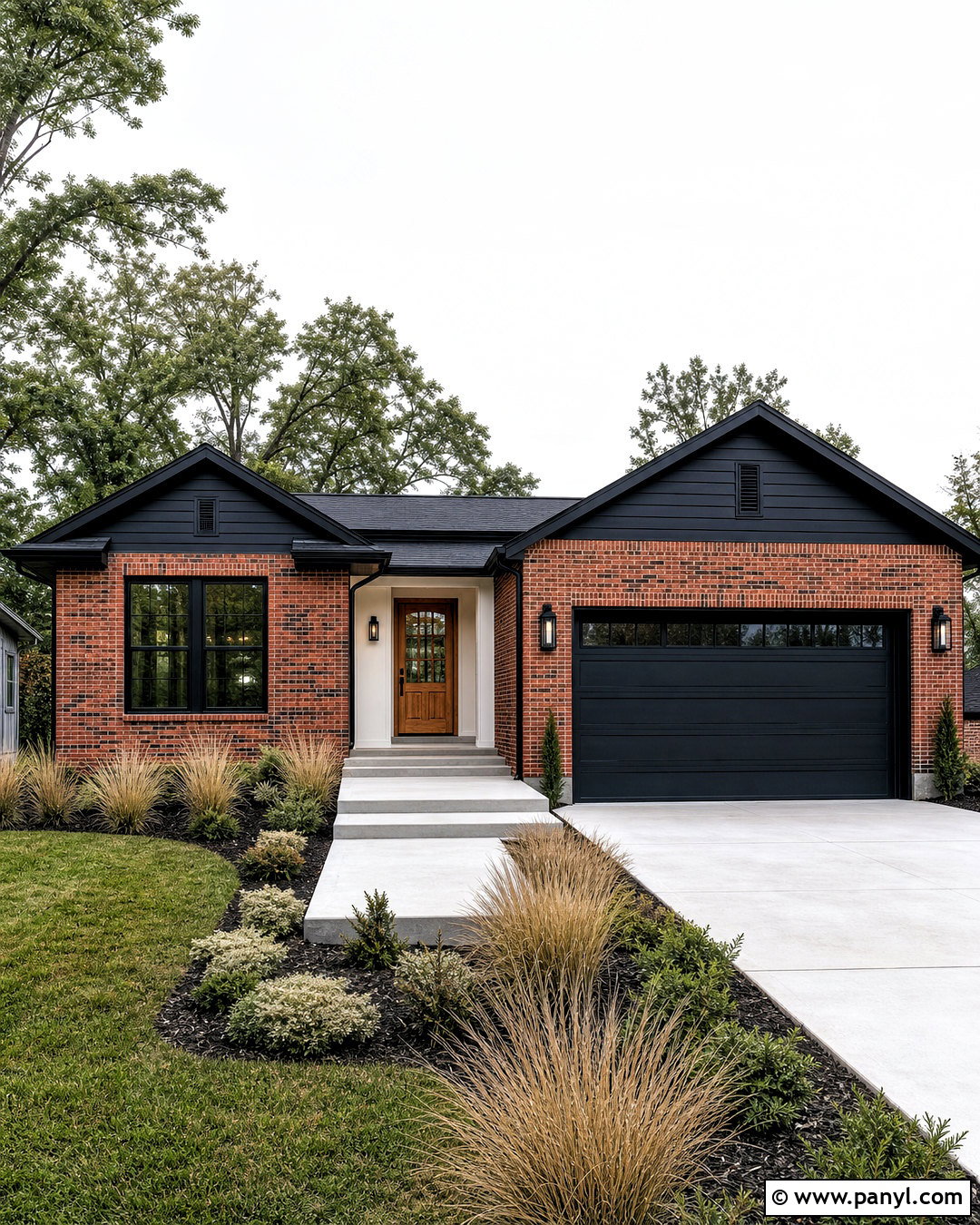
Black paint can transform red brick into a striking focal material when it is used with control. Cover upper siding, gables, shutters, and the garage door in a soft black with warm or neutral undertones. Keep the brick visible across the lower level or central facade to prevent the exterior from feeling flat. Use matching black gutters, downspouts, window frames, and streamlined sconces for a unified appearance. A natural wood front door supplies essential warmth, while restrained cream trim can outline the entry if additional definition is needed. Add broad concrete steps, deep green shrubs, and ornamental grasses. This high-contrast combination suits modernized ranch homes, contemporary additions, and traditional houses with simplified exterior details.
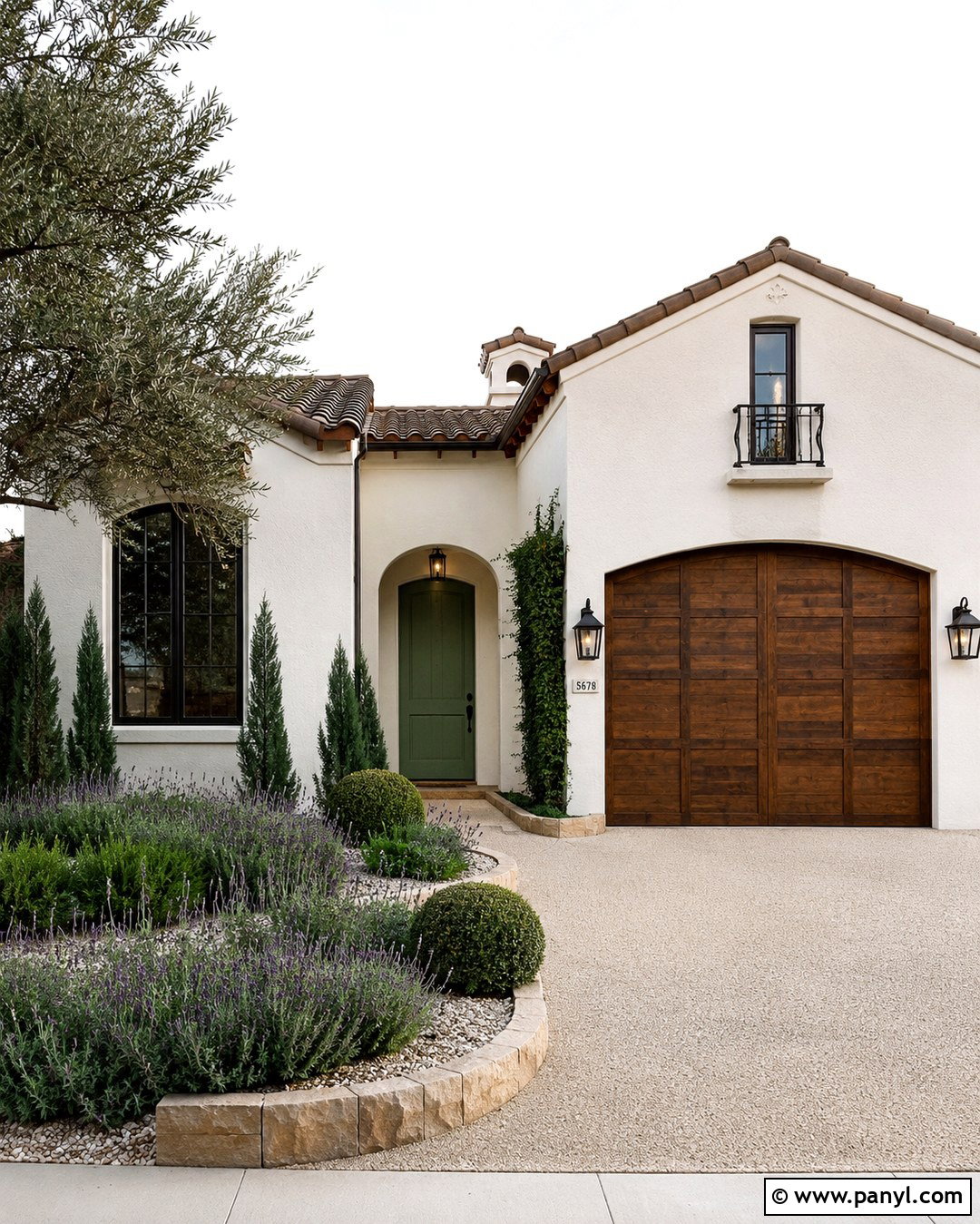
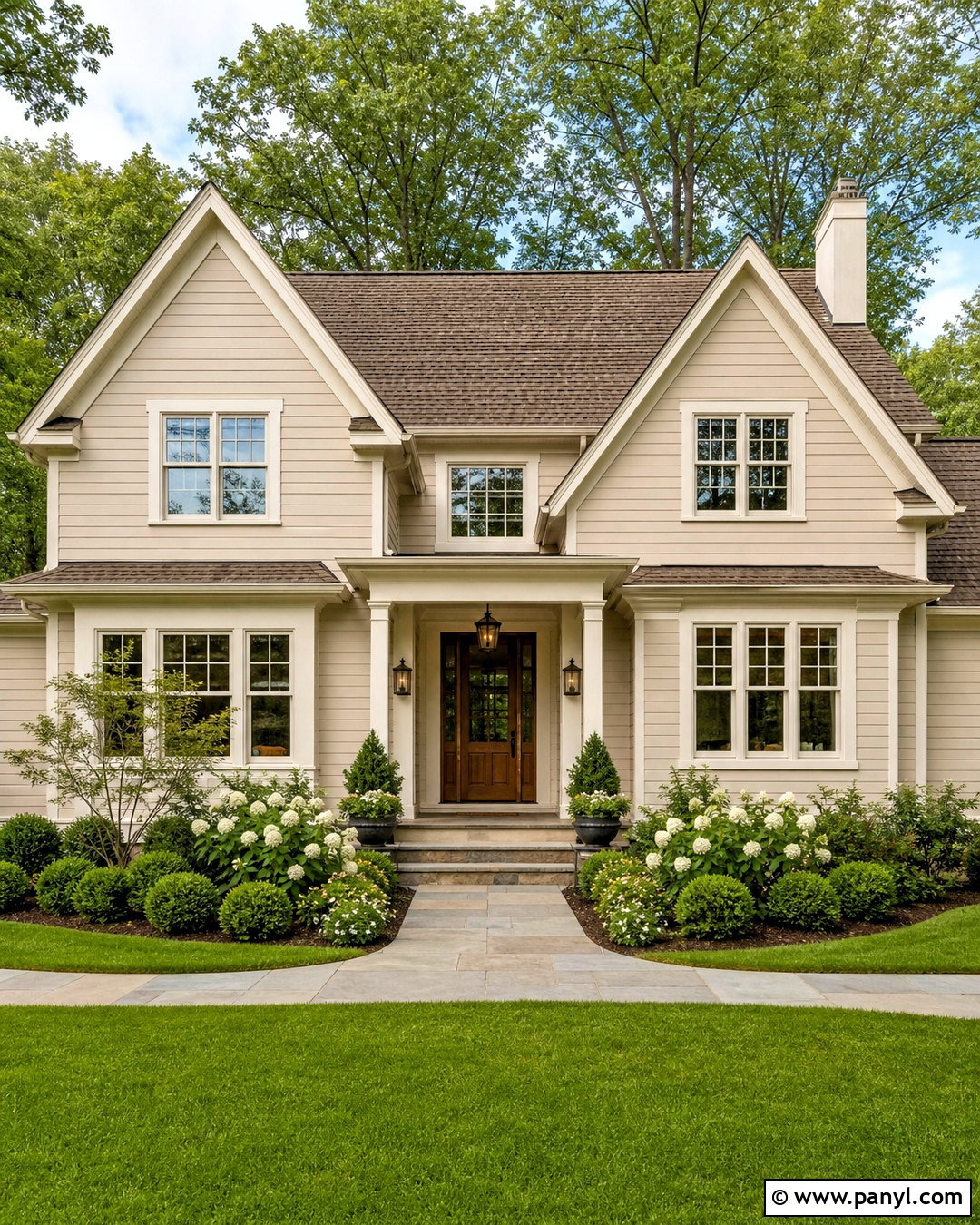
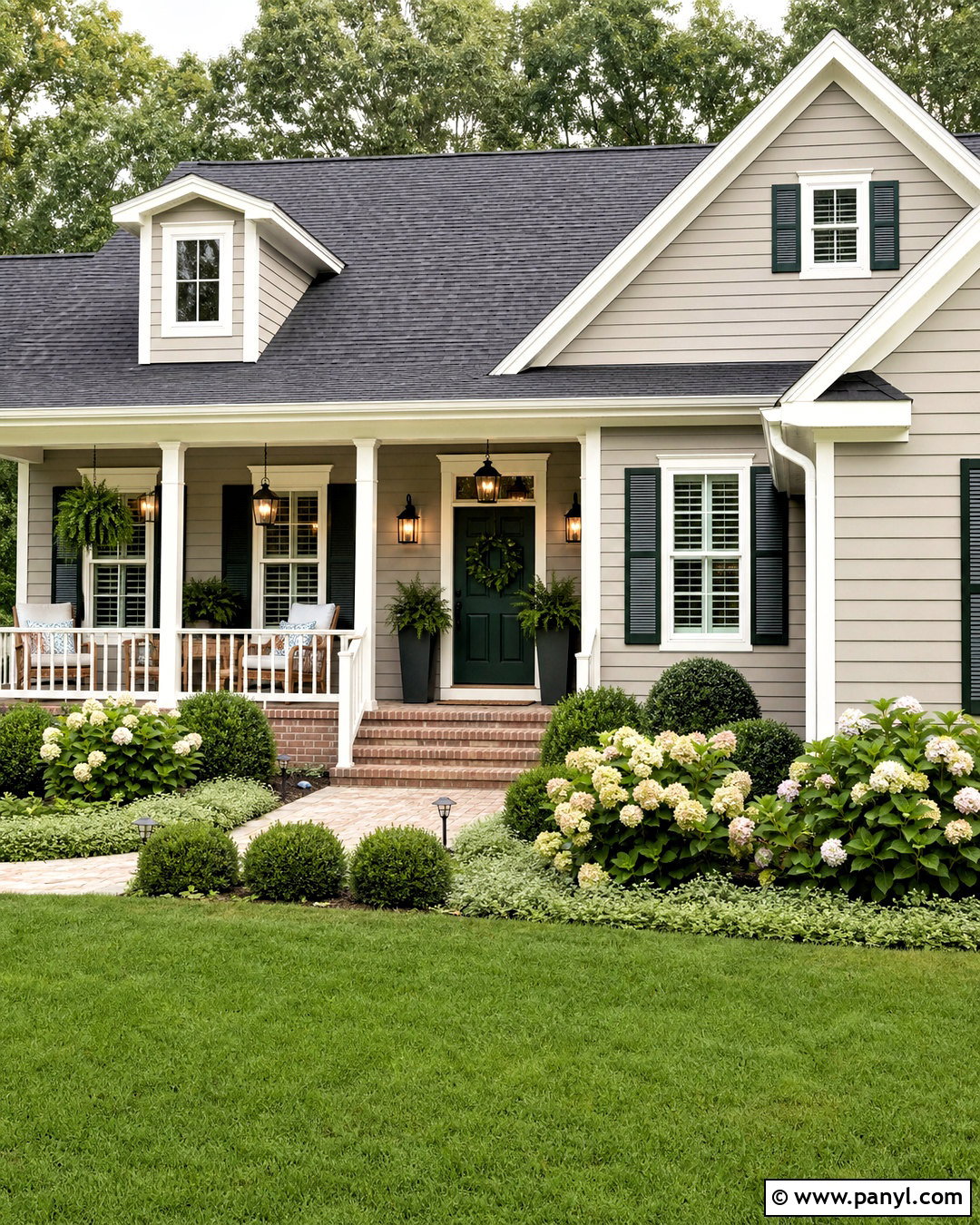
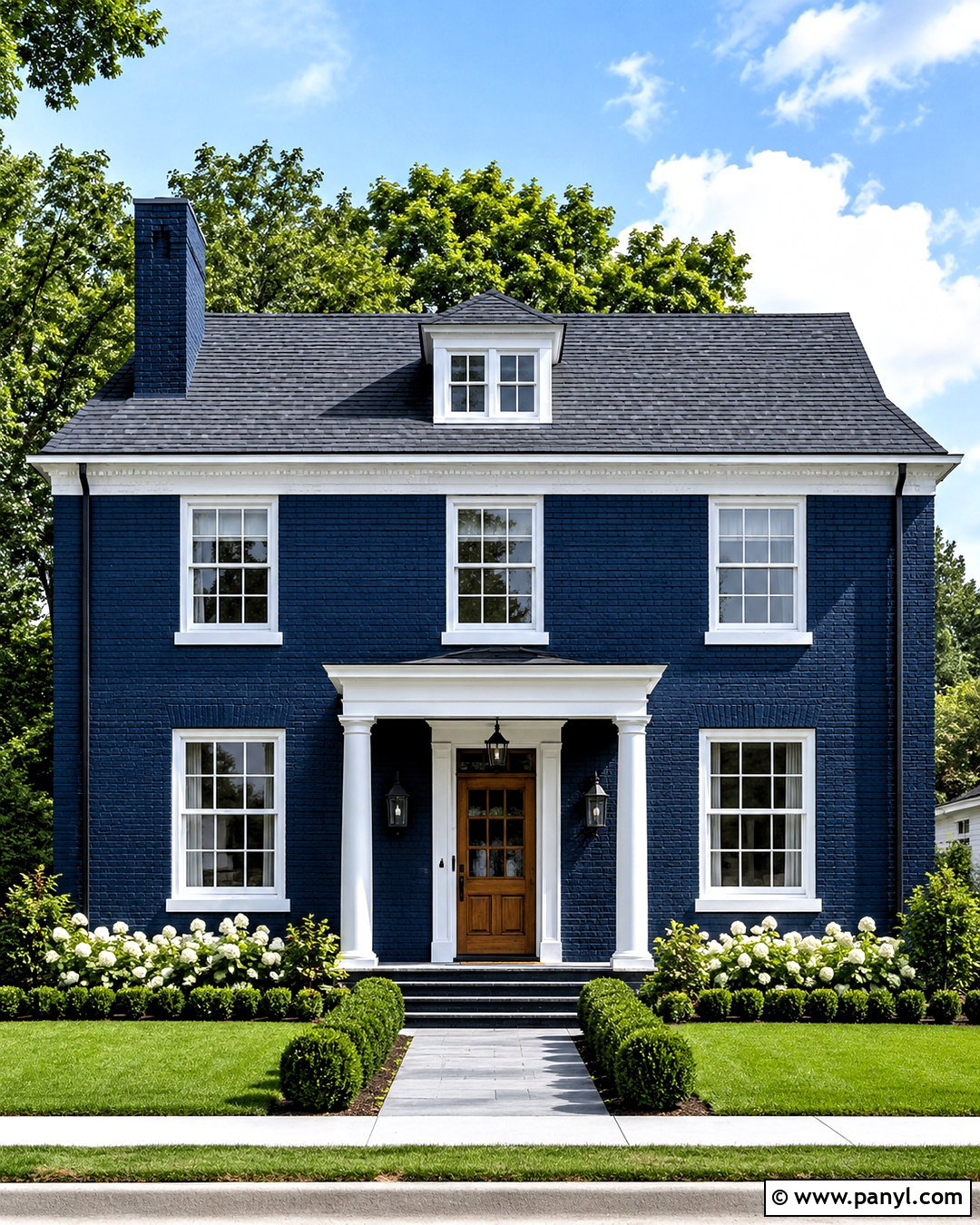
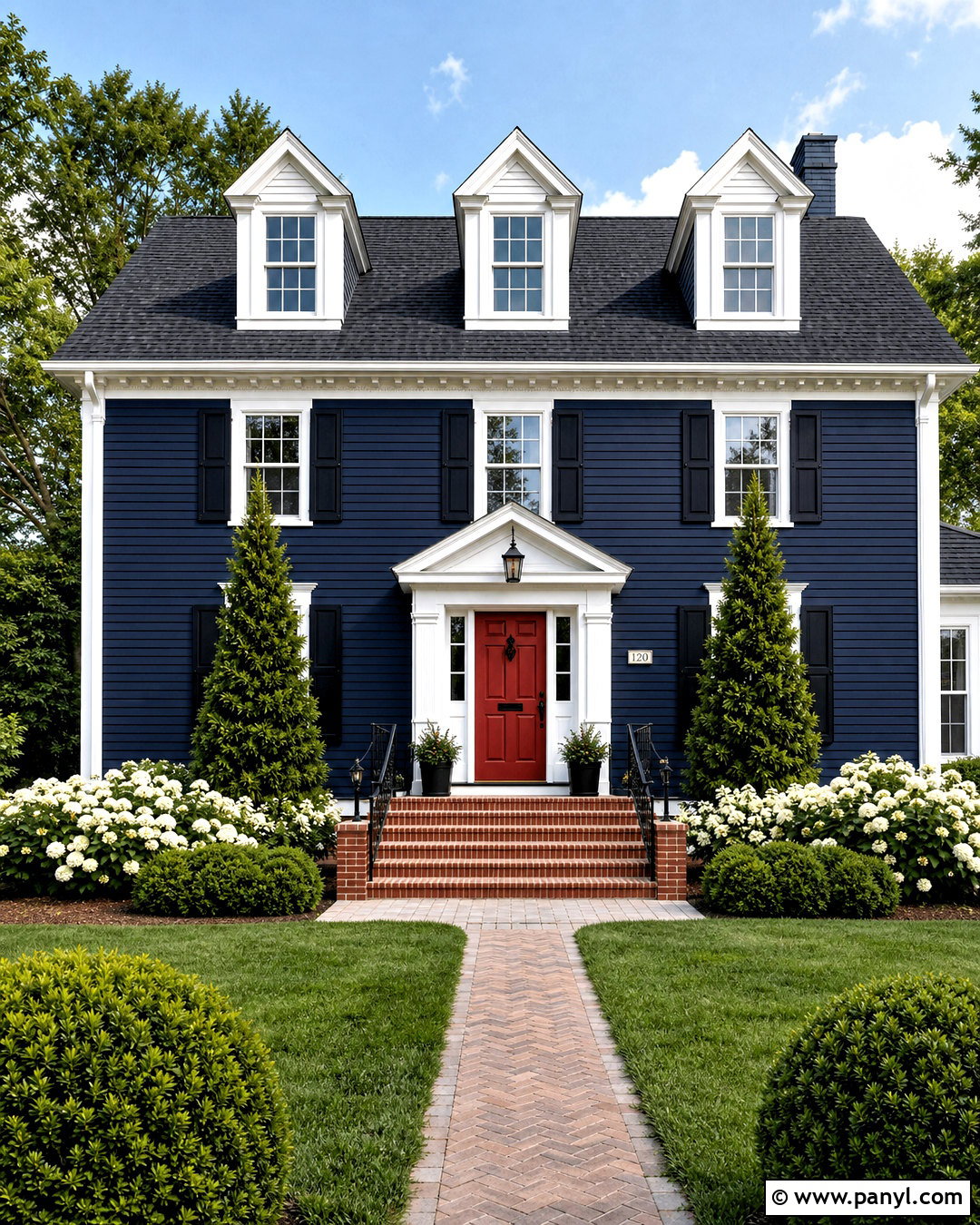
8. Red Brick With Navy Blue Paint
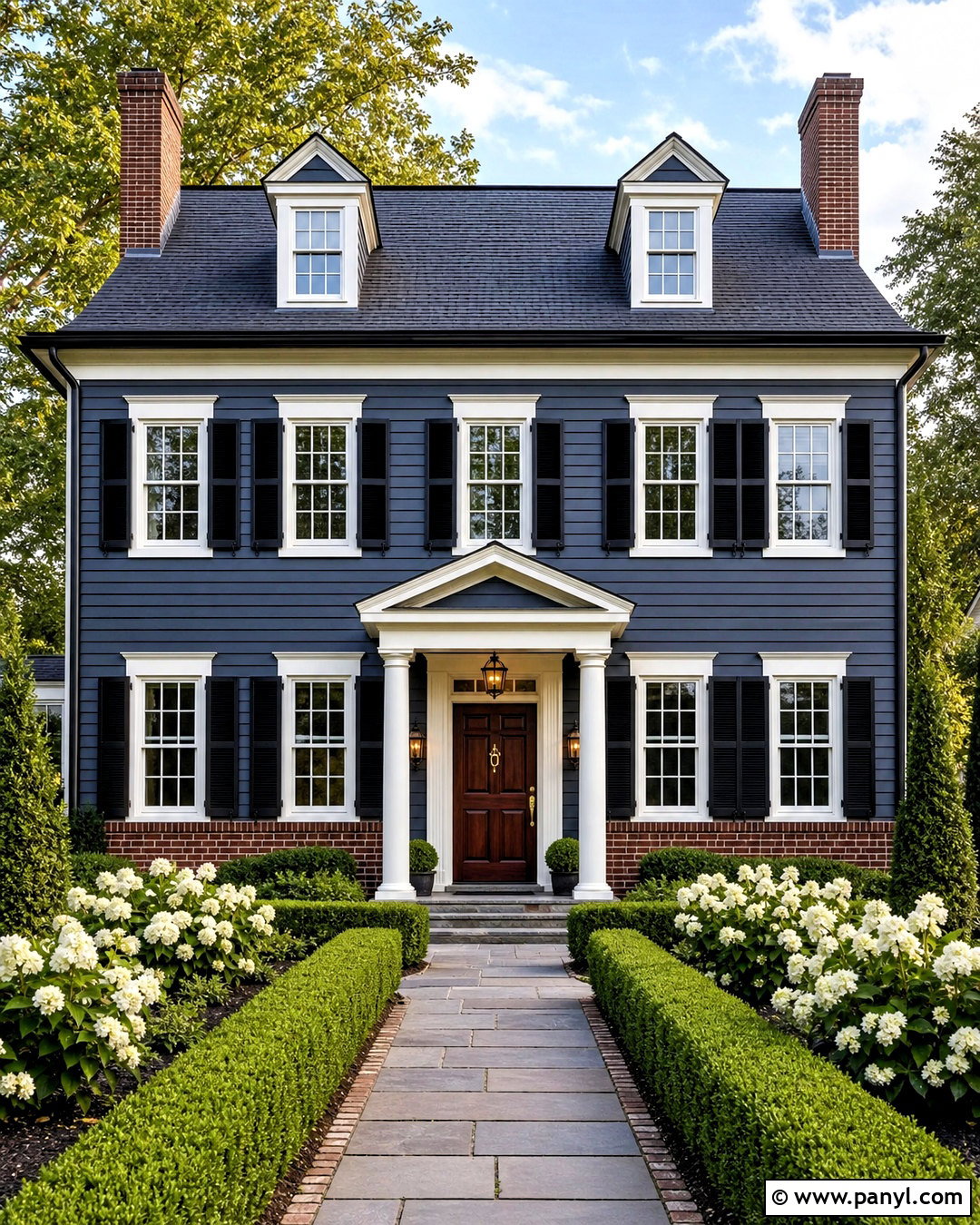
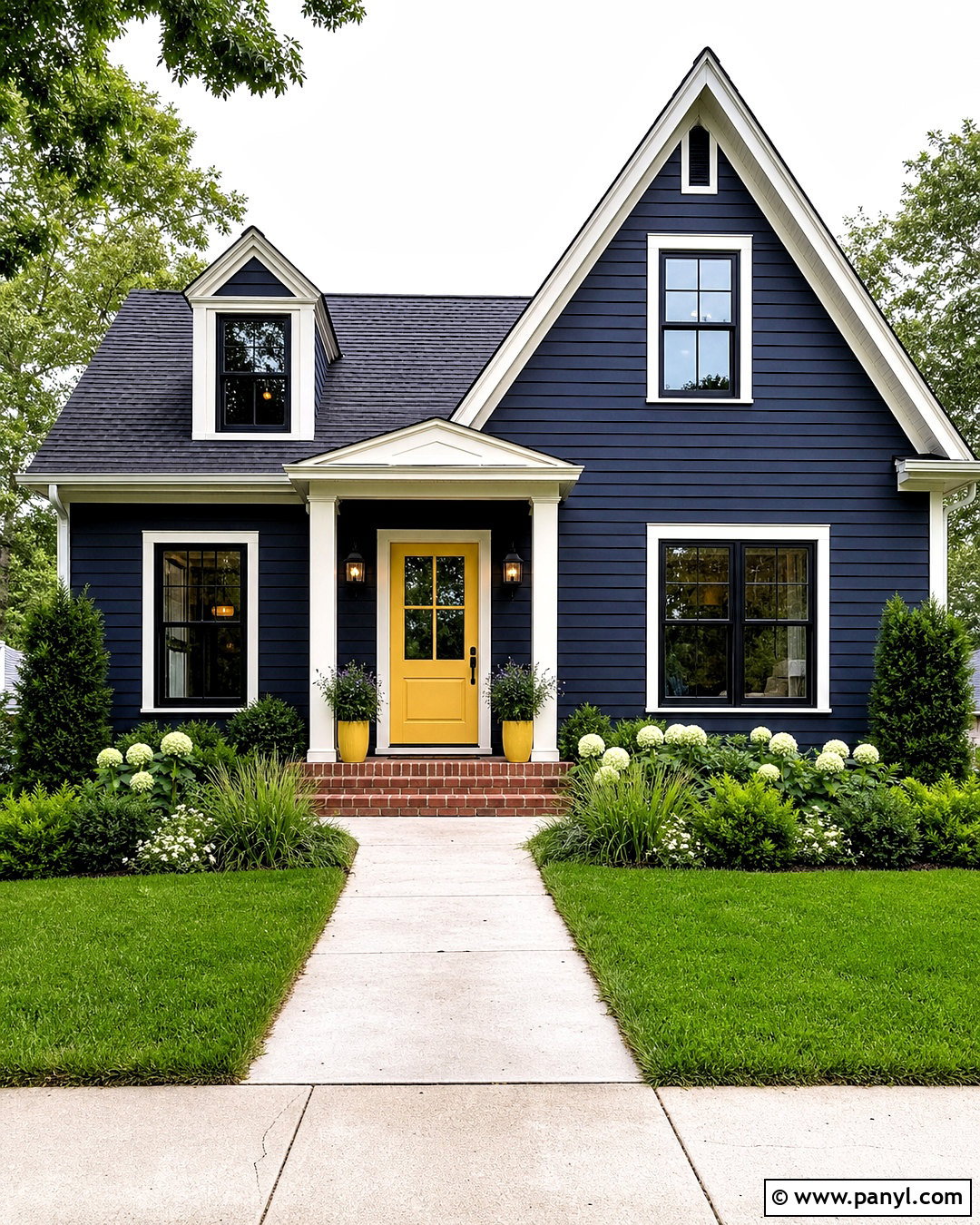
Deep navy blue feels distinguished beside red brick, especially when the masonry has cooler crimson or burgundy undertones. Use a muted gray-navy on siding, upper stories, or prominent gables. Add warm white around windows, along the roofline, and across porch columns to separate the two strong colors. Paint the front door the same navy for continuity, or choose natural mahogany when the entrance needs warmth. Black roofing, dark gutters, and aged brass lanterns complete the classic palette. Keep the landscaping structured with boxwood hedges, white flowering shrubs, and a straight stone walkway. This scheme gives Colonial and traditional homes a polished presence while offering more color and personality than an entirely neutral exterior.
9. Red Brick With Blue Gray Paint
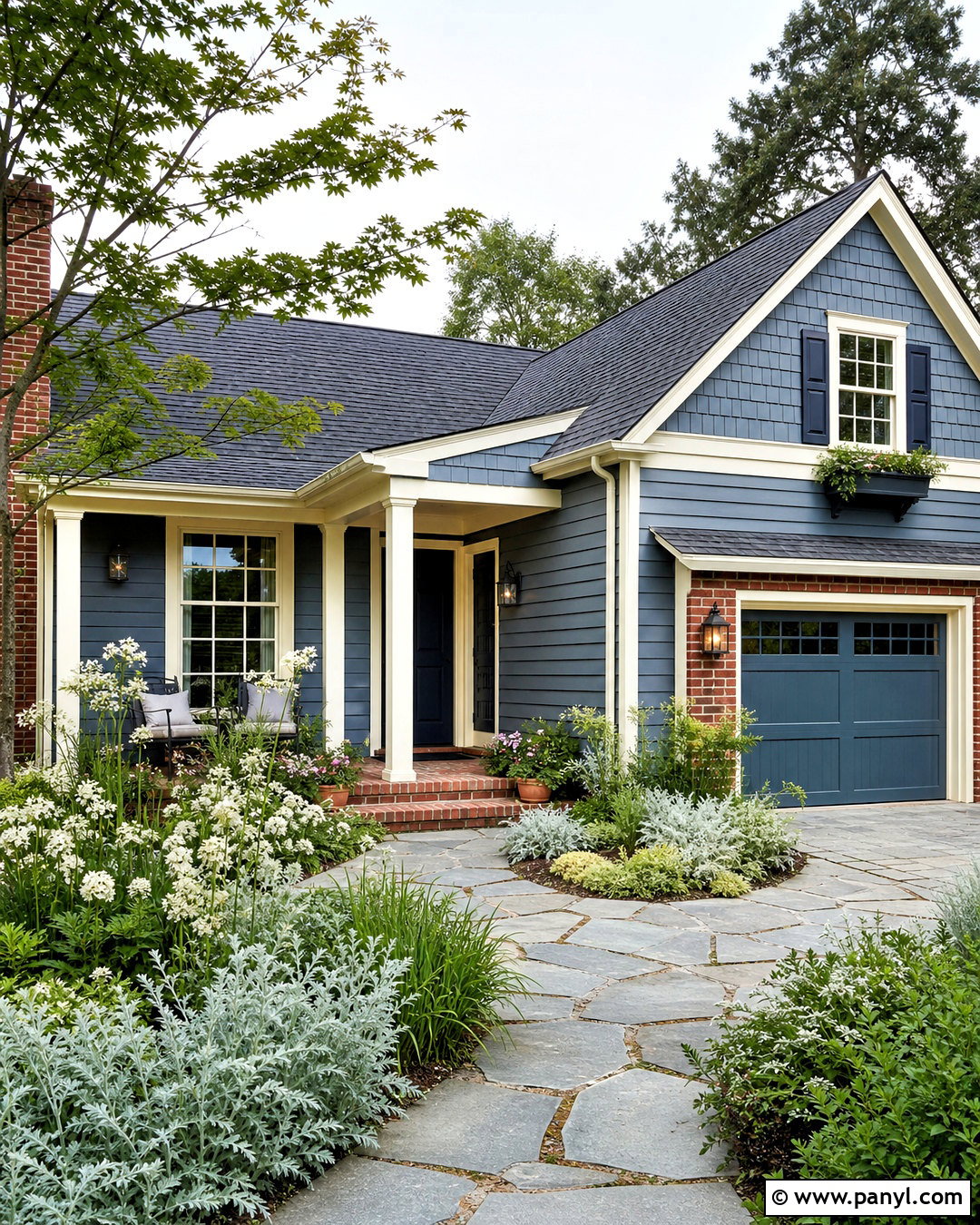
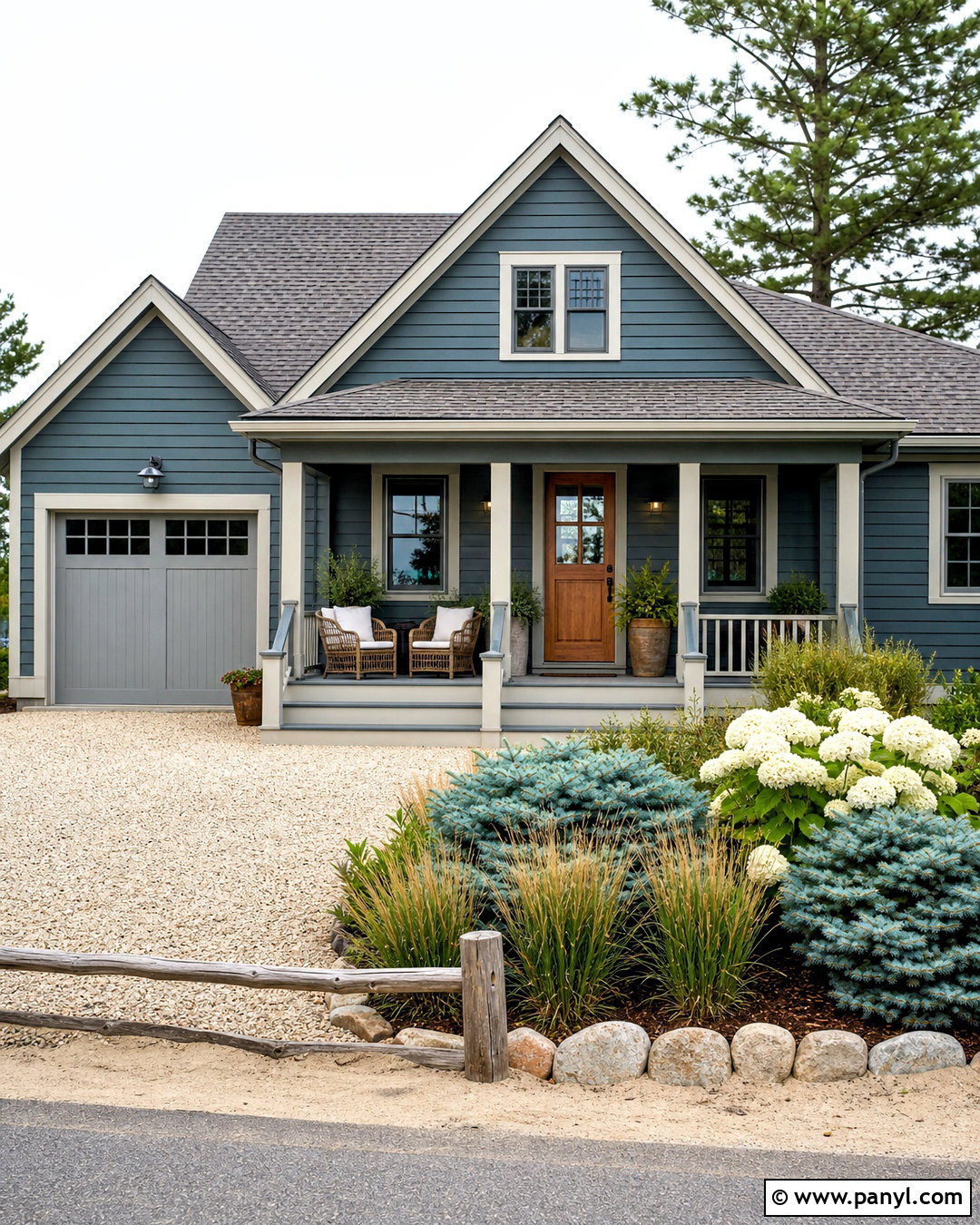
A dusty blue-gray can soften red brick while giving the house a relaxed, collected appearance. Choose a medium shade with noticeable gray undertones so the blue does not become overly bright. Place it on lap siding, shake-covered gables, and the garage door. Use soft ivory trim to warm the transition between the cool paint and earthy masonry. A dark navy front door, black lanterns, and charcoal roof add depth without introducing unrelated colors. For landscaping, combine silvery green foliage, white flowers, and natural flagstone. This complete design looks particularly attractive on cottages, Cape Cod homes, and casual suburban exteriors. It provides gentle contrast while allowing the original brick to remain visually important.
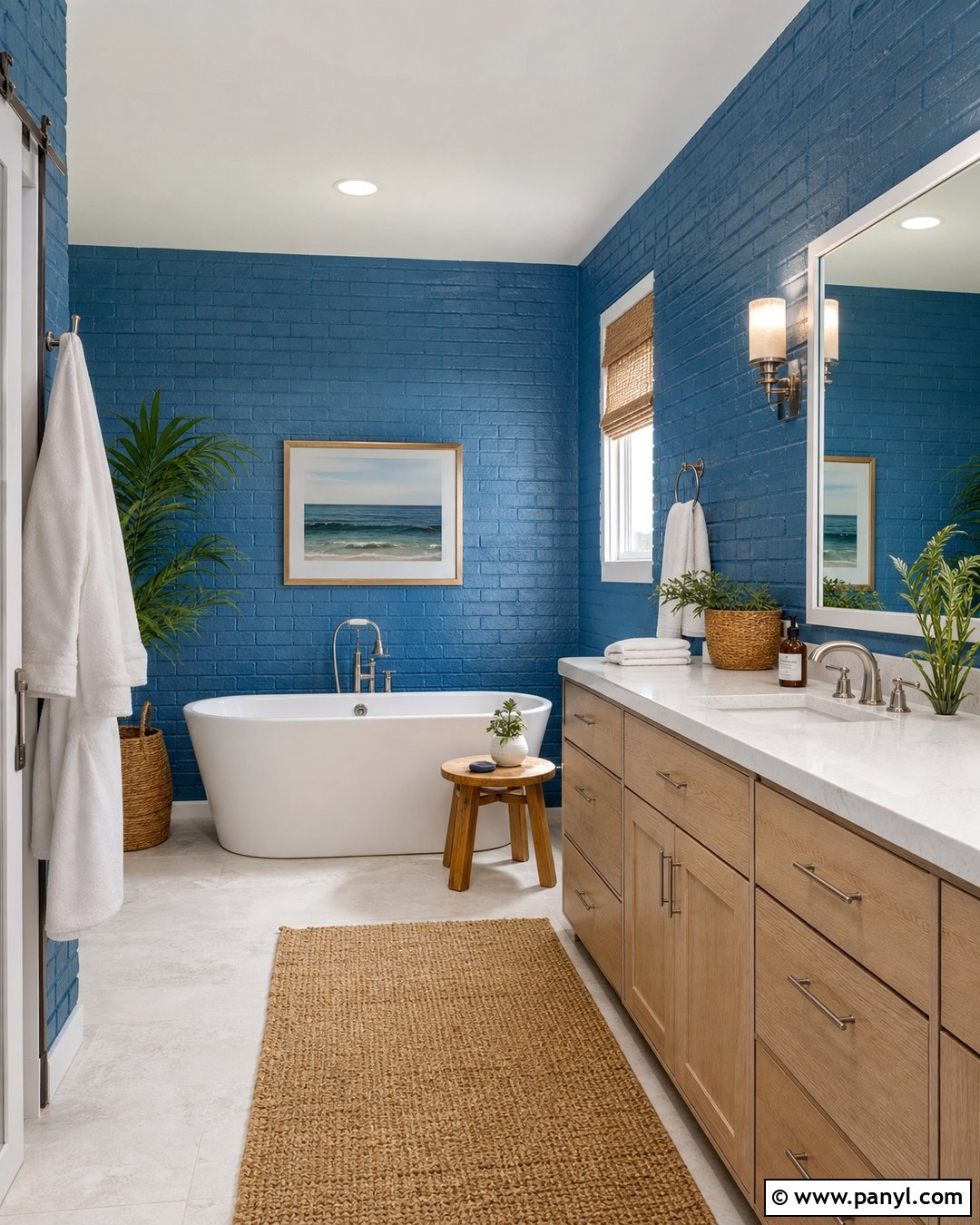
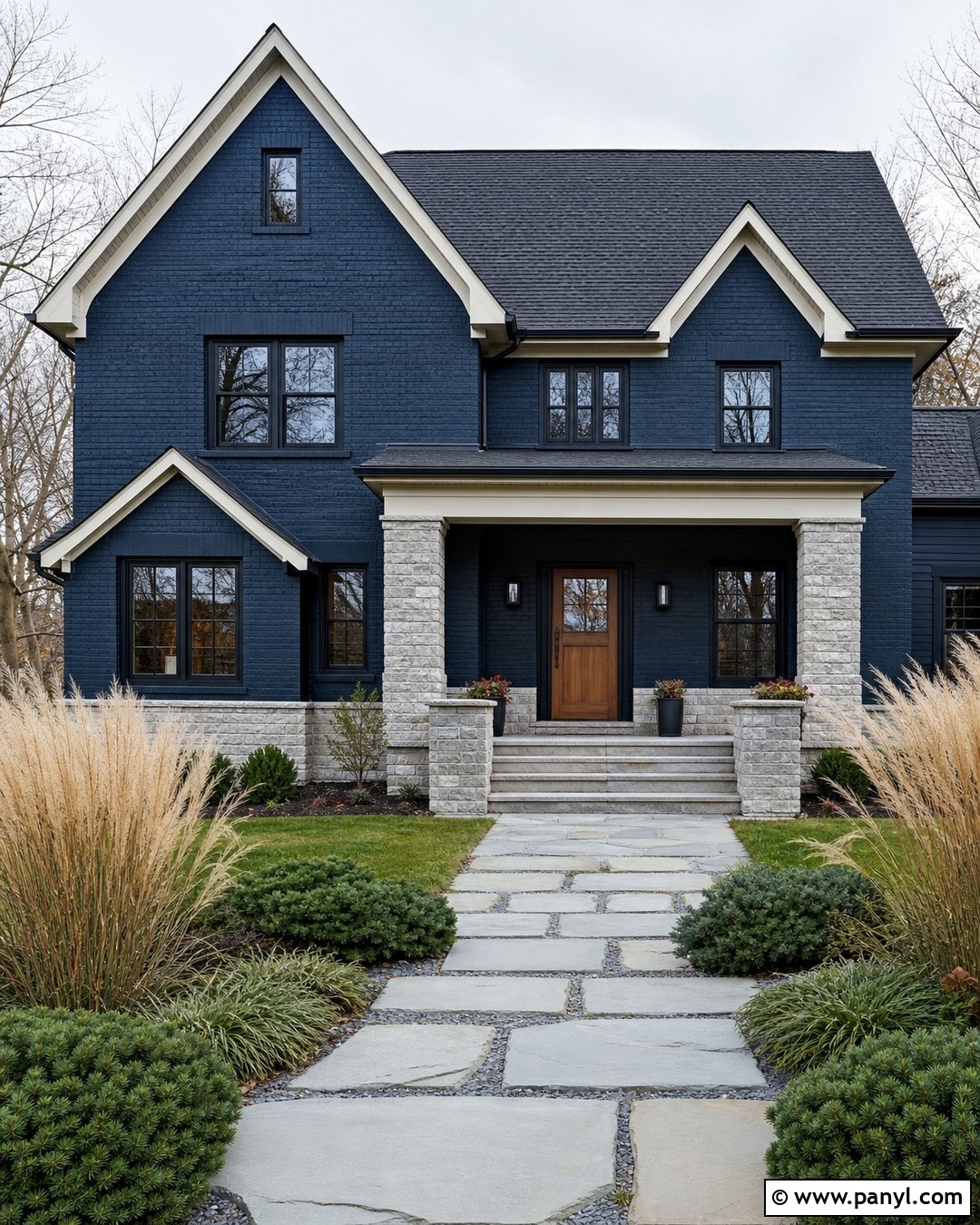
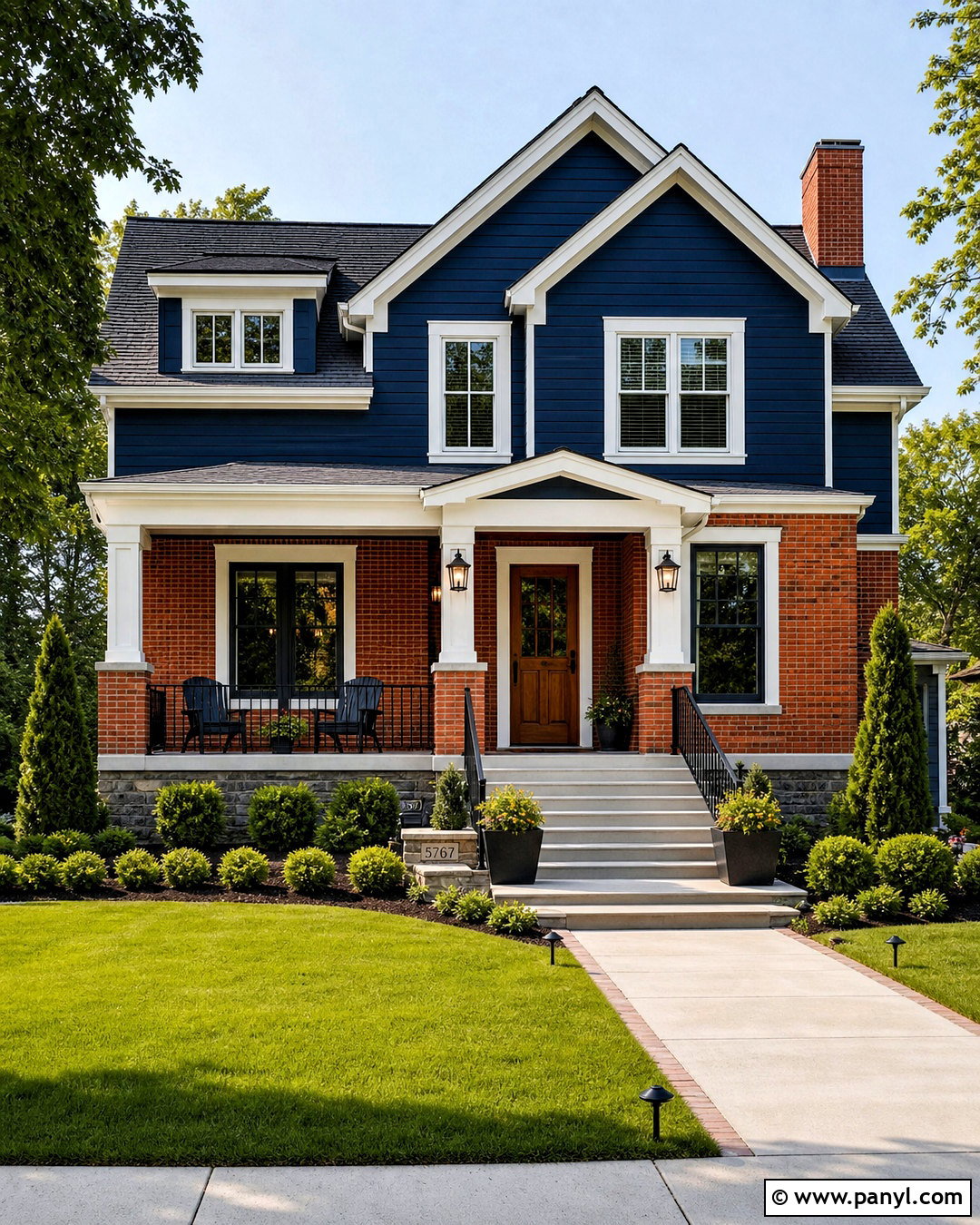
10. Red Brick With Slate Blue Paint
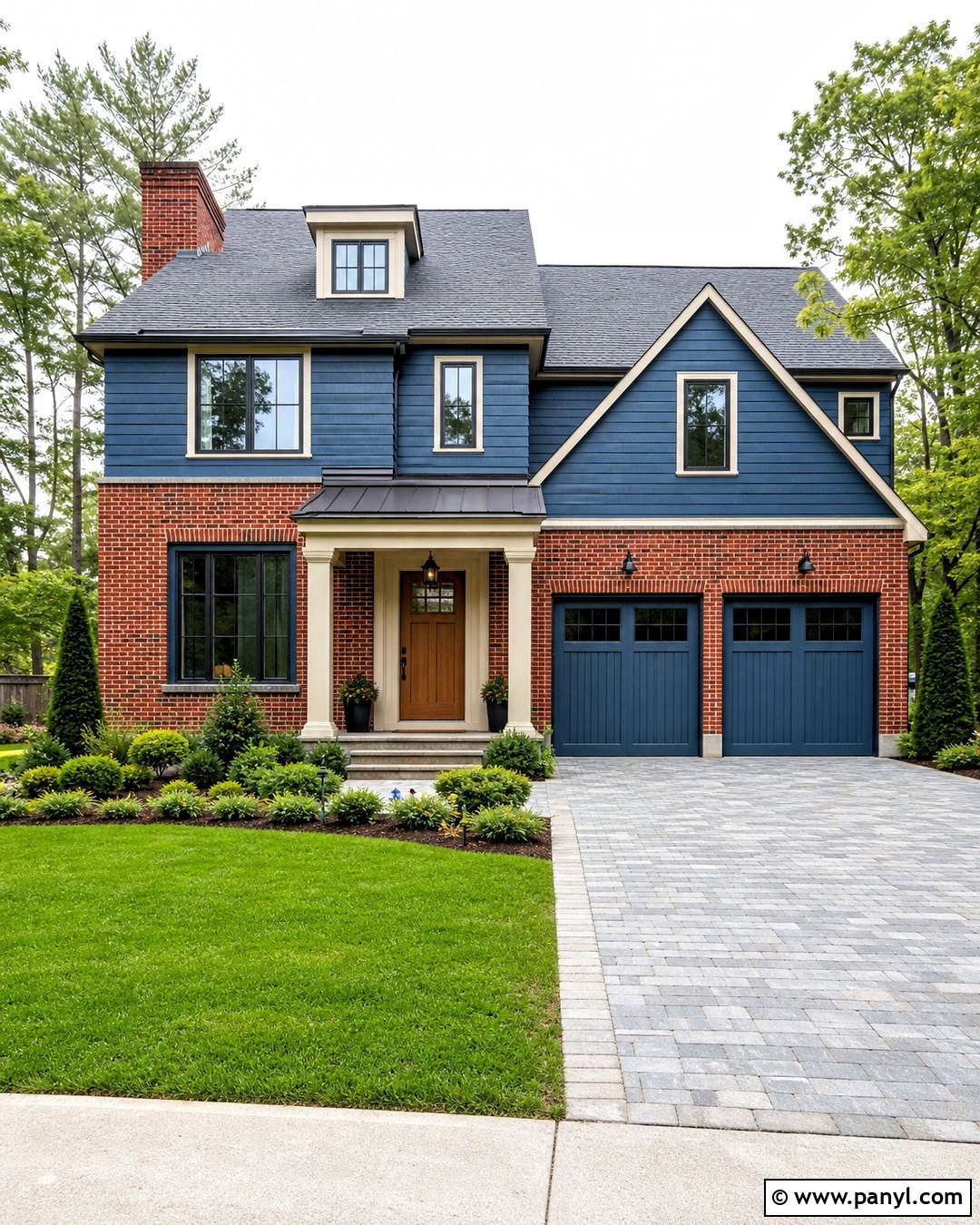
Slate blue is deeper and more grounded than a pale blue-gray, making it a practical partner for strongly colored brick. Use it across upper siding, side additions, shutters, or a large garage door. Paint window trim and porch columns a muted cream to provide a lighter boundary around the brick. A stained teak front door introduces warmth, while matte black hardware keeps the overall design crisp. Choose a dark gray roof with minimal color variation and match the gutters to either the roof or slate siding. Complete the property with broad evergreen foundation beds and light gray pavers. The finished palette feels tailored but comfortable, balancing traditional red masonry with a richer, more distinctive exterior color.
11. Red Brick With Sage Green Paint
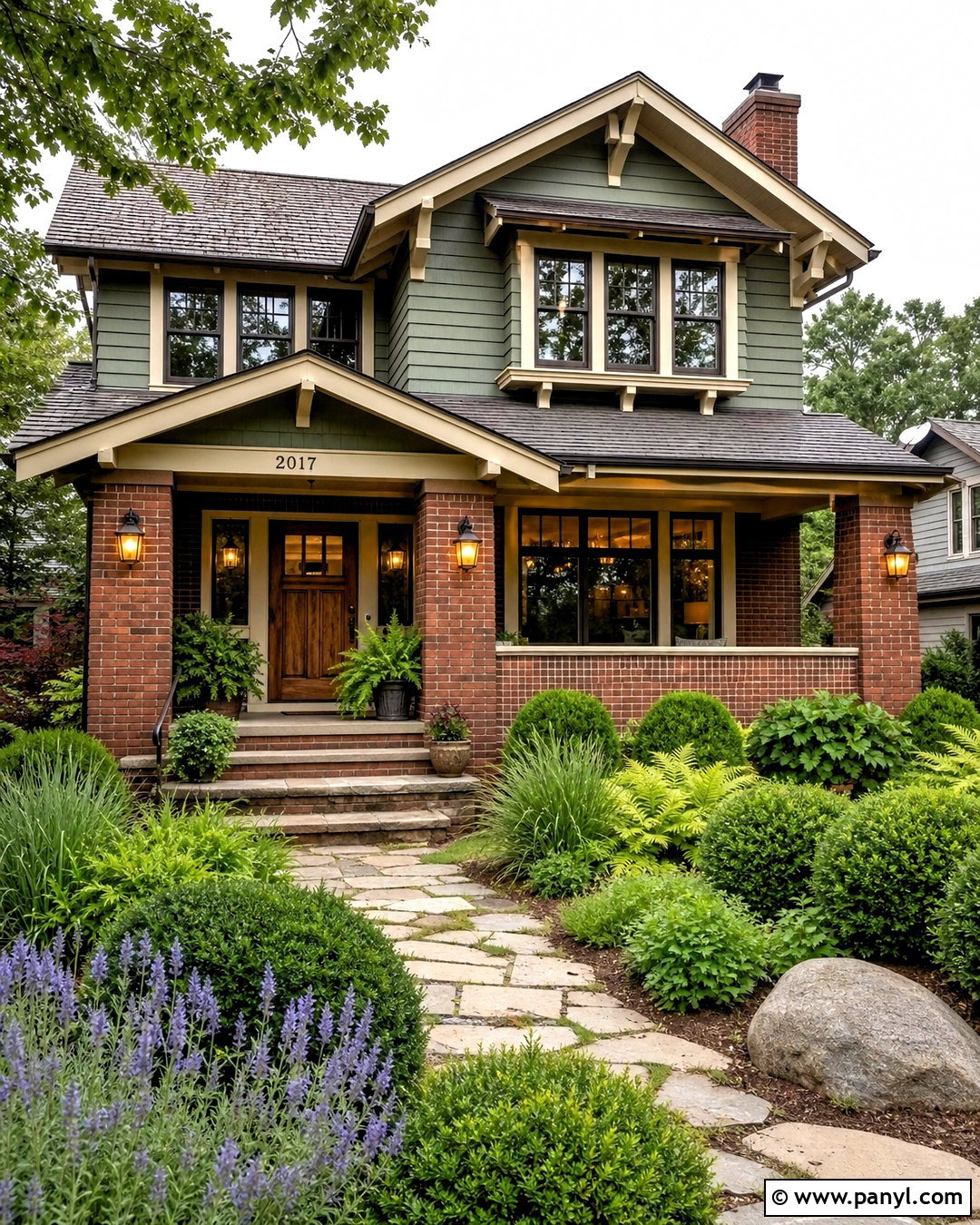
Soft sage green creates an earthy contrast that helps red brick feel connected to the surrounding landscape. Select a muted sage with gray undertones and use it on siding, gables, the garage door, and smaller porch details. Warm ivory trim will create a smoother transition than pure white. Choose a stained oak door or deep olive door, then add bronze lanterns and dark brown gutters. A weathered brown or charcoal roof can work, depending on the brick’s darkest tones. Reinforce the natural palette with boxwoods, ferns, lavender, and ornamental grasses beside a stone path. The overall exterior feels welcoming and established, making this combination a strong fit for cottages, Craftsman homes, ranches, and wooded properties.
12. Red Brick With Olive Green Paint
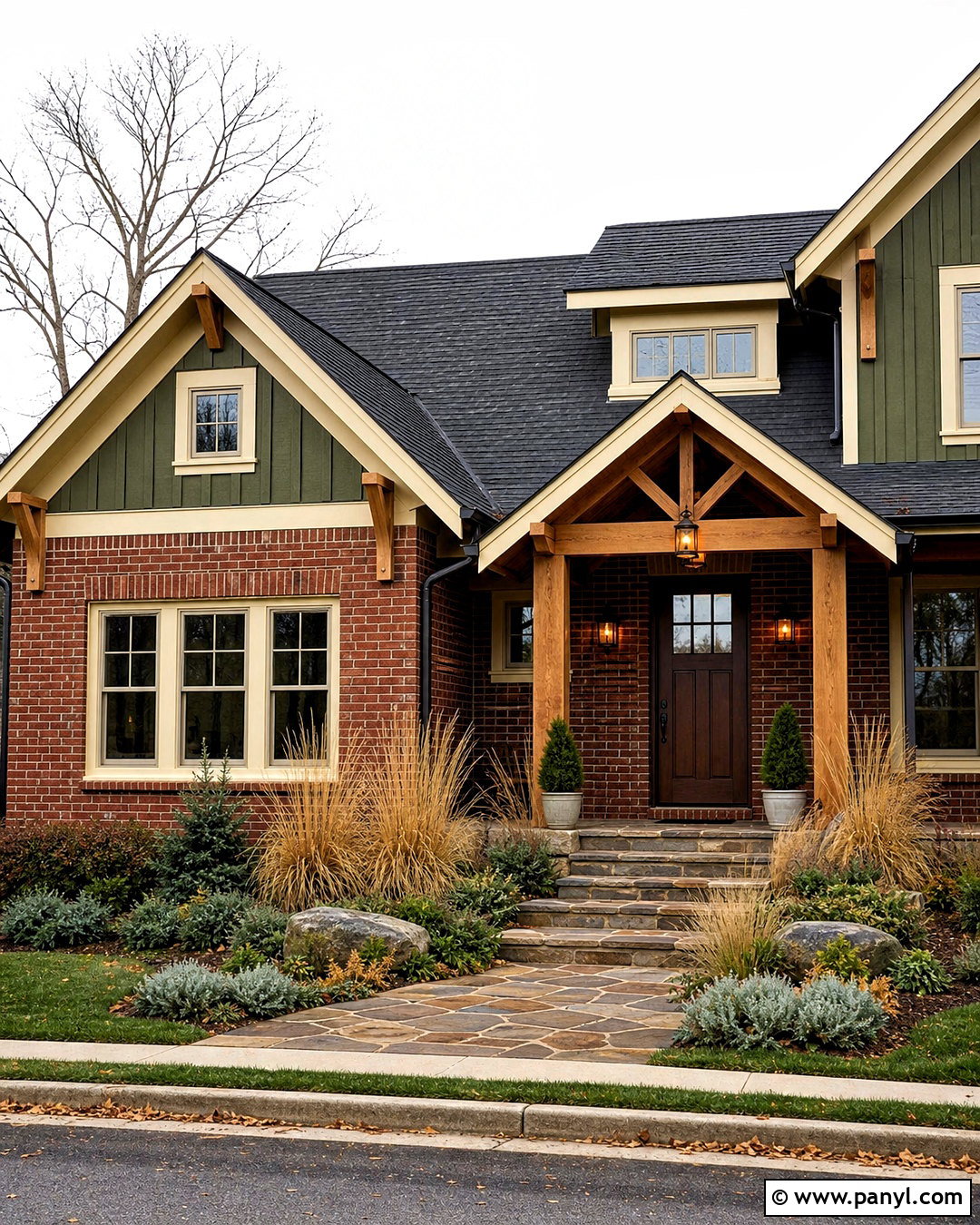
Olive green brings greater depth than sage and can balance bright orange-red masonry particularly well. Apply a muted olive to board-and-batten siding, shutters, or an upper story while preserving a generous amount of visible brick. Use creamy beige on fascia, window trim, and porch columns. A deep brown front door, bronze gutters, and antique-style lanterns strengthen the earthy character. Cedar beams or porch brackets can add another natural material without complicating the color story. Surround the house with dark green foundation plants, tawny grasses, and irregular stone edging. This combination creates a grounded Craftsman-inspired exterior that looks especially cohesive in leafy neighborhoods or landscapes with mature trees and natural textures.
13. Red Brick With Forest Green Paint
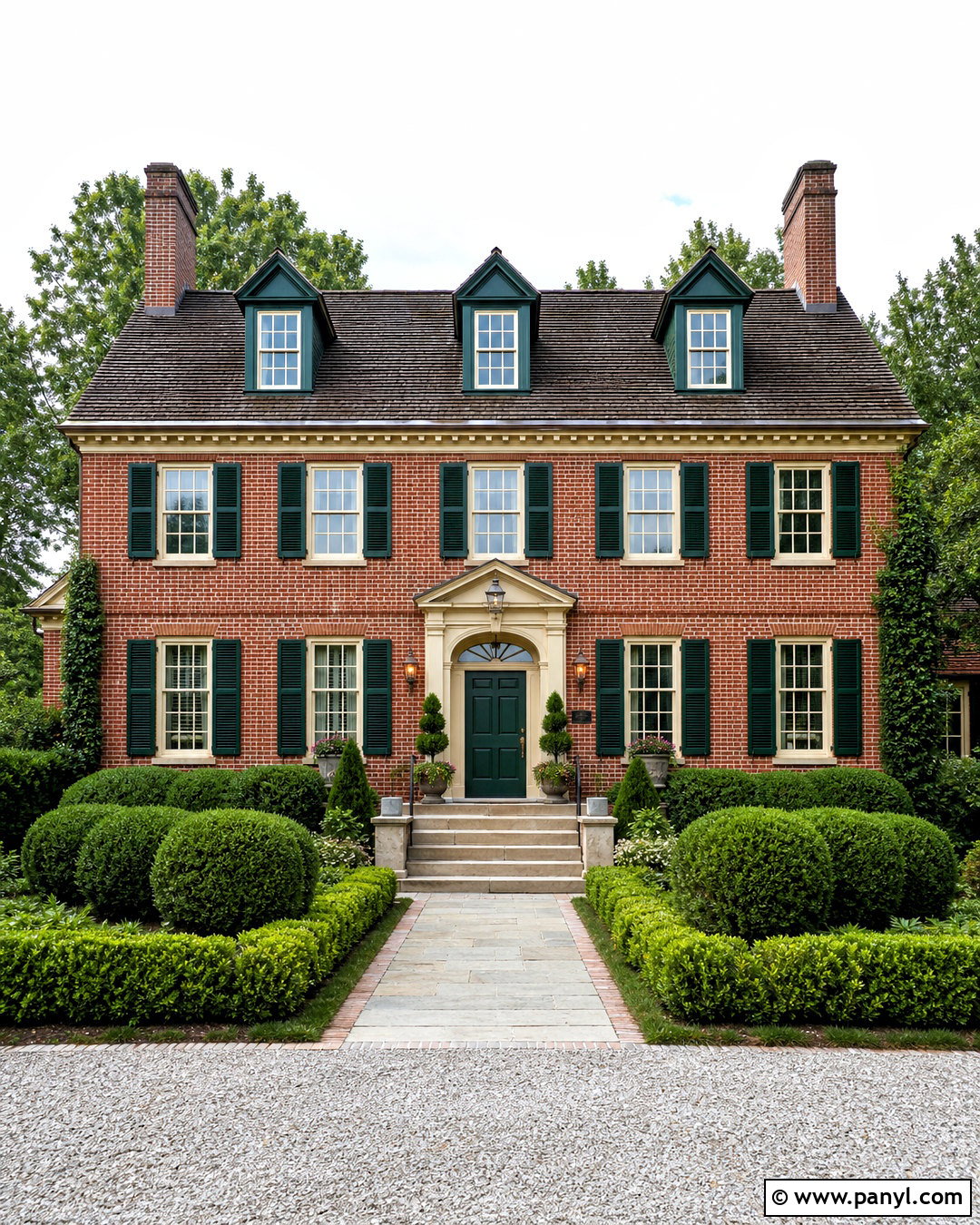
Forest green delivers a rich, traditional appearance when paired with red brick, but careful placement keeps the palette sophisticated. Use the green on shutters, the front door, and selected gables rather than covering every paintable surface. Choose warm cream for the larger siding areas and architectural trim, giving both the brick and green room to stand out. A dark brown roof and copper or aged bronze accents support the classic direction. Add substantial planters, clipped hedges, and pale stone steps to brighten the entrance. Avoid bright, highly saturated green; a smoky forest tone looks more settled. This complete scheme works naturally on Georgian, Federal, and Colonial homes with balanced windows and formal landscaping.
14. Red Brick With Dark Teal Paint
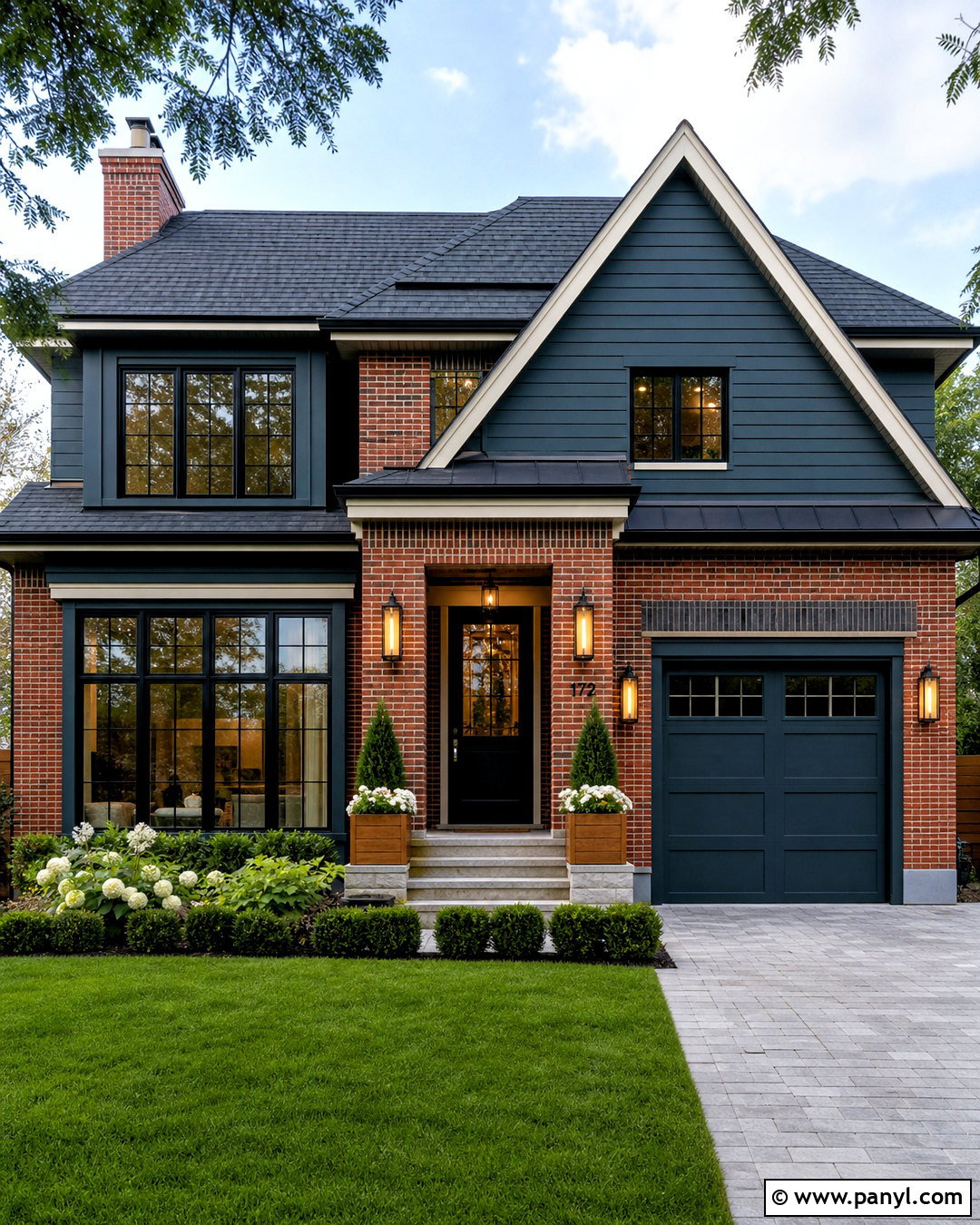
Dark teal introduces color while retaining enough depth to complement strong red masonry. Choose a subdued teal that leans blue-green rather than a bright tropical shade. Use it on siding, a covered porch ceiling, the garage door, or a front door framed by brick. Warm white trim will sharpen the architecture and prevent the combination from feeling too heavy. Finish the scheme with black window frames, charcoal roofing, and simple brass or bronze lights. Natural cedar planters and pale limestone steps add warmth and brightness near the entry. Plant compact evergreens and white flowers rather than competing colorful blooms. The final exterior feels individual and updated, yet the deep, grayed paint keeps the result refined.
15. Red Brick With Beige Paint
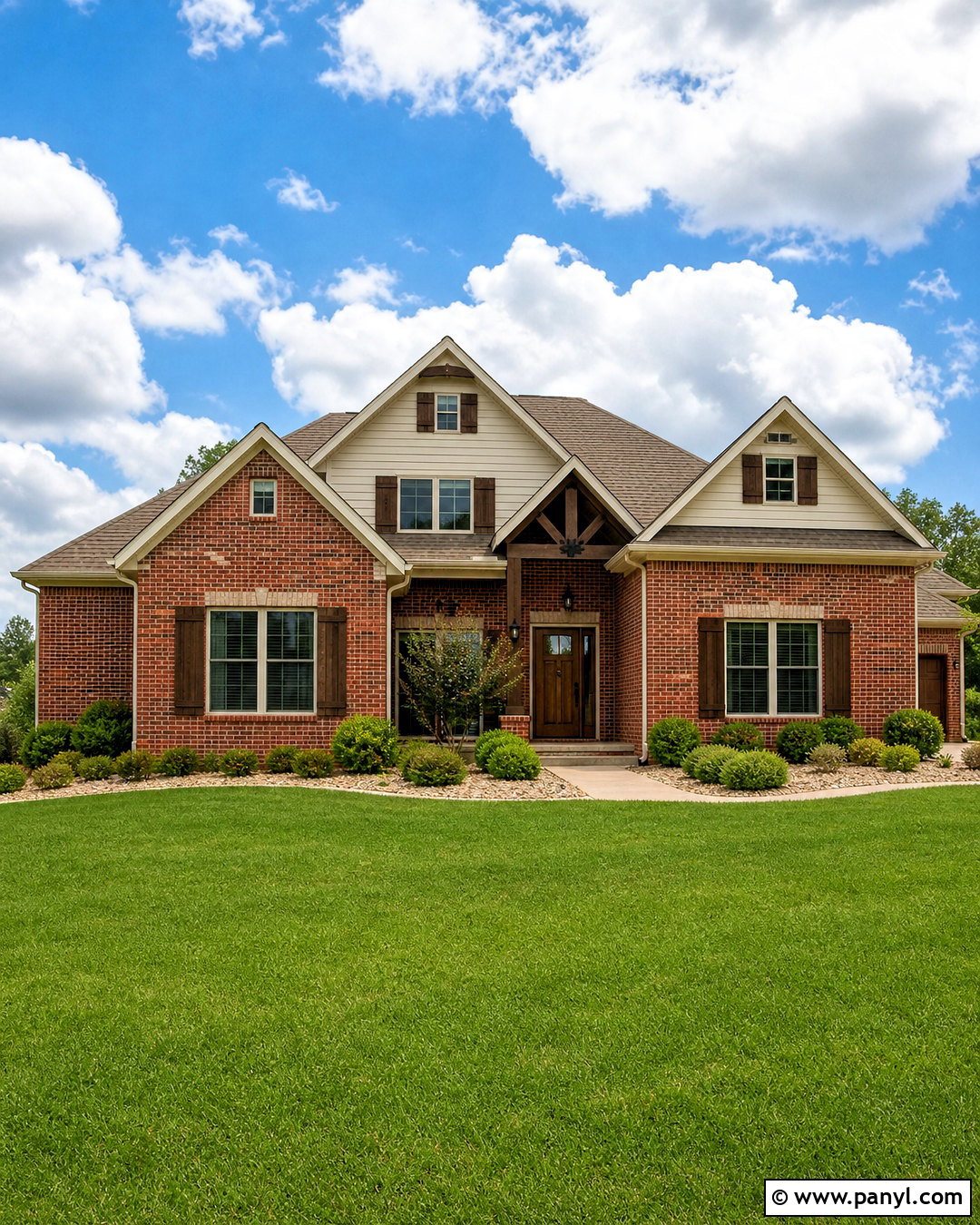
Beige siding can make a red brick house feel relaxed and cohesive when the shade reflects the masonry’s mortar or lighter flecks. Choose a sand or oatmeal beige rather than a yellow-heavy tan. Use it across the siding, garage door, and porch ceiling. Paint the trim a creamy off-white to add subtle dimension. A medium brown front door, bronze fixtures, and weathered wood accents continue the warm neutral story. If the roof is brown, repeat that color sparingly through shutters or gutters. Complete the yard with light stone borders, soft green shrubs, and tan gravel around planting beds. This approachable combination works well for large suburban homes where overly strong contrast could make the facade look visually divided.
16. Red Brick With Putty Paint
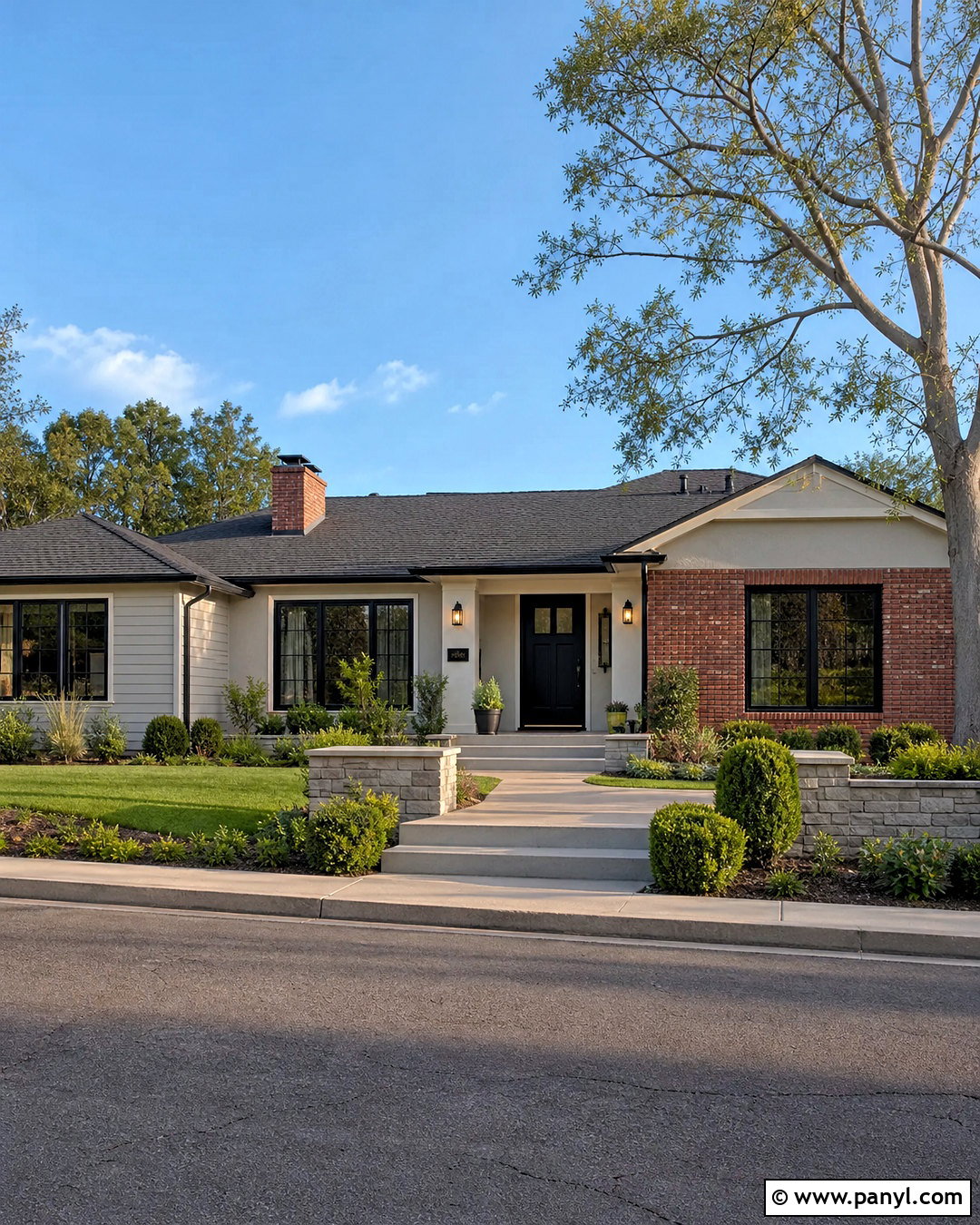
Putty paint has a muted stone-like quality that can quiet busy brick without making the exterior colorless. Select a warm gray-beige putty for lap siding, stucco sections, dormers, and the garage door. Use light cream on narrow trim so the outline remains soft and understated. A near-black door provides a clear focal point, while matching dark gutters and window frames distribute that contrast across the facade. Keep the roof medium charcoal or weathered brown according to the brick’s undertone. Wide concrete steps, natural stone planters, and neatly shaped shrubs complete the restrained curb view. The finished house feels clean and mature, making putty particularly useful for ranch homes and understated contemporary renovations.
17. Red Brick With Deep Brown Paint
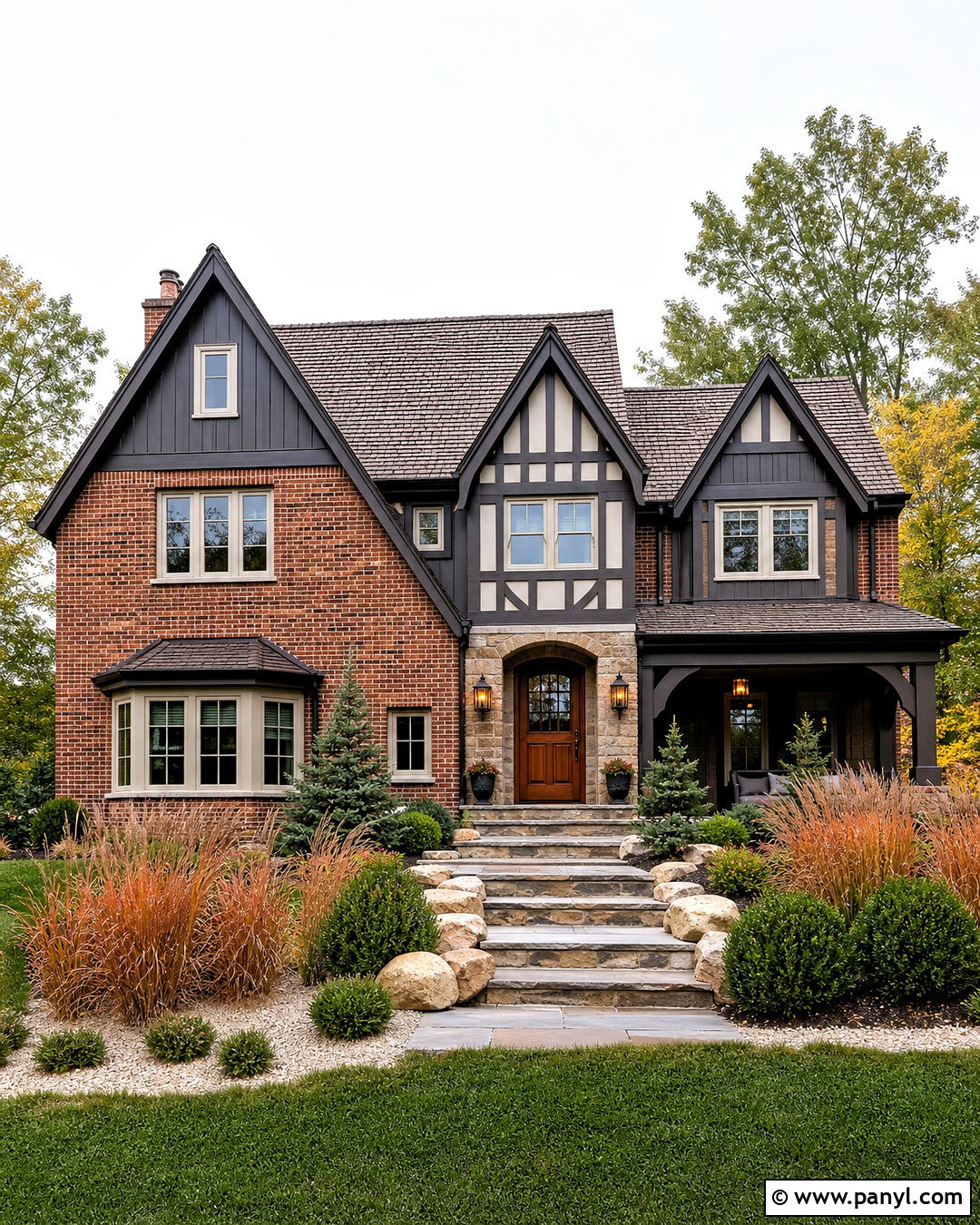
Deep brown paint emphasizes the natural, grounded quality of red brick. Choose an espresso or bark brown with neutral undertones for shutters, siding panels, porch beams, and the garage door. Add soft cream to fascia, window trim, and columns to prevent the composition from becoming too dark. A walnut entry door can be one shade lighter than the painted brown, creating subtle layering while preserving the earthy palette. Coordinate the roof and gutters with the dark accents, then bring in bronze lanterns and natural stone steps. Evergreen shrubs, rust-colored grasses, and light gravel provide a finished landscape. This combination suits Tudor, Craftsman, and rustic traditional homes with substantial woodwork or heavy rooflines.
18. Red Brick With Pewter Paint
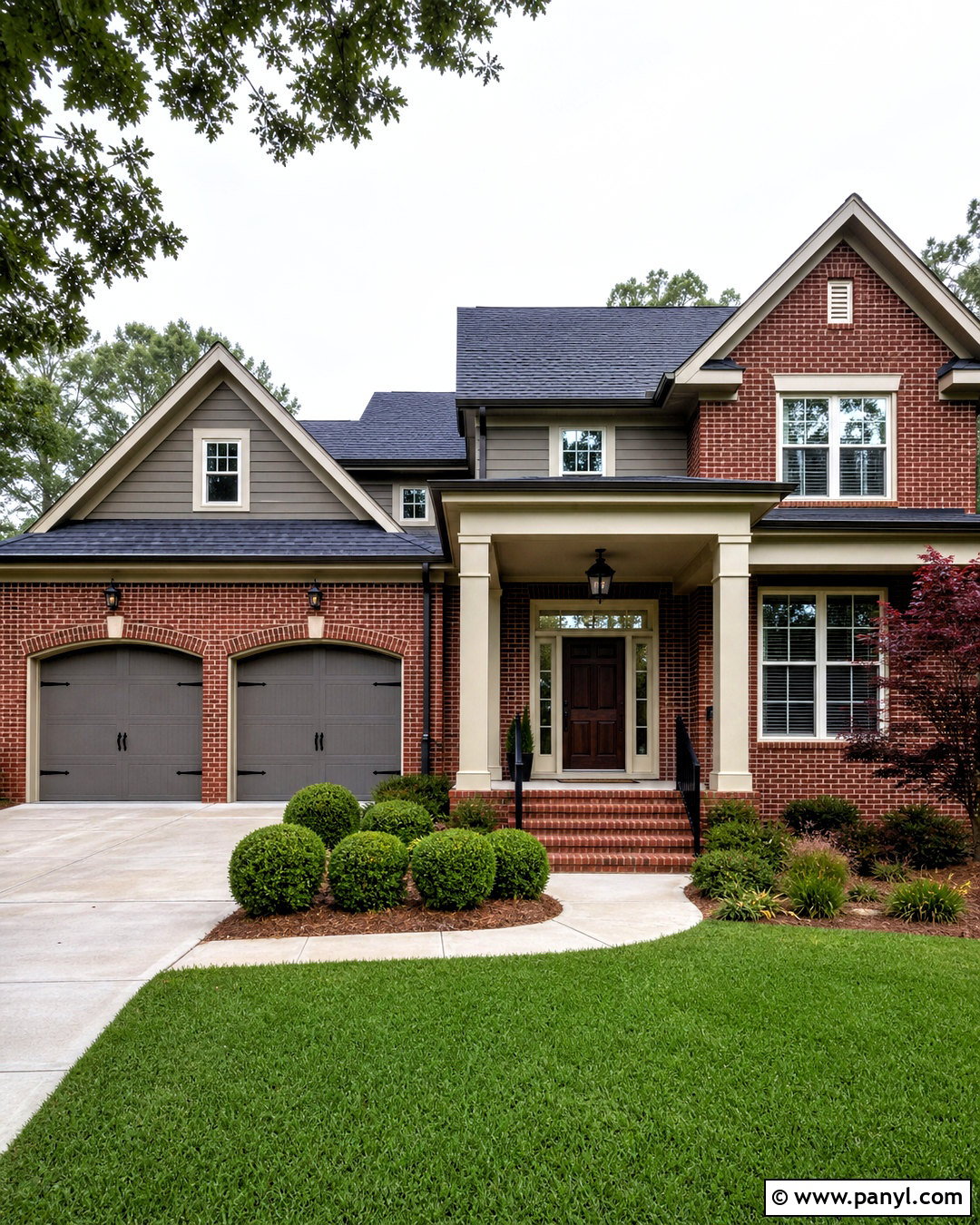
Pewter sits between warm gray and softened charcoal, providing noticeable contrast without the intensity of black. Apply it to siding, gable ends, shutters, and the garage door. Keep the undertone slightly warm so it harmonizes with both red brick and creamy mortar. Use pale ivory on porch columns, fascia, and window casings to lift the facade. A dark stained front door and matte black hardware create a strong, uncomplicated entrance. Select a charcoal roof with restrained patterning, then repeat pewter on metal railings or secondary doors. Complete the design with light concrete, clipped foundation shrubs, and a few burgundy-leaf plants. The overall look is tailored, versatile, and suitable for many architectural periods.
19. Red Brick With Natural Wood And White Paint
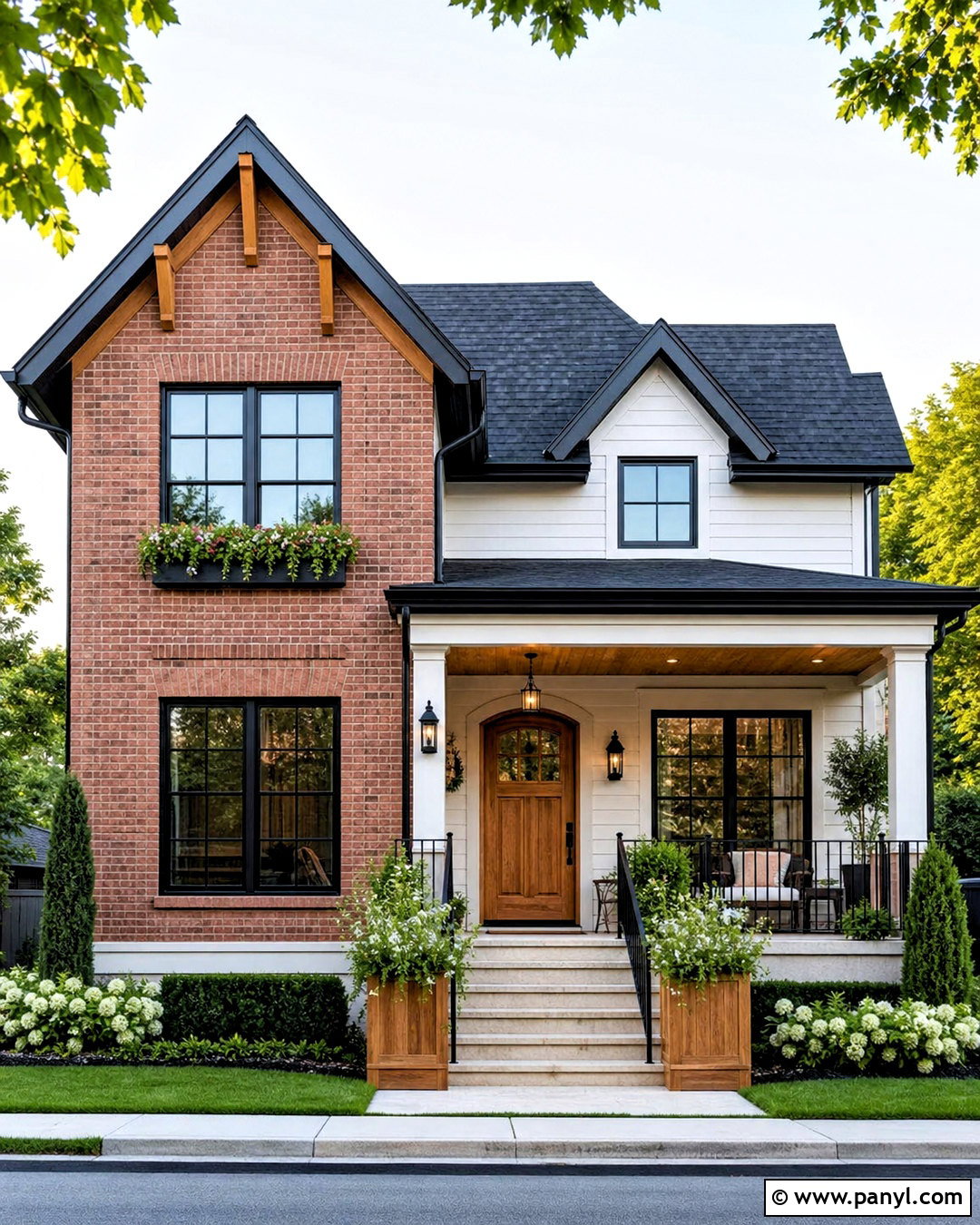
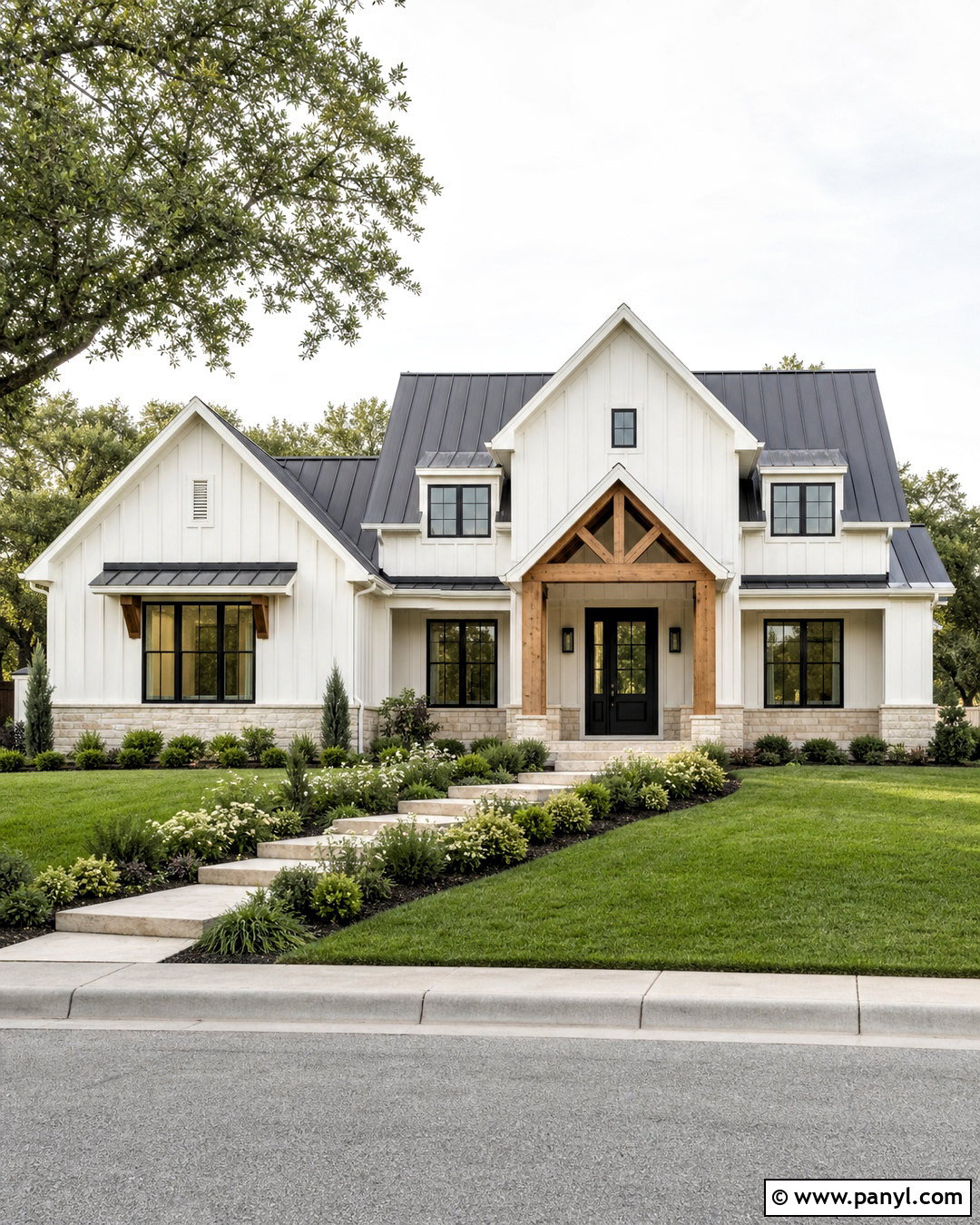
Natural wood adds organic warmth to a classic red brick and white paint scheme. Use soft white on siding, trim, porch columns, and fascia, then introduce cedar through the front door, porch ceiling, gable brackets, or shutters. Select a medium stain that differs clearly from the brick instead of matching its red tones too closely. Black window frames, gutters, railings, and lanterns provide modern definition. A charcoal roof will anchor the brighter upper surfaces and connect with the dark accents. Finish the entry with concrete or limestone steps, oversized wood planters, and structured green landscaping. This layered combination feels fresh because it balances three distinct materials rather than relying on paint alone to create visual interest.
20. Red Brick With White And Black Paint
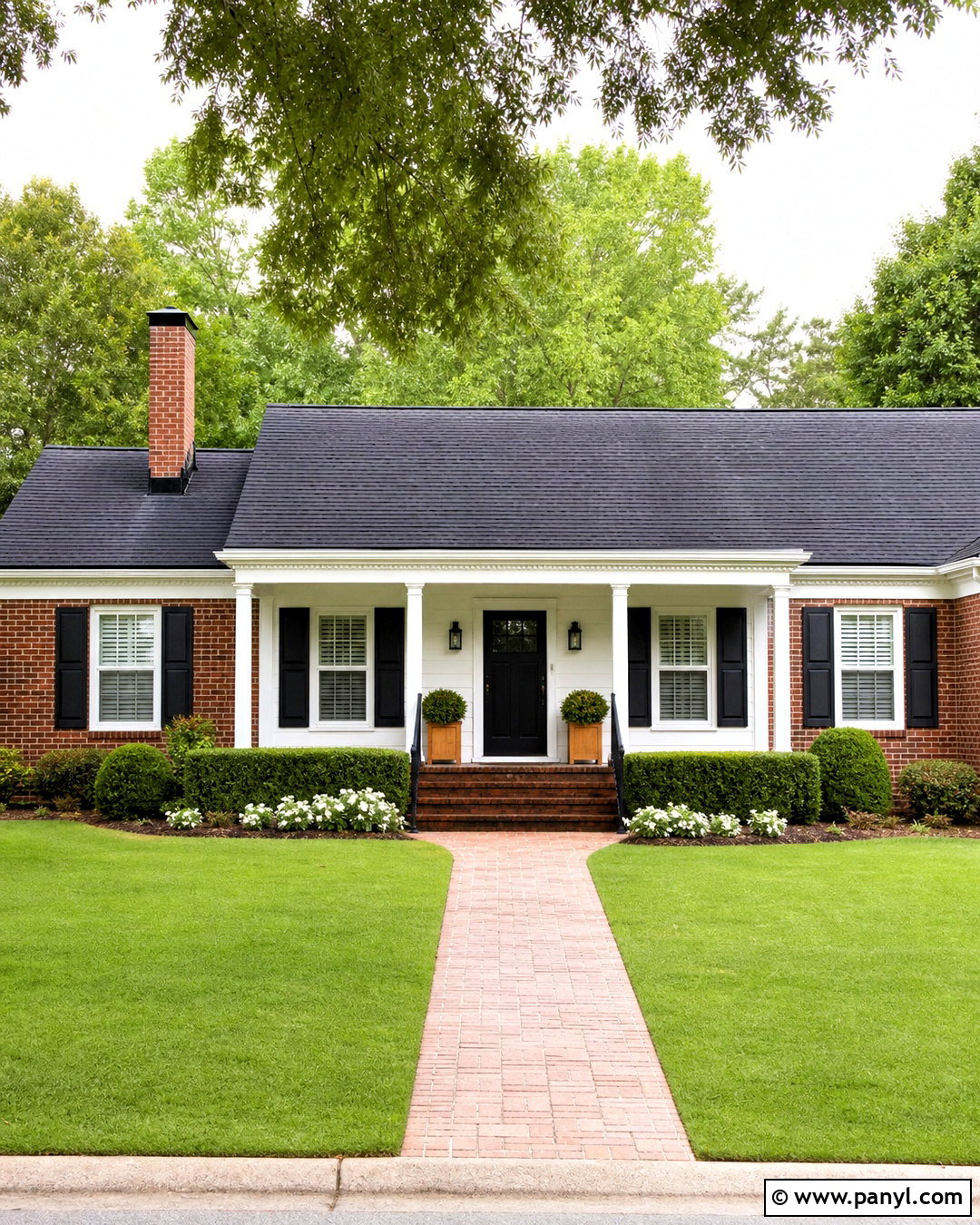
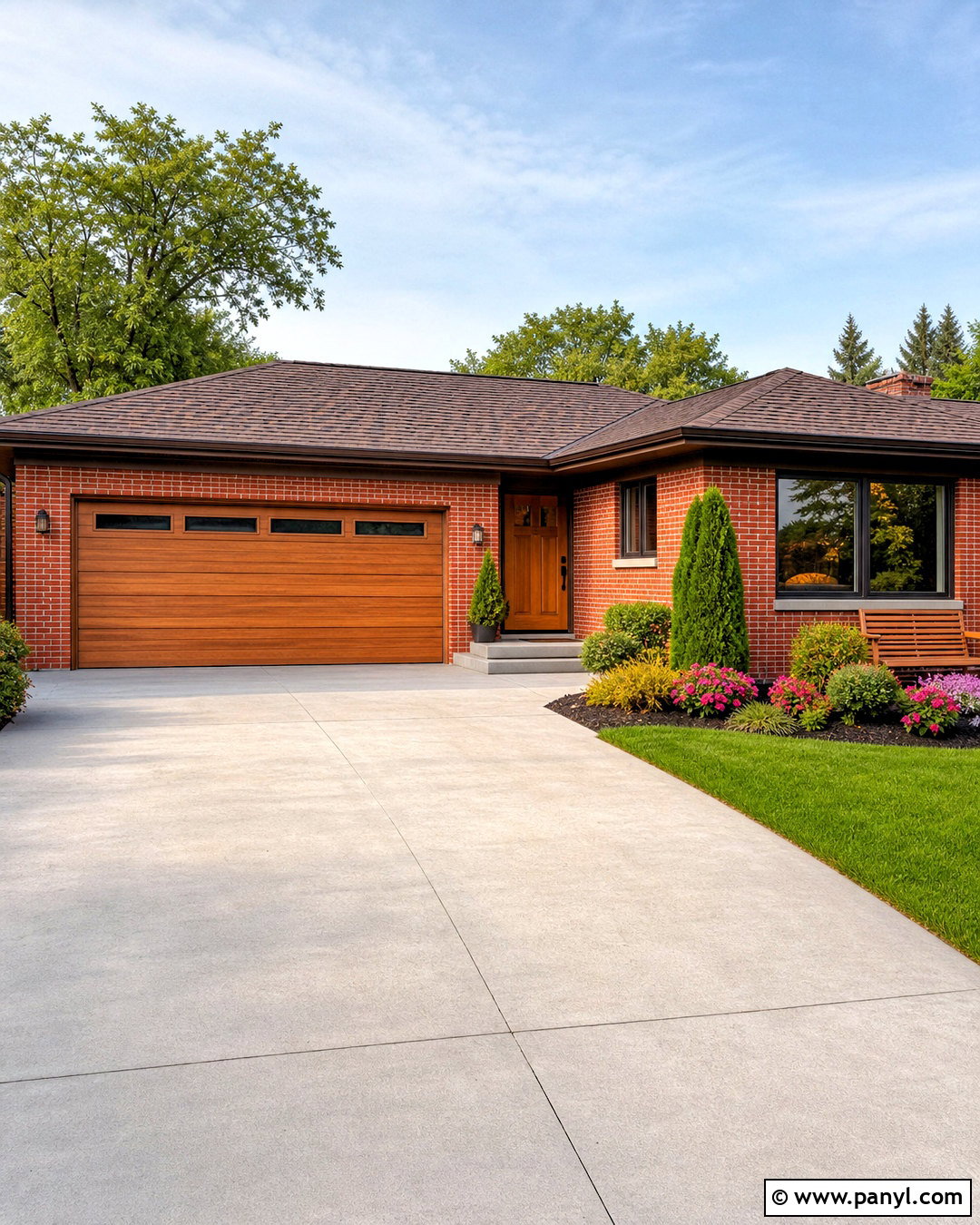
Few exterior palettes are as clear and versatile as red brick, soft white, and black. Use the white on siding, porch columns, soffits, and window trim, leaving the masonry as the dominant textured surface. Reserve black for shutters, the front door, window frames, gutters, and metal railings. Repeating black in several controlled locations helps the details look intentional rather than scattered. Choose a charcoal roof to anchor the palette and add warm wood through a bench, planters, or a small porch ceiling. Keep the landscaping simple with green hedges, white flowers, and a straight walkway. The completed scheme can refresh a Colonial, ranch, or traditional suburban house without ignoring its original architectural character.
Conclusion:
The best red brick and paint combinations create a complete exterior palette rather than treating siding, trim, doors, and roofing as separate decisions. Begin by identifying whether your brick reads orange, brown, burgundy, or cool red. Then select paint that repeats or gently balances those underlying tones. Warm white, cream, greige, and taupe provide quiet versatility. Charcoal, black, navy, and deep green offer stronger definition. Roof color, mortar, hardscaping, and landscaping should also support the final scheme. Paint large sample boards and view them beside the brick throughout the day before committing. With thoughtful testing and coordinated finishes, these 20 red brick and paint combinations can create polished, lasting curb appeal. ()

Related Ideas and Inspiration:
Leave a Reply