
Dark blue creates a confident exterior that can feel classic, coastal, rustic, or sharply modern depending on the supporting materials. The key is choosing a blue that works with permanent features such as roofing, masonry, windows, and pathways. Remember that a dark blue may appear closer to blue-black where natural light is limited, making large painted samples especially helpful before committing. () Crisp white offers clear contrast, while cream, greige, cedar, stone, and bronze create a warmer finish. Front doors and landscaping can then add personality without making the facade feel busy. The complete color schemes below cover different home types, undertones, roof colors, and accent combinations. Use these 20 dark blue exterior house colors to build a balanced look that suits your architecture and surroundings.
1. Dark Navy Exterior With White Trim
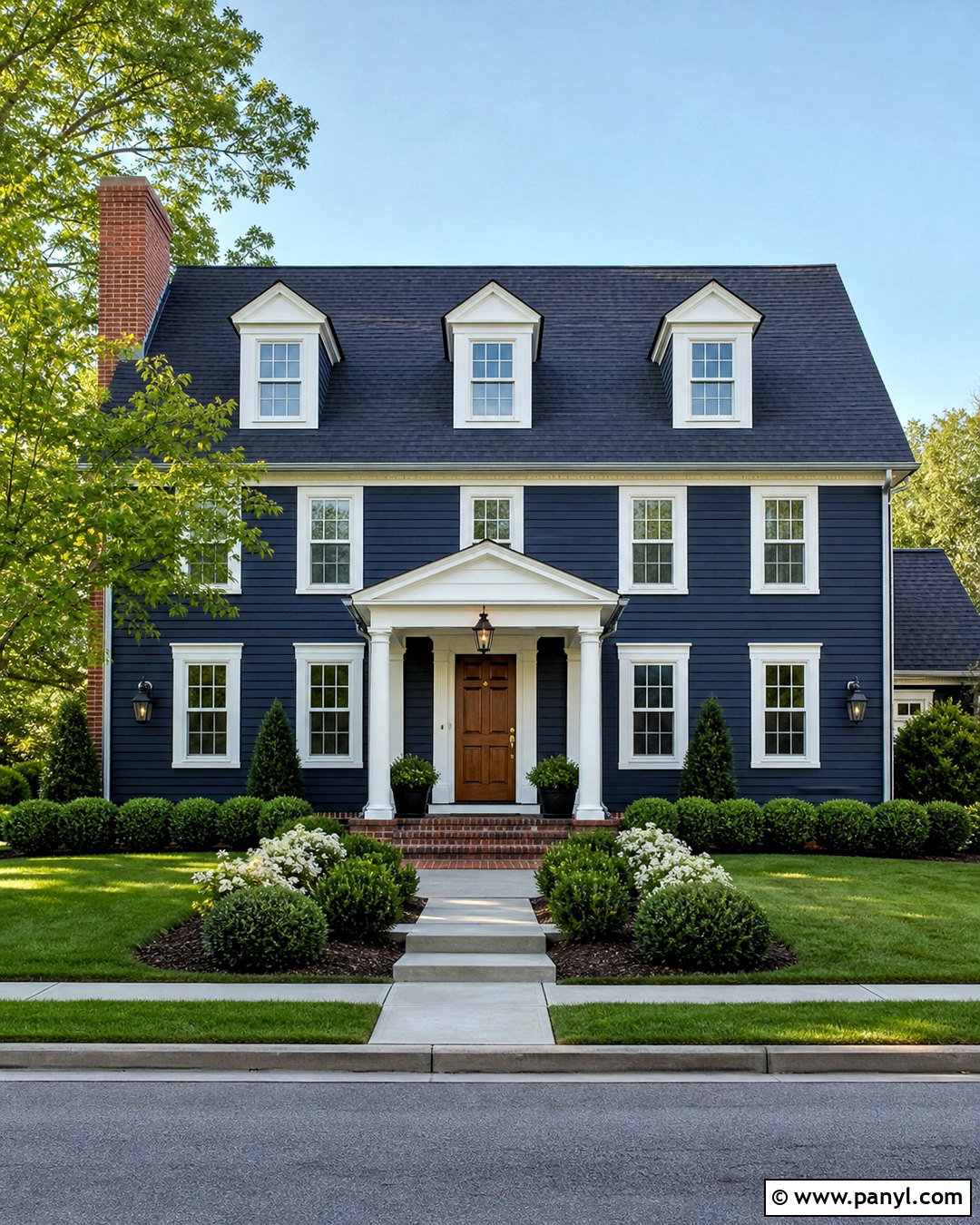
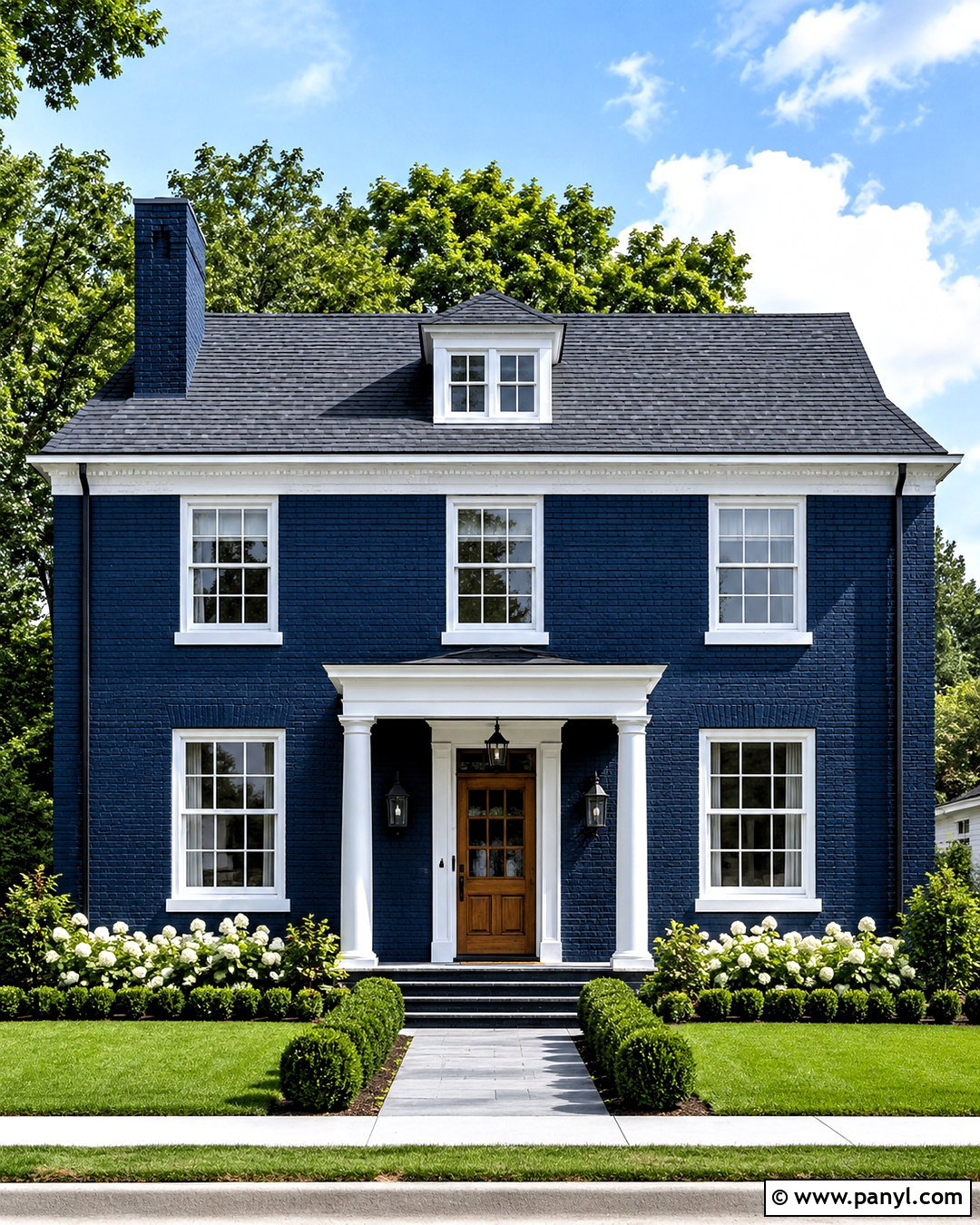
A classic dark navy exterior feels polished without looking overly formal. Cover the main siding in a deep, neutral navy that remains visibly blue in daylight. Add clean white trim around the windows, roofline, porch columns, and garage door for a fresh contrast. A stained medium-brown wood door warms the palette and creates an inviting focal point. Choose a charcoal architectural-shingle roof, black gutters, and simple black lanterns to connect the darker elements. Brick steps or a light gray concrete walkway keep the entrance practical and understated. Complete the curb appeal with rounded evergreen shrubs, white flowering plants, and a tidy lawn. This complete scheme works especially well on Colonial, Cape Cod, and traditional suburban homes.
2. Blue-Black Exterior With Natural Wood
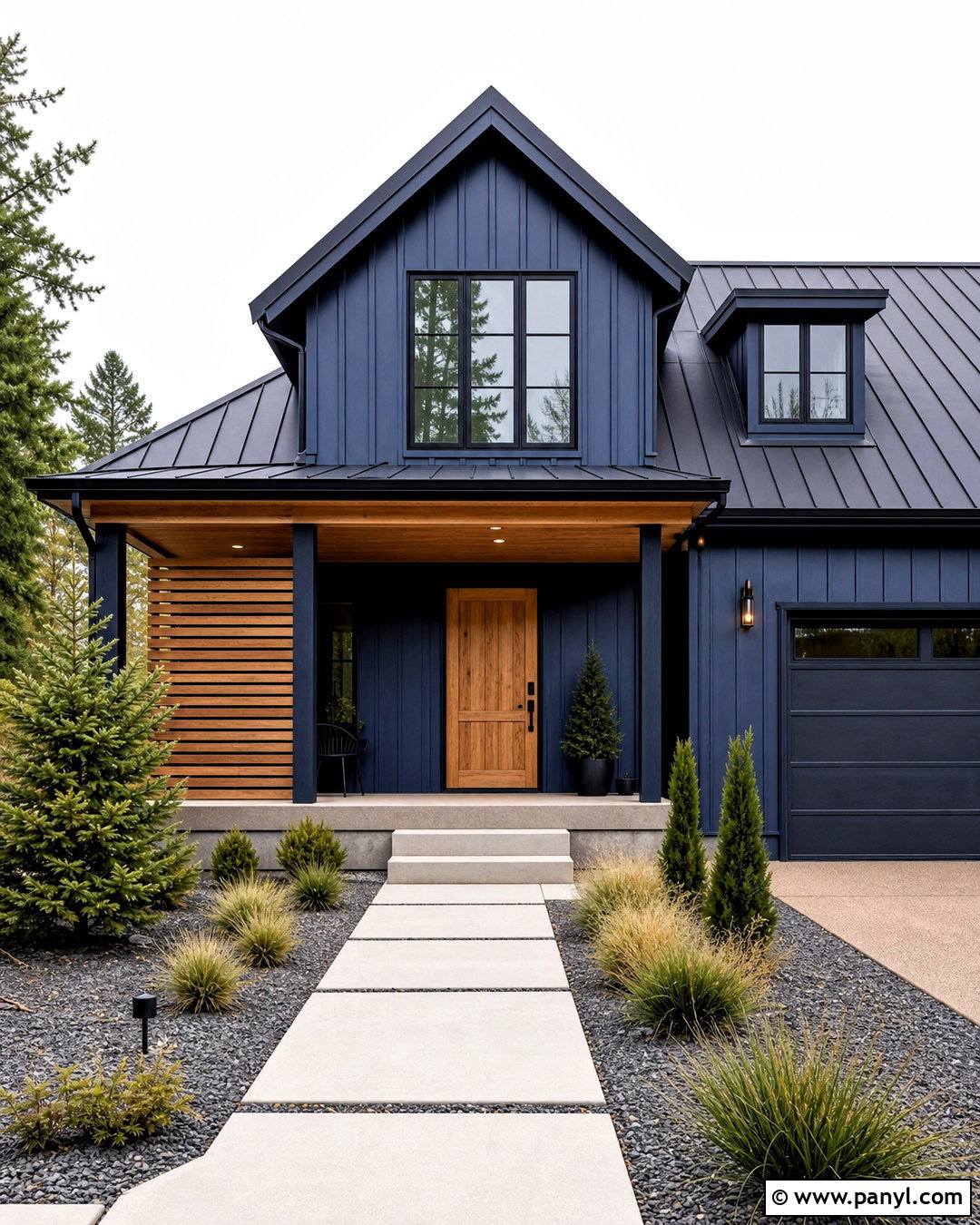
Blue-black siding brings dramatic depth to a modern exterior while still appearing softer than pure black. Use the color across vertical board-and-batten siding to emphasize the height and clean lines of the house. Keep window frames, gutters, and the standing-seam metal roof matte black for a streamlined finish. Natural cedar makes the essential warm counterpoint. Add it to the front door, porch ceiling, privacy screen, and one small section of horizontal siding. A pale concrete walkway and gravel planting beds prevent the dark facade from feeling visually heavy. Finish the design with ornamental grasses, compact evergreens, and low ground cover. This restrained combination creates a sophisticated modern home that feels connected to its landscape rather than stark or cold.
3. Charcoal Blue Exterior With Black Trim
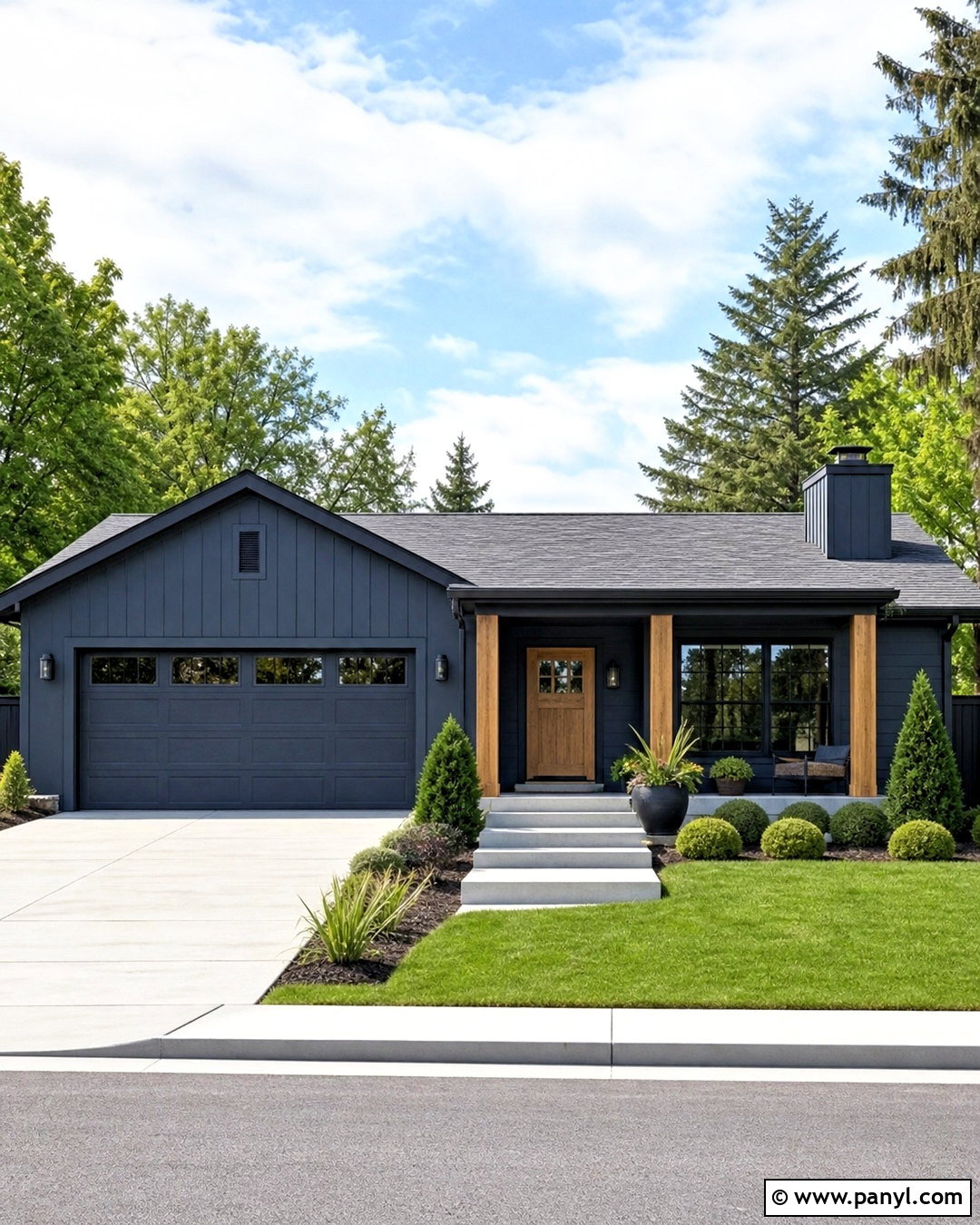
Charcoal blue is a smart option when you want a dark exterior with a quiet, smoky character. Choose a blue with noticeable gray undertones for the siding, then repeat matte black on the window frames, gutters, downspouts, porch railings, and garage hardware. Paint the garage door the same charcoal blue as the body so it blends into the facade. A warm oak front door and matching timber porch posts add enough natural color to keep the scheme welcoming. Use a medium-gray roof that sits between the blue siding and black accents. Broad concrete steps, dark planters, and structured shrubs reinforce the clean appearance. The finished palette looks particularly balanced on split-level, contemporary, and updated ranch homes.
4. Slate Blue Exterior With Cream Trim
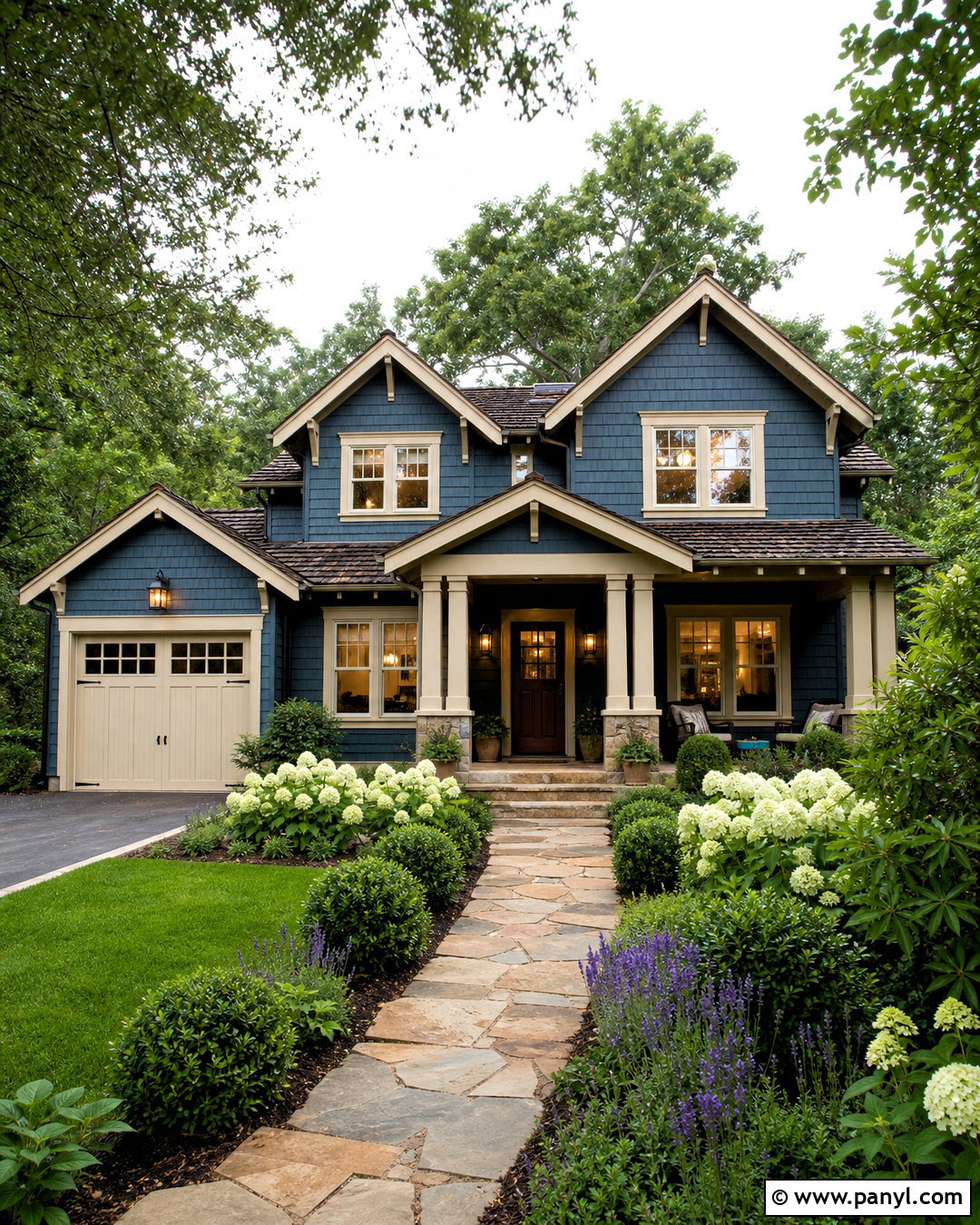
Deep slate blue creates a softer exterior than traditional navy because its muted gray undertone reduces the contrast. Pair this siding color with warm cream trim instead of bright white. Apply the cream to window casings, fascia, porch columns, and the garage door for a connected look. A deep brown front door, aged-bronze lights, and copper-toned house numbers introduce warmth without competing with the body color. Choose a weathered-brown or charcoal-brown roof that supports the warm details. A natural flagstone path and tan stone porch floor can further unify the palette. Surround the house with green hydrangeas, boxwood, and soft purple flowers. This comfortable color combination is well suited to cottage, Craftsman, and traditional one-story homes.
5. Deep Indigo Exterior With Red Brick
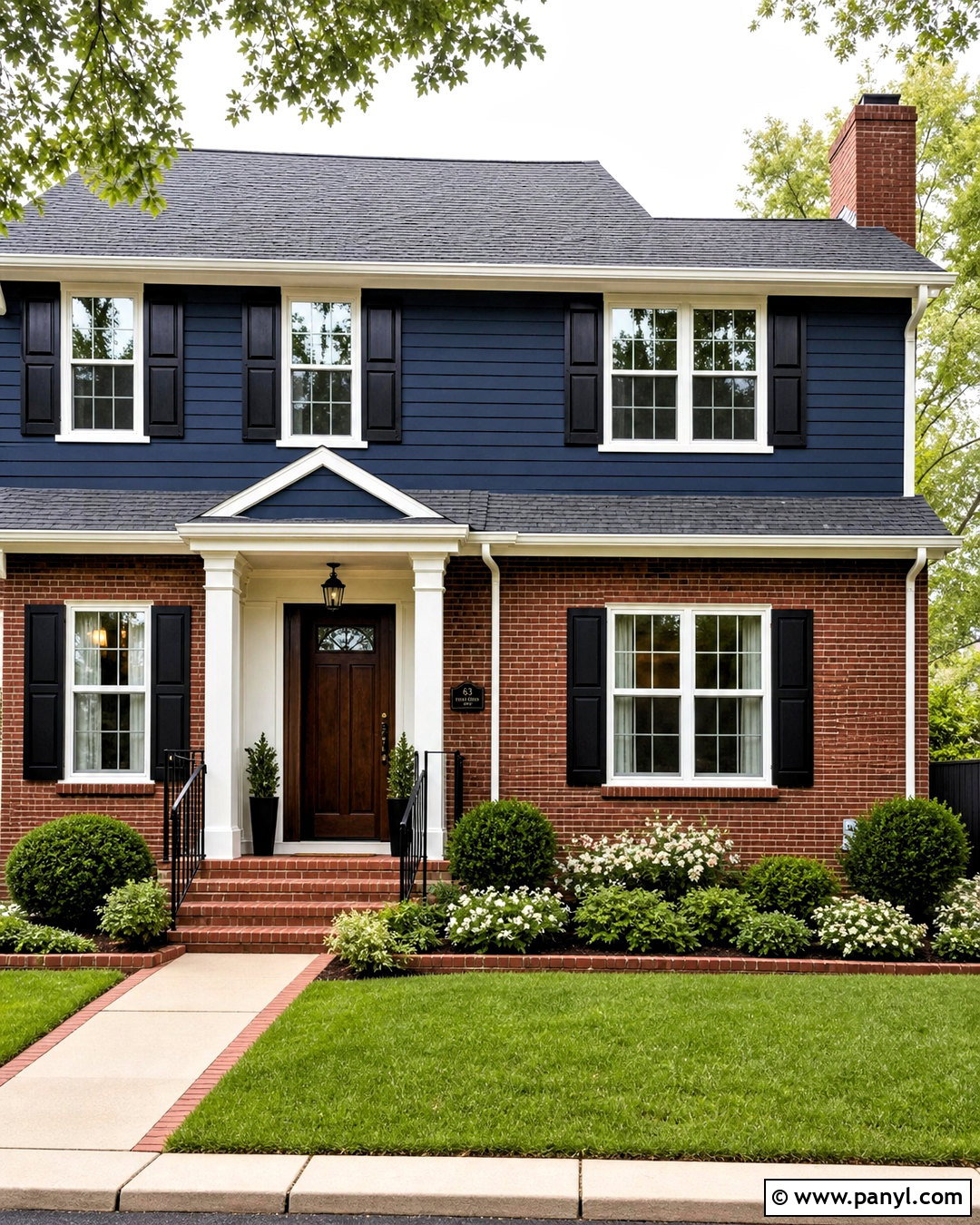
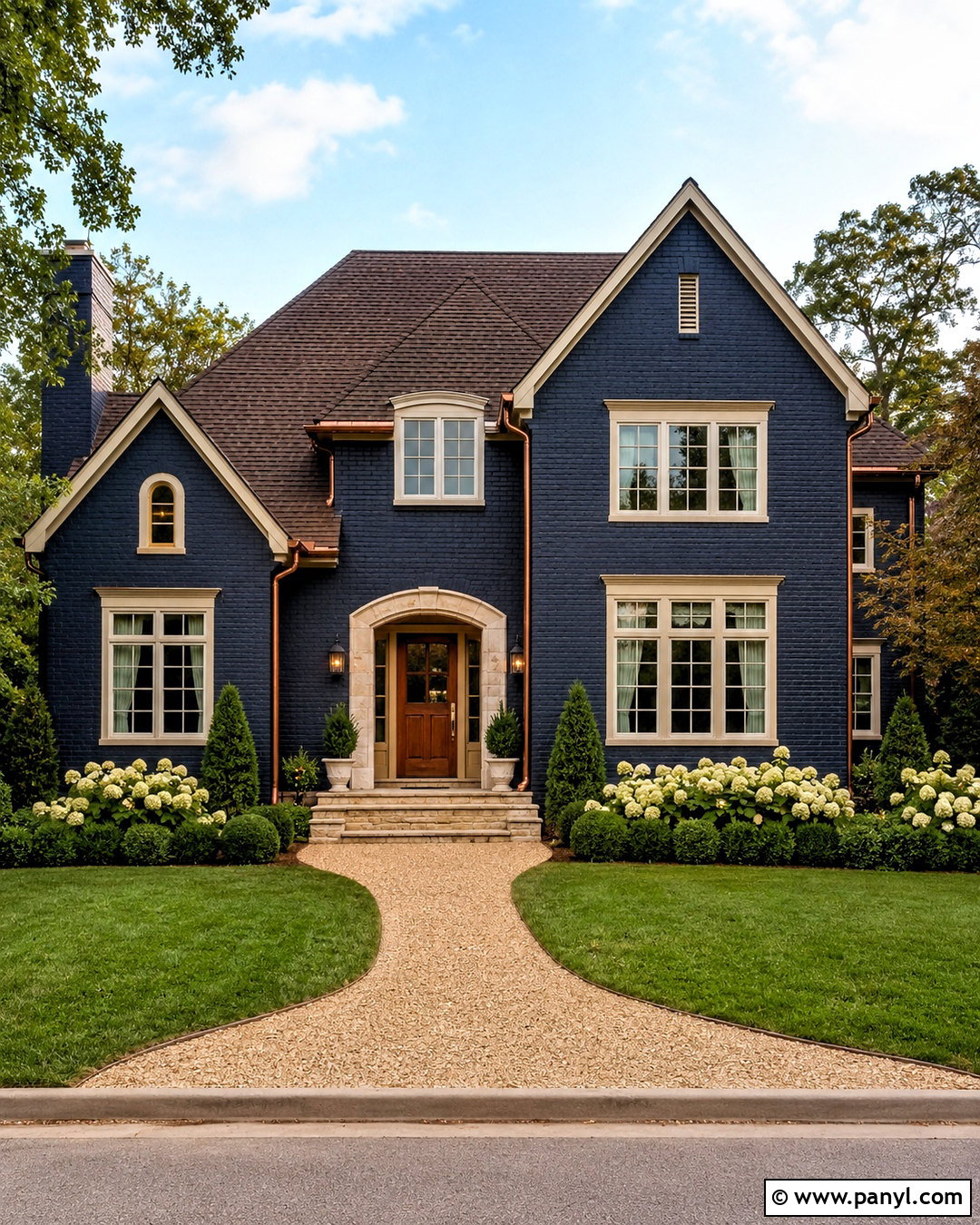
If your house has existing red brick, a deep indigo exterior can make that masonry feel intentional and updated. Use the indigo on upper siding, dormers, and other painted wall areas while leaving attractive brick unpainted. Select a soft off-white for the window trim and fascia, which separates the strong blue from the warm brick. A stained walnut front door relates to the brown and red tones in the masonry. Keep shutters, railings, exterior lights, and gutters matte black for definition. A dark charcoal roof will tie these contrasting materials together. Add brick-edged planting beds, green shrubs, and pale flowering perennials near the entrance. The resulting exterior has character and contrast without allowing either the brick or blue siding to dominate.
6. Midnight Blue Exterior With Gray Stone
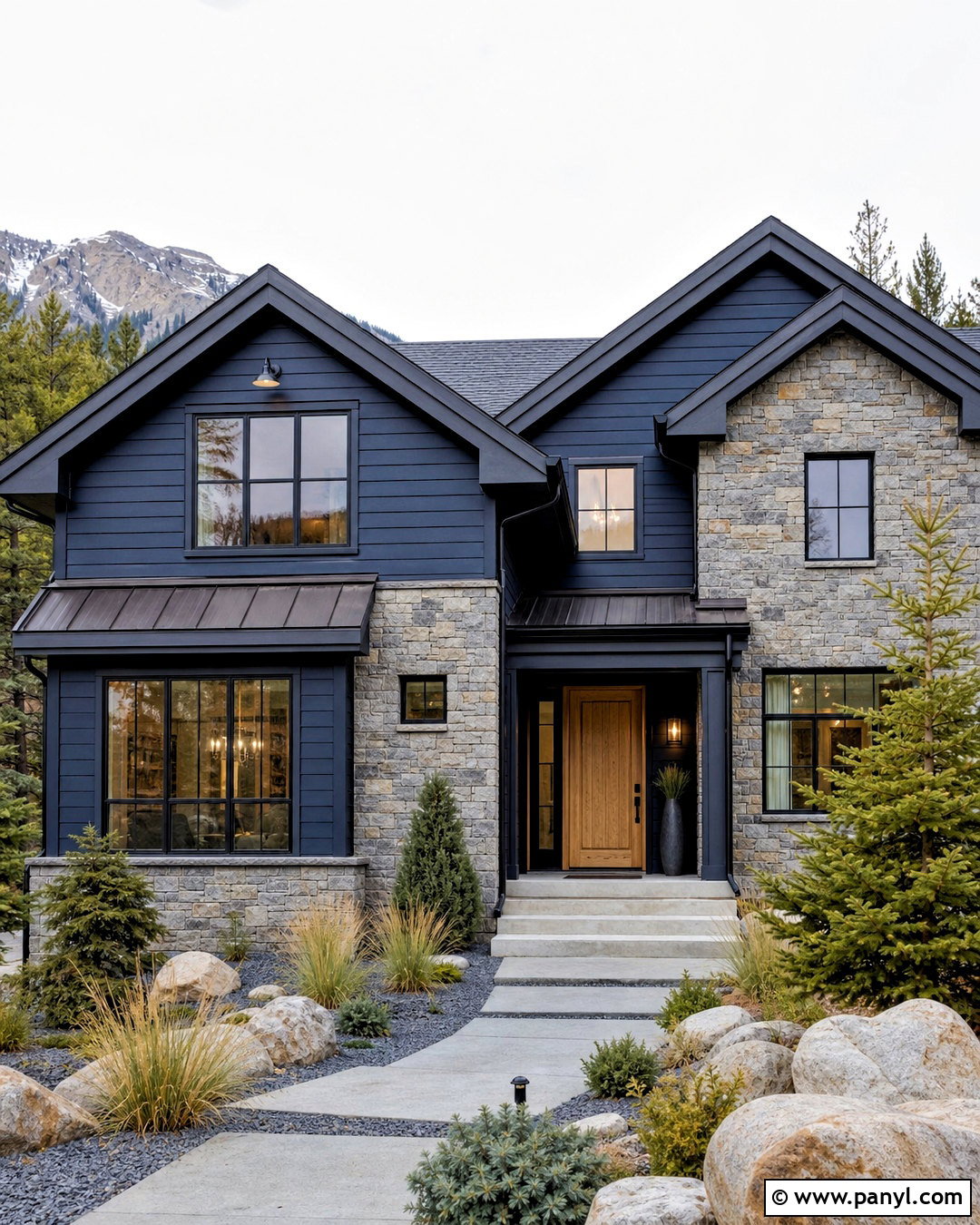
Midnight blue and cool gray stone form a refined exterior palette with subtle tonal variation. Cover the main siding in a very deep midnight blue, then use irregular gray stone around the foundation, entry columns, or lower garage walls. Paint the trim a soft pale gray rather than stark white to create a smooth transition between materials. Black-framed windows, black gutters, and dark charcoal roof shingles maintain the sophisticated direction. Bring warmth to the entry with a natural white oak door and brushed-brass or warm bronze hardware. Use broad concrete pavers and gravel beds to support the cooler colors. Neatly shaped evergreens and feathery grasses soften the strong architecture. This combination suits transitional, mountain modern, and contemporary suburban houses.
7. Dark Coastal Blue Exterior With Light Gray Trim
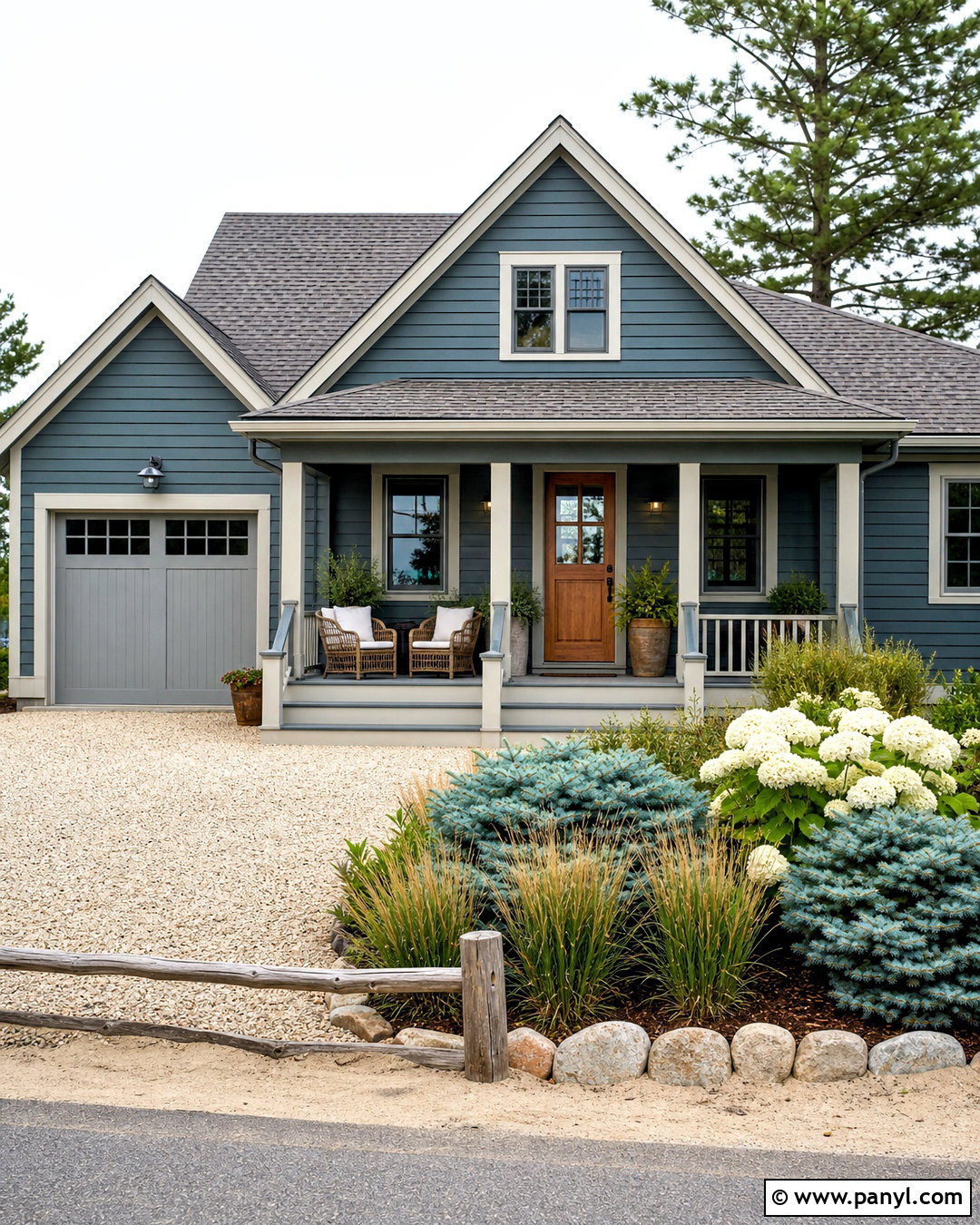
Dark coastal blue provides the relaxed character of a seaside palette without relying on pale or overly bright colors. Choose a rich blue with a slight gray-green undertone and apply it to horizontal lap siding. Use light gray on the trim, porch rails, garage door, and window casings for gentle contrast. A natural cedar front door, woven porch chairs, and warm wood planters prevent the palette from becoming too cool. Select a light or medium-gray roof and galvanized metal gutters to continue the coastal influence. A crushed-shell or pale gravel path can create texture around the entrance. Finish the yard with ornamental grasses, blue-green shrubs, and white hydrangeas. The complete look feels relaxed, tailored, and appropriate for a cottage or coastal-inspired home.
8. Dark Denim Blue Exterior With Cedar Shingles
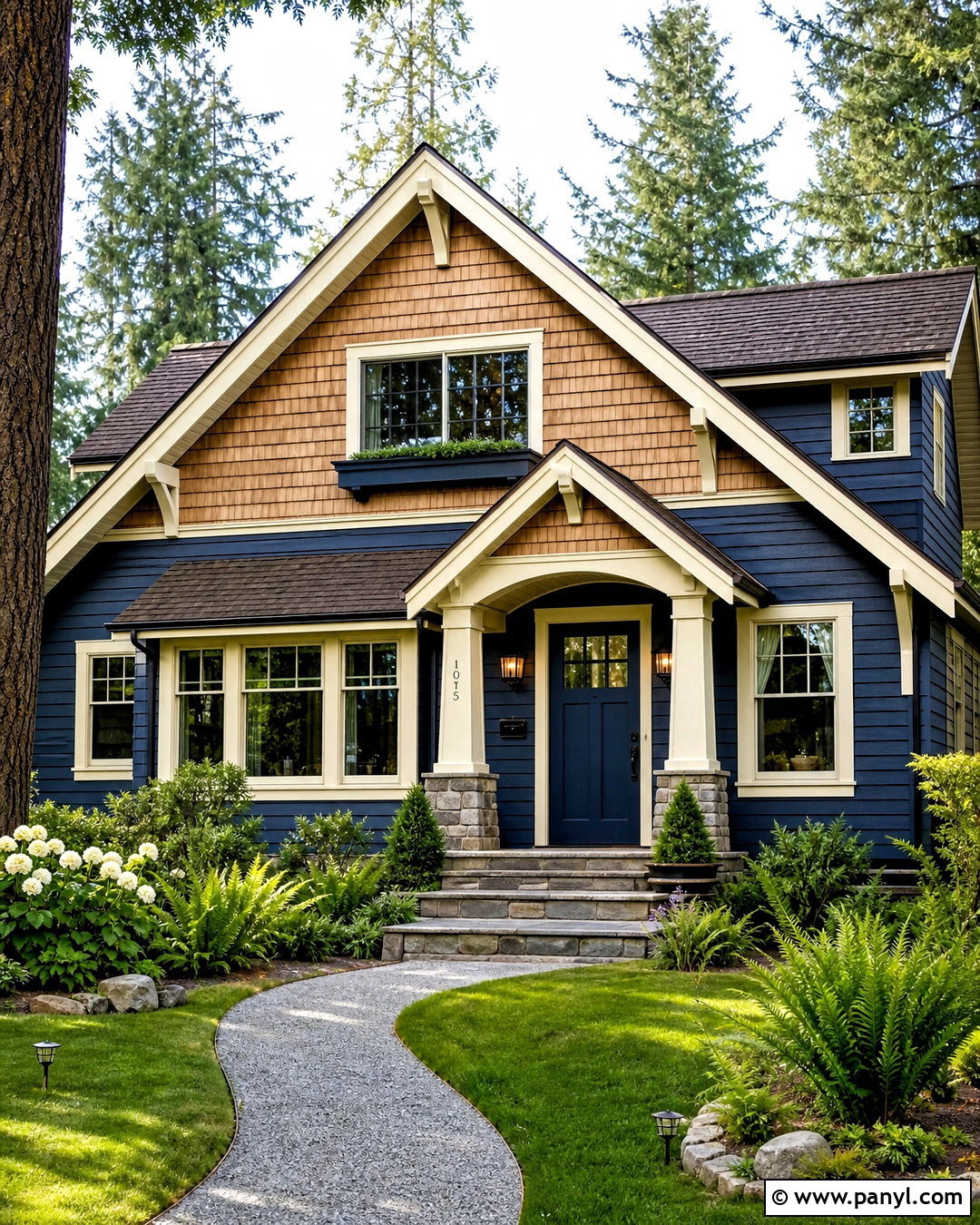
Dark denim blue has enough softness to pair naturally with weathered or new cedar shingles. Use denim blue on the primary clapboard siding and reserve cedar for upper gables, dormers, or a covered entry. Choose warm off-white trim to frame the windows and create separation between the blue siding and wood. A medium-brown shingle roof will help the cedar feel integrated rather than decorative. Paint the front door a slightly deeper version of the body color, then add black iron hardware and simple lanterns. Stone porch steps and a curved gravel walkway give the house an established, comfortable character. Layer ferns, evergreen shrubs, and white flowering plants around the foundation. This scheme is ideal for shingle, cottage, and Craftsman architecture.
9. Deep Teal Blue Exterior With Bronze Accents
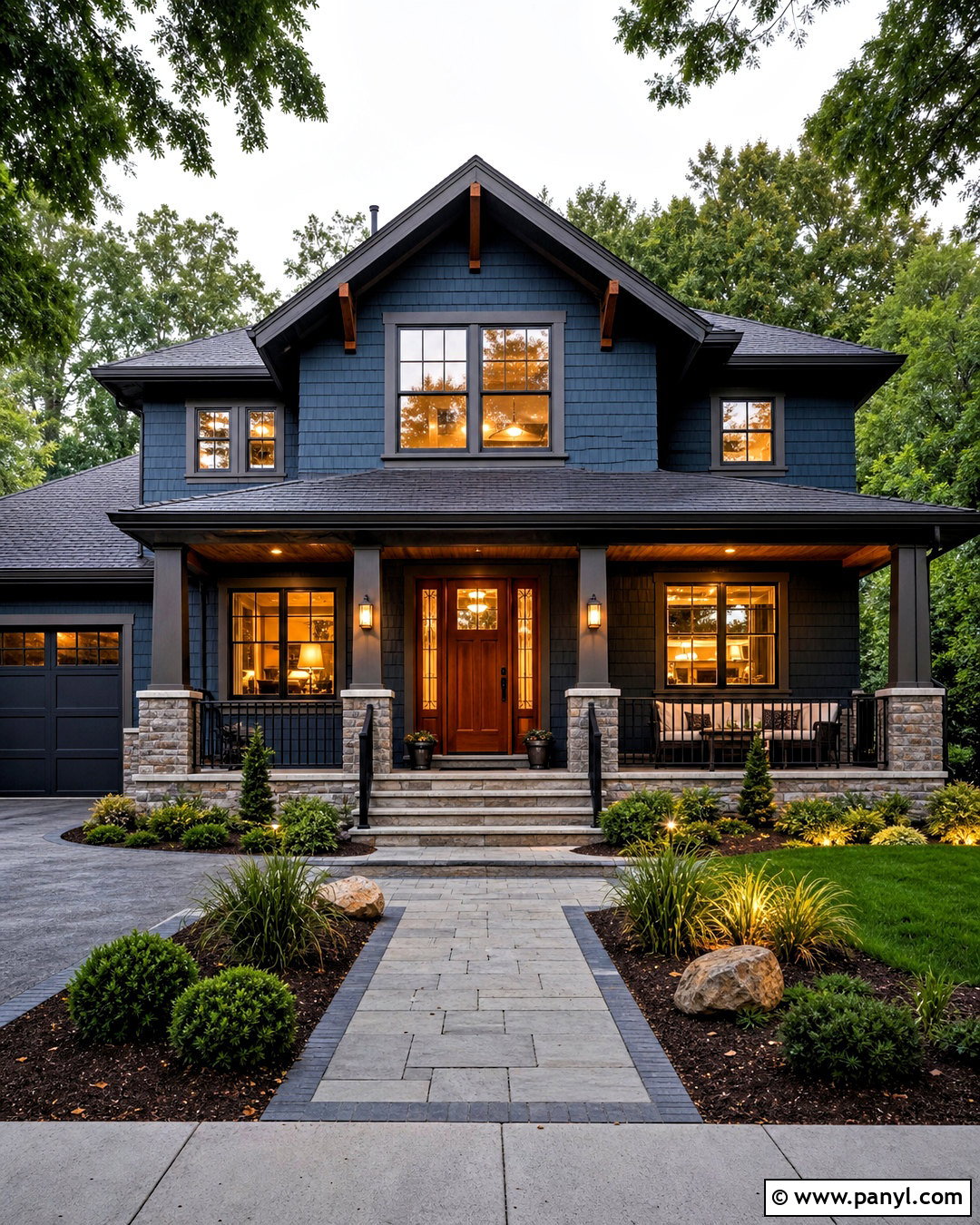
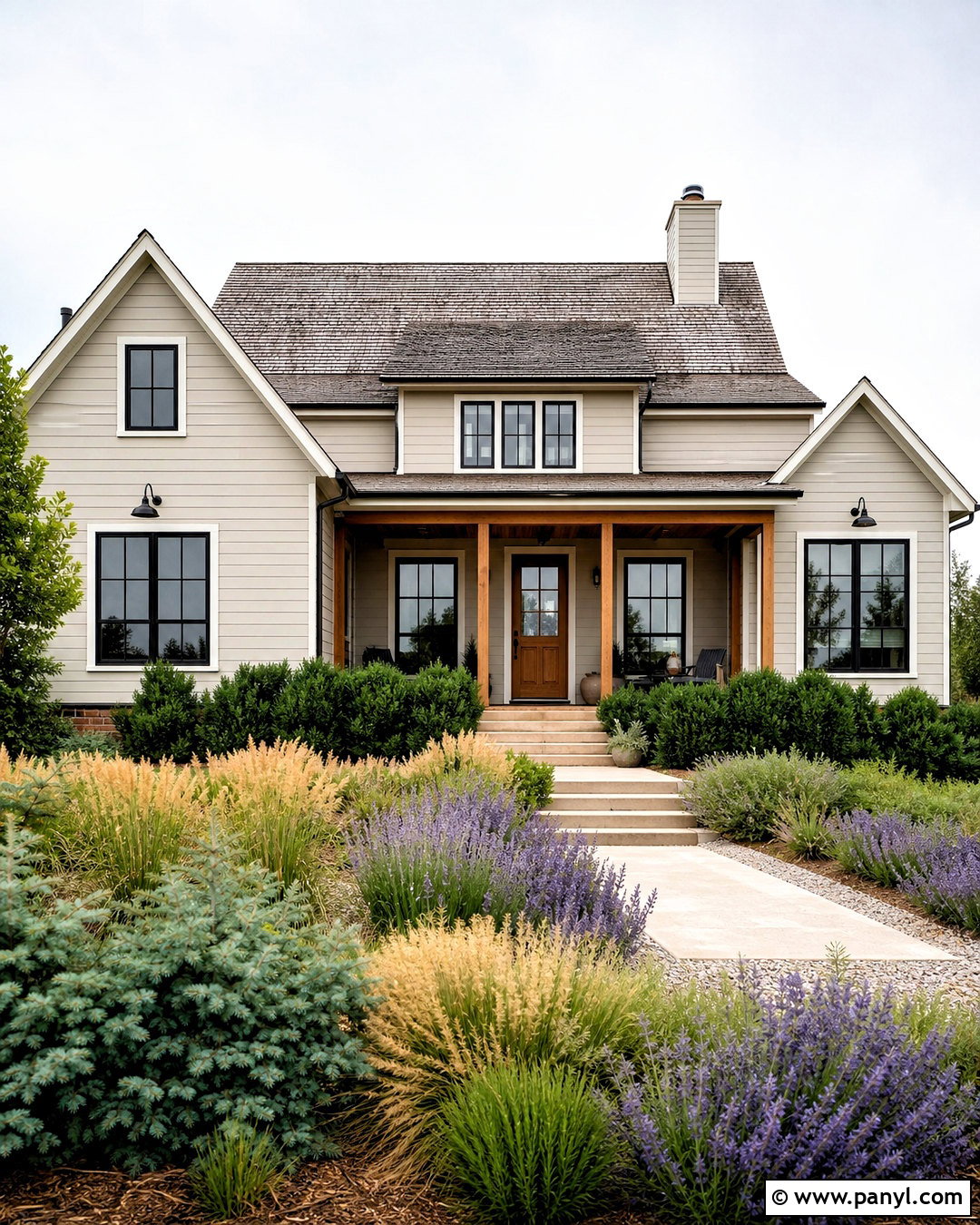
A dark teal-blue exterior offers more personality than standard navy while remaining grounded and sophisticated. Look for a deep blue with a restrained green undertone, then use it across lap siding or smooth stucco. Choose dark bronze window frames, gutters, exterior lights, and metal railings instead of black. The bronze brings out the warmer side of the teal without creating a sharp contrast. Add a medium-toned mahogany front door and a matching wood porch ceiling. A brown-charcoal roof and warm gray stone foundation complete the palette. Keep the landscaping rich but organized with glossy evergreens, clipped shrubs, and pale ornamental grasses. This full exterior scheme feels especially natural on contemporary Craftsman, wooded suburban, and modern cabin-inspired homes.
10. Dark Federal Blue Colonial Exterior
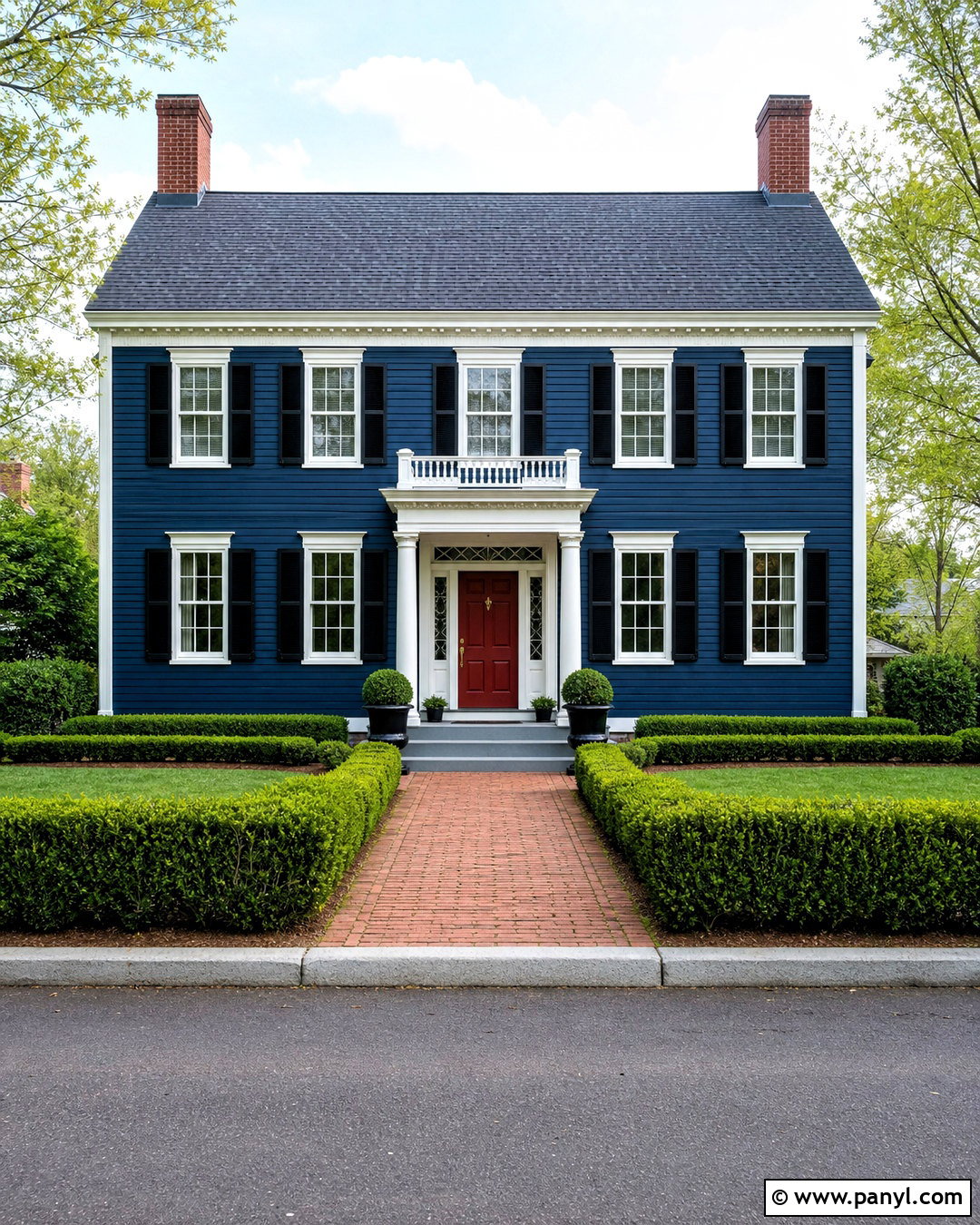
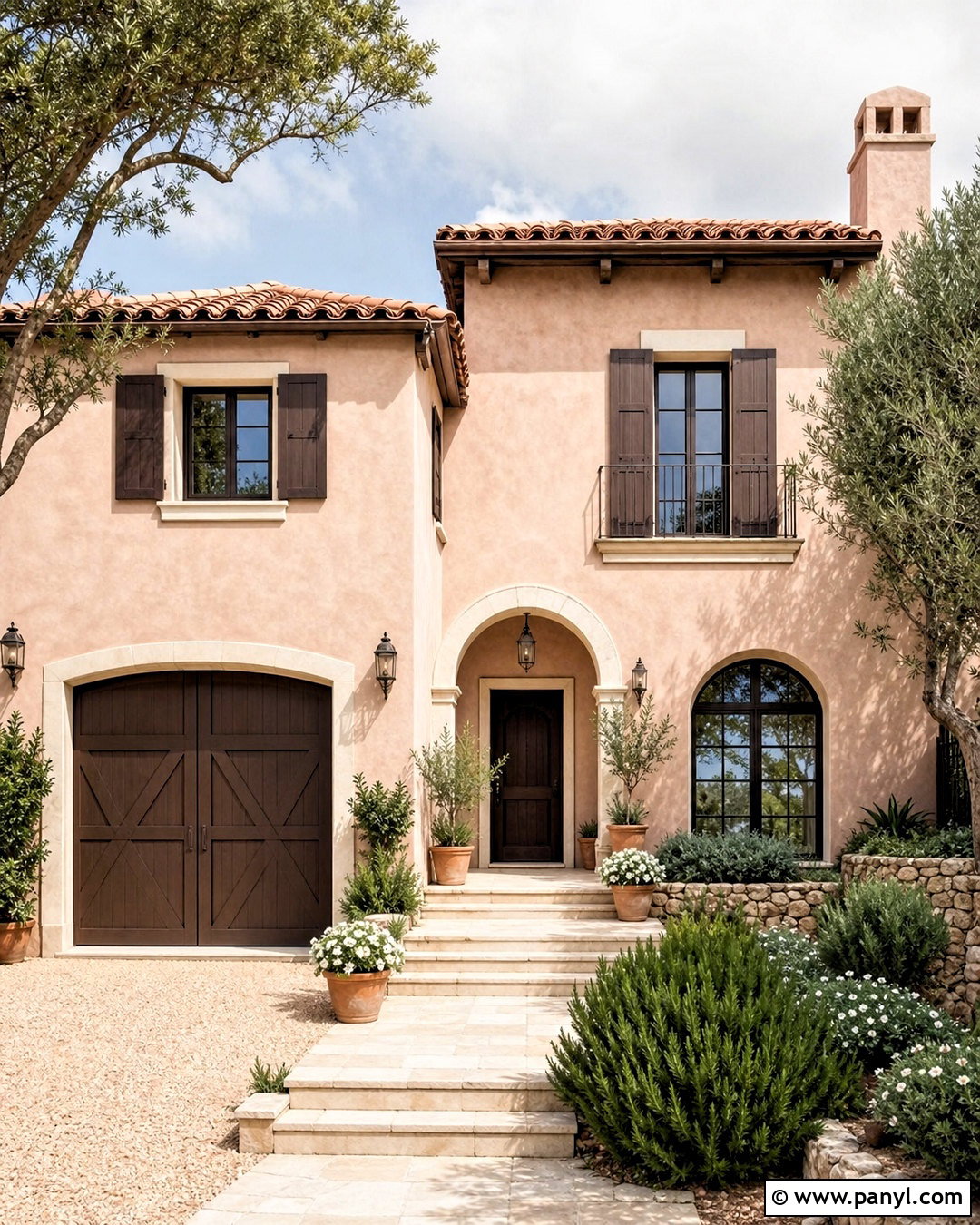
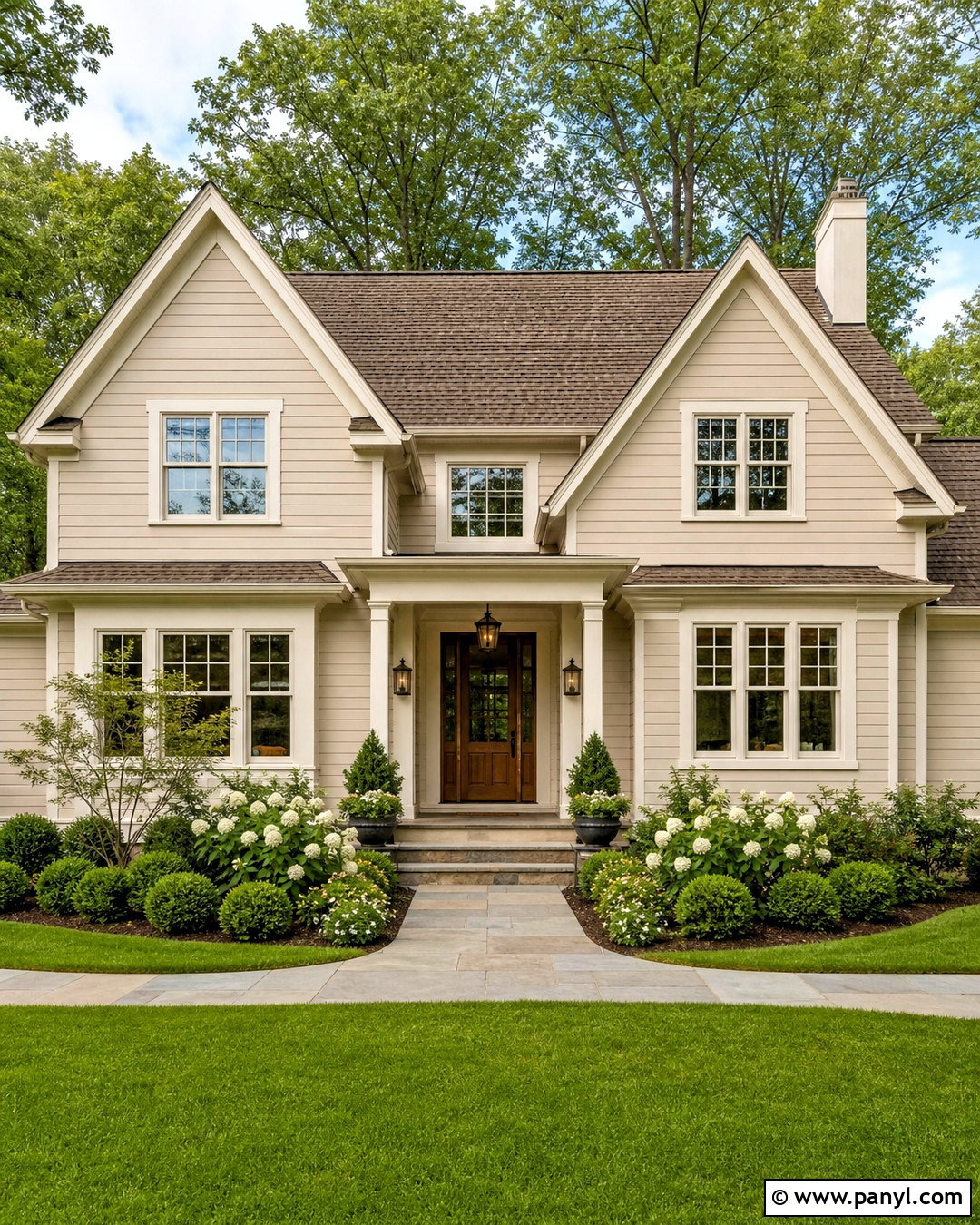
Dark Federal blue gives a symmetrical Colonial facade the strong definition its architecture deserves. Paint the clapboard siding a rich historic blue, then use crisp white on the window trim, cornice, columns, and entry surround. Add matte black shutters sized correctly for each window and repeat black on the lanterns and metal railings. A traditional deep red front door creates a distinctive focal point without changing the formal character. Choose a charcoal roof and paint the garage door blue if it is visible from the street. A straight brick path, clipped boxwood hedges, and matching planters will reinforce the balanced layout. The finished exterior feels established and welcoming, with each color assigned to a clear architectural feature rather than scattered across the facade.
11. Inky Blue Modern Farmhouse Exterior
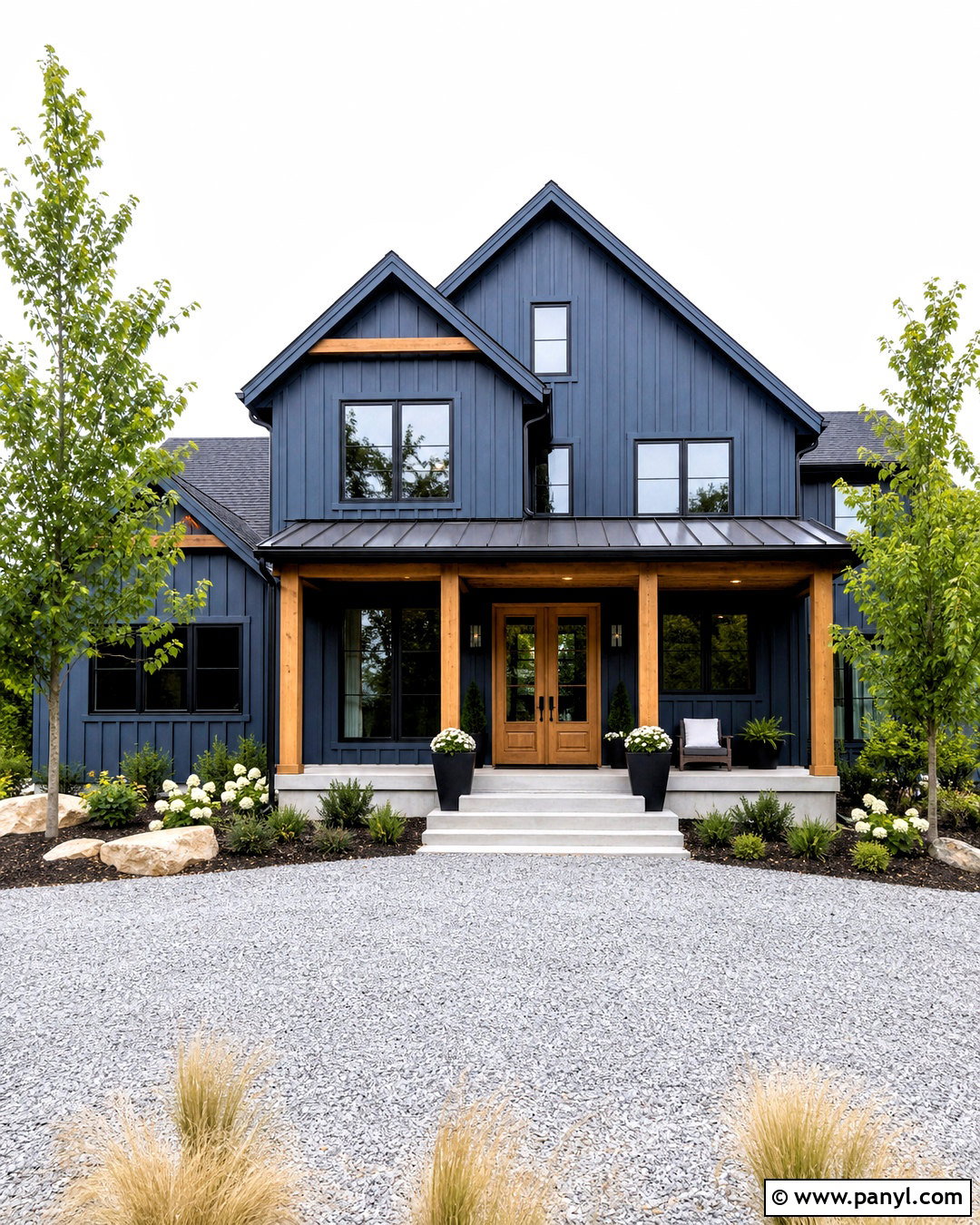
Inky blue offers a refreshing alternative to the familiar white modern farmhouse exterior. Use the color on vertical board-and-batten siding, including the garage, to create a bold and cohesive body. Frame the house with black windows, black gutters, and a black standing-seam porch roof. Warm white can appear sparingly on the porch columns or foundation if the design needs added contrast. Install natural cedar double doors, chunky timber posts, and a cedar porch ceiling to soften the dark facade. Light gray concrete steps and a gravel driveway keep the remaining materials simple. Finish with large black planters, white flowers, low grasses, and young trees. This complete scheme feels modern and comfortable while preserving the straightforward shapes associated with farmhouse architecture.
12. Storm Blue Ranch House Exterior
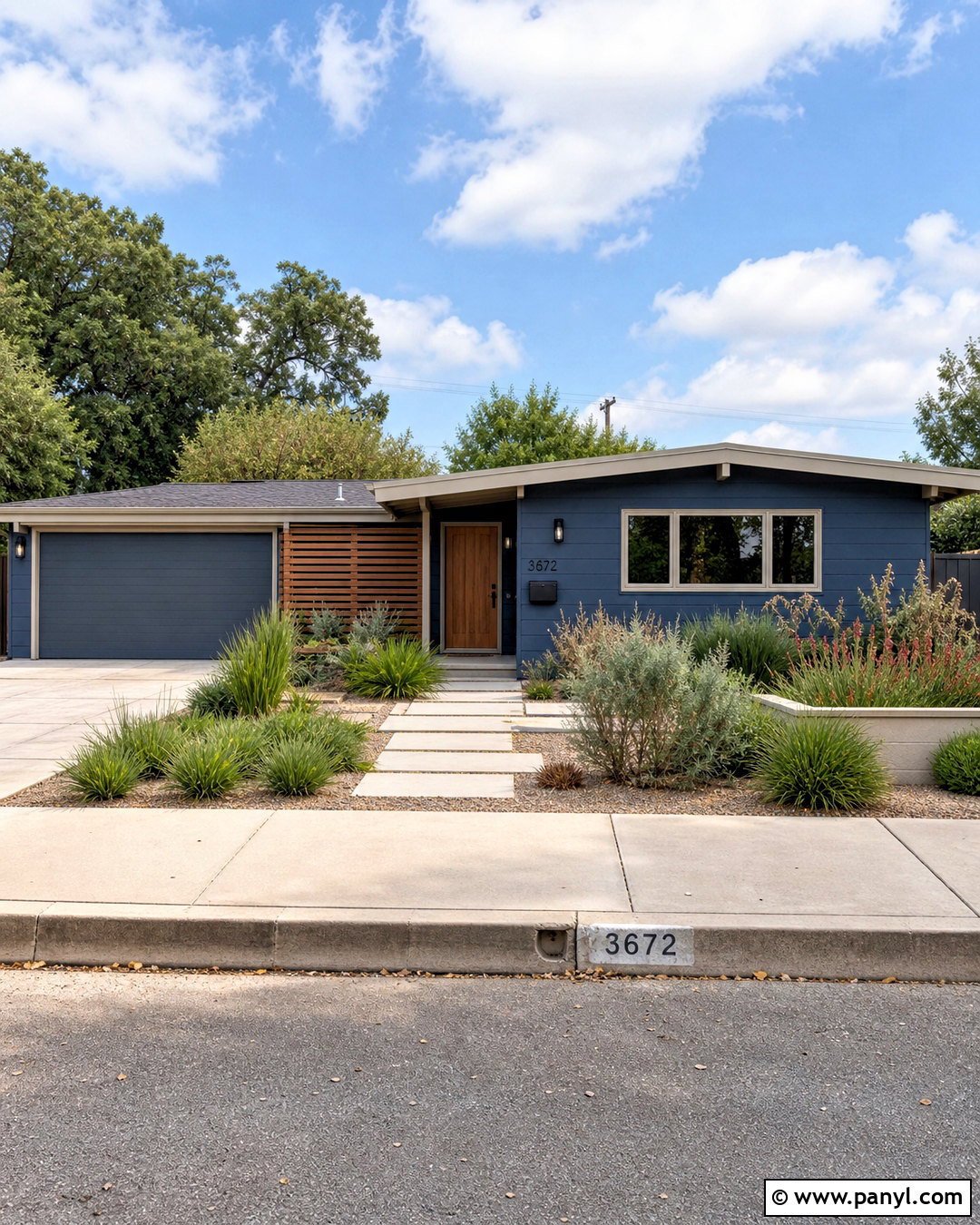
Storm blue can give a long, low ranch house more depth without making the facade appear overly formal. Apply the muted dark blue across the siding and paint the garage door the same color to reduce visual breaks. Use warm greige on the fascia, soffits, and window trim for a softer outline than white would provide. A medium walnut front door and matching horizontal wood screen introduce warmth near the entrance. Keep the roof dark gray and select black for the gutters, lights, and address numbers. Wide concrete pavers, gravel, and layered drought-tolerant plants complement the horizontal architecture. Place taller grasses near blank walls and lower plants beneath windows. The overall design feels calm, contemporary, and realistic for an updated midcentury ranch.
13. Dark Steel Blue Craftsman Exterior
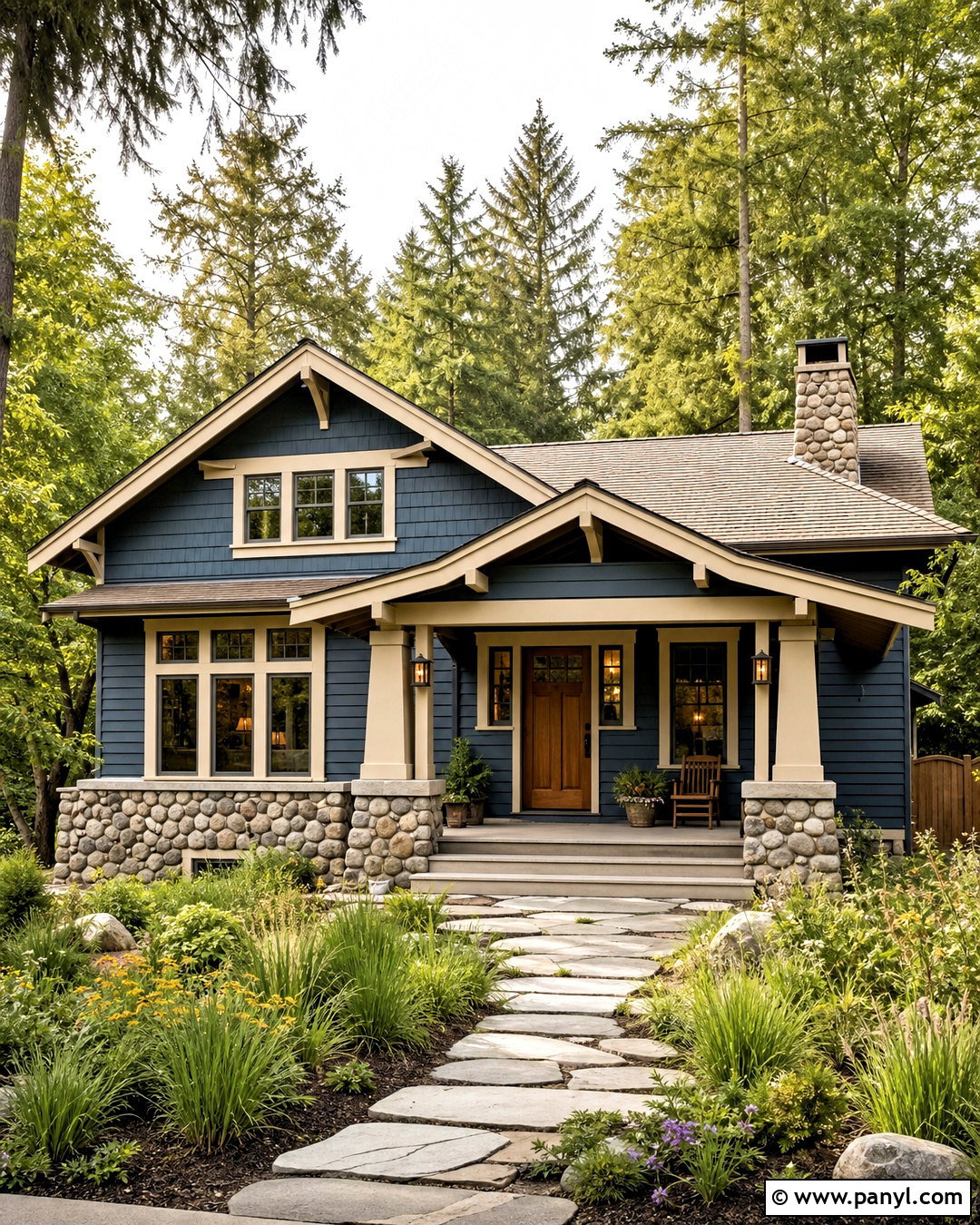
Dark steel blue highlights the substantial shapes and handcrafted details of a Craftsman home. Use the gray-based blue on the main lap siding and upper shakes to keep the exterior unified. Apply creamy white to tapered columns, window trim, exposed rafter tails, and porch beams. A river-rock foundation or gray-brown stone base adds the visual weight this architecture needs. Choose a quarter-sawn oak front door with divided glass, dark bronze hardware, and coordinating Craftsman lanterns. A weathered-brown roof will connect the stone, wood, and cream accents. Complete the yard with a broad stone walkway, native grasses, evergreen shrubs, and informal flowering plants. This full palette emphasizes the home’s structure while maintaining a warm, approachable street presence.
14. Deep Cobalt Blue Cottage Exterior
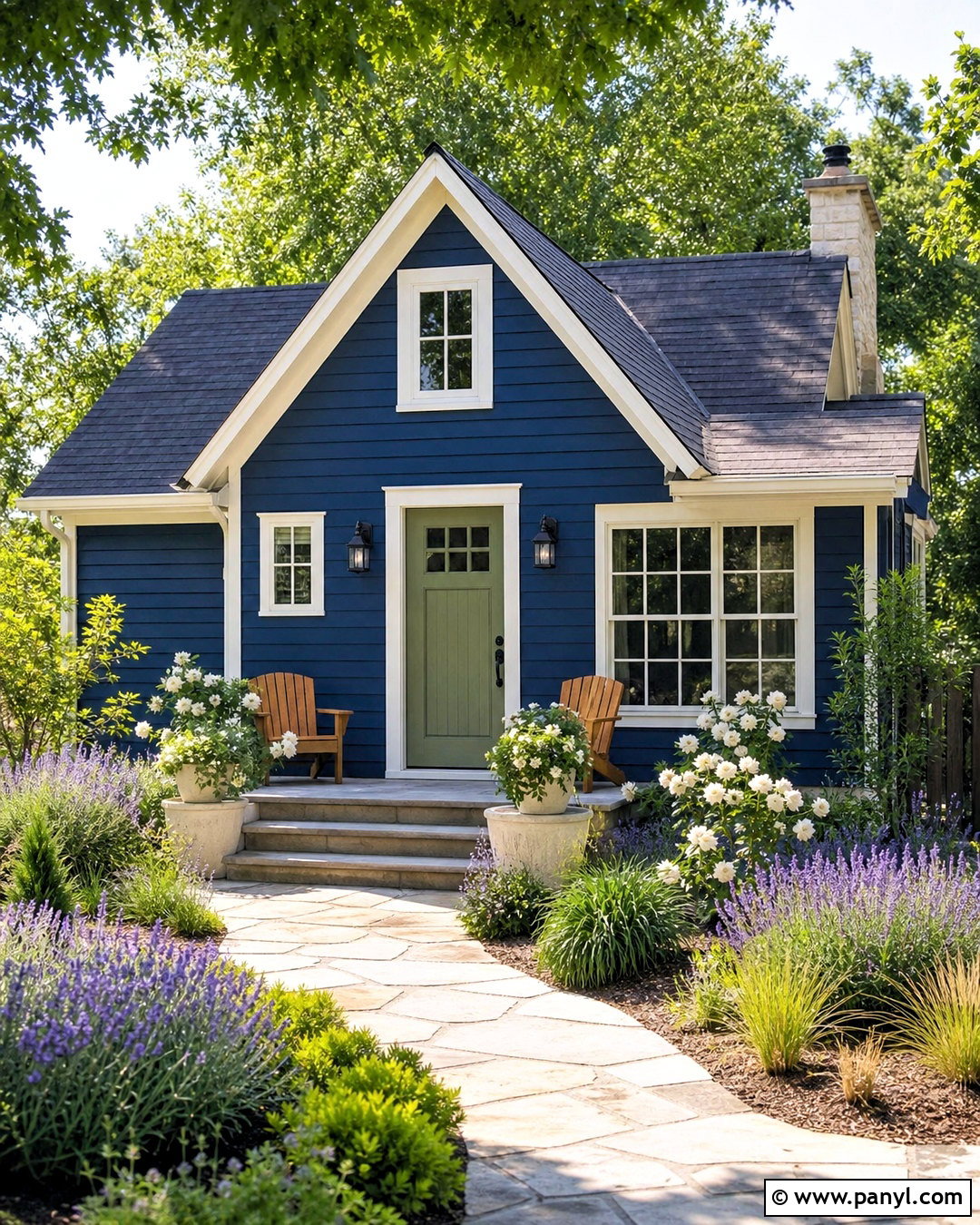
Deep cobalt blue can make a small cottage feel cheerful and distinctive without appearing childish. Select a dark, slightly softened cobalt for the siding and balance it with warm white trim around the windows, eaves, and compact front porch. Paint the front door a clear leafy green for a garden-inspired accent, then use black hardware and lanterns to keep it grounded. A charcoal-gray roof provides a neutral cap that does not compete with the stronger colors. Add a pale stone walkway, simple wood porch chairs, and cream ceramic planters. Surround the entrance with lavender, white roses, ornamental grasses, and loosely shaped shrubs. The finished cottage feels colorful but controlled because the cobalt remains dominant and the brighter green appears only at the entry.
15. Muted Navy Exterior With Greige Trim
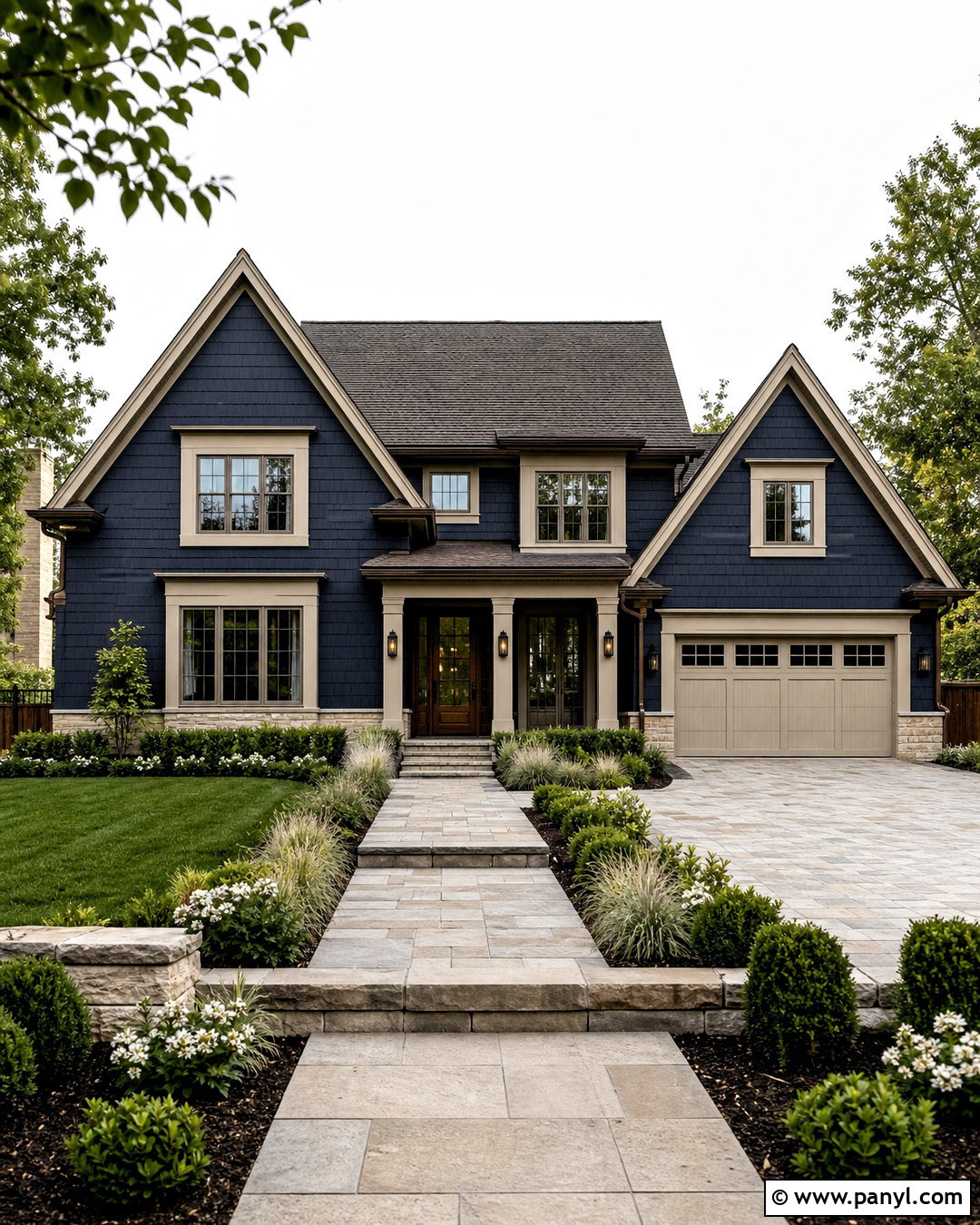
Muted navy and greige create a low-contrast exterior that looks softer than navy paired with white. Choose a grayed navy for the siding and a light, warm greige for the window casings, fascia, porch columns, and garage door. Bring in a dark walnut front door to deepen the warm side of the palette. A charcoal-brown roof, bronze gutters, and aged-brass entry hardware create a smooth progression from cool blue to earthy neutrals. Use limestone or pale taupe pavers for the porch and walkway. Landscaping should feel equally restrained, with layered boxwood, silvery grasses, and white flowers. This adaptable combination can update traditional, transitional, and suburban homes while avoiding the harsh outlines that high-contrast white trim sometimes creates.
16. Dark Blue Exterior With Yellow Front Door
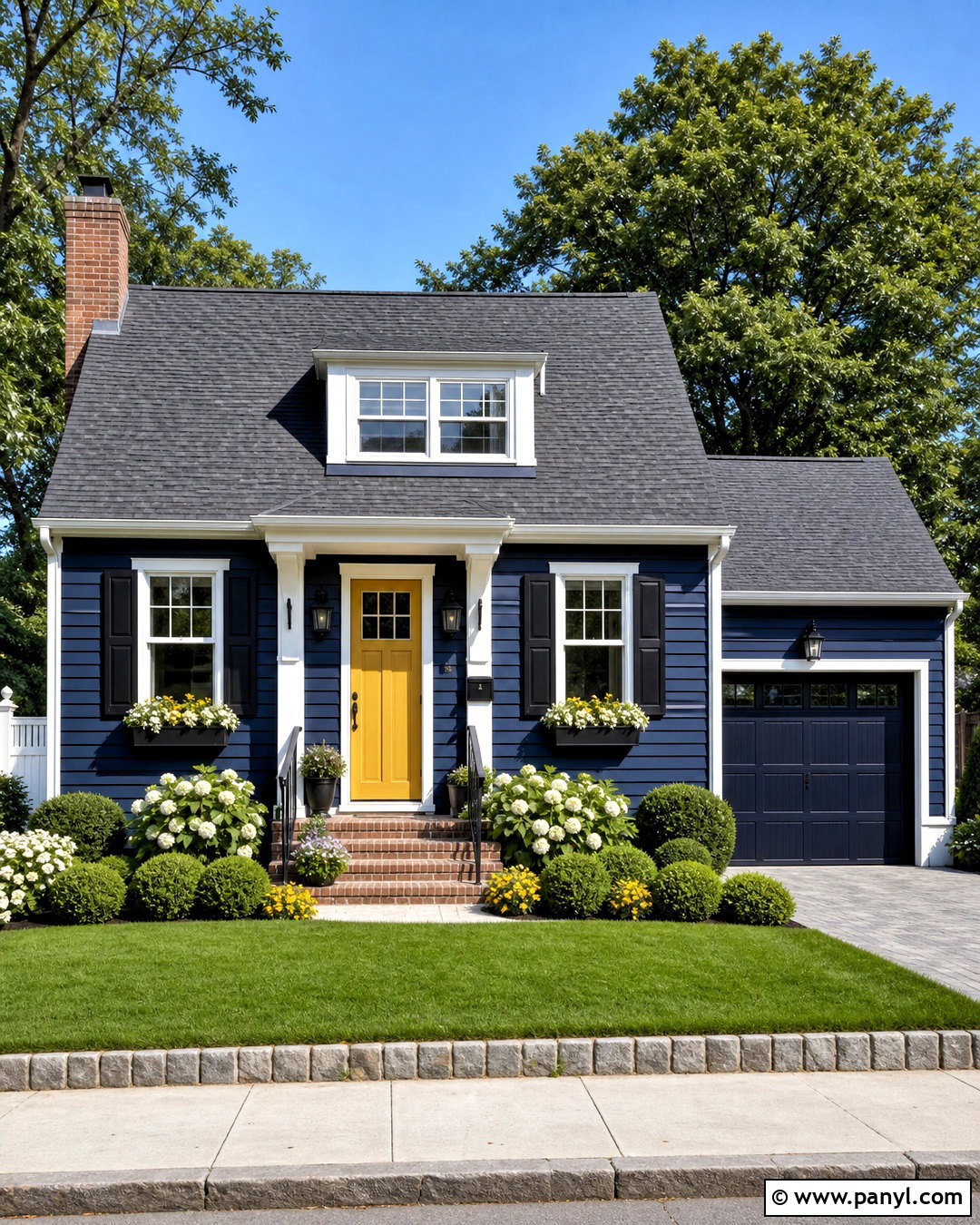
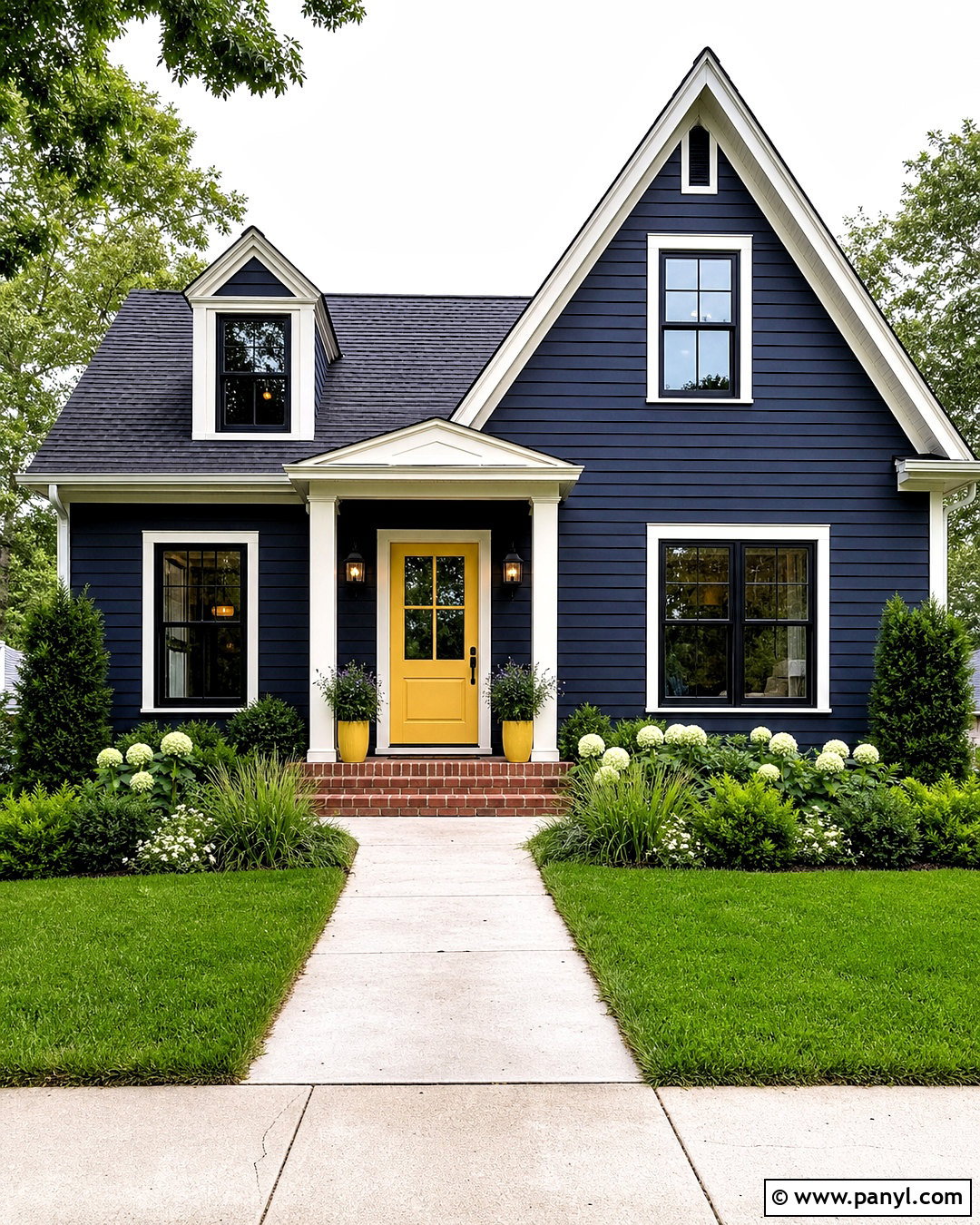
A yellow front door can brighten a dark blue exterior when the rest of the palette stays simple. Paint the primary siding a deep neutral navy and use clean white trim around the windows, eaves, and porch. Choose a warm golden-yellow rather than a neon shade for the door so it feels welcoming and substantial. Repeat the yellow only in small seasonal flowers or porch accessories. Keep the roof charcoal, the shutters matte black, and the garage door navy to maintain visual order. Natural brick steps or a medium-gray concrete porch can ground the stronger colors. Add structured green shrubs and white flowering plants around the entrance. The complete look is lively yet balanced, making it especially effective for traditional cottages and family homes.
17. Dark Blue Exterior With Red Front Door
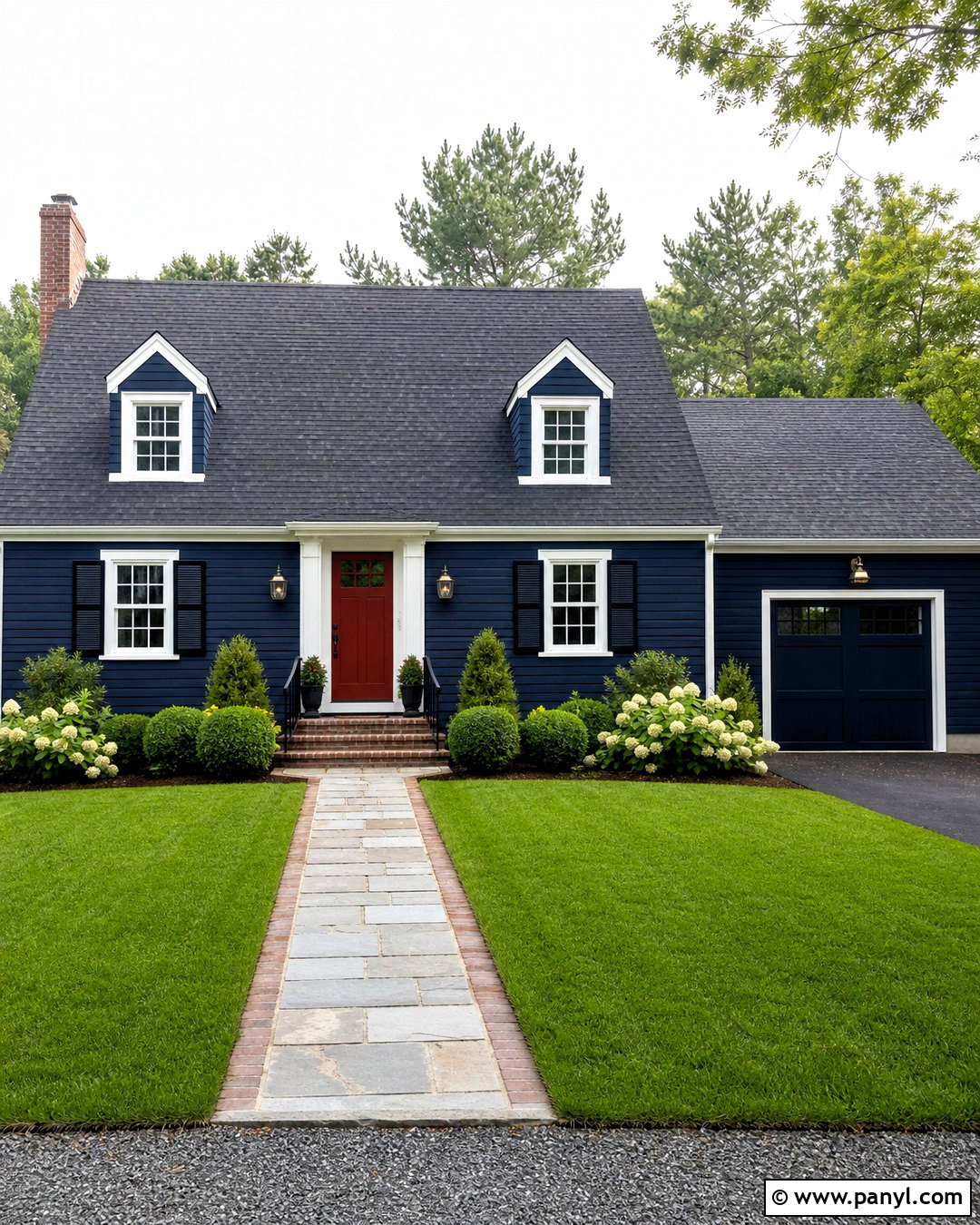
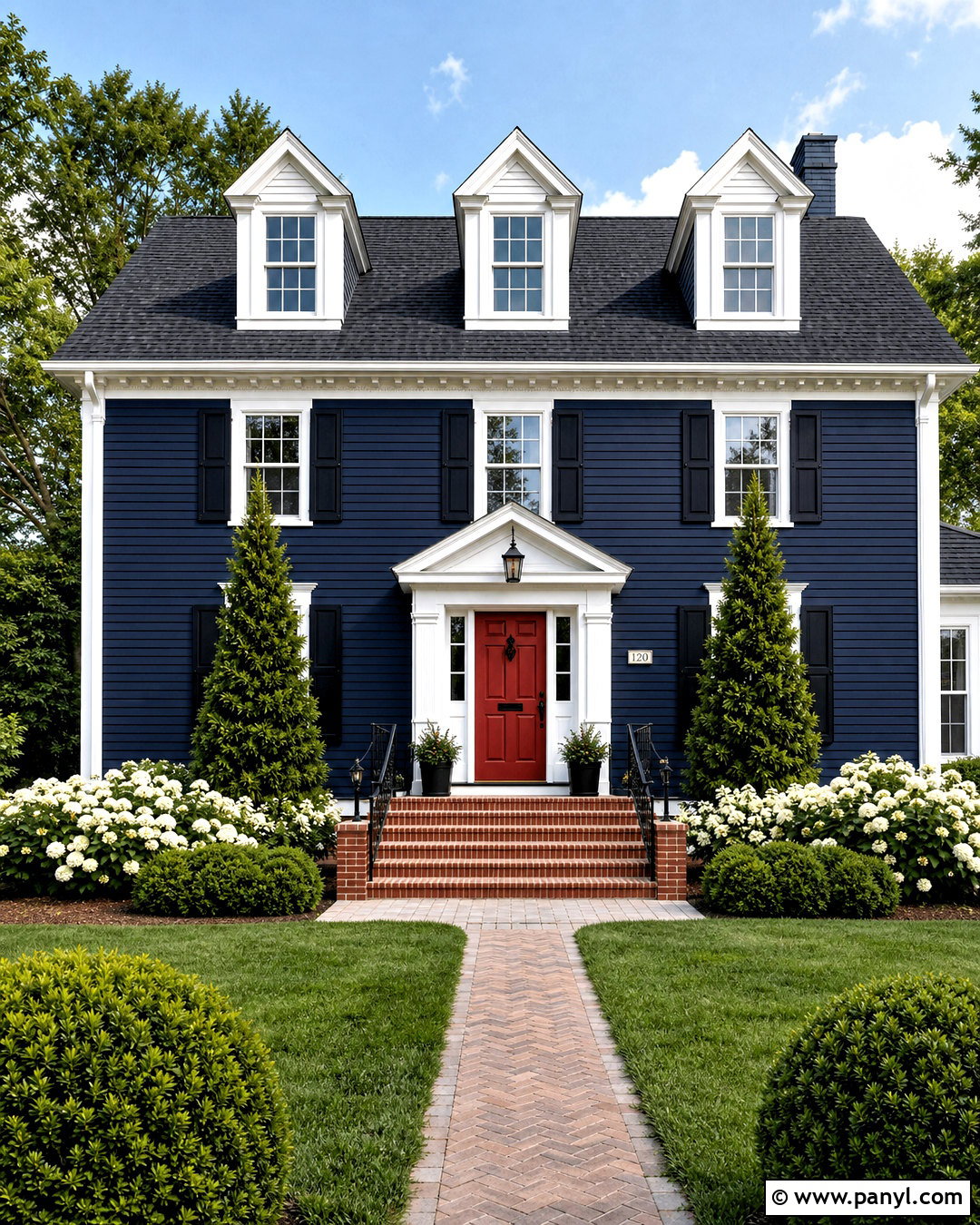
Few combinations feel as familiar and confident as dark blue siding with a red front door. Begin with a deep navy body and warm white trim to establish a crisp but comfortable base. Choose a rich brick red for the door rather than a bright primary red. The deeper shade works naturally with charcoal roofing, black shutters, and aged-bronze exterior lights. If the home has brick steps or a brick chimney, allow those warm materials to support the door color. Paint a prominent garage door navy so the red entry remains the main attraction. Complete the landscape with clipped evergreens, white hydrangeas, and a straight stone or brick walkway. This complete palette suits Colonial, Cape Cod, and traditional two-story architecture particularly well.
18. Dark Blue Exterior With Sage Green Door
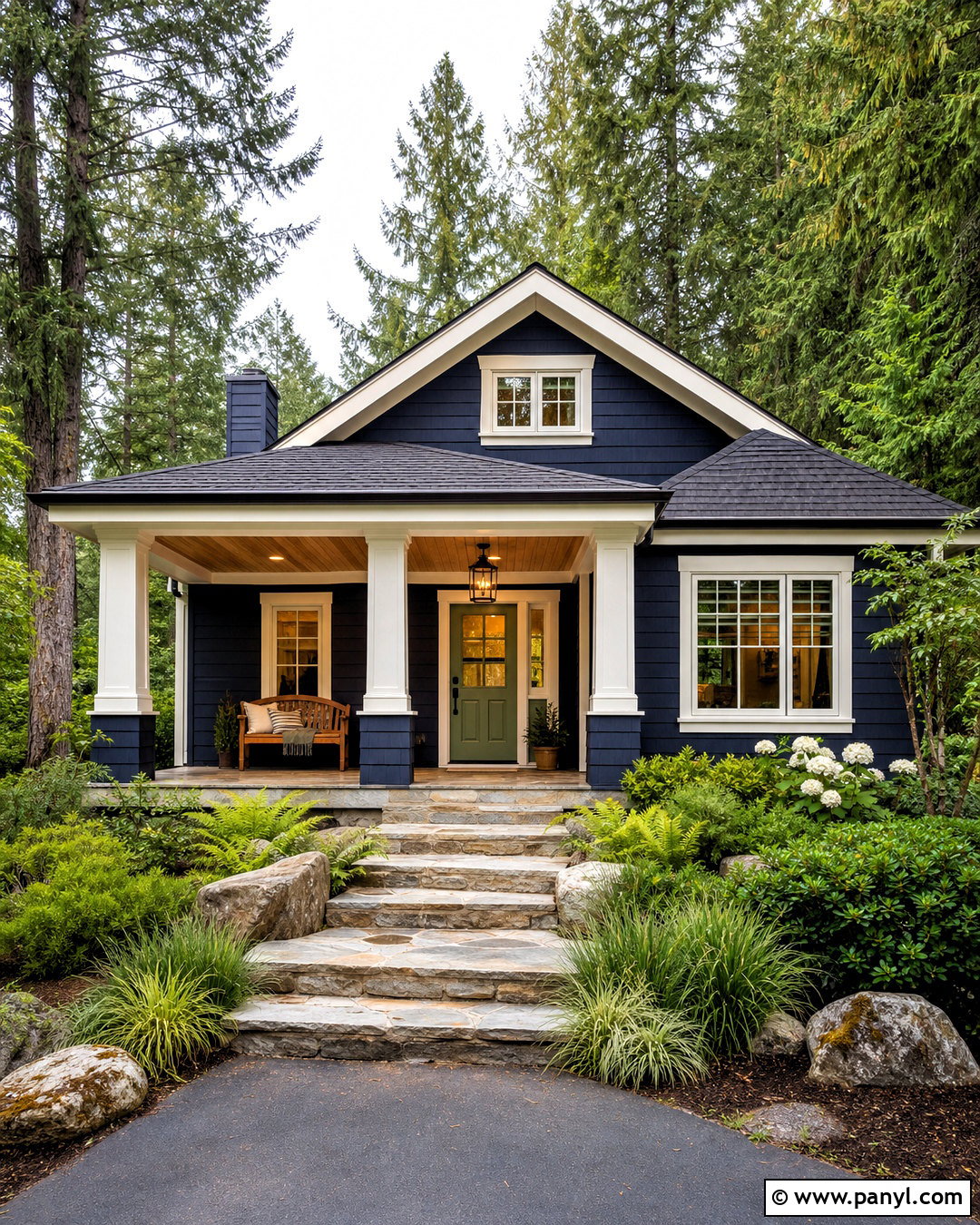
A muted sage green door brings an organic accent to a dark blue house without producing an overly bold contrast. Use a smoky navy or deep blue-gray on the siding, then add warm off-white trim around the windows and roofline. Paint the front door a medium sage with visible gray undertones and choose dark bronze hardware. A cedar porch ceiling, wood bench, or natural planters will connect the green door to the landscape. Select charcoal-brown roof shingles and bronze gutters to keep the exterior warm. Use flagstone steps and softly layered plantings of grasses, ferns, evergreen shrubs, and white flowers. The finished design feels calm and nature-inspired, making it a strong choice for cottages, Craftsman homes, and houses near wooded surroundings.
19. Monochromatic Dark Blue Exterior
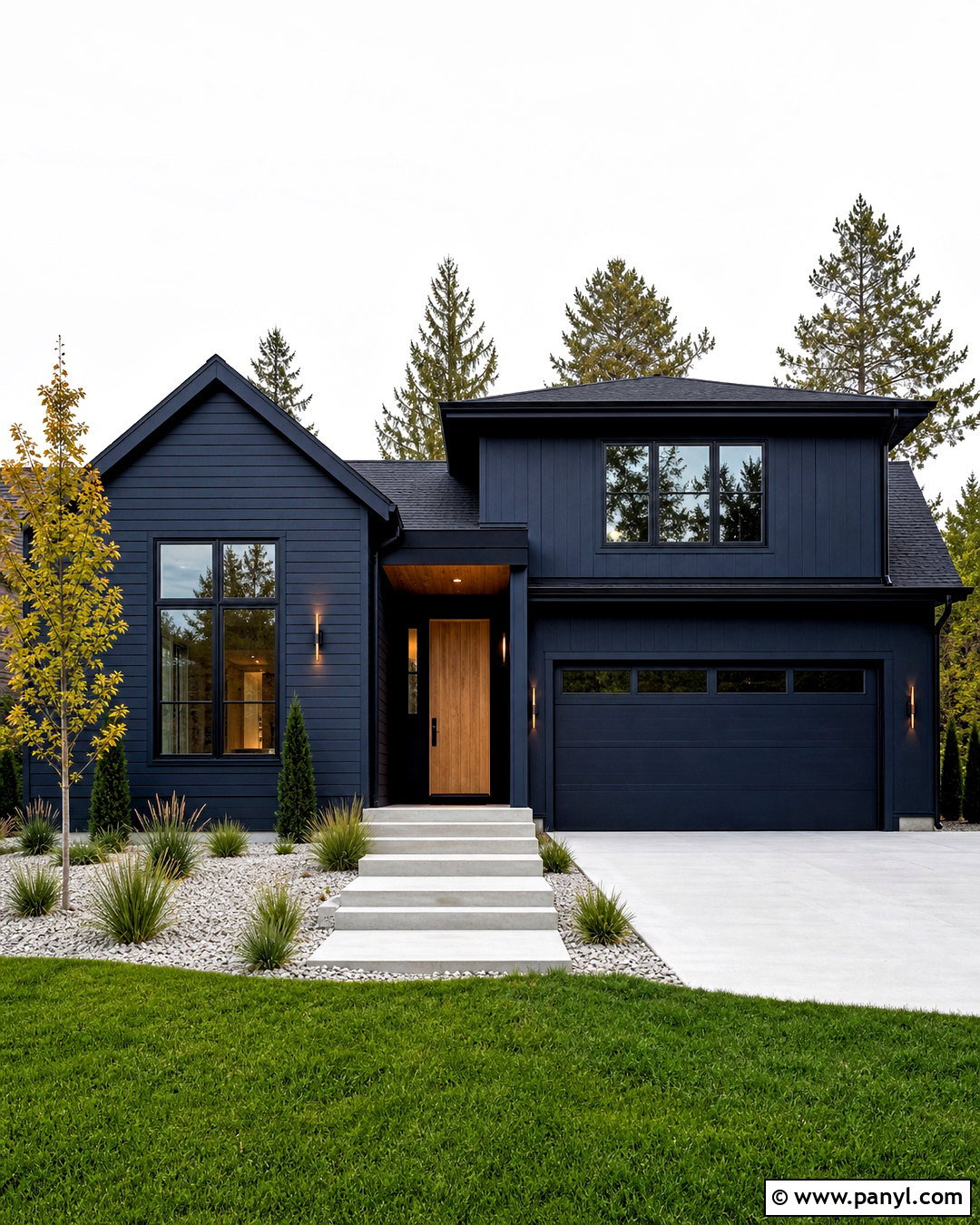
A monochromatic dark blue palette can simplify a house with numerous trims, angles, or additions. Paint the siding, garage door, trim, and corner boards in the same deep navy, changing only the finish where practical. This approach allows the building’s shapes and shadows to provide subtle variation. Use black-framed windows, a black roof, and slim black gutters for understated definition. At the entrance, install a natural oak door with warm bronze hardware and a coordinating wood porch ceiling. Light concrete steps and pale gravel beds create necessary contrast at ground level. Keep the landscaping minimal with structured grasses, round evergreens, and one small ornamental tree. The completed exterior feels streamlined and modern without requiring complicated color placement.
20. Two-Tone Dark Blue Exterior With White Brick
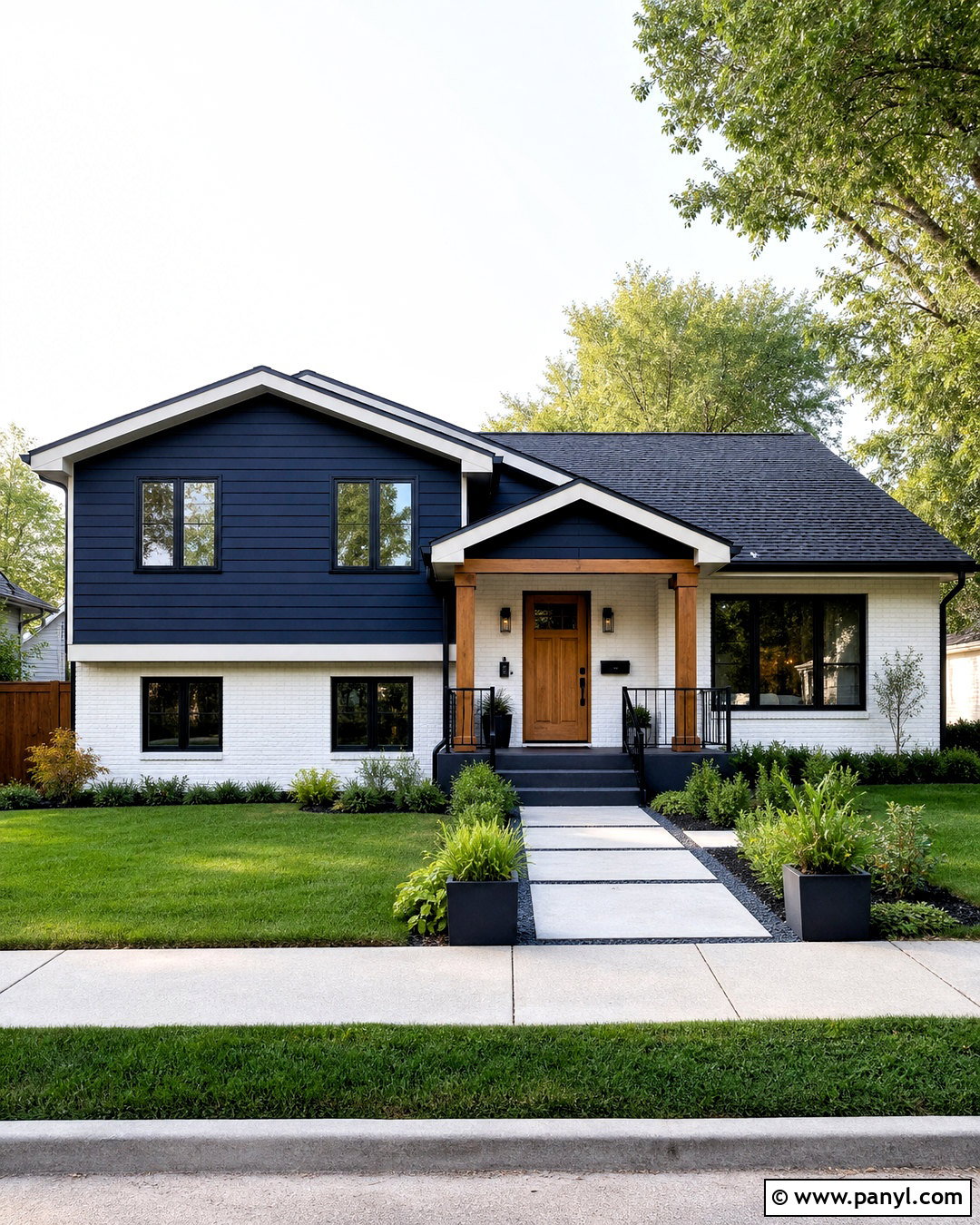
Two-tone materials can make a dark blue exterior feel lighter while preserving its dramatic character. Use deep navy siding on the upper story, gables, or rear sections, then cover the lower facade in warm white painted brick. Keep the window trim warm white where it meets the blue and navy where it crosses the brick to create a connected transition. Add black windows, gutters, railings, and a charcoal roof for crisp definition. A medium oak front door and matching timber porch posts warm both sections. Choose large concrete pavers, black planters, and neatly layered green landscaping. This complete scheme works well for remodeled split-level, transitional, and contemporary homes that need clear visual organization across different materials or additions.
Conclusion:
The best dark blue exterior is more than a single paint choice. It is a complete palette that connects siding with the roof, trim, masonry, doors, hardware, and landscaping. White creates crisp contrast, while greige and cream offer a gentler outline. Cedar, stone, brick, and bronze bring warmth to blue-black, navy, indigo, and slate finishes. Before choosing a final shade, view large samples beside permanent materials at different times of day. Keep garage doors quiet when possible and use the front door as the main accent. Whether your home is Colonial, Craftsman, coastal, modern, or ranch, these 20 dark blue exterior house colors provide practical starting points for distinctive, balanced curb appeal.

Related Ideas and Inspiration:
Leave a Reply