
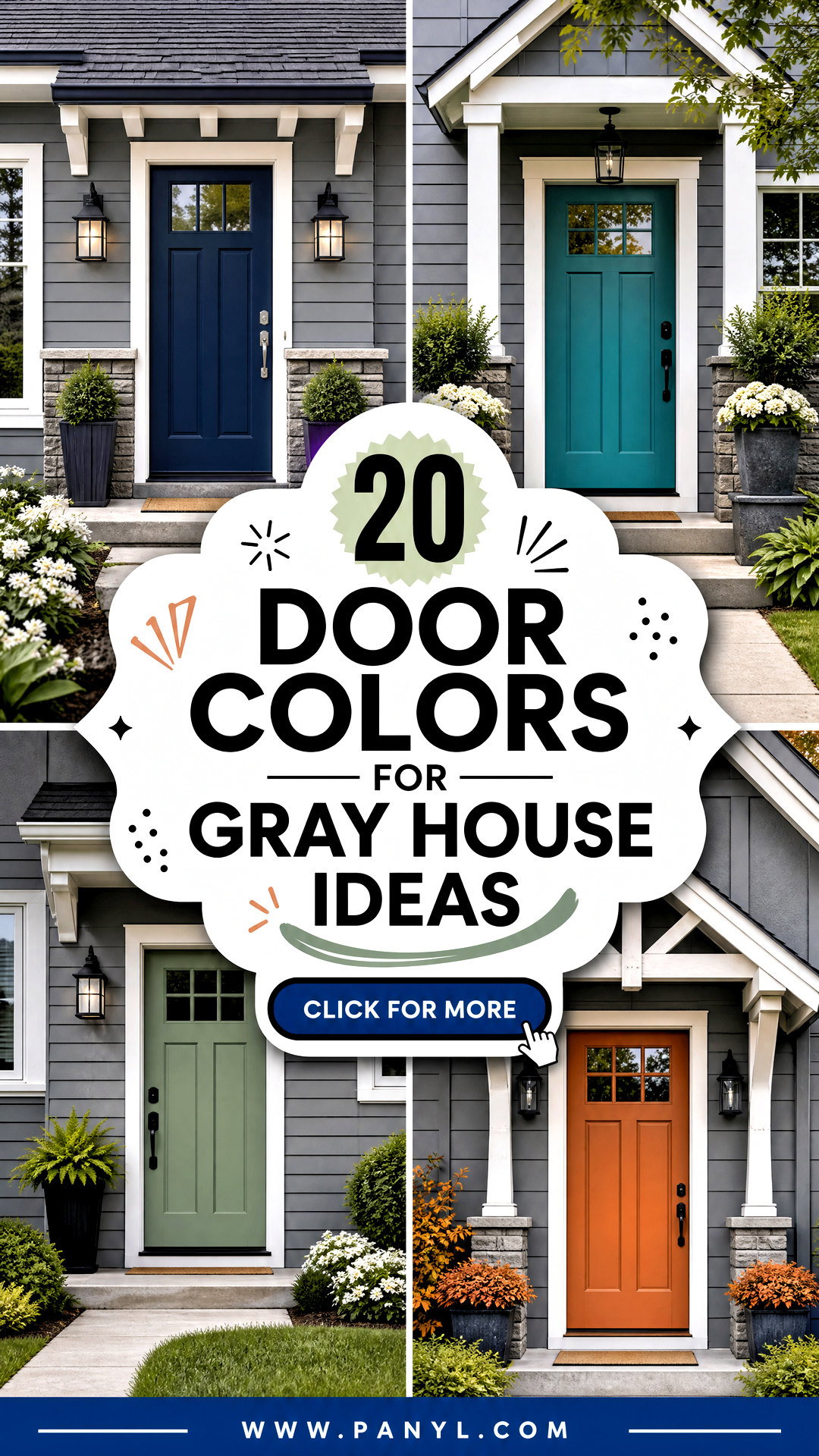
A gray exterior creates a flexible backdrop for a front entrance, but the right color depends on more than personal preference. The siding undertone, trim, roof, masonry, hardware, and landscaping should form one balanced palette. Cool gray works naturally with blues, crisp whites, and blue-based greens. Warm gray pairs beautifully with earthy reds, creamy neutrals, wood tones, and muted yellows. Treat the exterior as three connected layers: the main house color, the architectural trim, and the movable accents such as the door and shutters. Testing large painted samples outdoors also helps reveal how sunlight changes a shade throughout the day. () This guide compares complete, practical exterior schemes rather than isolated paint swatches. Explore these **20 door colors for gray house ideas**.
1. Black Front Door
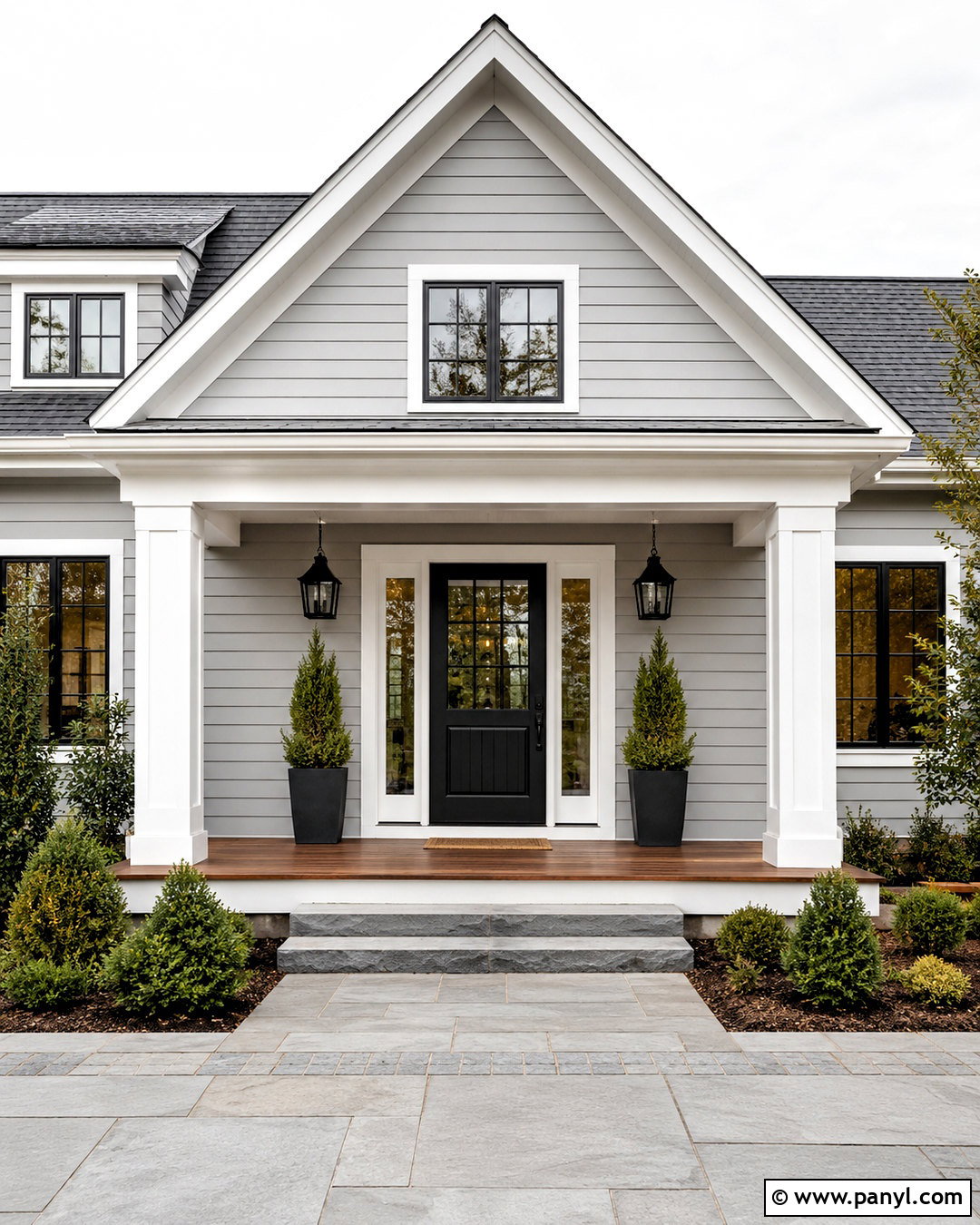
A black front door gives a gray house a clean, confident focal point without introducing another complicated color. Choose soft black for pale gray siding or true black against a medium-gray exterior. Add bright white trim around the door, windows, and roofline to keep the overall facade crisp. Matte black lanterns, simple house numbers, and charcoal planters reinforce the entrance without making it look overly matched. A medium-brown wood porch floor adds warmth underfoot, while clipped evergreen shrubs soften the strong neutral palette. This combination suits modern farmhouses, Colonials, and contemporary homes. If the house already has black window frames, repeat the color on the door for visual continuity, but keep the garage door gray so the entrance remains the main attraction.
2. White Front Door
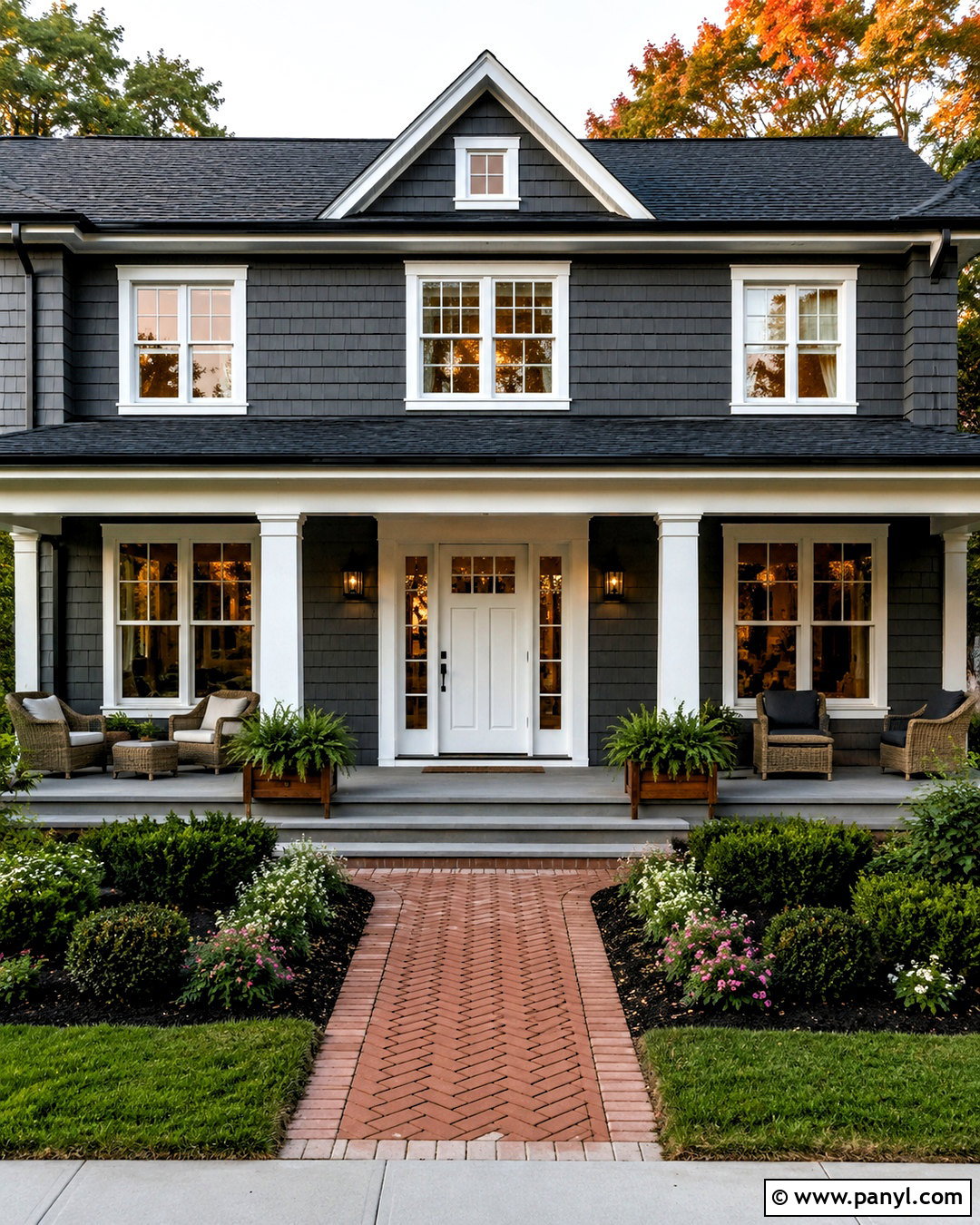
Fresh white can make a dark or medium-gray house look brighter and more welcoming. Instead of combining several whites, use the same clean white on the front door, window trim, columns, and fascia. This creates a connected frame around the gray exterior. A black roof and dark metal lanterns prevent the palette from appearing washed out. Introduce natural texture through a brick walkway, woven porch seating, and cedar planters filled with leafy green plants. A white door works especially well when the entrance is shaded or recessed because it reflects more light into that area. Choose a durable satin or semigloss finish that is easier to clean. For a softer result on warm gray siding, replace stark white with a gentle ivory or creamy off-white.
3. Navy Blue Front Door
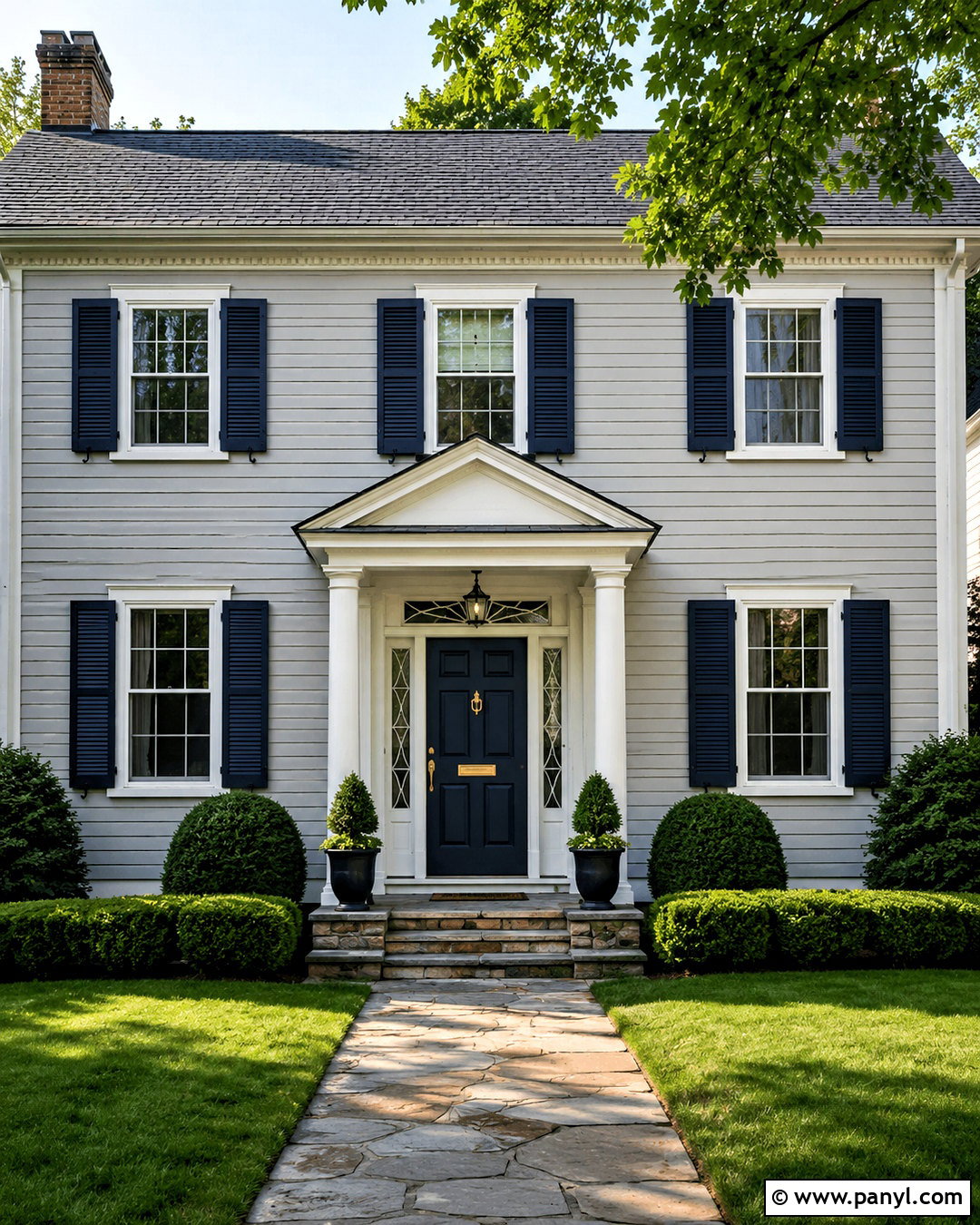
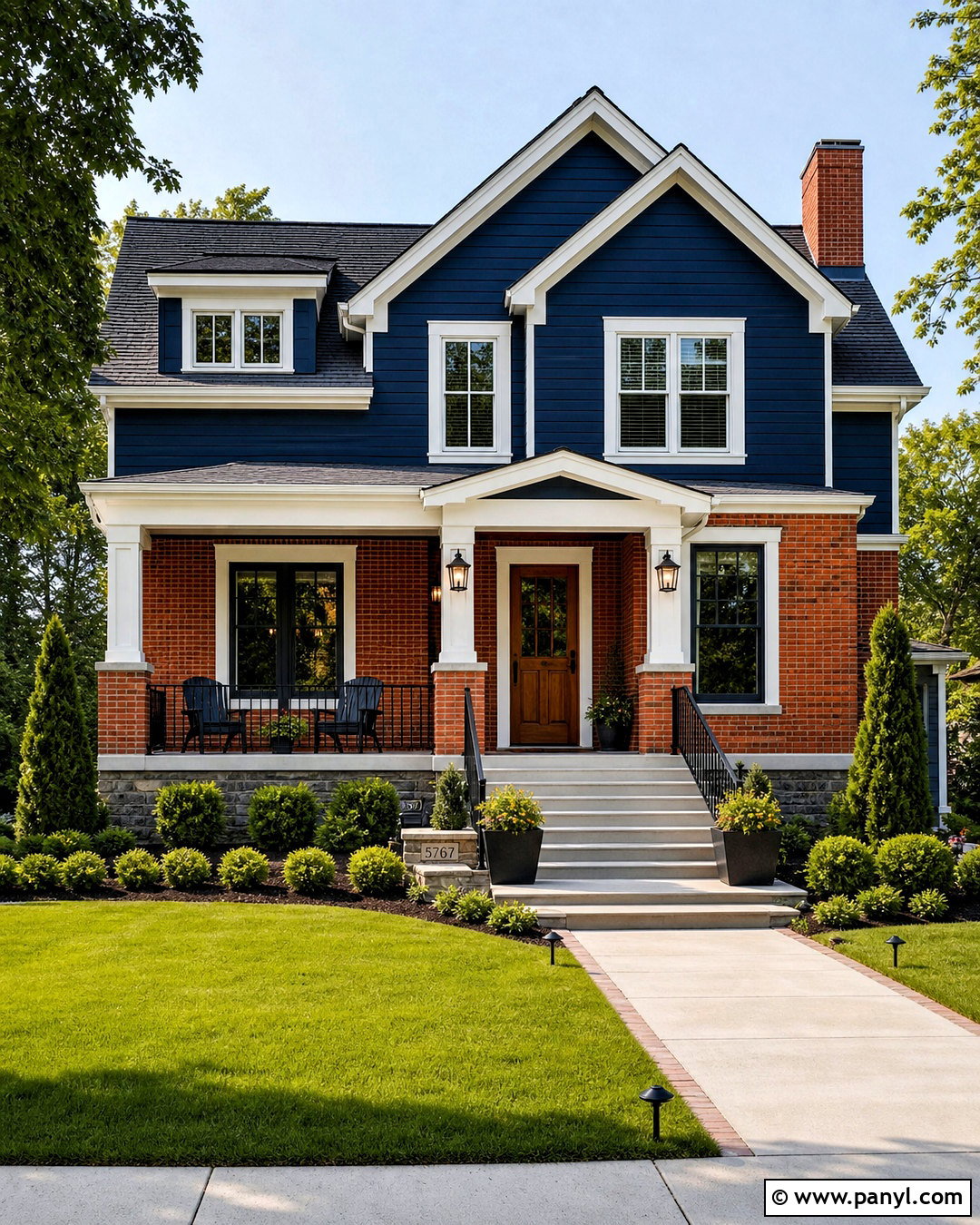
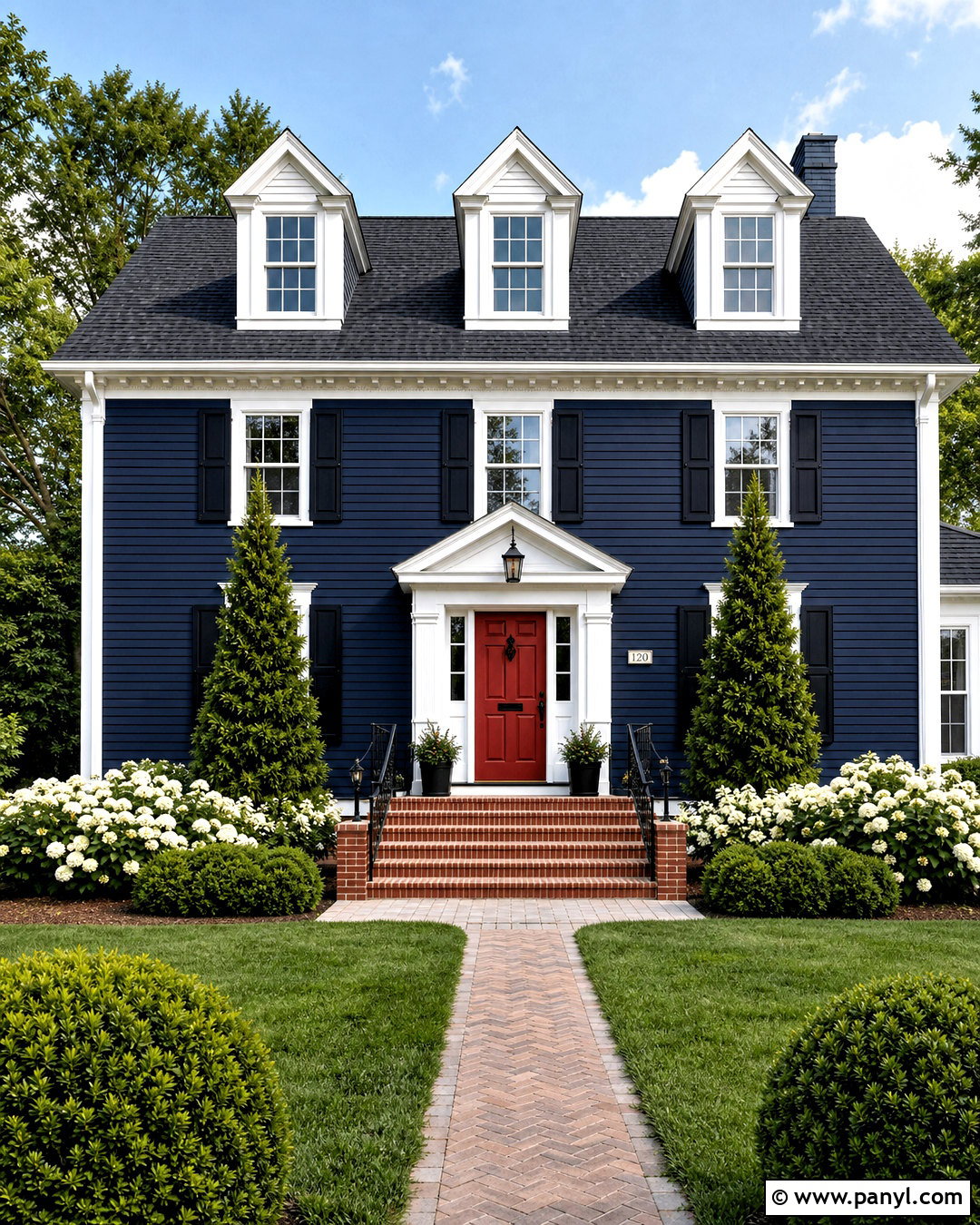
Navy blue provides noticeable contrast while remaining classic and easy to coordinate. Pair a rich, slightly muted navy door with light gray siding, crisp white trim, and a charcoal roof. Brushed brass hardware warms the deep blue and gives the entrance a polished finish. Navy shutters can be added to a traditional facade, but they should match the door closely rather than introduce another competing blue. Complete the exterior with natural stone steps, symmetrical planters, and low boxwood hedges. This scheme feels appropriate for coastal, Colonial, and transitional homes without becoming overly themed. On darker gray siding, select a navy with enough blue saturation to remain visible. Before painting, view the sample in shade because some navy colors can appear nearly black beneath a covered porch.
4. French Blue Front Door
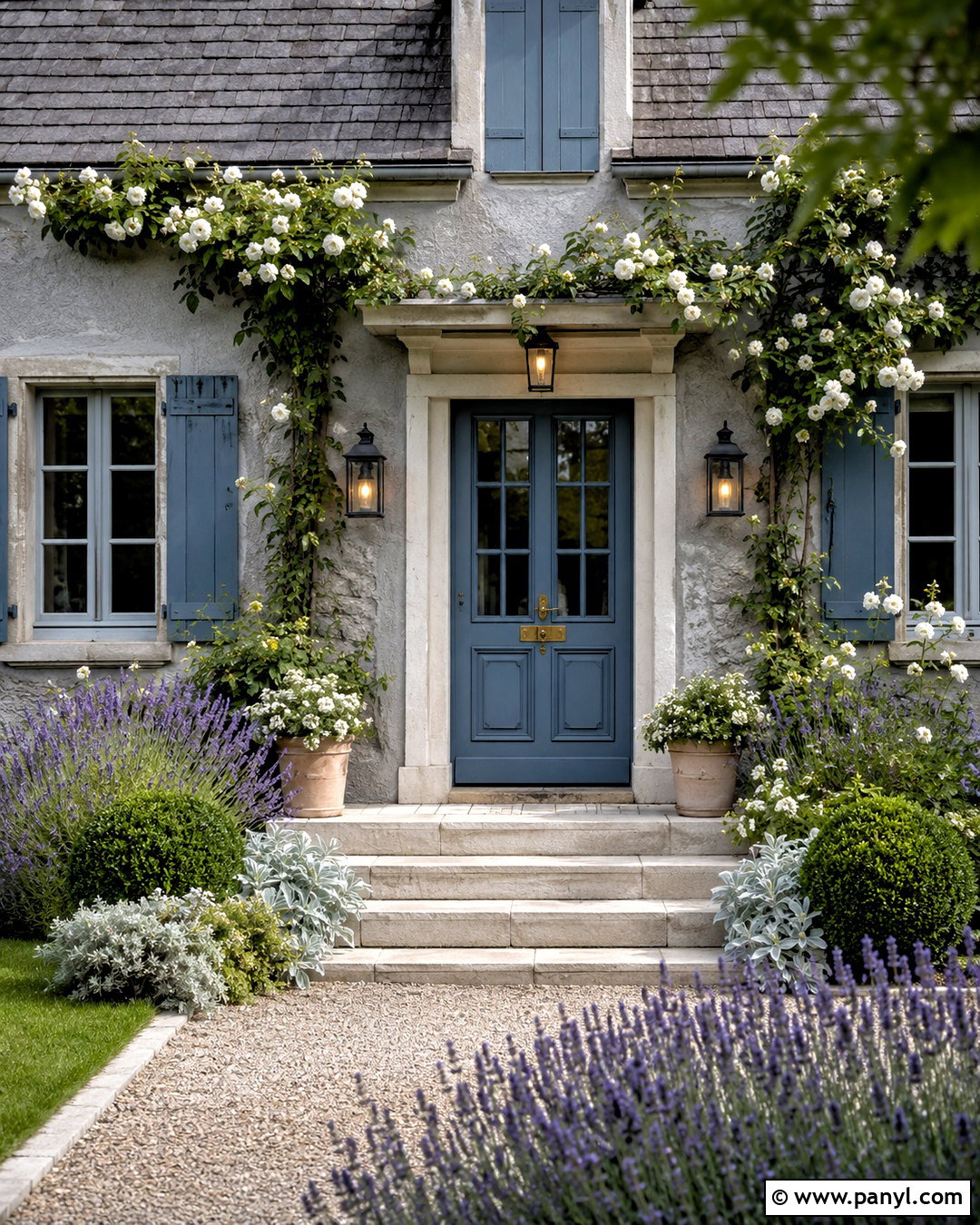
A French blue front door brings gentle color to gray siding without overpowering the architecture. Look for a medium blue with subtle gray undertones, then surround it with warm white trim to create a soft transition. A medium-gray shingle roof, aged brass handle, and traditional wall lanterns support the relaxed, established character. Use pale limestone steps or a light concrete walkway so the entrance remains airy. Lavender, white flowers, and silvery foliage can repeat the cool palette in the landscaping. This complete look is especially effective on cottages, Cape Cod homes, and simple traditional facades. Keep shutters white or gray rather than matching them to the door. That restraint lets the French blue entrance become a clear focal point while preserving the calm appearance of the house.
5. Robin’s Egg Blue Front Door
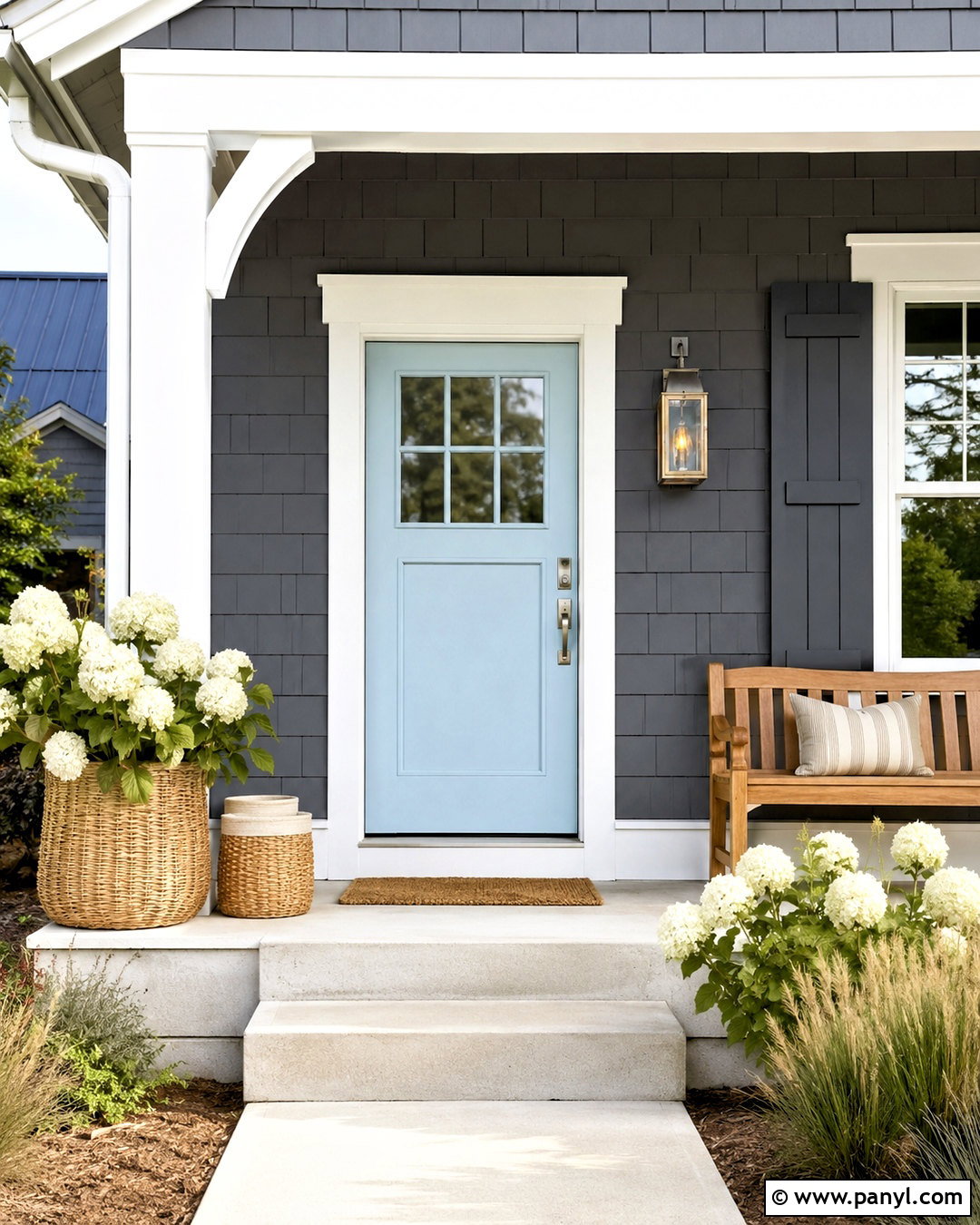
Light robin’s egg blue gives a gray house a cheerful, approachable entrance. The color looks particularly clear against medium charcoal siding, where it creates enough contrast to stand out from the street. Use bright white door casing and window trim to sharpen the blue, then add satin nickel hardware for a cool, cohesive finish. A natural wood bench, pale concrete steps, and woven baskets keep the exterior from feeling too icy. Plant white hydrangeas, ornamental grasses, and soft green ground cover around the porch. This palette works beautifully for cottage and coastal architecture, especially when the house has simple lines. Avoid adding equally bright shutters. Charcoal shutters or no shutters at all will keep the facade balanced and allow the distinctive blue door to lead the design.
6. Teal Front Door
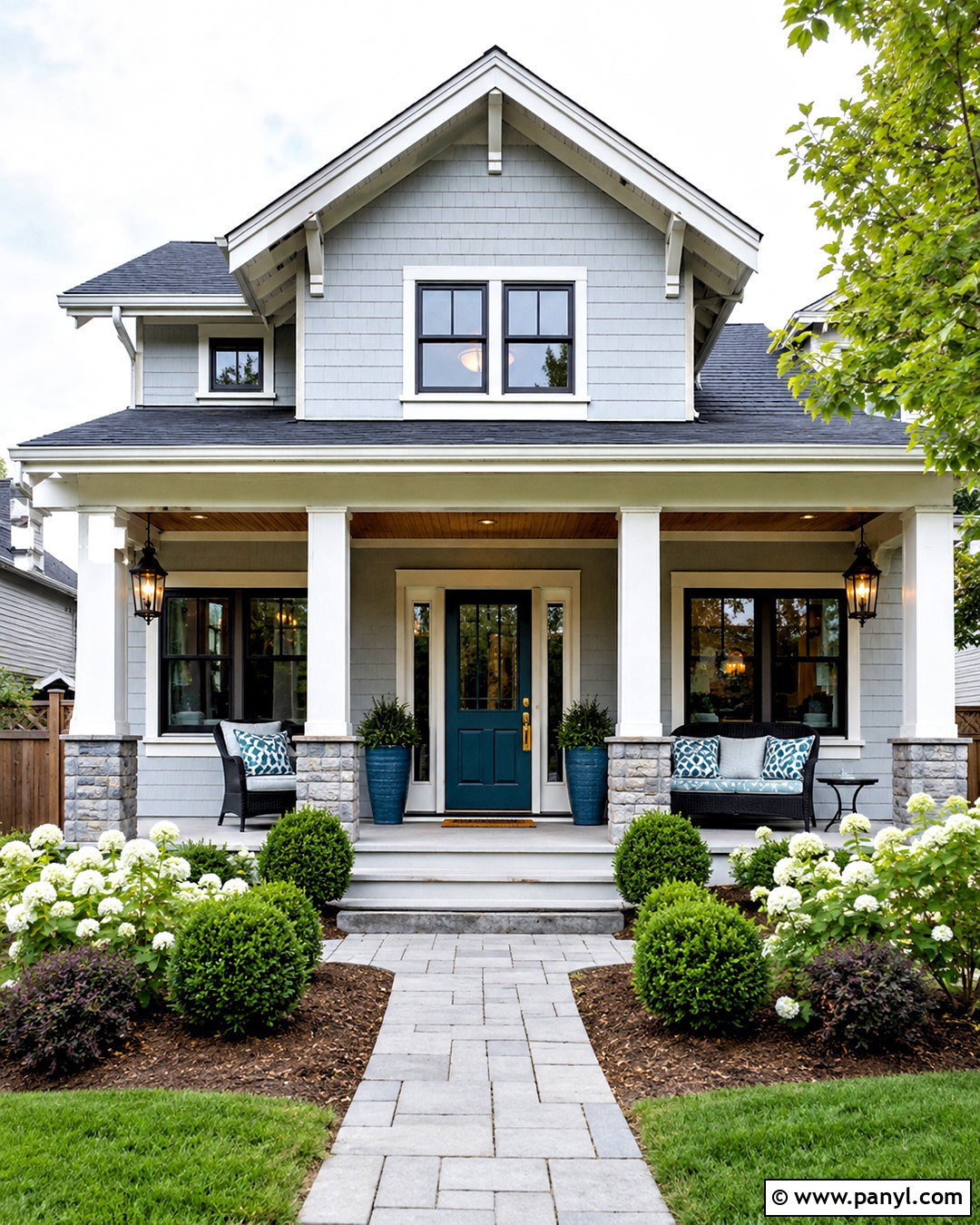
Deep teal combines the calm quality of blue with the natural character of green, making it a versatile partner for gray siding. Use a saturated teal door against a light cool-gray exterior, framed by clean white trim. Dark bronze or brushed brass hardware adds warmth and keeps the color from appearing too cool. Repeat teal only in one or two small details, such as a patterned outdoor cushion or ceramic planter. A gray stone walkway, black roof, and natural cedar porch ceiling complete the layered palette. This look suits Craftsman, midcentury, and updated traditional houses. For a small entrance, choose a brighter blue-teal that remains visible beneath an overhang. Larger facades can support a deeper peacock teal, particularly when surrounded by mature green landscaping and warm wood accents.
7. Sage Green Front Door
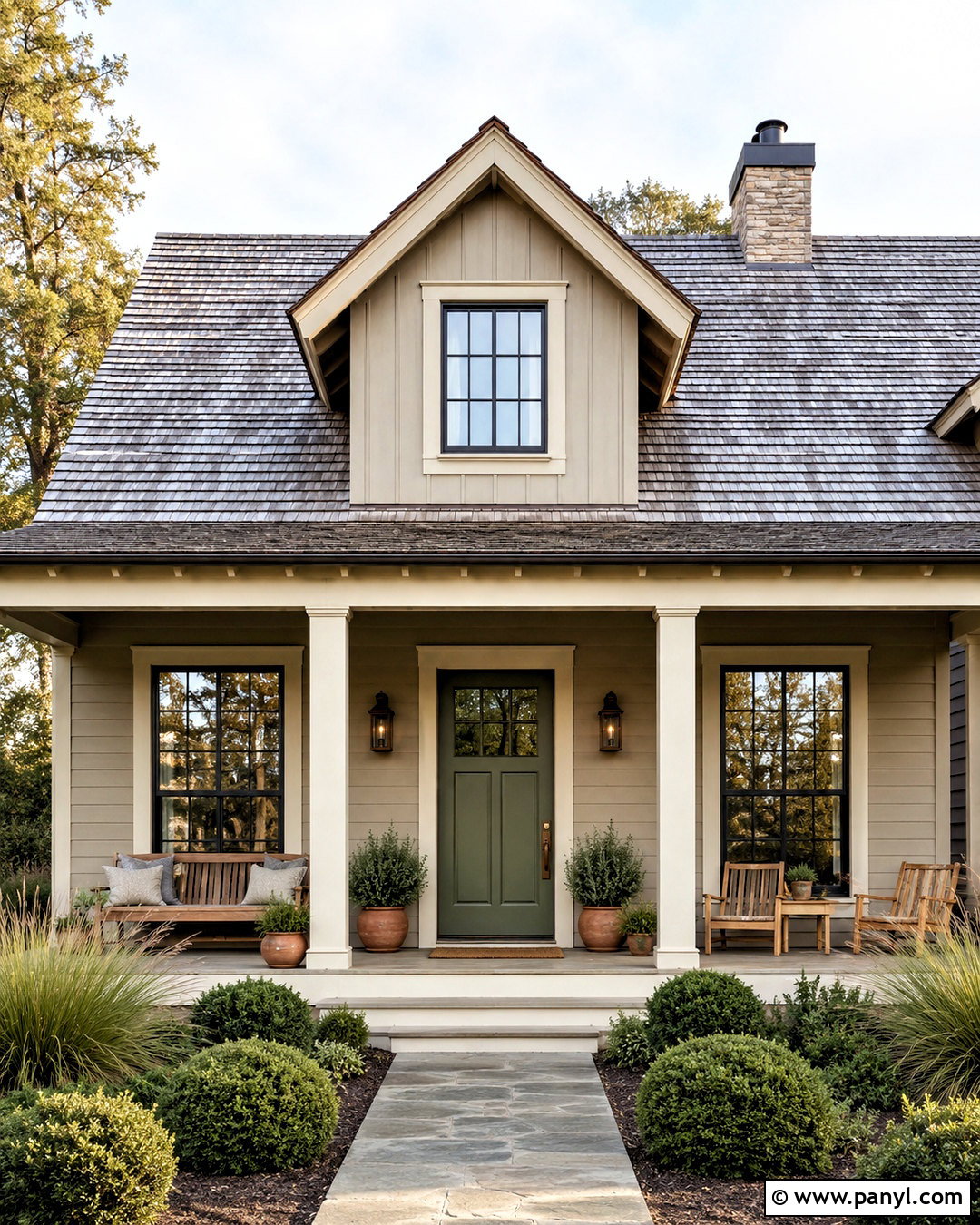
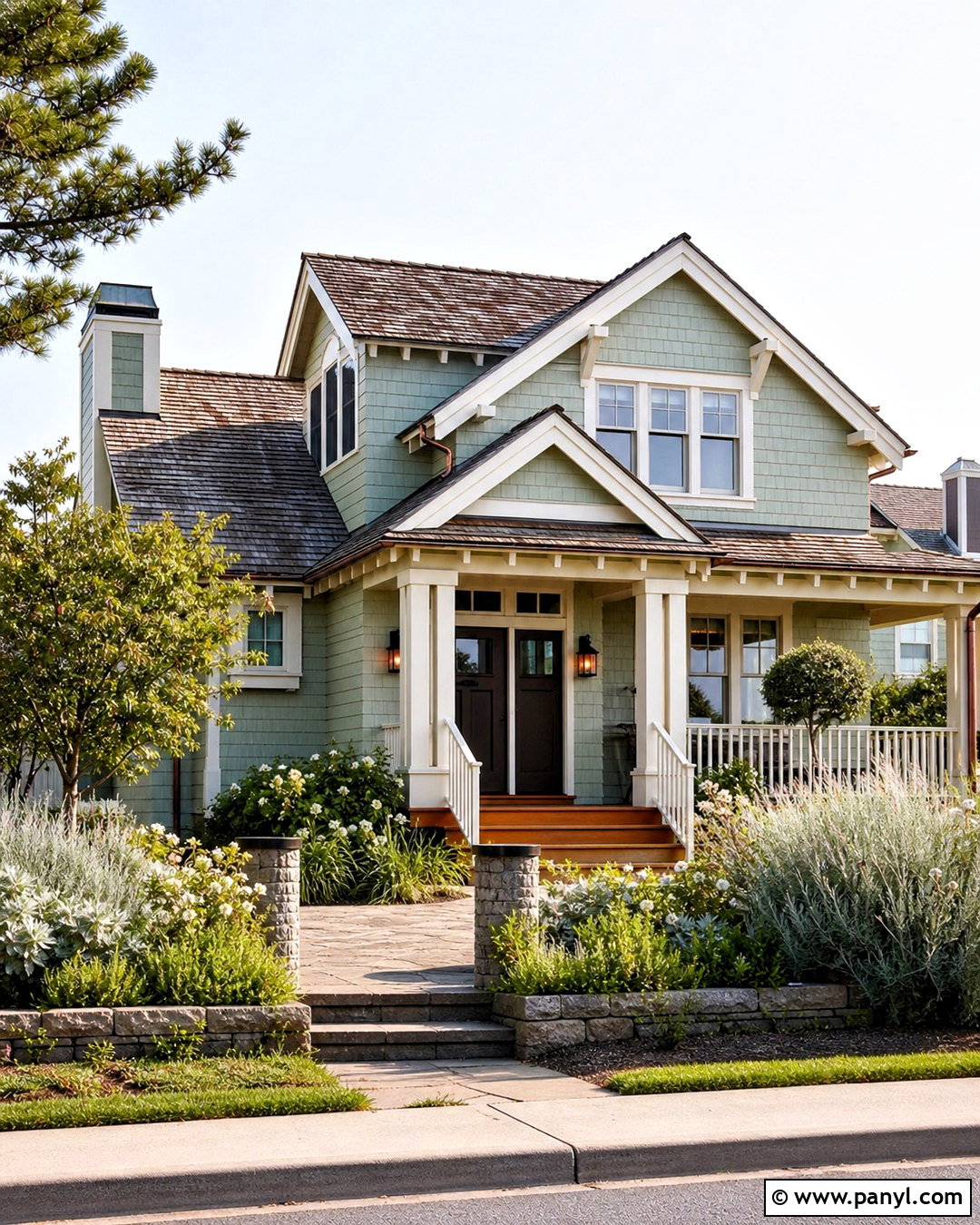
Muted sage green creates a quiet connection between a gray house and its landscaping. Pair a warm sage door with pale greige siding, creamy white trim, and a weathered gray roof. Antique brass hardware and natural oak porch furniture reinforce the earthy undertones. Continue the relaxed color story with terracotta planters, soft ornamental grasses, rosemary, and rounded evergreen shrubs. This combination feels especially comfortable on cottages, ranch homes, and modern farmhouses. Keep the shutters in the siding color or use a slightly deeper gray-green so the facade does not become busy. Sage can lose definition against certain medium grays, so choose a shade that is clearly lighter or darker than the house. The finished exterior should feel layered and natural, with the front door gently highlighted rather than sharply contrasted.
8. Olive Green Front Door
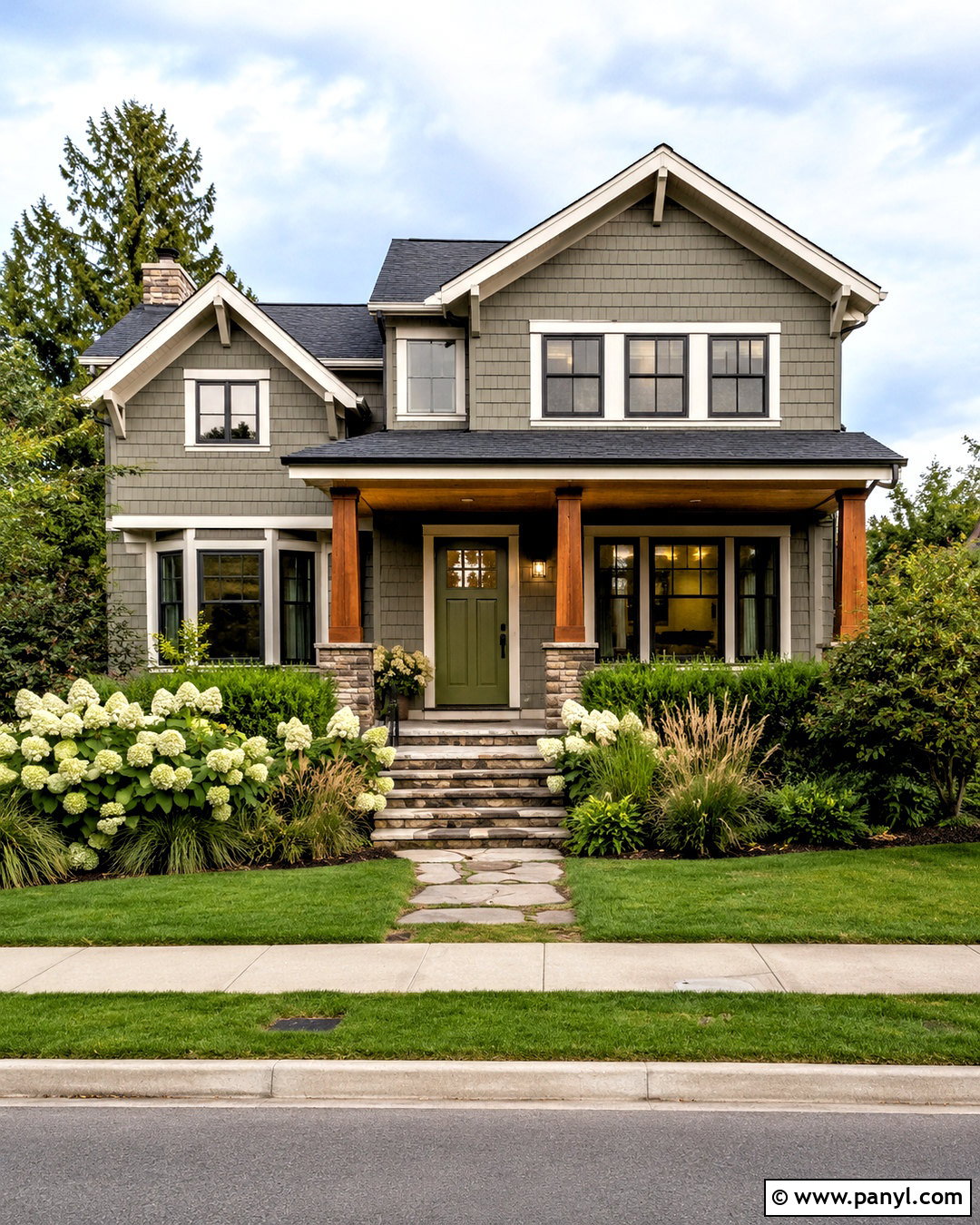
An olive green front door brings warmth and substance to a cool gray facade. Select a medium or deep olive with golden undertones, then pair it with warm white trim and a charcoal-gray roof. Aged bronze hardware, natural fieldstone, and stained wood porch posts strengthen the organic color scheme. For landscaping, use deep green shrubs, pale grasses, and cream-colored flowers instead of highly saturated blooms. Olive works particularly well on Craftsman houses, cabins, and traditional homes surrounded by mature trees. If the siding is dark gray, use a lighter mossy olive that will not disappear in shadow. Keep other exterior accents simple: gray garage doors, bronze lighting, and neutral outdoor furniture are enough. The result feels grounded, inviting, and connected to the setting without looking overly rustic.
9. Forest Green Front Door
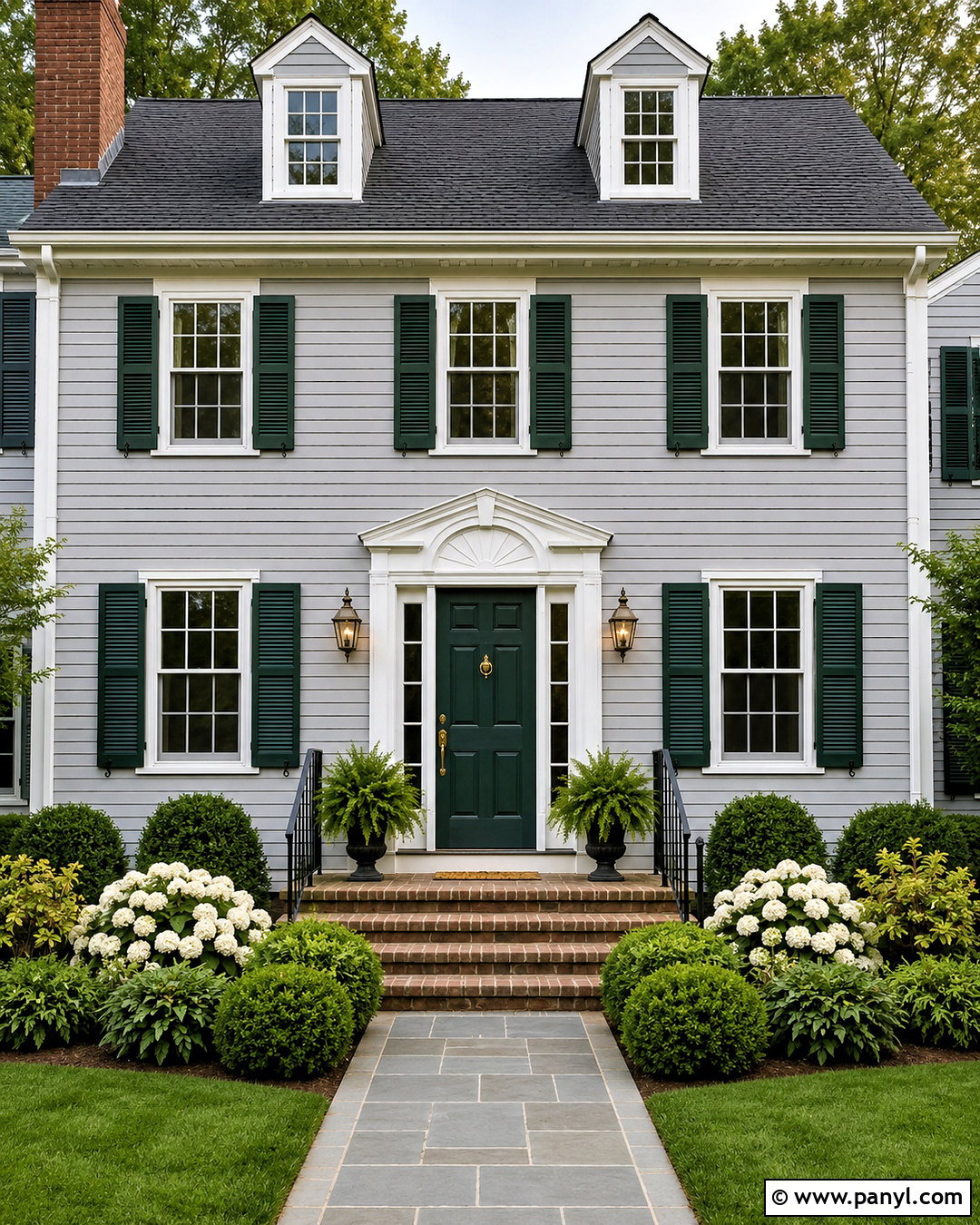
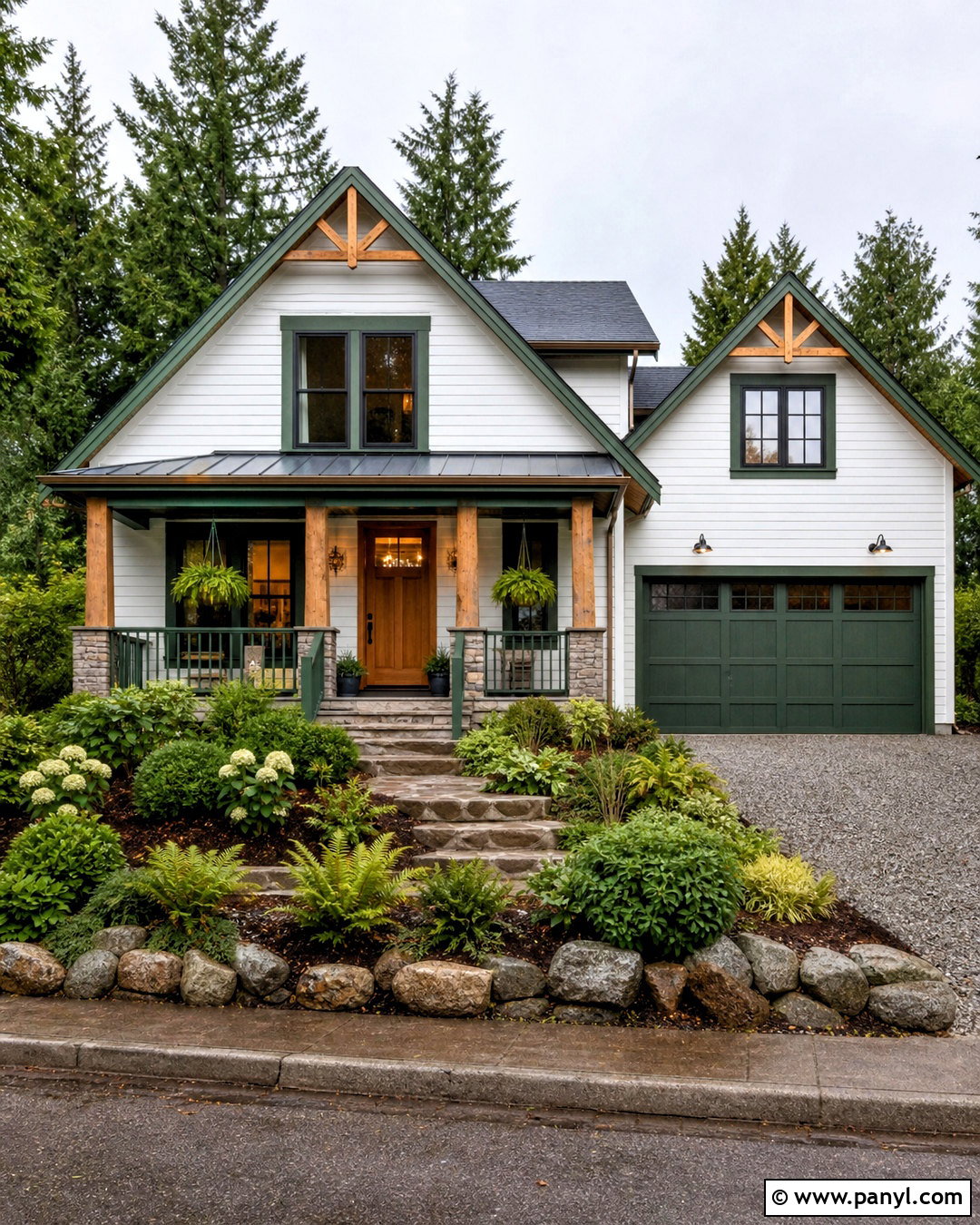
A forest green front door creates a strong, elegant entrance against pale gray siding. Choose a deep green that remains visibly green in shade, rather than one that turns black from a distance. Frame it with soft white trim and use matching forest green shutters only on a balanced traditional facade. Polished brass or warm bronze hardware offers refined contrast, while red brick steps introduce an established architectural texture. Add structured boxwoods, ferns, and white flowering plants to continue the classic garden palette. This scheme works particularly well for Colonial, Georgian, and brick-accented homes. A black or dark charcoal roof grounds the exterior. If the gray siding has blue undertones, select a slightly cooler evergreen shade. Warm gray looks better with a forest green containing subtle olive undertones.
10. Classic Red Front Door
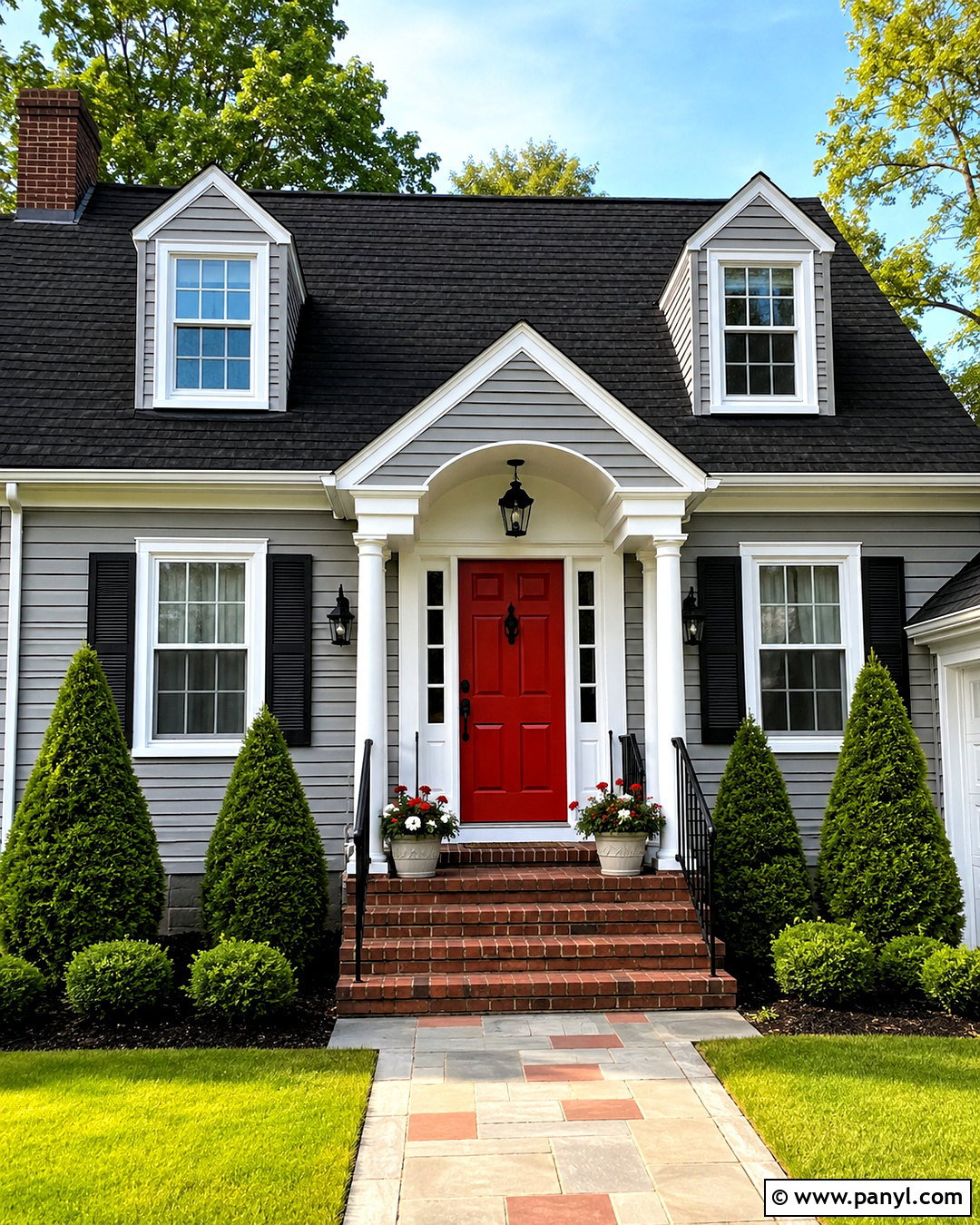
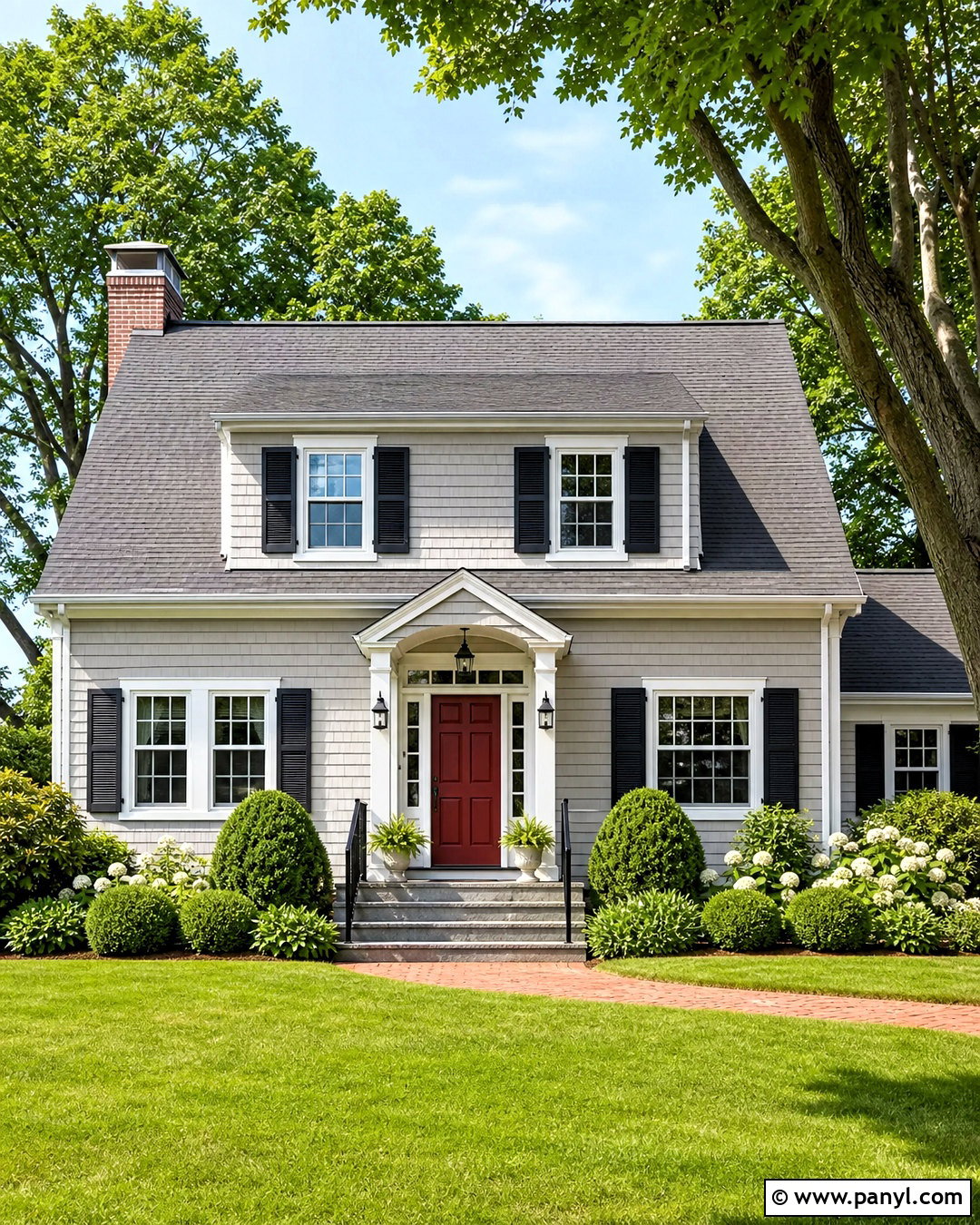
A classic red door can transform a quiet gray exterior into a memorable, welcoming facade. Choose a balanced, slightly deep red rather than an extremely bright primary shade. Medium-gray siding, crisp white trim, and a black roof provide a traditional framework that allows the entrance to stand out. Use black iron hardware and lanterns for definition, then repeat red sparingly through small seasonal flowers or one outdoor cushion. Brick steps and neatly clipped shrubs strengthen the established character. This palette is particularly effective on Colonial, farmhouse, and Cape Cod architecture. If the house is charcoal gray, choose a clearer red with enough brightness to remain visible. For pale warm gray siding, a deeper brick red creates a softer, more integrated contrast that feels less intense.
11. Cranberry Front Door
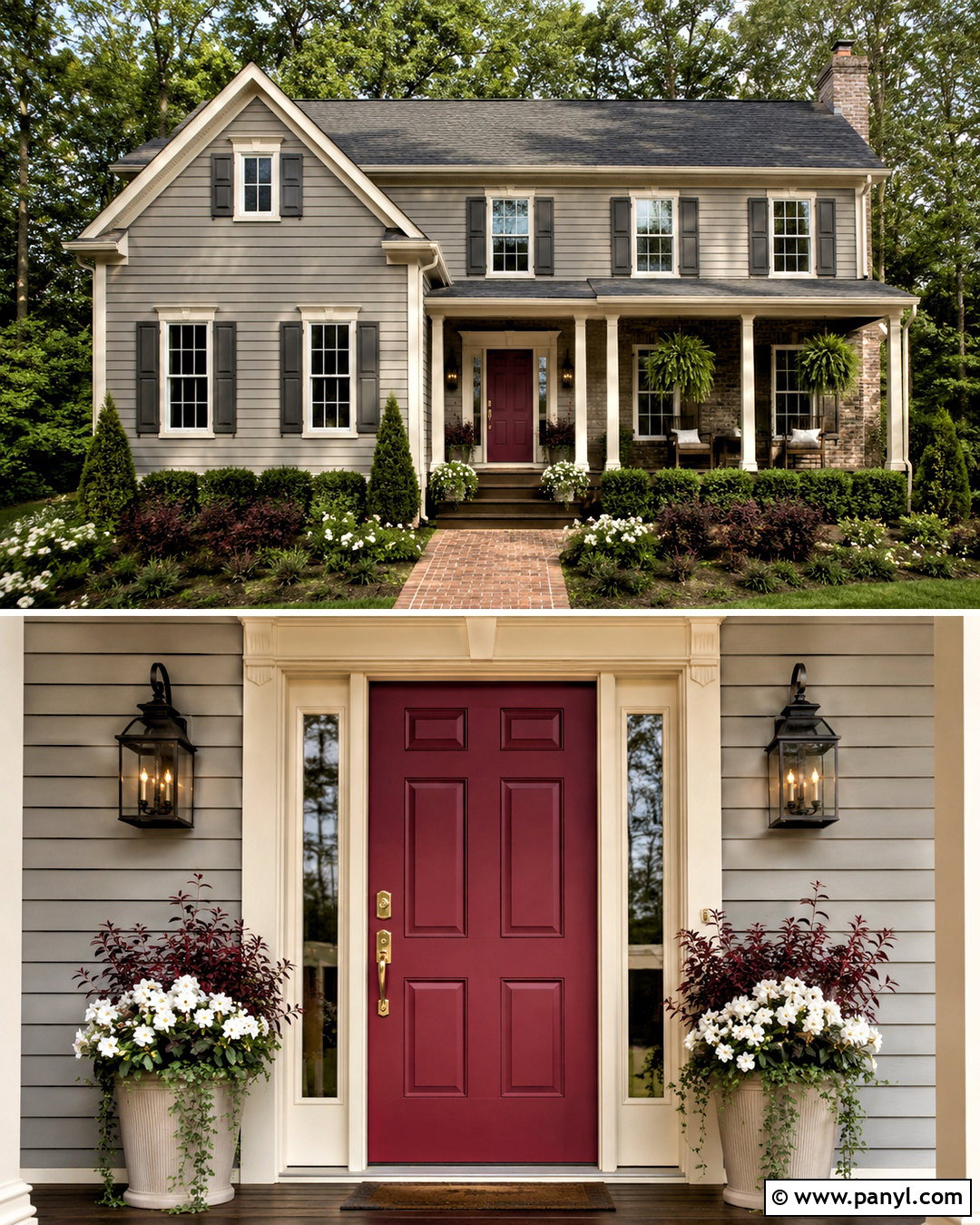
Cranberry offers the welcoming character of red with a deeper, more sophisticated undertone. It works especially well with medium warm-gray siding, creamy trim, and natural brick or stone. Finish the door with aged brass hardware, then add dark bronze lanterns for a layered metal combination that still feels coordinated. Gray shutters keep attention on the entrance, while a stained wood porch floor introduces another warm element. Landscaping can include burgundy foliage, white flowers, and evergreen foundation plants, but use the darker red accents lightly. This complete scheme complements traditional, Tudor-inspired, and Craftsman homes. Cranberry also performs well on a shaded porch because its rich pigmentation remains noticeable. Choose a satin finish that adds gentle depth without creating the highly reflective appearance of a glossy bright-red door.
12. Sunny Yellow Front Door
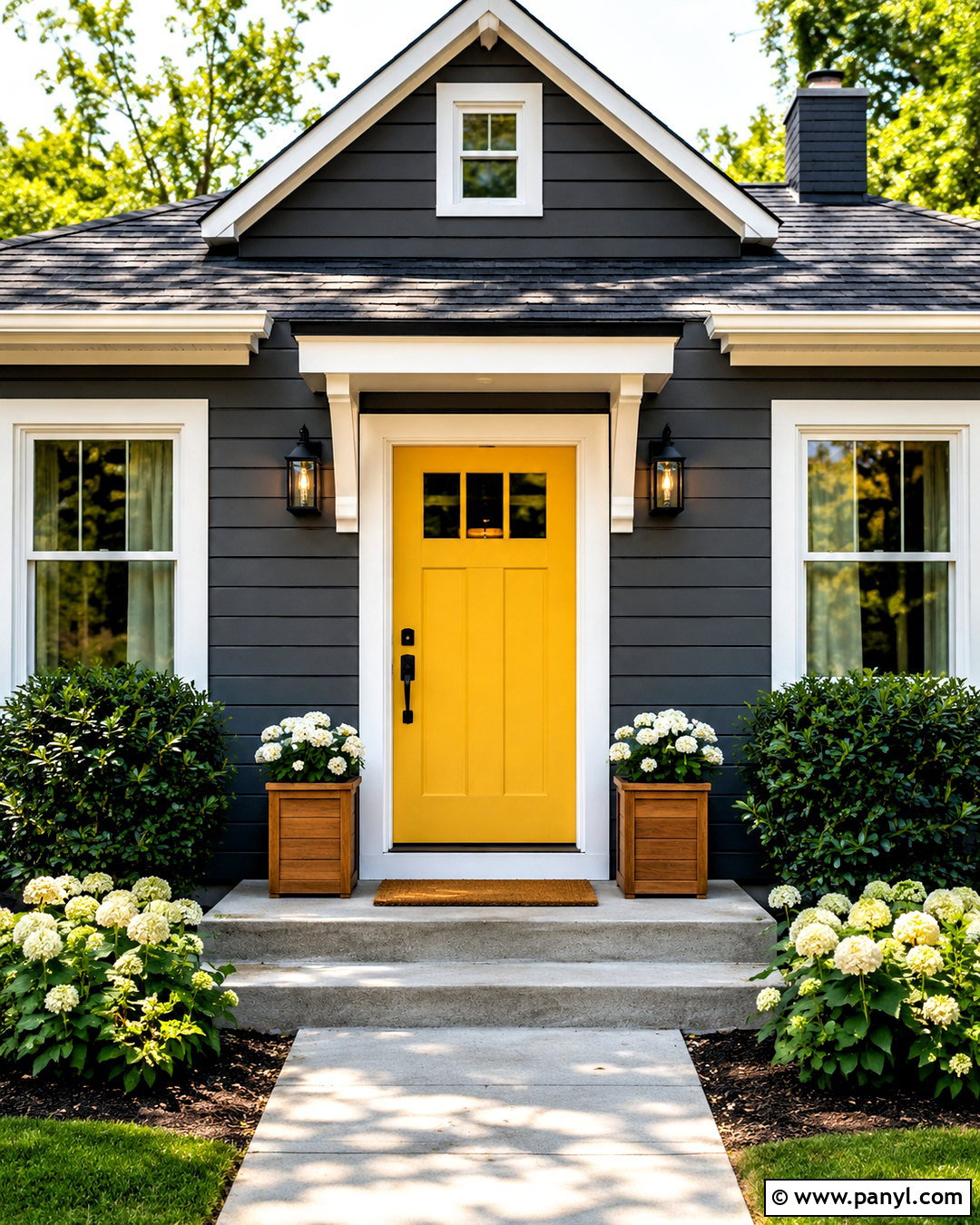
Sunny yellow creates an upbeat focal point that can lift a cool gray exterior. Choose a warm, clear yellow for charcoal siding or a softer butter yellow for medium-gray walls. Bright white trim keeps the palette fresh, while matte black hardware and lanterns add necessary structure. Balance the vivid door with simple materials, such as concrete steps, a natural coir mat, and medium-brown wood planters. White flowers and leafy green shrubs support the cheerful color without competing with it. This scheme is ideal for small cottages, contemporary ranch homes, and casual coastal exteriors. Avoid repeating strong yellow across shutters or garage doors. One concentrated accent looks more intentional. Always test yellow outdoors because intense sunlight can make a bright shade appear much lighter than expected.
13. Mustard Yellow Front Door
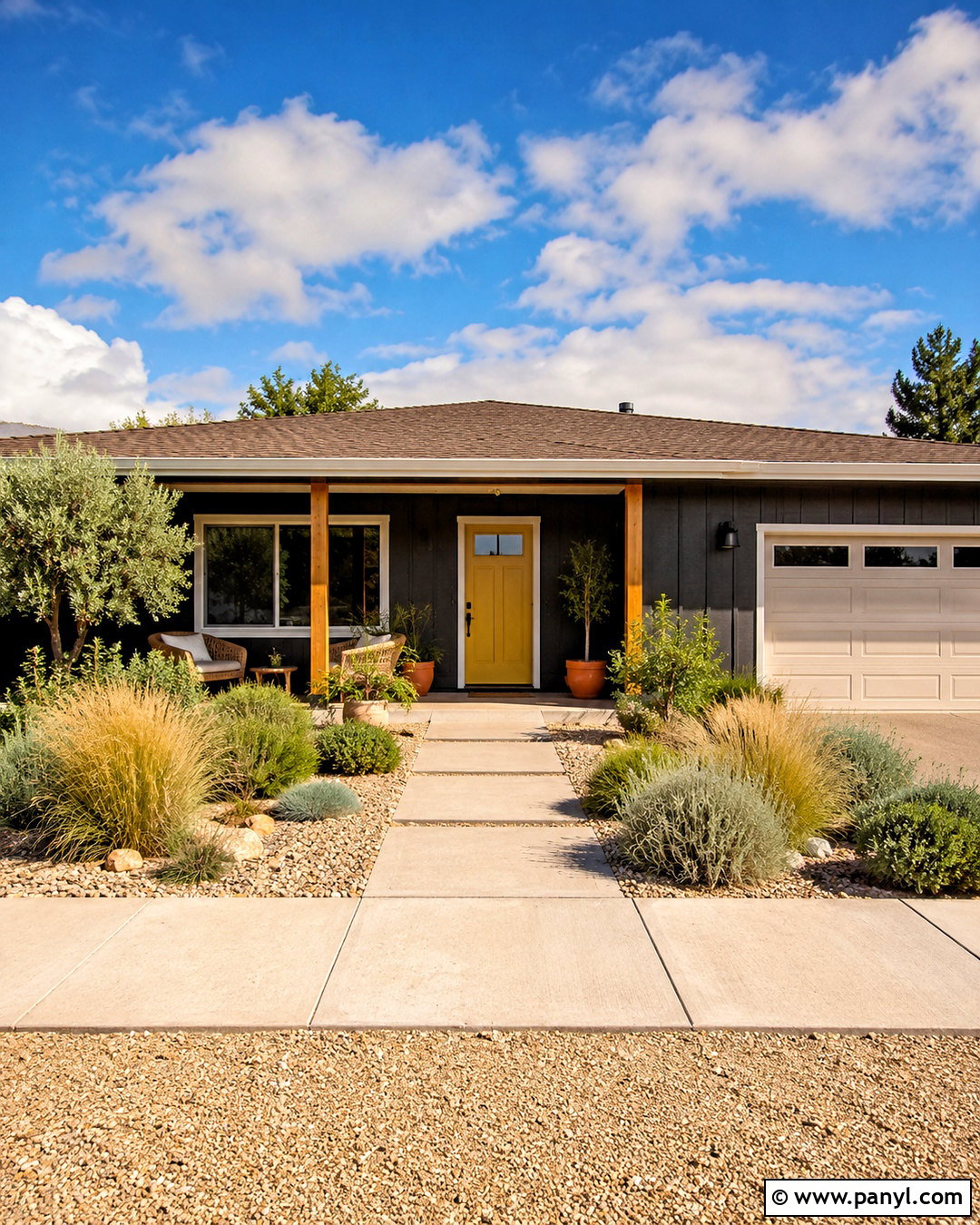
Mustard yellow brings an earthy, retro-inspired warmth to a gray house. Pair it with deep charcoal siding, cream trim, and a medium-brown roof or wood accent for a balanced exterior. Black door hardware provides crisp contrast, while cedar porch posts and woven seating connect the yellow to natural materials. Use ornamental grasses, olive-green shrubs, and terracotta pots around the entrance to strengthen the warm palette. Mustard is particularly effective on midcentury ranches, updated Craftsman homes, and simple contemporary facades. Unlike a bright sunny yellow, this muted version feels grounded enough for a larger door or covered porch. Keep windows and garage doors neutral so the entrance remains prominent. For gray siding with blue undertones, select a mustard that leans golden rather than greenish to prevent an unbalanced color combination.
14. Burnt Orange Front Door
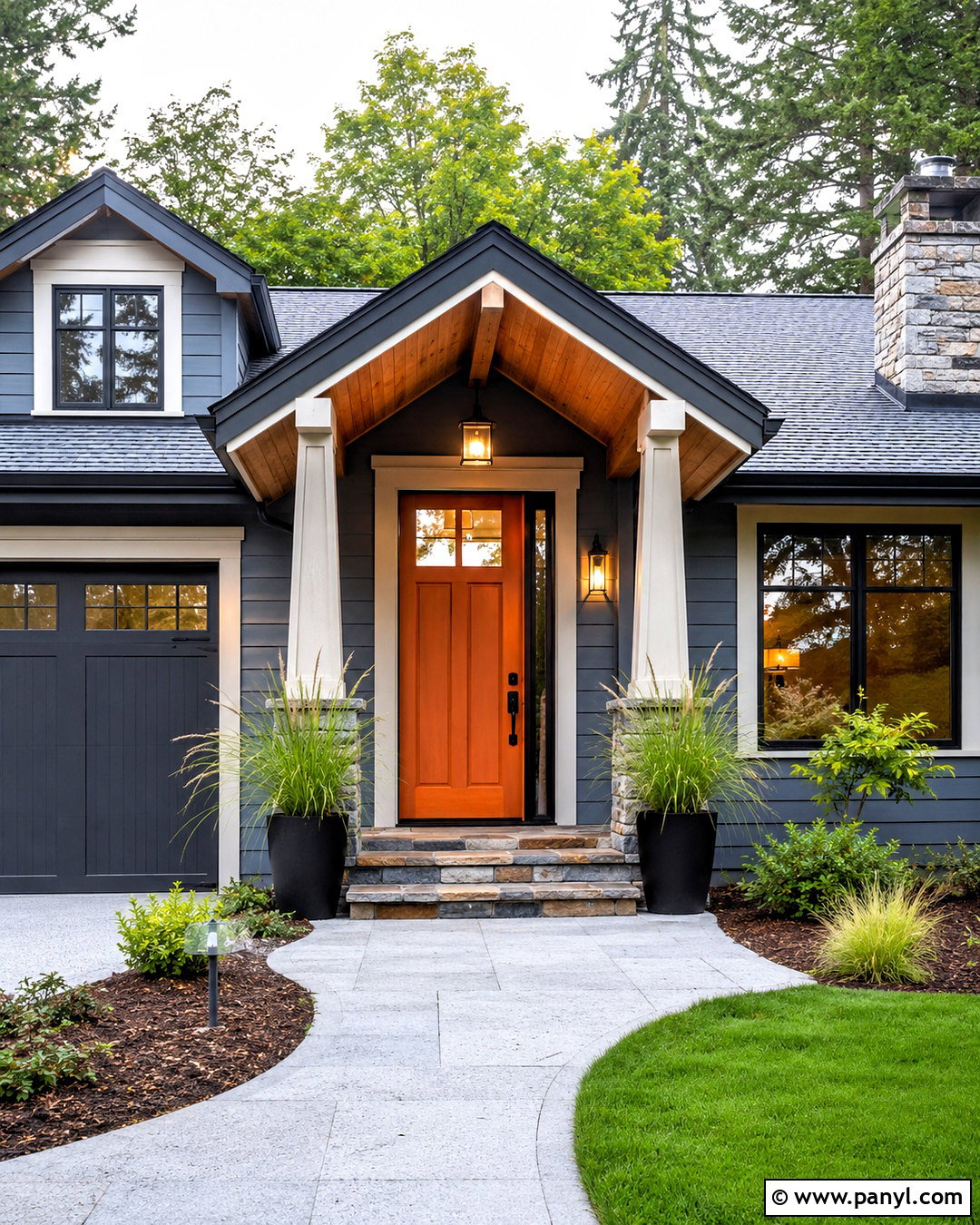
A burnt orange front door introduces rich warmth without looking excessively bright. This earthy color works beautifully against blue-gray or charcoal siding, especially when paired with warm white trim. Use dark bronze hardware, a cedar porch ceiling, and natural stone steps to build a complete material palette around the door. Large black planters filled with grasses and deep green foliage add modern structure. Burnt orange suits midcentury, contemporary, and Southwestern-influenced homes, but it can also refresh a straightforward ranch exterior. Keep the roof and garage door charcoal so they visually recede. If the entrance receives intense afternoon sun, select a slightly deeper orange because exterior light can make it look brighter. The final scheme should feel warm and architectural rather than playful or overly colorful.
15. Terracotta Front Door
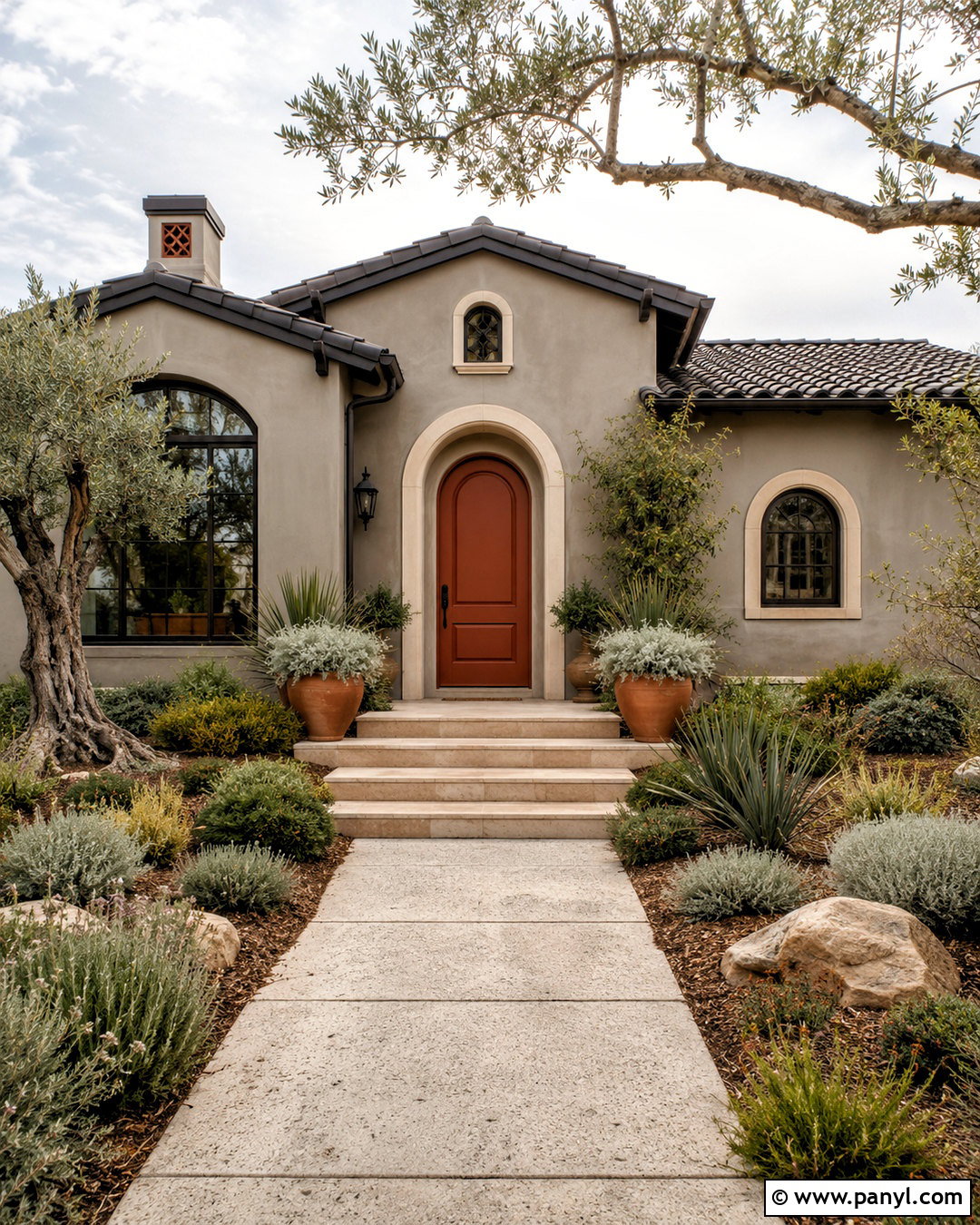
Terracotta gives a gray exterior a sun-warmed, natural quality. Pair a clay-colored door with soft warm-gray stucco or siding, creamy white trim, and a brown or charcoal roof. Oil-rubbed bronze hardware complements the earthy red-orange tone, while pale limestone or textured concrete keeps the entry light. Complete the look with terracotta planters, silvery foliage, ornamental grasses, and drought-tolerant greenery. This palette is well suited to Spanish-inspired, Mediterranean, ranch, and contemporary homes. It also offers a softer alternative to a traditional red entrance. Avoid introducing bright blue accessories, which can make the scheme feel overly themed. Instead, use muted greens, tan textiles, and natural wood. A slightly distressed or satin finish can enhance the organic character while still leaving the door neat and well maintained.
16. Coral Front Door
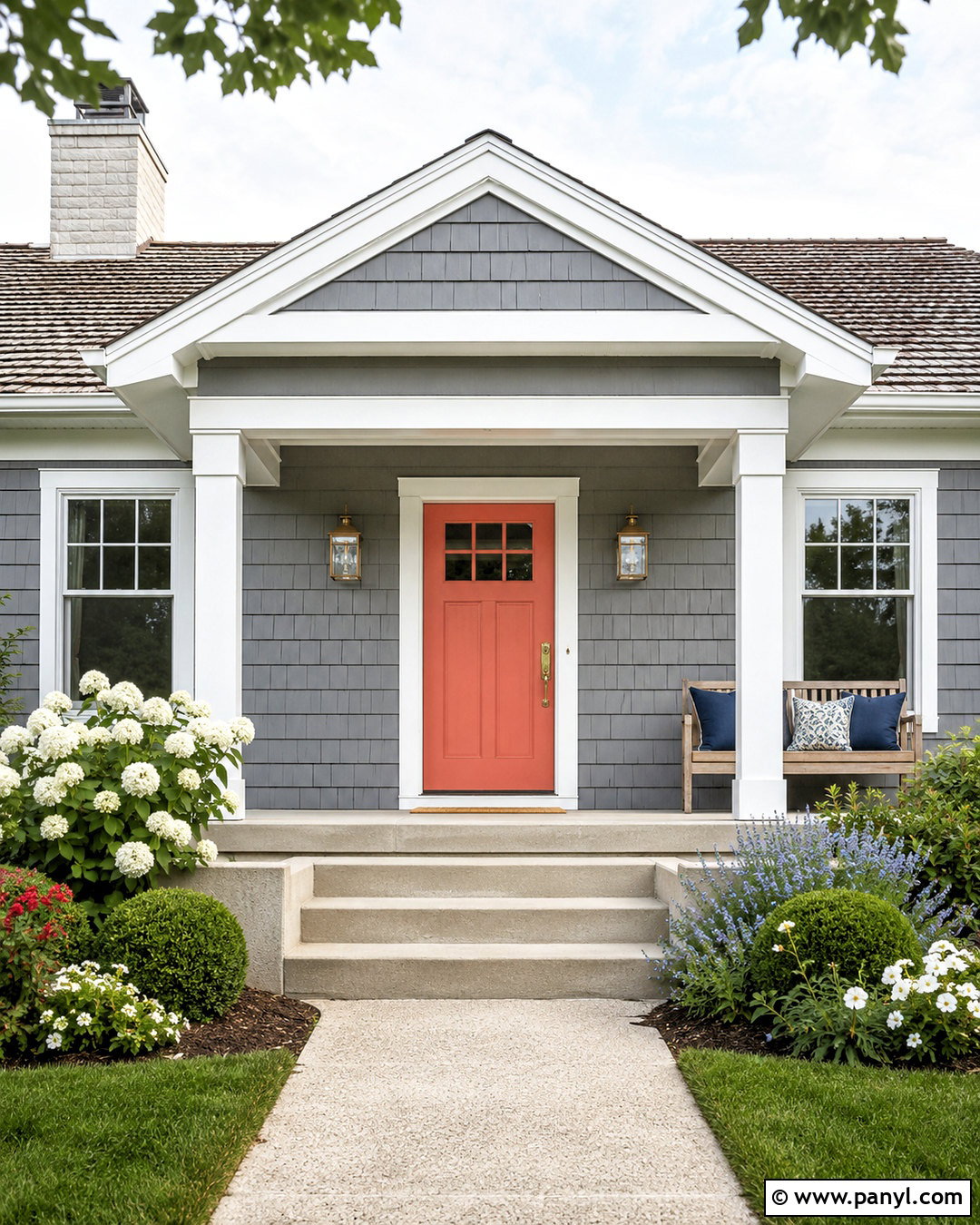
Coral adds personality to a gray house while remaining softer than true orange or vivid pink. Choose a muted coral with warm peach undertones and pair it with medium cool-gray siding. Crisp white trim creates a clean frame, while brushed brass hardware emphasizes the door’s warmth. Add a pale wood porch bench, light concrete steps, and navy outdoor cushions for a controlled secondary contrast. Landscaping with white flowers, blue-green foliage, and rounded shrubs keeps the entrance fresh. This complete look works best on coastal cottages, casual bungalows, and updated ranch homes. Keep shutters gray or white so the coral stays special. If the facade is large, use coral only on the front door rather than additional exterior features. The concentrated color will provide curb appeal without overwhelming the neutral architecture.
17. Blush Pink Front Door
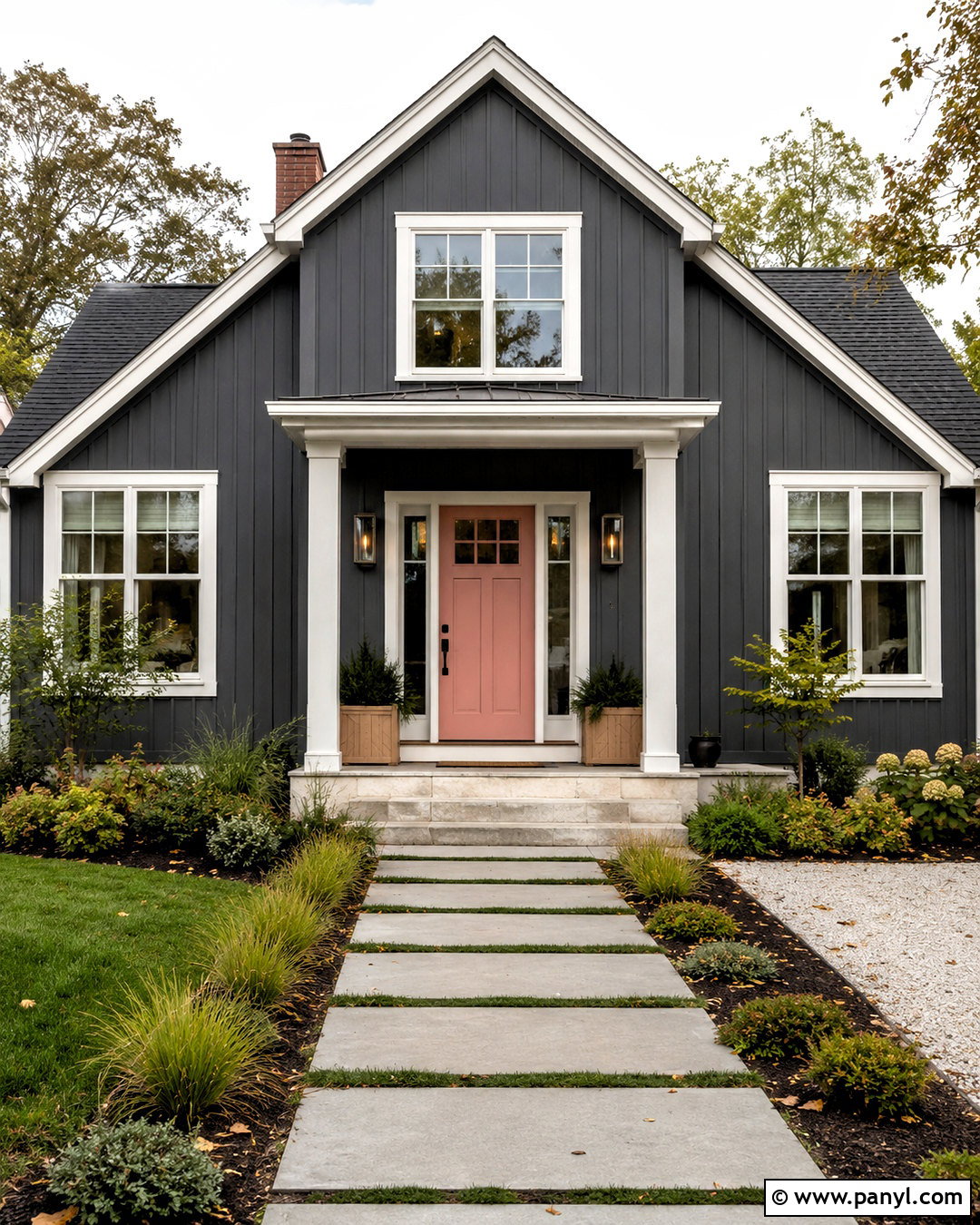
A blush pink front door can soften dark gray siding and create a light, contemporary entrance. Select a dusty, muted pink rather than a sugary pastel, then use warm white trim to blend the transition between door and facade. Matte black hardware and slim black lanterns give the delicate color a stronger architectural edge. Natural oak planters, pale stone steps, and soft green foliage prevent the design from appearing overly decorative. This combination suits modern cottages, townhouses, and simple Scandinavian-inspired exteriors. Avoid adding many pink accessories; the door should be the single colorful feature. On pale gray siding, use a deeper clay-pink shade so the entrance does not disappear. A satin finish provides enough reflection to keep the muted color clear, even when the doorway is partially shaded.
18. Plum Purple Front Door
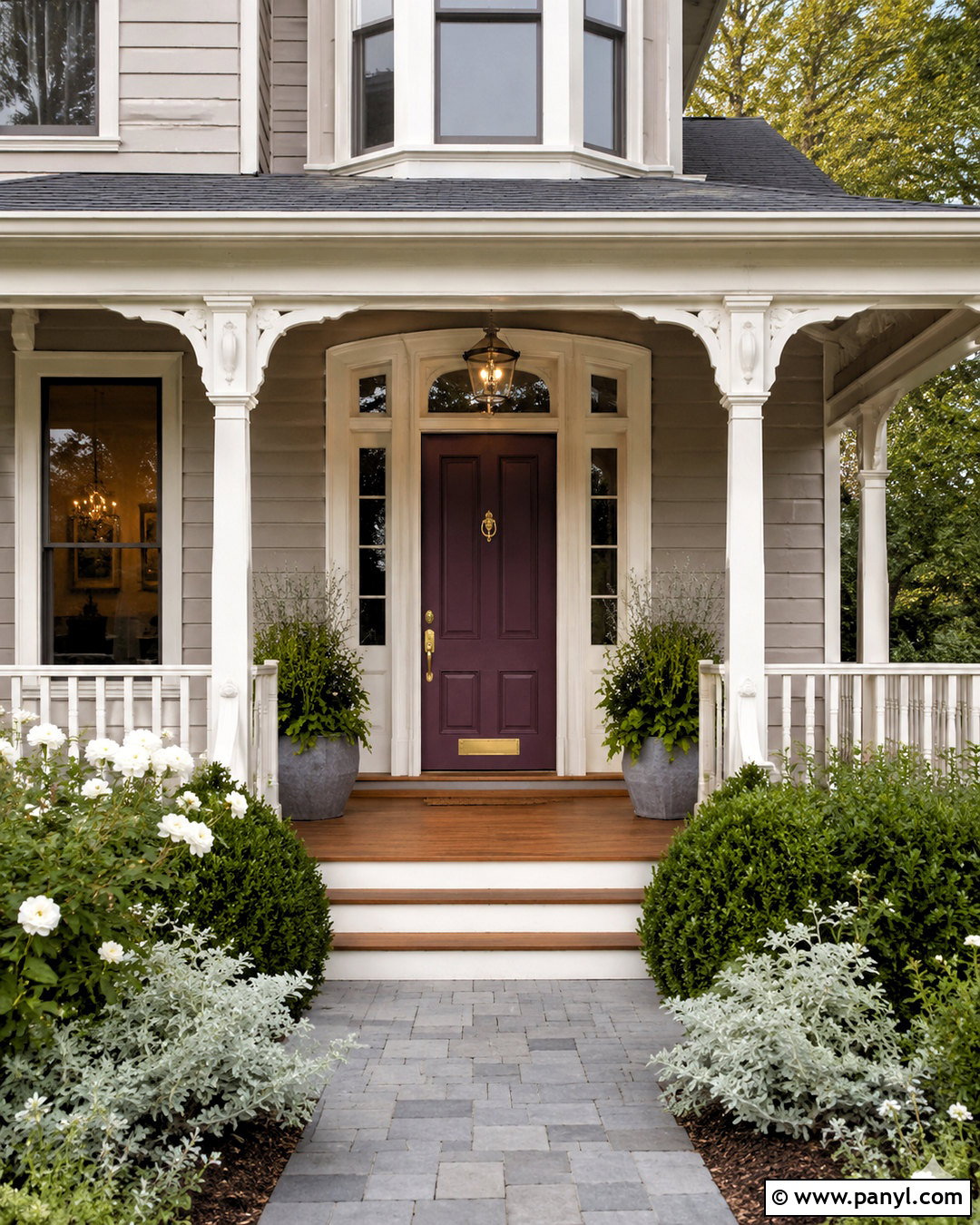
Plum purple gives a gray house an unexpected but refined focal point. Choose a deep, red-based plum for warm-gray siding or a cooler aubergine shade for blue-gray exteriors. Surround the door with creamy white trim, then add aged brass hardware to bring out the color’s warmer notes. A charcoal roof, gray stone walkway, and natural wood porch floor maintain a sophisticated neutral structure. Landscaping can include silvery foliage, white flowers, and dark green shrubs without repeating purple too heavily. This scheme works well on Victorian, Tudor-inspired, and traditional homes with detailed entrances. Plum can appear very dark beneath a porch roof, so test several shades before committing. The selected color should remain recognizably purple from the sidewalk instead of reading as black or muddy brown.
19. Chocolate Brown Front Door
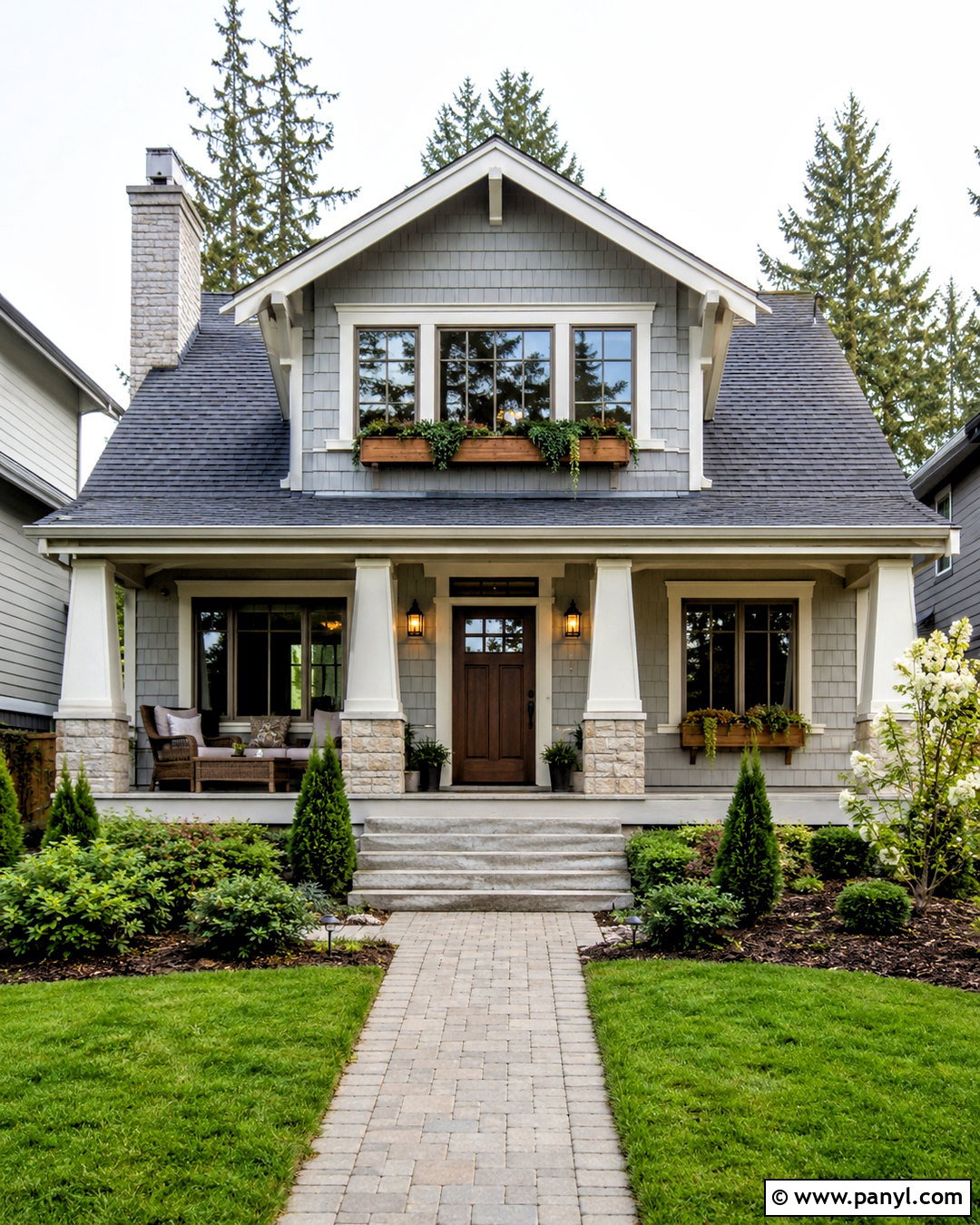
Chocolate brown creates a warm, substantial entrance that feels softer than black. Use a deep brown door against light cool-gray siding, balanced by creamy trim and a charcoal roof. Bronze hardware and lanterns blend naturally with the door, while pale stone steps prevent the entry from becoming too dark. Add cedar window boxes, woven porch furniture, and evergreen shrubs to build a comfortable, layered exterior. This palette complements Craftsman, traditional, and rustic-modern houses. If the home already contains brown brick or stone, match the door to one of the deeper tones within that material. Keep shutters medium gray rather than brown to avoid a heavy facade. A rich satin finish helps the door reflect enough daylight while maintaining the grounded appearance that makes chocolate brown appealing.
20. Natural Wood Front Door
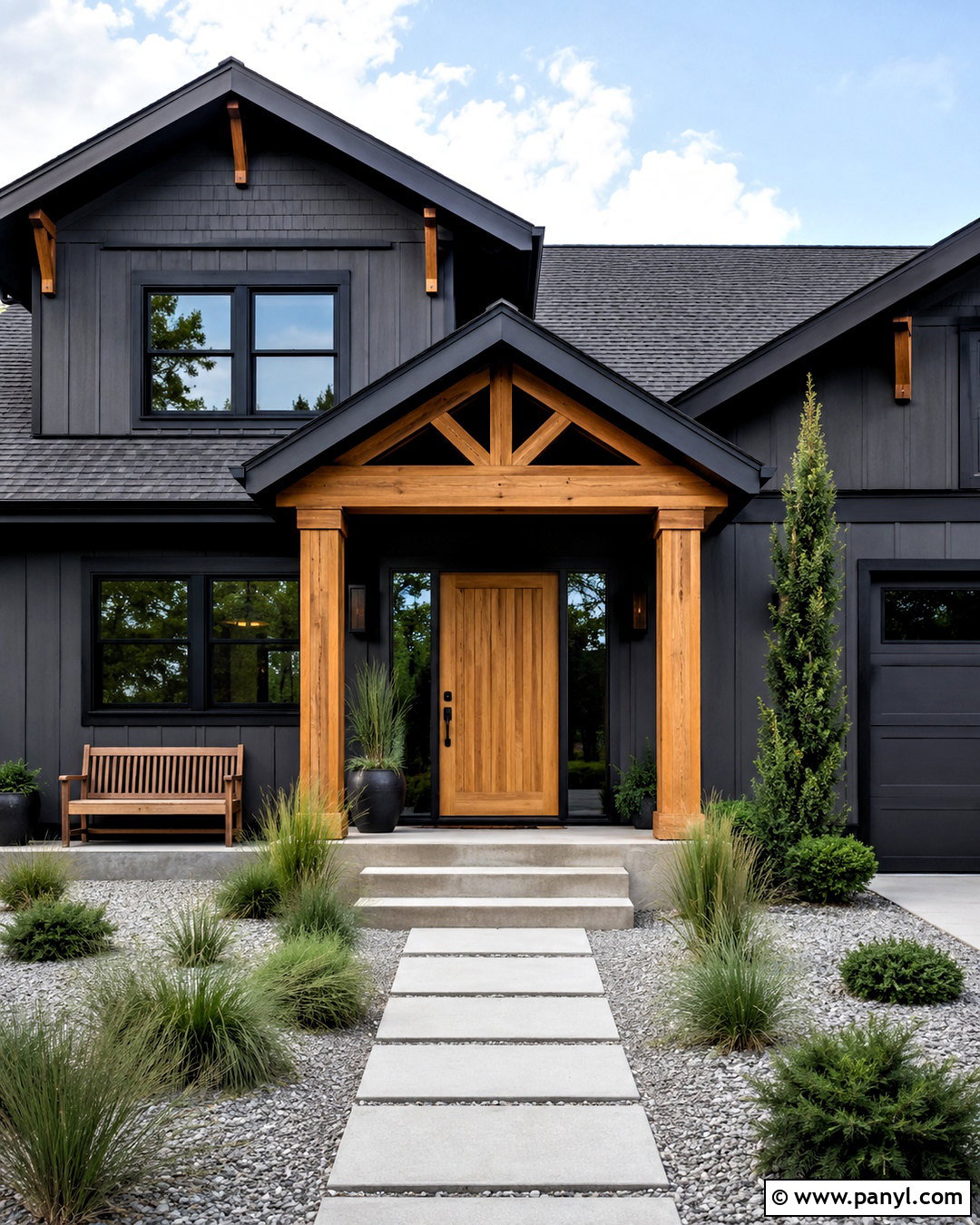
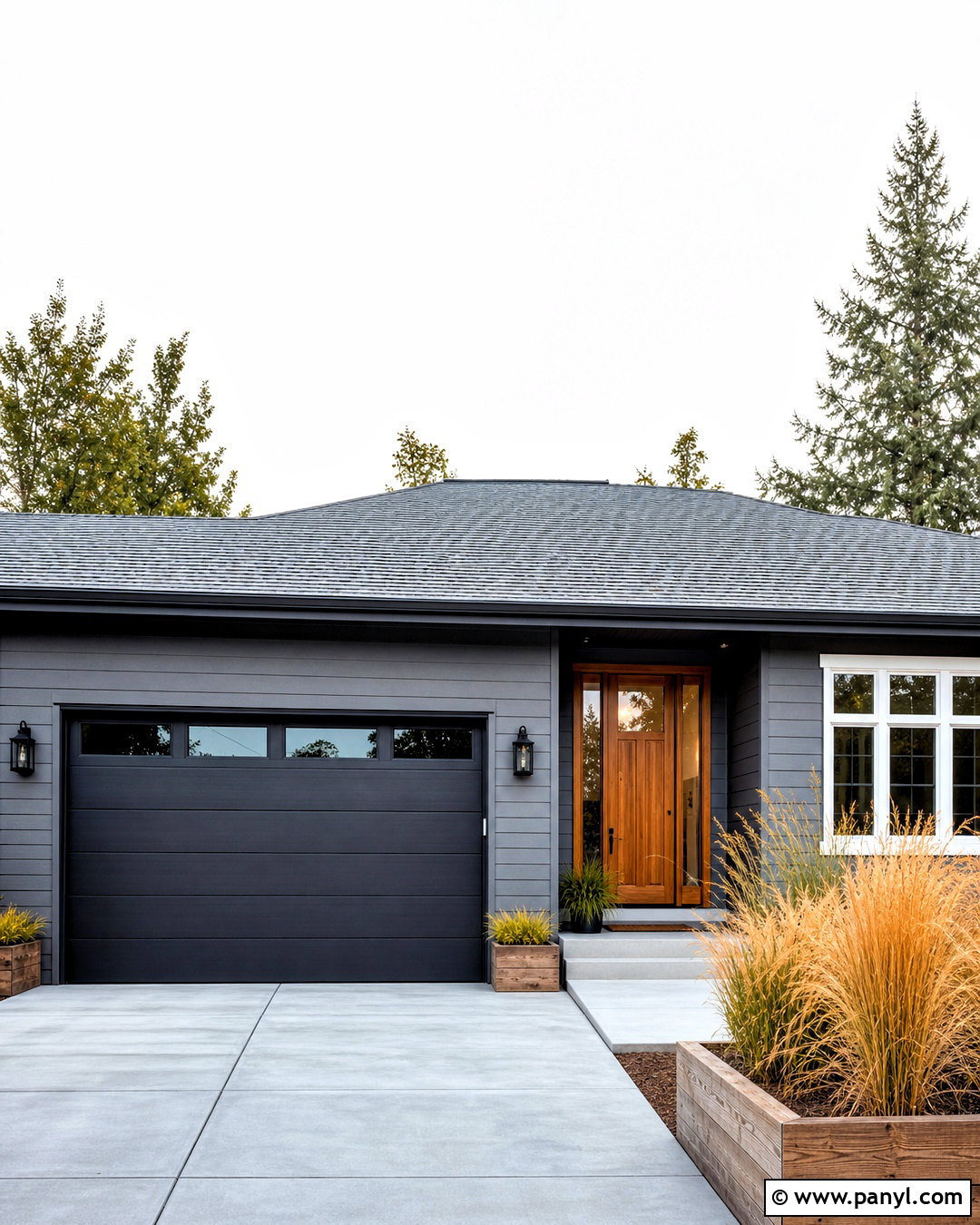
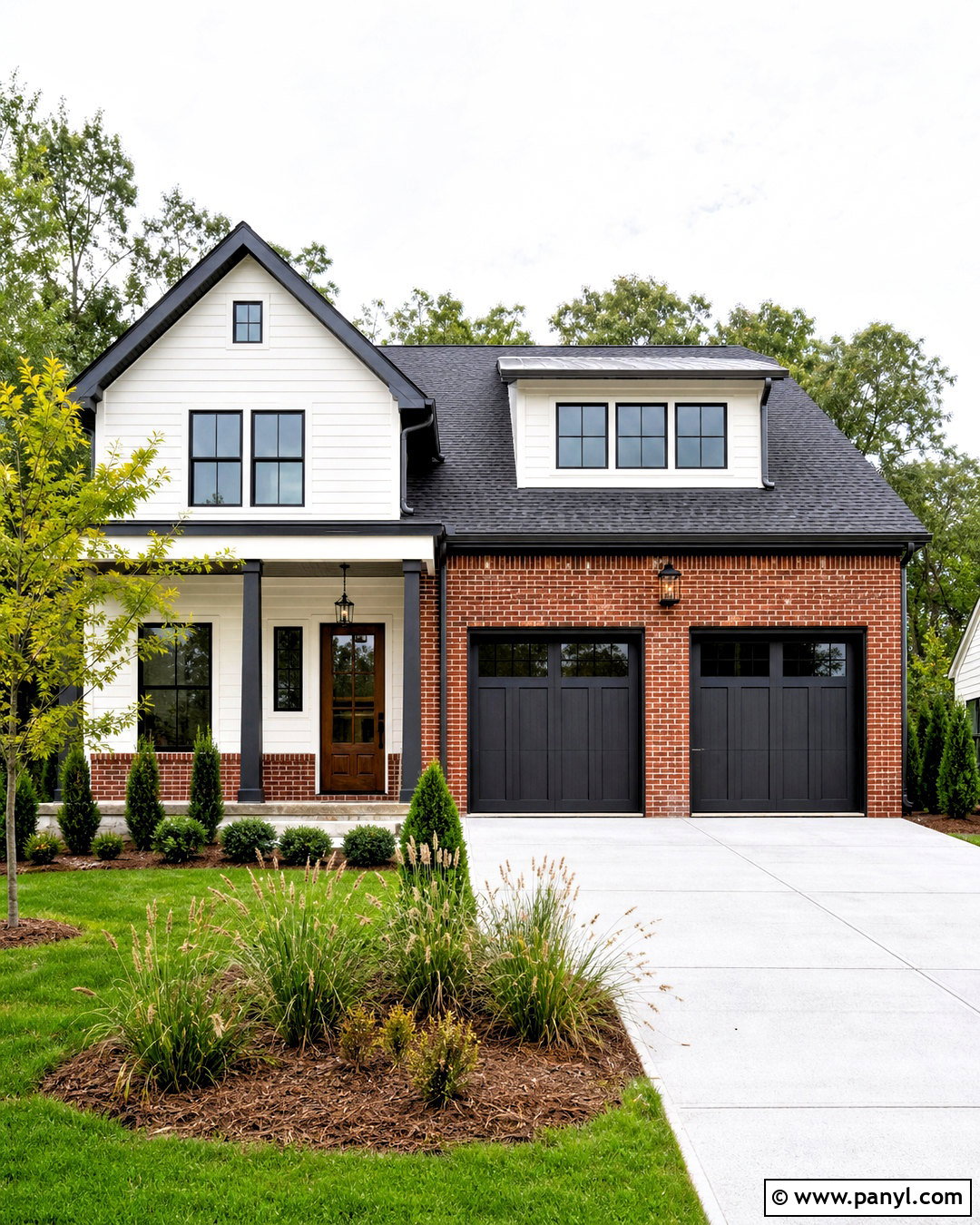
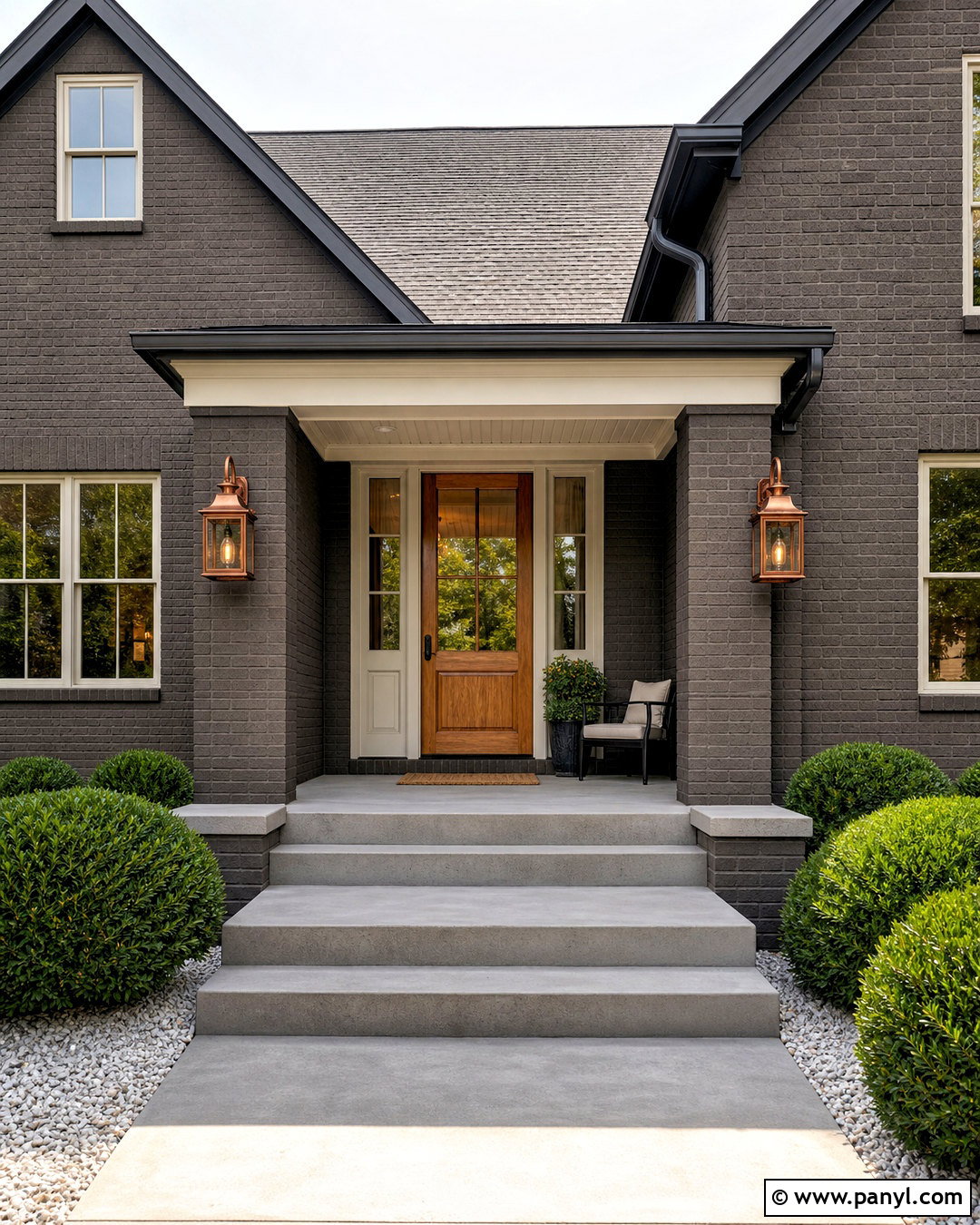
A natural wood door adds warmth, texture, and craftsmanship to nearly any gray exterior. Medium oak or cedar looks fresh against charcoal siding, while dark walnut provides stronger definition on a pale gray house. Coordinate the stain with porch posts, ceiling boards, or small architectural accents, but avoid covering every exterior feature in matching wood. Black hardware, black-framed windows, and a charcoal roof give the organic material a modern outline. Use simple concrete steps, gravel, ornamental grasses, and evergreen planting to complete the balanced facade. This look works across contemporary, farmhouse, Craftsman, and Scandinavian-inspired homes. Select an exterior-grade protective finish that preserves the wood tone. Repeating the stain on one bench or pair of planters will make the entrance feel connected without becoming overly coordinated.
Conclusion:
The best front door color should improve the entire exterior, not simply add a bright accent. Start by identifying whether the gray siding has cool, warm, or neutral undertones. Then consider permanent features such as roofing, masonry, windows, and porch flooring. Black, navy, forest green, and natural wood offer dependable contrast, while yellow, coral, teal, and plum create a more distinctive entrance. Softer shades such as sage, French blue, and blush pink can bring color without dominating the facade. Keep trim and secondary accents controlled so the door remains the focal point. Most importantly, test samples outdoors before choosing. These **20 door colors for gray house ideas** provide complete palettes that can be adapted to many architectural styles and settings.

Related Ideas and Inspiration:
Leave a Reply