
House front design ideas can turn an ordinary exterior into a welcoming, polished home with stronger curb appeal. The most successful facades combine architecture, color, materials, landscaping, lighting, and entry details rather than relying on one decorative feature. Current exterior inspiration ranges from clean modern geometry and mixed natural materials to refreshed cottages, Craftsman homes, and traditional brick facades. () Before choosing a look, consider your home’s existing roofline, neighborhood setting, climate, and maintenance needs. A design that respects the original structure will usually feel more convincing than a collection of unrelated trends. The complete schemes below offer practical ways to coordinate siding, roofing, windows, porches, walkways, and planting through 20 distinctive house front design ideas.
1. Modern House Front With Wood Accents
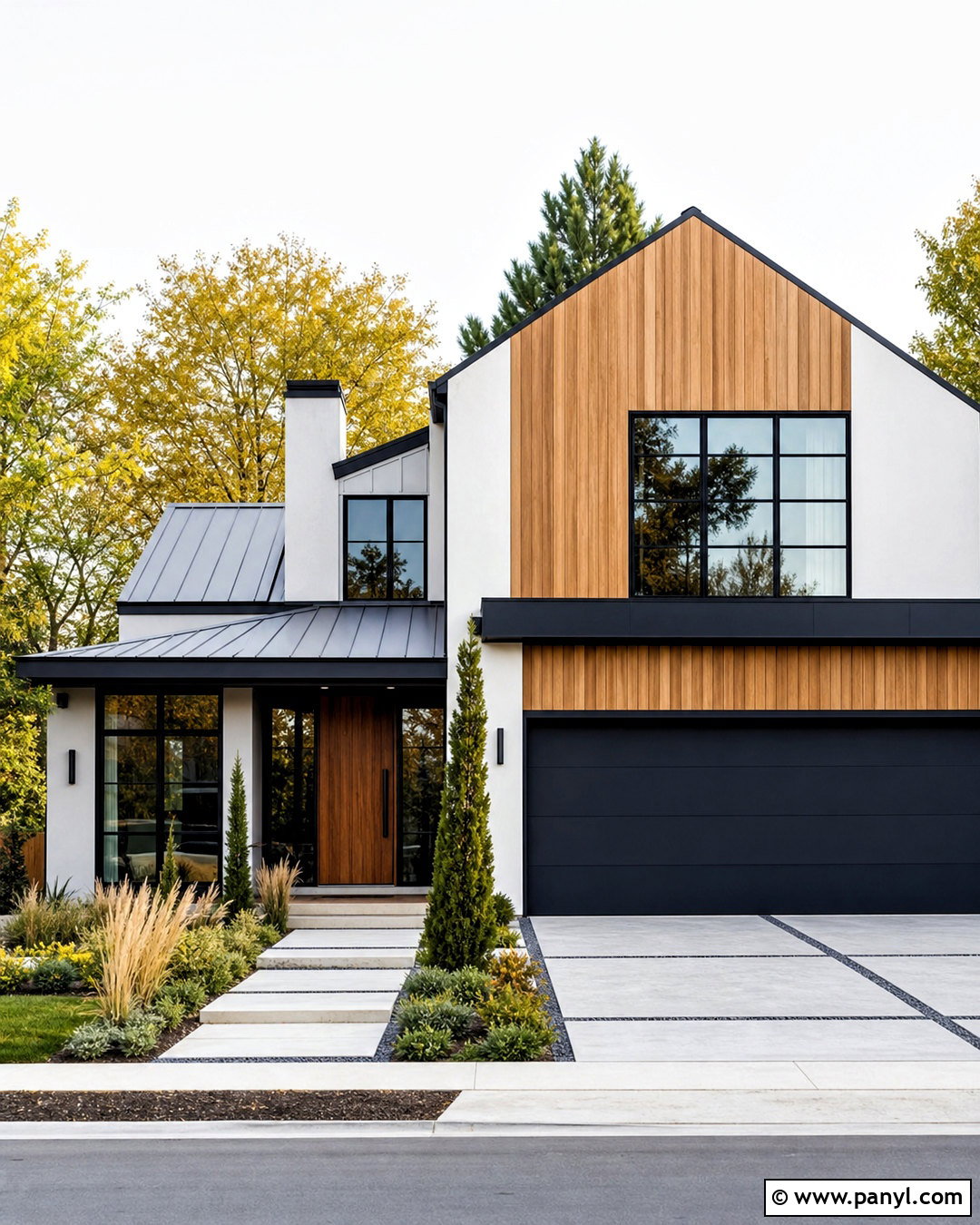
Create a warm modern exterior by balancing smooth surfaces with natural wood. Cover the main walls in soft white or pale greige stucco, then use vertical cedar boards around the recessed entrance or upper story. Black-framed windows, a charcoal standing-seam roof, and slim metal lights add definition without making the facade feel harsh. Choose a wide wood front door that matches the cedar but has a slightly deeper stain. Large concrete pavers can form a clean walkway through low ornamental grasses and clipped evergreen shrubs. Keep decorations minimal so the architectural lines remain noticeable. This complete house front works especially well when the wood appears in two or three intentional areas instead of covering the entire facade.
2. White Farmhouse House Front
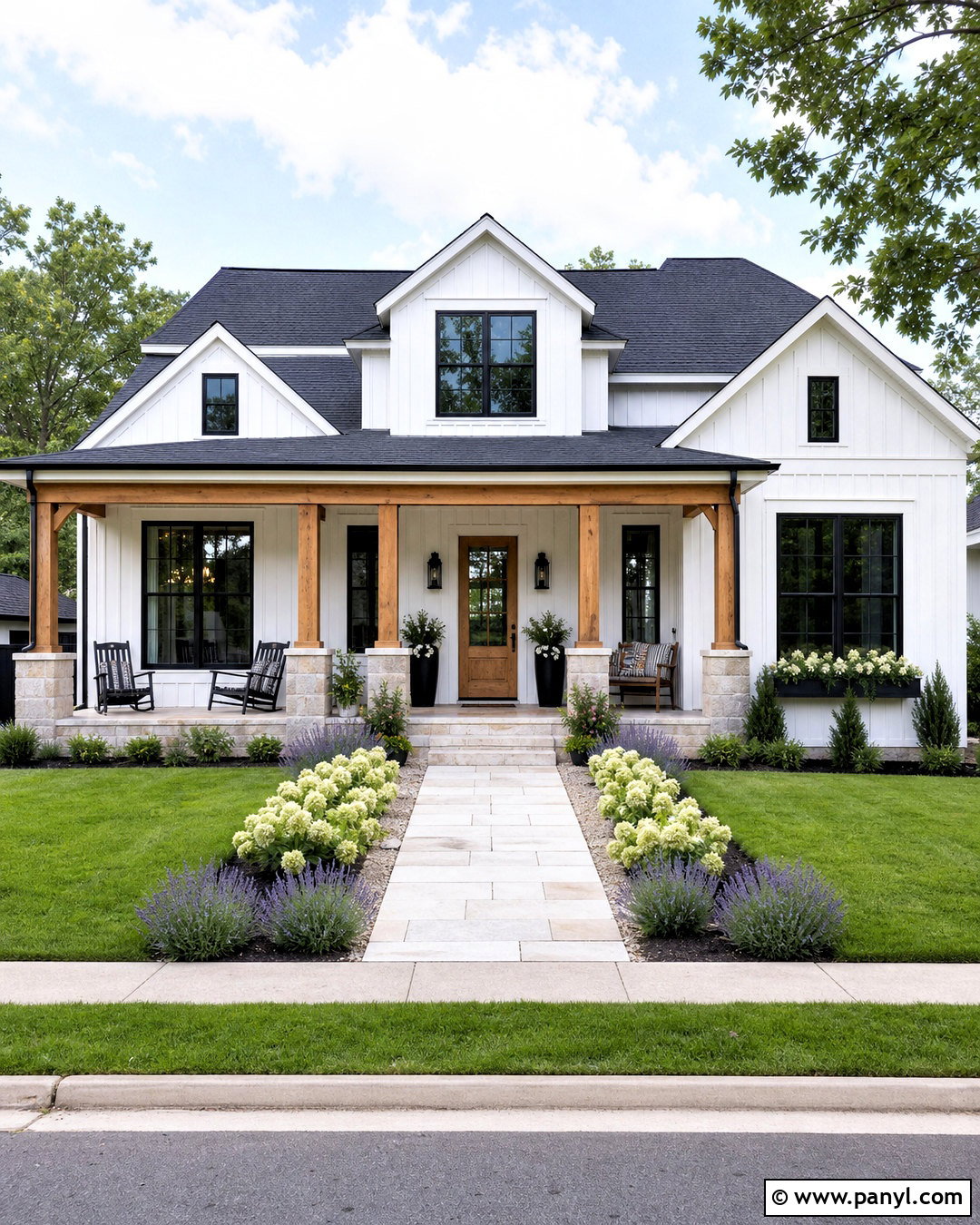
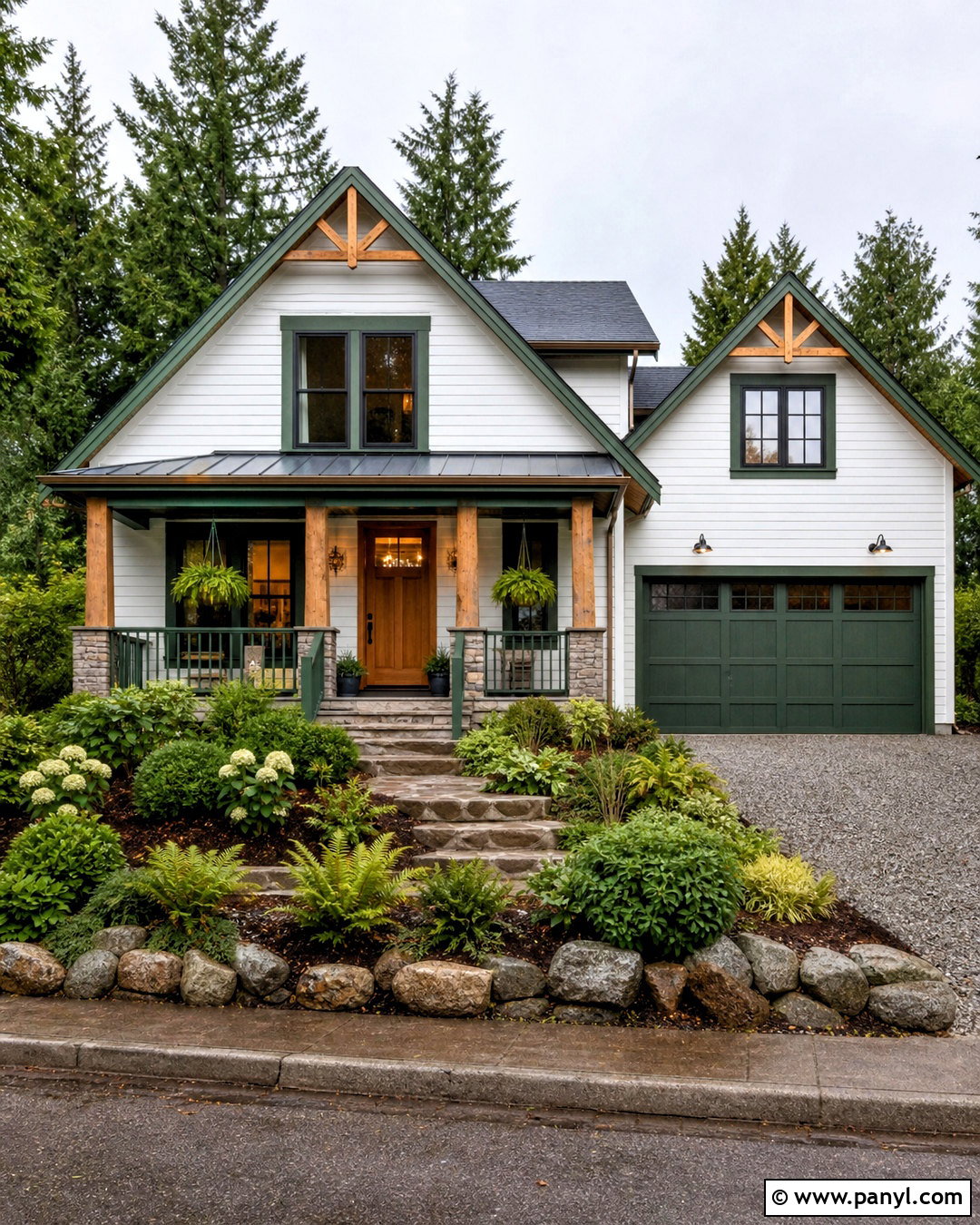
A white farmhouse exterior feels fresh when traditional features are simplified and carefully coordinated. Use warm white board-and-batten siding with a dark charcoal roof and black-framed windows. Add a deep covered porch supported by square cedar columns resting on pale stone bases. A natural oak front door softens the high-contrast palette, while simple black sconces connect it to the windows and roof. Furnish the porch with two wood rocking chairs, neutral outdoor cushions, and substantial planters rather than themed decorations. A straight stone path bordered by hydrangeas, lavender, and rounded evergreen shrubs creates a welcoming approach. This design suits both new construction and conventional homes receiving a farmhouse-inspired update, provided the roofline and porch proportions support the look.
3. Contemporary House Front With Concrete
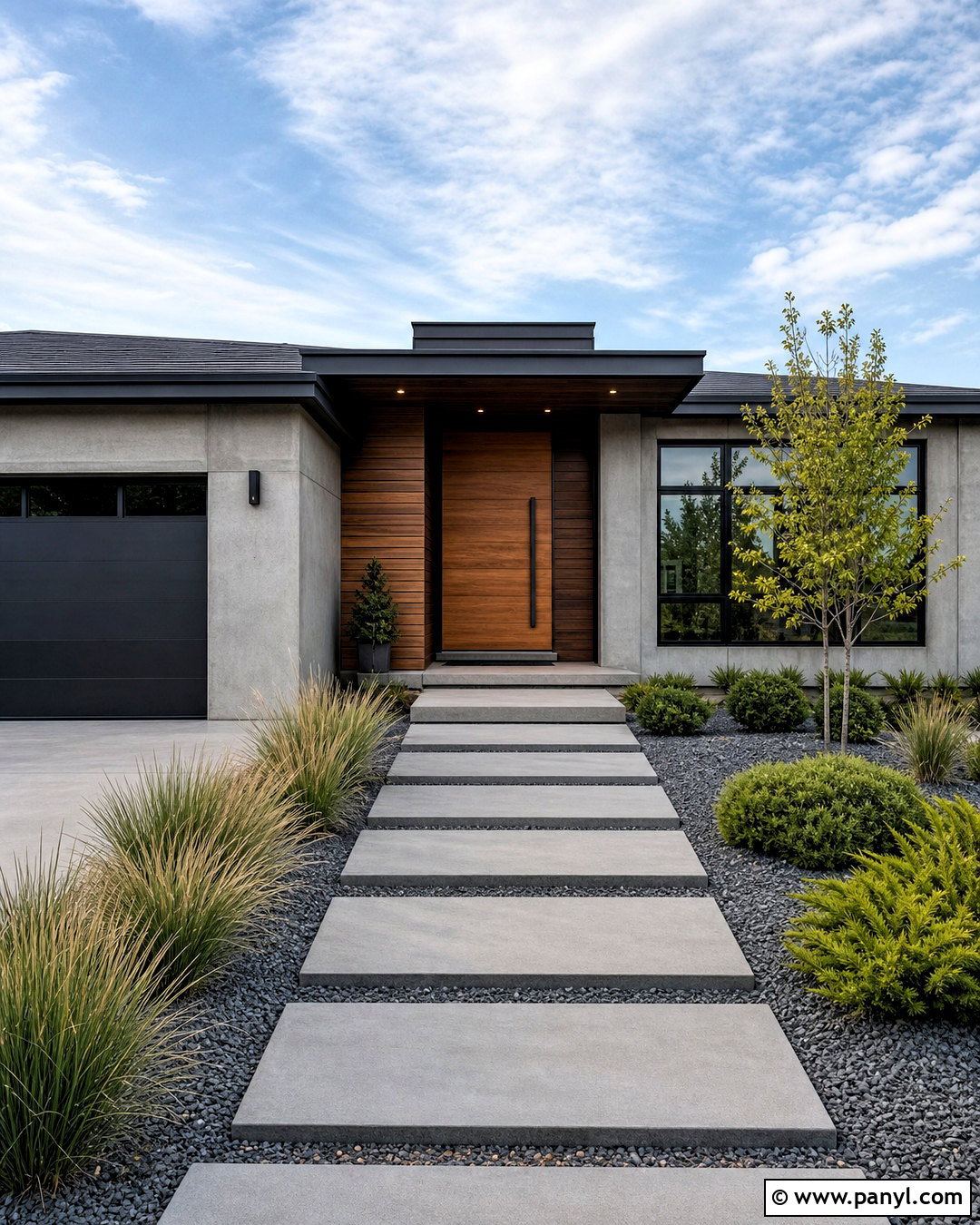
Would you prefer a facade that looks modern without feeling cold? Start with warm gray architectural concrete or smooth cement render, then introduce walnut-toned wood around the front door and garage. Add wide black aluminum windows in simple rectangular shapes. A flat or low-pitched charcoal roof will reinforce the clean geometry. Break up the hard surfaces with a linear planting bed containing feather grass, compact shrubs, and one sculptural tree. Large rectangular walkway slabs set into gravel can lead toward a sheltered entrance with an oversized pivot-style door. Use concealed gutters and restrained exterior lighting to preserve the uncluttered appearance. Repeating the same wood, black metal, and concrete finishes across the facade makes the entire contemporary house front feel intentional.
4. Small House Front With A Covered Porch
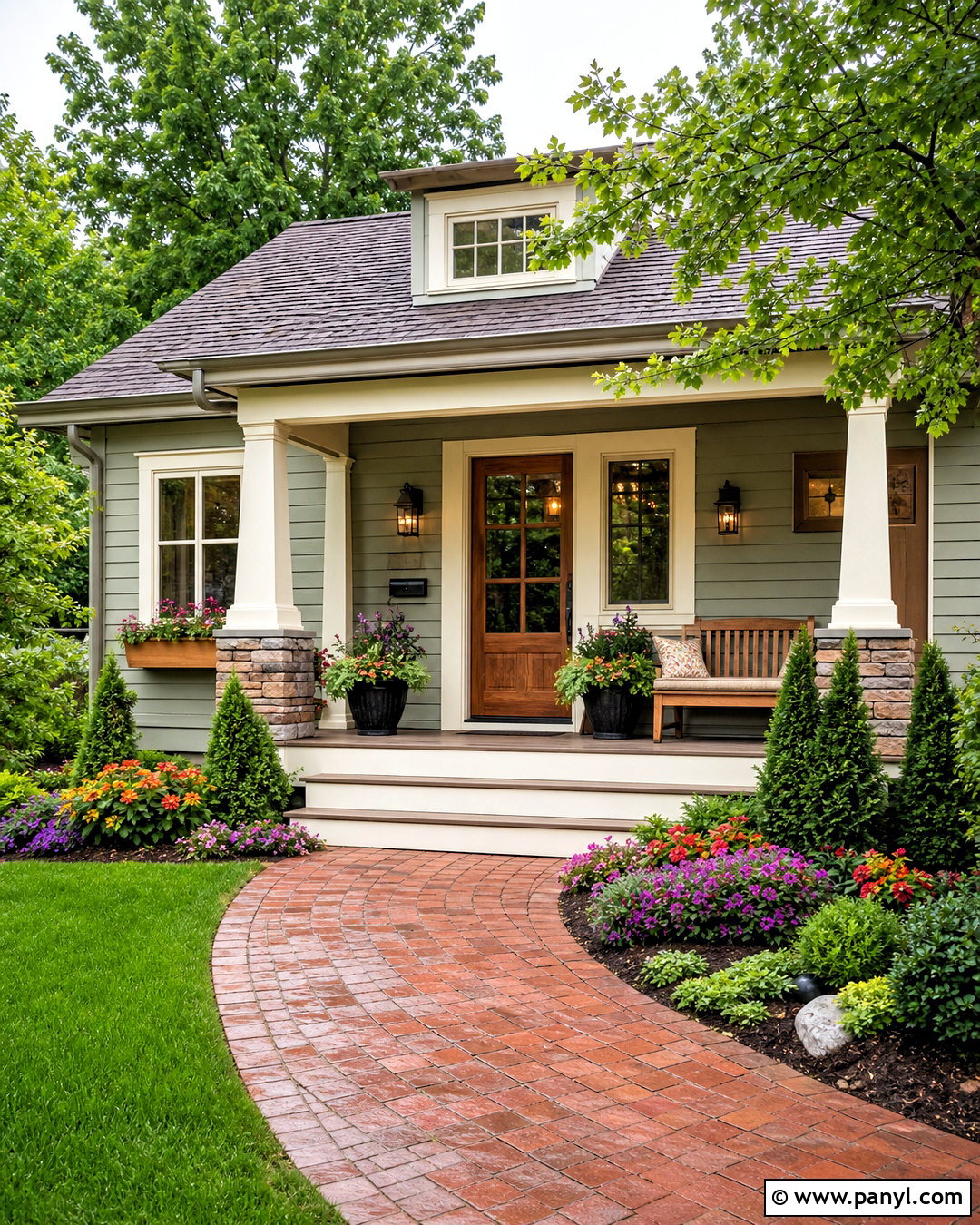
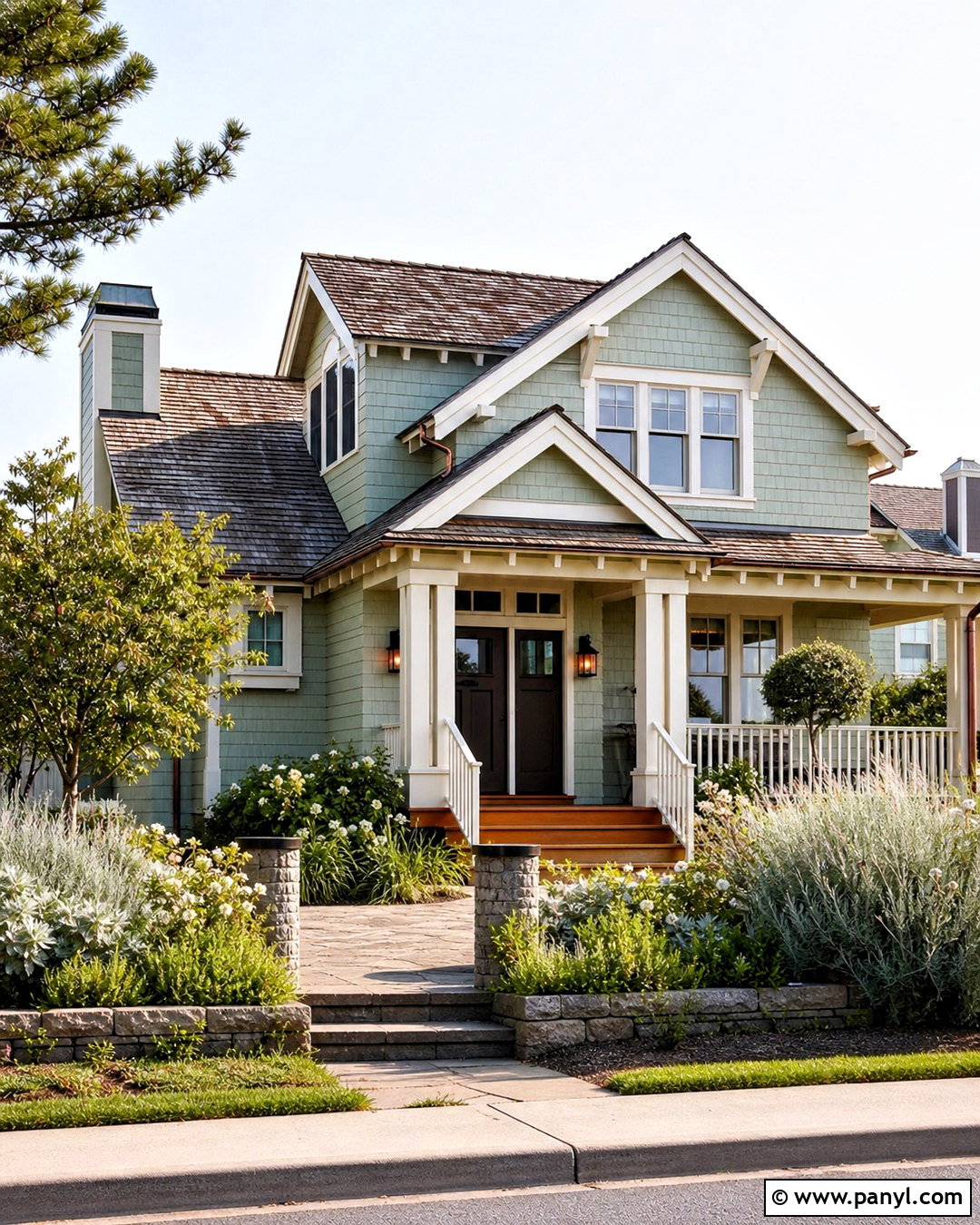
Even a compact home can look substantial when the entrance has depth and clear visual structure. Paint horizontal siding a muted sage green and use creamy white on the trim, porch posts, and fascia. Extend a simple covered porch across most of the facade, leaving enough room for a bench and two planters. A medium-tone wood door with divided glass adds warmth, while aged bronze lights provide softer contrast than black fixtures. Connect the porch to the sidewalk with a gently curving brick path. Layer dwarf evergreens, flowering perennials, and low ground cover along the foundation without crowding the windows. Matching window boxes can add seasonal color. This complete arrangement makes a small house front feel wider, friendlier, and thoughtfully finished.
5. Brick House Front With Black Trim
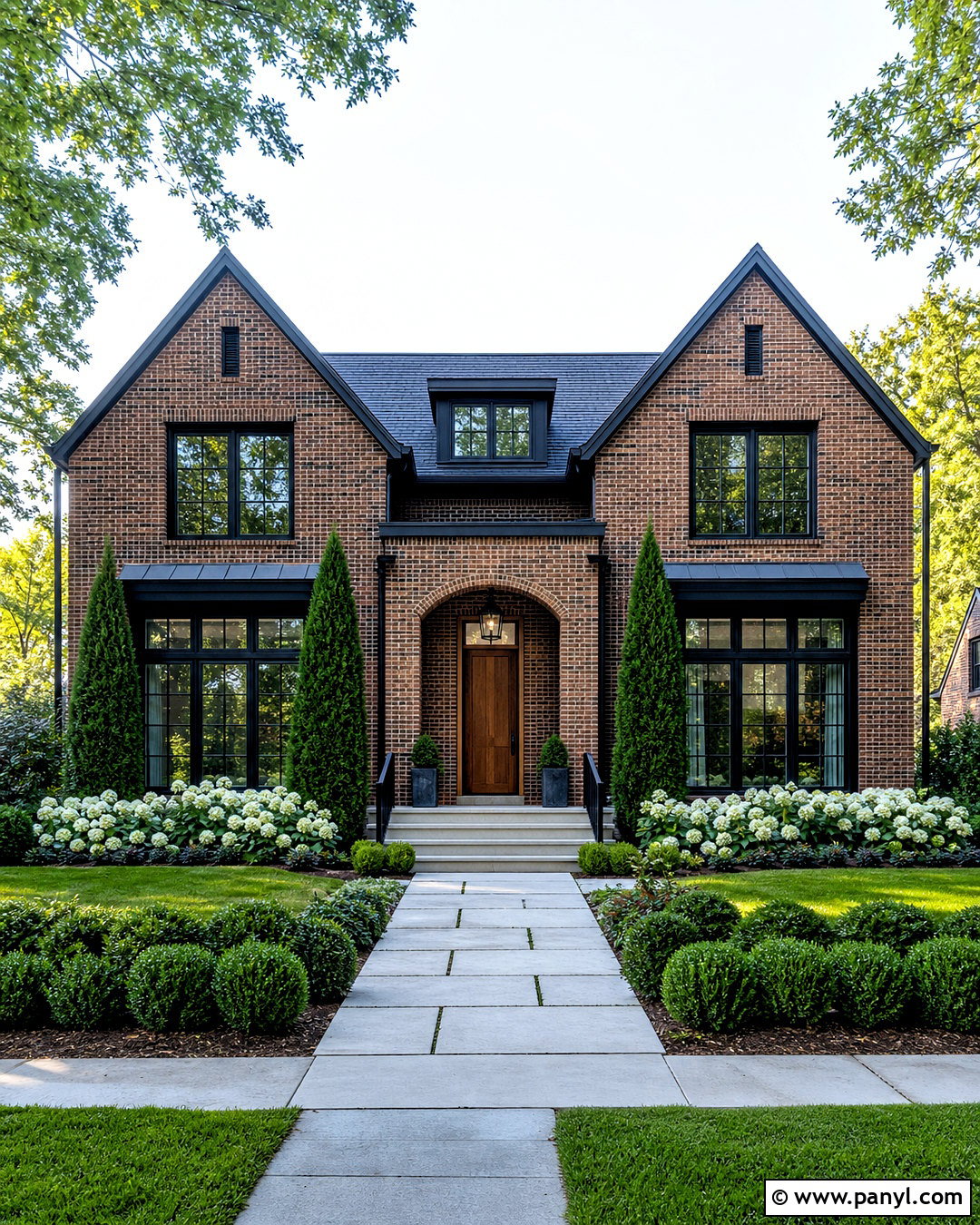
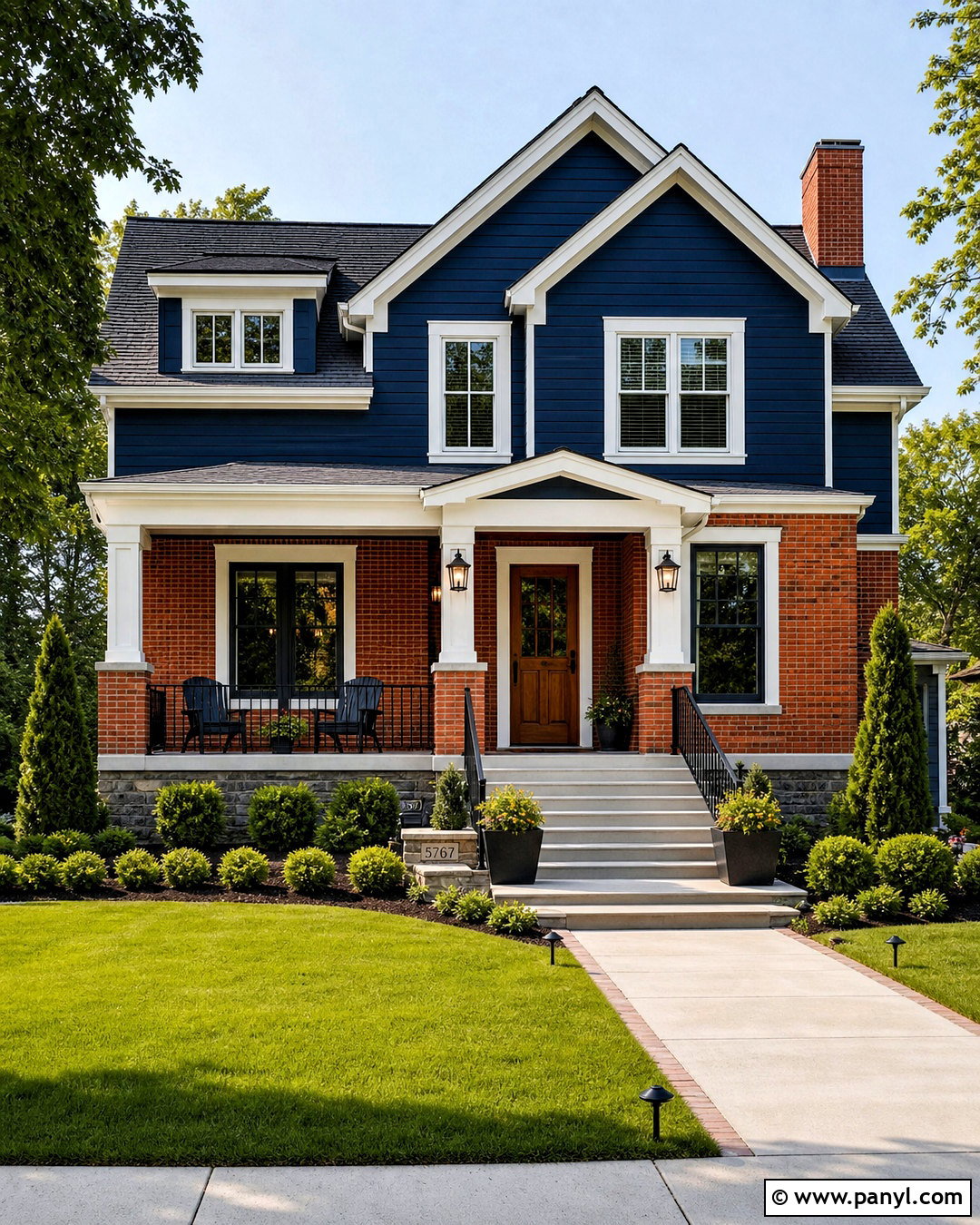
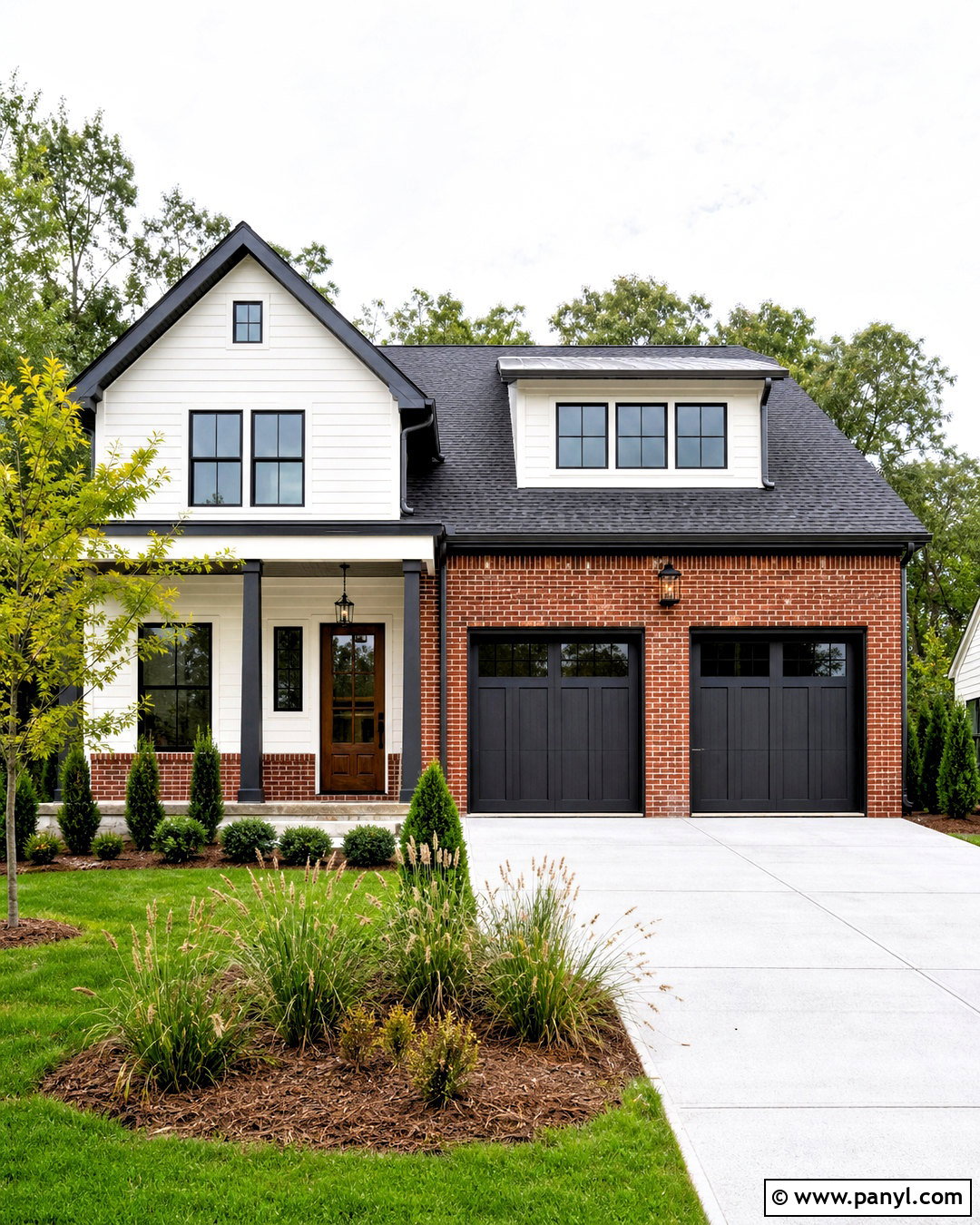
Deep red or brown brick gains a sharper, more updated character when paired with controlled black accents. Preserve the natural masonry and use matte black on the window frames, gutters, porch railings, and garage door. Install a stained walnut front door to keep the entrance warm and distinct from the darker details. If the roof needs replacement, choose charcoal architectural shingles that relate to the trim without competing with the brick. A simple limestone walkway and pale stone porch floor will brighten the lower part of the facade. Complete the look with layered green landscaping, including upright evergreens, rounded boxwoods, and white flowering plants. Avoid painting every feature black; leaving the brick dominant gives this house front depth, permanence, and balanced contrast.
6. Craftsman House Front With Stone Columns
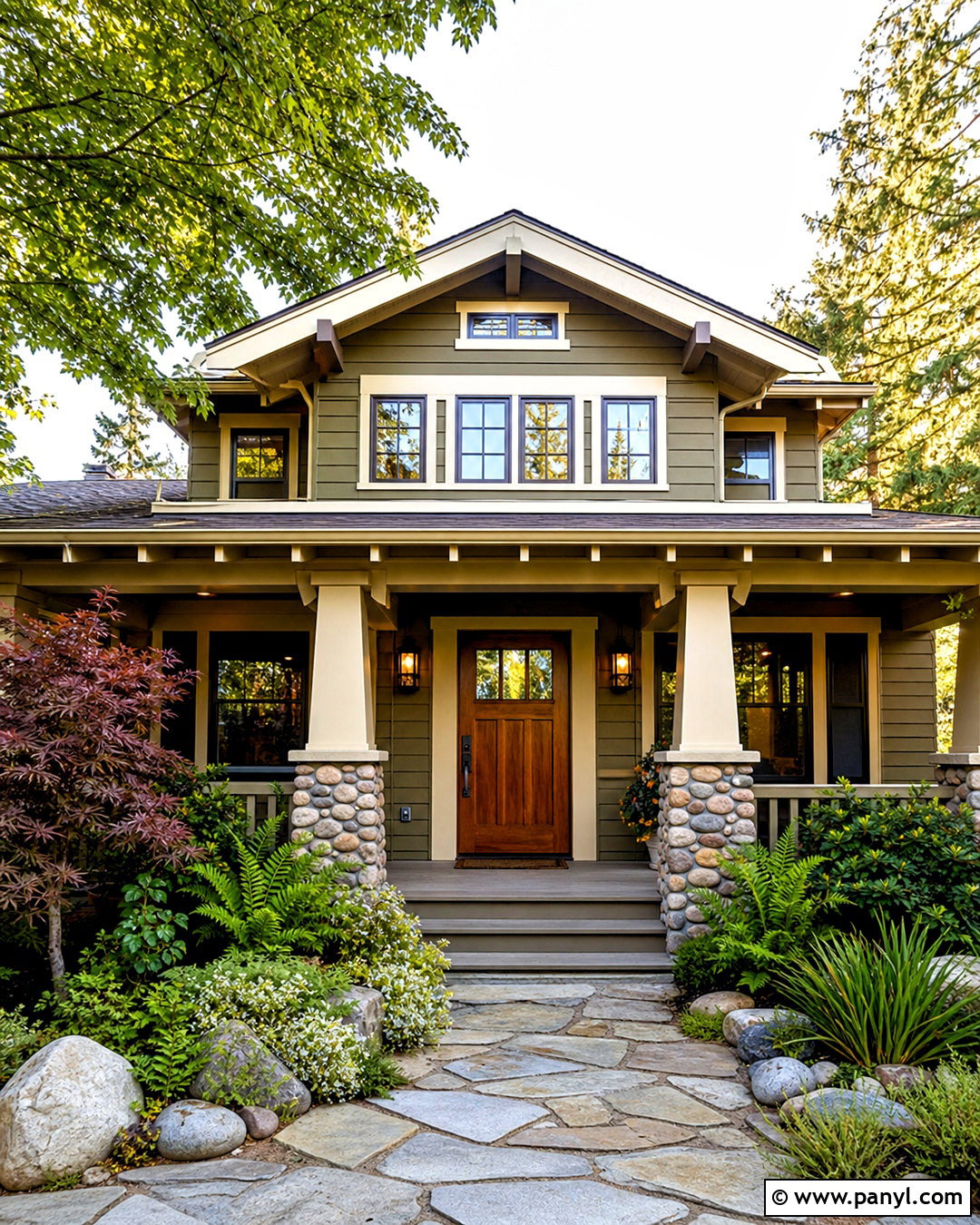
Rich materials and visible structure give a Craftsman facade its welcoming personality. Choose olive green or earthy taupe horizontal siding, then add creamy trim beneath broad roof eaves. Build tapered porch columns on substantial river-rock or stacked-stone bases. The stone should also appear along the foundation so the porch feels connected to the entire home. A quarter-sawn oak door with small upper windows creates a strong focal point, supported by dark bronze lanterns and matching hardware. Use divided-light windows with simple trim rather than elaborate shutters. A flagstone walkway, Japanese maple, ferns, and layered native shrubs complement the natural palette. The completed design should feel sturdy and handcrafted, with every material repeated enough to look architecturally purposeful.
7. Coastal House Front In Soft Blue
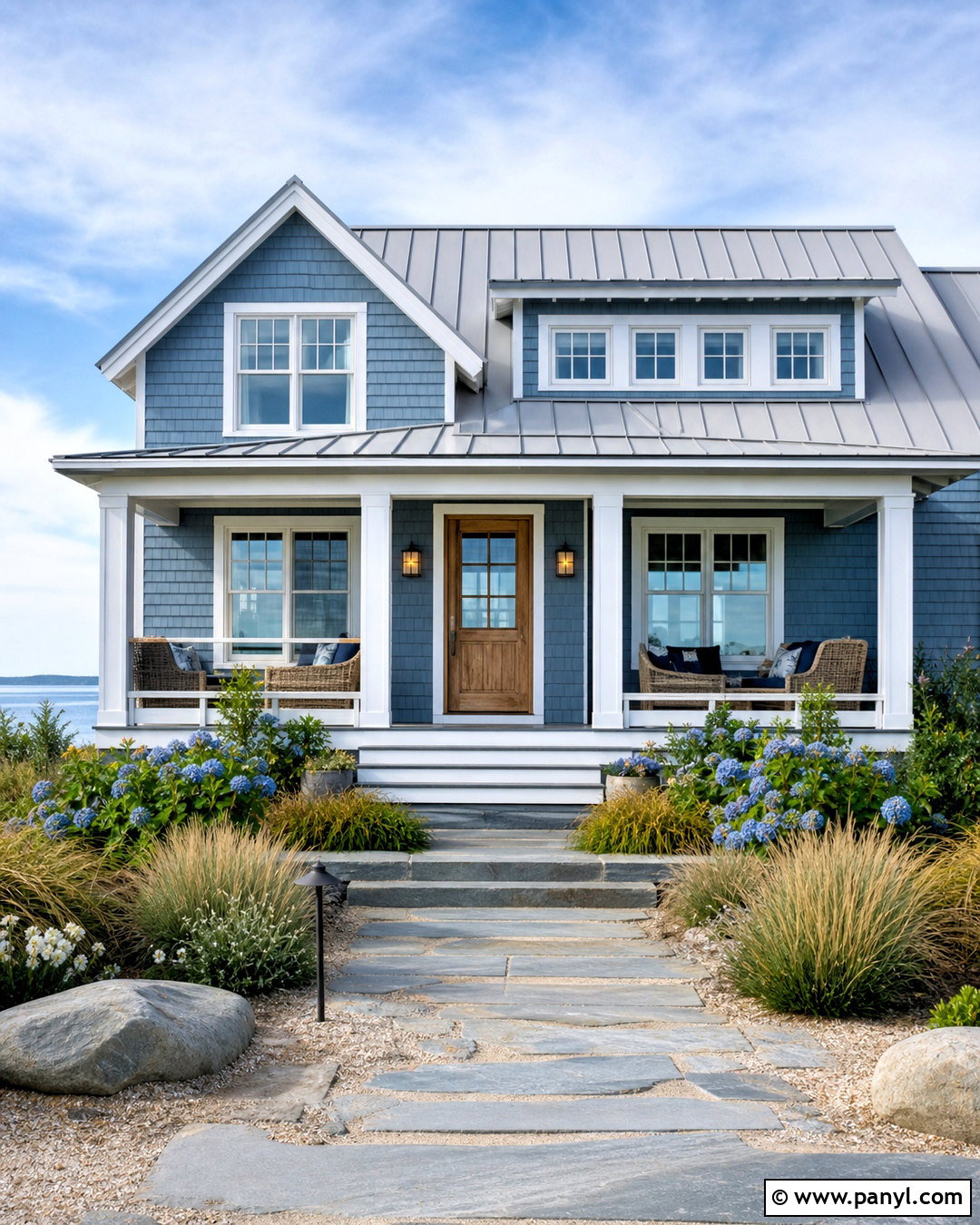
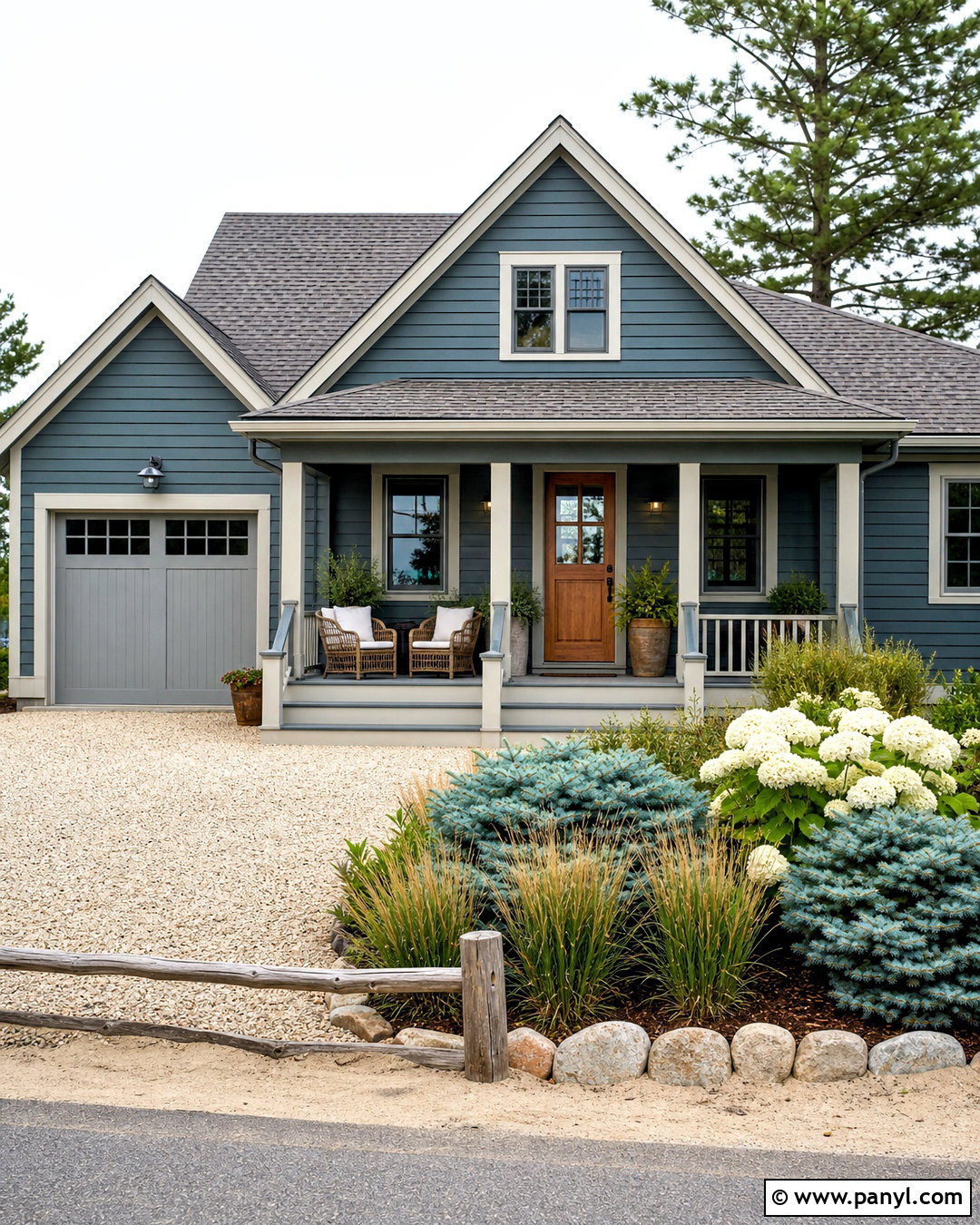
A relaxed coastal exterior can feel bright and timeless without relying on obvious nautical decorations. Cover the house in soft blue-gray shingles or horizontal siding, then use crisp white for the trim, porch railing, columns, and window frames. A weathered cedar front door introduces natural texture, while a pale gray metal roof keeps the palette airy. Create a broad front porch with woven lounge chairs, navy and cream cushions, and simple ceramic planters. For the landscape, combine sandy gravel, bluestone pavers, ornamental grasses, hydrangeas, and salt-tolerant evergreen shrubs. Keep the planting loose but organized. This full house front design is particularly effective on cottages and two-story homes with symmetrical windows, generous eaves, and an easy connection between the porch and front garden.
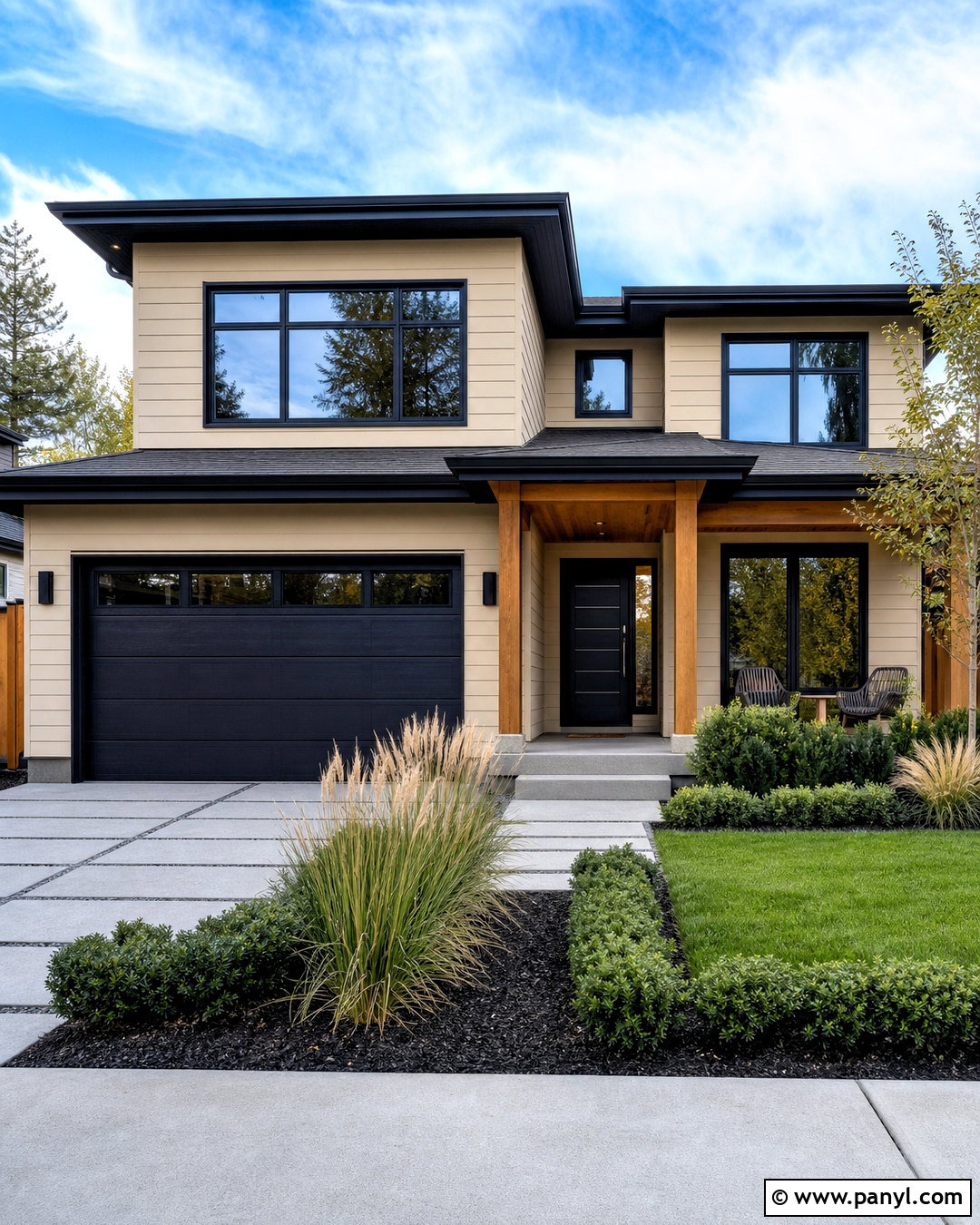
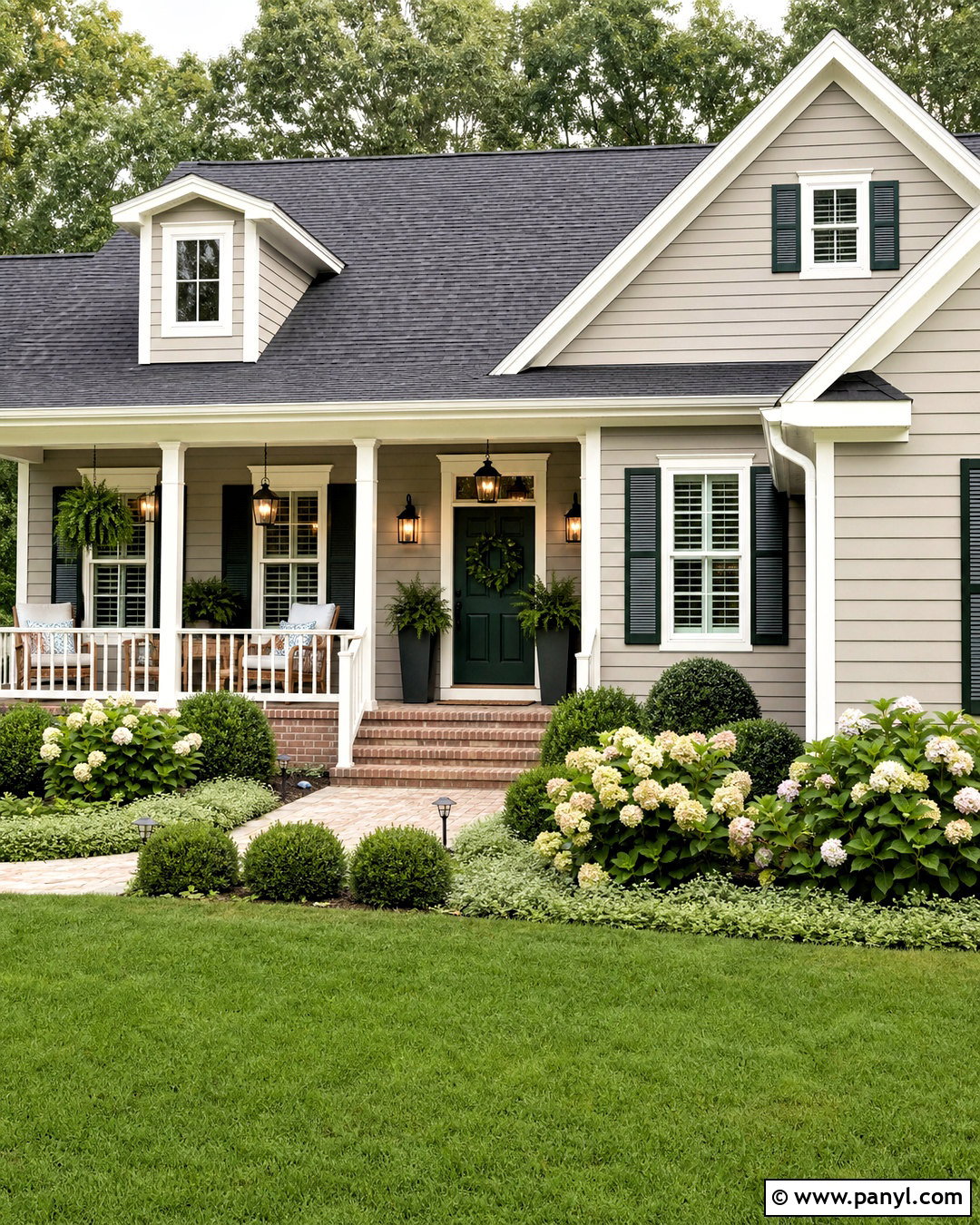
8. Mediterranean House Front With Arches
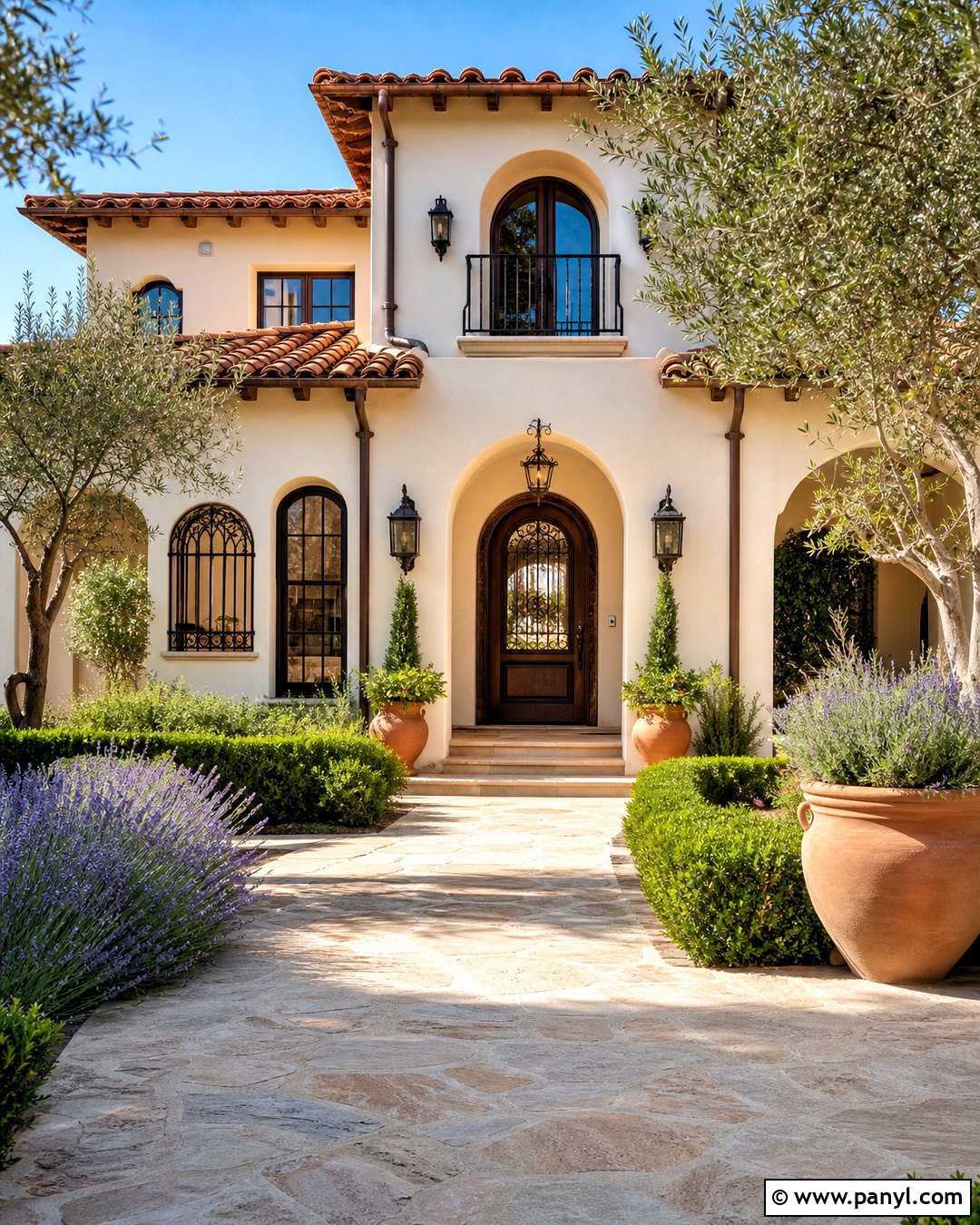
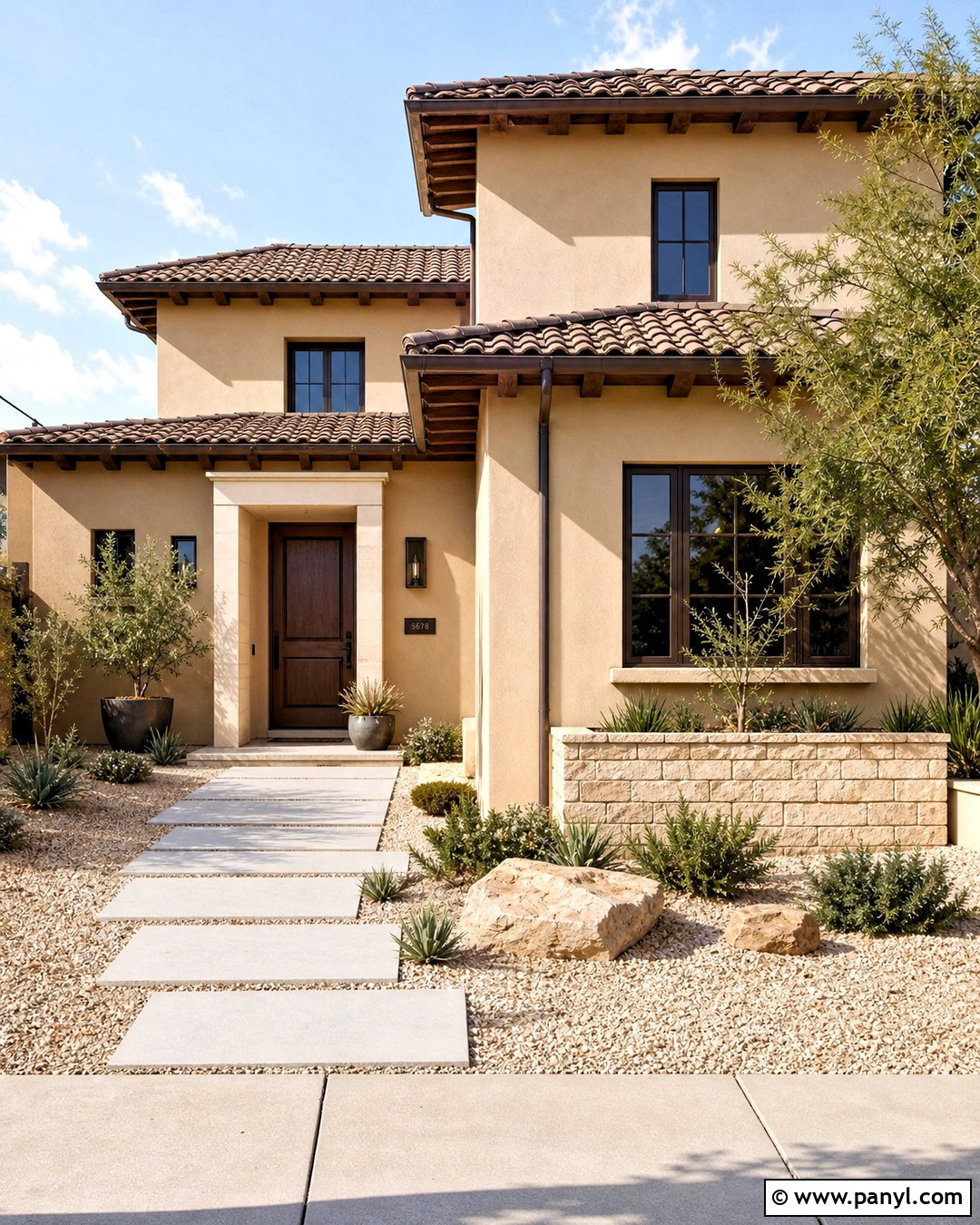
Sun-washed color, curved openings, and textured materials can give the facade an inviting Mediterranean character. Apply warm ivory stucco across the main walls and use terracotta barrel tiles on the roof. Frame the entry with a deep rounded arch containing a dark walnut door and small decorative iron grille. Repeat the arch shape over selected windows or along a covered porch, but avoid using it everywhere. Bronze lanterns, dark window frames, and a modest wrought-iron balcony add contrast. Finish the approach with warm limestone paving and large clay pots planted with rosemary or citrus. Drought-tolerant lavender, olive trees, and clipped shrubs soften the architecture. Together, these features create a complete house front that feels warm, established, and suitable for sunny settings.
9. Minimalist House Front In White And Gray
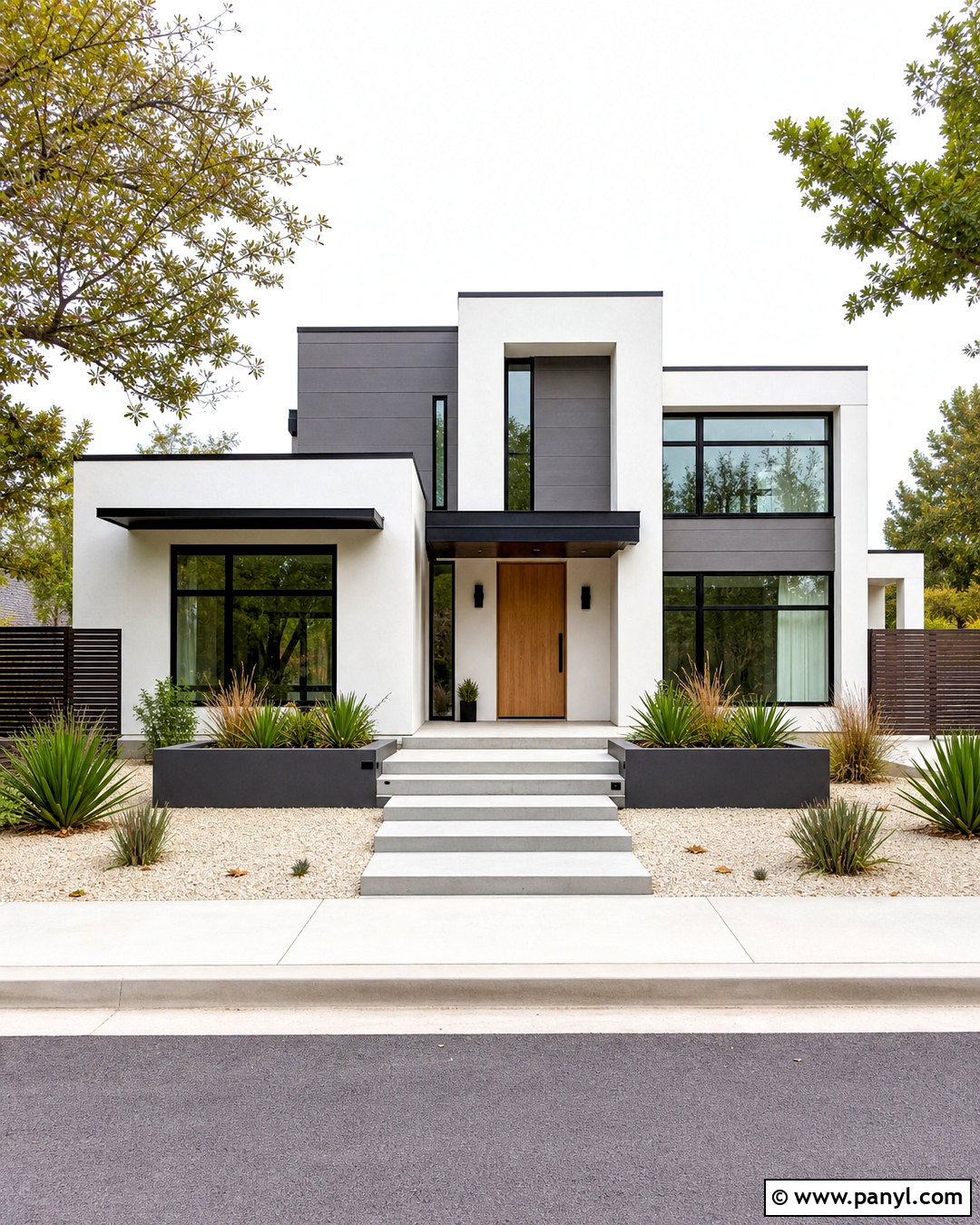
Clean simplicity requires careful proportion because there are fewer decorative elements to distract the eye. Use bright white stucco on the larger volumes and medium gray fiber-cement panels on a smaller projecting section. A flush natural oak front door can provide the only strong warm note. Select black-framed windows with minimal trim, flat metal canopies, and discreet linear wall lights. Continue the simple geometry into the front yard with broad concrete steps, rectangular planters, pale gravel, and low blocks of ornamental grass. Hide utilities and trash storage behind matching slatted screens. The garage door should blend into the gray section rather than become a separate focal point. This coordinated house front looks refined because color changes emphasize the building’s form instead of functioning as random decoration.
10. Traditional House Front With Shutters
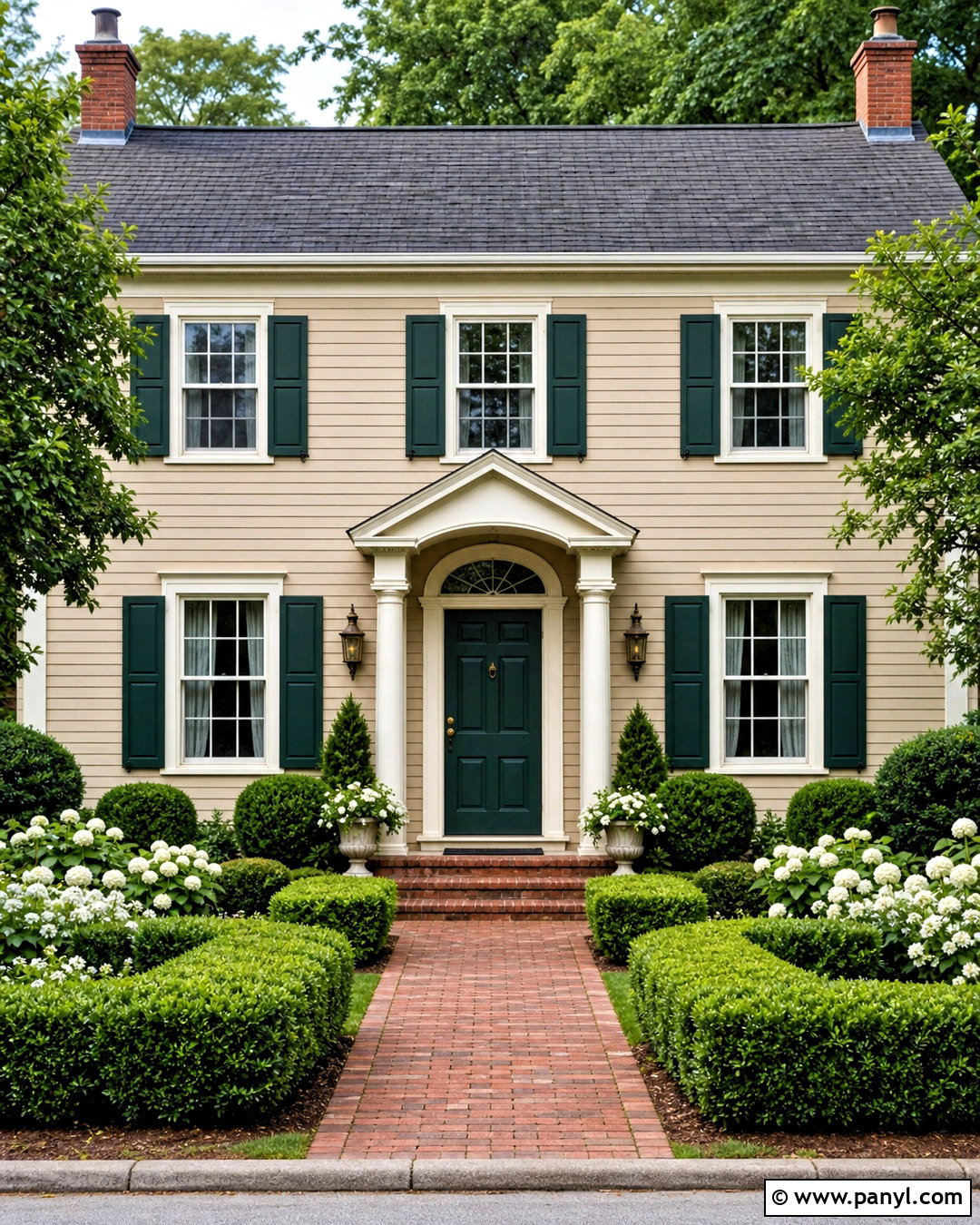
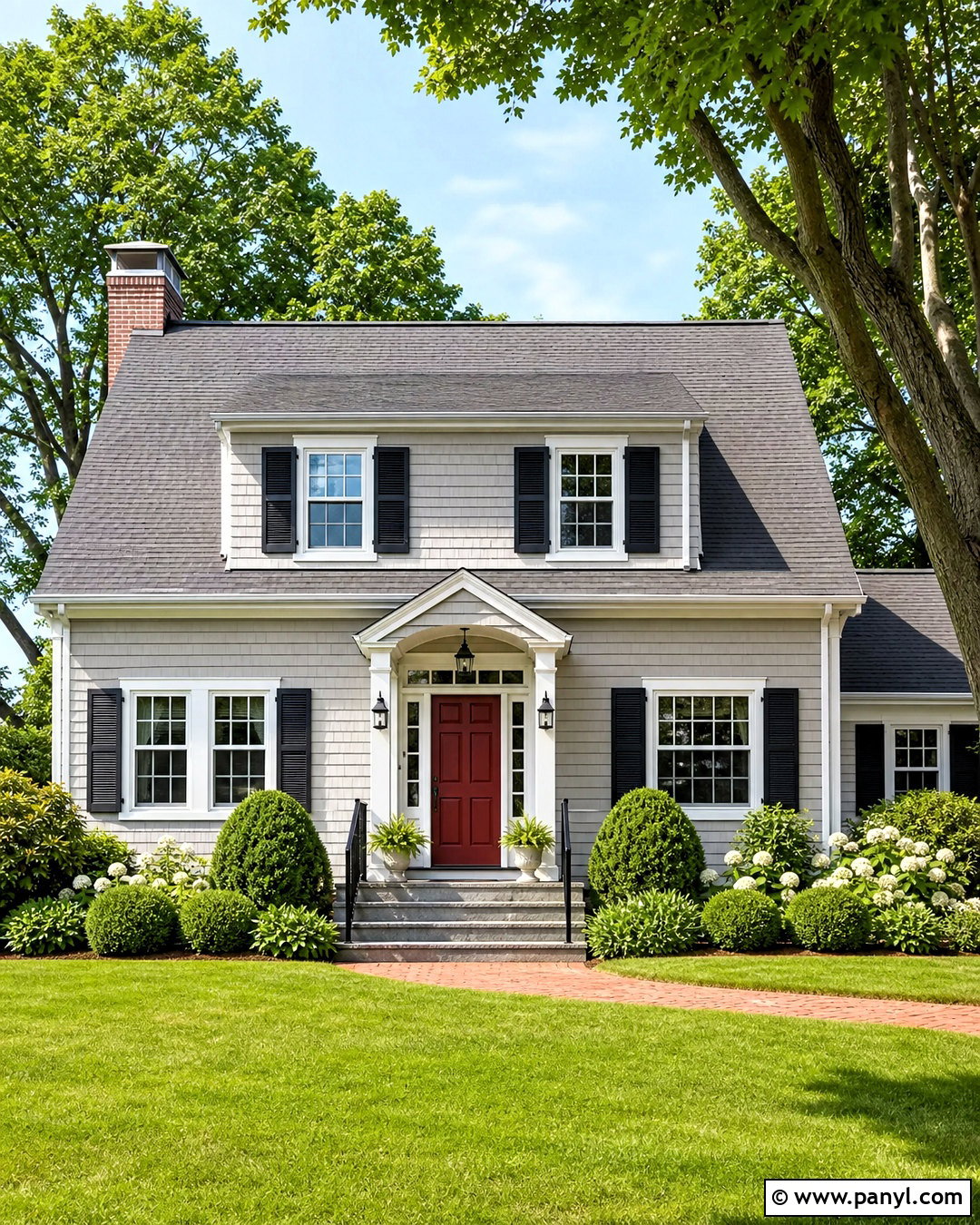
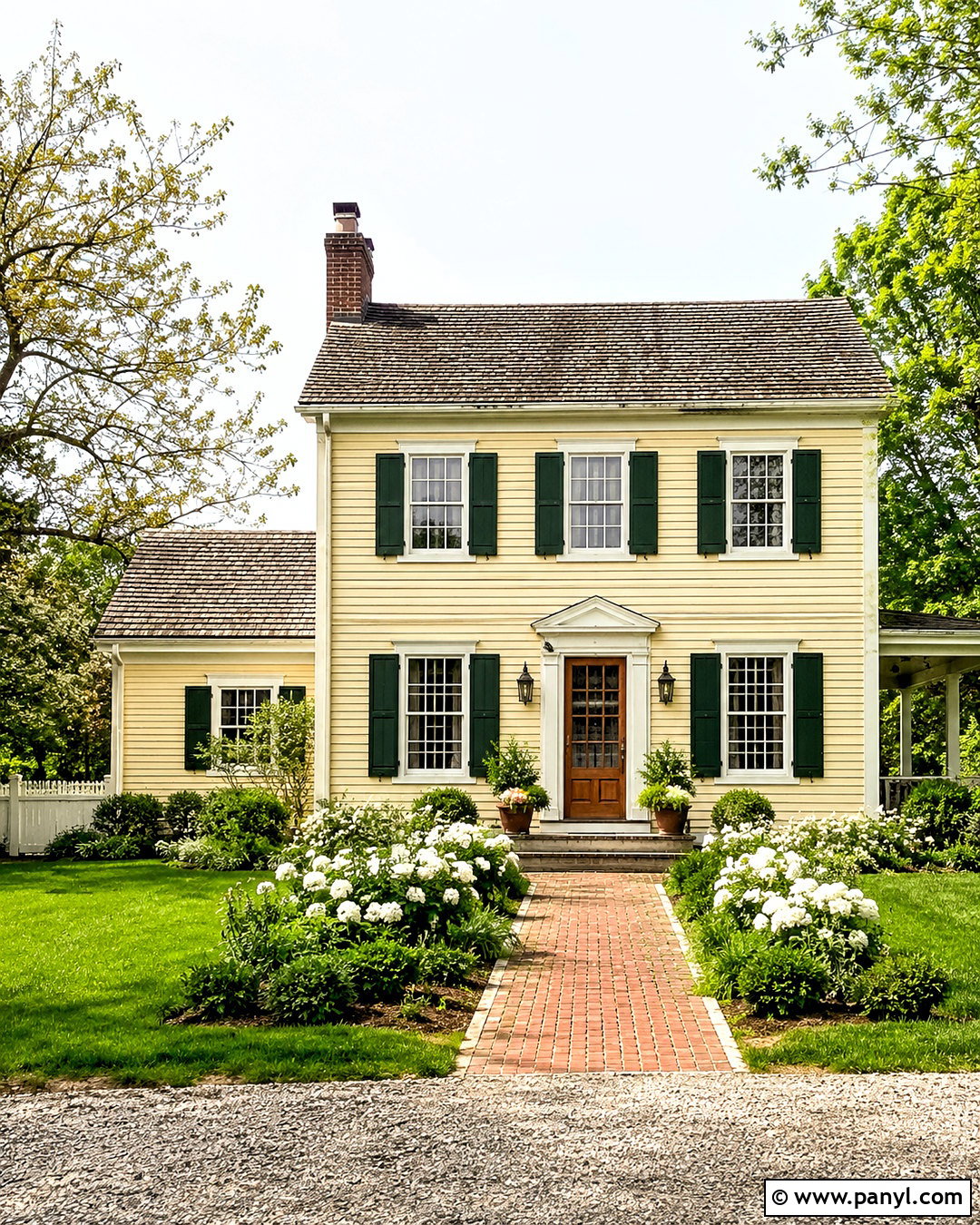
Symmetry and familiar details make a traditional facade feel calm, welcoming, and easy to understand. Paint the siding a soft warm beige or light taupe, then use creamy white on the cornice, window trim, porch, and columns. Add properly proportioned deep green shutters that visually fit each window opening. A centered six-panel door in the same green creates a clear focal point beneath a classic pediment or modest covered entry. Choose aged brass hardware and lanterns for gentle warmth. A brick walkway can run directly from the sidewalk to the front steps, bordered by symmetrical boxwood hedges and white flowering shrubs. Keep the roof medium charcoal or weathered brown. This complete composition works because the windows, entrance, path, and landscaping all reinforce the home’s balanced architecture.
11. Midcentury Modern House Front
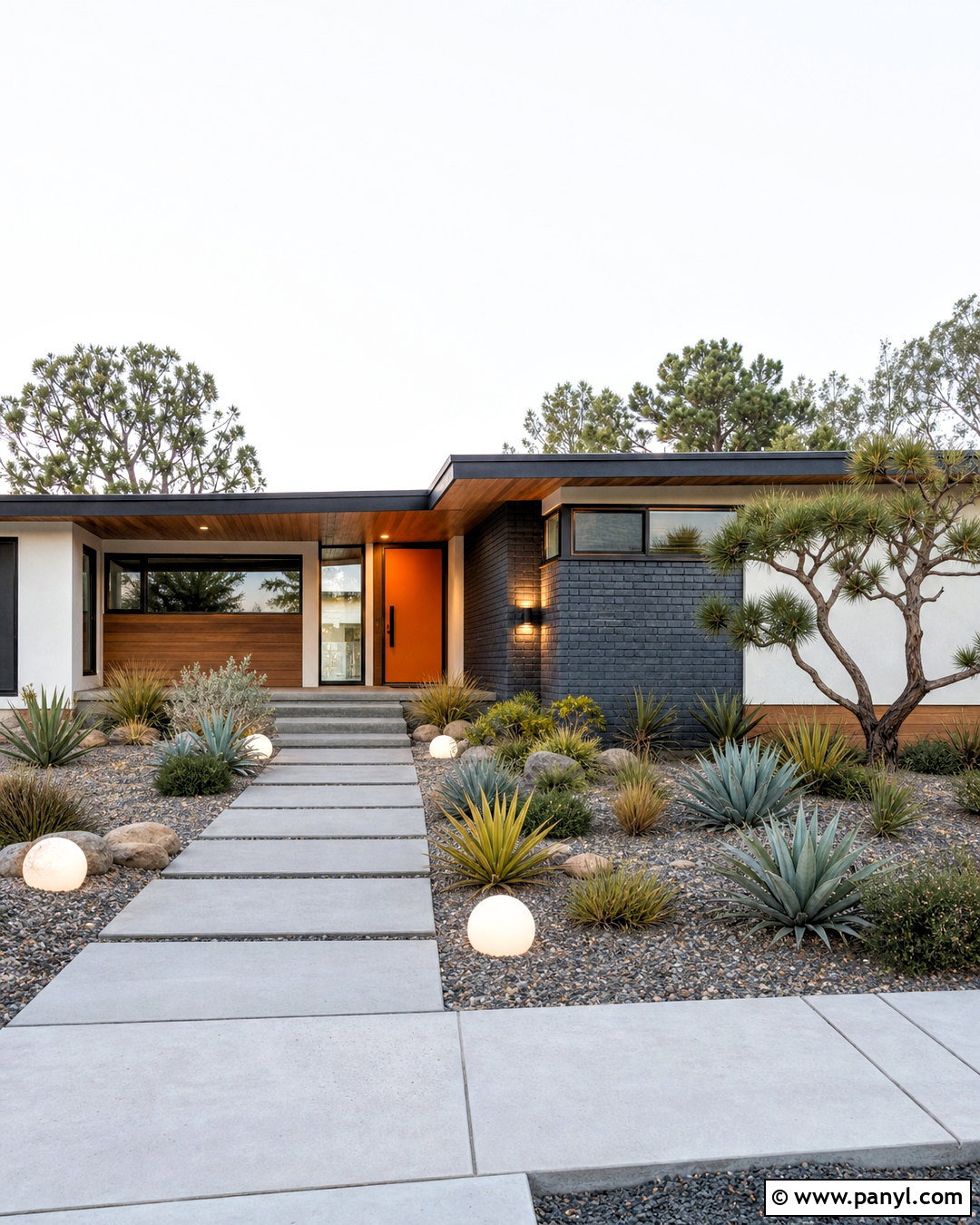
Long horizontal lines and natural materials can refresh a ranch or low-profile home with midcentury character. Use warm white stucco alongside sections of medium-tone cedar siding and charcoal brick. Replace overly ornate trim with simple dark bronze window frames and a broad wood front door in burnt orange or muted mustard. A low-pitched roof with deep overhangs should remain visually prominent. Build an open concrete walkway leading through gravel beds planted with agave, yucca, feather grass, and rounded shrubs. One sculptural tree can balance the low roofline. Add globe or cone-shaped exterior lighting inspired by the period, but keep the number of fixtures limited. The resulting house front feels authentic because the architecture, landscaping, color, and decorative details share the same clean, horizontal emphasis.
12. Cottage House Front With Flower Beds
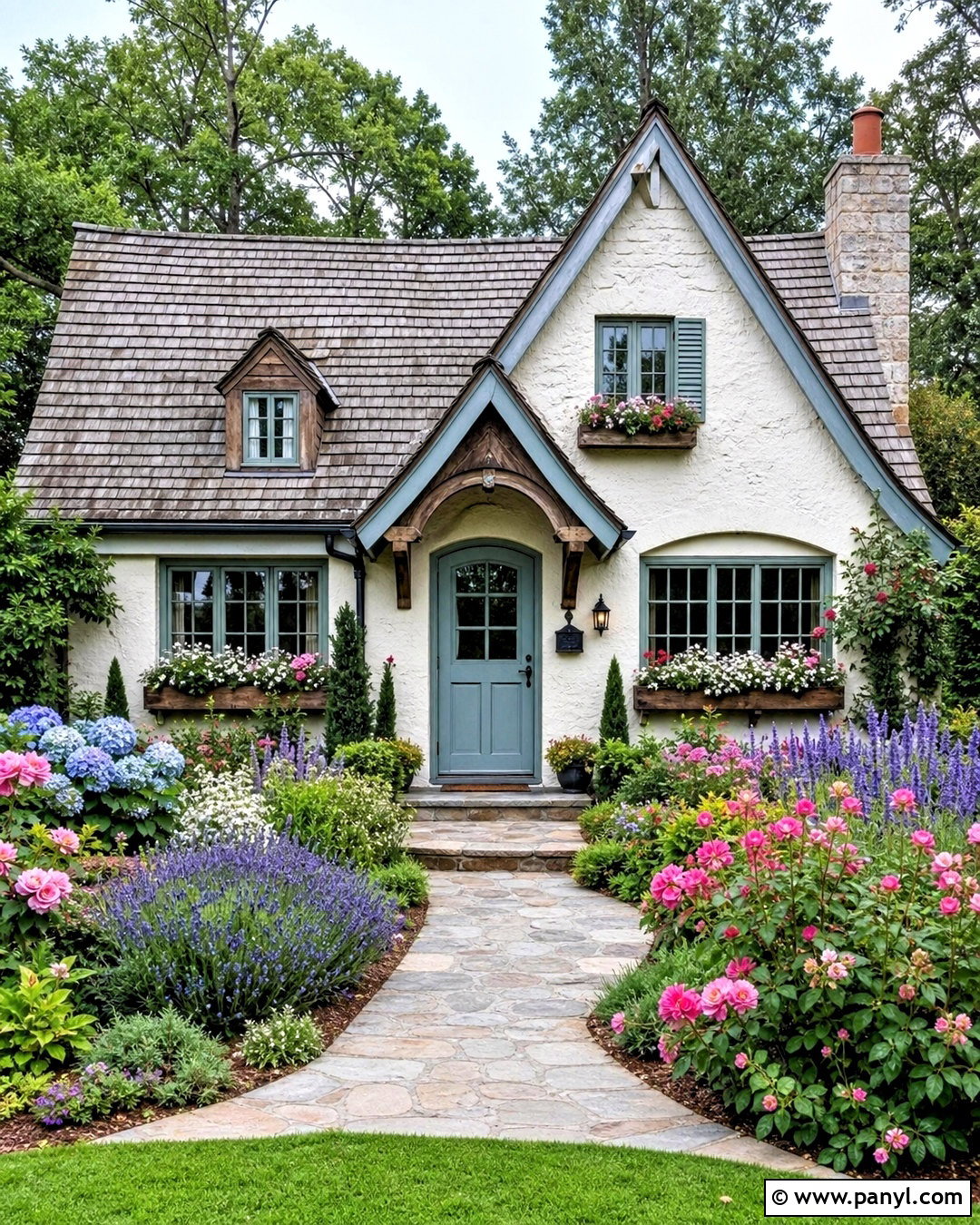
Imagine approaching a small home framed by flowers, textured stone, and a softly painted entrance. Use creamy white stucco or pale gray siding with a weathered cedar-shingle roof. Highlight the front door in dusty blue, sage green, or muted coral, then surround it with simple white trim. A small gabled canopy with wood brackets will shelter the entry without overwhelming the facade. Add divided-light windows and compact window boxes filled with trailing greenery. A gently curved stone path should pass through layered beds of roses, salvia, lavender, hydrangeas, and evergreen foundation plants. Keep taller plants away from windows and steps. This complete cottage house front looks charming because the garden supports the architecture while leaving the door, roofline, and windows clearly visible.
13. Dark House Front With Natural Wood
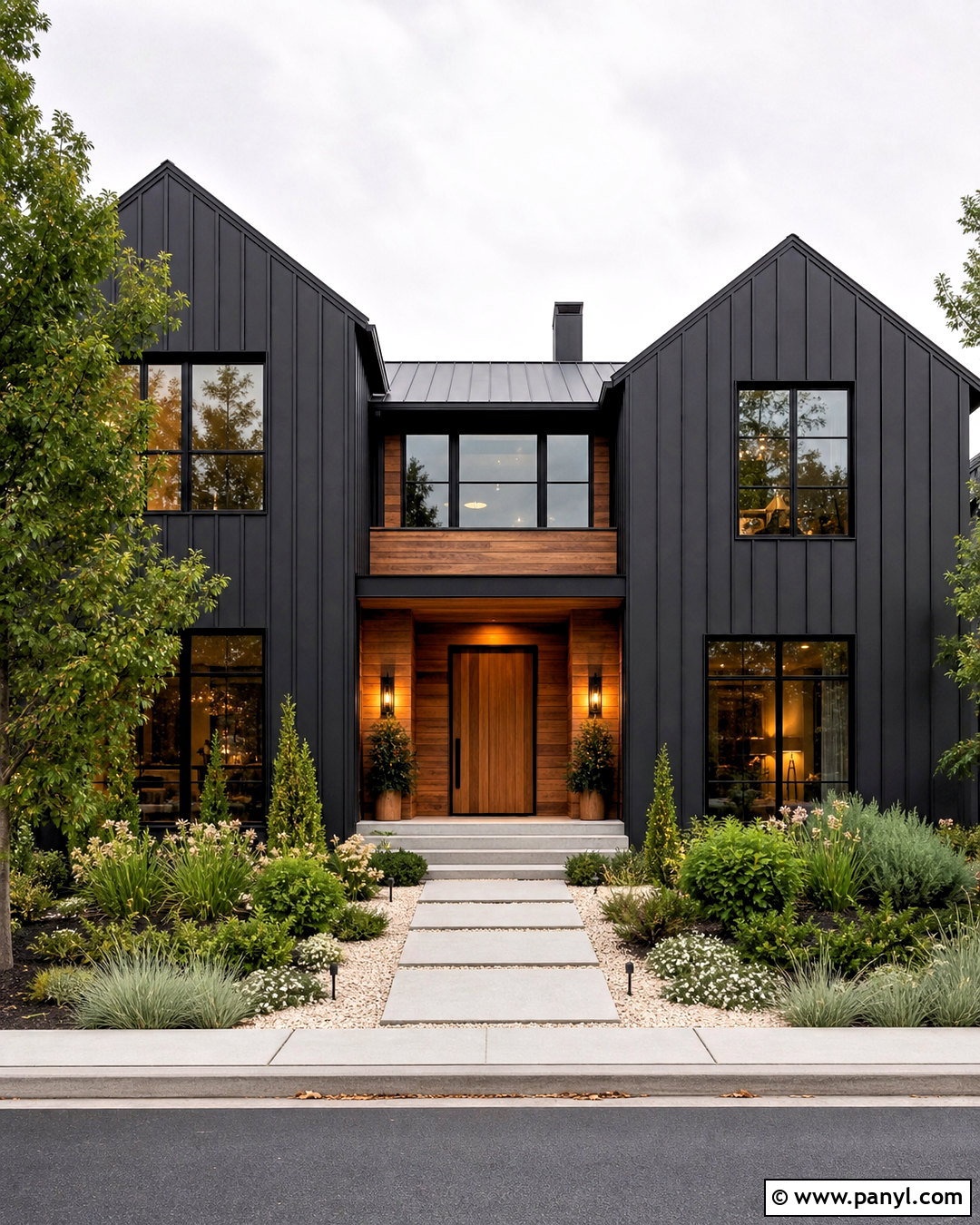
A dark exterior can look dramatic and welcoming when warm materials and bright landscaping prevent it from becoming visually heavy. Choose deep charcoal or near-black vertical siding for the main facade. Use natural cedar around the entrance, beneath the porch ceiling, and on selected privacy screens. Black windows can blend quietly into the siding, allowing a wide wood door and pale stone steps to stand out. Install warm metal sconces with simple shapes and use a medium-gray roof rather than an equally black surface. The front garden should contain plenty of green foliage, white flowers, ornamental grasses, and light gravel. Broad concrete pavers can create a clear path. This full house front scheme is bold, but the repeated wood and pale ground materials maintain balance.
14. Tudor House Front With Updated Colors
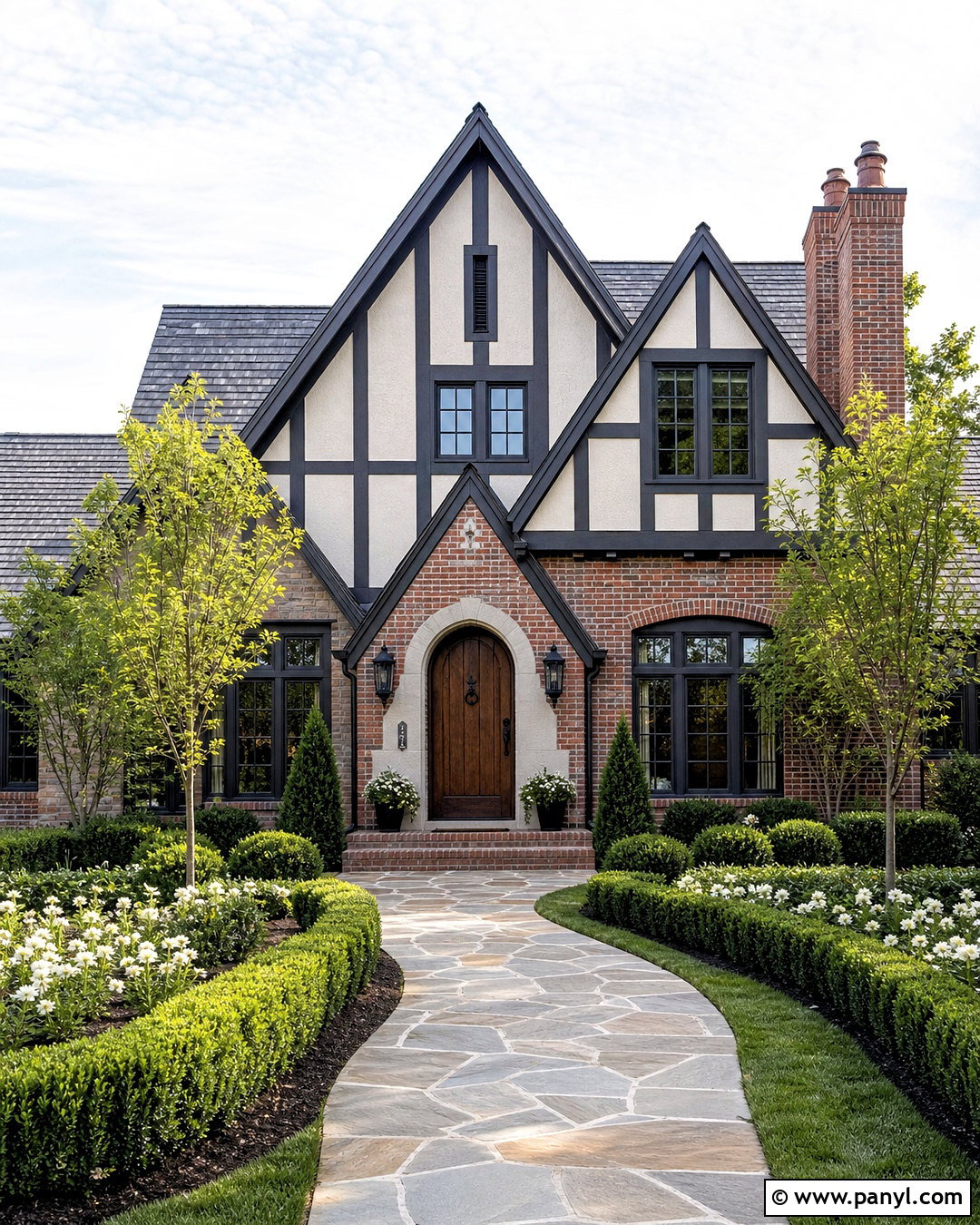
Bring an older Tudor facade forward without removing the features that give it character. Paint the stucco a warm off-white and refinish the half-timber details in deep brown, charcoal, or muted black. Keep natural red brick around the lower walls or chimney, cleaning and repairing it instead of covering it automatically. A dark oak arched front door with black iron hardware reinforces the architecture. Select bronze leaded-glass windows or dark casement frames, then use warm gray roofing that complements both brick and timber. A curved flagstone path, clipped yew hedges, small ornamental trees, and loose white flowers create an English-inspired foreground. The entire house front should look updated but recognizable, with restrained colors allowing the steep gables and handcrafted details to remain central.
15. Split-Level House Front With Mixed Materials
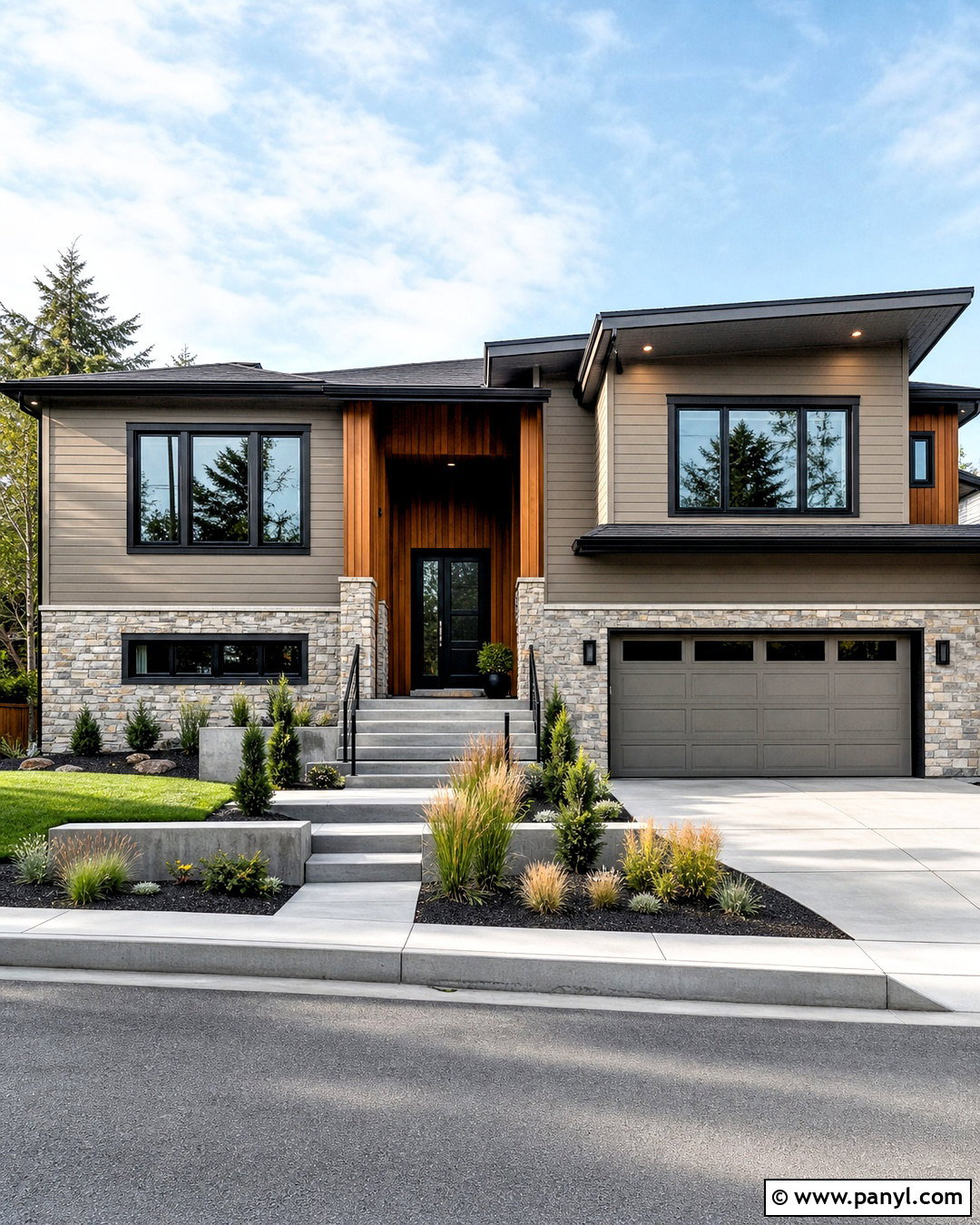
A split-level home often benefits from stronger connections between sections of different heights. Unify the main walls with warm greige siding, then place light natural stone on the lowest level and vertical cedar around the recessed entrance. Use charcoal trim and window frames to outline the architecture consistently. A wider front landing with simple black railings can make the entry easier to see from the street. Replace a narrow path with broad concrete slabs that follow the change in elevation through shallow planted terraces. Compact evergreens, ornamental grasses, and one small tree will soften the levels without hiding them. Match the garage door to the siding so it recedes. This complete treatment turns the home’s staggered shape into an intentional design feature instead of something that needs disguising.
16. Ranch House Front With Wide Landscaping
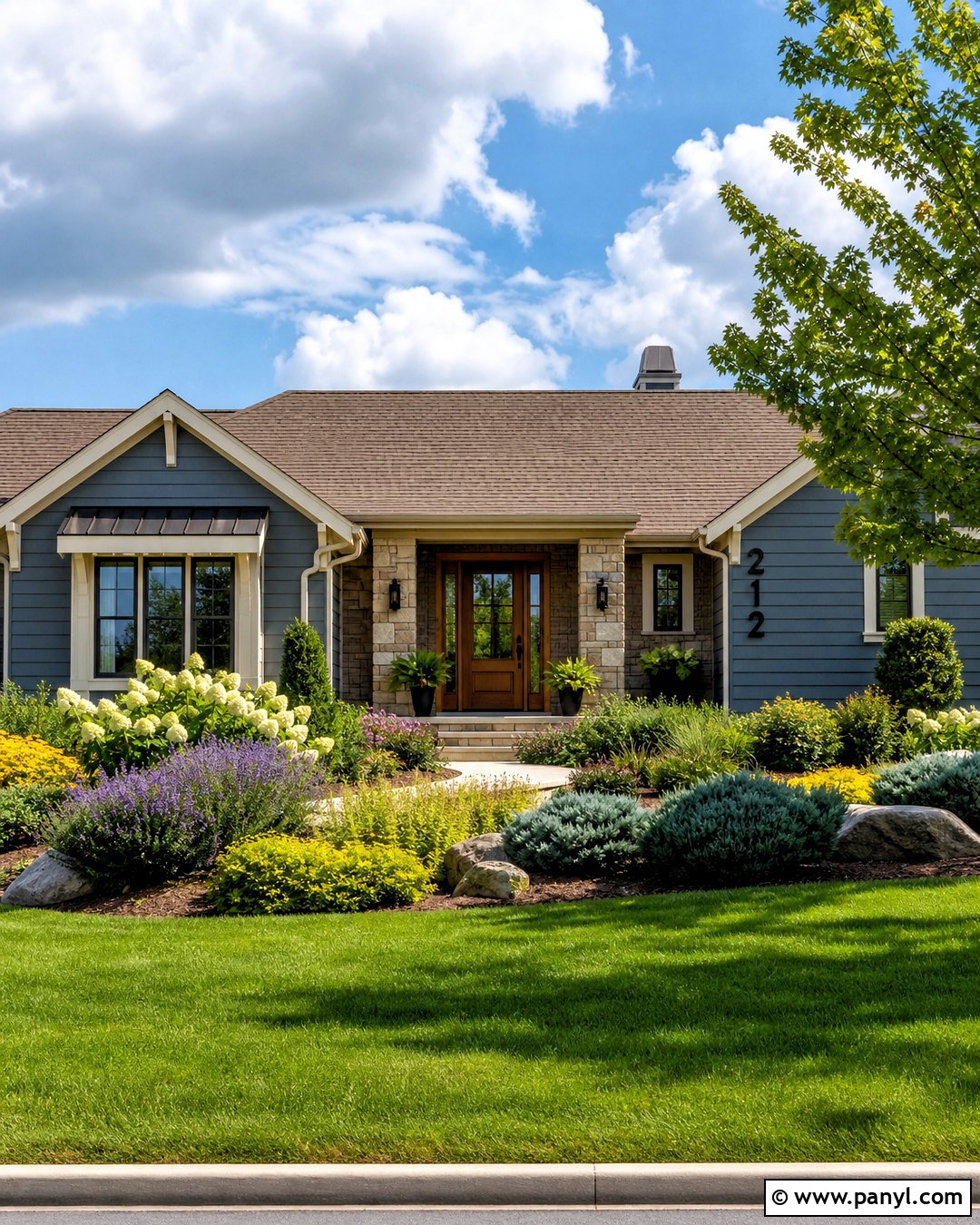
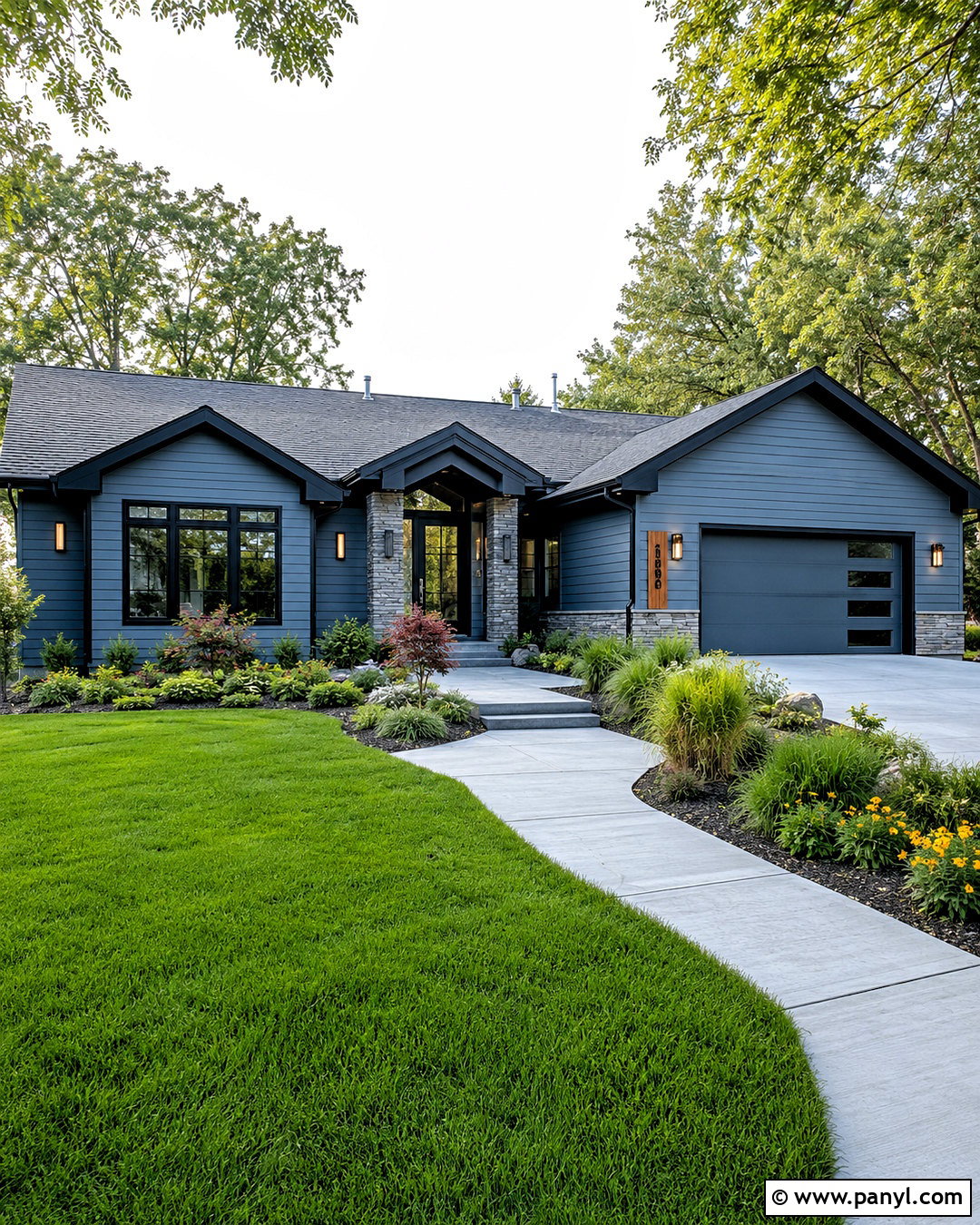
A long, low ranch facade looks more balanced when the landscaping follows its horizontal proportions. Choose muted blue-gray or warm taupe siding with creamy trim and a medium-brown roof. Place natural stone around the entrance or chimney to create one strong focal area. A wood door, wide porch light, and oversized house numbers will make the entry easier to identify across the broad elevation. Run a gently curved walkway through a deep planting bed rather than placing a narrow path against the building. Repeat clusters of ornamental grasses, flowering shrubs, low evergreens, and ground cover across the front. Leave open areas beneath windows. With consistent materials and wide planting masses, the completed house front feels grounded, organized, and more visually substantial.
17. Spanish House Front With A Courtyard
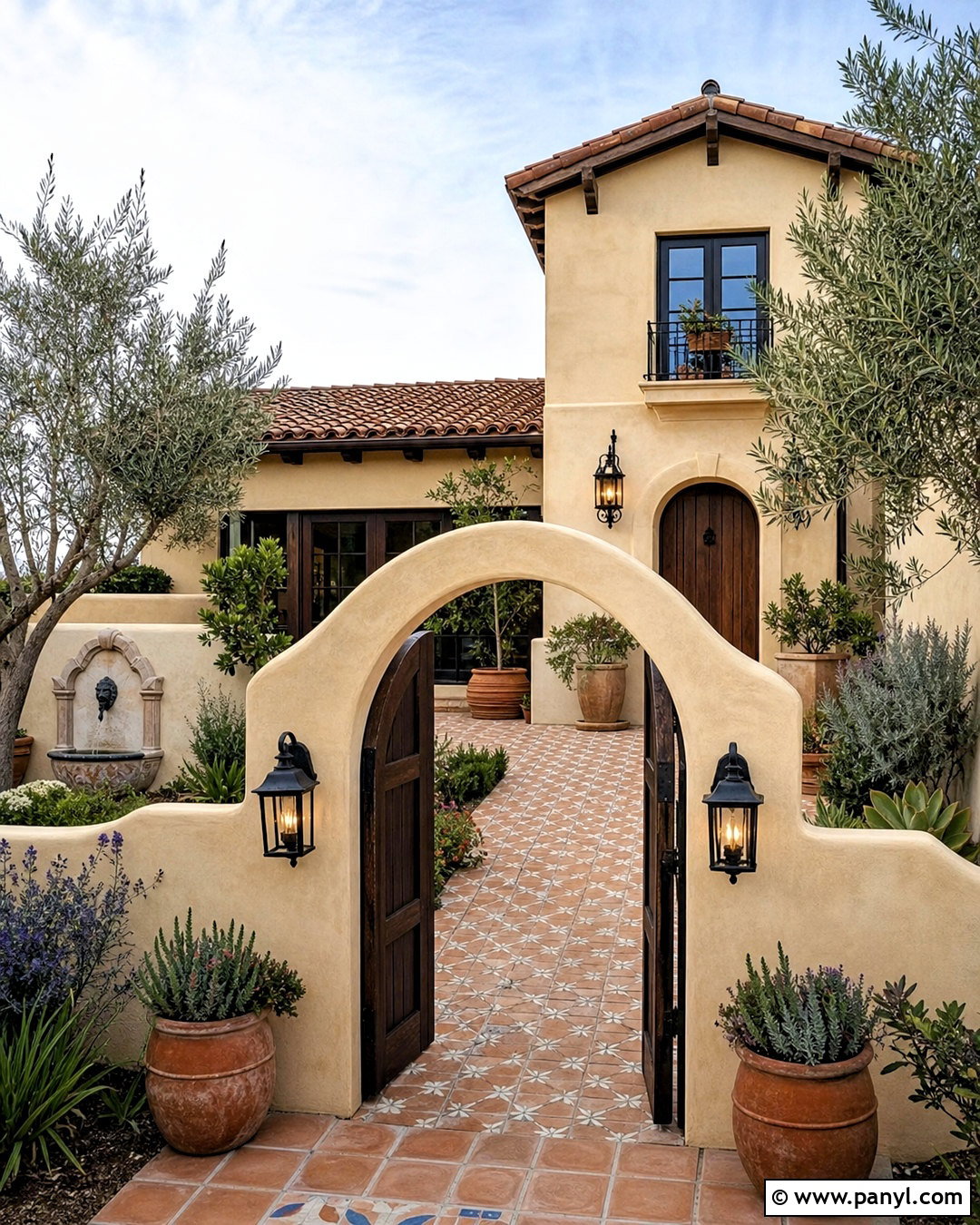
A small entrance courtyard creates privacy, depth, and a memorable approach to a Spanish-inspired home. Use creamy sand-colored stucco with a terracotta tile roof and dark wood window frames. Build a low stucco wall around the courtyard, finished with warm clay coping tiles and an arched wood gate. Inside, arrange a patterned tile path leading to a heavy walnut front door beneath a recessed arch. Add wrought-iron lights, a simple wall fountain, and large terracotta planters. Olive trees, bougainvillea, lavender, and sculptural succulents complete the garden without requiring a formal lawn. Repeat the same tile, iron, and wood tones across the house front. The enclosed approach makes even a modest facade feel layered, intimate, and architecturally complete.
18. Two-Story House Front With Balanced Windows
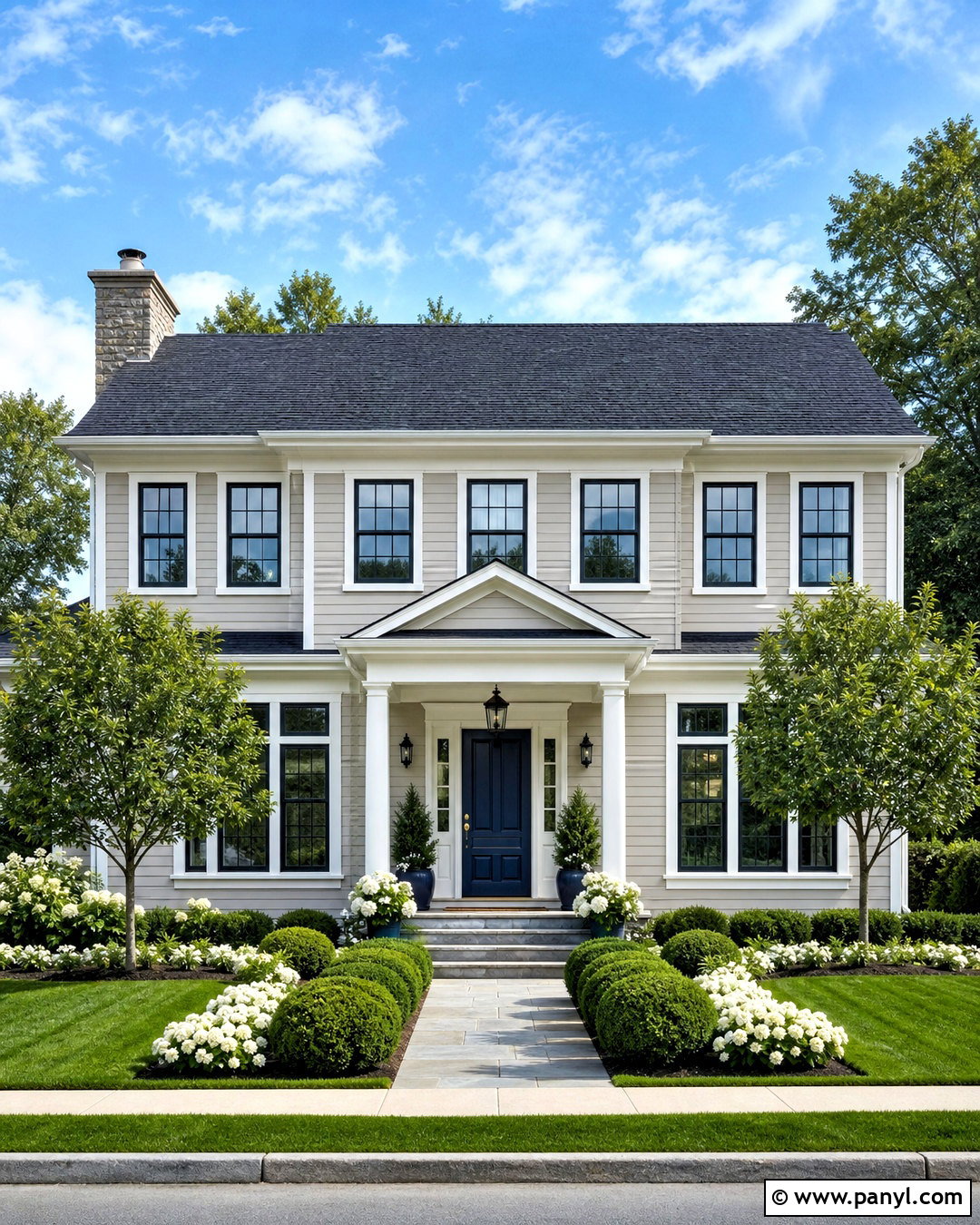
Tall facades can feel imposing unless their windows, entry, and landscaping are organized into a clear composition. Use light greige siding or pale brick across both stories, with crisp white trim and a charcoal roof. Emphasize the center using a covered portico, double-height window grouping, or modest projecting gable rather than many unrelated accents. A rich navy or dark green front door creates focus at ground level. Keep window sizes consistent and align upper and lower openings whenever the existing structure allows. Two medium ornamental trees can frame the house without blocking it. Add symmetrical shrubs near the entry and broader planting beds toward the corners. A straight stone walkway reinforces the central axis, giving the entire two-story house front a calmer, more proportional appearance.
19. Rustic House Front With Stone And Timber
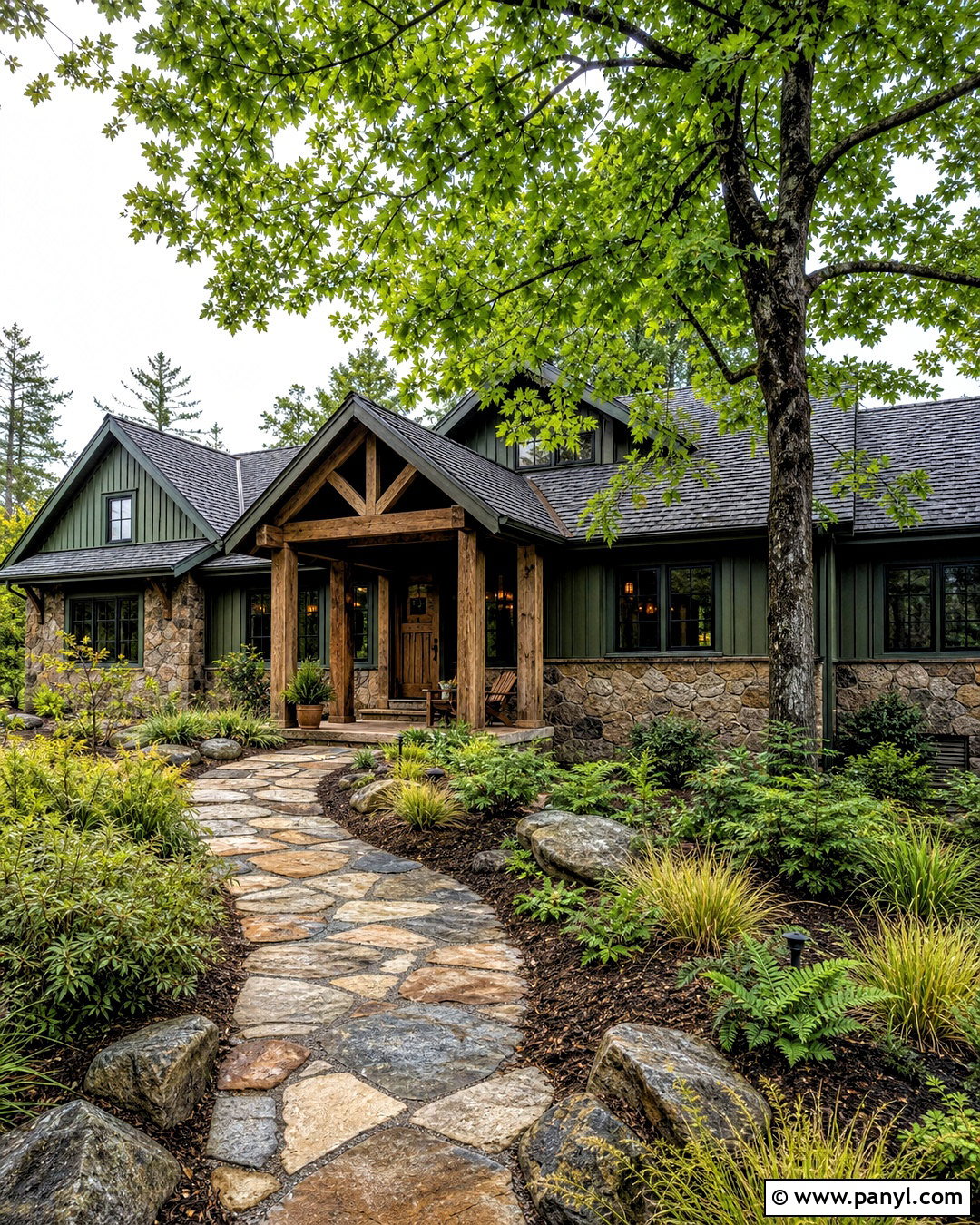
Natural stone and heavy wood create a rustic facade that feels convincing when the materials remain earthy and restrained. Cover the lower walls and chimney in irregular fieldstone, then use warm brown or muted forest-green siding above. Support a deep gabled porch with substantial stained timber posts and visible brackets. A solid plank door, black iron lights, and dark bronze windows strengthen the handcrafted character. Choose a weathered charcoal roof that does not compete with the stone variations. Complete the setting with an irregular flagstone path, native grasses, ferns, low evergreen shrubs, and one shade tree. Avoid overly polished finishes or decorative signs. This full house front design works best when the construction materials, landscape, and architectural proportions all share an honest, natural appearance.
20. Transitional House Front With Light Brick
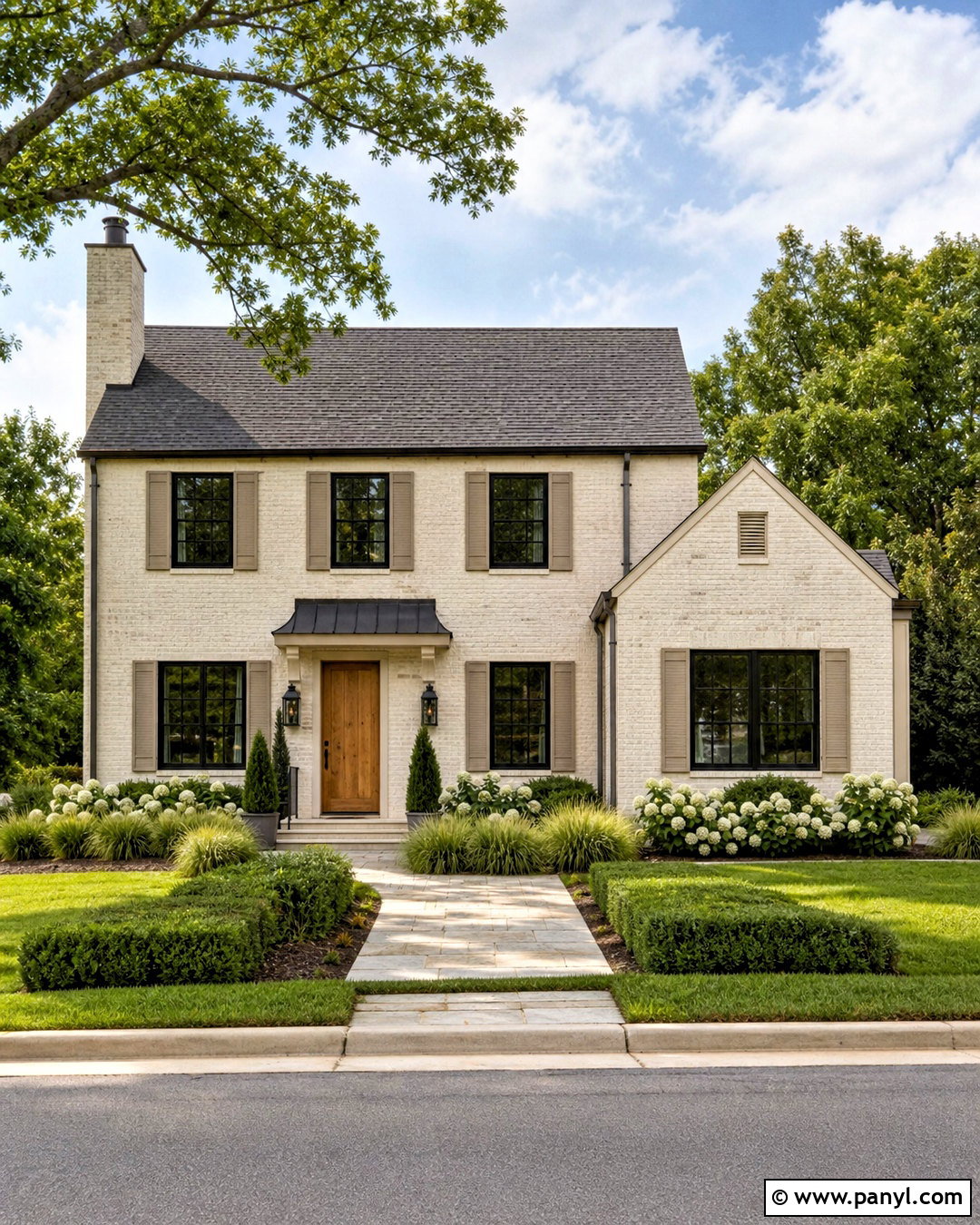
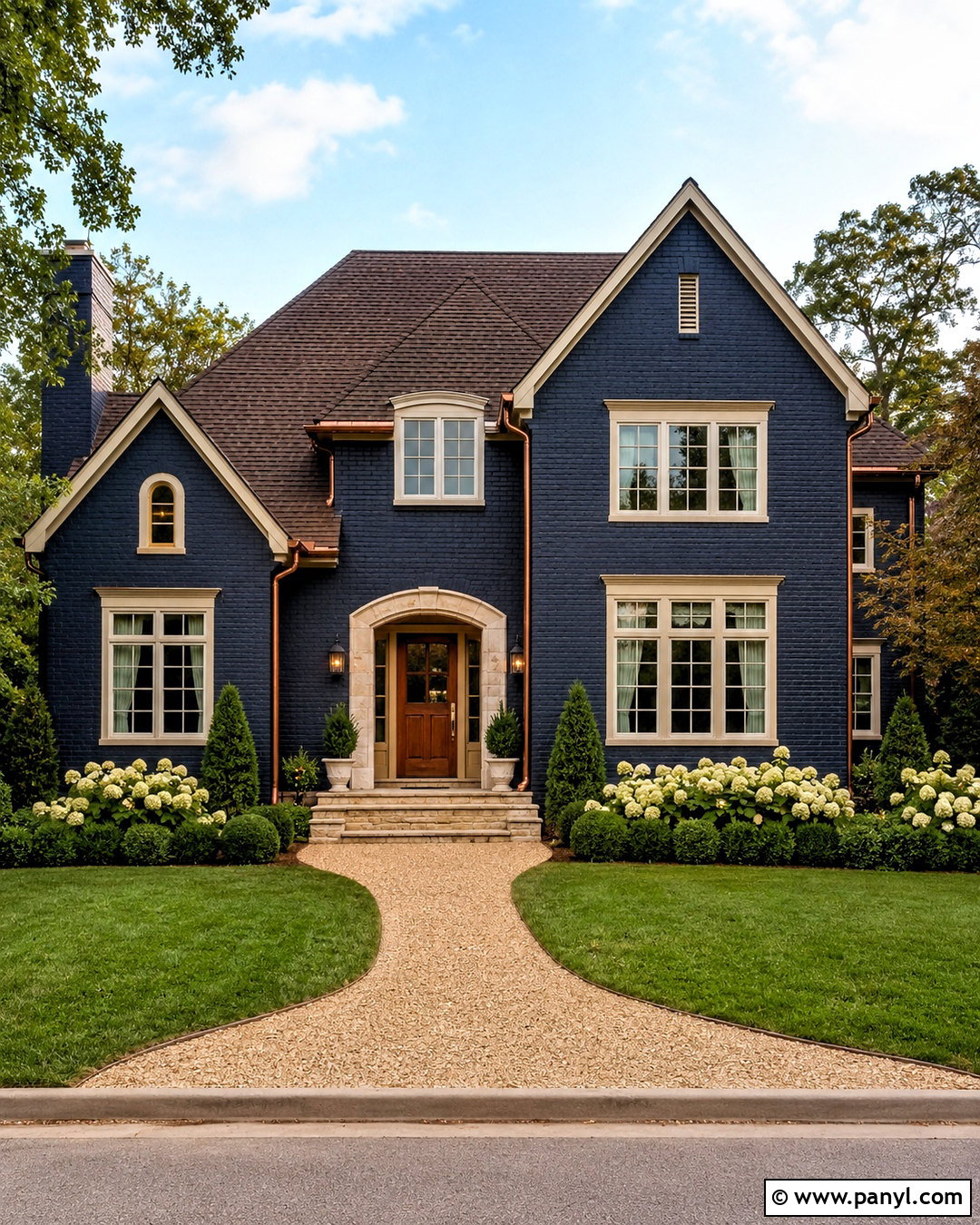
Transitional design offers a practical middle ground between traditional architecture and cleaner modern finishes. Choose pale limewashed brick or warm light-gray masonry for the main facade. Add simple black-framed windows, restrained creamy trim, and a medium-charcoal roof. The front entry can feature a natural oak door beneath a shallow black metal canopy, combining warmth with a crisp outline. If the house has shutters, use streamlined versions in a muted taupe that blend with the brick rather than creating extreme contrast. Large limestone pavers, clipped evergreen shrubs, white hydrangeas, and soft grasses will create an orderly but relaxed foreground. Keep ornaments limited and repeat finishes across the lights, railings, and house numbers. The completed house front feels familiar, current, and comfortably suited to many neighborhoods.
Conclusion:
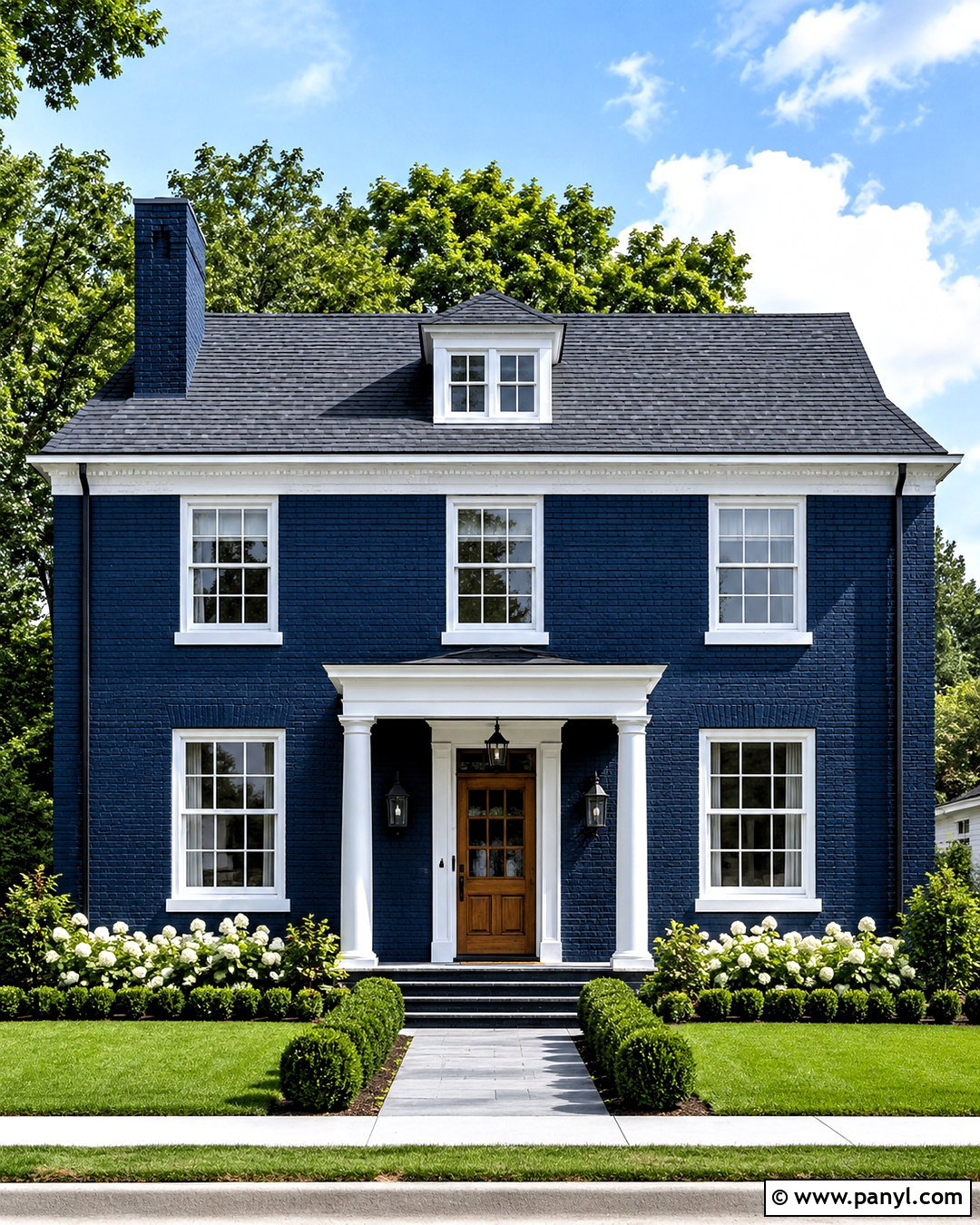
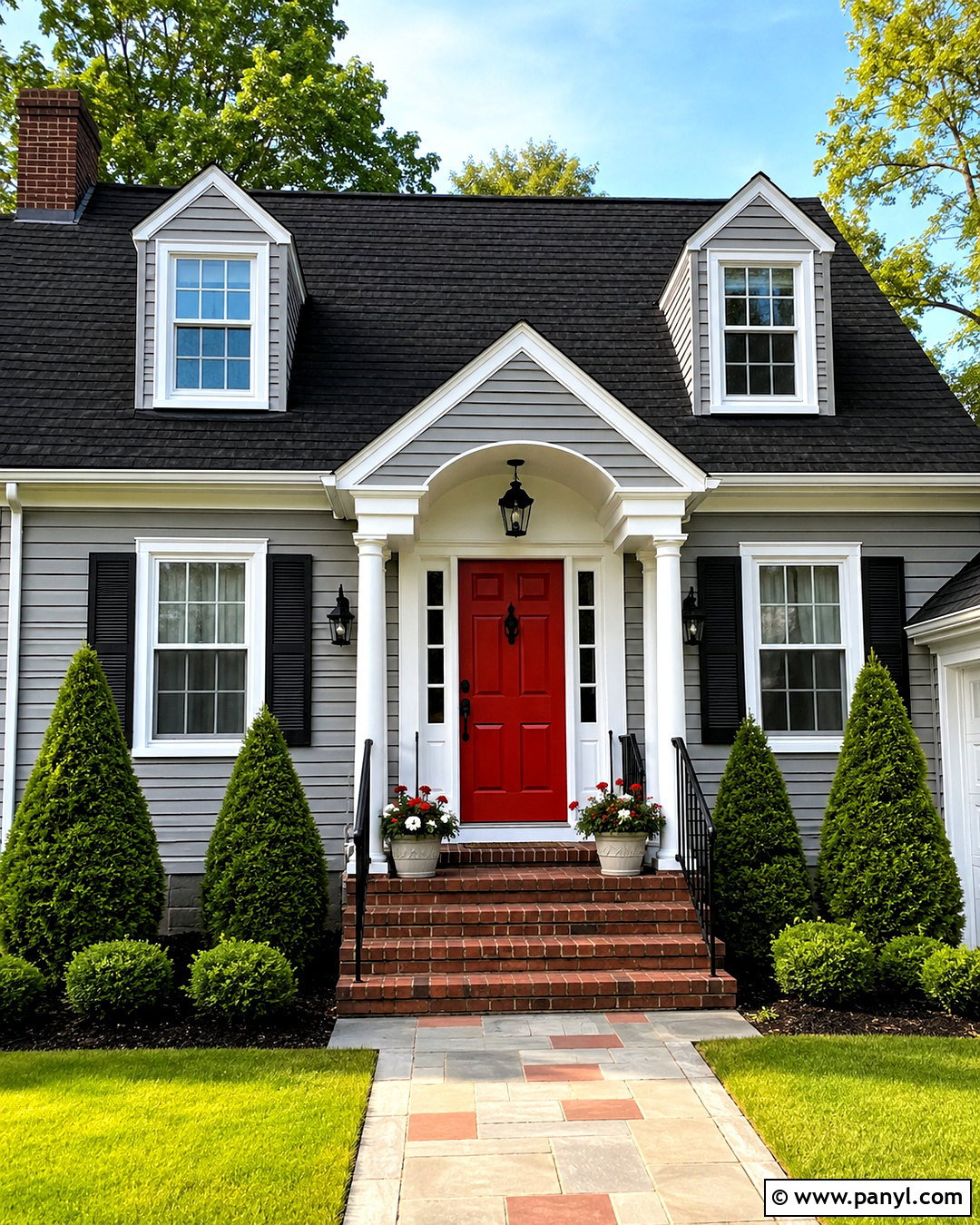
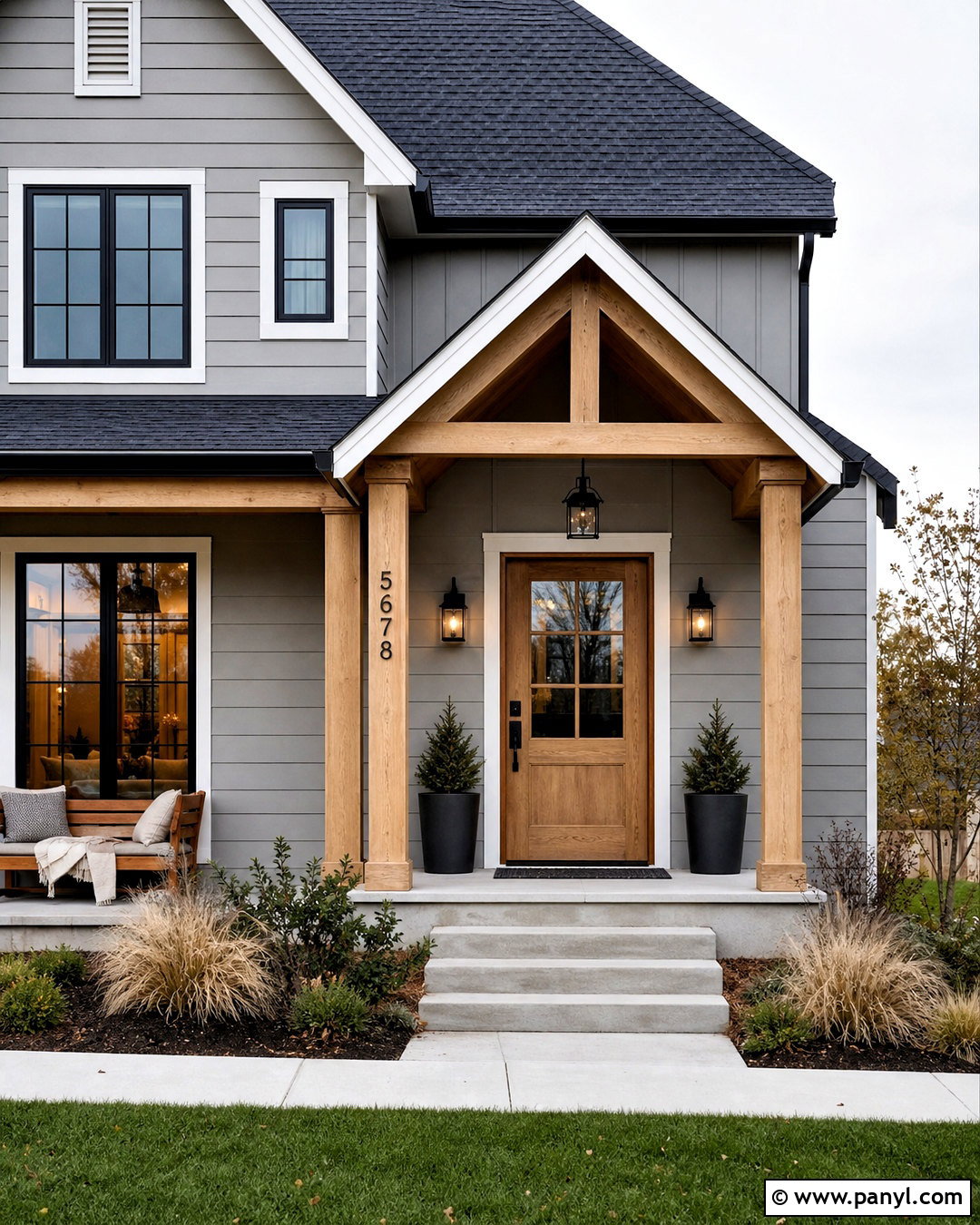
The most effective house front design ideas treat the exterior as one connected composition. Siding, brick, stone, roofing, windows, doors, lighting, paths, and landscaping should support the same architectural direction. Start by identifying the features worth preserving, then select a limited palette of two or three main materials. Repeat finishes across the facade to build consistency, and use planting to frame the architecture rather than conceal it. You can also adapt these looks to different budgets by focusing first on paint, lighting, hardware, and landscaping before making structural changes. Whether you prefer a modern, cottage, farmhouse, traditional, or Mediterranean home, thoughtful planning will produce a more welcoming entrance and lasting curb appeal from these house front design ideas.

Related Ideas and Inspiration:
Leave a Reply