
These 20 stucco walls show how a textured finish can bring depth, softness, and architectural character to indoor and outdoor spaces. Stucco works with many looks, from calm minimalist rooms to warm Mediterranean courtyards and modern home exteriors. Current design directions favor tactile surfaces, natural colors, clean geometry, and tonal palettes that connect a home with its surroundings. () Color should always be tested on the actual wall because texture, sunlight, shade, and finish type can noticeably change its appearance. () The best results combine the wall treatment with coordinated furniture, materials, lighting, and landscaping. Explore the complete spaces below for practical inspiration from 20 stucco walls.

1. White Stucco Living Room Wall
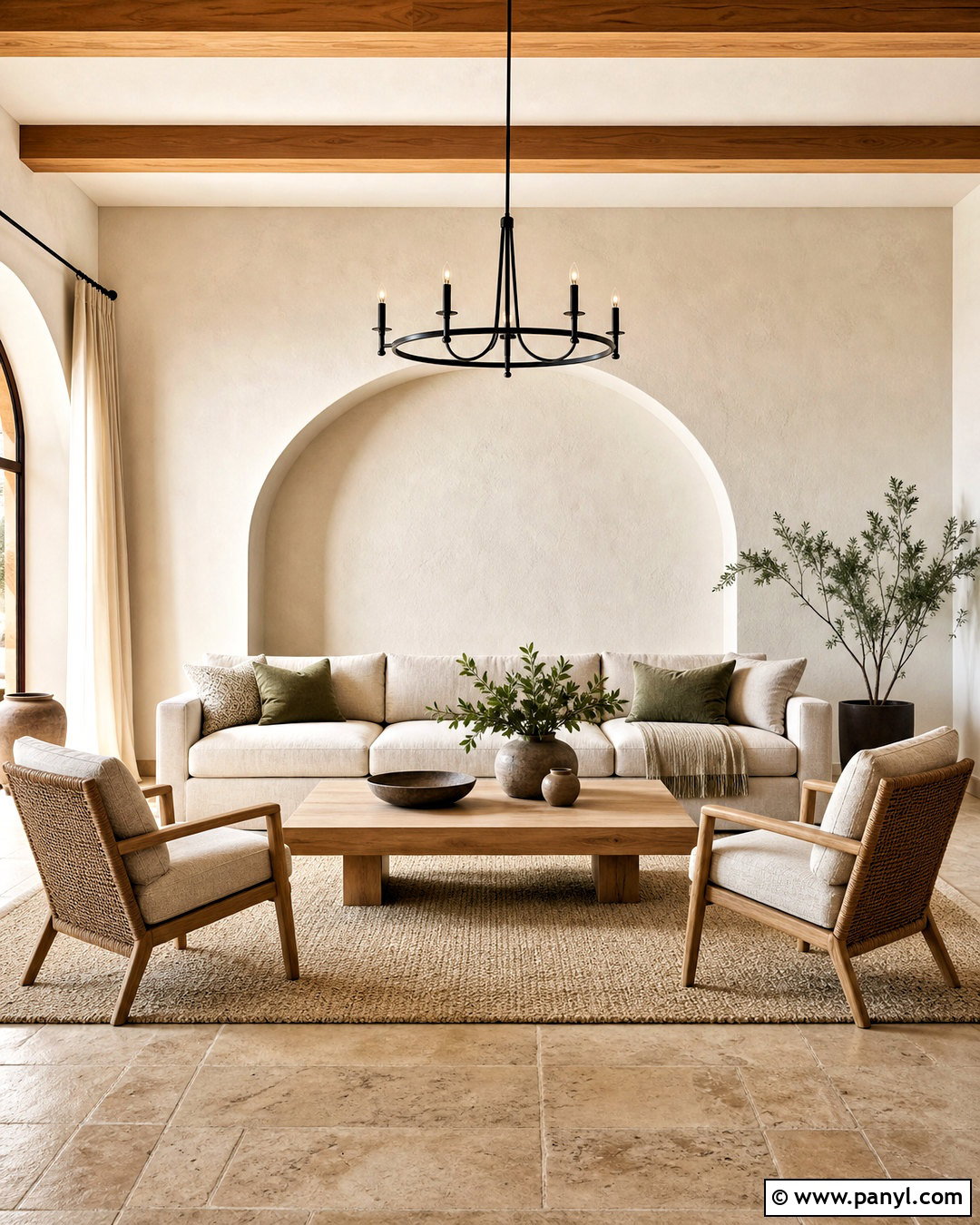
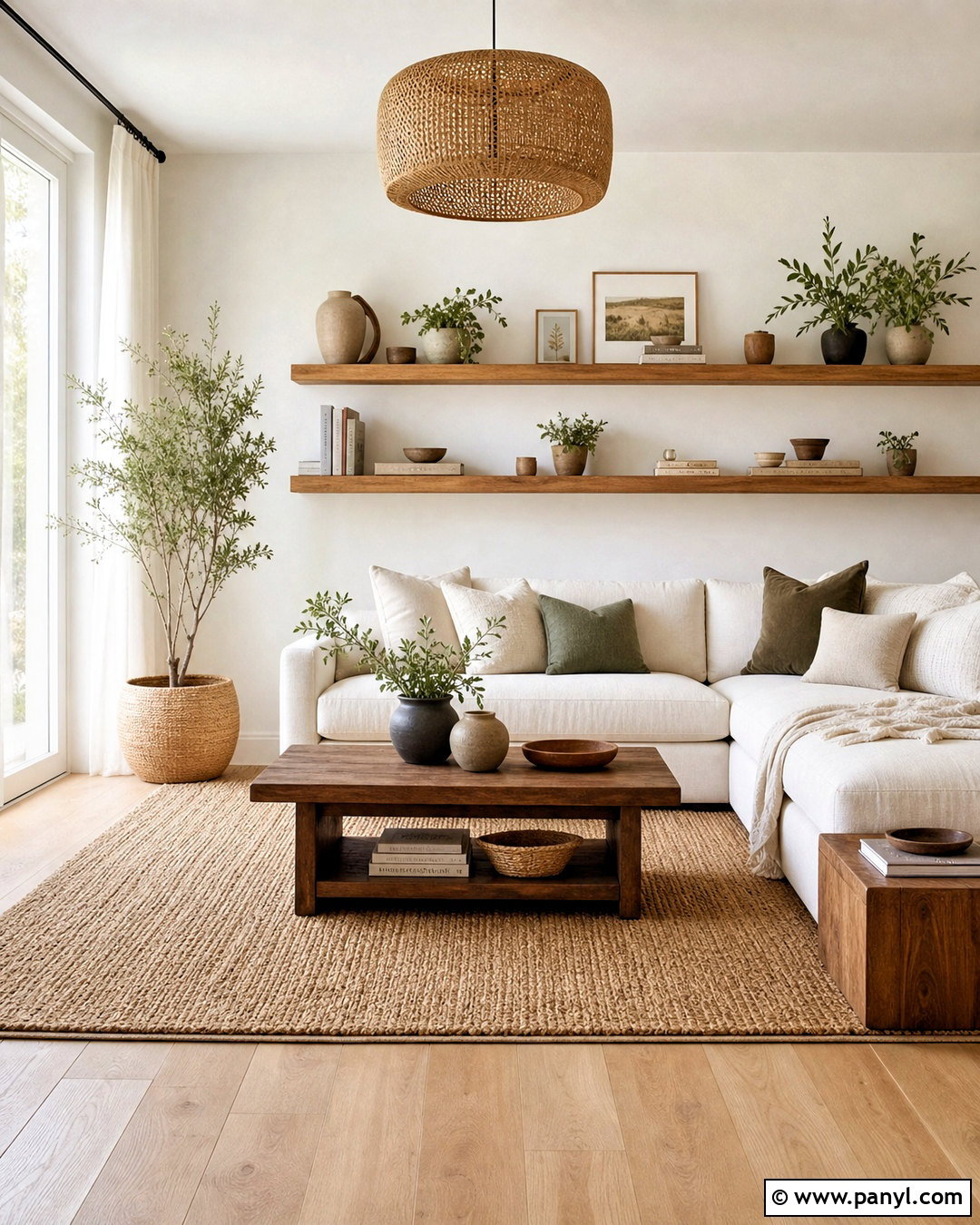
A white stucco wall can make a living room feel bright without looking cold or unfinished. Choose a warm white finish with gentle hand-troweled movement rather than a heavy pattern. Place a low oatmeal-colored sofa against the wall, then add pale oak tables, woven lounge chairs, and a cream wool rug. Linen curtains soften the windows while allowing daylight to reveal the wall’s natural texture. Use matte black lighting sparingly for definition, and bring in muted olive pillows or leafy plants for color. Keep artwork minimal so the stucco remains an important part of the room. Light oak flooring, rounded furniture, and layered neutral textiles complete a comfortable modern space with subtle Mediterranean influence.
2. Beige Stucco Bedroom Wall
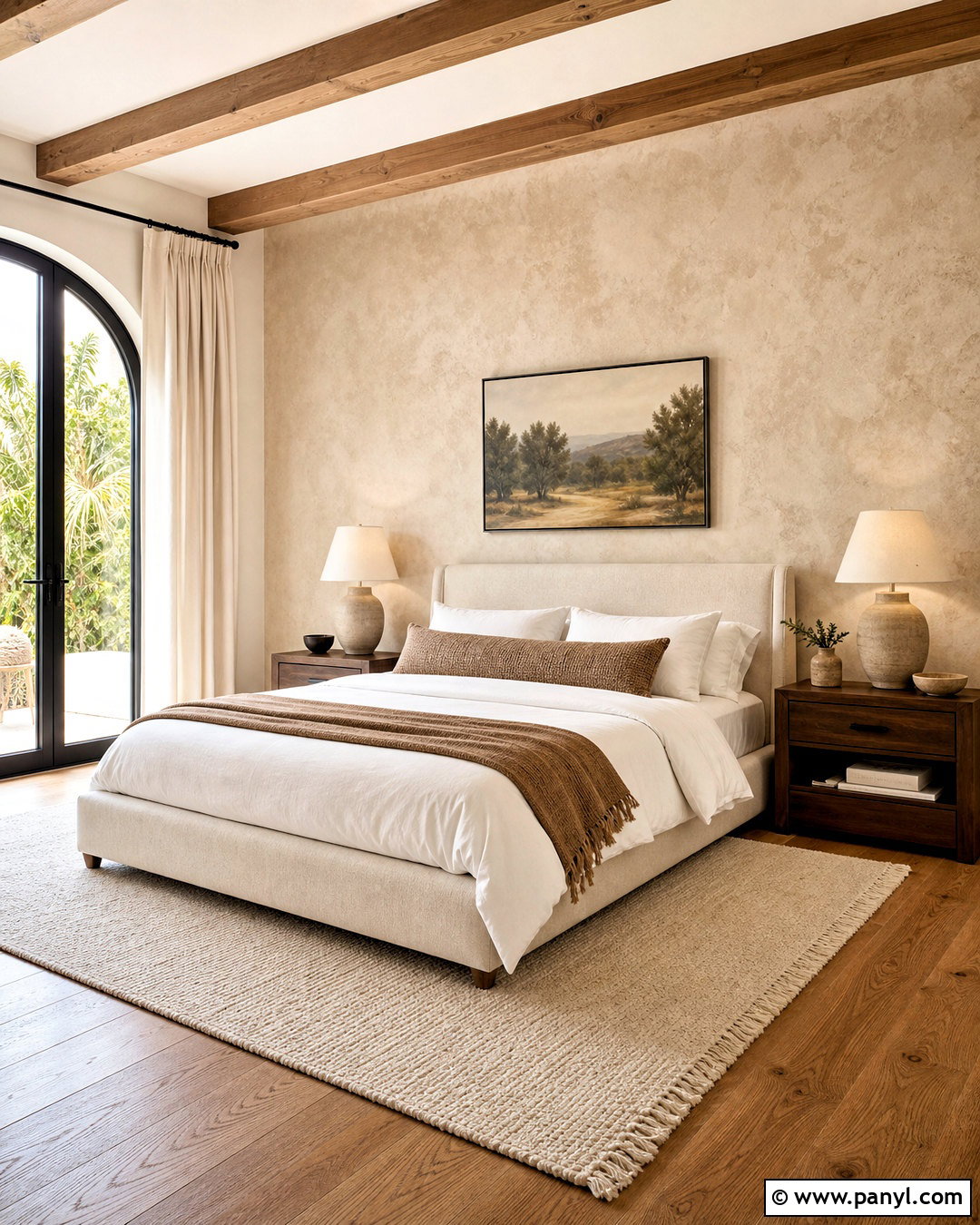
Soft beige stucco creates a restful bedroom that feels warmer and more dimensional than ordinary painted drywall. Apply the finish behind a simple upholstered bed, using a sandy beige with subtle tonal variation. Pair it with off-white bedding, a camel throw, and walnut nightstands for gentle contrast. Rounded ceramic lamps and woven shades reinforce the organic character of the surface. Continue the quiet palette through natural oak flooring and a large ivory rug. Instead of hanging several small decorations, choose one wide landscape painting or a sculptural wall light. Cream curtains should run from ceiling to floor to make the room feel taller. The finished bedroom feels calm, cohesive, and inviting without becoming overly rustic.
3. Terracotta Stucco Dining Room Wall
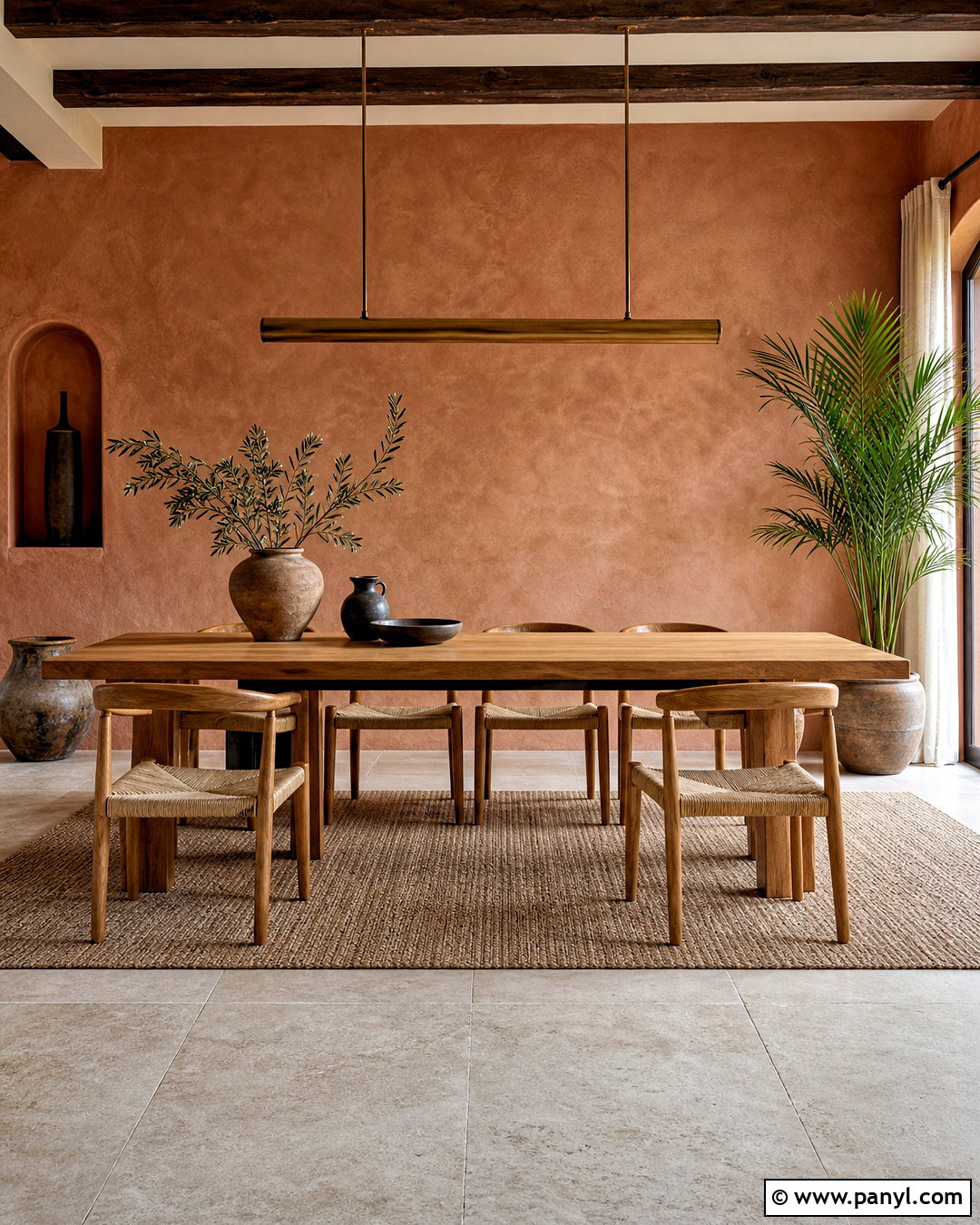
Rich terracotta stucco gives a dining room the welcoming atmosphere of a sun-warmed Mediterranean home. Cover the main dining wall in a muted clay tone rather than bright orange, allowing trowel marks to create natural light and shadow. Center a long oak table in the room and surround it with woven-seat chairs or simple black dining chairs. A linear pendant in aged brass adds structure above the table. Balance the strong wall color with warm white ceilings, pale limestone flooring, and oatmeal curtains. Handmade ceramic bowls, olive branches, and a flat-weave rug support the earthy palette. Keep the remaining walls light so the terracotta surface becomes a confident focal point without making the dining area feel enclosed.
4. Gray Stucco Fireplace Wall
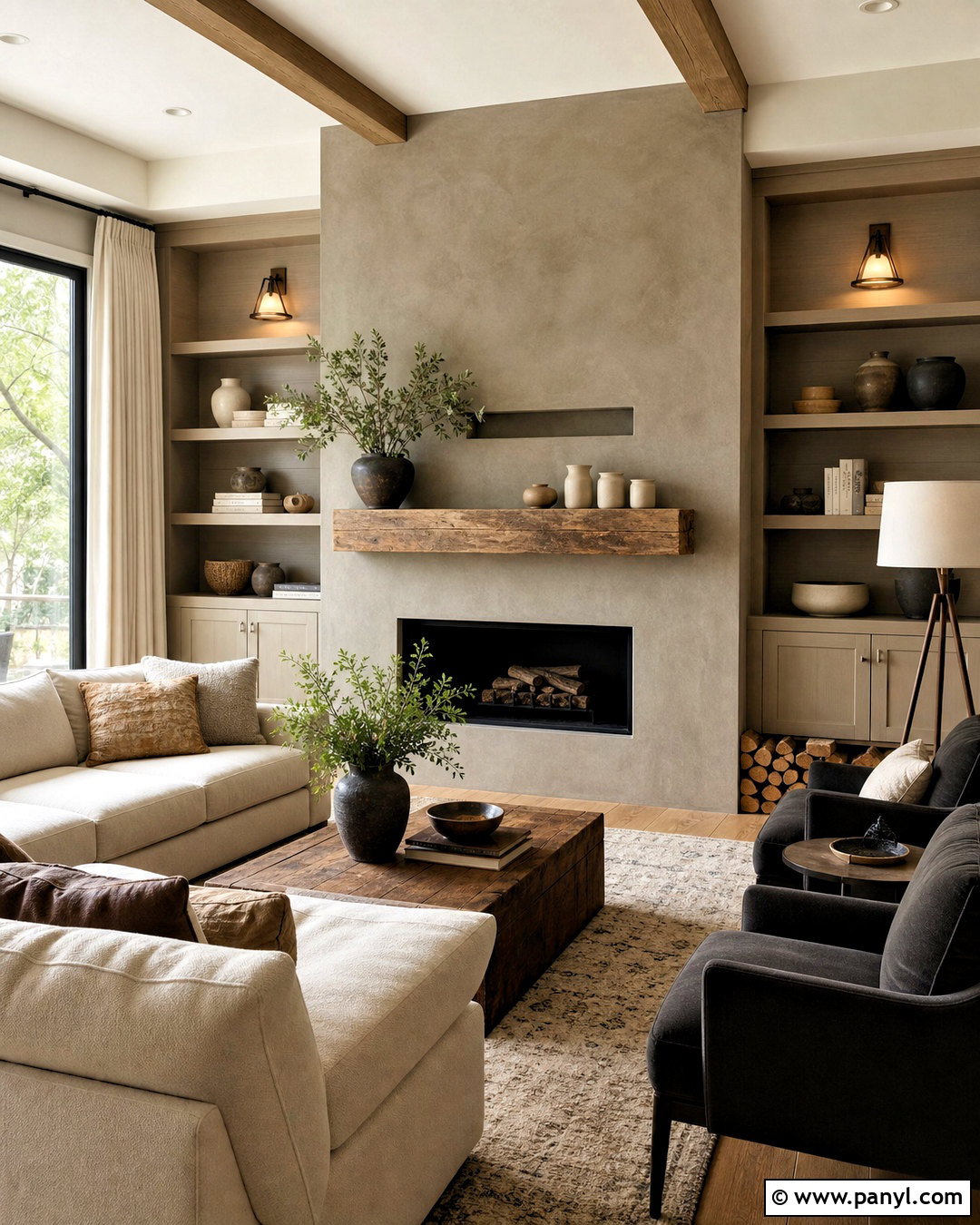
A gray stucco fireplace wall offers a softer alternative to polished stone or traditional brick. Use a medium warm gray finish across the full chimney breast, including the area around a simple rectangular firebox. A thick reclaimed oak mantel adds warmth, while built-in cabinets in soft greige keep the composition balanced. Arrange a deep cream sectional facing the fireplace with charcoal accent chairs and a textured neutral rug. Black metal fireplace doors, sconces, and curtain rods create small points of contrast. Avoid cool blue-gray paint, which can make the room feel stark. The finished wall should have gentle, irregular movement that catches daylight without appearing rough. Add restrained ceramics and stacked wood to complete the comfortable contemporary setting.
5. Sage Green Stucco Kitchen Wall
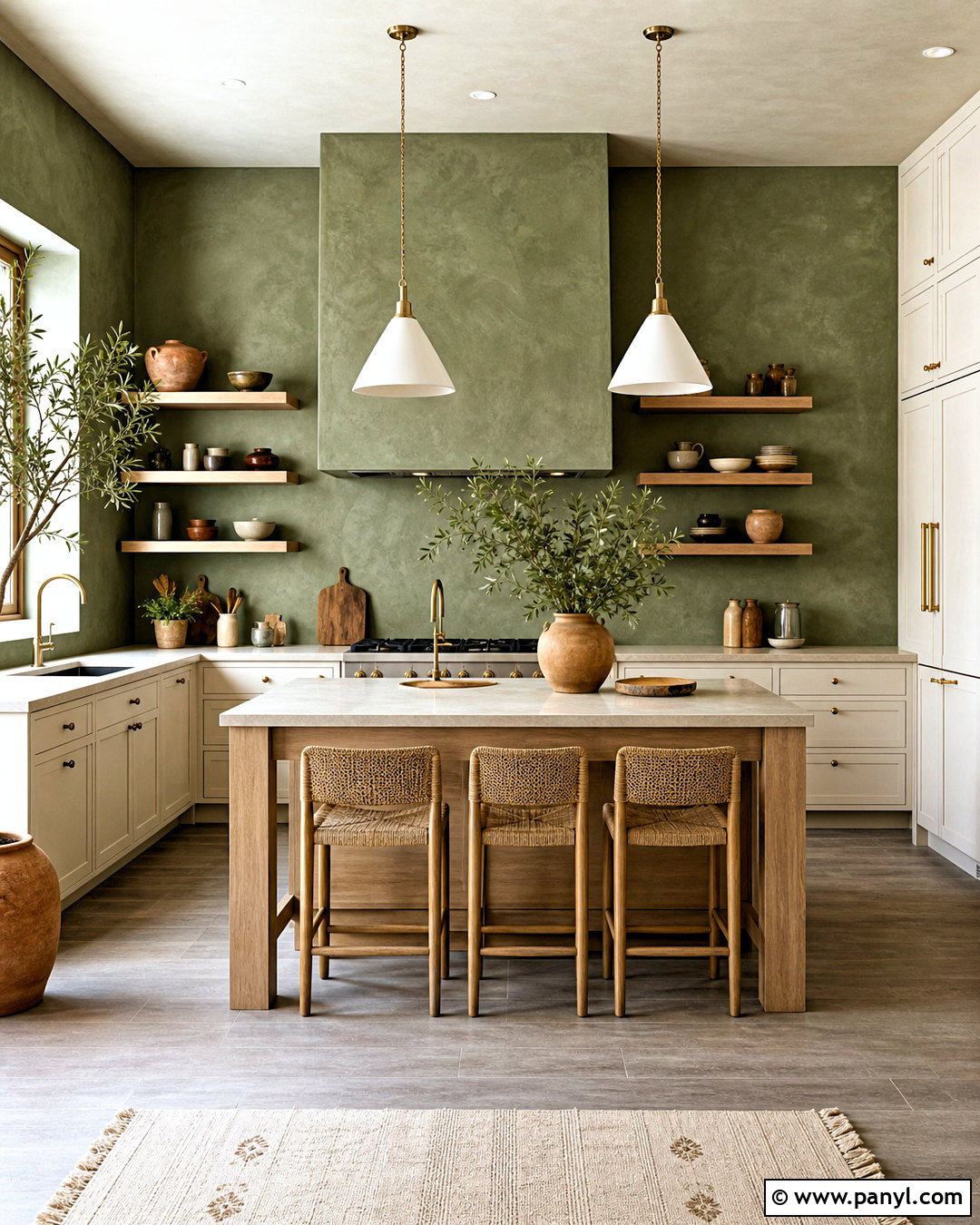
Could a kitchen feel colorful and peaceful at the same time? A warm sage green stucco wall creates that balance when paired with simple natural materials. Use it behind open oak shelves or along a breakfast nook where its texture can remain visible. Choose creamy white cabinets, honed limestone counters, and aged brass hardware to support the muted green. A light oak island and woven counter stools keep the room relaxed. Protect cooking and sink areas with a practical backsplash rather than placing decorative stucco directly in heavy splash zones. Finish the scheme with off-white pendant lights, warm gray flooring, and a few terra-cotta planters. The complete kitchen feels fresh, handcrafted, and connected to nature without relying on an overly bright color palette.
6. Venetian Stucco Bathroom Wall
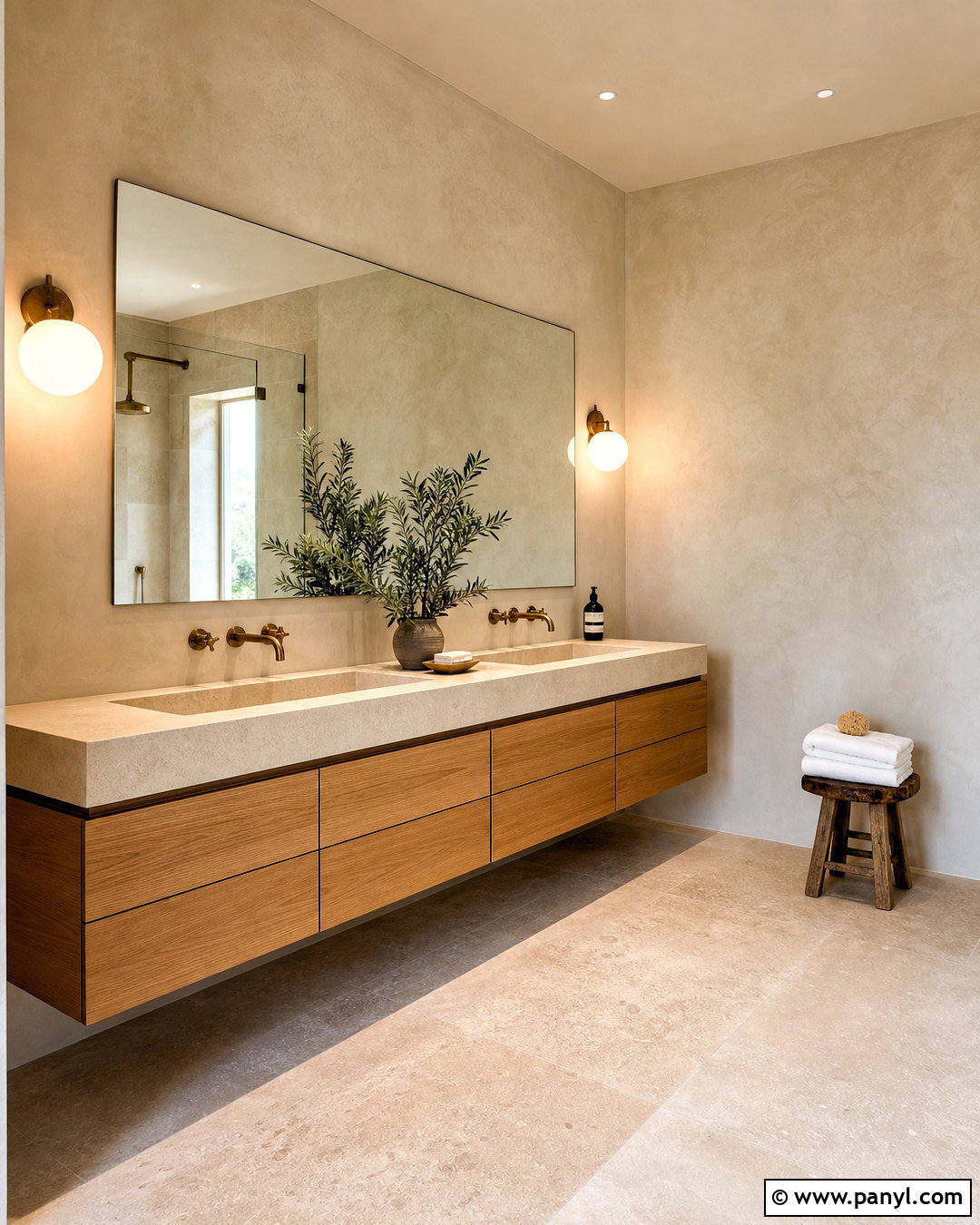
Smooth Venetian-style stucco can turn a bathroom into a serene, spa-inspired space when it is used thoughtfully. Cover the vanity wall in a polished ivory or pale greige finish with delicate tonal clouding. Install a floating oak vanity, an integrated stone sink, and brushed brass faucets for a clean, warm composition. A large frameless mirror reflects the textured surface and makes the room feel more open. Use porcelain or natural stone tile inside the shower, reserving decorative stucco for appropriately prepared areas outside constant water exposure. Add globe sconces, folded white towels, and a slim wooden stool. Large limestone-look floor tiles keep visual lines simple. The result feels refined and tactile while remaining practical for an everyday bathroom.
7. Textured Stucco Entryway Wall
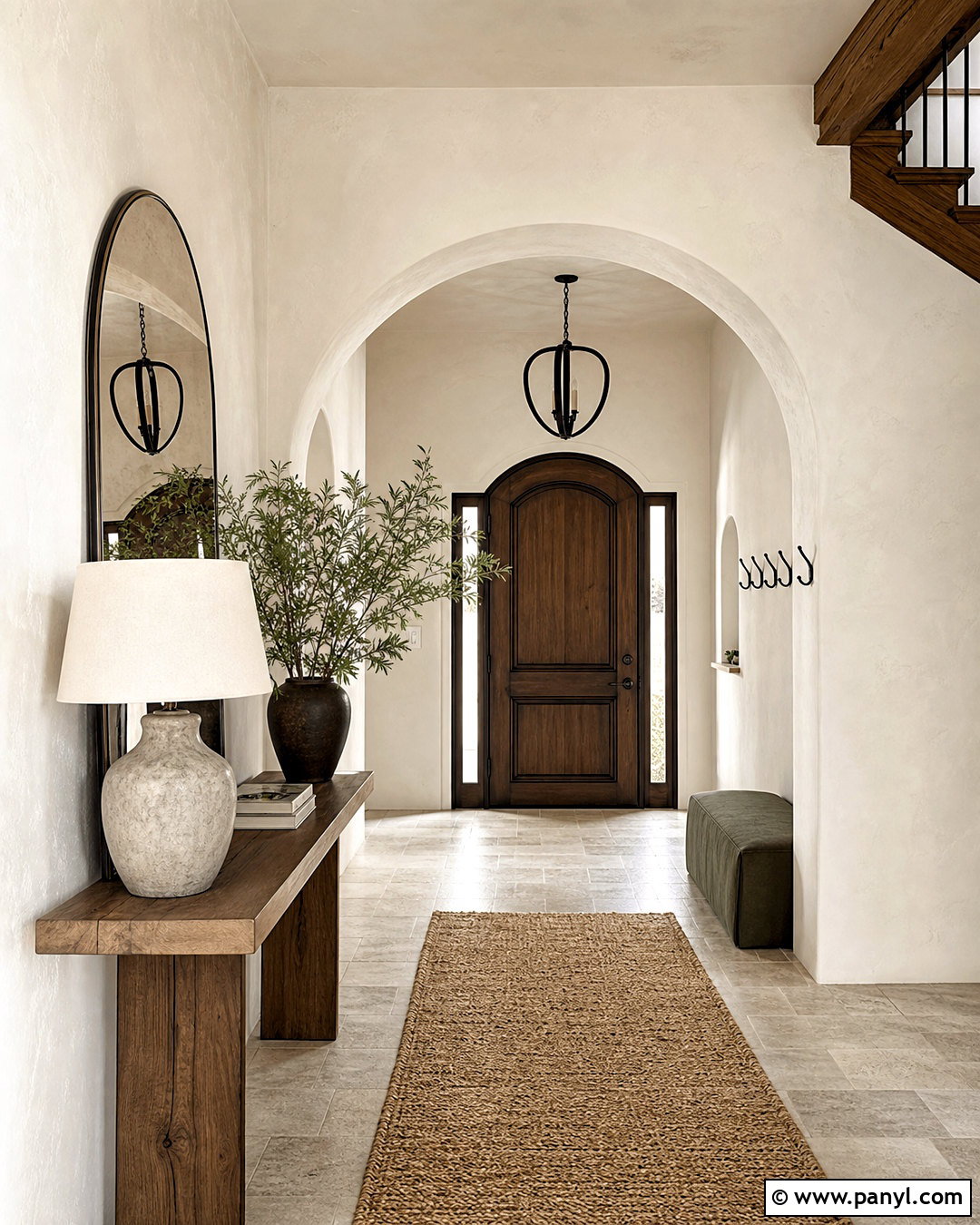
The first wall inside a home can establish a warm, memorable design without requiring a large amount of furniture. Apply lightly textured cream stucco along the entryway, extending it around a rounded doorway if the architecture allows. Place a narrow walnut console against the wall with a large arched mirror above it. A ceramic lamp, shallow bowl, and single leafy branch provide decoration without creating clutter. Add a natural jute runner and an upholstered bench in muted olive or tan. Black iron hooks offer practical storage near the door while coordinating with a dark pendant light. The gentle wall texture makes the small area feel layered and intentional. Warm wood, woven fibers, and simple curved forms complete the welcoming transitional look.
8. Curved Stucco Hallway Wall
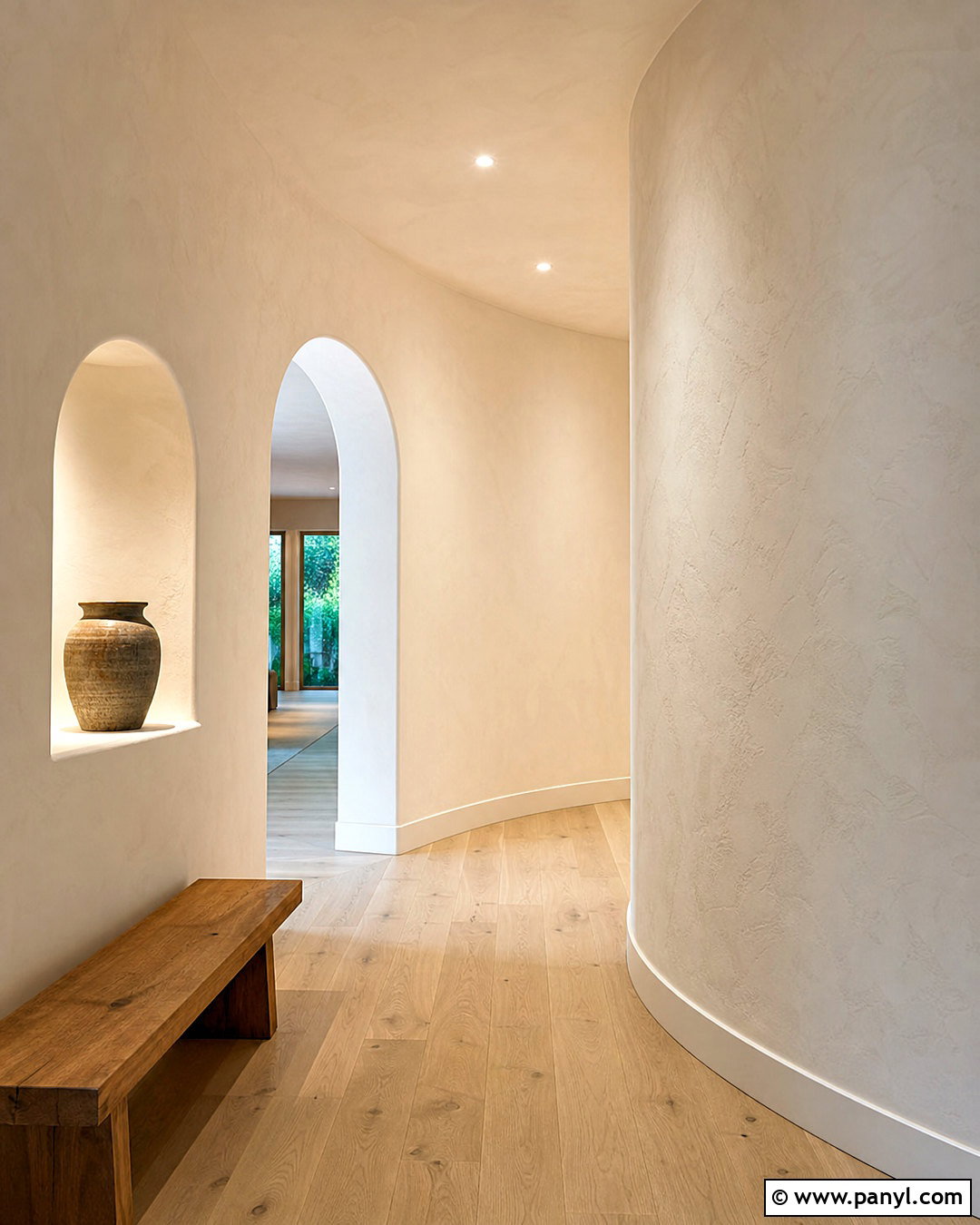
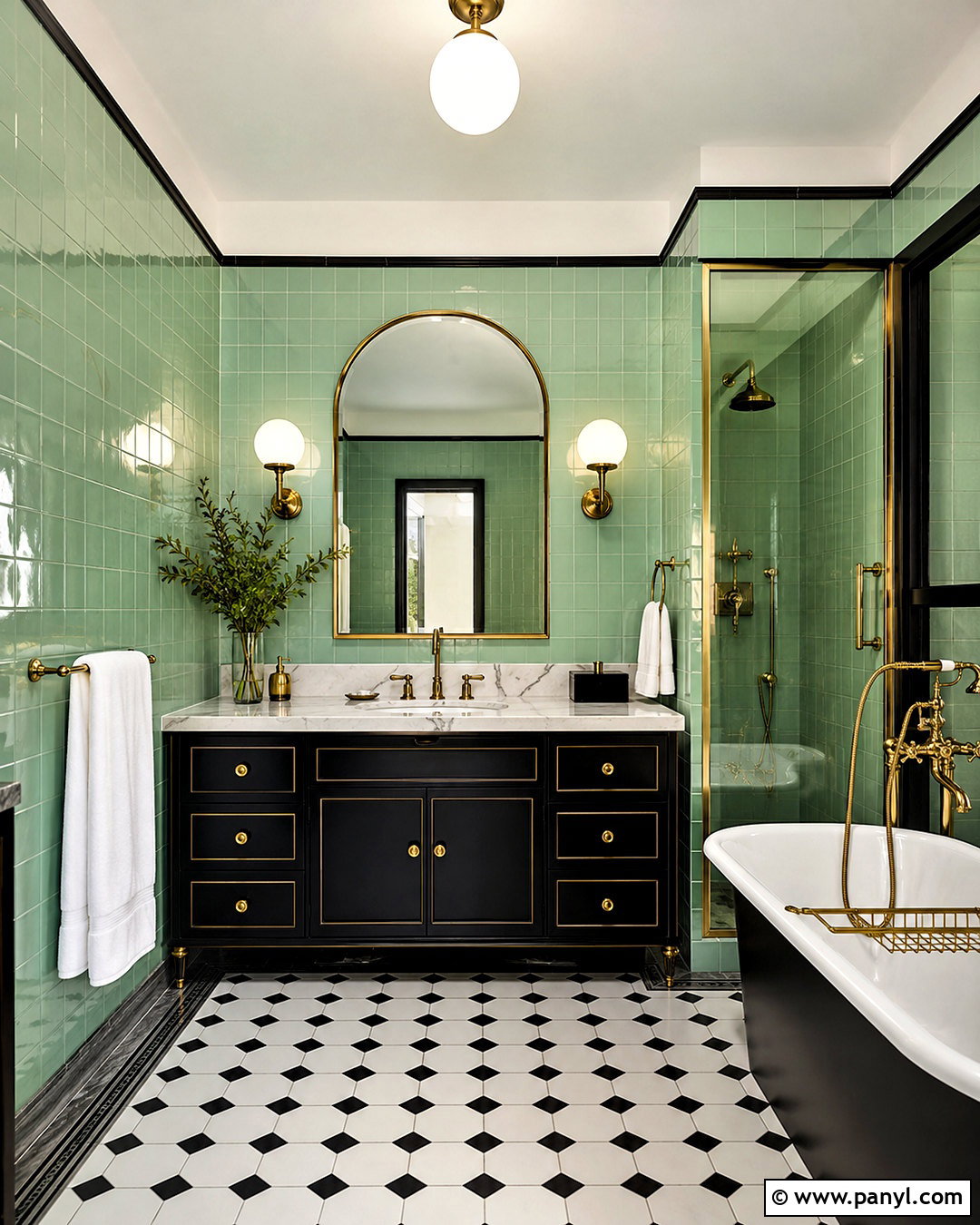
A curved stucco wall can transform an ordinary hallway into an architectural feature with very little added decoration. Use a warm off-white finish across a rounded corner, arched opening, or softly curved partition. Gentle trowel marks should follow the shape rather than forming a strong repetitive pattern. Pair the wall with pale oak flooring and discreet recessed lighting that washes across the surface. A slim built-in niche can hold one ceramic vessel or a small piece of sculpture. Keep nearby doors and trim in a similar warm white to preserve the continuous form. If space allows, add a low wooden bench at the end of the hall. The final design feels calm and sculptural while still working within a practical, average-size home.
9. Minimalist Stucco Home Office Wall
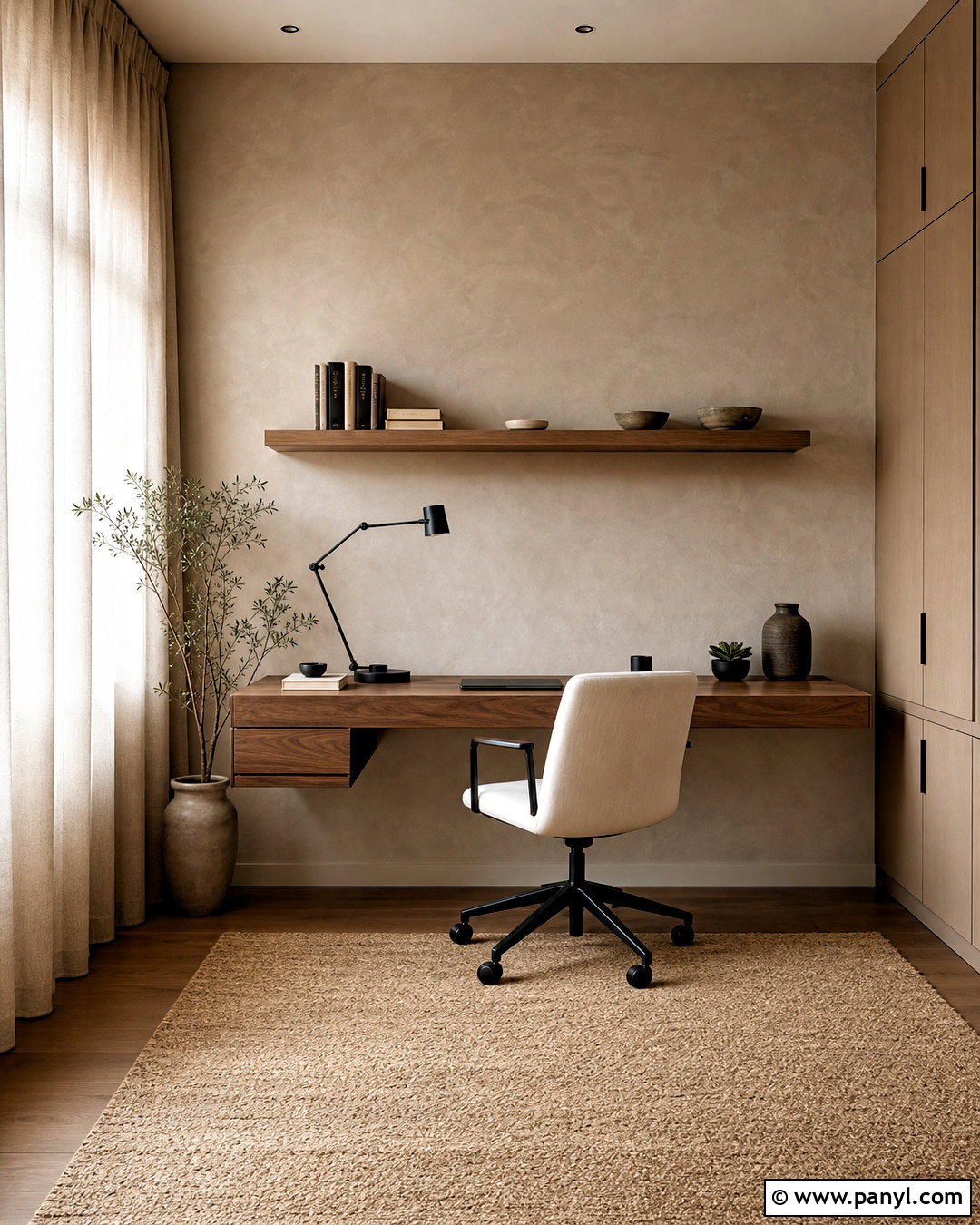
For a home office that feels focused but not sterile, use pale taupe stucco behind a streamlined desk. Select a smooth, low-contrast finish so video calls and task lighting do not create distracting shadows. A floating walnut desk provides useful workspace while keeping the floor open. Add a comfortable cream chair, two closed storage cabinets, and one narrow oak shelf for books and ceramics. A matte black swing-arm light delivers practical illumination and gives the neutral wall definition. Keep cables concealed and limit desktop accessories to items used daily. Natural linen curtains and a flat-woven beige rug soften sound and complete the palette. The entire office feels organized, grounded, and visually interesting without depending on busy artwork or excessive decoration.
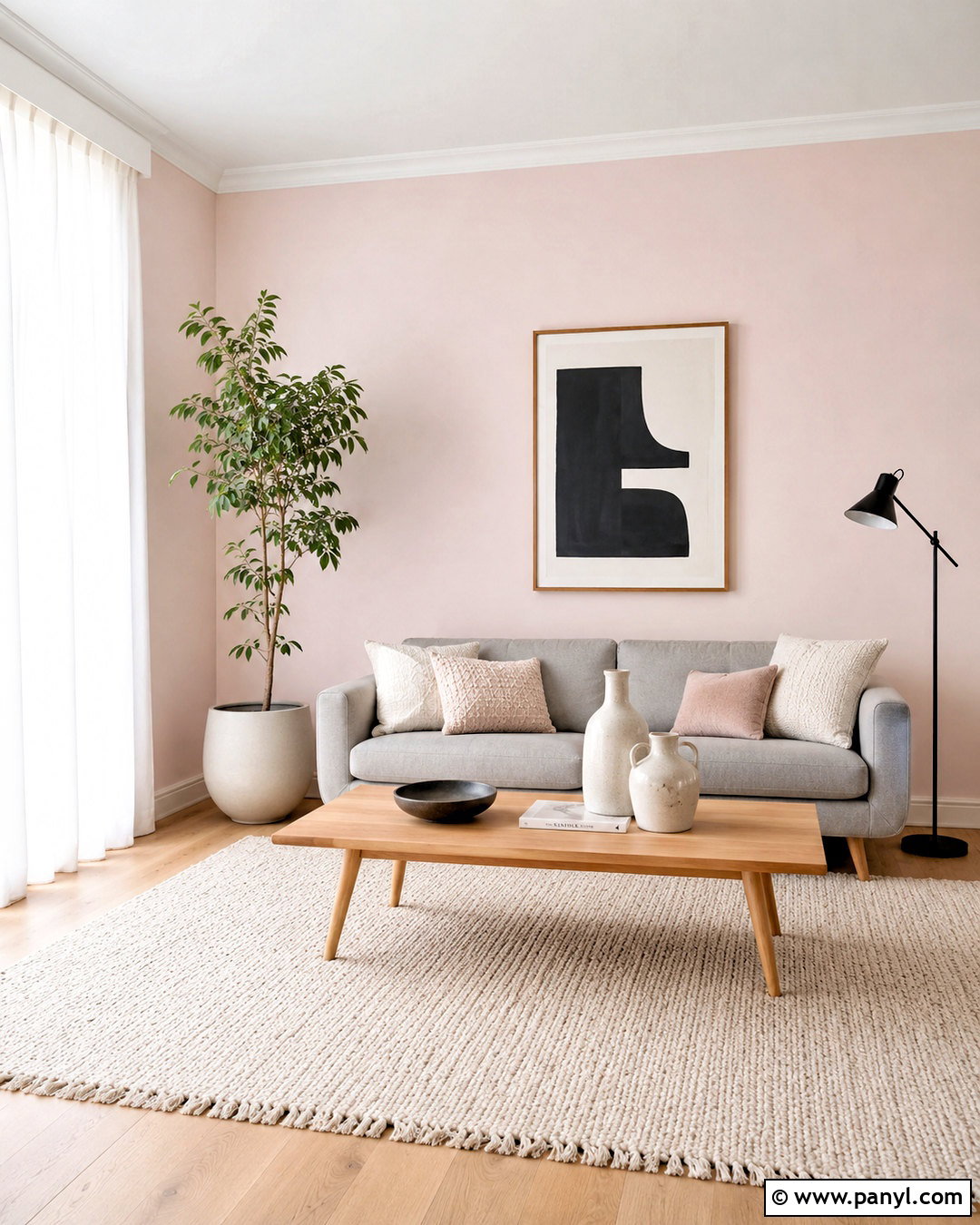
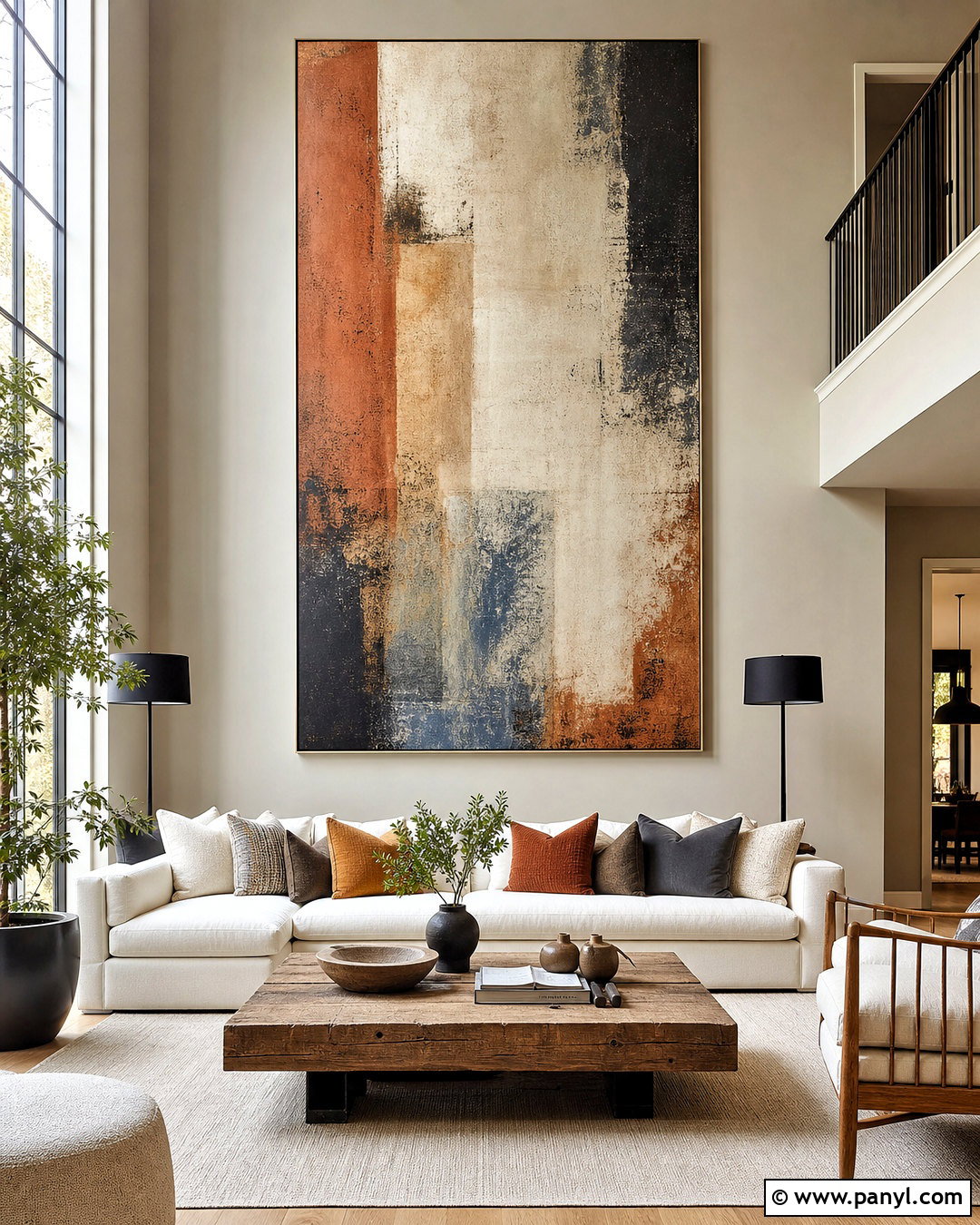
10. Rustic Stucco Basement Wall
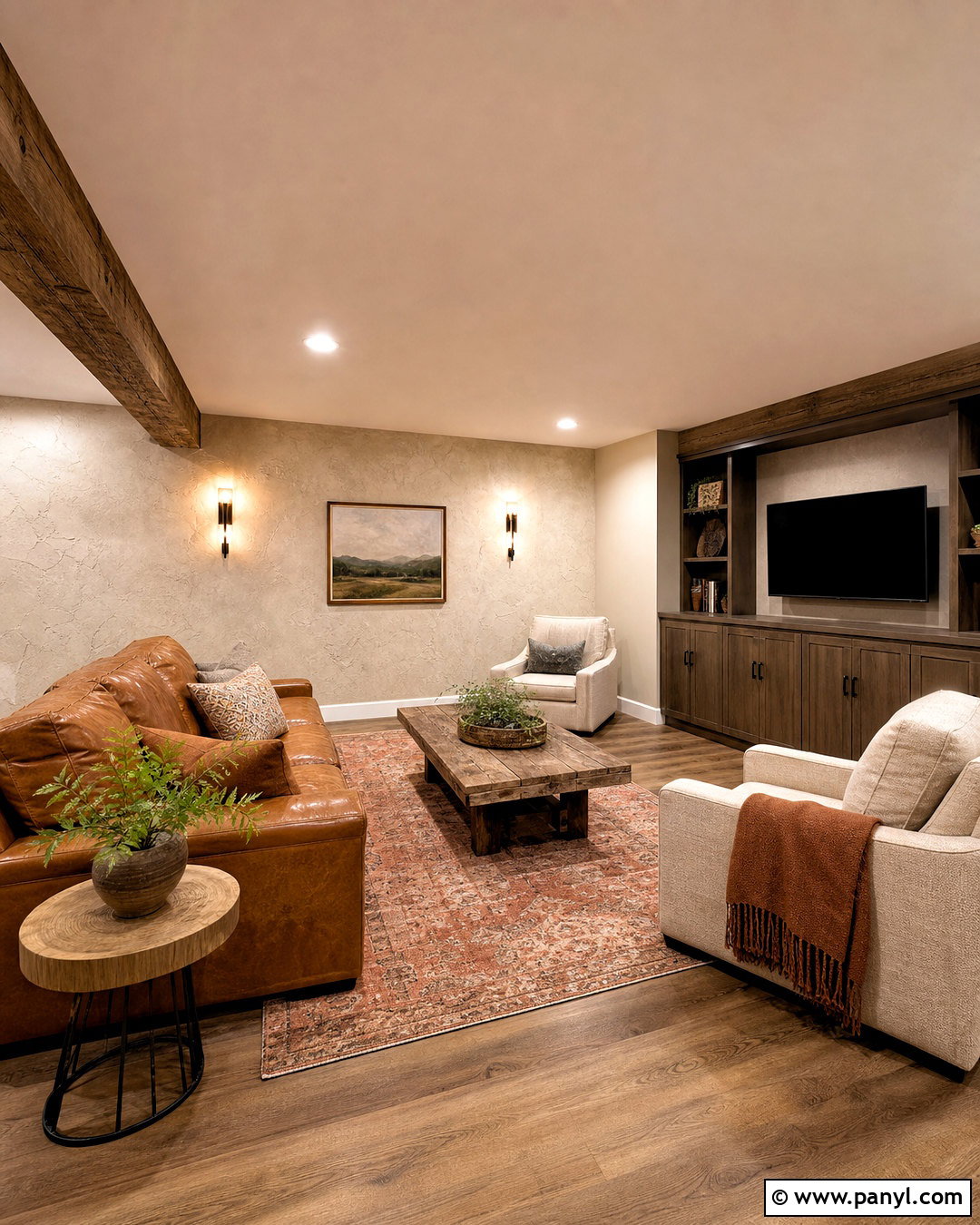
An irregular stucco finish can give a finished basement warmth while disguising the plain character often associated with lower-level rooms. Choose a soft limestone color and a restrained skip-trowel texture instead of a deeply ridged surface. Build the room around a caramel leather sofa, a substantial reclaimed wood coffee table, and comfortable oatmeal armchairs. Dark bronze sconces spread light across the wall and emphasize its texture. Use warm luxury vinyl plank or engineered wood flooring for a practical foundation, then add a large patterned rug in faded rust and beige. Closed cabinets keep games and media equipment out of sight. With layered lighting, natural colors, and durable furniture, the basement becomes an inviting family lounge rather than an afterthought.
11. White Stucco Exterior Wall
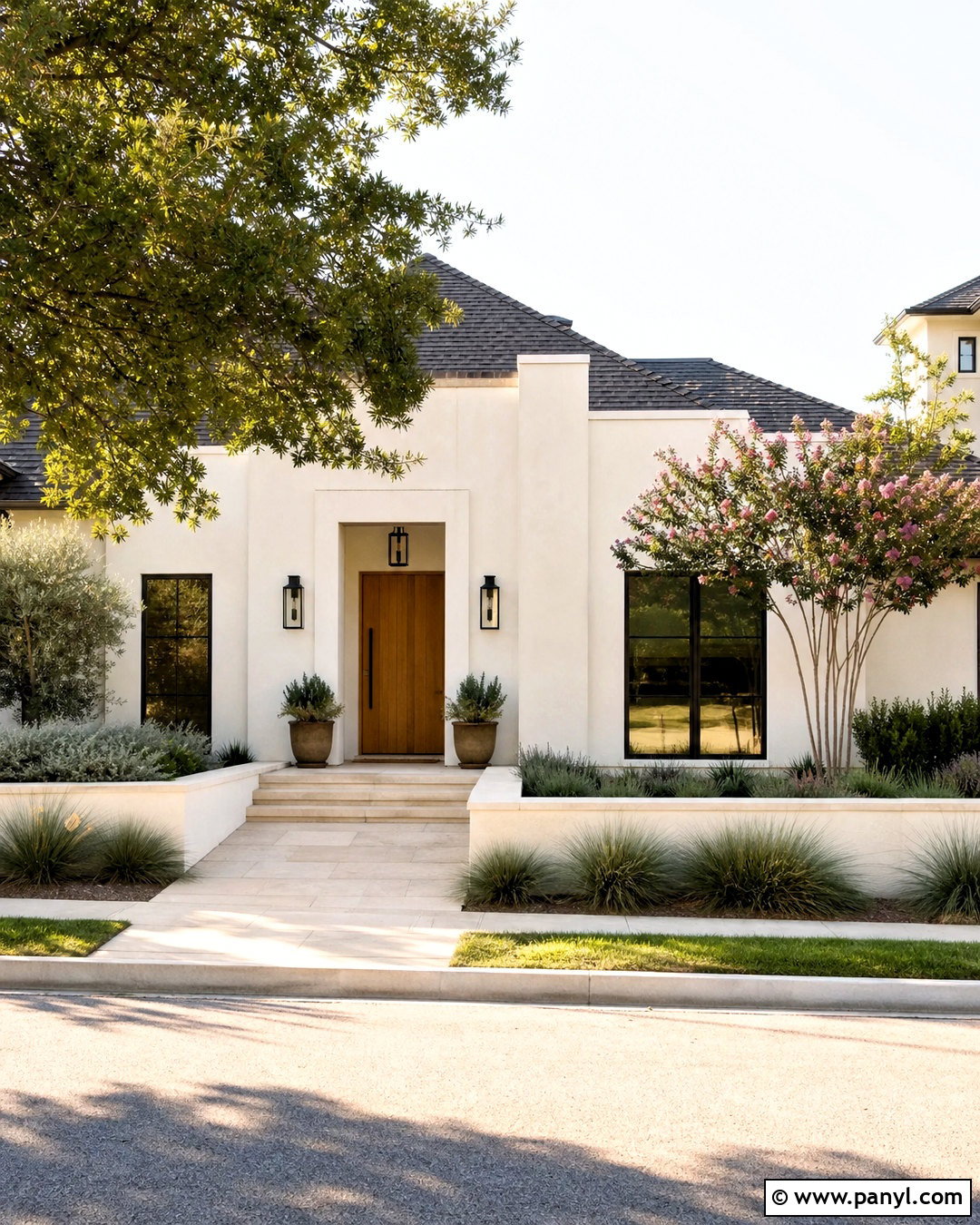
Crisp white stucco looks most balanced when the entire exterior palette includes warmth and natural contrast. Choose a creamy white body color rather than a brilliant blue-white. Add medium-tone wood at the front door, porch ceiling, or garage door, then outline windows with slim bronze or matte black frames. A charcoal roof grounds the light facade, while limestone pavers create an easy transition to the landscape. Plant olive-green shrubs, ornamental grasses, and one small flowering tree around the foundation. Keep the stucco texture fine and consistent so the exterior feels current without becoming flat. Warm wall lanterns, simple house numbers, and wide planters complete the curb view. The final scheme suits modern, transitional, and updated ranch-style homes.
12. Desert Tan Stucco Exterior Wall
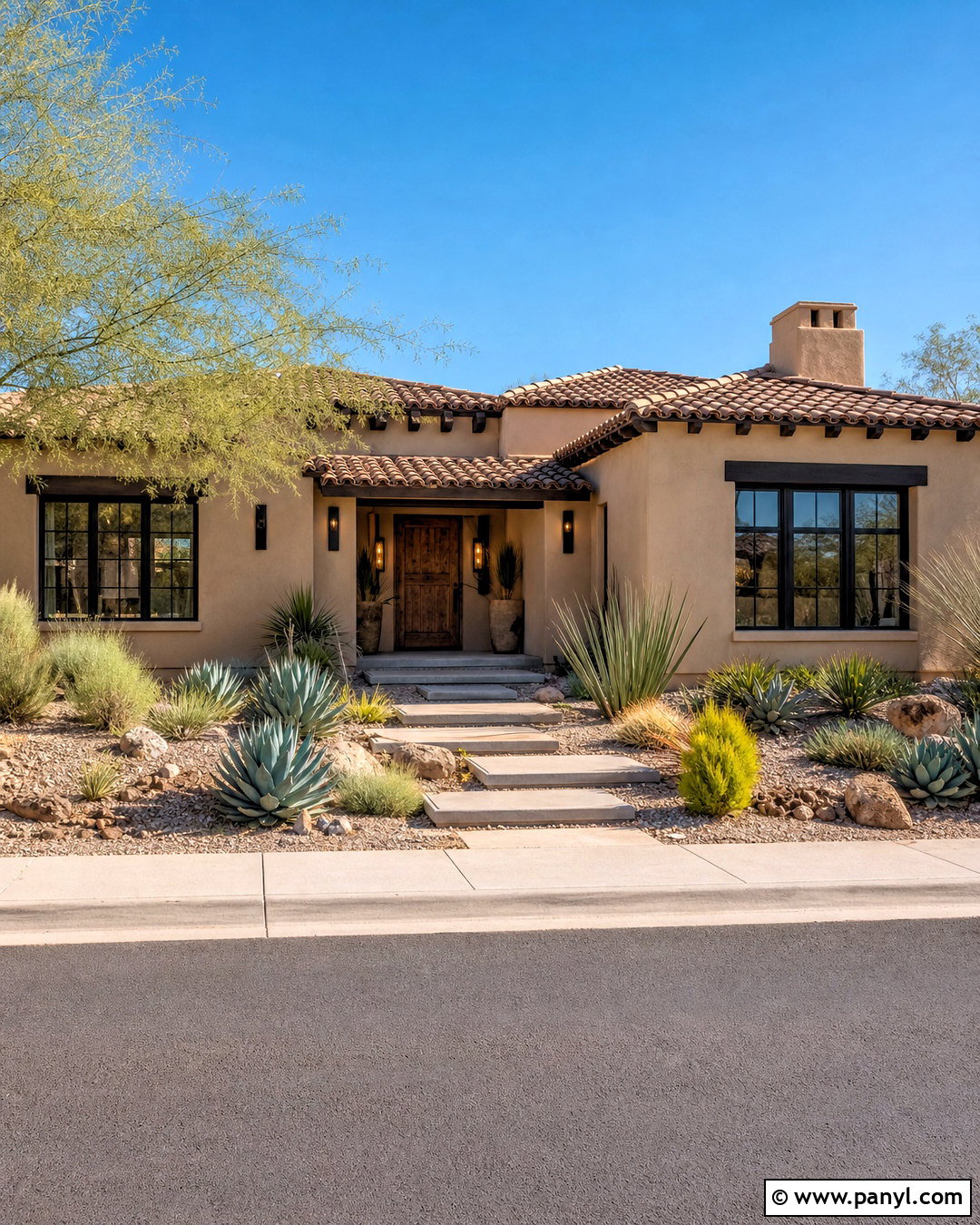
Desert tan stucco blends naturally with dry landscapes while giving an exterior more warmth than standard beige. Select an adobe-inspired tan with muted brown or peach undertones, then pair it with dark bronze windows and a medium brown tile roof. A weathered wood front door reinforces the earthy character of the facade. Use gravel planting beds, pale concrete stepping stones, and drought-conscious plants such as agave, yucca, and feathery ornamental grasses. Limit trim contrast by choosing a lighter version of the body color around doors and rooflines. Deep overhangs and simple black wall lights provide architectural definition. This complete palette feels especially cohesive when the driveway, walkways, and plant colors repeat tones already visible in the stucco and surrounding soil.
13. Charcoal Stucco Exterior Wall
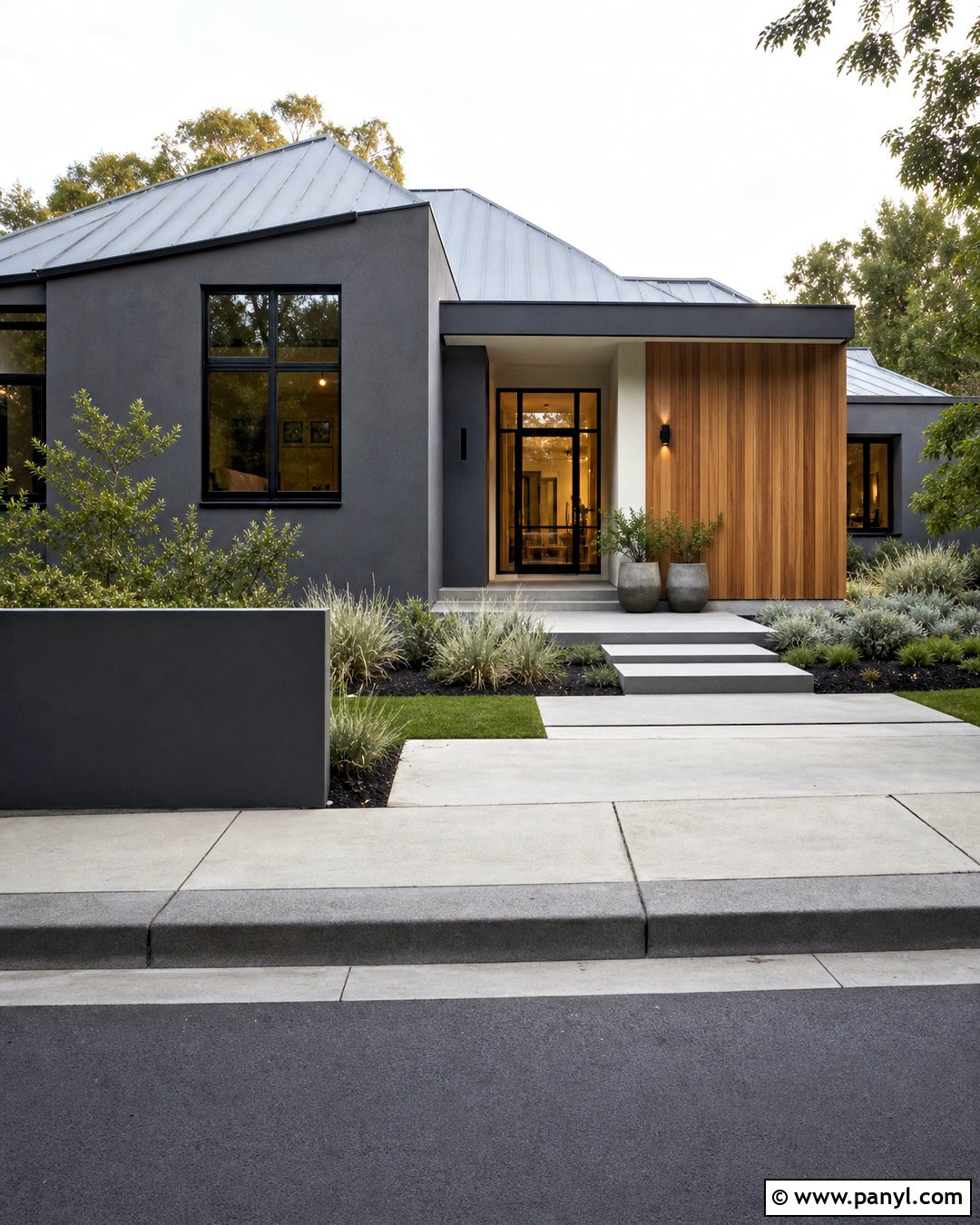
Dark charcoal stucco can give a simple house a bold contemporary identity, but the palette needs lighter materials to maintain balance. Use charcoal on the main wall planes and warm off-white around the entry recess or porch. Natural cedar siding at the front door adds warmth and prevents the facade from feeling severe. Choose black window frames for a seamless look, then introduce pale concrete pavers and silver-green landscaping around the foundation. A medium gray metal roof or simple dark shingle roof completes the architecture. Keep the stucco surface fine and uniform because strong texture can appear overly busy in a dark color. Large planters, restrained lighting, and a clear walkway create a polished exterior that remains approachable rather than imposing.
14. Two Tone Stucco Exterior Wall
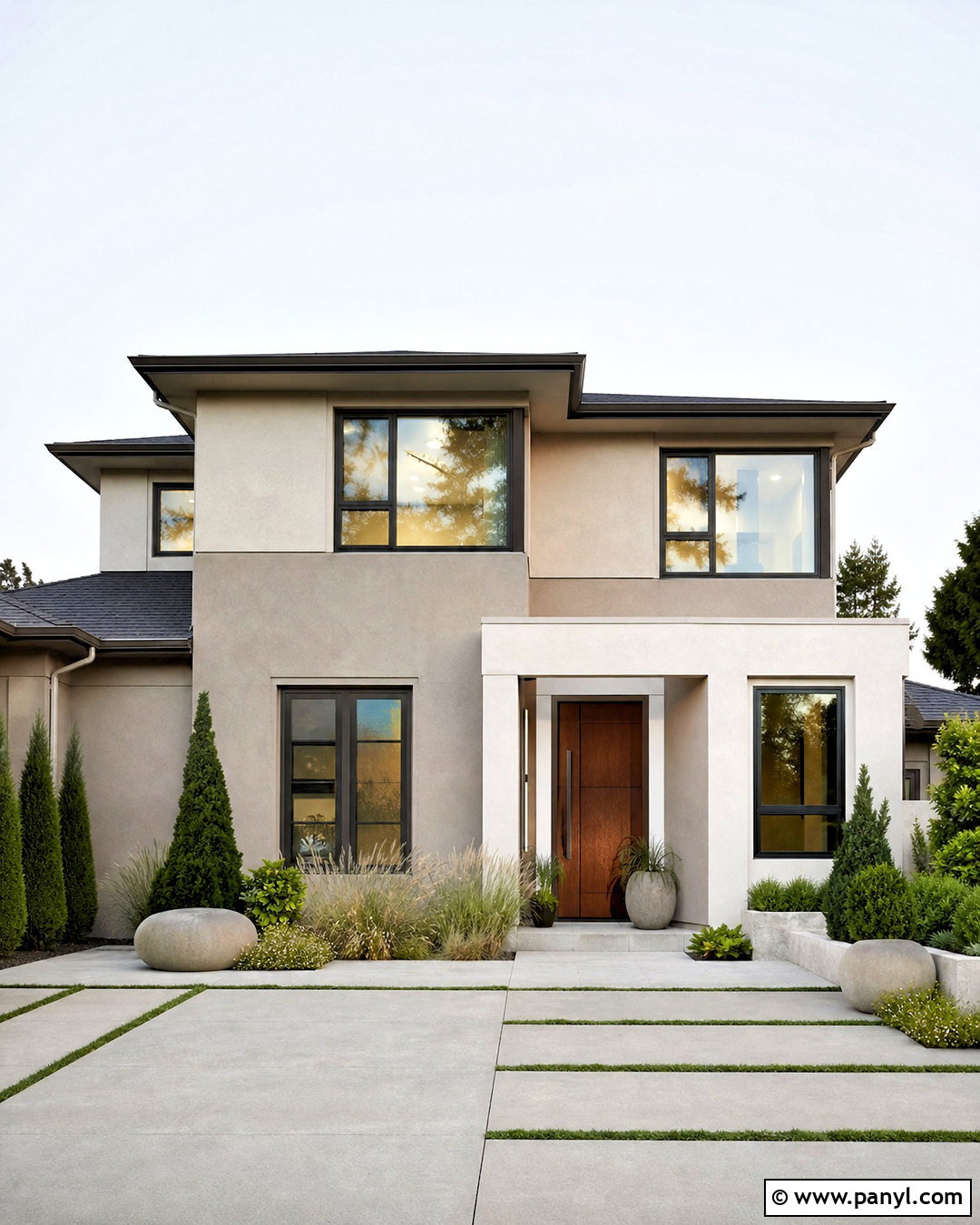
Two-tone stucco can highlight a home’s shape when the colors follow its architecture instead of dividing walls randomly. Use warm greige across the main level and soft ivory on upper sections, recessed walls, or a prominent entry volume. Connect both shades with dark bronze windows and a walnut-colored front door. A charcoal roof gives the composition a clear visual boundary. Repeat the greige tone in concrete pavers, low retaining walls, or large outdoor planters. Landscaping should stay simple, with rounded evergreen shrubs and grasses that soften the straight lines of the house. Avoid adding a third strong exterior color. With carefully placed tonal contrast, an average stucco home gains depth, stronger proportions, and a more customized appearance without requiring decorative moldings.
15. Stucco Wall With Wood Accents
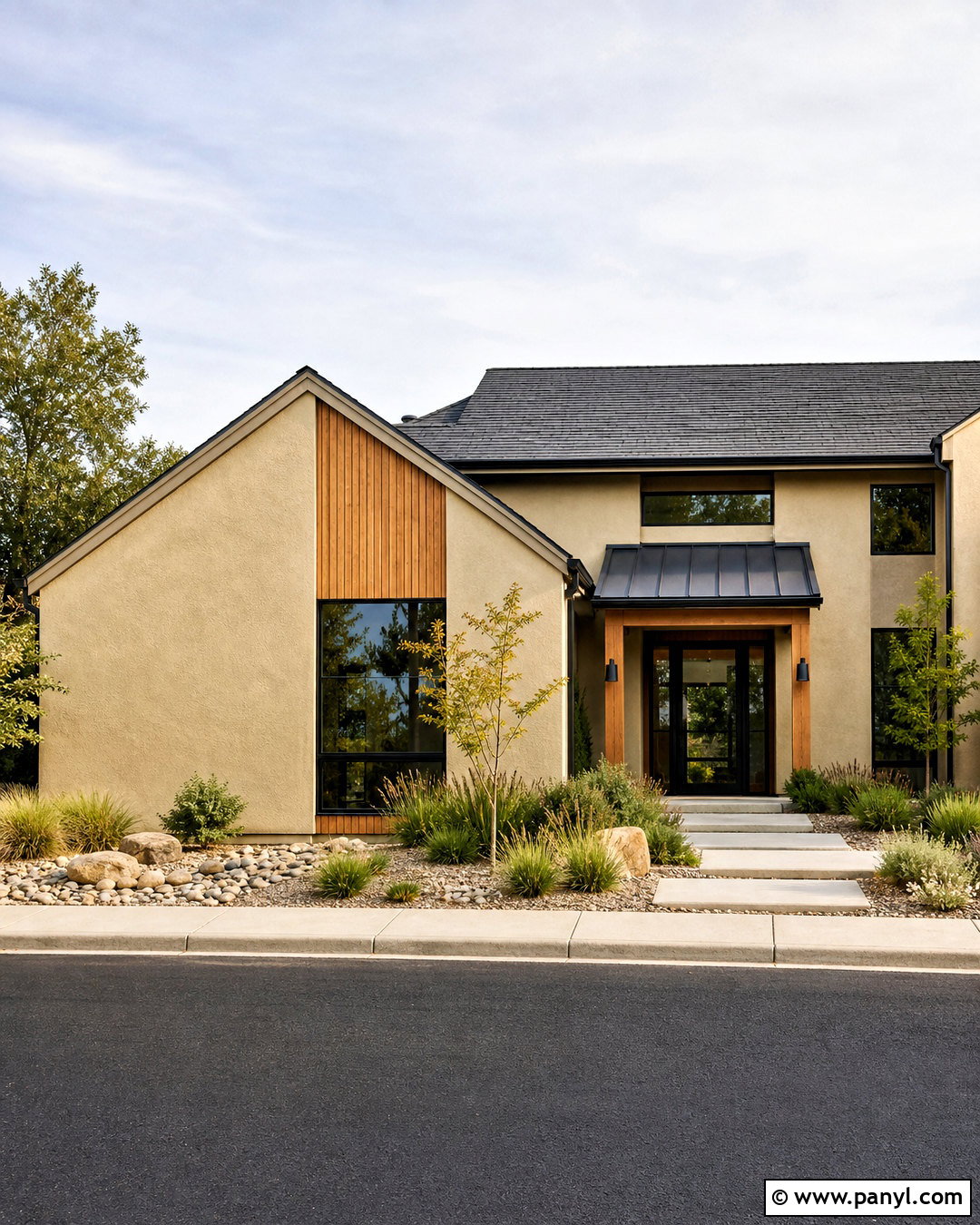
Combining stucco with wood creates a balanced exterior that feels clean, warm, and connected to the landscape. Cover most of the house in soft sand-colored stucco, then install vertical cedar boards around the entrance or on a projecting upper section. Use black-framed windows and a matching metal canopy to sharpen the natural palette. A medium gray roof keeps the exterior grounded without competing with the wood grain. Continue the design into the front yard with concrete slabs, river rock, and layered green grasses. The wood should remain concentrated in one or two architectural zones rather than appearing in scattered strips. This controlled combination gives the facade variation while allowing the textured stucco wall to remain the main unifying material.
16. Stucco Wall With Stone Accents
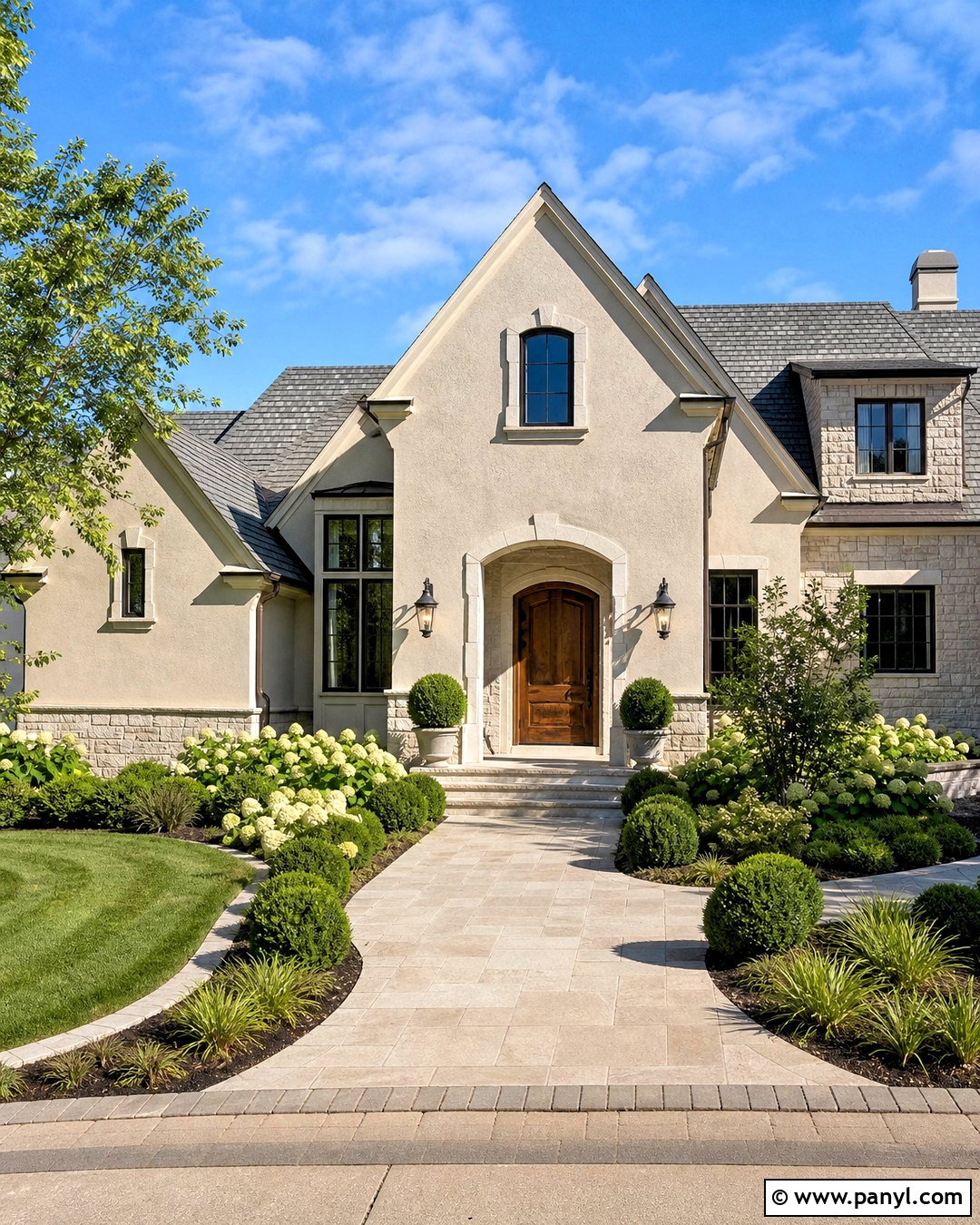
A stucco and stone exterior works best when both materials share similar undertones. Choose pale mushroom stucco and combine it with irregular limestone in cream, beige, and soft gray. Use the stone around the lower facade, porch columns, or entry wall instead of covering every surface. Warm white trim creates a gentle transition, while a stained oak door adds depth near the entrance. Select a weathered gray roof that repeats the cooler shades found in the masonry. Curved planting beds filled with hydrangeas, boxwood, and low grasses soften the substantial materials. Keep exterior lights simple and dark bronze. The coordinated colors and limited material placement create an updated transitional home rather than a heavy, overly rustic facade.
17. Stucco Courtyard Wall
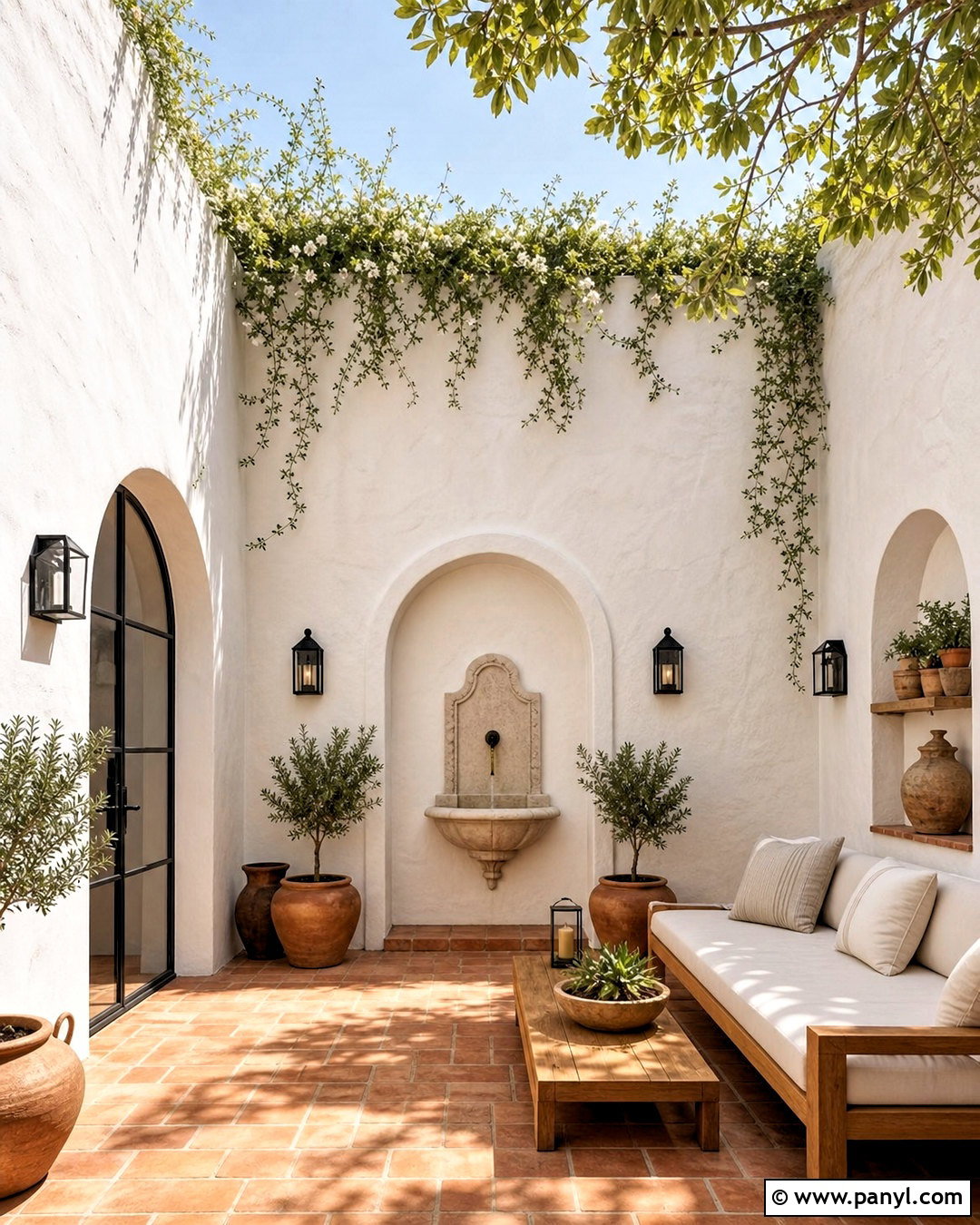
An enclosed courtyard becomes a relaxing outdoor room when the stucco walls, flooring, seating, and planting share one cohesive palette. Finish the walls in warm chalky white and include one shallow arched niche for a ceramic pot or lantern. Lay terra-cotta tiles or pale stone pavers underfoot, then arrange a compact teak sofa with cream cushions around a low table. Climbing jasmine or bougainvillea can frame one side without covering the entire wall. Add large olive-green planters and a small wall fountain for a gentle focal point. Black metal sconces bring structure to the light surfaces. By limiting furniture and using layered greenery, the courtyard feels private and established while remaining uncluttered, comfortable, and easy to navigate.
18. Stucco Garden Wall
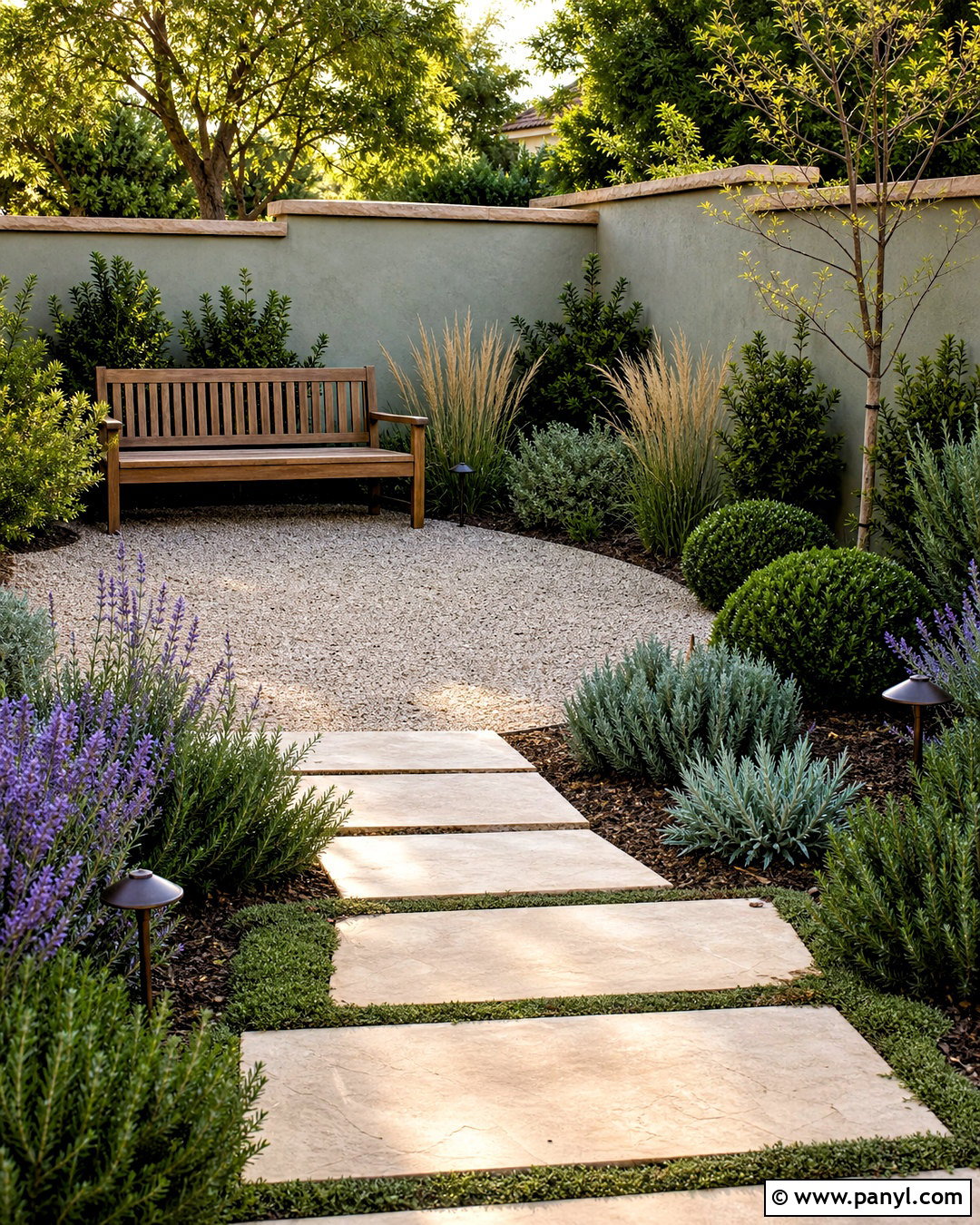
A low stucco garden wall can organize planting beds while giving the landscape a finished architectural edge. Use muted sage or warm putty stucco that blends with foliage rather than competing with flowers. Build the wall around a curved gravel seating area and finish the top with smooth stone coping for a clean silhouette. Layer lavender, rosemary, ornamental grasses, and compact evergreen shrubs along its base. Place a simple wooden bench against the longest section, leaving enough open wall visible to appreciate the color and texture. Pale stepping stones should connect the seating area to the house. The completed garden combines structure, fragrance, greenery, and practical seating, allowing the stucco wall to feel like an integrated part of the landscape instead of a boundary.
19. Stucco Patio Privacy Wall
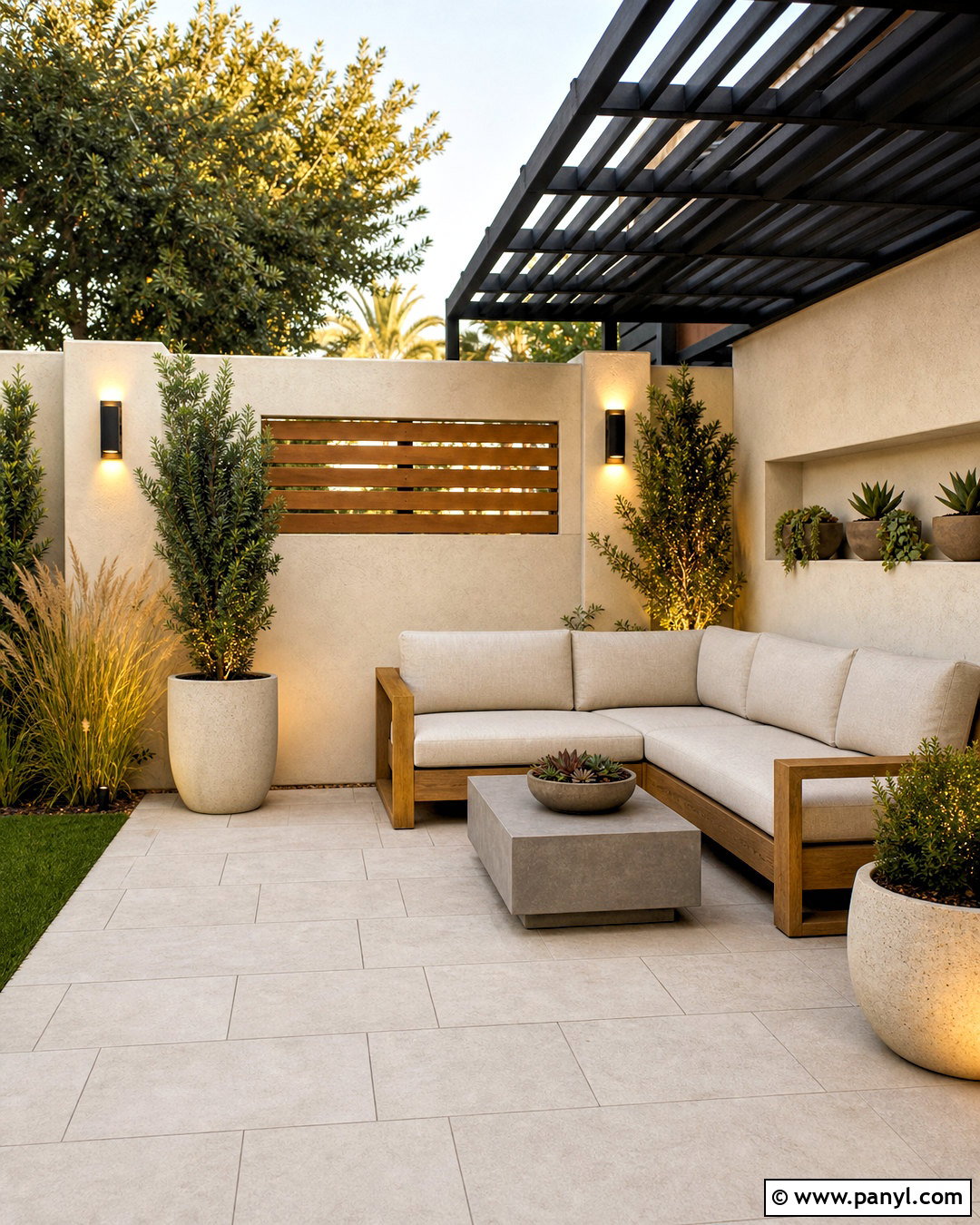
A stucco privacy wall can make a patio feel sheltered without turning it into a closed box. Choose a warm ivory finish and keep the wall slightly above seated eye level where local requirements allow. Add narrow horizontal openings or an inset wood screen near the top to bring in filtered light. Arrange an L-shaped teak sofa with weather-resistant oatmeal cushions beside a concrete coffee table. Large planters filled with bamboo alternatives, tall grasses, or compact upright shrubs soften the edges. Use pale porcelain pavers and a simple black pergola to frame the outdoor room. Wall-mounted lights and one built-in planting niche complete the composition. The result is private, airy, and coordinated with a modern stucco home.
20. Stucco Pool Wall
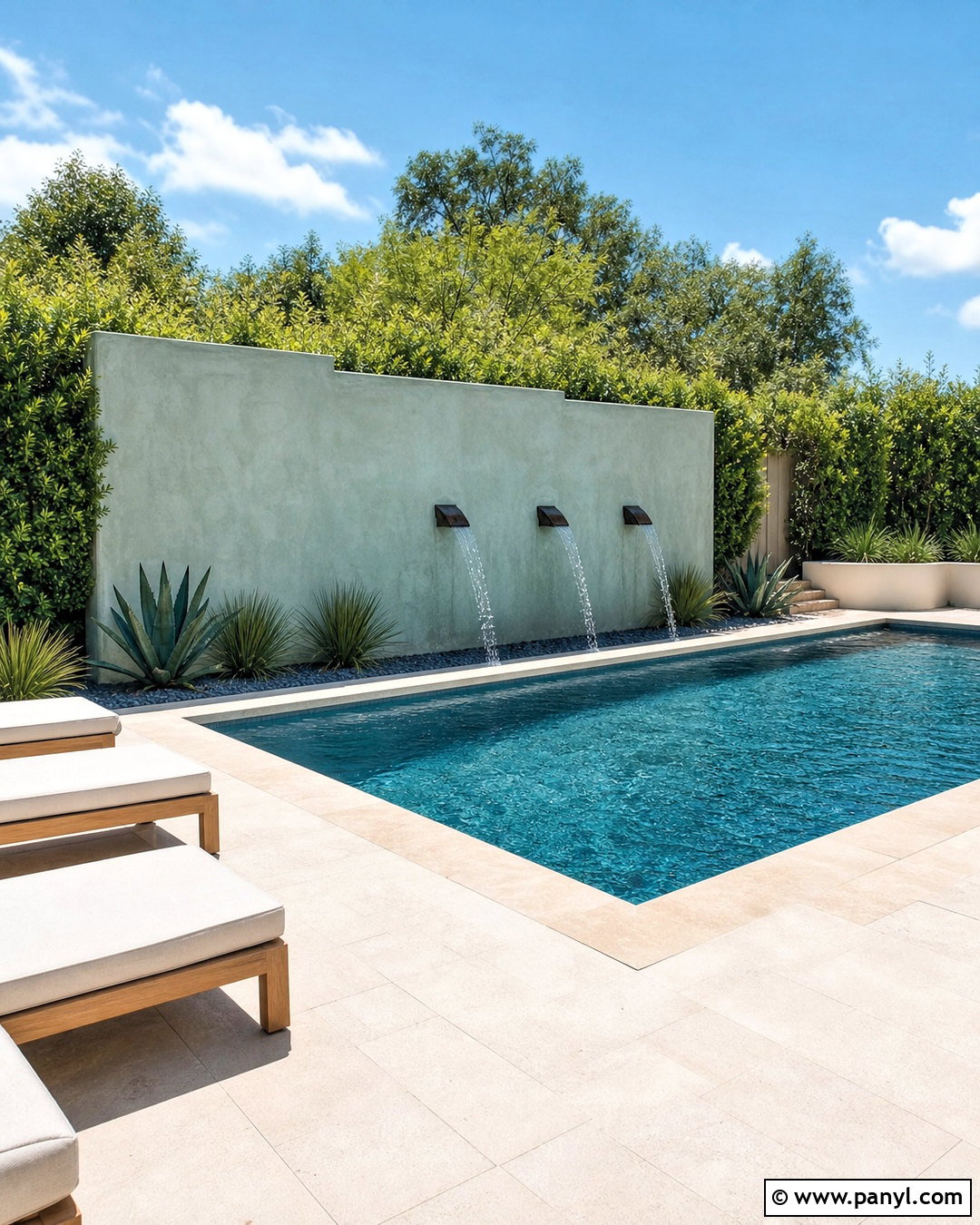
A poolside stucco wall should create a clear focal point while coordinating with the deck, water, and surrounding landscape. Finish a broad feature wall in muted aqua, sandy beige, or soft white, depending on the home’s exterior palette. Add three simple water spouts in brushed stainless steel or dark bronze, evenly spaced across the surface. Use pale limestone coping and light concrete pavers to keep the pool area bright. Low agave, grasses, and clipped shrubs provide greenery without blocking the wall. Place streamlined lounge chairs along the opposite side for an unobstructed view. The complete design feels orderly and resort-inspired, yet the simple materials and moderate scale keep it appropriate for a realistic residential backyard.
Conclusion:
These 20 stucco walls demonstrate how one versatile surface can support warm interiors, modern exteriors, structured gardens, and relaxing outdoor rooms. The strongest designs treat stucco as part of a complete composition rather than an isolated texture. Coordinate its color with flooring, furniture, roofing, trim, stone, wood, and nearby planting. Smooth finishes generally support cleaner contemporary spaces, while subtle hand-troweled surfaces bring an organic, artisan character. Before committing, view several finish samples on the actual wall during different times of day. Also choose materials and installation methods suited to the location and moisture exposure. With thoughtful color, texture, and surrounding details, stucco can make an ordinary space feel distinctive and beautifully connected.

Related Ideas and Inspiration:
Leave a Reply