
Interior walls can do much more than hold paint and artwork. The right surface treatment adds depth, controls the mood, and gives an ordinary room a finished architectural character. Current interiors favor tactile materials such as limewash, Venetian plaster, fluted wood, clay finishes, stone, and dimensional panels because they bring movement and warmth to simple spaces. () The key is designing the entire room around the wall rather than treating texture as an isolated feature. Furniture scale, lighting, flooring, colors, and decorative accents should all support the finish. From affordable molding treatments to professionally applied plaster, the following complete room concepts offer practical inspiration for exploring **20 interior wall texture design ideas**.

1. Limewash Wall Texture
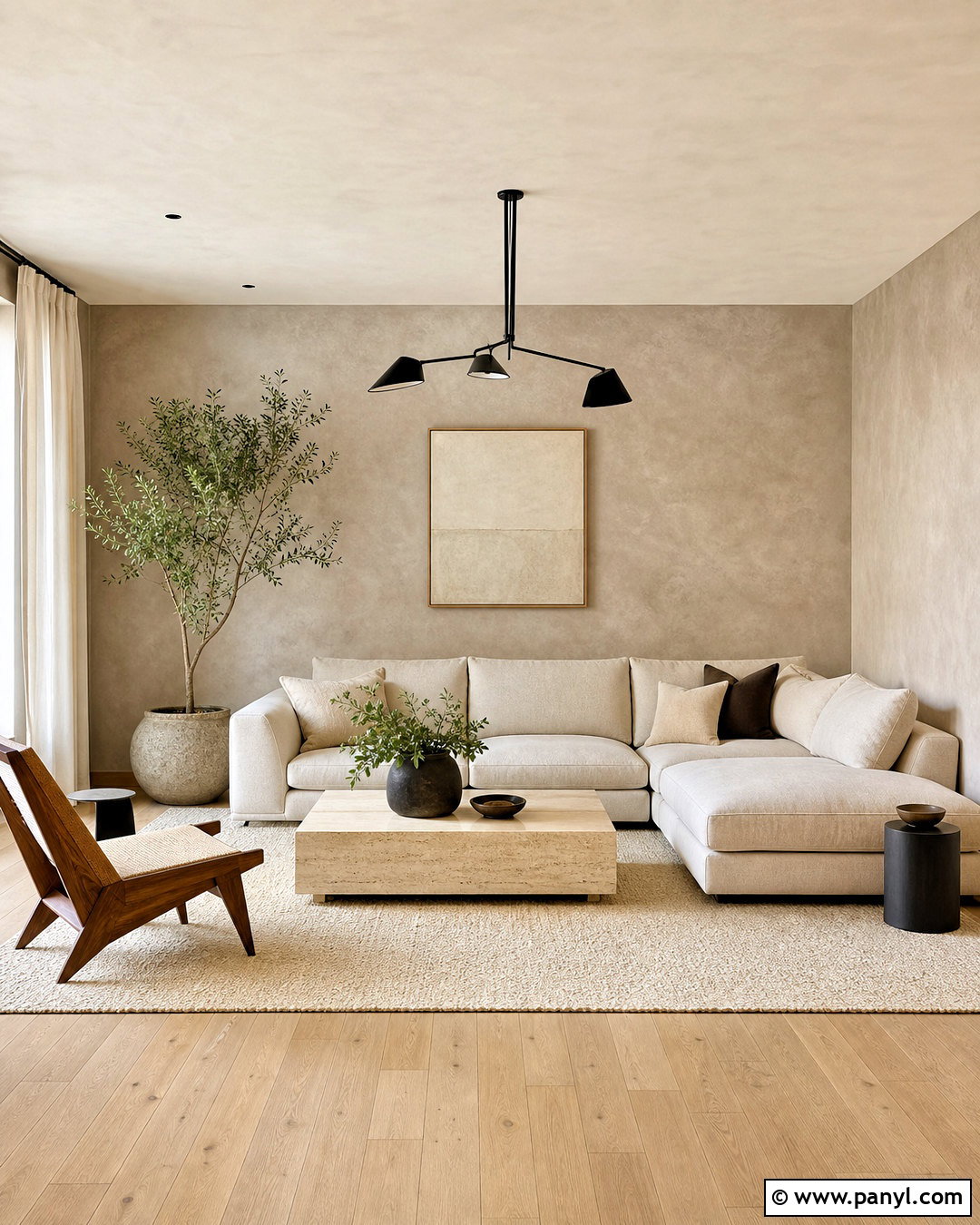
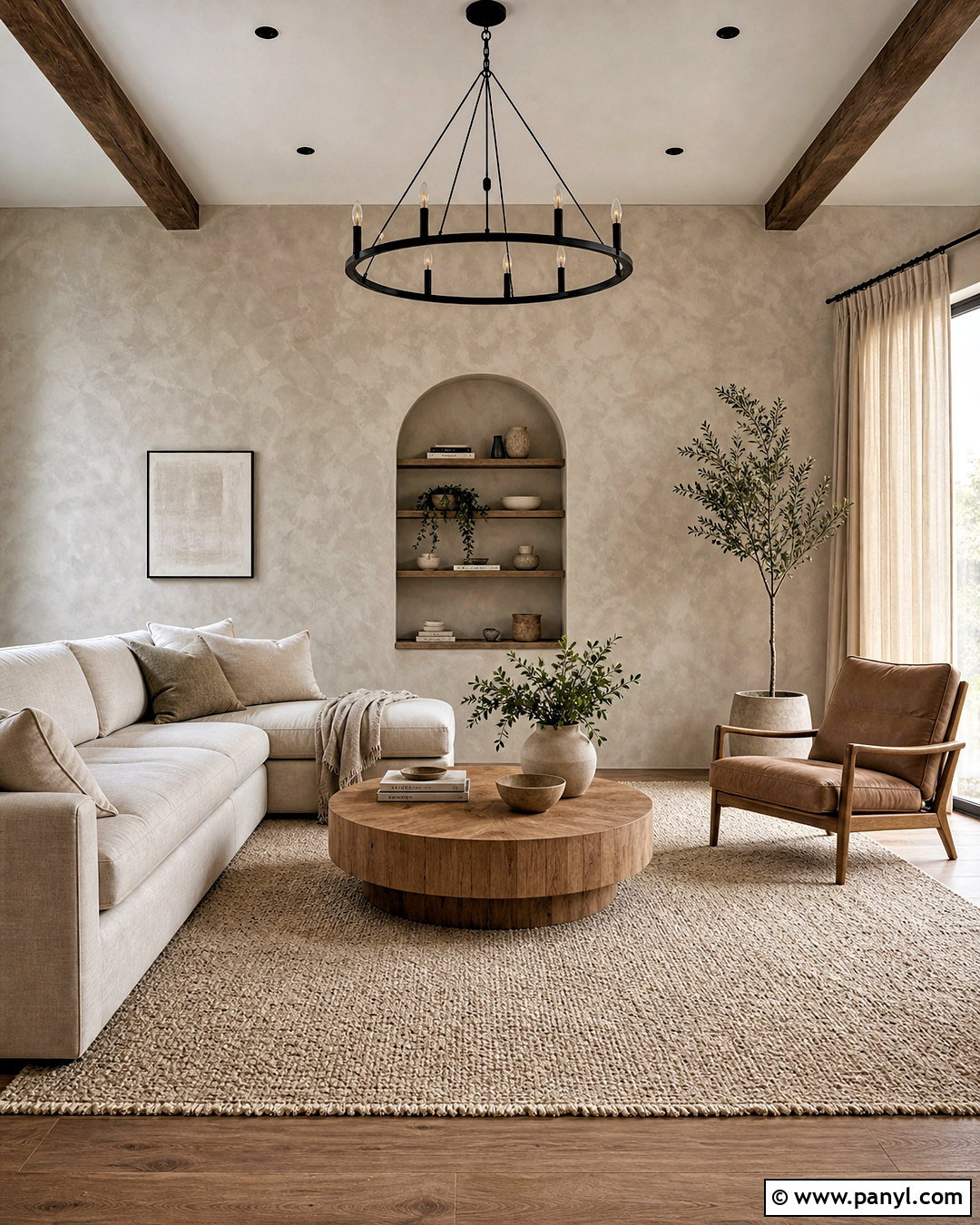
A warm greige limewash wall creates a soft foundation for an organic modern living room. Apply the finish across every wall instead of limiting it to one accent surface. Its cloudy movement looks especially balanced beside pale oak flooring, an oatmeal sofa, and a low travertine coffee table. Add linen curtains and a cream wool rug to continue the natural palette. Matte black lighting introduces definition without making the room feel harsh. Keep artwork minimal because the changing wall tone already provides visual interest. Soft directional lighting will highlight the layered brushwork throughout the day. Before starting, test a large sample in the room, since natural and artificial light can noticeably affect the final color.
2. Venetian Plaster Wall Texture
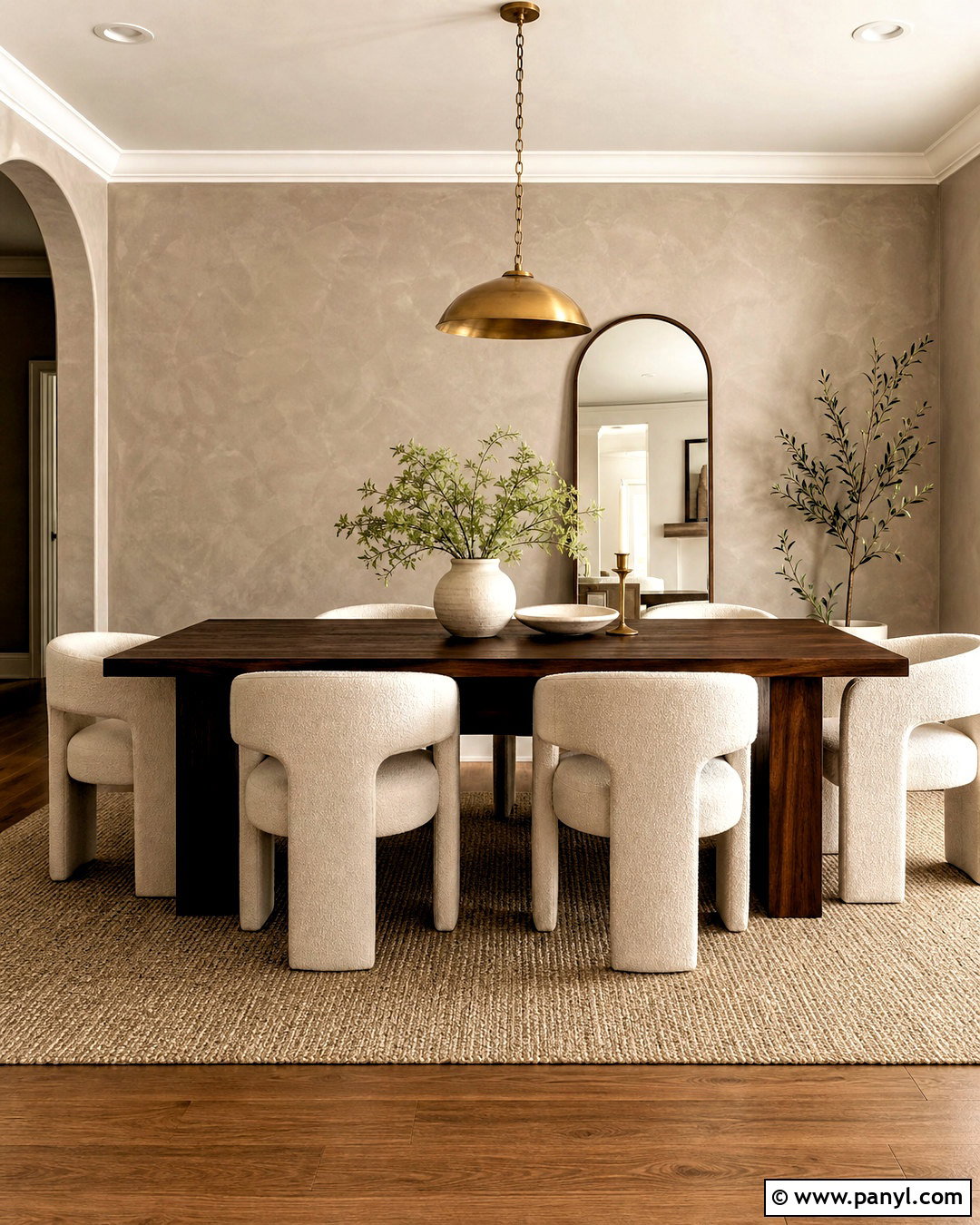
Venetian plaster can turn a dining room into a polished but welcoming gathering space. Choose a muted mushroom finish with gentle tonal variation rather than an overly glossy surface. Cover the main walls and ceiling edge for a more intentional, enveloping result. A dark walnut dining table, curved cream chairs, and a sculptural brushed brass pendant balance the smooth plaster with warmth and contrast. Use a large woven rug to soften sound and ground the furniture. An arched mirror can reflect the plaster’s subtle movement without covering too much of it. Because the finish depends heavily on application technique, hire an experienced specialist or practice on sample boards before attempting an entire room.
3. Roman Clay Wall Texture
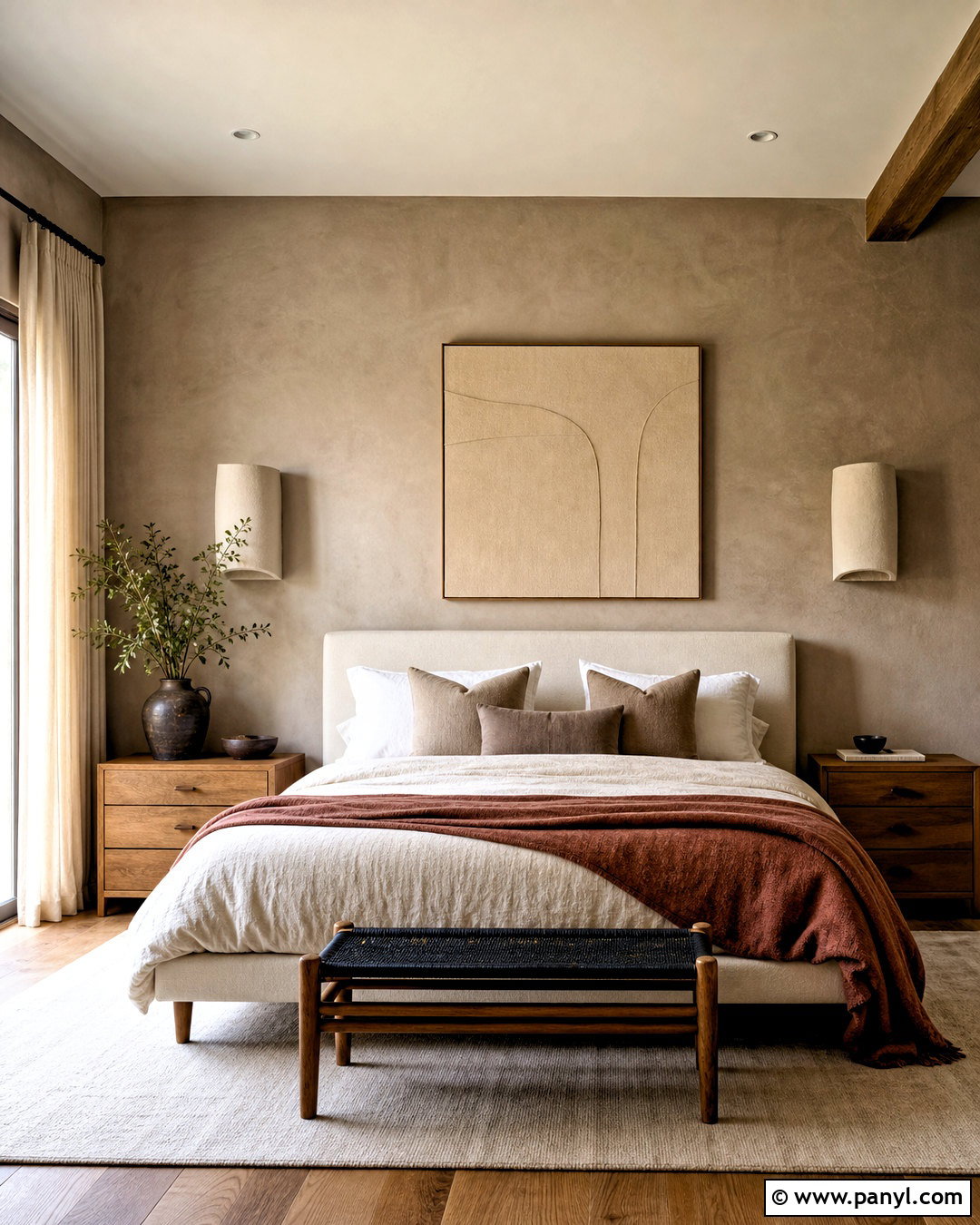
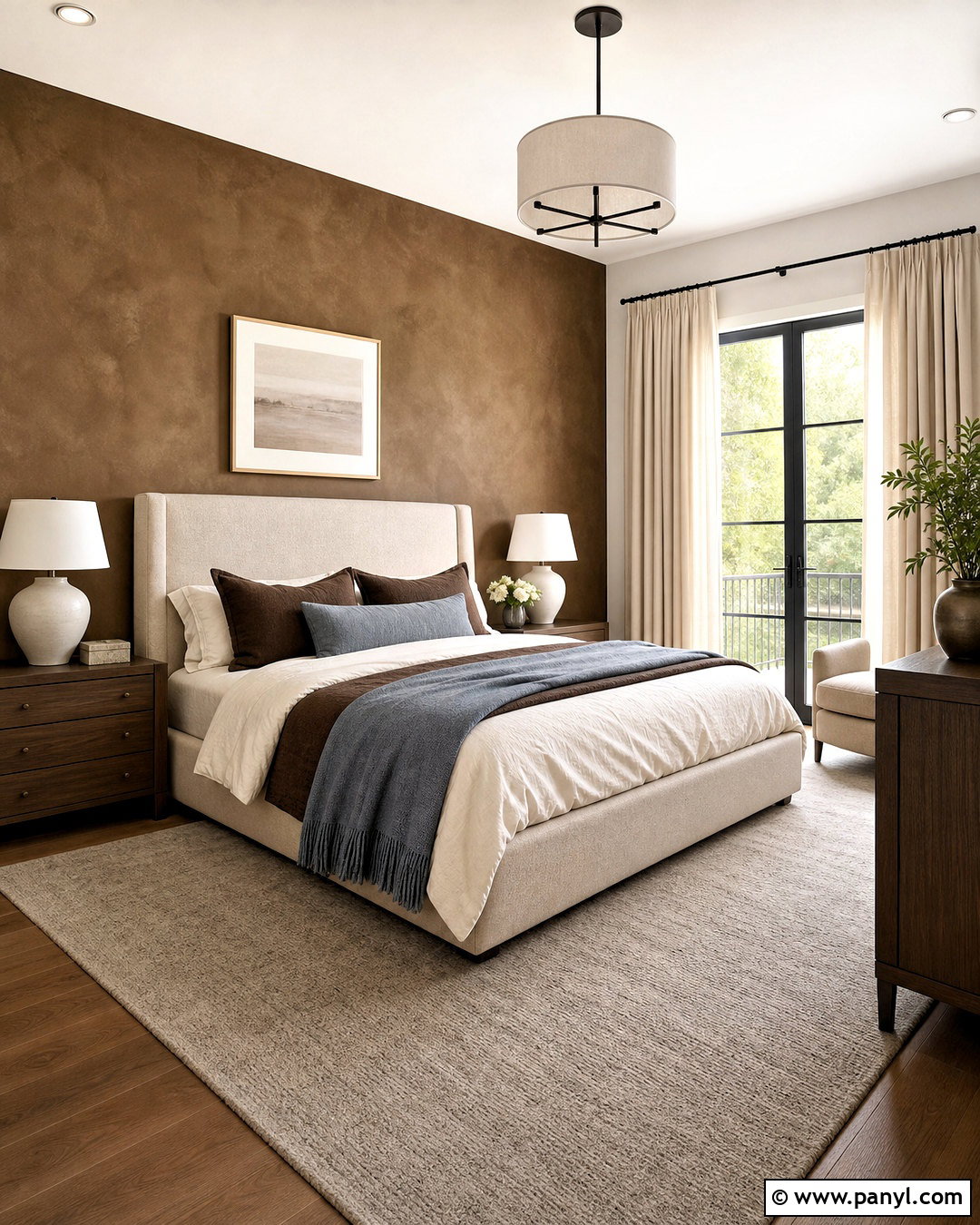
Soft taupe Roman clay makes a bedroom feel calm, layered, and comfortably understated. Use it on all four walls to create a continuous cocoon rather than a single disconnected feature. Pair the matte texture with a low upholstered bed in warm ivory, medium-tone oak nightstands, and natural linen bedding. A muted rust throw adds restrained color while complementing the earthy wall finish. Install simple plaster sconces or frosted glass pendants beside the bed so light washes gently across the surface. Keep the ceiling and trim in a related creamy white for a seamless transition. Since Roman clay has visible hand-applied movement, avoid overcrowding the walls with art. One oversized textile or tonal abstract piece is enough.
4. Microcement Wall Texture
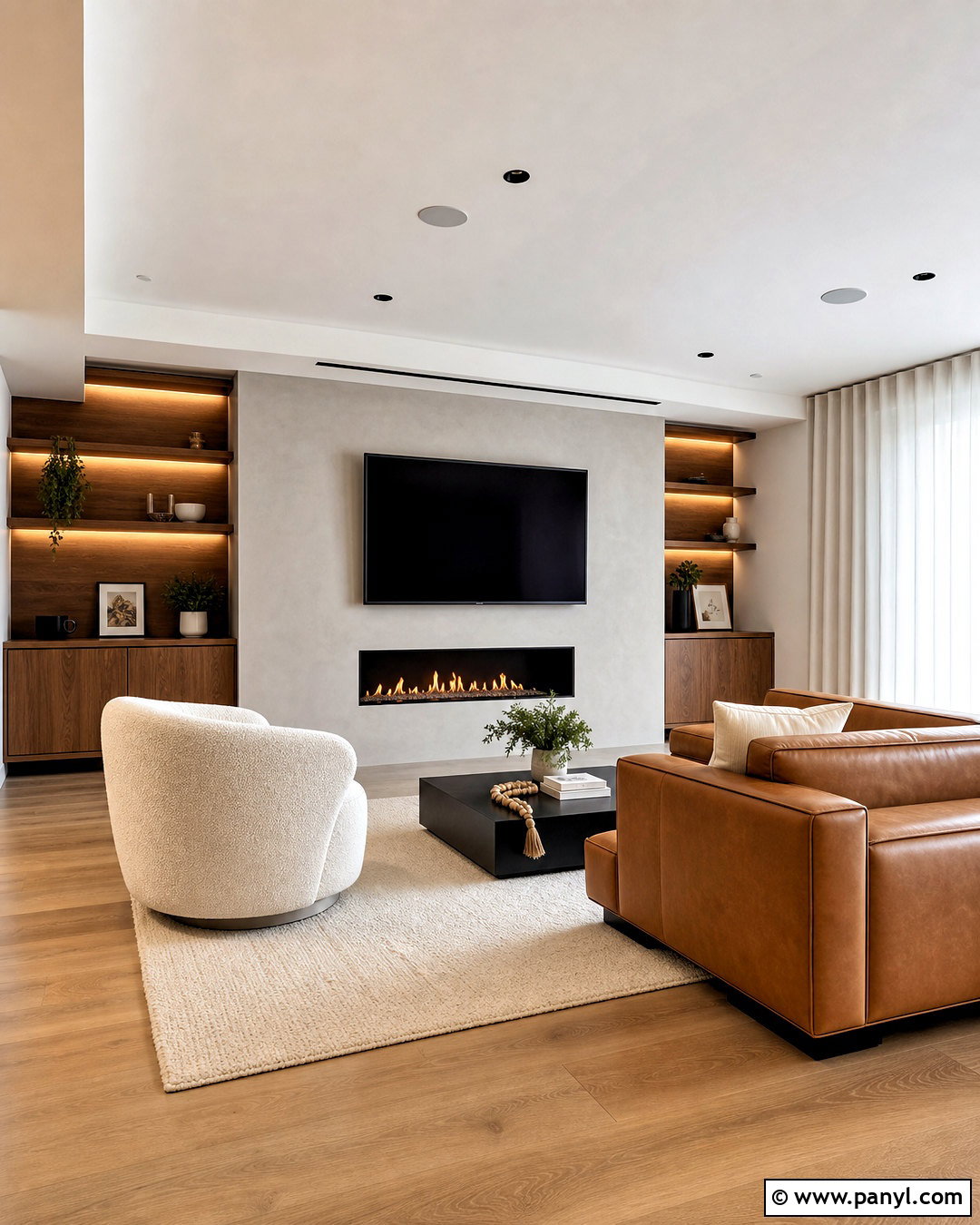
A pale gray microcement wall works beautifully in a streamlined contemporary living room. Extend the finish across the television wall, fireplace surround, and nearby built-in shelving to create one continuous architectural feature. Balance the cool mineral appearance with a caramel leather sofa, walnut cabinetry, and a thick ivory rug. Matte black hardware and a linear floor lamp strengthen the modern look. Add rounded furniture and soft curtains so the room does not feel overly industrial. Concealed lighting beneath shelves can emphasize the wall’s slight variations after dark while maintaining a clean layout. Proper preparation and sealing are important, particularly around fireplaces or high-touch areas. Use a professional installer when a durable, nearly seamless result is the priority.
5. Fluted Wood Wall Texture
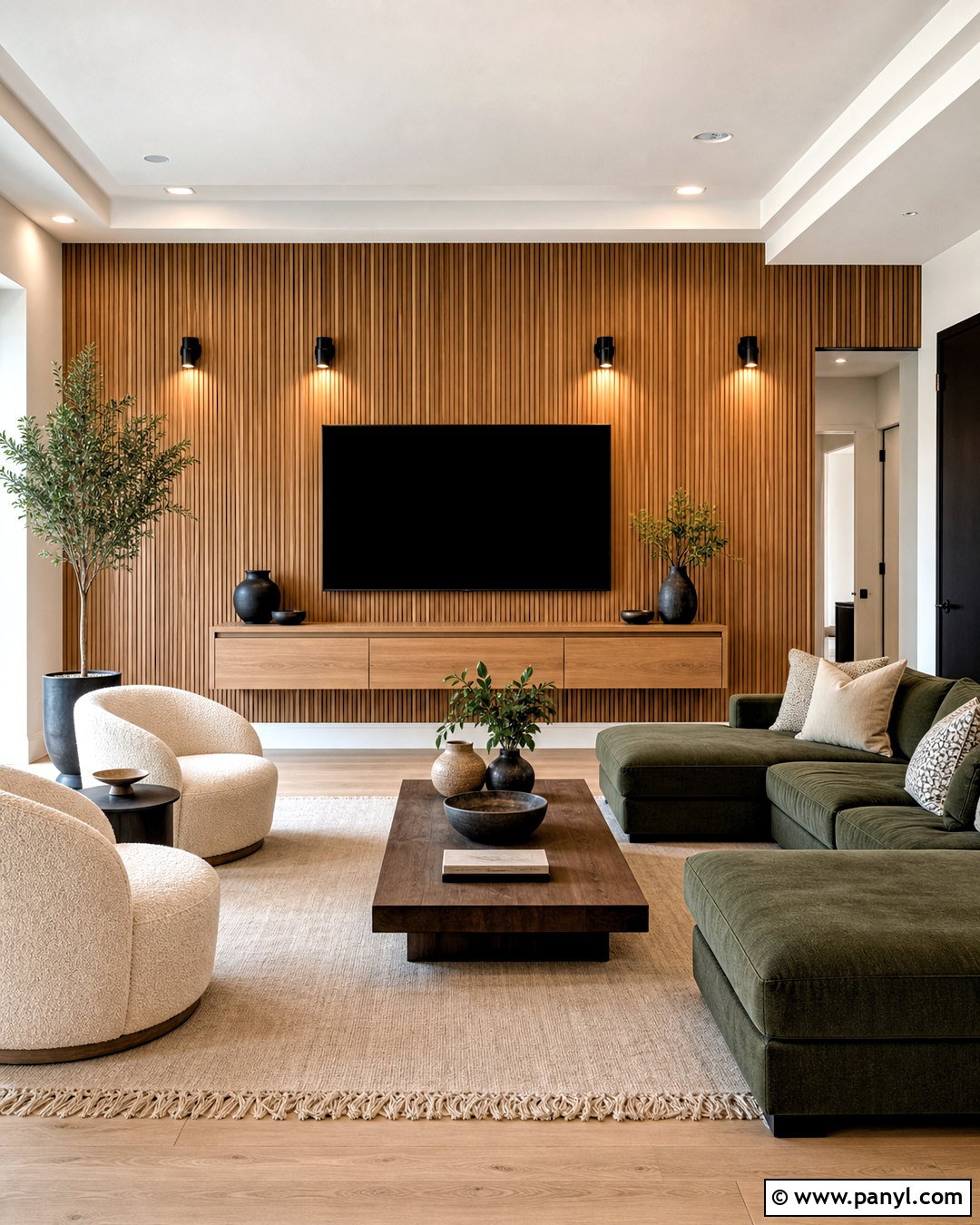
Natural oak fluted panels give a living room warmth, rhythm, and a strong focal point. Install them across the full media wall, including behind a floating oak console, to avoid a narrow strip that looks unfinished. Surround the feature with warm white walls and light wood flooring. A deep green sectional introduces rich color, while cream boucle chairs soften the panel’s straight vertical lines. Choose simple black picture lights or integrated shelf lighting to reveal the grooves without creating visual clutter. Leave part of the wall open rather than covering every panel with decoration. Because narrow channels can collect dust, select a panel depth that is easy to maintain and keep a soft brush attachment nearby for routine cleaning.
6. Board And Batten Wall Texture
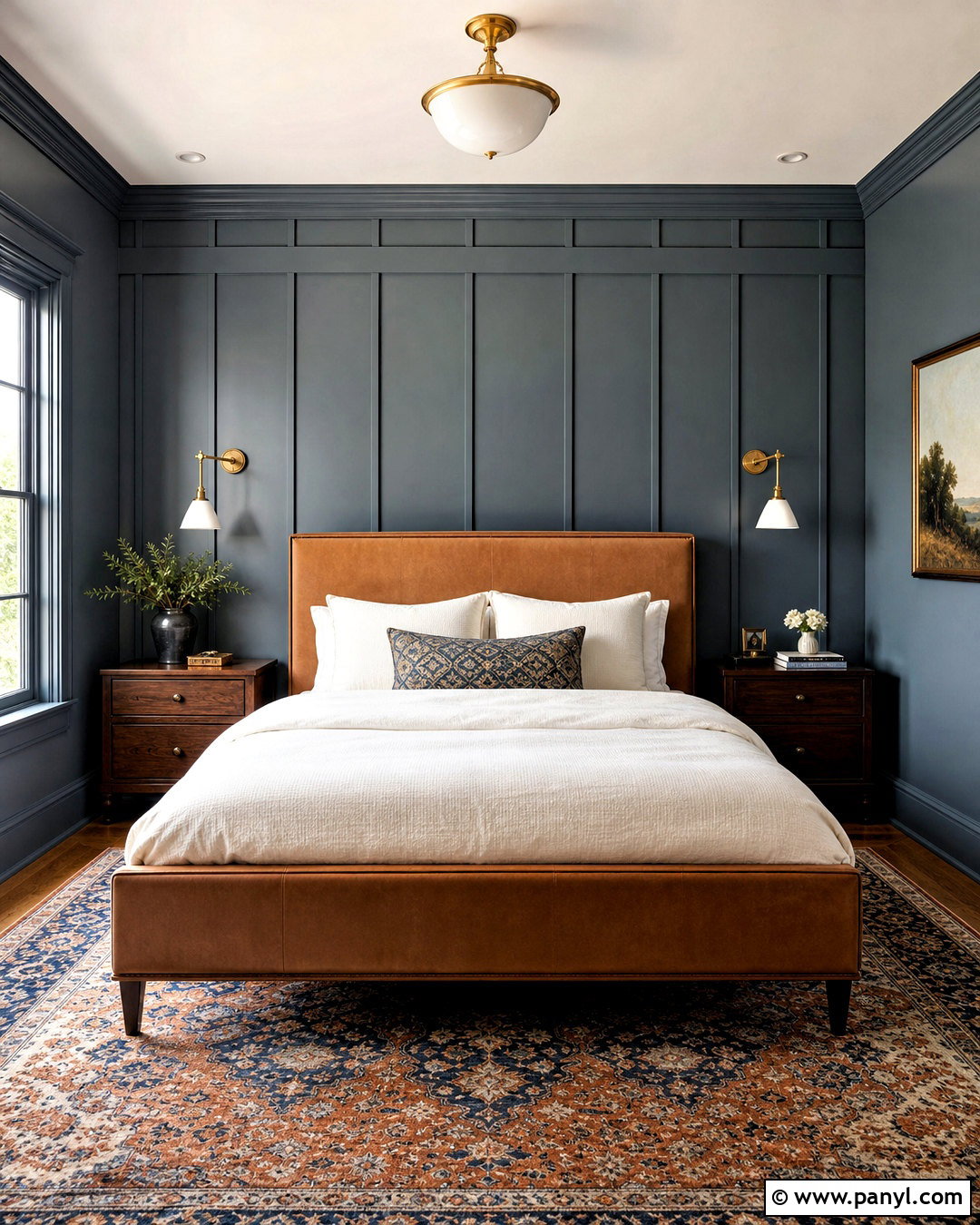
Full-height board and batten can give a bedroom architectural detail without relying on expensive materials. Paint the molding and wall together in a muted blue-gray for a unified, tailored appearance. Center a camel upholstered bed against the paneled wall, then add walnut nightstands and warm brass sconces for contrast. Crisp white bedding keeps the darker color from becoming heavy, while a patterned vintage-style rug brings in blue, rust, and cream. Continue the same blue-gray onto the baseboards for a more contemporary finish. Carefully plan the spacing around outlets, windows, and furniture before installing each batten. Wider, evenly spaced sections usually look calmer than numerous narrow boxes, especially in a modestly sized room with standard-height ceilings.
7. Textured Wallpaper Wall
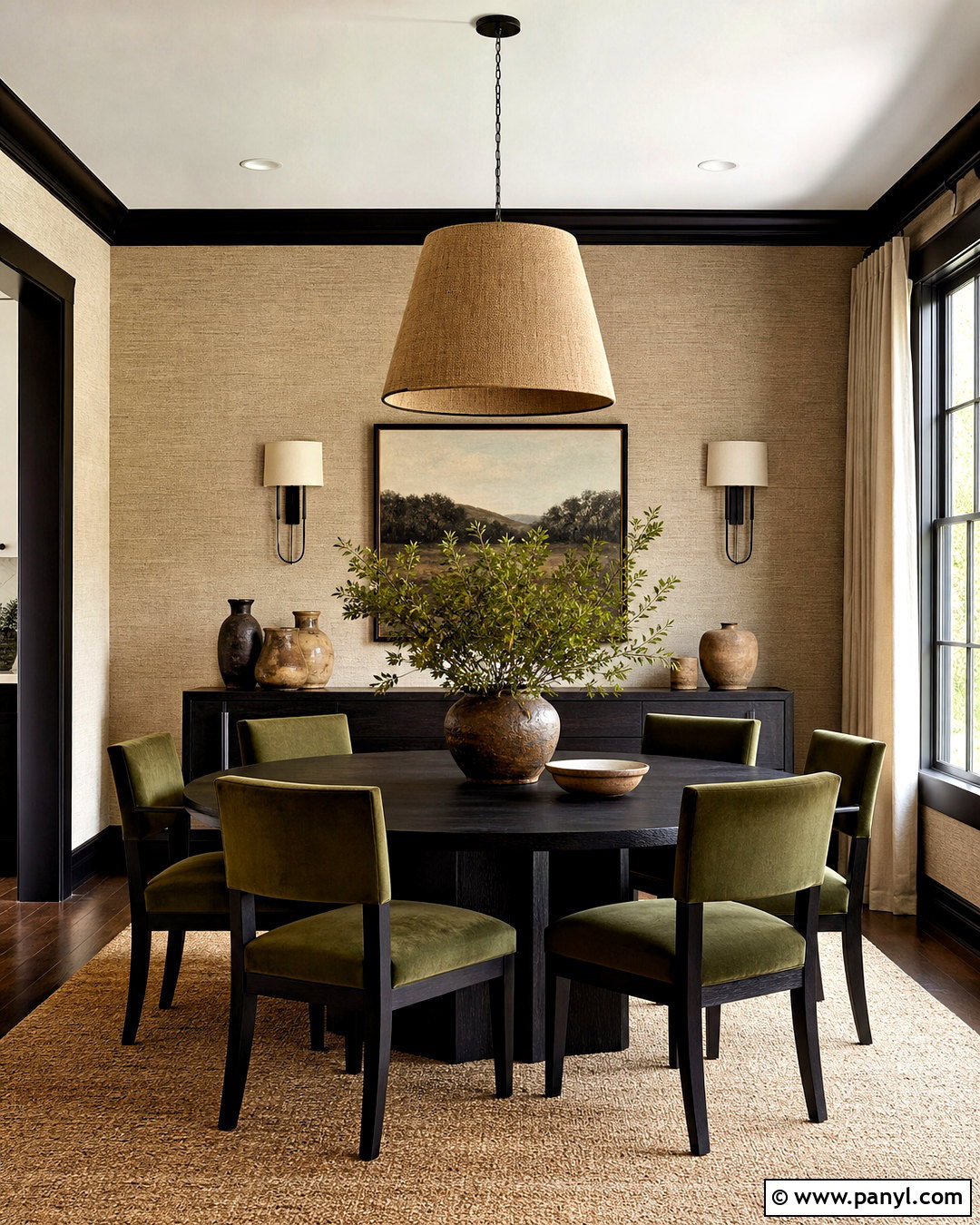
A woven-look textured wallpaper can make a dining room feel polished without major construction. Choose a warm beige paper with a subtle vertical pattern and install it on every wall for continuity. Pair it with a round black oak table, upholstered olive chairs, and a large linen pendant. Dark wood trim or a slim chair rail can give the light wallpaper a clean boundary. Add simple ceramic vessels and one framed landscape rather than filling the room with many small accessories. Window treatments should remain quiet, such as natural linen panels in a closely related beige. Use washable or vinyl-backed wallpaper in busy households. Professional installation is worthwhile because raised surfaces, uneven seams, and poorly matched patterns are more noticeable on textured wallcoverings.
8. Grasscloth Wall Texture
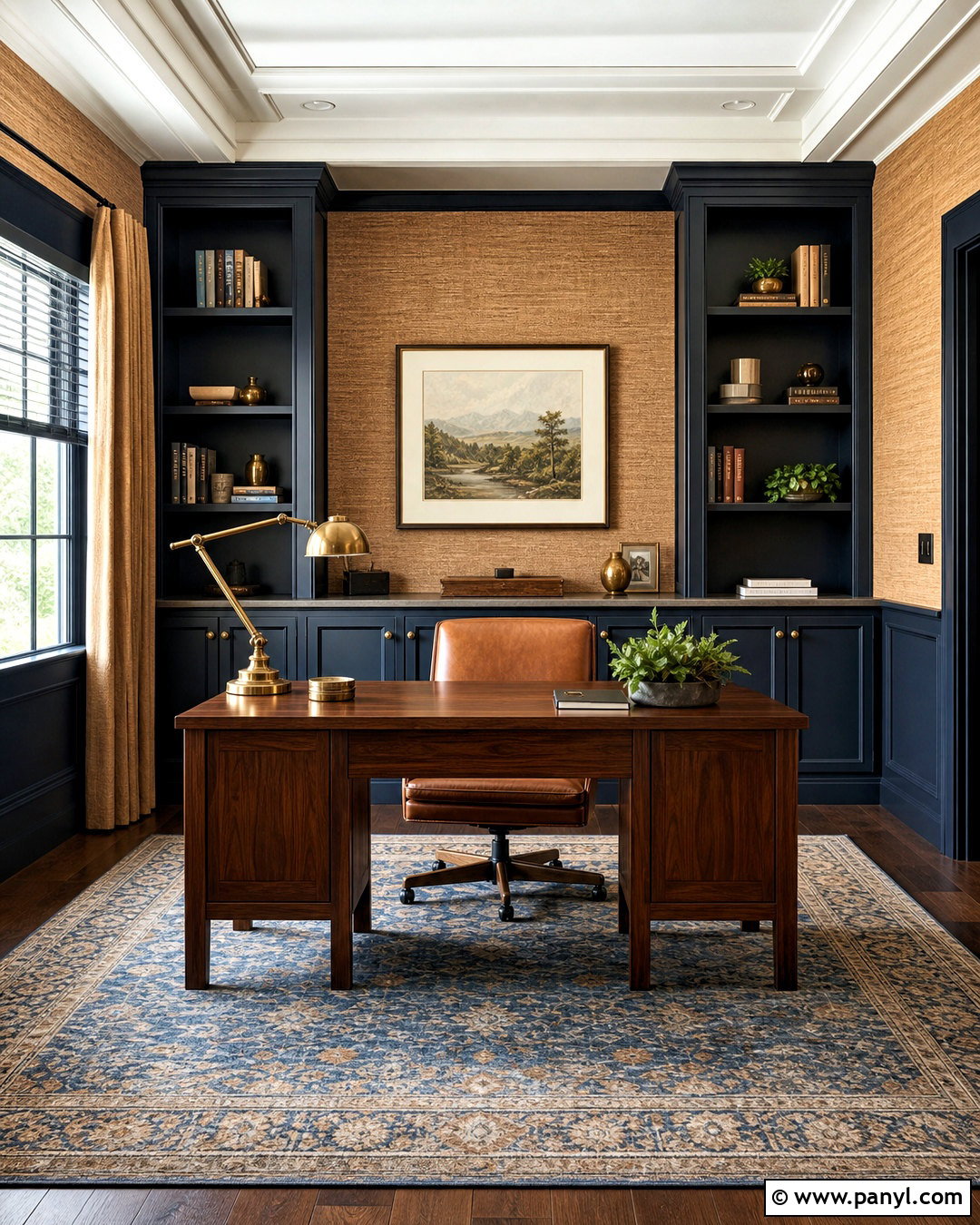
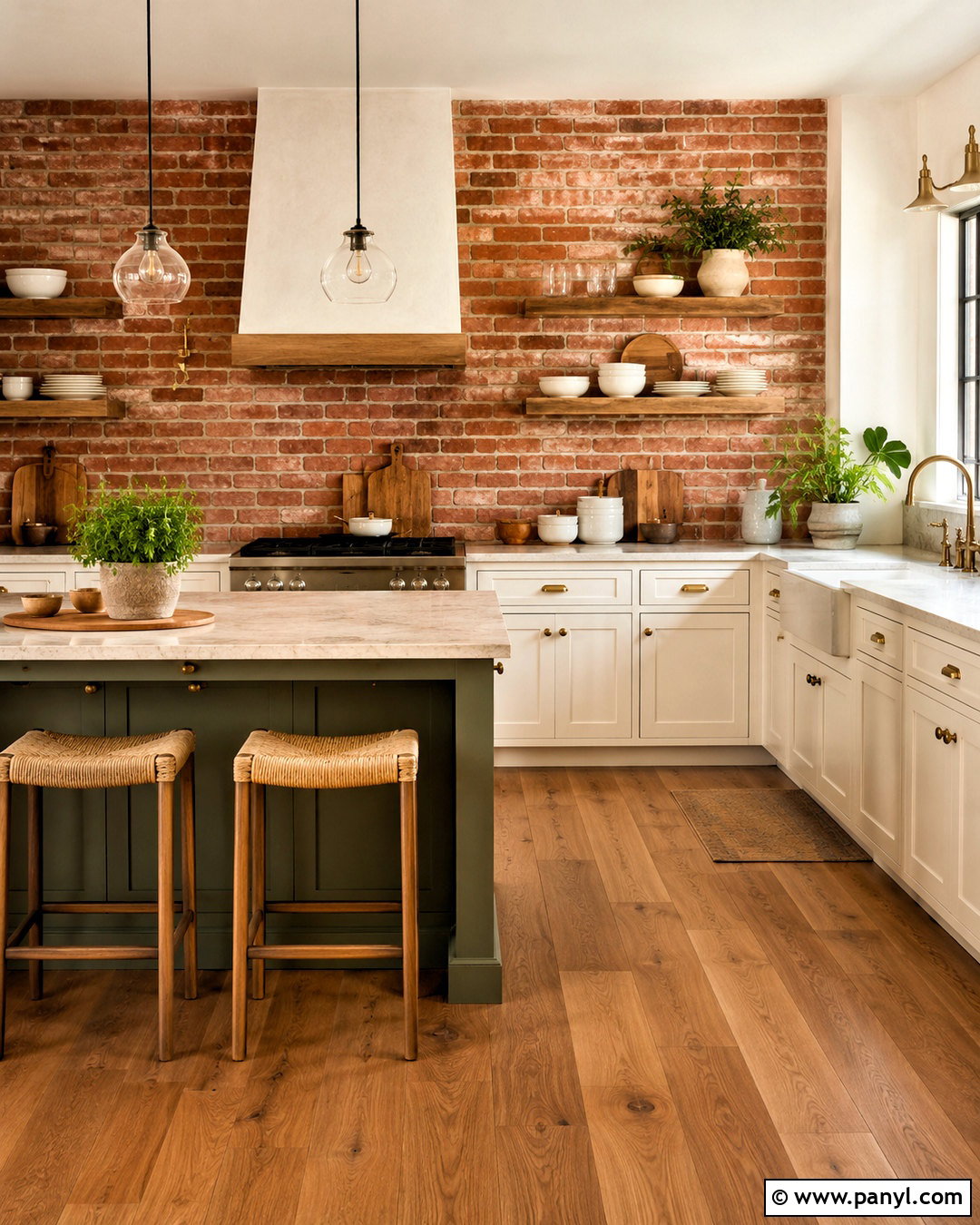
Natural grasscloth creates a layered, collected look in a home office or library. Choose a medium camel tone with visible woven fibers, then cover the walls above dark navy built-in cabinets. A walnut desk, cognac leather chair, and antique brass lamp reinforce the warm, traditional character. Introduce a patterned flat-weave rug with muted blue and tan details to connect the cabinetry and wallcovering. Because grasscloth seams are usually visible, treat their natural variation as part of the design instead of expecting a perfectly uniform finish. Keep the room dry and avoid placing the material where hands frequently touch the walls. Framed artwork with wide cream mats can provide contrast while allowing plenty of woven texture to remain visible around each piece.
9. Exposed Brick Wall Texture
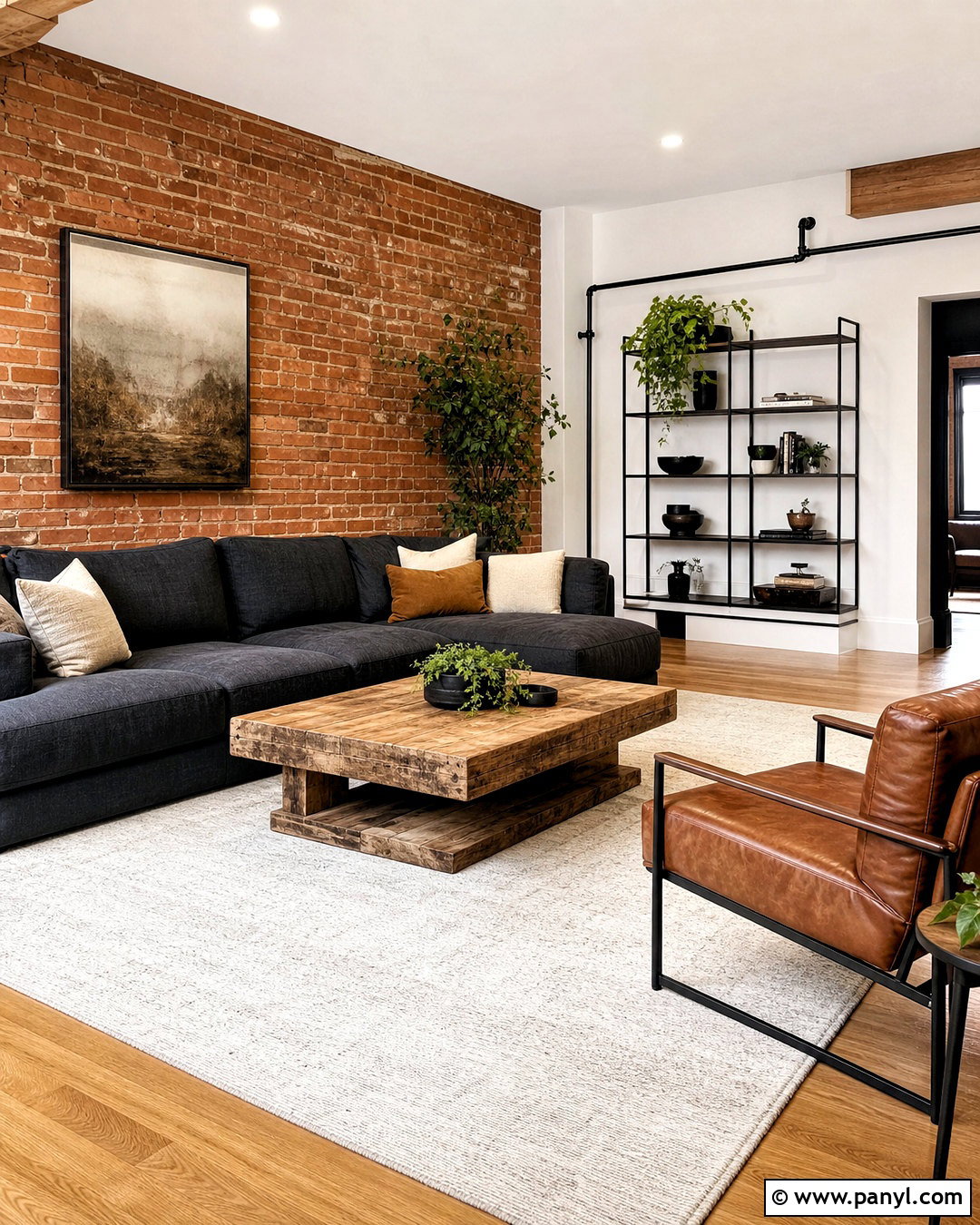
An exposed brick wall can anchor a loft-inspired living room without making the space feel cold. Keep the brick in a warm, weathered red tone and repair uneven mortar before arranging the room. Place a charcoal sectional opposite the wall and introduce a reclaimed oak coffee table, tan leather chair, and oversized cream rug. Black metal shelving can echo the industrial structure while displaying books, pottery, and trailing plants. Use warm white paint on the remaining walls to brighten the room and prevent the brick from dominating every surface. A large linen curtain adds softness near windows. If the brick produces dust, use an appropriate clear matte sealer that preserves its natural appearance rather than creating a shiny or plastic-looking coating.
10. Stone Veneer Wall Texture
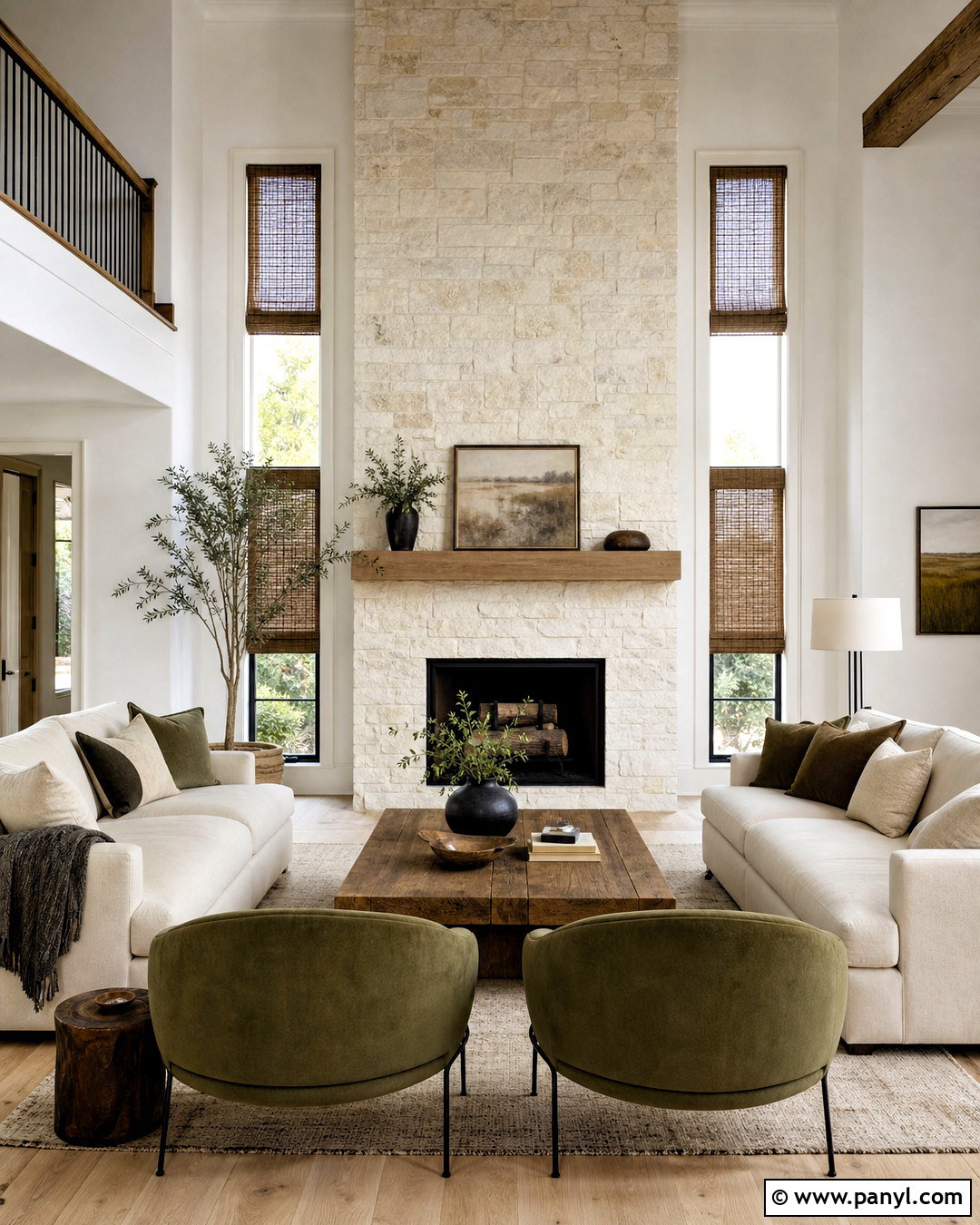
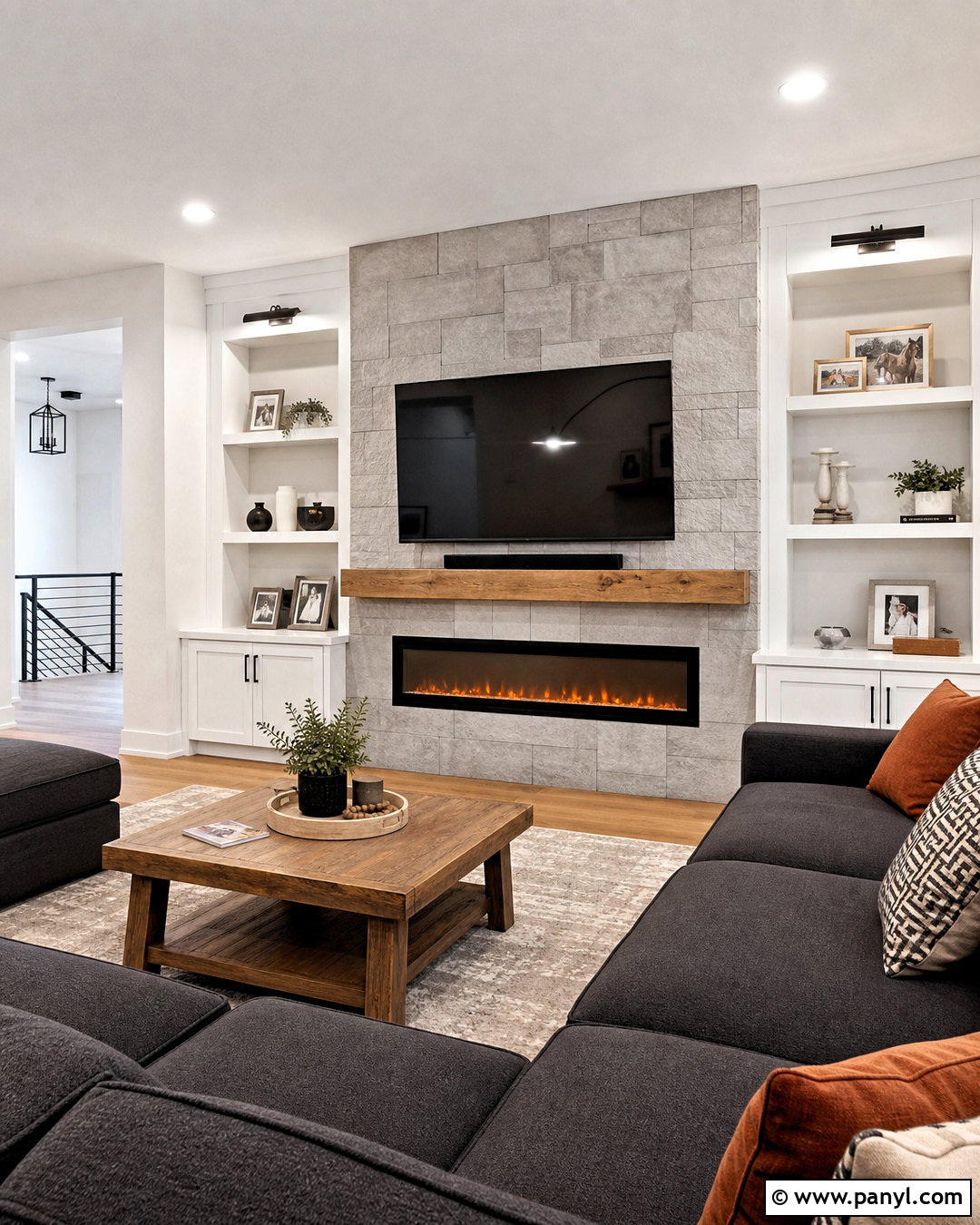
Light limestone veneer makes a fireplace wall feel substantial and naturally connected to the room. Run the stone from floor to ceiling and keep the joints thin for a cleaner contemporary finish. A simple oak mantel adds warmth without competing with the irregular surface. Arrange two cream sofas and a pair of olive lounge chairs around a substantial wood coffee table. Pale oak floors, off-white walls, and woven shades maintain a relaxed neutral palette. Use wall-washing lights near the ceiling to reveal the stone’s depth and shadows. Avoid installing numerous shelves or decorations across the veneer. One large vessel and a restrained mantel arrangement are enough. Select thinner interior-grade veneer when minimizing added wall depth and structural weight is important.
11. 3D Wall Panel Texture
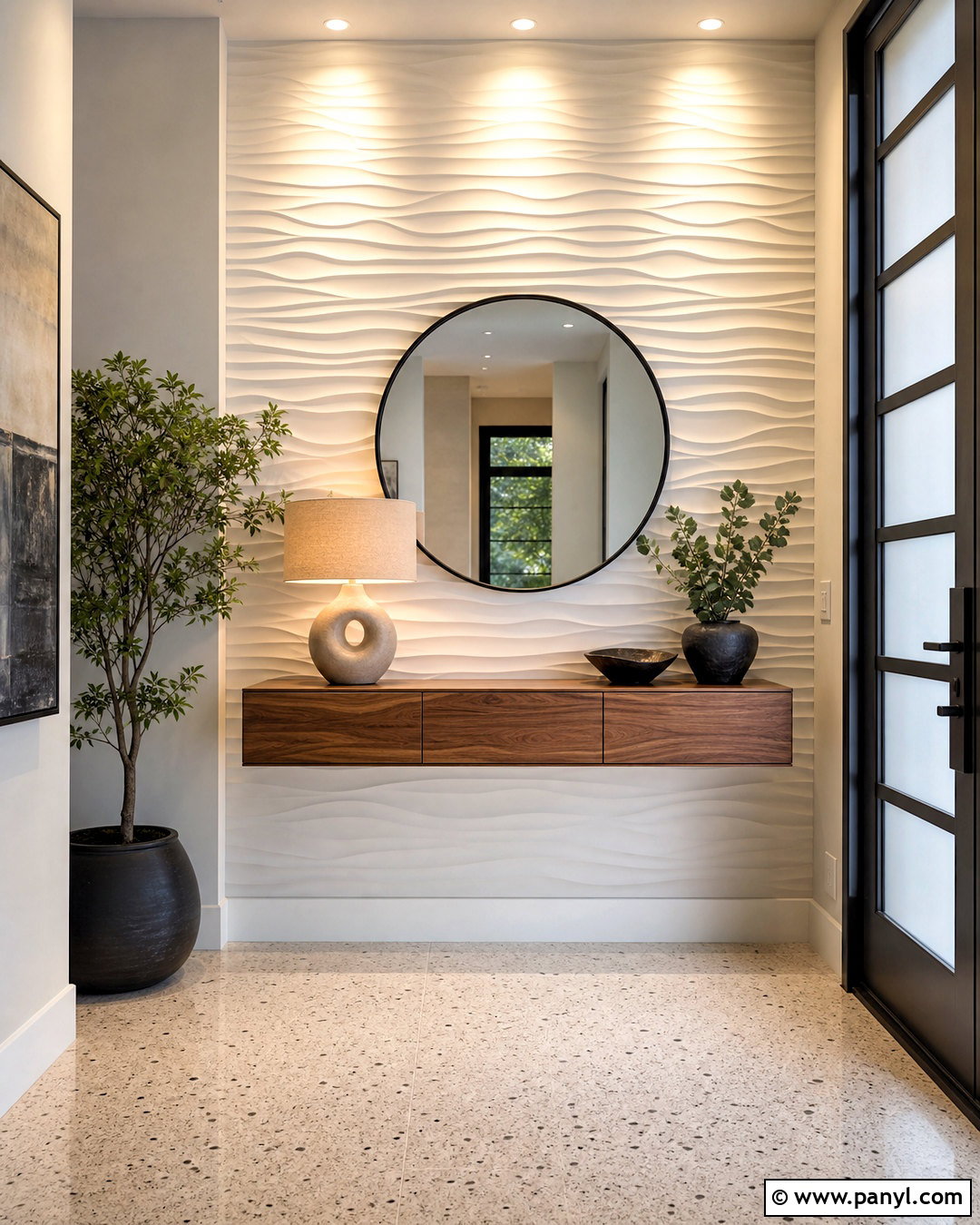
Paintable 3D gypsum panels create a crisp focal wall in a contemporary entry or living area. Choose a shallow wave pattern and paint it warm white so the dimensional surface feels architectural rather than flashy. Install the panels from baseboard to ceiling behind a slim walnut console. Add a round black-framed mirror, sculptural ceramic lamp, and one leafy plant for balance. Terrazzo or pale oak flooring can keep the surrounding space bright. Recessed ceiling lights should wash down the wall to make the relief clearly visible. Keep nearby walls smooth and free of heavy decoration so the pattern has room to breathe. Precise panel alignment is essential because uneven seams will interrupt the repeating design and become obvious under directional lighting.
12. Cork Wall Texture
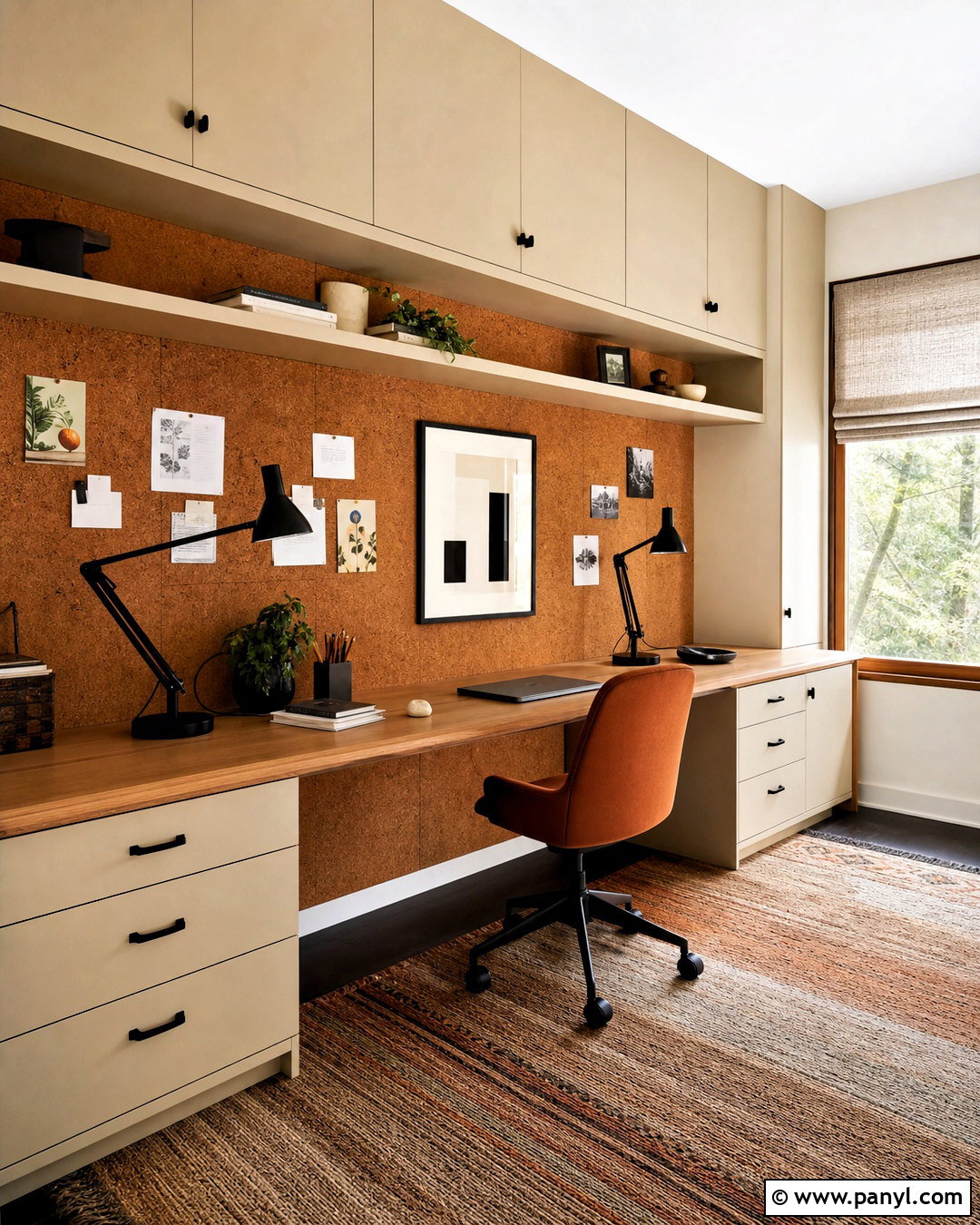
A cork feature wall adds texture and practical display space to a creative home office. Choose medium brown cork tiles with natural tonal variation and cover the full wall behind a long oak desk. Pair the surface with matte cream cabinetry, black task lights, and a comfortable rust-colored desk chair. Pin a restrained arrangement of calendars, sketches, and material samples directly to the cork, leaving open areas so the finish remains visible. A flat-weave rug and linen Roman shade soften the workspace. Paint the remaining walls warm white to keep the compact room from feeling enclosed. Use thicker, purpose-made wall tiles rather than thin craft sheets. Clean installation and carefully aligned edges will make this functional material look intentional and professionally finished.
13. Upholstered Fabric Wall Texture
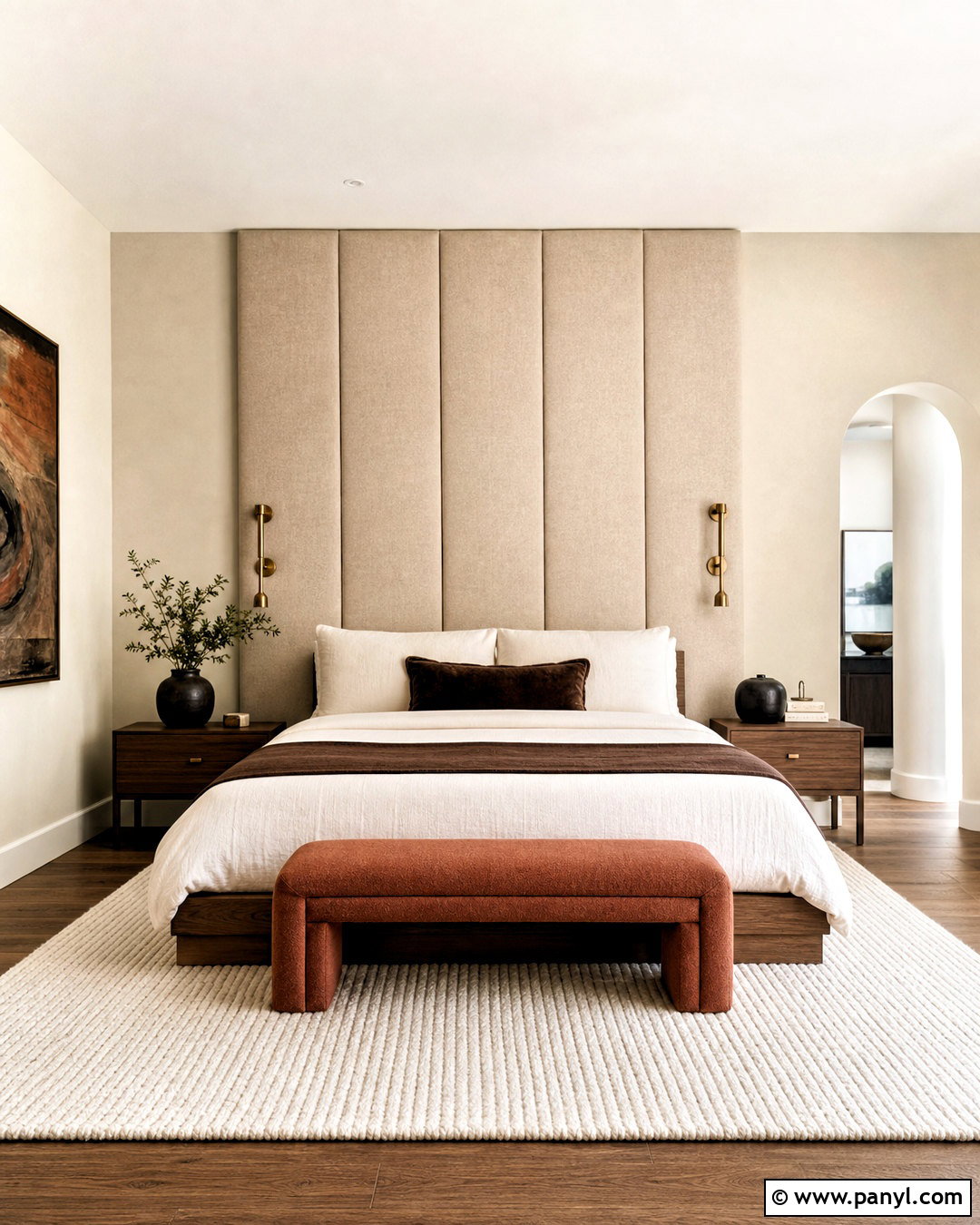
A fully upholstered bedroom wall brings softness, dimension, and a hotel-inspired finish to the sleeping area. Use wide vertical panels covered in oatmeal performance linen and extend them from floor to ceiling behind the bed and nightstands. Choose a low walnut bed with crisp ivory bedding, chocolate brown accents, and a muted terracotta bench. Small aged brass sconces can mount directly through the panels, creating a clean and symmetrical arrangement. Keep the other walls painted in soft beige and use a thick wool rug beneath the bed. The fabric should be durable, tightly installed, and easy to vacuum. Avoid loose tufting or excessive buttons if you want a modern appearance. The completed wall should feel tailored, quiet, and integrated with the furniture layout.
14. Shiplap Wall Texture
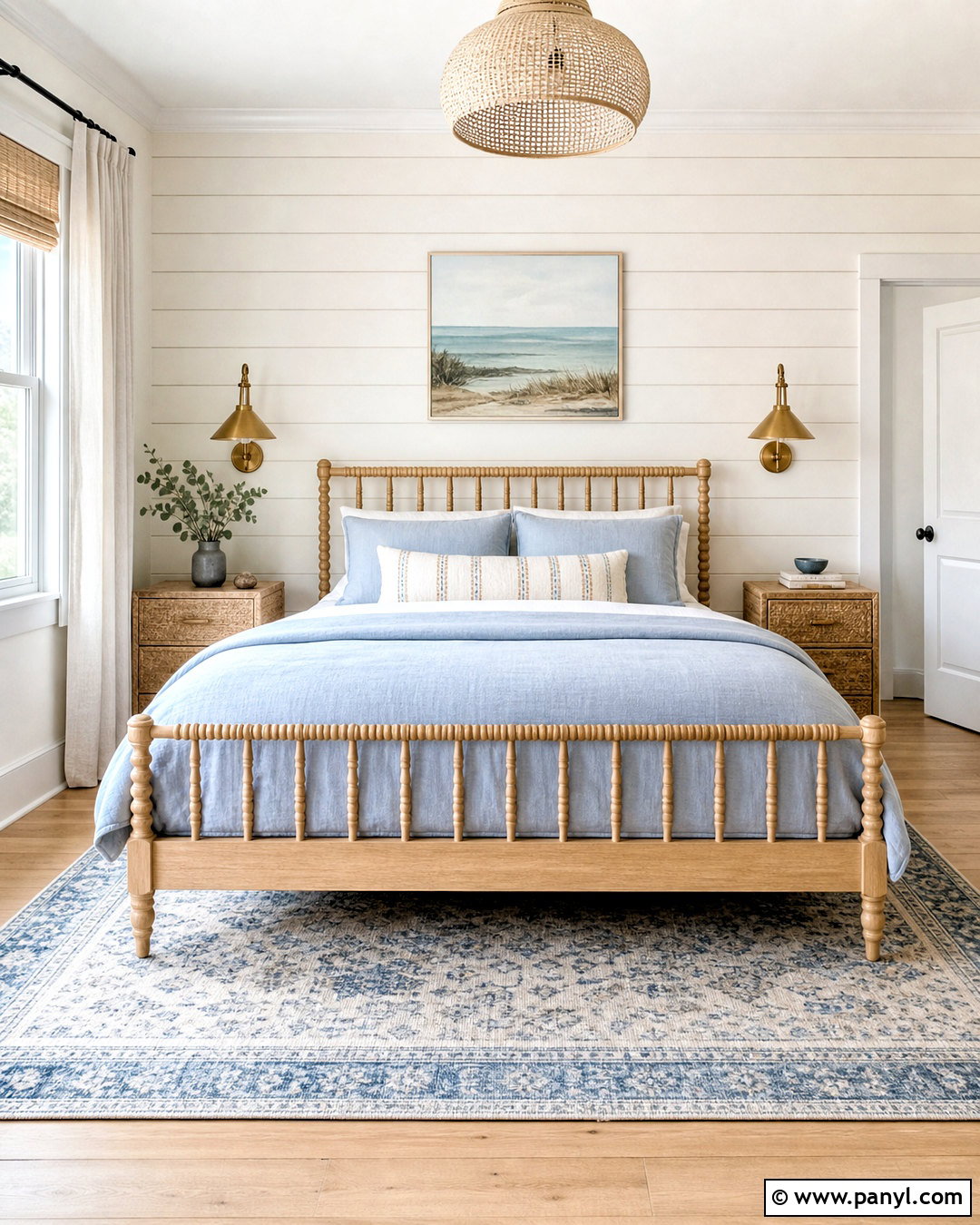
Horizontal shiplap can create a relaxed coastal bedroom when its proportions and colors remain simple. Cover the wall behind the bed with wide boards painted a soft sandy white. Pair the texture with a light oak spindle bed, pale blue linen bedding, and woven seagrass nightstands. A faded blue and cream rug brings pattern to the floor without making the space busy. Install clear glass or aged brass sconces for a light, casual accent. Keep the remaining walls in the same sandy white so the grooves provide texture without a dramatic color change. Wider boards generally feel more current and less visually crowded. Check every line with a level during installation, since even a small shift becomes noticeable across a long horizontal wall.
15. Stucco Wall Texture
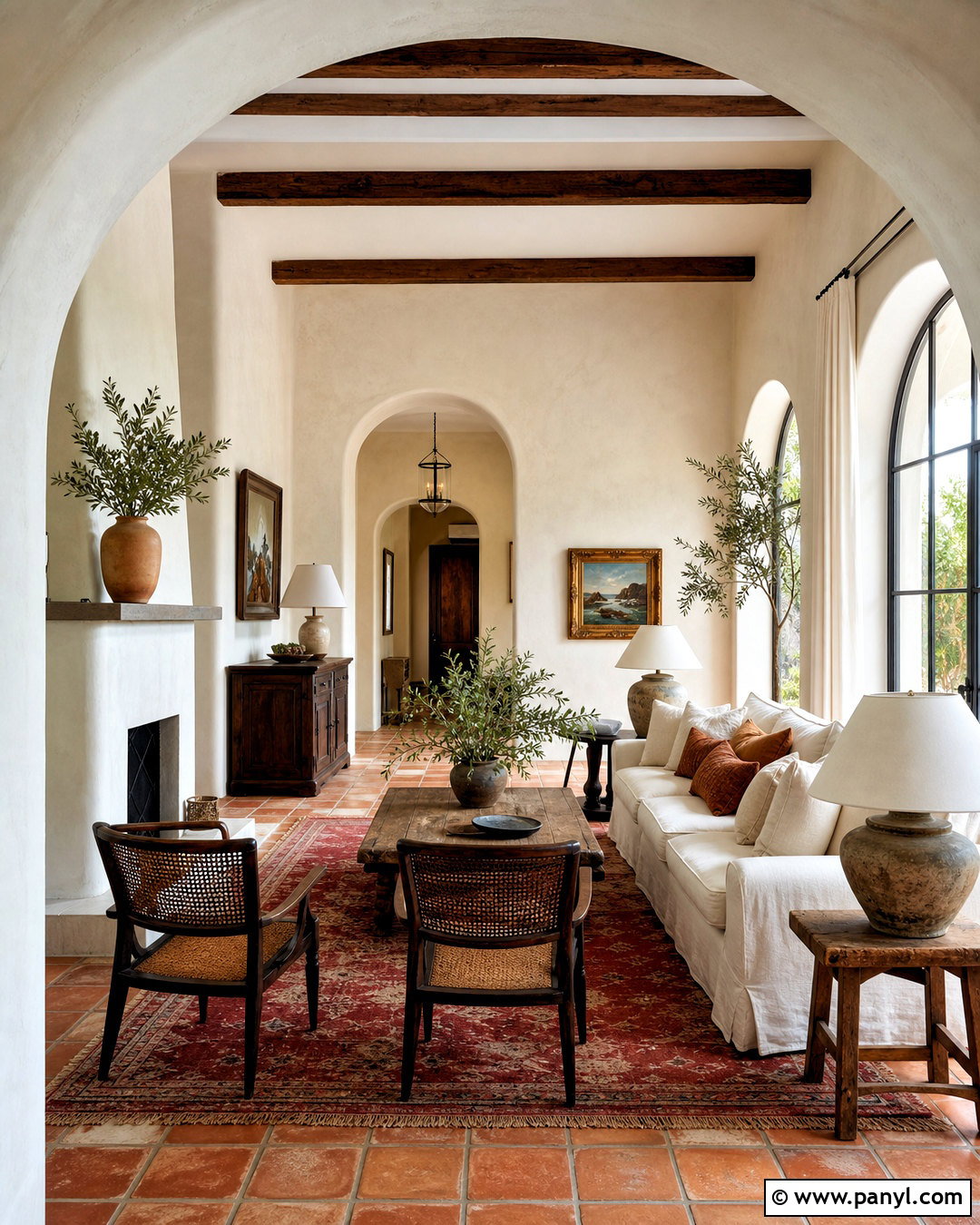
Warm ivory stucco can give a sunlit living room a relaxed Mediterranean character. Apply a softly troweled finish across the walls and around an arched doorway for a continuous handcrafted look. Combine it with terracotta tile flooring, a cream slipcovered sofa, and dark wood accent chairs with woven seats. A substantial rustic coffee table and a faded red rug add age and warmth. Use linen curtains, oversized ceramic lamps, and olive branches to complete the natural palette. The surface should have gentle movement rather than sharp ridges that trap dust. Keep wall decor limited to one antique-style mirror or a simple landscape. Rounded furniture and earthy materials will make the textured walls feel authentic instead of resembling a themed decorative treatment.
16. Concrete Effect Wall Texture
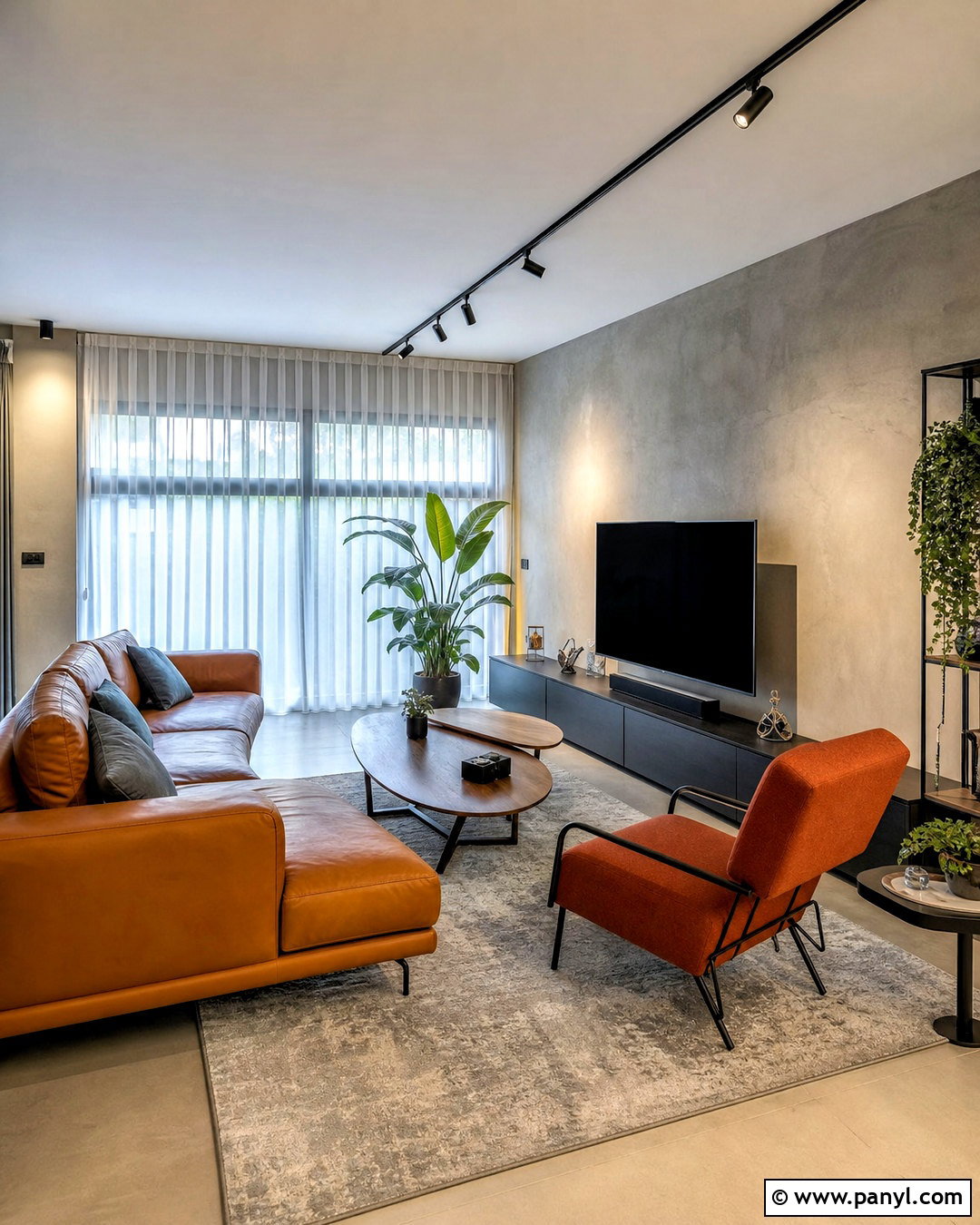
A concrete-effect wall can establish an urban, contemporary living room without exposing structural concrete. Choose a medium warm gray finish with broad, subtle trowel marks and use it across the entire television wall. Add a low black media cabinet, cognac leather sofa, and rust-colored lounge chair. A pale gray rug and sheer white curtains prevent the room from becoming too dark. Introduce walnut side tables and indoor greenery to soften the mineral surface. Track lighting or adjustable ceiling spots can reveal variations while keeping the room functional. Hide cables and outlets before applying the finish because later repairs may be difficult to blend. Matte surfaces usually feel more natural than coatings with obvious shine, exaggerated streaks, or artificial-looking cracks.
17. Clay Plaster Wall Texture
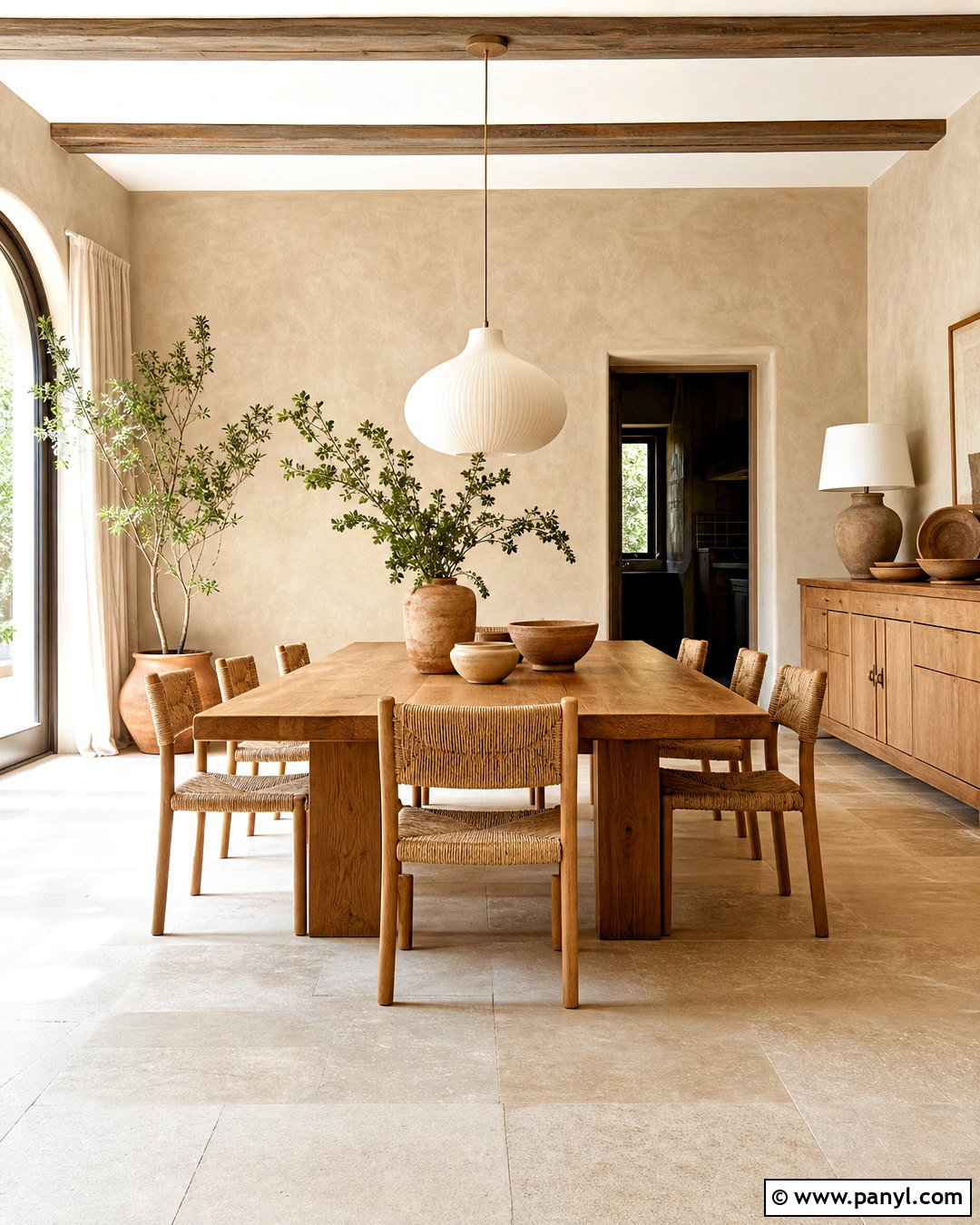
Earth-toned clay plaster creates a grounded backdrop for an organic modern dining room. Select a muted sand color and apply it across the walls with soft, irregular trowel movement. Place a substantial oak table in the center with woven rush chairs and a sculptural cream pendant overhead. Terracotta pottery, linen napkins, and a low arrangement of green branches reinforce the natural materials without overwhelming the table. Use pale stone flooring or a large jute rug to continue the warm palette. Keep the trim close to the plaster color rather than introducing bright white outlines. Sample the finish beside flooring and furniture before committing. Its natural variation should feel calm and balanced, so avoid combining it with numerous competing patterns or highly polished decorative surfaces.
18. Metallic Plaster Wall Texture
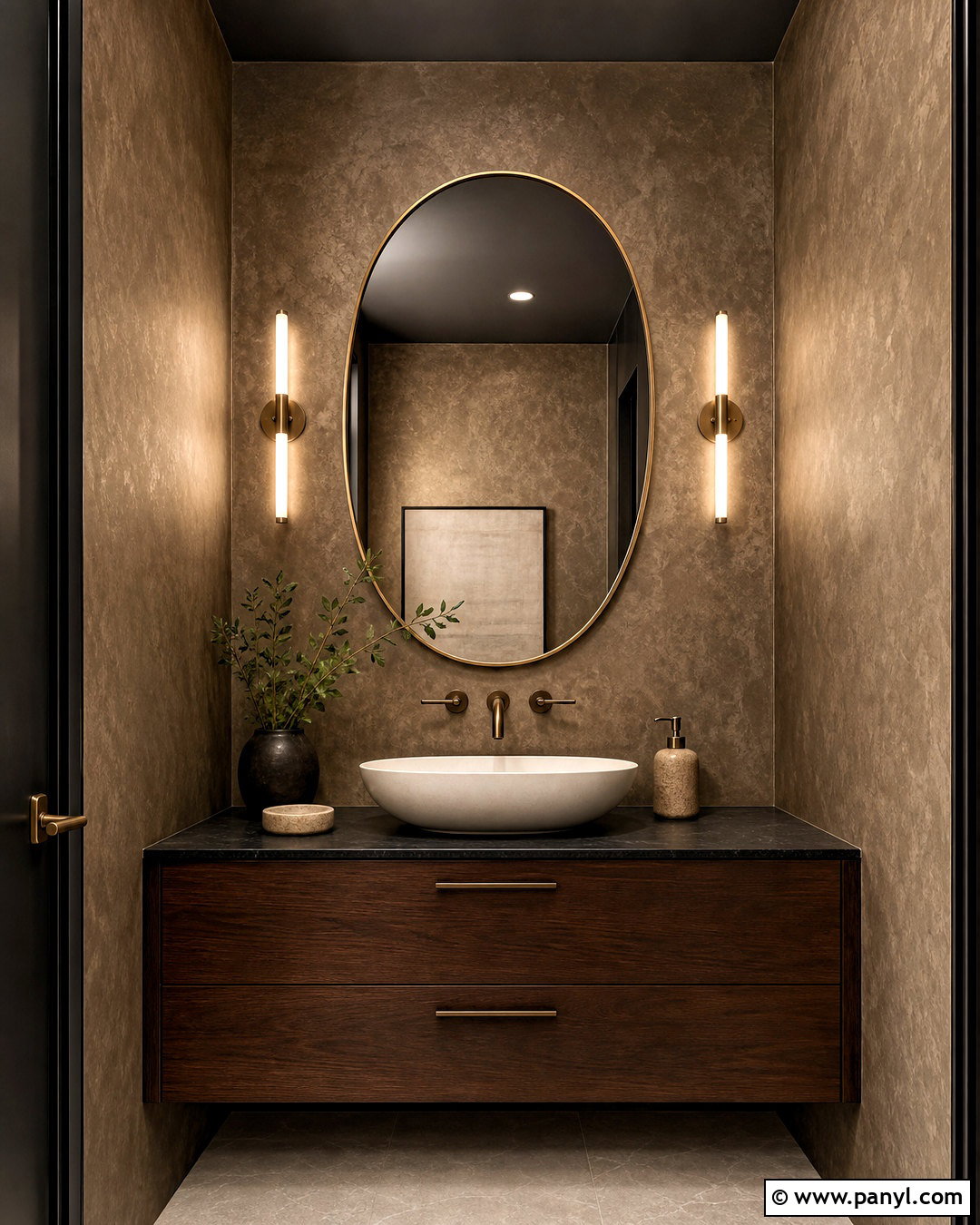
A bronze metallic plaster wall can make a powder room feel dramatic while remaining sophisticated. Apply it behind a floating dark walnut vanity and across the short side walls for an enveloping effect. Choose a honed black stone countertop, an oval brass-framed mirror, and a compact vessel sink in warm white. Slim brass sconces should cast light across the surface and reveal its soft metallic movement. Keep the ceiling in matte charcoal for a seamless, intimate look, but use bright, accurate lighting around the mirror. Limit accessories to a stone soap tray and one small vase. The plaster should have a muted brushed glow rather than glitter. A professional application can help prevent patchy areas, harsh streaks, and an uneven reflective finish.
19. Geometric Molding Wall Texture
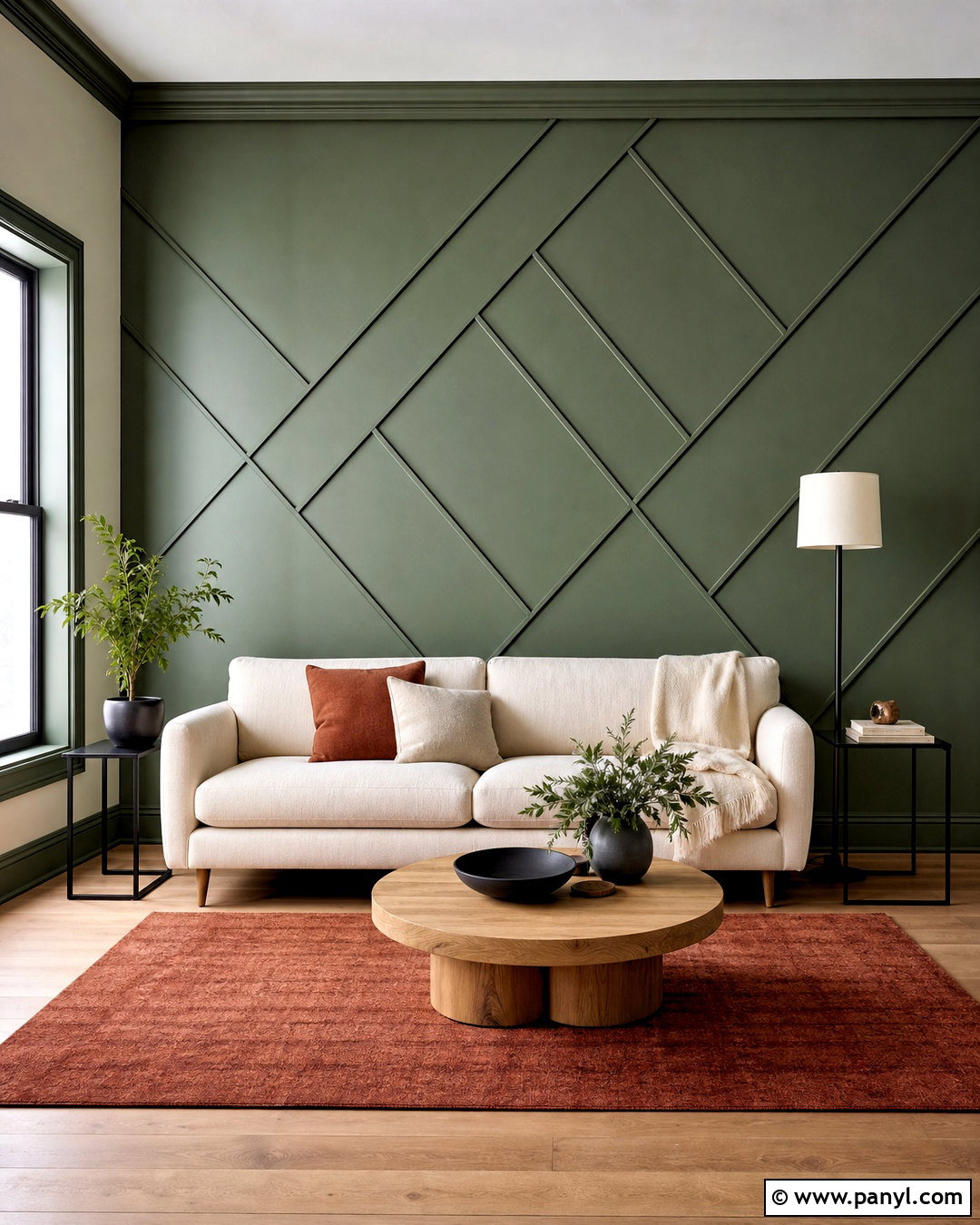
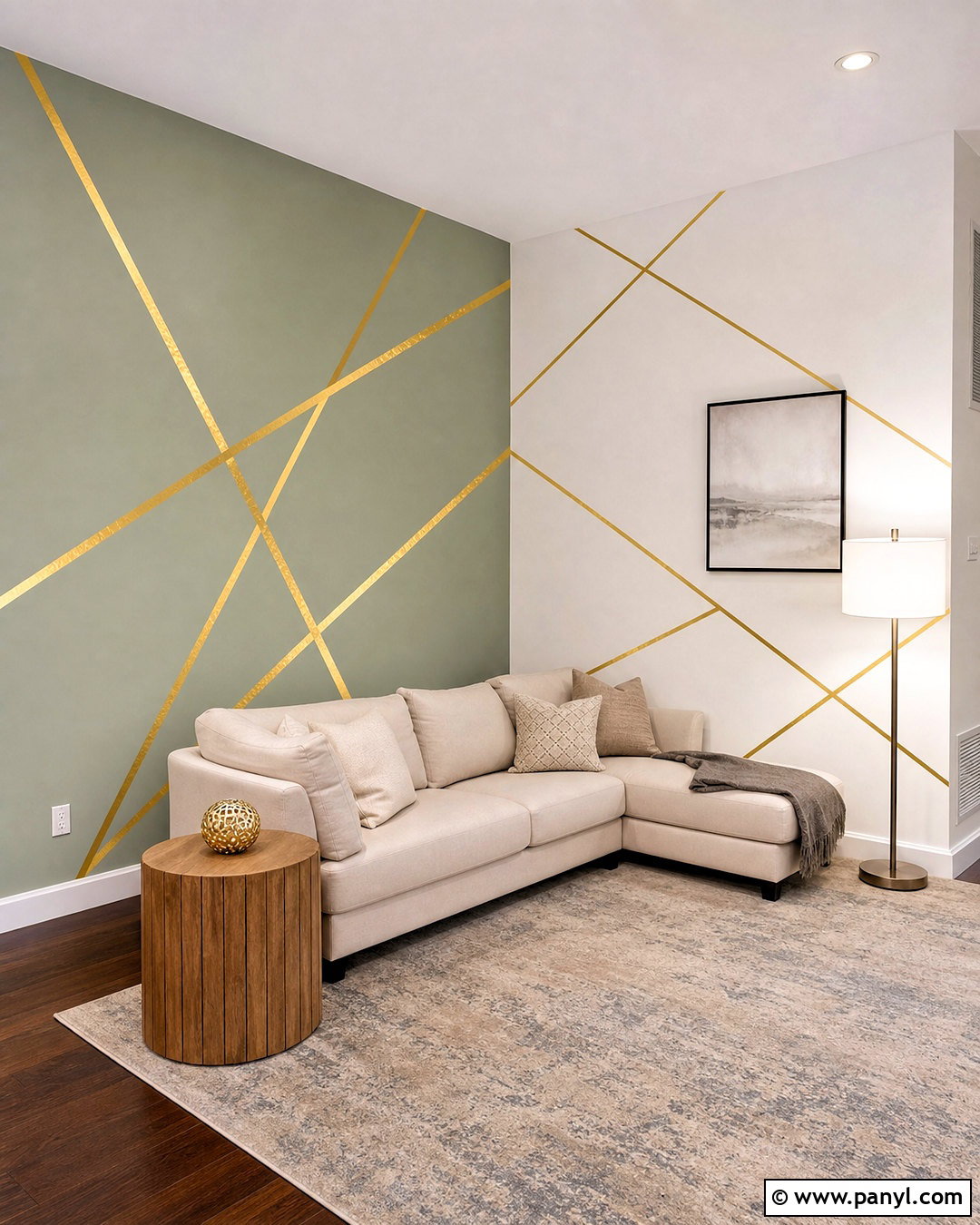
Geometric molding gives a plain living room wall dimension through an affordable painted treatment. Create a large-scale asymmetrical pattern using narrow wood strips, then paint the wall and molding together in deep sage green. Position a streamlined cream sofa in front of the feature, leaving enough open wall space for the pattern to remain clear. Add black metal side tables, an oak coffee table, and a rust-colored rug for warmth. One simple floor lamp is preferable to artwork that competes with the raised lines. Extend the green onto nearby trim for a deliberate finish. Draw the layout at full scale with painter’s tape before cutting materials. Larger shapes tend to look cleaner and are easier to coordinate with normal residential furniture proportions.
20. Mixed Material Wall Texture
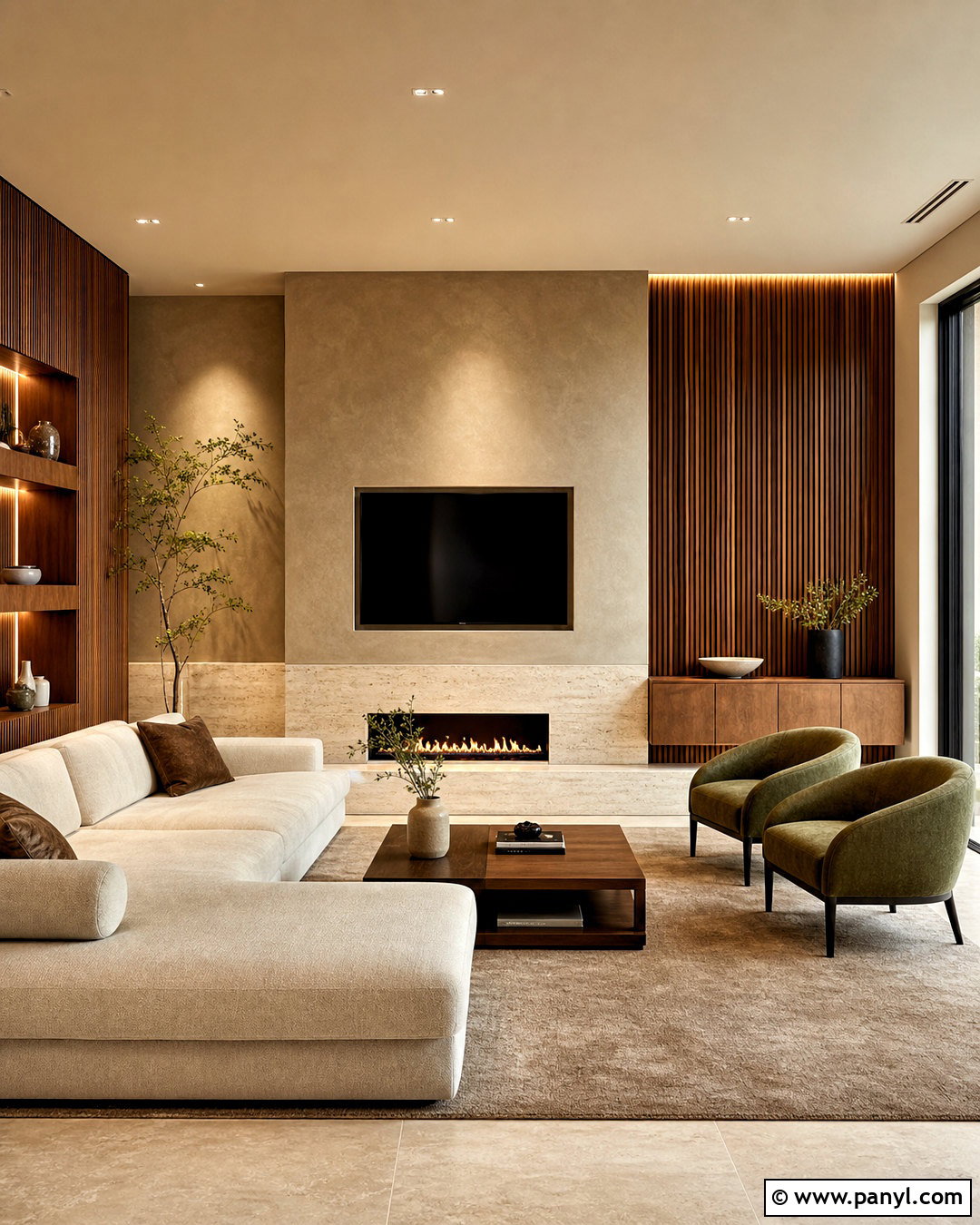
A mixed-material media wall can combine plaster, wood, and stone without looking fragmented. Begin with a warm beige plaster background, then frame the television area with vertical walnut slats. Add a low strip of pale limestone around a linear fireplace and finish the composition with floating walnut cabinetry. Use a cream sectional, olive accent chairs, and a large taupe rug to repeat the wall’s natural colors throughout the living room. Concealed LED lighting beneath the cabinets can define each material transition while maintaining a clean appearance. Keep the shapes broad and the palette limited so the wall reads as one complete installation. Align joints, shelves, and fireplace edges carefully. Consistent proportions are what make several textures feel cohesive rather than unnecessarily complicated.
Conclusion:
Successful wall texture begins with a complete plan for the room. Consider how the finish will relate to flooring, furniture, lighting, trim, and everyday maintenance before choosing a material. Soft limewash and clay plaster suit calm, natural spaces, while fluted wood, molding, and 3D panels create stronger architectural definition. Brick, stone, and concrete finishes bring visual weight, whereas grasscloth, cork, and upholstered panels add warmth. Always test colors and textures in the room’s actual light, and use skilled installation for specialized finishes. These **20 interior wall texture design ideas** can help you replace plain surfaces with layered, practical rooms that feel thoughtfully designed from wall to wall.

Related Ideas and Inspiration:
Leave a Reply