
Neutral rooms feel calm, flexible, and timeless, but the best ones are never plain or unfinished. These neutral interior design ideas use warm whites, layered beige, soft gray, natural wood, stone, and restrained contrast to create spaces with real depth. The key is to coordinate the entire room rather than choosing disconnected neutral pieces. Walls, flooring, furniture, lighting, textiles, and decorative accents should share compatible undertones while offering enough variation to keep the space interesting. Whether you prefer organic modern rooms, classic interiors, coastal comfort, or clean minimalism, a thoughtful neutral palette can adapt to your home and lifestyle. Explore the complete room looks below to find practical, polished, and inviting neutral interior design ideas.

1. Warm White Neutral Living Room
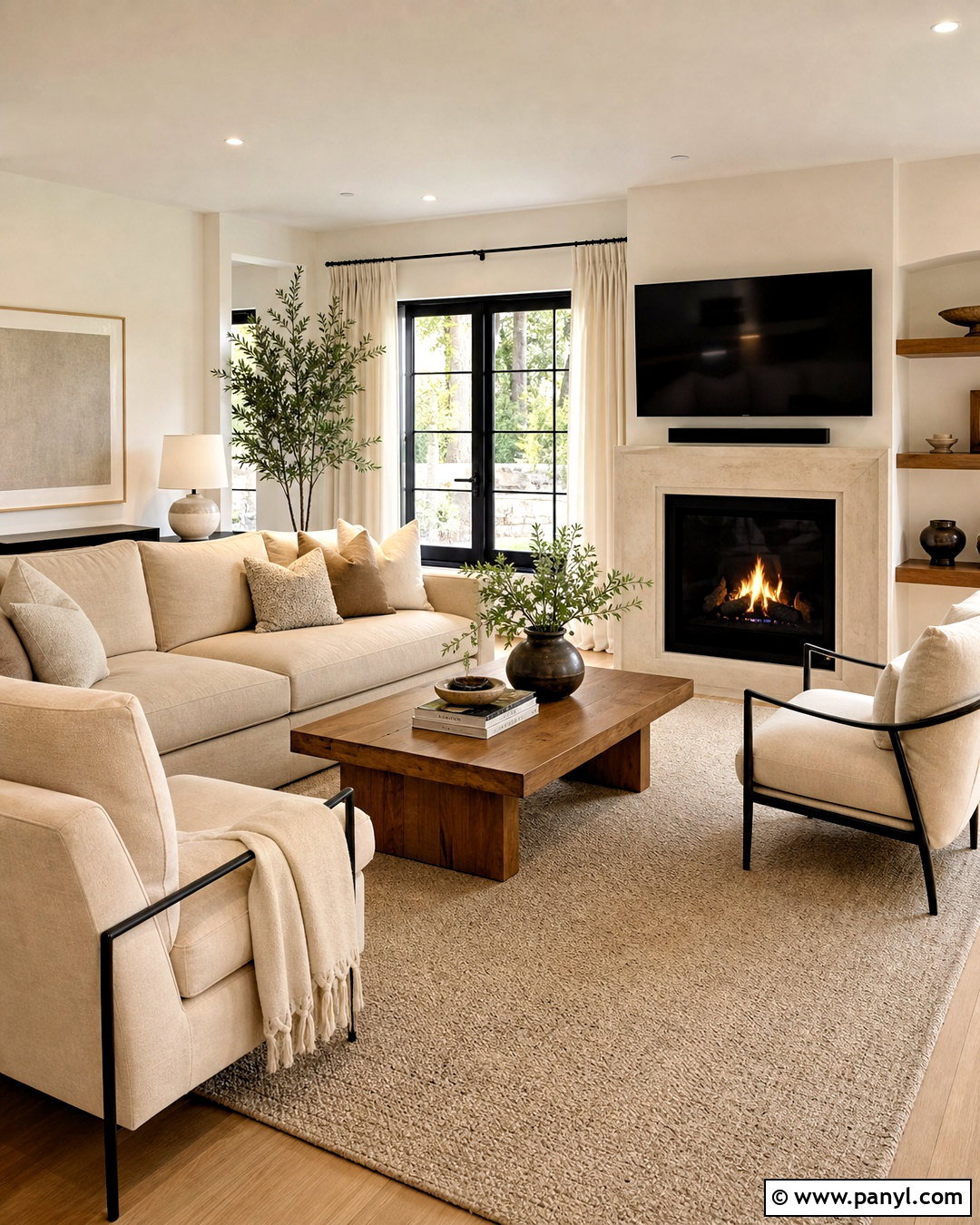
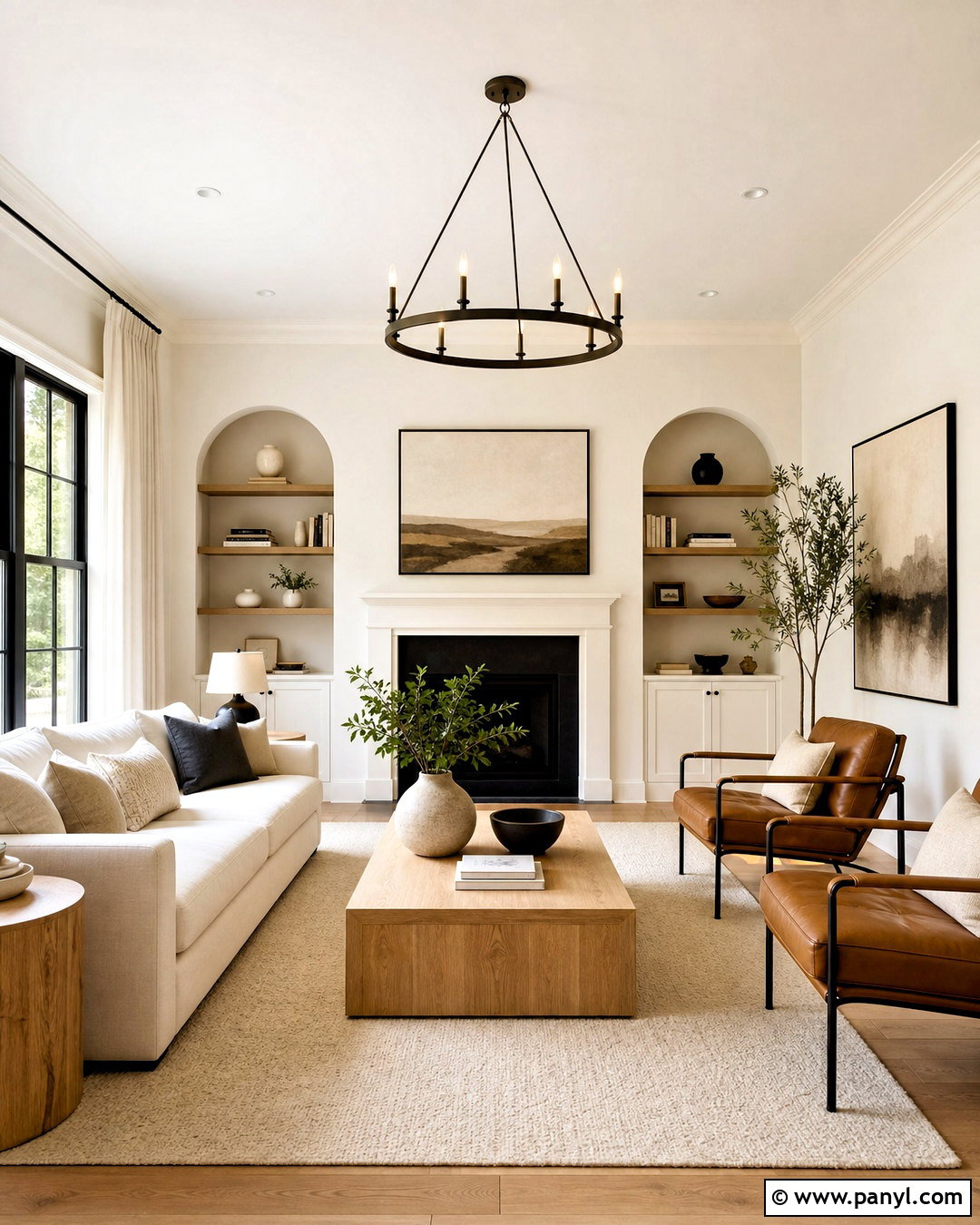
A warm white living room feels bright without looking cold or overly stark. Choose creamy white walls with soft yellow or beige undertones, then anchor the seating area with a light oatmeal sofa and two ivory linen chairs. A large natural wool rug creates a comfortable foundation, while a medium oak coffee table adds warmth and visible grain. Use off-white curtains from ceiling to floor to soften the windows and make the ceiling appear taller. Add dimension through boucle pillows, a chunky knit throw, ceramic lamps, and woven baskets. A few black details, such as slender picture frames or a metal floor lamp, provide definition. Keep the layout open, balanced, and focused on comfortable conversation.
2. Greige Neutral Open Plan Interior
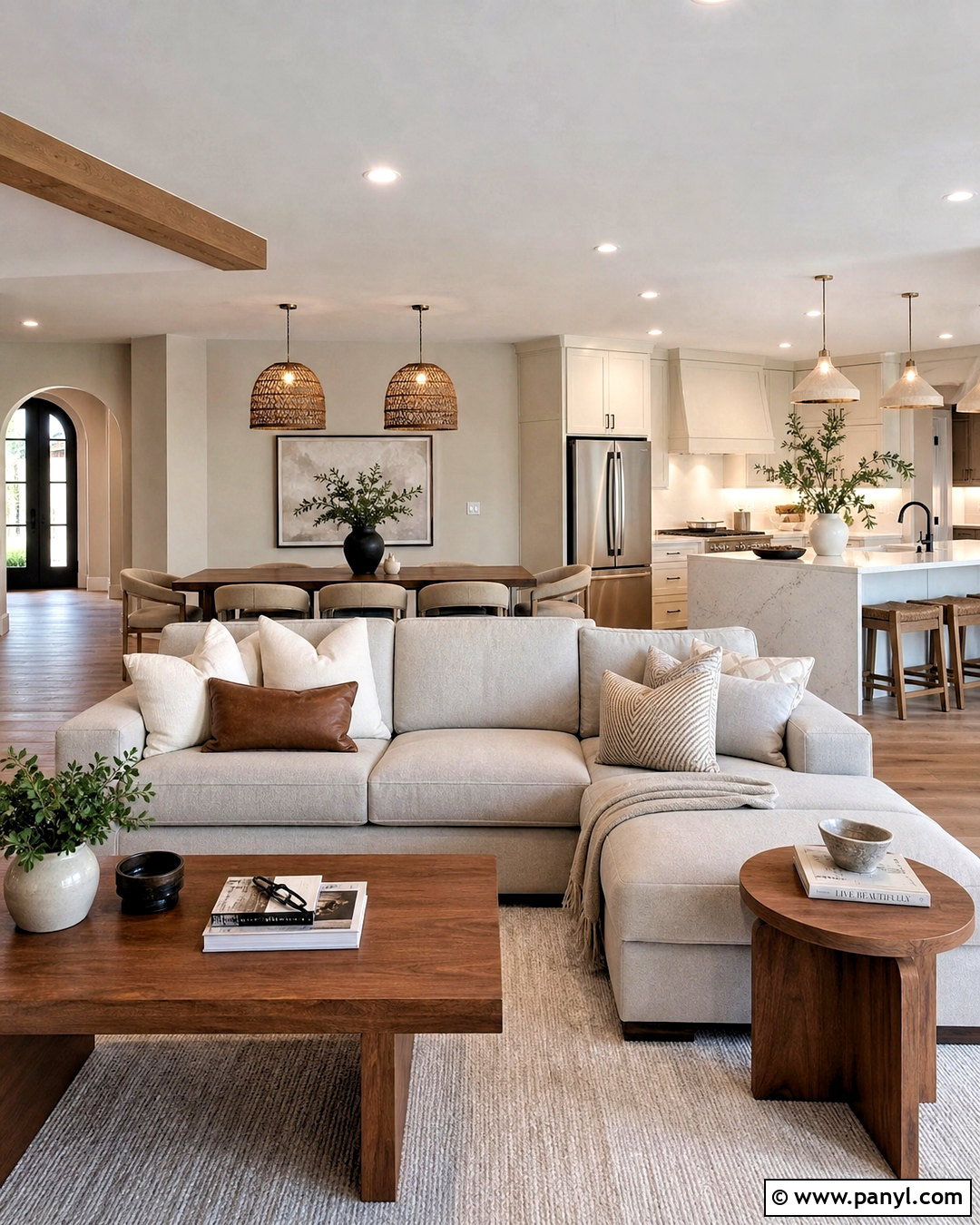
Greige provides a smooth visual connection between a living room, dining area, and kitchen without making every zone look identical. Paint the shared walls a soft warm greige and repeat that shade through dining upholstery, curtains, and selected accessories. In the living area, pair a pale gray-beige sectional with a textured ivory rug and walnut coffee table. Use a medium wood dining table with taupe chairs to define the eating space. Cream kitchen cabinets, brushed nickel hardware, and lightly veined quartz complete the palette. Position lighting strategically over each zone, including a woven living room fixture and simple dining pendant. Repeating wood tones and fabrics throughout the floor plan keeps the complete interior coordinated.
3. Beige Neutral Bedroom
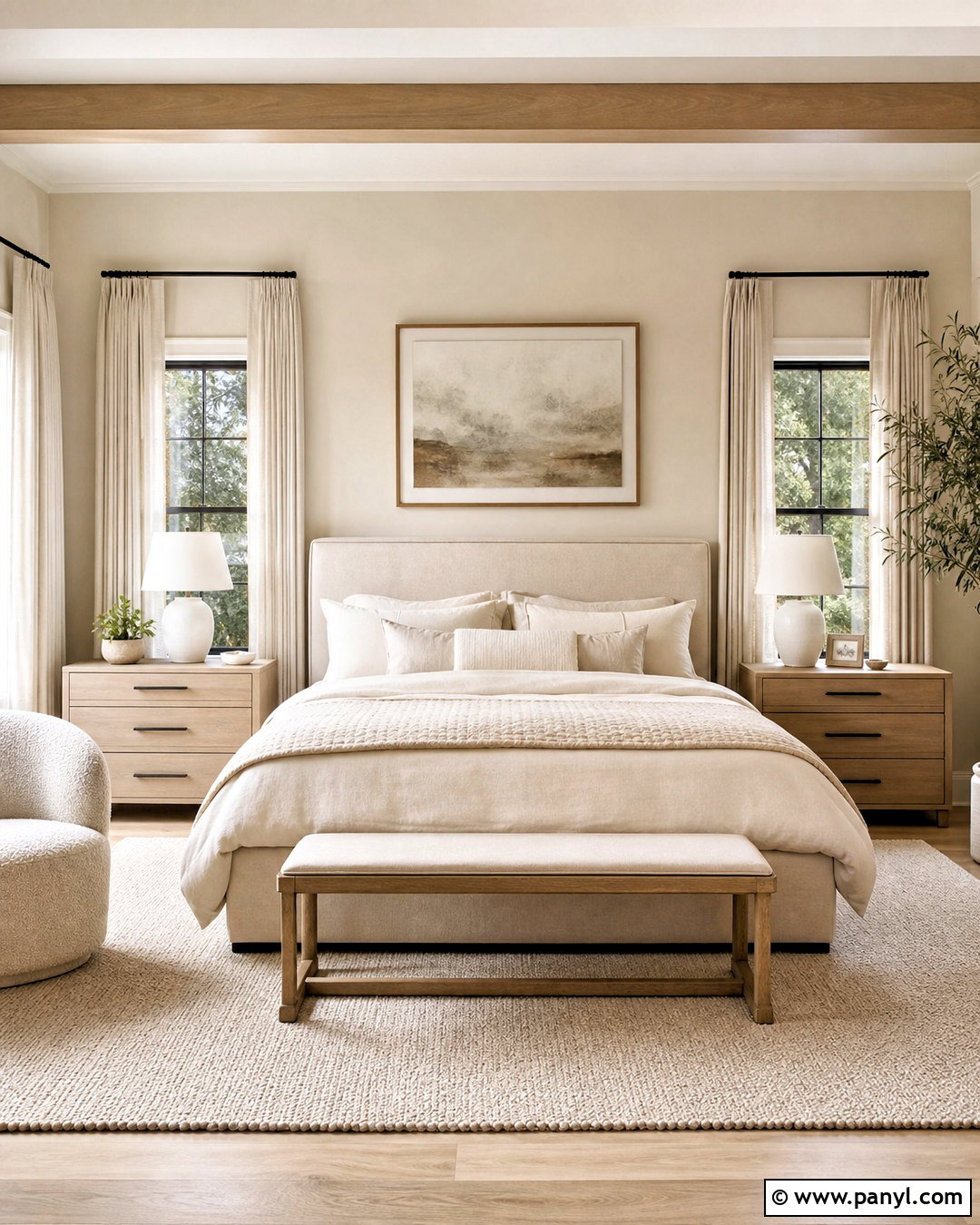
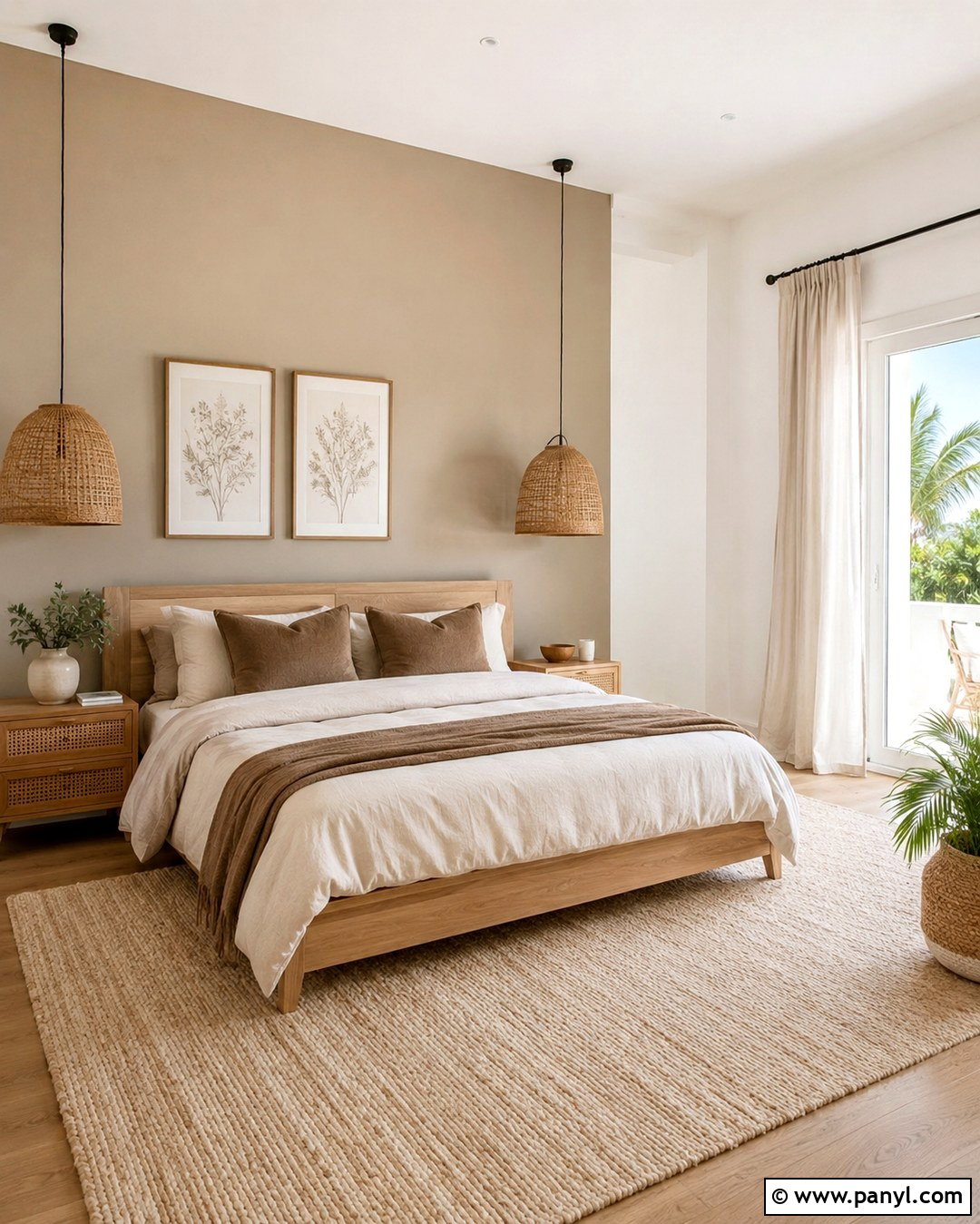
Imagine waking up in a room where every surface feels soft, warm, and restful. Begin with light beige walls and place an upholstered oatmeal bed against the main wall. Layer the bed with ivory sheets, a sand-colored quilt, textured lumbar pillows, and a slightly darker taupe throw. Choose pale oak nightstands with simple ceramic lamps to create symmetry. A large wool rug should extend beyond the bed, bringing softness underfoot and connecting the furniture. Add full-length natural linen curtains, one comfortable bouclé chair, and a wooden bench at the foot of the bed. Tonal artwork above the headboard introduces quiet detail. Limit small accessories so the layered materials, gentle colors, and inviting bed remain the focus.
4. Taupe Neutral Dining Room
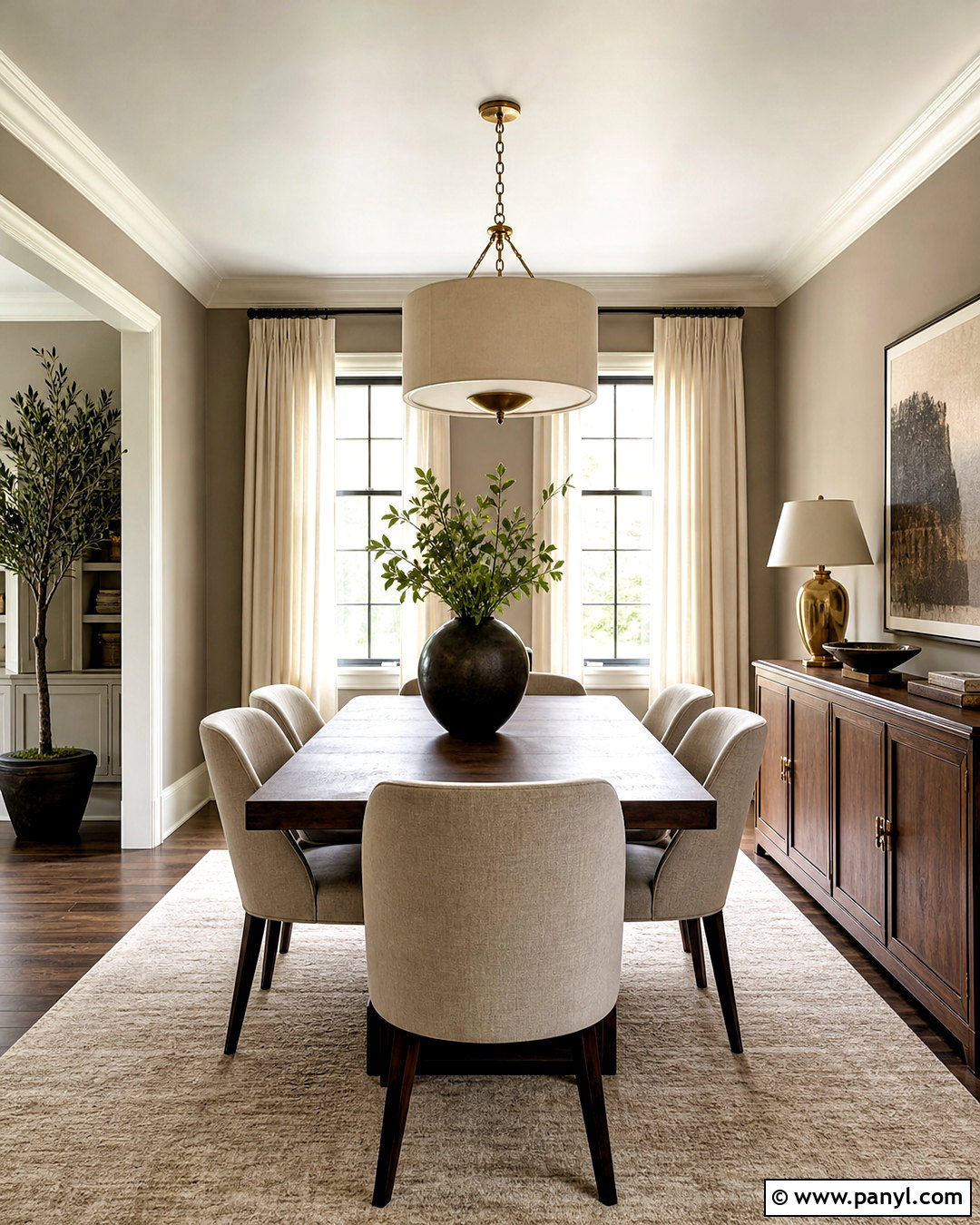
A taupe dining room creates a sophisticated setting that still feels comfortable enough for everyday meals. Use medium taupe walls with crisp cream trim to establish subtle architectural contrast. Center a solid walnut table beneath a large linen drum pendant, then surround it with upholstered dining chairs in a lighter mushroom shade. A low wool rug in beige and taupe can ground the arrangement while protecting the floor. Against one wall, place a warm wood sideboard topped with a stone lamp, sculptural bowl, and leaning neutral artwork. Soft ivory curtains balance the deeper wall color and filter natural light. Finish the room with aged brass accents and simple ceramic tableware. The resulting design feels polished, warm, and intentionally restrained.
5. Cream and Oak Neutral Kitchen
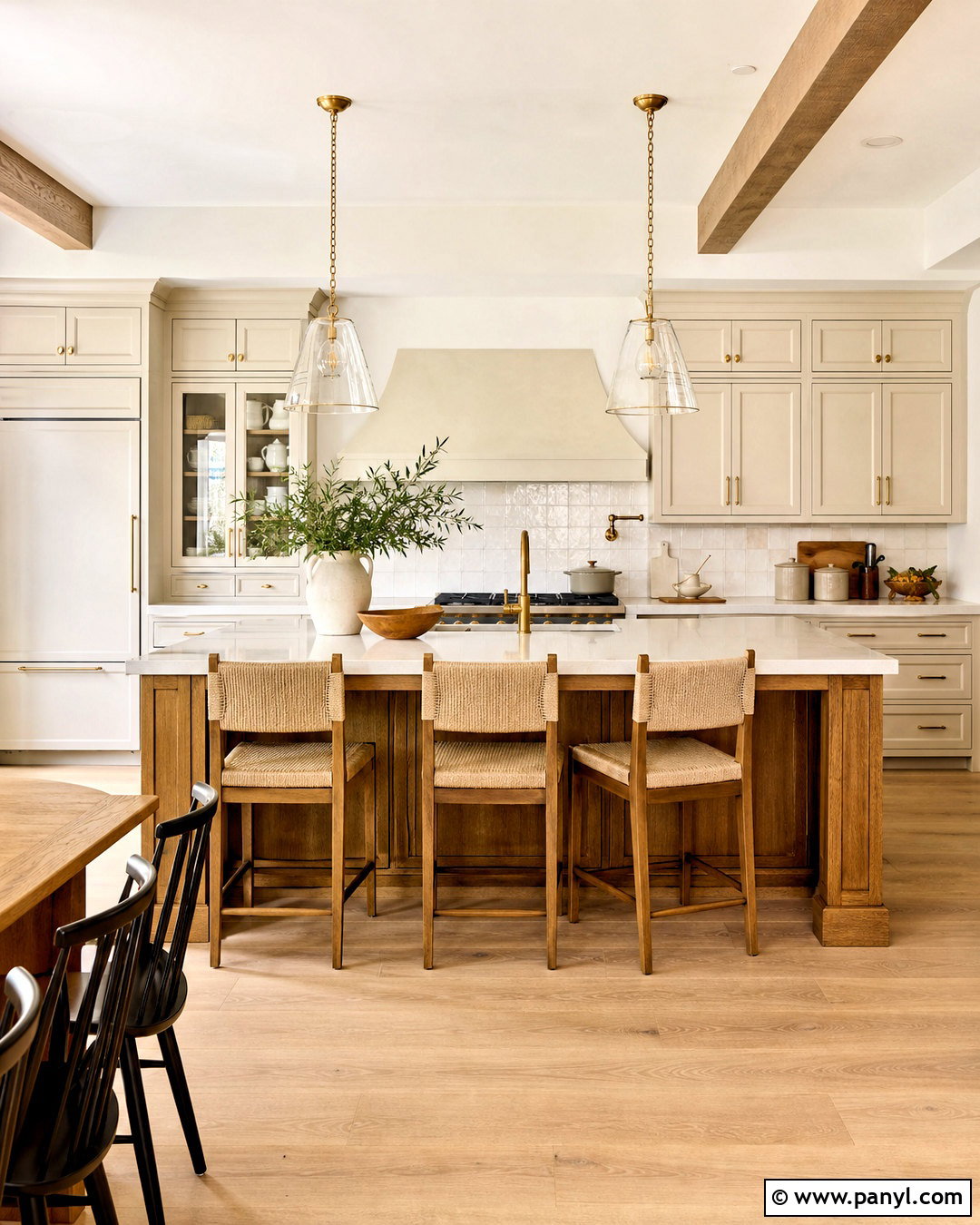
Cream cabinets and natural oak finishes give a neutral kitchen more character than an all-white scheme. Use creamy perimeter cabinetry with aged brass pulls, then introduce an oak island with comfortable counter stools and practical storage. Select warm white quartz countertops with quiet beige veining to connect both cabinet finishes. A handmade ivory tile backsplash adds gentle surface variation without creating visual clutter. Continue the warmth with light oak flooring and two oversized glass or woven pendants above the island. Keep countertop styling useful and minimal with wood cutting boards, ceramic containers, and a small herb pot. Integrated appliances and a simple plaster hood support the calm appearance. This complete kitchen feels bright, welcoming, and suited to daily family routines.
6. Soft Gray Neutral Home Office
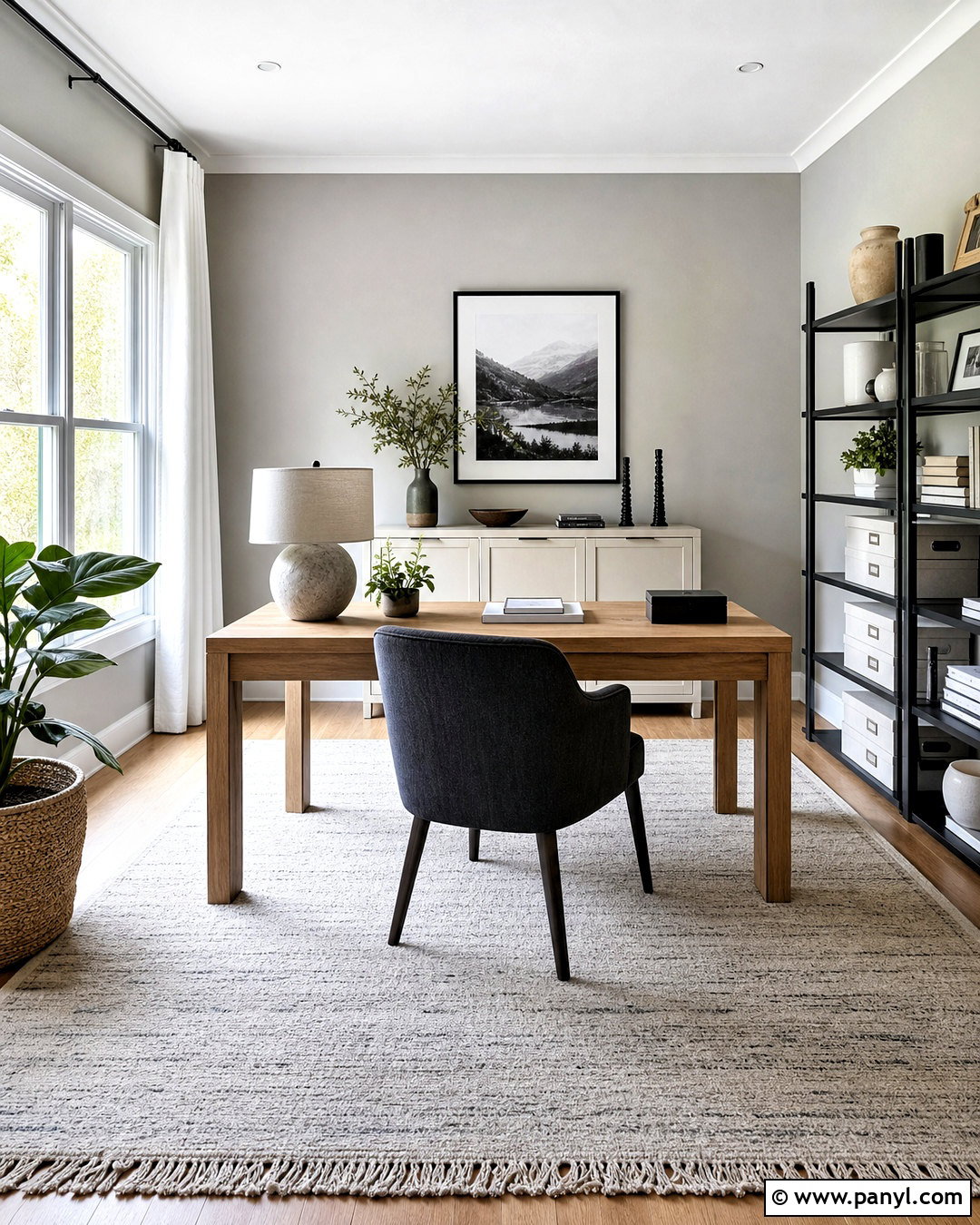
For a workspace that promotes focus, use soft gray as a calm background rather than a heavy dominant color. Paint the walls a light dove gray and choose a streamlined oak desk with generous drawers. A charcoal upholstered chair provides necessary contrast while keeping the palette neutral. Place a low cream cabinet behind the desk for concealed storage, then style it with a stone lamp, framed artwork, and one sculptural object. A flat-woven gray and ivory rug defines the work area and improves comfort. Add full-length white curtains to spread daylight evenly across the room. Black metal shelving can hold matching boxes and a limited collection of books. The finished office should feel orderly, professional, comfortable, and visually balanced.
7. Black and White Neutral Entryway
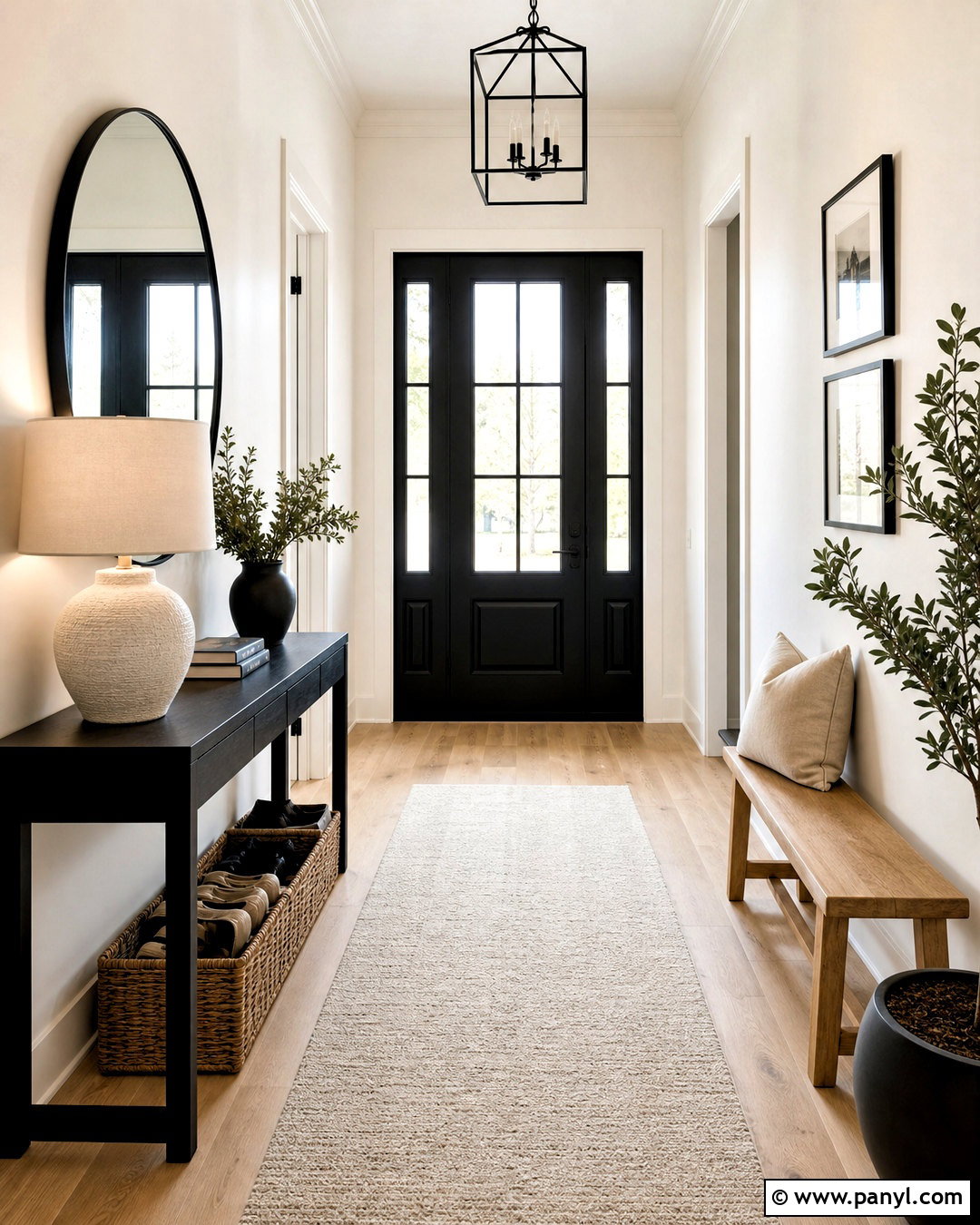
Strong black and white contrast can make an ordinary entryway look clean and purposeful. Start with warm white walls and pale wood or light limestone flooring to keep the area bright. Position a narrow black console against the main wall and hang a large round mirror with a matte black frame above it. A washable ivory runner with a thin charcoal pattern guides movement through the space. Add a woven storage basket below the console for shoes or seasonal accessories. A small ceramic lamp, neutral tray, and simple branch arrangement complete the surface without overcrowding it. If space allows, include a light oak bench with a cream cushion. The entire entrance feels crisp, functional, and welcoming while remaining practical for everyday arrivals.
8. Organic Modern Neutral Living Room
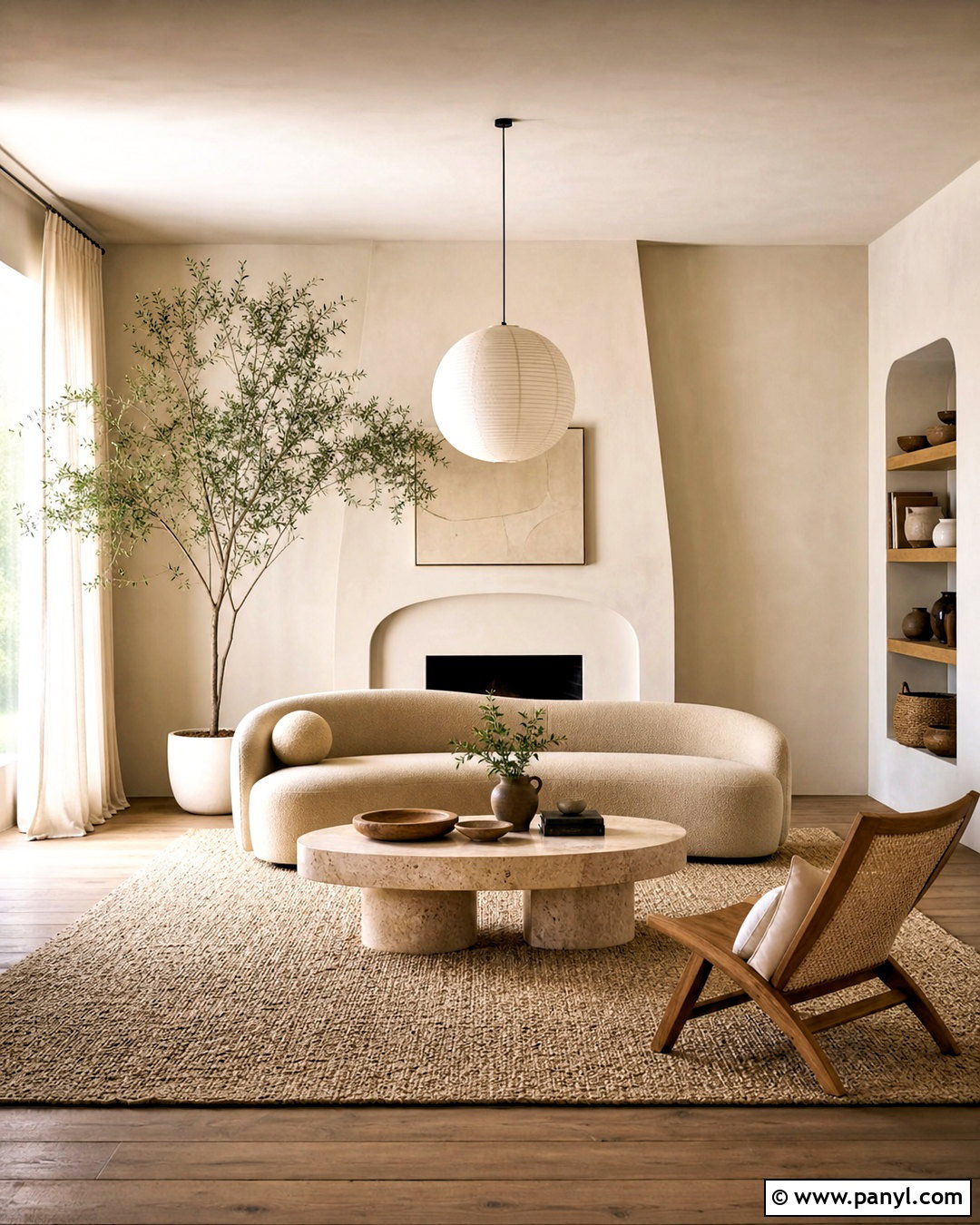
Natural shapes and tactile materials bring an organic modern living room to life. Cover the walls in warm off-white plaster or matte paint, then arrange a curved beige sofa around a low travertine coffee table. Add a sculptural oak chair with cream upholstery and a rounded side table to soften the layout. A large textured wool rug defines the seating zone, while linen curtains gently filter the windows. Choose a simple paper pendant or plaster ceiling light instead of a glossy fixture. Decorative objects should emphasize natural materials, including handmade pottery, wood bowls, and woven baskets. One indoor tree can add freshness without dominating the palette. The completed room should appear relaxed and refined, with graceful lines and plenty of open breathing space.
9. Neutral Coastal Bedroom
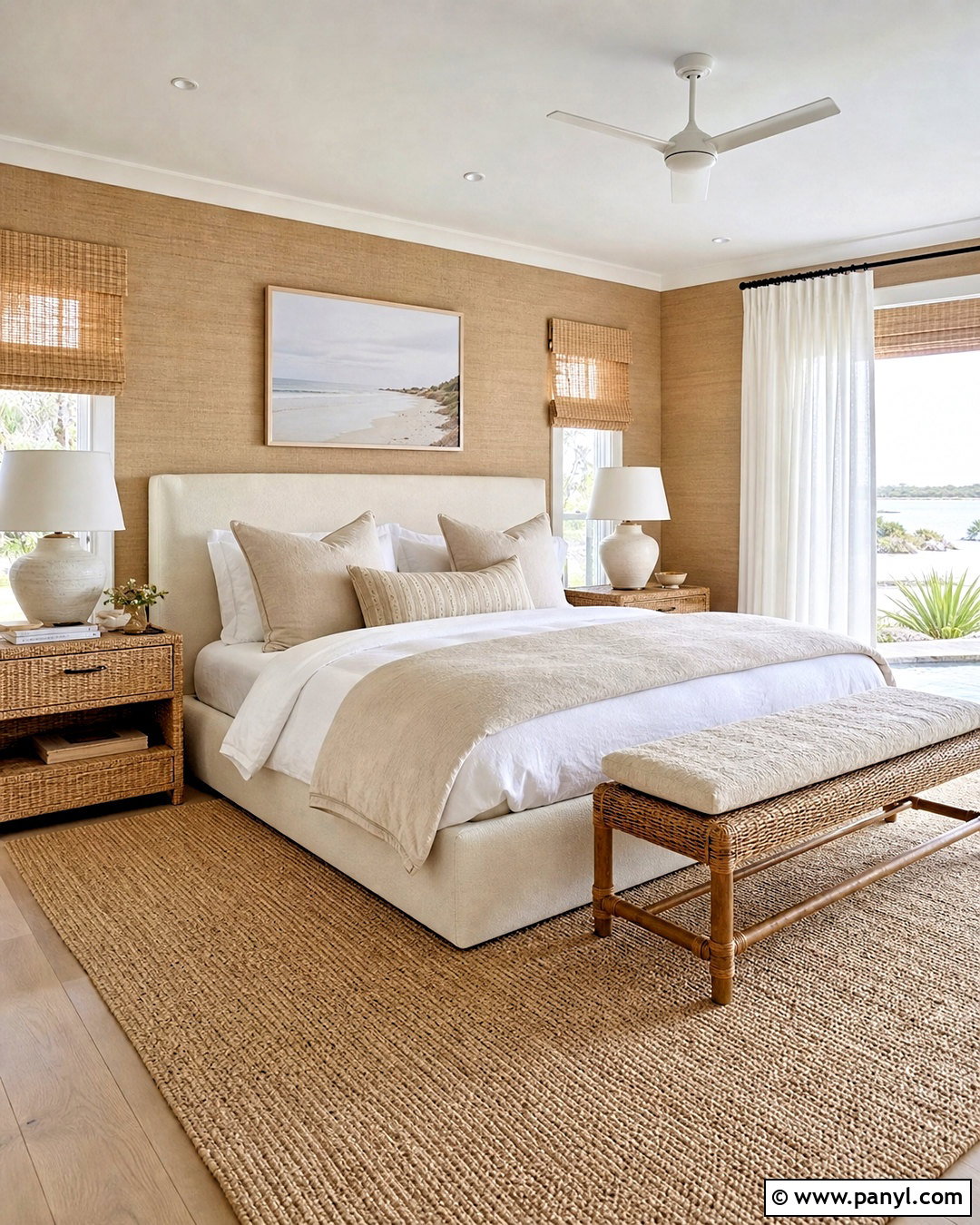
A coastal bedroom can feel fresh and relaxed without relying on obvious nautical decorations. Use sandy beige walls, white oak flooring, and an upholstered ivory bed to establish a light foundation. Dress the bed with crisp white cotton, a pale flax duvet, and subtle blue-gray accent pillows. Place woven nightstands on each side and add ceramic lamps with natural linen shades. A jute and wool rug introduces texture while remaining soft enough for a bedroom. Hang sheer white curtains beneath woven shades to control light and privacy. A light oak dresser, framed shoreline photography, and one seagrass bench complete the room. Keep the arrangement breezy and uncluttered so the soft colors and natural materials create the coastal atmosphere.
10. Neutral Japandi Dining Area
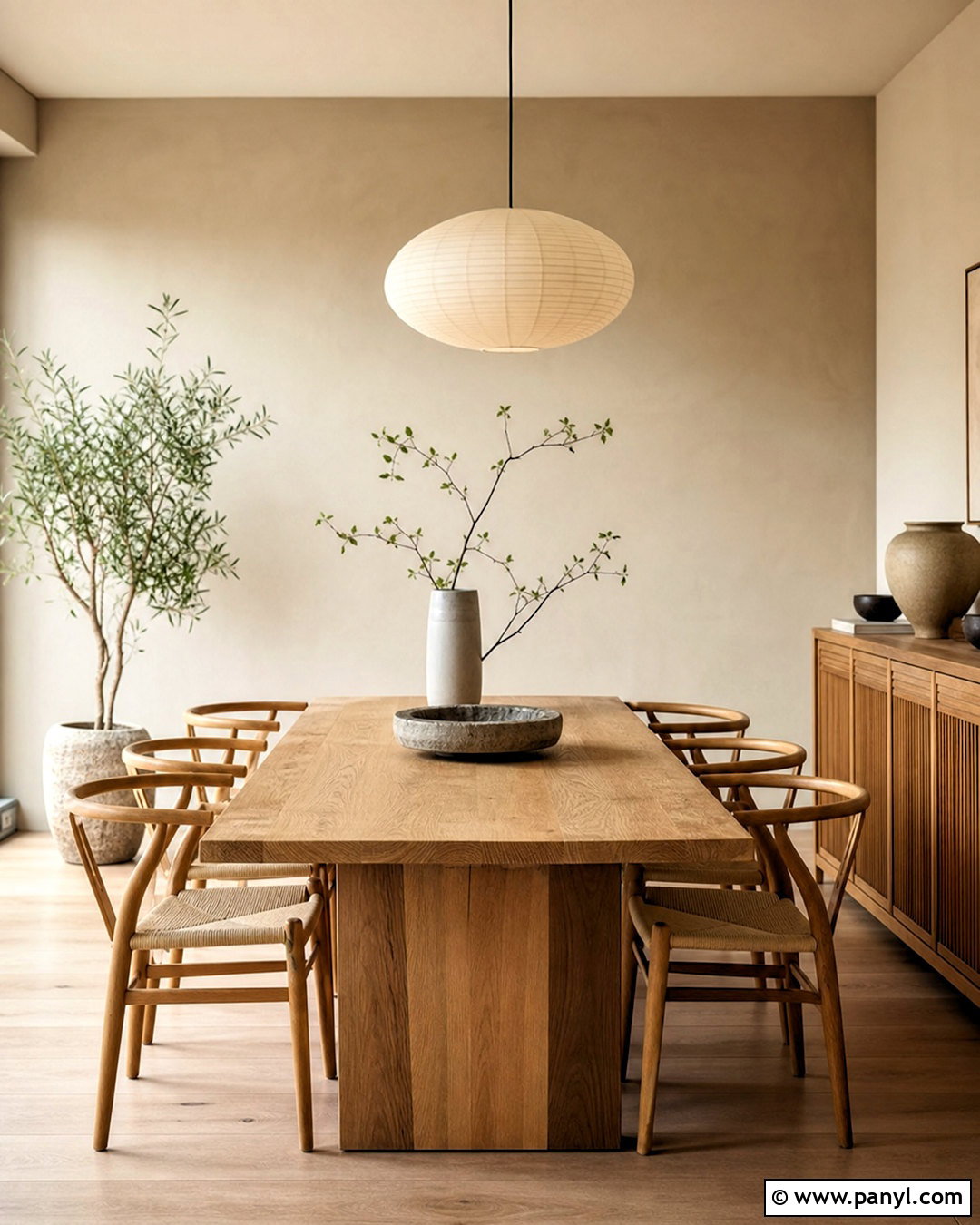
Could your dining space feel simpler without becoming empty? A Japandi interior combines practical furniture, natural materials, and carefully controlled decoration. Begin with warm beige walls and wide-plank light oak flooring. Choose a low-profile oak dining table with clean edges and pair it with curved chairs featuring woven seats. Hang a simple rice paper pendant over the center of the table to create a gentle focal point. A slim wood cabinet can provide concealed storage along one wall. Style it sparingly with handmade pottery, a shallow stone bowl, and one organic branch. Use a flat-woven cream rug if additional softness is needed. Every item should serve a purpose, leaving the finished room peaceful, balanced, and comfortable rather than bare.
11. Neutral Farmhouse Kitchen
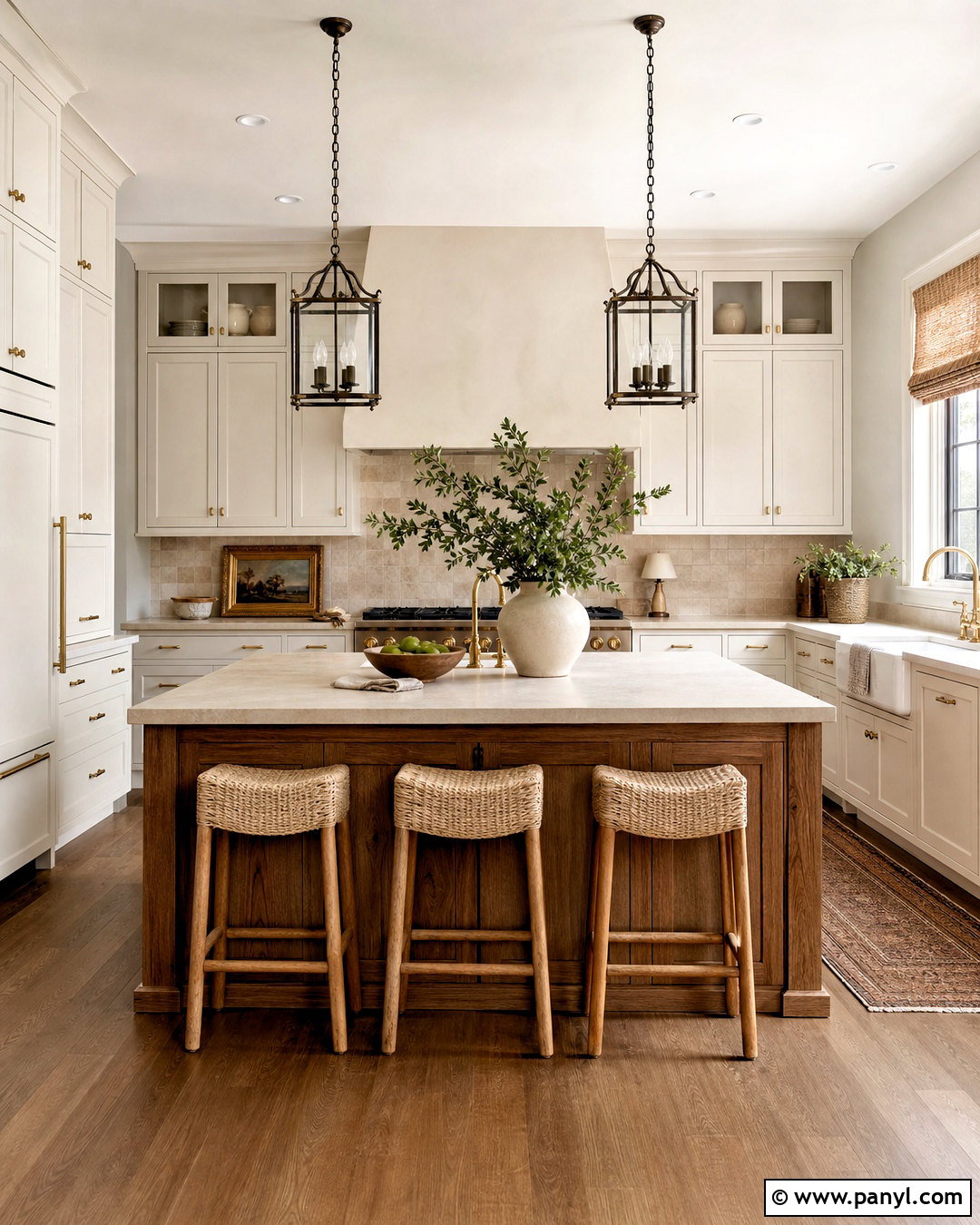
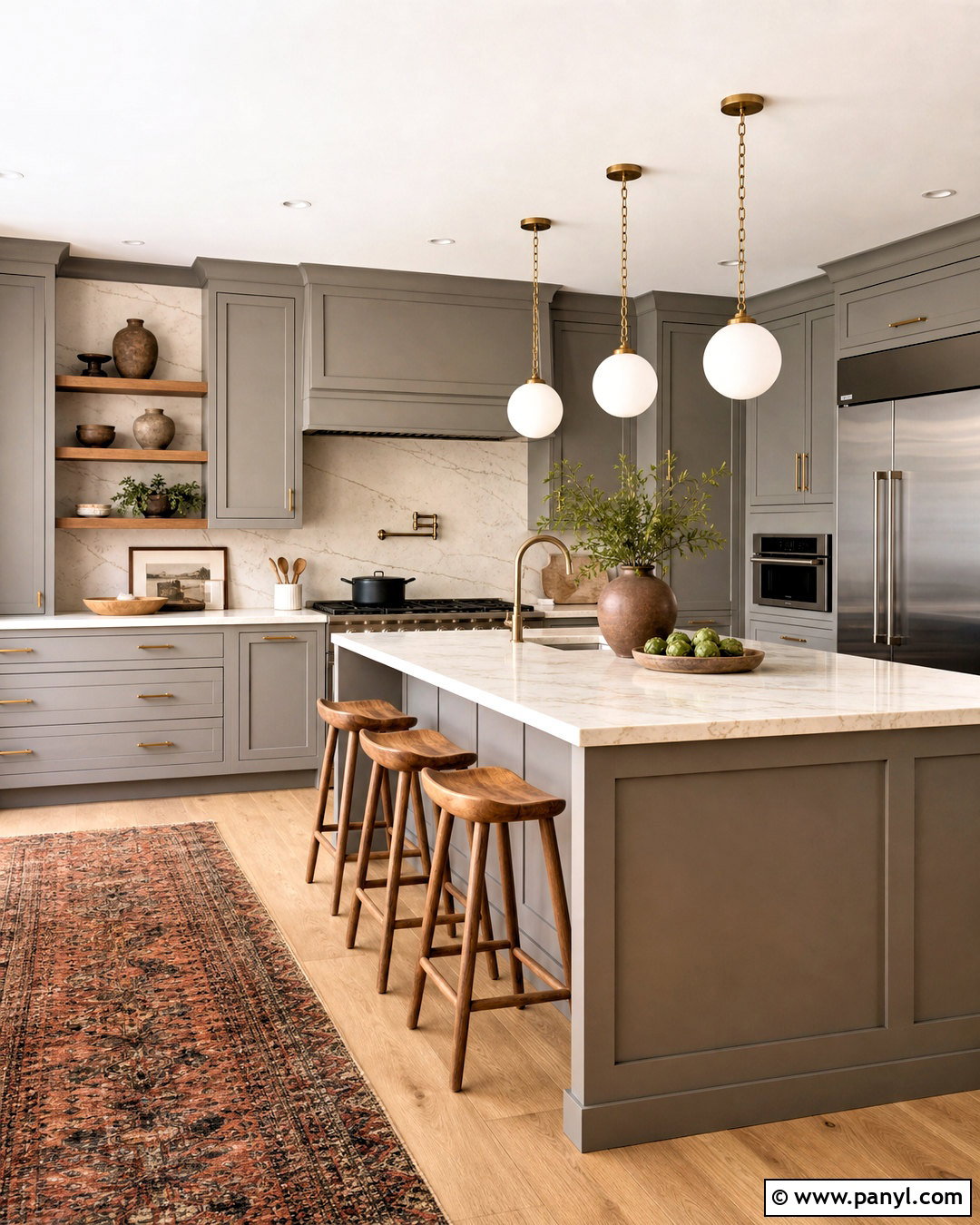
A neutral farmhouse kitchen works best when rustic materials are balanced with clean, updated details. Install warm white Shaker cabinets with antique brass hardware and pair them with honed cream stone countertops. A stained oak island adds depth and provides a welcoming gathering place with woven counter stools. Use an off-white apron-front sink, traditional bridge faucet, and handmade beige backsplash tile to reinforce the practical farmhouse character. Medium oak flooring keeps the room grounded, while a simple plaster range hood prevents the design from feeling busy. Add two iron and glass pendants above the island. Open shelves can display useful cream dishes and wood boards. The completed kitchen feels lived-in and warm but still organized, bright, and current.
12. Neutral Minimalist Bathroom
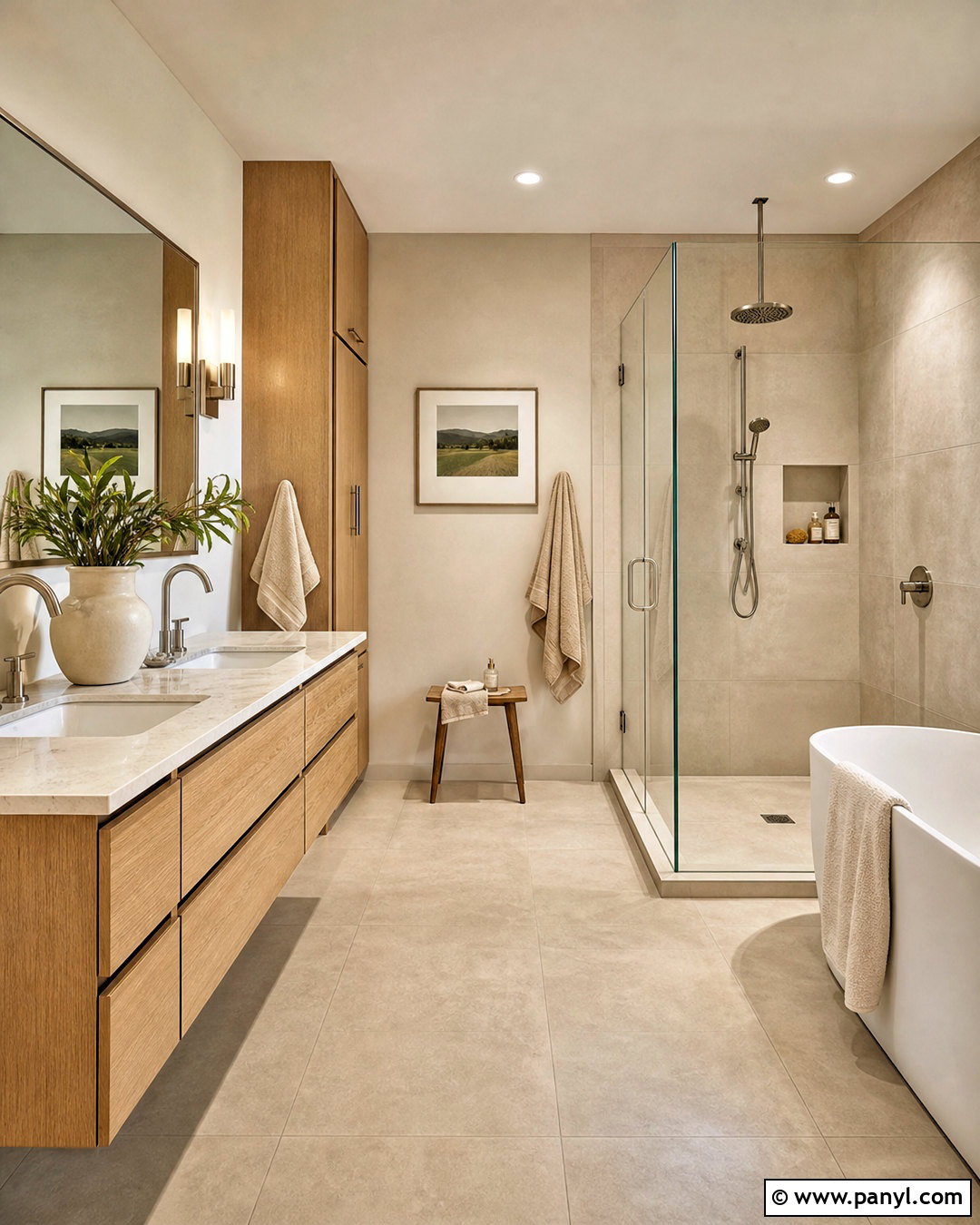
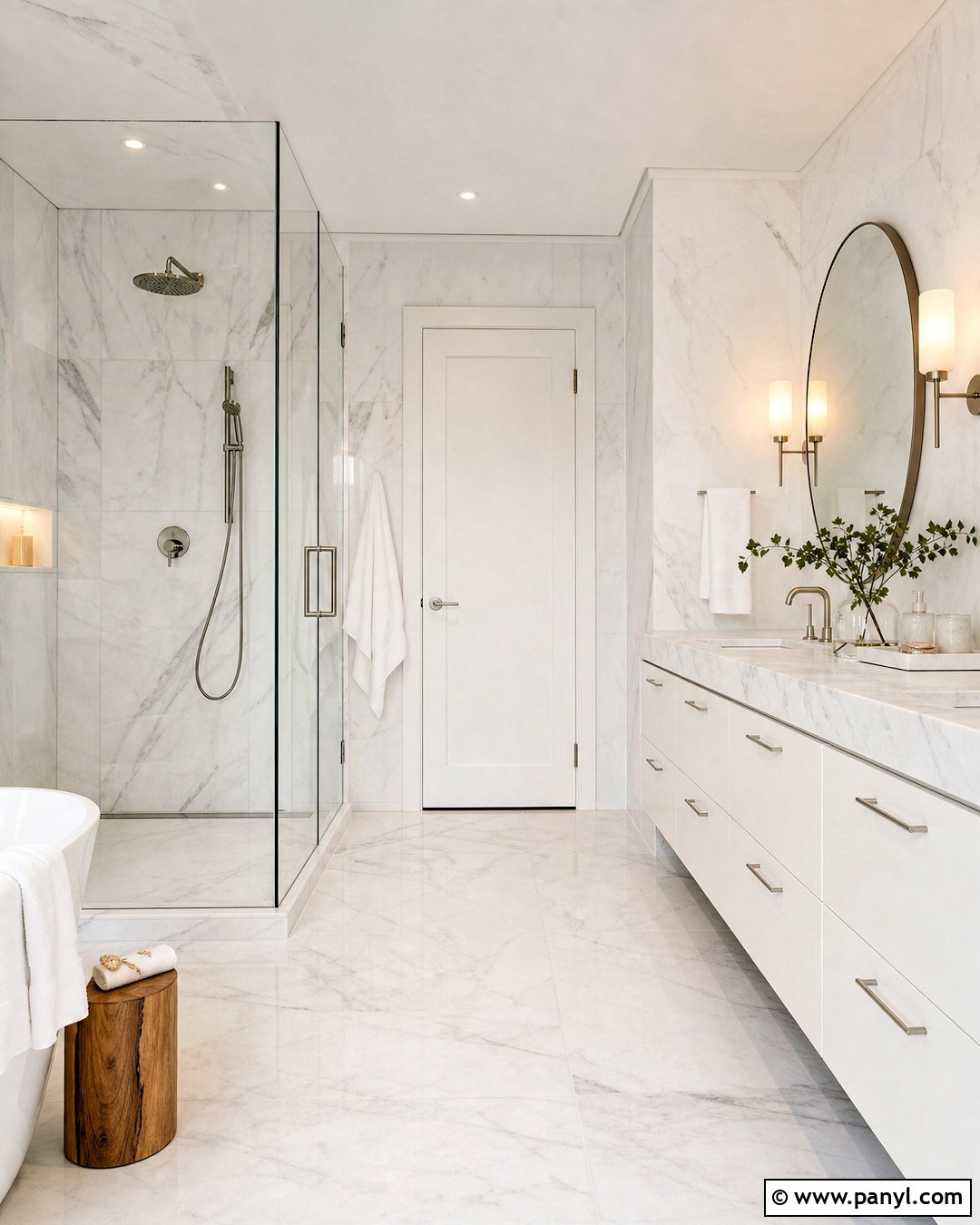
Smooth surfaces and restrained colors can turn a compact bathroom into a calming retreat. Cover the walls and floor with large-format warm beige porcelain tile to reduce visual interruptions. Choose a floating white oak vanity with a pale stone countertop and integrated sink. A frameless mirror keeps the room open, while brushed nickel fixtures create a quiet, practical finish. Install a walk-in shower with clear glass and continue the same tile inside for a seamless appearance. Concealed storage should hold daily products so the countertop remains clear. Add one cream towel set, a small wood stool, and a simple ceramic container for warmth. Bright, evenly distributed lighting completes this uncluttered bathroom and allows the material textures to remain clearly visible.
13. Neutral Traditional Sitting Room
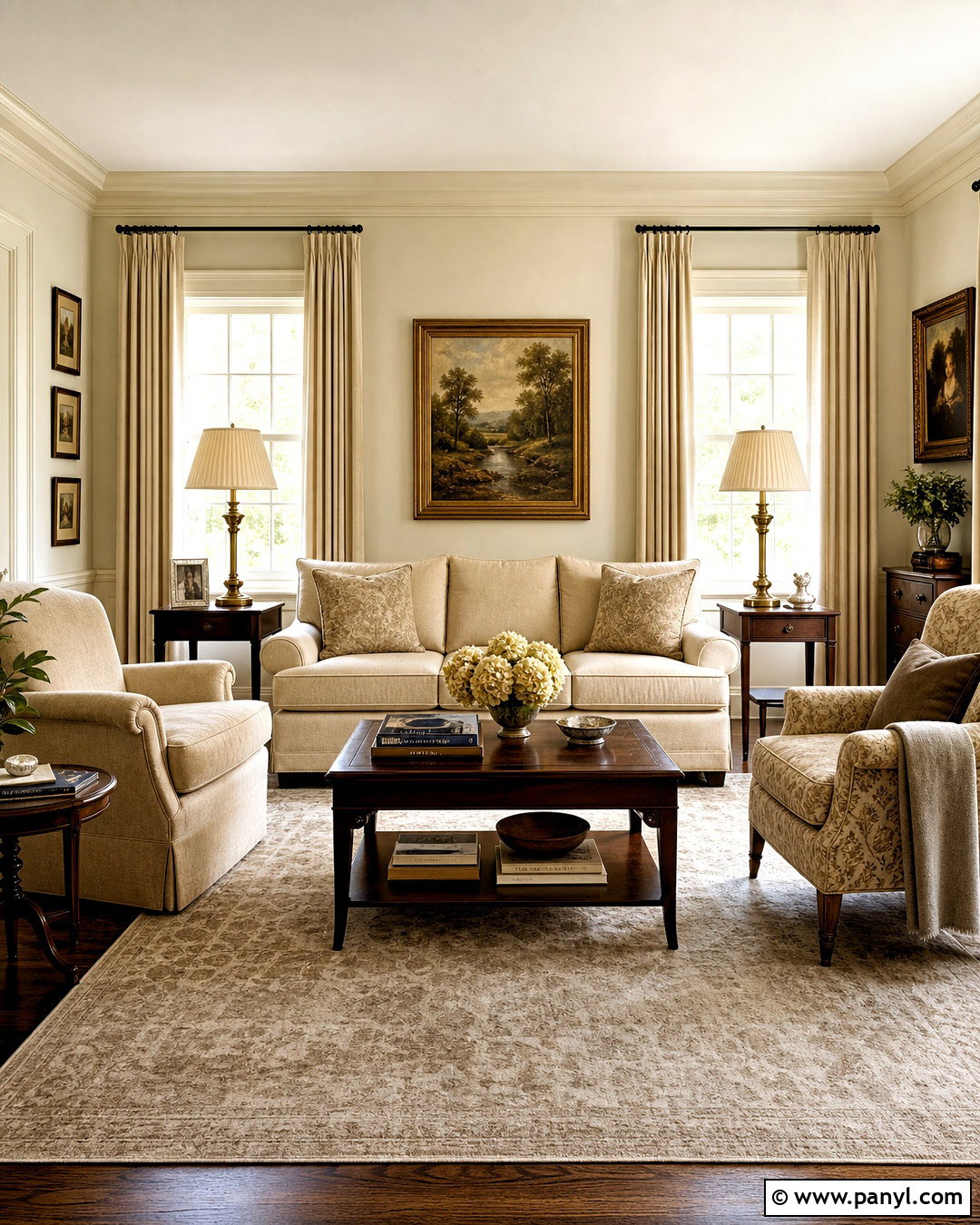
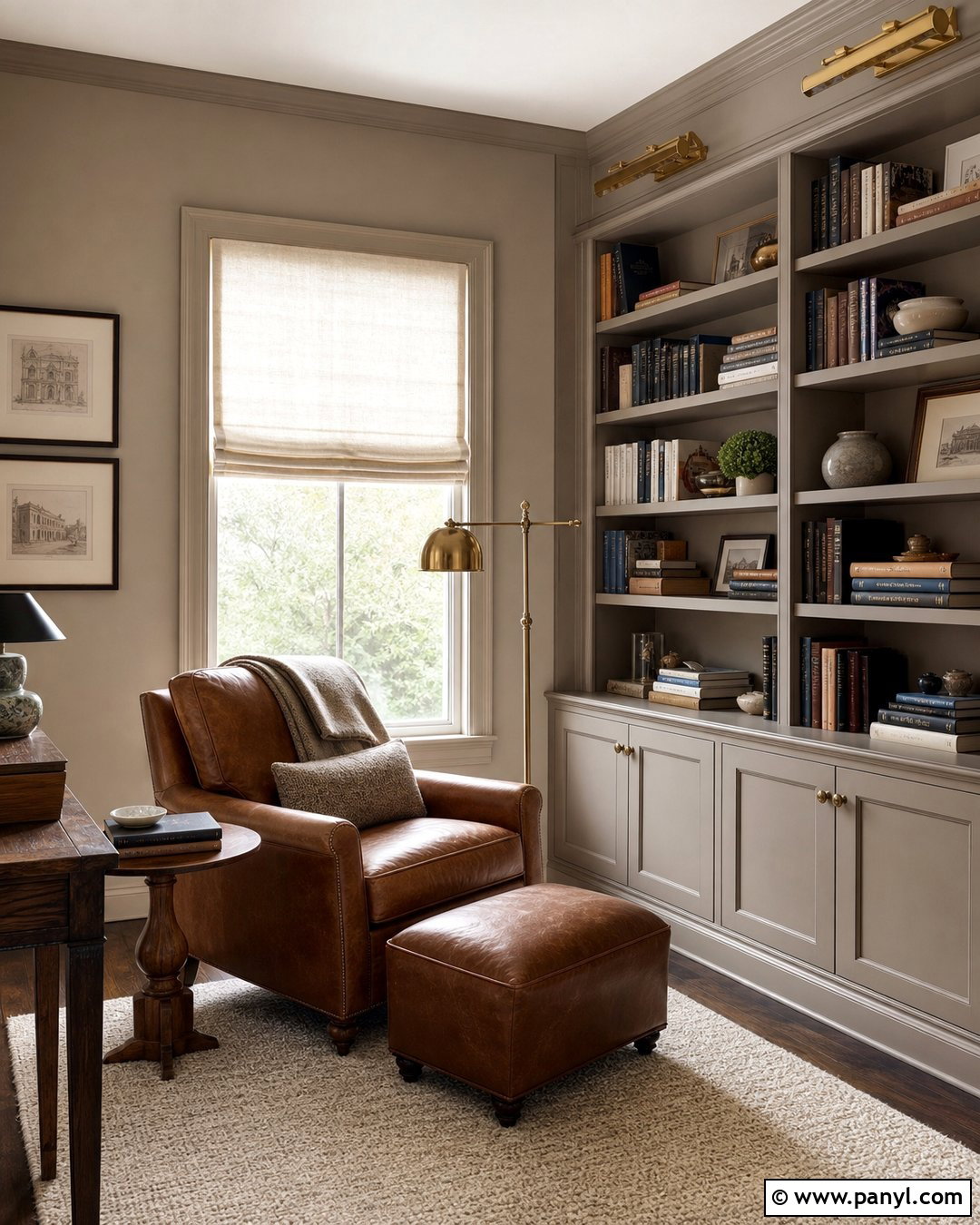
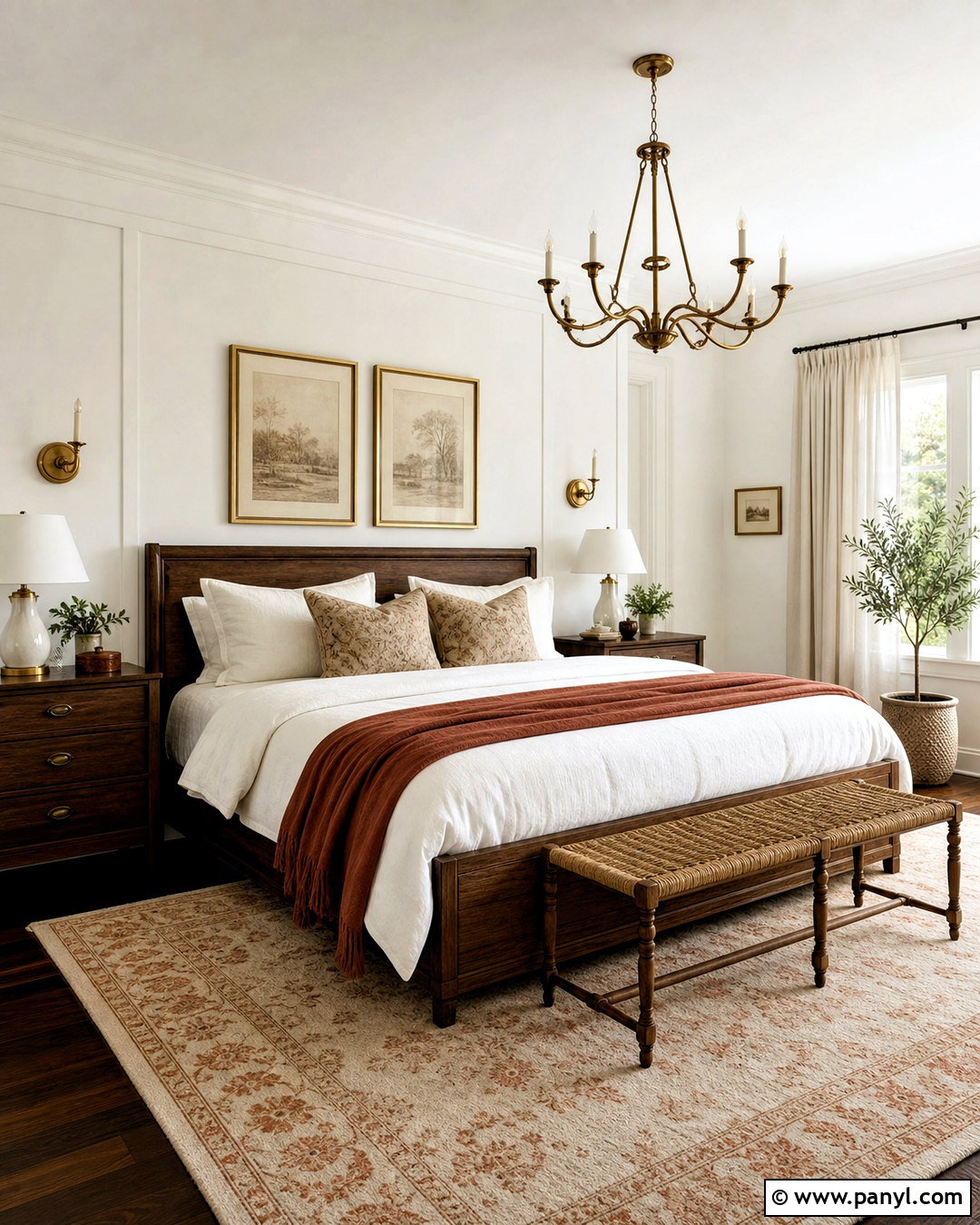
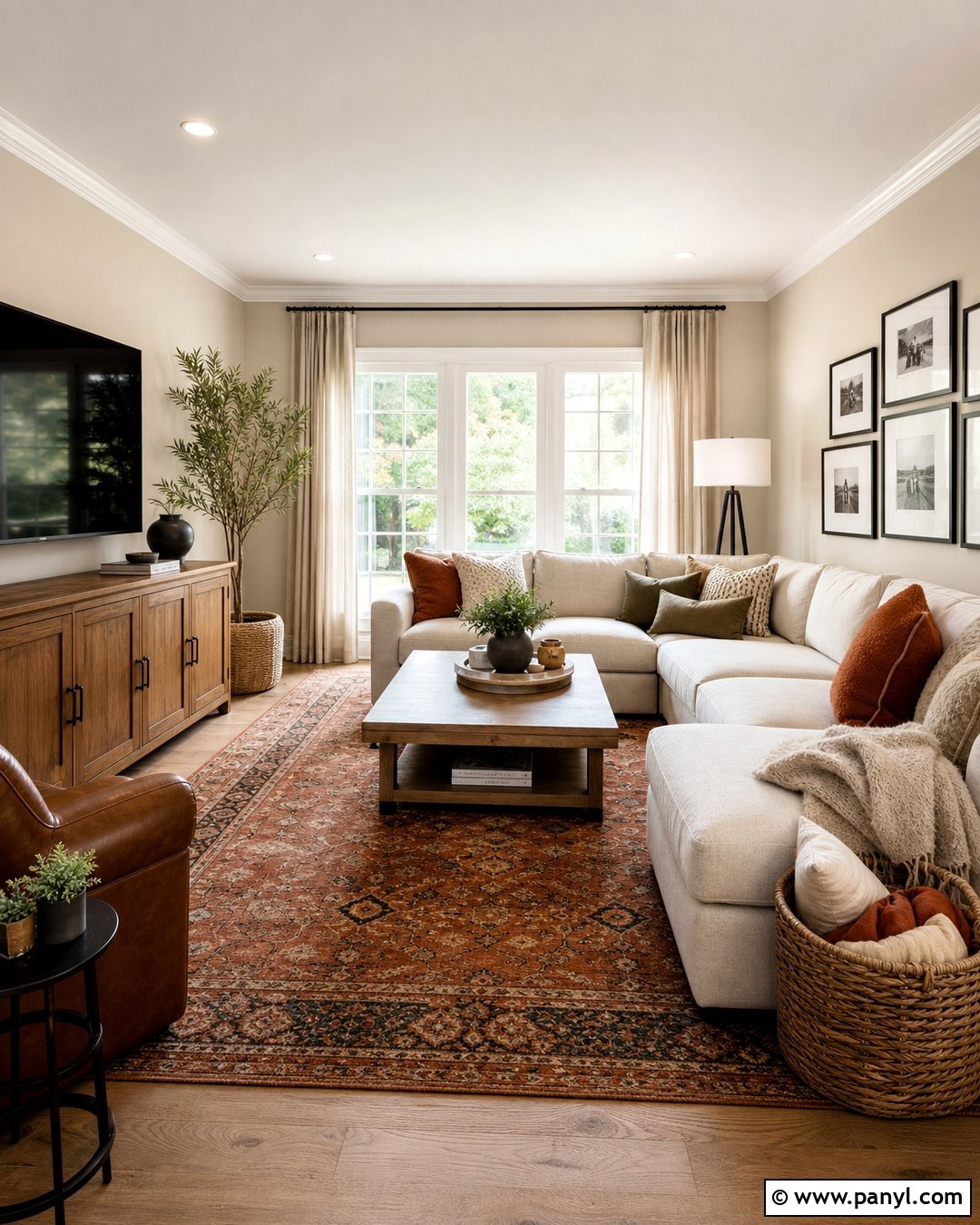
Traditional decorating feels lighter and more approachable when built around soft neutrals. Paint the walls a warm ivory and highlight crown molding, window trim, and built-in shelves in a slightly brighter cream. Arrange a tailored beige sofa opposite two oatmeal armchairs around a dark wood coffee table. A faded Persian-style rug in taupe, gray, and cream adds pattern without introducing strong color. Choose pleated linen curtains, antique brass lamps, and a classic chandelier to support the room’s architecture. A dark walnut console and framed landscape art provide contrast and history. Mix a few patterned pillows with solid upholstery for balance. The complete sitting room feels elegant and collected while remaining comfortable enough for reading, conversation, and casual family use.
14. Neutral Midcentury Living Room
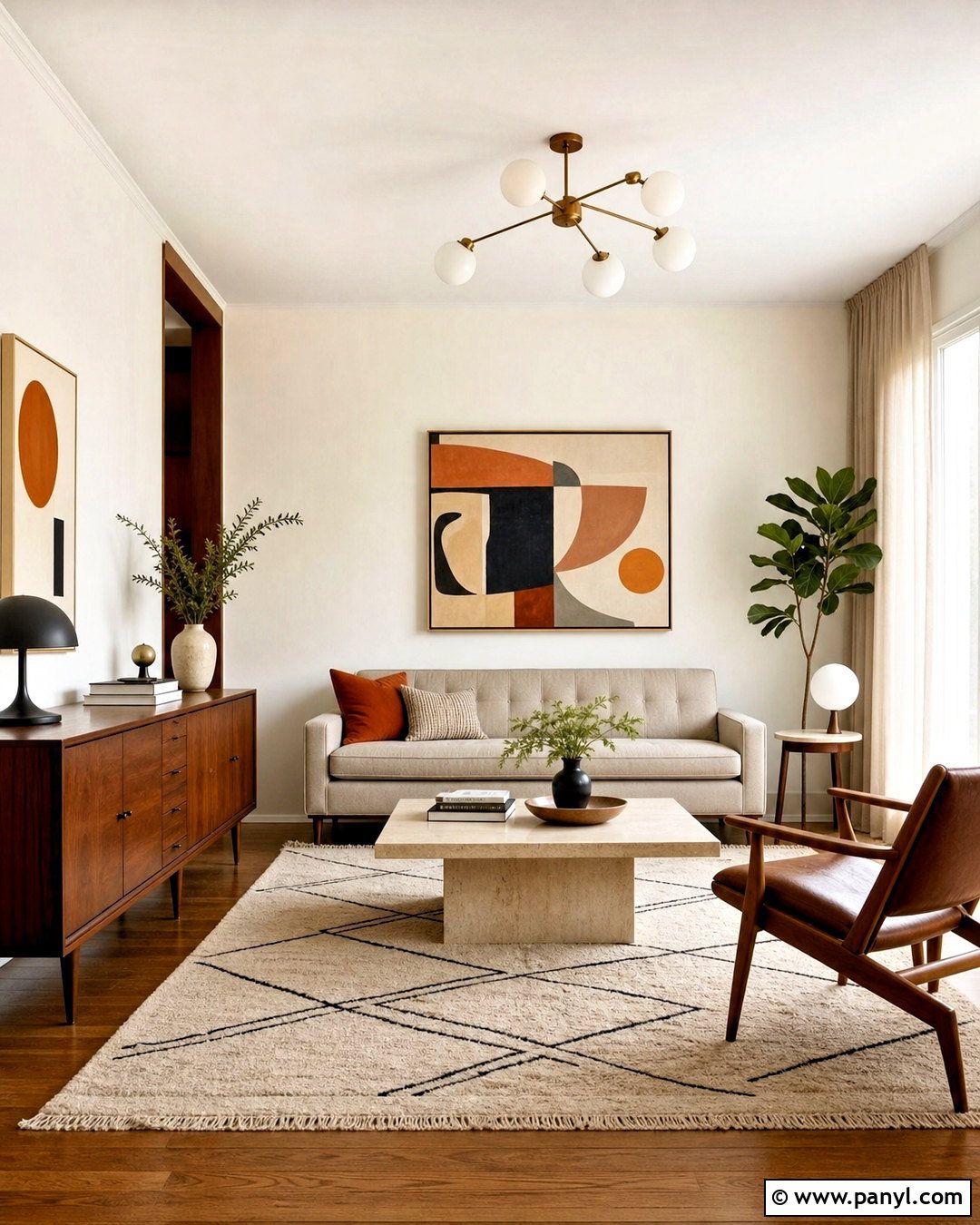
Warm wood and streamlined furniture prevent a neutral midcentury living room from looking flat. Start with soft cream walls and a low-profile sofa upholstered in light gray-beige fabric. Place a walnut lounge chair and matching sideboard nearby to establish the style’s recognizable wood tone. A rectangular stone coffee table introduces a cooler material and balances the furniture’s warmth. Use a geometric wool rug in ivory, tan, and charcoal to define the seating arrangement. Globe lighting, tapered legs, and simple ceramic accessories reinforce the period influence without making the room feel themed. Hang one large abstract artwork above the sofa. Finish with linen curtains and a tall plant, creating a relaxed room that blends vintage character with practical modern comfort.
15. Neutral Rustic Family Room
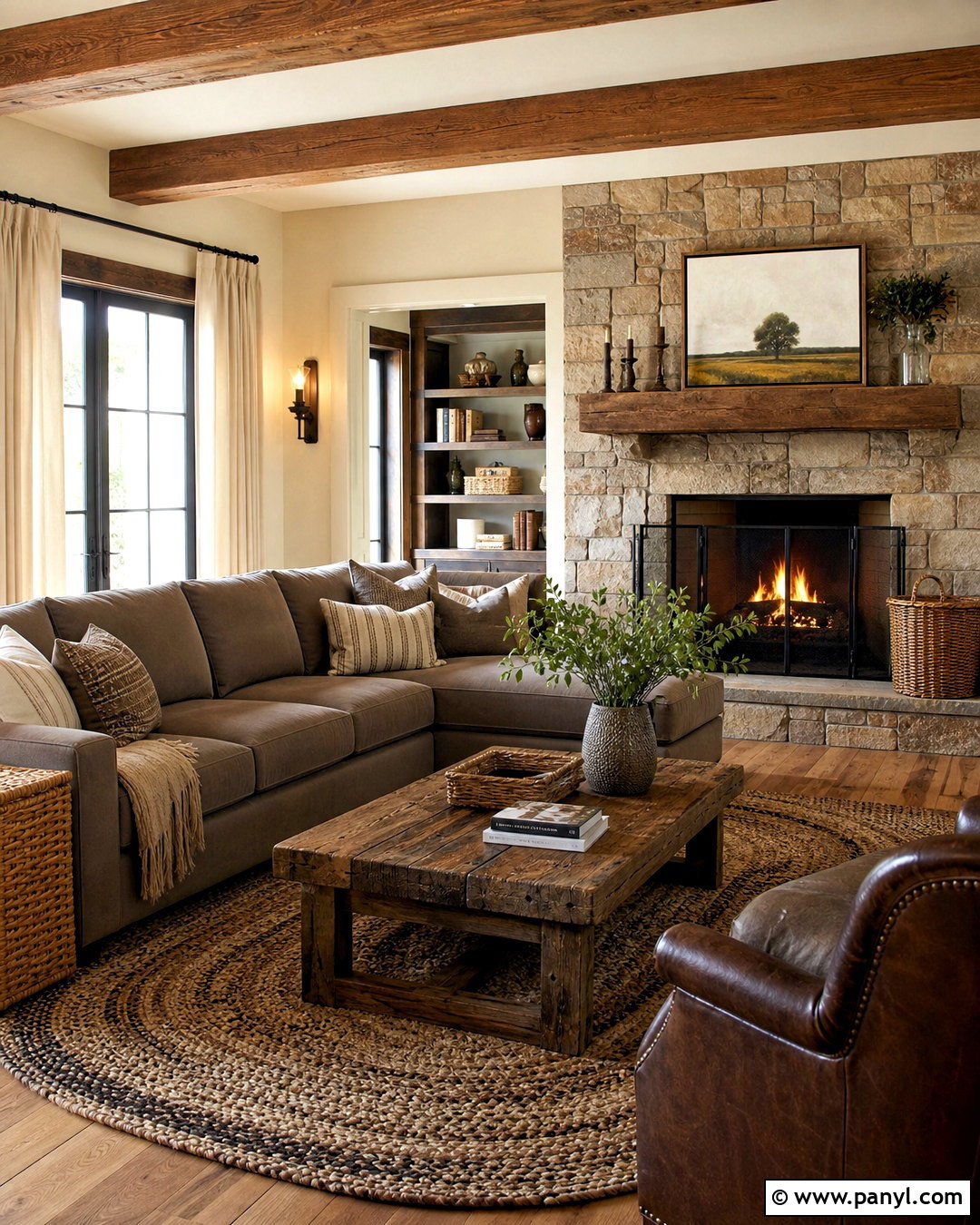
Rough stone, sturdy wood, and soft upholstery can create a rustic family room that feels inviting rather than heavy. Make a natural stone fireplace the focal point and surround it with warm cream walls. Position a deep taupe sectional toward the hearth, leaving generous pathways around the seating area. Add a reclaimed oak coffee table, leather accent chair, and large braided wool rug for durability and texture. Use ceiling beams only if they suit the room’s architecture, matching them to the coffee table rather than choosing a very dark stain. Linen curtains and layered knit pillows soften the harder surfaces. Complete the design with iron sconces, woven baskets, and simple landscape artwork. The result is rugged, comfortable, and family-friendly.
16. Neutral Small Apartment Interior
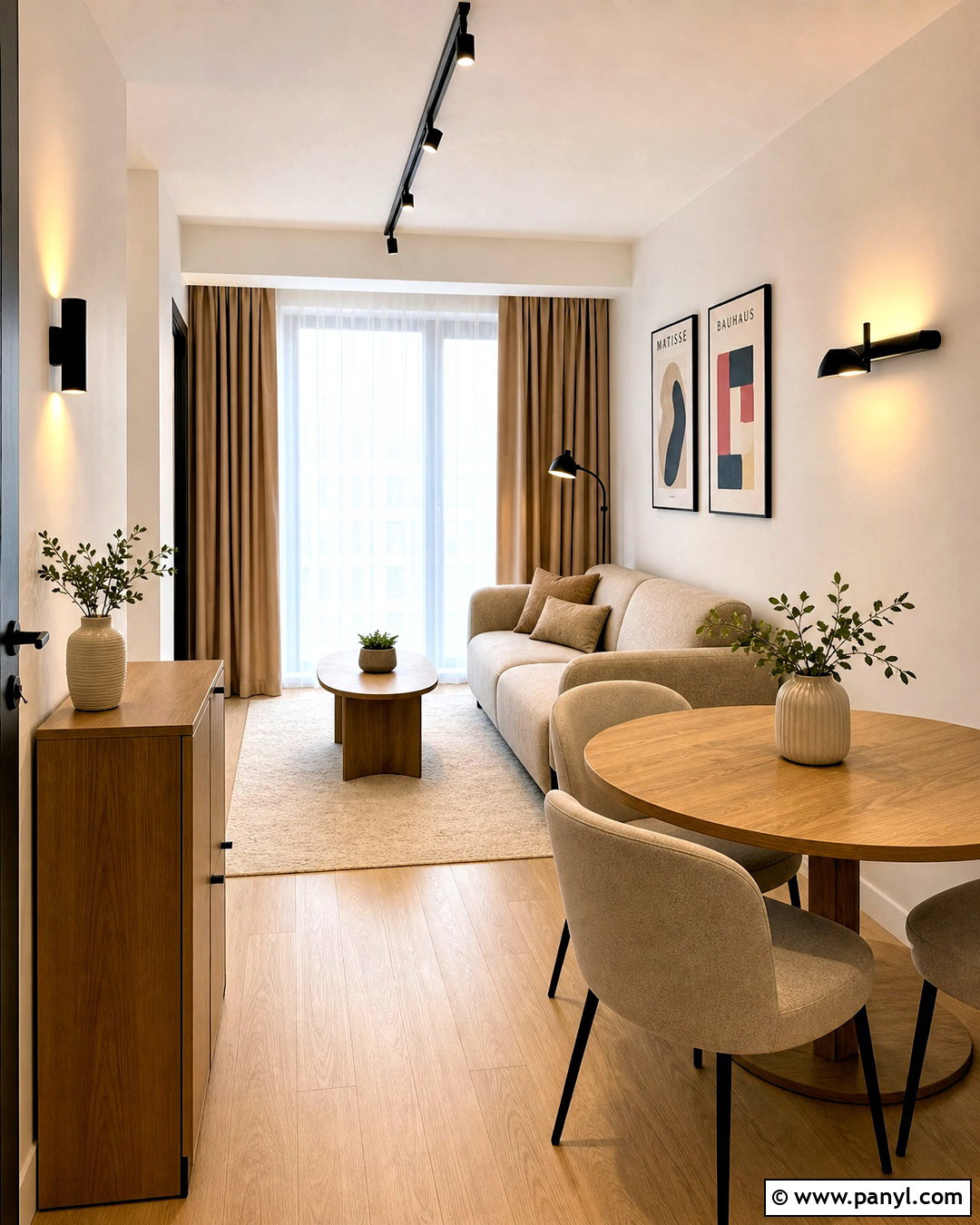
When one room handles several functions, a consistent neutral palette helps everything feel connected. Paint the walls warm white and use light oak flooring to create a continuous backdrop. Choose a compact beige sofa with visible legs, then place it on a textured cream rug to define the living zone. A round oak table with two upholstered chairs can serve as both dining space and workspace. Use a narrow storage cabinet in the same wood tone to reduce visual clutter. Full-length curtains make the windows feel larger, while wall-mounted lighting preserves valuable surfaces. Add contrast through black frames, a charcoal throw, and one graphic cushion. The finished apartment feels spacious and coordinated without sacrificing comfort, storage, or everyday function.
17. Neutral Nursery
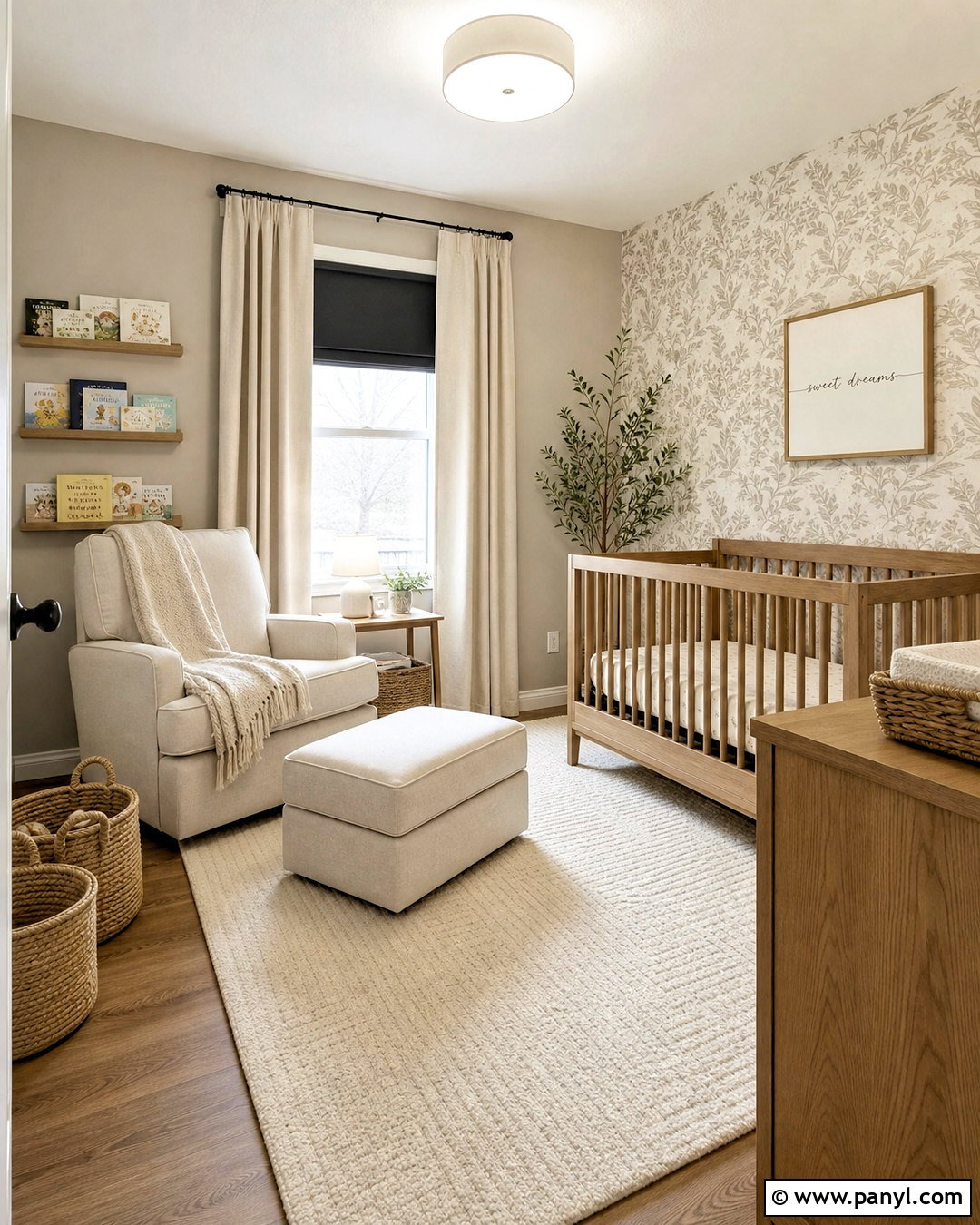
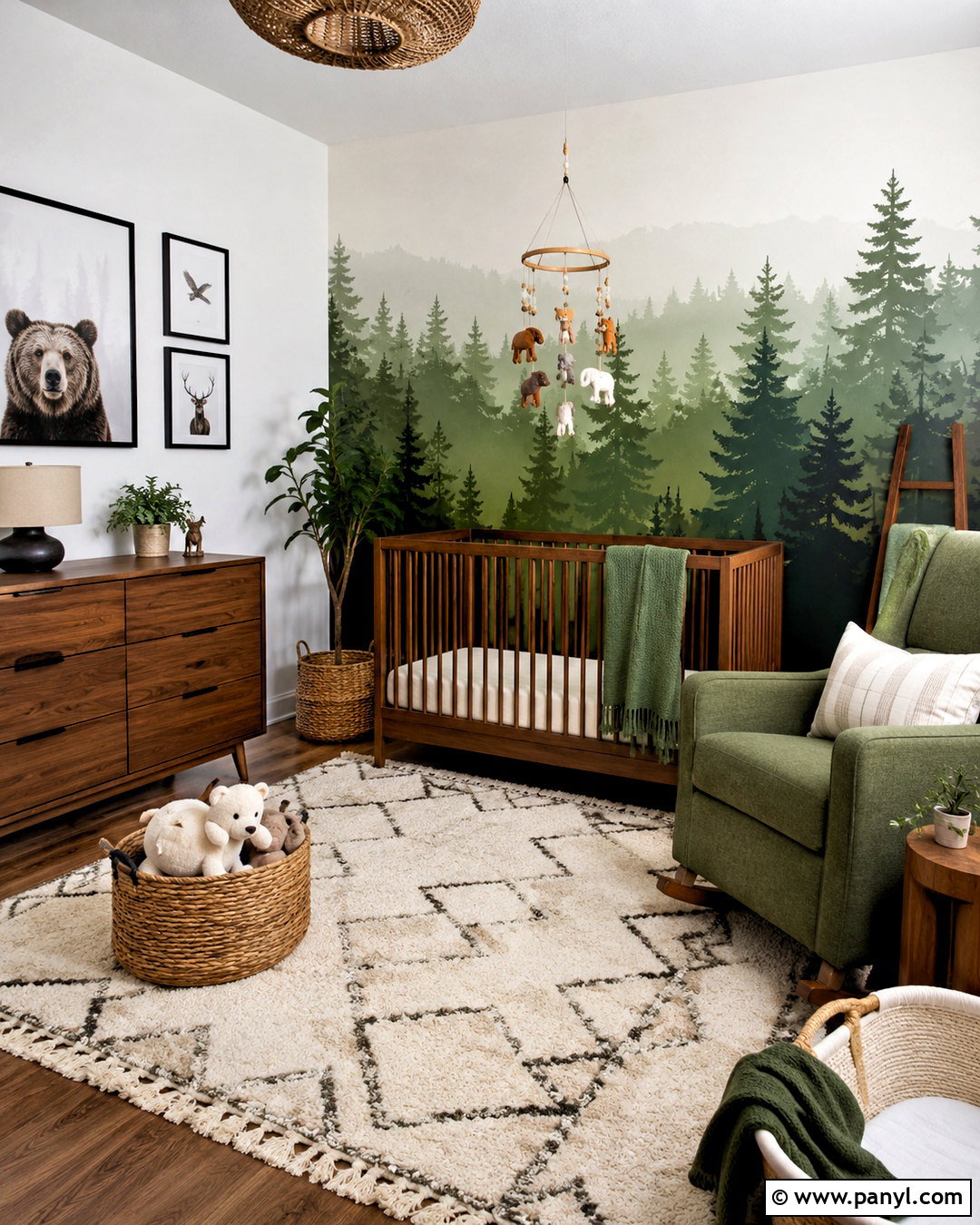
A neutral nursery should feel soothing while still offering warmth, personality, and useful storage. Begin with soft greige walls and a natural oak crib placed away from windows and cords. Anchor the room with a washable cream rug and add a comfortable oatmeal glider beside a small wood table. Use a low matching dresser as the changing station, securing both the furniture and changing accessories appropriately. Linen curtains layered over a simple blackout shade make daytime rest easier. Introduce gentle pattern through removable wallpaper behind the crib, using small beige botanical shapes rather than bold color. Woven baskets, fabric storage bins, and floating book ledges keep essentials organized. The completed nursery feels calm, practical, adaptable, and ready to grow with the child.
18. Neutral Guest Bedroom
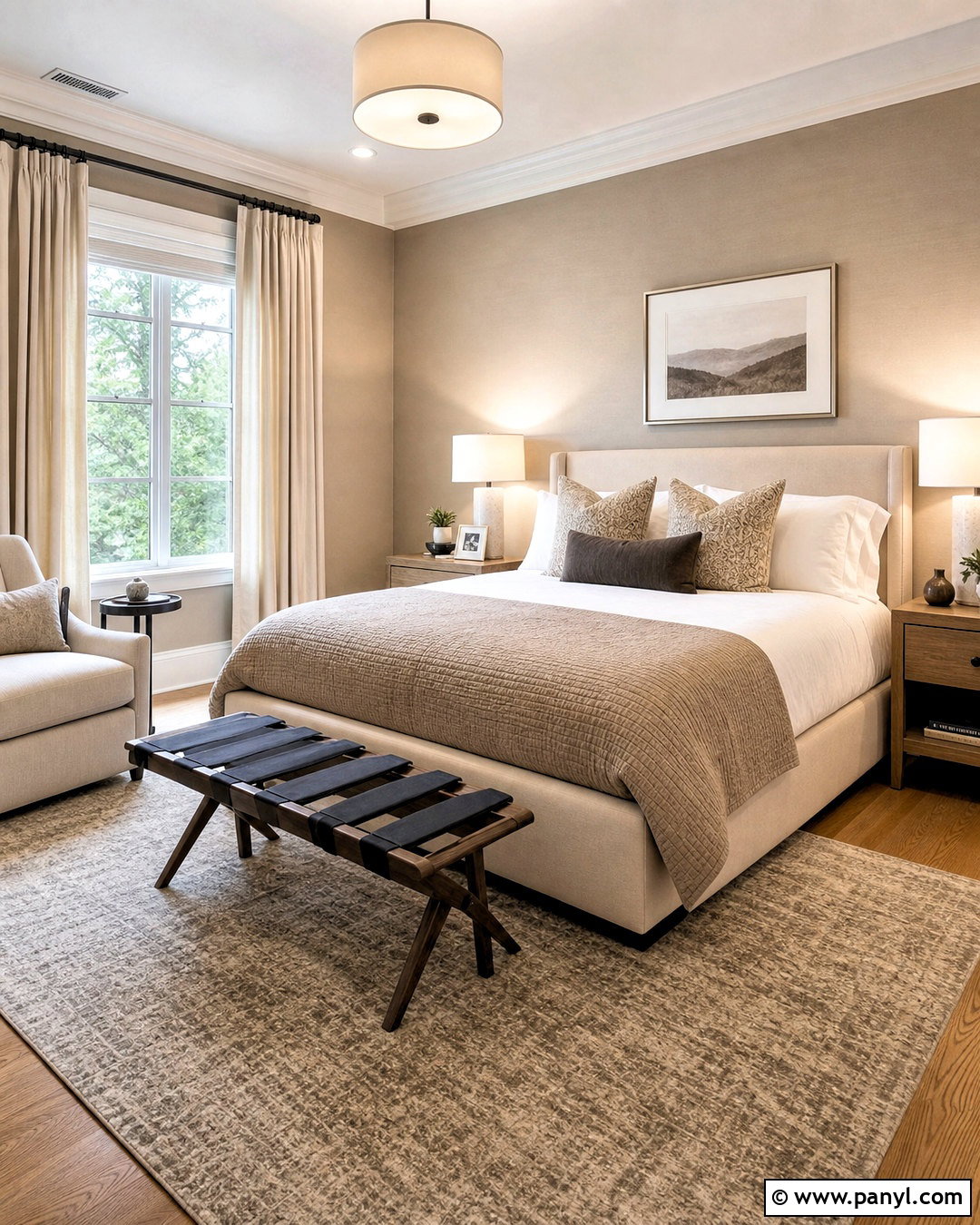
Guests appreciate a bedroom that looks polished but also supports simple daily needs. Paint the walls a soft mushroom beige and use an upholstered cream bed as the central feature. Layer white sheets with a taupe coverlet, quilted pillows, and a textured throw that guests can easily remove. Matching oak nightstands should include reading lamps, open surface space, and convenient charging access. Place a luggage bench at the foot of the bed and provide an uncluttered dresser for longer visits. A large neutral rug, full-length curtains, and one comfortable chair make the room feel complete. Add restrained artwork and a mirror for function. This thoughtful arrangement produces a welcoming retreat without relying on excessive decoration or fragile accessories.
19. Neutral Textured Hallway
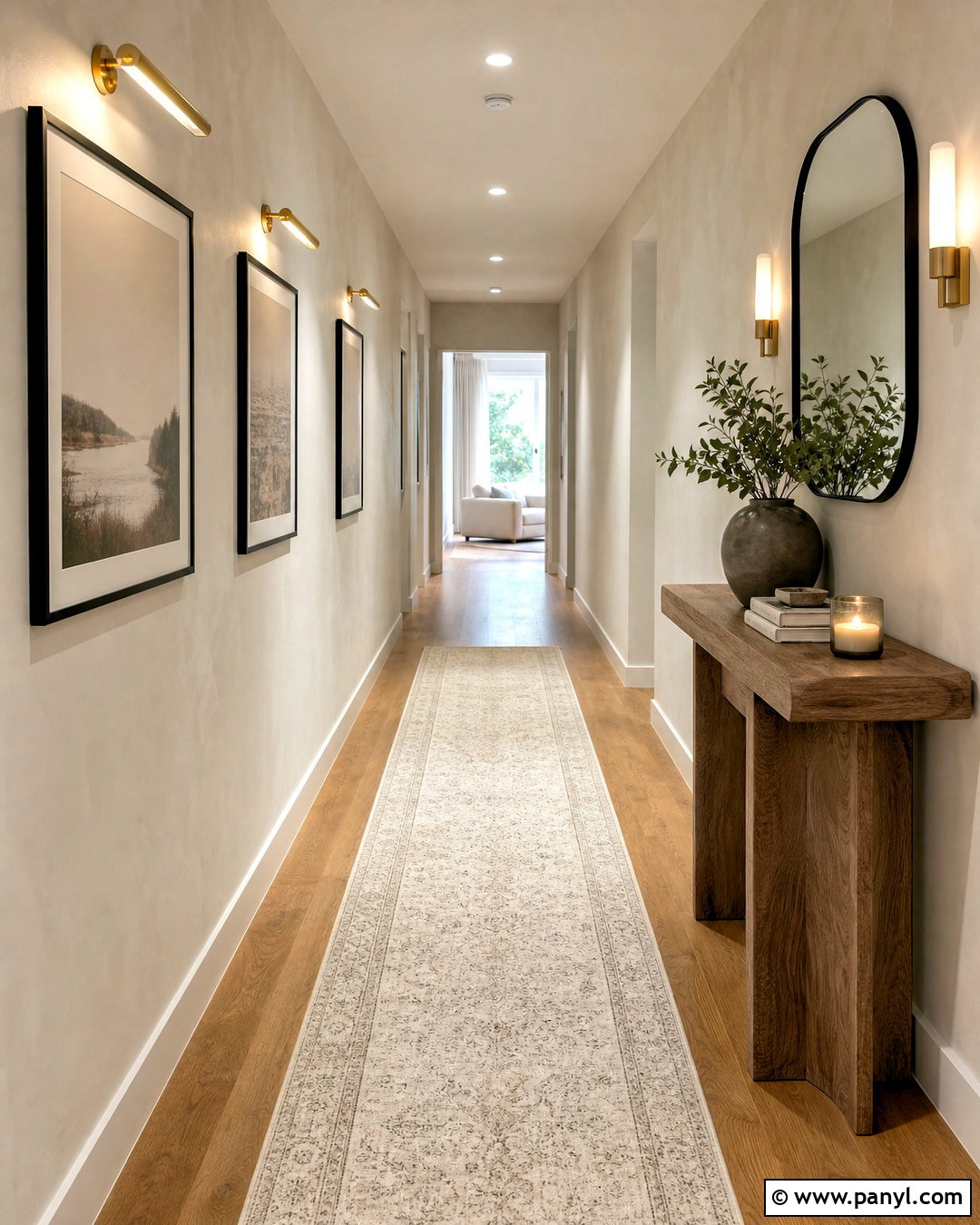
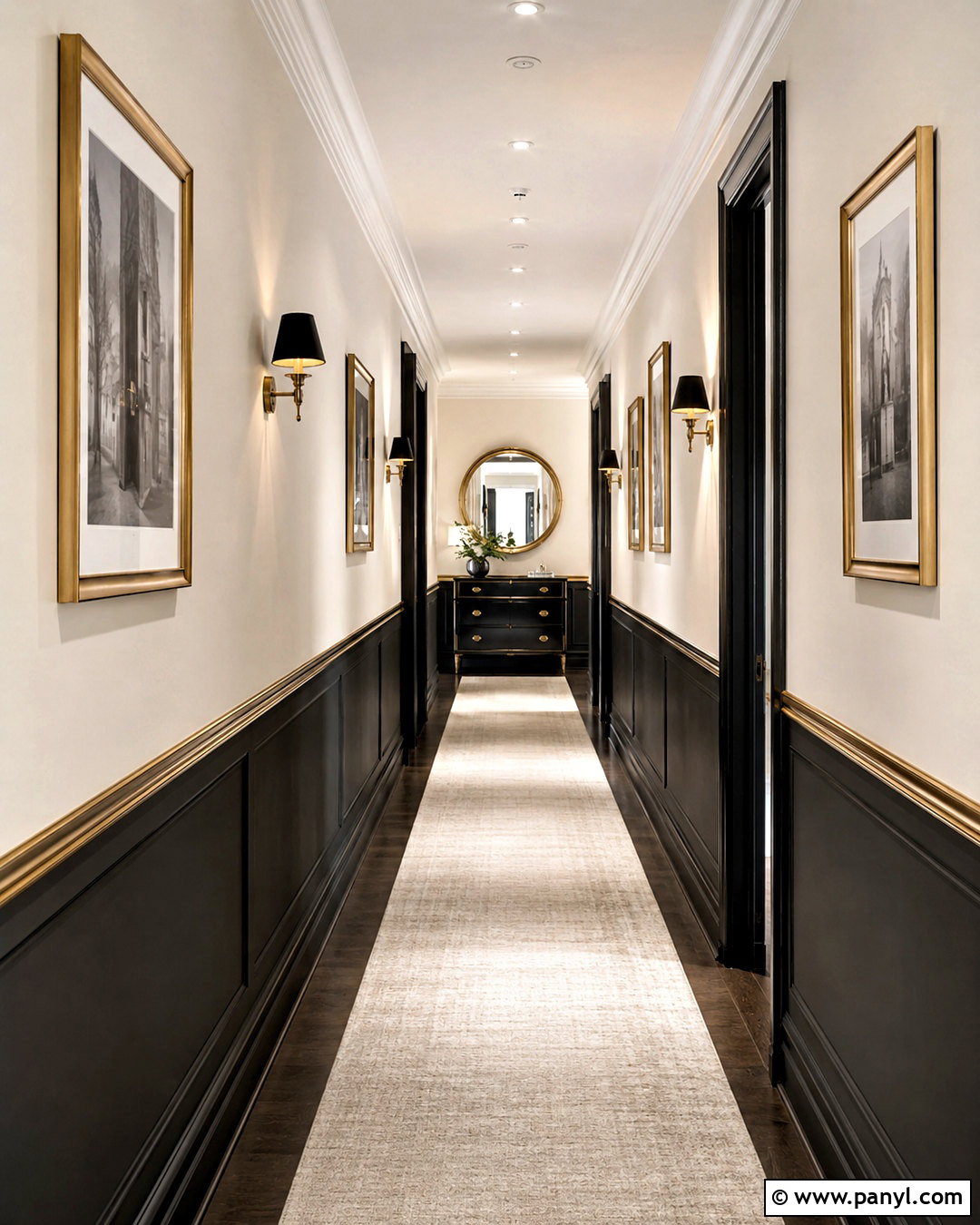
A hallway deserves more attention than a coat of plain white paint. Apply soft beige limewash or a subtle textured finish to the walls, allowing natural variation to create movement. Pair it with warm oak flooring and a long flat-woven runner in cream and gray. If the width allows, place a narrow wood console on one side and keep the opposite wall open for comfortable circulation. Hang a series of black-framed neutral prints at consistent heights to create an organized gallery. Small brass picture lights or simple wall sconces provide practical illumination and architectural rhythm. A rounded mirror can reflect light near the end of the passage. The finished hallway connects surrounding rooms while feeling intentional, warm, and visually interesting.
20. Dark Neutral Media Room
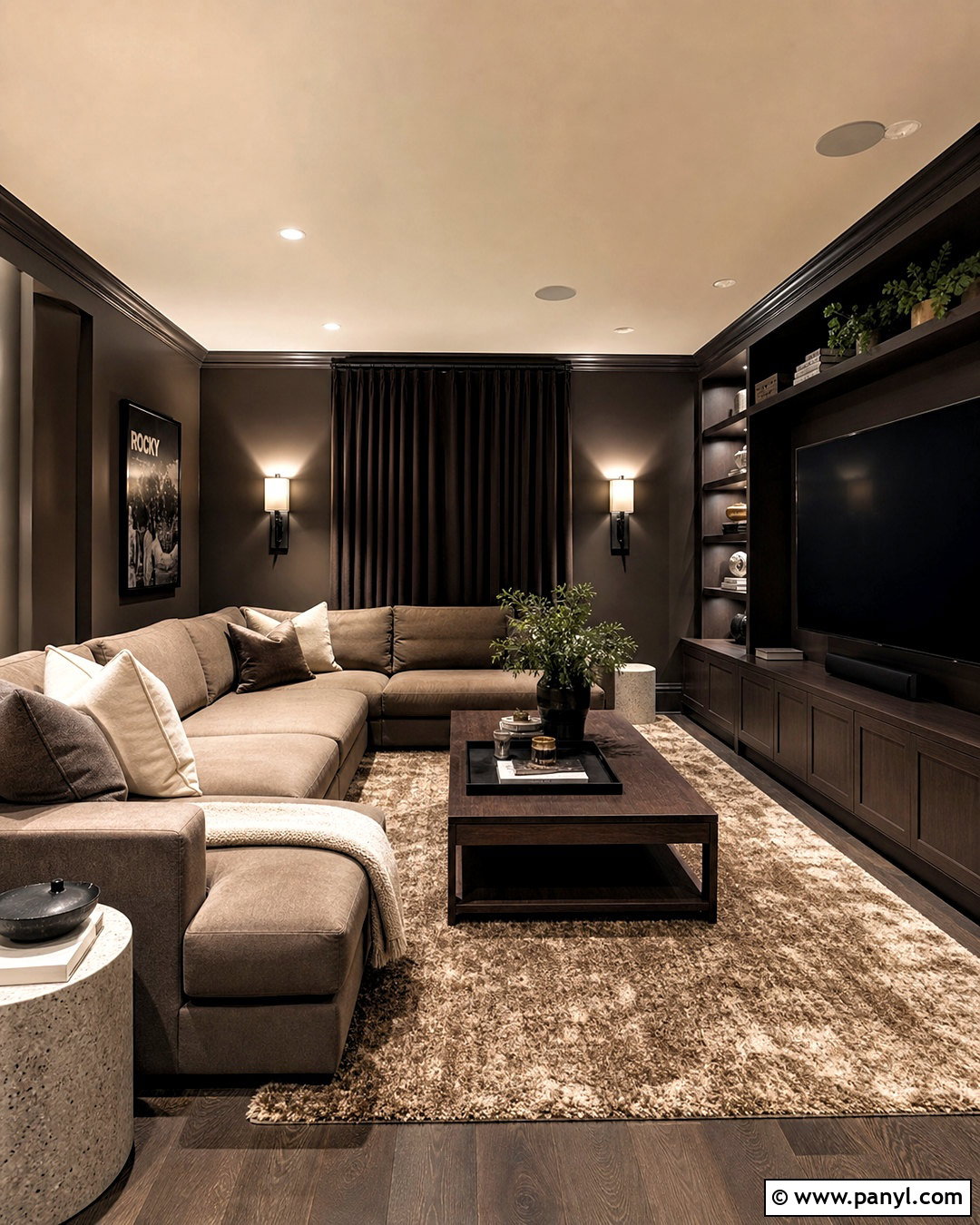
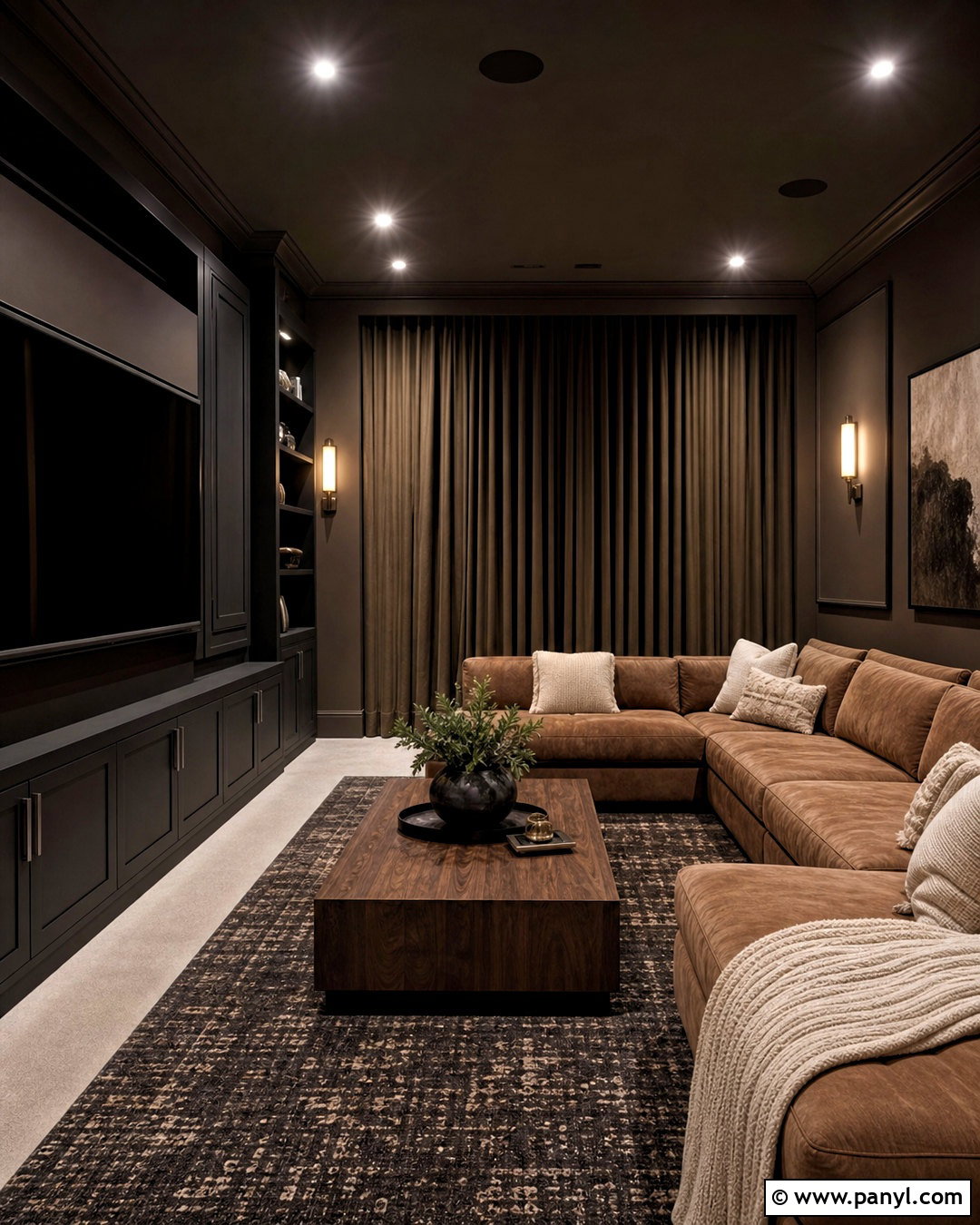
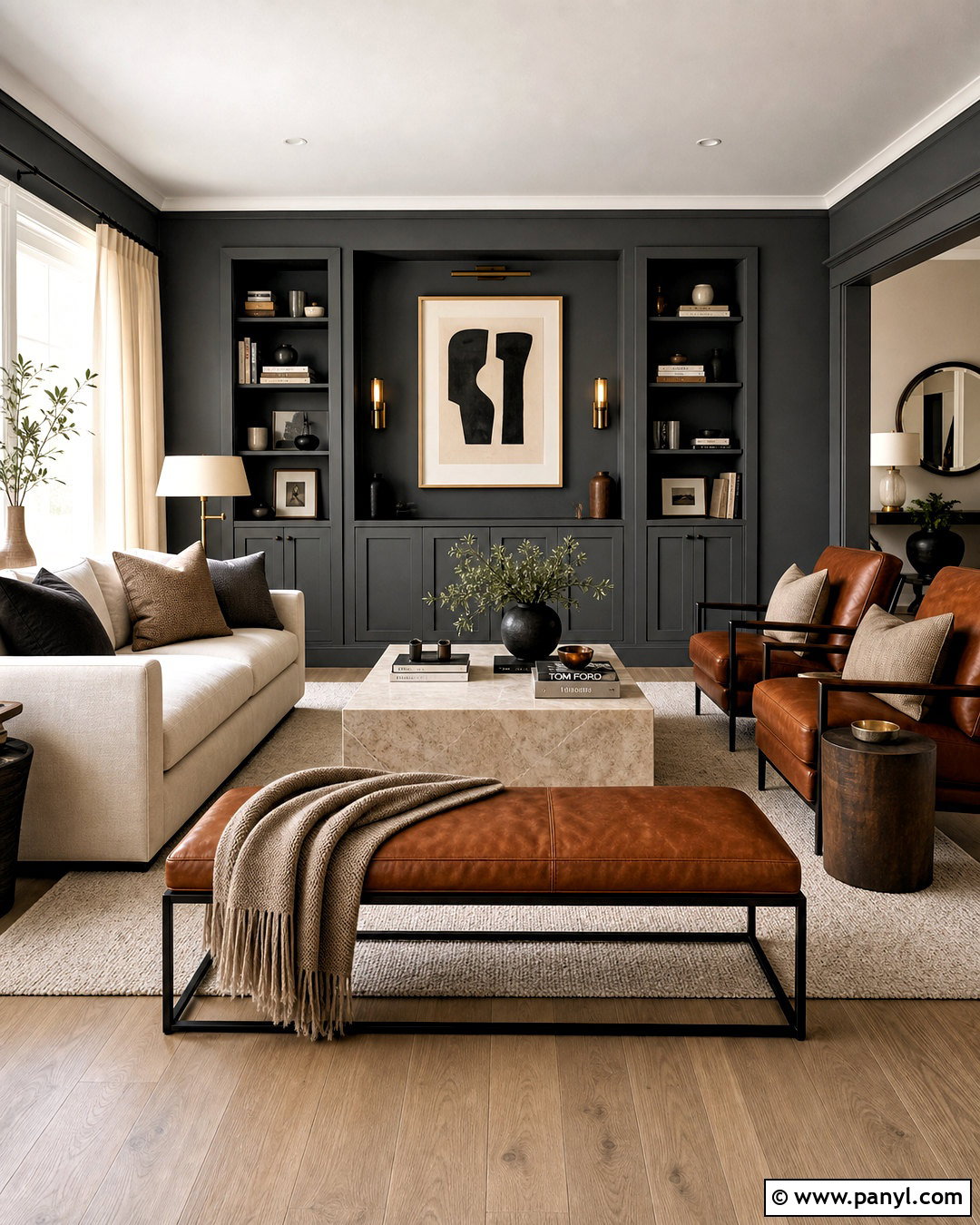
Deep neutrals can create a cozy media room without making it feel gloomy or enclosed. Paint the walls a rich charcoal brown and repeat the color on built-in cabinets for a seamless background. Choose a large low sectional in medium taupe performance fabric and position it toward the screen. A thick patterned rug in brown, beige, and gray improves comfort and visually anchors the seating. Add a dark oak media console, small stone side tables, and dimmable wall sconces with warm white bulbs. Blackout curtains should match the walls closely while providing light control. Use lighter pillows, throws, and a cream ceiling to balance the darker surfaces. The completed room feels intimate, practical, and carefully designed for comfortable viewing.
Conclusion:
Successful neutral rooms depend on coordination, contrast, and texture rather than one safe shade repeated everywhere. Begin with a clear undertone, such as warm cream, balanced greige, or cool gray, and carry it through the largest surfaces. Then layer wood, stone, linen, wool, metal, and woven materials to create dimension. Dark accents can define furniture and architecture, while lighter textiles keep the design open and comfortable. Most importantly, plan every room as a complete environment with practical layouts, appropriate lighting, and enough storage. Whether you update one bedroom or connect an entire home, these neutral interior design ideas can help you build spaces that feel calm, personal, polished, and easy to live in.

Related Ideas and Inspiration:
Leave a Reply