
Neutral walls do not have to fade into the background. With the right undertone, texture, and placement, they can add depth while keeping a room calm and easy to decorate. These neutral color accent wall ideas use warm greige, mushroom, taupe, charcoal, creamy beige, and natural materials to create contrast without introducing loud color. Each look combines the accent wall with coordinated furniture, flooring, lighting, textiles, and decor, so the finished space feels complete rather than disconnected. You will also find options for living rooms, bedrooms, kitchens, bathrooms, entryways, offices, and smaller spaces. Whether your home leans modern, traditional, rustic, or minimalist, these approachable neutral color accent wall ideas offer practical inspiration you can confidently recreate.

1. Warm Greige Living Room Accent Wall
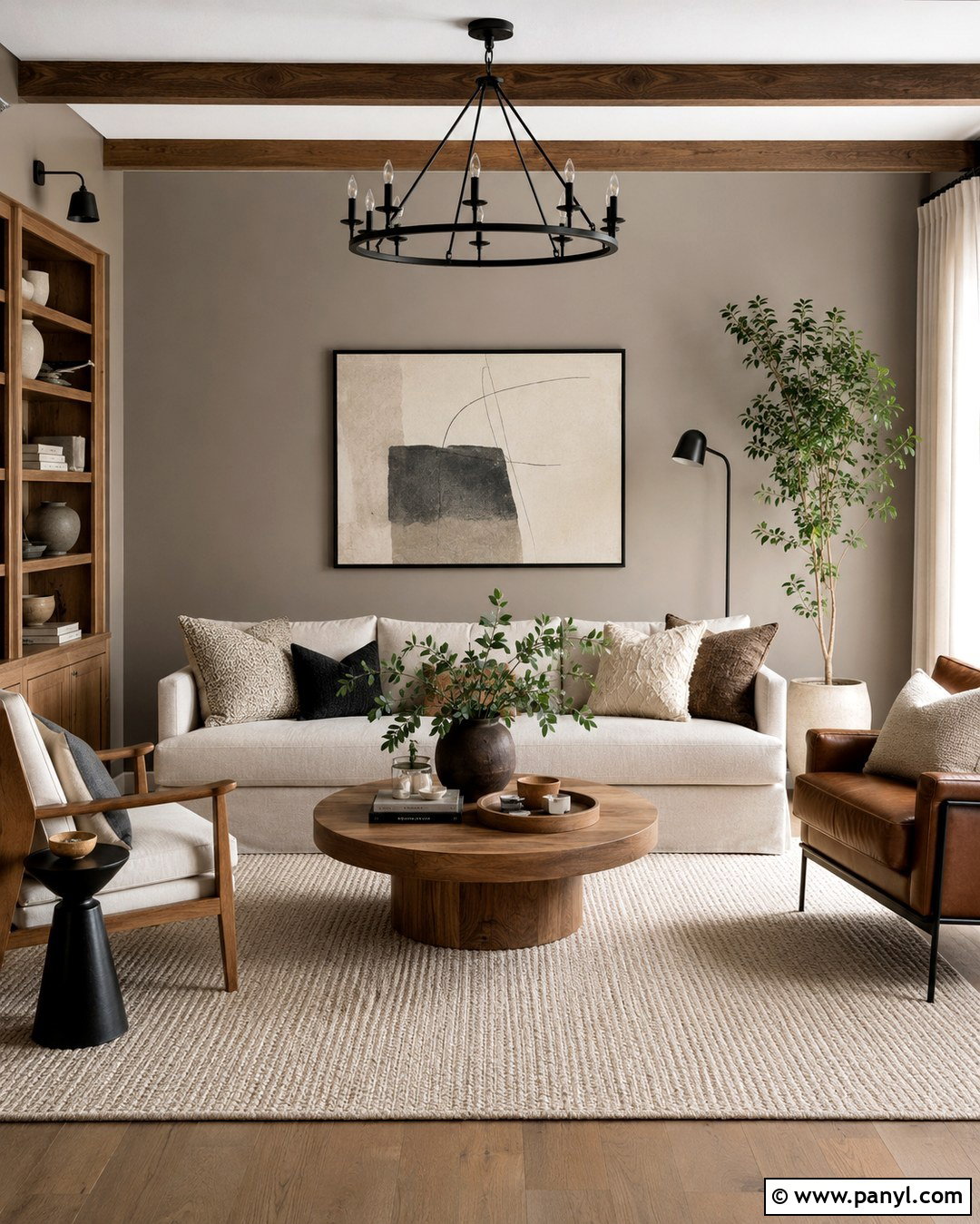
A warm greige accent wall gives a living room definition without making it feel smaller or darker. Place it behind the main sofa or fireplace, where the color can establish a natural focal point. Paint the surrounding walls creamy white to emphasize the gentle contrast. A light oatmeal sofa, cognac leather chair, and medium oak coffee table bring warmth into the palette. Add an ivory wool rug, linen curtains, and black metal lighting for a balanced mix of soft and structured elements. Large abstract artwork in cream, tan, and charcoal helps connect the wall to the furniture. Finish with ceramic vases, textured pillows, and one leafy plant to keep the complete room relaxed, polished, and welcoming.
2. Soft Taupe Bedroom Accent Wall
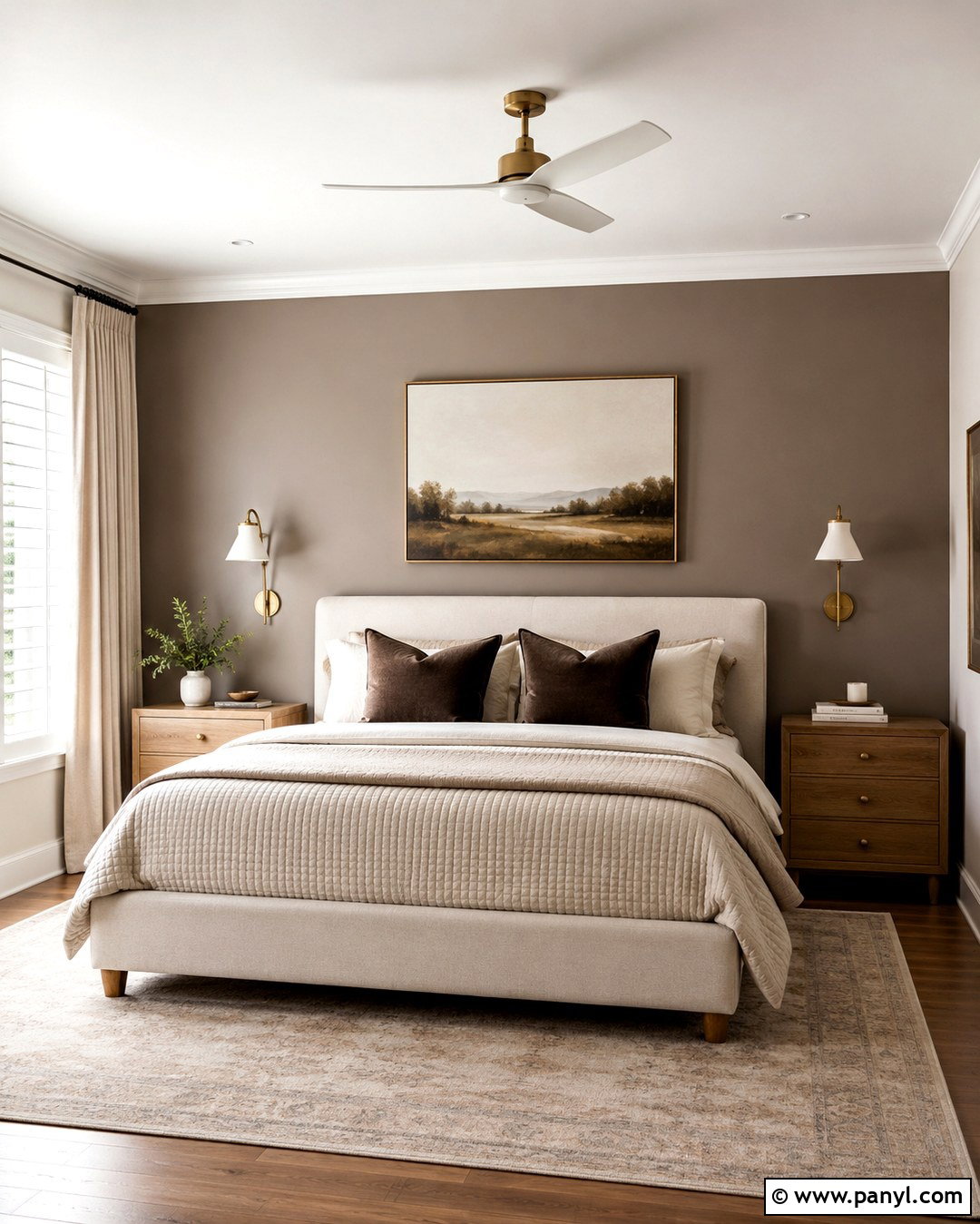
Imagine waking up to a soft taupe wall that feels cozy but never heavy. Use the color behind an upholstered bed to frame the sleeping area and create a calm visual anchor. Warm white walls, natural oak nightstands, and an ivory linen headboard keep the room light. Layer the bed with cream sheets, a beige quilt, and chocolate brown accent pillows for tonal depth. Brushed brass sconces introduce a subtle glow, while full-length oatmeal curtains soften the windows. A vintage-style rug with faded tan and gray details completes the floor. Keep artwork minimal, choosing one oversized neutral landscape or textured canvas. The finished bedroom feels restful, refined, and comfortably layered without relying on bright accent colors.
3. Mushroom Dining Room Accent Wall
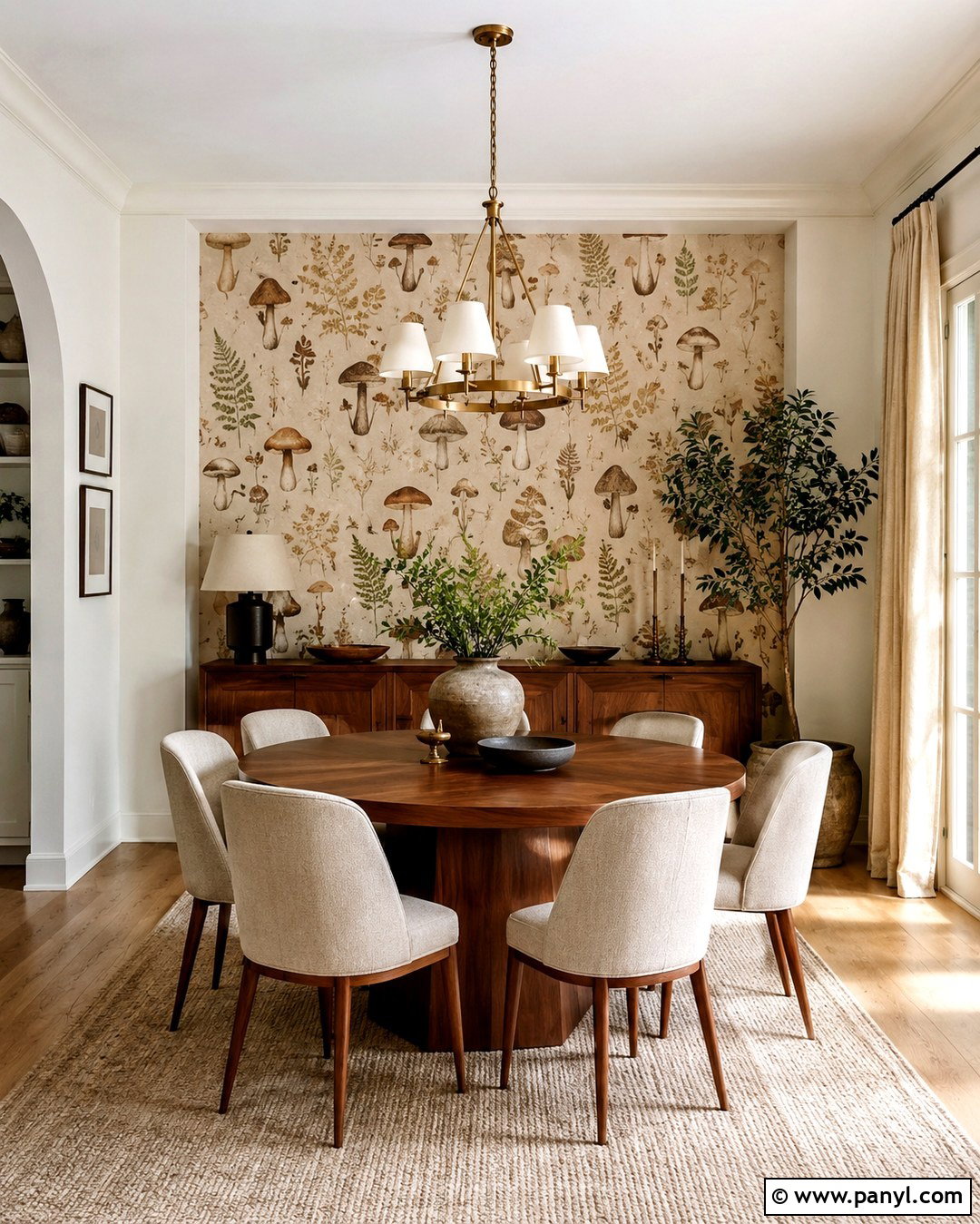
Mushroom paint sits between beige, brown, and gray, making it an adaptable choice for a dining room accent wall. Apply it behind a sideboard or along the wall facing the dining table. Pair it with warm white walls and medium-toned oak flooring for an earthy foundation. A round walnut table and upholstered oatmeal chairs create a comfortable gathering area without crowding the room. Hang a simple black or aged brass chandelier above the table to add contrast. On the accent wall, style a wood sideboard with stoneware, a table lamp, and a large framed print. Linen curtains and a low-pile neutral rug finish the scheme, creating a complete dining room that feels current, inviting, and suitable for everyday meals.
4. Creamy Beige Fireplace Accent Wall
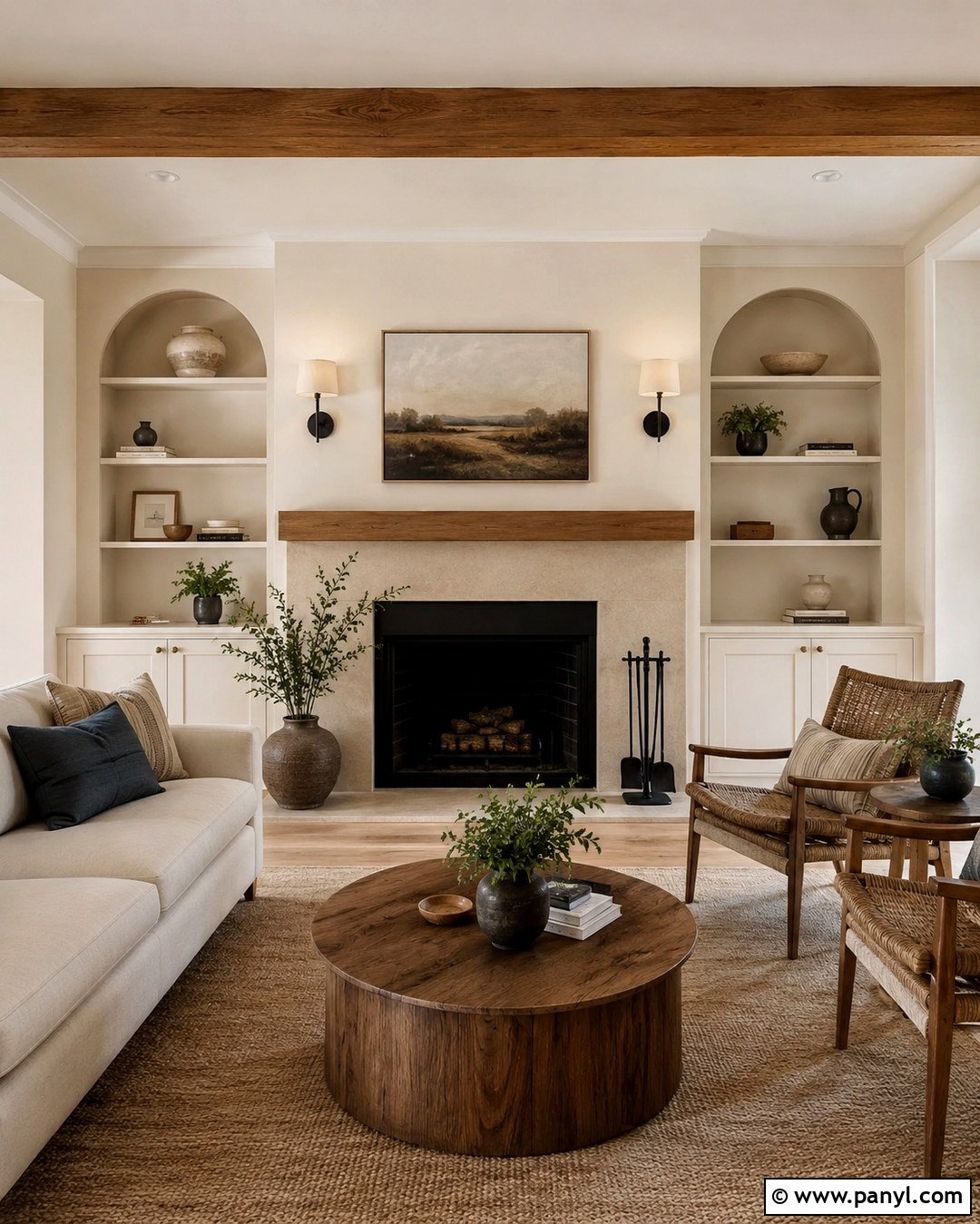
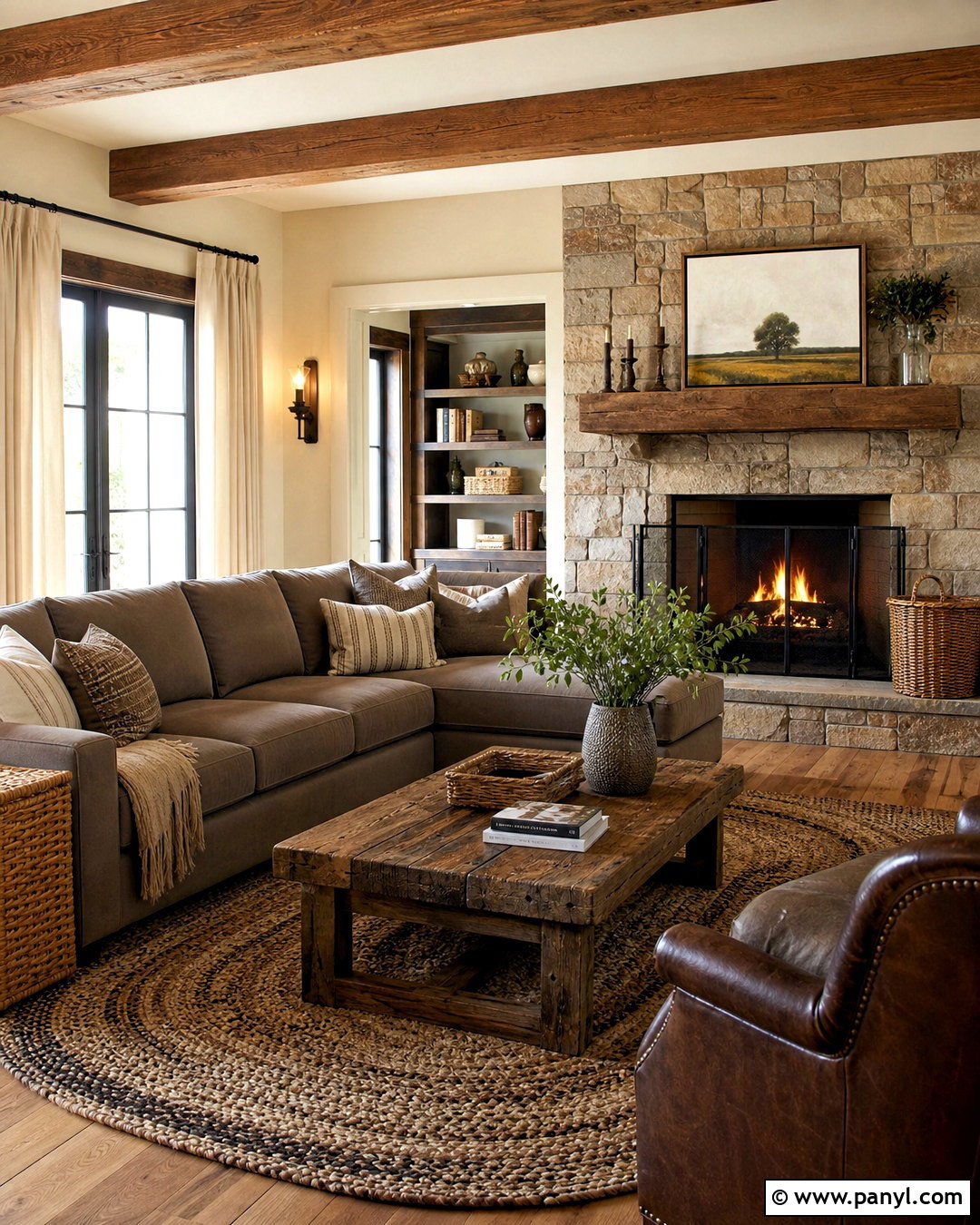
When a fireplace needs more presence, creamy beige can create a soft architectural focal point. Cover the entire fireplace wall in warm beige paint, including built-in shelving or simple wall molding for a seamless appearance. Surrounding walls in ivory maintain a light, open feeling. Choose a limestone or pale stone fireplace surround, then add a thick natural oak mantel for texture. Arrange a comfortable cream sofa and two woven accent chairs around a round wood coffee table. A large beige rug grounds the seating area, while black fireplace tools and slim metal sconces supply definition. Keep mantel decor restrained with a framed landscape, ceramic vessels, and natural branches. The coordinated materials make the accent wall feel intentional rather than merely painted.
5. Charcoal Home Office Accent Wall
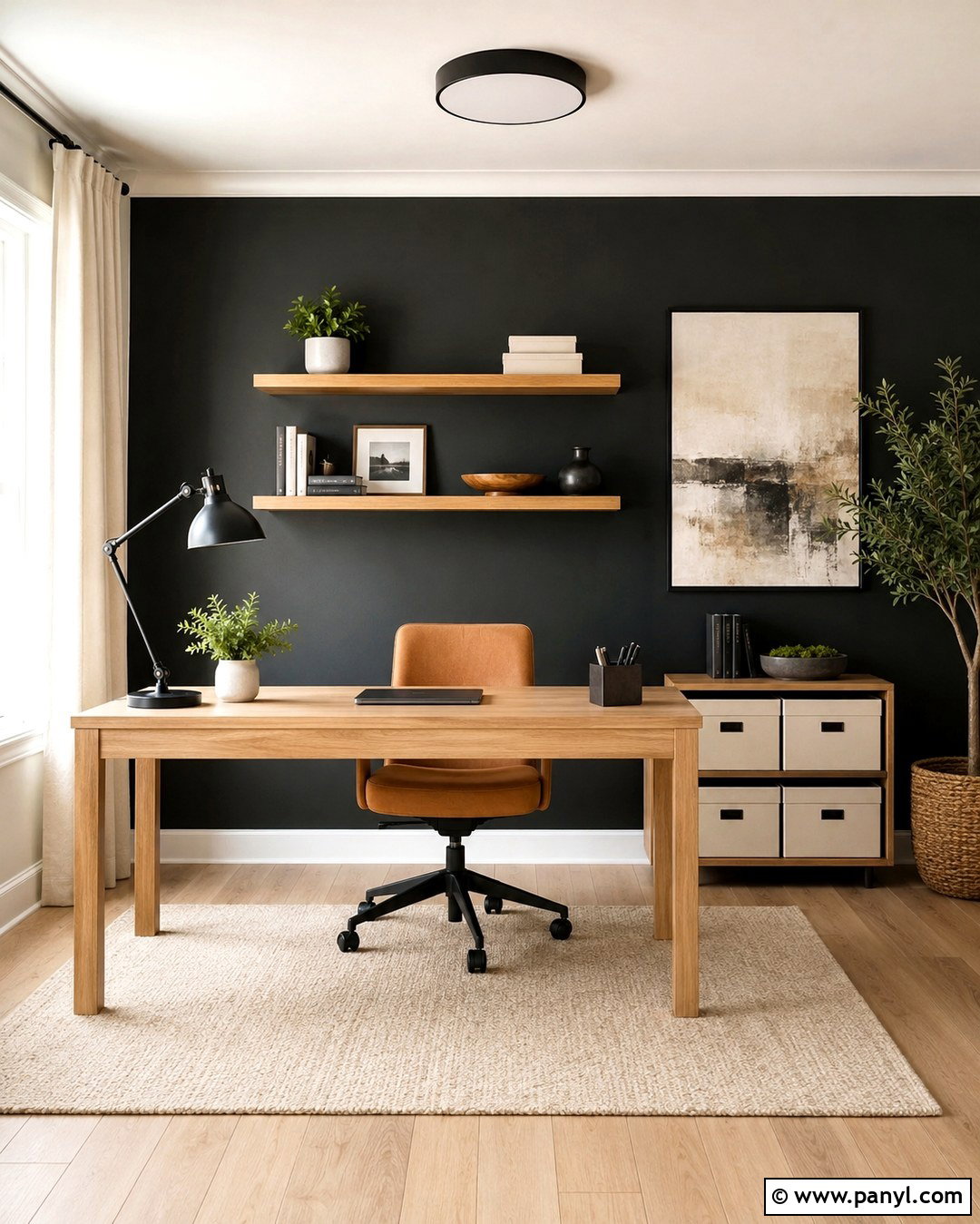
Could your workspace use stronger visual focus? A charcoal accent wall behind the desk creates a grounded background that can improve the room’s sense of structure. Balance the dark color with soft white walls, pale oak flooring, and a light wood desk. Add an ergonomic chair in camel-colored upholstery for comfort and warmth. Floating oak shelves against the charcoal wall provide practical storage while breaking up the deep tone. Style them with cream storage boxes, books, and understated pottery. A flat-woven beige rug and off-white curtains keep the office from feeling severe. Finish with a matte black desk lamp and one large neutral print. The result is a professional, organized office that feels sophisticated, bright, and appropriate for daily use.
6. Putty Entryway Accent Wall
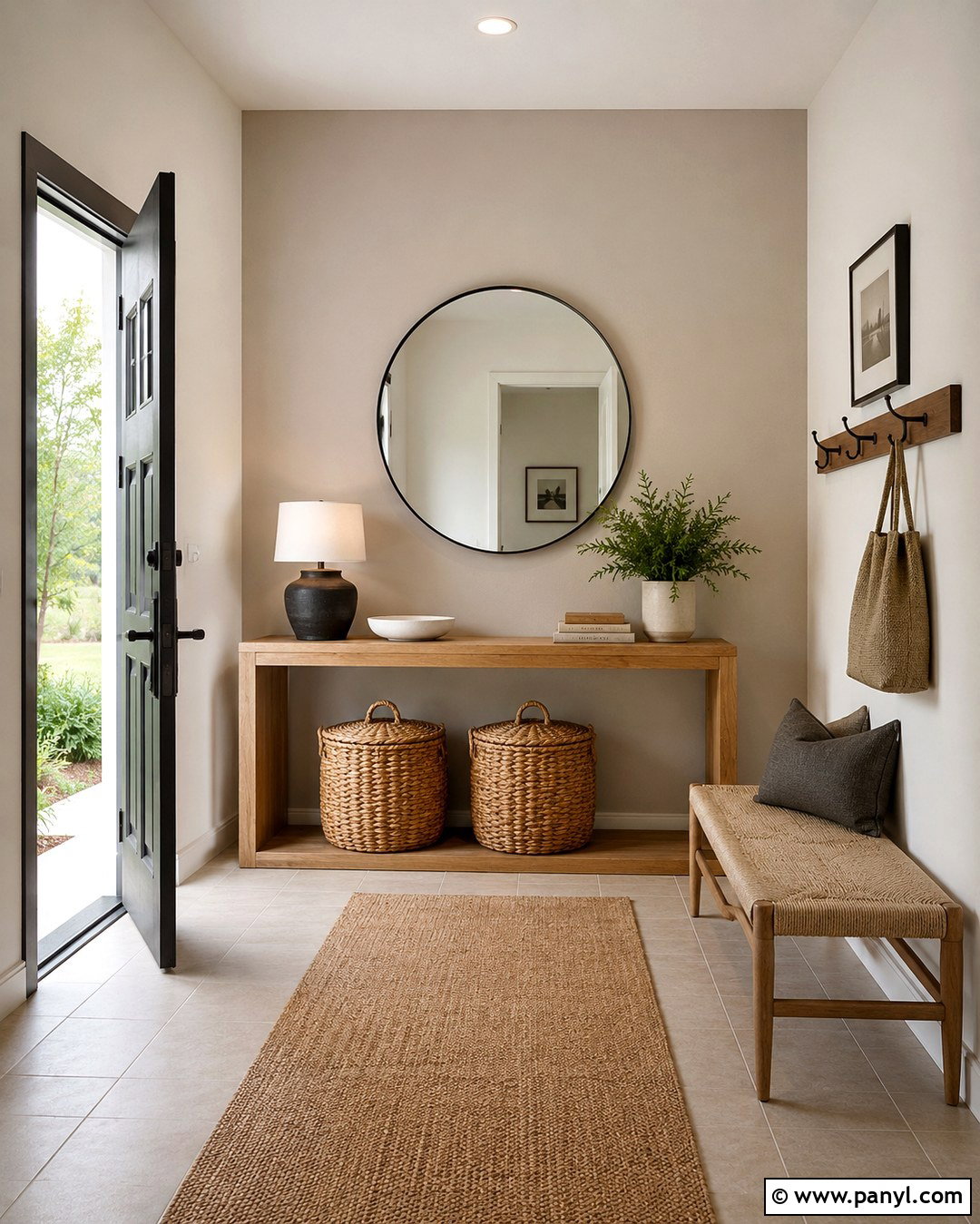
A putty-colored accent wall can turn a basic entryway into a warm transition between rooms. Choose the wall behind a console table, bench, or coat hooks so the color supports a functional feature. Paint adjacent walls soft cream and continue light wood or neutral tile flooring through the space. A narrow oak console keeps the walkway open, while a round black-framed mirror creates contrast above it. Add a woven bench, natural fiber runner, and lidded baskets for shoes and everyday accessories. A small table lamp softens the area in the evening. Simple wall hooks and a ceramic bowl provide useful storage without visual clutter. This complete entryway design feels calm, practical, and welcoming from the moment someone opens the door.
7. Warm White Paneled Accent Wall
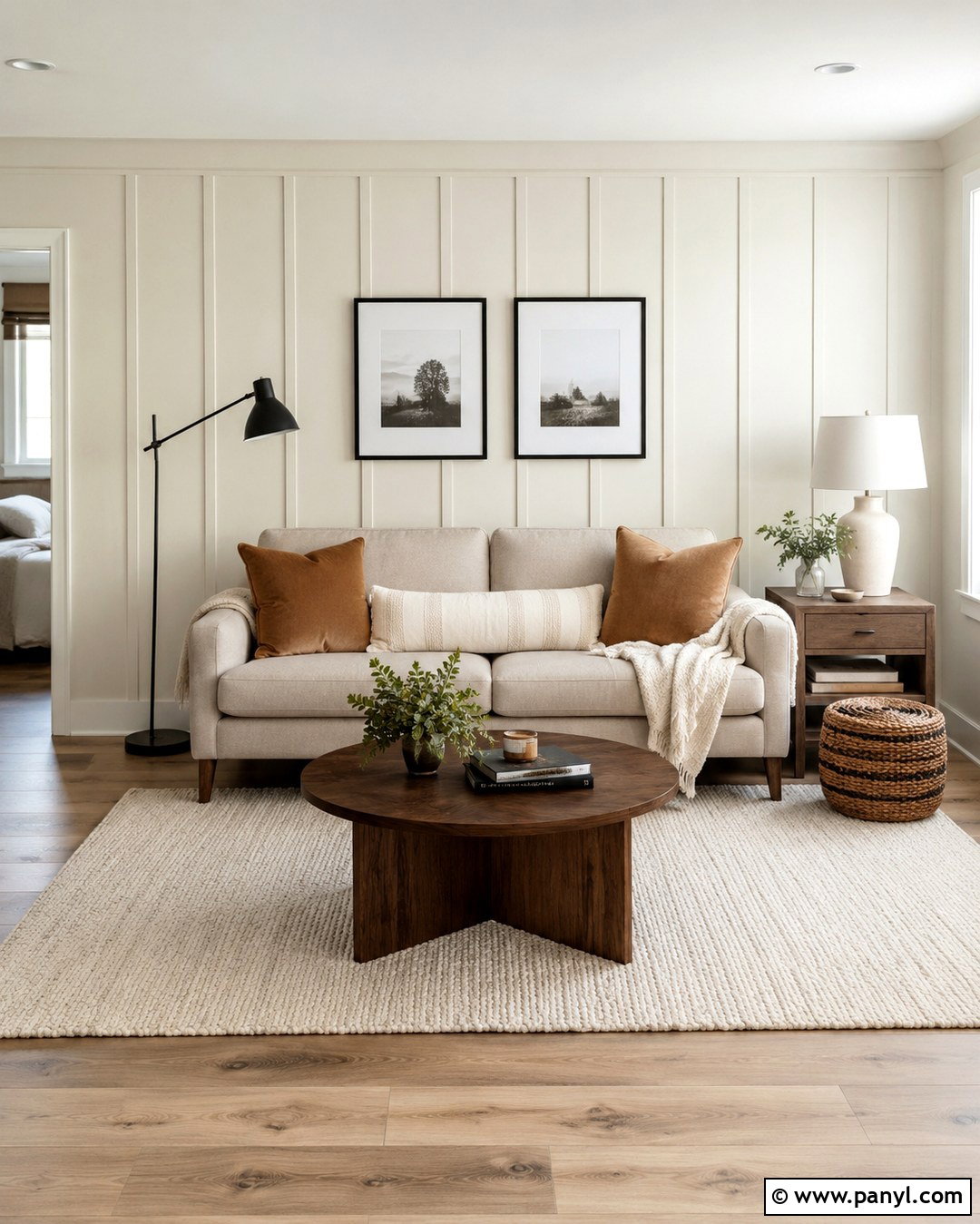
Warm white may seem subtle, but wall paneling gives it enough dimension to become a true accent. Install vertical board and batten behind a living room sofa, bedroom headboard, or dining bench. Paint the molding and wall in the same creamy white finish to emphasize shadows and architectural lines. Pair the feature with pale oak flooring, beige upholstery, and a textured ivory rug. Black-framed artwork and a slim black floor lamp add crisp definition without disrupting the neutral palette. Introduce warmth with a walnut side table, camel pillow, and woven basket. Because the interest comes from shape rather than dramatic color, this accent wall works beautifully in small or low-light rooms. The completed look feels bright, tailored, and quietly detailed.
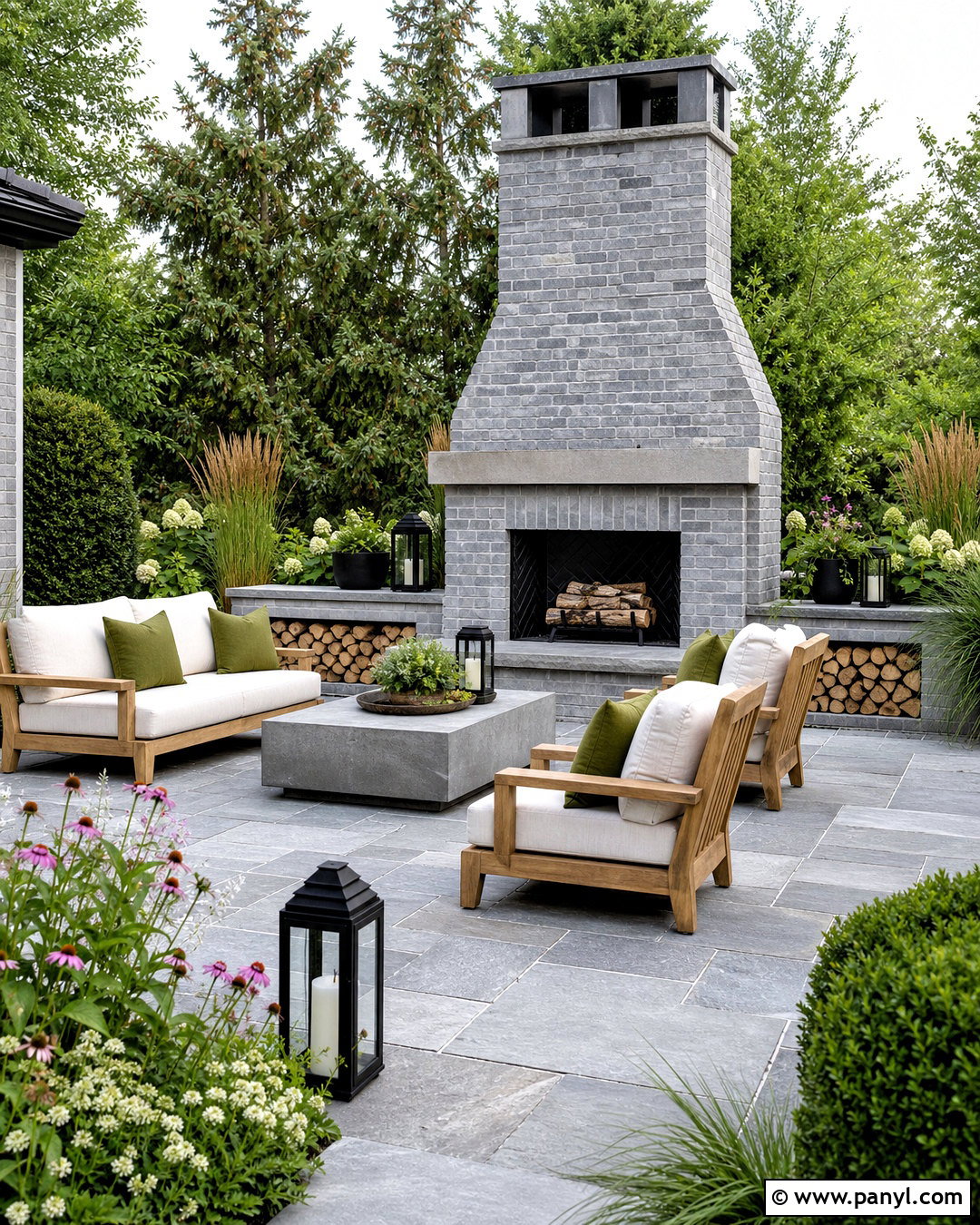
8. Sand Beige Bedroom Accent Wall
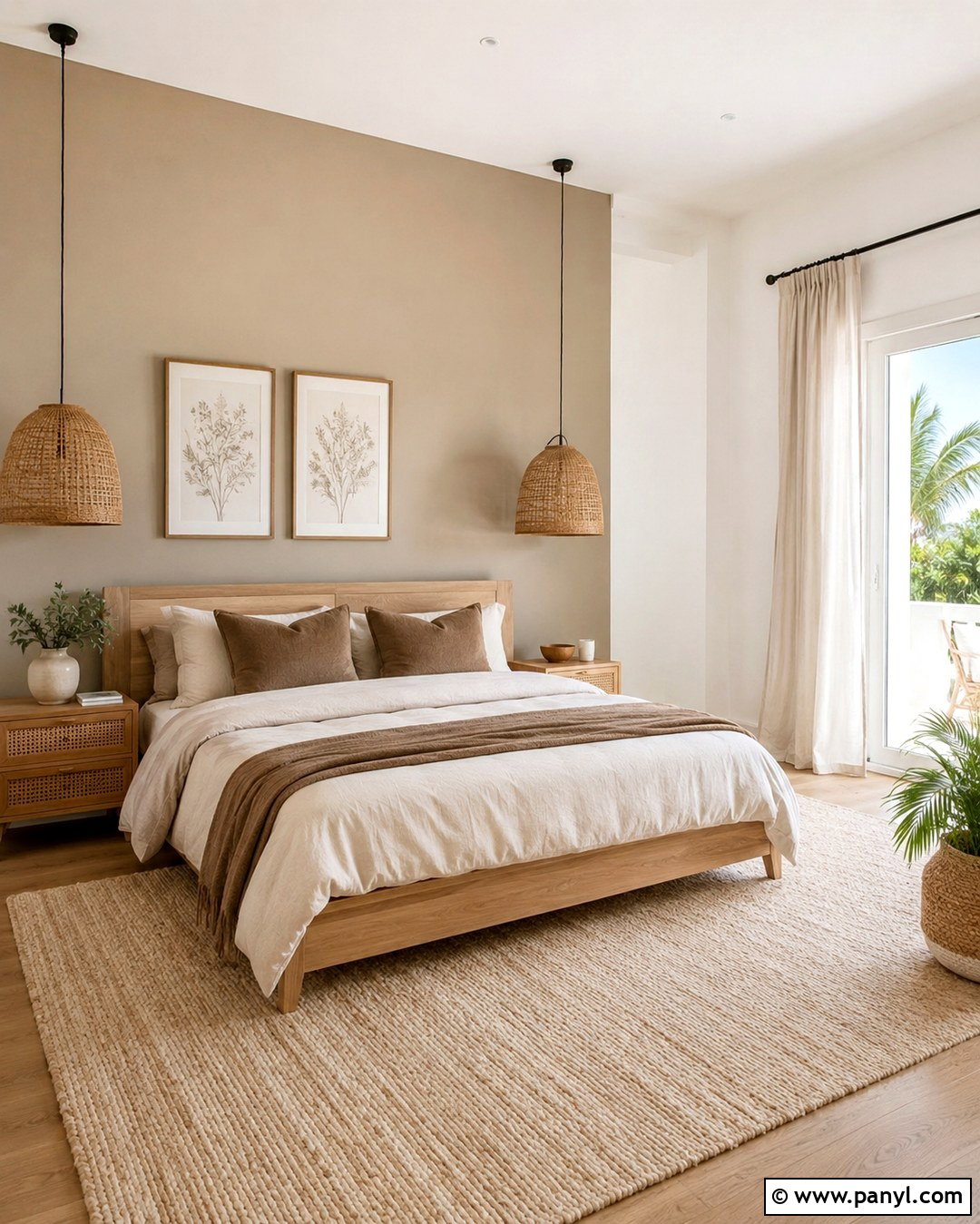
Soft sand beige brings the relaxed character of natural landscapes into a bedroom. Use it behind a low wood bed, then keep the remaining walls warm white to preserve brightness. A light oak bed frame, woven nightstands, and creamy linen bedding create an easy, organic foundation. Add a taupe throw and muted brown pillows to deepen the palette without making it busy. Pendant lights with natural fiber shades free up space on the nightstands and reinforce the casual mood. Choose a large ivory rug with subtle texture under the bed. Framed botanical sketches or a simple plaster artwork can decorate the accent wall. Linen curtains and minimal ceramics finish this airy bedroom, creating a full neutral design that feels peaceful, natural, and comfortable.
9. Stone Gray Bathroom Accent Wall
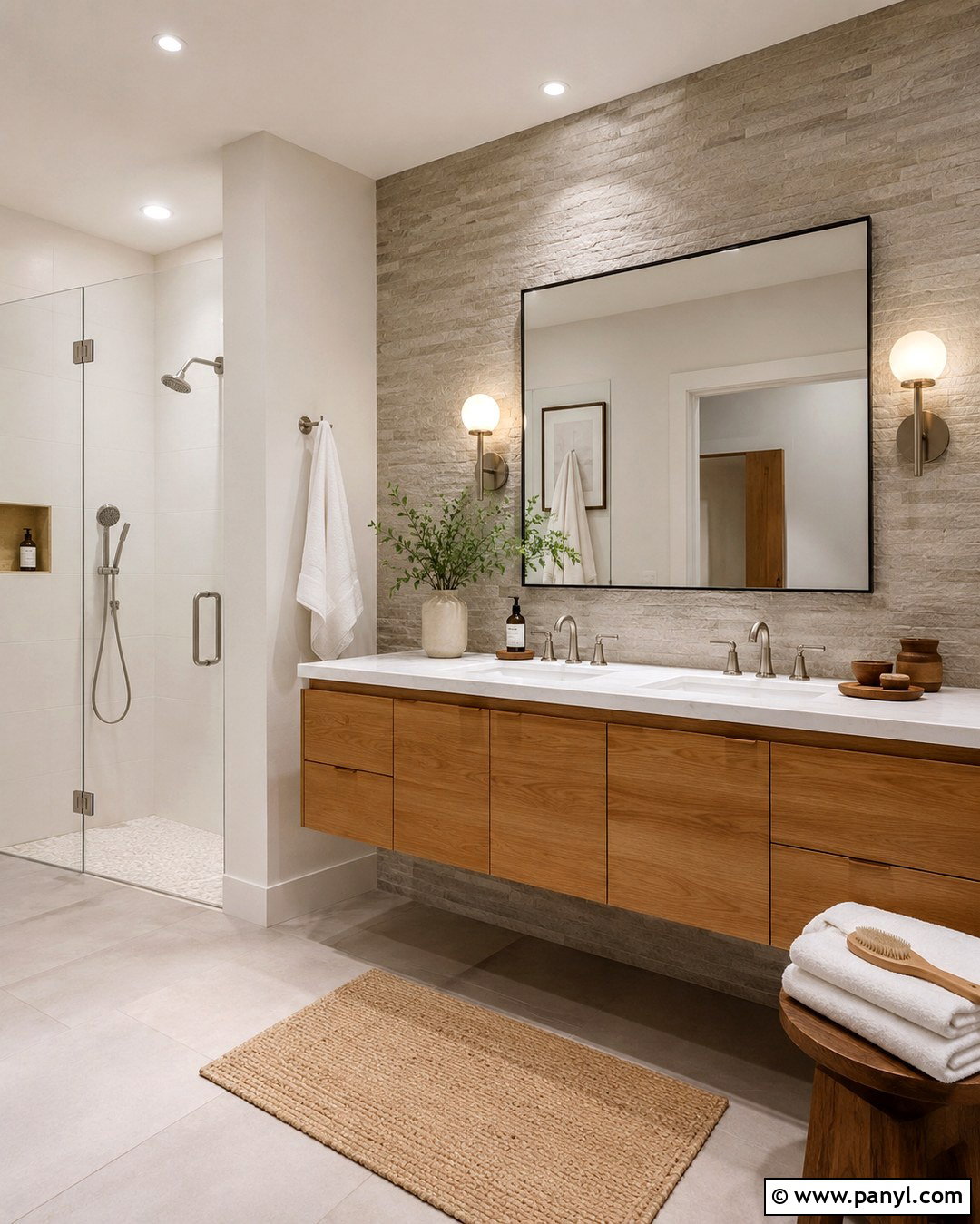
Stone gray can give a bathroom a clean, spa-inspired appearance when it is balanced with warmer materials. Use the color behind the vanity or freestanding tub, where it will define the main feature. Choose a medium stone gray with a slightly warm undertone rather than a cold blue-gray. Pair it with off-white walls, pale porcelain floor tile, and a floating natural oak vanity. A white quartz countertop and undermount sink keep the design fresh. Add brushed nickel fixtures, a frameless mirror, and simple globe sconces for a streamlined finish. White towels, a beige bath mat, and small wood accessories soften the harder surfaces. The resulting bathroom feels bright and restful, with enough tonal contrast to make the compact space look thoughtfully designed.
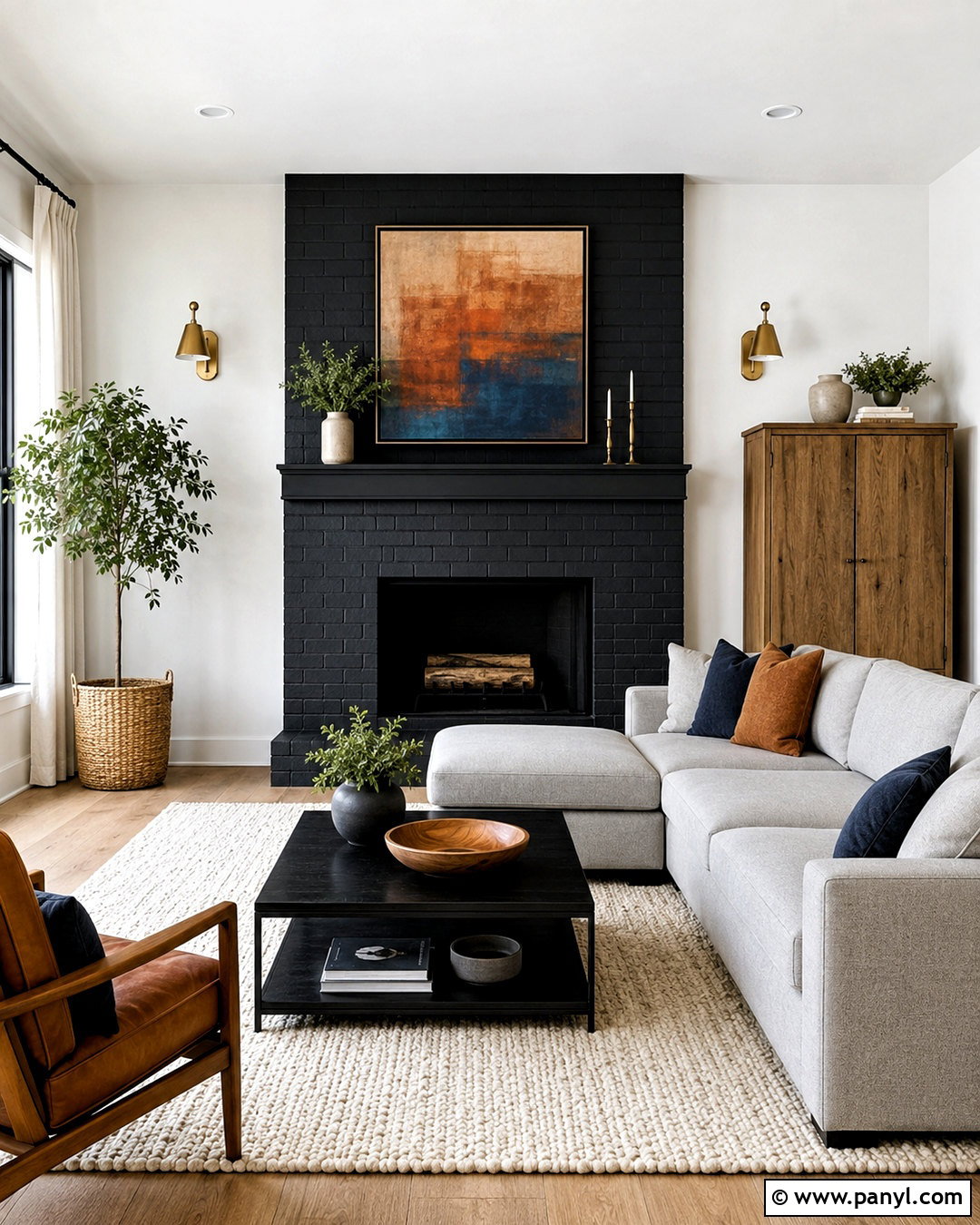
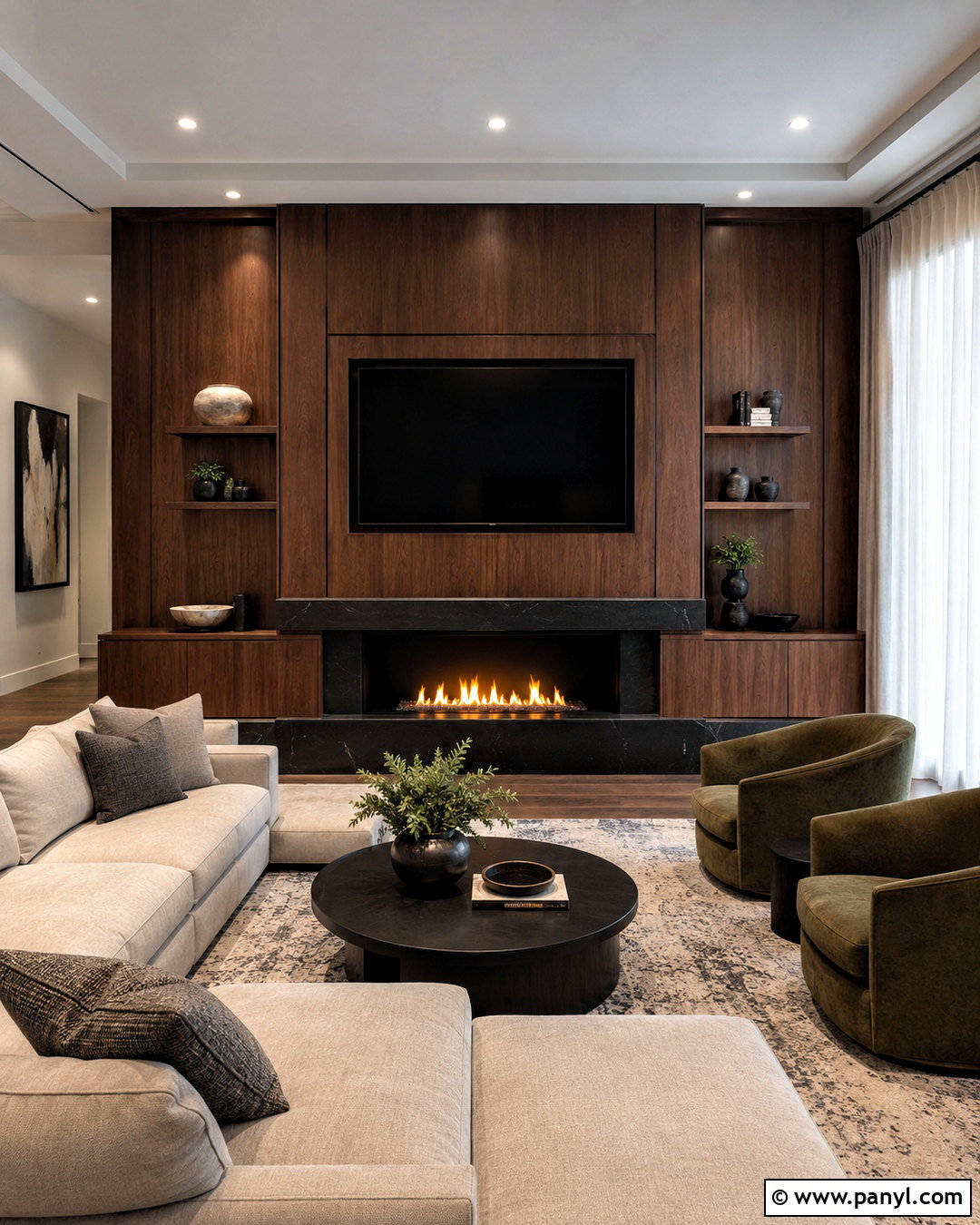
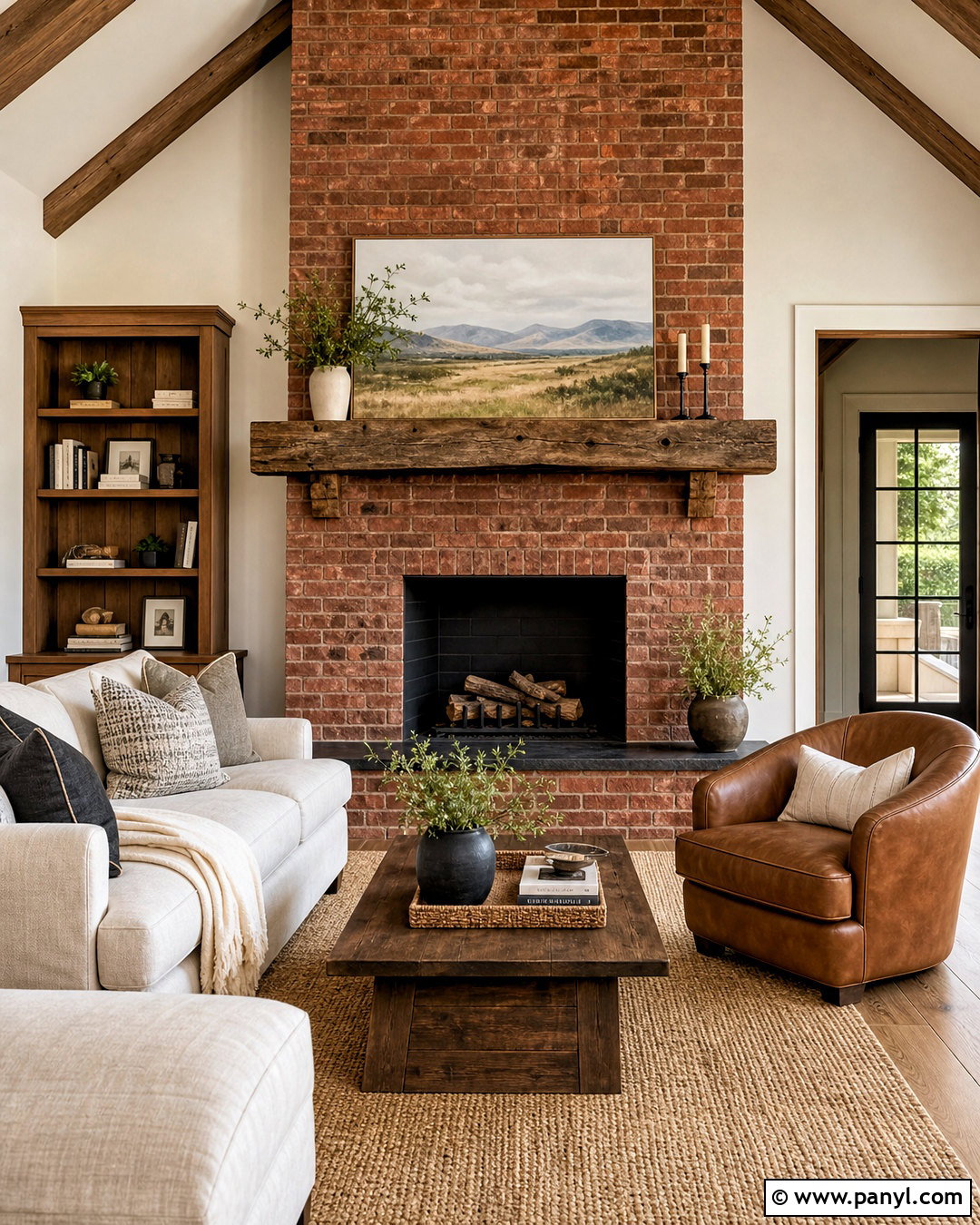
10. Mocha Brown Living Room Accent Wall
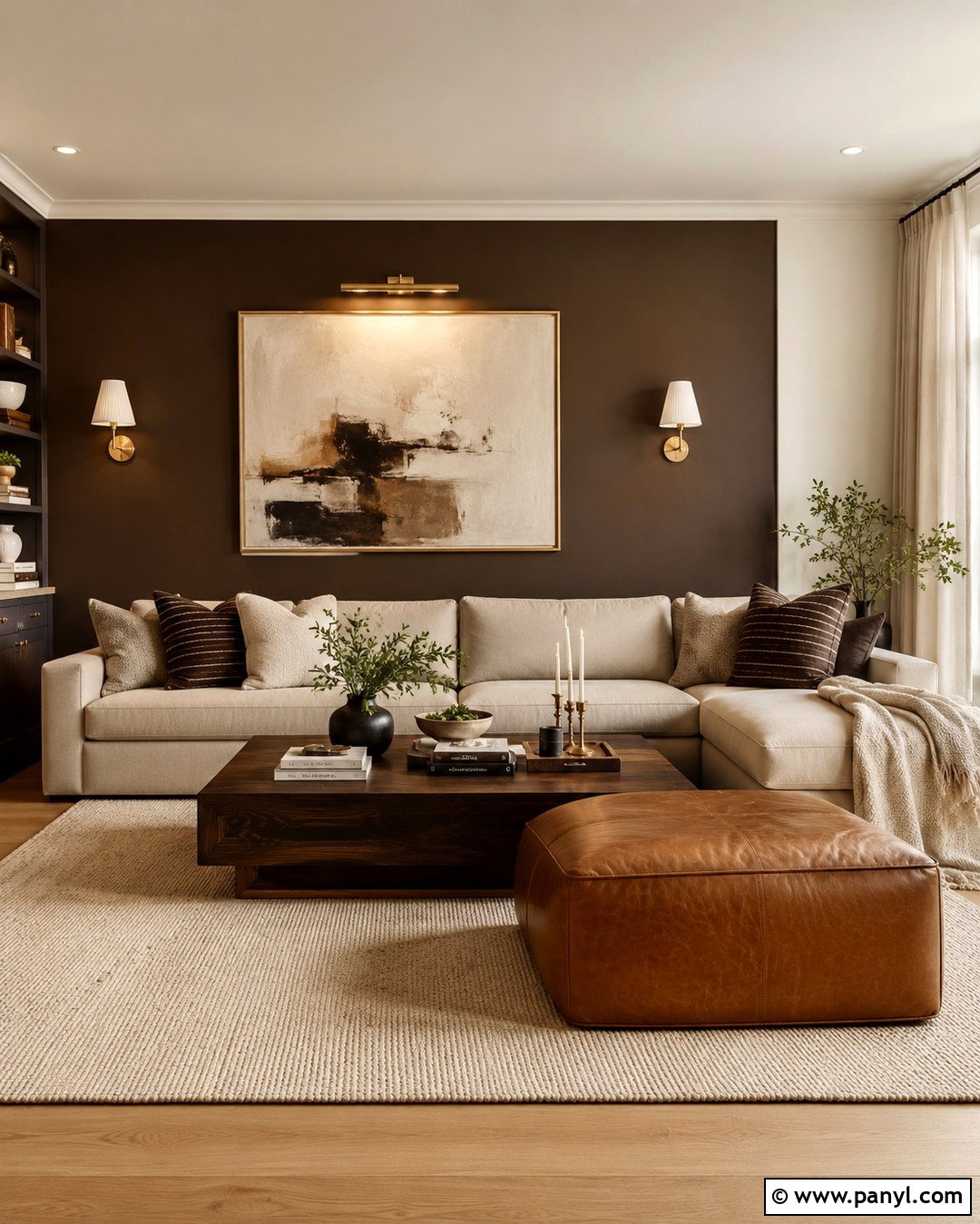
Rich mocha brown creates a cozy living room focal point while remaining grounded and neutral. Paint the wall behind the sofa or media console, then surround it with creamy ivory walls and warm oak flooring. Select a light beige sectional to stand out against the deeper background. A walnut coffee table, camel leather ottoman, and chocolate-striped pillows build a layered brown palette. Keep the windows light with off-white linen curtains, and use a large cream rug to brighten the seating zone. Brass picture lights or sconces add a refined metallic detail. Hang oversized abstract art containing ivory, taupe, and black. By balancing dark paint with pale textiles and natural wood, the complete room feels warm and sophisticated rather than dim or overly formal.
11. Oatmeal Nursery Accent Wall
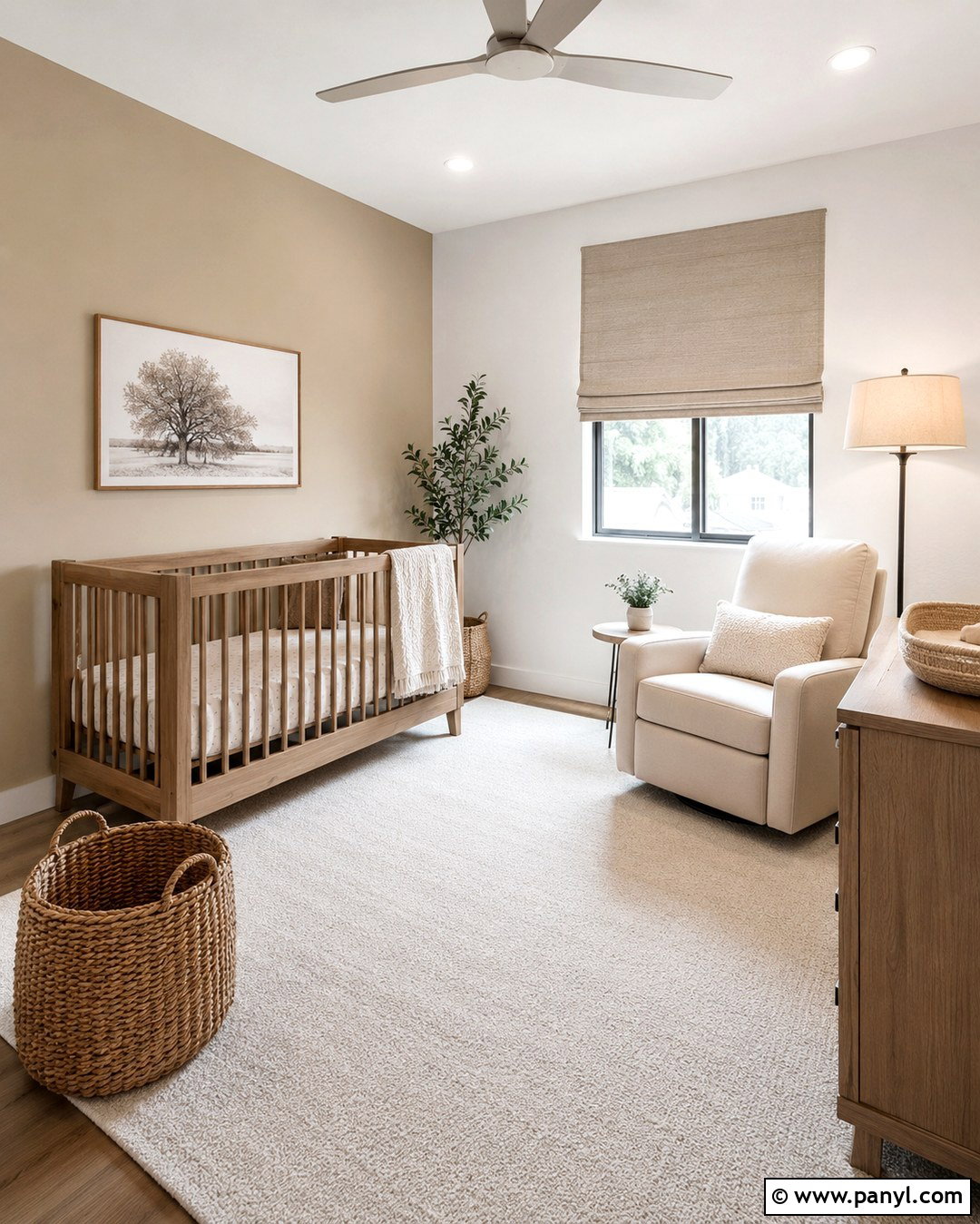
An oatmeal accent wall offers gentle warmth for a nursery without depending on a strongly themed color scheme. Position it behind a natural wood crib, using soft white on the surrounding walls. Add a cream upholstered glider, light oak dresser, and woven storage baskets to create a comfortable, practical layout. An ivory washable rug provides softness underfoot and defines the central area. Dress the crib with simple white and beige bedding, following safe sleep practices and keeping loose accessories outside the crib. Decorate the accent wall with securely mounted wood shapes or lightweight framed prints in muted earth tones. A linen Roman shade filters daylight, while a shaded floor lamp supports nighttime routines. The full nursery feels peaceful, adaptable, and suitable as the child grows.
12. Clay Beige Dining Nook Accent Wall
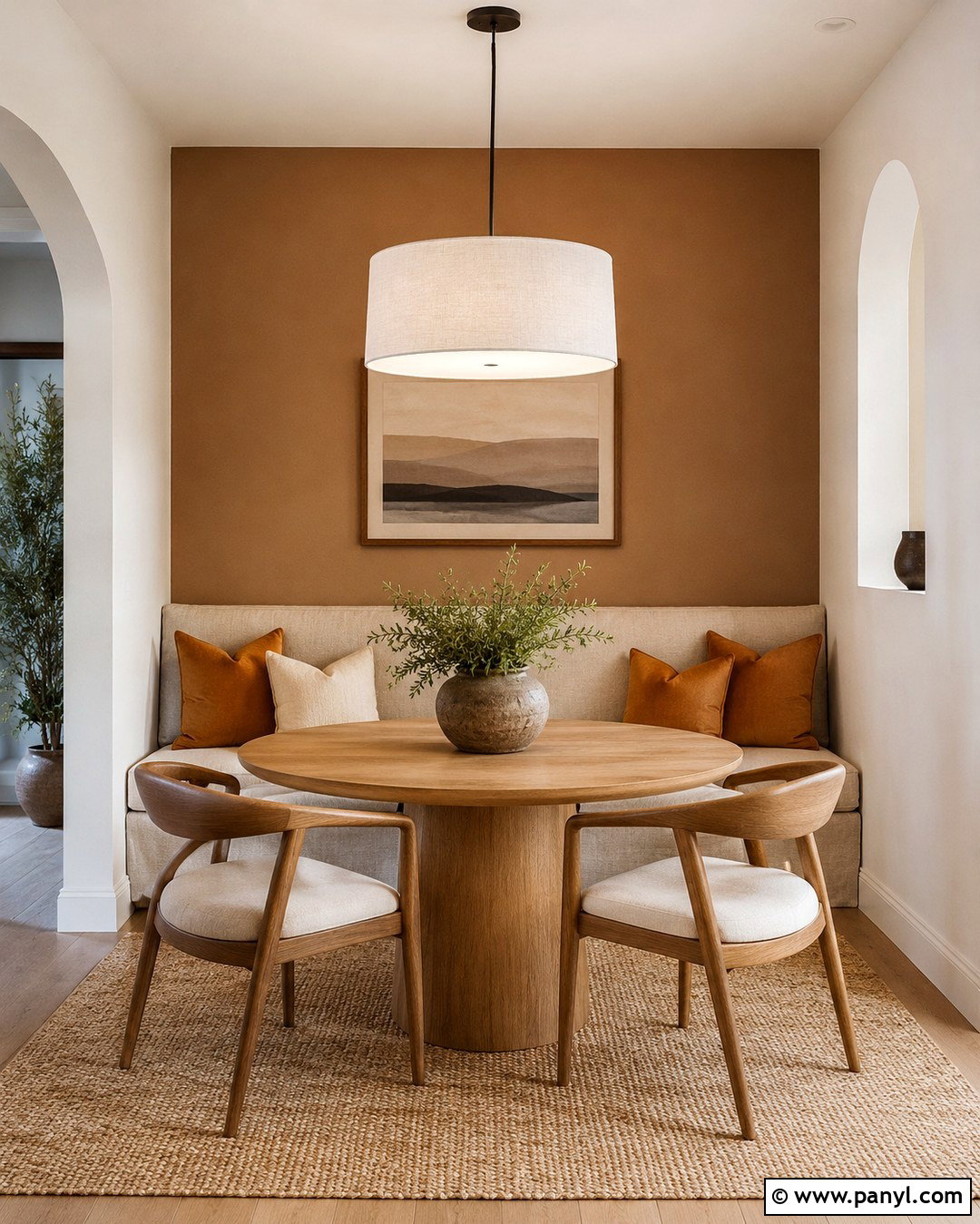
A clay beige wall gives a small dining nook warmth and personality without overwhelming limited square footage. Paint the wall behind a built-in bench or compact table, allowing the earthy neutral to frame the eating area. Pair it with creamy surrounding walls and light oak flooring. An upholstered banquette in oatmeal fabric saves space and provides comfortable seating. Add a round pedestal table, two curved wood chairs, and a simple linen pendant overhead. Cushions in caramel, ivory, and subtle stripes create soft variation. One oversized framed print keeps the wall decorative without looking crowded. Finish with a washable woven rug and a small ceramic centerpiece. This coordinated design turns an overlooked corner into a practical, inviting destination for breakfast, work, or casual conversation.
13. Light Greige Kitchen Accent Wall
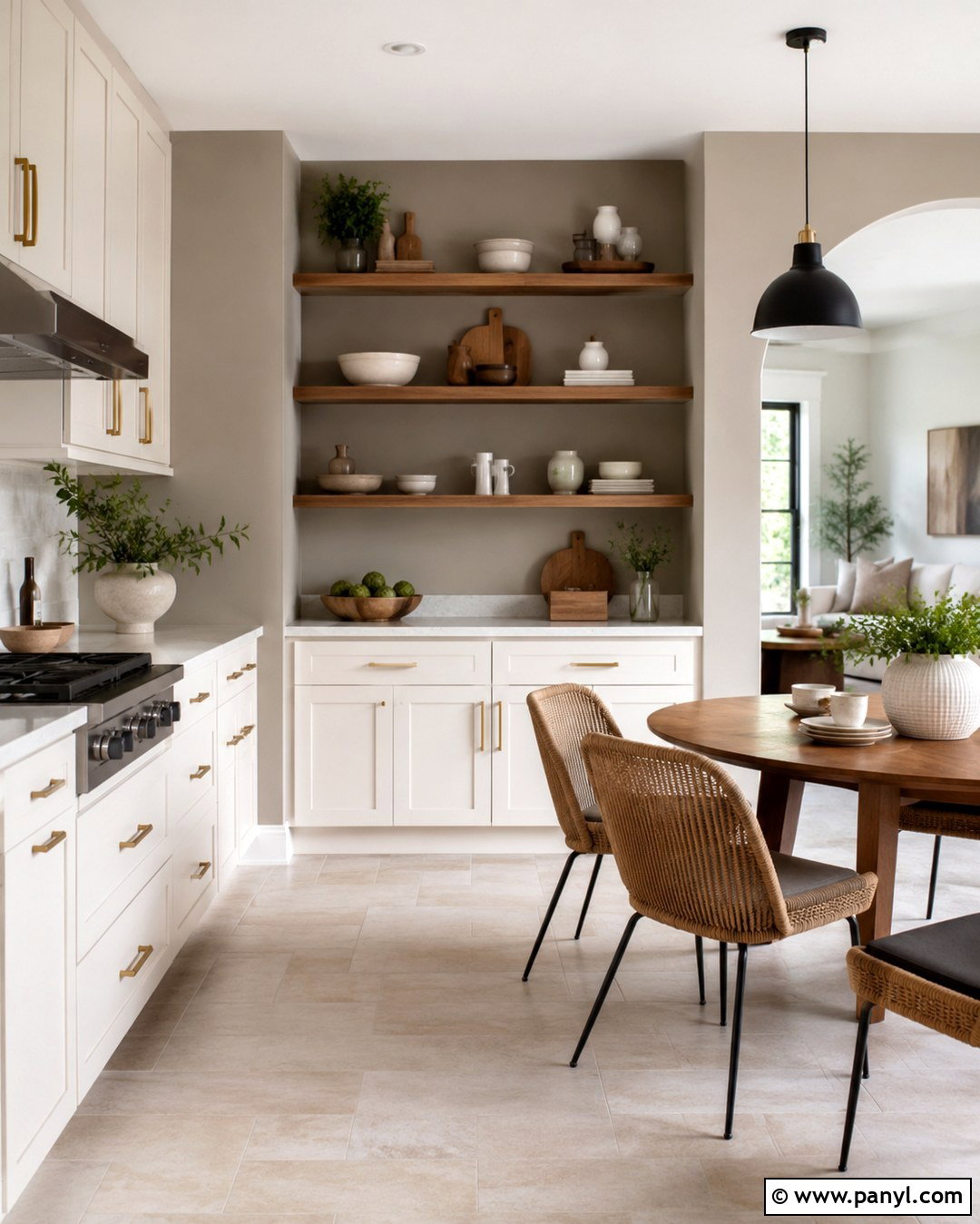
A light greige accent wall can visually connect cabinets, countertops, and flooring in a neutral kitchen. Use it around a breakfast area, open shelving, or the wall behind a freestanding hutch rather than placing it where heavy splashes occur. Pair the wall with warm white cabinets, brushed brass hardware, and pale quartz counters. Natural oak shelves add warmth and provide space for cream dishes, glassware, and simple pottery. Choose light wood flooring or beige porcelain tile to continue the soft palette. A small round table with woven chairs can complete an eat-in arrangement. Matte black pendant lighting adds a controlled amount of contrast. The overall kitchen remains bright and functional, while the greige feature supplies enough depth to make the room feel finished.
14. Deep Taupe TV Accent Wall
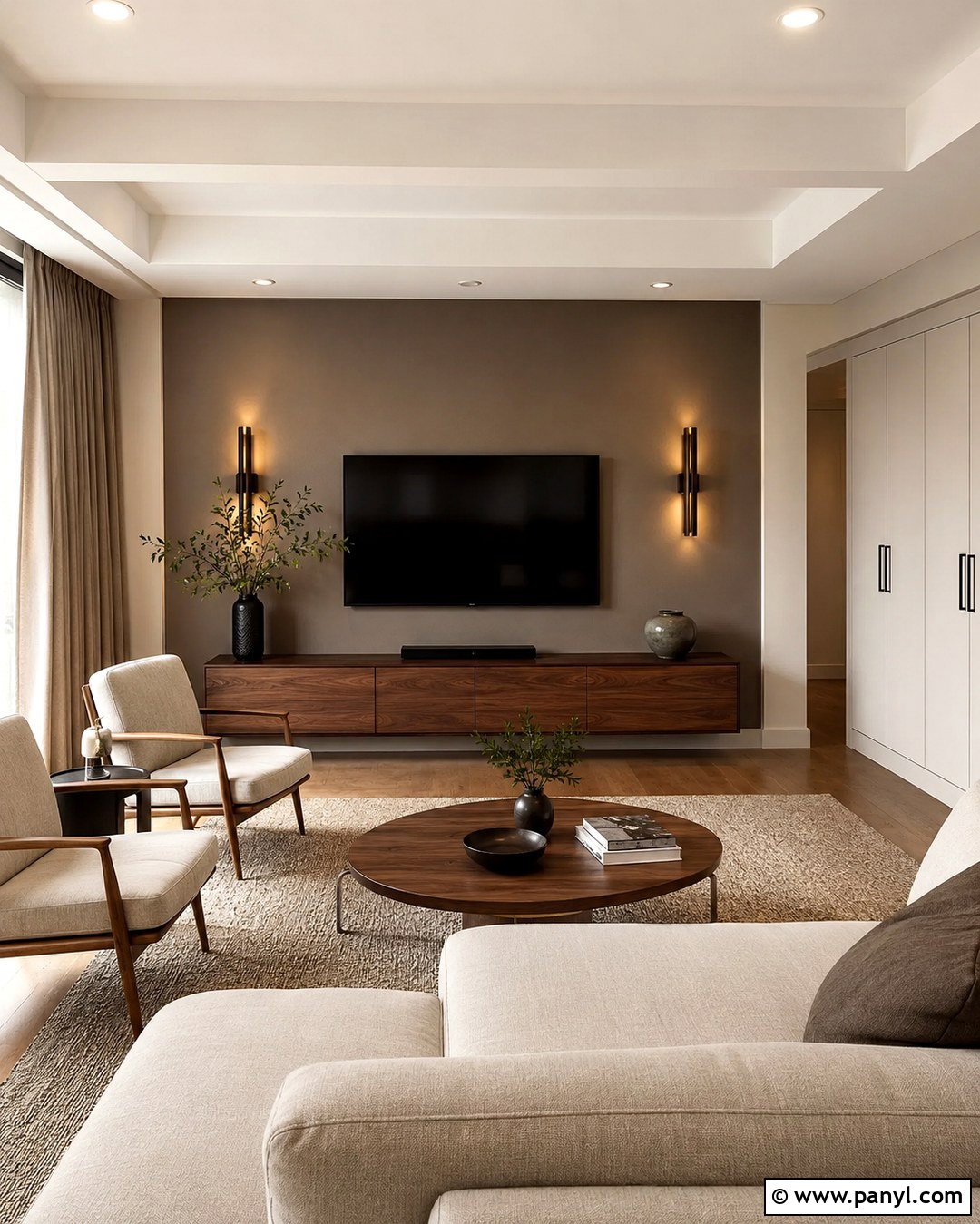
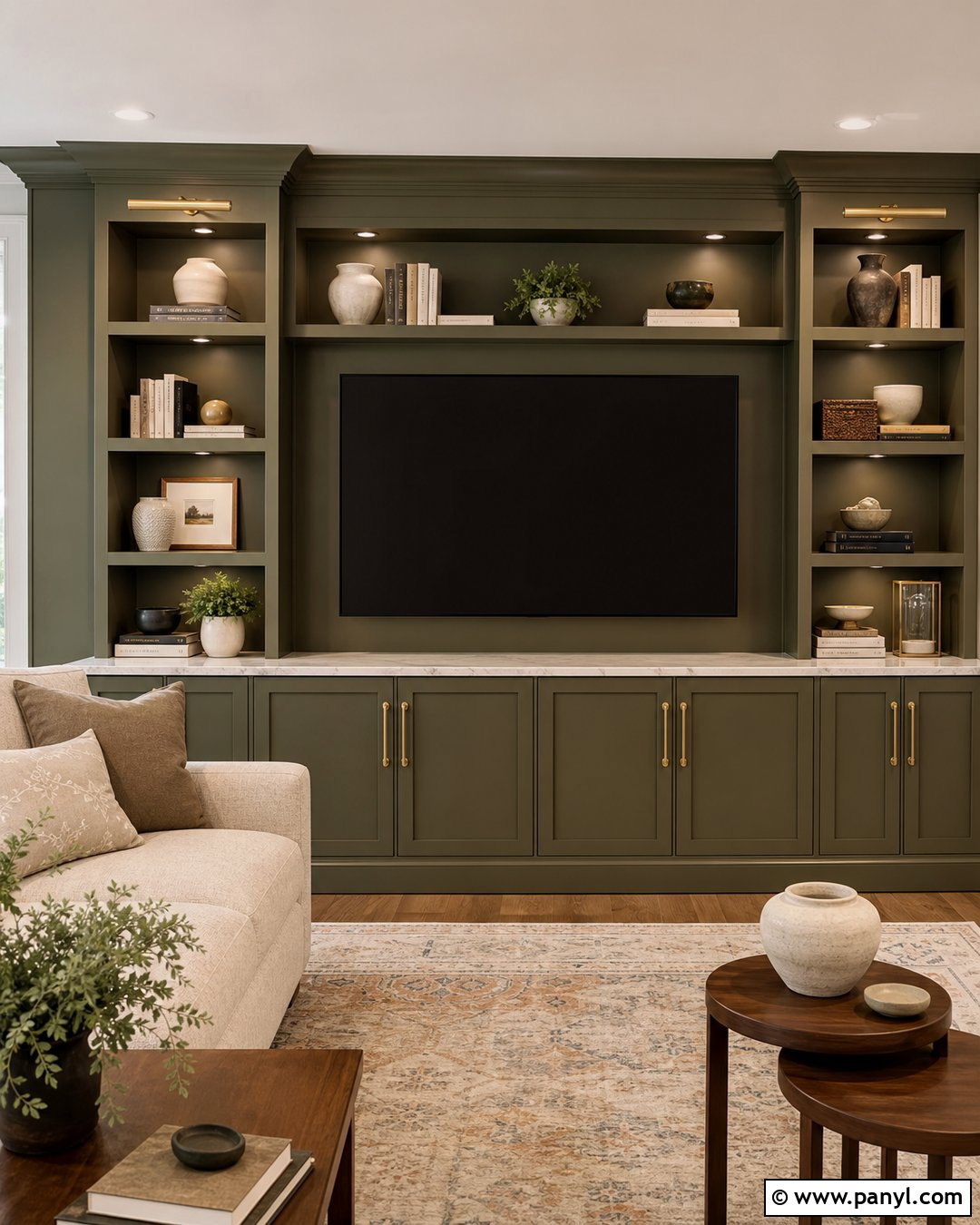
If a television looks disconnected from the room, a deep taupe accent wall can help it blend into a purposeful media zone. Paint the full wall behind the screen, including any simple built-ins, for a cohesive effect. Choose a low walnut console that is wider than the television to create balanced proportions. Surrounding walls in warm white prevent the room from becoming too dark. Arrange a cream sofa and two beige lounge chairs around a textured wool rug and oval wood coffee table. Conceal cords and limit accessories around the screen for a clean appearance. Add closed storage, subtle wall sconces, and neutral curtains. The deep wall color reduces harsh visual contrast, while the complete furniture arrangement keeps the living room comfortable and welcoming.
15. Ivory Textured Accent Wall
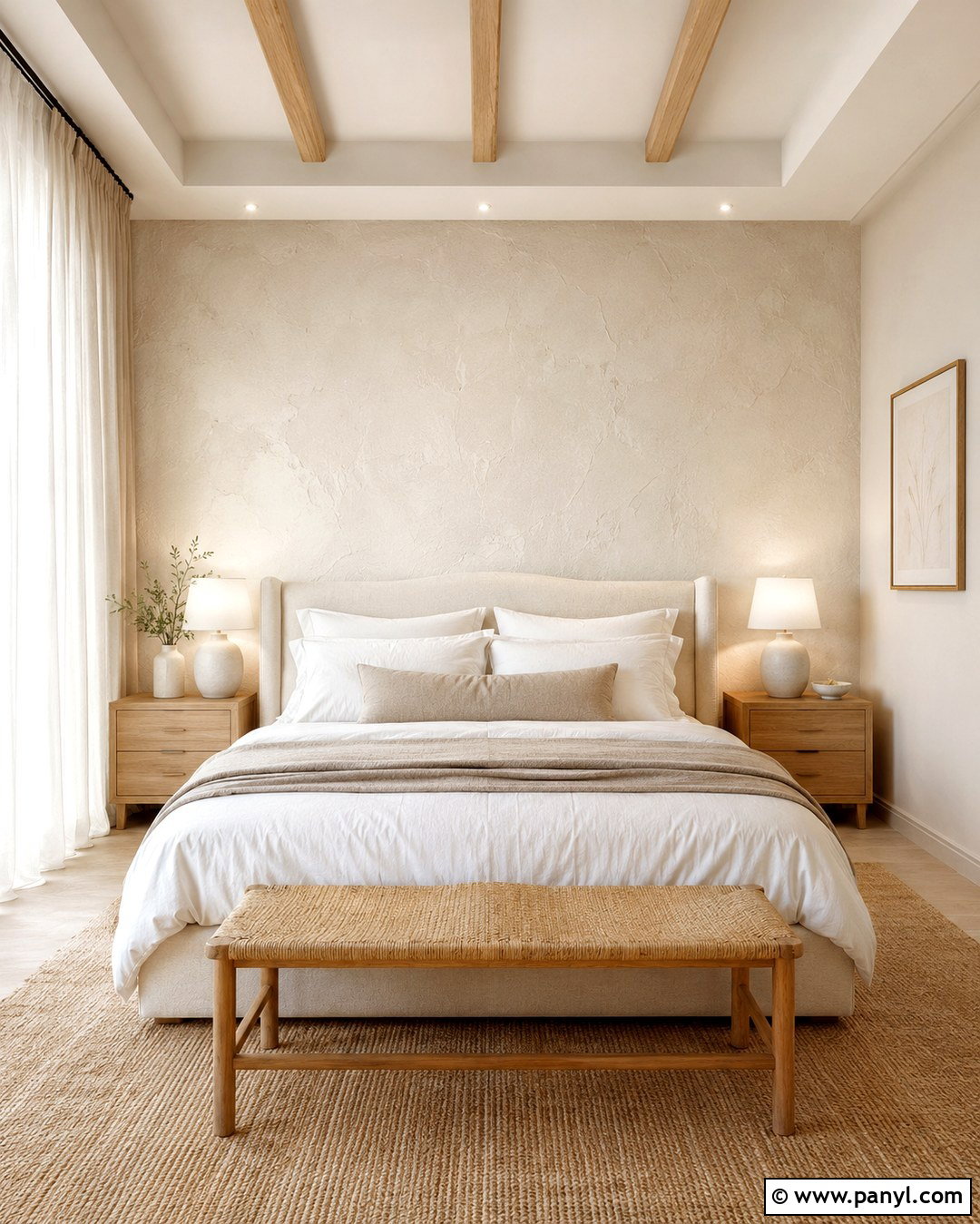
Texture can turn an ivory wall into a focal point even when the color difference is minimal. Use a smooth plaster, limewash-inspired finish, or subtle troweled treatment behind the bed or sofa. The gentle movement in the surface catches light and adds depth throughout the day. Pair the wall with creamy surrounding paint, pale oak furniture, and a low-pile beige rug. In a bedroom, choose an oatmeal upholstered bed with white linen bedding and a taupe throw. Add sculptural ceramic lamps and simple wood nightstands. Avoid covering too much of the textured surface; one restrained artwork or no artwork may be enough. Linen curtains and a woven bench complete the room, producing a soft, tactile design that feels layered without becoming visually busy.
16. Pewter Guest Bedroom Accent Wall
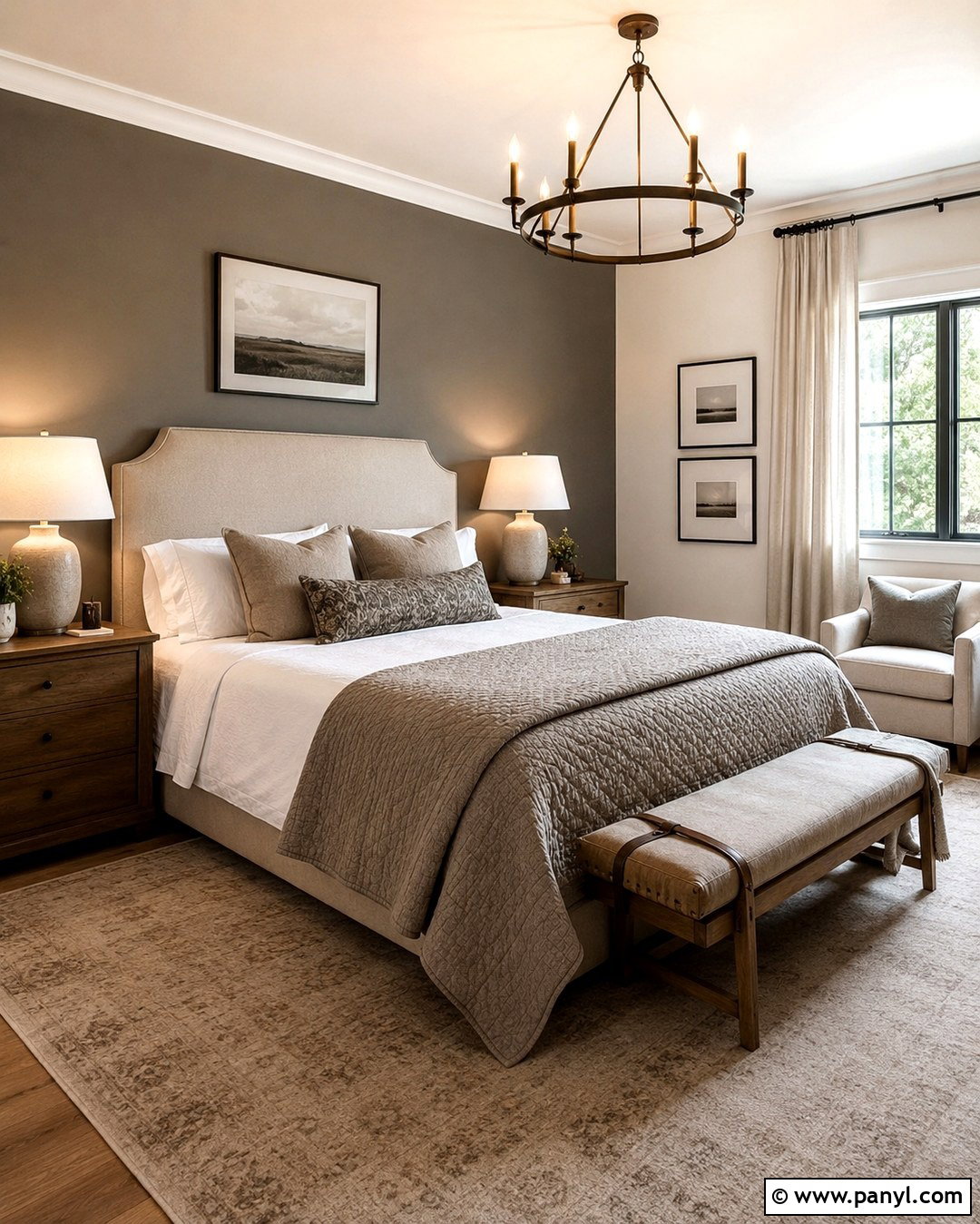
Pewter gives a guest bedroom a tailored look while staying softer than charcoal or black. Select a warm pewter with brown undertones and apply it behind the bed. Keep the other walls creamy white and use medium oak flooring to prevent the gray from feeling cold. A natural linen headboard, white sheets, and a mushroom-colored quilt create a welcoming bed arrangement. Add matching oak nightstands with ceramic lamps for useful symmetry. A faded beige rug softens the floor, while full off-white curtains make the windows appear larger. Hang a pair of simple black-framed prints above the headboard. A small upholstered chair and luggage bench complete the practical layout. Guests receive a calm, comfortable room that feels considered without being overly decorated.
17. Khaki Neutral Accent Wall
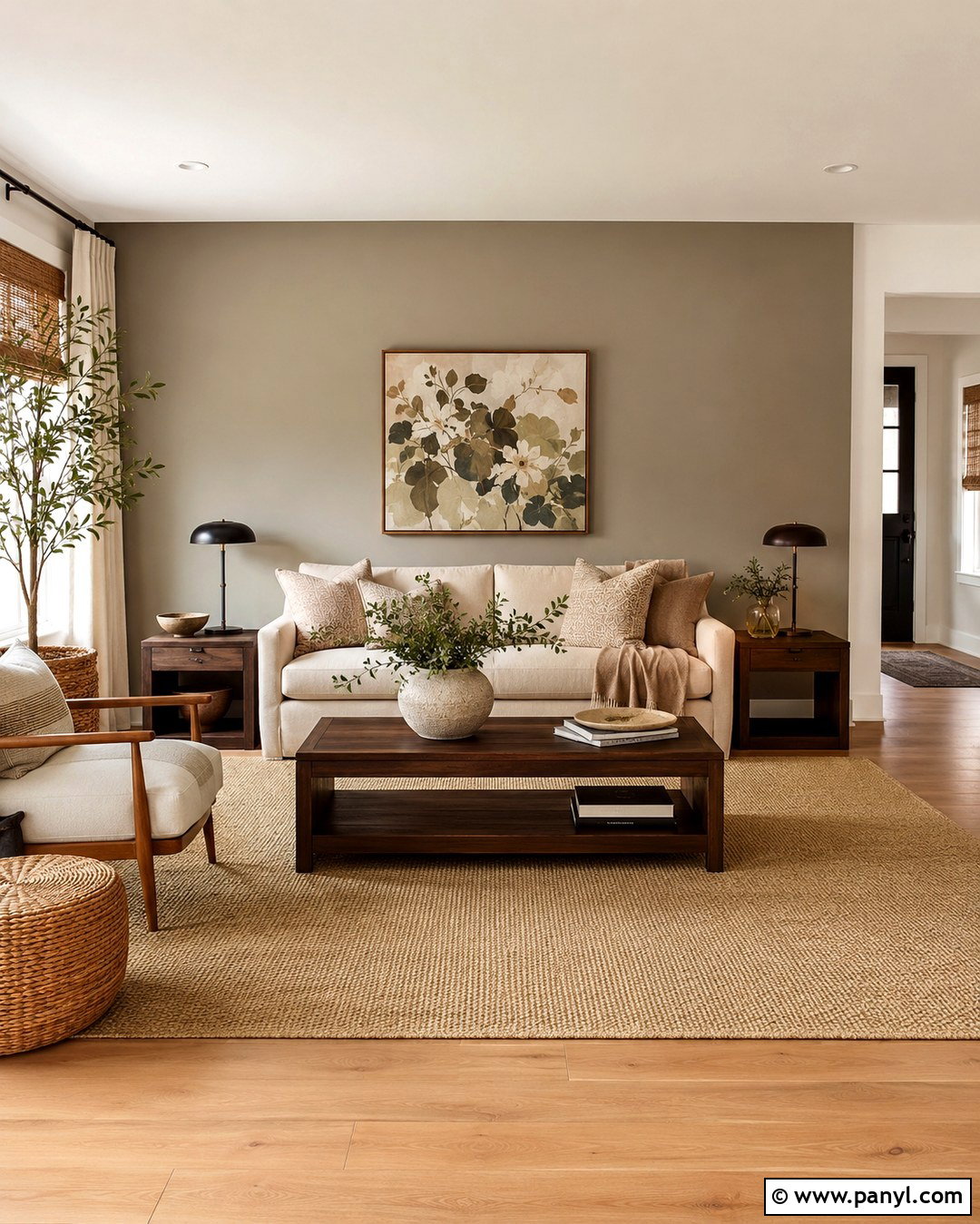
Muted khaki brings an earthy green-beige undertone into a room while still functioning as a versatile neutral. Use it behind a sofa in a casual living room or behind a desk in a reading space. Warm white adjacent walls and natural oak floors keep the effect fresh. Pair the accent wall with a cream sofa, walnut side tables, and an oatmeal rug. Introduce black metal lighting for definition, then repeat the khaki through one or two patterned pillows. Woven shades and linen curtains support the organic palette. Artwork featuring charcoal lines, beige shapes, and soft botanical tones connects the room without becoming colorful. The completed look feels grounded and contemporary, offering more character than basic beige while remaining easy to coordinate with existing neutral furniture.
18. Natural Wood Neutral Accent Wall
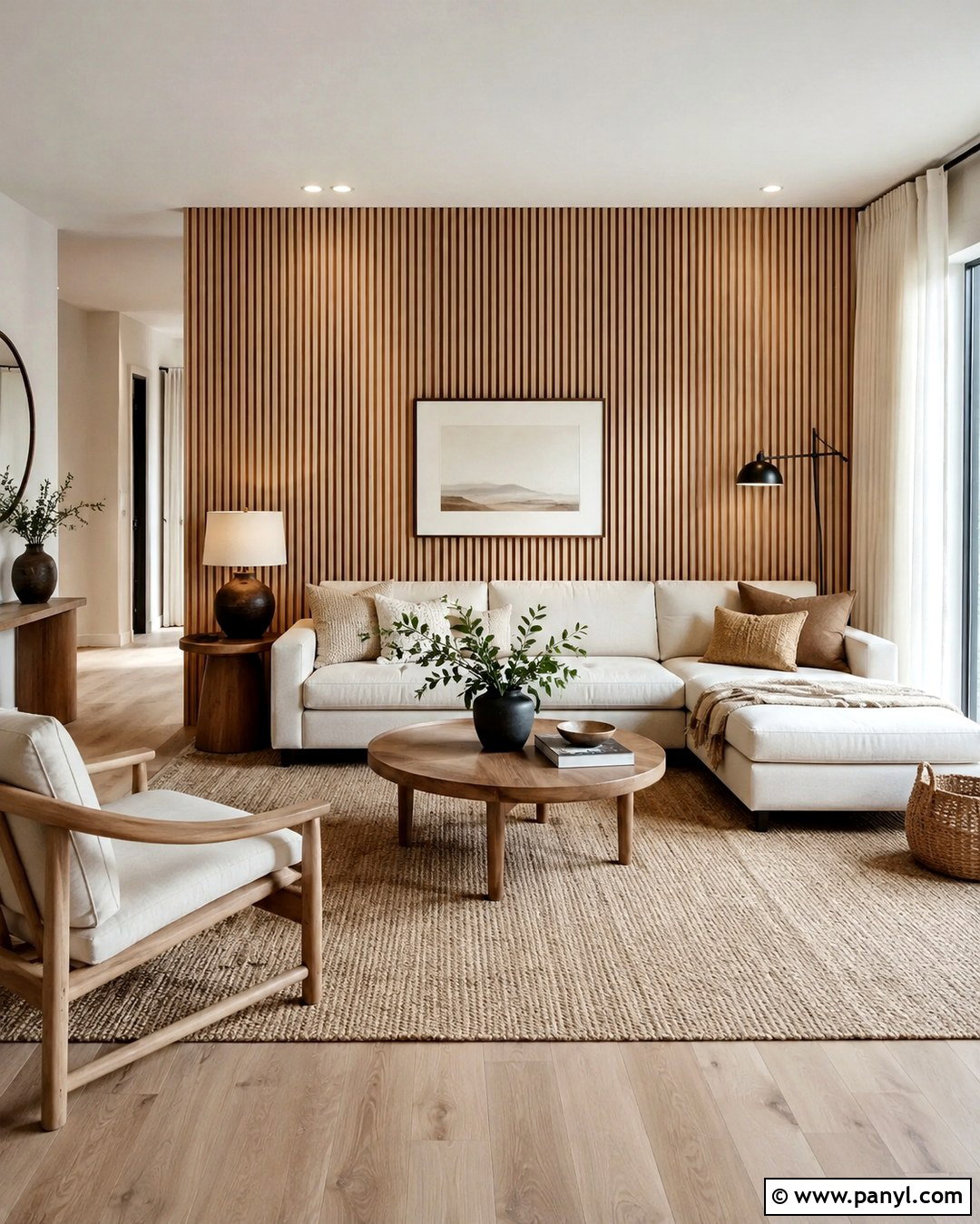
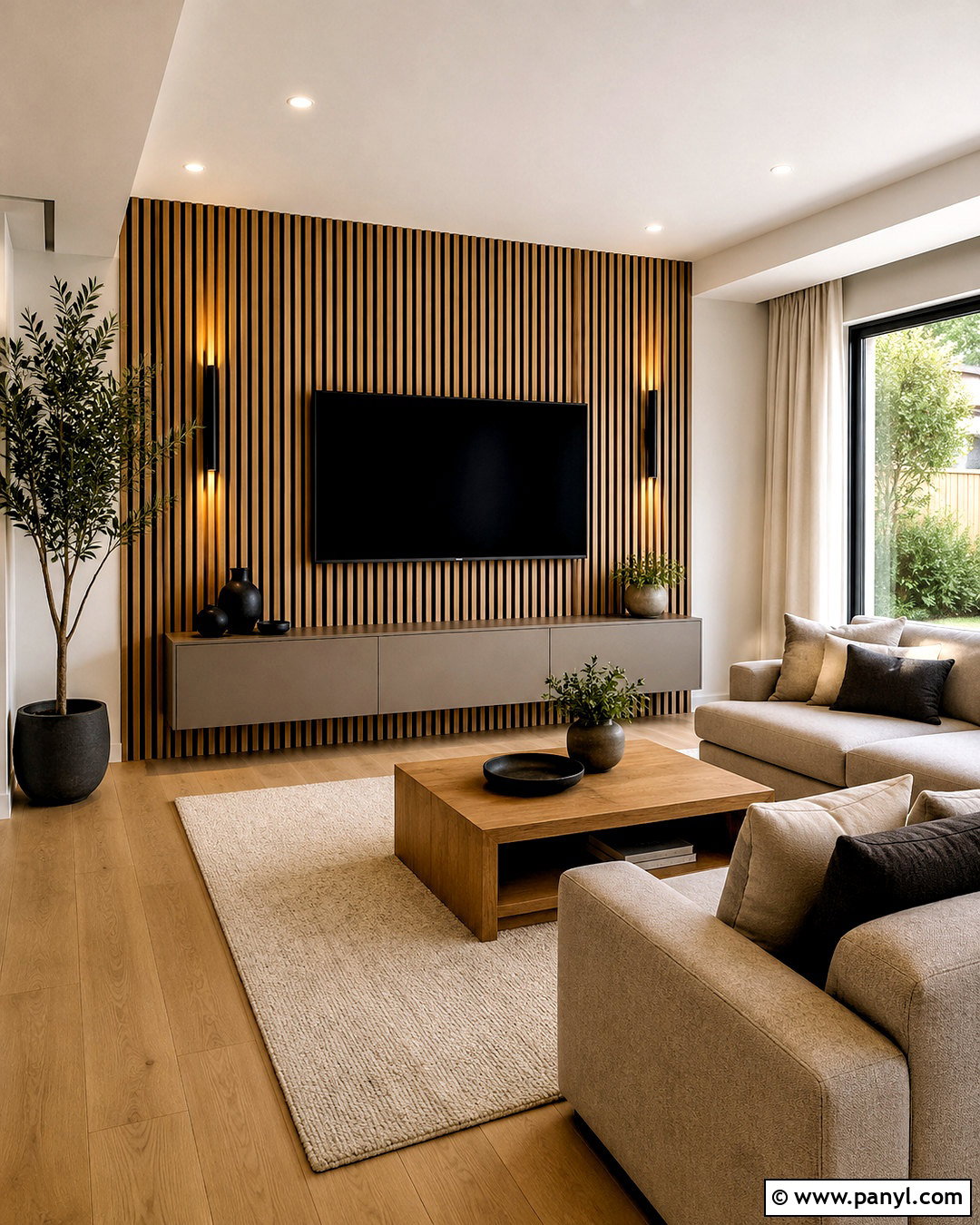
Natural wood can function as a neutral accent wall while adding warmth, pattern, and architectural interest. Install vertical oak slats or smooth wood panels behind a living room sofa, dining table, or bed. Choose a light to medium oak finish with a matte surface so the grain remains visible without appearing glossy. Paint the remaining walls warm white and continue similar wood tones through smaller furniture pieces. Cream upholstery, a beige wool rug, and linen curtains keep the room soft. Add black lighting or hardware to sharpen the design. Avoid mixing too many competing wood finishes; one lighter and one darker tone are usually enough. The finished room feels modern, inviting, and connected to natural materials without relying on bold paint.
19. Neutral Limewash Accent Wall
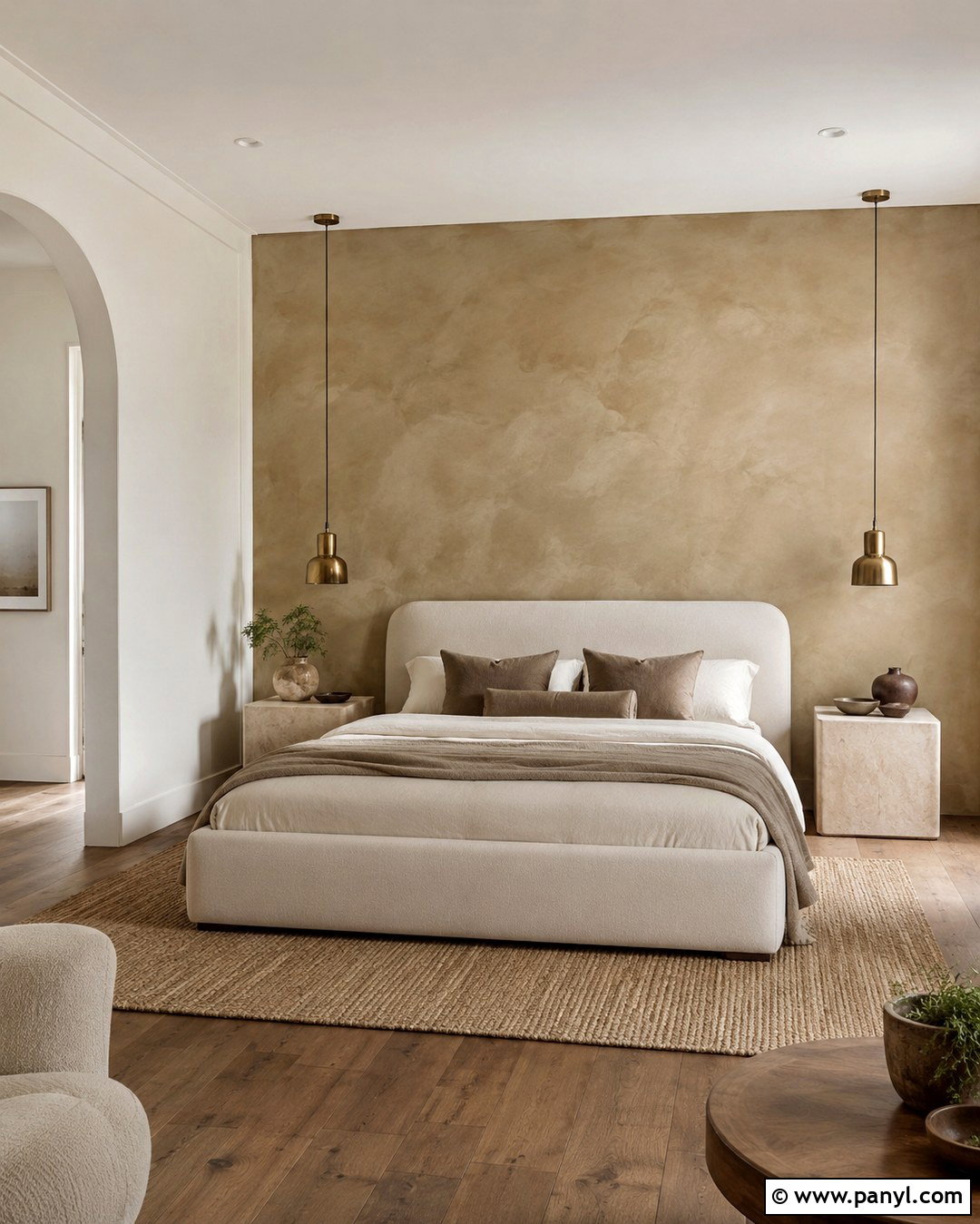
A neutral limewash accent wall creates soft tonal variation that feels relaxed and handmade. Choose warm greige, pale mushroom, or sandy beige, then apply it with visible overlapping brush movement. Use the treatment on one uninterrupted wall so the cloudy finish can be appreciated. Pair it with creamy painted walls, rustic oak flooring, and simple furniture with rounded shapes. A linen sofa or upholstered bed in ivory provides a clean contrast. Add a travertine side table, woven rug, and aged brass lighting for a balanced combination of texture and warmth. Keep wall decor minimal so it does not hide the finish. The complete design works especially well in organic modern, Mediterranean-inspired, or casual contemporary spaces where natural imperfections add character.
20. Two Tone Neutral Accent Wall
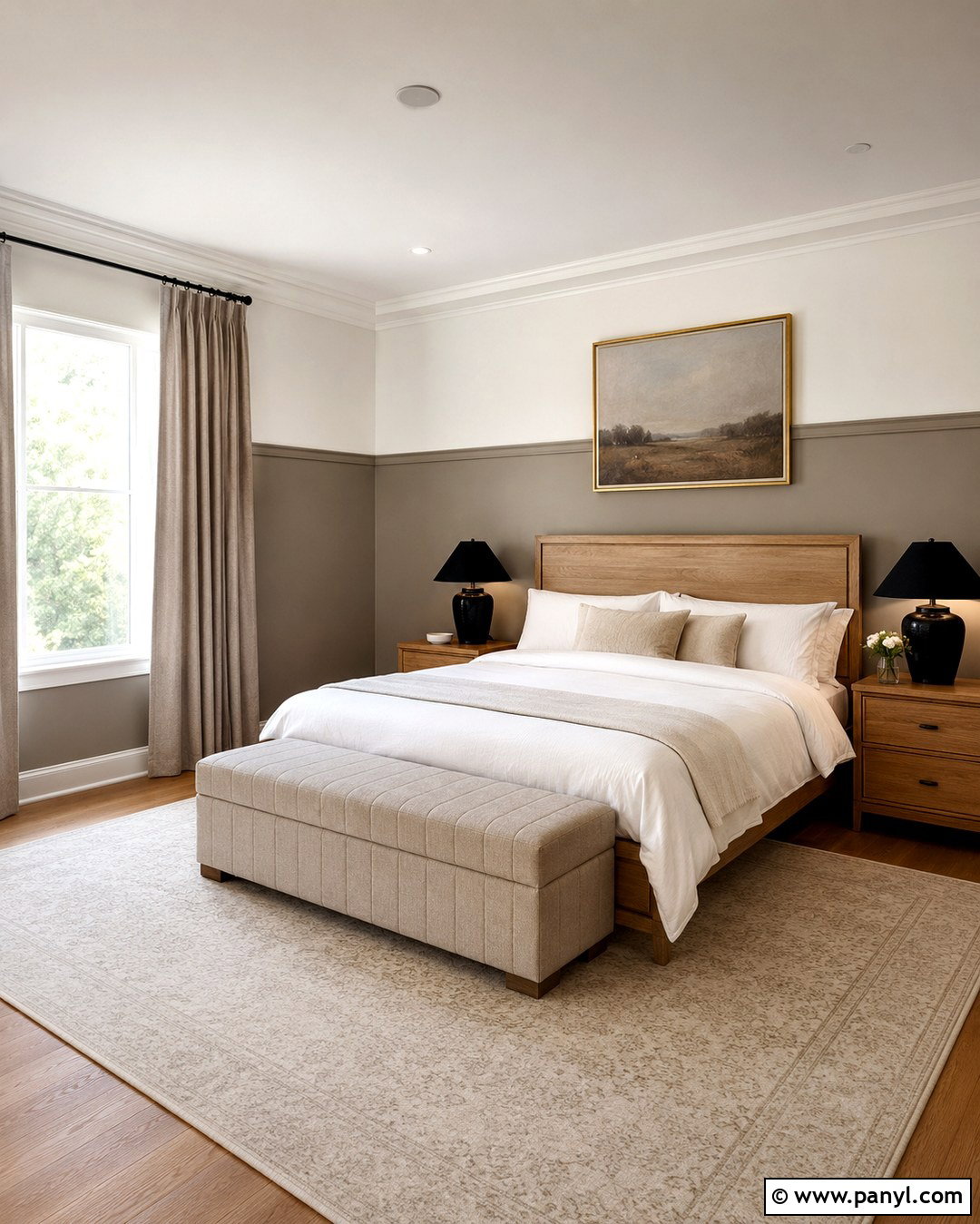
Two neutral colors can create an accent wall that feels architectural without requiring paneling or expensive materials. Divide the wall horizontally, using creamy white above and medium taupe, greige, or beige below. Place the dividing line around chair-rail height for a traditional effect or slightly higher for a more modern proportion. Continue the lower color onto simple molding if the room needs extra detail. In a bedroom, combine the wall with a light wood bed, white bedding, and a beige upholstered bench. Add taupe curtains, an ivory rug, and black bedside lamps for contrast. Keep the surrounding walls in the lighter neutral. This complete approach adds structure and visual interest while maintaining a calm, flexible palette that works with changing decor.
Conclusion:
The best neutral color accent wall ideas rely on more than choosing a beige or gray paint. Undertones, natural light, furniture placement, flooring, and texture all influence how the finished wall appears. Warm greige and taupe create gentle depth, while charcoal, mocha, and pewter produce stronger focal points. Wood paneling, limewash, molding, and plaster finishes can add interest when you prefer subtle color contrast. Before committing, test large samples and view them during different parts of the day. Then repeat the chosen neutral through textiles, artwork, or furniture for a connected result. With thoughtful layering, a neutral accent wall can make any room feel warmer, more balanced, and intentionally designed.

Related Ideas and Inspiration:
Leave a Reply