
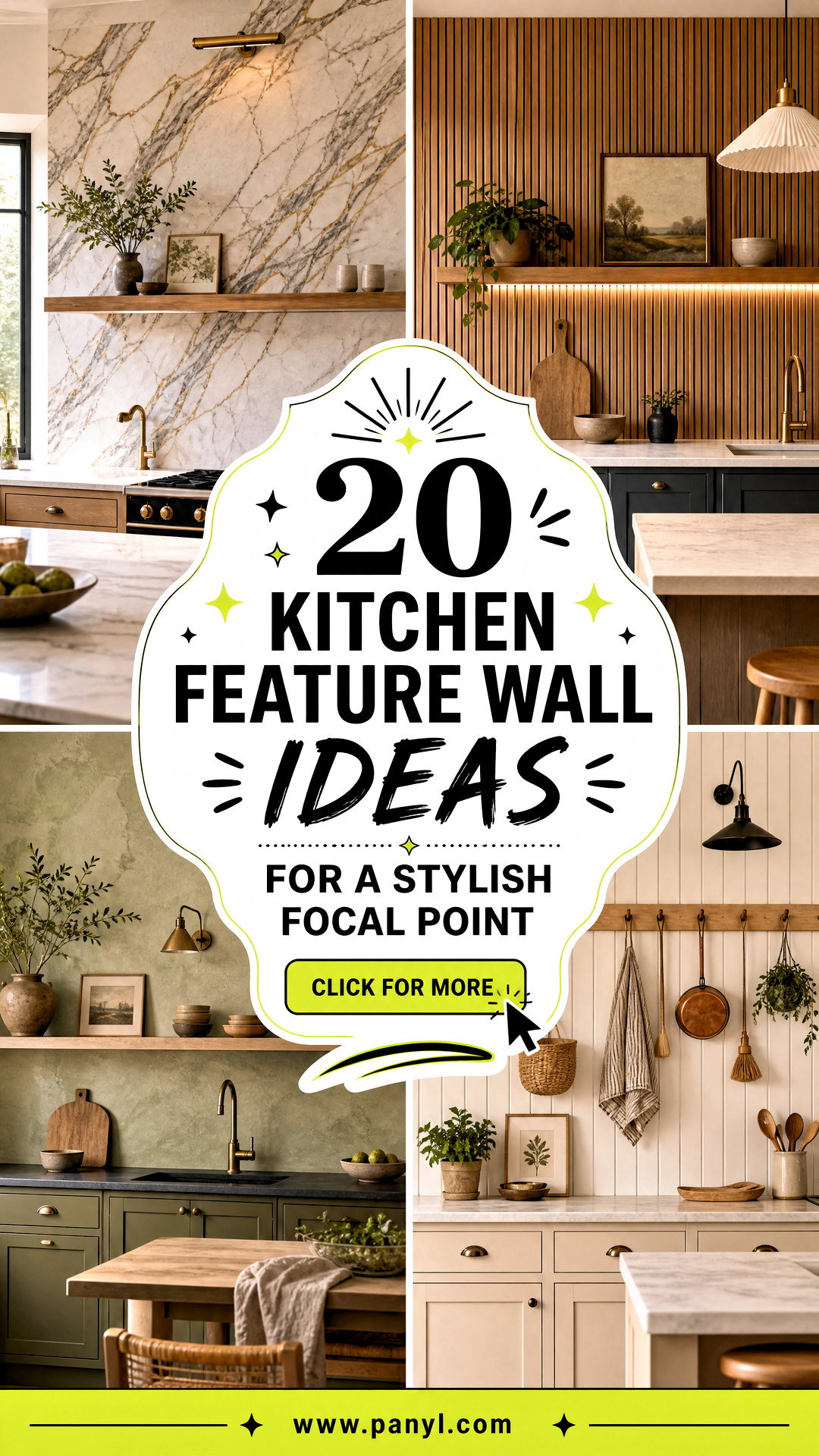
A well-planned feature wall can turn an ordinary kitchen into a space that feels personal, polished, and complete. The best **kitchen feature wall ideas** go beyond adding a bold paint color. They combine practical surfaces, coordinated materials, useful storage, balanced lighting, and decorative details. Current kitchen designs often use full-height stone, expressive tile, textured paneling, wallpaper, or open shelving to connect the feature wall with the cabinetry and countertops. () Whether you are planning a full renovation or a simple weekend update, choose a wall that naturally catches the eye when you enter. The following complete looks offer stylish and achievable inspiration for 20 kitchen feature wall ideas.
1. Marble Slab Kitchen Feature Wall
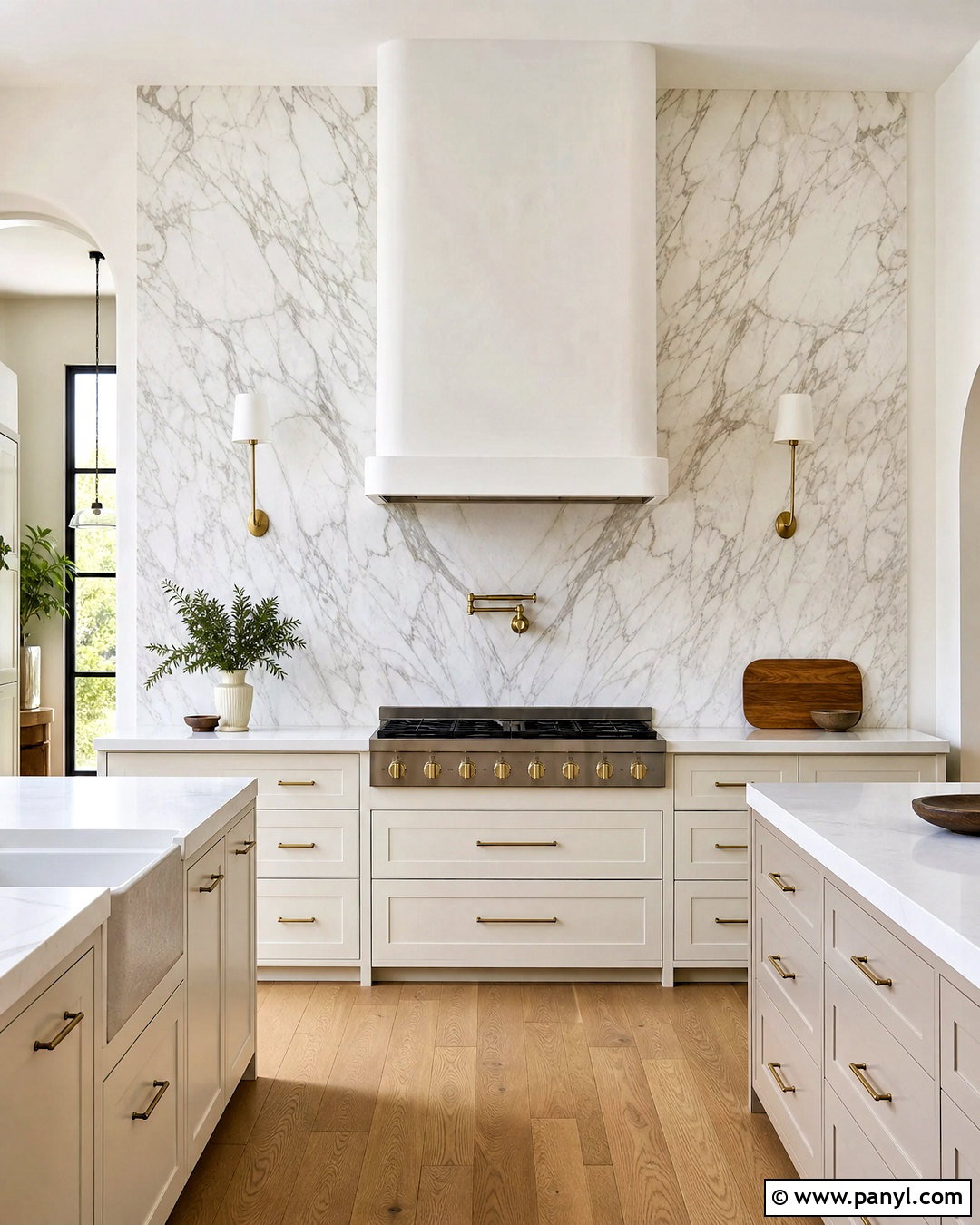
A marble slab wall creates a sophisticated focal point without making the kitchen feel overly decorated. Run white marble with soft gray or warm taupe veining from the countertop to the ceiling behind the range. Center a simple plaster or stainless steel hood on the wall so the natural stone remains visible. Warm white cabinets, brushed brass hardware, and medium oak flooring balance the cooler surface. Continue the same marble onto the countertops for a smooth, connected appearance. Keep accessories minimal, using only a wooden cutting board, neutral ceramics, and one small herb planter. Because marble patterns vary, choose slabs in person and plan the placement carefully. A book-matched arrangement can produce a dramatic effect, while quieter veining works better in a smaller kitchen.
2. Green Tile Kitchen Feature Wall
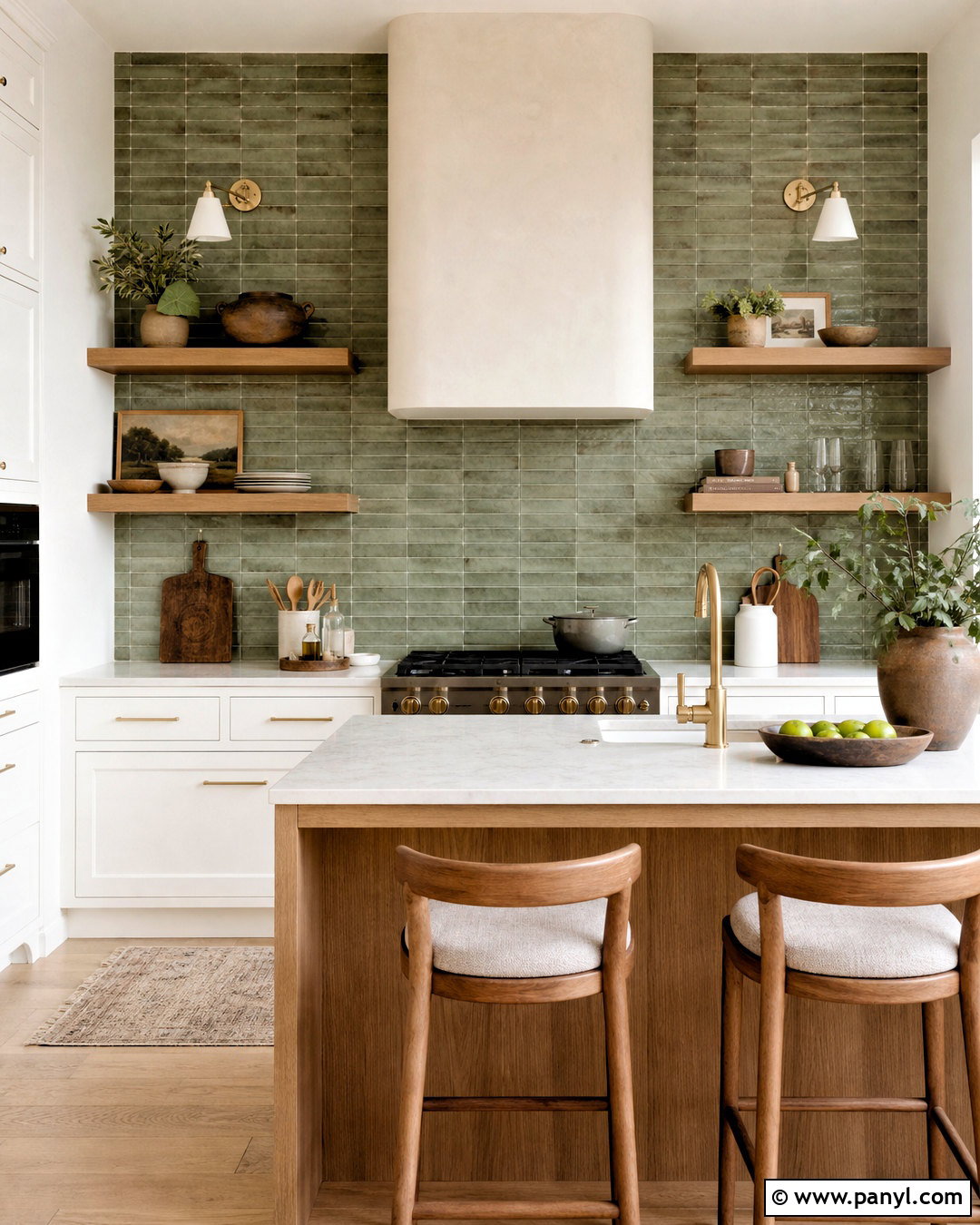
Glossy green tile brings color, movement, and an inviting natural feeling to the kitchen. Cover the complete cooking wall with warm sage, olive, or forest green tiles, extending them behind the range and up to the ceiling. Handmade-look rectangular tiles add subtle texture because their uneven surfaces reflect light differently. Pair the wall with creamy white cabinets, pale quartz countertops, and aged brass hardware. A curved white plaster hood softens the straight tile lines, while oak shelves provide space for everyday dishes and small plants. Use warm wood stools and woven pendant lights to connect the wall with the rest of the room. Select easy-to-clean grout in a coordinating medium tone rather than bright white, which can create distracting lines and require more frequent maintenance.
3. Exposed Brick Kitchen Feature Wall
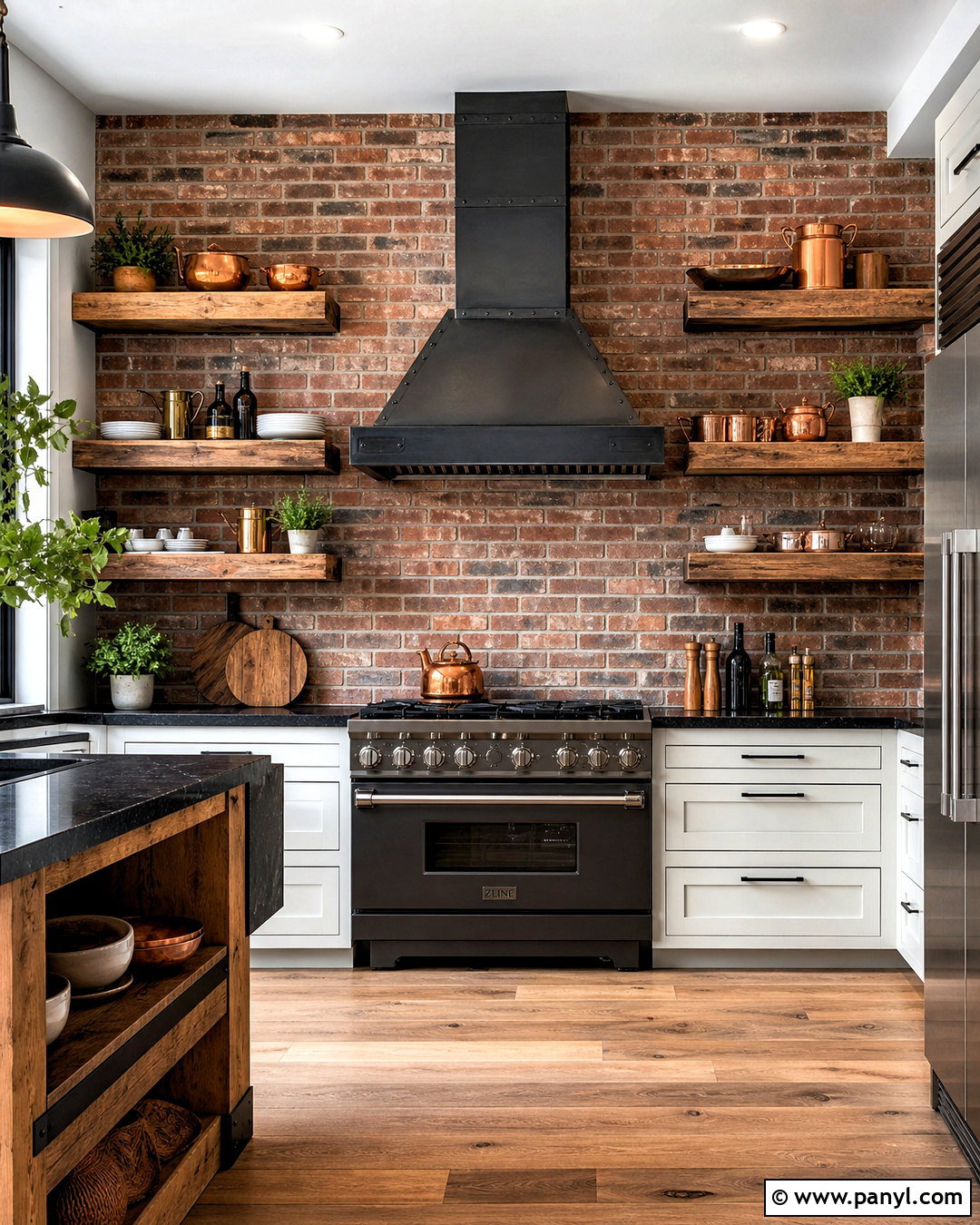
The rough texture of brick can make a new kitchen feel established and welcoming. Use original exposed brick when it is in good condition, or install realistic thin brick veneer across one full wall. Warm red and muted brown bricks pair beautifully with off-white Shaker cabinets, black stone countertops, and reclaimed wood shelving. Position a matte black range and simple metal hood against the wall for an understated industrial touch. Soft lighting is important, so include ceiling fixtures and under-shelf lights that brighten the uneven surface. Repeat the brick’s warm tones through leather-look stools, copper cookware, and natural oak flooring. Seal brick near cooking and preparation zones to simplify cleaning. Keeping the surrounding walls light prevents the textured feature from making the kitchen feel visually heavy.
4. Wood Slat Kitchen Feature Wall
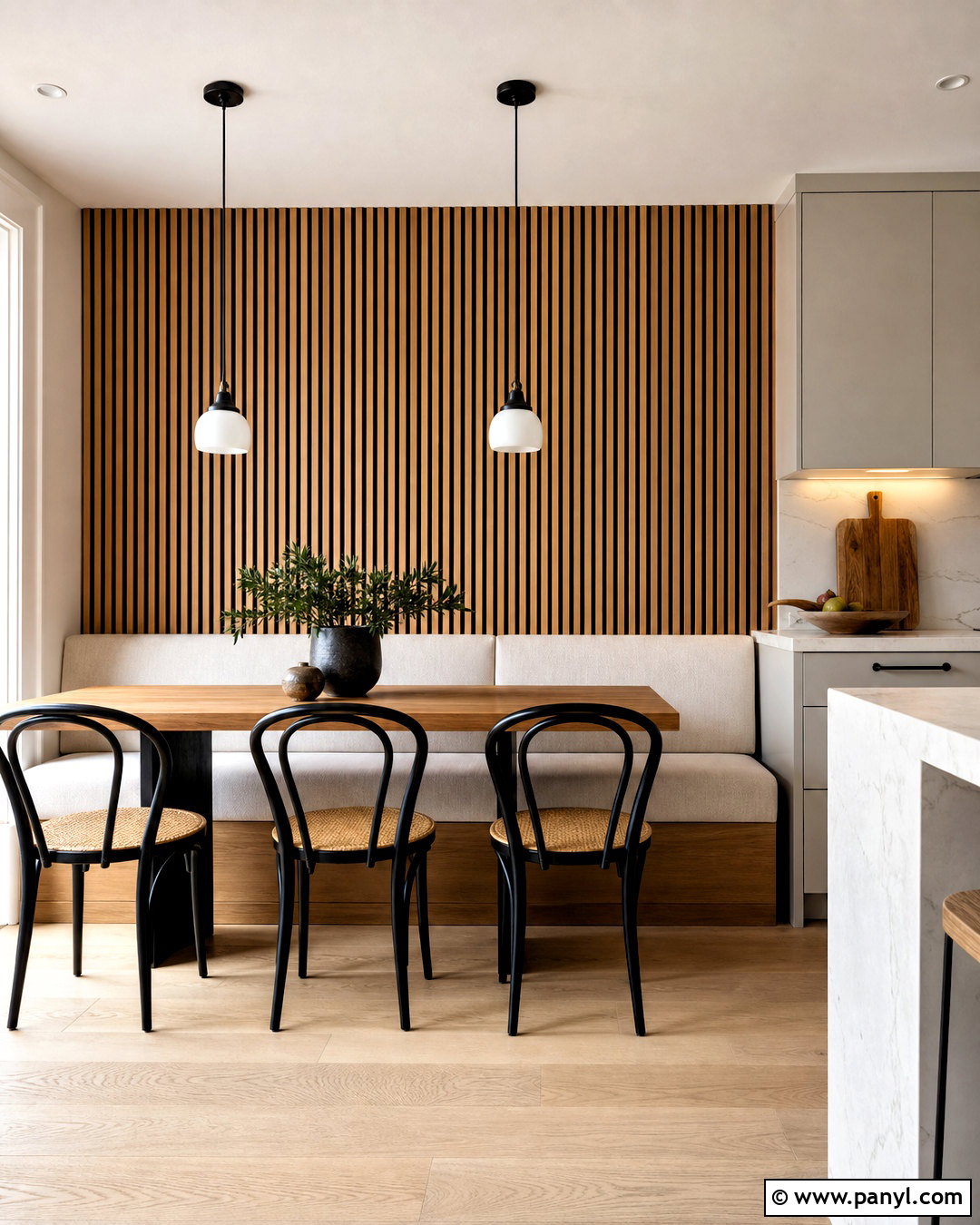
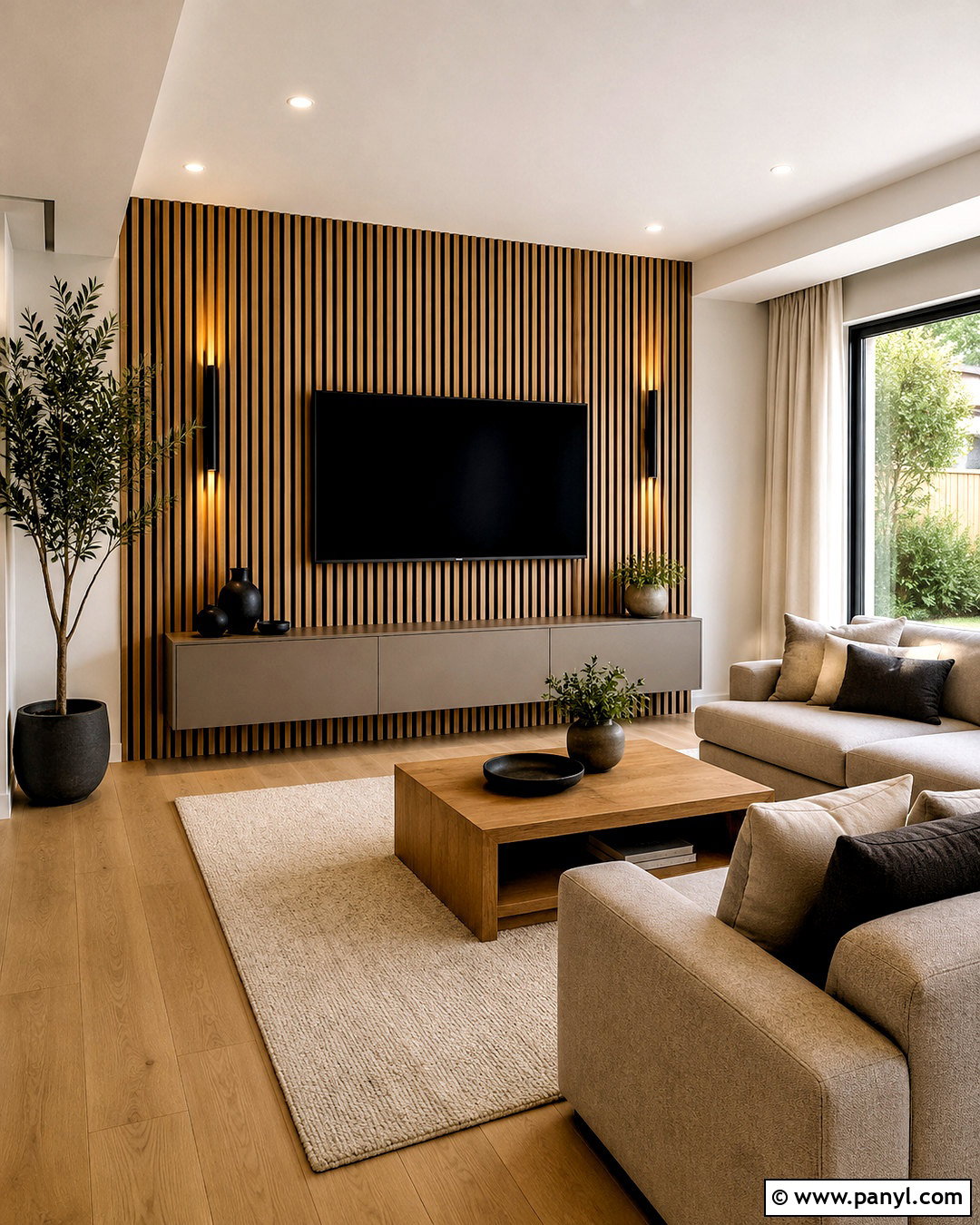
Vertical wood slats introduce warmth and architectural detail to a contemporary kitchen. Place the feature on a dry wall away from heavy cooking splashes, such as behind a breakfast area, coffee station, or freestanding sideboard. Natural white oak slats over a dark backing create crisp definition without looking too severe. Combine them with flat-panel greige cabinets, pale stone counters, and matte black fixtures. A built-in bench in oatmeal upholstery can turn the wall into a comfortable dining nook. Add a narrow oak table, curved black chairs, and one large ceramic pendant to complete the zone. Choose sealed, wipeable wood and leave practical access to electrical outlets. Continuing a few matching oak details through the kitchen helps the feature wall feel connected rather than added as an unrelated decorative panel.
5. Patterned Tile Kitchen Feature Wall
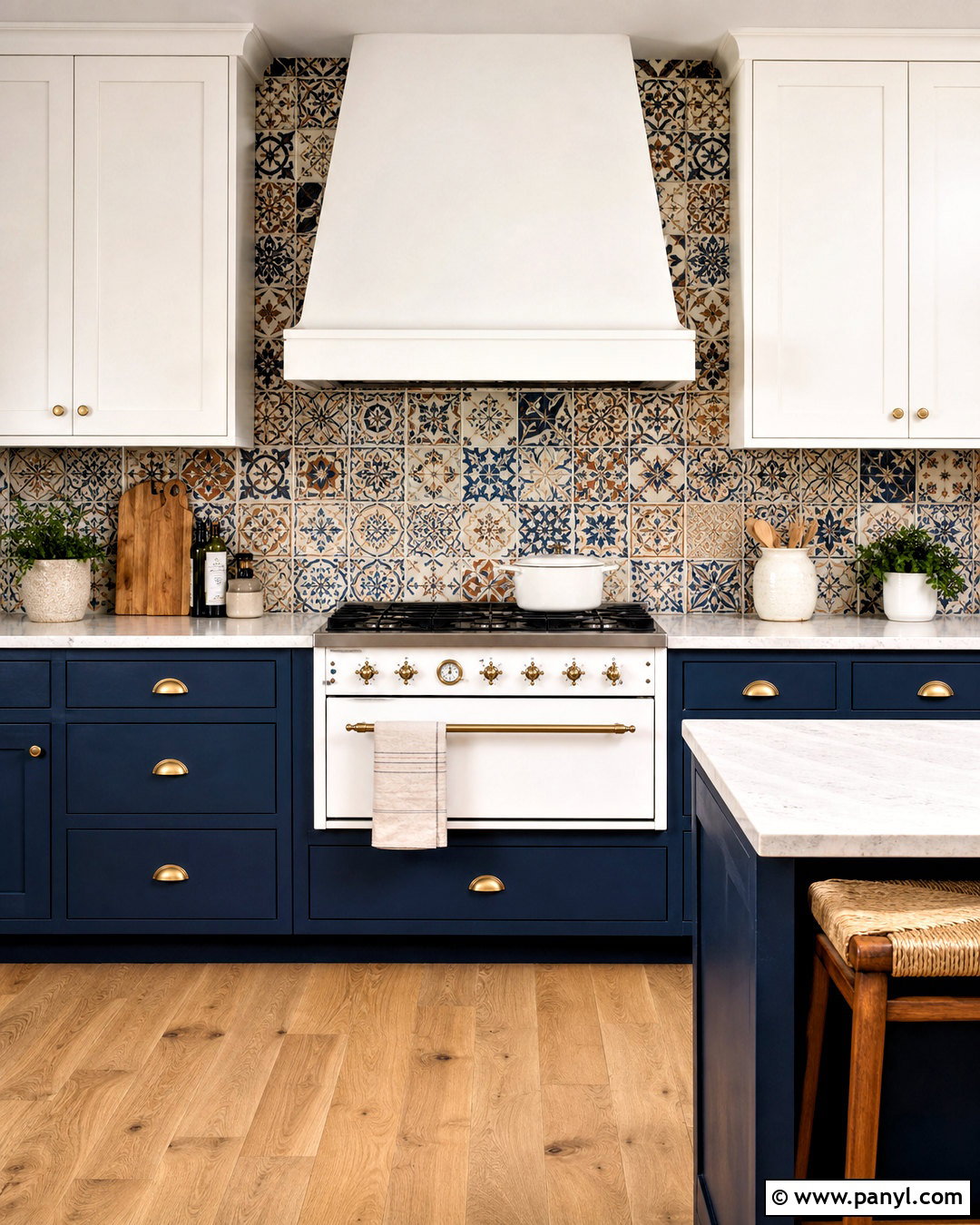
A patterned tile wall gives the kitchen a lively centerpiece while protecting an active cooking area. Select an encaustic-look design in navy, soft blue, cream, and muted terracotta, then install it across the entire wall behind the range. Keep the remaining finishes quieter so the pattern stays balanced. Navy base cabinets, cream upper cabinets, white quartz counters, and medium oak flooring create a coordinated foundation. A simple white hood allows the tile to remain the main attraction. Repeat only one or two tile colors in smaller details, such as blue stools or terracotta pottery. Before installation, lay several tiles on the floor to confirm the repeated pattern. Use a restrained grout color that blends into the design instead of outlining every tile and making the surface appear unnecessarily busy.
6. Black Kitchen Feature Wall
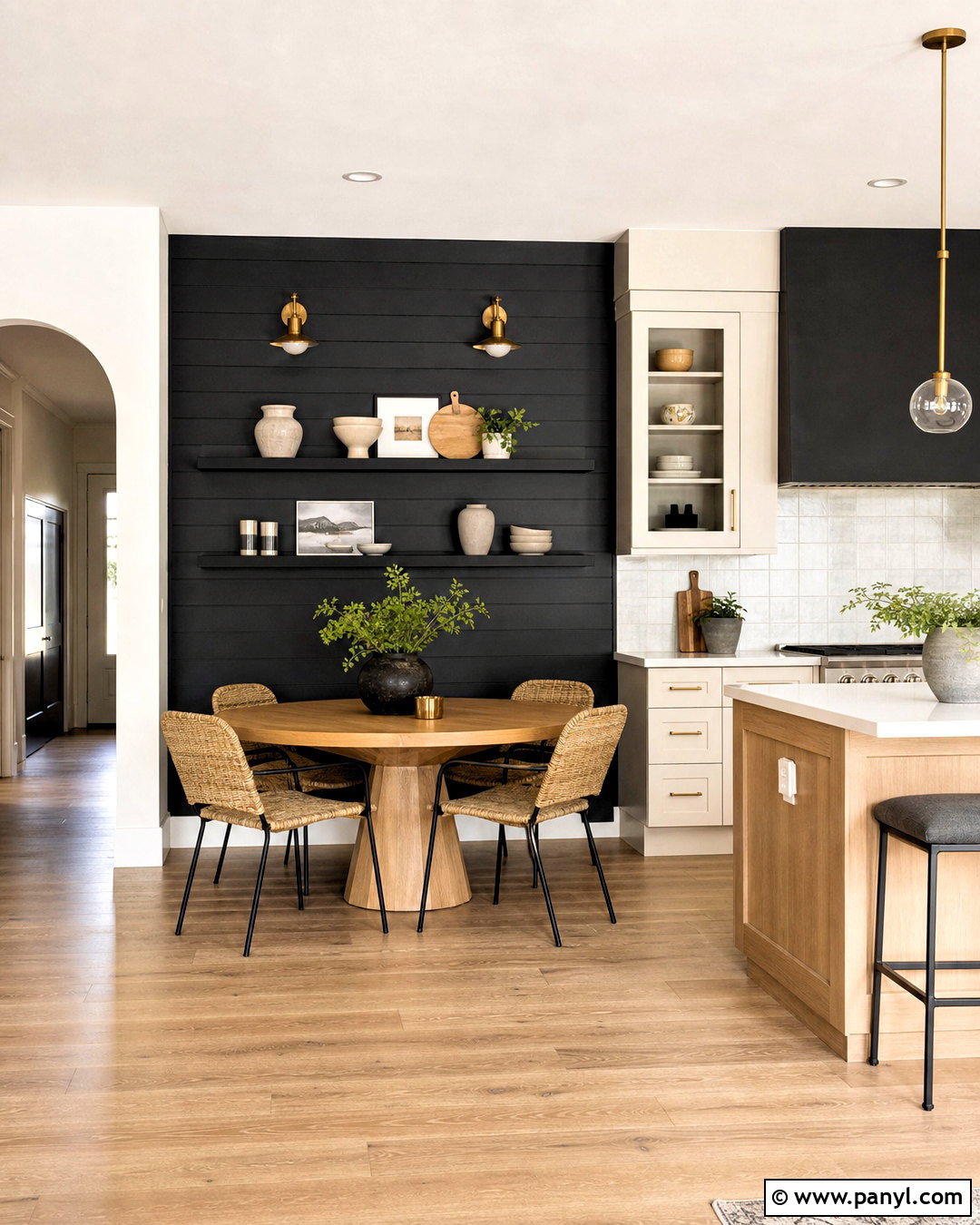
Could a dark wall make your kitchen feel warmer rather than smaller? A matte black feature wall can add depth when it is balanced with light cabinets and reflective surfaces. Paint the wall behind a dining nook or low storage cabinet in a durable washable finish. Install shallow black picture ledges holding pale wood boards, cream pottery, and a few framed prints. White oak base cabinets, warm white countertops, light flooring, and brushed brass hardware prevent the room from feeling stark. Add a compact round oak table with woven chairs to form a complete eating area. Strong natural or overhead lighting is essential for maintaining clarity. Repeat black through the faucet, pendant lights, and window frames, but avoid using it on every large surface. The controlled repetition makes the feature look deliberate and cohesive.
7. Botanical Wallpaper Kitchen Feature Wall
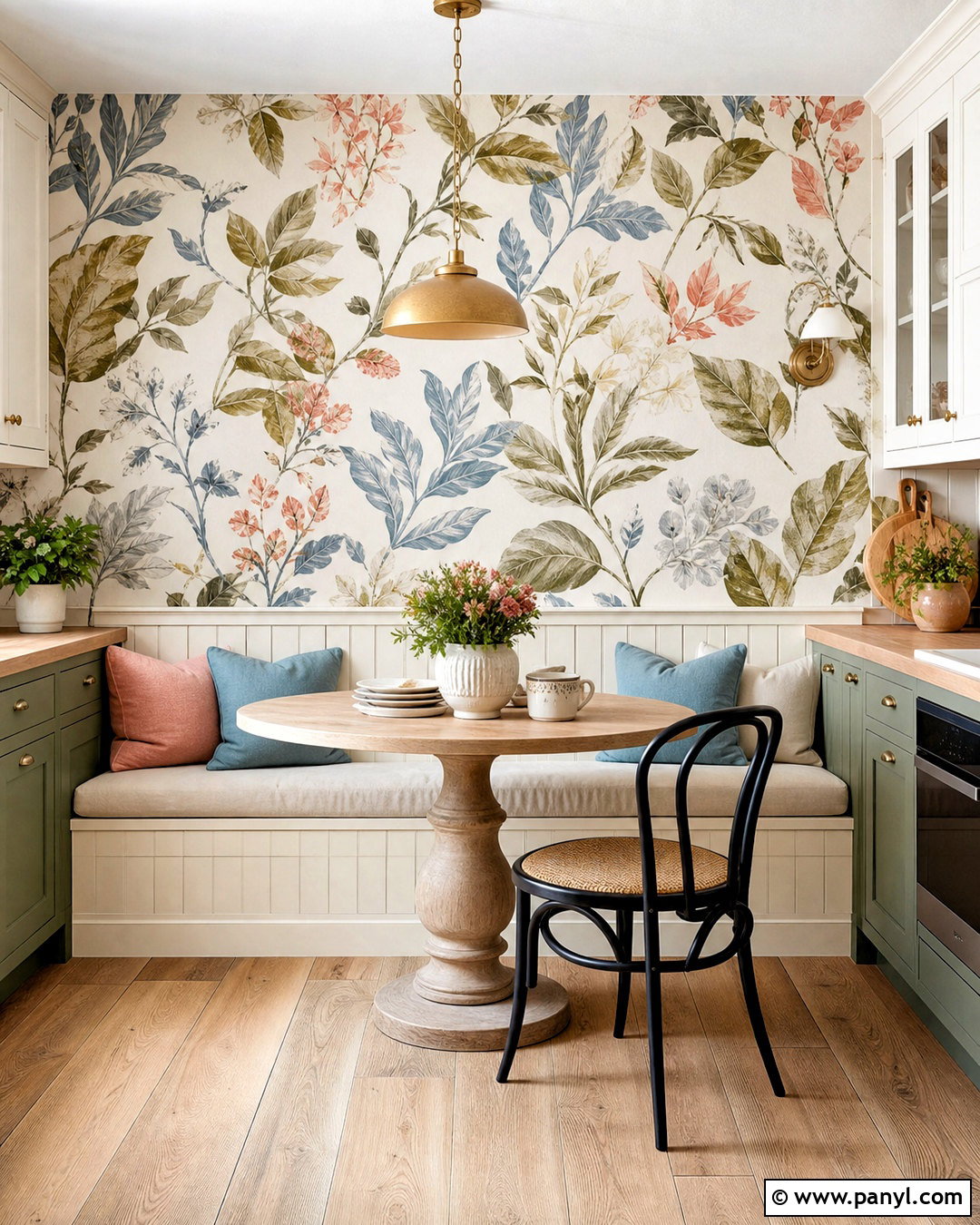
Botanical wallpaper can bring softness and personality to a kitchen filled with hard surfaces. Use a large-scale leafy pattern in olive green, muted blue, cream, and dusty coral on the wall behind a breakfast nook. Protect it with a washable coating or choose durable vinyl wallpaper designed for busy rooms. Pair the pattern with sage green lower cabinets, warm white upper cabinets, oak countertops, and simple brass hardware. A built-in cream banquette, round pedestal table, and linen cushions create a comfortable place for everyday meals. Add a small brass wall light to illuminate the nook without hiding the print. Keep the adjacent backsplash plain and practical. By limiting the wallpaper to a dry area and repeating its colors elsewhere, the finished kitchen feels layered, coordinated, and easy to maintain.
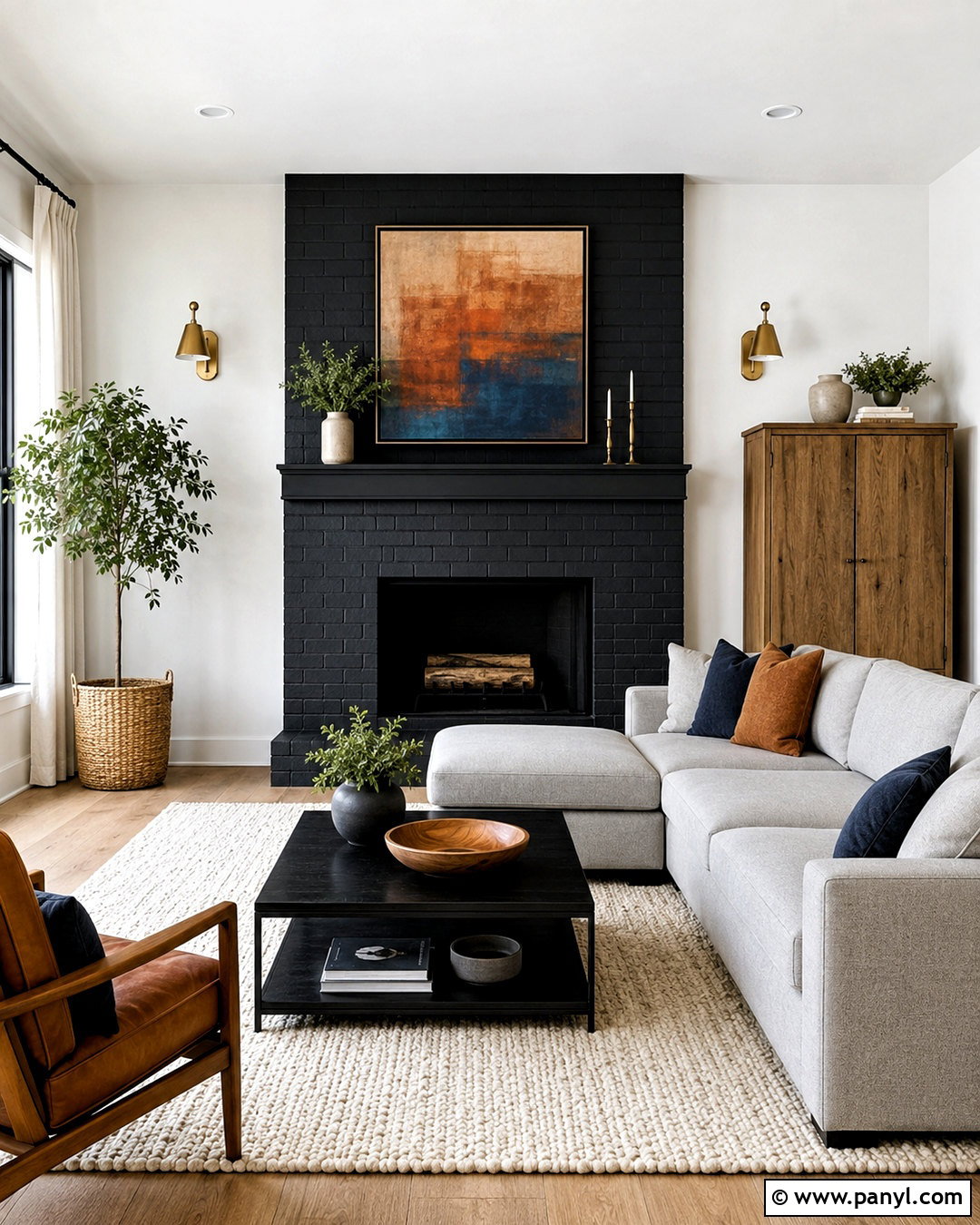
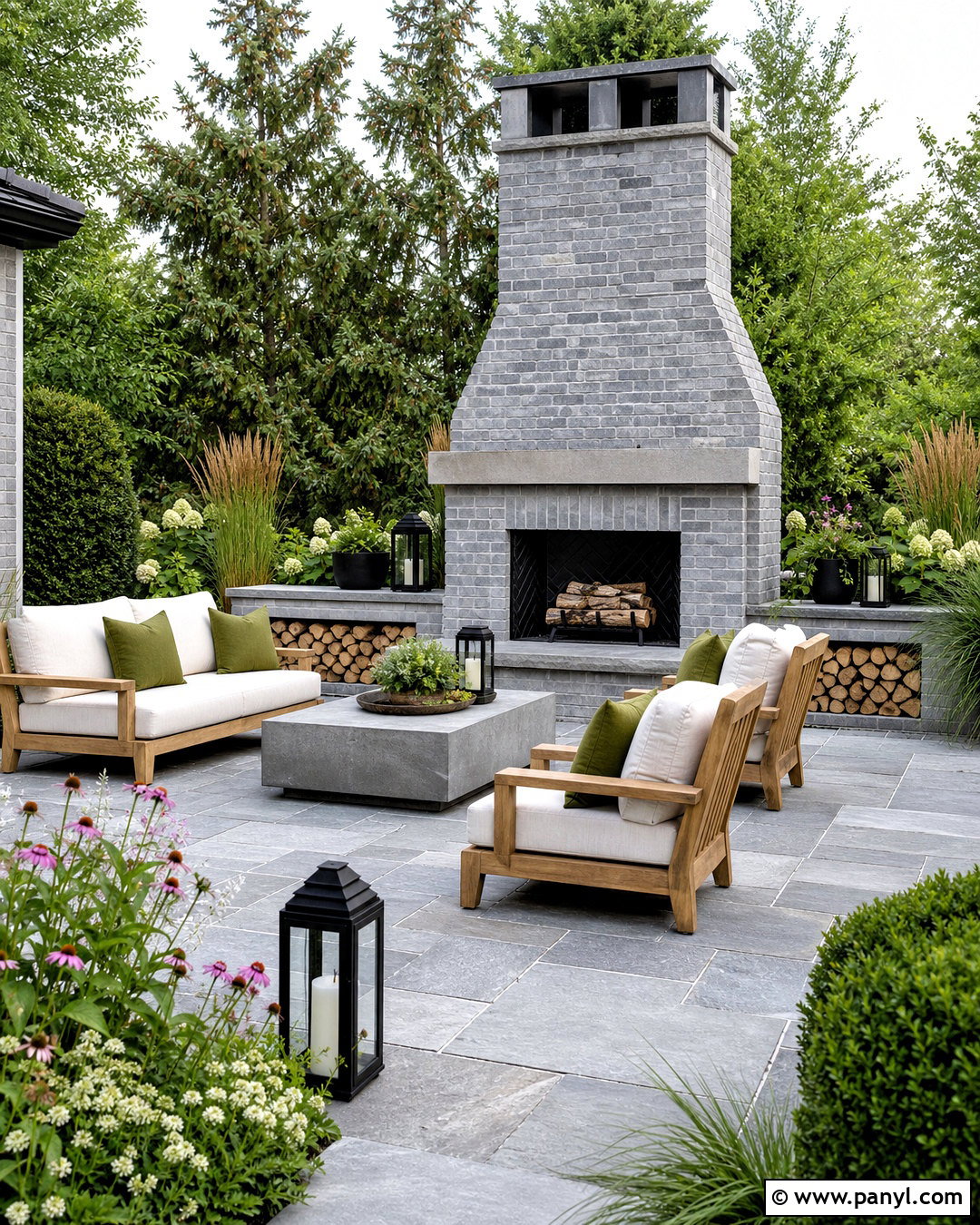
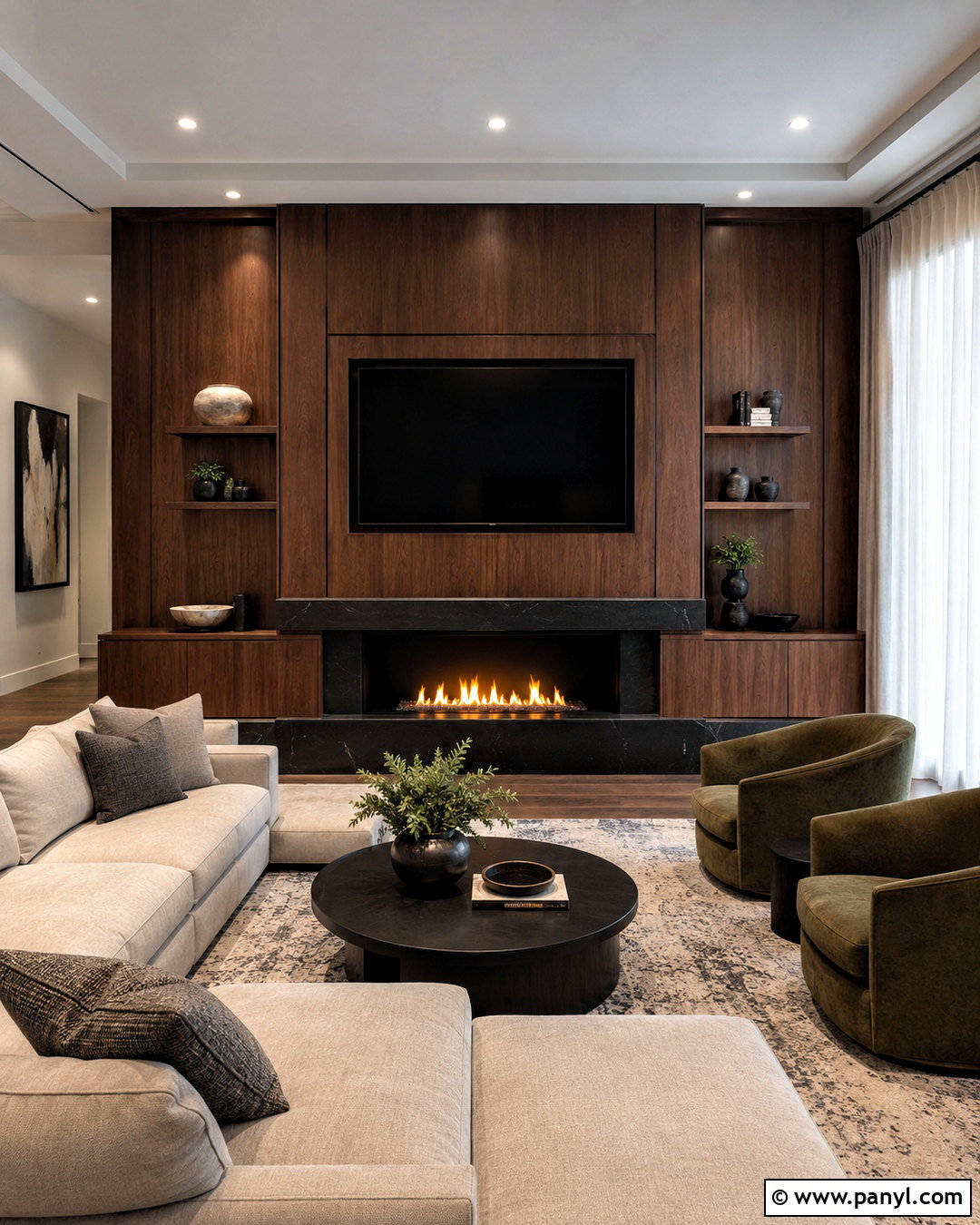
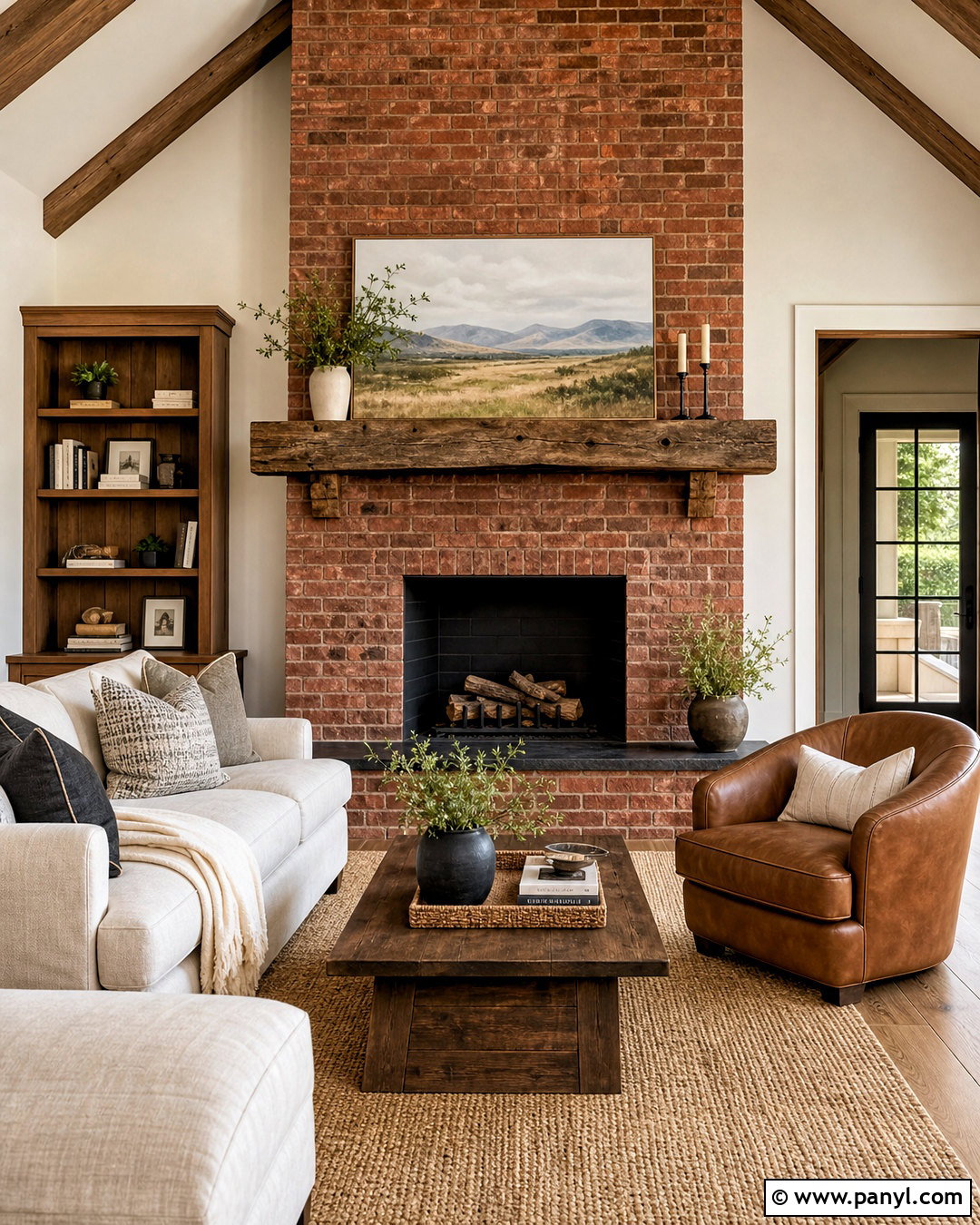
8. Limewash Kitchen Feature Wall
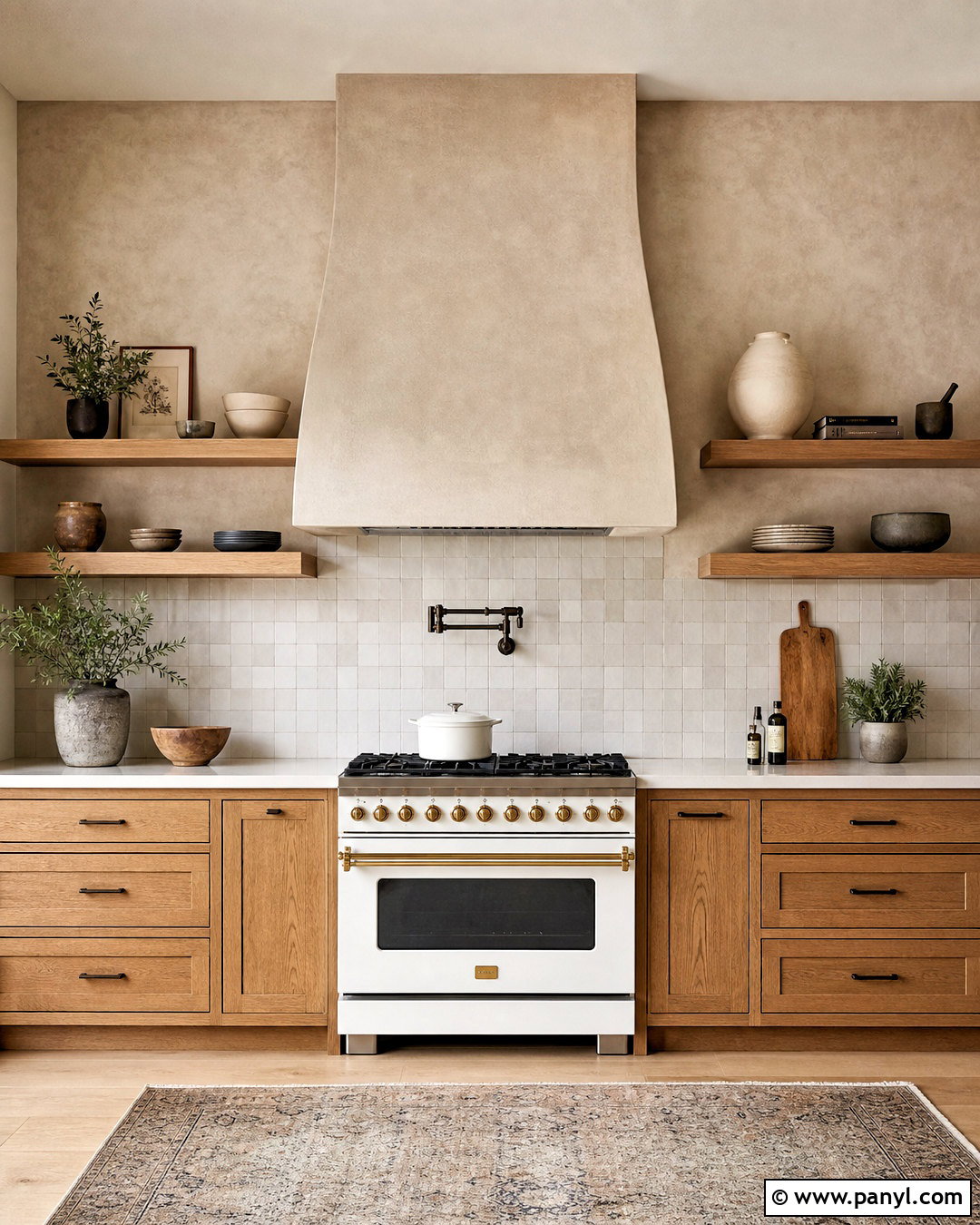
Limewash creates gentle color variation that looks softer than standard flat paint. Apply a warm beige, clay, or muted greige finish to the wall around a sculptural range hood. Pair it with natural oak cabinets, cream quartz countertops, and handmade off-white backsplash tile below the cooking line. Floating oak shelves on each side of the hood provide practical display space without covering too much of the textured finish. Style them simply with stoneware bowls, clear glasses, and a small trailing plant. Use bronze hardware and warm white pendant lights to reinforce the earthy palette. Since cooking areas must withstand splashes, keep limewash above a protective backsplash or use a suitable sealed finish. The completed wall should feel calm and tonal, with texture providing interest instead of strong pattern or sharp color contrast.
9. Vertical Tile Kitchen Feature Wall
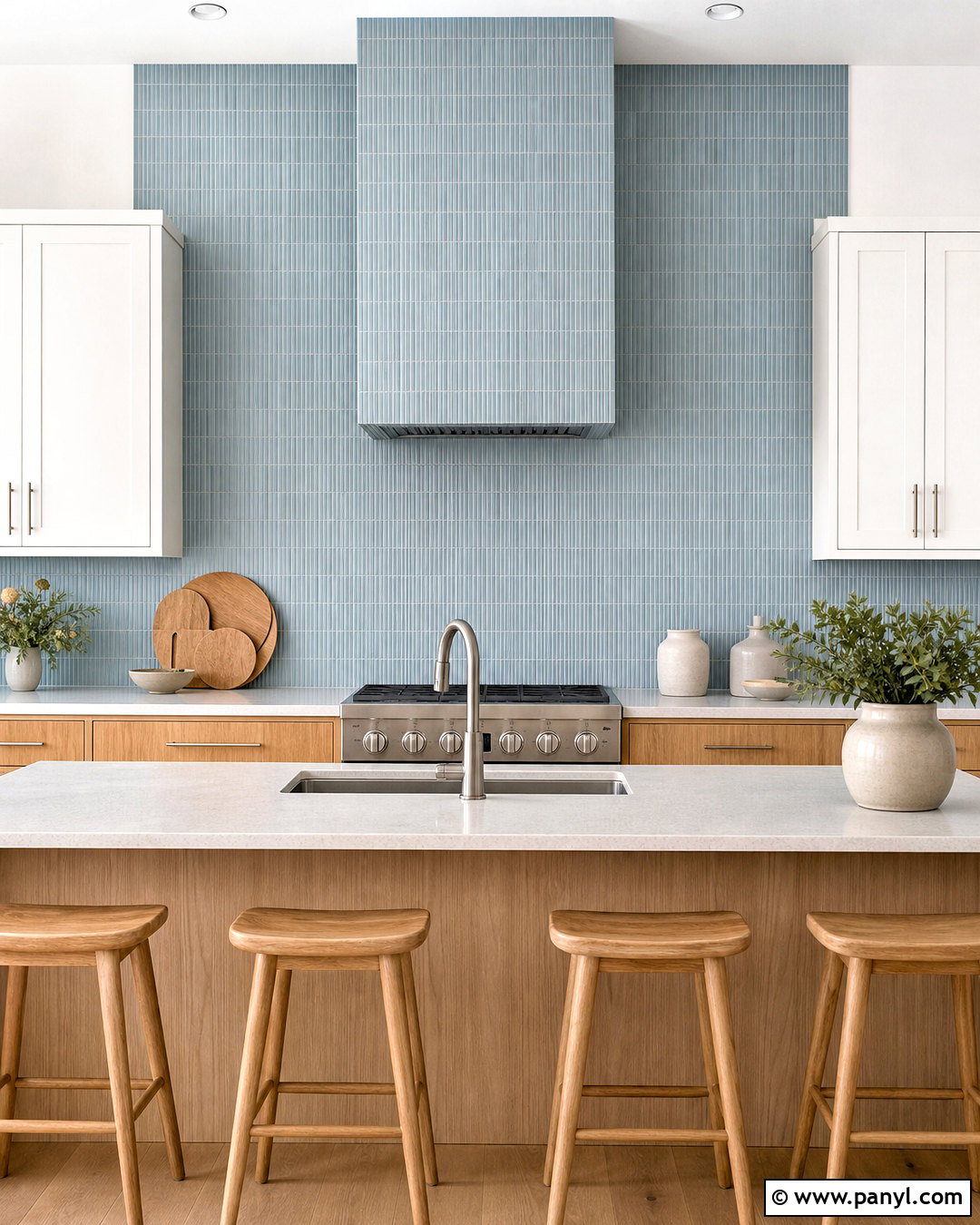
Vertical tile visually draws attention upward and can make a kitchen wall appear taller. Choose slim rectangular tiles in pale blue, soft taupe, or warm white and stack them vertically from counter to ceiling. Center the arrangement behind a streamlined range and matching hood for a clean, symmetrical look. Flat-panel oak lower cabinets, soft white upper cabinets, and light quartz countertops maintain an airy modern mood. Use grout close to the tile color so the vertical direction remains noticeable without becoming graphic. Brushed nickel hardware, clear glass pendants, and pale wood stools complete the understated palette. If the room has low ceilings, avoid heavy crown molding around the feature wall. A simple ceiling transition allows the continuous lines to work effectively while giving the cooking zone a more architectural, thoughtfully finished appearance.
10. Shiplap Kitchen Feature Wall
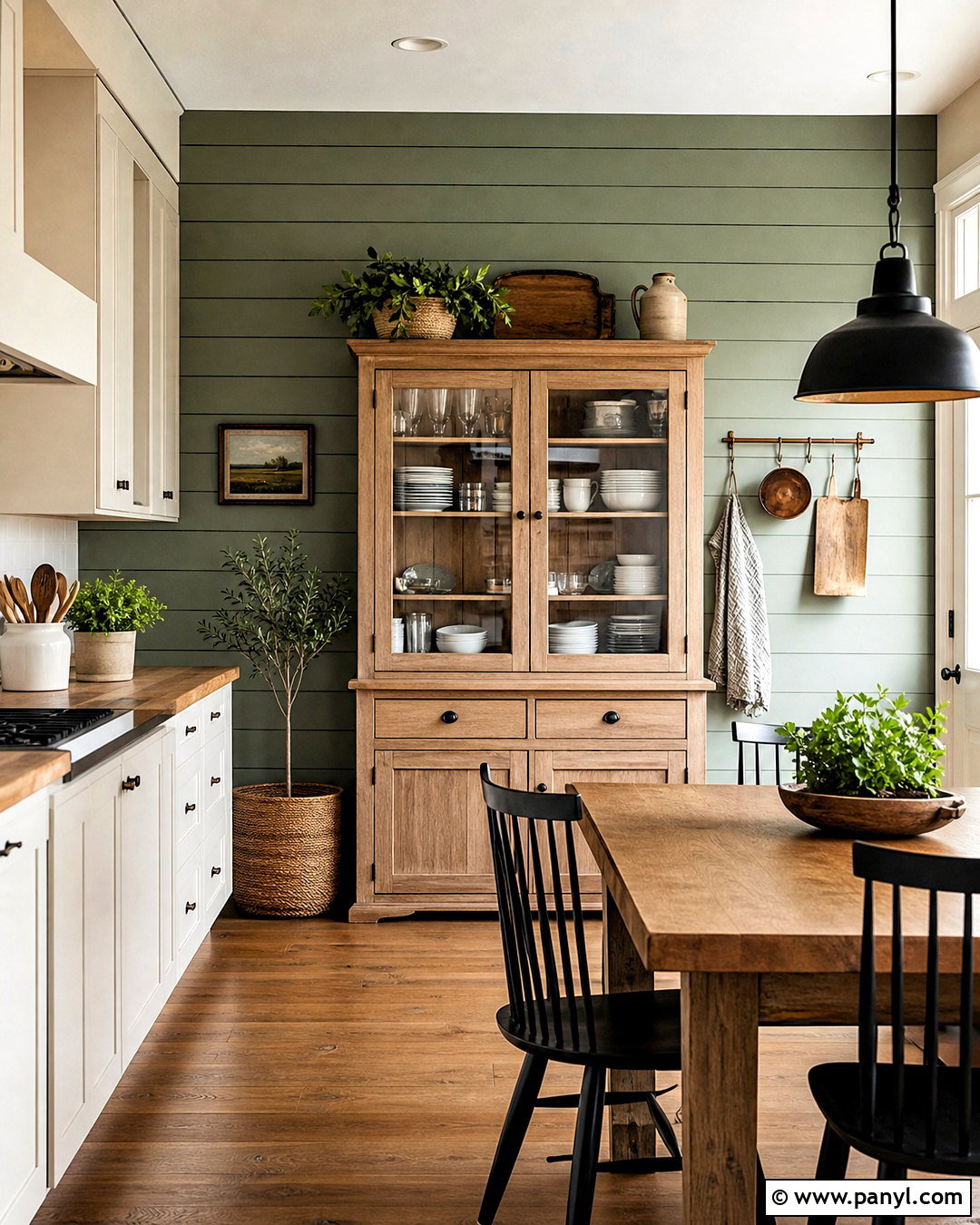
Painted shiplap can give a kitchen relaxed character without forcing it into a heavily rustic theme. Install vertical shiplap on the wall behind a freestanding hutch, breakfast table, or coffee station, keeping it away from direct water and grease. Soft sage green paneling looks fresh beside creamy white cabinets, butcher-block counters, and medium oak flooring. Add a white oak hutch with glass doors to provide practical storage while leaving enough paneling visible around it. A small farmhouse table, spindle-back chairs, and a simple black pendant create a complete casual dining zone. Use minimal country accessories to keep the design current. Paint the boards in a durable satin finish that can be wiped clean. Vertical installation also creates a taller, cleaner effect than traditional horizontal boards in compact kitchens.
11. Stone Kitchen Feature Wall
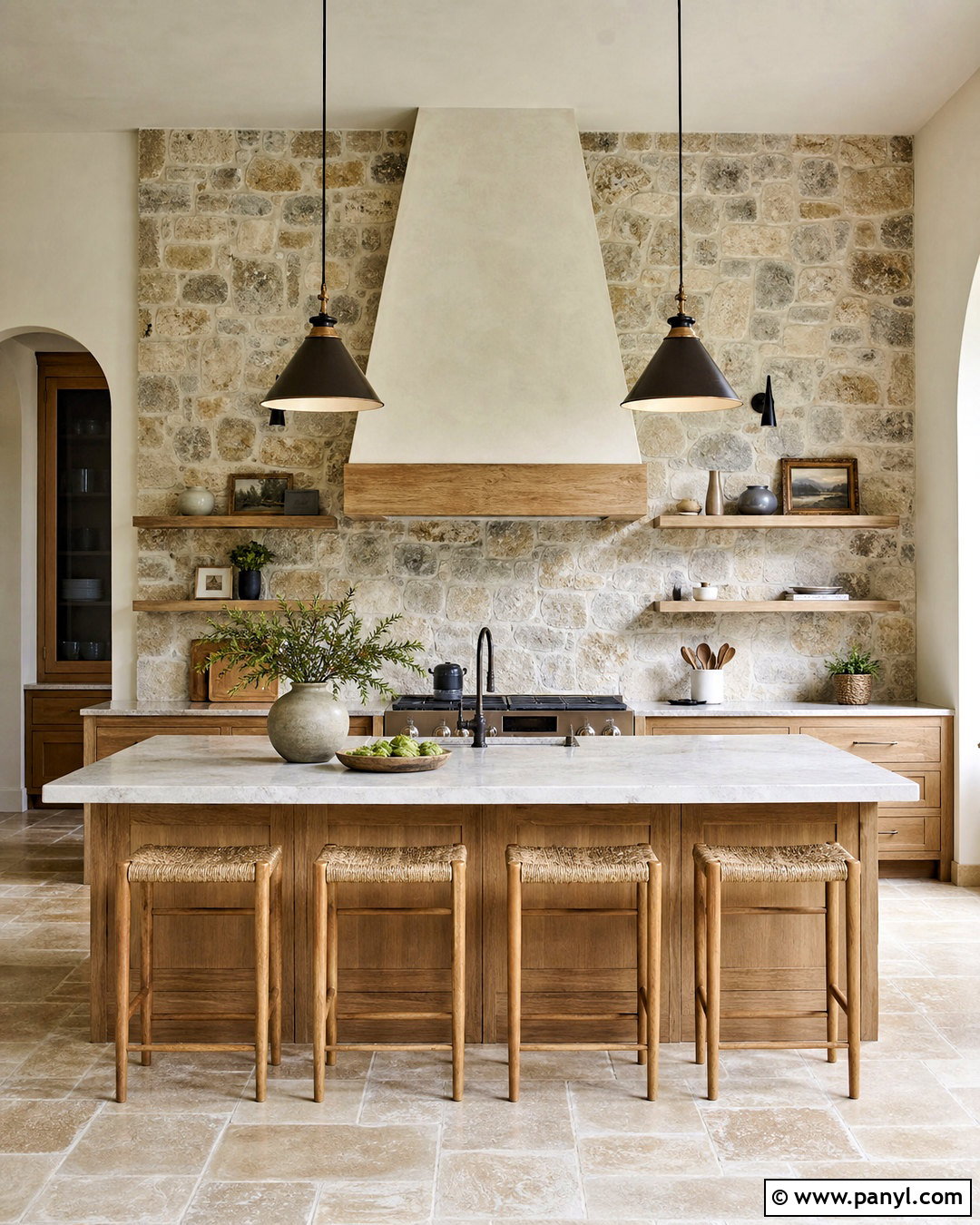
Natural stone gives a kitchen feature wall impressive texture and an indoor-outdoor connection. Cover the range wall with thin-cut limestone or ledgestone in warm beige and soft gray tones. A wide plaster hood in creamy white creates a calm centerpiece, while low oak cabinets and pale stone counters keep the palette earthy. Avoid filling the wall with upper cabinets. Instead, add two short oak shelves for a few useful bowls, jars, and cooking utensils. Large-format limestone-look flooring, woven stools, and bronze lighting support the organic appearance. Because deeply textured stone can collect grease, use it with proper ventilation and consider a smooth protective section directly behind the cooktop. Balanced materials are important: clean cabinetry and simple accessories prevent the finished kitchen from feeling like an overly rustic lodge or exterior patio.
12. Fluted Panel Kitchen Feature Wall
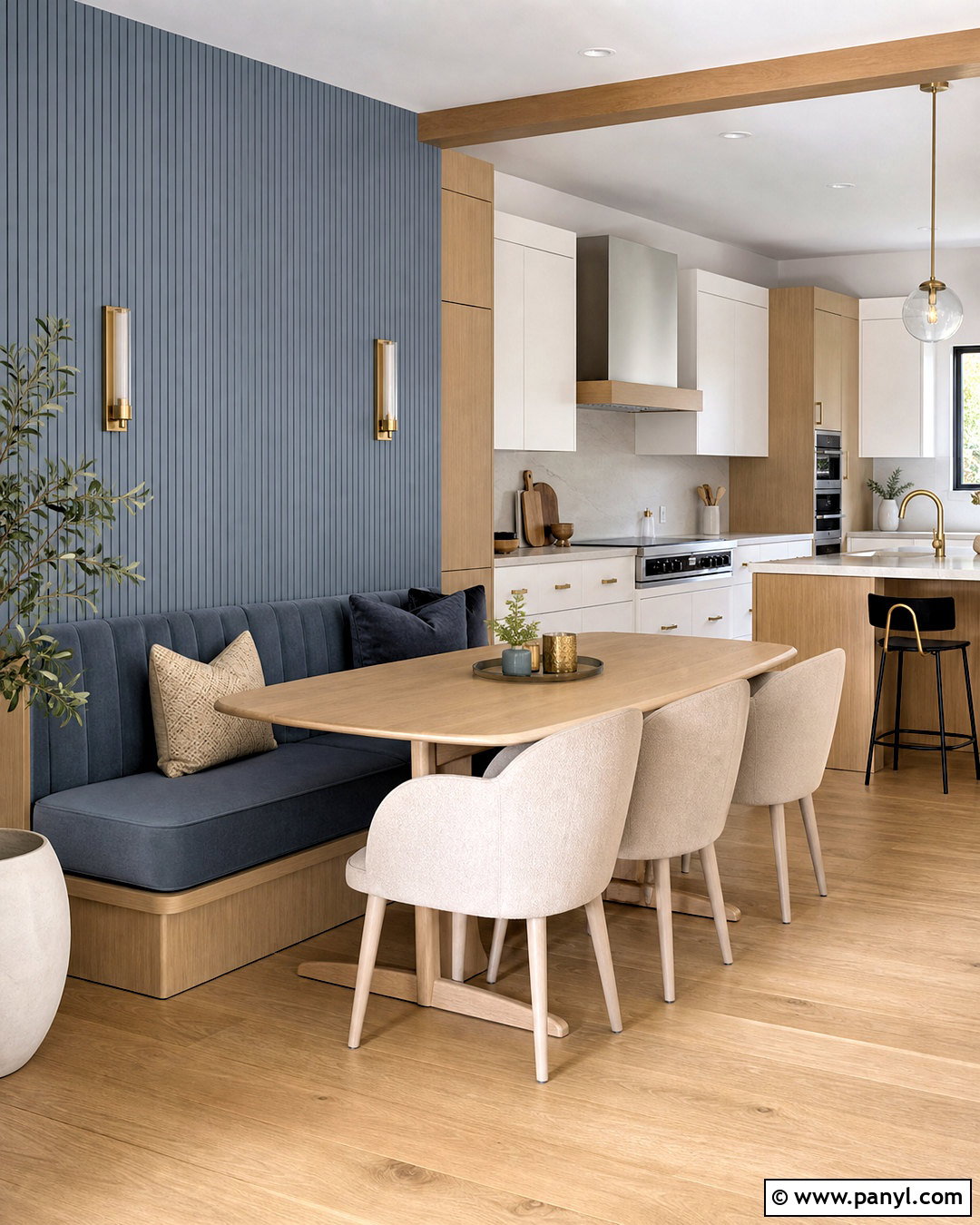
Fluted panels add fine texture that suits streamlined kitchens and open-plan homes. Install moisture-resistant painted panels behind a dining nook or on the outer wall of a built-in pantry rather than directly behind the range. A muted dusty blue finish creates definition beside white oak cabinets and creamy quartz countertops. Continue the design with a matching blue banquette, a light oak dining table, and curved chairs upholstered in warm beige fabric. Slim brass wall sconces highlight the vertical grooves and provide useful evening light. Keep artwork to one simple framed piece so it does not compete with the paneling. Baseboards and outlet covers should match the wall color for a clean finish. Repeating dusty blue on the island or a nearby cabinet helps integrate the feature throughout the kitchen’s complete color scheme.
13. White Subway Tile Kitchen Feature Wall
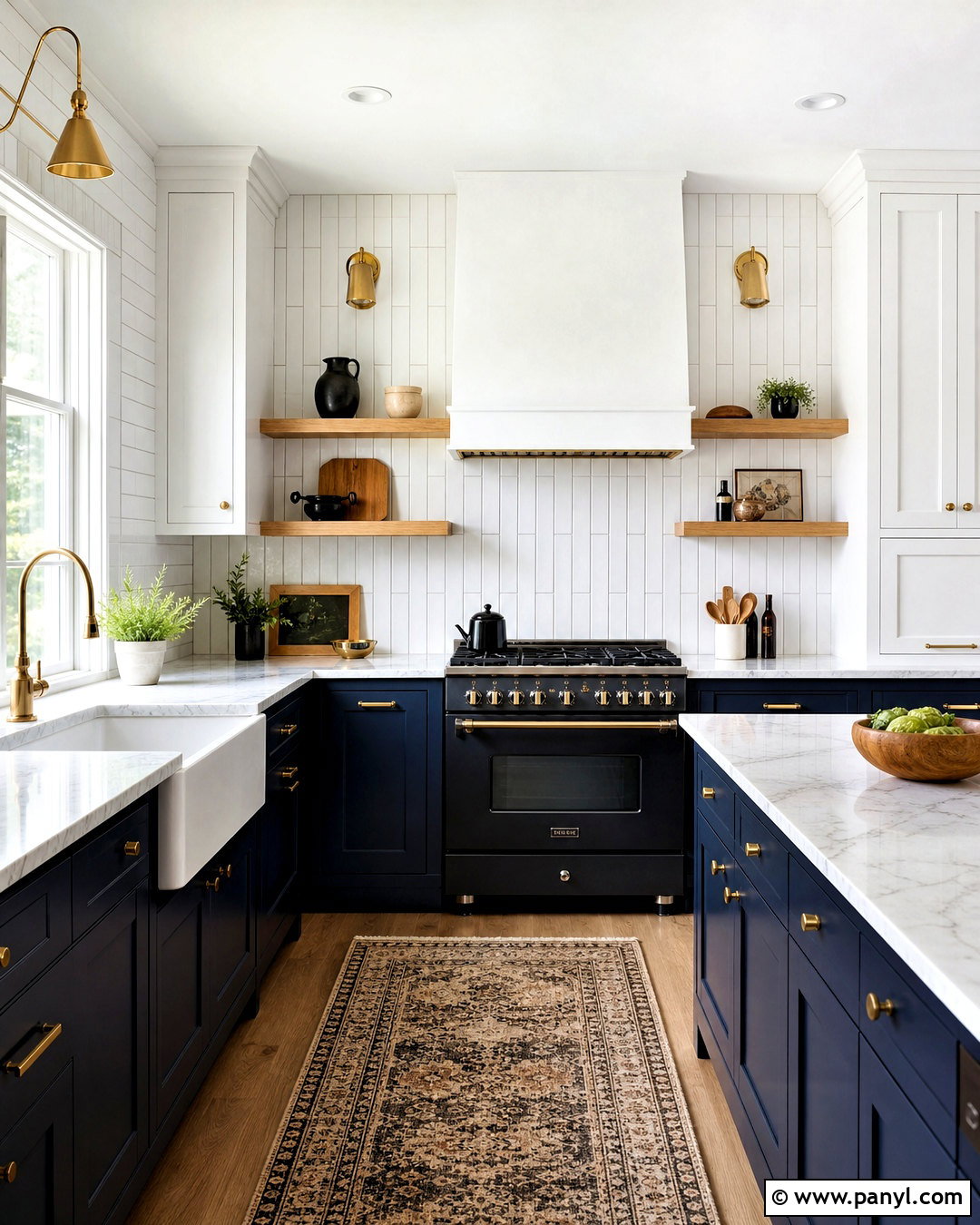
Classic subway tile feels more distinctive when it covers an entire wall instead of stopping beneath the upper cabinets. Use glossy warm white tile from countertop to ceiling around a black range and simple white hood. Install it in a straight stack or vertical pattern for a cleaner, more updated composition. Deep navy lower cabinets, white upper cabinets, marble-look quartz counters, and aged brass hardware create balanced contrast. Add two oak shelves holding everyday dishes and clear glasses, leaving generous open space around them. Dark grout creates a graphic effect, while warm white grout produces a quieter look. Complete the room with natural oak flooring and woven counter stools. The shine of the tile reflects light, making this treatment especially useful for a galley kitchen or a room with limited windows.
14. Coffee Bar Kitchen Feature Wall
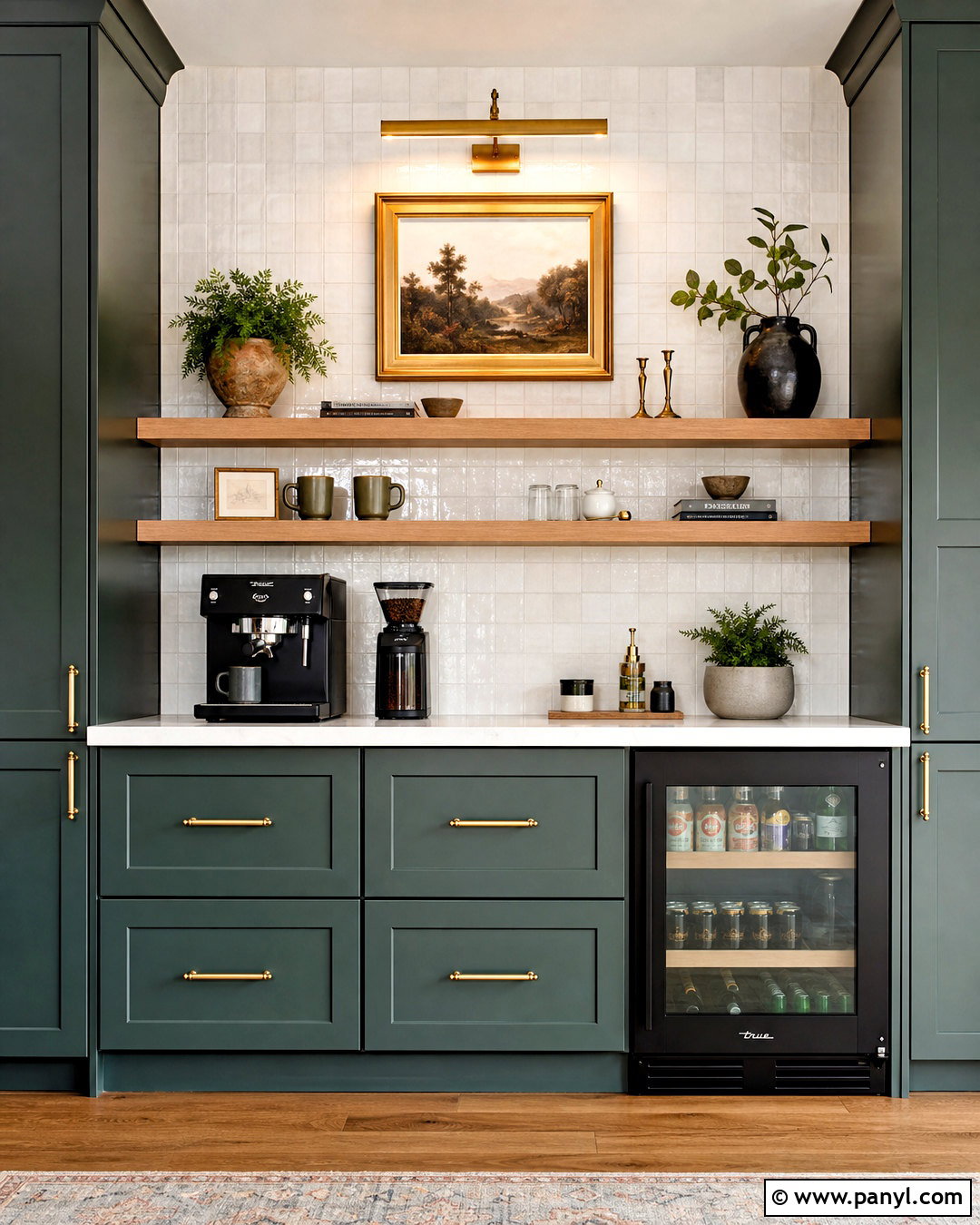
Turn an empty kitchen wall into a functional coffee bar that also acts as the room’s focal point. Begin with deep green base cabinets, a compact beverage refrigerator, and a pale quartz worktop. Cover the wall above with warm white zellige-style tile, extending it to the ceiling for a polished built-in appearance. Install two thick oak shelves for mugs, canisters, and neatly arranged everyday supplies. A small brass picture light centered above the shelves adds definition and useful task lighting. Include drawers for utensils and closed cabinets for appliances to prevent clutter. Match the green cabinetry to the kitchen island or pantry so the station feels connected. A framed print, wooden tray, and small potted herb can complete the arrangement without reducing the practical countertop space needed for daily preparation.
15. Gallery Wall Kitchen Feature Wall
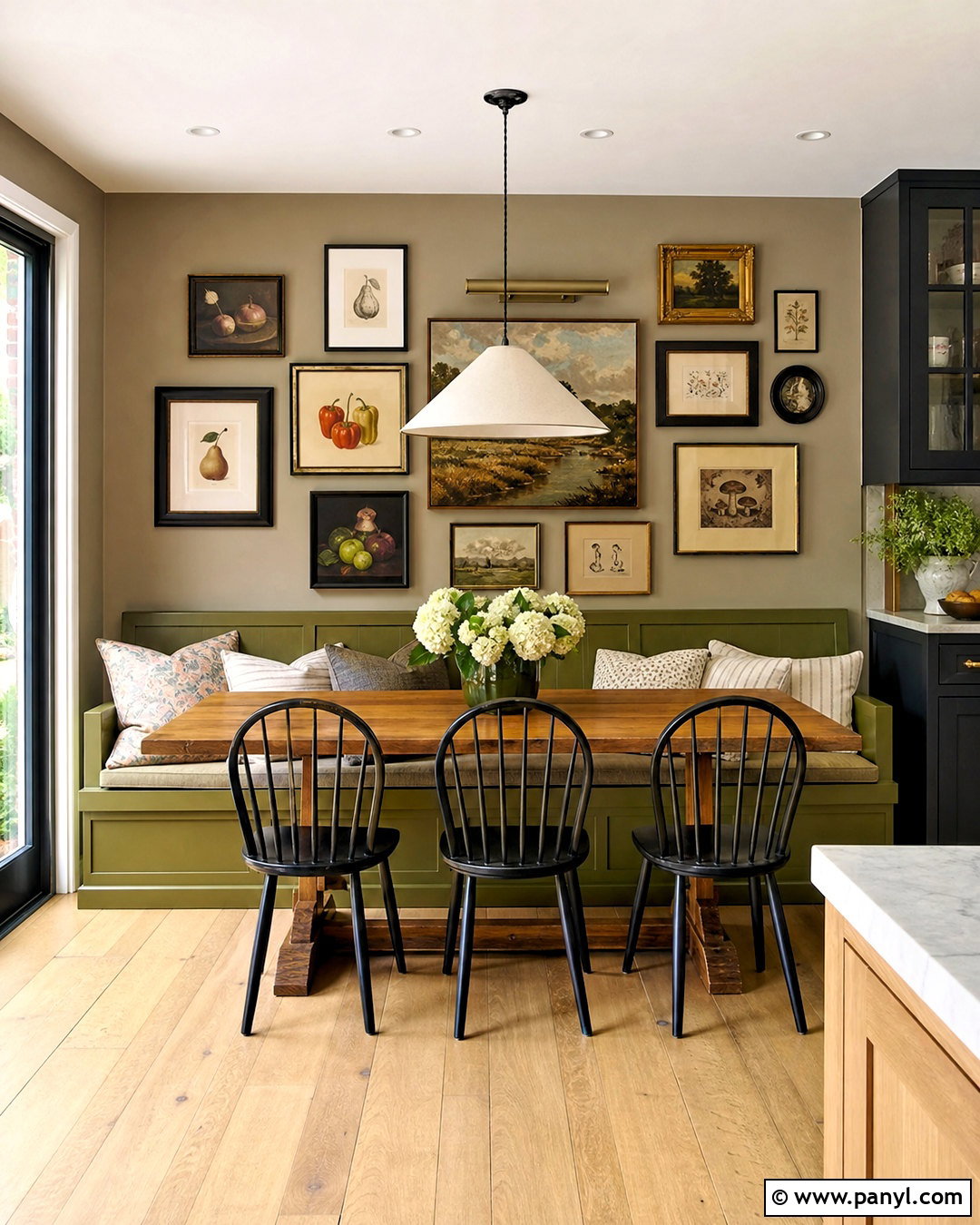
A kitchen gallery wall works best when the frames relate to the room’s color palette and are positioned away from splashes. Paint the dining wall a warm cream or muted mushroom tone, then arrange vintage-style food illustrations, landscapes, and simple abstract prints in black, oak, and antique brass frames. Ground the display with a narrow built-in banquette upholstered in olive green. Add a rectangular oak table, black spindle chairs, and a linen pendant for a complete casual eating zone. Keep consistent spacing between frames, even when their sizes vary. Choose artwork with repeated shades of green, rust, cream, and charcoal to create unity. Leave the cooking wall simple so the room has one clear visual focus. Washable paint and glass-fronted frames make the arrangement easier to clean over time.
16. Checkerboard Tile Kitchen Feature Wall
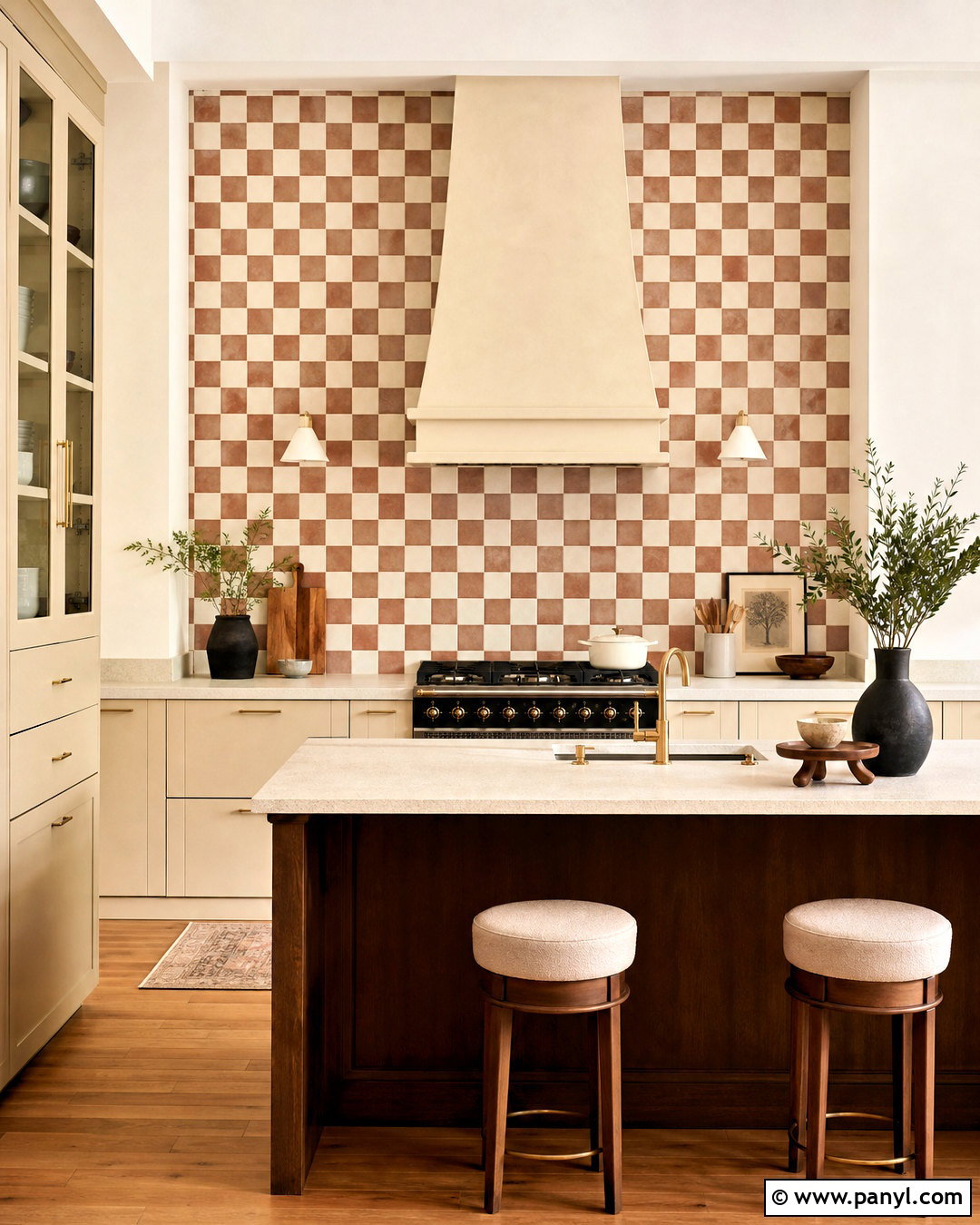
Checkerboard tile can look playful, traditional, or modern depending on the color combination. Cover the wall behind the range with square cream and muted terracotta tiles in a clear checker pattern. Pair the wall with warm white cabinets, a dark walnut island, cream quartz countertops, and unlacquered brass hardware. A simple cream range hood keeps the composition calm, while oak flooring supports the warm palette. For a bolder kitchen, substitute dusty blue or olive green for terracotta. Keep accessories restrained, using solid-colored pottery and natural wooden utensils rather than additional patterns. Select tiles with slight tonal variation to prevent the grid from looking too rigid. Extending the design to the ceiling gives it purpose and creates a stronger feature than a narrow strip of checkerboard backsplash beneath upper cabinetry.
17. Peg Rail Kitchen Feature Wall
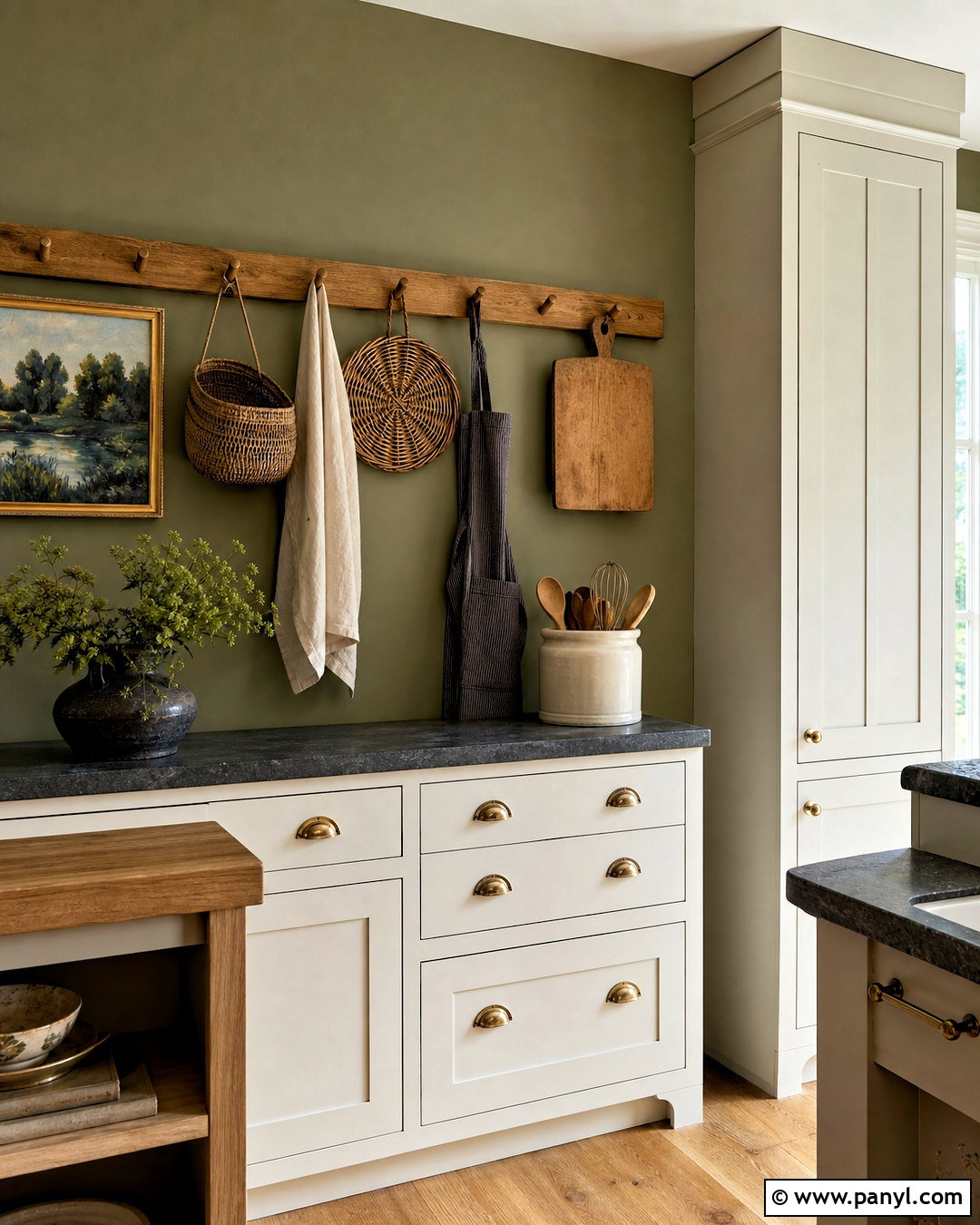
A long wooden peg rail combines traditional charm with practical kitchen organization. Paint the wall behind it in soft olive green, dusty blue, or warm putty, then run an oak rail across the open section above a low cabinet. Use the pegs for lightweight baskets, aprons, measuring tools, and small cutting boards, leaving enough empty space to avoid visual clutter. Beneath the rail, install a freestanding cream pantry cabinet or painted sideboard for closed storage. Shaker cabinets, soapstone-look counters, aged brass fixtures, and oak flooring complete the relaxed traditional look. Add a narrow picture ledge above the rail for framed art and small ceramics. Keep hanging objects away from the cooktop and sink. The arrangement should appear useful and curated, not like an exposed storage area filled with every available utensil.
18. Arched Range Kitchen Feature Wall
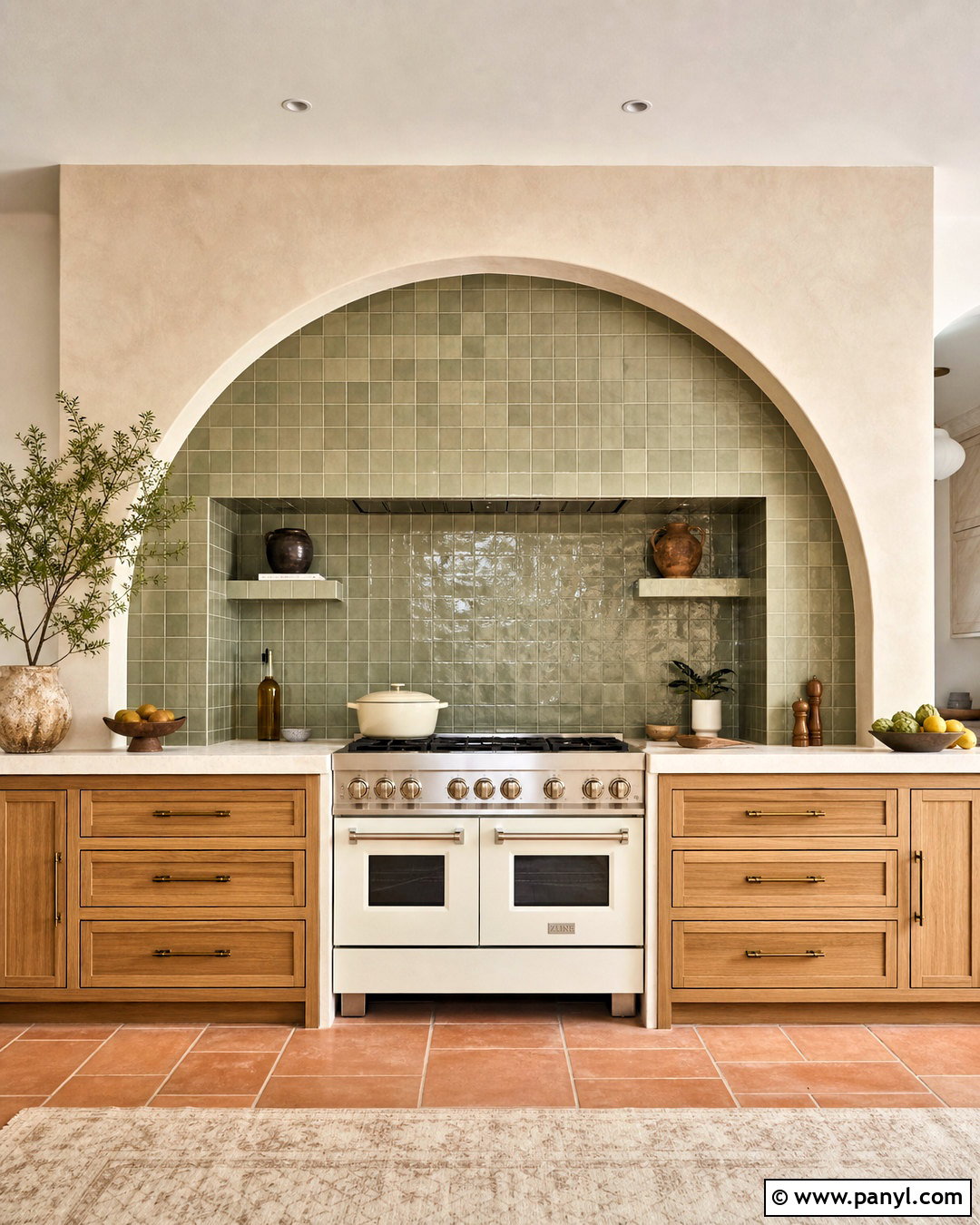
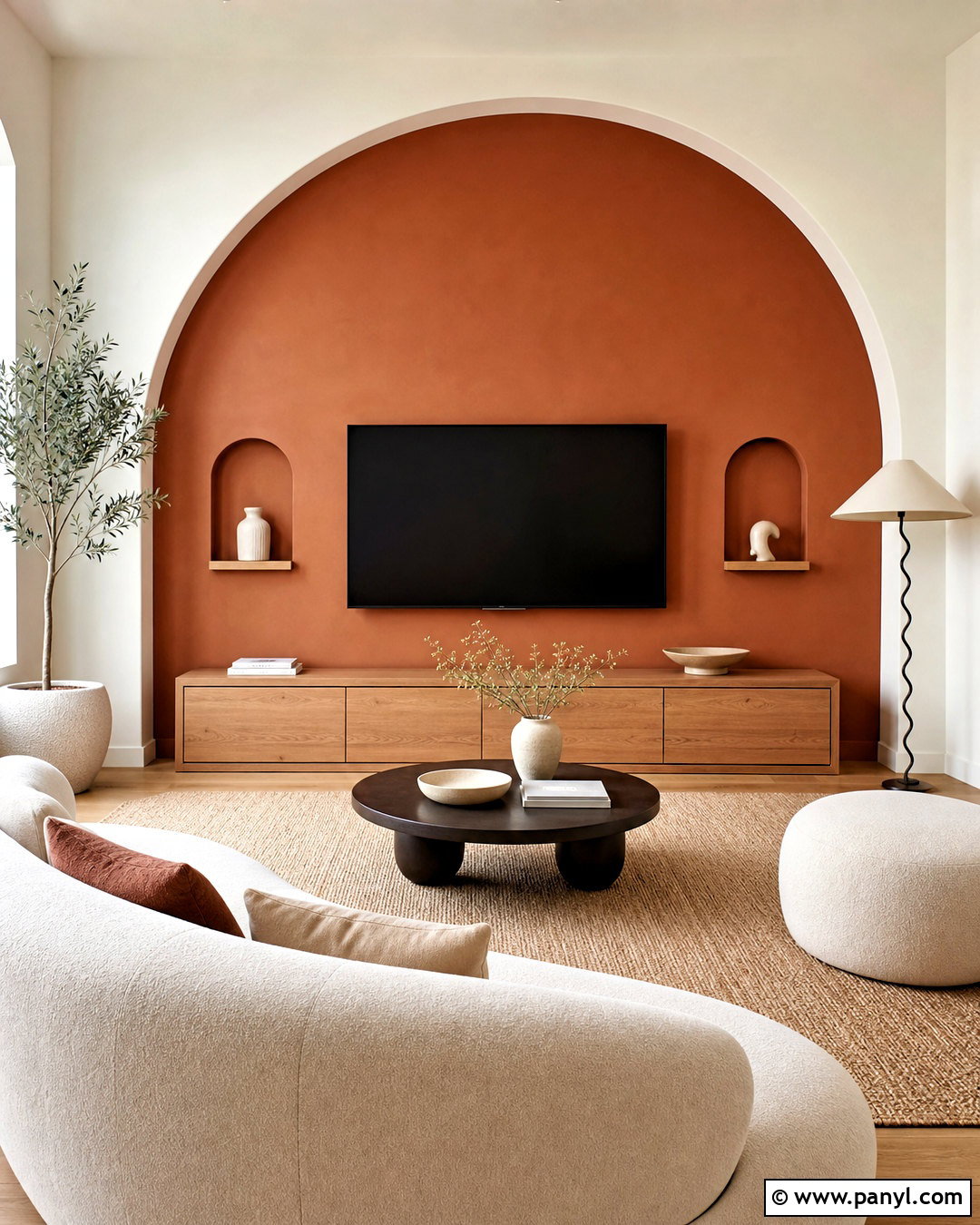
An arched range alcove creates an architectural feature that can anchor the entire kitchen. Frame the range with a broad plaster arch finished in warm white or sandy beige. Line the recessed cooking area with small glossy tiles in muted green, pale blue, or creamy taupe. Add shallow niches on both sides for oils, spices, and frequently used utensils. Natural oak cabinets, light limestone countertops, and bronze hardware reinforce the warm Mediterranean-inspired palette. Keep the hood concealed within the arch so the outline remains smooth and uninterrupted. Terracotta-look flooring and simple woven pendants can complete the room without competing with the focal point. Carefully plan the arch proportions around the range and ventilation system. A wide, shallow curve generally feels more balanced and usable than a narrow decorative opening.
19. Two-Tone Painted Kitchen Feature Wall
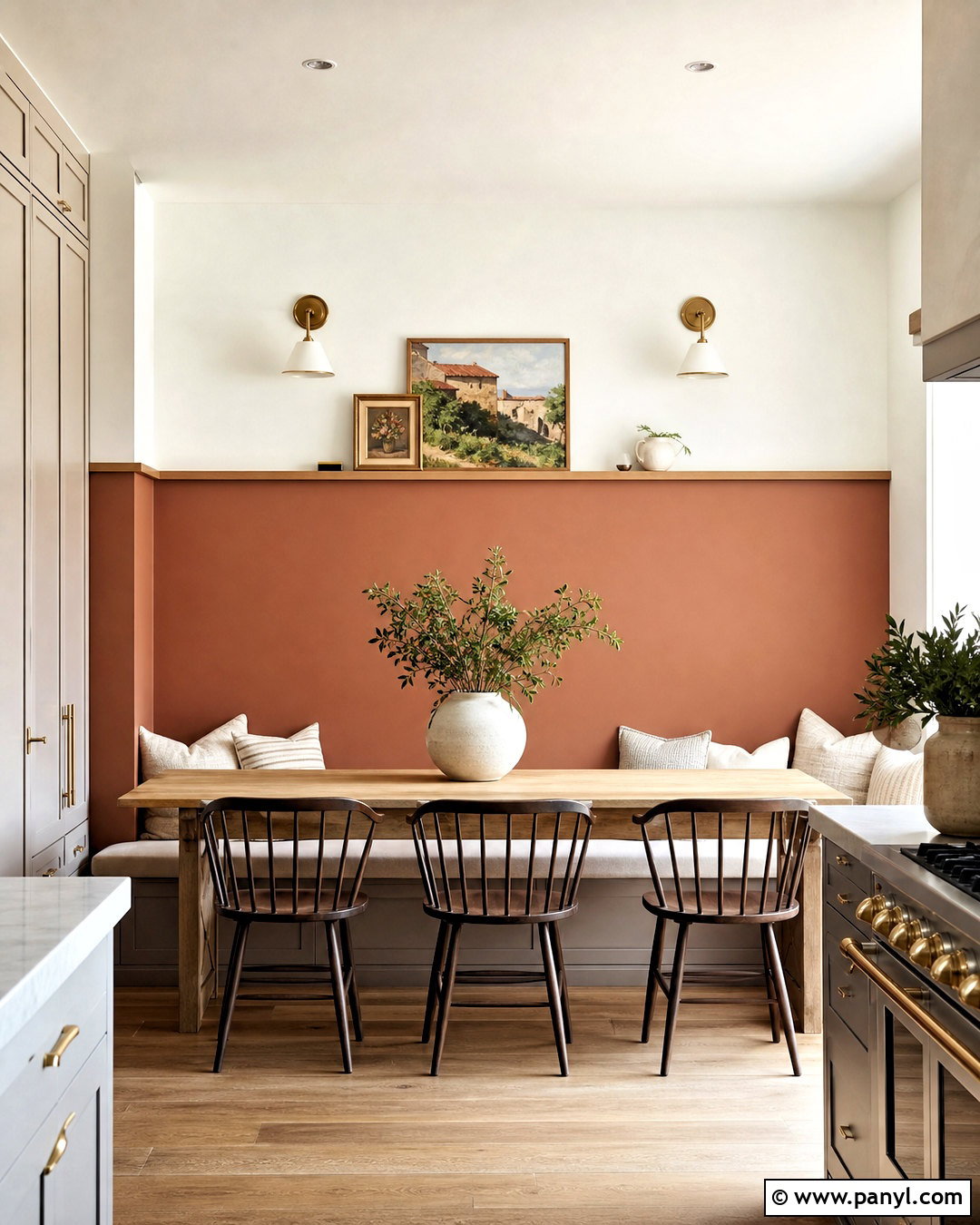
A two-tone painted feature wall offers an affordable update while giving a kitchen more structure. Paint the lower two-thirds of a breakfast nook in muted blue, olive green, or clay, then use warm white above. Separate the colors with a narrow oak picture ledge that can hold small framed prints and practical serving boards. Continue the lower color onto a built-in bench to create a connected, furniture-like effect. Add an oak dining table, cream upholstered cushions, and black or brass wall lights. Keep nearby cabinets neutral so the painted zone remains the focal point. Use washable satin or eggshell paint suited to busy areas. Aligning the color break with a window sill, shelf, or cabinet line helps the composition look intentional rather than like an arbitrary stripe across the room.
20. Mirror Kitchen Feature Wall
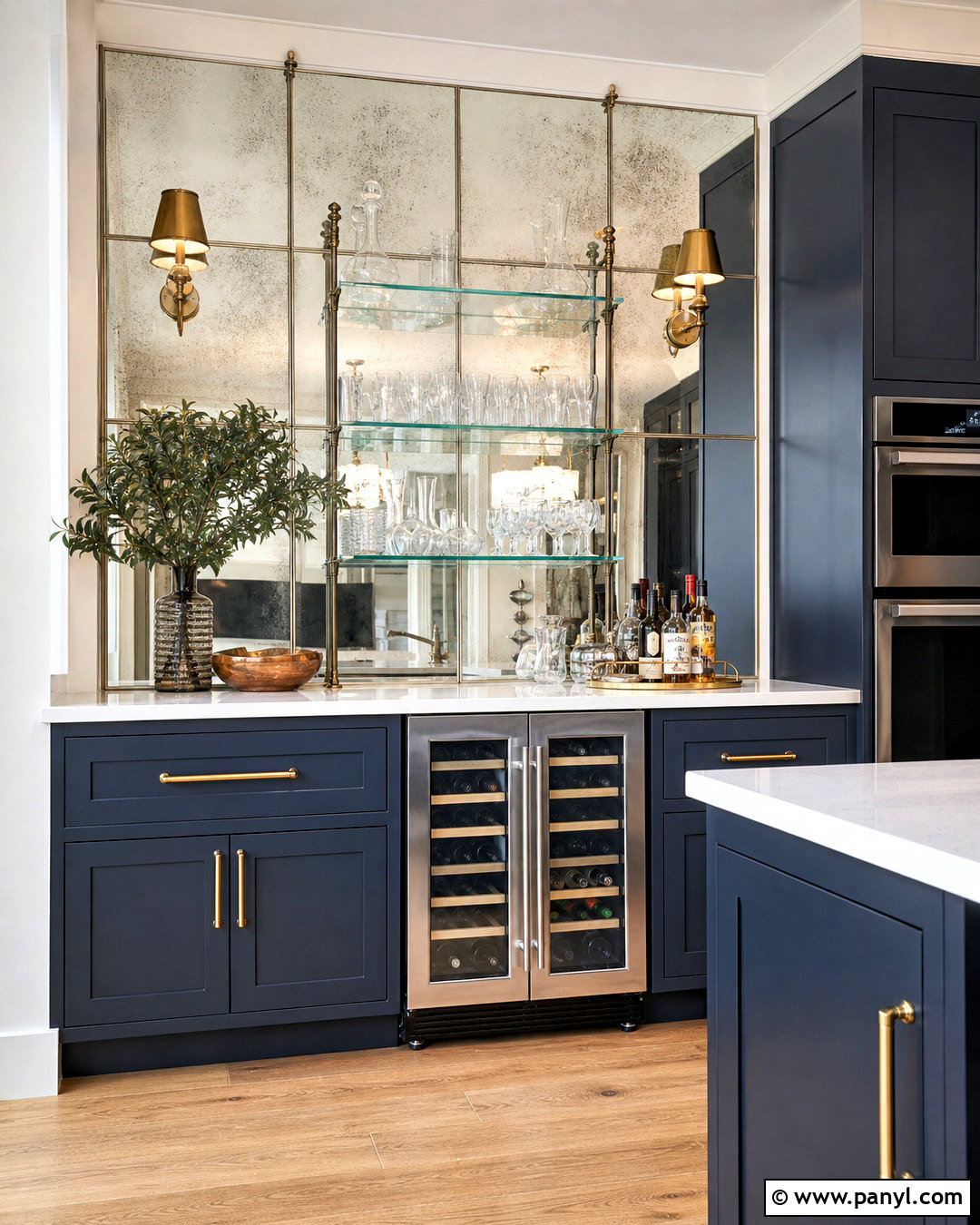
A mirrored feature wall can brighten a compact kitchen while giving it a more open appearance. Install antiqued mirror panels behind a dry bar, buffet, or shallow bank of base cabinets. The softly aged finish reduces glare and feels warmer than a perfectly clear mirror. Pair it with deep navy cabinetry, white quartz counters, brushed brass hardware, and medium oak flooring. Add two slim glass shelves for attractive dishes and serving pieces, then mount small brass sconces on either side. Keep the reflected area organized because countertop clutter will appear doubled. Framing the mirror panels with narrow painted trim gives the wall a finished architectural quality. Use safety-backed mirror appropriate for interior installations, and avoid placing large reflective panels directly behind a high-heat cooking surface unless the material and installation method are suitable.
Conclusion:
The strongest **kitchen feature wall ideas** combine beauty with a clear purpose. A dramatic stone slab can define the cooking area, while wallpaper or paneling can transform a breakfast nook. Tile provides a durable focal point, and shelving, peg rails, or a coffee station can add valuable function. Before choosing a design, consider moisture, grease, lighting, cleaning, and the wall’s visibility from nearby rooms. Repeat selected colors or materials elsewhere in the kitchen so the feature feels connected to the full space. Most importantly, allow one surface to lead while the surrounding cabinets, flooring, furniture, and decor provide balance. This approach creates a kitchen that feels expressive, coordinated, practical, and comfortable for everyday use.

Related Ideas and Inspiration:
Leave a Reply