
A thoughtfully designed TV wall can turn an ordinary living room into a polished, comfortable, and organized space. These 20 tv background wall design ideas combine attractive finishes with practical features such as hidden wiring, closed storage, display shelves, and balanced lighting. Some designs use warm wood and soft neutrals, while others introduce marble, brick, concrete, or bold paint. The right choice depends on your room size, viewing needs, existing furniture, and renovation budget. Before installing anything, check the television height, outlet locations, screen glare, ventilation, and access to cables. These details will help the finished wall look clean without making future maintenance difficult. Explore the complete, coordinated looks below with these **20 tv background wall design ideas**.
1. Modern Wood Slat TV Wall
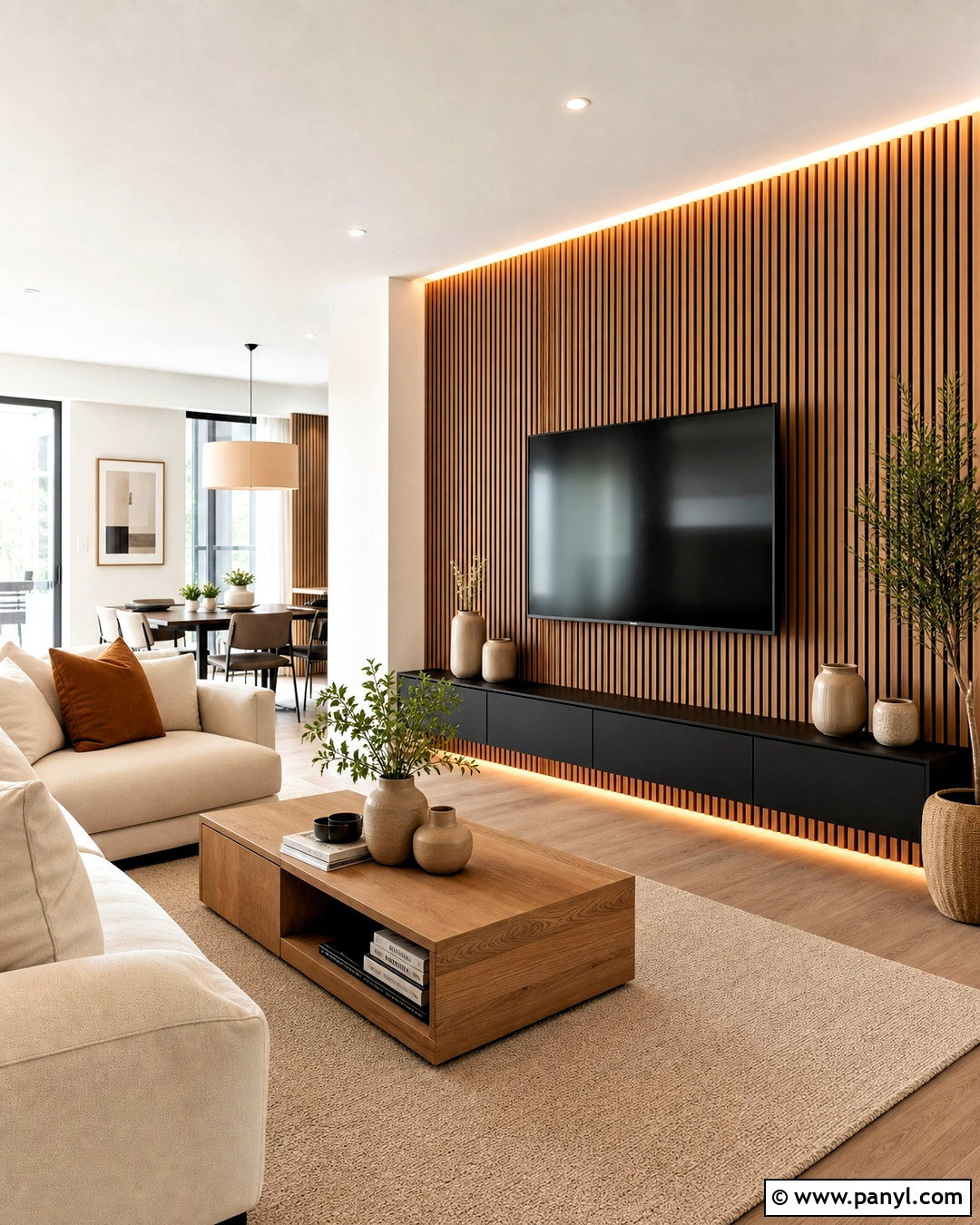
Vertical wood slats create a warm, structured background that makes a television feel integrated rather than randomly mounted. Cover the center portion of the wall with medium-toned oak slats over a dark backing, then place the TV at a comfortable seated viewing height. Add a long floating cabinet in matte black or warm taupe to store media equipment and everyday clutter. Soft LED lighting behind the panel highlights the texture without creating distracting glare. Complete the room with a cream sofa, a low oak coffee table, and a textured beige rug. Keep decorative objects simple, using two ceramic pieces and a small plant. This complete TV wall works especially well in modern, Scandinavian, and Japandi living rooms.
2. White Marble TV Wall
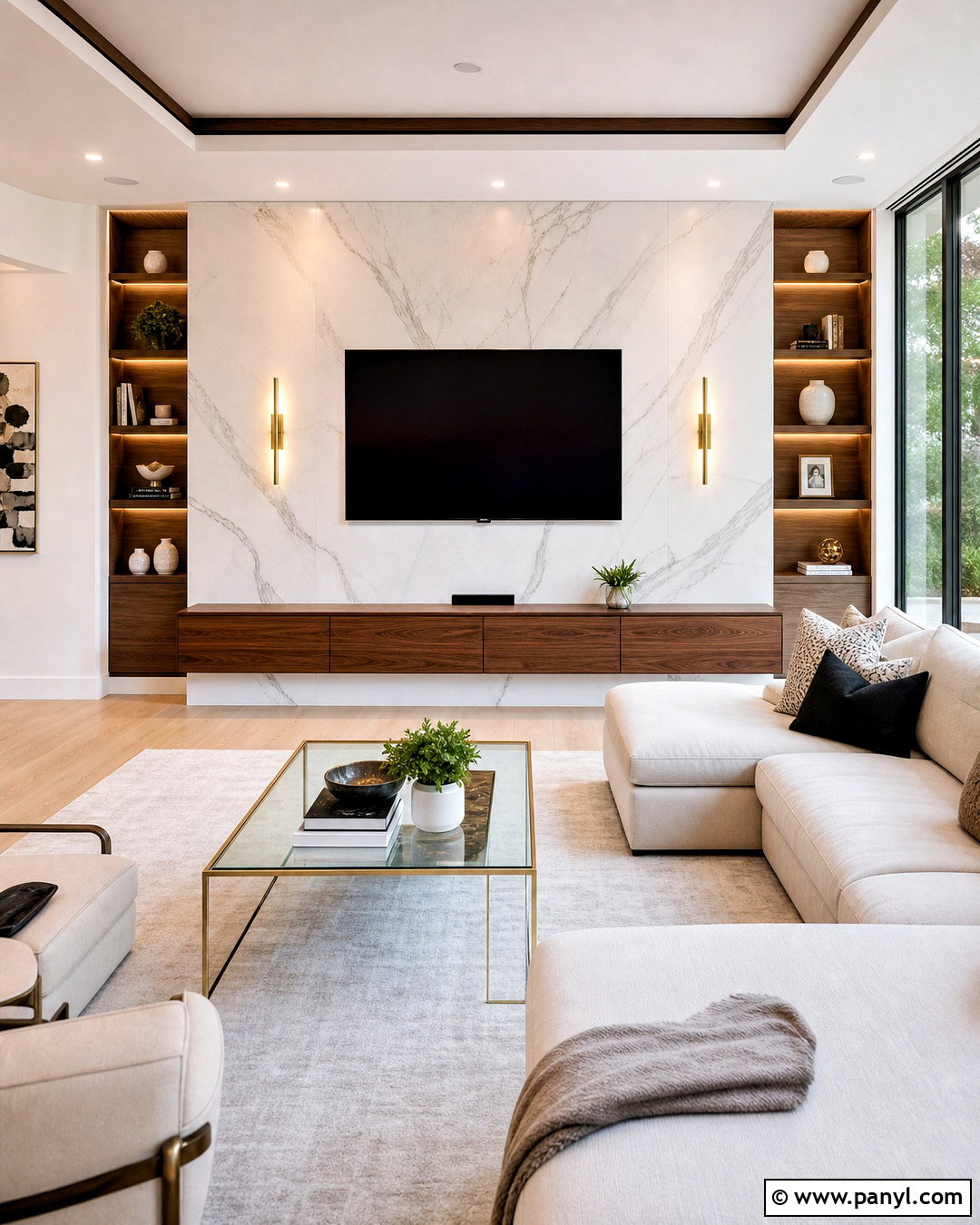
A white marble TV wall gives the living room a clean, refined focal point while keeping the color palette bright. Choose large porcelain slabs with subtle gray or warm beige veining for a realistic stone appearance and easier maintenance. Mount the television in the center, allowing enough visible marble around every side to frame it properly. Install a low floating cabinet in walnut or soft greige to warm the cool surface. Slim brushed brass sconces can be positioned beyond the screen to create symmetry without reflecting directly on it. Finish the space with an ivory sectional, glass coffee table, and light oak flooring. Use only a few accessories so the veining remains visible and the television wall does not feel overly formal or crowded.
3. Black Accent TV Wall
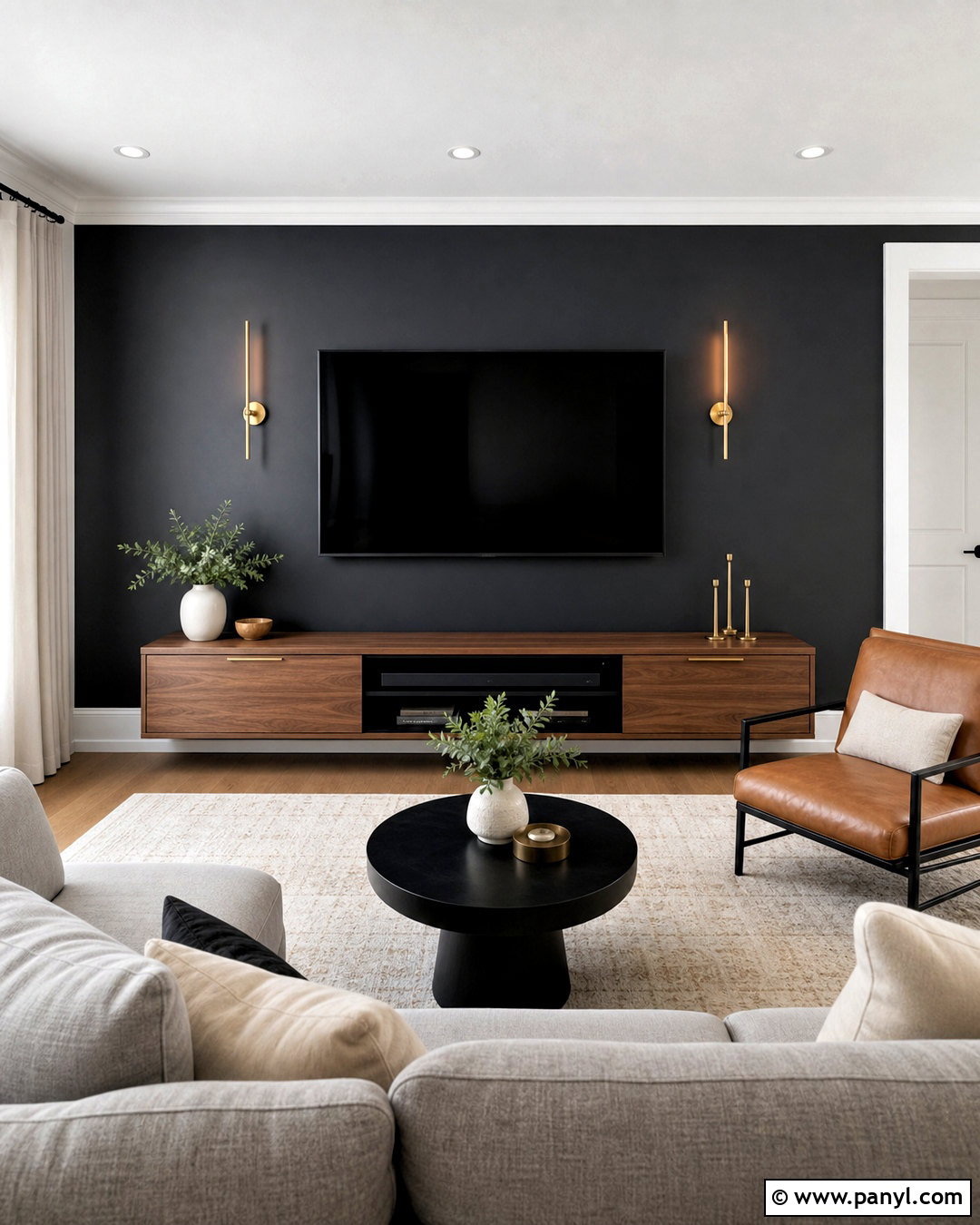
A black TV wall can visually soften the appearance of a dark screen when it is turned off. Paint the entire wall in matte charcoal black, including nearby trim or built-in cabinetry, for a seamless result. Add a long walnut console beneath the television to introduce warmth and prevent the design from feeling flat. Closed cabinets hide electronics, while one open shelf provides a place for books and sculptural decor. Balance the dark background with a light gray sofa, cream curtains, and a pale textured rug. A brass floor lamp and cognac leather chair can add richer color. This dramatic setup works best when the room receives good natural light and the surrounding walls remain soft white, warm greige, or light beige.
4. Floating Panel TV Wall
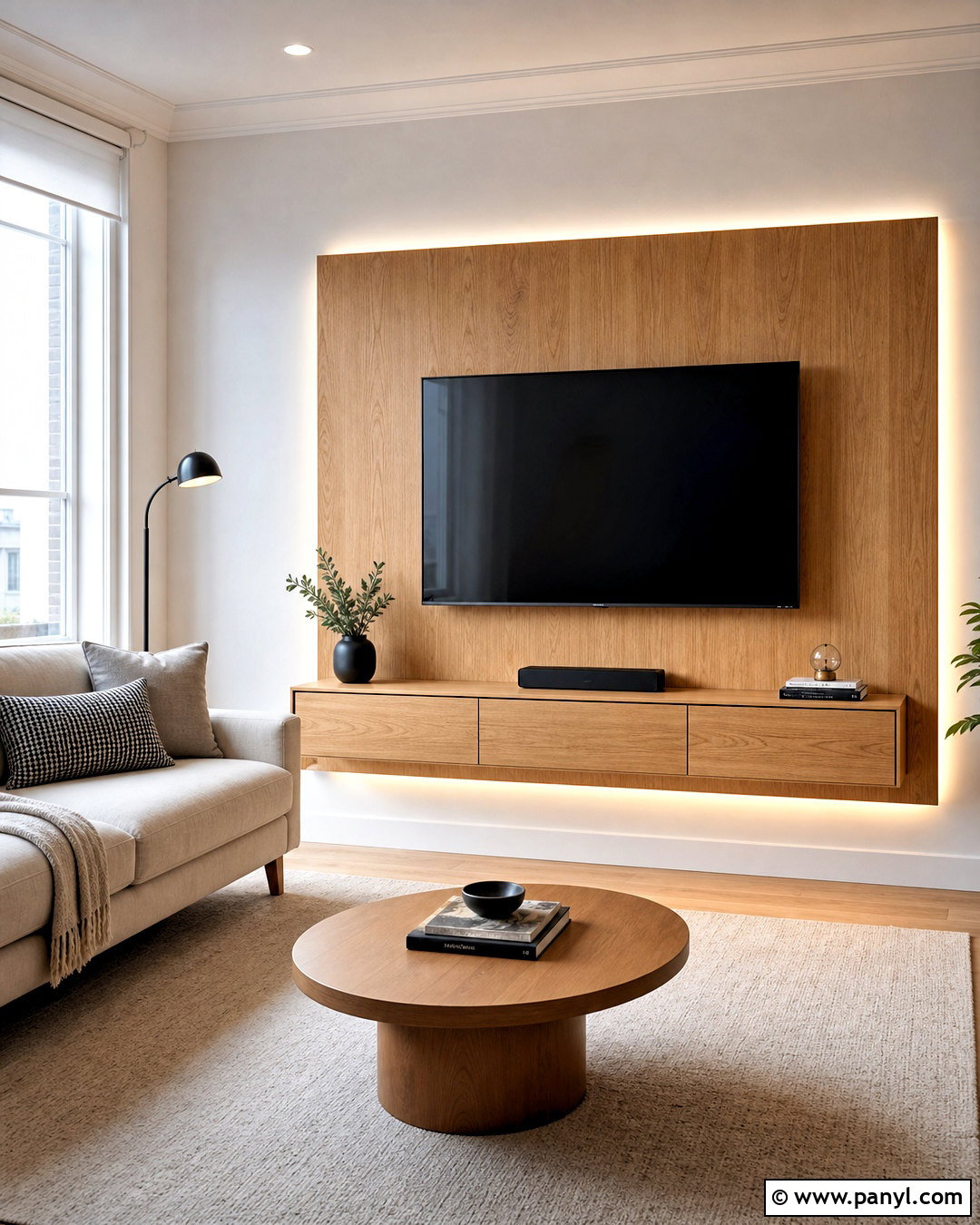
A floating TV panel creates depth without requiring a large built-in entertainment center. Use an oversized rectangular panel finished in warm oak, walnut veneer, or a smooth greige laminate. Mount it several inches away from the wall so cables and electrical components can remain hidden behind it. A soft perimeter glow will emphasize the floating effect, but the lighting should be diffused and dimmable. Install a matching low cabinet beneath the screen, leaving open floor space to make the room feel larger. Pair the wall with a compact neutral sofa, rounded coffee table, and simple floor lamp. This streamlined arrangement is particularly useful in apartments because it provides a strong focal point without taking up valuable space or making the living room feel heavy.
5. Built In TV Wall Storage
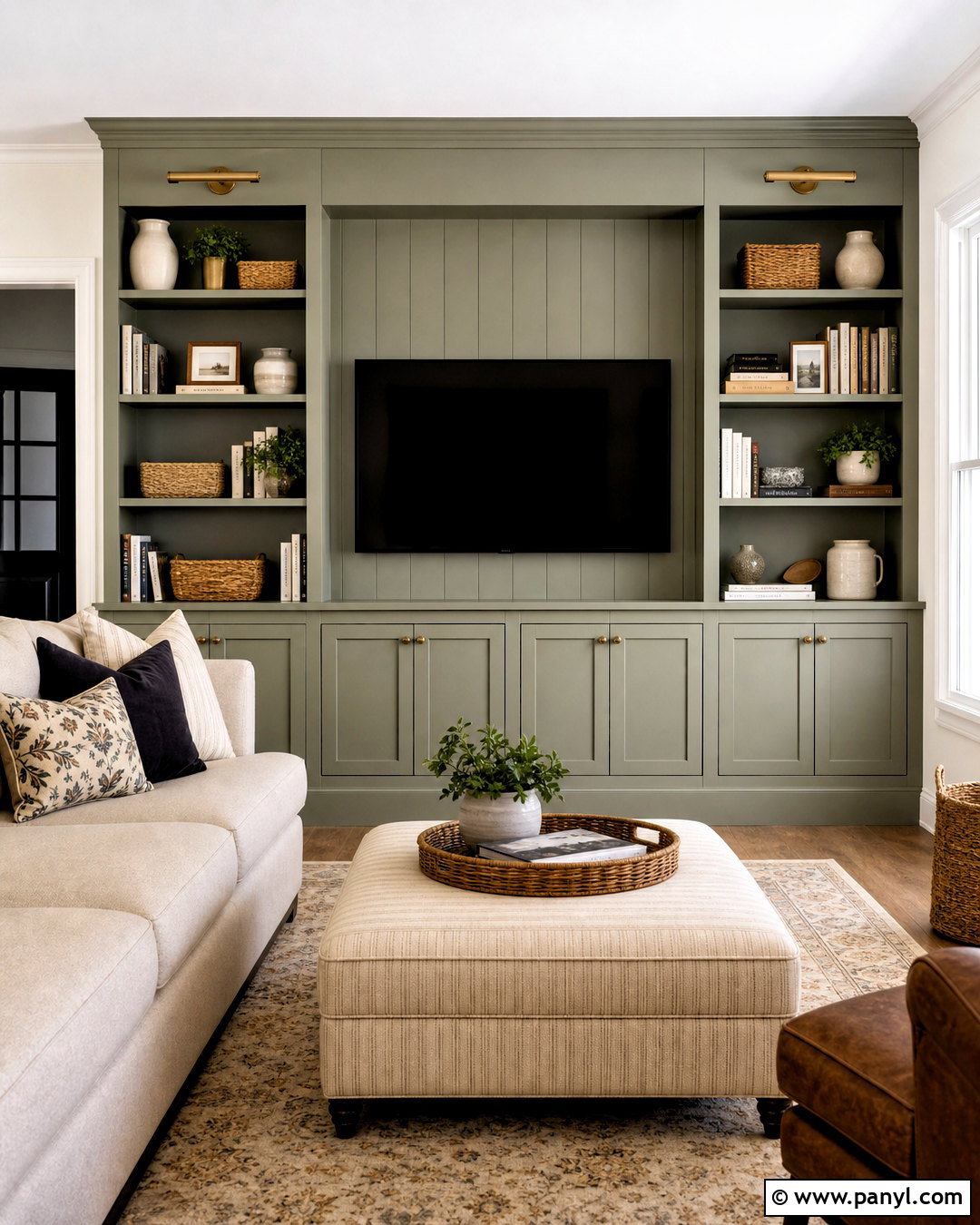
Floor-to-ceiling storage turns a TV wall into a hardworking feature for a busy family room. Center the television above a wide bank of closed base cabinets, then add bookshelves on both sides. Paint the entire unit soft greige, muted sage, or creamy white so it appears connected to the architecture. Adjustable shelves can hold books, baskets, framed photographs, and pottery, while drawers conceal remotes, toys, and gaming accessories. Leave breathing room around the television instead of filling every available inch. Picture lights above the shelves add a finished appearance and useful evening illumination. Complete the room with a durable sectional, washable rug, and upholstered ottoman. Repeating the cabinetry color in pillows or curtains will help the large installation feel balanced throughout the space.
6. TV Wall With Electric Fireplace
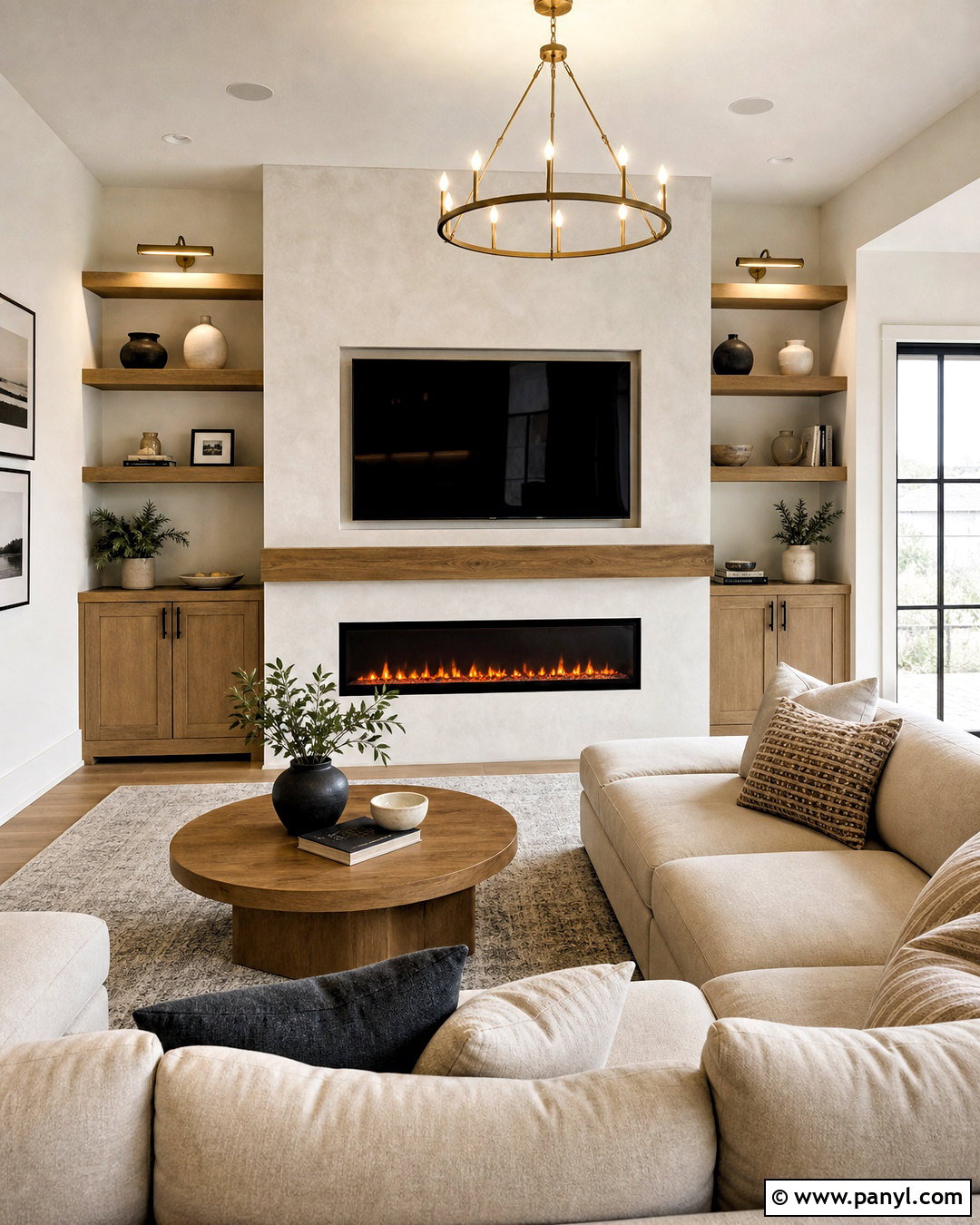
Combining a television with a linear electric fireplace creates one organized focal point, especially in a room with limited wall space. Build a wide floor-to-ceiling surround in smooth off-white plaster, pale stone, or large-format porcelain. Position the fireplace low enough to maintain comfortable television placement, and follow the manufacturer’s required clearances. A substantial mantel shelf can provide visual separation between the screen and heat source. Add low cabinets on each side for concealed storage, then use simple floating shelves above them to balance the composition. Furnish the room with a deep beige sectional, round wood coffee table, and soft wool-look rug. Keep decorations restrained so the flames, textured surround, and television do not compete for attention within the same feature wall.
7. Fluted Panel TV Wall
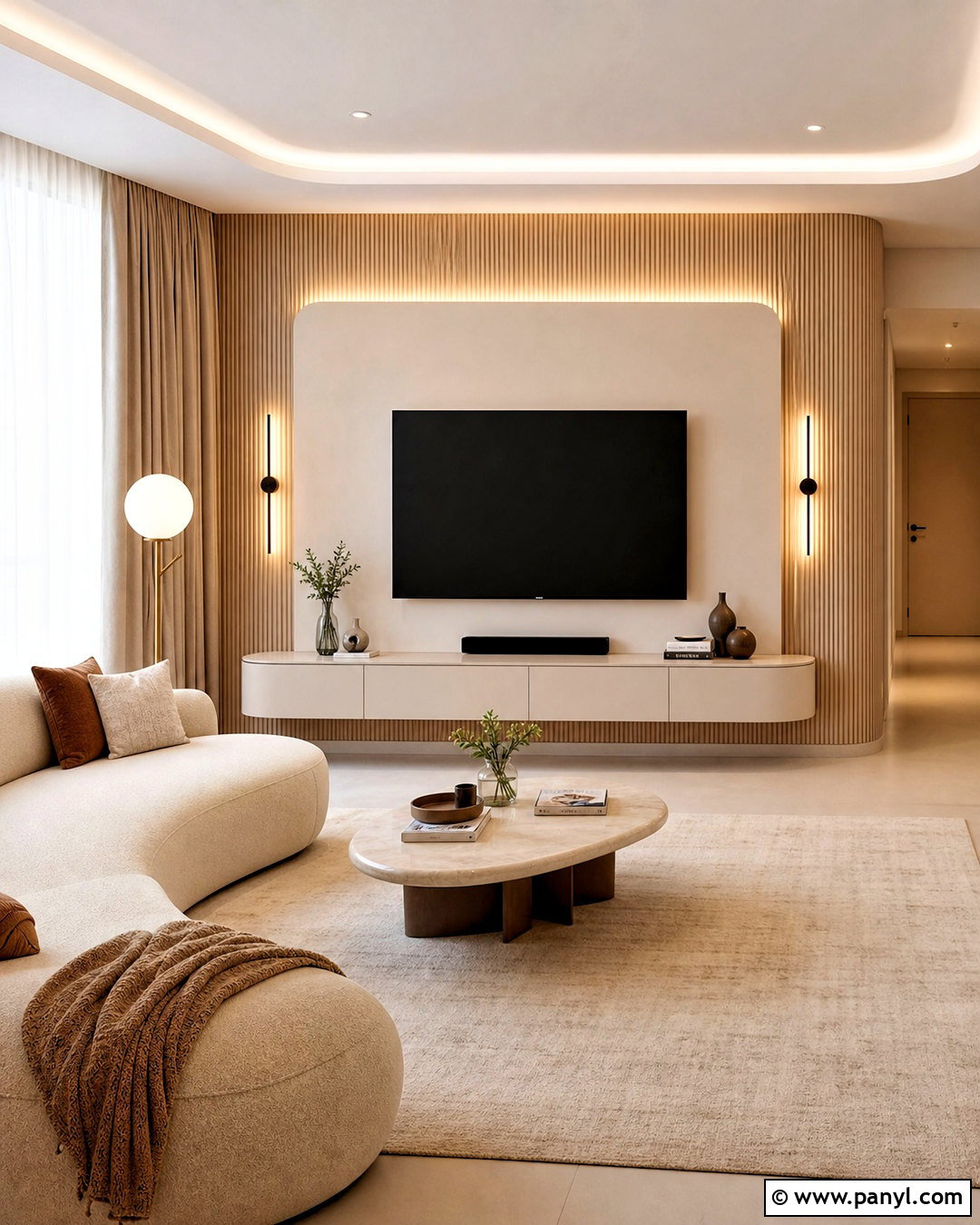
Fluted wall panels offer a softer alternative to narrow wood slats because their rounded grooves create gentle shadows. Cover the wall with paintable fluted panels in warm beige, muted clay, olive green, or creamy white. Place a smooth rectangular backing panel behind the television to prevent the textured lines from feeling too busy around the screen. A curved floating console in a matching color will continue the subtle, sculptural look. Add small wall sconces at the outer edges and keep electrical wiring fully concealed. Rounded furniture works especially well here, including a curved ivory sofa, oval coffee table, and globe floor lamp. Use linen curtains and a low-pile neutral rug to complete a modern living room that feels detailed, cohesive, and comfortable rather than overly decorative.
8. Concrete TV Wall
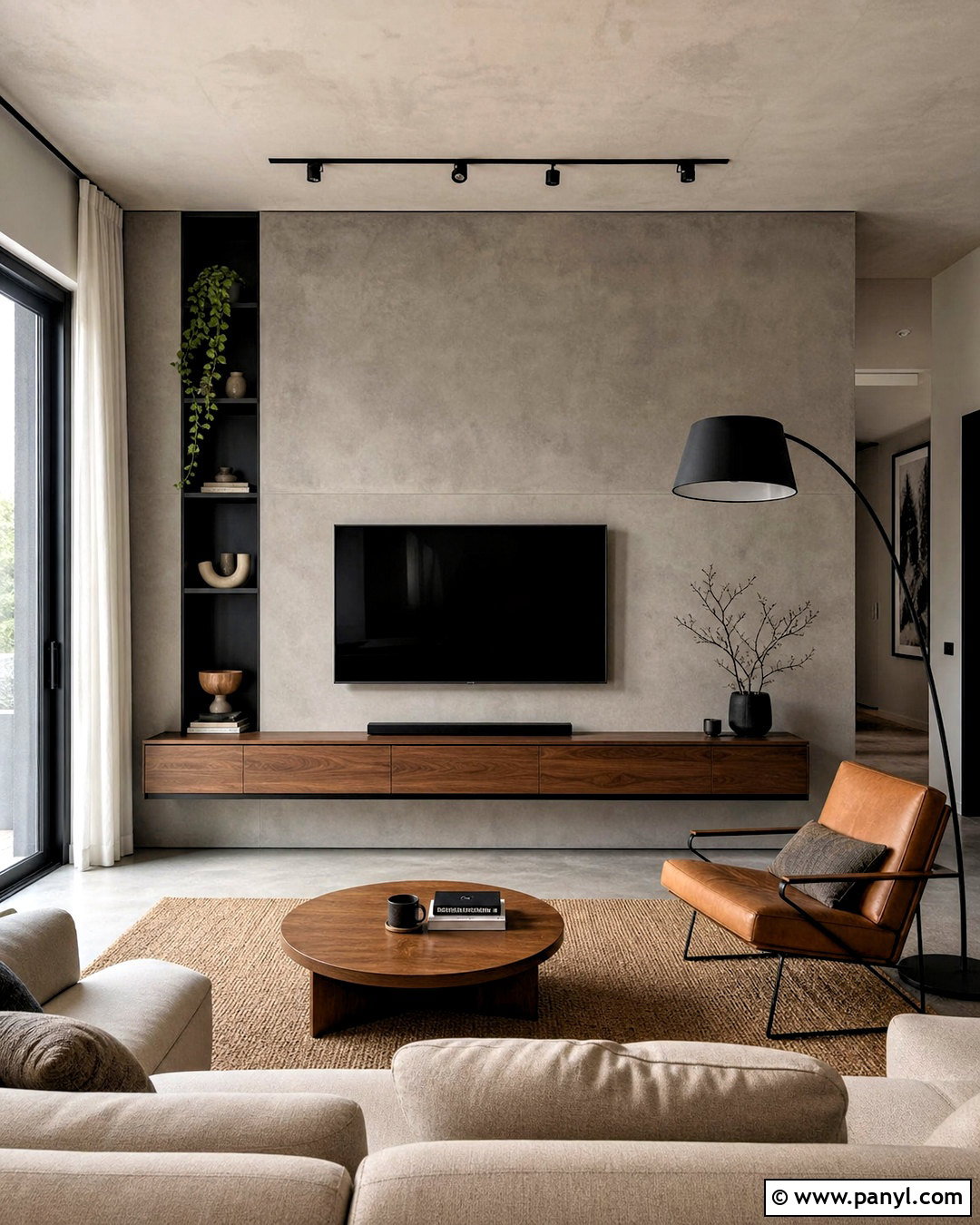
A concrete-effect TV wall gives a modern living room an understated architectural character. Instead of raw concrete, consider smooth microcement, limewash-style paint, or realistic concrete-look porcelain for a more controlled finish. Use a medium warm gray rather than a cold blue-gray so the room remains welcoming. Mount the television above a long black or walnut floating console with handle-free doors. Add one narrow vertical shelf at the side for books and ceramics, but leave most of the surface open. Warm the design with a caramel leather chair, oatmeal sofa, oak coffee table, and woven rug. Matte black lighting and window frames can repeat the darker details. The finished wall should feel simple and tactile, with careful proportions replacing unnecessary decoration or excessive industrial accessories.
9. Brick TV Wall
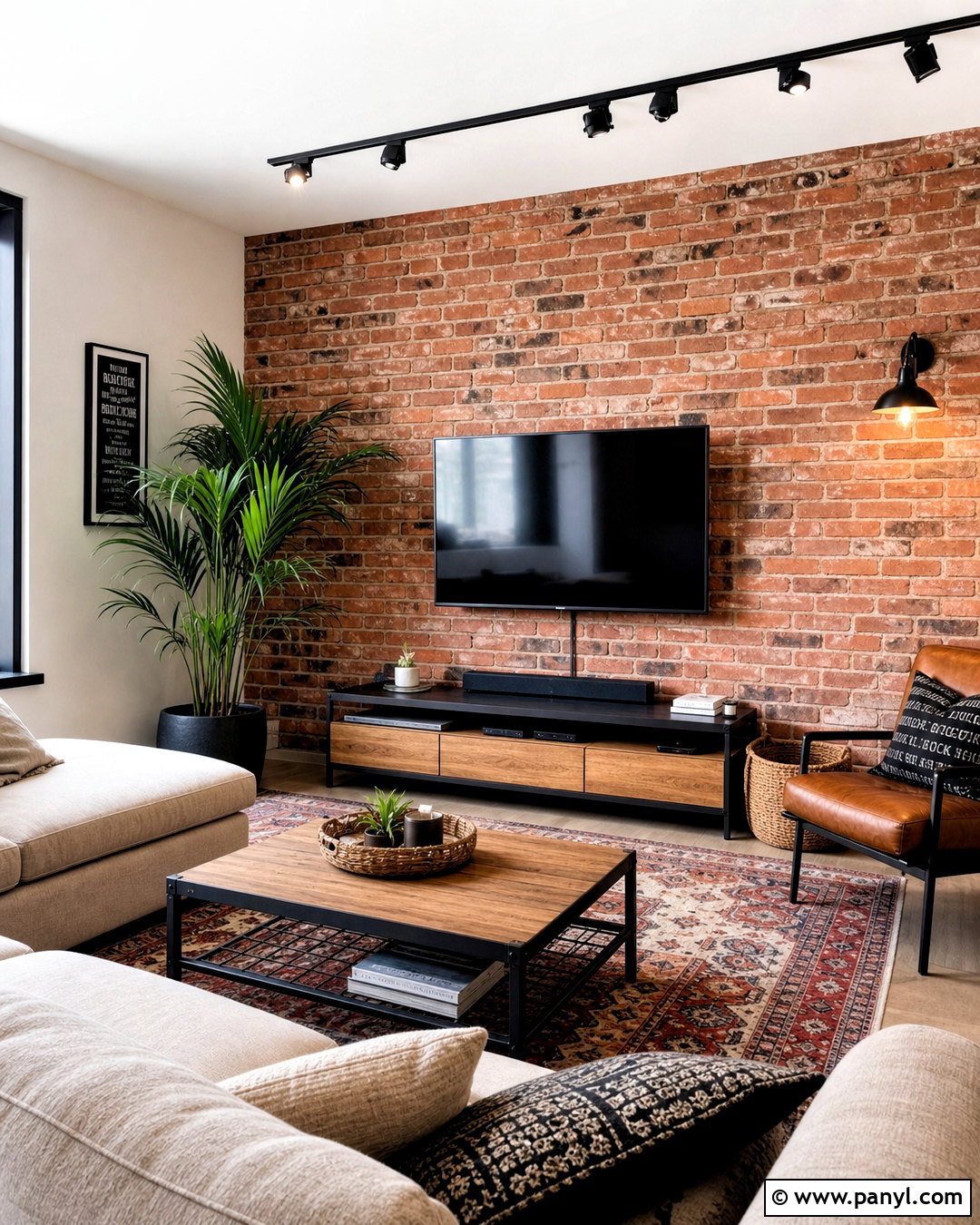
An exposed brick TV wall brings texture and relaxed character to a living room, but the surrounding finishes should keep it from becoming visually heavy. Choose warm red reclaimed brick for an industrial look or whitewashed brick for a lighter farmhouse-inspired room. Mount the television on a secure bracket and route cables through a concealed surface channel painted to match the masonry. Place a low black metal and wood console underneath, leaving enough width beyond the screen for balance. Add a warm beige sofa, cognac chair, vintage-style rug, and simple black lighting. One tall plant can soften the hard surface. Avoid covering the brick with numerous signs or small decorations. Its natural variation already provides enough detail to make the complete TV background feel distinctive and inviting.
10. Vertical Panel TV Wall
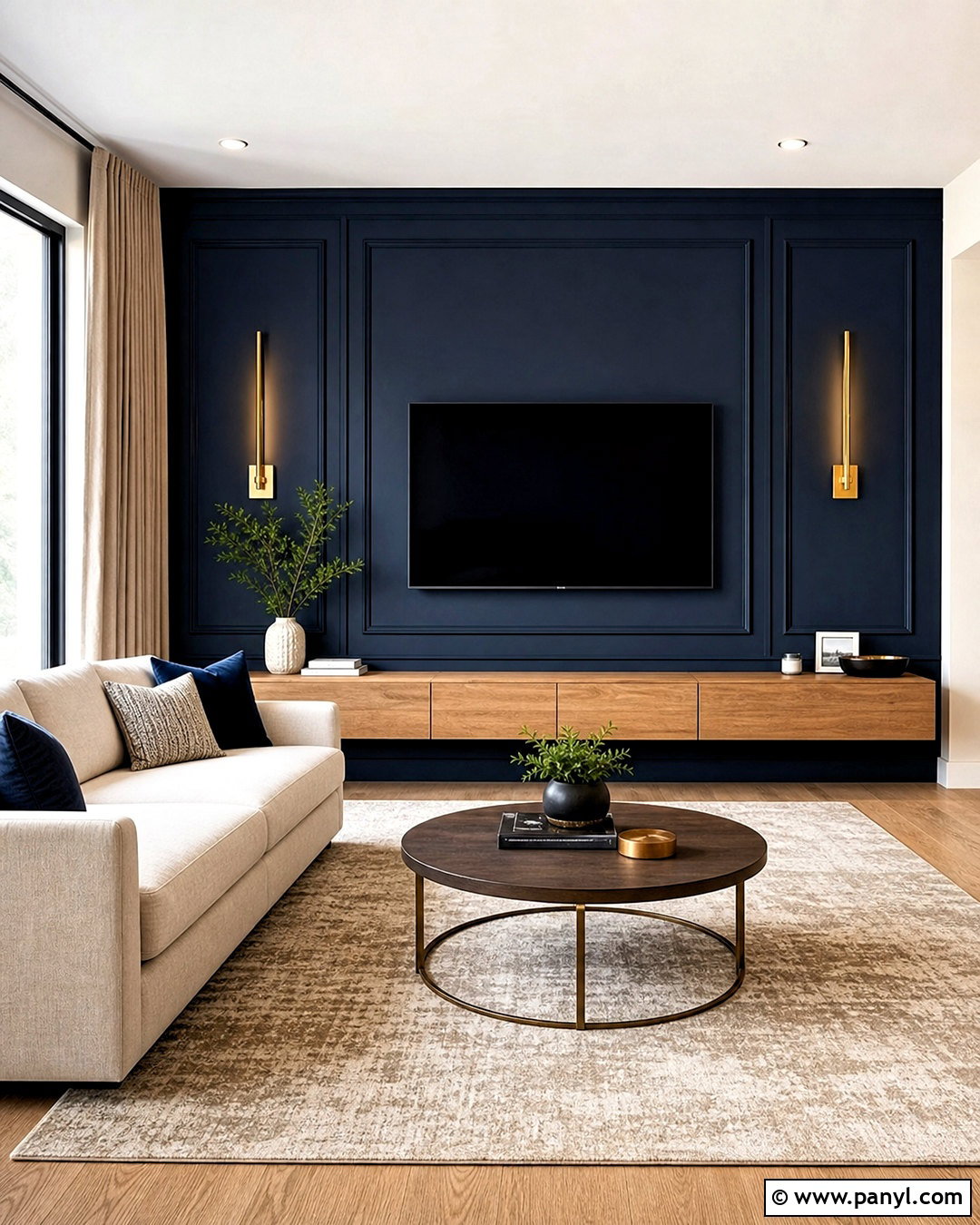
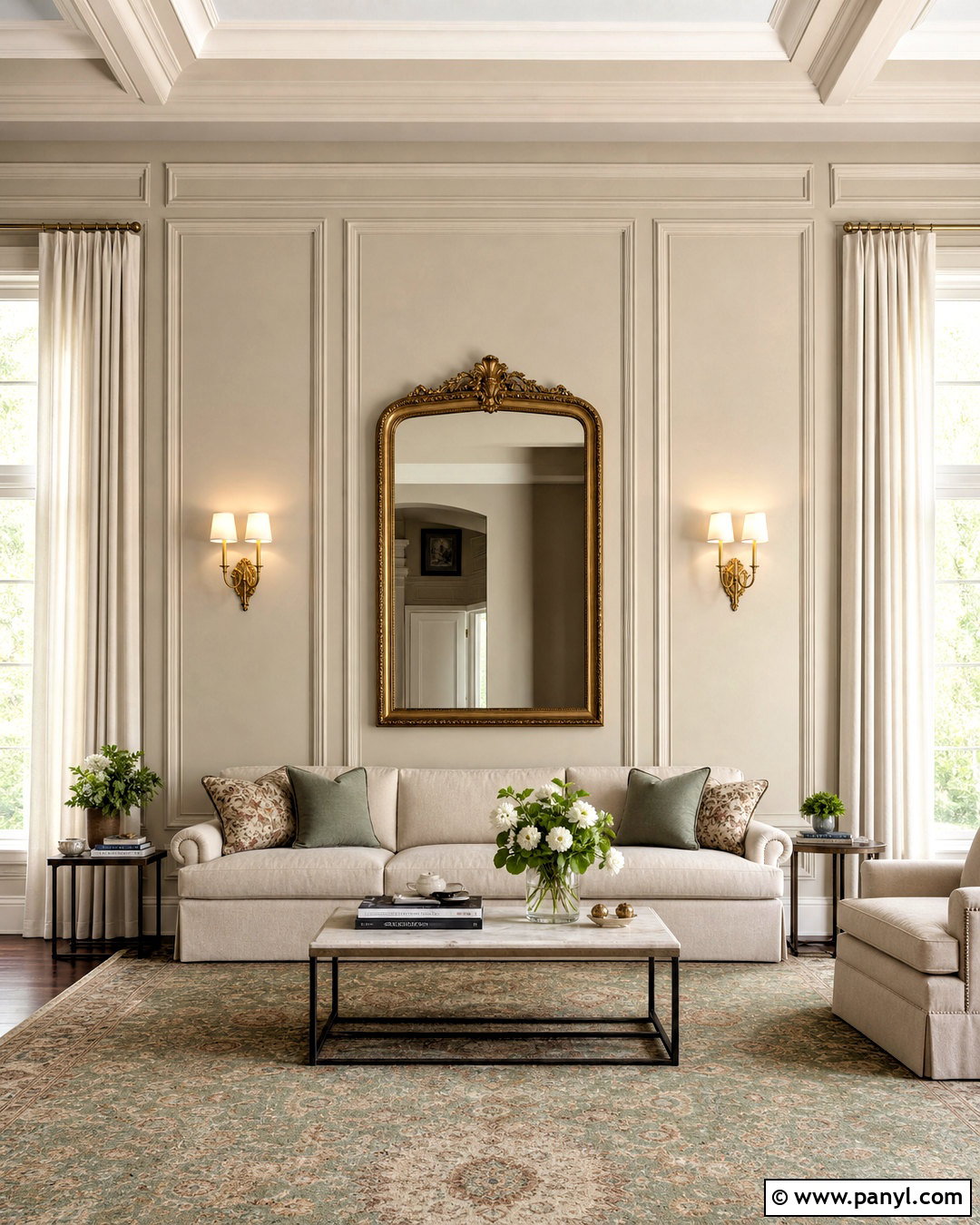
Vertical rectangular panels can make a low ceiling appear taller while giving the television a clean architectural frame. Create the panels with thin wood molding or MDF strips, then paint everything in one color, such as soft taupe, deep navy, dusty green, or warm white. Center the television within the widest panel and install a long floating cabinet beneath it. Choose a cabinet in matching paint for a seamless look or natural oak for gentle contrast. Place slim sconces within the outer panels to strengthen the symmetry. Complete the room with a streamlined sofa, solid-color curtains, and a large rug that repeats the wall tone. The molding should remain simple and evenly spaced so the screen stays visually dominant without the overall background looking plain or unfinished.
11. Small Living Room TV Wall
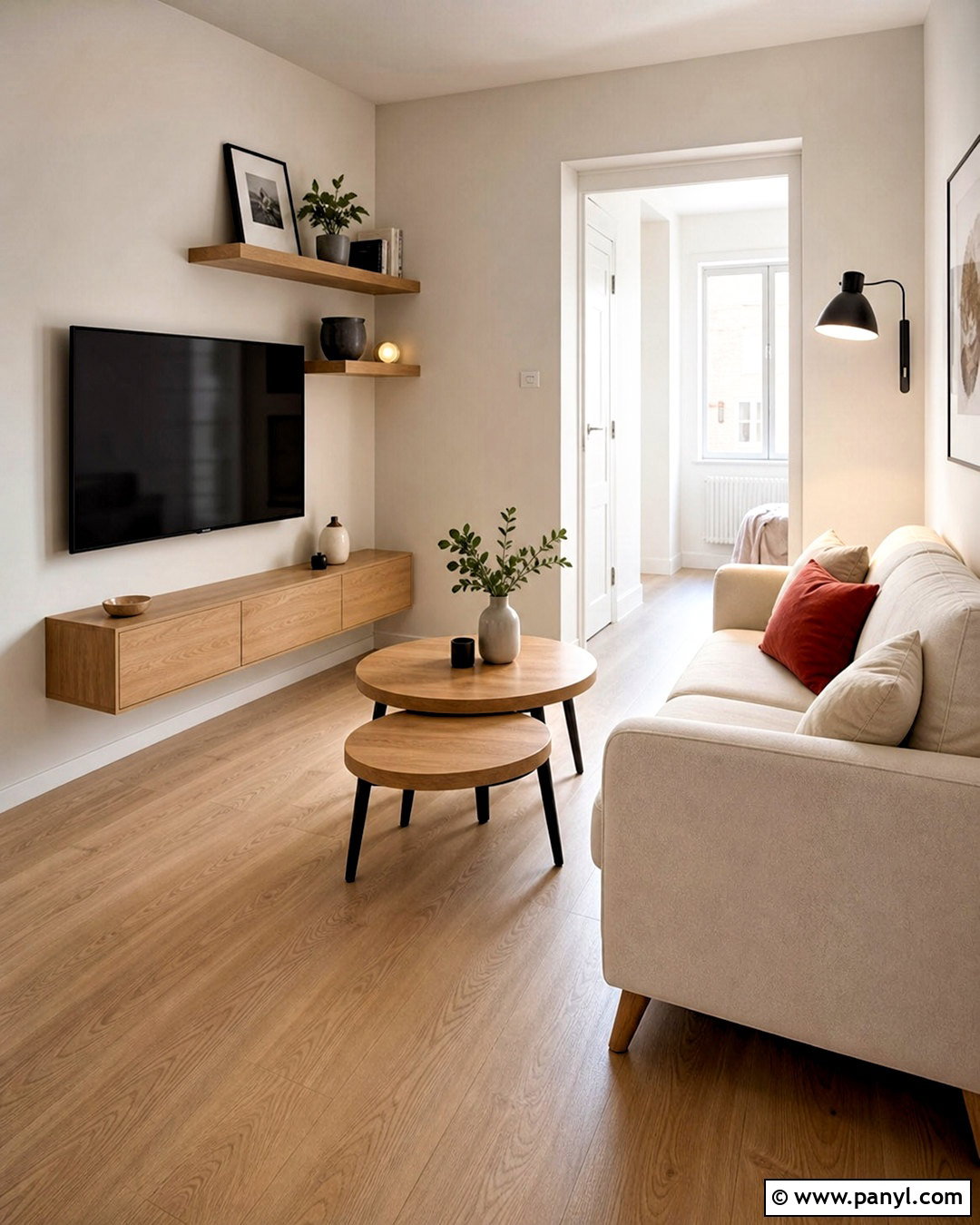
A small living room needs a TV wall that provides function without reducing visual space. Paint the wall a light warm neutral and mount the television above a shallow floating cabinet. Choose a cabinet wider than the screen, with closed doors for cables, remotes, and small electronics. Add two short floating shelves to one side rather than surrounding the television with bulky storage. Keep their accessories limited to a trailing plant, a few books, and one ceramic object. Light oak flooring, a compact cream sofa, and nesting coffee tables will reinforce the open feeling. Use wall-mounted lighting instead of a large floor lamp near the media area. This complete arrangement delivers storage and personality while preserving clear walking paths and preventing a modest room from feeling cramped.
12. Farmhouse TV Wall
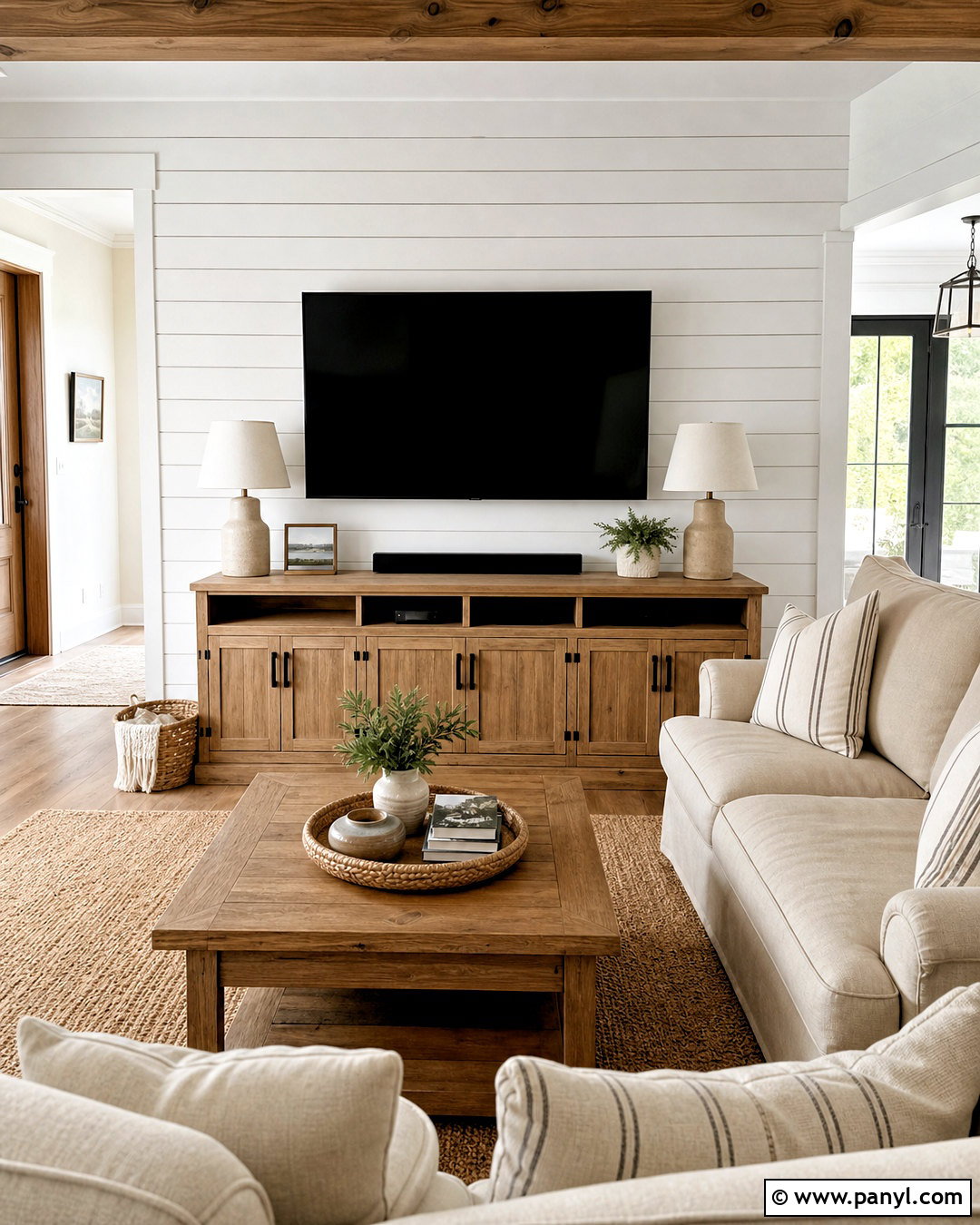
A farmhouse TV wall feels most convincing when rustic materials are balanced with simple, updated furniture. Use white-painted shiplap across the background and anchor it with a medium-toned oak console. Black hardware, cabinet pulls, and television framing will add crisp contrast. Instead of filling the wall with decorative signs, place one substantial woven basket beside the console and a pair of neutral ceramic lamps at the ends. A slipcovered beige sofa, striped linen pillows, oak coffee table, and natural jute-blend rug complete the room. If additional storage is needed, install matching base cabinets with open shelves positioned away from the screen. The overall palette should include warm white, tan, black, and natural wood, creating a relaxed farmhouse setting that still looks clean and current.
13. Mid Century Modern TV Wall
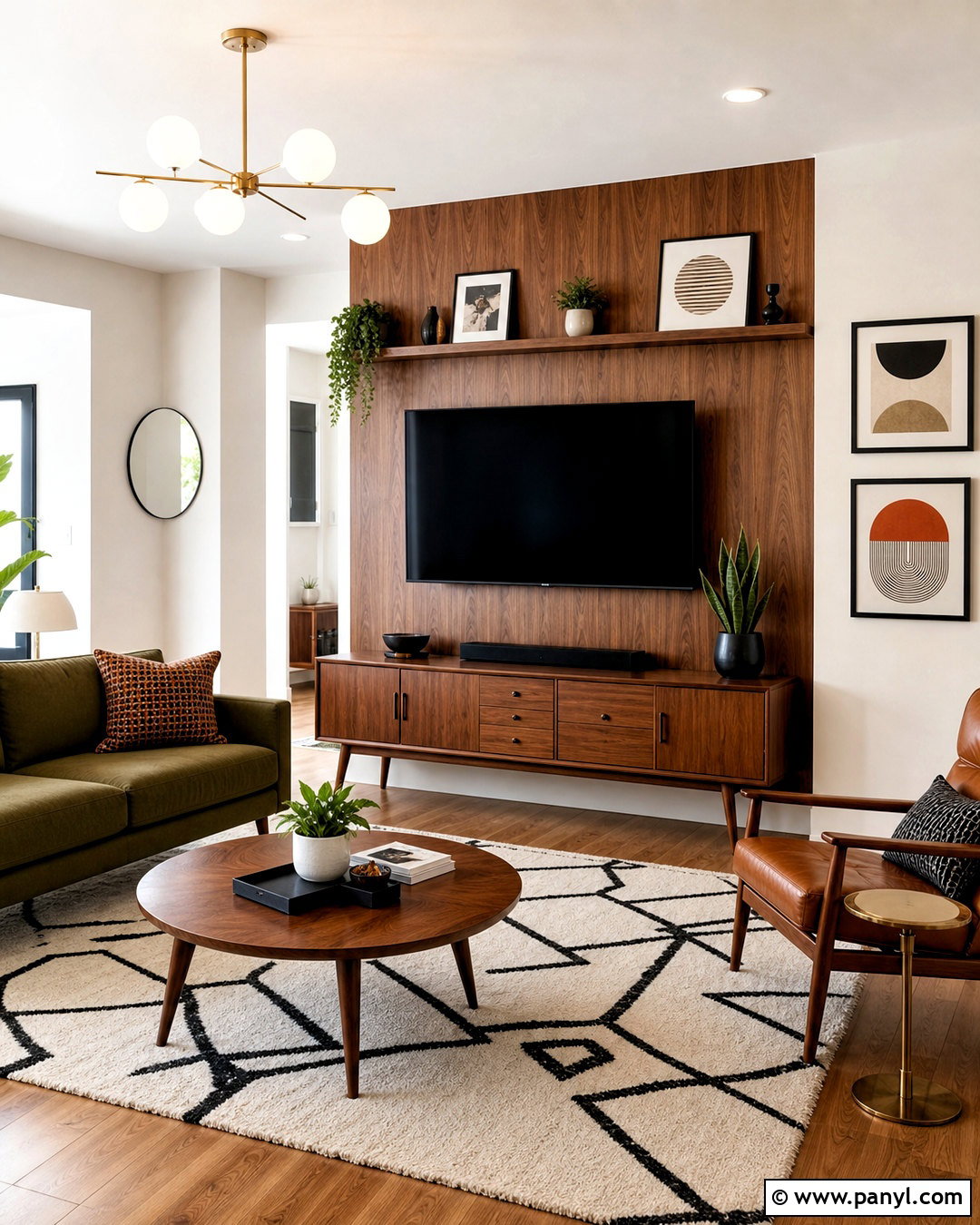
Warm walnut and low horizontal lines make a TV wall feel naturally connected to mid-century modern furniture. Cover part of the wall with walnut veneer panels, leaving the remaining surface painted warm white. Place the television slightly above a long, low console with tapered legs and sliding doors. A narrow picture ledge positioned away from the screen can display two graphic prints and a small ceramic piece. Add a caramel leather lounge chair, olive green sofa, geometric wool rug, and round wood coffee table. Globe lighting in aged brass will support the period influence without turning the room into a theme. Keep cables hidden inside the console and avoid tall storage towers. The finished space should feel open, functional, warm, and grounded by strong horizontal proportions.
14. Scandinavian TV Wall
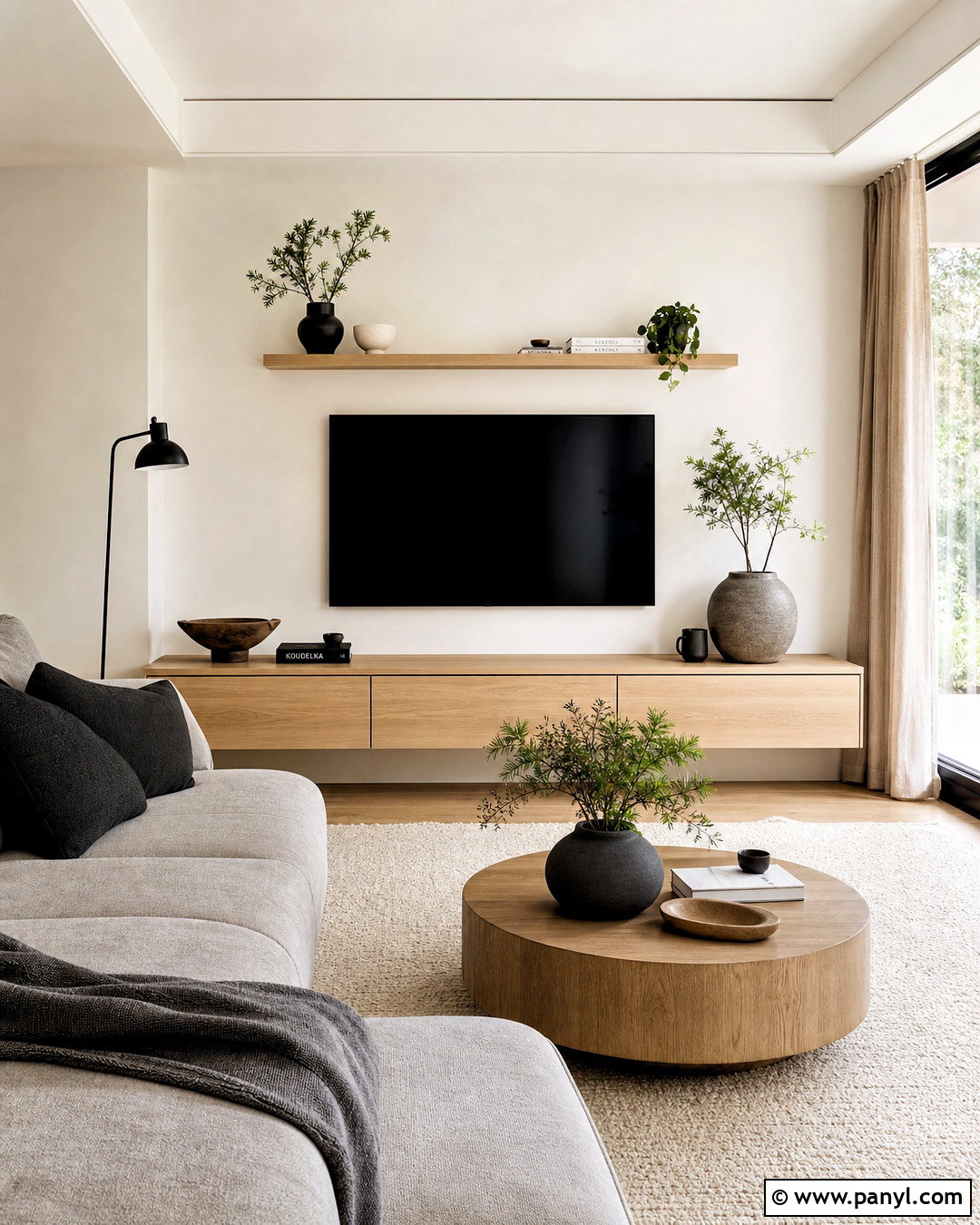
A Scandinavian TV wall combines pale materials, efficient storage, and an uncluttered layout. Start with a soft white or very light greige wall, then mount the television above a low white oak cabinet. Choose push-to-open doors so the cabinet front remains smooth and simple. Add one pale oak shelf above and to the side of the screen, using it for a small plant, two books, and neutral pottery. A light gray sofa, natural linen curtains, and a cream looped rug will keep the room bright. Introduce contrast through a black floor lamp and a few charcoal cushions. Warm white lighting beneath the console can create depth in the evening. Every object should serve a purpose, allowing texture and natural wood grain to provide most of the visual interest.
15. Dark Green TV Wall
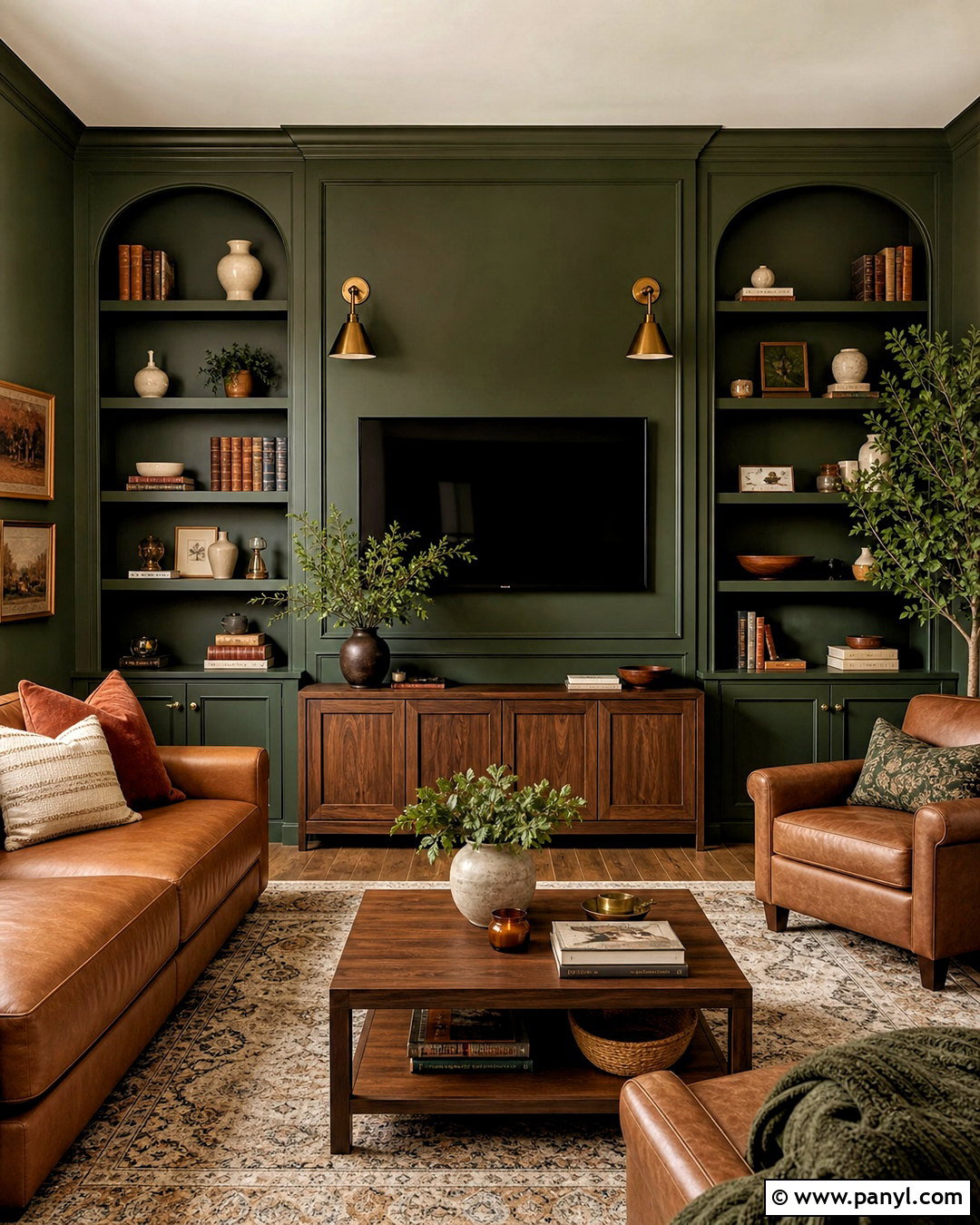
Deep green paint gives a TV wall a rich, calming presence while helping the black screen blend into its surroundings. Choose forest green, muted olive, or deep sage with a matte finish. Extend the color across the entire wall and any built-in shelves for a more immersive appearance. Place a low walnut console below the television and use antique brass sconces on either side to add warmth. Style the shelves with cream ceramics, aged books, and small framed artwork, keeping plenty of open space. A tan leather sofa, patterned neutral rug, and rust-colored pillows can complete the coordinated palette. Bring in one leafy plant, but avoid crowding the wall with greenery. The result feels grounded and inviting while offering more character than a standard neutral background.
16. Geometric Molding TV Wall
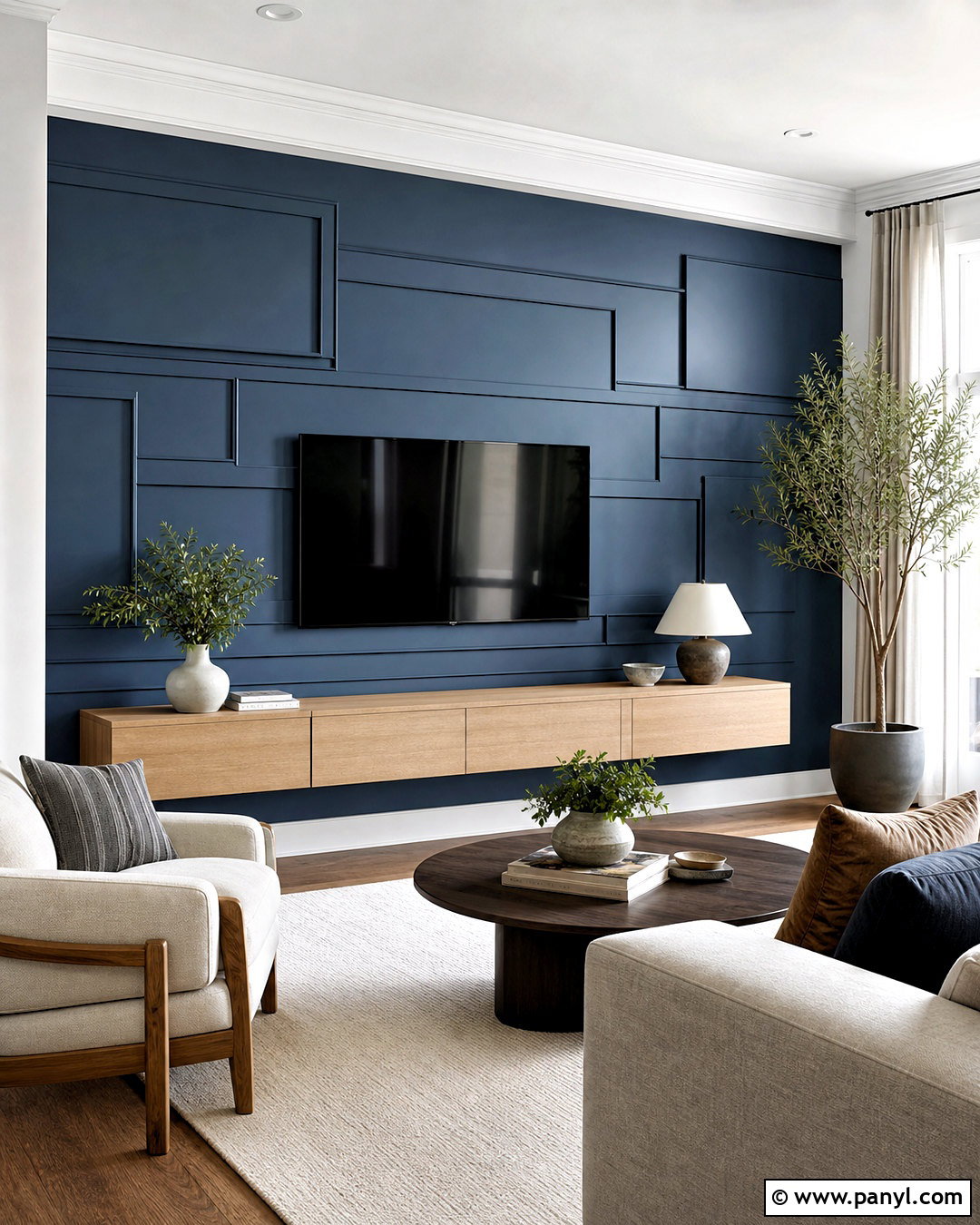
Geometric molding provides a budget-conscious way to create a custom TV background with paint and basic trim. Arrange thin MDF strips into large asymmetrical rectangles or restrained diagonal shapes, keeping the pattern broad enough that it does not interfere with viewing. Paint the trim and wall in the same matte color, such as clay beige, dusty blue, or charcoal gray. Center the television over a plain floating console with closed storage. Add a simple table lamp at one end and a tall plant at the other to create relaxed balance. A neutral sofa, solid rug, and rounded coffee table will prevent the room from becoming too angular. This wall works best when the geometric pattern remains limited to one surface and the rest of the room uses quieter finishes.
17. Arched TV Wall
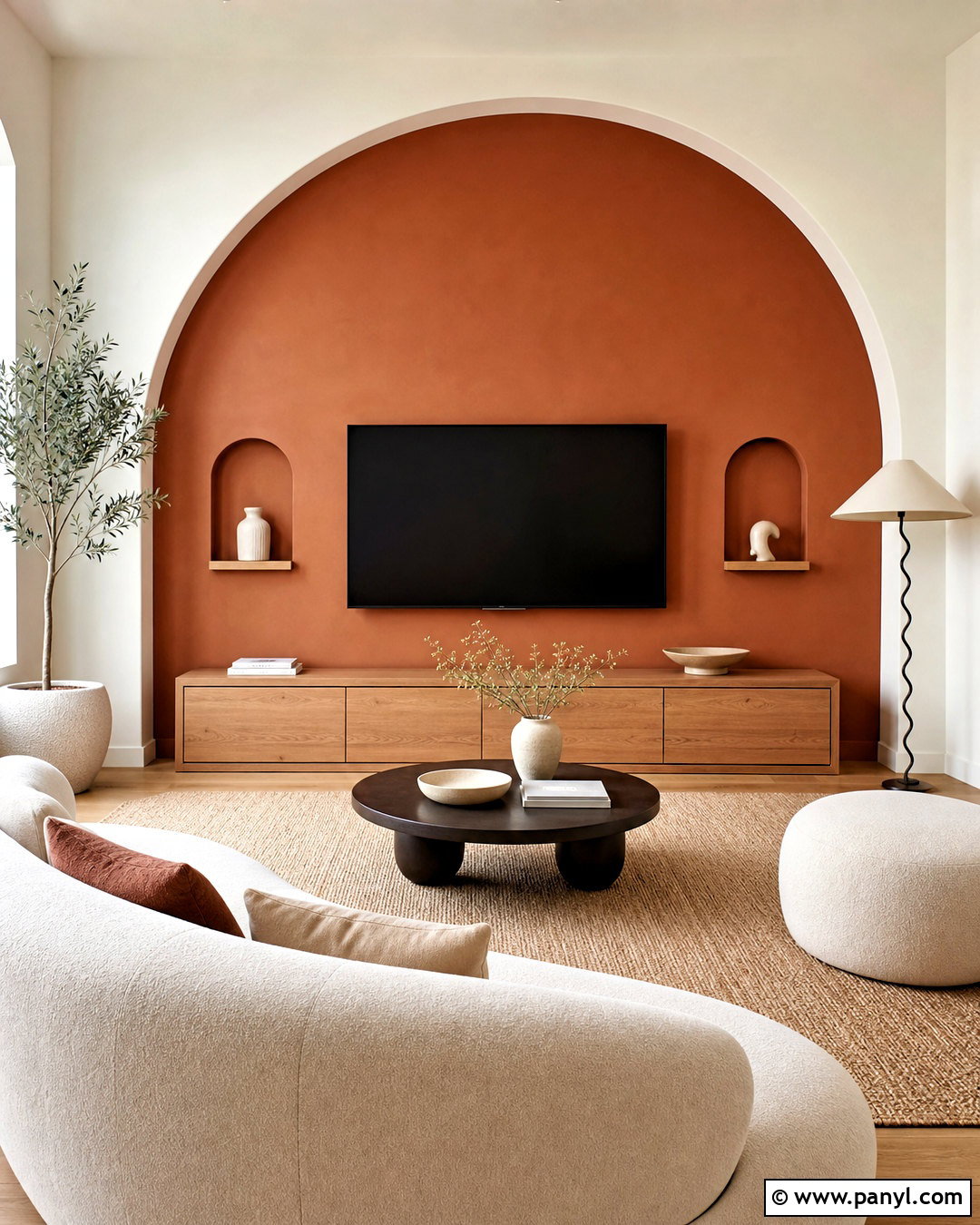
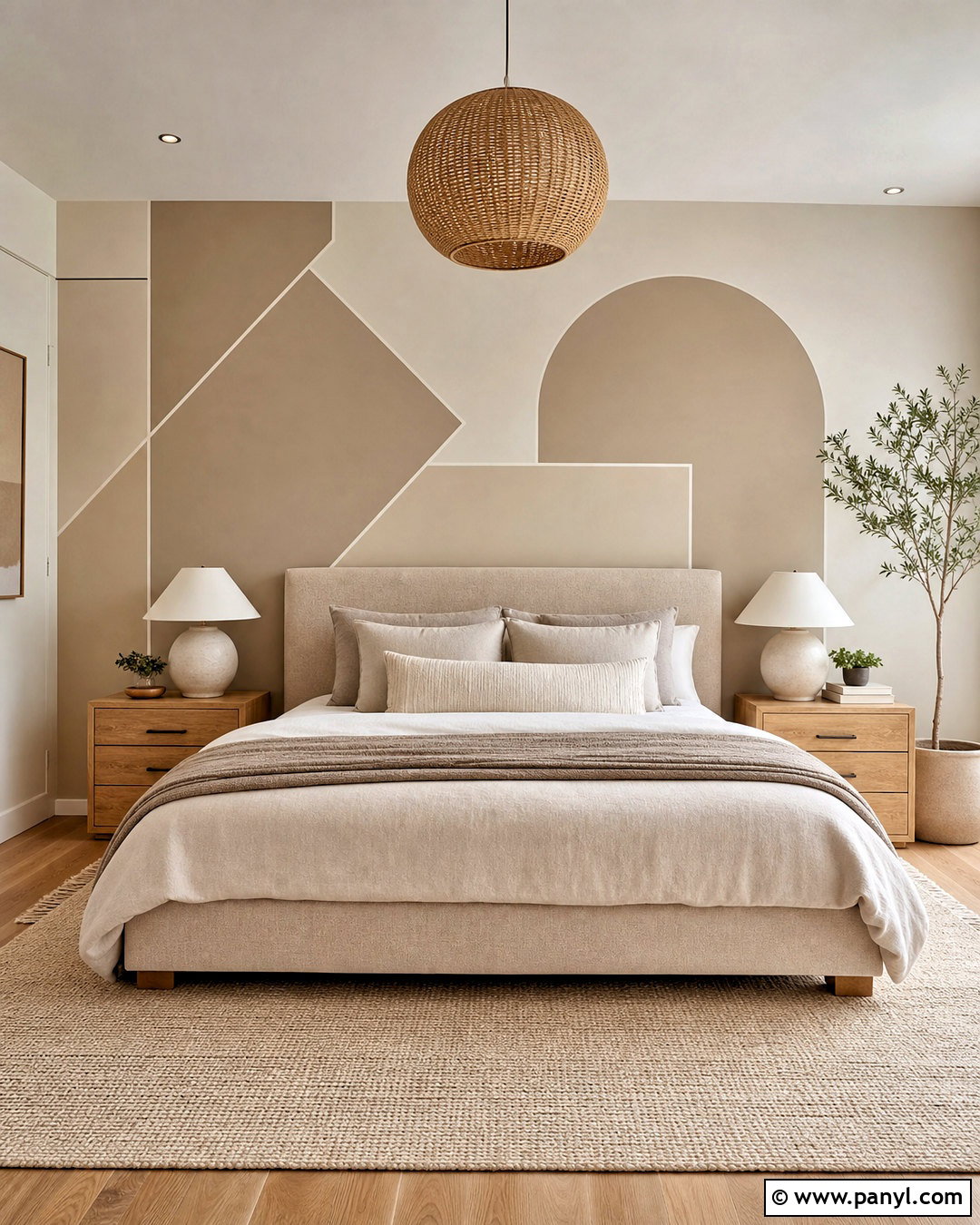
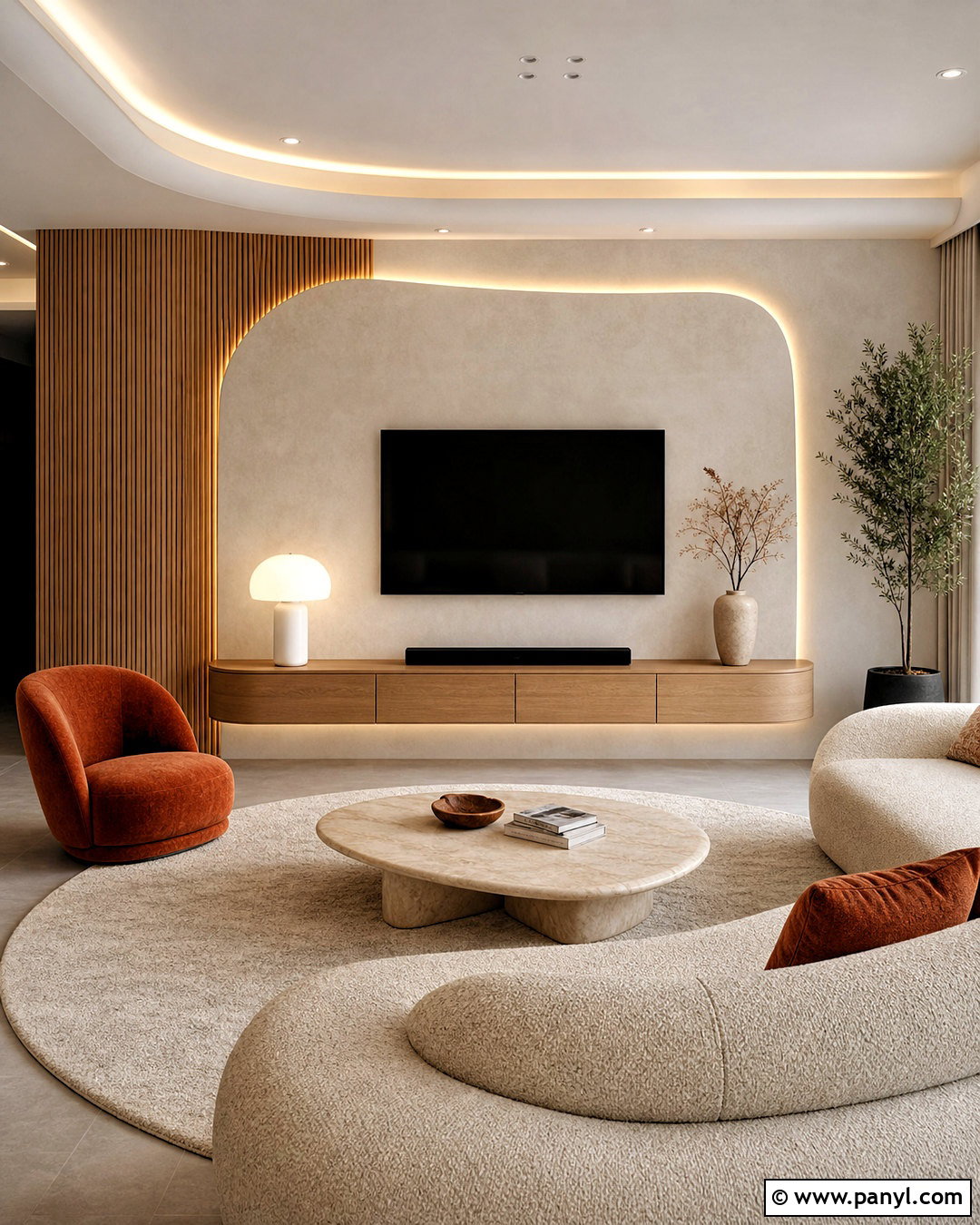
An arched TV feature introduces gentle curves that can soften a room filled with straight furniture and rectangular openings. Build a shallow floor-to-ceiling arch with drywall or create the shape using paint for a simpler project. Finish the central area in warm beige, muted terracotta, or soft greige, then mount the television inside the arch. A low oak cabinet should follow the width of the feature without extending awkwardly beyond it. Install small curved display niches on one or both sides if the wall is wide enough. Furnish the room with a rounded cream sofa, circular coffee table, and sculptural floor lamp. Keep accessories minimal and repeat the arch through a mirror or doorway elsewhere, creating a complete design that feels intentional rather than like a temporary decorative trend.
18. TV Gallery Wall
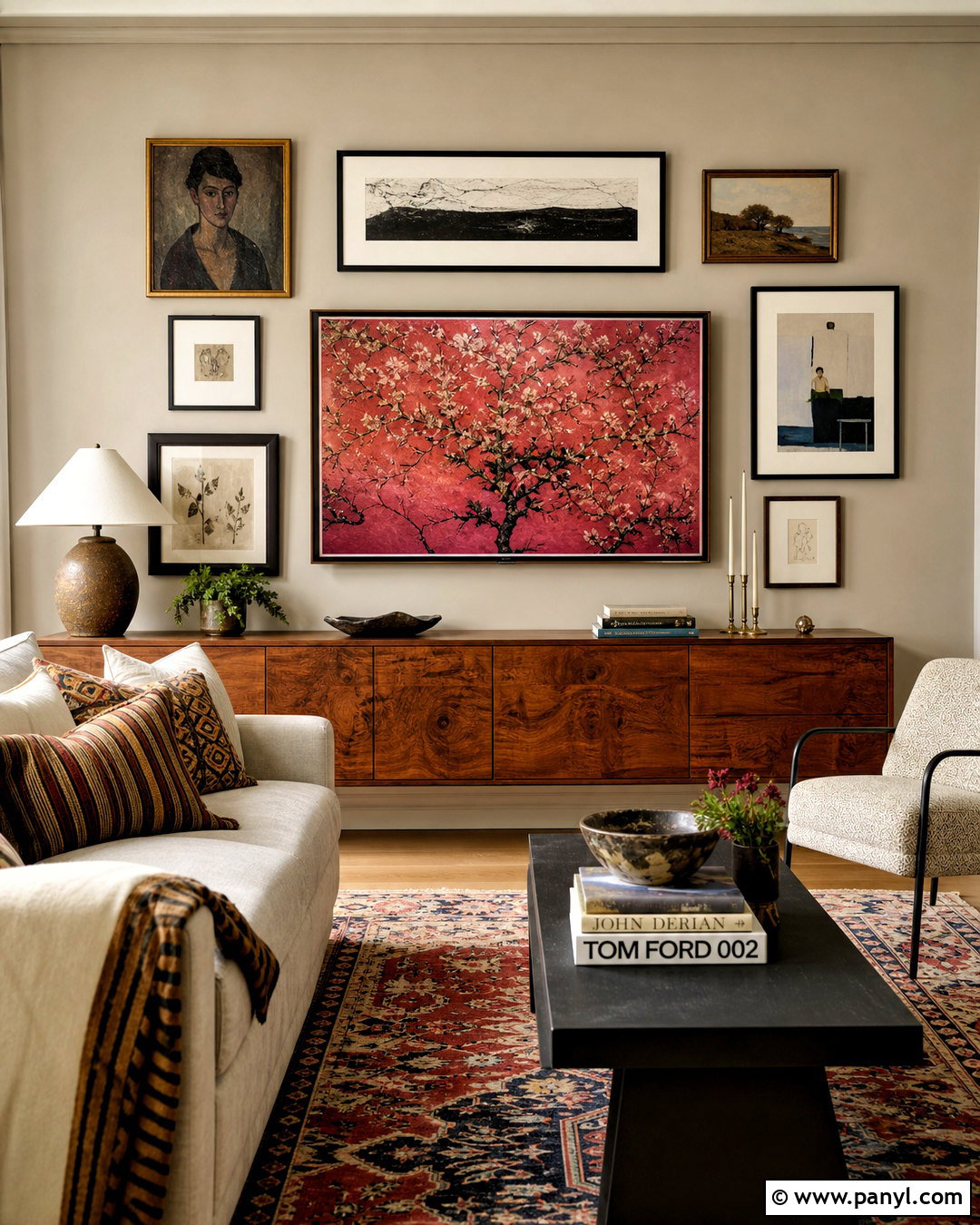
A gallery arrangement can help a television blend into a collected, comfortable living room. Paint the wall soft white, warm greige, or deep charcoal, then mount the TV at the center of a carefully planned group of framed art. Choose frames in two related finishes, such as black and medium oak, and vary the sizes while maintaining consistent spacing. Art should use a coordinated palette so it does not compete with the screen. Place a long vintage-inspired console below, topped with a lamp, books, and one sculptural bowl. Complete the room with a linen sofa, patterned rug, and upholstered accent chair. Before hanging anything, map the arrangement with paper templates. This approach works particularly well with an art-display television that can show complementary imagery when not in use.
19. TV Wall With Open Shelving
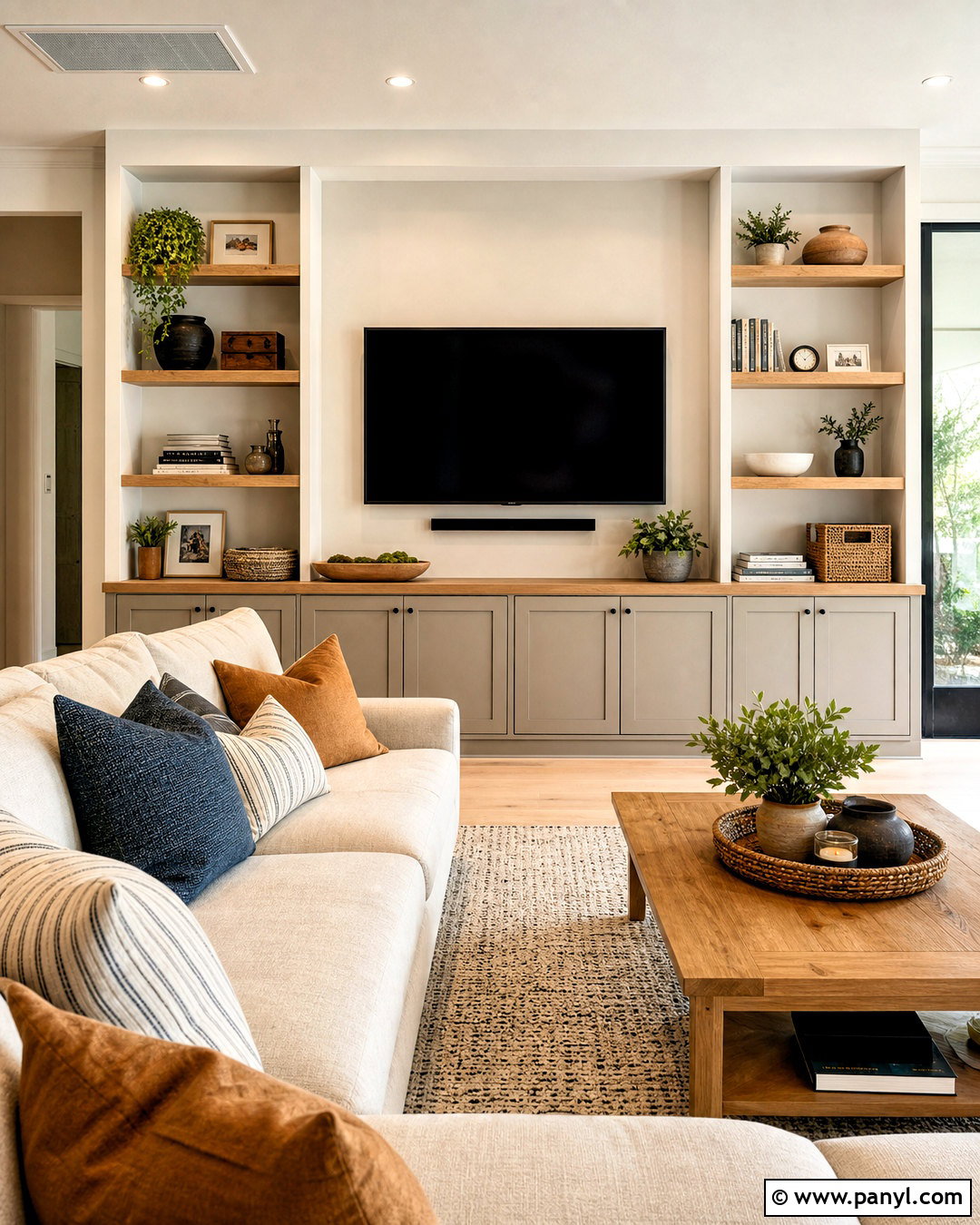
Open shelving can frame a television beautifully when the shelves are treated as part of a balanced composition. Mount the screen on a warm white or greige background, then install natural oak shelves on both sides. Keep the shelves aligned but not completely symmetrical, allowing the display to feel relaxed. A wide base cabinet with closed doors should stretch below the entire arrangement and provide practical storage. Decorate with books, ceramic vessels, woven boxes, framed photographs, and a small amount of greenery. Repeat colors across both sides so the display looks connected. Add a comfortable neutral sectional, textured rug, and wood coffee table to complete the room. Leave roughly one-third of each shelf empty, preventing the background from becoming distracting during television viewing.
20. Minimalist TV Wall
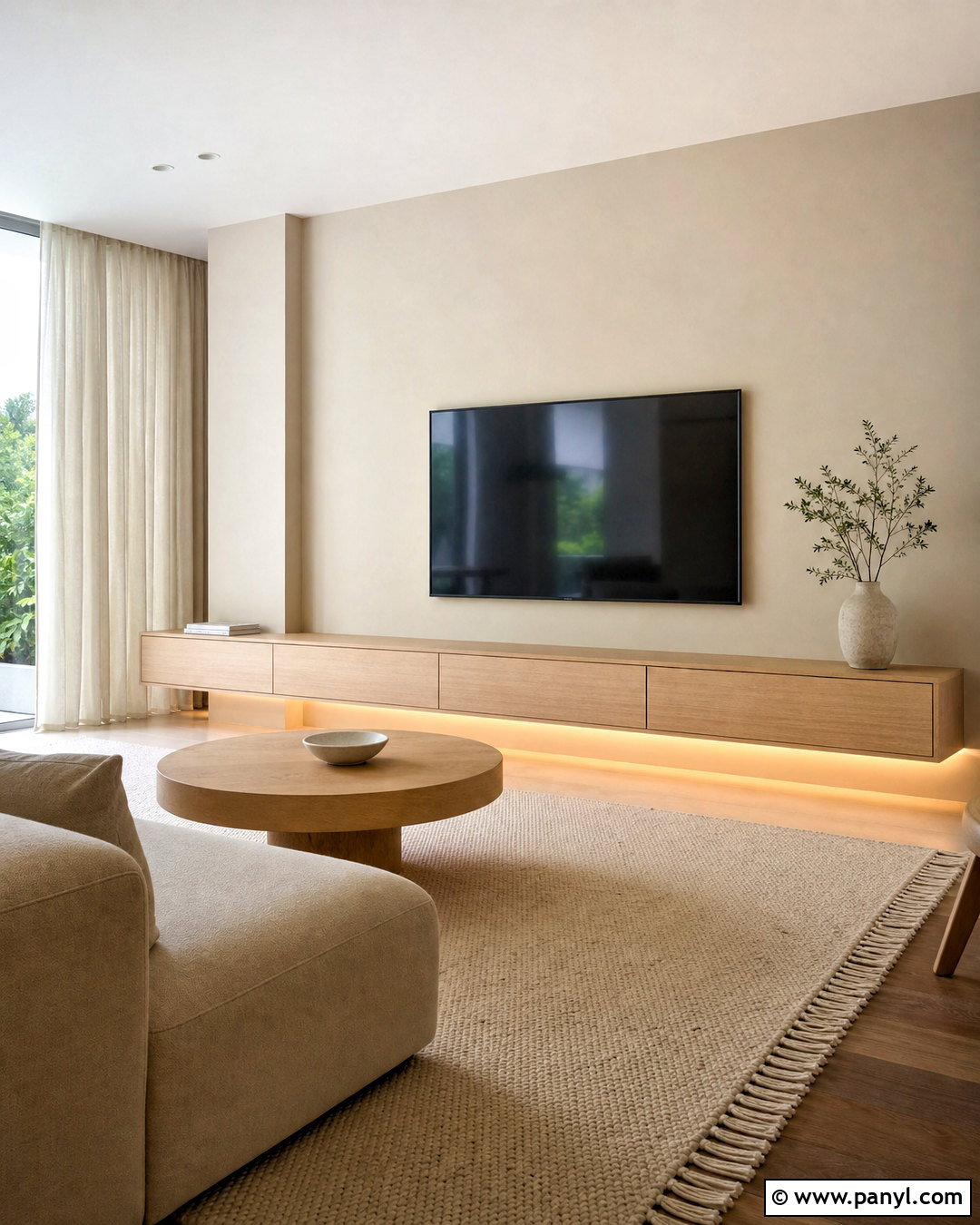
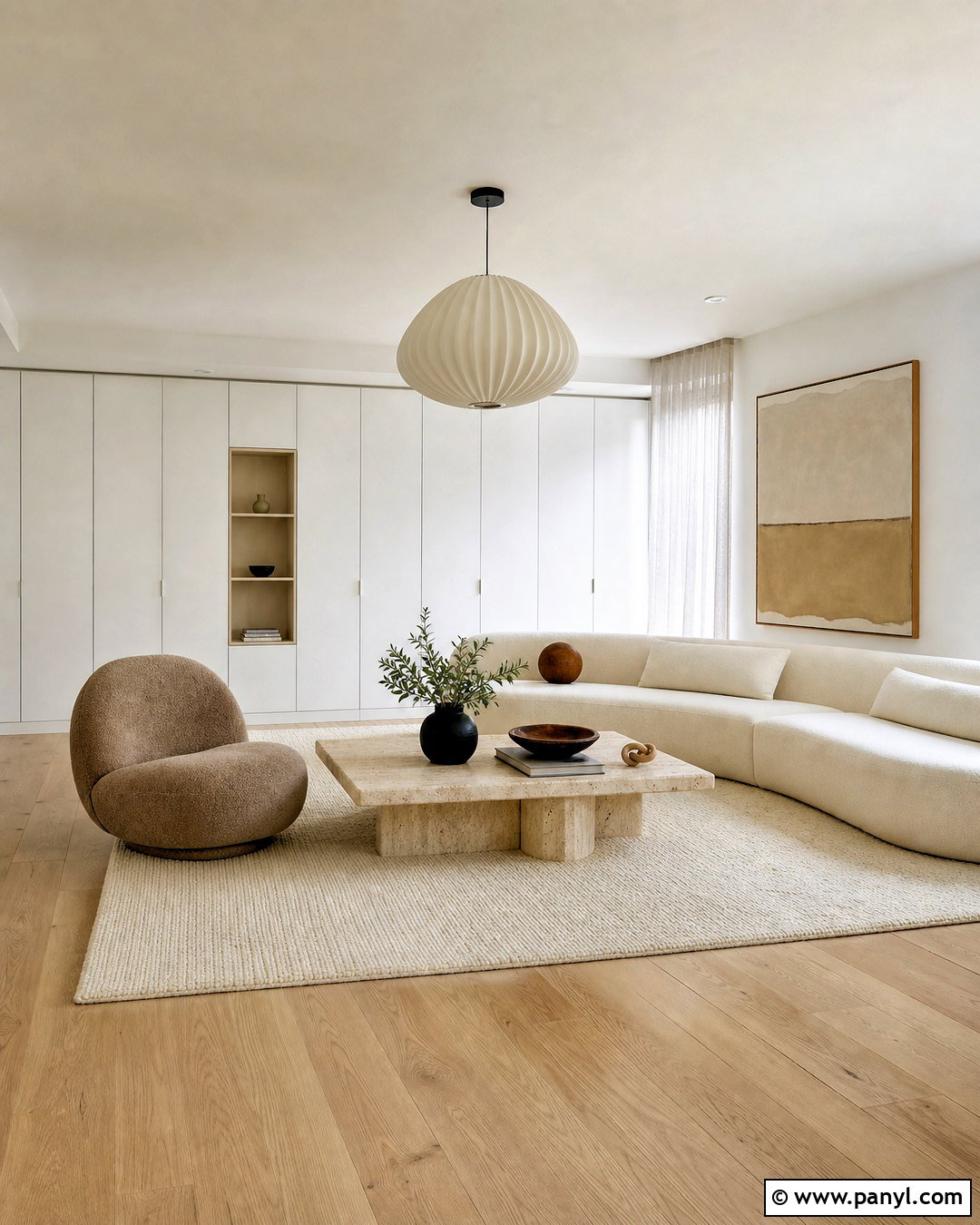
A minimalist TV wall relies on proportion, clean installation, and a limited material palette. Paint the wall warm white or pale greige, then mount the television with a slim bracket so it sits close to the surface. Install a single long floating console in white oak, matte white, or soft taupe. The cabinet should contain all media equipment, outlets, and cables, leaving no visible cords. Add subtle LED lighting beneath the cabinet to create a gentle floating effect. Keep the top almost empty, using only one low ceramic bowl or a small stack of books. Pair the wall with a low beige sofa, simple wool rug, and rounded wood table. This uncluttered design feels intentional because every line aligns and every object supports the calm overall composition.
Conclusion:
The strongest **20 tv background wall design ideas** do more than decorate the area behind a screen. They improve storage, conceal wiring, strengthen the room’s layout, and connect the television with the surrounding furniture. Wood slats, marble, molding, brick, paint, and built-ins can all work when their colors and proportions suit the room. Start by measuring the wall and determining a comfortable screen height. Then select one primary finish, one supporting material, and a simple storage solution. Good lighting and restrained accessories will complete the look without distracting from viewing. Whether you prefer a dramatic dark wall or a quiet minimalist background, a coordinated plan will produce the most polished and practical result.

Related Ideas and Inspiration:
Leave a Reply