
Black doors can turn ordinary openings into strong architectural features without requiring a full remodel. The best **black door interior design ideas** go beyond paint alone. They coordinate the door profile, trim, hardware, flooring, wall color, lighting, and nearby furniture into one complete look. Current inspiration ranges from restrained flat-panel doors to classic Shaker profiles, glass-paneled office doors, pocket doors, and simplified barn doors with slim hardware. () Black also works across modern, farmhouse, traditional, industrial, and transitional homes. The secret is balancing its visual weight with warm wood, light walls, soft textiles, or repeated dark accents. Use the following complete room schemes to find practical, polished, and easy-to-recreate **black door interior design ideas**.

1. Matte Black Hallway Door
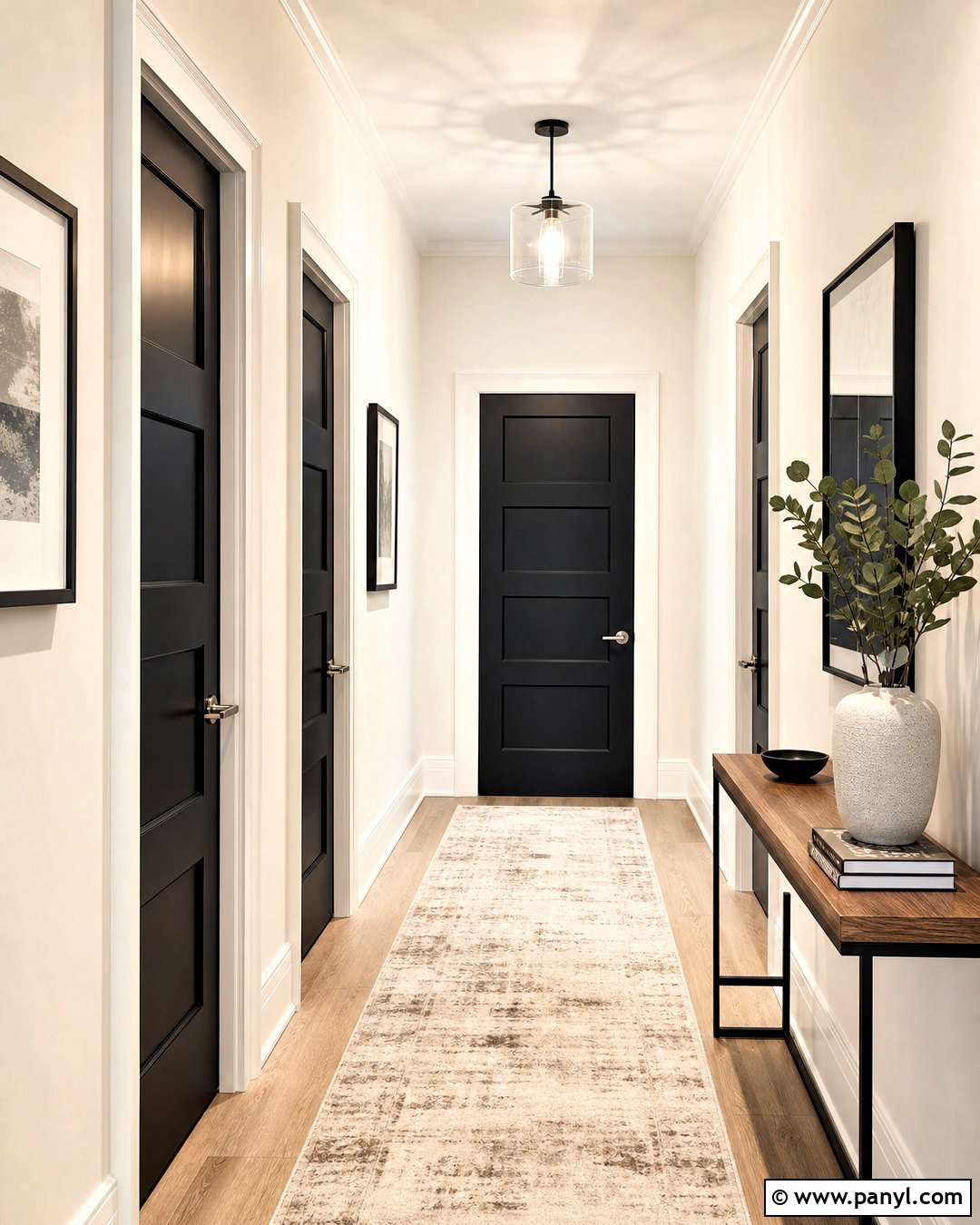
A bright hallway gains definition when several matte black doors create a clean, repeating rhythm. Choose simple three-panel doors and surround them with crisp white trim against warm white walls. Pale oak flooring keeps the corridor feeling open, while a narrow natural-wood console introduces warmth. Add an ivory runner with a subtle charcoal pattern, one oversized framed print, and a clear glass ceiling fixture. Black picture frames and a small ceramic lamp quietly repeat the door color without making the hallway feel overly coordinated. For a busy household, consider a washable satin finish instead of completely flat paint. It delivers a soft appearance but handles fingerprints more easily. Keep the remaining accessories light and minimal so the doors remain the strongest architectural feature.
2. Black Shaker Bedroom Door
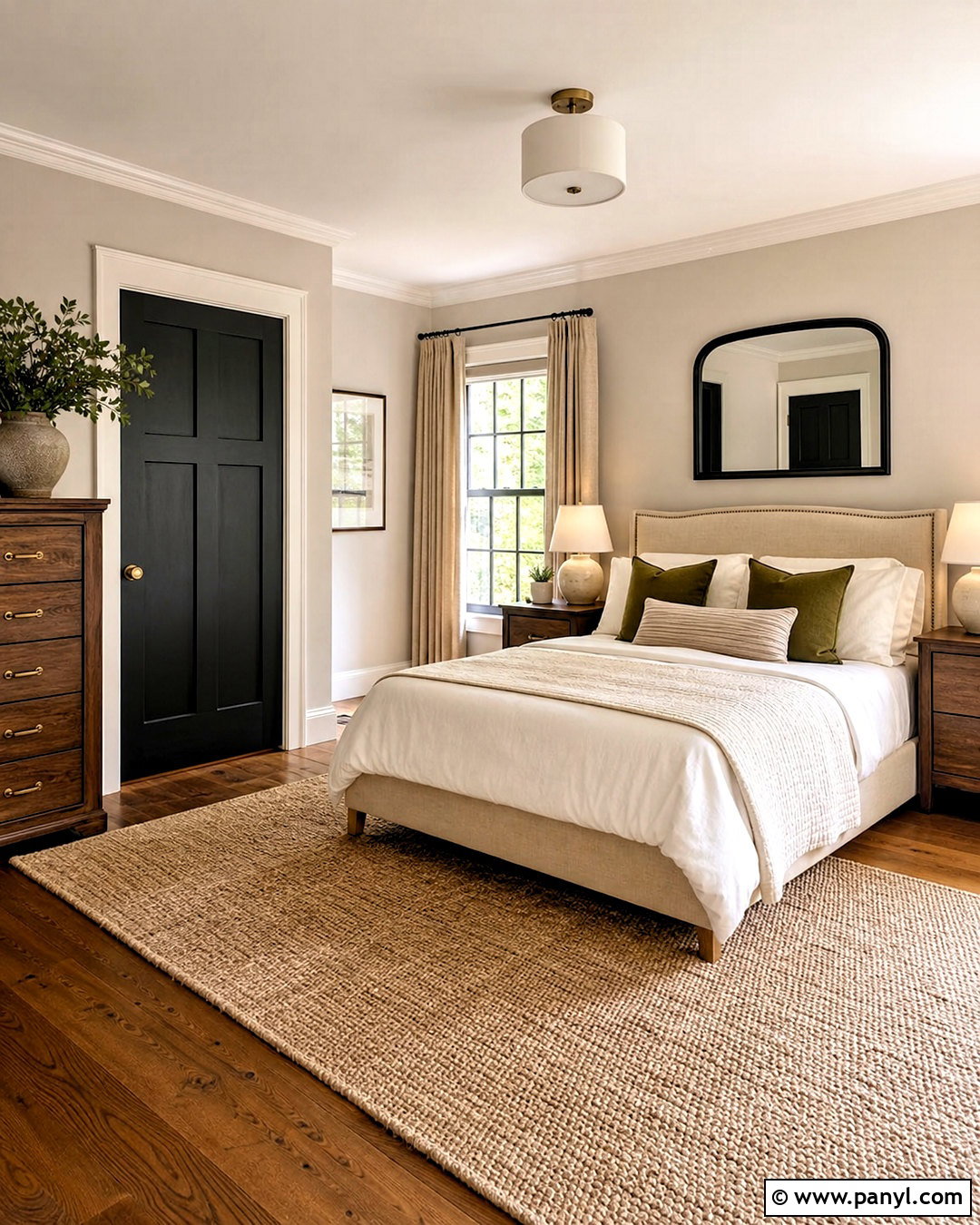
Imagine opening a black Shaker door into a peaceful bedroom layered with oatmeal, cream, and warm wood. A four-panel profile gives the door enough detail to complement a transitional room without appearing ornate. Paint the surrounding trim warm white so the black shape looks crisp and intentional. Inside, place an upholstered beige bed against a soft greige wall, then add walnut nightstands, ivory bedding, and muted olive pillows. A woven rug and linen curtains soften the contrast. Use aged brass levers, matching bedside sconces, and one slim black-framed mirror to connect the door with the furnishings. This complete palette feels calm rather than dramatic because black occupies a limited area. It is an approachable way to make a basic bedroom feel more finished.
3. Black French Door Home Office
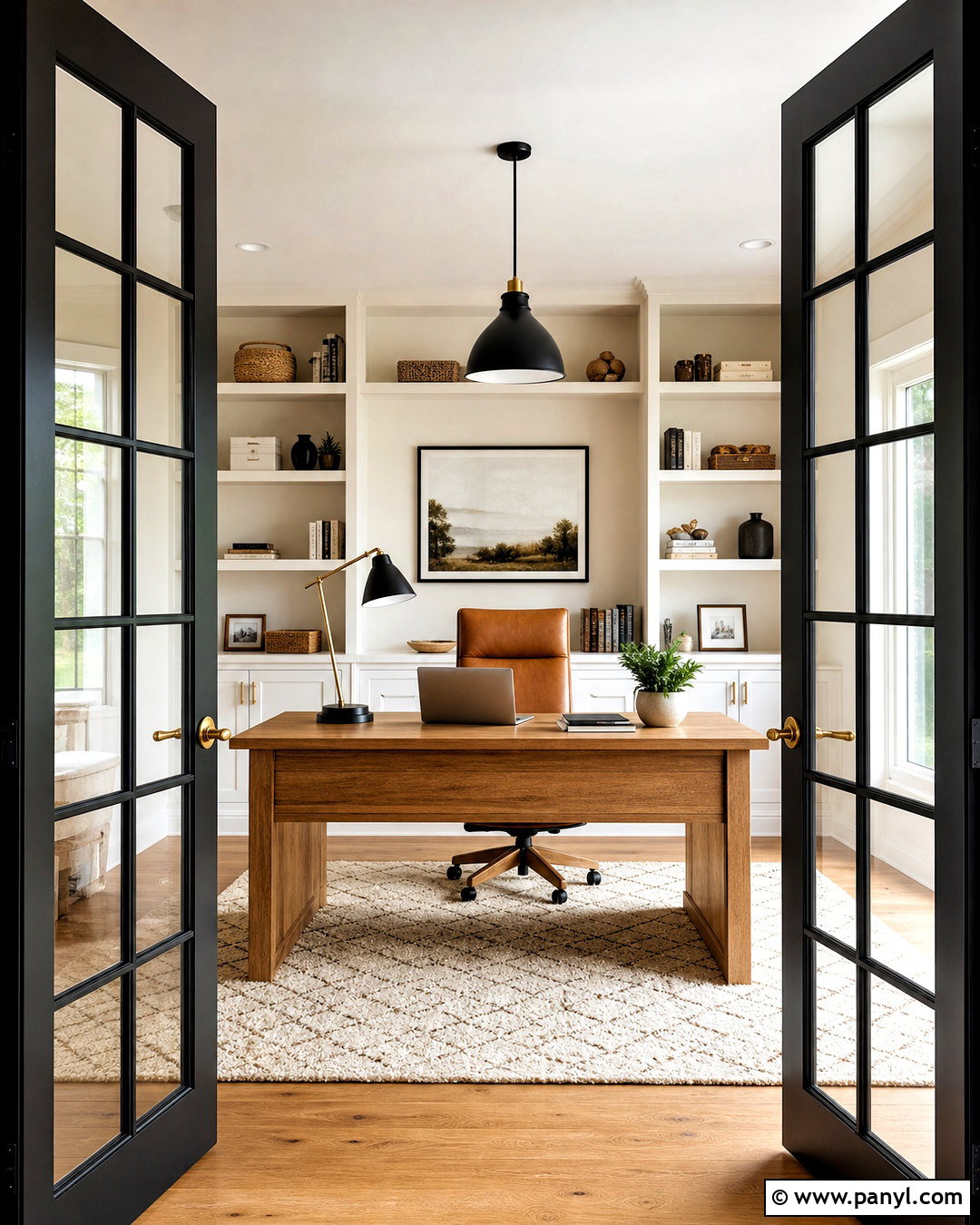
Black French doors can separate a home office while allowing light and sightlines to continue through the adjoining room. Select slim wood frames with clear glass panes and paint the door, casing, and muntins the same satin black. Inside the office, position a medium-tone oak desk where it can be seen through the glass. Add a camel leather chair, built-in white shelving, and a flat-weave cream rug with a restrained geometric pattern. A black library light, desk lamp, and cabinet pulls repeat the door finish in smaller amounts. Frosted film can cover selected lower panes when more privacy is needed. Keep cords and paperwork concealed in closed storage because glass doors expose the entire workspace. The result feels bright, organized, and professionally designed.
4. Black Barn Door Dining Room
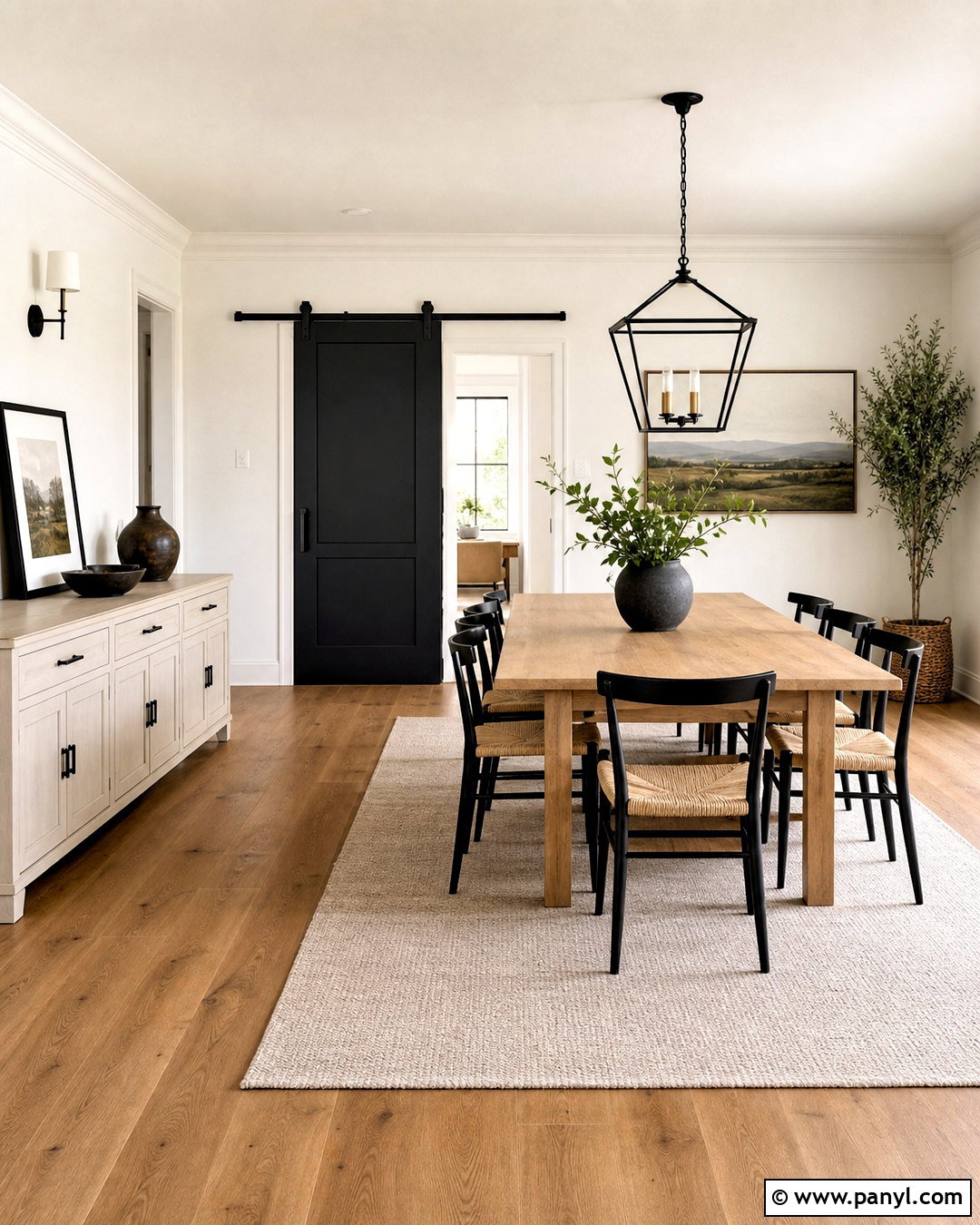
A black barn door looks more current when its silhouette is simple and its hardware is streamlined. Use a smooth flat-panel door on a slim black steel track to close off a dining room, pantry, or serving area. Warm white walls, wide-plank oak flooring, and a natural linen Roman shade prevent the black feature from overwhelming the room. Center a rectangular wood dining table beneath a sculptural black pendant, then surround it with woven-seat chairs. A low cream sideboard and one large landscape print provide visual relief. Avoid distressed finishes and oversized decorative bolts if you want a cleaner result. The door should overlap the opening adequately when closed, and the adjacent wall must remain clear. This scheme blends farmhouse practicality with a restrained modern finish.
5. Black Pocket Door Pantry
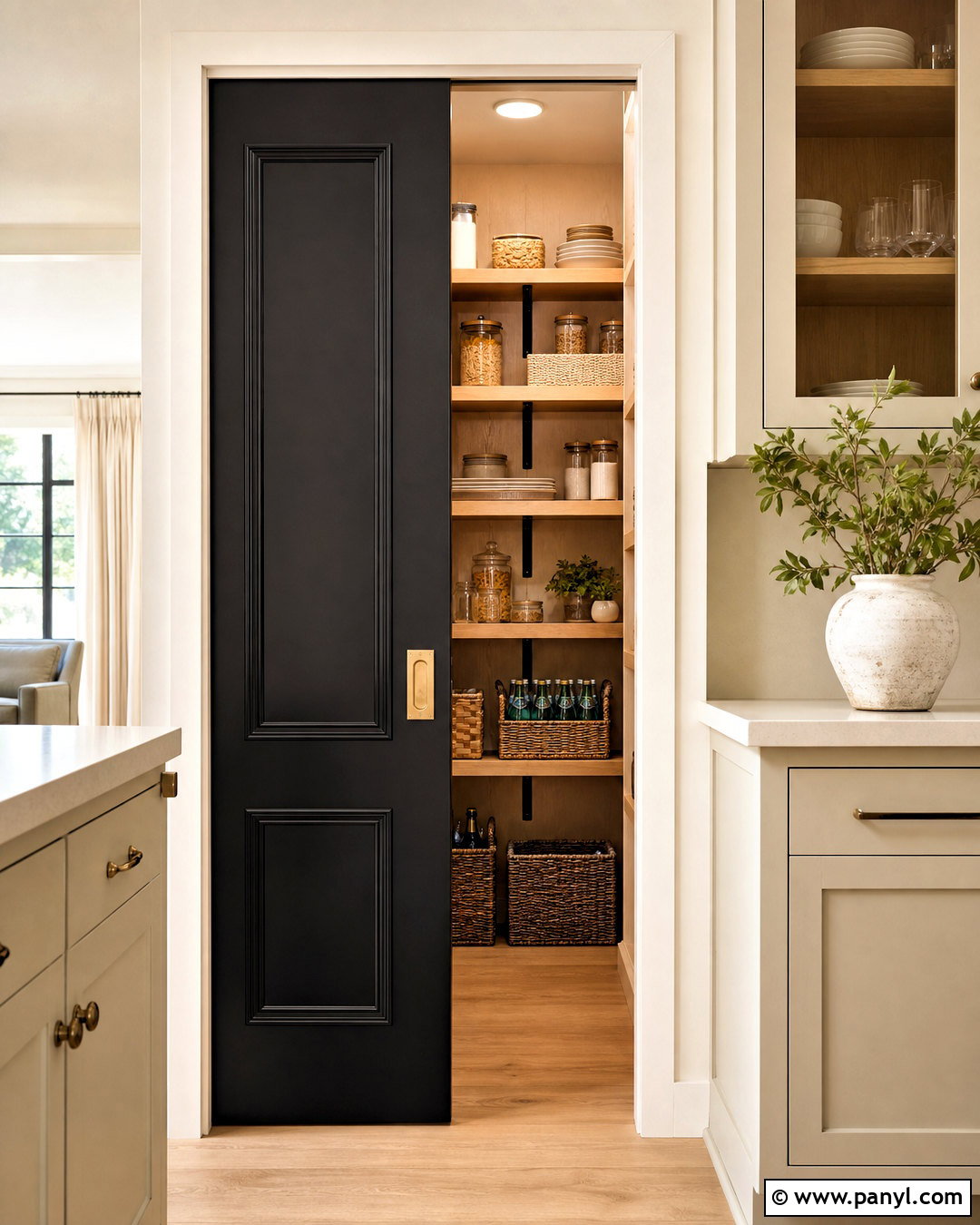
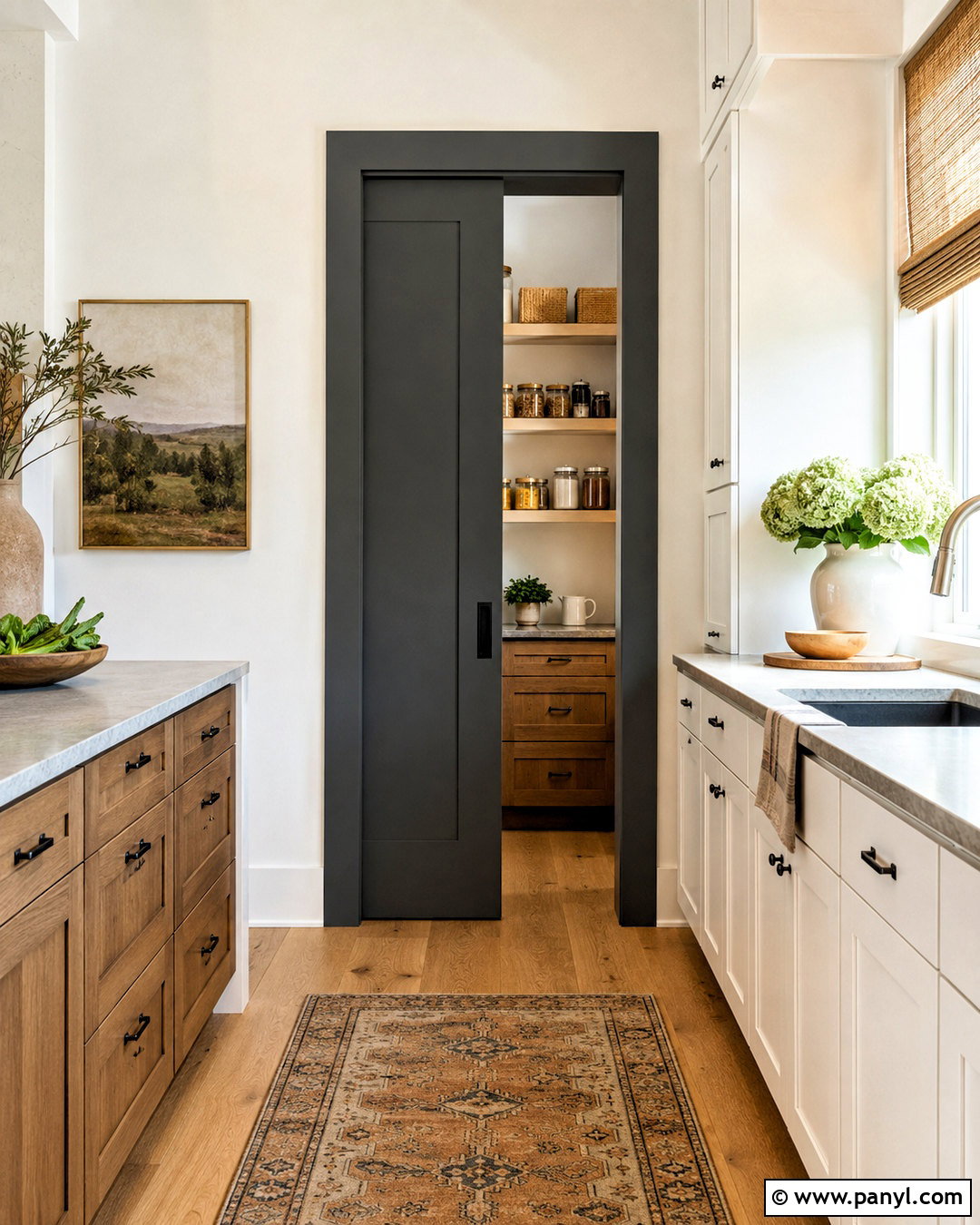
When floor space is tight, a black pocket door can give a pantry entrance an elegant presence without interrupting circulation. Choose a single-panel door with understated molding and a recessed brass pull. Warm white kitchen cabinets, honed cream countertops, and light oak flooring create a bright frame around the dark door. Inside the pantry, continue the cabinetry color and install oak shelves, labeled glass containers, woven baskets, and small black shelf brackets. A compact flush-mount light keeps every storage zone visible. Paint the pocket-door edge and both faces black for a polished appearance from either room. Because the door disappears into the wall, verify that plumbing and electrical lines will not obstruct the pocket. The finished kitchen feels orderly, customized, and visually connected.
6. Black Glass Door Kitchen
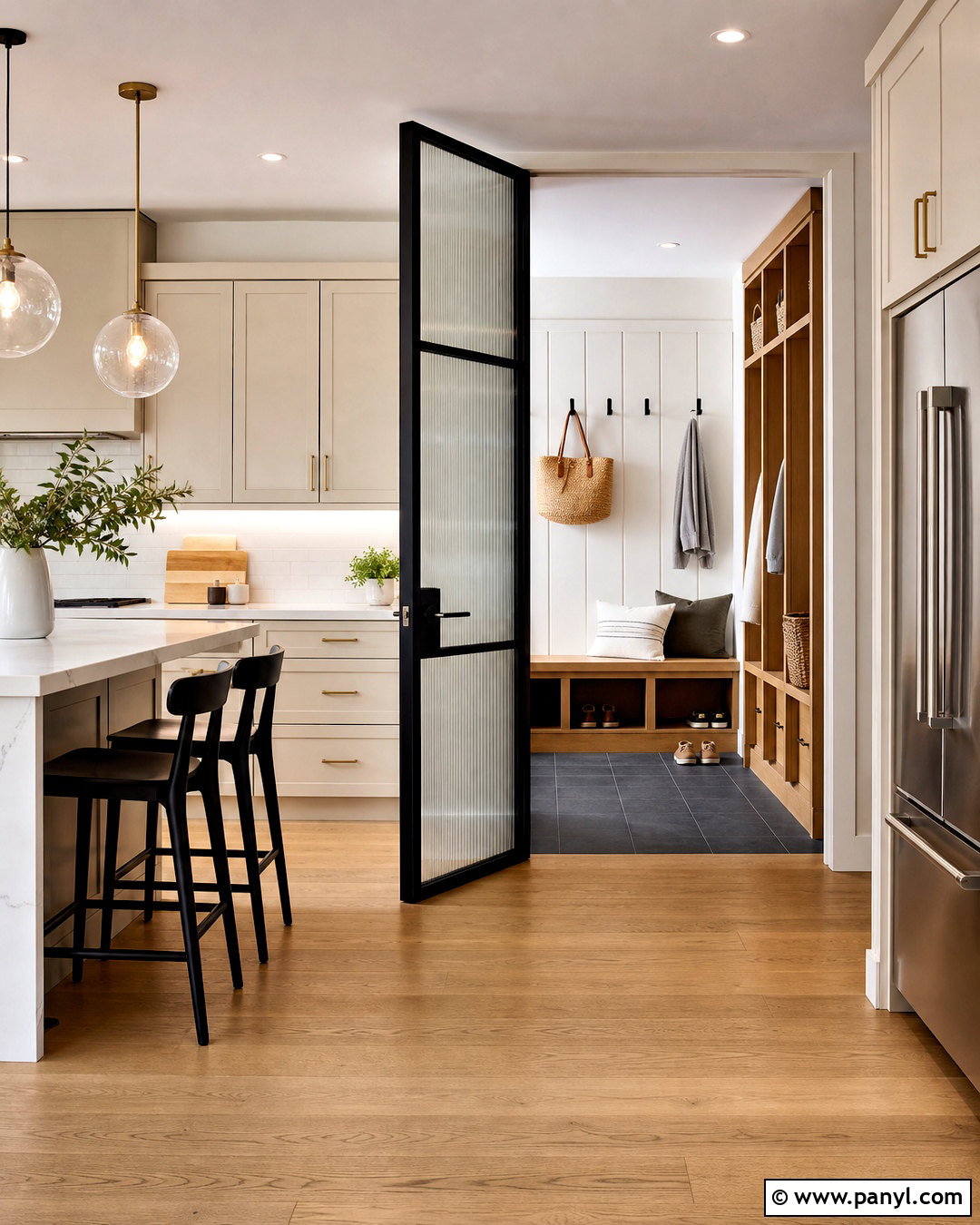
A black glass door between the kitchen and mudroom provides separation while keeping both areas visually open. Select a narrow-framed door with reeded glass, which softly obscures coats or storage without blocking brightness. Pair it with creamy cabinets, white quartz counters, brushed brass hardware, and warm oak flooring. Repeat black through two counter stools, a simple faucet, and thin pendant-light frames. In the mudroom, install pale oak cubbies, off-white wall paneling, and charcoal floor tile that can handle everyday traffic. The darker flooring anchors the black door and makes the transition between spaces feel planned. Use a satin or semi-gloss finish on the frame for easier cleaning. This combination suits a busy home because it balances practical privacy, natural light, and polished kitchen style.
7. Black Arched Door Entryway
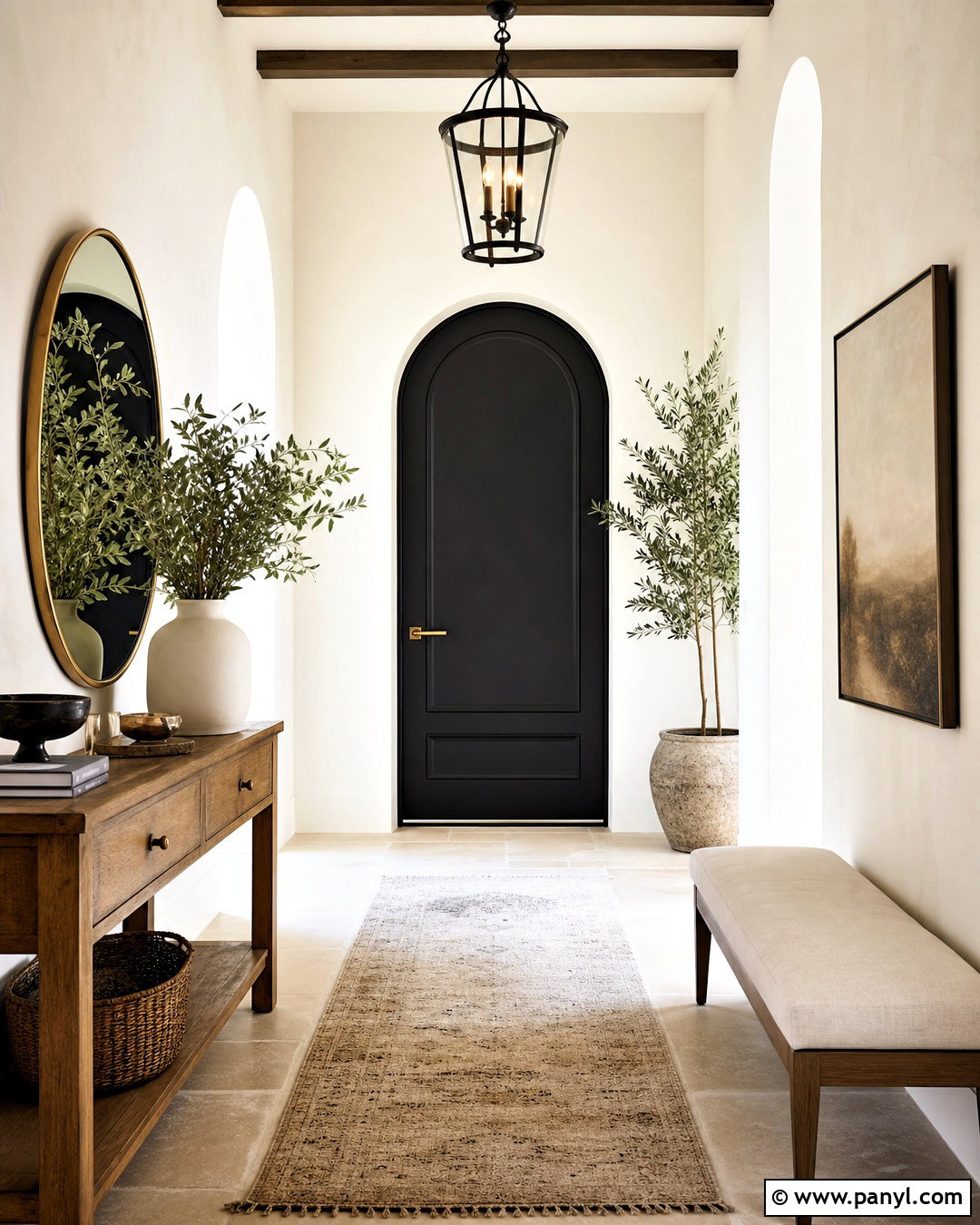
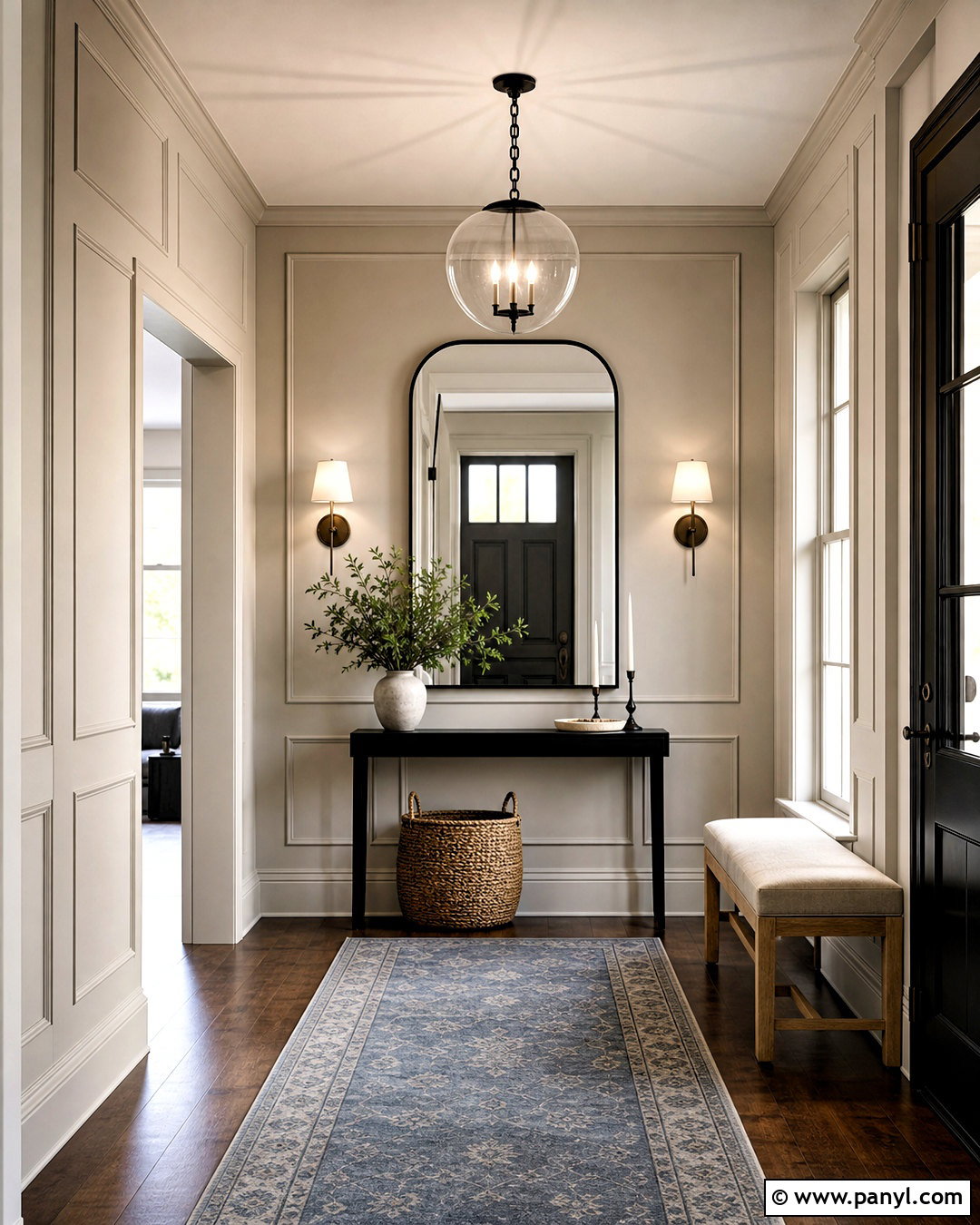
An arched black door creates a graceful focal point between an entryway and the main living space. Let the curved top remain the defining detail by choosing a solid door with minimal paneling and a simple brass lever. Surround it with soft plaster-white walls and matching white trim. Limestone-look flooring, an oak console, and a rounded ivory mirror echo the gentle architecture. Add a small upholstered bench, a textured neutral runner, and one leafy plant in a stone pot. A lantern-style ceiling light can introduce another dark accent without competing with the doorway. If a custom arched door is beyond the budget, an arched opening with a rectangular door can create a related effect. The completed entry feels welcoming, balanced, and noticeably more architectural.
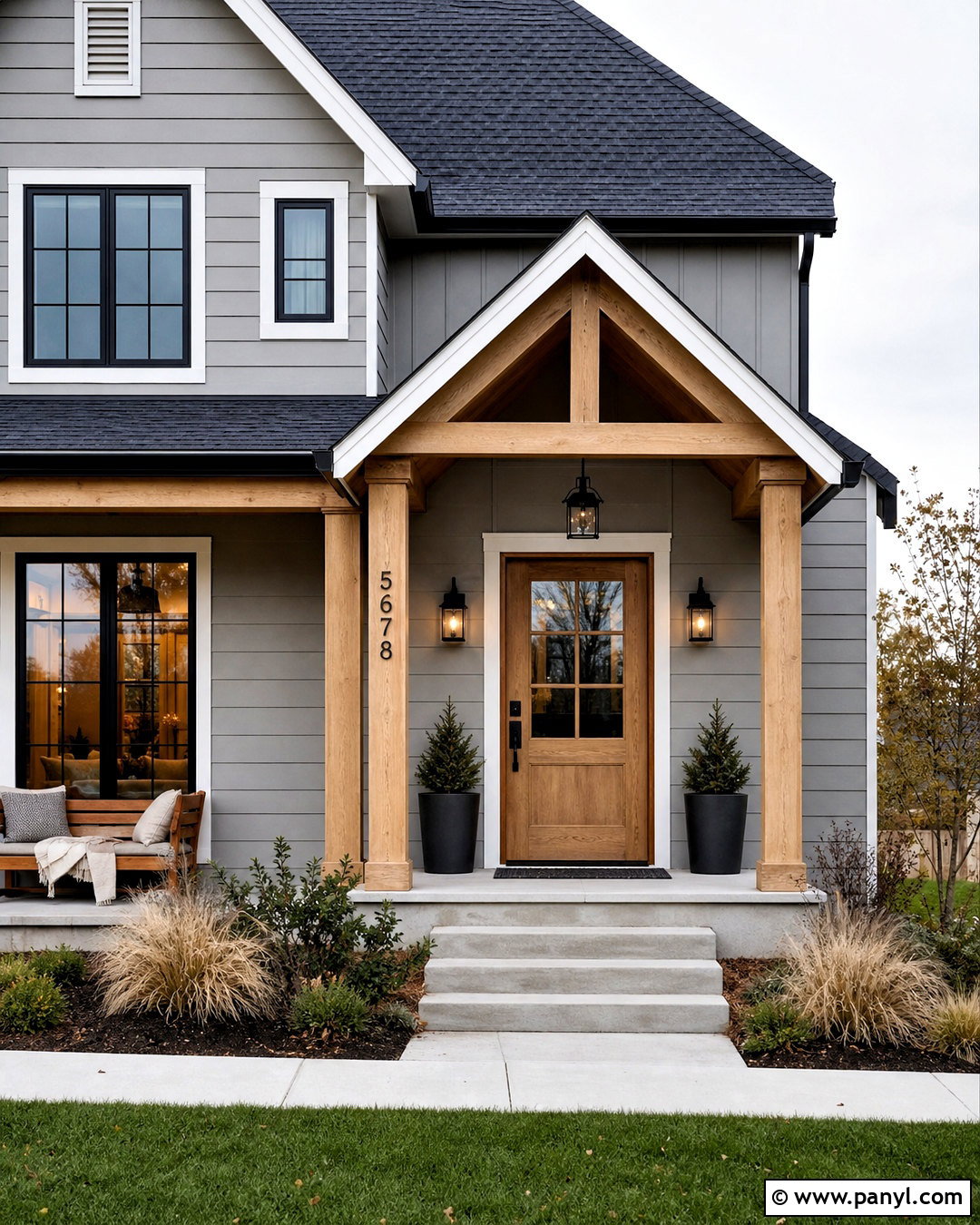
8. Black Double Door Living Room
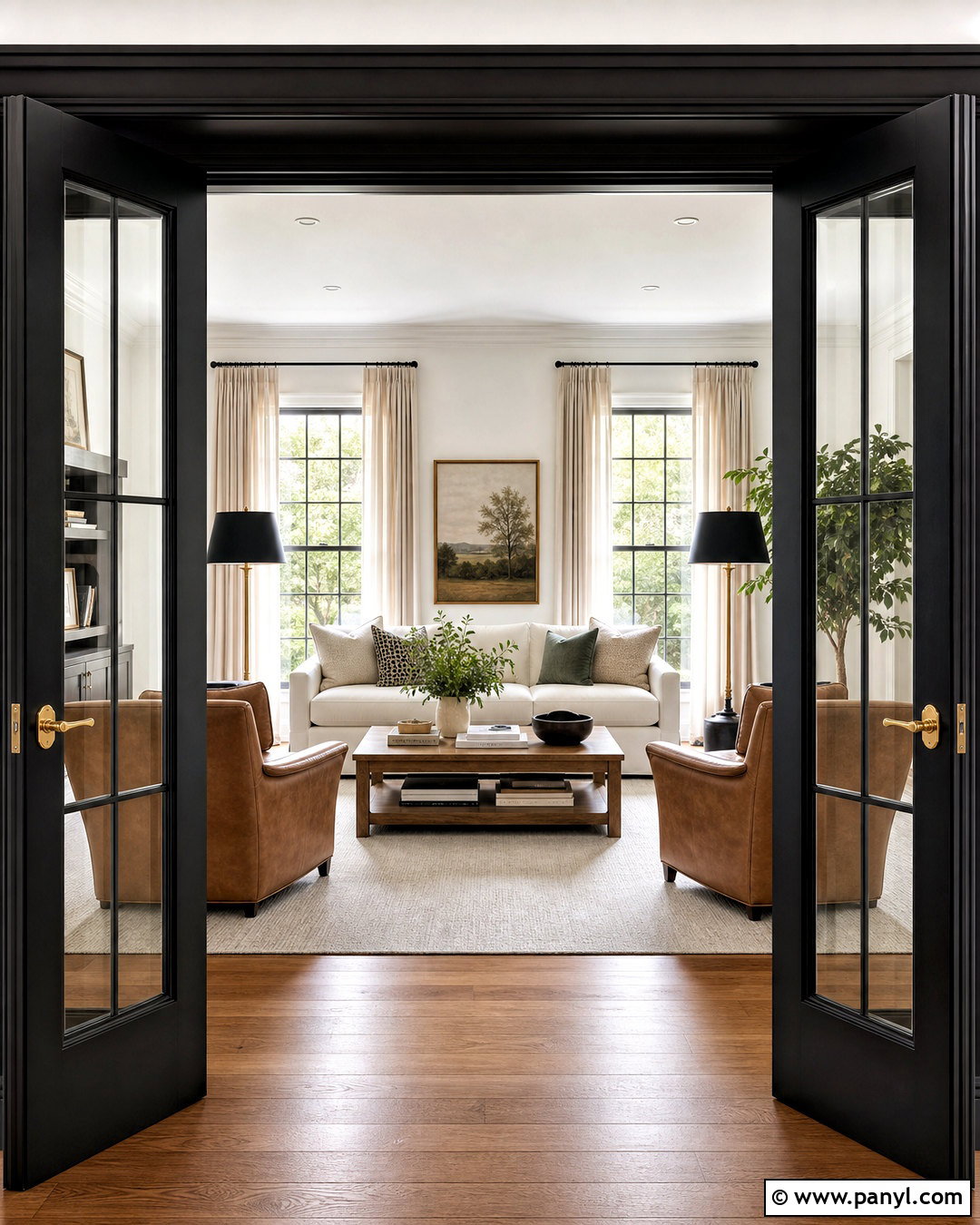
Black double doors make a wide living room entrance feel substantial and symmetrical. Choose classic five-panel doors with clear glass in the upper sections, then paint the frames and surrounding casing satin black. Inside the room, arrange a cream sofa facing two camel-colored lounge chairs with a medium-oak coffee table between them. A large ivory rug softens the dark doorway, while black curtain rods, floor lamps, and framed artwork repeat its color around the room. Use warm white walls and full-length linen drapes to maximize brightness. Matching brass handles can introduce a subtle traditional note. Keep both sides of the opening visually balanced with paired plants or cabinets. This complete arrangement turns the doors into part of the furniture plan rather than an unrelated dark feature.
9. Black Door With White Trim
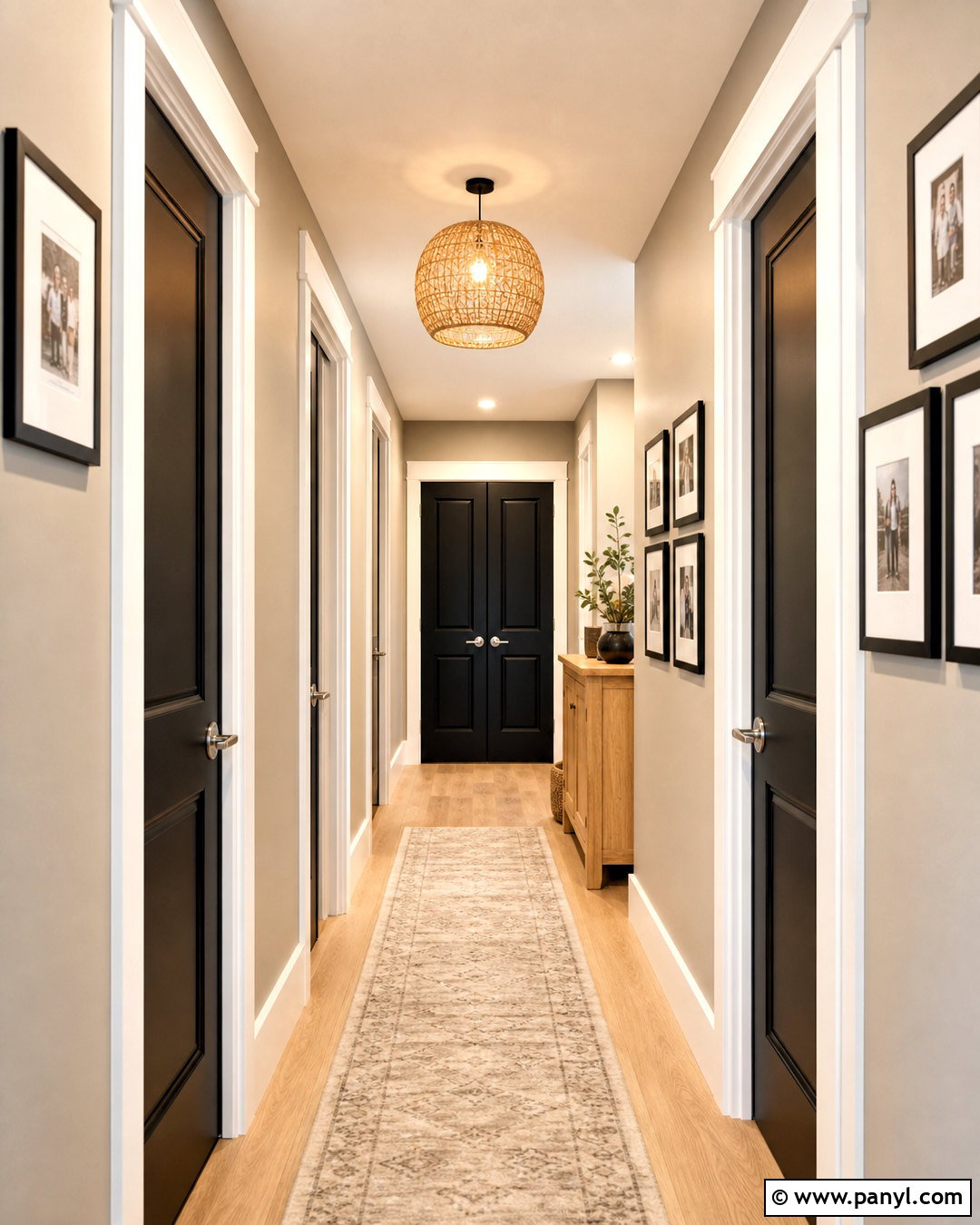
Black doors with white trim offer crisp contrast that works especially well in a bright upstairs hallway. Use satin black on simple two-panel doors and clean white on the casing, baseboards, and crown molding. Paint the walls a gentle warm greige so the trim remains visible without looking harsh. A pale patterned runner, woven pendant, and small oak cabinet keep the corridor relaxed. Display family photographs in matching black frames, but leave enough open wall space to prevent visual clutter. Brushed nickel levers provide a quiet transition between the black doors and lighter surroundings. Carry the same door-and-trim combination into visible bedrooms for consistency. This scheme works best when the white trim is freshly painted, since chips and uneven edges become more noticeable beside such a strong door color.
10. Black Door With Black Trim
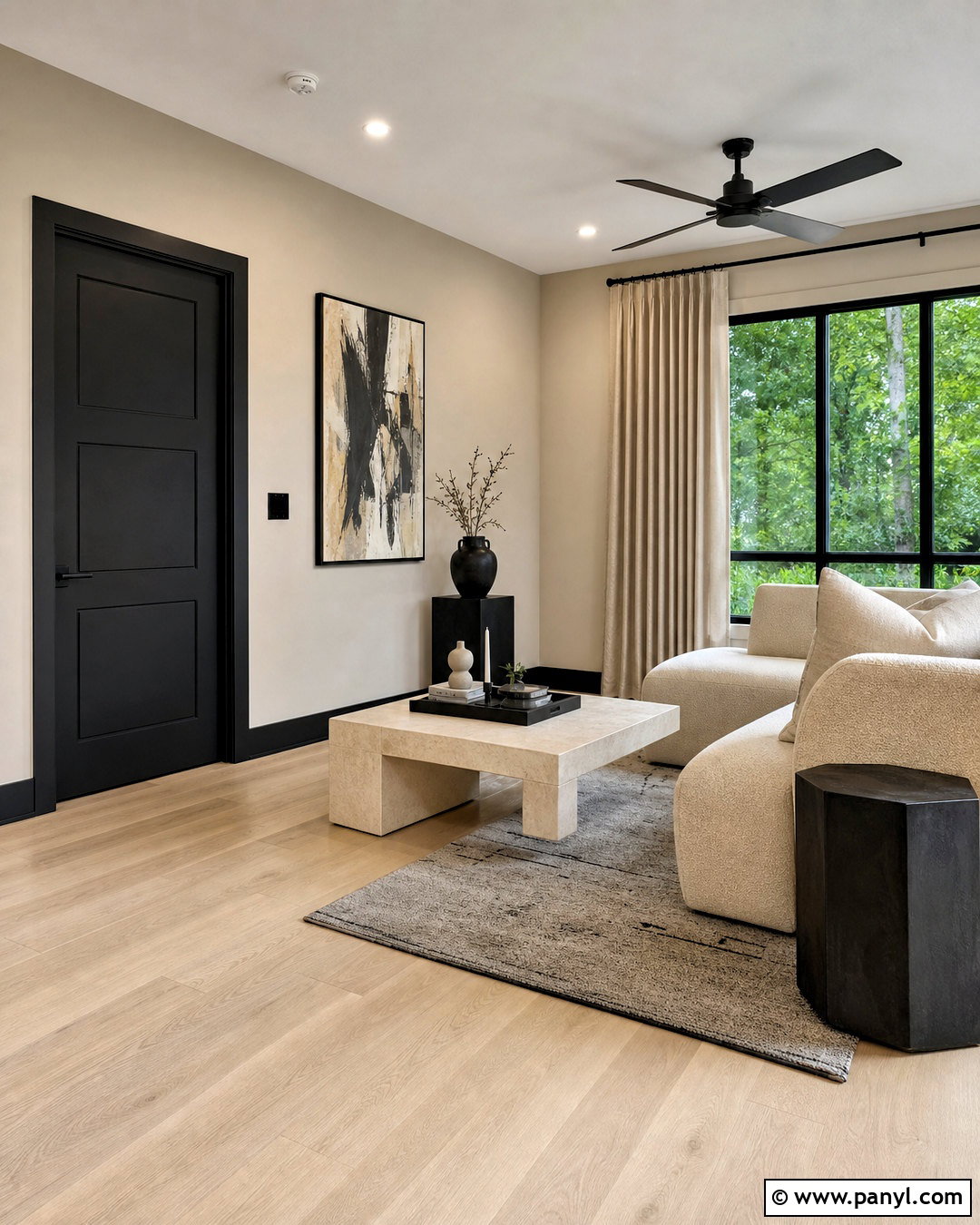
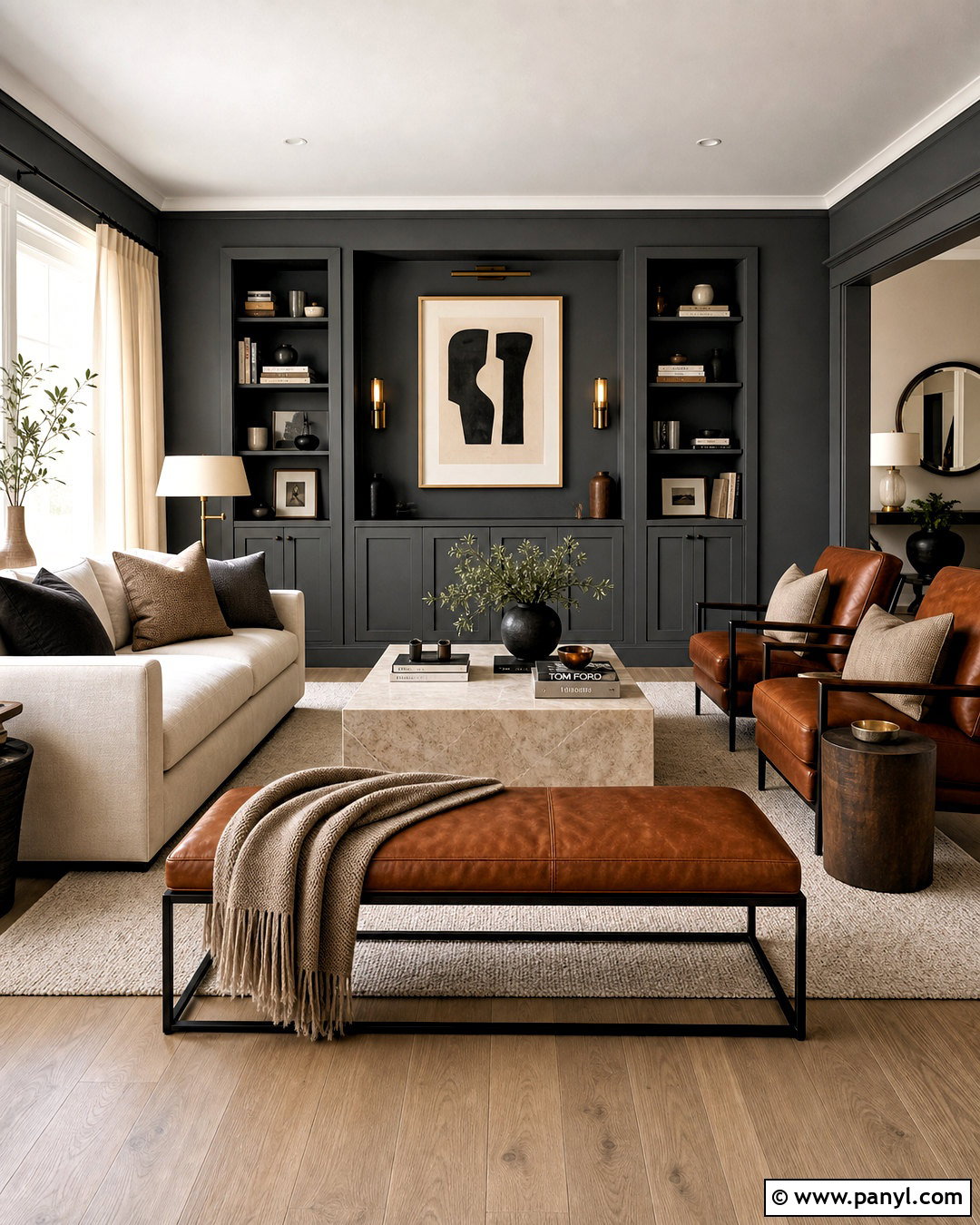
Painting the door and trim black produces a bolder, more architectural effect than surrounding the door with white casing. Try this treatment on a living room doorway set against light taupe walls. Use a flat-panel door, substantial black casing, and matching baseboards on the feature wall. Balance the dark outline with white oak flooring, a cream boucle sofa, a travertine coffee table, and soft beige curtains. A large abstract artwork containing charcoal lines will connect the doorway to the seating area. Keep the ceiling and remaining trim warm white so the room retains definition. Black hinges and a low-profile black lever create a seamless finish, while a satin sheen prevents the surface from looking chalky. The resulting space feels contemporary, cohesive, and carefully framed.
11. Black Door With Brass Hardware
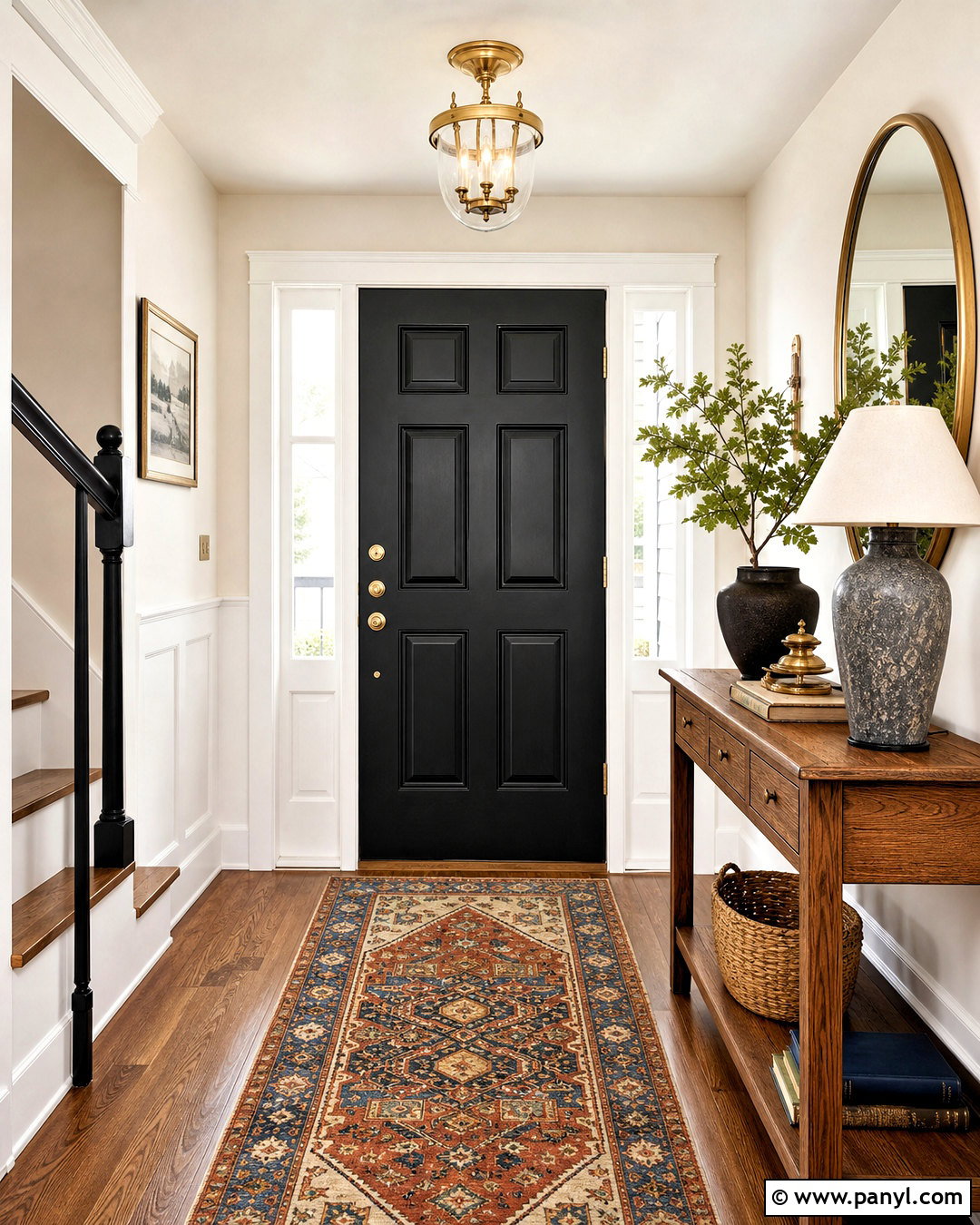
Warm brass hardware can make a black door feel inviting and refined rather than stark. Start with a satin black four-panel door and an unlacquered or aged brass lever, hinges, and strike plate. Set it within a foyer featuring warm ivory walls, medium walnut flooring, and a vintage-inspired runner in rust, cream, and muted blue. An oak console with brass legs, a rounded mirror, and a white ceramic lamp creates a complete welcoming arrangement. Repeat brass in one ceiling fixture, but avoid filling every surface with metallic accents. The aged finish should appear in small, intentional touches. Add a woven basket beneath the console for everyday storage. This balanced composition works in traditional and transitional homes, giving a standard doorway the appearance of a considered architectural upgrade.
12. Black Door With Chrome Hardware
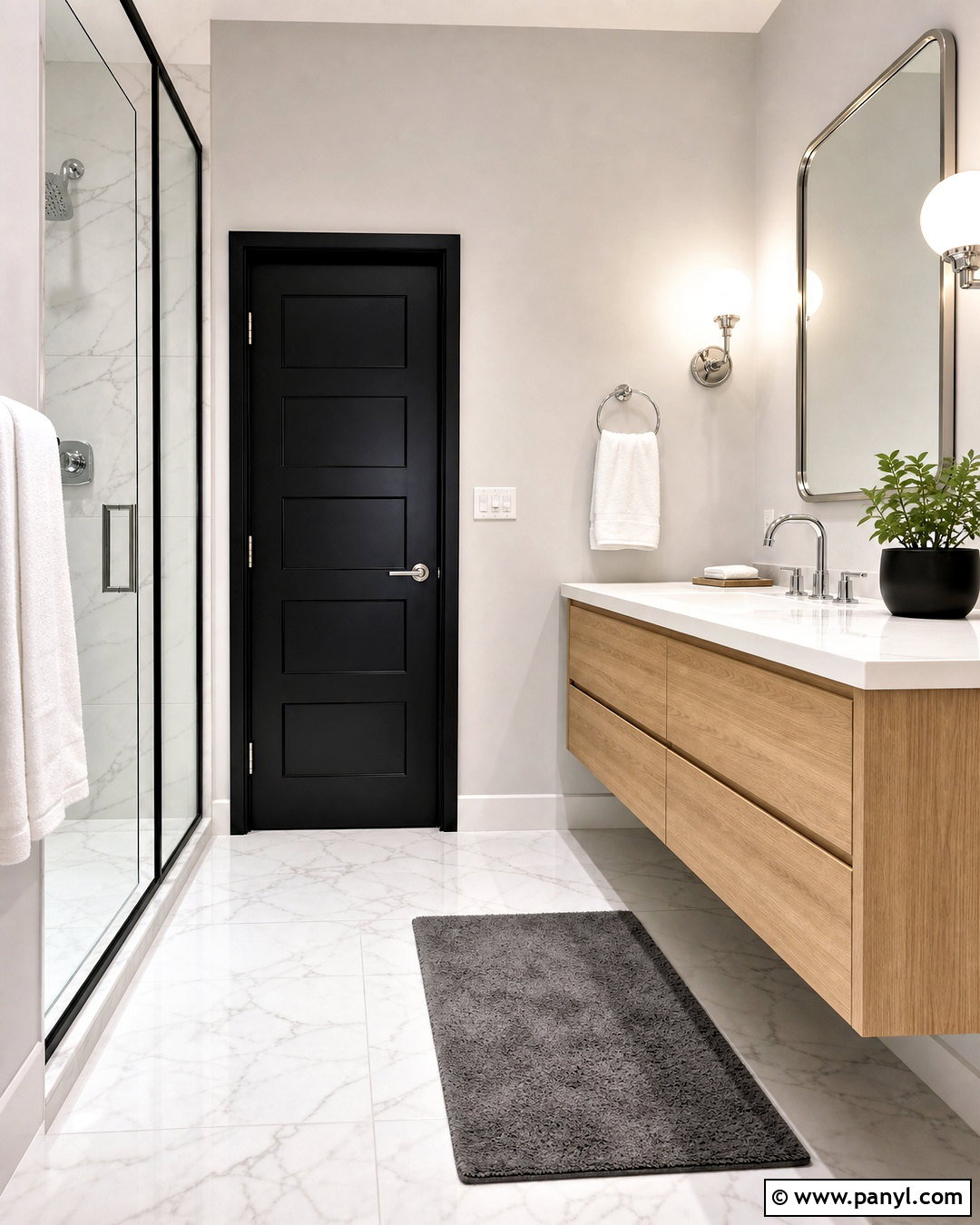
For a cooler and cleaner appearance, combine a black door with polished chrome or brushed nickel hardware. This pairing works beautifully in a modern bathroom suite with pale gray walls, white marble-look tile, and a floating white oak vanity. Choose a flush black door with a streamlined metal lever and concealed or color-matched hinges. Continue the silver finish through the faucet, mirror frame, towel bar, and simple globe sconces. White towels and a light gray bath mat keep the room fresh, while a small black planter repeats the door color. Frosted glass beside the doorway can borrow light from the hallway if the layout allows it. Use moisture-resistant trim paint in satin or semi-gloss. The completed look feels precise, bright, and easy to maintain.
13. Black Door With Warm Wood
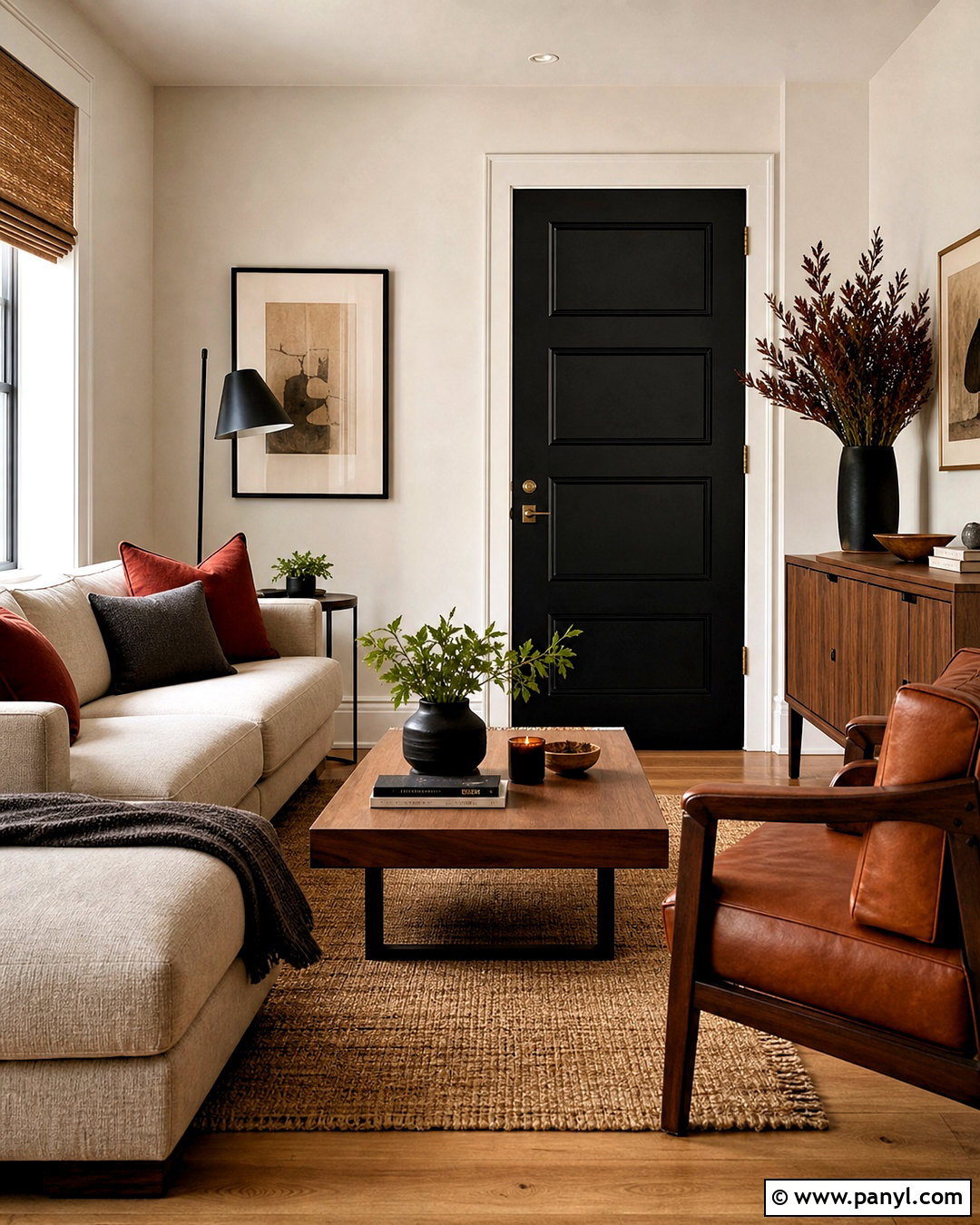
Black becomes softer when it is surrounded by visible wood grain and earthy materials. Build this look around a black three-panel door in a living room with honey-toned oak floors and a walnut media cabinet. Paint the walls warm cream, then add a sand-colored sectional, cognac leather accent chair, and rust-colored pillows. Woven shades and a jute-blend rug reinforce the natural palette. Repeat black sparingly through a floor lamp, narrow picture frames, and the cabinet legs. A brushed bronze lever bridges the dark door and warm wood more gently than bright silver hardware. Keep the door casing cream if you want the black slab to stand out, or use black casing for a stronger frame. Either approach creates a grounded, comfortable room with balanced contrast.
14. Black Door Neutral Bedroom
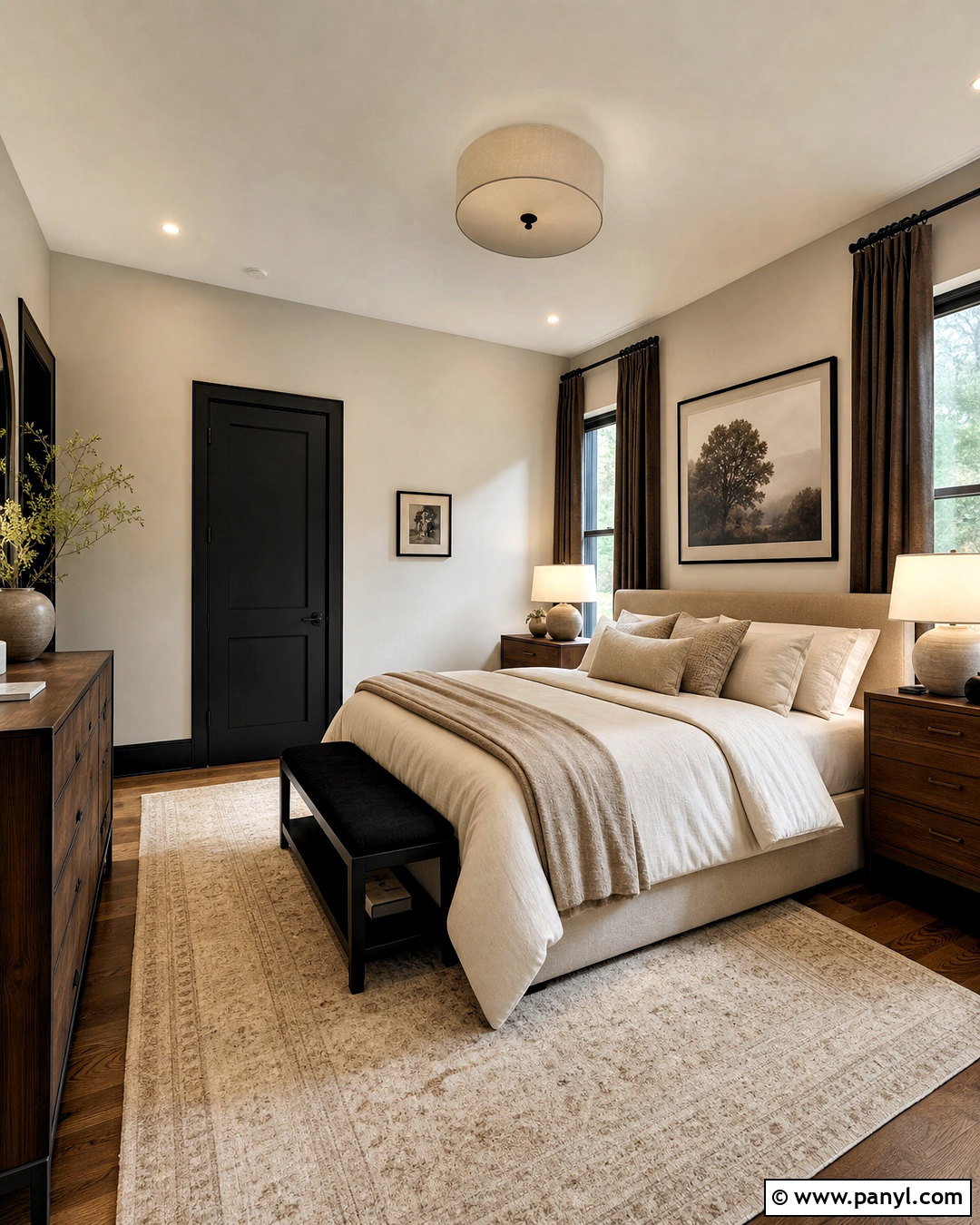
A black door can anchor a neutral bedroom that might otherwise feel washed out. Choose a smooth single-panel door with black trim and a discreet black lever. Paint the walls light mushroom, then layer the room with an ivory upholstered bed, taupe bedding, walnut nightstands, and soft brown curtains. A plush cream rug adds warmth underfoot, while a black bench at the foot of the bed repeats the doorway without dominating the scheme. Use ceramic lamps in an off-white finish and hang one large tonal artwork above the headboard. Gentle curves in the furniture will soften the door’s straight lines. Keep bedding relaxed and textured rather than perfectly matched. The finished bedroom feels serene and sophisticated, with enough dark contrast to make every pale material look deliberate.
15. Black Door Colorful Hallway
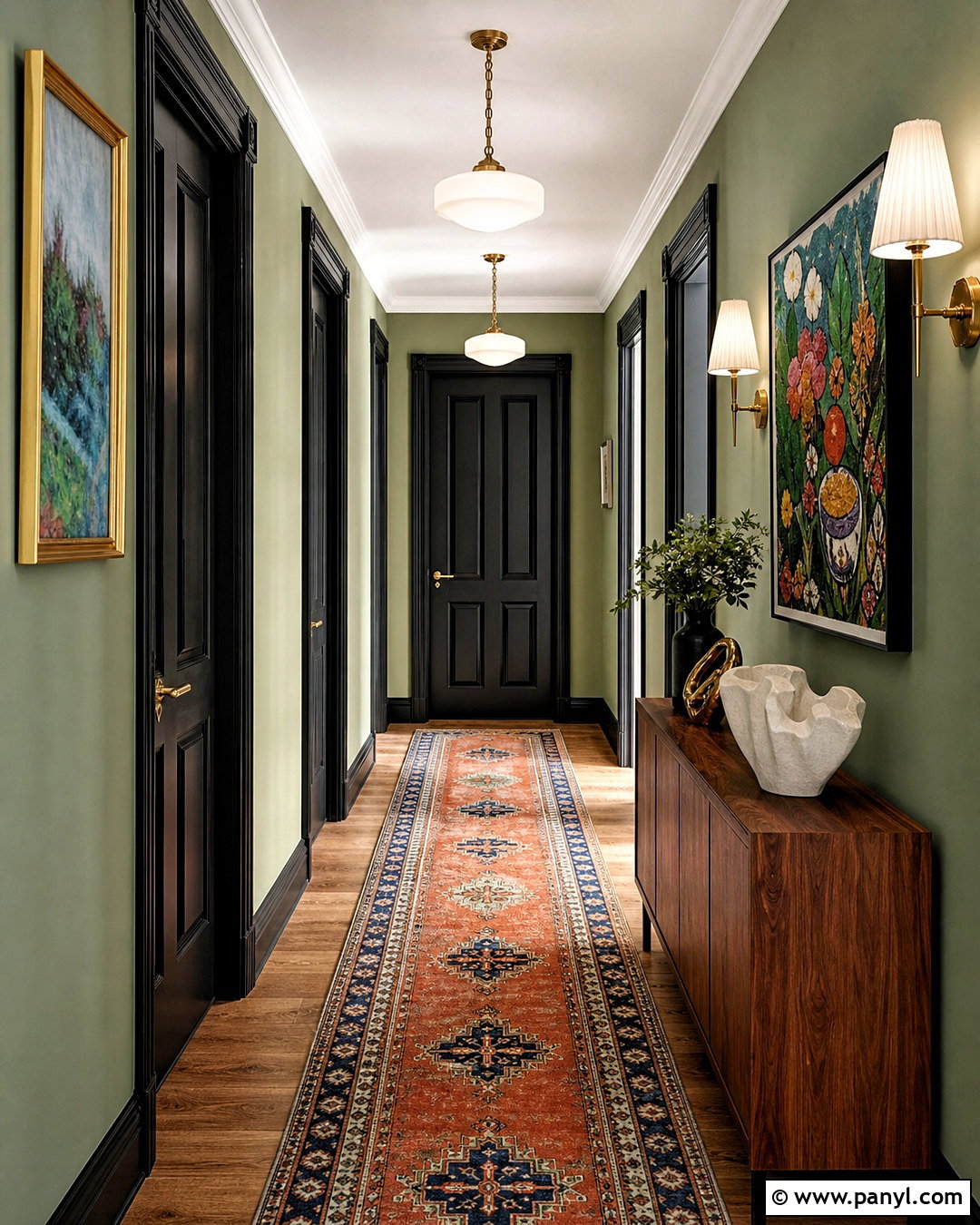
Black doors can provide structure in a hallway filled with color, pattern, and personality. Begin with satin black paneled doors and matching black casing. Paint the walls a muted sage green, then add a vintage-style runner featuring terracotta, navy, cream, and olive. A slim walnut console, colorful framed artwork, and a pleated white wall sconce keep the corridor lively but organized. Repeat the door color through narrow frames and one sculptural bowl rather than adding bulky black furniture. Warm brass levers bring brightness to each doorway and coordinate with small picture lights. Keep the ceiling, crown molding, and baseboards warm white to prevent the hallway from feeling enclosed. This complete palette proves that black doors can support color instead of limiting the surrounding decorating choices.
16. Black Louvered Closet Door
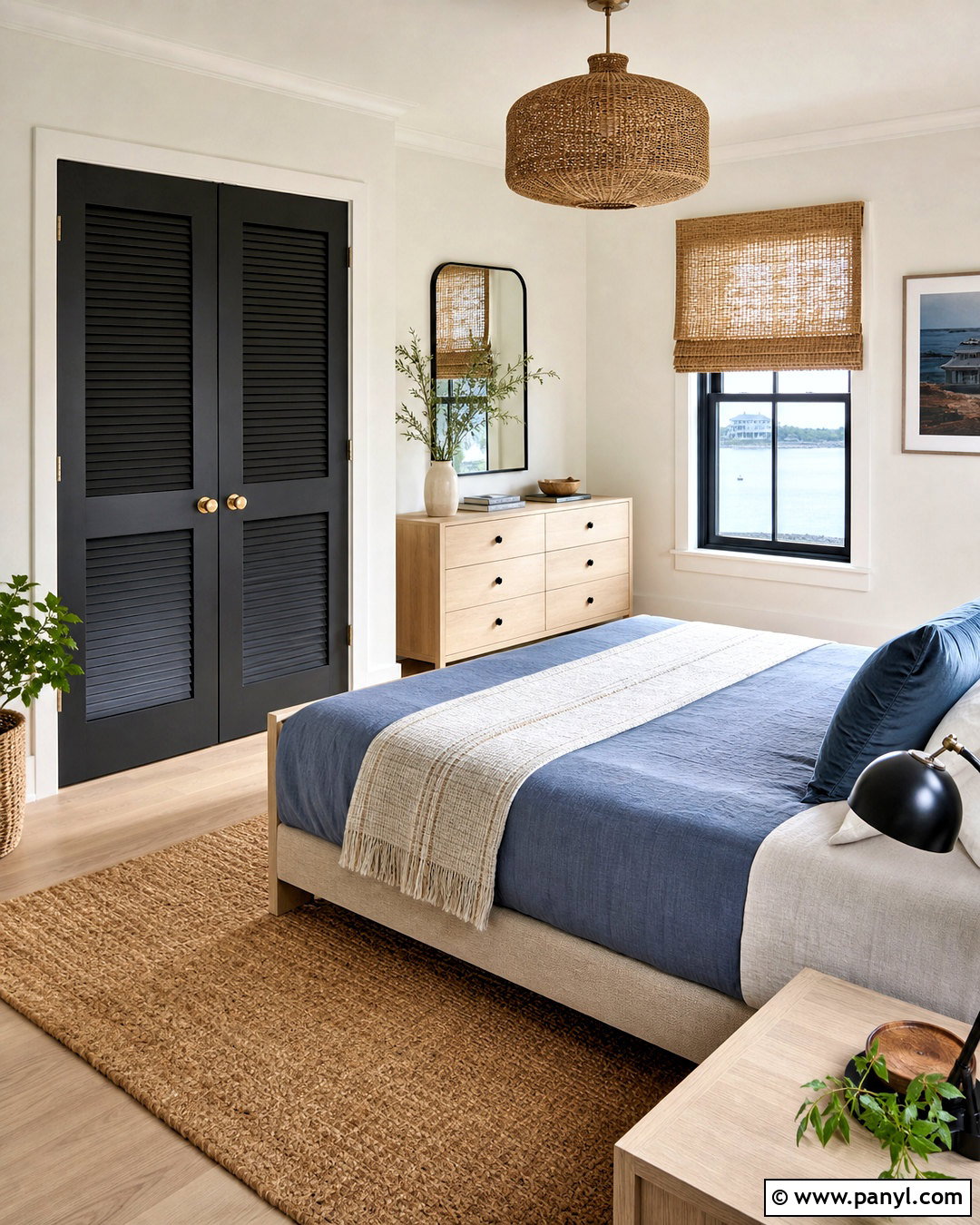
Black louvered doors can transform a plain bedroom closet into a textured feature while supporting ventilation. Use a pair of narrow, satin black doors with simple brass knobs and black casing. Set them against warm white walls in a relaxed coastal-inspired bedroom with pale oak flooring, an oatmeal linen bed, and soft blue-gray bedding. Add woven shades, a natural-fiber rug, and a light wood dresser to balance the dark closet front. One black reading lamp and a thin black mirror frame connect the doors to the rest of the space. Keep the louvers, hinges, and edges evenly coated because their shadows highlight imperfections. The completed room feels airy and casual, while the darker closet doors add useful depth and a more customized appearance.
17. Black Dutch Door Laundry Room
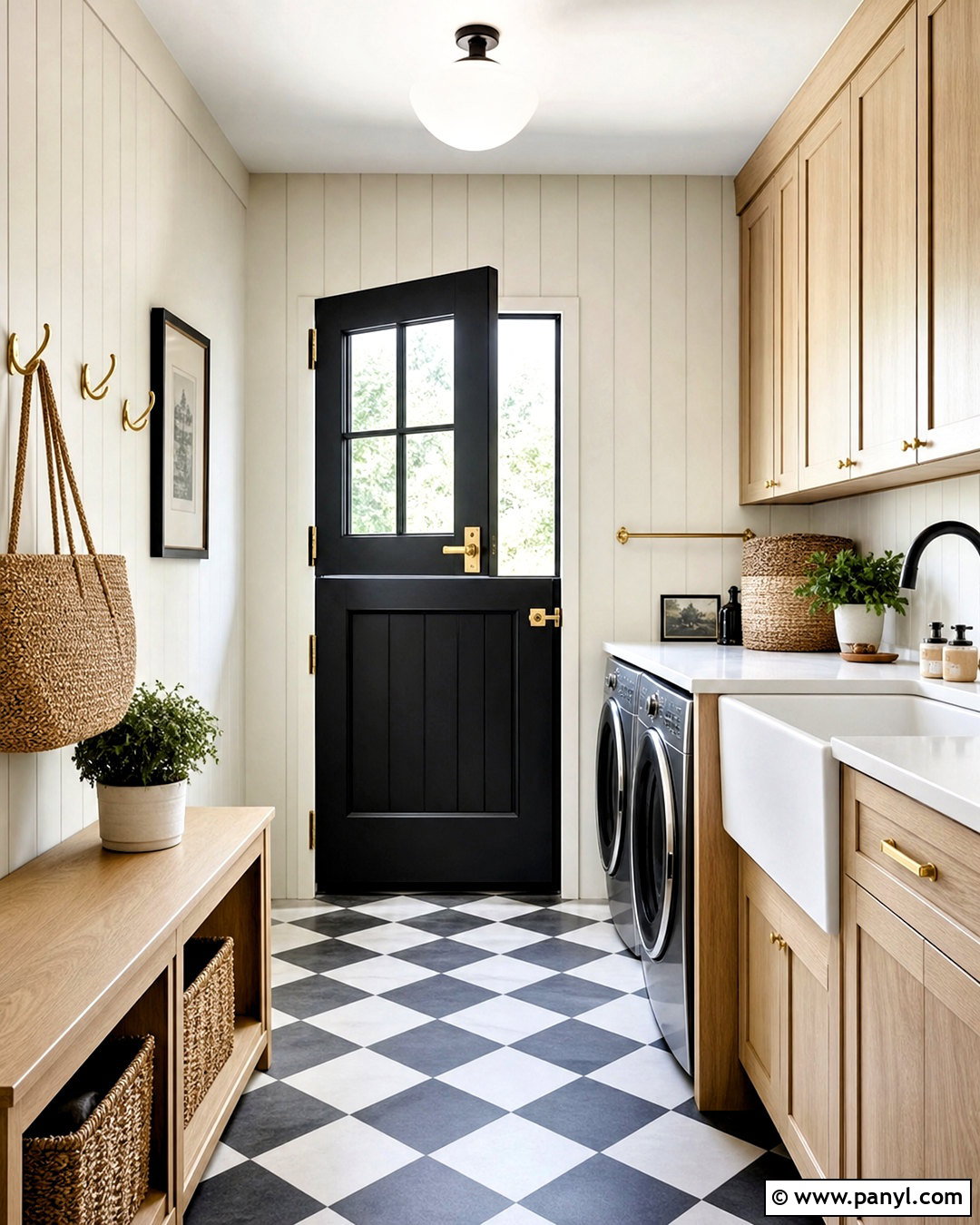
A black Dutch door brings character and practical separation to a laundry room or mudroom. Choose a simple two-panel design divided horizontally, with a brass lever below and a matching latch above. Surround it with creamy vertical wall paneling, charcoal-and-white checkerboard flooring, and pale oak storage cabinets. A white farmhouse sink, woven baskets, and brass utility hooks complete the hardworking space. Repeat black on the faucet and one ceiling fixture to integrate the door with the room. The upper half can remain open when you want airflow or a view into the adjoining area, while the lower section stays closed. Confirm that the swing will not conflict with appliances or cabinets. This cheerful, organized scheme turns a functional doorway into the room’s signature feature.
18. Black Sliding Door Bathroom
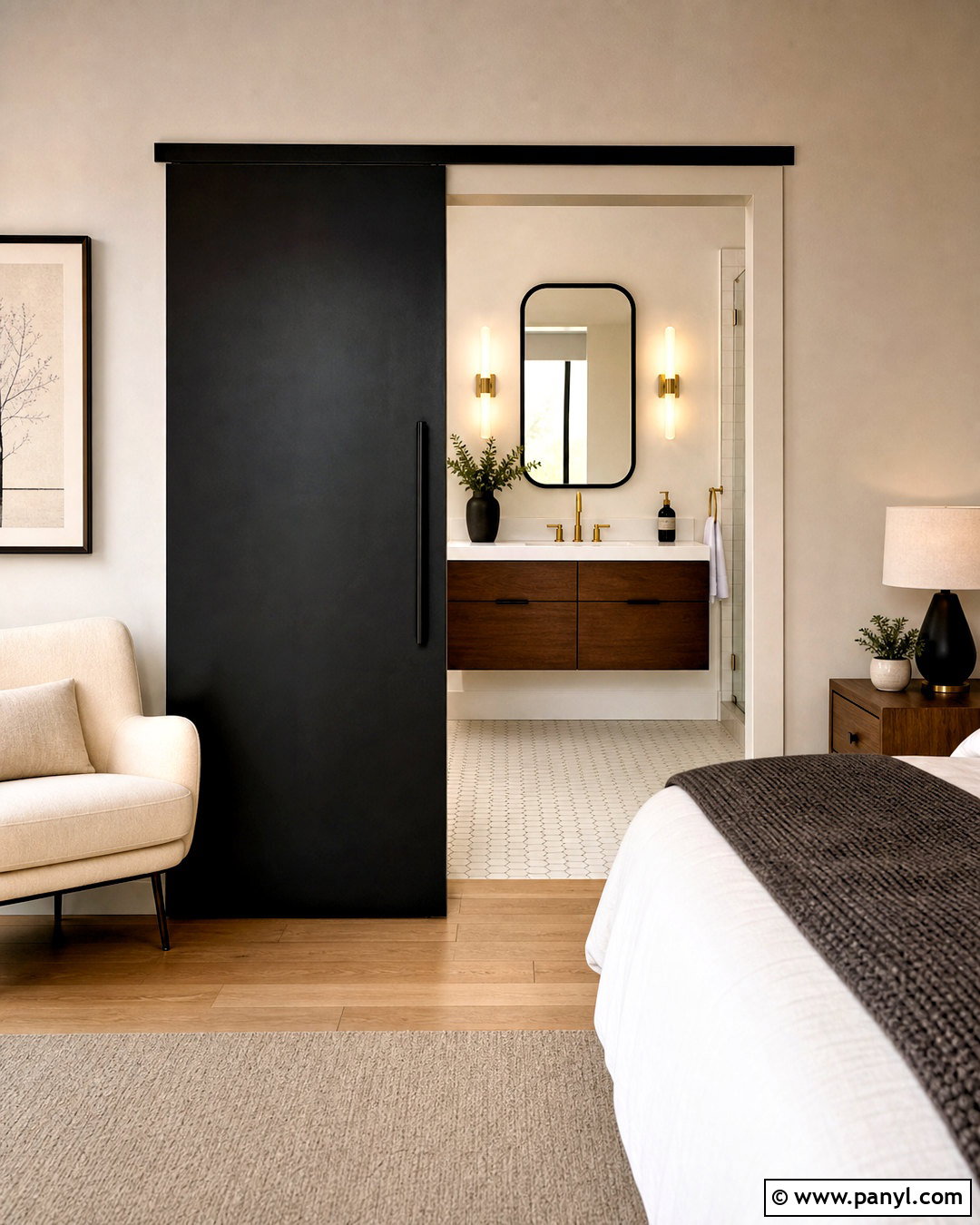
A sliding black door can solve a tight bathroom layout while maintaining a streamlined appearance. Choose a smooth solid door on a compact black track, with a long vertical pull that is comfortable to use. Outside the bathroom, create a calm bedroom corner with light greige walls, oak flooring, and a cream upholstered chair. Inside, pair white tile with a walnut vanity, black-framed mirror, and brushed brass fixtures. Install a proper privacy latch and select a door wide enough to overlap the opening on both sides. Soft-close hardware reduces noise, while a bottom guide keeps the slab stable. Avoid placing towel hooks where the open door will cover them. This complete design combines efficient movement, privacy, and warm contemporary finishes without making either room feel crowded.
19. Black Flush Door Minimalist Interior
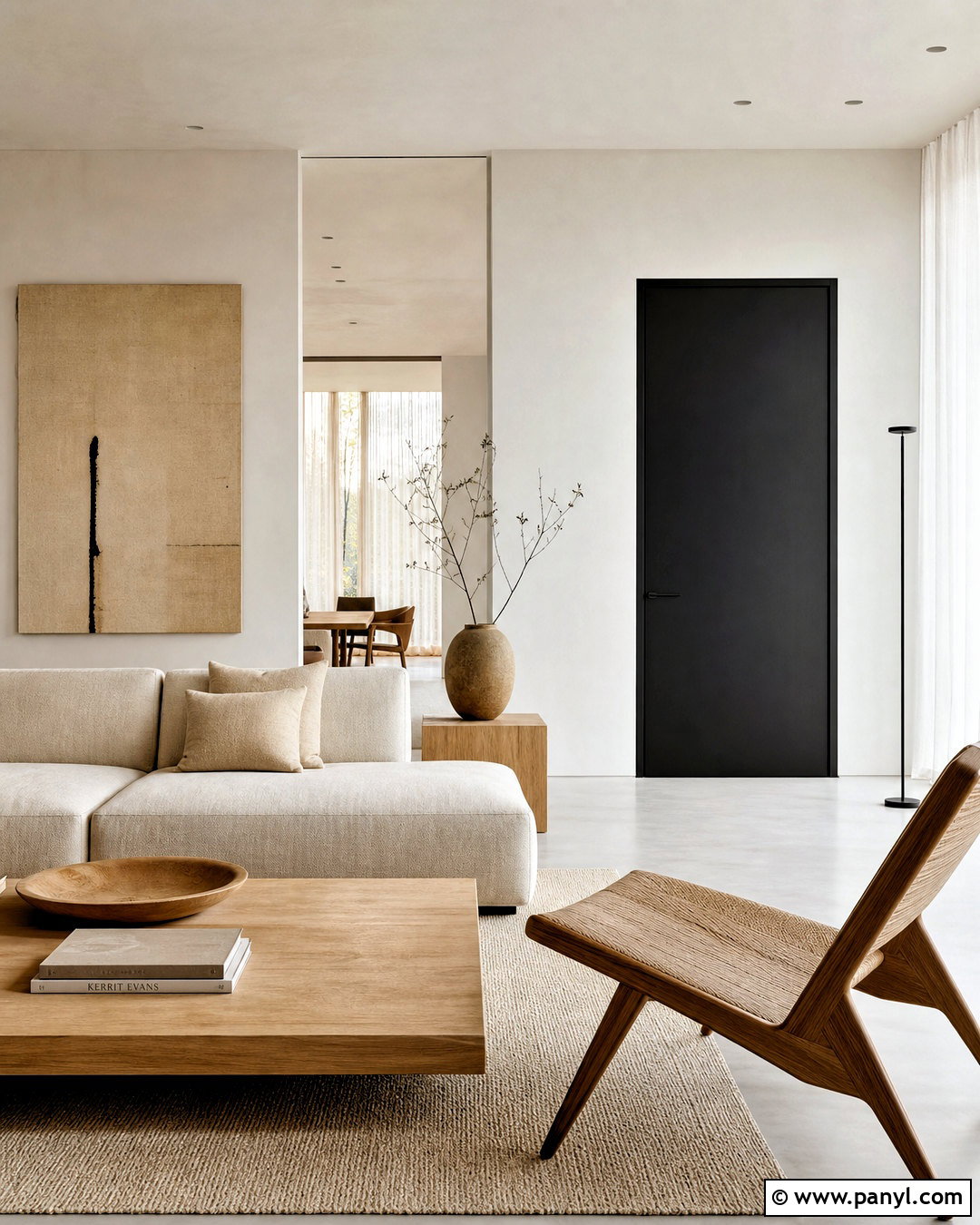
A flush black door nearly disappears when placed within a carefully edited minimalist room. Use a smooth slab with concealed hinges, a narrow black frame, and a simple lever or integrated edge pull. Pair it with soft white walls, pale microcement-style flooring, and a low-profile oatmeal sofa. Add a white oak coffee table, one sculptural lounge chair, and a large neutral artwork with thin charcoal marks. Recessed lighting and sheer full-height curtains maintain a bright, uncluttered atmosphere. Limit small accessories to a ceramic vessel, two books, and one leafy branch. Black should reappear only in a slim floor lamp and the artwork frame. Precise installation is essential because uneven gaps stand out on a plain door. The finished space feels quiet, modern, and architecturally focused.
20. Black Paneled Door Traditional Interior
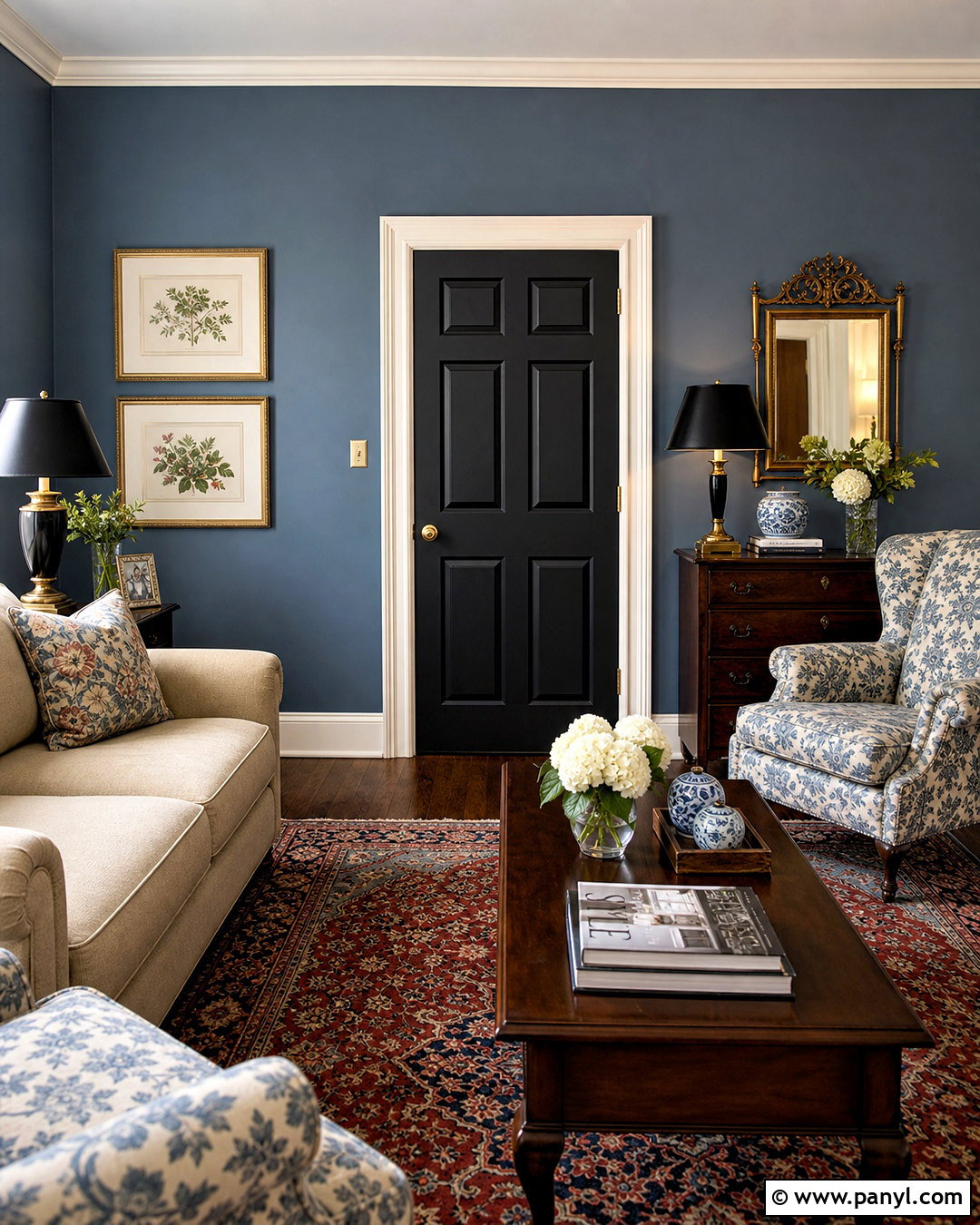
Traditional architecture pairs naturally with black doors when the surrounding details are equally considered. Select a six-panel door in a soft satin finish and frame it with substantial warm white casing. Use antique brass hinges and a classic round knob to reinforce the older-home character. In the adjoining sitting room, combine pale blue-gray walls, medium-dark oak flooring, a rolled-arm cream sofa, and two patterned accent chairs. Hang pleated curtains from a brass rod and center a vintage-style rug beneath a mahogany coffee table. Black lampshades and framed botanical prints subtly repeat the door color. Crown molding and white baseboards keep the scheme crisp. Rather than making the room feel overly formal, the balanced mix of dark paint, comfortable upholstery, and muted color feels established and welcoming.
Conclusion:
The strongest **black door interior design ideas** treat the doorway as part of a complete room rather than an isolated painted surface. Consider the door profile, casing color, hardware finish, wall palette, flooring, lighting, and furniture before making a final choice. White trim creates crisp separation, while black trim delivers a stronger architectural frame. Brass adds warmth, silver hardware feels cleaner, and natural wood helps soften the contrast. Glass, pocket, sliding, Dutch, and louvered doors can also solve practical layout or privacy needs. Test the color in your actual lighting, choose a durable sheen, and repeat black in a few carefully selected accents. With thoughtful balance, black doors can make an everyday home feel cohesive, distinctive, and beautifully finished.

Related Ideas and Inspiration:
Leave a Reply