
Choosing the right finish for a wood door can transform an entrance, brighten a hallway, or give a plain room more character. The best **wooden door colour ideas** consider more than the door itself. Wall color, trim, flooring, hardware, lighting, and nearby materials should create one complete look. Natural stains showcase attractive grain, while opaque paint can refresh damaged or less distinctive wood. Current door palettes range from warm oak and walnut to black, green, blue, and expressive earthy shades. Before committing, test the finish directly on the wood because species, grain, and existing coatings can change the final appearance. Use the following **wooden door colour ideas** to build a polished design that works with your home’s architecture and surroundings. ()
1. Natural Oak Wooden Door
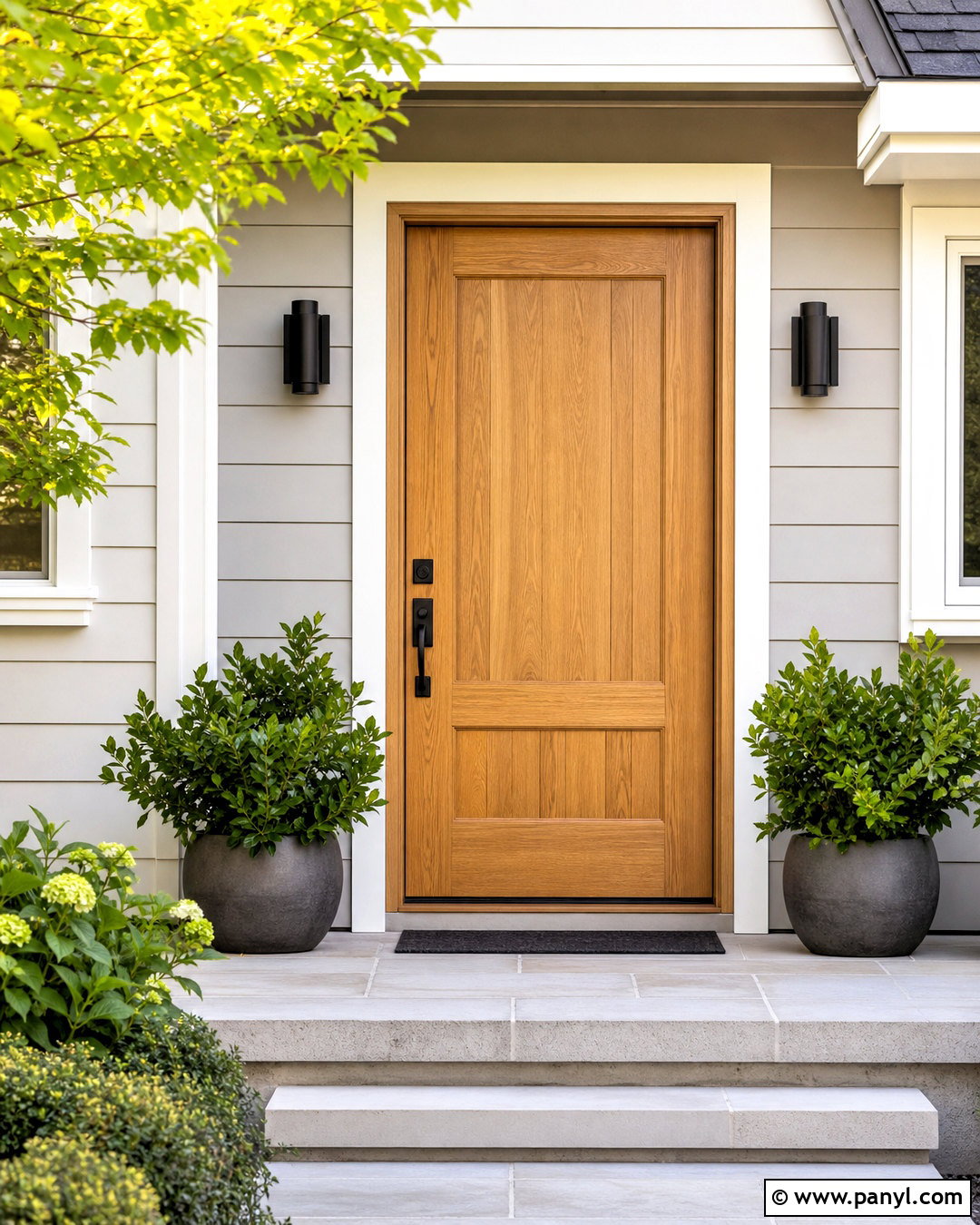
A natural oak finish creates a warm, relaxed entrance without hiding the wood’s grain. Choose a clear matte or satin protective coating that keeps the color closer to honey beige than orange. Frame the door with warm white trim and pair it with light greige siding, cream stucco, or pale stone. Matte black hardware adds definition, while a slim black porch light connects the details. Complete the entrance with limestone pavers, simple planters, and soft green foliage. For an interior door, repeat the oak through flooring, a console, or small decorative objects. This coordinated approach makes the door feel intentional instead of mismatched. It works especially well for Scandinavian, organic modern, contemporary farmhouse, and transitional homes.
2. Dark Walnut Wooden Door
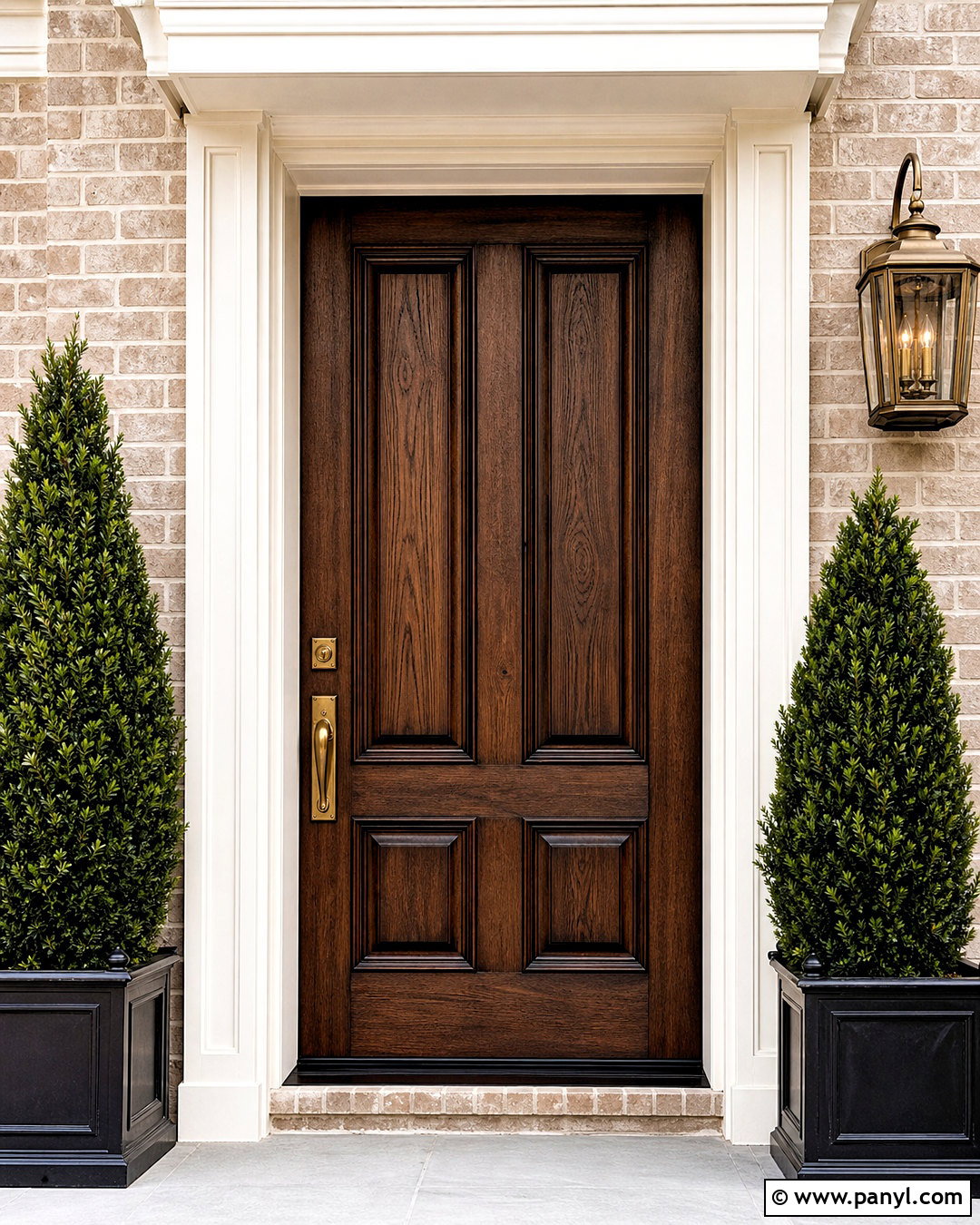
Deep walnut gives a wooden door a rich finish that feels elegant without being overly formal. Select a brown stain with subtle chocolate undertones and enough transparency to reveal the natural grain. Surround an exterior walnut door with creamy white walls, light taupe brick, or pale gray stone so the entrance does not appear heavy. Use aged brass hardware for traditional warmth or matte black hardware for a cleaner modern look. A warm gray porch floor and symmetrical evergreen planters complete the setting. Indoors, walnut doors look cohesive beside ivory walls, medium oak floors, and dark wood furniture used sparingly. Keep nearby fabrics light and textured. The contrast allows the darker door to become a sophisticated focal point.
3. Mahogany Wooden Door
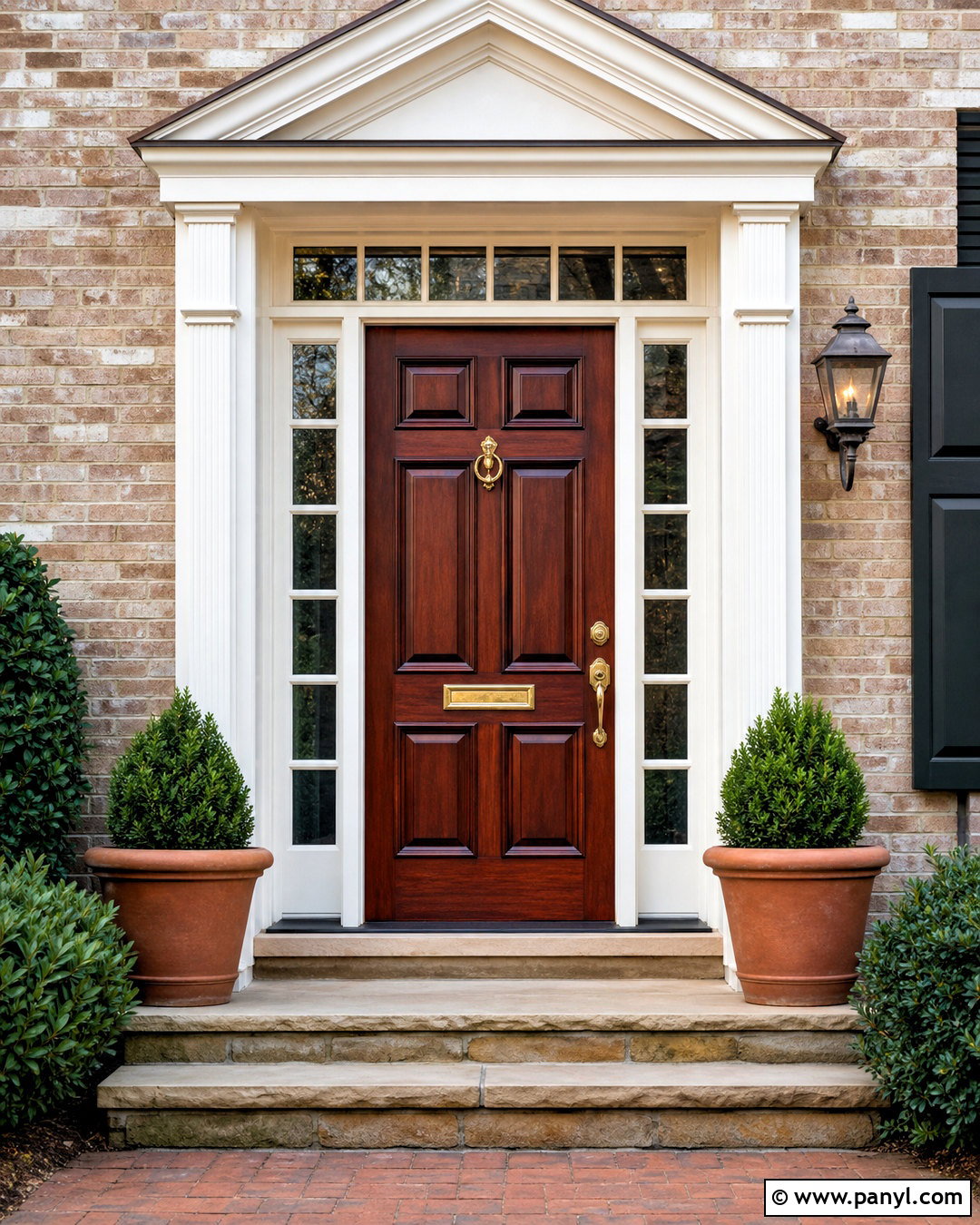
A mahogany-colored door brings red-brown warmth to traditional, colonial, and craftsman homes. Choose a translucent stain that enriches the grain rather than creating a flat red surface. Cream trim softens the color, while warm beige siding or muted brick supports its classic character. Add antique brass hardware, divided sidelights, and a lantern-style fixture for a balanced entrance. Terracotta pots filled with clipped greenery can repeat the door’s warm undertones without matching it exactly. If the door is inside, coordinate it with warm white walls, patterned rugs, and medium-tone hardwood flooring. Avoid placing too many reddish wood finishes nearby. Instead, use neutral furniture and small brass accents so the mahogany door remains distinctive, refined, and visually grounded.
4. Espresso Brown Wooden Door
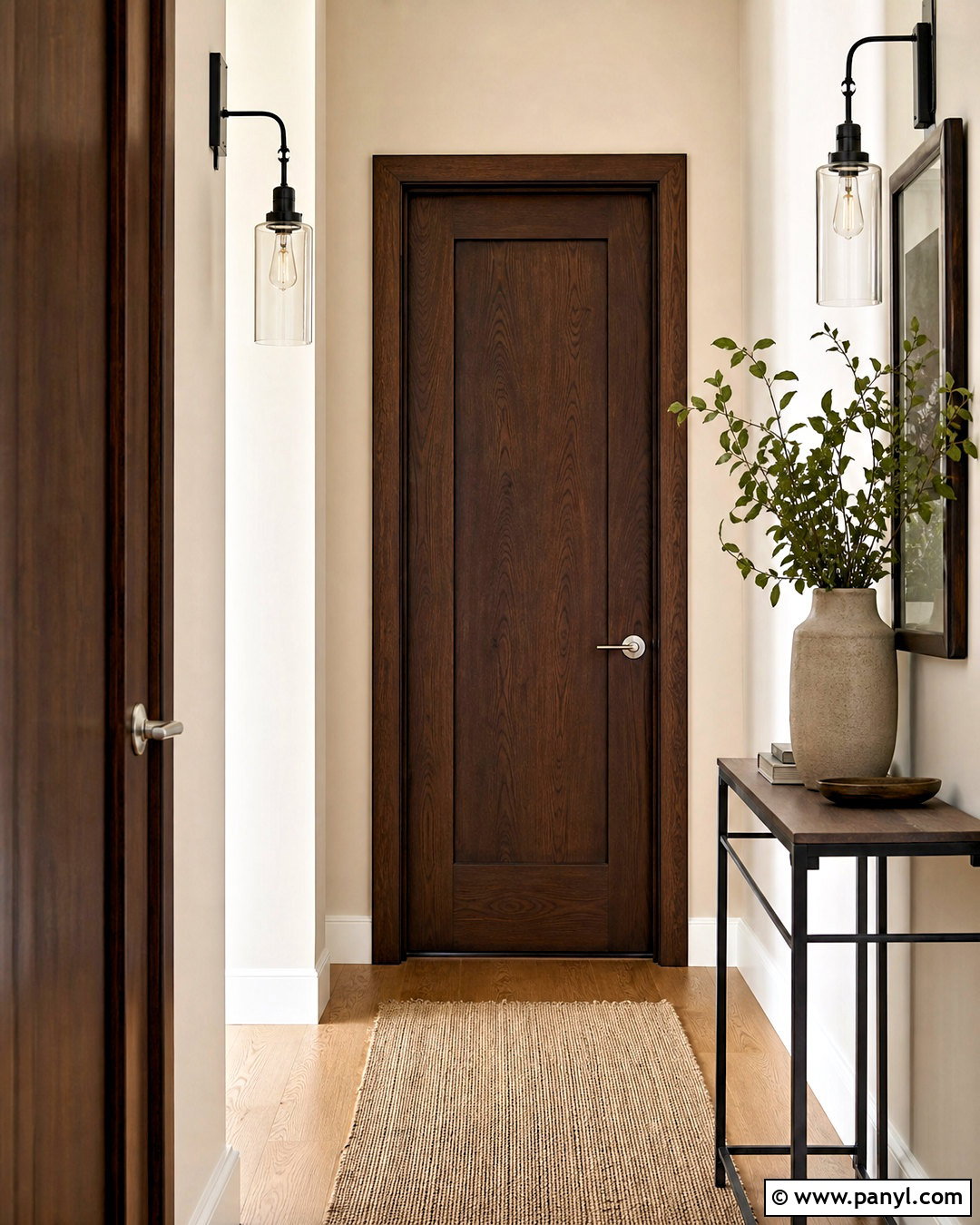
Espresso brown offers the drama of a dark door while retaining the softness of natural wood. The ideal finish is a very deep brown stain with visible grain and a low satin sheen. Pair it with warm white stucco, sand-colored brick, or soft taupe siding to create clear contrast. Brushed nickel hardware makes the look contemporary, while aged bronze creates a more rustic result. Use a pale stone threshold and modern rectangular planters to keep the entrance bright. Inside, an espresso door works beautifully with cream walls, light oak flooring, and black metal lighting. Repeat the dark brown through one console or picture frame rather than every furnishing. This balanced palette feels polished and substantial without making the surrounding space look smaller.
5. Matte Black Wooden Door
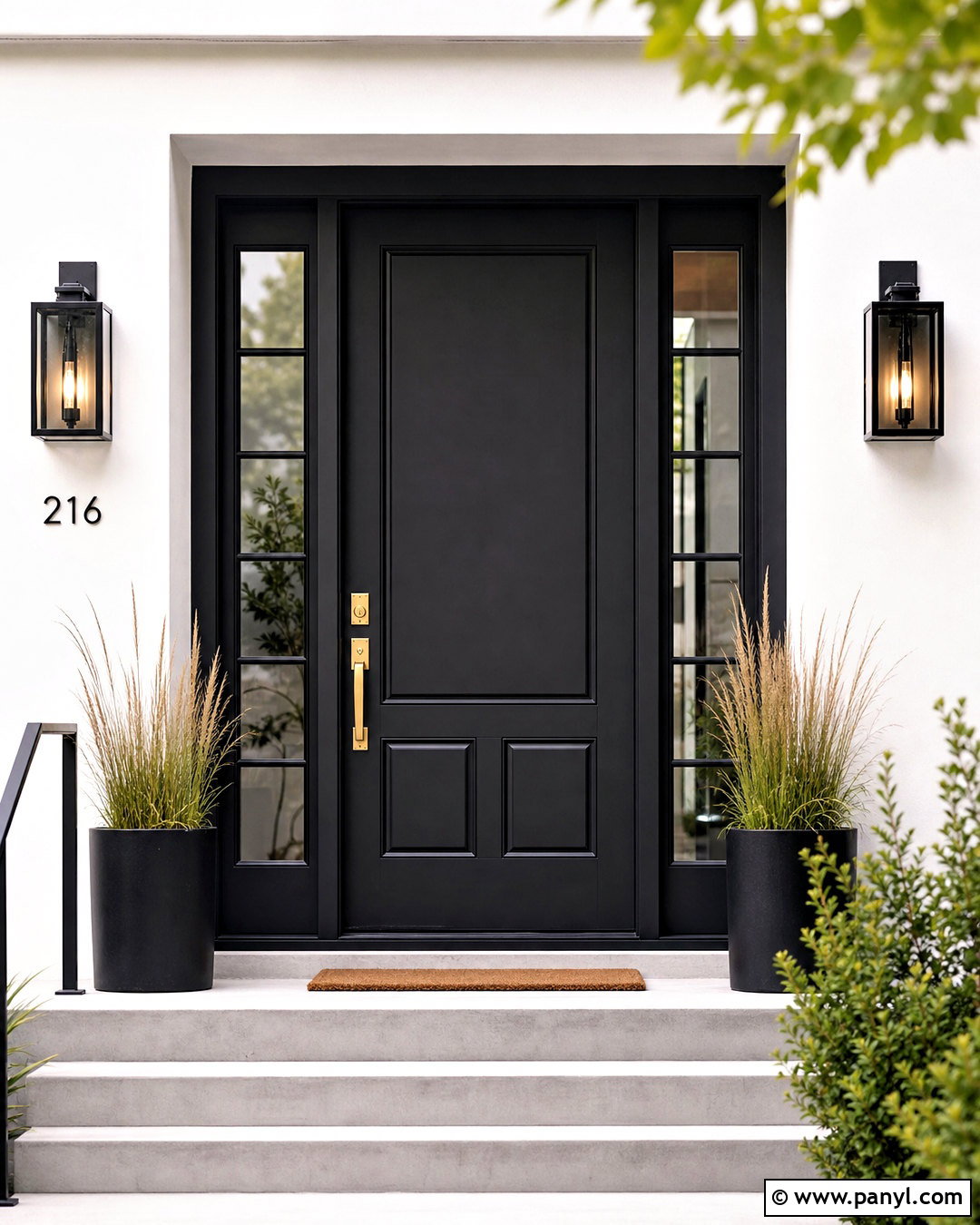
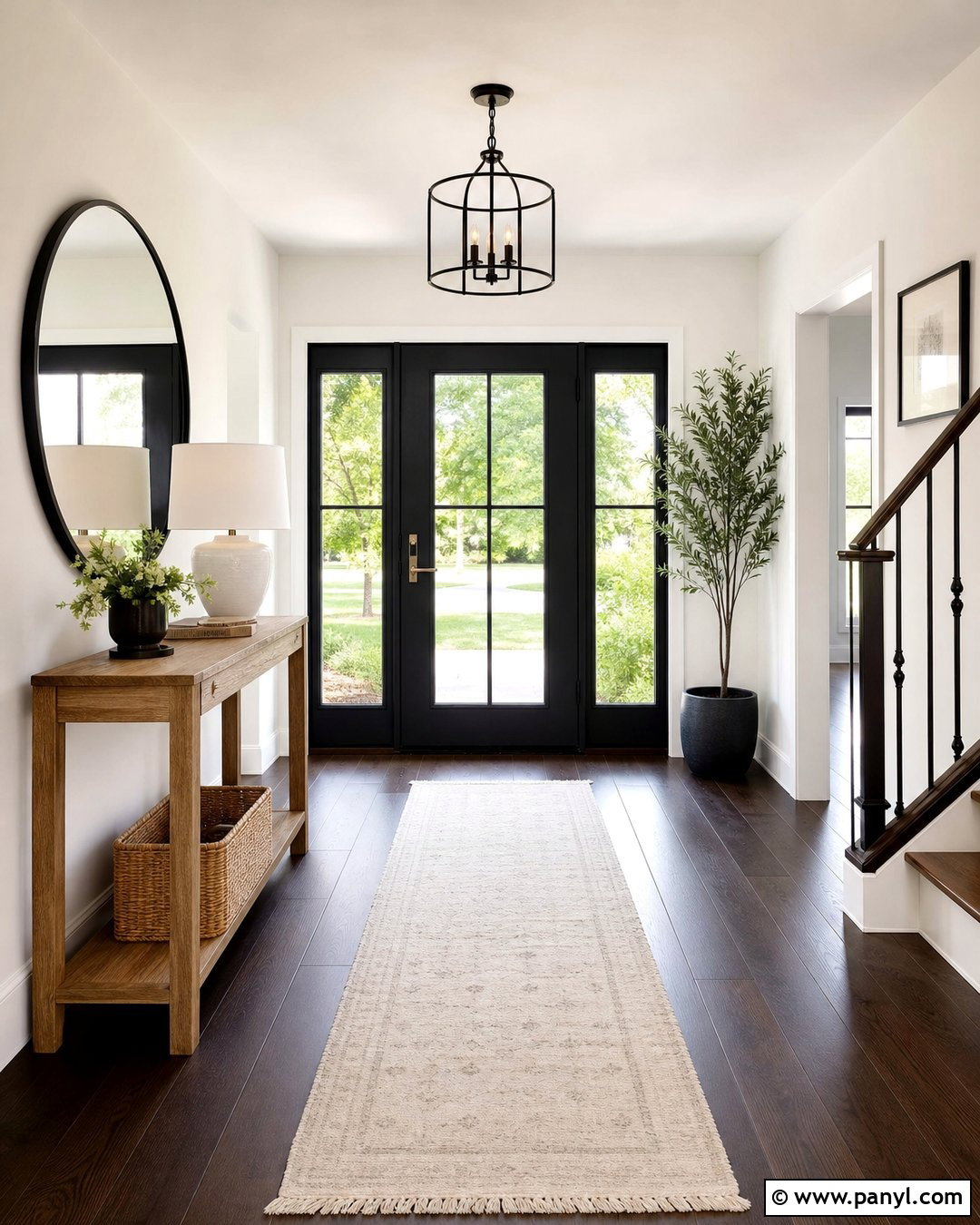
A matte black wooden door creates a crisp architectural focal point, particularly against white, cream, or pale gray walls. Use a durable exterior or interior wood paint with a soft satin finish rather than an entirely flat coating, which can show marks more easily. Surround the door with matching black trim for a bold modern entrance, or use white trim for sharper traditional contrast. Add brushed brass hardware to warm the palette and black-framed sidelights to reinforce the design. Pale concrete steps, sculptural grasses, and simple planters prevent the exterior from feeling severe. Indoors, connect the black door to lighting, curtain rods, or stair railings. Natural oak flooring and woven textures will soften the contrast while preserving the clean, graphic appearance.
6. Charcoal Gray Wooden Door
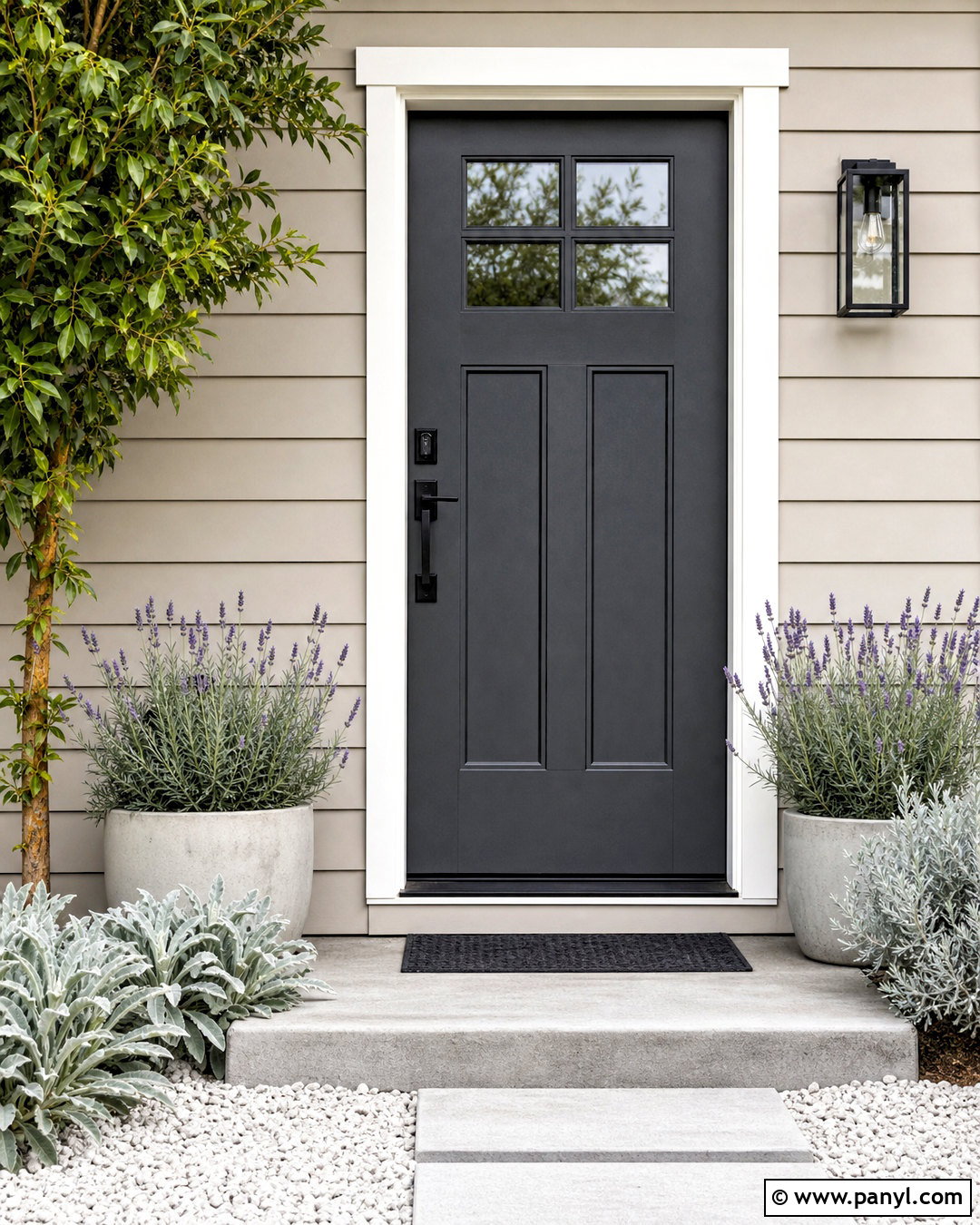
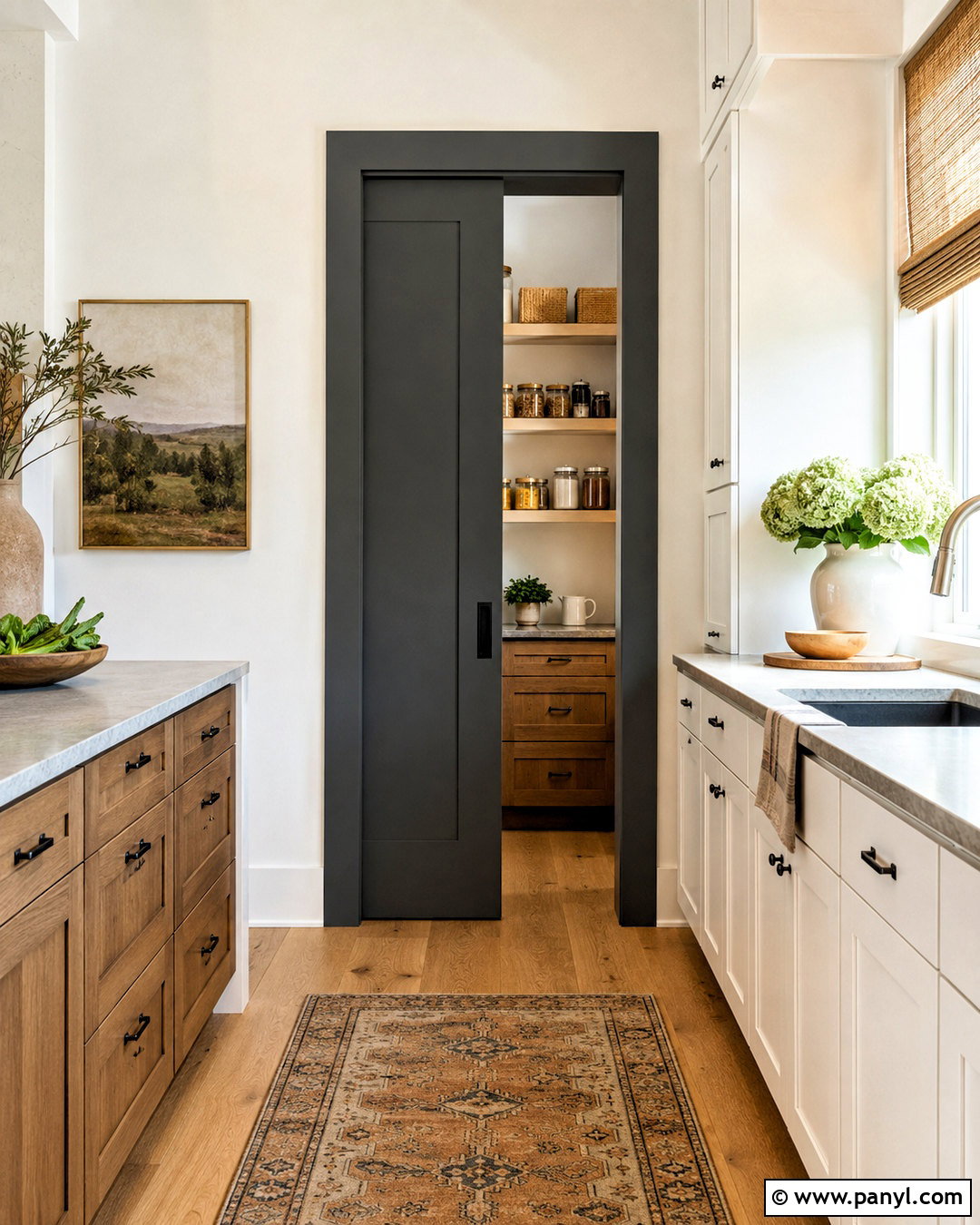
Charcoal gray is a practical alternative when solid black feels too intense. Choose a deep gray with a slightly warm undertone to complement stone, brick, and wood more easily. Pair the door with soft white trim and medium greige siding for a calm contemporary exterior. Black hardware provides subtle contrast, while brushed stainless steel creates a cleaner urban finish. Add concrete planters, pale gravel, and silvery green plants such as lavender or olive for a complete entry design. A charcoal interior door can anchor a hallway with warm white walls, light wood floors, and minimal black accents. Paint the casing charcoal for a seamless modern effect or keep it white for definition. The resulting scheme feels grounded, versatile, and quietly sophisticated.
7. Warm White Wooden Door
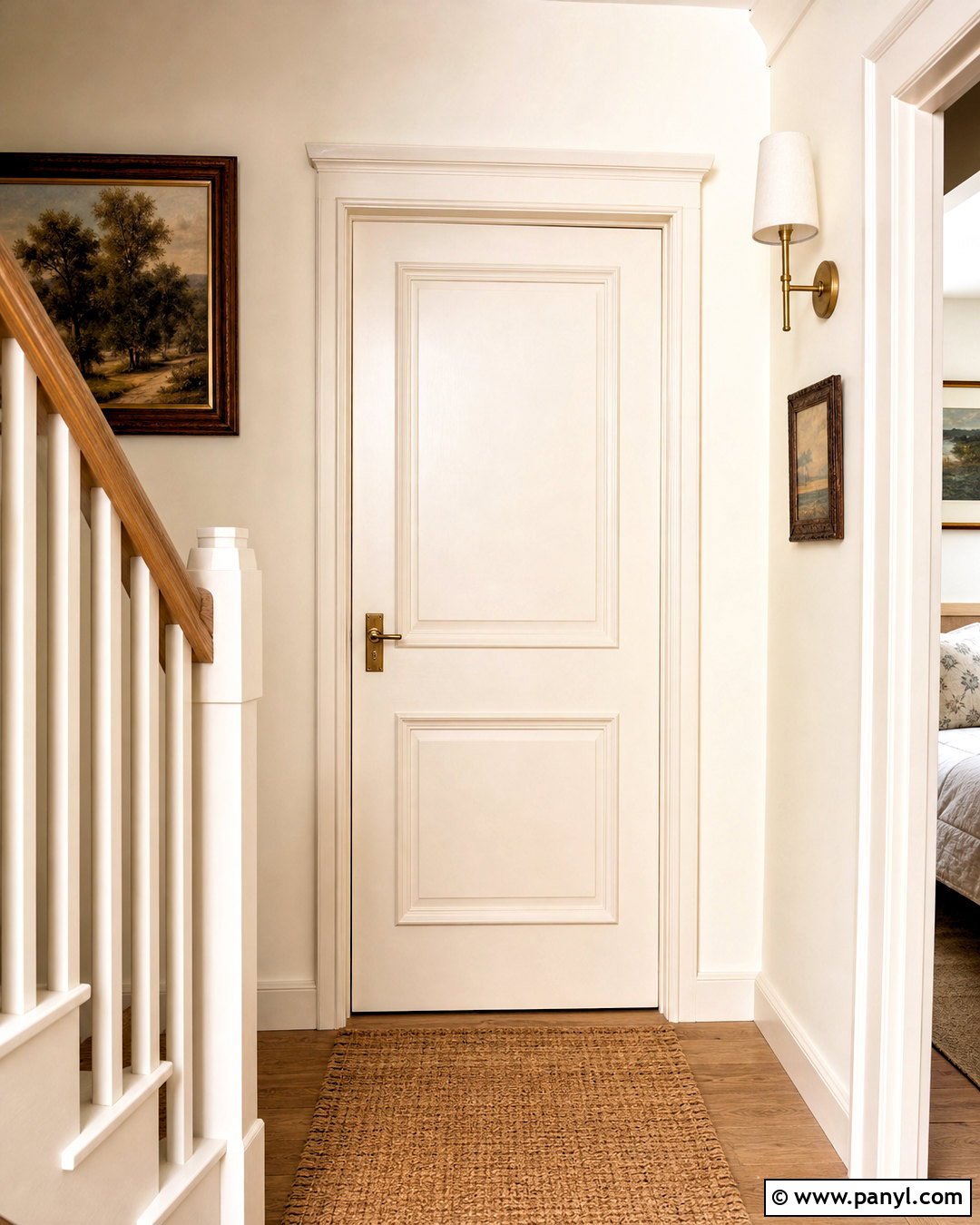
Warm white paint gives a wooden door a clean appearance while preserving a welcoming atmosphere. Select an ivory-based white rather than a cool blue-white, especially when the surrounding home contains beige stone, warm brick, or oak flooring. Use the same color on the frame and trim to create a smooth, unified entrance. A satin finish will highlight panel details and remain easier to clean than flat paint. Add aged brass hardware, a natural fiber doormat, and muted green planters for gentle contrast. For interior doors, pair warm white with creamy walls, pale wood floors, and linen textiles. Slightly different sheens can distinguish the trim from the door without introducing another color. This coordinated look suits cottages, traditional homes, and bright minimalist interiors.
8. Soft Greige Wooden Door
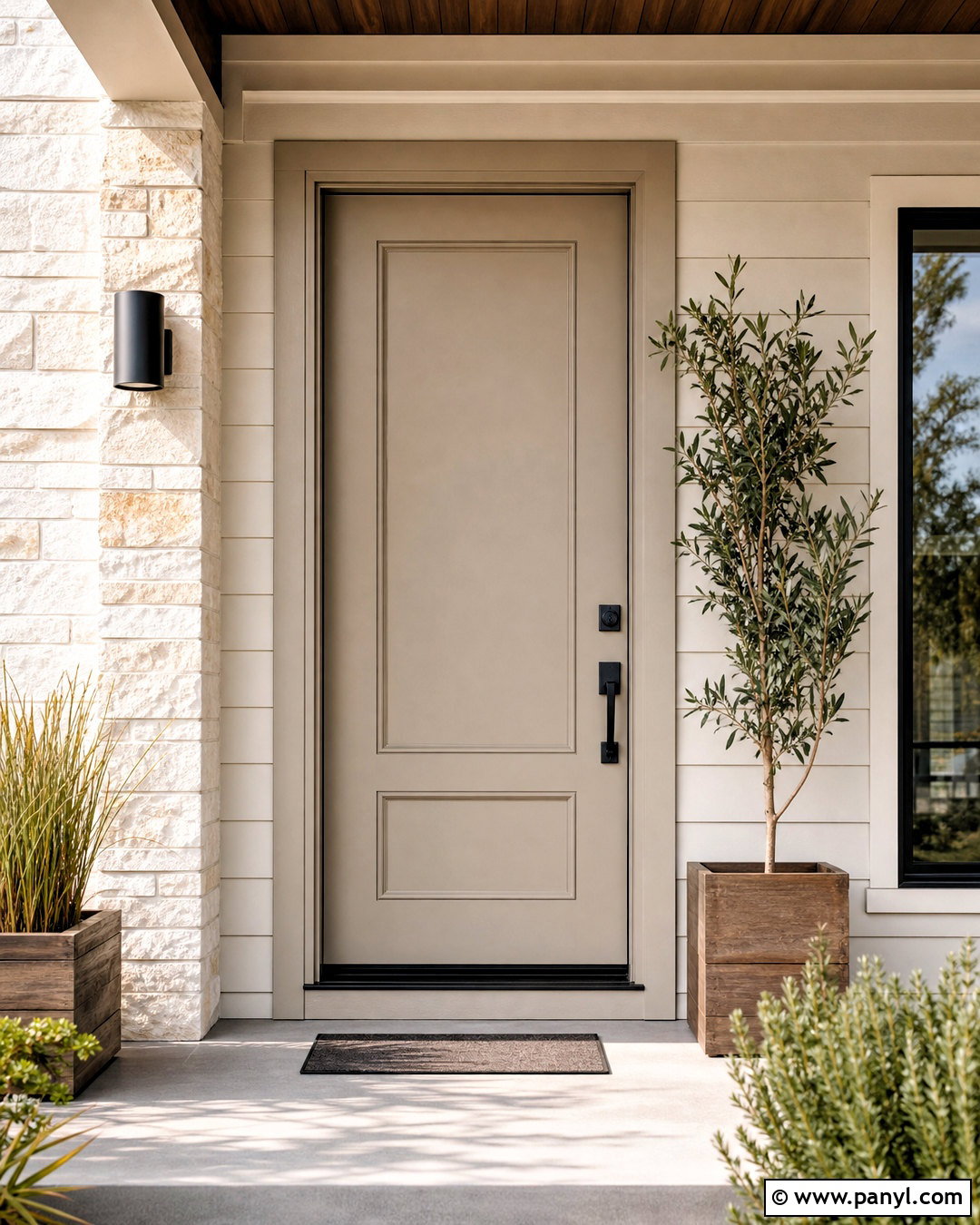
A soft greige wooden door blends gray and beige, making it easy to coordinate with both warm and cool finishes. Choose a medium-light shade that remains visible against white trim but does not overpower a narrow hallway or modest entrance. For an exterior scheme, combine the door with creamy siding, pale limestone, and a warm gray porch floor. Matte black hardware gives the neutral color a modern edge, while antique brass creates a softer transitional look. Finish the entry with natural wood planters and restrained greenery. Indoors, extend the greige onto the casing for a color-drenched effect, then use warm white walls and oak flooring nearby. Textured rugs and black lighting complete a calm, layered palette that feels more interesting than ordinary white.
9. Sage Green Wooden Door
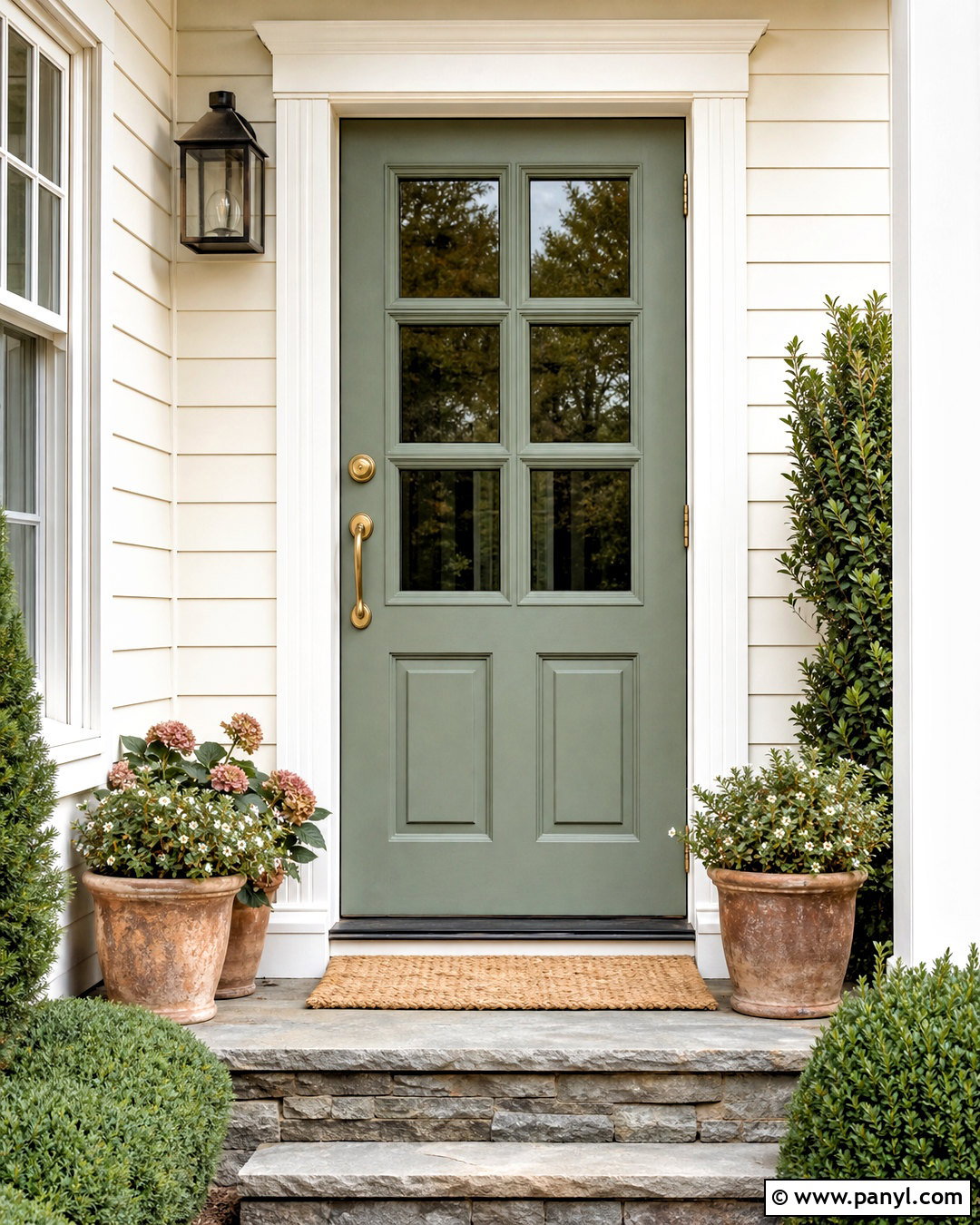
Sage green gives a wooden door a soft botanical character that works with farmhouse, cottage, craftsman, and organic modern homes. Look for a muted green with noticeable gray undertones rather than a bright pastel shade. Pair it with warm white trim, cream siding, and natural stone for an inviting exterior. Aged brass or dark bronze hardware supports the earthy palette. Add terracotta planters, clipped shrubs, and a woven doormat to make the entrance feel complete. Inside, sage doors coordinate beautifully with ivory walls, oak floors, linen curtains, and small touches of black. Paint the door frame the same sage for a gentle built-in appearance. The finished look feels fresh and colorful while remaining calm enough for long-term use.
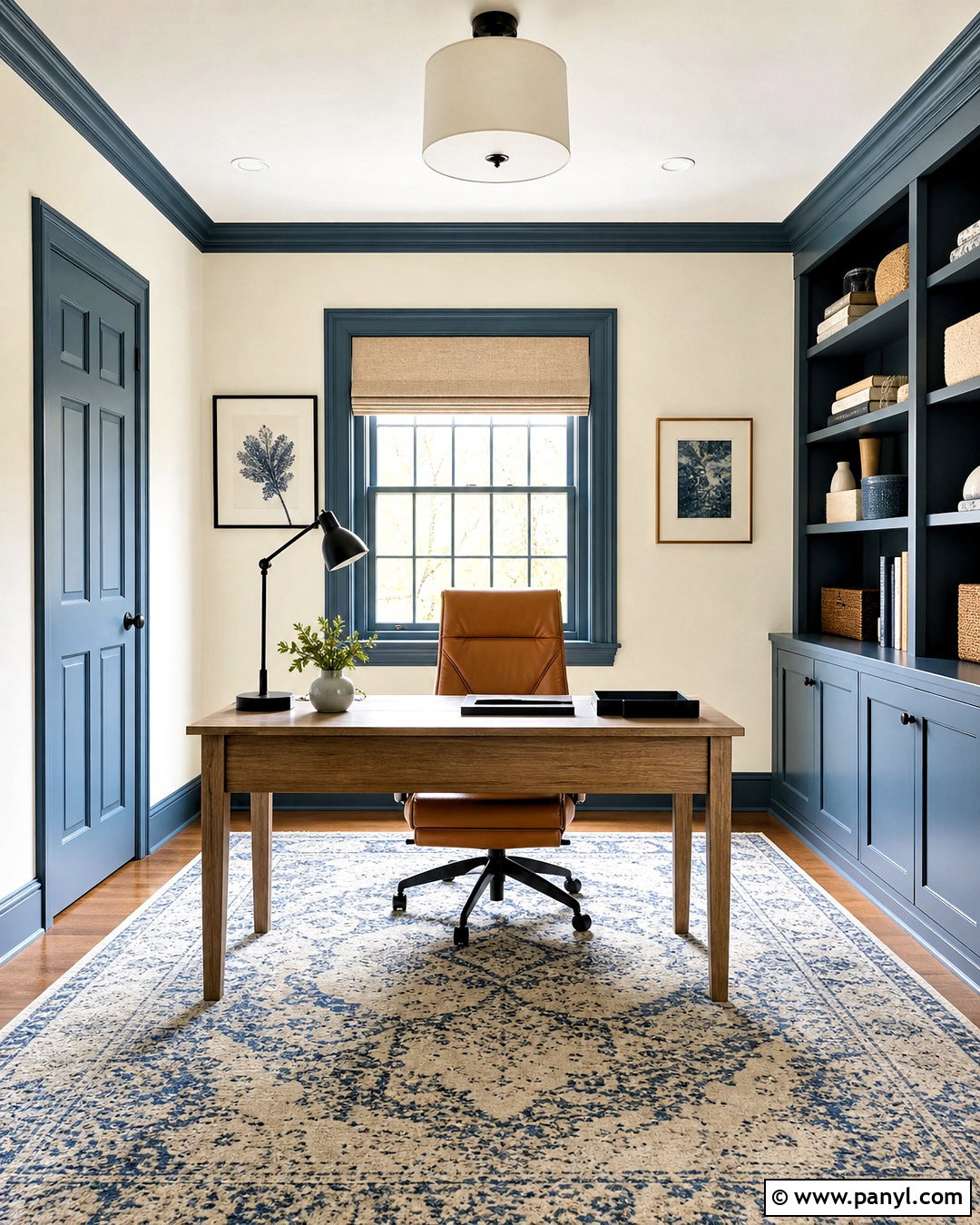
10. Olive Green Wooden Door
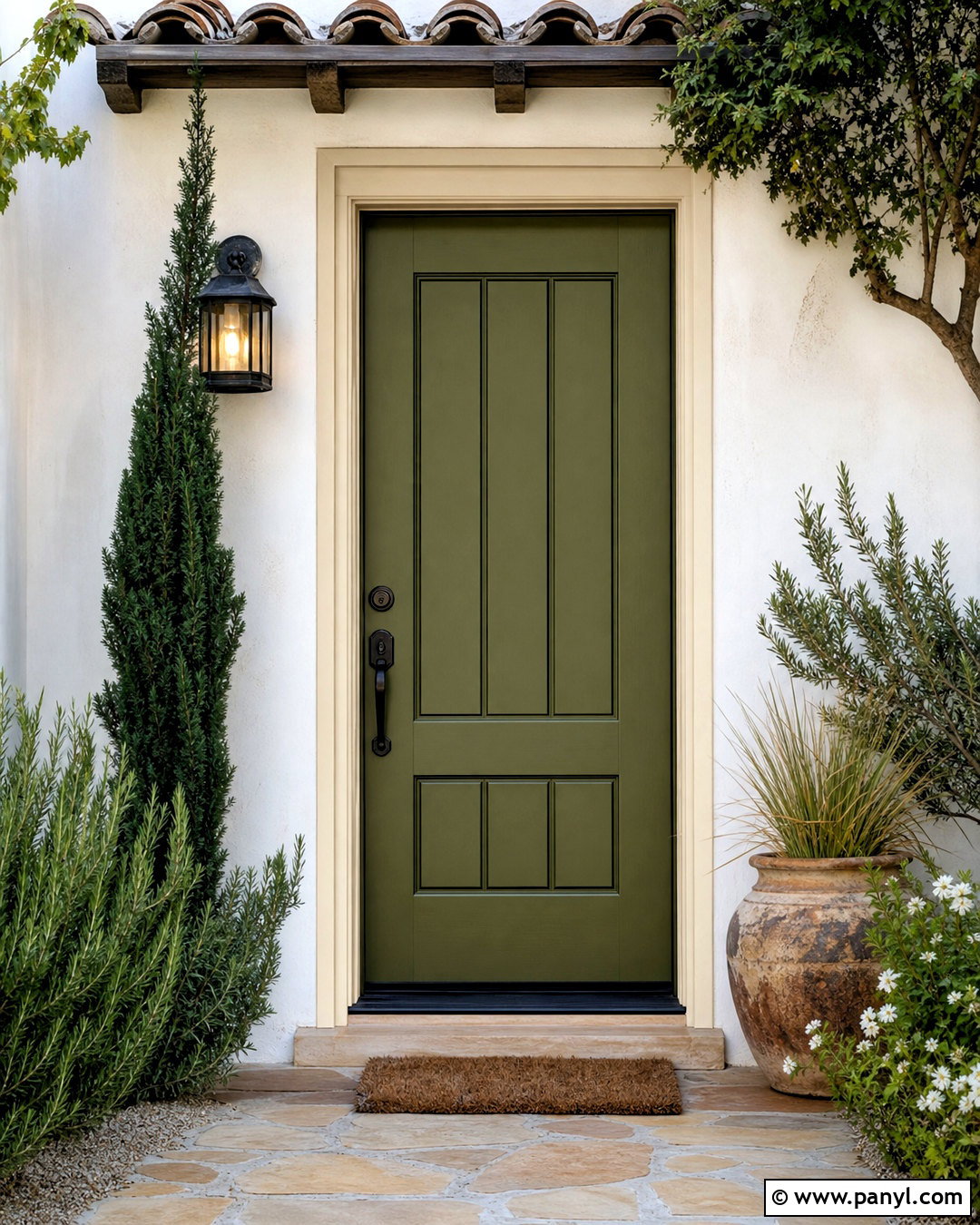
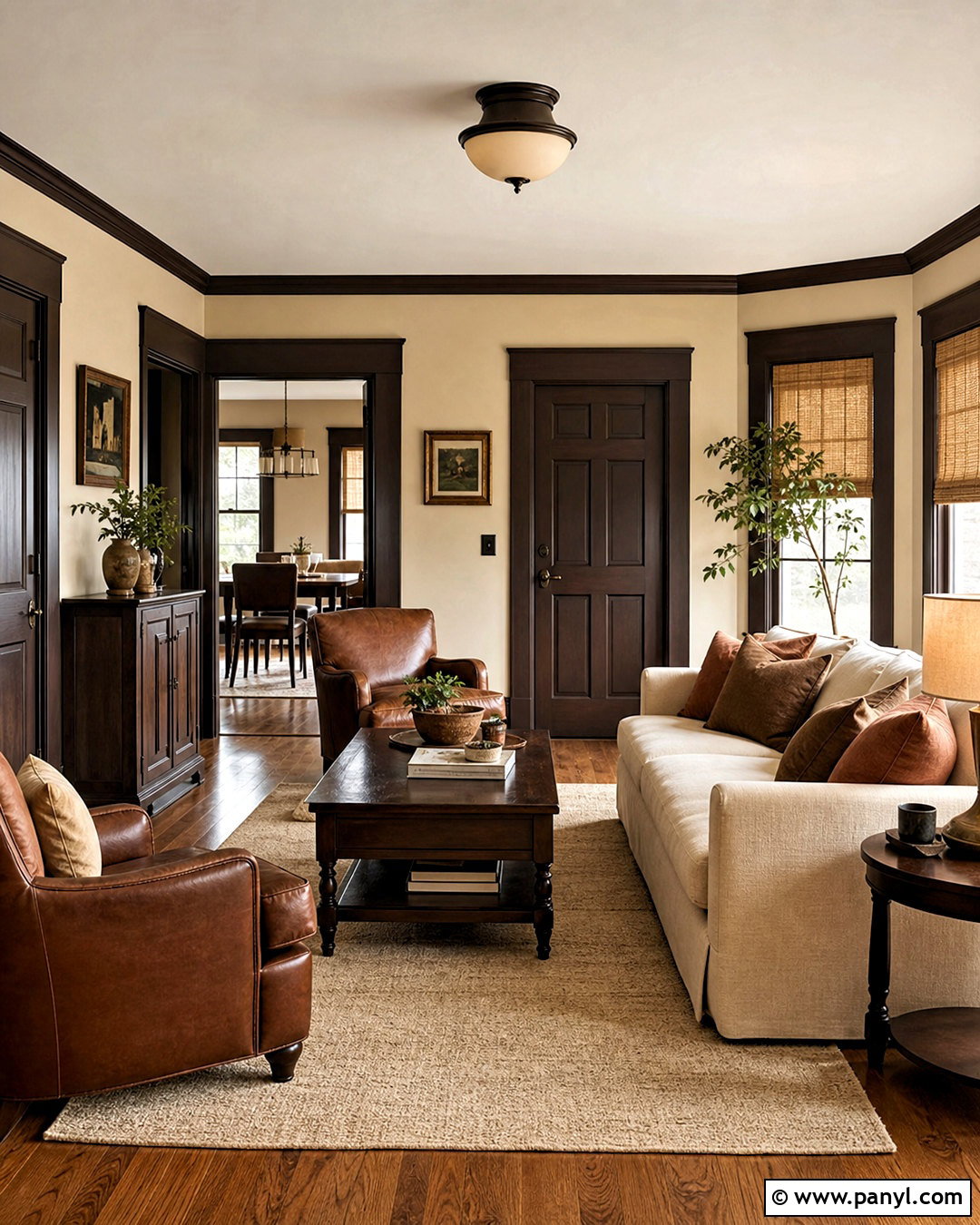
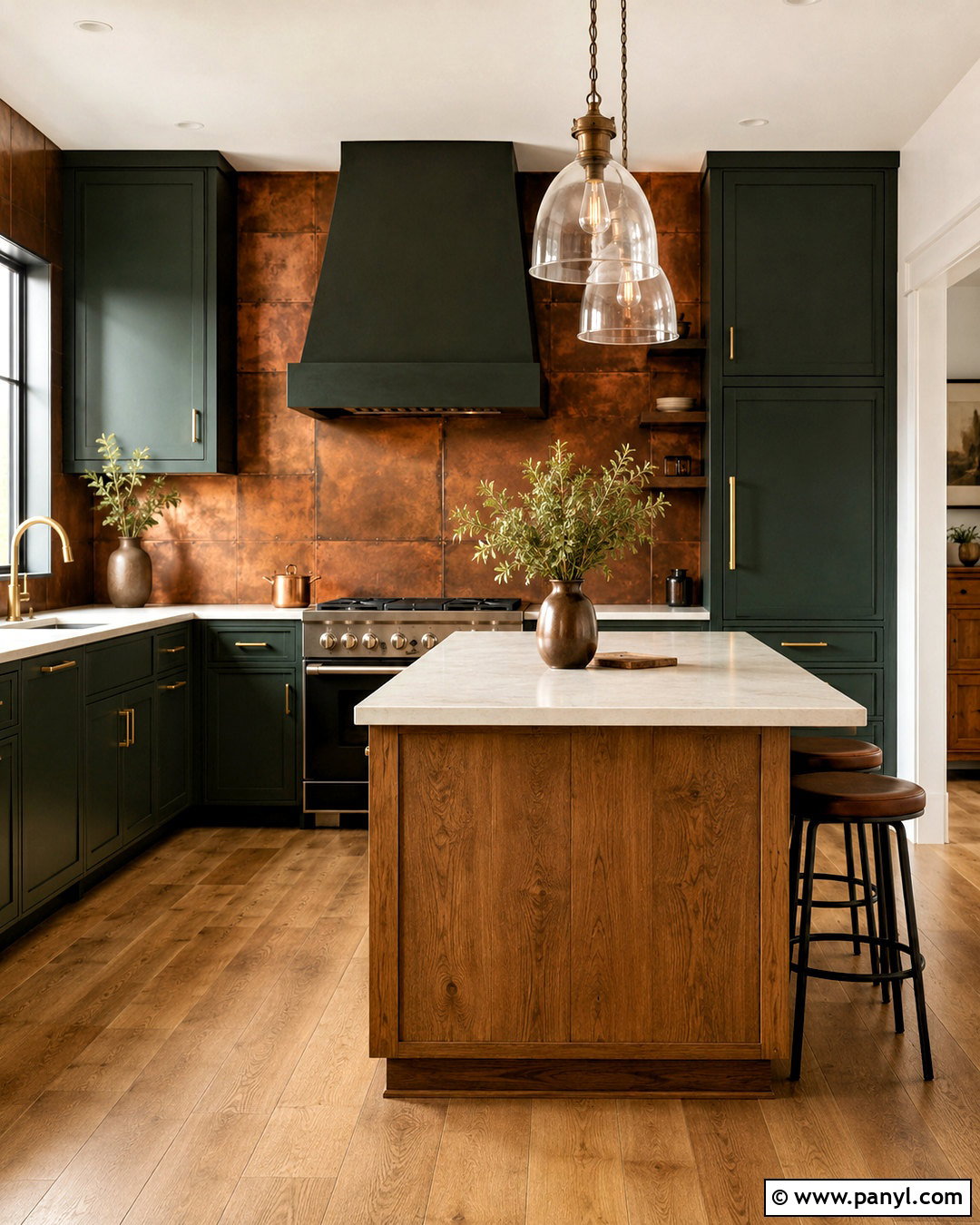
Olive green creates a grounded entrance with more depth than pale sage. Choose a medium olive containing brown or gray undertones so it complements natural wood, brick, and weathered stone. Against warm white stucco, the door becomes a strong focal point without appearing overly bright. Use aged bronze hardware, a black porch lantern, and sandstone paving to reinforce the earthy design. Planters filled with rosemary, ornamental grasses, or compact evergreen shrubs will blend naturally with the color. For an interior door, combine olive green with cream walls, walnut furniture, and a patterned rug containing rust and beige. Keep the trim olive for a modern look or paint it ivory for traditional definition. The complete palette feels warm, mature, and connected to nature.
11. Forest Green Wooden Door
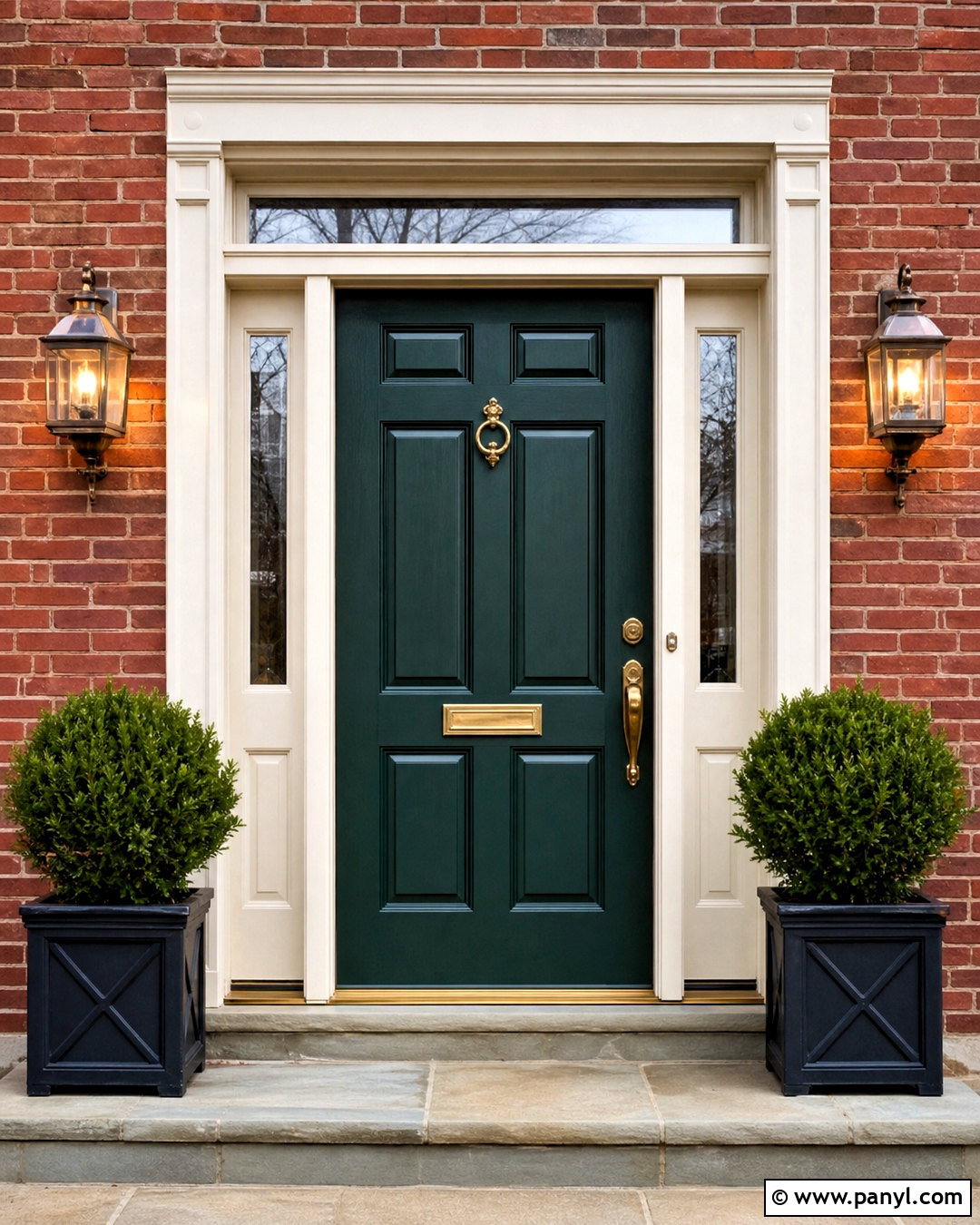
Deep forest green brings classic color to a wooden door while functioning almost like a dark neutral. It looks especially striking on red brick, cream stucco, pale stone, or white siding. Select a saturated green with subtle blue undertones and use a satin finish to emphasize raised panels. Polished brass hardware gives the entrance a traditional character, while matte black hardware shifts it toward modern design. Add symmetrical planters, clipped boxwood, and warm stone steps for a formal but approachable setting. Indoors, a forest green door can anchor a study, dining room, or hallway with ivory walls and medium wood flooring. Repeat the green in one textile or artwork. This controlled repetition creates a cohesive room without making every surface dark.
12. Navy Blue Wooden Door
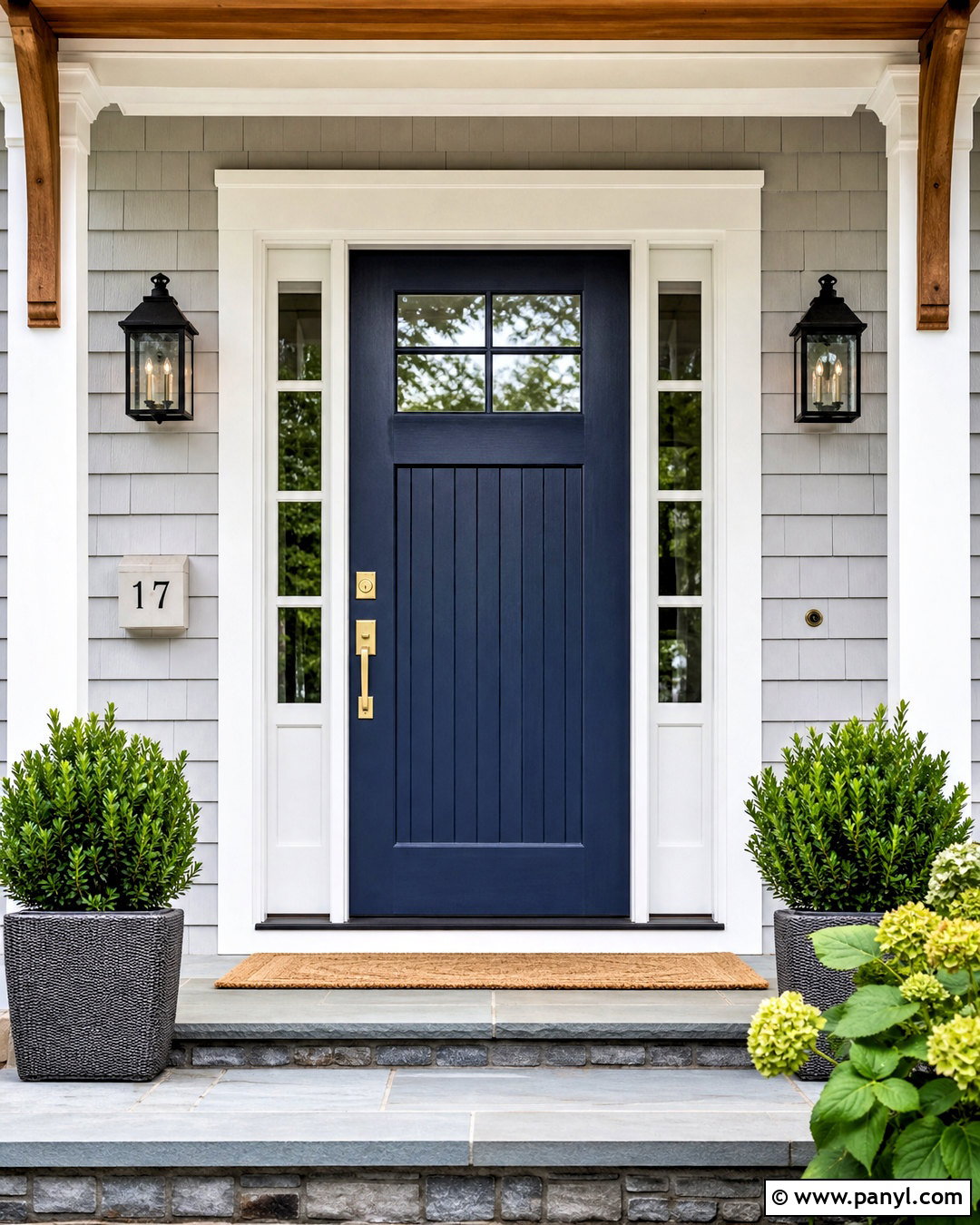
Navy blue offers strong contrast and timeless versatility for both exterior and interior wooden doors. Choose a deep, clear navy that reads blue in daylight rather than nearly black. White trim creates a crisp coastal look, while cream trim gives the color a softer traditional feel. Pair an exterior navy door with pale gray siding, natural cedar accents, and brushed brass hardware. Concrete or bluestone steps and structured green planters complete the entrance. Inside, navy doors work well with light gray walls, warm oak floors, and brass or black lighting. Paint the casing navy for a tailored appearance, particularly in a home office or hallway. Neutral rugs and simple furnishings keep the strong color balanced, polished, and easy to live with.
13. Dusty Blue Wooden Door
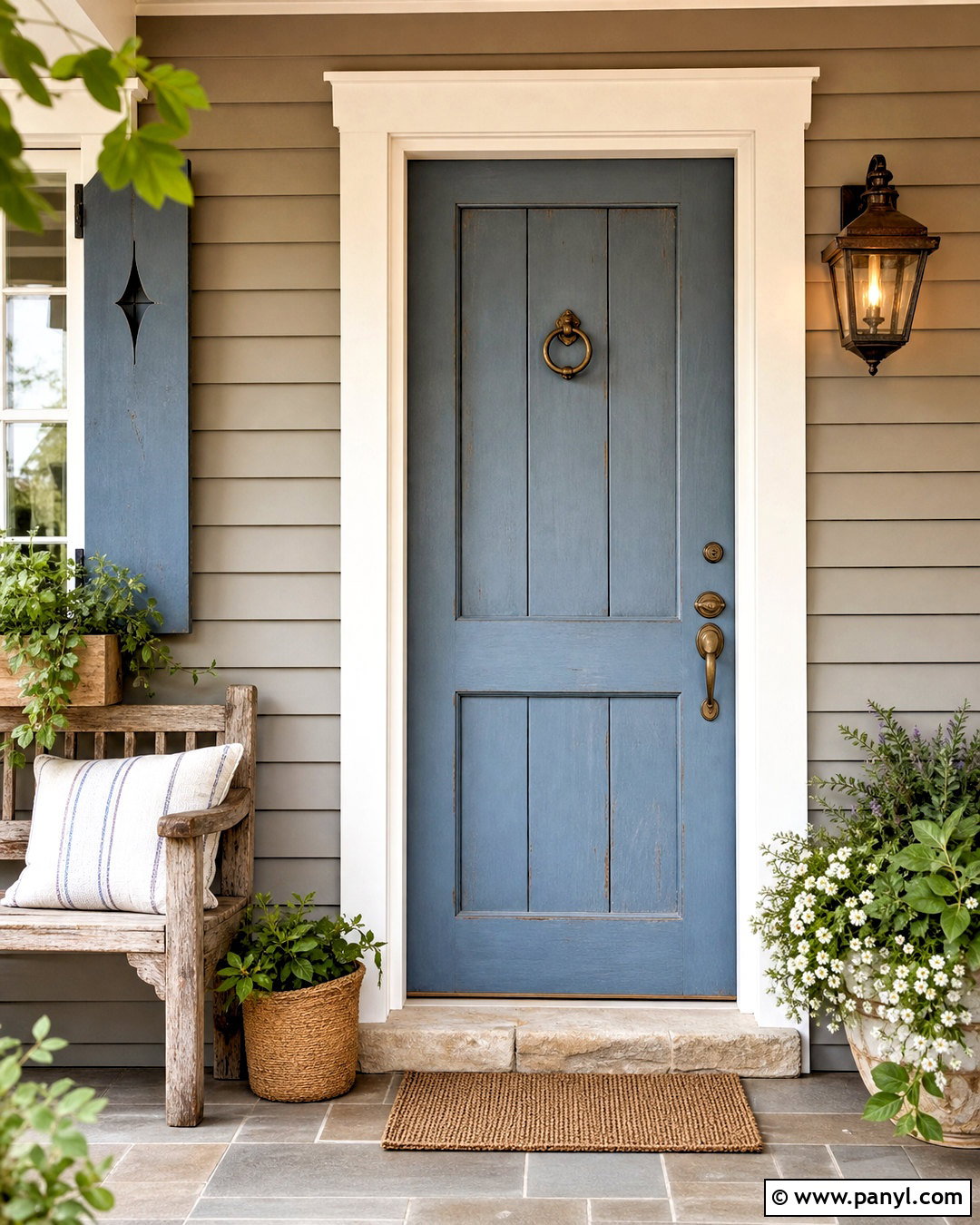
Dusty blue gives a wooden door gentle color without the intensity of navy or turquoise. The best version combines muted blue with gray undertones, creating a weathered, relaxed quality. Pair it with creamy white trim and light greige siding for a cottage-inspired entrance. Antique brass hardware, a pale stone step, and loose green planting support the softer color. A natural woven doormat and weathered oak bench can finish a covered porch without making it look crowded. Indoors, dusty blue doors complement warm white walls, light oak floors, and faded patterned rugs. Use the same blue on the casing for a seamless look or retain white trim for definition. This scheme feels calm, charming, and particularly effective in light-filled spaces.
14. Deep Teal Wooden Door
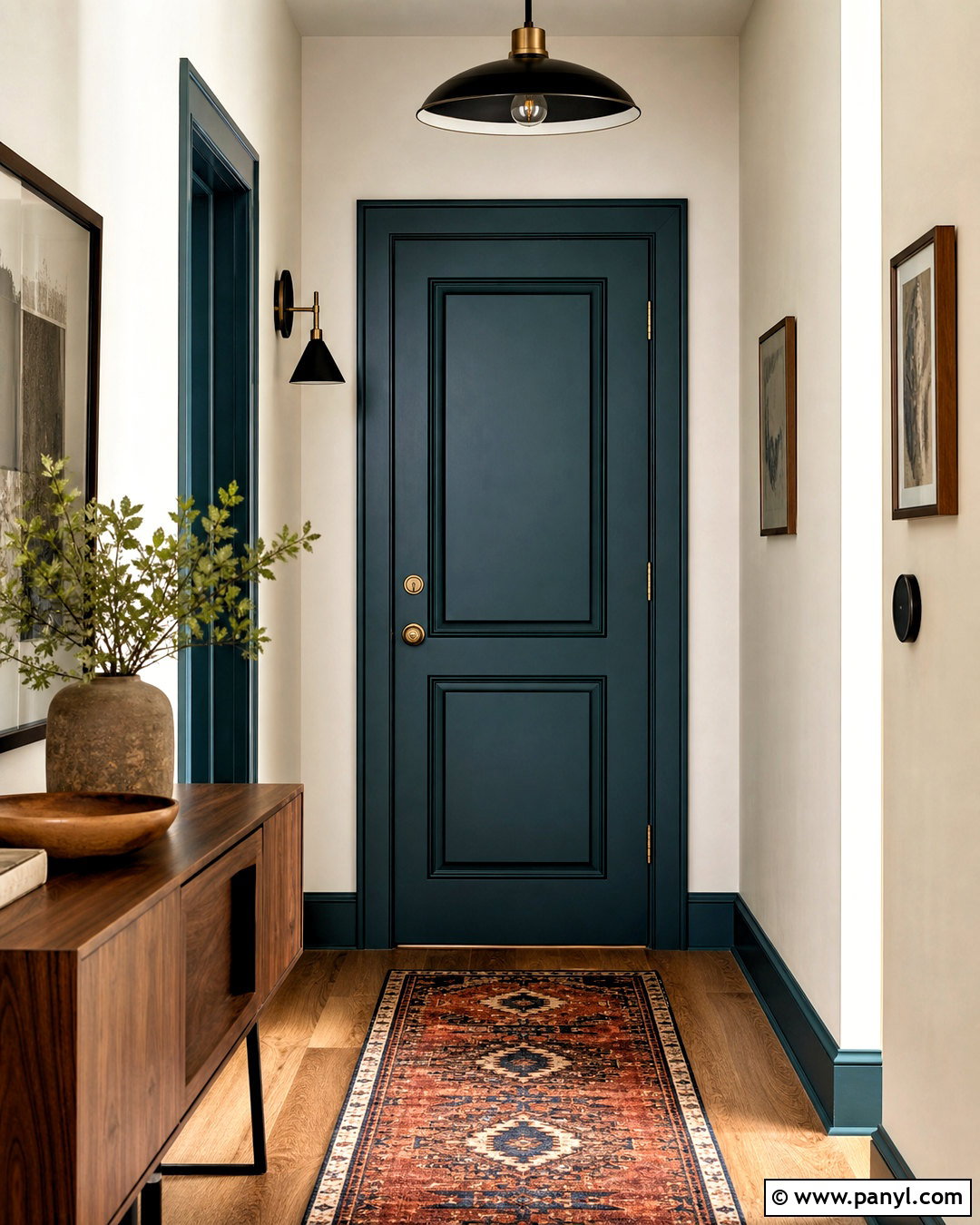
Deep teal combines blue and green, producing a memorable wooden door that still feels connected to natural surroundings. Select a dark, slightly muted teal rather than a bright tropical tone. It pairs beautifully with off-white stucco, warm gray siding, pale stone, or soft red brick. Add brushed brass hardware to highlight the color’s warmth and black lighting for clear architectural contrast. Complete the exterior with slate paving, dark planters, and layered foliage. For an interior setting, place the teal door beside cream walls, walnut furniture, and a rug containing blue, rust, and beige. Keeping the frame teal intensifies the color in a controlled way. The result is expressive and modern, yet grounded enough to work in traditional homes as well.
15. Terracotta Wooden Door
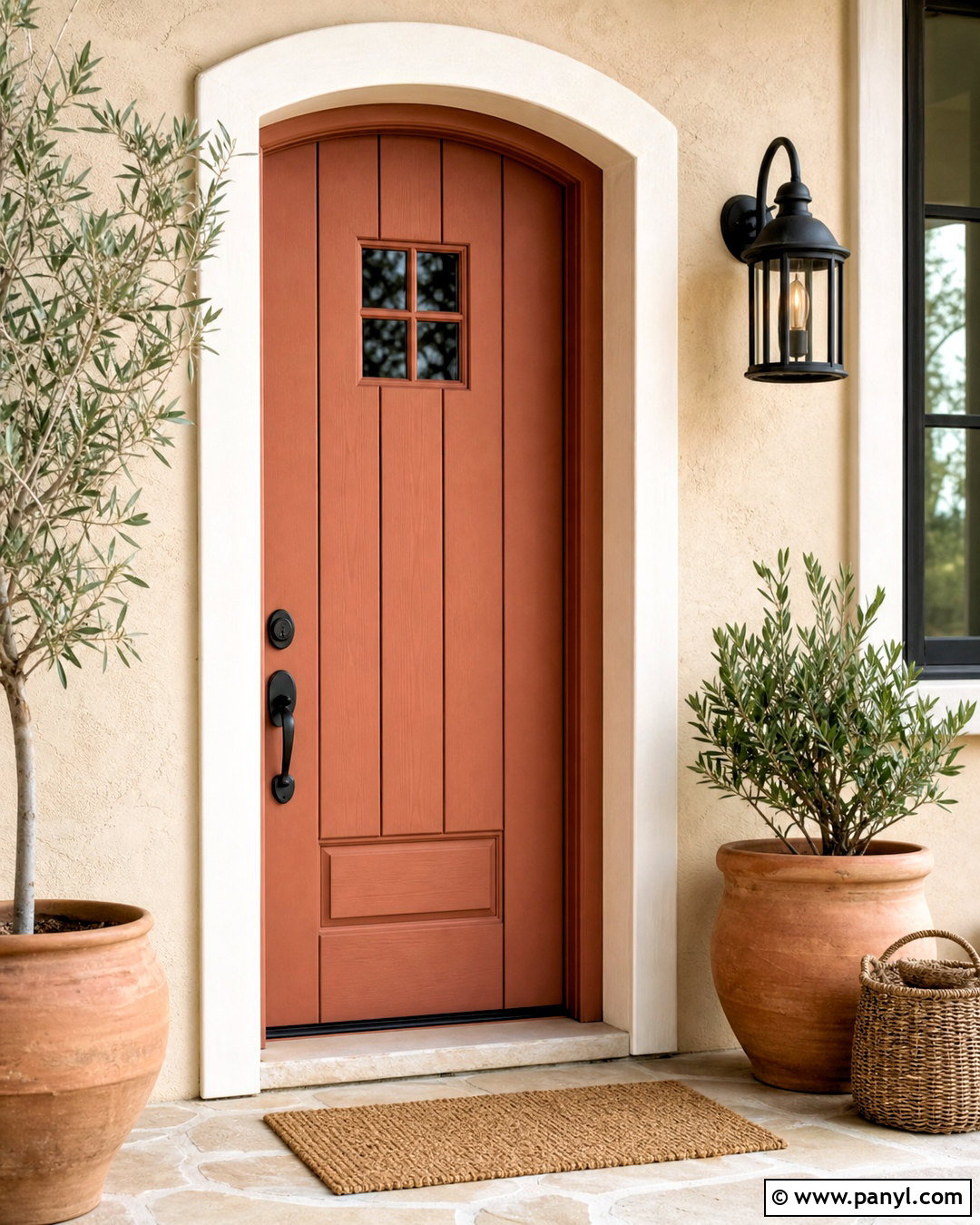
Terracotta paint brings sunbaked warmth to a wooden door and creates an inviting focal point against neutral walls. Choose a muted clay orange with brown undertones rather than a bright pumpkin shade. Cream stucco, sandy stone, and warm white trim will support the earthy color. Use dark bronze or matte black hardware for definition, then add terracotta pots, olive-toned plants, and natural stone paving. Avoid matching every accessory to the door; varied beige, brown, and green elements make the palette feel more natural. Indoors, a terracotta door works with ivory walls, oak flooring, and woven textiles. Repeat the clay color through one patterned rug or cushion. This complete scheme has warmth, personality, and an easy Mediterranean-inspired character.
16. Brick Red Wooden Door
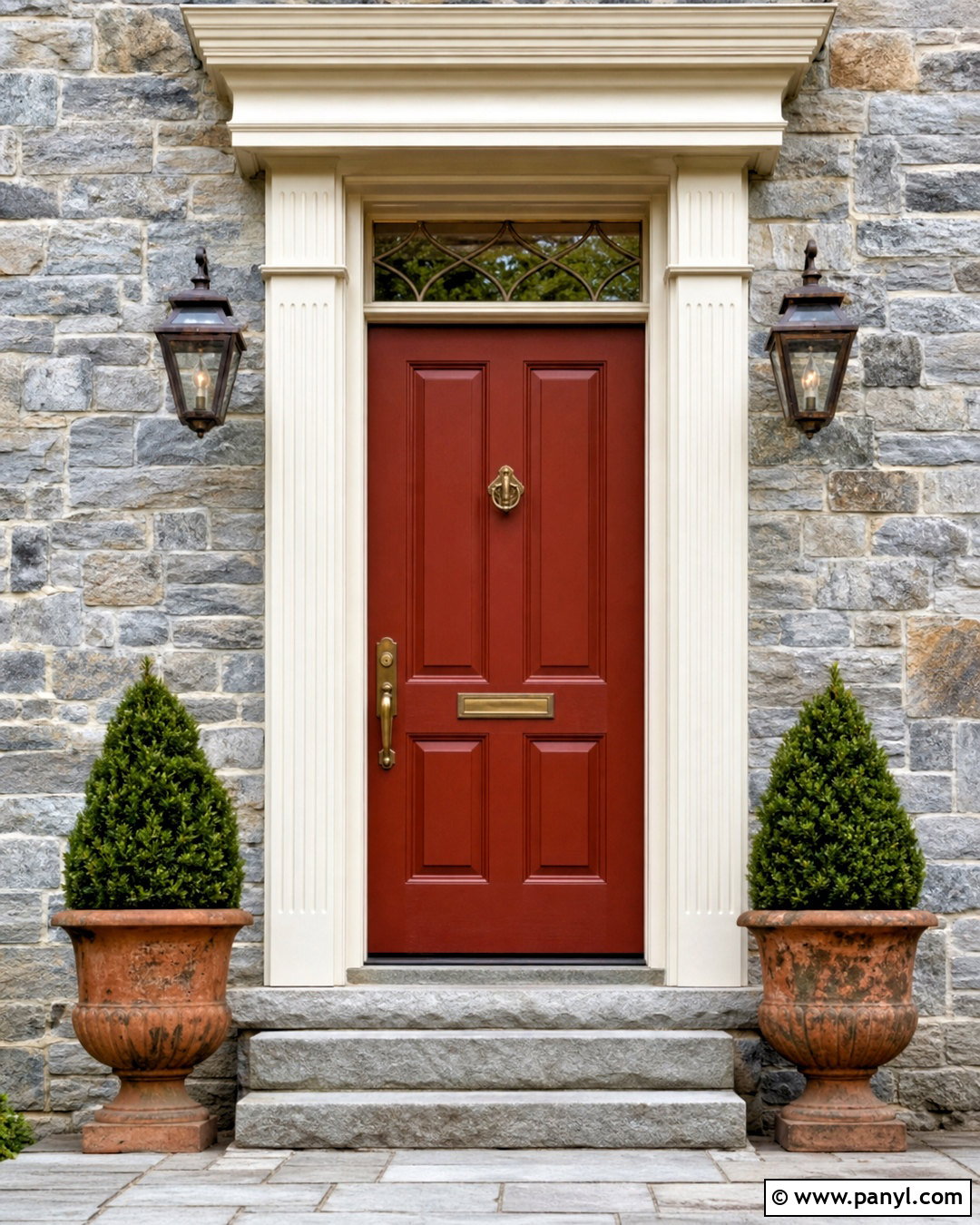
A brick red wooden door creates a traditional welcome without looking as bright as primary red. Search for a deep, muted shade with brown undertones that coordinates naturally with cream siding, gray stone, or weathered brick. Keep the trim warm white to frame the color clearly. Antique brass hardware and a dark bronze porch light strengthen the classic appearance. Complete the entrance with stone steps, evergreen shrubs, and planters in aged clay or dark metal. For an interior door, brick red can add warmth to a library, mudroom, or dining area with beige walls and dark wood furniture. Limit additional red accents to a patterned rug or artwork. The restrained palette allows the door to feel confident, welcoming, and established.
17. Mustard Yellow Wooden Door
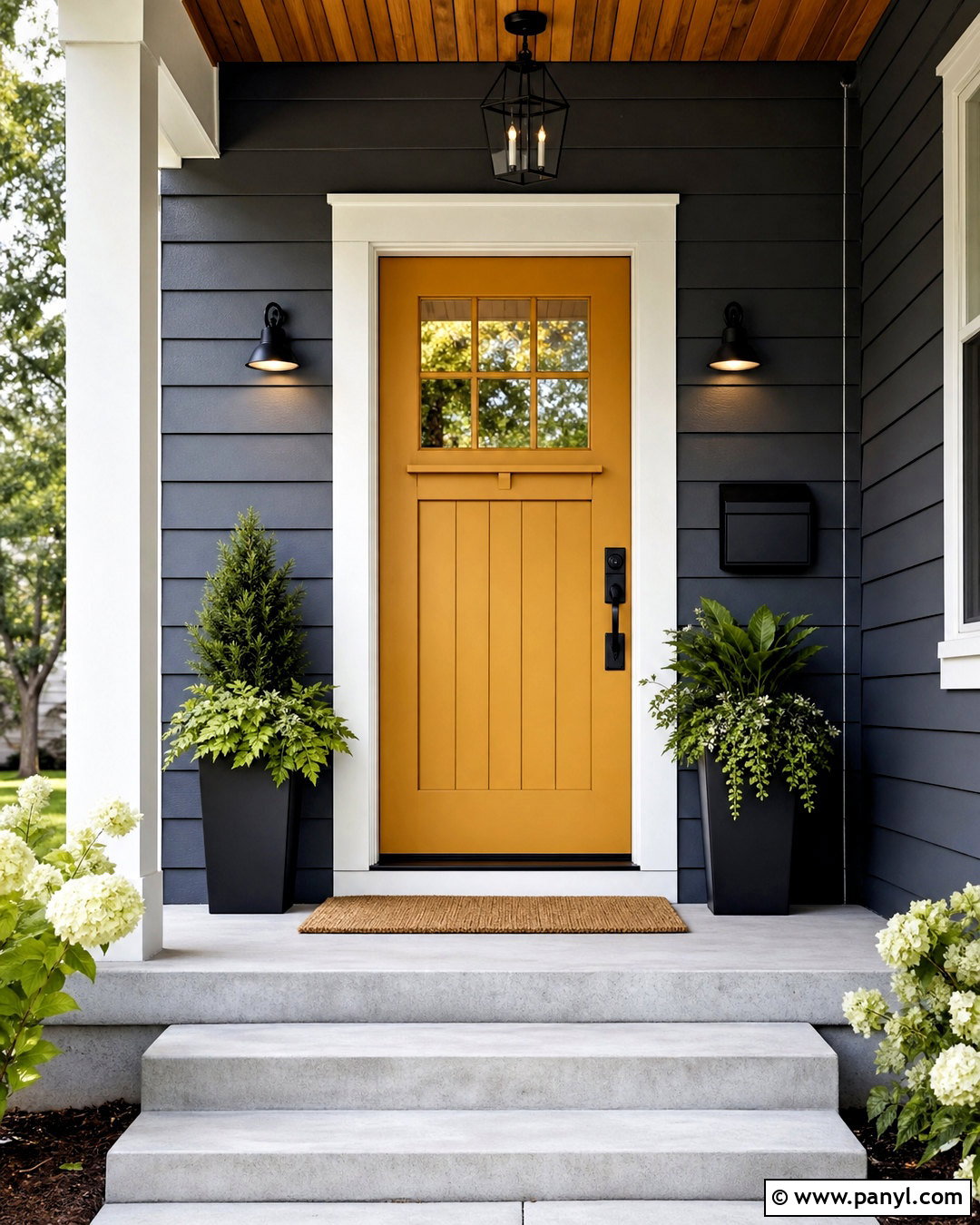
Mustard yellow brings cheerful color to a wooden door while remaining more sophisticated than a bright lemon shade. Choose a warm golden yellow with ochre undertones and pair it with white trim, charcoal siding, or soft gray stucco. Matte black hardware provides strong definition, while a natural wood porch ceiling can add warmth overhead. Finish the exterior with concrete steps, black planters, and simple green foliage. Indoors, mustard works well on a pantry, laundry room, or children’s room door surrounded by warm white walls and light oak flooring. Repeat the color through a small textile or piece of art rather than large furnishings. This balanced design feels energetic and friendly without allowing the bold door color to overwhelm the space.
18. Muted Coral Wooden Door
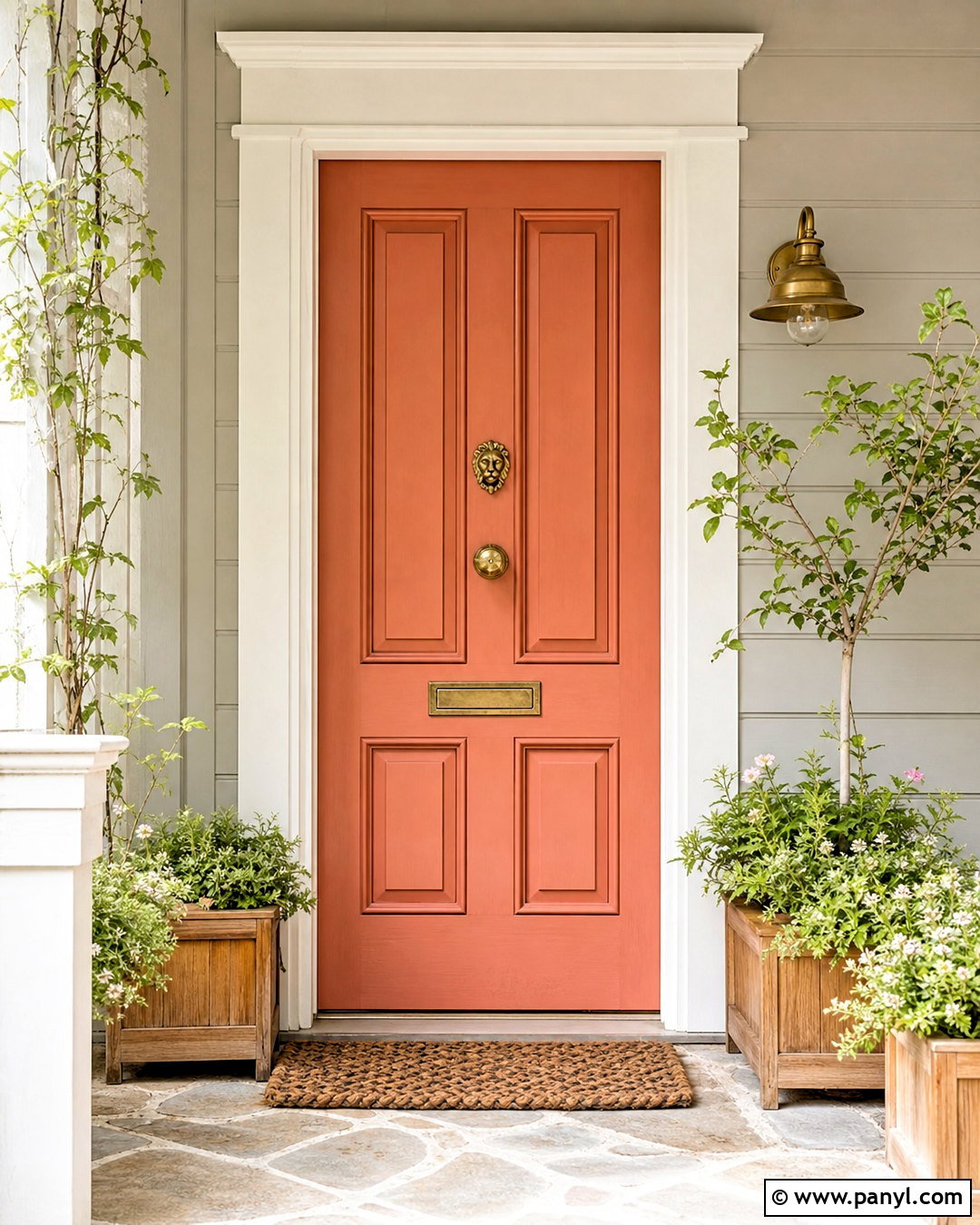
Muted coral creates a warm, playful wooden door that feels softer than orange and less formal than red. Choose a dusty coral with terracotta or pink undertones, avoiding highly saturated versions. The color pairs naturally with creamy white stucco, pale gray siding, and light tan brick. Use aged brass hardware to strengthen its warmth or matte black hardware for cleaner contrast. Add limestone paving, natural wood planters, and leafy green plants to balance the rosy tone. Indoors, a coral door can brighten a home office, bedroom, or creative space with ivory walls and pale wood floors. Connect it to the room through a patterned rug containing small coral details. Neutral furniture keeps the complete design relaxed, modern, and livable.
19. Deep Plum Wooden Door
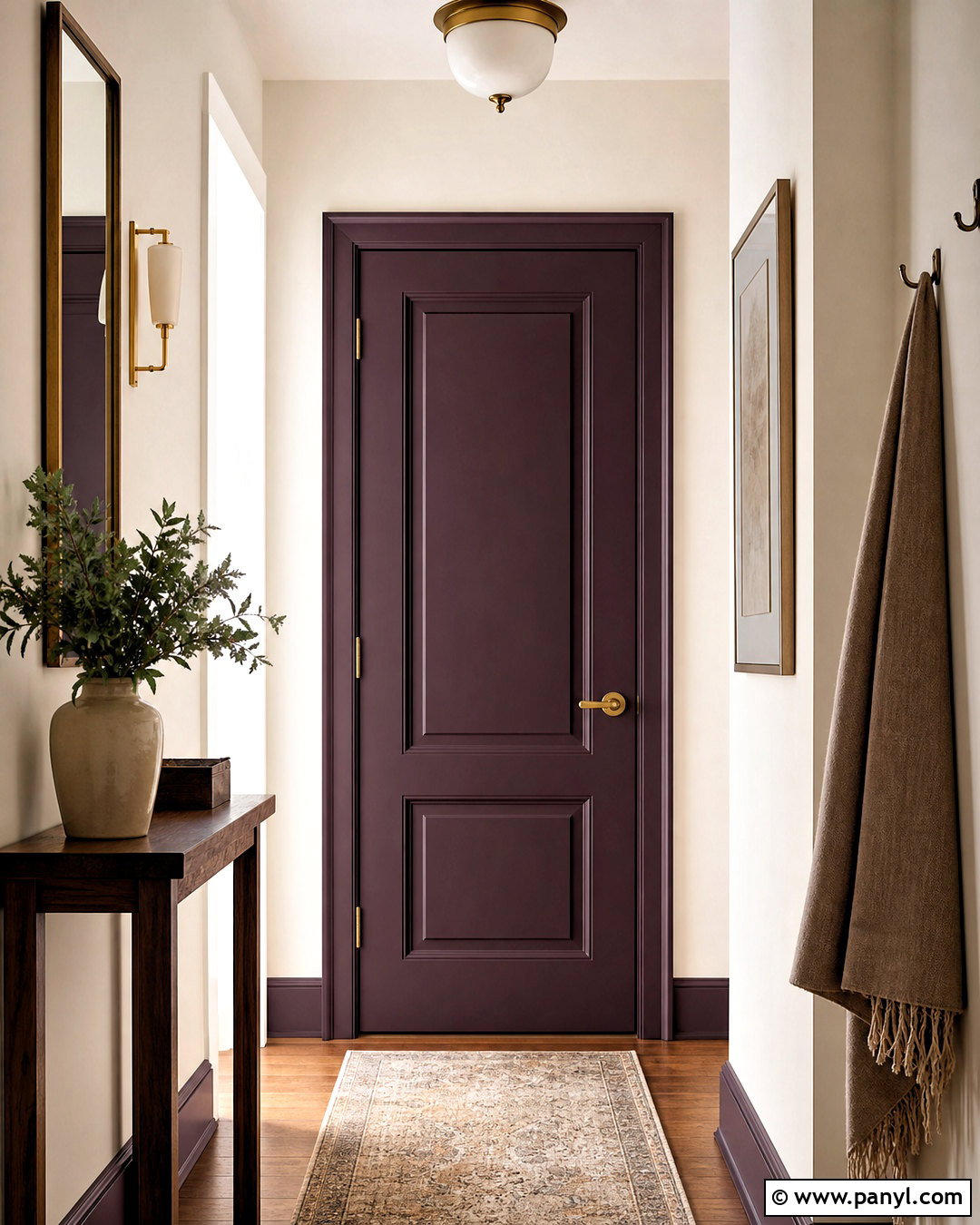
Deep plum gives a wooden door an unusual but refined color, particularly when it contains gray or brown undertones. Use it against pale taupe siding, cream stucco, or light gray stone so the purple remains clear without becoming flashy. Warm brass hardware brings out its red undertones, while black lanterns and dark planters add structure. Complete the exterior with soft green foliage and understated stone paving. Indoors, a plum door can enrich a bedroom, dining room, or hallway with warm white walls, walnut furniture, and oatmeal-colored textiles. Keep the casing plum for a dramatic modern finish or use ivory trim for a traditional frame. The complete palette feels elegant, individual, and surprisingly easy to coordinate with warm neutrals.
20. Two Tone Wooden Door
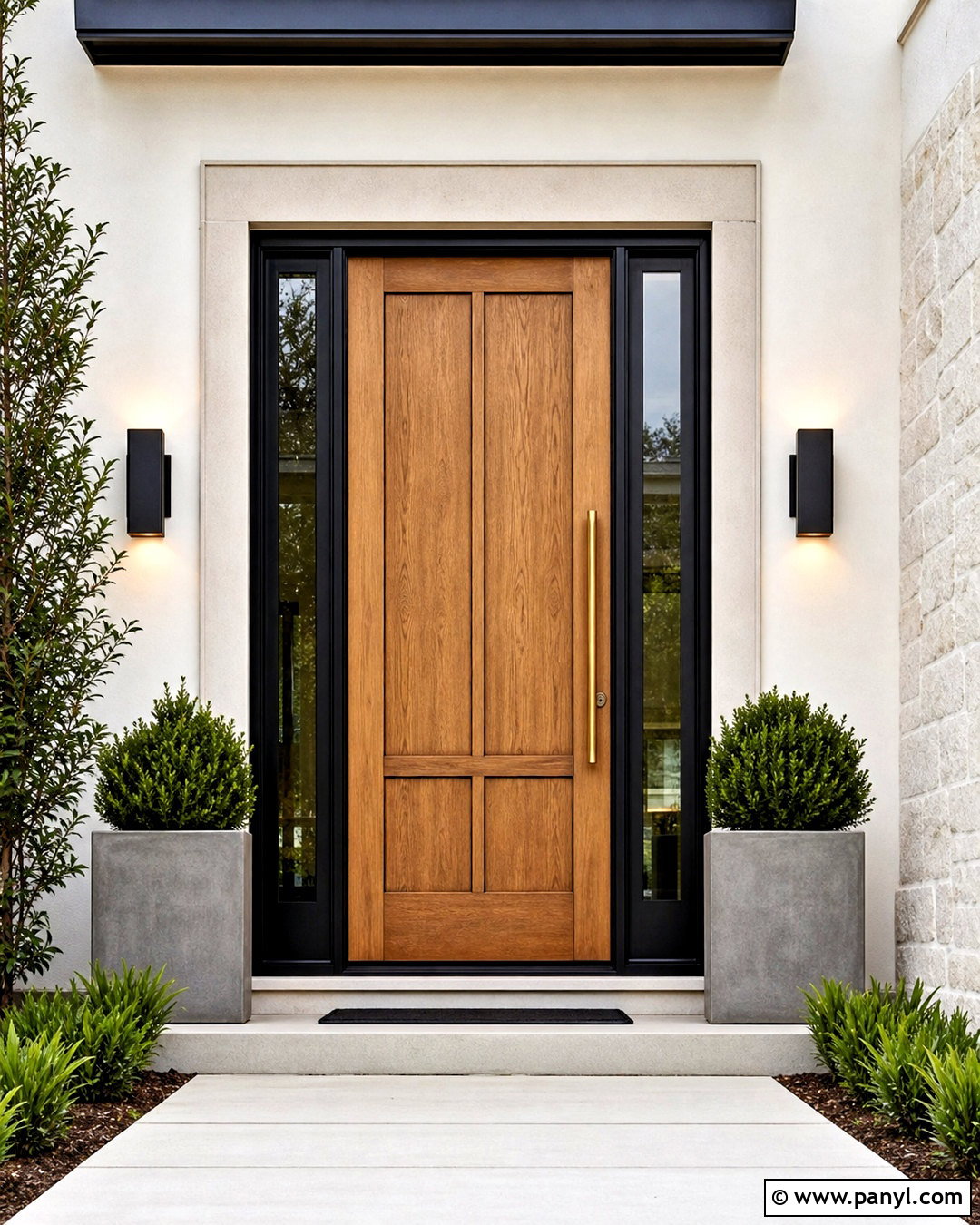
A two-tone wooden door combines painted color with visible grain, offering a custom look without covering all the natural material. Use warm oak or medium walnut on the main door panels, then paint the outer frame, sidelights, or narrow border matte black. Pair the combination with white stucco, pale gray siding, or light stone to keep both finishes distinct. Black hardware creates continuity, while a modern brass handle can introduce warmth. Complete the entry with large concrete planters, structured greenery, and a simple stone walkway. Indoors, repeat the natural wood through flooring and the black through lighting or railings. Careful repetition makes the mixed finish appear architectural rather than accidental, creating a distinctive entrance suitable for contemporary and transitional homes.
Conclusion:
The strongest **wooden door colour ideas** treat the door, trim, hardware, walls, flooring, and landscaping as one connected design. Natural oak, walnut, and mahogany celebrate visible grain, while black, greige, and white create versatile neutral finishes. Green and blue offer approachable color, and terracotta, coral, yellow, red, or plum can give an entrance more personality. Before applying paint or stain, prepare the wood correctly and test the finish on a concealed area or sample board. Examine it at different times of day beside the surrounding materials. Most importantly, repeat the chosen color or finish through a few nearby details. This simple step makes the completed door look intentional, balanced, and beautifully integrated.

Related Ideas and Inspiration:
Leave a Reply