
Dark trim can turn plain architecture into one of the most memorable features in a room. These 20 dark painted trim ideas explore black, charcoal, navy, forest green, espresso, and other deep tones across living rooms, bedrooms, kitchens, hallways, and bathrooms. Instead of treating molding as an isolated accent, each look connects the trim with wall color, flooring, furniture, lighting, and hardware. Dark trim works especially well against light walls, but it can also support layered monochromatic rooms and dramatic color-drenched spaces. Glossy finishes sharpen traditional millwork, while satin and matte finishes create a softer, more contemporary effect. () Use these practical, complete room schemes to find the right balance of contrast and character among these 20 dark painted trim ideas.

1. Black Trim With White Walls
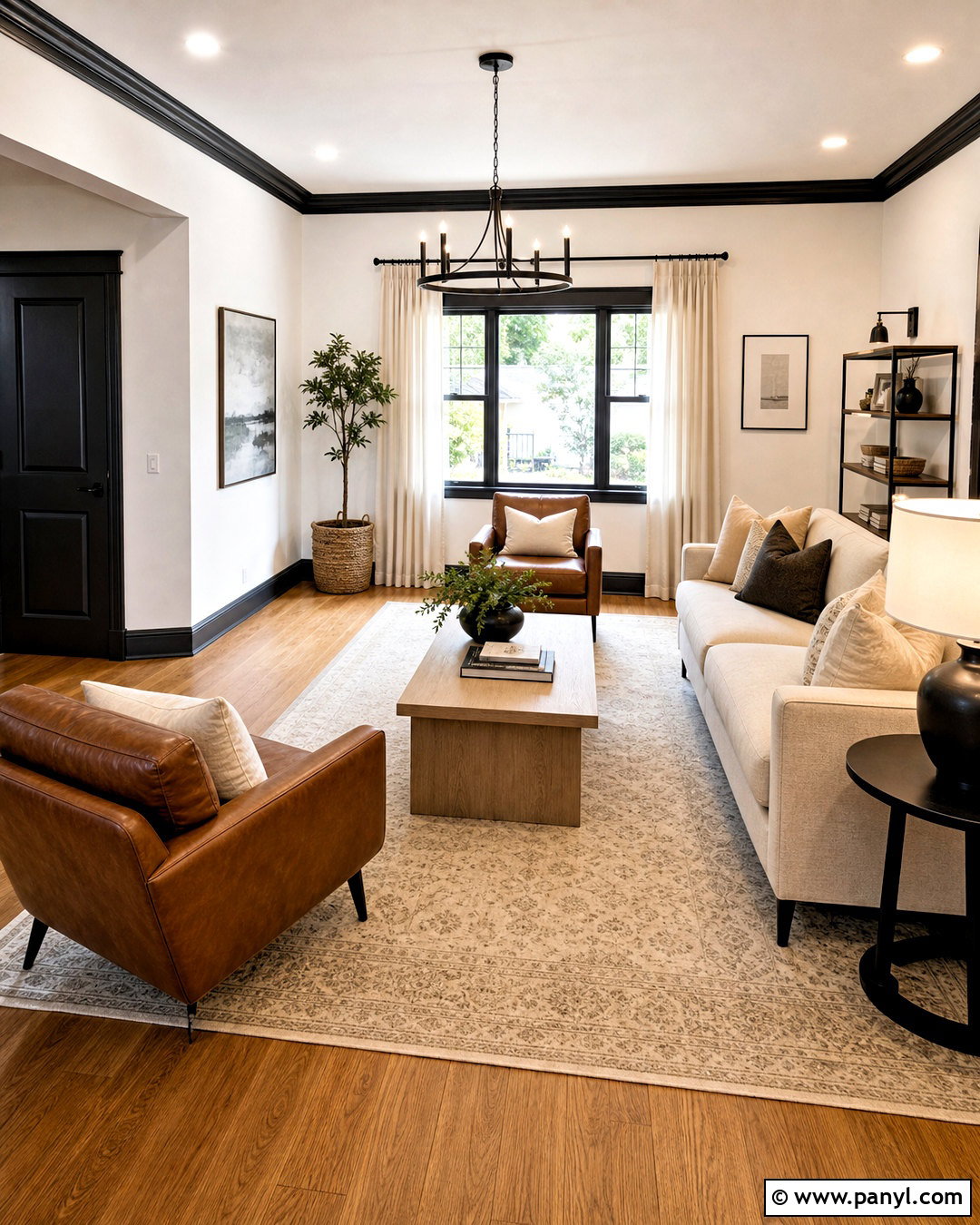
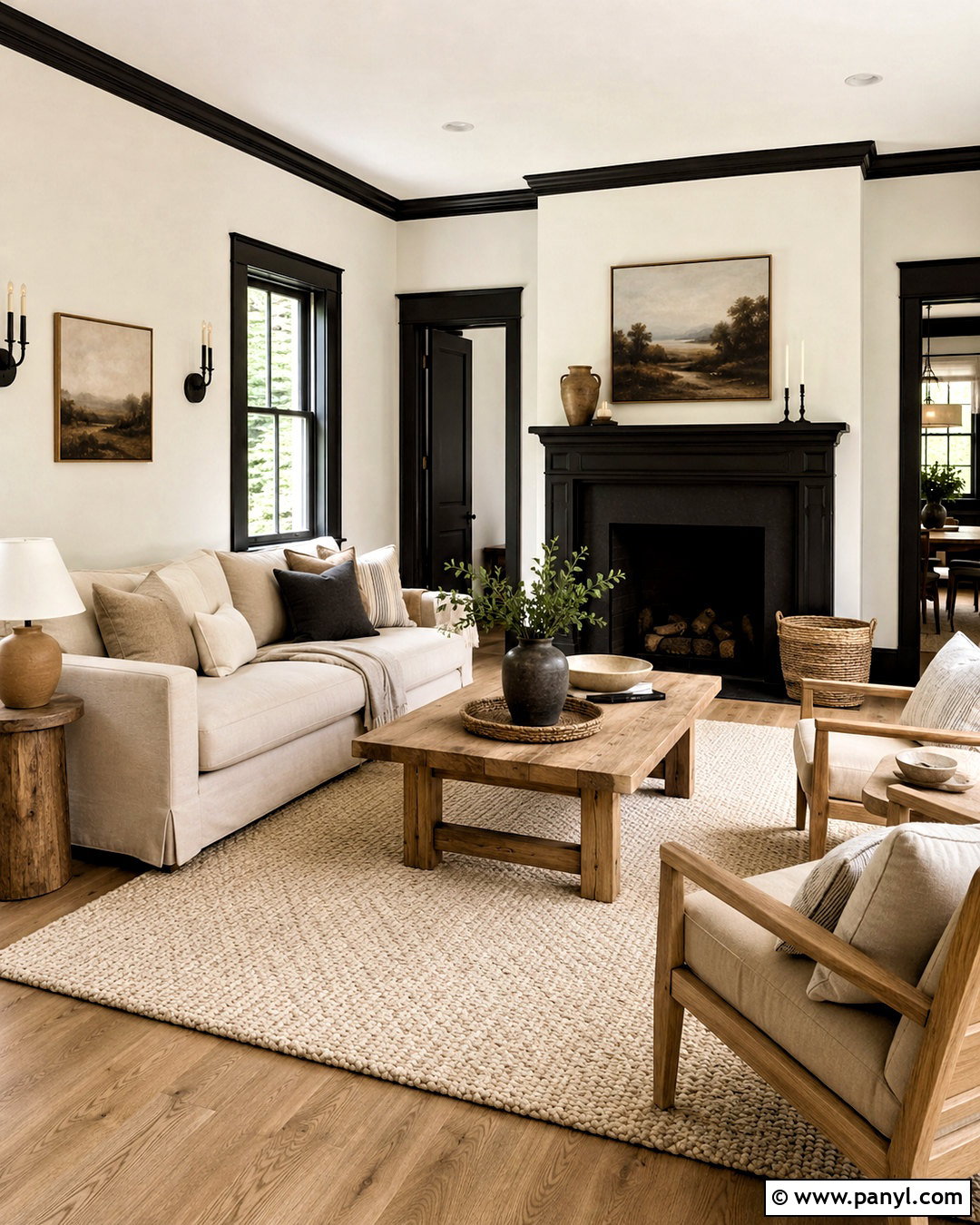
Crisp white walls and black trim create a clean, graphic living room that feels polished without requiring elaborate architecture. Paint the baseboards, window casings, door frames, and interior doors a soft black in a durable satin finish. Keep the ceiling and crown molding white so the room remains bright and open. Add a light oatmeal sofa, two cognac leather chairs, and a pale oak coffee table to warm the strong contrast. A black metal floor lamp and simple framed artwork repeat the trim color across the room. Finish with a cream-and-black patterned rug and linen curtains hung inside the dark window frames. This balanced palette works particularly well in modern, transitional, and updated farmhouse interiors.
2. Charcoal Trim With Warm White Walls
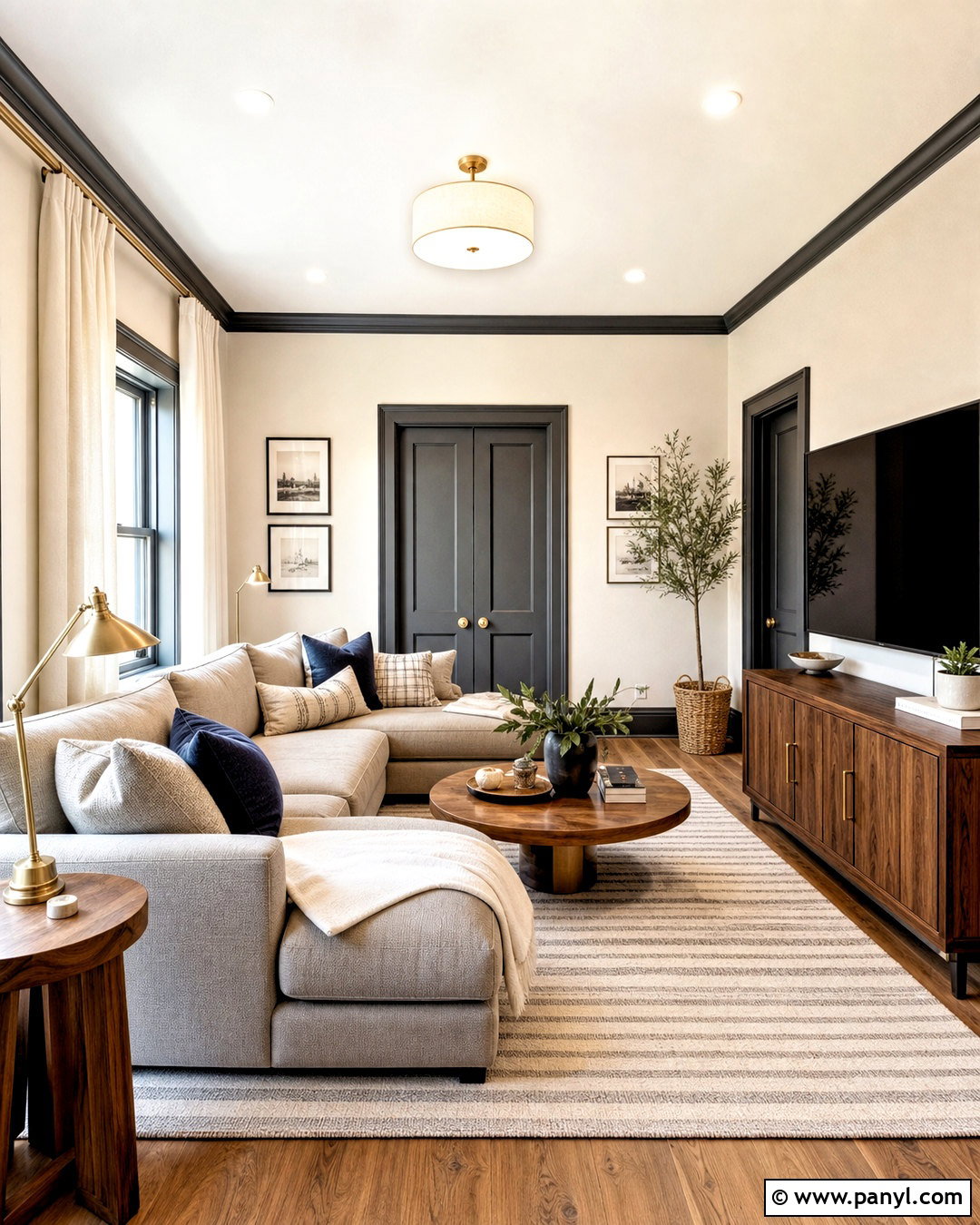
Charcoal trim provides definition without the sharpness of true black. Use a deep gray with warm brown undertones on the baseboards, window frames, door casings, and paneled interior doors. Pair it with creamy white walls rather than a blue-white paint, creating a softer transition between the surfaces. In a family room, bring in a greige sectional, walnut media console, and rounded oak side tables. Brushed brass lamps add warmth, while charcoal pillows and a subtly striped rug connect the furnishings to the trim. Leave the ceiling warm white and use off-white curtains to preserve natural light. The finished room feels comfortable and grounded, making this scheme suitable for everyday spaces where bold black might appear overly formal.
3. Dark Green Trim With Cream Walls
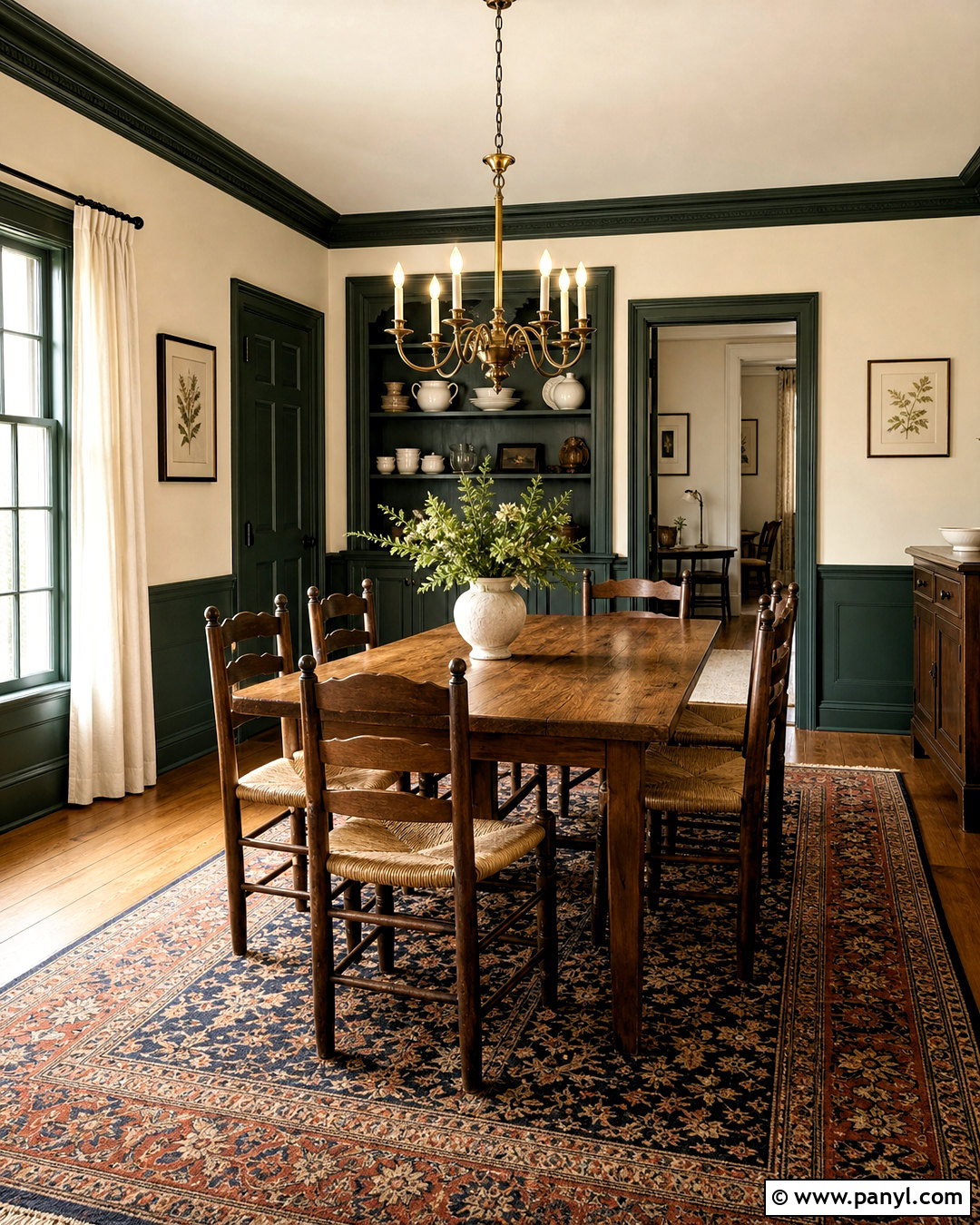
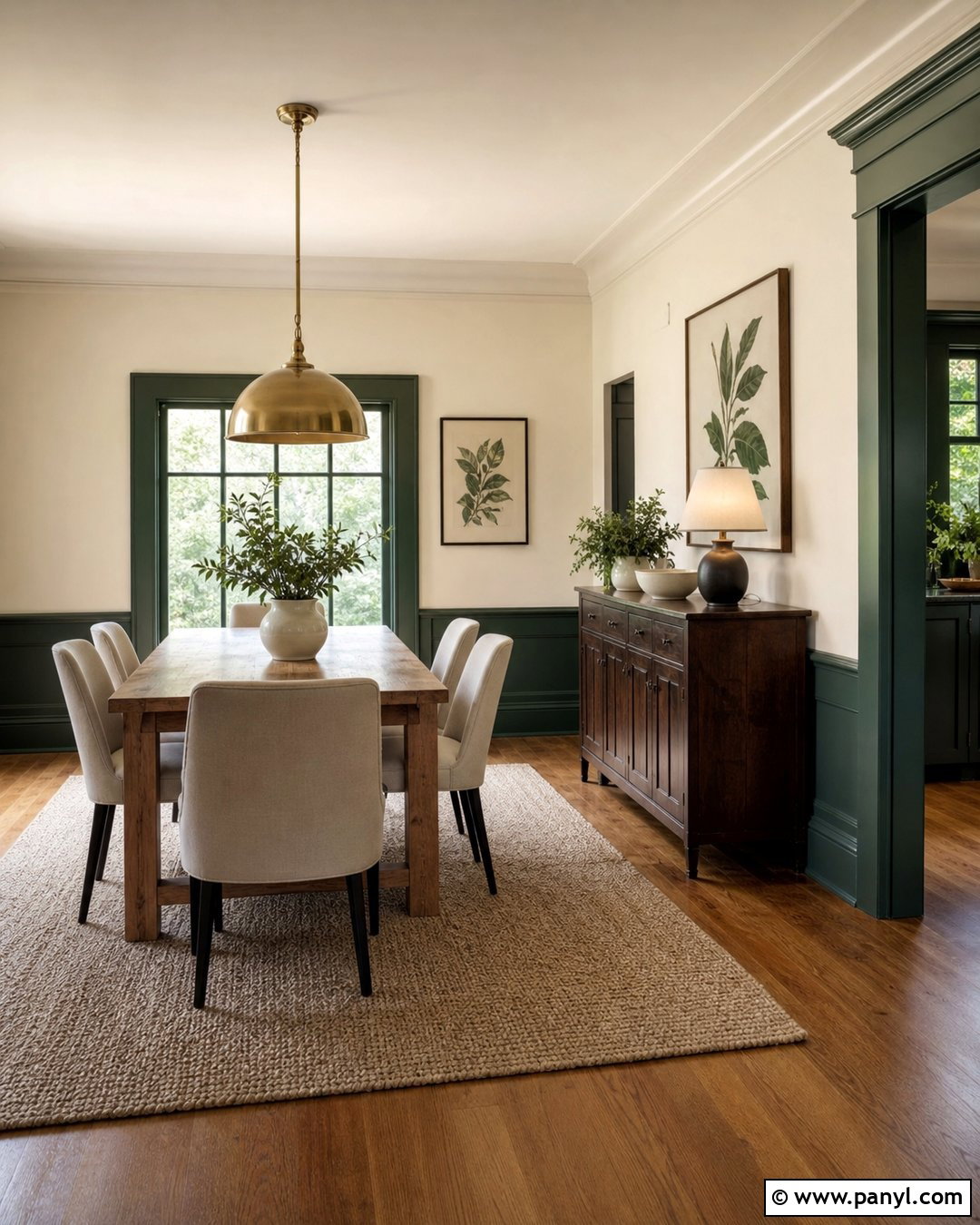
Deep forest green trim gives a cream-colored dining room an earthy, traditional character. Carry the green across the baseboards, crown molding, window casings, door frame, and built-in cabinet fronts so the treatment looks intentional. Choose warm cream walls that complement the green instead of creating harsh contrast. Center the space with a medium-tone oak dining table and woven rush-seat chairs. An aged brass chandelier, botanical artwork, and a vintage-style wool rug introduce gentle color and texture. Hang natural linen curtains against the green window frames, and display simple white ceramics inside the built-ins. The combination feels connected to nature while remaining tailored enough for formal meals, holiday-free gatherings, and relaxed everyday dining.
4. Navy Trim With Soft Gray Walls
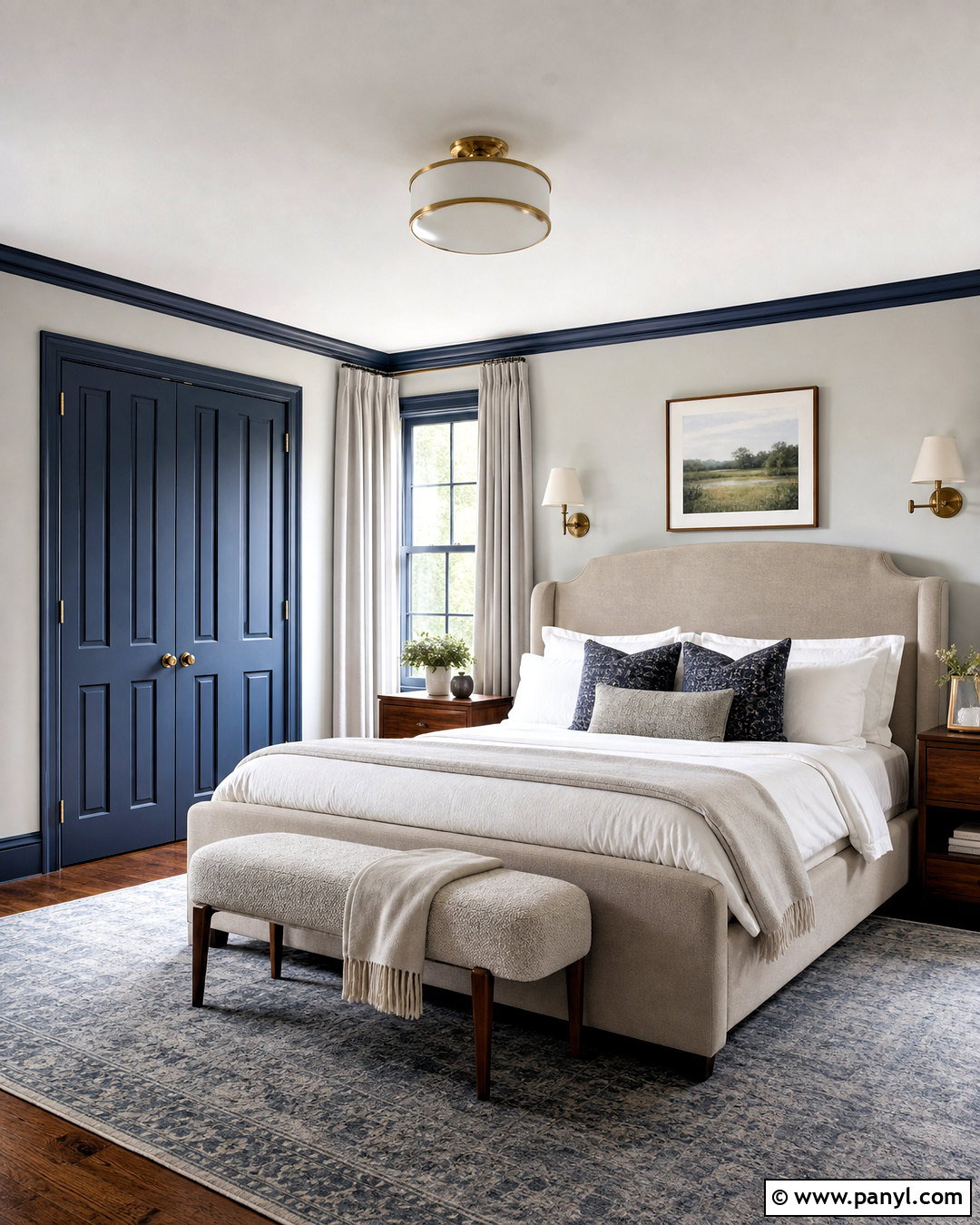
Navy trim can bring depth to a bedroom while feeling calmer than black. Select a dark, slightly muted navy for the baseboards, window casings, door frame, and paneled closet doors. Place it against soft gray walls with a subtle blue undertone for a smooth, layered palette. An upholstered oatmeal bed, white bedding, and a faded blue rug keep the center of the room light. Use walnut nightstands and brushed brass sconces to add warmth beside the cooler paint colors. Pale gray curtains should blend into the walls while leaving the navy window outline visible. A few navy pillows and a small bench at the foot of the bed complete the connection without making the room feel overly coordinated.
5. Espresso Trim With Beige Walls
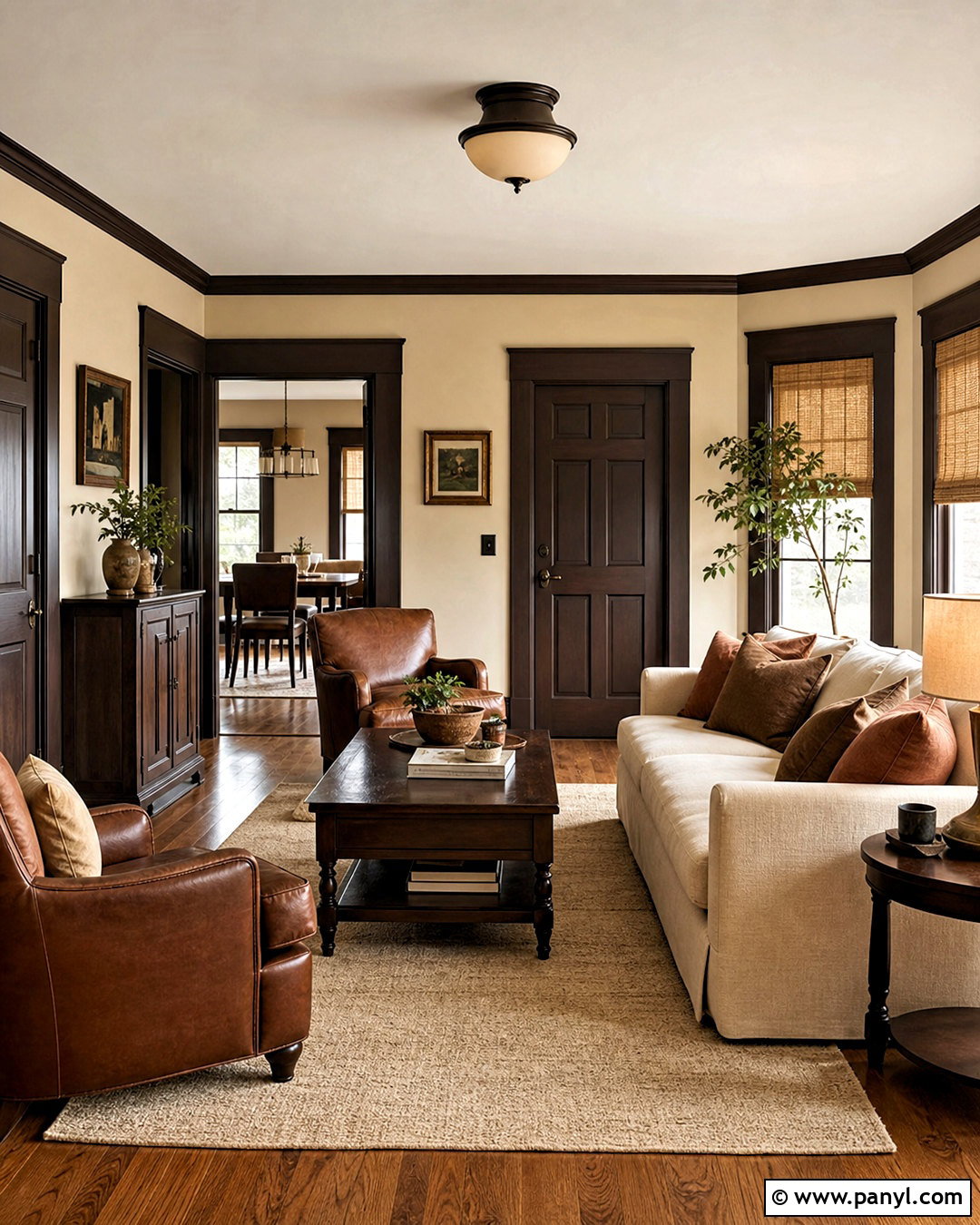
Rich espresso trim creates an inviting frame around a warm neutral living room. Paint wide baseboards, substantial door casings, window trim, and interior doors a nearly black chocolate brown. Combine them with sandy beige walls and natural oak flooring to build a warm, tonal foundation. Furnish the room with a cream sofa, tobacco-colored leather armchair, and dark wood coffee table. A textured ivory rug keeps the deep wood tones from becoming visually heavy. Add bronze curtain rods, woven shades, clay-colored pillows, and soft landscape artwork. The espresso paint should have a satin finish that relates to stained wood while still looking clearly painted. This complete scheme suits Craftsman, traditional, rustic, and collected transitional homes.
6. Black Window Trim With White Baseboards
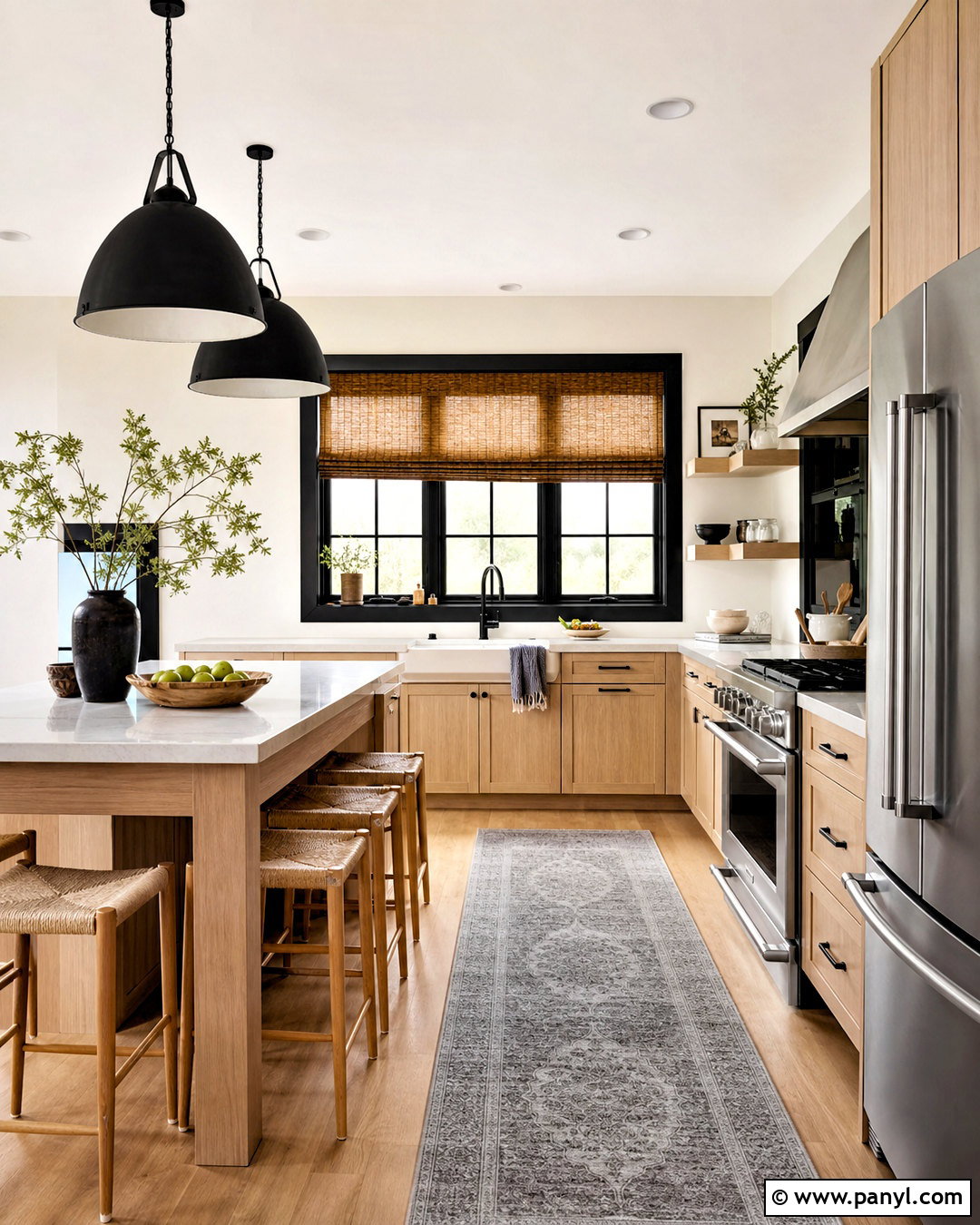
What if you want dark definition without outlining every edge of the room? Focus black paint on the window casings and mullions while leaving the baseboards, crown molding, and doors white. This approach works beautifully in a bright kitchen with warm white walls, pale oak cabinets, and lightly veined quartz countertops. Black window trim becomes a strong focal point above the sink and connects naturally with black cabinet hardware and pendant lights. Use light wood stools, woven shades, and a soft gray runner to prevent the palette from feeling stark. Keeping the lower trim white allows the cabinetry and flooring to flow together, while the dark windows deliver enough contrast to make the whole kitchen look thoughtfully designed.
7. Black Door Trim With Natural Wood Doors
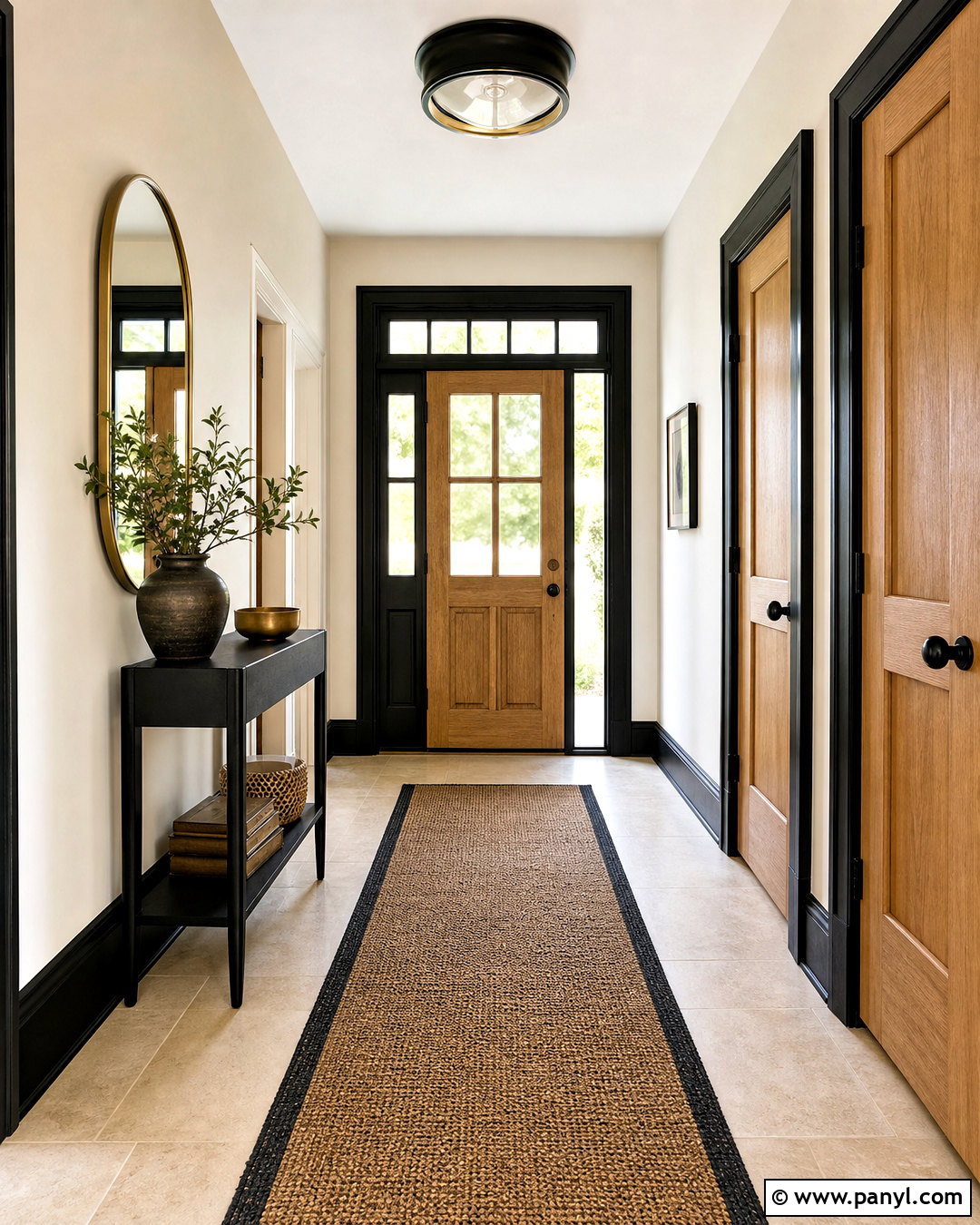
Natural wood doors look especially substantial when surrounded by black painted trim. In an entryway, coat the door casings, baseboards, and narrow crown molding in a warm black satin paint. Leave the interior doors in a clear-finished medium oak so their grain provides warmth and movement. Soft ivory walls and pale stone-look flooring keep the passage bright. Add a slim black console, a rounded brass mirror, and a woven runner containing tan, cream, and charcoal. Use matte black door hardware for continuity, but introduce a ceramic table lamp to soften the harder finishes. This scheme celebrates both paint and wood rather than forcing one material to dominate, making it practical for homes with attractive original doors.
8. Charcoal Trim With Greige Walls
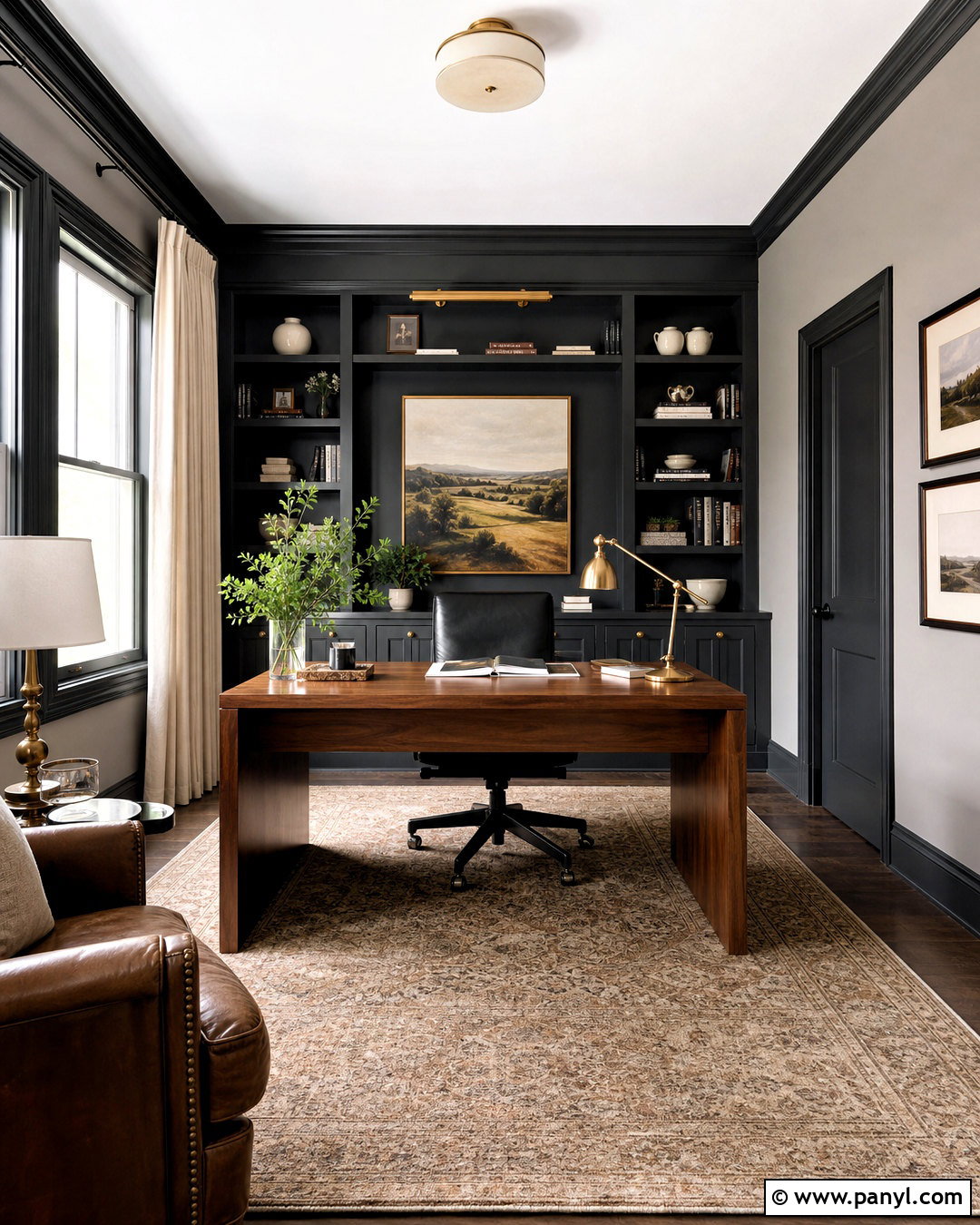
A low-contrast combination of charcoal trim and greige walls makes a home office feel focused, layered, and comfortable. Choose medium-light greige walls and a deep charcoal paint that shares the same warm undertone. Apply the darker shade to the baseboards, window casing, door, and built-in bookcase. Position a walnut desk near the window with a black leather chair and a softly patterned taupe rug beneath it. Cream curtains, brass task lighting, and muted landscape prints prevent the room from becoming too gray. Style the charcoal shelves with books, pale pottery, and small wood objects. Because the wall and trim colors are related, the architectural lines remain visible without creating the bold, high-contrast effect associated with black and white rooms.
9. Dark Blue Trim With Pale Blue Walls
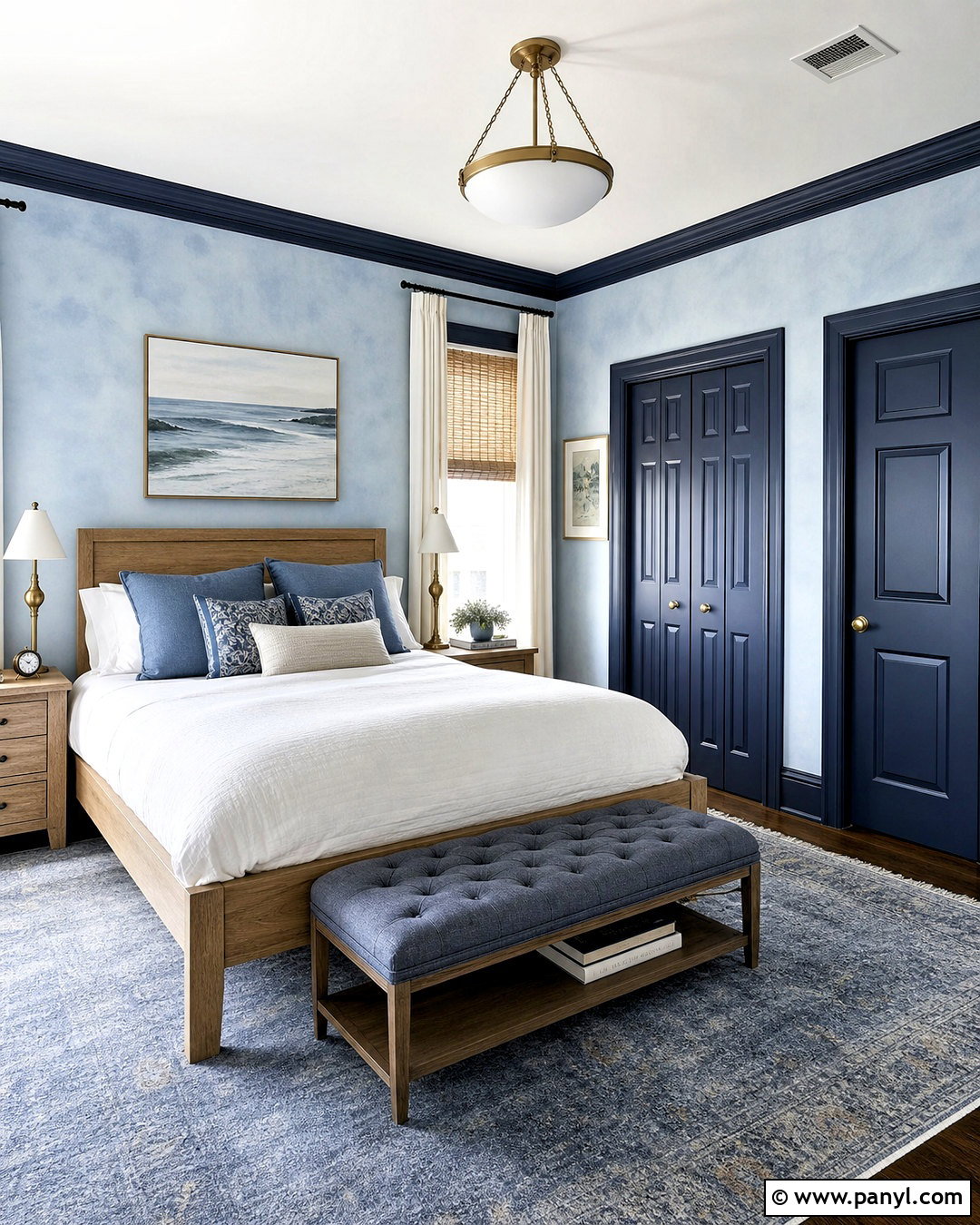
A tonal blue bedroom can feel restful while still highlighting its architectural details. Paint the walls a pale, cloudy blue, then use a deep ink blue on the baseboards, crown molding, door casings, window trim, and closet doors. The dark trim should read as a deeper version of the wall color rather than an unrelated accent. Add a light oak bed, crisp white bedding, and a blue-gray upholstered bench. Natural woven shades introduce texture beneath simple ivory curtains. Ground the room with a faded blue and beige rug, then finish it with ceramic lamps and small touches of antique brass. The repeated blues create continuity, while the wood and cream elements keep the complete space from looking cold or overly themed.
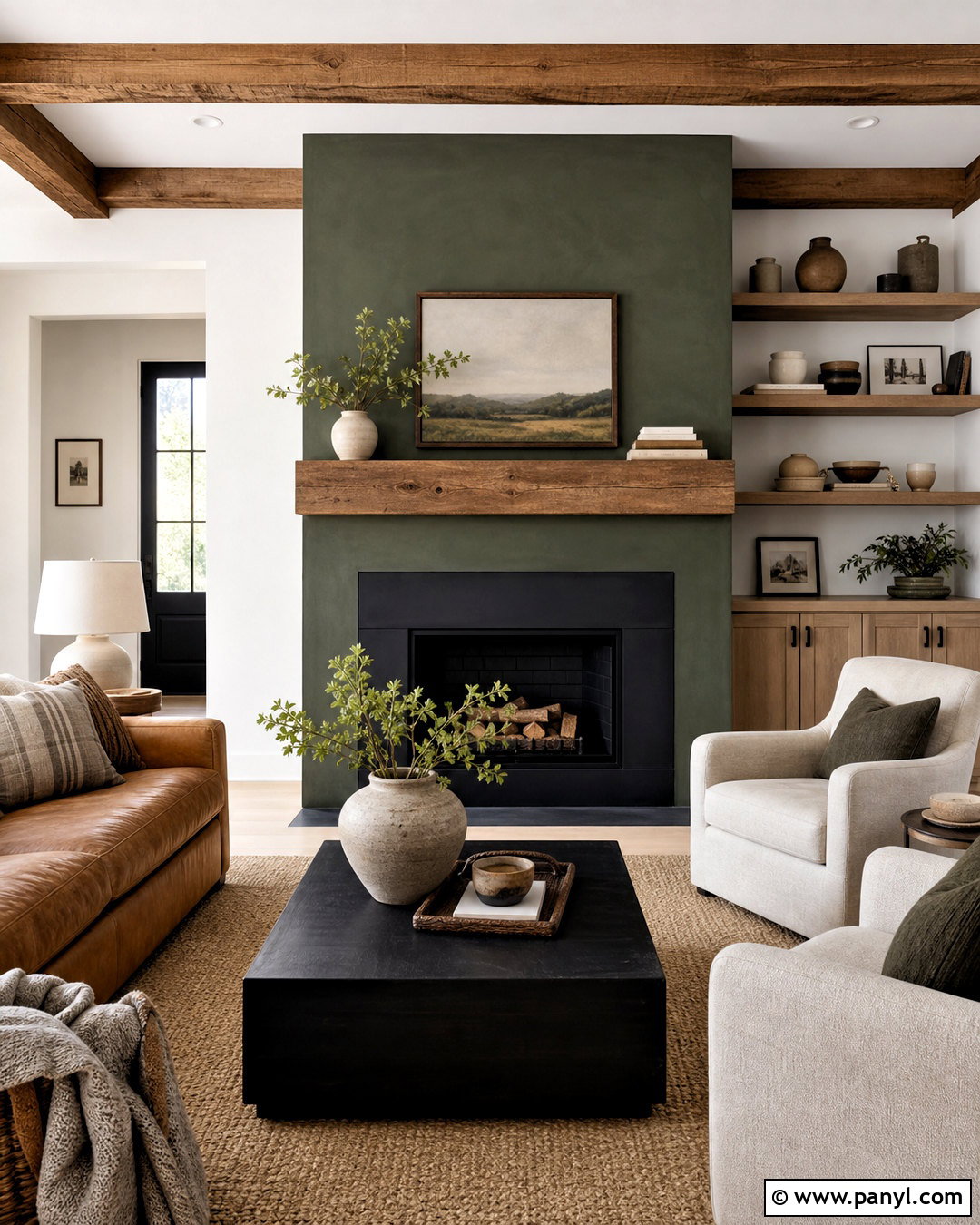
10. Dark Green Trim With Floral Wallpaper
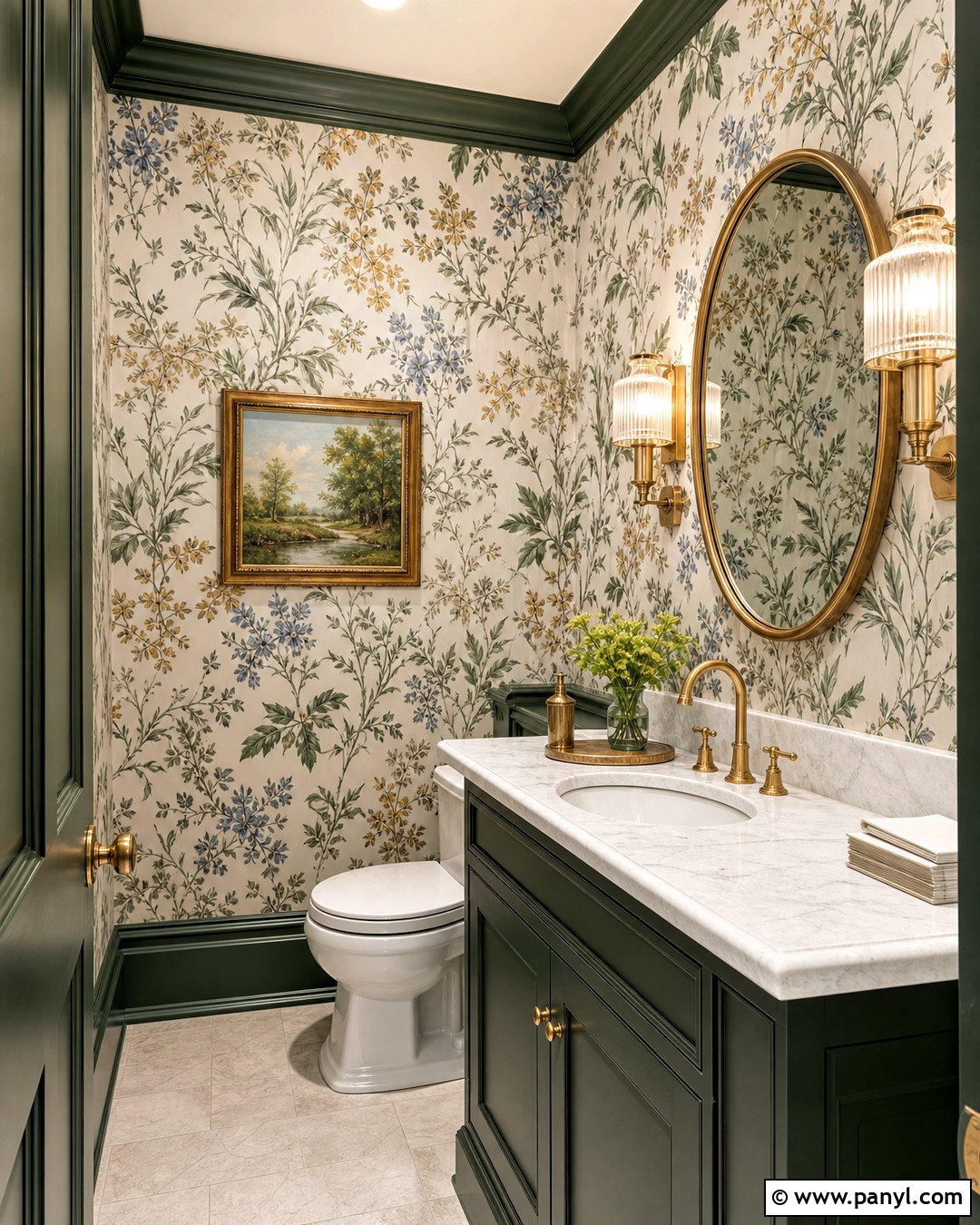
Dark green trim can provide a strong foundation for patterned wallpaper in a powder room. Choose wallpaper with an ivory background, leafy green details, and restrained touches of ochre or dusty blue. Paint the baseboards, crown molding, door casing, window trim, and vanity a deep botanical green pulled directly from the pattern. A white marble-look countertop and polished brass faucet keep the compact room bright. Add an oval brass mirror, clear glass sconces, and pale stone flooring for a clean finish. Use white towels and one small ceramic accessory rather than adding more competing patterns. Repeating the green across the vanity and trim makes the wallpaper feel integrated, resulting in a complete jewel-box room instead of a collection of unrelated decorative elements.
11. Black Trim With Red Brick
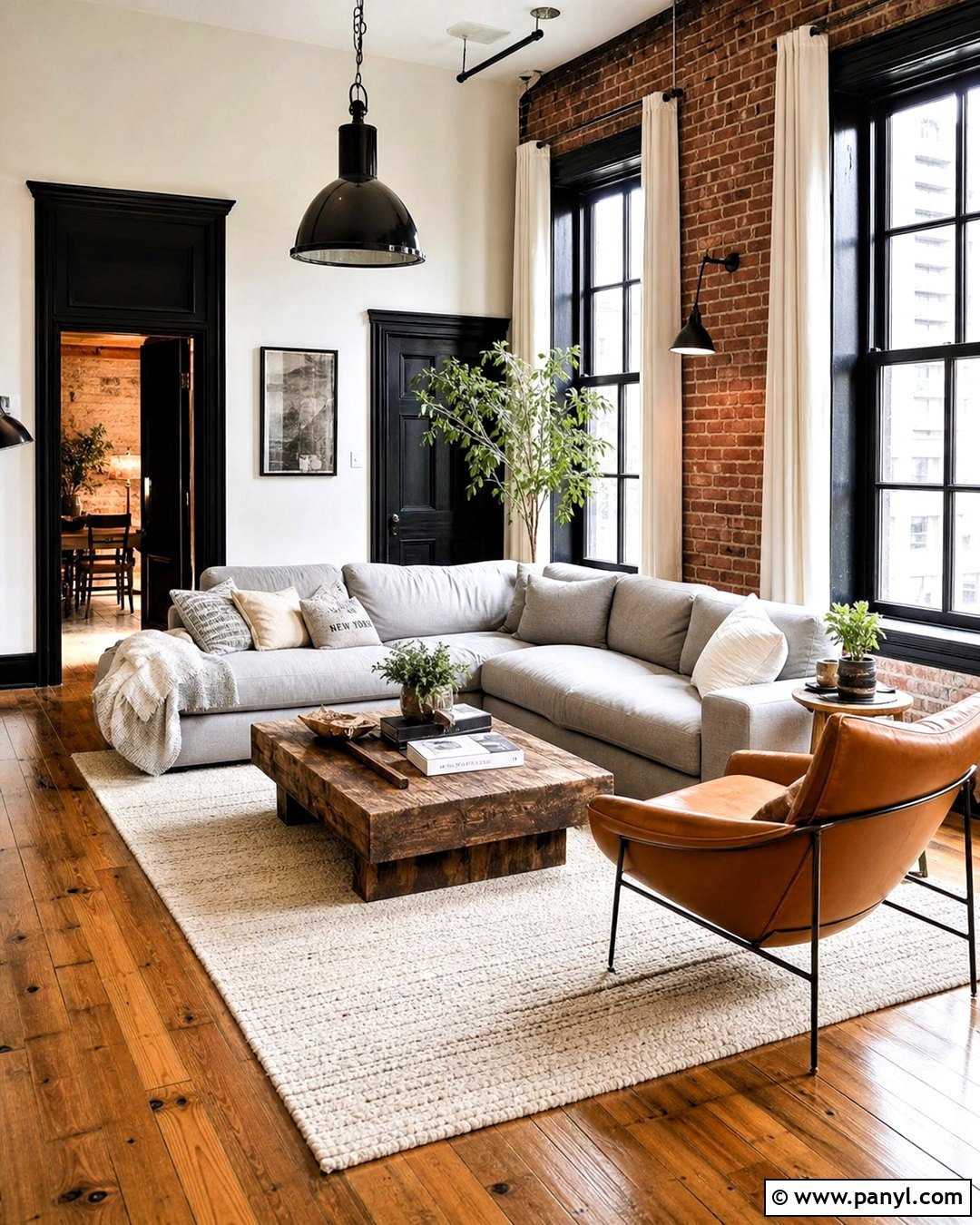
Exposed red brick gains a sharper, more contemporary edge when paired with black trim. In a loft-style living room, use soft black paint on the baseboards, window frames, door casings, and any visible structural molding. Keep the remaining walls warm white to balance the brick’s natural variation. A light gray sofa, caramel leather lounge chair, and reclaimed wood coffee table create an easy mix of industrial and comfortable materials. Add a large cream rug, black metal lighting, and linen curtains to soften the hard surfaces. Avoid filling the room with too much dark furniture. Instead, repeat black in a few controlled details. The finished design respects the brick while giving the windows and doorways a clear architectural presence.
12. Dark Brown Trim With Sage Walls
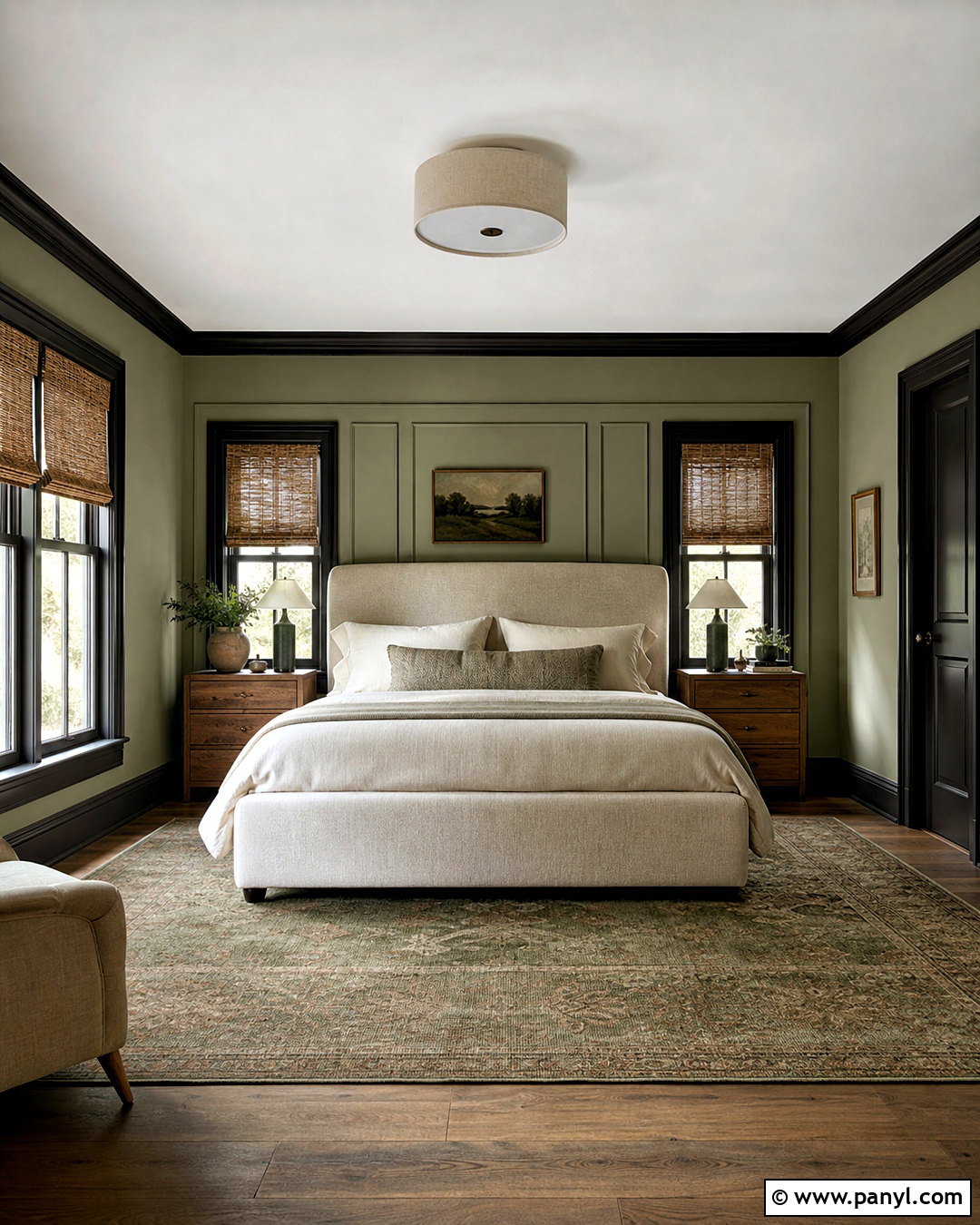
Muted sage walls and dark brown trim create a calm, organic bedroom with vintage warmth. Select a brown-black paint for the baseboards, crown molding, window casings, door, and simple wall paneling behind the bed. Use a dusty sage on the remaining walls so the contrast remains gentle. Furnish the room with an upholstered flax-colored bed, oak nightstands, and ivory bedding layered with olive and rust accents. Hang woven shades and natural linen curtains at the window. A faded traditional rug can combine green, brown, cream, and muted red without overwhelming the palette. Complete the room with aged bronze sconces and botanical prints. The dark brown trim connects naturally to wood furniture while giving the softer wall color a defined structure.
13. Black Trim With White Oak Cabinets
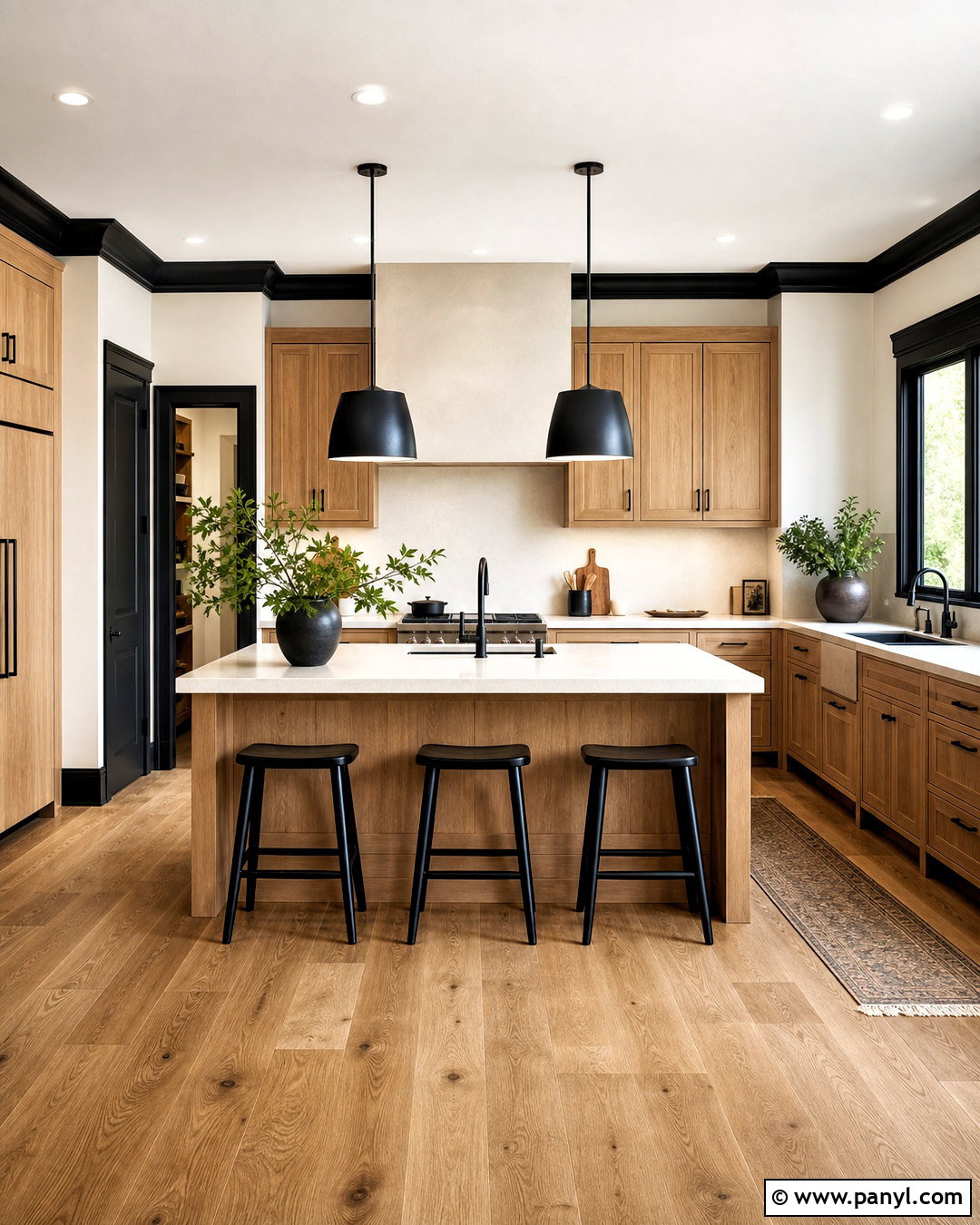
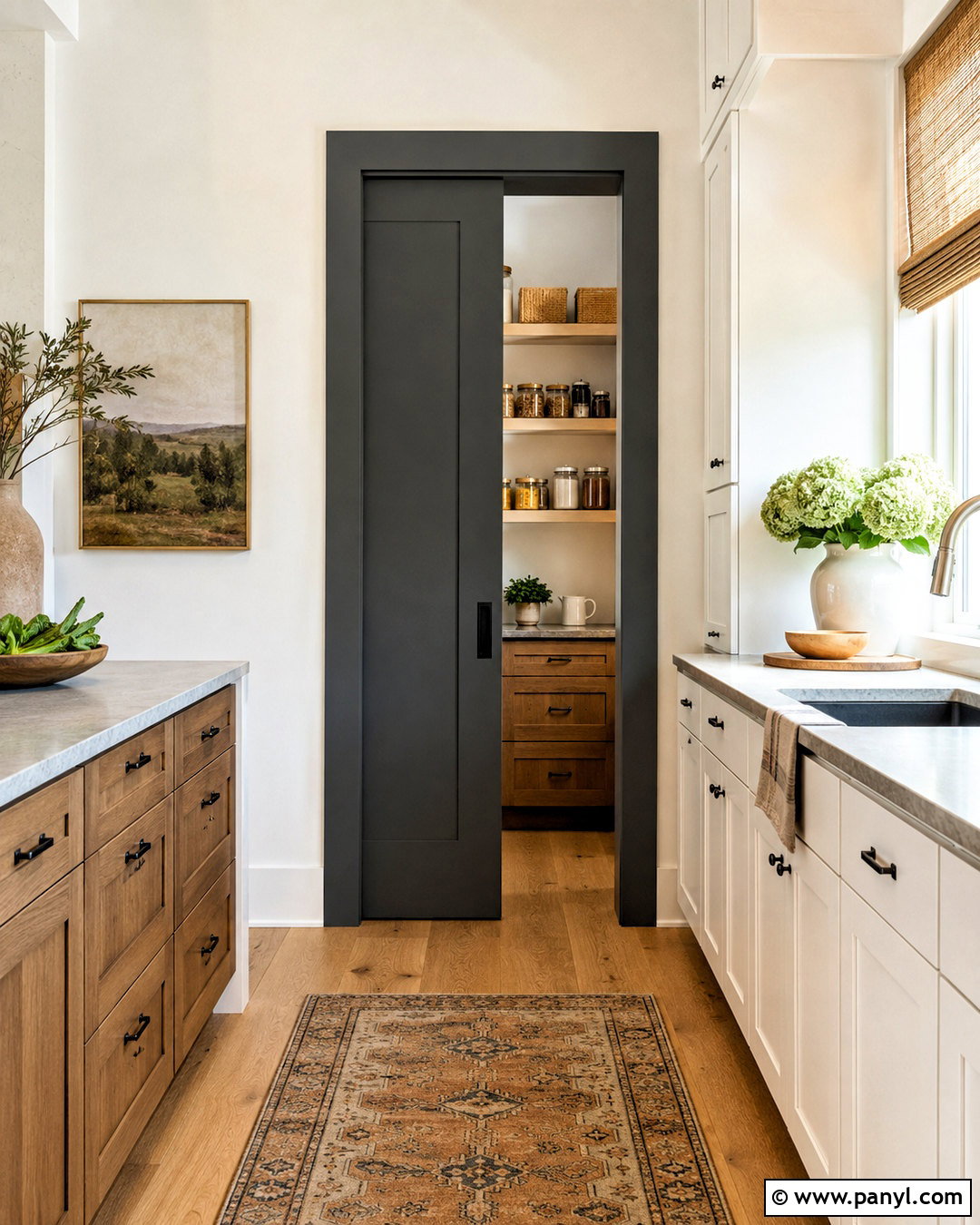
Black trim can make a white oak kitchen look more tailored and architectural. Keep the cabinets in a clear, natural finish and use warm white paint on the walls and ceiling. Apply black satin paint to the window casings, exterior door, baseboards, and the frame around an open pantry entrance. Repeat the dark tone through slim cabinet pulls, counter stools, and simple pendant lights. Select a creamy quartz backsplash and countertop rather than a bright blue-white surface. Wide oak flooring, a washable neutral runner, and a few matte ceramic pieces maintain warmth. The finished kitchen feels modern but not severe because the wood occupies more visual space than the black. Consistent hardware and trim placement make the contrast appear planned rather than scattered.
14. Charcoal Trim With Limewash Walls
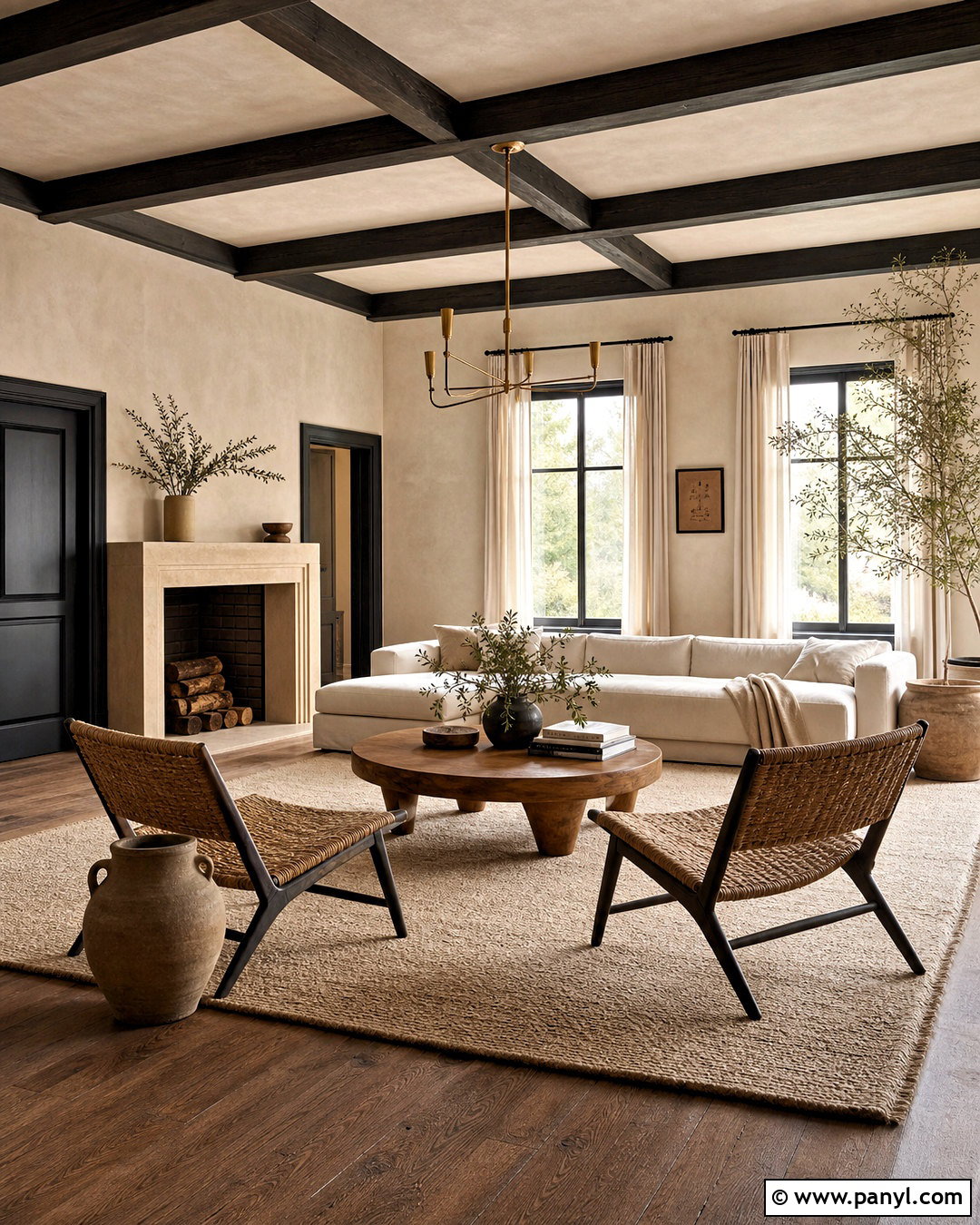
Soft, textured limewash walls offer a beautiful counterpoint to precise charcoal trim. In a relaxed living room, choose pale stone-colored limewash with subtle movement and apply charcoal paint to the baseboards, windows, doors, and ceiling beams. Keep the trim finish satin so it contrasts gently with the chalky wall surface. Arrange a low cream sofa, rounded wood coffee table, and two woven lounge chairs around a natural wool rug. Off-white linen curtains soften the charcoal window frames, while blackened bronze lighting supports the darker architecture. Add handmade pottery, neutral artwork, and one olive tree in a simple planter. The entire room combines clean outlines with imperfect textures, producing a modern, comfortable setting that still feels warm and lived-in.
15. Dark Plum Trim With Blush Walls
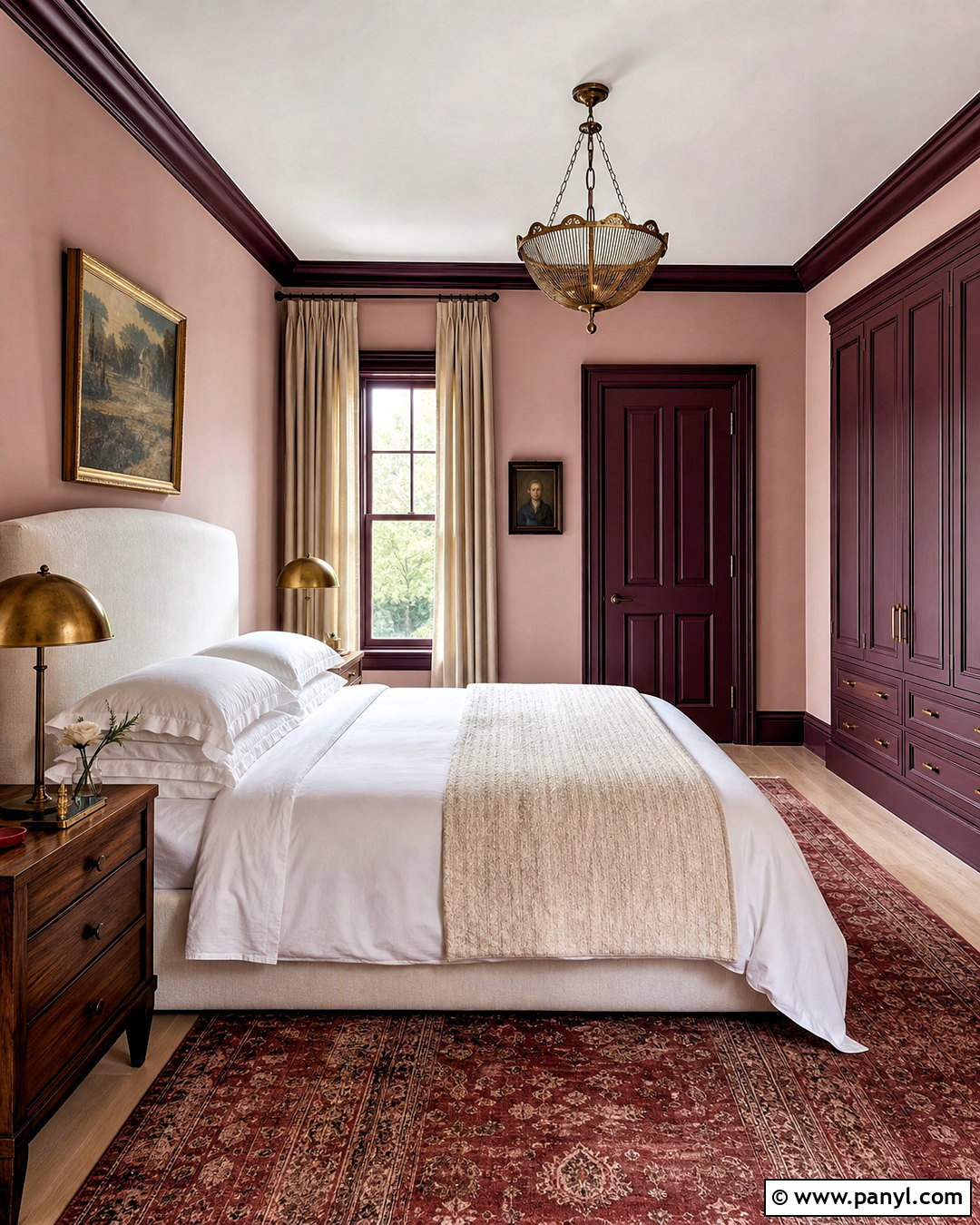
For a softer alternative to black, deep plum trim creates a rich frame around dusty blush walls. Use the plum shade on baseboards, crown molding, window casings, the bedroom door, and a built-in wardrobe. Choose a muted blush with brown undertones so the combination feels sophisticated rather than overly sweet. An ivory upholstered bed and white bedding brighten the center of the room. Add walnut nightstands, aged brass lamps, and a vintage rug containing faded burgundy, taupe, and cream. Hang oatmeal linen curtains and keep decorative accessories simple. Repeating plum on one bench cushion or lumbar pillow ties the furniture to the millwork. The completed bedroom feels warm, enveloping, and distinctive without depending on harsh contrast or trendy decorative pieces.
16. Black Trim With Concrete Floors
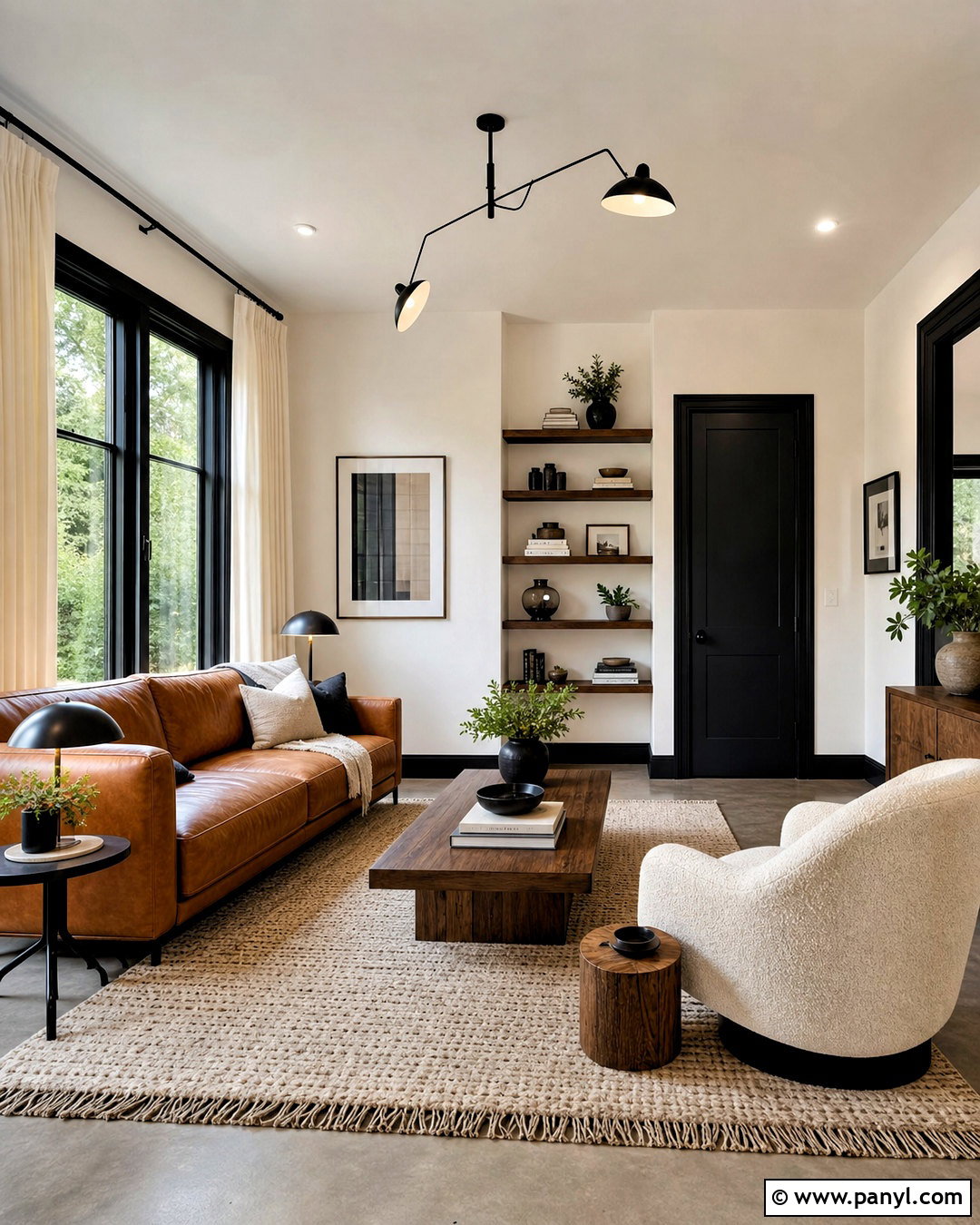
A modern room with concrete flooring needs warmth and texture to balance black painted trim. Coat the baseboards, large window frames, interior door, and open shelving in matte or satin black. Use warm white walls to reflect light and prevent the concrete from appearing cold. Anchor the living area with a caramel leather sofa, cream boucle chair, and oversized wool rug. A walnut coffee table introduces natural color, while black steel lighting connects with the trim. Add full-length ivory curtains to soften the windows and improve the room’s visual comfort. Large abstract artwork in cream, tan, and charcoal can pull the palette together. The final design feels streamlined and urban, but the textiles and wood keep it welcoming enough for everyday living.
17. Dark Green Trim With Wood Paneling
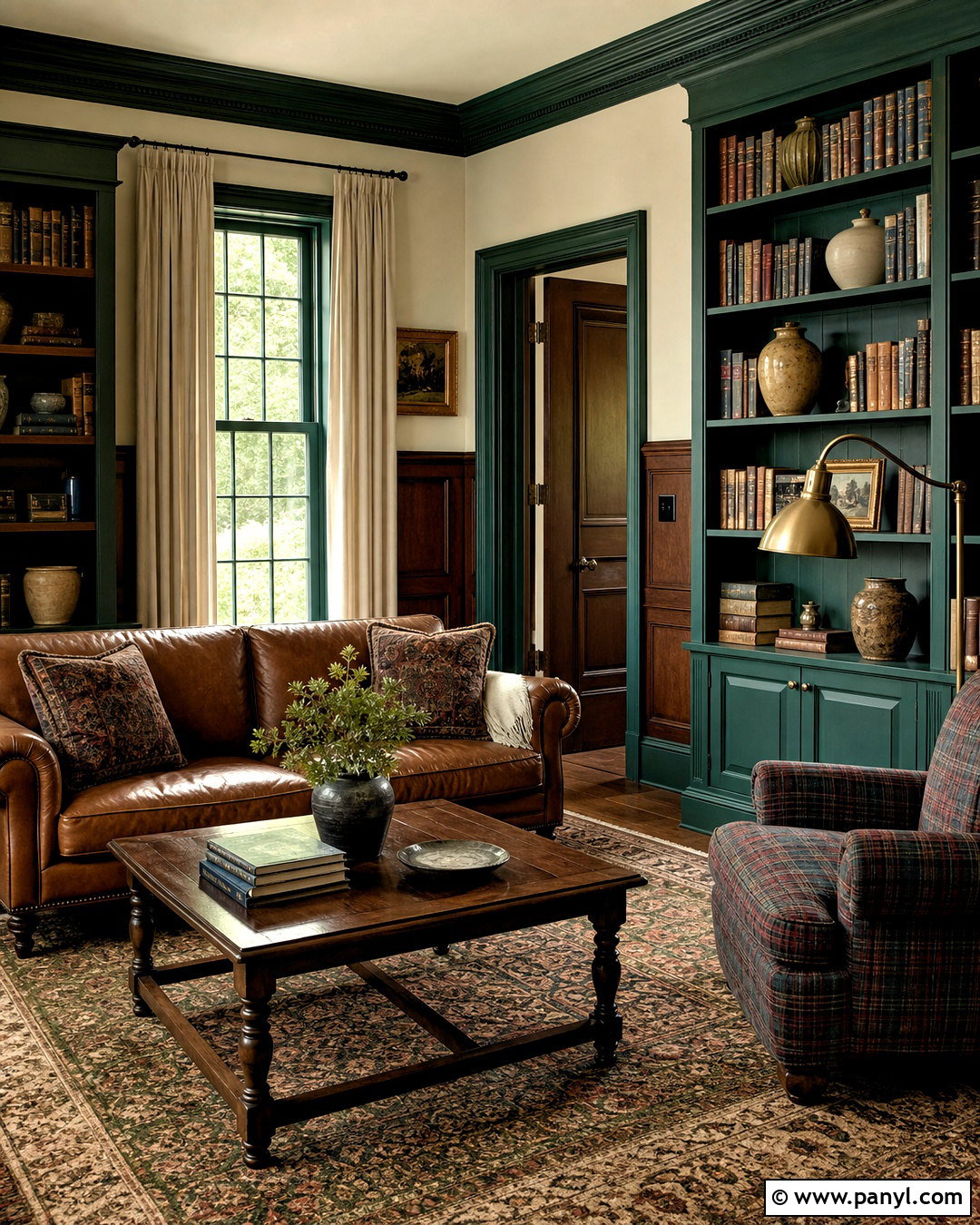
A library or reading room becomes more cohesive when dark green trim is paired with warm wood paneling. Use medium walnut paneling on the lower half of the walls, then paint the baseboards, window casings, door frames, built-in shelves, and crown molding a deep green. Apply warm ivory paint above the paneling to keep the upper room light. Add a cognac leather sofa, plaid wool chair, brass reading lamp, and a muted Persian-style rug. Cream curtains should frame the windows without hiding the green casings. Style the shelves with books, pottery, and restrained artwork rather than filling every surface. This full-room palette connects painted millwork with natural wood, creating a comfortable, established look that works in both old and newer homes.
18. Black Trim With Checkerboard Floors
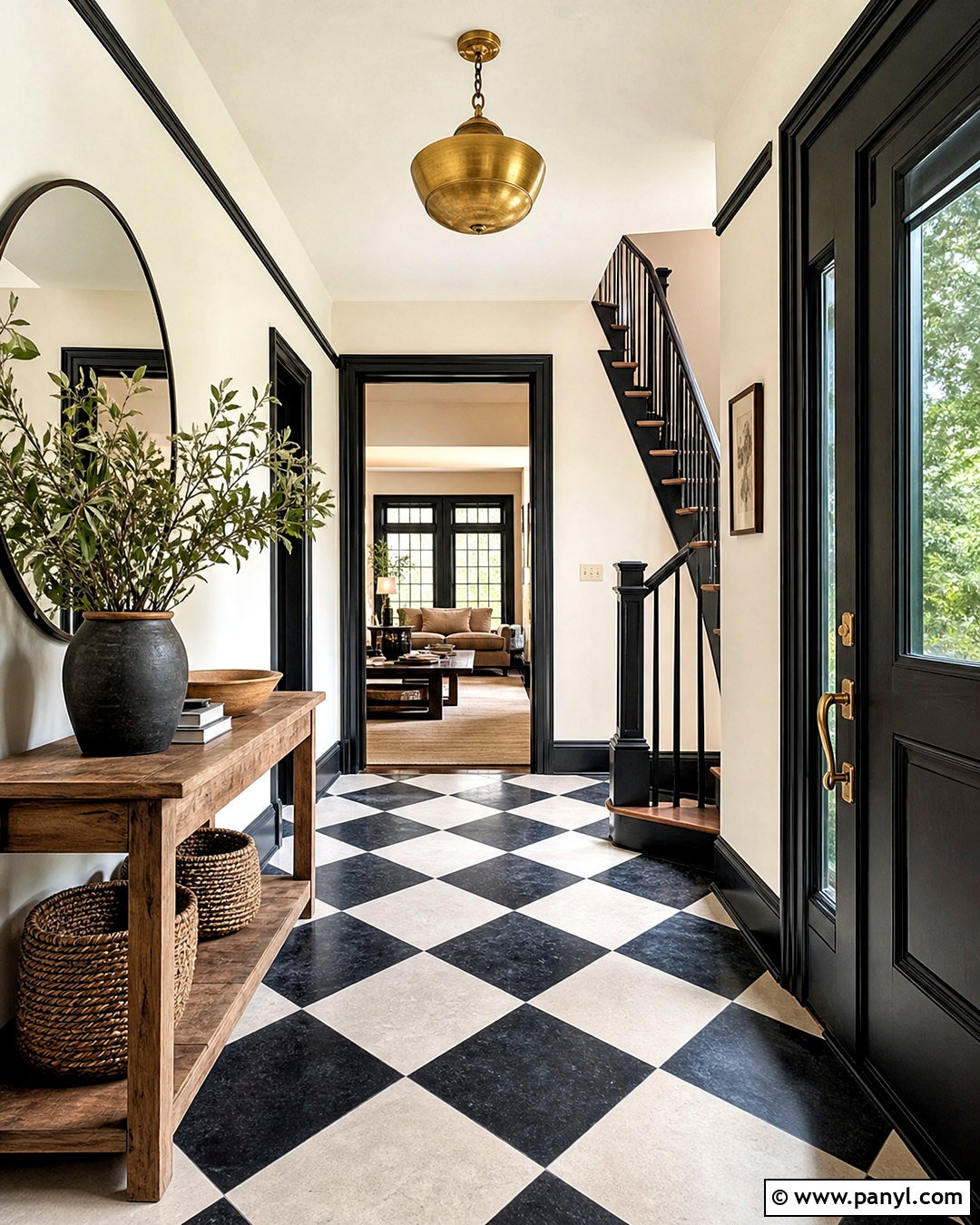
Bold black trim feels natural in an entryway with classic checkerboard flooring. Choose honed black and warm white stone tiles rather than highly polished surfaces. Paint the baseboards, door casings, window trim, stair railing, and front door black in a durable satin finish. Keep the walls a soft ivory to echo the lighter floor tiles. A narrow natural oak console and woven storage baskets add warmth, while a large round mirror reflects light through the space. Use an aged brass ceiling fixture and simple neutral artwork for a welcoming finish. The repeated black forms a clear route from the flooring to the architectural features. Every element supports the graphic palette, yet the wood and woven textures stop the entry from feeling formal or severe.
19. Color Drenched Charcoal Trim
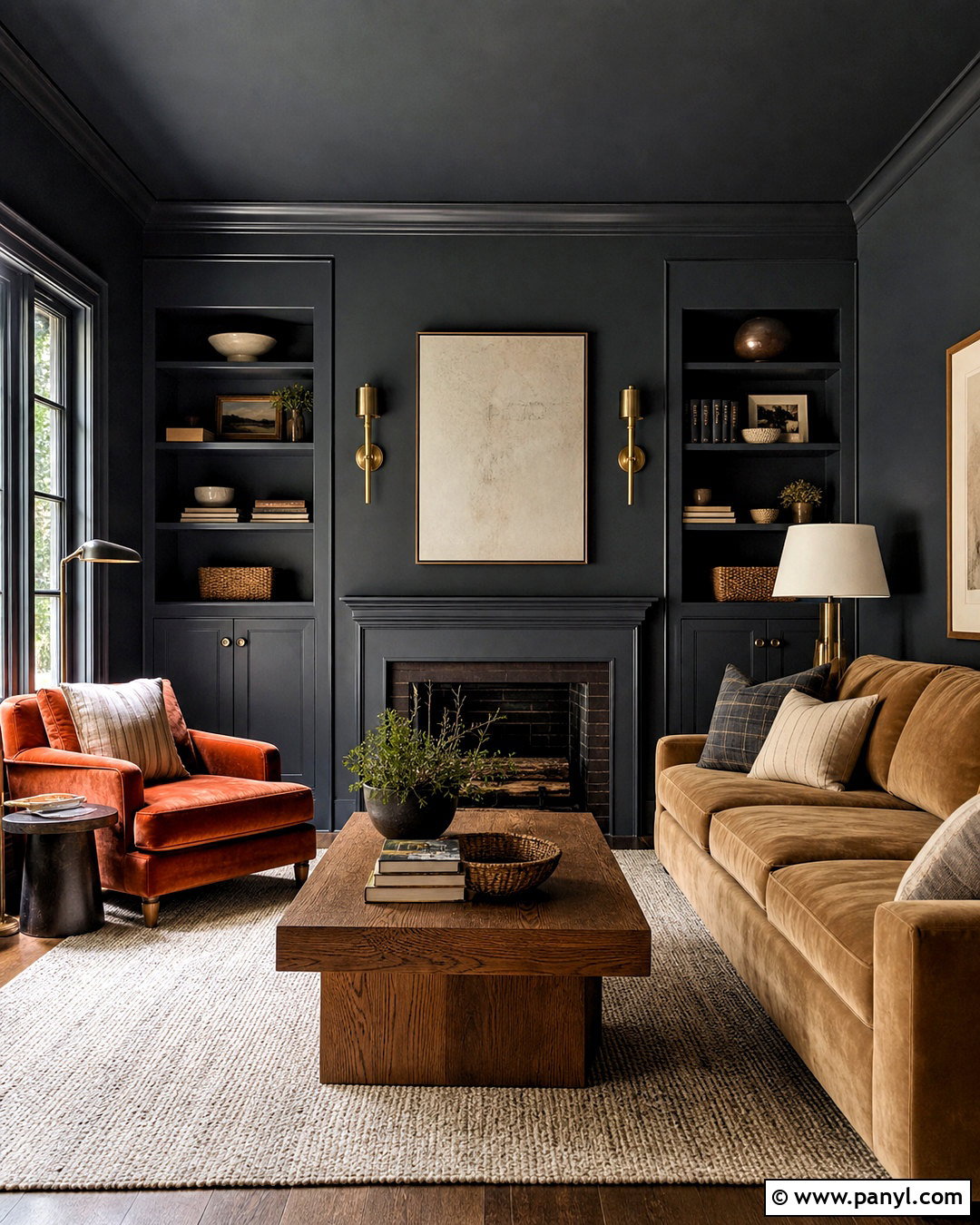
Color drenching creates an enveloping look by using one dark charcoal across the walls, trim, doors, built-ins, and ceiling. This works especially well in a compact den where coziness is more important than maximum brightness. Vary the paint sheen to preserve definition: matte on the walls and ceiling, with satin on the baseboards, door, and shelving. Add a camel velvet sofa, rust-colored lounge chair, and medium oak coffee table to warm the charcoal shell. A cream wool rug creates a lighter foundation, while brass sconces and pale artwork reflect light. Keep window treatments close to the wall color for continuity. The completed room feels intentional and immersive, with texture, finish, and furniture providing contrast instead of additional wall colors.
20. Two Tone Dark Painted Trim
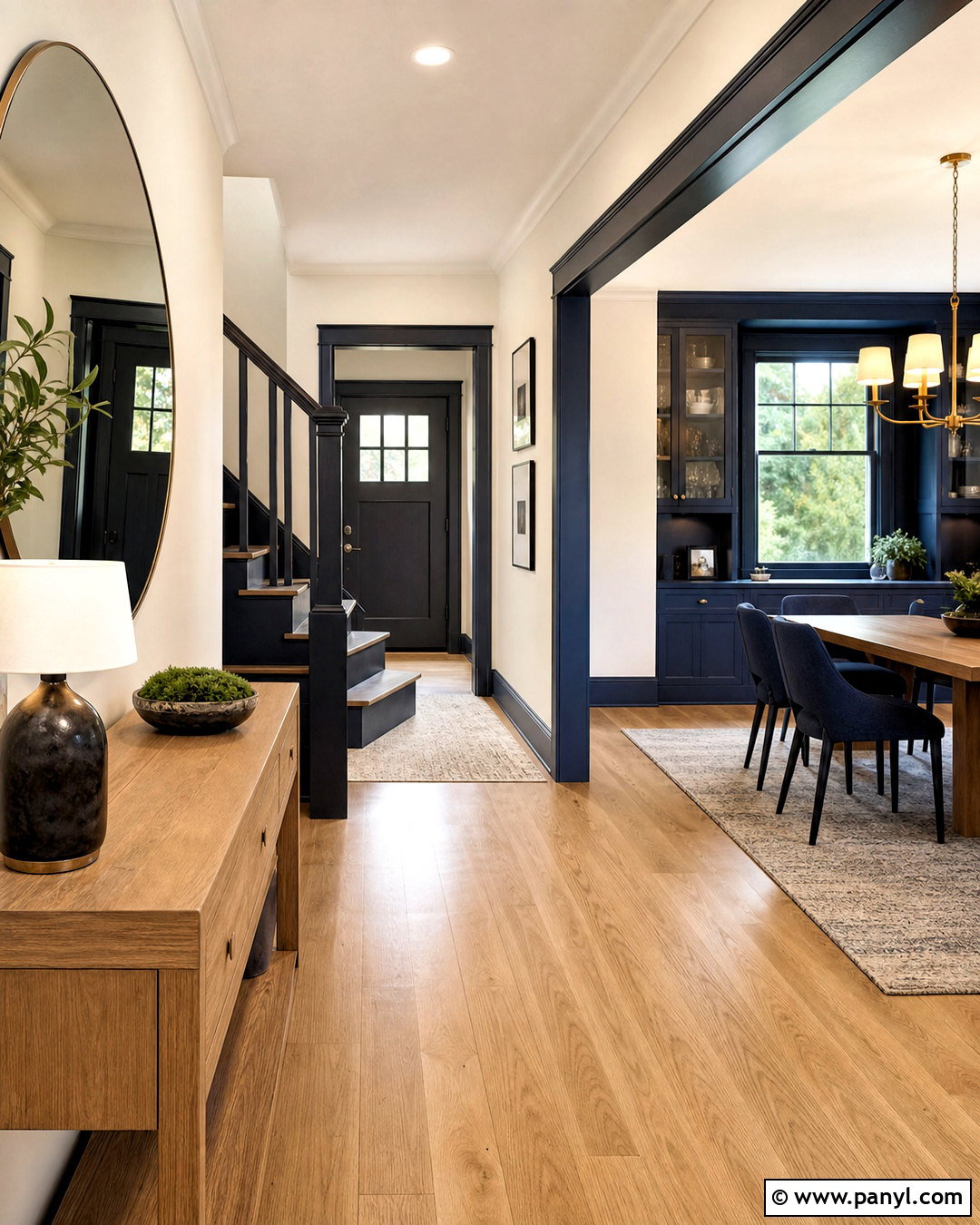
Two dark trim colors can define connected spaces while maintaining a consistent overall design. In an open entry and dining area, use charcoal on the entry baseboards, door casings, front door, and staircase. Transition to deep navy on the dining room trim, built-in cabinets, and window frames. Warm white walls link both areas and prevent the color change from feeling abrupt. Repeat charcoal through the entry console and navy through dining chair upholstery. Medium oak flooring should continue uninterrupted across the rooms, supported by aged brass lighting and neutral rugs. Place a small piece of artwork containing both dark colors near the opening. This thoughtful repetition gives each zone its own identity while allowing the adjoining spaces to feel connected and carefully composed.
Conclusion:
The best dark painted trim does more than outline doors and windows. It supports the complete color palette, strengthens architectural details, and connects furnishings with permanent finishes. Black creates crisp contrast, while charcoal, navy, forest green, espresso, and plum offer softer or warmer alternatives. Before painting, compare samples beside the wall color, flooring, and major furniture throughout the day. Then choose a washable satin or semigloss finish for frequently handled surfaces. You can apply dark paint throughout a room or limit it to windows, doorways, built-ins, or paneling. Whether your home is modern, traditional, rustic, or transitional, these 20 dark painted trim ideas provide practical ways to build a finished, cohesive interior.

Related Ideas and Inspiration:

Leave a Reply