
Dark trim creates definition, contrast, and architectural character without sacrificing the bright feeling of pale walls. This collection of **40 dark trim light walls** combinations explores complete rooms rather than isolated paint pairings. You will find black, charcoal, navy, forest green, espresso, and dark wood trim balanced with white, cream, greige, blue, sage, and other soft wall colors. Each look includes practical guidance for flooring, furniture, lighting, textiles, and finishes, making it easier to create a coordinated space. Whether your home is modern, traditional, coastal, Craftsman, or farmhouse-inspired, the right undertones and repeated accents can make this contrast feel intentional. Explore the sections below to find your favorite approach among these **40 dark trim light walls**.

1. Black Trim With White Walls
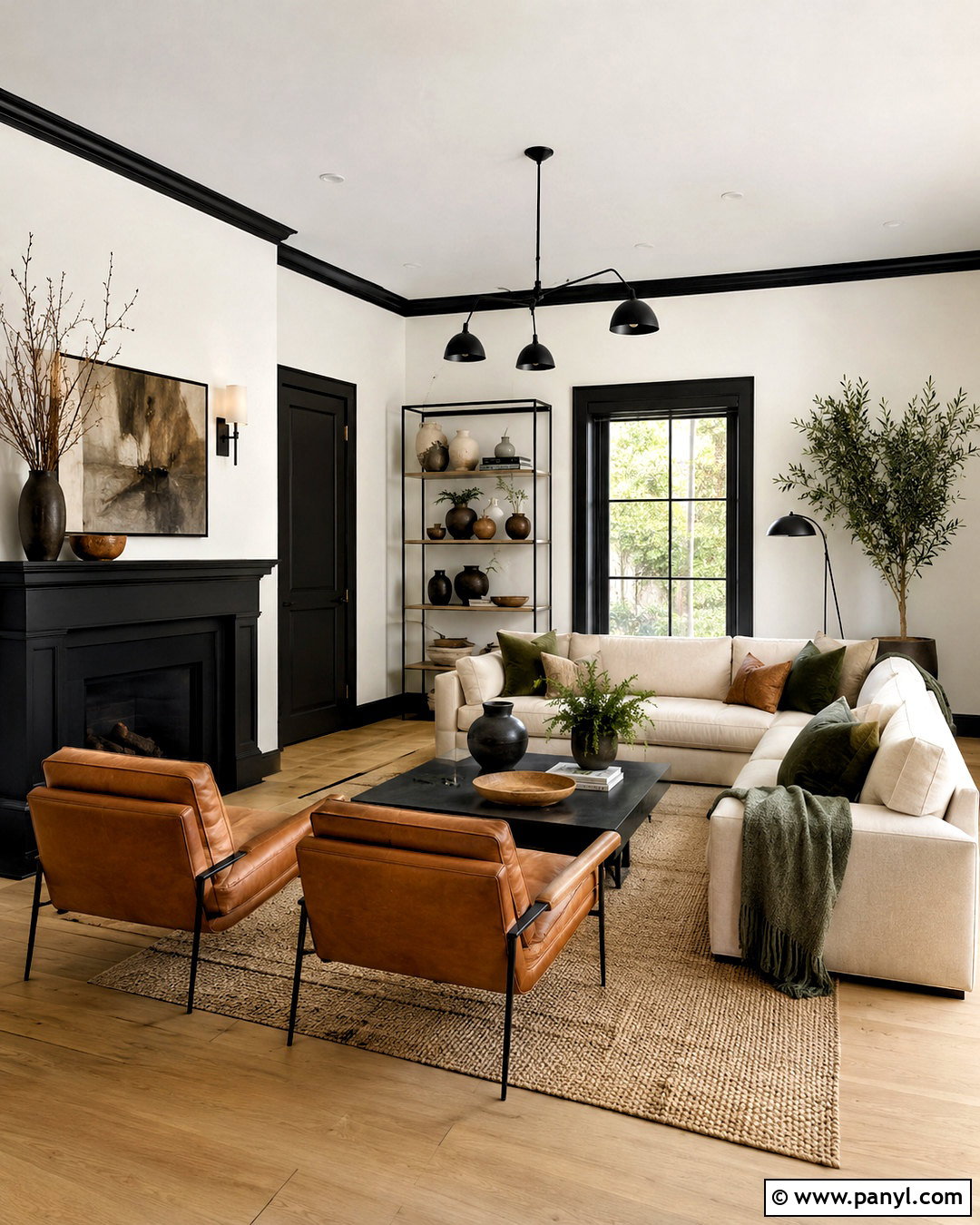
Crisp white walls and matte black trim create a graphic living room that feels clean but not cold. Carry the black across baseboards, window casings, door frames, and interior doors so the contrast looks deliberate. Choose warm white upholstery, a natural oak coffee table, and a textured beige rug to soften the sharp lines. Black metal lighting and slim picture frames repeat the trim without overwhelming the room. Add camel leather, muted green pillows, and simple pottery for warmth. Pale oak flooring keeps the space open and bright. This combination works especially well when the windows have strong shapes because the black casings turn outdoor views into framed artwork.
2. Espresso Trim With Warm White Walls
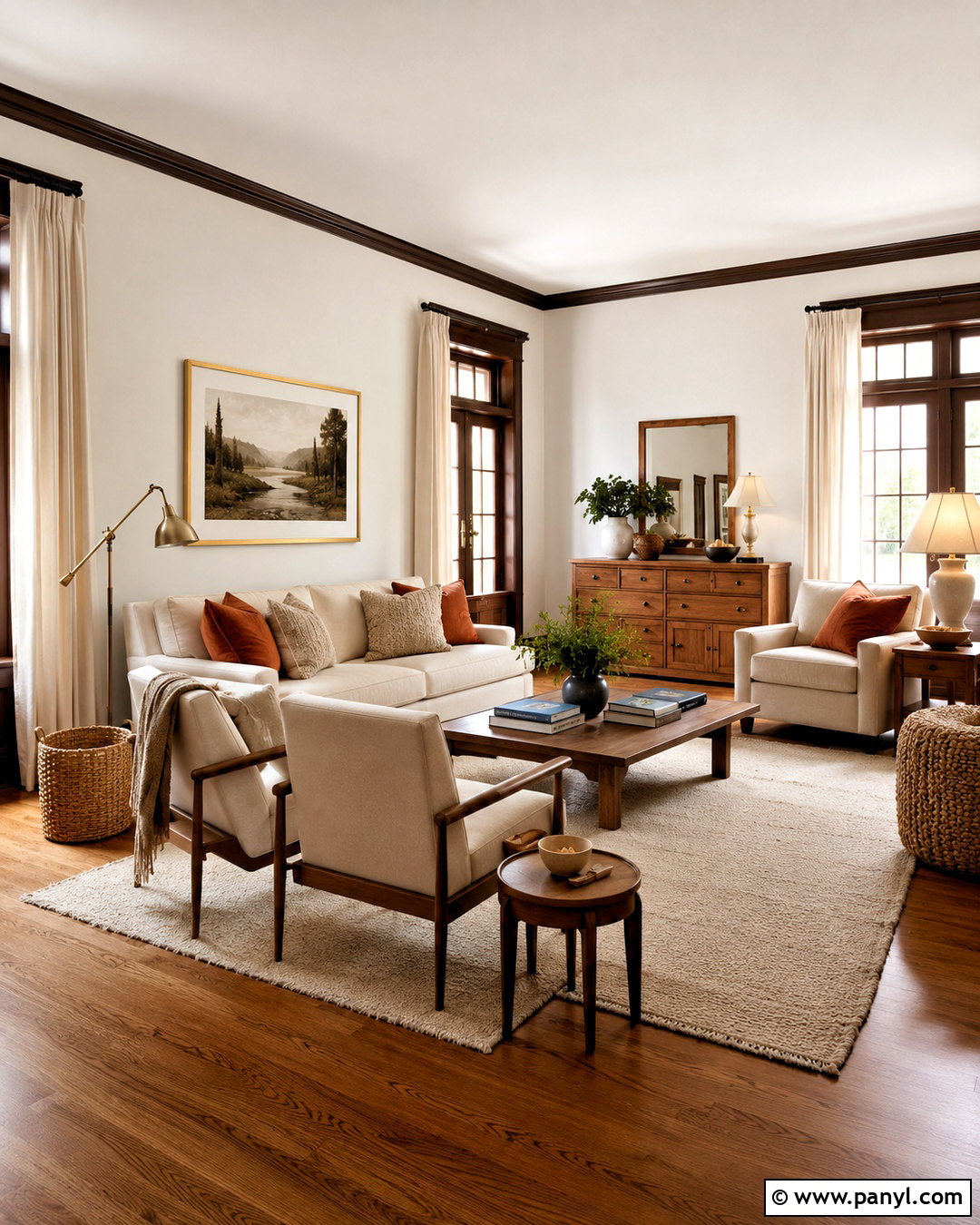
Warm white walls look richer when paired with espresso-brown trim rather than pure black. This softer contrast suits a comfortable living room with walnut furniture, oatmeal linen upholstery, and warm oak floors. Paint the baseboards, doors, and window casings in a deep brown with subtle neutral undertones. A cream wool rug keeps the darker perimeter from feeling heavy. Use antique brass lighting, rust-colored pillows, and woven baskets to connect the brown trim with the furnishings. Lightweight ivory curtains can hang outside the window casing, allowing the espresso edges to remain visible. The finished room feels grounded, welcoming, and sophisticated while preserving plenty of brightness throughout the day.
3. Charcoal Trim With Greige Walls
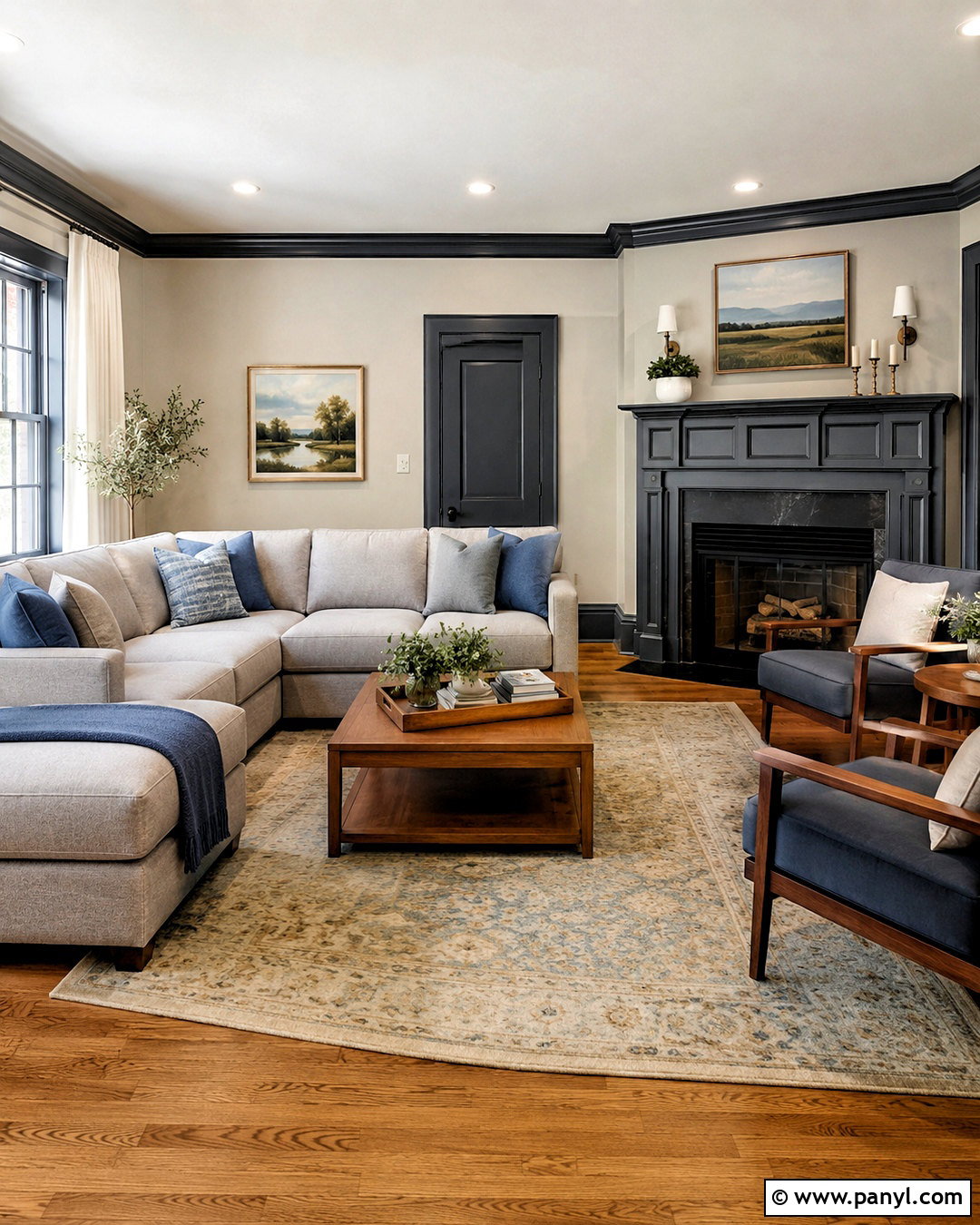
Soft greige walls and charcoal trim offer noticeable definition without the intensity of black and white. Use this combination in a transitional family room with a pale gray sectional, medium oak flooring, and a large cream-and-taupe rug. Paint the fireplace mantel, window casings, baseboards, and doors the same charcoal shade for continuity. Warm wood side tables prevent the gray palette from appearing flat. Bring in blackened bronze lamps, ivory curtains, and muted blue cushions for subtle variation. A few oversized landscape prints can fill the light walls without creating visual clutter. The charcoal outlines the architecture, while greige provides a flexible background for both warm and cool furnishings.
4. Dark Walnut Trim With Cream Walls
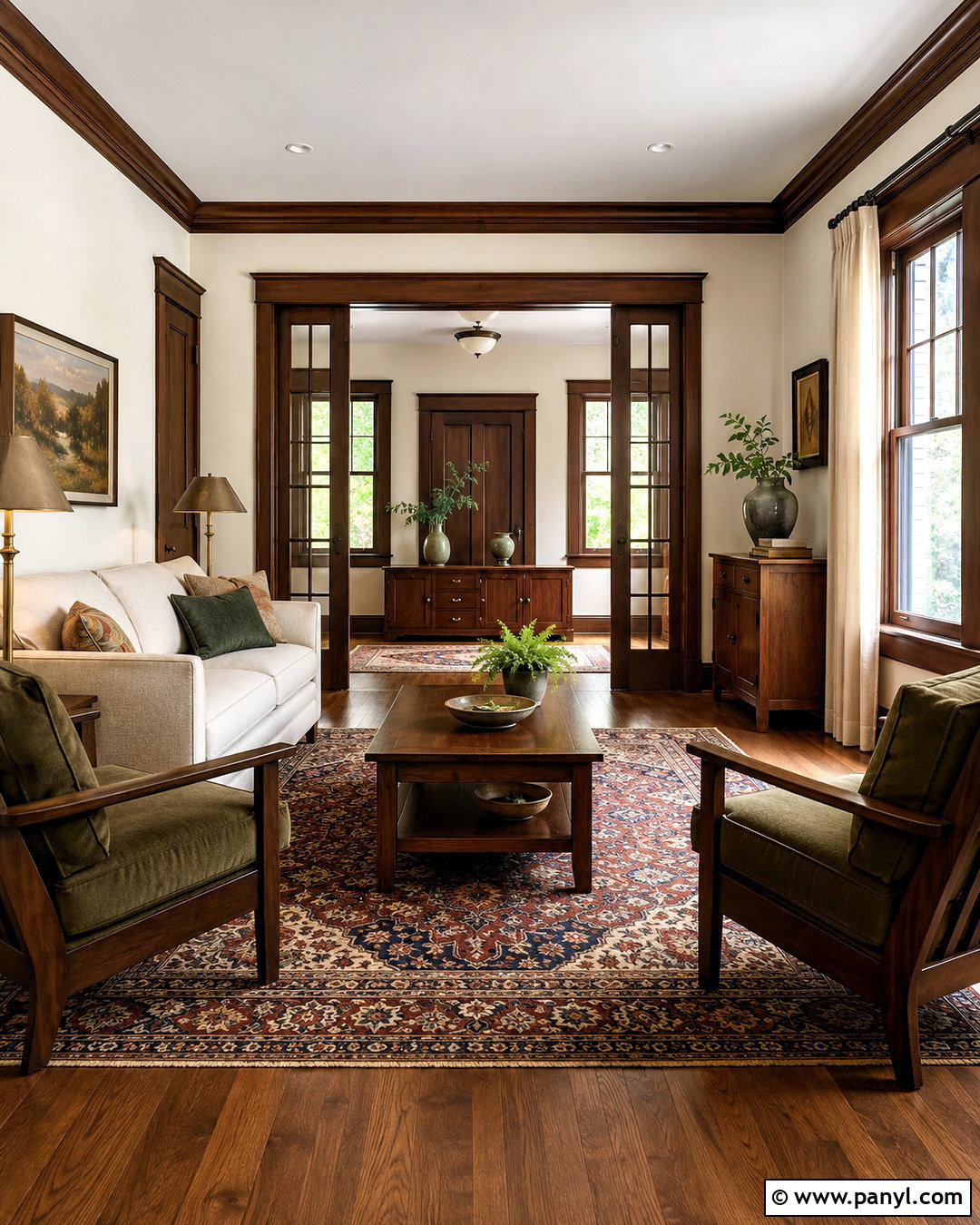
Original dark walnut trim deserves to become a defining feature rather than something hidden beneath paint. Pair it with creamy walls that contain warm beige undertones, helping the natural wood appear deep and polished instead of orange. Build the living room around a linen sofa, traditional wool rug, and walnut coffee table that echoes the trim. Upholstered chairs in muted olive add color while complementing the wood grain. Choose aged brass lamps and soft ivory curtains for a layered, classic finish. Medium-toned oak floors create enough separation from the darker woodwork. This complete palette is especially appropriate for Craftsman homes, historic interiors, and rooms with substantial window casings.
5. Black Trim With Light Sage Walls
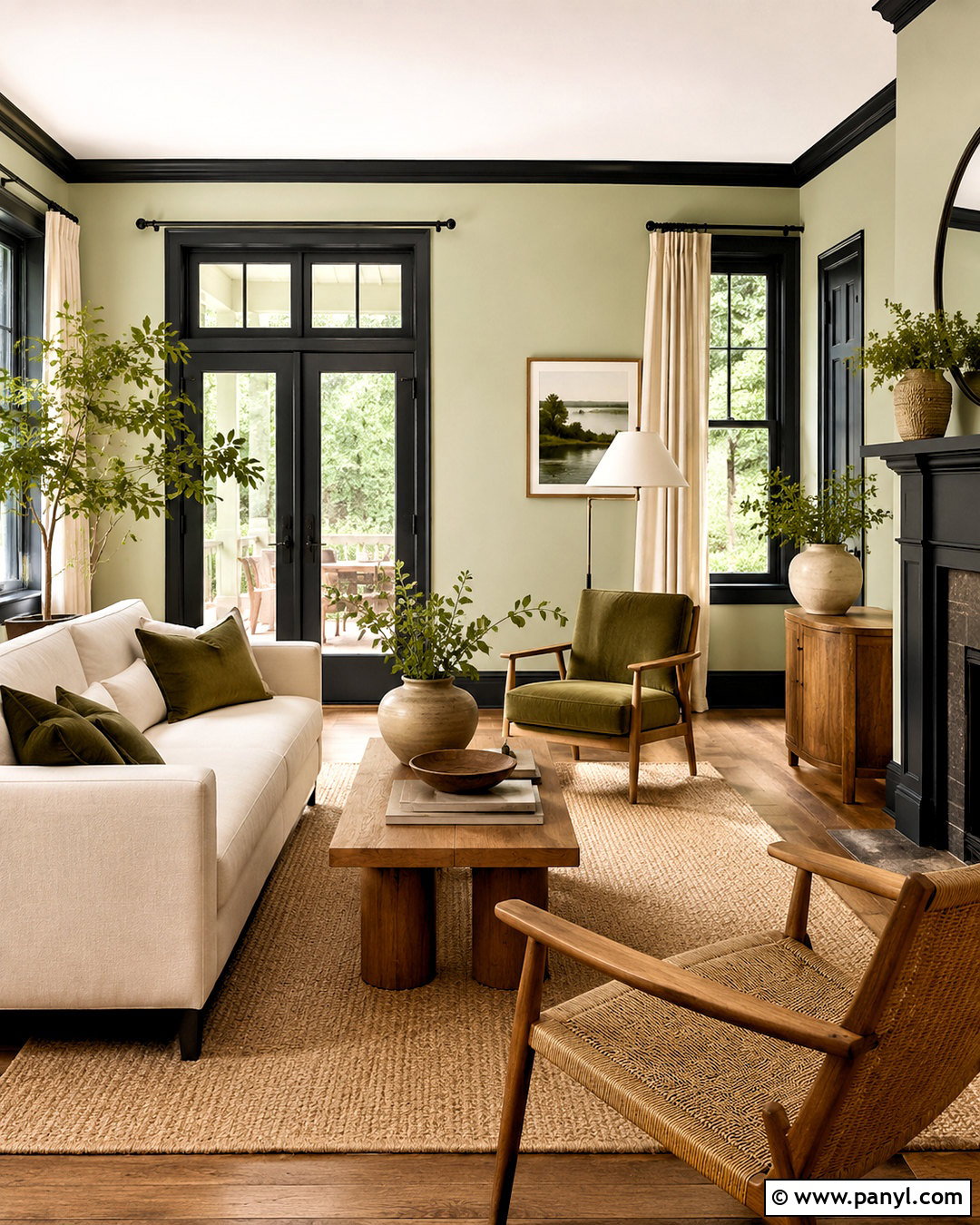
Light sage walls bring a relaxed, organic quality to bold black trim. In a living room, combine this pairing with a cream sofa, woven wool rug, and warm oak furniture. Paint the windows, baseboards, doors, and fireplace surround black so the dark details form a consistent architectural framework. Add olive cushions, natural linen curtains, and ceramic lamps in soft beige. A few leafy plants reinforce the wall color without turning the room into a single-note green space. Keep the ceiling warm white to preserve height and reflect light. The final look feels modern and nature-inspired, balancing the strength of black woodwork with gentle color and approachable natural textures.
6. Navy Trim With Pale Blue Walls
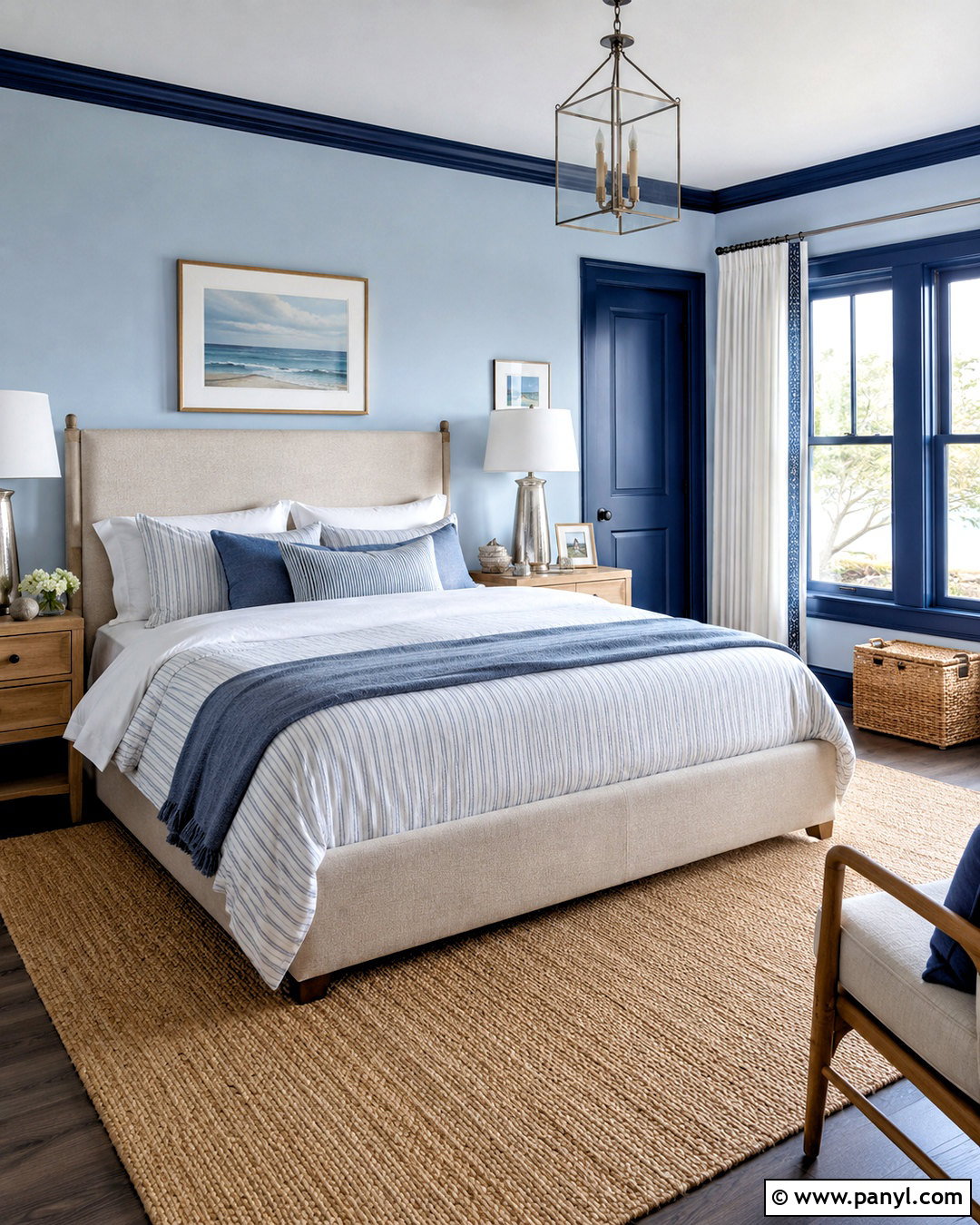
Pale blue walls and deep navy trim create a calm bedroom with more softness than a black-and-white scheme. Use navy on the baseboards, window frames, door, and simple crown molding. Position an upholstered oatmeal bed against the lightest wall and layer it with white, blue-gray, and striped linen bedding. Light oak nightstands keep the palette casual, while polished nickel lamps add a clean finish. Choose a natural fiber rug and white curtains with navy edging to repeat the contrast. A few framed coastal landscapes can provide decoration without becoming thematic. The navy trim grounds the airy walls, producing a peaceful room that feels tailored, fresh, and comfortable.
7. Burgundy Trim With Blush Walls
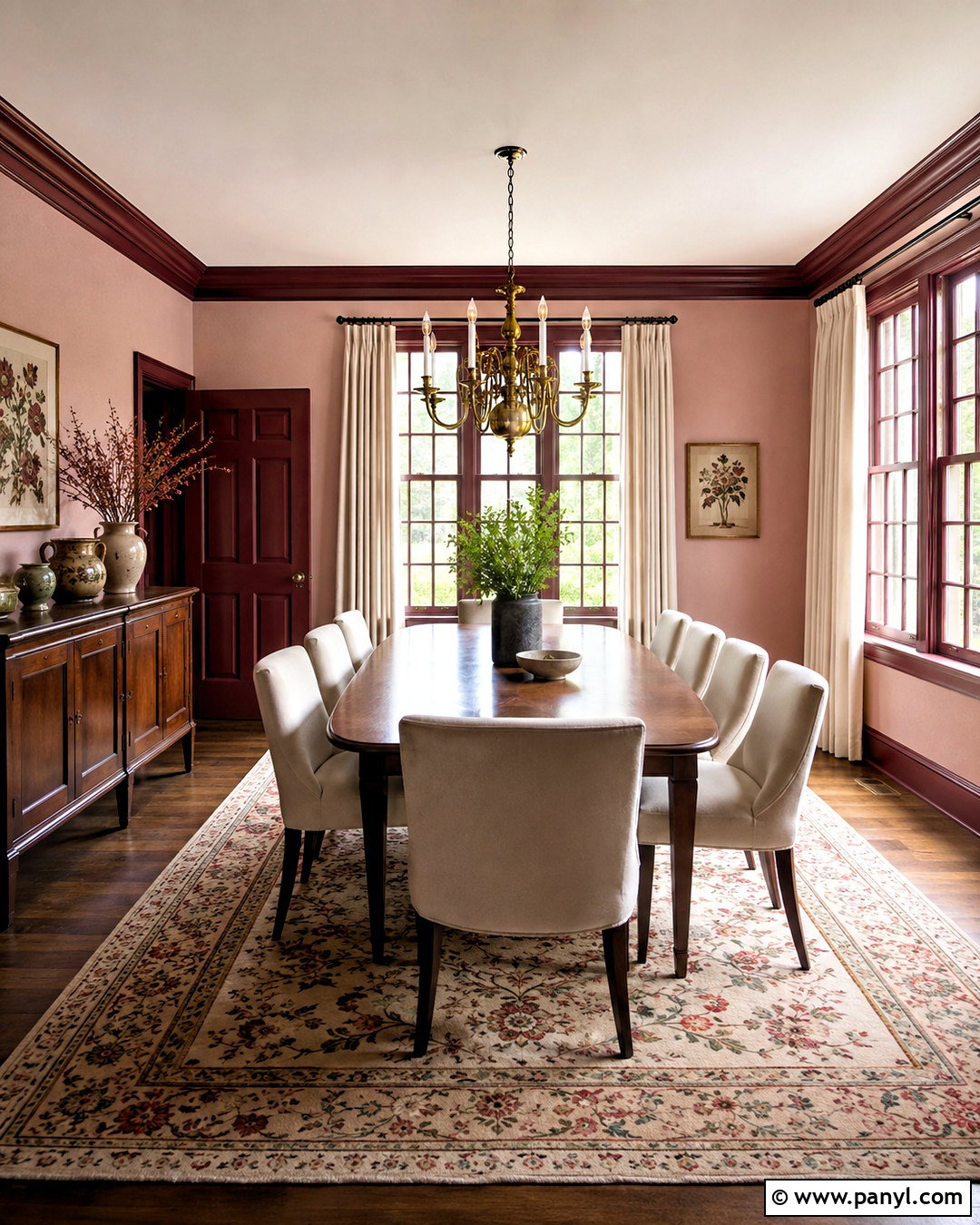
For a warmer and more expressive room, pair pale blush walls with deep burgundy trim. This combination works beautifully in a dining room where dramatic color can feel intimate rather than overpowering. Paint the baseboards, window casings, doors, and crown molding burgundy, then introduce a dark walnut dining table and cream upholstered chairs. A muted floral rug can connect rose, beige, and brown tones across the room. Use aged brass lighting and ivory curtains to create a polished finish. Keep accessories restrained, perhaps with ceramic vessels and simple botanical artwork. The pale walls provide softness, while the dark red trim adds depth, tradition, and a memorable architectural outline.
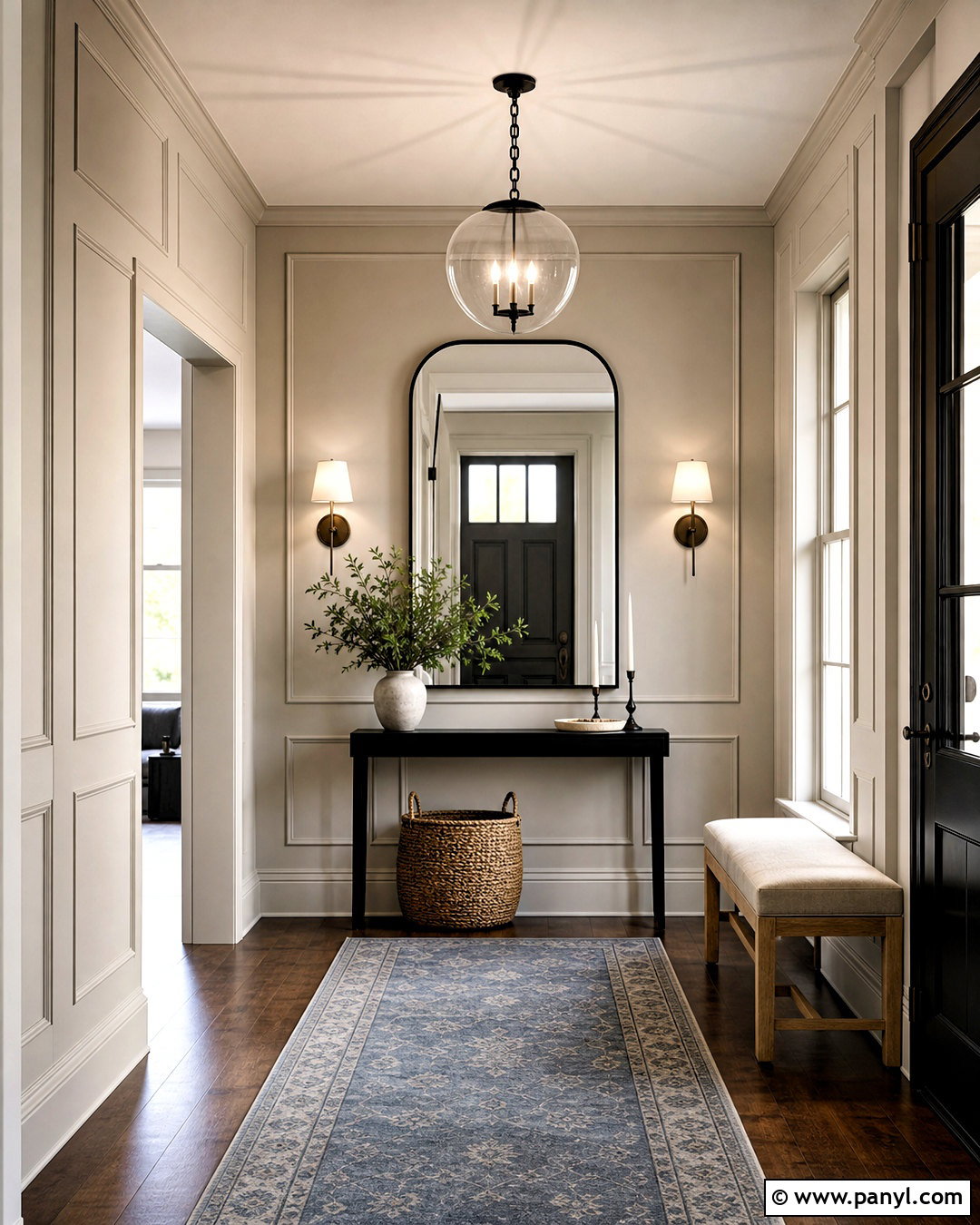
8. Forest Green Trim With Pale Gray Walls
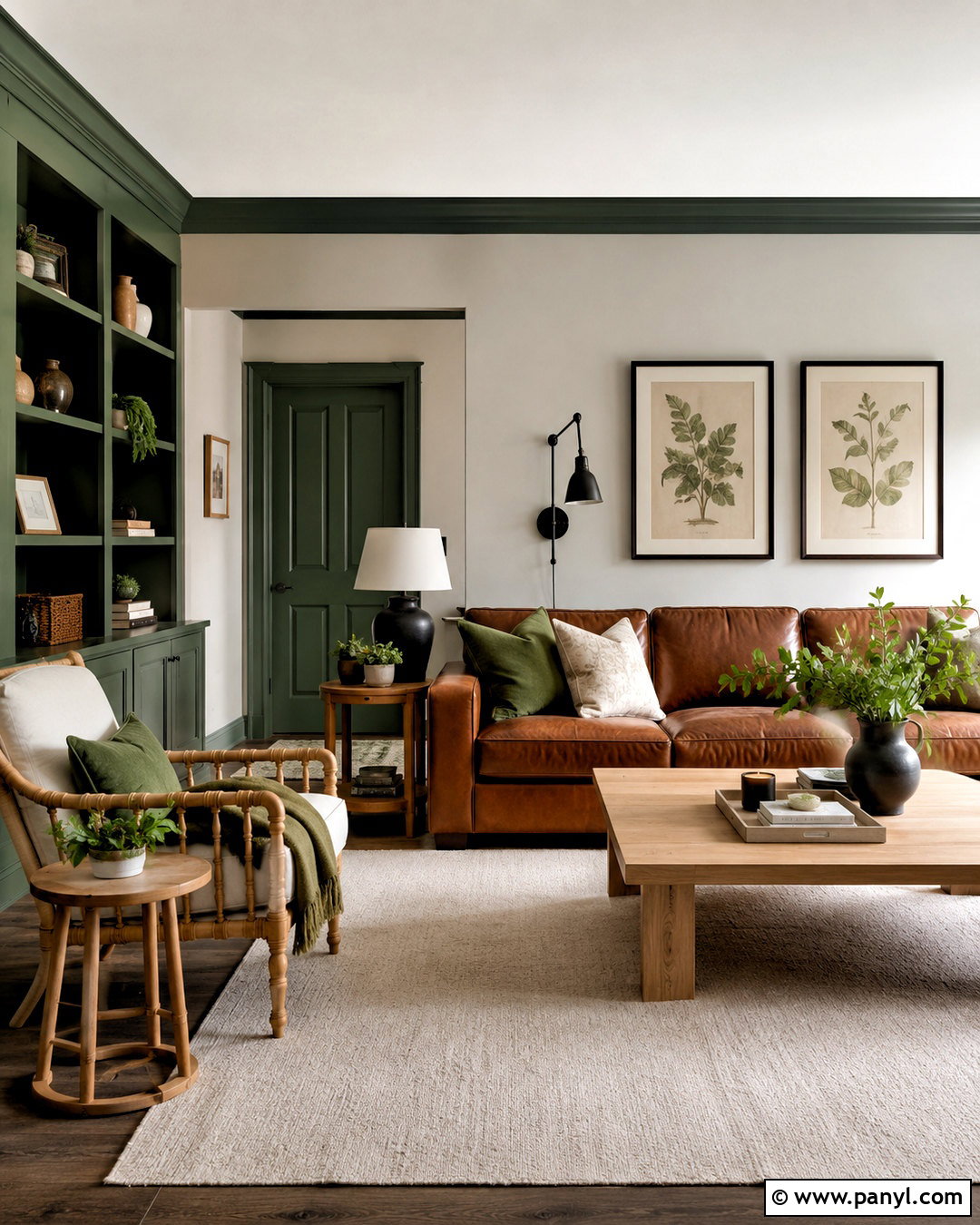
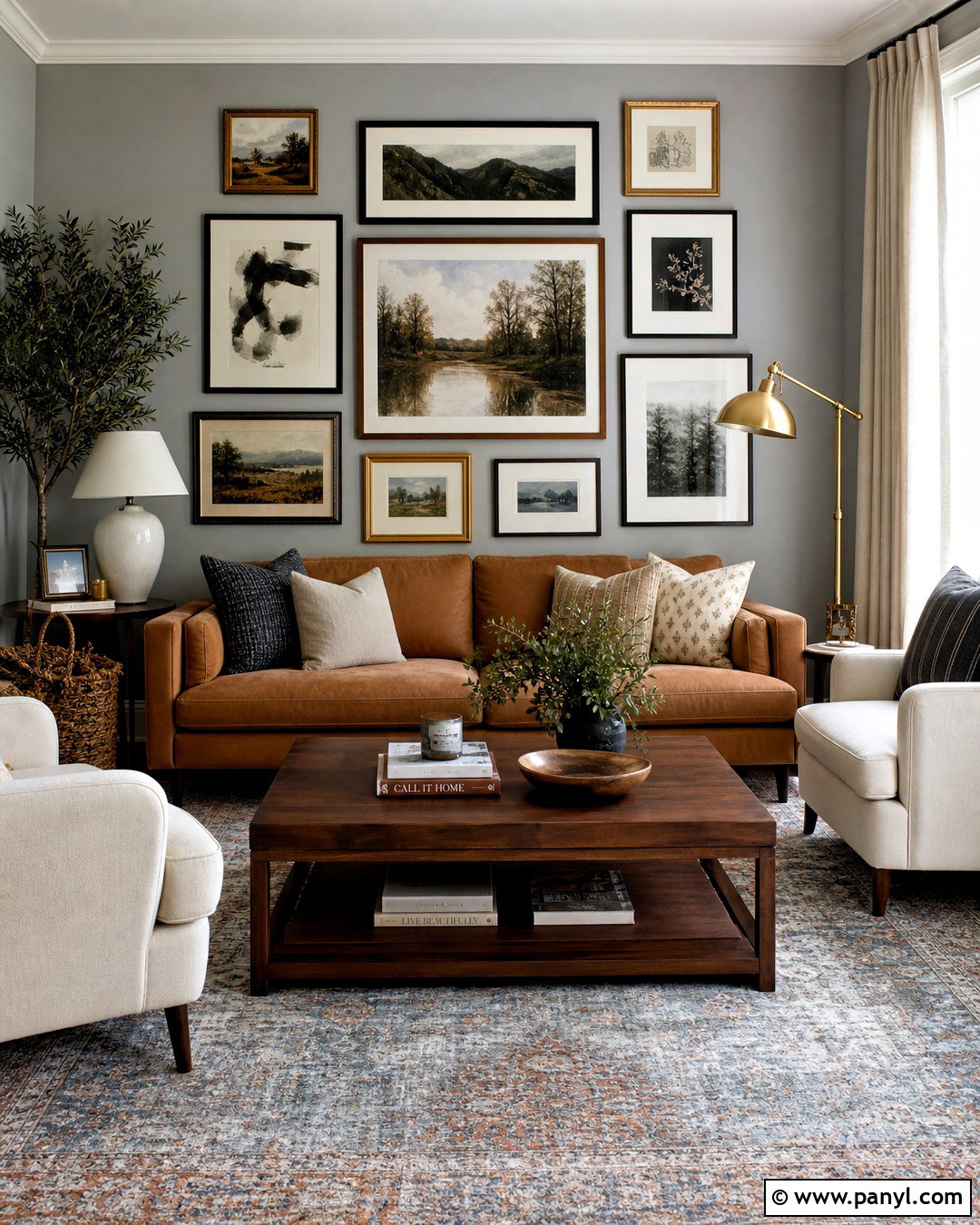
Pale gray walls gain natural warmth when framed by deep forest green trim. Design the room around a cognac leather sofa, light oak coffee table, and cream wool rug. Use forest green consistently on doors, window casings, baseboards, and built-in shelving to make the color feel architectural. Linen curtains in warm ivory soften the windows while leaving some of the green frames exposed. Add botanical prints, black metal lighting, and cushions in moss, tan, and cream. The ceiling should remain a clean warm white to keep the room open. This palette works particularly well in spaces overlooking trees because the dark green woodwork creates a subtle connection with the landscape.
9. Bronze Black Trim With Ivory Walls
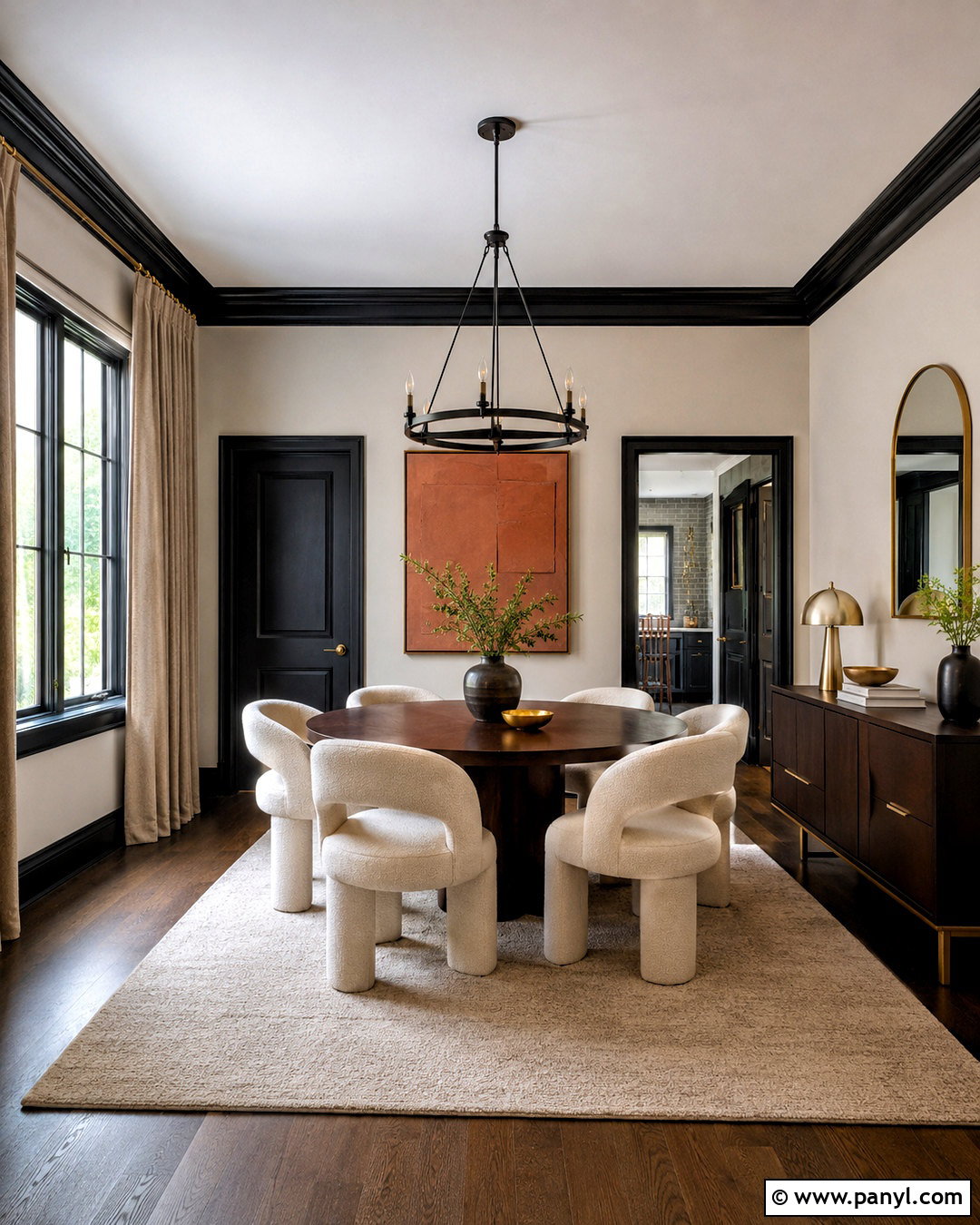
Bronze-black trim offers the drama of black with a subtle brown undertone that suits warm ivory walls. Use the pairing in an elegant dining room featuring a round walnut table, sculptural cream chairs, and a low-pile neutral rug. Paint the window casings, doors, baseboards, and crown molding in a satin bronze-black finish. Repeat that tone through a dark metal chandelier and slim cabinet hardware. Warm brass accents introduce a gentle glow, while flax linen curtains keep the room relaxed. A large abstract painting can incorporate ivory, brown, and muted terracotta. The finished design feels refined and current without relying on a stark monochrome palette.
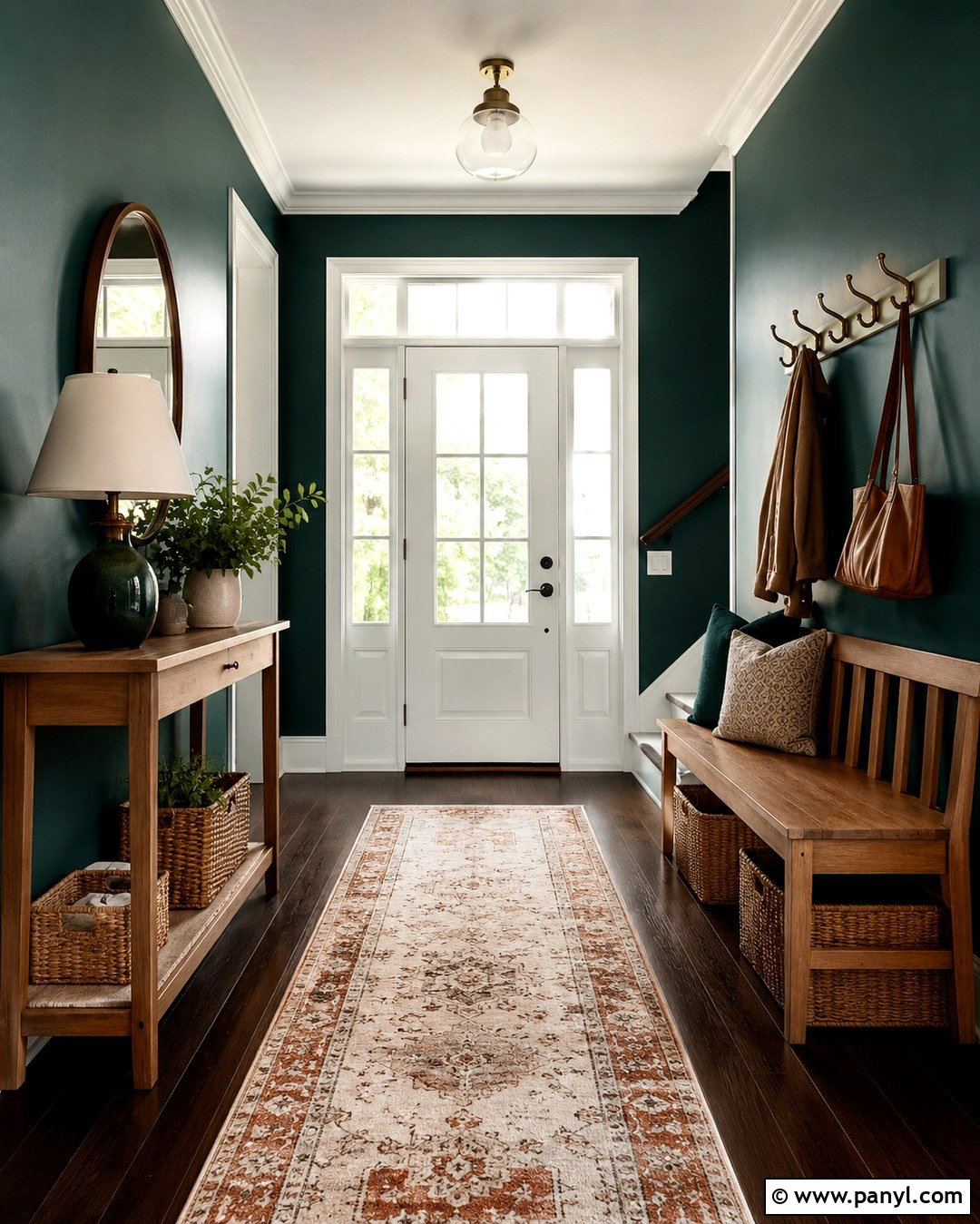
10. Dark Brown Trim With Beige Walls
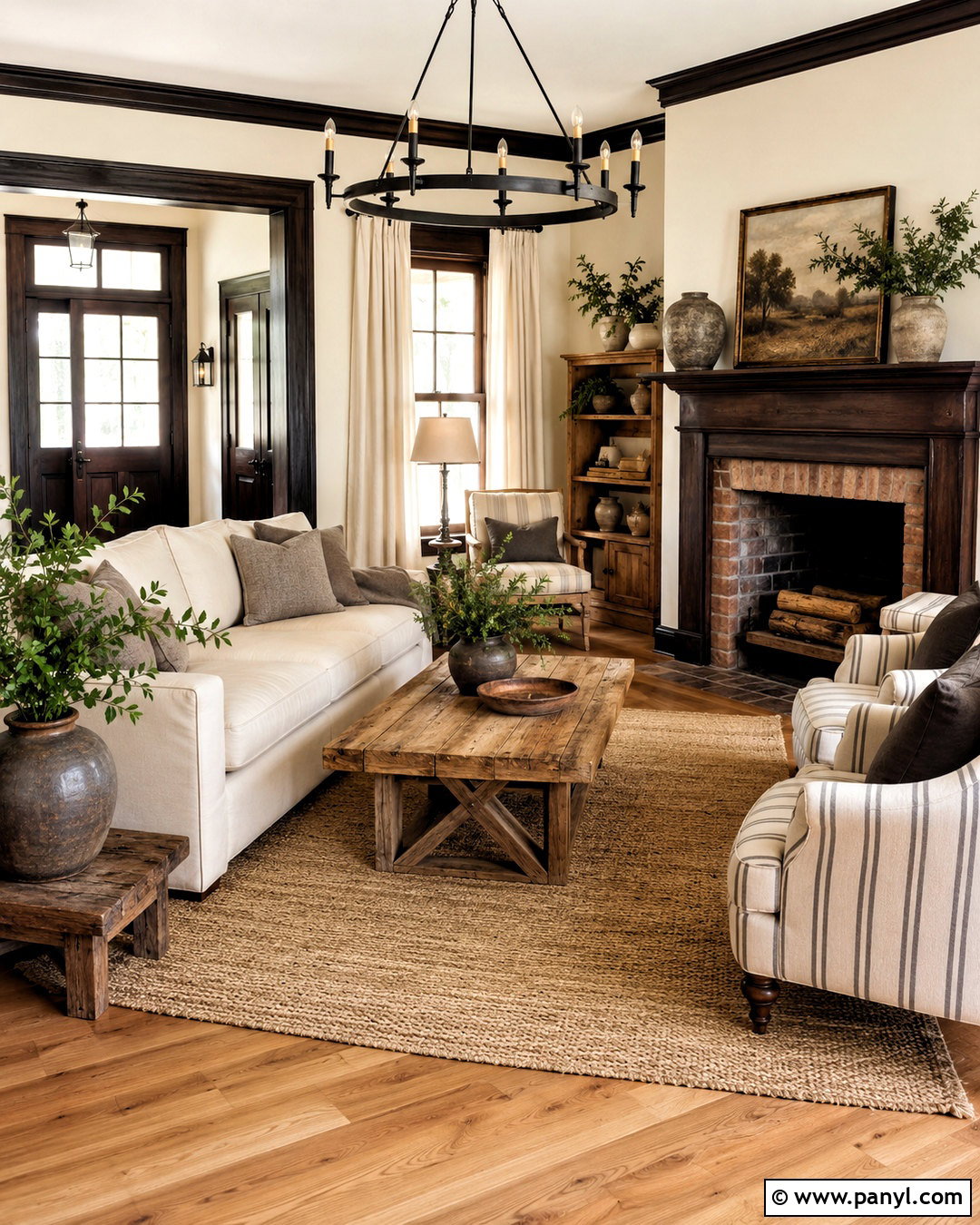
Beige walls and dark brown trim create a warm farmhouse living room when paired with simple, substantial furnishings. Choose a comfortable cream sofa, a reclaimed wood coffee table, and two striped armchairs in beige and brown. Paint the door frames, windows, baseboards, and fireplace mantel in a deep chocolate brown. Wide-plank oak flooring and a woven jute rug strengthen the rustic foundation. Use blackened iron lighting sparingly so it does not compete with the trim. Linen curtains, stoneware pottery, and muted green branches add softness. This room avoids overly distressed decorations, relying instead on honest materials, practical furniture, and a consistent earth-toned palette.
11. Dark Trim Entryway
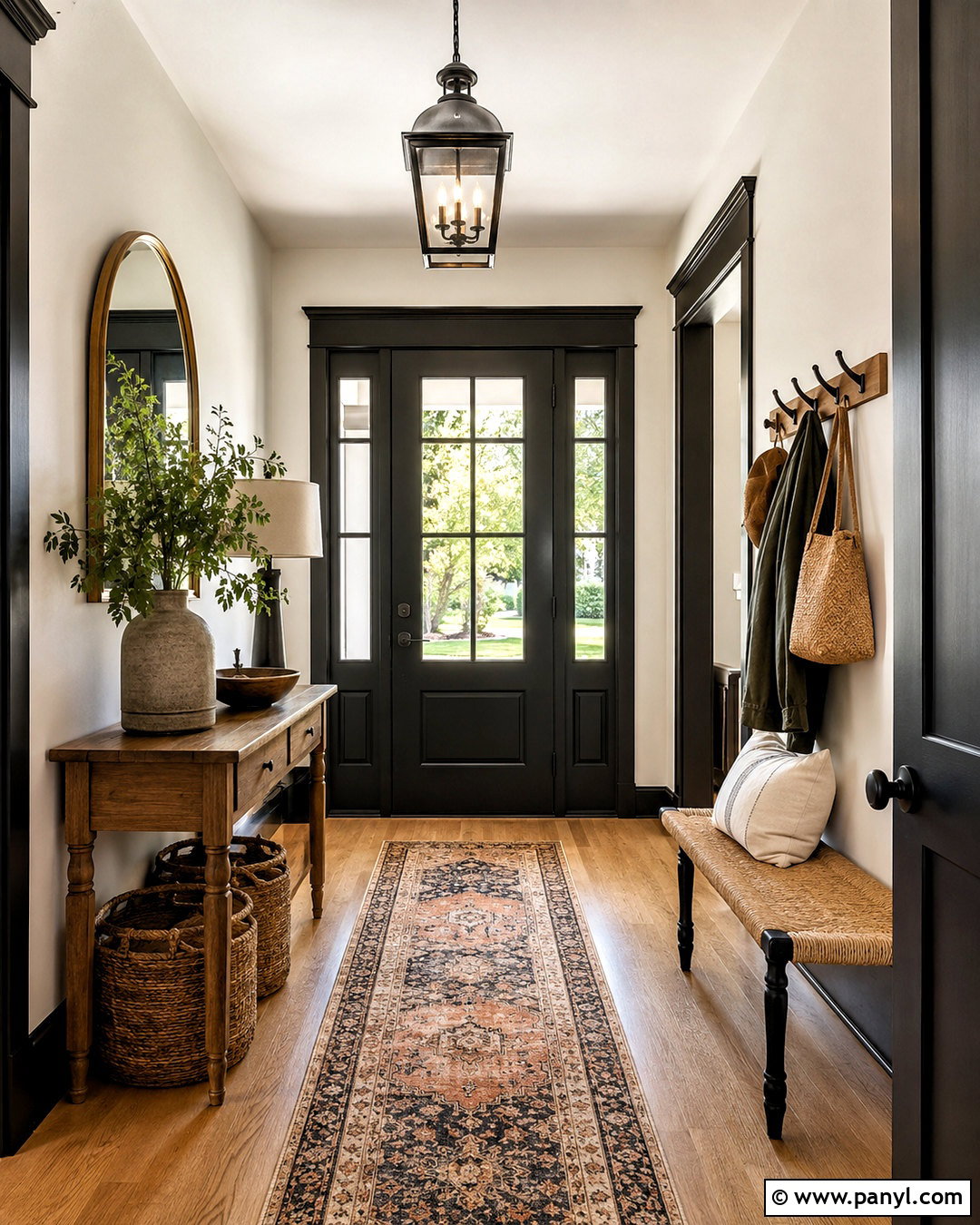
An entryway is an ideal place to introduce dark trim because the contrast immediately establishes the home’s character. Pair warm white walls with charcoal-black baseboards, door casings, and a matching interior side of the front door. Add a narrow natural oak console, a round brass mirror, and a washable vintage-style runner. A woven bench or small upholstered stool provides a practical place to remove shoes. Install a simple black lantern pendant to connect with the woodwork. Keep storage organized with closed baskets and wall hooks painted to match the trim. The result is a welcoming, hardworking entrance that feels polished while coordinating naturally with nearby rooms.
12. Dark Trim Hallway
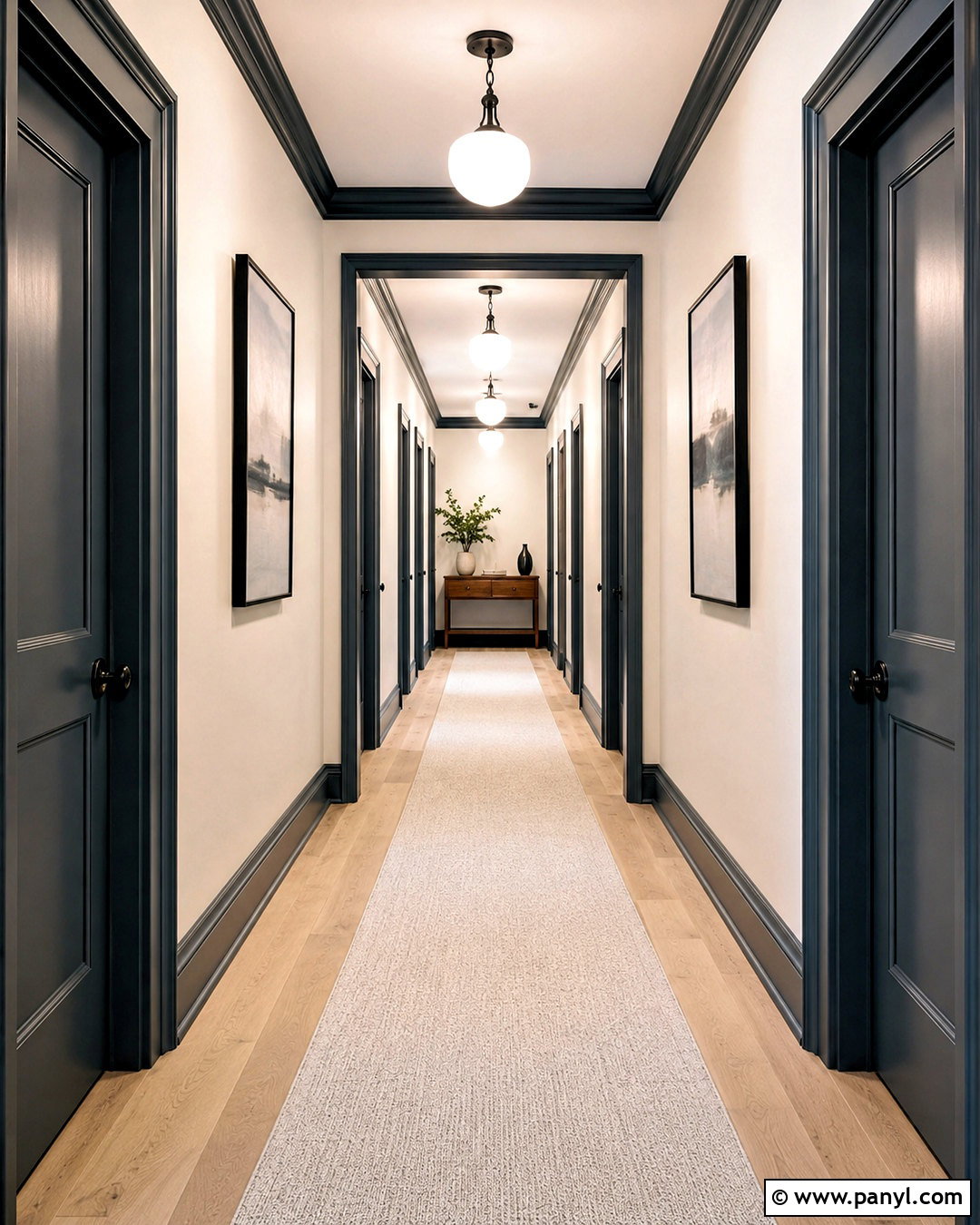
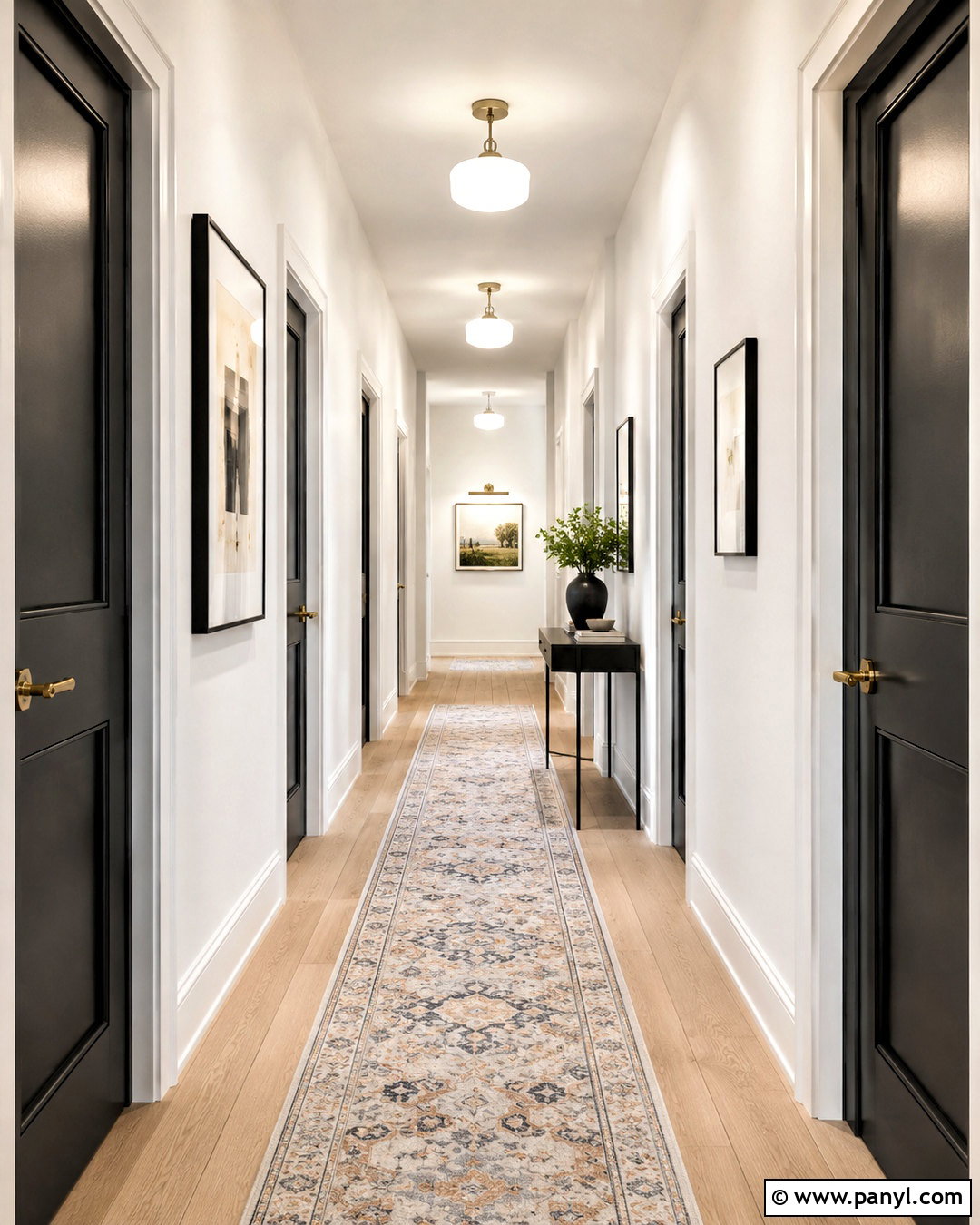
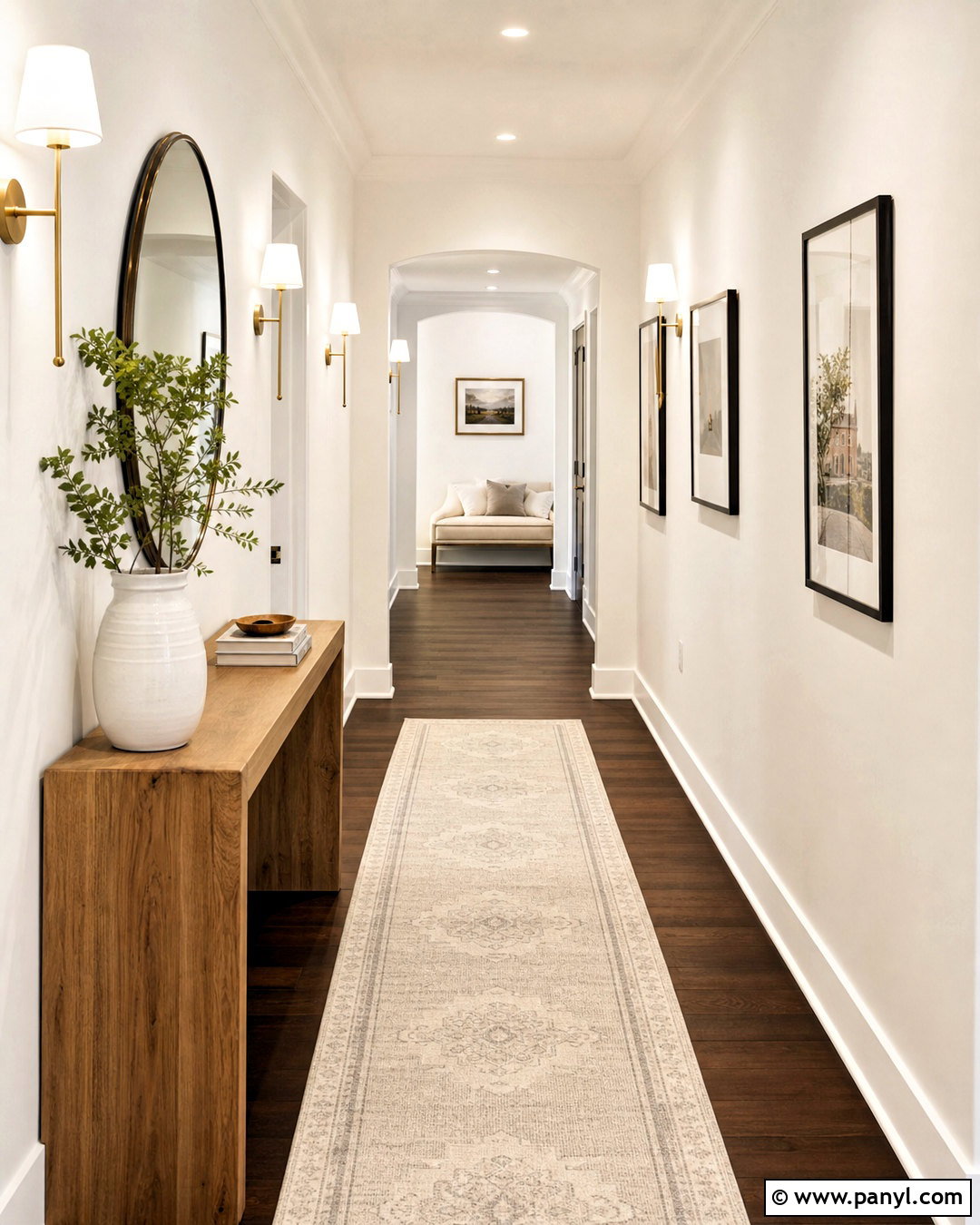
Long hallways can feel more structured when dark trim creates a clear visual rhythm. Use soft white walls with charcoal baseboards and matching door casings along both sides. Paint the doors charcoal as well if the hallway receives ample natural or overhead light. A pale oak floor or light neutral runner prevents the narrow passage from feeling enclosed. Hang evenly spaced artwork in thin black frames and install simple opal glass ceiling lights for consistent brightness. Keep the walls mostly open so the architectural contrast remains the focus. At the end of the hallway, place a small wood console or oversized artwork to create a destination and improve the sense of depth.
13. Dark Trim Kitchen
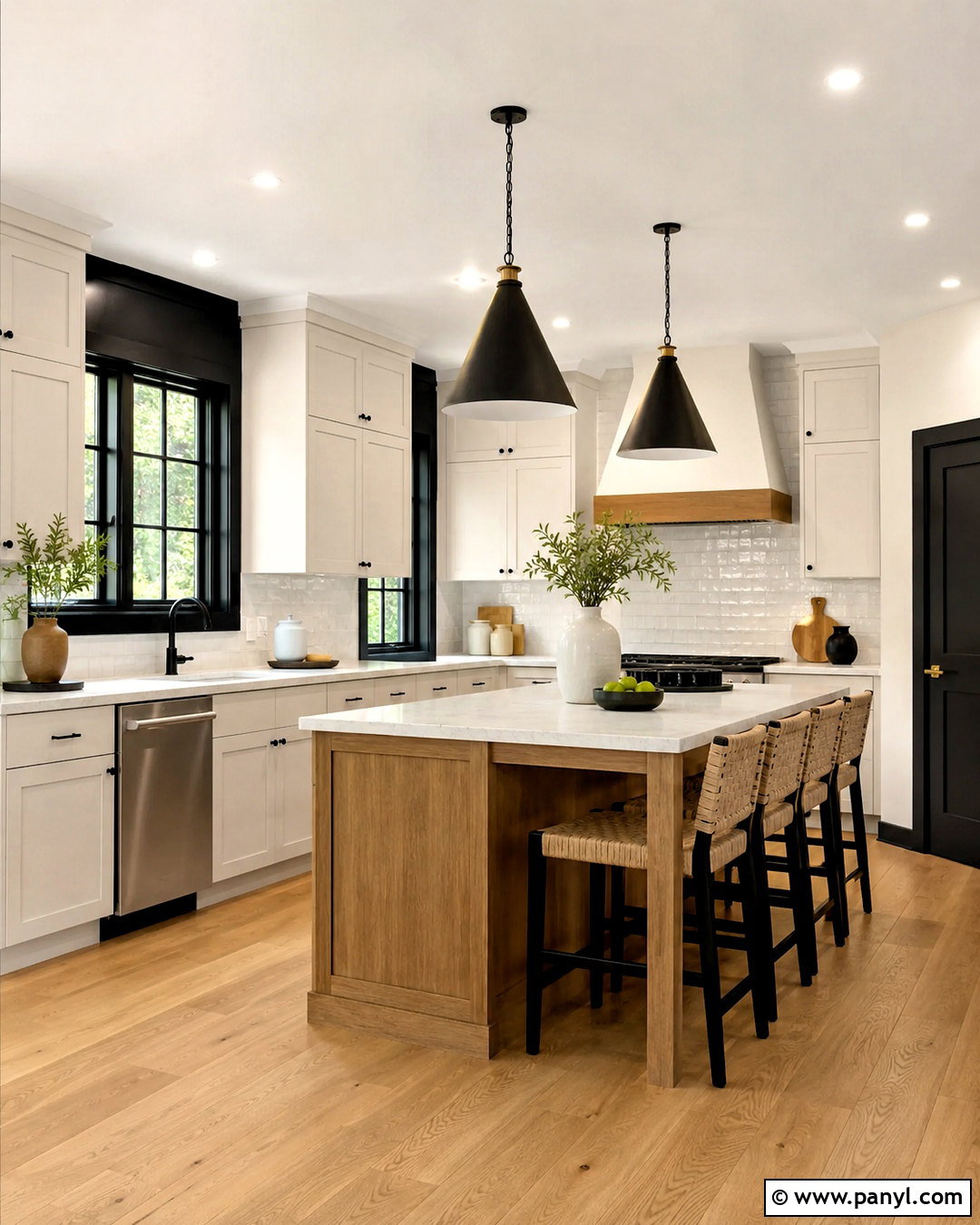
A bright kitchen can support black trim without losing its open appearance. Start with warm white walls, cream shaker cabinets, and pale quartz countertops. Apply matte black paint to the window casings, baseboards, pantry door, and openings leading into adjacent rooms. Use medium oak flooring and a matching island to warm the monochrome surfaces. Black pendant lights and cabinet pulls should echo the trim in slim, controlled amounts. Add counter stools with woven seats and a backsplash of softly varied off-white tile. A few wood cutting boards and ceramic containers complete the room. This balanced approach makes the dark trim feel connected to the kitchen rather than added afterward.
14. Dark Trim Dining Room
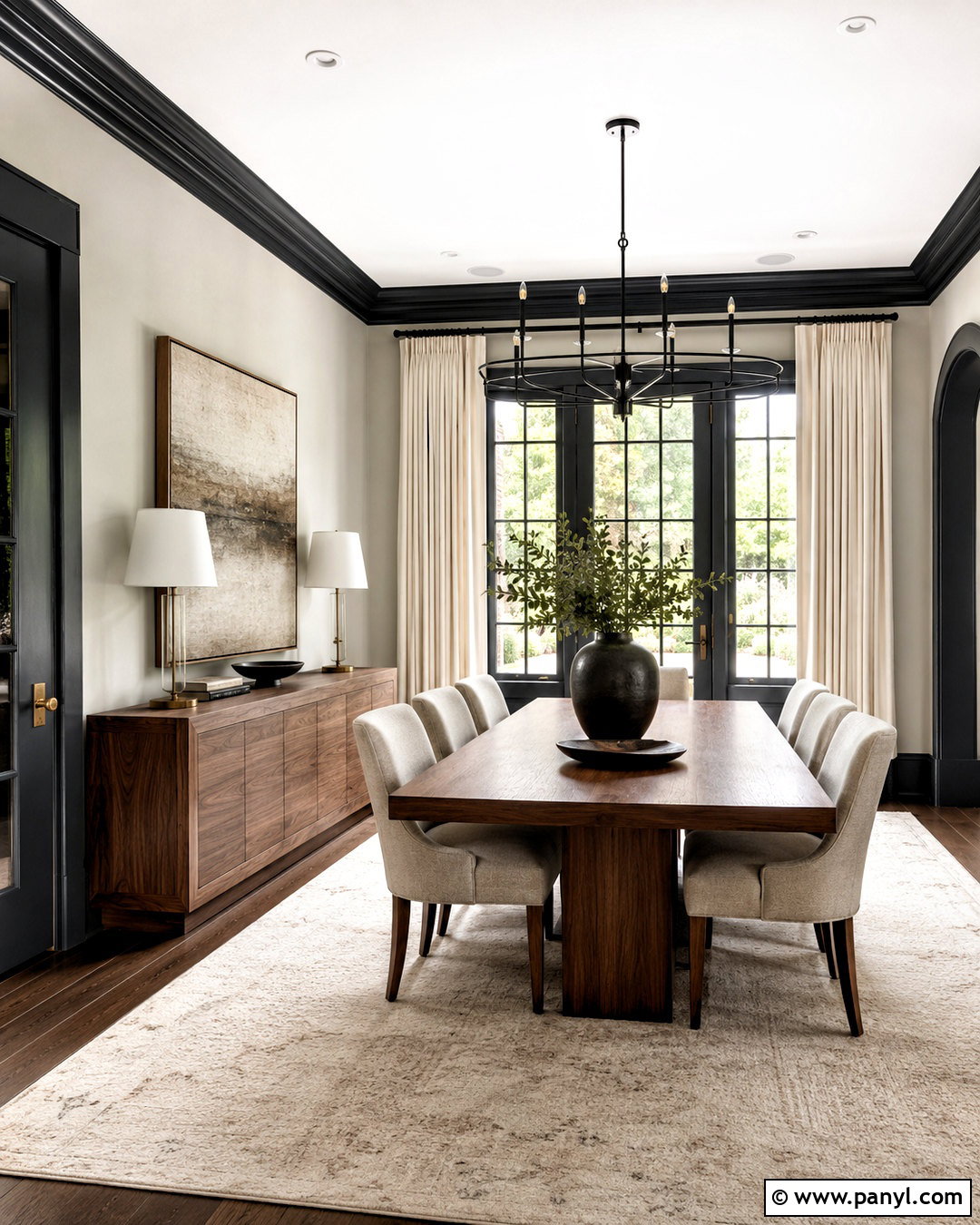
Create a composed dining room with light greige walls and deep charcoal trim across the baseboards, windows, doors, and crown molding. Center a warm walnut table beneath a large black metal chandelier, then surround it with upholstered chairs in oatmeal fabric. A softly patterned rug can introduce beige, gray, and muted green while protecting the floor. Hang full-length ivory curtains outside the window casings so the charcoal frames remain visible. A low walnut sideboard provides storage and repeats the table finish. Finish with oversized art and simple ceramic pieces. The combination feels formal enough for gatherings but comfortable enough for everyday meals, with every element supporting the architectural contrast.
15. Dark Trim Primary Bedroom
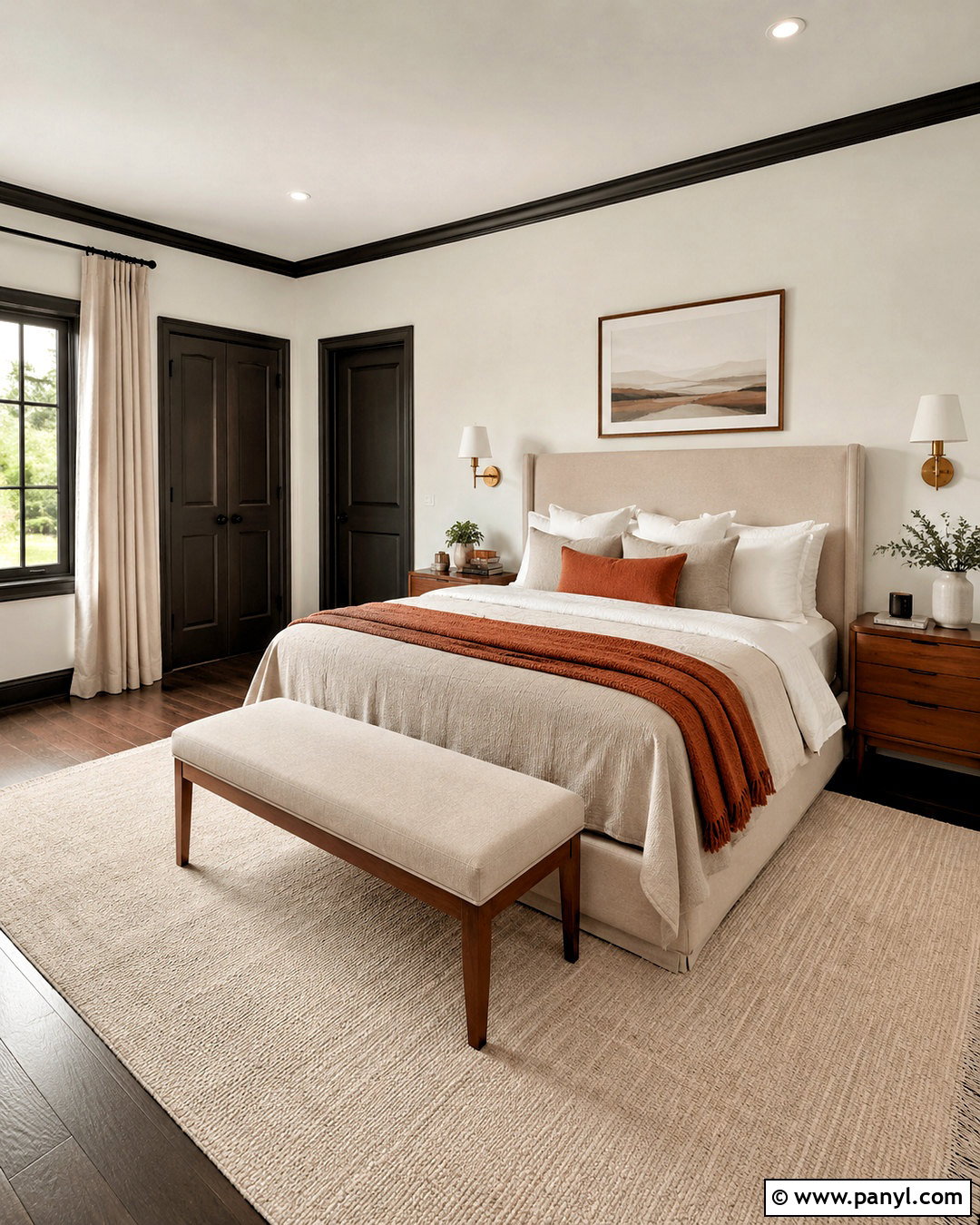
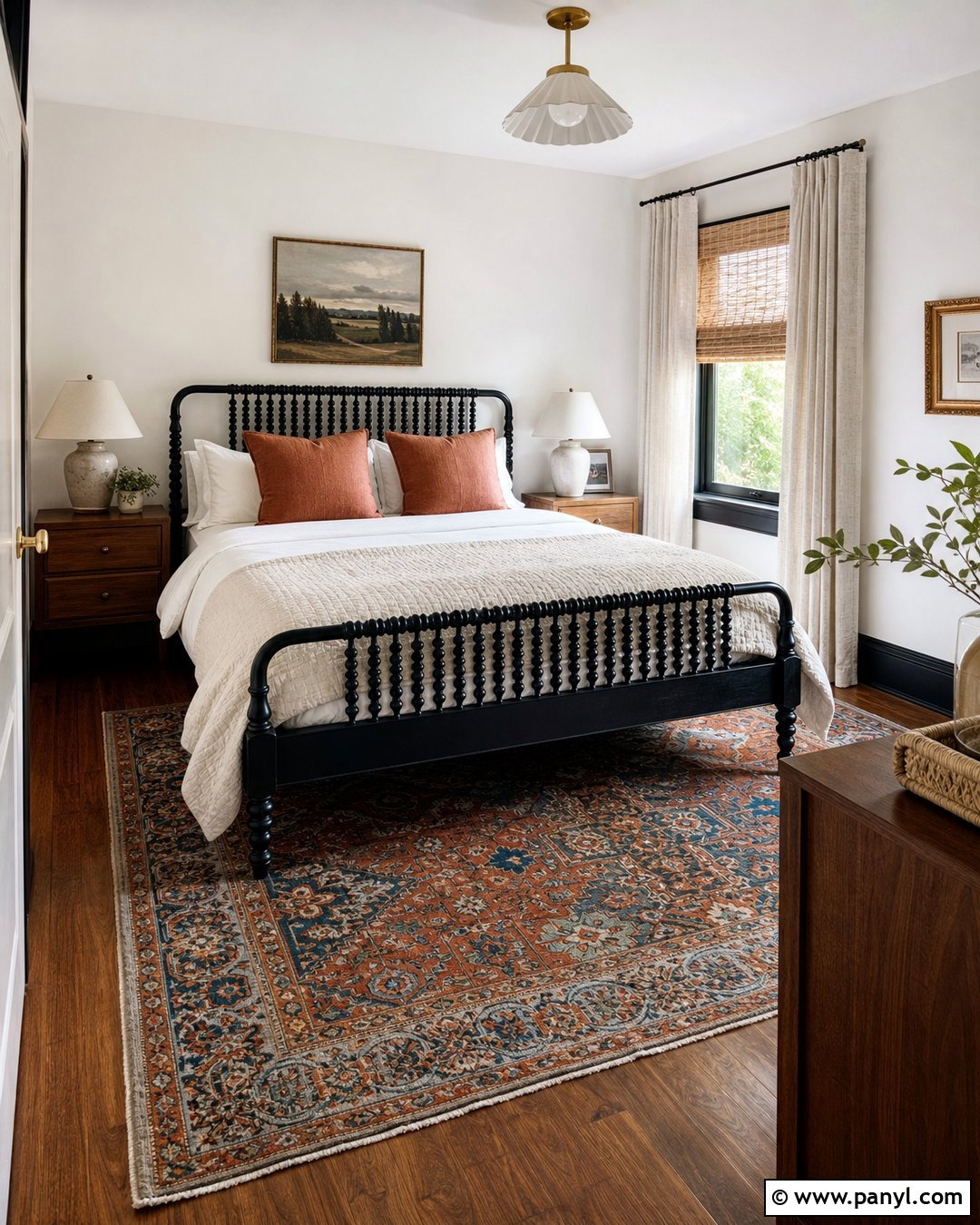
Warm white walls and espresso trim can give a primary bedroom quiet depth without making it feel dark. Paint the baseboards, windows, closet doors, and bedroom door in a satin espresso finish. Choose a tall linen headboard in warm beige, then layer white bedding with taupe, rust, and chocolate accents. Walnut nightstands reinforce the trim, while an ivory rug brightens dark or medium wood flooring. Install aged brass sconces to free the bedside surfaces and introduce gentle contrast. Floor-length flax curtains add softness without concealing the window frames. Keep artwork simple and generously scaled. The result is a restful bedroom with strong lines, tactile materials, and a cohesive neutral palette.
16. Dark Trim Small Bedroom
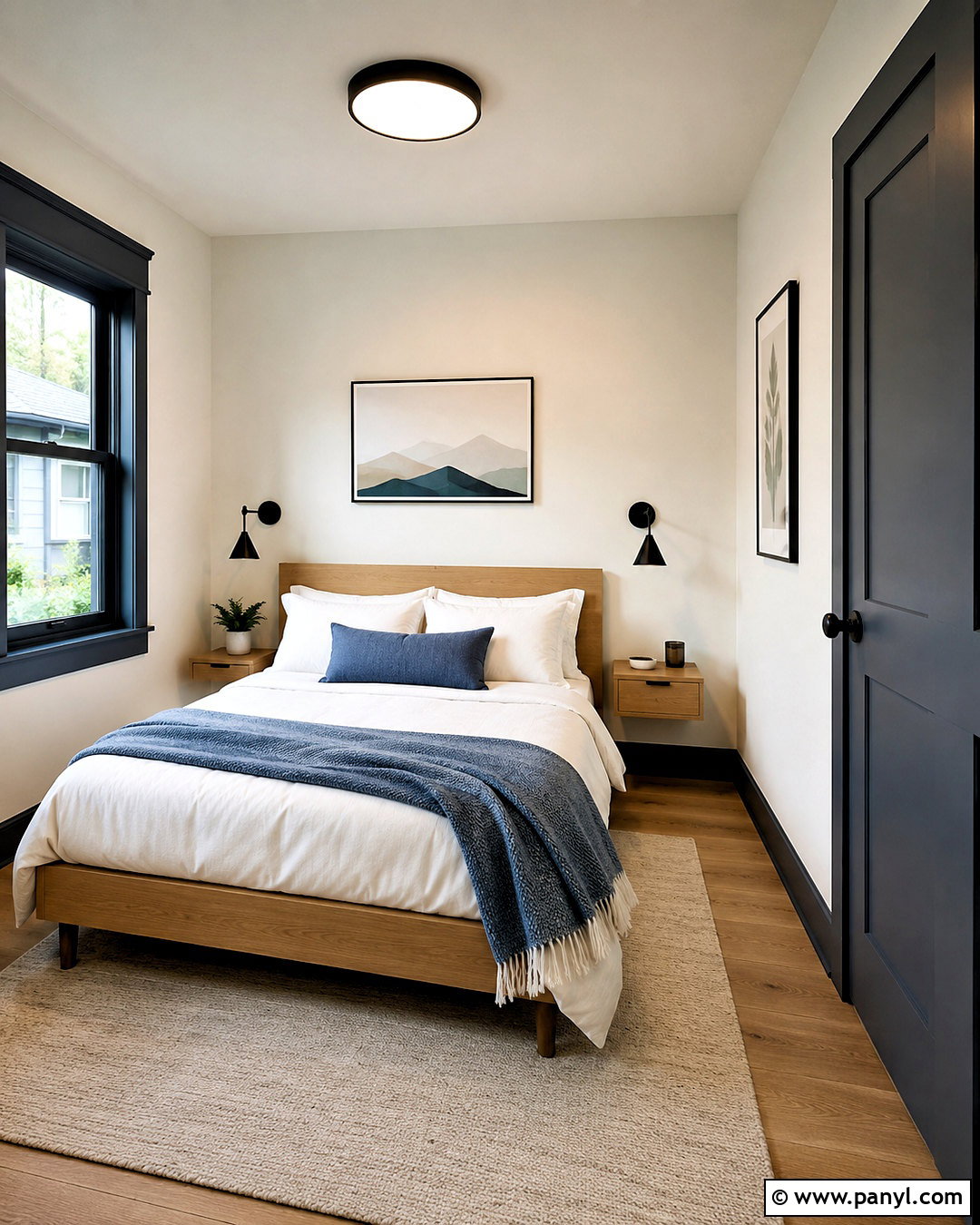
In a small bedroom, concentrated dark trim can define the room while the walls preserve brightness. Use creamy white walls with soft charcoal baseboards, a matching door, and slim window casings. Avoid heavy crown molding, which can create another strong horizontal boundary. Place a compact light oak bed against the largest uninterrupted wall and use floating nightstands to save floor space. White bedding, a pale rug, and one muted blue throw maintain an airy feeling. Choose a simple flush-mount ceiling light and wall-mounted reading lamps. Keeping the furniture low and the palette controlled allows the charcoal details to sharpen the architecture without visually crowding the limited square footage.
17. Dark Trim Nursery
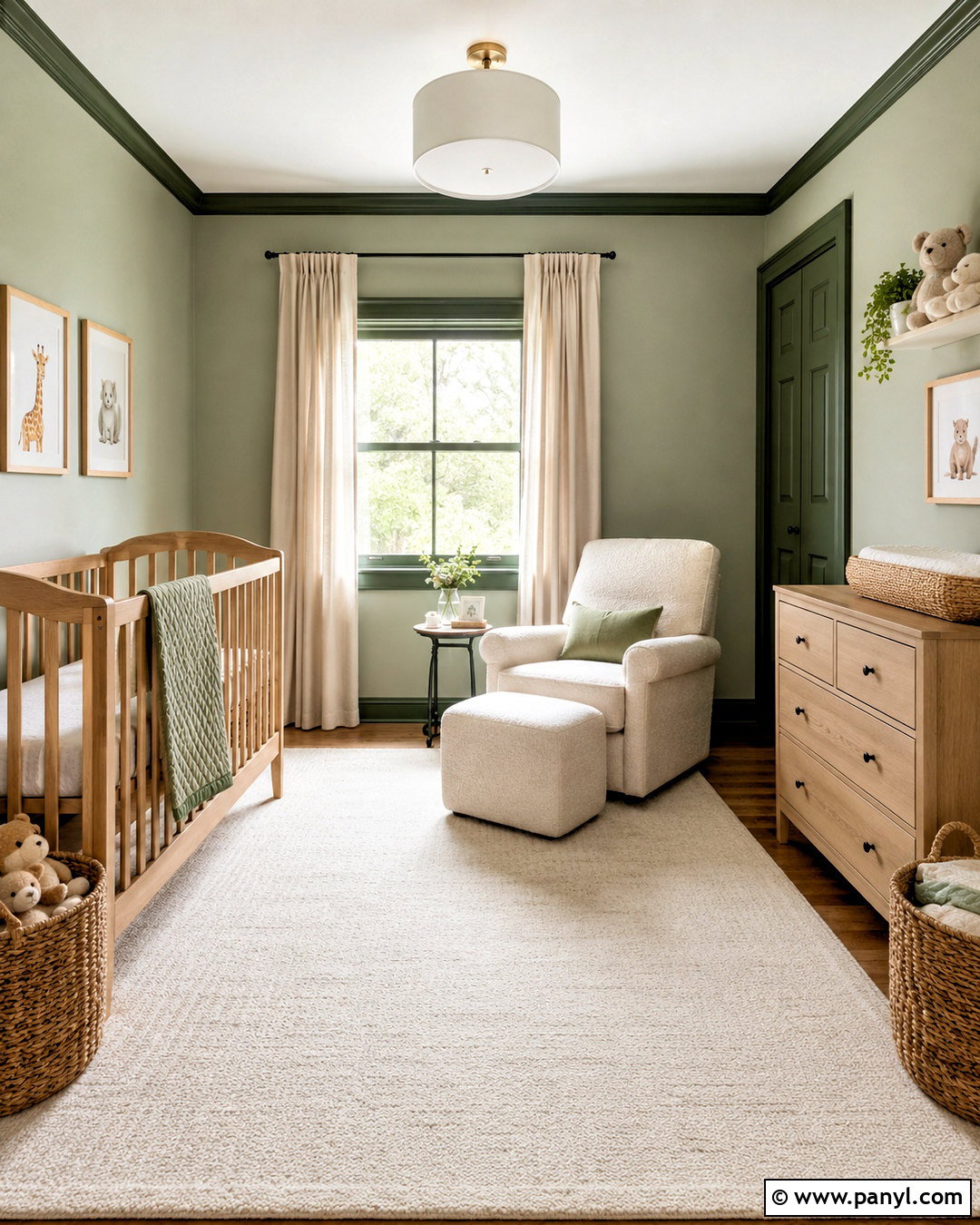
A nursery can use dark trim while still feeling gentle and cheerful. Pair light sage walls with deep green baseboards, window casings, and a matching closet door. Choose a natural wood crib, a cream upholstered glider, and a washable ivory rug for warmth and comfort. Install linen curtains with safe cordless hardware and keep them outside the dark window frame. A pale oak dresser can double as an organized changing station. Add soft animal artwork, woven storage baskets, and a simple white ceiling light. Avoid filling every surface with decoration. The darker green lines ground the pale room, while natural materials and soft textiles create a calm, adaptable space that can mature with the child.
18. Dark Trim Home Office
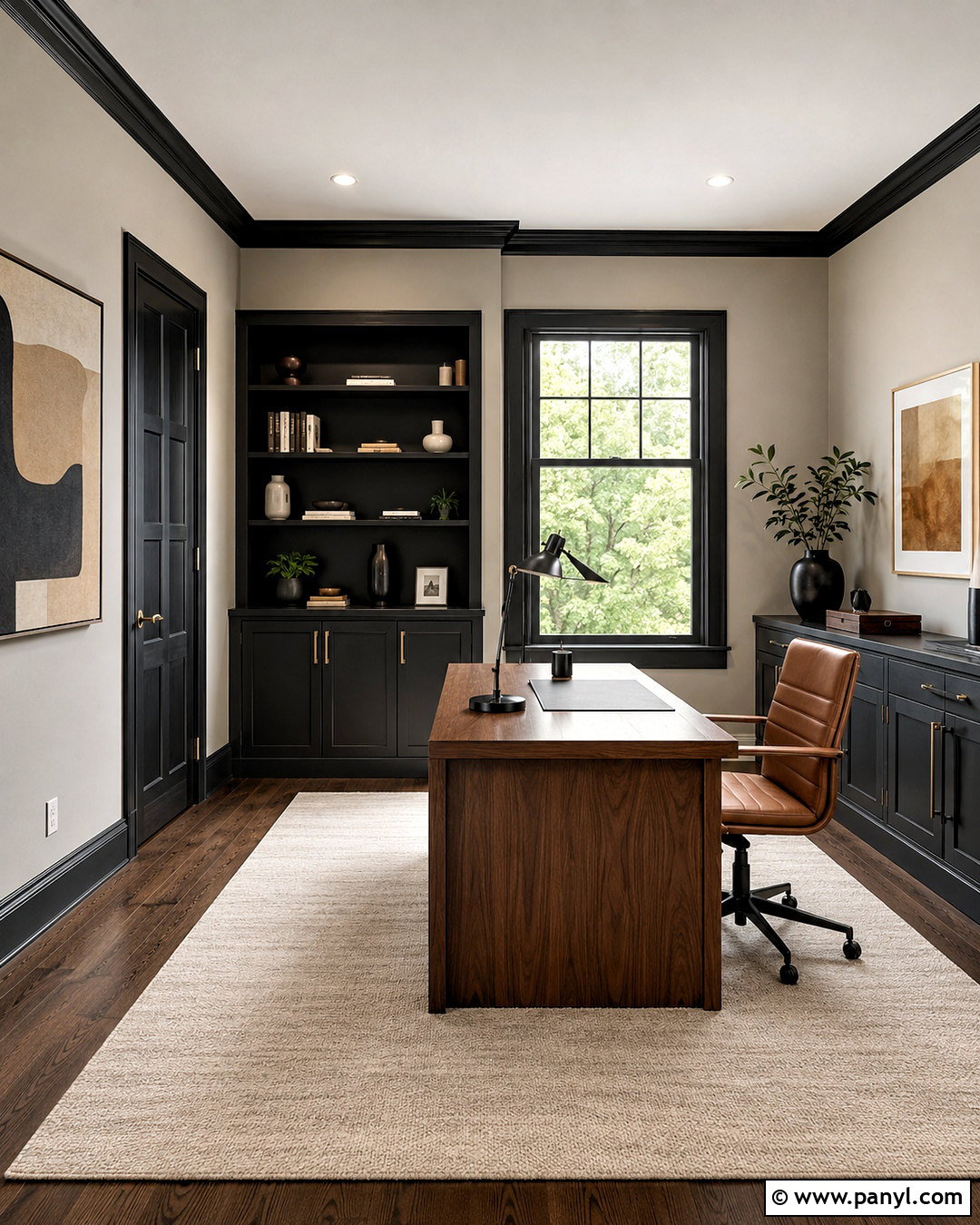
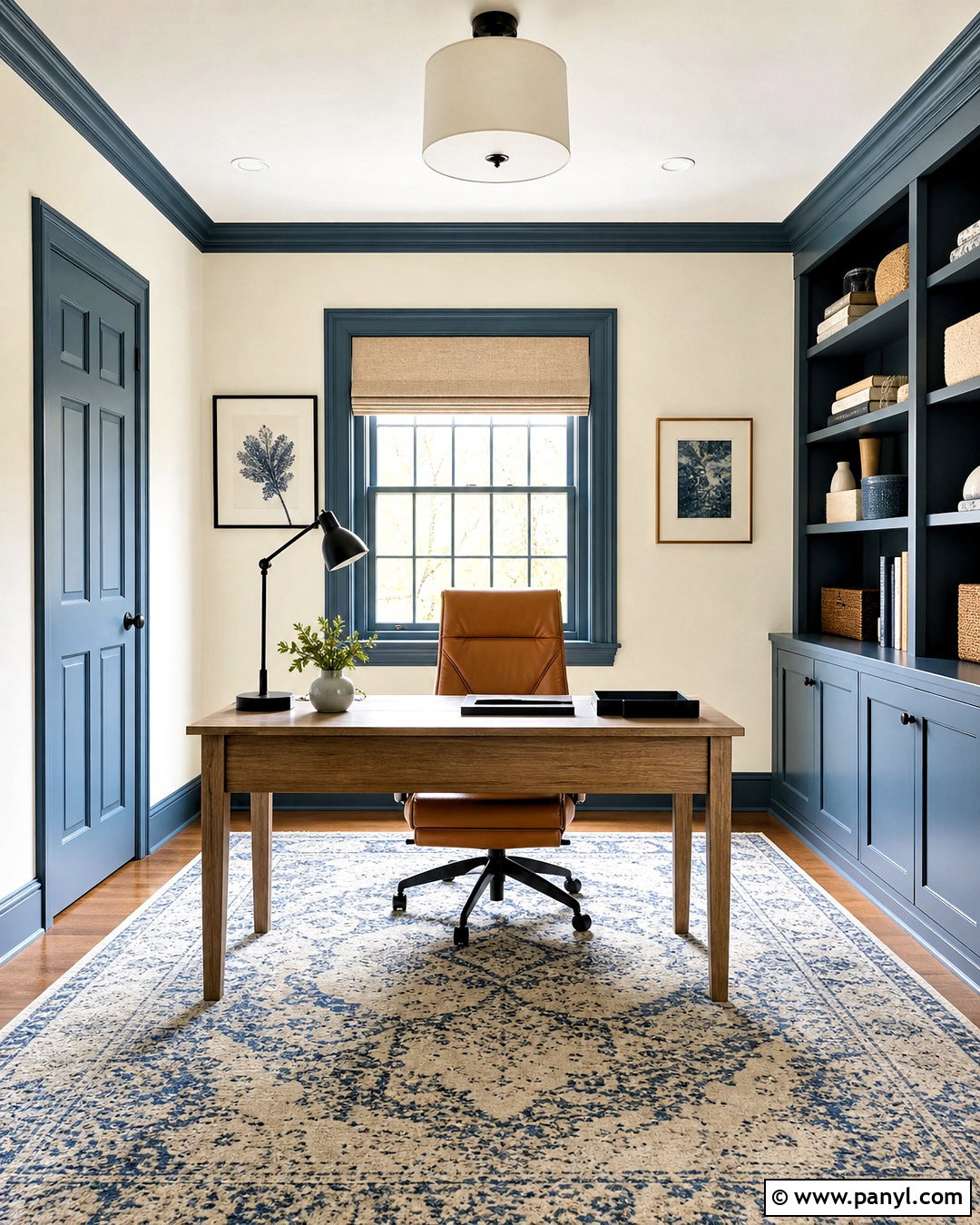
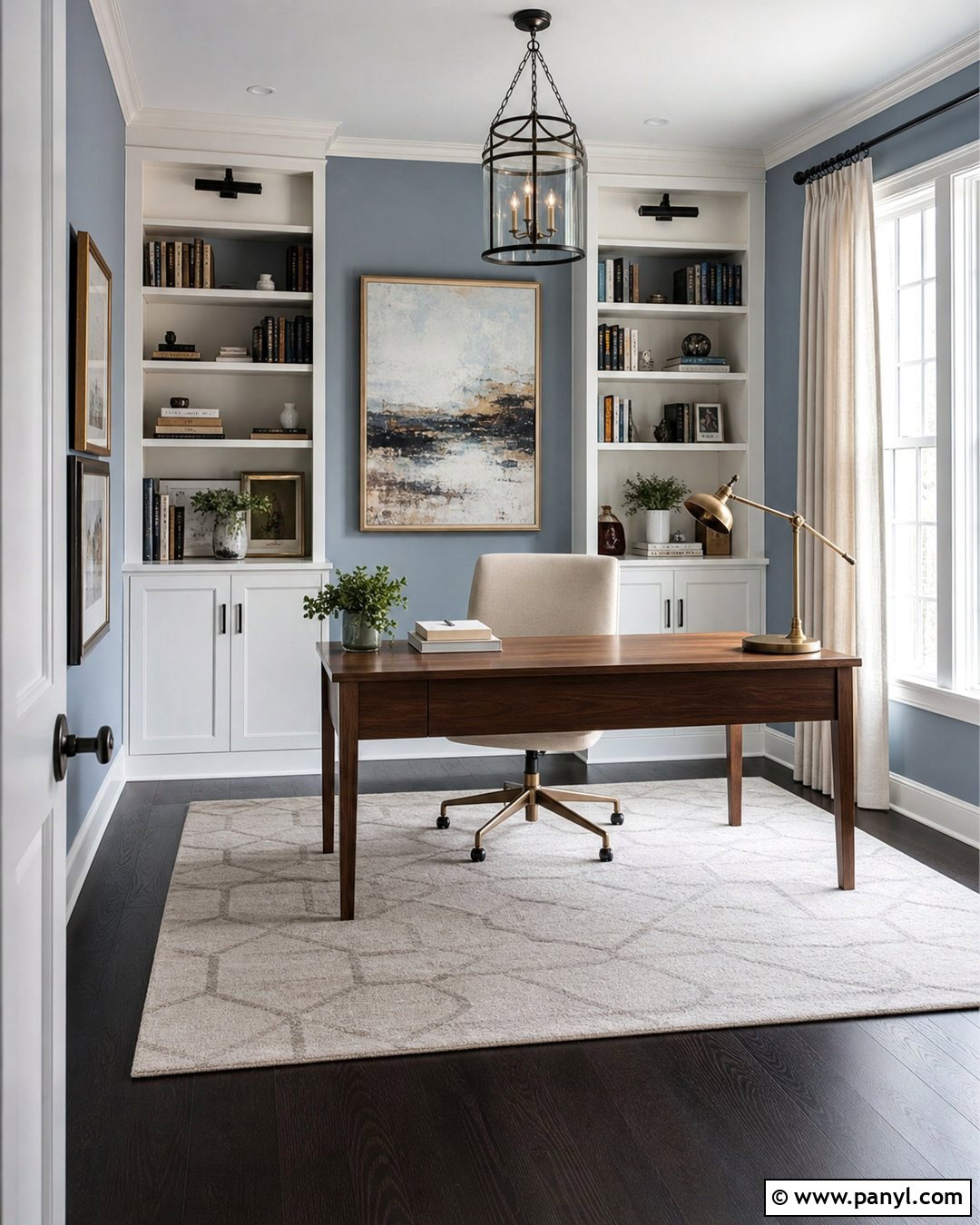
Give a home office clear definition with pale greige walls and near-black charcoal trim. Paint the baseboards, window casings, door, and built-in bookcase in the same dark shade. Position a walnut desk near the window to benefit from daylight without blocking the architectural frame. Add a supportive tan leather chair, a cream flat-weave rug, and closed storage for visual order. A black task lamp and bronze cabinet hardware subtly repeat the trim. Use artwork with warm neutral tones to keep the walls from appearing empty. The resulting office feels focused and professional, yet the wood furniture and soft textiles prevent the high-contrast palette from becoming severe or corporate.
19. Dark Trim Bathroom
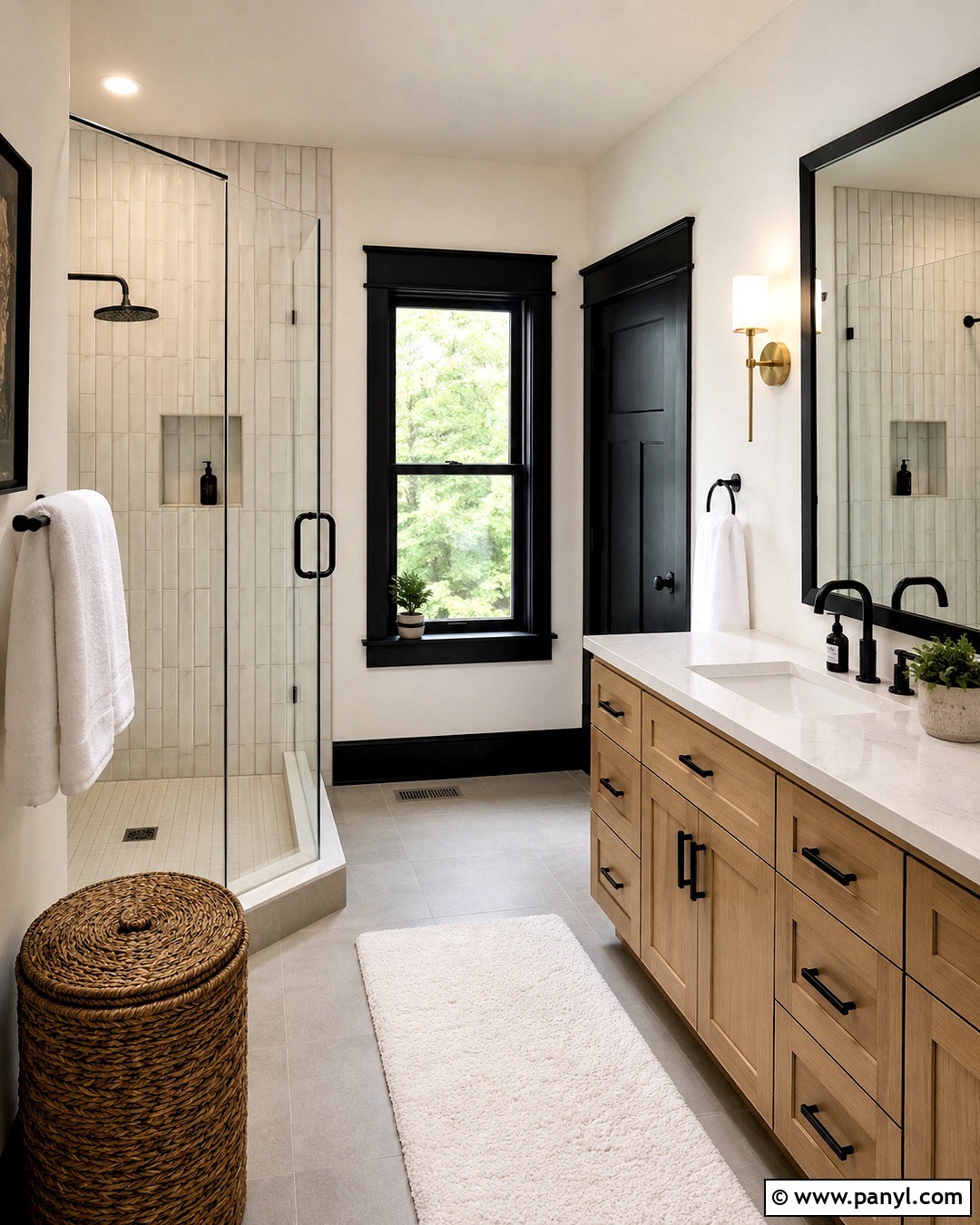
Soft white walls and black trim create a fresh bathroom when balanced with warm materials and practical finishes. Use moisture-resistant satin paint on the window casing, door, baseboards, and mirror frame. Combine it with a light oak vanity, white quartz counter, and off-white vertical tile around the shower. Matte black plumbing fixtures connect naturally with the trim, while a brushed brass sconce introduces warmth. Choose pale gray floor tile with subtle movement rather than a busy pattern. White towels, a woven hamper, and one small plant complete the room. This coordinated design keeps the bathroom bright and clean while allowing its strongest architectural and functional elements to form a consistent dark outline.
20. Dark Trim Powder Room
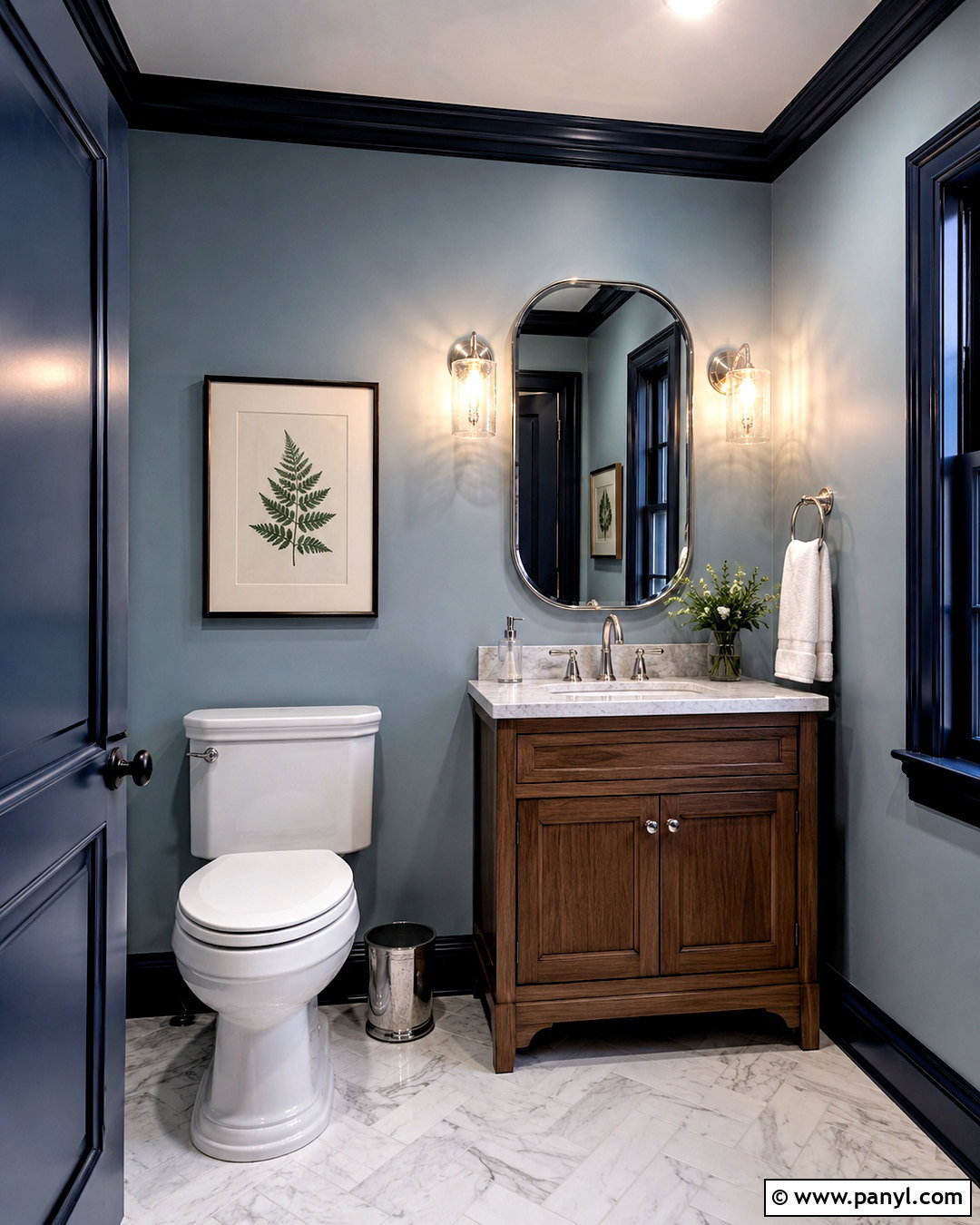
A powder room offers enough separation to try a more distinctive dark-trim palette. Pair pale dusty blue walls with navy baseboards, crown molding, door, and window casing. Install a compact walnut vanity with a white stone top and polished nickel faucet. A rounded mirror softens the strong painted edges, while two simple glass sconces provide clear, even illumination. Use small marble-look floor tiles to keep the room bright and subtly traditional. White hand towels and one framed botanical print are sufficient decoration. Because the room is small, limit the palette to blue, white, walnut, and metal. The coordinated colors make the compact space feel intentional rather than visually crowded.
21. Dark Trim Laundry Room
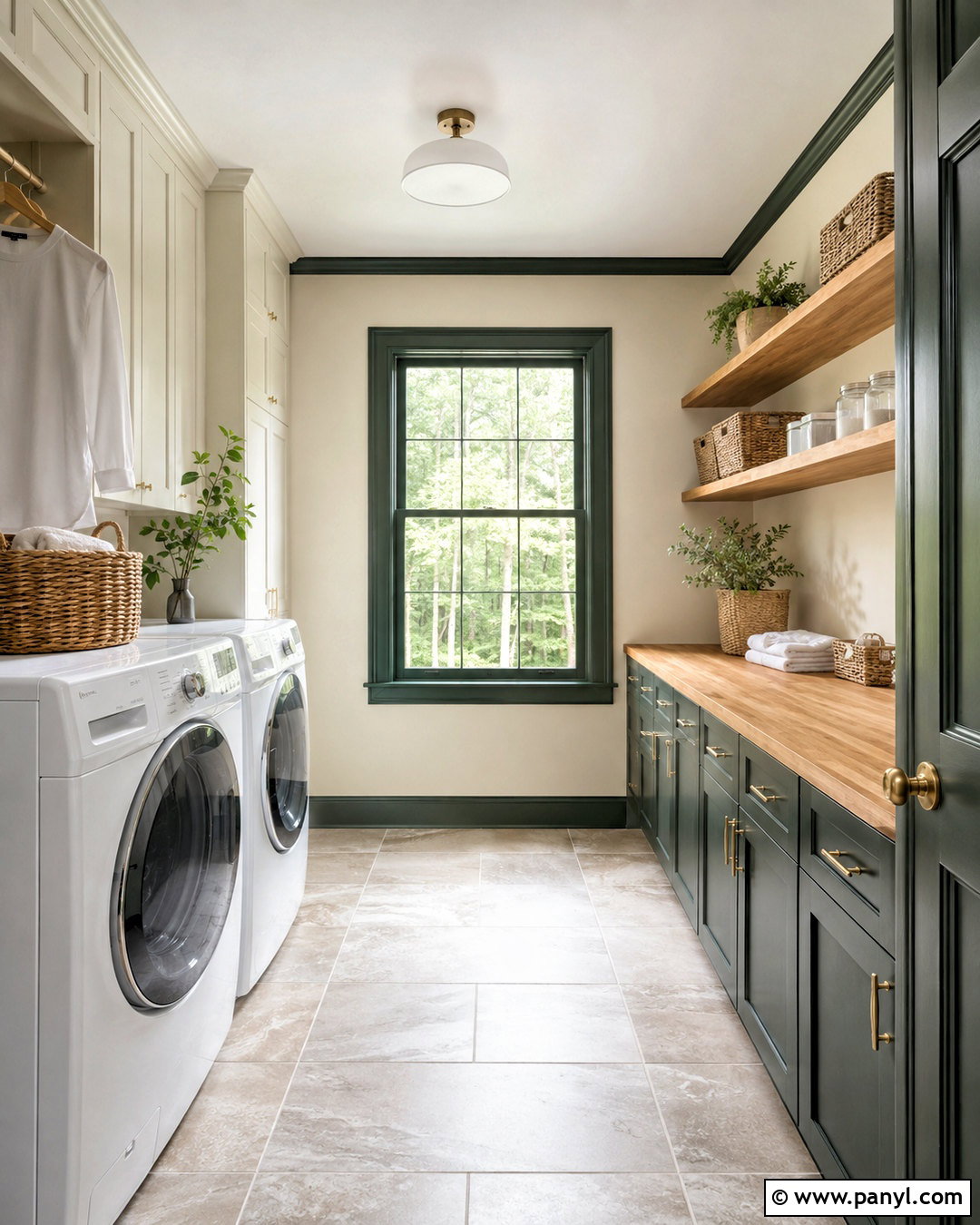
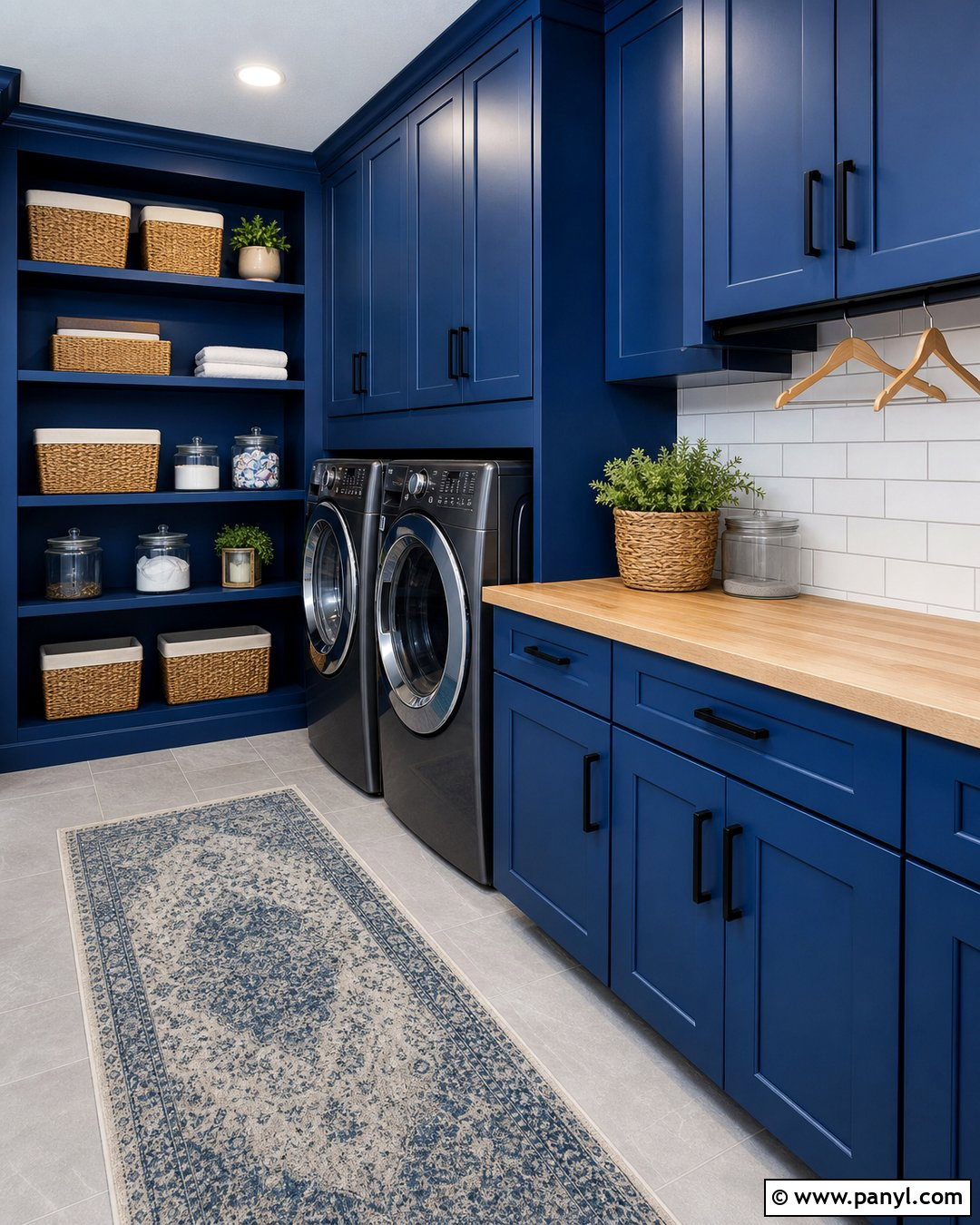
Turn a utility room into a coordinated workspace with light cream walls and forest green trim. Paint the baseboards, window frame, door, and lower storage cabinets in the same deep green. Use warm white upper cabinets to preserve brightness above the work surfaces. A butcher-block counter over front-loading machines provides room for folding, while pale stone-look floor tile keeps maintenance simple. Add aged brass cabinet pulls, a woven laundry basket, and open oak shelves for frequently used supplies. Conceal less attractive products inside labeled bins or closed cabinetry. The completed laundry room feels practical, cheerful, and connected, with the green trim serving as part of the storage design rather than a separate accent.
22. Dark Trim Mudroom
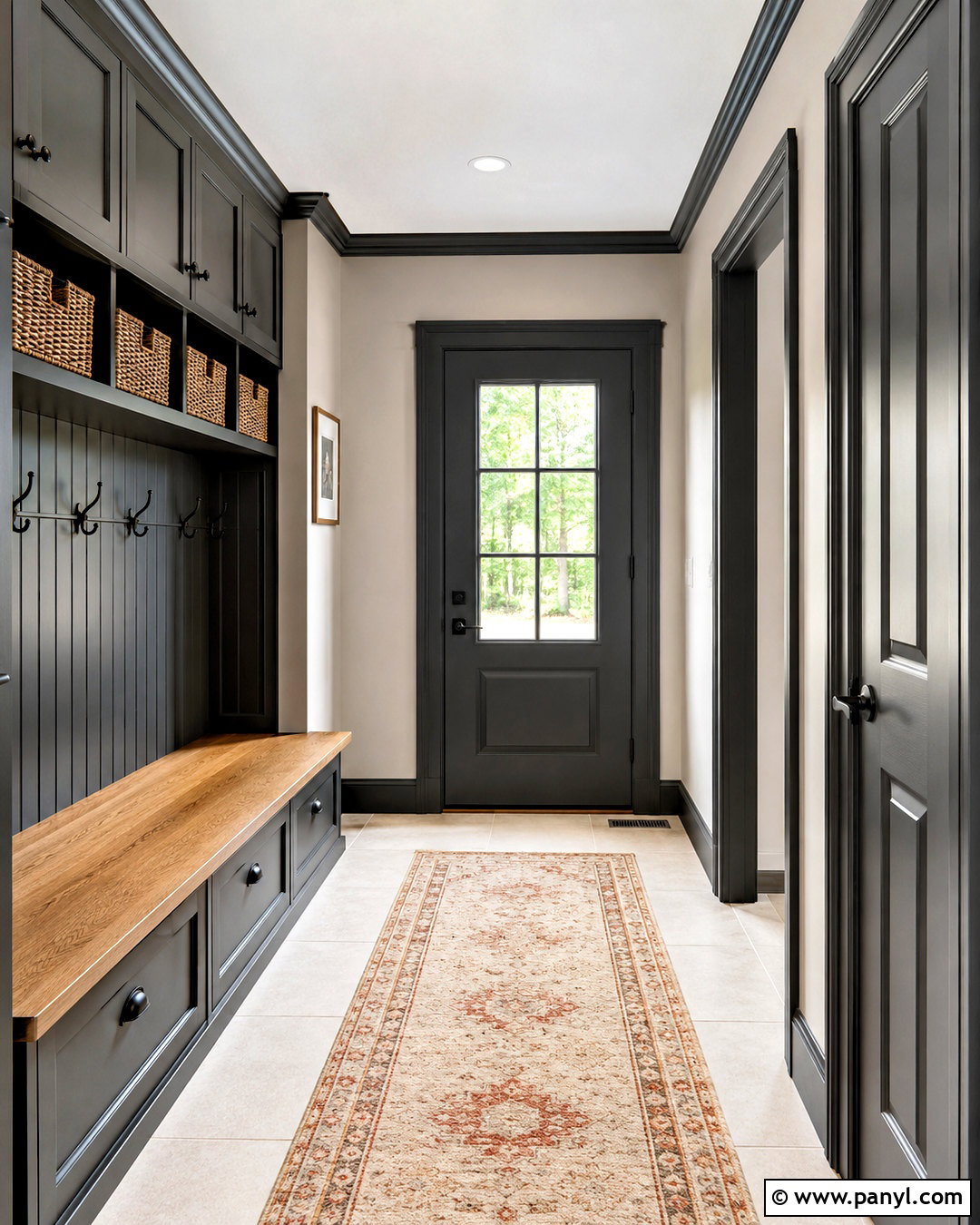
Light greige walls and charcoal trim give a mudroom the structure needed for a busy transition space. Carry charcoal across the baseboards, door casings, exterior door, bench base, and tall storage cabinets. Add a natural oak bench seat to warm the darker built-ins. Large-format beige floor tile handles visual wear while keeping the space lighter than slate. Install sturdy black hooks above vertical wall paneling and assign woven baskets to each storage section. A patterned runner can combine cream, gray, and muted rust. Use a bright flush-mount fixture for clear visibility. This complete arrangement makes coats, shoes, bags, and outdoor accessories easier to manage while maintaining a polished appearance.
23. Dark Trim Staircase
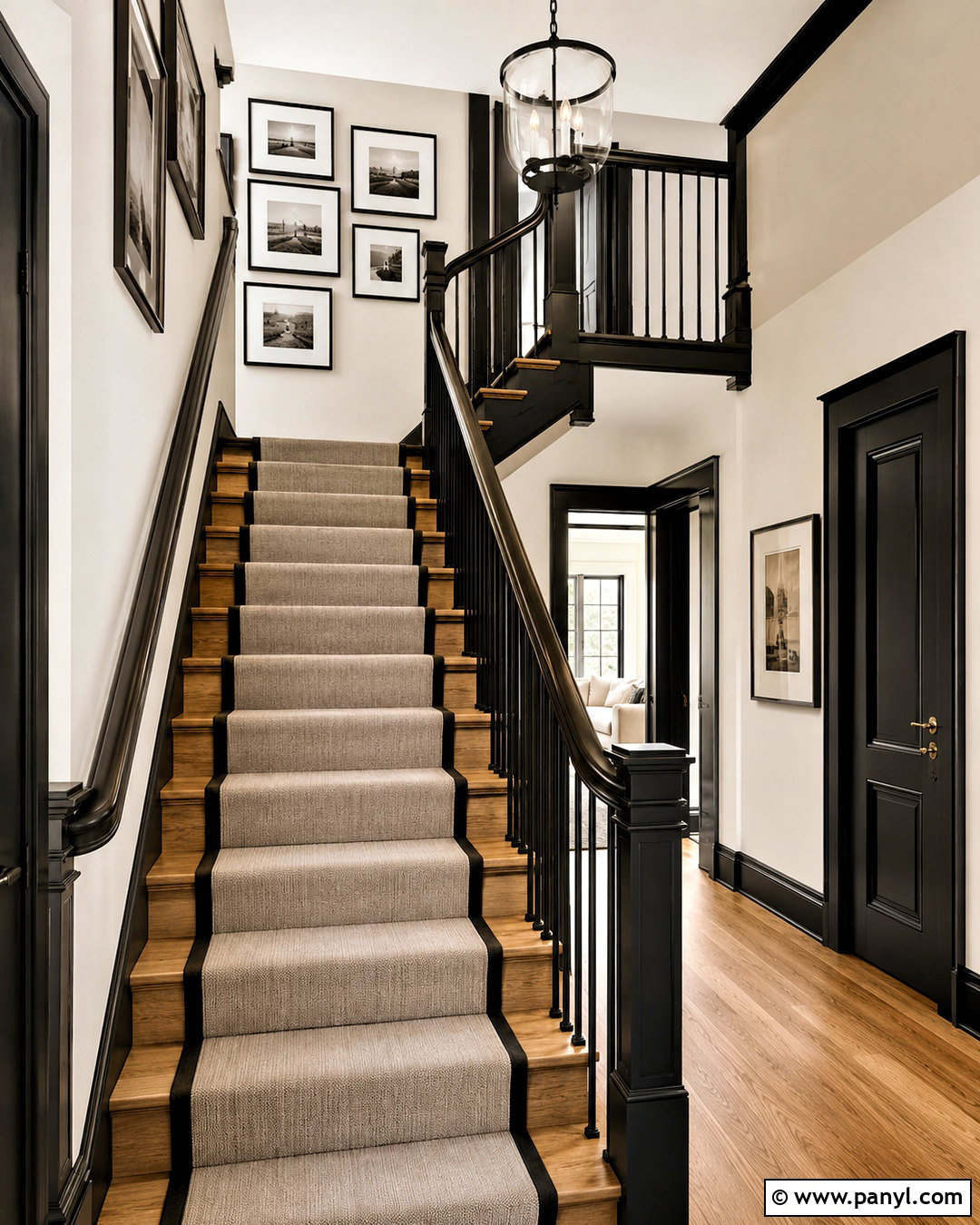
A staircase becomes a strong architectural feature when dark trim is used consistently. Pair warm white walls with black baseboards, stringers, newel posts, handrails, and slender balusters. Leave the stair treads in medium natural oak to prevent the structure from looking too heavy. A simple neutral runner improves comfort and introduces texture without hiding the wood. Continue the black door casings at both the top and bottom landings so the staircase connects with surrounding rooms. Hang a carefully spaced gallery of light-toned artwork in matching black frames. A large white or clear-glass pendant keeps the stairwell bright. The finished staircase feels graphic, cohesive, and visually connected across multiple levels.
24. Dark Trim Sunroom
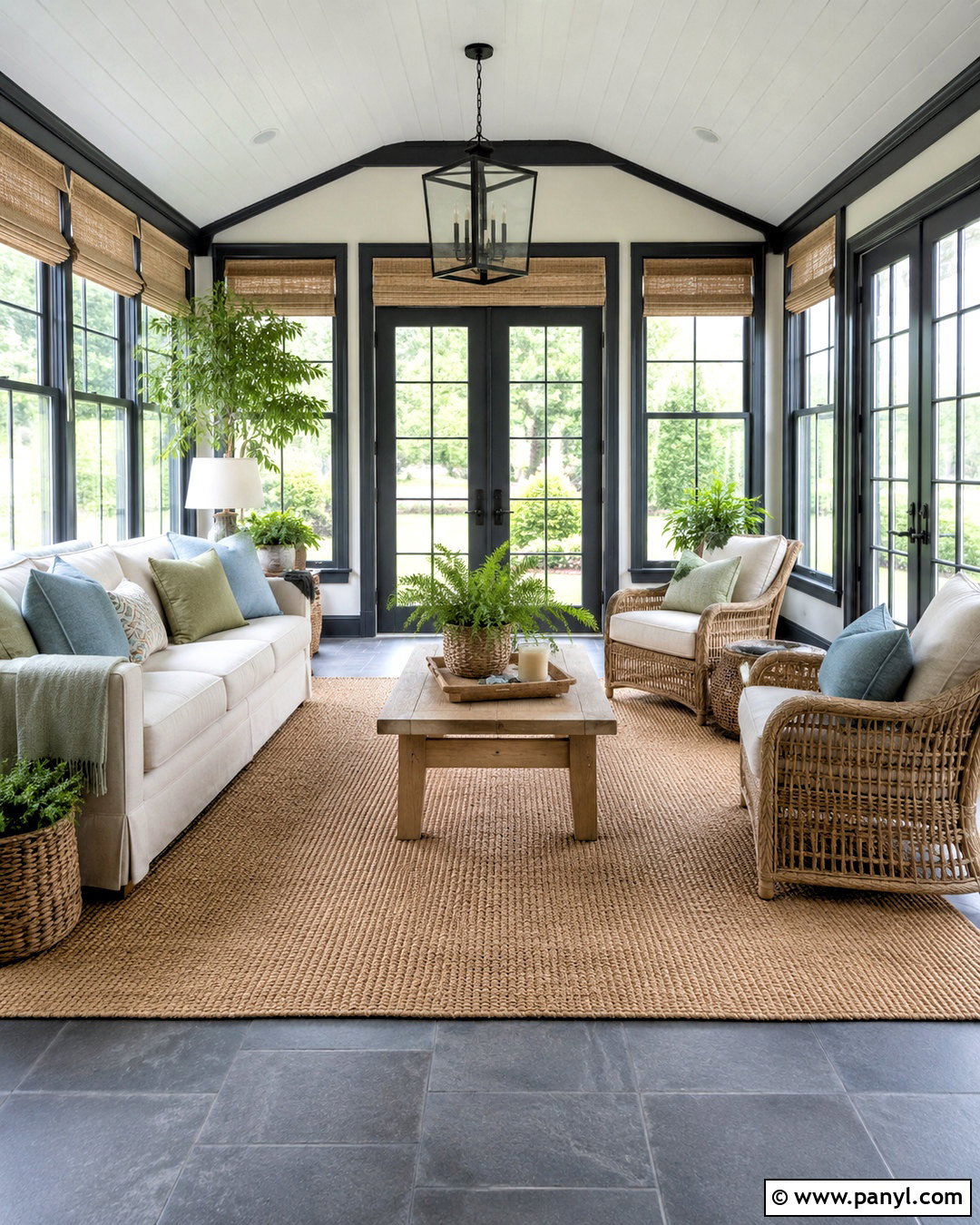
A sunroom can handle generous dark trim because abundant windows keep the space naturally bright. Paint the window casings, French doors, and baseboards deep charcoal, then use warm white on the remaining wall surfaces and ceiling. Furnish the room with a light linen sofa, woven lounge chairs, and an oak coffee table. A large natural fiber rug defines the seating area without competing with the window grid. Add cushions in sage, tan, and muted blue to reflect the outdoor setting. Keep window coverings minimal with pale woven shades. Potted greenery can fill corners without blocking views. The dark framework emphasizes every window while the relaxed furnishings create an inviting year-round retreat.
25. Dark Trim Basement
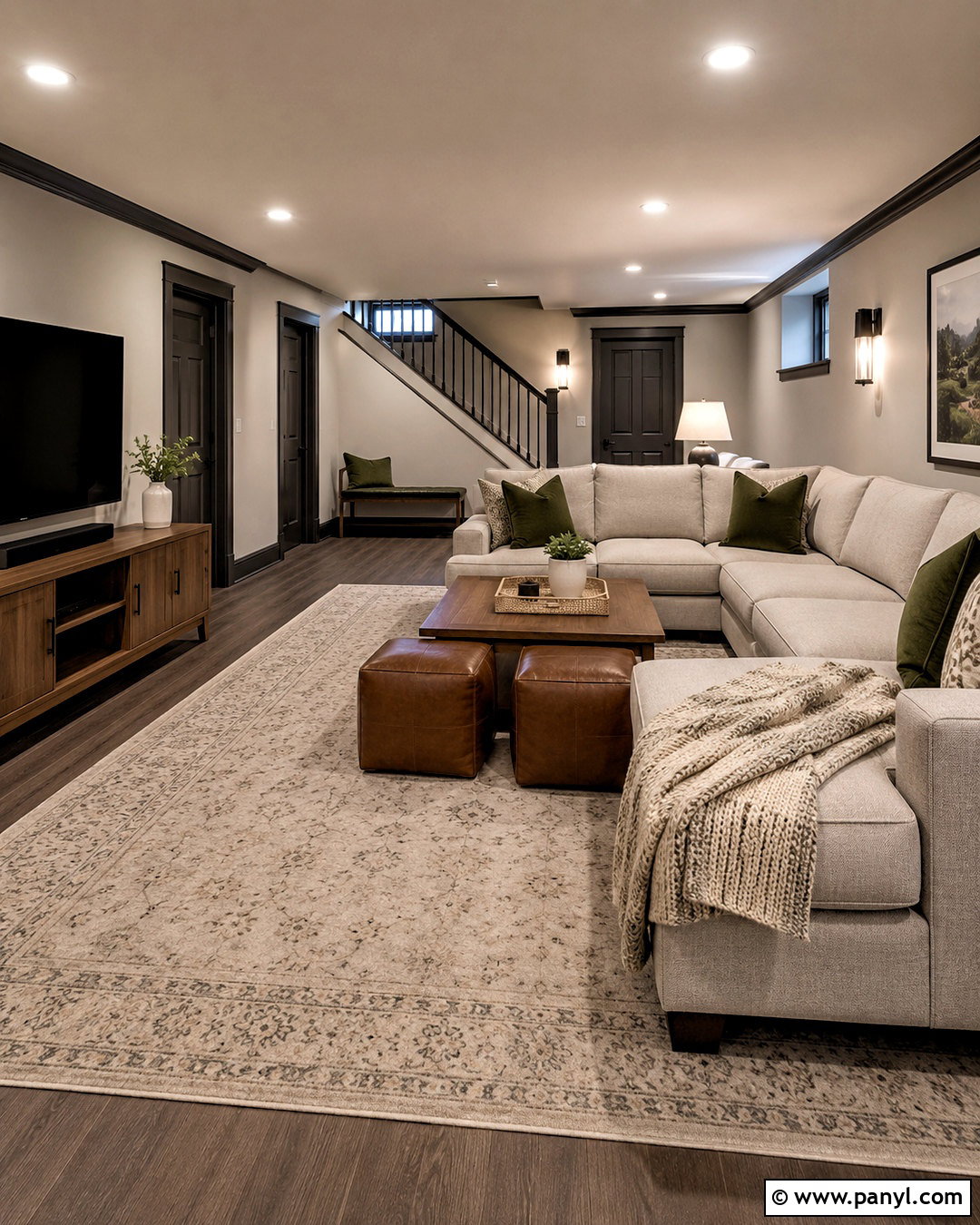
Basements with limited daylight benefit from a softer version of dark trim. Choose warm off-white walls and deep taupe-charcoal baseboards, doors, and window casings rather than a sharp black. Furnish the family room with a cream sectional, medium oak media console, and a large pale rug. Use several lighting layers, including recessed fixtures, table lamps, and wall sconces, to reduce shadowy corners. Add warm brown leather ottomans and muted green cushions for depth. Keep the ceiling white and avoid painting bulky overhead elements dark. This carefully balanced design gives the basement character and definition while preserving a comfortable, bright appearance suitable for movies, games, reading, and casual gatherings.
26. Dark Trim Apartment
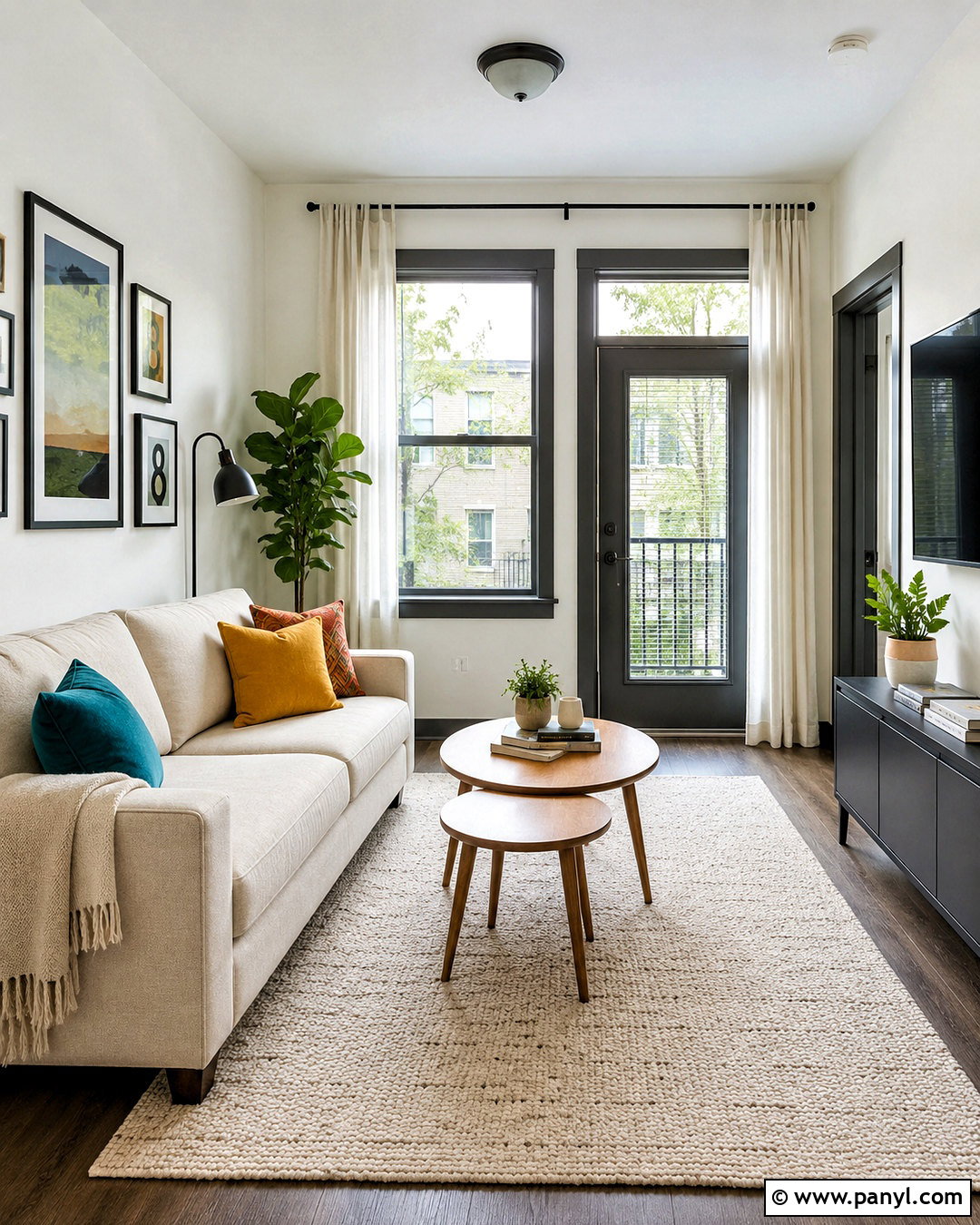
In an apartment, dark trim can deliver architectural character without requiring ornate details. Use removable or landlord-approved paint to create charcoal window casings and door frames against soft white walls. Keep existing baseboards light if painting them is not permitted. Repeat charcoal through a slim media cabinet, metal floor lamp, and picture frames. A compact cream sofa, nesting oak tables, and a light textured rug maintain an open layout. Hang linen curtains high and wide to expose the dark window outline and make the ceiling appear taller. Add one large plant and a few colorful cushions rather than many small accessories. The room feels distinctive, organized, and easy to adapt.
27. Dark Trim Craftsman Interior
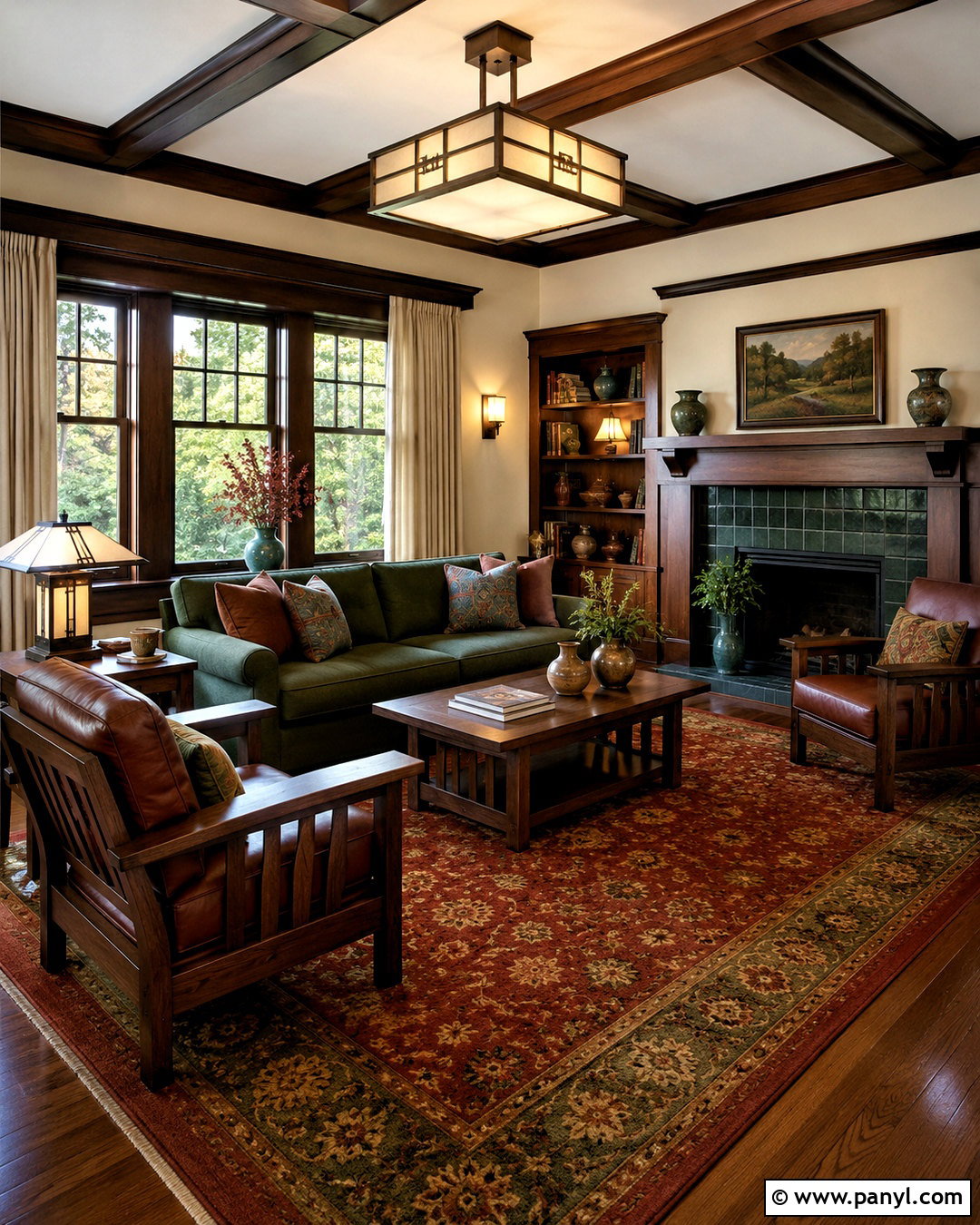
Celebrate Craftsman architecture with dark-stained oak trim and warm cream walls. Preserve substantial window casings, baseboards, built-in shelves, and interior doors in a rich brown finish that reveals the natural grain. Choose a deep olive sofa, leather armchairs, and a patterned wool rug with rust, gold, and green details. Mission-inspired lighting with warm metal and frosted glass complements the woodwork without becoming overly thematic. Use simple linen curtains mounted within or above the windows so the casings remain prominent. Oak tables and handcrafted pottery complete the room. The finished interior respects the home’s strong millwork while the light walls and ceiling keep the layered wood tones from feeling enclosed.
28. Dark Trim Victorian Interior
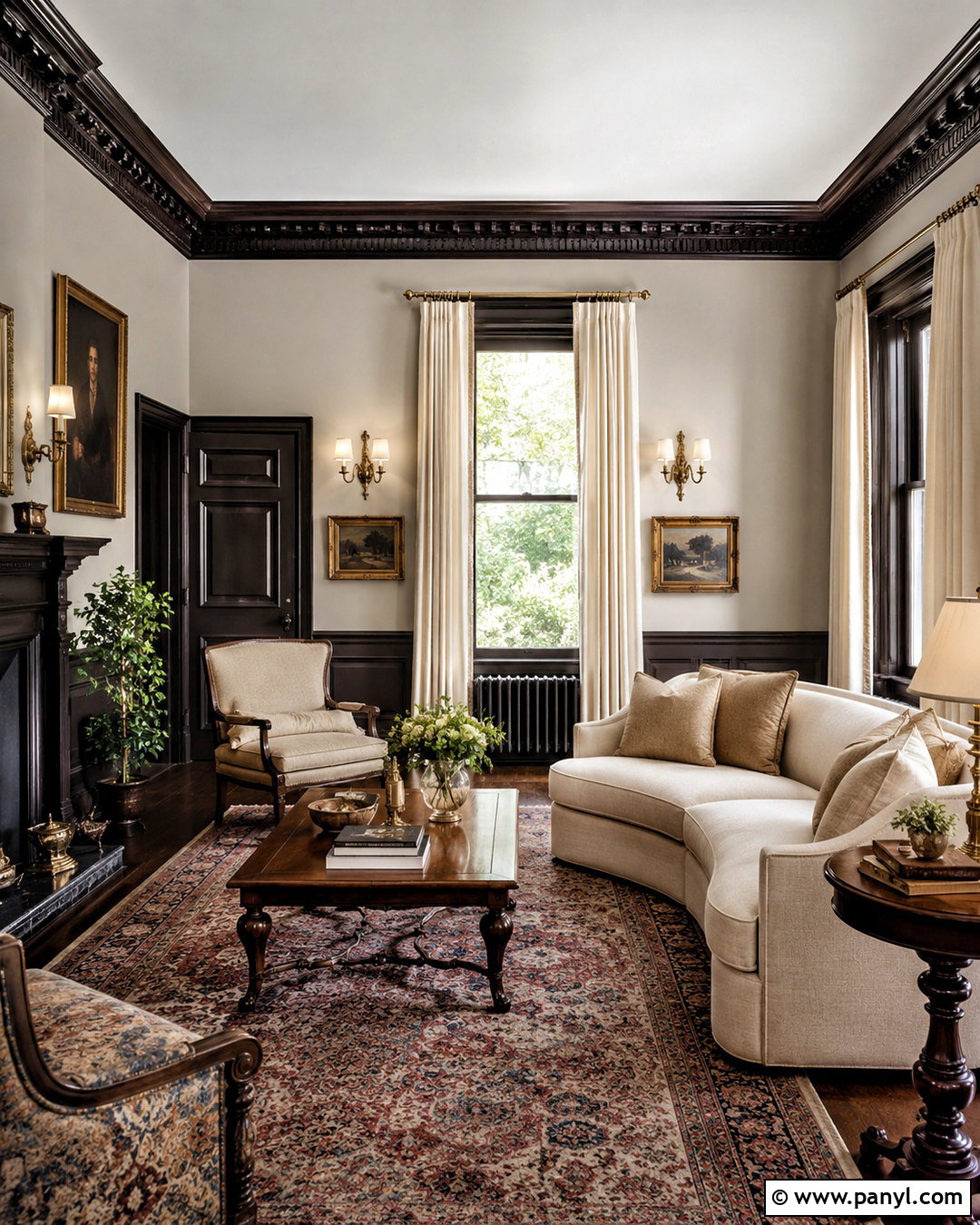
A Victorian room can carry dark trim with elegance when the surrounding palette remains light and controlled. Pair pale warm gray walls with deep brown-black window casings, tall baseboards, doors, and detailed crown molding. Use a curved cream sofa, two traditional upholstered chairs, and an antique walnut table to complement the architecture. A faded patterned rug adds color without competing with the trim. Choose aged brass sconces, a decorative ceiling fixture, and full-length ivory curtains. Artwork in dark wood frames can be arranged symmetrically above a fireplace or console. The complete room honors ornamental details while avoiding excessive pattern, allowing the dark woodwork to provide most of the visual richness.
29. Dark Trim Midcentury Modern Room
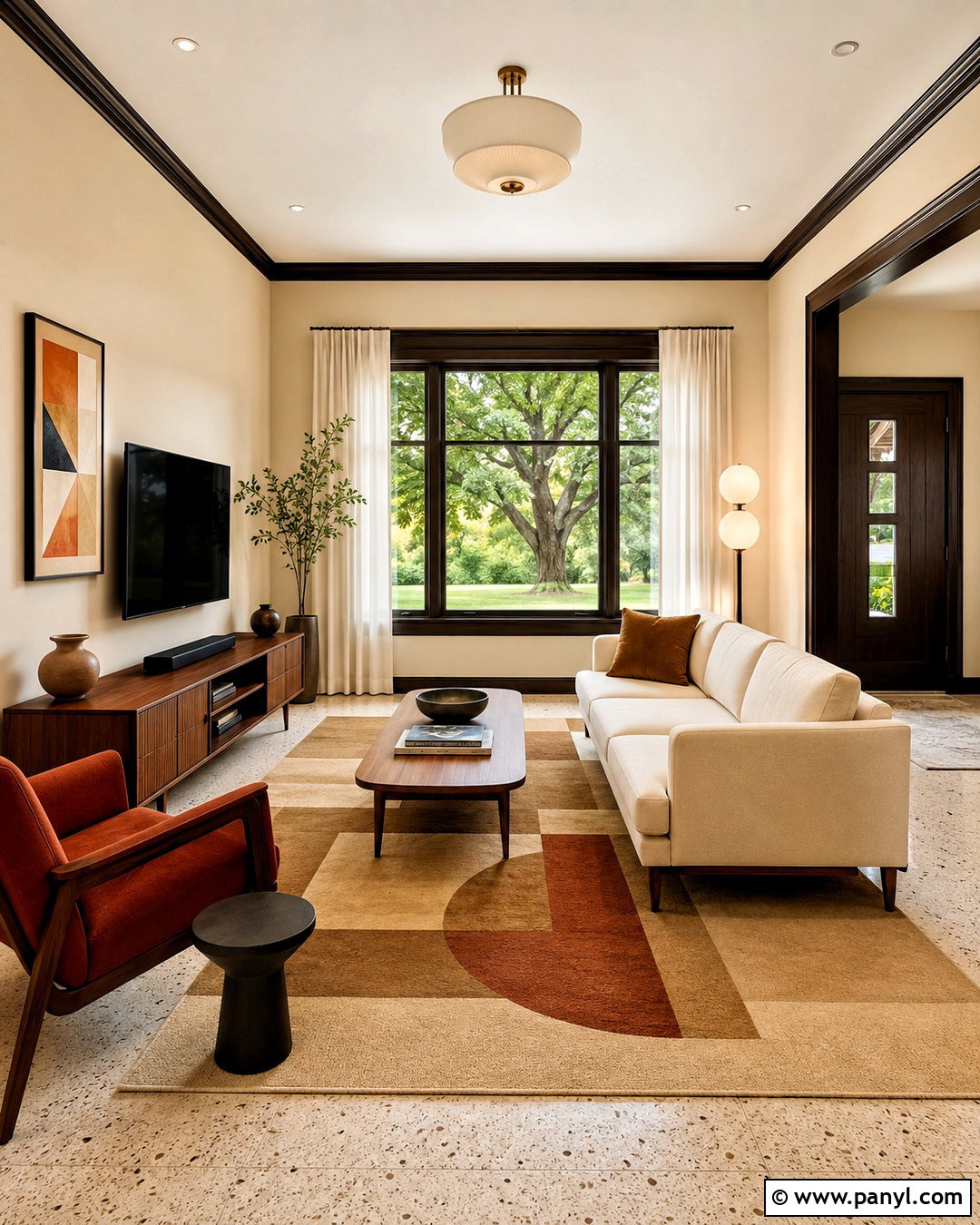
Light beige walls and espresso trim create a warm foundation for a midcentury modern living room. Use dark trim around broad windows, doorways, and baseboards, then repeat the tone through a low walnut media unit. Add a streamlined cream sofa, rust lounge chair, and geometric wool rug in tan, black, and muted orange. A sculptural floor lamp introduces shape without visual clutter. Keep curtains simple and off-white, preferably mounted beyond the dark window frame. Natural oak or terrazzo flooring can brighten the lower half of the room. With clean furniture lines and a restrained palette, the dark trim feels integrated into the architecture rather than functioning as decorative contrast alone.
30. Dark Trim Industrial Interior
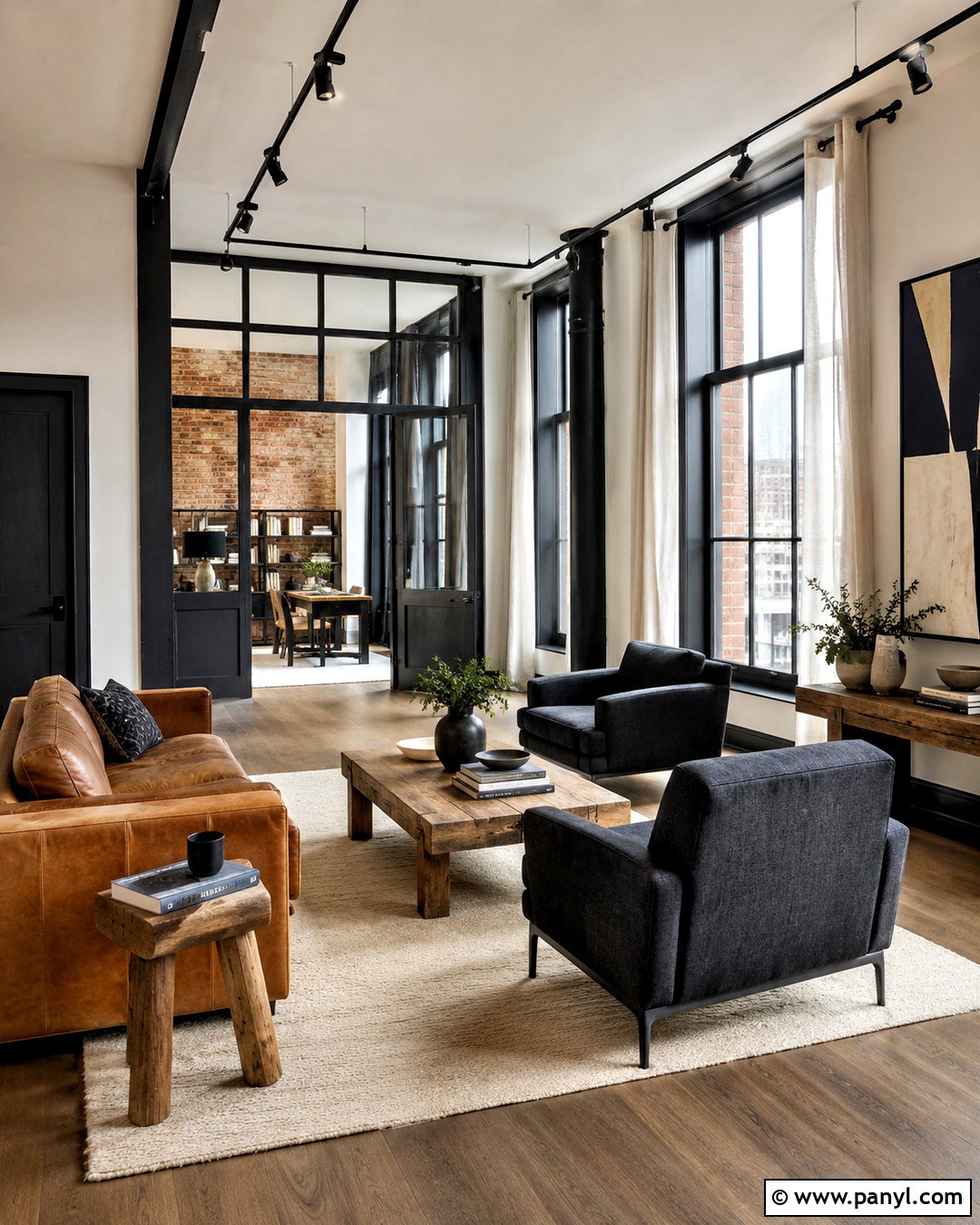
An industrial-inspired loft feels more livable when black trim is paired with warm white walls and natural materials. Use black around tall windows, doors, baseboards, and any exposed structural columns. Anchor the seating area with a cognac leather sofa, charcoal lounge chairs, and a large cream rug. Reclaimed wood tables soften the metal framework, while black track lighting provides flexible illumination. Keep exposed brick limited to one wall or architectural section so the room does not become overly dark. Linen curtains, neutral cushions, and large-scale abstract artwork add comfort. The complete design balances sturdy finishes with bright surfaces, creating an urban room that still feels welcoming and practical.
31. Dark Trim Coastal Room
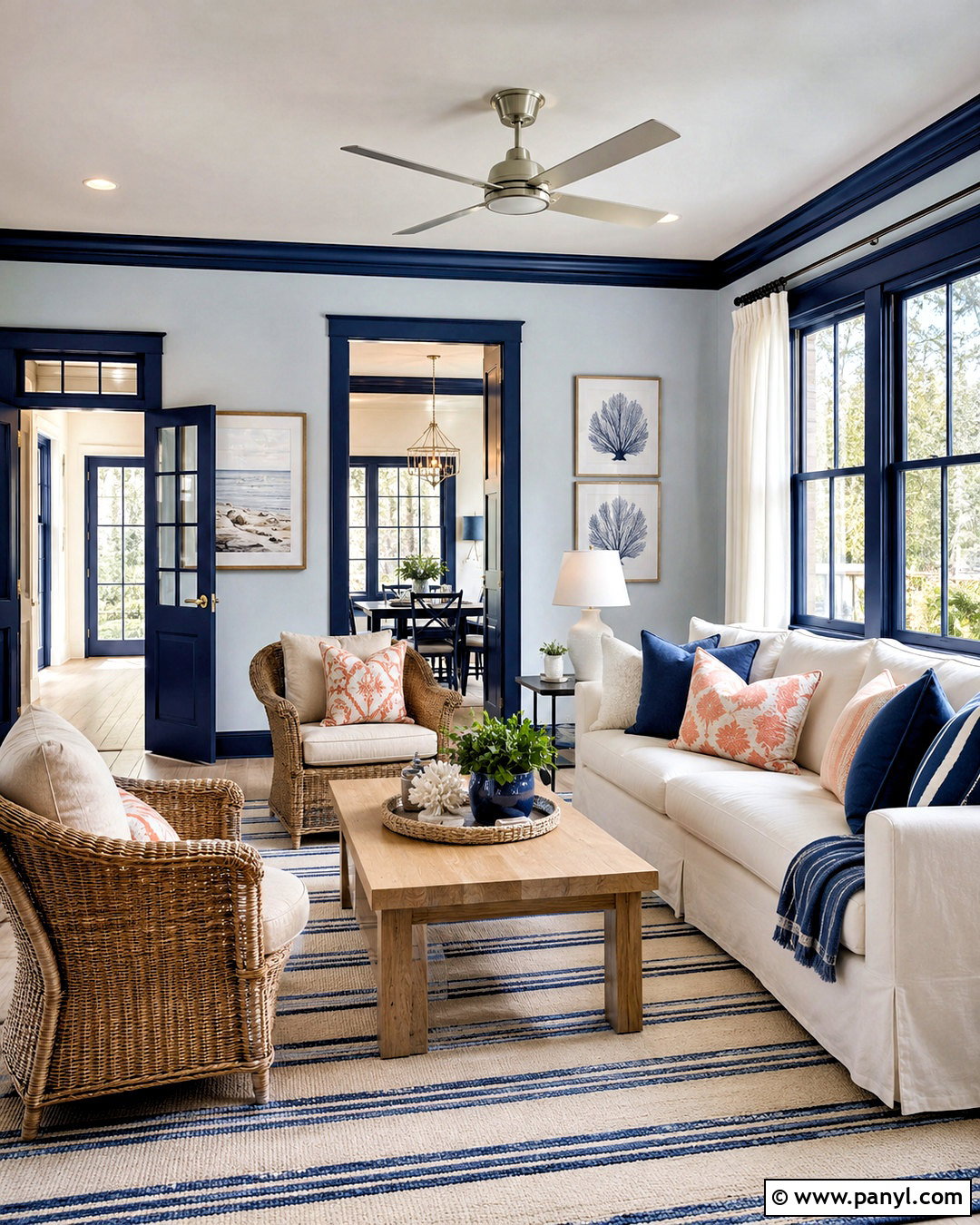
A coastal room does not need white trim to feel light and breezy. Pair pale blue-gray walls with deep navy window casings, baseboards, and doors. Choose a slipcovered ivory sofa, woven rattan chairs, and a light oak coffee table. A cream-and-blue striped rug introduces a relaxed pattern without becoming overly nautical. Hang airy white curtains outside the navy frames and use brushed nickel or aged brass lighting. Add cushions in sand, misty blue, and muted coral for subtle warmth. Simple landscape artwork and woven baskets complete the space. The darker blue trim grounds the pale palette, while natural textures and comfortable furniture maintain the casual feeling associated with coastal homes.
32. Dark Trim Scandinavian Room
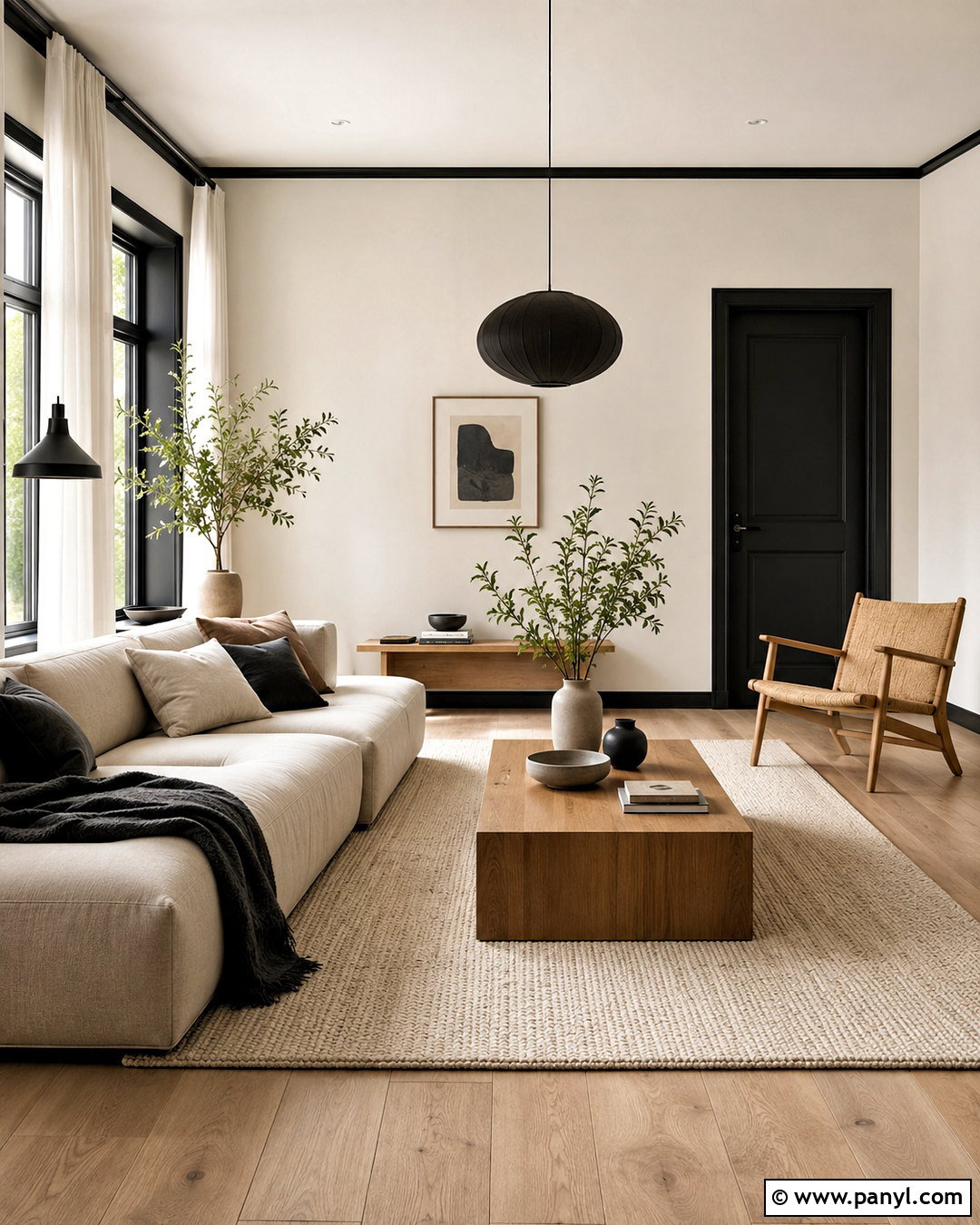
Combine warm white walls with soft black trim for a Scandinavian-inspired room that feels simple yet inviting. Apply the dark color to narrow baseboards, window frames, and a single interior door. Use pale oak flooring, a low oatmeal sofa, and clean-lined wood tables to keep the room visually light. A cream wool rug, textured throws, and off-white curtains introduce softness. Choose one black pendant or floor lamp to connect with the trim, then add understated ceramics and a few green branches. Keep surfaces open and storage concealed. The contrast adds structure to the minimal arrangement, while natural materials and a warm neutral palette prevent the room from feeling stark or unfinished.
33. Dark Trim Transitional Living Room
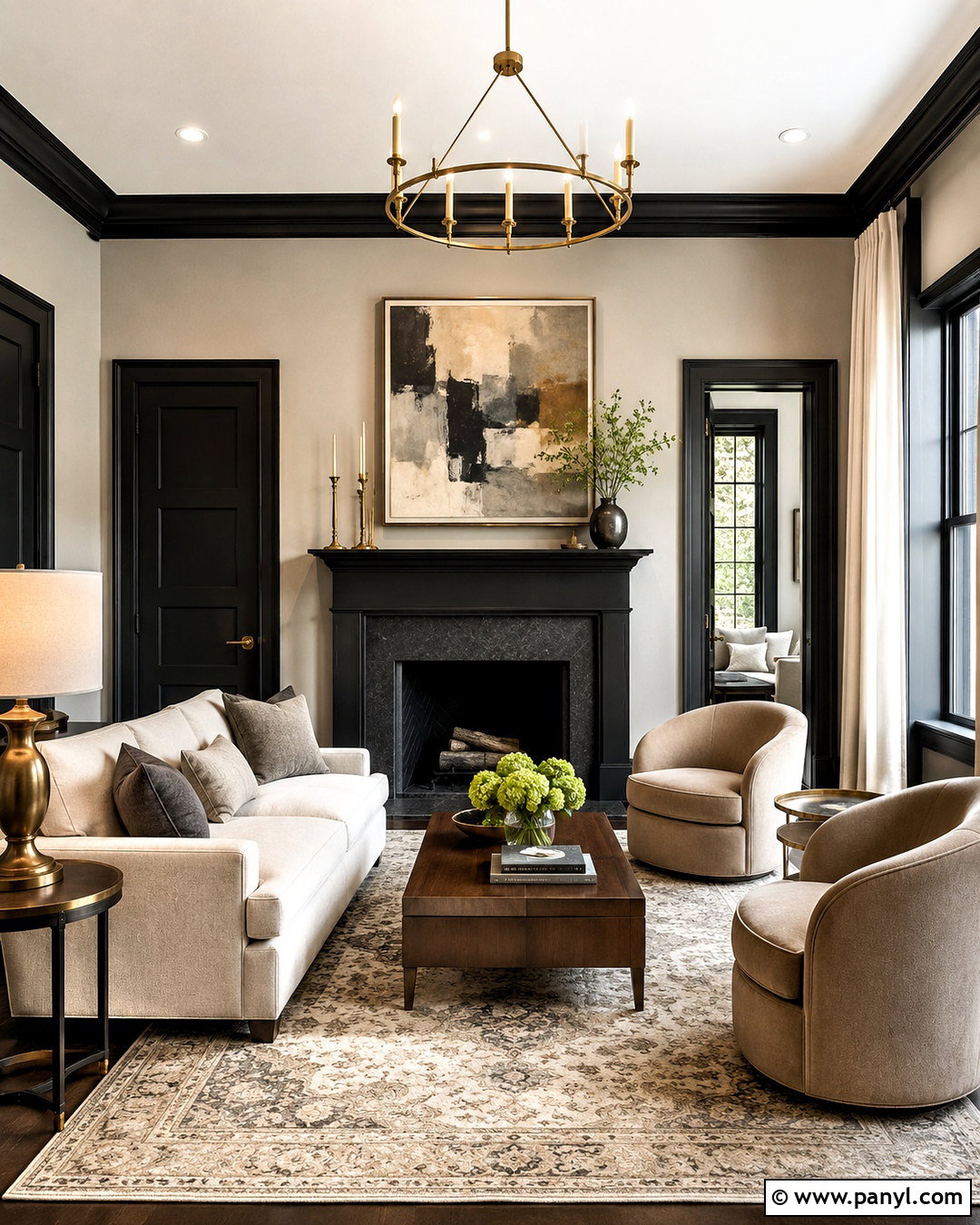
A transitional living room can bridge traditional architecture and modern furniture with charcoal trim and pale greige walls. Paint the crown molding, window casings, baseboards, fireplace mantel, and doors the same deep charcoal. Arrange a tailored ivory sofa opposite two rounded taupe chairs, using a walnut coffee table between them. A large patterned rug should combine cream, gray, brown, and muted blue. Add simple brass lamps, full linen curtains, and one oversized abstract painting. Avoid overly ornate accessories or extremely sharp modern pieces. The repeated charcoal gives classic millwork a cleaner appearance, while curved upholstery, warm wood, and subtle patterns create a balanced room that feels comfortable and current.
34. Dark Trim Modern Farmhouse Room
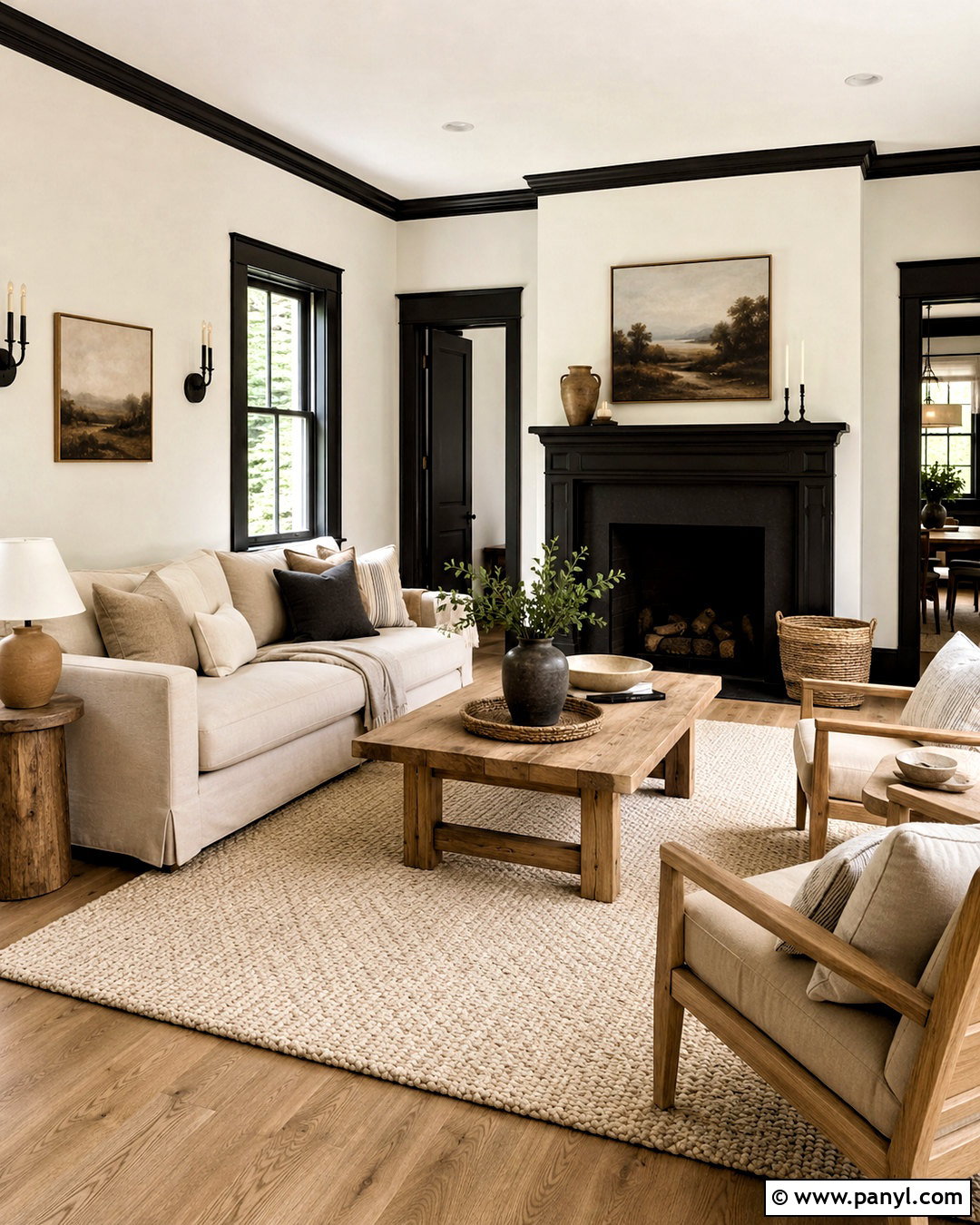
For an updated farmhouse look, combine soft white walls with dark brown-black trim and straightforward natural materials. Use the trim color on window casings, baseboards, doors, and a simple fireplace mantel. Add a relaxed beige sofa, two light wood armchairs, and a substantial oak coffee table. A cream wool rug offers a softer alternative to heavily rustic jute. Black metal sconces repeat the trim, while pottery, linen pillows, and woven baskets provide texture. Choose wide-plank medium oak flooring and avoid excessive distressed signs or decorative objects. The room feels casual and practical, but the strong architectural outlines give it a polished finish that works in both older farmhouses and newer homes.
35. Dark Trim Cottage Interior
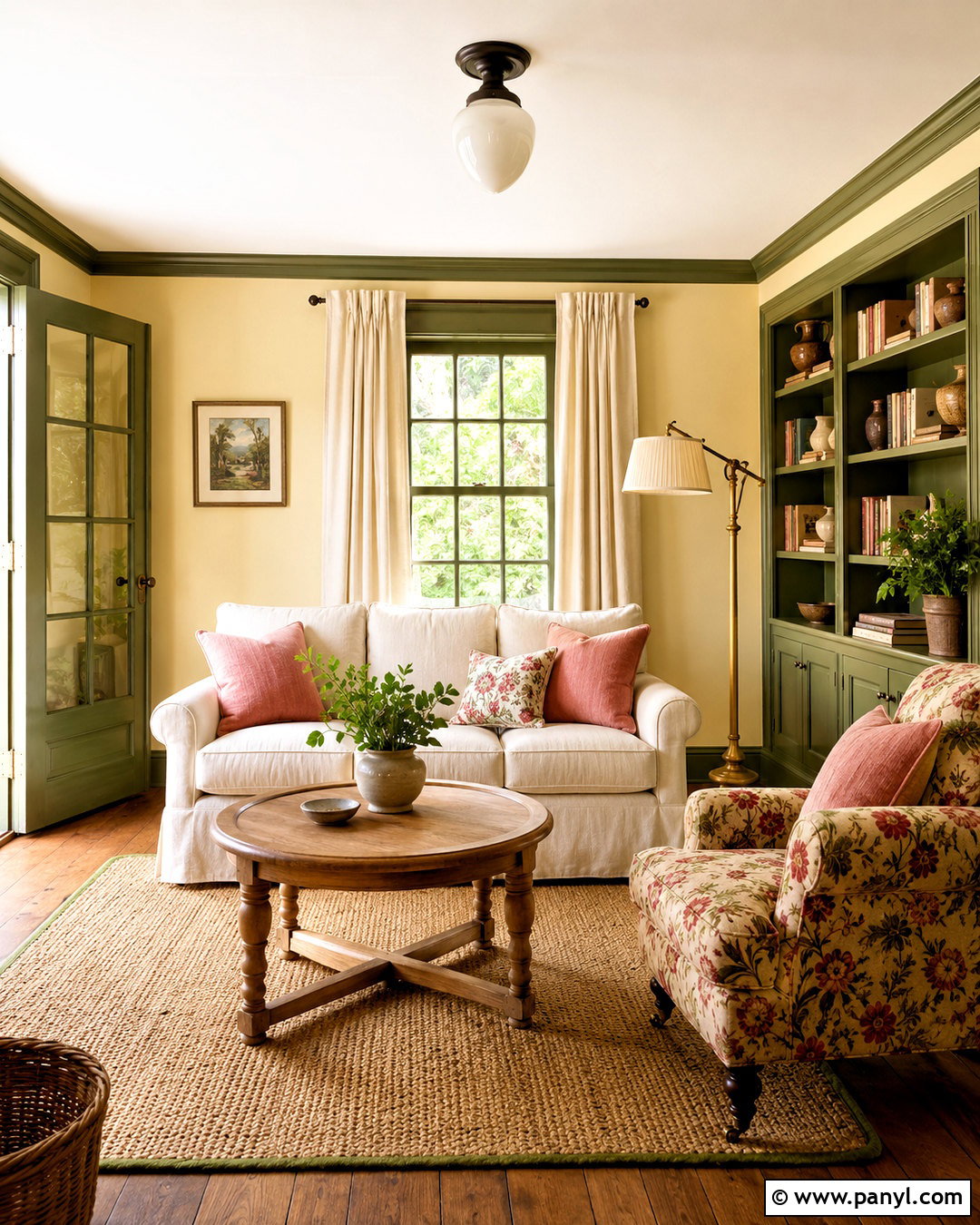
A cottage room feels cozy and collected with pale buttercream walls and deep olive trim. Paint the baseboards, window casings, doors, and built-in bookcase in the same earthy green. Furnish the room with a small cream sofa, floral armchair, and round oak coffee table. A woven rug and linen curtains keep the layered palette light. Add cushions in faded rose, sage, and warm beige, then display books and simple pottery inside the green built-ins. A brass floor lamp provides a traditional accent without feeling formal. The olive trim links the furnishings and garden-inspired colors, creating a complete cottage interior that feels charming, comfortable, and naturally developed over time.
36. Dark Trim Minimalist Room
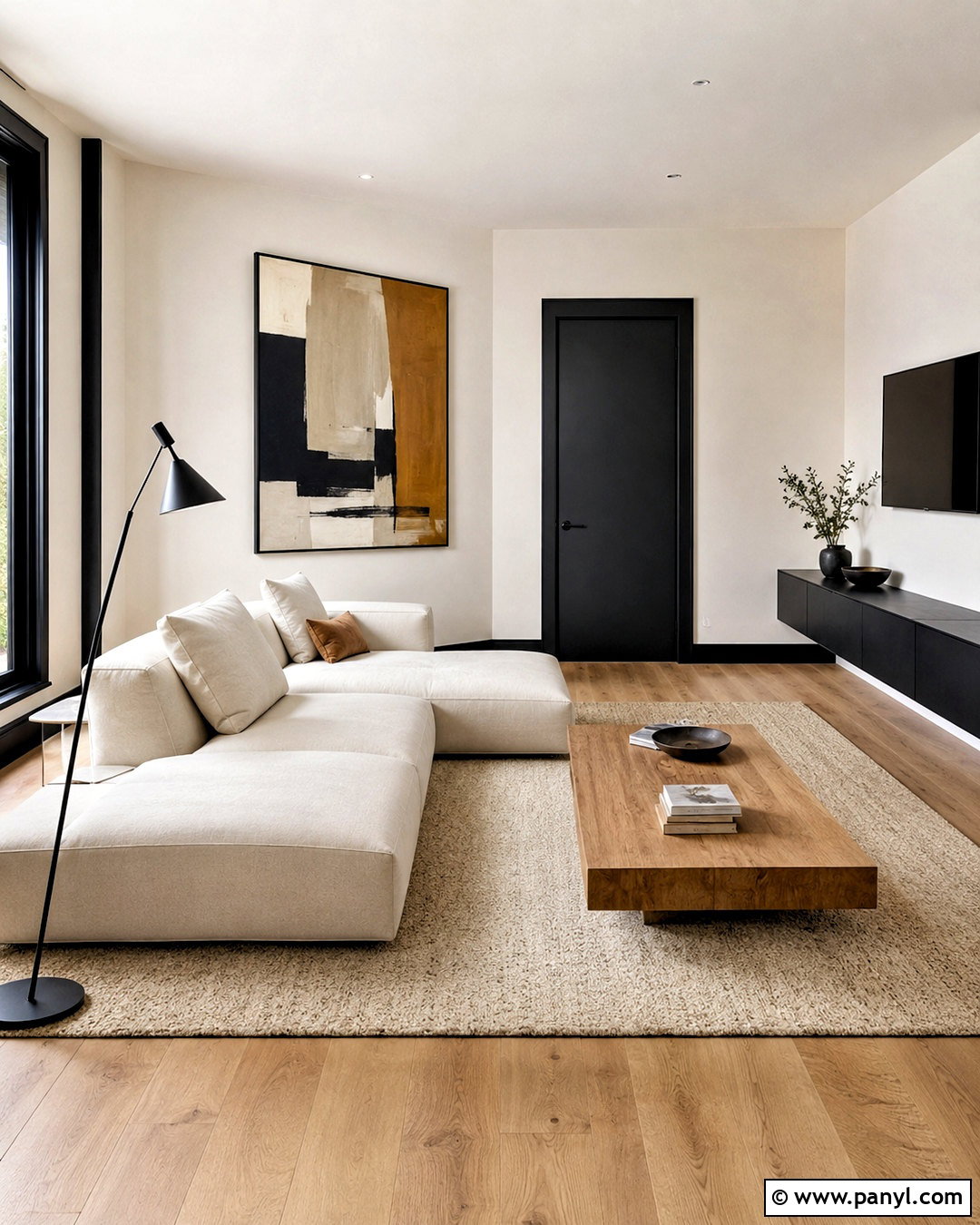
A minimalist interior gains definition from black trim, but every line must feel purposeful. Use soft white walls with slim matte black baseboards, window casings, and one flush interior door. Select a low cream sofa, a single oak coffee table, and a large pale wool rug. Add one black floor lamp to reinforce the perimeter and one oversized abstract artwork for visual focus. Conceal electronics, cables, and everyday storage inside a low wall-mounted cabinet. Skip unnecessary small decorations and keep window coverings sheer and simple. Warm oak flooring prevents the monochrome palette from appearing sterile. The finished room feels calm and uncluttered, with dark trim providing enough contrast to sharpen the understated architecture.
37. Dark Trim Eclectic Living Room
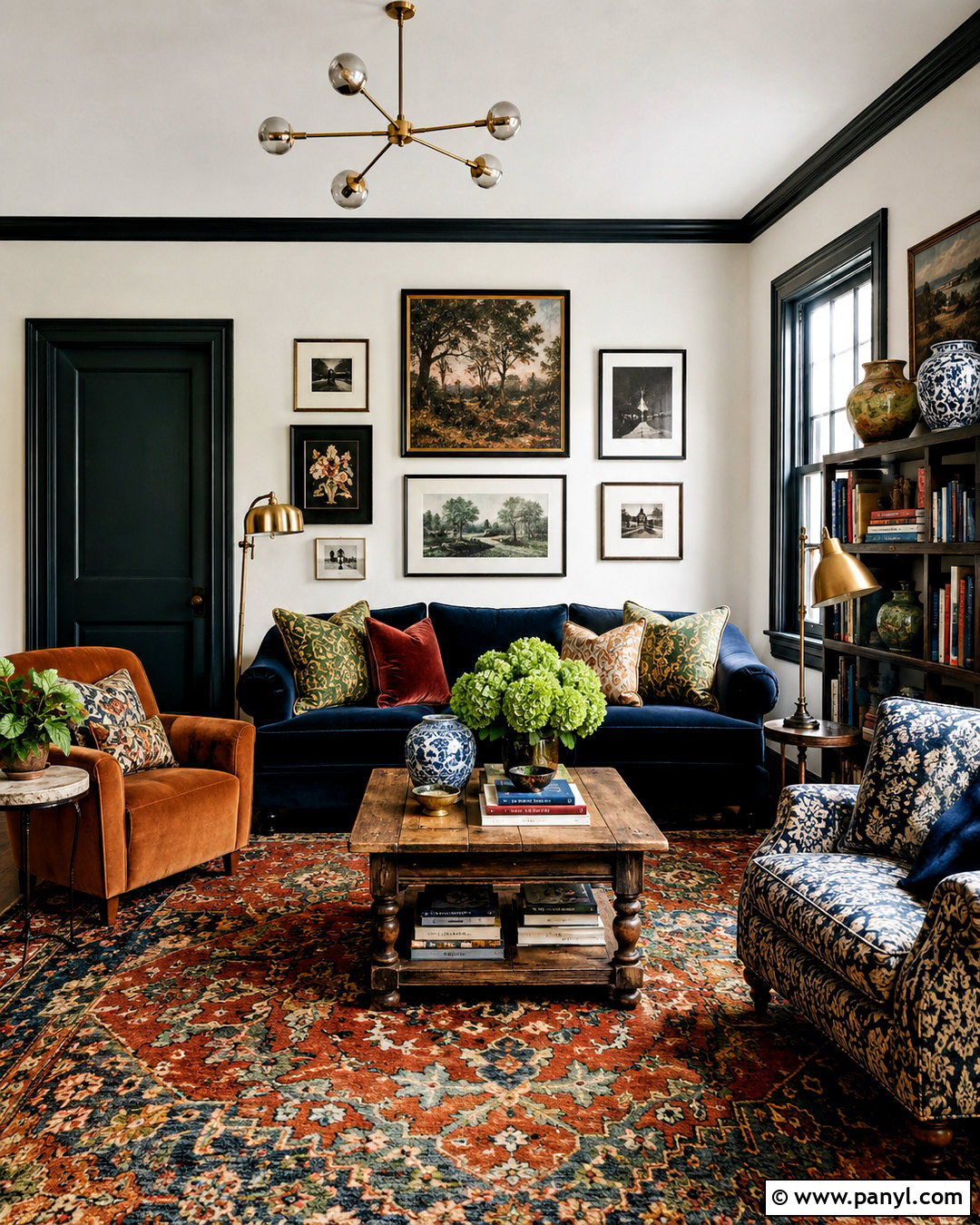
Light walls and dark trim can also support a colorful, collected interior. Start with warm white walls and deep charcoal baseboards, doors, and window casings. Add a navy velvet sofa, patterned armchairs, and a vintage wood coffee table. Use a large rug containing rust, green, blue, and cream to unite the varied furnishings. Black picture frames and lighting connect the artwork to the trim, while brass and walnut add warmth. Arrange books, ceramics, and personal objects in grouped displays rather than scattering them across every surface. The charcoal perimeter gives the room a strong visual framework, allowing expressive color and pattern to feel layered, cohesive, and intentionally curated.
38. Dark Trim Arched Doorways
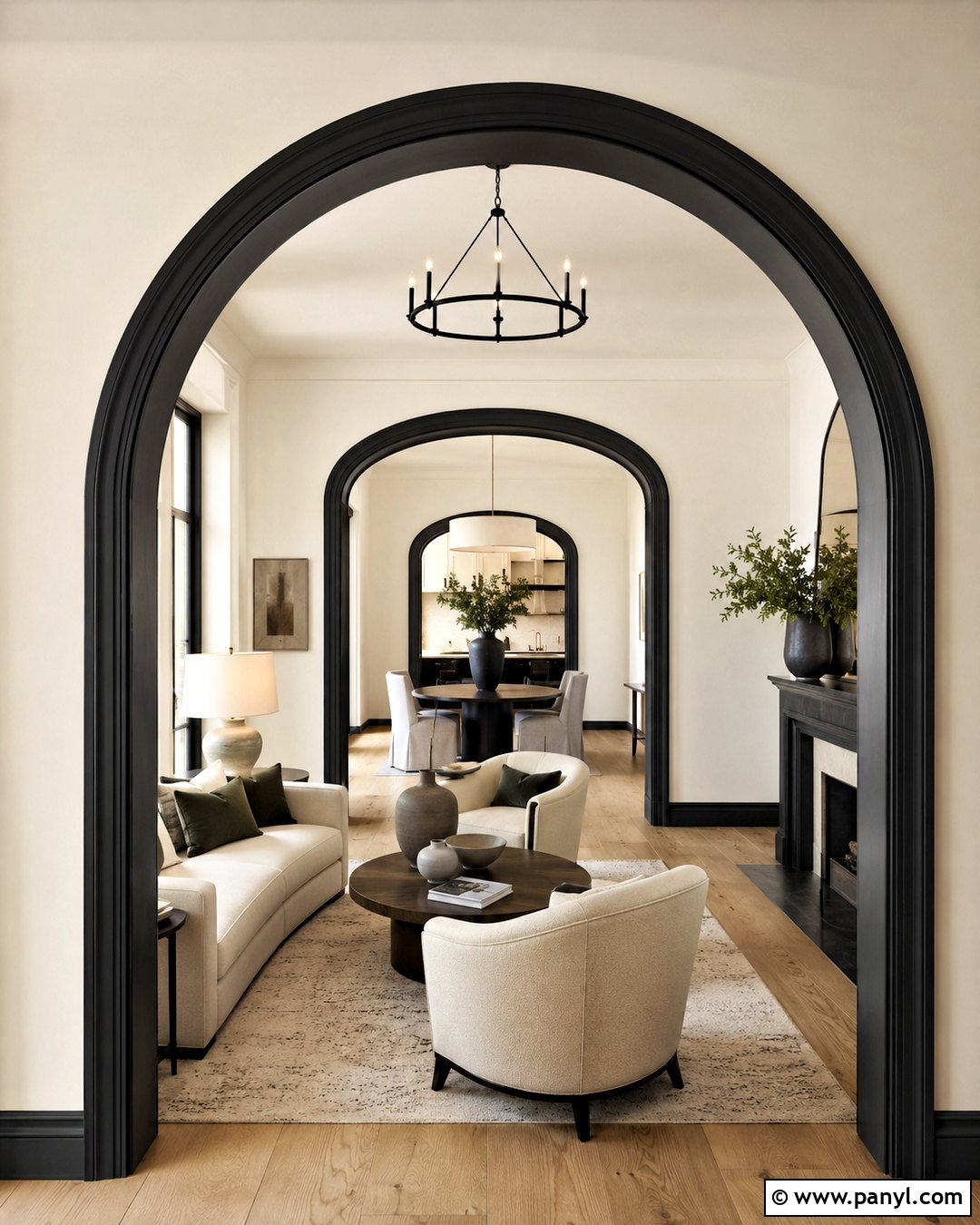
Arched doorways become striking focal points when their curves are outlined with dark paint. Pair warm ivory walls with charcoal-black arch trim, matching baseboards, and coordinated doors in connected rooms. Keep the ceiling and wall surfaces light so the arches remain clearly defined. Use a cream sofa, curved lounge chairs, and a round wood table to echo the architectural shape. Pale oak flooring should continue through the openings, strengthening visual flow. Add black metal lighting and a few rounded ceramics as subtle repetition. Avoid placing tall furniture directly beside the arches. This complete layout lets the dark curved trim guide the eye naturally from one bright, coordinated space to the next.
39. Dark Trim Wall Molding
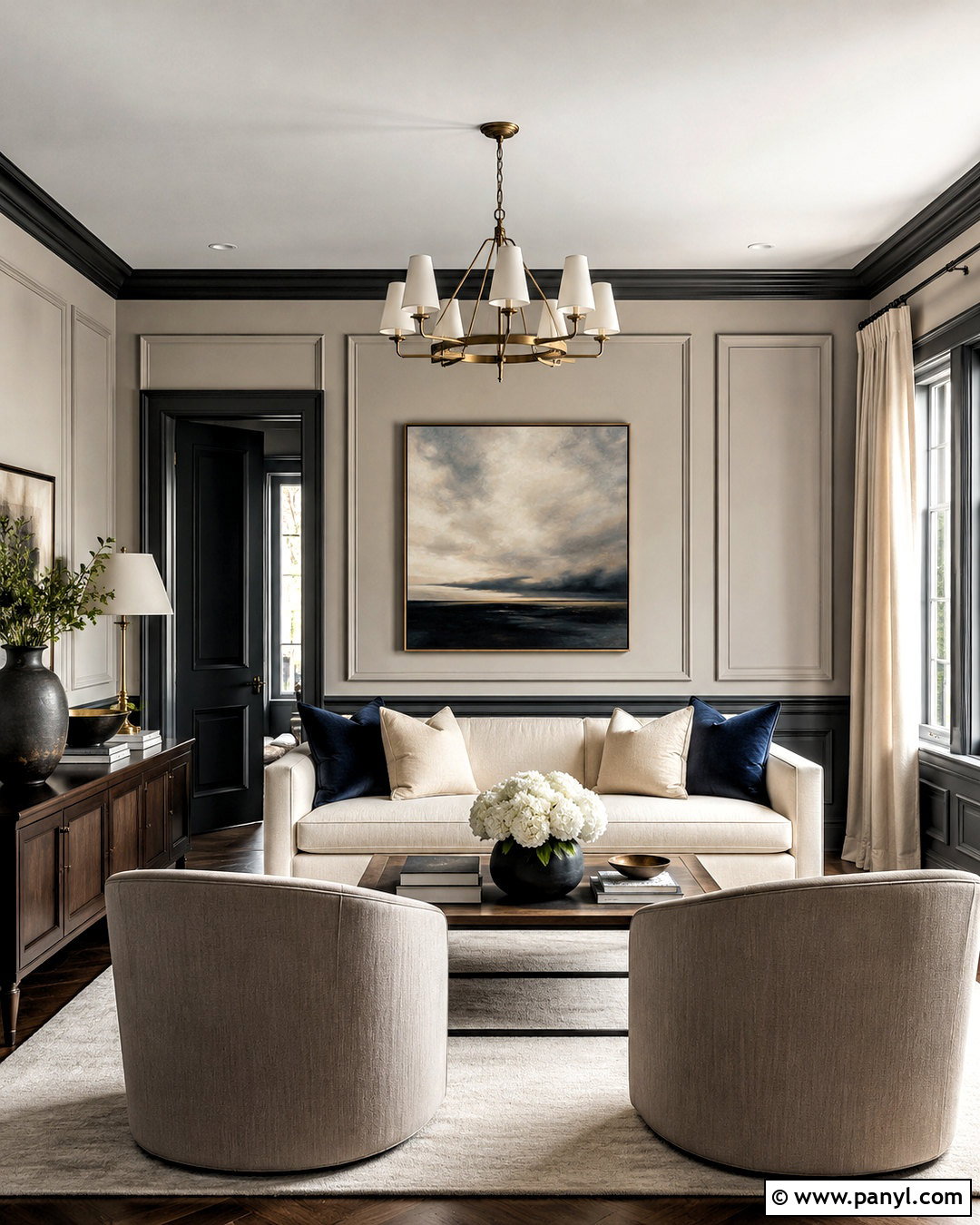
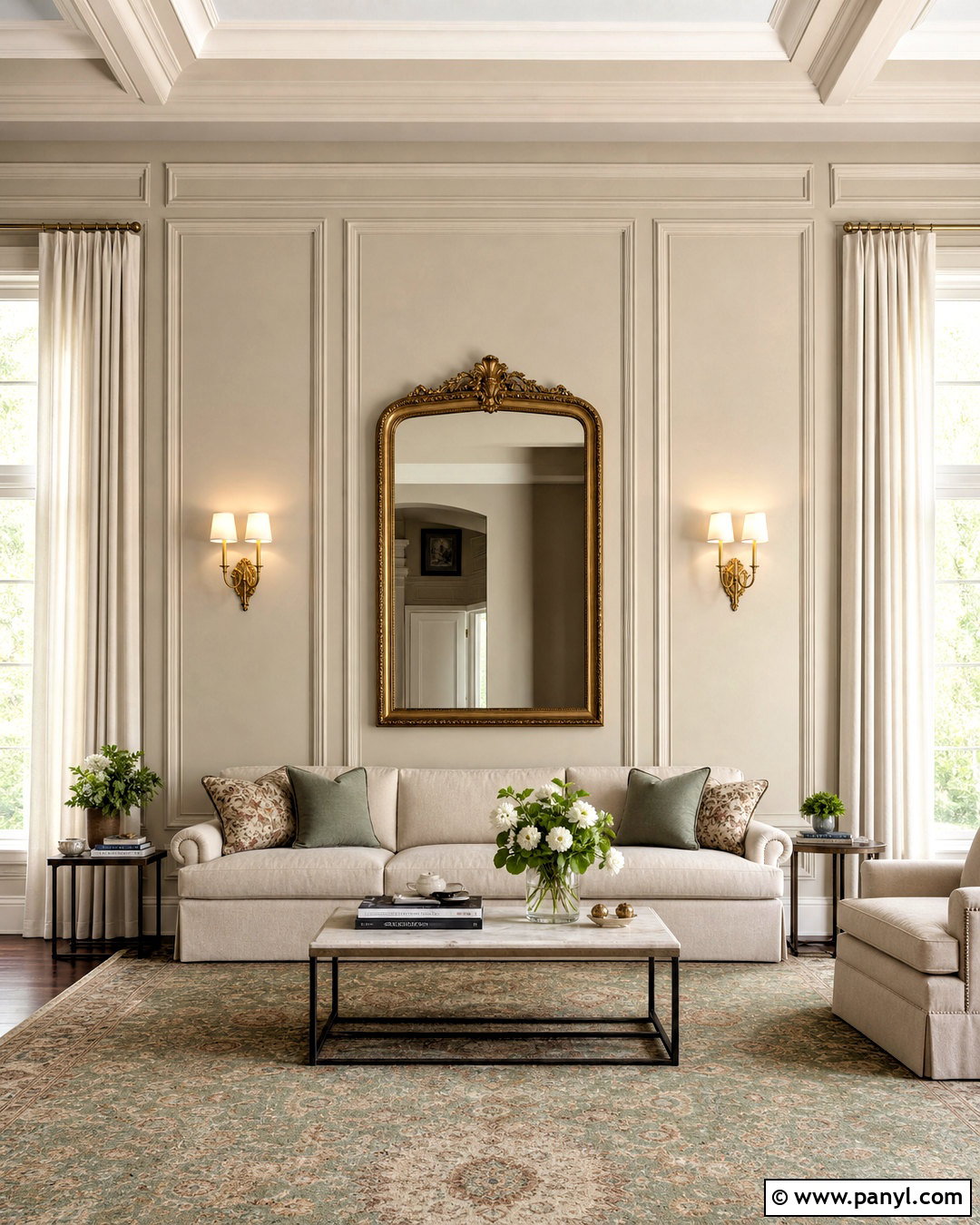
Traditional wall molding can feel modern when the trim is dark and the surrounding walls are light. Use pale greige walls with charcoal chair rails, picture-frame molding, baseboards, crown molding, and door casings. Keep the molding layout symmetrical and allow generous open space within each panel. Furnish the room with an ivory sofa, walnut console, and softly curved taupe chairs. A cream rug and full-length curtains keep the detailed walls from feeling busy. Add a contemporary brass chandelier and one large artwork instead of filling every panel. The dark lines emphasize craftsmanship, while the simple furniture and controlled palette update the formal architecture for comfortable everyday living.
40. Dark Trim Open Floor Plan
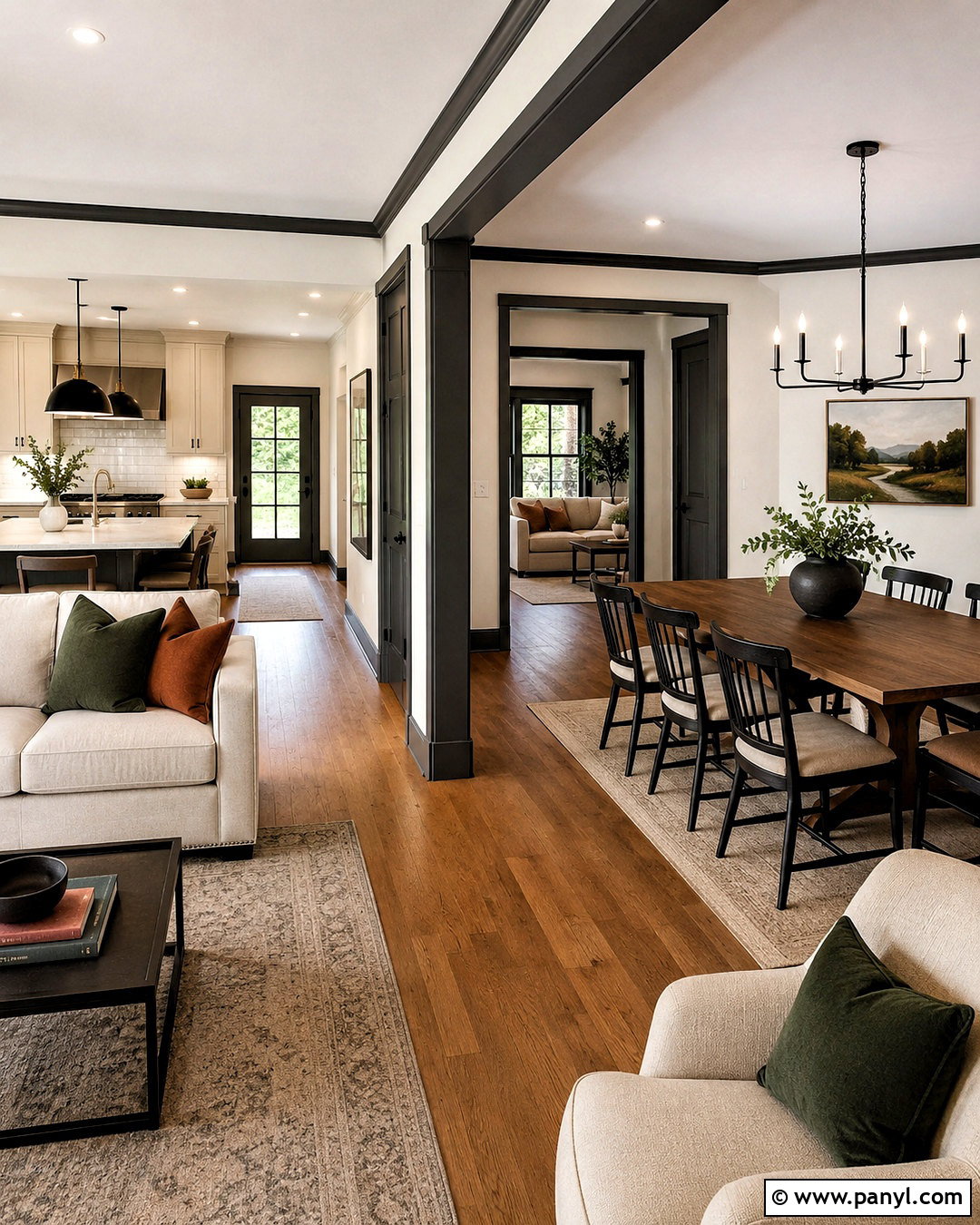
In an open floor plan, consistent dark trim can connect several functional areas. Use warm white walls throughout, then carry charcoal across baseboards, window casings, doors, columns, and major openings. Repeat medium oak flooring from the living room through the dining area and kitchen. Choose cream seating, a walnut dining table, and warm white cabinetry with charcoal hardware. Similar rugs in related neutral tones can define each zone without interrupting the flow. Use black lighting in varied shapes to reinforce the trim while distinguishing each area. Keep accent colors consistent, such as muted green and rust. The repeated architectural color creates continuity across the large space and makes every zone feel thoughtfully coordinated.
Conclusion:
These **40 dark trim light walls** combinations show how contrasting woodwork can shape an entire room rather than function as a small accent. Black offers crisp definition, while charcoal, navy, forest green, espresso, and natural dark wood create softer alternatives. The most successful rooms repeat the trim color through doors, lighting, hardware, furniture, or frames. Light floors, pale rugs, warm woods, and layered lighting help maintain an open feeling. Before painting, compare large samples in daylight and artificial light, paying close attention to warm and cool undertones. With a consistent plan and a balanced material palette, dark trim can make light walls feel more architectural, finished, and personal.

Related Ideas and Inspiration:
Leave a Reply